Seven Years of Good Luck

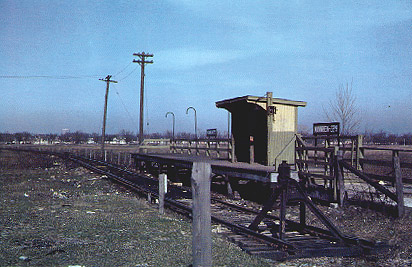
Now here's something you don't see every day... the 69th Street station on the Normal Park "L", in color. This short branch closed in 1954.

Now here’s something you don’t see every day… the 69th Street station on the Normal Park “L”, in color. This short branch closed in 1954.

For most Chicago-area railfans, January 21, 1963 is a day, to paraphrase Franklin D. Roosevelt, that will “live in infamy,” for that is when the Chicago North Shore and Milwaukee, the North Shore Line, breathed its last.

But January 21 is also the date when we started this blog in 2015. This is our seventh anniversary, and I think we have had seven full years of good luck.

In that time, our posts have received 841,000 page views, and over time we have become more and more of a resource for those who are interested in the history of electric traction.

As this is our anniversary post, we pulled out all the stops, and have lots of classic images for you to enjoy. As the 21st is also the 59th anniversary of the North Shore Line abandonment, we have plenty of pictures that pay tribute to that lost interurban.

As we have shared our images with you, you in turn have shared many things with us. We have learned a lot by working together. It has been a great ride here so far, and we can only hope that the next seven years will turn out as well.

Keep those cards and letters coming in, folks.

-David Sadowski

PS- You might also like our Trolley Dodger Facebook auxiliary, a private group that now has 689 members.

Our friend Kenneth Gear now has a Facebook group for the Railroad Record Club. If you enjoy listening to audio recordings of classic railroad trains, whether steam, electric, or diesel, you might consider joining.

Our Next Book

FYI, I recently made a new book proposal to my publisher and it has been accepted. I signed the agreement on the 18th, and with any luck, it will come out later this year.

There is still a lot of hard work to be done, but I will do my best to produce something that is new and different than that which is already out there, and makes a real contribution to our understanding of the past.

One thing working in my favor is there are plenty of great pictures to choose from, and the subject is already legendary.

Here is a summary:

The North Shore Line

As late as 1963, you could take a high-speed streamlined train from Chicago’s Loop elevated, 90 miles north to Milwaukee. This was the Chicago, North Shore and Milwaukee, commonly known as the North Shore Line.

From humble beginnings in the 1890s, as a streetcar line in Waukegan, Illinois, the North Shore Line grew to become, in the words of historian William D. Middleton, a “super interurban.” It reached its peak in the 1920s, under Samuel Insull, when the railroad won the prestigious Charles A. Coffin medal no less than three times.

Besides connecting Milwaukee and Chicago, the North Shore Line served Racine, Kenosha, Waukegan, Lake Bluff, Winnetka, Wilmette, and Evanston. A new Skokie Valley Route, built by Insull, opened in 1926 and helped establish Skokie, Glenview, Northfield, and Northbrook.

The railroad had a branch line serving Libertyville and Mundelein, city streetcars in Waukegan and Milwaukee, and was a pioneer in offering “piggyback” freight service.

Hobbled by the Depression and forced into bankruptcy, the North Shore Line rebounded during the war years with two fast new trains called “Electroliners.” It was finally done in by the automobile, highways, and a lack of government subsidies—but it left a remarkable legacy.

Our Annual Fundraiser

Since we started this blog in 2015, we have posted over 13,500 images. This is our 284th post.

Each year, around this time, we must renew our WordPress subscription, our domain registration, and pay other bills associated with maintaining this site, so it is time for our Annual Fundraiser.

The Trolley Dodger blog can only be kept going with the help of our devoted readers. Perhaps you count yourself among them.

If you have already contributed in the past, we thank you very much for your help. Meanwhile, our goal for this fundraiser is just $700, which is only a fraction of what it costs us each year. The rest is made up from either the profits from the items we sell, which are not large, or out of our own pocket, which is not very large either.

There are links at the top and bottom of this page, where you can click and make a donation that will help us meet our goal again for this coming year, so we can continue to offer you more classic images in the future, and keep this good thing we have going.

We thank you in advance for your time and consideration. To date, we have raised $350, which is halfway to our goal. We will also have considerable expenses coming up relating to research for our next book.

Recent Finds

On May 11, 1958, William C. Hoffman took this picture looking north along Halsted at the (then) Congress Expressway. Service on the Garfield Park "L" would continue until June 22nd, when it was replaced by the new Congress rapid transit line at left. A passerby admires the new, as-yet unopened station entrance. The Met "L" here had been four tracks, but two were removed by the time this picture was taken, as they were in the highway footprint. The expressway opened in late 1955 in this area.

On May 11, 1958, William C. Hoffman took this picture looking north along Halsted at the (then) Congress Expressway. Service on the Garfield Park “L” would continue until June 22nd, when it was replaced by the new Congress rapid transit line at left. A passerby admires the new, as-yet unopened station entrance. The Met “L” here had been four tracks, but two were removed by the time this picture was taken, as they were in the highway footprint. The expressway opened in late 1955 in this area.

The old and the new are on display in this 1958 view of the Halsted station on the CTA's Congress median line. In the background, the old Met "L" is still standing, but would soon be demolished.

The old and the new are on display in this 1958 view of the Halsted station on the CTA’s Congress median line. In the background, the old Met “L” is still standing, but would soon be demolished.

North Shore Line 458 heads up a southbound freight train, probably in the early-to-mid 1950s. At first, I thought this location was in Skokie, from the sign on the building. But further research shows this picture was taken in Waukegan, between Washington and Cornelia Streets. The building at right was a former North Shore Line merchandise dispatch (they spelled it "despatch") station, by this time being rented out to a produce dealer. Don's Rail Photos: "458 was built by the Spokane Portland & Seattle in January 1941 as Oregon Electric Ry. 50. It was purchased by the North Shore in December 1947 and was completed as 458 on January 27, 1948."

North Shore Line 458 heads up a southbound freight train, probably in the early-to-mid 1950s. At first, I thought this location was in Skokie, from the sign on the building. But further research shows this picture was taken in Waukegan, between Washington and Cornelia Streets. The building at right was a former North Shore Line merchandise dispatch (they spelled it “despatch”) station, by this time being rented out to a produce dealer. Don’s Rail Photos: “458 was built by the Spokane Portland & Seattle in January 1941 as Oregon Electric Ry. 50. It was purchased by the North Shore in December 1947 and was completed as 458 on January 27, 1948.”

A northbound Electroliner heading away from the photographer in Waukegan, most likely in the early-to-mid 1950s. In the distance, you can see another North Shore car on a side track.

A northbound Electroliner heading away from the photographer in Waukegan, most likely in the early-to-mid 1950s. In the distance, you can see another North Shore car on a side track.

A close-up of the previous image. Zach E. writes: "Regarding the two photos of 458 and the Electroliner at Washington St. in Waukegan. The cars in the background are standard coaches, not MD cars. There was a storage track there often occupied by cars laying over on the east side of the mainline there between Cornelia and Brookside Ave."

A close-up of the previous image. Zach E. writes: “Regarding the two photos of 458 and the Electroliner at Washington St. in Waukegan. The cars in the background are standard coaches, not MD cars. There was a storage track there often occupied by cars laying over on the east side of the mainline there between Cornelia and Brookside Ave.”

CTA PCC 4057 is heading northbound on Western Avenue near Roscoe in June 1956, passing by the entrance to Riverview Park, shortly before the end of streetcar service on Route 49. (Robert Selle Photo)

CTA PCC 4057 is heading northbound on Western Avenue near Roscoe in June 1956, passing by the entrance to Riverview Park, shortly before the end of streetcar service on Route 49. (Robert Selle Photo)

The Chicago and Milwaukee Electric was the predecessor of the North Shore Line. Car 133 is at the Kenosha station in this early 1900s view.

The Chicago and Milwaukee Electric was the predecessor of the North Shore Line. Car 133 is at the Kenosha station in this early 1900s view.

The Chicago Aurora and Elgin began using this off-street terminal in Aurora in 1939. This picture was taken from a nearby bridge in 1951.

The Chicago Aurora and Elgin began using this off-street terminal in Aurora in 1939. This picture was taken from a nearby bridge in 1951.

Look at what we have here-- the Turtle Wax Turtle, a local landmark that stood on top of a building at Madison, Ogden, and Ashland from 1956 to 1963. The slide mount dates it to the late 50s, probably 1956-58. And which "L" is this taken from? Well, since it is daylight and it is 9:13, I would say that is AM, and we are looking south from the Lake Street "L" at Ashland. It would have been visible from the Paulina "L", which had closed in 1951, and from the Garfield Park "L", but that structure had already been torn down by 1956. I remember seeing this thing any number of times when I was a kid.

Look at what we have here– the Turtle Wax Turtle, a local landmark that stood on top of a building at Madison, Ogden, and Ashland from 1956 to 1963. The slide mount dates it to the late 50s, probably 1956-58. And which “L” is this taken from? Well, since it is daylight and it is 9:13, I would say that is AM, and we are looking south from the Lake Street “L” at Ashland. It would have been visible from the Paulina “L”, which had closed in 1951, and from the Garfield Park “L”, but that structure had already been torn down by 1956. I remember seeing this thing any number of times when I was a kid.

The Turtle Wax Turtle.

The Turtle Wax Turtle.

One of the two Liberty Liners (ex-Electroliners) on the Norristown High-Speed Line, where they ran from 1964 to 1976.

One of the two Liberty Liners (ex-Electroliners) on the Norristown High-Speed Line, where they ran from 1964 to 1976.

Britton I. Budd (1871-1965) was a talented and able executive who held many responsible positions in the transit industry, including president of the North Shore Line. When Samuel Insull took over the North Shore Line, he tapped Budd to implement a modernization program. And when the line fell into bankruptcy in 1932, Budd became one of the receivers, a position he held until 1937.

Britton I. Budd (1871-1965) was a talented and able executive who held many responsible positions in the transit industry, including president of the North Shore Line. When Samuel Insull took over the North Shore Line, he tapped Budd to implement a modernization program. And when the line fell into bankruptcy in 1932, Budd became one of the receivers, a position he held until 1937.

The North Shore logo from a 1942 timetable.

The North Shore logo from a 1942 timetable.

This appeared on the cover of a 1921 issue of the North Shore Bulletin, a small magazine given out to riders.

This appeared on the cover of a 1921 issue of the North Shore Bulletin, a small magazine given out to riders.

This is part of a number of photos someone took out of the front window of a CTA "L" train in the 1950s, along the Garfield Park line. We have published some of these in previous posts. Not all of them seem to have been taken at the same time. This one appears to be circa 1957, and the location is along the temporary right-of-way in Van Buren Street.

This is part of a number of photos someone took out of the front window of a CTA “L” train in the 1950s, along the Garfield Park line. We have published some of these in previous posts. Not all of them seem to have been taken at the same time. This one appears to be circa 1957, and the location is along the temporary right-of-way in Van Buren Street.

Here, the "L" train the photographer was riding in was descending a ramp towards the ground-level trackage in Van Buren Street. The cross street in the distance is California Avenue. There is a sign on the front of the oncoming train, which I believe indicates which Chicago Aurora and Elgin connecting train riders could catch in Forest Park.

Here, the “L” train the photographer was riding in was descending a ramp towards the ground-level trackage in Van Buren Street. The cross street in the distance is California Avenue. There is a sign on the front of the oncoming train, which I believe indicates which Chicago Aurora and Elgin connecting train riders could catch in Forest Park.

The Garfield Park "L" on Van Buren Street at California Avenue, but this time, circa 1954. The old "L" has already been removed, except for the bridge over a nearby railroad.

The Garfield Park “L” on Van Buren Street at California Avenue, but this time, circa 1954. The old “L” has already been removed, except for the bridge over a nearby railroad.

A close-up of the previous image, showing construction on the nearby railroad embankment that crosses the highway at 2600 West. The old Met "L" bridge had not yet been dismantled.

A close-up of the previous image, showing construction on the nearby railroad embankment that crosses the highway at 2600 West. The old Met “L” bridge had not yet been dismantled.

On the Illinois Railway Museum main line, North Shore Line cars can operate in something approximating their former lives in revenue service prior to the 1963 abandonment. We see car 251 in February 1991. (Mike Raia Photo)

On the Illinois Railway Museum main line, North Shore Line cars can operate in something approximating their former lives in revenue service prior to the 1963 abandonment. We see car 251 in February 1991. (Mike Raia Photo)

Lehigh Valley Transit ran freight as well as passenger service between Allentown, PA and Philadelphia. Even after passenger service was cut back to Norristown in 1949, they continued to operate freight via the Philadelphia and Western. Here we see car C16 in 1950, near the end of its days. Interurban service was abandoned the following year. Don's Rail Photos: "C16 was built by Jewett Car in 1912 as 800. It was rebuilt as C16 in 1935."

Lehigh Valley Transit ran freight as well as passenger service between Allentown, PA and Philadelphia. Even after passenger service was cut back to Norristown in 1949, they continued to operate freight via the Philadelphia and Western. Here we see car C16 in 1950, near the end of its days. Interurban service was abandoned the following year. Don’s Rail Photos: “C16 was built by Jewett Car in 1912 as 800. It was rebuilt as C16 in 1935.”

Lehigh Valley Transit car 1002, circa 1950. Don's Rail Photos: "1002 was built by Cincinnati Car in June 1930, #3050, as C&LE 126. It was sold to LVT as 1002 in 1938 and scrapped in 1952."

Lehigh Valley Transit car 1002, circa 1950. Don’s Rail Photos: “1002 was built by Cincinnati Car in June 1930, #3050, as C&LE 126. It was sold to LVT as 1002 in 1938 and scrapped in 1952.”

A pair of Lehigh Valley Transit cars meet a Philadelphia Bullet car at the Norristown terminal, circa 1951. LVT ceased running their Liberty Bell Limited cars there in 1949, for a variety of reasons. It reduced their expenses, but it probably also reduced revenues as their riders now had to change trains at Norristown. But the LVT cars were getting worn out and there were problems with the motors on the lightweight high-speed interurban cars LVT had acquired from the Cleveland and Lake Erie in 1938. Towards the end, LVT had to rely more and more on their older cars, such as the 700-series ones seen here. To the left (north), there was a ramp descending to ground level. This terminal has since been replaced by a newer one nearby.

A pair of Lehigh Valley Transit cars meet a Philadelphia Bullet car at the Norristown terminal, circa 1951. LVT ceased running their Liberty Bell Limited cars there in 1949, for a variety of reasons. It reduced their expenses, but it probably also reduced revenues as their riders now had to change trains at Norristown. But the LVT cars were getting worn out and there were problems with the motors on the lightweight high-speed interurban cars LVT had acquired from the Cleveland and Lake Erie in 1938. Towards the end, LVT had to rely more and more on their older cars, such as the 700-series ones seen here. To the left (north), there was a ramp descending to ground level. This terminal has since been replaced by a newer one nearby.

The Chicago and North Western station in Evanston, during steam days in the early 1900s.

The Chicago and North Western station in Evanston, during steam days in the early 1900s.

We ran another picture of this scene in a previous post, taken from a different view. The occasion was a Chicago streetcar fantrip using car 2802, and the location is at 63rd and Halsted on the Englewood branch of the "L". There was an off-street area where riders could change for buses to different locations and, in an older era, interurbans as well. I do not know precisely when this picture was taken, but if I had to guess, I would say sometime in the 1940s.

We ran another picture of this scene in a previous post, taken from a different view. The occasion was a Chicago streetcar fantrip using car 2802, and the location is at 63rd and Halsted on the Englewood branch of the “L”. There was an off-street area where riders could change for buses to different locations and, in an older era, interurbans as well. I do not know precisely when this picture was taken, but if I had to guess, I would say sometime in the 1940s.

Here is the other picture we previously ran of car 2802:

C&IT stands for the Chicago & Interurban Traction Company. Don's Rail Photos says, "The Chicago & Interurban Traction Company was incorporated in February 1912, taking over all trackage outside Chicago in March 1912 (all trackage in the City of Chicago went to the Chicago City Railway Company). C&IT interurban service continued from the south side Engelwood Elevated Station at 63rd and Halsted (trackage in Chicago was leased along with the shops at 88th and Vincennes) to Kankakee." Samuel Insull took over the C&IT in 1922 and tried to revive the line, but when the competing Illinois Central elevated much of their line and electrified, the C&IT could not compete and interurban service was abandoned in 1927.

CSL 2802 on a charter, possibly a July 4, 1949 fantrip held by the Electric Railroaders’ Association on various south side lines. Bill Shapotkin writes: “Believe this pic is in the streetcar terminal next to the 63/Halsted ‘L’ station (where the C&IT cars and later busses of South Suburban Safeway and Suburban transit began their runs). View looks east.” M. E. adds, “Bill Shapotkin is correct. This view faces east along 63rd Place on the south side of the 63rd and Halsted (Englewood) L station, which was east of Halsted. One small nit about Bill’s text: The bus lines were named Suburban Transit System and South Suburban Safeway Lines.”
C&IT stands for the Chicago & Interurban Traction Company. Don’s Rail Photos says, “The Chicago & Interurban Traction Company was incorporated in February 1912, taking over all trackage outside Chicago in March 1912 (all trackage in the City of Chicago went to the Chicago City Railway Company). C&IT interurban service continued from the south side Engelwood Elevated Station at 63rd and Halsted (trackage in Chicago was leased along with the shops at 88th and Vincennes) to Kankakee.” Samuel Insull took over the C&IT in 1922 and tried to revive the line, but when the competing Illinois Central elevated much of their line and electrified, the C&IT could not compete and interurban service was abandoned in 1927.

A Wabash Railroad display at the 1948-49 Chicago Railroad Fair along the lakefront.

A Wabash Railroad display at the 1948-49 Chicago Railroad Fair along the lakefront.

The Chicago and Eastern Illinois exhibit at the 1948-49 Chicago Railroad Fair.

The Chicago and Eastern Illinois exhibit at the 1948-49 Chicago Railroad Fair.

North Shore Line combine 255. Don's Rail Photos: "255 was built by Jewett in 1917. It had all of the seats removed in the 1920s to provide a full length baggage car which ran in passenger trains. It was used for the Chicago Symphony Orchestra to move equipment to Ravinia. On July 2, 1942, the 40 seats were replaced. Then on December 1, 1946, the seats were again removed. In addition to the Symphony, the car was used for sailors' baggage from Great Lakes." As there are seats visible, this picture dates to circa 1942-46.

North Shore Line combine 255. Don’s Rail Photos: “255 was built by Jewett in 1917. It had all of the seats removed in the 1920s to provide a full length baggage car which ran in passenger trains. It was used for the Chicago Symphony Orchestra to move equipment to Ravinia. On July 2, 1942, the 40 seats were replaced. Then on December 1, 1946, the seats were again removed. In addition to the Symphony, the car was used for sailors’ baggage from Great Lakes.” As there are seats visible, this picture dates to circa 1942-46.

Atlantic City Brilliner 215 at a traffic signal, while on private right-of-way, on October 13, 1955, which must be shortly before streetcar service ended there.

Atlantic City Brilliner 215 at a traffic signal, while on private right-of-way, on October 13, 1955, which must be shortly before streetcar service ended there.

Pittsburgh Railways PCC 1262 is on Wood Street in downtown Pittsburgh on September 19, 1962.

Pittsburgh Railways PCC 1262 is on Wood Street in downtown Pittsburgh on September 19, 1962.

Chicago Transit Authority PCC 4321 is on 77th Street on July 30, 1948.

Chicago Transit Authority PCC 4321 is on 77th Street on July 30, 1948.

This is the Ballston Terminal Railroad, which Frank Hicks calls "a fairly unusual little interurban in upstate New York," in the early 1900s. More info here.

This is the Ballston Terminal Railroad, which Frank Hicks calls “a fairly unusual little interurban in upstate New York,” in the early 1900s. More info here.

Here, we see Frank Cheney on CA&E car 434 at the Seashore Trolley Museum on October 12, 1963. From their web site: "No. 434 of the Chicago, Aurora & Elgin - "The Great Third Rail" - was outshopped by the Cincinnati Car Company in 1927 as one of a group of 15 ordered shortly after Insull acquired control of the railway. Of all steel construction, the car is 55 feet long overall, is powered by four 140 horsepower motors, and has a seating capacity of 52, including 10 in a smoking compartment. Interior appointments include rotating bucket seats, toilet facilities and neatly finished paneling. The car is equipped with trolley poles that were primarily for yard service and limited street running on the CA&E, since the line used third rail current collection not only on the elevated, but on its own cross country surface routes as well. Moved on its own wheels coupled in a freight train from the CA&E shops in Wheaton, Illinois, to Kennebunk in the fall of 1962, No. 434 was trucked to the Museum in the spring of 1963 and was quickly readied for operation, given its good condition."

Here, we see Frank Cheney on CA&E car 434 at the Seashore Trolley Museum on October 12, 1963. From their web site: “No. 434 of the Chicago, Aurora & Elgin – “The Great Third Rail” – was outshopped by the Cincinnati Car Company in 1927 as one of a group of 15 ordered shortly after Insull acquired control of the railway. Of all steel construction, the car is 55 feet long overall, is powered by four 140 horsepower motors, and has a seating capacity of 52, including 10 in a smoking compartment. Interior appointments include rotating bucket seats, toilet facilities and neatly finished paneling. The car is equipped with trolley poles that were primarily for yard service and limited street running on the CA&E, since the line used third rail current collection not only on the elevated, but on its own cross country surface routes as well. Moved on its own wheels coupled in a freight train from the CA&E shops in Wheaton, Illinois, to Kennebunk in the fall of 1962, No. 434 was trucked to the Museum in the spring of 1963 and was quickly readied for operation, given its good condition.”

North Shore Line car 168 is in North Chicago, being stored after abandonment, on October 19, 1963. It was built by Jewett in 1917. It did not survive.

North Shore Line car 168 is in North Chicago, being stored after abandonment, on October 19, 1963. It was built by Jewett in 1917. It did not survive.

Some of these interurban cars sure got around after they were retired from their original roads. Here we see North Shore Line car 411 on the Long Island Railroad. Don's Rail Photos: "411 was built as a trailer observation car by Cincinnati Car in June 1923 #2640. It was out of service in 1932. 411 It was rebuilt as a two motor coach by closing in the open platform and changing the seating on February 25, 1943, and sold to Trolley Museum of New York in 1963. It was sold to Wisconsin Electric Railway & Historical Society in 1973 and sold to Escanaba & Lake Superior in 1989."

Some of these interurban cars sure got around after they were retired from their original roads. Here we see North Shore Line car 411 on the Long Island Railroad. Don’s Rail Photos: “411 was built as a trailer observation car by Cincinnati Car in June 1923 #2640. It was out of service in 1932. 411 It was rebuilt as a two motor coach by closing in the open platform and changing the seating on February 25, 1943, and sold to Trolley Museum of New York in 1963. It was sold to Wisconsin Electric Railway & Historical Society in 1973 and sold to Escanaba & Lake Superior in 1989.”

An 0-series Shinkansen "Bullet" train in Tokyo, Japan in June 1968. The North Shore Line's Electroliners influenced the design of these high-speed trains.

An 0-series Shinkansen “Bullet” train in Tokyo, Japan in June 1968. The North Shore Line’s Electroliners influenced the design of these high-speed trains.

This is the Downey's station (West Great Lakes) in October 1961.

This is the Downey’s station (West Great Lakes) in October 1961.

I assume this may also be at Downeys, in October 1961.

I assume this may also be at Downeys, in October 1961.

Sailors and others aboard a North Shore Line train in October 1961.

Sailors and others aboard a North Shore Line train in October 1961.

A builder's photo of Chicago and Milwaukee Electric (later the North Shore Line) car 305. Don's Rail Photos: "303 thru 305 were built by American Car in 1910 and were almost identical. In 1939 they became sleet cutters and were retired and scrapped in 1940."

A builder’s photo of Chicago and Milwaukee Electric (later the North Shore Line) car 305. Don’s Rail Photos: “303 thru 305 were built by American Car in 1910 and were almost identical. In 1939 they became sleet cutters and were retired and scrapped in 1940.”

North Shore Line streetcar 510. Don's Rail Photos: "510 and 511 were not really city cars, but were purchased for use on the Mundelein line. They were typical Cincinnati Car lightweights built in 1922. After more of the steel interurbans were received in the next few years, they were replaced by the heavy cars which were thru routed to Chicago. The cars were stored until they were scrapped in 1940."

North Shore Line streetcar 510. Don’s Rail Photos: “510 and 511 were not really city cars, but were purchased for use on the Mundelein line. They were typical Cincinnati Car lightweights built in 1922. After more of the steel interurbans were received in the next few years, they were replaced by the heavy cars which were thru routed to Chicago. The cars were stored until they were scrapped in 1940.”

North Shore Line wood car 301 at the Highwood Shops in the 1930s. Don's Rail Photos: "300 thru 302 were built by Jewett in 1909 as mainline coaches. As the steel cars arrived, they were downgraded to local and school tripper service. In 1936 they became sleet cutters. 301 and 302 were retired in 1939 and scrapped in 1940." (Edward Frank, Jr. Photo)

North Shore Line wood car 301 at the Highwood Shops in the 1930s. Don’s Rail Photos: “300 thru 302 were built by Jewett in 1909 as mainline coaches. As the steel cars arrived, they were downgraded to local and school tripper service. In 1936 they became sleet cutters. 301 and 302 were retired in 1939 and scrapped in 1940.” (Edward Frank, Jr. Photo)

North Shore Line Birney car 334 in Milwaukee. Don's Rail Photos: "334 was built by Cincinnati Car Co in December 1922, #2625. It was retired in 1947 and scrapped in April 1948." (Donald Ross Photo)

North Shore Line Birney car 334 in Milwaukee. Don’s Rail Photos: “334 was built by Cincinnati Car Co in December 1922, #2625. It was retired in 1947 and scrapped in April 1948.” (Donald Ross Photo)

North Shore Line electric loco 458 at the Highwood Shops on September 3, 1963, several months after abandonment. None of the NSL locos were saved, due to the high scrap value they had. (Bill Volkmer Photo)

North Shore Line electric loco 458 at the Highwood Shops on September 3, 1963, several months after abandonment. None of the NSL locos were saved, due to the high scrap value they had. (Bill Volkmer Photo)

Chicago Aurora & Elgin wood car 137 at the Wheaton Shops on August 6, 1939, during which time it was leased from the North Shore Line. There were several such cars that were purchased by the CA&E in 1946, making them the last passenger cars acquired by the interurban. It was built by the Jewett Car Company in 1907. (La Mar M. Kelley Photo)

Chicago Aurora & Elgin wood car 137 at the Wheaton Shops on August 6, 1939, during which time it was leased from the North Shore Line. There were several such cars that were purchased by the CA&E in 1946, making them the last passenger cars acquired by the interurban. It was built by the Jewett Car Company in 1907. (La Mar M. Kelley Photo)

Recent Correspondence

Doug Iverson writes:

David, just heard about your latest adventure into the publishing arena. Hope everything goes well. I would be honored and extremely pleased if you could use this photo of my dad heading to board the North Shore in Racine in the 1940s.

My dad’s name was Nathan Norman Iverson. He was born in Forks, Washington on the Olympic Peninsula and traveled to Racine on the Chicago, Milwaukee, St. Paul and Pacific Railroad better known as The Milwaukee Road. As he did most of his traveling during the depression he “rode the rails” trying to cure his wanderlust. In Racine he met my mother and she calmed his wandering spirit. He loved to travel. He always said “Traveling was always more fun than being there.”

I grew up in Racine with The North Shore flying through town in both directions every hour on the half hour.

Thanks for sharing! A remarkable story.

Marty Robinson writes:

Thanks David for your anniversary post. It elicited several memories for me: riding the North Shore Line from Downey into Chicago numerous times while at Great Lakes in 1950/51 at boot camp and electronics school. And a mention of the Railroad Fair, where I worked as a 16-year-old as a conductor on the Deadwood Central.

Glad you enjoyed it, thanks! Marty is front row, center in this 1948 photo from the Chicago Railroad Fair.

Did Not Win

Resources are limited, and we can’t win all the auctions for interesting pictures. Here are some that are still worth another look:

The interior of a Silverliner in 1963.

The interior of a Silverliner in 1963.

This is apparently a Chicago area train, but which one? The type of slide mount would indicate a date in the range 1955-58. But the headline visible, on a copy of the Chicago Daily News, refers to the selection of a site for the University of Illinois campus in Chicago. That determination was not made final until 1961. It's been suggested that this may be the GM&O, but it could also be a Chicago & North Western train known as The 400, which ran between Chicago and Minneapolis. The 400 got its name because the travel time between cities was about 400 minutes. At any rate, it's an air conditioned car. Mitch Markovitz: "Regarding the parlor car interior. It’s definitely the interior of GM&O parlor “Bloomington,” and not a C&NW parlor. C&NW parlors had parlor chairs from Coach and Car, and the chairs seen in the photo are those from Heywood-Wakefield, in the “Sleepy Hallow model.”"

This is apparently a Chicago area train, but which one? The type of slide mount would indicate a date in the range 1955-58. But the headline visible, on a copy of the Chicago Daily News, refers to the selection of a site for the University of Illinois campus in Chicago. That determination was not made final until 1961. It’s been suggested that this may be the GM&O, but it could also be a Chicago & North Western train known as The 400, which ran between Chicago and Minneapolis. The 400 got its name because the travel time between cities was about 400 minutes. At any rate, it’s an air conditioned car. Mitch Markovitz: “Regarding the parlor car interior. It’s definitely the interior of GM&O parlor “Bloomington,” and not a C&NW parlor. C&NW parlors had parlor chairs from Coach and Car, and the chairs seen in the photo are those from Heywood-Wakefield, in the “Sleepy Hallow model.””

The original Kedzie Avenue station on the Ravenswood "L" (today's CTA Brown Line) in the early 1970s, not long before it was damaged by fire. We are looking west.

The original Kedzie Avenue station on the Ravenswood “L” (today’s CTA Brown Line) in the early 1970s, not long before it was damaged by fire. We are looking west.

Trolleys to Milwaukee by John Gruber

A copy of this long out-of-print 32-page book is being offered for sale on eBay for $50. One of the fans on the Facebook North Shore Line group lives in Australia and is interested in this book, but international shipping is expensive. So I offered to scan my copy for their benefit. You might enjoy it too.

John E. Gruber (1936-2018) was a notable and very talented photographer, as evidenced in these very striking pictures.

A Guide to the Railroad Record Club E-Book

William A. Steventon recording the sounds of the North Shore Line in April 1956. (Kenneth Gear Collection)

William A. Steventon recording the sounds of the North Shore Line in April 1956. (Kenneth Gear Collection)

Our good friend Ken Gear has been hard at work on collecting all things related to the late William Steventon’s railroad audio recordings and releases. The result is a new book on disc, A Guide To the Railroad Record Club. This was quite a project and labor of love on Ken’s part!

Kenneth Gear has written and compiled a complete history of William Steventon‘s Railroad Record Club, which issued 42 different LPs of steam, electric, and diesel railroad audio, beginning with its origins in 1953.

This “book on disc” format allows us to present not only a detailed history of the club and an updated account of Kenneth Gear’s purchase of the William Steventon estate, but it also includes audio files, photo scans and movie files. Virtually all the Railroad Record Club archive is gathered in one place!

Price: $19.99

$10 from the sale of each RRC E-Book will go to Kenneth Gear to repay him for some of his costs in saving this important history.

Now Available on Compact Disc:

RRC08D
Railroad Record Club #08 Deluxe Edition: Canadian National: Canadian Railroading in the Days of Steam, Recorded by Elwin Purington
The Complete Recording From the Original Master Tapes
Price: $15.99

Kenneth Gear‘s doggedness and determination resulted in his tracking down and purchasing the surviving RRC master tapes a few years back, and he has been hard at work having them digitized, at considerable personal expense, so that you and many others can enjoy them with today’s technology. We have already released a few RRC Rarities CDs from Ken’s collection.

When Ken heard the digitized version of RRC LP #08, Canadian National: Canadian Railroading in the Days of Steam, recorded by the late Elwin Purington, he was surprised to find the original tapes were more than twice the length of the 10″ LP. The resulting LP had been considerably edited down to the limited space available, 15 minutes per side.

The scenes were the same, but each was greatly shortened. Now, on compact disc, it is possible to present the full length recordings of this classic LP, which was one of Steventon’s best sellers and an all-around favorite, for the very first time.

Canadian National. Steaming giants pound high iron on mountain trails, rumble over trestles, hit torpedos and whistle for many road crossings. Mountain railroading with heavy power and lingering whistles! Includes locomotives 3566, 4301, 6013, 3560.

Total time – 72:57

$5 from the sale of RRC08D CD will go to Kenneth Gear to repay him for some of his costs in saving this important history.

Chicago’s Lost “L”s Online Presentation

We recently gave an online presentation about our book Chicago’s Lost “L”s for the Chicago Public Library, as part of their One Book, One Chicago series. You can watch it online by following this link.

The Trolley Dodger On the Air

We appeared on the Dave Plier Show on WGN radio on July 16, 2021, to discuss Chicago’s Lost “L”s. You can hear that discussion here.

Our Latest Book, Now Available:

Chicago’s Lost “L”s

From the back cover:

Chicago’s system of elevated railways, known locally as the “L,” has run continuously since 1892 and, like the city, has never stood still. It helped neighborhoods grow, brought their increasingly diverse populations together, and gave the famous Loop its name. But today’s system has changed radically over the years. Chicago’s Lost “L”s tells the story of former lines such as Garfield Park, Humboldt Park, Kenwood, Stockyards, Normal Park, Westchester, and Niles Center. It was once possible to take high-speed trains on the L directly to Aurora, Elgin, and Milwaukee, Wisconsin. The L started out as four different companies, two starting out using steam engines instead of electricity. Eventually, all four came together via the Union Loop. The L is more than a way of getting around. Its trains are a place where people meet and interact. Some say the best way to experience the city is via the L, with its second-story view. Chicago’s Lost “L”s is virtually a “secret history” of Chicago, and this is your ticket. David Sadowski grew up riding the L all over the city. He is the author of Chicago Trolleys and Building Chicago’s Subways and runs the online Trolley Dodger blog.

The Images of America series celebrates the history of neighborhoods, towns, and cities across the country. Using archival photographs, each title presents the distinctive stories from the past that shape the character of the community today. Arcadia is proud to play a part in the preservation of local heritage, making history available to all.

Title Chicago’s Lost “L”s
Images of America
Author David Sadowski
Edition illustrated
Publisher Arcadia Publishing (SC), 2021
ISBN 1467100007, 9781467100007
Length 128 pages

Chapters:
01. The South Side “L”
02. The Lake Street “L”
03. The Metropolitan “L”
04. The Northwestern “L”
05. The Union Loop
06. Lost Equipment
07. Lost Interurbans
08. Lost Terminals
09. Lost… and Found

Each copy purchased here will be signed by the author, and you will also receive a bonus facsimile of a 1926 Chicago Rapid Transit Company map, with interesting facts about the “L” on the reverse side.

The price of $23.99 includes shipping within the United States.

For Shipping to US Addresses:

For Shipping to Canada:

For Shipping Elsewhere:

NEW DVD:

A Tribute to the North Shore Line

To commemorate the 50th anniversary of the demise of the fabled North Shore Line interurban in January 2013, Jeffrey L. Wien and Bradley Criss made a very thorough and professional video presentation, covering the entire route between Chicago and Milwaukee and then some. Sadly, both men are gone now, but their work remains, making this video a tribute to them, as much as it is a tribute to the Chicago North Shore & Milwaukee.

Jeff drew on his own vast collections of movie films, both his own and others such as the late William C. Hoffman, wrote and gave the narration. Bradley acted as video editor, and added authentic sound effects from archival recordings of the North Shore Line.

It was always Jeff’s intention to make this video available to the public, but unfortunately, this did not happen in his lifetime. Now, as the caretakers of Jeff’s railfan legacy, we are proud to offer this excellent two-hour program to you for the first time. The result is a fitting tribute to what Jeff called his “Perpetual Adoration,” which was the name of a stop on the interurban.

Jeff was a wholehearted supporter of our activities, and the proceeds from the sale of this disc will help defray some of the expenses of keeping the Trolley Dodger web site going.

Total time – 121:22

# of Discs – 1
Price: $19.99 (Includes shipping within the United States)

Help Support The Trolley Dodger

This is our 284th post, and we are gradually creating a body of work and an online resource for the benefit of all railfans, everywhere. To date, we have received over 841,000 page views, for which we are very grateful.

You can help us continue our original transit research by checking out the fine products in our Online Store.
As we have said before, “If you buy here, we will be here.”

We thank you for your support.

DONATIONS

In order to continue giving you the kinds of historic railroad images that you have come to expect from The Trolley Dodger, we need your help and support. It costs money to maintain this website, and to do the sort of historic research that is our specialty.

Your financial contributions help make this web site better, and are greatly appreciated.


Loose Ends

CTA 7156 heads south on Broadway at Lawrence in Uptown on February 15, 1957, the last day of streetcar service on Broadway. The film Giant, starring James Dean, Rock Hudson, and Elizabeth Taylor, opened in the US on November 24, 1956, and was playing at the Uptown. You can see the Green Mill lounge a bit south of the Uptown. The Riviera Theater would be just out of view to the left here. A version of this image, taken from a duplicate slide, appears on page 244 of B-146, mistakenly credited to Charles L. Tauscher. (Robert Heinlein Photo)

CTA 7156 heads south on Broadway at Lawrence in Uptown on February 15, 1957, the last day of streetcar service on Broadway. The film Giant, starring James Dean, Rock Hudson, and Elizabeth Taylor, opened in the US on November 24, 1956, and was playing at the Uptown. You can see the Green Mill lounge a bit south of the Uptown. The Riviera Theater would be just out of view to the left here. A version of this image, taken from a duplicate slide, appears on page 244 of B-146, mistakenly credited to Charles L. Tauscher. (Robert Heinlein Photo)

Life is full of loose ends, and so is this post.  Let’s see if we can tie a few up.

Most of what you see in this post is a tribute to Robert Heinlein and the late Jeffrey L. Wien.  I spent a lot of time working on these images, because I wanted to give these gentlemen a 100% effort.

There were several slides that I scanned last year for Jeff, that I had not yet had a chance to work over in Photoshop at the time of his passing on January 6th. These were 35mm color slides he had purchased on eBay, to fill in holes in his collection. In his later years, he took great pleasure in buying images that he had not been able to take himself.

Jeff had told me on a number of occasions that I was free to post anything here from his vast collection. So I am sure he would not mind that I share these with you now, after I made them look better. In fact, I think he would be glad I followed through on this. Perhaps the best tribute I can give my friend is to continue the work of historic preservation, which meant so much to him.

Publication of CERA Bulletin 146, Chicago Streetcar Pictorial: The PCC Car Era, 1936-1958 in 2015 inadvertently created another loose end. Jeff had some duplicate slides he had acquired in 1959, several of which were used in the book. He was certain that these were pictures taken by Charles Tauscher, and this included the photo on the book’s front cover, showing a Clark-Wentworth PCC passing by Wrigley Field.

While we were working on the book, Jeff bought Tauscher’s photo collection, and was disappointed when the originals of these slides did not turn up there (although many other excellent slides did– Tauscher was a great photographer in his own right).

After the book came out, we found out the duplicate slides in question had actually been shot by Bob Heinlein. In 2016, Bob loaned us his original red border Kodachrome slides, so we could set the historical record straight. Now you can see them too, and we can finally give credit where credit is due. It seems an even dozen of these were used in B-146, but the ones that weren’t are every bit as good.

The 24 pictures of Bob’s that are here were all taken between October 1956 and September 1957, and nearly all on the north side of Chicago. By then, the only remaining streetcar lines in the city were Clark-Wentworth and Broadway. Western was replaced by buses a few months before Bob started taking these pictures.

Broadway had been de-coupled from its southerly half (State) in December 1955. Clark and Broadway shared a car barn (Devon) and a portion of their route south of Diversey, so their fates were tied together. By the end of 1957, there were no more north side streetcars, and the last remaining line (Wentworth) only made it until June 21, 1958, when 7213 became the last Chicago streetcar.

In our last post, we featured an extensive article about the Metropolitan West Side Elevated from an 1895 issue of Leslie’s Weekly. After I purchased the magazine, it took 35 days for it to show up. It spent some time, no doubt, buried in a USPS distribution center in December, probably at the bottom of the pile.

Because of the delay, the seller graciously offered to send me an 1894 Leslie’s with another article about the Chicago elevated. He did, but it turns out the article is not about the “L”, but actually details the start of the grade separation movement of steam railroads in the Chicago area, which is another subject I am interested in. You can read it here, from the September 20, 1894 issue of Leslie’s Weekly.

In addition, we have some new recent photo finds of our own. One of these was also a “loose end.” I recently received the negative of CTA streetcar 1743 downtown. I didn’t recall buying this recently. Then, I looked at the postmark on the envelope– June 15, 2020! Turns out I did buy this, and had forgotten all about it. Chances are, the envelope was put into the wrong PO Box by mistake, and whoever owns that box doesn’t regularly check their mail. But all’s well that ends well.

There are a couple of pictures from the collections of John Smatlak. We thank him for sharing these with our readers.

We are grateful for all our contributors. Keep those cards and letters coming in, folks!

-David Sadowski

Our Annual Fundraiser

We thank our readers for making 2020 our most successful yet, with 133,246 page views, surpassing our previous record of 2016, and a 30% increase over the previous year. Each January, we ask our readers to help defray the expenses involved with file storage, web hosting, domain registration and other overhead, the “nuts and bolts” things that make this blog possible. Fortunately, thanks to all of you, we have have received $705 to date, meeting our original goal. Additional donations are always welcome, and will be used to purchase more classic images for this site. If you enjoy what you see here, and would like it to continue, please consider making a donation by clicking on this link, or the one at the top or bottom of this post.

We thank you in advance for your time, consideration, and your generous support.

Robert Heinlein’s Chicago PCCs:

Wouldn't you just know it? Without even realizing it I am sure, someone walked right into Bob Heinlein's shot in this September 1957 view of CTA PCC 4390 (which would end up being one of the last cars used in June 1958). What to do, but wait for another car to come along, and take another picture (see Heinlein008).

Wouldn’t you just know it? Without even realizing it I am sure, someone walked right into Bob Heinlein’s shot in this September 1957 view of CTA PCC 4390 (which would end up being one of the last cars used in June 1958). What to do, but wait for another car to come along, and take another picture (see Heinlein008).

Although signed for the south portion of Route 36, which was replaced by buses in December 1955, PCC 4406 is actually on Clark and 16th Streets. Since 4406 was used (along with red car 225) on a fantrip on October 21, 1956, my guess is this picture was taken on that day. It was common practice to put incorrect signs up on trips, although on most of the pictures I have seen from that trip, it says "Chartered." (Robert Heinlein Photo)

Although signed for the south portion of Route 36, which was replaced by buses in December 1955, PCC 4406 is actually on Clark and 16th Streets. Since 4406 was used (along with red car 225) on a fantrip on October 21, 1956, my guess is this picture was taken on that day. It was common practice to put incorrect signs up on trips, although on most of the pictures I have seen from that trip, it says “Chartered.” (Robert Heinlein Photo)

In September 1957, CTA 7160 passes by the Rainbo building at left, located in the 4800 block of north Clark Street. A skating rink opened there that year. To the right, you see St. Boniface Catholic Cemetery. We are looking north. A version of this image, taken from a duplicate slide, appears on page 162 of B-146, where it was incorrectly credited to Charles L. Tauscher. (Robert Heinlein Photo)

In September 1957, CTA 7160 passes by the Rainbo building at left, located in the 4800 block of north Clark Street. A skating rink opened there that year. To the right, you see St. Boniface Catholic Cemetery. We are looking north. A version of this image, taken from a duplicate slide, appears on page 162 of B-146, where it was incorrectly credited to Charles L. Tauscher. (Robert Heinlein Photo)

CTA 7211, still in its original paint scheme, heads south at Clark Street and Irving Park Road in September 1957, near the entrance to Graceland Cemetery. A version of this image, taken from a duplicate slide, appears on page 164 of B-146, where it was incorrectly attributed to Charles L. Tauscher. (Robert Heinlein Photo)

CTA 7211, still in its original paint scheme, heads south at Clark Street and Irving Park Road in September 1957, near the entrance to Graceland Cemetery. A version of this image, taken from a duplicate slide, appears on page 164 of B-146, where it was incorrectly attributed to Charles L. Tauscher. (Robert Heinlein Photo)

CTA 7149, signed for Clark and Schreiber (Devon Station). Note that the route number is 22 with a red slash through it. (Robert Heinlein Photo)

CTA 7149, signed for Clark and Schreiber (Devon Station). Note that the route number is 22 with a red slash through it. (Robert Heinlein Photo)

CTA 7222 by Wrigley Field (Clark and Addison) in July 1957. This picture appears twice in CERA B-146, on the cover and on pages 134 and 167, taken from a duplicate slide. On page 167, it is incorrectly attributed to Charles L. Tauscher. This is the original Red Border Kodachrome. (Robert Heinlein Photo)

CTA 7222 by Wrigley Field (Clark and Addison) in July 1957. This picture appears twice in CERA B-146, on the cover and on pages 134 and 167, taken from a duplicate slide. On page 167, it is incorrectly attributed to Charles L. Tauscher. This is the original Red Border Kodachrome. (Robert Heinlein Photo)

CTA 7164 is northbound on Clark at Addison in July 1957, crossing the Milwaukee Road tracks near Wrigley Field. A version of this photo, taken from a duplicate slide, appears on page 166 of B-146, incorrectly attributed to Charles L. Tauscher. (Robert Heinlein Photo)

CTA 7164 is northbound on Clark at Addison in July 1957, crossing the Milwaukee Road tracks near Wrigley Field. A version of this photo, taken from a duplicate slide, appears on page 166 of B-146, incorrectly attributed to Charles L. Tauscher. (Robert Heinlein Photo)

In September 1957, CTA PCCs 7220 and 7211 pass each other on Clark Street at Delaware near the Newberry Library and Washington Square Park, also known locally as "Bughouse Square." A version of this image, taken from a duplicate slide, appears on page 181 of B-146, mistakenly attributed to Charles L. Tauscher. (Robert Heinlein Photo)

In September 1957, CTA PCCs 7220 and 7211 pass each other on Clark Street at Delaware near the Newberry Library and Washington Square Park, also known locally as “Bughouse Square.” A version of this image, taken from a duplicate slide, appears on page 181 of B-146, mistakenly attributed to Charles L. Tauscher. (Robert Heinlein Photo)

CTA 7200 is turning south from Devon onto Broadway in 1957. (Robert Heinlein Photo)

CTA 7200 is turning south from Devon onto Broadway in 1957. (Robert Heinlein Photo)

CTA 7190 heads south on State Street, crossing the Chicago River. Work on the new Chicago Sun-Times building is well underway. It opened in 1958. The following years, Field Enterprises bought the Daily News, and this building became its headquarters as well. It is now the site of the Trump International Hotel and Tower. (Robert Heinlein Photo)

CTA 7190 heads south on State Street, crossing the Chicago River. Work on the new Chicago Sun-Times building is well underway. It opened in 1958. The following years, Field Enterprises bought the Daily News, and this building became its headquarters as well. It is now the site of the Trump International Hotel and Tower. (Robert Heinlein Photo)

CTA 7178 heads south on Clark Street near Wrigley Field in September 1957. The Milwaukee Road railroad tracks running by the ballpark were used for freight and connected with the CTA "L" just north of Irving Park Road. A version of this image, taken from a duplicate slide, appears on page 166 of B-146, where it is incorrectly attributed to Charles L. Tauscher. (Robert Heinlein Photo)

CTA 7178 heads south on Clark Street near Wrigley Field in September 1957. The Milwaukee Road railroad tracks running by the ballpark were used for freight and connected with the CTA “L” just north of Irving Park Road. A version of this image, taken from a duplicate slide, appears on page 166 of B-146, where it is incorrectly attributed to Charles L. Tauscher. (Robert Heinlein Photo)

CTA 7190 at Clark and Seminary by Wrigley Field in July 1957. The "coke" advertised here wasn't Coca-Cola, but coal, used for heating homes and businesses then, but phased out soon afterwards. A version of this image, taken from a duplicate slide, appears on page 167 of B-146, incorrectly attributed to Charles L. Tauscher. (Robert Heinlein Photo)

CTA 7190 at Clark and Seminary by Wrigley Field in July 1957. The “coke” advertised here wasn’t Coca-Cola, but coal, used for heating homes and businesses then, but phased out soon afterwards. A version of this image, taken from a duplicate slide, appears on page 167 of B-146, incorrectly attributed to Charles L. Tauscher. (Robert Heinlein Photo)

CTA 7189 is southbound on Clark Street just south of Irving Park Road in July 1957. The Wunders Cemetery is at right. A version of this image, taken from a duplicate slide, appears on page 165 of B-146, where it is incorrectly attributed to Charles L. Tauscher. (Robert Heinlein Photo)

CTA 7189 is southbound on Clark Street just south of Irving Park Road in July 1957. The Wunders Cemetery is at right. A version of this image, taken from a duplicate slide, appears on page 165 of B-146, where it is incorrectly attributed to Charles L. Tauscher. (Robert Heinlein Photo)

CTA 7191 passing by Wrigley Field. (Robert Heinlein Photo)

CTA 7191 passing by Wrigley Field. (Robert Heinlein Photo)

CTA 7214 heads south on Route 22 - Clark-Wentworth. Since the Cubs were in the middle of a home stand, the date may very well have been September 4, 1957. The Cubbies would lose two of their three next games to the Cincinnati Redlegs ("Reds" was apparently too sensitive a name politically then) on their way to finishing the season with a record of 62 wins, 92 losses, and 2 ties. (Robert Heinlein Photo)

CTA 7214 heads south on Route 22 – Clark-Wentworth. Since the Cubs were in the middle of a home stand, the date may very well have been September 4, 1957. The Cubbies would lose two of their three next games to the Cincinnati Redlegs (“Reds” was apparently too sensitive a name politically then) on their way to finishing the season with a record of 62 wins, 92 losses, and 2 ties. (Robert Heinlein Photo)

CTA 7180 is southbound on Clark Street, passing by the coal company that was once located next to Wrigley Field. You get a good view of the Milwaukee Road freight tracks, since abandoned, that headed north of here. This was once part of a line that offered commuter rail service on the north side. The portion north of Wilson Avenue was taken over by the "L" in the early 1900s. Originally known as the Evanston Extension, it was gradually elevated as well. (Robert Heinlein Photo)

CTA 7180 is southbound on Clark Street, passing by the coal company that was once located next to Wrigley Field. You get a good view of the Milwaukee Road freight tracks, since abandoned, that headed north of here. This was once part of a line that offered commuter rail service on the north side. The portion north of Wilson Avenue was taken over by the “L” in the early 1900s. Originally known as the Evanston Extension, it was gradually elevated as well. (Robert Heinlein Photo)

CTA 7151 is southbound at Clark Street and Chicago Avenue, passing by what is now the former Cosmopolitan Bank Building, designed by the firm of Schmidt, Garden & Martin and built in 1920. The northern portion of the building was a 1930 addition, and was redone in 1995, in a style matching the original portion. (Robert Heinlein Photo)

CTA 7151 is southbound at Clark Street and Chicago Avenue, passing by what is now the former Cosmopolitan Bank Building, designed by the firm of Schmidt, Garden & Martin and built in 1920. The northern portion of the building was a 1930 addition, and was redone in 1995, in a style matching the original portion. (Robert Heinlein Photo)

CTA 7193 is northbound on Clark, just north of Ridge, at around 5961 N. Clark in July 1957. A version of this image, taken from a duplicate slide, was incorrectly credited to Charles L. Tauscher on page 158 of B-146. (Robert Heinlein Photo)

CTA 7193 is northbound on Clark, just north of Ridge, at around 5961 N. Clark in July 1957. A version of this image, taken from a duplicate slide, was incorrectly credited to Charles L. Tauscher on page 158 of B-146. (Robert Heinlein Photo)

CTA 7192 at Kinzie and Dearborn in 1957. (Robert Heinlein Photo)

CTA 7192 at Kinzie and Dearborn in 1957. (Robert Heinlein Photo)

I was curious about this car, shown in the previous photo, so I posted it to a Facebook group devoted to 1955-56 Packards and asked, "Is this a Packard?" Apparently, it is a 1956 Clipper, produced and sold by Packard. For that year and that year only, it was its own separate brand and not branded as a Packard. But I think you would be forgiven for calling it a 1956 Packard Clipper Constellation.

I was curious about this car, shown in the previous photo, so I posted it to a Facebook group devoted to 1955-56 Packards and asked, “Is this a Packard?” Apparently, it is a 1956 Clipper, produced and sold by Packard. For that year and that year only, it was its own separate brand and not branded as a Packard. But I think you would be forgiven for calling it a 1956 Packard Clipper Constellation.

The 1956 Clipper Constellation, made by Packard. From what I have read, there may only be one place, somewhere on the trunk, that identifies this as a Packard. They tried to make it a brand of its own, just for this one year. Packard merged with Studebaker, and the final two years of Packards (1957-58) were rebranded Studebakers. 1956 was the last year that Packard built its own cars.

The 1956 Clipper Constellation, made by Packard. From what I have read, there may only be one place, somewhere on the trunk, that identifies this as a Packard. They tried to make it a brand of its own, just for this one year. Packard merged with Studebaker, and the final two years of Packards (1957-58) were rebranded Studebakers. 1956 was the last year that Packard built its own cars.

CTA 7138 at Schreiber and Ravenswood, near Devon Station. (Robert Heinlein Photo)

CTA 7138 at Schreiber and Ravenswood, near Devon Station. (Robert Heinlein Photo)

CTA 7171 is northbound on Clark Street, passing Wrigley Field. (Robert Heinlein Photo)

CTA 7171 is northbound on Clark Street, passing Wrigley Field. (Robert Heinlein Photo)

CTA 7162 is southbound on Clark Street at LaSalle Drive in September 1957. A version of this photo, taken from a duplicate slide, appears on page 177 of B-146, mistakenly credited to Charles L. Tauscher. (Robert Heinlein Photo)

CTA 7162 is southbound on Clark Street at LaSalle Drive in September 1957. A version of this photo, taken from a duplicate slide, appears on page 177 of B-146, mistakenly credited to Charles L. Tauscher. (Robert Heinlein Photo)

CTA 7163 is southbound at Clark, Halsted, and Barry in July 1957. A version of this photo, taken from a duplicate slide, appears on page 170 of B-146, mistakenly credited to Charles L. Tauscher. (Robert Heinlein Photo)

CTA 7163 is southbound at Clark, Halsted, and Barry in July 1957. A version of this photo, taken from a duplicate slide, appears on page 170 of B-146, mistakenly credited to Charles L. Tauscher. (Robert Heinlein Photo)

From the Wien-Criss Archive:

The North Shore Line's Libertyville station on the Mundelein branch in January 1963. (Wien-Criss Archive)

The North Shore Line’s Libertyville station on the Mundelein branch in January 1963. (Wien-Criss Archive)

NJ Transit car 6 on the Newark City Subway in July 1975. After the PCCs were replaced in 2001, this car went to the Rockhill Trolley Museum. Sister car #4 (ex-Twin Cities Rapid Transit) is now at the Illinois Railway Museum. (Wien-Criss Archive)

NJ Transit car 6 on the Newark City Subway in July 1975. After the PCCs were replaced in 2001, this car went to the Rockhill Trolley Museum. Sister car #4 (ex-Twin Cities Rapid Transit) is now at the Illinois Railway Museum. (Wien-Criss Archive)

CTA 2554 on a westbound Douglas-Milwaukee B-train between Jefferson Park and Montrose on August 17, 1978. (Wien-Criss Archive)

CTA 2554 on a westbound Douglas-Milwaukee B-train between Jefferson Park and Montrose on August 17, 1978. (Wien-Criss Archive)

Chicago North Shore & Milwaukee 764 heads up a train at North Chicago Junction on January 16, 1960. (William D. Volkmer Photo, Wien-Criss Archive)

Chicago North Shore & Milwaukee 764 heads up a train at North Chicago Junction on January 16, 1960. (William D. Volkmer Photo, Wien-Criss Archive)

This is the "before" version of the following slide, the raw scan prior to my working it over in Photoshop.

This is the “before” version of the following slide, the raw scan prior to my working it over in Photoshop.

A North Shore Line employee's shanty at the Milwaukee Terminal on June 17, 1962. "Cream City" is a nickname for Milwaukee. I believe a fantrip was held on that day, which helps explain the photographer at left. (Wien-Criss Archive)

A North Shore Line employee’s shanty at the Milwaukee Terminal on June 17, 1962. “Cream City” is a nickname for Milwaukee. I believe a fantrip was held on that day, which helps explain the photographer at left. (Wien-Criss Archive)

The North Shore Line's Woodridge station in August 1962. This was one of several 1920s-era stations designed in "Insull Spanish." Only two such stations exist today, one of which is Beverly Shores on the South Shore Line. The Woodridge station was demolished after the North Shore Line shut down in 1963. (Wien-Criss Archive)

The North Shore Line’s Woodridge station in August 1962. This was one of several 1920s-era stations designed in “Insull Spanish.” Only two such stations exist today, one of which is Beverly Shores on the South Shore Line. The Woodridge station was demolished after the North Shore Line shut down in 1963. (Wien-Criss Archive)

North Shore Line 714 heads up a northbound train at Loyola on July 13, 1955. Car 714 is now at the Illinois Railway Museum. (Wien-Criss Archive)

North Shore Line 714 heads up a northbound train at Loyola on July 13, 1955. Car 714 is now at the Illinois Railway Museum. (Wien-Criss Archive)

A North Shore Line train on the Shore Line Route is southbound in Winnetka in September 1954. This section was grade-separated in 1940, along with the adjacent Chicago & North Western tracks, following a series of pedestrian accidents. Harold L. Ickes, Secretary of the Interior under President Franklin D. Roosevelt, approved Federal aid that paid for part of this work, in a similar fashion to Chicago's Initial System of Subways. Ickes had lived in the area for many years. The train is moving towards the photographer, and the front is blurred due to the shutter speed that had to be used, in the days when Kodachrome was ISO 10. (Wien-Criss Archive)

A North Shore Line train on the Shore Line Route is southbound in Winnetka in September 1954. This section was grade-separated in 1940, along with the adjacent Chicago & North Western tracks, following a series of pedestrian accidents. Harold L. Ickes, Secretary of the Interior under President Franklin D. Roosevelt, approved Federal aid that paid for part of this work, in a similar fashion to Chicago’s Initial System of Subways. Ickes had lived in the area for many years. The train is moving towards the photographer, and the front is blurred due to the shutter speed that had to be used, in the days when Kodachrome was ISO 10. (Wien-Criss Archive)

One of the two Electroliners crosses the North Shore Channel on October 21, 1950. After the abandonment of the North Shore Line in 1963, this became part of the route of the CTA Skokie Swift, today's Yellow Line. This is near the border between Skokie and Evanston. (Wien-Criss Archive)

One of the two Electroliners crosses the North Shore Channel on October 21, 1950. After the abandonment of the North Shore Line in 1963, this became part of the route of the CTA Skokie Swift, today’s Yellow Line. This is near the border between Skokie and Evanston. (Wien-Criss Archive)

The entrance to the South Shore Line platforms at Randolph Street Station on August 4, 1974. This has since been completely modernized, and the neon sign is now at the Illinois Railway Museum. (Douglas N. Grotjahn Photo, Wien-Criss Archive)

The entrance to the South Shore Line platforms at Randolph Street Station on August 4, 1974. This has since been completely modernized, and the neon sign is now at the Illinois Railway Museum. (Douglas N. Grotjahn Photo, Wien-Criss Archive)

Chicago South Shore and South Bend 23 is at the head of a westbound train at Miller, Indiana on October 1, 1990. (Bill McCoy Photo, Wien-Criss Archive)

Chicago South Shore and South Bend 23 is at the head of a westbound train at Miller, Indiana on October 1, 1990. (Bill McCoy Photo, Wien-Criss Archive)

Although this picture was originally identified as Franklin Street, north of the Loop, it's actually at 8th Street, south of the Loop. The clue is the Big 4 Advertising carriers storefront, which was located at 26 E. 8th Street. Thanks to John Suhayda for pointing this out. The head North Shore Line car is 420, and this photo was taken by Robert F. Collins on June 2, 1960. (Wien-Criss Archive)

Although this picture was originally identified as Franklin Street, north of the Loop, it’s actually at 8th Street, south of the Loop. The clue is the Big 4 Advertising carriers storefront, which was located at 26 E. 8th Street. Thanks to John Suhayda for pointing this out. The head North Shore Line car is 420, and this photo was taken by Robert F. Collins on June 2, 1960. (Wien-Criss Archive)

North Shore Line 727 and 729 are northbound at Belmont on the CTA north side "L" on May 20, 1962. Don's Rail Photos: "727 was built by Cincinnati Car Co in 1926, #2890. It was modernized in 1939 and sold to Iowa Chapter, National Railway Historical Society in 1963. It became Iowa Terminal RR 102 in 1967 and acquired by Iowa Trolley Museum in 1987. It was restored to some extent as CNS&M 727 and apparently returned to Iowa Terminal RR." (Wien-Criss Archive) John Nicholson: "Off to the right behind the "L" structure Benty Hobby Supplies was still a going concern. I remember it still being in operation into the early 1980s right around the time I moved into the Lake View neighborhood. Now hobby shops are becoming as scarce as interurbans."

North Shore Line 727 and 729 are northbound at Belmont on the CTA north side “L” on May 20, 1962. Don’s Rail Photos: “727 was built by Cincinnati Car Co in 1926, #2890. It was modernized in 1939 and sold to Iowa Chapter, National Railway Historical Society in 1963. It became Iowa Terminal RR 102 in 1967 and acquired by Iowa Trolley Museum in 1987. It was restored to some extent as CNS&M 727 and apparently returned to Iowa Terminal RR.” (Wien-Criss Archive) John Nicholson: “Off to the right behind the “L” structure Benty Hobby Supplies was still a going concern. I remember it still being in operation into the early 1980s right around the time I moved into the Lake View neighborhood. Now hobby shops are becoming as scarce as interurbans.”

North Shore Line Silverliners 770, 738, and 767 just north of Wilson Avenue on June 2, 1962. This is probably a "substitute Liner," meaning they were temporarily taking the place of an Electroliner when one of that pair was being serviced. (Wien-Criss Archive) John Nicholson adds: "I noticed you referred to the three Silverliners pictured just north of Wilson (taken On Saturday, June 2, 1962) as a possible "substitute Electroliner." The latest ruling from the recently-departed Mr. Horaheck was that "substitute Electroliner" is incorrect. The correct term should be "equipment substituting for a shopped Electroliner." Since the train did not have No. 415 in the consist, it was probably just a three-car train of Silverliners."

North Shore Line Silverliners 770, 738, and 767 just north of Wilson Avenue on June 2, 1962. This is probably a “substitute Liner,” meaning they were temporarily taking the place of an Electroliner when one of that pair was being serviced. (Wien-Criss Archive) John Nicholson adds: “I noticed you referred to the three Silverliners pictured just north of Wilson (taken On Saturday, June 2, 1962) as a possible “substitute Electroliner.” The latest ruling from the recently-departed Mr. Horaheck was that “substitute Electroliner” is incorrect. The correct term should be “equipment substituting for a shopped Electroliner.” Since the train did not have No. 415 in the consist, it was probably just a three-car train of Silverliners.”

North Shore Line car 754 gets a bath at the Milwaukee Terminal on May 14, 1961. (Gordon E. Lloyd Photo, Wien-Criss Archive)

North Shore Line car 754 gets a bath at the Milwaukee Terminal on May 14, 1961. (Gordon E. Lloyd Photo, Wien-Criss Archive)

North Shore Line car 758 is at the rear of a northbound train at Dempster Street in Skokie in August 1962. This is now where the CTA Yellow Line ends, and the historic station building has been moved a short distance away, but has been restored. (Wien-Criss Archive)

North Shore Line car 758 is at the rear of a northbound train at Dempster Street in Skokie in August 1962. This is now where the CTA Yellow Line ends, and the historic station building has been moved a short distance away, but has been restored. (Wien-Criss Archive)

This Seabord Coast Line streamlined diesel train #4900 was built in 1936 by St. Louis Car Company, and was an obvious influence on the design of the North Shore Line Electroliners, built five years later, The 4900 was scrapped in 1971 after Amtrak took over intercity passenger rail service. It is shown here in August 1969 and was originally Seaboard Air Line 2028. Like the Electroliners, it was one of a pair. (Wien-Criss Archive)

This Seabord Coast Line streamlined diesel train #4900 was built in 1936 by St. Louis Car Company, and was an obvious influence on the design of the North Shore Line Electroliners, built five years later, The 4900 was scrapped in 1971 after Amtrak took over intercity passenger rail service. It is shown here in August 1969 and was originally Seaboard Air Line 2028. Like the Electroliners, it was one of a pair. (Wien-Criss Archive)

Pennsylvania Railroad steam train 612 at the Parkway overpass, Sea Girt, NJ, October 20, 1957. #612 was a K-4S (4-6-2) "Pacific" built in Juniata during 1917 and retired in April 1958. (Wien-Criss Archive)

Pennsylvania Railroad steam train 612 at the Parkway overpass, Sea Girt, NJ, October 20, 1957. #612 was a K-4S (4-6-2) “Pacific” built in Juniata during 1917 and retired in April 1958. (Wien-Criss Archive)

Atlantic City Brilliner 205 on December 28, 1955. From www.nycsubway.org: "The third electrified service in Atlantic City lasted longer than the others and it was a streetcar line that made its way from a place called The Inlet at the north end of Atlantic City and operated largely along the city's major thoroughfare, Atlantic Avenue, southward and through the communities of Ventnor, Margate and Longport. Owned and operated by the Atlantic City Transportation Company, this service was distinctive, during its final decade-and-a-half, in that its basic fleet of cars consisted in twenty-five streamlined Brilliners, the Philadelphia-based Brill Company's competitive answer to the PCC car. Other properties purchased small fleets of similar Brilliners, but only in Atlantic City did this unique car serve as the basic rolling stock of a transit system. Until the very end of streetcar service in December of 1955, the Brilliners were supplemented by a small number of conventional Hog Island cars." So, this picture was taken just off the Boardwalk at The Inlet, near Captain Starn's Restaurant and Yacht Bar, one of the most famous seafood eateries in America in the 1940s, 50s, and 60s. It opened in 1940 and closed in 1979. This was part of a complex offering sailboat rides, speedboats, a fish market, and sea lions. It was featured in the 1972 film The King of Marvin Gardens. (Wien-Criss Archive)

Atlantic City Brilliner 205 on December 28, 1955. From http://www.nycsubway.org: “The third electrified service in Atlantic City lasted longer than the others and it was a streetcar line that made its way from a place called The Inlet at the north end of Atlantic City and operated largely along the city’s major thoroughfare, Atlantic Avenue, southward and through the communities of Ventnor, Margate and Longport. Owned and operated by the Atlantic City Transportation Company, this service was distinctive, during its final decade-and-a-half, in that its basic fleet of cars consisted in twenty-five streamlined Brilliners, the Philadelphia-based Brill Company’s competitive answer to the PCC car. Other properties purchased small fleets of similar Brilliners, but only in Atlantic City did this unique car serve as the basic rolling stock of a transit system. Until the very end of streetcar service in December of 1955, the Brilliners were supplemented by a small number of conventional Hog Island cars.” So, this picture was taken just off the Boardwalk at The Inlet, near Captain Starn’s Restaurant and Yacht Bar, one of the most famous seafood eateries in America in the 1940s, 50s, and 60s. It opened in 1940 and closed in 1979. This was part of a complex offering sailboat rides, speedboats, a fish market, and sea lions. It was featured in the 1972 film The King of Marvin Gardens. (Wien-Criss Archive)

Here is a video, with some shots of the Atlantic City Brilliners (built 1938-39), with their distinctive “tavern” doors (starts at about 9:38):

Baltimore Transit Company Brilliner 7501 on the Eastern Avenue route. It was built on December 19, 1938. Jeff was actually in Baltimore on the last day of streetcar service on November 3, 1963. Light rail transit returned to the Baltimore area in 1992. (Wien-Criss Archive)

Baltimore Transit Company Brilliner 7501 on the Eastern Avenue route. It was built on December 19, 1938. Jeff was actually in Baltimore on the last day of streetcar service on November 3, 1963. Light rail transit returned to the Baltimore area in 1992. (Wien-Criss Archive)

Philadelphia Transportation Company Brilliner 2023 is north of Olney Avenue in May 1953, on a fantrip. Don's Rail Photos: "2023 was built by Brill Car Co in April 1939, #23763-006. It was scrapped in August 1956." Brill had been part of the group that developed the PCC car, but refused to pay patent royalties to other companies and dropped out, preferring to go their own way. It was a fatal mistake. By the time Brill introduced their PCC-lookalike, the Brilliner, in 1938, St. Louis Car Company had the PCC market sewed up, and Brill's was viewed as an inferior product in some ways. Hence, few were sold-- one to Philadelphia, one to Baltimore, 24 to Atlantic City, and 10 to Red Arrow. Brill made its last streetcar in 1941. (Wien-Criss Archive)

Philadelphia Transportation Company Brilliner 2023 is north of Olney Avenue in May 1953, on a fantrip. Don’s Rail Photos: “2023 was built by Brill Car Co in April 1939, #23763-006. It was scrapped in August 1956.” Brill had been part of the group that developed the PCC car, but refused to pay patent royalties to other companies and dropped out, preferring to go their own way. It was a fatal mistake. By the time Brill introduced their PCC-lookalike, the Brilliner, in 1938, St. Louis Car Company had the PCC market sewed up, and Brill’s was viewed as an inferior product in some ways. Hence, few were sold– one to Philadelphia, one to Baltimore, 24 to Atlantic City, and 10 to Red Arrow. Brill made its last streetcar in 1941. (Wien-Criss Archive)

Philadelphia Transportation Company 6213 was known as a Nearside Peter Witt car. Here is an explanation from http://www.ectma.org/nearside.html : "The 1500 Nearside Cars represented the largest single group of cars in Philadelphia until 1948. They were aquired in five orders between 1911 and 1913 and were numbered 6000 - 7499. As originally built they had only a single double door in the front and a conductor's booth immediately behind the motorman. A small rear door existed for emergency use only. Previous practice with double end cars was for the car to stop at the far side of intersections so passengers could board the rear platform where the conductor was stationed. The name "Nearside" derives from the fact that these new single end cars stopped for passengers at the near side of each intersection. The double door was arranged with the front leaves opening in for incoming passengers and the rear leaves opening out for exiting passengers. Between 1919 and 1921 to solve the "muzzle loading" problem, 1160 of the 1500 cars were equipped with center doors and the "Peter Witt" fare collection system with the conductor stationed in the middle of the car." 6213 is on Route 15 - Girard Avenue, which still has a streetcar line, which is currently on hiatus while its small fleet of PCC II cars are being rebuilt. This is from a "half frame" slide. Half frame had a brief fad in the 1950s as a way to double the number of pictures on a roll, but it also had half the film area of 35mm, and therefore wasn't as sharp. The slide mount gives the location as "Richmond Street near the Ship Yards." This would be on the eastern portion of the line. This type of streetcar was retired here in 1957. (Wien-Criss Archive)

Philadelphia Transportation Company 6213 was known as a Nearside Peter Witt car. Here is an explanation from http://www.ectma.org/nearside.html : “The 1500 Nearside Cars represented the largest single group of cars in Philadelphia until 1948. They were aquired in five orders between 1911 and 1913 and were numbered 6000 – 7499. As originally built they had only a single double door in the front and a conductor’s booth immediately behind the motorman. A small rear door existed for emergency use only. Previous practice with double end cars was for the car to stop at the far side of intersections so passengers could board the rear platform where the conductor was stationed. The name “Nearside” derives from the fact that these new single end cars stopped for passengers at the near side of each intersection. The double door was arranged with the front leaves opening in for incoming passengers and the rear leaves opening out for exiting passengers. Between 1919 and 1921 to solve the “muzzle loading” problem, 1160 of the 1500 cars were equipped with center doors and the “Peter Witt” fare collection system with the conductor stationed in the middle of the car.” 6213 is on Route 15 – Girard Avenue, which still has a streetcar line, which is currently on hiatus while its small fleet of PCC II cars are being rebuilt. This is from a “half frame” slide. Half frame had a brief fad in the 1950s as a way to double the number of pictures on a roll, but it also had half the film area of 35mm, and therefore wasn’t as sharp. The slide mount gives the location as “Richmond Street near the Ship Yards.” This would be on the eastern portion of the line. This type of streetcar was retired here in 1957. (Wien-Criss Archive)

Atlantic City Brilliner 218. The movie poster advertises Welcome Stranger, a film starring Bing Crosby, John Garfield, and Barry Fitzgerald, released in June 1947, which may help date this photo. (Wien-Criss Archive)

Atlantic City Brilliner 218. The movie poster advertises Welcome Stranger, a film starring Bing Crosby, John Garfield, and Barry Fitzgerald, released in June 1947, which may help date this photo. (Wien-Criss Archive)

Philadelphia Transportation Company Brilliner 2023 is on a charter trip at Chelten and Yorr Roads. There is a notation on this half-frame slide of "Route 52." The Brilliner was scrapped in August 1956, so this must be before then. (Wien-Criss Archive)

Philadelphia Transportation Company Brilliner 2023 is on a charter trip at Chelten and Yorr Roads. There is a notation on this half-frame slide of “Route 52.” The Brilliner was scrapped in August 1956, so this must be before then. (Wien-Criss Archive)

Recent Finds

FYI, someone has based a painting on a picture from my blog: "A dramatic art illustration of a CTA Rapid Transit train on the Logan Square line at Damen in 1970. Illustration ©2021 Glenn Galen" The original photo is from our post Thankful (November 24, 2020). If you are interested in purchasing prints of his work, go here.

FYI, someone has based a painting on a picture from my blog: “A dramatic art illustration of a CTA Rapid Transit train on the Logan Square line at Damen in 1970. Illustration ©2021 Glenn Galen” The original photo is from our post Thankful (November 24, 2020). If you are interested in purchasing prints of his work, go here.

This is a real photo postcard I recently bought. Chicago Surface Lines 6031 was built by Brill in July 1914. The State line was originally numbered 34 by CSL, for internal accounting purposes. When merged with Broadway in 1937, it became Route 36 - Broadway-State. Dewey, I think, was later renamed Schubert Avenue, and is a short street located at 2720 North. So Clark and Dewey would be just south of Diversey. I got rid of some of the scratches via Photoshop.

This is a real photo postcard I recently bought. Chicago Surface Lines 6031 was built by Brill in July 1914. The State line was originally numbered 34 by CSL, for internal accounting purposes. When merged with Broadway in 1937, it became Route 36 – Broadway-State. Dewey, I think, was later renamed Schubert Avenue, and is a short street located at 2720 North. So Clark and Dewey would be just south of Diversey. I got rid of some of the scratches via Photoshop.

A three car train of northbound CTA woods on the Evanston Express in August 1957, just a few short months before the last of the woods was retired from regular service. Since the train is using third rail, and there are four tracks, this is somewhere south of Evanston.

A three car train of northbound CTA woods on the Evanston Express in August 1957, just a few short months before the last of the woods was retired from regular service. Since the train is using third rail, and there are four tracks, this is somewhere south of Evanston.

I can read the sign on the right (Evanston Wilmette via L) but I wonder what the sign in the middle says?

I can read the sign on the right (Evanston Wilmette via L) but I wonder what the sign in the middle says?

The CTA Linden Avenue Yard in Wilmette in July 1957. We see 5000s, 6000s, and wood cars present. To the left is where the North Shore Line's Shore Line Route continued north until the 1955 abandonment.

The CTA Linden Avenue Yard in Wilmette in July 1957. We see 5000s, 6000s, and wood cars present. To the left is where the North Shore Line’s Shore Line Route continued north until the 1955 abandonment.

This photo of a pair of Philadelphia streetcars has to be from the 1940s, since Birney car #1 is present, along with 8471. The occasion was a fantrip. From the original red border Kodachrome. (Charles R. Houser, Sr. Photo)

This photo of a pair of Philadelphia streetcars has to be from the 1940s, since Birney car #1 is present, along with 8471. The occasion was a fantrip. From the original red border Kodachrome. (Charles R. Houser, Sr. Photo)

Chicago & West Towns Railways streetcar 160 on Hillgrove Avenue at Brainard Avenue in the 1940s. This was the end of the long LaGrange line, which also served the Brookfield Zoo and had some private right-of-way.

Chicago & West Towns Railways streetcar 160 on Hillgrove Avenue at Brainard Avenue in the 1940s. This was the end of the long LaGrange line, which also served the Brookfield Zoo and had some private right-of-way.

NSL 725 at the Mundelein Terminal, which resembled the Dempster Street station in Skokie. Don's Rail Photos: "725 was built by Cincinnati Car Co in 1926, (order) #2890. It was modernized in 1939."

NSL 725 at the Mundelein Terminal, which resembled the Dempster Street station in Skokie. Don’s Rail Photos: “725 was built by Cincinnati Car Co in 1926, (order) #2890. It was modernized in 1939.”

NSL 710 at Libertyville on the Mundelein branch. Don's Rail Photos: "710 was built by Cincinnati Car Co in 1924, (order) #2725. It was purchased by American Museum of Electricity in 1963 and resold to Connecticut Trolley Museum in 1972."

NSL 710 at Libertyville on the Mundelein branch. Don’s Rail Photos: “710 was built by Cincinnati Car Co in 1924, (order) #2725. It was purchased by American Museum of Electricity in 1963 and resold to Connecticut Trolley Museum in 1972.”

A North Shore Line Electroliner... at North Chicago Junction?

A North Shore Line Electroliner… at North Chicago Junction?

CTA Lake Street car 1743 is turning north at Randolph and Franklin on April 18, 1953.

CTA Lake Street car 1743 is turning north at Randolph and Franklin on April 18, 1953.

A sign on the "L" station at Randolph and Wells, from the previous photo.

A sign on the “L” station at Randolph and Wells, from the previous photo.

Red Arrow (Philadelphia & West Chester Traction) car 78 in Media on December 2, 1935. This car was built circa 1931-32 by Brill and is known as a "Master Unit." It is now at the Pennsylvania Trolley Museum in Washington, PA.

Red Arrow (Philadelphia & West Chester Traction) car 78 in Media on December 2, 1935. This car was built circa 1931-32 by Brill and is known as a “Master Unit.” It is now at the Pennsylvania Trolley Museum in Washington, PA.

Chicago Rapid Transit "Baldy" 4000's SB at Armitage about to plunge into the subway. No date, but guessing mid-1940's based on the presence of the tower that was built here when the subway opened (you can see the tower roof at left above the platform canopy). (John Smatlak Collection)

Chicago Rapid Transit “Baldy” 4000’s SB at Armitage about to plunge into the subway. No date, but guessing mid-1940’s based on the presence of the tower that was built here when the subway opened (you can see the tower roof at left above the platform canopy). (John Smatlak Collection)

A two-car train of CTA woods makes a fantrip stop in the 1950s at the ground-level Buena Yard, which was an interchange point for freight between the "L" and the Milwaukee Road up until 1973. Under the "L", you can see remnants of the former Buena station, which closed in 1949. In the distance, there is a ramp leading up to the "L". This site is now the location of Challenger Park. (John Smatlak Collection)

A two-car train of CTA woods makes a fantrip stop in the 1950s at the ground-level Buena Yard, which was an interchange point for freight between the “L” and the Milwaukee Road up until 1973. Under the “L”, you can see remnants of the former Buena station, which closed in 1949. In the distance, there is a ramp leading up to the “L”. This site is now the location of Challenger Park. (John Smatlak Collection)

I recently bought this real photo postcard, circa 1910. This is how it looked before restoration. I think the developer was not properly fixed when this was made 110 years ago, so the image has faded and may continue to do so in the future. This is the Metropolitan West Side Elevated crossing the Chicago River, not the Northwestern "L". But perhaps the "N. W." refers to Met trains that went to Humboldt Park and Logan Square.

I recently bought this real photo postcard, circa 1910. This is how it looked before restoration. I think the developer was not properly fixed when this was made 110 years ago, so the image has faded and may continue to do so in the future. This is the Metropolitan West Side Elevated crossing the Chicago River, not the Northwestern “L”. But perhaps the “N. W.” refers to Met trains that went to Humboldt Park and Logan Square.

The same image after restoration in Photoshop.

The same image after restoration in Photoshop.

A close-up shows the train was probably stopped when this picture was taken.

A close-up shows the train was probably stopped when this picture was taken.

I recently purchased a CRT map (current as of July 7, 1925), and this useful bit of history, facts, and figures was on the back.

I recently purchased a CRT map (current as of July 7, 1925), and this useful bit of history, facts, and figures was on the back.

I spent some time cleaning up this map in Photoshop today. I think it's interesting and a bit unusual, in that is also shows the North Shore Line stops on 63rd Street (service was eventually cut back to Roosevelt Road). When my new book Chicago's Lost "L"s comes out, I think I will include a facsimile of this map, and the historical information on the backside, with every copy purchased directly from me.

I spent some time cleaning up this map in Photoshop today. I think it’s interesting and a bit unusual, in that is also shows the North Shore Line stops on 63rd Street (service was eventually cut back to Roosevelt Road). When my new book Chicago’s Lost “L”s comes out, I think I will include a facsimile of this map, and the historical information on the backside, with every copy purchased directly from me.

Someone on Facebook recently asked when the CTA added the “Metropolitan Transit” banner to its logo. The answer, courtesy of the CTA Transit News, is May 1958.

Erie Lackawanna 3442 at Hoboken on September 2, 1964, looking pretty spiffy, and much better than the other car in the next photo, taken 18 years later, near the end of its service life. (Dick Ganger Photo)

Erie Lackawanna 3442 at Hoboken on September 2, 1964, looking pretty spiffy, and much better than the other car in the next photo, taken 18 years later, near the end of its service life. (Dick Ganger Photo)

Erie Lackawanna coach 3515 at Hoboken, NJ on August 7, 1982. It was built by Pullman in 1930.

Erie Lackawanna coach 3515 at Hoboken, NJ on August 7, 1982. It was built by Pullman in 1930.

From the September 20, 1894 Leslie's Weekly. There is a link to the article "Track Elevation in Chicago" in the introduction to this post.

From the September 20, 1894 Leslie’s Weekly. There is a link to the article “Track Elevation in Chicago” in the introduction to this post.

South Shore Line freight loco 707. Don's Rail Photos: "707 was built by Alco-General Electric in June 1931, #68270, 11193, as NYC 1242, Class R-2. It was renumbered 342 in August 1936. In July 1967 it was rebuilt as CSS&SB 707. It was scrapped in April 1976."

South Shore Line freight loco 707. Don’s Rail Photos: “707 was built by Alco-General Electric in June 1931, #68270, 11193, as NYC 1242, Class R-2. It was renumbered 342 in August 1936. In July 1967 it was rebuilt as CSS&SB 707. It was scrapped in April 1976.”

A classic winter scene, with South Shore Line 103 at the helm.

A classic winter scene, with South Shore Line 103 at the helm.

South Shore Line "Little Joe" freight loco 803 in Michigan City.

South Shore Line “Little Joe” freight loco 803 in Michigan City.

South Shore Line 108 in Michigan City.

South Shore Line 108 in Michigan City.

South Shore Line 101 heads up a two-car train in Michigan City.

South Shore Line 101 heads up a two-car train in Michigan City.

South Shore Line 110 and train running on the street in Michigan City.

South Shore Line 110 and train running on the street in Michigan City.

South Shore Line car 100 and freight loco 706 are identifiable in this scene that I assume is Michigan City.

South Shore Line car 100 and freight loco 706 are identifiable in this scene that I assume is Michigan City.

South Shore Line caboose 1056.

South Shore Line caboose 1056.

I assume this is the South Shore yards at Michigan City.

I assume this is the South Shore yards at Michigan City.

South Shore Line car 7 in downtown Chicago.

South Shore Line car 7 in downtown Chicago.

South Shore Line car 38.

South Shore Line car 38.

You would be forgiven for thinking that this picture of South Shore freight running down a busy street could have been taken in East Chicago, Indiana, due to the double track seen here. But comparison with other photos proves this is 11th and Franklin in Michigan City, looking west, with a bit of the South Shore Line depot visible. As for the date, I am going to say this could be 1947, since Indiana license plates were yellow that year, and appear to be a lighter color than some years that followed. There were two tracks for a stretch near the station at that time.

You would be forgiven for thinking that this picture of South Shore freight running down a busy street could have been taken in East Chicago, Indiana, due to the double track seen here. But comparison with other photos proves this is 11th and Franklin in Michigan City, looking west, with a bit of the South Shore Line depot visible. As for the date, I am going to say this could be 1947, since Indiana license plates were yellow that year, and appear to be a lighter color than some years that followed. There were two tracks for a stretch near the station at that time.

It might help date the picture if I can figure out what year and model this car is. It definitely looks postwar, however.

It might help date the picture if I can figure out what year and model this car is. It definitely looks postwar, however.

This picture, from one of our previous posts, was taken at the same location, around the same time:

The way to distinguish South Shore Line street running photos from one city to another usually includes counting the number of tracks. Only East Chicago was double tracked. However, this is Michigan City, as there are two tracks for a short distance near the station seen at rear, since many runs begin and end here. This picture, showing car 105 and train, was taken on August 6, 1948. The station building still exists but is no longer in use.

The way to distinguish South Shore Line street running photos from one city to another usually includes counting the number of tracks. Only East Chicago was double tracked. However, this is Michigan City, as there are two tracks for a short distance near the station seen at rear, since many runs begin and end here. This picture, showing car 105 and train, was taken on August 6, 1948. The station building still exists but is no longer in use.

The same location today.

The same location today.

TMER&L 915.

TMER&L 915.

TMER&L 917.

TMER&L 917.

I unfortunately did not win the auction for this negative from 1961, but it does at least show that steam actually did operate over the new B&OCT tracks that were relocated next to I-290, the Eisenhower Expressway (during an excursion). Who knew? The loco is Grand Trunk Western #5629. The location is in Forest Park, just west of Circle Avenue (the bridge in the distance, with an auxiliary entrance to the CTA Congress median rapid transit line).

I unfortunately did not win the auction for this negative from 1961, but it does at least show that steam actually did operate over the new B&OCT tracks that were relocated next to I-290, the Eisenhower Expressway (during an excursion). Who knew? The loco is Grand Trunk Western #5629. The location is in Forest Park, just west of Circle Avenue (the bridge in the distance, with an auxiliary entrance to the CTA Congress median rapid transit line).

New Steam Audio CD:

FYI, we have digitally remastered another classic steam railroad audio LP to Compact Disc. Many additional titles, including the complete output of the Railroad Record Club, in our Online Store.

misc676-001

STEAM CDs:

RGTS
Rio Grande to Silverton:
A Sound Portrait of Mountain Railroading
Price: $14.99

These are vintage 1960 narrow gauge steam train recordings, in true stereo, and originally released on LP in 1961.  It is long out of print.
Includes:
01. Riding The Train To Silverton
02. Photo Run At Elk Park
03. Arriving At Silverton
04. Train Time At La Jara
05. Illini Special At Cumbres Pass
06. Doubleheader Starting At Monero
07. Eastbound Freight
08. Arriving At Chama
09. Whistles At Coxo
10. Freight With Pusher At Coxo

Gone are the nostalgic sounds of steam echoes and thundering exhausts, but the memory is immortal. May they live on in the locomotive lexicon, as a monument to the era when trains were pulled by STEAM POWER.

As with all of our recordings, this CD comes with the complete, original liner notes.

Total time – 45:49

The Trolley Dodger On the Air
We appeared on WGN radio in Chicago in November 2018, discussing our book Building Chicago’s Subways on the Dave Plier Show. You can hear our 19-minute conversation here.

Chicago, Illinois, December 17, 1938-- Secretary Harold Ickes, left, and Mayor Edward J. Kelly turn the first spadeful of earth to start the new $40,000,000 subway project. Many thousands gathered to celebrate the starting of work on the subway.

Chicago, Illinois, December 17, 1938– Secretary Harold Ickes, left, and Mayor Edward J. Kelly turn the first spadeful of earth to start the new $40,000,000 subway project. Many thousands gathered to celebrate the starting of work on the subway.
Order Our New Book Building Chicago’s Subways

There were three subway anniversaries in 2018 in Chicago:
60 years since the West Side Subway opened (June 22, 1958)
75 years since the State Street Subway opened (October 17, 1943)
80 years since subway construction started (December 17, 1938)
To commemorate these anniversaries, we have written a new book, Building Chicago’s Subways. While the elevated Chicago Loop is justly famous as a symbol of the city, the fascinating history of its subways is less well known. The City of Chicago broke ground on what would become the “Initial System of Subways” during the Great Depression and finished 20 years later. This gigantic construction project, a part of the New Deal, would overcome many obstacles while tunneling through Chicago’s soft blue clay, under congested downtown streets, and even beneath the mighty Chicago River. Chicago’s first rapid transit subway opened in 1943 after decades of wrangling over routes, financing, and logistics. It grew to encompass the State Street, Dearborn-Milwaukee, and West Side Subways, with the latter modernizing the old Garfield Park “L” into the median of Chicago’s first expressway. Take a trip underground and see how Chicago’s “I Will” spirit overcame challenges and persevered to help with the successful building of the subways that move millions. Building Chicago’s subways was national news and a matter of considerable civic pride–making it a “Second City” no more!

Bibliographic information:
Title Building Chicago’s Subways
Images of America
Author David Sadowski
Edition illustrated
Publisher Arcadia Publishing (SC), 2018
ISBN 1467129380, 9781467129381
Length 128 pages
Chapter Titles:
01. The River Tunnels
02. The Freight Tunnels
03. Make No Little Plans
04. The State Street Subway
05. The Dearborn-Milwaukee Subway
06. Displaced
07. Death of an Interurban
08. The Last Street Railway
09. Subways and Superhighways
10. Subways Since 1960
Building Chicago’s Subways is in stock and now available for immediate shipment. Order your copy today! All copies purchased through The Trolley Dodger will be signed by the author.
The price of $23.99 includes shipping within the United States.
For Shipping to US Addresses:

For Shipping to Canada:

For Shipping Elsewhere:

Redone tile at the Monroe and Dearborn CTA Blue Line subway station, showing how an original sign was incorporated into a newer design, May 25, 2018. (David Sadowski Photo) Redone tile at the Monroe and Dearborn CTA Blue Line subway station, showing how an original sign was incorporated into a newer design, May 25, 2018. (David Sadowski Photo)
Help Support The Trolley Dodger

This is our 263rd post, and we are gradually creating a body of work and an online resource for the benefit of all railfans, everywhere. To date, we have received over 724,000 page views, for which we are very grateful.
You can help us continue our original transit research by checking out the fine products in our Online Store.
As we have said before, “If you buy here, we will be here.”
We thank you for your support.
DONATIONS
In order to continue giving you the kinds of historic railroad images that you have come to expect from The Trolley Dodger, we need your help and support. It costs money to maintain this website, and to do the sort of historic research that is our specialty.
Your financial contributions help make this web site better, and are greatly appreciated.

Sweet Home Chicago

In 1938, a visitor to Chicago from the Soviet Union snapped this picture of Chicago PCC 4032 running on route 20 - Madison downtown, and brought it home. Now, more than 80 years later, it has returned to Chicago.

In 1938, a visitor to Chicago from the Soviet Union snapped this picture of Chicago PCC 4032 running on route 20 – Madison downtown, and brought it home. Now, more than 80 years later, it has returned to Chicago.

They say you can never go home again. But no matter how far we may wander from home, there is something, almost like an unseen force, that calls us back to the places we lived in, grew up in, or love the most. And while we often feature transit photos from other cities, Chicago remains our home and will always be our favorite. So today, we are featuring Chicago-area streetcars, rapid transit, interurbans, and buses.

We do have a couple examples of things that, improbably, did find their way home. First, a picture of a Chicago PCC streetcar that has come back “from Russia with love.” Second, prints and negatives of Chicago transit, taken in 1952, that have been reunited after who knows how many years.

We also have some recent photo finds of our own, including a news report from Miles Beitler on the new Pulse bus rapid transit operation in Chicago’s northwest suburbs, and more classic photos shared by Bill Shapotkin and Jeff Wien of the Wien-Criss Archive.  Finally, there is some correspondence with Andre Kristopans.

We thank all our contributors.

Enjoy!

-David Sadowski

PS- If you have comments on individual photos, and I am sure you will, please refer to them by their image number, which you can find by hovering your mouse over the photo (for example, the picture at the top of this post is img882). That is more helpful to me than just saying something was the seventh photo down, etc. We always appreciate hearing from you if you have useful information to contribute regarding locations and other details. Thanks in advance.

We also should not let the opportunity pass to wish Raymond DeGroote, Jr. a happy belated 89th birthday. Ray is a world traveler, a raconteur, and the Dean of Chicago railfans.

Recent Finds

CSL "Matchbox" 1412 is on the Morgan-Racine-Sangamon route in this photo by Edward Frank, Jr. Don's Rail Photos adds, "1412 was built by St Louis Car Co in 1906 as CUT 4641. It was renumbered 1412 in 1913 and became CSL 1412 in 1914. It was retired on March 30, 1948... These cars were built by St. Louis Car in 1903 and 1906 for Chicago Union Traction Co. They are similar to the Robertson design without the small windows. Cars of this series were converted to one man operation in later years and have a wide horizontal stripe on the front to denote this. Two were used for an experimental articulated train. A number of these cars were converted to sand and salt service and as flangers." Car 1374 in this series has been lovingly restored to operating condition, at the Illinois Railway Museum.

CSL “Matchbox” 1412 is on the Morgan-Racine-Sangamon route in this photo by Edward Frank, Jr. Don’s Rail Photos adds, “1412 was built by St Louis Car Co in 1906 as CUT 4641. It was renumbered 1412 in 1913 and became CSL 1412 in 1914. It was retired on March 30, 1948… These cars were built by St. Louis Car in 1903 and 1906 for Chicago Union Traction Co. They are similar to the Robertson design without the small windows. Cars of this series were converted to one man operation in later years and have a wide horizontal stripe on the front to denote this. Two were used for an experimental articulated train. A number of these cars were converted to sand and salt service and as flangers.” Car 1374 in this series has been lovingly restored to operating condition, at the Illinois Railway Museum.

A two-car Chicago Aurora & Elgin train, headed up by 433, is just west of the Canal Street station on the Metropolitan four-track main line in August 1953, a month before CA&E service was cut back to Forest Park. (John Szwajkart Photo)

A two-car Chicago Aurora & Elgin train, headed up by 433, is just west of the Canal Street station on the Metropolitan four-track main line in August 1953, a month before CA&E service was cut back to Forest Park. (John Szwajkart Photo)

CTA 4060 is at the front of a two-car Ravenswood "L" train approaching Kimball and Lawrence in this undated photo (1950s-60s).

CTA 4060 is at the front of a two-car Ravenswood “L” train approaching Kimball and Lawrence in this undated photo (1950s-60s).

CTA Pullman 460 is on either Route 8 - Halsted or 9 - Ashland in the early 1950s, you can't quite make it out on the roll sign. However, I am leaning towards Halsted, as Ashland got bussed in 1951, and the auto at left looks more like 1953 vintage. This streetcar was saved by the CTA, and is now at the Illinois Railway Museum. It is one of only three red Pullmans saved, the others being 144 (also at IRM) and 225 (at the Seashore Trolley Museum in Maine). Charles F. Amstein adds that 460 is "on Ashland, just north of 95th Street, looking north-northwet. I grew up in this area and spent much of my time at Beverly Bowling Lanes, seen in the distance at right."

CTA Pullman 460 is on either Route 8 – Halsted or 9 – Ashland in the early 1950s, you can’t quite make it out on the roll sign. However, I am leaning towards Halsted, as Ashland got bussed in 1951, and the auto at left looks more like 1953 vintage. This streetcar was saved by the CTA, and is now at the Illinois Railway Museum. It is one of only three red Pullmans saved, the others being 144 (also at IRM) and 225 (at the Seashore Trolley Museum in Maine). Charles F. Amstein adds that 460 is “on Ashland, just north of 95th Street, looking north-northwet. I grew up in this area and spent much of my time at Beverly Bowling Lanes, seen in the distance at right.”

CTA 4374 is southbound on Clark Street, just south of Diversey, on September 6, 1957, the last day for the north half of Route 22 - Clark-Wentworth. Ricketts (no relation to the current Cubs ownership) was a popular restaurant. At left, down the street, you can just make out the marquee of the Parkway Theater. Autos visible include several Chevys, a Studebaker, and (at left) a 1957 Ford. (Charles H. Thorpe Photo) The tracks curving off to the left went into the CTA's Limits car barn (station), which was located at 2684 N. Clark. It got its name because, a long time earlier, this had been the city limits. There were facilities for cable cars at this location dating back to 1888. Limits car house opened in 1909, and was last used by streetcars in 1954 (the end of the Red Car era). It was used by buses until 1994, and the building was torn down in 1998.

CTA 4374 is southbound on Clark Street, just south of Diversey, on September 6, 1957, the last day for the north half of Route 22 – Clark-Wentworth. Ricketts (no relation to the current Cubs ownership) was a popular restaurant. At left, down the street, you can just make out the marquee of the Parkway Theater. Autos visible include several Chevys, a Studebaker, and (at left) a 1957 Ford. (Charles H. Thorpe Photo) The tracks curving off to the left went into the CTA’s Limits car barn (station), which was located at 2684 N. Clark. It got its name because, a long time earlier, this had been the city limits. There were facilities for cable cars at this location dating back to 1888. Limits car house opened in 1909, and was last used by streetcars in 1954 (the end of the Red Car era). It was used by buses until 1994, and the building was torn down in 1998.

CTA Met car 2907 is at Indiana Avenue, running the Kenwood shuttle on the last day of service, November 30, 1957 (also the last day for regular passenger service for wooden "L" cars).

CTA Met car 2907 is at Indiana Avenue, running the Kenwood shuttle on the last day of service, November 30, 1957 (also the last day for regular passenger service for wooden “L” cars).

CTA one-man car 1769 (here painted green, not red) is at Lake and Austin, west end of Route 16. The date of this Bob Selle photo is December 19, 1953, one year to the day before I was born. The Park Theater at right appears to already be closed.

CTA one-man car 1769 (here painted green, not red) is at Lake and Austin, west end of Route 16. The date of this Bob Selle photo is December 19, 1953, one year to the day before I was born. The Park Theater at right appears to already be closed.

CTA one-man car 1732, in red, heads southwest on Fifth Avenue at Harrison on July 5, 1953. Madison-Fifth was part of Route 20, but as of May 11, 1952, buses were substituted for streetcars on weekends– except for the Fifth Avenue branch, which used streetcars. That must be a Harrison bus in the background. (Robert Selle Photo)

On June 19, 1953 CTA PCC 7070 heads south on Roue 8 - Halsted, passing by the Congress Expressway construction site. PCCs were soon taken off Halsted, which ended streetcar service the following year using older equipment. This photo was taken from the nearby Halsted "L" station, which was not in the expressway footprint. (Robert Selle Photo)

On June 19, 1953 CTA PCC 7070 heads south on Roue 8 – Halsted, passing by the Congress Expressway construction site. PCCs were soon taken off Halsted, which ended streetcar service the following year using older equipment. This photo was taken from the nearby Halsted “L” station, which was not in the expressway footprint. (Robert Selle Photo)

On May 12, 1954, Bob Selle took this picture of CTA Pullman 600, southbound on Route 8 - Halsted. This was less than three weeks before the end of streetcar service on this line. We are just south of the Metropolitan "L" station at Halsted, and crossing over the Congress Expressway construction. That looks like a Studebaker at left.

On May 12, 1954, Bob Selle took this picture of CTA Pullman 600, southbound on Route 8 – Halsted. This was less than three weeks before the end of streetcar service on this line. We are just south of the Metropolitan “L” station at Halsted, and crossing over the Congress Expressway construction. That looks like a Studebaker at left.

In this undated (probably late 1960s) photo taken on the Red Arrow Lines in suburban Philadelphia, Brilliner 10 appears to be changing ends. It is signed for the Media route, although this is not the end of that line. Perhaps there was track work going on. Matthew Nawn adds, "The photo of Red Arrow Lines #10 was taken at the Penn Street stop in Clifton Heights, PA. This is a stop on the Sharon Hill Line."

In this undated (probably late 1960s) photo taken on the Red Arrow Lines in suburban Philadelphia, Brilliner 10 appears to be changing ends. It is signed for the Media route, although this is not the end of that line. Perhaps there was track work going on. Matthew Nawn adds, “The photo of Red Arrow Lines #10 was taken at the Penn Street stop in Clifton Heights, PA. This is a stop on the Sharon Hill Line.”

This is how the interior of Chicago Aurora & Elgin car 301 looked on August 8, 1954, the date of a fantrip for the Central Electric Railfans' Association. Don's Rail Photos: "301 was built by Niles Car & Mfg Co in 1906. It was modernized in December 1940." (Robert Selle Photo)

This is how the interior of Chicago Aurora & Elgin car 301 looked on August 8, 1954, the date of a fantrip for the Central Electric Railfans’ Association. Don’s Rail Photos: “301 was built by Niles Car & Mfg Co in 1906. It was modernized in December 1940.” (Robert Selle Photo)

CA&E car 434 at an unidentified terminal. possibly Elgin.

CA&E car 434 at an unidentified terminal. possibly Elgin.

Once CA&E service stopped running to downtown Chicago, less equipment was needed. Here, wooden cars 137 and 141 are on the scrap track at the Wheaton Shops. Bob Selle took this picture on August 8, 1954. These cars were purchased from the North Shore Line in 1946.

Once CA&E service stopped running to downtown Chicago, less equipment was needed. Here, wooden cars 137 and 141 are on the scrap track at the Wheaton Shops. Bob Selle took this picture on August 8, 1954. These cars were purchased from the North Shore Line in 1946.

CA&E car 701, ex-Washington, Baltimore & Annapolis. Don's Rail Photos: "701 was built by Cincinnati Car Co in 1913 as WB&A 81. It was sold as CA&E 701 in 1938." Don also notes, "In 1937, the CA&E needed additional equipment. Much was available, but most of the cars suffered from extended lack of maintenance. Finally, 5 coaches were found on the Washington Baltimore & Annapolis which were just the ticket. 35 thru 39, built by Cincinnati Car in 1913, were purchased and remodeled for service as 600 thru 604. The ends were narrowed for service on the El. They had been motors, but came out as control trailers. Other modifications included drawbars, control, etc. A new paint scheme was devised. Blue and grey with red trim and tan roof was adopted from several selections. They entered service between July and October in 1937."

CA&E car 701, ex-Washington, Baltimore & Annapolis. Don’s Rail Photos: “701 was built by Cincinnati Car Co in 1913 as WB&A 81. It was sold as CA&E 701 in 1938.”
Don also notes, “In 1937, the CA&E needed additional equipment. Much was available, but most of the cars suffered from extended lack of maintenance. Finally, 5 coaches were found on the Washington Baltimore & Annapolis which were just the ticket. 35 thru 39, built by Cincinnati Car in 1913, were purchased and remodeled for service as 600 thru 604. The ends were narrowed for service on the El. They had been motors, but came out as control trailers. Other modifications included drawbars, control, etc. A new paint scheme was devised. Blue and grey with red trim and tan roof was adopted from several selections. They entered service between July and October in 1937.”

CA&E 401 at the end of the line in Elgin.

CA&E 401 at the end of the line in Elgin.

CA&E 452 at either Elgin or Aurora.

CA&E 452 at either Elgin or Aurora.

CA&E 457 at the front of a two-car train near the end of either the Aurora or Elgin terminals, as it is operating with overhead wire instead of third rail.

CA&E 457 at the front of a two-car train near the end of either the Aurora or Elgin terminals, as it is operating with overhead wire instead of third rail.

CA&E 429 at the head of a two-car train.

CA&E 429 at the head of a two-car train.

CA&E 451 heads up a two-car limited heading towards Chicago.

CA&E 451 heads up a two-car limited heading towards Chicago.

Speedrail (Milwaukee) car 63, a curved-sided product of Cincinnati Car Company, is operating as a local on the turnback track in Waukesha, on June 28 1951, two days before abandonment. (Photo by R. H. Adams, Jr.)

Speedrail (Milwaukee) car 63, a curved-sided product of Cincinnati Car Company, is operating as a local on the turnback track in Waukesha, on June 28 1951, two days before abandonment. (Photo by R. H. Adams, Jr.)

Six years ago, I purchased a couple strips of 35mm Super-XX black-and-white negatives and ran the photos on the blog I had at that time. There was no way to tell the exact date the pictures were taken, but they did contain various clues that helped narrow down the date. I posted the images, and several people guessed as to when they were shot. The consensus that eventually emerged was they were taken between Fall 1952 and Spring 1953. Well, in an act of serendipity, Jeff Wien (by way of Mr. Edward Springer) donated a set of snapshots to me that were made from these same negatives. They are dated December 1952, which is a better answer than we had before. You can see the rest of the photos here.

Six years ago, I purchased a couple strips of 35mm Super-XX black-and-white negatives and ran the photos on the blog I had at that time. There was no way to tell the exact date the pictures were taken, but they did contain various clues that helped narrow down the date. I posted the images, and several people guessed as to when they were shot. The consensus that eventually emerged was they were taken between Fall 1952 and Spring 1953. Well, in an act of serendipity, Jeff Wien (by way of Mr. Edward Springer) donated a set of snapshots to me that were made from these same negatives. They are dated December 1952, which is a better answer than we had before. You can see the rest of the photos here.

Pulse Bus Rapid Transit Celebration

Pace launched its Pulse bus rapid transit this week with the Pulse Milwaukee line which runs between Golf Mill in Niles and the Jefferson Park transit center in Chicago. Pace held a celebration event earlier today (August 15th) at Milwaukee and Touhy in Niles featuring speeches by various politicians, agency bureaucrats, and public transit advocates. A new Pulse bus was parked at the event and was available for public inspection, as well as a Pulse bus station with its passenger amenities.
Since you include bus photos on your blog, I have attached several photos of the event. Feel free to post any or all of them. The Pace website has detailed information about the Pulse service.
Ironically, Richmond (VA) has operated a bus rapid transit line for over a year which is very similar, and it’s also called “Pulse”. I don’t know if this is just a coincidence or if there is some connection between them. However, the Richmond line has dedicated bus-only lanes for part of its length, while our line runs in mixed traffic along Milwaukee Avenue.
-Miles Beitler

From the Collections of William Shapotkin:

On June 21, 1958 an eastbound CTA train is in the station at Pulaski Road on the new Congress rapid transit line, then also known as the West Side Subway. Notice how little fencing there was separating the right-of-way from the highway. Eventually, this was replaced by concrete Jersey barriers after numerous vehicle crashes that impacted the "L". That way, when something hits the fence, it can take a "Jersey bounce."

On June 21, 1958 an eastbound CTA train is in the station at Pulaski Road on the new Congress rapid transit line, then also known as the West Side Subway. Notice how little fencing there was separating the right-of-way from the highway. Eventually, this was replaced by concrete Jersey barriers after numerous vehicle crashes that impacted the “L”. That way, when something hits the fence, it can take a “Jersey bounce.”

On June 21, 1958 a woman enters the new CTA rapid transit station at Pulaski Road on the Congress line, which replaced the Garfield Park "L" the following day. On this day, free rides were given out between Halsted and Cicero Avenues. The fiberglass panels on the sides of the entrance ramp were eventually cut down to allow for better visibility from outside.

On June 21, 1958 a woman enters the new CTA rapid transit station at Pulaski Road on the Congress line, which replaced the Garfield Park “L” the following day. On this day, free rides were given out between Halsted and Cicero Avenues. The fiberglass panels on the sides of the entrance ramp were eventually cut down to allow for better visibility from outside.

A North Shore Line Electroliner on December 28, 1962, less than a month before the end of the line for this interurban.

A North Shore Line Electroliner on December 28, 1962, less than a month before the end of the line for this interurban.

A new 2000-series CTA train at (I am guessing) the Douglas Park yards at 54th Avenue in Cicero on October 25, 1964.

A new 2000-series CTA train at (I am guessing) the Douglas Park yards at 54th Avenue in Cicero on October 25, 1964.

What I presume is the Douglas Park yard on October 25, 1964.

What I presume is the Douglas Park yard on October 25, 1964.

CTA articulated car set 51 (formerly 5001) found new life on the Skokie Swift after being oddball equipment on other lines, along with its three mates. Here, they are seen on the Swift on October 25, 1964, where they helped provide much-needed capacity in the face of unexpectedly large ridership several months after the new branch line began service.

CTA articulated car set 51 (formerly 5001) found new life on the Skokie Swift after being oddball equipment on other lines, along with its three mates. Here, they are seen on the Swift on October 25, 1964, where they helped provide much-needed capacity in the face of unexpectedly large ridership several months after the new branch line began service.

The date stamped on this slide is April 18, 1964, when demonstration rides were given out on the new CTA Skokie Swift branch line. However, that date may be incorrect, as my understanding is on that day, single car units 1-4 were coupled together and operated as a unit to provide demonstration rides, Regular service began on April 20, 1964. So either the units were uncoupled, or the date is wrong. Here, one of the high-speed cars is lowering its pan trolley, at the point where the line changed from overhead wire to third rail "on the fly."

The date stamped on this slide is April 18, 1964, when demonstration rides were given out on the new CTA Skokie Swift branch line. However, that date may be incorrect, as my understanding is on that day, single car units 1-4 were coupled together and operated as a unit to provide demonstration rides, Regular service began on April 20, 1964. So either the units were uncoupled, or the date is wrong. Here, one of the high-speed cars is lowering its pan trolley, at the point where the line changed from overhead wire to third rail “on the fly.”

On October 25, 1964 a pair of 4000-series "L" cars are seen at the Dempster terminal on the Skokie Swift, presumably on a fantrip.

On October 25, 1964 a pair of 4000-series “L” cars are seen at the Dempster terminal on the Skokie Swift, presumably on a fantrip.

This picture of the Dempster terminal is dated April 18, 1964, which would have been the very first day people could ride the Skokie Swift.

This picture of the Dempster terminal is dated April 18, 1964, which would have been the very first day people could ride the Skokie Swift.

Line car S-606 at the Dempster terminal on October 25, 1964. Don's Rail Photos adds, "S-606 was built by Cincinnati in January 1923, #2620, as Chicago North Shore & Milwaukee 606. In 1963 it became CTA S-606 and burned in 1978. The remains were sold to the Indiana Transportation Museum." Since the museum was evicted from its home, whatever portion of the car that survives has been taken on by another preservation group, in hopes that it can eventually be rebuilt or restored.

Line car S-606 at the Dempster terminal on October 25, 1964. Don’s Rail Photos adds, “S-606 was built by Cincinnati in January 1923, #2620, as Chicago North Shore & Milwaukee 606. In 1963 it became CTA S-606 and burned in 1978. The remains were sold to the Indiana Transportation Museum.” Since the museum was evicted from its home, whatever portion of the car that survives has been taken on by another preservation group, in hopes that it can eventually be rebuilt or restored.

The following South Shore Line photos, again courtesy of William Shapotkin, are all dated October 1965 and are from a fantrip.

Here are some classic postcard views, again from the collections of William Shapotkin:

From Jeff Wien and the Wien-Criss Archive:

These pictures of the Illinois Terminal Railroad were taken on July 4, 1950:

Don's Rail Photos: "1565, Class B, was built at Decatur in 1910. It was sold to Illinois Power & Light Co at Campaign on April 10, 1955. It was acquired by Illinois Railway Museum in 1960."

Don’s Rail Photos: “1565, Class B, was built at Decatur in 1910. It was sold to Illinois Power & Light Co at Campaign on April 10, 1955. It was acquired by Illinois Railway Museum in 1960.”

IT 270.

IT 270.

IT 273.

IT 273.

Don's Rail Photos: "276 was built by St Louis Car in 1913. It was air conditioned and the arch windows were covered. It was sold for scrap to Compressed Steel Co on March 13, 1956."

Don’s Rail Photos: “276 was built by St Louis Car in 1913. It was air conditioned and the arch windows were covered. It was sold for scrap to Compressed Steel Co on March 13, 1956.”

IT 281.

IT 281.

IT 284.

IT 284.

Don's Rail Photos: "1201 was built by McGuire-Cummings in 1910 as an express motor with 20 seats at the rear. In 1919 it was rebuilt with a small baggage section at the front and the trucks were changed from Curtis to Baldwin."

Don’s Rail Photos: “1201 was built by McGuire-Cummings in 1910 as an express motor with 20 seats at the rear. In 1919 it was rebuilt with a small baggage section at the front and the trucks were changed from Curtis to Baldwin.”

IT 052. This looks like a sleeping car or bunk car and is unpowered.

IT 052. This looks like a sleeping car or bunk car and is unpowered.

Again from the Wien-Criss Archive, here are a series of photos taken at the Chicago Aurora & Elgin’s Wheaton Yards, in August 1959 after the line had stopped running even freight service. Several cars were sold to museum interests and moved off the property in early 1962. Everything else was scrapped. It’s possible that these pictures may have been taken by the late Joseph Saitta of New York.

Looking somewhat worse for wear, here is CA&E car 321 as it looked at the Illinois Electric Railway Museum in North Chicago on June 9, 1962. This and the other cars that were saved from the line had been stored outdoors for a few years, and exposure to the elements took their toll. The museum, now just IRM, moved to Union in 1964. (Wien-Criss Archive Photo)

Looking somewhat worse for wear, here is CA&E car 321 as it looked at the Illinois Electric Railway Museum in North Chicago on June 9, 1962. This and the other cars that were saved from the line had been stored outdoors for a few years, and exposure to the elements took their toll. The museum, now just IRM, moved to Union in 1964. (Wien-Criss Archive Photo)

The following pictures, also from the Wien-Criss Archive, are not very sharp, but do show Chicago transit vehicles in September 1953 and May 1954. There are several shots of the temporary ground-level trackage used from 1953 to 1958 by the Garfield Park “L”, during construction of the Congress Expressway. Those pictures were taken at Van Buren and Western. Some of the PCC photos were snapped in the vicinity of Roosevelt Road, which is also where the Greyhound bus picture was probably taken.

Recent Correspondence

We recently asked Andre Kristopans about which Chicago streetcars, including PCCs, were converted to one-man operation in the CTA era.  Here’s what he reports:

In 1951, all 83 prewar PCCs to OMC on AFE S14000. At same time, 21 Sedans to OMC (3325,3347-3349,3351-3352,3354-3355,3357,3360-3363,3368,3372,3378-3379,6303,6305,6310,6319) on AFE S14001

However almost immediately 20 postwars 4052-4061,7035-7044 to OMC on S14011

155 older cars 1721-1785,3119-3178,6155-6198 to convertible OMC 1948 on S11381

Some additional info. Of the 169 cars in the three groups listed for one-manning, the following were already gone when the plan was announced:

6 under CSL 1945-47 1738,1754,1770,3133,3170,3176
8 under CTA 1948 1727,1763,3130,3150,3152,3155,3159,6197

169 minus above 14 leaves 155 for conversion in 1949

Me: Thanks… and none of the Peter Witts were used in one-man service, right?

Andre: Redone then scrapped replaced by postwars?

Me: Didn’t this have to do with the decision not to one-man 63rd Street? Or was it simply that mixing the Sedans with PCCs would have slowed things down?

Andre: Supposedly one of the aldermen along 63rd pitched a bitch about the sedans after he saw one. Thought they would be “unsafe”. Not sure on what grounds, suspect had to do with center door arrangement. But plan was dropped and sedans scrapped.

Me: Thanks!

Now Available On Compact Disc
CDLayout33p85
RRCNSLR
Railroad Record Club – North Shore Line Rarities 1955-1963
# of Discs – 1
Price: $15.99

Railroad Record Club – North Shore Line Rarities 1955-1963
Newly rediscovered and digitized after 60 years, most of these audio recordings of Chicago, North Shore and Milwaukee interurban trains are previously unheard, and include on-train recordings, run-bys, and switching. Includes both Electroliners, standard cars, and locomotives. Recorded between 1955 and 1963 on the Skokie Valley Route and Mundelein branch. We are donating $5 from the sale of each disc to Kenneth Gear, who saved these and many other original Railroad Record Club master tapes from oblivion.
Total time – 73:14
[/caption]


Tape 4 switching at Roudout + Mundeline pic 3Tape 4 switching at Roudout + Mundeline pic 2Tape 4 switching at Roudout + Mundeline pic 1Tape 3 Mundeline Run pic 2Tape 3 Mundeline Run pic 1Tape 2 Mundeline pic 3Tape 2 Mundeline pic 2Tape 2 Mundeline pic 1Tape 1 ElectrolinerTape 1 Electroliner pic 3Tape 1 Electroliner pic 2Notes from tape 4Note from tape 2

RRC-OMTT
Railroad Record Club Traction Rarities – 1951-58
From the Original Master Tapes
# of Discs- 3
Price: $24.99


Railroad Record Club Traction Rarities – 1951-58
From the Original Master Tapes

Our friend Kenneth Gear recently acquired the original Railroad Record Club master tapes. These have been digitized, and we are now offering over three hours of 1950s traction audio recordings that have not been heard in 60 years.
Properties covered include:

Potomac Edison (Hagerstown & Frederick), Capital Transit, Altoona & Logan Valley, Shaker Heights Rapid Transit, Pennsylvania Railroad, Illinois Terminal, Baltimore Transit, Niagara St. Catharines & Toronto, St. Louis Public Transit, Queensboro Bridge, Third Avenue El, Southern Iowa Railway, IND Subway (NYC), Johnstown Traction, Cincinnati Street Railway, and the Toledo & Eastern
$5 from the sale of each set will go to Kenneth Gear, who has invested thousands of dollars to purchase all the remaining artifacts relating to William A. Steventon’s Railroad Record Club of Hawkins, WI. It is very unlikely that he will ever be able to recoup his investment, but we support his efforts at preserving this important history, and sharing it with railfans everywhere.
Disc One
Potomac Edison (Hagerstown & Frederick):
01. 3:45 Box motor #5
02. 3:32 Box motor #5, May 24, 1953
03. 4:53 Engine whistle signals, loco #12, January 17, 1954
04. 4:13 Loco #12
Capital Transit:
05. 0:56 PCC car 1557, Route 20 – Cabin John line, July 19, 1953
06. 1:43
Altoona & Logan Valley:
07. 4:00 Master Unit car #74, August 8, 1953
Shaker Heights Rapid Transit:
08. 4:17 Car 306 (ex-AE&FRE), September 27, 1953
09. 4:04
10. 1:39
Pennsylvania Railroad GG-1s:
11. 4:35 August 27, 1954
12. 4:51
Illinois Terminal:
13. 5:02 Streamliner #300, northward from Edwardsville, February 14, 1955
14. 12:40 Car #202 (ex-1202), between Springfield and Decatur, February 1955
Baltimore Transit:
15. 4:56 Car 5706, January 16, 1954
16. 4:45 Car 5727, January 16, 1954
Niagara, St. Catharines & Toronto:
17. 4:19 Interurbans #83 and #80, October 1954
18. 5:20 #80, October 1954
Total time: 79:30
Disc Two
St. Louis Public Service:
01. 4:34 PCCs #1708, 1752, 1727, 1739, December 6, 1953
Queensboro Bridge Company (New York City):
02. 5:37 Cars #606, 605, and 601, December 31, 1954
03. 5:17
Third Avenue El (New York City):
04. 5:07 December 31. 1954
05. 4:47 Cars #1797, 1759, and 1784 at 59th Street, December 31, 1954
Southern Iowa Railway:
06. 4:46 Loco #400, August 17, 1955
07. 5:09 Passenger interurban #9
IND Subway (New York City):
08. 8:40 Queens Plaza station, December 31, 1954
Last Run of the Hagerstown & Frederick:
09. 17:34 Car #172, February 20, 1954 – as broadcast on WJEJ, February 21, 1954, with host Carroll James, Sr.
Total time: 61:31
Disc Three
Altoona & Logan Valley/Johnstown Traction:
01. 29:34 (Johnstown Traction recordings were made August 9, 1953)
Cincinnati Street Railway:
02. 17:25 (Car 187, Brighton Car House, December 13, 1951– regular service abandoned April 29, 1951)
Toledo & Eastern:
03. 10:36 (recorded May 3-7, 1958– line abandoned July 1958)
Capital Transit:
04. 16:26 sounds recorded on board a PCC (early 1950s)
Total time: 74:02
Total time (3 discs) – 215:03


The Trolley Dodger On the Air
We appeared on WGN radio in Chicago last November, discussing our book Building Chicago’s Subways on the Dave Plier Show. You can hear our 19-minute conversation here.
Chicago, Illinois, December 17, 1938-- Secretary Harold Ickes, left, and Mayor Edward J. Kelly turn the first spadeful of earth to start the new $40,000,000 subway project. Many thousands gathered to celebrate the starting of work on the subway. Chicago, Illinois, December 17, 1938– Secretary Harold Ickes, left, and Mayor Edward J. Kelly turn the first spadeful of earth to start the new $40,000,000 subway project. Many thousands gathered to celebrate the starting of work on the subway.
Order Our New Book Building Chicago’s Subways

There were three subway anniversaries in 2018 in Chicago:
60 years since the West Side Subway opened (June 22, 1958)
75 years since the State Street Subway opened (October 17, 1943)
80 years since subway construction started (December 17, 1938)
To commemorate these anniversaries, we have written a new book, Building Chicago’s Subways.

While the elevated Chicago Loop is justly famous as a symbol of the city, the fascinating history of its subways is less well known. The City of Chicago broke ground on what would become the “Initial System of Subways” during the Great Depression and finished 20 years later. This gigantic construction project, a part of the New Deal, would overcome many obstacles while tunneling through Chicago’s soft blue clay, under congested downtown streets, and even beneath the mighty Chicago River. Chicago’s first rapid transit subway opened in 1943 after decades of wrangling over routes, financing, and logistics. It grew to encompass the State Street, Dearborn-Milwaukee, and West Side Subways, with the latter modernizing the old Garfield Park “L” into the median of Chicago’s first expressway. Take a trip underground and see how Chicago’s “I Will” spirit overcame challenges and persevered to help with the successful building of the subways that move millions. Building Chicago’s subways was national news and a matter of considerable civic pride–making it a “Second City” no more!

Bibliographic information:
Title Building Chicago’s Subways
Images of America
Author David Sadowski
Edition illustrated
Publisher Arcadia Publishing (SC), 2018
ISBN 1467129380, 9781467129381
Length 128 pages
Chapter Titles:
01. The River Tunnels
02. The Freight Tunnels
03. Make No Little Plans
04. The State Street Subway
05. The Dearborn-Milwaukee Subway
06. Displaced
07. Death of an Interurban
08. The Last Street Railway
09. Subways and Superhighways
10. Subways Since 1960
Building Chicago’s Subways is in stock and now available for immediate shipment. Order your copy today! All copies purchased through The Trolley Dodger will be signed by the author.
The price of $23.99 includes shipping within the United States.
For Shipping to US Addresses:

For Shipping to Canada:

For Shipping Elsewhere:

Redone tile at the Monroe and Dearborn CTA Blue Line subway station, showing how an original sign was incorporated into a newer design, May 25, 2018. (David Sadowski Photo) Redone tile at the Monroe and Dearborn CTA Blue Line subway station, showing how an original sign was incorporated into a newer design, May 25, 2018. (David Sadowski Photo)

Help Support The Trolley Dodger

gh1

This is our 236th post, and we are gradually creating a body of work and an online resource for the benefit of all railfans, everywhere. To date, we have received over 539,000 page views, for which we are very grateful.

You can help us continue our original transit research by checking out the fine products in our Online Store.

As we have said before, “If you buy here, we will be here.”

We thank you for your support.

DONATIONS

In order to continue giving you the kinds of historic railroad images that you have come to expect from The Trolley Dodger, we need your help and support. It costs money to maintain this website, and to do the sort of historic research that is our specialty.

Your financial contributions help make this web site better, and are greatly appreciated.

The Magic of Jack Bejna

CA&E Car 52 (Stephenson, 1902).

CA&E Car 52 (Stephenson, 1902).

Some of you have a device called a Magic Jack to make telephone calls using your home computer. But as many of our readers know, this blog also has a “Magic Jack” all of its own.

Today’s post features the work of Jack Bejna, whose pictures have been featured here many times previously. He loves finding old photographs and works his own brand of magic on them, making them look better using Photoshop.

We thank him for sharing these great images with our readers. The comments that follow, in this section, are Jack’s. Just to keep a hand in, we also have a few additional photos of our own that follow.

Enjoy!

-David Sadowski

Chicago Aurora & Elgin at Laramie Avenue

Here are a few shots of the yard at Laramie Avenue. The first shows the yard looking east with the freight shed at the right, and at the left a CTA train heads west. The second shot features a CA&E train heading west (not sure but looks like a motorman in the front window). The third shot is at the freight house looking west. The tracks in the foreground were used to store CA&E trains when not needed, and many photographs of CA&E cars were taken at this location through the years. The fourth shot shows a CA&E freight at Flournoy Street heading west. In the background can be seen the mid-day storage tracks for CA&E cars.

CA&E Lockwood Yard at Laramie.

CA&E Lockwood Yard at Laramie.

CA&E Laramie Yard overview.

CA&E Laramie Yard overview.

CA&E Laramie Ave freight house.

CA&E Laramie Ave freight house.

CA&E 7 at Flournoy Street, Laramie Yard.

CA&E 7 at Flournoy Street, Laramie Yard.

Chicago Aurora & Elgin Wheaton Yards

CA&E car 18 (Niles 1902), plus cars 44 and 423.

CA&E car 18 (Niles 1902), plus cars 44 and 423.

CA&E car 24 (Niles 1902).

CA&E car 24 (Niles 1902).

CA&E car 26 (Niles 1902).

CA&E car 26 (Niles 1902).

CA&E car 28 (Niles 1902).

CA&E car 28 (Niles 1902).

CA&E Car 34 end view (Stephenson, 1902).

CA&E Car 34 end view (Stephenson, 1902).

CA&E Car 34 (Stephenson, 1902).

CA&E Car 34 (Stephenson, 1902).

CA&E Car 36 (Stephenson, 1902).

CA&E Car 36 (Stephenson, 1902).

CA&E Car 48 (Stephenson, 1902).

CA&E Car 48 (Stephenson, 1902).

CA&E Car 52 (Stephenson, 1902).

CA&E Car 52 (Stephenson, 1902).

Detroit Jackson & Chicago

I believe that all of these pictures were taken in or near Jackson, Michigan. The Jackson depot is lettered Michigan United Railways in one picture, Michigan United Traction Comapny in another, and the cars are lettered Michigan Railway Lines, all as a result of several changes of ownership of the Detroit Jackson and Chicago lines. Also included is a map of downtown Jackson.

Jackson Interurban Station postcard.

Jackson Interurban Station postcard.

Jackson Interurban Station.

Jackson Interurban Station.

Jackson, Michigan Traction Map.

Jackson, Michigan Traction Map.

Michigan Railway Lines - Car 1.

Michigan Railway Lines – Car 1.

Michigan Railway Lines - Car 2.

Michigan Railway Lines – Car 2.

Michigan Railway Lines - Car 3.

Michigan Railway Lines – Car 3.

Michigan Railway Lines - Car 16.

Michigan Railway Lines – Car 16.

Michigan Railway Lines - Cars 27 and 64.

Michigan Railway Lines – Cars 27 and 64.

Michigan Railway Lines - Car 65.

Michigan Railway Lines – Car 65.

Michigan Railway Lines - Car 85.

Michigan Railway Lines – Car 85.

Michigan Railway Lines - Car 647.

Michigan Railway Lines – Car 647.

Detroit United Railway

Some years ago a friend of mine told me that her uncle had died and left a lot of railroadiana behind, and I could have a look and take anything I wanted. Most of the stuff was not worth anything but I did come across two small (4”x 6”) two ring binders that were full of Detroit United Railways and Michigan Interurban equipment photos. The DUR photos had in-depth tech specs on the photo back for the particular car pictured. The pre-printed tech spec info form was dated: Rep cost 10-1-1921. I believe these photos were part of an audit for an upcoming fare increase request. I therefore believe that the photos were taken circa 1921.

I kept the binders and several years ago I started scanning them and Photoshopping them when I had time to spare. The quality of the pictures (i.e., exposure, lighting, etc.) varies but there are a number that are fine following a lot of Photoshop work.

Most of the photos don’t include the location where the photo were taken, and, since I’m not familiar with Michigan towns and cities, I don’t have any idea where the pictures were taken, with some exceptions.

I hope that readers of your fine blog may help to identify locations of some of the photographs.

DUR Car 1026

DUR Car 1026

DUR Car 1857

DUR Car 1857

DUR Car 1939

DUR Car 1939

DUR Car 2004

DUR Car 2004

DUR Car 2046

DUR Car 2046

DUR Car 2105

DUR Car 2105

DUR Car 5200

DUR Car 5200

DUR Car 5623

DUR Car 5623

DUR Car 7001

DUR Car 7001

DUR Car 7051

DUR Car 7051

DUR Car 13

DUR Car 13

DUR Car 1861

DUR Car 1861

DUR Car 7053.

DUR Car 7053.

DUR Car 7067.

DUR Car 7067.

DUR Car 7081.

DUR Car 7081.

DUR Car 7103.

DUR Car 7103.

DUR Car 7105.

DUR Car 7105.

DUR Car 7256.

DUR Car 7256.

DUR Car 7263.

DUR Car 7263.

DUR Car 7272.

DUR Car 7272.

DUR Car 7288.

DUR Car 7288.

DUR Car 7292.

DUR Car 7292.

DUR Car 7312.

DUR Car 7312.

Recent Finds

CTA wooden "L" car 1024 at the Illinois Electric Railway Museum in North Chicago, February 1960. The original museum location was at the Chicago Hardware Foundry Company, adjacent to the North Shore Line tracks. Some of the wooden "L" cars were operated under their own power to North Chicago. This car, originally built by Pullman in 1898 as Northwestern Elevated Railroad 24, has since been restored to its original condition at IRM in Union.

CTA wooden “L” car 1024 at the Illinois Electric Railway Museum in North Chicago, February 1960. The original museum location was at the Chicago Hardware Foundry Company, adjacent to the North Shore Line tracks. Some of the wooden “L” cars were operated under their own power to North Chicago. This car, originally built by Pullman in 1898 as Northwestern Elevated Railroad 24, has since been restored to its original condition at IRM in Union.

Illinois Terminal Railroad line car 1702, built by that operator in 1922, at North Chicago in February 1960.

Illinois Terminal Railroad line car 1702, built by that operator in 1922, at North Chicago in February 1960.

Illinois Terminal car 101 at IERM in North Chicago in February 1960. Don's Rail Photos: "101 was built by American Car in 1917 as AG&StL 61. In 1926 the car became StL&ARy 61 and in 1930 it became IT 101. On March 9, 1956, it was sold to the Illinois Electric Railway Museum and is now at Union, IL." This car ran between St. Louis and Alton.

Illinois Terminal car 101 at IERM in North Chicago in February 1960. Don’s Rail Photos: “101 was built by American Car in 1917 as AG&StL 61. In 1926 the car became StL&ARy 61 and in 1930 it became IT 101. On March 9, 1956, it was sold to the Illinois Electric Railway Museum and is now at Union, IL.” This car ran between St. Louis and Alton.

Don's Rail Photos says, (North Shore Line) "213 was built by Cincinnati in March 1920, #2445, as a merchandise despatch car. In 1940 it was rebuilt as a disc harrow ice cutter. It was retired in 1955 and sold to CHF as their 242. It was donated to Illinois Railway Museum in 1964." Here, we see the car at the Chicago Hardware Foundry Company in February 1960. This was also then the location of the Illinois Electric Railway Museum.

Don’s Rail Photos says, (North Shore Line) “213 was built by Cincinnati in March 1920, #2445, as a merchandise despatch car. In 1940 it was rebuilt as a disc harrow ice cutter. It was retired in 1955 and sold to CHF as their 242. It was donated to Illinois Railway Museum in 1964.” Here, we see the car at the Chicago Hardware Foundry Company in February 1960. This was also then the location of the Illinois Electric Railway Museum.

Chicago Aurora & Elgin car 419 is eastbound west of DesPlaines Avenue in Forest Park in November 1951. The gas holder, at right, was a local landmark for many years.

Chicago Aurora & Elgin car 419 is eastbound west of DesPlaines Avenue in Forest Park in November 1951. The gas holder, at right, was a local landmark for many years.

This photo appears to have been taken on Clark Street across from Lincoln Park during one of those late 1950s Chicago streetcar fantrips (possibly October 21, 1956). I thought this one was intersesting, since the man at left may very well be noted railfan William Hoffman, whose films and slides are now part of the Wien-Criss Archive.

This photo appears to have been taken on Clark Street across from Lincoln Park during one of those late 1950s Chicago streetcar fantrips (possibly October 21, 1956). I thought this one was interesting, since the man at left may very well be noted railfan William C. Hoffman, whose films and slides are now part of the Wien-Criss Archive.

I realize this is not the greatest quality picture, but it does appear to show the late Bill Hoffman shooting film using a tripod to steady his camera.

I realize this is not the greatest quality picture, but it does appear to show the late Bill Hoffman shooting film using a tripod to steady his camera.

Bill Hoffman and his sister Dorothy at their home at 6622 S. Maplewood Avenue in Chicago on December 26, 1981. Two nicer people, you will never meet. Both are sadly long gone. (Wien-Criss Archive)

Bill Hoffman and his sister Dorothy at their home at 6622 S. Maplewood Avenue in Chicago on December 26, 1981. Two nicer people, you will never meet. Both are sadly long gone. (Wien-Criss Archive)

More about the Hoffmans from Jeff Wien:

Dorothy and Bill were twins. They were born on May 15, 1910. Bill was 78 when he died (July 5, 1988) and Dorothy was 88 when she died. Dorothy died on May 10, 1999, five days short of her 89th birthday.

Dorothy was a wonderful person. Very generous in her donations to the Illinois Railway Museum in Bill’s memory. She funded the Hoffman Garage and other motor bus related projects. Dorothy donated over $800,000 to IRM, mostly motor bus related.

The Chicago Transit Authority, whose operating area covers most of Cook County, added the words "Metropolitan Transit" to its logo around 1958. This image was made from an original Kodalith originally in the collections of the late Robert Selle. My guess is he obtained it from the CTA back in the late 1950s. A Kodalith uses graphic arts film, and was likely made from the original logo artwork. Graphic arts film renders things in either black or white, and does not include gray tones as would conventional film. This image was not made by taking a picture of a logo on the side of a bus or "L" car. (Wien-Criss Archive)

The Chicago Transit Authority, whose operating area covers most of Cook County, added the words “Metropolitan Transit” to its logo around 1958. This image was made from an original Kodalith originally in the collections of the late Robert Selle. My guess is he obtained it from the CTA back in the late 1950s. A Kodalith uses graphic arts film, and was likely made from the original logo artwork. Graphic arts film renders things in either black or white, and does not include gray tones as would conventional film. This image was not made by taking a picture of a logo on the side of a bus or “L” car. (Wien-Criss Archive)

Don's Rail Photos says that North Shore Line car 231 "was built by Cincinnati in May 1924, #2720, as a merchandise despatch car. It was rebuilt as a plow in 1949." That's the configuration we see it in here. It does not appear to have been saved.

Don’s Rail Photos says that North Shore Line car 231 “was built by Cincinnati in May 1924, #2720, as a merchandise despatch car. It was rebuilt as a plow in 1949.” That’s the configuration we see it in here. It does not appear to have been saved.

This interesting scene shows North Shore Line car 413 (and train) turning off street running on Greenleaf Avenue in Wilmette on the Shore Line Route, which uit in 1955. The building at right is still standing.

This interesting scene shows North Shore Line car 413 (and train) turning off street running on Greenleaf Avenue in Wilmette on the Shore Line Route, which uit in 1955. The building at right is still standing.

The same location today. We are looking east. North Shore Line cars turned into what is now the parking lot at left, before running north parallel to the Chicago & North Western tracks.

The same location today. We are looking east. North Shore Line cars turned into what is now the parking lot at left, before running north parallel to the Chicago & North Western tracks.

Lehigh Valley Transit 812 is shown running a special at Souderton PA on May 14, 1951. Service on the Liberty Bell interurban ended in September 1951, and unfortunately, this car was not saved.

Lehigh Valley Transit 812 is shown running a special at Souderton PA on May 14, 1951. Service on the Liberty Bell interurban ended in September 1951, and unfortunately, this car was not saved.

Baltimore Transit Company "Peter Witt" car 6076 is on Route 8 on Fayette. Don's Rail Photos adds, "6051 thru 6100 were built by Cincinnati in 1930 and retired in 1955." I thought of this since the body of a similar 1930s Peter Witt car from Indianapolis was being stored at the ill-fated Indiana Transportation Museum in Noblesville. Hopefully, it can be saved. (Walter Broschart Photo)

Baltimore Transit Company “Peter Witt” car 6076 is on Route 8 on Fayette. Don’s Rail Photos adds, “6051 thru 6100 were built by Cincinnati in 1930 and retired in 1955.” I thought of this since the body of a similar 1930s Peter Witt car from Indianapolis was being stored at the ill-fated Indiana Transportation Museum in Noblesville. Hopefully, it can be saved. (Walter Broschart Photo)

Chicago Aurora & Elgin wood car 301 at the Wheaton Yards on July 8, 1955. Don's Rail Photos: "301 was built by Niles Car & Mfg Co in 1906. It was modernized in December 1940." As part of this modernization, the car's stained glass windows were covered up. Unfortunately, this car was not saved.

Chicago Aurora & Elgin wood car 301 at the Wheaton Yards on July 8, 1955. Don’s Rail Photos: “301 was built by Niles Car & Mfg Co in 1906. It was modernized in December 1940.” As part of this modernization, the car’s stained glass windows were covered up. Unfortunately, this car was not saved.

Chicago Aurora & Elgin 138 at Laramie Yards on May 17, 1948. Don's Rail Photos: "138 was built by American Car Co in March 1910, #844, as C&ME 138. It was rebuilt in 1914 and no retired date." Starting in 1936, the CA&E leased several wood cars from the North Shore Line, including this one. They were returned to the NSL in 1945 and operated there briefly before being purchased by CA&E the following year. These cars were no longer needed after the September 1953 cutback in service to Forest Park and were scrapped. I believe we are looking to the west. (Richard J. Anderson Photo)

Chicago Aurora & Elgin 138 at Laramie Yards on May 17, 1948. Don’s Rail Photos: “138 was built by American Car Co in March 1910, #844, as C&ME 138. It was rebuilt in 1914 and no retired date.” Starting in 1936, the CA&E leased several wood cars from the North Shore Line, including this one. They were returned to the NSL in 1945 and operated there briefly before being purchased by CA&E the following year. These cars were no longer needed after the September 1953 cutback in service to Forest Park and were scrapped. I believe we are looking to the west. (Richard J. Anderson Photo)

This three-car train of Chicago Transit Authority 4000-series "L" cars is signed as a Howard Street Express in June 1949. (L. L. Bonney Photo) Our resident south side expert M. E. adds, "Methinks this photo was taken looking west at the Indiana Av. (at 40th St.) station. Because the train destination sign says Howard Express, the location has to be on the main north/south line. (Plus, this train had to originate on the Jackson Park branch, because Englewood trains at that time ran to Ravenswood.) Also, I don't recall any other three-track main anywhere else on the north/south line. Also, Indiana Ave. had the overhead walkway to get to and from the Stock Yards L, which terminated to the left of the left-hand platform in the photo. When this photo was taken, the Kenwood L ran as through service from 42nd Place, through Indiana Ave., up to Wilson Ave. Later in 1949, the Kenwood service was cut back to a shuttle ending at Indiana Ave. The inbound station platform was extended over the northernmost track, then mainline north/south service used the middle track heading downtown. A fuller explanation is at https://www.chicago-l.org/operations/lines/kenwood.html . Also of interest is that this photo shows a three-car train. Before the advent of new equipment in 1950 there were no "married pairs" of cars. Trains could be as small as a single car, which I recall seeing on the Englewood branch on Sunday mornings. Plus, the three-car train shown in the photo would have had two conductors whose job was to open the passenger entry doors (which were on the sides, at the ends of the cars) using controls situated between the cars. So conductor #1 operated the doors at the rear of car 1 and the front of car 2. Conductor #2 operated the doors at the rear of car 2 and the front of car 3. Side doors at the front of car 1 and the rear of car 3 were not used by passengers. To operate his side doors, a conductor had to stand between the cars. (Yes, in any weather.) And the conductors had to notify the motorman when to proceed. To do this, the conductors had to observe when there was no more boarding or alighting at their doors. They used a bell system to notify the motorman. Two dings meant "proceed". One ding meant "hold". The rearmost conductor started with his bell, then the next rearmost, etc., until two dings rang in the motorman's compartment, his signal to go. The longer the train, the longer it took to leave the station."

This three-car train of Chicago Transit Authority 4000-series “L” cars is signed as a Howard Street Express in June 1949. (L. L. Bonney Photo) Our resident south side expert M. E. adds, “Methinks this photo was taken looking west at the Indiana Av. (at 40th St.) station.
Because the train destination sign says Howard Express, the location has to be on the main north/south line. (Plus, this train had to originate on the Jackson Park branch, because Englewood trains at that time ran to Ravenswood.) Also, I don’t recall any other three-track main anywhere else on the north/south line. Also, Indiana Ave. had the overhead walkway to get to and from the Stock Yards L, which terminated to the left of the left-hand platform in the photo.
When this photo was taken, the Kenwood L ran as through service from 42nd Place, through Indiana Ave., up to Wilson Ave. Later in 1949, the Kenwood service was cut back to a shuttle ending at Indiana Ave. The inbound station platform was extended over the northernmost track, then mainline north/south service used the middle track heading downtown. A fuller explanation is at
https://www.chicago-l.org/operations/lines/kenwood.html .
Also of interest is that this photo shows a three-car train. Before the advent of new equipment in 1950 there were no “married pairs” of cars. Trains could be as small as a single car, which I recall seeing on the Englewood branch on Sunday mornings.
Plus, the three-car train shown in the photo would have had two conductors whose job was to open the passenger entry doors (which were on the sides, at the ends of the cars) using controls situated between the cars. So conductor #1 operated the doors at the rear of car 1 and the front of car 2. Conductor #2 operated the doors at the rear of car 2 and the front of car 3. Side doors at the front of car 1 and the rear of car 3 were not used by passengers. To operate his side doors, a conductor had to stand between the cars. (Yes, in any weather.)
And the conductors had to notify the motorman when to proceed. To do this, the conductors had to observe when there was no more boarding or alighting at their doors. They used a bell system to notify the motorman. Two dings meant “proceed”. One ding meant “hold”. The rearmost conductor started with his bell, then the next rearmost, etc., until two dings rang in the motorman’s compartment, his signal to go. The longer the train, the longer it took to leave the station.”

The late photographer Robert Selle writes, "CTA one-man car 6180 turning north onto State Street from 43rd Street (43rd Street line), August 1, 1953."

The late photographer Robert Selle writes, “CTA one-man car 6180 turning north onto State Street from 43rd Street (43rd Street line), August 1, 1953.”

The Chicago Surface Lines decorated several of its streetcars for patriotic purposes during World War II, but here we see 1741 postwar on March 19, 1946, promoting the American Red Cross. I believe this southbound Broadway-State car is operating on Wabash just north of the Chicago River, as the new State Street bridge did not open until 1949.

The Chicago Surface Lines decorated several of its streetcars for patriotic purposes during World War II, but here we see 1741 postwar on March 19, 1946, promoting the American Red Cross. I believe this southbound Broadway-State car is operating on Wabash just north of the Chicago River, as the new State Street bridge did not open until 1949.

Bob Selle: "CTA car 115 northbound on Kedzie Street line at 35th and Kedzie, July 23, 1953." Daniel Joseph adds, "I do not believe this photo is at Kedzie & 35th Street. 35th Street never went to Kedzie and 36th Street had street car tracks."

Bob Selle: “CTA car 115 northbound on Kedzie Street line at 35th and Kedzie, July 23, 1953.” Daniel Joseph adds, “I do not believe this photo is at Kedzie & 35th Street. 35th Street never went to Kedzie and 36th Street had street car tracks.”

Philadelphia Transportation Company 2023 was one of only three "Brilliners" in its fleet. Don's Rail Photos: '2023 was built by Brill Car Co in April 1939, #23763-006. It was scrapped in August 1956." Presumably PTC did not purchase any additional Brilliners, as it considered them inferior in some ways to PCC cars. Here we see 2023 at an unknown location on July 23, 1950. Jeff Wien adds, "The Philadelphia Rapid Transit Company, predecessor to PTC, purchased three Brilliners (2021-2023) in 1939. Thus, PRT/PTC owned more than one Brilliner. Brilliner 2021-2023 3 Brill *1939 **1956 GE 1198G1 * Date Acquired **Date Retired They were unpopular with operators because they were not PCC cars and there were only 3 of them in the fleet. They looked like PCC cars to the naked eye, which the riding public probably assumed they were."

Philadelphia Transportation Company 2023 was one of only three “Brilliners” in its fleet. Don’s Rail Photos: ‘2023 was built by Brill Car Co in April 1939, #23763-006. It was scrapped in August 1956.” Presumably PTC did not purchase any additional Brilliners, as it considered them inferior in some ways to PCC cars. Here we see 2023 at an unknown location on July 23, 1950. Jeff Wien adds, “The Philadelphia Rapid Transit Company, predecessor to PTC, purchased three Brilliners (2021-2023) in 1939. Thus, PRT/PTC owned more than one Brilliner.
Brilliner 2021-2023 3 Brill *1939 **1956 GE 1198G1
* Date Acquired **Date Retired
They were unpopular with operators because they were not PCC cars and there were only 3 of them in the fleet. They looked like PCC cars to the naked eye, which the riding public probably assumed they were.”

California Street Cable RR car 41 is on Hyde Street at Union Street in San Francisco in 1947. (W. Sievert Photo)

California Street Cable RR car 41 is on Hyde Street at Union Street in San Francisco in 1947. (W. Sievert Photo)

Recent Correspondence


Miles Beitler writes:

I have seen the attached photo in various sites on the internet. The photo shows a Lake Street train which apparently failed to stop at the Market Street terminal at Madison Street and ran through the bumper at the end of the line, derailing the first car which hangs over the edge of the structure. I thought the purpose of the bumper was to prevent a train from running beyond the end of the line, but it apparently didn’t work too well in this case.

The date would appear to be the late 1930s or 1940s (pre-CTA), but I have not found any information or newspaper articles describing what happened. I assume that means there were no deaths or injuries. It could even have been an empty train. Do you have any information about this?

I continue to enjoy your blog — keep it up!

I reached out to Andre Kristopans, who replied:

Not seeing the photo in question makes it harder, but this is what I can say. In wood car days, a wood car could take a pretty bad hit and survive to see service again. CRT was so broke that they were forced to fix anything that wasn’t totally destroyed as they could not afford to replace anything. That said, this is a possible list of candidates it the car in question was totaled:

3055 (trailer) 1929
1732 1944

Other early retirements are all shown as “fire”, so not likely. However, there were about a dozen cars that CTA retired in 1948 which were apparently in wrecked or burned condition before 10/1/47 but still on the books that were simply written off without any actual scrapping dates recorded. Lake St cars on this list were trailers trailers, so not likely.

As far as Market St service, it was thought that three AM trains circled the loop and then backed into Market St. This is not correct. Three trains left Austin at 656, 709, 727AM making all stops to Hamlin, then Oakley and all stops to Madison/Market and laid up. There might have been additional layups coming off the loop, however. Then they left between 507 and 613PM (6.5 to 12 min headway, so more than three trains) making all stops to Oakley, then Hamlin and all stops to Forest Park.

Sorry, I thought the photo would come across. At any rate, it does look like a trailer, and the number is 3053, although it desn’t appear to be wrecked, really.

The picture certainly does look like the 1940s, though.

Thanks.

Andre replied:

Well, this explains a lot. 3053 lasted until 4/51, so it certainly survived. Also, it was not a control trailer, so the motorman was at the other end of the train, backing in, and overshot his stopping point.

Pittsburgh Mystery Photo

Jeff Wien recently obtained this photo processed in September 1965, but without any other information, noting, “The photo was taken after route 55 was converted to motor bus, so it is not route 55 streetcars that we see in the photo.”

Jeff contacted James B. Holland, who writes:

It is at the Flood Control Barrier (one can see track goes single immediately right of PCCs) on the 55 line and within ‘eye+sight’ of E. Pittsburgh, except for the curve in the road!!! It is worked by an extended 65-line: Lincoln Place (loop on 56) to Homestead Loop on 8th. The 65-line loop in Homestead (also shared by former 60-line shuttle to East Liberty) was just west of Rankin Bridge. The 55-line shared track with 65 thru Homestead on 8th between Amity and 60/65 Loop and beyond to Rankin Bridge which 55 crossed to East Pittsburgh. Thus, with demise of 55, the 65 was extended from Homestead to E. Pittsburgh for ‘some time.’ The 60/65 line loop in Homestead was used by the 55A, a rush Hour tripper To/From downtown Pittsburgh.

The Carlson PCC book Coast To Coast lists both 65 and 55 as ending on the same date, 5 September 1965. A note in the table (Pgs168-169) indicates: “[55] Hays to Pittsburgh (including 57) abandoned 04 Jul 1964 balance [worked by extended 65 abandoned] by PAT modernization on [09 Sep] 1965.” Thus It Seems the 65 line was extended for 1 year plus two months. Many are not aware of this. I have pictures distinctly signed 65 also distinctly working the 55.

With Glenwood Car House closed in 1961 and routes operated from South Hills, several years before PAT, and with Glenwood Bridge banned to trolleys, 65 line left South Hills and probably used Forbes and Braddock to Rankin Jct and ‘to extended route’ from there. (Interesting to note: 55 Owl terminal was Rankin Bridge, at least post-rebuild.)

I do not know if the extended 65 used the old dedicated loop in East Pittsburgh which was not quite in “downtown E. Pittsburgh”. The 65 line may have looped in E. Pittsburgh proper on Braddock to Electric, Linden, Beech and Braddock.

In case any of our readers have additional information, Jeff is still trying to find out the name of the steel mill shown in the photo. (Editor’s note: John Suhayda adds, “The Pittsburgh Mystery Photo shows the Edgar Thomson Steel Works in Braddock, east of Pittsburgh, along the Monongahela River.”)

Richard Wilke
writes:

What a wonderful website! Thank you for all the information I was able locate about the CA&E! I am looking for any photo of the last stop at Mannheim & 22nd Street on the Westchester branch. My uncle lived in Wheaton on Electric Avenue. He somehow acquired the station signage from that last stop, and I have yet to confirm that the sign that I now have, as being from that end of line stop! Is there someone in your organization that might be able to confirm its existence with a picture of said sign? It’s a 14″ x 7′, deep blue with white block lettering, reading, MANNHEIM-22nd. Would appreciate any information to find its true history!

I found a picture of that station on Graham Garfield’s excellent web site. It is dated 1951, which was when service ended, and although it is not very sharp, you can see two signs.  The photo is credited to Bernard L. Stone:

https://www.chicago-l.org/stations/images/Westchester/mannheim-22nd01.jpg

On the other hand, Mitch Markovitz writes:

I saw the photo of the sign that reads “MANNHEIM 22nd STREET” in the latest Dodger. I don’t think it’s authentic at all. The type is way too contemporary, and doesn’t match anything else the “L” did as far as signs. Including the photos with the two signs at the platform. The blue is way too light as well.

Keep those cards and letters coming in, folks.

-David Sadowski

Finally, Jack Bejna writes:

Thanks for the kind comments and the forum to share my photographic efforts with the interurban/streetcar community. It’s nice to know that someday when I’m gone my collection will have been shared with the electric railroad enthusiasts that remain.

There are more Detroit United Railway photos to be posted as well as photographs from the Michigan interurbans that vanished long ago so stay tuned to this great blog!

Pre-Order Our New Book Building Chicago’s Subways

There are three subway anniversaries this year in Chicago:
60 years since the West Side Subway opened (June 22, 1958)
75 years since the State Street Subway opened (October 17, 1943)
80 years since subway construction started (December 17, 1938)

To commemorate these anniversaries, we have written a new book, Building Chicago’s Subways.

While the elevated Chicago Loop is justly famous as a symbol of the city, the fascinating history of its subways is less well known. The City of Chicago broke ground on what would become the “Initial System of Subways” during the Great Depression and finished 20 years later. This gigantic construction project, a part of the New Deal, would overcome many obstacles while tunneling through Chicago’s soft blue clay, under congested downtown streets, and even beneath the mighty Chicago River. Chicago’s first rapid transit subway opened in 1943 after decades of wrangling over routes, financing, and logistics. It grew to encompass the State Street, Dearborn-Milwaukee, and West Side Subways, with the latter modernizing the old Garfield Park “L” into the median of Chicago’s first expressway. Take a trip underground and see how Chicago’s “I Will” spirit overcame challenges and persevered to help with the successful building of the subways that move millions. Building Chicago’s subways was national news and a matter of considerable civic pride–making it a “Second City” no more!

Bibliographic information:

Title Building Chicago’s Subways
Images of America
Author David Sadowski
Edition illustrated
Publisher Arcadia Publishing (SC), 2018
ISBN 1467129380, 9781467129381
Length 128 pages

Chapter Titles:
01. The River Tunnels
02. The Freight Tunnels
03. Make No Little Plans
04. The State Street Subway
05. The Dearborn-Milwaukee Subway
06. Displaced
07. Death of an Interurban
08. The Last Street Railway
09. Subways and Superhighways
10. Subways Since 1960

Building Chicago’s Subways will be published on October 1, 2018. Order your copy today, and it will be shipped on or about that date. All copies purchased through The Trolley Dodger will be signed by the author.

The price of $23.99 includes shipping within the United States.

For Shipping to US Addresses:

For Shipping to Canada:

For Shipping Elsewhere:

Redone tile at the Monroe and Dearborn CTA Blue Line subway station, showing how an original sign was incorporated into a newer design, May 25, 2018. (David Sadowski Photo)

Redone tile at the Monroe and Dearborn CTA Blue Line subway station, showing how an original sign was incorporated into a newer design, May 25, 2018. (David Sadowski Photo)

Help Support The Trolley Dodger

gh1

This is our 217th post, and we are gradually creating a body of work and an online resource for the benefit of all railfans, everywhere. To date, we have received over 428,000 page views, for which we are very grateful.

You can help us continue our original transit research by checking out the fine products in our Online Store.

As we have said before, “If you buy here, we will be here.”

We thank you for your support.

DONATIONS

In order to continue giving you the kinds of historic railroad images that you have come to expect from The Trolley Dodger, we need your help and support. It costs money to maintain this website, and to do the sort of historic research that is our specialty.

Your financial contributions help make this web site better, and are greatly appreciated.

Points East, West and South

This remarkable Kodachrome image was taken on Canal Street in New Orleans on June 19, 1940. It was shot on size 828 film, which has an image area of 28x40mm, about 30% larger than 35mm. (828 film, which Kodak introduced in the late 1930s, was essentially 35mm film without sprocket holes, but with a paper backing like other roll film formats.) One of our regular readers writes, "The 4 tracks were taken out about 1948 when a number of the car lines that operated off of Canal were converted to trolley bus." The location is the intersection of Canal and St. Charles. Car 444 is looping at the end of the St. Charles route and will be turning to the left in the picture. WSMB (now WWWL) was an AM radio station at 1350 on the dial. Its old call letters reflect its original ownership by the Saenger theater chain and Maison Blanche department store. Its studios were located in the Maison Blanche department store building at right, now the Ritz-Carlton hotel. The Saenger Theatre, another local landmark, is also on the right side of the picture. In the days before air conditioning, men used to wear white suits, as you see here, since white reflects more heat than darker clothing. When this picture was taken, France had just fallen to Nazi Germany. The US did not enter World War II directly until 18 months later.

This remarkable Kodachrome image was taken on Canal Street in New Orleans on June 19, 1940. It was shot on size 828 film, which has an image area of 28x40mm, about 30% larger than 35mm. (828 film, which Kodak introduced in the late 1930s, was essentially 35mm film without sprocket holes, but with a paper backing like other roll film formats.)
One of our regular readers writes, “The 4 tracks were taken out about 1948 when a number of the car lines that operated off of Canal were converted to trolley bus.” The location is the intersection of Canal and St. Charles. Car 444 is looping at the end of the St. Charles route and will be turning to the left in the picture.
WSMB (now WWWL) was an AM radio station at 1350 on the dial. Its old call letters reflect its original ownership by the Saenger theater chain and Maison Blanche department store. Its studios were located in the Maison Blanche department store building at right, now the Ritz-Carlton hotel.
The Saenger Theatre, another local landmark, is also on the right side of the picture.
In the days before air conditioning, men used to wear white suits, as you see here, since white reflects more heat than darker clothing. When this picture was taken, France had just fallen to Nazi Germany. The US did not enter World War II directly until 18 months later.

Our theme today is points east, west, and south. We’re going off in three directions, every which way but north.

We are especially glad to feature both the Chicago & West Towns Railways and Gary Railways. These photos have been generously shared by George Trapp, long a friend of this blog.

The West Towns map and photos of other properties come from our own collections. As always, to see a larger version of each photo, just click on it with your mouse. And, if you have useful information to add, please be sure to contact us.

Enjoy!

-David Sadowski

NOLA

A streamlined Kodak Bantam camera, using size 828 roll film, of a type that may have taken the New Orleans picture.

A streamlined Kodak Bantam camera, using size 828 roll film, of a type that may have taken the New Orleans picture.

The same location today. The St. Charles line still loops as it did in the 1940 picture. Streetcars were absent from Canal Street for 40 years starting in 1964, but have returned. There is a crossover track, visible in this picture, connecting the two lines.

The same location today. The St. Charles line still loops as it did in the 1940 picture. Streetcars were absent from Canal Street for 40 years starting in 1964, but have returned. There is a crossover track, visible in this picture, connecting the two lines.

This close-up shows New Orleans Public Service car 444. One of our regular readers says, "It is not a Perley-Thomas built car but rather a Southern Car Company car built in 1914. Starting in 1914, all of the car bodies appeared the same starting with car #400 even though they were not all built by Perley-Thomas." It was part of a group of 50 cars, numbered 400-449. Behind the streetcar, you can see part of the marquee for the Loew's State Theatre (also known as the State Palace), at 1108 Canal Street. It opened in 1926, but is currently closed and awaiting restoration. You can see some pictures of that theater's interior here.

This close-up shows New Orleans Public Service car 444. One of our regular readers says, “It is not a Perley-Thomas built car but rather a Southern Car Company car built in 1914. Starting in 1914, all of the car bodies appeared the same starting with car #400 even though they were not all built by Perley-Thomas.” It was part of a group of 50 cars, numbered 400-449.
Behind the streetcar, you can see part of the marquee for the Loew’s State Theatre (also known as the State Palace), at 1108 Canal Street. It opened in 1926, but is currently closed and awaiting restoration. You can see some pictures of that theater’s interior here.

A bus crosses Canal.

A bus crosses Canal.

Loew's State circa 1930. From the Wikipedia: "The Rogue Song is a 1930 romantic musical film which tells the story of a Russian bandit who falls in love with a princess, but takes his revenge on her when her brother rapes and kills his sister. The Metro-Goldwyn-Mayer production was directed by Lionel Barrymore and released in two versions, with and without sound. Hal Roach wrote and directed the Laurel and Hardy sequences and was not credited. The film stars Metropolitan Opera singer Lawrence Tibbett— who was nominated for an Academy Award for Best Actor for his performance— and Catherine Dale Owen. Laurel and Hardy were third-billed; their sequences were filmed at the last minute and interspersed throughout the film in an attempt to boost its potential box office appeal. This film, which was MGM's first all-talking (two-color) Technicolor film, is partially lost, as there are no known complete prints of this film. Fragments do exist."

Loew’s State circa 1930. From the Wikipedia: “The Rogue Song is a 1930 romantic musical film which tells the story of a Russian bandit who falls in love with a princess, but takes his revenge on her when her brother rapes and kills his sister. The Metro-Goldwyn-Mayer production was directed by Lionel Barrymore and released in two versions, with and without sound. Hal Roach wrote and directed the Laurel and Hardy sequences and was not credited. The film stars Metropolitan Opera singer Lawrence Tibbett— who was nominated for an Academy Award for Best Actor for his performance— and Catherine Dale Owen. Laurel and Hardy were third-billed; their sequences were filmed at the last minute and interspersed throughout the film in an attempt to boost its potential box office appeal. This film, which was MGM’s first all-talking (two-color) Technicolor film, is partially lost, as there are no known complete prints of this film. Fragments do exist.”

Loew's circa 1940, showing I Love You Again, an MGM comedy starring William Powell and Myrna Loy, directed by W. S. Van Dyke. All three were associated with the Thin Man series of films, which were very popular.

Loew’s circa 1940, showing I Love You Again, an MGM comedy starring William Powell and Myrna Loy, directed by W. S. Van Dyke. All three were associated with the Thin Man series of films, which were very popular.

A postcard view of Canal Street, showing the same general area as the 1940 slide, but looking from the opposite direction.

A postcard view of Canal Street, showing the same general area as the 1940 slide, but looking from the opposite direction.

Chicago & West Towns

A Chicago & West Towns route map, from April 1942. By this time, only three streetcar lines were left: LaGrange, Lake, and Madison. The owner of the map crossed out (with hash marks) some routes that were abandoned later. There was, by 1942, no track connection between the two north side lines and the LaGrange line. When the Lake and Madison lines were finally bustituted, the remaining streetcar fleet was moved at night in 1947 on a circuitous route via Chicago Surface Lines trackage.

A Chicago & West Towns route map, from April 1942. By this time, only three streetcar lines were left: LaGrange, Lake, and Madison. The owner of the map crossed out (with hash marks) some routes that were abandoned later. There was, by 1942, no track connection between the two north side lines and the LaGrange line. When the Lake and Madison lines were finally bustituted, the remaining streetcar fleet was moved at night in 1947 on a circuitous route via Chicago Surface Lines trackage.

The Chicago & West Towns was a major streetcar operator in Chicago’s western suburbs until April 1948, when the last line was converted to bus. Bus operation continues today as part of Pace, a public agency.

C&WT 127 and 104 in Maywood. The grade crossing at rear may be a clue as to the exact location. Don's Rail Photos notes: "104 was built by McGuire-Cummings in 1917. It was scrapped in 1948." The 127 looks to be the older of the pair, built by McGuire-Cummings in 1914. (Joe L. Diaz Photo) Joe writes: "The photo of C&WT cars 127 and 104 is in Maywood at 19th and Railroad Avenue looking north."

C&WT 127 and 104 in Maywood. The grade crossing at rear may be a clue as to the exact location. Don’s Rail Photos notes: “104 was built by McGuire-Cummings in 1917. It was scrapped in 1948.” The 127 looks to be the older of the pair, built by McGuire-Cummings in 1914. (Joe L. Diaz Photo) Joe writes: “The photo of C&WT cars 127 and 104 is in Maywood at 19th and Railroad Avenue looking north.”

C&WT 135, making a turn, is signed for Melrose Park, possibly on the Lake or Madison lines. Don's Rail Photos: "135 was built by McGuire-Cummings in 1919. It was scrapped in 1947." (Joe L. Diaz Photo) Joe writes: "The photo of C&WT car 135 is looking east at Madison and 19th in Maywood. The apartment building is still there." Andre Kristopans: "CWT 135 turning from W on Madison to N on 19th Ave."

C&WT 135, making a turn, is signed for Melrose Park, possibly on the Lake or Madison lines. Don’s Rail Photos: “135 was built by McGuire-Cummings in 1919. It was scrapped in 1947.” (Joe L. Diaz Photo) Joe writes: “The photo of C&WT car 135 is looking east at Madison and 19th in Maywood. The apartment building is still there.” Andre Kristopans: “CWT 135 turning from W on Madison to N on 19th Ave.”

C&WT 134 at the North Riverside barn. (Joe L. Diaz Photo)

C&WT 134 at the North Riverside barn. (Joe L. Diaz Photo)

C&WT 153, 140 and 119 on the LaGrange line. Comparison with some other photos in this series shows this location is DesPlaines Avenue just south of 26th Street in Riverside. We are looking north. Don's Rail Photos: "153 was built by Cummings Car Co in 1927. It was scrapped in 1948. 140 was built by McGuire-Cummings in 1924. It was rebuilt in 1939 and scrapped in 1948. 119 was built by McGuire-Cummings in 1912. It was scrapped in 1948." (Joe L. Diaz Photo)

C&WT 153, 140 and 119 on the LaGrange line. Comparison with some other photos in this series shows this location is DesPlaines Avenue just south of 26th Street in Riverside. We are looking north. Don’s Rail Photos: “153 was built by Cummings Car Co in 1927. It was scrapped in 1948. 140 was built by McGuire-Cummings in 1924. It was rebuilt in 1939 and scrapped in 1948. 119 was built by McGuire-Cummings in 1912. It was scrapped in 1948.” (Joe L. Diaz Photo)

C&WT 116, 115, and 158 at Cermak and Kenton, east end of the LaGrange line. Riders heading east could change here for Chicago Surface Lines route 21 streetcars like the one shown at rear. (Joe L. Diaz Photo)

C&WT 116, 115, and 158 at Cermak and Kenton, east end of the LaGrange line. Riders heading east could change here for Chicago Surface Lines route 21 streetcars like the one shown at rear. (Joe L. Diaz Photo)

C&WT 152 is heading east on private right-of-way on the busy LaGrange route. The exact location is about 82 Park Place in Riverside. Car 152 has just crossed the DesPlaines River, passing through the Forest Preserves after stopping at the Brookfield Zoo. From here, it will turn north on Woodside Drive, which changes into DesPlaines Avenue, before heading east on 26th Street. (Joe L. Diaz Photo)

C&WT 152 is heading east on private right-of-way on the busy LaGrange route. The exact location is about 82 Park Place in Riverside. Car 152 has just crossed the DesPlaines River, passing through the Forest Preserves after stopping at the Brookfield Zoo. From here, it will turn north on Woodside Drive, which changes into DesPlaines Avenue, before heading east on 26th Street. (Joe L. Diaz Photo)

The same location today.

The same location today.

C&WT 112 crosses the Indiana Harbor Belt on the LaGrange line, with a steam train off in the distance. Don's Rail Photos: "112 was built by McGuire-Cummings in 1912. It was scrapped in 1948." (Joe L. Diaz Photo)

C&WT 112 crosses the Indiana Harbor Belt on the LaGrange line, with a steam train off in the distance. Don’s Rail Photos: “112 was built by McGuire-Cummings in 1912. It was scrapped in 1948.” (Joe L. Diaz Photo)

C&WT 101 is turning from 26th Street onto DesPlaines Avenue in Riverside on the LaGrange line. Don's Rail Photos: "101 was built by McGuire-Cummings in 1917. It was scrapped in 1948." (Joe L. Diaz Photo)

C&WT 101 is turning from 26th Street onto DesPlaines Avenue in Riverside on the LaGrange line. Don’s Rail Photos: “101 was built by McGuire-Cummings in 1917. It was scrapped in 1948.” (Joe L. Diaz Photo)

C&WT 134 and 124 meet at Madison and Harlem. Note how Madison took a jog when crossing between Oak Park and Forest Park. We are looking east. Don's Rail Photos: "124 was built by McGuire-Cummings in 1914. It was rebuilt in 1936 and scrapped in 1948." (Joe L. Diaz Photo)

C&WT 134 and 124 meet at Madison and Harlem. Note how Madison took a jog when crossing between Oak Park and Forest Park. We are looking east. Don’s Rail Photos: “124 was built by McGuire-Cummings in 1914. It was rebuilt in 1936 and scrapped in 1948.” (Joe L. Diaz Photo)

Madison and Harlem today. A route 318 Pace bus is turning from Harlem onto Madison. Pace is the successor to the West Towns. At some point, it appears that Madison was widened to eliminate the jog seen in the earlier photo.

Madison and Harlem today. A route 318 Pace bus is turning from Harlem onto Madison. Pace is the successor to the West Towns. At some point, it appears that Madison was widened to eliminate the jog seen in the earlier photo.

C&WT 101 is at Lake and Austin in Oak Park, the east end of its route. Two Chicago Surface Lines streetcars, including 1743, are across Austin Boulevard at the west end of route 16. Don's Rail Photos: "101 was built by McGuire-Cummings in 1917. It was scrapped in 1948. 1743 was built by CSL in 1923. It was rebuilt as one-man in 1949." The car at left looks like a 1941 Packard model One Twenty-- very stylish. (Joe L. Diaz Photo)

C&WT 101 is at Lake and Austin in Oak Park, the east end of its route. Two Chicago Surface Lines streetcars, including 1743, are across Austin Boulevard at the west end of route 16. Don’s Rail Photos: “101 was built by McGuire-Cummings in 1917. It was scrapped in 1948. 1743 was built by CSL in 1923. It was rebuilt as one-man in 1949.” The car at left looks like a 1941 Packard model One Twenty– very stylish. (Joe L. Diaz Photo)

A 1941 Packard One Twenty sedan.

A 1941 Packard One Twenty sedan.

C&WT 136 and 132 on Lake Street just west of Austin Boulevard in suburban Oak Park. This was the east end of the line. (Joe L. Diaz Photo)

C&WT 136 and 132 on Lake Street just west of Austin Boulevard in suburban Oak Park. This was the east end of the line. (Joe L. Diaz Photo)

Lake Street just west of Austin Boulevard today.

Lake Street just west of Austin Boulevard today.

Here, C&WT 119 appears to be crossing the Illinois Central at 26th Street, since that is an IC caboose at the rear of the passing freight train. Don's Rail Photos: "119 was built by McGuire-Cummings in 1912. It was scrapped in 1948." (Joe L. Diaz Photo)

Here, C&WT 119 appears to be crossing the Illinois Central at 26th Street, since that is an IC caboose at the rear of the passing freight train. Don’s Rail Photos: “119 was built by McGuire-Cummings in 1912. It was scrapped in 1948.” (Joe L. Diaz Photo)

Here, we are looking north along DesPlaines Avenue just south of 26th Street in Riverside. Cars from the LaGrange line turned east on 26th to Harlem, where they continued north to Cermak Road. Cars may be operating on a single track here due to track work. Southbound C&WT 107 waits for 161 to cross over to the northbound track, while a work car is on 26th. Don's Rail Photos: "107 was built by McGuire-Cummings in 1912. It was scrapped in 1948. 161 was built by Cummings Car Co in 1927. It was scrapped in 1948." (Joe L. Diaz Photo)

Here, we are looking north along DesPlaines Avenue just south of 26th Street in Riverside. Cars from the LaGrange line turned east on 26th to Harlem, where they continued north to Cermak Road. Cars may be operating on a single track here due to track work. Southbound C&WT 107 waits for 161 to cross over to the northbound track, while a work car is on 26th. Don’s Rail Photos: “107 was built by McGuire-Cummings in 1912. It was scrapped in 1948. 161 was built by Cummings Car Co in 1927. It was scrapped in 1948.” (Joe L. Diaz Photo)

A close-up of the previous image. This may be C&WT work car 12. Don's Rail Photos says, "12 was built by McGuire-Cummings in 1912. It was scrapped in 1948."

A close-up of the previous image. This may be C&WT work car 12. Don’s Rail Photos says, “12 was built by McGuire-Cummings in 1912. It was scrapped in 1948.”

The top of this building, on 26th Street just east of DesPlaines Avenue in North Riverside, has been altered, but it is still recognizable as the same building in the previous picture.

The top of this building, on 26th Street just east of DesPlaines Avenue in North Riverside, has been altered, but it is still recognizable as the same building in the previous picture.

C&WT 152 on the LaGrange line. (Joe L. Diaz Photo)

C&WT 152 on the LaGrange line. (Joe L. Diaz Photo)

C&WT 144 at the North Riverside car barn. Don's Rail Photos: "144 was built by McGuire-Cummings in 1924. It was scrapped in 1947." (Joe L. Diaz Photo)

C&WT 144 at the North Riverside car barn. Don’s Rail Photos: “144 was built by McGuire-Cummings in 1924. It was scrapped in 1947.” (Joe L. Diaz Photo)

C&WT 164 on Lake Street just west of Austin Boulevard in Oak Park. (Joe L. Diaz Photo)

C&WT 164 on Lake Street just west of Austin Boulevard in Oak Park. (Joe L. Diaz Photo)

C&WT 107 and a work car (12 or 13, hard to tell) plus a flat car on DesPlaines Avenue just south of 26th Street in Riverside. Don's Rail Photos: "107 was built by McGuire-Cummings in 1912. It was scrapped in 1948." (Joe L. Diaz Photo)

C&WT 107 and a work car (12 or 13, hard to tell) plus a flat car on DesPlaines Avenue just south of 26th Street in Riverside. Don’s Rail Photos: “107 was built by McGuire-Cummings in 1912. It was scrapped in 1948.” (Joe L. Diaz Photo)

C&WT 158 crossing the Illinois Central at 26th Street in Riverside. I believe the car is heading east. If it was heading west, the sign on the front of the car would probably advertise service direct to the Brookfield Zoo. (Joe L. Diaz Photo)

C&WT 158 crossing the Illinois Central at 26th Street in Riverside. I believe the car is heading east. If it was heading west, the sign on the front of the car would probably advertise service direct to the Brookfield Zoo. (Joe L. Diaz Photo)

C&WT 158 and 157 cross on the bridge over the DesPlaines River (LaGrange line). I believe we are looking south. (Joe L. Diaz Photo)

C&WT 158 and 157 cross on the bridge over the DesPlaines River (LaGrange line). I believe we are looking south. (Joe L. Diaz Photo)

C&WT 100, most likely at the North Riverside car barn. Car 130 is at right. Don's Rail Photos: "100 was built by McGuire-Cummings in 1917. It was scrapped in 1948. 130 was built by McGuire-Cummings in 1914. It was scrapped in 1948." (Joe L. Diaz Photo)

C&WT 100, most likely at the North Riverside car barn. Car 130 is at right. Don’s Rail Photos: “100 was built by McGuire-Cummings in 1917. It was scrapped in 1948. 130 was built by McGuire-Cummings in 1914. It was scrapped in 1948.” (Joe L. Diaz Photo)

C&WT 141 at the North Riverside car barn. Don's Rail Photos: "141 was built by McGuire-Cummings in 1924. It was rebuilt in 1939 and the body sold as a shed in 1948. It was purchased by Electric Railway Historical Society in 1958. It went to Illinois Railway Museum in 1973 and began restoring." The 141 is now in operating condition. (Joe L. Diaz Photo)

C&WT 141 at the North Riverside car barn. Don’s Rail Photos: “141 was built by McGuire-Cummings in 1924. It was rebuilt in 1939 and the body sold as a shed in 1948. It was purchased by Electric Railway Historical Society in 1958. It went to Illinois Railway Museum in 1973 and began restoring.” The 141 is now in operating condition. (Joe L. Diaz Photo)

C&WT 157 and 155 meet on DesPlaines Avenue and 26th street. Single track operation is in effect due to track work. (Joe L. Diaz Photo)

C&WT 157 and 155 meet on DesPlaines Avenue and 26th street. Single track operation is in effect due to track work. (Joe L. Diaz Photo)

C&WT line car 15 at an undetermined location. Don's Rail Photos: "15 was built by Pullman Car in 1897 as Suburban RR 512. It was renumbered 515 and rebuilt as 15 in 1927. It was rebuilt in 1940 and scrapped in 1948." (Joe L. Diaz Photo)

C&WT line car 15 at an undetermined location. Don’s Rail Photos: “15 was built by Pullman Car in 1897 as Suburban RR 512. It was renumbered 515 and rebuilt as 15 in 1927. It was rebuilt in 1940 and scrapped in 1948.” (Joe L. Diaz Photo)

C&WT 156 is on Cermak at Cicero Avenue. The Pinkert State Bank (built in 1919) at rear was located at 4810-12 W. Cerak (22nd Street) in Cicero. It featured prominently in the government's tax evasion cases against Al and Ralph Capone. Don's Rail Photos: "156 was built by Cummings Car Co in 1927. It was rebuilt in 1942 and scrapped in 1948." (Joe L. Diaz Photo)

C&WT 156 is on Cermak at Cicero Avenue. The Pinkert State Bank (built in 1919) at rear was located at 4810-12 W. Cerak (22nd Street) in Cicero. It featured prominently in the government’s tax evasion cases against Al and Ralph Capone. Don’s Rail Photos: “156 was built by Cummings Car Co in 1927. It was rebuilt in 1942 and scrapped in 1948.” (Joe L. Diaz Photo)

C&WT 140 on the LaGrange line. Don's Rail Photos: "140 was built by McGuire-Cummings in 1924. It was rebuilt in 1939 and scrapped in 1948." (Joe L. Diaz Photo)

C&WT 140 on the LaGrange line. Don’s Rail Photos: “140 was built by McGuire-Cummings in 1924. It was rebuilt in 1939 and scrapped in 1948.” (Joe L. Diaz Photo)

C&WT 136 and 132 are eastbound on one of the lines that terminated at Austin Boulevard (either Lake or Madison). (Joe L. Diaz Photo) Joe writes: "The photo of C&WT cars 132 and 136 may have been taken at Lake and 25th, the west end of the Lake Street line." Andre Kristopans: "CWT 132, 136 at west end of Lake St line at 25th Ave."

C&WT 136 and 132 are eastbound on one of the lines that terminated at Austin Boulevard (either Lake or Madison). (Joe L. Diaz Photo) Joe writes: “The photo of C&WT cars 132 and 136 may have been taken at Lake and 25th, the west end of the Lake Street line.” Andre Kristopans: “CWT 132, 136 at west end of Lake St line at 25th Ave.”

Three C&WT streetcars, including 103 and 104, are on Lake Street at Austin Boulevard. We are looking to the east, which explains why the head car is signed for Maywood. According to Don's Rail Photos, both 103 and 104 were built by McGuire-Cummings in 1917 and scrapped in 1948. (Joe L. Diaz Photo)

Three C&WT streetcars, including 103 and 104, are on Lake Street at Austin Boulevard. We are looking to the east, which explains why the head car is signed for Maywood. According to Don’s Rail Photos, both 103 and 104 were built by McGuire-Cummings in 1917 and scrapped in 1948. (Joe L. Diaz Photo)

The laundry in the previous photo is now a beauty parlor.

The laundry in the previous photo is now a beauty parlor.

C&WT 141 is westbound, crossing the DesPlaines River on the LaGrange line. This car, sole survivor of the fleet, has been restored and you can ride it at the Illinois Railway Museum. (Joe L. Diaz Photo)

C&WT 141 is westbound, crossing the DesPlaines River on the LaGrange line. This car, sole survivor of the fleet, has been restored and you can ride it at the Illinois Railway Museum. (Joe L. Diaz Photo)

C&WT 128, on either the Madison or Lake lines, is signed for Melrose Park. Not sure which railroad that tower belongs to. (Joe L. Diaz Photo) Andre Kristopans: "CWT 128 is crossing the Soo Line on Madison west of Jackson (a half mile west of Desplaines Av.)."

C&WT 128, on either the Madison or Lake lines, is signed for Melrose Park. Not sure which railroad that tower belongs to. (Joe L. Diaz Photo) Andre Kristopans: “CWT 128 is crossing the Soo Line on Madison west of Jackson (a half mile west of Desplaines Av.).”

C&WT snow sweepers 9 and 5 in their element at the North Riverside car barn. Don's Rail Photso: "5 was built by McGuire-Cummings in 1913. It was scrapped in 1948. 9 was built by McGuire-Cummings in 1928. It was sold to Sand Springs Ry in 1948." (Joe L. Diaz Photo)

C&WT snow sweepers 9 and 5 in their element at the North Riverside car barn. Don’s Rail Photso: “5 was built by McGuire-Cummings in 1913. It was scrapped in 1948. 9 was built by McGuire-Cummings in 1928. It was sold to Sand Springs Ry in 1948.” (Joe L. Diaz Photo)

C&WT 156 is eastbound on Cermak at Ridgeland in front of the old Berwyn Theatre, which opened in 1924. It was damaged by fire in 1990 and demolished. This picture was probably taken not long after the theatre was modernized in 1936. Don's Rail Photos: "156 was built by Cummings Car Co in 1927. It was rebuilt in 1942 and scrapped in 1948." (Edward Frank, Jr. Photo)

C&WT 156 is eastbound on Cermak at Ridgeland in front of the old Berwyn Theatre, which opened in 1924. It was damaged by fire in 1990 and demolished. This picture was probably taken not long after the theatre was modernized in 1936. Don’s Rail Photos: “156 was built by Cummings Car Co in 1927. It was rebuilt in 1942 and scrapped in 1948.” (Edward Frank, Jr. Photo)

C&WT 151 on the Lake line, possibly at the west end. Don's Rail Photos: "151 was built by McGuire and Cummings in 1924. It was scrapped in 1947." (Edward Frank, Jr. Photo)

C&WT 151 on the Lake line, possibly at the west end. Don’s Rail Photos: “151 was built by McGuire and Cummings in 1924. It was scrapped in 1947.” (Edward Frank, Jr. Photo)

C&WT 151 on the Lake Street line. Don's Rail Photos: "151 was built by McGuire and Cummings in 1924. It was scrapped in 1947." (Edward Frank, Jr. Photo)

C&WT 151 on the Lake Street line. Don’s Rail Photos: “151 was built by McGuire and Cummings in 1924. It was scrapped in 1947.” (Edward Frank, Jr. Photo)

South Shore Line

CSS&SB 10, signed for South Bend. (Photo by Anderson)

CSS&SB 10, signed for South Bend. (Photo by Anderson)

CSS&SB 24. Don's Rail Photos: "24 was built by Pullman in 1927. It was lengthened and air conditioned, and got picture windows in 1947." (Photo by Anderson)

CSS&SB 24. Don’s Rail Photos: “24 was built by Pullman in 1927. It was lengthened and air conditioned, and got picture windows in 1947.” (Photo by Anderson)

CSS&SB 109 in the yard at Chicago in the mid-1960s. Don's Rail Photos: "109 was built by Pullman in 1926. It was lengthened in 1944. Air conditioning and picture windows came in 1949." (Walter Broschart Photo)

CSS&SB 109 in the yard at Chicago in the mid-1960s. Don’s Rail Photos: “109 was built by Pullman in 1926. It was lengthened in 1944. Air conditioning and picture windows came in 1949.” (Walter Broschart Photo)

The way to distinguish South Shore Line street running photos from one city to another usually includes counting the number of tracks. Only East Chicago was double tracked. However, this is Michigan City, as there are two tracks for a short distance near the station seen at rear, since many runs begin and end here. This picture, showing car 105 and train, was taken on August 6, 1948. The station building still exists but is no longer in use.

The way to distinguish South Shore Line street running photos from one city to another usually includes counting the number of tracks. Only East Chicago was double tracked. However, this is Michigan City, as there are two tracks for a short distance near the station seen at rear, since many runs begin and end here. This picture, showing car 105 and train, was taken on August 6, 1948. The station building still exists but is no longer in use.

CSS&SB cars 2 and 504 at the Michigan City station on August 30, 1960 (note the 1960 Ford at left). Don's Rail Photos: "2 was built by Pullman in 1926." Frank Hicks writes: "This interurban freight trailer has a more unusual history than most. It was built for ISC as an interurban combine, and ran on that system's lines in Indiana for five years until ISC became part of the great Indiana Railroad system. IR rebuilt the three cars of the 375-377 series into railway post office cars and put them to use in this unusual capacity. The three RPO's survived on IR until the end of interurban service in 1941, at which time all three were sold to the only other interurban line then operating in Indiana: the South Shore. The South Shore converted 376 into a line car while 375 and 377 became express package trailers. These cars were designed to run in passenger trains and had control lines so that they could be run mid-train; they were often used to transport newspapers. Car 504 was retired in 1975 and acquired by IRM, which has repainted it and put it on display." (Photo by Meyer)

CSS&SB cars 2 and 504 at the Michigan City station on August 30, 1960 (note the 1960 Ford at left). Don’s Rail Photos: “2 was built by Pullman in 1926.” Frank Hicks writes: “This interurban freight trailer has a more unusual history than most. It was built for ISC as an interurban combine, and ran on that system’s lines in Indiana for five years until ISC became part of the great Indiana Railroad system. IR rebuilt the three cars of the 375-377 series into railway post office cars and put them to use in this unusual capacity. The three RPO’s survived on IR until the end of interurban service in 1941, at which time all three were sold to the only other interurban line then operating in Indiana: the South Shore. The South Shore converted 376 into a line car while 375 and 377 became express package trailers. These cars were designed to run in passenger trains and had control lines so that they could be run mid-train; they were often used to transport newspapers. Car 504 was retired in 1975 and acquired by IRM, which has repainted it and put it on display.” (Photo by Meyer)

Chicago Lake Shore & South Bend Ry. (predecessor of the South Shore Line) car 68 at an unknown location near a wooden Chicago "L" car. This photo is a real mystery, since, as far as I know, this car has not been preserved (although car 73 is being restored). Joe writes: "Car 68 is Lake Shore Electric, not CLS&SB, built by Brill in 1903. The car behind it is one of the LSE’s Barney & Smith interurban cars." That clears up the mystery. The information that came with this negative was incorrect.

Chicago Lake Shore & South Bend Ry. (predecessor of the South Shore Line) car 68 at an unknown location near a wooden Chicago “L” car. This photo is a real mystery, since, as far as I know, this car has not been preserved (although car 73 is being restored). Joe writes: “Car 68 is Lake Shore Electric, not CLS&SB, built by Brill in 1903. The car behind it is one of the LSE’s Barney & Smith interurban cars.” That clears up the mystery. The information that came with this negative was incorrect.

CSS&SB 27 near the Art Institute of Chicago on May 7, 1963. (Photo by Anderson)

CSS&SB 27 near the Art Institute of Chicago on May 7, 1963. (Photo by Anderson)

CSS&SB 111 at Randolph Street Terminal in downtown Chicago in May 1953. This station has since been rebuilt and is now underneath Millennium Park.

CSS&SB 111 at Randolph Street Terminal in downtown Chicago in May 1953. This station has since been rebuilt and is now underneath Millennium Park.

A three-car CSS&SB train, including car 31, makes a photo stop on an early Central Electric Railfans' Association fantrip near Wilson, Indiana.

A three-car CSS&SB train, including car 31, makes a photo stop on an early Central Electric Railfans’ Association fantrip near Wilson, Indiana.

CSS&SB 105 heads up a six-car train near Miller, Indiana on June 1, 1939. This appears to be a photo stop on a fantrip. (Photo by Anderson)

CSS&SB 105 heads up a six-car train near Miller, Indiana on June 1, 1939. This appears to be a photo stop on a fantrip. (Photo by Anderson)

Chicago, South Shore & South Bend freight locos 902 and 903 in Michigan City, Indiana. (Photo by Anderson)

Chicago, South Shore & South Bend freight locos 902 and 903 in Michigan City, Indiana. (Photo by Anderson)

Gary Railways

Even the city trolley lines of Gary Railways, operating between 1908 and 1947, had an interurbanish character. Industrial development in the area meant there were large tracts of land reserved for future use. In 1938-39, Central Electric Railfans’ Association (CERA) ran three fantrips on Gary Railways interurbans in their waning days. We have run pictures from some of those trips in previous posts.

Here is a timeline of transit developments in the Gary area.

Gary Railways 101. The sign says street railway service in Gary was inaugurated 21 years ago with this car. If service began in 1912, that would date this photo to 1933.

Gary Railways 101. The sign says street railway service in Gary was inaugurated 21 years ago with this car. If service began in 1912, that would date this photo to 1933.

Gary Railways 24.

Gary Railways 24.

Gary Railways 128.

Gary Railways 128.

Gary Railways 120.

Gary Railways 120.

Gary Railways 15 at Kennedy siding on the Hammond line on March 9, 1941. According to the photo information, this car was built by Cummings in 1926.

Gary Railways 15 at Kennedy siding on the Hammond line on March 9, 1941. According to the photo information, this car was built by Cummings in 1926.

Gary Railways 16, signed for Hammond.

Gary Railways 16, signed for Hammond.

Gary Railways 14, at a loop on the Hammond line, on October 27, 1940. According to the photo information, it was built by Cummings in 1926.

Gary Railways 14, at a loop on the Hammond line, on October 27, 1940. According to the photo information, it was built by Cummings in 1926.

Gary Railways 19 at Tolleston, with both poles up. This lightweight safety car was built by Cummings Car & Coach in 1927. This car body, sole survivor of the fleet, is now at the Illinois Railway Museum.

Gary Railways 19 at Tolleston, with both poles up. This lightweight safety car was built by Cummings Car & Coach in 1927. This car body, sole survivor of the fleet, is now at the Illinois Railway Museum.

Gary Railways 27.

Gary Railways 27.

Gary Railways 22 on May 16, 1940. (Gordon E. Lloyd Photo)

Gary Railways 22 on May 16, 1940. (Gordon E. Lloyd Photo)

Gary Railways 20 on July 21, 1946.

Gary Railways 20 on July 21, 1946.

Gary Railways 22.

Gary Railways 22.

Gary Railways 12. Don's Rail Photos: "12 was built by Cummings Car Co in 1926. It was scrapped in 1946." (Jack Beers Photo)

Gary Railways 12. Don’s Rail Photos: “12 was built by Cummings Car Co in 1926. It was scrapped in 1946.” (Jack Beers Photo)

Gary Railways car 19, the only car preserved, on a Central Electric Railfans' Association fantrip. This matches a picture we previously published in our previous post More Hoosier Traction (September 2, 2015). Bill Shapotkin said that other picture was taken "taken on March 19, 1939 -- the day AFTER the last day of service on the Indiana Harbor (and Hobart) lines." The difference in tonality between the two pictures may simply be the difference between panchromatic and orthochromatic film.

Gary Railways car 19, the only car preserved, on a Central Electric Railfans’ Association fantrip. This matches a picture we previously published in our previous post More Hoosier Traction (September 2, 2015). Bill Shapotkin said that other picture was taken “taken on March 19, 1939 — the day AFTER the last day of service on the Indiana Harbor (and Hobart) lines.” The difference in tonality between the two pictures may simply be the difference between panchromatic and orthochromatic film.

A close-up of the previous picture.

A close-up of the previous picture.

Gary Railways 9 at Hobart, Indiana in 1934.

Gary Railways 9 at Hobart, Indiana in 1934.

Gary Railways cars 12 and 9.

Gary Railways cars 12 and 9.

Gary Railways 14.

Gary Railways 14.

Gary Railways 19.

Gary Railways 19.

Gary Railways 17 at the North Broadway loop.

Gary Railways 17 at the North Broadway loop.

Gary Railways 51.

Gary Railways 51.

Birney Cars

Johnston Traction 311, a double-truck Birney car (ex-Bangor, Maine) on June 24, 1956. Don's Rail Photos: " 307 thru 311 came from Bangor Hydro Electric in 1941 where they were 10, 12, 14, 16, and 18. They were scrapped in 1957 except for 311 which was preserved at Rockhill Trolley Museum which acquired it in 1960." Audio recordings of car 311 in service in Johnstown are included on Railroad Record Club LP #23.

Johnston Traction 311, a double-truck Birney car (ex-Bangor, Maine) on June 24, 1956. Don’s Rail Photos: ” 307 thru 311 came from Bangor Hydro Electric in 1941 where they were 10, 12, 14, 16, and 18. They were scrapped in 1957 except for 311 which was preserved at Rockhill Trolley Museum which acquired it in 1960.” Audio recordings of car 311 in service in Johnstown are included on Railroad Record Club LP #23.

Fort Collins Municipal Railway Birney car 25 in October 1950. Don's Rail Photos: "2nd 25 was built by Brill Car Co in December 1922, #21530, as VR&P 1520. It was sold as FCM 25 in 1946. It was sold to James Stitzel in 1953 and resided next to the former Midland Terminal depot in Victor, CO, until it was sold to a South Carolina party about 1980. It was cosmetically restored. In 1998 it was sold to the Charlotte Trolley painted as South Carolina Public Service Co 407. It was sold to Fort Colins Municipal in 2008 and is being restored as 25." (Robert C. Gray Photo)

Fort Collins Municipal Railway Birney car 25 in October 1950. Don’s Rail Photos: “2nd 25 was built by Brill Car Co in December 1922, #21530, as VR&P 1520. It was sold as FCM 25 in 1946. It was sold to James Stitzel in 1953 and resided next to the former Midland Terminal depot in Victor, CO, until it was sold to a South Carolina party about 1980. It was cosmetically restored. In 1998 it was sold to the Charlotte Trolley painted as South Carolina Public Service Co 407. It was sold to Fort Colins Municipal in 2008 and is being restored as 25.” (Robert C. Gray Photo)

Fort Collins Municipal Railway 24 on the Mountain Street line in October 1950. Don's Rail Photos: "2nd 24 was built by Brill Car Co in December 1922, #21530, as Virginia Railway & Power Co 1530 It was sold as FCM 24 in 1946 but seldom operated. Parts kept second Car 25 operating." (Robert C. Gray Photo)

Fort Collins Municipal Railway 24 on the Mountain Street line in October 1950. Don’s Rail Photos: “2nd 24 was built by Brill Car Co in December 1922, #21530, as Virginia Railway & Power Co 1530 It was sold as FCM 24 in 1946 but seldom operated. Parts kept second Car 25 operating.” (Robert C. Gray Photo)

Fort Collins Municipal Railway 26 in 1946. Don's Rail Photos: "26 was built by American Car Co. in November 1922, #1324 as CERy 7. It was sold as FCM 26 it in 1924. It was sold to Henry Ford Museum and moved to Michigan in 1953 where it is on static display. It was operated several times on the trackage of the Department of Street Railways." (Richard H. Young Photo)

Fort Collins Municipal Railway 26 in 1946. Don’s Rail Photos: “26 was built by American Car Co. in November 1922, #1324 as CERy 7. It was sold as FCM 26 it in 1924. It was sold to Henry Ford Museum and moved to Michigan in 1953 where it is on static display. It was operated several times on the trackage of the Department of Street Railways.” (Richard H. Young Photo)

Keystone-State Traction

Lehigh Valley Transit 702 and 812 on a fantrip. Don's Rail Photos: "702 was built by Southern Car Co in 1916. It was rebuilt on August 8, 1931 and scrapped on January 8, 1952. 812 was built by St Louis Car in 1901 as 159. It was rebuilt as 999 in 1914 and rebuilt as 812 in 1921. It was scrapped in November 1951."

Lehigh Valley Transit 702 and 812 on a fantrip. Don’s Rail Photos: “702 was built by Southern Car Co in 1916. It was rebuilt on August 8, 1931 and scrapped on January 8, 1952. 812 was built by St Louis Car in 1901 as 159. It was rebuilt as 999 in 1914 and rebuilt as 812 in 1921. It was scrapped in November 1951.”

Lehigh Valley Transit 702 and 812 on a Liberty Bell route fantrip, probably not long before service ended in 1951. Ed Skuchas adds, "The LVT fan trip cars are sitting on the spur at the LVT station in Perkasie at Walnut and Penn St."

Lehigh Valley Transit 702 and 812 on a Liberty Bell route fantrip, probably not long before service ended in 1951. Ed Skuchas adds, “The LVT fan trip cars are sitting on the spur at the LVT station in Perkasie at Walnut and Penn St.”

The former LVT station in Perkasie is now the headquarters for the local historical society.

The former LVT station in Perkasie is now the headquarters for the local historical society.

Not sure offhand where this picture was taken, along the LVT Liberty Bell interurban route between Philadelphia and Allentown. Ed Skuchas: "The "tunnel" photo is the underpass in Perkasie under the Reading tracks. Location is Walnut and 7th. The photo was taken from a block back at about 6th and Walnut."

Not sure offhand where this picture was taken, along the LVT Liberty Bell interurban route between Philadelphia and Allentown. Ed Skuchas: “The “tunnel” photo is the underpass in Perkasie under the Reading tracks. Location is Walnut and 7th. The photo was taken from a block back at about 6th and Walnut.”

A close-up of the previous picture.

A close-up of the previous picture.

The former LVT underpass in Perkasie today.

The former LVT underpass in Perkasie today.

The ramp you see is at Norristown, and shows how Lehigh Valley Transit interurban cars descended to street level to continue north to Allentown. Service on the Liberty Bell Limited ended in September 1951. Service between Philadelphia and Norristown, started by the Philadelphia & Western, continues today under SEPTA.

The ramp you see is at Norristown, and shows how Lehigh Valley Transit interurban cars descended to street level to continue north to Allentown. Service on the Liberty Bell Limited ended in September 1951. Service between Philadelphia and Norristown, started by the Philadelphia & Western, continues today under SEPTA.

Philadelphia & West Chester Traction (later Philadelphia Suburban Transportation Co.) cars 86, 73 and 83 at 69th Street Terminal in 1936. Don's Rail Photos: "73 was built by Brill Car Co in April 1927, #22212. It became SEPTA 73 in 1970 and sold to Pennsylvania Trolley Museum in 1990. 83 was built by Brill Car Co in March 1932, #22980. It became SEPTA 83 in 1970 and sold to Middletown & Hummelstown in 1982."

Philadelphia & West Chester Traction (later Philadelphia Suburban Transportation Co.) cars 86, 73 and 83 at 69th Street Terminal in 1936. Don’s Rail Photos: “73 was built by Brill Car Co in April 1927, #22212. It became SEPTA 73 in 1970 and sold to Pennsylvania Trolley Museum in 1990. 83 was built by Brill Car Co in March 1932, #22980. It became SEPTA 83 in 1970 and sold to Middletown & Hummelstown in 1982.”

Philadelphia Suburban Transportation car 84, a 1932 Brill "Master Unit," on the West Chester line. This long line was mainly single-track with occasional passing siidngs such as this one.

Philadelphia Suburban Transportation car 84, a 1932 Brill “Master Unit,” on the West Chester line. This long line was mainly single-track with occasional passing siidngs such as this one.

Philadelphia Suburban double-end cars 14 and 18 on West Chester Pike, April 25, 1954. Buses replaced trolley cars in June so that West Chester Pike could be widened.

Philadelphia Suburban double-end cars 14 and 18 on West Chester Pike, April 25, 1954. Buses replaced trolley cars in June so that West Chester Pike could be widened.

Brilliner 10 is on side-of-the-road trackage on the Philadelphia Suburban's West Chester line, which was bustituted in 1954.

Brilliner 10 is on side-of-the-road trackage on the Philadelphia Suburban’s West Chester line, which was bustituted in 1954.

A close-up of the previous photo.

A close-up of the previous photo.

Philadelphia Suburban Transportation Co. double-ended car 12 at 69th Street and Garrett Road on April 14, 1951. It is outbound on the Ardmore line.

Philadelphia Suburban Transportation Co. double-ended car 12 at 69th Street and Garrett Road on April 14, 1951. It is outbound on the Ardmore line.

Lehigh Valley Transit high-speed, lightweight interurban car 1000 at the 69th Street Terminal in 1947. This car, formerly Cincinnati & Lake Erie 125, was sold to LVT in 1938 for use on the Liberty Bell Limited line between Philadelphia and Allentown, and was scrapped in 1952. (Cliff Scholes Photo)

Lehigh Valley Transit high-speed, lightweight interurban car 1000 at the 69th Street Terminal in 1947. This car, formerly Cincinnati & Lake Erie 125, was sold to LVT in 1938 for use on the Liberty Bell Limited line between Philadelphia and Allentown, and was scrapped in 1952. (Cliff Scholes Photo)

The double-end Bullet cars on the Philadelphia & Western were not the only Bullets. There were also some single-ended cars such as Bamberger 125, shown here in Ogden, Utah. Don's Rail Photos: "125 was built by Brill in 1932, #22961, as Fonda Johnstown & Gloversville 125. It was sold as Bamberger 125 in 1939 and retired in 1952. The body was sold to Utah Pickle Co."

The double-end Bullet cars on the Philadelphia & Western were not the only Bullets. There were also some single-ended cars such as Bamberger 125, shown here in Ogden, Utah. Don’s Rail Photos: “125 was built by Brill in 1932, #22961, as Fonda Johnstown & Gloversville 125. It was sold as Bamberger 125 in 1939 and retired in 1952. The body was sold to Utah Pickle Co.”

Boston

Boston double-end PCC 3327, signed for Heath on the MBTA Green Line "E" branch (formerly called Arborway), is heading up the Northeastern Incline from the Huntington Avenue Subway in this March 1974 view.

Boston double-end PCC 3327, signed for Heath on the MBTA Green Line “E” branch (formerly called Arborway), is heading up the Northeastern Incline from the Huntington Avenue Subway in this March 1974 view.

MBTA double-end PC 3346 at Mattapan on March 31, 1978. These cars were painted red, since the Ashmont-Mattapan branch line is considered an extension of the Red Line subway.

MBTA double-end PC 3346 at Mattapan on March 31, 1978. These cars were painted red, since the Ashmont-Mattapan branch line is considered an extension of the Red Line subway.

Outbound double-end PCC 3345 at Ashmont in August 1968.

Outbound double-end PCC 3345 at Ashmont in August 1968.

3345 at Ashmont in August 1968 with a standing room crowd. Despite the roll sign, the Ashmont-Mattapan tracks are separate from Boston's Green Line system.

3345 at Ashmont in August 1968 with a standing room crowd. Despite the roll sign, the Ashmont-Mattapan tracks are separate from Boston’s Green Line system.

3330 at Ashmont in August 1968.

3330 at Ashmont in August 1968.

MBTA 3296, operated in multiple units, at the old North Station on September 28, 1970.

MBTA 3296, operated in multiple units, at the old North Station on September 28, 1970.

Boston stretcar 5202 at Valley Road on the Ashmont-Mattapan line on February 11, 1935. This "light rail" line continues in service with PCC cars. (M. L. Young Photo)

Boston stretcar 5202 at Valley Road on the Ashmont-Mattapan line on February 11, 1935. This “light rail” line continues in service with PCC cars. (M. L. Young Photo)

Odds and Ends

A view of the Seattle monorail at its downtown terminal in 1975. The monorail was built to serve the 1962 Seattle World's Fair. (Walter Broschart Photo)

A view of the Seattle monorail at its downtown terminal in 1975. The monorail was built to serve the 1962 Seattle World’s Fair. (Walter Broschart Photo)

This 1958 picture shows the old Garfield Park "L" crossing the area now occupied by the Kennedy expressway. The "L" was replaced by the Congress Expressway median line on June 22, 1958, after which these tracks were removed. But prior to that, they had to be shored up with new supports due to excavation work for the new highway, which opened on November 5, 1960. We ran another picture taken at this location in our previous post Some Thoughts on “Displaced” (August 30, 2016). You can also see a 1957 Chevy in the picture, plus an early Volkswagen. The last year for the split rear window Beetles was 1953, so this one is later.

This 1958 picture shows the old Garfield Park “L” crossing the area now occupied by the Kennedy expressway. The “L” was replaced by the Congress Expressway median line on June 22, 1958, after which these tracks were removed. But prior to that, they had to be shored up with new supports due to excavation work for the new highway, which opened on November 5, 1960. We ran another picture taken at this location in our previous post Some Thoughts on “Displaced” (August 30, 2016). You can also see a 1957 Chevy in the picture, plus an early Volkswagen. The last year for the split rear window Beetles was 1953, so this one is later.

This picture of various Chicago, Aurora & Elgin trains was taken around September 1953 at DesPlaines Avenue in Forest Park. Construction is underway to reconfigure the terminal for a new track arrangement, where CA&E trains will no longer head downtown, but will terminate and loop here. The wooden ramp in the background was built so that CTA trains could loop without crossing CA&E tracks, which were no longer going to be connected to the CTA. This new arrangement continued until the CA&E quit operating passenger service on July 3, 1957.

This picture of various Chicago, Aurora & Elgin trains was taken around September 1953 at DesPlaines Avenue in Forest Park. Construction is underway to reconfigure the terminal for a new track arrangement, where CA&E trains will no longer head downtown, but will terminate and loop here. The wooden ramp in the background was built so that CTA trains could loop without crossing CA&E tracks, which were no longer going to be connected to the CTA. This new arrangement continued until the CA&E quit operating passenger service on July 3, 1957.

The three Chicago Rapid Transit cars shown here are at 22nd and Mannheim, the end of the Westchester branch. The occasion was a February 12, 1939 Central Electric Railfans' Association fantrip. We have posted other photos from this excursion in previous posts. There was a photo stop scheduled at this location from 1:15 to 1:30 p.m.

The three Chicago Rapid Transit cars shown here are at 22nd and Mannheim, the end of the Westchester branch. The occasion was a February 12, 1939 Central Electric Railfans’ Association fantrip. We have posted other photos from this excursion in previous posts. There was a photo stop scheduled at this location from 1:15 to 1:30 p.m.

Illinois Terminal 273 in Springfield. (Walter Broschart Photo)

Illinois Terminal 273 in Springfield. (Walter Broschart Photo)

Illinois Terminal 274 in Decatur at 9:25 a.m. on August 10, 1954. This interurban combine car was built by the St. Louis Car Company in 1913. This was westbound train #61. This picture was taken using Kodak Super-XX film (4" x 5" size). (John A. Rehor Photo)

Illinois Terminal 274 in Decatur at 9:25 a.m. on August 10, 1954. This interurban combine car was built by the St. Louis Car Company in 1913. This was westbound train #61. This picture was taken using Kodak Super-XX film (4″ x 5″ size). (John A. Rehor Photo)

Recent Correspondence

Jack Bejna writes:

Hi David, Here are two images that I think you’ll like. First, an eastbound CA&E train passes the tower at Laramie. In the left background is the CA&E freight station (I think), and the CA&E storage yard. The second image is a shot of CA&E 304 at the freight station after quite a bit of creative Photoshopping to improve an otherwise so so image taken in the 1920s. Enjoy, Jack

PS- My never ending search for CA&E was rewarded with this route map (circa 1940) that I had never seen before.

Recent Additions

We are pleased to report that hi-resolutions scans for 12 more issues* of Surface Service, the Chicago Surface Lines emplyee magazine, have been added to our E-book Chicago’s PCC Streetcars: The Rest of the Story (available in our Online Store). This totals 200 additional pages of information.

*October and November 1942, February and March 1943, October, November and December 1944, May, July and August 1945, April and May 1946

Chicago Trolleys

Work continues on our upcoming book Chicago Trolleys, which is now in the layout and proofreading stage. The expected publication date is September 25th of this year. We will keep you advised as things progress.

street-railwayreview1895-002

Help Support The Trolley Dodger

gh1

This is our 182nd post, and we are gradually creating a body of work and an online resource for the benefit of all railfans, everywhere. To date, we have received over 284,000 page views, for which we are very grateful.

You can help us continue our original transit research by checking out the fine products in our Online Store.

As we have said before, “If you buy here, we will be here.”

We thank you for your support.

DONATIONS

In order to continue giving you the kinds of historic railroad images that you have come to expect from The Trolley Dodger, we need your help and support. It costs money to maintain this website, and to do the sort of historic research that is our specialty.

Your financial contributions help make this web site better, and are greatly appreciated.

A Tale of Two Cities

This remarkable picture was taken at the North Shore Line's Milwaukee terminal in January 1963. for all we know, this may be the last night of operation. If so, the temperature was below zero.

This remarkable picture was taken at the North Shore Line’s Milwaukee terminal in January 1963. for all we know, this may be the last night of operation. If so, the temperature was below zero.

Today, we feature color slides taken in Chicago and Philadelphia. Those are the “two cities” in our title, but we also make brief side trips to Los Angeles and Mexico City. Somehow, though A Tale of Four Cities just doesn’t have the same ring.

Come to think of it, some of these pictures were taken in Milwaukee and South Bend, so that’s even more cities.

Chicago’s transit system and Philadelphia’s have shared a few things in common over the years. After the North Shore Line quit in 1963, the two articulated Electroliners (see one in our lead picture) were bought by the Philadelphia Suburban Transportation Company, better known as the Red Arrow Lines. Rechristened Liberty Liners, they continued in service from 1964 until about 1976.

Dr. Thomas Conway, Jr., who helped modernize the Chicago, Aurora & Elgin interurban in the 1920s, did the same with the Philadelphia & Western, which later became part of Red Arrow.

In the late 1980s, Red Arrow’s successor SEPTA purchased several pairs of used Chicago Transit Authority rapid transit cars (from the 6001-6200 series) to help keep service going, as their existing equipment (Bullets and Strafford cars) was really showing its age.

While the CA&E’s 1953 cutback in service to Forest Park helped speed its demise but a few years later, the P&W Norristown line, which survives today, has never had direct service to downtown Philly.

The CA&E’s 10 curved-sided cars, built in 1945, are often cited as the last “standard” interurbans built in this country. Depending on how you define the word standard, some double-ended cars built for Red Arrow by St. Louis Car Company (they also built the CA&E cars) in 1949 might take the prize instead. These closely resemble PCC cars but don’t qualify as “true” PCCs because they used standard trucks and motors.

The other contenders for last standard interurban are two series built for the Illinois Terminal in the late 1940s. Double-end PCCs were purchased for the St. Louis to Granite City line, and streamliners for longer inter-city use.

For that matter, Pittsburgh Railways used PCC cars (built in the late 1940s) on their interurban lines to Washington and Charleroi. These cars continued in service in Pittsburgh for many years after the last interurban ran in 1953.

Scanning these images was just a starting point. I put in many hours of work in Photoshop to remove imperfections and improve the color. As always, if you have location information you can give us, don’t hesitate to drop us a line.

We salute the many fine photographers, whose names are unfortunately not known to us, who took these exceptional pictures. It is important to give credit where credit is due, but in too many cases, when we receive a slide, negative, or print, there isn’t a name associated with it. We wish it were otherwise, but we are grateful that so many fine images have survived the decades in order to be shared with you. Our intentions are always to give these images, and the people who took them, the respect they deserve. When we have such information, we always give proper credit.

Enjoy!

-David Sadowski

PS- You can see more great night shots in our previous post Night Beat (June 21, 2016).

Chicago Area

South Shore Line car 110 laying over at South Bend, Indiana in July 1963. This was the east end of the line until 1970, when service was cut back to the outskirts of town, and South Bend street running was eliminated. In 1992, service was extended to the South Bend International Airport, 3 miles northwest of downtown South Bend.

South Shore Line car 110 laying over at South Bend, Indiana in July 1963. This was the east end of the line until 1970, when service was cut back to the outskirts of town, and South Bend street running was eliminated. In 1992, service was extended to the South Bend International Airport, 3 miles northwest of downtown South Bend.

Sailors board a North Shore Line train at Great Lakes on June 1, 1962. Car 751 is at rear.

Sailors board a North Shore Line train at Great Lakes on June 1, 1962. Car 751 is at rear.

North Shore Line 731 is at Libertyville on the Mundelein branch. We featured another picture at this location, taken in warmer weather, in Our 150th Post (August 6, 2016).

North Shore Line 731 is at Libertyville on the Mundelein branch. We featured another picture at this location, taken in warmer weather, in Our 150th Post (August 6, 2016).

North Shore Line 723 at the front of a three-car train at an unidentified location. Andre Kristopans: "NSL 723 is on the Evanston L, I would say between Central and Noyes." George Trapp: " I believe the train is Northbound on the Evanston "L" somewhere between the Foster Street and Central Street stations, probably closer to the latter on the last section of the line to be elevated starting in 1928."

North Shore Line 723 at the front of a three-car train at an unidentified location. Andre Kristopans: “NSL 723 is on the Evanston L, I would say between Central and Noyes.” George Trapp: ” I believe the train is Northbound on the Evanston “L” somewhere between the Foster Street and Central Street stations, probably closer to the latter on the last section of the line to be elevated starting in 1928.”

North Shore Line car 773 and train on the Loop "L". The car is signed as a Chicago Express on the Shore Line Route, which was abandoned in July 1955.

North Shore Line car 773 and train on the Loop “L”. The car is signed as a Chicago Express on the Shore Line Route, which was abandoned in July 1955.

We ran another version of this image in a previous post, but this one is better because there is less cropping. A northbound CNS&M Shore Line Route train, headed up by 413, at the downtown Wilmette station in June 1954. The Shore Line was abandoned not much more than one year later. We are looking to the southeast.

We ran another version of this image in a previous post, but this one is better because there is less cropping. A northbound CNS&M Shore Line Route train, headed up by 413, at the downtown Wilmette station in June 1954. The Shore Line was abandoned not much more than one year later. We are looking to the southeast.

An Illinois Central Electric suburban commuter train in 1963. (Fred Byerly Collection)

An Illinois Central Electric suburban commuter train in 1963. (Fred Byerly Collection)

This picture, taken in September 1958, appears to show the back end of a CTA Congress branch train heading east over temporary trackage just east of DesPlaines Avenue, where there was a crossing at grade. Construction work was underway for I290, and the previous June, the new rapid transit line in the Congress expressway median had opened as far west as Cicero Avenue.

This picture, taken in September 1958, appears to show the back end of a CTA Congress branch train heading east over temporary trackage just east of DesPlaines Avenue, where there was a crossing at grade. Construction work was underway for I290, and the previous June, the new rapid transit line in the Congress expressway median had opened as far west as Cicero Avenue.

CTA Pullman-built PCC 4223 on a shoo-fly at Halsted and Congress circa 1952. The Congress expressway was under construction, and the first thing built were the bridges. That is the Garfield Park "L" in the background, which continued to operate until June 1958. The temporary trackage in Van Buren Street was a short distance west of here. We are facing north. Those lines on the car are shadows from nearby telephone wires.

CTA Pullman-built PCC 4223 on a shoo-fly at Halsted and Congress circa 1952. The Congress expressway was under construction, and the first thing built were the bridges. That is the Garfield Park “L” in the background, which continued to operate until June 1958. The temporary trackage in Van Buren Street was a short distance west of here. We are facing north. Those lines on the car are shadows from nearby telephone wires.

A two-car train of CTA 4000s goes up the ramp toward the Laramie station on the Lake Street "L" on July 5, 1960. The portion of the line west of here was relocated onto the nearby Chicao & North Western embankment on October 28, 1962. Earlier that year, power on the ramp was changed from overhead wire to third rail, to facilitate the transition.

A two-car train of CTA 4000s goes up the ramp toward the Laramie station on the Lake Street “L” on July 5, 1960. The portion of the line west of here was relocated onto the nearby Chicao & North Western embankment on October 28, 1962. Earlier that year, power on the ramp was changed from overhead wire to third rail, to facilitate the transition.

CTA Red Pullmans 532 and 153 pass each other on Route 8 - Halsted at Chicago. We are looking north.

CTA Red Pullmans 532 and 153 pass each other on Route 8 – Halsted at Chicago. We are looking north.

A train of CTA 4000s on a fantrip on the Skokie Swift (today's Yellow Line). These were last used in regular service in 1973, but this slide is dated March 1975. (Rex K. Nelson Photo)

A train of CTA 4000s on a fantrip on the Skokie Swift (today’s Yellow Line). These were last used in regular service in 1973, but this slide is dated March 1975. (Rex K. Nelson Photo)

CTA prewar PCC 4018 on Cottage Grove at 13th in February 1955. (William C. Janssen Photo)

CTA prewar PCC 4018 on Cottage Grove at 113th in February 1955. (William C. Janssen Photo)

CTA Red Pullman 109 is heading westbound on Blue Island at Western.

CTA Red Pullman 109 is heading westbound on Blue Island at Western.

CA&E 422 at the head of a four-car train.

CA&E 422 at the head of a four-car train.

CA&E 317 and 316 on an Illini Railroad Club fantrip in the 1950s.

CA&E 317 and 316 on an Illini Railroad Club fantrip in the 1950s.

CA&E 432 in winter.

CA&E 432 in winter.

CA&E 317.

CA&E 317.

CA&E 406 at State Road on the Batavia branch.

CA&E 406 at State Road on the Batavia branch.

To me, this looks like CA&E 419 is approaching the Forest Park terminal at DesPlaines Avenue. CTA Garfield Park "L" trains would loop via the wooden flyover at rear. Construction is underway at the station, which make me wonder if this picture was taken around the time of the September 1953 cutback.

To me, this looks like CA&E 419 is approaching the Forest Park terminal at DesPlaines Avenue. CTA Garfield Park “L” trains would loop via the wooden flyover at rear. Construction is underway at the station, which make me wonder if this picture was taken around the time of the September 1953 cutback.

CA&E 454. Methinks this is Bellwood, near 25th Avenue, where the nearby Chicago Great Western had a freight yard.

CA&E 454. Methinks this is Bellwood, near 25th Avenue, where the nearby Chicago Great Western had a freight yard.

CA&E 430 at Batavia Junction in 1957. (Fred Byerly Collection)

CA&E 430 at Batavia Junction in 1957. (Fred Byerly Collection)

CA&E 319 heads up a train of woods.

CA&E 319 heads up a train of woods.

CA&E 316 and 317 have just departed Forest Park and are heading west in the 1950s. CTA Garfield Park "L" cars would loop using the wooden trestle at rear. This is the approximate location of I290 today.

CA&E 316 and 317 have just departed Forest Park and are heading west in the 1950s. CTA Garfield Park “L” cars would loop using the wooden trestle at rear. This is the approximate location of I290 today.

CA&E 406 on a 1950s fantrip, most likely on the Batavia branch.

CA&E 406 on a 1950s fantrip, most likely on the Batavia branch.

CA&E 314 is at the rear of a two-car train that has just crossed the B&OCT tracks just east of DesPlaines Avenue. The station at left would be DesPlaines Avenue, so we are looking to the west. Note the large gas holder that was a local landmark for years.

CA&E 314 is at the rear of a two-car train that has just crossed the B&OCT tracks just east of DesPlaines Avenue. The station at left would be DesPlaines Avenue, so we are looking to the west. Note the large gas holder that was a local landmark for years.

CA&E 402 and train.

CA&E 402 and train.

CA&E 307 at the Wheaton Shops.

CA&E 307 at the Wheaton Shops.

If I had to guess, I would say this picture of a CTA wooden "L" car and CA&E 422 was taken at DesPlaines Avenue, shortly before the September 1953 cutback in service. The old station was on the east side of DesPlaines Avenue.

If I had to guess, I would say this picture of a CTA wooden “L” car and CA&E 422 was taken at DesPlaines Avenue, shortly before the September 1953 cutback in service. The old station was on the east side of DesPlaines Avenue.

A short CA&E freight train, complete with caboose. Some other interurbans did not use cabooses.

A short CA&E freight train, complete with caboose. Some other interurbans did not use cabooses.

CA&E 408 heads up a train that appears to be heading eastbound, possibly just west of DesPlaines Avenue.

CA&E 408 heads up a train that appears to be heading eastbound, possibly just west of DesPlaines Avenue.

CA&E 316 and 317, possibly on the same Illini Railroad Club fantrip shown in a few other pictures in this post. The location may perhaps be the Mt. Carmel branch, which operated on overhead wire instead of third rail.

CA&E 316 and 317, possibly on the same Illini Railroad Club fantrip shown in a few other pictures in this post. The location may perhaps be the Mt. Carmel branch, which operated on overhead wire instead of third rail.

CA&E 460 is at Fifth Avenue in Maywood on March 6, 1958. This was one of a handful of fantrips that were run after passenger service was abandoned on July 3, 1957. The second car may be 417. This was about as far east as trains could go at this point, as the CA&E's suspension of service had facilitated construction of what we now know as I290 near the DesPlaines River. The CA&E tracks were relocated slightly north of where they had crossed the river, and were ready for service again in 1959, but by then the railroad had abandoned all service and no trains were run on the new alignment.

CA&E 460 is at Fifth Avenue in Maywood on March 6, 1958. This was one of a handful of fantrips that were run after passenger service was abandoned on July 3, 1957. The second car may be 417. This was about as far east as trains could go at this point, as the CA&E’s suspension of service had facilitated construction of what we now know as I290 near the DesPlaines River. The CA&E tracks were relocated slightly north of where they had crossed the river, and were ready for service again in 1959, but by then the railroad had abandoned all service and no trains were run on the new alignment.

A CA&E freight train. Tom writes: "The Unknown CAE with the two freight motors is an Eastbound Freight at Berkeley under the I 294 / Eisenhower Expressway . I grew up a block away from there in Elmhurst."

A CA&E freight train. Tom writes: “The Unknown CAE with the two freight motors is an Eastbound Freight at Berkeley under the I 294 / Eisenhower Expressway . I grew up a block away from there in Elmhurst.”

A pair of curved-sided CA&E cars, headed up by 452.

A pair of curved-sided CA&E cars, headed up by 452.

CA&E 452 at the DesPlaines Avenue Terminal in Forest Park, where passengers could transfer to eastbound CTA trains from 1953 to 1957.

CA&E 452 at the DesPlaines Avenue Terminal in Forest Park, where passengers could transfer to eastbound CTA trains from 1953 to 1957.

CA&E 432 and 459 on the Met "L" just west of the Loop, prior to the September 20, 1953 cutback in service to Forest Park.

CA&E 432 and 459 on the Met “L” just west of the Loop, prior to the September 20, 1953 cutback in service to Forest Park.

This picture may show CA&E 319 and 320 on a December 7, 1958 fantrip. This was the last passenger operation on the railroad. Freight service continued for a few more months before it too was abandoned.

This picture may show CA&E 319 and 320 on a December 7, 1958 fantrip. This was the last passenger operation on the railroad. Freight service continued for a few more months before it too was abandoned.

CA&E electric locos 2001 and 2002 and train.

CA&E electric locos 2001 and 2002 and train.

Looks like CA&E 458 and (I think) 434.

Looks like CA&E 458 and (I think) 434.

A CA&E freight train on the Mt. Carmel branch. I can't quite make out the loco's number (400x).

A CA&E freight train on the Mt. Carmel branch. I can’t quite make out the loco’s number (400x).

Philadelphia Area

SEPTA car 15 picks up a passenger across from the Media Theater (which is showing the film Taxi Driver) in May 1976.

SEPTA car 15 picks up a passenger across from the Media Theater (which is showing the film Taxi Driver) in May 1976.

A close-up of the previous picture. We are facing east.

A close-up of the previous picture. We are facing east.

SEPTA 19 on the Sharon Hill line in May 1976. Kenneth Achtert adds, "SEPTA 19 on the Sharon Hill line is outbound at Drexel Hill Junction."

SEPTA 19 on the Sharon Hill line in May 1976. Kenneth Achtert adds, “SEPTA 19 on the Sharon Hill line is outbound at Drexel Hill Junction.”

SEPTA double-ended car 15, built in 1949, in May 1976. Not sure whether this is the Media or the Sharon Hill line. Kenneth Achtert: "Car 15 is on the Media line at the east end of the Media street-running, crossing Providence Road about to reach Bowling Green station."

SEPTA double-ended car 15, built in 1949, in May 1976. Not sure whether this is the Media or the Sharon Hill line. Kenneth Achtert: “Car 15 is on the Media line at the east end of the Media street-running, crossing Providence Road about to reach Bowling Green station.”

SEPTA 22 near the 69th Street Terminal in May 1976.

SEPTA 22 near the 69th Street Terminal in May 1976.

SEPTA Brilliner 4, signed as an instruction vehicle, in downtown Media in May 1976. These cars continued in service into the early 1980s, when they were replaced by the current fleet of double-ended Kawasaki LRVs.

SEPTA Brilliner 4, signed as an instruction vehicle, in downtown Media in May 1976. These cars continued in service into the early 1980s, when they were replaced by the current fleet of double-ended Kawasaki LRVs.

A SEPTA Bullet car crosses the Schuylkill River in May 1976.

A SEPTA Bullet car crosses the Schuylkill River in May 1976.

SEPTA "Master Unit" 83 (left) and Brilliner 8 meet at Drexel Hill Junction on August 16, 1981. Kenneth Achtert: "The shot of 83 and 8 at Drexel Hill Junction is on a fantrip, with 83 inbound from Media and 8 on the pocket track."

SEPTA “Master Unit” 83 (left) and Brilliner 8 meet at Drexel Hill Junction on August 16, 1981. Kenneth Achtert: “The shot of 83 and 8 at Drexel Hill Junction is on a fantrip, with 83 inbound from Media and 8 on the pocket track.”

SEPTA Strafford car 160 in May 1976. This looks like the Norrsitown Terminal.

SEPTA Strafford car 160 in May 1976. This looks like the Norrsitown Terminal.

One of the Liberty Liners on the Schuylkill River bridge in May 1976.

One of the Liberty Liners on the Schuylkill River bridge in May 1976.

A berthed Liberty Liner in May 1976.

A berthed Liberty Liner in May 1976.

SEPTA Bullet car 7 (207?) in May 1976. Kenneth Achtert adds, "Bullet car 7 in May 1976 is, in fact, #207. The ten bullets were always numbered 200-209, but carried the single last digit on the roof over the ventilation scoop as an aid for the dispatcher located at Bryn Mawr above the track area. (The tracks were in a cut at that location.) The older cars also carried numbers on the roof, but this practice was discontinued on all but the bullets, no doubt since the bullets had no other number visible from the front."

SEPTA Bullet car 7 (207?) in May 1976. Kenneth Achtert adds, “Bullet car 7 in May 1976 is, in fact, #207. The ten bullets were always numbered 200-209, but carried the single last digit on the roof over the ventilation scoop as an aid for the dispatcher located at Bryn Mawr above the track area. (The tracks were in a cut at that location.) The older cars also carried numbers on the roof, but this practice was discontinued on all but the bullets, no doubt since the bullets had no other number visible from the front.”

SEPTA Brill Master Units 82 and 86 in May 1976. This may be the storage tracks near 69th Street Terminal, which are a short vestige of the old West Chester line. Kenneth Achtert: "82 and 86 are indeed on the storage tracks on West Chester Pike west of 69th St. Terminal."

SEPTA Brill Master Units 82 and 86 in May 1976. This may be the storage tracks near 69th Street Terminal, which are a short vestige of the old West Chester line. Kenneth Achtert: “82 and 86 are indeed on the storage tracks on West Chester Pike west of 69th St. Terminal.”

A "railfan seat" view out the front or back window of a Norristown train on the Schuylkill River bridge in May 1976.

A “railfan seat” view out the front or back window of a Norristown train on the Schuylkill River bridge in May 1976.

A Liberty Liner crosses the Schuylkill River on February 16, 1964, about a month after they were put in service on the Norristown line.

A Liberty Liner crosses the Schuylkill River on February 16, 1964, about a month after they were put in service on the Norristown line.

One of the SEPTA Liberty Liners in February 1972. Kenneth Achtert: "The Liberty Liner in February 1972 appears to be southbound leaving Wynnewood Road."

One of the SEPTA Liberty Liners in February 1972. Kenneth Achtert: “The Liberty Liner in February 1972 appears to be southbound leaving Wynnewood Road.”

Red Arrow car 24 at the 69th Street Terminal in August 1960.

Red Arrow car 24 at the 69th Street Terminal in August 1960.

Red Arrow Bullet car 8 on the Norristown High Speed Line. I'm not sure at what point this car was renumbered to 208. This picture may have been taken shortly after the SEPTA takeover in 1970. Kenneth Achtert: "Bullet car 8 was always 208 (see previous), and the picture was definitely after the SEPTA takeover as evidenced by the blue-backed patches for the logos."

Red Arrow Bullet car 8 on the Norristown High Speed Line. I’m not sure at what point this car was renumbered to 208. This picture may have been taken shortly after the SEPTA takeover in 1970. Kenneth Achtert: “Bullet car 8 was always 208 (see previous), and the picture was definitely after the SEPTA takeover as evidenced by the blue-backed patches for the logos.”

The control cab of one of the two Liberty Liners, as it looked in May 1976, near the end of service.

The control cab of one of the two Liberty Liners, as it looked in May 1976, near the end of service.

The interior of a Liberty Liner in May 1976.

The interior of a Liberty Liner in May 1976.

Bullet car 208 (left) and Strafford car 160 (right) in May 1976. I was fortunate to ride both such cars on this line in 1985.

Bullet car 208 (left) and Strafford car 160 (right) in May 1976. I was fortunate to ride both such cars on this line in 1985.

Red Arrow car 13 in downtown Media in May 1976.

Red Arrow car 13 in downtown Media in May 1976.

A SEPTA Bullet car crosses the Schuylkill River in May 1976.

A SEPTA Bullet car crosses the Schuylkill River in May 1976.

Besides the Brilliners and postwar St. Louis cars, older equipment continued in use on Red Arrow into the early 1980s. Here, we see Brill "Master Unit" 80, built in 1932, in SEPTA colors in May 1976 near the 69th Street Terminal.

Besides the Brilliners and postwar St. Louis cars, older equipment continued in use on Red Arrow into the early 1980s. Here, we see Brill “Master Unit” 80, built in 1932, in SEPTA colors in May 1976 near the 69th Street Terminal.

The next two scenes are from medium format transparancies, which were mounted in oversized mounts as seen here. Standard 35mm slide mounts are 2" x 2", and these are 2.75" x 2.75". I don't know if slide projectors were made that could handle these giants. You wouldn't exactly call these "super slides," since that term refers to size 127 or 828 film (which is larger than 35mm) mounted in 2x2 mounts.

The next two scenes are from medium format transparancies, which were mounted in oversized mounts as seen here. Standard 35mm slide mounts are 2″ x 2″, and these are 2.75″ x 2.75″. I don’t know if slide projectors were made that could handle these giants. You wouldn’t exactly call these “super slides,” since that term refers to size 127 or 828 film (which is larger than 35mm) mounted in 2×2 mounts.

SEPTA Brilliner 5 in February 1971. Kenneth Achtert: "Brilliner #5 in the medium format transparency is just past the Naylor’s Run trestle approaching the Congress Ave. stop."

SEPTA Brilliner 5 in February 1971. Kenneth Achtert: “Brilliner #5 in the medium format transparency is just past the Naylor’s Run trestle approaching the Congress Ave. stop.”

SEPTA Brilliners 9 and 3 meet in February 1971. Kenneth Achtert: "Brilliners 9 and 3 are at Lansdowne Ave. (#9 outbound). The teenagers are students from Monsignor Bonner HS (boys) and Archbishop Prendergast HS (girls), out of view to the left. The schools have since been combined."

SEPTA Brilliners 9 and 3 meet in February 1971. Kenneth Achtert: “Brilliners 9 and 3 are at Lansdowne Ave. (#9 outbound). The teenagers are students from Monsignor Bonner HS (boys) and Archbishop Prendergast HS (girls), out of view to the left. The schools have since been combined.”

A close-up of the previous scene.

A close-up of the previous scene.

Angel’s Flight (Los Angeles)

We have posted several pictures of Angel’s Flight before. To find those, type Angel’s Flight in the search window at the top of this page.

The view looking down the Angel's Flight Railway in August 1966. Nearby buildings had already been torn down as part of the redevelopment of this area, which included leveling part of Bunker Hill.

The view looking down the Angel’s Flight Railway in August 1966. Nearby buildings had already been torn down as part of the redevelopment of this area, which included leveling part of Bunker Hill.

A family rides the Angel's Flight funicular in Los Angeles' Bunker Hill neighborhood in May 1969. Service ended later that year, and Angel's Flight was dismantled and put into storage for many years before being reopened a short distance from here.

A family rides the Angel’s Flight funicular in Los Angeles’ Bunker Hill neighborhood in May 1969. Service ended later that year, and Angel’s Flight was dismantled and put into storage for many years before being reopened a short distance from here.

Angel's Flight, May 1969.

Angel’s Flight, May 1969.

Angel's Flight, May 1969.

Angel’s Flight, May 1969.

Angel's Flight, May 1969.

Angel’s Flight, May 1969.

Mexico City

This, and the three pictures that follow, were taken in Mexico City in May 1957, apparently by a pretty good photographer. Mexico's last remaining streetcar line (Tasqueña–Xochimilco) was converted to light rail in 1986. The PCCs were purchased second-hand from North American properties, including Detroit.

This, and the three pictures that follow, were taken in Mexico City in May 1957, apparently by a pretty good photographer. Mexico’s last remaining streetcar line (Tasqueña–Xochimilco) was converted to light rail in 1986. The PCCs were purchased second-hand from North American properties, including Detroit.

2017 Hoosier Traction Meet

Bill Shapotkin writes:

On September 8th-9th, a group of men and women will converge upon Indianapolis, IN for the annual gathering of the Hoosier Traction Meet. Considered by many to be the premier event of its kind, this conference of interested enthusiasts, historians, published authors and rail and transit professions consists of two complete days of audio/visual presentations on the history, operation and technology of electric railway and transit operations throughout the Midwest. In addition to the numerous auditorium events, there is an exhibition of electric rail and transit, where items of interest from transfers and photographs to fare boxes and operating models are for sale.

This year marks the 34th annual Hoosier Traction Meet. Founded by Dr. Howard Blackburn, the Hoosier Traction Meet features, in addition to its auditorium events and exhibition hall, a opportunity for those interested in electric railway and transit to exchange ideas and swap stories with old acquaintances and meet new friends.

Allow me to take this opportunity to cordially invite each and every one of you to this special event — an event which has been the rail and transit highlight of my year for nearly twenty years.

Click here for a Prospectus.

Note that by mailing in your reservation in advance, the admission price is half that paid at the door — now that’s a bargain in anybody’s book! In addition, there are numerous restaurants and shops nearby, allowing plenty of opportunities to and have lunch or supper with your fellow enthusiasts.

Please consider joining us for this year’s event.

Wm Shapotkin
Auditorium Manager
Hoosier Traction Meet

Chicago Trolleys

Work continues on our upcoming book Chicago Trolleys, which is now in the layout and proofreading stage. Lots of work has been done on the text, and the final selection of photos has been made. We will keep you advised as things progress.

street-railwayreview1895-002

Help Support The Trolley Dodger

gh1

This is our 179th post, and we are gradually creating a body of work and an online resource for the benefit of all railfans, everywhere. To date, we have received over 267,000 page views, for which we are very grateful.

You can help us continue our original transit research by checking out the fine products in our Online Store.

As we have said before, “If you buy here, we will be here.”

We thank you for your support.

DONATIONS

In order to continue giving you the kinds of historic railroad images that you have come to expect from The Trolley Dodger, we need your help and support. It costs money to maintain this website, and to do the sort of historic research that is our specialty.

Your financial contributions will help make this web site better, and are greatly appreciated.

Red Arrow in West Chester

Double-ended Red Arrow 13 at the end of the line in West Chester (Gay and High Streets) circa 1954.

Double-ended Red Arrow 13 at the end of the line in West Chester (Gay and High Streets) circa 1954.

The same location today.

The same location today.

The Red Arrow Lines in Philadelphia’s western suburbs are a real example of perseverance. Privately owned and operated until 1970, and now by SEPTA (Southeastern Pennsylvania Transportation Authority), Red Arrow (or, as it was known for some time, the Philadelphia Suburban Transportation Company) can trace its origins back to 1848.

Only two lines (Media and Sharon Hill) remain of its vaunted interurban network. The smaller Ardmore trolley was replaced by bus at the end of 1966, with its private right-of-way portion converted into a dedicated busway.

Today, we celebrate the Red Arrow with some classic pictures, mainly featuring its longest line, between 69th Street Terminal in Upper Darby and West Chester. This is a distance of some 19 miles end to end along West Chester Pike.

The West Chester line was to some degree a victim of its own success. It helped stimulate growth in the region to such an extent that West Chester Pike was widened in 1954, displacing the trolley. It was replaced by buses.

The Red Arrow story is made all the more remarkable when you consider that much of this line was single-track, and still does not provide a one-seat ride into downtown Philadelphia. Riders must change trains at 69th Street Terminal and ride the Market-Frankford subway into town.

Lack of a one-seat ride into Chicago’s Loop is widely credited with killing off the Chicago, Aurora & Elgin interurban, which ended passenger service in 1957. But Red Arrow has never had a one-seat ride and its service continues to this day.

Much credit for its survival must go to Merritt H. Taylor, Jr. (1922-2010), who guided it into the modern era, and finally had little choice but to sell out to SEPTA. Red Arrow was one of the very last holdouts against public ownership and set a very high standard for the industry.

From what I have heard, Merritt Taylor was something of a “closet railfan,” who learned to operate the cars as a youth and sometimes took them out for late-night “joy rides” to West Chester.

In 1954, Philadelphia Suburban Transportation purchased the Philadelphia and Western, which operated the Norristown High-Speed Line. This 13 1/2 mile long, grade-separated third-rail route also continues today under SEPTA.

Until 1956, the Norristown line included a branch to Strafford, which gave name to the famous Strafford cars that ran alongside the more well-known Bullets. Today, SEPTA is working on plans to extend the High-speed Line to King of Prussia.

For the longest time, Red Arrow favored J. G. Brill railcars, which were built in nearby Philadelphia, including Master Units and Brilliners in the 1930s and 40s. But with that firm’s exit from the market in the early 1940s, there was one order of double-ended cars circa 1949, made by St. Louis Car Company.

Although those cars had styling very much like PCC streetcars, they had conventional interurban running gear and are thus not technically considered “true” PCCs. Service on the Media and Sharon Hill lines is handled by 29 modern Kawasaki cars, built in 1981.

We hope that you will enjoy this trip down memory lane in the Keystone State. Meanwhile, back here in Chicago, one can only wonder what fate might have awaited the Chicago, Aurora & Elgin if it had been run by Merritt Taylor, Jr. in the 1950s. For all we know, it might still be with us in some form.

As for West Chester, SEPTA ran commuter rail service there until 1986, when it was cut back due to deteriorating track conditions. There are hopes for restoring service by the year 2040. Meanwhile, the bus service that replaced the West Chester trolley remains popular and convenient.

You can read my 2013 report on the Media trolley centennial fantrip here. (Videos are here.)

-David Sadowski

PS- You can read an interesting report on the Ardmore line and its busway successor here.

Red Arrow 78 and 80 in 1959. These were Brill-built “Master Units.” Garrett Patterson adds, “It might be pointed out with the second image, that both 78 & 80 operate to this day, #78 at PTM in Washington, PA, and #80 at Steamtown.”

Red Arrow 17. Michael T. Greene writes, “The first picture of Red Arrow 17 was taken in Media, probably at the end of the line, sometime starting in 1956, based on the 1956 Plymouth parked (or passing) by the trolley.” Kenneth Achtert: “The shot of #17 is at the end of the line in Media (Orange St.) as evidenced by the two poles raised as the operator is in the process of changing ends.”

350 W. State Street in Media, the end of the Media light rail line.

350 W. State Street in Media, the end of the Media light rail line.

Near 69th Street Terminal. This is where the Ardore and West Chester lines (left) converged with Media and Sharon Hill (right). Over the years, the tracks to the left have been cut back to just a few short blocks where cars can be stored.

Near 69th Street Terminal. This is where the Ardore and West Chester lines (left) converged with Media and Sharon Hill (right). Over the years, the tracks to the left have been cut back to just a few short blocks where cars can be stored.

Brilliner 6 in Ardmore service near 69th Street Terminal circa 1954.

Brilliner 6 in Ardmore service near 69th Street Terminal circa 1954.

Near 69th Street Terminal.

Near 69th Street Terminal.

A Brilliner near 69th Street Terminal.

A Brilliner near 69th Street Terminal.

A West Chester car at 63rd and Market in 1905. (Robert Foley, Jr. Collection)

A West Chester car at 63rd and Market in 1905. (Robert Foley, Jr. Collection)

Car 12 at a passing siding along West Chester Pike circa 1954.

Car 12 at a passing siding along West Chester Pike circa 1954.

Near 69th Street Terminal circa 1954.

Near 69th Street Terminal circa 1954.

Car 12 at a passing siding along West Chester Pike circa 1954.

Car 12 at a passing siding along West Chester Pike circa 1954.

Brilliner 3 at the end of the line in West Chester, circa 1954. This car is an Express. There were many photos taken here over the years, by the W. T. Grant dime store. The line was single track going into town.

Brilliner 3 at the end of the line in West Chester, circa 1954. This car is an Express. There were many photos taken here over the years, by the W. T. Grant dime store. The line was single track going into town.

An outbound car in “side of the road” operation along West Chester Pike, circa 1954. Matt Nawn: “The scene of #22 outbound along West Chester Pike appears to be near Broomall. The homes along this part of West Chester Pike look much the same today. Zooming in on the photo, a former Acme store near the intersection of West Chester Pike and PA Route 320 can be seen in the background. “

The same location today. That certainly appears to be the same house at right. We are looking west on West Chester Pike in Broomall, just east of PA Route 320.

The same location today. That certainly appears to be the same house at right. We are looking west on West Chester Pike in Broomall, just east of PA Route 320.

screen-shot-09-15-16-at-04-07-am-png

Near 69th Street Terminal.

Near 69th Street Terminal.

A Sharon Hill train at 69th Street Terminal, circa 1954. Garrett Patterson: “Sharon Hill Train of Center Doors was most likely a School Tripper servicing Archbishop Pendergast (girls) and Msgr. Bonner (boys) at Lansdowne Ave.” On the other hand, Matt Nawn says, “The two-car train of center door cars is probably a few years too early to be a school tripper to Monsignor Bonner and Archbishop Prendergast High Schools (combined into one school in recent years). These schools did not open until the late 1950s.”

Double-end car 14, a product of St. Louis Car Company, signed for Sharon Hill in the 69th Street Terminal circa 1954. Garrett Patterson: “Where #14 is shown loading at 69th St., the track was paved to street rail condition days before the cessation of West Chester car service for the startup of the W Bus which took its place.”

Caption: 2 car “MU” Train, which operated along with an extra single car behind it on the last rail trip (by MPRA Club) to West Chester, PA., Sunday, June 6, 1954.

Car 12 in August 1952. Garrett Patterson: “Llanerch Car house.” Kenneth Achtert: “That shot of #12 in August 1952 would be at the Llanerch car barn. The street at the top of the hill behind the cars is West Chester Pike, and the car barn structure is to the right out of the frame.” (Arthur B. Johnson Photo)

This postcard, showing the end of the line in West Chester, was mailed in 1907. The view is the opposite of the one shown at the top of this page. Caption: “You might take the early trolley to Atlantic. Think the photo is something worth having, thanks.”

The same view today. That's the Greentree building at left, built around 1930.

The same view today. That’s the Greentree building at left, built around 1930.

Red Arrow 41 on the West Chester line in 1945.

Red Arrow 41 on the West Chester line in 1945.

Cars 14, 20 and 68 at a photo stop along the West Chester line on the June 6, 1954 NRHS fantrip.

Cars 14, 20 and 68 at a photo stop along the West Chester line on the June 6, 1954 NRHS fantrip.

Brill “Master Unit” 78, built in 1932, at the West Chester end of the line on August 24, 1941. This car is now preserved at the Pennsylvania Trolley Museum in Washington, PA.

Car 19 along West Chester Pike. What was once a “side of the road” operation is now part of the road. This long view gives you some idea of the distances involved on this 19-mile line.

Car 17 at a passing siding along West Chester Pike on April 25, 1954.

Car 17 at a passing siding along West Chester Pike on April 25, 1954.

Car 66 (plus one) at Edgemont Siding on the West Chester line.

Car 66 (plus one) at Edgemont Siding on the West Chester line.

Cars 14 and 15 running in multiple unit operation at the West Chester end of the line on June 6, 1954.

Cars 14 and 15 running in multiple unit operation at the West Chester end of the line on June 6, 1954.

Cars 69 and 71 at the West Chester end of the line on June 6, 1954.

Cars 69 and 71 at the West Chester end of the line on June 6, 1954.

Cars 69 and 71 at the West Chester end of the line on June 6, 1954.

Cars 69 and 71 at the West Chester end of the line on June 6, 1954.

Cars 14 and 15 at the West Chester end of the line on June 6, 1954.

Cars 14 and 15 at the West Chester end of the line on June 6, 1954.

Young railfan with a box camera, 62 years ago.

Young railfan with a box camera, 62 years ago.

This picture shows Red Arrow Brilliner 8 and an older car at the end of the Ardmore branch on May 15, 1949. It looks like the older car is in fantrip service, while the Brilliner is the regular service car ahead of it. The Ardmore branch was replaced by buses in 1966.

This picture shows Red Arrow Brilliner 8 and an older car at the end of the Ardmore branch on May 15, 1949. It looks like the older car is in fantrip service, while the Brilliner is the regular service car ahead of it. The Ardmore branch was replaced by buses in 1966.

Here, Red Arrow Brill Master Unit 86 is the regular service car at the end of the line in West Chester, with the older fantrip car behind it. Again, the date is May 15, 1949.

Here, Red Arrow Brill Master Unit 86 is the regular service car at the end of the line in West Chester, with the older fantrip car behind it. Again, the date is May 15, 1949.

Red Arrow 66 and 76 at St. Albans Siding in Newtown Square on June 6, 1954.

Red Arrow 66 and 76 at St. Albans Siding in Newtown Square on June 6, 1954.

Here, we see Red Arrow car 66 heading up a two-car train on May 6, 1962. This is the Clifton-Aldan stop on the Sharon Hill line.

Here, we see Red Arrow car 66 heading up a two-car train on May 6, 1962. This is the Clifton-Aldan stop on the Sharon Hill line.

The same location today.

The same location today.

Red Arrow car 21 on the private right-of-way section of the Ardmore line. Since Ardmore was converted to bus at the end of 1966, this area has been paved over to create a dedicated busway.

Red Arrow car 21 on the private right-of-way section of the Ardmore line. Since Ardmore was converted to bus at the end of 1966, this area has been paved over to create a dedicated busway.

The photo caption reads, "Two car streamline train arriving at Norristown, looking up from R. R. tracks." The date is May 12, 1935, meaning these "Bullet" cars were just a few years old.

The photo caption reads, “Two car streamline train arriving at Norristown, looking up from R. R. tracks.” The date is May 12, 1935, meaning these “Bullet” cars were just a few years old.

Although the late Merritt Taylor, Jr. may have been, in some fashion, a "closet railfan," he was also responsible for the ill-fated Railbus experiment on the Red Arrow Lines in 1967-68. This was an attempt to replace rail with buses that could also run on railroad tracks. Fortunately, the effort proved to be a failure. Taylor had found that he couldn't simply convert all his rail lines to bus service, without losing much of the rights-of-way in turn due to the terms under which rail service had started many years earlier. It turns out that the requirements of a railcar and a bus are too much different to be combined into a single vehicle. Within a couple years of this experiment, Taylor sold Red Arrow to SEPTA, and the Norristown, Media and Sharon Hill lines remain rail to this day.

Although the late Merritt Taylor, Jr. may have been, in some fashion, a “closet railfan,” he was also responsible for the ill-fated Railbus experiment on the Red Arrow Lines in 1967-68. This was an attempt to replace rail with buses that could also run on railroad tracks. Fortunately, the effort proved to be a failure. Taylor had found that he couldn’t simply convert all his rail lines to bus service, without losing much of the rights-of-way in turn due to the terms under which rail service had started many years earlier. It turns out that the requirements of a railcar and a bus are too much different to be combined into a single vehicle. Within a couple years of this experiment, Taylor sold Red Arrow to SEPTA, and the Norristown, Media and Sharon Hill lines remain rail to this day.

Red Arrow "Master Unit" 79 is inbound in 1949 on either the Media or Sharon Hill line, in spite of the sign saying Ardmore (thanks to Kenneth Achtert for that correction). He adds, "It was (still is) standard practice for Red Arrow operators, when changing ends at the outer end of their route, to set the sign on what would be the rear of the car for the inbound trip to read their next outbound destination. Thus, when the car arrived at 69th St. Terminal and went around the loop to the boarding platform the rear destination sign was already set. This was actually the more important sign, as most passengers approached the cars from the rear coming from the main terminal (and from the Market-Frankford Elevated line)." (Mark D. Meyer Photo)

Red Arrow “Master Unit” 79 is inbound in 1949 on either the Media or Sharon Hill line, in spite of the sign saying Ardmore (thanks to Kenneth Achtert for that correction). He adds, “It was (still is) standard practice for Red Arrow operators, when changing ends at the outer end of their route, to set the sign on what would be the rear of the car for the inbound trip to read their next outbound destination. Thus, when the car arrived at 69th St. Terminal and went around the loop to the boarding platform the rear destination sign was already set. This was actually the more important sign, as most passengers approached the cars from the rear coming from the main terminal (and from the Market-Frankford Elevated line).” (Mark D. Meyer Photo)

Red Arrow "Master Unit" 82 is at the 69th Street Terminal on August 8, 1948. (Walter Broschart Photo)

Red Arrow “Master Unit” 82 is at the 69th Street Terminal on August 8, 1948. (Walter Broschart Photo)

On September 12, 1959, Philadelphia Suburban Transportation 3, a 1941 "Brilliner," is on Lippincott Avenue north of County Line Road, on the short Ardmore line which was bussed in 1966.

On September 12, 1959, Philadelphia Suburban Transportation 3, a 1941 “Brilliner,” is on Lippincott Avenue north of County Line Road, on the short Ardmore line which was bussed in 1966.

Philadelphia Suburban Transportation Company (aka "Red Arrow") cars 5 and 14 pose at 69th Street Terminal on June 22, 1963. The car at left is a Brilliner, from the last batch of trolleys built by Brill in 1941. The car at right was built by the St. Louis Car Company in 949. Although it looks much like a PCC, it was not considered such as it had standard interurban trucks and motors. Both types of cars were double-ended.

Philadelphia Suburban Transportation Company (aka “Red Arrow”) cars 5 and 14 pose at 69th Street Terminal on June 22, 1963. The car at left is a Brilliner, from the last batch of trolleys built by Brill in 1941. The car at right was built by the St. Louis Car Company in 949. Although it looks much like a PCC, it was not considered such as it had standard interurban trucks and motors. Both types of cars were double-ended.

A SEPTA commuter train, ex-PRR, at West Chester in May 1979. SEPTA rail service to this station ended in 1986, but the West Chester Railroad began running a not-for-profit tourist operation of train service on weekends between West Chester and Glen Mills in 1997. (Photo by Paul Kutta)

A SEPTA commuter train, ex-PRR, at West Chester in May 1979. SEPTA rail service to this station ended in 1986, but the West Chester Railroad began running a not-for-profit tourist operation of train service on weekends between West Chester and Glen Mills in 1997. (Photo by Paul Kutta)

PS- Here is a video with many additional pictures of the Red Arrow Railbus:


A Red Arrow PCC!

Kenneth Gear writes:

I really enjoyed the latest Trolley Dodger installment about the Red Arrow Lines.

Although the Philadelphia Suburban Transportation Company never owned a “true” PCC, one SEPTA PCC car, number 2799, was painted in their red & cream paint scheme! This car is single ended, unlike Red Arrow cars, but it was built by the St. Louis Car Company only a year earlier than the red arrow cars.

On May 7, 1995 I rode a Wilmington (DE) Chapter NRHS fan trip using Red Arrow painted car# 2799. Here are a few pictures.

For the last ten years or so, 2799 has been in the collection of the Baltimore Streetcar Museum.

All photos by Kenneth Gear:

PCC 2799 at Woodland Avenue & 60th Street, Kingsessing, PA

PCC 2799 at Woodland Avenue & 60th Street, Kingsessing, PA.

2799 on Girard Avenue at St. Bernard, West Philadelphia, note cobble stones in road.

2799 on Girard Avenue at St. Bernard, West Philadelphia, note cobble stones in road.

2799 on Lancaster Avenue & 41st Street, Barins, PA.

2799 on Lancaster Avenue & 41st Street, Barins, PA.

2799 on Girard Avenue at Corinthian, North Philadelphia.

2799 on Girard Avenue at Corinthian, North Philadelphia.

2799 at the Market Frankford Line Girard station, Philadelphia.

2799 at the Market Frankford Line Girard station, Philadelphia.

The Red Arrow logo as applied to SEPTA PCC car # 2799.

The Red Arrow logo as applied to SEPTA PCC car # 2799.


PS- Here is a video tour of the Ardmore busway:

Also, video of West Chester trolleys:


The Chicago, Aurora & Elgin

Chicago, Aurora & Elgin 309 heads up a four-car train of woods circa 1940. This “coffee and cream” paint job is not often seen in color pictures. This one, however, has the appearance of being hand-colored, most likely not digital, either. The original was faded, which would not happen with digital. This is more like an old colorized postcard.

The CA&E Spring Road station in Elmhurst in the mid-1950s.

The CA&E Spring Road station in Elmhurst in the mid-1950s.

My guess is this 1950 CA&E scene shows the end of the line in Elgin, If so, the commuter rail coaches on the other side of the river belong to the Milwaukee Road.

My guess is this 1950 CA&E scene shows the end of the line in Elgin, If so, the commuter rail coaches on the other side of the river belong to the Milwaukee Road.

A CA&E for-car train of steels, headed up by 460. Some think this may be 25th Avenue in Bellwood.

A CA&E for-car train of steels, headed up by 460. Some think this may be 25th Avenue in Bellwood.

CA&E wood car 26. (Paul H, Stringham Photo) Don’s Rail Photos: “26 was built by Niles Car in 1902. It was modernized in June 1943 and retired in 1959.”

CA&E wood car 314 at an unknown location. Don’s Rail Photos says, “314 was built by Kuhlman Car Co in 1909, #404. It was modernized at an unknown date.” (Paul H. Stringham Photo)


Mystery Photo

This Chicago “mystery photo” showing two young girls is dated 1943. But where was it taken? The “L” structure in the background has some ornamentation, and we see a gate car as well as a 4000. Since the 4000s were all put onto the State Street subway when it opened in October 1943, this picture probably dates to a late snowfall in spring. So far, our best guess is this may be Independence Boulevard on the Garfield Park “L”.


Recent Correspondence

From Andre Kristopans, following up on some earlier correspondence we had regarding CTA transfer regulations:

A few items –

Half-fare for high school students started 5/10/1943. Before that half fare was strictly for 7 to 11 years old, and I guess grammar school kids, though this I have never seen actually spelled out anywhere. Until 7/23/1961 there were two kinds of student permits, those that allowed reduced rate travel 24/7 and cost $1 per year, and those that allowed travel only to and from school on school days that were issued by the schools free. I remember those – they would be accepted anywhere from about 6 to 8 am, and only within one block of the school after letout.

Transfer regulations remained remarkably constant for all the years that map transfers were in use. Basically good at points of intersection, divergence, convergence, and extension with travel only in the same general direction. Walking transfers were basically within two city blocks, such as between the 92-Foster/NW Highway bus and 151-Sheridan bus at Berwyn.

Transfers were free until 7/23/61, then charged 5 cents. This also caused two minor changes in procedures. ID checks showing that you paid the express fare were now needed on Evanston Express trains south of Loyola, and ID checks of a different sort were issued by ticket agents when they were opening and closing stations. Before, you just got a regular transfer.

The problem with CMC was that CMC fares were HIGHER than CTA’s. CSL went from 7 to 8 cents 4/20/42, while CMC and CRT were already 10. CRT went to 12 cents 5/24/46. CTA went to 10 cents 10/1/47 on surface, CMC was 20 by 10/1/52, while CTA had only hit 20 on 6/1/52. Unfortunately I do not have any better info on changes in this time period. I have a CTA listing somewhere that detailed some of this, maybe I will find it one day… When I was doing much of this research in the 1980’s, I basically just went thru the service bulletins that sometimes had fare stuff, but often not, and I never did dig thru the fares bulletins.

This much I can tell you, though: As of 10/1/47 transfers surface to surface were free, transferring to the L paid 2 cents to agent at station, as L fare was 12 cents. I do not know for sure what CMC was at the time, but coming from CMC to surface was free, to L was 2 cents to the ticket agent, so CMC fare must have been 10c as of 10/1/47. Only thing I can surmise is that CMC must have raised fares more or less as CTA did, to 13 in 1948, 15 in 1949, 17 in 1951 and 20 in 1952.

If you want to see how the transfers worked, look under irm-cta.org – documentation – service pamphlets – 02/60 transfer regulations. In some ways a very complex system, but in other ways very straight-forward and very hard to cheat.

As a note of interest – on 10/1/43 when the subway opened, the schedule for the North-South, which included Ravenswood-Loop, Wilson-Loop, Wilson-Kenwood, and Stock Yards wood car routes, called for 416 steel and 284 wood cars, 840 trainmen, 230 ticket agents, 20 switchmen, 54 towermen, 38 porters, and carried 64% (325,000) of the L system’s passengers.


Help Support The Trolley Dodger

gh1

This is our 157th post, and we are gradually creating a body of work and an online resource for the benefit of all railfans, everywhere. To date, we have received over 197,000 page views, for which we are very grateful.

You can help us continue our original transit research by checking out the fine products in our Online Store. You can make a contribution there as well.

As we have said before, “If you buy here, we will be here.”

We thank you for your support.

Night Beat

In this classic July 1963 shot, South Shore Line car 25 is parked at the east end of the line in downtown South Bend, across from the Hotel LaSalle. Service was cut back to Bendix at the outskirts of town in 1970, and later extended to the local airport. Don's Rail Photos adds, "25 was built by Pullman in 1927. It was lengthened and air conditioned, and got picture windows in 1947."

In this classic July 1963 shot, South Shore Line car 25 is parked at the east end of the line in downtown South Bend, across from the Hotel LaSalle. Service was cut back to Bendix at the outskirts of town in 1970, and later extended to the local airport. Don’s Rail Photos adds, “25 was built by Pullman in 1927. It was lengthened and air conditioned, and got picture windows in 1947.”

nightbeat

Chicagoans of a certain age might recall Night Beat, a WGN-TV late night news show that aired after the Late Movie between 1958 and 1983. For much of that time, baritone Carl Greyson was the announcer.*

We begin today’s post with our very own Night Beat of sorts, an exhibit of some fine night photography from the early 1960s. We rightly celebrate 3/4 views of streetcars taken on days with bright sunshine and cloudless skies, but there is also something to be said for those few railfan shutterbugs who experimented and documented what some cities call “Owl Service.”

Back in the days of film and manually set cameras, many photographers operated using the “sunny f/16” rule, or some variation thereof, where your shutter speed corresponds to the film speed, and your lens opening is f/16 on a bright sunny day. So, with ISO 64 film, this gives a setting of 1/60th of a second at f/16, and you can extrapolate from there (i.e., this is equivalent to 1/125th at f/11, 1/250th at f/8, etc.).

But this relationship begins to fail when you are talking about longer exposures. It is an effect called “reciprocity failure.” Now, your general idea of reciprocity might be that if I scratch your back, you’ll scratch mine. But for our purposes, this means that photographic materials may not behave in a predictable manner when used outside of the norm.

So, long exposure times of several seconds may not give predictable results. There are other problems with night shots, including the different colors of mixed light sources (incandescent plus fluorescent), and problems with determining the proper exposure when light sources have such a wide range of brightness.

This means you really can’t follow any special rule for available light photography at night; it’s really a matter of trial and error. The best method is to steady your camera on a tripod and experiment with different exposures, in hopes that perhaps one image out of the lot might turn out really well.

What we have here are some excellent shots, taken by an unknown photographer who was good at this sort of thing and was willing to travel the country. Chances are, for every acceptable photo, there were several that ended up in the circular file.

Here’s to those unnamed Night Owls who prowled around in the 1960s and covered the traction Night Beat.

-David Sadowski

*You can hear the classic 1970s Night Beat theme here. A fuller version of the theme, which many associate with Chicago night life, can be heard in a 1977 special that featured actor Bill Bixby. Supposedly, the music was composed by Dave Grusin, although nobody seems to know for sure what the piece was called, or where it originated.**

**It’s been identified!  The piece is called “Gadabout,” composed by William Loose and Emil Cadkin.  It was part of the CPM (Carlin Production Music) Library of music licensed to television broadcasters and producers who needed themes and incidental music.  In turn, it may previously have been part of the Capitol Hi-“Q” Library that preceded it.  The details, and some alternate versions, are in this Facebook video.

A two-car train of 6000s prepares to head east from the DesPlaines Avenue terminal on the CTA Congress branch in April 1964. This was the station arrangement from 1959 until the early 1980s. As I recall, the entrance at right in front of the train led to a narrow sidewalk where you had to cross the tracks in order to access the platform, hardly an ideal setup. At right there was a parking lot, and a few streaks of light show you where I-290 is located. The tracks today are in pretty much the same exact location, however.

A two-car train of 6000s prepares to head east from the DesPlaines Avenue terminal on the CTA Congress branch in April 1964. This was the station arrangement from 1959 until the early 1980s. As I recall, the entrance at right in front of the train led to a narrow sidewalk where you had to cross the tracks in order to access the platform, hardly an ideal setup. At right there was a parking lot, and a few streaks of light show you where I-290 is located. The tracks today are in pretty much the same exact location, however.

I believe this July 1963 picture shows the South Shore Line station at Roosevelt Road. Frank Hicks writes, "Chicago South Shore & South Bend 504. This interurban freight trailer has a more unusual history than most. It was built for ISC as an interurban combine, and ran on that system's lines in Indiana for five years until ISC became part of the great Indiana Railroad system. IR rebuilt the three cars of the 375-377 series into railway post office cars and put them to use in this unusual capacity. The three RPO's survived on IR until the end of interurban service in 1941, at which time all three were sold to the only other interurban line then operating in Indiana: the South Shore. The South Shore converted 376 into a line car while 375 and 377 became express package trailers. These cars were designed to run in passenger trains and had control lines so that they could be run mid-train; they were often used to transport newspapers. Car 504 was retired in 1975 and acquired by IRM, which has repainted it and put it on display." (Editor's Note: car 377 became 504.)

I believe this July 1963 picture shows the South Shore Line station at Roosevelt Road. Frank Hicks writes, “Chicago South Shore & South Bend 504. This interurban freight trailer has a more unusual history than most. It was built for ISC as an interurban combine, and ran on that system’s lines in Indiana for five years until ISC became part of the great Indiana Railroad system. IR rebuilt the three cars of the 375-377 series into railway post office cars and put them to use in this unusual capacity. The three RPO’s survived on IR until the end of interurban service in 1941, at which time all three were sold to the only other interurban line then operating in Indiana: the South Shore. The South Shore converted 376 into a line car while 375 and 377 became express package trailers. These cars were designed to run in passenger trains and had control lines so that they could be run mid-train; they were often used to transport newspapers. Car 504 was retired in 1975 and acquired by IRM, which has repainted it and put it on display.” (Editor’s Note: car 377 became 504.)

This slide showing one of the North Shore Line Electroliners is dated January 1963, and who knows, it may have been taken on that last frigid night. Jerry Wiatrowski writes, "The unidentified picture of the Electroliner was taken at North Chicago Junction. The train is Southbound coming off of the Waukegan bypass to Edison Court and Milwaukee."

This slide showing one of the North Shore Line Electroliners is dated January 1963, and who knows, it may have been taken on that last frigid night. Jerry Wiatrowski writes, “The unidentified picture of the Electroliner was taken at North Chicago Junction. The train is Southbound coming off of the Waukegan bypass to Edison Court and Milwaukee.”

When this April 1964 picture was taken at the 69th Street Terminal in Upper Darby, Pennsylvania, the Red Arrow Lines were still privately held, and the Ardmore trolley was still running. Two and a half years later, it would be replaced by bus service. 1941-era Brilliner #1, a Sharon Hill car, is in the station.

When this April 1964 picture was taken at the 69th Street Terminal in Upper Darby, Pennsylvania, the Red Arrow Lines were still privately held, and the Ardmore trolley was still running. Two and a half years later, it would be replaced by bus service. 1941-era Brilliner #1, a Sharon Hill car, is in the station.

It's August 1963 in Boston, and MTA PCC 3243 stands ready for another trip on the Green Line. Phil Bergen writes, "The night view of the Boston PCC that appears in today’s posting was taken at Riverside terminal. Although picture window PCCs were originally used on this line, other PCCs were added to meet the demand. The side roll sign, once enlarged, indicates this is a Riverside car, and the terminal itself is the only place where there were multiple tracks." The Riverside line started running on July 4, 1959 and occupies a right-of-way once used by a steam commuter railroad. It is considered a pioneer in what we today call "light rail."

It’s August 1963 in Boston, and MTA PCC 3243 stands ready for another trip on the Green Line. Phil Bergen writes, “The night view of the Boston PCC that appears in today’s posting was taken at Riverside terminal. Although picture window PCCs were originally used on this line, other PCCs were added to meet the demand. The side roll sign, once enlarged, indicates this is a Riverside car, and the terminal itself is the only place where there were multiple tracks.” The Riverside line started running on July 4, 1959 and occupies a right-of-way once used by a steam commuter railroad. It is considered a pioneer in what we today call “light rail.”

From 1949 until 1963, the North Shore Line had the CTA's Roosevelt Road station all to itself, as this July 1962 picture of car 752 shows. Don's Rail Photos: "752 was built by Standard Steel Car in 1930. It was modernized in 1940."

From 1949 until 1963, the North Shore Line had the CTA’s Roosevelt Road station all to itself, as this July 1962 picture of car 752 shows. Don’s Rail Photos: “752 was built by Standard Steel Car in 1930. It was modernized in 1940.”

The North Shore Line terminal in Milwaukee in January 1963.

The North Shore Line terminal in Milwaukee in January 1963.

A North Shore Line train stops at Edison Court in January 1963.

A North Shore Line train stops at Edison Court in January 1963.

A Toronto subway train in August 1963.

A Toronto subway train in August 1963.

Toronto Peter Witt 2766 at Vincent Loop in November 1964. (R. McMann Photo)

Toronto Peter Witt 2766 at Vincent Loop in November 1964. (R. McMann Photo)

TTC crane C-2 at work at Queen Street and Eastern Avenue in October 1966. (R. McMann Photo)

TTC crane C-2 at work at Queen Street and Eastern Avenue in October 1966. (R. McMann Photo)

A postcard view of C-2 at work in 1967.

A postcard view of C-2 at work in 1967.

Originally, I thought this was early 1960s night shot showed a CTA single-car unit in the 1-50 series, and those cars were used on the Congress-Douglas-Milwaukee line. But as Andre Kristopans has pointed out, the doors on those cars were closer to the ends than this one, which he identifies as being part of the 6511-6720 series. It just looks like there's one car, since the other "married pair" behind it is not illuminated. This picture was most likely taken at the end of the line at DesPlaines Avenue.

Originally, I thought this was early 1960s night shot showed a CTA single-car unit in the 1-50 series, and those cars were used on the Congress-Douglas-Milwaukee line. But as Andre Kristopans has pointed out, the doors on those cars were closer to the ends than this one, which he identifies as being part of the 6511-6720 series. It just looks like there’s one car, since the other “married pair” behind it is not illuminated. This picture was most likely taken at the end of the line at DesPlaines Avenue.

From left to right, we see New Orleans Public Service cars 930, 934, and 900 in the barn. All were built by Perley-Thomas Car Co in 1924, and are signed for the St. Charles line. New Orleans is practically unique in North America, in that it never modernized its fleet with PCCs, yet has maintained uninterrupted service with vintage equipment. (Even the newer cars New Orleans has now are "retro" styled.) The date of this photo is not known.

From left to right, we see New Orleans Public Service cars 930, 934, and 900 in the barn. All were built by Perley-Thomas Car Co in 1924, and are signed for the St. Charles line. New Orleans is practically unique in North America, in that it never modernized its fleet with PCCs, yet has maintained uninterrupted service with vintage equipment. (Even the newer cars New Orleans has now are “retro” styled.) The date of this photo is not known.

A South Shore Line train at the old Gary station in August 1970.

A South Shore Line train at the old Gary station in August 1970.

South Shore Line car 110 laying over at South Bend, Indiana in July 1963. This was the east end of the line until 1970, when service was cut back to the outskirts of town, and South Bend street running was eliminated. In 1992, service was extended to the South Bend International Airport, 3 miles northwest of downtown South Bend.

South Shore Line car 110 laying over at South Bend, Indiana in July 1963. This was the east end of the line until 1970, when service was cut back to the outskirts of town, and South Bend street running was eliminated. In 1992, service was extended to the South Bend International Airport, 3 miles northwest of downtown South Bend.

This remarkable picture was taken at the North Shore Line's Milwaukee terminal in January 1963. For all we know, this may be the last night of operation. If so, the temperature was below zero.

This remarkable picture was taken at the North Shore Line’s Milwaukee terminal in January 1963. For all we know, this may be the last night of operation. If so, the temperature was below zero.

A Dayton (Ohio) trolley bus at night in September 1972.

A Dayton (Ohio) trolley bus at night in September 1972.

This is another remarkable photograph, showing Monongahela West Penn car 320 at night in June 1946. Such night shots were very difficult to achieve back then, due to the slow film speed of the time (this is Kodachrome 10, as in ASA/ISO 10). About the only way to take such a picture would have been with a very long exposure, with the camera resting on a tripod. (Dr. H. Blackbunn Photo)

This is another remarkable photograph, showing Monongahela West Penn car 320 at night in June 1946. Such night shots were very difficult to achieve back then, due to the slow film speed of the time (this is Kodachrome 10, as in ASA/ISO 10). About the only way to take such a picture would have been with a very long exposure, with the camera resting on a tripod. (Dr. H. Blackbunn Photo)

Another great night shot, this time it's Illinois Terminal 473 on the line that ran from St. Louis to Granite City in the 1950s. This was IT's final passenger line and was abandoned in June 1958, on the same weekend that the last Chicago streetcar ran.

Another great night shot, this time it’s Illinois Terminal 473 on the line that ran from St. Louis to Granite City in the 1950s. This was IT’s final passenger line and was abandoned in June 1958, on the same weekend that the last Chicago streetcar ran.

BTC Baltimore Streetcar Trolley #3738 Location: Baltimore, Maryland (Route 8 - Gilmore Street) Date: May 19, 1961 Photographer: Jeffrey L. Wien Here, we see a classic night shot of an ancient Baltimore streetcar, most likely built around 1900. It does not appear to have survived to the present day.

BTC Baltimore Streetcar Trolley #3738
Location: Baltimore, Maryland (Route 8 – Gilmore Street)
Date: May 19, 1961
Photographer: Jeffrey L. Wien
Here, we see a classic night shot of an ancient Baltimore streetcar, most likely built around 1900. It does not appear to have survived to the present day.


pic304.png

The next three photos have been added to our previous post Love For Selle (June 8, 2016):

Caption: "3 cars on North Shore Line northbound at Kenilworth (714 on rear of train), July 13, 1955. This was shortly before the end of service on the Shore Line Route. (Bob Selle Photo) Don's Rail Photos: "714 was built by Cincinnati Car Co in 1926, #2890. It is modernized in 1939 and preserved in 1963 by the Illinois Railway Museum."

Caption: “3 cars on North Shore Line northbound at Kenilworth (714 on rear of train), July 13, 1955. This was shortly before the end of service on the Shore Line Route. (Bob Selle Photo) Don’s Rail Photos: “714 was built by Cincinnati Car Co in 1926, #2890. It is modernized in 1939 and preserved in 1963 by the Illinois Railway Museum.”

This looks like a 1952 Chevrolet 4-door Fleetline fastback to me, which would be a somewhat rare model with only a few thousand produced. The fastback, which had enjoyed a brief vogue starting around 1941, was dropped for the 1953 model year.

This looks like a 1952 Chevrolet 4-door Fleetline fastback to me, which would be a somewhat rare model with only a few thousand produced. The fastback, which had enjoyed a brief vogue starting around 1941, was dropped for the 1953 model year.

It's May 30, 1958 and Chicago Surface Lines car 1467 (former CTA salt car AA72) is at the Electric Railway Historical Society site on Plainfield Road in Downer's Grove. Don's Rail Photos says this "Bowling Alley" car "was built by CUTCo in 1900 as CUT 4516. It was rebuilt as 1467 in 1911 and became CSL 1467 in 1914. It was rebuilt as salt car and renumbered AA72 on April 15, 1948. It was retired on February 28, 1958. It was sold to Electric Railway Historical Society in 1959 and went to Illinois Railway Museum in 1973." Actually it must have been sold earlier, as the negative envelope has written on it "owned now by ERHS!" (Bob Selle Photo)

It’s May 30, 1958 and Chicago Surface Lines car 1467 (former CTA salt car AA72) is at the Electric Railway Historical Society site on Plainfield Road in Downer’s Grove. Don’s Rail Photos says this “Bowling Alley” car “was built by CUTCo in 1900 as CUT 4516. It was rebuilt as 1467 in 1911 and became CSL 1467 in 1914. It was rebuilt as salt car and renumbered AA72 on April 15, 1948. It was retired on February 28, 1958. It was sold to Electric Railway Historical Society in 1959 and went to Illinois Railway Museum in 1973.” Actually it must have been sold earlier, as the negative envelope has written on it “owned now by ERHS!” (Bob Selle Photo)

North Shore Line cars 411 and 715 at an unidentified location. Don's Rail Photos says, "411 was built as a trailer observation car by Cincinnati Car in June 1923 #2640. It was out of service in 1932. 411 got the same treatment on February 25, 1943, and sold to Trolley Museum of New York in 1963. It was sold to Wisconsin Electric Railway & Historical Society in 1973 and sold to Escanaba & Lake Superior in 1989." As for the other car, Don says, "715 was built by Cincinnati Car Co in 1926, #2890. It is modernized in 1939 and purchased by Mid-Continent Railroad Museum in 1963. It was sold to Wisconsin Electric Railway Museum in 1967 and then sold to Fox River Trolley in 1988."

North Shore Line cars 411 and 715 at an unidentified location. Don’s Rail Photos says, “411 was built as a trailer observation car by Cincinnati Car in June 1923 #2640. It was out of service in 1932. 411 got the same treatment on February 25, 1943, and sold to Trolley Museum of New York in 1963. It was sold to Wisconsin Electric Railway & Historical Society in 1973 and sold to Escanaba & Lake Superior in 1989.” As for the other car, Don says, “715 was built by Cincinnati Car Co in 1926, #2890. It is modernized in 1939 and purchased by Mid-Continent Railroad Museum in 1963. It was sold to Wisconsin Electric Railway Museum in 1967 and then sold to Fox River Trolley in 1988.”

North Shore Line car 255 is laying over on middle storage track at the Roosevelt Road station on the Chicago "L". Don's Rail Photos": "255 was built by Jewett in 1917. It had all of the seats removed in the 1920s to provide a full length baggage car which ran in passenger trains. It was used for the Chicago Symphony Orchestra to move equipment to Ravinia. On July 2, 1942, the 40 seats were replaced. Then on December 1, 1946, the seats were again removed. In addition to the Symphony, the car was used for sailors' baggage from Great Lakes." (C. Edward Hedstrom, Jr. Photo)

North Shore Line car 255 is laying over on middle storage track at the Roosevelt Road station on the Chicago “L”. Don’s Rail Photos”: “255 was built by Jewett in 1917. It had all of the seats removed in the 1920s to provide a full length baggage car which ran in passenger trains. It was used for the Chicago Symphony Orchestra to move equipment to Ravinia. On July 2, 1942, the 40 seats were replaced. Then on December 1, 1946, the seats were again removed. In addition to the Symphony, the car was used for sailors’ baggage from Great Lakes.” (C. Edward Hedstrom, Jr. Photo)

CSL "Little" Pullman 985 at Wabash and Roosevelt in September 1936. It was built in 1910. It appears to be on through route 3 - Lincoln-Indiana, which operated from 1912 to 1951.

CSL “Little” Pullman 985 at Wabash and Roosevelt in September 1936. It was built in 1910. It appears to be on through route 3 – Lincoln-Indiana, which operated from 1912 to 1951.

CSL "Big" Pullman 144 on Cermak Road, September 19, 1934. Don's Rail Photos: "144 was built by Pullman in 1908. It was acquired by Illinois Railway Museum in 1959." It is rare to find pictures of the 144 in actual service as opposed to some 1950s fantrip.

CSL “Big” Pullman 144 on Cermak Road, September 19, 1934. Don’s Rail Photos: “144 was built by Pullman in 1908. It was acquired by Illinois Railway Museum in 1959.” It is rare to find pictures of the 144 in actual service as opposed to some 1950s fantrip.

A close-up of the car in the last photo. It closely resembles two very similar, low-production front wheel drive cars on the market circa 1930, the Cord L-29 and the even rarer Ruxton. However, Dan Cluley seems to have correctly identified this as a 1930 Checker Model M. The auto on the other side of the streetcar looks like an early 1930s Auburn, which was also built by Auburn-Cord-Duesenberg, headquartered in Auburn, Indiana.

A close-up of the car in the last photo. It closely resembles two very similar, low-production front wheel drive cars on the market circa 1930, the Cord L-29 and the even rarer Ruxton. However, Dan Cluley seems to have correctly identified this as a 1930 Checker Model M. The auto on the other side of the streetcar looks like an early 1930s Auburn, which was also built by Auburn-Cord-Duesenberg, headquartered in Auburn, Indiana.

The 1930 Checker Model M.

The 1930 Checker Model M.

This is a 1929 Ruxton Model A Baker-Raulang Roadster.

This is a 1929 Ruxton Model A Baker-Raulang Roadster.

And this is a 1930 Cord L-29 Convertible.

And this is a 1930 Cord L-29 Convertible.

An early 1930s Auburn with fancy hood ornament.

An early 1930s Auburn with fancy hood ornament.

Chicago Surface Lines 5241 on 111th Street near Vincennes on August 3, 1947. The sign on the front of the car indicates this was on through route 8. According to www.chicagrailfan.com, "Various Through Route combinations existed throughout the early history of this route. Original Through Route operated between Grace/Halsted and 63rd/Stony Island via Halsted and 63rd St. Beginning in 1912, some Halsted service, mainly route 42 Halsted-Downtown service, began operating south of 79th St. via Vincennes and 111th St. to Sacramento, over what now is the 112 route. While for most of through service continuing north on Halsted, the south terminal remained 79th St. Effective 5/24/31, the through Halsted service generally turned around at 111th/Sacramento, with the downtown service generally turning at 79th St. Through service south of 79th St. discontinued 12/4/49, when segment south of 79th St. was converted to buses." (John F. Bromley Collection) Our resident South Side expert M. E. adds, "The caption begins: "Chicago Surface Lines 5241 on 111th Street near Vincennes on August 3, 1947." Not quite. 111th St. approaches Vincennes Ave. only from the east. The car line on 111th St. was not route 8. Instead, route 8 was on Vincennes. Vincennes Ave. continued south of 111th one block to Monterey Ave., whereupon route 8 cars turned right onto Monterey, then about three blocks later, onto 111th St. heading west. (To see all this on a map, use maps.google.com and plug in '60643 post office'.) As for the photo, I'd say this car is on Vincennes, heading south, anywhere between 109th and Monterey. I say 109th because route 8 left its private right-of-way (which started at 89th St.) at 107th St. and ran south from 107th on the street."

Chicago Surface Lines 5241 on 111th Street near Vincennes on August 3, 1947. The sign on the front of the car indicates this was on through route 8. According to http://www.chicagrailfan.com, “Various Through Route combinations existed throughout the early history of this route. Original Through Route operated between Grace/Halsted and 63rd/Stony Island via Halsted and 63rd St. Beginning in 1912, some Halsted service, mainly route 42 Halsted-Downtown service, began operating south of 79th St. via Vincennes and 111th St. to Sacramento, over what now is the 112 route. While for most of through service continuing north on Halsted, the south terminal remained 79th St. Effective 5/24/31, the through Halsted service generally turned around at 111th/Sacramento, with the downtown service generally turning at 79th St. Through service south of 79th St. discontinued 12/4/49, when segment south of 79th St. was converted to buses.” (John F. Bromley Collection) Our resident South Side expert M. E. adds, “The caption begins: “Chicago Surface Lines 5241 on 111th Street near Vincennes on August 3, 1947.” Not quite. 111th St. approaches Vincennes Ave. only from the east. The car line on 111th St. was not route 8. Instead, route 8 was on Vincennes. Vincennes Ave. continued south of 111th one block to Monterey Ave., whereupon route 8 cars turned right onto Monterey, then about three blocks later, onto 111th St. heading west. (To see all this on a map, use maps.google.com and plug in ‘60643 post office’.) As for the photo, I’d say this car is on Vincennes, heading south, anywhere between 109th and Monterey. I say 109th because route 8 left its private right-of-way (which started at 89th St.) at 107th St. and ran south from 107th on the street.”

This July 1963 view shows the Wabash leg of Chicago's Loop "L" between Van Buren and Jackson. We are looking north, so the buildings behind the train of CTA 4000s are on the west side of the street. As you can see by the sign advertising Baldwin pianos and organs, this was once Chicago's "Music Row." The flagship Rose Records location was near here, as were Carl Fischer, the Guitar Gallery, American Music World and many others. The Chicago Symphony is still nearby, but nearly all the other music-related retailers are now gone from this area. You can just catch a glimpse of the iconic Kodak sign that still graces Central Camera under the "L". The old North Shore Line station, which closed about six months before this picture was taken, would have been up the street on the right just out of view. Until 1969 trains operated counterclockwise around the Loop on both tracks, so we are looking at the back end of this Lake Street "B" train. Adams and Wabash station is at the far right of the picture.

This July 1963 view shows the Wabash leg of Chicago’s Loop “L” between Van Buren and Jackson. We are looking north, so the buildings behind the train of CTA 4000s are on the west side of the street. As you can see by the sign advertising Baldwin pianos and organs, this was once Chicago’s “Music Row.” The flagship Rose Records location was near here, as were Carl Fischer, the Guitar Gallery, American Music World and many others. The Chicago Symphony is still nearby, but nearly all the other music-related retailers are now gone from this area. You can just catch a glimpse of the iconic Kodak sign that still graces Central Camera under the “L”. The old North Shore Line station, which closed about six months before this picture was taken, would have been up the street on the right just out of view. Until 1969 trains operated counterclockwise around the Loop on both tracks, so we are looking at the back end of this Lake Street “B” train. Adams and Wabash station is at the far right of the picture.

Enlarging a small section of the slide shows the Kodak sign in front of Central Camera at 230 S. Wabash.

Enlarging a small section of the slide shows the Kodak sign in front of Central Camera at 230 S. Wabash.

Central Camera today. The Kodak sign is still there.

Central Camera today. The Kodak sign is still there.

The corner of Wabash and Jackson today.

The corner of Wabash and Jackson today.

Two of the buildings in the 1963 photograph were torn down to make a parking lot, while the building to their right is still there.

Two of the buildings in the 1963 photograph were torn down to make a parking lot, while the building to their right is still there.

If you are curious about just what a Birney car is, you can read the definitive account by Dr. Harold E. Cox here.

Fort Collins Municipal Railway Birney car 20 in Colorado. There were three lines, and all three cars met in the town center once an hour so riders could transfer. Service ended in 1951, but a portion of one line was restored to service in the 1980s. Don's Rail Photos says, "20 was built by American Car Co. in April 1919, #1184. It was sold in 1951 and moved to the Stuhr Museum of the Prairie Pioneer in Minden, NE. and has been on static display there ever since." (Joseph P. Saitta Photo)

Fort Collins Municipal Railway Birney car 20 in Colorado. There were three lines, and all three cars met in the town center once an hour so riders could transfer. Service ended in 1951, but a portion of one line was restored to service in the 1980s. Don’s Rail Photos says, “20 was built by American Car Co. in April 1919, #1184. It was sold in 1951 and moved to the Stuhr Museum of the Prairie Pioneer in Minden, NE. and has been on static display there ever since.” (Joseph P. Saitta Photo)

Feel the Birn(ey)! After service in Fort Collins ended in 1951, car 26 was sold to the Henry Ford Museum in Dearborn, Michigan. But prior to being put on static display, it operated in a Detroit parade of street railway equipment in August 1953. Don's Rail Photos: "26 was built by American Car Co. in November 1922, #1324 as CERy 7. It was sold as FCM 26 it in 1924. It was sold to Henry Ford Museum and moved to Michigan in 1953 where it is on static display. It was operated several times on the trackage of the Department of Street Railways." (C. Edward Hedstrom Photo) To read more about 26's Michigan sojourn, click here.

Feel the Birn(ey)! After service in Fort Collins ended in 1951, car 26 was sold to the Henry Ford Museum in Dearborn, Michigan. But prior to being put on static display, it operated in a Detroit parade of street railway equipment in August 1953. Don’s Rail Photos: “26 was built by American Car Co. in November 1922, #1324 as CERy 7. It was sold as FCM 26 it in 1924. It was sold to Henry Ford Museum and moved to Michigan in 1953 where it is on static display. It was operated several times on the trackage of the Department of Street Railways.” (C. Edward Hedstrom Photo) To read more about 26’s Michigan sojourn, click here.

Laurel Line (Lackawanna and Wyoming Valley Railroad) car 37 at the G.E. plant on the Minooka branch on May 9, 1948. The occasion was an ERA (Electric Railroader's Association) fantrip. Nearly all this Scranton, Pennsylvania interurban was third-rail operated on private right-of-way, something it had in common with the Chicago, Aurora & Elgin. Some have wondered if the Laurel Line's fleet of steel cars, which ended service at the end of 1952, could have been used on the CA&E. They appear to have been too long to operate on the Chicago "L" system, but I do not know if such clearance issues would have kept them from running west of Forest Park. As it was, all these cars were scrapped, and ironically, some thought was given later to restoring a CA&E curved-side car as an ersatz Laurel Line replica. Wisely, it was decided against this.

Laurel Line (Lackawanna and Wyoming Valley Railroad) car 37 at the G.E. plant on the Minooka branch on May 9, 1948. The occasion was an ERA (Electric Railroader’s Association) fantrip. Nearly all this Scranton, Pennsylvania interurban was third-rail operated on private right-of-way, something it had in common with the Chicago, Aurora & Elgin. Some have wondered if the Laurel Line’s fleet of steel cars, which ended service at the end of 1952, could have been used on the CA&E. They appear to have been too long to operate on the Chicago “L” system, but I do not know if such clearance issues would have kept them from running west of Forest Park. As it was, all these cars were scrapped, and ironically, some thought was given later to restoring a CA&E curved-side car as an ersatz Laurel Line replica. Wisely, it was decided against this.

The next three photos have been added to our earlier post Chicago’s Pre-PCCs (May 5, 2015):

Scranton Transit 508, an "Electromobile," was built by Osgood-Bradley Co in 1929. It was another attempt at a modern standardized streetcar in the pre-PCC era.

Scranton Transit 508, an “Electromobile,” was built by Osgood-Bradley Co in 1929. It was another attempt at a modern standardized streetcar in the pre-PCC era.

Baltimore Peter Witt 6146. Don's Rail Photos says it was "built by Brill in 1930 and retired in 1955." Sister car 6119 is at the Baltimore Streetcar Museum, while 6144 is at Seashore. These were some of the most modern cars around, prior to the PCCs.

Baltimore Peter Witt 6146. Don’s Rail Photos says it was “built by Brill in 1930 and retired in 1955.” Sister car 6119 is at the Baltimore Streetcar Museum, while 6144 is at Seashore. These were some of the most modern cars around, prior to the PCCs.

Indianapolis Railways 146, shown here on a special run in 1949, was a Brill "Master Unit" but appears very similar to the Baltimore Peter Witts. This car was built in 1933, one of the last streetcars built before the PCC era. Brill tried to sell street railways on standardized cars (hence the name "Master Units") but as you might expect, no two orders were identical.

Indianapolis Railways 146, shown here on a special run in 1949, was a Brill “Master Unit” but appears very similar to the Baltimore Peter Witts. This car was built in 1933, one of the last streetcars built before the PCC era. Brill tried to sell street railways on standardized cars (hence the name “Master Units”) but as you might expect, no two orders were identical.

We’ve added this next picture to our post Ringing the Bell (December 7, 2015):

Lehigh Valley Transit's Liberty Bell Limited lightweight high-speed car 1001 (ex-Cincinnati & Lake Erie 128) at the 69th Street Terminal on the Philadelphia & Western, September 21, 1949. Soon after this picture was taken, LVT passenger service was cut back to Norristown.

Lehigh Valley Transit’s Liberty Bell Limited lightweight high-speed car 1001 (ex-Cincinnati & Lake Erie 128) at the 69th Street Terminal on the Philadelphia & Western, September 21, 1949. Soon after this picture was taken, LVT passenger service was cut back to Norristown.

PE double-end PCCs 5006 and 5012 at West Hollywood car house on September 8, 1946. These were used on the Glendale-Burbank line, which was "light rail" before the term ever existed. Service was abandoned in 1955 and I'll bet Angelinos wish they had it back today. (Norman Rolfe Photo)

PE double-end PCCs 5006 and 5012 at West Hollywood car house on September 8, 1946. These were used on the Glendale-Burbank line, which was “light rail” before the term ever existed. Service was abandoned in 1955 and I’ll bet Angelinos wish they had it back today. (Norman Rolfe Photo)

Pacific Electric double-end PCC 502x is boarded up for a trip to Buenos Aires, Argentina. Don's Rail Photos says this car was "built by Pullman-Standard in October 1940, #W6642. It was retired in 1956 and was sold as FGU M.1523 and made modifications in 1959. It was retired in short time." You can see some additional pictures of these cars as they appeared in 1959 after being damaged by dripping lime deposits in the damp PE Subway here.

Pacific Electric double-end PCC 502x is boarded up for a trip to Buenos Aires, Argentina. Don’s Rail Photos says this car was “built by Pullman-Standard in October 1940, #W6642. It was retired in 1956 and was sold as FGU M.1523 and made modifications in 1959. It was retired in short time.” You can see some additional pictures of these cars as they appeared in 1959 after being damaged by dripping lime deposits in the damp PE Subway here.

Brilliner 9 on the Red Arrow's Ardmore line in May 1965. About 18 months later, this line was converted to bus.

Brilliner 9 on the Red Arrow’s Ardmore line in May 1965. About 18 months later, this line was converted to bus.

A Septa Bullet car at the Norristown (Pennsylvania) terminal in August 1986.

A Septa Bullet car at the Norristown (Pennsylvania) terminal in August 1986.

Not all Bullets were double-ended, or built for the Philadelphia & Western. Here we see Bamberger Railroad car 125 in Salt Lake City on September 4, 1950. A single-end Bullet car, it originally came from the Fonda Johnstown & Gloversville. Don's Rail Photos says, "125 was built by Brill in 1932, #22961. It was sold as Bamberger RR 125 in 1939 and retired in 1952. The body was sold to Utah Pickle Co." We ran a picture of sister car 129 in our previous post Trolley Dodgers (January 15, 2016).

Not all Bullets were double-ended, or built for the Philadelphia & Western. Here we see Bamberger Railroad car 125 in Salt Lake City on September 4, 1950. A single-end Bullet car, it originally came from the Fonda Johnstown & Gloversville. Don’s Rail Photos says, “125 was built by Brill in 1932, #22961. It was sold as Bamberger RR 125 in 1939 and retired in 1952. The body was sold to Utah Pickle Co.” We ran a picture of sister car 129 in our previous post Trolley Dodgers (January 15, 2016).

Here is another photo of Chicago, Aurora & Elgin wood car 315. Don's Rail Photos says, "315 was built by Kuhlman Car Co in 1909, #404. It was modernized at an unknown date and sold to Rockhill Trolley Museum in 1962."

Here is another photo of Chicago, Aurora & Elgin wood car 315. Don’s Rail Photos says, “315 was built by Kuhlman Car Co in 1909, #404. It was modernized at an unknown date and sold to Rockhill Trolley Museum in 1962.”

D. C. Transit 1484 on route 30. Streetcar service in Washington ended in 1962, but recently started up again.

D. C. Transit 1484 on route 30. Streetcar service in Washington ended in 1962, but recently started up again.

Capital Transit Company PCC 1101 in Washington, D. C., with the U. S. Capitol in the background. From the looks of the car in the background, this picture was probably taken in the mid1950s. Don't ask me why there are two different spellings of capitol/capital.

Capital Transit Company PCC 1101 in Washington, D. C., with the U. S. Capitol in the background. From the looks of the car in the background, this picture was probably taken in the mid1950s. Don’t ask me why there are two different spellings of capitol/capital.


WGN's Late Movie "open," seen above, used a simple title image and not the sophisticated graphics of today. If you heard Dave Brubeck's "Take Five" coming out of your TV set in the 1960s or 70s, that most likely meant you were about to watch the Late Movie. (The afternoon "Early Show" movie on our local CBS station WBBM-TV used Leroy Anderson's "The Syncopated Clock" as their theme.) To see a clip of what the Late Movie open looked and sounded like, click here. Take Five was written by Paul Desmond, alto sax player in Brubeck's combo. If you are wondering who the man in the kaleidoscope image is, that's British actor/comedian Terry-Thomas.

WGN’s Late Movie “open,” seen above, used a simple title image and not the sophisticated graphics of today. If you heard Dave Brubeck‘s “Take Five” coming out of your TV set in the 1960s or 70s, that most likely meant you were about to watch the Late Movie. (The afternoon “Early Show” movie on our local CBS station WBBM-TV used Leroy Anderson‘s “The Syncopated Clock” as their theme.) To see a clip of what the Late Movie open looked and sounded like, click here. Take Five was written by Paul Desmond, alto sax player in Brubeck’s combo. If you are wondering who the man in the kaleidoscope image is, that’s British actor/comedian Terry-Thomas.

In the days before 24 hour a day television, most stations went off the air late at night. Some went completely off the air, leaving nothing but static and white noise, while others broadcast test patterns. This was perhaps the most popular type used and should be familiar to anyone of a certain age.

In the days before 24 hour a day television, most stations went off the air late at night. Some went completely off the air, leaving nothing but static and white noise, while others broadcast test patterns. This was perhaps the most popular type used and should be familiar to anyone of a certain age.


Recent Correspondence

IMG_0108

IMG_0107

Barry Shanoff writes:

I was born and raised in Chicago, and left in 1975, at age 32, for the Washington, DC area where I have lived ever since. I recently discovered your website, and I enjoy what you have posted.

I have an extensive collection of Chicago transit memorabilia, including vintage CSL, CA&E and CNS&M items, that I am interested in selling. In particular, I have a CTA Rapid Transit sign roll as pictured and described in the attachments to this message.

Rather than posting the items on eBay or consigning them to an auction firm, I’d like to first offer them to Chicago area enthusiasts.

The price sign roll is $325 plus shipping. My guess is that it weighs about four pounds with the mailing tube. Shipping costs will depend on the destination. Best if a would-be buyer contacts me and we complete the arrangements via e-mail or phone.

As for my CTA and interurban material, I don’t have photos of the timetables and brochures, but I can put together a list with prices. Discounts for multi-item purchases. Anyone interested in this or that item can contact me and I will provide a cover photo.

You can contact Barry at: barry_5678@yahoo.com

Screen Shot 06-20-16 at 12.49 AM.PNG

Phil Bergen writes:

Big fan of your site, though I’ve only been to Chicago once (1973) and am fascinated by the multiplicity of transit historically and today in Chicago.

Long-time subscriber to First & Fastest. several years ago I wrote to then-editor Roy Benedict suggesting an article for a fictional one-day fan trip around Chicago in a past year of his choice, for an out-of-towner, one that would show a variety of neighborhoods, equipment, and could be done in a day. I created one myself for Boston that ran in Roll Sign.

Mr. Benedict replied with interest in my proposal, but I never heard more about it. With your knowledge and wealth of photos, it might be something to try.

Thanks for your work. I belong to CERA and have enjoyed your PCC book very much. So full of material that it is sometime hard to hold such a tome!!

Glad you like the site and the PCC book. I’ll give your article proposal some thought.

Sometimes these things come together in unusual ways. There are times when I don’t really know what a post is about until it’s finished. Take this one, for example. On the one hand, it’s mainly about night photography, but the additional pictures, oddly enough seem to include quite a lot of preserved equipment, more so than you would expect. You could make quite a list of them. Then again, there are many things in this post that are “paired.” There is a picture of a North Shore car at Roosevelt Road at night, but also one in the day, and so on.

My general idea is to use pictures to tell a story. Often times, the individual pictures are like pieces of a mosaic or jigsaw puzzle. I fiddle around with them and rearrange them until they seem to fit together, and hopefully have some deeper meaning.

My understanding is that Roy Benedict does not have any current involvement with First & Fastest and has not for some years, although naturally I don’t speak for him. The current person to talk to regarding article ideas for that magazine would be Norm Carlson, who does excellent work. It’s a fine publication and sets a high standard for others to follow.

The Chicago PCC book was a labor of love for everyone who collaborated on it. At first, the idea was just for a standard-length picture book, but after we had collected a lot of material, we realized that quite a lot would have to be left out. So, the book grew in length, and at the same time we gradually decided there were other things that needed to go into the book, in order to tell the whole story.

So, the final product is twice standard length, and includes a lot of the history and background material that helps the reader put Chicago’s PCC era into context. It’s somewhere in between a picture book and a more scholarly text, and it seems a very worthwhile addition to the slim shelf of Chicago streetcar books. In the year since its release, it appears to have found an audience.

-David Sadowski

PS- Keep those cards and letters coming in, folks. You can either leave a Comment directly on this post, or contact us at:

thetrolleydodger@gmail.com


Help Support The Trolley Dodger

gh1

This is our 142nd post, and we are gradually creating a body of work and an online resource for the benefit of all railfans, everywhere. To date, we have received over 171,000 page views, for which we are very grateful.

You can help us continue our original transit research by checking out the fine products in our Online Store.

As we have said before, “If you buy here, we will be here.”

We thank you for your support.

7001’s True Colors

We've been asked to help determine the authentic colors this rare model should be painted in.

We’ve been asked to help determine the authentic colors this rare model should be painted in.

An “O” scale streetcar model, probably dating to the 1950s, recently sold for $520 on eBay, even though it is unpainted and needs a motor, wheels, and a trolley pole.

That might seem like quite a lot of money, until you consider that this is an extremely rare brass model of the Chicago Surface Lines 1934 Brill pre-PCC car 7001. This model, made by Kidder, could be the only version that was ever made.

The famous St. Petersburg Tram Collection models are made of urethane, not brass, and so far, they have not issued a 7001 model, although they have made one for the 4001, the other experimental 1934 CSL car, made by Pullman-Standard. The actual 7001 itself, a one-off, was quite influential on the eventual body style chosen for the PCC car starting in 1936. Unfortunately, it was scrapped in 1959.

The eBay auction winner contacted us for help in determining what colors the 7001 was painted in, when first delivered to Chicago. This is not as easy a task as you might imagine.

The earliest color photo I have seen of 7001 dates to 1941, by which time the car had been repainted to match the 83 PCC cars delivered to CSL in 1936-37. There are several black and white pictures circulating, but while they tell us how light or dark various parts of the car were painted, they can’t help us figure out colors.

There may not actually be any color photos that show what the 7001 looked like before it was repainted.

There were no true color standards in 1934, such as today’s Pantone Matching System. Complicating matters further, in the 1930s not all black and white films were “panchromatic,” meaning they react the same to different colors. Some were still “orthochromatic” and had exaggerated sensitivity to certain colors.

Kodak did not introduce Kodachrome film until 1935, and it was rarely used to take 35mm slides before 1939.

There were some experimental color films shot during the 1933 season of A Century of Progress (early three-strip Technicolor), and we linked to some of those in an earlier post (February 20th).  7001 wasn’t delivered until 1934, and it was not there for the entire season in any case; during September it spent some time in Cleveland at a trade convention.

While there was a 1934 Brill trade ad, showing an artist’s rendering of 7001 in color, these aren’t the right colors– the body is too dark. Interestingly, the color scheme in the ad looks remarkably similar to the one CSL used on the 1936 PCCs.

Hoping to find a consensus, we reached out to Frank Hicks of the Hicks Car Works blog, author of an excellent article detailing the story behind both the 7001 and 4001. In that article, Mr. Hicks says that the 7001 was originally painted a light green.

We also consulted two expert modelers, who prefer to remain nameless. Here is what the experts have to say:

Frank Hicks:

Interesting question! This is my kind of conundrum. 🙂

I’d be happy to cite my source. “Chicago Surface Lines: An Illustrated History, Third Edition” by Alan Lind, 1986, page 121. To wit: “Everywhere it [7001] went, riders commented favorably on its sleek shape, set off to advantage with a paint scheme of aluminum and two shades of green with orange trim.” I’m not sure what the primary source for this account was, I’m afraid.

I’ve also seen photos of (the painted 7001) model and it has struck me as looking quite plausible, though I’ve never seen a color photo of either 4001 or 7001 in its original livery. I also haven’t seen the illustration you mention. The 4001 had a very simple livery consisting of only two colors while the 7001’s livery evidently featured five colors: roof, lower body, upper body, belt rail and striping. Judging from various photos of the 7001 that show the belt rail alternately as very dark or quite light, I’d guess the belt rail was orange and that we’re seeing – respectively – orthochromatic or panchromatic views. Photos I’ve seen also strongly suggest the roof and front visor were a metallic color, surely silver.

I decided to see if I could find a newspaper account of the 7001’s debut – and I did! I found two mentions within a few minutes of Googling. There’s an article on page 3 of the March 21, 1934 Tribune at http://archives.chicagotribune.com/1934/03/21/ which describes the car’s colors to be “silver and gray.” There’s another account in the July 9, 1934 issue on page 7 (http://archives.chicagotribune.com/1934/07/09/). This article focuses on the newly-delivered 4001 but includes the line “The new car was demonstrated to a party of engineers, car line officials, and newspapermen, beside the streamlined silver and green vehicle recently placed in operation.” Then just a few lines later it refers to the Brill car as “silver and gray.”

So, I don’t know. The 7001 may have been more of a green-grey than a bright Mercury green-like shade. It’s also possible that the 7001’s primary body color was grey, that Lind’s color description was correct but simply left out the gray color, and that the belt rail, striping, and secondary body color were some combination of two shades of green and orange. A third possibility I would forward is that the car was mainly green and that what we’re seeing is a transcription or typesetting error – swapping out the word “green” for the word “gray.” It may be a bit of a stretch but I’ve done my share of poring over old newspapers and accuracy is not a word I’d generally associate with newspaper articles! Either way I haven’t seen any contemporary evidence to support that flyer’s suggestion that the Brill car was, in common with the Pullman car, blue.

Modeler A:

The color is not Mercury Green but I don’t know the name of the shade. It is lighter than Mercury. Brill used the same shade on the first Brilliner delivered to the Atlantic City & Shore then owned by the PRR. That car had narrow gold stripes on it similar to the Raymond Loewy styling of the 1938 Broadway Limited trains. There are color renditions of the Brilliner in (that) shade of green in numerous trade journals of the time.

Modeler B:

As you may recall, Mercury Green seemed to be darker in some photos than in others. Perhaps the Mercury Green color had variations, some lighter and some darker. I recall hearing talk about what was Traction Orange, and the reply was whatever they could get that seemed close to Traction Orange! It was not an exact science so there were variations.

Having looked at Black & White movies of car 7001 in service as well as B&W photos, I can see how one could feel comfortable with a Mercury Green color on the lower body of the car. The paint was probably not called Mercury Green in those days, but it might have been very close in hue.

After I sent Mr. Hicks a copy of the 1934 trade ad, he wrote:

Thanks for forwarding these photos; interesting stuff! Did you say that Transit Journal illustration of the 7001 was from 1934? That’s pretty intriguing to me mainly because the color scheme is extremely similar to the prewar PCC cars, suggesting that perhaps the decision on what color those cars should be was made well before the cars themselves were even ordered. Or who knows, maybe someone at CSL just saw this illustration and thought it would look nice in real life. Neat! And Modeler A’s statement that the green on the 7001 was very similar to that on the Atlantic City demonstrator does make some sense; I wouldn’t be at all surprised. It also looks more toned-down than Mercury green so perhaps that’s where the disagreements in the newspaper over whether the car was grey or green came from.

I replied:

Yes, the Brill illustration was from 1934. By 1935 they were touting the Washington, D. C. pre-PCC cars.

Could be Brill worked up several different color schemes for 7001 and they just happened to pick this particular one for the advertisement, even though the car itself was painted differently.

I know that Brill had a styling department in this period, since they worked as consultants on the 1939-41 modernization program for Lehigh Valley Transit. (See photo below.)

So yes, the original color scheme for the 1936 Chicago PCCs, built by St. Louis Car Company, may have actually originated with Brill, who never actually built any PCC cars.

Modeler A added:

My enlightenment on the topic of color for the 7001 comes from Bob Gibson, Joe Diaz, Jim Konas, Fielding Kunecke, and Bob Konsbruck, all sadly now deceased. These fellows, all older than me, saw the car and rode it in service. Bob Gibson rode it every day, in blue, of course, on his way home from Austin High School. It ran as a PM school tripper on Madison Street, always with the same crew, familiar with the operating characteristics of the car, the hydraulic brakes, for example. Its unfortunate that we cannot get their testimony today but I can carry on their remarks. Joe Diaz, an avid follower of the Pennsylvania RR, included all things Pennsy in his historic trek and he identified the color as identical to the Brilliner demonstrator delivered to the PRR-Atlantic City & Shore. You can take it for what its worth or stay with whatever the news reporter felt like writing that day.

Me:

I would value eyewitness accounts such as you describe over the offhand remarks made in a newspaper article. The people who wrote those articles weren’t fans, while your sources were all sticklers for accuracy.

Modeler B adds:

I would say that the photo (of the Atlantic City Brilliner) showing the two tone green colors adds credence to the attractive rendition as seen on Modeler A’s model of 7001. Using the lighter color green below the belt rail and the darker color green for the thin lines that flow around the car body.

Say what you may, these color combinations are exactly what CSL used on the Post War PCCs. Mercury Green below the belt rail, Swamp holly Orange Belt Rail, and Cream colored roof. The colors were always separated by a dark green line of paint. Some people thought that the thin line was Black, but it is a very dark shade of green, not unlike the Green shown on the Atlantic City Brilliner.

In conclusion, we all now seem to agree that the 7001 was indeed first painted in colors like those shown on the model. In turn, this color scheme is remarkably similar to the classic combination of Mercury Green, Croydon Cream, and Swamp Holly Orange that Surface Lines picked for the 600 postwar PCCs.

Therefore, it is one of the ironies of history that J. G. Brill, who never made a single PCC streetcar, due to their refusal to pay royalties on the patents, appears to have played an important role, albeit indirect, in the process of developing the color schemes ultimately used on the entire Chicago PCC fleet– all 683 cars.

And, the more you look at it, that $520 winning bid for the 7001 model starts to look like a real bargain.

-David Sadowski

In this Brill trade ad, which appeared in a 1934 issue of Transit Journal, 7001 looks quite a lot like the PCCs Chicago got in 1936– from the St. Louis Car Company. But it does not appear to have been painted in these colors in 1934. Interestingly, it was later repainted to look a lot more like this.

In this Brill trade ad, which appeared in a 1934 issue of Transit Journal, 7001 looks quite a lot like the PCCs Chicago got in 1936– from the St. Louis Car Company. But it does not appear to have been painted in these colors in 1934. Interestingly, it was later repainted to look a lot more like this.

CSL 7001 at the Brill plant in Philadelphia. (Historical Society of Pennsylvania Photo)

CSL 7001 at the Brill plant in Philadelphia. (Historical Society of Pennsylvania Photo)

CSL 7001 in World's Fair service in 1934. (George Kanary Collection)

CSL 7001 in World’s Fair service in 1934. (George Kanary Collection)

7001

This 1935 CSL brochure shows experimental pre-PCC car 7001 painted mainly in red, which it never was.

This 1935 CSL brochure shows experimental pre-PCC car 7001 painted mainly in red, which it never was.

CSL 7001 at Clark and Ridge in 1938. (M. D. McCarter Collection)

CSL 7001 at Clark and Ridge in 1938. (M. D. McCarter Collection)

A 1950s brass model of 7001.

A 1950s brass model of 7001.

To the best of our knowledge, this is how 7001 looked as delivered to the Chicago Surface Lines in 1934.

To the best of our knowledge, this is how 7001 looked as delivered to the Chicago Surface Lines in 1934.

According to Don's Rail Photos, "Atlantic City and Shore 6891 was built by Brill in July 1938, #23646. It was renumbered 6901 in 1940 and renumbered 201 in 1945. It was scrapped in 1956." The light green color on this car is said to be an exact match for how 7001 was originally painted. (General Electric Photo)

According to Don’s Rail Photos, “Atlantic City and Shore 6891 was built by Brill in July 1938, #23646. It was renumbered 6901 in 1940 and renumbered 201 in 1945. It was scrapped in 1956.” The light green color on this car is said to be an exact match for how 7001 was originally painted. (General Electric Photo)

Now perhaps we know the origins of the famous color combination of Mercury Green, Croydon Cream, and Swamp Holly Orange, used on 600 postwar Chicago PCC cars. (David Sadowski Photo)

Now perhaps we know the origins of the famous color combination of Mercury Green, Croydon Cream, and Swamp Holly Orange, used on 600 postwar Chicago PCC cars. (David Sadowski Photo)

7001a

7001c

7001d

7001e

7001f

7001g

7001h

7001i

7001j

Brill stylists worked as consultants on the brilliant 1939-41 modernization of Lehigh Valley Transit’s fleet. Here, ex-Indiana Railroad car 55 is shown at Fairview Shops in Allentown, PA in May 1941, in the process of being converted for service on the Liberty Bell Limited. Notice how the “55” has been crossed out on the side of the car and replaced with “1030.” After the end of LVT interurban service in 1951, this car was sold to the Seashore Trolley Museum, where it remains today.

CSL 7001 as it looked after being repainted circa 1941.

CSL 7001 as it looked after being repainted circa 1941.

Finishing The Rest of the Story

CSL 4001 in service on route 22 Clark-Wentworth.

CSL 4001 in service on route 22 Clark-Wentworth.

Our new e-book Chicago’s PCC Streetcars: The Rest of the Story is finally 100% finished. The discs are being made, and all current orders will be shipped within the next couple of days. (Editor’s note: all orders have now been shipped as of July 12th.)

We know that many of our devoted readers have been patiently awaiting this new work. We kept finding more new things to add, in our quest to give you, the reader, the maximum value for your $19.95 investment.

One addition was a tribute to the late Alan R. Lind, author of Chicago Surface Lines: An Illustrated History. The book is dedicated to him.

Several important photographs recently came to light, and these have been added to the book. Some are reproduced here in this post, and they are significant additions.

These include a rare photo of experimental CSL car 4001 in revenue service. There are very few such pictures, since this streetcar (now at the Illinois Railway Museum) was, in the words of Frank Hicks, a “hangar queen.” Since this car was different than any other that CSL had, a dedicated crew was assigned to it, and apparently proved rather temperamental to operate.

By comparison, car 7001, built by J. G. Brill, saw more use and was much closer to the eventual design used for the PCC streetcar starting in 1936. It is somehow ironic that Brill never built any PCCs. The firm had a policy of not paying royalties to other companies, and their “Brilliner” was a failure in the marketplace. Few were sold.

Another last-minute addition is a photo showing CSL prewar PCC 4021 in service. This is the only survivor from the prewar fleet, and 4021 is now preserved at the Illinois Railway Museum.

Chicago’s PCC Streetcars: The Rest of the Story includes my 59-page essay of 18,571 words, covering various Chicago PCC topics, including the mysterious 1937 “Green Book” that some claimed formed the blueprint for the Chicago Transit Authority; the CTA’s 10-year modernization program; transit unification; the red ink of the the CTA’s early years; an important 1951 consultant report that recommended keeping the PCCs, converted to one-man operation; how the 1952 purchase of the Motor Coach Company seems to have played a role in the decision to get rid of the PCCs; how the math of the PCC Conversion Program just doesn’t add up; and much more.

There are special sections with more than 325 rare high-quality images, none of which appear in the recently published CERA Bulletin 146, Chicago Streetcar Pictorial: The PCC Car Era, 1936-1958. We urge everyone to purchase a copy of this important book, the most important book about Chicago streetcars to be published in the last 40 years, if you have not already secured your copy. You can purchase it online directly from CERA.*

Our new e-book comes on a single DVD data disc and is playable on any computer using Adobe Acrobat Reader, which is a free download.

In addition to the text and pictures, there is more than 3,500 pages of bonus material, including 176 different historical newspaper and magazine articles, and several entire complete research books. You can read all the CTA Annual Reports from 1945 to 1976, the entire 12-volume Metropolitan Transit Research series by Chicago Transit Board member Werner W. Schroeder, various other 1950s CTA publications, the CTA 10-Year Modernization Plan, the 1941, 1948, 1952 and 1954 track maps, and much more.

This e-book should appeal to anyone interested in Chicago’s PCC streetcars. It gives what the late Paul Harvey used to call the “rest of the story.”

You can purchase your copy for just $19.95 from our Online Store using either PayPal or a debit or credit card. Shipping within the United States is free.

We thank everyone for their patience in waiting for the completion of this new addition to the slender shelf of Chicago streetcar publications.

Every dollar you spend on our products goes to help cover the costs of doing this important original research. We have other exciting new projects in the works. Besides buying our products, you can also make donations via our Online Store.

Many people tell us how much they enjoy this blog, and the pictures and videos we present. With your help, we will continue to give you more great images, and the stories behind them.

We thank you for your support.

-David Sadowski

*Trolley Dodger Press is not affiliated with Central Electric Railfans’ Association.

CTA 7267 heads southbound on route 36 in August 1954. The location is around 1100 N. State Street, and we are looking north.

CTA 7267 heads southbound on route 36 in August 1954. The location is around 1100 N. State Street, and we are looking north.

1100 N. State Street as it looks today.

1100 N. State Street as it looks today.

CTA 4016 pulls into the terminal at Western and 79th on route 49.

CTA 4016 pulls into the terminal at Western and 79th on route 49.

CTA 4015 near the south end of the Cottage Grove line.

CTA 4015 near the south end of the Cottage Grove line.

CTA 4011 northbound on private right-of-way around Cottage Grove near 99th Street on route 4.

CTA 4011 northbound on private right-of-way around Cottage Grove near 99th Street on route 4.

Cottage Grove and 99th Street today. We are looking north.

Cottage Grove and 99th Street today. We are looking north.

Union Street Railway 610, an Osgood-Bradley “Electromobile,” built in 1929, shown in New Bedford, MA.

Union Street Railway 610, an Osgood-Bradley “Electromobile,” built in 1929, shown in New Bedford, MA.

A New York “Bluebird” articulated compartment car in service in 1949.

A New York “Bluebird” articulated compartment car in service in 1949.

misc083

CTA articulated set 5002 in April 1949, in Garfield-Westchester service. George Foelschow says, "5002 is shown eastbound on CA&E owned track between Austin and Central with the wilds of Columbus Park in the background. The track map indicates a crossover and the interchange track with the B&OCT. Note the switch stands."

CTA articulated set 5002 in April 1949, in Garfield-Westchester service. George Foelschow says, “5002 is shown eastbound on CA&E owned track between Austin and Central with the wilds of Columbus Park in the background. The track map indicates a crossover and the interchange track with the B&OCT. Note the switch stands.”

CTA trolley bus 9754 at the west end of the Irving Park route.

CTA trolley bus 9754 at the west end of the Irving Park route.

CTA 4006 in the turnaround loop at 63rd Place and Narragansett.

CTA 4006 in the turnaround loop at 63rd Place and Narragansett.

The current CTA bus loop at 63rd Place and Armon Schmidt Road (Narragansett).

The current CTA bus loop at 63rd Place and Armon Schmidt Road (Narragansett).

A CTA handout from 1948. These were put on transit vehicles in a holder marked “read as you ride.”

CSL 4021 at Madison and Canal in the 1940s. The only prewar Chicago PCC that survives, this car is now preserved at the Illinois Railway Museum. (B. H. Nichols Photo)

CSL 4021 at Madison and Canal in the 1940s. The only prewar Chicago PCC that survives, this car is now preserved at the Illinois Railway Museum. (B. H. Nichols Photo)

CTA 4409 heads north on State near Harrison on route 36, July 22, 1955.

CTA 4409 heads north on State near Harrison on route 36, July 22, 1955.

CTA 4035 heads south at Clark and Harrison on route 22 in the mid-1950s.

CTA 4035 heads south at Clark and Harrison on route 22 in the mid-1950s.

P1050469

The finished product.

The finished product.

P1050470