Trolley Dodger Mailbag, 4-20-2016

As a shout-out to Joel Salomon of the Rockhill Trolley Museum, here is a picture of Chicago, Aurora & Elgin 315 in service on the old Garfield Park "L". 315 is now part of their collection and they are always on the lookout for pictures of that car. (Joe L. Diaz Photo) This picture was taken somewhere west of Paulina Junction, but not as far west as Western Avenue.

As a shout-out to Joel Salomon of the Rockhill Trolley Museum, here is a picture of Chicago, Aurora & Elgin 315 in service on the old Garfield Park “L”. 315 is now part of their collection and they are always on the lookout for pictures of that car. (Joe L. Diaz Photo) This picture was taken somewhere west of Paulina Junction, but not as far west as Western Avenue.

This post was delayed when I came down with the flu last week. But we’re back on our feet in a big way today, with lots of interesting photos, which even include a few mysteries, and plenty of reader correspondence. Keep those cards and letters coming in, folks.

-David Sadowski


Help Support The Trolley Dodger

gh1

This is our 134th post, and we are gradually creating a body of work and an online resource for the benefit of all railfans, everywhere. To date, we have received over 149,000 page views, for which we are very grateful.

You can help us continue our original transit research by checking out the fine products in our Online Store.

As we have said before, “If you buy here, we will be here.”

We thank you for your support.


Hi-res scans of eight more documents have been added to our E-book collection The “New Look” in Chicago Transit: 1938-1973, available in our Online Store. This includes CSL Service News from April 17 and May 17, 1930, and the CTA Rider's Readers from March 1951, August 1951, January 1952, July 1952, August 1952, and December 1952.

Hi-res scans of eight more documents have been added to our E-book collection The “New Look” in Chicago Transit: 1938-1973, available in our Online Store. This includes CSL Service News from April 17 and May 17, 1930, and the CTA Rider’s Readers from March 1951, August 1951, January 1952, July 1952, August 1952, and December 1952.

More World’s Fair Buses

Regarding our post Following Up (April 6, 2016), another tidbit of information has come to light regarding the disposition of 60 buses used by Greyhound to transport visitors at the 1933-34 Chicago World’s Fair (A Century of Progress). We previously reported how it appears at least a dozen of these ended up at the Texas Centennial Exhibition in 1936 with slightly different sheetmetal. Now, it seems that at least four of these buses were used in Michigan to bring people to a tourist attraction:

This 1930s postcard shows at least four former Chicago World's Fair buses being used by the House of David in Benton Harbor, Michigan, a religious community that operated a popular zoo and amusement park. I'm not sure of the connection between Enders Greyhound Lines and the parent Greyhound company, which began as a number of separate firms that were eventually consolidated. You will note the buses still say "World's Fair."

This 1930s postcard shows at least four former Chicago World’s Fair buses being used by the House of David in Benton Harbor, Michigan, a religious community that operated a popular zoo and amusement park. I’m not sure of the connection between Enders Greyhound Lines and the parent Greyhound company, which began as a number of separate firms that were eventually consolidated. You will note the buses still say “World’s Fair.”

Looks like new buses were used at the 1935-36 California Pacific Exposition in San Diego.

Looks like new buses were used at the 1935-36 California Pacific Exposition in San Diego.

35exposd

Screen Shot 04-22-16 at 08.04 AM.PNG

Torkel Korling, Renaissance Man

Peter Korling writes:

I was a streetcar operator for the MUNI of SF during the 60’s and I took the streetcar a block off the tracks-which was a long standing record. I have a picture of me departing the car after the incident. The slip-up was attributed to faulty brakes. I could be more specific- for it was an interesting story- streetcar wise.

I lived on the Southside of Chicago as a child so I love the pics of your streetcars. As all Chicagoans I rode them a lot. I also have made paintings and drawings of elevated trains, subways and interurbans. My father was a noted photographer of Chicago-maybe you heard of him: Torkel Korling.

Torkel Korling (1903-1998) was a true renaissance man. He invented the automatic diaphragm mechanism that made the SLR camera practical. He also invented the collapsing “Tiltall” type tripod.

In addition to this, he was one of the leading industrial and commercial photographers from the 1920s to the 1950s, and later in life, an expert nature photographer who published many books. He did at least one cover shot for Life magazine, and convinced them for just that one time only to leave their large logo off the front cover.

I am fortunate to have met your father when he was 85 and trying to market his latest invention, the “Optipivot.” We discussed photography, and he had nothing but disdain for the methods used by contemporary commercial shooters.

The would waste hundreds of pictures in the hopes of finding something usable. His method, he said, was to carefully set up a “master shot,” and then he would take one or two pictures at the most. Once he got what he wanted, there was no need, he felt, to take another picture.

He also complained to me about how the various Japanese camera manufacturers refused to pay him any royalties for his automatic diaphragm patent, which made the 35mm single lens reflex camera practical. Instead, they waited until his patent expired in the 1950s and then they all came out with such cameras.

He applied for this patent in 1933 and it was awarded three years later. He told me the idea came to him when he was photographing children. They moved around so much that he did not have time to focus his camera with the lens wide open, then reset his aperture to take the picture. His invention allowed viewing with the lens wide open, and then the aperture would automatically change back to its preset f/stop once the shutter was pressed to take the picture.

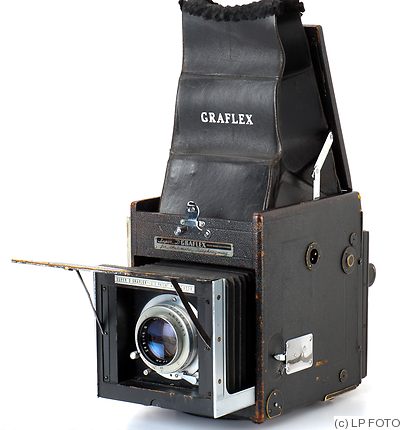
His invention was licensed by Graflex and first used on their Super D model reflex cameras. According to Camerapedia, “The RB Super D, which features a semi-automatic diaphragm, was produced in 3¼×4¼ (1941-1963) and 4 x 5 (1948-1957) formats.”

Photos taken by Torkel Korling are now in the collections of many museums around the world, and have been featured in several exhibitions. Anyone who has ever used an SLR camera owes Mr. Korling a debt of gratitude.

The Graflex RB Super D camera, which was the first to use Torkel Korling’s patented automatic diaphragm invention:

http://collectiblend.com/Cameras/images/Graflex-Revolving-Back-%28RB%29-Super-Graflex-Series-D.jpg

The April 26, 1937 cover of LIFE magazine featured a picture by Torkel Korling.

The April 26, 1937 cover of LIFE magazine featured a picture by Torkel Korling.

optipivot

optipivot2

L. Demery writes:

The blurb for “Chicago Surface Lines: The Big 5 Routes and 5 Others” (published by the Shore Line Interurban Historical Society) begins as follows:

“In 1931, the five largest Chicago Surface Lines routes, in terms of originating revenue passengers, were Ashland, Clark-Wentworth, Halsted, Madison and Milwaukee. The combined riding on these routes was greater than the total riding in many medium-sized American cities. CSL also had some very small routes in terms of ridership and they demonstrate the diversity of CSL’s operations.”

Does anyone have, or know where to find, a list of annual ridership statistics for individual CSL / CTA lines?

CSL (and other streetcar companies) did compile such statistics, no doubt about that. However, much information of this type (for US systems in general) has been lost or destroyed. Any information or “leads” re. CSL would be greatly appreciated.

Perhaps you can look at the yearly reports issued by the Board of Supervising Engineers during the CSL era?  Or, maybe our readers might have some suggestions.

Christopher J Lemm writes:

After reading your January 2015 story on the CTA Westchester Branch, the picture of the train crossing Madison street in Bellwood brought back some great memories, I grew up in that house, my grandfather was Clarence Lemm, track foreman for the Aurora and Elgin Railroad, he died in 1936. My father followed in grandpa’s footsteps, he worked at CTA 43 years, he started as a clerk and retired as the head of insurance and pensions. When my brother and I were very young my dad would take us for rides on the Aurora and Elgin, he used grandpa’s Sunset Lines employee pin and we all road free of charge. Thank you for some great memories!

Thanks for sharing those reminiscences with us. It’s great when we can help people make these sorts of connections.

John Smatlak writes:

David- Enjoyed your coverage of the former Chicago City Railway Building on South Wabash. I remember seeing one of those same CSL cast iron call boxes on the wall at Limits garage (photos attached).

Speaking of former CSL carhouses that survived into the modern era, I’d love to see some photos of the Lincoln-Wrightwood carhouse. I worked nearby around 1978-79 and went inside the building a few times. At the time it was used by the City as a garage for garbage trucks. The tracks were still in the floor and the repair bay for the streetcars was still very much intact (I even found some old CSL requisition paperwork scattered around on the floor). Sadly I never took any pictures of the building, and of course one day it was gone! I have a few images from when it was used as the temporary home for the CTA’s historic collection, but would love to see some more photos.

Keep up the good work.

CTA Limits Carhouse 8-13-86 3

CTA Limits Carhouse 8-13-86 4

Thanks. FYI, Bill Shapotkin has generously shared some photos he took in 2004 showing a 100-year-old substation originally used by the Chicago City Railway Company, which was then still being used for the Chicago Transit Authority’s South Side “L”:

A CTA substation located on the southwest corner of 42nd and Wabash, as it appeared on July 30, 2004. Constructed under authority of the Board of Supervising Engineers, Chicago Traction, it originally fed power to the streetcars. It now services the "L". View looks southwest. (William Shapotkin Photo)

A CTA substation located on the southwest corner of 42nd and Wabash, as it appeared on July 30, 2004. Constructed under authority of the Board of Supervising Engineers, Chicago Traction, it originally fed power to the streetcars. It now services the “L”. View looks southwest. (William Shapotkin Photo)

Another view of the same building looking east/southeast along the south side of 42nd Street at the back end of the building. (William Shapotkin Photo)

Another view of the same building looking east/southeast along the south side of 42nd Street at the back end of the building. (William Shapotkin Photo)

In this 2004 view, there are street signs still visible on the BOSE-built substation located on the southwest corner of 42nd and Wabash. (William Shapotkin Photo)

In this 2004 view, there are street signs still visible on the BOSE-built substation located on the southwest corner of 42nd and Wabash. (William Shapotkin Photo)

In this 2004 view, we see a Chicago Transit Authority manhole cover, located along the south side of 42nd Street between State and Wabash, in front of a still-in-service BOSE-built substation. (William Shapotkin Photo)

In this 2004 view, we see a Chicago Transit Authority manhole cover, located along the south side of 42nd Street between State and Wabash, in front of a still-in-service BOSE-built substation. (William Shapotkin Photo)

This century-old manhole cover, in the same general area as the previous pictire, still reads Chicago City Railway Company. (William Shapotkin Photo)

This century-old manhole cover, in the same general area as the previous pictire, still reads Chicago City Railway Company. (William Shapotkin Photo)

Scott Greig adds a postscript:

The pictured substation building at 42nd and Wabash is no longer an active substation. I was in there maybe 7-8 years ago, and there was no substation equipment left except the empty shells of some newer equipment. At the time it was being used for storage by CTA’s Power & Way department.


Interesting Photos

Here is a rare color shot of Chicago, South Shore & South Bend car 15, after it had been modernized in 1942. According to CERA Bulletin 41, the car had a red roof, but it looks more purple in this picture. I think the photo shows the accurate color, since a red roof would not have provided contrast with the maroon car body. I'm not sure what date the car was repainted to the much more familiar South Shore Line traction orange, but it may have been shortly after World War II. The car was originally built by Pullman in 1926.

Here is a rare color shot of Chicago, South Shore & South Bend car 15, after it had been modernized in 1942. According to CERA Bulletin 41, the car had a red roof, but it looks more purple in this picture. I think the photo shows the accurate color, since a red roof would not have provided contrast with the maroon car body. I’m not sure what date the car was repainted to the much more familiar South Shore Line traction orange, but it may have been shortly after World War II. The car was originally built by Pullman in 1926.

This rare photo of South Shore Line car 1126, signed "To Chicago, the Boulevardier," is dated February 14, 1939, although I do not know whether that is the date the picture was taken, or when it was printed. Incredibly, this car survives. As Don's Rail Photos notes, "1126 was a work motor built by Niles in 1908 as CLS&SB 73. In 1927 it was rebuilt into work motor 1126. In 1941 it was sold and converted to a house. In 1994 it was purchased for restoration from a buyer who had picked it up the month before for back taxes. He really did not want the car, just the land. Bob Harris began restoration in 2005..." According to a 2015 Chicago Tribune article, the car is now in Murphysboro, Illinois, and is 80% restored.

This rare photo of South Shore Line car 1126, signed “To Chicago, the Boulevardier,” is dated February 14, 1939, although I do not know whether that is the date the picture was taken, or when it was printed. Incredibly, this car survives. As Don’s Rail Photos notes, “1126 was a work motor built by Niles in 1908 as CLS&SB 73. In 1927 it was rebuilt into work motor 1126. In 1941 it was sold and converted to a house. In 1994 it was purchased for restoration from a buyer who had picked it up the month before for back taxes. He really did not want the car, just the land. Bob Harris began restoration in 2005…” According to a 2015 Chicago Tribune article, the car is now in Murphysboro, Illinois, and is 80% restored.

The coming of summer also means more construction and demolition projects. A four-car CA&E train is seen on the old CTA Garfield Park "L" at Ogden on October 19, 1952. Demolition of buildings for the Congress Expressway is well underway.

The coming of summer also means more construction and demolition projects. A four-car CA&E train is seen on the old CTA Garfield Park “L” at Ogden on October 19, 1952. Demolition of buildings for the Congress Expressway is well underway.

CTA red Pullman 144, long a mainstay at the Illinois Railway Museum, is shown on the Wentworth line on a May 25, 1958 CERA fantrip, less than a month before the end of all streetcar service on Chicago. (Homer G. Benton Photo) That's a 1956 Oldsmobile at left. M. E. writes, "This picture faces northwest and was taken at about 16th and Clark. The rail embankment on the left is the main line into LaSalle St. Station, at that time used by the New York Central, Nickel Plate and Rock Island. Today that line is the Metra Rock Island. The railroad viaduct crossing Clark St. behind car 144 is the Saint. Charles Air Line of the Illinois Central, which ran due west from the IC main line near the lake. Just north of that viaduct is the viaduct for the main line into Dearborn Station, which crossed Clark St. on a southwest / northeast angle before turning due north into the station. The streetcar tracks went under both viaducts on private right-of-way adjacent to the west side of Clark St. Car 144's destination sign says Vincennes - 77th, where the South Shops were then and still are today."

CTA red Pullman 144, long a mainstay at the Illinois Railway Museum, is shown on the Wentworth line on a May 25, 1958 CERA fantrip, less than a month before the end of all streetcar service on Chicago. (Homer G. Benton Photo) That’s a 1956 Oldsmobile at left. M. E. writes, “This picture faces northwest and was taken at about 16th and Clark. The rail embankment on the left is the main line into LaSalle St. Station, at that time used by the New York Central, Nickel Plate and Rock Island. Today that line is the Metra Rock Island. The railroad viaduct crossing Clark St. behind car 144 is the Saint. Charles Air Line of the Illinois Central, which ran due west from the IC main line near the lake. Just north of that viaduct is the viaduct for the main line into Dearborn Station, which crossed Clark St. on a southwest / northeast angle before turning due north into the station. The streetcar tracks went under both viaducts on private right-of-way adjacent to the west side of Clark St. Car 144’s destination sign says Vincennes – 77th, where the South Shops were then and still are today.”

Summer is coming, and along with it, summer music festivals. Here, North Shore Line car 167 is shown at the entrance to Ravinia Park. This was part of the old Shore Line Route, abandoned in 1955. There is a parking lot where the tracks used to be, although you can still ride Metra trains there. Perhaps the festival dates can help determine what year this picture was taken.

Summer is coming, and along with it, summer music festivals. Here, North Shore Line car 167 is shown at the entrance to Ravinia Park. This was part of the old Shore Line Route, abandoned in 1955. There is a parking lot where the tracks used to be, although you can still ride Metra trains there. Perhaps the festival dates can help determine what year this picture was taken.

According to Don's Rail Photos, Chicago North Shore & Milwaukee 213 "was built by Cincinnati in March 1920, #2445, as a merchandise despatch car. In 1940 it was rebuilt as a disc harrow ice cutter. It was retired in 1955 and sold to CHF as their 242. It was donated to Illinois Railway Museum in 1964." This photo by the late Bob Selle shows it newly delivered to the Chicago Hardware Foundry in North Chicago on August 7, 1955.

According to Don’s Rail Photos, Chicago North Shore & Milwaukee 213 “was built by Cincinnati in March 1920, #2445, as a merchandise despatch car. In 1940 it was rebuilt as a disc harrow ice cutter. It was retired in 1955 and sold to CHF as their 242. It was donated to Illinois Railway Museum in 1964.” This photo by the late Bob Selle shows it newly delivered to the Chicago Hardware Foundry in North Chicago on August 7, 1955.

The late Bob Selle took this great shot of an outbound Milwaukee Road commuter train leaving Union Station in Chicago on August 8, 1958. These were some of the consists I saw as a child, since I lived very close to what is now the Metra Milwaukee District West Line. Ridership was nothing compared to what it is today, and I believe bi-levels were not introduced here until around 1961-62. That's the Merchandise Mart across the Chicago River. This picture was taken from the Lake Street overpass. That looks like a 1957 Oldsmobile convertible at left.

The late Bob Selle took this great shot of an outbound Milwaukee Road commuter train leaving Union Station in Chicago on August 8, 1958. These were some of the consists I saw as a child, since I lived very close to what is now the Metra Milwaukee District West Line. Ridership was nothing compared to what it is today, and I believe bi-levels were not introduced here until around 1961-62. That’s the Merchandise Mart across the Chicago River. This picture was taken from the Lake Street overpass. That looks like a 1957 Oldsmobile convertible at left.

This photo of a Chicago & North Western train of bi-levels was taken by Al Clum in June 1962. But where? One reader writes, "The descending tracks in the foreground of the photo are leading to the North Shore Line's North Chicago Junction Station. The CNW train is on the CNW embankment between Great Lakes to the south and North Chicago to the north. Since the headlights are not turned on on the locomotive, one would presume that the train is a push-pull heading south."

This photo of a Chicago & North Western train of bi-levels was taken by Al Clum in June 1962. But where? One reader writes, “The descending tracks in the foreground of the photo are leading to the North Shore Line’s North Chicago Junction Station. The CNW train is on the CNW embankment between Great Lakes to the south and North Chicago to the north. Since the headlights are not turned on on the locomotive, one would presume that the train is a push-pull heading south.”

Former Chicago Surface Lines mail car 6, built in 1891, as it looked on May 25, 1958. This car is now at the Fox River Trolley Museum. You can see a black-and-white photo of this car, taken at the same time as this one, in our previous post Throwback Thursday (January 7, 2016). To see a picture of West Chicago Street Railway car 4, also taken the same day, there's one in our post Chicago Streetcars In Color (February 22, 2015).

Former Chicago Surface Lines mail car 6, built in 1891, as it looked on May 25, 1958. This car is now at the Fox River Trolley Museum. You can see a black-and-white photo of this car, taken at the same time as this one, in our previous post Throwback Thursday (January 7, 2016). To see a picture of West Chicago Street Railway car 4, also taken the same day, there’s one in our post Chicago Streetcars In Color (February 22, 2015).

Busy action at an Illinois Terminal station, but where? Perhaps the bus sign might be a clue. This type of scene was once commonplace in American life during the first half of the 20th century. PS- Don Ross says this is Springfield.

Busy action at an Illinois Terminal station, but where? Perhaps the bus sign might be a clue. This type of scene was once commonplace in American life during the first half of the 20th century. PS- Don Ross says this is Springfield.

My guess is that this picture shows the final interurban run on the Illinois Terminal, and this man may be the president of the railroad. If so, the date is March 3, 1956. (Glenn L. Sticken Photo) There is another photo of that same train, taken by the same photographer, in our earlier post Historic Chicago Buses, Part Three (November 23, 2015). Update: The young man at rear in the photo (Carter Morris, Sr.) informs me that the man in the foreground is none other than Maury Klebolt (1930-1988), head of the Illini Railroad Club, who organized many fantrips in the 1950s (and who later helped start the San Francisco Trolley Festival). The man standing behind him is Howard B. Morris (1909-1993), his father.

My guess is that this picture shows the final interurban run on the Illinois Terminal, and this man may be the president of the railroad. If so, the date is March 3, 1956. (Glenn L. Sticken Photo) There is another photo of that same train, taken by the same photographer, in our earlier post Historic Chicago Buses, Part Three (November 23, 2015). Update: The young man at rear in the photo (Carter Morris, Sr.) informs me that the man in the foreground is none other than Maury Klebolt (1930-1988), head of the Illini Railroad Club, who organized many fantrips in the 1950s (and who later helped start the San Francisco Trolley Festival). The man standing behind him is Howard B. Morris (1909-1993), his father.

Illinois Terminal car 241 at the Museum of Transportation in St. Louis in February 1958. Don's Rail Photos says, "241 was built by American Car & Foundry in July 1907, #5080. It went to the National Museum of Transport on July 25, 1950."

Illinois Terminal car 241 at the Museum of Transportation in St. Louis in February 1958. Don’s Rail Photos says, “241 was built by American Car & Foundry in July 1907, #5080. It went to the National Museum of Transport on July 25, 1950.”

The last run of the Illinois Terminal interurban, shown here in Carlinville, took place on March 3, 1956. Older equipment like car 284 was used instead of the railroad's relatively new streamliners. The black bunting draped on this car is now at the Illinois Railway Museum.

The last run of the Illinois Terminal interurban, shown here in Carlinville, took place on March 3, 1956. Older equipment like car 284 was used instead of the railroad’s relatively new streamliners. The black bunting draped on this car is now at the Illinois Railway Museum.

Illinois Terminal 276 and 530 on a 1955 fantrip in Urbana.

Illinois Terminal 276 and 530 on a 1955 fantrip in Urbana.

The final passenger train on the Illinois Terminal Railroad makes a station stop in Girard, March 2, 1956. (Dale Jenkins Collection)

The final passenger train on the Illinois Terminal Railroad makes a station stop in Girard, March 2, 1956. (Dale Jenkins Collection)

This old postcard photo, which shows obvious signs of being retouched, shows the Fifth Avenue station on the AE&C (later CA&E), most likely in the early 1900s when it was new. We are looking west, and it appears the area was not that built up yet. Contrast this with pictures of the same station in the interurban's waning days, in our post A Cold Last Ride (January 25, 2016). The postcard itself was printed by William G. Hoffman of 4340 Jackson Boulevard in Chicago, apparently no relation to the late railfan photographer Bill Hoffman.

This old postcard photo, which shows obvious signs of being retouched, shows the Fifth Avenue station on the AE&C (later CA&E), most likely in the early 1900s when it was new. We are looking west, and it appears the area was not that built up yet. Contrast this with pictures of the same station in the interurban’s waning days, in our post A Cold Last Ride (January 25, 2016). The postcard itself was printed by William G. Hoffman of 4340 Jackson Boulevard in Chicago, apparently no relation to the late railfan photographer Bill Hoffman.

New Site Additions

This picture has been added to our previous post West Towns Streetcars in Black-and-White (August 4, 2015):

Chicago & West Towns 142 at the east end of the Lake Street line at Austin Boulevard on July 4, 1946. The building at right is the old Park Theatre. This is a "sister" car to the 141, now preserved in operating condition at the Illinois Railway Museum.

Chicago & West Towns 142 at the east end of the Lake Street line at Austin Boulevard on July 4, 1946. The building at right is the old Park Theatre. This is a “sister” car to the 141, now preserved in operating condition at the Illinois Railway Museum.

This photo has been added to our post West Towns Streetcars in Color (February 10, 2015):

Chicago & West Towns Railways car 112 heads south at Harlem and Cermak on August 17, 1947.

Chicago & West Towns Railways car 112 heads south at Harlem and Cermak on August 17, 1947.

Tokens of Our Esteem

The North Shore Line Milwaukee terminal in January 1963.

The North Shore Line Milwaukee terminal in January 1963.

We’ve reached our one-year anniversary, and have successfully renewed our Internet domain for another year, thanks to your generous contributions. Over the past year, many people have made contributions here, and not always financial.

I like to think of The Trolley Dodger as a place where we can all share information, discuss various topics and learn things together. As I’ve said before, I learn a lot from our readers and the things they choose to share with us. Coming here is like taking a stroll through a curiosity shop, and today we have lots of curios to share with you.

With the 53rd anniversary of the abandonment of the North Shore Line coming up on Thursday (the 21st), we have included a few pictures from the final days of that great electric interurban railway that once ran between Chicago and Milwaukee.

If you can shed any light on some of today’s mysteries, we would love to hear from you. You can make a comment on this page or drop us a line directly at:

thetrolleydodger@gmail.com

Thanks.

-David Sadowski

PS- We will continue our birthday celebration with another collection of great images in our next post, so watch this space.

Thanks to the generous donations from our readers, we have renewed our domain for another year. The various photos in today's post are but tokens of our esteem.

Thanks to the generous donations from our readers, we have renewed our domain for another year. The various photos in today’s post are but tokens of our esteem.


Help Support The Trolley Dodger

gh1

This is our 112th post, and we are gradually creating a body of work and an online resource for the benefit of all railfans, everywhere. To date we have received 114,000 page views from over 32,000 visitors.

You can help us continue our original transit research by checking out the fine products in our Online Store. You can make a donation there as well.

As we have said before, “If you buy here, we will be here.”

We thank you for your support.


More Off-Street Loops

Andre Kristopans has a few additions to the very comprehensive list of Chicago’s off-street streetcar and bus turnaround loops he shared with us recently:

A few additions:

Roosevelt/Monitor – abandoned 09/28/08 when lease expired and renewal could not be negotiated

Madison/Springfield – 07/16/1890 out 12/13/53 originally for cable cars

118th/Burley – 4/8/45 to 7/1/47 – this was an odd situation. Both 118th and Burley were “dedicated streets”, but only Burley was paved. the “terminal” which had been a passing siding, was thus on open track. In addition, after 10/21/46, when Ewing-Brandon was bussed, only the South Chicago cars ended there, basically in the middle of nowhere, next to a tavern.

Canal between Harrison and Polk – 2/7/72 to 10/1/81 – an exclusive counterflow lane for Taylor/Sedgwick buses after the Polk St bridge was closed.

Cortland/Paulina – 9/1/47 to 4/17/59 – apron of old Noble Carhouse used by Southport buses until it was about to be torn down

Pulaski/21st – 4/26/04 to 6/16/08 – part of rebuilt Pulaski L station, not used after Ogden bus cut back to California

Blue Island/Leavitt 7/27/1893 to 7/20/06 – terminal for Blue Island cable cars adjacent to Blue Island carhouse

Corcoran/Menard – 10/26/27 to 5/19/47 – CMC is said to have had an off-street terminal here for Washington buses, but no good description has survived. 1938 aerial photo shows nothing obvious, so it might have involved wyeing by backing into a driveway.

Another subcategory– Counterflow lanes:

Madison between Desplaines and Michigan, Washington between Michigan and Jefferson 9/13/81 to 9/8/85

Adams between Jefferson and Michigan, Jackson between Michigan and Jefferson 8/31/80 to 4/20/86 (note – one block on Adams between Jefferson and Clinton not put into use until 2/1/81 account construction at the corner of Jefferson and Adams)

Canal between Randolph and Washington (NW Station) 6/22/64, extended to Lake St 7/20/81 to 8/5/87

Canal between Adams and Jackson (Union Station) 5/14/69, moved to NB exclusive lane on east side of Canal 8/31/80, returned to SB on west side of Canal 4/20/86. (note – replaced use of River Drive between Adams and Jackson which had been used since 6/22/64, however River Drive was actually a cab drive and therefore not an “off street terminal” in the strict sense, even though cars were not supposed to use it.


About that previous list, Daniel Joseph writes:

The only addition I can add to this complete list is the terminal on Sherman between Church and Davis inherited from Evanston Bus Company.


Andre replies:

Don’t know much about it. Basically, EBC loaded along regular curb until city of Evanston “streetscaped” the street in late 60’s or so, leaving a short piece of original curb for buses to load while rest of street in the two blocks between Clark and Davis was substantially narrowed and sidewalks widened. Orrington was done at the same time, as were parts of Church and Davis. Last buses that could have used the cut-out would have been the N201. Sort of what was done much later to Benson between Church and Davis. The “bus lane” is the original right lane.


The North Shore Line in January 1963, shortly before the end.

The North Shore Line in January 1963, shortly before the end.

North Shore Line freight loco 459 heads up a train in January 1963.

North Shore Line freight loco 459 heads up a train in January 1963.

A Silverliner and an Electroliner at the North Shore Line's Milwaukee terminal in January 1963.

A Silverliner and an Electroliner at the North Shore Line’s Milwaukee terminal in January 1963.

An Electroliner on the Chicago "L" in July 1962. Not sure of the exact location, but I assume this is Roosevelt Road where the NSL had free reign between 1949 and 1963 (CTA trains ran through the nearby subway then).

An Electroliner on the Chicago “L” in July 1962. Not sure of the exact location, but I assume this is Roosevelt Road where the NSL had free reign between 1949 and 1963 (CTA trains ran through the nearby subway then).

CNS&M electric locos 458 and 455 in July 1962.

CNS&M electric locos 458 and 455 in July 1962.

North Shore Line 712 at Roosevelt Road in July 1962.

North Shore Line 712 at Roosevelt Road in July 1962.

Ad touting 349 new trolley coaches ordered for the Chicago Transit Authority, 1951.

Ad touting 349 new trolley coaches ordered for the Chicago Transit Authority, 1951.

An unusual Chicago Surface Lines supervisor's badge just sold for $80 on eBay. I was not the buyer.

An unusual Chicago Surface Lines supervisor’s badge just sold for $80 on eBay. I was not the buyer.

cslbadge2

cslbadge3

cslbadge4

This 1886 trade magazine includes an article detailing how the LaSalle Street cable car tunnel under the Chicago River was being expanded and upgraded.

This 1886 trade magazine includes an article detailing how the LaSalle Street cable car tunnel under the Chicago River was being expanded and upgraded.

lasalletunnel2

lasalletunnel3

San Francisco cable car 524 at the Chicago Railroad Fair on June 21, 1949. (Jeff Marinoff Collection) One of our readers notes, "Most of the gentlemen shown in transit uniforms appear to be wearing caps that have the Chicago Surface Lines cap badge on them in spite of the fact that according to the date on the photo the CTA had been in existence for almost two years. The guy with the coin changer might be wearing a CTA cap badge of the period." Interesting. Guess things didn't get replaced immediately. "They were also slow to slap the CTA decals on some of the streetcars too."

San Francisco cable car 524 at the Chicago Railroad Fair on June 21, 1949. (Jeff Marinoff Collection) One of our readers notes, “Most of the gentlemen shown in transit uniforms appear to be wearing caps that have the Chicago Surface Lines cap badge on them in spite of the fact that according to the date on the photo the CTA had been in existence for almost two years. The guy with the coin changer might be wearing a CTA cap badge of the period.” Interesting. Guess things didn’t get replaced immediately. “They were also slow to slap the CTA decals on some of the streetcars too.”

A Marion (Indiana) Birney car circa 1940.

A Marion (Indiana) Birney car circa 1940.

South Shore Line #15 in an unusual paint scheme on a 1954 fantrip.

South Shore Line #15 in an unusual paint scheme on a 1954 fantrip.

CSS&SB 106 heads up a two-car train going east from the South Shore's old South Bend terminal. This street running was eliminated in 1970 when the line was cut back to Bendix at the outskirts of town. Since then, it has been extended to the local airport.

CSS&SB 106 heads up a two-car train going east from the South Shore’s old South Bend terminal. This street running was eliminated in 1970 when the line was cut back to Bendix at the outskirts of town. Since then, it has been extended to the local airport.

George Foelschow: "The latest Trolley Dodger installment, which included a photo of a South Shore Line train on East LaSalle Avenue in South Bend, reminded me of a watercolor painting I acquired before moving from Chicago in 1978. The artist is David Tutwiler and the painting is dated (19)77. It depicts a similar scene. I thought you may want to share it with Trolley Dodger readers." Thanks, George!

George Foelschow: “The latest Trolley Dodger installment, which included a photo of a South Shore Line train on East LaSalle Avenue in South Bend, reminded me of a watercolor painting I acquired before moving from Chicago in 1978. The artist is David Tutwiler and the painting is dated (19)77. It depicts a similar scene. I thought you may want to share it with Trolley Dodger readers.” Thanks, George!

The same location today.

The same location today.

South Shore Line cars 28 and 19 at the Randolph Street station in downtown Chicago in March 1978. By then, these cars were more than 50 years old and had but a few more years to run. That's the Prudential Building in the background. Since then, this station has been rebuilt and is now underneath Millennium Park.

South Shore Line cars 28 and 19 at the Randolph Street station in downtown Chicago in March 1978. By then, these cars were more than 50 years old and had but a few more years to run. That’s the Prudential Building in the background. Since then, this station has been rebuilt and is now underneath Millennium Park.

This is where the Lehigh Valley Transit’s Liberty Bell Limited interurban cars went up a ramp to an elevated connection with the Philadelphia & Western in Norristown. This photo of car 710 is from 1944. The ramp, a few blocks long, was torn down in 1954. The interurban quit in 1951, which made it superfluous.

This is where the Lehigh Valley Transit’s Liberty Bell Limited interurban cars went up a ramp to an elevated connection with the Philadelphia & Western in Norristown. This photo of car 710 is from 1944. The ramp, a few blocks long, was torn down in 1954. The interurban quit in 1951, which made it superfluous.

As you can see from this current photo of Swede Street in Norristown, the elevated section in the previous picture continued a few blocks from the present terminus of the former P&W, running all the way to the domed building at rear. Once the LVT interurban quit in 1951, it was no longer needed and was torn down a few years later.

As you can see from this current photo of Swede Street in Norristown, the elevated section in the previous picture continued a few blocks from the present terminus of the former P&W, running all the way to the domed building at rear. Once the LVT interurban quit in 1951, it was no longer needed and was torn down a few years later.

An interesting and unusual fate for a Philadelphia PCC-- being turned into an ice cream stand. This picture was taken in 2002. Jeff Marinoff adds, "The Philadelphia PCC car is still at the Trolley Car Diner on Germantown Avenue in Mt. Airy. The car is not a diner, however. The car is an ice cream stand. You don't sit on the car, you walk up to a window and get your order."

An interesting and unusual fate for a Philadelphia PCC– being turned into an ice cream stand. This picture was taken in 2002. Jeff Marinoff adds, “The Philadelphia PCC car is still at the Trolley Car Diner on Germantown Avenue in Mt. Airy. The car is not a diner, however. The car is an ice cream stand. You don’t sit on the car, you walk up to a window and get your order.”

Gwen Deanne writes: "My mother wearing the most fabulous shoes ever, and my brother exercising his "open carry" rights as a youngster bringing a BB gun on the train. This is 100% Chicago, but which station, I don't now. Perhaps you can figure it out. They lived on North Talman at the time, but Nana lived in Wicker Park. They could have been going anywhere. Taken by my Dad. The next brother was born, and not pictured. He may be with Nana, or Auntie Olga." Mike Murray: " That's the Ardmore station of the Chicago, Aurora, & Elgin Railroad, facing east in Villa Park. The station is still there, but the railroad quit passenger service on July 3, 1957. Much of the route is now the Prairie Path. The silver water tower in the distance is the Ovaltine Factory." Here is another picture of the same station: http://www.greatthirdrail.org/stations/main/ardmore.html (Photo from the Gwen Deanne Collection, used by permission)

Gwen Deanne writes: “My mother wearing the most fabulous shoes ever, and my brother exercising his “open carry” rights as a youngster bringing a BB gun on the train. This is 100% Chicago, but which station, I don’t now. Perhaps you can figure it out. They lived on North Talman at the time, but Nana lived in Wicker Park. They could have been going anywhere. Taken by my Dad. The next brother was born, and not pictured. He may be with Nana, or Auntie Olga.” Mike Murray: ” That’s the Ardmore station of the Chicago, Aurora, & Elgin Railroad, facing east in Villa Park. The station is still there, but the railroad quit passenger service on July 3, 1957. Much of the route is now the Prairie Path. The silver water tower in the distance is the Ovaltine Factory.” Here is another picture of the same station:
http://www.greatthirdrail.org/stations/main/ardmore.html (Photo from the Gwen Deanne Collection, used by permission)

This 1955 photo's a bit of a mystery. Could this be Wheaton? William Barber: "Yes, this is Wheaton at the grade crossing immediately east of the depot." Bill Shapotkin: "This pic is Cross St, Wheaton. View looks east."

This 1955 photo’s a bit of a mystery. Could this be Wheaton? William Barber: “Yes, this is Wheaton at the grade crossing immediately east of the depot.” Bill Shapotkin: “This pic is Cross St, Wheaton. View looks east.”

CA&E freight and passenger trains in Elmhurst in this November 5, 1949 view. (Gordon E. Lloyd Photo) Bill Shapotkin: "This pic is just east of Mannhiem Rd. The frt locos are on the CA&E/IHB interchange. While technically near Butterfield Rd, it is nowhere near Roosevelt Rd." (Roosevelt and Butterfield was written on the back of the photo, apparently in error. This was not uncommon when the photographer was from out of town.)

CA&E freight and passenger trains in Elmhurst in this November 5, 1949 view. (Gordon E. Lloyd Photo) Bill Shapotkin: “This pic is just east of Mannhiem Rd. The frt locos are on the CA&E/IHB interchange. While technically near Butterfield Rd, it is nowhere near Roosevelt Rd.” (Roosevelt and Butterfield was written on the back of the photo, apparently in error. This was not uncommon when the photographer was from out of town.)

The CA&E Wheaton Yard. This photo was dated as the 1950s but looks to be earlier.

The CA&E Wheaton Yard. This photo was dated as the 1950s but looks to be earlier.

The CA&E Elgin terminal.

The CA&E Elgin terminal.

The same location as the previous photo, early 1950s.

The same location as the previous photo, early 1950s.

CA&E 405 at Spring Road in Elmhurst. Dig that phone booth.

CA&E 405 at Spring Road in Elmhurst. Dig that phone booth.

CA&E 406, in this 1957 picture, is identified as being at Fifth Avenue in Maywood. Perhaps one of our keen-eyed readers can confirm this. Bill Shapotkin: "This pic NOT anywhere near Maywood. It is WEST of Hill Ave (aka Glen Oak Rd) in Glen Ellyn. Beyond the bridge is the Glen Oak station. View looks east."

CA&E 406, in this 1957 picture, is identified as being at Fifth Avenue in Maywood. Perhaps one of our keen-eyed readers can confirm this. Bill Shapotkin: “This pic NOT anywhere near Maywood. It is WEST of Hill Ave (aka Glen Oak Rd) in Glen Ellyn. Beyond the bridge is the Glen Oak station. View looks east.”

A CA&E pocket map made by Roy G. Benedict in 1958, when the "Roarin' Elgin" had already abandoned passenger service (except for charters) but was still running freight. Roy mimeographed these and sold them to aspiring railfans. He has made many additional maps since, and has had a successful career in the publishing industry. The Forest Park loop shown at the bottom of this page is where the next picture in this post was taken.

A CA&E pocket map made by Roy G. Benedict in 1958, when the “Roarin’ Elgin” had already abandoned passenger service (except for charters) but was still running freight. Roy mimeographed these and sold them to aspiring railfans. He has made many additional maps since, and has had a successful career in the publishing industry. The Forest Park loop shown at the bottom of this page is where the next picture in this post was taken.

photo016

CA&E 409 and 414 on the turnback loop in Forest Park in 1957.

CA&E 409 and 414 on the turnback loop in Forest Park in 1957.

Trolley Dodger Mailbag, 10-18-2015

Here's a real mystery photo for you. This very worn looking city streetcar is definitely lettered for the Chicago, Aurora & Elgin and appears to be at Wheaton Shops. Where did it come from and how did CA&E use it on the interurban? See answers below.

Here’s a real mystery photo for you. This very worn looking city streetcar is definitely lettered for the Chicago, Aurora & Elgin and appears to be at Wheaton Shops. Where did it come from and how did CA&E use it on the interurban? (See answers below.)

Mystery Photo Answers

Opus1100 writes:

Interesting mystery photo. It is CA&E #500 acquired in 1927 to replace standard cars on the Batavia Branch. As you can see from the photo does not appear to have been a success. It was loaned to the North Shore to help alleviate equipment needs during the war. It operated in city service as CN # 361…a brief history of this car can be found in Don Ross rail pictures of North Shore Line city cars. Due to the differences in mechanical equipment it was not popular during use on the North Shore. Another mystery surrounding this car is how it was moved from the CA&E to the North Shore…since it was 3rd rail equipped it could have traveled on the L but as far as I know this has never been confirmed.

As Ed Halstead has noted (see comment below):

The August 2013 issue of “First & Fastest” had a great article “A Secornd Hand Rose” regarding the CA&E 500/NSL 361. Included in the article is a photo of the CA&E 500 loaded on a flat car on its way to the NSL.

The article answers any questions you may have regarding the CA&E 500.

According to Don’s Rail Photos:

There was one additional car which almost fits into this series. Car 361 was built by St. Louis Car in 1927, just like the 350s, but it had different motors, control, and braking equipment. It was built as 500 for the Chicago Aurora & Elgin. It was used to replace standard interurban cars on the Batavia branch, but it quickly proved to be unsatisfactory. It was retired and placed in storage until June 1942, when it was leased to the North Shore. It was repainted and renumbered and put into Waukegan service. After the war, it was purchased by the North Shore in March 1947. It was quickly retired and scrapped in 1948.

So, the photo showing the car out in Wheaton lettered for CA&E must date to around 1941, probably just prior to it being leased to the North Shore Line. Thanks to everyone who contributed.

If you use the above link to Don Ross’ web site you can see a couple other pictures of car 500/561.

Recent Correspondence

Mike Murray writes:

First off, I want to thank you for your continuing efforts to bring transit history to the web on your blog. I love seeing every new posting.

I hate to be the guy that suggests things but doesn’t do them himself, but I’d love to see a post about the 3rd rail-powered Com Ed line that ran on the city’s north side. John Smatlak has a website dedicated to it, but I’ve never seen much in the way of photos of the line in operation:

http://www.railwaypreservation.com/northwest_station.htm

I asked George Kanary and Bruce Moffat, but neither had knowledge of any such photos. You seem to have a knack for finding things, or perhaps have a wider circle of friends that are railfans, and thought you might be able to track down more photos than those on the website.

John’s website is pretty thorough, so maybe there isn’t much more to be known about this line, but if there is, I’d love to see more about it.

Thanks again for all that you’re doing.

While I don’t have any such photos myself, perhaps some of our readers might have more information, thanks.

In our post Railfan Ephemera (August 26th), we show a flyer from the early days of the Illinois Railway Museum circa 1959, seeking funds to purchase Chicago, Aurora & Elgin car 309, referred to as the “jewel of the fleet.” We asked Frank Hicks, of the excellent Hicks Car Works blog, why this car in particular was so highly regarded out of all the ones that could have been saved (and it was eventually purchased by IRM, where it remains today).

Here is his reply:

By 1957 the 309 was one of the least-modernized cars in the CA&E fleet. Right up until the end of service it retained its stained-and-varnished mahogany trim, long after most of the cars had seen the entirety of their interiors painted over with some shade of green or tan. Remember too that only cars 309-321 had interior stained glass windows at this time (earlier cars didn’t have double-sash stained glass windows), and most of the Kuhlmans and Jewetts (as well as the 310) had their stained glass windows painted over on the inside.

There were a couple of other Kuhlmans and Jewetts that still had unpainted stained glass windows and trim (318 comes to mind) but the 309 was an older car that hewed more closely to the lines of the original fleet. It was also from a local, and unusual, builder and it had the same electrical equipment as the 1902 fleet, unlike the Kuhlmans and Jewetts which were built with newer equipment. The CA&E didn’t have anything particularly more opulent – no office cars or parlor cars by that time – so why not refer to the 309 as the jewel of the fleet?

More Railfan Ephemera

We recently acquired some items from the early days of Central Electric Railfans’ Association. The seller indicated that some of these were once part of the CERA office files, which were apparently sold off in three different batches during the 1940s and 50s. This story is probably true since one item is a voided out sample fantrip ticket, numbered 0000, and previously unknown. The envelope mailed to a soldier came from a different source. (Please note that Trolley Dodger Press is not affiliated with Central Electric Railfans’ Association.)

These documents shed additional light on the history of that venerable organization and its members. We hope that you will enjoy them. Chances are there are still more additional early documents out there remaining to be discovered.

-David Sadowski

This brochure is for CERA fantrip #9, which included not only the South Shore Line but the Northern Indiana Railway.

This brochure is for CERA fantrip #9, which included not only the South Shore Line but the Northern Indiana Railway.

You can see a CERA fantrip picture on the Northern Indiana Railway, possibly taken on this same excursion or a similar one from a year later, here: http://cera-chicago.org/Blog/3319067

You can see a CERA fantrip picture from the Northern Indiana Railway, possibly taken on this same excursion or a similar one from a year later, here:
http://cera-chicago.org/Blog/3319067

The itinerary for CERA fantrip #6, which included a trip over the CA&E Mt. Carmel branch using Chicago Rapid Transit cars. You can see a picture taken on that trip here: http://cera-chicago.org/Blog/3318973 The same photo is also reproduced on page 42 of Trolley Sparks Special #1, published by CERA in 2013 to commemorate their 75th anniversary.

The itinerary for CERA fantrip #6, which included a trip over the CA&E Mt. Carmel branch using Chicago Rapid Transit cars. You can see a picture taken on that trip here:
http://cera-chicago.org/Blog/3318973
The same photo is also reproduced on page 42 of Trolley Sparks Special #1, published by CERA in 2013 to commemorate their 75th anniversary.

A sample ticket for CERA fantrip #6.

A sample ticket for CERA fantrip #6.

CERA mailed out a copy of Trolley Sparks issue #12 to a soldier in this envelope in June 1945. The first 11 issues were put out by Barney Neuberger independently of CERA.

CERA mailed out a copy of Trolley Sparks issue #12 to a soldier in this envelope in June 1945. The first 11 issues were put out by Barney Neuberger independently of CERA.

Help Support The Trolley Dodger

This is our 87th post, and we are gradually creating a body of work and an online resource for the benefit of all railfans, everywhere. To date, we received more than 80,000 page views from nearly 24,000 individuals.

You can help us continue our original transit research by checking out the fine products in our Online Store. You can make a donation there as well.

As we have said before, “If you buy here, we will be here.”

We thank you for your support.

More Hoosier Traction

Gary Railways #17 and #3. The body of a sister car, #19, is preserved at the Illinois Railway Museum.

Gary Railways #17 and #3. The body of a sister car, #19, is preserved at the Illinois Railway Museum.

The next Hoosier Traction Meet (see below) will take place in Indianapolis on September 11 and 12, the weekend after Labor Day. We thought it would be a good idea to give that event another plug, and at the same time, this gives us an excuse to some examples of Hoosier traction from days gone by.

We are fortunate to have found some great pictures, including a couple original negatives from some of the earliest fantrips by Central Electric Railfans’ Association on Gary Railways. CERA* is one of the premier railfan organizations, and it is our considered opinion that if you are not already a member, you ought to become one.

In general the Chicago Surface Lines did not operate outside of the City of Chicago, but there was an unusual joint operation, as described by the Chicago Railfan web site:

Service into Indiana was jointly operated with the Hammond Whiting & East Chicago Railway, later Calumet Railways, and finally Chicago & Calumet District Transit Co. Originally, route duplicated Windsor Park route between 63rd St. and Stony Island and 92nd/Commercial. In 1913, route was revised to operate via South Chicago from a new terminal at 63rd St. and South Park (now King Drive), using South Park south of 63rd St. After streetcars were discontinued, Chicago & Calumet District Transit Co. continued to operate replacement bus service, while streetcar service within Illinois was replaced with South Chicago-Ewing route, which evolved into present CTA route 30.

Service into Indiana was discontinued on June 9, 1940. Fortunately, we were able to hunt up a few pictures.

Indiana Railroad car 65 was the first piece of equipment acquired by the Illinois Railway Museum (then called the Illinois Electric Railway Museum). This is a wonderful lightweight, high-speed interurban car and is a joy to ride. It has recently been fitted with reupholstered leather bucket seats.

We tracked down a picture showing sister car 63 from the IR. The only other survivor from that order is car 55, which was turned into Lehigh Valley Transit Company car 1030, now at the Seashore Trolley Museum in Maine.

Bill Shapotkin: “Gary Railways car 19 at Indiana Harbor (that is the Pennsy’s Indiana Harbor passenger station at right, by the way). taken on March 19, 1939 — the day AFTER the last day of service on the Indiana Harbor (and Hobart) lines. (See CERA Bulletin 137, Pages 229-233, which includes a similar pic to above on Page 230.)”

Gary Railways car 19 crossing the EJ&E near Valparaiso on the very first CERA fantrip, May 1, 1938. Bill Shapotkin: “This is a different vantage point to the one shown on Page 224 of CERA Bulletin 137.” The body of this car is now preserved at the Illinois Railway Museum.

Chicago Surface Lines #3219, a one-man car built by CSL, as it looked on September 8, 1940. This car had formerly been used on the line to East Chicago, Indiana, which was abandoned three months before this picture was taken. This is also known as a "maximum traction" car because of its trucks. The white stripe on the end indicated it was a one-man car. Bob Lalich says this is "106th and Indianapolis. The car is eastbound."

Chicago Surface Lines #3219, a one-man car built by CSL, as it looked on September 8, 1940. This car had formerly been used on the line to East Chicago, Indiana, which was abandoned three months before this picture was taken. This is also known as a “maximum traction” car because of its trucks. The white stripe on the end indicated it was a one-man car. Bob Lalich says this is “106th and Indianapolis. The car is eastbound.”

Chicago and Calumet District Transit Company #70, the last car to be scrapped. It was built by the St. Louis Car Company. We see it here at the Hammond Barn on September 8, 1940. These lines were abandoned in June 1940.

Chicago and Calumet District Transit Company #70, the last car to be scrapped. It was built by the St. Louis Car Company. We see it here at the Hammond Barn on September 8, 1940. These lines were abandoned in June 1940.

Chicago and Calumet District Transit Company #70 at Hammond in February 1939.

Chicago and Calumet District Transit Company #70 at Hammond in February 1939.

A Chicago and Calumet District transfer.

A Chicago and Calumet District transfer.

Hammond, Whiting and East Chicago car 74.

Hammond, Whiting and East Chicago car 74.

Indiana Railroad lightweight high-speed interurban car 63 at Bluffton in 1936. (C. Edward Hedstrom, Sr. Photo) Car 65, a sister to this one, is preserved in operable condition at the Illinois Railway Museum.

Indiana Railroad lightweight high-speed interurban car 63 at Bluffton in 1936. (C. Edward Hedstrom, Sr. Photo) Car 65, a sister to this one, is preserved in operable condition at the Illinois Railway Museum.

-David Sadowski

PS- We occasionally add photos to old posts. Here are a couple of recent examples:

This photo was added to Trolley Dodger Mailbag, 8-12-2015, since it goes along with the photos of the Chicago, Ottawa and Peoria.

Chicago and Joliet Electric Railway #242, shown at the Archer and Cicero station in Chicago in September 1933. (Robert V. Mehlenbeck Photo) Mehlenbeck was member #11 of Central Electric Railfans’ Association. According to Don’s Rail Photos, “242 was built by Cummings Car & Coach Co in 1927.” Service on this line, which connected to the Chicago, Ottawa & Peoria, was abandoned on November 16, 1933.

Somehow we managed to leave this photo out of our recent post A North Shore Line Potpourri, Part Two:

CNS&M 168 heads up a three-car Chicago Local on the Shore Line Route, stopping at Linden Avenue in Wilmette. The date is February 11, 1939.

CNS&M 168 heads up a three-car Chicago Local on the Shore Line Route, stopping at Linden Avenue in Wilmette. The date is February 11, 1939.

It would be interesting to know whether the train is heading north or south. Going north, it would turn west onto street running on Greenleaf Avenue before turning north to run parallel with the Chicago & North Western. Heading south, it would begin running over the Chicago “L” system’s Evanston route. I am sure one of our keen-eyed readers can provide the answer.

Val Ginter writes:

The question on the page had to do with the direction of the train. I haven’t been there in many, many years; however, it looks like the train is northbound, and will turn left–or to our right–onto Greenleaf Avenue, where it will travel in the middle of the street for about three-fourths of a mile, before turning north onto its own right-of-way and the Wilmette station. I miss that whole thing: a big bite out of the Chicagoland apple.

On the other hand, Myron Moyano says:

Relative to the direction of the train at Linden Avenue on the Shore Line Route, take a close look at the angle of the sun and also the destination sign of the lead car. The picture is looking north at a southbound train.

The building at left in the North Shore Line picture is still there, located just north of where the CTA line ends at Linden Avenue. This proves the photographer was indeed looking north and the train was heading southbound.

The building at left in the North Shore Line picture is still there, located just north of where the CTA line ends at Linden Avenue. This proves the photographer was indeed looking north and the train was heading southbound.

So now we have a real difference of opinion. They can’t both be right.


HOOSIER TRACTION 2015

This September, a group of men and women will converge upon Indianapolis, IN for the annual gathering of the Hoosier Traction Meet. Considered by many to be the premier event of its kind, this conference of interested enthusiasts, historians, published authors and rail and transit professions consists of two complete days of audio/visual presentations on the history, operation and technology of electric railway and transit operations throughout the Midwest. In addition to the numerous auditorium events, there is an exhibition of electric rail and transit, where items of interest from transfers and photographs to fare boxes and operating models are for sale.

This year marks the 32nd annual Hoosier Traction Meet. Founded by Dr. Howard Blackburn, the Hoosier Traction Meet features, in addition to its auditorium events and exhibition hall, a opportunity for those interested in electric railway and transit to exchange ideas and swap stories with old acquaintances and meet new friends.

Allow me to take this opportunity to cordially invite each and every one of you to this special event — an event which has been the rail and transit highlight of my year for nearly twenty years. Attached you will find a copy of the Prospectus for this year’s gathering. Note that by mailing in your reservation in advance, the admission price is half that paid at the door — now that’s a bargain in anybody’s book! In addition, there are numerous restaurants and shops nearby, allowing plenty of opportunities to and have lunch or supper with your fellow enthusiasts.

Please consider joining us for this year’s event.

Wm Shapotkin
Auditorium Manager
Hoosier Traction Meet

Mr. Shapotkin is co-author of Faster Than the Limiteds:
The Story of the Chicago – New York Electric Air Line Railroad
and Its Transformation into Gary Railways

Central Electric Railfans’ Association* Bulletin 137

By Dr. Thomas R. Bullard and William M. Shapotkin

Published in 2004 – now out of print

*Trolley Dodger Press is not affiliated with Central Electric Railfans’ Association.


As an added bonus, here is some authentic 1920s jazz, courtesy of Bix Beiderbecke. Although the legendary Bix (1903-1931) hailed from Iowa, he did spend at least one summer blowing his cornet (which is now in the collection of the Chicago History Museum as far as I know) at Hudson Lake in Indiana, and I’m sure he got there via what we now know as the South Shore Line interurban.

The Trolley Dodger Online Store

Railroad Record Club disc #13.

Railroad Record Club disc #13.

FYI, we now have an online store, where you can purchase historic railfan audio recordings on compact discs. We will update our catalog as additional titles become available, and you can also find our online store via a link on our home page. We can accept orders for both US and international shipment.

Payment can be made via PayPal, or credit and debit cards. Credit card processing is done via a secure third-party vendor and you will not be sharing any of your credit card information with us.

You can now also make a donation towards keeping this website going, and help us continue to offer you the finest historic railfan photographs available, and the important research we are doing. We thank you in advance for your purchases and your support.

If you prefer to pay by check sent through the mail, drop us a line and we will give you the particulars.

Please note that Illinois residents must pay 9.25% sale tax on their purchases.

Thanks.

-The Trolley Dodger

Historic Audio Recordings on Compact Disc

The Trolley Dodger is making some historic public domain audio recordings available once again, digitally remastered to compact discs. All recordings are new digital transfers made in 2015 using the newest and most advanced technology. These “orphan works” were originally issued on vinyl in the 1950s and 1960s and have been out of print for a long time.

Our intention is to eventually reissue the entire output of the long-defunct Railroad Record Club. If you can assist with this effort, helping us find additional recordings that can be transferred, please contact us at: thetrolleydodger@gmail.com

These prices include shipping within the United States. If you need international shipping, there is an additional $5 charge per order that you can add to your shopping cart using one of the buttons below.

You can find detailed information on each RRC recording via our discography.

Most single discs include approximately 60 minutes of hi-fi audio. Orders will be shipped by either USPS First Class or Media Mail. All items on this list are in stock and available for immediate shipment. A copy of the original liner notes for each record will be enclosed.


RRC #02 and 25 (Traction)
Waterloo, Cedar Falls & Northern, Southern Iowa Railway
Illinois Terminal Railroad
# of Discs – 1
Price: $14.95


RRC #06 and 27 (Traction)
Potomac Edison (Hagerstown & Frederick)
Capital Transit Company
# of Discs – 1
Price: $14.95


RRC #07 and 13 (Steam)
Norfolk & Western, Illinois Central (also includes a bit of Illinois Terminal Railroad traction)
Nickel Plate Road
# of Discs – 1
Price: $14.95


RRC #11 (Traction)
Shaker Heights Rapid Transit
# of Discs – 1
Price: $7.95

This recording is being offered at a reduced price since it is only about 30 minutes long. We expect to pair it up with an additional recording in the future.


RRC #14 and SP6 (Traction)
Pacific Electric
The Milwaukee Road (electric freight)
# of Discs – 1
Price: $14.95


RRC #18 and 26 (Traction)
Chicago, North Shore & Milwaukee (passenger)
Chicago, North Shore & Milwaukee (freight)
# of Discs – 1
Price: $14.95


RRC #35 and 36 (Traction)
Milwaukee & Suburban Transport, Chicago, North Shore & Milwaukee
Chicago, Aurora & Elgin, Chicago Transit Authority
# of Discs – 1
Price: $14.95


RRC #SP4 (Traction)
Chicago, South Shore & South Bend Railroad
# of Discs – 2
Price: $19.95

This two-disc set contains about 90 minutes of audio and documents an entire 1962 trip on the South Shore Line between Chicago and South Bend.


IM (Traction)
Interurban Memories
# of Discs – 1
Price: $14.95

Interurban Memories includes approximately 46 minutes of hi-fi audio of the Pacific Electric and the North Shore Line in their twilight years 1959-1960. This was originally issued on LP by a record company that has long been out of business.


International Shipping Surcharge
Price: $5.00 USD

For use on orders that will be shipped outside the United States. Orders will be shipped via USPS First Class International.


Donations

In order to continue giving you the kinds of historic railroad images that you have come to expect from The Trolley Dodger, we need your help and support. It costs money to maintain this website, and to do the sort of historic research that is our specialty. Your financial contributions help make this possible and are greatly appreciated.

img768

img769