A Window to the World of Streetcars

Screen Shot 06-11-16 at 11.49 AM.PNG

Screen Shot 06-11-16 at 11.50 AM.PNG

Screen Shot 06-11-16 at 11.51 AM.PNG

Ask Geoffrey: A Look Back at Chicago’s Streetcar Era

Andy Warhol once said that in the future, everyone will be “famous for 15 minutes.” Last night’s “Ask Geoffery” segment on WTTW’s Chicago Tonight news magazine program only lasted about 8 minutes, but I found it pretty memorable nonetheless.

After all, the segment was entirely devoted to Chicago streetcars, and a book I co-authored (Chicago Streetcar Pictorial: The PCC Car Era, 1936-1958, published by Central Electric Railfans’ Association as their 146th Bulletin) was prominently featured. At one point WTTW’s Geoffrey Baer held the book aloft and talked about all the great pictures that are in there, not only of Chicago streetcars, but the places they ran through.

If you want to know what Chicago really looked like back in the 1940s and 1950s, this book is a good place to start.

If you’re reading this message, there’s a chance you already have your copy of B-146. But if not, I think it is an excellent book and urge you to purchase one directly from CERA or their dealers.* Of course, as one of the authors, I am a bit prejudiced.

If that was my only connection to last night’s broadcast, I would be chuffed. However, while I played no part in the creation of this segment, my fingerprints were also there on other parts of it.

Some of the other pictures featured were things I posted to The Trolley Dodger, or to the CERA Members’ Blog. In particular, a few pictures were used from our post West Towns Streetcars in Color (February 10, 2015). Also in the West Towns segment of this piece, were several photos that I took in 2014 at the dedication of C&WT car 141 at the Illinois Railway Museum. These originally appeared in the post IRM Dedicates Chicago & West Towns Car 141 (CERA Members Blog, June 2, 2014). Those weren’t the only such photos that were used.

None of this should be too surprising. Whoever researched this piece likely did some Google searches, and this is what came up. When researching things myself, I frequently find my own posts coming up to the top of Internet searches on a variety of subjects. There were, of course, many other sources that WTTW used, including video of the last Chicago streetcar on June 21, 1958, posted by the Chicago Transit Authority.

My favorite picture from last night, that I was not connected with, is reproduced above. It shows Chicago streetcars and buses at Navy Pier, during the time when it was the temporary home of the University of Illinois.

It has always been my intention for create an accessible archive of information about transit history that people will find useful.  Last month, we had more than 12,000 page views on this blog, even though there were only three new posts.  So, a lot of people are actually looking at the older posts, which is quite gratifying.

As a short history lesson, the Chicago Tonight segment was excellent, but I do have a couple of minor caveats. They mentioned how streetcar ridership declined in the 1920s, leading to the development of the PCC car. However, streetcar ridership in Chicago actually went up in the ’20s, leading to use of trailers.

In this episode, the demise of Chicago streetcars was put on the shoulders of Walter J. McCarter, CTA’s first general manager, and dated to 1947. However, some streetcar lines were bussed before this (some as early as 1941) and the beginnings of their demise can be traced back even further than that.

The Surface Lines introduced several new routes on Chicago’s northwest side in 1930 using trolley buses, and within a short period of a few years, CSL had become a leading exponent of this form of transit. While it was stated at the time that eventually, CSL would convert these lines to streetcar as ridership increased, none were so changed.

In 1937, the City of Chicago produced a so-called “Green Book” plan for comprehensive transit improvements.** According to this plan, the City expected to replace half of Chicago’s streetcars with buses, and possibly all of them if bus technology would prove itself.

The leading author of this plan, Philip Harrington, later became the first chairman of the Chicago Transit Authority, and undoubtedly carried over these views to the CTA. While I am sure that Walter J. McCarter was an ardent foe of streetcars, a 1947 Chicago Tribune article indicated he was hired because of his success in “rubberizing” the Cleveland streetcar system.

Of course, there is no way to get into these sorts of nuances of history in an 8 minute segment.

You can read more about last night’s Ask Geoffrey segment here. You can also watch the video of the 8 minute segment there. The entire hour-long program can also be seen here.

Interestingly, last night they used a photo I took of Frank Sirinek piloting Chicago & West Towns car 141.  CERA B-146 also has a photo of Mr. Sirinek in it that I took, this time a picture from the 1980s showing him at the helm of CTA 4391, the last surviving postwar Chicago streetcar.

-David Sadowski

This photo of streetcars and buses at Navy Pier, which dates to the early CTA era, appeared on Chicago Tonight. It was sourced from the Internet. According to Andre Kristopans, the date this photo could have been taken is either April, May, or June 1951 (see Comments section).

This photo of streetcars and buses at Navy Pier, which dates to the early CTA era, appeared on Chicago Tonight. It was sourced from the Internet. According to Andre Kristopans, the date this photo could have been taken is either April, May, or June 1951 (see Comments section).

A CSL trolley coach, from a 1935 brochure.  This image, originally posted here, appeared in the Chicago Tonight segment.

A CSL trolley coach, from a 1935 brochure. This image, originally posted here, appeared in the Chicago Tonight segment.

P1050036

*Trolley Dodger Press is not affiliated with Central Electric Railfans’ Association.

**The Green Book plan is discussed in detail in my E-book Chicago’s PCC Streetcars: The Rest of the Story, available from our Online Store.


Recent Correspondence

mystery2

mystery1

Regarding some “mystery” photographs in recent posts, Chuck Bencik from San Diego, life member of San Diego Electric Railway Association, writes:

These cars are definitely from Lucerne Valley, PA, as the caption below, and extract from material about Nanticoke history seem to prove. Also, as a 23 year resident of Chicago, (1938 to 1961), during which streetcars in Chicago operated, I can assure you that Chicago Surface Lines never had letters for their route designations, like “N”, and the colors of their livery following World War II were not the same as the one photograph which is in color says to me. Also, the 13th and 14th photos from the top are not Chicago Surface Lines streetcars.

These rails of the WB Traction Company survived the war and were in use when the last trolley car rolled into Nanticoke in 1950.” [Source: http://www.nanticokehistoryonline.org/site2/stories/2013/March/WWII.html ]

These rails of the WB Traction Company survived the war and were in use when the last trolley car rolled into Nanticoke in 1950.” [Source: http://www.nanticokehistoryonline.org/site2/stories/2013/March/WWII.html ]

“The Wilkes-Barre & Wyoming Valley Traction Company (W-B&WVT) was more fortunate than most properties. The fact that Luzerne County’s population was widely scattered in mine patches and supporting villages meant that there was a regular source of residential and business traffic along most of its lines. The main amusement park was Sans Souci, roughly midway on the line from Wilkes-Barre to Nanticoke.” [Source: http://harveyslake.org/text/story_lakeline_02.html ]

Following photo is from Dave’s New Rail pix, Wilkes Barre Railway:

image004

csl26

Nope; not Chicago’s. Has no numbers, and the railroad crossing sign uses a font style that was never seen on the grade crossing signs of Chicago, during the streetcar era. Similarly for the photo below. Nice Brill cars; but their livery is a dark color for window frames and doors, and something lighter in color for the large areas of flat sheet metal, like the dashers. The next photo after that, the streetcar crossing a street bascule bridge which seems to be only partly closed/opened? Not a Chicago streetcar photo, either.

csl27

Thanks for writing. There were actually several other people who correctly identified the Wilkes-Barre trolleys in our post Spring Cleaning (May 16, 2016), and you can find their thoughts in the Comments section.

The additional two photos from The “Other” Penn Central (May 29, 2016) have already been identified as the Hammond, Whiting and East Chicago. Although this was an Indiana operation, some of these cars actually did operate into Chicago, offering through service to 63rd and Stony Island in conjunction with the South Chicago City Railway. The HW&EC frequently leased streetcars from Chicago.

I apologize for the lo-res images (we will soon have better versions of these) but the cars actually did have numbers on the front, just not very visible here. Not sure if that is due to these pictures possibly having been taken with Orthochromiatic film, or if there simply wasn’t sufficient contrast in black-and-white to make them out.

Apparently for most of their life these cars were painted green, and in fact locals knew it as the “Green Line,” but from 1932-40, their final years, they were painted yellow as they were operated by the Chicago and Calumet District Transit Company.

That these cars would so closely resemble those of the Chicago Surface Lines should not be a surprise, as this operator was jointly owned at one time by one of the CSL constituent companies and there was some shuffling of equipment.

The story of the Hammond, Whiting and East Chicago Railway was told in Electric Railway Historical Society Bulletin #8 by James J. Buckley, published in 1953. This, and the other 48 ERHS publications, are contained in The Complete ERHS Collection, an E-book I edited for Central Electric Railfans’ Association, available through them and their dealers.

Keep those cards and letters coming in, folks.

-David Sadowski


Help Support The Trolley Dodger

gh1

This is our 139th post, and we are gradually creating a body of work and an online resource for the benefit of all railfans, everywhere. To date, we have received over 165,000 page views, for which we are very grateful.

You can help us continue our original transit research by checking out the fine products in our Online Store.

As we have said before, “If you buy here, we will be here.”

We thank you for your support.

Chicago Surface Lines Photos, Part Ten

CSL 1744 and 830 at Western and Howard. The sign on the diner advertises a "small fry lunch," perhaps for children, unless they had a tiny griddle. Another sign at rear promotes the Howard business district. George Trapp: "The Small Fry Restaurant was a full restaurant that lasted into the 1960's under that name. I believe it was renamed the Small Chalet sometime in the late 1960's."

CSL 1744 and 830 at Western and Howard. The sign on the diner advertises a “small fry lunch,” perhaps for children, unless they had a tiny griddle. Another sign at rear promotes the Howard business district. George Trapp: “The Small Fry Restaurant was a full restaurant that lasted into the 1960’s under that name. I believe it was renamed the Small Chalet sometime in the late 1960’s.”

7555 N. Western today. The Small Fry/Chalet has been replaced by a Wintrust Bank.

7555 N. Western today. The Small Fry/Chalet has been replaced by a Wintrust Bank.

For our latest post, we offer another ample selection of Chicago Surface Lines photos from the George Trapp collection. To find earlier posts in this series, just type “George Trapp” into the search window at the top of this page.

Sometimes, the photos organize themselves into “themes,” and today’s batch features a lot of Broadway-State cars on the northern part of that route. Don’s Rail Photos has an excellent page with additional information on this type of car here.

Don Ross says:

When the various Chicago street railways were consolidated as Chicago Surface Lines, there were still vestiges of prior ownership which is why this group of cars is divided into various number groups. The CSL shops and other manufacturers turned out a number of cars for the various divisions including this group in 1923. There were also some smaller 10 window cars which are covered on another page. Some of the cars were converted to one man service in later years as indicated by the horizontal white stripe on the front dash.

Technically speaking, CSL was a unified operating entity made up of several underlying companies,  the Chicago City Railway, Chicago Railways Company, Calumet and South Chicago Railway, and the Southern Street Railway.  Of the four, the first two companies were by far the largest.  All continued to exist, at least on paper, until the Chicago Transit Authority bought out the various bond holders on October 1, 1947, after which they were liquidated.

As always, if you can help us with locations and other tidbits of information about what you see here, don’t hesitate to let us know so we can update the captions and share the information with our readers. You can comment on this post, or write us directly at:

thetrolleydodger@gmail.com

We are very grateful for the generosity of George Trapp in sharing these great classic images with us. We also wish to thank the original photographers who took these pictures, most notably the late Edward Frank, Jr. and Joe Diaz, who tirelessly roamed the streets of Chicago in the 1930s and 1940s to document what was then the largest streetcar system in the world.

-David Sadowski


Help Support The Trolley Dodger

gh1

This is our 136th post, and we are gradually creating a body of work and an online resource for the benefit of all railfans, everywhere. To date, we have received over 154,000 page views, for which we are very grateful.

You can help us continue our original transit research by checking out the fine products in our Online Store.

As we have said before, “If you buy here, we will be here.”

We thank you for your support.


CSL 3367 and 3111 at Devon Station. (Krambles-Peterson Archive)

CSL 3367 and 3111 at Devon Station. (Krambles-Peterson Archive)

CSL 3111 at Devon Station. (Krambles-Peterson Archive)

CSL 3111 at Devon Station. (Krambles-Peterson Archive)

CSL 3111, signed for Devon and Kedzie. George Trapp: "Cars 3111 and 3118 are westbound and eastbound respectfully at Devon and Glenwood (1400 west ) sometime prior to July 10, 1932 when the Devon shuttle was replaced by the extension of the Broadway and Through Route 1 cars to Devon-Kedzie. Both are 45 class small safety cars."

CSL 3111, signed for Devon and Kedzie. George Trapp: “Cars 3111 and 3118 are westbound and eastbound respectfully at Devon and Glenwood (1400 west ) sometime prior to July 10, 1932 when the Devon shuttle was replaced by the extension of the Broadway and Through Route 1 cars to Devon-Kedzie. Both are 45 class small safety cars.”

CSL 3118, signed for Devon, in the mid-1930s. George Trapp: "Cars 3111 and 3118 are westbound and eastbound respectfully at Devon and Glenwood (1400 west ) sometime prior to July 10, 1932 when the Devon shuttle was replaced by the extension of the Broadway and Through Route 1 cars to Devon-Kedzie. Both are 45 class small safety cars."

CSL 3118, signed for Devon, in the mid-1930s. George Trapp: “Cars 3111 and 3118 are westbound and eastbound respectfully at Devon and Glenwood (1400 west ) sometime prior to July 10, 1932 when the Devon shuttle was replaced by the extension of the Broadway and Through Route 1 cars to Devon-Kedzie. Both are 45 class small safety cars.”

CSL 3191 in the 1940s. The old Cine Theater, at rear, was located at 2516 W. Devon. According to Cinema Treasures, "The Rapp & Rapp-designed Cine was opened in 1937 in the neighborhood of West Rogers Park, on Devon Avenue at Maplewood Avenue. The Cine closed in 1953 and was converted into a clothing store. The former theater has housed an Indian restaurant for many years." (Edward Frank, Jr. Photo)

CSL 3191 in the 1940s. The old Cine Theater, at rear, was located at 2516 W. Devon. According to Cinema Treasures, “The Rapp & Rapp-designed Cine was opened in 1937 in the neighborhood of West Rogers Park, on Devon Avenue at Maplewood Avenue. The Cine closed in 1953 and was converted into a clothing store. The former theater has housed an Indian restaurant for many years.” (Edward Frank, Jr. Photo)

CSL 1750 near the Cine Theater, at about 2560 W. Devon. Don's Rail Photos says, "1750 was built by CSL in 1923. It was rebuilt as one-man in 1949." (Edward Frank, Jr. Photo)

CSL 1750 near the Cine Theater, at about 2560 W. Devon. Don’s Rail Photos says, “1750 was built by CSL in 1923. It was rebuilt as one-man in 1949.” (Edward Frank, Jr. Photo)

Devon and Maplewood today.

Devon and Maplewood today.

There is a nearly identical picture of CSL 1775 in our earlier post Chicago Surface Lines Photos, Part Four (November 27, 2015), which we reproduce below. However, careful examination shows that they are two different photos taken at nearly the same time. They were so similar that I even tried using photo stitching software to see if they could be the same. The program said there is no overlap. Notice how the front trolley pole is in a slightly different position than in the other photo, which must have been taken seconds before this one. (Joe L. Diaz Photo)

There is a nearly identical picture of CSL 1775 in our earlier post Chicago Surface Lines Photos, Part Four (November 27, 2015), which we reproduce below. However, careful examination shows that they are two different photos taken at nearly the same time. They were so similar that I even tried using photo stitching software to see if they could be the same. The program said there is no overlap. Notice how the front trolley pole is in a slightly different position than in the other photo, which must have been taken seconds before this one. (Joe L. Diaz Photo)

CSL 1775 during WWII, promoting the Navy, is signed for Broadway. At right there is one of those supervisor's shantys that used to dot the Chicago landscape. (Railway Negative Exchange Photo) George Trapp: "CSL #1775 turning from Clark onto Devon."

CSL 1775 during WWII, promoting the Navy, is signed for Broadway. At right there is one of those supervisor’s shantys that used to dot the Chicago landscape. (Railway Negative Exchange Photo) George Trapp: “CSL #1775 turning from Clark onto Devon.”

CSL 1784 at Devon and Western in the 1940s. That's a 1938-40 Cadillac at right. This William L. Mitchell design did much to catapult Cadillac to the forefront of the luxury car market. (Joe L. Diaz Photo)

CSL 1784 at Devon and Western in the 1940s. That’s a 1938-40 Cadillac at right. This William L. Mitchell design did much to catapult Cadillac to the forefront of the luxury car market. (Joe L. Diaz Photo)

CSL 1741 at Devon and Western in the 1940s. (Edward Frank, Jr. Photo)

CSL 1741 at Devon and Western in the 1940s. (Edward Frank, Jr. Photo)

CSL 1750. Perhaps the Sinclair gas station and the gas tank can help identify the location. (Edward Frank, Jr. Photo) Rex Nelson says it's Devon and Kedzie. George Trapp: "Side shot of 1750 is at Devon and Kedzie, gas holder with red and white checkerboard located a couple of blocks North of Devon."

CSL 1750. Perhaps the Sinclair gas station and the gas tank can help identify the location. (Edward Frank, Jr. Photo) Rex Nelson says it’s Devon and Kedzie. George Trapp: “Side shot of 1750 is at Devon and Kedzie, gas holder with red and white checkerboard located a couple of blocks North of Devon.”

CSL 1725 on the Broadway-State route. Perhaps the buildings at left can help identify the location. (Edward Frank, Jr. Photo) Rex Nelson identifies this as Devon just west of Ridge. (Edward Frank, Jr. Photo) George Trapp: "CSL 1725 is westbound on Devon at Damen, Angel Guardian Orphanage is located on South Side of Devon. Old St. Henry's Church is in background at Ridge Blvd."

CSL 1725 on the Broadway-State route. Perhaps the buildings at left can help identify the location. (Edward Frank, Jr. Photo) Rex Nelson identifies this as Devon just west of Ridge. (Edward Frank, Jr. Photo) George Trapp: “CSL 1725 is westbound on Devon at Damen, Angel Guardian Orphanage is located on South Side of Devon. Old St. Henry’s Church is in background at Ridge Blvd.”

CSL 1725. Same location information as above. (Edward Frank, Jr. Photo)

CSL 1725. Same location information as above. (Edward Frank, Jr. Photo)

Devon west of Ridge today. You can recognize the same church building as in the 1940s pictures, even though the orphanage just to the west of the cemetery has been replaced by Misericordia, another Catholic institution (out of this picture).

Devon west of Ridge today. You can recognize the same church building as in the 1940s pictures, even though the orphanage just to the west of the cemetery has been replaced by Misericordia, another Catholic institution (out of this picture).

A Brill builder's photo of CSL 3119. Don's Rail Photos says, "3119 was built by Brill Car Co in December 1922, #21686. It was rebuilt as one-man in 1949." This was part of a series known as the 169 or Broadway-State cars. (Historical Society of Pennsylvania Photo)

A Brill builder’s photo of CSL 3119. Don’s Rail Photos says, “3119 was built by Brill Car Co in December 1922, #21686. It was rebuilt as one-man in 1949.” This was part of a series known as the 169 or Broadway-State cars. (Historical Society of Pennsylvania Photo)

The as-new interior of CSL 3119 at the Brill plant in 1922. (Historical Society of Pennsylvania Photo)

The as-new interior of CSL 3119 at the Brill plant in 1922. (Historical Society of Pennsylvania Photo)

George Trapp: "Car 3120 and others of it's class are actually in the Clark-Arthur loop, materials stockpiled for rebuilding of Devon Depot which was being rebuilt at the time." Half of Devon Station burned down in a 1922 fire. (Fred Borchert Photo, printed by Edward Frank, Jr.)

George Trapp: “Car 3120 and others of it’s class are actually in the Clark-Arthur loop, materials stockpiled for rebuilding of Devon Depot which was being rebuilt at the time.” Half of Devon Station burned down in a 1922 fire. (Fred Borchert Photo, printed by Edward Frank, Jr.)

CSL 3124 being delivered. Don's Rail Photos says, "3124 was built by Brill Car Co. in December 1922, #21686. It was rebuilt as one-man in 1949." (Krambles-Peterson Archive)

CSL 3124 being delivered. Don’s Rail Photos says, “3124 was built by Brill Car Co. in December 1922, #21686. It was rebuilt as one-man in 1949.” (Krambles-Peterson Archive)

CSL 3137 at Clark and Devon. (William C. Janssen Collection)

CSL 3137 at Clark and Devon. (William C. Janssen Collection)

An early photo of CSL 3161. Don's Rail Photos says, "3161 was built by Cummings Car Co in 1923. It was rebuilt as one-man in 1949." This may be a builder's photo at the Cummings plant.

An early photo of CSL 3161. Don’s Rail Photos says, “3161 was built by Cummings Car Co in 1923. It was rebuilt as one-man in 1949.” This may be a builder’s photo at the Cummings plant.

CSL 3161 as new at the McGuire-Cummings plant in 1923. This same builder also made Chicago and West Towns car 141, now restored to running condition at the Illinois Railway Museum. (Edward Frank, Jr. Collection)

CSL 3161 as new at the McGuire-Cummings plant in 1923. This same builder also made Chicago and West Towns car 141, now restored to running condition at the Illinois Railway Museum. (Edward Frank, Jr. Collection)

You might wonder if both poles are up in this 1930s picture of CSL 3178. But there is another car behind this one. I would assume this picture was taken on Clark Street near Lincoln Park, and 3178 is operating as a Broadway car. (Edward Frank, Jr. Photo) George Trapp: "Car 3178 on Broadway line not Broadway-State in the early 1930's before two lines combined in August of 1937."

You might wonder if both poles are up in this 1930s picture of CSL 3178. But there is another car behind this one. I would assume this picture was taken on Clark Street near Lincoln Park, and 3178 is operating as a Broadway car. (Edward Frank, Jr. Photo) George Trapp: “Car 3178 on Broadway line not Broadway-State in the early 1930’s before two lines combined in August of 1937.”

CSL 6158 and followers at Devon and Kedzie. Don's Rail Photos says, "6158 was built by CSL in 1923. It was rebuilt as one-man in 1949." This was another Broadway-State car. (Joe L. Diaz Photo)

CSL 6158 and followers at Devon and Kedzie. Don’s Rail Photos says, “6158 was built by CSL in 1923. It was rebuilt as one-man in 1949.” This was another Broadway-State car. (Joe L. Diaz Photo)

CSL 1745 at Devon and Sacramento. As another "169" or Broadway-State car, Don's Rail Photos adds, "1745 was built by CSL in 1923. It was rebuilt as one-man in 1949." This photo predates the rebuilding since a one-man car of this type would have a white stripe on the front. (Edward Frank, Jr. Photo)

CSL 1745 at Devon and Sacramento. As another “169” or Broadway-State car, Don’s Rail Photos adds, “1745 was built by CSL in 1923. It was rebuilt as one-man in 1949.” This photo predates the rebuilding since a one-man car of this type would have a white stripe on the front. (Edward Frank, Jr. Photo)

CSL 1750 at Devon and Kedzie, north end of the long Broadway-State route. As you can see, the area here was not yet built up. (Edward Frank, Jr. Photo)

CSL 1750 at Devon and Kedzie, north end of the long Broadway-State route. As you can see, the area here was not yet built up. (Edward Frank, Jr. Photo)

CSL 1745, presumably near Devon and Kedzie. (Edward Frank, Jr. Photo)

CSL 1745, presumably near Devon and Kedzie. (Edward Frank, Jr. Photo)

CSL 1725 on the Clark-Wentworth route. (Edward Frank, Jr. Photo) George Trapp: "CSL 1725 is at Vincennes and 79th with coupler reattached at one end for possible use of trailers during World War II, which never took place."

CSL 1725 on the Clark-Wentworth route. (Edward Frank, Jr. Photo) George Trapp: “CSL 1725 is at Vincennes and 79th with coupler reattached at one end for possible use of trailers during World War II, which never took place.”

CSL 3201 is northbound at State on the Broadway route. That's Tribune Tower and the Wrigley Building at rear. (Edward Frank, Jr. Photo) George Trapp: "CSL 3201 is on State not Wabash sometime between 7/10/32 and 8/19/37. Car is one of two experimental MU cars built by CSL in 1924 with the 23 class cars. Cars ran mainly on Broadway after their first year." Broadway-State cars ran on Wabash from 1939 to 1949, when the State Street bridge was being rebuilt.

CSL 3201 is northbound at State on the Broadway route. That’s Tribune Tower and the Wrigley Building at rear. (Edward Frank, Jr. Photo) George Trapp: “CSL 3201 is on State not Wabash sometime between 7/10/32 and 8/19/37. Car is one of two experimental MU cars built by CSL in 1924 with the 23 class cars. Cars ran mainly on Broadway after their first year.” Broadway-State cars ran on Wabash from 1939 to 1949, when the State Street bridge was being rebuilt.

George Trapp: "CSL 2859, built in 1924 by CSL for the Calumet & South Chicago to replace a wrecked car." This is typed as a "169" or Broadway-State car.

George Trapp: “CSL 2859, built in 1924 by CSL for the Calumet & South Chicago to replace a wrecked car.” This is typed as a “169” or Broadway-State car.

CSL 3246 and 3247 operating in tandem in the 1920s. Andre Kristopans has pointed out that two cars would have used but a single trolley pole in order to avoid having the second car run afoul of switches. The location is given as Maypole and Springfield. (CSL Photo)

CSL 3246 and 3247 operating in tandem in the 1920s. Andre Kristopans has pointed out that two cars would have used but a single trolley pole in order to avoid having the second car run afoul of switches. The location is given as Maypole and Springfield. (CSL Photo)

CSL 6222 signed for Devon and Kedzie. One of our readers says this car is going westbound on Chicago Avenue at Clark.

CSL 6222 signed for Devon and Kedzie. One of our readers says this car is going westbound on Chicago Avenue at Clark.

Trolley Dodger Mailbag, 4-20-2016

As a shout-out to Joel Salomon of the Rockhill Trolley Museum, here is a picture of Chicago, Aurora & Elgin 315 in service on the old Garfield Park "L". 315 is now part of their collection and they are always on the lookout for pictures of that car. (Joe L. Diaz Photo) This picture was taken somewhere west of Paulina Junction, but not as far west as Western Avenue.

As a shout-out to Joel Salomon of the Rockhill Trolley Museum, here is a picture of Chicago, Aurora & Elgin 315 in service on the old Garfield Park “L”. 315 is now part of their collection and they are always on the lookout for pictures of that car. (Joe L. Diaz Photo) This picture was taken somewhere west of Paulina Junction, but not as far west as Western Avenue.

This post was delayed when I came down with the flu last week. But we’re back on our feet in a big way today, with lots of interesting photos, which even include a few mysteries, and plenty of reader correspondence. Keep those cards and letters coming in, folks.

-David Sadowski


Help Support The Trolley Dodger

gh1

This is our 134th post, and we are gradually creating a body of work and an online resource for the benefit of all railfans, everywhere. To date, we have received over 149,000 page views, for which we are very grateful.

You can help us continue our original transit research by checking out the fine products in our Online Store.

As we have said before, “If you buy here, we will be here.”

We thank you for your support.


Hi-res scans of eight more documents have been added to our E-book collection The “New Look” in Chicago Transit: 1938-1973, available in our Online Store. This includes CSL Service News from April 17 and May 17, 1930, and the CTA Rider's Readers from March 1951, August 1951, January 1952, July 1952, August 1952, and December 1952.

Hi-res scans of eight more documents have been added to our E-book collection The “New Look” in Chicago Transit: 1938-1973, available in our Online Store. This includes CSL Service News from April 17 and May 17, 1930, and the CTA Rider’s Readers from March 1951, August 1951, January 1952, July 1952, August 1952, and December 1952.

More World’s Fair Buses

Regarding our post Following Up (April 6, 2016), another tidbit of information has come to light regarding the disposition of 60 buses used by Greyhound to transport visitors at the 1933-34 Chicago World’s Fair (A Century of Progress). We previously reported how it appears at least a dozen of these ended up at the Texas Centennial Exhibition in 1936 with slightly different sheetmetal. Now, it seems that at least four of these buses were used in Michigan to bring people to a tourist attraction:

This 1930s postcard shows at least four former Chicago World's Fair buses being used by the House of David in Benton Harbor, Michigan, a religious community that operated a popular zoo and amusement park. I'm not sure of the connection between Enders Greyhound Lines and the parent Greyhound company, which began as a number of separate firms that were eventually consolidated. You will note the buses still say "World's Fair."

This 1930s postcard shows at least four former Chicago World’s Fair buses being used by the House of David in Benton Harbor, Michigan, a religious community that operated a popular zoo and amusement park. I’m not sure of the connection between Enders Greyhound Lines and the parent Greyhound company, which began as a number of separate firms that were eventually consolidated. You will note the buses still say “World’s Fair.”

Looks like new buses were used at the 1935-36 California Pacific Exposition in San Diego.

Looks like new buses were used at the 1935-36 California Pacific Exposition in San Diego.

35exposd

Screen Shot 04-22-16 at 08.04 AM.PNG

Torkel Korling, Renaissance Man

Peter Korling writes:

I was a streetcar operator for the MUNI of SF during the 60’s and I took the streetcar a block off the tracks-which was a long standing record. I have a picture of me departing the car after the incident. The slip-up was attributed to faulty brakes. I could be more specific- for it was an interesting story- streetcar wise.

I lived on the Southside of Chicago as a child so I love the pics of your streetcars. As all Chicagoans I rode them a lot. I also have made paintings and drawings of elevated trains, subways and interurbans. My father was a noted photographer of Chicago-maybe you heard of him: Torkel Korling.

Torkel Korling (1903-1998) was a true renaissance man. He invented the automatic diaphragm mechanism that made the SLR camera practical. He also invented the collapsing “Tiltall” type tripod.

In addition to this, he was one of the leading industrial and commercial photographers from the 1920s to the 1950s, and later in life, an expert nature photographer who published many books. He did at least one cover shot for Life magazine, and convinced them for just that one time only to leave their large logo off the front cover.

I am fortunate to have met your father when he was 85 and trying to market his latest invention, the “Optipivot.” We discussed photography, and he had nothing but disdain for the methods used by contemporary commercial shooters.

The would waste hundreds of pictures in the hopes of finding something usable. His method, he said, was to carefully set up a “master shot,” and then he would take one or two pictures at the most. Once he got what he wanted, there was no need, he felt, to take another picture.

He also complained to me about how the various Japanese camera manufacturers refused to pay him any royalties for his automatic diaphragm patent, which made the 35mm single lens reflex camera practical. Instead, they waited until his patent expired in the 1950s and then they all came out with such cameras.

He applied for this patent in 1933 and it was awarded three years later. He told me the idea came to him when he was photographing children. They moved around so much that he did not have time to focus his camera with the lens wide open, then reset his aperture to take the picture. His invention allowed viewing with the lens wide open, and then the aperture would automatically change back to its preset f/stop once the shutter was pressed to take the picture.

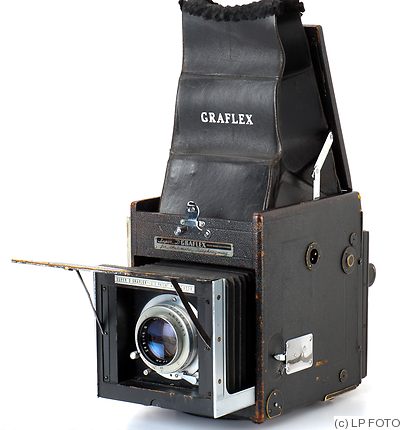
His invention was licensed by Graflex and first used on their Super D model reflex cameras. According to Camerapedia, “The RB Super D, which features a semi-automatic diaphragm, was produced in 3¼×4¼ (1941-1963) and 4 x 5 (1948-1957) formats.”

Photos taken by Torkel Korling are now in the collections of many museums around the world, and have been featured in several exhibitions. Anyone who has ever used an SLR camera owes Mr. Korling a debt of gratitude.

The Graflex RB Super D camera, which was the first to use Torkel Korling’s patented automatic diaphragm invention:

http://collectiblend.com/Cameras/images/Graflex-Revolving-Back-%28RB%29-Super-Graflex-Series-D.jpg

The April 26, 1937 cover of LIFE magazine featured a picture by Torkel Korling.

The April 26, 1937 cover of LIFE magazine featured a picture by Torkel Korling.

optipivot

optipivot2

L. Demery writes:

The blurb for “Chicago Surface Lines: The Big 5 Routes and 5 Others” (published by the Shore Line Interurban Historical Society) begins as follows:

“In 1931, the five largest Chicago Surface Lines routes, in terms of originating revenue passengers, were Ashland, Clark-Wentworth, Halsted, Madison and Milwaukee. The combined riding on these routes was greater than the total riding in many medium-sized American cities. CSL also had some very small routes in terms of ridership and they demonstrate the diversity of CSL’s operations.”

Does anyone have, or know where to find, a list of annual ridership statistics for individual CSL / CTA lines?

CSL (and other streetcar companies) did compile such statistics, no doubt about that. However, much information of this type (for US systems in general) has been lost or destroyed. Any information or “leads” re. CSL would be greatly appreciated.

Perhaps you can look at the yearly reports issued by the Board of Supervising Engineers during the CSL era?  Or, maybe our readers might have some suggestions.

Christopher J Lemm writes:

After reading your January 2015 story on the CTA Westchester Branch, the picture of the train crossing Madison street in Bellwood brought back some great memories, I grew up in that house, my grandfather was Clarence Lemm, track foreman for the Aurora and Elgin Railroad, he died in 1936. My father followed in grandpa’s footsteps, he worked at CTA 43 years, he started as a clerk and retired as the head of insurance and pensions. When my brother and I were very young my dad would take us for rides on the Aurora and Elgin, he used grandpa’s Sunset Lines employee pin and we all road free of charge. Thank you for some great memories!

Thanks for sharing those reminiscences with us. It’s great when we can help people make these sorts of connections.

John Smatlak writes:

David- Enjoyed your coverage of the former Chicago City Railway Building on South Wabash. I remember seeing one of those same CSL cast iron call boxes on the wall at Limits garage (photos attached).

Speaking of former CSL carhouses that survived into the modern era, I’d love to see some photos of the Lincoln-Wrightwood carhouse. I worked nearby around 1978-79 and went inside the building a few times. At the time it was used by the City as a garage for garbage trucks. The tracks were still in the floor and the repair bay for the streetcars was still very much intact (I even found some old CSL requisition paperwork scattered around on the floor). Sadly I never took any pictures of the building, and of course one day it was gone! I have a few images from when it was used as the temporary home for the CTA’s historic collection, but would love to see some more photos.

Keep up the good work.

CTA Limits Carhouse 8-13-86 3

CTA Limits Carhouse 8-13-86 4

Thanks. FYI, Bill Shapotkin has generously shared some photos he took in 2004 showing a 100-year-old substation originally used by the Chicago City Railway Company, which was then still being used for the Chicago Transit Authority’s South Side “L”:

A CTA substation located on the southwest corner of 42nd and Wabash, as it appeared on July 30, 2004. Constructed under authority of the Board of Supervising Engineers, Chicago Traction, it originally fed power to the streetcars. It now services the "L". View looks southwest. (William Shapotkin Photo)

A CTA substation located on the southwest corner of 42nd and Wabash, as it appeared on July 30, 2004. Constructed under authority of the Board of Supervising Engineers, Chicago Traction, it originally fed power to the streetcars. It now services the “L”. View looks southwest. (William Shapotkin Photo)

Another view of the same building looking east/southeast along the south side of 42nd Street at the back end of the building. (William Shapotkin Photo)

Another view of the same building looking east/southeast along the south side of 42nd Street at the back end of the building. (William Shapotkin Photo)

In this 2004 view, there are street signs still visible on the BOSE-built substation located on the southwest corner of 42nd and Wabash. (William Shapotkin Photo)

In this 2004 view, there are street signs still visible on the BOSE-built substation located on the southwest corner of 42nd and Wabash. (William Shapotkin Photo)

In this 2004 view, we see a Chicago Transit Authority manhole cover, located along the south side of 42nd Street between State and Wabash, in front of a still-in-service BOSE-built substation. (William Shapotkin Photo)

In this 2004 view, we see a Chicago Transit Authority manhole cover, located along the south side of 42nd Street between State and Wabash, in front of a still-in-service BOSE-built substation. (William Shapotkin Photo)

This century-old manhole cover, in the same general area as the previous pictire, still reads Chicago City Railway Company. (William Shapotkin Photo)

This century-old manhole cover, in the same general area as the previous pictire, still reads Chicago City Railway Company. (William Shapotkin Photo)

Scott Greig adds a postscript:

The pictured substation building at 42nd and Wabash is no longer an active substation. I was in there maybe 7-8 years ago, and there was no substation equipment left except the empty shells of some newer equipment. At the time it was being used for storage by CTA’s Power & Way department.


Interesting Photos

Here is a rare color shot of Chicago, South Shore & South Bend car 15, after it had been modernized in 1942. According to CERA Bulletin 41, the car had a red roof, but it looks more purple in this picture. I think the photo shows the accurate color, since a red roof would not have provided contrast with the maroon car body. I'm not sure what date the car was repainted to the much more familiar South Shore Line traction orange, but it may have been shortly after World War II. The car was originally built by Pullman in 1926.

Here is a rare color shot of Chicago, South Shore & South Bend car 15, after it had been modernized in 1942. According to CERA Bulletin 41, the car had a red roof, but it looks more purple in this picture. I think the photo shows the accurate color, since a red roof would not have provided contrast with the maroon car body. I’m not sure what date the car was repainted to the much more familiar South Shore Line traction orange, but it may have been shortly after World War II. The car was originally built by Pullman in 1926.

This rare photo of South Shore Line car 1126, signed "To Chicago, the Boulevardier," is dated February 14, 1939, although I do not know whether that is the date the picture was taken, or when it was printed. Incredibly, this car survives. As Don's Rail Photos notes, "1126 was a work motor built by Niles in 1908 as CLS&SB 73. In 1927 it was rebuilt into work motor 1126. In 1941 it was sold and converted to a house. In 1994 it was purchased for restoration from a buyer who had picked it up the month before for back taxes. He really did not want the car, just the land. Bob Harris began restoration in 2005..." According to a 2015 Chicago Tribune article, the car is now in Murphysboro, Illinois, and is 80% restored.

This rare photo of South Shore Line car 1126, signed “To Chicago, the Boulevardier,” is dated February 14, 1939, although I do not know whether that is the date the picture was taken, or when it was printed. Incredibly, this car survives. As Don’s Rail Photos notes, “1126 was a work motor built by Niles in 1908 as CLS&SB 73. In 1927 it was rebuilt into work motor 1126. In 1941 it was sold and converted to a house. In 1994 it was purchased for restoration from a buyer who had picked it up the month before for back taxes. He really did not want the car, just the land. Bob Harris began restoration in 2005…” According to a 2015 Chicago Tribune article, the car is now in Murphysboro, Illinois, and is 80% restored.

The coming of summer also means more construction and demolition projects. A four-car CA&E train is seen on the old CTA Garfield Park "L" at Ogden on October 19, 1952. Demolition of buildings for the Congress Expressway is well underway.

The coming of summer also means more construction and demolition projects. A four-car CA&E train is seen on the old CTA Garfield Park “L” at Ogden on October 19, 1952. Demolition of buildings for the Congress Expressway is well underway.

CTA red Pullman 144, long a mainstay at the Illinois Railway Museum, is shown on the Wentworth line on a May 25, 1958 CERA fantrip, less than a month before the end of all streetcar service on Chicago. (Homer G. Benton Photo) That's a 1956 Oldsmobile at left. M. E. writes, "This picture faces northwest and was taken at about 16th and Clark. The rail embankment on the left is the main line into LaSalle St. Station, at that time used by the New York Central, Nickel Plate and Rock Island. Today that line is the Metra Rock Island. The railroad viaduct crossing Clark St. behind car 144 is the Saint. Charles Air Line of the Illinois Central, which ran due west from the IC main line near the lake. Just north of that viaduct is the viaduct for the main line into Dearborn Station, which crossed Clark St. on a southwest / northeast angle before turning due north into the station. The streetcar tracks went under both viaducts on private right-of-way adjacent to the west side of Clark St. Car 144's destination sign says Vincennes - 77th, where the South Shops were then and still are today."

CTA red Pullman 144, long a mainstay at the Illinois Railway Museum, is shown on the Wentworth line on a May 25, 1958 CERA fantrip, less than a month before the end of all streetcar service on Chicago. (Homer G. Benton Photo) That’s a 1956 Oldsmobile at left. M. E. writes, “This picture faces northwest and was taken at about 16th and Clark. The rail embankment on the left is the main line into LaSalle St. Station, at that time used by the New York Central, Nickel Plate and Rock Island. Today that line is the Metra Rock Island. The railroad viaduct crossing Clark St. behind car 144 is the Saint. Charles Air Line of the Illinois Central, which ran due west from the IC main line near the lake. Just north of that viaduct is the viaduct for the main line into Dearborn Station, which crossed Clark St. on a southwest / northeast angle before turning due north into the station. The streetcar tracks went under both viaducts on private right-of-way adjacent to the west side of Clark St. Car 144’s destination sign says Vincennes – 77th, where the South Shops were then and still are today.”

Summer is coming, and along with it, summer music festivals. Here, North Shore Line car 167 is shown at the entrance to Ravinia Park. This was part of the old Shore Line Route, abandoned in 1955. There is a parking lot where the tracks used to be, although you can still ride Metra trains there. Perhaps the festival dates can help determine what year this picture was taken.

Summer is coming, and along with it, summer music festivals. Here, North Shore Line car 167 is shown at the entrance to Ravinia Park. This was part of the old Shore Line Route, abandoned in 1955. There is a parking lot where the tracks used to be, although you can still ride Metra trains there. Perhaps the festival dates can help determine what year this picture was taken.

According to Don's Rail Photos, Chicago North Shore & Milwaukee 213 "was built by Cincinnati in March 1920, #2445, as a merchandise despatch car. In 1940 it was rebuilt as a disc harrow ice cutter. It was retired in 1955 and sold to CHF as their 242. It was donated to Illinois Railway Museum in 1964." This photo by the late Bob Selle shows it newly delivered to the Chicago Hardware Foundry in North Chicago on August 7, 1955.

According to Don’s Rail Photos, Chicago North Shore & Milwaukee 213 “was built by Cincinnati in March 1920, #2445, as a merchandise despatch car. In 1940 it was rebuilt as a disc harrow ice cutter. It was retired in 1955 and sold to CHF as their 242. It was donated to Illinois Railway Museum in 1964.” This photo by the late Bob Selle shows it newly delivered to the Chicago Hardware Foundry in North Chicago on August 7, 1955.

The late Bob Selle took this great shot of an outbound Milwaukee Road commuter train leaving Union Station in Chicago on August 8, 1958. These were some of the consists I saw as a child, since I lived very close to what is now the Metra Milwaukee District West Line. Ridership was nothing compared to what it is today, and I believe bi-levels were not introduced here until around 1961-62. That's the Merchandise Mart across the Chicago River. This picture was taken from the Lake Street overpass. That looks like a 1957 Oldsmobile convertible at left.

The late Bob Selle took this great shot of an outbound Milwaukee Road commuter train leaving Union Station in Chicago on August 8, 1958. These were some of the consists I saw as a child, since I lived very close to what is now the Metra Milwaukee District West Line. Ridership was nothing compared to what it is today, and I believe bi-levels were not introduced here until around 1961-62. That’s the Merchandise Mart across the Chicago River. This picture was taken from the Lake Street overpass. That looks like a 1957 Oldsmobile convertible at left.

This photo of a Chicago & North Western train of bi-levels was taken by Al Clum in June 1962. But where? One reader writes, "The descending tracks in the foreground of the photo are leading to the North Shore Line's North Chicago Junction Station. The CNW train is on the CNW embankment between Great Lakes to the south and North Chicago to the north. Since the headlights are not turned on on the locomotive, one would presume that the train is a push-pull heading south."

This photo of a Chicago & North Western train of bi-levels was taken by Al Clum in June 1962. But where? One reader writes, “The descending tracks in the foreground of the photo are leading to the North Shore Line’s North Chicago Junction Station. The CNW train is on the CNW embankment between Great Lakes to the south and North Chicago to the north. Since the headlights are not turned on on the locomotive, one would presume that the train is a push-pull heading south.”

Former Chicago Surface Lines mail car 6, built in 1891, as it looked on May 25, 1958. This car is now at the Fox River Trolley Museum. You can see a black-and-white photo of this car, taken at the same time as this one, in our previous post Throwback Thursday (January 7, 2016). To see a picture of West Chicago Street Railway car 4, also taken the same day, there's one in our post Chicago Streetcars In Color (February 22, 2015).

Former Chicago Surface Lines mail car 6, built in 1891, as it looked on May 25, 1958. This car is now at the Fox River Trolley Museum. You can see a black-and-white photo of this car, taken at the same time as this one, in our previous post Throwback Thursday (January 7, 2016). To see a picture of West Chicago Street Railway car 4, also taken the same day, there’s one in our post Chicago Streetcars In Color (February 22, 2015).

Busy action at an Illinois Terminal station, but where? Perhaps the bus sign might be a clue. This type of scene was once commonplace in American life during the first half of the 20th century. PS- Don Ross says this is Springfield.

Busy action at an Illinois Terminal station, but where? Perhaps the bus sign might be a clue. This type of scene was once commonplace in American life during the first half of the 20th century. PS- Don Ross says this is Springfield.

My guess is that this picture shows the final interurban run on the Illinois Terminal, and this man may be the president of the railroad. If so, the date is March 3, 1956. (Glenn L. Sticken Photo) There is another photo of that same train, taken by the same photographer, in our earlier post Historic Chicago Buses, Part Three (November 23, 2015). Update: The young man at rear in the photo (Carter Morris, Sr.) informs me that the man in the foreground is none other than Maury Klebolt (1930-1988), head of the Illini Railroad Club, who organized many fantrips in the 1950s (and who later helped start the San Francisco Trolley Festival). The man standing behind him is Howard B. Morris (1909-1993), his father.

My guess is that this picture shows the final interurban run on the Illinois Terminal, and this man may be the president of the railroad. If so, the date is March 3, 1956. (Glenn L. Sticken Photo) There is another photo of that same train, taken by the same photographer, in our earlier post Historic Chicago Buses, Part Three (November 23, 2015). Update: The young man at rear in the photo (Carter Morris, Sr.) informs me that the man in the foreground is none other than Maury Klebolt (1930-1988), head of the Illini Railroad Club, who organized many fantrips in the 1950s (and who later helped start the San Francisco Trolley Festival). The man standing behind him is Howard B. Morris (1909-1993), his father.

Illinois Terminal car 241 at the Museum of Transportation in St. Louis in February 1958. Don's Rail Photos says, "241 was built by American Car & Foundry in July 1907, #5080. It went to the National Museum of Transport on July 25, 1950."

Illinois Terminal car 241 at the Museum of Transportation in St. Louis in February 1958. Don’s Rail Photos says, “241 was built by American Car & Foundry in July 1907, #5080. It went to the National Museum of Transport on July 25, 1950.”

The last run of the Illinois Terminal interurban, shown here in Carlinville, took place on March 3, 1956. Older equipment like car 284 was used instead of the railroad's relatively new streamliners. The black bunting draped on this car is now at the Illinois Railway Museum.

The last run of the Illinois Terminal interurban, shown here in Carlinville, took place on March 3, 1956. Older equipment like car 284 was used instead of the railroad’s relatively new streamliners. The black bunting draped on this car is now at the Illinois Railway Museum.

Illinois Terminal 276 and 530 on a 1955 fantrip in Urbana.

Illinois Terminal 276 and 530 on a 1955 fantrip in Urbana.

The final passenger train on the Illinois Terminal Railroad makes a station stop in Girard, March 2, 1956. (Dale Jenkins Collection)

The final passenger train on the Illinois Terminal Railroad makes a station stop in Girard, March 2, 1956. (Dale Jenkins Collection)

This old postcard photo, which shows obvious signs of being retouched, shows the Fifth Avenue station on the AE&C (later CA&E), most likely in the early 1900s when it was new. We are looking west, and it appears the area was not that built up yet. Contrast this with pictures of the same station in the interurban's waning days, in our post A Cold Last Ride (January 25, 2016). The postcard itself was printed by William G. Hoffman of 4340 Jackson Boulevard in Chicago, apparently no relation to the late railfan photographer Bill Hoffman.

This old postcard photo, which shows obvious signs of being retouched, shows the Fifth Avenue station on the AE&C (later CA&E), most likely in the early 1900s when it was new. We are looking west, and it appears the area was not that built up yet. Contrast this with pictures of the same station in the interurban’s waning days, in our post A Cold Last Ride (January 25, 2016). The postcard itself was printed by William G. Hoffman of 4340 Jackson Boulevard in Chicago, apparently no relation to the late railfan photographer Bill Hoffman.

New Site Additions

This picture has been added to our previous post West Towns Streetcars in Black-and-White (August 4, 2015):

Chicago & West Towns 142 at the east end of the Lake Street line at Austin Boulevard on July 4, 1946. The building at right is the old Park Theatre. This is a "sister" car to the 141, now preserved in operating condition at the Illinois Railway Museum.

Chicago & West Towns 142 at the east end of the Lake Street line at Austin Boulevard on July 4, 1946. The building at right is the old Park Theatre. This is a “sister” car to the 141, now preserved in operating condition at the Illinois Railway Museum.

This photo has been added to our post West Towns Streetcars in Color (February 10, 2015):

Chicago & West Towns Railways car 112 heads south at Harlem and Cermak on August 17, 1947.

Chicago & West Towns Railways car 112 heads south at Harlem and Cermak on August 17, 1947.

More CSL and C&WT Photos

CTA 6284 at Indiana Avenue and Cermak circa 1951. (Earl Clark Photo)

CTA 6284 at Indiana Avenue and Cermak circa 1951. (Earl Clark Photo)

Today we are featuring classic streetcar photos from the Chicago Surface Lines and Chicago and West Towns Railways. To find more such pictures in our earlier posts, use the search window on this page.

Photos are a wonderful aid to memory. As always, if you can help identify locations, or have interesting facts or reminiscences to add, don’t hesitate to drop us a line. You can leave comments on this post, or write us directly at:

thetrolleydodger@gmail.com

FYI there will be additional Surface Lines photos coming up in the near future, so watch this space.

-David Sadowski


Help Support The Trolley Dodger

gh1

This is our 120th post, and we are gradually creating a body of work and an online resource for the benefit of all railfans, everywhere. To date, we have received over 125,000 page views, for which we are very grateful.

You can help us continue our original transit research by checking out the fine products in our Online Store. You can make a donation there as well.

As we have said before, “If you buy here, we will be here.”

We thank you for your support.


DVD04FrontDVD04Back

American Streetcar R.P.O.s: 1893-1929

Mainline Railway Post Offices were in use in the United States from 1862 to 1978 (with the final year being operated by boat instead of on rails), but for a much briefer era, cable cars and streetcars were also used for mail handling in the following 15 cities*:

Baltimore
Boston
Brooklyn
Chicago
Cincinnati
Cleveland
New Bedford, Massachusetts
New York City
Philadelphia
Pittsburgh
Rochester, New York
St. Louis
San Francisco
Seattle
Washington, D.C.


*As noted by some of our readers, this list does not include interurban RPOs.

Our latest E-book American Streetcar R.P.O.s collects 12 books on this subject (over 1000 pages in all) onto a DVD data disc that can be read on any computer using Adobe Acrobat Reader, which is free software. All have been out of print for decades and are hard to find. In addition, there is an introductory essay by David Sadowski.

The rolling stock, routes, operations, and cancellation markings of the various American street railway post office systems are covered in detail. The era of the streetcar R.P.O. was relatively brief, covering 1893 to 1929, but it represented an improvement in mail handling over what came before, and it moved a lot of mail. In many places, it was possible to deposit a letter into a mail slot on a streetcar or cable car and have it delivered across town within a short number of hours.

These operations present a very interesting history, but are not well-known to railfans. We feel they deserve greater scrutiny, and therefore we are donating $1 from each sale of this item to the Mobile Post Office Society, in support of their efforts.

# of Discs – 1
Price: $19.95


CTA 3381, now in CTA green, near the south end of route 4 - Cottage Grove, circa 1952. We can tell that this car has been converted to one man because of the sign that says, "Enter at Front." (Earl Clark Photo)

CTA 3381, now in CTA green, near the south end of route 4 – Cottage Grove, circa 1952. We can tell that this car has been converted to one man because of the sign that says, “Enter at Front.” (Earl Clark Photo)

CTA 3182 and 660 at Cottage Grove and 115th circa 1951. (Earl Clark Photo)

CTA 3182 and 660 at Cottage Grove and 115th circa 1951. (Earl Clark Photo)

In this 1945 view, CSL 6191 has just turned from Pine onto Lake, heading east on route 16. Looks like the trolley has come off the wire. (Stephen D, Maguire Photo)

In this 1945 view, CSL 6191 has just turned from Pine onto Lake, heading east on route 16. Looks like the trolley has come off the wire. (Stephen D, Maguire Photo)

Westbound CTA 1758 is turning from Lake onto Pine in this March 1953 view. This is where Lake switched over to the other side of the Chicago & North Western embankment. The streetcar would continue on to Austin Boulevard, the city limits. That looks like a 1952 Kaiser at left.

Westbound CTA 1758 is turning from Lake onto Pine in this March 1953 view. This is where Lake switched over to the other side of the Chicago & North Western embankment. The streetcar would continue on to Austin Boulevard, the city limits. That looks like a 1952 Kaiser at left.

The Pine Avenue viaduct today, looking north.

The Pine Avenue viaduct today, looking north.

The Pine Avenue viaduct looking south. I assume the tracks have not really shifted location, and this is an optical illusion based on the fact that the Google Street View camera was in motion when it took this picture. In other words, it was the camera that shifted its position, not the tracks.

The Pine Avenue viaduct looking south. I assume the tracks have not really shifted location, and this is an optical illusion based on the fact that the Google Street View camera was in motion when it took this picture. In other words, it was the camera that shifted its position, not the tracks.

CTA 3153 and 1772 at Lake and Austin, the west end of route 16, on May 15, 1954, same day as the famous "Farewell to Red Cars" fantrip run by Central Electric Railfans' Association.

CTA 3153 and 1772 at Lake and Austin, the west end of route 16, on May 15, 1954, same day as the famous “Farewell to Red Cars” fantrip run by Central Electric Railfans’ Association.

CTA 818 by the Park Theatre at Lake and Austin on August 13, 1948. I don't believe the movie theatre stayed open much later than this. (John F. Bromley Collection)

CTA 818 by the Park Theatre at Lake and Austin on August 13, 1948. I don’t believe the movie theatre stayed open much later than this. (John F. Bromley Collection)

This old photo was identified as Chicago, but we'd like to know what our readers think.

This old photo was identified as Chicago, but we’d like to know what our readers think.

Chicago Surface Lines work cars P8, P251, P9 and S55 on the scrap line at South Shops, May 12, 1943.

Chicago Surface Lines work cars P8, P251, P9 and S55 on the scrap line at South Shops, May 12, 1943.

CSL supply car S201. (Earl Clark Photo)

CSL supply car S201. (Earl Clark Photo)

CTA 144 at, I believe, the east end of the 63rd Street line on 64th just west of Stony Island. The Charles J. Klees Golf Shop opened in 1910 across the street from the Jackson Park Golf Course and is still in business today at 10436 S. Western Avenue. Car 144 is preserved in operating condition at the Illinois Railway Museum. (Roy W. Bruce Photo)

CTA 144 at, I believe, the east end of the 63rd Street line on 64th just west of Stony Island. The Charles J. Klees Golf Shop opened in 1910 across the street from the Jackson Park Golf Course and is still in business today at 10436 S. Western Avenue. Car 144 is preserved in operating condition at the Illinois Railway Museum. (Roy W. Bruce Photo)

West Chicago Street Railway sprinklers.

West Chicago Street Railway sprinklers.

CSL 5660 on through route 9 - Ashland in 1941. Paraphrasing Don's Rail Photos, 5660 was built by Kuhlman Car Co in June 1907 (order) #350 for the Chicago & Southern Traction Company. It was purchased and rebuilt as Chicago City Ry 5660 in 1912 and became CSL 5660 in 1914. (Stephen D. Maguire Photo)

CSL 5660 on through route 9 – Ashland in 1941. Paraphrasing Don’s Rail Photos, 5660 was built by Kuhlman Car Co in June 1907 (order) #350 for the Chicago & Southern Traction Company. It was purchased and rebuilt as Chicago City Ry 5660 in 1912 and became CSL 5660 in 1914. (Stephen D. Maguire Photo)

CSL 2753 in 1946. (Stephen D. Maguire Photo)

CSL 2753 in 1946. (Stephen D. Maguire Photo)

CSL 2776 at Wabash and Wacker in the 1940s. (George Snyder Photo)

CSL 2776 at Wabash and Wacker in the 1940s. (George Snyder Photo)

CTA 3333 on route 5 in the summer of 1949. (R. O. Johnstone Photo)

CTA 3333 on route 5 in the summer of 1949. (R. O. Johnstone Photo)

CTA Sedan (aka "Peter Witt") 6310 appears to have been converted to one-man in this view circa 1952 view at South Shops. However, it may not have been used in service this way before being scrapped. (Roy W. Bruce Photo)

CTA Sedan (aka “Peter Witt”) 6310 appears to have been converted to one-man in this view circa 1952 view at South Shops. However, it may not have been used in service this way before being scrapped. (Roy W. Bruce Photo)

CTA 114 heading east on 63rd street, just about to go under the Jackson Park branch of the "L". M. E. adds, "At the right side of the picture in the foreground are two vertical posts that supported the structure that went south across 63rd St. to the lower 63rd St. yard. Therefore this picture was taken just about underneath that structure." (Roy W. Bruce Photo)

CTA 114 heading east on 63rd street, just about to go under the Jackson Park branch of the “L”. M. E. adds, “At the right side of the picture in the foreground are two vertical posts that supported the structure that went south across 63rd St. to the lower 63rd St. yard. Therefore this picture was taken just about underneath that structure.” (Roy W. Bruce Photo)

314 E. 63rd Street today. In the previous photo, the photographer appears to have been standing under the ramp going down to the CTA's 63rd Street Lower Yard. The ramp has been rebuilt since the earlier picture was taken. The broken lines in the ramp are due to the movement of the camera while this Google Street View picture was being taken.

314 E. 63rd Street today. In the previous photo, the photographer appears to have been standing under the ramp going down to the CTA’s 63rd Street Lower Yard. The ramp has been rebuilt since the earlier picture was taken. The broken lines in the ramp are due to the movement of the camera while this Google Street View picture was being taken.

CSL 2530 in Hegewisch on March 16, 1943. Note the South Shore Line station at rear. (Gordon Lloyd Photo)

CSL 2530 in Hegewisch on March 16, 1943. Note the South Shore Line station at rear. (Gordon Lloyd Photo)

Don's Rail Photos says CSL 2595 was "built by St Louis Car Co in 1901." The 2501-2625 cars are known as Robertson rebuilds. 2595 is shown on the Riverdale line on November 11, 1939.

Don’s Rail Photos says CSL 2595 was “built by St Louis Car Co in 1901.” The 2501-2625 cars are known as Robertson rebuilds. 2595 is shown on the Riverdale line on November 11, 1939.

C&WT 138 at Cermak and Kenton in the 1940s. Here riders could transfer to the Chicago Surface Lines route 21 streetcar at right. (Joe L. Diaz Photo)

C&WT 138 at Cermak and Kenton in the 1940s. Here riders could transfer to the Chicago Surface Lines route 21 streetcar at right. (Joe L. Diaz Photo)

C&WT 155 on private right-of-way west of the Brookfield Zoo on April 11, 1948, on the CERA "day after abandonment" fantrip. (John F. Bromley Collection)

C&WT 155 on private right-of-way west of the Brookfield Zoo on April 11, 1948, on the CERA “day after abandonment” fantrip. (John F. Bromley Collection)

C&WT at 52nd and 36th on February 28, 1938. (John F. Bromley Collection)

C&WT at 52nd and 36th on February 28, 1938. (John F. Bromley Collection)

C&WT 119 on August 19, 1947. (John F. Bromley Collection)

C&WT 119 on August 19, 1947. (John F. Bromley Collection)

C&WT 138 at the Brookfield Zoo on July 22, 1938, on the busy LaGrange line. The zoo first opened in 1934. Within a year or two, all West Towns streetcars would be repainted blue. (John F. Bromley Collection)

C&WT 138 at the Brookfield Zoo on July 22, 1938, on the busy LaGrange line. The zoo first opened in 1934. Within a year or two, all West Towns streetcars would be repainted blue. (John F. Bromley Collection)

C&WT 15 on DesPlaines Avenue on April 11, 1948. The occasion was a Central Electric Railfans' Association fantrip, held the day after West Towns streetcar service came to an end. Note one of the distinctive C&WT shelters at rear. (John F. Bromley Collection)

C&WT 15 on DesPlaines Avenue on April 11, 1948. The occasion was a Central Electric Railfans’ Association fantrip, held the day after West Towns streetcar service came to an end. Note one of the distinctive C&WT shelters at rear. (John F. Bromley Collection)

C&WT line car 15 at Harlem and Cermak on August 19, 1947. (John F. Bromley Collection)

C&WT line car 15 at Harlem and Cermak on August 19, 1947. (John F. Bromley Collection)

C&WT snow sweeper 9. According to Don's Rail Photos, "9 was built by McGuire-Cummings in 1928. It was sold to Sand Springs (Oklahoma) Railway in 1948."

C&WT snow sweeper 9. According to Don’s Rail Photos, “9 was built by McGuire-Cummings in 1928. It was sold to Sand Springs (Oklahoma) Railway in 1948.”

C&WT 126, with bus substitution notice, on April 4, 1948. (Photo by Mathews)

C&WT 126, with bus substitution notice, on April 4, 1948. (Photo by Mathews)

Throwback Thursday

A recent post mentioned a May 25, 1958 CERA fantrip, where Chicago Transit Authority personnel brought out cars from their historical collection to pose for photographs. Here is another such car taken out that day, Chicago street railway post office #6, built in 1891 and currently preserved at the Fox River Trolley Museum in South Elgin.

A recent post mentioned a May 25, 1958 CERA fantrip, where Chicago Transit Authority personnel brought out cars from their historical collection to pose for photographs. Here is another such car taken out that day, Chicago street railway post office #6, built in 1891 and currently preserved at the Fox River Trolley Museum in South Elgin.

This is “Throwback Thursday,” so rather than have an over-arching theme, we present several interesting photos spanning the 1940s to the 1970s that we hope you will enjoy.

Happy New Year!

-David Sadowski


Help Support The Trolley Dodger

gh1

This is our 110th post, and we are gradually creating a body of work and an online resource for the benefit of all railfans, everywhere.

You can help us continue our original transit research by checking out the fine products in our Online Store. You can make a donation there as well.

As we have said before, “If you buy here, we will be here.”

We thank you for your support.

PS- As we approach our one-year anniversary this month, the deadline for renewing our premium WordPress account comes due in less than ten days. This includes out Internet domain www.thetrolleydodger.com, much of the storage space we use for the thousands of files posted here, and helps keep this an ads-free experience for our readers. Your contributions towards this goal are greatly appreciated, in any amount.


Updates

George Foelschow writes:

Some time ago, I mentioned that I had two CSL/CTA surface track maps and offered to scan them for The Trolley Dodger. Well, I am confined at home today thanks to an El Nino storm and finally got around to it.

I think the CSL 1939 map is notable in that it probably represents the maximum extent of surface track in Chicago. It includes the Roosevelt and Cermak extensions into Burnham Park, 47th Street into the same park, and the full extent of 87th Street. Add in improbable and early abandonments like Franklin/Elm, Erie, and Fulton. The only stretch already gone is the Chicago Avenue line along Lake Shore Drive and into the Navy Pier area. There is even a stretch of dead track on Jefferson Street between VanBuren and Jefferson, which showed up on a photo published on your blog recently. Maybe sharp eyes can detect other anomalies.

I just received the long-awaited “New Look” data disc and am looking forward to settling down with that.

We thank Mr. Foelschow for his generosity. Both of these supervisor’s maps have been added to our E-book Chicago’s PCC Streetcars: The Rest of the Story, available from our Online Store. Now, our unique collection includes the track maps from 1939, 1941, 1946, 1948, 1949, 1952, and 1954.


Recent Correspondence

Olin Anderson of Walla Walla, Washington, who worked for the Chicago Area Transportation Study in the 1990s, asked if we could clear up some mysteries regarding track arrangements on the CTA Congress rapid transit line (featured in our recent E-Book The “New Look” in Chicago Transit: 1938-1973, which you can also find in our Online Store.

Here is what I believe at present:

1. The third track planned for Congress between DesPlaines and Laramie was intended to be used by CA&E as an express track that would keep CA&E and CTA trains separated.

2. The original transfer point between the two railroads was intended to be Laramie, where CA&E’s tracks ended and CTA’s began. These plans were eventually changed and DesPlaines became the transfer point. Meanwhile, CTA paid $1m to CA&E for their “infrastructure” between Laramie and DesPlaines Avenue, even though all this was due to be replaced soon anyway.

3. CA&E went back and forth on whether they would run their trains downtown even after completion of the new right-of-way. They made statements at varying times both ways.

4. CTA’s general preference would have been for CA&E to not run downtown since this would have complicated their operation of the line. They also felt that with the speed improvement of the new route, even if CA&E riders had to change to CTA they would still get downtown faster.

5. Expansion of the DesPlaines yard was an afterthought. The original plans envisioned a track connection to the old Laramie Yard. I have read that this was to be a flyover, but it would have made more sense to have a subway under the highway.

6. The City wanted Lake to be routed onto Congress via a new elevated connection. The location of this changed over the years, from about 3200 W. to 4400 W.

7. From the point where Lake was to be routed onto Congress there would have been four tracks. The two extra subway portals near Halsted were intended for use by Lake trains, as they would have gone into a new “distributor” subway.

8. CTA kept a portion of the old Humboldt Park branch until late 1961 as a potential storage area for CA&E trains.

9. There was talk right near the end (1957) of building a ramp for CA&E trains to connect with the “L” system. Presumably this would have been on the other side of the ramp that was built, and would have permitted CA&E trains to run downtown via the Paulina Connector and the Lake line to circle the Loop.

10. In 1953, when the track connection between CTA and CA&E was severed, that was fine with both of them, because they did not want to have to pay each other to run on each other’s tracks.

Thanks.

In the Comments section of a recent post, Jeff Weiner and I corresponded about the CTA’s PCC Conversion Program, a subject also covered in Chicago’s PCC Streetcars: The Rest of the Story. Thanks to Phil Becker, here are a couple of his photos showing cars going back and forth between CTA and St. Louis Car Company in 1957:

(Phil Becker Photo)

(Phil Becker Photo)

Here is a postwar Chicago PCC streetcar in the Streator Yard of the Santa Fe, on its way to St. Louis Car Company as part of the CTA's "conversion program." (Phil Becker Photo)

Here is a postwar Chicago PCC streetcar in the Streator Yard of the Santa Fe, on its way to St. Louis Car Company as part of the CTA’s “conversion program.” (Phil Becker Photo)


Again, thanks to Phil Becker, here are some of his pictures from a Central Electric Railfans’ Association fantrip held on May 27, 1973 using 4000-series “L” cars which were just being retired around this time. The occasion was CERA’s 35th anniversary.

Two 4000s remain on CTA property more than 90 years after they were put into service and are operated on special occasions.

(Phil Becker Photo)

(Phil Becker Photo)

(Phil Becker Photo)

(Phil Becker Photo)

(Phil Becker Photo)

(Phil Becker Photo)

(Phil Becker Photo)

(Phil Becker Photo)

(Phil Becker Photo)

(Phil Becker Photo)

(Phil Becker Photo)

(Phil Becker Photo)


Off-Street Chicago Bus and Streetcar Loops

Andre Kristopans has updated and expanded the list of off-street loops he recently shared with us:

Limits Garage 1860’s out 7/3/94
Root/Halsted 1/1895 out 8/9/53
Cable Ct/Harper 7/08 out 6/21/59
Wentworth/63 11/08 out 6/22/58
Western/Flournoy 6/09 out 7/18/65
Cottage Grove/72 11/10 out 9/28/56
State/63 1/11 out 1/9/57
Western/Roscoe 7/11 out 1/24/51
Vincennes/80 8/11 out 1990’s
Clark/Arthur 11/11 active
Halsted/79 12/12 active
63/King 6/13 out 6/28/69 (temporarily reactivated circa 1977 when Ryan L out of service at 18th)
Halsted/Waveland 3/15 active
Clark/Howard 4/15 out 12/3/61
75/Lakefront 5/15 active (cul-de-sac)
Broadway/Ardmore 12/15 out 12/26/63
Torrence/112 3/17 active
Devon/Sheridan 5/17 (CMC) out 10/18/53
Archer/Cicero 12/17 active (relocated 1955)
Navy Pier 6/21 active (relocated 1959, relocated again 1990’s)
Madison/Austin 7/21 active
Milwaukee/Imlay 9/27 active
Montrose/Milwaukee 1/25/31 out 9/23/78
Montrose/Narragansett 1/25/31 out 9/3/78
Belmont/Pacific 5/30/31 out 1/9/49
18th/Lake Shore 6/33 out 3/9/49
Roosevelt/Columbus 8/33 out 4/11/53
Hamlin/Fulton (CMC) 6/35 out 2/11/53
Belmont/Central 5/30/31 out 1/9/49 (relocated across street 9/16/35)
Diversey/Western 9/12/35 out 7/1/55
Diversey/Neva 10/4/38 active
Caldwell/Central 8/39 (relocated 10/29/61)
83/Green Bay 5/13/40 out 10/30/63
Bell & Howell 12/5/42 out 03/08/87
76/Keeler 7/26/43 out 3/16/53
76/Kilpatrick 7/26/43 out 6/21/59
Pershing/Western Blvd parking lot east of intersection 8/28/45 out 2/14/48
Pershing/Ashland parking lot west of intersection 8/28/45 out 1947
115/Cottage Grove 9/23/45 out 6/16/63 (south of 115th)
Montrose/Broadway 7/29/46 out 6/22/80
Monroe Parking Lot (CMC) 8/15/46 out 1972
Soldier Field Parking Lot (CMC) 8/15/46 out 9/12/83
Merchandise Mart Plaza 9/16/46 out 1987
Torrence/128 10/21/46 relocated to 130th west of Torrence 6/21/78, out 9/11/81
Torrence/112 10/21/46 out 4/25/48 (south of RR)
74/Damen 11/1/46 active
Irving Park/Cumberland 2/4/47 active (moved 1/24/64)
87/Western 5/22/47 active
Damen/Elston 6/19/47 out 9/30/63
84/State 6/28/47 out 11/26/58
116/Burley (Republic Steel) 6/30/47 out 11/30/86
Cortland/Paulina 8/31/47 out 4/17/59
31/Ellis 2/29/48 out 9/27/56
Narragansett/63 Pl 4/25/48 active
63/Archer 4/25/48 active (relocated 1990’s)
Harlem/64 Pl 6/15/48 active
Western/79 7/31/48 active
Devon/Kedzie 9/13/48 active
Irving Pk/Neenah 11/17/48 (moved from S to N of Irving Pk 7/9/58) out 1/24/88
16th/47th Ct 12/12/48 active
Belmont/Halsted 1/9/49 active
Belmont/Cumberland 1/9/49 active
Belmont/Octavia 1/9/49 active
Western/Berwyn 1/10/49 active
Western/Howard 2/17/49 active
North/Clybourn 7/3/49 out 12/28/08
Lehigh/Touhy 7/14/49 out 2/20/55
Cermak/Harlem (West Towns Garage) 8/13/49 out 1/16/57
Harrison/Central 8/14/49 active
Addison/Pontiac (CMC) 8/17/49 active
Western/Leland 11/14/49 active
Fullerton/Parkside 12/4/49 out 9/8/85
North/Clark 12/4/49 active
North/Narragansett 12/4/49 active
Jersey/Peterson 5/13/50 out 9/7/73
31/California 5/17/50 out 9/2/80
111/Harding 10/21/50 active
Central/Milwaukee 11/17/50 out 9/24/70
Grand/Nordica 4/1/51 active
47/Lake Park 4/15/51 active (moved from W of Lake Park to E 7/26/66)
Cicero/Pensacola 5/10/51 active
Lincoln/Wrightwood 7/2/51 out 4/27/60
Elston/Kentucky 7/19/51 out 7/8/55
Pulaski/Peterson 7/20/51 active
Archer/Neva 11/2/51 active
Lincoln Village 11/13/51 out 1/30/55 (McCormick N of Lincoln)
Lincoln/Whipple 11/23/51 out 4/9/84
Cicero/24 Pl 11/25/51 active
31/Komensky 12/6/51 active
Logan Square 12/19/51 out 1/31/70
North/Winchester 5/5/52 out 9/7/73
Grand/Latrobe 5/24/52 active
Cermak/54 Av 5/25/52 active (moved 8/18/03)
Fairbanks/Ontario 7/20/52 out 1990’s, new built 2000’s
79/Lakefront 8/11/52 relocated 2012
Roosevelt/Monitor 9/7/52 out 2000’s
Pulaski/Foster 9/8/52 out 1990’s
95/Western Evergreen Plaza 9/28/52 out 12/20/15
Chicago/Mayfield 12/13/52 active (moved to Austin 11/21/88)
Roosevelt/Wabash 5/12/53 out 4/15/73
Racine/87 5/28/53 active
26/Kenton 6/18/53 out 6/12/77
Desplaines/Congress 10/9/53 active relocated numerous times until 2/23/81
Jackson/Central Fieldhouse 10/29/53 out 7/8/55
Niles Center/Pratt 11/15/53 out 1/15/54
Kedzie/63 Pl 12/15/53 active
42/Packers 2/14/54 out 11/9/70 (moved 4/22/63)
87/Cicero 8/13/54 active moved to shopping center across Cicero 12/29/96
Ashland/95 11/4/54 active
California/Addison 11/26/54 out 3/31/13
Grand/Natchez 12/20/54 out 2/22/67
Western/119 2/9/55 active
Cermak/47 Av 4/17/55 out 6/29/86
Jackson/Austin 7/8/55 active
Forest Glen Garage 12/4/55 active
Damen/87 12/9/55 active
North Park Garage 12/4/55 no longer used as turnaround since 1/31/92
Cottage Grove/Burnside 8/22/56 out 4/1/91 (reactivated 6/17/07 to 8/23/10)
Brother Rice High School 9/10/56 active
Cermak Plaza 1/14/57 out 11/30/75
59/Keating 5/5/57 out 9/6/87
Howard/Kedzie 1/26/58 out 11/19/60 (east of Channel)
Jackson/Kedzie Garage 7/3/58 not used as turnaround since 1990’s
83/Wentworth 7/14/58 out 3/7/86
Teletype Corp 9/8/58 out 6/26/81
Pulaski/104 9/17/58 active
Cicero/64 11/27/58 out 11/7/93
Pulaski/77 6/21/59 out 6/1/62
79/Kilpatrick (Scottsdale) 6/21/58 out 3/5/00
Indianapolis/101 7/5/59 out 1970’s
Cumberland/Montrose 8/3/59 out 7/13/64
Howard/McCormick 11/3/60 active
Cermak/State 11/19/60 out 9/28/69
McCormick Place 11/19/60 out 1/16/67 account McCormick Place burned down
115/Pulaski 12/4/60 out 8/3/64
67/Oglesby 12/15/60 active
Howard/Hermitage 12/3/61 replaced 3/22/02
Pulaski/75 6/1/62 out 7/21/63
Pulaski/81 7/21/63 active
Beverly Garage 2/10/64 not used as turnaround after 11/19/03 (unofficially several years earlier)
Skokie Swift 4/19/64 active
Old Orchard 4/20/64 relocated to west mall entrance 2/11/74
Marist High School 8/24/64 out 8/30/07
Randolph/Lake Shore (Outer Drive East Apts) 9/14/64 out 3/7/75
55/St Louis 11/11/64 active replaced 2000’s
51/St Louis 1/13/65 out 11/7/93
115/Springfield 5/10/65 active
King Dr/Burnside 6/20/65 out 11/12/72
Ford City 8/12/65 active relocated 11/29/87
Luther High School (87/Sacramento) 11/24/65 out 1990’s
Pratt/Kedzie 8/1/66 out 6/23/03
Mercy Hospital 2/1/68 out 6/29/04?
Ashland/63 5/6/69 active
95/Dan Ryan 9/28/69 active
79/Perry 9/28/69 active
69/Dan Ryan 9/28/69 active
Cermak/Clark 9/28/69 out 12/10/76
Jefferson Park 2/1/70 active
Irving Park/Keystone 2/1/70 active
Belmont/Kimball 2/1/70 active
Logan Square 2/1/70 active
McCormick Place 1/2/71 out 1/80 account McCormick Place expansion
Olive/Harvey 2/8/71 active relocated 8/3/81 to west side of main bldg and 8/20/82 to s side of bldg
International Towers (Bryn Mawr/Delphia) 6/7/71 out 5/29/73
Wilson/E Ravenswood 1970’s out 12/15/12
King Dr/96 11/12/72 out 7/30/73 temporary Chicago State terminal
Pavilion Apts – 5/29/73 active (relocated to N side of complex 2/28/83)
Clark/Wisconsin 6/18/73 out 9/8/96
95/St Lawrence 7/30/73 active (not used 6/17/07 to 8/23/10 because of dispute with CSU)
South Blvd/Sheridan 09/10/73 out 6/20/03 inherited from Evanston Bus Co
Touhy/Overhill 10/25/74 – CTA has not used since 12/15/12 (replaced last Y terminal)
Randolph/Harbor (Harbor Point Apts) 3/7/75 active
North Riverside Park Mall 11/30/75 active (relocated closer to entrance 7/9/81)
Division/Austin 2/16/76 active
Lincoln Village (Lincoln/Jersey) 4/2/78 out 2/3/80
73/Oak Park 4/2/78 out 12/31/81
Field Museum turn-in on McFetridge 6/18/78 active
Chicago-Read Hospital 9/3/78 out 9/6/15 (relocated across Oak Park Av 10/6/96)
71/Pulaski (Shopping center parking lot) 6/22/80 active
Pratt/Central Park 12/8/80 out 3/8/87
Central/77 (St Laurence HS) 1980’s active
Evanston Twp High School Parking Lot 1/3/82 out 6/20/03
Harlem/Higgins 2/27/83 active
Cumberland/Bryn Mawr – 2/27/83 active
River Rd/Kennedy 2/27/83 – CTA stopped using 1/23/88
47/Laramie (trucking company parking lot) 7/2/84 out 6/21/92
Riverside Square (Archer/Ashland) 12/1/86 out 11/4/97
Skokie Courthouse 1/25/88 active
103rd Garage 6/26/88 active
Grand/Columbus 12/27/88 out 2/28/93
Church/Lamon (Skokie) (JCC) 6/25/90 out 6/21/91
Bryn Mawr/Lake Shore 7/19/93 active
Wright College 8/22/93 active
Archer/Halsted 10/31/93 active
Archer/Ashland 10/31/93 active
Western/49 10/31/93 active
Archer/Leavitt 10/31/93 active
Kedzie/49 10/31/93 active
Pulaski/51 10/31/93 active
59/Kilpatrick 10/31/93 active
King/24th Pl 10/30/94 active but no scheduled service since 12/14/12
McCormick Place South driveway 2/8/97 out ca 1998 as impractical
Desplaines/Harrison 3/9/97 active
Nature Museum (Cannon/Fullerton) 12/12/99 active
Kostner/74 6/25/00 active
Golf/Waukegan (Avon Corp parking lot) 6/24/02 active
Central Park/Cleveland (Rand-McNally Skokie) 6/23/03 out 9/5/09
Lincolnwood Town Center Mall 6/19/06 active
Pullman Plaza parking lot (Doty W/109) 9/11/13
74th Garage first used as turnaround 3/30/14 active


More “Throwback” Photos:

Indiana Railroad car 65 at the Illinois Electric Railway Museum in North Chicago. The date given for this picture is 1955. Behind it is, I think, North Shore Line city streetcar 354. To the right is North Shore Line 161, which presents somewhat of a mystery since this car was not preserved after abandonment. The original museum site, however, was adjacent to the North Shore Line, so this must be an in-service car and not part of the museum's collection.

Indiana Railroad car 65 at the Illinois Electric Railway Museum in North Chicago. The date given for this picture is 1955. Behind it is, I think, North Shore Line city streetcar 354. To the right is North Shore Line 161, which presents somewhat of a mystery since this car was not preserved after abandonment. The original museum site, however, was adjacent to the North Shore Line, so this must be an in-service car and not part of the museum’s collection.

An interior view of a Red Arrow Bullet car in 1960. Note the similarity of these bucket seats and those on Indiana Railroad car 65, built around the same time as this car (1931).

An interior view of a Red Arrow Bullet car in 1960. Note the similarity of these bucket seats and those on Indiana Railroad car 65, built around the same time as this car (1931).

North Shore Line city streetcar 356 in Milwaukee on May 13, 1951. Sister car 354 is preserved at the Illinois Railway Museum.

North Shore Line city streetcar 356 in Milwaukee on May 13, 1951. Sister car 354 is preserved at the Illinois Railway Museum.

A sign advertising South Shore Line interurban service to the Indiana Dunes at Howard Street in Chicago, 1949.

A sign advertising South Shore Line interurban service to the Indiana Dunes at Howard Street in Chicago, 1949.

In this July1947 view, photographer Perry Frank Johnson captured Chicago South Shore & South Bend freight locomotive #1002 on busy Franklin Street in Michigan City, Indiana.

In this July1947 view, photographer Perry Frank Johnson captured Chicago South Shore & South Bend freight locomotive #1002 on busy Franklin Street in Michigan City, Indiana.

With the recent news that the new but long-delayed Washington, DC streetcar may open by the end of February, we thought we would post this view of DC Transit #1512, the air conditioned "Silver Sightseer" near the Capital Building on August 22, 1961.

With the recent news that the new but long-delayed Washington, DC streetcar may open by the end of February, we thought we would post this view of DC Transit #1512, the air conditioned “Silver Sightseer” near the Capital Building on August 22, 1961.

Chicago & West Towns cars 153, 140, and 119 on the busy LaGrange line.

Chicago & West Towns cars 153, 140, and 119 on the busy LaGrange line.

Chicago & West Towns 155 on the LaGrange line in 1941.

Chicago & West Towns 155 on the LaGrange line in 1941.

C&WT cars 128, 104,122, and 152 at the car barn at Harlem and Cermak in 1941.

C&WT cars 128, 104,122, and 152 at the car barn at Harlem and Cermak in 1941.

Chicago & West Towns 140, sister car to the 141 now operating at the Illinois Railway Museum, at the south parking lot of the Brookfield Zoo in the 1940s.

Chicago & West Towns 140, sister car to the 141 now operating at the Illinois Railway Museum, at the south parking lot of the Brookfield Zoo in the 1940s.

A pair of CTA 6000s head north from the Merchandise Mart in this wintry 1963 scene.

A pair of CTA 6000s head north from the Merchandise Mart in this wintry 1963 scene.

A two-car train of CTA 6000s heads west at Lake and LaSalle in April 1964. Below the "L" at right, we see the Loop location of Discount Records, a local chain who once had a great selection of LPs.

A two-car train of CTA 6000s heads west at Lake and LaSalle in April 1964. Below the “L” at right, we see the Loop location of Discount Records, a local chain who once had a great selection of LPs.

In July 1963, a two-car CTA Ravenswood train of 6000s approaches Adams and Wabash from the south. When this picture was taken, both tracks on the Loop "L" ran in the same direction. At right we can see Carl Fischer's, sellers of sheet music for many years, at 312 S. Wabash.

In July 1963, a two-car CTA Ravenswood train of 6000s approaches Adams and Wabash from the south. When this picture was taken, both tracks on the Loop “L” ran in the same direction. At right we can see Carl Fischer’s, sellers of sheet music for many years, at 312 S. Wabash.

PCC Side Roll Signs

Kenosha PCC 4617, the SF Muni 1950s-style tribute car. (John DeLamater Photo)

Kenosha PCC 4617, the SF Muni 1950s-style tribute car. (John DeLamater Photo)

John DeLamater writes:

I found a sign shop here in Madison that made a nice replica of a vintage MUNI side roll sign for 4617. We installed it yesterday and it looks great. Photo attached. I am wondering if CTA PCCS in the 50s had side roll signs in a standee window, and if so, what destinations were listed. Do you happen to have any sources for that information?

Thanks for writing. That San Francisco tribute car sure looks good.

Yes, the Chicago PCCs had side roll signs, both prewar and postwar, as did both experimental cars (4001 and 7001). The postwar cars had them in a standee window.

You will find many, many pictures of these signs among the Chicago PCC pictures posted here on this web site.

Presumably, such signs were somewhat simpler in wording than the front signs, which were naturally a lot larger. In addition, I would imagine there were variations.

These signs were made via a silk-screening process in segments that were then stitched together. So, parts of a sign could be added and subtracted.

Offhand, I couldn’t say whether all PCCs had the same set of signs, or if the signs a car had were based on which Station (car barn) it ran out of. Perhaps our readers can enlighten us on that point. Surely there are fans out there who have such side rolls signs in their collections, and there is also the 4391 that can be checked at IRM.

One of our readers notes:

The side signs of the Post War PCCs differed between those built by Pullman-Standard and St Louis Car Company. The readings were probably the same, but the layouts were different. Pullman side signs were straight across with the route names such as CLARK-WENTWORTH. SLCC were often in two rows such as
CLARK
WENTWORTH.

It appears that there were three different sets of side signs based upon the car stations (Kedzie, 69th/Devon/77th, 38th-Cottage). Kedzie served Madison, Madison-Fifth; 69th/Devon/77th served Halsted, Clark-Wentworth, Broadway-State, Western and 63rd; 38th-Cottage served Cottage Grove.

The side signs for 69th/Devon/77th read as follows:

CHARTERED
BROADWAY-STATE
BROADWAY (added in 1955)
BROADWAY-WABASH
STATE
CLARK-WENTWORTH
CLARK
WENTWORTH
HALSTED
HALSTED-ARCHER-CLARK
WESTERN
63RD STREET
NOT IN SERVICE

The above readings were from a SLCC PCC.

George Trapp adds:

Actually the difference was not between Pullman and St.Louis but rather between first 200 cars 4052-4171, 7035-7114 which originally had route name such as CLARK-WENTWORTH squeezed into one line. The 400 cars of the second order 4172-4411, 7115-7274 had the route name on two lines.

Front signs between the two orders differed as well as built. On the front signs the style of the route numbers were more simplified on the second order and destinations with numbered streets showed 79th, 81st, 119th on first order versus 79, 81, 119 on second.

Thanks for this great information.

-D. S.

The CTA sign shop at work in the 1950s.

The CTA sign shop at work in the 1950s.

More Chicago PCC Photos – Part Six

CSL 7003 lets passengers off in front of the old Chicago & North Western Station on Madison just west of the Loop. The late 1930s Packard at left helps date the picture.

CSL 7003 lets passengers off in front of the old Chicago & North Western Station on Madison just west of the Loop. The late 1930s Packard at left helps date the picture.

The Trolley Dodger at 100

We have reached a milestone with this, our 100th post. When we began this venture in January of this year, I would never have dreamed it possible, to have come so far in so little time. But here we are.

The challenge then was to get people to take a look, even though there wasn’t yet much to look at. Little by little, we have gradually built up an archive of work that people can refer to. Many times, when I am researching a subject on the Internet, a lot of the “hits” that come up with are simply posts from this blog.

At first, we thought there was a need for something like this, a place where photos, information, reminiscences, and original research in transit history could be shared with people who have similar interests. We just didn’t know how many people would be interested in it.

There is a tendency in some quarters to think of this as a hobby in decline, that will simply shrivel up and fade away in future years. Nothing, I think, could be further from the truth. There are, I believe, a lot of folks who are interested, but you have to know how to reach them and how to engage them.

This we have done. We are well on our way to achieving 100,000 page views by the middle of December, and The Trolley Dodger has been visited by more than 28,000 individuals to date. Over time, the number of visitors and page views is increasing.

That would not be possible if this was really a hobby in an irreversible decline.

The good thing is we are not doing this alone. If we have had some success already, it is mainly due to all the various people who have helped us out and have shared things with us and others. Even in less than a year, the names of all who have helped are too numerous to mention individually here. It would be a very long list.

It is a rule of life that no one person ever has all the facts. I have made plenty of mistakes, and I apologize for that, but my errors are usually quickly corrected by an ever-larger army of keen-eyed, fact-checking readers.

I frankly admit that many of my readers know more about these subjects than I do. If you find yourself in the position of knowing more, we would love to hear from you. Lend us a hand.

I like to think of The Trolley Dodger as a collaborative effort. Your help and participation makes it all possible.

There will always be room for improvement here, and may our reach always exceed our grasp. As for the future, we have many exciting things in the pipeline. I don’t know just what our second 100 posts will bring, but of one thing I am certain.

We hope it will be something worthwhile. Something of lasting value. We will do our best, and with your help, we cannot fail.

Thanks.

-David Sadowski

More Chicago PCC Photos – Part Six

For our 100th post, here are lots of classic photos of Chicago PCC streetcars, all of them new to this blog.

Some show prewar Chicago PCCs in experimental paint schemes. These were tried out by the Chicago Surface Lines in 1945-46 before settling on the well-known combination of Mercury Green, Croydon Cream, and Swamp Holly Orange for the 600 postwar cars that were on then on order.

In similar fashion, the door arrangement used on the postwar PCCs had first been tried out (before the war intervened) on CSL car 4051, and we have pictures of that car as well to go along with others we have previously featured.

All of the pictures in today’s post are being added to our E-book Chicago’s PCC Streetcars: The Rest of the Story, available through our Online Store.

If you have already purchased our E-book, and wish to get an updated copy with the additional information, this can be done at little or no cost to you. We always intended that it would be improved over time and offer an upgrade service to our purchasers on an ongoing basis.

We also wish to thank the great photographers who took these pictures originally. We have provided attribution for each photo, if we have the information.

As always, clicking on each photo with your mouse should bring up a larger version of the picture in your browser. You may be able to magnify this if you then see a “+” on your screen.

Finally, if you have any interesting tidbits of information to share about the photos you see here, don’t hesitate to let us know, either by making a comment on this post, or by dropping us a line to:

thetrolleydodger@gmail.com


gh1

Help Support The Trolley Dodger

In addition to 100 posts, we have put out two electronic book collections, with a third on the way. We are also well on our way towards our goal of reissuing the entire output of the long-gone Railroad Record Club on compact discs for a new generation of railfans. So far, we have issued 25 different CD collections of vintage material, covering both electric railroads and steam. Nearly all of these collections include two LPs on a single disc. A few are multiple CDs.

All this has been done in less than a year, for the benefit of all railfans, everywhere.

You can help us continue our original transit research by checking out the fine products in our Online Store. You can make a donation there as well.

As we have said before, “If you buy here, we will be here.”

We thank you for your support.


CSL 4081 and another PCC are northbound on Clark at Wacker Drive, June 13, 1947. (J. William Vigrass Collection) On the back of the photo it says the second car is 7174, but George Trapp counters, "The St. Louis built car cannot be 7174 based on the date, car 7174 being delivered 2/25/48. Note the car has a CSL logo and also has its rear marker and stop lights mounted on tubes, a spotting feature of the first 90 St. Louis Post War PCC's. It looks to me like the car is either 7071 or 7074."

CSL 4081 and another PCC are northbound on Clark at Wacker Drive, June 13, 1947. (J. William Vigrass Collection) On the back of the photo it says the second car is 7174, but George Trapp counters, “The St. Louis built car cannot be 7174 based on the date, car 7174 being delivered 2/25/48. Note the car has a CSL logo and also has its rear marker and stop lights mounted on tubes, a spotting feature of the first 90 St. Louis Post War PCC’s. It looks to me like the car is either 7071 or 7074.”

CSL 4118 southbound on Clark at Wacker, June 13, 1947. (J. William Vigrass Collection)

CSL 4118 southbound on Clark at Wacker, June 13, 1947. (J. William Vigrass Collection)

Clark and Wacker today, looking north.

Clark and Wacker today, looking north.

Although signed for Clark-Wentworth, CSL 4160 is eastbound on Madison at Central Park in this 1947 CSL photo, with the Garfield Park fieldhouse in the background. The newly delivered car was brought here to pose for staged photos.

Although signed for Clark-Wentworth, CSL 4160 is eastbound on Madison at Central Park in this 1947 CSL photo, with the Garfield Park fieldhouse in the background. The newly delivered car was brought here to pose for staged photos.

CTA 4218 at State and 95th on April 4, 1948 (route 36 - Broadway-State). (John F. Bromley Collection)

CTA 4218 at State and 95th on April 4, 1948 (route 36 – Broadway-State). (John F. Bromley Collection)

CSL prewar cars 4042 and 7029, in "tiger stripes," are at the loop at 63rd Place and Narragansett, western terminal of the 63rd Street line.

CSL prewar cars 4042 and 7029, in “tiger stripes,” are at the loop at 63rd Place and Narragansett, western terminal of the 63rd Street line.

CSL 4050 in experimental Coronado Tan, with 4047 behind it, at the Madison-Austin loop on November 2, 1946. (Harold A. Smith Photo)

CSL 4050 in experimental Coronado Tan, with 4047 behind it, at the Madison-Austin loop on November 2, 1946. (Harold A. Smith Photo)

CSL 4028 is eastbound on Madison at Dearborn in Chicago's Loop, having already changed the sign for the trip west . O'Connor and Goldberg shoe stores were once a fixture throughout the Chicago area, with 15 locations. (Ohio Brass Company Photo)

CSL 4028 is eastbound on Madison at Dearborn in Chicago’s Loop, having already changed the sign for the trip west . O’Connor and Goldberg shoe stores were once a fixture throughout the Chicago area, with 15 locations. (Ohio Brass Company Photo)

4020, in experimental colors, is eastbound on Madison Street between Parkside and Central circa 1946. (Robert W. Gibson Photo)

4020, in experimental colors, is eastbound on Madison Street between Parkside and Central circa 1946. (Robert W. Gibson Photo)

CTA 4208 on a shoofly at Halsted and Congress circa 1950-51, during the early stages of construction on the Congress Expressway. Two of the four Metropolitan "L" tracks were removed in this area, since they were in the expressway footprint. (M. D. McCarter Collection)

CTA 4208 on a shoofly at Halsted and Congress circa 1950-51, during the early stages of construction on the Congress Expressway. Two of the four Metropolitan “L” tracks were removed in this area, since they were in the expressway footprint. (M. D. McCarter Collection)

CTA Pullman PCC 4173 on the long Broadway-State route. The building at rear advertises the Werner Brothers - Kennelly moving and storage firm, owned by Martin H. Kennelly, Chicago's mayor from 1947-55. This picture was taken in January 1951.

CTA Pullman PCC 4173 on the long Broadway-State route. The building at rear advertises the Werner Brothers – Kennelly moving and storage firm, owned by Martin H. Kennelly, Chicago’s mayor from 1947-55. This picture was taken in January 1951.

7024 at Madison and Austin on July 16, 1938. (M. D. McCarter Collection)

7024 at Madison and Austin on July 16, 1938. (M. D. McCarter Collection)

CSL 4090 and follower at 81st and Halsted, south end of the Clark-Wentworth line, circa 1947.

CSL 4090 and follower at 81st and Halsted, south end of the Clark-Wentworth line, circa 1947.

CSL 4043, despite the sign, is eastbound on Madison near LaSalle on May 12, 1945. (Thomas H. Desnoyers Photo, Krambles-Peterson Archive)

CSL 4043, despite the sign, is eastbound on Madison near LaSalle on May 12, 1945. (Thomas H. Desnoyers Photo, Krambles-Peterson Archive)

A more recent view of Madison near LaSalle. We are looking west. Bus rapid transit stops are under construction.

A more recent view of Madison near LaSalle. We are looking west. Bus rapid transit stops are under construction.

CSL 4033 and 7002 on 78th Street by South Shops on October 23, 1938, during a fantrip. Although sponsored by the Chicago Surface Lines, this trip helped recruit many members to the fledgling Central Electric Railfans' Association. (M. D. McCarter Collection)

CSL 4033 and 7002 on 78th Street by South Shops on October 23, 1938, during a fantrip. Although sponsored by the Chicago Surface Lines, this trip helped recruit many members to the fledgling Central Electric Railfans’ Association. (M. D. McCarter Collection)

CSL 4039 at Madison and Austin on June 30, 1946. (Barney Neuburger Collection, Courtesy of John F. Bromley)

CSL 4039 at Madison and Austin on June 30, 1946. (Barney Neuburger Collection, Courtesy of John F. Bromley)

CSL 4022 and 4018, with varying stripes, at Kedzie and Van Buren in December 1945. (Joe L. Diaz Photo)

CSL 4022 and 4018, with varying stripes, at Kedzie and Van Buren in December 1945. (Joe L. Diaz Photo)

7002 and 7006 show the first and second generation CSL paint schemes. The "tiger stripes" were added in 1945 to warn motorists that these streetcars were wider than the older red ones.

7002 and 7006 show the first and second generation CSL paint schemes. The “tiger stripes” were added in 1945 to warn motorists that these streetcars were wider than the older red ones.

From left to rigth, at Ashland and 69th Station, we have prewar PCC 4032, Pullman 813, postwar St. Louis Car Company PCC 7259 and an unidentified prewar car.

From left to rigth, at Ashland and 69th Station, we have prewar PCC 4032, Pullman 813, postwar St. Louis Car Company PCC 7259 and an unidentified prewar car.

CTA 4009 is on route 4 - Cottage Grove, circa 1952-55. Patrick writes, "Photo 981 is in the 6700 block of (south) Cottage Grove, looking north. The one story Michael Dunn building still exists, as does the biggest building (now a self storage facility). This is across the street from Oak Woods Cemetery."

CTA 4009 is on route 4 – Cottage Grove, circa 1952-55. Patrick writes, “Photo 981 is in the 6700 block of (south) Cottage Grove, looking north. The one story Michael Dunn building still exists, as does the biggest building (now a self storage facility). This is across the street from Oak Woods Cemetery.”

The 6700 block of South Cottage Grove today.

The 6700 block of South Cottage Grove today.

CSL 7014 is westbound on the wider, outer end of Madison Street in this 1940s view. The auto at left is a type referred to as a "business coupe," a two-door car with a small back seat and a large trunk-- the type of car favored by salesmen of the 1940s. (Joe L. Diaz Photo)

CSL 7014 is westbound on the wider, outer end of Madison Street in this 1940s view. The auto at left is a type referred to as a “business coupe,” a two-door car with a small back seat and a large trunk– the type of car favored by salesmen of the 1940s. (Joe L. Diaz Photo)

CSL 4027 at 64th and Stony Island, east end of the 63rd Street line. Again, at left, we have a 1940s business coupe. This Joe L. Diaz photo was taken at the same time as some others we previously posted here: http://thetrolleydodger.com/2015/10/12/more-chicago-pcc-photos-part-four/

CSL 4027 at 64th and Stony Island, east end of the 63rd Street line. Again, at left, we have a 1940s business coupe. This Joe L. Diaz photo was taken at the same time as some others we previously posted here:
http://thetrolleydodger.com/2015/10/12/more-chicago-pcc-photos-part-four/

CSL 4051 at the Madison and Austin loop on February 22, 1942. This car had previously been modified with an experimental door arrangement later used on the 600 postwar Chicago PCCs. By the time this picture was taken, it had been partially returned to its original configuration. As John Bromley notes, "The car is not yet fully restored after the rear entrance experiment. It’s missing one front door and is thus in a hybrid state." (James J. Buckley Photo, Krambles-Peterson Archive)

CSL 4051 at the Madison and Austin loop on February 22, 1942. This car had previously been modified with an experimental door arrangement later used on the 600 postwar Chicago PCCs. By the time this picture was taken, it had been partially returned to its original configuration. As John Bromley notes, “The car is not yet fully restored after the rear entrance experiment. It’s missing one front door and is thus in a hybrid state.” (James J. Buckley Photo, Krambles-Peterson Archive)

CSL 4051 at Kedzie and Van Buren, during the 1940-41 experiment with a modified door arrangement. (CSL Photo)

CSL 4051 at Kedzie and Van Buren, during the 1940-41 experiment with a modified door arrangement. (CSL Photo)

CSL 4020 and 4044 at Madison and Austin on November 7, 1945, showing off contrasting paint schemes (4020's is experimental). These experiments eventually led to the adoption of the well-known combination of Mercury Green, Croydon Cream, and Swamp Holly Orange. (Joe L. Diaz Photo)

CSL 4020 and 4044 at Madison and Austin on November 7, 1945, showing off contrasting paint schemes (4020’s is experimental). These experiments eventually led to the adoption of the well-known combination of Mercury Green, Croydon Cream, and Swamp Holly Orange. (Joe L. Diaz Photo)

CSL 4050 in experimental paint (Coronado Tan), most likely in late 1945. (Joe L. Diaz Photo)

CSL 4050 in experimental paint (Coronado Tan), most likely in late 1945. (Joe L. Diaz Photo)

CSL 4035, in experimental colors, at Madison and Austin, probably in late 1945. (Joe L. Diaz Photo)

CSL 4035, in experimental colors, at Madison and Austin, probably in late 1945. (Joe L. Diaz Photo)

CSL 4036 on Madison Street. (CSL Photo)

CSL 4036 on Madison Street. (CSL Photo)

PCC 7026 at West Shops, temporarily fitted with experimental roof-mounted forced air ventilation, of a type that was used in Boston, but did not find favor in Chicago. (CSL Photo) Chuck Amstein adds, "The large building behind the shop building is the back of the Paradise Theatre, 231 N. Crawford/Pulaski. It was one of the last big movie palaces built in Chicago (1928) and one of the first to be torn down (1956)."

PCC 7026 at West Shops, temporarily fitted with experimental roof-mounted forced air ventilation, of a type that was used in Boston, but did not find favor in Chicago. (CSL Photo) Chuck Amstein adds, “The large building behind the shop building is the back of the Paradise Theatre, 231 N. Crawford/Pulaski. It was one of the last big movie palaces built in Chicago (1928) and one of the first to be torn down (1956).”

A side view of the 1934 Brill-built experimental pre-PCC 7001, with doors open.

A side view of the 1934 Brill-built experimental pre-PCC 7001, with doors open.

A side view of the 1934 Brill-built experimental pre-PCC 7001, with doors closed.

A side view of the 1934 Brill-built experimental pre-PCC 7001, with doors closed.

A rare 1947 picture showing 7001 at Rockwell Depot, signed as an Instruction Car. It had been retired from regular service in 1944 and was turned into a shed in 1948.

A rare 1947 picture showing 7001 at Rockwell Depot, signed as an Instruction Car. It had been retired from regular service in 1944 and was turned into a shed in 1948.

A close-up of the 7001 during its instruction car days. On the front of the car, it says, "Please enter and leave by center door." A picture of the car's interior during this period, from the Hicks Car Works blog, shows why: http://3.bp.blogspot.com/-CibxtjFSWwY/T37_s3ADAxI/AAAAAAAABXc/A3Aief1Y1iA/s1600/kpa7001-classroom3-48.JPG

A close-up of the 7001 during its instruction car days. On the front of the car, it says, “Please enter and leave by center door.” A picture of the car’s interior during this period, from the Hicks Car Works blog, shows why:
http://3.bp.blogspot.com/-CibxtjFSWwY/T37_s3ADAxI/AAAAAAAABXc/A3Aief1Y1iA/s1600/kpa7001-classroom3-48.JPG

Chicago & West Towns Railways car 130 is at the east end of the Madison line on March 31, 1946, while a Chicago Surface Lines prewar PCC sits nearby at the Madison-Austin loop. This is the borderline between Chicago and suburban Oak Park. (Don Ross Photo)

Chicago & West Towns Railways car 130 is at the east end of the Madison line on March 31, 1946, while a Chicago Surface Lines prewar PCC sits nearby at the Madison-Austin loop. This is the borderline between Chicago and suburban Oak Park. (Don Ross Photo)

CSL 7034 eastbound at Madison and Hamlin in July 1937. The tall building at rear is still there. (CSL Photo) Marty Robinson adds, "The tall building is the Midwest Hotel, which housed the studio of WNIB in the attic. I was a program host there in 1957."

CSL 7034 eastbound at Madison and Hamlin in July 1937. The tall building at rear is still there. (CSL Photo) Marty Robinson adds, “The tall building is the Midwest Hotel, which housed the studio of WNIB in the attic. I was a program host there in 1957.”

Historic Chicago Buses, Part Three

CTA trolley bus 374 at Montrose and Narrangansett in 1948, "Another New CTA Bus." (Railway Negative Exchange Photo)

CTA trolley bus 374 at Montrose and Narrangansett in 1948, “Another New CTA Bus.” (Railway Negative Exchange Photo)

We generally don’t feature buses on this blog, since our main interest is in streetcars, light rail, and electric rail transit. But we do get requests to post more bus photos, and we are fortunate to have some excellent ones to show you today, thanks to the incredible generosity of George Trapp. Mr. Trapp has been collecting these type of pictures for nearly the last 50 years, and we thank him for sharing them with us. Some of these pictures also have streetcars in them.

To see additional photos he has already shared with us, just type “George Trapp” into the search window at the top of this page. Several other posts should come up.

For the streetcar fans, we have also included several additional trolley pictures from our own collections, featuring the Chicago & West Towns Railways, Illinois Terminal Railroad, and its subsidiary the Chicago, Ottawa & Peoria.

As always, if you can help identify locations, or have interesting facts or reminiscences to add, don’t hesitate to drop us a line. You can leave comments on this post, or write us directly at:

thetrolleydodger@gmail.com

-David Sadowski

gh1


Help Support The Trolley Dodger

This is our 98th post, and we are gradually creating a body of work and an online resource for the benefit of all railfans, everywhere. To date, we received more than 93,000 page views from nearly 27,500 individuals.

You can help us continue our original transit research by checking out the fine products in our Online Store. You can make a donation there as well.

As we have said before, “If you buy here, we will be here.”

We thank you for your support.


Bill Robb: "Chicago City Railway 430 is a 1938 ACF H-13-S. These units lasted unit 1953-55."

Bill Robb: “Chicago City Railway 430 is a 1938 ACF H-13-S. These units lasted unit 1953-55.”

CSL buses 6515 and 6407 at South Shops. The destinations signs on 6515 do not match. George Trapp: "CSL bus 6515 built by GM model TD-4506 built in 1946 is newly delivered and photo most likely taken by CSL."

CSL buses 6515 and 6407 at South Shops. The destinations signs on 6515 do not match. George Trapp: “CSL bus 6515 built by GM model TD-4506 built in 1946 is newly delivered and photo most likely taken by CSL.”

Bill Robb: "Chicago City Railways 402 is a 1934 ACF H-13-S."

Bill Robb: “Chicago City Railways 402 is a 1934 ACF H-13-S.”

Andre Kristopans: "The Diversey TB shot is eb at Kimball. Large building across street still there." Trolley bus service on Diversey ended in 1955 once the route was consolidated with former Chicago Motor Coach route 134. Ray Piesciuk: "The Diversey TB route was extended to Harlem (actually a wye at Neva) on 06/19/1932." (Railway Negative Exchange Photo)

Andre Kristopans: “The Diversey TB shot is eb at Kimball. Large building across street still there.” Trolley bus service on Diversey ended in 1955 once the route was consolidated with former Chicago Motor Coach route 134. Ray Piesciuk: “The Diversey TB route was extended to Harlem (actually a wye at Neva) on 06/19/1932.” (Railway Negative Exchange Photo)

CSL bus 825, signed for Peterson. Bill Robb: "Calumet & South Chicago 825 is a 1939 White 805M which ran until a general purge of obsolete buses in 1949." Andre Kristopans: "Most likely turning from north on Catalpa to west on Hollywood. Loop at the time was Bryn Mawr-Catalpa-Hollywood-Broadway."

CSL bus 825, signed for Peterson. Bill Robb: “Calumet & South Chicago 825 is a 1939 White 805M which ran until a general purge of obsolete buses in 1949.” Andre Kristopans: “Most likely turning from north on Catalpa to west on Hollywood. Loop at the time was Bryn Mawr-Catalpa-Hollywood-Broadway.”

CSL bus 6520 on extension route 103A. The original version of this route operated between 1930 and 1941. (Railway Negative Exchange Photo)

CSL bus 6520 on extension route 103A. The original version of this route operated between 1930 and 1941. (Railway Negative Exchange Photo)

CTA trolley bus 465. (Railway Negative Exchange Photo)

CTA trolley bus 465. (Railway Negative Exchange Photo)

Another new trolley bus being delivered to Chicago by rail. (Railway Negative Exchange Photo) George Trapp: "New St. Louis trolley bus #411 on flatcar in a freight train in April of 1948 on Illinois Terminal, note catenary."

Another new trolley bus being delivered to Chicago by rail. (Railway Negative Exchange Photo) George Trapp: “New St. Louis trolley bus #411 on flatcar in a freight train in April of 1948 on Illinois Terminal, note catenary.”

CTA trolley buses 570 and 571 being delivered on Illinois Central flatcars.

CTA trolley buses 570 and 571 being delivered on Illinois Central flatcars.

North and Lamon was the approximate location of CTA North Avenue garage, so presumably that is where this picture of trolley bus 403 was taken. (Railway Negative Exchange Photo) George Trapp: "St. Louis trolley bus 403 is next to Pullman-Standard trolley bus 344 built at Worcester plant. Both delivered in 1948, St. Louis unit in March-April, Pullman in Nov.-Dec."

North and Lamon was the approximate location of CTA North Avenue garage, so presumably that is where this picture of trolley bus 403 was taken. (Railway Negative Exchange Photo) George Trapp: “St. Louis trolley bus 403 is next to Pullman-Standard trolley bus 344 built at Worcester plant. Both delivered in
1948, St. Louis unit in March-April, Pullman in Nov.-Dec.”

A St. Louis Car Company builder's photo of trolley bus 172. (Railway Negative Exchange Photo)

A St. Louis Car Company builder’s photo of trolley bus 172. (Railway Negative Exchange Photo)

CSL had an open-air trolleybus yard at Central and Avondale, adjacent to the Chicago & North Western. The Kennedy expressway now occupies this location. (Railway Negative Exchange Photo) Ray Piesciuk: "The open air TB yard at Central-Avondale shows two buses with poles that are not trolley buses. They are work motor buses BA-106 & BA-115 outfitted with sleet scraping poles." Another reader writes: "Note the "Marmon-Herrington" builder's plate on the front of the bus. When the buses were retired, there were no such builder's plates to be found under the advertising holders that had existed at that location for most of the lives of the coaches. "

CSL had an open-air trolleybus yard at Central and Avondale, adjacent to the Chicago & North Western. The Kennedy expressway now occupies this location. (Railway Negative Exchange Photo) Ray Piesciuk: “The open air TB yard at Central-Avondale shows two buses with poles that are not trolley buses. They are work motor buses BA-106 & BA-115 outfitted with sleet scraping poles.”
Another reader writes: “Note the “Marmon-Herrington” builder’s plate on the front of the bus. When the buses were retired, there were no such builder’s plates to be found under the advertising holders that had existed at that location for most of the lives of the coaches. “

Another view of the old Central and Avondale yard. (Railway Negative Exchange Photo)

Another view of the old Central and Avondale yard. (Railway Negative Exchange Photo)

Here is a 1940s map of the area around Central and Avondale on Chicago's northwest side, where the Surface Lines had a temporary open-air trolley bus yard parallel to the Chicago & North Western starting in 1943. It was replaced by the Forest Glen garage in 1955. This area is now occupied by the Kennedy expressway.

Here is a 1940s map of the area around Central and Avondale on Chicago’s northwest side, where the Surface Lines had a temporary open-air trolley bus yard parallel to the Chicago & North Western starting in 1943. It was replaced by the Forest Glen garage in 1955. This area is now occupied by the Kennedy expressway.

George Trapp: "CSL #3226 is at South end of South Damen streetcar line, bus 6805 is on the shuttle bus extension to 87th Street." (Railway Negative Exchange Photo)

George Trapp: “CSL #3226 is at South end of South Damen streetcar line, bus 6805 is on the shuttle bus extension to 87th Street.” (Railway Negative Exchange Photo)

CSL 6153 on a charter, eastbound at Washington and State. Meanwhile, a suburban bus bound for the Brookfield Zoo approaches. (Edward Frank, Jr. Photo) Andre Kristopans: "The Brookfield Zoo bus is Bluebird Coach Lines. Route was from downtown out Randolph, Ogden, 26th Desplaines, with most trips continuing out 31st, LaGrange, Ogden to Aurora."

CSL 6153 on a charter, eastbound at Washington and State. Meanwhile, a suburban bus bound for the Brookfield Zoo approaches. (Edward Frank, Jr. Photo) Andre Kristopans: “The Brookfield Zoo bus is Bluebird Coach Lines. Route was from downtown out Randolph, Ogden, 26th Desplaines, with most trips continuing out 31st, LaGrange, Ogden to Aurora.”

CSL 3189, northbound at State and Lake, on August 29, 1947. Note the Greyhound bus at right. (Thomas H, Desnoyers Photo, Krambles-Peterson Archive)

CSL 3189, northbound at State and Lake, on August 29, 1947. Note the Greyhound bus at right. (Thomas H, Desnoyers Photo, Krambles-Peterson Archive)

CSL Sedan 3332 southbound at Wabash and Roosevelt on September 27, 1947. Note the Greyhound bus at right. (Thomas H. Desnoyers Photo, Krambles-Peterson Archive) Allen Breyer: "Also shows the old Union Bus Terminal behind the Greyhound."

CSL Sedan 3332 southbound at Wabash and Roosevelt on September 27, 1947. Note the Greyhound bus at right. (Thomas H. Desnoyers Photo, Krambles-Peterson Archive) Allen Breyer: “Also shows the old Union Bus Terminal behind the Greyhound.”

CSL 5289 passes some CSL buses at 78th and Vincennes, looking NE. According to Don's Rail Photos, "5251 thru 5300 were built by Brill in 1906, #15365, for CCRy. They were brought up to higher standards in 1909." (Gordon Lloyd Photo) This CSL bus photo is not part of the Trapp collection. Chuck Amstein: "The South Shops building in the background is still there." Another reader notes, "The two Yellow Coach gas buses in the background were purchased by CSL and are painted in the pre-Mercury Green CSL motor bus colors of Red and Cream with Black Striping as found on CSL 3407 at the Illinois Railway Museum today."

CSL 5289 passes some CSL buses at 78th and Vincennes, looking NE. According to Don’s Rail Photos, “5251 thru 5300 were built by Brill in 1906, #15365, for CCRy. They were brought up to higher standards in 1909.” (Gordon Lloyd Photo) This CSL bus photo is not part of the Trapp collection. Chuck Amstein: “The South Shops building in the background is still there.”
Another reader notes, “The two Yellow Coach gas buses in the background were purchased by CSL and are painted in the pre-Mercury Green CSL motor bus colors of Red and Cream with Black Striping as found on CSL 3407 at the Illinois Railway Museum today.”

Chicago & West Towns Railways

FYI, we have also added these two pictures to our earlier post West Towns Streetcars in Black-and-White (August 4th).

C&WT 104 at the Harlem and Cermak car barn on April 3, 1948, less than two before the end of streetcar service. One of the replacement buses is at right. (C. Edward Hedstrom Photo)

C&WT 104 at the Harlem and Cermak car barn on April 3, 1948, less than two before the end of streetcar service. One of the replacement buses is at right. (C. Edward Hedstrom Photo)

C&WT line car 15, with its famous bent pole.The defect was apparently accidental, but it was certainly distinctive.

C&WT line car 15, with its famous bent pole.The defect was apparently accidental, but it was certainly distinctive.

Illinois Terminal Railroad

IT 273.

IT 273.

According to Don's Rail Photos, IT 104 "was built by American Car in 1917 as AG&StL 64. In 1926 it became StL&ARy 64 and in 1930 it became IT 104." This picture was taken in Granite City on August 14, 1956.

According to Don’s Rail Photos, IT 104 “was built by American Car in 1917 as AG&StL 64. In 1926 it became StL&ARy 64 and in 1930 it became IT 104.” This picture was taken in Granite City on August 14, 1956.

IT 284, decked in bunting, on what must have been the final revenue trip on this portion of the interurban in 1955. If anyone can identify the exact date or the location, please let me know. (Glenn L. Sticken Photo) You can see a picture of the same bunting applied to IT 277 at the Illinois Railway Museum in 2011 here: http://hickscarworks.blogspot.com/2011/04/illinois-terminal-society-meet.html

IT 284, decked in bunting, on what must have been the final revenue trip on this portion of the interurban in 1955. If anyone can identify the exact date or the location, please let me know. (Glenn L. Sticken Photo) You can see a picture of the same bunting applied to IT 277 at the Illinois Railway Museum in 2011 here:
http://hickscarworks.blogspot.com/2011/04/illinois-terminal-society-meet.html

IT double-end PCC 455 at speed in St. Louis on May 18, 1951.

IT double-end PCC 455 at speed in St. Louis on May 18, 1951.

Chicago, Ottawa & Peoria

Here are four rare photos of the CO&P. Since it was abandoned in 1934, photos are scarce. We previously posted a few more here.

CO&P freight motor 1523 at the Ottawa Shops in 1934, presumably around the time of abandonment.

CO&P freight motor 1523 at the Ottawa Shops in 1934, presumably around the time of abandonment.

CO&P express freight car 301 in November 1910.

CO&P express freight car 301 in November 1910.

CO&P first #60 at Depue in 1910, a product of the Danville Car Company.

CO&P first #60 at Depue in 1910, a product of the Danville Car Company.

CO&P #66 at the Ottawa Shops in 1934, presumably at the time of abandonment. It was built by St. Louis Car Company in 1924. Some cars in this series were rebuilt for use on the rest of the Illinois Terminal system, including IT 415 (former CO&P 64) which is now at the Illinois Railway Museum.

CO&P #66 at the Ottawa Shops in 1934, presumably at the time of abandonment. It was built by St. Louis Car Company in 1924. Some cars in this series were rebuilt for use on the rest of the Illinois Terminal system, including IT 415 (former CO&P 64) which is now at the Illinois Railway Museum.

More Chicago PCC Photos – Part One

CTA 4061, a product of St. Louis Car Company, heads southbound on route 8 – Halsted near Congress. A shoofly is under construction to divert streetcars around the site where a bridge will soon be built for the Congress expressway. The old Garfield Park “L” at rear remained in service until the new Congress median rapid transit line opened in June 1958. In this area, the “L” ran just north of the highway. Other photos taken in this area show the shoofly in use during 1952. Car 4062, the next in sequence, was built by Pullman and was the first postwar PCC delivered to Chicago Surface Lines. Despite being numbered lower, 4061 was delivered 10 months later. (Edward Frank, Jr. Photo)

I like to think of this web site as a collaborative effort with our readers. Since we started this enterprise at the beginning of this year, I believe I have learned as much from you as vice versa, and today’s post is but the latest example of how that can work to everyone’s benefit. If people are willing to share their material with us, and this seems to be happening with increasing frequency, it is probably because our previous 80 posts have shown that we are serious about the original research we are engaged in, and sharing it with you.

Thanks to the incredible generosity of George Trapp, we now have close to another 150 images of Chicago PCC streetcars that we can post. Nearly all of these are previously unknown to me. Mr. Trapp has been collecting these type of pictures for nearly the last 50 years, and has let us borrow some of them so that we might feature them here and add them to our electronic book Chicago’s PCC Streetcars: The Rest of the Story, which is available through our Online Store.

Mr. Trapps’ photos are an embarrassment of riches. Since there are too many to post all at once, check this space in coming days from further installments in this series.

Of course, the deluxe hardcover book Chicago Streetcar Pictorial: The PCC Car Era 1936-1958, published in June by Central Electric Railfans’ Association, is the premier volume covering the rise and fall of the modern streetcar in the Windy City. That book contains hundreds of great color photos and is a must-have for anyone who is interested in the subject, or even anyone who is interested in knowing what Chicago’s disparate neighborhoods looked like in a bygone era. While I am proud to be a co-author of that work, B-146 is available directly from the publisher. I would be remiss if I did not mention that Trolley Dodger Press is not affiliated with CERA.

In my humble opinion, B-146 is a fantastic bargain and a great value for the money, and I urge you to get a copy if you have not already done so.

My more recent E-book, available on a data disc in PDF format, is intended as a very unofficial supplement and companion to that noble work. One advantage that an electronic book has over a printed one is that more information can be added to it as things become available. We have already added numerous photos, maps, etc. to it, and the material from the Trapp Collection is a tremendous addition, which we are very grateful to have.

On top of that, we are adding another section of photographs to the book covering Chicago’s rapid transit system as it appeared early in the CTA era. That will give the reader a very clear idea of how badly the system was in need of improvement and modernization, a factor in the process by which CTA ultimately decided to eliminate streetcars.

With the E-book, we are not attempting to duplicate anything covered in B-146, which mainly showcases color photography. But there are still lots of great black-and-white photos that deserve to be seen, and lots of other information which could not be included even in a 448-page book. Chicago once had the largest streetcar system in the world, and chances are it will be a long time, if ever, before anyone has the “last word” about it.

If you have already purchased our E-book, and wish to get an updated copy with the additional information, this can be done at little or no cost to you. We always intended that it would be improved over time and offer an upgrade service to our purchasers on an ongoing basis.

As always, clicking on each photo with your mouse should bring up a larger version of the picture in your browser. You may be able to magnify this if you then see a “+” on your screen.

This being our 81st post, perhaps it is fitting that several of the pictures here were taken at 81st and Halsted.

Finally, if you have any interesting tidbits of information to share about the photos you see here, don’t hesitate to let us know, either by making a comment on this post, or by dropping us a line to:

thetrolleydodger@gmail.com

Thanks.

-David Sadowski

PS- I did some checking on the Railway Negative Exchange, the source for many of the photos in today’s post. It was started by Warren Miller (1923-1989) who operated out of California. Upon Mr. Miller’s passing, his collection went to his nephew, Bob Hall, who I understand was still continuing these efforts as of 1996. I do not know whether they are still in business today.

All the photos from today's post, and many more courtesy of Mr. George Trapp, are being added to our E-book this week, along with a section covering Chicago's rapid transit system early in the CTA era.

All the photos from today’s post, and many more courtesy of Mr. George Trapp, are being added to our E-book this week, along with a section covering Chicago’s rapid transit system early in the CTA era.

7213 and 7274 are side-by-side in this scene from 81st and Halsted. As the south end of the busy Clark-Wentworth route, it was a favorite place for railfan photographers (and also close to the south terminus of route 8 – Halsted’s PCC at 79th). Due to the advertising signs on the PCCs, this photo is from 1950 or later. 7213 was the last streetcar to run in Chicago in 1958. Jon Habermaas adds, "The cars at 81st and Halsted were turned by wye-ing using a portion of abandoned track of the former Halsted line to 111th." (Railway Negative Exchange Photo)

7213 and 7274 are side-by-side in this scene from 81st and Halsted. As the south end of the busy Clark-Wentworth route, it was a favorite place for railfan photographers (and also close to the south terminus of route 8 – Halsted’s PCC at 79th). Due to the advertising signs on the PCCs, this photo is from 1950 or later. 7213 was the last streetcar to run in Chicago in 1958. Jon Habermaas adds, “The cars at 81st and Halsted were turned by wye-ing using a portion of abandoned track of the former Halsted line to 111th.” (Railway Negative Exchange Photo)

The interior of prewar PCC 4051, as it appeared in July 1939, at the Madison and Austin loop. Circa 1940-41, CSL modified the doors on this car as part of their work on the development of the postwar cars. With the revised configuration, 4051 was tested extensively on route 56 - Milwaukee, which did not otherwise use PCCs. (S. Walker Photo)

The interior of prewar PCC 4051, as it appeared in July 1939, at the Madison and Austin loop. Circa 1940-41, CSL modified the doors on this car as part of their work on the development of the postwar cars. With the revised configuration, 4051 was tested extensively on route 56 – Milwaukee, which did not otherwise use PCCs. (S. Walker Photo)

CTA 4400 at Ashland and 71st. This picture was probably taken in the Fall of 1952. (Railway Negative Exchange Photo)

CTA 4400 at Ashland and 71st. This picture was probably taken in the Fall of 1952. (Railway Negative Exchange Photo)

CTA 7122, signed for route 49 - Western, at Ashland and 71st. The election ad on the side of the car and the lack of leaves on the trees would date this picture to the Fall of 1952. Sherwood Dixon (1896-1973) was the unsuccessful Democratic candidate for governor that year, losing to State Treasurer William G. Stratton, who served two terms. (Railway Negative Exchange Photo)

CTA 7122, signed for route 49 – Western, at Ashland and 71st. The election ad on the side of the car and the lack of leaves on the trees would date this picture to the Fall of 1952. Sherwood Dixon (1896-1973) was the unsuccessful Democratic candidate for governor that year, losing to State Treasurer William G. Stratton, who served two terms. (Railway Negative Exchange Photo)

PCC 7132 going south on route 36 - Broadway-State, having just passed the Santa Fe Freight Office. Just to the left of the streetcar, you can see an entrance to the State Street subway, which opened in 1943. That looks like a Continental Air Transport bus behind the PCC. (Railway Negative Exchange Photo)

PCC 7132 going south on route 36 – Broadway-State, having just passed the Santa Fe Freight Office. Just to the left of the streetcar, you can see an entrance to the State Street subway, which opened in 1943. That looks like a Continental Air Transport bus behind the PCC. (Railway Negative Exchange Photo)

CTA PCC 7262 at the Western and 79th loop when it was brand new. (Railway Negative Exchange Photo)

CTA PCC 7262 at the Western and 79th loop when it was brand new. (Railway Negative Exchange Photo)

PCC 7116 is laying over at 119th and Morgan before heading north on route 36 - Broadway-State. (Railway Negative Exchange Photo)

PCC 7116 is laying over at 119th and Morgan before heading north on route 36 – Broadway-State. (Railway Negative Exchange Photo)

PCC 7228, signed for route 36 Broadway-State, crosses the Chicago River towards the Loop. This car was delivered March 29, 1948, and scrapped March 1, 1957, a service life of about 9 years. (Railway Negative Exchange Photo)

PCC 7228, signed for route 36 Broadway-State, crosses the Chicago River towards the Loop. This car was delivered March 29, 1948, and scrapped March 1, 1957, a service life of about 9 years. (Railway Negative Exchange Photo)

CTA 7116, built by St. Louis, at the Museum Loop. The Field Museum of Natural History would be off to the left, as is Lake Shore Drive. At rear, we can see the old Chicago Park District headquarters and Soldier Field. This loop was built to bring large numbers of visitors to A Century of Progress in 1933, Chicago's second World's Fair. The Illinois Central suburban electric tracks are at right. The streamlined moderne Park District building was built as the headquarters of the World's Fair administration. Unfortunately it was demolished as part of the project to renovate Soldier Field. (Railway Negative Exchange Photo)

CTA 7116, built by St. Louis, at the Museum Loop. The Field Museum of Natural History would be off to the left, as is Lake Shore Drive. At rear, we can see the old Chicago Park District headquarters and Soldier Field. This loop was built to bring large numbers of visitors to A Century of Progress in 1933, Chicago’s second World’s Fair. The Illinois Central suburban electric tracks are at right. The streamlined moderne Park District building was built as the headquarters of the World’s Fair administration. Unfortunately it was demolished as part of the project to renovate Soldier Field. (Railway Negative Exchange Photo)

PCC 4057 is laying over at Cottage Grove and 115th before heading north on route 4. (Railway Negative Exchange Photo)

PCC 4057 is laying over at Cottage Grove and 115th before heading north on route 4. (Railway Negative Exchange Photo)

St. Louis-built PCC 4056. At irst I thought this was 81st and Halsted, but as Mike Engelberg points out, "Notice there is only a single track on this street. Therefore it is not at 81st and Halsted. Methinks this is on Emerald south of 79th, particularly because the roll sign is for Halsted route 8, not Clark-Wentworth route 22. Also compare the two-story building here versus the two-story building in photos of 81st and Halsted. They are not the same." That appears to be a 1949 Ford at right, but this picture was taken later, due to the presence of advertising frames on the side of the streetcar. (Railway Negative Exchange Photo)

St. Louis-built PCC 4056. At irst I thought this was 81st and Halsted, but as Mike Engelberg points out, “Notice there is only a single track on this street. Therefore it is not at 81st and Halsted. Methinks this is on Emerald south of 79th, particularly because the roll sign is for Halsted route 8, not Clark-Wentworth route 22. Also compare the two-story building here versus the two-story building in photos of 81st and Halsted. They are not the same.”
That appears to be a 1949 Ford at right, but this picture was taken later, due to the presence of advertising frames on the side of the streetcar. (Railway Negative Exchange Photo)

St. Louis-built PCC 4056, signed for route 4 - Cottage Grove, has just crossed the Chicago River. While the iconic Wrigley Building and Tribune Tower are at rear, the Sun-Times building (1958) had not yet been built when this picture was taken. Note a Chicago Motor Coach bus at rear. CTA purchased Motor Coach's assets as of October 1, 1952, probably not too long after this picture was taken. In the 1950s, some Cottage Grove cars (usually signed as Route 38) went north of the river and terminated at Grand and Navy Pier. (Railway Negative Exchange Photo)

St. Louis-built PCC 4056, signed for route 4 – Cottage Grove, has just crossed the Chicago River. While the iconic Wrigley Building and Tribune Tower are at rear, the Sun-Times building (1958) had not yet been built when this picture was taken. Note a Chicago Motor Coach bus at rear. CTA purchased Motor Coach’s assets as of October 1, 1952, probably not too long after this picture was taken. In the 1950s, some Cottage Grove cars (usually signed as Route 38) went north of the river and terminated at Grand and Navy Pier. (Railway Negative Exchange Photo)

PCC service on Cottage Grove was mainly provided by prewar PCCs in the early 1950s, but here is postwar car 7044, which has been converted to one-man. (And we do mean “man,” since CTA did not hire any female operators until 1974.) Here, we are at Cottage Grove and 115th, the south end of the Cottage Grove line on route 4. The car is using route 38 as a sign although PCCs never ran there. The reason is the northern terminus of route 4 was changed, and this roll sign had the correct end point. 7044 was delivered on April 29, 1947 and was scrapped on January 16, 1957, a service life just short of 10 years. (Railway Negative Exchange Photo)

St. Louis PCC 4054 at 81st and Halsted. It was delivered on July 17, 1947 and scrapped on January 10, 1957, a service life of less than 10 years. (Railway Negative Exchange Photo)

St. Louis PCC 4054 at 81st and Halsted. It was delivered on July 17, 1947 and scrapped on January 10, 1957, a service life of less than 10 years. (Railway Negative Exchange Photo)

PCC 4227, at Clark and Howard, prepares to head south on route 22 - Clark-Wentworth. The building on the left is still there. You would hardly recognize this location, which has been converted to an outdoor cafe. When this turnback loop was constructed, the surface and rapid transit systems competed against each other and there was little effort to coordinate them. After CTA was created, buses were diverted to bring passengers directly to the Howard "L" terminal, some distance behind the scene of this photo. Car 4227, a Pullman product, was delivered on March 7, 1948, and scrapped on August 15, 1953, a service live of less than 5 1/2 years. (Railway Negative Exchange Photo)

PCC 4227, at Clark and Howard, prepares to head south on route 22 – Clark-Wentworth. The building on the left is still there. You would hardly recognize this location, which has been converted to an outdoor cafe. When this turnback loop was constructed, the surface and rapid transit systems competed against each other and there was little effort to coordinate them. After CTA was created, buses were diverted to bring passengers directly to the Howard “L” terminal, some distance behind the scene of this photo. Car 4227, a Pullman product, was delivered on March 7, 1948, and scrapped on August 15, 1953, a service live of less than 5 1/2 years. (Railway Negative Exchange Photo)

A current view of the location of the previous picture. Streetcars once ran right between these two buildings. Interestingly, the address on the building at right has been changed from 7547 to 7545. Jeff Wien writes, "The building identified now as 7545 is not the same structure that was there in streetcar days. The original building was torn down and replaced with a new brick building which looks similar as a part of the redevelopment of the Clark/Howard Mall about 15 to 20 years ago. How the address of the two commercial spaces located at almost the same spot could change by two digits is something that only the County Assessor would be able to explain."

A current view of the location of the previous picture. Streetcars once ran right between these two buildings. Interestingly, the address on the building at right has been changed from 7547 to 7545. Jeff Wien writes, “The building identified now as 7545 is not the same structure that was there in streetcar days. The original building was torn down and replaced with a new brick building which looks similar as a part of the redevelopment of the Clark/Howard Mall about 15 to 20 years ago. How the address of the two commercial spaces located at almost the same spot could change by two digits is something that only the County Assessor would be able to explain.”

CTA 7207 at Schreiber and Clark. Half the car barn lacked a roof due to a fire in the early 1920s. This photo probably dates to circa 1955-56 due to the presence of a prewar car at rear, which would have been used on route 49 - Western. 7207 had a scrap date of July 30, 1958, meaning it lasted until the end of Chicago streetcar service on June 21st of that year. The "Enter at Rear" sign means this car was still being used as two-man, with a conductor. (Railway Negative Exchange Photo)

CTA 7207 at Schreiber and Clark. Half the car barn lacked a roof due to a fire in the early 1920s. This photo probably dates to circa 1955-56 due to the presence of a prewar car at rear, which would have been used on route 49 – Western. 7207 had a scrap date of July 30, 1958, meaning it lasted until the end of Chicago streetcar service on June 21st of that year. The “Enter at Rear” sign means this car was still being used as two-man, with a conductor. (Railway Negative Exchange Photo)

CSL 7047, delivered on May 3, 1947, at 81st and Halsted, site of many railfan photos back in the day. (Railway Negative Exchange Photo)

CSL 7047, delivered on May 3, 1947, at 81st and Halsted, site of many railfan photos back in the day. (Railway Negative Exchange Photo)

CSL 4010, in 1945-46 experimental paint, heads east at 5322 West Madison. The Surface Lines tried out various color schemes before deciding on the iconic combination of Mercury Green, Croydon Cream, and Swamp Holly Orange for the postwar cars. Interestingly, none of the six cars that were repainted had the exact color scheme that was ultimately selected. (Railway Negative Exchange Photo)

CSL 4010, in 1945-46 experimental paint, heads east at 5322 West Madison. The Surface Lines tried out various color schemes before deciding on the iconic combination of Mercury Green, Croydon Cream, and Swamp Holly Orange for the postwar cars. Interestingly, none of the six cars that were repainted had the exact color scheme that was ultimately selected. (Railway Negative Exchange Photo)

Prewar PCC 7027, in “tiger stripes,” heads east at 5054 West Madison. (Railway Negative Exchange Photo)

The experimental pre-PCC car 7001, built by Brill in 1934, spent its final years as a shed at 77th and Vincennes before being scrapped in 1959. It was briefly considered for purchase by the fledgling Illinois Electric Railway Museum, but was passed up because its windows were considered to be at the wrong height for its intended use as a hot dog stand. Ideas about historic preservation were different back then. (Railway Negative Exchange Photo)

The experimental pre-PCC car 7001, built by Brill in 1934, spent its final years as a shed at 77th and Vincennes before being scrapped in 1959. It was briefly considered for purchase by the fledgling Illinois Electric Railway Museum, but was passed up because its windows were considered to be at the wrong height for its intended use as a hot dog stand. Ideas about historic preservation were different back then. (Railway Negative Exchange Photo)

Prewar PCC 4050, in experimental colors, heads east about a block from the turnaround loop at Madison and Austin on route 20. This photo was taken circa 1945-46 and you can just barely make out a Chicago & West Towns streetcar further back. Austin Boulevard is the boundary between Chicago and Oak Park. (Railway Negative Exchange Photo)

Prewar PCC 4050, in experimental colors, heads east about a block from the turnaround loop at Madison and Austin on route 20. This photo was taken circa 1945-46 and you can just barely make out a Chicago & West Towns streetcar further back. Austin Boulevard is the boundary between Chicago and Oak Park. (Railway Negative Exchange Photo)

CSL 4080 heads southbound on the route 22 – Clark-Wentworth. According to Jeff Wien, this is “Vincennes Avenue near 76th.” (Joe L. Diaz Photo)

Pullman-built PCC 4205, without a logo on the side, does have a sign at front heralding “Another New CTA Streetcar.” It was delivered on on February 18, 1948 and is shown here at 81st and Halsted, the south end of route 22 – Clark-Wentworth. (Joe L. Diaz Photo)

Brand new PCC 4315, which already appears to have been sideswiped by something, does not have a CTA logo on the side in this view taken at the loop at State and 84th. But it does have a banner across the front advertising “Another New CTA Streetcar.” This car was delivered in December 5, 1947, just two months after the CTA takeover. (Joe L. Diaz Photo)

Experimental 1934 pre-PCC car 4001, built by Pullman. This is similar to a photo on page 5 of CERA Bulletin 146, although it is a different photo. They may have been taken at the same time, however, and if so, the date would be July 1936. The location is 78th and Vincennes. It's definitely early, since the trolley is still painted like a barber pole.

Experimental 1934 pre-PCC car 4001, built by Pullman. This is similar to a photo on page 5 of CERA Bulletin 146, although it is a different photo. They may have been taken at the same time, however, and if so, the date would be July 1936. The location is 78th and Vincennes. It’s definitely early, since the trolley is still painted like a barber pole.

Some PCCs are visible at rear in this view of the barn at 77th and Vincennes. But the foreground shows both Twin Coach buses and trolley coaches. George Trapp says, “The trolley buses in the photo with the new Twin Coach gas buses are St. Louis Car products, also new in early spring of 1948 and mainly used on 78 Montrose line.” Jeff Wien adds that they were also used on route 80 – Irving Park.

PCC 4396 southbound at Clark and Devon. The election poster would indicate a date of 1955 for this picture, since, as Jeff Wien notes, this car has already been repainted in Everglade Green, which the CTA started doing around July 1952. (Railway Negative Exchange Photo)

PCC 4396 southbound at Clark and Devon. The election poster would indicate a date of 1955 for this picture, since, as Jeff Wien notes, this car has already been repainted in Everglade Green, which the CTA started doing around July 1952. (Railway Negative Exchange Photo)

West Towns Streetcars in Black-and-White

C&WT 155 during winter. Bill Shapotkin says, "I believe this photo is Hillgrove/LaGrange -- the short-lived terminal located east of LaGrange Rd after (sewer work(?)) cut the line back from Brainard Ave. View looks east."

C&WT 155 during winter. Bill Shapotkin says, “I believe this photo is Hillgrove/LaGrange — the short-lived terminal located east of LaGrange Rd after (sewer work(?)) cut the line back from Brainard Ave. View looks east.”

The Chicago and West Towns Railways ran a very interesting streetcar system that meandered through Chicago’s western suburbs until the last car ran in 1948. But service continued with buses and in the 1980s, the West Towns became part of today’s PACE suburban bus system.

We ran a color feature on the West Towns sometime back (February 10) and here are several more classic C&WT shots in black-and-white.

Although not commonly thought of as an interurban, a 1943 Rand McNally Street Guide of Chicago identified it as such:

misc124

Perhaps this is because it ran between several different suburbs. But the C&WT also had some extensive sections of private right-of-way, especially along its busiest line, which ran between Cicero and LaGrange and, from 1934 to 1948, provided direct service to the Brookfield Zoo.

The word “interurban” has largely fallen out of favor today, but it was thrown around rather loosely in the 1940s and 50s. When the Chicago Transit Authority cut back the Douglas Park line from Oak Park Avenue to 54th Avenue in 1952, the replacement service was referred to as an “interurban bus,” presumably meaning that it was not going to be allowed to make local stops.

The Chicago Transit Authority took a serious look at buying the West Towns in the late 1940s but ultimately decided against it, after determining it was not worth the necessary investment. The West Towns charged some of the highest streetcar fares in the entire country and seemed to be a financial basket case for much of its history.

Yet somehow it managed to hang on and remained independent and privately owned until the late 1980s, far longer than most of its contemporaries. The service filled a real need and still does today.

The CTA did manage to stick its toe into suburban bus waters after abandoning the Westchester branch of the “L” in December 1951. But even then, the route 17 “interurban” bus relied on the facilities of the West Towns to operate. So to some extent the CTA was actually paying the C&WT for the privilege of competing against it.

CTA service continued on route 17 for 60 years, by which time PACE had a competing route 317 of its own. CTA finally gave up on it as of December 16, 2012.

Anyone who rode a Chicago Surface Lines streetcar back in the day had to change to the West Towns at the the city limits, if they wanted to continue into the western suburbs. There were several places where this happened, and a few (Cermak and Kenton, Lake and Austin) are shown in our photographs.

About 10 years ago, the Central Electric Railfans’ Association published The Chicago & West Towns Railways by James J. Buckley, and edited by Richard W. Aaron, as Bulletin 138. This is by far the best and most comprehensive book on the C&WT. You can purchase this directly from CERA.*

There was an earlier, and much slimmer volume on C&WT written by Robert W. Gibson, Bulletin 3 of the Electric Railway Historical Society. This has been out of print for many years, but is now available in digital form as part of the Complete ERHS Collection, again available from CERA.*

Antone who is interested in delving into the history of this fascinating street railway would do well to check these out.

In addition, there is an excellent overview of the West Towns on the Shore Line Interurban Historical Society web site.

You can find a 1913-1948 map of the West Towns on the http://www.chicagorailfan.com web site, along with another showing service from 1889-1913.

The closest thing you can experience today to the thrill of riding a West Towns streetcar would be to take a trip out to the Illinois Railway Museum in Union, where you can ride car 141, the sole survivor of the fleet, which has been beautifully restored back to operating condition.

Finally, two of our photos show the old Park Theatre, located at 5962 W. Lake Street in Chicago’s Austin neighborhood. Cinema Treasures has a page devoted to this theatre, and just about every other in the country, whether currently in operation, closed, or demolished.

-The Editor

PS- We thank our readers for helping us establish a new record during July, with 13,271 page views.

PSS- Our friends at the Rockhill Trolley Museum in Pennsylvania have an important event coming up soon:

Rockhill Trolley Museum, Three Generation Celebration

Saturday, August 22, 2015 – New Start Time 10:00am to 4:30pm

Help us welcome the return of trolleys from three different generations.

Come witness the dedication of Johnstown Traction Company 311, fresh from its restoration, Philadelphia PCC car 2743 car, body restoration and new paint work, and San Diego LRV car 1019, in its official welcoming to Pennsylvania – the first LRV preserved and operated at a museum in the Eastern United States.

For more information e-mail Bill Monaghan, RTY-1267@Comcast.net

*Trolley Dodger Press is not affiliated with Central Electric Railfans’ Association.

The Chicago & West Towns also had some private right-of-way in the western suburbs. Car 160 is shown near LaGrange in December 1945.

The Chicago & West Towns also had some private right-of-way in the western suburbs. Car 160 is shown near LaGrange in December 1945.

According to Don’s Rail Photos, C&WT sweeper 9 was “9 was built by McGuire-Cummings in 1928. It was sold to Sand Springs Ry in 1948.” This picture may have been taken at the Harlem and Cermak car barn.

Chicago & West Towns 102 is shown at Cermak and Kenton in October 1935, with a Chicago Surface Lines route 21 car at rear. Within a few years, C&WT streetcars were repainted into the more familiar blue. Bill Shapotkin adds, "By the way, what bus is that depicted at left in this photo at Cermak/Kenton? Presume it is a West Towns bus (in the "sun burst" paint job) -- but if so, what route is it working? If not a West Towns' bus, then whose might it be and what route is it working?"

Chicago & West Towns 102 is shown at Cermak and Kenton in October 1935, with a Chicago Surface Lines route 21 car at rear. Within a few years, C&WT streetcars were repainted into the more familiar blue. Bill Shapotkin adds, “By the way, what bus is that depicted at left in this photo at Cermak/Kenton? Presume it is a West Towns bus (in the “sun burst” paint job) — but if so, what route is it working? If not a West Towns’ bus, then whose might it be and what route is it working?”

Car 127, signed for Maywood, is turning onto Madison Street. Bill Shapotkin says, "I believe thIs is a pull-out for the Madison line. Car is turning from S/B Harlem into W/B Madison. View looks north. Believe this is first time I've ever seen a pic looking N/B on Harlem before. Have seen pix looking east on Madison and west on Madison, but never north on Harlem. The reason tracks to right (operating in Madison, x/o Harlem) curve is due to jog in Madison St at this point -- which does not make the location obvious."

Car 127, signed for Maywood, is turning onto Madison Street. Bill Shapotkin says, “I believe thIs is a pull-out for the Madison line. Car is turning from S/B Harlem into W/B Madison. View looks north. Believe this is first time I’ve ever seen a pic looking N/B on Harlem before. Have seen pix looking east on Madison and west on Madison, but never north on Harlem. The reason tracks to right (operating in Madison, x/o Harlem) curve is due to jog in Madison St at this point — which does not make the location obvious.”

Harlem and Madison today. Forest Park is on the left, and Oak Park on the right. Madison does take a slight jog here. A pull-out in the previous picture makes sense as it would have come from the C&WT car barn on Lake Street just east of Ridgeland (torn down in the 1980s and replaced with a Dominick's Finer Foods).

Harlem and Madison today. Forest Park is on the left, and Oak Park on the right. Madison does take a slight jog here. A pull-out in the previous picture makes sense as it would have come from the C&WT car barn on Lake Street just east of Ridgeland (torn down in the 1980s and replaced with a Dominick’s Finer Foods).

This picture of C&WT 159 may have been taken on Harlem Avenue between Cermak and 26th.

This picture of C&WT 159 may have been taken on Harlem Avenue between Cermak and 26th.

It's April 3, 1948, and the end of C&WT streetcar service will soon be at hand. This photo may be at Cermak and Kenton. There was a fantrip on the LaGrange line the day after service ended, something which occasionally happened on other properties. (Gordon E. Lloyd Photo)

It’s April 3, 1948, and the end of C&WT streetcar service will soon be at hand. This photo may be at Cermak and Kenton. There was a fantrip on the LaGrange line the day after service ended, something which occasionally happened on other properties. (Gordon E. Lloyd Photo)

This would appear to be the corner of Harlem and Cermak. C&WT cars 160 and 157, going to the Brookfield Zoo and LaGrange, would have turned south here for a half mile before heading west on 26th Street. After streetcar service ended in 1948, and until the early 1970s, you could usually find a Good Humor man parked in what had been the trolley median just south of this location.

This would appear to be the corner of Harlem and Cermak. C&WT cars 160 and 157, going to the Brookfield Zoo and LaGrange, would have turned south here for a half mile before heading west on 26th Street. After streetcar service ended in 1948, and until the early 1970s, you could usually find a Good Humor man parked in what had been the trolley median just south of this location.

Harlem and Cermak today. From the 1950s through the 1970s, there was a Peter Pan family restaurant where the McDonald's is today.

Harlem and Cermak today. From the 1950s through the 1970s, there was a Peter Pan family restaurant where the McDonald’s is today.

C&WT 116, 115, and 158 are lined up at Cermak and Kenton, the eastern end of the LaGrange line. A CSL streetcar is at rear. This is the border between Cicero and Chicago.

C&WT 116, 115, and 158 are lined up at Cermak and Kenton, the eastern end of the LaGrange line. A CSL streetcar is at rear. This is the border between Cicero and Chicago.

CSL 1583 is parked in front of the old Park Theatre, which was located at 5962 W. Lake Street in Chicago's Austin neighborhood. Chicago & West Towns car 145 is in the background in Oak Park, on the other side of Austin Boulevard. The Park opened in 1913 and continued in operation until the 1950s. When this picture was taken, they were showing a double feature of Trade Winds and Shall We Dance, which came out in the late 1930s, but this picture seems to have been taken some years later from the looks of the autos. (Stephen D. Maguire Photo) Bill Shapotkin adds, "Shows car #1583 working Through-route 16 (Lake-State - displaying the (according the Al Lind's CHICAGO SURFACE LINES (Pages 272-276)) rush-hour only operation 119th/Morgan)."

CSL 1583 is parked in front of the old Park Theatre, which was located at 5962 W. Lake Street in Chicago’s Austin neighborhood. Chicago & West Towns car 145 is in the background in Oak Park, on the other side of Austin Boulevard. The Park opened in 1913 and continued in operation until the 1950s. When this picture was taken, they were showing a double feature of Trade Winds and Shall We Dance, which came out in the late 1930s, but this picture seems to have been taken some years later from the looks of the autos. (Stephen D. Maguire Photo) Bill Shapotkin adds, “Shows car #1583 working Through-route 16 (Lake-State – displaying the (according the Al Lind’s CHICAGO SURFACE LINES (Pages 272-276)) rush-hour only operation 119th/Morgan).”

Another view of a Lake Street car at the west end of the line, at Lake and Austin, in September 1939. Car 1579 is parked in front of the Park Theatre, this time showing a double feature of Four's a Crowd and Stronger Than Desire. Meanwhile, it looks the the motorman and conductor are taking a break at curbside. The Park is still advertising that it shows "Talkies," which became popular in 1927, and the sign that says "Refrigeration" means that the theatre was already air-conditioned. The streetcar is working through-route 16 and is signed for State-79th.

Another view of a Lake Street car at the west end of the line, at Lake and Austin, in September 1939. Car 1579 is parked in front of the Park Theatre, this time showing a double feature of Four’s a Crowd and Stronger Than Desire. Meanwhile, it looks the the motorman and conductor are taking a break at curbside. The Park is still advertising that it shows “Talkies,” which became popular in 1927, and the sign that says “Refrigeration” means that the theatre was already air-conditioned.
The streetcar is working through-route 16 and is signed for State-79th.

5962 W. Lake Street as it appears today.

5962 W. Lake Street as it appears today.

C&WT 103 at the east end of the Lake Street line at Austin Boulevard in 1938, waiting to meet a Chicago Surface Lines car on the other side of the street.

C&WT 103 at the east end of the Lake Street line at Austin Boulevard in 1938, waiting to meet a Chicago Surface Lines car on the other side of the street.

The Park Theatre appears shuttered in this early 1950s view of CTA 6183 at the west end of the Lake route at Austin Boulevard. Eventually, the building itself would be torn down.

The Park Theatre appears shuttered in this early 1950s view of CTA 6183 at the west end of the Lake route at Austin Boulevard. Eventually, the building itself would be torn down.

C&WT 140, still in the old paint scheme, on February 23, 1939.

C&WT 140, still in the old paint scheme, on February 23, 1939.

C&WT 165 on February 23, 1939. This car has already been repainted into the familiar blue and white colors.

C&WT 165 on February 23, 1939. This car has already been repainted into the familiar blue and white colors.

C&WT 104 at the Harlem and Cermak car barn on April 3, 1948, less than two before the end of streetcar service. One of the replacement buses is at right. (C. Edward Hedstrom Photo)

C&WT 104 at the Harlem and Cermak car barn on April 3, 1948, less than two before the end of streetcar service. One of the replacement buses is at right. (C. Edward Hedstrom Photo)

C&WT line car 15, with its famous bent pole. The defect was apparently accidental, but it was certainly distinctive.

C&WT line car 15, with its famous bent pole. The defect was apparently accidental, but it was certainly distinctive.

The Latest Thing in Houses (1946)

csl1946

Following up on our earlier post Lost and Found: Chicago Streetcar #1137, I found this 1946 article in the Chicago Tribune archives. It gives some of the “back story” to how a Chicago streetcar body could end up being used as part of a house in the middle of Wisconsin.

Perhaps the people who bought car 1137 read this article, since the Tribune was distributed throughout the Midwest, and as a result, purchased one of the streetcar bodies. The one pictured in the article is part of the same series as theirs.

Given that the article says that 100 streetcar bodies were sold to the same scrap dealer for potential resale for use as sheds, chicken coops, and cottages, it’s possible there may still be a few more of these out there, waiting to be discovered in the future.

Over the years, several streetcar and interurban bodies have been unearthed in such fashion, and a few have even been restored and are once again in operable condition. Chicago & West Towns car 141, now at the Illinois Railway Museum, is but one such example.

Sheboygan Light Power & Railway wooden interurban car 26 is another such successful restoration, and this car now operates at the East Troy Electric Railroad in Wisconsin, on the last remaining original trackage from the Badger State’s interurban network.

These cars were superfluous because plans were already afoot in 1946 to eliminate all the old red streetcars in Chicago and replace them with buses. In some cases, the Surface Lines had retired some of these cars many years previously, and there was no chance they would be used again, not even in work service.

You can read a History of CSL car 2843 on the excellent Hicks Car Works blog. That will give you some idea of how a few of these old streetcars have somehow managed to survive to the present time against all odds.

-David Sadowski

Chicago Tribune, March 5, 1946:

CLANG! CLANG! HERE’S THE LATEST THING IN HOUSES

Street Cars Sold at $300 Per to Homeless

Some Chicago area residents turned to discarded street cars yesterday for a solution to their housing problems.

Within a few hours after the first street car offered for sale was displayed at the scrap metal yard at 1220 Lake st., the proprietor, Frank Steiner, reported 21 had been sold, mostly to persons who will convert them to living quarters.

Steiner said he had arranged to buy 100 of the discarded cars from the Chicago Surface lines. They are offered for sale without mechanical equipment, wheels or seats at $300 delivered in Chicago. Out of town purchasers must pay $1 a mile from the Chicago city limits to the destination.

The First Purchasers

The first purchasers were James and Elsie Neykodem, Downers Grove, who plan to live in the car until they can build a home. Then the car will become a chicken house. At present they are living with relatives in Downers Grove.

Another buyer explained she had sold her home and was unable to find a place to live. She’ll put the street car on 1 1/2 acres of ground she owns and live in it until more suitable quarters can be found.

Six cars went to a buyer who will offer them for rent in his trailer camp. Two will become lunch stands and one a gasoline storage building at a factory.

The car put on display yesterday had been hauled by truck from the Surface Lines’ car barn at North and Cicero avs.

Court Denies Injunction

Circuit Judge Philip J. Finnegan refused yesterday to grant a temporary injunction, asked for by property owners, to restrain the city from placing trailers and prefabricated houses in Edison Park Manor, at the southwest corner of Touhy and Overhill avs. Atty. Walter V. Schaeger, representing the Chicago Housing authority, said the first temporary dwelling unit there probably will be ready for occupancy in 10 days.

In effect, Judge Finnegan upheld action of the city council which approved temporary housing at the site at its meeting Thursday. No date had been set for the petitioners’ request for a permanent injunction, and he denied theor request for immediate denial of the permanent injunction so that an appeal could be filed.

The petitioners had contended the temporary homes would depreciate the value of established residences and that the city zoning ordinance would be violated, but the judge held no permanent injury would result.