Old and Improved

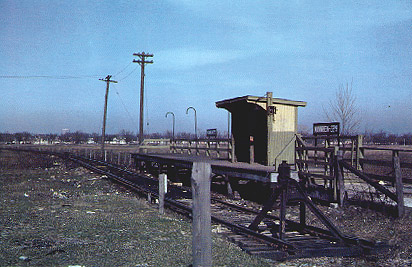
The view of the Lake Street "L", looking northwest at Paulina on October 20, 1953. The station that is partly visible was called Lake Street Transfer, and had not been used since 1951. Meanwhile, there is new steel added to the "L" structure here to create a new connection with the old Met "L". This was used by Douglas Park trains from 1954-58, and Pink Line trains today. (William C. Hoffman Photo)

The view of the Lake Street “L”, looking northwest at Paulina on October 20, 1953.
The station that is partly visible was called Lake Street Transfer, and had not been used since 1951. Meanwhile, there is new steel added to the “L” structure here to create a new connection with the old Met “L”.
This was used by Douglas Park trains from 1954-58, and Pink Line trains today. (William C. Hoffman Photo)

Life is full of things that are touted as new and improved, but today we present some things that are both old and improved– images made better through use of today’s improved technology.

Some railfans remain wedded to film technology and are suspicious of digital. Often, they say that a film image is permanent, while a digital image is not– that is represents something intangible, while a 35mm slide is something you can hold in your hand.

While it would be wonderful if film images were permanent, especially color images, after scanning tens of thousands of them, I can assure you that such is not the case. Nearly all vintage color slides show some evidence of fading over time, even Kodachrome slides. In addition, they can be scratched, become dirty, lost, or damaged.

Digital has other important advantages– you can see the picture right away, so there is a much shorter learning curve, and once you have the camera, there is no need to buy film, which can be expensive.

Earlier this year I became the custodian of my late friend Jeff Wien‘s image collection, which included those taken by the late William C. Hoffman. Some of the Hoffman slides have been circulating for many years in the form of duplicates, many of which are now 25 years old themselves.

A digital image will look the same 100 years from now as it does today. It won’t get scratched, fingerprinted, or fade over time. It can be copied numerous times, and each copy will be an exact replica of the original, perfect in every detail. On the other hand, when a slide is copied by conventional means, there is always a loss of quality with each succeeding generation.

When taken by a high quality digital camera, in general your results will also be better than with a film camera today. Chances are it will be sharper and have better color.

It will take a long time to digitize the original Hoffman slides and others now in my collection. But I have worked on some. Each of the original slides I have scanned has improved sharpness over the duplicates, but in one or two instances, I have been unable to improve the color, because the original has continued to fade or color shift in the 25 years or more since the duplicates were made. This was most evident in early Ektachrome slides from the late 1950s to early 60s, which are known for having unstable dyes.

Many of these have color shifted to red. What actually has happened is the dyes that are not red have faded badly.

This was a problem that Kodak worked quickly to solve more than 55 years ago, and should not make you concerned about the color films available today.

One of my goals is to share definitive versions of the Hoffman slides, that I hope will stand the test of time, preserving their important historical information for future generations to come.

We also have many other recent photo finds to share today, and others from the collections of William Shapotkin.

Keep those cards and letters coming in, folks!

-David Sadowski

Recent Finds

The Chicago Surface Lines put the first of 83 prewar PCCs into service in November 1936, and all ended service in June 1956 on Route 49 - Western. This picture, showing 4004 loaded onto a flat car, with the trucks and pole removed, was probably taken in either late 1956 or early 1957, when the car was taken from South Shops to a local scrapyard.

The Chicago Surface Lines put the first of 83 prewar PCCs into service in November 1936, and all ended service in June 1956 on Route 49 – Western. This picture, showing 4004 loaded onto a flat car, with the trucks and pole removed, was probably taken in either late 1956 or early 1957, when the car was taken from South Shops to a local scrapyard.

We received no information with this medium format negative, but it shows Washington, D.C. streetcar 1557 and one other near the Capitol Building in the early 1950s. The last DC streetcar (of its original era) ran in 1962, but a new line has since started.

We received no information with this medium format negative, but it shows Washington, D.C. streetcar 1557 and one other near the Capitol Building in the early 1950s. The last DC streetcar (of its original era) ran in 1962, but a new line has since started.

A close-up of 1557, showing it was signed for the Cabin John line.

A close-up of 1557, showing it was signed for the Cabin John line.

One of the two North Shore Line Electroliners on its February 8, 1941 inaugural trip. This image is taken from the original negative. The location is Harmswoods.

One of the two North Shore Line Electroliners on its February 8, 1941 inaugural trip. This image is taken from the original negative. The location is Harmswoods.

NSL freight loco 459 at work.

NSL freight loco 459 at work.

An Electroliner at the Milwaukee Terminal, possibly circa 1942-46.

An Electroliner at the Milwaukee Terminal, possibly circa 1942-46.

The view looking east along the Metropolitan "L" at Marshfield on June 6, 1950. (William C. Hoffman Photo)

The view looking east along the Metropolitan “L” at Marshfield on June 6, 1950. (William C. Hoffman Photo)

The "L" and bridge on this portion of the Jackson Park branch has since been cut back to Cottage Grove. (William C. Hoffman Photo)

North Shore Line car 251 crosses the CTA bridge over the Illinois Central tracks on May 15, 1960 on a fantrip. North Shore Line cars had traveled here as late as 1938 before they terminated at Roosevelt Road instead.
The old Tower Theater is visible at left.
The “L” and bridge on this portion of the Jackson Park branch has since been cut back to Cottage Grove. (William C. Hoffman Photo)

On May 15, 1960, a northbound CTA Jackson Park train is at 61st Street, while North Shore Line car 251, at left, is on a fantrip, running to places where NSL cars had not been since 1938. (William C. Hoffman Photo)

On May 15, 1960, a northbound CTA Jackson Park train is at 61st Street, while North Shore Line car 251, at left, is on a fantrip, running to places where NSL cars had not been since 1938. (William C. Hoffman Photo)

Carl Edward Hedstrom Jr. (1918-2009) congratulating Carl Edward Hedstrom Sr. (1889-1978) on his retirement as a South Shore Line engineer in Michigan City, Indiana on October 30, 1960. Senior worked for the railroad from 1921 to 1960, while Junior also worked as a motorman there from 1939 to 1983. (Michigan City News Dispatch Photo)

Carl Edward Hedstrom Jr. (1918-2009) congratulating Carl Edward Hedstrom Sr. (1889-1978) on his retirement as a South Shore Line engineer in Michigan City, Indiana on October 30, 1960. Senior worked for the railroad from 1921 to 1960, while Junior also worked as a motorman there from 1939 to 1983. (Michigan City News Dispatch Photo)

South Shore Line #100 at Van Buren Street, bound for South Bend.

South Shore Line #100 at Van Buren Street, bound for South Bend.

An unidentified South Shore engineer.

An unidentified South Shore engineer.

South Shore Line coach #5 at Randolph Street Station in Chicago, Illinois on April 20, 1949. The motorman is Carl Edward Hedstrom, Sr. (Carl Edward Hedstrom, Jr. Photo)

South Shore Line coach #5 at Randolph Street Station in Chicago, Illinois on April 20, 1949. The motorman is Carl Edward Hedstrom, Sr. (Carl Edward Hedstrom, Jr. Photo)

A South Shore Line float in a Michigan City parade.

A South Shore Line float in a Michigan City parade.

South Shore Line dispatcher Al Kams.

South Shore Line dispatcher Al Kams.

A pair of 4000s are departing from the old Randolph and Wabash "L" station on the Loop. The picture isn't older than 1959, as the Sun-Times/Daily News Building is in the background. It could be dated further, depending on whether those cars still have their trolley poles, which I think they do. Those were only needed until 1962. The 4000s were replaced by 2000s on Lake Street starting in 1964. Until 1969, the Loop was unidirectional, running counterclockwise, so these cars are heading away from us.

A pair of 4000s are departing from the old Randolph and Wabash “L” station on the Loop. The picture isn’t older than 1959, as the Sun-Times/Daily News Building is in the background. It could be dated further, depending on whether those cars still have their trolley poles, which I think they do. Those were only needed until 1962. The 4000s were replaced by 2000s on Lake Street starting in 1964. Until 1969, the Loop was unidirectional, running counterclockwise, so these cars are heading away from us.

CTA red Pullman 144, which is now at the Illinois Railway Museum. Not sure whether this photo was taken during a 1950s fantrip, as so many other pictures were. Mike Franklin: "Heading west on Kinzie Street just west of Dearborn. Tribune Building in the distance."

CTA red Pullman 144, which is now at the Illinois Railway Museum. Not sure whether this photo was taken during a 1950s fantrip, as so many other pictures were. Mike Franklin: “Heading west on Kinzie Street just west of Dearborn. Tribune Building in the distance.”

CTA 3146 at Marion Street in Oak Park, running on the (then) ground-level portion of the Lake Street "L". Don's Rail Photos: "3146 was built by St. Louis Car in 1901 as LSERR 146. It was renumbered 3146 in 1913 and became CRT 3146 in 1923."

CTA 3146 at Marion Street in Oak Park, running on the (then) ground-level portion of the Lake Street “L”. Don’s Rail Photos: “3146 was built by St. Louis Car in 1901 as LSERR 146. It was renumbered 3146 in 1913 and became CRT 3146 in 1923.”

This looks like a Met "L" line, but which one? The sign on the train is too fuzzy to read, but I can make out the word "Park," which narrows it down to Garfield Park, Humboldt Park, or Douglas Park, and excludes Logan Square. Daniel Joseph: "My guess (is) this is at Independence Boulevard with the Garfield Park station in the background."

This looks like a Met “L” line, but which one? The sign on the train is too fuzzy to read, but I can make out the word “Park,” which narrows it down to Garfield Park, Humboldt Park, or Douglas Park, and excludes Logan Square. Daniel Joseph: “My guess (is) this is at Independence Boulevard with the Garfield Park station in the background.”

This is the old Ogden Avenue station on the Garfield Park "L", on August 22, 1953. This station closed on September 27 and the structure here was demolished soon thereafter. Garfield trains were temporarily relocated to run on ground level in Van Buren Street.

This is the old Ogden Avenue station on the Garfield Park “L”, on August 22, 1953. This station closed on September 27 and the structure here was demolished soon thereafter. Garfield trains were temporarily relocated to run on ground level in Van Buren Street.

6000s at Chicago Avenue on the Ravenswood.

6000s at Chicago Avenue on the Ravenswood.

From the Collections of William Shapotkin

On March 25, 1962, NSL cars 771, 415, 753, and 251 are on a Central Electric Railfans' Association fantrip at the Isabella station in Evanston, where no North Shore cars had been since the Shore Line Route was abandoned in 1955. (William C. Hoffman Photo, William Shapotkin Collection)

On March 25, 1962, NSL cars 771, 415, 753, and 251 are on a Central Electric Railfans’ Association fantrip at the Isabella station in Evanston, where no North Shore cars had been since the Shore Line Route was abandoned in 1955. (William C. Hoffman Photo, William Shapotkin Collection)

CSL 1266, when it was being used as a salt car.(William Shapotkin Collection)

CSL 1266, when it was being used as a salt car.(William Shapotkin Collection)

CSL 205 is on Route 6, and is apparently westbound, heading to Van Buren and Kedzie. Streetcars were replaced by buses on this route in 1951, and from 1953-58, Garfield Park "L" trains ran on Van Buren, between Sacramento Boulevard and Aberdeen (William Shapotkin Collection) Daniel Joseph adds: "My uneducated guess this may be at Kedzie and Douglas with a #12-Roosevelt heading to the car barn. Note the divided boulevard with a parkway and West Side Park District street lamps. But I do not see a traffic signal for the part of the boulevard traveling to the left. If that street is not part of the boulevard, this could be Van Buren and Sacramento." Since the car is signed for Route 6 - Van Buren, I am going to go with Van Buren and Sacramento.

CSL 205 is on Route 6, and is apparently westbound, heading to Van Buren and Kedzie. Streetcars were replaced by buses on this route in 1951, and from 1953-58, Garfield Park “L” trains ran on Van Buren, between Sacramento Boulevard and Aberdeen (William Shapotkin Collection) Daniel Joseph adds: “My uneducated guess this may be at Kedzie and Douglas with a #12-Roosevelt heading to the car barn. Note the divided boulevard with a parkway and West Side Park District street lamps. But I do not see a traffic signal for the part of the boulevard traveling to the left. If that street is not part of the boulevard, this could be Van Buren and Sacramento.” Since the car is signed for Route 6 – Van Buren, I am going to go with Van Buren and Sacramento.

CTA red Pullman 249 on the Kedzie route. (William Shapotkin Collection)

CTA red Pullman 249 on the Kedzie route.
(William Shapotkin Collection)

CSL 3245 is signed for Pershing Road (39th Street). (William Shapotkin Collection)

CSL 3245 is signed for Pershing Road (39th Street). (William Shapotkin Collection)

CSL 1682 is at Lake and Austin, west end of Route 16, with a West Towns streetcar across the border in suburban Oak Park. The Park Theater, at right, closed around 1952. (William Shapotkin Collection)

CSL 1682 is at Lake and Austin, west end of Route 16, with a West Towns streetcar across the border in suburban Oak Park. The Park Theater, at right, closed around 1952. (William Shapotkin Collection)

CSL 2821, signed to go to 115th and Halsted. (William Shapotkin Collection)

CSL 2821, signed to go to 115th and Halsted.
(William Shapotkin Collection)

The Route 22 streetcar means this is Clark Street, and I believe that's the old Astor Theater at right, so this is Clark and Madison looking south. The film Murder in the Fleet was released in 1935, but from the looks of the autos, this is a few years later, so most likely about 1938. (William Shapotkin Collection)

The Route 22 streetcar means this is Clark Street, and I believe that’s the old Astor Theater at right, so this is Clark and Madison looking south. The film Murder in the Fleet was released in 1935, but from the looks of the autos, this is a few years later, so most likely about 1938. (William Shapotkin Collection)

A nice colorized postcard view of the Met "L" twin bridges over the Chicago River. (William Shapotkin Collection)

A nice colorized postcard view of the Met “L” twin bridges over the Chicago River. (William Shapotkin Collection)

Oddly enough, the Chicago Transit Authority used a CSL bus sign when it extended service to Skokie via Route 97 in 1948. This was CTA's first suburban bus route, and replaced the Niles Center branch of the "L". This picture was taken on June 4, 1950. (William C. Hoffman Photo, William Shapotkin Collection)

Oddly enough, the Chicago Transit Authority used a CSL bus sign when it extended service to Skokie via Route 97 in 1948. This was CTA’s first suburban bus route, and replaced the Niles Center branch of the “L”. This picture was taken on June 4, 1950. (William C. Hoffman Photo, William Shapotkin Collection)

The view looking north along Michigan Avenue at Madison Street on December 12, 1949, shows no less than four Chicago Motor Coach buses, including a double-decker. The CTA purchased the CMC assets on October 1, 1952. (William C. Hoffman Photo, William Shapotkin Collection)

The view looking north along Michigan Avenue at Madison Street on December 12, 1949, shows no less than four Chicago Motor Coach buses, including a double-decker. The CTA purchased the CMC assets on October 1, 1952. (William C. Hoffman Photo, William Shapotkin Collection)

Washington and Wells, looking east, on June 8, 1950. Milwaukee Avenue buses share the street with a Chicago Motor Coach double-decker. (William C. Hoffman Photo, William Shapotkin Collection)

Washington and Wells, looking east, on June 8, 1950. Milwaukee Avenue buses share the street with a Chicago Motor Coach double-decker. (William C. Hoffman Photo, William Shapotkin Collection)

Washington and Clark on June 8, 1950. (William C. Hoffman Photo, William Shapotkin Collection)

Washington and Clark on June 8, 1950. (William C. Hoffman Photo, William Shapotkin Collection)

On May 18, 1954, a Route 8 - Halsted streetcar shares wire with a Chicago Avenue trolley bus by the Montgomery Wards complex. We are looking west. The Halsted car is on diversion trackage. (William C. Hoffman Photo, William Shapotkin Collection)

On May 18, 1954, a Route 8 – Halsted streetcar shares wire with a Chicago Avenue trolley bus by the Montgomery Wards complex. We are looking west. The Halsted car is on diversion trackage. (William C. Hoffman Photo, William Shapotkin Collection)

The view looking north along Larrabee Street at Chicago Avenue, by the Montgomery Wards complex. The tower is for switching Milwaukee Road freight trains. (William C. Hoffman Photo, William Shapotkin Collection)

The view looking north along Larrabee Street at Chicago Avenue, by the Montgomery Wards complex. The tower is for switching Milwaukee Road freight trains. (William C. Hoffman Photo, William Shapotkin Collection)

On May 16, 1954, red Pullmans 473 and 479 were used on a fantrip, two weeks before red cars were retired from service and replaced with buses on several routes. Streetcars were able to use trackage here on Irving Park Road in emergencies, since Route 80 had already been converted to use trolley buses.(William C. Hoffman Photo, William Shapotkin Collection)

On May 16, 1954, red Pullmans 473 and 479 were used on a fantrip, two weeks before red cars were retired from service and replaced with buses on several routes. Streetcars were able to use trackage here on Irving Park Road in emergencies, since Route 80 had already been converted to use trolley buses.(William C. Hoffman Photo, William Shapotkin Collection)

On July 3, 1950, a CTA trolley bus operates on the 51-55 Route on 51st Street near the South Side "L". (William C. Hoffman Photo, William Shapotkin Collection)

On July 3, 1950, a CTA trolley bus operates on the 51-55 Route on 51st Street near the South Side “L”. (William C. Hoffman Photo, William Shapotkin Collection)

CTA trolley bus 234 is on Route 51-55 at 51st and Campbell on June 12, 1950, while streetcar tracks here are actually being removed. In most places they were simply paved over. The CTA later renumbered all their trolley buses, with the addition of a "9" before their existing digits. (William C. Hoffman Photo, William Shapotkin Collection)

CTA trolley bus 234 is on Route 51-55 at 51st and Campbell on June 12, 1950, while streetcar tracks here are actually being removed. In most places they were simply paved over. The CTA later renumbered all their trolley buses, with the addition of a “9” before their existing digits. (William C. Hoffman Photo, William Shapotkin Collection)

The view looking north from the old Loop "L" station at State and Van Buren on July 25, 1954. (William C. Hoffman Photo, William Shapotkin Collection)

The view looking north from the old Loop “L” station at State and Van Buren on July 25, 1954. (William C. Hoffman Photo, William Shapotkin Collection)

CTA PCC 7240 is on State Street at Van Buren, heading south on Route 36. (William C. Hoffman Photo, William Shapotkin Collection)

CTA PCC 7240 is on State Street at Van Buren, heading south on Route 36. (William C. Hoffman Photo, William Shapotkin Collection)

CTA PCC 7162 turns from south State Street to westbound Polk on April 19, 1956, on the very last piece of new streetcar track built in Chicago. (William C. Hoffman Photo, William Shapotkin Collection)

CTA PCC 7162 turns from south State Street to westbound Polk on April 19, 1956, on the very last piece of new streetcar track built in Chicago. (William C. Hoffman Photo, William Shapotkin Collection)

Polk and Dearborn on April 19, 1956. (William C. Hoffman Photo, William Shapotkin Collection)

Polk and Dearborn on April 19, 1956. (William C. Hoffman Photo, William Shapotkin Collection)

Looking north along Dearborn Street on November 26, 1954, after both Clark and Dearborn were converted to one-way streets. The Monadnock Building is at left. (William C. Hoffman Photo, William Shapotkin Collection)

Looking north along Dearborn Street on November 26, 1954, after both Clark and Dearborn were converted to one-way streets. The Monadnock Building is at left. (William C. Hoffman Photo, William Shapotkin Collection)

The off-street loop at 63rd Place and Narragansett on July 1, 1951, used by Route 63 streetcars and the bus that went west of there to Argo-Summit. (William C. Hoffman Photo, William Shapotkin Collection)

The off-street loop at 63rd Place and Narragansett on July 1, 1951, used by Route 63 streetcars and the bus that went west of there to Argo-Summit. (William C. Hoffman Photo, William Shapotkin Collection)

On May 16, 1954, CTA red Pullman 579 is at the Western and 79th turnaround loop on a CERA fantrip. During this period, streetcars were used on Western during weekdays only, so the fantrip cars did not impede regular traffic. (William C. Hoffman Photo, William Shapotkin Collection)

On May 16, 1954, CTA red Pullman 579 is at the Western and 79th turnaround loop on a CERA fantrip. During this period, streetcars were used on Western during weekdays only, so the fantrip cars did not impede regular traffic. (William C. Hoffman Photo, William Shapotkin Collection)

CTA PCC 7235 at Western and 41st on August 14, 1955. (William C. Hoffman Photo, William Shapotkin Collection)

CTA PCC 7235 at Western and 41st on August 14, 1955. (William C. Hoffman Photo, William Shapotkin Collection)

Retired CSL bus BW-18 and trolley bus 9186, on the scrap line at South Shops on June 15, 1958. (William C. Hoffman Photo, William Shapotkin Collection)

Retired CSL bus BW-18 and trolley bus 9186, on the scrap line at South Shops on June 15, 1958. (William C. Hoffman Photo, William Shapotkin Collection)

On April 10, 1955, we see various vehicles awaiting scrap at South Shops, including a streetcar trailer in the 8000-series, trolley buses 9114, 9071, and sleet cutter bus BW-108. (William C. Hoffman Photo, William Shapotkin Collection)

On April 10, 1955, we see various vehicles awaiting scrap at South Shops, including a streetcar trailer in the 8000-series, trolley buses 9114, 9071, and sleet cutter bus BW-108. (William C. Hoffman Photo, William Shapotkin Collection)

On October 31, 1954, we see some older trolley buses, including 9114, ready for scrapping at South Shops, along with some red Pullman streetcars. (William C. Hoffman Photo, William Shapotkin Collection)

On October 31, 1954, we see some older trolley buses, including 9114, ready for scrapping at South Shops, along with some red Pullman streetcars. (William C. Hoffman Photo, William Shapotkin Collection)

Kenosha Trip

I recently visited Kenosha, Wisconsin, rode the two-mile trolley there, and sought out the former North Shore Line station. After the interurban was abandoned in 1963, the building became the Spaghetti Station for some years, and is now a school. Additions have been added to the north and west sides. Trains did not run in the side street here, but behind the part of the building that is visible now.

A Sign of the Times

This sign from the Poplar Avenue station in Elmhurst on the Chicago Aurora & Elgin, recently sold on eBay for $1424. Yes, that is a lot of money, but it is also an expression of its historical importance. Note the expert brush work, done by hand. Hopefully the sign will eventually make its way to a museum for the benefit of all.

Did Not Win

Resources are always limited, and for every image we are the successful bidders on, there are others that slip through our fingers. Here are a few that fell into the latter category.

I am not sure just where this picture was taken, showing a westbound four-car train of CA&E woods, headed up by 317. The C&NW is at left. Guesses have so far included Glen Ellyn, Lombard, and Wheaton.

I am not sure just where this picture was taken, showing a westbound four-car train of CA&E woods, headed up by 317. The C&NW is at left. Guesses have so far included Glen Ellyn, Lombard, and Wheaton.

Two Electroliners meet in Waukegan by William D. Volkmer, 1/16/60.

Two Electroliners meet in Waukegan by William D. Volkmer, 1/16/60.

Dempster Street, Skokie 1/16/60, photographer unknown (probably also taken by William D. Volkmer, it just wasn't marked as such).

Dempster Street, Skokie 1/16/60, photographer unknown (probably also taken by William D. Volkmer, it just wasn’t marked as such).

A three-car train in Lake Bluff by William D. Volkmer, 10/8/60.

A three-car train in Lake Bluff by William D. Volkmer, 10/8/60.

NSL 420 in Mundelein by Robert E. Bruneau, 8/20/61. Don's Rail Photos: "420 was was built by Pullman in 1928 as an observation. It was out of service by 1932. On July 21, 1943, it reentered service as a motorized coach. It was sold to Seashore Trolley Museum in 1963."

NSL 420 in Mundelein by Robert E. Bruneau, 8/20/61. Don’s Rail Photos: “420 was was built by Pullman in 1928 as an observation. It was out of service by 1932. On July 21, 1943, it reentered service as a motorized coach. It was sold to Seashore Trolley Museum in 1963.”

This postcard (with a 1910 postmark) shows that the use of "L" for elevated railway was not confined exclusively to Chicago.

This postcard (with a 1910 postmark) shows that the use of “L” for elevated railway was not confined exclusively to Chicago.

A train of CTA 6000s at the old Stony Island terminal on the Jackson Park branch.

A train of CTA 6000s at the old Stony Island terminal on the Jackson Park branch.

The Trolley Dodger On the Air

I recently appeared on the Dave Plier Show on WGN radio, to discuss Chicago’s Lost “L”s. You can hear that discussion here.

Our Latest Book, Now Available:

Chicago’s Lost “L”s

From the back cover:

Chicago’s system of elevated railways, known locally as the “L,” has run continuously since 1892 and, like the city, has never stood still. It helped neighborhoods grow, brought their increasingly diverse populations together, and gave the famous Loop its name. But today’s system has changed radically over the years. Chicago’s Lost “L”s tells the story of former lines such as Garfield Park, Humboldt Park, Kenwood, Stockyards, Normal Park, Westchester, and Niles Center. It was once possible to take high-speed trains on the L directly to Aurora, Elgin, and Milwaukee, Wisconsin. The L started out as four different companies, two starting out using steam engines instead of electricity. Eventually, all four came together via the Union Loop. The L is more than a way of getting around. Its trains are a place where people meet and interact. Some say the best way to experience the city is via the L, with its second-story view. Chicago’s Lost “L”s is virtually a “secret history” of Chicago, and this is your ticket. David Sadowski grew up riding the L all over the city. He is the author of Chicago Trolleys and Building Chicago’s Subways and runs the online Trolley Dodger blog.

The Images of America series celebrates the history of neighborhoods, towns, and cities across the country. Using archival photographs, each title presents the distinctive stories from the past that shape the character of the community today. Arcadia is proud to play a part in the preservation of local heritage, making history available to all.

Title Chicago’s Lost “L”s
Images of America
Author David Sadowski
Edition illustrated
Publisher Arcadia Publishing (SC), 2021
ISBN 1467100007, 9781467100007
Length 128 pages

Chapters:
01. The South Side “L”
02. The Lake Street “L”
03. The Metropolitan “L”
04. The Northwestern “L”
05. The Union Loop
06. Lost Equipment
07. Lost Interurbans
08. Lost Terminals
09. Lost… and Found

Each copy purchased here will be signed by the author, and you will also receive a bonus facsimile of a 1926 Chicago Rapid Transit Company map, with interesting facts about the “L” on the reverse side.

The price of $23.99 includes shipping within the United States.

For Shipping to US Addresses:

For Shipping to Canada:

For Shipping Elsewhere:

NEW DVD:

A Tribute to the North Shore Line

To commemorate the 50th anniversary of the demise of the fabled North Shore Line interurban in January 2013, Jeffrey L. Wien and Bradley Criss made a very thorough and professional video presentation, covering the entire route between Chicago and Milwaukee and then some. Sadly, both men are gone now, but their work remains, making this video a tribute to them, as much as it is a tribute to the Chicago North Shore & Milwaukee.

Jeff drew on his own vast collections of movie films, both his own and others such as the late William C. Hoffman, wrote and gave the narration. Bradley acted as video editor, and added authentic sound effects from archival recordings of the North Shore Line.

It was always Jeff’s intention to make this video available to the public, but unfortunately, this did not happen in his lifetime. Now, as the caretakers of Jeff’s railfan legacy, we are proud to offer this excellent two-hour program to you for the first time. The result is a fitting tribute to what Jeff called his “Perpetual Adoration,” which was the name of a stop on the interurban.

Jeff was a wholehearted supporter of our activities, and the proceeds from the sale of this disc will help defray some of the expenses of keeping the Trolley Dodger web site going.

Total time – 121:22

# of Discs – 1
Price: $19.99 (Includes shipping within the United States)

Help Support The Trolley Dodger

This is our 276th post, and we are gradually creating a body of work and an online resource for the benefit of all railfans, everywhere. To date, we have received over 802,000 page views, for which we are very grateful.

You can help us continue our original transit research by checking out the fine products in our Online Store.
As we have said before, “If you buy here, we will be here.”

We thank you for your support.

DONATIONS

In order to continue giving you the kinds of historic railroad images that you have come to expect from The Trolley Dodger, we need your help and support. It costs money to maintain this website, and to do the sort of historic research that is our specialty.

Your financial contributions help make this web site better, and are greatly appreciated.


The Spice of Life

The date of this picture is not known, but it must have been in the early 1950s. We see a Chicago & North Western commuter train (aka a "Scoot") at left on an embankment, while an eastbound CTA train is on the ground level portion of the Lake Street "L". Perhaps a more exact location can be determined by the signal tower shown in the photo. I think the woods were off of Lake by the end of 1954, and steam only lasted a couple more years on the C&NW. Now both Metra commuter trains and CTA's Green Line trains share this embankment. (William Shapotkin Collection)

The date of this picture is not known, but it must have been in the early 1950s. We see a Chicago & North Western commuter train (aka a “Scoot”) at left on an embankment, while an eastbound CTA train is on the ground level portion of the Lake Street “L”. Perhaps a more exact location can be determined by the signal tower shown in the photo. I think the woods were off of Lake by the end of 1954, and steam only lasted a couple more years on the C&NW. Now both Metra commuter trains and CTA’s Green Line trains share this embankment. (William Shapotkin Collection)

Variety, they say, is the spice of life, and we certainly have a spicy batch of photos for you today. Most are from the collections of William Shapotkin, whose interests range far afield. Looking through all these photos was, for me at least, like Christmas in July.

We hope that you will enjoy them as much as we do. We thank Mr. Shapotkin for generously sharing these images with our readers.

-David Sadowski

PS- If you enjoy reading these posts, you might consider joining our Trolley Dodger Facebook Group as well. We currently have 391 members.

Meet the Author

We will be appearing at City Lit Books (2523 N. Kedzie Avenue in Chicago) at 1:00 pm this Saturday, July 24, to discuss our new book Chicago’s Lost “L”s.

Our program will start with a 20 minute audiovisual presentation, followed by questions and answers from the audience, and a book signing. We hope to see you there.

Interestingly, City Lit Books occupies the same building that once housed the Logan Square “L” Terminal, although you would hardly know it by looking at the exterior. Our presentation will give an overview of the book, and then delve further into the historic “L”s of the northwest side (Logan Square, Humboldt Park, and Ravenswood), with plenty of pictures of the Logan Square Terminal.

The Trolley Dodger On the Air

On July 16th, I was invited to appear on the Dave Plier Show on WGN radio, to discuss Chicago’s Lost “L”s. You can hear that discussion here.

Recent Finds

CA&E 318 is on a mid-1950s fantrip sponsored by the Illini Railroad Club. The car is out on the Mount Carmel branch. You can see Maury Klebolt (1930-1988), the trip organizer, in the window. Mike Franklin: "This photo is looking west on the north side of Roosevelt Rd in Hillside taken from Oak Ridge Ave. That is not a cemetery on the right but rather the outdoor show room for Peter Troost Monument Co, same as today. Queen of Heaven Mausoleum at Wolf & Roosevelt can be seen in the distant left."

CA&E 318 is on a mid-1950s fantrip sponsored by the Illini Railroad Club. The car is out on the Mount Carmel branch. You can see Maury Klebolt (1930-1988), the trip organizer, in the window. Mike Franklin: “This photo is looking west on the north side of Roosevelt Rd in Hillside taken from Oak Ridge Ave. That is not a cemetery on the right but rather the outdoor show room for Peter Troost Monument Co, same as today. Queen of Heaven Mausoleum at Wolf & Roosevelt can be seen in the distant left.”

The same location today.

The same location today.

We are looking east along Lake Street, just west of Laramie, in the early 1950s. The Lake Street "L" descended to ground level here, running parallel to the CTA Route 16 streetcar for a few blocks. Streetcar service was replaced by buses on May 30, 1954.

We are looking east along Lake Street, just west of Laramie, in the early 1950s. The Lake Street “L” descended to ground level here, running parallel to the CTA Route 16 streetcar for a few blocks. Streetcar service was replaced by buses on May 30, 1954.

The CTA State and Lake station on April 21, 1980, looking north. This is why I am not sorry to see the old station replaced by a new one-- the old one was messed with a lot over the years. It was also damaged by fire, with the result that very little that is original remains. (Clark Frazier Photo)

The CTA State and Lake station on April 21, 1980, looking north. This is why I am not sorry to see the old station replaced by a new one– the old one was messed with a lot over the years. It was also damaged by fire, with the result that very little that is original remains. (Clark Frazier Photo)

On February 19, 2017, thanks to a substantial donation from the late Jeffrey L. Wien, the Central Electric Railfans' Association held a fantrip on the CTA using a four-car train wrapped to celebrate the Chicago Cubs' World Series victory the previous fall. The lead car was 5695. (Bruce C. Nelson Photo)

On February 19, 2017, thanks to a substantial donation from the late Jeffrey L. Wien, the Central Electric Railfans’ Association held a fantrip on the CTA using a four-car train wrapped to celebrate the Chicago Cubs’ World Series victory the previous fall. The lead car was 5695. (Bruce C. Nelson Photo)

On June 1, 1950 CTA PCC 7217 was used as part of an inquest into the fatal collision between car 7078 and a gasoline truck that killed 33 people (and injured many others) on May 25th of that year. The location is 6242 S. State Street. The resulting fire destroyed several nearby buildings. This accident is the subject of a book (The Green Hornet Streetcar Disaster).

On June 1, 1950 CTA PCC 7217 was used as part of an inquest into the fatal collision between car 7078 and a gasoline truck that killed 33 people (and injured many others) on May 25th of that year. The location is 6242 S. State Street. The resulting fire destroyed several nearby buildings. This accident is the subject of a book (The Green Hornet Streetcar Disaster).

Chicago Aurora & Elgin car 205 heads up a westbound four-car train at Cicero Avenue on the Garfield Park "L".

Chicago Aurora & Elgin car 205 heads up a westbound four-car train at Cicero Avenue on the Garfield Park “L”.

The beginnings of demolition of the Stohr Arcade building at Broadway and Wilson in December 1922. This Frank Lloyd Wright-designed triangular structure, partially hidden underneath the Northwestern "L". barely lasted a decade and was replaced by Arthur U. Gerber's Uptown Union Station the following year. (Chicago Daily News Collection, DN-0075219, Chicago History Museum)

The beginnings of demolition of the Stohr Arcade building at Broadway and Wilson in December 1922. This Frank Lloyd Wright-designed triangular structure, partially hidden underneath the Northwestern “L”. barely lasted a decade and was replaced by Arthur U. Gerber’s Uptown Union Station the following year. (Chicago Daily News Collection, DN-0075219, Chicago History Museum)

There was once a veritable railfan comic strip that appeared in hundreds of daily newspapers– Fontaine Fox‘s Toonerville Trolley. Here are eight daily panels from December 1939. You will note that most do not feature the trolley or its Skipper.

December 2, 1939.

December 2, 1939.

December 4, 1939. The reference to Holland relates to the "phony war" period of World War II. War had broken out in Europe, but Germany did not invade Holland until the Spring of 1940.

December 4, 1939. The reference to Holland relates to the “phony war” period of World War II. War had broken out in Europe, but Germany did not invade Holland until the Spring of 1940.

December 6, 1939.

December 6, 1939.

December 7, 1939.

December 7, 1939.

December 9, 1939.

December 9, 1939.

December 11, 1939.

December 11, 1939.

December 13, 1939.

December 13, 1939.

December 14, 1939.

December 14, 1939.

From the Collections of William Shapotkin:

Bill had three different duplicate slides, all of this same image. I tried to stitch them all together to see if the result would be sharper than the three rather fuzzy slides. It didn't seem to help much. All I know about this North Shore Line scene is that it was taken in 1957. One of the dupes was from Ashland Car Works.

Bill had three different duplicate slides, all of this same image. I tried to stitch them all together to see if the result would be sharper than the three rather fuzzy slides. It didn’t seem to help much. All I know about this North Shore Line scene is that it was taken in 1957. One of the dupes was from Ashland Car Works.

CTA 6238 at 71st and Western on February 3, 1953.

CTA 6238 at 71st and Western on February 3, 1953.

February 22, 1956 at the Chicago & North Western's Lake Bluff station. At right, an eastbound passenger train arrives, while a westbound freight (coming off the "New Line") passes. The view looks north.

February 22, 1956 at the Chicago & North Western’s Lake Bluff station. At right, an eastbound passenger train arrives, while a westbound freight (coming off the “New Line”) passes. The view looks north.

CTA single-car unit 41 in July 1992. This car is now at the Illinois Railway Museum. During the 1980s it was usually paired with car 28, which unfortunately was not saved.

CTA single-car unit 41 in July 1992. This car is now at the Illinois Railway Museum. During the 1980s it was usually paired with car 28, which unfortunately was not saved.

North Shore Line 758 heads up a four-car train, while a nearby Milwaukee Electric interurban is visiting on a 1949 fantrip.

North Shore Line 758 heads up a four-car train, while a nearby Milwaukee Electric interurban is visiting on a 1949 fantrip.

CTA 6151, a Stony Island car, at Navy Pier on July 4, 1951.

CTA 6151, a Stony Island car, at Navy Pier on July 4, 1951.

CA&E bus 101.

CA&E bus 101.

CA&E 409 at Trolleyville, USA in Olmstead Falls, OH in July 1966. Since 2009, this car has been at the Illinois Railway Museum.

CA&E 409 at Trolleyville, USA in Olmstead Falls, OH in July 1966. Since 2009, this car has been at the Illinois Railway Museum.

CTA 2923 at the Addison station on the (now) Red Line in June 1993. It was suggested that this might be Addison on the Ravenswood (today's Brown Line) because there are only two tracks visible. However, Graham Garfield says, "No no! This is actually a very special photo! This is a temporary platform at Addison Red Line (only recently having become the “Red Line”, née North-South Route) built as part of the staging for reconstructing the station, which was rather involved because the structure had to be widened to change from dual side platforms to a single island platform. I was interested to see this photo, as I have only seen a handful of photos of the staging and temp facilities from this project. To accommodate the island platform, the space between the center tracks had to the widened, so the two northbound tracks (3 & 4) stayed on the original steel structure and the southbound tracks (1 & 2) were placed on a new concrete deck with direct track fixation instead of the standard cut spikes and tie plates on the steel-deck elevated. While this concrete structure was being built, southbound Evanston and Howard trains ran on track 3 until August 19, 1994, when both where shifted onto track 1 on the new decking. On August 21, southbound Howard trains moved onto their permanent home on track 2. The new island platform had opened earlier in the summer. The layout of the switches in Addison Interlocking north of the station were arranged specifically to make that reroute scheme possible. So this view looks north on the temporary SB platform along track 3, with a SB Red Line A train stopping."

CTA 2923 at the Addison station on the (now) Red Line in June 1993. It was suggested that this might be Addison on the Ravenswood (today’s Brown Line) because there are only two tracks visible. However, Graham Garfield says, “No no! This is actually a very special photo! This is a temporary platform at Addison Red Line (only recently having become the “Red Line”, née North-South Route) built as part of the staging for reconstructing the station, which was rather involved because the structure had to be widened to change from dual side platforms to a single island platform. I was interested to see this photo, as I have only seen a handful of photos of the staging and temp facilities from this project.
To accommodate the island platform, the space between the center tracks had to the widened, so the two northbound tracks (3 & 4) stayed on the original steel structure and the southbound tracks (1 & 2) were placed on a new concrete deck with direct track fixation instead of the standard cut spikes and tie plates on the steel-deck elevated. While this concrete structure was being built, southbound Evanston and Howard trains ran on track 3 until August 19, 1994, when both where shifted onto track 1 on the new decking. On August 21, southbound Howard trains moved onto their permanent home on track 2. The new island platform had opened earlier in the summer.
The layout of the switches in Addison Interlocking north of the station were arranged specifically to make that reroute scheme possible.
So this view looks north on the temporary SB platform along track 3, with a SB Red Line A train stopping.”

A three-car CA&E train at the Aurora terminal.

A three-car CA&E train at the Aurora terminal.

A five-car North Shore Line train on July 5, 1957. (Joseph Canfield Photo)

A five-car North Shore Line train on July 5, 1957. (Joseph Canfield Photo)

CTA Pullman 550 at Madison and Canal in November 1951, presumably running on Route 56 - Milwaukee Avenue. That's the Chicago Daily News building at rear.

CTA Pullman 550 at Madison and Canal in November 1951, presumably running on Route 56 – Milwaukee Avenue. That’s the Chicago Daily News building at rear.

CTA trolley bus 9761 is running on Route 85 - Central near the end of electric bus service. This slide was processed in April 1973. The Manor Theater was located at 5609 W. North Avenue, and was eventually converted into a banquet hall (Ferrara Manor) after it was purchased by the same family that owned the Ferrara Pan Candy Company. So, the location of this slide is at Central and North Avenues, looking to the southwest as the bus is heading north to Bryn Mawr.

CTA trolley bus 9761 is running on Route 85 – Central near the end of electric bus service. This slide was processed in April 1973. The Manor Theater was located at 5609 W. North Avenue, and was eventually converted into a banquet hall (Ferrara Manor) after it was purchased by the same family that owned the Ferrara Pan Candy Company. So, the location of this slide is at Central and North Avenues, looking to the southwest as the bus is heading north to Bryn Mawr.

CTA 550 entering the Imlay loop at Milwaukee and Devon in September 1951.

CTA 550 entering the Imlay loop at Milwaukee and Devon in September 1951.

This is a former Toronto PCC streetcar, but I have no other information about the picture.

This is a former Toronto PCC streetcar, but I have no other information about the picture.

CSL 6022 at Kedzie and 47th Place in June 1943 (?) Not sure if this date is correct, considering the slab-sided postwar auto on the next block. Dan Cluley writes, "Regarding the date of bills188 the sign on the streetcar advertises “Park and Recreation week – May 21-30” That seems to have been a national promotion in 1948. My guess on the car would be postwar Hudson." So let's call it June 1948 then.

CSL 6022 at Kedzie and 47th Place in June 1943 (?) Not sure if this date is correct, considering the slab-sided postwar auto on the next block. Dan Cluley writes, “Regarding the date of bills188 the sign on the streetcar advertises “Park and Recreation week – May 21-30” That seems to have been a national promotion in 1948. My guess on the car would be postwar Hudson.” So let’s call it June 1948 then.

CTA Pullman 900 at 93rd and Stony Island on November 16, 1951.

CTA Pullman 900 at 93rd and Stony Island on November 16, 1951.

CTA 3191 at Stony Island and 93rd on July 11, 1951.

CTA 3191 at Stony Island and 93rd on July 11, 1951.

The Pioneer Limited (live steam) at Kiddieland amusement park in August 1992. After Kiddieland closed, the steam engines were purchased by the Hesston Steam Museum.

The Pioneer Limited (live steam) at Kiddieland amusement park in August 1992. After Kiddieland closed, the steam engines were purchased by the Hesston Steam Museum.

The observation car on the Kiddieland Express at Kiddieland amusement park in Melrose Park, IL in August 1992. (William Shapotkin Photo)

The observation car on the Kiddieland Express at Kiddieland amusement park in Melrose Park, IL in August 1992. (William Shapotkin Photo)

Milwaukee Road "bipolar" electric loco E-2 on display at the National Museum of Transportation in Kirkwood, MO on August 2, 1995. (William Shapotkin Photo)

Milwaukee Road “bipolar” electric loco E-2 on display at the National Museum of Transportation in Kirkwood, MO on August 2, 1995. (William Shapotkin Photo)

CTA gate car 322 is signed as a Kenwood Local on Chicago's Loop "L" in July 1`1948. Kenwood became a shuttle, running only as far as the Indiana Avenue station, in August 1949 as part of CTA's major revision of north-south service.

CTA gate car 322 is signed as a Kenwood Local on Chicago’s Loop “L” in July 1`1948. Kenwood became a shuttle, running only as far as the Indiana Avenue station, in August 1949 as part of CTA’s major revision of north-south service.

Chicago, IL. CTA car 5010 leads the inaugural revenue run of 5000-series cars on CTA's Howard-Dan Ryan Line at Howard terminal. The view looks W-NW on April 19, 2010. (William Shapotkin Photo)

Chicago, IL. CTA car 5010 leads the inaugural revenue run of 5000-series cars on CTA’s Howard-Dan Ryan Line at Howard terminal. The view looks W-NW on April 19, 2010. (William Shapotkin Photo)

Chicago, IL. Rear-end interior view of CTA "L" car 5010. Photo taken during inaugural revenue run of 5000-series cars on the Howard-Dan Ryan line (April 19, 2010). (William Shapotkin Photo)

Chicago, IL. Rear-end interior view of CTA “L” car 5010. Photo taken during inaugural revenue run of 5000-series cars on the Howard-Dan Ryan line (April 19, 2010). (William Shapotkin Photo)

CA&E 604 and 427 in Wheaton.

CA&E 604 and 427 in Wheaton.

CA&E 405.

CA&E 405.

CA&E 56.

CA&E 56.

CA&E car 20 at the Fox River Trolley Museum in July 1987, with CTA 5001 and a 4000 in the background.

CA&E car 20 at the Fox River Trolley Museum in July 1987, with CTA 5001 and a 4000 in the background.

A CTA freight train is on the north side "L" in this undated photo, looking south. Electric freight service was the "L"s responsibility from 1920 to 1973, a holdover from the days when this was a Milwaukee Road line operating at ground level.

A CTA freight train is on the north side “L” in this undated photo, looking south. Electric freight service was the “L”s responsibility from 1920 to 1973, a holdover from the days when this was a Milwaukee Road line operating at ground level.

CA&E 422.

CA&E 422.

The CA&E Wheaton Yard and Shops.

The CA&E Wheaton Yard and Shops.

"In the last days of the last streetcar line in Milwaukee, a Wells Street car trundels through downtown." This would have to be no later than 1958. A new modern streetcar line began operations in Milwaukee a few years ago. (A. C. Kalmbach Photo)

“In the last days of the last streetcar line in Milwaukee, a Wells Street car trundels through downtown.” This would have to be no later than 1958. A new modern streetcar line began operations in Milwaukee a few years ago. (A. C. Kalmbach Photo)

CA&E 430.

CA&E 430.

I did the best I could with this image, which was completely faded to red. It shows Illinois Terminal 451 being used in regular service on the Shaker Heights Rapid Transit line in October 1976, due to a car shortage. (Jim Walker Photo)

I did the best I could with this image, which was completely faded to red. It shows Illinois Terminal 451 being used in regular service on the Shaker Heights Rapid Transit line in October 1976, due to a car shortage. (Jim Walker Photo)

Cleveland RTA PCC 75 is at East 83rd Street on the Shaker Heights Rapid Transit line on May 30, 1976.

Cleveland RTA PCC 75 is at East 83rd Street on the Shaker Heights Rapid Transit line on May 30, 1976.

SEPTA 6139-6140 (ex-CTA) at the Norristown terminal on March 10, 1987. Until 1951, there was a ramp continuing north from here, leading to street trackage used by the Lehigh Valley Transit's Liberty Bell interurban, which continued to Allentown. This terminal has since been replaced.

SEPTA 6139-6140 (ex-CTA) at the Norristown terminal on March 10, 1987. Until 1951, there was a ramp continuing north from here, leading to street trackage used by the Lehigh Valley Transit’s Liberty Bell interurban, which continued to Allentown. This terminal has since been replaced.

This is one of the North Shore Line stations designed by Arthur U. Gerber. But which one? My guess is Kenosha. The original slide, from November 1987, was so underexposed that it almost looked opaque, but I did what I could with it.

This is one of the North Shore Line stations designed by Arthur U. Gerber. But which one? My guess is Kenosha. The original slide, from November 1987, was so underexposed that it almost looked opaque, but I did what I could with it.

This picture shows the Lake Street "L" at Laramie Avenue (5200 W.) in a state of transition on October 22, 1962-- just six days before service west of here was moved to the nearby Chicago & North Western embankment. This two-car train of 4000s (4383-4384) is descending the ramp to ground level, but as you can see, the connection to the embankment is already in place to the left (north). It appears that a section of the ramp was modified when the new track connection was made, as you can see the tracks leading down to ground level bump out a bit to the south. Once the new arrangement was placed in service, the ramp leading to ground level was removed, and the trolley poles were taken off the 4000s used on Lake. They were replaced by new 2000-series cars in 1964.

This picture shows the Lake Street “L” at Laramie Avenue (5200 W.) in a state of transition on October 22, 1962– just six days before service west of here was moved to the nearby Chicago & North Western embankment. This two-car train of 4000s (4383-4384) is descending the ramp to ground level, but as you can see, the connection to the embankment is already in place to the left (north). It appears that a section of the ramp was modified when the new track connection was made, as you can see the tracks leading down to ground level bump out a bit to the south. Once the new arrangement was placed in service, the ramp leading to ground level was removed, and the trolley poles were taken off the 4000s used on Lake. They were replaced by new 2000-series cars in 1964.

CSL trolley bus 87 is on Central Avenue near Lake Street on June 7, 1930. These are probably CSL officials, since trolley bus service on Route 85 - Central began the next day, replacing a Chicago Motor Coach route. CSL had begun trolley bus service on Diversey Avenue on April 17, 1930, which explains why this chartered bus was signed for Route 76. Diversey lost its trolley buses in 1955. CSL chose trolley buses for some northwest side routes as they were in competition with the Chicago Motor Coach company to extend service there. It was quicker (and cheaper) for CSL to institute service with electric buses, with the intention (never realized) to convert them to streetcar lines once ridership justified it. This was part of what CSL called "balanced" transit.

CSL trolley bus 87 is on Central Avenue near Lake Street on June 7, 1930. These are probably CSL officials, since trolley bus service on Route 85 – Central began the next day, replacing a Chicago Motor Coach route. CSL had begun trolley bus service on Diversey Avenue on April 17, 1930, which explains why this chartered bus was signed for Route 76. Diversey lost its trolley buses in 1955. CSL chose trolley buses for some northwest side routes as they were in competition with the Chicago Motor Coach company to extend service there. It was quicker (and cheaper) for CSL to institute service with electric buses, with the intention (never realized) to convert them to streetcar lines once ridership justified it. This was part of what CSL called “balanced” transit.

Milwaukee streetcar 998 in the 1950s.

Milwaukee streetcar 998 in the 1950s.

CTA buses 5076 and 5300 at the Imlay loop, at Milwaukee and Devon.

CTA buses 5076 and 5300 at the Imlay loop, at Milwaukee and Devon.

CTA buses 5253 and 5218 at the Imlay loop.

CTA buses 5253 and 5218 at the Imlay loop.

CTA buses 5143 and 5300 at the Imlay loop, which is still in use today.

CTA buses 5143 and 5300 at the Imlay loop, which is still in use today.

CA&E cars 600 and 702.

CA&E cars 600 and 702.

We are looking to the west/northwest along the Kennedy expressway at Canfield. An inbound CTA Blue Line train approaches the Harlem Avenue station (located behind the photographer). This picture was taken around October 2019.

We are looking to the west/northwest along the Kennedy expressway at Canfield. An inbound CTA Blue Line train approaches the Harlem Avenue station (located behind the photographer). This picture was taken around October 2019.

CTA trolley bus 9657 on Route 53 - Pulaski. Daniel Joseph: "Location is Pulaski/Peterson Terminal."

CTA trolley bus 9657 on Route 53 – Pulaski. Daniel Joseph: “Location is Pulaski/Peterson Terminal.”

Illinois Terminal sleeping car 504, the "Peoria," at the Illinois Railway Museum in May 1977. It was built by American Car and Foundry in 1910.

Illinois Terminal sleeping car 504, the “Peoria,” at the Illinois Railway Museum in May 1977. It was built by American Car and Foundry in 1910.

CA&E car 303.

CA&E car 303.

I am not sure just which CA&E wood car this is, at the Wheaton yards. I stitched together two versions of this slide, both badly faded to red, and attempted to restore the colors.

I am not sure just which CA&E wood car this is, at the Wheaton yards. I stitched together two versions of this slide, both badly faded to red, and attempted to restore the colors.

CA&E 406 at Elgin.

CA&E 406 at Elgin.

CTA 3163 on the ground level portion of the Lake Street "L" in Oak Park on April 27, 1952.

CTA 3163 on the ground level portion of the Lake Street “L” in Oak Park on April 27, 1952.

CA&E 424 and train at the Elgin terminal in August 1953.

CA&E 424 and train at the Elgin terminal in August 1953.

CA&E 428 at the terminal in Elgin on August 10, 1956.

CA&E 428 at the terminal in Elgin on August 10, 1956.

CTA 5436 at 79th and Perry in March 1950.

CTA 5436 at 79th and Perry in March 1950.

CTA 3232 on Route 67. M.E. adds, "This photo was likely taken at 69th and Western. This is an eastbound car making the turn from going north on Western to going east on 69th. After the 69th St. line was converted to buses, the CTA kept the tracks in operation so that PCC cars running along Western could access the barn at Vincennes and 77th."

CTA 3232 on Route 67. M.E. adds, “This photo was likely taken at 69th and Western. This is an eastbound car making the turn from going north on Western to going east on 69th. After the 69th St. line was converted to buses, the CTA kept the tracks in operation so that PCC cars running along Western could access the barn at Vincennes and 77th.”

CTA 3254 at 71st and California on February 3, 1953.

CTA 3254 at 71st and California on February 3, 1953.

CTA 3318 at 71st and California on May 28, 1950.

CTA 3318 at 71st and California on May 28, 1950.

CTA 422 on Kedzie at 47th on May 13, 1954. It would appear this one of one a few locations where there was wire shared by streetcars and trolley buses. M.E. adds, "There was no trolley bus service along Kedzie, so the only explanation for the trolley bus here is that it was going either to or from the trolley bus barn. I don't know precisely where that barn was, but judging by the picture, it had to be somewhere along Kedzie between 47th and 51st Sts., which had the only two trolley bus lines on the south side." John V.: "CTA 422 on Kedzie: Trolley buses for routes 47 & 51 utilized Archer Car Station for storage, accessed via Kedzie north of 47th Street. Kedzie itself changed over to trolley buses in 1955."

CTA 422 on Kedzie at 47th on May 13, 1954. It would appear this one of one a few locations where there was wire shared by streetcars and trolley buses. M.E. adds, “There was no trolley bus service along Kedzie, so the only explanation for the trolley bus here is that it was going either to or from the trolley bus barn. I don’t know precisely where that barn was, but judging by the picture, it had to be somewhere along Kedzie between 47th and 51st Sts., which had the only two trolley bus lines on the south side.” John V.: “CTA 422 on Kedzie: Trolley buses for routes 47 & 51 utilized Archer Car Station for storage, accessed via Kedzie north of 47th Street. Kedzie itself changed over to trolley buses in 1955.”

CTA trolley bus 9289 at the turnaround loop at Belmont and Cumberland.

CTA trolley bus 9289 at the turnaround loop at Belmont and Cumberland.

The same location today.

The same location today.

CTA trolley bus 9504 on Route 53 - Pulaski in 1970. Mike Charnota Photo)

CTA trolley bus 9504 on Route 53 – Pulaski in 1970. Mike Charnota Photo)

We are looking east along Randolph Street on October 16, 1958. We see the old Trailways bus depot, and what was then the newly remodeled CTA "L" station, which was replaced a few years ago by a new station a block south and Washington and Wabash. I am not sure whether the giant CTA logo was saved off the old station.

We are looking east along Randolph Street on October 16, 1958. We see the old Trailways bus depot, and what was then the newly remodeled CTA “L” station, which was replaced a few years ago by a new station a block south and Washington and Wabash. I am not sure whether the giant CTA logo was saved off the old station.

This is an Ashland Car Works duplicate slide, sold by the late Jack Bailey. This is a North Shore Line train in one of the northern suburbs, running on the Shore Line Route, parallel to the Chicago & North Western (which would be just to the right of the frame). Which means we are looking to the south. KV writes that this "appears to be St. Johns Avenue in Highland Park."

This is an Ashland Car Works duplicate slide, sold by the late Jack Bailey. This is a North Shore Line train in one of the northern suburbs, running on the Shore Line Route, parallel to the Chicago & North Western (which would be just to the right of the frame). Which means we are looking to the south. KV writes that this “appears to be St. Johns Avenue in Highland Park.”

Blue Island, IL on September 6, 2001. This two-car section of the Blue Island (Vermont Street) Metra (IC) Electric station platform is all that's left of the original 1926 station. The head house and remainder of the platform have been demolished and a new facility is under construction. The view looks N-NE across the west pocket track.

Blue Island, IL on September 6, 2001. This two-car section of the Blue Island (Vermont Street) Metra (IC) Electric station platform is all that’s left of the original 1926 station. The head house and remainder of the platform have been demolished and a new facility is under construction. The view looks N-NE across the west pocket track.

Near the Armitage CTA "L" station in April 1968.

Near the Armitage CTA “L” station in April 1968.

A Chicago Great Western "piggyback" freight train on Baltimore & Ohio Chicago Terminal tracks on September 13, 1965. The CGW was abandoned in the 1970s. We are looking west from Harlem Avenue in Forest Park, IL, with the CTA Congress rapid transit station at right (part of today's Blue Line). Note how the fiberglass panels on the ramp are arranged in a colorful pattern. Some years later, many of these were removed after some riders were robbed in these secluded walkways. (Dick Talbott Photo)

A Chicago Great Western “piggyback” freight train on Baltimore & Ohio Chicago Terminal tracks on September 13, 1965. The CGW was abandoned in the 1970s. We are looking west from Harlem Avenue in Forest Park, IL, with the CTA Congress rapid transit station at right (part of today’s Blue Line). Note how the fiberglass panels on the ramp are arranged in a colorful pattern. Some years later, many of these were removed after some riders were robbed in these secluded walkways. (Dick Talbott Photo)

South Shore Line car 16 in July 1977.

South Shore Line car 16 in July 1977.

A southbound North Shore Line Electroliner at Lake Bluff. (A. C. Kalmbach Photo)

A southbound North Shore Line Electroliner at Lake Bluff. (A. C. Kalmbach Photo)

This was taken on a Central Electric Railfans' Association fantrip on the Metra Electric around May 1990. The South Shore Line also runs on these tracks somewhere on Chicago's south side.

This was taken on a Central Electric Railfans’ Association fantrip on the Metra Electric around May 1990. The South Shore Line also runs on these tracks somewhere on Chicago’s south side.

South Shore Line 10 in December 1983. (Gregory Markey Photo)

South Shore Line 10 in December 1983. (Gregory Markey Photo)

CA&E 309 at the Wheaton Shops.

CA&E 309 at the Wheaton Shops.

CTA PCC 7171 heads south on State Street at Wacker Drive, most likely on Route 36. The CTA "L" station at State and Lake Streets is a block away, with Fritzel's restaurant and the Chicago Theater visible. This picture dates to the mid-1950s.

CTA PCC 7171 heads south on State Street at Wacker Drive, most likely on Route 36. The CTA “L” station at State and Lake Streets is a block away, with Fritzel’s restaurant and the Chicago Theater visible. This picture dates to the mid-1950s.

A train of Met cars on the Garfield Park "L". (John J. Kelly, Jr. Photo)

A train of Met cars on the Garfield Park “L”. (John J. Kelly, Jr. Photo)

CTA 4053-4336 on the Lake Street "L" in Oak Park on October 19, 1952.

CTA 4053-4336 on the Lake Street “L” in Oak Park on October 19, 1952.

CSL 5222 on Halsted at 79th Street, apparently in the late 1920s. The Capitol Theater was located at 7941 S. Halsted and opened in 1925. The view looks south. M.E. notes: "In this photo you see tracks switching between Halsted and 79th St. These switches took Halsted cars east on 79th St. to Vincennes, then north to 77th St. to the big CSL barn. Those tracks could also have led to Emerald Ave. (a half block east of Halsted), where the Halsted cars turned south, then west into the terminal at roughly 79th Place between Emerald and Halsted. From the picture, I can't determine whether that terminal existed in the 1920s. Halsted cars could have also used the barn farther south at 88th and Vincennes, which had been the barn for the interurban line that ran from Kankakee to the L at 63rd Place and Halsted." "I don't know when the barn at 103rd and Vincennes (also on the Halsted route) opened, but even had it existed in the 1920s, there would not have been a track connection between the Halsted cars running on a private right-of-way east of Vincennes, and the barn on the southwest corner of 103rd and Vincennes. I say this with certainty because, at the intersection of 103rd St., Vincennes Ave. and Beverly Blvd. (which came in from the northwest), there was also the freight line of the Pennsylvania Railroad that ran alongside Beverly Blvd. and crossed both the CSL Vincennes line and the Rock Island main line. So there would not have been any room to run streetcar trackage to the barn! Plus, I believe the 103rd St. barn was strictly a bus barn. But the junction of 103rd and Vincennes, the center of the neighborhood called Washington Heights, would have been a great railfanning location, with Rock Island mainline and commuter trains, CSL Vincennes streetcars, and the Pennsy freights."

CSL 5222 on Halsted at 79th Street, apparently in the late 1920s. The Capitol Theater was located at 7941 S. Halsted and opened in 1925. The view looks south. M.E. notes: “In this photo you see tracks switching between Halsted and 79th St. These switches took Halsted cars east on 79th St. to Vincennes, then north to 77th St. to the big CSL barn. Those tracks could also have led to Emerald Ave. (a half block east of Halsted), where the Halsted cars turned south, then west into the terminal at roughly 79th Place between Emerald and Halsted. From the picture, I can’t determine whether that terminal existed in the 1920s. Halsted cars could have also used the barn farther south at 88th and Vincennes, which had been the barn for the interurban line that ran from Kankakee to the L at 63rd Place and Halsted.”
“I don’t know when the barn at 103rd and Vincennes (also on the Halsted route) opened, but even had it existed in the 1920s, there would not have been a track connection between the Halsted cars running on a private right-of-way east of Vincennes, and the barn on the southwest corner of 103rd and Vincennes. I say this with certainty because, at the intersection of 103rd St., Vincennes Ave. and Beverly Blvd. (which came in from the northwest), there was also the freight line of the Pennsylvania Railroad that ran alongside Beverly Blvd. and crossed both the CSL Vincennes line and the Rock Island main line. So there would not have been any room to run streetcar trackage to the barn! Plus, I believe the 103rd St. barn was strictly a bus barn. But the junction of 103rd and Vincennes, the center of the neighborhood called Washington Heights, would have been a great railfanning location, with Rock Island mainline and commuter trains, CSL Vincennes streetcars, and the Pennsy freights.”

Our Latest Book, Now Available:

Chicago’s Lost “L”s

From the back cover:

Chicago’s system of elevated railways, known locally as the “L,” has run continuously since 1892 and, like the city, has never stood still. It helped neighborhoods grow, brought their increasingly diverse populations together, and gave the famous Loop its name. But today’s system has changed radically over the years. Chicago’s Lost “L”s tells the story of former lines such as Garfield Park, Humboldt Park, Kenwood, Stockyards, Normal Park, Westchester, and Niles Center. It was once possible to take high-speed trains on the L directly to Aurora, Elgin, and Milwaukee, Wisconsin. The L started out as four different companies, two starting out using steam engines instead of electricity. Eventually, all four came together via the Union Loop. The L is more than a way of getting around. Its trains are a place where people meet and interact. Some say the best way to experience the city is via the L, with its second-story view. Chicago’s Lost “L”s is virtually a “secret history” of Chicago, and this is your ticket. David Sadowski grew up riding the L all over the city. He is the author of Chicago Trolleys and Building Chicago’s Subways and runs the online Trolley Dodger blog.

The Images of America series celebrates the history of neighborhoods, towns, and cities across the country. Using archival photographs, each title presents the distinctive stories from the past that shape the character of the community today. Arcadia is proud to play a part in the preservation of local heritage, making history available to all.

Title Chicago’s Lost “L”s
Images of America
Author David Sadowski
Edition illustrated
Publisher Arcadia Publishing (SC), 2021
ISBN 1467100007, 9781467100007
Length 128 pages

Chapters:
01. The South Side “L”
02. The Lake Street “L”
03. The Metropolitan “L”
04. The Northwestern “L”
05. The Union Loop
06. Lost Equipment
07. Lost Interurbans
08. Lost Terminals
09. Lost… and Found

Each copy purchased here will be signed by the author, and you will also receive a bonus facsimile of a 1926 Chicago Rapid Transit Company map, with interesting facts about the “L” on the reverse side.

The price of $23.99 includes shipping within the United States.

For Shipping to US Addresses:

For Shipping to Canada:

For Shipping Elsewhere:

NEW DVD:

A Tribute to the North Shore Line

To commemorate the 50th anniversary of the demise of the fabled North Shore Line interurban in January 2013, Jeffrey L. Wien and Bradley Criss made a very thorough and professional video presentation, covering the entire route between Chicago and Milwaukee and then some. Sadly, both men are gone now, but their work remains, making this video a tribute to them, as much as it is a tribute to the Chicago North Shore & Milwaukee.

Jeff drew on his own vast collections of movie films, both his own and others such as the late William C. Hoffman, wrote and gave the narration. Bradley acted as video editor, and added authentic sound effects from archival recordings of the North Shore Line.

It was always Jeff’s intention to make this video available to the public, but unfortunately, this did not happen in his lifetime. Now, as the caretakers of Jeff’s railfan legacy, we are proud to offer this excellent two-hour program to you for the first time.  The result is a fitting tribute to what Jeff called his “Perpetual Adoration,” which was the name of a stop on the interurban.

Jeff was a wholehearted supporter of our activities, and the proceeds from the sale of this disc will help defray some of the expenses of keeping the Trolley Dodger web site going.

Total time – 121:22

# of Discs – 1
Price: $19.99 (Includes shipping within the United States)

Help Support The Trolley Dodger

This is our 272nd post, and we are gradually creating a body of work and an online resource for the benefit of all railfans, everywhere. To date, we have received over 784,000 page views, for which we are very grateful.
You can help us continue our original transit research by checking out the fine products in our Online Store.
As we have said before, “If you buy here, we will be here.”
We thank you for your support.
DONATIONS
In order to continue giving you the kinds of historic railroad images that you have come to expect from The Trolley Dodger, we need your help and support. It costs money to maintain this website, and to do the sort of historic research that is our specialty.
Your financial contributions help make this web site better, and are greatly appreciated.

The Old School

CSL 5249 appears to be heading southbound on Larrabee, just north of Chicago Avenue. To the left, you see the Montgomery Ward complex, which has since been turned into residential. 5249 is signed to go to Vincennes and 88th, which probably makes this a Halsted car. (Joe L. Diaz Photo) M. E. writes: "The barn at 88th and Vincennes was originally the barn for the Kanakakee cars that ran from the Englewood L station at 63rd Place and Halsted, south on Halsted, southwest on Summit (a short street connecting Halsted with Vincennes), and Vincennes. When that service folded, the Chicago Surface Lines took over the barn. That barn closed early in my lifetime."

CSL 5249 appears to be heading southbound on Larrabee, just north of Chicago Avenue. To the left, you see the Montgomery Ward complex, which has since been turned into residential. 5249 is signed to go to Vincennes and 88th, which probably makes this a Halsted car. (Joe L. Diaz Photo) M. E. writes: “The barn at 88th and Vincennes was originally the barn for the Kanakakee cars that ran from the Englewood L station at 63rd Place and Halsted, south on Halsted, southwest on Summit (a short street connecting Halsted with Vincennes), and Vincennes. When that service folded, the Chicago Surface Lines took over the barn. That barn closed early in my lifetime.”

Today’s post features many “old school” railfan photos, all from the collections of William Shapotkin. In the 1930s and 40s, photographers such as Joe L. Diaz and Edward Frank, Jr. wandered all over Chicagoland, taking black and white photos of streetcars, “L” cars, and interurbans, which they printed up and sold at railfan meetings.

They were still selling these photos into the 1980s and 90s. Years ago, I met both of these gentlemen, who are sadly no longer with us. Perhaps the late Malcolm D. McCarter was the last of this breed. He started selling photos around 1942, and continued to do so for the next 75 years or so. He was also the last living original member of the Illinois Railway Museum.

Unfortunately, these photos often did not come with any documentation as to when, or where, these pictures were taken. We have written captions that include whatever we could determine. But I know that our highly informed, eagle-eyed readers will help us fill in some of the missing details.

When referring to individual photos, please use the file name (i.e. shapotkin262), which you can get by hovering your mouse over the image, instead of saying “the sixth photo down” or some such. We thank you in advance for helping us with these, and let’s thank Bill Shapotkin again for graciously sharing them with us.

You also might want to consider a trip to Indianapolis to attend this year’s Hoosier Traction Meet, which Mr. Shapotkin runs. You can view a flyer (in PDF form) with all the relevant information here.

-David Sadowski

PS- At the end of this post, you will also find a blurb for our upcoming book Chicago’s Lost “L”s, to be released on July 12 from Arcadia Publishing. So far, we have received orders for more than 70 copies, for which we are very grateful.

FYI, we also have a Facebook auxiliary for the Trolley Dodger, which currently has 368 members.

From the Collections of William Shapotkin

CSL Pullman 172. Daniel Joseph has identified this as the intersection of Ogden, Cermak, and Springfield.

CSL Pullman 172. Daniel Joseph has identified this as the intersection of Ogden, Cermak, and Springfield.

north destination Navy Pier. I'd like to add that I see so many trolley poles on the cars, going in both directions, that I think this place was the south terminal which was just north of 93rd St. South of 93rd St., the tracks were used for only a short distance by 93rd/95th St. cars."

CSL 5638, signed for Navy Pier, may be running on the Stony Island route. M. E. writes, “The caption is undoubtedly correct that these are Stony Island cars that had the
north destination Navy Pier. I’d like to add that I see so many trolley poles on the cars, going in both directions, that I think this place was the south terminal which was just north of 93rd St. South of 93rd St., the tracks were used for only a short distance by 93rd/95th St. cars.”

CSL 2803 is southbound on Ashland. (Joe L. Diaz Photo)

CSL 2803 is southbound on Ashland. (Joe L. Diaz Photo)

This picture, taken on April 12, 1915, shows some window damage to CSL car 6063.

This picture, taken on April 12, 1915, shows some window damage to CSL car 6063.

CSL 6101, signed for 35th Street. Chris Cole says this "appears to be taken at the Cottage Grove car barn at 38th Street. The Ida B Welles public housing project 2 story buildings are in the background. The Wells Homes ran from Cottage Grove to King Drive and 35th to Pershing Rd (39th). I also note that there are a number of overhead lines that would be present on the driveway to the barn. I believe that the 35th streetcar used the Cottage Grove barn from 1946 to 1951."

CSL 6101, signed for 35th Street. Chris Cole says this “appears to be taken at the Cottage Grove car barn at 38th Street. The Ida B Welles public housing project 2 story buildings are in the background. The Wells Homes ran from Cottage Grove to King Drive and 35th to Pershing Rd (39th). I also note that there are a number of overhead lines that would be present on the driveway to the barn. I believe that the 35th streetcar used the Cottage Grove barn from 1946 to 1951.”

CSL 2601 on the 111th Street line. (Joe L. Diaz Photo)

CSL 2601 on the 111th Street line. (Joe L. Diaz Photo)

CSL 1455. (Joe L. Diaz Photo)

CSL 1455. (Joe L. Diaz Photo)

CSL 2745. (Joe L. Diaz Photo) Andre Kristopans says this is "looking W down Wrightwood from Lincoln on Lincoln Carhouse leads - car is pulling out to do a Riverview-Larrabee run." Daniel Joseph adds, "Possibly at Wrightwood, Lincoln & Sheffield at car barn."

CSL 2745. (Joe L. Diaz Photo) Andre Kristopans says this is “looking W down Wrightwood from Lincoln on Lincoln Carhouse leads – car is pulling out to do a Riverview-Larrabee run.” Daniel Joseph adds, “Possibly at Wrightwood, Lincoln & Sheffield at car barn.”

CSL 2599 on the Brandon-Brainard line. (Joe L. Diaz Photo)

CSL 2599 on the Brandon-Brainard line. (Joe L. Diaz Photo)

CSL 419 at the east end of the Chicago Avenue line on December 27, 1946.

CSL 419 at the east end of the Chicago Avenue line on December 27, 1946.

CSL 5653, signed for Ashland. (Joe L. Diaz Photo)

CSL 5653, signed for Ashland. (Joe L. Diaz Photo)

CSL 2730 and 2728. (Joe L. Diaz Photo) Andre Kristopans: "Open yard on west side of Lincoln carhouse looking south."

CSL 2730 and 2728. (Joe L. Diaz Photo) Andre Kristopans: “Open yard on west side of Lincoln carhouse looking south.”

CSL 2731 and 1346. (Joe L. Diaz Photo) Andre Kristopans: "Open yard on west side of Lincoln carhouse looking south."

CSL 2731 and 1346. (Joe L. Diaz Photo) Andre Kristopans: “Open yard on west side of Lincoln carhouse looking south.”

CSL 3315 on the 67-69-71 route.

CSL 3315 on the 67-69-71 route.

CSL 5154.

CSL 5154.

CSL 5702, signed for 93rd and Stony Island. Our resident south side expert M. E. writes: "I'm going to hazard a guess as to where this picture was taken. But first, I present my case. The destination sign on the first car says "Stony Island-93rd"; the sign on the second car says (I think) "Stony Island-Downtown" -- yet both cars are on the same track, heading in the same direction. Why would that happen? It might happen if these were special fan trips, one car following the other, oblivious to their destination signs. Or it might simply be two Stony Island cars heading to 93rd St., but the sign on the second car is wrong. Another factor to consider is that the tracks on Stony Island ran in the street south to 69th St., but south of 69th, they had their own right-of-way between the north- and south-bound auto traffic lanes. In this picture, I believe I see a separation between the tracks and the car lane. Therefore this picture was taken south of 69th St. But the best clue, by far, is the round sign in the distance: "Ruby OK used cars." The dealership was Ruby Chevrolet. I went to Google and looked up "ruby chevrolet used car location south side chicago". Up came a link to a Tribune obituary about Richard Ruby, car dealer and attorney, dated 8 December 2014. In that obituary, it says Ruby's lot was at 72nd and Stony Island. Next, consider the railroad crossing sign. It is a dinky sign with no flashing lights. That would indicate a crossing that was lightly used by trains. I submit that this is the trackage used by the Baltimore and Ohio railroad that started at about 71st and Dorchester (as an offshoot from the Illinois Central main line), then ran southeast, along the ground, through South Shore and to the South Chicago neighborhood. In Google maps, if you enter "73rd and Stony Island Chicago", you will see the path used by that trackage. It crossed Stony Island just south of 73rd. (This railroad trackage lasted a long time, because the B&O did not want to give it up. So, every day at 3 p.m., they ran a diesel engine and caboose -- maybe a few freight cars too -- down that track. Motorists mostly ignored the rail crossing signs, so the train had to proceed very slowly and blow its horn constantly.) So, I think this photo's location is the southeast corner of 73rd and Stony Island, looking north. North of 73rd, Stony Island tracks also carried South Deering cars, which ran from the Jackson Park L at 63rd and Dorchester, south to 64th, east to Stony Island, south to 73rd, then east on 73rd. In the photo, South Deering cars made the turn to the right, whereas Stony Island cars continued straight ahead. Gee, that was much fun to deduce!" Andre Kristopans concurs: "Looking north on Stony at 73rd. RR crossing just out of picture to left was the old B&O Brookdale line, once the main line into Chicago." Mitch Markovitz adds: "That's my old neighborhood. Both cars southbound at 73rd and Stony with the tracks for South Deering branching off. It doesn't really matter what the destination sign reads on the second car. Changing the sign won't make the car stray off to distant lines. Either a pull out, a pull in, or someone futzing and changing the sign."

CSL 5702, signed for 93rd and Stony Island. Our resident south side expert M. E. writes: “I’m going to hazard a guess as to where this picture was taken. But first, I present my case. The destination sign on the first car says “Stony Island-93rd”; the sign on the second car says (I think) “Stony Island-Downtown” — yet both cars are on the same track, heading in the same direction. Why would that happen? It might happen if these were special fan trips, one car following the other, oblivious to their destination signs. Or it might simply be two Stony Island cars heading to 93rd St., but the sign on the second car is wrong. Another factor to consider is that the tracks on Stony Island ran in the street
south to 69th St., but south of 69th, they had their own right-of-way between the north- and south-bound auto traffic lanes. In this picture, I believe I see a separation between the tracks and the car lane. Therefore this picture was taken south of 69th St. But the best clue, by far, is the round sign in the distance: “Ruby OK used cars.” The dealership was Ruby Chevrolet. I went to Google and looked up “ruby chevrolet used car location south side chicago”. Up came a link to a Tribune obituary about Richard Ruby, car dealer and attorney, dated 8 December 2014. In that obituary, it says Ruby’s lot was at 72nd and Stony Island. Next, consider the railroad crossing sign. It is a dinky sign with no flashing lights. That would indicate a crossing that was lightly used by trains. I submit that this is the trackage used by the Baltimore and Ohio railroad that started at about 71st and Dorchester (as an offshoot from the Illinois Central main line), then ran southeast, along the ground, through South Shore and to the South Chicago neighborhood. In Google maps, if you enter “73rd and Stony Island Chicago”, you will see the path used by that trackage. It crossed Stony Island just south of 73rd. (This railroad trackage lasted a long time, because the B&O did not want to give it up. So, every day at 3 p.m., they ran a diesel engine and caboose — maybe a few freight cars too — down that track. Motorists mostly ignored the rail crossing signs, so the train had to proceed very slowly and blow its horn constantly.) So, I think this photo’s location is the southeast corner of 73rd and Stony Island, looking north. North of 73rd, Stony Island tracks also carried South Deering cars, which ran from the Jackson Park L at 63rd and Dorchester, south to 64th, east to Stony Island, south to 73rd, then east on 73rd. In the photo, South Deering cars made the turn to the right, whereas Stony Island cars continued straight ahead. Gee, that was much fun to deduce!”
Andre Kristopans concurs: “Looking north on Stony at 73rd. RR crossing just out of picture to left was the old B&O Brookdale line, once the main line into Chicago.” Mitch Markovitz adds: “That’s my old neighborhood. Both cars southbound at 73rd and Stony with the tracks for South Deering branching off. It doesn’t really matter what the destination sign reads on the second car. Changing the sign won’t make the car stray off to distant lines. Either a pull out, a pull in, or someone futzing and changing the sign.”

CSL 5171.

CSL 5171.

CSL 5909 on Route 47.

CSL 5909 on Route 47.

CSL 1868. I can't make out the destination sign. (Joe L. Diaz Photo) Michael Franklin: "This is the 5200 block of Harrison St, Chicago. Buildings are still there."

CSL 1868. I can’t make out the destination sign. (Joe L. Diaz Photo) Michael Franklin: “This is the 5200 block of Harrison St, Chicago. Buildings are still there.”

CSL 419, at the east end of the Chicago Avenue line on December 27, 1946.

CSL 419, at the east end of the Chicago Avenue line on December 27, 1946.

CSL snow sweeper E1. Don's Rail Photos: "E1, sweeper, was built by Lewis and Fowler in 1895 as Chicago Rys 2. It was renumbered E1 in 1913 and became CSL E1 in 1914. It was retired on November 24, 1950." (Joe L. Diaz Photo)

CSL snow sweeper E1. Don’s Rail Photos: “E1, sweeper, was built by Lewis and Fowler in 1895 as Chicago Rys 2. It was renumbered E1 in 1913 and became CSL E1 in 1914. It was retired on November 24, 1950.” (Joe L. Diaz Photo)

Not sure which CTA snow plow this is. (Joe L. Diaz Photo) Bill Wasik says this "shows an eastbound snowplow on 92nd St. as it approaches Baltimore Avenue. Can't identify the plow, but two buildings of note in this photo are still standing. These include the glass-bricked neo-Romanesque banquet hall at the far right. This is an 1891 corner block at the northwest corner of Baltimore Ave. Also visible one block to the west is a bank building that once was the headquarters of the Steel City National Bank, a facility mired in scandal during the early 1970s."

Not sure which CTA snow plow this is. (Joe L. Diaz Photo) Bill Wasik says this “shows an eastbound snowplow on 92nd St. as it approaches Baltimore Avenue. Can’t identify the plow, but two buildings of note in this photo are still standing. These include the glass-bricked neo-Romanesque banquet hall at the far right. This is an 1891 corner block at the northwest corner of Baltimore Ave. Also visible one block to the west is a bank building that once was the headquarters of the Steel City National Bank, a facility mired in scandal during the early 1970s.”

CSL/CTA salt car AA10. Don's Rail Photos: "AA10, salt car, was built by CUT in 1899 as CUT 4492. It was rebuilt as 1445 in 1911 and became CSL 1445 in 1914. It was rebuilt as (a) salt car in 1930 and renumbered AA10 on October 1, 1941. It was retired on February 18, 1955."

CSL/CTA salt car AA10. Don’s Rail Photos: “AA10, salt car, was built by CUT in 1899 as CUT 4492. It was rebuilt as 1445 in 1911 and became CSL 1445 in 1914. It was rebuilt as (a) salt car in 1930 and renumbered AA10 on October 1, 1941. It was retired on February 18, 1955.”

CSL 3307 is westbound on Montrose, about to cross under the Chicago & North Western railroad at about 1800 West.

CSL 3307 is westbound on Montrose, about to cross under the Chicago & North Western railroad at about 1800 West.

The Chicago Surface Lines tracks were extended to the site of A Century of Progress in 1933. This could be from that year, as a shelter is under construction. We are looking south.

The Chicago Surface Lines tracks were extended to the site of A Century of Progress in 1933. This could be from that year, as a shelter is under construction. We are looking south.

CSL 840 under the "L". (Joe L. Diaz Photo)

CSL 840 under the “L”. (Joe L. Diaz Photo)

CSL 5621, signed to go to Belmont and Clybourn. This picture seems to date to the mid-1930s.

CSL 5621, signed to go to Belmont and Clybourn. This picture seems to date to the mid-1930s.

CSL 204. (Joe L. Diaz Photo)

CSL 204. (Joe L. Diaz Photo)

A Chicago Surface Lines trolley bus on Route 86 - Narragansett. This route used trolley buses from 1930 to 1953.

A Chicago Surface Lines trolley bus on Route 86 – Narragansett. This route used trolley buses from 1930 to 1953.

Chicago Motor Coach Company double-decker bus 500, built in 1923.

Chicago Motor Coach Company double-decker bus 500, built in 1923.

Andre Kritsopans: "Looking west towards east end of "east house" at 77th, basically where Wentworth south of 77th would be. 77th until 1970s had two separate buildings, with an open area between them, until the open area was roofed over. The pile of junk in front is 77th scrap pile, looks like mostly boilers and other building parts."

Andre Kritsopans: “Looking west towards east end of “east house” at 77th, basically where Wentworth south of 77th would be. 77th until 1970s had two separate buildings, with an open area between them, until the open area was roofed over. The pile of junk in front is 77th scrap pile, looks like mostly boilers and other building parts.”

CSL 3286. Might this be Kedzie Station (car house)? (Joe L. Diaz Photo)

CSL 3286. Might this be Kedzie Station (car house)? (Joe L. Diaz Photo)

On April 16, 1946, Mrs. Edith Sands and her family were living in the body of former CSL streetcar 1384. There was a housing shortage once WWII ended. There is a different picture of the interior of this makeshift home in our book Chicago Trolleys.

On April 16, 1946, Mrs. Edith Sands and her family were living in the body of former CSL streetcar 1384. There was a housing shortage once WWII ended. There is a different picture of the interior of this makeshift home in our book Chicago Trolleys.

CSL 3296 is on Montrose. Could this be westbound at Welles Park? Note the Packard at left.

CSL 3296 is on Montrose. Could this be westbound at Welles Park? Note the Packard at left.

CSL 1415 is on Racine at Belden on July 9, 1946.

CSL 1415 is on Racine at Belden on July 9, 1946.

While researching the above photo, I ran across another one, taken at the same location but from the opposite direction:

CSL 1415, built originally in 1906, is at work on Racine at Belden on the WEBSTER RACINE route. The photographer is unknown. An original Kodachrome from February 1942. (John F. Bromley Collection)

CSL 1415, built originally in 1906, is at work on Racine at Belden on the WEBSTER RACINE route. The photographer is unknown. An original Kodachrome from February 1942. (John F. Bromley Collection)

CSL 5241 is southbound on Through Route 8, Halsted. Bill Shapotkin adds, "The car (signed for destination of 111/Sacramento and probably a school tripper for Morgan Park High School) is standing W/B in 111th St JUST EAST of Vincennes Ave. That house with the distinctive roof (left) still-stands today. View looks east."

CSL 5241 is southbound on Through Route 8, Halsted. Bill Shapotkin adds, “The car (signed for destination of 111/Sacramento and probably a school tripper for Morgan Park High School) is standing W/B in 111th St JUST EAST of Vincennes Ave. That house with the distinctive roof (left) still-stands today. View looks east.”

CSL 5436 is westbound on 79th Street at Ashland on June 11, 1948.

CSL 5436 is westbound on 79th Street at Ashland on June 11, 1948.

CSL 5635 at Navy Pier.

CSL 5635 at Navy Pier.

CTA 310.

CTA 310.

I assume that CTA PCC 4300 is turning from Archer onto Clark, running a northbound trip on Route 42 - Halsted-Downtown, and that we are looking to the southwest. Note the Rock Island train in the background. Metra Rock Island District trains still use these tracks.

I assume that CTA PCC 4300 is turning from Archer onto Clark, running a northbound trip on Route 42 – Halsted-Downtown, and that we are looking to the southwest. Note the Rock Island train in the background. Metra Rock Island District trains still use these tracks.

The same location today.

The same location today.

Postwar PCC 4233 being delivered from Pullman.

Postwar PCC 4233 being delivered from Pullman.

Miles Beitler writes: "I searched the listings for the auto service garage on the right side of the photo. I found a listing for "Ragalie Bros. Auto Service" with a location of 3939 West 5th Avenue, a diagonal street. 3939 is at the intersection of 5th Avenue and Harrison Street. When I checked the 1932 telephone book I found (a) listing for Micheli Restaurant. That location -- 3953 West Harrison -- is also near the intersection of Harrison and 5th Avenue and it does seem to fit the photo. Moreover, I believe there was a streetcar line on 5th Avenue which ended at Harrison. Of course, the expressway was not there in 1932. Also note the horse drawn Bowman Dairy wagon on the right. I believe that Bowman Dairy used horse drawn delivery wagons well into the 1920s."

Miles Beitler writes: “I searched the listings for the auto service garage on the right side of the photo. I found a listing for “Ragalie Bros. Auto Service” with a location of 3939 West 5th Avenue, a diagonal street. 3939 is at the intersection of 5th Avenue and Harrison Street. When I checked the 1932 telephone book I found (a) listing for Micheli Restaurant. That location — 3953 West Harrison — is also near the intersection of Harrison and 5th Avenue and it does seem to fit the photo. Moreover, I believe there was a streetcar line on 5th Avenue which ended at Harrison. Of course, the expressway was not there in 1932. Also note the horse drawn Bowman Dairy wagon on the right. I believe that Bowman Dairy used horse drawn delivery wagons well into the 1920s.”

A note re: the picture above. The addresses of the businesses and locations of buildings would seem to confirm that this is Fifth Avenue, just east of Pulaski Road, with Harrison Street as the cross-street in the background. The tracks that end in the middle of the street were for the Madison-Fifth line. When CSL introduced the new single-ended Peter Witts in 1929, they were used on Madison, and a loop was apparently devised for Madison-Fifth by extending these tracks around the block, via Pulaski and Harrison, to form a triangular-shaped loop. The new northbound track on Pulaski was separate from the existing streetcar tracks, so as not to interfere with Pulaski service. In late 1936, CSL put PCC cars on Madison, and these were also used on Madison-Fifth.

This branch line was discontinued on February 22, 1954, when construction of the nearby Congress Expressway reached this area, just to the north. Fifth Avenue was not a major street and would have required a complicated bridge over the highway, crossing at an angle. So it was decided to truncate Fifth instead.

The Garfield Park “L” ran east and west at this point, just south of the alley mid-block between Harrison and Flournoy Streets. The “L” would have been just out of view to the right of this picture. It intersected with Fifth Avenue at Pulaski Road, just behind the photographer.

In this zoomed-in view of the previous picture, the building in the distance matches the building in the next picture, taken in 1953.

CTA 1725 is operating as a one-man shuttle car on the Madison-Fifth branch line on Route 20 on February 15, 1953. The car is heading southwest on Fifth Avenue approaching Harrison Street and Pulaski Avenue, which was the end of the line near the adjacent Garfield Park "L" station. I thought at first that the date might actually have been 1954, but subsequent research shows the 1953 date to be correct. (Robert Selle Photo)

CTA 1725 is operating as a one-man shuttle car on the Madison-Fifth branch line on Route 20 on February 15, 1953. The car is heading southwest on Fifth Avenue approaching Harrison Street and Pulaski Avenue, which was the end of the line near the adjacent Garfield Park “L” station. I thought at first that the date might actually have been 1954, but subsequent research shows the 1953 date to be correct. (Robert Selle Photo)

In addition, this photo, taken from the Pulaski Road station on the Garfield Park “L” station, shows buildings on the north side of Fifth Avenue that match up with those in the shapotkin308 image above. Note it’s the same exact fire escape:

On Sunday, September 13, 1953, CTA one-man shuttle car 3175 is on Fifth Avenue at Pulaski (Crawford), the west end of the Fifth Avenue line. This had been a branch line from route 20 - Madison. From this point, the cars looped via Pulaski and Harrison before going back NE on Fifth. The photographer was on the Garfield Park "L" at Pulaski. The "L" was heading east and west at this point, just south of where the Eisenhower expressway is today. This "L" station remained in use until June 1958. Streetcar service on Fifth Avenue continued into early 1954. The Fifth Avenue line used gauntlet track on Pulaski, so as not to interfere with Pulaski streetcars. This is confirmed by studying the 1948 supervisor's track map. Danny Joseph adds, "As a child I lived near this triangle when both Pulaski and Fifth still operated street cars and Harrison did not. I was very fascinated by the gauntlet on Pulaski which was the first time I saw such construction." (Bob Selle Photo)

On Sunday, September 13, 1953, CTA one-man shuttle car 3175 is on Fifth Avenue at Pulaski (Crawford), the west end of the Fifth Avenue line. This had been a branch line from route 20 – Madison. From this point, the cars looped via Pulaski and Harrison before going back NE on Fifth. The photographer was on the Garfield Park “L” at Pulaski. The “L” was heading east and west at this point, just south of where the Eisenhower expressway is today. This “L” station remained in use until June 1958. Streetcar service on Fifth Avenue continued into early 1954. The Fifth Avenue line used gauntlet track on Pulaski, so as not to interfere with Pulaski streetcars. This is confirmed by studying the 1948 supervisor’s track map. Danny Joseph adds, “As a child I lived near this triangle when both Pulaski and Fifth still operated street cars and Harrison did not. I was very fascinated by the gauntlet on Pulaski which was the first time I saw such construction.” (Bob Selle Photo)

The gas stations on the triangular-shaped corner of Harrison and Fifth also match, between the late 1920s photo and this one from 1950:

This birds-eye view of CTA 1744 was taken from the Pulaski Road "L" station on the Garfield Park branch in April 1950. However, what we are looking at may actually be a Madison-Fifth car at the west end of its route, ready to loop back via Pulaski and Harrison. Bill Shapotkin adds, "This image is looking E-N/E on Fifth Ave from the Garfield Pk 'L'...no question about it. The intersection behind the streetcar is Harrison."

This birds-eye view of CTA 1744 was taken from the Pulaski Road “L” station on the Garfield Park branch in April 1950. However, what we are looking at may actually be a Madison-Fifth car at the west end of its route, ready to loop back via Pulaski and Harrison. Bill Shapotkin adds, “This image is looking E-N/E on Fifth Ave from the Garfield Pk ‘L’…no question about it. The intersection behind the streetcar is Harrison.”

Now that we have determined where shapotkin308 was taken, it’s the presence of a late 1920s Franklin automobile that pins the date down to circa 1926-28. In 1929, the streetcar tracks on Fifth Avenue were extended around the block. Interestingly, the Franklin used an air-cooled engine, and the radiator grill on the car was simply for show. After the Franklin firm failed in 1934, it was succeeded by Aircooled Motors, which was later purchased by Preston Tucker, and provided the engines (water-cooled) for the short-lived 1948 Tucker Torpedo. Aircooled Motors survived Tucker and continued in operation until 1975, providing engines for many small airplanes and helicoptors.

CTA 6002 is southbound on Kedzie on June 22, 1950, having just passed the Garfield Park "L". Service at this station continued until June, 1958, since it was not in the path of the Congress Expressway.

CTA 6002 is southbound on Kedzie on June 22, 1950, having just passed the Garfield Park “L”. Service at this station continued until June, 1958, since it was not in the path of the Congress Expressway.

The same location today.

The same location today.

CSL 5656.

CSL 5656.

This could be the west end of the 75th Street route. CSL Pullmans 122, 126, and 392 are visible. (Joe L. Diaz Photo)

This could be the west end of the 75th Street route. CSL Pullmans 122, 126, and 392 are visible. (Joe L. Diaz Photo)

This photo has a lot of scratches, but it does show CSL 2510 at 75th and the lakefront. Presumably the negative was scratched from being printed many times. (M. D. McCarter Photo)

This photo has a lot of scratches, but it does show CSL 2510 at 75th and the lakefront. Presumably the negative was scratched from being printed many times. (M. D. McCarter Photo)

CSL 5993, on the 31st Street route, is running direct to the World's Fair (A Century of Progress), so this must be 1933-34. (Edward Frank, Jr. Photo)

CSL 5993, on the 31st Street route, is running direct to the World’s Fair (A Century of Progress), so this must be 1933-34. (Edward Frank, Jr. Photo)

CSL 6103 is running on Through Route 17 - Kedzie. (Edward Frank, Jr. Photo) Daniel Joseph: "Probably Kedzie & 30th St looking north at grade crossing."

CSL 6103 is running on Through Route 17 – Kedzie. (Edward Frank, Jr. Photo) Daniel Joseph: “Probably Kedzie & 30th St looking north at grade crossing.”

CSL 1942 is signed for Chicago Avenue. (Joe L. Diaz Photo)

CSL 1942 is signed for Chicago Avenue. (Joe L. Diaz Photo)

CSL 1466. This may be one of the cars that was usually used to train crews in the Van Buren Street tunnel under the Chicago River. (Joe L. Diaz Photo) Daniel Joseph says, "I believe this is at 18th St, Canalport & Normal."

CSL 1466. This may be one of the cars that was usually used to train crews in the Van Buren Street tunnel under the Chicago River. (Joe L. Diaz Photo) Daniel Joseph says, “I believe this is at 18th St, Canalport & Normal.”

CSL 3216 is signed for 51st and Central Park. M. E. writes: "Given that the destination sign reads "51 - Central Park", then this picture was taken from the northwest corner of 51st and Cottage Grove Ave., looking south. The 51st St. line's eastern terminal was actually at 55th St. and the Illinois Central railroad at Lake Park Ave. From there, the route headed west on 55th to Cottage Grove Ave., north to 51st St., and west on 51st St. So the car in this picture is making the turn from northbound Cottage Grove to westbound 51st." On the other hand, Graham Garfield writes, "Note the sign on the light pole that says “4A”. Illinois route 4A was a state highway from Joliet to downtown Chicago via Archer Ave. until 1967. Based on buildings in the background that are still extant, the angled street here is Archer and the car is deadheading from Archer carbarn (where the #51 was out of) to 51st St to start its run. We are looking northeast at Archer/Kedzie."

CSL 3216 is signed for 51st and Central Park. M. E. writes: “Given that the destination sign reads “51 – Central Park”, then this picture was taken from the northwest corner of 51st and Cottage Grove Ave., looking south. The 51st St. line’s eastern terminal was actually at 55th St. and the Illinois Central railroad at Lake Park Ave. From there, the route headed west on 55th to Cottage Grove Ave., north to 51st St., and west on 51st St. So the car in this picture is making the turn from northbound Cottage Grove to westbound 51st.” On the other hand, Graham Garfield writes, “Note the sign on the light pole that says “4A”. Illinois route 4A was a state highway from Joliet to downtown Chicago via Archer Ave. until 1967. Based on buildings in the background that are still extant, the angled street here is Archer and the car is deadheading from Archer carbarn (where the #51 was out of) to 51st St to start its run. We are looking northeast at Archer/Kedzie.”

CTA 5444 is one of two cars at Racine and 87th Street. (Joe L. Diaz Photo)

CTA 5444 is one of two cars at Racine and 87th Street. (Joe L. Diaz Photo)

CSL 3091 is signed for Elston and Lawrence. (Edward Frank, Jr. Photo)

CSL 3091 is signed for Elston and Lawrence. (Edward Frank, Jr. Photo)

CSL 3319, southbound on Damen. (Joe L. Diaz Photo) Daniel Joseph writes, "Probably Damen & 59th looking north at viaduct on the 5800 block."

CSL 3319, southbound on Damen. (Joe L. Diaz Photo) Daniel Joseph writes, “Probably Damen & 59th looking north at viaduct on the 5800 block.”

CSL 133 is signed for 75th and Lake Park. (Joe L. Diaz Photo) Daniel Joseph adds, "Probably 75th & Constance at the now abandoned B & O crossing."

CSL 133 is signed for 75th and Lake Park. (Joe L. Diaz Photo) Daniel Joseph adds, “Probably 75th & Constance at the now abandoned B & O crossing.”

CSL 3010 is signed for Elston-Downtown. Bill Wasik adds, "Shapotkin 294 shows the 4700 block of Elston Ave. looking north toward Lawrence Ave. The photo likely was taken in 1946-47. The large three-story commercial building seen in the distance behind the Drewrys billboard was part of the Bankers Life complex. Demolished in the 1990s, it was replaced by an apartment complex for seniors. Most of the other buildings in this scene are still standing."

CSL 3010 is signed for Elston-Downtown. Bill Wasik adds, “Shapotkin 294 shows the 4700 block of Elston Ave. looking north toward Lawrence Ave. The photo likely was taken in 1946-47. The large three-story commercial building seen in the distance behind the Drewrys billboard was part of the Bankers Life complex. Demolished in the 1990s, it was replaced by an apartment complex for seniors. Most of the other buildings in this scene are still standing.”

CSL 2619 is on the Brandon-Brainard line on the far reaches of Chicago's south side. (Joe L. Diaz Photo)

CSL 2619 is on the Brandon-Brainard line on the far reaches of Chicago’s south side. (Joe L. Diaz Photo)

CSL 3303 is eastbound on Montrose, having just crossed under the Chicago & North Western and the Ravenswood "L".

CSL 3303 is eastbound on Montrose, having just crossed under the Chicago & North Western and the Ravenswood “L”.

CSL 498 and 3085. I am unable to see the route signs, but at least we can tell this picture was taken in the 34th Ward. 498 is signed to go to North Western Station, which was a sign used on Milwaukee Avenue cars. Michael Franklin says we are "looking at the NW corner of Armitage & California."

CSL 498 and 3085. I am unable to see the route signs, but at least we can tell this picture was taken in the 34th Ward. 498 is signed to go to North Western Station, which was a sign used on Milwaukee Avenue cars. Michael Franklin says we are “looking at the NW corner of Armitage & California.”

CSL 5505 is on Through Route 8, (Halsted) signed to run to Vincennes and 88th. (Joe L. Diaz Photo) Bill Shapotkin adds: "Car #5505, working a S/B trip on Chicago Surface Lines (CSL -- a CTA predecessor) Rt #8 -- HALSTED is seen turning from E/B Division into S/B Crosby St on Chicago's North Side in this undated photo. View looks N/W. Normally cars would operate in Halsted all the way from Waveland Ave (3700 North) south to 86th St (as the south end-of-line was until December 4, 1949, 111th/Sacramento). Over the years, the moveable bridge over the North Branch of the Chicago River was out-of-service for repairs. Any time that happened, HALSTED cars (and later buses) detoured around the out-of-service bridge by operating E/B Division-S/B Crosby-Larrabee-W/B Chicago (or the reverse for N/B cars or buses). This car is taking that long-standing detour. The matter of the cantankerous bridge was finally resolved when it was replaced by a fixed (i.e.: non-moveable) bridge -- believe in the 1990s. My sincerest thanks to Andre Kristopans, who assisted in identifying the photo location."

CSL 5505 is on Through Route 8, (Halsted) signed to run to Vincennes and 88th. (Joe L. Diaz Photo) Bill Shapotkin adds: “Car #5505, working a S/B trip on Chicago Surface Lines (CSL — a CTA predecessor) Rt #8 — HALSTED is seen turning from E/B Division into S/B Crosby St on Chicago’s North Side in this undated photo. View looks N/W. Normally cars would operate in Halsted all the way from Waveland Ave (3700 North) south to 86th St (as the south end-of-line was until December 4, 1949, 111th/Sacramento). Over the years, the moveable bridge over the North Branch of the Chicago River was out-of-service for repairs. Any time that happened, HALSTED cars (and later buses) detoured around the out-of-service bridge by operating E/B Division-S/B Crosby-Larrabee-W/B Chicago (or the reverse for N/B cars or buses). This car is taking that long-standing detour. The matter of the cantankerous bridge was finally resolved when it was replaced by a fixed (i.e.: non-moveable) bridge — believe in the 1990s. My sincerest thanks to Andre Kristopans, who assisted in identifying the photo location.”

CSL 2595 is on the 87th Street route, possibly prior to the extension of this line in 1937, which was the final streetcar extension in Chicago.

CSL 2595 is on the 87th Street route, possibly prior to the extension of this line in 1937, which was the final streetcar extension in Chicago.

CSL 5083 is signed for Pitney and Archer. (Joe L. Diaz Photo)

CSL 5083 is signed for Pitney and Archer. (Joe L. Diaz Photo)

CSL 5130, signed for 31st and Lake Park, appears to be eastbound on 31st, having just passed the South Side "L". (Joe L. Diaz Photo)

CSL 5130, signed for 31st and Lake Park, appears to be eastbound on 31st, having just passed the South Side “L”. (Joe L. Diaz Photo)

CSL 927.

CSL 927.

CSL 1145. (Robert W. Gibson Photo)

CSL 1145. (Robert W. Gibson Photo)

CTA snow plow E-207. (Joe L. Diaz Photo)

CTA snow plow E-207. (Joe L. Diaz Photo)

This is actually a picture of CTA 225 at Dearborn and Kinzie, on a December 18, 1955 fantrip, where it was disguised as 144 with a piece of oilcloth. The story goes that Maury Klebolt, who organized this trip, had advertised that car 144 would be used, and for some reason, it was not available that day. 225 was later sold to the Seashore Trolley Museum, where it remains today, while 144 is at the Illinois Railway Museum.

This is actually a picture of CTA 225 at Dearborn and Kinzie, on a December 18, 1955 fantrip, where it was disguised as 144 with a piece of oilcloth. The story goes that Maury Klebolt, who organized this trip, had advertised that car 144 would be used, and for some reason, it was not available that day. 225 was later sold to the Seashore Trolley Museum, where it remains today, while 144 is at the Illinois Railway Museum.

CTA 225 at Clark and Cermak on a February 16, 1957 Central Electric Railfans' Association fantrip.

CTA 225 at Clark and Cermak on a February 16, 1957 Central Electric Railfans’ Association fantrip.

CTA 144 at 81st and Emerald on the final Chicago streetcar fantrip on June 15, 1958.

CTA 144 at 81st and Emerald on the final Chicago streetcar fantrip on June 15, 1958.

Chicao Aurora &Elgin wood car 318. Don's Rail Photos: "318 was built by Jewett Car Co in 1914. It had steel sheating and was modernized in 1944. It was sold to Wisconsin Electric Railway Historical Society in 1962. It was wrecked in transit and the parts were sold to IRM to restore 321." (Joe L. Diaz Photo)

Chicago Aurora & Elgin wood car 318. Don’s Rail Photos: “318 was built by Jewett Car Co in 1914. It had steel sheating and was modernized in 1944. It was sold to Wisconsin Electric Railway Historical Society in 1962. It was wrecked in transit and the parts were sold to IRM to restore 321.” (Joe L. Diaz Photo)

CA&E 10. Don's Rail Photos: "10 was built by Niles Car in 1902. It was rebuilt with a baggage compartment in 1910. It was later removed, but then reinstalled in April 1933 for funeral service. It was wrecked September 10, 1948, and scrapped." (Joe L. Diaz Photo)

CA&E 10. Don’s Rail Photos: “10 was built by Niles Car in 1902. It was rebuilt with a baggage compartment in 1910. It was later removed, but then reinstalled in April 1933 for funeral service. It was wrecked September 10, 1948, and scrapped.” (Joe L. Diaz Photo)

CA&E 455 at the front of a Chicago Limited. Not sure what the workers at left are doing.

CA&E 455 at the front of a Chicago Limited. Not sure what the workers at left are doing.

CA&E electric loco 2002 is at left. I can't make out the numbers on the steel cars at left.

CA&E electric loco 2002 is at left. I can’t make out the numbers on the steel cars at left.

CA&E 48 at left, with 315 at right. Can this be Wheaton? Don's Rail Photos: "315 was built by Kuhlman Car Co in 1909, #404. It was modernized at an unknown date and sold to Rockhill Trolley Museum in 1962." (Joe L. Diaz Photo)

CA&E 48 at left, with 315 at right. Can this be Wheaton? Don’s Rail Photos: “315 was built by Kuhlman Car Co in 1909, #404. It was modernized at an unknown date and sold to Rockhill Trolley Museum in 1962.” (Joe L. Diaz Photo)

CA&E 320 at an unknown location. (Joe L. Diaz Photo)

CA&E 320 at an unknown location. (Joe L. Diaz Photo)

CA&E 410 heads up a two-car train in Wheaton.

CA&E 410 heads up a two-car train in Wheaton.

CA&E 409 at the Wheaton Shops.

CA&E 409 at the Wheaton Shops.

CA&E 452 leads an Aurora-Batavia Limited.

CA&E 452 leads an Aurora-Batavia Limited.

Not sure where this is. Could it be Wheaton? Dann Chamberlin: "Yes, it is. The Wheaton yard and shops are to the rear of the photographer. The photo looks east towards downtown Wheaton. Note the tower of the DuPage County courthouse in the right-rear of the photo."

Not sure where this is. Could it be Wheaton? Dann Chamberlin: “Yes, it is. The Wheaton yard and shops are to the rear of the photographer. The photo looks east towards downtown Wheaton. Note the tower of the DuPage County courthouse in the right-rear of the photo.”

CA&E 458 heads up a Wheaton local. Not sure where this is. Dann Chamberlin: "The train has just left the Main Street Glen Ellyn stop headed west towards Wheaton. The Main Street gate tower can be seen in the left-rear of the photo. To the right of 458 one can make out the tower of today's Glen Ellyn Civic Center. I attended junior high school in that building!"

CA&E 458 heads up a Wheaton local. Not sure where this is. Dann Chamberlin: “The train has just left the Main Street Glen Ellyn stop headed west towards Wheaton. The Main Street gate tower can be seen in the left-rear of the photo. To the right of 458 one can make out the tower of today’s Glen Ellyn Civic Center. I attended junior high school in that building!”

CA&E 459 at the front of a two-car train. Could this be Wheaton? Dann Chamberlin: "Again, yes it is. The photo looks like it could have been taken from the dispatcher's tower. That's the ever-present DuPage County courthouse tower in the background."

CA&E 459 at the front of a two-car train. Could this be Wheaton? Dann Chamberlin: “Again, yes it is. The photo looks like it could have been taken from the dispatcher’s tower. That’s the ever-present DuPage County courthouse tower in the background.”

A CA&E train of woods, headed up by car 26, at an undetermined location.

A CA&E train of woods, headed up by car 26, at an undetermined location.

A CA&E freight train is on a siding while a regular train passes.

A CA&E freight train is on a siding while a regular train passes.

CA&E 460 heads up a two-car train in (I think) Maywood.

CA&E 460 heads up a two-car train in (I think) Maywood.

CA&E 427 is westbound at the ground-level "L" station at Oak Park Avenue. The view looks northeast.

CA&E 427 is westbound at the ground-level “L” station at Oak Park Avenue. The view looks northeast.

CA&E 452 and 454 at the DesPlaines Avenue terminal in Forest Park, between 1953 and 1957.

CA&E 452 and 454 at the DesPlaines Avenue terminal in Forest Park, between 1953 and 1957.

CA&E 411 heads up a westbound train on the Garfield Park "L".

CA&E 411 heads up a westbound train on the Garfield Park “L”.

We previously ran a different version of this photo of CA&E 315 in a different post, where it was credited to Joe L. Diaz. The location appears to be somewhere between Western and Paulina on the Garfield Park "L".

We previously ran a different version of this photo of CA&E 315 in a different post, where it was credited to Joe L. Diaz. The location appears to be somewhere between Western and Paulina on the Garfield Park “L”.

CA&E 317. (Heier Industrial Photo)

CA&E 317. (Heier Industrial Photo)

Our Latest Book, Now Available for Pre-Order:

Chicago’s Lost “L”s

Arcadia Publishing will release our new book Chicago’s Lost “L”s on July 12, 2021. Reserve your copy today!

From the back cover:

Chicago’s system of elevated railways, known locally as the “L,” has run continuously since 1892 and, like the city, has never stood still. It helped neighborhoods grow, brought their increasingly diverse populations together, and gave the famous Loop its name. But today’s system has changed radically over the years. Chicago’s Lost “L”s tells the story of former lines such as Garfield Park, Humboldt Park, Kenwood, Stockyards, Normal Park, Westchester, and Niles Center. It was once possible to take high-speed trains on the L directly to Aurora, Elgin, and Milwaukee, Wisconsin. The L started out as four different companies, two starting out using steam engines instead of electricity. Eventually, all four came together via the Union Loop. The L is more than a way of getting around. Its trains are a place where people meet and interact. Some say the best way to experience the city is via the L, with its second-story view. Chicago’s Lost “L”s is virtually a “secret history” of Chicago, and this is your ticket. David Sadowski grew up riding the L all over the city. He is the author of Chicago Trolleys and Building Chicago’s Subways and runs the online Trolley Dodger blog.

The Images of America series celebrates the history of neighborhoods, towns, and cities across the country. Using archival photographs, each title presents the distinctive stories from the past that shape the character of the community today. Arcadia is proud to play a part in the preservation of local heritage, making history available to all.

Title Chicago’s Lost “L”s
Images of America
Author David Sadowski
Edition illustrated
Publisher Arcadia Publishing (SC), 2021
ISBN 1467100007, 9781467100007
Length 128 pages

Chapters:
01. The South Side “L”
02. The Lake Street “L”
03. The Metropolitan “L”
04. The Northwestern “L”
05. The Union Loop
06. Lost Equipment
07. Lost Interurbans
08. Lost Terminals
09. Lost… and Found

Each copy purchased here will be signed by the author, and you will also receive a bonus facsimile of a 1926 Chicago Rapid Transit Company map, with interesting facts about the “L” on the reverse side.

The price of $23.99 includes shipping within the United States.

For Shipping to US Addresses:

For Shipping to Canada:

For Shipping Elsewhere:

NEW DVD:

A Tribute to the North Shore Line

To commemorate the 50th anniversary of the demise of the fabled North Shore Line interurban in January 2013, Jeffrey L. Wien and Bradley Criss made a very thorough and professional video presentation, covering the entire route between Chicago and Milwaukee and then some. Sadly, both men are gone now, but their work remains, making this video a tribute to them, as much as it is a tribute to the Chicago North Shore & Milwaukee.

Jeff drew on his own vast collections of movie films, both his own and others such as the late William C. Hoffman, wrote and gave the narration. Bradley acted as video editor, and added authentic sound effects from archival recordings of the North Shore Line.

It was always Jeff’s intention to make this video available to the public, but unfortunately, this did not happen in his lifetime. Now, as the caretakers of Jeff’s railfan legacy, we are proud to offer this excellent two-hour program to you for the first time.  The result is a fitting tribute to what Jeff called his “Perpetual Adoration,” which was the name of a stop on the interurban.

Jeff was a wholehearted supporter of our activities, and the proceeds from the sale of this disc will help defray some of the expenses of keeping the Trolley Dodger web site going.

Total time – 121:22

# of Discs – 1
Price: $19.99 (Includes shipping within the United States)

Keep those cards and letters coming in, folks!

-David Sadowski

Help Support The Trolley Dodger

This is our 268th post, and we are gradually creating a body of work and an online resource for the benefit of all railfans, everywhere. To date, we have received over 770,000 page views, for which we are very grateful.
You can help us continue our original transit research by checking out the fine products in our Online Store.
As we have said before, “If you buy here, we will be here.”
We thank you for your support.
DONATIONS
In order to continue giving you the kinds of historic railroad images that you have come to expect from The Trolley Dodger, we need your help and support. It costs money to maintain this website, and to do the sort of historic research that is our specialty.
Your financial contributions help make this web site better, and are greatly appreciated.

Our Sixth Anniversary

North Shore Line car 413 heads up a southbound train under wire at the Loyola curve in June 1961, from a Kodachrome II slide. Kodachrome was first introduced in 1935, and it was reformulated in 1961 although still a very slow film at ISO 25. Prior to this it was ISO 10. Don's Rail Photos: "413 was built as a trailer observation car by Cincinnati Car in June 1924, #2765. It was out of service in 1932. 413 was rebuilt on May 28, 1943." (J. William Vigrass Photo)

North Shore Line car 413 heads up a southbound train under wire at the Loyola curve in June 1961, from a Kodachrome II slide. Kodachrome was first introduced in 1935, and it was reformulated in 1961 although still a very slow film at ISO 25. Prior to this it was ISO 10. Don’s Rail Photos: “413 was built as a trailer observation car by Cincinnati Car in June 1924, #2765. It was out of service in 1932. 413 was rebuilt on May 28, 1943.” (J. William Vigrass Photo)

The Trolley Dodger blog started on January 21, 2015, making this our sixth anniversary. We chose the date deliberately, as it was also the day when the fabled North Shore Line interurban ran its last. We wanted there to be beginnings, as well as endings, associated with that date.

In our six years, we have had 262 posts. Here is a breakdown of page views by year:

2015: 107,460
2016: 127,555
2017: 118,990
2018: 121,147
2019: 101,902
2020: 133,246
2021: 8,436 (21 days)
Total: 718,736

Add to that the 297,195 page views from my previous blog, and we are now over a million page views. We thank you for your support.

We have lots for you this go-round… plenty of new images, including many in color, a rare article about the Metropolitan West Side Elevated, some submissions from our readers, and more photos from the William Shapotkin collection, and even a product review. We also have some North Shore Line content.

Enjoy!

-David Sadowski

For more photos and discussions, consider joining the Trolley Dodger Facebook group, which, although new, already has 151 members.

Our Annual Fundraiser

We thank our readers for making 2020 our most successful yet, with 133,246 page views, surpassing our previous record of 2016, and a 30% increase over the previous year. Each January, we ask our readers to help defray the expenses involved with file storage, web hosting, domain registration and other overhead, the “nuts and bolts” things that make this blog possible. Fortunately, thanks to all of you, we have have received $565 to date, meeting our original goal. Additional donations are always welcome, and will be used to purchase more classic images for this site. If you enjoy what you see here, and would like it to continue, please consider making a donation by clicking on this link, or the one at the top or bottom of this post.

We thank you in advance for your time, consideration, and your generous support.

Recent Finds

CTA 979 is southbound on State, just south of Lake Street. Romance on the High Seas, playing at the State-Lake theater, was released on June 25, 1948, probably about the time when this picture was taken. The streetcar still has a CSL emblem as this was early in the CTA era.

CTA 979 is southbound on State, just south of Lake Street. Romance on the High Seas, playing at the State-Lake theater, was released on June 25, 1948, probably about the time when this picture was taken. The streetcar still has a CSL emblem as this was early in the CTA era.

A North Shore Line train at Randolph and Wabash.

A North Shore Line train at Randolph and Wabash.

The North Shore Line's headquarters in Highwood, with line car 604 out front. Not sure what caused the lightstruck portion of the neg, but I may try to repair the image in Photoshop at some future date since it is distracting.

The North Shore Line’s headquarters in Highwood, with line car 604 out front. Not sure what caused the lightstruck portion of the neg, but I may try to repair the image in Photoshop at some future date since it is distracting.

A close-up of the previous image. Don's Rail Photos: "604 was built by the C&ME in 1914. It was acquired by IRM in 1963."

A close-up of the previous image. Don’s Rail Photos: “604 was built by the C&ME in 1914. It was acquired by IRM in 1963.”

I was very fortunate to purchase this 1950s negative showing the CTA Stock Yards branch. Daniel Adams: "The view is facing east, at the intersection of Exchange and Packers Avenues. Racine Avenue Station, the first station encountered when a train consist pulls into the famed Stock Yards loop, can be seen in the distance. This train is beginning to make the first curve of the loop, to be heading south and soon pulling into Packers Station, which just a short distance away. Way back in the background, we can see the rather hazy tower of the Stock Yards National Bank, which stood on the west side of South Halsted Street." Andre Kristopans notes, "A correction re Stock Yards - the first station on the loop was Racine, the second SWIFT, then Packers, then Armour." So this train is between Racine and Swift.

I was very fortunate to purchase this 1950s negative showing the CTA Stock Yards branch. Daniel Adams: “The view is facing east, at the intersection of Exchange and Packers Avenues. Racine Avenue Station, the first station encountered when a train consist pulls into the famed Stock Yards loop, can be seen in the distance. This train is beginning to make the first curve of the loop, to be heading south and soon pulling into Packers Station, which just a short distance away. Way back in the background, we can see the rather hazy tower of the Stock Yards National Bank, which stood on the west side of South Halsted Street.” Andre Kristopans notes, “A correction re Stock Yards – the first station on the loop was Racine, the second SWIFT, then Packers, then Armour.” So this train is between Racine and Swift.

Philadelphia Suburban Transportation Company (aka Red Arrow) double-ended car 18 at 69th Street Terminal in July 1963. Don's Rail Photos: "18 was built by St Louis Car Co in 1949, #1755. It became SEPTA 18 in 1970 sold to BERA in 1982."

Philadelphia Suburban Transportation Company (aka Red Arrow) double-ended car 18 at 69th Street Terminal in July 1963. Don’s Rail Photos: “18 was built by St Louis Car Co in 1949, #1755. It became SEPTA 18 in 1970 sold to BERA in 1982.”

Philadelphia Suburban Transportation Company (formerly the Philadelphia & Western, aka Red Arrow) Bullet car 207 in July 1963. 207 was built by Brill in 1931, order #22932, as P&W 207. It became PST 207 in 1948 and SEPTA 207 in 1970. I understand it is now preserved at Seashore Trolley Museum in Maine. This car had extended wheelbase trucks and was tested up to 100 mph.

Philadelphia Suburban Transportation Company (formerly the Philadelphia & Western, aka Red Arrow) Bullet car 207 in July 1963. 207 was built by Brill in 1931, order #22932, as P&W 207. It became PST 207 in 1948 and SEPTA 207 in 1970. I understand it is now preserved at Seashore Trolley Museum in Maine. This car had extended wheelbase trucks and was tested up to 100 mph.

Chicago Aurora & Elgin wood car 28 in Forest Park in 1952. The front of the car is not in sharp focus because it was moving towards the photographer. Back then, film speeds, and therefore shutter speeds, were quite slow. The fastest film speed in use then was Kodak Super-XX, introduced in 1940, at ISO 200. But this is probably not that film. Panatomic-X, which Kodak began selling in 1933, was ISO 32, and Plus-X, introduced in 1938, was originally ISO 50 (later bumped up to 125). Photographers often dealt with the shutter speed problem by taking their pictures while a train was still at a distance. The tracks curve off to the right in the distance. I am not sure of the exact location, although the Eisenhower expressway is here now.

Chicago Aurora & Elgin wood car 28 in Forest Park in 1952. The front of the car is not in sharp focus because it was moving towards the photographer. Back then, film speeds, and therefore shutter speeds, were quite slow. The fastest film speed in use then was Kodak Super-XX, introduced in 1940, at ISO 200. But this is probably not that film. Panatomic-X, which Kodak began selling in 1933, was ISO 32, and Plus-X, introduced in 1938, was originally ISO 50 (later bumped up to 125). Photographers often dealt with the shutter speed problem by taking their pictures while a train was still at a distance. The tracks curve off to the right in the distance. I am not sure of the exact location, although the Eisenhower expressway is here now.

North Shore Line Silverliner 740 at Howard Street, probably in the late 1950s. This was an Ektachrome slide that was not date stamped, which means it is probably before 1958, but after 1955. It had faded to red, like many other such early Ektachromes that had unstable dyes. It was an attractive alternative to Kodachrome in that era, though, because the film speed was 32 instead of Kodachrome's 10.

North Shore Line Silverliner 740 at Howard Street, probably in the late 1950s. This was an Ektachrome slide that was not date stamped, which means it is probably before 1958, but after 1955. It had faded to red, like many other such early Ektachromes that had unstable dyes. It was an attractive alternative to Kodachrome in that era, though, because the film speed was 32 instead of Kodachrome’s 10.

While not the greatest photo, from a technical perspective, this is an original Kodachrome slide taken by George Krambles. This is perhaps only the second such slide I have purchased. It was shot at North Chicago Junction on January 20, 1952. Occasionally, railfan photographers would trade original slides, and this one was owned by J. William Vigrass.

While not the greatest photo, from a technical perspective, this is an original Kodachrome slide taken by George Krambles. This is perhaps only the second such slide I have purchased. It was shot at North Chicago Junction on January 20, 1952. Occasionally, railfan photographers would trade original slides, and this one was owned by J. William Vigrass.

NSL 707 heads up a northbound train crossing Dempster Street in Skokie in September 1958. Just behind the train, you can see a tiny bit of the station, which has been preserved and moved to a slightly different location. The southbound shelter was much more basic, and was approximately where the CTA built a new platform for Skokie Swift trains in 1964. Again, this was an early Ektachrome slide that had shifted to red (actually, it was the other color dyes that badly faded, leaving mostly the red visible) and was restored in Photoshop. (J. William Vigrass Photo)

NSL 707 heads up a northbound train crossing Dempster Street in Skokie in September 1958. Just behind the train, you can see a tiny bit of the station, which has been preserved and moved to a slightly different location. The southbound shelter was much more basic, and was approximately where the CTA built a new platform for Skokie Swift trains in 1964. Again, this was an early Ektachrome slide that had shifted to red (actually, it was the other color dyes that badly faded, leaving mostly the red visible) and was restored in Photoshop. (J. William Vigrass Photo)

A northbound North Shore Line train rounds the curve at Lake and Wabash in June 1961. We are looking to the east. This is an early Kodachrome II slide. The film had a faster ISO than the original Kodachrome, and was said to be sharper, with a thinner emulsion. But not all photographers were happy about the change, and it had a bit less contrast, and some missed the "Rembrandt blacks" of the old version. (J. William Vigrass Photo)

A northbound North Shore Line train rounds the curve at Lake and Wabash in June 1961. We are looking to the east. This is an early Kodachrome II slide. The film had a faster ISO than the original Kodachrome, and was said to be sharper, with a thinner emulsion. But not all photographers were happy about the change, and it had a bit less contrast, and some missed the “Rembrandt blacks” of the old version. (J. William Vigrass Photo)

A view of the North Shore Line's massive station at Zion, taken from the front of a train in July 1960 by J. William Vigrass. The city insisted on a large station, as they were confidant that their religious community would quickly grow, which it did not. It was torn down soon after the line quit in 1963. This is from an Ektachrome slide that had not faded, suggesting that Kodak had fixed the dye fading problem by 1960.

A view of the North Shore Line’s massive station at Zion, taken from the front of a train in July 1960 by J. William Vigrass. The city insisted on a large station, as they were confidant that their religious community would quickly grow, which it did not. It was torn down soon after the line quit in 1963. This is from an Ektachrome slide that had not faded, suggesting that Kodak had fixed the dye fading problem by 1960.

Milwaukee and Suburban Transport car 995 is on Route 10, the last Milwaukee streetcar line in the classic era, in August 1957. The 995 was one of the last two cars operated (along with 975) there on March 2, 1958. Streetcar service returned to Milwaukee on November 2, 2018, when a 2.1 mile route, known as "The Hop," opened.

Milwaukee and Suburban Transport car 995 is on Route 10, the last Milwaukee streetcar line in the classic era, in August 1957. The 995 was one of the last two cars operated (along with 975) there on March 2, 1958. Streetcar service returned to Milwaukee on November 2, 2018, when a 2.1 mile route, known as “The Hop,” opened.

The North Shore Line's Harrison Street Shops in July 1960. (J. William Vigrass Photo)

The North Shore Line’s Harrison Street Shops in July 1960. (J. William Vigrass Photo)

J. William Vigrass took this picture in July 1960 and marked it as "NSL" at Harrison (presumably, by the shops in Milwaukee). Edward Skuchas: "This is a Western 20 yard air dump car. They were used on railroads and trolley lines. Wilkes-Barre Railways had 2 or 3 and they adapted the ends for a radial drawbar. Car Works imported models in O & HO scale brass. They tilt and the sides lift." David Cole thinks this may be the remains of the NSL weed sprayer shown in CERA B-106.

J. William Vigrass took this picture in July 1960 and marked it as “NSL” at Harrison (presumably, by the shops in Milwaukee). Edward Skuchas: “This is a Western 20 yard air dump car. They were used on railroads and trolley lines. Wilkes-Barre Railways had 2 or 3 and they adapted the ends for a radial drawbar. Car Works imported models in O & HO scale brass. They tilt and the sides lift.” David Cole thinks this may be the remains of the NSL weed sprayer shown in CERA B-106.

A northbound Electroliner stops at Adams and Wabash on the Loop "L" in September 1959. While I am sure the sailors are about to board, chances are the woman in the blue dress is too, since she is carrying a small suitcase. (J. William Vigrass Photo)

A northbound Electroliner stops at Adams and Wabash on the Loop “L” in September 1959. While I am sure the sailors are about to board, chances are the woman in the blue dress is too, since she is carrying a small suitcase. (J. William Vigrass Photo)

A closer view of the last image. Carl Fischer Music, at 312 S. Wabash Avenue, was a place where you could buy sheet music for both popular and classical. They still sell online. This location closed on April 16, 1999. The Epicurean Restaurant, at 316 S. Wabash, served Hungarian food and may have closed in the 1970s.

A closer view of the last image. Carl Fischer Music, at 312 S. Wabash Avenue, was a place where you could buy sheet music for both popular and classical. They still sell online. This location closed on April 16, 1999. The Epicurean Restaurant, at 316 S. Wabash, served Hungarian food and may have closed in the 1970s.

Although photographer J. William Vigrass labelled this September 1960 slide as "NSL," readers on our TD Facebook group have identified it as the Chicago & North Western's Racine Depot, which still exists, although no longer used as a train station.

Although photographer J. William Vigrass labelled this September 1960 slide as “NSL,” readers on our TD Facebook group have identified it as the Chicago & North Western’s Racine Depot, which still exists, although no longer used as a train station.

This circa 1955-58 Ektachrome slide, with the color restored, shows an Electroliner on the four-track section of the north side "L". Not sure of the exact location. (J. William Vigrass Photo) Mike Franklin: "This is looking west from the Sedgwick Station on the North side L. (House to the right is still there at 1542 Hudson Ave.)"

This circa 1955-58 Ektachrome slide, with the color restored, shows an Electroliner on the four-track section of the north side “L”. Not sure of the exact location. (J. William Vigrass Photo) Mike Franklin: “This is looking west from the Sedgwick Station on the North side L. (House to the right is still there at 1542 Hudson Ave.)”

CA&E 410 awaits scrapping at Wheaton on April 23, 1962. It was built by Pullman in 1923. sister car 409 is now at the Illinois Railway Museum. (K. C. Henkels Photo)

CA&E 410 awaits scrapping at Wheaton on April 23, 1962. It was built by Pullman in 1923. sister car 409 is now at the Illinois Railway Museum. (K. C. Henkels Photo)

Red Arrow car 83 on the Media line in September 1959. The street sign says School Lane.

Red Arrow car 83 on the Media line in September 1959. The street sign says School Lane.

Red Arrow car 77, signed for the West Chester line, is at 69th Street Terminal in January 1954.

Red Arrow car 77, signed for the West Chester line, is at 69th Street Terminal in January 1954.

From the standpoint of classic railfan photography, this is perhaps the best shot in today's post, and shows Red Arrow car 24 on the Media line in May 1956.

From the standpoint of classic railfan photography, this is perhaps the best shot in today’s post, and shows Red Arrow car 24 on the Media line in May 1956.

Red Arrow car 13 on the Media line in November 1959.

Red Arrow car 13 on the Media line in November 1959.

Red Arrow Brilliner 5 on the Ardmore line in July 1959. This narrow street may be why this line was somewhat rerouted after being converted to bus at the end of 1966.

Red Arrow Brilliner 5 on the Ardmore line in July 1959. This narrow street may be why this line was somewhat rerouted after being converted to bus at the end of 1966.

This map, although not very clear, shows the track arrangement on the Loop "L" as it was in 1906, seven years before it was changed to run counter-clockwise, with all trains going in the same direction. That was done to facilitate through-routing north side and south side trains. North is down on this map. In 1906, the Loop was bi-directional with left-hand running. The Lake Street and Northwestern "L"s also ran left-handed, while the South Side and Met trains ran right-handed. From the October 19, 1906 edition of the Electric Railway Review.

This map, although not very clear, shows the track arrangement on the Loop “L” as it was in 1906, seven years before it was changed to run counter-clockwise, with all trains going in the same direction. That was done to facilitate through-routing north side and south side trains. North is down on this map. In 1906, the Loop was bi-directional with left-hand running. The Lake Street and Northwestern “L”s also ran left-handed, while the South Side and Met trains ran right-handed. From the October 19, 1906 edition of the Electric Railway Review.

Although this old real photo postcard identifies this as the "N. W. "L"," this is actually the Met crossing the Chicago River over two side-by-side bridges. According to Daniel Adams, this picture cannot have been taken after mid-1915, as swing bridge shown, on Jackson Boulevard, was replaced then. Once I receive the original of this in the mail, I will post a better version. Thanks to J. J. Sedelmaier for improving this one.

Although this old real photo postcard identifies this as the “N. W. “L”,” this is actually the Met crossing the Chicago River over two side-by-side bridges. According to Daniel Adams, this picture cannot have been taken after mid-1915, as swing bridge shown, on Jackson Boulevard, was replaced then. Once I receive the original of this in the mail, I will post a better version. Thanks to J. J. Sedelmaier for improving this one.

The Metropolitan West Side Elevated – 1895

We recently purchased the June 6, 1895 edition of Leslie’s Weekly, which has an extensive article, including numerous photographs and drawings, of the then-new Metropolitan West Side Elevated in Chicago:

The Normandy Flats was a large apartment building, purchased by the Met and moved to a new location. The 1894 Chicago Blue Book gave the Normandy Flats' address as 2300-2302 S. Indiana Avenue, presumably where the building was relocated during the construction of the Metropolitan West Side "L", as it was apparently in the way of something.

The Normandy Flats was a large apartment building, purchased by the Met and moved to a new location. The 1894 Chicago Blue Book gave the Normandy Flats’ address as 2300-2302 S. Indiana Avenue, presumably where the building was relocated during the construction of the Metropolitan West Side “L”, as it was apparently in the way of something.

The original Franklin Street Terminal was only open from 1895 to 1897, and this is the first time I have seen a description of what it looked like. As far as I am aware, no one has yet found a photo. It closed when the Union Loop opened. At the same time, a new "L" station was opened at Franklin and Van Buren. Another terminal was later built on this site, extending back to Wells Street. It opened in 1904.

The original Franklin Street Terminal was only open from 1895 to 1897, and this is the first time I have seen a description of what it looked like. As far as I am aware, no one has yet found a photo. It closed when the Union Loop opened. At the same time, a new “L” station was opened at Franklin and Van Buren. Another terminal was later built on this site, extending back to Wells Street. It opened in 1904.

Why aren’t there more images of the Franklin Street Terminal? Well, for one thing, it opened late, apparently too late to be photographed for the big publicity push that coincided with the opening of the Met “L”. Hence this illustration. There is a photo showing the other side of the building (or buildings– the accompanying article seems to indicate the terminal went through two buildings). Then, it closed little more than two years later, coinciding with the opening of the Union Loop, and any publicity surely concentrated on that, and not the terminal closing.

From the Collections of William Shapotkin:

A "meet" between a steam train and a Chicago & West Towns Railway streetcar in LaGrange in the late 1940s. You can see evidence of the postwar construction boom in the background. Not sure if this was a fantrip.

A “meet” between a steam train and a Chicago & West Towns Railway streetcar in LaGrange in the late 1940s. You can see evidence of the postwar construction boom in the background. Not sure if this was a fantrip.

This picture has been the subject of some discussion on Facebook. It's a Pennsylvania Railroad "Doodlebug," probably after 1948, at Baltimore, MD. It is apparently a Parkton local. John Engleman: "Actually, actually, it's just sitting in what was called "the sleeper yard" at Pennsylvania Station probably between morning inbound and afternoon outbound trips to Parkton. A and B tracks and the platform that served them can be seen just beyond the Charles Street bridge."

This picture has been the subject of some discussion on Facebook. It’s a Pennsylvania Railroad “Doodlebug,” probably after 1948, at Baltimore, MD. It is apparently a Parkton local. John Engleman: “Actually, actually, it’s just sitting in what was called “the sleeper yard” at Pennsylvania Station probably between morning inbound and afternoon outbound trips to Parkton. A and B tracks and the platform that served them can be seen just beyond the Charles Street bridge.”

A Delaware, Lackawanna and Western electric commuter train in New Jersey. This railroad merged with the Erie in 1960 to form the Erie Lackawanna. The commuter service continues under NJ Transit.

A Delaware, Lackawanna and Western electric commuter train in New Jersey. This railroad merged with the Erie in 1960 to form the Erie Lackawanna. The commuter service continues under NJ Transit.

Aurora, Elgin & Fox River Electric diesel switcher #5, which continued freight operations after the remaining remnant of the line was de-electrified. A section of this line is now the trackage of the Fox River Trolley Museum in South Elgin, IL.

Aurora, Elgin & Fox River Electric diesel switcher #5, which continued freight operations after the remaining remnant of the line was de-electrified. A section of this line is now the trackage of the Fox River Trolley Museum in South Elgin, IL.

Chicago & Eastern Illinois #4, the "Whippoorwill," arrives at 63rd Street (Little Englewood Station) in July 1947.

Chicago & Eastern Illinois #4, the “Whippoorwill,” arrives at 63rd Street (Little Englewood Station) in July 1947.

A Milwaukee Road diesel engine at Fox Lake, IL.

A Milwaukee Road diesel engine at Fox Lake, IL.

Milwaukee Road passenger trains at Fox Lake, IL.

Milwaukee Road passenger trains at Fox Lake, IL.

Louisville & Nashville Railroad passenger engine #241, taking water.

Louisville & Nashville Railroad passenger engine #241, taking water.

Louisville & Nashville Railroad freight engine #1827 after being overhauled at the South Louisville Shops.

Louisville & Nashville Railroad freight engine #1827 after being overhauled at the South Louisville Shops.

Wabash #21 Blue Bird at 63rd Street (Little Englewood Station) in July 1947.

Wabash #21 Blue Bird at 63rd Street (Little Englewood Station) in July 1947.

A Chicago & Interurban Traction Company car. This line operated between 63rd and Halsted and Kankakee, and was abandoned in 1927, due to increased competition from the Illinois Central Electric.

A Chicago & Interurban Traction Company car. This line operated between 63rd and Halsted and Kankakee, and was abandoned in 1927, due to increased competition from the Illinois Central Electric.

Chicago & Joliet Railway #212. This system ran from Archer and Cicero Avenues in Chicago and connected to the Chicago, Ottawa, & Peoria interurban. It was abandoned in 1933.

Chicago & Joliet Railway #212. This system ran from Archer and Cicero Avenues in Chicago and connected to the Chicago, Ottawa, & Peoria interurban. It was abandoned in 1933.

Chicago & Joliet Electric car 200. This car, the "Louis Joliet," was built by C&JE in the 1920s.

Chicago & Joliet Electric car 200. This car, the “Louis Joliet,” was built by C&JE in the 1920s.

Milwaukee Road #E-5.

Milwaukee Road #E-5.

Long Island Railroad snow plow #193.

Long Island Railroad snow plow #193.

Pittsburgh Railways at Resee-Charleroi. The car is signed for Riverview. Larry Lovejoy adds: "The picture of Pittsburgh Railways Company low floor car 3769 is on the Charleroi line northbound at White Barn Siding. The date is 27 July 1952 and the occasion is a fantrip sponsored by the Pittsburgh Electric Railway Club. The line was abandoned ten months later. Today’s Pennsylvania Trolley Museum is the direct descendant of PERC and preserves sister car 3756. While “Riverview” was a turnback point on the Charleroi line, that destination sign is actually inappropriate at this particular location."

Pittsburgh Railways at Resee-Charleroi. The car is signed for Riverview. Larry Lovejoy adds: “The picture of Pittsburgh Railways Company low floor car 3769 is on the Charleroi line northbound at White Barn Siding. The date is 27 July 1952 and the occasion is a fantrip sponsored by the Pittsburgh Electric Railway Club. The line was abandoned ten months later. Today’s Pennsylvania Trolley Museum is the direct descendant of PERC and preserves sister car 3756. While “Riverview” was a turnback point on the Charleroi line, that destination sign is actually inappropriate at this particular location.”

Pittsburgh Railways line car M212 at the Washington Junction Yard. Larry Lovejoy: "The photo of Pittsburgh Railways line car M212 is at Castle Shannon Car House. There was no yard at Washington Junction, which is about a mile south of Castle Shannon."

Pittsburgh Railways line car M212 at the Washington Junction Yard. Larry Lovejoy: “The photo of Pittsburgh Railways line car M212 is at Castle Shannon Car House. There was no yard at Washington Junction, which is about a mile south of Castle Shannon.”

Philadelphia & Western Strafford car 161 at Norristown on December 27, 1958. It was built by Brill in 1927 and continued to operate until sometime between 1888 and 1990. It is now owned by the New York Museum of Transportation.

Philadelphia & Western Strafford car 161 at Norristown on December 27, 1958. It was built by Brill in 1927 and continued to operate until sometime between 1888 and 1990. It is now owned by the New York Museum of Transportation.

P&W Strafford car 163 on June 24, 1955. After retirement in the 1990s, it was rebuilt into a gas-mechanical car and operated in Mt. Dora, Florida, but it is not certain whether it still exists.

P&W Strafford car 163 on June 24, 1955. After retirement in the 1990s, it was rebuilt into a gas-mechanical car and operated in Mt. Dora, Florida, but it is not certain whether it still exists.

P&W Strafford car 162 on September 28, 1958. Don's Rail Photos: "62 was built by Brill in June 1927, #22529. It was rebuilt as 162 in 1931 and became PST 162 in 1948. It became SEPTA 162 in 1970. It was sold to Rockhill Trolley Museum in 1991." Today it is the only survivor of the fleet preserved as a modernized 160 series car.

P&W Strafford car 162 on September 28, 1958. Don’s Rail Photos: “62 was built by Brill in June 1927, #22529. It was rebuilt as 162 in 1931 and became PST 162 in 1948. It became SEPTA 162 in 1970. It was sold to Rockhill Trolley Museum in 1991.” Today it is the only survivor of the fleet preserved as a modernized 160 series car.

Don's Rail Photos: "64 was built by Brill in June 1927, #22529. It was rebuilt as 164 in 1931 and became PST 164 in 1948. It became SEPTA 164 in 1970 and became a de-icing car in 1989. It was sold to Travel Northern Allegheny in 1992 but never used. It was sold to East Troy Electric Ry in 1994 and rebuilt as ETE Ry 64 in 2000. It was sold to Electric City Trolley Museum and will be restored as P&W 164." Here it is on September 28, 1958.

Don’s Rail Photos: “64 was built by Brill in June 1927, #22529. It was rebuilt as 164 in 1931 and became PST 164 in 1948. It became SEPTA 164 in 1970 and became a de-icing car in 1989. It was sold to Travel Northern Allegheny in 1992 but never used. It was sold to East Troy Electric Ry in 1994 and rebuilt as ETE Ry 64 in 2000. It was sold to Electric City Trolley Museum and will be restored as P&W 164.” Here it is on September 28, 1958.

P&W 165 at 69th Street Yards on November 12, 1958.

P&W 165 at 69th Street Yards on November 12, 1958.

Product Test – The Pixl-Latr

The Pixl-Latr is an interesting new product that may be useful to people who have film negatives, but no easy way to scan them. It was developed as a Kickstarter project.

I decided to purchase one, and here are my results.

The Pixl-Latr is a negative holder that can accommodate 35mm, medium format, and 4"x5" size films. It has a diffused backing to prevent the formation of Newton Rings on your scans. It pairs well with this LED light box. I practiced using it with a cellphone camera. The Pixl-Latr is not a substitute for a flatbed scanner, but is certainly more portable, and may come in handy in certain situations where a scanner is not available.

The Pixl-Latr is a negative holder that can accommodate 35mm, medium format, and 4″x5″ size films. It has a diffused backing to prevent the formation of Newton Rings on your scans. It pairs well with this LED light box. I practiced using it with a cellphone camera. The Pixl-Latr is not a substitute for a flatbed scanner, but is certainly more portable, and may come in handy in certain situations where a scanner is not available.

My cellphone picture, before working on it with an image editor.

My cellphone picture, before working on it with an image editor.

I reversed out the negative into a positive image.

I reversed out the negative into a positive image.

After cropping and adjusting both density and contrast. But the image is still technically a color image, and could be improved further by eliminating those subtle color casts.

After cropping and adjusting both density and contrast. But the image is still technically a color image, and could be improved further by eliminating those subtle color casts.

The finished product, as a black-and-white image. Not bad! Compare with the scanned image elsewhere in this post.

The finished product, as a black-and-white image. Not bad! Compare with the scanned image elsewhere in this post.

The only downside of my usual method of scanning negatives is the formation of Newton Rings, caused by the negative coming into direct contact with the bottom glass of the scanner. I do use ANR (anti-Newton Ring) glass on top of the negative, which diffuses the light and prevents their formation. Fortunately, these are only noticeable at high magnification.

The only downside of my usual method of scanning negatives is the formation of Newton Rings, caused by the negative coming into direct contact with the bottom glass of the scanner. I do use ANR (anti-Newton Ring) glass on top of the negative, which diffuses the light and prevents their formation. Fortunately, these are only noticeable at high magnification.

You can read more about Newton’s Rings here. They are an interference pattern, caused when one of the two items pressed together acts as a lens.

Recent Correspondence

LeRoy Blommaert writes:

How I met (and rode) the North Shore Line

I remember quite vividly the first time I saw the North Shore Line as well as the first time I rode it. It was the same time.

I was a sophomore in high school and I was on the debate team. We were to participate in a round robin tournament at St Mary’s in Evanston. We were given the address and told to take the L and change at Howard—but nothing beyond that.

While I had taken the L many times from Bryn Mawr to Wilson Ave, and downtown and to my grandmother’s on the west side, it was, with one exception, with my mother. I had never taken the L north. Neither apparently had my three companions.

We get to Howard; we get off; and we wait—but not too long. Soon something pulls in unlike anything I had ever seen before on the L. It was beautiful; it was powerful. I was entranced and I wanted to ride it. And not just sometime in the future. But now! Immediately! And I did. I persuaded my colleagues that this was the train we needed to take. They were somewhat skeptical but in the end they agreed.

I was generally a good boy (a very good boy in fact) who always followed the rules and rarely did anything I thought was wrong. But this time? This time was different! I wasn’t sure that it was not the train to take, but I had doubts that it was the right train. These doubts I dismissed.

We got on. It was one of the older cars. I remember it had a stove inside. I also remember how fast it went once we left the station and entered the cut. The conductor dutifully asked for our tickets. Obviously, we did not have them. I explained where we wanted to go; he said we got the wrong train, and we were left off at the first station—Skokie.

There we waited for the first train south. It was getting dark and no one was around. In those days, unlike today, there was very little around. We waited about an hour. Needless to say, we did not make it to the debate tournament.

The next time I rode the North Shore, the trip was much longer: to Milwaukee and back. It was a fan trip. I believe it was a Klebolt trip. I went with my father. How I found out about it, I don’t remember, as I did not know any railfans then. It was on this trip that I met Roy Benedict. I remember he wore a football helmet, not the kind we know today, but a leather one, the kind they wore in the 1920s. He had made some track maps that he either gave away or sold.

As fate would have it, in my freshman or sophomore year of college, we moved to Skokie—within walking distance of that same station. One summer I got a job in the Loop—in the Insurance Exchange Building. The best part of the job was riding the North Shore each week day. I got off at Quincy and Wells and for the trip back home, I walked to the station at Adams and Wabash. It was there I met Jeff Wien, who was a ticket agent for the summer. From there it was onto CERA meetings, to and from which I was able again to ride my favorite railroad in those early days. It is still my favorite railroad, except that sadly I can no longer ride it, except at the Illinois Railway Museum, but that is not the same. The speed is absent as is the distance and the varying landscapes.

FYI, a slightly edited version of this was published in the Edgewater Historical Society newsletter.

This prompted Jon Habermaas to write:

I first became aware of the North Shore from seeing the trains stored on the L south of Roosevelt Rd. Taking the Englewood L into the loop and as our train descended into the subway our tracks were straddled by the tracks holding the stored North Shore cars. My first trip on the North Shore was when I was in HS and needed to cut short my time with family on vacation and return to Chicago. I caught the first southbound train from Racine. I became a regular weekend rider when I was getting technical training as a new swabbie at the Great Lakes Naval Training Center. Getting off at LaSalle Street Station to catch a Rock Island commuter train I now realized that the large crowd of sailors we had often encountered coming down from the L platform had come from a North Shore train from Great Lakes.

LaSalle Street Station was the only one of the Chicago downtown railroad stations with direct access to the L. As a kid when we were downtown on shopping trips we often took the L to the department stores. Because the L trains were circling the loop in one direction it wasn’t possible to return that way and we would catch the Division/Van Buren streetcar on State for the return to LaSalle Street Station.

This prompted a discussion on the Trolley Dodger Facebook group about two other not-so-direct connections between the “L” and downtown train stations. Between 1970 and 1989, the Northwest Passage connected the C&NW terminal to the Clinton “L” station. It displaced Track 1 during those years.

The Canal Street station on the Met main line had a passageway leading to Union Station until the Garfield Park “L” was replaced by the new Congress median line in 1958. Here is a description from Graham Garfield’s excellent web site:

A new Union Station, serving several main line intercity railroads, was formally opened July 23, 1925, replacing an earlier railroad station on a similar site. The Chicago Daily Tribune on same day contained a paid advertisement stating, “A short enclosed passageway connects the station directly with the Canal Street Station of the Elevated Railroad.” Within the Canal “L” station a stairway went down to Union Station’s underground track level, then a walkway ran for half a block, separated from Union Station’s track area by an iron fence, and finally into the lobby of Union Station. The article “Chicago’s Stations: Gates to Everywhere” from the August 1948 issues of Trains magazine also discussed the “L”-Union Station tunnel:

“It’s kind of tough, also, that we can’t get out on the platform and look at the prow-pointed T1 at the head end of many Pennsy trains. But Union is all business, and frowns at folk who try to sneak by the gatemen ‘just to see the trains.’ Here’s a tip, though: if you go along ‘frustration walk’ — which is the entrance leading from the Canal Street ‘L’ station — you can get a squint of a train or two at the southwestern end of the terminal. Like as not, there will be some Burlington open-platform cars used on suburban runs out Aurora way.

“‘Frustration walk’ is so dubbed because commuters must walk along an iron-railed thoroughfare beside the tracks to enter the terminal. Then to go out to the train they are obliged to hike back from whence the came on the other side of the formidable railing. Short-cutting is verboten at Union. Many a commuter has seen his train pull out as he dashed madly down ‘frustration walk’ in an attempt to catch the train.”

There are some conflicting descriptions of how the tunnel actually connected to the “L” station. According to some accounts, the passage was accessed from within the Canal Street station building, suggesting the connection was to the station house. Others recall that the passage from Union Station deposited them on the Canal station platform, not in the station house, with fare collection in between.2 It is believed that there were, in fact, two access routes between the elevated platforms and the tunnel. Passengers en route from the elevated platform walked through the headhouse of the rapid transit station. While passengers from the tunnel went directly to the platforms after passing through a fare collection point.

Stuart B. Slaymaker adds:

The walkway was along Track 2. This would have been Track Zero. I seem to recall, it dumped you at or near the original outbound cab court. It was still there in 1979, when I worked at Station Services for Amtrak. Dark. Gate was locked with a big switch lock and an iron chain. In the dim light, I could see check-in desks from long-discontinued streamliners, like The Olympian Hiawatha and the Trail Blazer. All stored along the walkway, that formerly went to the Canal Street L Station. It must have been a LONG walk. The signs and ephemera behind the locked gate were covered with inches of black sooty dirt. I left CUS in September of 1979, and never saw this, again. I always wondered if any of the displays ever got saved.

Daniel Joseph found another one– Parnell on the Englewood branch. From www-chicago-l.org:

The Parnell station was adjacent to the Chicago & Western Indiana Railroad’s 63rd Street station, sometimes also called the “Little Englewood” station. Although the C&WI’s station fronted onto 63rd Street, there was also an enclosed pedestrian connection from the Parnell “L” station to the steam railroad’s facility.

Mike Jacob writes:

Hello. I came across your website while trying to find information on a print I have. Please see the attached. Have you seen it before or have any idea on the artist? Thank you in advance.

Thanks for writing. I can’t quite make out the signature, although the first name seems to be Jerome.

The artist is not familiar to me, but I would imagine they were copying an old photograph. There were two North Shore Line stations in Wilmette, and it’s not that easy to identify which one this is. This was part of the Shore Line Route, which was abandoned in 1955.

Perhaps our readers might know something more.

John G. Gaul writes:

Dempster Street- January 20, 1963.  Nine years old at the time and living in Evanston, my Dad took my brother and I to Dempster St one last time. They’re not very good, but I’m glad I brought my little old box camera with me. It was a very cold day I recall.

Photos by John G. Gaul:

We thank all our contributors. Keep those cards and letters coming in, folks!

-David Sadowski

New Steam Audio CD:

FYI, we have digitally remastered another classic steam railroad audio LP to Compact Disc. Many additional titles, including the complete output of the Railroad Record Club, in our Online Store.

misc676-001

STEAM CDs:

RGTS
Rio Grande to Silverton:
A Sound Portrait of Mountain Railroading
Price: $14.99

These are vintage 1960 narrow gauge steam train recordings, in true stereo, and originally released on LP in 1961.  It is long out of print.
Includes:
01. Riding The Train To Silverton
02. Photo Run At Elk Park
03. Arriving At Silverton
04. Train Time At La Jara
05. Illini Special At Cumbres Pass
06. Doubleheader Starting At Monero
07. Eastbound Freight
08. Arriving At Chama
09. Whistles At Coxo
10. Freight With Pusher At Coxo

Gone are the nostalgic sounds of steam echoes and thundering exhausts, but the memory is immortal. May they live on in the locomotive lexicon, as a monument to the era when trains were pulled by STEAM POWER.

As with all of our recordings, this CD comes with the complete, original liner notes.

Total time – 45:49

The Trolley Dodger On the Air
We appeared on WGN radio in Chicago in November 2018, discussing our book Building Chicago’s Subways on the Dave Plier Show. You can hear our 19-minute conversation here.

Chicago, Illinois, December 17, 1938-- Secretary Harold Ickes, left, and Mayor Edward J. Kelly turn the first spadeful of earth to start the new $40,000,000 subway project. Many thousands gathered to celebrate the starting of work on the subway.

Chicago, Illinois, December 17, 1938– Secretary Harold Ickes, left, and Mayor Edward J. Kelly turn the first spadeful of earth to start the new $40,000,000 subway project. Many thousands gathered to celebrate the starting of work on the subway.
Order Our New Book Building Chicago’s Subways

There were three subway anniversaries in 2018 in Chicago:
60 years since the West Side Subway opened (June 22, 1958)
75 years since the State Street Subway opened (October 17, 1943)
80 years since subway construction started (December 17, 1938)
To commemorate these anniversaries, we have written a new book, Building Chicago’s Subways. While the elevated Chicago Loop is justly famous as a symbol of the city, the fascinating history of its subways is less well known. The City of Chicago broke ground on what would become the “Initial System of Subways” during the Great Depression and finished 20 years later. This gigantic construction project, a part of the New Deal, would overcome many obstacles while tunneling through Chicago’s soft blue clay, under congested downtown streets, and even beneath the mighty Chicago River. Chicago’s first rapid transit subway opened in 1943 after decades of wrangling over routes, financing, and logistics. It grew to encompass the State Street, Dearborn-Milwaukee, and West Side Subways, with the latter modernizing the old Garfield Park “L” into the median of Chicago’s first expressway. Take a trip underground and see how Chicago’s “I Will” spirit overcame challenges and persevered to help with the successful building of the subways that move millions. Building Chicago’s subways was national news and a matter of considerable civic pride–making it a “Second City” no more!

Bibliographic information:
Title Building Chicago’s Subways
Images of America
Author David Sadowski
Edition illustrated
Publisher Arcadia Publishing (SC), 2018
ISBN 1467129380, 9781467129381
Length 128 pages
Chapter Titles:
01. The River Tunnels
02. The Freight Tunnels
03. Make No Little Plans
04. The State Street Subway
05. The Dearborn-Milwaukee Subway
06. Displaced
07. Death of an Interurban
08. The Last Street Railway
09. Subways and Superhighways
10. Subways Since 1960
Building Chicago’s Subways is in stock and now available for immediate shipment. Order your copy today! All copies purchased through The Trolley Dodger will be signed by the author.
The price of $23.99 includes shipping within the United States.
For Shipping to US Addresses:

For Shipping to Canada:

For Shipping Elsewhere:

Redone tile at the Monroe and Dearborn CTA Blue Line subway station, showing how an original sign was incorporated into a newer design, May 25, 2018. (David Sadowski Photo) Redone tile at the Monroe and Dearborn CTA Blue Line subway station, showing how an original sign was incorporated into a newer design, May 25, 2018. (David Sadowski Photo)
Help Support The Trolley Dodger

This is our 262nd post, and we are gradually creating a body of work and an online resource for the benefit of all railfans, everywhere. To date, we have received over 718,000 page views, for which we are very grateful.
You can help us continue our original transit research by checking out the fine products in our Online Store.
As we have said before, “If you buy here, we will be here.”
We thank you for your support.
DONATIONS
In order to continue giving you the kinds of historic railroad images that you have come to expect from The Trolley Dodger, we need your help and support. It costs money to maintain this website, and to do the sort of historic research that is our specialty.
Your financial contributions help make this web site better, and are greatly appreciated.

October Surprises

Chicago Railways Pullman 513. This picture dates to between 1909 and 1920. I was fortunate to purchase this photo postcard recently, and cleaned up many of the imperfections in Photoshop. The caption on back reads, "Uncle Herbert Phipps, Chicago. This was taken during the summer. Your humble is stood with his hand(s) crossed. I look older in the picture than what I do in person. This picture reminds me of my grandfather. He looked a good deal like I do here." This may be the same person: "Born in New Whittington, Derbyshire, England on 7 May 1876 to George Phipps. Herbert Phipps married Frances Jane Fox and had 5 children. He passed away on 18 Oct 1928 in Chicago, Cook, Illinois, USA." See the Recent Correspondence section for more discussion about this picture.

Chicago Railways Pullman 513. This picture dates to between 1909 and 1920. I was fortunate to purchase this photo postcard recently, and cleaned up many of the imperfections in Photoshop. The caption on back reads, “Uncle Herbert Phipps, Chicago. This was taken during the summer. Your humble is stood with his hand(s) crossed. I look older in the picture than what I do in person. This picture reminds me of my grandfather. He looked a good deal like I do here.” This may be the same person: “Born in New Whittington, Derbyshire, England on 7 May 1876 to George Phipps. Herbert Phipps married Frances Jane Fox and had 5 children. He passed away on 18 Oct 1928 in Chicago, Cook, Illinois, USA.” See the Recent Correspondence section for more discussion about this picture.

October is often full of surprises, especially during an election year. Here are some surprisingly good traction photos for your enjoyment. Some, we were fortunate enough to purchase. We missed out on others, but they are still worth including. We also have some excellent Chicago streetcar pictures from the collections of William Shapotkin, plus some interesting correspondence from our readers. We thank all our contributors.

As always, if you have questions or comments about anything you see here, we are glad to hear from you. It helps to refer to individual photos by their file name, which you can find by hovering your mouse over the image.

-David Sadowski

PS- We have received more than 100,000 page views this year. This is the sixth straight year we have done this. We are very grateful for our readers. Thank you for stopping by.

Facebook Auxiliary Group

It seems we always have things left over after each new post. So, we thought it would be a good idea to create a Facebook auxiliary group for The Trolley Dodger. You can find it here. People can post pictures, links, have discussions, etc. etc., thanks.

Recent Finds

The Merchandise Mart station, looking south, on September 26, 1944. Those tracks at left went to the old North Water Terminal. This version of the image is a composite made up by combining the scans from two different prints, and shows slightly more of the overall scene than either would individually.

The Merchandise Mart station, looking south, on September 26, 1944. Those tracks at left went to the old North Water Terminal. This version of the image is a composite made up by combining the scans from two different prints, and shows slightly more of the overall scene than either would individually.

Chicago Aurora & Elgin 317 at Wheaton Yards on June 28, 1957. Passenger service ended on July 3rd. (Paul Stringham Photo)

Chicago Aurora & Elgin 317 at Wheaton Yards on June 28, 1957. Passenger service ended on July 3rd. (Paul Stringham Photo)

CA&E 430 and 315 at Wheaton Yards on August 7, 1954.

CA&E 430 and 315 at Wheaton Yards on August 7, 1954.

North Shore Line four-truck loco 459 at Pettibone Yards in North Chicago, IL on October 23, 1954. (Robert Selle Photo) Sderailway notes, "North Shore Line freight motor 459, one of two large four truck motors purchased from Oregon Electric, 459 was built in 1941 and sold to the North Shore Line in 1946. The large motors supplemented NSL’s smaller, slower, lower horse powered fleet of steeple cabs. With 459 being only 5 years old when purchased from OE it seems with only 17 years more years in NSL service, it still had a lot of “life” left in it."

North Shore Line four-truck loco 459 at Pettibone Yards in North Chicago, IL on October 23, 1954. (Robert Selle Photo) Sderailway notes, “North Shore Line freight motor 459, one of two large four truck motors purchased from Oregon Electric, 459 was built in 1941 and sold to the North Shore Line in 1946. The large motors supplemented NSL’s smaller, slower, lower horse powered fleet of steeple cabs. With 459 being only 5 years old when purchased from OE it seems with only 17 years more years in NSL service, it still had a lot of “life” left in it.”

CTA subway wash car S-108 is in front of trailer 1199 at the "L" supply yards at 63rd and South Park on January 9, 1954. (Robert Selle Photo)

CTA subway wash car S-108 is in front of trailer 1199 at the “L” supply yards at 63rd and South Park on January 9, 1954. (Robert Selle Photo)

Robert Selle captured this picture of Milwaukee Road steam locomotive 163 (4-6-2) pulling a commuter train just north of Lake Street in downtown Chicago on August 18, 1953. My family moved to the Mont Clare neighborhood in 1954, and we lived a block from the Milwaukee Road. My mother would hang her wash out to dry behind where we lived, and she told me her clothes were dirtied by the smoke from the steam engines (which were fast disappearing from the scene).

Robert Selle captured this picture of Milwaukee Road steam locomotive 163 (4-6-2) pulling a commuter train just north of Lake Street in downtown Chicago on August 18, 1953. My family moved to the Mont Clare neighborhood in 1954, and we lived a block from the Milwaukee Road. My mother would hang her wash out to dry behind where we lived, and she told me her clothes were dirtied by the smoke from the steam engines (which were fast disappearing from the scene).

Erie Lackawanna 3357 on the Gladstone branch in New Jersey on October 4, 1970. These cars somewhat resembled the Illinois Central Electric commuter trains built in 1936. The 3357 was built by Pullman in 1920 as a trailer and was retired in 1984. The inly information I could find is that it may be stored inoperable at Steamtown in Scranton, PA. The Gladstone Branch, currently operated by NJ Transit, had many of the attributes of an old-fashioned interurban, and our good friend Kenneth Gear has written about it on this site. (James C. Herold Photo)

Erie Lackawanna 3357 on the Gladstone branch in New Jersey on October 4, 1970. These cars somewhat resembled the Illinois Central Electric commuter trains built in 1936. The 3357 was built by Pullman in 1920 as a trailer and was retired in 1984. The inly information I could find is that it may be stored inoperable at Steamtown in Scranton, PA. The Gladstone Branch, currently operated by NJ Transit, had many of the attributes of an old-fashioned interurban, and our good friend Kenneth Gear has written about it on this site. (James C. Herold Photo)

The North Shore Line interurban operated city streetcars in Milwaukee and Waukegan. Here's what Don's Rail Photos tells us about this car: "313 and 315 were built by St. Louis Car in 1915 as 313 and 315 of the Empire State Ry for service in Oswego, NY. After only two years, they were sold to the North Shore in June 1918. 313 was rebuilt to one man service on March 12, 1919, and retired in 1941. 315 was rebuilt on February 24, 1919, and retired in 1940. Both were scrapped in 1945." Don Ross adds, "North Shore 313 was taken at Waukegan. I don’t think it never ran in Milwaukee. We had the 2 door Birneys and 2 350s in Milwaukee until Waukegan quit. We got the 250s and the Birneys were dumped. The 500s were for Milwaukee but switched to Waukegan when the Birneys came."

The North Shore Line interurban operated city streetcars in Milwaukee and Waukegan. Here’s what Don’s Rail Photos tells us about this car: “313 and 315 were built by St. Louis Car in 1915 as 313 and 315 of the Empire State Ry for service in Oswego, NY. After only two years, they were sold to the North Shore in June 1918. 313 was rebuilt to one man service on March 12, 1919, and retired in 1941. 315 was rebuilt on February 24, 1919, and retired in 1940. Both were scrapped in 1945.” Don Ross adds, “North Shore 313 was taken at Waukegan. I don’t think it never ran in Milwaukee. We had the 2 door Birneys and 2 350s in Milwaukee until Waukegan quit. We got the 250s and the Birneys were dumped. The 500s were for Milwaukee but switched to Waukegan when the Birneys came.”

Chicago Rapid Transit 3048 at Marion Street in Oak Park, part of a Lake Street "L" train in the 1940s. Don's Rail Photos: "3001 thru 3100 were built by Gilbert in 1893 as Lake Street Elevated RR 1 thru 100. In 1913 they were renumbered 3001 thru 3100 and became Chicago Rapid Transit 3001 thru 3100 in 1923."

Chicago Rapid Transit 3048 at Marion Street in Oak Park, part of a Lake Street “L” train in the 1940s. Don’s Rail Photos: “3001 thru 3100 were built by Gilbert in 1893 as Lake Street Elevated RR 1 thru 100. In 1913 they were renumbered 3001 thru 3100 and became Chicago Rapid Transit 3001 thru 3100 in 1923.”

Brill built experimental pre-PCC 7001 in 1934, signed for Broadway-State. The picture can be dated because it ran direct service to A Century of Progress during the second season of this Chicago World's Fair.

Brill built experimental pre-PCC 7001 in 1934, signed for Broadway-State. The picture can be dated because it ran direct service to A Century of Progress during the second season of this Chicago World’s Fair.

Likewise, this picture of CSL 7001 can be dated to 1936, since it is signed as part of the opening ceremonies for the new Ashland Avenue bridge, which connected both parts of the Ashland car line. As the new PCCs weren't delivered until later in the year, 7001 was CSL's newest car and thus was featured along with a parade of historical equipment. As we have shown in other posts, the interior was similar to the pre-PCC cars built in 1935 for Washington, DC. It was retired in 1944 and unfortunately, scrapped in 1959.

Likewise, this picture of CSL 7001 can be dated to 1936, since it is signed as part of the opening ceremonies for the new Ashland Avenue bridge, which connected both parts of the Ashland car line. As the new PCCs weren’t delivered until later in the year, 7001 was CSL’s newest car and thus was featured along with a parade of historical equipment. As we have shown in other posts, the interior was similar to the pre-PCC cars built in 1935 for Washington, DC. It was retired in 1944 and unfortunately, scrapped in 1959.

More That Got Away

The Trolley Dodger competes with many other people to buy images for this site. Here are some that we noticed recently that slipped through our fingers. As they say, you can’t win ’em all.

North Shore Line observation parlor car 420.

North Shore Line observation parlor car 420.

The CRT Laramie Shops, adjacent to the ground-level "L" station. We are looking east.

The CRT Laramie Shops, adjacent to the ground-level “L” station. We are looking east.

CRT 4322, signed for Garfield Park and Maywood, is at Mannheim and 22nd Street in Westchester, according to the eagle-eyed Mitch Markovitz.

CRT 4322, signed for Garfield Park and Maywood, is at Mannheim and 22nd Street in Westchester, according to the eagle-eyed Mitch Markovitz.

A Chicago Rapid Transit Company one-car train on the Niles Center (Skokie) line.

A Chicago Rapid Transit Company one-car train on the Niles Center (Skokie) line.

The north portal of the State Street Subway, probably in the 1940s.

The north portal of the State Street Subway, probably in the 1940s.

A train of wooden "L" cars rounds the curve at Sedgwick.

A train of wooden “L” cars rounds the curve at Sedgwick.

An eastbound two-car train of CTA 4000s on the Lake Street "L" in 1964.

An eastbound two-car train of CTA 4000s on the Lake Street “L” in 1964.

Chicago Surface Lines 563 on Madison Street in 1928, in front of the old Northwestern Station.

Chicago Surface Lines 563 on Madison Street in 1928, in front of the old Northwestern Station.

Old and new control towers at Logan Square in 1966.

Old and new control towers at Logan Square in 1966.

The CTA Canal Street station on the Met main line, probably in the early 1950s. "L" cars and CA&E interurbans are present.

The CTA Canal Street station on the Met main line, probably in the early 1950s. “L” cars and CA&E interurbans are present.

A CA&E maintenance of way vehicle at the Wheaton Shops.

A CA&E maintenance of way vehicle at the Wheaton Shops.

MTA 3323 is a double-ended PCC built by Pullman for the Dallas system in 1945. It was sold to Boston in 1959, as more cars were needed once the new Riverside line opened.

MTA 3323 is a double-ended PCC built by Pullman for the Dallas system in 1945. It was sold to Boston in 1959, as more cars were needed once the new Riverside line opened.

Chicago Surface Lines 5377 was built by Brill-Kuhlman in 1907. This photo postcard was purchased by Jeff Marinoff.

Chicago Surface Lines 5377 was built by Brill-Kuhlman in 1907. This photo postcard was purchased by Jeff Marinoff.

Red Arrow car 19 has just departed the end of the line of the Ardmore line on June 11, 1966, about six months before buses replaced rail here.

Red Arrow car 19 has just departed the end of the line of the Ardmore line on June 11, 1966, about six months before buses replaced rail here.

This is where the trolley line ended in Ardmore. It has been turned into a pocket park and parking lot.

This is where the trolley line ended in Ardmore. It has been turned into a pocket park and parking lot.

MBTA 3271 running as part of a multiple unit train on Tremont Street in Newton, MA on May 30, 1982. This may be a fantrip, as regular streetcar service on these tracks ended in 1969. Seeing a car signed for Route A - Watertown is quite rare, as the lettered routes were just being introduced around the time Watertown was bussed. The tracks and overhead remained in place for many years, for access to the Watertown car house, but have since been removed. The Watertown line fell victim to a car shortage in the late 1960s. It also had to cross an expressway and run against one-way traffic, another factor.

MBTA 3271 running as part of a multiple unit train on Tremont Street in Newton, MA on May 30, 1982. This may be a fantrip, as regular streetcar service on these tracks ended in 1969. Seeing a car signed for Route A – Watertown is quite rare, as the lettered routes were just being introduced around the time Watertown was bussed. The tracks and overhead remained in place for many years, for access to the Watertown car house, but have since been removed. The Watertown line fell victim to a car shortage in the late 1960s. It also had to cross an expressway and run against one-way traffic, another factor.

The same location today.

The same location today.

Red Arrow car 24 is at Darby and Brookline Roads in Havertown, PA on May 29, 1958, on the Ardmore line.

Red Arrow car 24 is at Darby and Brookline Roads in Havertown, PA on May 29, 1958, on the Ardmore line.

The same location today.

The same location today.

The interior of New Orleans Public Service 924 on April 19, 1958, as photographed by Bob Selle. Note the ugly signs, evidence of the racial segregation of the time.

The interior of New Orleans Public Service 924 on April 19, 1958, as photographed by Bob Selle. Note the ugly signs, evidence of the racial segregation of the time.

On July 15, 1955 C&NW 4-6-2 #511 pulls a commuter train in Chicago. Bi-levels were pulled by steam, but here we see steam right next to some bi-levels.

On July 15, 1955 C&NW 4-6-2 #511 pulls a commuter train in Chicago. Bi-levels were pulled by steam, but here we see steam right next to some bi-levels.

CTA 45 and 46 are part of a work train in Evanston on May 30, 1994.

CTA 45 and 46 are part of a work train in Evanston on May 30, 1994.

CTA 22 and 32 are part of a work train in Evanston on May 30, 1994.

CTA 22 and 32 are part of a work train in Evanston on May 30, 1994.

CA&E 34 and many others at the Wheaton yard in 1962, after abandonment of the railroad, but before the equipment was disposed of.

CA&E 34 and many others at the Wheaton yard in 1962, after abandonment of the railroad, but before the equipment was disposed of.

Logan Square yard in 1966.

Logan Square yard in 1966.

A North Shore Line train stops at Zion, illinois for a photo stop in June 1961. The religious community here made the interurban put in a much larger station than ridership required, because they believed their community would grow rapidly.

A North Shore Line train stops at Zion, illinois for a photo stop in June 1961. The religious community here made the interurban put in a much larger station than ridership required, because they believed their community would grow rapidly.

Two "L" trains pass at the Merchandise Mart station circa 1955.

Two “L” trains pass at the Merchandise Mart station circa 1955.

Kodak did not stamp the processing date on slides until around 1958, but this appears to be around 1955 from the autos. The Garfield Park "L" crossing over the Chicago River near Union Station. We are looking to the northwest.

Kodak did not stamp the processing date on slides until around 1958, but this appears to be around 1955 from the autos. The Garfield Park “L” crossing over the Chicago River near Union Station. We are looking to the northwest.

Chicago Aurora & Elgin 309 appears to be on a fantrip. Not sure of the location.

Chicago Aurora & Elgin 309 appears to be on a fantrip. Not sure of the location.

Red Arrow car 22 is at Sheldon and Spring Avenue in September 1965 on the Ardmore line. At the end of 1966, it was converted to buses.

Red Arrow car 22 is at Sheldon and Spring Avenue in September 1965 on the Ardmore line. At the end of 1966, it was converted to buses.

The same location today.

A CTA Garfield Park train heads west on Van Buren at Western. Streetcars crossed here until June 1956. Tracks are still evident, but I don't see any wire, so this could be after that.

A CTA Garfield Park train heads west on Van Buren at Western. Streetcars crossed here until June 1956. Tracks are still evident, but I don’t see any wire, so this could be after that.

Don's Rail Photos" "S-347 was built by Cincinnati Car in 1922, #2660, as 4323. It was rebuilt on February 26, 1965, as S-347 and sold to Indiana Transportation in June 1979." Perhaps this picture was taken in Indiana. The museum has since lost this location.

Don’s Rail Photos” “S-347 was built by Cincinnati Car in 1922, #2660, as 4323. It was rebuilt on February 26, 1965, as S-347 and sold to Indiana Transportation in June 1979.” Perhaps this picture was taken in Indiana. The museum has since lost this location.

CTA 7180 is about to depart the terminal loop just south of Howard Street on Clark. Where the PCCs are is now a restaurant patio area.

CTA 7180 is about to depart the terminal loop just south of Howard Street on Clark. Where the PCCs are is now a restaurant patio area.

A westbound Garfield Park train at Sacramento. You can see the beginnings of the temporary ramp at this location, which connected to the ground-level right-of-way used in Van Buren Street from 1953 to 1958. That was north of the old right-of-way. Sacramento was one of two points where the old "L" crossed the right-of-way of the Congress Expressway, then under construction.

A westbound Garfield Park train at Sacramento. You can see the beginnings of the temporary ramp at this location, which connected to the ground-level right-of-way used in Van Buren Street from 1953 to 1958. That was north of the old right-of-way. Sacramento was one of two points where the old “L” crossed the right-of-way of the Congress Expressway, then under construction.

CTA 7169 is southbound on Route 22 Clark-Wentworth. Perhaps this is somewhere on the south side, as I don't recall such a hill on the north side. Andre Kristopans: "PCC on hill is a pullout heading east on 69th at Parnell." On the other hand, our resident south side expert M.E. writes, "No scenes along Wentworth or Vincennes looked like this. So right away I thought this photo had to be along 81st St. Sure enough -- read the street sign at the left: 81st and Parnell." Robert Lalich: "M.E. is correct on the location of CTA 7169. The street sign plainly shows 81st and Parnell. The WB car is about to duck under the C&WI tracks. Two of the three buildings on the left are still there."

CTA 7169 is southbound on Route 22 Clark-Wentworth. Perhaps this is somewhere on the south side, as I don’t recall such a hill on the north side. Andre Kristopans: “PCC on hill is a pullout heading east on 69th at Parnell.” On the other hand, our resident south side expert M.E. writes, “No scenes along Wentworth or Vincennes looked like this. So right away I thought this photo had to be along 81st St. Sure enough — read the street sign at the left: 81st and Parnell.” Robert Lalich: “M.E. is correct on the location of CTA 7169. The street sign plainly shows 81st and Parnell. The WB car is about to duck under the C&WI tracks. Two of the three buildings on the left are still there.”

This is the Isabella station on the Evanston branch (today's CTA Purple Line) in 1970. That's a two-car train of 4000s. Note the lack of third rail.

This is the Isabella station on the Evanston branch (today’s CTA Purple Line) in 1970. That’s a two-car train of 4000s. Note the lack of third rail.

Some fans are shooting a South Shore Line freight in Gary, Indiana. The car looks like about a 1936 Lincoln Zephyr.

Some fans are shooting a South Shore Line freight in Gary, Indiana. The car looks like about a 1936 Lincoln Zephyr.

Don's Rail Photos: "South Shore Line 1126 was a work motor built by Niles in 1908 as CLS&SB 73. In 1927 it was rebuilt into work motor 1126. In 1941 it was sold and converted to a house. In 1994 it was purchased for restoration from a buyer who had picked it up the month before for back taxes. He really did not want the car, just the land. Bob Harris began restoration in 2005." The sign says South Bend Limited.

Don’s Rail Photos: “South Shore Line 1126 was a work motor built by Niles in 1908 as CLS&SB 73. In 1927 it was rebuilt into work motor 1126. In 1941 it was sold and converted to a house. In 1994 it was purchased for restoration from a buyer who had picked it up the month before for back taxes. He really did not want the car, just the land. Bob Harris began restoration in 2005.” The sign says South Bend Limited.

Fort Dodge, Des Moines & Southern (Iowa) car 82 in 1947. That car at left is probably from the late 1920s, though.

Fort Dodge, Des Moines & Southern (Iowa) car 82 in 1947. That car at left is probably from the late 1920s, though.

This Kodachrome slide is from 1943 and shows the Five Mile Beach Electric Railway in Wildwood, NJ, which converted to buses the following year. This is a resort town and business was hurt during the war, as there were nighttime blackouts.

This Kodachrome slide is from 1943 and shows the Five Mile Beach Electric Railway in Wildwood, NJ, which converted to buses the following year. This is a resort town and business was hurt during the war, as there were nighttime blackouts.

North Shore Line 178 at Harrison Street in Milwaukee in 1955. Don's Rail Photos: "178 was built by Cincinnati Car in September 1920, #2455."

North Shore Line 178 at Harrison Street in Milwaukee in 1955. Don’s Rail Photos: “178 was built by Cincinnati Car in September 1920, #2455.”

A Des Moines, Iowa streetcar in the 1940s.

A Des Moines, Iowa streetcar in the 1940s.

A westbound Lake Street "A" train, when the outer portion of that line ran at ground level west of Laramie. This is somewhere in Oak Park, perhaps between Home Avenue and Kenilworth.

A westbound Lake Street “A” train, when the outer portion of that line ran at ground level west of Laramie. This is somewhere in Oak Park, perhaps between Home Avenue and Kenilworth.

From the Collections of William Shapotkin:

All the pictures in this section have been graciously shared by our good friend Bill Shapotkin.

CSL 106 in May 1947.

CSL 106 in May 1947.

CTA 123 at Kedzie and Van Buren in December 1948.

CTA 123 at Kedzie and Van Buren in December 1948.

CSL 135.

CSL 135.

CSL 204 in December 1946.

CSL 204 in December 1946.

CTA 5512 at 79th and Wentworth in January 1948. Correction- Robert Lalich writes, "Photo rbk612 shows car 5512 crossing the B&O Brookdale Branch at 79th and Oglesby."

CTA 5512 at 79th and Wentworth in January 1948. Correction- Robert Lalich writes, “Photo rbk612 shows car 5512 crossing the B&O Brookdale Branch at 79th and Oglesby.”

CSL 6013 at Kedzie and Bryn Mawr in 1946.

CSL 6013 at Kedzie and Bryn Mawr in 1946.

CSL 5087 at State and 13th in June 1939, during construction of the State Street Subway.

CSL 5087 at State and 13th in June 1939, during construction of the State Street Subway.

CSL 1994 at Division and Lavergne in May 1943.

CSL 1994 at Division and Lavergne in May 1943.

CTA 6148.

CTA 6148.

CSL 1825 at West Shops.

CSL 1825 at West Shops.

CTA 3315.

CTA 3315.

CSL 1398 at 21st and Marshall Boulevard on July 6, 1946.

CSL 1398 at 21st and Marshall Boulevard on July 6, 1946.

CTA 225 on Route 9 - Ashland. This car went to the Seashore Trolley Museum in 1957, where it remains today.

CTA 225 on Route 9 – Ashland. This car went to the Seashore Trolley Museum in 1957, where it remains today.

CSL 401 at Cicero and Belden in May 1946.

CSL 401 at Cicero and Belden in May 1946.

CTA 117 on North Avenue by the Chicago River in April 1949.

CTA 117 on North Avenue by the Chicago River in April 1949.

CTA 6209 on Route 93 by the Belt Railway, between Kenwood and Harper on August 13, 1948. M.E. notes, "The destination sign begins with "89 Avenue", so this car is running east. Lind's book confirms the eastern terminus was at 89th and Avenue O."

CTA 6209 on Route 93 by the Belt Railway, between Kenwood and Harper on August 13, 1948. M.E. notes, “The destination sign begins with “89 Avenue”, so this car is running east. Lind’s book confirms the eastern terminus was at 89th and Avenue O.”

CTA 6050 on Route 55 just south of Lake Street.

CTA 6050 on Route 55 just south of Lake Street.

CTA 7217 on Route 36 - Broadway-State. (Robert W. Gibson Photo)

CTA 7217 on Route 36 – Broadway-State. (Robert W. Gibson Photo)

CTA 4401 at Skokie Shops in 1972, after retirement.

CTA 4401 at Skokie Shops in 1972, after retirement.

CSL 2919 at 26th and Halsted in 1946.

CSL 2919 at 26th and Halsted in 1946.

CSL 1423 on 26th Street on September 27, 1946. (Gordon E. Lloyd Photo)

CSL 1423 on 26th Street on September 27, 1946. (Gordon E. Lloyd Photo)

CTA 214 on Belmont at Western Avenue, with Riverview amusement park in the background. The tall structure is the parachute jump. I rode that once (the park closed after the 1967 season). This picture was taken on December 31, 1948.

CTA 214 on Belmont at Western Avenue, with Riverview amusement park in the background. The tall structure is the parachute jump. I rode that once (the park closed after the 1967 season). This picture was taken on December 31, 1948.

CSL 1007 at Wabash and 8th Street. The 8th Street Theater at right is where the WLS National Barn Dance did their weekly broadcast for several years. (Heier Industrial Photo)

CSL 1007 at Wabash and 8th Street. The 8th Street Theater at right is where the WLS National Barn Dance did their weekly broadcast for several years. (Heier Industrial Photo)

CTA 177 on Halsted on February 22, 1954, running northbound at the intersection of Halsted, Grand, and Milwaukee.

CTA 177 on Halsted on February 22, 1954, running northbound at the intersection of Halsted, Grand, and Milwaukee.

CTA 4405 on Clark Street at Chicago Avenue. Bill Barber writes, "I believe this photo in your Oct 12th email is misdated. The blue station wagon in front of the PCC is a 1956 Plymouth and the yellow and white car immediately behind the PCC is a 1955 Chevy. Considering that new automobile models were introduced, at that time, in September of the year before the actual model year, the earliest that this photo could be is late 1955."

CTA 4405 on Clark Street at Chicago Avenue. Bill Barber writes, “I believe this photo in your Oct 12th email is misdated. The blue station wagon in front of the PCC is a 1956 Plymouth and the yellow and white car immediately behind the PCC is a 1955 Chevy. Considering that new automobile models were introduced, at that time, in September of the year before the actual model year, the earliest that this photo could be is late 1955.”

CTA 1752 at Cottage Grove and Cermak on September 8, 1951.

CTA 1752 at Cottage Grove and Cermak on September 8, 1951.

The South Shore Line in East Chicago, Indiana, when it ran on the street. In 1956, this trackage was relocated to run parallel to the new Indiana Toll Road. Robert Lalich: "Photo 683 was taken at White Oak and Chicago Ave in East Chicago. The train is WB and is about to curve to the north onto private right of way before crossing the B&OCT near Columbia Ave. Notice the unusual placement of flashers on the left to warn westbound motorists."

The South Shore Line in East Chicago, Indiana, when it ran on the street. In 1956, this trackage was relocated to run parallel to the new Indiana Toll Road. Robert Lalich: “Photo 683 was taken at White Oak and Chicago Ave in East Chicago. The train is WB and is about to curve to the north onto private right of way before crossing the B&OCT near Columbia Ave. Notice the unusual placement of flashers on the left to warn westbound motorists.”

Since we posted this picture, two people have identified it as Kedzie and Van Buren.

Since we posted this picture, two people have identified it as Kedzie and Van Buren.

CTA sprinkler D-203.

CTA sprinkler D-203.

CTA Peter Witt 3375 at Wabash and 18th, running on Route 4 in 1948.

CTA Peter Witt 3375 at Wabash and 18th, running on Route 4 in 1948.

Recent Correspondence

The unrestored version of the postcard shown at the top of this post.

The unrestored version of the postcard shown at the top of this post.

This postcard of Pullman streetcar 513 generated some discussion with our friend Jeff Marinoff, and additional comments from some others.

Jeff Marinoff writes:

Here is the info I received from Walter Keevil on Chicago Railway Company car # 513:

It is car 513 at a very early date. The number is readable on the side of the car as well as the front, though the middle digit is washed out on the front. There were three digit car numbers from 101 to 999. 513 was a Large or Old Pullman delivered in 1908-09 to Chicago Railway Co. before CSL took over management. The cars were originally painted a ‘medium’ green with red sash and doors so the photo shows everything black. The numbers were gold which also appears very dark. The well known red and cream didn’t come until 1920. I don’t know when the car numbers on the sides were moved to the center instead of the ends. The car in the photo looks a bit beat up, not the way CSL kept its cars until WW II.

Andre Kristopans adds:

Noticed that too, rather shabby condition. Maybe during WW1? Suppose maintenance went down on account of war and Spanish Flu at the same time.

Sandy Terman adds:

Regarding photo 513. Appears the big Pullmans were manufactured w/o the eight roof ventilators (4 on each side of the top hat) and w/o boarding air doors which were installed on the 500 series in later years. Question is why were the vents not manufactured on the baby Pullmans that were very similar?

We recently received an interesting comment on our previous post The Green Hornet Streetcar Disaster (May 19, 2015). It was directed at Craig Allen Cleve, who authored a book by that title, so we forwarded it to him and he in turn replied.

Bren Sheriff writes:

Mr. Cleve,
The NAACP has owned 11 contiguous lots on the east side of State Street between 62nd and 63rd for over 30 years; the lot addresses are 6209-6251 S State. I bet there is a story behind how the donor acquired the lots and why they made the decision to donate them to the NAACP. Unfortunately, no one in the unit knows. In your research did you come across any land ownership info. The public records online only go back to 1988. Perhaps I’ll get down to look at the original entry books.

We are contemplating developing the lots and putting up a memorial plaque. Not that it matters, but how many victims, both the 34 dead and 50 injured, were Black?

I am one of the few folks that I know that can remember this tragic accident. The reason I remember it so well is because my family went through several hours of anguish waiting to hear from my mother; she often rode the State Street Green Hornet home from work.

My mom worked at Spiegel’s on 35th near Morgan, we lived on 69th and Michigan; she often rode home on the State Street line. On the day of the accident she decided to go shopping for a graduation gift for my cousin, she had not told my aunt. When she was not home by 6pm, as usual, it concerned my aunt. However, all of us were put into a panic when the thick dark plumes of smoke rose from the enflamed accident site and filled the sky. One of our neighbors told us that there had been an accident on State between a street car and gasoline truck.

My cousin and a friend got on their bikes and rode over to State Street to try to see the site, unsuccessfully – it had been cordoned off. On their way home they saw my mom walking from Wentworth to Michigan on 69th Street. Seeing her enter the back gate was one of the most beautiful sights I’ve ever seen, even to this day.

She is now 95 and aphasic. Over the years, we never discussed that day nor the horrific accident.

Craig Allen Cleve replies:

Hello, Ben. Thanks for your question. I’ll do my best to answer your questions.

1. Regarding the properties along the east side of the 6200 block of S. State St., I never looked into records regarding ownership. In hindsight, it might have been worthwhile, considering reports that about 120 people were left homeless after the fire. There were only five structures that were completely destroyed, including the large tenement adjacent to the entrance to the turnaround loop. I’m guessing absentee landlords and severe overcrowding. I never researched ownership of the land post fire;

2. Thirty-three people died in the blaze, although several papers reported thirty-four. This was most likely due to the frightful condition of the bodies, particularly those who died at the rear of the trolley. Subsequent examinations put the number at thirty-three;

3. Of the 33, to my best recollection, the following victims were African-American:
Marietta Catlin
Minnnie Banks Dade
Clara Dobson
Bertha Dowdell
George Dowdell
Alean Fisher
Floreine Foster
Marie A. Franklin
Tishie Mae Johnson
Daisy Palmer
Luella Phillips
Julia Piercefield
Annie Richardson
Mamie Robinson
Rosa Saunders
Earl Sue Sharp
Ollie Smith
Dorothy Townsend
Douglas Turner

That’s about 60%. A good portion of those folks were on their way to Princeton Park, located at about 91st. St. and Wentworth Ave. Princeton Park was a housing development which targeted middle-class blacks in its ad campaigns.

4. I happy to hear that if the land is developed, that the idea of a memorial of some kind is at least being considered. Please let me know if I can help in any way. I hope this info was helpful.

Cordially,

Craig Cleve

Jon Roma writes:

David, in a recent post to The Trolley Dodger (The End of Summer – September 1, 2020), you have two news photographs of a derailment on the Rapid Transit at Wabash and Van Buren in May 1942. Attached is the article and pictures from the Chicago Daily Tribune from the following day’s newspaper (May 14, 1942).

I’m not certain how a fire a block away from Tower 12 caused this derailment, but my educated guess is that the disruption threw the towerman off his game, leading him to inadvertently throw a switch under a train, jackknifing it into the tower. One CRT employee was killed in this.

Thanks for sharing! The caption on one of the two press photos we posted also mentions that some trains were being rerouted because of the fire. That could also have been a factor in the interlocking switches not getting set correctly.

Wally Weart writes:

As I grew up in Chicago post WW II, many of these pictures bring back lots of memories, I grew up on the North Side but had family on the South Side so I was able to see a lot of Chicago streetcars and “L”s. I rode all the interurbans in the Midwest that were still operating. Please keep up your work, I really enjoy it.

We will do our best, thanks.  Keep those cards and letters coming in, folks!

-David Sadowski

New Steam Audio CD:

FYI, we have digitally remastered another classic steam railroad audio LP to Compact Disc. Many additional titles, including the complete output of the Railroad Record Club, in our Online Store.

misc676-001

STEAM CDs:

RGTS
Rio Grande to Silverton:
A Sound Portrait of Mountain Railroading
Price: $14.99

These are vintage 1960 narrow gauge steam train recordings, in true stereo, and originally released on LP in 1961.  It is long out of print.
Includes:
01. Riding The Train To Silverton
02. Photo Run At Elk Park
03. Arriving At Silverton
04. Train Time At La Jara
05. Illini Special At Cumbres Pass
06. Doubleheader Starting At Monero
07. Eastbound Freight
08. Arriving At Chama
09. Whistles At Coxo
10. Freight With Pusher At Coxo

Gone are the nostalgic sounds of steam echoes and thundering exhausts, but the memory is immortal. May they live on in the locomotive lexicon, as a monument to the era when trains were pulled by STEAM POWER.

As with all of our recordings, this CD comes with the complete, original liner notes.

Total time – 45:49

The Trolley Dodger On the Air
We appeared on WGN radio in Chicago in November 2018, discussing our book Building Chicago’s Subways on the Dave Plier Show. You can hear our 19-minute conversation here.
Chicago, Illinois, December 17, 1938-- Secretary Harold Ickes, left, and Mayor Edward J. Kelly turn the first spadeful of earth to start the new $40,000,000 subway project. Many thousands gathered to celebrate the starting of work on the subway. Chicago, Illinois, December 17, 1938– Secretary Harold Ickes, left, and Mayor Edward J. Kelly turn the first spadeful of earth to start the new $40,000,000 subway project. Many thousands gathered to celebrate the starting of work on the subway.
Order Our New Book Building Chicago’s Subways

There were three subway anniversaries in 2018 in Chicago:
60 years since the West Side Subway opened (June 22, 1958)
75 years since the State Street Subway opened (October 17, 1943)
80 years since subway construction started (December 17, 1938)
To commemorate these anniversaries, we have written a new book, Building Chicago’s Subways.

While the elevated Chicago Loop is justly famous as a symbol of the city, the fascinating history of its subways is less well known. The City of Chicago broke ground on what would become the “Initial System of Subways” during the Great Depression and finished 20 years later. This gigantic construction project, a part of the New Deal, would overcome many obstacles while tunneling through Chicago’s soft blue clay, under congested downtown streets, and even beneath the mighty Chicago River. Chicago’s first rapid transit subway opened in 1943 after decades of wrangling over routes, financing, and logistics. It grew to encompass the State Street, Dearborn-Milwaukee, and West Side Subways, with the latter modernizing the old Garfield Park “L” into the median of Chicago’s first expressway. Take a trip underground and see how Chicago’s “I Will” spirit overcame challenges and persevered to help with the successful building of the subways that move millions. Building Chicago’s subways was national news and a matter of considerable civic pride–making it a “Second City” no more!

Bibliographic information:
Title Building Chicago’s Subways
Images of America
Author David Sadowski
Edition illustrated
Publisher Arcadia Publishing (SC), 2018
ISBN 1467129380, 9781467129381
Length 128 pages
Chapter Titles:
01. The River Tunnels
02. The Freight Tunnels
03. Make No Little Plans
04. The State Street Subway
05. The Dearborn-Milwaukee Subway
06. Displaced
07. Death of an Interurban
08. The Last Street Railway
09. Subways and Superhighways
10. Subways Since 1960
Building Chicago’s Subways is in stock and now available for immediate shipment. Order your copy today! All copies purchased through The Trolley Dodger will be signed by the author.
The price of $23.99 includes shipping within the United States.
For Shipping to US Addresses:

For Shipping to Canada:

For Shipping Elsewhere:

Redone tile at the Monroe and Dearborn CTA Blue Line subway station, showing how an original sign was incorporated into a newer design, May 25, 2018. (David Sadowski Photo) Redone tile at the Monroe and Dearborn CTA Blue Line subway station, showing how an original sign was incorporated into a newer design, May 25, 2018. (David Sadowski Photo)

Help Support The Trolley Dodger

gh1

This is our 257th post, and we are gradually creating a body of work and an online resource for the benefit of all railfans, everywhere. To date, we have received over 679,000 page views, for which we are very grateful.

You can help us continue our original transit research by checking out the fine products in our Online Store.

As we have said before, “If you buy here, we will be here.”

We thank you for your support.

DONATIONS

In order to continue giving you the kinds of historic railroad images that you have come to expect from The Trolley Dodger, we need your help and support. It costs money to maintain this website, and to do the sort of historic research that is our specialty.

Your financial contributions help make this web site better, and are greatly appreciated.

Bill Hoffman’s Black-and-Whites

This is, for me, a very interesting photo. It shows construction of the new Halsted Street bridge that will eventually go over the Congress (now Eisenhower) Expressway under construction on May 20, 1951. As you can see, the bridges were built first, before the area around them was excavated. That way, traffic could be diverted around the construction site as it is here. There was a shoo-fly for streetcars and a temporary roadway for other traffic. The view looks north. The nearby "L" station remained in service until 1958, although two of the four tracks were removed. (William C. Hoffman Photo, Wien-Criss Archive)

This is, for me, a very interesting photo. It shows construction of the new Halsted Street bridge that will eventually go over the Congress (now Eisenhower) Expressway under construction on May 20, 1951. As you can see, the bridges were built first, before the area around them was excavated. That way, traffic could be diverted around the construction site as it is here. There was a shoo-fly for streetcars and a temporary roadway for other traffic. The view looks north. The nearby “L” station remained in service until 1958, although two of the four tracks were removed. (William C. Hoffman Photo, Wien-Criss Archive)

For our last post of 2019, we thought we would “ring out the old” by featuring some classic black-and-white views of Chicago streetcars (plus a few others) taken by the late William C. Hoffman (1910-1988), or from his collection. All appear courtesy of the Jeff Wien and the Wien-Criss Archive.

Bill Hoffman usually shot color slides, but according to Jeff, he sometimes shot black-and-white, typically if the local store happened to be out of color film. Mr. Hoffman deserves a ton of credit for traveling around the city with his camera. He got many shots that others failed to document.

This is our 20th post this year, about the same as last year. We again achieved over 100,000 page views, for the fifth straight year, as we look forward to 2020 and celebrating the fifth anniversary of this blog on January 21st.

We thank all our readers and contributors for their help in making this another very successful year here at the Trolley Dodger. As always, if you have questions, comments, or have information to share on any of what you see here, don’t hesitate to drop us a line. We have a very interesting batch of pictures this time, including some very rare shots.

Happy New Year!

-David Sadowski

From the Wien-Criss Archive:

CSL 9001 was an unpowered trailer, built by the Surface Lines in 1921. Photos showing such trailers in use are quite rare, as they were only in service during the 1920s. After this, they were used as storage sheds at various CSL locations. (William C. Hoffman Collection, Wien-Criss Archive)

CSL 9001 was an unpowered trailer, built by the Surface Lines in 1921. Photos showing such trailers in use are quite rare, as they were only in service during the 1920s. After this, they were used as storage sheds at various CSL locations. (William C. Hoffman Collection, Wien-Criss Archive)

Other cities have used two-car streetcar trains extensively, notably Boston, but such use was short-lived in Chicago. Here, we see multiple-unit CSL 3208, built by the Chicago Surface Lines in 1924, operating a two-car train on Milwaukee Avenue. With a severe drop in ridership during the Great Depression, such use was no longer necessary. (William C. Hoffman Collection, Wien-Criss Archive)

Other cities have used two-car streetcar trains extensively, notably Boston, but such use was short-lived in Chicago. Here, we see multiple-unit CSL 3208, built by the Chicago Surface Lines in 1924, operating a two-car train on Milwaukee Avenue. With a severe drop in ridership during the Great Depression, such use was no longer necessary. (William C. Hoffman Collection, Wien-Criss Archive)

CTA 6116 on the Kedzie Avenue line. This car was built by Brill in July 1914. (William C. Hoffman Photo, Wien-Criss Archive)

CTA 6116 on the Kedzie Avenue line. This car was built by Brill in July 1914. (William C. Hoffman Photo, Wien-Criss Archive)

CTA 1774, signed for Ogden-Downtown. Don's Rail Photos notes, "1774 was built by CSL in 1923. It was rebuilt as one-man in 1949." (William C. Hoffman Photo, Wien-Criss Archive)

CTA 1774, signed for Ogden-Downtown. Don’s Rail Photos notes, “1774 was built by CSL in 1923. It was rebuilt as one-man in 1949.” (William C. Hoffman Photo, Wien-Criss Archive)

Westbound CTA Pullman 132 is on Van Buren crossing Western Avenue on November 13, 1950. Streetcar service ended on this route in 1951, and the CTA used the south half of Van Buren as a temporary right-of-way for Garfield Park "L" cars between 1953 and 1958. (William C. Hoffman Photo, Wien-Criss Archive)

Westbound CTA Pullman 132 is on Van Buren crossing Western Avenue on November 13, 1950. Streetcar service ended on this route in 1951, and the CTA used the south half of Van Buren as a temporary right-of-way for Garfield Park “L” cars between 1953 and 1958. (William C. Hoffman Photo, Wien-Criss Archive)

On August 15, 1953 there was an old CSL 2501-2625 series car at the Clark-Schreiber car barn. (William C. Hoffman Photo, Wien-Criss Archive)

On August 15, 1953 there was an old CSL 2501-2625 series car at the Clark-Schreiber car barn. (William C. Hoffman Photo, Wien-Criss Archive)

CTA salt car AA91 is at the car barn at Clark and Schreiber on August 15, 1953. Dpn's Rail Photos adds, "AA91, salt car, was built by Chicago Rys in 1912 as 1545. It became CSL 1545 in 1914 and retired on November 19, 1947. It was rebuilt as salt car AA91 in 1948 and retired on September 8, 1955." (William C. Hoffman Photo, Wien-Criss Archive)

CTA salt car AA91 is at the car barn at Clark and Schreiber on August 15, 1953. Dpn’s Rail Photos adds, “AA91, salt car, was built by Chicago Rys in 1912 as 1545. It became CSL 1545 in 1914 and retired on November 19, 1947. It was rebuilt as salt car AA91 in 1948 and retired on September 8, 1955.” (William C. Hoffman Photo, Wien-Criss Archive)

On June 25, 1951, CTA 6140 is heading southbound on Stony Island, while waiting for an Illinois Central Electric commuter train to pass, before crossing 71st Street. (William C. Hoffman Photo, Wien-Criss Archive)

On June 25, 1951, CTA 6140 is heading southbound on Stony Island, while waiting for an Illinois Central Electric commuter train to pass, before crossing 71st Street. (William C. Hoffman Photo, Wien-Criss Archive)

CSL 5722, a single-ended "nearside" car, is crossing the Illinois Central tracks. (William C. Hoffman Photo, Wien-Criss Archive)

CSL 5722, a single-ended “nearside” car, is crossing the Illinois Central tracks. (William C. Hoffman Photo, Wien-Criss Archive)

On October 15, 1948, the conductor of CTA 1643 (running on the Van Buren Street route) is holding a switch lever at the southwest corner of Van Buren and Clinton. (William C. Hoffman Photo, Wien-Criss Archive)

On October 15, 1948, the conductor of CTA 1643 (running on the Van Buren Street route) is holding a switch lever at the southwest corner of Van Buren and Clinton. (William C. Hoffman Photo, Wien-Criss Archive)

On February 16, 1957, CTA 7201 was the last streetcar to run on Route 36. Here it is seen at State and Madison. (Charles H. Thorpe Photo, Wien-Criss Archive)

On February 16, 1957, CTA 7201 was the last streetcar to run on Route 36. Here it is seen at State and Madison. (Charles H. Thorpe Photo, Wien-Criss Archive)

On February 16, 1957, CTA 7201 was the last streetcar to run on Route 36. Here it is seen at Clark and Devon. (Charles H. Thorpe Photo, Wien-Criss Archive)

On February 16, 1957, CTA 7201 was the last streetcar to run on Route 36. Here it is seen at Clark and Devon. (Charles H. Thorpe Photo, Wien-Criss Archive)

On November 13, 1950 a northbound Ashland Avenue car, running here on Paulina, crosses Van Buren. The view is from the nearby Marshfield "L" station. On September 20, 1953 the CTA put Garfield Park "L" trains onto temporary trackage in Van Buren for about 2 1/2 miles, while the Congress Expressway was being built. (William C. Hoffman Photo, Wien-Criss Archive)

On November 13, 1950 a northbound Ashland Avenue car, running here on Paulina, crosses Van Buren. The view is from the nearby Marshfield “L” station. On September 20, 1953 the CTA put Garfield Park “L” trains onto temporary trackage in Van Buren for about 2 1/2 miles, while the Congress Expressway was being built. (William C. Hoffman Photo, Wien-Criss Archive)

CTA 542 is a Milwaukee Avenue car, at the north end of the line near Devon on March 25, 1951. (William C. Hoffman Photo, Wien-Criss Archive)

CTA 542 is a Milwaukee Avenue car, at the north end of the line near Devon on March 25, 1951. (William C. Hoffman Photo, Wien-Criss Archive)

CTA 1721 is an eastbound Ogden Avenue car on Randolph Street in 1950. (William C. Hoffman Photo, Wien-Criss Archive)

CTA 1721 is an eastbound Ogden Avenue car on Randolph Street in 1950. (William C. Hoffman Photo, Wien-Criss Archive)

The view looking west across Halsted into Root Street terminal. Streetcar service on this line was abandoned two days after this picture was taken on August 7, 1953. (William C. Hoffman Photo, Wien-Criss Archive)

The view looking west across Halsted into Root Street terminal. Streetcar service on this line was abandoned two days after this picture was taken on August 7, 1953. (William C. Hoffman Photo, Wien-Criss Archive)

What looks like a CTA car in the 1700-series is eastbound on Randolph on March 28, 1948. (William C. Hoffman Photo, Wien-Criss Archive)

What looks like a CTA car in the 1700-series is eastbound on Randolph on March 28, 1948. (William C. Hoffman Photo, Wien-Criss Archive)

CTA 6261 is at the end of the line at Stony Island and 93rd on November 7, 1948. (William C. Hoffman Photo, Wien-Criss Archive)

CTA 6261 is at the end of the line at Stony Island and 93rd on November 7, 1948. (William C. Hoffman Photo, Wien-Criss Archive)

In the 1920s, CSL experimented with an articulated streetcar, here numbered 4000, made from two other cars. The experiment did not catch on. Don's Rail Photos adds, "4000 was built by St Louis Car Co in 1903 as Chicago Union Traction Co as 4633 and 4634. They were renumbered 1104 and 1105 in 1913 and became CSL 1104 and 1105 in 1914. They were renumbered 1101 and 1102 in 1925. They were rebuilt as an articulated train using a Cincinnatii Car steel vestibule drum between the bodies. It was completed on August 3, 1925, and scrapped on March 30, 1937." (William C. Hoffman Collection, Wien-Criss Archive)

In the 1920s, CSL experimented with an articulated streetcar, here numbered 4000, made from two other cars. The experiment did not catch on. Don’s Rail Photos adds, “4000 was built by St Louis Car Co in 1903 as Chicago Union Traction Co as 4633 and 4634. They were renumbered 1104 and 1105 in 1913 and became CSL 1104 and 1105 in 1914. They were renumbered 1101 and 1102 in 1925. They were rebuilt as an articulated train using a Cincinnatii Car steel vestibule drum between the bodies. It was completed on August 3, 1925, and scrapped on March 30, 1937.” (William C. Hoffman Collection, Wien-Criss Archive)

This picture of CTA 4022 appears to show it set up for one-man service on 63rd Street, although this was not implemented, after two public hearings were held. These cars were instead used on Cottage Grove. Red streetcars were temporarily returned to 63rd, and then buses were substituted in 1953. (William C. Hoffman Collection, Wien-Criss Archive) On the other hand, Tony Waller writes, "Hi, I have a few comments/corrections for the latest set of photos: Pic.736 shows a two-man pre-war PCC operating on 63rd St. In the middle of the car you can see two center doors, one was removed as part of the one-man conversion process. Also CTA would not be operating a one man car in the middle of an otherwise two-man route. In the recent CERA color-photo PCC book, as well as several of the Shore Line Interurban Society publications, there are photos of pre-war PCCs painted in the new Evergreen and Cream color scheme operating on 63rd St. The paint job was done as part of the advance work for the one-man process to keep the PCCs operating on 63rd as long as possible. The conversion process would require that the whole fleet to be removed from service; removing one of the center doors and the conductor’s station and replacing them with additional seats, relocating all door controls to the motorman’s position, removing Chicago’s unique hand operating controls and replacing them with the standard (i.e., nationwide) foot operating controls. The CTA’s new “big wings” around the headlight denoting front entrance, one-man operation would not affect a repainted car in temporary two-man service as the pre-war PCCs were always front entrance anyway. Those post-war PCCs converted to one-man and those “Sedans” so converted (but never used) also got the “big wings.”"

This picture of CTA 4022 appears to show it set up for one-man service on 63rd Street, although this was not implemented, after two public hearings were held. These cars were instead used on Cottage Grove. Red streetcars were temporarily returned to 63rd, and then buses were substituted in 1953. (William C. Hoffman Collection, Wien-Criss Archive) On the other hand, Tony Waller writes, “Hi, I have a few comments/corrections for the latest set of photos: Pic.736 shows a two-man pre-war PCC operating on 63rd St. In the middle of the car you can see two center doors, one was removed as part of the one-man conversion process. Also CTA would not be operating a one man car in the middle of an otherwise two-man route. In the recent CERA color-photo PCC book, as well as several of the Shore Line Interurban Society publications, there are photos of pre-war PCCs painted in the new Evergreen and Cream color scheme operating on 63rd St. The paint job was done as part of the advance work for the one-man process to keep the PCCs operating on 63rd as long as possible. The conversion process would require that the whole fleet to be removed from service; removing one of the center doors and the conductor’s station and replacing them with additional seats, relocating all door controls to the motorman’s position, removing Chicago’s unique hand operating controls and replacing them with the standard (i.e., nationwide) foot operating controls. The CTA’s new “big wings” around the headlight denoting front entrance, one-man operation would not affect a repainted car in temporary two-man service as the pre-war PCCs were always front entrance anyway. Those post-war PCCs converted to one-man and those “Sedans” so converted (but never used) also got the “big wings.””

CTA 7254 at Clark and Kinzie. (William C. Hoffman Photo, Wien-Criss Archive)

CTA 7254 at Clark and Kinzie. (William C. Hoffman Photo, Wien-Criss Archive)

CTA 4332 southbound at Clark and Wacker. (William C. Hoffman Photo, Wien-Criss Archive)

CTA 4332 southbound at Clark and Wacker. (William C. Hoffman Photo, Wien-Criss Archive)

On March 21, 1954, CTA PCC 4025 heads north on Cottage Grove at 98th. Here, streetcars were on open track west of the roadway. (William C. Hoffman Photo, Wien-Criss Archive)

On March 21, 1954, CTA PCC 4025 heads north on Cottage Grove at 98th. Here, streetcars were on open track west of the roadway. (William C. Hoffman Photo, Wien-Criss Archive)

CTA Pullman 661 is westbound at Roosevelt Road and Michigan Avenue, returning from the Museum Loop built for the 1933-34 Century of Progress World's Fair. (William C. Hoffman Photo. Wien-Criss Archive)

CTA Pullman 661 is westbound at Roosevelt Road and Michigan Avenue, returning from the Museum Loop built for the 1933-34 Century of Progress World’s Fair. (William C. Hoffman Photo. Wien-Criss Archive)

On May 1, 1953, PCC 4070 is westbound on Madison Street, looking west from Wacker Drive with the Civic Opera House at right. The streetcar is about to cross the Chicago River. (William C. Hoffman Photo, Wien-Criss Archive)

On May 1, 1953, PCC 4070 is westbound on Madison Street, looking west from Wacker Drive with the Civic Opera House at right. The streetcar is about to cross the Chicago River. (William C. Hoffman Photo, Wien-Criss Archive)

CTA electric locomotive L202, coupled to a railroad gondola in the 39th and Halsted yards. (William C. Hoffman Photo, Wien-Criss Archive)

CTA electric locomotive L202, coupled to a railroad gondola in the 39th and Halsted yards. (William C. Hoffman Photo, Wien-Criss Archive)

CSL prewar PCC 4017 at Madison and Austin, another favorite spot for railfan photographers in this era. (William C. Hoffman Photo, Wien-Criss Archive)

CSL prewar PCC 4017 at Madison and Austin, another favorite spot for railfan photographers in this era. (William C. Hoffman Photo, Wien-Criss Archive)

CSL 1308, built by St. Louis Car Company circa 1904, here shown in use as a salt car for Chicago's wintry weather. The 1374, now restored to operating condition at the Illinois Railway Museum, is an example of this type of car, now nicknamed a "Matchbox." (William C. Hoffman Photo, Wien-Criss Archive)

CSL 1308, built by St. Louis Car Company circa 1904, here shown in use as a salt car for Chicago’s wintry weather. The 1374, now restored to operating condition at the Illinois Railway Museum, is an example of this type of car, now nicknamed a “Matchbox.” (William C. Hoffman Photo, Wien-Criss Archive)

CSL 7002, built by St. Louis Car Company in 1936. This was part of a series of 83 cars that ran for just short of 20 years. Why 83 cars? I recall there was a concurrent order for 17 trolley buses. The overall order was for 100 new vehicles, with 5/6th being streetcars. (William C. Hoffman Collection, Wien-Criss Archive)

CSL 7002, built by St. Louis Car Company in 1936. This was part of a series of 83 cars that ran for just short of 20 years. Why 83 cars? I recall there was a concurrent order for 17 trolley buses. The overall order was for 100 new vehicles, with 5/6th being streetcars. (William C. Hoffman Collection, Wien-Criss Archive)

CSL 1474 (built circa 1900 for Chicago Union Traction, rebuilt 1913). (William C. Hoffman Photo, Wien-Criss Archive)

CSL 1474 (built circa 1900 for Chicago Union Traction, rebuilt 1913). (William C. Hoffman Photo, Wien-Criss Archive)

A CTA Peter Witt, aka a "Sedan," in this case 3330, signed for Cottage Grove. (William C. Hoffman Photo, Wien-Criss Archive)

A CTA Peter Witt, aka a “Sedan,” in this case 3330, signed for Cottage Grove. (William C. Hoffman Photo, Wien-Criss Archive)

CTA 5492, signed for 79th and Brandon. This car was built by Brill in 1907. (William C. Hoffman Photo, Wien-Criss Archive)

CTA 5492, signed for 79th and Brandon. This car was built by Brill in 1907. (William C. Hoffman Photo, Wien-Criss Archive)

CTA PCC 7228 is northbound on State at Roosevelt Road. This overpass was a favorite spot for photographers. (William C. Hoffman Photo, Wien-Criss Archive)

CTA PCC 7228 is northbound on State at Roosevelt Road. This overpass was a favorite spot for photographers. (William C. Hoffman Photo, Wien-Criss Archive)

CTA Pullmans at North and Cicero. (William C. Hoffman Photo, Wien-Criss Archive)

CTA Pullmans at North and Cicero. (William C. Hoffman Photo, Wien-Criss Archive)

CSL 783. Not sure of the location. (William C. Hoffman Photo, Wien-Criss Archive)

CSL 783. Not sure of the location. (William C. Hoffman Photo, Wien-Criss Archive)

CTA 459 and one other streetcar are on the Museum Loop, at around 13th Street near Lake Shore Drive. (William C. Hoffman Photo, Wien-Criss Archive)

CTA 459 and one other streetcar are on the Museum Loop, at around 13th Street near Lake Shore Drive. (William C. Hoffman Photo, Wien-Criss Archive)

CSL 235, a Pullman, heads west on Roosevelt Road. (William C. Hoffman Photo, Wien-Criss Archive)

CSL 235, a Pullman, heads west on Roosevelt Road. (William C. Hoffman Photo, Wien-Criss Archive)

CTA 4302 is southbound on State at Roosevelt. (William C. Hoffman Photo, Wien-Criss Archive)

CTA 4302 is southbound on State at Roosevelt. (William C. Hoffman Photo, Wien-Criss Archive)

One-man CTA streetcar 1737 enters the Washington Street tunnel from Franklin Street in 1950. As you can see, the bridge over the Chicago River is up. (William C. Hoffman Photo, Wien-Criss Archive)

One-man CTA streetcar 1737 enters the Washington Street tunnel from Franklin Street in 1950. As you can see, the bridge over the Chicago River is up. (William C. Hoffman Photo, Wien-Criss Archive)

CTA snow plow D304, a former tank car. Don's Rail Photos adds, "D304, sprinkler, was built by McGuire-Cummings in 1909, as C&SC CE-4. It was renumbered D304 in 1913 and became CSL D302 in 1914. It was converted as a snow plow and retired on March 19, 1956." (William C. Hoffman Photo, Wien-Criss Archive)

CTA snow plow D304, a former tank car. Don’s Rail Photos adds, “D304, sprinkler, was built by McGuire-Cummings in 1909, as C&SC CE-4. It was renumbered D304 in 1913 and became CSL D302 in 1914. It was converted as a snow plow and retired on March 19, 1956.” (William C. Hoffman Photo, Wien-Criss Archive)

CSL 6158 is on temporary trackage at State and 13th around 1940, when construction of the State Street Subway was underway. (William C. Hoffman Photo, Wien-Criss Archive)

CSL 6158 is on temporary trackage at State and 13th around 1940, when construction of the State Street Subway was underway. (William C. Hoffman Photo, Wien-Criss Archive)

Some old CSL streetcars, including mail car 6, are shown at 11th and State in 1948 as part of a parade. The mail car is now at the Fox River Trolley Museum. (William C. Hoffman Photo, Wien-Criss Archive)

Some old CSL streetcars, including mail car 6, are shown at 11th and State in 1948 as part of a parade. The mail car is now at the Fox River Trolley Museum. (William C. Hoffman Photo, Wien-Criss Archive)

This photo of CTA 1736, at the west end of Route 16 Lake Street at Austin Boulevard, must be circa 1952-54, as the nearby Park Theater appears to have permanently closed (I think the sign says "closed goodbye"). (William C. Hoffman Photo, Wien-Criss Archive)

This photo of CTA 1736, at the west end of Route 16 Lake Street at Austin Boulevard, must be circa 1952-54, as the nearby Park Theater appears to have permanently closed (I think the sign says “closed goodbye”). (William C. Hoffman Photo, Wien-Criss Archive)

The CSL car is promoting the Illinois Reserve Militia on State Street during World War II. (William C. Hoffman Photo, Wien-Criss Archive)

The CSL car is promoting the Illinois Reserve Militia on State Street during World War II. (William C. Hoffman Photo, Wien-Criss Archive)

CSL 1740 and 1731 are displaying what the photographer called "wartime ads" in September 1943 at Montrose and Cicero. (William C. Hoffman Photo, Wien-Criss Archive)

CSL 1740 and 1731 are displaying what the photographer called “wartime ads” in September 1943 at Montrose and Cicero. (William C. Hoffman Photo, Wien-Criss Archive)

On September 14, 1942, construction was well underway for Chicago's first subway at State and Washington (the tunnels were already finished, and here they were building the station using the cut-and-cover method). Work car W212 is being used to promote the patriotic film Wake Island. (William C. Hoffman Photo, Wien-Criss Archive)

On September 14, 1942, construction was well underway for Chicago’s first subway at State and Washington (the tunnels were already finished, and here they were building the station using the cut-and-cover method). Work car W212 is being used to promote the patriotic film Wake Island. (William C. Hoffman Photo, Wien-Criss Archive)

The interior of car 6150, a Brill built circa 1914-15, as it appeared on August 3, 1953. (William C. Hoffman Photo, Wien-Criss Archive)

The interior of car 6150, a Brill built circa 1914-15, as it appeared on August 3, 1953. (William C. Hoffman Photo, Wien-Criss Archive)

CSL 1821 on North Avenue. (William C. Hoffman Photo, Wien-Criss Archive)

CSL 1821 on North Avenue. (William C. Hoffman Photo, Wien-Criss Archive)

CTA 279 on Roosevelt Road open track in 1952. The photographer noted that "vibration disintegrated the concrete." (William C. Hoffman Photo, Wien-Criss Archive)

CTA 279 on Roosevelt Road open track in 1952. The photographer noted that “vibration disintegrated the concrete.” (William C. Hoffman Photo, Wien-Criss Archive)

CSL 2598 on 111th Street at Cottage Grove. Don's Rail Photos notes, "2598 was built by St Louis Car Co in 1901. It was retired on August 1, 1947." (William C. Hoffman Photo, Wien-Criss Archive)

CSL 2598 on 111th Street at Cottage Grove. Don’s Rail Photos notes, “2598 was built by St Louis Car Co in 1901. It was retired on August 1, 1947.” (William C. Hoffman Photo, Wien-Criss Archive)

CTA 618 and 5543 meet at 111th and Western on July 11, 1948. Looks like some riders are changing from one line to the other. The view looks north. (William c. Hoffman Photo, Wien-Criss Archive)

CTA 618 and 5543 meet at 111th and Western on July 11, 1948. Looks like some riders are changing from one line to the other. The view looks north. (William c. Hoffman Photo, Wien-Criss Archive)

The notes on this rather fuzzy photo say this is CTA 520 at the intersection of Milwaukee, Paulina, and Ogden. On the other hand, Daniel Joseph says that this is a "physical impossibility," and that this is actually Paulina, Ogden and Adams. (William C. Hoffman Photo, Wien-Criss Archive)

The notes on this rather fuzzy photo say this is CTA 520 at the intersection of Milwaukee, Paulina, and Ogden. On the other hand, Daniel Joseph says that this is a “physical impossibility,” and that this is actually Paulina, Ogden and Adams. (William C. Hoffman Photo, Wien-Criss Archive)

The operator of one-man car 2908 is changing ends on 39th Street on March 28, 1948. At the moment, both poles are up. Not sure of the exact location. (William C. Hoffman Photo, Wien-Criss Archive)

The operator of one-man car 2908 is changing ends on 39th Street on March 28, 1948. At the moment, both poles are up. Not sure of the exact location. (William C. Hoffman Photo, Wien-Criss Archive)

A view of the North and Cicero car barn (aka "station, in CSL parlance) , looking northwest from 1500 N. Cicero on March 28, 1948. (William c. Hoffman Photo, Wien-Criss Archive)

A view of the North and Cicero car barn (aka “station, in CSL parlance) , looking northwest from 1500 N. Cicero on March 28, 1948. (William c. Hoffman Photo, Wien-Criss Archive)

CSL 119 on the transfer table at West Shops, June 1, 1947. (William C. Hoffman Photo, Wien-Criss Archive)

CSL 119 on the transfer table at West Shops, June 1, 1947. (William C. Hoffman Photo, Wien-Criss Archive)

The interior of a CTA 600-series Pullman on March 22, 1953. (William C. Hoffman Photo, Wien-Criss Archive)

The interior of a CTA 600-series Pullman on March 22, 1953. (William C. Hoffman Photo, Wien-Criss Archive)

CSL 3229 looks to be at that portion of the car barn at Devon and Clark that was once damaged by fire. (William C. Hoffman Photo, Wien-Criss Archive)

CSL 3229 looks to be at that portion of the car barn at Devon and Clark that was once damaged by fire. (William C. Hoffman Photo, Wien-Criss Archive)

CTA 1783 is on Lake Street just east of Austin, probably circa 1950-52. Here, the Park theater is "closed temporarily." It would be permanently shuttered before the end of streetcar service in 1954, most likely a victim of television. (William C. Hoffman Photo, Wien-Criss Archive)

CTA 1783 is on Lake Street just east of Austin, probably circa 1950-52. Here, the Park theater is “closed temporarily.” It would be permanently shuttered before the end of streetcar service in 1954, most likely a victim of television. (William C. Hoffman Photo, Wien-Criss Archive)

CTA Pullman PCC 4240 is on State Street at 8th, operating on Route 36. (William C. Hoffman Photo, Wien-Criss Archive)

CTA Pullman PCC 4240 is on State Street at 8th, operating on Route 36. (William C. Hoffman Photo, Wien-Criss Archive)

Eastbound prewar PCC 4030, in "tiger stripes," crosses Western Avenue on 63rd Street on November 26, 1950. (William C. Hoffman Photo, Wien-Criss Archive)

Eastbound prewar PCC 4030, in “tiger stripes,” crosses Western Avenue on 63rd Street on November 26, 1950. (William C. Hoffman Photo, Wien-Criss Archive)

CTA work car W205 coupled to a Baltimore and Ohio box car at 39th and Halsted on March 11, 1951. This was the location of a materials handling yard for the CTA in the streetcar era. Don's Rail Photos notes: :W205, work car, was built by Chicago City Ry in 1907 as CCRY C11. It was renumbered W205 in 1913 and became CSL W205 in 1914. It was retired on May 17, 1958." (William C. Hoffman Photo, Wien-Criss Archive)

CTA work car W205 coupled to a Baltimore and Ohio box car at 39th and Halsted on March 11, 1951. This was the location of a materials handling yard for the CTA in the streetcar era. Don’s Rail Photos notes: :W205, work car, was built by Chicago City Ry in 1907 as CCRY C11. It was renumbered W205 in 1913 and became CSL W205 in 1914. It was retired on May 17, 1958.” (William C. Hoffman Photo, Wien-Criss Archive)

CTA work car W205 coupled to a Baltimore and Ohio box car at 39th and Halsted on March 11, 1951. This was the location of a materials handling yard for the CTA in the streetcar era. Don's Rail Photos notes: :W205, work car, was built by Chicago City Ry in 1907 as CCRY C11. It was renumbered W205 in 1913 and became CSL W205 in 1914. It was retired on May 17, 1958." (William C. Hoffman Photo, Wien-Criss Archive)

CTA work car W205 coupled to a Baltimore and Ohio box car at 39th and Halsted on March 11, 1951. This was the location of a materials handling yard for the CTA in the streetcar era. Don’s Rail Photos notes: :W205, work car, was built by Chicago City Ry in 1907 as CCRY C11. It was renumbered W205 in 1913 and became CSL W205 in 1914. It was retired on May 17, 1958.” (William C. Hoffman Photo, Wien-Criss Archive)

This is how the CTA work car coupled to a box car-- with a bar. March 11, 1951 at 39th and Halsted. (William C. Hoffman Photo, Wien-Criss Archive)

This is how the CTA work car coupled to a box car– with a bar. March 11, 1951 at 39th and Halsted. (William C. Hoffman Photo, Wien-Criss Archive)

The West End of Route 63

Between Central Avenue and Harlem, a distance of two miles, Chicago Surface Lines streetcars did not operate on 63rd Street, as they did further east. They ran instead on a private right-of-way in what was then a largely undeveloped area called Clearing, which is now a residential neighborhood.  This is now the location of 63rd Place.

The question came up several month ago on the Chicagotransit Yahoo group (posed by Dennis McClendon) about why this was so. The answer was provided by our resident South Side expert M. E., who provided a link to a book that details this early history.

Basically, there were those who wanted to develop the area in the nearby suburb of Summit for industry, however, they needed a way to transport workers there. It was quicker and easier to simply lay tracks on private property than it would have been to do so in a public street such as 63rd Street, where the City ‘council would have had to weigh in on it. The streetcar companies had some responsibility for paving streets and plowing snow and such.

A factory was established in Summit in the early 1900s, making Argo corn starch. To this day, that portion of Summit is commonly known as Argo. Eventually, the trackage on what is now 63rd Place became part of the regular 63rd Street streetcar route. The portion west of Oak Park Avenue was operated as a shuttle until 1948, when PCC cars were introduced. At that point, a turnaround loop was built at Narragansett, and service west of there operated by bus.

Buses replaced streetcars on the rest of Route 63 in 1953, and service was then shifted to 63rd Street, although the same turnback loop was used. This loop was rather large and I believe in recent years it was made somewhat smaller to accommodate a new location for a Chicago Public Library branch.

As for the old Argo shuttle streetcar, subsequent research shows it went as far as 63rd and Archer (see the pictures below).

-David Sadowski

Looking east from Narragansett along the 63rd Place private right-of-way on May 19, 1953. (William C. Hoffman Photo, Wien-Criss Archive)

Looking east from Narragansett along the 63rd Place private right-of-way on May 19, 1953. (William C. Hoffman Photo, Wien-Criss Archive)

On August 10, 1947 we see the CSL terminal for 63rd Street cars at Oak Park Avenue and 63rd Place. An Argo shuttle car (5337) is on single track ahead. This would continue about another half-mile to Archer Avenue, in suburban Summit. (William C. Hoffman Photo, Wien-Criss Archive)

On August 10, 1947 we see the CSL terminal for 63rd Street cars at Oak Park Avenue and 63rd Place. An Argo shuttle car (5337) is on single track ahead. This would continue about another half-mile to Archer Avenue, in suburban Summit. (William C. Hoffman Photo, Wien-Criss Archive)

The same location today, in Chicago's Clearing neighborhood.

The same location today, in Chicago’s Clearing neighborhood.

On August 10, 1947, we are looking east along 63rd Place at Oak Park Avenue. A Chicago Surface Lines Pullman streetcar is switching onto single track at the west end of Route 63. There was a shuttle operation west of here, perhaps  a mile of single track, to Archer Avenue and the area of suburban Summit widely known as "Argo," although there is no such municipality. That is the name of a large factory there that makes Argo cornstarch. (William C. Hoffman Photo, Wien-Criss Archive)

On August 10, 1947, we are looking east along 63rd Place at Oak Park Avenue. A Chicago Surface Lines Pullman streetcar is switching onto single track at the west end of Route 63. There was a shuttle operation west of here, perhaps a mile of single track, to Archer Avenue and the area of suburban Summit widely known as “Argo,” although there is no such municipality. That is the name of a large factory there that makes Argo cornstarch. (William C. Hoffman Photo, Wien-Criss Archive)

Again on August 10, 1947, CSL 5337 is operating as the Argo shuttle car, and is shown here at the west end of the route at 63rd and Archer. (William C. Hoffman Photo, Wien-Criss Archive)

Again on August 10, 1947, CSL 5337 is operating as the Argo shuttle car, and is shown here at the west end of the route at 63rd and Archer. (William C. Hoffman Photo, Wien-Criss Archive)

The buildings here match the ones seen in the previous photo. The area where the Argo shuttle ended was practically in front of those, and is now a parking lot.

The buildings here match the ones seen in the previous photo. The area where the Argo shuttle ended was practically in front of those, and is now a parking lot.

Our resident South Side expert M. E. writes, "I thought some more about this photo. The Argo streetcar line had a single track. I think it had one track because of the crowded situation at the western terminal at Archer. The Argo car ran from Oak Park Ave. (6800 W.) to Archer Ave. (7700 W. at 63rd St.). Let's say the Argo car carried people who worked at Argo Starch. During rush hours, the bigger crowds may imply that the Chicago Surface Lines ran two cars on the Argo line. Now, let's say one of those cars was at Oak Park Ave., the other at Archer Ave., and they started at the same time. Where would they pass? Answer: Look at the shape of the raised area in the cited photo. This area looks suspiciously like a passing area for two streetcars on a single track. And it's at Harlem (7200 W.), roughly halfway between Oak Park Ave. and Archer Ave.  Voila!"

Our resident South Side expert M. E. writes, “I thought some more about this photo. The Argo streetcar line had a single track. I think it had one track because of the crowded situation at the western terminal at Archer. The Argo car ran from Oak Park Ave. (6800 W.) to Archer Ave. (7700 W. at 63rd St.). Let’s say the Argo car carried people who worked at Argo Starch. During rush hours, the bigger crowds may imply that the Chicago Surface Lines ran two cars on the Argo line. Now, let’s say one of those cars was at Oak Park Ave., the other at Archer Ave., and they started at the same time. Where would they pass? Answer: Look at the shape of the raised area in the cited photo. This area looks suspiciously like a passing area for two streetcars on a single track. And it’s at Harlem (7200 W.), roughly halfway between Oak Park Ave. and Archer Ave. Voila!”

There is a bus loop at 63rd Street and Archer, but not in the same location as where the streetcar ended.

There is a bus loop at 63rd Street and Archer, but not in the same location as where the streetcar ended.

CTA work car X-201 is heading west on 63rd Street on April 18, 1948, to take up rail from the Argo line, where streetcar service ended a week earlier. (William C. Hoffman Photo, Wien-Criss Archive)

CTA work car X-201 is heading west on 63rd Street on April 18, 1948, to take up rail from the Argo line, where streetcar service ended a week earlier. (William C. Hoffman Photo, Wien-Criss Archive)

The turnback loop at 63rd Place and Narragansett was built in 1948 to accomodate PCC cars, which were single-ended. But towards the end of streetcar service on Route 63, PCCs were removed and red cars were, for a short time, returned, as this May 19, 1953 view shows. Buses replaced streetcars five days later, and began running on 63rd Street between Narragansett and Central, instead of on 63rd Place, as streetcars had. (William C. Hoffman Photo, Wien-Criss Archive)

The turnback loop at 63rd Place and Narragansett was built in 1948 to accomodate PCC cars, which were single-ended. But towards the end of streetcar service on Route 63, PCCs were removed and red cars were, for a short time, returned, as this May 19, 1953 view shows. Buses replaced streetcars five days later, and began running on 63rd Street between Narragansett and Central, instead of on 63rd Place, as streetcars had. (William C. Hoffman Photo, Wien-Criss Archive)

The CTA turnback loop at 63rd Place and Narragansett as it looks today, with the Clearing branch of the Chicago Public Library at rear.

The CTA turnback loop at 63rd Place and Narragansett as it looks today, with the Clearing branch of the Chicago Public Library at rear.

The track arrangement on 63rd Place prior to 1948, taken from the 1941 CSL track map. There were two tracks to Oak Park Avenue, and single track west of there. Since the Argo shuttle had to cross a railroad, that means it had to have a two-man crew. It appears the shuttle crossed Harlem into nearby Summit (the area known as Argo) for its western terminal.

The track arrangement on 63rd Place prior to 1948, taken from the 1941 CSL track map. There were two tracks to Oak Park Avenue, and single track west of there. Since the Argo shuttle had to cross a railroad, that means it had to have a two-man crew. It appears the shuttle crossed Harlem into nearby Summit (the area known as Argo) for its western terminal.

The 1939 shows the locations of two crossovers on the 63rd Place section; one at Meade, and another just east of Austin.

The 1939 shows the locations of two crossovers on the 63rd Place section; one at Meade, and another just east of Austin.

This portion of the 1952 CTA track map shows the arrangement used between 1948 and 1953. The dotted line indicates the bus route used west of Narragansett.

This portion of the 1952 CTA track map shows the arrangement used between 1948 and 1953. The dotted line indicates the bus route used west of Narragansett.

Now Available On Compact Disc
CDLayout33p85
RRCNSLR
Railroad Record Club – North Shore Line Rarities 1955-1963
# of Discs – 1
Price: $15.99

Railroad Record Club – North Shore Line Rarities 1955-1963
Newly rediscovered and digitized after 60 years, most of these audio recordings of Chicago, North Shore and Milwaukee interurban trains are previously unheard, and include on-train recordings, run-bys, and switching. Includes both Electroliners, standard cars, and locomotives. Recorded between 1955 and 1963 on the Skokie Valley Route and Mundelein branch. We are donating $5 from the sale of each disc to Kenneth Gear, who saved these and many other original Railroad Record Club master tapes from oblivion.
Total time – 73:14
[/caption]


Tape 4 switching at Roudout + Mundeline pic 3Tape 4 switching at Roudout + Mundeline pic 2Tape 4 switching at Roudout + Mundeline pic 1Tape 3 Mundeline Run pic 2Tape 3 Mundeline Run pic 1Tape 2 Mundeline pic 3Tape 2 Mundeline pic 2Tape 2 Mundeline pic 1Tape 1 ElectrolinerTape 1 Electroliner pic 3Tape 1 Electroliner pic 2Notes from tape 4Note from tape 2

RRC-OMTT
Railroad Record Club Traction Rarities – 1951-58
From the Original Master Tapes
# of Discs- 3
Price: $24.99


Railroad Record Club Traction Rarities – 1951-58
From the Original Master Tapes

Our friend Kenneth Gear recently acquired the original Railroad Record Club master tapes. These have been digitized, and we are now offering over three hours of 1950s traction audio recordings that have not been heard in 60 years.
Properties covered include:

Potomac Edison (Hagerstown & Frederick), Capital Transit, Altoona & Logan Valley, Shaker Heights Rapid Transit, Pennsylvania Railroad, Illinois Terminal, Baltimore Transit, Niagara St. Catharines & Toronto, St. Louis Public Transit, Queensboro Bridge, Third Avenue El, Southern Iowa Railway, IND Subway (NYC), Johnstown Traction, Cincinnati Street Railway, and the Toledo & Eastern
$5 from the sale of each set will go to Kenneth Gear, who has invested thousands of dollars to purchase all the remaining artifacts relating to William A. Steventon’s Railroad Record Club of Hawkins, WI. It is very unlikely that he will ever be able to recoup his investment, but we support his efforts at preserving this important history, and sharing it with railfans everywhere.
Disc One
Potomac Edison (Hagerstown & Frederick):
01. 3:45 Box motor #5
02. 3:32 Box motor #5, May 24, 1953
03. 4:53 Engine whistle signals, loco #12, January 17, 1954
04. 4:13 Loco #12
Capital Transit:
05. 0:56 PCC car 1557, Route 20 – Cabin John line, July 19, 1953
06. 1:43
Altoona & Logan Valley:
07. 4:00 Master Unit car #74, August 8, 1953
Shaker Heights Rapid Transit:
08. 4:17 Car 306 (ex-AE&FRE), September 27, 1953
09. 4:04
10. 1:39
Pennsylvania Railroad GG-1s:
11. 4:35 August 27, 1954
12. 4:51
Illinois Terminal:
13. 5:02 Streamliner #300, northward from Edwardsville, February 14, 1955
14. 12:40 Car #202 (ex-1202), between Springfield and Decatur, February 1955
Baltimore Transit:
15. 4:56 Car 5706, January 16, 1954
16. 4:45 Car 5727, January 16, 1954
Niagara, St. Catharines & Toronto:
17. 4:19 Interurbans #83 and #80, October 1954
18. 5:20 #80, October 1954
Total time: 79:30
Disc Two
St. Louis Public Service:
01. 4:34 PCCs #1708, 1752, 1727, 1739, December 6, 1953
Queensboro Bridge Company (New York City):
02. 5:37 Cars #606, 605, and 601, December 31, 1954
03. 5:17
Third Avenue El (New York City):
04. 5:07 December 31. 1954
05. 4:47 Cars #1797, 1759, and 1784 at 59th Street, December 31, 1954
Southern Iowa Railway:
06. 4:46 Loco #400, August 17, 1955
07. 5:09 Passenger interurban #9
IND Subway (New York City):
08. 8:40 Queens Plaza station, December 31, 1954
Last Run of the Hagerstown & Frederick:
09. 17:34 Car #172, February 20, 1954 – as broadcast on WJEJ, February 21, 1954, with host Carroll James, Sr.
Total time: 61:31
Disc Three
Altoona & Logan Valley/Johnstown Traction:
01. 29:34 (Johnstown Traction recordings were made August 9, 1953)
Cincinnati Street Railway:
02. 17:25 (Car 187, Brighton Car House, December 13, 1951– regular service abandoned April 29, 1951)
Toledo & Eastern:
03. 10:36 (recorded May 3-7, 1958– line abandoned July 1958)
Capital Transit:
04. 16:26 sounds recorded on board a PCC (early 1950s)
Total time: 74:02
Total time (3 discs) – 215:03


The Trolley Dodger On the Air
We appeared on WGN radio in Chicago in November 2018, discussing our book Building Chicago’s Subways on the Dave Plier Show. You can hear our 19-minute conversation here.
Chicago, Illinois, December 17, 1938-- Secretary Harold Ickes, left, and Mayor Edward J. Kelly turn the first spadeful of earth to start the new $40,000,000 subway project. Many thousands gathered to celebrate the starting of work on the subway. Chicago, Illinois, December 17, 1938– Secretary Harold Ickes, left, and Mayor Edward J. Kelly turn the first spadeful of earth to start the new $40,000,000 subway project. Many thousands gathered to celebrate the starting of work on the subway.
Order Our New Book Building Chicago’s Subways

There were three subway anniversaries in 2018 in Chicago:
60 years since the West Side Subway opened (June 22, 1958)
75 years since the State Street Subway opened (October 17, 1943)
80 years since subway construction started (December 17, 1938)
To commemorate these anniversaries, we have written a new book, Building Chicago’s Subways.

While the elevated Chicago Loop is justly famous as a symbol of the city, the fascinating history of its subways is less well known. The City of Chicago broke ground on what would become the “Initial System of Subways” during the Great Depression and finished 20 years later. This gigantic construction project, a part of the New Deal, would overcome many obstacles while tunneling through Chicago’s soft blue clay, under congested downtown streets, and even beneath the mighty Chicago River. Chicago’s first rapid transit subway opened in 1943 after decades of wrangling over routes, financing, and logistics. It grew to encompass the State Street, Dearborn-Milwaukee, and West Side Subways, with the latter modernizing the old Garfield Park “L” into the median of Chicago’s first expressway. Take a trip underground and see how Chicago’s “I Will” spirit overcame challenges and persevered to help with the successful building of the subways that move millions. Building Chicago’s subways was national news and a matter of considerable civic pride–making it a “Second City” no more!

Bibliographic information:
Title Building Chicago’s Subways
Images of America
Author David Sadowski
Edition illustrated
Publisher Arcadia Publishing (SC), 2018
ISBN 1467129380, 9781467129381
Length 128 pages
Chapter Titles:
01. The River Tunnels
02. The Freight Tunnels
03. Make No Little Plans
04. The State Street Subway
05. The Dearborn-Milwaukee Subway
06. Displaced
07. Death of an Interurban
08. The Last Street Railway
09. Subways and Superhighways
10. Subways Since 1960
Building Chicago’s Subways is in stock and now available for immediate shipment. Order your copy today! All copies purchased through The Trolley Dodger will be signed by the author.
The price of $23.99 includes shipping within the United States.
For Shipping to US Addresses:

For Shipping to Canada:

For Shipping Elsewhere:

Redone tile at the Monroe and Dearborn CTA Blue Line subway station, showing how an original sign was incorporated into a newer design, May 25, 2018. (David Sadowski Photo) Redone tile at the Monroe and Dearborn CTA Blue Line subway station, showing how an original sign was incorporated into a newer design, May 25, 2018. (David Sadowski Photo)

Help Support The Trolley Dodger

gh1

This is our 244th post, and we are gradually creating a body of work and an online resource for the benefit of all railfans, everywhere. To date, we have received over 576,000 page views, for which we are very grateful.

You can help us continue our original transit research by checking out the fine products in our Online Store.

As we have said before, “If you buy here, we will be here.”

We thank you for your support.

DONATIONS

In order to continue giving you the kinds of historic railroad images that you have come to expect from The Trolley Dodger, we need your help and support. It costs money to maintain this website, and to do the sort of historic research that is our specialty.

Your financial contributions help make this web site better, and are greatly appreciated.

The Magic of Jack Bejna

CA&E Car 52 (Stephenson, 1902).

CA&E Car 52 (Stephenson, 1902).

Some of you have a device called a Magic Jack to make telephone calls using your home computer. But as many of our readers know, this blog also has a “Magic Jack” all of its own.

Today’s post features the work of Jack Bejna, whose pictures have been featured here many times previously. He loves finding old photographs and works his own brand of magic on them, making them look better using Photoshop.

We thank him for sharing these great images with our readers. The comments that follow, in this section, are Jack’s. Just to keep a hand in, we also have a few additional photos of our own that follow.

Enjoy!

-David Sadowski

Chicago Aurora & Elgin at Laramie Avenue

Here are a few shots of the yard at Laramie Avenue. The first shows the yard looking east with the freight shed at the right, and at the left a CTA train heads west. The second shot features a CA&E train heading west (not sure but looks like a motorman in the front window). The third shot is at the freight house looking west. The tracks in the foreground were used to store CA&E trains when not needed, and many photographs of CA&E cars were taken at this location through the years. The fourth shot shows a CA&E freight at Flournoy Street heading west. In the background can be seen the mid-day storage tracks for CA&E cars.

CA&E Lockwood Yard at Laramie.

CA&E Lockwood Yard at Laramie.

CA&E Laramie Yard overview.

CA&E Laramie Yard overview.

CA&E Laramie Ave freight house.

CA&E Laramie Ave freight house.

CA&E 7 at Flournoy Street, Laramie Yard.

CA&E 7 at Flournoy Street, Laramie Yard.

Chicago Aurora & Elgin Wheaton Yards

CA&E car 18 (Niles 1902), plus cars 44 and 423.

CA&E car 18 (Niles 1902), plus cars 44 and 423.

CA&E car 24 (Niles 1902).

CA&E car 24 (Niles 1902).

CA&E car 26 (Niles 1902).

CA&E car 26 (Niles 1902).

CA&E car 28 (Niles 1902).

CA&E car 28 (Niles 1902).

CA&E Car 34 end view (Stephenson, 1902).

CA&E Car 34 end view (Stephenson, 1902).

CA&E Car 34 (Stephenson, 1902).

CA&E Car 34 (Stephenson, 1902).

CA&E Car 36 (Stephenson, 1902).

CA&E Car 36 (Stephenson, 1902).

CA&E Car 48 (Stephenson, 1902).

CA&E Car 48 (Stephenson, 1902).

CA&E Car 52 (Stephenson, 1902).

CA&E Car 52 (Stephenson, 1902).

Detroit Jackson & Chicago

I believe that all of these pictures were taken in or near Jackson, Michigan. The Jackson depot is lettered Michigan United Railways in one picture, Michigan United Traction Comapny in another, and the cars are lettered Michigan Railway Lines, all as a result of several changes of ownership of the Detroit Jackson and Chicago lines. Also included is a map of downtown Jackson.

Jackson Interurban Station postcard.

Jackson Interurban Station postcard.

Jackson Interurban Station.

Jackson Interurban Station.

Jackson, Michigan Traction Map.

Jackson, Michigan Traction Map.

Michigan Railway Lines - Car 1.

Michigan Railway Lines – Car 1.

Michigan Railway Lines - Car 2.

Michigan Railway Lines – Car 2.

Michigan Railway Lines - Car 3.

Michigan Railway Lines – Car 3.

Michigan Railway Lines - Car 16.

Michigan Railway Lines – Car 16.

Michigan Railway Lines - Cars 27 and 64.

Michigan Railway Lines – Cars 27 and 64.

Michigan Railway Lines - Car 65.

Michigan Railway Lines – Car 65.

Michigan Railway Lines - Car 85.

Michigan Railway Lines – Car 85.

Michigan Railway Lines - Car 647.

Michigan Railway Lines – Car 647.

Detroit United Railway

Some years ago a friend of mine told me that her uncle had died and left a lot of railroadiana behind, and I could have a look and take anything I wanted. Most of the stuff was not worth anything but I did come across two small (4”x 6”) two ring binders that were full of Detroit United Railways and Michigan Interurban equipment photos. The DUR photos had in-depth tech specs on the photo back for the particular car pictured. The pre-printed tech spec info form was dated: Rep cost 10-1-1921. I believe these photos were part of an audit for an upcoming fare increase request. I therefore believe that the photos were taken circa 1921.

I kept the binders and several years ago I started scanning them and Photoshopping them when I had time to spare. The quality of the pictures (i.e., exposure, lighting, etc.) varies but there are a number that are fine following a lot of Photoshop work.

Most of the photos don’t include the location where the photo were taken, and, since I’m not familiar with Michigan towns and cities, I don’t have any idea where the pictures were taken, with some exceptions.

I hope that readers of your fine blog may help to identify locations of some of the photographs.

DUR Car 1026

DUR Car 1026

DUR Car 1857

DUR Car 1857

DUR Car 1939

DUR Car 1939

DUR Car 2004

DUR Car 2004

DUR Car 2046

DUR Car 2046

DUR Car 2105

DUR Car 2105

DUR Car 5200

DUR Car 5200

DUR Car 5623

DUR Car 5623

DUR Car 7001

DUR Car 7001

DUR Car 7051

DUR Car 7051

DUR Car 13

DUR Car 13

DUR Car 1861

DUR Car 1861

DUR Car 7053.

DUR Car 7053.

DUR Car 7067.

DUR Car 7067.

DUR Car 7081.

DUR Car 7081.

DUR Car 7103.

DUR Car 7103.

DUR Car 7105.

DUR Car 7105.

DUR Car 7256.

DUR Car 7256.

DUR Car 7263.

DUR Car 7263.

DUR Car 7272.

DUR Car 7272.

DUR Car 7288.

DUR Car 7288.

DUR Car 7292.

DUR Car 7292.

DUR Car 7312.

DUR Car 7312.

Recent Finds

CTA wooden "L" car 1024 at the Illinois Electric Railway Museum in North Chicago, February 1960. The original museum location was at the Chicago Hardware Foundry Company, adjacent to the North Shore Line tracks. Some of the wooden "L" cars were operated under their own power to North Chicago. This car, originally built by Pullman in 1898 as Northwestern Elevated Railroad 24, has since been restored to its original condition at IRM in Union.

CTA wooden “L” car 1024 at the Illinois Electric Railway Museum in North Chicago, February 1960. The original museum location was at the Chicago Hardware Foundry Company, adjacent to the North Shore Line tracks. Some of the wooden “L” cars were operated under their own power to North Chicago. This car, originally built by Pullman in 1898 as Northwestern Elevated Railroad 24, has since been restored to its original condition at IRM in Union.

Illinois Terminal Railroad line car 1702, built by that operator in 1922, at North Chicago in February 1960.

Illinois Terminal Railroad line car 1702, built by that operator in 1922, at North Chicago in February 1960.

Illinois Terminal car 101 at IERM in North Chicago in February 1960. Don's Rail Photos: "101 was built by American Car in 1917 as AG&StL 61. In 1926 the car became StL&ARy 61 and in 1930 it became IT 101. On March 9, 1956, it was sold to the Illinois Electric Railway Museum and is now at Union, IL." This car ran between St. Louis and Alton.

Illinois Terminal car 101 at IERM in North Chicago in February 1960. Don’s Rail Photos: “101 was built by American Car in 1917 as AG&StL 61. In 1926 the car became StL&ARy 61 and in 1930 it became IT 101. On March 9, 1956, it was sold to the Illinois Electric Railway Museum and is now at Union, IL.” This car ran between St. Louis and Alton.

Don's Rail Photos says, (North Shore Line) "213 was built by Cincinnati in March 1920, #2445, as a merchandise despatch car. In 1940 it was rebuilt as a disc harrow ice cutter. It was retired in 1955 and sold to CHF as their 242. It was donated to Illinois Railway Museum in 1964." Here, we see the car at the Chicago Hardware Foundry Company in February 1960. This was also then the location of the Illinois Electric Railway Museum.

Don’s Rail Photos says, (North Shore Line) “213 was built by Cincinnati in March 1920, #2445, as a merchandise despatch car. In 1940 it was rebuilt as a disc harrow ice cutter. It was retired in 1955 and sold to CHF as their 242. It was donated to Illinois Railway Museum in 1964.” Here, we see the car at the Chicago Hardware Foundry Company in February 1960. This was also then the location of the Illinois Electric Railway Museum.

Chicago Aurora & Elgin car 419 is eastbound west of DesPlaines Avenue in Forest Park in November 1951. The gas holder, at right, was a local landmark for many years.

Chicago Aurora & Elgin car 419 is eastbound west of DesPlaines Avenue in Forest Park in November 1951. The gas holder, at right, was a local landmark for many years.

This photo appears to have been taken on Clark Street across from Lincoln Park during one of those late 1950s Chicago streetcar fantrips (possibly October 21, 1956). I thought this one was intersesting, since the man at left may very well be noted railfan William Hoffman, whose films and slides are now part of the Wien-Criss Archive.

This photo appears to have been taken on Clark Street across from Lincoln Park during one of those late 1950s Chicago streetcar fantrips (possibly October 21, 1956). I thought this one was interesting, since the man at left may very well be noted railfan William C. Hoffman, whose films and slides are now part of the Wien-Criss Archive.

I realize this is not the greatest quality picture, but it does appear to show the late Bill Hoffman shooting film using a tripod to steady his camera.

I realize this is not the greatest quality picture, but it does appear to show the late Bill Hoffman shooting film using a tripod to steady his camera.

Bill Hoffman and his sister Dorothy at their home at 6622 S. Maplewood Avenue in Chicago on December 26, 1981. Two nicer people, you will never meet. Both are sadly long gone. (Wien-Criss Archive)

Bill Hoffman and his sister Dorothy at their home at 6622 S. Maplewood Avenue in Chicago on December 26, 1981. Two nicer people, you will never meet. Both are sadly long gone. (Wien-Criss Archive)

More about the Hoffmans from Jeff Wien:

Dorothy and Bill were twins. They were born on May 15, 1910. Bill was 78 when he died (July 5, 1988) and Dorothy was 88 when she died. Dorothy died on May 10, 1999, five days short of her 89th birthday.

Dorothy was a wonderful person. Very generous in her donations to the Illinois Railway Museum in Bill’s memory. She funded the Hoffman Garage and other motor bus related projects. Dorothy donated over $800,000 to IRM, mostly motor bus related.

The Chicago Transit Authority, whose operating area covers most of Cook County, added the words "Metropolitan Transit" to its logo around 1958. This image was made from an original Kodalith originally in the collections of the late Robert Selle. My guess is he obtained it from the CTA back in the late 1950s. A Kodalith uses graphic arts film, and was likely made from the original logo artwork. Graphic arts film renders things in either black or white, and does not include gray tones as would conventional film. This image was not made by taking a picture of a logo on the side of a bus or "L" car. (Wien-Criss Archive)

The Chicago Transit Authority, whose operating area covers most of Cook County, added the words “Metropolitan Transit” to its logo around 1958. This image was made from an original Kodalith originally in the collections of the late Robert Selle. My guess is he obtained it from the CTA back in the late 1950s. A Kodalith uses graphic arts film, and was likely made from the original logo artwork. Graphic arts film renders things in either black or white, and does not include gray tones as would conventional film. This image was not made by taking a picture of a logo on the side of a bus or “L” car. (Wien-Criss Archive)

Don's Rail Photos says that North Shore Line car 231 "was built by Cincinnati in May 1924, #2720, as a merchandise despatch car. It was rebuilt as a plow in 1949." That's the configuration we see it in here. It does not appear to have been saved.

Don’s Rail Photos says that North Shore Line car 231 “was built by Cincinnati in May 1924, #2720, as a merchandise despatch car. It was rebuilt as a plow in 1949.” That’s the configuration we see it in here. It does not appear to have been saved.

This interesting scene shows North Shore Line car 413 (and train) turning off street running on Greenleaf Avenue in Wilmette on the Shore Line Route, which uit in 1955. The building at right is still standing.

This interesting scene shows North Shore Line car 413 (and train) turning off street running on Greenleaf Avenue in Wilmette on the Shore Line Route, which uit in 1955. The building at right is still standing.

The same location today. We are looking east. North Shore Line cars turned into what is now the parking lot at left, before running north parallel to the Chicago & North Western tracks.

The same location today. We are looking east. North Shore Line cars turned into what is now the parking lot at left, before running north parallel to the Chicago & North Western tracks.

Lehigh Valley Transit 812 is shown running a special at Souderton PA on May 14, 1951. Service on the Liberty Bell interurban ended in September 1951, and unfortunately, this car was not saved.

Lehigh Valley Transit 812 is shown running a special at Souderton PA on May 14, 1951. Service on the Liberty Bell interurban ended in September 1951, and unfortunately, this car was not saved.

Baltimore Transit Company "Peter Witt" car 6076 is on Route 8 on Fayette. Don's Rail Photos adds, "6051 thru 6100 were built by Cincinnati in 1930 and retired in 1955." I thought of this since the body of a similar 1930s Peter Witt car from Indianapolis was being stored at the ill-fated Indiana Transportation Museum in Noblesville. Hopefully, it can be saved. (Walter Broschart Photo)

Baltimore Transit Company “Peter Witt” car 6076 is on Route 8 on Fayette. Don’s Rail Photos adds, “6051 thru 6100 were built by Cincinnati in 1930 and retired in 1955.” I thought of this since the body of a similar 1930s Peter Witt car from Indianapolis was being stored at the ill-fated Indiana Transportation Museum in Noblesville. Hopefully, it can be saved. (Walter Broschart Photo)

Chicago Aurora & Elgin wood car 301 at the Wheaton Yards on July 8, 1955. Don's Rail Photos: "301 was built by Niles Car & Mfg Co in 1906. It was modernized in December 1940." As part of this modernization, the car's stained glass windows were covered up. Unfortunately, this car was not saved.

Chicago Aurora & Elgin wood car 301 at the Wheaton Yards on July 8, 1955. Don’s Rail Photos: “301 was built by Niles Car & Mfg Co in 1906. It was modernized in December 1940.” As part of this modernization, the car’s stained glass windows were covered up. Unfortunately, this car was not saved.

Chicago Aurora & Elgin 138 at Laramie Yards on May 17, 1948. Don's Rail Photos: "138 was built by American Car Co in March 1910, #844, as C&ME 138. It was rebuilt in 1914 and no retired date." Starting in 1936, the CA&E leased several wood cars from the North Shore Line, including this one. They were returned to the NSL in 1945 and operated there briefly before being purchased by CA&E the following year. These cars were no longer needed after the September 1953 cutback in service to Forest Park and were scrapped. I believe we are looking to the west. (Richard J. Anderson Photo)

Chicago Aurora & Elgin 138 at Laramie Yards on May 17, 1948. Don’s Rail Photos: “138 was built by American Car Co in March 1910, #844, as C&ME 138. It was rebuilt in 1914 and no retired date.” Starting in 1936, the CA&E leased several wood cars from the North Shore Line, including this one. They were returned to the NSL in 1945 and operated there briefly before being purchased by CA&E the following year. These cars were no longer needed after the September 1953 cutback in service to Forest Park and were scrapped. I believe we are looking to the west. (Richard J. Anderson Photo)

This three-car train of Chicago Transit Authority 4000-series "L" cars is signed as a Howard Street Express in June 1949. (L. L. Bonney Photo) Our resident south side expert M. E. adds, "Methinks this photo was taken looking west at the Indiana Av. (at 40th St.) station. Because the train destination sign says Howard Express, the location has to be on the main north/south line. (Plus, this train had to originate on the Jackson Park branch, because Englewood trains at that time ran to Ravenswood.) Also, I don't recall any other three-track main anywhere else on the north/south line. Also, Indiana Ave. had the overhead walkway to get to and from the Stock Yards L, which terminated to the left of the left-hand platform in the photo. When this photo was taken, the Kenwood L ran as through service from 42nd Place, through Indiana Ave., up to Wilson Ave. Later in 1949, the Kenwood service was cut back to a shuttle ending at Indiana Ave. The inbound station platform was extended over the northernmost track, then mainline north/south service used the middle track heading downtown. A fuller explanation is at https://www.chicago-l.org/operations/lines/kenwood.html . Also of interest is that this photo shows a three-car train. Before the advent of new equipment in 1950 there were no "married pairs" of cars. Trains could be as small as a single car, which I recall seeing on the Englewood branch on Sunday mornings. Plus, the three-car train shown in the photo would have had two conductors whose job was to open the passenger entry doors (which were on the sides, at the ends of the cars) using controls situated between the cars. So conductor #1 operated the doors at the rear of car 1 and the front of car 2. Conductor #2 operated the doors at the rear of car 2 and the front of car 3. Side doors at the front of car 1 and the rear of car 3 were not used by passengers. To operate his side doors, a conductor had to stand between the cars. (Yes, in any weather.) And the conductors had to notify the motorman when to proceed. To do this, the conductors had to observe when there was no more boarding or alighting at their doors. They used a bell system to notify the motorman. Two dings meant "proceed". One ding meant "hold". The rearmost conductor started with his bell, then the next rearmost, etc., until two dings rang in the motorman's compartment, his signal to go. The longer the train, the longer it took to leave the station."

This three-car train of Chicago Transit Authority 4000-series “L” cars is signed as a Howard Street Express in June 1949. (L. L. Bonney Photo) Our resident south side expert M. E. adds, “Methinks this photo was taken looking west at the Indiana Av. (at 40th St.) station.
Because the train destination sign says Howard Express, the location has to be on the main north/south line. (Plus, this train had to originate on the Jackson Park branch, because Englewood trains at that time ran to Ravenswood.) Also, I don’t recall any other three-track main anywhere else on the north/south line. Also, Indiana Ave. had the overhead walkway to get to and from the Stock Yards L, which terminated to the left of the left-hand platform in the photo.
When this photo was taken, the Kenwood L ran as through service from 42nd Place, through Indiana Ave., up to Wilson Ave. Later in 1949, the Kenwood service was cut back to a shuttle ending at Indiana Ave. The inbound station platform was extended over the northernmost track, then mainline north/south service used the middle track heading downtown. A fuller explanation is at
https://www.chicago-l.org/operations/lines/kenwood.html .
Also of interest is that this photo shows a three-car train. Before the advent of new equipment in 1950 there were no “married pairs” of cars. Trains could be as small as a single car, which I recall seeing on the Englewood branch on Sunday mornings.
Plus, the three-car train shown in the photo would have had two conductors whose job was to open the passenger entry doors (which were on the sides, at the ends of the cars) using controls situated between the cars. So conductor #1 operated the doors at the rear of car 1 and the front of car 2. Conductor #2 operated the doors at the rear of car 2 and the front of car 3. Side doors at the front of car 1 and the rear of car 3 were not used by passengers. To operate his side doors, a conductor had to stand between the cars. (Yes, in any weather.)
And the conductors had to notify the motorman when to proceed. To do this, the conductors had to observe when there was no more boarding or alighting at their doors. They used a bell system to notify the motorman. Two dings meant “proceed”. One ding meant “hold”. The rearmost conductor started with his bell, then the next rearmost, etc., until two dings rang in the motorman’s compartment, his signal to go. The longer the train, the longer it took to leave the station.”

The late photographer Robert Selle writes, "CTA one-man car 6180 turning north onto State Street from 43rd Street (43rd Street line), August 1, 1953."

The late photographer Robert Selle writes, “CTA one-man car 6180 turning north onto State Street from 43rd Street (43rd Street line), August 1, 1953.”

The Chicago Surface Lines decorated several of its streetcars for patriotic purposes during World War II, but here we see 1741 postwar on March 19, 1946, promoting the American Red Cross. I believe this southbound Broadway-State car is operating on Wabash just north of the Chicago River, as the new State Street bridge did not open until 1949.

The Chicago Surface Lines decorated several of its streetcars for patriotic purposes during World War II, but here we see 1741 postwar on March 19, 1946, promoting the American Red Cross. I believe this southbound Broadway-State car is operating on Wabash just north of the Chicago River, as the new State Street bridge did not open until 1949.

Bob Selle: "CTA car 115 northbound on Kedzie Street line at 35th and Kedzie, July 23, 1953." Daniel Joseph adds, "I do not believe this photo is at Kedzie & 35th Street. 35th Street never went to Kedzie and 36th Street had street car tracks."

Bob Selle: “CTA car 115 northbound on Kedzie Street line at 35th and Kedzie, July 23, 1953.” Daniel Joseph adds, “I do not believe this photo is at Kedzie & 35th Street. 35th Street never went to Kedzie and 36th Street had street car tracks.”

Philadelphia Transportation Company 2023 was one of only three "Brilliners" in its fleet. Don's Rail Photos: '2023 was built by Brill Car Co in April 1939, #23763-006. It was scrapped in August 1956." Presumably PTC did not purchase any additional Brilliners, as it considered them inferior in some ways to PCC cars. Here we see 2023 at an unknown location on July 23, 1950. Jeff Wien adds, "The Philadelphia Rapid Transit Company, predecessor to PTC, purchased three Brilliners (2021-2023) in 1939. Thus, PRT/PTC owned more than one Brilliner. Brilliner 2021-2023 3 Brill *1939 **1956 GE 1198G1 * Date Acquired **Date Retired They were unpopular with operators because they were not PCC cars and there were only 3 of them in the fleet. They looked like PCC cars to the naked eye, which the riding public probably assumed they were."

Philadelphia Transportation Company 2023 was one of only three “Brilliners” in its fleet. Don’s Rail Photos: ‘2023 was built by Brill Car Co in April 1939, #23763-006. It was scrapped in August 1956.” Presumably PTC did not purchase any additional Brilliners, as it considered them inferior in some ways to PCC cars. Here we see 2023 at an unknown location on July 23, 1950. Jeff Wien adds, “The Philadelphia Rapid Transit Company, predecessor to PTC, purchased three Brilliners (2021-2023) in 1939. Thus, PRT/PTC owned more than one Brilliner.
Brilliner 2021-2023 3 Brill *1939 **1956 GE 1198G1
* Date Acquired **Date Retired
They were unpopular with operators because they were not PCC cars and there were only 3 of them in the fleet. They looked like PCC cars to the naked eye, which the riding public probably assumed they were.”

California Street Cable RR car 41 is on Hyde Street at Union Street in San Francisco in 1947. (W. Sievert Photo)

California Street Cable RR car 41 is on Hyde Street at Union Street in San Francisco in 1947. (W. Sievert Photo)

Recent Correspondence


Miles Beitler writes:

I have seen the attached photo in various sites on the internet. The photo shows a Lake Street train which apparently failed to stop at the Market Street terminal at Madison Street and ran through the bumper at the end of the line, derailing the first car which hangs over the edge of the structure. I thought the purpose of the bumper was to prevent a train from running beyond the end of the line, but it apparently didn’t work too well in this case.

The date would appear to be the late 1930s or 1940s (pre-CTA), but I have not found any information or newspaper articles describing what happened. I assume that means there were no deaths or injuries. It could even have been an empty train. Do you have any information about this?

I continue to enjoy your blog — keep it up!

I reached out to Andre Kristopans, who replied:

Not seeing the photo in question makes it harder, but this is what I can say. In wood car days, a wood car could take a pretty bad hit and survive to see service again. CRT was so broke that they were forced to fix anything that wasn’t totally destroyed as they could not afford to replace anything. That said, this is a possible list of candidates it the car in question was totaled:

3055 (trailer) 1929
1732 1944

Other early retirements are all shown as “fire”, so not likely. However, there were about a dozen cars that CTA retired in 1948 which were apparently in wrecked or burned condition before 10/1/47 but still on the books that were simply written off without any actual scrapping dates recorded. Lake St cars on this list were trailers trailers, so not likely.

As far as Market St service, it was thought that three AM trains circled the loop and then backed into Market St. This is not correct. Three trains left Austin at 656, 709, 727AM making all stops to Hamlin, then Oakley and all stops to Madison/Market and laid up. There might have been additional layups coming off the loop, however. Then they left between 507 and 613PM (6.5 to 12 min headway, so more than three trains) making all stops to Oakley, then Hamlin and all stops to Forest Park.

Sorry, I thought the photo would come across. At any rate, it does look like a trailer, and the number is 3053, although it desn’t appear to be wrecked, really.

The picture certainly does look like the 1940s, though.

Thanks.

Andre replied:

Well, this explains a lot. 3053 lasted until 4/51, so it certainly survived. Also, it was not a control trailer, so the motorman was at the other end of the train, backing in, and overshot his stopping point.

Pittsburgh Mystery Photo

Jeff Wien recently obtained this photo processed in September 1965, but without any other information, noting, “The photo was taken after route 55 was converted to motor bus, so it is not route 55 streetcars that we see in the photo.”

Jeff contacted James B. Holland, who writes:

It is at the Flood Control Barrier (one can see track goes single immediately right of PCCs) on the 55 line and within ‘eye+sight’ of E. Pittsburgh, except for the curve in the road!!! It is worked by an extended 65-line: Lincoln Place (loop on 56) to Homestead Loop on 8th. The 65-line loop in Homestead (also shared by former 60-line shuttle to East Liberty) was just west of Rankin Bridge. The 55-line shared track with 65 thru Homestead on 8th between Amity and 60/65 Loop and beyond to Rankin Bridge which 55 crossed to East Pittsburgh. Thus, with demise of 55, the 65 was extended from Homestead to E. Pittsburgh for ‘some time.’ The 60/65 line loop in Homestead was used by the 55A, a rush Hour tripper To/From downtown Pittsburgh.

The Carlson PCC book Coast To Coast lists both 65 and 55 as ending on the same date, 5 September 1965. A note in the table (Pgs168-169) indicates: “[55] Hays to Pittsburgh (including 57) abandoned 04 Jul 1964 balance [worked by extended 65 abandoned] by PAT modernization on [09 Sep] 1965.” Thus It Seems the 65 line was extended for 1 year plus two months. Many are not aware of this. I have pictures distinctly signed 65 also distinctly working the 55.

With Glenwood Car House closed in 1961 and routes operated from South Hills, several years before PAT, and with Glenwood Bridge banned to trolleys, 65 line left South Hills and probably used Forbes and Braddock to Rankin Jct and ‘to extended route’ from there. (Interesting to note: 55 Owl terminal was Rankin Bridge, at least post-rebuild.)

I do not know if the extended 65 used the old dedicated loop in East Pittsburgh which was not quite in “downtown E. Pittsburgh”. The 65 line may have looped in E. Pittsburgh proper on Braddock to Electric, Linden, Beech and Braddock.

In case any of our readers have additional information, Jeff is still trying to find out the name of the steel mill shown in the photo. (Editor’s note: John Suhayda adds, “The Pittsburgh Mystery Photo shows the Edgar Thomson Steel Works in Braddock, east of Pittsburgh, along the Monongahela River.”)

Richard Wilke
writes:

What a wonderful website! Thank you for all the information I was able locate about the CA&E! I am looking for any photo of the last stop at Mannheim & 22nd Street on the Westchester branch. My uncle lived in Wheaton on Electric Avenue. He somehow acquired the station signage from that last stop, and I have yet to confirm that the sign that I now have, as being from that end of line stop! Is there someone in your organization that might be able to confirm its existence with a picture of said sign? It’s a 14″ x 7′, deep blue with white block lettering, reading, MANNHEIM-22nd. Would appreciate any information to find its true history!

I found a picture of that station on Graham Garfield’s excellent web site. It is dated 1951, which was when service ended, and although it is not very sharp, you can see two signs.  The photo is credited to Bernard L. Stone:

https://www.chicago-l.org/stations/images/Westchester/mannheim-22nd01.jpg

On the other hand, Mitch Markovitz writes:

I saw the photo of the sign that reads “MANNHEIM 22nd STREET” in the latest Dodger. I don’t think it’s authentic at all. The type is way too contemporary, and doesn’t match anything else the “L” did as far as signs. Including the photos with the two signs at the platform. The blue is way too light as well.

Keep those cards and letters coming in, folks.

-David Sadowski

Finally, Jack Bejna writes:

Thanks for the kind comments and the forum to share my photographic efforts with the interurban/streetcar community. It’s nice to know that someday when I’m gone my collection will have been shared with the electric railroad enthusiasts that remain.

There are more Detroit United Railway photos to be posted as well as photographs from the Michigan interurbans that vanished long ago so stay tuned to this great blog!

Pre-Order Our New Book Building Chicago’s Subways

There are three subway anniversaries this year in Chicago:
60 years since the West Side Subway opened (June 22, 1958)
75 years since the State Street Subway opened (October 17, 1943)
80 years since subway construction started (December 17, 1938)

To commemorate these anniversaries, we have written a new book, Building Chicago’s Subways.

While the elevated Chicago Loop is justly famous as a symbol of the city, the fascinating history of its subways is less well known. The City of Chicago broke ground on what would become the “Initial System of Subways” during the Great Depression and finished 20 years later. This gigantic construction project, a part of the New Deal, would overcome many obstacles while tunneling through Chicago’s soft blue clay, under congested downtown streets, and even beneath the mighty Chicago River. Chicago’s first rapid transit subway opened in 1943 after decades of wrangling over routes, financing, and logistics. It grew to encompass the State Street, Dearborn-Milwaukee, and West Side Subways, with the latter modernizing the old Garfield Park “L” into the median of Chicago’s first expressway. Take a trip underground and see how Chicago’s “I Will” spirit overcame challenges and persevered to help with the successful building of the subways that move millions. Building Chicago’s subways was national news and a matter of considerable civic pride–making it a “Second City” no more!

Bibliographic information:

Title Building Chicago’s Subways
Images of America
Author David Sadowski
Edition illustrated
Publisher Arcadia Publishing (SC), 2018
ISBN 1467129380, 9781467129381
Length 128 pages

Chapter Titles:
01. The River Tunnels
02. The Freight Tunnels
03. Make No Little Plans
04. The State Street Subway
05. The Dearborn-Milwaukee Subway
06. Displaced
07. Death of an Interurban
08. The Last Street Railway
09. Subways and Superhighways
10. Subways Since 1960

Building Chicago’s Subways will be published on October 1, 2018. Order your copy today, and it will be shipped on or about that date. All copies purchased through The Trolley Dodger will be signed by the author.

The price of $23.99 includes shipping within the United States.

For Shipping to US Addresses:

For Shipping to Canada:

For Shipping Elsewhere:

Redone tile at the Monroe and Dearborn CTA Blue Line subway station, showing how an original sign was incorporated into a newer design, May 25, 2018. (David Sadowski Photo)

Redone tile at the Monroe and Dearborn CTA Blue Line subway station, showing how an original sign was incorporated into a newer design, May 25, 2018. (David Sadowski Photo)

Help Support The Trolley Dodger

gh1

This is our 217th post, and we are gradually creating a body of work and an online resource for the benefit of all railfans, everywhere. To date, we have received over 428,000 page views, for which we are very grateful.

You can help us continue our original transit research by checking out the fine products in our Online Store.

As we have said before, “If you buy here, we will be here.”

We thank you for your support.

DONATIONS

In order to continue giving you the kinds of historic railroad images that you have come to expect from The Trolley Dodger, we need your help and support. It costs money to maintain this website, and to do the sort of historic research that is our specialty.

Your financial contributions help make this web site better, and are greatly appreciated.

Attention, Juice Fans!

Ephemera from a 1957 CA&E fantrip organized by the late Maury Klebolt. He later moved to San Francisco and was instrumental in starting the historic trolley operations that continue to this day. (William Barber Collection)

Ephemera from a 1957 CA&E fantrip organized by the late Maury Klebolt. He later moved to San Francisco and was instrumental in starting the historic trolley operations that continue to this day. (William Barber Collection)

Back in the 1930s and 40s, railfans were sometimes referred to as “juice fans,” since they liked electric trains. I suppose this was a derisive term, at first, coined by outsiders to the hobby. But like many such nicknames, it was gradually embraced by the fans, who eventually wore it as a badge of honor. This explains its use in a 1957 flyer advertising a fantrip on the Chicago, Aurora & Elgin in its last weeks of passenger operation, reproduced above.

Eventually, the term fell out of favor, and is about as common today as “Oh, you kid” or “23 Skidoo.”

Some months back, William Barber shared with us a picture taken on a 1957 Chicago, Aurora & Elgin fantrip. There was some question about the location, which our readers eventually identified as being on the Batavia branch, in the section between the old power house and the Batavia terminal.

One of the CA&E pictures in our last post Tokens of Our Esteem (January 20th) got Mr. Barber interested in sharing some additional CA&E pictures with us:

This 1955 photo's a bit of a mystery. Could this be Wheaton? William Barber: "Yes, this is Wheaton at the grade crossing immediately east of the depot." The location is Main Street looking east.

This 1955 photo’s a bit of a mystery. Could this be Wheaton? William Barber: “Yes, this is Wheaton at the grade crossing immediately east of the depot.” The location is Main Street looking east.

Main street looking east on Wheaton as it looks today.

Main street looking east on Wheaton as it looks today.

Bill Barber:

Reference this photo from the 01/20/16 Trolley Dodger. Yes, this is Wheaton at the grade crossing immediately east of the depot. Below are several photos that I took around 1959 or 1960. I apologize for the poor quality. The first one was taken from the upper platform of the tower looking east. Note the same building in the background and the the dead end switch leading from the eastbound main just before the next grade crossing. I have also attached some photos that my dad took on a 1957 Illini Railroad Club excursion.

The photos of cars 20 and 459 as well as the other operating equipment were all taken on an Illini Railroad Club fan trip on June 9, 1957. Attached are copies of a portion of the flyer for the trip and our ticket stubs. In the July 2015 issue of the Trolley Dodger, you posted another photo of mine from that same trip showing car no. 20 at a rural grade crossing which I thought was Prince’s Crossing. However, your readers corrected my comment and I think they finally identified it as near the Elgin terminal. (Editor’s note: It was actually identified as being on the Batavia branch, as you will see in the photo captions that follow below.) My other comments with that first post describe the events of that trip fairly well. Here they are again:

“As a 14 year old, I had the pleasure of riding the CA&E with my late father in June 9, 1957 on a Illini Railroad Club fan trip. At that time, the CA&E terminated at the Forest Park loop where our fan trip started. We covered the entire railroad from there to Wheaton, Elgin, Batavia and Aurora. We started with car #459 and would have used it for the entire trip except for a mishap that occurred while we were traveling up the Mt. Carmel Branch along Mannheim.

One of the third rail shoes struck a pile of gravel in the stone quarry and was damaged. We were able to operate to Wheaton with one shoe, but the Railroad decided that we should change cars there. This was a fine turn of events and significantly improved the trip for most of the passengers. Hopefully, someone else will respond who was on the same trip. I would like to hear from them. I am guessing that there were probably 40 people on that trip.”

The other four photos of the railroad at Wheaton after the shut down. Several friends and I drove over to the railroad during 1959 or 1960, from Downers Grove where we lived. At that time, of course, nothing was running, but most of the equipment was still held at the shop.

I just found the ticket stubs and part of the flyer for that trip, copy attached. I have also attached a copy of a flyer from another trip, but I don’t know if it ran or not. If it ran, we did not ride that trip.


Yes, the December 7, 1958 fantrip did take place, and was actually the last passenger train to ever run on the CA&E. Wood cars 319 and 320 were operated that day. We have previously posted a picture taken from that wintry day, and will include it in this post as well.

Interestingly, both cars were saved. 319 is at the Illinois Railway Museum, while 320 is in Mt. Pleasant, Iowa. 320 had a notable distinction as, I believe, the last car ever to leave the CA&E property in April 1962, just prior to the complete dismantling of the railroad.

As Larry Plachno has written:

A special note must be made of car 320 which assumed some special importance. The car had been sold to the Iowa Railway Historical Museum in Centerville, Iowa. On Friday, April 6, 1962, Jim and Bob Lewis of the Museum and V. Allan Vaughn of the Iowa Chapter of the NRHS were in Wheaton to prepare 320 for movement to Iowa.

That morning was spent oiling journals and motors, removing motor brushes, and boarding up the car for movement. Arrangements had already been made with Walter Schneider, head of the Commercial Metals scrapping operation, for a special movement of this car. At 1:00 P.M. the Commercial Metals EJ&E switcher 212 came up to the car and was coupled up with an adapter coupler. By 1:30, the diesel and car 320 headed down the Aurora branch. By 2:30 P.M. the diesel and car reached the CB&Q interchange at Aurora. After arriving in Aurora, additional work was done on boarding up the windows for the trip west.

On Sunday, a CB&Q switcher pulled 320 to the Eola Yard where it was placed on a flat car for shipment to Centerville, Iowa. Only days later the Commercial Metals locomotive would return to Aurora to start ripping up rail. However, 320 arrived safely in Centerville and began museum operations on June 9 and 10, 1962. Consequently, 320 was the last car to operate over CA&E mainline rail. It was also the first museum car to operate after the abandonment of the CA&E. In all, 12 wooden passenger cars, seven steel passenger cars, one line car, and one flat car were saved. As far as is known, all but one car (320) left Wheaton through a temporary interchange track installed by the C&NW in Wheaton.


Chicago Aurora & Elgin 320 on CB&Q flat car 94027 at Eola, Illinois on May 12, 1962. (Chuck Zeiler Photo)

Chicago Aurora & Elgin 320 on CB&Q flat car 94027 at Eola, Illinois on May 12, 1962. (Chuck Zeiler Photo)

We thank Mr. Barber for sharing these great pictures with us.

I actually enjoy seeing the ones that have motion blur in them. They remind us that the “Roarin’ Elgin” wasn’t a static or slow-moving affair. It was all about SPEED and these pictures demonstrate that quite well, showing things in motion. I assume that several of these photos have not been published before.

CA&E car 20 is preserved in operable condition at the Fox River Trolley Museum in South Elgin.

-David Sadowski

CA&E ROW at Wheaton Looking East from the gate tower. (William Barber Collection)

CA&E ROW at Wheaton Looking East from the gate tower. (William Barber Collection)

CA&E Wheaton Station, which was eventually torn down. (William Barber Collection)

CA&E Wheaton Station, which was eventually torn down. (William Barber Collection)

SF108 CA&E Wheaton Station

SF107 CA&E Wheaton Station

Main street looking west in Wheaton, the site of the old CA&E station.

Main street looking west in Wheaton, the site of the old CA&E station.

CA&E Motor 3003 at Wheaton Shops. (William Barber Collection)

CA&E Motor 3003 at Wheaton Shops. (William Barber Collection)

CA&E Motors 2001, 2002 and 3003 at Wheaton Shops. (William Barber Collection)

CA&E Motors 2001, 2002 and 3003 at Wheaton Shops. (William Barber Collection)

CA&E Motor 4006 at Wheaton Shops. (William Barber Collection)

CA&E Motor 4006 at Wheaton Shops. (William Barber Collection)

CA&E Motor no. 7 at Wheaton Shops. (William Barber Collection)

CA&E Motor no. 7 at Wheaton Shops. (William Barber Collection)

In a previous post, our readers identified the location of this June 9, 1957 fantrip photo as being on the CA&E Batavia branch, between the power house and the Batavia terminal. This was one of but two sections on this branch that used overhead wire. (William Barber Collection)

In a previous post, our readers identified the location of this June 9, 1957 fantrip photo as being on the CA&E Batavia branch, between the power house and the Batavia terminal. This was one of but two sections on this branch that used overhead wire. (William Barber Collection)

As this enlargement from Roy Benedict's 1957 track map shows, there were but two places on the CA&E Batavia branch under trolley wire. Having eliminated State Road as a possibility, that pretty much decides it as the stretch between the Power House and the end of the line.

As this enlargement from Roy Benedict’s 1957 track map shows, there were but two places on the CA&E Batavia branch under trolley wire. Having eliminated State Road as a possibility, that pretty much decides it as the stretch between the Power House and the end of the line.

CA&E Car no. 459 on the Mannheim Spur, June 9, 1957. (William Barber Collection)

CA&E Car no. 459 on the Mannheim Spur, June 9, 1957. (William Barber Collection)

CA&E Car no. 20 Elgin, IL Station, June 9, 1957. (William Barber Collection)

CA&E Car no. 20 Elgin, IL Station, June 9, 1957. (William Barber Collection)

CA&E Car no. 20 meets a 450 series car at Geneva Junction on June 9, 1957. (William Barber Collection)

CA&E Car no. 20 meets a 450 series car at Geneva Junction on June 9, 1957. (William Barber Collection)

CA&E Motors 4005 & 4006 EJ&E interchange at Wayne, June 9, 1957. (William Barber Collection)

CA&E Motors 4005 & 4006 EJ&E interchange at Wayne, June 9, 1957. (William Barber Collection)

CA&E Car no. 459 End of Track 12th St., Hillside, IL, June 9, 1957. (William Barber Collection)

CA&E Car no. 459 End of Track 12th St., Hillside, IL, June 9, 1957. (William Barber Collection)

CA&E Car no. 20 taken from the EJ&E Bridge, June 9, 1957. (William Barber Collection)

CA&E Car no. 20 taken from the EJ&E Bridge, June 9, 1957. (William Barber Collection)

CA&E Car no. 20 on the Aurora Branch, June 9, 1957. (William Barber Collection)

CA&E Car no. 20 on the Aurora Branch, June 9, 1957. (William Barber Collection)

CA&E 459 at Raymond Street in Elgin, June 9, 1957. (Mark Llanuza Collection)

CA&E 459 at Raymond Street in Elgin, June 9, 1957. (Mark Llanuza Collection)

The flyer for what became the final passenger movement on the CA&E. Freight service lasted a few months into 1959 before it too was abandoned. Various efforts to revive the interurban failed, and it received government permission for complete abandonment in 1961. (William Barber Collection)

The flyer for what became the final passenger movement on the CA&E. Freight service lasted a few months into 1959 before it too was abandoned. Various efforts to revive the interurban failed, and it received government permission for complete abandonment in 1961. (William Barber Collection)

On December 7, 1958, CA&E wood cars 319 and 320 operated the last passenger train on that venerable railroad as a charter. Here, we are at Fifth Avenue station looking east. After the CTA abandoned the Westchester branch, this station was repainted in CA&E colors, and the interurban took over all service here from 1951-57.

On December 7, 1958, CA&E wood cars 319 and 320 operated the last passenger train on that venerable railroad as a charter. Here, we are at Fifth Avenue station looking east. After the CTA abandoned the Westchester branch, this station was repainted in CA&E colors, and the interurban took over all service here from 1951-57.

Another picture from the December 7, 1958 CA&E fantrip. Here, the snow has started falling and we are at the Elgin end of the line. (Mark LLanuza Collection)

Another picture from the December 7, 1958 CA&E fantrip. Here, the snow has started falling and we are at the Elgin end of the line. (Mark LLanuza Collection)


Help Support The Trolley Dodger

gh1

This is our 113th post, and we are gradually creating a body of work and an online resource for the benefit of all railfans, everywhere. During our first 365 days of operation, we received 114,587 page views for which we are very grateful.

You can help us continue our original transit research by checking out the fine products in our Online Store. You can make a donation there as well.

As we have said before, “If you buy here, we will be here.”

We thank you for your support.

Yesterday was The Trolley Dodger's first birthday, and that's the one that usually gets the most attention from the parents. They make a big fuss over the infant, throw a party, and take lots of pictures. Then, gradually, less and less pictures are taken of the brat and eventually he ends up in reform school. Anyway, we're off to a good start thanks to your help. Let's hope we don't get the "terrible twos."

Yesterday was The Trolley Dodger’s first birthday, and that’s the one that usually gets the most attention from the parents. They make a big fuss over the infant, throw a party, and take lots of pictures. Then, gradually, less and less pictures are taken of the brat and eventually he ends up in reform school. Anyway, we’re off to a good start thanks to your help. Let’s hope we don’t get the “terrible twos.”


Joey Morrow, one of our younger railfans, writes:

It’s the North Shore’s 53/100th anniversary!!!

Happy Birthday NSL, I thank the the world that I learned about the NSL and I think people should take a moment to look a how the railroads shaped America, and how the Chicago North Shore & Milwaukee Railroad shaped high speed rail operation. 100 years ago the Chicago and Milwaukee electric was renamed into the Chicago North Shore & Milwaukee Railroad, what it would remain for the last 47 years of service. 53 years ago (in about 2 1/2 hours). The railroad that shaped the awesome interurban era, will be the one to end it. It will ride the rails into heaven right behind her sister, the Chicago Aurora & Elgin, and it will show everyone the power of highways and what they can do to a railroad that shaped an era that could have been the railroads we see today.

Now the NSL shall sadly end what it has started. This railroad tops my list of favorite railroads. I watched the Amtrak HHP-8’s come to an end before I knew about the ACS-64’s. The awful story of Grand Trunk Western 5629 and 5632 scared me, to know the awesome steam power can’t stop a company to get it’s property. They shall join the other lost sister interurban roads that got lost from their southern sister. And the South Shore Line shall carry on the legacy of the interurban. The Iowa electric shall carry on last non-private electric freight operation, with their newest locomotives from 1923, these trains need help, help them. These stories of trains are what shape my life, and the adventure inside my soul to find remains of the NSL. Trains are what fuel me, it pumps steam powered pistons in my heart and turns drive wheels so I can walk. It’s what makes my life as a 13 year old in 7th grade possible. Please everyone, take trains into consideration, if there were no trains, then there will be no America. Trains are big, important, beautiful, behemoths on rails.


Thanks, Joey. Keep up the good work. Also keep in mind that, many times, when one door closes, another opens. While for many years there was one electric railway abandonment after another, now it is generally the reverse, with more and more new lines being built all the time.

Joey also asked if anyone can identify what railroad used to run in the shadow of the Manhattan Bridge in New York, on Plymouth Street. He is not sure whether these were freight tracks or streetcar. In the close-up view, you can see an overhead wire support:

image

joey02

So, let’s see if we can help out an aspiring (not expiring) railfan.

Dick Myers replies:

I have a possible answer to the question posed by Joey in your Trolley Dodger blog posting. I posed the question to another email group, and received the following reply:

That’s the Brooklyn Bridge you see in the photos and the tracks may have been those of the B.E.D.T. (Brooklyn Eastern District Terminal) which serviced the piers along the East River Brooklyn waterfront into the 1960s. They had a fleet of 0-4-0T locomotives. Steve Hayes

The Wikipedia article on this railroad indicates they only used steam and diesel locomotives.


Thanks, however further research has shown it was not the B. E. D. T. (PS- The 3-CD collection Twilight of Steam, available via our Online Store, has audio recordings on it of steam locomotives on the Brooklyn East District Terminal not long before they switched to diesel in 1963.)

Looks like both Seth (see comments section below) and Bill Wall have the correct answer:

The section of track you are looking at was formerly operated by the Jay Street Connecting RR, abandoned in 1959. It was never electrified. What you see there sticking out from the warehouse is most likely either an awning or some kind of hoist for unloading. Find attached another photo of the area from 1944:


Daniel Joseph has some additional information to share with us regarding off-street bus loops (mostly regarding Evanston):

The #202 and Saturday #203 short turns used Sherman-Davis as a terminal until those routes were discontinued. My memory fails me as to the location of the terminal for the #204.

If my memory is still working correctly, during Sunday Chicago Bears football games at Soldiers Field in the late 1980s, the left northbound lane of Lake Shore Drive south of Balbo was used by southbound #128 Soldiers Field buses. This will need verification.

The southbound contraflow bus lane in the left northbound lane in Lake Shore Drive from Balbo to Soldiers Field for Sunday Bears football games was confirmed by Robert Bourine and David L. Phillips. Unknown how the buses existed this lane.

Also the bus lane at Linden Purple Line is always used for bus replacement shuttles.

Weekday afternoons CTA operated a bus from Skokie Shops south on Crawford/Pulaski to Foster. In the morning a north bound trip may also have been provided.

Sherman & Davis bus bay was confirmed by Robert Bourine and David L. Philips. it was separated from Sherman by an Island with pillars supporting the parking garage.The city of Evanston has a photo.

Skokie Shops bus boarding in the parking lot was confirmed by Walter Keevil and David L. Phillips. In the afternoon it traveled south on Crawford/Pulaski to Foster. Technically this route would accept regular passengers at the parking lot. We cannot determine if a corresponding morning northbound trip existed.


Andre Kristopans adds:

It did turn into shop property. Routing at least until the 1970’s was Oakton-Dodge/California-Foster-Pulaski, I gather to make more connections. Also Sherman/Davis turn-in was used by all four Evanston routes until the big rearrangement when 202 and 203 went away and 205/206 started.


Model of North Shore Line Milwaukee Terminal

Yesterday, I noticed some interesting photos online in an e-mail distributed by Terrell Colson, posted by Jim Rindt:

There has recently been interest in the Depots by John “Midwest Interurban Terminal” which is, of course,The North Shore Line’s Milwaukee Terminal in HO scale. I built one for a customer a number of years ago but I cannot remember if I ever posted pics of it here or not. So here it is, enjoy!


After seeing the pictures of the model, I contacted Jim Rindt and asked if he would let us post them here.

He replied:

Thanks for your note. I would be glad to have you to post the pics of it on your blog. Your blog is one I enjoy.

My website is http://www.rindtsrelics.com and I have several other North Shore items available and soon the Insull Spanish depots in N, HO & O scales. By the Summer I am hoping to have HO kits available for the Dempster, Kenosha and Mundelein.

The Terminal kit came from John Dornfeld of Depots by John.


The original North Shore Line terminal in Milwaukee sat vacant for more than a year before it was torn down in the summer of 1964. Another building occupies the site at 6th and Michigan today, with nary a trace of traction heritage to be found. But model-making presents an opportunity to preserve history in another way, one that builds things instead of tearing them down.

That made it especially appealing to me yesterday, the 53rd anniversary of the North Shore Line’s demise. It is no coincidence that this is the same date I picked to launch The Trolley Dodger. I would like January 21st to be associated with new beginnings and not just sad endings.

There is a large North Shore Line sign very much like this one on display at the Illinois Railway Museum, although I do not know for certain whether it actually came from the Milwaukee terminal.

-David Sadowski

IMG_2537 Terminal Front - Side Street View

IMG_2531 Terminal Front Roof & Sign

IMG_2530 Terminal Rear Roof & Sign

IMG_2526 Terminal Rear Passenger Entrance

IMG_2525 Terminal Front Entrance

IMG_2524 Terminal Front Entrance

IMG_2518 Terminal Rear with Platforms

IMG_2517 Terminal Rear Entrance

IMG_2516 Terminal Front - Side Street View

IMG_2510 Terminal Rear Overhead

IMG_2552 Terminal Platforms

Tokens of Our Esteem

The North Shore Line Milwaukee terminal in January 1963.

The North Shore Line Milwaukee terminal in January 1963.

We’ve reached our one-year anniversary, and have successfully renewed our Internet domain for another year, thanks to your generous contributions. Over the past year, many people have made contributions here, and not always financial.

I like to think of The Trolley Dodger as a place where we can all share information, discuss various topics and learn things together. As I’ve said before, I learn a lot from our readers and the things they choose to share with us. Coming here is like taking a stroll through a curiosity shop, and today we have lots of curios to share with you.

With the 53rd anniversary of the abandonment of the North Shore Line coming up on Thursday (the 21st), we have included a few pictures from the final days of that great electric interurban railway that once ran between Chicago and Milwaukee.

If you can shed any light on some of today’s mysteries, we would love to hear from you. You can make a comment on this page or drop us a line directly at:

thetrolleydodger@gmail.com

Thanks.

-David Sadowski

PS- We will continue our birthday celebration with another collection of great images in our next post, so watch this space.

Thanks to the generous donations from our readers, we have renewed our domain for another year. The various photos in today's post are but tokens of our esteem.

Thanks to the generous donations from our readers, we have renewed our domain for another year. The various photos in today’s post are but tokens of our esteem.


Help Support The Trolley Dodger

gh1

This is our 112th post, and we are gradually creating a body of work and an online resource for the benefit of all railfans, everywhere. To date we have received 114,000 page views from over 32,000 visitors.

You can help us continue our original transit research by checking out the fine products in our Online Store. You can make a donation there as well.

As we have said before, “If you buy here, we will be here.”

We thank you for your support.


More Off-Street Loops

Andre Kristopans has a few additions to the very comprehensive list of Chicago’s off-street streetcar and bus turnaround loops he shared with us recently:

A few additions:

Roosevelt/Monitor – abandoned 09/28/08 when lease expired and renewal could not be negotiated

Madison/Springfield – 07/16/1890 out 12/13/53 originally for cable cars

118th/Burley – 4/8/45 to 7/1/47 – this was an odd situation. Both 118th and Burley were “dedicated streets”, but only Burley was paved. the “terminal” which had been a passing siding, was thus on open track. In addition, after 10/21/46, when Ewing-Brandon was bussed, only the South Chicago cars ended there, basically in the middle of nowhere, next to a tavern.

Canal between Harrison and Polk – 2/7/72 to 10/1/81 – an exclusive counterflow lane for Taylor/Sedgwick buses after the Polk St bridge was closed.

Cortland/Paulina – 9/1/47 to 4/17/59 – apron of old Noble Carhouse used by Southport buses until it was about to be torn down

Pulaski/21st – 4/26/04 to 6/16/08 – part of rebuilt Pulaski L station, not used after Ogden bus cut back to California

Blue Island/Leavitt 7/27/1893 to 7/20/06 – terminal for Blue Island cable cars adjacent to Blue Island carhouse

Corcoran/Menard – 10/26/27 to 5/19/47 – CMC is said to have had an off-street terminal here for Washington buses, but no good description has survived. 1938 aerial photo shows nothing obvious, so it might have involved wyeing by backing into a driveway.

Another subcategory– Counterflow lanes:

Madison between Desplaines and Michigan, Washington between Michigan and Jefferson 9/13/81 to 9/8/85

Adams between Jefferson and Michigan, Jackson between Michigan and Jefferson 8/31/80 to 4/20/86 (note – one block on Adams between Jefferson and Clinton not put into use until 2/1/81 account construction at the corner of Jefferson and Adams)

Canal between Randolph and Washington (NW Station) 6/22/64, extended to Lake St 7/20/81 to 8/5/87

Canal between Adams and Jackson (Union Station) 5/14/69, moved to NB exclusive lane on east side of Canal 8/31/80, returned to SB on west side of Canal 4/20/86. (note – replaced use of River Drive between Adams and Jackson which had been used since 6/22/64, however River Drive was actually a cab drive and therefore not an “off street terminal” in the strict sense, even though cars were not supposed to use it.


About that previous list, Daniel Joseph writes:

The only addition I can add to this complete list is the terminal on Sherman between Church and Davis inherited from Evanston Bus Company.


Andre replies:

Don’t know much about it. Basically, EBC loaded along regular curb until city of Evanston “streetscaped” the street in late 60’s or so, leaving a short piece of original curb for buses to load while rest of street in the two blocks between Clark and Davis was substantially narrowed and sidewalks widened. Orrington was done at the same time, as were parts of Church and Davis. Last buses that could have used the cut-out would have been the N201. Sort of what was done much later to Benson between Church and Davis. The “bus lane” is the original right lane.


The North Shore Line in January 1963, shortly before the end.

The North Shore Line in January 1963, shortly before the end.

North Shore Line freight loco 459 heads up a train in January 1963.

North Shore Line freight loco 459 heads up a train in January 1963.

A Silverliner and an Electroliner at the North Shore Line's Milwaukee terminal in January 1963.

A Silverliner and an Electroliner at the North Shore Line’s Milwaukee terminal in January 1963.

An Electroliner on the Chicago "L" in July 1962. Not sure of the exact location, but I assume this is Roosevelt Road where the NSL had free reign between 1949 and 1963 (CTA trains ran through the nearby subway then).

An Electroliner on the Chicago “L” in July 1962. Not sure of the exact location, but I assume this is Roosevelt Road where the NSL had free reign between 1949 and 1963 (CTA trains ran through the nearby subway then).

CNS&M electric locos 458 and 455 in July 1962.

CNS&M electric locos 458 and 455 in July 1962.

North Shore Line 712 at Roosevelt Road in July 1962.

North Shore Line 712 at Roosevelt Road in July 1962.

Ad touting 349 new trolley coaches ordered for the Chicago Transit Authority, 1951.

Ad touting 349 new trolley coaches ordered for the Chicago Transit Authority, 1951.

An unusual Chicago Surface Lines supervisor's badge just sold for $80 on eBay. I was not the buyer.

An unusual Chicago Surface Lines supervisor’s badge just sold for $80 on eBay. I was not the buyer.

cslbadge2

cslbadge3

cslbadge4

This 1886 trade magazine includes an article detailing how the LaSalle Street cable car tunnel under the Chicago River was being expanded and upgraded.

This 1886 trade magazine includes an article detailing how the LaSalle Street cable car tunnel under the Chicago River was being expanded and upgraded.

lasalletunnel2

lasalletunnel3

San Francisco cable car 524 at the Chicago Railroad Fair on June 21, 1949. (Jeff Marinoff Collection) One of our readers notes, "Most of the gentlemen shown in transit uniforms appear to be wearing caps that have the Chicago Surface Lines cap badge on them in spite of the fact that according to the date on the photo the CTA had been in existence for almost two years. The guy with the coin changer might be wearing a CTA cap badge of the period." Interesting. Guess things didn't get replaced immediately. "They were also slow to slap the CTA decals on some of the streetcars too."

San Francisco cable car 524 at the Chicago Railroad Fair on June 21, 1949. (Jeff Marinoff Collection) One of our readers notes, “Most of the gentlemen shown in transit uniforms appear to be wearing caps that have the Chicago Surface Lines cap badge on them in spite of the fact that according to the date on the photo the CTA had been in existence for almost two years. The guy with the coin changer might be wearing a CTA cap badge of the period.” Interesting. Guess things didn’t get replaced immediately. “They were also slow to slap the CTA decals on some of the streetcars too.”

A Marion (Indiana) Birney car circa 1940.

A Marion (Indiana) Birney car circa 1940.

South Shore Line #15 in an unusual paint scheme on a 1954 fantrip.

South Shore Line #15 in an unusual paint scheme on a 1954 fantrip.

CSS&SB 106 heads up a two-car train going east from the South Shore's old South Bend terminal. This street running was eliminated in 1970 when the line was cut back to Bendix at the outskirts of town. Since then, it has been extended to the local airport.

CSS&SB 106 heads up a two-car train going east from the South Shore’s old South Bend terminal. This street running was eliminated in 1970 when the line was cut back to Bendix at the outskirts of town. Since then, it has been extended to the local airport.

George Foelschow: "The latest Trolley Dodger installment, which included a photo of a South Shore Line train on East LaSalle Avenue in South Bend, reminded me of a watercolor painting I acquired before moving from Chicago in 1978. The artist is David Tutwiler and the painting is dated (19)77. It depicts a similar scene. I thought you may want to share it with Trolley Dodger readers." Thanks, George!

George Foelschow: “The latest Trolley Dodger installment, which included a photo of a South Shore Line train on East LaSalle Avenue in South Bend, reminded me of a watercolor painting I acquired before moving from Chicago in 1978. The artist is David Tutwiler and the painting is dated (19)77. It depicts a similar scene. I thought you may want to share it with Trolley Dodger readers.” Thanks, George!

The same location today.

The same location today.

South Shore Line cars 28 and 19 at the Randolph Street station in downtown Chicago in March 1978. By then, these cars were more than 50 years old and had but a few more years to run. That's the Prudential Building in the background. Since then, this station has been rebuilt and is now underneath Millennium Park.

South Shore Line cars 28 and 19 at the Randolph Street station in downtown Chicago in March 1978. By then, these cars were more than 50 years old and had but a few more years to run. That’s the Prudential Building in the background. Since then, this station has been rebuilt and is now underneath Millennium Park.

This is where the Lehigh Valley Transit’s Liberty Bell Limited interurban cars went up a ramp to an elevated connection with the Philadelphia & Western in Norristown. This photo of car 710 is from 1944. The ramp, a few blocks long, was torn down in 1954. The interurban quit in 1951, which made it superfluous.

This is where the Lehigh Valley Transit’s Liberty Bell Limited interurban cars went up a ramp to an elevated connection with the Philadelphia & Western in Norristown. This photo of car 710 is from 1944. The ramp, a few blocks long, was torn down in 1954. The interurban quit in 1951, which made it superfluous.

As you can see from this current photo of Swede Street in Norristown, the elevated section in the previous picture continued a few blocks from the present terminus of the former P&W, running all the way to the domed building at rear. Once the LVT interurban quit in 1951, it was no longer needed and was torn down a few years later.

As you can see from this current photo of Swede Street in Norristown, the elevated section in the previous picture continued a few blocks from the present terminus of the former P&W, running all the way to the domed building at rear. Once the LVT interurban quit in 1951, it was no longer needed and was torn down a few years later.

An interesting and unusual fate for a Philadelphia PCC-- being turned into an ice cream stand. This picture was taken in 2002. Jeff Marinoff adds, "The Philadelphia PCC car is still at the Trolley Car Diner on Germantown Avenue in Mt. Airy. The car is not a diner, however. The car is an ice cream stand. You don't sit on the car, you walk up to a window and get your order."

An interesting and unusual fate for a Philadelphia PCC– being turned into an ice cream stand. This picture was taken in 2002. Jeff Marinoff adds, “The Philadelphia PCC car is still at the Trolley Car Diner on Germantown Avenue in Mt. Airy. The car is not a diner, however. The car is an ice cream stand. You don’t sit on the car, you walk up to a window and get your order.”

Gwen Deanne writes: "My mother wearing the most fabulous shoes ever, and my brother exercising his "open carry" rights as a youngster bringing a BB gun on the train. This is 100% Chicago, but which station, I don't now. Perhaps you can figure it out. They lived on North Talman at the time, but Nana lived in Wicker Park. They could have been going anywhere. Taken by my Dad. The next brother was born, and not pictured. He may be with Nana, or Auntie Olga." Mike Murray: " That's the Ardmore station of the Chicago, Aurora, & Elgin Railroad, facing east in Villa Park. The station is still there, but the railroad quit passenger service on July 3, 1957. Much of the route is now the Prairie Path. The silver water tower in the distance is the Ovaltine Factory." Here is another picture of the same station: http://www.greatthirdrail.org/stations/main/ardmore.html (Photo from the Gwen Deanne Collection, used by permission)

Gwen Deanne writes: “My mother wearing the most fabulous shoes ever, and my brother exercising his “open carry” rights as a youngster bringing a BB gun on the train. This is 100% Chicago, but which station, I don’t now. Perhaps you can figure it out. They lived on North Talman at the time, but Nana lived in Wicker Park. They could have been going anywhere. Taken by my Dad. The next brother was born, and not pictured. He may be with Nana, or Auntie Olga.” Mike Murray: ” That’s the Ardmore station of the Chicago, Aurora, & Elgin Railroad, facing east in Villa Park. The station is still there, but the railroad quit passenger service on July 3, 1957. Much of the route is now the Prairie Path. The silver water tower in the distance is the Ovaltine Factory.” Here is another picture of the same station:
http://www.greatthirdrail.org/stations/main/ardmore.html (Photo from the Gwen Deanne Collection, used by permission)

This 1955 photo's a bit of a mystery. Could this be Wheaton? William Barber: "Yes, this is Wheaton at the grade crossing immediately east of the depot." Bill Shapotkin: "This pic is Cross St, Wheaton. View looks east."

This 1955 photo’s a bit of a mystery. Could this be Wheaton? William Barber: “Yes, this is Wheaton at the grade crossing immediately east of the depot.” Bill Shapotkin: “This pic is Cross St, Wheaton. View looks east.”

CA&E freight and passenger trains in Elmhurst in this November 5, 1949 view. (Gordon E. Lloyd Photo) Bill Shapotkin: "This pic is just east of Mannhiem Rd. The frt locos are on the CA&E/IHB interchange. While technically near Butterfield Rd, it is nowhere near Roosevelt Rd." (Roosevelt and Butterfield was written on the back of the photo, apparently in error. This was not uncommon when the photographer was from out of town.)

CA&E freight and passenger trains in Elmhurst in this November 5, 1949 view. (Gordon E. Lloyd Photo) Bill Shapotkin: “This pic is just east of Mannhiem Rd. The frt locos are on the CA&E/IHB interchange. While technically near Butterfield Rd, it is nowhere near Roosevelt Rd.” (Roosevelt and Butterfield was written on the back of the photo, apparently in error. This was not uncommon when the photographer was from out of town.)

The CA&E Wheaton Yard. This photo was dated as the 1950s but looks to be earlier.

The CA&E Wheaton Yard. This photo was dated as the 1950s but looks to be earlier.

The CA&E Elgin terminal.

The CA&E Elgin terminal.

The same location as the previous photo, early 1950s.

The same location as the previous photo, early 1950s.

CA&E 405 at Spring Road in Elmhurst. Dig that phone booth.

CA&E 405 at Spring Road in Elmhurst. Dig that phone booth.

CA&E 406, in this 1957 picture, is identified as being at Fifth Avenue in Maywood. Perhaps one of our keen-eyed readers can confirm this. Bill Shapotkin: "This pic NOT anywhere near Maywood. It is WEST of Hill Ave (aka Glen Oak Rd) in Glen Ellyn. Beyond the bridge is the Glen Oak station. View looks east."

CA&E 406, in this 1957 picture, is identified as being at Fifth Avenue in Maywood. Perhaps one of our keen-eyed readers can confirm this. Bill Shapotkin: “This pic NOT anywhere near Maywood. It is WEST of Hill Ave (aka Glen Oak Rd) in Glen Ellyn. Beyond the bridge is the Glen Oak station. View looks east.”

A CA&E pocket map made by Roy G. Benedict in 1958, when the "Roarin' Elgin" had already abandoned passenger service (except for charters) but was still running freight. Roy mimeographed these and sold them to aspiring railfans. He has made many additional maps since, and has had a successful career in the publishing industry. The Forest Park loop shown at the bottom of this page is where the next picture in this post was taken.

A CA&E pocket map made by Roy G. Benedict in 1958, when the “Roarin’ Elgin” had already abandoned passenger service (except for charters) but was still running freight. Roy mimeographed these and sold them to aspiring railfans. He has made many additional maps since, and has had a successful career in the publishing industry. The Forest Park loop shown at the bottom of this page is where the next picture in this post was taken.

photo016

CA&E 409 and 414 on the turnback loop in Forest Park in 1957.

CA&E 409 and 414 on the turnback loop in Forest Park in 1957.