Our 300th Post

CTA PCC 7195 is southbound on Clark Street at Van Buren Street on June 20, 1958-- the last full day of streetcar operation in Chicago. Bob Heinlein took this picture from the Loop "L" station, offering a good look at the "old" downtown. This was color corrected from an early Ektachrome slide that had shifted to red.

CTA PCC 7195 is southbound on Clark Street at Van Buren Street on June 20, 1958– the last full day of streetcar operation in Chicago. Bob Heinlein took this picture from the Loop “L” station, offering a good look at the “old” downtown. This was color corrected from an early Ektachrome slide that had shifted to red.

The Trolley Dodger blog has reached a new milestone, as this is our 300th post. We always try to do our best with every post, but hope we have made this one even more special.

Among many other things, we have begun scanning some of the pictures we have collected for our next book, featuring the Chicago Aurora and Elgin interurban. Our work on that is ongoing, and our research is expected to take the rest of this year. Your contributions to this effort are greatly appreciated, as we have already spent over $2500 on research since January.

We hope that you will enjoy it. Keep those cards and letters coming in, folks.

-David Sadowski

PS- You might also like our Trolley Dodger Facebook auxiliary, a private group that now has 1,272 members.

Our friend Kenneth Gear has a Facebook group for the Railroad Record Club. If you enjoy listening to audio recordings of classic railroad trains, whether steam, electric, or diesel, you might consider joining.

FYI, the Hoosier Traction Facebook Group celebrates electric transit in Indiana and the Midwest. It also supports the activities of the annual Hoosier Traction Meet (although not affiliated with the North American Transit Historical Society, which organizes that event).

Here's North Shore Line (technically Chicago and Milwaukee Electric) city streetcar 354 changing ends in front of the Milwaukee Terminal, circa 1950-51. This line had previously run to 2nd and Wisconsin, a few blocks away, which was the original end of the line for the interurban as well. But for the last year or so of streetcar operation, the lone NSL Milwaukee line ended here. Car 354, a product of the St. Louis Car Company, is now at the Illinois Railway Museum.

Here’s North Shore Line (technically Chicago and Milwaukee Electric) city streetcar 354 changing ends in front of the Milwaukee Terminal, circa 1950-51. This line had previously run to 2nd and Wisconsin, a few blocks away, which was the original end of the line for the interurban as well. But for the last year or so of streetcar operation, the lone NSL Milwaukee line ended here. Car 354, a product of the St. Louis Car Company, is now at the Illinois Railway Museum.

On Saturday, March 7, 1953, CTA one-man streetcar 1780 is operating on the Fifth Avenue shuttle. The Hotel Hoover was located at 3358 W. Jackson Boulevard, so we are looking west along Jackson. This was originally a branch line from Route 20 - Madison, but as of May 11, 1952, buses replaced streetcars on the weekends on Madison. At those times, Fifth became a shuttle using some of the older red streetcars that were set up for one-man (and they were all men, back then) operation. On December 13, 1953, buses replaced PCCs on Madison, and Fifth became a seven-day-a-week shuttle, until February 22, 1954, when the shuttle was discontinued. It was not replaced by buses because part of Fifth Avenue was truncated due to construction of the Congress expressway. Fifth wasn't going to cross the highway, since this would have been an expensive bridge to build, crossing at an angle. Since then, other parts of Fifth have been cut off as well. (William Shapotkin Collection)

On Saturday, March 7, 1953, CTA one-man streetcar 1780 is operating on the Fifth Avenue shuttle. The Hotel Hoover was located at 3358 W. Jackson Boulevard, so we are looking west along Jackson. This was originally a branch line from Route 20 – Madison, but as of May 11, 1952, buses replaced streetcars on the weekends on Madison. At those times, Fifth became a shuttle using some of the older red streetcars that were set up for one-man (and they were all men, back then) operation. On December 13, 1953, buses replaced PCCs on Madison, and Fifth became a seven-day-a-week shuttle, until February 22, 1954, when the shuttle was discontinued. It was not replaced by buses because part of Fifth Avenue was truncated due to construction of the Congress expressway. Fifth wasn’t going to cross the highway, since this would have been an expensive bridge to build, crossing at an angle. Since then, other parts of Fifth have been cut off as well. (William Shapotkin Collection)

CTA crane X-201 is at 71st Street and Wentworth in the 1950s. (William Shapotkin Collection)

CTA crane X-201 is at 71st Street and Wentworth in the 1950s. (William Shapotkin Collection)

This photo cost me less than $5, but I consider it an excellent find. We are looking west along the Garfield Park "L" right-of-way (actually owned by the Chicago Aurora & Elgin) in suburban Oak Park. This is the first picture I have seen of a CA&E freight train this far east-- CA&E freight did not operate east of Laramie Avenue. CA&E loco 2001 is at the head of the train. The platforms at these stations had extensions that flipped up, to allow freight trains to clear. I presume that someone at the head of the train flipped them up, and the man on the caboose is flipping them back down again. Meanwhile, there is a much longer freight train on the adjacent Baltimore & Ohio Chicago Terminal tracks at left. This picture can't be any later than 1953, when the CA&E cut back service to Forest Park, yet the style of auto at the crossing in the distance doesn't look much older than that. Which station is this? Bruce Moffat has identified it as Home Avenue in Oak Park, which is a short distance east of Harlem Avenue. Dan Cluley adds, "It is hard to tell at that distance, but my guess is the mystery auto is a 1950 or 51 Ford Sedan."

This photo cost me less than $5, but I consider it an excellent find. We are looking west along the Garfield Park “L” right-of-way (actually owned by the Chicago Aurora & Elgin) in suburban Oak Park. This is the first picture I have seen of a CA&E freight train this far east– CA&E freight did not operate east of Laramie Avenue. CA&E loco 2001 is at the head of the train. The platforms at these stations had extensions that flipped up, to allow freight trains to clear. I presume that someone at the head of the train flipped them up, and the man on the caboose is flipping them back down again. Meanwhile, there is a much longer freight train on the adjacent Baltimore & Ohio Chicago Terminal tracks at left. This picture can’t be any later than 1953, when the CA&E cut back service to Forest Park, yet the style of auto at the crossing in the distance doesn’t look much older than that. Which station is this? Bruce Moffat has identified it as Home Avenue in Oak Park, which is a short distance east of Harlem Avenue. Dan Cluley adds, “It is hard to tell at that distance, but my guess is the mystery auto is a 1950 or 51 Ford Sedan.”

A close-up view of the previous image, showing the car, which may be a 1950 or 1951 Ford.

A close-up view of the previous image, showing the car, which may be a 1950 or 1951 Ford.

The last Chicago streetcar at 78th and Vincennes, on its last run (June 21, 1958). (Robert Heinlein Photo)

The last Chicago streetcar at 78th and Vincennes, on its last run (June 21, 1958). (Robert Heinlein Photo)

CTA PCC streetcar 4407 is at Clark and Schubert on September 6, 1957, not long before the last northside car line was replaced by buses. The building at 2643 N. Clark, at left, is still a post office, but the Jewel has been replaced by a McDonald's. Time was, there were small Jewel Food Stores all over the city. Note the sign saying "serve yourself." Self-service grocery stores were a relatively new thing in the 1950s. Previously, you told the grocer what you wanted, and they picked the order for you. The last small Jewel I recall seeing was at Clark and Webster, just a few blocks south of here. It was replaced by a Tower Records in the 1980s-- and now that's gone too. This was shot on Anscochrome film, which was not of the same quality as Kodak. The film speed of Kodachrome was ISO/ASA 10, only useful on sunny days. On cloudy days, photographers often used this, or Ektachrome, which had a film speed of 32. This film is rather grainy, such that it starts to look like an impressionist painting when viewed under high magnification. (Robert Heinlein Photo)

CTA PCC streetcar 4407 is at Clark and Schubert on September 6, 1957, not long before the last northside car line was replaced by buses. The building at 2643 N. Clark, at left, is still a post office, but the Jewel has been replaced by a McDonald’s. Time was, there were small Jewel Food Stores all over the city. Note the sign saying “serve yourself.” Self-service grocery stores were a relatively new thing in the 1950s. Previously, you told the grocer what you wanted, and they picked the order for you. The last small Jewel I recall seeing was at Clark and Webster, just a few blocks south of here. It was replaced by a Tower Records in the 1980s– and now that’s gone too. This was shot on Anscochrome film, which was not of the same quality as Kodak. The film speed of Kodachrome was ISO/ASA 10, only useful on sunny days. On cloudy days, photographers often used this, or Ektachrome, which had a film speed of 32. This film is rather grainy, such that it starts to look like an impressionist painting when viewed under high magnification. (Robert Heinlein Photo)

CTA red Pullman 144 is at Clark and 16th Street on May 25, 1958, on one of those Sunday fantrips (when buses replaced streetcars on the last remaining lines). That way, fans could have plenty of photo stops, without getting in the way of regular service. The PCC running behind 144 was there as backup, and was also part of the fantrip. The view looks north. (Robert Heinlein Photo)

CTA red Pullman 144 is at Clark and 16th Street on May 25, 1958, on one of those Sunday fantrips (when buses replaced streetcars on the last remaining lines). That way, fans could have plenty of photo stops, without getting in the way of regular service. The PCC running behind 144 was there as backup, and was also part of the fantrip. The view looks north. (Robert Heinlein Photo)

CTA high-speed single car units 1-4 made up the original rolling stock of the new Skokie Swift line. Here, car #1 is at Skokie Shops on March 24, 1964, newly fitted with a pan trolley. (William Shapotkin Collection)

CTA high-speed single car units 1-4 made up the original rolling stock of the new Skokie Swift line. Here, car #1 is at Skokie Shops on March 24, 1964, newly fitted with a pan trolley. (William Shapotkin Collection)

CTA PCC 7160 is heading eastbound on Devon Avenue at Bosworth (about 1530 W, one block east of Clark Street) on July 27, 1956. The streetcar is operating on Route 36 - Broadway-Downtown. (William Shapotkin Collection)

CTA PCC 7160 is heading eastbound on Devon Avenue at Bosworth (about 1530 W, one block east of Clark Street) on July 27, 1956. The streetcar is operating on Route 36 – Broadway-Downtown. (William Shapotkin Collection)

One that got away... CSL/CTA 2605 at the Devon car barn (station) on September 27, 1953. (William Shapotkin Collection)

One that got away… CSL/CTA 2605 at the Devon car barn (station) on September 27, 1953. (William Shapotkin Collection)

CTA PCC 7213, the last Chicago streetcar, begins its final run in the early morning hours of June 21, 1958 at Kinzie and Clark, the north terminus of the Wentworth line. (Robert Heinlein Photo)

CTA PCC 7213, the last Chicago streetcar, begins its final run in the early morning hours of June 21, 1958 at Kinzie and Clark, the north terminus of the Wentworth line. (Robert Heinlein Photo)

A westbound two-car Lake Street "A" train is between Laramie and Central Avenues in a slide processed in February 1966. We are looking west. (Robert Heinlein Collection)

A westbound two-car Lake Street “A” train is between Laramie and Central Avenues in a slide processed in February 1966. We are looking west. (Robert Heinlein Collection)

CTA PCC 7224 is southbound on Wentworth Avenue at 23rd Street (in Chinatown) on June 20, 1958-- the last full day of streetcar operation in Chicago. (Robert Heinlein Photo)

CTA PCC 7224 is southbound on Wentworth Avenue at 23rd Street (in Chinatown) on June 20, 1958– the last full day of streetcar operation in Chicago. (Robert Heinlein Photo)

A slightly different version of this image appears on page 20 in my book The North Shore Line, sourced from an archive. This version is from an original real photo postcard I recently purchased. Ravinia Park was built by the Chicago and Milwaukee Electric (later the North Shore Line) in 1904, and the concertgoers here are crossing its tracks. The postcard most likely dates to before 1907, as it had a space on the front for writing a message. Until that year, the backs of postcards were reserved for the address only. Thew cropping is slightly different between the two versions of this image because both were made from the original negative, and in each case, either neg or the printing paper was positioned a bit differently.

A slightly different version of this image appears on page 20 in my book The North Shore Line, sourced from an archive. This version is from an original real photo postcard I recently purchased. Ravinia Park was built by the Chicago and Milwaukee Electric (later the North Shore Line) in 1904, and the concertgoers here are crossing its tracks. The postcard most likely dates to before 1907, as it had a space on the front for writing a message. Until that year, the backs of postcards were reserved for the address only. Thew cropping is slightly different between the two versions of this image because both were made from the original negative, and in each case, either neg or the printing paper was positioned a bit differently.

This postcard image, showing the north portal to the State Street Subway, probably dates to around the time it opened in October 1943. The three-car "L" train, made up of 4000-series cars, is northbound, heading for Howard Street. There were two series of 4000s, and the middle car is of the earlier type, possibly an unpowered trailer.

This postcard image, showing the north portal to the State Street Subway, probably dates to around the time it opened in October 1943. The three-car “L” train, made up of 4000-series cars, is northbound, heading for Howard Street. There were two series of 4000s, and the middle car is of the earlier type, possibly an unpowered trailer.

A close-up view.

A close-up view.

Wooden CTA "L" car 1797 at the Illinois Electric Railway Museum in North Chicago, in a slide processed in January 1963. IRM moved to Union the following year. This was shot on Dynachrome film, which was supposedly based on expired Kodachrome patents. It was later taken over by 3M.

Wooden CTA “L” car 1797 at the Illinois Electric Railway Museum in North Chicago, in a slide processed in January 1963. IRM moved to Union the following year. This was shot on Dynachrome film, which was supposedly based on expired Kodachrome patents. It was later taken over by 3M.

Construction of Chicago's first subways eventually led to the development of the Pedway, an extensive network of tunnels connecting many downtown stores and buildings. Here, excavation work on a pedestrian tunnel connecting the State and Dearborn subways has just started on Court Place between Randolph and Washington on January 31, 1942. It was built using the "cut and cover" method. The State Street Subway opened in 1943, but this connection was not put into service until the Dearborn Street Subway opened in 1951.

Construction of Chicago’s first subways eventually led to the development of the Pedway, an extensive network of tunnels connecting many downtown stores and buildings. Here, excavation work on a pedestrian tunnel connecting the State and Dearborn subways has just started on Court Place between Randolph and Washington on January 31, 1942. It was built using the “cut and cover” method. The State Street Subway opened in 1943, but this connection was not put into service until the Dearborn Street Subway opened in 1951.

(This and the next picture) The CA&E St. Charles-Geneva branch was abandoned in 1937, and here it is being torn up in 1938.

(This and the next picture) The CA&E St. Charles-Geneva branch was abandoned in 1937, and here it is being torn up in 1938.

The CA&E Main Line, looking east from Bellwood. The Westchester "L" branch split off from here at right.

The CA&E Main Line, looking east from Bellwood. The Westchester “L” branch split off from here at right.

The CA&E Wheaton Yards and Elgin Junction in the late 1930s.

The CA&E Wheaton Yards and Elgin Junction in the late 1930s.

The CA&E in Wheaton, looking in the other direction from the previous photo.

The CA&E in Wheaton, looking in the other direction from the previous photo.

CA&E wood car 141, when it was being leased from the North Shore Line, circa 1936-45. It, and several other wood cars, briefly returned to the NSL but were purchased outright by CA&E in 1946. They were all scrapped in 1954 after the interurban cut back service to Forest Park. Don's Rail Photos (via archive.org): "141 was built by American Car Co in March 1910, #844, as C&ME 141. It was rebuilt in 1914 and retired in 1954."

CA&E wood car 141, when it was being leased from the North Shore Line, circa 1936-45. It, and several other wood cars, briefly returned to the NSL but were purchased outright by CA&E in 1946. They were all scrapped in 1954 after the interurban cut back service to Forest Park. Don’s Rail Photos (via archive.org): “141 was built by American Car Co in March 1910, #844, as C&ME 141. It was rebuilt in 1914 and retired in 1954.”

The CA&E station (and substation) at Prince Crossing in the late 1930s. This building has survived the abandonment of the railroad, but is now threatened with demolition.

The CA&E station (and substation) at Prince Crossing in the late 1930s. This building has survived the abandonment of the railroad, but is now threatened with demolition.

North Shore Line 716 (modernized) and 409 (repainted) on new right-of-way in Glencoe on the Shore Line Route, circa 1940.

North Shore Line 716 (modernized) and 409 (repainted) on new right-of-way in Glencoe on the Shore Line Route, circa 1940.

North Shore Line Birney car 335 in Milwaukee in the late 1940s. (Don Ross Photo)

North Shore Line Birney car 335 in Milwaukee in the late 1940s. (Don Ross Photo)

A two-car train of CTA 4000-series "L" cars is at the Marion Street station in Oak Park, circa 1959. We are looking west along South Boulevard. This portion of the Lake Street "L" was moved onto the adjacent Chicago & North Western embankment in 1962.

A two-car train of CTA 4000-series “L” cars is at the Marion Street station in Oak Park, circa 1959. We are looking west along South Boulevard. This portion of the Lake Street “L” was moved onto the adjacent Chicago & North Western embankment in 1962.

Don's Rail Photos (via archive.org): "(North Shore Line) 500 was built by St Louis Car Co in 1909. It was rebuilt to one man and transferred to Waukegan on November 23, 1923. It was retired in 1948 and sold for scrap in 1949." Here it is at Naval Station Great Lakes on June 4, 1939. (La Mar M. Kelley Photo)

Don’s Rail Photos (via archive.org): “(North Shore Line) 500 was built by St Louis Car Co in 1909. It was rebuilt to one man and transferred to Waukegan on November 23, 1923. It was retired in 1948 and sold for scrap in 1949.” Here it is at Naval Station Great Lakes on June 4, 1939. (La Mar M. Kelley Photo)

Milwaukee Rapid Transit and Speedrail car 65. Don's Rail Photos (via archive.org): "65 was built by Cincinnati Car in August 1928, #2985, as I&SE 230. In 1933 it was sold to ICRT as 230 and in 1941 it was sold to SHRT as 65. In 1949 it was sold to Ed Tennyson and leased as Speedrail 65 where it originally operated with a modified Shaker Heights paint scheme. When repainted, the Speedrail logo was omitted. It was scrapped in 1952."

Milwaukee Rapid Transit and Speedrail car 65. Don’s Rail Photos (via archive.org): “65 was built by Cincinnati Car in August 1928, #2985, as I&SE 230. In 1933 it was sold to ICRT as 230 and in 1941 it was sold to SHRT as 65. In 1949 it was sold to Ed Tennyson and leased as Speedrail 65 where it originally operated with a modified Shaker Heights paint scheme. When repainted, the Speedrail logo was omitted. It was scrapped in 1952.”

Bankruptcies were rife among interurbans and railroads in general. This letter, to an apparent shareholder of the AE&C, predecessor of the CA&E, advises him that the stock of the earlier firm was worthless. When the CA&E emerged from bankruptcy in the late 1940s, it owned substantial land assets, and had discharged its debts. This set the stage, in the postwar era, for its eventual abandonment and liquidation.

Bankruptcies were rife among interurbans and railroads in general. This letter, to an apparent shareholder of the AE&C, predecessor of the CA&E, advises him that the stock of the earlier firm was worthless. When the CA&E emerged from bankruptcy in the late 1940s, it owned substantial land assets, and had discharged its debts. This set the stage, in the postwar era, for its eventual abandonment and liquidation.

This famous photo of Tower 18, located at the intersection of Lake Street and Wells Street on the Loop "L", was taken when it was the busiest railroad junction in the world.

This famous photo of Tower 18, located at the intersection of Lake Street and Wells Street on the Loop “L”, was taken when it was the busiest railroad junction in the world.

CA&E suburban streetcar 500, built by St. Louis Car Company in 1927. Here, it has seen better days. It was not the same car as North Shore Line streetcar 500, but was eventually sold to the NSL and renumbered as 361. Don's Rail Photos (via archive.org): "There was one additional car which almost fits into this series. Car 361 was built by St. Louis Car in 1927, just like the 350s, but it had different motors, control, and braking equipment. It was built as 500 for the Chicago Aurora & Elgin. It was used to replace standard interurban cars on the Batavia branch, but it quickly proved to be unsatisfactory. It was retired and placed in storage until June 1942, when it was leased to the North Shore. It was repainted and renumbered and put into Waukegan service. After the war, it was purchased by the North Shore in March 1947. It was quickly retired and scrapped in 1948."

CA&E suburban streetcar 500, built by St. Louis Car Company in 1927. Here, it has seen better days. It was not the same car as North Shore Line streetcar 500, but was eventually sold to the NSL and renumbered as 361. Don’s Rail Photos (via archive.org): “There was one additional car which almost fits into this series. Car 361 was built by St. Louis Car in 1927, just like the 350s, but it had different motors, control, and braking equipment. It was built as 500 for the Chicago Aurora & Elgin. It was used to replace standard interurban cars on the Batavia branch, but it quickly proved to be unsatisfactory. It was retired and placed in storage until June 1942, when it was leased to the North Shore. It was repainted and renumbered and put into Waukegan service. After the war, it was purchased by the North Shore in March 1947. It was quickly retired and scrapped in 1948.”

The interior of CA&E streetcar 500, which later became North Shore Line 361. The photo number dates this to around 1931.

The interior of CA&E streetcar 500, which later became North Shore Line 361. The photo number dates this to around 1931.

The CA&E right-of-way in Wheaton is at right, with the Chicago & North Western at left, in the 1950s.

The CA&E right-of-way in Wheaton is at right, with the Chicago & North Western at left, in the 1950s.

The Chicago Rapid Transit Company's Wells Street Terminal was the CA&E's hub and just steps away from the Loop "L" via a direct connection walkway. It received a major renovation and a new façade, seen here upon completion on October 28, 1927. That looks like a 1927 Chevrolet parked out front.

The Chicago Rapid Transit Company’s Wells Street Terminal was the CA&E’s hub and just steps away from the Loop “L” via a direct connection walkway. It received a major renovation and a new façade, seen here upon completion on October 28, 1927. That looks like a 1927 Chevrolet parked out front.

This and the next image give a good idea of the CA&E fares and service to Elmhurst as of 1936.

This and the next image give a good idea of the CA&E fares and service to Elmhurst as of 1936.

The view looking east into the Wells Street Terminal. That's the Insurance Exchange Building in the background. This picture probably dates to sometime between 1912 and 1927.

The view looking east into the Wells Street Terminal. That’s the Insurance Exchange Building in the background. This picture probably dates to sometime between 1912 and 1927.

The view along the CA&E main line, looking east from Poplar Avenue in Elmhurst on July 13, 1931.

The view along the CA&E main line, looking east from Poplar Avenue in Elmhurst on July 13, 1931.

Don's Rail Photos (via archive.org): "144 was built by American Car in August 1910, #846, as C&ME 403, a parlor-buffet car. In March 1918 it was rebuilt as a straight coach. It was retired in 1935 and leased to the CA&E as 144. It came back in 1945 and then was sold to the CA&E in 1946. It was retired in 1953."

Don’s Rail Photos (via archive.org): “144 was built by American Car in August 1910, #846, as C&ME 403, a parlor-buffet car. In March 1918 it was rebuilt as a straight coach. It was retired in 1935 and leased to the CA&E as 144. It came back in 1945 and then was sold to the CA&E in 1946. It was retired in 1953.”

The CA&E "flag stop" at the Glen Oak Country Club in Glen Ellyn. Anyone who wanted the train to stop would need to use the signal to get trains to stop. From the Wikipedia: "Glen Oak Country Club is a country club and private golf course in Glen Ellyn, Illinois that was designed by Tom Bendelow and established in 1911. On January 7, 1909, the Pickwick Country Club was created. It had a 9-hole golf course, eventually expanded to 18 holes. Within a year, the club went bankrupt. In 1911, the property was purchased and reopened as the current Glen Oak Country Club. In the past bordering the club to the north- which is the Prairie Path today, was an interurban train stop. Many members lived in Chicago and would take the train out of the city to this club. Upon exit, a carriage would take the members along Hill Ave to the club house." The number on this photo would date it to circa 1927.

The CA&E “flag stop” at the Glen Oak Country Club in Glen Ellyn. Anyone who wanted the train to stop would need to use the signal to get trains to stop. From the Wikipedia: “Glen Oak Country Club is a country club and private golf course in Glen Ellyn, Illinois that was designed by Tom Bendelow and established in 1911. On January 7, 1909, the Pickwick Country Club was created. It had a 9-hole golf course, eventually expanded to 18 holes. Within a year, the club went bankrupt. In 1911, the property was purchased and reopened as the current Glen Oak Country Club. In the past bordering the club to the north- which is the Prairie Path today, was an interurban train stop. Many members lived in Chicago and would take the train out of the city to this club. Upon exit, a carriage would take the members along Hill Ave to the club house.” The number on this photo would date it to circa 1927.

A close-up of the previous image. The sign touts "frequent high-speed electrically powered trains to the western suburbs and Fox River Valley cities."

A close-up of the previous image. The sign touts “frequent high-speed electrically powered trains to the western suburbs and Fox River Valley cities.”

The CA&E's Lockwood Yard was a short distance west of Laramie Avenue (5200 W) in Chicago, where the interurban's tracks ended and the Chicago Rapid Transit Company's began. This was a convenient place for the CA&E to store railcars in mid-day. 418 and 431 were among the ones stored here on April 18, 1938, when this picture was taken. The view looks west, with Loretto Hospital in the distance. The CA&E main line, also used by CRT "L" trains to Forest Park and Westchester, is at left. The area to the left is now occupied by I-290, the Eisenhower expressway. At this stage, the small yard used overhead wire, but this was later converted to third rail. After the Chicago Transit Authority purchased the fixed CA&E's fixed assets between here and Forest Park in 1953, the CTA stored wooden "L" cars here after they were retired.

The CA&E’s Lockwood Yard was a short distance west of Laramie Avenue (5200 W) in Chicago, where the interurban’s tracks ended and the Chicago Rapid Transit Company’s began. This was a convenient place for the CA&E to store railcars in mid-day. 418 and 431 were among the ones stored here on April 18, 1938, when this picture was taken. The view looks west, with Loretto Hospital in the distance. The CA&E main line, also used by CRT “L” trains to Forest Park and Westchester, is at left. The area to the left is now occupied by I-290, the Eisenhower expressway. At this stage, the small yard used overhead wire, but this was later converted to third rail. After the Chicago Transit Authority purchased the fixed CA&E’s fixed assets between here and Forest Park in 1953, the CTA stored wooden “L” cars here after they were retired.

CA&E 403 picks up passengers on the streets of downtown Aurora on April 18, 1938. By the end of the following year, the trains were relocated to an off-street terminal by the Fox River.

CA&E 403 picks up passengers on the streets of downtown Aurora on April 18, 1938. By the end of the following year, the trains were relocated to an off-street terminal by the Fox River.

The CA&E interurban terminal in Aurora on April 18, 1938.

The CA&E interurban terminal in Aurora on April 18, 1938.

A close-up of the previous picture.

A close-up of the previous picture.

A view of the Metropolitan West Side Elevated Terminal at Wells Street on April 16, 1926, just prior to renovation, The facade was redone, and a couple of additional stories added to it to improve the station amenities. This picture was taken from the nearby Loop "L" station at Quincy and Wells. CA&E car 408 is at left.

A view of the Metropolitan West Side Elevated Terminal at Wells Street on April 16, 1926, just prior to renovation, The facade was redone, and a couple of additional stories added to it to improve the station amenities. This picture was taken from the nearby Loop “L” station at Quincy and Wells. CA&E car 408 is at left.

CA&E 421 on September 23, 1927. It was built by the Cincinnati Car Company in 1927, so this is how it looked when new.

CA&E 421 on September 23, 1927. It was built by the Cincinnati Car Company in 1927, so this is how it looked when new.

A side view of CA&E 402, 400, and 405. These were among the first steel cars on the Roarin' Elgin and were built by Pullman in 1923. That may also be the date of this photo. (A. F. Scholz Photo)

A side view of CA&E 402, 400, and 405. These were among the first steel cars on the Roarin’ Elgin and were built by Pullman in 1923. That may also be the date of this photo. (A. F. Scholz Photo)

Finally, here is an image that for whatever reason got uploaded in 2019, yet never got used in a blog post… until now:

CTA 4362, a Pullman PCC, on Route 8 - Halsted, most likely in the late 1940s. The late Jeff Wien adds, "Rt. 8 car has just pulled off of Broadway onto Waveland to head south on Halsted to 79th Street loop. Photo ca 1951 when Halsted was operated with PCCs, most Pullmans."

CTA 4362, a Pullman PCC, on Route 8 – Halsted, most likely in the late 1940s. The late Jeff Wien adds, “Rt. 8 car has just pulled off of Broadway onto Waveland to head south on Halsted to 79th Street loop. Photo ca 1951 when Halsted was operated with PCCs, most Pullmans.”

Day Trip to Wisconsin

I spent the day in southern Wisconsin on May 27. After having brunch at the historic Franks Diner in Kenosha, I spent time at the East Troy Railroad Museum, where I rode North Shore Line car 761 for the first time. Later on, I drove to Milwaukee, and took a few pictures of The Hop streetcar.

The weather that day was perfect, which made for some great pictures.

The Franks Diner started out as a prefabricated building, towed there by horses. It was later expanded with an addition. It is a popular place.

The Franks Diner started out as a prefabricated building, towed there by horses. It was later expanded with an addition. It is a popular place.

East Troy sells two of my books in their gift shop.

East Troy sells two of my books in their gift shop.

Our Latest Book, Now Available:

The North Shore Line

FYI, my new Arcadia Publishing book The North Shore Line is now available for immediate shipment. My publisher decided to expand it to 160 pages, instead of the usual 128. That’s a 25% increase, without any change to the $23.99 price. I am quite pleased with how this turned out.

From the back cover:

As late as 1963, it was possible to board high-speed electric trains on Chicago’s famous Loop “L” that ran 90 miles north to Milwaukee. This was the Chicago North Shore & Milwaukee Railroad, commonly known as the North Shore Line. It rose from humble origins in the 1890s as a local streetcar line in Waukegan to eventually become America’s fastest interurban under the visionary management of Midwest utilities tycoon Samuel Insull. The North Shore Line, under Insull, became a worthy competitor to the established steam railroads. Hobbled by the Great Depression, the road fought back in 1941 with two streamlined, air-conditioned, articulated trains called Electroliners, which included dining service. It regained its popularity during World War II, when gasoline and tires were rationed, but eventually, it fell victim to highways and the automobile. The North Shore Line had intercity rail, commuter rail, electric freight, city streetcars, and even buses. It has been gone for nearly 60 years, but it will always remain the Road of Service.

Each copy purchased here will be signed by the author, and you will also receive a bonus North Shore Line map.  Books will ship by USPS Media Mail.

Chapters:
01. Beginnings
02. The Milwaukee Division
03. The Shore Line Route
04. The Skokie Valley Route
05. The Mundelein Branch
06. On the “L”
07. City Streetcars
08. Trolley Freight
09. The Long Goodbye
10. The Legacy

Title The North Shore Line
Images of America
Author David Sadowski
Edition illustrated
Publisher Arcadia Publishing (SC), 2023
ISBN 1467108960, 978-1467108966
Length 160 pages

The price of $23.99 includes shipping within the United States.

For Shipping to US Addresses:

New Compact Disc, Now Available:

CTA-1
The Last Chicago Streetcars 1958
# of Discs – 1
Price: $15.99

Until now, it seemed as though audio recordings of Chicago streetcars were practically non-existent. For whatever reason, the late William A. Steventon does not appear to have made any for his Railroad Record Club, even though he did make other recordings in the Chicago area in 1956.

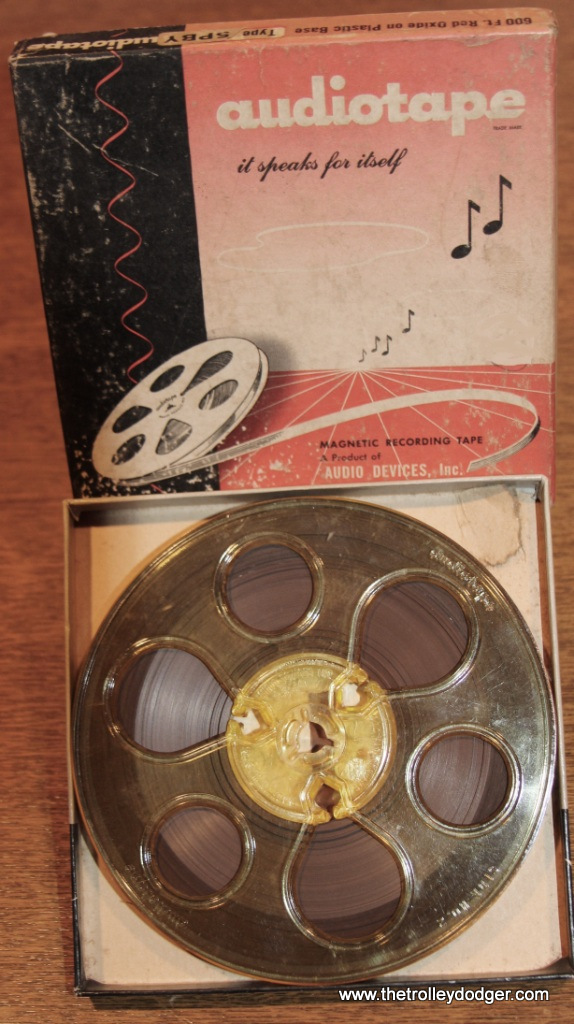
Now, audio recordings of the last runs of Chicago streetcars have been found, in the collections of the late Jeffrey L. Wien (who was one of the riders on that last car). We do not know who made these recordings, but this must have been done using a portable reel-to-reel machine.

These important recordings will finally fill a gap in transit history. The last Chicago Transit Authority streetcar finished its run in the early hours of June 21, 1958. Now you can experience these events just as Chicagoans did.

As a bonus, we have included Keeping Pace, a 1939 Chicago Surface Lines employee training program. This was digitally transferred from an original 16” transcription disc. These recordings were unheard for 80 years.

Total time – 74:38

Help Support The Trolley Dodger

This is our 300th post, and we are gradually creating a body of work and an online resource for the benefit of all railfans, everywhere. To date, we have received over 988,000 page views, for which we are very grateful.

You can help us continue our original transit research by checking out the fine products in our Online Store.
As we have said before, “If you buy here, we will be here.”

We thank you for your support.

DONATIONS

In order to continue giving you the kinds of historic railroad images that you have come to expect from The Trolley Dodger, we need your help and support. It costs money to maintain this website, and to do the sort of historic research that is our specialty.

Your financial contributions help make this web site better, and are greatly appreciated.


A Tribute to Robert Heinlein

Robert Heinlein volunteered at the Illinois Railway Museum for many years.

Robert Heinlein volunteered at the Illinois Railway Museum for many years.

Robert Heinlein, one of the giants in the railfan community, passed away on April 30, 2023, at the age of 84. You can read his obituary here.

Bob Heinlein was very knowledgeable, always cheerful, and continually went out of his way to share what he had learned to help others. He will be sorely missed.

Mr. Heinlein was a contributor to Central Electric Railfans’ Association Bulletin B-146, Chicago Streetcar Pictorial: The PCC Car Era, 1936-1958, of which I was a co-author. Unfortunately, he was not properly credited for several of his photographs, which were mistakenly attributed to the late Charles L. Tauscher (who was also an excellent photographer).

My co-author, the late Jeff Wien used twelve duplicate slides he had obtained in 1959 for the book, including the image on the cover. He was under the impression he had gotten these from Tauscher, but they were actually photos taken by Bob Heinlein. After the book was published, Bob informed Jeff of the error and loaned him the original slides, which I scanned. These images appeared in our previous post Loose Ends (February 2, 2021) with proper attribution.

Some of Mr. Heinlein’s images also appeared in my book The North Shore Line, which appeared earlier this year. Fortunately, he did see the book and I am told he enjoyed it.

The last time I met Mr. Heinlein was about a year ago, when I happened to run into him and his family by chance at the East Troy Railroad Museum. He was enjoying a ride on one of their restored trolley cars, and remarked how it would have been even more fun if they were running on the “L” twenty feet off the ground. That is how I would like to remember him.

He was an excellent photographer, going back to the early 1950s. In this post, we are sharing some of his own work, and other pictures from his vast collection, as a way of offering our condolences to his family, and as a tribute to the memory of a life well lived. We thank his son Kevin Heinlein for sharing these pictures with our readers.

I also would like to thank everyone who attended our recent program for my book The North Shore Line at Union Station on May 19th for the Railroad and Shortlines Club of Chicago.

Keep those cards and letters coming in, folks.

-David Sadowski

PS- You might also like our Trolley Dodger Facebook auxiliary, a private group that now has 1,205 members.

Our friend Kenneth Gear has a Facebook group for the Railroad Record Club. If you enjoy listening to audio recordings of classic railroad trains, whether steam, electric, or diesel, you might consider joining.

FYI, the Hoosier Traction Facebook Group celebrates electric transit in Indiana and the Midwest. It also supports the activities of the annual Hoosier Traction Meet (although not affiliated with the North American Transit Historical Society, which organizes that event).

On June 21, 1958, the Chicago Transit Authority offered free rides between Halsted Street and Cicero Avenue on its new rapid transit line in the median of the Congress (now Eisenhower) expressway. Robert Heinlein, then 20 years old, was working in the Public Information department and helps pass out literature. The new line opened the next day, replacing the Garfield Park "L". This picture appeared in the July 1958 issue of the CTA Transit News, an employee publication.

On June 21, 1958, the Chicago Transit Authority offered free rides between Halsted Street and Cicero Avenue on its new rapid transit line in the median of the Congress (now Eisenhower) expressway. Robert Heinlein, then 20 years old, was working in the Public Information department and helps pass out literature. The new line opened the next day, replacing the Garfield Park “L”. This picture appeared in the July 1958 issue of the CTA Transit News, an employee publication.

CTA 7163 is southbound at Clark, Halsted, and Barry in July 1957. A version of this photo, taken from a duplicate slide, appears on page 170 of B-146, mistakenly credited to Charles L. Tauscher. (Robert Heinlein Photo)

CTA 7163 is southbound at Clark, Halsted, and Barry in July 1957. A version of this photo, taken from a duplicate slide, appears on page 170 of B-146, mistakenly credited to Charles L. Tauscher. (Robert Heinlein Photo)

CTA 7162 is southbound on Clark Street at LaSalle Drive in September 1957. A version of this photo, taken from a duplicate slide, appears on page 177 of B-146, mistakenly credited to Charles L. Tauscher. (Robert Heinlein Photo)

CTA 7162 is southbound on Clark Street at LaSalle Drive in September 1957. A version of this photo, taken from a duplicate slide, appears on page 177 of B-146, mistakenly credited to Charles L. Tauscher. (Robert Heinlein Photo)

CTA 7171 is northbound on Clark Street, passing Wrigley Field. (Robert Heinlein Photo)

CTA 7171 is northbound on Clark Street, passing Wrigley Field. (Robert Heinlein Photo)

CTA 7138 at Schreiber and Ravenswood, near Devon Station. (Robert Heinlein Photo)

CTA 7138 at Schreiber and Ravenswood, near Devon Station. (Robert Heinlein Photo)

CTA 7192 at Kinzie and Dearborn in 1957. The yellow car behind the PCC, while commonly considered a Packard, is technically a 1956 Clipper Constellation hardtop, made by the Studebaker-Packard Corporation. (Robert Heinlein Photo)

CTA 7192 at Kinzie and Dearborn in 1957. The yellow car behind the PCC, while commonly considered a Packard, is technically a 1956 Clipper Constellation hardtop, made by the Studebaker-Packard Corporation. (Robert Heinlein Photo)

CTA 7193 is northbound on Clark, just north of Ridge, at around 5961 N. Clark in July 1957. A version of this image, taken from a duplicate slide, was incorrectly credited to Charles L. Tauscher on page 158 of B-146. (Robert Heinlein Photo)

CTA 7193 is northbound on Clark, just north of Ridge, at around 5961 N. Clark in July 1957. A version of this image, taken from a duplicate slide, was incorrectly credited to Charles L. Tauscher on page 158 of B-146. (Robert Heinlein Photo)

CTA 7151 is southbound at Clark Street and Chicago Avenue, passing by what is now the former Cosmopolitan Bank Building, designed by the firm of Schmidt, Garden & Martin and built in 1920. The northern portion of the building was a 1930 addition, and was redone in 1995, in a style matching the original portion. (Robert Heinlein Photo)

CTA 7151 is southbound at Clark Street and Chicago Avenue, passing by what is now the former Cosmopolitan Bank Building, designed by the firm of Schmidt, Garden & Martin and built in 1920. The northern portion of the building was a 1930 addition, and was redone in 1995, in a style matching the original portion. (Robert Heinlein Photo)

CTA 7180 is southbound on Clark Street, passing by the coal company that was once located next to Wrigley Field. You get a good view of the Milwaukee Road freight tracks, since abandoned, that headed north of here. This was once part of a line that offered commuter rail service on the north side. The portion north of Wilson Avenue was taken over by the "L" in the early 1900s. Originally known as the Evanston Extension, it was gradually elevated as well. (Robert Heinlein Photo)

CTA 7180 is southbound on Clark Street, passing by the coal company that was once located next to Wrigley Field. You get a good view of the Milwaukee Road freight tracks, since abandoned, that headed north of here. This was once part of a line that offered commuter rail service on the north side. The portion north of Wilson Avenue was taken over by the “L” in the early 1900s. Originally known as the Evanston Extension, it was gradually elevated as well. (Robert Heinlein Photo)

CTA 7214 heads south on Route 22 - Clark-Wentworth. Since the Cubs were in the middle of a home stand, the date may very well have been September 4, 1957. The Cubbies would lose two of their three next games to the Cincinnati Redlegs ("Reds" was apparently too sensitive a name politically then) on their way to finishing the season with a record of 62 wins, 92 losses, and 2 ties. (Robert Heinlein Photo)

CTA 7214 heads south on Route 22 – Clark-Wentworth. Since the Cubs were in the middle of a home stand, the date may very well have been September 4, 1957. The Cubbies would lose two of their three next games to the Cincinnati Redlegs (“Reds” was apparently too sensitive a name politically then) on their way to finishing the season with a record of 62 wins, 92 losses, and 2 ties. (Robert Heinlein Photo)

CTA 7191 passing by Wrigley Field. (Robert Heinlein Photo)

CTA 7191 passing by Wrigley Field. (Robert Heinlein Photo)

CTA 7189 is southbound on Clark Street just south of Irving Park Road in July 1957. The Wunders Cemetery is at right. A version of this image, taken from a duplicate slide, appears on page 165 of B-146, where it is incorrectly attributed to Charles L. Tauscher. (Robert Heinlein Photo)

CTA 7189 is southbound on Clark Street just south of Irving Park Road in July 1957. The Wunders Cemetery is at right. A version of this image, taken from a duplicate slide, appears on page 165 of B-146, where it is incorrectly attributed to Charles L. Tauscher. (Robert Heinlein Photo)

CTA 7190 at Clark and Seminary by Wrigley Field in July 1957. The "coke" advertised here wasn't Coca-Cola, but coal, used for heating homes and businesses then, but phased out soon afterwards. A version of this image, taken from a duplicate slide, appears on page 167 of B-146, incorrectly attributed to Charles L. Tauscher. (Robert Heinlein Photo)

CTA 7190 at Clark and Seminary by Wrigley Field in July 1957. The “coke” advertised here wasn’t Coca-Cola, but coal, used for heating homes and businesses then, but phased out soon afterwards. A version of this image, taken from a duplicate slide, appears on page 167 of B-146, incorrectly attributed to Charles L. Tauscher. (Robert Heinlein Photo)

CTA 7178 heads south on Clark Street near Wrigley Field in September 1957. The Milwaukee Road railroad tracks running by the ballpark were used for freight and connected with the CTA "L" just north of Irving Park Road. A version of this image, taken from a duplicate slide, appears on page 166 of B-146, where it is incorrectly attributed to Charles L. Tauscher. (Robert Heinlein Photo)

CTA 7178 heads south on Clark Street near Wrigley Field in September 1957. The Milwaukee Road railroad tracks running by the ballpark were used for freight and connected with the CTA “L” just north of Irving Park Road. A version of this image, taken from a duplicate slide, appears on page 166 of B-146, where it is incorrectly attributed to Charles L. Tauscher. (Robert Heinlein Photo)

CTA 7190 heads south on State Street, crossing the Chicago River. Work on the new Chicago Sun-Times building is well underway. It opened in 1958. The following years, Field Enterprises bought the Daily News, and this building became its headquarters as well. It is now the site of the Trump International Hotel and Tower. (Robert Heinlein Photo)

CTA 7190 heads south on State Street, crossing the Chicago River. Work on the new Chicago Sun-Times building is well underway. It opened in 1958. The following years, Field Enterprises bought the Daily News, and this building became its headquarters as well. It is now the site of the Trump International Hotel and Tower. (Robert Heinlein Photo)

CTA 7200 is turning south from Devon onto Broadway in 1957. (Robert Heinlein Photo)

CTA 7200 is turning south from Devon onto Broadway in 1957. (Robert Heinlein Photo)

In September 1957, CTA PCCs 7220 and 7211 pass each other on Clark Street at Delaware near the Newberry Library and Washington Square Park, also known locally as "Bughouse Square." A version of this image, taken from a duplicate slide, appears on page 181 of B-146, mistakenly attributed to Charles L. Tauscher. (Robert Heinlein Photo)

In September 1957, CTA PCCs 7220 and 7211 pass each other on Clark Street at Delaware near the Newberry Library and Washington Square Park, also known locally as “Bughouse Square.” A version of this image, taken from a duplicate slide, appears on page 181 of B-146, mistakenly attributed to Charles L. Tauscher. (Robert Heinlein Photo)

CTA 7156 heads south on Broadway at Lawrence in Uptown on February 15, 1957, the last day of streetcar service on Broadway. The film Giant, starring James Dean, Rock Hudson, and Elizabeth Taylor, opened in the US on November 24, 1956, and was playing at the Uptown. You can see the Green Mill lounge a bit south of the Uptown. The Riviera Theater would be just out of view to the left here. A version of this image, taken from a duplicate slide, appears on page 244 of B-146, mistakenly credited to Charles L. Tauscher. (Robert Heinlein Photo)

CTA 7156 heads south on Broadway at Lawrence in Uptown on February 15, 1957, the last day of streetcar service on Broadway. The film Giant, starring James Dean, Rock Hudson, and Elizabeth Taylor, opened in the US on November 24, 1956, and was playing at the Uptown. You can see the Green Mill lounge a bit south of the Uptown. The Riviera Theater would be just out of view to the left here. A version of this image, taken from a duplicate slide, appears on page 244 of B-146, mistakenly credited to Charles L. Tauscher. (Robert Heinlein Photo)

CTA 7164 is northbound on Clark at Addison in July 1957, crossing the Milwaukee Road tracks near Wrigley Field. A version of this photo, taken from a duplicate slide, appears on page 166 of B-146, incorrectly attributed to Charles L. Tauscher. (Robert Heinlein Photo)

CTA 7164 is northbound on Clark at Addison in July 1957, crossing the Milwaukee Road tracks near Wrigley Field. A version of this photo, taken from a duplicate slide, appears on page 166 of B-146, incorrectly attributed to Charles L. Tauscher. (Robert Heinlein Photo)

CTA 7222 by Wrigley Field (Clark and Addison) in July 1957. This picture appears twice in CERA B-146, on the cover and on pages 134 and 167, taken from a duplicate slide. On page 167, it is incorrectly attributed to Charles L. Tauscher. This is the original Red Border Kodachrome. (Robert Heinlein Photo)

CTA 7222 by Wrigley Field (Clark and Addison) in July 1957. This picture appears twice in CERA B-146, on the cover and on pages 134 and 167, taken from a duplicate slide. On page 167, it is incorrectly attributed to Charles L. Tauscher. This is the original Red Border Kodachrome. (Robert Heinlein Photo)

CTA 7149, signed for Clark and Schreiber (Devon Station). Note that the route number is 22 with a red slash through it. (Robert Heinlein Photo)

CTA 7149, signed for Clark and Schreiber (Devon Station). Note that the route number is 22 with a red slash through it. (Robert Heinlein Photo)

CTA 7211, still in its original paint scheme, heads south at Clark Street and Irving Park Road in September 1957, near the entrance to Graceland Cemetery. A version of this image, taken from a duplicate slide, appears on page 164 of B-146, where it was incorrectly attributed to Charles L. Tauscher. (Robert Heinlein Photo)

CTA 7211, still in its original paint scheme, heads south at Clark Street and Irving Park Road in September 1957, near the entrance to Graceland Cemetery. A version of this image, taken from a duplicate slide, appears on page 164 of B-146, where it was incorrectly attributed to Charles L. Tauscher. (Robert Heinlein Photo)

In September 1957, CTA 7160 passes by the Rainbo building at left, located in the 4800 block of north Clark Street. A skating rink opened there that year. To the right, you see St. Boniface Catholic Cemetery. We are looking north. A version of this image, taken from a duplicate slide, appears on page 162 of B-146, where it was incorrectly credited to Charles L. Tauscher. (Robert Heinlein Photo)

In September 1957, CTA 7160 passes by the Rainbo building at left, located in the 4800 block of north Clark Street. A skating rink opened there that year. To the right, you see St. Boniface Catholic Cemetery. We are looking north. A version of this image, taken from a duplicate slide, appears on page 162 of B-146, where it was incorrectly credited to Charles L. Tauscher. (Robert Heinlein Photo)

Although signed for the south portion of Route 36, which was replaced by buses in December 1955, PCC 4406 is actually on Clark and 16th Streets. Since 4406 was used (along with red car 225) on a fantrip on October 21, 1956, my guess is this picture was taken on that day. It was common practice to put incorrect signs up on trips, although on most of the pictures I have seen from that trip, it says "Chartered." (Robert Heinlein Photo)

Although signed for the south portion of Route 36, which was replaced by buses in December 1955, PCC 4406 is actually on Clark and 16th Streets. Since 4406 was used (along with red car 225) on a fantrip on October 21, 1956, my guess is this picture was taken on that day. It was common practice to put incorrect signs up on trips, although on most of the pictures I have seen from that trip, it says “Chartered.” (Robert Heinlein Photo)

Wouldn't you just know it? Without even realizing it I am sure, someone walked right into Bob Heinlein's shot in this September 1957 view of CTA PCC 4390 (which would end up being one of the last cars used in June 1958). What to do, but wait for another car to come along, and take another picture (see Heinlein008).

Wouldn’t you just know it? Without even realizing it I am sure, someone walked right into Bob Heinlein’s shot in this September 1957 view of CTA PCC 4390 (which would end up being one of the last cars used in June 1958). What to do, but wait for another car to come along, and take another picture (see Heinlein008).

Chicago Aurora and Elgin cars 413 and 453 are looping at the DesPlaines Avenue Terminal, sometime between 1953 and 1957. (Robert Heinlein Photo)

Chicago Aurora and Elgin cars 413 and 453 are looping at the DesPlaines Avenue Terminal, sometime between 1953 and 1957. (Robert Heinlein Photo)

We are looking west from the Wells Street Terminal towards the dual bridges over the Chicago River. (Robert Heinlein Collection)

We are looking west from the Wells Street Terminal towards the dual bridges over the Chicago River. (Robert Heinlein Collection)

Trackwork near the Met bridge was somewhat complex. Tracks to the right fanned out, leading to the Wells Street Terminal. The tracks at left connected to the Loop "L" via Van Buren Street. (Robert Heinlein Collection)

Trackwork near the Met bridge was somewhat complex. Tracks to the right fanned out, leading to the Wells Street Terminal. The tracks at left connected to the Loop “L” via Van Buren Street. (Robert Heinlein Collection)

This is the only photo I have seen that shows the interior of the Met bridge interlocking tower. (Robert Heinlein Collection)

This is the only photo I have seen that shows the interior of the Met bridge interlocking tower. (Robert Heinlein Collection)

This was scanned from an original North Shore Line 8x10" nitrate negative, taken circa 1930. Determining the location presented many challenges, yet this has now been determined with the aid of other fans. The car is 714, and it is signed as a Chicago Local on the Shore Line Route. Since the North Shore tracks are not adjacent to the Chicago and North Western, we must be north of North Chicago Junction. We cannot be south of Highland Park, as there is freight present here. A sign on the high-level platform indicates that freight trains have to come to a stop, most likely to make sure part of the platform gets flipped up for the sake of clearances. A similar arrangement existed at high-level stations of the Chicago Aurora and Elgin. As all the Shore Line tracks in Waukegan ran on the street, that pretty much narrows it down to North Chicago. The Thomas J. Killian Plumbing Supply company building at left clinches it, and the location is between 16th and 17th Streets, looking north. The Chicago and North Western's tracks were a short distance east of here, to the right out of view of this photo. (Robert Heinlein Collection)

This was scanned from an original North Shore Line 8×10″ nitrate negative, taken circa 1930. Determining the location presented many challenges, yet this has now been determined with the aid of other fans. The car is 714, and it is signed as a Chicago Local on the Shore Line Route. Since the North Shore tracks are not adjacent to the Chicago and North Western, we must be north of North Chicago Junction. We cannot be south of Highland Park, as there is freight present here. A sign on the high-level platform indicates that freight trains have to come to a stop, most likely to make sure part of the platform gets flipped up for the sake of clearances. A similar arrangement existed at high-level stations of the Chicago Aurora and Elgin. As all the Shore Line tracks in Waukegan ran on the street, that pretty much narrows it down to North Chicago. The Thomas J. Killian Plumbing Supply company building at left clinches it, and the location is between 16th and 17th Streets, looking north. The Chicago and North Western’s tracks were a short distance east of here, to the right out of view of this photo. (Robert Heinlein Collection)

This was also scanned from an original North Shore Line 8x10" nitrate negative, taken at the same time as the previous photo and shows a slightly different view of the same scene. (Robert Heinlein Collection)

This was also scanned from an original North Shore Line 8×10″ nitrate negative, taken at the same time as the previous photo and shows a slightly different view of the same scene. (Robert Heinlein Collection)

The North Shore Line grade crossing at Taylor Avenue in Racine, WI on December 16, 1931. You can see the shadow of the photographer, his view camera, and an assistant. This was scanned from the original 8x10" negative. (NSL Photo, Robert D. Heinlein Collection)

The North Shore Line grade crossing at Taylor Avenue in Racine, WI on December 16, 1931. You can see the shadow of the photographer, his view camera, and an assistant. This was scanned from the original 8×10″ negative. (NSL Photo, Robert D. Heinlein Collection)

The view of the North Shore Line tracks, looking south towards 21st Street in Racine, WI on March 11, 1930. Scanned from the original 8x10" negative. (NSL Photo, Robert D. Heinlein Collection)

The view of the North Shore Line tracks, looking south towards 21st Street in Racine, WI on March 11, 1930. Scanned from the original 8×10″ negative. (NSL Photo, Robert D. Heinlein Collection)

A view of the North Shore Line tracks looking north along the Skokie Valley Route near 16th Street in North Chicago on March 22, 1934. Scanned from the original 8x10" negative. (NSL Photo, Robert D. Heinlein Collection)

A view of the North Shore Line tracks looking north along the Skokie Valley Route near 16th Street in North Chicago on March 22, 1934. Scanned from the original 8×10″ negative. (NSL Photo, Robert D. Heinlein Collection)

The number 4391, in railfan circles, is most widely known as that of the only surviving postwar Chicago PCC streetcar. But this is a different 4391, namely a Chicago Rapid Transit Company "L" car, built circa 1923-24. We see the interior, complete with ads for Kellogg's Corn Flakes and Bayer Aspirin, as it looked on May 27, 1937. Scanned from the original 8x10" negative. (CRT Photo, Robert D. Heinlein Collection)

The number 4391, in railfan circles, is most widely known as that of the only surviving postwar Chicago PCC streetcar. But this is a different 4391, namely a Chicago Rapid Transit Company “L” car, built circa 1923-24. We see the interior, complete with ads for Kellogg’s Corn Flakes and Bayer Aspirin, as it looked on May 27, 1937. Scanned from the original 8×10″ negative. (CRT Photo, Robert D. Heinlein Collection)

The view looking northeast along Lawrence Avenue (4800 N.) at Kimball Avenue (3400 W.) on January 28, 1929, in the Albany Park neighborhood. The Chicago Rapid Transit Company's Ravenswood "L" Terminal is at right. The Terminal Theater, seen in the distance, was located at 3315 W. Lawrence, and had 2,389 seats. Presumably it took its name from the nearby "L" terminal. It was built by the Ascher Brothers chain and opened on January 7, 1926. It eventually became part of the Balaban and Katz chain, and closed on April 18, 1963. It was also known as the New Terminal, as it had replaced a smaller Terminal Theater nearby, built in 1915. Scanned from the original 8x10" negative. (CRT Photo, Robert D. Heinlein collection)

The view looking northeast along Lawrence Avenue (4800 N.) at Kimball Avenue (3400 W.) on January 28, 1929, in the Albany Park neighborhood. The Chicago Rapid Transit Company’s Ravenswood “L” Terminal is at right. The Terminal Theater, seen in the distance, was located at 3315 W. Lawrence, and had 2,389 seats. Presumably it took its name from the nearby “L” terminal. It was built by the Ascher Brothers chain and opened on January 7, 1926. It eventually became part of the Balaban and Katz chain, and closed on April 18, 1963. It was also known as the New Terminal, as it had replaced a smaller Terminal Theater nearby, built in 1915. Scanned from the original 8×10″ negative. (CRT Photo, Robert D. Heinlein collection)

It's not clear exactly where this early 1900s photo was taken, but Greenwood, Franklin, Edinburgh, Columbus, and Seymour are all Indiana communities, located south of Indianapolis. Presumably the interurban shown was the Indiana Public Service, a predecessor of the Indiana Railroad, formed by Samuel Insull in 1930, combining five electric railways. (Robert D. Heinlein Collection)

It’s not clear exactly where this early 1900s photo was taken, but Greenwood, Franklin, Edinburgh, Columbus, and Seymour are all Indiana communities, located south of Indianapolis. Presumably the interurban shown was the Indiana Public Service, a predecessor of the Indiana Railroad, formed by Samuel Insull in 1930, combining five electric railways. (Robert D. Heinlein Collection)

North Shore Line coach 178 at the Highwood Shops in the mid-1950s. (Robert D. Heinlein Photo)

North Shore Line coach 178 at the Highwood Shops in the mid-1950s. (Robert D. Heinlein Photo)

North Shore Line car 169 is northbound at the Wilmette station in the early-to-mid 1950s. This is now the site of a Panera parking lot. (Robert D. Heinlein Photo)

North Shore Line car 169 is northbound at the Wilmette station in the early-to-mid 1950s. This is now the site of a Panera parking lot. (Robert D. Heinlein Photo)

North Shore Line cars 154, 190, and 155 are stopped by the Lake Forest station on July 24, 1955. This was a Central Electric Railfans' Association fantrip just prior to the abandonment of the Shore Line Route. (Robert D. Heinlein Photo)

North Shore Line cars 154, 190, and 155 are stopped by the Lake Forest station on July 24, 1955. This was a Central Electric Railfans’ Association fantrip just prior to the abandonment of the Shore Line Route. (Robert D. Heinlein Photo)

This, and the following photo, were taken at the Mundelein Terminal in December 1960, showing different views of a two-car Skokie Valley Route train with 701 and 719. (Robert D. Heinlein Collection)

This, and the following photo, were taken at the Mundelein Terminal in December 1960, showing different views of a two-car Skokie Valley Route train with 701 and 719. (Robert D. Heinlein Collection)

A northbound two-car North Shore Line train at Kenosha, WI in December 1960. (Robert D. Heinlein Collection)

A northbound two-car North Shore Line train at Kenosha, WI in December 1960. (Robert D. Heinlein Collection)

North Shore Line 724 heads up a two-car train at 5th Street and Harrison Avenue in Milwaukee on September 24, 1961. (Robert D. Heinlein Photo)

North Shore Line 724 heads up a two-car train at 5th Street and Harrison Avenue in Milwaukee on September 24, 1961. (Robert D. Heinlein Photo)

North Shore Line 772 is a southbound Chicago Express on June 9, 1955, on a short stretch of street running in Highland Park. Service on the Shore Line Route would end about six weeks later. (Robert D. Heinlein Photo)

North Shore Line 772 is a southbound Chicago Express on June 9, 1955, on a short stretch of street running in Highland Park. Service on the Shore Line Route would end about six weeks later. (Robert D. Heinlein Photo)

On July 10, 1955, North Shore Line car 409 is at the north end of the Shore Line Route, on the border between North Chicago and Waukegan. This car is now at the Illinois Railway Museum. Service on the Shore Line Route ended about two weeks after this picture was taken. (Robert D. Heinlein Photo)

On July 10, 1955, North Shore Line car 409 is at the north end of the Shore Line Route, on the border between North Chicago and Waukegan. This car is now at the Illinois Railway Museum. Service on the Shore Line Route ended about two weeks after this picture was taken. (Robert D. Heinlein Photo)

Family was very important to Robert Heinlein, and often accompanied him on his railroad excursions. Here, his young daughter Donna poses for him on a North Shore coach at the Mundelein Terminal on December 1, 1962.

Family was very important to Robert Heinlein, and often accompanied him on his railroad excursions. Here, his young daughter Donna poses for him on a North Shore coach at the Mundelein Terminal on December 1, 1962.

Although this photo has motion blur, it does help identify the location of the next picture, taken right after it. North Shore car 163 is at the front of a two-car train in Kenilworth, about a block north of the historic fountain designed by George W. Maher. It is leaving street running and entering private right-of-way where it will run parallel to the Chicago and North Western. (Robert D. Heinlein Photos)

Although this photo has motion blur, it does help identify the location of the next picture, taken right after it. North Shore car 163 is at the front of a two-car train in Kenilworth, about a block north of the historic fountain designed by George W. Maher. It is leaving street running and entering private right-of-way where it will run parallel to the Chicago and North Western. (Robert D. Heinlein Photos)

North Shore Line Silverliner 756 is on the Skokie Valley Route, but where? The Kutten Oil Company was located at 3510 Wilmette Avenue in Wilmette, near Glenview. Robert D. Heinlein took this picture on September 1, 1958.

North Shore Line Silverliner 756 is on the Skokie Valley Route, but where? The Kutten Oil Company was located at 3510 Wilmette Avenue in Wilmette, near Glenview. Robert D. Heinlein took this picture on September 1, 1958.

Knollwood was a stop along the Libertyville-Mundelein branch, named for a nearby farm. This is in an unincorporated area of Lake County, just west of Lake Bluff, at the intersection of Waukegan Road and Rockland Road. The train, which includes car 712, is heading east. The popular Silo restaurant is not too far east of here in Lake Bluff. Photographer Robert D. Heinlein captured this view on June 17, 1962.

Knollwood was a stop along the Libertyville-Mundelein branch, named for a nearby farm. This is in an unincorporated area of Lake County, just west of Lake Bluff, at the intersection of Waukegan Road and Rockland Road. The train, which includes car 712, is heading east. The popular Silo restaurant is not too far east of here in Lake Bluff. Photographer Robert D. Heinlein captured this view on June 17, 1962.

The same location today.

The same location today.

This slide was taken early in the morning, and had to be lightened considerably. It was dated January 21, 1963 on the mount, but may actually have been taken on the 20th (the film was not processed until the following month). As such it was one of the final opportunities to shoot an Electroliner at the Milwaukee Terminal, which prompted one fan to jump into the inspection pit for his shot. (Robert D. Heinlein Photo)

This slide was taken early in the morning, and had to be lightened considerably. It was dated January 21, 1963 on the mount, but may actually have been taken on the 20th (the film was not processed until the following month). As such it was one of the final opportunities to shoot an Electroliner at the Milwaukee Terminal, which prompted one fan to jump into the inspection pit for his shot. (Robert D. Heinlein Photo)

This slide, showing a southbound North Shore Line Electroliner at speed, was marked as having been taken January 21, 1963 at Washington Street in Waukegan. That would place it after the abandonment the night before, but it seems likely to have been taken on the last full day prior to the shutdown, January 20th. Research shows the two Electroliners were moved back to the Highwood Shops one last time at night. Since this roll of film was not developed until the following month, the date was stamped on the slide mount some time after the fact. (Robert D. Heinlein Photo)

This slide, showing a southbound North Shore Line Electroliner at speed, was marked as having been taken January 21, 1963 at Washington Street in Waukegan. That would place it after the abandonment the night before, but it seems likely to have been taken on the last full day prior to the shutdown, January 20th. Research shows the two Electroliners were moved back to the Highwood Shops one last time at night. Since this roll of film was not developed until the following month, the date was stamped on the slide mount some time after the fact. (Robert D. Heinlein Photo)

North Shore Line 747 is at the head of a train at Lake Bluff, signed as a Skokie Valley Route Chicago Limited. This slide was marked January 21, 1963, but is more likely to have been taken the day before. (Robert D. Heinlein Photo)

North Shore Line 747 is at the head of a train at Lake Bluff, signed as a Skokie Valley Route Chicago Limited. This slide was marked January 21, 1963, but is more likely to have been taken the day before. (Robert D. Heinlein Photo)

Illinois Terminal car 285 is on the last trip at Champaign, IL on June 11, 1955. Don's Rail Photos (via Archive.org): "285 was built by St Louis Car in 1914. It was rebuilt as a parlor car in 1924 and restored as a coach in December 1928. It was air conditioned in August 1938 and (received) new seating in December 1952. It was sold for scrap to Hyman Michaels Co. on May 16, 1956." (John F. Humiston Photo, Robert D. Heinlein Collection)

Illinois Terminal car 285 is on the last trip at Champaign, IL on June 11, 1955. Don’s Rail Photos (via Archive.org): “285 was built by St Louis Car in 1914. It was rebuilt as a parlor car in 1924 and restored as a coach in December 1928. It was air conditioned in August 1938 and (received) new seating in December 1952. It was sold for scrap to Hyman Michaels Co. on May 16, 1956.” (John F. Humiston Photo, Robert D. Heinlein Collection)

Illinois Terminal 285 is at Cerro Gordo, IL on its last trip prior to abandonment of this interurban route on June 11, 1955. For the occasion, locals dressed up in turn-of-the-century costumes. Some of the riders may have been old enough to remember when interurban service began here. (John F. Humiston Photo, Robert Heinlein Collection)

Illinois Terminal 285 is at Cerro Gordo, IL on its last trip prior to abandonment of this interurban route on June 11, 1955. For the occasion, locals dressed up in turn-of-the-century costumes. Some of the riders may have been old enough to remember when interurban service began here. (John F. Humiston Photo, Robert Heinlein Collection)

Illinois Terminal 285 is at Champaign, IL on its last trip on June 11, 1955. (John F. Humiston Photo, Robert Heinlein Collection)

Illinois Terminal 285 is at Champaign, IL on its last trip on June 11, 1955. (John F. Humiston Photo, Robert Heinlein Collection)

This and the next picture: The Elgin and Belvidere Electric Company interurban operated from 1907 to 1930, connecting those two cities. It was extended to Rockford in 1927 but fell victim to the Great Depression and the rise of the automobile. When the Illinois Railway Museum (originally based in North Chicago) needed a new home in the early 1960s, they based their new main line on this former interurban right-of-way (and were able to purchase most, but not all of it by paying the back taxes). Amazingly, one of the original Elgin and Belvidere motormen lived long enough to operate a trolley at IRM. (Robert D. Heinlein Collection)

This and the next picture: The Elgin and Belvidere Electric Company interurban operated from 1907 to 1930, connecting those two cities. It was extended to Rockford in 1927 but fell victim to the Great Depression and the rise of the automobile. When the Illinois Railway Museum (originally based in North Chicago) needed a new home in the early 1960s, they based their new main line on this former interurban right-of-way (and were able to purchase most, but not all of it by paying the back taxes). Amazingly, one of the original Elgin and Belvidere motormen lived long enough to operate a trolley at IRM. (Robert D. Heinlein Collection)

Work is underway erecting trolley poles at the Illinois Railway Museum site in Union. The time frame here could date from the mid-1960s to the early 1970s. (Robert D. Heinlein Photo)

Work is underway erecting trolley poles at the Illinois Railway Museum site in Union. The time frame here could date from the mid-1960s to the early 1970s. (Robert D. Heinlein Photo)

Former North Shore Line line car 604 at work one wintry day at the Illinois Railway Museum. (Robert D. Heinlein Photo)

Former North Shore Line line car 604 at work one wintry day at the Illinois Railway Museum. (Robert D. Heinlein Photo)

Indiana Railroad high-speed lightweight interurban car 65 at the Illinois Railway Museum. (Robert D. Heinlein Photo)

Indiana Railroad high-speed lightweight interurban car 65 at the Illinois Railway Museum. (Robert D. Heinlein Photo)

Two trains running at the Illinois Railway Museum, circa 1971. At left, North Shore Line cars 160 and 714. The steam loco at right is labeled Tuskegee, but I am not sure if this is the Tuskegee Railroad 101 in the museum's collection. (Robert D. Heinlein Photo)

Two trains running at the Illinois Railway Museum, circa 1971. At left, North Shore Line cars 160 and 714. The steam loco at right is labeled Tuskegee, but I am not sure if this is the Tuskegee Railroad 101 in the museum’s collection. (Robert D. Heinlein Photo)

Bob Heinlein and his brother Don at East Troy in May 2022.

Bob Heinlein and his brother Don at East Troy in May 2022.

Our Latest Book, Now Available:

The North Shore Line

FYI, my new Arcadia Publishing book The North Shore Line is now available for immediate shipment. My publisher decided to expand it to 160 pages, instead of the usual 128. That’s a 25% increase, without any change to the $23.99 price. I am quite pleased with how this turned out.

From the back cover:

As late as 1963, it was possible to board high-speed electric trains on Chicago’s famous Loop “L” that ran 90 miles north to Milwaukee. This was the Chicago North Shore & Milwaukee Railroad, commonly known as the North Shore Line. It rose from humble origins in the 1890s as a local streetcar line in Waukegan to eventually become America’s fastest interurban under the visionary management of Midwest utilities tycoon Samuel Insull. The North Shore Line, under Insull, became a worthy competitor to the established steam railroads. Hobbled by the Great Depression, the road fought back in 1941 with two streamlined, air-conditioned, articulated trains called Electroliners, which included dining service. It regained its popularity during World War II, when gasoline and tires were rationed, but eventually, it fell victim to highways and the automobile. The North Shore Line had intercity rail, commuter rail, electric freight, city streetcars, and even buses. It has been gone for nearly 60 years, but it will always remain the Road of Service.

Each copy purchased here will be signed by the author, and you will also receive a bonus North Shore Line map.  Books will ship by USPS Media Mail.

Chapters:
01. Beginnings
02. The Milwaukee Division
03. The Shore Line Route
04. The Skokie Valley Route
05. The Mundelein Branch
06. On the “L”
07. City Streetcars
08. Trolley Freight
09. The Long Goodbye
10. The Legacy

Title The North Shore Line
Images of America
Author David Sadowski
Edition illustrated
Publisher Arcadia Publishing (SC), 2023
ISBN 1467108960, 978-1467108966
Length 160 pages

The price of $23.99 includes shipping within the United States.

For Shipping to US Addresses:

New Compact Disc, Now Available:

CTA-1
The Last Chicago Streetcars 1958
# of Discs – 1
Price: $15.99

Until now, it seemed as though audio recordings of Chicago streetcars were practically non-existent. For whatever reason, the late William A. Steventon does not appear to have made any for his Railroad Record Club, even though he did make other recordings in the Chicago area in 1956.

Now, audio recordings of the last runs of Chicago streetcars have been found, in the collections of the late Jeffrey L. Wien (who was one of the riders on that last car). We do not know who made these recordings, but this must have been done using a portable reel-to-reel machine.

These important recordings will finally fill a gap in transit history. The last Chicago Transit Authority streetcar finished its run in the early hours of June 21, 1958. Now you can experience these events just as Chicagoans did.

As a bonus, we have included Keeping Pace, a 1939 Chicago Surface Lines employee training program. This was digitally transferred from an original 16” transcription disc. These recordings were unheard for 80 years.

Total time – 74:38

Help Support The Trolley Dodger

This is our 299th post, and we are gradually creating a body of work and an online resource for the benefit of all railfans, everywhere. To date, we have received over 983,000 page views, for which we are very grateful.

You can help us continue our original transit research by checking out the fine products in our Online Store.
As we have said before, “If you buy here, we will be here.”

We thank you for your support.

DONATIONS

In order to continue giving you the kinds of historic railroad images that you have come to expect from The Trolley Dodger, we need your help and support. It costs money to maintain this website, and to do the sort of historic research that is our specialty.

Your financial contributions help make this web site better, and are greatly appreciated.


Autumn Leaves

North Shore Line Silverliner 737 (at left) and "Greenliner" 767 (at right) prepare to leave the Milwaukee Terminal on May 24, 1953. (Robert Selle Photo)

North Shore Line Silverliner 737 (at left) and “Greenliner” 767 (at right) prepare to leave the Milwaukee Terminal on May 24, 1953. (Robert Selle Photo)

Seasons change and Fall is here. Today’s post features classic images from two excellent photographers, Robert A. Selle (1929-2013) and Charles L. Tauscher (1940-2017). Selle was a master of black-and-white photography, while Tauscher shot Kodachrome slides in his prime.

We spent a lot of time working these slides over in Photoshop, making them look their best for you. Some required a lot of cleaning.

Lastly, we have some interesting historical CTA documents to share. Going back to the original source can often shed light on past events.

Keep those cards and letters coming in, folks.

-David Sadowski

New Book Update

FYI we recently turned in a second draft of our upcoming book The North Shore Line to Arcadia Publishing. I am pleased to report that the book has been expanded to 160 pages (from 128), a 25% increase. A publication date of February 20, 2023 has been announced, and we will begin our pre-sale on November 20 of this year.

PS- You might also like our Trolley Dodger Facebook auxiliary, a private group that now has 974 members.

Our friend Kenneth Gear now has a Facebook group for the Railroad Record Club. If you enjoy listening to audio recordings of classic railroad trains, whether steam, electric, or diesel, you might consider joining.

Indiana Railroad cars 446, 737, and 68 in Indianapolis, IN on June 3, 1938.

Indiana Railroad cars 446, 737, and 68 in Indianapolis, IN on June 3, 1938.

FYI, we are in the process of assisting with the creation of a new Facebook group called Hoosier Traction, which will be formally announced in the near future.

The Hoosier Traction Facebook Group will celebrate electric transit in Indiana and the Midwest, and also support the activities of the annual Hoosier Traction Meet in Dayton, OH (although not affiliated with the North American Transit Historical Society, which organizes that event).

The North Shore Line (nearly all by Robert A. Selle)

North Shore Line car 162 is at the rear of a northbound train at Chicago Avenue on June 30, 1958. This car is now the oldest survivor of the fleet, and recently arrived at East Troy, where it will be restored. (Robert Selle Photo)

North Shore Line car 162 is at the rear of a northbound train at Chicago Avenue on June 30, 1958. This car is now the oldest survivor of the fleet, and recently arrived at East Troy, where it will be restored. (Robert Selle Photo)

North Shore Line tool car 234 (a former Merchandise Despatch car) at Edison Court in Waukegan on August 2, 1958. (Robert Selle Photo)

North Shore Line tool car 234 (a former Merchandise Despatch car) at Edison Court in Waukegan on August 2, 1958. (Robert Selle Photo)

A view of the abandoned Shore Line Route and the crossover to the Chicago Hardware Foundry Company in North Chicago in April 1956. (Robert Selle Photo)

A view of the abandoned Shore Line Route and the crossover to the Chicago Hardware Foundry Company in North Chicago in April 1956. (Robert Selle Photo)

A view of the abandoned Shore Line Route in North Chicago in April 1956. (Robert Selle Photo)

A view of the abandoned Shore Line Route in North Chicago in April 1956. (Robert Selle Photo)

A view of the abandoned Shore Line Route in North Chicago in April 1956. (Robert Selle Photo)

A view of the abandoned Shore Line Route in North Chicago in April 1956. (Robert Selle Photo)

North Shore Line caboose 1005 at North Chicago in June, 1939. (Richard J. Anderson Photo)

North Shore Line caboose 1005 at North Chicago in June, 1939. (Richard J. Anderson Photo)

North Shore Line caboose 1004 at North Chicago on September 17, 1955. (Robert Selle Photo)

North Shore Line caboose 1004 at North Chicago on September 17, 1955. (Robert Selle Photo)

Former North Shore Line Merchandise Despatch car 213 at North Chicago (Chicago Hardware Foundry Company) on August 20, 1955. (Robert Selle Photo)

Former North Shore Line Merchandise Despatch car 213 at North Chicago (Chicago Hardware Foundry Company) on August 20, 1955. (Robert Selle Photo)

Newly painted North Shore Line caboose 1003 at North Chicago on January 19, 1957. (Robert Selle Photo)

Newly painted North Shore Line caboose 1003 at North Chicago on January 19, 1957. (Robert Selle Photo)

North Shore Line caboose 1002 at North Chicago on January 19, 1957. (Robert Selle Photo)

North Shore Line caboose 1002 at North Chicago on January 19, 1957. (Robert Selle Photo)

North Shore Line car 419 is at the Highwood Shops on August 9, 1953. (Robert Selle Photo)

North Shore Line car 419 is at the Highwood Shops on August 9, 1953. (Robert Selle Photo)

North Shore Line car 444 at the Highwood Shops on August 9, 1953. (Robert Selle Photo)

North Shore Line car 444 at the Highwood Shops on August 9, 1953. (Robert Selle Photo)

North Shore Line car 169 in Mundelein on August 9, 1953. (Robert Selle Photo)

North Shore Line car 169 in Mundelein on August 9, 1953. (Robert Selle Photo)

North Shore Line car 735 is at the Mundelein Yards on August 9, 1953. (Robert Selle Photo)

North Shore Line car 735 is at the Mundelein Yards on August 9, 1953. (Robert Selle Photo)

North Shore Line car 150 is on the rear end of a northbound train at Chicago Avenue on June 3, 1959. (Robert Selle Photo)

North Shore Line car 150 is on the rear end of a northbound train at Chicago Avenue on June 3, 1959. (Robert Selle Photo)

North Shore Line diner/lounge car 417 is at the Highwood Shops on February 20, 1955. (Robert Selle Photo)

North Shore Line diner/lounge car 417 is at the Highwood Shops on February 20, 1955. (Robert Selle Photo)

North Shore Line Silverliner 764 is on a side track at Edison Court in Waukegan on July 26, 1958. (Robert Selle Photo)

North Shore Line Silverliner 764 is on a side track at Edison Court in Waukegan on July 26, 1958. (Robert Selle Photo)

North Shore Line car 169 is on a side track at Edison Court in Waukegan on July 9, 1955. (Robert Selle Photo)

North Shore Line car 169 is on a side track at Edison Court in Waukegan on July 9, 1955. (Robert Selle Photo)

North Shore Line car 190, which had recently been damaged by fire, at the Highwood Shops on August 27, 1955. (Robert Selle Photo)

North Shore Line car 190, which had recently been damaged by fire, at the Highwood Shops on August 27, 1955. (Robert Selle Photo)

North Shore Line steeple cab loco 452 (with 453 at left) at Great Lakes Naval Station, on August 9, 1953. (Robert Selle Photo)

North Shore Line steeple cab loco 452 (with 453 at left) at Great Lakes Naval Station, on August 9, 1953. (Robert Selle Photo)

North Shore Line loco 459 at the Pettibone Shops in North Chicago on October 23, 1954. (Robert Selle Photo)

North Shore Line loco 459 at the Pettibone Shops in North Chicago on October 23, 1954. (Robert Selle Photo)

North Shore Line tool car 234 at the Highwood Shops on February 20, 1955. (Robert Selle Photo)

North Shore Line tool car 234 at the Highwood Shops on February 20, 1955. (Robert Selle Photo)

North Shore Line line car 606 at the Highwood Shops on February 20, 1955. (Robert Selle Photo)

North Shore Line line car 606 at the Highwood Shops on February 20, 1955. (Robert Selle Photo)

North Shore Line line car 604 at the Highwood Shops on February 20, 1955. (Robert Selle Photo)

North Shore Line line car 604 at the Highwood Shops on February 20, 1955. (Robert Selle Photo)

Chicago Transit Authority Buses by Charles L. Tauscher

CTA trolley bus 9410 is westbound on Montrose Avenue in June 1961. Note the late 1940s Jeepster at left, and the mid-50s Chevy at right. (Charles L. Tauscher Photo)

CTA trolley bus 9410 is westbound on Montrose Avenue in June 1961. Note the late 1940s Jeepster at left, and the mid-50s Chevy at right. (Charles L. Tauscher Photo)

CTA trolley bus 9341 is southbound on Central Avenue at North Avenue in August 1965, at a time when a White Castle hamburger cost just 12 cents. (Charles L. Tauscher Photo)

CTA trolley bus 9341 is southbound on Central Avenue at North Avenue in August 1965, at a time when a White Castle hamburger cost just 12 cents. (Charles L. Tauscher Photo)

The same location in 2019. There is still a White Castle on the corner, off to the left, but the building in the previous photo has been replaced by a newer one just out of view.

The same location in 2019. There is still a White Castle on the corner, off to the left, but the building in the previous photo has been replaced by a newer one just out of view.

CTA trolley bus 9287 is turning from North Avenue onto Narragansett Avenue in September 1962, so it can go into the off-street loop. It's possible that the man on the corner looking down may be the late William C. Hoffman. The Terminal Grill is long gone, but this loop is still used by CTA buses. (Charles L. Tauscher Photo)

CTA trolley bus 9287 is turning from North Avenue onto Narragansett Avenue in September 1962, so it can go into the off-street loop. It’s possible that the man on the corner looking down may be the late William C. Hoffman. The Terminal Grill is long gone, but this loop is still used by CTA buses.
(Charles L. Tauscher Photo)

The same location in 2021. A Dunkin Donuts has replaced the diner grill. Midas Muffler is still there, down the street at the corner of North Avenue and Ridgeland Avenue in Oak Park. The off-street loop is in Chicago.

The same location in 2021. A Dunkin Donuts has replaced the diner grill. Midas Muffler is still there, down the street at the corner of North Avenue and Ridgeland Avenue in Oak Park. The off-street loop is in Chicago.

CTA 9746 at an unidentified location in April 1963. (Charles L. Tauscher Photo) Andre Kristopans: "9746 is on Giddings east of Austin facing west."

CTA 9746 at an unidentified location in April 1963. (Charles L. Tauscher Photo) Andre Kristopans: “9746 is on Giddings east of Austin facing west.”

CTA trolley bus 9502 is southbound on Central Avenue at Bloomingdale (1800 N.) in 1969. (Charles L. Tauscher Photo)

CTA trolley bus 9502 is southbound on Central Avenue at Bloomingdale (1800 N.) in 1969. (Charles L. Tauscher Photo)

The same location today. The bridge has been replaced since the previous photo.

The same location today. The bridge has been replaced since the previous photo.

This is most likely CTA trolley bus 9631 on the April 1, 1973 Omnibus Society of America fantrip that closed out trolley bus service in Chicago. (Charles L. Tauscher Photo)

This is most likely CTA trolley bus 9631 on the April 1, 1973 Omnibus Society of America fantrip that closed out trolley bus service in Chicago. (Charles L. Tauscher Photo)

CTA trolley bus 9761 in 1973. This may be on a fantrip. The location is at Belmont and Kimball, but the side sign says Montrose. (Charles L. Tauscher Photo)

CTA trolley bus 9761 in 1973. This may be on a fantrip. The location is at Belmont and Kimball, but the side sign says Montrose. (Charles L. Tauscher Photo)

The same location in 2019.

The same location in 2019.

CTA trolley bus 9761 on a 1973 fantrip. Can this be somewhere along Belmont Avenue? (Charles L. Tauscher Photo) Andre Kristopans: "9761 shots at Belmont and Nagle wye."

CTA trolley bus 9761 on a 1973 fantrip. Can this be somewhere along Belmont Avenue? (Charles L. Tauscher Photo) Andre Kristopans: “9761 shots at Belmont and Nagle wye.”

CTA trolley bus 9761 at an unidentified location on a 1973 fantrip. (Charles L. Tauscher Photo) Andre Kristopans: "9761 shots at Belmont and Nagle wye."

CTA trolley bus 9761 at an unidentified location on a 1973 fantrip. (Charles L. Tauscher Photo) Andre Kristopans: “9761 shots at Belmont and Nagle wye.”

CTA trolley buses in dead storage some time after the end of service in 1973. (Charles L. Tauscher Photo)

CTA trolley buses in dead storage some time after the end of service in 1973. (Charles L. Tauscher Photo)

CTA trolley bus 9325 is westbound on Irving Park Road in September 1968. (Charles L. Tauscher Photo)

CTA trolley bus 9325 is westbound on Irving Park Road in September 1968. (Charles L. Tauscher Photo)

CTA trolley bus 9708 at an unidentified location in August 1965. (Charles L. Tauscher Photo) Andre Kristopans: "9708 wyeing in 1965 is most likely at Central and West End. There were not many head-in, back-out wyes in the trolley bus network, and this is only one where buildings would look like this." The wye was located on the east side of Central Avenue. On September 20, 2022, a gas explosion destroyed the top floor of an apartment building on the west side of Central at West End.

CTA trolley bus 9708 at an unidentified location in August 1965. (Charles L. Tauscher Photo) Andre Kristopans: “9708 wyeing in 1965 is most likely at Central and West End. There were not many head-in, back-out wyes in the trolley bus network, and this is only one where buildings would look like this.” The wye was located on the east side of Central Avenue. On September 20, 2022, a gas explosion destroyed the top floor of an apartment building on the west side of Central at West End.

CTA trolley bus 9708 at an unidentified location in August 1965. (Charles L. Tauscher Photo) Andre Kristopans: "9708 wyeing in 1965 is most likely at Central and West End. There were not many head-in, back-out wyes in the trolley bus network, and this is only one where buildings would look like this."

CTA trolley bus 9708 at an unidentified location in August 1965. (Charles L. Tauscher Photo) Andre Kristopans: “9708 wyeing in 1965 is most likely at Central and West End. There were not many head-in, back-out wyes in the trolley bus network, and this is only one where buildings would look like this.”

CTA 9761 is signed for Route 80 - Irving Park Road in 1969, but the actual location seems to be Central Avenue not far south from Fullerton, so this may be a fantrip. (Charles L. Tauscher Photo)

CTA 9761 is signed for Route 80 – Irving Park Road in 1969, but the actual location seems to be Central Avenue not far south from Fullerton, so this may be a fantrip. (Charles L. Tauscher Photo)

CTA 9545 is signed for 47th Street in August 1965. Not sure of the actual location, however. (Charles L. Tauscher Photo) Mike Tuggle adds, "The actual location of this photo is the southeast corner of 48th Street and Lake Park Avenue in the Kenwood area, just north of Hyde Park. I know because I was living about 2 blocks south of that area in August 1965. I was 10 years old at the time. The building at the right is long gone, and to the right of the photo is the old Sam Bell Shell filling station. Today, it is a strip mall. The land on which this trolley stood is occupied by townhomes and condos. The building, partially seen over the trolley was the Lakeridge Hotel, which is has since been renovated into apartments. Thank you. I always look forward to the next issue, though I would like to see more photos in this area as well as Hyde Park, South Shore, Woodlawn and Chatham." Andre Kristopans: "9545 certainly is 47th, specifically at the gas station terminal between Harper and Lake Park south of 47th."

CTA 9545 is signed for 47th Street in August 1965. Not sure of the actual location, however. (Charles L. Tauscher Photo) Mike Tuggle adds, “The actual location of this photo is the southeast corner of 48th Street and Lake Park Avenue in the Kenwood area, just north of Hyde Park. I know because I was living about 2 blocks south of that area in August 1965. I was 10 years old at the time. The building at the right is long gone, and to the right of the photo is the old Sam Bell Shell filling station. Today, it is a strip mall. The land on which this trolley stood is occupied by townhomes and condos. The building, partially seen over the trolley was the Lakeridge Hotel, which is has since been renovated into apartments. Thank you. I always look forward to the next issue, though I would like to see more photos in this area as well as Hyde Park, South Shore, Woodlawn and Chatham.” Andre Kristopans: “9545 certainly is 47th, specifically at the gas station terminal between Harper and Lake Park south of 47th.”

CTA 9308 has just crossed over the Chicago River on North Avenue on May 15, 1962. (Charles L. Tauscher Photo)

CTA 9308 has just crossed over the Chicago River on North Avenue on May 15, 1962. (Charles L. Tauscher Photo)

CTA 2583 is westbound on 103rd Street at Vincennes Avenue in May 1960. (Charles L. Tauscher Photo)

CTA 2583 is westbound on 103rd Street at Vincennes Avenue in May 1960. (Charles L. Tauscher Photo)

CTA trolley bus 9300 is southbound on Central Avenue in July 1969. (Charles L. Tauscher Photo)

CTA trolley bus 9300 is southbound on Central Avenue in July 1969. (Charles L. Tauscher Photo)

We can infer from this July 1968 photo that CTA trolley bus 9537 could not go through the northbound side of the viaduct under the Chicago and North Western tracks on Central Avenue at Lake Street. There must have been some sort of obstruction. The bus is being pushed so that it can get back to the northbound side of the street where it can be re-wired. (Charles L. Tauscher Photo)

We can infer from this July 1968 photo that CTA trolley bus 9537 could not go through the northbound side of the viaduct under the Chicago and North Western tracks on Central Avenue at Lake Street. There must have been some sort of obstruction. The bus is being pushed so that it can get back to the northbound side of the street where it can be re-wired. (Charles L. Tauscher Photo)

CTA 9761 is northbound at Central Avenue at North Avenue on a 1973 fantrip. (Charles L. Tauscher Photo)

CTA 9761 is northbound at Central Avenue at North Avenue on a 1973 fantrip. (Charles L. Tauscher Photo)

CTA 9761 is northbound at Central Avenue at North Avenue on a 1973 fantrip. (Charles L. Tauscher Photo)

CTA 9761 is northbound at Central Avenue at North Avenue on a 1973 fantrip. (Charles L. Tauscher Photo)

CTA 9670 and 3534 are at an unidentified location in June 1961. (Charles L. Tauscher Photo) Andre Kristopans: "9670/3534 at Cicero and Pensacola."

CTA 9670 and 3534 are at an unidentified location in June 1961. (Charles L. Tauscher Photo) Andre Kristopans: “9670/3534 at Cicero and Pensacola.”

CTA 9670 and 3534 are at an unidentified location in June 1961. (Charles L. Tauscher Photo) Andre Kristopans: "9670/3534 at Cicero and Pensacola."

CTA 9670 and 3534 are at an unidentified location in June 1961. (Charles L. Tauscher Photo) Andre Kristopans: “9670/3534 at Cicero and Pensacola.”

CTA 3534 and 9389 are at Irving Park Road and Neenah in June 1961. This off-street loop was as far west as trolley buses went on Irving Park. This loop was later decommissioned and part of it is now used as a private driveway. 3534 is on a fantrip. (Charles L. Tauscher Photo)

CTA 3534 and 9389 are at Irving Park Road and Neenah in June 1961. This off-street loop was as far west as trolley buses went on Irving Park. This loop was later decommissioned and part of it is now used as a private driveway. 3534 is on a fantrip. (Charles L. Tauscher Photo)

CTA 3534 and 9389 are at Irving Park Road and Neenah in June 1961. This off-street loop was as far west as trolley buses went on Irving Park. This loop was later decommissioned and part of it is now used as a private driveway. 3534 is on a fantrip. (Charles L. Tauscher Photo)

CTA 3534 and 9389 are at Irving Park Road and Neenah in June 1961. This off-street loop was as far west as trolley buses went on Irving Park. This loop was later decommissioned and part of it is now used as a private driveway. 3534 is on a fantrip. (Charles L. Tauscher Photo)

Historical CTA Documents

Who can say why some things are kept, while others are destroyed? These historical documents form a paper trail that helps inform our understanding of the past.

Mystery CERA Document

In 2014, I compiled a data disc made up of the first 76 Central Electric Railfans’ Association Bulletins from 1938-47. I recently came across an early document that I had not seen before. Curiously, it is not one of the numbered bulletins, but is called “Circular 115.” Which gives rise to the question, were there really 114 previous circulars issued in the three years prior to this one? And if so, where are they and what happened to them?

Please note that the Trolley Dodger is not affiliated with Central Electric Railfans’ Association.

New Compact Disc, Now Available:

CTA-1
The Last Chicago Streetcars 1958
# of Discs – 1
Price: $15.99

Until now, it seemed as though audio recordings of Chicago streetcars were practically non-existent. For whatever reason, the late William A. Steventon does not appear to have made any for his Railroad Record Club, even though he did make other recordings in the Chicago area in 1956.

Now, audio recordings of the last runs of Chicago streetcars have been found, in the collections of the late Jeffrey L. Wien (who was one of the riders on that last car). We do not know who made these recordings, but this must have been done using a portable reel-to-reel machine.

These important recordings will finally fill a gap in transit history. The last Chicago Transit Authority streetcar finished its run in the early hours of June 21, 1958. Now you can experience these events just as Chicagoans did.

As a bonus, we have included Keeping Pace, a 1939 Chicago Surface Lines employee training program. This was digitally transferred from an original 16” transcription disc. These recordings were unheard for 80 years.

Total time – 74:38

Chicago’s Lost “L”s Online Presentation

We recently gave an online presentation about our book Chicago’s Lost “L”s for the Chicago Public Library, as part of their One Book, One Chicago series. You can watch it online by following this link.

The Trolley Dodger On the Air

We appeared on the Dave Plier Show on WGN radio on July 16, 2021, to discuss Chicago’s Lost “L”s. You can hear that discussion here.

Our Latest Book, Now Available:

Chicago’s Lost “L”s

From the back cover:

Chicago’s system of elevated railways, known locally as the “L,” has run continuously since 1892 and, like the city, has never stood still. It helped neighborhoods grow, brought their increasingly diverse populations together, and gave the famous Loop its name. But today’s system has changed radically over the years. Chicago’s Lost “L”s tells the story of former lines such as Garfield Park, Humboldt Park, Kenwood, Stockyards, Normal Park, Westchester, and Niles Center. It was once possible to take high-speed trains on the L directly to Aurora, Elgin, and Milwaukee, Wisconsin. The L started out as four different companies, two starting out using steam engines instead of electricity. Eventually, all four came together via the Union Loop. The L is more than a way of getting around. Its trains are a place where people meet and interact. Some say the best way to experience the city is via the L, with its second-story view. Chicago’s Lost “L”s is virtually a “secret history” of Chicago, and this is your ticket. David Sadowski grew up riding the L all over the city. He is the author of Chicago Trolleys and Building Chicago’s Subways and runs the online Trolley Dodger blog.

The Images of America series celebrates the history of neighborhoods, towns, and cities across the country. Using archival photographs, each title presents the distinctive stories from the past that shape the character of the community today. Arcadia is proud to play a part in the preservation of local heritage, making history available to all.

Title Chicago’s Lost “L”s
Images of America
Author David Sadowski
Edition illustrated
Publisher Arcadia Publishing (SC), 2021
ISBN 1467100007, 9781467100007
Length 128 pages

Chapters:
01. The South Side “L”
02. The Lake Street “L”
03. The Metropolitan “L”
04. The Northwestern “L”
05. The Union Loop
06. Lost Equipment
07. Lost Interurbans
08. Lost Terminals
09. Lost… and Found

Each copy purchased here will be signed by the author, and you will also receive a bonus facsimile of a 1926 Chicago Rapid Transit Company map, with interesting facts about the “L” on the reverse side.

The price of $23.99 includes shipping within the United States.

For Shipping to US Addresses:

For Shipping to Canada:

For Shipping Elsewhere:

Help Support The Trolley Dodger

This is our 292nd post, and we are gradually creating a body of work and an online resource for the benefit of all railfans, everywhere. To date, we have received over 915,000 page views, for which we are very grateful.

You can help us continue our original transit research by checking out the fine products in our Online Store.
As we have said before, “If you buy here, we will be here.”

We thank you for your support.

DONATIONS

In order to continue giving you the kinds of historic railroad images that you have come to expect from The Trolley Dodger, we need your help and support. It costs money to maintain this website, and to do the sort of historic research that is our specialty.

Your financial contributions help make this web site better, and are greatly appreciated.


Work, Work, Work

This remarkable photo, taken circa 1955-57, shows a wooden CTA "L" car on the Stock Yards branch with cattle, and in color to boot. We are looking east from the Exchange station.

This remarkable photo, taken circa 1955-57, shows a wooden CTA “L” car on the Stock Yards branch with cattle, and in color to boot. We are looking east from the Exchange station.

It’s been a month since our last post, but it hasn’t been for lack of effort. Lately, it’s been work, work, work around here. We have been hard at work on our next book, which will be about the North Shore Line, doing research, scanning, and collecting images.

We also have many new photo finds of our own, including 24 snapshots that we purchased as a batch. The photographer is not known, but must have been someone who traveled a lot, as there are pictures from Chicago, the Pittsburgh area, Milwaukee, and one other unidentified city.

The Pittsburgh photos are intriguing, as some of them appear to show the Pittsburgh Railways  interurban to Washington, PA, which ran PCC cars. There are some mysteries about the Milwaukee pictures as well.

Perhaps some of our readers can help identify the locations.

We received another batch of negatives from John V. Engleman, many of which are 60 years old, and have scanned a few dozen of these, mostly from the North Shore Line. Mr. Engleman is an excellent photographer and like the other photos of his we have shared in previous posts, there are many great shots, both black-and-white and color.

According to Mr. Engleman, he rode the North Shore Line twice– first in the summer of 1961, and then on the last full day of service, January 20, 1963. The extreme difference in weather should make it easy to tell which photos are which.

60-year-old color negatives present many challenges when scanning. The film has a base coat which has itself faded, just as the other colors in the image have, and it took a bit longer than usual to color correct these.

Then, there were the inevitable plethora of scratches and spots that had to be painstakingly removed using Photoshop. Working over each one of those images took me at least an hour, and sometimes longer. I could only do a few of these each day.

The color negs were 127 size, which is about four times as large as 35mm. So while early 1960s color negative film was grainy, the larger film size makes up for this to some extent, and the results are quite acceptable.

Mr. Engleman’s black-and-whites were shot on 120 film, which is even larger than 127, and presented no difficulties. We thank him profusely for generously sharing these previously unseen photos with our readers.

If a picture is worth 1000 words, then I say let these pictures speak for themselves. To me, they speak volumes.

Keep those cards and letters coming in, folks.

-David Sadowski

PS- You might also like our Trolley Dodger Facebook auxiliary, a private group that now has 713 members.

Our friend Kenneth Gear now has a Facebook group for the Railroad Record Club. If you enjoy listening to audio recordings of classic railroad trains, whether steam, electric, or diesel, you might consider joining.

Remembering Don Ross

It’s come to my attention that R. Donald Ross passed away on January 18th, aged 90. His career as a railfan photographer and historian began in 1946, and stretched out for more than 75 years. He cast a long shadow.

He started out as an avid photographer, and occasionally I will run across one with his name stamped on the back. But he was also an early, and active volunteer at railway museums, and scouted out possible locations for the Illinois Railway Museum when they had to vacate from the Chicago Hardware Foundry site in North Chicago.

He helped identify the former Elgin and Belvedere interurban right-of-way in Union as a potential site for the museum, where it is today. Other potential sites included the Chicago Aurora & Elgin‘s former Batavia branch, and the current sites of both the Fox River Trolley Museum and East Troy Railroad Museum.

In recent years, he worked hard at developing Don’s Rail Photos, a vast resource for information about hundreds of different railroads. This was not his only web site, as his interests ranged far afield.

I have not found an obituary for Mr. Ross. Nowadays, it doesn’t seem like everyone gets one. I don’t know what sort of provisions he made to continue his web site in the future, but it would be a shame if everything he worked so hard to create eventually disappears.

He will definitely be missed.

-David Sadowski

Our Annual Fundraiser

We are pleased to report we have exceeded our annual fundraising goal, with a total of $1055 received to date. These funds have already been put to good use, paying for our annual hosting fees, WordPress subscriptions, material for our next book, and for this blog.

We are very grateful to everyone who contributed. We could not continue this site without your kind assistance.

We accept donations 365 days a year. If you wish to help, there are links at the top and bottom of this page.

We thank you in advance for your time and consideration.

Photos by John V. Engleman

Silverliners at the Milwaukee terminal. (John V. Engleman Photo)

Silverliners at the Milwaukee terminal. (John V. Engleman Photo)

Silverliners at the Milwaukee terminal. (John V. Engleman Photo)

Silverliners at the Milwaukee terminal. (John V. Engleman Photo)

A great night shot of an Electroliner at Roosevelt Road in Chicago. This was the southern terminus for the North Shore Line for many years, and from 1949 to 1963 the interurban had this CTA station all to themselves. (John V. Engleman Photo)

A great night shot of an Electroliner at Roosevelt Road in Chicago. This was the southern terminus for the North Shore Line for many years, and from 1949 to 1963 the interurban had this CTA station all to themselves. (John V. Engleman Photo)

A rather blurry shot of an Electroliner at Roosevelt Road. (John V. Engleman Photo)

A rather blurry shot of an Electroliner at Roosevelt Road. (John V. Engleman Photo)

This is North Chicago. (John V. Engleman Photo)

This is North Chicago. (John V. Engleman Photo)

This is North Chicago. (John V. Engleman Photo)

This is North Chicago. (John V. Engleman Photo)

This has been identified as North Chicago. (John V. Engleman Photo)

This has been identified as North Chicago. (John V. Engleman Photo)

A stately Electroliner on a snowy day in Milwaukee. (John V. Engleman Photo)

A stately Electroliner on a snowy day in Milwaukee. (John V. Engleman Photo)

Roosevelt Road with car 255 in the pocket. (John V. Engleman Photo)

Roosevelt Road with car 255 in the pocket. (John V. Engleman Photo)

CTA trolley bus 9648 heads west, as seen from the Belmont "L" station. (John V. Engleman Photo)

CTA trolley bus 9648 heads west, as seen from the Belmont “L” station. (John V. Engleman Photo)

A great shot of an Electroliner at Roosevelt Road on a winter's day. (John V. Engleman Photo)

A great shot of an Electroliner at Roosevelt Road on a winter’s day. (John V. Engleman Photo)

Roosevelt Road. (John V. Engleman Photo)

Roosevelt Road. (John V. Engleman Photo)

The Milwaukee Terminal. (John V. Engleman Photo)

The Milwaukee Terminal. (John V. Engleman Photo)

The Milwaukee Terminal. (John V. Engleman Photo)

The Milwaukee Terminal. (John V. Engleman Photo)

Although this image was spoiled by a double exposure, it is still a nice view of the Milwaukee Terminal in winter. (John V. Engleman Photo)

Although this image was spoiled by a double exposure, it is still a nice view of the Milwaukee Terminal in winter. (John V. Engleman Photo)

An Electroliner at the Milwaukee Terminal. (John V. Engleman Photo)

An Electroliner at the Milwaukee Terminal. (John V. Engleman Photo)

Here. we are looking north from the Belmont "L" station, and the platform at left was used only by southbound North Shore trains. As Graham Garfield's www.chicago-l.org website notes, "Beginning in 1919, North Shore Line interurban trains reached downtown Chicago over the North Side "L". Although the "L" and interurban services were separate and had different fares without free transfers, they shared a number of stops -- Belmont being one common stop -- with little effort to separate passengers. This was in large part because the North Shore Line and the "L" were both owned by common interests, led by Samuel Insull. This ended in 1947 when the CTA assumed ownership and operation of the "L", and thereafter the Authority was disinclined to allow free transfer of North Shore Line riders to the "L". Thus, from 1953 until the end of North Shore Line service in 1963, Belmont actually had three platforms: there was an additional very narrow North Shore Line exit-only platform built along the west side of the "L" structure, extending from the south side of Belmont Avenue to a point somewhat north of the ends of the center platforms. (Traffic-separation arrangements were also adopted at Howard and Wilson, but never at the other stations used by inbound North Shore trains.) Passengers could disembark on this platform only, and were deposited onto the sidewalk on Belmont. If they wanted to transfer to the "L", they had to reenter the station and pay another fare. Northbound North Shore Line trains continued to share the island platform used by "L" customers, although there was probably more boarding of the interurban northbound than alighting, and the North Shore Line had personnel aboard their trains to collect fares at all times." (John V. Engleman Photo)

Here. we are looking north from the Belmont “L” station, and the platform at left was used only by southbound North Shore trains.
As Graham Garfield’s http://www.chicago-l.org website notes, “Beginning in 1919, North Shore Line interurban trains reached downtown Chicago over the North Side “L”. Although the “L” and interurban services were separate and had different fares without free transfers, they shared a number of stops — Belmont being one common stop — with little effort to separate passengers. This was in large part because the North Shore Line and the “L” were both owned by common interests, led by Samuel Insull. This ended in 1947 when the CTA assumed ownership and operation of the “L”, and thereafter the Authority was disinclined to allow free transfer of North Shore Line riders to the “L”. Thus, from 1953 until the end of North Shore Line service in 1963, Belmont actually had three platforms: there was an additional very narrow North Shore Line exit-only platform built along the west side of the “L” structure, extending from the south side of Belmont Avenue to a point somewhat north of the ends of the center platforms. (Traffic-separation arrangements were also adopted at Howard and Wilson, but never at the other stations used by inbound North Shore trains.) Passengers could disembark on this platform only, and were deposited onto the sidewalk on Belmont. If they wanted to transfer to the “L”, they had to reenter the station and pay another fare. Northbound North Shore Line trains continued to share the island platform used by “L” customers, although there was probably more boarding of the interurban northbound than alighting, and the North Shore Line had personnel aboard their trains to collect fares at all times.” (John V. Engleman Photo)

NSL 771 and train are heading east at LaSalle and Van Buren on the Loop "L", making this a southbound train in the morning. (John V. Engleman Photo)

NSL 771 and train are heading east at LaSalle and Van Buren on the Loop “L”, making this a southbound train in the morning. (John V. Engleman Photo)

A Silverliner at the head of a train. Not sure of the location. (John V. Engleman Photo) Zach E. says this is 769 at Lake Bluff.

A Silverliner at the head of a train. Not sure of the location. (John V. Engleman Photo) Zach E. says this is 769 at Lake Bluff.

The Mundelein Terminal. (John V. Engleman Photo)

The Mundelein Terminal. (John V. Engleman Photo)

NSL 743 is northbound on the 6th Street Viaduct. (John V. Engleman Photo)

NSL 743 is northbound on the 6th Street Viaduct. (John V. Engleman Photo)

North Shore Line Silverliners at the Milwaukee Terminal. (John V. Engleman Photo)

North Shore Line Silverliners at the Milwaukee Terminal. (John V. Engleman Photo)

A southbound Silverliner at Belmont. (John V. Engleman Photo)

A southbound Silverliner at Belmont. (John V. Engleman Photo)

An Electroliner has arrived and its trolley pole hasn't yet been turned around. (John V. Engleman Photo)

An Electroliner has arrived and its trolley pole hasn’t yet been turned around. (John V. Engleman Photo)

Such a classic view of the Milwaukee Terminal. (John V. Engleman Photo)

Such a classic view of the Milwaukee Terminal.
(John V. Engleman Photo)

An Electroliner at the Milwaukee Terminal. (John V. Engleman Photo)

An Electroliner at the Milwaukee Terminal. (John V. Engleman Photo)

The Milwaukee Terminal. This picture, at least, could have been taken in 1962, judging by the nearby billboard. (John V. Engleman Photo)

The Milwaukee Terminal. This picture, at least, could have been taken in 1962, judging by the nearby billboard. (John V. Engleman Photo)

Red Pullman 460 at South Shops, as part of the CTA historical collection, possibly after the end of streetcar service, which ended in 1958. (John V. Engleman Photo)

Red Pullman 460 at South Shops, as part of the CTA historical collection, possibly after the end of streetcar service, which ended in 1958. (John V. Engleman Photo)

Prewar PCC 4021 and red Pullman 460 were part of the CTA's historical collection when this picture was taken at South Shops, possibly around 1959. Both cars are now at the Illinois Railway Museum. (John V. Engleman Photo)

Prewar PCC 4021 and red Pullman 460 were part of the CTA’s historical collection when this picture was taken at South Shops, possibly around 1959. Both cars are now at the Illinois Railway Museum. (John V. Engleman Photo)

This was scanned from a copy negative of an Electroliner in action. (John V. Engleman Collection)

This was scanned from a copy negative of an Electroliner in action. (John V. Engleman Collection)

The CTA Skokie Swift opened in April 1964, and it's possible this picture was taken not long after that at Dempster Street in Skokie. (John V. Engleman Photo) Spence Ziegler adds, "The Skokie Swift Car at Dempster St was taken after June, 1965 as the former North Shore Line catenary towers north of Dempster St. are gone."

The CTA Skokie Swift opened in April 1964, and it’s possible this picture was taken not long after that at Dempster Street in Skokie. (John V. Engleman Photo) Spence Ziegler adds, “The Skokie Swift Car at Dempster St was taken after June, 1965 as the former North Shore Line catenary towers north of Dempster St. are gone.”

It's not entirely clear just when this picture was taken at DesPlaines Avenue on the Congress line, but my guess is 1960-61. There are some CTA single-car units visible, and the first of these were delivered in 1960. But in this and the other shot, I don't see the shops building, which was completed in 1962. We are looking west, with the old Forest Park gas holder in the distance. (John V. Engleman Photo)

It’s not entirely clear just when this picture was taken at DesPlaines Avenue on the Congress line, but my guess is 1960-61. There are some CTA single-car units visible, and the first of these were delivered in 1960. But in this and the other shot, I don’t see the shops building, which was completed in 1962. We are looking west, with the old Forest Park gas holder in the distance. (John V. Engleman Photo)

The yard at the DesPlaines Avenue terminal, circa 1960-61. (John V. Engleman Photo)

The yard at the DesPlaines Avenue terminal, circa 1960-61. (John V. Engleman Photo)

CTA 5002 at Kimball in Lawrence, most likely in June 1962 (based on the platform signage). (John V. Engleman Photo)

CTA 5002 at Kimball in Lawrence, most likely in June 1962 (based on the platform signage). (John V. Engleman Photo)

CSL PCC 4050 is at Madison and Austin, and appears to have some front-end damage. The motorman does not look too happy about having his picture taken. (John V. Engleman Collection)

CSL PCC 4050 is at Madison and Austin, and appears to have some front-end damage. The motorman does not look too happy about having his picture taken. (John V. Engleman Collection)

CTA PCC 4110 exits the Washington streetcar tunnel in the early 1950s, with a Chicago Motor Coach bus at left. We are looking west. (John V. Engleman Collection)

CTA PCC 4110 exits the Washington streetcar tunnel in the early 1950s, with a Chicago Motor Coach bus at left. We are looking west. (John V. Engleman Collection)

The same location today. Note the building on the left matches.

The same location today. Note the building on the left matches.

Recent Finds

This is a North Shore Line city streetcar in Milwaukee. The caption that came with this one said, "Last day run past North Shore depot." If so, this would be 1951.

This is a North Shore Line city streetcar in Milwaukee. The caption that came with this one said, “Last day run past North Shore depot.” If so, this would be 1951.

CTA wooden "L" cars 390 and 280 make a fantrip photo stop at Austin Boulevard on the Garfield Park line on April 14, 1957. This was a temporary station due to ongoing construction of the Congress Expressway in this area.

CTA wooden “L” cars 390 and 280 make a fantrip photo stop at Austin Boulevard on the Garfield Park line on April 14, 1957. This was a temporary station due to ongoing construction of the Congress Expressway in this area.

North Shore Line car 154 survived the abandonment, only to succumb to the ravages of neglect many years later. Here, we see it in Anderson, IN on July 16, 1965, where it was pulled around by a locomotive. It eventually went to a museum in Worthington, OH where it was allowed to deteriorate. Considered in too bad shape to restore, it was purchased by another museum in Michigan, stripped of usable parts for the restoration of a different (non-NSL) car in their collection, and its carcass was unceremoniously dumped in a field, where it is now offered to anyone in need of a spare room or chicken coop.

North Shore Line car 154 survived the abandonment, only to succumb to the ravages of neglect many years later. Here, we see it in Anderson, IN on July 16, 1965, where it was pulled around by a locomotive. It eventually went to a museum in Worthington, OH where it was allowed to deteriorate. Considered in too bad shape to restore, it was purchased by another museum in Michigan, stripped of usable parts for the restoration of a different (non-NSL) car in their collection, and its carcass was unceremoniously dumped in a field, where it is now offered to anyone in need of a spare room or chicken coop.

From 1922 to 1938, North Shore Line cars ran to the south side. Here, we see a fantrip train, headed up by Silverliner 409, at 61st Street on one of those latter-day fantrips prior to the 1963 abandonment.

From 1922 to 1938, North Shore Line cars ran to the south side. Here, we see a fantrip train, headed up by Silverliner 409, at 61st Street on one of those latter-day fantrips prior to the 1963 abandonment.

CTA red Pullman streetcar 208 appears to be signed for Route 9 - Ashland, which would make this a car headed east between Paulina and Ashland, where it will turn north. Streetcars were not permitted on boulevards, which meant they could not travel on Ashland between Lake Street and Roosevelt Road. Buses replaced streetcars on the Ashland and Lake routes in 1954. (William C. Hoffman Photo)

CTA red Pullman streetcar 208 appears to be signed for Route 9 – Ashland, which would make this a car headed east between Paulina and Ashland, where it will turn north. Streetcars were not permitted on boulevards, which meant they could not travel on Ashland between Lake Street and Roosevelt Road. Buses replaced streetcars on the Ashland and Lake routes in 1954. (William C. Hoffman Photo)

CTA PCC 7240, signed for 77th and Vincennes (South Shops). (William C. Hoffman Photo) Mike Franklin: "Car 7240 is e/b on 69th St at Morgan St." Our resident South Side expert M.E. adds: "This photo needs further explanation. For many years, the 69th and Ashland barn housed Western Avenue PCC cars. After that barn closed in the early 1950s, the only remaining carbarn for PCC cars on the south side was at 77th and Vincennes. The CTA left the trackage alive on 69th St. between Western and Wentworth for the sole purpose of moving Western Avenue PCCs back and forth. (Trackage along Wentworth and Vincennes was still in use by route 22.) The car in this photo is heading home to the 77th and Vincennes barn."

CTA PCC 7240, signed for 77th and Vincennes (South Shops). (William C. Hoffman Photo) Mike Franklin: “Car 7240 is e/b on 69th St at Morgan St.” Our resident South Side expert M.E. adds: “This photo needs further explanation. For many years, the 69th and Ashland barn housed Western Avenue PCC cars. After that barn closed in the early 1950s, the only remaining carbarn for PCC cars on the south side was at 77th and Vincennes. The CTA left the trackage alive on 69th St. between Western and Wentworth for the sole purpose of moving Western Avenue PCCs back and forth. (Trackage along Wentworth and Vincennes was still in use by route 22.) The car in this photo is heading home to the 77th and Vincennes barn.”

CTA PCC 7180 is northbound on Dearborn at Congress in the mid-1950s.

CTA PCC 7180 is northbound on Dearborn at Congress in the mid-1950s.

The Garfield Park "L" temporary trackage at street level in Van Bure Street at Damen Avenue, some time around 1954 as the Congress Expressway is still under construction nearby (but the old "L" structure has already been removed).

The Garfield Park “L” temporary trackage at street level in Van Bure Street at Damen Avenue, some time around 1954 as the Congress Expressway is still under construction nearby (but the old “L” structure has already been removed).

The same location. A Buick heads south on Damen while an eastbound Garfield Park train waits for the lights to change before crossing.

The same location. A Buick heads south on Damen while an eastbound Garfield Park train waits for the lights to change before crossing.

North Shore Line 742 and a Silverliner at the Milwaukee Terminal in the early-to-mid 1950s.

North Shore Line 742 and a Silverliner at the Milwaukee Terminal in the early-to-mid 1950s.

This CTA preliminary study, circa 1954-55, shows plans for the Congress-Douglas-Milwaukee route that went into service in 1958. Planning for the section west of Cicero was somewhat tentative and differed from what was eventually built. At this stage, Laramie Yard was to be retained, and connected to the Congress line via a flyover. Eventually, it was decided to move the yard to DesPlaines Avenue, but at the time the land was not owned by the CTA. A platform area on the map at Laramie was not a station, but intended for use adding and cutting cars. The Austin-Menard station would have been located east of Austin Boulevard. Instead, it was built west of there, with a secondary entrance at Lombard. Once it was decided to add a secondary entrance to the Oak Park Avenue station at East Avenue, it was no longer necessary to have a new station at Ridgeland (as a replacement for Gunderson, which was located on a side street). During construction of the Congress Expressway in Oak Park and Forest Park, there were eventually three different temporary track configurations used.

This CTA preliminary study, circa 1954-55, shows plans for the Congress-Douglas-Milwaukee route that went into service in 1958. Planning for the section west of Cicero was somewhat tentative and differed from what was eventually built. At this stage, Laramie Yard was to be retained, and connected to the Congress line via a flyover. Eventually, it was decided to move the yard to DesPlaines Avenue, but at the time the land was not owned by the CTA. A platform area on the map at Laramie was not a station, but intended for use adding and cutting cars. The Austin-Menard station would have been located east of Austin Boulevard. Instead, it was built west of there, with a secondary entrance at Lombard. Once it was decided to add a secondary entrance to the Oak Park Avenue station at East Avenue, it was no longer necessary to have a new station at Ridgeland (as a replacement for Gunderson, which was located on a side street). During construction of the Congress Expressway in Oak Park and Forest Park, there were eventually three different temporary track configurations used.

A northbound NSL two-car train stops at Dempster Street in Skokie on March 26, 1960.

A northbound NSL two-car train stops at Dempster Street in Skokie on March 26, 1960.

North Shore Line conventional cars and an Electroliner meet at Edison Court in Waukegan on August 31, 1957. (Stephen D. Maguire Photo)

North Shore Line conventional cars and an Electroliner meet at Edison Court in Waukegan on August 31, 1957. (Stephen D. Maguire Photo)

On June 19, 1953, a three-car Chicago Auror and Elgin train approaches the Halsted "L" station in the four-track Met main line. We are looking to the northeast. The cars are 52, 317, and 304. (Robert Selle Photo)

On June 19, 1953, a three-car Chicago Auror and Elgin train approaches the Halsted “L” station in the four-track Met main line. We are looking to the northeast. The cars are 52, 317, and 304. (Robert Selle Photo)

Chicago Aurora and Elgin wood car 139 at Wheaton Yards on May 30, 1952. Don's Rail Photos: "138 thru 141 were built by American Car in 1910. They were rebuilt for Elevated compatibility in 1919. They were also leased to the CA&E in 1936, returned to the CNS&M in 1945, and sold to the CA&E in 1946." Once the CA&E stopped running downtown via CTA tracks in September 1953, the former North Shore cars were no longer needed and were scrapped the following year. (Robert Selle Photo)

Chicago Aurora and Elgin wood car 139 at Wheaton Yards on May 30, 1952. Don’s Rail Photos: “138 thru 141 were built by American Car in 1910. They were rebuilt for Elevated compatibility in 1919. They were also leased to the CA&E in 1936, returned to the CNS&M in 1945, and sold to the CA&E in 1946.” Once the CA&E stopped running downtown via CTA tracks in September 1953, the former North Shore cars were no longer needed and were scrapped the following year. (Robert Selle Photo)

CA&E car 129 at the Wheaton Yards on May 30, 1952. Don's Rail Photos: "129 was built by Jewett Car in 1907. It was rebuilt in 1914 and leased to Chicago Aurora & Elgin and modified in 1936. It was returned to CNS&M in 1945 and sold to CA&E in 1946. It was scrapped in 1951." (Note- the scrapping date is in error.) (Robert Selle Photo)

CA&E car 129 at the Wheaton Yards on May 30, 1952. Don’s Rail Photos: “129 was built by Jewett Car in 1907. It was rebuilt in 1914 and leased to Chicago Aurora & Elgin and modified in 1936. It was returned to CNS&M in 1945 and sold to CA&E in 1946. It was scrapped in 1951.” (Note- the scrapping date is in error.) (Robert Selle Photo)

CA&E wood car 318 is outbound on the Batavia branch on July 14, 1954, about one block from the Batavia station, on its way to Batavia Junction. Parts of the Batavia branch were somewhat similar to the main line at the Illinois Railway Museum, which you can see in this photo by Robert Selle. As with the rest of the CA&E, passenger service continued until the abrupt mid-day abandonment on July 3, 1957.

CA&E wood car 318 is outbound on the Batavia branch on July 14, 1954, about one block from the Batavia station, on its way to Batavia Junction. Parts of the Batavia branch were somewhat similar to the main line at the Illinois Railway Museum, which you can see in this photo by Robert Selle. As with the rest of the CA&E, passenger service continued until the abrupt mid-day abandonment on July 3, 1957.

CA&E cars 406 and 456 meet to pick up and discharge passengers at the Cicero Avenue station on the Garfield Park "L" on August 22, 1953, just less than a month before the interurban cut back service to Forest Park. (Robert Selle Photo)

CA&E cars 406 and 456 meet to pick up and discharge passengers at the Cicero Avenue station on the Garfield Park “L” on August 22, 1953, just less than a month before the interurban cut back service to Forest Park. (Robert Selle Photo)

CA&E car 418 is east of Laramie Avenue on the Garfield Park "L" on February 15, 1953, giving an unusual view of the ramp leading from ground level to the Cicero Avenue station. The middle part of the negative was partially light struck, which could happen with paper-backed roll film. Photographer Robert Selle shot size 616 Kodak Verichrome Pan film. 616 used the same film as 116, resulting in a large negative, but used slightly different spools. Both types were discontinued in 1984, as no cameras had been manufactured using these sizes in decades. Verichrome was designed to give maximum exposure latitude, as it was often used in box cameras that had only one shutter speed. It was discontinued in 2002.

CA&E car 418 is east of Laramie Avenue on the Garfield Park “L” on February 15, 1953, giving an unusual view of the ramp leading from ground level to the Cicero Avenue station. The middle part of the negative was partially light struck, which could happen with paper-backed roll film. Photographer Robert Selle shot size 616 Kodak Verichrome Pan film. 616 used the same film as 116, resulting in a large negative, but used slightly different spools. Both types were discontinued in 1984, as no cameras had been manufactured using these sizes in decades. Verichrome was designed to give maximum exposure latitude, as it was often used in box cameras that had only one shutter speed. It was discontinued in 2002.

Chicago Surface Lines one-man car 3100. Mike Franklin: "This would be looking north on Leavitt St from just south of Coulter St. Small building above Car 3100 is Chicago Railways Blue Island Ave Sub Station and the larger building further north is their 24th St Car Station."

Chicago Surface Lines one-man car 3100. Mike Franklin: “This would be looking north on Leavitt St from just south of Coulter St. Small building above Car 3100 is Chicago Railways Blue Island Ave Sub Station and the larger building further north is their 24th St Car Station.”

A Silverliner departs from the North Shore Line's Milwaukee Terminal, probably in the late 1950s. I can't quite make out the number, but it is in the 770s.

A Silverliner departs from the North Shore Line’s Milwaukee Terminal, probably in the late 1950s. I can’t quite make out the number, but it is in the 770s.

The North Shore Line shops at Highwood. Loco 456 pulls a freight train, while one of the line cars is at right.

The North Shore Line shops at Highwood. Loco 456 pulls a freight train, while one of the line cars is at right.

NSL 157 on a June 17, 1962 fantrip.

NSL 157 on a June 17, 1962 fantrip.

I recently purchased these three Ektachrome slides, all taken by the same photographer on June 17, 1962. Ektachrome film from the 1950s through the early 1960s has faded to red over the years. The red dye layer remained stable, while the other colors faded badly. Within a year or two of when these pictures were taken, Kodak had fixed the problem. With modern technology, it is often possible to bring the color back in these red Ektachromes, and restore them to look more like normal. The color-corrected versions follow.

I recently purchased these three Ektachrome slides, all taken by the same photographer on June 17, 1962. Ektachrome film from the 1950s through the early 1960s has faded to red over the years. The red dye layer remained stable, while the other colors faded badly. Within a year or two of when these pictures were taken, Kodak had fixed the problem. With modern technology, it is often possible to bring the color back in these red Ektachromes, and restore them to look more like normal. The color-corrected versions follow.

Two trains meet near South Upton Junction.

Two trains meet near South Upton Junction.

An Electroliner on June 17, 1962.

An Electroliner on June 17, 1962.

A northbound train at North Chicago Junction on June 17, 1962.

A northbound train at North Chicago Junction on June 17, 1962.

CTA prewar PCC 4005 at 63rd Place and Narragansett on July 30, 1948.

CTA prewar PCC 4005 at 63rd Place and Narragansett on July 30, 1948.

CSL 4018 kicking up a cloud of dust on 63rd Place west of Central Avenue, some time between 1948 and 1952. (Richard W. Tesch Photo)

CSL 4018 kicking up a cloud of dust on 63rd Place west of Central Avenue, some time between 1948 and 1952. (Richard W. Tesch Photo)

CSL red Pullman 93- is running on Route 35, so this appears to be the 35th Street "L" station on the south side, making the cross street State.

CSL red Pullman 93- is running on Route 35, so this appears to be the 35th Street “L” station on the south side, making the cross street State.

The same location today. The Illinois Institute of Technology campus is at left.

The same location today. The Illinois Institute of Technology campus is at left.

Philadelphia Transportation Company Peter Witt 8500 on September 12, 1955. It was built by Brill around 1926. Kenneth Achtert adds, "I am fairly certain that the photo of PTC #8500 (aab516) is SB on 17th St. just south of Market St., having just turned from westbound on Market St." Mike Franklin concurs: "Car 8500 is s/b on S 17th St, having just crossed Market St, Philadelphia, Pa." So, the testimony of two is true.

Philadelphia Transportation Company Peter Witt 8500 on September 12, 1955. It was built by Brill around 1926. Kenneth Achtert adds, “I am fairly certain that the photo of PTC #8500 (aab516) is SB on 17th St. just south of Market St., having just turned from westbound on Market St.” Mike Franklin concurs: “Car 8500 is s/b on S 17th St, having just crossed Market St, Philadelphia, Pa.” So, the testimony of two is true.

A train of CTA 4000s at Chicago Avenue on a fantrip around April 1974. By then, these cars had been retired from regular service. When Ravenswood service terminated at Belmont Avenue on Sundays, fans had the stations south of there all to themselves for leisurely photo stops, without worrying about getting in the way of regular service trains.

A train of CTA 4000s at Chicago Avenue on a fantrip around April 1974. By then, these cars had been retired from regular service. When Ravenswood service terminated at Belmont Avenue on Sundays, fans had the stations south of there all to themselves for leisurely photo stops, without worrying about getting in the way of regular service trains.

NSL 767 at the Milwaukee Terminal on May 7, 1942.

NSL 767 at the Milwaukee Terminal on May 7, 1942.

A North Shore Line ticket envelope.

A North Shore Line ticket envelope.

This is the Pittsburgh area in the summer of 1952, and quite possibly Washington, PA. Interurban service to here ended the following year. Larry Lovejoy: "All of the Pittsburgh photos are taken within a four block area in downtown Washington, Pennsylvania, aka: “Little Washington”, lest anybody be confused with Washington, DC. The local routes quit in May of 1953. The interurban lasted until August. Photo ab534: Southbound on Main Street at Beau Street. This is a Jefferson & Maiden car headed toward the route’s eastern terminal out East Maiden Street."

This is the Pittsburgh area in the summer of 1952, and quite possibly Washington, PA. Interurban service to here ended the following year. Larry Lovejoy: “All of the Pittsburgh photos are taken within a four block area in downtown Washington, Pennsylvania, aka: “Little Washington”, lest anybody be confused with Washington, DC. The local routes quit in May of 1953. The interurban lasted until August. Photo ab534: Southbound on Main Street at Beau Street. This is a Jefferson & Maiden car headed toward the route’s eastern terminal out East Maiden Street.”

Again, Washington, PA. Note there is a sign that says Washington. Larry Lovejoy: "Photo aab535: Northbound on Main at Chestnut. Not clear whether this a Jefferson & Maiden car or an East & West route car. In the far distance, a North Washington car is turning left from Main onto East Beau Street crossing the path of what appears to be an unknown bus. "

Again, Washington, PA. Note there is a sign that says Washington. Larry Lovejoy: “Photo aab535: Northbound on Main at Chestnut. Not clear whether this a Jefferson & Maiden car or an East & West route car. In the far distance, a North Washington car is turning left from Main onto East Beau Street crossing the path of what appears to be an unknown bus. “

The release date of Abbott and Costello's Lost in Alaska helps date this picture to summer 1952. Larry Lovejoy: "Photo aab536: North Washington car westbound on Chestnut about to turn south onto Main Street." (In Washington, PA.) The movie theater on the corner was called the Basle (later the Uptown). It is now used by a church.

The release date of Abbott and Costello’s Lost in Alaska helps date this picture to summer 1952. Larry Lovejoy: “Photo aab536: North Washington car westbound on Chestnut about to turn south onto Main Street.” (In Washington, PA.) The movie theater on the corner was called the Basle (later the Uptown). It is now used by a church.

The same location today.

The same location today.

Washington, PA. Larry Lovejoy: "Photo aab537: Jefferson & Maiden car northbound on Main Street at Wheeling Street."

Washington, PA. Larry Lovejoy: “Photo aab537: Jefferson & Maiden car northbound on Main Street at Wheeling Street.”

Pittsburgh PCCs, mounted with an extra headlight, operated on two interurbans, including to Washington, PA. Larry Lovejoy: "Photo aab538: Looking south on Main, with Chestnut Street behind the photographer. The interurban PCC facing us is heading northbound to Pittsburgh."

Pittsburgh PCCs, mounted with an extra headlight, operated on two interurbans, including to Washington, PA. Larry Lovejoy: “Photo aab538: Looking south on Main, with Chestnut Street behind the photographer. The interurban PCC facing us is heading northbound to Pittsburgh.”

(Map courtesy of Larry Lovejoy)

(Map courtesy of Larry Lovejoy)

Our readers have identified PCC 1760 as St. Louis, and not Pittsburgh as I originally thought. (See the Comments section.) Mike Franklin: "Car 1760 is w/b on Olive St in front of the Old Post Office between 8th & 9th Sts, St Louis, Mo."

Our readers have identified PCC 1760 as St. Louis, and not Pittsburgh as I originally thought. (See the Comments section.) Mike Franklin: “Car 1760 is w/b on Olive St in front of the Old Post Office between 8th & 9th Sts, St Louis, Mo.”

This, and the picture that follows, appear to be from the same city. The car at right in this picture has a 1951 Colorado license plate, but I don't believe there were any cities in Colorado that used PCC cars, and such a car is visible in the next picture. So that would indicate the vehicle was visiting from another state. Dan Cluley writes: "aab539 is definitely Detroit as suggested. Hudson’s department store is straight ahead with the sign & the flagpole and the skyscraper in the middle left is the Book Tower. Looking at a Detroit streetcar map and lining up those buildings suggests that this is Abbott Street looking NE probably around 2nd or 3rd st. Cars on the Baker line used Abbott one way headed downtown for about ¾ of mile. The newest car I can spot is the 1950 Chevy parked at left, the Baker line was converted to bus in 1952 and the Colorado license plate is either 1951 or 1954, so 1951 seems a good date for the photo."

This, and the picture that follows, appear to be from the same city. The car at right in this picture has a 1951 Colorado license plate, but I don’t believe there were any cities in Colorado that used PCC cars, and such a car is visible in the next picture. So that would indicate the vehicle was visiting from another state. Dan Cluley writes: “aab539 is definitely Detroit as suggested. Hudson’s department store is straight ahead with the sign & the flagpole and the skyscraper in the middle left is the Book Tower. Looking at a Detroit streetcar map and lining up those buildings suggests that this is Abbott Street looking NE probably around 2nd or 3rd st. Cars on the Baker line used Abbott one way headed downtown for about ¾ of mile. The newest car I can spot is the 1950 Chevy parked at left, the Baker line was converted to bus in 1952 and the Colorado license plate is either 1951 or 1954, so 1951 seems a good date for the photo.”

Dan Cluley: "aab540 is Highland Park MI, which is a separate community surrounded by the city of Detroit. It is the Woodward Ave carhouse looking east. The 5 stacks in the background are the power house for Ford’s Highland Park plant."

Dan Cluley: “aab540 is Highland Park MI, which is a separate community surrounded by the city of Detroit. It is the Woodward Ave carhouse looking east. The 5 stacks in the background are the power house for Ford’s Highland Park plant.”

This looks like the end of the line for a local streetcar. The unknown photographer may have taken this picture looking out the front window of a car that has changed ends.

This looks like the end of the line for a local streetcar. The unknown photographer may have taken this picture looking out the front window of a car that has changed ends.

I am not sure of this location, but that doesn't look like a Pittsburgh car. Based on the comment on the following picture, this is probably Altoona, PA.

I am not sure of this location, but that doesn’t look like a Pittsburgh car. Based on the comment on the following picture, this is probably Altoona, PA.

Mike Franklin: "Looking SW on 12th Ave between 13th & 14th Sts, Altoona, Pa."

Mike Franklin: “Looking SW on 12th Ave between 13th & 14th Sts, Altoona, Pa.”

The Chicago pictures appear to date to the period around March 1953. This is a southbound Clark-Wentworth PCC at the intersection of Clark and Lake.

The Chicago pictures appear to date to the period around March 1953. This is a southbound Clark-Wentworth PCC at the intersection of Clark and Lake.

In 1953, it was still possible for PCCs to meet at an intersection. One of these is a Madison Street car, and the other a Clark-Wentworth car.

In 1953, it was still possible for PCCs to meet at an intersection. One of these is a Madison Street car, and the other a Clark-Wentworth car.

Red Pullman 605 is signed to go to Ashland and 71st. It is turning from Dearborn onto Lake Street. I'm not sure what route it is operating on. Myron Cohen appeared at the Selwyn Theater in Farfel Follies in March 1953, which helps date the photo. Our resident South Side expert M.E. adds: "Because the destination sign reads Ashland - 71st, this streetcar is on route 45, Ashland - Downtown. But I'm not certain the destination sign reads 71st St. It may read 70th St., which was at the south end of the carbarn at 69th and Ashland -- the end where the cars entered the barn. Also, I believe route 45 actually ran to the south end of Ashland track at 95th St. There were two rush-hour routes from the south side into the Loop: 45, on Ashland, and 42, on Halsted. Both routes used Archer Ave. and State St. to reach the Loop. I believe the northbound cars turned west on Polk St. to Dearborn, then north to Lake St., then east to State St. and south to Archer."

Red Pullman 605 is signed to go to Ashland and 71st. It is turning from Dearborn onto Lake Street. I’m not sure what route it is operating on. Myron Cohen appeared at the Selwyn Theater in Farfel Follies in March 1953, which helps date the photo. Our resident South Side expert M.E. adds: “Because the destination sign reads Ashland – 71st, this streetcar is on route 45, Ashland – Downtown. But I’m not certain the destination sign reads 71st St. It may read 70th St., which was at the south end of the carbarn at 69th and Ashland — the end where the cars entered the barn. Also, I believe route 45 actually ran to the south end of Ashland track at 95th St. There were two rush-hour routes from the south side into the Loop: 45, on Ashland, and 42, on Halsted. Both routes used Archer Ave. and State St. to reach the Loop. I believe the northbound cars turned west on Polk St. to Dearborn, then north to Lake St., then east to State St. and south to Archer.”

Clark and Dearborn did not become one-way streets until November 16, 1953, so this picture was taken before then, looking south along Dearborn north of Lake Street.

Clark and Dearborn did not become one-way streets until November 16, 1953, so this picture was taken before then, looking south along Dearborn north of Lake Street.

The corner of State and Lake.

The corner of State and Lake.

State and Lake, would be my guess.

State and Lake, would be my guess.

Southbound PCCs on Clark Street at Lake.

Southbound PCCs on Clark Street at Lake.

CTA one-man car 1732 has just turned south onto Dearborn, so it can loop around the block before heading back out west on Route 16 - Lake. Again, most likely in March 1953.

CTA one-man car 1732 has just turned south onto Dearborn, so it can loop around the block before heading back out west on Route 16 – Lake. Again, most likely in March 1953.

CTA PCC 7059 heads south on Clark Street at Lake. Note a "woody" station wagon at right, with a 1953 Illinois license plate.

CTA PCC 7059 heads south on Clark Street at Lake. Note a “woody” station wagon at right, with a 1953 Illinois license plate.

A remake of the 1927 film the Jazz Singer, starring Danny Thomas, was playing at the Chicago Theater in March 1953. The Chicago Tribune reviewed it on the 9th, and it was still playing there on the 18th. They called it "lugubrious."

A remake of the 1927 film the Jazz Singer, starring Danny Thomas, was playing at the Chicago Theater in March 1953. The Chicago Tribune reviewed it on the 9th, and it was still playing there on the 18th. They called it “lugubrious.”

Here's what Don's Rail Photos has to say about Milwaukee Electric car 44, although I am not sure this is the same car: "41 thru 44 were built at Cold Spring in 1912 and 45 thru 51 were built in 1913. They were built primarily for Racine and Kenosha. In 1921 they were rebuilt for one-man service. They were retired in 1931 except for 44, which was retired in 1930 to become a safety discussion room at National Station, and 47, which became the training car at Fond du Lac Station in 1930 and was retired in 1932. They were scrapped in 1931 and 1932. 51 was scrapped on October 4, 1932." Perhaps the car in this picture is up on blocks because it was used as a safety discussion room? I'm not sure where this picture was taken. Also, this picture was taken more like 1951 than 1931. Michael Peters writes, "You're correct in your guess that #44 isn't the same car as the one built at TM's Cold Spring shops in 1912. The confusion comes from this car technically not being a TM car at this point in its life. Per CERA Bulletin 112, the car in the photo was built for TM in 1930 by St. Louis Car Company as part of an order for twenty articulated streetcars (1031 to 1050). Milwaukee practice was to give the lead unit the odd number, trailing unit the even. So in TM service, the car in question was the trailing unit for 1043-1044 and served until after World War II when all cars in the series were withdrawn and stored. In 1949 they were sold to Speedrail and renumbered by the simple expedient of eliminating the first two digits. This is how TM 1043-1044 wound up becoming Speedrail 43-44. It lasted in Speedrail service for about fourteen months until 43-44 was involved in a collision with curved-sider 65 in February 1950. As a result of the collision 43-44 was retired. Judging by the steel columns and "junk" visible in the TM photos, it seems like these were taken at the Milwaukee freight terminal (W. St. Paul Street between 8th and 10th) after Speedrail quit on June 30, 1951. The freight terminal was one of the locations cars were stored before going to Waukesha Gavel Pit for scrapping." On the other hand, Willie (no last name) writes: "Re: ab555, ab556 and ab557, the stranded Milwaukee Electric cars, I believe these were shot at the Cold Spring shops, at North 38th street and McKinley. The substantial industrial buildings in the background are Harley-Davidson’s main plant, still in use." Charles Kronenwetter: "Speedrail cars in storage in the 12th St yard prior to scrapping. Nice picture of the 44 up on blocks awaiting repairs that never came. The structure shown at the right is the western end of the Hibernia street elevated track. Notice the pile of what appear to be paving blocks often used between streetcar tracks."

Here’s what Don’s Rail Photos has to say about Milwaukee Electric car 44, although I am not sure this is the same car: “41 thru 44 were built at Cold Spring in 1912 and 45 thru 51 were built in 1913. They were built primarily for Racine and Kenosha. In 1921 they were rebuilt for one-man service. They were retired in 1931 except for 44, which was retired in 1930 to become a safety discussion room at National Station, and 47, which became the training car at Fond du Lac Station in 1930 and was retired in 1932. They were scrapped in 1931 and 1932. 51 was scrapped on October 4, 1932.” Perhaps the car in this picture is up on blocks because it was used as a safety discussion room? I’m not sure where this picture was taken. Also, this picture was taken more like 1951 than 1931.
Michael Peters writes, “You’re correct in your guess that #44 isn’t the same car as the one built at TM’s Cold Spring shops in 1912. The confusion comes from this car technically not being a TM car at this point in its life.
Per CERA Bulletin 112, the car in the photo was built for TM in 1930 by St. Louis Car Company as part of an order for twenty articulated streetcars (1031 to 1050). Milwaukee practice was to give the lead unit the odd number, trailing unit the even. So in TM service, the car in question was the trailing unit for 1043-1044 and served until after World War II when all cars in the series were withdrawn and stored.
In 1949 they were sold to Speedrail and renumbered by the simple expedient of eliminating the first two digits. This is how TM 1043-1044 wound up becoming Speedrail 43-44. It lasted in Speedrail service for about fourteen months until 43-44 was involved in a collision with curved-sider 65 in February 1950. As a result of the collision 43-44 was retired.
Judging by the steel columns and “junk” visible in the TM photos, it seems like these were taken at the Milwaukee freight terminal (W. St. Paul Street between 8th and 10th) after Speedrail quit on June 30, 1951. The freight terminal was one of the locations cars were stored before going to Waukesha Gavel Pit for scrapping.”
On the other hand, Willie (no last name) writes: “Re: ab555, ab556 and ab557, the stranded Milwaukee Electric cars, I believe these were shot at the Cold Spring shops, at North 38th street and McKinley. The substantial industrial buildings in the background are Harley-Davidson’s main plant, still in use.”
Charles Kronenwetter: “Speedrail cars in storage in the 12th St yard prior to scrapping. Nice picture of the 44 up on blocks awaiting repairs that never came. The structure shown at the right is the western end of the Hibernia street elevated track. Notice the pile of what appear to be paving blocks often used between streetcar tracks.”

Milwaukee Electric 1195, part of an articulated "duplex," possibly after the end of TM interurban service.

Milwaukee Electric 1195, part of an articulated “duplex,” possibly after the end of TM interurban service. Don’s Rail Photos: “
In 1923 Cincinnati Car built 12 steel interurban combines for the Indianapolis & Cincinnati Traction Co. In 1928 they were replaced by Cincinnati curved side lightweight cars and became surplus. 4 were sold to the nearby Union Traction of Indiana and the remaining 8 were purchased by the TM in 1929. At Cold Spring Shops they were cut in two just in front of the rear trucks. A new section was built which included an articulated joint which lengthened the cars to 90 feet, seating a total of 84 passengers. The trains were given two numbers per unit. They remained virtually unchanged until they were replaced by lightweight cars in 1950 under Speedrail ownership. 1194-1195 was rebuilt from I&C 612 in 1929 and scrapped in 1952.”

Milwaukee Electric 1195, possibly after the end of TM interurban service.

Milwaukee Electric 1195, possibly after the end of TM interurban service.

CRT 1128 heads up a 61st Street Express, heading southbound at Congress and Wabash. As this was just south of the Loop, the train at right is heading northbound. This station closed in 1949, when the CTA revamped north-south service, and was soon removed. This picture dates to before the State Street Subway opened in October 1943, since both wood and steel cars are operating in the same train.

CRT 1128 heads up a 61st Street Express, heading southbound at Congress and Wabash. As this was just south of the Loop, the train at right is heading northbound. This station closed in 1949, when the CTA revamped north-south service, and was soon removed. This picture dates to before the State Street Subway opened in October 1943, since both wood and steel cars are operating in the same train.

Did Not Win

Much as we try, we just don’t have the resources to purchase all the excellent images that come up for auction. Here are three that we could not get, that are still worth another look:

I did not bid on this negative, as I already had won one one similar to it. This one sold for $141.25, so I am not the only person who sees great value in these old negatives. In this one, you can see Tower 12 in the background, meaning we are south of there, and this station is Congress and Wabash, which closed in 1949. The two buildings at left are still there and the location matches. Photos of this station are quite rare, and like the other image, this one predates the opening of the State Street Subway in October 1943.

I did not bid on this negative, as I already had won one one similar to it. This one sold for $141.25, so I am not the only person who sees great value in these old negatives. In this one, you can see Tower 12 in the background, meaning we are south of there, and this station is Congress and Wabash, which closed in 1949. The two buildings at left are still there and the location matches. Photos of this station are quite rare, and like the other image, this one predates the opening of the State Street Subway in October 1943.

This is one I wished I had bid on. Again, it shows the old "L" station at Congress and Wabash. This was the second "L" station on Congress. The first one (later dubbed "Old Congress" was a stub-end terminal just west of here, left on this picture, just out of view. That predated construction of the Loop "L". This second station was sometimes referred to as "New Congress."

This is one I wished I had bid on. Again, it shows the old “L” station at Congress and Wabash. This was the second “L” station on Congress. The first one (later dubbed “Old Congress” was a stub-end terminal just west of here, left on this picture, just out of view. That predated construction of the Loop “L”. This second station was sometimes referred to as “New Congress.”

CSL PCC 4162 running by the Newberry Library and Washington Square Park, aka "Bughouse Square," where crackpots would jump up on soap boxes and harangue passers by. This car was built by Pullman-Standard. This wasn't the first postwar PCC, as that was 4062. But it is quite a nice picture.

CSL PCC 4162 running by the Newberry Library and Washington Square Park, aka “Bughouse Square,” where crackpots would jump up on soap boxes and harangue passers by. This car was built by Pullman-Standard. This wasn’t the first postwar PCC, as that was 4062. But it is quite a nice picture.

Recent Correspondence

Jim Schantz writes:

Wonderful selection of photos and congratulations on the Photoshop work! I respect that work as I have done much of it myself.

A couple of guesses: The rear ¾ view of PCC 1760 looks like St. Louis based on the unique-to-St. Louis window layout and the fact that all Pittsburgh 1700’s had roof fans like a Boston car. The shot two photos further down of the carbarn yard with conventional and PCC cars looks to be Detroit based on the livery. It couldn’t be Kansas City as their PCCs didn’t have standee windows, and it appears that these do. The following shot with the single to double track layout could be a Pittsburgh passing siding, such as on route 65, or any other city with passing sidings. It doesn’t look like a terminal to me.

Again thanks for posting these wonderful photos!

You are quite welcome. I hope this will help solve some of the mysteries.

A Guide to the Railroad Record Club E-Book

William A. Steventon recording the sounds of the North Shore Line in April 1956. (Kenneth Gear Collection)

William A. Steventon recording the sounds of the North Shore Line in April 1956. (Kenneth Gear Collection)

Our good friend Ken Gear has been hard at work on collecting all things related to the late William Steventon’s railroad audio recordings and releases. The result is a new book on disc, A Guide To the Railroad Record Club. This was quite a project and labor of love on Ken’s part!

Kenneth Gear has written and compiled a complete history of William Steventon‘s Railroad Record Club, which issued 42 different LPs of steam, electric, and diesel railroad audio, beginning with its origins in 1953.

This “book on disc” format allows us to present not only a detailed history of the club and an updated account of Kenneth Gear’s purchase of the William Steventon estate, but it also includes audio files, photo scans and movie files. Virtually all the Railroad Record Club archive is gathered in one place!

Price: $19.99

$10 from the sale of each RRC E-Book will go to Kenneth Gear to repay him for some of his costs in saving this important history.

Now Available on Compact Disc:

RRC08D
Railroad Record Club #08 Deluxe Edition: Canadian National: Canadian Railroading in the Days of Steam, Recorded by Elwin Purington
The Complete Recording From the Original Master Tapes
Price: $15.99

Kenneth Gear‘s doggedness and determination resulted in his tracking down and purchasing the surviving RRC master tapes a few years back, and he has been hard at work having them digitized, at considerable personal expense, so that you and many others can enjoy them with today’s technology. We have already released a few RRC Rarities CDs from Ken’s collection.

When Ken heard the digitized version of RRC LP #08, Canadian National: Canadian Railroading in the Days of Steam, recorded by the late Elwin Purington, he was surprised to find the original tapes were more than twice the length of the 10″ LP. The resulting LP had been considerably edited down to the limited space available, 15 minutes per side.

The scenes were the same, but each was greatly shortened. Now, on compact disc, it is possible to present the full length recordings of this classic LP, which was one of Steventon’s best sellers and an all-around favorite, for the very first time.

Canadian National. Steaming giants pound high iron on mountain trails, rumble over trestles, hit torpedos and whistle for many road crossings. Mountain railroading with heavy power and lingering whistles! Includes locomotives 3566, 4301, 6013, 3560.

Total time – 72:57

$5 from the sale of RRC08D CD will go to Kenneth Gear to repay him for some of his costs in saving this important history.

Chicago’s Lost “L”s Online Presentation

We recently gave an online presentation about our book Chicago’s Lost “L”s for the Chicago Public Library, as part of their One Book, One Chicago series. You can watch it online by following this link.

The Trolley Dodger On the Air

We appeared on the Dave Plier Show on WGN radio on July 16, 2021, to discuss Chicago’s Lost “L”s. You can hear that discussion here.

Our Latest Book, Now Available:

Chicago’s Lost “L”s

From the back cover:

Chicago’s system of elevated railways, known locally as the “L,” has run continuously since 1892 and, like the city, has never stood still. It helped neighborhoods grow, brought their increasingly diverse populations together, and gave the famous Loop its name. But today’s system has changed radically over the years. Chicago’s Lost “L”s tells the story of former lines such as Garfield Park, Humboldt Park, Kenwood, Stockyards, Normal Park, Westchester, and Niles Center. It was once possible to take high-speed trains on the L directly to Aurora, Elgin, and Milwaukee, Wisconsin. The L started out as four different companies, two starting out using steam engines instead of electricity. Eventually, all four came together via the Union Loop. The L is more than a way of getting around. Its trains are a place where people meet and interact. Some say the best way to experience the city is via the L, with its second-story view. Chicago’s Lost “L”s is virtually a “secret history” of Chicago, and this is your ticket. David Sadowski grew up riding the L all over the city. He is the author of Chicago Trolleys and Building Chicago’s Subways and runs the online Trolley Dodger blog.

The Images of America series celebrates the history of neighborhoods, towns, and cities across the country. Using archival photographs, each title presents the distinctive stories from the past that shape the character of the community today. Arcadia is proud to play a part in the preservation of local heritage, making history available to all.

Title Chicago’s Lost “L”s
Images of America
Author David Sadowski
Edition illustrated
Publisher Arcadia Publishing (SC), 2021
ISBN 1467100007, 9781467100007
Length 128 pages

Chapters:
01. The South Side “L”
02. The Lake Street “L”
03. The Metropolitan “L”
04. The Northwestern “L”
05. The Union Loop
06. Lost Equipment
07. Lost Interurbans
08. Lost Terminals
09. Lost… and Found

Each copy purchased here will be signed by the author, and you will also receive a bonus facsimile of a 1926 Chicago Rapid Transit Company map, with interesting facts about the “L” on the reverse side.

The price of $23.99 includes shipping within the United States.

For Shipping to US Addresses:

For Shipping to Canada:

For Shipping Elsewhere:

NEW DVD:

A Tribute to the North Shore Line

To commemorate the 50th anniversary of the demise of the fabled North Shore Line interurban in January 2013, Jeffrey L. Wien and Bradley Criss made a very thorough and professional video presentation, covering the entire route between Chicago and Milwaukee and then some. Sadly, both men are gone now, but their work remains, making this video a tribute to them, as much as it is a tribute to the Chicago North Shore & Milwaukee.

Jeff drew on his own vast collections of movie films, both his own and others such as the late William C. Hoffman, wrote and gave the narration. Bradley acted as video editor, and added authentic sound effects from archival recordings of the North Shore Line.

It was always Jeff’s intention to make this video available to the public, but unfortunately, this did not happen in his lifetime. Now, as the caretakers of Jeff’s railfan legacy, we are proud to offer this excellent two-hour program to you for the first time. The result is a fitting tribute to what Jeff called his “Perpetual Adoration,” which was the name of a stop on the interurban.

Jeff was a wholehearted supporter of our activities, and the proceeds from the sale of this disc will help defray some of the expenses of keeping the Trolley Dodger web site going.

Total time – 121:22

# of Discs – 1
Price: $19.99 (Includes shipping within the United States)

Help Support The Trolley Dodger

This is our 285th post, and we are gradually creating a body of work and an online resource for the benefit of all railfans, everywhere. To date, we have received over 851,000 page views, for which we are very grateful.

You can help us continue our original transit research by checking out the fine products in our Online Store.
As we have said before, “If you buy here, we will be here.”

We thank you for your support.

DONATIONS

In order to continue giving you the kinds of historic railroad images that you have come to expect from The Trolley Dodger, we need your help and support. It costs money to maintain this website, and to do the sort of historic research that is our specialty.

Your financial contributions help make this web site better, and are greatly appreciated.


Loose Ends, Part Two

Now here is a very unusual view, taken on April 14, 1957 from the wooden trestle used by Garfield Park "L" trains to loop around at Forest Park circa 1953-59. This arrangement was necessary due to the separation of CTA and CA&E tracks, when the latter cut back service due to the Congress Expressway construction project in the city. Interurban trains turned on a loop between the CTA tracks on the east side of the terminal, while CTA trains went up and over the CA&E on the west end. To get this picture, the photographer either had to be inside a train, or on the walkway. This is only the second such picture I have seen, and the view looks to the north. In the background, you can see the Chicago Great Western freight tracks, abandoned in the early 1970s. The terminal area has been redone twice since then, and the buildings at right in the background are where a parking lot is now. The Altenheim retirement home (at left), built in 1886, is still there today at 7824 W. Madison Street. A two-car train of CTA "Baldy" 4000s negotiates the loop.

Now here is a very unusual view, taken on April 14, 1957 from the wooden trestle used by Garfield Park “L” trains to loop around at Forest Park circa 1953-59. This arrangement was necessary due to the separation of CTA and CA&E tracks, when the latter cut back service due to the Congress Expressway construction project in the city. Interurban trains turned on a loop between the CTA tracks on the east side of the terminal, while CTA trains went up and over the CA&E on the west end. To get this picture, the photographer either had to be inside a train, or on the walkway. This is only the second such picture I have seen, and the view looks to the north. In the background, you can see the Chicago Great Western freight tracks, abandoned in the early 1970s. The terminal area has been redone twice since then, and the buildings at right in the background are where a parking lot is now. The Altenheim retirement home (at left), built in 1886, is still there today at 7824 W. Madison Street. A two-car train of CTA “Baldy” 4000s negotiates the loop.

Here are more “loose ends” for your enjoyment. Most of today’s pictures were scanned a year ago as part of a much larger batch, and are from the collections of William Shapotkin, for which we are most grateful. Most of these are classic black-and-white pictures of Chicago Surface Lines streetcars.

If you have questions, comments, or additional information about any of the locations in these pictures, we would love to hear from you. As always, please refer to each image by its file name, which you can find by hovering your computer mouse over it. (For example, the image at the top of this post is rbk501.) As of July 22nd, thanks to our readers, we have updated the captions on 20 of these photos.

Enjoy!

-David Sadowski

Recent Finds

What is known today as the East Troy Electric Railroad survived to the present day due to its continued use as an electric freight line, as this scene from April 16, 1965 shows. Once part of the TMER&L interurban network, there was passenger service between East Troy and Milwaukee from 1907 to 1939. The railroad continued to operated freight for another ten years after that, and starting in 1950, the interchange line was owned and operated by East Troy. Museum operations began to be phased in as early as 1967. Here, we see line car M-15 at Mukwonago. This car is now at the Illinois Railway Museum.

What is known today as the East Troy Electric Railroad survived to the present day due to its continued use as an electric freight line, as this scene from April 16, 1965 shows. Once part of the TMER&L interurban network, there was passenger service between East Troy and Milwaukee from 1907 to 1939. The railroad continued to operated freight for another ten years after that, and starting in 1950, the interchange line was owned and operated by East Troy. Museum operations began to be phased in as early as 1967. Here, we see line car M-15 at Mukwonago. This car is now at the Illinois Railway Museum.

CSL PCC 4062, on its way toward delivery from the Pullman plant in Massachusetts to Chicago in 1946, as the city's first postwar streetcar.

CSL PCC 4062, on its way toward delivery from the Pullman plant in Massachusetts to Chicago in 1946, as the city’s first postwar streetcar.

Through a process of elimination, it can be determined that this is a rare photo of the interior of experimental CSL pre-PCC car 7001, built by Brill in 1934. The Cottage Grove destination sign means we are in Chicago, and the seat configuration is different than the 1936 PCCs. The flat back window means this is not the 4001, so this is the 7001 for sure. Interestingly, the seats looks nearly identical to those found in Washington DC pre-PCC 1053 (see the following picture). The Washington cars were built in 1935 and while the order was split between Brill and St. Louis Car Company, the seats were most likely sourced from a third vendor and were the same in all those cars (and unfortunately, none exist today).

Through a process of elimination, it can be determined that this is a rare photo of the interior of experimental CSL pre-PCC car 7001, built by Brill in 1934. The Cottage Grove destination sign means we are in Chicago, and the seat configuration is different than the 1936 PCCs. The flat back window means this is not the 4001, so this is the 7001 for sure. Interestingly, the seats looks nearly identical to those found in Washington DC pre-PCC 1053 (see the following picture). The Washington cars were built in 1935 and while the order was split between Brill and St. Louis Car Company, the seats were most likely sourced from a third vendor and were the same in all those cars (and unfortunately, none exist today).

Here are some pictures we previously posted of 7001 and 1053:

The experimental Brill-built pre-PCC 7001 as it appeared at 77th and Vincennes on September 10, 1959, shortly before it was scrapped. (Clark Frazier Photo)

The experimental Brill-built pre-PCC 7001 as it appeared at 77th and Vincennes on September 10, 1959, shortly before it was scrapped. (Clark Frazier Photo)

DC Transit pre-PCC streamlined streetcar at the National Capital Trolley Museum in 1993. Part of a 20-car order in 1935, split between Brill and St Louis Car Company. This is a St. Louis Car Company product. Sadly this car was lost to a carbarn fire at the museum in 2003. (John Smatlak Photo)

DC Transit pre-PCC streamlined streetcar at the National Capital Trolley Museum in 1993. Part of a 20-car order in 1935, split between Brill and St Louis Car Company. This is a St. Louis Car Company product. Sadly this car was lost to a carbarn fire at the museum in 2003. (John Smatlak Photo)

1053 interior. (John Smatlak Photo)

1053 interior. (John Smatlak Photo)

1053 interior. (John Smatlak Photo)

1053 interior. (John Smatlak Photo)

From the Collections of William Shapotkin:

CSL 6226 at Damen and 63rd in 1944.

CSL 6226 at Damen and 63rd in 1944.

CSL 6073 at Roosevelt and Wabash.

CSL 6073 at Roosevelt and Wabash.

CSL prewar PCC 4002 at Kedzie Station, pulling in after operating on the Madison-Fifth line.

CSL prewar PCC 4002 at Kedzie Station, pulling in after operating on the Madison-Fifth line.

CSL 6148.

CSL 6148.

CSL 1812, signed for Adams-Downtown.

CSL 1812, signed for Adams-Downtown.

CSL 6122,

CSL 6122,

CSL 1545.

CSL 1545.

CSL 1859 is near a construction site. But the extreme contrast of this picture offers no clue to the location. Andre Kristopans: "1859 at construction site WB on Adams at Clinton." Marty Robinson adds, "This improved view clearly show Adams on the street sign, and the sign on the building to the left says Franklin Bowling."

CSL 1859 is near a construction site. But the extreme contrast of this picture offers no clue to the location. Andre Kristopans: “1859 at construction site WB on Adams at Clinton.” Marty Robinson adds, “This improved view clearly show Adams on the street sign, and the sign on the building to the left says Franklin Bowling.”

CSL 3180.

CSL 3180.

CSL 3123 at Cermak and Prairie, east end of the Cermak route.

CSL 3123 at Cermak and Prairie, east end of the Cermak route.

CSL 2617.

CSL 2617.

CSL 6235 on the South Chicago-Ewing route. Mike adds, "6235 is heading south on Ewing just past 94th. The bar in the background still exists."

CSL 6235 on the South Chicago-Ewing route. Mike adds, “6235 is heading south on Ewing just past 94th. The bar in the background still exists.”

CSL 392 is heading to 74th and Ashland.

CSL 392 is heading to 74th and Ashland.

CSL 6243 on the Pershing Road line.

CSL 6243 on the Pershing Road line.

CSL 6248 is on the South Chicago-Ewing route. Mike adds, "6248 is heading north on Ewing across the 92nd St. Bridge. The tower in the background is visible in the photo of 6235, too. The blast furnaces of Youngstown Sheet & Tube are visible at left."

CSL 6248 is on the South Chicago-Ewing route. Mike adds, “6248 is heading north on Ewing across the 92nd St. Bridge. The tower in the background is visible in the photo of 6235, too. The blast furnaces of Youngstown Sheet & Tube are visible at left.”

CSL 793, signed to go to Damen and Blue Island, is near Diamond Lil's Tavern. Mike adds, "793 is at the corner of 18th & Damen – the Diamond Lil’s building is still standing."

CSL 793, signed to go to Damen and Blue Island, is near Diamond Lil’s Tavern. Mike adds, “793 is at the corner of 18th & Damen – the Diamond Lil’s building is still standing.”

CSL 3120 on a 1940s charter. Mike adds, "3120 is at the corner of 79th & Vincennes. The building in the background recently burned down and was demolished."

CSL 3120 on a 1940s charter. Mike adds, “3120 is at the corner of 79th & Vincennes. The building in the background recently burned down and was demolished.”

CSL 5723,

CSL 5723,

51st and South Park, circa 1929. The Willard Theater was located at 340 E. 51st Street. It closed in the 1950s, and the building is now used as a church and community center.

51st and South Park, circa 1929. The Willard Theater was located at 340 E. 51st Street. It closed in the 1950s, and the building is now used as a church and community center.

South Chicago and 93rd.

CSL 3266, running on the 59th-61st Street route. Mike adds, "3266 is heading south on Blackstone from 60th. The street has been vacated and none of the buildings remain."

CSL 3266, running on the 59th-61st Street route. Mike adds, “3266 is heading south on Blackstone from 60th. The street has been vacated and none of the buildings remain.”

The interior of CSL 1400.

The interior of CSL 1400.

CSL 1616 heads west on Lake Street in the 1940s, with the Lake Street "L" station at Laramie in the background. The "L" went down an inclined ramp and ran on the surface to Forest Park, and paralleled the streetcar line for a few blocks.

CSL 1616 heads west on Lake Street in the 1940s, with the Lake Street “L” station at Laramie in the background. The “L” went down an inclined ramp and ran on the surface to Forest Park, and paralleled the streetcar line for a few blocks.

CSL 4035, in an experimental color scheme, at Madison and Austin circa 1945-46. Several different designs were tried out just prior to the arrival of the 600 postwar PCCs, but the design chosen was not exactly like any of these.

CSL 4035, in an experimental color scheme, at Madison and Austin circa 1945-46. Several different designs were tried out just prior to the arrival of the 600 postwar PCCs, but the design chosen was not exactly like any of these.

State and Randolph, June 18, 1942.

CSL 4018 in an experimental paint scheme circa 1945-46. This is the Madison-Austin loop, west end of Route 20.

CSL 4018 in an experimental paint scheme circa 1945-46. This is the Madison-Austin loop, west end of Route 20.

CSL 6149 is southbound at Halsted and Chicago.

CSL 6149 is southbound at Halsted and Chicago.

CSL 6135 at Pershing and Ashland.

CSL 6135 at Pershing and Ashland.

CSL 3099. Mike: "3099 is at the corner of Leavitt and Coulter. The corner building still stands."

CSL 3099. Mike: “3099 is at the corner of Leavitt and Coulter. The corner building still stands.”

CSL 5733.

CSL 5733.

CSL 5612. Mike adds, "5612 is heading west on 56th from Stony Island. Bret Harte School is at left and in background are both the older and newer wings of the Windermere Hotel."

CSL 5612. Mike adds, “5612 is heading west on 56th from Stony Island. Bret Harte School is at left and in background are both the older and newer wings of the Windermere Hotel.”

CSL 1841. Not sure where Burny's Grill, at right, was located.

CSL 1841. Not sure where Burny’s Grill, at right, was located.

CSL 1836, signed to go to Van Buren and Dearborn.

CSL 1836, signed to go to Van Buren and Dearborn.

The interior of CSL 1218.

The interior of CSL 1218.

Chicago & West Towns 165, signed for Melrose Park. I am wondering if this could be on Lake Street in Maywood.

Chicago & West Towns 165, signed for Melrose Park. I am wondering if this could be on Lake Street in Maywood.

SF Muni double-end PCC 1008.

SF Muni double-end PCC 1008.

Chicago & West Towns 164 is eastbound on Lake Street in Oak Park, near Austin Boulevard.

Chicago & West Towns 164 is eastbound on Lake Street in Oak Park, near Austin Boulevard.

CSL 3286. Is this the interior of Kedzie Station?

CSL 3286. Is this the interior of Kedzie Station?

CSL 6221. Andre Kristopans: "6221 nb on S Chicago at 79th/ Stony Island."

CSL 6221. Andre Kristopans: “6221 nb on S Chicago at 79th/ Stony Island.”

CSL 1875. (Joe L. Diaz Photo) Mike Franklin adds, "Car 1875 is westbound on Harrison and appears to be turning northbound on Halsted. Camera is looking NE from Blue Island Ave."

CSL 1875. (Joe L. Diaz Photo) Mike Franklin adds, “Car 1875 is westbound on Harrison and appears to be turning northbound on Halsted. Camera is looking NE from Blue Island Ave.”

CSL 5746 in July 1946.

CSL 5746 in July 1946.

CSL 5724 on the South Deering route.

CSL 5724 on the South Deering route.

CSL 5737.

CSL 5737.

CSL 3174, signed for Through Route 8 (Halsted).

CSL 3174, signed for Through Route 8 (Halsted).

CSL 1522.

CSL 1522.

CSL 6143 at Wacker Drive in downtown Chicago, heading north.

CSL 6143 at Wacker Drive in downtown Chicago, heading north.

CSL 5941. S. Terman adds, "5941 is at North/Cicero carbarn."

CSL 5941. S. Terman adds, “5941 is at North/Cicero carbarn.”

CSL 1602 under the "L" (Lake Street... or 63rd?). M.E.: "I thought I read someplace that streetcars on Lake St. had to be narrower than normal because the tracks were closer together than normal because the L support beams were so close to the tracks. That, in turn, meant the auto lanes were outside the L structure. So I suspect this picture shows 63rd St. under the Jackson Park L." On the other hand, Mike writes, "1602 is on Lake near Sangamon (the street sign is half visible at far left). That is most likely the Morgan St. station for the Lake Street elevated train in the background."

CSL 1602 under the “L” (Lake Street… or 63rd?). M.E.: “I thought I read someplace that streetcars on Lake St. had to be narrower than normal because the tracks were closer together than normal because the L support beams were so close to the tracks. That, in turn, meant the auto lanes were outside the L structure. So I suspect this picture shows 63rd St. under the Jackson Park L.” On the other hand, Mike writes, “1602 is on Lake near Sangamon (the street sign is half visible at far left). That is most likely the Morgan St. station for the Lake Street elevated train in the background.”

5243 at Randolph and State. From the looks of things, this might predate the creation of the Chicago Surface Lines.

5243 at Randolph and State. From the looks of things, this might predate the creation of the Chicago Surface Lines.

CSL 5819 at Cottage Grove and 115th.

CSL 5819 at Cottage Grove and 115th.

CSL 3191 at Clark and LaSalle.

CSL 3191 at Clark and LaSalle.

CSL 3041 at Montrose and Milwaukee (west end of the Montrose line). S. Terman adds, "Since 3041 brill is a 2 man car, its looks odd as Montrose is 1 man operation unless its a school trip." Thanks to Steve D. for correcting this location (we had thought it was Montrose and Broadway, which is how the photo was marked, see his Comment.) The view looks northwest. He speculates that there was a delay on Elston, and a two-man car from that line was diverted onto west Montrose.

CSL 3041 at Montrose and Milwaukee (west end of the Montrose line). S. Terman adds, “Since 3041 brill is a 2 man car, its looks odd as Montrose is 1 man operation unless its a school trip.” Thanks to Steve D. for correcting this location (we had thought it was Montrose and Broadway, which is how the photo was marked, see his Comment.) The view looks northwest. He speculates that there was a delay on Elston, and a two-man car from that line was diverted onto west Montrose.

The same location today.

The same location today.

CSL 1415 at Laramie and Lake, near the Lake Street "L".

CSL 1415 at Laramie and Lake, near the Lake Street “L”.

CRT 4069 is, I believe northbound at Chicago Avenue, running as a Ravenswood Express sometime between 1943 and 1949, a period when the Rave was routed through the new State Street Subway. (Edward Frank, Jr. Photo) M.E.: "As your caption says, the Ravenswood ran in the State St. subway til 1949. And then it ran through to Englewood. After 1949, when the CTA implemented A and B skip-stop service, Englewood trains went instead to Howard St., and the Ravenswood got its own service using the original L structure into the Loop. As for the destination sign on the front, this style preceded A and B service. I think it's possible this picture was taken prior to 1943. Miles Beitler: "Photo img750 puzzles me. If this was in fact a subway train, the destination sign should read “VIA SUBWAY” and the train would serve the Chicago/State subway station rather than the Chicago Avenue elevated station. Since Ravenswood express trains did use the subway until 1949, and this train obviously did not, I wonder if the photo predates the opening of the subway."

CRT 4069 is, I believe northbound at Chicago Avenue, running as a Ravenswood Express sometime between 1943 and 1949, a period when the Rave was routed through the new State Street Subway. (Edward Frank, Jr. Photo) M.E.: “As your caption says, the Ravenswood ran in the State St. subway til 1949. And then it ran through to Englewood. After 1949, when the CTA implemented A and B skip-stop service, Englewood trains went instead to Howard St., and the Ravenswood got its own service using the original L structure into the Loop. As for the destination sign on the front, this style preceded A and B service. I think it’s possible this picture was taken prior to 1943. Miles Beitler: “Photo img750 puzzles me. If this was in fact a subway train, the destination sign should read “VIA SUBWAY” and the train would serve the Chicago/State subway station rather than the Chicago Avenue elevated station. Since Ravenswood express trains did use the subway until 1949, and this train obviously did not, I wonder if the photo predates the opening of the subway.”

Chicago & West Towns 1151, eastbound on Lake Street in Oak Park, a block away from the end of the line at Austin Boulevard. The building to the north is still standing.

Chicago & West Towns 1151, eastbound on Lake Street in Oak Park, a block away from the end of the line at Austin Boulevard. The building to the north is still standing.

The same location today.

The same location today.

This is a somewhat unusual view, taken along the B&OCT tracks, just west of Central Avenue. At left, you can see the CTA's Central Avenue stop on the Congress line, now the Blue Line. The station closed in 1973 due to lack of ridership. The Eisenhower expressway would be to the left of the station, which was not served by buses, and was the only walkup (other than the Forest Park terminal) on this line, which is almost all in an open cut. We are looking mainly to the east and a bit to the north.

This is a somewhat unusual view, taken along the B&OCT tracks, just west of Central Avenue. At left, you can see the CTA’s Central Avenue stop on the Congress line, now the Blue Line. The station closed in 1973 due to lack of ridership. The Eisenhower expressway would be to the left of the station, which was not served by buses, and was the only walkup (other than the Forest Park terminal) on this line, which is almost all in an open cut. We are looking mainly to the east and a bit to the north.

A two-car train of CRT gate cars at Halsted on the Stock Yards branch of the "L". This picture can be dated to about March 1946 from the advertising posters. The Olsen and Johnson comedy team, of Hellzapoppin' fame, were appearing at the Schubert Theater in Laffing Room Only.

A two-car train of CRT gate cars at Halsted on the Stock Yards branch of the “L”. This picture can be dated to about March 1946 from the advertising posters. The Olsen and Johnson comedy team, of Hellzapoppin’ fame, were appearing at the Schubert Theater in Laffing Room Only.

When we see pictures of Western Avenue PCC cars, the question is usually, which terminal is this? Berwyn and 79th had very similar turnaround loops, built around the same time (and still used today by buses). Since the buildings at rear do not match those seen at Berwyn, I am going to say this is Western and 79th. M.E.: "This has to be 79th, for two reasons: (1) Photos I have seen of the Berwyn terminal have more vegetation. (2) In the foreground of this picture are bus lanes. I don't remember any bus service at Berwyn. On the contrary, both the 49A South Western and both lines on 79th St. (route 79 east to the lake, and route 79A west to Cicero) used this terminal."

When we see pictures of Western Avenue PCC cars, the question is usually, which terminal is this? Berwyn and 79th had very similar turnaround loops, built around the same time (and still used today by buses). Since the buildings at rear do not match those seen at Berwyn, I am going to say this is Western and 79th. M.E.: “This has to be 79th, for two reasons: (1) Photos I have seen of the Berwyn terminal have more vegetation. (2) In the foreground of this picture are bus lanes. I don’t remember any bus service at Berwyn. On the contrary, both the 49A South Western and both lines on 79th St. (route 79 east to the lake, and route 79A west to Cicero) used this terminal.”

North Shore Line streetcar 360 is signed for the Naval Station, which makes this Waukegan. Joe Stupar: "The North Shore Line streetcar 360 looks like it might be at the North end of North Av? The house looks a lot like 416 W Greenwood Av, still there."

North Shore Line streetcar 360 is signed for the Naval Station, which makes this Waukegan. Joe Stupar: “The North Shore Line streetcar 360 looks like it might be at the North end of North Av? The house looks a lot like 416 W Greenwood Av, still there.”

Not sure where this rather blurry picture of a CSL car barn is. Andre Kristopans: "The blurry carbarn shot should be Burnside, looking south on Drexel from 93rd." M.E.: "I'll hazard a guess this is the carbarn on 93rd at Drexel (900 east). I say this because I think there are railroad cars in the background. A block or so east of the Drexel barn, the 93rd St. car turned right (on Kenwood, I think) to reach a private right-of-way that crossed the railroad at grade level. Altogether an interesting operation."

Not sure where this rather blurry picture of a CSL car barn is. Andre Kristopans: “The blurry carbarn shot should be Burnside, looking south on Drexel from 93rd.” M.E.: “I’ll hazard a guess this is the carbarn on 93rd at Drexel (900 east). I say this because I think there are railroad cars in the background. A block or so east of the Drexel barn, the 93rd St. car turned right (on Kenwood, I think) to reach a private right-of-way that crossed the railroad at grade level. Altogether an interesting operation.”

A North Shore Line Electroliner is off in the distance, making a stop at... where? Scott Greig: "The southbound Electroliner with the MD car at far left is looking northeast at Downey's-Great Lakes. MD cars were commonly used to move sailors' baggage, even after LCL service ended in 1947." Joe Stupar: "The Electroliner looks like it’s at Great Lakes? Looks like a coach and an MD car in the pocket there."

A North Shore Line Electroliner is off in the distance, making a stop at… where? Scott Greig: “The southbound Electroliner with the MD car at far left is looking northeast at Downey’s-Great Lakes. MD cars were commonly used to move sailors’ baggage, even after LCL service ended in 1947.” Joe Stupar: “The Electroliner looks like it’s at Great Lakes? Looks like a coach and an MD car in the pocket there.”

CSL 3258 on the 59th-61st route. Could this be the east end of the line? M.E.: "This is definitely the east end of the 59th/61st line. It is on Blackstone Ave. (1430 E.) looking north toward the Midway Plaisance (which was between 59th St. to the north and 60th St. to the south).. Across the Midway are some buildings from the University of Chicago. Notice that both trolleys are up, and the destination sign says "Central Park", referring to Central Park Ave. (3600 W.), the line's western terminus. (As I remember, the eastbound terminal sign read "60th - Blackstone".) Google maps shows where 61st St. turned left toward where Blackstone would have been. In Google, Blackstone is labelled farther north."

CSL 3258 on the 59th-61st route. Could this be the east end of the line? M.E.: “This is definitely the east end of the 59th/61st line. It is on Blackstone Ave. (1430 E.) looking north toward the Midway Plaisance (which was between 59th St. to the north and 60th St. to the south).. Across the Midway are some buildings from the University of Chicago. Notice that both trolleys are up, and the destination sign says “Central Park”, referring to Central Park Ave. (3600 W.), the line’s western terminus. (As I remember, the eastbound terminal sign read “60th – Blackstone”.) Google maps shows where 61st St. turned left toward where Blackstone would have been. In Google, Blackstone is labelled farther north.”

A North Shore Line train "at speed," as they used to say. Not sure where this is. Joe Stupar: "The North Shore train at speed looks like it might be at 4 Mile Substation? The building looks similar, and this other photo of the south side shows a similar setup with the high tension wires coming over the building, and a simple tap with no steel structure."

A North Shore Line train “at speed,” as they used to say. Not sure where this is. Joe Stupar: “The North Shore train at speed looks like it might be at 4 Mile Substation? The building looks similar, and this other photo of the south side shows a similar setup with the high tension wires coming over the building, and a simple tap with no steel structure.”

CSL 3219 is at the east end of the 43rd Street line, adjacent to an Illinois Central electric suburban service station. This was also near the end of the line of the Kenwood branch of the "L".

CSL 3219 is at the east end of the 43rd Street line, adjacent to an Illinois Central electric suburban service station. This was also near the end of the line of the Kenwood branch of the “L”.

A pair of CAT wooden "L" cars, shown here, survived into the mid-1960s, as shown by this view of the yard at Logan Square, where 6000s and 2000s are in evidence. This dates the picture to sometime between 1964 and 1970. Andre Kristopans: "The wood work motors at Logan Square hauled the rail grinder sleds until 1965 or so." Scott Greig: "Wood "L" cars at Logan...there were several wood cars (particularly the 1809-1815 group) that lasted in work service as late as 1968, maybe even 1970. Given that there's no crane or flat cars with them, they may be a rail grinder train."

A pair of CAT wooden “L” cars, shown here, survived into the mid-1960s, as shown by this view of the yard at Logan Square, where 6000s and 2000s are in evidence. This dates the picture to sometime between 1964 and 1970. Andre Kristopans: “The wood work motors at Logan Square hauled the rail grinder sleds until 1965 or so.” Scott Greig: “Wood “L” cars at Logan…there were several wood cars (particularly the 1809-1815 group) that lasted in work service as late as 1968, maybe even 1970. Given that there’s no crane or flat cars with them, they may be a rail grinder train.”

I believe this is the Chicago & West Towns car barn, which was located in North Riverside. (Many photos list it as "Berwyn," but it's across the street from that suburb.) The West Towns had two car barns, the other at Lake and Ridgeland in Oak Park. Although both were in the 'burbs, the North Riverside one was often referred to as the "suburban" barn. The area around the Oak Park barn was a lot more built up than this.

I believe this is the Chicago & West Towns car barn, which was located in North Riverside. (Many photos list it as “Berwyn,” but it’s across the street from that suburb.) The West Towns had two car barns, the other at Lake and Ridgeland in Oak Park. Although both were in the ‘burbs, the North Riverside one was often referred to as the “suburban” barn. The area around the Oak Park barn was a lot more built up than this.

1939 Chicago Surface Lines Training Program

In 2016, we were fortunate to acquire a rare 16″ transcription disc, made in 1939 for the Chicago Surface Lines. This included an audio presentation called “Keeping Pace,” about 20 minutes long, that CSL used for employee training.

We were recently able to find someone who could play such a large disc, and now this program has been digitized and can be heard for the first time in more than 80 years. We have added it as a bonus feature to our Red Arrow Lines 1967 CD, available below and through our Online Store.

Screen Shot 03-16-16 at 06.58 PM.PNGScreen Shot 03-17-16 at 12.44 AM.PNG

RAL
Red Arrow Lines 1967: Straffords and Bullets
# of Discs – 1
Price: $14.99

This disc features rare, long out-of-print audio recordings of two 1967 round trips on the Philadelphia & Western (aka “Red Arrow Lines”) interurban between Philadelphia and Norristown, the famous third rail High-Speed Line.  One trip is by a Strafford car and the other by one of the beloved streamlined Bullets.  The line, about 13 miles long and still in operation today under SEPTA, bears many similarities to another former interurban line, the Chicago Transit Authority‘s Yellow Line (aka the “Skokie Swift”).  We have included two bonus features, audio of an entire ride along that five mile route, which was once part of the North Shore Line, and a 20-minute 1939 Chicago Surface Lines training program (“Keeping Pace”).  This was digitized from a rare original 16″ transcription disc and now can be heard again for the first time in over 80 years.

Total time – 73:32

The Trolley Dodger On the Air
We appeared on WGN radio in Chicago in November 2018, discussing our book Building Chicago’s Subways on the Dave Plier Show. You can hear our 19-minute conversation here.
Chicago, Illinois, December 17, 1938-- Secretary Harold Ickes, left, and Mayor Edward J. Kelly turn the first spadeful of earth to start the new $40,000,000 subway project. Many thousands gathered to celebrate the starting of work on the subway. Chicago, Illinois, December 17, 1938– Secretary Harold Ickes, left, and Mayor Edward J. Kelly turn the first spadeful of earth to start the new $40,000,000 subway project. Many thousands gathered to celebrate the starting of work on the subway.
Order Our New Book Building Chicago’s Subways

There were three subway anniversaries in 2018 in Chicago:
60 years since the West Side Subway opened (June 22, 1958)
75 years since the State Street Subway opened (October 17, 1943)
80 years since subway construction started (December 17, 1938)
To commemorate these anniversaries, we have written a new book, Building Chicago’s Subways.

While the elevated Chicago Loop is justly famous as a symbol of the city, the fascinating history of its subways is less well known. The City of Chicago broke ground on what would become the “Initial System of Subways” during the Great Depression and finished 20 years later. This gigantic construction project, a part of the New Deal, would overcome many obstacles while tunneling through Chicago’s soft blue clay, under congested downtown streets, and even beneath the mighty Chicago River. Chicago’s first rapid transit subway opened in 1943 after decades of wrangling over routes, financing, and logistics. It grew to encompass the State Street, Dearborn-Milwaukee, and West Side Subways, with the latter modernizing the old Garfield Park “L” into the median of Chicago’s first expressway. Take a trip underground and see how Chicago’s “I Will” spirit overcame challenges and persevered to help with the successful building of the subways that move millions. Building Chicago’s subways was national news and a matter of considerable civic pride–making it a “Second City” no more!

Bibliographic information:
Title Building Chicago’s Subways
Images of America
Author David Sadowski
Edition illustrated
Publisher Arcadia Publishing (SC), 2018
ISBN 1467129380, 9781467129381
Length 128 pages
Chapter Titles:
01. The River Tunnels
02. The Freight Tunnels
03. Make No Little Plans
04. The State Street Subway
05. The Dearborn-Milwaukee Subway
06. Displaced
07. Death of an Interurban
08. The Last Street Railway
09. Subways and Superhighways
10. Subways Since 1960
Building Chicago’s Subways is in stock and now available for immediate shipment. Order your copy today! All copies purchased through The Trolley Dodger will be signed by the author.
The price of $23.99 includes shipping within the United States.
For Shipping to US Addresses:

For Shipping to Canada:

For Shipping Elsewhere:

Redone tile at the Monroe and Dearborn CTA Blue Line subway station, showing how an original sign was incorporated into a newer design, May 25, 2018. (David Sadowski Photo) Redone tile at the Monroe and Dearborn CTA Blue Line subway station, showing how an original sign was incorporated into a newer design, May 25, 2018. (David Sadowski Photo)

Help Support The Trolley Dodger

gh1

This is our 253rd post, and we are gradually creating a body of work and an online resource for the benefit of all railfans, everywhere. To date, we have received over 647,000 page views, for which we are very grateful.

You can help us continue our original transit research by checking out the fine products in our Online Store.

As we have said before, “If you buy here, we will be here.”

We thank you for your support.

DONATIONS

In order to continue giving you the kinds of historic railroad images that you have come to expect from The Trolley Dodger, we need your help and support. It costs money to maintain this website, and to do the sort of historic research that is our specialty.

Your financial contributions help make this web site better, and are greatly appreciated.

Reader Showcase

On this Thanksgiving Day weekend, we here at the Trolley Dodger have many things to be thankful for… chiefly among them, our readers. This seems like a good time to feature recent correspondence with our very knowledgeable and astute readers.  We thank all our contributors.

I wish you the best in this upcoming holiday season.

-David Sadowski

Kim Bolan writes:

Just came across The Trolley Dodger and what a great and detailed work. It reminds me of my youth in Milwaukee riding No. 10 Line in Tosa (Wauwautosa) and also Speedrail. I have a question regarding #978. I lived in San Francisco but never saw this car in operation. Is it part of Muni’s heritage collection?

Just received this 35mm transparency (Kodak film and processing) from an unknown photographer taken September 1984 of car 978 at San Francisco, CA (see above).

Car 978 was loaned to San Francisco in the mid-1980s, intended for use in the SF Trolley Festival, but my understanding is it was damaged somehow and never operated there. As far as I know, the car is now at the East Troy Electric Railroad in Wisconsin, where it is stored inoperable.

There is a picture of it in SF in this post.

Here is the full story on what happened to 978, thanks to Larry Sakar:

Regarding the question about TM streetcar 978 in San Francisco, I know all about it. MUNI and TWERHS* worked out a deal whereby 978 was to be sent to San Francisco to participate in the very first Historic Streetcar Festival in 1983. It was not in the best of condition to begin with. En route, one of the truck bolsters (the 900’s were notorious for having bad bolsters) gave way and came through the floor (it was being trucked out there.) It was unloaded and brought to Geneva upper yard where it was parked in among some Boeing LRV’s. It made its way back to East Troy probably at the end of the festival in September and was never a part of the historic fleet. Now, here’s some additional info about it.

The 978 was saved by Mr. Al Buetschle, then of Milwaukee but since 1960 or 61 a resident of Oakley, CA. Oakley is in Contra Costa County about 60 miles NE of San Francisco. Oakley is a little “one-horse town” in what is known as the Tri-Delta region.

The streetcar was initially saved on behalf of the Wauwatosa Kiwanis Club who gave Al the money to buy it. It would take pages for me to provide all of the details of the day he bought it. Frederick J. Johnson head of M&STC personally handled the sale. Al had told them he wanted a 900 and one from that group of 10 because they were the only ones with that metal sun shade over the center window.

When he got to Col Spring shops sure enough they had an 800 waiting. He refused to accept it. The car he really wanted was the 975 but it was too far back in the scrap line in lower Cold Spring yard. To get the 978 meant moving 3 cars ahead of it. Johnson was plenty mad about having to do that. So they get on the first car to be moved. Johnson puts a fuse in the fuse box. But then he stupidly cranks up the controller and blows the fuse.

This happens a second time so Al says, “Here, I’ll show you what to do!” Johnson immediately wants to know, “How do you know how to operate a streetcar?” Al tells him he was friendly with a motorman who taught him to run a car on the Rt. 10 West Allis branch between Calvary Cemetery cut and 67th St. Murray, the motorman would then take it from there since it involved descending from the former Rapid Transit line and making a safety stop before crossing 68th St.

Well, Dave, Johnson has an absolute fit!! *&%%^( (expletives deleted) I want his name.” Al says, “No. He has retired now that streetcars are gone so it doesn’t matter “In the end he got the 978 and Johnson even gave him his money back admiring him for his tenacity. Al had a friend who had access to a flatbed truck. Johnson let him drive 978 up from lower Cold Spring. The car was loaded onto the flatbed truck and taken to a piece of track adjacent to the C&NW and a lumber company at North 91st Street and West Flag Avenue on Milwaukee’s northwest side.

By this time the Kiwanis Club decided they didn’t want it so Al now owned it. He took out all the seats and repainted the interior before putting them back. He would work on 978 as his time permitted. The Kiwanis Club had the “brainy” idea of displaying the car in Hart Park in Wauwatosa. Hart Park is just down the private right-of-way (now a driveway) parallel to West State Street, east of the Harwood Avenue streetcar terminal at Harwood and State Streets (long gone).

In 1961, Al got a job as a controller for a company and moved to the Bay Area. No, he didn’t take 978 with him. It then ended up at the Mid-Continent Railway museum in North Freedom. In the mid to late ’60’s the group that is now TWERHS was formed and the car went with them to their first home in North Lake, WI. In 1972 they opened the East Troy Trolley Museum which is now under a different organization.

None of us are really sure where 978 is. It is in need of major restoration. At one time the rumor was that it was going to be sent to Brookville Equipment out east. They’re the company that does all the refurbishing of MUNI’s historic PCC fleet.

Did Al see it when it was in San Francisco? Yes he did. He has a fantastic picture he took with 978 and his red sports car (convertible). He is putting the trolley pole on the wire. I f I recall correctly his red car was a T-Bird. It was totaled about 10 years ago when he was hit by a group of teenagers out joy riding and who as you can probably guess were not insured.

I snapped a picture of it sitting in among the Boeing cars in 1983. I had to climb up on a narrow cement ledge and shot thru the openings in a cyclone fence. I’ll have to see if I still have it and if I do I will scan it and send it.

By the way, as a little boy of maybe 9 or 10 my grandparents came over one day. They said they were taking me to see something but wouldn’t tell me what. It was a surprise. Yes, it was the 978 at the lumber company. The Milwaukee Journal had run a small story about it with a picture. It had to be when Al was doing the repainting because I remember looking thru the glass in the door (I came up about as far as the bottom of the glass in the door. All of the seats were piled at that end of the car and I thought they were going to junk it.

My grandmother who had taken me on my streetcar rides on RT. 10 between about 1955 and 3-1-58 said she didn’t know. Who could ever have imagined that 30 years later I would meet the person who saved 978. One other coincidence, David. From 1978 to 1997 I worked for Security Savings & Loan Association on 2nd and Wisconsin downtown. The Corporate Secretary was a man named Walter Bruno. As it happens he was Al’s Godfather!

Thanks, Larry, for sharing the complete story.  There is a database of saved North American electric railcars, last updated in 2014, and that is my source for saying that, as far as I know, the 978 is at East Troy.

*The Wisconsin Electric Railway Historical Society

Here’s more from Larry Sakar:

Here is the photo of 978 I took in September, 1983. The picture that follows was the Geneva car house which suffered severe damage in the 1989 Loma Prieta earthquake. I think I took this in 1987 because that is a train with MUNI’s then new BREDA cars. Now they have new ones which I’ve only seen in pictures in Trains and Railfan & Railroad. The Market Street subway for MUNI was closed when I was there in 2017 because they were testing the new cars. If you look at the right hand side of the picture there’s that concrete wall I mentioned having to climb on top of and the fence I had to shoot thru.

The most popular cars during the Trolley Festival and in the event they hold for one day in September of every year (forgot its name) are the two Blackpool, England boat trams #’s 228 and 232. Here are some shots I took while riding it in 1983. Last, here is an Al Buetschle shot. It was taken at the site of the Speedrail 9-2-50 accident post Speedrail abandonment. Those are remnants from duplex 39-40 that was demolished by 1192-93.

The Milwaukee Electric Rapid Transit Freight Terminal

Larry Sakar writes:

It stood for 76 years, had four different owners and was razed in 2006 as part of the Marquette Interchange reconstruction project. I am talking about the Rapid Transit freight terminal building constructed by TM and opened in 1930 at 940 W. St. Paul Avenue.

TM fully expected that freight would play an important role in operations over the Milwaukee Rapid Transit Line. Unfortunately, like the Rapid Transit Line itself which opened on Sept. 22, 1930 the timing couldn’t have been worse! As part of its planned freight operations TM acquired Motor Transport Company in 1930 from Yellow Trucking.

A decade later, TMER&T turned its back on all rail operations. Motor Transport Company was sold back to Yellow Trucking. Its trucks had a Transport Company orange cab and a silver trailer with the Transport Company diamond logo. But instead of saying The Transport Company, as the logo on busses and streetcars did, it said Motor Transport Company. I vividly recall seeing those trucks around Milwaukee. I always wondered how they could get away with using The Transport Company’s logo not knowing until years later that it had once been a part of the company.

TMER&T occupied offices on two floors of the eight-story terminal. Its successor, The Milwaukee & Suburban Transport Corp. which succeeded it in late 1952 continued to have its corporate offices there until 1962 when they moved to 4212 W. Highland Blvd. The former Cold Spring shops buildings still stand, and have been sold for adaptive reuse. MCTS corporate offices are on North 17th St. & West Fond du Lac Avenue.

I took the “Now” photos in 2003. In 1940, in addition to selling off Motor Transport Co. TMER&T sold the Rapid Transit freight terminal building to GE Holdings. Sometime after `1938, the electric sign on the roof was changed to read “The Transport Company”. GE owned the building until 1971 when they sold it to Aldrich Chemical. The electric sign was removed altogether after M&STC moved out in 1962. When GE took over in 1940, “General Electric Building” was painted on just below the roof. Looking at my 2003 photos it would appear that they sand blasted that off when Aldrich Chemical took over in 1971.

I bought this photo from Don Ross a few years back. It is from the collection of Tom Manz. I don’t know if he is the person who took the picture but I kind of doubt it. I’ve no idea who did or why. It could be that they were plotting out the area so they could determine where they wanted the ramps to and from the soon to be built “High Rise Bridge” over the Menomonee River Valley would be constructed.

These are the ramps that take you from eastbound I-94 either north on I-43 or south on I-94. I-94 turns south to cross the valley so from this point east the road becomes I-794 which takes you east and then south over the Hoan Bridge. The High Rise bridge was built over a three-year period beginning in the summer of 1966. I know because my brother got a job working on its construction during summer break from college (Michigan State U. in East Lansing). I vividly remember my mother having an absolute fit about him working up there.

The view is looking south and slightly east. The former freight terminal is on the right hand side of the picture about 1/3 of the way up from the bottom of the picture. Just put a finger on the right hand corner of the picture at the bottom and move it up and a bit left. That first visible street is North 10th Street. The Rapid Transit freight terminal is right at that corner. The factory directly across the street with the connecting pedestrian overpass is the Cutler-Hammer Company, still there today. The railroad tracks belong to the Milwaukee Road.

OK. Follow the street in front of the terminal to the left (east). Right where it dog-legs there is an open space. That is where Motor Transport Company was located. The intersection above and to the left is North 8th & W. St. Paul. Move your finger down slightly and that’s where the so called “temporary ramp” over the portal of the never completed subway had been. I’m not certain if any of that dark space beneath the 8th Street bridge could have been part of the unfinished subway. The street in the foreground with all of the traffic is Clybourn Street, which has been converted to the on and on ramp to I-94 which didn’t begin until 13th Street.

I have printed a copy of the first scan and with a ruler and magic marker put in the approximate route of the Rapid Transit from the turn off of Clybourn Street to the crossing of North 10th Street. The Hibernia Street one-block L began on the west side of North 10th Street. -Larry

More from Larry:

While browsing around on the “Net” recently I ran across this great picture credited to your Trolley Dodger website. I was wondering when it ran on your site as I don’t recall having seen it. Do you know where this is? I can tell you if you don’t. This is a northbound Port Washington train at the intersection of North 3rd and West Wells Streets. This is former dining car duplex 1196-97, which unlike its mate 1198-99 was never repainted in the yellow with green stripes paint scheme. The two trains were hated by both motormen and conductors alike, because their single door made them slow to load and unload passengers. Both became mainstays on the Port Washington line until it was abandoned in the KMCL ownership era on 3-28-48. The Port Washington destination sign dates the picture to sometime between 1940 and 1948. I do not recall the exact date but in 1940 service north of Port Washington was abandoned and a new loop installed in Port Washington west of the downtown area. Typical of TM’s notorious frugality, the bridge over Pike Creek just outside the new Port Washington Loop was the one that had once crossed the White River in Burlington.

I took these pictures in 1989 showing the ex TM Port Washington Station sitting on what little was left of the former loop. A Wisconsin Telephone Company building had been built over most of the loop. I’m not sure if it’s still there but the last picture I saw of it the building had undergone a complete remodeling and bore no resemblance to its original appearance.

Thanks for sharing the pictures and information. I am sure our readers will appreciate it.

The picture in question appeared here.

Don's Rail Photos says, "1196-1197 was built at Cold Spring in 1929. The second car was equipped with small dining facilities but it was shortly rebuilt with a baggage compartment at the rear end. It was stored at West Allis Station after a few years. In 1942 it was rebuilt with all coach and scrapped in 1952." This car is shown in downtown Milwaukee, signed for the Port Washington interurban line.

Don’s Rail Photos says, “1196-1197 was built at Cold Spring in 1929. The second car was equipped with small dining facilities but it was shortly rebuilt with a baggage compartment at the rear end. It was stored at West Allis Station after a few years. In 1942 it was rebuilt with all coach and scrapped in 1952.” This car is shown in downtown Milwaukee, signed for the Port Washington interurban line.

Steven G. writes:

Can anyone at Trolley Dodger help me out? I want to find photos of all FOUR sides of any of the Insull inspired Spanish stations. Don’t laugh… but I am actually going to have a 26′ x 70′ station built. I have a good photo of the Briergate station… but the other 3 sides: no present photos to look at.
THANKS!!!

I will look into this and see what I can do, thanks.

Dave…. Luck has it and I’m pretty happy with what I have for photos now. From the GEM (Lake Forest-Lake Bluff Historical publication)… I have a photo now of the back side of the Deeprpath station. Wasn’t sure what the “cube” on the back side was. Turns out – the Beverly Shores (Indiana) South Shore station has a sketch in it’s National Historic designation paperwork that shows the “cube” is the enclosure linking the back of the station with a basement under the station. (For some reason, none of the Insull Station’s had indoor stairs to their basements).

Anyway… with some Google earth street shots, I have the side of the station I was missing. Sooo… yes, I now have a view “all the way around” and can see what all four corners of the station looked like. Sadly, in comparing the Beverly Shores station with Briergate: the chimney at Briergate is gone and I suspect where that ugly red garage was placed took out the passenger side of the station. I can also see where Briergate no longer has the arched front door. The door frame has been altered for a rectangular storm door.

As I live about a 3 1/2 hour drive from Beverly Shores, I am going to drive my car from north of Detroit to Michigan City, hop on the South Shore, hop off at Beverly Shores with my camera, measuring tape, pencil and paper & I will then get ‘hands’ on measurements of windows, doors, etc. By the time I finish – I can hop on the train back to Michigan City. This will take less then half a day to do all this. But… I can put some serious numbers into these ‘station sketches’, & push onto actually putting together a construction blueprint!!!

You may already know this: photo set 1 is Deerpath (frt) Deerpath (bk) & below is the parking lot side of Beverly Shores sta. Photo set 2 is Beverly Shores (top) and Briergate (below).

This is great, thank you! I am sure others will enjoy seeing these pictures.

Steve G. replies:

Here’s the floor plan at all the Insull stations had… and a better photo of the station front door. Not sure WHY the residents installed a neon light sign over the passenger station… but it is still there and it’s lit each night at dusk (smiles)

Mitch Markovitz adds:

The neon sign at Beverly Shores Depot was not installed by the residents. It came with the depot when it was new in 1929. Touting the new development by Bartlett who had the railroad and Post Construction build the building. The Venango (River) guys had the neon sign repaired by Jeff Jolley back in ’85. It then had to be re-done again.

Recent Finds

Here are some of our own recent photo finds. These include some unrealized plans, dated December 9, 1970, showing how the City of Chicago intended to replace the Loop “L” with subways in stages. This was eventually abandoned as being too expensive, and the “L” looks to be here to stay as an iconic part of Chicago.

-David Sadowski

Wacker Drive construction at Madison Street on September 19, 1951. The view is looking north. An eastbound CTA PCC is on shoo-fly trackage. Note how dirty the Civic Opera House building is at left, most likely due to the widespread use of coal for heating in this era.

Wacker Drive construction at Madison Street on September 19, 1951. The view is looking north. An eastbound CTA PCC is on shoo-fly trackage. Note how dirty the Civic Opera House building is at left, most likely due to the widespread use of coal for heating in this era.

A close-up of the previous picture, showing the construction of Lower Wacker Drive.

A close-up of the previous picture, showing the construction of Lower Wacker Drive.

A City of Chicago rendering of the Wells Street Plaza, just east of the old Main Post Office, dated January 25, 1956.

A City of Chicago rendering of the Wells Street Plaza, just east of the old Main Post Office, dated January 25, 1956.

A photo of this "street car waiting room," located at 38th and Western, appeared in Bulletin 146 of the Central Electric Railfans' Association. Here is another view by Bob Selle, taken on January 30, 1954. This amenity was provided by a local merchant and, due to a fire, did not last long after the end of streetcar service in 1956.

A photo of this “street car waiting room,” located at 38th and Western, appeared in Bulletin 146 of the Central Electric Railfans’ Association. Here is another view by Bob Selle, taken on January 30, 1954. This amenity was provided by a local merchant and, due to a fire, did not last long after the end of streetcar service in 1956.

CTA 6165 is at 51st and Indiana Avenue on August 18, 1952, in this photo by Bob Selle.

CTA 6165 is at 51st and Indiana Avenue on August 18, 1952, in this photo by Bob Selle.

A Blast From the Past

Sean Hunnicutt writes:

I thought this might be a nice thing to revisit in Trolley Dodger or Chicago L Facebook page. Well done!

This was my attempt, long ago, in a galaxy far far away, to get Chicago to have a “circulator” streetcar of the type that several other cities have since built. From the Chicago Tribune, August 1, 1982.

Mystery Photo

A picture appeared in Bulletin 146 of the Central Electric Railfans’ Association (page 301), credited to Charles Thorpe, from the Wien-Criss Archive, showing a Chicago PCC streetcar at Clark and Wells. Someone posted this image to Facebook, and in response, another writer questioned the accuracy of the location, since Wells does not run into Clark today. This prompted some correspondence between me and Andre Kristopans.

CTA PCC 7201 is heading northbound at Clark and Wells on February 16, 1957, in this photo by Charles H. Thorpe, from the Wien-Criss Archive. It was the last streetcar to operate on the State-Broadway portion of Route 36.

CTA PCC 7201 is heading northbound at Clark and Wells on February 16, 1957, in this photo by Charles H. Thorpe, from the Wien-Criss Archive. It was the last streetcar to operate on the State-Broadway portion of Route 36.

The same location today.

The same location today.

Me:

When did the CTA put a bus turnaround where Lincoln, Clark, and Wells meet? When was it removed? (I assume, when Route 11 ended?)

Wells dead ends now, and doesn’t actually meet Clark. But did they meet at one time, and was Wells truncated?

Andre:

Close but no banana. Until the 1960s, Wells continued straight north until it merged into Clark. There was double track on Wells that joined tracks on Clark. Lincoln dead ended into Clark pretty much as it does today. The only part of Lincoln that had track in this area was a single track coming off the southbound Clark track that joined the northbound Wells track, roughly 50 feet long. This was erroneously referred to by CTA as “Menominee” in Armitage route descriptions. Menominee is actually a half block south and never had tracks. The hundred odd feet of Wells between Clark and Lincoln is the only thing missing.

Now the CTA built a terminal at Clark and Wisconsin, a block north, in the 70s. There was continuous and vehement opposition from the owner of the adjacent house from day one, and as a result in the 90s CTA gave up and closed it down. Armitage, Ogden, and some Lincoln buses used it. Look at the Armitage route history on the Irm-cta website for exact dates.

Thanks for the information… and we thank all our readers! Keep those cards and letters coming in, folks.

-David Sadowski

Recent Correspondence

Don Ross writes:

I thought your readers might enjoy seeing this photo from my collection. It shows a westbound 800 on the private right-of-way heading for the Harwood Avenue terminal. (The way to tell an 800 from a 900 is by the front center window. 800s had a much narrower center window than the 900s.) It’s hard to make out but State Street is to the left of the poles in this picture (where you see the jumble of white colored buildings. The RR tracks to the right of it belonged to the Milwaukee Road back then. This stretch of private right-of-way was a favorite for photographers.

Just east of this point the streetcars made an “S” turn to the right (south, cut across a roughly 3/4 block patch of r.o.w. and then emerged on a street called Motor Avenue where they ran east for a little over a block to North 68th Street. At 68th they turned right, crossed the Menomonee River for the second time, and climbed the hill to West Wells Street. Here they turned left to head east on Wells all the way to downtown Milwaukee. Before getting there, the cars would cross the Menomonee River a third time on the famous Wells Street streetcar trestle.

Never has a bridge terrified so many people! My first streetcar rides in Milwaukee occurred when I was about 5 and ended on the last day 3-1-58. My grandmother and I got off the car on each end of the trestle and rode across several times so, as she said, “You’ll always remember it” and I do. She would always prep me as the car was about to cross, “Now, don’t be afraid.” Are you kidding? I loved every minute of it and yes, I never forgot the experience. Actually, Dave, I think she was the one who was afraid. It was remarkable to watch how people either stared straight ahead or kept their eyes on the magazine or newspaper they were reading.

After streetcars quit on 3-1-58 the Milwaukee & Suburban Transport Corp. donated the trestle to the city of Milwaukee. The city debated for two years as to what to do with it but in the end it was dismantled in 1960. In all the years that trestle served the streetcars, and in the earliest days interurban trains, there was never an accident or derailment of any kind. However, the bridge was notorious for drivers who had imbibed a bit too much of the product “that made Milwaukee famous,” some of which was brewed by Miller Brewing at the east end of the trestle, tried driving across. If bouncing along the ties and rails didn’t sober them up the damage to their tires and front end suspension sure did along with the traffic citation, and a bill from the Transport Co. for removal of their car and any damage done to the trestle.

The late Lew Martin, a member of the Railroad Historical Foundation also known as the “607 gang” for Milwaukee streetcar 607 which they purchased in March of 1949 and were in the process of restoring a Hibernia St. yards just east of the Rapid Transit freight terminal at 940 W. St. Paul Ave. told me that he and a group of his friends would wait at the end of the Wells Street trestle usually the west end. That was a stop. They would climb onto the back end while holding on to the trolley rope and ride across. Lew commented, “Boy, if my mother had ever found out what I’d been doing I’d have been in a lot of trouble!”

Another former Milwaukeean, Mr. “Pete” Rogers who by the 1980’s when I got to know him was living in Bullhead City, AZ told the story of a school trip on the streetcar from his high school, Juneau High, which was a few blocks north of the Rapid Transit line when the line was there to the Milwaukee Public Museum downtown on 8th and Wisconsin. The Central Library and Public Museum used to occupy the same building. Today, the museum has its own building on 8th and Wells. Anyway, boys will be boys. Streetcars had bars across the lower part of the windows to prevent kids from sticking their hands out. One of his buddies discovered that a set of the bars below the window at which they were seated were loose. They managed to work an entire panel of bars loose and thinking it would be great fun, lifted it up and sent it sailing over the railing of the viaduct where it came crashing down in the parking lot of the Hilty-Forster Lumber Company 80 feet below. They thought it was a great prank until the next day. The class was called to the school auditorium. Up on stage stood the principal and a Transport Company supervisor. Oh, Oh! No one would admit who did it so the whole class got punished and had to pay for repairs to the streetcar and damages to the parking lot. What seemed like a great prank could have had serious consequences if that set of bars had hit someone.

My father told me that as kids they used to put these big firecrackers he called “Salutes” on the streetcar tracks and watch as the trucks went over them causing them to lift off the rails.

In the days prior to 1937, Rt 10 cars continued past the Harwood terminal and climbed the hill on the way out to the Muirdale Sanitorium. Streetcars carried a destination sign that read Rt 10 WAUCOBLDG. That was TM shorthand for Wauwatosa County Buildings.

TM 905, looking west at the Harwood Avenue terminal.

TM 905, looking west at the Harwood Avenue terminal.

Same location ca. 1990's. Larry Sakar photo

Same location ca. 1990’s. Larry Sakar photo

Looking east on Motor Avenue in Wauwautosa. Note evidence of tracks in the pavement.

Looking east on Motor Avenue in Wauwautosa. Note evidence of tracks in the pavement.

A 900-series car (953?), eastbound entering Motor Avenue on Route 10. (Don Ross Photo)

A 900-series car (953?), eastbound entering Motor Avenue on Route 10. (Don Ross Photo)

An 800-series car near 71st and State, heading westbound on route 10.

An 800-series car near 71st and State, heading westbound on route 10.

Now Available On Compact Disc
CDLayout33p85
RRCNSLR
Railroad Record Club – North Shore Line Rarities 1955-1963
# of Discs – 1
Price: $15.99

Railroad Record Club – North Shore Line Rarities 1955-1963
Newly rediscovered and digitized after 60 years, most of these audio recordings of Chicago, North Shore and Milwaukee interurban trains are previously unheard, and include on-train recordings, run-bys, and switching. Includes both Electroliners, standard cars, and locomotives. Recorded between 1955 and 1963 on the Skokie Valley Route and Mundelein branch. We are donating $5 from the sale of each disc to Kenneth Gear, who saved these and many other original Railroad Record Club master tapes from oblivion.
Total time – 73:14
[/caption]


Tape 4 switching at Roudout + Mundeline pic 3Tape 4 switching at Roudout + Mundeline pic 2Tape 4 switching at Roudout + Mundeline pic 1Tape 3 Mundeline Run pic 2Tape 3 Mundeline Run pic 1Tape 2 Mundeline pic 3Tape 2 Mundeline pic 2Tape 2 Mundeline pic 1Tape 1 ElectrolinerTape 1 Electroliner pic 3Tape 1 Electroliner pic 2Notes from tape 4Note from tape 2

RRC-OMTT
Railroad Record Club Traction Rarities – 1951-58
From the Original Master Tapes
# of Discs- 3
Price: $24.99


Railroad Record Club Traction Rarities – 1951-58
From the Original Master Tapes

Our friend Kenneth Gear recently acquired the original Railroad Record Club master tapes. These have been digitized, and we are now offering over three hours of 1950s traction audio recordings that have not been heard in 60 years.
Properties covered include:

Potomac Edison (Hagerstown & Frederick), Capital Transit, Altoona & Logan Valley, Shaker Heights Rapid Transit, Pennsylvania Railroad, Illinois Terminal, Baltimore Transit, Niagara St. Catharines & Toronto, St. Louis Public Transit, Queensboro Bridge, Third Avenue El, Southern Iowa Railway, IND Subway (NYC), Johnstown Traction, Cincinnati Street Railway, and the Toledo & Eastern
$5 from the sale of each set will go to Kenneth Gear, who has invested thousands of dollars to purchase all the remaining artifacts relating to William A. Steventon’s Railroad Record Club of Hawkins, WI. It is very unlikely that he will ever be able to recoup his investment, but we support his efforts at preserving this important history, and sharing it with railfans everywhere.
Disc One
Potomac Edison (Hagerstown & Frederick):
01. 3:45 Box motor #5
02. 3:32 Box motor #5, May 24, 1953
03. 4:53 Engine whistle signals, loco #12, January 17, 1954
04. 4:13 Loco #12
Capital Transit:
05. 0:56 PCC car 1557, Route 20 – Cabin John line, July 19, 1953
06. 1:43
Altoona & Logan Valley:
07. 4:00 Master Unit car #74, August 8, 1953
Shaker Heights Rapid Transit:
08. 4:17 Car 306 (ex-AE&FRE), September 27, 1953
09. 4:04
10. 1:39
Pennsylvania Railroad GG-1s:
11. 4:35 August 27, 1954
12. 4:51
Illinois Terminal:
13. 5:02 Streamliner #300, northward from Edwardsville, February 14, 1955
14. 12:40 Car #202 (ex-1202), between Springfield and Decatur, February 1955
Baltimore Transit:
15. 4:56 Car 5706, January 16, 1954
16. 4:45 Car 5727, January 16, 1954
Niagara, St. Catharines & Toronto:
17. 4:19 Interurbans #83 and #80, October 1954
18. 5:20 #80, October 1954
Total time: 79:30
Disc Two
St. Louis Public Service:
01. 4:34 PCCs #1708, 1752, 1727, 1739, December 6, 1953
Queensboro Bridge Company (New York City):
02. 5:37 Cars #606, 605, and 601, December 31, 1954
03. 5:17
Third Avenue El (New York City):
04. 5:07 December 31. 1954
05. 4:47 Cars #1797, 1759, and 1784 at 59th Street, December 31, 1954
Southern Iowa Railway:
06. 4:46 Loco #400, August 17, 1955
07. 5:09 Passenger interurban #9
IND Subway (New York City):
08. 8:40 Queens Plaza station, December 31, 1954
Last Run of the Hagerstown & Frederick:
09. 17:34 Car #172, February 20, 1954 – as broadcast on WJEJ, February 21, 1954, with host Carroll James, Sr.
Total time: 61:31
Disc Three
Altoona & Logan Valley/Johnstown Traction:
01. 29:34 (Johnstown Traction recordings were made August 9, 1953)
Cincinnati Street Railway:
02. 17:25 (Car 187, Brighton Car House, December 13, 1951– regular service abandoned April 29, 1951)
Toledo & Eastern:
03. 10:36 (recorded May 3-7, 1958– line abandoned July 1958)
Capital Transit:
04. 16:26 sounds recorded on board a PCC (early 1950s)
Total time: 74:02
Total time (3 discs) – 215:03


The Trolley Dodger On the Air
We appeared on WGN radio in Chicago in November 2018, discussing our book Building Chicago’s Subways on the Dave Plier Show. You can hear our 19-minute conversation here.
Chicago, Illinois, December 17, 1938-- Secretary Harold Ickes, left, and Mayor Edward J. Kelly turn the first spadeful of earth to start the new $40,000,000 subway project. Many thousands gathered to celebrate the starting of work on the subway. Chicago, Illinois, December 17, 1938– Secretary Harold Ickes, left, and Mayor Edward J. Kelly turn the first spadeful of earth to start the new $40,000,000 subway project. Many thousands gathered to celebrate the starting of work on the subway.
Order Our New Book Building Chicago’s Subways

There were three subway anniversaries in 2018 in Chicago:
60 years since the West Side Subway opened (June 22, 1958)
75 years since the State Street Subway opened (October 17, 1943)
80 years since subway construction started (December 17, 1938)
To commemorate these anniversaries, we have written a new book, Building Chicago’s Subways.

While the elevated Chicago Loop is justly famous as a symbol of the city, the fascinating history of its subways is less well known. The City of Chicago broke ground on what would become the “Initial System of Subways” during the Great Depression and finished 20 years later. This gigantic construction project, a part of the New Deal, would overcome many obstacles while tunneling through Chicago’s soft blue clay, under congested downtown streets, and even beneath the mighty Chicago River. Chicago’s first rapid transit subway opened in 1943 after decades of wrangling over routes, financing, and logistics. It grew to encompass the State Street, Dearborn-Milwaukee, and West Side Subways, with the latter modernizing the old Garfield Park “L” into the median of Chicago’s first expressway. Take a trip underground and see how Chicago’s “I Will” spirit overcame challenges and persevered to help with the successful building of the subways that move millions. Building Chicago’s subways was national news and a matter of considerable civic pride–making it a “Second City” no more!

Bibliographic information:
Title Building Chicago’s Subways
Images of America
Author David Sadowski
Edition illustrated
Publisher Arcadia Publishing (SC), 2018
ISBN 1467129380, 9781467129381
Length 128 pages
Chapter Titles:
01. The River Tunnels
02. The Freight Tunnels
03. Make No Little Plans
04. The State Street Subway
05. The Dearborn-Milwaukee Subway
06. Displaced
07. Death of an Interurban
08. The Last Street Railway
09. Subways and Superhighways
10. Subways Since 1960
Building Chicago’s Subways is in stock and now available for immediate shipment. Order your copy today! All copies purchased through The Trolley Dodger will be signed by the author.
The price of $23.99 includes shipping within the United States.
For Shipping to US Addresses:

For Shipping to Canada:

For Shipping Elsewhere:

Redone tile at the Monroe and Dearborn CTA Blue Line subway station, showing how an original sign was incorporated into a newer design, May 25, 2018. (David Sadowski Photo) Redone tile at the Monroe and Dearborn CTA Blue Line subway station, showing how an original sign was incorporated into a newer design, May 25, 2018. (David Sadowski Photo)

Help Support The Trolley Dodger

gh1

This is our 242nd post, and we are gradually creating a body of work and an online resource for the benefit of all railfans, everywhere. To date, we have received over 568,000 page views, for which we are very grateful.

You can help us continue our original transit research by checking out the fine products in our Online Store.

As we have said before, “If you buy here, we will be here.”

We thank you for your support.

DONATIONS

In order to continue giving you the kinds of historic railroad images that you have come to expect from The Trolley Dodger, we need your help and support. It costs money to maintain this website, and to do the sort of historic research that is our specialty.

Your financial contributions help make this web site better, and are greatly appreciated.

A Shoebox Full of Dreams

A two-car train of PCCs near North Station in Boston August 31, 1976. The nearby Boston Garden has since been torn down and rebuilt.

A two-car train of PCCs near North Station in Boston August 31, 1976. The nearby Boston Garden has since been torn down and rebuilt.

One of my brothers called me recently from a garage sale, and asked if I had any interest in a shoebox full of train pictures. The cost was just $10. I figured it would have to be worth at least that much, so I said sure.

I went through the box when I got it, and discovered most of the pictures were faded color snapshots from the 1970s, probably taken with a Kodak Instamatic camera on size 126 film. Worse yet, nearly all the pictures have a textured surface.

However, it sure seems the photographer got around. He visited train museums all over the country. He went on steam train excursions. He took pictures of streetcars.

Eventually, I figured out who he was– Marvin C. Kruse.

Although, in looking up information on Mr. Kruse, I somehow got the mistaken idea he was deceased, his son wrote to me (see the Comments section below) and informs us that he is alive and well, aged 96! In fact, he has seen this post and enjoyed it. Nothing could make me happier.

When someone dies, or has to downsize, it is often up to their loved ones to go through their things and decide what to do with them. This can be a very traumatic process, for you feel as if you are dismantling someone’s life, piece by piece. And yet that is the way of the world, for life goes on. People’s belongings are often scattered to the four winds.

I decided to give an extra special effort to restore some of Mr. Kruse’s photos for the railfan community, to honor his efforts, and the sacrifices he made. I hope you like the results. They are mementos of someone’s life, from someone who should not be so easily forgotten.

-David Sadowski

PS- By the time you read this, we will have received a substantial shipment of our new book Chicago Trolleys (see below). It should only take us a short time to mail out books to all who have pre-ordered them, plus complementary copies for important contributors. We thank you all for your support. The book was completed on time and is now available for immediate shipment.

Picture caption: "1947 snow (2 ft.). This taken off Monongahela tracks just below our house. B&O yards across river."

Picture caption: “1947 snow (2 ft.). This taken off Monongahela tracks just below our house. B&O yards across river.”

Winter 1947-48. "Same as other, only vertical. Big building, left foreground, is Interstate Construction & Engineers... build coal tipples."

Winter 1947-48. “Same as other, only vertical. Big building, left foreground, is Interstate Construction & Engineers… build coal tipples.”

Photo caption: "New Have R. R. diesel passing Providence, RI engine house 12/21/47 with New York-bound train."

Photo caption: “New Have R. R. diesel passing Providence, RI engine house 12/21/47 with New York-bound train.”

A photo stop on a steam excursion, May 1961.

A photo stop on a steam excursion, May 1961.

South Shore Line "Little Joe" 801 in October 1960.

South Shore Line “Little Joe” 801 in October 1960.

South Shore Line electric locos 703 and 704 in October 1960.

South Shore Line electric locos 703 and 704 in October 1960.

This looks like Chicago Surface Lines red Pullman 144 at the Illinois Electric Railway Museum (North Chicago) in June 1961.

This looks like Chicago Surface Lines red Pullman 144 at the Illinois Electric Railway Museum (North Chicago) in June 1961.

Another scene from IERM in July 1961. At left is Milwaukee streetcar 966, built by St. Louis Car Company in 1927. At right is ex-CTA/CSL sweeper E223, which was purchased for the museum by Dick Lukin in 1956.

Another scene from IERM in July 1961. At left is Milwaukee streetcar 966, built by St. Louis Car Company in 1927. At right is ex-CTA/CSL sweeper E223, which was purchased for the museum by Dick Lukin in 1956.

Two 900-series South Shore Line freight locos in October 1960.

Two 900-series South Shore Line freight locos in October 1960.

Always remember...never step on any rails. Right? (Photo stop bedlam, September 1958.)

Always remember…never step on any rails. Right? (Photo stop bedlam, September 1958.)

If you've ever tried taking a picture at a photo stop on a fantrip, this is what happens. Invariably, someone runs right in front of you, oblivious to the fact you are trying to take a picture.

If you’ve ever tried taking a picture at a photo stop on a fantrip, this is what happens. Invariably, someone runs right in front of you, oblivious to the fact you are trying to take a picture.

People used to climb on just about anything, in their quest to take a picture.

People used to climb on just about anything, in their quest to take a picture.

This is the view from an engine cab... which makes sense, if you think about it, as the engine in front of you is massive.

This is the view from an engine cab… which makes sense, if you think about it, as the engine in front of you is massive.

I think what we are seeing here is new commuter rail bi-levels on display, probably the Milwaukee Road, in July 1961. The sign at left says, "Entrance," implying that they wanted you to walk through the cars in one direction only. At right are some vehicles from the Railway Express Agency (REA), which delivered small packages via the railway system between 1917 and the late 1960s. It was a national monopoly formed by the federal government during the First World War.

I think what we are seeing here is new commuter rail bi-levels on display, probably the Milwaukee Road, in July 1961. The sign at left says, “Entrance,” implying that they wanted you to walk through the cars in one direction only. At right are some vehicles from the Railway Express Agency (REA), which delivered small packages via the railway system between 1917 and the late 1960s. It was a national monopoly formed by the federal government during the First World War.

A Milwaukee Road commuter train in July 1961. This is about the time the railroad began introducing bi-levels, which the Chicago & North Western had been using for some years. I'd bet this is the same scene as in the previous picture, but from the other end. The train is on display at a station.

A Milwaukee Road commuter train in July 1961. This is about the time the railroad began introducing bi-levels, which the Chicago & North Western had been using for some years. I’d bet this is the same scene as in the previous picture, but from the other end. The train is on display at a station.

There wasn't much I could do about the scratches on this picture, but how often have you witnessed a steam locomotive on a turntable? (November 1958)

There wasn’t much I could do about the scratches on this picture, but how often have you witnessed a steam locomotive on a turntable? (November 1958)

Not sure of the location, but it's June 1958, and steam is still active here.

Not sure of the location, but it’s June 1958, and steam is still active here.

Several steam locos are on this property in June 1958, wherever it was.

Several steam locos are on this property in June 1958, wherever it was.

One thing about steam... as the song goes, smoke gets in your eyes. Note the small twin-lens reflex camera this shutterbug is holding. Perhaps a grey "Baby" Rolleiflex, which took size 127 film? (On the other hand, Carl Lantz thinks thinks he's holding a movie camera.)

One thing about steam… as the song goes, smoke gets in your eyes. Note the small twin-lens reflex camera this shutterbug is holding. Perhaps a grey “Baby” Rolleiflex, which took size 127 film? (On the other hand, Carl Lantz thinks thinks he’s holding a movie camera.)

More steam fantrip action.

More steam fantrip action.

There were many such excursions in the waning days of steam (late 1950s to early 1960s).

There were many such excursions in the waning days of steam (late 1950s to early 1960s).

Evidence of a Toronto trip in June 1959. This may be part of a PCC car.

Evidence of a Toronto trip in June 1959. This may be part of a PCC car.

The Mt. Washington Cog Railway still operates.

The Mt. Washington Cog Railway still operates.

CTA 6000s in Forest Park , December 22, 1976.

CTA 6000s in Forest Park , December 22, 1976.

The CTA DesPlaines Avenue yard in Forest Park, December 22, 1976. This was the 1959 configuration that was in use until the station was rebuilt circa 1980.

The CTA DesPlaines Avenue yard in Forest Park, December 22, 1976. This was the 1959 configuration that was in use until the station was rebuilt circa 1980.

CTA 6000s interior, December 22, 1976.

CTA 6000s interior, December 22, 1976.

Central City, Colorado, August 15, 1977.

Central City, Colorado, August 15, 1977.

What was a PCC doing in Golden, Colorado on July 8, 1976.

What was a PCC doing in Golden, Colorado on July 8, 1976.

My previous post did not mention the ill-fated Boston LRVs. But here is one of their SF Muni counterparts, being tested by the DOT at Pueblo on July 7, 1976.

My previous post did not mention the ill-fated Boston LRVs. But here is one of their SF Muni counterparts, being tested by the DOT at Pueblo on July 7, 1976.

North Shore Line car 160 at the Illinois Railway Museum in the mid-1970s.

North Shore Line car 160 at the Illinois Railway Museum in the mid-1970s.

Chicago red Pullman 144 at IRM, 1970s.

Chicago red Pullman 144 at IRM, 1970s.

Chicago Aurora & Elgin 431 at IRM, August 8, 1976.

Chicago Aurora & Elgin 431 at IRM, August 8, 1976.

Chicago postwar PCC 4391 at IRM in September 1975.

Chicago postwar PCC 4391 at IRM in September 1975.

Chicago postwar PCC 4391 at IRM in September 1975.

Chicago postwar PCC 4391 at IRM in September 1975.

San Francisco cable car 16(?) on May 27, 1974.

San Francisco cable car 16(?) on May 27, 1974.

Los Angeles streetcar 665 at Perris, California.

Los Angeles streetcar 665 at Perris, California.

North Shore Line city streetcar 354 at IRM in September 1975.

North Shore Line city streetcar 354 at IRM in September 1975.

North Shore Line city streetcar 354 at IRM in September 1975.

North Shore Line city streetcar 354 at IRM in September 1975.

North Shore Line city streetcar 354 at IRM on August 8, 1976.

North Shore Line city streetcar 354 at IRM on August 8, 1976.

North Shore Line city streetcar 354 at IRM on August 8, 1976.

North Shore Line city streetcar 354 at IRM on August 8, 1976.

SF cable car 4 on May 27, 1974.

SF cable car 4 on May 27, 1974.

SF cable car 4 on May 27, 1974.

SF cable car 4 on May 27, 1974.

BART on May 27, 1974.

BART on May 27, 1974.

When did they stop letting the passengers turn cable cars around in San Francisco? They were still doing it on May 27, 1974.

When did they stop letting the passengers turn cable cars around in San Francisco? They were still doing it on May 27, 1974.

BART at Balboa Park on May 27, 1974.

BART at Balboa Park on May 27, 1974.

BART at Balboa Park on May 27, 1974.

BART at Balboa Park on May 27, 1974.

An SF Muni PCC on Market Street, May 27, 1974.

An SF Muni PCC on Market Street, May 27, 1974.

An SF Muni PCC on Market Street, May 27, 1974.

An SF Muni PCC on Market Street, May 27, 1974.

An SF Muni trolley bus on Market Street, May 27, 1974. Looks like construction may already have been underway on the Muni Metro subway.

An SF Muni trolley bus on Market Street, May 27, 1974. Looks like construction may already have been underway on the Muni Metro subway.

An SF Muni PCC on Market Street, May 27, 1974.

An SF Muni PCC on Market Street, May 27, 1974.

An SF Muni PCC on Market Street, May 27, 1974.

An SF Muni PCC on Market Street, May 27, 1974.

Don's Rail Photos: "717 was built by Brill Co in 1925. It was rebuilt in 1939 and rebuilt in 1951 as 5167. It became LAMTA 1815 in 1958, It was retired and restored as717 at OERM in March 1960." Here, we see it at Orange Empire on May 31, 1974. Was it ever used in service with this color scheme?

Don’s Rail Photos: “717 was built by Brill Co in 1925. It was rebuilt in 1939 and rebuilt in 1951 as 5167. It became LAMTA 1815 in 1958, It was retired and restored as717 at OERM in March 1960.” Here, we see it at Orange Empire on May 31, 1974. Was it ever used in service with this color scheme?

I'm wondering if the streetcar at right is Key System 987. The steam loco is Western Pacific 334, a 2-8-2 built in 1929 by American Locomotive. We see both at the Western Railway Museum on May 26, 1972.

I’m wondering if the streetcar at right is Key System 987. The steam loco is Western Pacific 334, a 2-8-2 built in 1929 by American Locomotive. We see both at the Western Railway Museum on May 26, 1972.

A Toronto Peter Witt at Trolleyville USA, Olmstead Falls, Ohio, on August 23, 1975.

A Toronto Peter Witt at Trolleyville USA, Olmstead Falls, Ohio, on August 23, 1975.

A Toronto Peter Witt at Trolleyville USA, Olmstead Falls, Ohio, on August 23, 1975.

A Toronto Peter Witt at Trolleyville USA, Olmstead Falls, Ohio, on August 23, 1975.

I assume this is probably an ex-PE car at the Orange Empire Railway Museum on May 31, 1974.

I assume this is probably an ex-PE car at the Orange Empire Railway Museum on May 31, 1974.

A Los Angeles streetcar at OERM, Perris, California on July 6, 1976.

A Los Angeles streetcar at OERM, Perris, California on July 6, 1976.

Here, we see Brooklyn car 4573 at the Branford Trolley Museum. It was built by the Laconia Car Company in 1906 and was acquired by the museum on 1947. Here is how it looked on August 31, 1976.

Here, we see Brooklyn car 4573 at the Branford Trolley Museum. It was built by the Laconia Car Company in 1906 and was acquired by the museum on 1947. Here is how it looked on August 31, 1976.

Marvin C. Kruse on the Queen Mary in Long Beach, California on May 24, 1974.

Marvin C. Kruse on the Queen Mary in Long Beach, California on May 24, 1974.

Marvin C. Kruse at the Andrews Raiders Memorial in the Chattanooga Military Cemetery on October 23, 1907. According to Find-a-Grave: :"Memorial erected by the State of Ohio to the Andrews Raiders. In early April, 1862, a band of Union soldiers lead by civilian James Andrews infiltrated south from the Union lines near Shelbyville, Tennessee and met at Big Shanty, Georgia (near Marietta). On the morning of April 12, 1862, 20 of them (2 raiders never arrived and 2 others overslept and missed the adventure) stole the passenger train "The General" during its morning breakfast stop. With the farms and factories of Georgia supplying the Confederate Army fighting further west, the Raiders' mission was to burn the railroad bridges between Atlanta and Chattanooga, thus isolating the Confederate Armies from their supply sources and enabling the Union Army to seize Chattanooga. Due primarily to the persistency of William Fuller, conductor of the stolen train, and, secondarily to the rainy weather and unlucky miscoordination with the Union Army to the west, the Raiders failed. All 22 at Big Shanty that morning were captured. Eight, including James Andrews, were tried and hanged by the Confederate Army in Atlanta. In 1866, after the war, they were reburied in a semi-circle at the Chattanooga National Cemetery. On the imposing granite monument, erected in 1891, are the names of 22 of the raiders. The memorial is topped by a bronze likeness of the "General"." This story inspired the classic 1927 Buster Keaton film The General.

Marvin C. Kruse at the Andrews Raiders Memorial in the Chattanooga Military Cemetery on October 23, 1907. According to Find-a-Grave: :”Memorial erected by the State of Ohio to the Andrews Raiders. In early April, 1862, a band of Union soldiers lead by civilian James Andrews infiltrated south from the Union lines near Shelbyville, Tennessee and met at Big Shanty, Georgia (near Marietta). On the morning of April 12, 1862, 20 of them (2 raiders never arrived and 2 others overslept and missed the adventure) stole the passenger train “The General” during its morning breakfast stop. With the farms and factories of Georgia supplying the Confederate Army fighting further west, the Raiders’ mission was to burn the railroad bridges between Atlanta and Chattanooga, thus isolating the Confederate Armies from their supply sources and enabling the Union Army to seize Chattanooga. Due primarily to the persistency of William Fuller, conductor of the stolen train, and, secondarily to the rainy weather and unlucky miscoordination with the Union Army to the west, the Raiders failed. All 22 at Big Shanty that morning were captured. Eight, including James Andrews, were tried and hanged by the Confederate Army in Atlanta. In 1866, after the war, they were reburied in a semi-circle at the Chattanooga National Cemetery. On the imposing granite monument, erected in 1891, are the names of 22 of the raiders. The memorial is topped by a bronze likeness of the “General”.” This story inspired the classic 1927 Buster Keaton film The General.

Philadelphia PCC 2278, in bicentennial garb, on Route 53, September 2, 1976.

Philadelphia PCC 2278, in bicentennial garb, on Route 53, September 2, 1976.

SEPTA Red Arrow cars at 69th Street Terminal on September 2, 1976.

SEPTA Red Arrow cars at 69th Street Terminal on September 2, 1976.

An Amtrak GG-1 in Baltimore on August 31, 1977.

An Amtrak GG-1 in Baltimore on August 31, 1977.

This is not a very good picture, but it does show a Liberty Liner (ex-North Shore Line Electroliner) on September 2, 1976.

This is not a very good picture, but it does show a Liberty Liner (ex-North Shore Line Electroliner) on September 2, 1976.

SEPTA Red Arrow car 13, built by St. Louis Car Company in 1949, as it looked on September 2, 1976.

SEPTA Red Arrow car 13, built by St. Louis Car Company in 1949, as it looked on September 2, 1976.

Red Arrow car 18, also built in 1949. These double-ended interurban cars closely resembled PCCs but did not use PCC trucks.

Red Arrow car 18, also built in 1949. These double-ended interurban cars closely resembled PCCs but did not use PCC trucks.

A Washington, D.C. subway car at the Rhode Island Avenue station on September 1, 1977.

A Washington, D.C. subway car at the Rhode Island Avenue station on September 1, 1977.

A PCC car at the Roanoke, Virginia Transportation Museum on August 27, 1975.

A PCC car at the Roanoke, Virginia Transportation Museum on August 27, 1975.

A PCC car at the Virginia Museum of Transportation in Roanoke on August 27, 1975. This is DC Transit 1470, built by St. Louis Car Company in 1945.

A PCC car at the Virginia Museum of Transportation in Roanoke on August 27, 1975. This is DC Transit 1470, built by St. Louis Car Company in 1945.

J. G. Brill built car 249 for Oporto, Portugal in 1904 and features maximum traction trucks. It was retired in 1972 and is shown at the Rockhill Trolley Museum on August 24, 1975.

J. G. Brill built car 249 for Oporto, Portugal in 1904 and features maximum traction trucks. It was retired in 1972 and is shown at the Rockhill Trolley Museum on August 24, 1975.

A Washington, D.C. subway car at the Rhode Island Avenue station on September 1, 1977.

A Washington, D.C. subway car at the Rhode Island Avenue station on September 1, 1977.

A Washington, D.C. subway car at the Rhode Island Avenue station on September 1, 1977.

A Washington, D.C. subway car at the Rhode Island Avenue station on September 1, 1977.

A PCC car at the Virginia Museum of Transportation in Roanoke on August 27, 1975. This is DC Transit 1470, built by St. Louis Car Company in 1945.

A PCC car at the Virginia Museum of Transportation in Roanoke on August 27, 1975. This is DC Transit 1470, built by St. Louis Car Company in 1945.

This is Sacramento Northern 62, a Birney car built in 1920 by American Car Company. We see it here at the Western Railway Museum on May 26, 1974.

This is Sacramento Northern 62, a Birney car built in 1920 by American Car Company. We see it here at the Western Railway Museum on May 26, 1974.

San Francisco Municipal Railway "Magic Carpet" carr 1003 was one of five experimental double-end cars built in 1939 by the St. Louis Car Company. This lone survivor is seen at the Western Railway Museum on May 26, 1974.

San Francisco Municipal Railway “Magic Carpet” carr 1003 was one of five experimental double-end cars built in 1939 by the St. Louis Car Company. This lone survivor is seen at the Western Railway Museum on May 26, 1974.

At left, we see Muni car 178, and next to it is "Magic Carpet" car 1003, at the Western Railway Museum on May 26, 1974.

At left, we see Muni car 178, and next to it is “Magic Carpet” car 1003, at the Western Railway Museum on May 26, 1974.

This open car was built by Brill in 1912 and was used in Rio De Janeiro. It's shown at the Rockhill Trolley Museum on August 24, 1975.

This open car was built by Brill in 1912 and was used in Rio De Janeiro. It’s shown at the Rockhill Trolley Museum on August 24, 1975.

This looks like a Sacramento Northern electric freight loco (Western Railway Museum, May 26, 1974).

This looks like a Sacramento Northern electric freight loco (Western Railway Museum, May 26, 1974).

This San Francisco cable car was on display at the Santa Clara County Fairgrounds on May 26, 1973. Many children played on this car over the years. It was originally a California Street car using a side grip and was not updated when Muni took over the line. I read that in 2005 it was in storage, listed as being in poor condition with a broken frame. I am not sure if it still exists.

This San Francisco cable car was on display at the Santa Clara County Fairgrounds on May 26, 1973. Many children played on this car over the years. It was originally a California Street car using a side grip and was not updated when Muni took over the line. I read that in 2005 it was in storage, listed as being in poor condition with a broken frame. I am not sure if it still exists.

This equipment is at the Travel Town Museum at Griffith Park in Los Angeles on August 26, 1977.

This equipment is at the Travel Town Museum at Griffith Park in Los Angeles on August 26, 1977.

A Los Angeles streetcar and a Pacific electric "Blimp" interurban at Griffith Park on July 5, 1977.

A Los Angeles streetcar and a Pacific electric “Blimp” interurban at Griffith Park on July 5, 1977.

In the distance, we see a pair of Key System bridge units at the Western Railway Museum on May 26, 1974. These ran in Oakland over the bay Bridge, and were retired in 1958.

In the distance, we see a pair of Key System bridge units at the Western Railway Museum on May 26, 1974. These ran in Oakland over the bay Bridge, and were retired in 1958.

Toronto PCC 4394 on October 25, 1973.

Toronto PCC 4394 on October 25, 1973.

North Shore Line car 757 at East Troy, Wisconsin on June 23, 1974. This car has since gone to the Illinois Railway Museum.

North Shore Line car 757 at East Troy, Wisconsin on June 23, 1974. This car has since gone to the Illinois Railway Museum.

The East Troy Trolley Museum, June 23, 1974.

The East Troy Trolley Museum, June 23, 1974.

A Chicago Transit Authority 4000-series "L" car in Louisville, Kentucky on June 3, 1974.

A Chicago Transit Authority 4000-series “L” car in Louisville, Kentucky on June 3, 1974.

A pair of 700-series South Shore Line freight locos at the Gary, Indiana station in 1974.

A pair of 700-series South Shore Line freight locos at the Gary, Indiana station in 1974.

Chattanooga, Tennessee on June 2, 1974.

Chattanooga, Tennessee on June 2, 1974.

A New Orleans streetcar at Union Station in Chattanooga, June 2, 1974.

A New Orleans streetcar at Union Station in Chattanooga, June 2, 1974.

A New Orleans streetcar at Union Station in Chattanooga, June 2, 1974.

A New Orleans streetcar at Union Station in Chattanooga, June 2, 1974.

A pair of 700-series South Shore Line freight locos at the Gary, Indiana station in 1974.

A pair of 700-series South Shore Line freight locos at the Gary, Indiana station in 1974.

Steam at Union, Illinois, August 8, 1976.

Steam at Union, Illinois, August 8, 1976.

The Burlington Zephyr at IRM, 1976.

The Burlington Zephyr at IRM, 1976.

IRM, August 8, 1976.

IRM, August 8, 1976.

South Shore Line cars in storage at Michigan City, Indiana on July 17, 1977.

South Shore Line cars in storage at Michigan City, Indiana on July 17, 1977.

A "Little Joe" in Michigan City, July 17, 1977.

A “Little Joe” in Michigan City, July 17, 1977.

Illinois Terminal cars at IRM, July 1977.

Illinois Terminal cars at IRM, July 1977.

IRM, June 23, 1974.

IRM, June 23, 1974.

IRM, June 23, 1974.

IRM, June 23, 1974.

Illinois Terminal cars at IRM, June 23, 1974.

Illinois Terminal cars at IRM, June 23, 1974.

IRM, August 8, 1976.

IRM, August 8, 1976.

IRM, September 1975.

IRM, September 1975.

IRM, August 8, 1976.

IRM, August 8, 1976.

IRM, August 8, 1976.

IRM, August 8, 1976.

IRM, August 8, 1976.

IRM, August 8, 1976.

IRM, September 1975.

IRM, September 1975.

Recent Finds

Boston MTA 3292, signed for Braves Field, is on a double-track loop with the ball park at the right. The Boston Braves played there last game here on September 21, 1952 (exactly 65 years ago today), after which the team was moved to Milwaukee. Following the 1965 season, they became the Atlanta Braves. A portion of Braves Field still exists as part of Boston College's Nickerson Field. We discussed streetcar service to Braves Field in our previous post More Mystery Photos (July 29, 2016).

Boston MTA 3292, signed for Braves Field, is on a double-track loop with the ball park at the right. The Boston Braves played there last game here on September 21, 1952 (exactly 65 years ago today), after which the team was moved to Milwaukee. Following the 1965 season, they became the Atlanta Braves. A portion of Braves Field still exists as part of Boston College’s Nickerson Field. We discussed streetcar service to Braves Field in our previous post More Mystery Photos (July 29, 2016).

Hammond, Whiting & East Chicago car 67 was built by American Car in 1917 and was converted to one-man operation in 1932. Streetcar service ended in 1940. Notice how similar this car is to some operated by the Chicago Surface Lines. For much of its history, the HW&EC was run by the Calumet & South Chicago Railway, which became part of CSL in 1914.

Hammond, Whiting & East Chicago car 67 was built by American Car in 1917 and was converted to one-man operation in 1932. Streetcar service ended in 1940. Notice how similar this car is to some operated by the Chicago Surface Lines. For much of its history, the HW&EC was run by the Calumet & South Chicago Railway, which became part of CSL in 1914.

Chicago Surface Lines crane X-3 at Dearborn and Washington in 1942. Tracks were being put back in the street after construction of the Dearborn Subway, which was 80% completed when work stopped due to wartime materials shortages. The subway did not open until 1951.

Chicago Surface Lines crane X-3 at Dearborn and Washington in 1942. Tracks were being put back in the street after construction of the Dearborn Subway, which was 80% completed when work stopped due to wartime materials shortages. The subway did not open until 1951.

New Castle (Pennsylvania) Electric Street Railway "Birney" car 363 at Cascade Park loop on August 24, 1941. Streetcar service was abandoned on December 11th of that year. This car was formerly Penn-Ohio Power & Light 363 and was painted orange. (John A. Clark Photo)

New Castle (Pennsylvania) Electric Street Railway “Birney” car 363 at Cascade Park loop on August 24, 1941. Streetcar service was abandoned on December 11th of that year. This car was formerly Penn-Ohio Power & Light 363 and was painted orange. (John A. Clark Photo)

New Castle (Pennsylvania) Electric Street Railway "Birney" car 359 at Cascade Park loop on August 24, 1941. This car was ex=Penn-Ohio Power and Light 359, and was painted orange and cream. (John A. Clark Photo)

New Castle (Pennsylvania) Electric Street Railway “Birney” car 359 at Cascade Park loop on August 24, 1941. This car was ex=Penn-Ohio Power and Light 359, and was painted orange and cream. (John A. Clark Photo)

This odd, boxy streetcar is Black River Traction car #1 in Watertown, New York. This was a 1906 product of the Barber Car Co. Some consider this an ugly design, but apparently these cars were well-built. Apparently this line abandoned streetcar service on August 17, 1937, but this negative is dated June 20, 1938. The sign on the side of the car doesn't really solve this mystery-- there were two championship heavyweight bouts between Joe Louis and Max Schmeling, and these took place on June 19, 1936 and June 22, 1938. For more information on the Barber Car Company, click here.

This odd, boxy streetcar is Black River Traction car #1 in Watertown, New York. This was a 1906 product of the Barber Car Co. Some consider this an ugly design, but apparently these cars were well-built. Apparently this line abandoned streetcar service on August 17, 1937, but this negative is dated June 20, 1938. The sign on the side of the car doesn’t really solve this mystery– there were two championship heavyweight bouts between Joe Louis and Max Schmeling, and these took place on June 19, 1936 and June 22, 1938. For more information on the Barber Car Company, click here.

Black River Traction car 5, with a date given of June 20, 1938. Not sure whether this car was also built by the Barber Car Company.

Black River Traction car 5, with a date given of June 20, 1938. Not sure whether this car was also built by the Barber Car Company.

Recent Correspondence

Jack Bejna writes:

I recently came across this photo, and, after looking at it awhile I realized that this is an image of the CA&E crossing the Chicago River. It appears to have been taken from Franklin Street looking generally northeast. The train appears to be an eastbound train just entering the Wells Street Terminal. Look at the two cars and you’ll see Car 436 leading trailer 603. In addition, below the El structure there is the substation that provided the power for the terminal area. The picture was taken in 1939.

Jack continues:

I enjoyed your latest post about Boston’s great trolleys. Keep up the great work.

Here is the latest stuff, the CA&E and the CNS&M woodies. As usual, some of the images aren’t the best, but it’s all I could find in my continuing search for the best of the CA&E!

Increasing suburban traffic found the CA&E short of cars. In 1936, the CNS&M came to the rescue by making some of their older wooden cars available for lease.

In 1936, cars 129, 130, 133, 134, 137 (Jewett 1907), cars 138, 139, 140, 141, 144 (American 1910) and cars 142 and 143 (Jewett 1907) were leased for suburban service and returned to the CNS&M after World War II. These cars were later purchased in 1946 and finished their long careers in suburban work on the CA&E.

I know our readers appreciate your efforts in restoring and sharing these rare pictures with us. Thanks to you, they are looking better than ever.

After CA&E service was cut back to Forest Park in 1953, these cars were no longer needed and were soon scrapped. Interestingly, these old woods were the last passenger cars bought by the Aurora & Elgin.

CA&E 129.

CA&E 129.

CA&E 130.

CA&E 130.

CA&E 133.

CA&E 133.

CA&E 134.

CA&E 134.

CA&E 137.

CA&E 137.

CA&E 138.

CA&E 138.

CA&E 139.

CA&E 139.

CA&E 140.

CA&E 140.

CA&E 141 at Batavia Junction.

CA&E 141 at Batavia Junction.

CA&E 142 at the Wheaton Shops.

CA&E 142 at the Wheaton Shops.

CA&E 143.

CA&E 143.

CA&E 144.

CA&E 144.

Our New Book Chicago Trolleys— Now In Stock!

On the Cover: Car 1747 was built between 1885 and 1893 by the Chicago City Railway, which operated lines on the South Side starting in April 1859. This is a single-truck (one set of wheels) open electric car; most likely a cable car, retrofitted with a trolley and traction motor. The man at right is conductor William Stevely Atchison (1861-1921), and this image came from his granddaughter. (Courtesy of Debbie Becker.)

On the Cover: Car 1747 was built between 1885 and 1893 by the Chicago City Railway, which operated lines on the South Side starting in April 1859. This is a single-truck (one set of wheels) open electric car; most likely a cable car, retrofitted with a trolley and traction motor. The man at right is conductor William Stevely Atchison (1861-1921), and this image came from his granddaughter. (Courtesy of Debbie Becker.)

We are pleased to report that our new book Chicago Trolleys will be released on September 25th by Arcadia Publishing. You can pre-order an autographed copy through us today (see below). Chicago Trolleys will also be available wherever Arcadia books are sold.

Overview

Chicago’s extensive transit system first started in 1859, when horsecars ran on rails in city streets. Cable cars and electric streetcars came next. Where new trolley car lines were built, people, businesses, and neighborhoods followed. Chicago quickly became a world-class city. At its peak, Chicago had over 3,000 streetcars and 1,000 miles of track—the largest such system in the world. By the 1930s, there were also streamlined trolleys and trolley buses on rubber tires. Some parts of Chicago’s famous “L” system also used trolley wire instead of a third rail. Trolley cars once took people from the Loop to such faraway places as Aurora, Elgin, Milwaukee, and South Bend. A few still run today.

The book features 226 classic black-and-white images, each with detailed captions, in 10 chapters:

1. Early Traction
2. Consolidation and Growth
3. Trolleys to the Suburbs
4. Trolleys on the “L”
5. Interurbans Under Wire
6. The Streamlined Era
7. The War Years
8. Unification and Change
9. Trolley Buses
10. Preserving History

Product Details

ISBN-13: 9781467126816
Publisher: Arcadia Publishing SC
Publication date: 09/25/2017
Series: Images of Rail
Pages: 128

Meet the Author

David Sadowski has been interested in streetcars ever since his father took him for a ride on one of the last remaining lines in 1958. He grew up riding trolley buses and “L” trains all over Chicago. He coauthored Chicago Streetcar Pictorial: The PCC Car Era, 1936–1958, and runs the online Trolley Dodger blog. Come along for the ride as we travel from one side of the city to the other and see how trolley cars and buses moved Chicago’s millions of hardworking, diverse people.

Images of Rail

The Images of Rail series celebrates the history of rail, trolley, streetcar, and subway transportation across the country. Using archival photographs, each title presents the people, places, and events that helped revolutionize transportation and commerce in 19th- and 20th-century America. Arcadia is proud to play a part in the preservation of local heritage, making history available to all.

The book costs just $21.99 plus shipping.

Please note that Illinois residents must pay 10.00% sales tax on their purchases.

We appreciate your business!

For Shipping to US Addresses:

For Shipping to Canada:

For Shipping Elsewhere:

NEW – Chicago Trolleys Postcard Collection

We are pleased to report that selected images from our upcoming book Chicago Trolleys will be available on September 25th in a pack of 15 postcards, all for just $7.99. This is part of a series put out by Arcadia Publishing. Dimensions: 6″ wide x 4.25″ tall

The Postcards of America Series

Here in the 21st century, when everyone who’s anyone seems to do most of their communicating via Facebook and Twitter, it’s only natural to wax a little nostalgic when it comes to days gone by. What happened to more personal means of communication like hand-written letters on nice stationery? Why don’t people still send postcards when they move someplace new or go away on vacation?

If that line of thinking sounds familiar, then Arcadia Publishing’s Postcards of America was launched with you in mind. Each beautiful volume features a different collection of real vintage postcards that you can mail to your friends and family.

Pre-Order your Chicago Trolleys Postcard Pack today!

For Shipping to US Addresses:

For Shipping to Canada:

For Shipping Elsewhere:

street-railwayreview1895-002

Help Support The Trolley Dodger

gh1

This is our 195th post, and we are gradually creating a body of work and an online resource for the benefit of all railfans, everywhere. To date, we have received over 322,000 page views, for which we are very grateful.

You can help us continue our original transit research by checking out the fine products in our Online Store.

As we have said before, “If you buy here, we will be here.”

We thank you for your support.

DONATIONS

In order to continue giving you the kinds of historic railroad images that you have come to expect from The Trolley Dodger, we need your help and support. It costs money to maintain this website, and to do the sort of historic research that is our specialty.

Your financial contributions help make this web site better, and are greatly appreciated.

Badger Traction, 2016

The Minneapolis car at East Troy.

The Minneapolis car at East Troy.

Badger Traction is alive and well in Wisconsin, the Badger State. Although the Interurban era ended when the last North Shore Line train crossed the state line into Illinois in 1963, interesting things are happening here, with more to come. The new Milwaukee “starter” streetcar should be up and running in a few years.

Electric trains have run continuously between East Troy and Mukwanago, more or less, since 1907, although it was freight only from 1939 until 1973. Soon after, a museum operation began*, which unfortunately had its problems and got replaced with the current incarnation, the East Troy Electric Railroad. This is the last remaining original remnant of what was once a vast Wisconsin interurban network.

It’s been a few years since I went to East Troy, but I made the trip last weekend and as usual it was very enjoyable. The people are friendly, as they are all over Wisconsin, and the museum is headed in the right direction. Restoration work continues on various cars in their roster, their facilities have recently been improved, and they have a group of dedicated and enthusiastic volunteers.

Our the way north, we made a short stop for lunch at the historic Franks Diner in Kenosha, where we spotted the Chicago tribute car out on the two-mile long loop. (See the video at the end of this post.)

Service at East Troy is usually two different trains running on an hourly basis, meeting up at a passing siding in the middle of the main line between the power house and the Elegant Farmer. This year, they are operating on an additional two miles of trackage east of the Elegant Farmer to a local park, near a lake. It’s a nice addition and makes for a picturesque ride, and the track is actually in better shape than the regular main line. (I was told they are replacing 250 ties on the main line this year.)

The day we were there, they were running the former Minneapolis car 1583, and a two-car train made up of 4000-series Chicago “L” cars. South Shore Line interurban car 30 was parked at the East Troy depot but did not operate. Still, I took a look inside and marveled at the new bucket seats that were recently installed.

The only trackage that they do not regularly operate now is a spur line to an industrial park in East Troy. I was told that this is operational, and was used last year to shuttle people back and forth when a new plant opened.

This is not a high-speed operation, being limited to 15 miles per hour. As our conductor explained, it’s more about the trip than how fast you get there.

Here’s what Don’s Rail Photos says about Twin Cities Rapid Transit Co. car 1583:

1583 was built at Snelling Shops in May 1913 as Class L-8. It was rebuilt in 1921, one-manned in 1928, and rebuilt in 1948. In 1954 it was retired and sold for use as a cottage in northwest Wisconsin. In 1981 it was acquired and rebuilding began by Paul Averdung as Duluth-Superior Transit 253 which was an almost identical car. It now operates on the East Troy Electric Ry.

One interesting feature of the 1583 is its air horn. This sounded different depending on which direction the car was going, more like a horn one way, and a whistle the other. Yet I was told the same horn is used in both directions, although I did not try to confirm that. I made sure to record several horn blasts on the videos at the end of this post.

While in Wisconsin, we spotted some interesting vintage cars, including a 1929 Ford Model A (a “Fordor,” natch), a 1938 Pontiac Touring Sedan, and a 1953 Studebaker (see pictures below).

After our train rides, we bought an apple pie that was baked in a paper bag at the Elegant Farmer, always a good place to stop by, and then had some great burgers at Fred’s Parkview in Burlington.

However, there was one more bit of railfan serendipity on our way back south, although we did not manage to snap a picture. We drove past a steam excursion train in Fox Lake, Illinois, headed up by Nickel Plate Road 765, with an impressive array of passenger cars, including some dome cars behind it. It was just leaving town as we got there.

Here’s what I found about this steam trip:

CHICAGO, May 4, 2016 – The second weekend in June will mark an historic occasion for rail fans with the return of the Nickel Plate Road’s locomotive No. 765 to the Chicago region.

On Saturday, June 11, this 400-ton historic steam locomotive will make an appearance at Franklin Park’s annual Railroad Daze festival followed by its first public excursion trip in the Chicago region in more than 20 years on Sunday, June 12.

Nickel Plate Road steam locomotive no. 765 will be on live-steam display for visitors to Franklin Park’s Railroad Daze from 10 a.m. to 3 p.m. on Saturday, June 11. On Sunday, June 12, No. 765 will pull “The Varsity” an exclusive roundtrip excursion train between The Glen of North Glenview stop on Metra’s Milwaukee North Line and Janesville, Wis. The train will also stop for passengers at Metra’s Fox Lake Station.

“The Varsity” will feature vintage passenger cars from the 1930s-1950s and will include accommodations in standard coach, deluxe coach, and first class and dome car. Tickets can be ordered online or by calling 888-718-4253. Additional information and frequently asked questions can be read at fortwaynerailroad.org/faq.

“We are thrilled to bring the dramatic sights and sounds of no. 765 to the region,” said Bill Otter, president of the Fort Wayne Railroad Historical Society (FWRHS). “We could not be more fortunate to be working with Metra, the Village of Franklin Park, the Wisconsin and Southern Railroad and the Iowa Pacific to bring this type of experience to thousands of area residents.”

Owned and operated by the FWRHS, no. 765 has operated passenger excursions and public exhibitions throughout the Midwest since 1979. The locomotive and train attract passengers from around the world for numerous sell-out excursions throughout the year. No. 765 was originally built in 1944, restored in 1979 and completely rebuilt in 2005 and is maintained by an all-volunteer crew.

“There is nothing like the sights, sounds and mechanical marvels of a steam locomotive in mainline service! Please join us as we relive a past era of railroading in the Chicago area, and throughout America. Welcome aboard!” stated R.R. Conway, Senior Trainmaster, Metra.

“The Varsity” will operate over the route of its Milwaukee Road namesake train, which originally ran between Chicago and Madison, Wis., until 1971. The No. 765’s excursion June 12 will be the first by a steam locomotive over portions of the route since 1953.

The visit to Railroad Daze and the excursion trip to Janesville are operated in partnership with Metra, the Village of Franklin Park, Wisconsin and Southern Railroad, Iowa Pacific and the Fort Wayne Railroad Historical Society (FWRHS). In addition, the Indiana Harbor Belt and Norfolk Southern Corp are assisting in the logistics and transportation of No. 765 to and from the events.

The operation and ongoing maintenance of No. 765 is supported by donations, ticket sales and a membership base of around 1,000 supporters.

“These types of operations are incredibly complex, involving countless parties, organizations, railroads and individuals. All of them prove crucial to inspiring people with the power of the 765,” added Otter.

Additional excursions for No. 765 will be announced later this season.

Another Chicago-area trip using NKP 765 is planned for June 25 and 26.

Meanwhile, if you haven’t been to East Troy, or haven’t gone in a while, take my advice and make the trip. You’ll be glad you did.

The only thing that could have made our trip even better would have been to ride the Milwaukee car, which I still haven’t done. But as the Brooklyn baseball fans used to say, “wait ’til next year.”

-David Sadowski

PS- All the photographs in this post are mine unless otherwise noted.

*The original operation was called the East Troy Trolley Museum, and was run by the Wisconsin Electric Railway Historical Society. Upon leaving East Troy, their collection was dispersed and some cars went to the Illinois Railway Museum. I don’t believe there is any overlap with the current roster.

The Minneapolis car at the Elegant Farmer.

The Minneapolis car at the Elegant Farmer.

The Minneapolis car at the Elegant Farmer.

The Minneapolis car at the Elegant Farmer.

The main line runs southwest from Mukwonago to East Troy.

The main line runs southwest from Mukwonago to East Troy.

P1060870

P1060871

P1060874

P1060875

P1060878

P1060879

P1060880

The old station in East Troy serves as a museum.

The old station in East Troy serves as a museum.

P1060884

P1060885

P1060887

P1060889

P1060890

P1060892

P1060893

P1060894

P1060895

P1060896

South Shore Line 30, which was built in 1926. In museum service, its pantograph has been replaced by a pole.

South Shore Line 30, which was built in 1926. In museum service, its pantograph has been replaced by a pole.

P1060900

P1060901

Car 30 has new seats. I don't recall it ever looking this good on the South Shore Line.

Car 30 has new seats. I don’t recall it ever looking this good on the South Shore Line.

P1060904

P1060905

The proprietor of the local ice cream parlor in East Troy is an avid supporter of the museum.

The proprietor of the local ice cream parlor in East Troy is an avid supporter of the museum.

A nice looking 1953 Studebaker at East Troy.

A nice looking 1953 Studebaker at East Troy.

P1060907

P1060908

P1060909

The 4000s head into a siding so we can proceed on the single track line.

The 4000s head into a siding so we can proceed on the single track line.

The Beulah stop once led to a popular resort that burned down in 1911.

The Beulah stop once led to a popular resort that burned down in 1911.

P1060914

A visitor from Scotland helps change the poles.

A visitor from Scotland helps change the poles.

The new end of the line.

The new end of the line.

The new end of the line.

The new end of the line.

The new end of the line.

The new end of the line.

The new end of the line.

The new end of the line.

P1060922

At the Elegant Farmer.

At the Elegant Farmer.

P1060924

P1060926

Chicago Rapid Transit 4420 and 4453 at the Elegant Farmer.

Chicago Rapid Transit 4420 and 4453 at the Elegant Farmer.

P1060930

P1060931

P1060932

The Elegant Farmer is always a good place to stop for a homemade apple pie, baked in a paper bag.

The Elegant Farmer is always a good place to stop for a homemade apple pie, baked in a paper bag.

20160613_000608

A stunning 1929 Ford Model A at Kopp's Custard in Greenfield, Wisconsin. (Diana Koester Photo)

A stunning 1929 Ford Model A at Kopp’s Custard in Greenfield, Wisconsin. (Diana Koester Photo)

(Diana Koester Photo)

(Diana Koester Photo)

The dog makes this picture. I think the owner said his names is Johnny. (Diana Koester Photo)

The dog makes this picture. I think the owner said his names is Johnny. (Diana Koester Photo)

A 1938 Pontiac Touring Sedan in Brookfield, Wisconsin.

A 1938 Pontiac Touring Sedan in Brookfield, Wisconsin.

Fred's Parkview in Burlington, Wisconsin has great hamburgers.

Fred’s Parkview in Burlington, Wisconsin has great hamburgers.

NKP 765 at the Edgebrook Metra station on June 12, 2016. (Melvin Bernero Photo)

NKP 765 at the Edgebrook Metra station on June 12, 2016. (Melvin Bernero Photo)

In this mid-1950s view, Village of East Troy Railway freight motor M-15 is shown here in East Troy, Wisconsin, near the power station which now serves as the waiting room for the East Troy Electric Railroad museum operation. It was built by TMER&L in 1920 and is now preserved at the Illinois Railway Museum. (Walter Broschart Photo)

In this mid-1950s view, Village of East Troy Railway freight motor M-15 is shown here in East Troy, Wisconsin, near the power station which now serves as the waiting room for the East Troy Electric Railroad museum operation. It was built by TMER&L in 1920 and is now preserved at the Illinois Railway Museum. (Walter Broschart Photo)


Help Support The Trolley Dodger

gh1

This is our 141st post, and we are gradually creating a body of work and an online resource for the benefit of all railfans, everywhere. To date, we have received over 169,000 page views, for which we are very grateful.

You can help us continue our original transit research by checking out the fine products in our Online Store.

As we have said before, “If you buy here, we will be here.”

We thank you for your support.

Remembering Don L. Leistikow

speedraillogo

Don L. Leistikow (1928-2015)

Noted Wisconsin railfan Don L. Leistikow, a co-founder of both the Wisconsin Electric Railway Historical Society and East Troy Trolley Museum, passed away on November 4th at age 87. He was also one of the last living links to Milwaukee’s Speedrail interurban, having worked on that ill-fated line as a motorman.

You can read his obituary here.

Perhaps the best way of remembering Don Leistikow is in his own words.  Here is a sampling of his writing, taken from public forums and private correspondence with this author:

About growing up:

I grew up in Wauwatosa, a close suburb of Milwaukee.

68th and Bluemound Road, is midway between the Route 10 and its split destinations in Wauwatosa and West Allis. My Father lost his automobile and never bought another one. Therefore, as a Great Depression child, I grew up riding streetcars. Local Transit was just too good.

My favorite cars were the big 50 foot, Deck Roofed 500’s, weighing in at 59000 lbs. They were assigned to Routes 10, 14 and 15. Base service on Route 10 were cars 530-549, with some variation from time to time, however, supplementing them, were cars 500-510 and 586-599, as rush-hour Trippers.

We knew of the Rapid Transit westside lines but, were unaware of their Local Service until relatives told us of it. So, we began to ride the Rapid Transit with a running time 68th to Downtown in only eleven minutes, compared with the surface lines schedule of some 25 minutes.

Transportation in those days was largely inbound in the morning and outbound in the late afternoon. I once rode downtown on an errand for my Mother and came back on an empty 1100 class car. With only 7 blocks of street running before achieving the private right of way, I disembarked at 68th street, in seven minutes, flat. Those big 1100’s would top out at some 75 mph and did have Field Tappers to achieve that speed.

My stories about the Rapid Transit Lines, and its history, are without end. It was the third fastest scheduled interurban line in the US. Wish it was still around, today!

About being a Speedrail motorman:

My interests are in rolling stock which ran in Milwaukee. I spotted an EASTON LIMITED pix in your email. As you may be aware, two of them (1100 and 1102) came to Milwaukee’s last interurban operation, SPEEDRAIL.

The 1102 was refurbished in the backshop of the Terminal and was repainted at the then TMER&T Cold Spring Shops.

Actually, I did hire out as a motorman during SPEEDRAIL’s operation. As Badge 9 (missing from my home) I was the last Operator to be trained on the old 1100 heavyweights of TMER&L Rapid Transit Lines. I did put in some time on the D 21 Line Car and the then Carload Freight motor, 1142.

Am always looking for more pix, sometimes finding me, in the photo.

About the Speedrail collision:

Briefly, Trackage Rights were held by schedules. Any crew retained those rights for up to, five minutes later than the scheduled time. Being later than that, required the crew to ‘phone-in’, on Company private phone lines. strung along the tracks. All other (Extra) trains, were required to obtain ‘Train Orders’ from the Dispatcher, located in the PSB Terminal in Milwaukee.

Early on, the then popular Nachod Signal Company of Louisville, set up their White and Red illuminated signals, to provide additional protection on single track lines. These were not Block Signals but were Permissive or Stop signal aspects.

This system was in place between passing sidings, which were ‘Home Free’ spaces. Company phones were installed at each and every siding. For the record, these Nachod Signals could hold 12 counts meaning that following cars could enter a WHITE permissive signal block by counting in, and then as each car was counted out at the next Siding, no cars waiting in said siding, could enter in the opposiite direction, until all opposing counts were satisfied.

When no cars were in the single track block, the Nachod Signals were DARK, at both ends.

Such was the setting, on the day of the most horrible accident. Neither train saw the other as they met on a reverse and elevated curve, centered on National Avenue, former STH 15.

As that date was my day off, 9/2/50, I hurried out there to observe the situation. From the Greenfield Avenue bridge over the mainline double tracks, I could see the first Nachod Signal, just past the West Junction landing, where the single track HC line began. It was WHITE.

That meant that the companion opposing signal at Oklahoma Siding was RED.

After the accident was cleaned up, various persons of knowledge were on hand to test the Nachod Signals. They were found to be in perfect working order.

Not generally known, is that when a car enters a RED Nachod Block, a count must be entered. Physically, the RED aspect will drop out, a WHITE aspect will appear as the count was recorded. Then the WHITE aspect will drop out and the former RED aspect will return.

Testimony in court substantiated a WHITE aspect was observed. True, but that WHITE did not stay lit. It dropped out.

Speedrail did have insurance, expensive as it was.

About how interurbans reached Kenosha:

The original Kenosha Electric Street Railway was Chartered in 1892. Although some rail had been laid, the company failed in 1897 and the existing rails were torn up. In 1900, Bion J. Arnold, an electrical engineer, obtained a franchise in the name of the Kenosha Street Railway for a new line, and construction began.

On June 19th, 1901, the Chicago, Kenosha & Milwaukee Electric Railway Company (a subsidiary of C&ME) and B. J. Arnold, President of the Kenosha Street Railway, signed an agreement making KSR a subsidiary of CK&MERy.

In November 1905, the C&ME (North Shore) purchased the Kenosha Electric Railway from Bion J. Arnold, thus securing the Kenosha operation to the parent company. TMER&L then acquired the Kenosha property from the C&ME in 1912, thus securing it as a TMER&L entity and anchoring Kenosha to their system.

This short history is no less complicated. The original MR&K was chartered on January 15th of 1896. Articles of Incorporation were filed on August 8th of 1896 in Racine County. On March 1st of 1899, North American, the holding company which included TMER&L, purchased the line and assigned it to the Milwaukee Light, Heat & Traction Company. This was the entity that was to build the far reaching Interurban lines emanating from Milwaukee. Sometime later, this regional property came under the purview of Wisconsin Gas & Electric Company.

About TMER&L:

As for TMER&L Company, about 1938, they split the operations into Wisconsin Electric Power Company (electric power generation and distribution) and The Milwaukee Electric Railway & Transport Company (TMER&T), a wholly owned subsidiary which, although available for sale, had no buyers.

Said arrangement continued through WW 2 and TMER&T became available again thereafter, finally being sold off to an industrialist operating city transit services in Indianapolis and Louisville. Said property then became the Milwaukee & Suburban Transport Company (M&ST).

Somewhere along the line of mergers, the Milwaukee Gas Light Company was acquired by WEPCO.

Today, WEPCO is known as WeEnergies.

About highways and transit:

The attitude up here in Wisconsin about funding for Transit appears to be, “We’ll study it” whereas, funding for Highways appears to be, “How much do you want”?

The ironic part of funding for Highways and Freeways is that there is no way to account for Origin & Destination of all of that traffic. Several times, I have related that Highways/Freeways induce population sprawl. In areas where Rail Transit Systems exist, the findings are that the public is attracted to Central Business Districts which in turn, bring development and monetary flow remaining in the immediate area.

Furthermore, studies of ground traffic have found that the highest cost of surface transportation is; a lone driver, in his automobile, on a Freeway.

Conversely, the cost of transportation by area Rail Transit comes in at 70% of the above and has a life expectancy of some 50 years before replacement.

Wisconsin remains dedicated to the Automobile and Truck vehicles and its fuel supply, as Gasoline and Diesel fuel costs remain uncontrollable. Meanwhile, across America, Rail Transit programs continue to surface as the return on investment is staking their economy.

He continued:

There is an old saying which I quote:

“If all possible objections must first be overcome, nothing will ever be accomplished”.

Cities all across our Country, are moving toward Electric Rail Transit. When will Milwaukee and Wisconsin, join the march of transit progress?

Don’s account of how some North Shore Line cars were saved after the line’s abandonment in 1963:

CNS&M 757 and 763 were purchased off the scrap line at Rondout, Illinois by my longtime friend, Richard Kratsch.

He telephoned me, confirming his activity then stated; “What are we going to do with them”? To which I replied; “What’s this we stuff”?

After some verbal exchanges, I agreed to help and made contact with Wisconsin Electric Power HQ (ex TMER&L) and found assistance for storage at the Cold Spring Shops.

Inclusion in this activity came from Richard Heinbaugh, of the Mid-Continent Railway Museum at North Freedom, Wisconsin. They (he) had purchased CNS&M 715 and were also interested in accompanying the movement of their car to Milwaukee and beyond.

Arrangements were quickly put together to move the now three cars into Milwaukee then sending the 715 onward to North Freedom.  All of this transportation would be ‘on own wheels’.

Of course, no movement of them could be entertained without an inspection by the MILW Railroad, getting their acceptance and notifying the C&NW for their clearance beyond to North Freedom.

Next, I heard from the MILW Car Department that the couplers were too low and that the wide swing of them would have to be restricted for ‘over the road’ transport. A followup conversation with their Car Inspector was to inform me that large blocks of Iron would be bolted to the circle irons and that two idler cars (which turned out to be two elderly Stock Cars, diverted from their scrap line) would be necessary to accommodate the low height of the North Shore cars.

However, an end of each car had to be dropped by four inches to meet the NSL drawbars. This was accomplished by cutting down the truck springs on one end of each Stock Car thus accommodating rules of movement.

All was not in order though, as the Terminal Superintendent in Milwaukee had not been notified of this Hospital Movement and stopped the cut of cars south of the Terminal District. Acceptance was accomplished and the movement continued into Milwaukee’s Davies Yard (the Running Repair Yard) in the Terminal close by the Falk Company in the Valley.

More special movements were made without breaking the five car string. The block of cars was sent to the lower Cold Spring Yard, intact. A cut was made to deliver the 757 and 763 which were then shoved into the entrance hold track. Then the 715 and its companion idler car were reconnected and the now 3 car cut was returned to Davies Yard.

At this point, the MILW confirmed arrangements to deliver the 715 and idler cars to the C&NW via the Menomonee Belt to Mitchell Yard. The balance of the movement to North Freedom was underway. The two idler cars were donated to Mid-Continent by the MILW.

All three cars have been preserved. Here are their histories, from the Branford Electric Railway Association web site:

Chicago North Shore & Milwaukee #715 1926-1963 / 1st preserved by Mid-Continent Railroad Museum 1963-1967 / later preserved by The Wisconsin Electric Railway Historical Society 1967-1988 / Fox River Trolley Museum (South Elgin, Illinois) 1988-present

Chicago North Shore & Milwaukee #757 1930-1963 / 1st preserved by The Wisconsin Electric Railway Historical Society ?-1988 / Illinois Railway Museum (Union, Illinois) 1988-present

Chicago North Shore & Milwaukee #763 1930-1963 / 1st preserved by The Wisconsin Electric Railway Historical Society ?-1988 / Illinois Railway Museum (Union, Illinois) 1988-present

About the North Shore Line abandonment:

As a life-long resident of the greater Milwaukee area, I too wish that somehow, the NSL could have remained in service.

However, passenger traffic was waning. The usual four car trains, in and out of the Milwaukee Terminal, were shrinking dramatically. Off rush-hour trains were shrinking as I was witnessing single car departures, southbound. Passenger counts would attest to that as factual information, if available anywhere by anyone.

Generally, they found it necessary to cut or fill cars at Edison Court, a testimonial that ridership remained strong south of the Wisconsin-Illinois State Line. Why then, was service not retained by simply abandoning the Milwaukee Division?

Another thought; nothing was said about the Carload Freight operation. How much revenue was that service bringing in? As my career was in Industrial Traffic Management, I did route some carload freight onto the North Shore Line via Racine Junction to Waukegan and connections around Chicago, just to buy time to accommodate customer’s delivery specification while balancing production. In example, CMStP&P (Racine) CNS&M (Waukegan) EJ&E – CSS&SB – PRR to destination.

IMHO, I believe that by cutting off the Milwaukee Division, the NSL could have remained profitable, for some additional years though.  Passenger counts and revenue receipts, from Edison Court and Mundelein into Chicago, would be an interesting study, even at this late date.

He continued:

The North Shore Line was literally starving in Wisconsin.

Four car+ trains continued to operate after WW 2 but, as Freeways grew, North Shore revenues declined. However, revenues derived from WW 2, provided a cushion for their post war operations. As time passed, non-rush hour trains were finally operated with but one car hourly to and from Milwaukee.

Enter the Susquahanna Corp., a financial investment group, which bought into the CNS&M line. Eventually controlling the finances, those funds went into S Corp’s coffers and were used for their investment purposes, as I recall. That left day-to-day operations over budget.

Actually, had the CNS&M cut off the Wisconsin segment and continued operations from Edison Court and Mundelein, it could well have remained in business during the foreseeable future.

The final blow was it’s quick demise. As I recall, the CNS&M car 722 was undergoing a General Overhaul at that time in their Highwood Shops. That’s not something that you do, while expecting abandonment.

About the East Troy Electric Railroad:

Some confusion about the East Troy Electric Railroad. It connects with the Canadian National (former Soo Line) at Mukwonago. This is the last remaining segment of the once great TMER&L Rapid Transit Lines that hosted some 250+ miles of track on five lines. Destinations were Sheboygan, Watertown, East Troy, Burlington and Kenosha.

Because of online industries in East Troy which shipped or received Carload Freight, it was operated by ‘TM’ after the passenger service ended in 1939. Box Motor M 15, was refitted with snow plows permanently affixed on each end, plus a wooden platform centered on the roof, to service maintenance of the overhead wire.

A detailed history of the remaining Carload services and the Industries, can be found in the CERA Bulletin 112, titled “TM“.

If it is true that the Canadian National has removed the interchange switch in Mukwonago, that would be a mistake as, the East Troy Industrial Park (on a branch line) hosts several Buildings that would be quite useful as, Industries would find the Labor Market more reasonable for Carloading,  Containerization and/or over the highway Trucking.

Although the East Troy Electric Railroad now owns the property, it must have inherited some form of Interstate and Wisconsin State Commerce authority, to move Freight Shipments on its tracks.

I never met Don in person, but oddly enough, I actually took a picture of him once without even realizing it, fittingly when he was buying a ticket at the East Troy Electric Railroad in 2013. You can see that picture here. He later saw it online and recognized himself.

He will be missed by all who care about the future of railroads and public transit.

-David Sadowski

PS- You can read another of Don’s stories about the classic days of steam railroading here.

Milwaukee Electric Railway (The Milwaukee Electric Railway & Transport Co.) car 1137, westbound on the Rapid Transit Line, 68th Street Bridge, July 22, 1949.

Milwaukee Electric Railway (The Milwaukee Electric Railway & Transport Co.) car 1137, westbound on the Rapid Transit Line, 68th Street Bridge, July 22, 1949.

The tragic result of a head-on collision between two Speedrail cars on a blind curve on September 2, 1950. Heavyweight cars 1192-1193, at left, ran into lightweight articulated cars 39-40. Ten people were killed and dozens were injured.

The tragic result of a head-on collision between two Speedrail cars on a blind curve on September 2, 1950. Heavyweight cars 1192-1193, at left, ran into lightweight articulated cars 39-40. Ten people were killed and dozens were injured.

Speedrail car 66, shown here on the Waukesha loop, was a Cincinnati “curved-side” car. It had formerly been used by both Lehigh Valley Transit and the Dayton and Troy. This car, after having been refurbished for Speedrail, was only in service for a short period of time before the line quit in 1951.