Trolley Dodger Mailbag, 4-20-2016

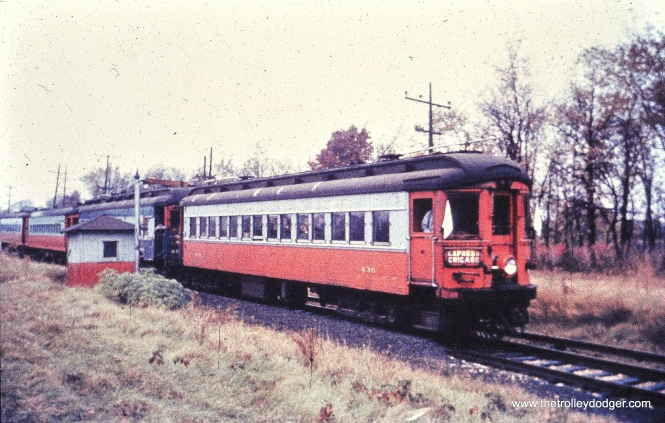
As a shout-out to Joel Salomon of the Rockhill Trolley Museum, here is a picture of Chicago, Aurora & Elgin 315 in service on the old Garfield Park "L". 315 is now part of their collection and they are always on the lookout for pictures of that car. (Joe L. Diaz Photo) This picture was taken somewhere west of Paulina Junction, but not as far west as Western Avenue.

As a shout-out to Joel Salomon of the Rockhill Trolley Museum, here is a picture of Chicago, Aurora & Elgin 315 in service on the old Garfield Park “L”. 315 is now part of their collection and they are always on the lookout for pictures of that car. (Joe L. Diaz Photo) This picture was taken somewhere west of Paulina Junction, but not as far west as Western Avenue.

This post was delayed when I came down with the flu last week. But we’re back on our feet in a big way today, with lots of interesting photos, which even include a few mysteries, and plenty of reader correspondence. Keep those cards and letters coming in, folks.

-David Sadowski


Help Support The Trolley Dodger

gh1

This is our 134th post, and we are gradually creating a body of work and an online resource for the benefit of all railfans, everywhere. To date, we have received over 149,000 page views, for which we are very grateful.

You can help us continue our original transit research by checking out the fine products in our Online Store.

As we have said before, “If you buy here, we will be here.”

We thank you for your support.


Hi-res scans of eight more documents have been added to our E-book collection The “New Look” in Chicago Transit: 1938-1973, available in our Online Store. This includes CSL Service News from April 17 and May 17, 1930, and the CTA Rider's Readers from March 1951, August 1951, January 1952, July 1952, August 1952, and December 1952.

Hi-res scans of eight more documents have been added to our E-book collection The “New Look” in Chicago Transit: 1938-1973, available in our Online Store. This includes CSL Service News from April 17 and May 17, 1930, and the CTA Rider’s Readers from March 1951, August 1951, January 1952, July 1952, August 1952, and December 1952.

More World’s Fair Buses

Regarding our post Following Up (April 6, 2016), another tidbit of information has come to light regarding the disposition of 60 buses used by Greyhound to transport visitors at the 1933-34 Chicago World’s Fair (A Century of Progress). We previously reported how it appears at least a dozen of these ended up at the Texas Centennial Exhibition in 1936 with slightly different sheetmetal. Now, it seems that at least four of these buses were used in Michigan to bring people to a tourist attraction:

This 1930s postcard shows at least four former Chicago World's Fair buses being used by the House of David in Benton Harbor, Michigan, a religious community that operated a popular zoo and amusement park. I'm not sure of the connection between Enders Greyhound Lines and the parent Greyhound company, which began as a number of separate firms that were eventually consolidated. You will note the buses still say "World's Fair."

This 1930s postcard shows at least four former Chicago World’s Fair buses being used by the House of David in Benton Harbor, Michigan, a religious community that operated a popular zoo and amusement park. I’m not sure of the connection between Enders Greyhound Lines and the parent Greyhound company, which began as a number of separate firms that were eventually consolidated. You will note the buses still say “World’s Fair.”

Looks like new buses were used at the 1935-36 California Pacific Exposition in San Diego.

Looks like new buses were used at the 1935-36 California Pacific Exposition in San Diego.

35exposd

Screen Shot 04-22-16 at 08.04 AM.PNG

Torkel Korling, Renaissance Man

Peter Korling writes:

I was a streetcar operator for the MUNI of SF during the 60’s and I took the streetcar a block off the tracks-which was a long standing record. I have a picture of me departing the car after the incident. The slip-up was attributed to faulty brakes. I could be more specific- for it was an interesting story- streetcar wise.

I lived on the Southside of Chicago as a child so I love the pics of your streetcars. As all Chicagoans I rode them a lot. I also have made paintings and drawings of elevated trains, subways and interurbans. My father was a noted photographer of Chicago-maybe you heard of him: Torkel Korling.

Torkel Korling (1903-1998) was a true renaissance man. He invented the automatic diaphragm mechanism that made the SLR camera practical. He also invented the collapsing “Tiltall” type tripod.

In addition to this, he was one of the leading industrial and commercial photographers from the 1920s to the 1950s, and later in life, an expert nature photographer who published many books. He did at least one cover shot for Life magazine, and convinced them for just that one time only to leave their large logo off the front cover.

I am fortunate to have met your father when he was 85 and trying to market his latest invention, the “Optipivot.” We discussed photography, and he had nothing but disdain for the methods used by contemporary commercial shooters.

The would waste hundreds of pictures in the hopes of finding something usable. His method, he said, was to carefully set up a “master shot,” and then he would take one or two pictures at the most. Once he got what he wanted, there was no need, he felt, to take another picture.

He also complained to me about how the various Japanese camera manufacturers refused to pay him any royalties for his automatic diaphragm patent, which made the 35mm single lens reflex camera practical. Instead, they waited until his patent expired in the 1950s and then they all came out with such cameras.

He applied for this patent in 1933 and it was awarded three years later. He told me the idea came to him when he was photographing children. They moved around so much that he did not have time to focus his camera with the lens wide open, then reset his aperture to take the picture. His invention allowed viewing with the lens wide open, and then the aperture would automatically change back to its preset f/stop once the shutter was pressed to take the picture.

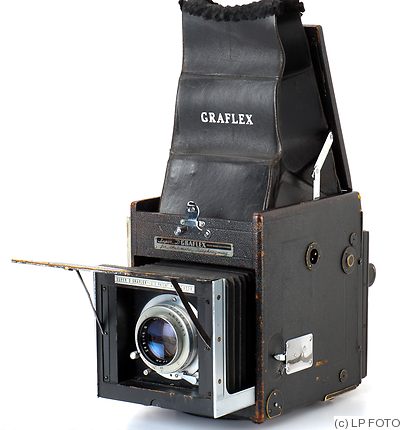
His invention was licensed by Graflex and first used on their Super D model reflex cameras. According to Camerapedia, “The RB Super D, which features a semi-automatic diaphragm, was produced in 3¼×4¼ (1941-1963) and 4 x 5 (1948-1957) formats.”

Photos taken by Torkel Korling are now in the collections of many museums around the world, and have been featured in several exhibitions. Anyone who has ever used an SLR camera owes Mr. Korling a debt of gratitude.

The Graflex RB Super D camera, which was the first to use Torkel Korling’s patented automatic diaphragm invention:

http://collectiblend.com/Cameras/images/Graflex-Revolving-Back-%28RB%29-Super-Graflex-Series-D.jpg

The April 26, 1937 cover of LIFE magazine featured a picture by Torkel Korling.

The April 26, 1937 cover of LIFE magazine featured a picture by Torkel Korling.

optipivot

optipivot2

L. Demery writes:

The blurb for “Chicago Surface Lines: The Big 5 Routes and 5 Others” (published by the Shore Line Interurban Historical Society) begins as follows:

“In 1931, the five largest Chicago Surface Lines routes, in terms of originating revenue passengers, were Ashland, Clark-Wentworth, Halsted, Madison and Milwaukee. The combined riding on these routes was greater than the total riding in many medium-sized American cities. CSL also had some very small routes in terms of ridership and they demonstrate the diversity of CSL’s operations.”

Does anyone have, or know where to find, a list of annual ridership statistics for individual CSL / CTA lines?

CSL (and other streetcar companies) did compile such statistics, no doubt about that. However, much information of this type (for US systems in general) has been lost or destroyed. Any information or “leads” re. CSL would be greatly appreciated.

Perhaps you can look at the yearly reports issued by the Board of Supervising Engineers during the CSL era?  Or, maybe our readers might have some suggestions.

Christopher J Lemm writes:

After reading your January 2015 story on the CTA Westchester Branch, the picture of the train crossing Madison street in Bellwood brought back some great memories, I grew up in that house, my grandfather was Clarence Lemm, track foreman for the Aurora and Elgin Railroad, he died in 1936. My father followed in grandpa’s footsteps, he worked at CTA 43 years, he started as a clerk and retired as the head of insurance and pensions. When my brother and I were very young my dad would take us for rides on the Aurora and Elgin, he used grandpa’s Sunset Lines employee pin and we all road free of charge. Thank you for some great memories!

Thanks for sharing those reminiscences with us. It’s great when we can help people make these sorts of connections.

John Smatlak writes:

David- Enjoyed your coverage of the former Chicago City Railway Building on South Wabash. I remember seeing one of those same CSL cast iron call boxes on the wall at Limits garage (photos attached).

Speaking of former CSL carhouses that survived into the modern era, I’d love to see some photos of the Lincoln-Wrightwood carhouse. I worked nearby around 1978-79 and went inside the building a few times. At the time it was used by the City as a garage for garbage trucks. The tracks were still in the floor and the repair bay for the streetcars was still very much intact (I even found some old CSL requisition paperwork scattered around on the floor). Sadly I never took any pictures of the building, and of course one day it was gone! I have a few images from when it was used as the temporary home for the CTA’s historic collection, but would love to see some more photos.

Keep up the good work.

CTA Limits Carhouse 8-13-86 3

CTA Limits Carhouse 8-13-86 4

Thanks. FYI, Bill Shapotkin has generously shared some photos he took in 2004 showing a 100-year-old substation originally used by the Chicago City Railway Company, which was then still being used for the Chicago Transit Authority’s South Side “L”:

A CTA substation located on the southwest corner of 42nd and Wabash, as it appeared on July 30, 2004. Constructed under authority of the Board of Supervising Engineers, Chicago Traction, it originally fed power to the streetcars. It now services the "L". View looks southwest. (William Shapotkin Photo)

A CTA substation located on the southwest corner of 42nd and Wabash, as it appeared on July 30, 2004. Constructed under authority of the Board of Supervising Engineers, Chicago Traction, it originally fed power to the streetcars. It now services the “L”. View looks southwest. (William Shapotkin Photo)

Another view of the same building looking east/southeast along the south side of 42nd Street at the back end of the building. (William Shapotkin Photo)

Another view of the same building looking east/southeast along the south side of 42nd Street at the back end of the building. (William Shapotkin Photo)

In this 2004 view, there are street signs still visible on the BOSE-built substation located on the southwest corner of 42nd and Wabash. (William Shapotkin Photo)

In this 2004 view, there are street signs still visible on the BOSE-built substation located on the southwest corner of 42nd and Wabash. (William Shapotkin Photo)

In this 2004 view, we see a Chicago Transit Authority manhole cover, located along the south side of 42nd Street between State and Wabash, in front of a still-in-service BOSE-built substation. (William Shapotkin Photo)

In this 2004 view, we see a Chicago Transit Authority manhole cover, located along the south side of 42nd Street between State and Wabash, in front of a still-in-service BOSE-built substation. (William Shapotkin Photo)

This century-old manhole cover, in the same general area as the previous pictire, still reads Chicago City Railway Company. (William Shapotkin Photo)

This century-old manhole cover, in the same general area as the previous pictire, still reads Chicago City Railway Company. (William Shapotkin Photo)

Scott Greig adds a postscript:

The pictured substation building at 42nd and Wabash is no longer an active substation. I was in there maybe 7-8 years ago, and there was no substation equipment left except the empty shells of some newer equipment. At the time it was being used for storage by CTA’s Power & Way department.


Interesting Photos

Here is a rare color shot of Chicago, South Shore & South Bend car 15, after it had been modernized in 1942. According to CERA Bulletin 41, the car had a red roof, but it looks more purple in this picture. I think the photo shows the accurate color, since a red roof would not have provided contrast with the maroon car body. I'm not sure what date the car was repainted to the much more familiar South Shore Line traction orange, but it may have been shortly after World War II. The car was originally built by Pullman in 1926.

Here is a rare color shot of Chicago, South Shore & South Bend car 15, after it had been modernized in 1942. According to CERA Bulletin 41, the car had a red roof, but it looks more purple in this picture. I think the photo shows the accurate color, since a red roof would not have provided contrast with the maroon car body. I’m not sure what date the car was repainted to the much more familiar South Shore Line traction orange, but it may have been shortly after World War II. The car was originally built by Pullman in 1926.

This rare photo of South Shore Line car 1126, signed "To Chicago, the Boulevardier," is dated February 14, 1939, although I do not know whether that is the date the picture was taken, or when it was printed. Incredibly, this car survives. As Don's Rail Photos notes, "1126 was a work motor built by Niles in 1908 as CLS&SB 73. In 1927 it was rebuilt into work motor 1126. In 1941 it was sold and converted to a house. In 1994 it was purchased for restoration from a buyer who had picked it up the month before for back taxes. He really did not want the car, just the land. Bob Harris began restoration in 2005..." According to a 2015 Chicago Tribune article, the car is now in Murphysboro, Illinois, and is 80% restored.

This rare photo of South Shore Line car 1126, signed “To Chicago, the Boulevardier,” is dated February 14, 1939, although I do not know whether that is the date the picture was taken, or when it was printed. Incredibly, this car survives. As Don’s Rail Photos notes, “1126 was a work motor built by Niles in 1908 as CLS&SB 73. In 1927 it was rebuilt into work motor 1126. In 1941 it was sold and converted to a house. In 1994 it was purchased for restoration from a buyer who had picked it up the month before for back taxes. He really did not want the car, just the land. Bob Harris began restoration in 2005…” According to a 2015 Chicago Tribune article, the car is now in Murphysboro, Illinois, and is 80% restored.

The coming of summer also means more construction and demolition projects. A four-car CA&E train is seen on the old CTA Garfield Park "L" at Ogden on October 19, 1952. Demolition of buildings for the Congress Expressway is well underway.

The coming of summer also means more construction and demolition projects. A four-car CA&E train is seen on the old CTA Garfield Park “L” at Ogden on October 19, 1952. Demolition of buildings for the Congress Expressway is well underway.

CTA red Pullman 144, long a mainstay at the Illinois Railway Museum, is shown on the Wentworth line on a May 25, 1958 CERA fantrip, less than a month before the end of all streetcar service on Chicago. (Homer G. Benton Photo) That's a 1956 Oldsmobile at left. M. E. writes, "This picture faces northwest and was taken at about 16th and Clark. The rail embankment on the left is the main line into LaSalle St. Station, at that time used by the New York Central, Nickel Plate and Rock Island. Today that line is the Metra Rock Island. The railroad viaduct crossing Clark St. behind car 144 is the Saint. Charles Air Line of the Illinois Central, which ran due west from the IC main line near the lake. Just north of that viaduct is the viaduct for the main line into Dearborn Station, which crossed Clark St. on a southwest / northeast angle before turning due north into the station. The streetcar tracks went under both viaducts on private right-of-way adjacent to the west side of Clark St. Car 144's destination sign says Vincennes - 77th, where the South Shops were then and still are today."

CTA red Pullman 144, long a mainstay at the Illinois Railway Museum, is shown on the Wentworth line on a May 25, 1958 CERA fantrip, less than a month before the end of all streetcar service on Chicago. (Homer G. Benton Photo) That’s a 1956 Oldsmobile at left. M. E. writes, “This picture faces northwest and was taken at about 16th and Clark. The rail embankment on the left is the main line into LaSalle St. Station, at that time used by the New York Central, Nickel Plate and Rock Island. Today that line is the Metra Rock Island. The railroad viaduct crossing Clark St. behind car 144 is the Saint. Charles Air Line of the Illinois Central, which ran due west from the IC main line near the lake. Just north of that viaduct is the viaduct for the main line into Dearborn Station, which crossed Clark St. on a southwest / northeast angle before turning due north into the station. The streetcar tracks went under both viaducts on private right-of-way adjacent to the west side of Clark St. Car 144’s destination sign says Vincennes – 77th, where the South Shops were then and still are today.”

Summer is coming, and along with it, summer music festivals. Here, North Shore Line car 167 is shown at the entrance to Ravinia Park. This was part of the old Shore Line Route, abandoned in 1955. There is a parking lot where the tracks used to be, although you can still ride Metra trains there. Perhaps the festival dates can help determine what year this picture was taken.

Summer is coming, and along with it, summer music festivals. Here, North Shore Line car 167 is shown at the entrance to Ravinia Park. This was part of the old Shore Line Route, abandoned in 1955. There is a parking lot where the tracks used to be, although you can still ride Metra trains there. Perhaps the festival dates can help determine what year this picture was taken.

According to Don's Rail Photos, Chicago North Shore & Milwaukee 213 "was built by Cincinnati in March 1920, #2445, as a merchandise despatch car. In 1940 it was rebuilt as a disc harrow ice cutter. It was retired in 1955 and sold to CHF as their 242. It was donated to Illinois Railway Museum in 1964." This photo by the late Bob Selle shows it newly delivered to the Chicago Hardware Foundry in North Chicago on August 7, 1955.

According to Don’s Rail Photos, Chicago North Shore & Milwaukee 213 “was built by Cincinnati in March 1920, #2445, as a merchandise despatch car. In 1940 it was rebuilt as a disc harrow ice cutter. It was retired in 1955 and sold to CHF as their 242. It was donated to Illinois Railway Museum in 1964.” This photo by the late Bob Selle shows it newly delivered to the Chicago Hardware Foundry in North Chicago on August 7, 1955.

The late Bob Selle took this great shot of an outbound Milwaukee Road commuter train leaving Union Station in Chicago on August 8, 1958. These were some of the consists I saw as a child, since I lived very close to what is now the Metra Milwaukee District West Line. Ridership was nothing compared to what it is today, and I believe bi-levels were not introduced here until around 1961-62. That's the Merchandise Mart across the Chicago River. This picture was taken from the Lake Street overpass. That looks like a 1957 Oldsmobile convertible at left.

The late Bob Selle took this great shot of an outbound Milwaukee Road commuter train leaving Union Station in Chicago on August 8, 1958. These were some of the consists I saw as a child, since I lived very close to what is now the Metra Milwaukee District West Line. Ridership was nothing compared to what it is today, and I believe bi-levels were not introduced here until around 1961-62. That’s the Merchandise Mart across the Chicago River. This picture was taken from the Lake Street overpass. That looks like a 1957 Oldsmobile convertible at left.

This photo of a Chicago & North Western train of bi-levels was taken by Al Clum in June 1962. But where? One reader writes, "The descending tracks in the foreground of the photo are leading to the North Shore Line's North Chicago Junction Station. The CNW train is on the CNW embankment between Great Lakes to the south and North Chicago to the north. Since the headlights are not turned on on the locomotive, one would presume that the train is a push-pull heading south."

This photo of a Chicago & North Western train of bi-levels was taken by Al Clum in June 1962. But where? One reader writes, “The descending tracks in the foreground of the photo are leading to the North Shore Line’s North Chicago Junction Station. The CNW train is on the CNW embankment between Great Lakes to the south and North Chicago to the north. Since the headlights are not turned on on the locomotive, one would presume that the train is a push-pull heading south.”

Former Chicago Surface Lines mail car 6, built in 1891, as it looked on May 25, 1958. This car is now at the Fox River Trolley Museum. You can see a black-and-white photo of this car, taken at the same time as this one, in our previous post Throwback Thursday (January 7, 2016). To see a picture of West Chicago Street Railway car 4, also taken the same day, there's one in our post Chicago Streetcars In Color (February 22, 2015).

Former Chicago Surface Lines mail car 6, built in 1891, as it looked on May 25, 1958. This car is now at the Fox River Trolley Museum. You can see a black-and-white photo of this car, taken at the same time as this one, in our previous post Throwback Thursday (January 7, 2016). To see a picture of West Chicago Street Railway car 4, also taken the same day, there’s one in our post Chicago Streetcars In Color (February 22, 2015).

Busy action at an Illinois Terminal station, but where? Perhaps the bus sign might be a clue. This type of scene was once commonplace in American life during the first half of the 20th century. PS- Don Ross says this is Springfield.

Busy action at an Illinois Terminal station, but where? Perhaps the bus sign might be a clue. This type of scene was once commonplace in American life during the first half of the 20th century. PS- Don Ross says this is Springfield.

My guess is that this picture shows the final interurban run on the Illinois Terminal, and this man may be the president of the railroad. If so, the date is March 3, 1956. (Glenn L. Sticken Photo) There is another photo of that same train, taken by the same photographer, in our earlier post Historic Chicago Buses, Part Three (November 23, 2015). Update: The young man at rear in the photo (Carter Morris, Sr.) informs me that the man in the foreground is none other than Maury Klebolt (1930-1988), head of the Illini Railroad Club, who organized many fantrips in the 1950s (and who later helped start the San Francisco Trolley Festival). The man standing behind him is Howard B. Morris (1909-1993), his father.

My guess is that this picture shows the final interurban run on the Illinois Terminal, and this man may be the president of the railroad. If so, the date is March 3, 1956. (Glenn L. Sticken Photo) There is another photo of that same train, taken by the same photographer, in our earlier post Historic Chicago Buses, Part Three (November 23, 2015). Update: The young man at rear in the photo (Carter Morris, Sr.) informs me that the man in the foreground is none other than Maury Klebolt (1930-1988), head of the Illini Railroad Club, who organized many fantrips in the 1950s (and who later helped start the San Francisco Trolley Festival). The man standing behind him is Howard B. Morris (1909-1993), his father.

Illinois Terminal car 241 at the Museum of Transportation in St. Louis in February 1958. Don's Rail Photos says, "241 was built by American Car & Foundry in July 1907, #5080. It went to the National Museum of Transport on July 25, 1950."

Illinois Terminal car 241 at the Museum of Transportation in St. Louis in February 1958. Don’s Rail Photos says, “241 was built by American Car & Foundry in July 1907, #5080. It went to the National Museum of Transport on July 25, 1950.”

The last run of the Illinois Terminal interurban, shown here in Carlinville, took place on March 3, 1956. Older equipment like car 284 was used instead of the railroad's relatively new streamliners. The black bunting draped on this car is now at the Illinois Railway Museum.

The last run of the Illinois Terminal interurban, shown here in Carlinville, took place on March 3, 1956. Older equipment like car 284 was used instead of the railroad’s relatively new streamliners. The black bunting draped on this car is now at the Illinois Railway Museum.

Illinois Terminal 276 and 530 on a 1955 fantrip in Urbana.

Illinois Terminal 276 and 530 on a 1955 fantrip in Urbana.

The final passenger train on the Illinois Terminal Railroad makes a station stop in Girard, March 2, 1956. (Dale Jenkins Collection)

The final passenger train on the Illinois Terminal Railroad makes a station stop in Girard, March 2, 1956. (Dale Jenkins Collection)

This old postcard photo, which shows obvious signs of being retouched, shows the Fifth Avenue station on the AE&C (later CA&E), most likely in the early 1900s when it was new. We are looking west, and it appears the area was not that built up yet. Contrast this with pictures of the same station in the interurban's waning days, in our post A Cold Last Ride (January 25, 2016). The postcard itself was printed by William G. Hoffman of 4340 Jackson Boulevard in Chicago, apparently no relation to the late railfan photographer Bill Hoffman.

This old postcard photo, which shows obvious signs of being retouched, shows the Fifth Avenue station on the AE&C (later CA&E), most likely in the early 1900s when it was new. We are looking west, and it appears the area was not that built up yet. Contrast this with pictures of the same station in the interurban’s waning days, in our post A Cold Last Ride (January 25, 2016). The postcard itself was printed by William G. Hoffman of 4340 Jackson Boulevard in Chicago, apparently no relation to the late railfan photographer Bill Hoffman.

New Site Additions

This picture has been added to our previous post West Towns Streetcars in Black-and-White (August 4, 2015):

Chicago & West Towns 142 at the east end of the Lake Street line at Austin Boulevard on July 4, 1946. The building at right is the old Park Theatre. This is a "sister" car to the 141, now preserved in operating condition at the Illinois Railway Museum.

Chicago & West Towns 142 at the east end of the Lake Street line at Austin Boulevard on July 4, 1946. The building at right is the old Park Theatre. This is a “sister” car to the 141, now preserved in operating condition at the Illinois Railway Museum.

This photo has been added to our post West Towns Streetcars in Color (February 10, 2015):

Chicago & West Towns Railways car 112 heads south at Harlem and Cermak on August 17, 1947.

Chicago & West Towns Railways car 112 heads south at Harlem and Cermak on August 17, 1947.

Lifting the Lid in the Loop

This 44-page brochure, issued by the Chicago Tunnel Co. in 1915, later provided some of the cover art for Bruce Moffat's book Forty Feet Below.

This 44-page brochure, issued by the Chicago Tunnel Co. in 1915, later provided some of the cover art for Bruce Moffat’s book Forty Feet Below.

For more than half a century, the Chicago Tunnel Company operated an extensive network of underground electric freight lines in Chicago’s business district. While their operations were crucial to Chicago’s Loop for much of the 20th century, they are still not widely known or appreciated, since they took place almost entirely out of sight to the average person.

By the 1890s, Chicago’s bustling downtown streets were crowded and congested by horse-drawn carts and wagons, as well as pedestrians, bicyclists, and cable cars. Eventually, much of this traffic was moved to underground tunnels that connected with the sub-basements of many buildings. Some Loop buildings had three levels of basements.

What eventually became 60 miles of tunnels was first authorized as a means of running telephone lines underground in 1899. Tunneling began surreptitiously, with workers digging through Chicago’s blue clay by hand using long knives. Within a few years, the tunnel’s main focus changed to moving freight, including merchandise, coal, and the resulting ashes.

You can read an early description of their operations here.

From photos, we can see that in some respects the tunnel operation was a very dirty affair. Since it hauled a lot of ashes, that should not be too much of a surprise.

One photo shows the sub-basement of the old Mandel Brothers department store, which was part of the rich history of retailing here. Chicago-style department stores eventually spread all over the world, as shown in the British-American television series Mr. Selfridge, starring Jeremy Piven. The real Harry Gordon Selfridge, Sr. (1858-1947) was Marshall Field‘s right-hand man before he went to London and opened a similar store there in 1909.*

According to the Encyclopedia of Chicago:

This retail enterprise, which would become one of Chicago’s leading department stores, was founded in 1855 by Bavarian immigrants Solomon Mandel and his uncle Simon Klein. Their first store was located on Clark Street. In 1865, after Solomon’s brothers Leon and Emanuel joined the firm, its name became Mandel Bros. Purchasing in New York and Paris and selling in Chicago, the enterprise grew. By the 1880s, its new store on the corner of State and Madison Streets employed about 800 people. By the beginning of the twentieth century, the workforce had grown to over 3,000 people. Rebuilt in 1912 and renovated in 1948, the State Street store continued to operate into the 1970s, when the company folded amid State Street’s demise as a major retail center.

This description fails to mention that Mandel Brothers sold out to competitor Weiboldt’s in 1960. Their stores were converted to Wieboldt’s, which continued in operation until 1986.

Mandel Brothers was also notable as one of the very first American retailers to oppose Adolph Hitler in 1934:

Mandel Bros. Joins Boycott of Nazi Goods
CHICAGO (Apr. 4)

Mandel Brothers, largest Jewish-owned department store outside of New York City, has discontinued the buying of German goods owing to “customer resistance,” Leon Mandel, general manager of the store, announced today.

Mandel Brothers store is one of the six largest in the Chicago Loop district and the announcement created a sensation in retail circles.

“Mandel Brothers store announced today that owing to customer resistance to German goods, the firm has discontinued all purchases of German merchandise,” the statement issued by the concern read. “During the past six months Mandel Brothers placed no orders for merchandise in Germany. In line with the Mandel Brothers policy, every effort has been and is being made to develop successfully and feature American sources of supply of such merchandise.”

Decline and Fall

While never very profitable, the tunnel system managed to survive the Great Depression. But soon enough, forces converged that put it into an irreversible decline.

Chicago had been planning rapid transit and streetcar subways from the earliest days of the “L” in the 1890s. The franchises granted to the freight tunnel system allowed the City to displace them if and when such subways were built.

Work on Chicago’s “Initial System of Subways” began on both State and Dearborn in December 1938, and while many of the tunnels in the system were cut off as a result, in the short run, the system probably benefited as it was used to haul out the clay from excavation– some of which was done, like the freight tunnels themselves, by workers armed with long knives.

The final blow to the tunnel company came in the 1950s, when Chicago homes, apartments and businesses shifted away from using coal for heating and replaced it with cleaner oil and natural gas. It’s hard to imagine now, but Chicago’s neighborhoods were once littered with various coal yards, and you can still see coal chutes on some older apartment buildings.

With the demise of coal, the Chicago Tunnel Company’s operations sputtered to a close in the late 1950s, including bankruptcy in 1956 and outright dissolution in 1959.

After the Fall

Chicago’s freight tunnels have largely remained under downtown streets and have had a very interesting and active “afterlife” following their 1959 abandonment. Here’s where the tunnel system has intersected with my own life.

In the late 1970s, I worked at the Field Museum of Natural History in Grant Park. This massive building opened in 1921 and was a customer of the Chicago Tunnel Company, although the connection was made via an elevator, since the depths of the various tunnels were not the same. The Field Museum building itself was built on landfill and rests on top of wooden pilings.

While nearly all the tunnel company’s locomotives and freight cars were scrapped upon abandonment, one train remained marooned in the Field Museum sub-sub-basement, cut off from the rest of the system. Norman P. Radtke, manager of the physical plant, took me down there in the late 1970s to have a look at the locomotive and its ash cars. It seemed at the time that they would remain there forever.

However, here serendipity played a part. In the early 1980s, FMNH president Willard L. (Sandy) Boyd was helping to plan the museum’s participation in a 1992 Chicago World’s Fair. He lamented to me how the Field Museum was separated from the Shedd Aquarium and Adler Planetarium by the northbound lanes of Lake Shore Drive.

I made an offhand suggestion that there was plenty of room on the other side of the museum to relocate the northbound lanes. I left the museum’s employ in 1983, and as we now know there was no Chicago World’s Fair in 1992. However, due in large part to the efforts of Sandy Boyd, the idea of shifting half of LSD took hold.

The northbound lanes of Lake Shore Drive were relocated to the east side of Field Museum and the new alignment opened in the late 1990s. As Mr. Boyd has remarked, even though there was no world’s fair, Chicago got its intended legacy anyway, in the form of an unbroken lakefront Museum Campus.

Ironically, work on the relocation project created a unique opportunity to remove the Chicago Tunnel Company locomotive and ash cars from their prison. This involved a tremendous effort put forth by volunteers at the Illinois Railway Museum, which you can read about here. These cars were saved and are now preserved at IRM, where they can be enjoyed by future generations.

Tunnel operations have been well documented by historian Bruce Moffat in two books, Forty Feet Below: The Story of Chicago’s Freight Tunnels (1982) and The Chicago Tunnel Story (2002, Bulletin 135 of the Central Electric Railfans’ Association)

In the Spring of 1992, I attended a private slide presentation Bruce gave about the Chicago freight tunnels at a friend’s house. Little did any of us know that less than a week later, the long-forgotten system would suddenly be thrust into the headlines.

On April 13, 1992, what some have called the Great Chicago Flood began, as a contractor inadvertently disturbed the clay surrounding one of the freight tunnels near the Chicago River by the Kinzie Street Bridge. The leak, which was not taken seriously at first, eventually turned into a breach, and eventually hundreds of millions of gallons of water flowed into the tunnel system, and into the sub-basements of many Chicago buildings. Even Chicago’s downtown subways were affected.

Instantly, Bruce Moffat had a well-deserved “15 minutes of fame,” to paraphrase Any Warhol. As the only recognized expert on the tunnel system, Bruce was all over the media in the days following the flood. The great majority of people had no idea such a thing existed, and Bruce was practically the only person who understood it and explain it.

The flood had a negative economic impact on the Chicago area that extended beyond downtown. I was involved in a Lincoln Park photo lab at the time, and our business suffered as a result. Thinking about this period has brought back a flood of memories.

I had an idea for a humorous radio ad to promote our business that would have played off the flood. The press had reported that City inspectors had taken pictures of the area where water was leaking into the tunnel, but instead of sending them to a one hour photo lab, they dropped them off at a store where it took a week to get the film back.

In my radio ad, two city workers would be looking at the tunnel leak, and you would have heard the sound of dripping water. One would have said that he was going to take the film to a place where he would get it back in a week, while the other would have suggested taking it to our lab, where you could get it developed and printed in as little as 30 minutes.

Before they could do so, however, the wall of the tunnel would have burst and both people would have been engulfed by the sound of water rushing in. Then, at the end, the narrator would have used this as a cautionary tale, telling people to bring their film to us “before it’s too late.”

Unfortunately, the radio station refused to make this spot, telling me that the administration of Richard M. Daley would not like it. The Great Chicago Flood, it turns out, was no laughing matter.

Now, Chicago’s old system of freight tunnels continues to benefit the downtown, with various communications cables running through them. On September 1, 2000, Central Electric Railfans’ Association hosted a rare inspection tour of parts of the underground tunnel system. Unfortunately, this is not likely to be repeated any time soon, in the wake of post-9/11 security concerns. The old tunnel system, a vital part of Chicago’s infrastructure even in the 21st century, is now closed off from public access.

-David Sadowski

*There is another Chicago-London connection. The underground freight tunnels here helped inspire the London Post Office Railway, which operated from 1927 to 2003.

PS- This information has been added to one of our E-books, which reproduces a 1928 book put out by the Chicago Tunnel Company:


Now Updated with 46 Pages of New Material:

DVD01Cover

Lifting the Lid in the Loop, 1915
The Chicago Freight Tunnels, 1928
Chicago Elevated Railroads Consolidation of Operations, 1913

The Chicago Tunnel Company (1906-1959) operated an elaborate network of 2 ft (610 mm) narrow gauge track in 7.5-by-6-foot (2.3 m × 1.8 m) tunnels running under the streets throughout the central business district including and surrounding the Loop, delivering freight, parcels, and coal, and disposed of ash and excavation debris.

Our E-book collection includes two short books issued by the Tunnel Company, detailing their operations. Lifting the Lid in the Loop is 46 pages long, has many great illustrations, and was published in 1915. To this we add a different 32-page illustrated book from 1928.

The third volume in this collection, Chicago Elevated Railroads Consolidation of Operations (60 pages) was published in 1913 to help facilitate the through-routing of the South Side and Northwestern elevated lines. As Britton I. Budd wrote in the introduction, “This book of instructions is issued for the purpose of familiarizing the employees of the South Side Elevated Railroad with the character, service, track arrangement, and general features of the system of the Northwestern Elevated Railroad, and to familiarize the employees of the Northwestern elevated Railroad with the same details of the South Side Elevated Railroad, before through-routed operation of cars is begun.”

Now The Trolley Dodger is making all three of these long-out-of-print works available once again on a single DVD data disc. Includes a Tribute to the late bookseller Owen Davies, who reprinted the “L” book in 1967, a 1966 Chicago Tribune profile of Davies, and reproductions of several Davies flyers. 177 pages in all.

This collection is a tremendous value, since an original copy of Lifting the Lid in the Loop alone recently sold for over $200 on eBay.

# of Discs – 1
Price: $14.95


Help Support The Trolley Dodger

gh1

This is our 133rd post, and we are gradually creating a body of work and an online resource for the benefit of all railfans, everywhere. To date, we have received over 147,000 page views, for which we are very grateful.

You can help us continue our original transit research by checking out the fine products in our Online Store.

As we have said before, “If you buy here, we will be here.”

We thank you for your support.


This junction of three different freight tunnel lines reminds me a bit of Marshfield on the old Metropolitan "L", where three lines came together.

This junction of three different freight tunnel lines reminds me a bit of Marshfield on the old Metropolitan “L”, where three lines came together.

A 1913 Baldwin builder's photo of locomotive 534, which had 28" wheels, two 25 hp motors, and weighed 14,000 lbs.

A 1913 Baldwin builder’s photo of locomotive 534, which had 28″ wheels, two 25 hp motors, and weighed 14,000 lbs.

Warehouse operations.

Warehouse operations.

In this November 17, 1904 view, we see a four-way intersection with 56 lb. rail, a three-way switch, telephone cable, trolley wire, and a permanent lighting system.

In this November 17, 1904 view, we see a four-way intersection with 56 lb. rail, a three-way switch, telephone cable, trolley wire, and a permanent lighting system.

A train curving around a four-way intersection.

A train curving around a four-way intersection.

A builder's photo of freight loco 207, renumbered to 501 before delivery, built by Baldwin-Westinghouse in 1907. Weight: 5 1/2 tons.

A builder’s photo of freight loco 207, renumbered to 501 before delivery, built by Baldwin-Westinghouse in 1907. Weight: 5 1/2 tons.

Trains at an intersection.

Trains at an intersection.

Cars being shifted on warehouse tracks.

Cars being shifted on warehouse tracks.

Until the 1950s, coal was widely used for heating in Chicago.

Until the 1950s, coal was widely used for heating in Chicago.

Loading and unloading freight in the Murdock Company sub-basement.

Loading and unloading freight in the Murdock Company sub-basement.

A Chicago Tunnel Company steam locomotive and cars at the lakefront, creating landfill.

A Chicago Tunnel Company steam locomotive and cars at the lakefront, creating landfill.

Collecting mail at the Post Office station.

Collecting mail at the Post Office station.

A 1906 Baldwin builder's photo of freight loco 173.

A 1906 Baldwin builder’s photo of freight loco 173.

Merchandise rack car 5000, built by Bettendorf Car Co.

Merchandise rack car 5000, built by Bettendorf Car Co.

An ash car train in the Marshall Field & Co. boiler room on February 16, 1915.

An ash car train in the Marshall Field & Co. boiler room on February 16, 1915.

Coal delivery at the Mandel Brothers department store building.

Coal delivery at the Mandel Brothers department store building.

The entrance to Mandel Brothers department store at State and Madison in downtown Chicago. They were bought out by Wieboldt's in 1960. Wieboldt's went out of business in 1986 but the building is still standing.

The entrance to Mandel Brothers department store at State and Madison in downtown Chicago. They were bought out by Wieboldt’s in 1960. Wieboldt’s went out of business in 1986 but the building is still standing.

Tracks and train cars in Chicago freight tunnel. (Bain News Service photo, George Grantham Bain Collection, Library of Congress)

Tracks and train cars in Chicago freight tunnel. (Bain News Service photo, George Grantham Bain Collection, Library of Congress)

A 1915 map of the very extensive Chicago freight tunnel system.

A 1915 map of the very extensive Chicago freight tunnel system.

Not all was sweetness and light in Chicago's freight tunnels, as this press account of a 1937 sit-down strike indicates.

Not all was sweetness and light in Chicago’s freight tunnels, as this press account of a 1937 sit-down strike indicates.

Chicago Tunnel Company locomotive 508 at the Illinois Railway Museum in 2008. (John McCluskey Photo)

Chicago Tunnel Company locomotive 508 at the Illinois Railway Museum in 2008. (John McCluskey Photo)

chitunnel10

chitunnel9

Following Up

This building, located at 6238 S. Wabash Avenue, is home (2003) to the Jitney Taxicab Association, a limousine service. The building was originally constructed as a wreck wagon barn for the Chicago City Railway Company. View looks west across Wabash Avenue. (William Shapotkin Photo)

This building, located at 6238 S. Wabash Avenue, is home (2003) to the Jitney Taxicab Association, a limousine service. The building was originally constructed as a wreck wagon barn for the Chicago City Railway Company. View looks west across Wabash Avenue. (William Shapotkin Photo)

Today, we are following up on three stories from previous Trolley Dodger posts.

First, guest contributor William Shapotkin shares some additional information with us about the former Chicago City Railway building we wrote about in Trolley Dodger Mailbag, 3-20-2016.

The “switch stand” mentioned also figured prominently in the May 25, 1950 catastrophic crash between Chicago PCC 7078 and a gasoline truck, which we wrote about here.  The collision occurred because the operator of 7078 thought he had been cleared to go straight, while the switch was set to divert streetcars into the loop to avoid a flooded viaduct.

CCRy Wreck Wagon Barn

Dave:

It has taken me some time to get around to writing you on this. Believe I can help with answering your questions about the CSL building at 6242 (although my slides indicate the building to be 6238) S. Wabash Ave.

The building, as I understand it, was constructed as a wagon barn — although it was unclear if it was for wreck wagons or those involved in overhead wire work. David Stanley and I visited the building on Oct 18, 2003. At the time, the structure housed vans of the “Jitney Taxicab Association.” We were allowed into the building. An inspection of the interior revealed that there were no rails in the floor and no signs of any overhead installation. The CSL call (telephone) box was still mounted on the outside of the building south of the doorways.

Rails of the one-time streetcar terminal (two tracks, extending east from State almost to Wabash) were still in-place on the north side of the building. Additionally, the rails leading into/out of the former streetcar loop at 62nd/State were still in-place thru the sidewalk along the east side of State St. The switch stand (perhaps not the correct term) for entry off of S/B State St into the 62nd/State loop (I believe) remains in-place under the pavement in State St. David Stanley photographed the switch stand in the 1970s and I recall seeing it in the 1980s.

Bill Shapotkin

Looking north on the east sidewalk if State Street from a point north of what would be 62nd Place. The rails are the northbound exit out of the 62nd Place streetcar loop-- used by PCCs in the post-World War II period. Amazingly, it's been sixty years since streetcars operated down this part of State Street. These rails still survive! (William Shapotkin Photo)

Looking north on the east sidewalk if State Street from a point north of what would be 62nd Place. The rails are the northbound exit out of the 62nd Place streetcar loop– used by PCCs in the post-World War II period. Amazingly, it’s been sixty years since streetcars operated down this part of State Street. These rails still survive! (William Shapotkin Photo)

Looking west across the east sidewalk of State, from a point north of what would be 62nd Place. The rails here are the northbound route out of the 62nd Place streetcar loop. (William Shapotkin Photo)

Looking west across the east sidewalk of State, from a point north of what would be 62nd Place. The rails here are the northbound route out of the 62nd Place streetcar loop. (William Shapotkin Photo)

Looking southeast across an empty lot between State and Wabash from a point south of 62nd Street. The CSL/CTA had a streetcar loop here (installed post-World War II). Prior to installation of the loop, the terminal consisted of a two-track stub facility located just north of the brick building with the smoke stack (center), which had originally been constructed as a Chicago City Railway wreck wagon barn. (William Shapotkin Photo)

Looking southeast across an empty lot between State and Wabash from a point south of 62nd Street. The CSL/CTA had a streetcar loop here (installed post-World War II). Prior to installation of the loop, the terminal consisted of a two-track stub facility located just north of the brick building with the smoke stack (center), which had originally been constructed as a Chicago City Railway wreck wagon barn. (William Shapotkin Photo)

Showing through the pavement in this 1970s view is a switch stand odd southbound State Street leading to the one-time 62nd Street streetcar loop. View looks south on State Street. (David S. Stanley Photo)

Showing through the pavement in this 1970s view is a switch stand odd southbound State Street leading to the one-time 62nd Street streetcar loop. View looks south on State Street. (David S. Stanley Photo)

CTA PCC car 7144, workign route 36 - Broadway-State, is seen heading southbound on State Street at the 62nd Place Loop in the 1950s. View looks north. (William C. Hoffman Photo, Wien-Criss Archive)

CTA PCC car 7144, workign route 36 – Broadway-State, is seen heading southbound on State Street at the 62nd Place Loop in the 1950s. View looks north. (William C. Hoffman Photo, Wien-Criss Archive)

CTA PCC car 7143, working route 36 - Broadway-State, is seen heading southbound on State Street as it passes the 62nd Place Loop in the 1950s. View looks north. (William C. Hoffman Photo, Wien-Criss Archive)

CTA PCC car 7143, working route 36 – Broadway-State, is seen heading southbound on State Street as it passes the 62nd Place Loop in the 1950s. View looks north. (William C. Hoffman Photo, Wien-Criss Archive)

CTA bus #6425, working route 29 - State, is seen heading southbound on State Street past one-time site of the infamous streetcar/gasoline truck collision of May 25, 1950. View looks north. (William Shapotkin Photo)

CTA bus #6425, working route 29 – State, is seen heading southbound on State Street past one-time site of the infamous streetcar/gasoline truck collision of May 25, 1950. View looks north. (William Shapotkin Photo)

This CSL call box is still standing on the south side of the east end of the building located at 6238 S. Wabash Avenue, now (2003) home to the Jitney Taxicab Association. The building was originally constructed as a wreck wagon barn for the Chicago City Railway Company. View looks west. (William Shapotkin Photo)

This CSL call box is still standing on the south side of the east end of the building located at 6238 S. Wabash Avenue, now (2003) home to the Jitney Taxicab Association. The building was originally constructed as a wreck wagon barn for the Chicago City Railway Company. View looks west. (William Shapotkin Photo)

This disturbed portion of the east sidewalk of State Street near what would be 62nd Street represents the entrance to the 62nd Place streetcar loop. View looks northwest. (William Shapotkin Photo)

This disturbed portion of the east sidewalk of State Street near what would be 62nd Street represents the entrance to the 62nd Place streetcar loop. View looks northwest. (William Shapotkin Photo)

In this 1970s view, we see the switch stand for the turnout into the 62nd Place and State Loop off the southbound track in State Street. View looks east. (David S. Stanley Photo)

In this 1970s view, we see the switch stand for the turnout into the 62nd Place and State Loop off the southbound track in State Street. View looks east. (David S. Stanley Photo)

This building, located at 6238 S. Wabash Avenue, is home (2003) to the Jitney Taxicab association-- a limousine service. The building was originally constructed as a wreck wagon barn for the Chicago City Railway Company. The one-time 6nd Place streetcar terminal had been located immediately south of the building at right-- in fact, both tracks of that terminal are still intact and surrounded by brick pavement. View looks southwest across Wabash Avenue. (William Shapotkin Photo)

This building, located at 6238 S. Wabash Avenue, is home (2003) to the Jitney Taxicab association– a limousine service. The building was originally constructed as a wreck wagon barn for the Chicago City Railway Company. The one-time 6nd Place streetcar terminal had been located immediately south of the building at right– in fact, both tracks of that terminal are still intact and surrounded by brick pavement. View looks southwest across Wabash Avenue. (William Shapotkin Photo)

This is the west end of the building located at 6238 S. Wabash Avenue, now home (2003) to the Jitney Taxicab Association-- a limousine service. The building was originally constructed as a wreck wagon barn for the Chicago City Railway Co. View looks east/southeast. (William Shapotkin Photo)

This is the west end of the building located at 6238 S. Wabash Avenue, now home (2003) to the Jitney Taxicab Association– a limousine service. The building was originally constructed as a wreck wagon barn for the Chicago City Railway Co. View looks east/southeast. (William Shapotkin Photo)

These rails, located between State Street and Wabash Avenue and north of the building at 6238 S. Wabash (the one-time CCRY Co. wreck wagon barn) had been the 62nd Street streetcar terminal. View looks northwest. (William Shapotkin Photo)

These rails, located between State Street and Wabash Avenue and north of the building at 6238 S. Wabash (the one-time CCRY Co. wreck wagon barn) had been the 62nd Street streetcar terminal. View looks northwest. (William Shapotkin Photo)

This building, located at 6238 S. Wabash Avenue, is home (2003) to the Jitney Taxicab Association, a limousine service. The building was originally constructed as a wreck wagon barn for the Chicago City Railway Company. View looks west across Wabash Avenue. (William Shapotkin Photo)

This building, located at 6238 S. Wabash Avenue, is home (2003) to the Jitney Taxicab Association, a limousine service. The building was originally constructed as a wreck wagon barn for the Chicago City Railway Company. View looks west across Wabash Avenue. (William Shapotkin Photo)


Next, we have happy news to report on the fate of Chicago Surface Lines car 1137, which was found last year in Wisconsin. We wrote about that car in our posts Lost and Found: Chicago Streetcar #1137 (June 5, 2015) and The Latest Thing in Houses (1946) (June 10, 2015).

CSL 1137 Is Saved

Frank Sirinek (left) and Jay Drouillard watch as preparations continue for moving the trolley out of Sharon and Bill Krapil's backyard in Weyauwega. (Angie Landsverk Photo)

Frank Sirinek (left) and Jay Drouillard watch as preparations continue for moving the trolley out of Sharon and Bill Krapil’s backyard in Weyauwega. (Angie Landsverk Photo)

From the Waupaca County News:

New home for Wega’s trolley

First acquisition for new museum

By Angie Landsverk

The trolley discovered almost a year ago in a Weyauwega backyard is the first acquisition for a museum being developed in a Michigan community.

“I’m so glad it went to something like this. To have something preserved that’s about 110 years old is amazing. I could not see it being destroyed,” said Sharon Krapil.

Last June 2, Krapil and her husband, Bill, watched as the walls of the brown shack in their backyard were removed, revealing a former Chicago electric streetcar behind them.

The couple bought the home at 300 W. South St. in April 2014 and wanted more space in their backyard.

That is why they hired a construction crew to dismantle the shack.

On March 29, they watched as a semi pulled the trolley, covered in shrink wrap as it sat on a trailer, out of their backyard and onto the street for its eight-hour drive to Grass Lake, Michigan.

The trolley, which the Chicago Surface Lines operated around 1905, is now being refurbished for the Lost Railway Museum.

Interurban railway

“The interurban (railway system) was part of the fabric of the country back then,” said Jay Drouillard, who is involved in Grass Lake’s Lost Railway Museum organization.

The system ran within and between cities and villages in the early 1900s.

“They didn’t have automobiles. If they could jump on an interuban car and ride to their destination, that was pretty good,” he said.

This year, a group of people in this Michigan community decided to open such a museum in a historic building in the community, he said.

“We acquired a building and will start transforming it into a museum later this year,” Drouillard said. “This is the first acquisition for the museum.”

The trolley, donated to the organization from the Krapils for $1, is a Chicago trolley car and never was used as an interurban, he said.

The Lost Railway Museum organization does have photographs of a trolley being used as an interurban to go to a nearby casino, Drouillard said.

“The photograph shows a car that was just like this. It is a sister car, part of a series,” he said. “We’re not going to pawn it (the Weyauwega trolley) off as an interurban. It’s a sister car. The only reason it still exists is because a structure was built around it.”

Most of those involved in the development of the new museum are retired, including Drouillard.

The group learned of the trolley and the Krapil’s desire to donate it to someone from Frank Sirinek, who for more than 50 years has been a volunteer at the Illinois Railway Museum, outside of Chicago.

That museum has a restored and operational trolley from the same series as the Krapil’s former trolley.

Trolley history

According to Sirinek, this type of car was the St. Louis Car Company’s first attempt, at the turn of the century, to manufacture a rubber stamp streetcar.

After 1908, other streetcar companies custom produced them on demand as cities ordered them.

The Chicago Surface Lines operated the electric streetcar from the 1100 series until about 1946, which is when cars like it became too small and slow for moving a lot of people, Sirinek said.

After World War II, the trolleys were sold to those wanting a place to live or stay, which is how they ended up throughout the Midwest, including in Weyauwega.

Sirinek became aware of the local trolley about 20 years ago, traveled to Weyauwega and took pictures of the structure built around it.

At that time, no one was living in it.

From about 1946 to 1948, the late Robert and Amanda (Mandy) Husberg lived in it with their three children – Amanda, Bob and William – before moving to Chicago.

News about the trolley being found behind the walls of the structure traveled to Brooklyn, New York, where Amanda saw a story about it on her local ABC newscast.

She recognized the brown siding and knew it was the trolley where she once lived after learning that it was found in the backyard of a small community in Wisconsin.

Last September, she stopped to see it on her way to visit family in the Plover area.

Both she and Krapil hoped a new home would be found for the trolley in Weyauwega, followed by its restoration.

“Weyauwega had a chance, but the city didn’t have the money,” Krapil said. “I was looking for any way to preserve it.”

Several others also expressed interest in it.

“In mid-March, we were contacted by the (Lost Railway) Museum. They said they wanted to come up and look at it,” she said.

Another person who had expressed interested in the trolley told the Krapils if someone wanted it, to give it away.

When representatives from the newly formed museum said they wanted the trolley, Krapil said she expected the move to take place in the summer.

“Then we got the call that they would be here March 28 to 29,” she said.

Sirinek also made the trip back to Weyauwega to watch the process.

A company that specializes in moving heavy items across the country accompanied members of the Lost Railway Museum organization.

“We’re going to restore it. We have a fantastic group of people involved,” Drouillard said. “The museum will be open by mid-year next year. This car will not be done by then.”

He said it will be restored for a static display.

“I’m so happy she’s going to be there with people who will respect her and take care of her,” Krapil said.

The Krapils look forward to visiting the museum in the future.

They have an open invitation to go there, as well as to the Illinois Railway Museum.

The couple plans to go to the Illinois museum this summer, where Sirinek told Krapil she “can even drive the trolley” and they will receive a personal tour.

Krapil said she is happy the trolley has a new home but also a bit sad.

When she looks out her kitchen window, she says, “It’s gone.”

However, she thinks about the many people she met because of the experience.

“They did a wonderful job,” she said.

Those involved in moving the trolley leveled off the backyard as best as they could and left grass seed for the Krapils to plant this spring.

Krapil called the trolley her “Grand Lady,” and said the story ended with a happy ending.

“It was an incredible journey with the trolley car, and I’ll treasure it for the rest of my life,” she said.

They wanted the trolley to be saved, appreciated and enjoyed by many.

“She’s gone to the right place, where she’ll get all of that and more,” she said.

The trolley is just about ready to be moved from Weyauwega to its new home in Grass Lake, Michigan. (Rosie Rowe Photo)

The trolley is just about ready to be moved from Weyauwega to its new home in Grass Lake, Michigan. (Rosie Rowe Photo)

This refurbished trolley from the same series as the one found in a Weyauwega backyard may be seen at the Illinois Railway Museum. (Photo courtesy of Frank Sirinek)

This refurbished trolley from the same series as the one found in a Weyauwega backyard may be seen at the Illinois Railway Museum. (Photo courtesy of Frank Sirinek)


bowen1

bowen2

bowen3

World’s Fair Buses

Finally, much new material regarding 1930s World’s Fair buses has been added to Trolley Dodger Mailbag, 3-27-2016. At this point, it is not entirely certain whether the buses used at A Century of Progress here in Chicago eventually made their way to Texas or not. Similar buses were used at the Texas Centennial Exposition in 1936. It’s possible that these were the Chicago buses, repainted and with the additional of some sheet metal. Or, they could just have been similar buses made for the Dallas fair.

-David Sadowski

World’s Fair Memorabilia Show

FYI, the 22nd Annual World’s Fair Memorabilia Show takes place on Sunday, April 17, 2016. The hours are 10am to 4pm and is being held at the Elk Grove Holiday Inn, 1000 Busse Road (Rt. 83 and Landmeier Rd.) in Elk Grove Village, Illinois. Admission is $6, $5 for seniors 65+. Early preview admission at 9am is available for $20. Tables are available for $100. ($110 after Feb. 1st) Please e-mail me if you would like a contract for a table.

There will be a special display of 1933 World’s Fair memorabilia. Collectors and dealers will meet to buy, sell and trade items related to World’s Fairs from 1876 to the present. The main focus will be on the 1933 & 1934 Chicago World’s Fair. There will also be items from the 1893 Chicago Columbian Exposition and other Chicago-related ephemera. There will be some items from other World’s Fairs including: 1904 St. Louis, 1939-40 New York, 1962 Seattle, 1964-65 New York, Expo ’67, etc. There will be over 20 tables of World’s Fair items for sale!

There will be continuous showings of home movies and newsreels on video from the 1933/34 Chicago A Century of Progress. World’s Fair collectors and fans of the fair are invited to come celebrate the 1933-34 Century of Progress and relive one of the brightest moments in Chicago’s history. (Two of the stars on Chicago’s flag commemorate the 1893 and 1933/34 Fairs!)


Help Support The Trolley Dodger

gh1

This is our 132nd post, and we are gradually creating a body of work and an online resource for the benefit of all railfans, everywhere. To date, we have received over 145,000 page views, for which we are very grateful.

You can help us continue our original transit research by checking out the fine products in our Online Store.

As we have said before, “If you buy here, we will be here.”

We thank you for your support.


DONATIONS

In order to continue giving you the kinds of historic railroad images that you have come to expect from The Trolley Dodger, we need your help and support. It costs money to maintain this website, and to do the sort of historic research that is our specialty. Your financial contributions help make this possible and are greatly appreciated.


Alphabet Soup

LVT 1030 at Acorn Siding on August 19, 1951, less than a month before the Liberty Bell Limited interurban was abandoned.

LVT 1030 at Acorn Siding on August 19, 1951, less than a month before the Liberty Bell Limited interurban was abandoned.

Today, we take a bit of a spring break from our usual Chicago-area posts to head for other parts. In fact, we have a veritable alphabet soup of other properties to offer, with the most notable letters being LVT, DCT, and CO&P.

LVT

LVT stands for Lehigh Valley Transit, a Pennsylvania streetcar and interurban operator based out of Allentown. We have featured LVT photos on a couple of other occasions, and there are many great ones, LVT being one of the most well-documented transit networks of its time, the first half of the 20th century.

I would say that anyone who is a fan of the Chicago, North Shore & Milwaukee, the fabled North Shore Line, might very well like LVT’s Liberty Bell Limited too. They both operated at high speeds over long distances, but there were significant differences too. While the North Shore Line ran largely on flat Midwest plains, LVT had to contend with various hills and mountains, which presented numerous challenges.

LVT pulled off a very successful modernization between 1938 and 1941, which served them well during the difficult war years that followed. It’s a shame that they were only able to buy one of the Indiana Railroad lightweight high-speeds to go along with a dozen or so ex-Cincinnati & Lake Erie “Red Devils.” The IR cars could be coupled together and sometimes ran as many as three in a train, which LVT could not do with the C&LE cars.

The C&LE interurban had no use for multiple unit operation, as they barely had enough power supply to run the cars one at a time. But LVT would have benefited from them, as during World War II it often had to run multiple cars closely following each other in order to meet demand. Since the Liberty Bell Limited was mainly single track with numerous passing sidings, this was an accident literally waiting to happen. Some bad accidents did take place, which signaled the beginning of the end for the storied interurban, which ceased running in September 1951.

In our post Ringing “The Bell” (December 7, 2015) we offered a glowing review of Central Electric Railfans’ Association bulletin 147, which is about the Liberty Bell interurban. If you have had any difficulty in obtaining a copy of this fine book, we are pleased to note that it is now back in stock and readily available from CERA. (Trolley Dodger Press is not affiliated with Central Electric Railfans’ Association.)

If you like these LVT photos, we posted more here back on December 14. Railfan and Railroad magazine also gave B-147 an excellent review in their March 2016 issue.

While few LVT cars were saved, 1030 is lovingly preserved at the Seashore Trolley Museum in Maine.

DCT

Streetcars have finally returned to the streets of Washington, D. C. after an absence of 54 years. While this has surely been controversial, mainly because of some very protracted delays and testing that ran on for years, they are back and that is a good thing, since people in general like streetcars. They are increasingly seen as an urban development tool, and more often than not, new systems soon lead to line extensions.

However, it’s also good to remember the fine system that the District of Columbia once had. If we could only have kept much of what there was, we would probably be better off today. And this is a lesson that must be learned in order to avoid repeating the mistakes of the past.

So, we offer some fine photos of both DC Transit and its predecessor, Capital Transit. DC Transit wanted to keep running streetcars but was forced to abandon by Act of Congress.

Here also are some rare films of Capital Transit from the 1950s:

C&OP

Our last bit of “alphabet soup” is the Chicago, Ottawa & Peoria, which never actually made it to Chicago, except via a connecting interurban. Once it lost this connection, it could not survive the Great Depression, and service went out in 1934.

Therefore, it should be no surprise that photos of the CO&P are extremely scarce and many of the pictures we do have are post-abandonment. The railfan movement was in its infancy in 1934.

The CO&P had another alphabet connection, and that is to the IT, or Illinois Terminal. It was a part of the Illinois Traction System, later reorganized as the Illinois Terminal Railroad, although its interurbans did not connect with the others owned by its parent. Some of its equipment did find later use on IT, however, including IT city streetcar 415, now at the Illinois Railway Museum.

Here are four rare CO&P photos for your enjoyment.

-David Sadowski

PS- We have three new audio CD collections available for your listening pleasure. See more details at the end of this post.

The former Indiana Railroad car 55, newly transformed into LVT 1030, at 8th and St. John streets on September 17, 1941. This is the rear of the car. Presumably, it's making a backup move. The success of LVT's 1938-39 modernization program encouraged management to buy one more car, which became the jewel of the fleet. Note the rounded rear end as opposed to the squared-off ends of the similar ex-Cincinnati & Lake Erie cars. The difference is that the IR lightweights could operate in multiple units, and hence needed more clearance for turning.

The former Indiana Railroad car 55, newly transformed into LVT 1030, at 8th and St. John streets on September 17, 1941. This is the rear of the car. Presumably, it’s making a backup move. The success of LVT’s 1938-39 modernization program encouraged management to buy one more car, which became the jewel of the fleet. Note the rounded rear end as opposed to the squared-off ends of the similar ex-Cincinnati & Lake Erie cars. The difference is that the IR lightweights could operate in multiple units, and hence needed more clearance for turning.

LVT 1002 picks up some passengers on Washington Street on April 1, 1951. Note the dent on the front of the car.

LVT 1002 picks up some passengers on Washington Street on April 1, 1951. Note the dent on the front of the car.

Don's Rail Photos says, "1102 was built by Cincinnati Car in August 1929, #3025, as D&TRy 203. It was returned to Cincinnati Car in 1932, and in 1938 it was sold to LVT as 1102. In 1949 it was sold to Speedrail, but was not rehabilitated until March 1951. But it only ran for 3 months as 66 before the line was abandoned and then scrapped in 1952." Here, LVT 1102 is shown on a flatcar at Riverside in late 1949 for its trip to Speedrail. This was a Cincinnati curved-side car, and had been used on LVT's "other" interurban, the Easton Limited, where these cars proved to be underpowered for the hilly terrain and had difficulty maintaining schedules kept by the cars they replaced.

Don’s Rail Photos says, “1102 was built by Cincinnati Car in August 1929, #3025, as D&TRy 203. It was returned to Cincinnati Car in 1932, and in 1938 it was sold to LVT as 1102. In 1949 it was sold to Speedrail, but was not rehabilitated until March 1951. But it only ran for 3 months as 66 before the line was abandoned and then scrapped in 1952.” Here, LVT 1102 is shown on a flatcar at Riverside in late 1949 for its trip to Speedrail. This was a Cincinnati curved-side car, and had been used on LVT’s “other” interurban, the Easton Limited, where these cars proved to be underpowered for the hilly terrain and had difficulty maintaining schedules kept by the cars they replaced.

LVT 702 is "at speed" southbound at West Point in this wintry February 11, 1951 view.

LVT 702 is “at speed” southbound at West Point in this wintry February 11, 1951 view.

Either this April 1, 1951 picture of LVT 1020 was taken with a fisheye lens, or it demonstrates the kind of hilly terrain that LVT had to navigate through, unlike the Midwest interurbans. This broadside was taken at Jordan and Washington streets.

Either this April 1, 1951 picture of LVT 1020 was taken with a fisheye lens, or it demonstrates the kind of hilly terrain that LVT had to navigate through, unlike the Midwest interurbans. This broadside was taken at Jordan and Washington streets.

It's April 21, 1952, seven months after abandonment of the Liberty Bell interurban, and work cars #1 and 548 are in the scrap line at Bethlehem Steel on Daly Avenue. By this point, anything not needed for the city streetcars, which continued to run for another year, was being gotten rid of.

It’s April 21, 1952, seven months after abandonment of the Liberty Bell interurban, and work cars #1 and 548 are in the scrap line at Bethlehem Steel on Daly Avenue. By this point, anything not needed for the city streetcars, which continued to run for another year, was being gotten rid of.

LVT 702 passes one of the ex-C&LE lightweights in the 1000-series at Seller's Siding on February 11, 1951.

LVT 702 passes one of the ex-C&LE lightweights in the 1000-series at Seller’s Siding on February 11, 1951.

LVT 812 at Allentown in August, 1947. (C. Edward Hedstrom Photo)

LVT 812 at Allentown in August, 1947. (C. Edward Hedstrom Photo)

An interior view of newly renovated LVT 812, as it looked on November 11, 1939. It is a shame that this car was not saved.

An interior view of newly renovated LVT 812, as it looked on November 11, 1939. It is a shame that this car was not saved.

Most of the Liberty Bell route was single track with numerous passing sidings, such as this one, where 1020, on a fantrip, has to telephone in to the dispatcher and wait for instructions before proceeding. This type of operation, once so common among early interurbans, resulted in some terrible collisions over the years.

Most of the Liberty Bell route was single track with numerous passing sidings, such as this one, where 1020, on a fantrip, has to telephone in to the dispatcher and wait for instructions before proceeding. This type of operation, once so common among early interurbans, resulted in some terrible collisions over the years.

LVT 912, dressed in bunting at Fairview car barn for the last run of an Allentown streetcar, on June 7 1953.

LVT 912, dressed in bunting at Fairview car barn for the last run of an Allentown streetcar, on June 7 1953.

LVT express freight motor C-16 near 69th Street terminal in January 1951. Even though LVT stopped running passenger service over the Red Arrow in 1949, freight service continued over the line as it helped pay the bills.

LVT express freight motor C-16 near 69th Street terminal in January 1951. Even though LVT stopped running passenger service over the Red Arrow in 1949, freight service continued over the line as it helped pay the bills.

LVT freight motor C-17 approaches Norristown terminal on the Philadelphia and Western in January 1951. Although the Liberty Bell Limited cars stopped running on the P&W in 1949, freight operations continued right up to the time of the September 1951 abandonment.

LVT freight motor C-17 approaches Norristown terminal on the Philadelphia and Western in January 1951. Although the Liberty Bell Limited cars stopped running on the P&W in 1949, freight operations continued right up to the time of the September 1951 abandonment.

LVT 1006 heads from Norristown to Philadelphia over the P&W in June 1949.

LVT 1006 heads from Norristown to Philadelphia over the P&W in June 1949.

DC Transit 1101 in front of the Capitol Building on January 21, 1962, shortly before the end of streetcar service, for 54 years, anyway. Sderailway adds: "car 1101 (St. Louis Car 1937) heads west on Pennsylvania Ave. NW from the Navy Yard at 8th and M sts SE. The car has just passed the Peace Monument seen between the back of the car and the US Capitol Building."

DC Transit 1101 in front of the Capitol Building on January 21, 1962, shortly before the end of streetcar service, for 54 years, anyway. Sderailway adds: “car 1101 (St. Louis Car 1937) heads west on Pennsylvania Ave. NW from the Navy Yard at 8th and M sts SE. The car has just passed the Peace Monument seen between the back of the car and the US Capitol Building.”

DC Transit 1122 on Pennsylvania Avenue at 14th St. NW on March 2, 1956. Sderailway writes: "car 1122 is completing its turn from south on 14th to south east on Pennsylvania Ave. NW on its way to the rt. 54 terminal at the Navy Yard carbarn. The ornate beaux-arts Willard hotel (1901) looms in the background."

DC Transit 1122 on Pennsylvania Avenue at 14th St. NW on March 2, 1956. Sderailway writes: “car 1122 is completing its turn from south on 14th to south east on Pennsylvania Ave. NW on its way to the rt. 54 terminal at the Navy Yard carbarn. The ornate beaux-arts Willard hotel (1901) looms in the background.”

Capitol Transit 1051, a 1935 pre-PCC car, stops for photos on a 1950s fantrip. Looks like the young man in front of the car has just taken a picture of the passing PCC. That odd line on the front of 1051's front window appears to be some sort of windshield wiper. Sderailway adds: "car 1051 and 1587, St. Louis Car 1935 and 1945 respectively are operating on overhead most likely somewhere on the Maryland lines, Rts 80-82. Note the automatic trolley pole retriever device mounted on car 1578. Only a few cars in the system were fitted with this device. This device would be activated when the car was spotted over the plow-pit on an outbound trip and the pit-man would remove the conduit current-collecting plow* and the trolley pole would automatically be raised until the trolley-shoe nested onto the underside of a flat tapered pan that would self engage the shoe onto the overhead as the car moved forward. On the inbound trip a plow would be attached from the plow-pit and the trolley pole lowered by the retriever. * when operating under overhead the cars carried no conduit plow."

Capitol Transit 1051, a 1935 pre-PCC car, stops for photos on a 1950s fantrip. Looks like the young man in front of the car has just taken a picture of the passing PCC. That odd line on the front of 1051’s front window appears to be some sort of windshield wiper. Sderailway adds: “car 1051 and 1587, St. Louis Car 1935 and 1945 respectively are operating on overhead most likely somewhere on the Maryland lines, Rts 80-82. Note the automatic trolley pole retriever device mounted on car 1578. Only a few cars in the system were fitted with this device. This device would be activated when the car was spotted over the plow-pit on an outbound trip and the pit-man would remove the conduit current-collecting plow* and the trolley pole would automatically be raised until the trolley-shoe nested onto the underside of a flat tapered pan that would self engage the shoe onto the overhead as the car moved forward. On the inbound trip a plow would be attached from the plow-pit and the trolley pole lowered by the retriever. * when operating under overhead the cars carried no conduit plow.”

Before Marvel Comics had a "silver Surfer," DC Transit had their own superhero, the "Silver Sightseer," the first air-conditioned streetcar. While 1512 managed to survive the 1962 shutdown, it was later damaged in a fire at the National Capital Trolley Museum and scrapped.

Before Marvel Comics had a “silver Surfer,” DC Transit had their own superhero, the “Silver Sightseer,” the first air-conditioned streetcar. While 1512 managed to survive the 1962 shutdown, it was later damaged in a fire at the National Capital Trolley Museum and scrapped.

chicago184

The Silver Sightseer began running in 1957. Washington, D. C. can get very hot in the summer, and I am sure this car was a welcome relief.

The Silver Sightseer began running in 1957. Washington, D. C. can get very hot in the summer, and I am sure this car was a welcome relief.

CO&P city car 112 at the La Salle car barns.

CO&P city car 112 at the La Salle car barns.

CO&P express freight motor 1050 at the La Salle car barns in 1934. According to Don's Rail Photos, "1050 was built by St. Louis in 1905 for the Illinois Traction. On September 11, 1928, it went to Ottawa, It appears that it was not relettered before retirement in 1934."

CO&P express freight motor 1050 at the La Salle car barns in 1934. According to Don’s Rail Photos, “1050 was built by St. Louis in 1905 for the Illinois Traction. On September 11, 1928, it went to Ottawa, It appears that it was not relettered before retirement in 1934.”

CO&P freight motor 1523 at the Ottawa shops in 1934. This was a so-called "pull car" that was used as a locomotive.

CO&P freight motor 1523 at the Ottawa shops in 1934. This was a so-called “pull car” that was used as a locomotive.

CO&P car 57, the "Western Special," at the Ottawa Shops in 1934.

CO&P car 57, the “Western Special,” at the Ottawa Shops in 1934.


Help Support The Trolley Dodger

gh1

This is our 127th post, and we are gradually creating a body of work and an online resource for the benefit of all railfans, everywhere. To date, we have received over 136,000 page views, for which we are very grateful.

You can help us continue our original transit research by checking out the fine products in our Online Store. You can make a donation there as well.

As we have said before, “If you buy here, we will be here.”

We thank you for your support.


New From Trolley Dodger Records

Screen Shot 03-16-16 at 06.58 PM.PNG Screen Shot 03-17-16 at 12.44 AM.PNG

Red Arrow Lines 1967: Straffords and Bullets
# of Discs – 1
Price: $14.95

This disc features rare, long out-of-print audio recordings of two 1967 round trips on the Philadelphia & Western (aka “Red Arrow Lines”) interurban between Philadelphia and Norristown, the famous third rail High-Speed Line. One trip is by a Strafford car and the other by one of the beloved streamlined Bullets. The line, about 13 miles long and still in operation today under SEPTA, bears many similarities to another former interurban line, the Chicago Transit Authority‘s Yellow Line (aka the “Skokie Swift”). As a bonus feature, we have included audio of an entire ride along that five mile route, which was once part of the North Shore Line.

Total time – 53:08


P1060550

AFR
Steam Sounds of America’s First Railroad
(Baltimore & Ohio)
# of Discs – 1
Price: $14.95

This set represents the only professionally produced audio recordings of a large assortment of Baltimore and Ohio steam locomotives. Every type of steam power operated by the B&O in the 1950s is included. This release is for the serious railfan and railroad historian who want to accurately hear regular revenue steam motive power operations. No excursion or railfan trips have been included. All recordings are from 1952-1955.

Total time – 66:54


P1060549 P1060551

RRC #21 and SIC
Duluth and Northeastern
Steam in Colorado
# of Discs – 1
Price: $14.95

Railroad Record Club #21:
The Duluth and Northeastern Railroad, as of 1961 when this recording was made, was an all steam short line operating from Cloquet to Saginaw, Minnesota, a distance of approximately 11.5 miles. Its primary industry was the Northwest Paper Company mill at Cloquet where it handled loads to and from the interchange at Saginaw with the Duluth, Missabe and Iron Range. It also connected with the N. P., G. N. and C. M. ST. P & P., at Cloquet. We hear from locomotives No. 27 (2-8-0) and 29 (0-8-0).

Record #SIC:
Steam in Colorado (1958) presents five great railroads, depicting the passing of an era. Roads represented are the Union Pacific, Burlington, Colorado & Southern, Rio Grande and Great Western. Steam in Colorado portrays the daily tasks of the “Iron Horse” in high country and each track has been carefully selected for the listener’s enjoyment. All aboard!

Total time – 61:55


More Chicago PCC Photos – Part Seven

Pullman-built CTA PCC 4148 southbound at Clark and Thome on May 13, 1950. That is a safety island at right, to protect passengers from errant vehicles. (John D. Koschwanez Photo, John F. Bromley Collection)

Pullman-built CTA PCC 4148 southbound at Clark and Thome on May 13, 1950. That is a safety island at right, to protect passengers from errant vehicles. (John D. Koschwanez Photo, John F. Bromley Collection)

As a way of saying thank you to our readers, we have decided to pull out all the stops for this, our 125th Trolley Dodger blog post, with a bevy of Chicago PCC photos. We have been saving some up for a while now in anticipation of this milestone, and rather than break this batch into two, we have decided to give them all to you at once. Along with the prewar and postwar Chicago streamliners, we have thrown in a few rare shots of pre-PCCs and even a couple of Sedans as well.

The Sedans are sometimes overlooked, but these 100 cars, built in 1929, were fast and modern, and could have continued to serve alongside the PCCs for some years past their 1952 retirement date. They provided Chicago with a total of 785 modern cars, including the two experimental units.

This is part of a series of Chicago PCC posts, and to see the earlier ones, please use the search window on this page.

I would also like to thank all the photographers (including some of the greats) who took these great photos so that we could enjoy them today. Thanks also to John F. Bromley for sharing some excellent color photos from his vast collection with us.

As we look ahead to what will hopefully be our next 125 posts, keep in mind that “from little trees, do big acorns grow.” Or maybe it was the other way around?

-David Sadowski

PS- These photos are being added to our E-book collection Chicago’s PCC Streetcars: The Rest of the Story, available through our Online Store. If you have already purchased a copy, we offer a low-cost updating service. Write us at thetrolleydodger@gmail.com for more details.


Help Support The Trolley Dodger

gh1

This is our 125th post, and we are gradually creating a body of work and an online resource for the benefit of all railfans, everywhere. To date, we have received over 132,000 page views, for which we are very grateful.

You can help us continue our original transit research by checking out the fine products in our Online Store. You can make a donation there as well.

As we have said before, “If you buy here, we will be here.”

We thank you for your support.


New From Trolley Dodger Press:

P1060517

American Streetcar R.P.O.s: 1893-1929

Mainline Railway Post Offices were in use in the United States from 1862 to 1978 (with the final year being operated by boat instead of on rails), but for a much briefer era, cable cars and streetcars were also used for mail handling in the following 15 cities*:

Baltimore
Boston
Brooklyn
Chicago
Cincinnati
Cleveland
New Bedford, Massachusetts
New York City
Philadelphia
Pittsburgh
Rochester, New York
St. Louis
San Francisco
Seattle
Washington, D.C.


*As noted by some of our readers, this list does not include interurban RPOs.

Our latest E-book American Streetcar R.P.O.s collects 12 books on this subject (over 1000 pages in all) onto a DVD data disc that can be read on any computer using Adobe Acrobat Reader, which is free software. All have been out of print for decades and are hard to find. In addition, there is an introductory essay by David Sadowski.

The rolling stock, routes, operations, and cancellation markings of the various American street railway post office systems are covered in detail. The era of the streetcar R.P.O. was relatively brief, covering 1893 to 1929, but it represented an improvement in mail handling over what came before, and it moved a lot of mail. In many places, it was possible to deposit a letter into a mail slot on a streetcar or cable car and have it delivered across town within a short number of hours.

These operations present a very interesting history, but are not well-known to railfans. We feel they deserve greater scrutiny, and therefore we are donating $1 from each sale of this item to the Mobile Post Office Society, in support of their efforts.

# of Discs – 1
Price: $19.95


CTA 4409 and 4390 at the beautifully landscaped Western-Berwyn loop on May 13, 1950. (John D. Koschwanez Photo, John F. Bromley Collection)

CTA 4409 and 4390 at the beautifully landscaped Western-Berwyn loop on May 13, 1950. (John D. Koschwanez Photo, John F. Bromley Collection)

Prewar CTA PCC 7020, now converted to one-man operation, is southbound at Western and Maypole in May 1956, about a month before the end of streetcar service on route 49. The prewar cars were used for 364 days on this line. In the back, that is the Lake Street "L", which, oddly enough, does not have a stop on this busy street. (John F. Bromley Collection)

Prewar CTA PCC 7020, now converted to one-man operation, is southbound at Western and Maypole in May 1956, about a month before the end of streetcar service on route 49. The prewar cars were used for 364 days on this line. In the back, that is the Lake Street “L”, which, oddly enough, does not have a stop on this busy street. (John F. Bromley Collection)

Western and Maypole today. We are looking north.

Western and Maypole today. We are looking north.

CTA Sedan 3377, showing the original door configuration, southbound on Cottage Grove at 95th Street on May 6, 1951. (John D. Koschwanez Photo, John F. Bromley Collection)

CTA Sedan 3377, showing the original door configuration, southbound on Cottage Grove at 95th Street on May 6, 1951. (John D. Koschwanez Photo, John F. Bromley Collection)

CTA Sedans (Peter Witts) 3360 and 3347 are shown here at south Shops in 1952, having been converted to one-man with the removal of some center doors. There were 25 cars so modified, but as far as I know, only one ran in service in this setup. (Robert W. Gibson Photo, John F. Bromley Collection)

CTA Sedans (Peter Witts) 3360 and 3347 are shown here at south Shops in 1952, having been converted to one-man with the removal of some center doors. There were 25 cars so modified, but as far as I know, only one ran in service in this setup. (Robert W. Gibson Photo, John F. Bromley Collection)

CTA 4317 on Route 36 Broadway-State in March 1952.

CTA 4317 on Route 36 Broadway-State in March 1952.

CTA 7080 at State and 62nd in June 1950, near the site of the tragic collision between car 7078 and a gasoline truck, which took place on May 25.

CTA 7080 at State and 62nd in June 1950, near the site of the tragic collision between car 7078 and a gasoline truck, which took place on May 25.

The same general area today.

The same general area today.

This picture is a bit blurred due to motion, but it does show prewar CTA PCC in July 1948, heading west at Englewood Union Station, at that time an important train hub. M. E. writes: "Actually, the westbound streetcar is in the process of passing the Englewood Union Station, which is the building on the right. Behind the streetcar is the platform for New York Central and Nickel Plate trains. Behind the photographer is the platform for Rock Island trains. To the right of the station is the platform for Pennsylvania Railroad trains."

This picture is a bit blurred due to motion, but it does show prewar CTA PCC in July 1948, heading west at Englewood Union Station, at that time an important train hub. M. E. writes: “Actually, the westbound streetcar is in the process of passing the Englewood Union Station, which is the building on the right. Behind the streetcar is the platform for New York Central and Nickel Plate trains. Behind the photographer is the platform for Rock Island trains. To the right of the station is the platform for Pennsylvania Railroad trains.”

PCC 4393, "Another New CTA Streetcar," at the 79th and Western loop in 1948.

PCC 4393, “Another New CTA Streetcar,” at the 79th and Western loop in 1948.

According to George Trapp, CTA 7113 "appears to be at Devon Station at the southwest end of the south yard."

According to George Trapp, CTA 7113 “appears to be at Devon Station at the southwest end of the south yard.”

CTA 4031 in the wye at 63rd and Central Park, ready to head east.

CTA 4031 in the wye at 63rd and Central Park, ready to head east.

George Trapp: "CTA 7242 is on Schreiber just west of Clark laying over at the north end of Route 36."

George Trapp: “CTA 7242 is on Schreiber just west of Clark laying over at the north end of Route 36.”

This picture, most likely taken from an "L" platform, gives an excellent view contrasting the roof treatments on these two PCCs. 7203 is at right, in regular service, while the other car is being towed.

This picture, most likely taken from an “L” platform, gives an excellent view contrasting the roof treatments on these two PCCs. 7203 is at right, in regular service, while the other car is being towed.

Pullman-built CTA 4132 at the Madison-Austin loop on July 6, 1949.

Pullman-built CTA 4132 at the Madison-Austin loop on July 6, 1949.

CTA 4358 is on route 8 - Halsted at Congress in June 1952, during construction of the bridge that will go over the Congress expressway. The car at rear is on a shoo-fly.

CTA 4358 is on route 8 – Halsted at Congress in June 1952, during construction of the bridge that will go over the Congress expressway. The car at rear is on a shoo-fly.

CTA 7148 is next to sprinkler/plow D3 at Devon Station on May 16, 1954. D3 was scrapped on December 14, 1956.

CTA 7148 is next to sprinkler/plow D3 at Devon Station on May 16, 1954. D3 was scrapped on December 14, 1956.

Here is a rare shot of CSL experimental pre-PCC 7001 at 81st and Halsted, most likely in the 1930s.

Here is a rare shot of CSL experimental pre-PCC 7001 at 81st and Halsted, most likely in the 1930s.

In this November 1945 view at Kedzie Station (car barn), six cars in experimental paint schemes are lined up. From left, we have 4050, 4020, 4022, 4035, 4010, and 4018. To see what the color schemes were, go to page 12 of CERA Bulletin 146. (CSL Photo)

In this November 1945 view at Kedzie Station (car barn), six cars in experimental paint schemes are lined up. From left, we have 4050, 4020, 4022, 4035, 4010, and 4018. To see what the color schemes were, go to page 12 of CERA Bulletin 146. (CSL Photo)

A side view of the six experimental CSL paint schemes in November 1945. (CSL Photo)

A side view of the six experimental CSL paint schemes in November 1945. (CSL Photo)

Again, the six experimental paint schemes at Kedzie and Van Buren in November 1945. The eventual choice for the new postwar PCCs was not exactly like any of these, but fairly close to one. (CSL Photo)

Again, the six experimental paint schemes at Kedzie and Van Buren in November 1945. The eventual choice for the new postwar PCCs was not exactly like any of these, but fairly close to one. (CSL Photo)

CSL 7003 in front of the old Chicago & North Western station on Madison on July 25, 1939. In an earlier post, we have another picture of the same car at nearly the same location, taken around this time, but it has a different run number. (Charles A. Brown Photo)

CSL 7003 in front of the old Chicago & North Western station on Madison on July 25, 1939. In an earlier post, we have another picture of the same car at nearly the same location, taken around this time, but it has a different run number. (Charles A. Brown Photo)

CSL 7001 on route 22 at Clark and Adams. The Banker's Building at rear, now known as the Clark-Adams building, is located at 105 W. Adams. 476 feet tall, it is the tallest building ever built in Chicago to be clad entirely in brick. It was built in 1927 and this photo was probably taken in the 1930s.

CSL 7001 on route 22 at Clark and Adams. The Banker’s Building at rear, now known as the Clark-Adams building, is located at 105 W. Adams. 476 feet tall, it is the tallest building ever built in Chicago to be clad entirely in brick. It was built in 1927 and this photo was probably taken in the 1930s.

CSL 4037 is at Madison and Laramie. (Joe L. Diaz Photo)

CSL 4037 is at Madison and Laramie. (Joe L. Diaz Photo)

Brand-new PCC 7003 at Kedzie and Van Buren on November 23, 1936. (General Electric Photo)

Brand-new PCC 7003 at Kedzie and Van Buren on November 23, 1936. (General Electric Photo)

CSL 4098 at South Shops on January 8, 1947. (General Electric Photo)

CSL 4098 at South Shops on January 8, 1947. (General Electric Photo)

CSL 7029 at Madison and Austin on July 16, 1938. (M. D. McCarter Collection)

CSL 7029 at Madison and Austin on July 16, 1938. (M. D. McCarter Collection)

CSL 4051 at Kedzie and Van Buren on May 24, 1939. This is part of a series of photos of this car taken by CSL, possibly in preparation for the experimental modification of the doors on this car in 1940-41. This car helped determine the door arrangement used on the postwar PCCs. You will find another picture from this series in one of our earlier posts.

CSL 4051 at Kedzie and Van Buren on May 24, 1939. This is part of a series of photos of this car taken by CSL, possibly in preparation for the experimental modification of the doors on this car in 1940-41. This car helped determine the door arrangement used on the postwar PCCs. You will find another picture from this series in one of our earlier posts.

CSL 4051 is shown at Kedzie and Van Buren with an experimental door arrangement, which was tested on the busy Milwaukee Avenue car line. We ran another version of this same photo in a previous post, but this one has less cropping. (CSL Photo)

CSL 4051 is shown at Kedzie and Van Buren with an experimental door arrangement, which was tested on the busy Milwaukee Avenue car line. We ran another version of this same photo in a previous post, but this one has less cropping. (CSL Photo)

CSL 4051 at Madison and Austin, always a favorite spot for photographers. This photo was probably taken circa 1945-46 and by this time, the car had been returned to its original door arrangement. (Joe L. Diaz Photo)

CSL 4051 at Madison and Austin, always a favorite spot for photographers. This photo was probably taken circa 1945-46 and by this time, the car had been returned to its original door arrangement. (Joe L. Diaz Photo)

CSL 4051 at Milwaukee and Central on August 4, 1940, during the door arrangement test. This was the only PCC to run in regular service on route 56 - Milwaukee. (Frank E. Butts Collection)

CSL 4051 at Milwaukee and Central on August 4, 1940, during the door arrangement test. This was the only PCC to run in regular service on route 56 – Milwaukee. (Frank E. Butts Collection)

CTA 4120 eastbound at Madison and Franklin circa 1952-53. The newspaper trucks are advertising Lucille Ball and Desi Arnaz, then at the height of their popularity on I Love Lucy. (Roy W. Bruce Photo)

CTA 4120 eastbound at Madison and Franklin circa 1952-53. The newspaper trucks are advertising Lucille Ball and Desi Arnaz, then at the height of their popularity on I Love Lucy. (Roy W. Bruce Photo)

CTA 4106 at the same location. (Roy W. Bruce Photo)

CTA 4106 at the same location. (Roy W. Bruce Photo)

CTA 4071 at Madison and Franklin, circa 1952-53. (Roy W. Bruce Photo)

CTA 4071 at Madison and Franklin, circa 1952-53. (Roy W. Bruce Photo)

Since CTA 4109 is westbound in this Loop photo, it is most likely on either Dearborn, Washington, Franklin, or Monroe. (Eastbound cars used Madison.)

Since CTA 4109 is westbound in this Loop photo, it is most likely on either Dearborn, Washington, Franklin, or Monroe. (Eastbound cars used Madison.)

CTA 4125 is eastbound at Harrison and Fifth Avenue. We posted a different picture taken at this location here. This car was on the Madison-Fifth branch line on route 20. Oddly enough, streetcar service on the branch line lasted longer than the main line. The building behind the streetcar is the Kux Machine Company, located at 3924-44 W. Harrison St. We are facing west, and everything on the right side of the picture was cleared away in the early 1950s to build the Congress (Eisenhower) expressway. (Roy W. Bruce Photo)

CTA 4125 is eastbound at Harrison and Fifth Avenue. We posted a different picture taken at this location here. This car was on the Madison-Fifth branch line on route 20. Oddly enough, streetcar service on the branch line lasted longer than the main line. The building behind the streetcar is the Kux Machine Company, located at 3924-44 W. Harrison St. We are facing west, and everything on the right side of the picture was cleared away in the early 1950s to build the Congress (Eisenhower) expressway. (Roy W. Bruce Photo)

The same location today. Fifth Avenue is cut off by the expressway, probably because it would have crossed at an angle and wasn't considered that major of a street. It only goes just over a mile west of here anyway. Fifth Avenue has also been truncated at Madison Street, reducing its importance even further.

The same location today. Fifth Avenue is cut off by the expressway, probably because it would have crossed at an angle and wasn’t considered that major of a street. It only goes just over a mile west of here anyway. Fifth Avenue has also been truncated at Madison Street, reducing its importance even further.

This photo was marked as being at Cottage Grove and 103rd, but it is actually at 113th. By blowing up the image, I was able to read the street signs. CTA prewar car 4050 is shown in May 1953, after having been converted to one-man.

This photo was marked as being at Cottage Grove and 103rd, but it is actually at 113th. By blowing up the image, I was able to read the street signs. CTA prewar car 4050 is shown in May 1953, after having been converted to one-man.

Cottage Grove and 113th today.

Cottage Grove and 113th today.

CTA 4101 heads east on Madison after having crossed the Chicago River during construction of Lower Wacker Drive. That's the former Chicago Daily News building at rear. The date is July 4, 1951.

CTA 4101 heads east on Madison after having crossed the Chicago River during construction of Lower Wacker Drive. That’s the former Chicago Daily News building at rear. The date is July 4, 1951.

In this July 4, 1951 photo taken on Madison near Wacker, car 4132 is described as having a new paint job, the upper portion of which was different than any other car. There is a color picture of it in one of our previous posts.

In this July 4, 1951 photo taken on Madison near Wacker, car 4132 is described as having a new paint job, the upper portion of which was different than any other car. There is a color picture of it in one of our previous posts.

This picture of 7001 at Clark and Schreiber, with Devon Station at left, was taken just a few seconds after one you will find here. The pre-PCC car is in the same position in both shots but the automobile at left has pulled up in the other photo. That version gives the photo credit to R. J. Anderson, while this one gives the date-- February 29, 1940. The car's colors are listed as their original silver and green.

This picture of 7001 at Clark and Schreiber, with Devon Station at left, was taken just a few seconds after one you will find here. The pre-PCC car is in the same position in both shots but the automobile at left has pulled up in the other photo. That version gives the photo credit to R. J. Anderson, while this one gives the date– February 29, 1940. The car’s colors are listed as their original silver and green.

CSL's other experimental pre-PCC was streamlined car 4001, shown here at South Shops in 1936. Its colors are described as silver and blue. This car's aluminum body shell is preserved at the Illinois Railway Museum in Union.

CSL’s other experimental pre-PCC was streamlined car 4001, shown here at South Shops in 1936. Its colors are described as silver and blue. This car’s aluminum body shell is preserved at the Illinois Railway Museum in Union.

This picture is a bit blurred due to motion, but it does show prewar CTA PCC in July 1948, heading west after having just passed Englewood Union Station, at that time an important train hub.

This picture is a bit blurred due to motion, but it does show prewar CTA PCC in July 1948, heading west after having just passed Englewood Union Station, at that time an important train hub.

Although CSL prewar car 7008 is signed for Madison-Fifth, this photo appears to show the Madison-Austin loop. PCCs are probably being phased in late 1936 or early 1937, as evidenced by the older cars in the photo. Once the route was equipped with 83 PCCs, they still required a number of the fast 1929 Sedans to fill out the schedules. Those buildings in back are still there today. Maybe it's just a pull-in heading back to Kedzie Station. The car still has some shine on it.

Although CSL prewar car 7008 is signed for Madison-Fifth, this photo appears to show the Madison-Austin loop. PCCs are probably being phased in late 1936 or early 1937, as evidenced by the older cars in the photo. Once the route was equipped with 83 PCCs, they still required a number of the fast 1929 Sedans to fill out the schedules. Those buildings in back are still there today. Maybe it’s just a pull-in heading back to Kedzie Station. The car still has some shine on it.

The houses behind the Madison-Austin loop as they appear today.

The houses behind the Madison-Austin loop as they appear today.

CSL 4044 at Madison and Austin. The picture is dated 1941, but the "tiger stripes" on the car at rear would indicate it may be more like 1945-46.

CSL 4044 at Madison and Austin. The picture is dated 1941, but the “tiger stripes” on the car at rear would indicate it may be more like 1945-46.

CTA 4406, a product of St. Louis Car Company, in charter service on Clark Street north of Cermak Road, October 21, 1956. This may or may not be the same photo we posted here, it's hard to tell. However, this was apparently a photo stop on a fantrip where the PCC followed red Pullman 225, and it's likely there were a bunch of people taking this same photo. (Roy W. Bruce Photo)

CTA 4406, a product of St. Louis Car Company, in charter service on Clark Street north of Cermak Road, October 21, 1956. This may or may not be the same photo we posted here, it’s hard to tell. However, this was apparently a photo stop on a fantrip where the PCC followed red Pullman 225, and it’s likely there were a bunch of people taking this same photo. (Roy W. Bruce Photo)

In this August 1955 view, CTA 7106 is apparently heading northbound on route 36 - Broadway-State. Andre Kristopans adds, "7106 is NB at State and 91st about to go under C&WI/BRC/RI bridges. Note how street slopes downward. Everything on the right is gone, replaced by Dan Ryan Expressway." (Roy W. Bruce Photo)

In this August 1955 view, CTA 7106 is apparently heading northbound on route 36 – Broadway-State. Andre Kristopans adds, “7106 is NB at State and 91st about to go under C&WI/BRC/RI bridges. Note how street slopes downward. Everything on the right is gone, replaced by Dan Ryan Expressway.” (Roy W. Bruce Photo)

State and 91st today. We are looking south.

State and 91st today. We are looking south.

CTA 4203 at the Vincennes and 80th loop on May 20, 1951.

CTA 4203 at the Vincennes and 80th loop on May 20, 1951.

CTA 4228 at the Vincennes and 80th loop on May 20, 1951.

CTA 4228 at the Vincennes and 80th loop on May 20, 1951.

The location of the 80th and Vincennes loop today.

The location of the 80th and Vincennes loop today.

PS- Here is a short video showing Chicago PCCs in action in 1955-56. While this also purports to show red Pullman #144, it’s actually a fantrip with 225. Since the trip organizers had advertised that 144 would be used, they placed a piece of oilcloth with 144 on it over the car’s actual number. Fortunately, both cars were preserved, 144 at the Illinois Railway Museum and 225 at the Seashore Trolley Museum.

More CSL and C&WT Photos

CTA 6284 at Indiana Avenue and Cermak circa 1951. (Earl Clark Photo)

CTA 6284 at Indiana Avenue and Cermak circa 1951. (Earl Clark Photo)

Today we are featuring classic streetcar photos from the Chicago Surface Lines and Chicago and West Towns Railways. To find more such pictures in our earlier posts, use the search window on this page.

Photos are a wonderful aid to memory. As always, if you can help identify locations, or have interesting facts or reminiscences to add, don’t hesitate to drop us a line. You can leave comments on this post, or write us directly at:

thetrolleydodger@gmail.com

FYI there will be additional Surface Lines photos coming up in the near future, so watch this space.

-David Sadowski


Help Support The Trolley Dodger

gh1

This is our 120th post, and we are gradually creating a body of work and an online resource for the benefit of all railfans, everywhere. To date, we have received over 125,000 page views, for which we are very grateful.

You can help us continue our original transit research by checking out the fine products in our Online Store. You can make a donation there as well.

As we have said before, “If you buy here, we will be here.”

We thank you for your support.


DVD04FrontDVD04Back

American Streetcar R.P.O.s: 1893-1929

Mainline Railway Post Offices were in use in the United States from 1862 to 1978 (with the final year being operated by boat instead of on rails), but for a much briefer era, cable cars and streetcars were also used for mail handling in the following 15 cities*:

Baltimore
Boston
Brooklyn
Chicago
Cincinnati
Cleveland
New Bedford, Massachusetts
New York City
Philadelphia
Pittsburgh
Rochester, New York
St. Louis
San Francisco
Seattle
Washington, D.C.


*As noted by some of our readers, this list does not include interurban RPOs.

Our latest E-book American Streetcar R.P.O.s collects 12 books on this subject (over 1000 pages in all) onto a DVD data disc that can be read on any computer using Adobe Acrobat Reader, which is free software. All have been out of print for decades and are hard to find. In addition, there is an introductory essay by David Sadowski.

The rolling stock, routes, operations, and cancellation markings of the various American street railway post office systems are covered in detail. The era of the streetcar R.P.O. was relatively brief, covering 1893 to 1929, but it represented an improvement in mail handling over what came before, and it moved a lot of mail. In many places, it was possible to deposit a letter into a mail slot on a streetcar or cable car and have it delivered across town within a short number of hours.

These operations present a very interesting history, but are not well-known to railfans. We feel they deserve greater scrutiny, and therefore we are donating $1 from each sale of this item to the Mobile Post Office Society, in support of their efforts.

# of Discs – 1
Price: $19.95


CTA 3381, now in CTA green, near the south end of route 4 - Cottage Grove, circa 1952. We can tell that this car has been converted to one man because of the sign that says, "Enter at Front." (Earl Clark Photo)

CTA 3381, now in CTA green, near the south end of route 4 – Cottage Grove, circa 1952. We can tell that this car has been converted to one man because of the sign that says, “Enter at Front.” (Earl Clark Photo)

CTA 3182 and 660 at Cottage Grove and 115th circa 1951. (Earl Clark Photo)

CTA 3182 and 660 at Cottage Grove and 115th circa 1951. (Earl Clark Photo)

In this 1945 view, CSL 6191 has just turned from Pine onto Lake, heading east on route 16. Looks like the trolley has come off the wire. (Stephen D, Maguire Photo)

In this 1945 view, CSL 6191 has just turned from Pine onto Lake, heading east on route 16. Looks like the trolley has come off the wire. (Stephen D, Maguire Photo)

Westbound CTA 1758 is turning from Lake onto Pine in this March 1953 view. This is where Lake switched over to the other side of the Chicago & North Western embankment. The streetcar would continue on to Austin Boulevard, the city limits. That looks like a 1952 Kaiser at left.

Westbound CTA 1758 is turning from Lake onto Pine in this March 1953 view. This is where Lake switched over to the other side of the Chicago & North Western embankment. The streetcar would continue on to Austin Boulevard, the city limits. That looks like a 1952 Kaiser at left.

The Pine Avenue viaduct today, looking north.

The Pine Avenue viaduct today, looking north.

The Pine Avenue viaduct looking south. I assume the tracks have not really shifted location, and this is an optical illusion based on the fact that the Google Street View camera was in motion when it took this picture. In other words, it was the camera that shifted its position, not the tracks.

The Pine Avenue viaduct looking south. I assume the tracks have not really shifted location, and this is an optical illusion based on the fact that the Google Street View camera was in motion when it took this picture. In other words, it was the camera that shifted its position, not the tracks.

CTA 3153 and 1772 at Lake and Austin, the west end of route 16, on May 15, 1954, same day as the famous "Farewell to Red Cars" fantrip run by Central Electric Railfans' Association.

CTA 3153 and 1772 at Lake and Austin, the west end of route 16, on May 15, 1954, same day as the famous “Farewell to Red Cars” fantrip run by Central Electric Railfans’ Association.

CTA 818 by the Park Theatre at Lake and Austin on August 13, 1948. I don't believe the movie theatre stayed open much later than this. (John F. Bromley Collection)

CTA 818 by the Park Theatre at Lake and Austin on August 13, 1948. I don’t believe the movie theatre stayed open much later than this. (John F. Bromley Collection)

This old photo was identified as Chicago, but we'd like to know what our readers think.

This old photo was identified as Chicago, but we’d like to know what our readers think.

Chicago Surface Lines work cars P8, P251, P9 and S55 on the scrap line at South Shops, May 12, 1943.

Chicago Surface Lines work cars P8, P251, P9 and S55 on the scrap line at South Shops, May 12, 1943.

CSL supply car S201. (Earl Clark Photo)

CSL supply car S201. (Earl Clark Photo)

CTA 144 at, I believe, the east end of the 63rd Street line on 64th just west of Stony Island. The Charles J. Klees Golf Shop opened in 1910 across the street from the Jackson Park Golf Course and is still in business today at 10436 S. Western Avenue. Car 144 is preserved in operating condition at the Illinois Railway Museum. (Roy W. Bruce Photo)

CTA 144 at, I believe, the east end of the 63rd Street line on 64th just west of Stony Island. The Charles J. Klees Golf Shop opened in 1910 across the street from the Jackson Park Golf Course and is still in business today at 10436 S. Western Avenue. Car 144 is preserved in operating condition at the Illinois Railway Museum. (Roy W. Bruce Photo)

West Chicago Street Railway sprinklers.

West Chicago Street Railway sprinklers.

CSL 5660 on through route 9 - Ashland in 1941. Paraphrasing Don's Rail Photos, 5660 was built by Kuhlman Car Co in June 1907 (order) #350 for the Chicago & Southern Traction Company. It was purchased and rebuilt as Chicago City Ry 5660 in 1912 and became CSL 5660 in 1914. (Stephen D. Maguire Photo)

CSL 5660 on through route 9 – Ashland in 1941. Paraphrasing Don’s Rail Photos, 5660 was built by Kuhlman Car Co in June 1907 (order) #350 for the Chicago & Southern Traction Company. It was purchased and rebuilt as Chicago City Ry 5660 in 1912 and became CSL 5660 in 1914. (Stephen D. Maguire Photo)

CSL 2753 in 1946. (Stephen D. Maguire Photo)

CSL 2753 in 1946. (Stephen D. Maguire Photo)

CSL 2776 at Wabash and Wacker in the 1940s. (George Snyder Photo)

CSL 2776 at Wabash and Wacker in the 1940s. (George Snyder Photo)

CTA 3333 on route 5 in the summer of 1949. (R. O. Johnstone Photo)

CTA 3333 on route 5 in the summer of 1949. (R. O. Johnstone Photo)

CTA Sedan (aka "Peter Witt") 6310 appears to have been converted to one-man in this view circa 1952 view at South Shops. However, it may not have been used in service this way before being scrapped. (Roy W. Bruce Photo)

CTA Sedan (aka “Peter Witt”) 6310 appears to have been converted to one-man in this view circa 1952 view at South Shops. However, it may not have been used in service this way before being scrapped. (Roy W. Bruce Photo)

CTA 114 heading east on 63rd street, just about to go under the Jackson Park branch of the "L". M. E. adds, "At the right side of the picture in the foreground are two vertical posts that supported the structure that went south across 63rd St. to the lower 63rd St. yard. Therefore this picture was taken just about underneath that structure." (Roy W. Bruce Photo)

CTA 114 heading east on 63rd street, just about to go under the Jackson Park branch of the “L”. M. E. adds, “At the right side of the picture in the foreground are two vertical posts that supported the structure that went south across 63rd St. to the lower 63rd St. yard. Therefore this picture was taken just about underneath that structure.” (Roy W. Bruce Photo)

314 E. 63rd Street today. In the previous photo, the photographer appears to have been standing under the ramp going down to the CTA's 63rd Street Lower Yard. The ramp has been rebuilt since the earlier picture was taken. The broken lines in the ramp are due to the movement of the camera while this Google Street View picture was being taken.

314 E. 63rd Street today. In the previous photo, the photographer appears to have been standing under the ramp going down to the CTA’s 63rd Street Lower Yard. The ramp has been rebuilt since the earlier picture was taken. The broken lines in the ramp are due to the movement of the camera while this Google Street View picture was being taken.

CSL 2530 in Hegewisch on March 16, 1943. Note the South Shore Line station at rear. (Gordon Lloyd Photo)

CSL 2530 in Hegewisch on March 16, 1943. Note the South Shore Line station at rear. (Gordon Lloyd Photo)

Don's Rail Photos says CSL 2595 was "built by St Louis Car Co in 1901." The 2501-2625 cars are known as Robertson rebuilds. 2595 is shown on the Riverdale line on November 11, 1939.

Don’s Rail Photos says CSL 2595 was “built by St Louis Car Co in 1901.” The 2501-2625 cars are known as Robertson rebuilds. 2595 is shown on the Riverdale line on November 11, 1939.

C&WT 138 at Cermak and Kenton in the 1940s. Here riders could transfer to the Chicago Surface Lines route 21 streetcar at right. (Joe L. Diaz Photo)

C&WT 138 at Cermak and Kenton in the 1940s. Here riders could transfer to the Chicago Surface Lines route 21 streetcar at right. (Joe L. Diaz Photo)

C&WT 155 on private right-of-way west of the Brookfield Zoo on April 11, 1948, on the CERA "day after abandonment" fantrip. (John F. Bromley Collection)

C&WT 155 on private right-of-way west of the Brookfield Zoo on April 11, 1948, on the CERA “day after abandonment” fantrip. (John F. Bromley Collection)

C&WT at 52nd and 36th on February 28, 1938. (John F. Bromley Collection)

C&WT at 52nd and 36th on February 28, 1938. (John F. Bromley Collection)

C&WT 119 on August 19, 1947. (John F. Bromley Collection)

C&WT 119 on August 19, 1947. (John F. Bromley Collection)

C&WT 138 at the Brookfield Zoo on July 22, 1938, on the busy LaGrange line. The zoo first opened in 1934. Within a year or two, all West Towns streetcars would be repainted blue. (John F. Bromley Collection)

C&WT 138 at the Brookfield Zoo on July 22, 1938, on the busy LaGrange line. The zoo first opened in 1934. Within a year or two, all West Towns streetcars would be repainted blue. (John F. Bromley Collection)

C&WT 15 on DesPlaines Avenue on April 11, 1948. The occasion was a Central Electric Railfans' Association fantrip, held the day after West Towns streetcar service came to an end. Note one of the distinctive C&WT shelters at rear. (John F. Bromley Collection)

C&WT 15 on DesPlaines Avenue on April 11, 1948. The occasion was a Central Electric Railfans’ Association fantrip, held the day after West Towns streetcar service came to an end. Note one of the distinctive C&WT shelters at rear. (John F. Bromley Collection)

C&WT line car 15 at Harlem and Cermak on August 19, 1947. (John F. Bromley Collection)

C&WT line car 15 at Harlem and Cermak on August 19, 1947. (John F. Bromley Collection)

C&WT snow sweeper 9. According to Don's Rail Photos, "9 was built by McGuire-Cummings in 1928. It was sold to Sand Springs (Oklahoma) Railway in 1948."

C&WT snow sweeper 9. According to Don’s Rail Photos, “9 was built by McGuire-Cummings in 1928. It was sold to Sand Springs (Oklahoma) Railway in 1948.”

C&WT 126, with bus substitution notice, on April 4, 1948. (Photo by Mathews)

C&WT 126, with bus substitution notice, on April 4, 1948. (Photo by Mathews)

Lost and Found

A close-up of Columbia Park & Southwestern 306 on the "Mobile Home Route."

A close-up of Columbia Park & Southwestern 306 on the “Mobile Home Route.”

Today’s post ties a number of photos together under the heading “Lost and Found.” There are images from the Chicago, Aurora & Elgin, the North Shore Line, and various early preservation efforts. Two of the three great Chicago-area interurbans are lost to history.

Interestingly, among the “saved” equipment shown in these early photos, none of these cars is still at the same location where the pictures were taken. In the case of Milwaukee Electric car 882, it was still in use at a Wisconsin electric power plant as late as 1961, three years after the last Milwaukee streetcar ran on the streets. Yet, oddly enough, it does not appear to have been preserved.

While many of these early museum-type operations such as Trolleyville USA* are no longer with us, they should not be regarded as failures. They played a crucial role in saving many electric railcars from the dustbin of history, and provided a “bridge” to a welcome home in some of today’s more durable institutions.

So, while much of our transit history has been lost, thanks to a few dedicated individuals, not all of it was lost. And despite all the travails and convoluted ways that various cars were saved, there is still a rich history that survives to be found by future generations.

-David Sadowski

PS- Trolleyville USA in Olmstead Township, Ohio, which I visited in 1984, was part trolley museum, and part common carrier. It provided much-needed transportation between a trailer park and general store, both of which were owned by the late Gerald E. Brookins. It is thanks to him that many unique pieces of equipment were saved.

Let me take this opportunity to clear up a Trolleyville “factoid” that has circulated.

Cleveland was where Peter Witt developed his namesake streetcar design, but it is one of the ironies of history that none were saved. A solitary Cleveland Peter Witt car lasted until 1962 before it too was unfortunately scrapped.

Don’s Rail Photos reports, “4144 was built by Kuhlman Car Co in August 1929, (order) #951. It was retired in 1954 and sold to an individual in Lorain. It was lettered as Arlington Traction Co 4144.” Owner Norman Muller had the car in his yard with an organ installed inside.

Some have pondered why Gerald E. Brookins did not save the car. Some have speculated that he was tapped out after purchasing four of the curved-side CA&E cars or that Mrs. Brookins would not let him buy another car.

In 2014, author Blaine Hays told me the real story. He says Brookins had plenty of money and could easily have afforded to purchase the 4144. However, in general his interest in trolley cars was limited to purchasing ones that could be readily run on his short railroad. By 1962, the 4144 did not fit into this category and after having been changed around and stored outside for years, would have required a substantial amount of restoration work, in any case a lot more than Brookins wanted to do.

Thanks to Brookins, four of the ten Ca&E St. Louis-built cars from 1945 were saved. But of fate had turned a different way, all ten cars might have ended up in service on the Cleveland rapid on the airport extension. In the early 1960s, Cleveland transit officials were planning to build this extension “on the cheap,” using local funds. If they had, the CA&E cars would likely have provided the original rolling stock. As things turned out, the project got put off for a few years until Federal funds were available. It opened in 1968 with new equipment.

Ironically, at least one CA&E car (303) did eventually run on the Cleveland system. The Lake Shore Electric Railway was a short-lived successor to Trolleyville that planned to operate in Cleveland. Ultimately, the effort failed due to lack of funding, and the cars in the Brookins collection were sold at auction. Some ended up at the Illinois Railway Museum and the Fox River Trolley Museum, but I have seen pictures of the 303 running in Cleveland in the early 21st century with a pantograph installed.

Who’da thunk it?


Help Support The Trolley Dodger

gh1

This is our 119th post, and we are gradually creating a body of work and an online resource for the benefit of all railfans, everywhere. To date, we have received over 123,000 page views, for which we are very grateful.

You can help us continue our original transit research by checking out the fine products in our Online Store. You can make a donation there as well.

As we have said before, “If you buy here, we will be here.”

We thank you for your support.


img994srpo1

American Streetcar R.P.O.s

Mainline Railway Post Offices were in use in the United States from 1862 to 1978 (with the final year being operated by boat instead of on rails), but for a much briefer era, cable cars and streetcars were also used for mail handling in the following 15 cities*:

Baltimore
Boston
Brooklyn
Chicago
Cincinnati
Cleveland
New Bedford, Massachusetts
New York City
Philadelphia
Pittsburgh
Rochester, New York
St. Louis
San Francisco
Seattle
Washington, D.C.


*As noted by some of our readers, this list does not include interurban RPOs.

Our latest E-book American Streetcar R.P.O.s collects 12 books on this subject (nearly 1000 pages in all) onto a DVD data disc that can be read on any computer using Adobe Acrobat Reader, which is free software. All have been out of print for decades and are hard to find. In addition, there is an introductory essay by David Sadowski.

The rolling stock, routes, operations, and cancellation markings of the various American street railway post office systems are covered in detail. The era of the streetcar R.P.O. was relatively brief, covering 1893 to 1929, but it represented an improvement in mail handling over what came before, and it moved a lot of mail. In many places, it was possible to deposit a letter into a mail slot on a streetcar or cable car and have it delivered across town within a short number of hours.

These operations present a very interesting history, but are not well-known to railfans. We feel they deserve greater scrutiny, and therefore we are donating $1 from each sale of this item to the Mobile Post Office Society, in support of their efforts.

# of Discs – 1
Price: $19.95


CA&E 423 and 433 have just passed each other just west of the Forest Park terminal at DesPlaines Avenue in October 1953. Concordia cemetery is to the left. This is now the site of I-290.

CA&E 423 and 433 have just passed each other just west of the Forest Park terminal at DesPlaines Avenue in October 1953. Concordia cemetery is to the left. This is now the site of I-290.

Don's Rail Photos says CA&E 18 was "built by Niles Car in 1902. It was modernized in March 1941 and retired in 1955." Here it is at Wheaton on March 15, 1952.

Don’s Rail Photos says CA&E 18 was “built by Niles Car in 1902. It was modernized in March 1941 and retired in 1955.” Here it is at Wheaton on March 15, 1952.

Curved-sided CA&E car 455, built by St. Louis Car Company in 1945, at Wheaton on July 7, 1954.

Curved-sided CA&E car 455, built by St. Louis Car Company in 1945, at Wheaton on July 7, 1954.

Don's Rail Photos says CA&E merchandise express car 9 was "built by Niles Car in 1907. It was scrapped in 1959." It is shown here at Wheaton in August 1948.

Don’s Rail Photos says CA&E merchandise express car 9 was “built by Niles Car in 1907. It was scrapped in 1959.” It is shown here at Wheaton in August 1948.

CA&E 427 parked at Laramie Avenue in August 1948. It was built by the Cincinnati Car Company in 1927.

CA&E 427 parked at Laramie Avenue in August 1948. It was built by the Cincinnati Car Company in 1927.

The view looking south towards the Wilmette station on the CNS&M Shore Line Route, which was abandoned in 1955. For a view from the other end of the same station, look here. Northbound trains began street running on Greenleaf Avenue here.

The view looking south towards the Wilmette station on the CNS&M Shore Line Route, which was abandoned in 1955. For a view from the other end of the same station, look here. Northbound trains began street running on Greenleaf Avenue here.

The same location today, where the North Shore Line curved to the right to head west on Greenleaf.

The same location today, where the North Shore Line curved to the right to head west on Greenleaf.

Once the North shore Line entered Greenleaf, the street widened. We are looking west.

Once the North shore Line entered Greenleaf, the street widened. We are looking west.

Perhaps one of our keen-eyed readers can tell us if this photo of car 158 was also taken along Greenleaf Avenue in Wilmette.

Perhaps one of our keen-eyed readers can tell us if this photo of car 158 was also taken along Greenleaf Avenue in Wilmette.

Don's Rail Photos says that North Shore Line caboose 1003 "was built by American Car & Foundry Co in 1926. It was rebuilt without a cupola but restored when it was acquired by IRM." There was some discussion recently on a Yahoo group concerning CNS&M cabooses. Someone was interested in making a model, and this nice side view should help determine the dimensions.

Don’s Rail Photos says that North Shore Line caboose 1003 “was built by American Car & Foundry Co in 1926. It was rebuilt without a cupola but restored when it was acquired by IRM.” There was some discussion recently on a Yahoo group concerning CNS&M cabooses. Someone was interested in making a model, and this nice side view should help determine the dimensions.

An Electroliner at speed near Crawford looking west. This picture was taken from a passing train in 1960, three years before the North Shore Line quit. CTA's Skokie Swift began running in 1964. (Richard H. Young Photo)

An Electroliner at speed near Crawford looking west. This picture was taken from a passing train in 1960, three years before the North Shore Line quit. CTA’s Skokie Swift began running in 1964. (Richard H. Young Photo)

Today's CTA Yellow Line looking west from Crawford.

Today’s CTA Yellow Line looking west from Crawford.

CNS&M Silverliner 738 heads up a four-car special train making a station stop at Northbrook during a snowstorm in February 1960. (Richard H. Young Photo)

CNS&M Silverliner 738 heads up a four-car special train making a station stop at Northbrook during a snowstorm in February 1960. (Richard H. Young Photo)

CNS&M 150 in a night scene at Waukegan on January 26, 1962.

CNS&M 150 in a night scene at Waukegan on January 26, 1962.

Electroliner 804-803 at the CTA Roosevelt Road "L" station in Chicago on February 17, 1957.

Electroliner 804-803 at the CTA Roosevelt Road “L” station in Chicago on February 17, 1957.

CNS&M Electroliner 803-804 at Deerpath, Illinois, February 17, 1957. Could be the photographer boarded the train in the previous picture at Roosevelt road and got off here.

CNS&M Electroliner 803-804 at Deerpath, Illinois, February 17, 1957. Could be the photographer boarded the train in the previous picture at Roosevelt road and got off here.

Columbia Park and Southwestern 306, ex-Aurora, Elgin & Fox River Electric, ex-Shaker Heights Rapid Transit, at Gerald E. Brookins' Trolleyville USA in 1962. Electric operations appear to be underway already, or nearly so.

Columbia Park and Southwestern 306, ex-Aurora, Elgin & Fox River Electric, ex-Shaker Heights Rapid Transit, at Gerald E. Brookins’ Trolleyville USA in 1962. Electric operations appear to be underway already, or nearly so.

Don's Rail Photos says, "306 was built by St Louis Car in 1924, #1306. In 1936 it was sold to CI/SHRT as 306 and in 1954 it was sold to CP&SW as 306. It was transferred to the Illinois Railway Museum in 1984 where it is being restored as AE&FRECo 306."

Don’s Rail Photos says, “306 was built by St Louis Car in 1924, #1306. In 1936 it was sold to CI/SHRT as 306 and in 1954 it was sold to CP&SW as 306. It was transferred to the Illinois Railway Museum in 1984 where it is being restored as AE&FRECo 306.”

photo089

CTA Red Pullman 144 and Milwaukee streetcar 972 at the Illinois Electric Railway Museum in North Chicago, February 1960.

CTA Red Pullman 144 and Milwaukee streetcar 972 at the Illinois Electric Railway Museum in North Chicago, February 1960.

A snowy view of the 144 in February 1960, less than two years after this car last ran on the streets of Chicago (in a May 1958 fantrip).

A snowy view of the 144 in February 1960, less than two years after this car last ran on the streets of Chicago (in a May 1958 fantrip).

Indiana Railroad lightweight high-speed interurban car 65 at IERM in February 1960.

Indiana Railroad lightweight high-speed interurban car 65 at IERM in February 1960.

Don's Rail Photos says Milwaukee electric car 882 "was built by St Louis Car Co in 1920, (order) #1239. It was one manned in 1926 and rebuilt in 1954 with a plow on one end and a pilot on the other for use at the Lakeside Power Plant of WEPCo. It also had interurban headlights added. It ran until May 8, 1961." Unfortunately, it does not appear this car was saved.

Don’s Rail Photos says Milwaukee electric car 882 “was built by St Louis Car Co in 1920, (order) #1239. It was one manned in 1926 and rebuilt in 1954 with a plow on one end and a pilot on the other for use at the Lakeside Power Plant of WEPCo. It also had interurban headlights added. It ran until May 8, 1961.” Unfortunately, it does not appear this car was saved.

The two North Shore Line Electroliner sets had a second life for a while as Liberty Liners on the Red Arrow line between Philadelphia and Norristown. Red Arrow President Merritt H. Taylor Jr. (1922-2010) was a closet railfan, and the pride he took in saving these fine streamlined cars is clearly evident in the picture on this 1964 timetable, when they were put into service. This was a morale booster for both the railroad and its riders after enduring a 34-day strike in 1963, the only one in its history.

The two North Shore Line Electroliner sets had a second life for a while as Liberty Liners on the Red Arrow line between Philadelphia and Norristown. Red Arrow President Merritt H. Taylor Jr. (1922-2010) was a closet railfan, and the pride he took in saving these fine streamlined cars is clearly evident in the picture on this 1964 timetable, when they were put into service. This was a morale booster for both the railroad and its riders after enduring a 34-day strike in 1963, the only one in its history.

CNS&M 162 at the American Museum of Electricity in Schenectady, New York in 1968. Don's Rail Photos says, "162 was built by Brill in 1915, #19605. It was acquired by American Museum of Electricity in 1963 and resold to Connecticut Trolley Museum."

CNS&M 162 at the American Museum of Electricity in Schenectady, New York in 1968. Don’s Rail Photos says, “162 was built by Brill in 1915, #19605. It was acquired by American Museum of Electricity in 1963 and resold to Connecticut Trolley Museum.”

This 1968 photo presents a bit of a mystery. The only other North Shore car owned by the American Museum of Electricity was 710, sold along with the 162 to the Connecticut Trolley Museum in 1971. But there are other cars shown in this line-up, and the partial number for this one looks like it's in the 750-series. Stephen B. Rudolph adds, "I just dug up an identical print of the photo of the boarded-up CNS&M 755. The back of my print is machine-dated by the photofinisher "JUNE 64." This wasn't somebody's rubber date stamper, so I think it's correct. Consequently, I believe the 1968 date stated above is incorrect."

This 1968 photo presents a bit of a mystery. The only other North Shore car owned by the American Museum of Electricity was 710, sold along with the 162 to the Connecticut Trolley Museum in 1971. But there are other cars shown in this line-up, and the partial number for this one looks like it’s in the 750-series. Stephen B. Rudolph adds, “I just dug up an identical print of the photo of the boarded-up CNS&M 755. The back of my print is machine-dated by the photofinisher “JUNE 64.” This wasn’t somebody’s rubber date stamper, so I think it’s correct. Consequently, I believe the 1968 date stated above is incorrect.”

More CA&E Jewels

CA&E 309 at Wheaton on a May 19, 1957 CERA fantrip. About two years later the fledgling Illinois Electric Railway Museum referred to this car as the "jewel of the fleet," when raising money for its purchase. We reproduced that flyer in our post Railfan Ephemera (August 26, 2015).

CA&E 309 at Wheaton on a May 19, 1957 CERA fantrip. About two years later the fledgling Illinois Electric Railway Museum referred to this car as the “jewel of the fleet,” when raising money for its purchase. We reproduced that flyer in our post Railfan Ephemera (August 26, 2015).

We’ve been on a bit of a Chicago, Aurora & Elgin kick lately, so here are some more great photos of that fabled interurban. Several of these were taken on Central Electric Railfans’ Association fantrips. There were many such trips in the sunset days of the “Sunset Lines.”

We also have some photos of city streetcars in Elgin in the early 20th century. As you can see from the photos, some of these were lightly built lines that I am sure did not offer up the riding quality generally associated with the CA&E.

We also tracked down a photo of a Commonwealth Edison electric loco in service, to satisfy a request made some time ago by one of our readers.

Enjoy!

-David Sadowski

PS- We have the unique and rare opportunity to buy nearly a dozen 7″ reels of 8mm railfan films shot between 1954 and 1971 at a very reasonable cost. These include Chicago rapid transit, streetcars in New Orleans, Toronto, Pittsburgh, Newark and Philadelphia, the Red Arrow lines (including the Ardmore branch), and several CERA fantrips. This opens up the possibility that at some future date, we may be able to offer DVDs of these films. But a lot of work and expense has to go into making that a reality. Your generous contributions towards that goal are greatly appreciated.


Help Support The Trolley Dodger

gh1

This is our 118th post, and we are gradually creating a body of work and an online resource for the benefit of all railfans, everywhere. To date, we have received over 122,000 page views, for which we are very grateful.

You can help us continue our original transit research by checking out the fine products in our Online Store. You can make a donation there as well.

As we have said before, “If you buy here, we will be here.”

We thank you for your support.


In our post Trolley Dodger Mailbag, 10-18-2015, Mike Murray asked for pictures of the Commonwealth Edison third rail operation on Chicago's north side (not far from the former location of Hot Doug's). Well, we finally found one. Here is electric loco S-4 at California and Addison on January 9, 1949. According to Don's Rail Photos, "4 was built in November 1911 by Alco, #50284, and General Electric, #3514. It was donated to Illinois (Electric) Railway Museum in 1962."

In our post Trolley Dodger Mailbag, 10-18-2015, Mike Murray asked for pictures of the Commonwealth Edison third rail operation on Chicago’s north side (not far from the former location of Hot Doug’s). Well, we finally found one. Here is electric loco S-4 at California and Addison on January 9, 1949. According to Don’s Rail Photos, “4 was built in November 1911 by Alco, #50284, and General Electric, #3514. It was donated to Illinois (Electric) Railway Museum in 1962.”

"CTA elevated train on loop over Aurora-Elgin track (Garfield Park line, Des Plaines Ave.), August 1955." (Roy Bruce Photo)

“CTA elevated train on loop over Aurora-Elgin track (Garfield Park line, Des Plaines Ave.), August 1955.” (Roy Bruce Photo)

CA&E 454 and 701 at Lakewood on a May 19, 1957 CERA fantrip. This is the same train shown in another picture at Elgin. (Roy Bruce Photo)

CA&E 454 and 701 at Lakewood on a May 19, 1957 CERA fantrip. This is the same train shown in another picture at Elgin. (Roy Bruce Photo)

CA&E Pullman 405. But is this Aurora or Batavia?

CA&E Pullman 405. But is this Aurora or Batavia?

This would appear to be a lineup of rapid transit cars in storage at Roosevelt Road on the Westchester branch, which was owned by CA&E. It was intended to be part of a bypass route that would have gone through what we know today as Oakbrook. Service on this branch ended in December 1951. The only car number I can make out in this photo is 2889. (Dick Rumbolz Photo)

This would appear to be a lineup of rapid transit cars in storage at Roosevelt Road on the Westchester branch, which was owned by CA&E. It was intended to be part of a bypass route that would have gone through what we know today as Oakbrook. Service on this branch ended in December 1951. The only car number I can make out in this photo is 2889. (Dick Rumbolz Photo)

CA&E 421 and 423 street running in Aurora. Since the street running was eliminated in 1939, this photo cannot be later than that date.

CA&E 421 and 423 street running in Aurora. Since the street running was eliminated in 1939, this photo cannot be later than that date.

A two-car CA&E train, headed up by 434, "at speed." Not sure of the exact location. (H. L. Younger Photo)

A two-car CA&E train, headed up by 434, “at speed.” Not sure of the exact location. (H. L. Younger Photo)

CA&E 314 and CTA 2833 at Laramie on March 12, 1953. I'm not sure whether the 314 is on a storage track. The photographer notes, "this section to be abandoned by CA&E." The interurban cut back service to Forest Park that September 20th. I believe we are looking east. (Roy Bruce Photo)

CA&E 314 and CTA 2833 at Laramie on March 12, 1953. I’m not sure whether the 314 is on a storage track. The photographer notes, “this section to be abandoned by CA&E.” The interurban cut back service to Forest Park that September 20th. I believe we are looking east. (Roy Bruce Photo)

CA&E freight locos 2001 and 2002 at Wheaton on March 14, 1957.

CA&E freight locos 2001 and 2002 at Wheaton on March 14, 1957.

CA&E 454 and 701 at Elgin, alongside the Fox River, on a May 19, 1957 CERA fantrip. 701 was a control trailer and had formerly been owned by the Washington, Baltimore & Annapolis. As Don's Rail Photos says, "701 was built by Cincinnati Car Co in 1913 as WB&A 81. It was sold as CA&E 701 in 1938." It and its brothers had their ends modified by CA&E to fit Chicago "L" clearances.

CA&E 454 and 701 at Elgin, alongside the Fox River, on a May 19, 1957 CERA fantrip. 701 was a control trailer and had formerly been owned by the Washington, Baltimore & Annapolis. As Don’s Rail Photos says, “701 was built by Cincinnati Car Co in 1913 as WB&A 81. It was sold as CA&E 701 in 1938.” It and its brothers had their ends modified by CA&E to fit Chicago “L” clearances.

CTA 6041-6042 at Western Avenue on the Van Buren temporary trackage, February 22, 1955. This rerouting, caused by Congress expressway construction, had a lot to do with the demise of the CA&E.

CTA 6041-6042 at Western Avenue on the Van Buren temporary trackage, February 22, 1955. This rerouting, caused by Congress expressway construction, had a lot to do with the demise of the CA&E.

CA&E 300 and 318 at Batavia on a July 4, 1956 CERA fantrip.

CA&E 300 and 318 at Batavia on a July 4, 1956 CERA fantrip.

CA&E Pullmans 419 and 403 are taking a photo stop at Glen Oak on a July 4, 1956 CERA fantrip.

CA&E Pullmans 419 and 403 are taking a photo stop at Glen Oak on a July 4, 1956 CERA fantrip.

A close-up view.

A close-up view.

CA&E 321 and 404 at Wheaton on July 4, 1956.

CA&E 321 and 404 at Wheaton on July 4, 1956.

An Elgin trolley.

An Elgin trolley.

Photo caption: "Elgin Illinois 1923. 10 cents from here to Elgin via the "Toonerville Trolley," trolley clog(?) 5 cents extra."

Photo caption: “Elgin Illinois 1923. 10 cents from here to Elgin via the “Toonerville Trolley,” trolley clog(?) 5 cents extra.”

Photo caption: "Next stop Trout Park."

Photo caption: “Next stop Trout Park.”

The Trout Park roller coaster. Trolley lines often built amusement parks in order to generate traffic.

The Trout Park roller coaster. Trolley lines often built amusement parks in order to generate traffic.

An Elgin trolley.

An Elgin trolley.

Elgin trolleys.

Elgin trolleys.

The Elgin Watch factory circa 1910. It closed in the 1960s.

The Elgin Watch factory circa 1910. It closed in the 1960s.

A couple of CA&E woods (including 308) head east, approaching the Des Plaines Avenue terminal in April 1957, a few months before abandonment of passenger service. Another CA&E train is in the terminal, while a train of CTA 4000s, including a "baldy" with the blocked-off center door, turns around on a wooden trestle. This arrangement began when the CA&E stopped running downtown in September 1953.

A couple of CA&E woods (including 308) head east, approaching the Des Plaines Avenue terminal in April 1957, a few months before abandonment of passenger service. Another CA&E train is in the terminal, while a train of CTA 4000s, including a “baldy” with the blocked-off center door, turns around on a wooden trestle. This arrangement began when the CA&E stopped running downtown in September 1953.

This undated 1950s photo shows a westbound Chicago, Aurora & Elgin train (cars 406 and 41x) at the Villa Park station. According to the Great Third Rail web site, "The station was rebuilt again in 1929. During this reconstruction, the eastbound platform was moved to the west side of Villa Avenue with the construction of an expansive Tudor Revival station designed by Samuel Insull’s staff architect, Arthur U. Gerber. The westbound platform remained in place and was outfitted with a flat roofed wooden passenger shelter. Villa Park was one of a few stations to survive the demise of the Chicago, Aurora and Elgin. Both it and Ardmore (the next station west) were purchased by the village of Villa Park and refurbished with an official dedication by the Villa Park Bicentennial Commission on July 5, 1976. It is now home to the Villa Park Historical Society which hosts an annual ice cream social on July 3, the anniversary of the day the CA&E ended passenger service."

This undated 1950s photo shows a westbound Chicago, Aurora & Elgin train (cars 406 and 41x) at the Villa Park station. According to the Great Third Rail web site, “The station was rebuilt again in 1929. During this reconstruction, the eastbound platform was moved to the west side of Villa Avenue with the construction of an expansive Tudor Revival station designed by Samuel Insull’s staff architect, Arthur U. Gerber. The westbound platform remained in place and was outfitted with a flat roofed wooden passenger shelter. Villa Park was one of a few stations to survive the demise of the Chicago, Aurora and Elgin. Both it and Ardmore (the next station west) were purchased by the village of Villa Park and refurbished with an official dedication by the Villa Park Bicentennial Commission on July 5, 1976. It is now home to the Villa Park Historical Society which hosts an annual ice cream social on July 3, the anniversary of the day the CA&E ended passenger service.”

I believe this photo shows CA&E freight loco 4006 on the Mt. Carmel branch.

I believe this photo shows CA&E freight loco 4006 on the Mt. Carmel branch.

The CA&E station at Spring Road in Elmhurst in the 1950s.

The CA&E station at Spring Road in Elmhurst in the 1950s.

Here is Lackawana & Wyoming Valley 31 as it appeared on August 3, 1952. Passenger service ended on this third-rail line at the end of that year. Some have wondered if the LL rolling stock could have benefited the Chicago, Aurora & Elgin, but the general consensus is these cars would have been too long to navigate the tight curves on the Loop "L", although perhaps they could have been used west of Forest Park. As it was, there were no takers and all were scrapped. Ironically, some thought was later given by a museum of adapting a CA&E curved-side car into an ersatz Laurel Line replica, but this idea was dropped.

Here is Lackawana & Wyoming Valley 31 as it appeared on August 3, 1952. Passenger service ended on this third-rail line at the end of that year. Some have wondered if the LL rolling stock could have benefited the Chicago, Aurora & Elgin, but the general consensus is these cars would have been too long to navigate the tight curves on the Loop “L”, although perhaps they could have been used west of Forest Park. As it was, there were no takers and all were scrapped. Ironically, some thought was later given by a museum of adapting a CA&E curved-side car into an ersatz Laurel Line replica, but this idea was dropped.

The Mass Transit Special

Elmhurst. (Robert W. Gibson Photo, Mark Llanuza Collection)

Elmhurst. (Robert W. Gibson Photo, Mark Llanuza Collection)

We continue our recent series on the last days of the fabled Chicago, Aurroa & Elgin interurban with some additional pictures from Mark Llanuza, who writes:

On March 6th 1958, the CA&E saw its first passenger train over the line in eight months. It was dubbed The Mass Transit Special, and it was intended to jump-start the resumption of passenger service.

Aboard were railroad officials and politicians from various communities along the line as well as members of the Illinois Mass Transportation Commission. It was a two-car train set made up of the 417 and one of the St. Louis cars. This train stopped at suburban towns with many people coming out to stand by the CA&E and bring it back to service. Some towns (like Glen Ellyn) had marching bands. Attendance was large in many towns but it wasn’t enough to bring back service. These photos were captured by Bob Gibson.


If you would like to read more about why the effort to save the CA&E failed, check out our previous post The CTA, the CA&E, and “Political Influence” (February 18, 2015).

-David Sadowski


Help Support The Trolley Dodger

gh1

This is our 117th post, and we are gradually creating a body of work and an online resource for the benefit of all railfans, everywhere. To date, we have received over 120,000 page views, for which we are very grateful.

You can help us continue our original transit research by checking out the fine products in our Online Store. You can make a donation there as well.

As we have said before, “If you buy here, we will be here.”

We thank you for your support.


5th Avenue, Maywood, March 6, 1958. (Robert W. Gibson Photo, Mark Llanuza Collection)

5th Avenue, Maywood, March 6, 1958. (Robert W. Gibson Photo, Mark Llanuza Collection)

5th Avenue, Maywood, March 6, 1958. Notice how the platform extensions have been flipped up to accommodate freight trains. (Robert W. Gibson Photo, Mark Llanuza Collection)

5th Avenue, Maywood, March 6, 1958. Notice how the platform extensions have been flipped up to accommodate freight trains. (Robert W. Gibson Photo, Mark Llanuza Collection)

Elmhurst. (Robert W. Gibson Photo, Mark Llanuza Collection)

Elmhurst. (Robert W. Gibson Photo, Mark Llanuza Collection)

pic209

Glen Ellyn. (Robert W. Gibson, Mark Llanuza Collection)

Glen Ellyn. (Robert W. Gibson, Mark Llanuza Collection)

Glen Ellyn. (Robert W. Gibson, Mark Llanuza Collection)

Glen Ellyn. (Robert W. Gibson, Mark Llanuza Collection)

Main Street, Lombard. (Robert W. Gibson Photo, Mark Llanuza Collection)

Main Street, Lombard.  (Robert W. Gibson Photo, Mark Llanuza Collection)


CA&E Ephemera

Here is an interesting piece of CA&E ephemera– a Car Equipment Defect Report from June 1, 1914. Car number 303 has “leaks all over.”

caedefect2

caedefect1

caedefect3

caedefect4

One curious thing about this form is the reference to the Chicago Aurora & Elgin Railway. As far as I know, in 1914 it was called the AE&C, before being reorganized into the Chicago, Aurora & Elgin Railroad (not Railway) in the early 1920s.

badorder

At one time, people purchased their electric service directly from the interurban, as seen in these 1918 bills.

At one time, people purchased their electric service directly from the interurban, as seen in these 1918 bills.


New Beginnings for 320

CA&E wood car 320, the last saved car to leave the property, was also the first to operate again in a new location in 1962. According to Don’s Rail Photos, “320 was built by Jewett Car Co in 1914. It was modernized at an unknown date and sold to Iowa Chapter NRHS in 1962. It was transferred to Midwest Electric Railway Museum in 1968.”

From 1962 to 1968, the 320 ran on the Southern Iowa Railway. Again, according to Don’s Rail Photos:

The railroad became home to the Iowa Chapter, NRHS, in the 1950s. Three interurbans were acquired, plus a CGW caboose. In 1958 1.5 miles of the Mystic branch was abandoned. When the Centerville powerhouse was closed, ISU wanted to abandon or sell the line. It was purchased by a local group and became the Southern Industrial RR. In 1966 the wire was removed on the Moravia line and a CB&Q motor car was acquired. The wire remained at Moravia and box motor 101 was stationed there for switching. Also in 1966 the Chariton River trestle burned and the line was severed. The wire at Centerville was removed and service became occasional. The Moravia operation was abandoned on July 18, 1967, and was the final electric operation.


Since 1968, the 320 has been restored and now provides service during the Midwest Old Thresher’s Reunion every Labor Day weekend in Mount Pleasant, Iowa.

Here are some pictures of the 320 on the Southern Iowa Railway, taken between 1962 and 1964 by the late James D. Johnson:

Madison Street, October 20, 1962. (James D. Johnson Photo)

Madison Street, October 20, 1962. (James D. Johnson Photo)

"Milwaukee, southbound," October 12, 1963. (James D. Johnson Photo)

“Milwaukee, southbound,” October 12, 1963. (James D. Johnson Photo)

(James D. Johnson Photo)

(James D. Johnson Photo)

(James D. Johnson Photo)

(James D. Johnson Photo)

(James D. Johnson Photo)

(James D. Johnson Photo)

(James D. Johnson Photo)

(James D. Johnson Photo)

cae320g

cae320h

Here's another one from the New Dave's Rail Pix.

Here’s another one from the New Dave’s Rail Pix.

Here is another photo from the June 9, 1957 CA&E fantrip we covered in a previous post. We have added the photo there as well:

CA&E 459 at Raymond Street in Elgin, June 9, 1957. (Mark Llanuza Collection)

CA&E 459 at Raymond Street in Elgin, June 9, 1957. (Mark Llanuza Collection)


With so many CA&E cars now preserved at the Illinois Railway Museum, it’s fitting to consider IRM’s own interurban origins. The museum’s Main Line was once part of the Elgin & Belvidere Electric, which ran from 1907 to 1930.

For several years after abandonment, the railroad’s cars sat out in the open in Marengo, waiting for buyers that never came.

Again, according to Don Ross:

In 1956, I was checking on ownership of an abandoned C&NW right-of-way for the Illinois Railway Museum, and I stopped in the county clerk’s office in Woodstock. The clerk became curious and then suggested that we might be interested in a piece of property which was on the delinquent tax rolls. It was 50 feet wide and 7 miles long. After paying the taxes for two years, a quit claim was filed and this has become the home of the IRM at Union, IL.


According to Don's Rail Photos, "103 provided freight and express service."

According to Don’s Rail Photos, “103 provided freight and express service.”


Space, the Final Frontier

Thanks in part to the generous donations from our readers, we have now solved the space problem caused by the growth of this blog. During our first year, we posted 13gb of files, our entire allotment under a WordPress professional account. When space became tight, we had to figure out some workarounds, posting some of our image files elsewhere.

However, this was not entirely satisfactory, because our readers could not magnify those images for closer scrutiny, as they can with all the ones we upload via WordPress. With this additional upgrade, we now have unlimited storage space, and will not need to worry about running out of space as long as we can continue to make the yearly payments.

We have many exciting things planned for future posts. At any given time, planning for this blog includes having posts for today, tomorrow, next week and next month. We have been keeping many plates spinning in the air, and although from time to time they have threatened to come crashing down, with your help and support, our future looks bright. Watch this space.

-David Sadowski

PS- We thank our readers for giving us 11,428 page views in January 2016. That’s our third-best ever and the fifth month in a row with an increase over the previous one.

The Rider’s Reader

The Rider's Reader was a small four page periodical put out by CTA and distributed via buses, streetcars, and "L" cars between 1948 and 1951.

The Rider’s Reader was a small four page periodical put out by CTA and distributed via buses, streetcars, and “L” cars between 1948 and 1951.

One of the advantages of an electronic book, besides the ease of use on your home computer, is that it can easily be updated when new information becomes available. We have recently obtained14 additional issues of the CTA Rider’s Reader, which was published from 1948 to 1951. In addition, we now have the 1964 CTA rapid transit system track map.

Since we already had two copies of Rider’s Reader before, this brings our collection to 16 out of what appear to be 18 issues in all:

Volume 1, Number 1 – March 1948
Volume 1, Number 2 -May 1948
Volume 1, Number 3 – July-August 1948
Volume 1, Number 4 – October 1948
Volume 1, Number 5 – December 1948
Volume 2, Number 1 – March 1949
Volume 3, Number 1 – May 1949
(appears to be a numbering error– should be Volume 2, Number 2)
Volume 2, Number 3 – August 1949
Volume 2, Number 4 – November 1949
Volume 2, Number 5 – December 1949
Volume 2, Number 6 – February 1950
Volume 3, Number 1 – May 1950
Volume 3, Number 2 – July 1950
Volume 3, Number 3 – October 1950
Volume 3, Number 5 – February 1951
Volume 4, Number 1 – June 1951

The final issue has a very different format than the others, de-emphasizing the Rider’s Reader name, probably suggesting a change in direction at CTA that led to this publication being discontinued. Perhaps it was felt preferable to use flyers that were targeted to more specific topics. It’s been our experience that such publications often include a lot of useful tidbits of information not found elsewhere.

We are still in need of Volume 3, Number 4 – late 1950 or early 1951. If any of our readers can help us fill out our collection, we would be greatly appreciative. (We’re not entirely sure, but there may also have been a Volume 3, Number 6 in early 1951, which would make 19 issues in all. If so, we need that one too.)

High-resolution scans have been made of these issues, and the 14 additional ones have now been added our two E-books that cover the CTA:

Chicago’s PCC Streetcars: The Rest of the Story – DVD02
The “New Look” in Chicago Transit: 1938-1973 – DVD03

While most of the material on these discs is unique, there is inevitably some overlap between them, there is inevitably some overlap, since CTA publications often covered both the surface system and rapid transit. But in general, DVD02 concentrates on streetcars, while DVD03 favors the rapid transit and buses.

You will find these and other fine products in our Online Store.

Update Service

We haven’t forgotten those who have already purchased these DVD data discs from us. If you bought one of these before, and now wish to have an updated disc, we can send you one for just $5.00 within the United States. Just drop us a line and we can send you an online invoice.

Your other alternative is to download the updated files via Dropbox, a cloud-based file sharing service that you can use for free. That is usually the preferred alternative if you live outside the US.

We will continue to add to both these titles in the future.


Help Support The Trolley Dodger

gh1

This is our 116th post, and we are gradually creating a body of work and an online resource for the benefit of all railfans, everywhere. To date, we have received over 118,000 page views, for which we are very grateful.

You can help us continue our original transit research by checking out the fine products in our Online Store. You can make a donation there as well.

As we have said before, “If you buy here, we will be here.”

We thank you for your support.


Some highlights from the Rider’s Reader:

CTA surface system improvements for the second quarter of 1948 included putting PCC streetcars on Madison and 63rd Street. They were already running on Clark-Wentworth and Broadway-State. They would be put on Western Avenue in the third quarter, which involved a partial substitution by buses on the outer ends of the route.

CTA surface system improvements for the second quarter of 1948 included putting PCC streetcars on Madison and 63rd Street. They were already running on Clark-Wentworth and Broadway-State. They would be put on Western Avenue in the third quarter, which involved a partial substitution by buses on the outer ends of the route.

"Another New CTA Bus," in this case, is a trolley bus. These were put into service on Montrose Avenue in late March, 1948.

“Another New CTA Bus,” in this case, is a trolley bus. These were put into service on Montrose Avenue in late March, 1948.

CTA A/B "skip stop" service, introduced on the Lake Street "L" in April 1948, may very well have saved this line from eventual elimination. A/B service was soon expanded to other routes but has since been discontinued.

CTA A/B “skip stop” service, introduced on the Lake Street “L” in April 1948, may very well have saved this line from eventual elimination. A/B service was soon expanded to other routes but has since been discontinued.

The #97 was CTA's first suburban bus route and replaced the Niles Center "L" service on March 27, 1948. Just over 16 years later, however, CTA introduced the Skokie Swift over the same trackage. The #97 bus continued in service.

The #97 was CTA’s first suburban bus route and replaced the Niles Center “L” service on March 27, 1948. Just over 16 years later, however, CTA introduced the Skokie Swift over the same trackage. The #97 bus continued in service.

Artist's rendering of a "flat door" 6000-series "L" car. These were needed to begin service in the Dearborn-Milwaukee subway. As it turned out, deliveries did not begin until 1950 and the subway opened in February 1951.

Artist’s rendering of a “flat door” 6000-series “L” car. These were needed to begin service in the Dearborn-Milwaukee subway. As it turned out, deliveries did not begin until 1950 and the subway opened in February 1951.

Once A/B service was put into effect on the LakeStreet "L" in 1948, CTA considered the Market Street stub terminal unnecessary and it was torn down. At the time, it was also reported that the City of Chicago wanted it removed, probably because it stood in the way of eventual construction of Lower Wacker Drive, which was related to the Congress Expressway project.

Once A/B service was put into effect on the LakeStreet “L” in 1948, CTA considered the Market Street stub terminal unnecessary and it was torn down. At the time, it was also reported that the City of Chicago wanted it removed, probably because it stood in the way of eventual construction of Lower Wacker Drive, which was related to the Congress Expressway project.

9763, the CTA's first and only articulated trolley bus, was termed the "Queen Mary" by fans. It seems to have been a semi-official name since it is called that in an issue of the Rider's Reader. It has since been preserved at the Illinois Railway Museum.

9763, the CTA’s first and only articulated trolley bus, was termed the “Queen Mary” by fans. It seems to have been a semi-official name since it is called that in an issue of the Rider’s Reader. It has since been preserved at the Illinois Railway Museum.

In this 1950 diagram, CTA explained why it was sometimes necessary to use switchbacks to prevent the bunching up of streetcars.

In this 1950 diagram, CTA explained why it was sometimes necessary to use switchbacks to prevent the bunching up of streetcars.

The Rider's Reader gave a rundown on the Met "L" bridge over the Chicago River, which was actually two bridges with a total of four tracks. Since this bridge served three lines, service could continue to operate even if something happened to one of the bridges. This river bridge, unlike the others, was operated by CTA and not the city.

The Rider’s Reader gave a rundown on the Met “L” bridge over the Chicago River, which was actually two bridges with a total of four tracks. Since this bridge served three lines, service could continue to operate even if something happened to one of the bridges. This river bridge, unlike the others, was operated by CTA and not the city.

CTA reproduced this Minneapolis Star editorial cartoon in July 1950. We will let the readers decide whether this was indicative of an increasing anti-streetcar sentiment on the part of CTA.

CTA reproduced this Minneapolis Star editorial cartoon in July 1950. We will let the readers decide whether this was indicative of an increasing anti-streetcar sentiment on the part of CTA.

The first train of new 6000-series cars put into service in 1950.

The first train of new 6000-series cars put into service in 1950.

CTA streetcars in the winter of 1950-51. One of our readers says this is "Clark Street looking north around Hubbard."

CTA streetcars in the winter of 1950-51. One of our readers says this is “Clark Street looking north around Hubbard.”

We have three of the four 1948 issues.

We have three of the four 1948 issues.

Five issues came out in 1949.

Five issues came out in 1949.

We have four out of the five issues from 1950.

We have four out of the five issues from 1950.

Only two issues appear to have come out in 1951. The final issue has a completely different format.

Only two issues appear to have come out in 1951. The final issue has a completely different format.

The October 1964 CTA rapid transit track map joins the June 1958 version in two of our publications.

The October 1964 CTA rapid transit track map joins the June 1958 version in two of our publications.

Mystery Photos

Finally, here are a couple of “mystery photos” from downtown Chicago in the late 1920s or early 1930s. If you can help us figure out the locations and what event this might have been, we would appreciate it:

This picture, and the next, appear to have been taken in the late 1920s or early 1930s. The banners would indicate an event, but we are not sure of the occasion. One of our readers says this is "State and Washington looking south." This could also be circa 1926 at the time of the Eucharistic Congress.

This picture, and the next, appear to have been taken in the late 1920s or early 1930s. The banners would indicate an event, but we are not sure of the occasion. One of our readers says this is “State and Washington looking south.” This could also be circa 1926 at the time of the Eucharistic Congress.

Our readers have identified this as being "Holy Name Cathedral at State and Chicago." The occasion may be the Eucharistic Congress in 1926.

Our readers have identified this as being “Holy Name Cathedral at State and Chicago.” The occasion may be the Eucharistic Congress in 1926.

Recently, there was another such mystery posed to the Chicagotransit Yahoo group by P. Chavin:

Roughly a quarter of the way down on the web page linked below, at “May 23, 2015 – 6:24 pm”, is a color photo of a streetcar and a wide boulevard. The caption reads: “PHOTO – CHICAGO – DOUGLAS PARK – PULLMAN STREETCAR – 1951 – EDITED FROM AN AL CHIONE IMAGE”

I assume this photo shows a westbound Ogden Ave. car at about S. California Ave. and that the view is northeasterly down Ogden Ave. (Blvd.).

If anyone can confirm or correct my assumption, I’d appreciate it.

https://chuckmanchicagonostalgia.wordpress.com/2015/05/


That sounds plausible. There is some evidence in the picture that we are near a park. But what is the explanation for the streetcar taking a jog at this point?

If this is Ogden and California, then there don’t appear to be any of the old buildings left that could be checked against the picture. (PS- I note there are a few pictures on that page that could have been lifted from The Trolley Dodger, but that’s OK.)

P. Chavin:

Thanks, David, for giving it a shot. At least I know my query wasn’t completely underwhelming to the group. The explanation for the streetcar taking a jog could well be that the car was coming off tracks that were on the sides of the wide boulevard but at this point, they were narrowing to a normal middle-of-the-street double track layout.


Later, Dennis McClendon came up with a very good answer:

The sun angle, the US34 and US66 signs, the view of the Board of Trade, and the park benches on the left all make me think we’re indeed looking northeast across California. The four-story round-cornered apartment building on the corner matches the fire insurance map.

Why are the tracks shifting from the service drives to the center roadway? My only theory is that the Park District was in charge of the service drives through Douglas Park, but not the original width of Ogden (which predated establishment of the West Parks Commission), and declined to permit the streetcar line to occupy the park service drives. The 1938 and 1953 aerial photos aren’t clear enough to show the tracks.


Daniel Joseph
writes:

I rode this part of the Ogden streetcar line many times as a child and can explain the “what” but not the “why”. North east of the location of this photo (which is about mid way between Sacramento and California) the streetcar tracks were in the service drive until Roosevelt Road. East of Ogden on Roosevelt the tracks continued in the service drive until Ashland. On Ogden. west of the location of the photo, the track continued in the center of the street and the service drive was a boulevard until the end at Albany.


Ogden and California Avenue today, looking to the northeast.

Ogden and California Avenue today, looking to the northeast.

Keep those cards and letters coming in, folks. You can leave a comment on this or any other post directly, or you can drop us a line at:

thetrolleydodger@gmail.com

-David Sadowski


PS- Thanks to the generosity of Mark Llanuza, we have added a few more pictures to our previous post Trolley Dodger Mailbag, 1-29-2016:

The CERA fantrip train in Lombard, still just three cars at this point. The date is October 26, 1958. (Mark Llanuza Collection)

The CERA fantrip train in Lombard, still just three cars at this point. The date is October 26, 1958. (Mark Llanuza Collection)

The four-car CERA fantrip train at Raymond Street in Elgin. Mark Llanuza says the entire day was cold and rainy, and they had to add a fourth car at Wheaton because of the large number of people on this trip. (Mark Llanuza Collection)

The four-car CERA fantrip train at Raymond Street in Elgin. Mark Llanuza says the entire day was cold and rainy, and they had to add a fourth car at Wheaton because of the large number of people on this trip. (Mark Llanuza Collection)

This must be the April 1962 train taking CA&E equipment purchased by RELIC, the predecessor to the Fox River Trolley Museum. According to Don’s Rail Photos, “11 was built by Brill in 1910, (order) #16483. It was rebuilt to a line car in 1947 and replaced 45. It was acquired by Railway Equipment Leasing & Investment Co in 1962 and came to Fox River Trolley Museum in 1984. It was lettered as Fox River & Eastern." This picture was taken in Glen Ellyn along the C&NW. (Mark Llanuza Collection)

This must be the April 1962 train taking CA&E equipment purchased by RELIC, the predecessor to the Fox River Trolley Museum. According to Don’s Rail Photos, “11 was built by Brill in 1910, (order) #16483. It was rebuilt to a line car in 1947 and replaced 45. It was acquired by Railway Equipment Leasing & Investment Co in 1962 and came to Fox River Trolley Museum in 1984. It was lettered as Fox River & Eastern.” This picture was taken in Glen Ellyn along the C&NW. (Mark Llanuza Collection)

The rescue train taking CA&E cars purchased by RELIC through Glen Ellyn. (Mark Llanuza Collection)

The rescue train taking CA&E cars purchased by RELIC through Glen Ellyn. (Mark Llanuza Collection)