North Shore Line Rarities, Part One

North Shore Line 721 sports an interesting destination sign. The interurban ran several such "named" trains in the 1920s, in an attempt to compete with the steam railroads. The Interstate Eastern ran to Chicago's south side, where travelers could change for eastbound trains. From 1922 to 1938, a small number of NSL trains ran south of Roosevelt Road, the usual terminus, but did not ultimately attract much ridership. I don't think the named trains lasted beyond 1932. Where is that sign today? (Robert Heinlein Photo) Correction: J. J. Sedelmaier notes that these were two different trains, the Interstate and the Eastern. Zachary Ehlers: "The Eastern Limiteds left Chicago and Milwaukee at 10am, carrying a Parlor car. The Interstate Limited left Milwaukee at 7:15am and Chicago at 5:05pm, carrying a dining car. (Source: the 1929 PTT)."

North Shore Line 721 sports an interesting destination sign. The interurban ran several such “named” trains in the 1920s, in an attempt to compete with the steam railroads. The Interstate Eastern ran to Chicago’s south side, where travelers could change for eastbound trains. From 1922 to 1938, a small number of NSL trains ran south of Roosevelt Road, the usual terminus, but did not ultimately attract much ridership. I don’t think the named trains lasted beyond 1932. Where is that sign today? (Robert Heinlein Photo) Correction: J. J. Sedelmaier notes that these were two different trains, the Interstate and the Eastern. Zachary Ehlers: “The Eastern Limiteds left Chicago and Milwaukee at 10am, carrying a Parlor car. The Interstate Limited left Milwaukee at 7:15am and Chicago at 5:05pm, carrying a dining car. (Source: the 1929 PTT).”

Today we are featuring a bevy of rare black-and-white North Shore Line photos taken in the mid-1950s by the late Robert D. Heinlein. Many of these might be considered “roster shots,” attempts to document the entire fleet of cars on a railroad.

There are numerous pictures of the “Farewell to the Shore Line Route” fantrip held by the Central Electric Railfans’ Association on July 24, 1955, the day before the abandonment of service on that branch of the interurban. To some extent, all three cars operated on that trip (154, 190, and 155) were ill-fated. 155 and 190 were damaged in a fire at Highwood on August 11, 1955, along with several other cars, and were scrapped. 154 survived the 1963 abandonment of the railroad, but ultimately succumbed to years of neglect. The body of that car was dumped in a field, after being stripped for parts, and its owners touted its potential as a chicken coop for prospective buyers.

These images were shot on medium format paper-backed roll film, either 120 or 620 size. There were apparently some handling issues, as some of the negatives were light-struck. However, we have included many of these, due to their historic significance.

We could not include all of Mr. Heinlein’s black-and-white images in this post, so there are more to come in future posts. We thank Kevin Heinlein for sharing these excellent images with our readers. We are presenting them in much the same order his father had them sorted in, mainly in car number order rather than by location.

They are especially noteworthy, as they are mainly pictures taken on the Shore Line Route, which was not as well documented as the Skokie Valley Route, as it was abandoned nearly eight years earlier.

Enjoy!

-David Sadowski

PS- You might also like our Trolley Dodger Facebook auxiliary, a private group that now has 1,414 members.

Our friend Kenneth Gear has a Facebook group for the Railroad Record Club. If you enjoy listening to audio recordings of classic railroad trains, whether steam, electric, or diesel, you might consider joining.

FYI, the Hoosier Traction Facebook Group celebrates electric transit in Indiana and the Midwest. It also supports the activities of the annual Hoosier Traction Meet (although not affiliated with the North American Transit Historical Society, which organizes that event).

Effective immediately, due to the increased cost of international shipping, we will need to quote shipping prices before sending Trolley Dodger orders outside the United States. Until now, we had a fixed price surcharge on most international orders, but we actually lost money shipping out recent orders. It is not our intention to make a profit on international shipping, and we will quote based on actual cost. Thanks.

Robert Heinlein’s North Shore Line Rarities

North Shore Line (originally Chicago & Milwaukee Electric) sweeper 3 was built in 1904 using parts from an earlier sweeper from 1899. It was retired in 1951, and the body was sold to the Illinois Electric Railway Museum in North Chicago. Presumably the sign that says "Garfield" is from the "L". (Robert Heinlein Photo)

North Shore Line (originally Chicago & Milwaukee Electric) sweeper 3 was built in 1904 using parts from an earlier sweeper from 1899. It was retired in 1951, and the body was sold to the Illinois Electric Railway Museum in North Chicago. Presumably the sign that says “Garfield” is from the “L”. (Robert Heinlein Photo)

Don's Rail Photos (via Archive.org): "21 was built by McGuire-Cummings in 1908. The brooms could be removed for work service. It was retired in 1950 and sold to Chicago Hardware Foundry Co. as 238 in 1953." (Robert Heinlein Photo)

Don’s Rail Photos (via Archive.org): “21 was built by McGuire-Cummings in 1908. The brooms could be removed for work service. It was retired in 1950 and sold to Chicago Hardware Foundry Co. as 238 in 1953.” (Robert Heinlein Photo)

North Shore Line cars 154, 190, and 155 are at the Linden Avenue station in Wilmette on July 24, 1955. This was a Central Electric Railfans' Association fantrip just prior to the abandonment of the Shore Line Route. (Robert Heinlein Photo)

North Shore Line cars 154, 190, and 155 are at the Linden Avenue station in Wilmette on July 24, 1955. This was a Central Electric Railfans’ Association fantrip just prior to the abandonment of the Shore Line Route. (Robert Heinlein Photo)

This and the next picture: The fantrip train makes a photo stop in Lake Bluff, where the branch line to Libertyville and Mundelein started. (Robert Heinlein Photos)

This and the next picture: The fantrip train makes a photo stop in Lake Bluff, where the branch line to Libertyville and Mundelein started. (Robert Heinlein Photos)

North Shore Line cars 154, 190, and 155 are stopped by the Lake Forest station on July 24, 1955. This was a Central Electric Railfans' Association fantrip just prior to the abandonment of the Shore Line Route. (Robert Heinlein Photo)

North Shore Line cars 154, 190, and 155 are stopped by the Lake Forest station on July 24, 1955. This was a Central Electric Railfans’ Association fantrip just prior to the abandonment of the Shore Line Route. (Robert Heinlein Photo)

The fantrip train at Linden Avenue in Wilmette. (Robert Heinlein Photo)

The fantrip train at Linden Avenue in Wilmette.
(Robert Heinlein Photo)

The fantrip train at the Wilmette station near the Chicago and North Western. (Robert Heinlein Photo)

The fantrip train at the Wilmette station near the Chicago and North Western. (Robert Heinlein Photo)

The fantrip train at the Glencoe gauntlet. (Robert Heinlein Photo)

The fantrip train at the Glencoe gauntlet.
(Robert Heinlein Photo)

154 in Kenilworth, by the historic fountain designed by George Maher. (Robert Heinlein Photo)

154 in Kenilworth, by the historic fountain designed by George Maher. (Robert Heinlein Photo)

Car 154. (Robert Heinlein Photo)

Car 154. (Robert Heinlein Photo)

Car 154. (Robert Heinlein Photo)

Car 154. (Robert Heinlein Photo)

Lake Bluff. (Robert Heinlein Photo)

Lake Bluff. (Robert Heinlein Photo)

This and the next picture: At the Glencoe gauntlet. (Robert Heinlein Photos)

This and the next picture: At the Glencoe gauntlet. (Robert Heinlein Photos)

155, at the tail end of the famtrip train, turns onto Greenleaf Avenue in Wilmette. (Robert Heinlein Photo)

155, at the tail end of the famtrip train, turns onto Greenleaf Avenue in Wilmette. (Robert Heinlein Photo)

In the Winnetka grade separation area. (Robert Heinlein Photo)

In the Winnetka grade separation area. (Robert Heinlein Photo)

I'm wondering if this is the 10th Street station, which in 1955 was the end of the line on the Shore Line Route. It was located on the border between North Chicago and Waukegan. (Robert Heinlein Photo)

I’m wondering if this is the 10th Street station, which in 1955 was the end of the line on the Shore Line Route. It was located on the border between North Chicago and Waukegan. (Robert Heinlein Photo)

Turning onto Greenleaf Avenue in Wilmette. (Robert Heinlein Photo)

Turning onto Greenleaf Avenue in Wilmette.
(Robert Heinlein Photo)

The fantrip train makes a photo stop in the short area of street running in Highland Park. (Robert Heinlein Photo)

The fantrip train makes a photo stop in the short area of street running in Highland Park. (Robert Heinlein Photo)

Don's Rail Photos (via Archive.org): "155 was built by Brill in 1915, #19605. It was damaged by fire at Highwood on August 11, 1955, and scrapped. One end from it was used to repair 735." (Robert Heinlein Photo)

Don’s Rail Photos (via Archive.org): “155 was built by Brill in 1915, #19605. It was damaged by fire at Highwood on August 11, 1955, and scrapped. One end from it was used to repair 735.” (Robert Heinlein Photo)

At the east end of the Libertyville/Mundelein branch in Lake Bluff. (Robert Heinlein Photo)

At the east end of the Libertyville/Mundelein branch in Lake Bluff. (Robert Heinlein Photo)

In the general area of Winnetka. (Robert Heinlein Photo)

In the general area of Winnetka. (Robert Heinlein Photo)

I'm not sure where this might be... Highland Park or Kenilworth. (Robert Heinlein Photo)

I’m not sure where this might be… Highland Park or Kenilworth. (Robert Heinlein Photo)

Lake Bluff, going under the Chicago and North Western tracks, where the Mundelein branch began. (Robert Heinlein Photo)

Lake Bluff, going under the Chicago and North Western tracks, where the Mundelein branch began. (Robert Heinlein Photo)

157 was built by Brill in 1915. (Robert Heinlein Photo)

157 was built by Brill in 1915. (Robert Heinlein Photo)

156 was built by Brill in 1915. (Robert Heinlein Photo)

156 was built by Brill in 1915. (Robert Heinlein Photo)

Car 162 at the Wilmette Village Hall. Car 162 is now at East Troy, and is the oldest survivor of the fleet, having been delivered prior to IRM's 160. It is undergoing restoration. I originally had the wrong location for this one. Thanks to Nick Jenkins for the correction. (Robert Heinlein Photo)

Car 162 at the Wilmette Village Hall. Car 162 is now at East Troy, and is the oldest survivor of the fleet, having been delivered prior to IRM’s 160. It is undergoing restoration. I originally had the wrong location for this one. Thanks to Nick Jenkins for the correction. (Robert Heinlein Photo)

Car 163 in Winnetka. (Robert Heinlein Photo)

Car 163 in Winnetka. (Robert Heinlein Photo)

Car 157 on Greenleaf Avenue in Wilmette. (Robert Heinlein Photo)

Car 157 on Greenleaf Avenue in Wilmette.
(Robert Heinlein Photo)

This and the next photo show 165 in Winnetka. It was built by Jewett in 1917. (Robert Heinlein Photos)

This and the next photo show 165 in Winnetka. It was built by Jewett in 1917. (Robert Heinlein Photos)

This and the next photo show 169 in Wilmette. (Robert Heinlein Photos)

This and the next photo show 169 in Wilmette.
(Robert Heinlein Photos)

169 at Highwood. (Robert Heinlein Photo)

169 at Highwood. (Robert Heinlein Photo)

169 in Wilmette. (Robert Heinlein Photo)

169 in Wilmette. (Robert Heinlein Photo)

Car 175. (Robert Heinlein Photo)

Car 175. (Robert Heinlein Photo)

Car 170 was built by the Cincinnati Car Company in 1920. (Robert Heinlein Photo)

Car 170 was built by the Cincinnati Car Company in 1920. (Robert Heinlein Photo)

Car 176 on Greenleaf Avenue in Wilmette. (Robert Heinlein Photo)

Car 176 on Greenleaf Avenue in Wilmette.
(Robert Heinlein Photo)

175 in Winnetka. (Robert Heinlein Photo)

175 in Winnetka. (Robert Heinlein Photo)

Car 178 is stored on the middle track at Roosevelt Road on the "L". (Robert Heinlein Photo)

Car 178 is stored on the middle track at Roosevelt Road on the “L”. (Robert Heinlein Photo)

178 on Greenleaf Avenue in Wilmette. (Robert Heinlein Photo)

178 on Greenleaf Avenue in Wilmette. (Robert Heinlein Photo)

North Shore Line coach 178 at the Highwood Shops in the mid-1950s. (Robert Heinlein Photo)

North Shore Line coach 178 at the Highwood Shops in the mid-1950s. (Robert Heinlein Photo)

Car 186, presumably at Highwood. Don's Rail Photos (via Archive.org): "186 was built by Cincinnati Car in August 1920, #2450. It was scrapped at Rondout on January 29, 1964." (Robert Heinlein Photo)

Car 186, presumably at Highwood. Don’s Rail Photos (via Archive.org): “186 was built by Cincinnati Car in August 1920, #2450. It was scrapped at Rondout on January 29, 1964.” (Robert Heinlein Photo)

Car 180 at the Milwaukee Terminal. (Robert Heinlein Photo)

Car 180 at the Milwaukee Terminal. (Robert Heinlein Photo)

Don's Rail Photos (via Archive.org): "188 was built by Cincinnati Car in August 1920, #2450. It was damaged by fire at Highwood on August 11, 1955, and scrapped." (Robert Heinlein Photo)

Don’s Rail Photos (via Archive.org): “188 was built by Cincinnati Car in August 1920, #2450. It was damaged by fire at Highwood on August 11, 1955, and scrapped.” (Robert Heinlein Photo)

Don's Rail Photos (via Archive.org): "189 was built by Cincinnati Car in August 1920, #2450. It was damaged by fire at Highwood on August 11, 1955, and scrapped." (Robert Heinlein Photo)

Don’s Rail Photos (via Archive.org): “189 was built by Cincinnati Car in August 1920, #2450. It was damaged by fire at Highwood on August 11, 1955, and scrapped.” (Robert Heinlein Photo)

Don's Rail Photos (via Archive.org): "190 was built by Cincinnati Car in August 1920, #2450. It was damaged by fire at Highwood on August 11, 1955, and scrapped." (Robert Heinlein Photo)

Don’s Rail Photos (via Archive.org): “190 was built by Cincinnati Car in August 1920, #2450. It was damaged by fire at Highwood on August 11, 1955, and scrapped.” (Robert Heinlein Photo)

The "Greenliner" style logo was painted on, while the Silverliners had logos made of aluminum and bolted on. This is car 190. (Robert Heinlein Photo)

The “Greenliner” style logo was painted on, while the Silverliners had logos made of aluminum and bolted on. This is car 190.
(Robert Heinlein Photo)

Car 190, presumably on the 1955 farewell to the Shore Line Route fantrip on July 24, 1955. (Robert Heinlein Photo)

Car 190, presumably on the 1955 farewell to the Shore Line Route fantrip on July 24, 1955.
(Robert Heinlein Photo)

190 at Highwood. (Robert Heinlein Photo)

190 at Highwood. (Robert Heinlein Photo)

190 at the Glencoe gauntlet. (Robert Heinlein Photo)

190 at the Glencoe gauntlet. (Robert Heinlein Photo)

Don's Rail Photos (via Archive.org): "192 was built by Cincinnati Car in August 1920, #2450. It was retired on December 31, 1955. It was scrapped at Rondout on January 29, 1964." (Robert Heinlein Photo)

Don’s Rail Photos (via Archive.org): “192 was built by Cincinnati Car in August 1920, #2450. It was retired on December 31, 1955. It was scrapped at Rondout on January 29, 1964.” (Robert Heinlein Photo)

193 was built by Cincinnati Car in August 1920, #2450. It was scrapped at Rondout on January 29, 1964. (Robert Heinlein Photo)

193 was built by Cincinnati Car in August 1920, #2450. It was scrapped at Rondout on January 29, 1964. (Robert Heinlein Photo)

Don's Rail Photos (via Archive.org): "195 was built by Cincinnati Car in August 1920, #2450. It was retired on December 31, 1955. It was scrapped at Rondout on January 29, 1964." (Robert Heinlein Photo)

Don’s Rail Photos (via Archive.org): “195 was built by Cincinnati Car in August 1920, #2450. It was retired on December 31, 1955. It was scrapped at Rondout on January 29, 1964.” (Robert Heinlein Photo)

Don's Rail Photos (via Archive.org): "196 was built by Cincinnati Car in August 1920, #2450. It was damaged by fire at Highwood on August 11, 1955, and scrapped." (Robert Heinlein Photo)

Don’s Rail Photos (via Archive.org): “196 was built by Cincinnati Car in August 1920, #2450. It was damaged by fire at Highwood on August 11, 1955, and scrapped.” (Robert Heinlein Photo)

This and the next picture: Don's Rail Photos (via Archive.org): "202 was built by Jewett in 1909 as a combine. In January 1917 it was converted to a merchandise dispatch cars by removing the seating and adding doors at the former passenger end of the cars. In 1936 it was converted to use as a supply car. In August 1946 it was sold to Chicago Hardware Foundry where the body was used as a storage shed for several years." (Robert Heinlein Photos)

This and the next picture: Don’s Rail Photos (via Archive.org): “202 was built by Jewett in 1909 as a combine. In January 1917 it was converted to a merchandise dispatch cars by removing the seating and adding doors at the former passenger end of the cars. In 1936 it was converted to use as a supply car. In August 1946 it was sold to Chicago Hardware Foundry where the body was used as a storage shed for several years.” (Robert Heinlein Photos)

North Shore Line 458 started life as Oregon Electric loco 50. Here it is in Portland on February 2, 1946. (Gordon Spafford Photo)

North Shore Line 458 started life as Oregon Electric loco 50. Here it is in Portland on February 2, 1946. (Gordon Spafford Photo)

North Shore Line loco 459 was originally Oregon Electric 51. Here it is in Portland on December 1, 1946. (George Butte Photo)

North Shore Line loco 459 was originally Oregon Electric 51. Here it is in Portland on December 1, 1946. (George Butte Photo)

In the 1960s, you could buy sets of duplicate slides, often taken by the late A. C. Kalmbach, of Kalmbach Publications fame. These have tended to fade badly over the years, probably due to the cheap film stock that was used for duplicating. I purchased this one recently, and took a crack at restoring it. We see a view of the North Shore Line Milwaukee Terminal, probably around 1960, looking east along Michigan Street at Sixth Street.

In the 1960s, you could buy sets of duplicate slides, often taken by the late A. C. Kalmbach, of Kalmbach Publications fame. These have tended to fade badly over the years, probably due to the cheap film stock that was used for duplicating. I purchased this one recently, and took a crack at restoring it. We see a view of the North Shore Line Milwaukee Terminal, probably around 1960, looking east along Michigan Street at Sixth Street.

Our Latest Book, Now Available:

The North Shore Line

FYI, my new Arcadia Publishing book The North Shore Line is now available for immediate shipment. My publisher decided to expand it to 160 pages, instead of the usual 128. That’s a 25% increase, without any change to the $23.99 price. I am quite pleased with how this turned out.

From the back cover:

As late as 1963, it was possible to board high-speed electric trains on Chicago’s famous Loop “L” that ran 90 miles north to Milwaukee. This was the Chicago North Shore & Milwaukee Railroad, commonly known as the North Shore Line. It rose from humble origins in the 1890s as a local streetcar line in Waukegan to eventually become America’s fastest interurban under the visionary management of Midwest utilities tycoon Samuel Insull. The North Shore Line, under Insull, became a worthy competitor to the established steam railroads. Hobbled by the Great Depression, the road fought back in 1941 with two streamlined, air-conditioned, articulated trains called Electroliners, which included dining service. It regained its popularity during World War II, when gasoline and tires were rationed, but eventually, it fell victim to highways and the automobile. The North Shore Line had intercity rail, commuter rail, electric freight, city streetcars, and even buses. It has been gone for nearly 60 years, but it will always remain the Road of Service.

Each copy purchased here will be signed by the author, and you will also receive a bonus North Shore Line map.  Books will ship by USPS Media Mail.

Chapters:
01. Beginnings
02. The Milwaukee Division
03. The Shore Line Route
04. The Skokie Valley Route
05. The Mundelein Branch
06. On the “L”
07. City Streetcars
08. Trolley Freight
09. The Long Goodbye
10. The Legacy

Title The North Shore Line
Images of America
Author David Sadowski
Edition illustrated
Publisher Arcadia Publishing (SC), 2023
ISBN 1467108960, 978-1467108966
Length 160 pages

The price of $23.99 includes shipping within the United States.

For Shipping to US Addresses:

New Compact Disc, Now Available:

CTA-1
The Last Chicago Streetcars 1958
# of Discs – 1
Price: $15.99

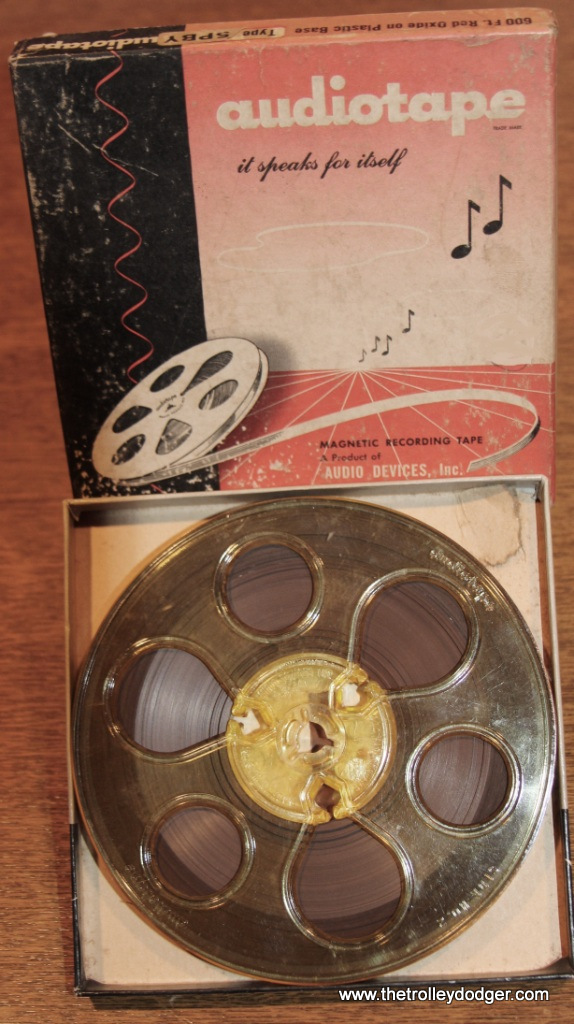
Until now, it seemed as though audio recordings of Chicago streetcars were practically non-existent. For whatever reason, the late William A. Steventon does not appear to have made any for his Railroad Record Club, even though he did make other recordings in the Chicago area in 1956.

Now, audio recordings of the last runs of Chicago streetcars have been found, in the collections of the late Jeffrey L. Wien (who was one of the riders on that last car). We do not know who made these recordings, but this must have been done using a portable reel-to-reel machine.

These important recordings will finally fill a gap in transit history. The last Chicago Transit Authority streetcar finished its run in the early hours of June 21, 1958. Now you can experience these events just as Chicagoans did.

As a bonus, we have included Keeping Pace, a 1939 Chicago Surface Lines employee training program. This was digitally transferred from an original 16” transcription disc. These recordings were unheard for 80 years.

Total time – 74:38

Help Support The Trolley Dodger

This is our 305th post, and we are gradually creating a body of work and an online resource for the benefit of all railfans, everywhere. To date, we have received over 1,009,000 page views, for which we are very grateful.

You can help us continue our original transit research by checking out the fine products in our Online Store.
As we have said before, “If you buy here, we will be here.”

We thank you for your support.

DONATIONS

In order to continue giving you the kinds of historic railroad images that you have come to expect from The Trolley Dodger, we need your help and support. It costs money to maintain this website, and to do the sort of historic research that is our specialty.

Your financial contributions help make this web site better, and are greatly appreciated.


Catching Up

The photographer (possibly Emery Gulash) had but one chance to press the shutter button at precisely the right moment, and he nailed it with this classic view of westbound Electroliner train 803 at Lake Bluff in January 1963. This is what noted photographer Henri Cartier-Bresson had in mind when he wrote about the "decisive moment." Douglas Noble: "Northbound crossing Rockland Road / IL 176 in Lake Bluff."

The photographer (possibly Emery Gulash) had but one chance to press the shutter button at precisely the right moment, and he nailed it with this classic view of westbound Electroliner train 803 at Lake Bluff in January 1963. This is what noted photographer Henri Cartier-Bresson had in mind when he wrote about the “decisive moment.” Douglas Noble: “Northbound crossing Rockland Road / IL 176 in Lake Bluff.”

This is our first post in nearly two months. We have been hard at work on our next book, The North Shore Line. In addition, I worked 16 straight days as an election judge during the recent primary here.

Each of these posts involves a tremendous amount of hard work that may not be apparent to the causal observer. First, we have to scan the negatives, prints, and slides that you see here. Then, they have to be worked over in Photoshop to get the color and density right, and remove any scratches, crud, and other blemishes that have accumulated over the decades since these pictures were taken. This can take hours for just a single photograph, but we think the results are well worth it.

Our goal is to present definitive versions of these classic photos in an online archive for all to enjoy. We see our stuff showing up all over Facebook and other parts of the Internet all the time, and, recently, even in books and magazines put out by others.

It would be nice if, in all cases, we received some credit for our contributions. When people ask permission to use our work, it is freely granted, but all we ask is that we are properly credited, that the original photographer is credited, and that the small watermark we place on these images is not cropped out.

We don’t think this is too much to ask. Meanwhile, we hope you will enjoy this latest batch of classic photographs.

-David Sadowski

PS- You might also like our Trolley Dodger Facebook auxiliary, a private group that now has 862 members.

Our friend Kenneth Gear now has a Facebook group for the Railroad Record Club. If you enjoy listening to audio recordings of classic railroad trains, whether steam, electric, or diesel, you might consider joining.

Work on our North Shore Line book is ongoing. Donations are needed in order to bring this to a successful conclusion. You will find donation links at the top and bottom of each post. We thank you in advance for your time and consideration.

Recent Finds

The Chicago Surface Lines had a collection of historic streetcars, starting in the 1920s. These were used for parades and the opening of new lines. Some of the restoration work, such as this car, was more fanciful than authentic, as this car was never part of the West Chicago Street Railway, nor was it #4. Don's Rail Photos: "4 was built by Pullman in 1895, #840, as North Chicago Street RR 922. It became Chicago Union Traction Co 4022 in 1899 and became Chicago Surface Lines 4022 in 1914. It was rebuilt as WCStRy 4 in 1933. It went to Illinois Railway Museum in 1985." The CTA inherited this collection, and various cars were trotted out during shops tours in the 1950s. Once streetcar service ended in 1958, these cars were put into storage, and were finally donated to museums in the mid-1980s.

The Chicago Surface Lines had a collection of historic streetcars, starting in the 1920s.
These were used for parades and the opening of new lines. Some of the restoration work, such as this car, was more fanciful than authentic, as this car was never part of the West Chicago Street Railway, nor was it #4. Don’s Rail Photos: “4 was built by Pullman in 1895, #840, as North Chicago Street RR 922. It became Chicago Union Traction Co 4022 in 1899 and became Chicago Surface Lines 4022 in 1914. It was rebuilt as WCStRy 4 in 1933. It went to Illinois Railway Museum in 1985.” The CTA inherited this collection, and various cars were trotted out during shops tours in the 1950s. Once streetcar service ended in 1958, these cars were put into storage, and were finally donated to museums in the mid-1980s.

Brooklyn-Queens Transit PCC 1066 is signed for Coney Island in the early 1950s.

Brooklyn-Queens Transit PCC 1066 is signed for Coney Island in the early 1950s.

A train of CTA curved-door 6000s is at Howard Street in June 1977.

A train of CTA curved-door 6000s is at Howard Street in June 1977.

A southbound North Shore Line train, with 711 in the lead, is at Morse on the "L" in June 1959.

A southbound North Shore Line train, with 711 in the lead, is at Morse on the “L” in June 1959.

North Shore Line cars 157 and 252 are on a June 16, 1962 fantrip. Here, we see the train at the Root River bridge near Racine, Wisconsin. (Richard H. Young Photo)

North Shore Line cars 157 and 252 are on a June 16, 1962 fantrip. Here, we see the train at the Root River bridge near Racine, Wisconsin. (Richard H. Young Photo)

This is a South Shore Line portable substation at Michigan City, Indiana on July 10, 1977.

This is a South Shore Line portable substation at Michigan City, Indiana on July 10, 1977.

Philadelphia Suburban Transportation Company (aka Red Arrow) cars 16 and 20 in May 1965, signed for the Media line. Kenneth Achtert: "Appears to be outbound at Springfield Rd. I would assume this is on a fantrip from the number of random individuals around the right-of-way (most likely a run-by since they are scattered about); also, the Media destination would not be standard operating procedure for two-car trains. The trains were typically scheduled to Springfield (Woodland Ave.) with only single cars going all the way to Media." Jeff Didlake says, "I agree with Ken Achtert's thoughts that this is a fan trip, but I believe the location is the Scenic Rd. station on the Media Line. The track is on a slight curve and a hint of the red brick high rise Drexelline Apts. is in the background. I know this station well as I managed to ruin a good tire and wheel while pulling into the parking lot there on a poorly maintained Springfield Twp. sewer inlet grate."

Philadelphia Suburban Transportation Company (aka Red Arrow) cars 16 and 20 in May 1965, signed for the Media line. Kenneth Achtert: “Appears to be outbound at Springfield Rd. I would assume this is on a fantrip from the number of random individuals around the right-of-way (most likely a run-by since they are scattered about); also, the Media destination would not be standard operating procedure for two-car trains. The trains were typically scheduled to Springfield (Woodland Ave.) with only single cars going all the way to Media.” Jeff Didlake says, “I agree with Ken Achtert’s thoughts that this is a fan trip, but I believe the location is the Scenic Rd. station on the Media Line. The track is on a slight curve and a hint of the red brick high rise Drexelline Apts. is in the background. I know this station well as I managed to ruin a good tire and wheel while pulling into the parking lot there on a poorly maintained Springfield Twp. sewer inlet grate.”

On June 11, 1962, a two-car North Shore Line train, headed by 731, is bound for Mundelein near Lake Bluff. (Richard H. Young Photo)

On June 11, 1962, a two-car North Shore Line train, headed by 731, is bound for Mundelein near Lake Bluff. (Richard H. Young Photo)

North Shore Line combine 251 is near Racine, Wisconsin on February 6, 1962.

North Shore Line combine 251 is near Racine, Wisconsin on February 6, 1962.

The interior of Queensborough Bridge Railway car 601 in the mid-1950s. This was an Electromobile, built around 1929 by Osgood-Bradley.

The interior of Queensborough Bridge Railway car 601 in the mid-1950s. This was an Electromobile, built around 1929 by Osgood-Bradley.

North Shore Line car 733 awaiting scrapping at South Upton Junction on October 26, 1963, several months after abandonment.

North Shore Line car 733 awaiting scrapping at South Upton Junction on October 26, 1963, several months after abandonment.

North Shore Line Silverliner 758 is at Edison Court in Waukegan during the summer of 1958. This was an important station, where cars were routinely added and cut from trains.

North Shore Line Silverliner 758 is at Edison Court in Waukegan during the summer of 1958. This was an important station, where cars were routinely added and cut from trains.

Philadelphia PCC 2142 is signed for Route 6 on September 15, 1957. Mark A. Jones writes, "That picture is of the northbound terminus of route 6 across from Willow Grove Park. 2142 is headed south to Broad and Olney." Kenneth Achtert adds, "2142 is at Willow Grove Park, the end of the Route 6. The amusement park is hidden behind the trees."

Philadelphia PCC 2142 is signed for Route 6 on September 15, 1957. Mark A. Jones writes, “That picture is of the northbound terminus of route 6 across from Willow Grove Park. 2142 is headed south to Broad and Olney.” Kenneth Achtert adds, “2142 is at Willow Grove Park, the end of the Route 6. The amusement park is hidden behind the trees.”

North Shore Line loco 455 is working the Niles Gas Spur in the Weber Industrial District, Skokie, Illinois, probably in the late 1950s. (Bob Geis Photo)

North Shore Line loco 455 is working the Niles Gas Spur in the Weber Industrial District, Skokie, Illinois, probably in the late 1950s. (Bob Geis Photo)

Chicago Surface Lines one-man car 6241 is at the east end of Route 43 in the 1940s. You can see a pedestrian bridge leading to the nearby Illinois Central Electric commuter station behind the streetcar.

Chicago Surface Lines one-man car 6241 is at the east end of Route 43 in the 1940s. You can see a pedestrian bridge leading to the nearby Illinois Central Electric commuter station behind the streetcar.

A North Shore Line train at Winnetka Road on the Skokie Valley Route. The business at left is John H. Davies and Son, general contractors.

A North Shore Line train at Winnetka Road on the Skokie Valley Route. The business at left is John H. Davies and Son, general contractors.

A three-car North Shore Line train heads south over the 6th Street Bridge, probably in the 1940s.

A three-car North Shore Line train heads south over the 6th Street Bridge, probably in the 1940s.

North Shore Line cars 716 and 409 at Highwood, possibly in the early 1940s. 409 started out as a dining car motor before it was converted to coach in 1942.

North Shore Line cars 716 and 409 at Highwood, possibly in the early 1940s. 409 started out as a dining car motor before it was converted to coach in 1942.

North Shore Line loco 455 heads up a freight train that is crossing over to the northbound track near Oakton on the Skokie Valley Route.

North Shore Line loco 455 heads up a freight train that is crossing over to the northbound track near Oakton on the Skokie Valley Route.

A three-car train of North Shore Line Silverliners prepares to cross the North Shore Channel, probably in the 1950s.

A three-car train of North Shore Line Silverliners prepares to cross the North Shore Channel, probably in the 1950s.

To get a shot like this in the 1940s, a photographer had to be extremely lucky, patient, or both. While a two-car CRT Lake Street "L" train heads east, going up the ramp towards Laramie, it passes a westbound CSL Route 16 streetcar. Two conductors on the "L" are lowering the trolley poles, as this was the switchover point to third rail. Streetcar service on Lake Street ended in 1954, and the outer portion of the Lake Street "L" was shifted over to the nearby C&NW embankment in 1962.

To get a shot like this in the 1940s, a photographer had to be extremely lucky, patient, or both. While a two-car CRT Lake Street “L” train heads east, going up the ramp towards Laramie, it passes a westbound CSL Route 16 streetcar. Two conductors on the “L” are lowering the trolley poles, as this was the switchover point to third rail. Streetcar service on Lake Street ended in 1954, and the outer portion of the Lake Street “L” was shifted over to the nearby C&NW embankment in 1962.

CTA PCC 7148 is at 71st and Ashland in June 1953. (Vic Wagner Photo) Our resident south side expert M. E. notes, "I don't doubt this photo is at 71st and Ashland. (The street sign says Ashland.) So this photo is near the 69th and Ashland carbarn. I think this streetcar had been heading south on Ashland to 71st, and here it is turning west on 71st St. for what would be a short distance. Then it will turn north and into the carbarn."

CTA PCC 7148 is at 71st and Ashland in June 1953. (Vic Wagner Photo) Our resident south side expert M. E. notes, “I don’t doubt this photo is at 71st and Ashland. (The street sign says Ashland.) So this photo is near the 69th and Ashland carbarn. I think this streetcar had been heading south on Ashland to 71st, and here it is turning west on 71st St. for what would be a short distance. Then it will turn north and into the carbarn.”

CTA one-man streetcar 3228 is on 79th Street at the crossing with the Illinois Central in April 1951. (Vic Wagner Photo)

CTA one-man streetcar 3228 is on 79th Street at the crossing with the Illinois Central in April 1951. (Vic Wagner Photo)

The view looking north along State Street at 63rd in April 1953. The PCCs are running on Route 36, while the red Pullman is eastbound on Route 63. This was near the end of streetcar service on 63rd Street, and older red cars had replaced newer PCCs, which were shifted to run on Route 4 - Cottage Grove. At right, you can see where some buildings were destroyed by fire on May 25, 1950, after a PCC collided with a gasoline truck. 34 people were killed. The photographer was standing on a railroad viaduct and probably wanted to document the intersection of two streetcar lines before one of them changed to buses. (Vic Wagner Photo)

The view looking north along State Street at 63rd in April 1953. The PCCs are running on Route 36, while the red Pullman is eastbound on Route 63. This was near the end of streetcar service on 63rd Street, and older red cars had replaced newer PCCs, which were shifted to run on Route 4 – Cottage Grove. At right, you can see where some buildings were destroyed by fire on May 25, 1950, after a PCC collided with a gasoline truck. 34 people were killed. The photographer was standing on a railroad viaduct and probably wanted to document the intersection of two streetcar lines before one of them changed to buses. (Vic Wagner Photo)

About the image above, M. E. adds:

Your caption reads: “This was near the end of streetcar service on 63rd Street, and older red cars had replaced newer PCCs, which were shifted to run on Route 4 – Cottage Grove.” My hangup is with the term “newer PCCs”. Yes, they were newer than the red cars, but they were not newer than the PCCs on State St. in the photo. The PCCs that ran on 63rd St. were those that Chicago Surface Lines acquired in 1936 to run on Madison St. Those PCCs were also called “pre-war PCCs”. So perhaps your caption might better say “older red cars had replaced the pre-war PCCs, which were shifted …”

I give you credit for pointing out where a State St. PCC car collided with a gasoline truck. I remember that like it happened yesterday. I also credit the photographer for a terrific action photo.

Also, about this photo:

(1) In the distance is the State St. station on the Englewood L, situated south of 59th St. I spy two more State St. PCC cars at or near the L station. This illustrates how busy the north/south PCC car lines were. The Chicago Surface Lines, then the CTA, ordered a total of 600 post-war PCCs, and they were all needed on just five north/south lines — 36 Broadway/State, 22 Clark/Wentworth, 8 Halsted, 42 Halsted/Archer/Clark, and 49 Western. (The pre-war PCCs were still on 20 Madison.)

(2) You mentioned that the photographer was standing on a railroad viaduct. That viaduct spanned State St. just south of 63rd St. The photographer was at the eastern edge of a big freight yard paralleling the New York Central right of way. It is this same freight yard that was used, three blocks east, to deliver new PCC cars, then (later) L cars, to the CTA. The L cars were transferred to the CTA via the L track that ran from the southbound Jackson Park line south past 63rd St. and then down into a ground-level freight yard.

(3) That freight yard also spanned 63rd St., so the westbound red car shown in the photo is about to go underneath the freight yard until it emerges past the New York Central (and Nickel Plate) passenger train tracks, adjacent to the entrance to Englewood Union Station. Past the station, 63rd St. ran under more tracks, first the Rock Island, then the Pennsylvania, both of which also served Englewood Union Station. All told, the trip between State St. and almost to Wentworth Av. was mostly dark 24 hours a day.

(4) The billboard at the left in the photo advertises the ’53 Ford. Assuming this photo was taken in late spring or early summer of 1953 (judging by the clothing on pedestrians and the green foliage), I don’t see any ’53 Fords in the photo.

Buses replaced streetcars on 63rd Street on May 24, 1953, so the picture can’t be from after that, thanks.

The CTA off-street loop on Halsted Street, just south of 79th, in August 1953. Pullman PCC 4368 is operating on Route 8, while the red Pullman is signed for Halsted-Downtown (Route 42). By this stage, the Pullman PCCs, although no more than seven years old, were being retired and sent to St. Louis Car Company for scrapping and parts re-use in new PCC "L" cars. Service was being supplemented by older red cars. Streetcar service on Halsted ended in May 1954. (Vic Wagner Photo) Our resident south side expert M. E. adds, "Notice how busy this terminal was. I count at least four streetcars, and perhaps a fifth if I detect another trolley pole behind the last PCC car. This terminal also served South Halsted and Halsted / Vincennes / 111th St. buses, which used the paved lane in the terminal."

The CTA off-street loop on Halsted Street, just south of 79th, in August 1953. Pullman PCC 4368 is operating on Route 8, while the red Pullman is signed for Halsted-Downtown (Route 42). By this stage, the Pullman PCCs, although no more than seven years old, were being retired and sent to St. Louis Car Company for scrapping and parts re-use in new PCC “L” cars. Service was being supplemented by older red cars. Streetcar service on Halsted ended in May 1954. (Vic Wagner Photo) Our resident south side expert M. E. adds, “Notice how busy this terminal was. I count at least four streetcars, and perhaps a fifth if I detect another trolley pole behind the last PCC car. This terminal also served South Halsted and Halsted / Vincennes / 111th St. buses, which used the paved lane in the terminal.”

CTA one-man streetcar 3261 is at the east end of Route 79, at 79th and Brandon near Chicago's lakefront, in September 1951. (Vic Wagner Photo)

CTA one-man streetcar 3261 is at the east end of Route 79, at 79th and Brandon near Chicago’s lakefront, in September 1951. (Vic Wagner Photo)

Milwaukee Electric (Speedrail) car 1121 operated on a North Shore Line fantrip on December 4, 1949. Here it is with one of the Electroliners near Racine, Wisconsin.

Milwaukee Electric (Speedrail) car 1121 operated on a North Shore Line fantrip on December 4, 1949. Here it is with one of the Electroliners near Racine, Wisconsin.

The pass for Central Electric Railfans' Association fantrip #36, which used freight equipment on the Chicago Aurora and Elgin on August 10, 1941.

The pass for Central Electric Railfans’ Association fantrip #36, which used freight equipment on the Chicago Aurora and Elgin on August 10, 1941.

The Chicago and North Western station at Lake Forest in the early 1900s, from a real photo postcard. The Chicago and Milwaukee electric (which became the North Shore Line in 1916) ran just beyond those large trees, and had a handsome station of its own just out of view to the right.

The Chicago and North Western station at Lake Forest in the early 1900s, from a real photo postcard. The Chicago and Milwaukee electric (which became the North Shore Line in 1916) ran just beyond those large trees, and had a handsome station of its own just out of view to the right.

This picture was taken during Fall 1962, in the waning days of the ground-level operation of the Lake Street "L". The new elevated station on the nearby C&NW embankment has been built and the changeover took place on October 28th of that year. This view looks west along South Boulevard at Marion Street in Oak Park. Crossing gates were manually operated.

This picture was taken during Fall 1962, in the waning days of the ground-level operation of the Lake Street “L”. The new elevated station on the nearby C&NW embankment has been built and the changeover took place on October 28th of that year. This view looks west along South Boulevard at Marion Street in Oak Park. Crossing gates were manually operated.

On February 19, 1956, a northbound Electroliner has stopped at Kenosha and is presumably on a fantrip. (William C. Hoffman Photo)

On February 19, 1956, a northbound Electroliner has stopped at Kenosha and is presumably on a fantrip. (William C. Hoffman Photo)

Speedrail curved-side car 61 is on Michigan at 6th Street in Milwaukee on September 2, 1950, passing by the north side of the North Shore Line's Milwaukee Terminal. (William C. Hoffman Photo)

Speedrail curved-side car 61 is on Michigan at 6th Street in Milwaukee on September 2, 1950, passing by the north side of the North Shore Line’s Milwaukee Terminal. (William C. Hoffman Photo)

Milwaukee and Suburban Transport streetcar 954 is westbound on Route 10 at 68th and Fairview in August 1957.

Milwaukee and Suburban Transport streetcar 954 is westbound on Route 10 at 68th and Fairview in August 1957.

The same location in 2015. The streetcar tracks were just to the right of this alley.

The same location in 2015. The streetcar tracks were just to the right of this alley.

On June 12, 1955, Milwaukee and Suburban Transport streetcar 999 is on a bridge over the Chicago & North Western Railway at Howell Avenue. This was a Central Electric Railfans' Association fantrip. (William C. Hoffman Photo)

On June 12, 1955, Milwaukee and Suburban Transport streetcar 999 is on a bridge over the Chicago & North Western Railway at Howell Avenue. This was a Central Electric Railfans’ Association fantrip. (William C. Hoffman Photo)

North Shore Line Silverliner 766 is about to cross the Glencoe gauntlet, a short single-track section on the otherwise double-tracked Shore Line Route. The occasion was an August 9, 1953 fantrip. This short bridge over a ravine was not deemed strong enough to support the weight of two trains passing each other, so it was made single-tracked. This also permitted a tight curve to be straightened out a bit. (William C. Hoffman Photo)

North Shore Line Silverliner 766 is about to cross the Glencoe gauntlet, a short single-track section on the otherwise double-tracked Shore Line Route. The occasion was an August 9, 1953 fantrip. This short bridge over a ravine was not deemed strong enough to support the weight of two trains passing each other, so it was made single-tracked. This also permitted a tight curve to be straightened out a bit. (William C. Hoffman Photo)

North Shore Line car 155 is on the tail end of a fantrip train, turning onto Greenleaf Avenue in Wilmette, heading east on a July 24, 1955 Central Electric Railfans' Association fantrip. (William C. Hoffman Photo)

North Shore Line car 155 is on the tail end of a fantrip train, turning onto Greenleaf Avenue in Wilmette, heading east on a July 24, 1955 Central Electric Railfans’ Association fantrip. (William C. Hoffman Photo)

North Shore Line freight loco 456 and caboose 1002 are at the scale house in Rondout during January 1963. (Photo attributed to Emery Gulash)

North Shore Line freight loco 456 and caboose 1002 are at the scale house in Rondout during January 1963. (Photo attributed to Emery Gulash)

North Shore Line freight loco 456 and caboose 1002 are at the scale house in Rondout during January 1963. (Photo attributed to Emery Gulash)

North Shore Line freight loco 456 and caboose 1002 are at the scale house in Rondout during January 1963. (Photo attributed to Emery Gulash)

North Shore Line cars 157 and 252 are on a June 16, 1962 fantrip. We have posted pictures from this trip before. There is another in this post, taken by Richard H. Young, but this one may be by Emery Gulash.

North Shore Line cars 157 and 252 are on a June 16, 1962 fantrip. We have posted pictures from this trip before. There is another in this post, taken by Richard H. Young, but this one may be by Emery Gulash.

Don's Rail Photos: "1796 was built by American Car & Foundry in 1907 as NEWRy 287, #5098, as trailer. It was renumbered 1287 in 1913 and rebuilt as motor 1796. It became CRT 1796 in 1923 and was sold to Gaylord Container in Louisiana..." One side of this "L" car was removed, and it was used to transport large rolls of paper. Although Don's says this car was scrapped in 1966, that is incorrect and the date was actually 1973. Parts were salvaged from this car to help restore sister car 1797 at the Illinois Railway Museum. 1796 could not be saved since the body was no longer structurally sound. I have July 1958 as the date when the CTA sold this car, and this picture was taken by William C. Hoffman in October 1963.

Don’s Rail Photos: “1796 was built by American Car & Foundry in 1907 as NEWRy 287, #5098, as trailer. It was renumbered 1287 in 1913 and rebuilt as motor 1796. It became CRT 1796 in 1923 and was sold to Gaylord Container in Louisiana…” One side of this “L” car was removed, and it was used to transport large rolls of paper. Although Don’s says this car was scrapped in 1966, that is incorrect and the date was actually 1973. Parts were salvaged from this car to help restore sister car 1797 at the Illinois Railway Museum. 1796 could not be saved since the body was no longer structurally sound. I have July 1958 as the date when the CTA sold this car, and this picture was taken by William C. Hoffman in October 1963.

Mystery Photo

This was scanned from an original North Shore Line 8x10" nitrate negative, taken circa 1930, and in the collections of Robert Heinlein. Determining the location presented many challenges, yet this has now been determined with the aid of other fans. The car is 714, and it is signed as a Chicago Local on the Shore Line Route. Since the North Shore tracks are not adjacent to the Chicago and North Western, we must be north of North Chicago Junction. We cannot be south of Highland Park, as there is freight present here. A sign on the high-level platform indicates that freight trains have to come to a stop, most likely to make sure part of the platform gets flipped up for the sake of clearances. A similar arrangement existed at high-level stations of the Chicago Aurora and Elgin. As all the Shore Line tracks in Waukegan ran on the street, that pretty much narrows it down to North Chicago. The Thomas J. Killian Plumbing Supply company building at left clinches it, and the location is between 16th and 17th Streets, looking north. The Chicago and North Western's tracks were a short distance east of here, to the right out of view of this photo. (Courtesy of Kevin Heinlein)

This was scanned from an original North Shore Line 8×10″ nitrate negative, taken circa 1930, and in the collections of Robert Heinlein. Determining the location presented many challenges, yet this has now been determined with the aid of other fans. The car is 714, and it is signed as a Chicago Local on the Shore Line Route. Since the North Shore tracks are not adjacent to the Chicago and North Western, we must be north of North Chicago Junction. We cannot be south of Highland Park, as there is freight present here. A sign on the high-level platform indicates that freight trains have to come to a stop, most likely to make sure part of the platform gets flipped up for the sake of clearances. A similar arrangement existed at high-level stations of the Chicago Aurora and Elgin. As all the Shore Line tracks in Waukegan ran on the street, that pretty much narrows it down to North Chicago. The Thomas J. Killian Plumbing Supply company building at left clinches it, and the location is between 16th and 17th Streets, looking north. The Chicago and North Western’s tracks were a short distance east of here, to the right out of view of this photo. (Courtesy of Kevin Heinlein)

A close-up view of car 714, which seems to be painted orange.

A close-up view of car 714, which seems to be painted orange.

The freight siding for the Thomas J. Killian Plumbing Supply Company.

The freight siding for the Thomas J. Killian Plumbing Supply Company.

This was also scanned from an original North Shore Line 8x10" nitrate negative in the collections of Robert Heinlein, and was taken at the same time as the previous photo and shows a slightly different view of the same scene. (Courtesy of Kevin Heinlein)

This was also scanned from an original North Shore Line 8×10″ nitrate negative in the collections of Robert Heinlein, and was taken at the same time as the previous photo and shows a slightly different view of the same scene. (Courtesy of Kevin Heinlein)

Ray DeGroote Turns 92

Ray DeGroote celebrated his 92nd birthday on July 15th. Here he is about two weeks earlier, at our celebratory lunch.

Ray DeGroote celebrated his 92nd birthday on July 15th. Here he is about two weeks earlier, at our celebratory lunch.

I dedicated my last book Chicago’s Lost “L”s to my friend Raymond DeGroote, Jr., as the “Dean of Chicago Railfans.” He turned 92 recently. Ray has traveled the world, and has taken thousands of great photos, many of which have been used in books, magazines, and in his excellent slideshows over the years.

And he’s still at it– Ray recently returned from a trip to San Diego for the Electric Railroaders’ Association annual convention. Since returning, other friends have treated him to lunch, and he reports he is “well fed.”

Here are a few of Ray’s classic photos of the North Shore Line:

We are at Indian Hill on the Shore Line Route on July 24, 1955, just prior to abandonment. Cars 175 and 413 are in regular service, while 155 is on a Central Electric Railfans' Association fantrip, and has temporarily been shunted to a siding. The tracks in this area were grade-separated circa 1938-43 by a project partially funded by the Federal government. (Raymond DeGroote, Jr. Photo)

We are at Indian Hill on the Shore Line Route on July 24, 1955, just prior to abandonment. Cars 175 and 413 are in regular service, while 155 is on a Central Electric Railfans’ Association fantrip, and has temporarily been shunted to a siding. The tracks in this area were grade-separated circa 1938-43 by a project partially funded by the Federal government. (Raymond DeGroote, Jr. Photo)

A fantrip train made up of Silverliners is on Greenleaf Avenue in Wilmette on February 20, 1955. This trip was sponsored by the Illini Railroad Club. (Raymond DeGroote, Jr. Photo)

A fantrip train made up of Silverliners is on Greenleaf Avenue in Wilmette on February 20, 1955. This trip was sponsored by the Illini Railroad Club. (Raymond DeGroote, Jr. Photo)

North Shore Line loco 459 and caboose 1006 are at Lake Bluff on January 19, 1963. (Raymond DeGroote, Jr. Photo)

North Shore Line loco 459 and caboose 1006 are at Lake Bluff on January 19, 1963. (Raymond DeGroote, Jr. Photo)

The "KX" here most likely refers to Kodachrome X, first released by Kodak in 1962, with a film speed of 64. The original Kodachrome had a film speed of ASA/ISO 10, which was bumped up to 25 in 1961 with the release of Kodachrome II.

The “KX” here most likely refers to Kodachrome X, first released by Kodak in 1962, with a film speed of 64. The original Kodachrome had a film speed of ASA/ISO 10, which was bumped up to 25 in 1961 with the release of Kodachrome II.

The unrestored interior of North Shore Line car 151 on September 4, 1961. (Raymond DeGroote, Jr. Photo)

The unrestored interior of North Shore Line car 151 on September 4, 1961. (Raymond DeGroote, Jr. Photo)

The interior of North Shore Line car 160 on January 12, 1963. Interestingly, it had been refurbished in November 1962, even though abandonment was at hand. This car was purchased by the Illinois Railway Museum, where it remains today. (Raymond DeGroote, Jr. Photo)

The interior of North Shore Line car 160 on January 12, 1963. Interestingly, it had been refurbished in November 1962, even though abandonment was at hand. This car was purchased by the Illinois Railway Museum, where it remains today. (Raymond DeGroote, Jr. Photo)

North Shore Line car 714's interior on June 17, 1962. This car is now at the Illinois Railway Museum. (Raymond DeGroote, Jr. Photo)

North Shore Line car 714’s interior on June 17, 1962. This car is now at the Illinois Railway Museum. (Raymond DeGroote, Jr. Photo)

The interior of North Shore Line Silverliner 755 on September 4, 1961. After abandonment, this car went to the Seashore Trolley Museum in Maine. (Raymond DeGroote, Jr. Photo)

The interior of North Shore Line Silverliner 755 on September 4, 1961. After abandonment, this car went to the Seashore Trolley Museum in Maine. (Raymond DeGroote, Jr. Photo)

Recent Correspondence

Max Hensley sent us this scan of a 1890 specimen $1,000 bond for the West Chicago Street Railroad Tunnel Company. This cable car tunnel was built in 1893 and crossed the Chicago River near Van Buren Street. Like the other river tunnels, it was eventually enlarged and dug deeper around 1911 for streetcar use. But of the three such tunnels (the others being on Washington and LaSalle Streets), Van Buren was used the least, and does not seem to have seen much action after 1924, except for training use. These tunnels still exist but the approaches have been filled in.

The river tunnels are also discussed at length in my book Building Chicago’s Subways.

Milwaukee Streetcar

We were in Milwaukee on July 13th to help a friend move some things. We did stop by Burns Commons for a few minutes to catch a few pictures (and one video) of Milwaukee’s modern streetcar at its northern terminus:

Did Not Win

Try as we might, our resources are limited. Here are some interesting items that we were not able to purchase, but are still worth a second look:

This desktop ink blotter dates to circa 1919-20, as the North Shore Line is already running via the "L", but had not yet opened their new Milwaukee Terminal. The line to Mundelein is shown, as it had been extended there as of 1905. But prior to 1925, it was called Rockefeller, and later, the area was known rather generically as "Area." When using a fountain pen, you would wipe off excess ink on the backside of blotters such as this, which measured about 6" wide.

This desktop ink blotter dates to circa 1919-20, as the North Shore Line is already running via the “L”, but had not yet opened their new Milwaukee Terminal. The line to Mundelein is shown, as it had been extended there as of 1905. But prior to 1925, it was called Rockefeller, and later, the area was known rather generically as “Area.” When using a fountain pen, you would wipe off excess ink on the backside of blotters such as this, which measured about 6″ wide.

This real photo postcard view of the Elgin and Belvedere Electric Company was most likely taken on its inaugural run in early 1907. Mike Franklin has identified the location as Belvedere, as that is the First M. E. Church at rear. Car 201 was built by the St. Louis Car Company in 1906. (Thanks to J. J. Sedelmaier for tweaking this image.)

This real photo postcard view of the Elgin and Belvedere Electric Company was most likely taken on its inaugural run in early 1907. Mike Franklin has identified the location as Belvedere, as that is the First M. E. Church at rear. Car 201 was built by the St. Louis Car Company in 1906. (Thanks to J. J. Sedelmaier for tweaking this image.)

Here is what the late Don Ross wrote about the Elgin and Belvedere:

This line was built in 1906 and opened in 1907 between Elgin and Belvidere, 36 miles, to connect the Rockford lines with the Chicago lines. It was under the management of Bion J. Arnold, who was the most distinguished expert in city transit between 1900 and 1925. In 1927 the Rockford to Belvidere segment of the Rockford & Interurban was merged to form the Elgin Belvidere & Rockford. Rockford lightweight interurbans were used, but this was not financially satisfactory. The cars were returned to Rockford Public Service, and the old E&B cars were remodeled for one man service. But it was too late. Competition from the parallel Chicago & North Western and from the automobile caused the line to quit service on March 9, 1930. Arnold purchased two Manhattan Elevated steam locomotives and scrapped the line by himself. It was not completed until the mid to late 1930s.

In 1956, I was checking on ownership of an abandoned C&NW right-of-way for the Illinois Railway Museum, and I stopped in the county clerk’s office in Woodstock. The clerk became curious and then suggested that we might be interested in a piece of property which was on the delinquent tax rolls. It was 50 feet wide and 7 miles long. After paying the taxes for two years, a quit claim was filed and this has become the home of the IRM at Union, IL.

We ran some Elgin and Belvedere photos in a previous post, taken in the mid-1930s by the late Edward Frank, Jr., showing the interurban’s rolling stock in dead storage, waiting for buyers that never materialized.

Keep those cards and letters coming in, folks!

-David Sadowski

Now Available:

SGA-1
Stan Griffith Audio Recordings of the North Shore Line
# of Discs – 1
Price: $15.99

The late Stanwood C. Griffith (1926-2013) was an interesting character who is probably best known for building the two-foot gauge Rock River Valley Traction, a miniature electric railway that is large enough to ride on. He began building it on private property in a mysterious wooded area somewhere near Rockford, IL around 1950. Work continues on it to this day, and there are several videos of it on YouTube.

We only recently found out that he recorded some North Shore Line audio. Even better, what he did record is different than the other known recordings by William A. Steventon and Brad Miller.

Mr. Griffith made the only known recordings of the Shore Line Route, which quit in 1955. Steventon didn’t record NSL until the following year, and the Miller recordings are circa 1960.

This recording has some occasional narration. At one point, Griffith notes that the trolley bus wires in Kenosha are gone. Trolley buses ran there until 1952, so this dates the recordings to circa 1952-55.

He also recorded North Shore Line street running in Milwaukee, which is also unique as far as I am aware. There are also recordings of Milwaukee streetcars on this CD.

Total time – 52:36


Chicago’s Lost “L”s Online Presentation

We recently gave an online presentation about our book Chicago’s Lost “L”s for the Chicago Public Library, as part of their One Book, One Chicago series. You can watch it online by following this link.

The Trolley Dodger On the Air

We appeared on the Dave Plier Show on WGN radio on July 16, 2021, to discuss Chicago’s Lost “L”s. You can hear that discussion here.

Our Latest Book, Now Available:

Chicago’s Lost “L”s

From the back cover:

Chicago’s system of elevated railways, known locally as the “L,” has run continuously since 1892 and, like the city, has never stood still. It helped neighborhoods grow, brought their increasingly diverse populations together, and gave the famous Loop its name. But today’s system has changed radically over the years. Chicago’s Lost “L”s tells the story of former lines such as Garfield Park, Humboldt Park, Kenwood, Stockyards, Normal Park, Westchester, and Niles Center. It was once possible to take high-speed trains on the L directly to Aurora, Elgin, and Milwaukee, Wisconsin. The L started out as four different companies, two starting out using steam engines instead of electricity. Eventually, all four came together via the Union Loop. The L is more than a way of getting around. Its trains are a place where people meet and interact. Some say the best way to experience the city is via the L, with its second-story view. Chicago’s Lost “L”s is virtually a “secret history” of Chicago, and this is your ticket. David Sadowski grew up riding the L all over the city. He is the author of Chicago Trolleys and Building Chicago’s Subways and runs the online Trolley Dodger blog.

The Images of America series celebrates the history of neighborhoods, towns, and cities across the country. Using archival photographs, each title presents the distinctive stories from the past that shape the character of the community today. Arcadia is proud to play a part in the preservation of local heritage, making history available to all.

Title Chicago’s Lost “L”s
Images of America
Author David Sadowski
Edition illustrated
Publisher Arcadia Publishing (SC), 2021
ISBN 1467100007, 9781467100007
Length 128 pages

Chapters:
01. The South Side “L”
02. The Lake Street “L”
03. The Metropolitan “L”
04. The Northwestern “L”
05. The Union Loop
06. Lost Equipment
07. Lost Interurbans
08. Lost Terminals
09. Lost… and Found

Each copy purchased here will be signed by the author, and you will also receive a bonus facsimile of a 1926 Chicago Rapid Transit Company map, with interesting facts about the “L” on the reverse side.

The price of $23.99 includes shipping within the United States.

For Shipping to US Addresses:

For Shipping to Canada:

For Shipping Elsewhere:

Help Support The Trolley Dodger

This is our 290th post, and we are gradually creating a body of work and an online resource for the benefit of all railfans, everywhere. To date, we have received over 893,000 page views, for which we are very grateful.

You can help us continue our original transit research by checking out the fine products in our Online Store.
As we have said before, “If you buy here, we will be here.”

We thank you for your support.

DONATIONS

In order to continue giving you the kinds of historic railroad images that you have come to expect from The Trolley Dodger, we need your help and support. It costs money to maintain this website, and to do the sort of historic research that is our specialty.

Your financial contributions help make this web site better, and are greatly appreciated.


Christmas in July

Santa Claus arrives by trolley at the Baltimore Streetcar Museum, sometime in the 1970s. It probably wasn't July, though. (John Engleman Photo)

Santa Claus arrives by trolley at the Baltimore Streetcar Museum, sometime in the 1970s. It probably wasn’t July, though. (John Engleman Photo)

It recently felt like Christmas in July, when I received a large batch of vintage 35mm color negatives taken by John Engleman of Maryland for scanning and sharing here. Even more fitting, Santa Claus actually does appear in some of the photos!

While we are based in Chicago, and most of our posts feature transit from this area, we do have many readers in other locales. This first installment of photos taken by Mr. Engleman is mainly from out east (Baltimore, Washington D.C., and Philadelphia) and dates to the 1970s. In addition there are some diesel photos, including passenger trains, and I strongly suspect some are from before the Amtrak era. There are also a few pictures of Seattle trolley buses.

Mr. Engleman is an excellent photographer and I hope you will enjoy the photos he has so generously shared with us. My personal favorites are the ones that show car 6119, the 1930 Baltimore Peter Witt. This was the state of the art in streetcar design, prior to development of the PCC car.

I would like to thank City Lit Books in Logan Square for inviting me to appear at their shop last Saturday to give a presentation about my new book Chicago’s Lost “L”s. I would also like to thank everyone who attended and purchased a copy.

-David Sadowski

PS- If you enjoy reading these posts, you might consider joining our Trolley Dodger Facebook Group as well. We currently have 401 members.

Recent Finds

As my friend J. J. Sedelmaier pointed out, this photo of a North Shore Line Electroliner on the north side "L" must have been taken in the early part of 1941, as it shows the train's pilot in its original configuration, prior to being enlarged.

As my friend J. J. Sedelmaier pointed out, this photo of a North Shore Line Electroliner on the north side “L” must have been taken in the early part of 1941, as it shows the train’s pilot in its original configuration, prior to being enlarged.

Eric Bronsky writes: "I own the original Kodachromes of two of the North Shore photos that appeared in the blog earlier this week. A while back, I enhanced and sharpened the attached image in Photoshop. The photographer was William E. Robertson. I cannot confirm the year because the slide mount is neither dated nor captioned. If you post it, please credit William E. Robertson photo, Eric Bronsky Collection. The other original I have is the Shore Line Route view looking south along St. Johns Ave. in Highland Park. David, a belated thank you for the copy of your Chicago's Lost "L's book. It is absolutely fascinating. Many of these places and things were gone before I became aware of them."

Eric Bronsky writes: “I own the original Kodachromes of two of the North Shore photos that appeared in the blog earlier this week. A while back, I enhanced and sharpened the attached image in Photoshop. The photographer was William E. Robertson. I cannot confirm the year because the slide mount is neither dated nor captioned. If you post it, please credit William E. Robertson photo, Eric Bronsky Collection.
The other original I have is the Shore Line Route view looking south along St. Johns Ave. in Highland Park.
David, a belated thank you for the copy of your Chicago’s Lost “L’s book. It is absolutely fascinating. Many of these places and things were gone before I became aware of them.”

I recently bought this early real photo postcard, showing a Jackson Park "L" train crossing the Illinois Central when it still used steam (pre-1926). This is the second one of these I have, and interestingly, it has less cropping than the first version I had (which is in my new book Chicago's Lost "L"s). Why is this? Well, this is a real photo made from the original negative, and not something made on a printing press. So every time a batch of these were produced, someone had to position the negative, and there was the potential to do it differently each batch. You can almost make out the car numbers here... 17, 274, and maybe 250.  Don's Rail Photos: "17 was built by Jackson & Sharpe in 1892 as SSRT 17 as a steam trailer. It was rebuilt as a MU motor car in 1898. It became CERy 17 in 1913 and retired on January 8, 1924." "274 was built by Jewett in 1905 as SSRT 274. It became CERy 274 in 1913 and became CRT 274 in 1924. It was retired on June 7, 1957." The South Side cars were not renumbered when the four "L" companies were consolidated.

I recently bought this early real photo postcard, showing a Jackson Park “L” train crossing the Illinois Central when it still used steam (pre-1926). This is the second one of these I have, and interestingly, it has less cropping than the first version I had (which is in my new book Chicago’s Lost “L”s). Why is this? Well, this is a real photo made from the original negative, and not something made on a printing press. So every time a batch of these were produced, someone had to position the negative, and there was the potential to do it differently each batch. You can almost make out the car numbers here… 17, 274, and maybe 250. Don’s Rail Photos: “17 was built by Jackson & Sharpe in 1892 as SSRT 17 as a steam trailer. It was rebuilt as a MU motor car in 1898. It became CERy 17 in 1913 and retired on January 8, 1924.” “274 was built by Jewett in 1905 as SSRT 274. It became CERy 274 in 1913 and became CRT 274 in 1924. It was retired on June 7, 1957.” The South Side cars were not renumbered when the four “L” companies were consolidated.

The Photography of John Engleman:

Red Arrow Lines in Media PA

Red Arrow car 73 (built by Brill in 1926) is now preserved at the Pennsylvania Trolley Museum. Their web site notes, “Car 73 was refurbished in 1972 by the transit authority (SEPTA) and the local business association as the centerpiece of a “Media Mall” promotion in that suburban community – the regular streetcar would turn back at the edge of town, and riders would transfer to 73 for the trip along State Street. After the novelty (and funding) wore off regular trolley service was resumed in Media and car 73 was retained for charter and work service until it was declared surplus by SEPTA and acquired by PTM in 1990.”

I think that is what we see here.

Philadelphia Streetcars

It is apparent that some sort of horsing around was going on with a PCC car on New Year’s Eve one year.

National Capital Trolley Museum (Silver Springs, MD)

Johnstown, PA was the smallest city to operate PCC streetcars in the classic era, and it ran streetcars until 1960. Johnstown Traction car 352, which appears in some of these pictures, was built by St. Louis Car Company in 1925 and preserved for many years at the National Capital Trolley Museum. Unfortunately, it was destroyed in an accidental fire in 2003, along with some of the other trams seen here.

Baltimore Streetcar Museum

Seattle Trolley Buses

M. E. writes, "A group of old (but still employed) and retired Seattle trolley bus drivers and mechanics has for many years maintained and offered rides on three trolley buses from the 1930s and 1940s. I rode on a couple of those trips. They were outstanding bargains, about $5 for several hours of touring many Seattle neighborhoods. It was much fun to see heads turn when the old buses went by. The web site for this group is http://www.mehva.org . Sad to report that it appears they ran into insurance liability problems and had to cancel their excursions in 2020. Nothing yet thus far in 2021. Seattle also had acquired several old trams from Melbourne, Australia (which still has a huge tram network), and ran those trams for about a mile underneath the elevated Aurora Freeway through downtown. Alas, maybe 10+ years ago they stopped running this service. More recently, Seattle tore down the freeway."

M. E. writes, “A group of old (but still employed) and retired Seattle trolley bus drivers and mechanics has for many years maintained and offered rides on three trolley buses from the 1930s and 1940s. I rode on a couple of those trips. They were outstanding bargains, about $5 for several hours of touring many Seattle neighborhoods. It was much fun to see heads turn when the old buses went by. The web site for this group is http://www.mehva.org . Sad to report that it appears they ran into insurance liability problems and had to cancel their excursions in 2020. Nothing yet thus far in 2021.
Seattle also had acquired several old trams from Melbourne, Australia (which still has a huge tram network), and ran those trams for about a mile underneath the elevated Aurora Freeway through downtown. Alas, maybe 10+ years ago they stopped running this service. More recently, Seattle tore down the freeway.”

Diesel Trains

It’s hard to tell when some of these were taken, but I did spot a 1969 license plate on a vehicle in a couple of shots.

This photo was taken at one of the two terminals in Seattle. It is probably the King St. station, the one that is still operating. The white building in the background is the Smith Tower, which was the tallest building west of the Mississippi when it was built in 1914. Although I don't know the situation today, several years ago the elevators in Smith Tower still had human operators in the cars. But all they did was push buttons for floors.

M. E. writes, “This photo was taken at one of the two terminals in Seattle. It is probably the King St. station, the one that is still operating. The white building in the background is the Smith Tower, which was the tallest building west of the Mississippi when it was built in 1914. Although I don’t know the situation today, several years ago the elevators in Smith Tower still had human operators in the cars. But all they did was push buttons for floors.”

Again, I would like to thank John Engleman for sharing all these great classic photos with our readers. Keep those cards and letters coming in, folks!

-David Sadowski

The Trolley Dodger On the Air

On July 16th, I was invited to appear on the Dave Plier Show on WGN radio, to discuss Chicago’s Lost “L”s. You can hear that discussion here.

Our Latest Book, Now Available:

Chicago’s Lost “L”s

From the back cover:

Chicago’s system of elevated railways, known locally as the “L,” has run continuously since 1892 and, like the city, has never stood still. It helped neighborhoods grow, brought their increasingly diverse populations together, and gave the famous Loop its name. But today’s system has changed radically over the years. Chicago’s Lost “L”s tells the story of former lines such as Garfield Park, Humboldt Park, Kenwood, Stockyards, Normal Park, Westchester, and Niles Center. It was once possible to take high-speed trains on the L directly to Aurora, Elgin, and Milwaukee, Wisconsin. The L started out as four different companies, two starting out using steam engines instead of electricity. Eventually, all four came together via the Union Loop. The L is more than a way of getting around. Its trains are a place where people meet and interact. Some say the best way to experience the city is via the L, with its second-story view. Chicago’s Lost “L”s is virtually a “secret history” of Chicago, and this is your ticket. David Sadowski grew up riding the L all over the city. He is the author of Chicago Trolleys and Building Chicago’s Subways and runs the online Trolley Dodger blog.

The Images of America series celebrates the history of neighborhoods, towns, and cities across the country. Using archival photographs, each title presents the distinctive stories from the past that shape the character of the community today. Arcadia is proud to play a part in the preservation of local heritage, making history available to all.

Title Chicago’s Lost “L”s
Images of America
Author David Sadowski
Edition illustrated
Publisher Arcadia Publishing (SC), 2021
ISBN 1467100007, 9781467100007
Length 128 pages

Chapters:
01. The South Side “L”
02. The Lake Street “L”
03. The Metropolitan “L”
04. The Northwestern “L”
05. The Union Loop
06. Lost Equipment
07. Lost Interurbans
08. Lost Terminals
09. Lost… and Found

Each copy purchased here will be signed by the author, and you will also receive a bonus facsimile of a 1926 Chicago Rapid Transit Company map, with interesting facts about the “L” on the reverse side.

The price of $23.99 includes shipping within the United States.

For Shipping to US Addresses:

For Shipping to Canada:

For Shipping Elsewhere:

NEW DVD:

A Tribute to the North Shore Line

To commemorate the 50th anniversary of the demise of the fabled North Shore Line interurban in January 2013, Jeffrey L. Wien and Bradley Criss made a very thorough and professional video presentation, covering the entire route between Chicago and Milwaukee and then some. Sadly, both men are gone now, but their work remains, making this video a tribute to them, as much as it is a tribute to the Chicago North Shore & Milwaukee.

Jeff drew on his own vast collections of movie films, both his own and others such as the late William C. Hoffman, wrote and gave the narration. Bradley acted as video editor, and added authentic sound effects from archival recordings of the North Shore Line.

It was always Jeff’s intention to make this video available to the public, but unfortunately, this did not happen in his lifetime. Now, as the caretakers of Jeff’s railfan legacy, we are proud to offer this excellent two-hour program to you for the first time.  The result is a fitting tribute to what Jeff called his “Perpetual Adoration,” which was the name of a stop on the interurban.

Jeff was a wholehearted supporter of our activities, and the proceeds from the sale of this disc will help defray some of the expenses of keeping the Trolley Dodger web site going.

Total time – 121:22

# of Discs – 1
Price: $19.99 (Includes shipping within the United States)

Help Support The Trolley Dodger

This is our 273rd post, and we are gradually creating a body of work and an online resource for the benefit of all railfans, everywhere. To date, we have received over 787,000 page views, for which we are very grateful.
You can help us continue our original transit research by checking out the fine products in our Online Store.
As we have said before, “If you buy here, we will be here.”
We thank you for your support.
DONATIONS
In order to continue giving you the kinds of historic railroad images that you have come to expect from The Trolley Dodger, we need your help and support. It costs money to maintain this website, and to do the sort of historic research that is our specialty.
Your financial contributions help make this web site better, and are greatly appreciated.

Thankful

This is a beautiful shot, showing a six-car CTA train of 6000s heading northwest on the Logan Square "L" at Damen Avenue on August 21, 1970. The photographer identified the first four cars as 6629-30 and 6657-58. Sometimes the angles work out just right.

This is a beautiful shot, showing a six-car CTA train of 6000s heading northwest on the Logan Square “L” at Damen Avenue on August 21, 1970. The photographer identified the first four cars as 6629-30 and 6657-58. Sometimes the angles work out just right.

It’s the time of year when we all take stock of all the good things in our lives, the things we are thankful for, and share our abundance of good fortune with our loved ones. The Trolley Dodger is no exception to this, and we have a plateful of classic traction photos for you, a feast for the eyes. We are very thankful for our readers, and hope you all have a safe and enjoyable Thanksgiving holiday.

This is our first post in a while, but we have been very busy the whole time. First, I worked 25 straight days as an election judge during the recent presidential contest, 16 days at polling places, and an additional 9 days processing mail ballots.

Second, proofs were ready to go over for our next book, Chicago’s Lost “L”s. This is our third traction book as sole author, and a tremendous amount of work goes into making each one as factual, informative, and entertaining as possible. When I post pictures here, and get something wrong, the error can be corrected later, but once a book is published, it’s done. We strive for 100% accuracy.

Furthermore, in our books we always strive to include pictures that our readers have not seen before. During the course of working on this book, we made numerous photo substitutions. Even after we had chosen what we thought were the right pictures, we ended up swapping out about one-third of these later, for even better ones.

A great deal of time and resources are involved. For example, during the proofing stage, we changed out seven photos. These, combined, cost us nearly $500. Naturally we have drawn largely from our own collections, and from those kindly shared with the permission of our contributors. But even so, we often have to seek our those missing pieces of the jigsaw puzzle that is a book such as this, and have to compete for those images in the marketplace, along with everyone else.

At any rate, we are very pleased with how Chicago’s Lost “L”s is turning out, and we look forward to seeing it in print sometime next year. Now we are on to the stage where our changes and corrections are incorporated into the layout, and we expect to soon have the final proofs to look over.

Thirdly, since we find there is often much more to talk about than can be shared in these occasional blog posts, we have started a Facebook auxiliary for The Trolley Dodger. This is an add-on, and takes nothing away from what you see here. It’s a private group, meaning the posts are not public and can only be seen by those who join the group. But if Facebook is not your thing, it can be safely ignored.

Some of the discussions we have had on Facebook have actually been beneficial to this post, and to my new book.

For this post, we have lots of recent photo finds, plus some more pictures that escaped our grasp.

Keep those cards and letters coming in, folks!

-David Sadowski

Melvin Bernero

Posted on Facebook:

It is with great sadness that I pass along information about the death of our friend, Melvin Bernero.

Melvin had been a director of Omnibus Society of America for decades, and has played a key role in keeping the organization going as the editor and publisher of the newsletter and the annual calendar… there will not be a funeral. Maybe there will be a memorial service in a few months.

Apparently this was Covid-related. He thought that he had the flu, and had picked something up while waiting in line for early voting. His neighbors brought him coffee, and discovered that he had passed away at home. That is all the information I have.

Mel was an excellent photographer, and posted over 34,000 pictures to Flickr. He leaves a rich and remarkable legacy and will be truly missed.

Recent Finds

North Shore Line combine car 256 in Milwaukee in November 1962. Don's Rail Photos: "256 was built by Jewett in 1917. It seems to be the only one which retained its original configuration." There is a very similar photo on Don Ross's web site attributed to Joe Testagrose, but it doesn't seem quite identical to this one. If not taken by him, it was probably someone standing next to him, which happens more often than you might think.

North Shore Line combine car 256 in Milwaukee in November 1962. Don’s Rail Photos: “256 was built by Jewett in 1917. It seems to be the only one which retained its original configuration.” There is a very similar photo on Don Ross’s web site attributed to Joe Testagrose, but it doesn’t seem quite identical to this one. If not taken by him, it was probably someone standing next to him, which happens more often than you might think.

This is an improved version of an image we previously posted with the following caption: CSL 1786 under the Lake Street "L" on November 23, 1952. Note the Chicago Motor Coach yard at right. CMC's assets had been purchased by CTA a few months earlier, and were gradually being integrated into regular CTA operations. Bill Shapotkin adds, "This pic is actually at Lake/Kenton (not Cicero). The car is E/B. This is the only such photo I have ever seen at this location."

This is an improved version of an image we previously posted with the following caption: CSL 1786 under the Lake Street “L” on November 23, 1952. Note the Chicago Motor Coach yard at right. CMC’s assets had been purchased by CTA a few months earlier, and were gradually being integrated into regular CTA operations. Bill Shapotkin adds, “This pic is actually at Lake/Kenton (not Cicero). The car is E/B. This is the only such photo I have ever seen at this location.”

The former Ridge station on what had been the Niles Center "L" branch, as it appeared in July 1970. The station entrances to both Ridge and Asbury looked nearly identical, but as J. J. Sedelmaier points out, Asbury was being used as a convenience store during this time. This is along the current path (in Evanston) of the CTA Yellow Line, which began life as part of the North Shore Line's Skokie Valley Route in the mid-1920s. Both stations have long since been removed, except for a few traces at track level.

The former Ridge station on what had been the Niles Center “L” branch, as it appeared in July 1970. The station entrances to both Ridge and Asbury looked nearly identical, but as J. J. Sedelmaier points out, Asbury was being used as a convenience store during this time. This is along the current path (in Evanston) of the CTA Yellow Line, which began life as part of the North Shore Line’s Skokie Valley Route in the mid-1920s. Both stations have long since been removed, except for a few traces at track level.

We have featured the work of photographer Richard H. Young before, going back to some of our earliest posts in 2015. Here, on June 2, 1960, we see a four-car North Shore Line train, headed up by car 175, at the Mundelein station. He notes, "Train just arrived and standing on departure track but poles not reversed yet."

We have featured the work of photographer Richard H. Young before, going back to some of our earliest posts in 2015. Here, on June 2, 1960, we see a four-car North Shore Line train, headed up by car 175, at the Mundelein station. He notes, “Train just arrived and standing on departure track but poles not reversed yet.”

North Shore Line Electroliner set 801-802 has just pulled out from the Milwaukee terminal at 6th and Clybourn on October 31, 1948. (Richard H. Young Photo)

North Shore Line Electroliner set 801-802 has just pulled out from the Milwaukee terminal at 6th and Clybourn on October 31, 1948. (Richard H. Young Photo)

Chicago, Aurora & Elgin express motor 7 at the Wheaton shops. I was going to speculate that this might have been after abandonment, but apparently not, as the car was later repainted with stripes. So this could be circa 1950. Don's Rail Photos; "7 was built by Jewett Car in 1906. In 1941 it was rebuilt as a tool car."

Chicago, Aurora & Elgin express motor 7 at the Wheaton shops. I was going to speculate that this might have been after abandonment, but apparently not, as the car was later repainted with stripes. So this could be circa 1950. Don’s Rail Photos; “7 was built by Jewett Car in 1906. In 1941 it was rebuilt as a tool car.”

Illinois Terminal electric loco 1596, a Class "C", at Granite City on September 12, 1955. Note car 101 is next to it, now at the Illinois Railway Museum. Don's Rail Photos: "1596, Class C, was built at Decatur in December 1929. It was sold for scrap to Hyman Michaels on March 25, 1956." (Bob Selle Photo)

Illinois Terminal electric loco 1596, a Class “C”, at Granite City on September 12, 1955. Note car 101 is next to it, now at the Illinois Railway Museum. Don’s Rail Photos: “1596, Class C, was built at Decatur in December 1929. It was sold for scrap to Hyman Michaels on March 25, 1956.” (Bob Selle Photo)

From left to right, at the Illinois Electric Railway Museum on October 25, 1958, we see Illinois Terminal line car 1702, CRT/CTA "L" car 1024, and Milwaukee streetcar 972. This is when the museum was at North Chicago. Don's Rail Photos: "1702 was built by Danville Ry & Light Co in 1903 as 1507, a pull car. It was rebuilt as a line car in 1922 and renumbered 1702 in August 1925. It was purchased by Illinois Electric Ry Museum on October 11, 1958. 1024 was built by Pullman in 1899 as NWERy 24. It was renumbered 1024 in 1913 and became CRT 1024 in 1923. It was rebuilt as 1st S-111 on March 19, 1955, and sold to Illinois Railway Museum as 1024 in 1958. 972 was built by St Louis Car Co in 1927, #1466. It was purchased by IRM in 1958 and was operated frequently." (Bob Selle Photo)

From left to right, at the Illinois Electric Railway Museum on October 25, 1958, we see Illinois Terminal line car 1702, CRT/CTA “L” car 1024, and Milwaukee streetcar 972. This is when the museum was at North Chicago. Don’s Rail Photos: “1702 was built by Danville Ry & Light Co in 1903 as 1507, a pull car. It was rebuilt as a line car in 1922 and renumbered 1702 in August 1925. It was purchased by Illinois Electric Ry Museum on October 11, 1958. 1024 was built by Pullman in 1899 as NWERy 24. It was renumbered 1024 in 1913 and became CRT 1024 in 1923. It was rebuilt as 1st S-111 on March 19, 1955, and sold to Illinois Railway Museum as 1024 in 1958. 972 was built by St Louis Car Co in 1927, #1466. It was purchased by IRM in 1958 and was operated frequently.” (Bob Selle Photo)

Another view at IERM on October 25, 1958. Illinois Terminal line car 1702 is in front of TM 1129, with CRT/CTA gate car 1024 at right. (Bob Selle Photo)

Another view at IERM on October 25, 1958. Illinois Terminal line car 1702 is in front of TM 1129, with CRT/CTA gate car 1024 at right. (Bob Selle Photo)

CTA red Pullman 440 is southbound at Kedzie and Van Buren on July 1, 1953, passing by Kedzie Station. (Bob Selle Photo)

CTA red Pullman 440 is southbound at Kedzie and Van Buren on July 1, 1953, passing by Kedzie Station. (Bob Selle Photo)

This appears to be an Omnibus Society of America trolley bus fantrip, using CTA 9193, on March 2, 1958. I think part of the idea was to use this bus on parts of the system where this type of bus had not previously been in use. I have posted three other pictures from this same trip in the past on my blog. One shows the TB at the back of Kedzie garage, another at Kedzie and the Congress Expressway, and the third at Kedzie and 33rd. This being a fantrip would help explain why the TB is on Homer, a short-turn path for the Armitage route. It was billed as the first-ever trackless fantrip in Chicago. Looks like the photographer got lucky, and there just happened to be a work train overhead on the Logan Square "L". That could be S-337. If so, Don's Rail Photos notes, "S-337 was a trailer built by American Car & Foundry in 1907 as NWERy 273. It was renumbered 1273 in 1913 and because CRT 1273. It was rebuilt as 1812 and rebuilt as S-337. It was scrapped in November 1968." The street in the background is Milwaukee Avenue.

This appears to be an Omnibus Society of America trolley bus fantrip, using CTA 9193, on March 2, 1958. I think part of the idea was to use this bus on parts of the system where this type of bus had not previously been in use. I have posted three other pictures from this same trip in the past on my blog. One shows the TB at the back of Kedzie garage, another at Kedzie and the Congress Expressway, and the third at Kedzie and 33rd. This being a fantrip would help explain why the TB is on Homer, a short-turn path for the Armitage route. It was billed as the first-ever trackless fantrip in Chicago. Looks like the photographer got lucky, and there just happened to be a work train overhead on the Logan Square “L”. That could be S-337. If so, Don’s Rail Photos notes, “S-337 was a trailer built by American Car & Foundry in 1907 as NWERy 273. It was renumbered 1273 in 1913 and because CRT 1273. It was rebuilt as 1812 and rebuilt as S-337. It was scrapped in November 1968.” The street in the background is Milwaukee Avenue.

The same location today. Homer is located a block south of Armitage.

The same location today. Homer is located a block south of Armitage.

CTA gate car 1024 and an unidentified work car are heading south at Isabella in Evanston, on an April 1958 fantrip sponsored by the Illinois Electric Railway Museum. By then, wood cars were no longer being used in regular passenger service. The museum purchased the 1024 and it headed up to North Chicago once this fantrip was over. The lightly-used station at Isabella closed in 1973, and all traces of it were removed shortly after.

CTA gate car 1024 and an unidentified work car are heading south at Isabella in Evanston, on an April 1958 fantrip sponsored by the Illinois Electric Railway Museum. By then, wood cars were no longer being used in regular passenger service. The museum purchased the 1024 and it headed up to North Chicago once this fantrip was over. The lightly-used station at Isabella closed in 1973, and all traces of it were removed shortly after.

This is a view I recall seeing many times growing up. A two-car train of CTA 2000s prepares to depart the Lake Street "L" terminal at Harlem Avenue on November 11, 1966. We are looking mainly to the east. The street at right is South Boulevard in Oak Park. These "L" cars were but two years old at this point, having replaced 4000s.

This is a view I recall seeing many times growing up. A two-car train of CTA 2000s prepares to depart the Lake Street “L” terminal at Harlem Avenue on November 11, 1966. We are looking mainly to the east. The street at right is South Boulevard in Oak Park. These “L” cars were but two years old at this point, having replaced 4000s.

CTA work car S-200 at Homan Avenue (Lake Street "L") in March 1962. Don's Rail Photos: "S-200 was built by Barney & Smith in 1901 at M-WSER 783. It was renumbered in 1913 as 2783. In 1916 it was rebuilt as a work motor and numbered S-200. It became CRT S-200 in 1923."

CTA work car S-200 at Homan Avenue (Lake Street “L”) in March 1962. Don’s Rail Photos: “S-200 was built by Barney & Smith in 1901 at M-WSER 783. It was renumbered in 1913 as 2783. In 1916 it was rebuilt as a work motor and numbered S-200. It became CRT S-200 in 1923.”

A rare view looking north along the Wilson Avenue Lower Yard in August 1956. Perhaps the final use for these tracks, which were apparently removed in the late 1950s, was to store some old wood cars prior to scrapping. Note some of the cars have broken windows. The back of the McJunkin Building is visible at right. The tracks ended at Wilson Avenue.

A rare view looking north along the Wilson Avenue Lower Yard in August 1956. Perhaps the final use for these tracks, which were apparently removed in the late 1950s, was to store some old wood cars prior to scrapping. Note some of the cars have broken windows. The back of the McJunkin Building is visible at right. The tracks ended at Wilson Avenue.

North Shore Line 253 at the Milwaukee Terminal. Don's Rail Photos: "253 was built by Jewett in 1917. It dropped seating to 28 on June 17, 1924, and was acquired by IRM in 1963."

North Shore Line 253 at the Milwaukee Terminal. Don’s Rail Photos: “253 was built by Jewett in 1917. It dropped seating to 28 on June 17, 1924, and was acquired by IRM in 1963.”

Red Arrow (Philadelphia Suburban Transportation Company) Bullet car 207 at 69th Street on June 7, 1964.

Red Arrow (Philadelphia Suburban Transportation Company) Bullet car 207 at 69th Street on June 7, 1964.

CTA 2332 and train at Laramie on the Douglas Park "L" (now the CTA Pink Line) on February 8, 1991. (Peter Ehrlich Photo, © 2020 Peter Ehrlich)

CTA 2332 and train at Laramie on the Douglas Park “L” (now the CTA Pink Line) on February 8, 1991. (Peter Ehrlich Photo, © 2020 Peter Ehrlich)

A two-car train of North Shore Line Silverliners at 6th and Walker in Milwaukee (probably in the late 1950s). We are apparently looking south.

A two-car train of North Shore Line Silverliners at 6th and Walker in Milwaukee (probably in the late 1950s). We are apparently looking south.

The same location today, looking south. The direction was partly determined by where the manhole cover is in the older picture. An expressway is now just to the right, truncating the cross street.

The same location today, looking south. The direction was partly determined by where the manhole cover is in the older picture. An expressway is now just to the right, truncating the cross street.

CA&E 433 and 426 at DesPlaines Avenue in Forest Park, sometime between 1953 and 1957.

CA&E 433 and 426 at DesPlaines Avenue in Forest Park, sometime between 1953 and 1957.

More That Got Away

We can’t buy all the nice pictures, but we can still share some of them with you.

A nice view of CTA Historic cars 4271-4272 by the old Wilson Shops.

A nice view of CTA Historic cars 4271-4272 by the old Wilson Shops.

The Loop "L" in 1900, looking north from Adams and Wabash. In the distance, you can see Madison and Wabash in the distance, and what appears to be a direct entrance into a building. Graham Garfield adds, "Yup—it’s the Louis Sullivan-designed bridge to the Schlesinger and Mayer (later Carson Pirie Scott) department store!"

The Loop “L” in 1900, looking north from Adams and Wabash. In the distance, you can see Madison and Wabash in the distance, and what appears to be a direct entrance into a building. Graham Garfield adds, “Yup—it’s the Louis Sullivan-designed bridge to the Schlesinger and Mayer (later Carson Pirie Scott) department store!”

According to this 1924 ad, the platform canopies on all 207 Chicago "L" stations were being re-roofed with Armco Ingot Iron.

According to this 1924 ad, the platform canopies on all 207 Chicago “L” stations were being re-roofed with Armco Ingot Iron.

A westbound CTA trolley bus passes the Luna theatre, which was located at 4743 W. Belmont, circa 1968.

A westbound CTA trolley bus passes the Luna theatre, which was located at 4743 W. Belmont, circa 1968.

Recently, there were nine rare postcard photos up for auction, all relating to the Metropolitan West Side “L”. We were fortunate to win four of these, which will appear in our upcoming book Chicago’s Lost “L”s. Here are the others we did not win:

This shows where the Met crossed over the Lake Street "L". This picture was taken prior to the construction of the Lake Street Transfer station in 1913, made possible once the four competing "L" companies came under joint operation.

This shows where the Met crossed over the Lake Street “L”. This picture was taken prior to the construction of the Lake Street Transfer station in 1913, made possible once the four competing “L” companies came under joint operation.

A close-up view of part of the last picture, with somewhat better resolution.

A close-up view of part of the last picture, with somewhat better resolution.

It's been suggested this view may look west from the Kedzie station on the Humboldt Park branch.

It’s been suggested this view may look west from the Kedzie station on the Humboldt Park branch.

A two-car CTA train of 6000s at Kedzie on the new Congress median line in 1958.

A two-car CTA train of 6000s at Kedzie on the new Congress median line in 1958.

Along the Douglas Park "L" in July 1963.

Along the Douglas Park “L” in July 1963.

Looking north from Granville in 1966.

Looking north from Granville in 1966.

CSL 5041, signed for Archer Downtown.

CSL 5041, signed for Archer Downtown.

Chicago & North Western EMD E7A #5012B with passenger train at the Oak Park station in September 1965. The view looks west, and a two-car CTA Lake Street "L" train is visible.

Chicago & North Western EMD E7A #5012B with passenger train at the Oak Park station in September 1965. The view looks west, and a two-car CTA Lake Street “L” train is visible.

Andre Kristopans says this is the north end of the Western station on the CTA Logan Square "L", looking north.

Andre Kristopans says this is the north end of the Western station on the CTA Logan Square “L”, looking north.

CTA single-car unit 26 is southbound at Niles Center Road on March 6, 1965.

CTA single-car unit 26 is southbound at Niles Center Road on March 6, 1965.

A CA&E train order from March 13, 1945. Freight locomotive 3003 was directed to run extra to Aurora.

A CA&E train order from March 13, 1945. Freight locomotive 3003 was directed to run extra to Aurora.

CTA trolley bus 9698 is westbound on Roosevelt Road in 1972, just west of the South Side "L".

CTA trolley bus 9698 is westbound on Roosevelt Road in 1972, just west of the South Side “L”.

Capital Transit (aka DC Transit) 1055 in the 1940s. This was a pre-PCC car built in 1935, and represented an important step in the development of PCCs, introduced the following year. Car 1053 was the last survivor of this car type, but was unfortunately later destroyed in a museum fire.

Capital Transit (aka DC Transit) 1055 in the 1940s. This was a pre-PCC car built in 1935, and represented an important step in the development of PCCs, introduced the following year. Car 1053 was the last survivor of this car type, but was unfortunately later destroyed in a museum fire.

The Third Avenue El in 1955.

The Third Avenue El in 1955.

New York's Third Avenue El at 34th Street in 1955, shortly before abandonment.

New York’s Third Avenue El at 34th Street in 1955, shortly before abandonment.

New Steam Audio CD:

FYI, we have digitally remastered another classic steam railroad audio LP to Compact Disc. Many additional titles, including the complete output of the Railroad Record Club, in our Online Store.

misc676-001

STEAM CDs:

RGTS
Rio Grande to Silverton:
A Sound Portrait of Mountain Railroading
Price: $14.99

These are vintage 1960 narrow gauge steam train recordings, in true stereo, and originally released on LP in 1961.  It is long out of print.
Includes:
01. Riding The Train To Silverton
02. Photo Run At Elk Park
03. Arriving At Silverton
04. Train Time At La Jara
05. Illini Special At Cumbres Pass
06. Doubleheader Starting At Monero
07. Eastbound Freight
08. Arriving At Chama
09. Whistles At Coxo
10. Freight With Pusher At Coxo

Gone are the nostalgic sounds of steam echoes and thundering exhausts, but the memory is immortal. May they live on in the locomotive lexicon, as a monument to the era when trains were pulled by STEAM POWER.

As with all of our recordings, this CD comes with the complete, original liner notes.

Total time – 45:49

The Trolley Dodger On the Air
We appeared on WGN radio in Chicago in November 2018, discussing our book Building Chicago’s Subways on the Dave Plier Show. You can hear our 19-minute conversation here.
Chicago, Illinois, December 17, 1938-- Secretary Harold Ickes, left, and Mayor Edward J. Kelly turn the first spadeful of earth to start the new $40,000,000 subway project. Many thousands gathered to celebrate the starting of work on the subway. Chicago, Illinois, December 17, 1938– Secretary Harold Ickes, left, and Mayor Edward J. Kelly turn the first spadeful of earth to start the new $40,000,000 subway project. Many thousands gathered to celebrate the starting of work on the subway.
Order Our New Book Building Chicago’s Subways

There were three subway anniversaries in 2018 in Chicago:
60 years since the West Side Subway opened (June 22, 1958)
75 years since the State Street Subway opened (October 17, 1943)
80 years since subway construction started (December 17, 1938)
To commemorate these anniversaries, we have written a new book, Building Chicago’s Subways.

While the elevated Chicago Loop is justly famous as a symbol of the city, the fascinating history of its subways is less well known. The City of Chicago broke ground on what would become the “Initial System of Subways” during the Great Depression and finished 20 years later. This gigantic construction project, a part of the New Deal, would overcome many obstacles while tunneling through Chicago’s soft blue clay, under congested downtown streets, and even beneath the mighty Chicago River. Chicago’s first rapid transit subway opened in 1943 after decades of wrangling over routes, financing, and logistics. It grew to encompass the State Street, Dearborn-Milwaukee, and West Side Subways, with the latter modernizing the old Garfield Park “L” into the median of Chicago’s first expressway. Take a trip underground and see how Chicago’s “I Will” spirit overcame challenges and persevered to help with the successful building of the subways that move millions. Building Chicago’s subways was national news and a matter of considerable civic pride–making it a “Second City” no more!

Bibliographic information:
Title Building Chicago’s Subways
Images of America
Author David Sadowski
Edition illustrated
Publisher Arcadia Publishing (SC), 2018
ISBN 1467129380, 9781467129381
Length 128 pages
Chapter Titles:
01. The River Tunnels
02. The Freight Tunnels
03. Make No Little Plans
04. The State Street Subway
05. The Dearborn-Milwaukee Subway
06. Displaced
07. Death of an Interurban
08. The Last Street Railway
09. Subways and Superhighways
10. Subways Since 1960
Building Chicago’s Subways is in stock and now available for immediate shipment. Order your copy today! All copies purchased through The Trolley Dodger will be signed by the author.
The price of $23.99 includes shipping within the United States.
For Shipping to US Addresses:

For Shipping to Canada:

For Shipping Elsewhere:

Redone tile at the Monroe and Dearborn CTA Blue Line subway station, showing how an original sign was incorporated into a newer design, May 25, 2018. (David Sadowski Photo) Redone tile at the Monroe and Dearborn CTA Blue Line subway station, showing how an original sign was incorporated into a newer design, May 25, 2018. (David Sadowski Photo)

Help Support The Trolley Dodger

gh1

This is our 258th post, and we are gradually creating a body of work and an online resource for the benefit of all railfans, everywhere. To date, we have received over 694,000 page views, for which we are very grateful.

You can help us continue our original transit research by checking out the fine products in our Online Store.

As we have said before, “If you buy here, we will be here.”

We thank you for your support.

DONATIONS

In order to continue giving you the kinds of historic railroad images that you have come to expect from The Trolley Dodger, we need your help and support. It costs money to maintain this website, and to do the sort of historic research that is our specialty.

Your financial contributions help make this web site better, and are greatly appreciated.

Posters Plus

Today, we are featuring lots of poster images from the Samuel Insull era in Chicago transit, the early 1900s, thanks to the generosity of Jim Huffman. For some years, the Insull interests owned the Chicago Rapid Transit Company, as well as all three major Chicago-area interurban railroads, the North Shore Line, South Shore Line, and Chicago Aurora & Elgin. Therefore, it should not be too surprising that there was a lot of similarity in their advertising posters.

There is a current special exhibit at the Art Institute of Chicago called Everyone’s Art Gallery: Posters of the London Underground, and these posters appear to have influenced Chicago’s.

You may also want to check out Keeping Everyone in the Loop: 50 Years of Chicago “L” Graphics, by our friend J. J. Sedelmaier.

Finally, we have Bill Shapotkin‘s reminiscences of two recently departed railfans, Roy Benedict and Myron Lane.

Enjoy!

-David Sadowski

PS- There are multiple versions of some posters… and, there are also a few “ringers,” modern posters inspired by the originals, pamphlets, etc. etc.

From the Collections of Jim Huffman


“Ringers” by Mitch Markovitz

Mitch Markovitz is a well-known and very talented artist, who is also a student of history. You would be forgiven if you mistook some of his modern-day works for classic transit posters.

Poster painting image used with permission, Copyright Mitch Markovitz.

Poster painting image used with permission, Copyright Mitch Markovitz.

Poster painting image used with permission, Copyright Mitch Markovitz.

Poster painting image used with permission, Copyright Mitch Markovitz.

Poster painting image used with permission, Copyright Mitch Markovitz.

Recent Correspondence

William Shapotkin writes:

Two long-time friends and members or the rail/transit enthusiast community passed away within the last week or so. Myron Lane (Friday, July 5th), was born June 15, 1951. Myron was one of, if not the best known Chicago-area bus photographers around. Myron took tons and tons and tons of slides over the years. His widow (Brenda, who I have not spoken with) is aware that his material does NOT belong in the dumpster and that disposition of same is pending.

Myron had been in poor health for a number of years. It had been at least two months since I last spoke with him, as he was often too ill to talk. We did do some photo work together — traveling to Kenosha, WI (at least twice), following a chartered Amtrak train to Illinois Railway Museum and, of course, a number of Omnibus Society of America fantrips. We even worked together for a number of years at the RTA Travel Information Center. “Mr Lane” was a WONDERFUL photographer. He would often stand at a given location for as along as an hour to get the “right” pix (i.e.: no autos or pedestrian traffic in sight, correct destination sign display, lighting, etc.). Have a number of fine examples of his work in my collection. Will miss him greatly.

While on vacation in the wilds of Wisconsin, I was saddened by the death of long-time friend and fellow rail/transit enthusiast Roy G Benedict. Roy, a bachelor and life-long Chicagoan passed away suddenly on/about June 29th. A retired high school teacher, Roy had worked tirelessly in the study and preparation of electric traction history — more especially in the Chicagoland area.

He worked as a cartographer on a large number of Bulletins for the Central Electric Railfans’ Association for over 55 years. An accomplished author, he wrote numerous articles and was editor of FIRST AND FASTEST, quarterly publication of the Shoreline Interurban Historical Society — the staff of which my late wife, Rosemarie and myself served with him for some two years in the early 2000s.

I met Roy shortly after joining CERA in 1973. He was very knowledgeable on the history and operations of streetcar, interurban and rapid transit operations in the Chicago area and was almost always the “go to” guy when questions arose regarding those subjects. Aside from a great personal knowledge, he had a library of research work, including books, journals (compiled by himself and others), maps and notes from the collection of James J. Buckley. Aside from his work on CERA Bulletins, he spent many hours with me pouring over my own work, FASTER THAN THE LIMITEDS, the story of the Chicago-New York Electric Air Line and successor Gary Railways. He was by far the most major contributor of material for that book and assisted me in proofreading and preparation… without his invaluable assistance the finished work would have been far less satisfying.

Roy and I made numerous “field trips,” more especially with the late John Van Kuiken, searching for and documenting the routes of the Chicago Interurban Traction, Illinois Valley Lines, Sterling Dixon and Eastern, Winona Railroad (the one in Indiana — NOT the one in Minnesota) and the streetcar lines of Dixon, Joliet, La Salle, Ottawa, Streator and other towns and cities in the Chicago area. He kept maticulas notes and had data bases covering existing electric railway facilities (carbarns, substations, etc.) of the area — which have proved invaluable to me in doing my own research.

Roy also introduced me to the Hoosier Traction Meet — held annually in Indianapolis, IN the weekend after Labor Day. Well, he did not introduce me to the meet, what he really did was recruit me (as program (auditorium) manager) — a duty which I have undertaken for some 15 years now. We communicated regularly (sometimes as often as four times a week) by phone, often spending hours discussing a given subject and often pouring over maps while doing so.

Roy was 78 years old. The first realization that something was not right was when he did not show up at the designated time/place to be picked up for a trip to the Illinois Railway Museum on Sunday, June 30th. A check of his home found him dead on Monday, July 1st. As I was out-of-town at the time and unable to advise anyone (other than by phone) of his passing. He had made all of his final arrangements thru Craig Moffat (brother of long-time friend Bruce Moffat). His remains will be cremated and there is to be no memorial service. Understand (thru my numerous conversations with Roy) that his collection of books, papers, etc. is to be turned over to the Illinois Railway Museum’s Strahorn Library — where it will be preserved for future generations of historians to use in their research.

The attached photo of Roy was taken October 2016 by Eric Bronsky while at Bob Olson’s South Bend Electric Railway.

The loss of a friend is always difficult. Roy’s passing is more especially so. We spent so much time together in compiling, proofreading and writing material and well as traveling along and being involved with CERA, Hoosier Traction Meet and Shoreline Interurban Historical Society. His passing leaves a major hole in my soul… it was a great honor and a privilege to have known him. I and the rail/transit enthusiast community were blessed for having him. Roy, you are already greatly missed.

Bill Shapotkin

Now Available On Compact Disc
CDLayout33p85
RRCNSLR
Railroad Record Club – North Shore Line Rarities 1955-1963
# of Discs – 1
Price: $15.99

Railroad Record Club – North Shore Line Rarities 1955-1963
Newly rediscovered and digitized after 60 years, most of these audio recordings of Chicago, North Shore and Milwaukee interurban trains are previously unheard, and include on-train recordings, run-bys, and switching. Includes both Electroliners, standard cars, and locomotives. Recorded between 1955 and 1963 on the Skokie Valley Route and Mundelein branch. We are donating $5 from the sale of each disc to Kenneth Gear, who saved these and many other original Railroad Record Club master tapes from oblivion.
Total time – 73:14
[/caption]


Tape 4 switching at Roudout + Mundeline pic 3Tape 4 switching at Roudout + Mundeline pic 2Tape 4 switching at Roudout + Mundeline pic 1Tape 3 Mundeline Run pic 2Tape 3 Mundeline Run pic 1Tape 2 Mundeline pic 3Tape 2 Mundeline pic 2Tape 2 Mundeline pic 1Tape 1 ElectrolinerTape 1 Electroliner pic 3Tape 1 Electroliner pic 2Notes from tape 4Note from tape 2

RRC-OMTT
Railroad Record Club Traction Rarities – 1951-58
From the Original Master Tapes
# of Discs- 3
Price: $24.99


Railroad Record Club Traction Rarities – 1951-58
From the Original Master Tapes

Our friend Kenneth Gear recently acquired the original Railroad Record Club master tapes. These have been digitized, and we are now offering over three hours of 1950s traction audio recordings that have not been heard in 60 years.
Properties covered include:

Potomac Edison (Hagerstown & Frederick), Capital Transit, Altoona & Logan Valley, Shaker Heights Rapid Transit, Pennsylvania Railroad, Illinois Terminal, Baltimore Transit, Niagara St. Catharines & Toronto, St. Louis Public Transit, Queensboro Bridge, Third Avenue El, Southern Iowa Railway, IND Subway (NYC), Johnstown Traction, Cincinnati Street Railway, and the Toledo & Eastern
$5 from the sale of each set will go to Kenneth Gear, who has invested thousands of dollars to purchase all the remaining artifacts relating to William A. Steventon’s Railroad Record Club of Hawkins, WI. It is very unlikely that he will ever be able to recoup his investment, but we support his efforts at preserving this important history, and sharing it with railfans everywhere.
Disc One
Potomac Edison (Hagerstown & Frederick):
01. 3:45 Box motor #5
02. 3:32 Box motor #5, May 24, 1953
03. 4:53 Engine whistle signals, loco #12, January 17, 1954
04. 4:13 Loco #12
Capital Transit:
05. 0:56 PCC car 1557, Route 20 – Cabin John line, July 19, 1953
06. 1:43
Altoona & Logan Valley:
07. 4:00 Master Unit car #74, August 8, 1953
Shaker Heights Rapid Transit:
08. 4:17 Car 306 (ex-AE&FRE), September 27, 1953
09. 4:04
10. 1:39
Pennsylvania Railroad GG-1s:
11. 4:35 August 27, 1954
12. 4:51
Illinois Terminal:
13. 5:02 Streamliner #300, northward from Edwardsville, February 14, 1955
14. 12:40 Car #202 (ex-1202), between Springfield and Decatur, February 1955
Baltimore Transit:
15. 4:56 Car 5706, January 16, 1954
16. 4:45 Car 5727, January 16, 1954
Niagara, St. Catharines & Toronto:
17. 4:19 Interurbans #83 and #80, October 1954
18. 5:20 #80, October 1954
Total time: 79:30
Disc Two
St. Louis Public Service:
01. 4:34 PCCs #1708, 1752, 1727, 1739, December 6, 1953
Queensboro Bridge Company (New York City):
02. 5:37 Cars #606, 605, and 601, December 31, 1954
03. 5:17
Third Avenue El (New York City):
04. 5:07 December 31. 1954
05. 4:47 Cars #1797, 1759, and 1784 at 59th Street, December 31, 1954
Southern Iowa Railway:
06. 4:46 Loco #400, August 17, 1955
07. 5:09 Passenger interurban #9
IND Subway (New York City):
08. 8:40 Queens Plaza station, December 31, 1954
Last Run of the Hagerstown & Frederick:
09. 17:34 Car #172, February 20, 1954 – as broadcast on WJEJ, February 21, 1954, with host Carroll James, Sr.
Total time: 61:31
Disc Three
Altoona & Logan Valley/Johnstown Traction:
01. 29:34 (Johnstown Traction recordings were made August 9, 1953)
Cincinnati Street Railway:
02. 17:25 (Car 187, Brighton Car House, December 13, 1951– regular service abandoned April 29, 1951)
Toledo & Eastern:
03. 10:36 (recorded May 3-7, 1958– line abandoned July 1958)
Capital Transit:
04. 16:26 sounds recorded on board a PCC (early 1950s)
Total time: 74:02
Total time (3 discs) – 215:03


The Trolley Dodger On the Air
We appeared on WGN radio in Chicago last November, discussing our book Building Chicago’s Subways on the Dave Plier Show. You can hear our 19-minute conversation here.

Chicago, Illinois, December 17, 1938-- Secretary Harold Ickes, left, and Mayor Edward J. Kelly turn the first spadeful of earth to start the new $40,000,000 subway project. Many thousands gathered to celebrate the starting of work on the subway.

Chicago, Illinois, December 17, 1938– Secretary Harold Ickes, left, and Mayor Edward J. Kelly turn the first spadeful of earth to start the new $40,000,000 subway project. Many thousands gathered to celebrate the starting of work on the subway.
Order Our New Book Building Chicago’s Subways

There were three subway anniversaries in 2018 in Chicago:
60 years since the West Side Subway opened (June 22, 1958)
75 years since the State Street Subway opened (October 17, 1943)
80 years since subway construction started (December 17, 1938)
To commemorate these anniversaries, we have written a new book, Building Chicago’s Subways.

While the elevated Chicago Loop is justly famous as a symbol of the city, the fascinating history of its subways is less well known. The City of Chicago broke ground on what would become the “Initial System of Subways” during the Great Depression and finished 20 years later. This gigantic construction project, a part of the New Deal, would overcome many obstacles while tunneling through Chicago’s soft blue clay, under congested downtown streets, and even beneath the mighty Chicago River. Chicago’s first rapid transit subway opened in 1943 after decades of wrangling over routes, financing, and logistics. It grew to encompass the State Street, Dearborn-Milwaukee, and West Side Subways, with the latter modernizing the old Garfield Park “L” into the median of Chicago’s first expressway. Take a trip underground and see how Chicago’s “I Will” spirit overcame challenges and persevered to help with the successful building of the subways that move millions. Building Chicago’s subways was national news and a matter of considerable civic pride–making it a “Second City” no more!

Bibliographic information:
Title Building Chicago’s Subways
Images of America
Author David Sadowski
Edition illustrated
Publisher Arcadia Publishing (SC), 2018
ISBN 1467129380, 9781467129381
Length 128 pages
Chapter Titles:
01. The River Tunnels
02. The Freight Tunnels
03. Make No Little Plans
04. The State Street Subway
05. The Dearborn-Milwaukee Subway
06. Displaced
07. Death of an Interurban
08. The Last Street Railway
09. Subways and Superhighways
10. Subways Since 1960
Building Chicago’s Subways is in stock and now available for immediate shipment. Order your copy today! All copies purchased through The Trolley Dodger will be signed by the author.
The price of $23.99 includes shipping within the United States.
For Shipping to US Addresses:

For Shipping to Canada:

For Shipping Elsewhere:

Redone tile at the Monroe and Dearborn CTA Blue Line subway station, showing how an original sign was incorporated into a newer design, May 25, 2018. (David Sadowski Photo) Redone tile at the Monroe and Dearborn CTA Blue Line subway station, showing how an original sign was incorporated into a newer design, May 25, 2018. (David Sadowski Photo)

Help Support The Trolley Dodger

gh1

This is our 235th post, and we are gradually creating a body of work and an online resource for the benefit of all railfans, everywhere. To date, we have received over 535,000 page views, for which we are very grateful.

You can help us continue our original transit research by checking out the fine products in our Online Store.

As we have said before, “If you buy here, we will be here.”

We thank you for your support.

DONATIONS

In order to continue giving you the kinds of historic railroad images that you have come to expect from The Trolley Dodger, we need your help and support. It costs money to maintain this website, and to do the sort of historic research that is our specialty.

Your financial contributions help make this web site better, and are greatly appreciated.

Traction Valentines

I believe this photo postcard of Chicago Surface Lines 5812 was taken at the 72nd and Cottage Grove loop. Don's Rail Photos says, "5712 was built by Brill Car Co in 1912, #18322. It was rebuilt as one man/two man service in 1933 and retired on August 25, 1947." This picture appears to date between 1914 and 1933.

I believe this photo postcard of Chicago Surface Lines 5812 was taken at the 72nd and Cottage Grove loop. Don’s Rail Photos says, “5712 was built by Brill Car Co in 1912, #18322. It was rebuilt as one man/two man service in 1933 and retired on August 25, 1947.” This picture appears to date between 1914 and 1933.

Valentine’s Day is fast approaching, and here we have some tasty traction Valentines for your consideration. First, we have some recent finds of our own, followed by many generously shared from the collections of William Shapotkin. We finish this post with an important find from J. J. Sedelmaier.

-David Sadowski

Recent Finds

LVT 812 in front of the Easton car barn on a June 30, 1947 fantrip. (James Maloney, Jr. Photo)

LVT 812 in front of the Easton car barn on a June 30, 1947 fantrip. (James Maloney, Jr. Photo)

LVT 710 at Philadelphia, PA on August 19, 1945. (James Maloney, Jr. Photo)

LVT 710 at Philadelphia, PA on August 19, 1945. (James Maloney, Jr. Photo)

LVT 1000 is on an ERA fantrip, "at the east end of the Ham Street Bridge," in Allentown on October 29, 1950. (James Maloney, Jr. Photo)

LVT 1000 is on an ERA fantrip, “at the east end of the Ham Street Bridge,” in Allentown on October 29, 1950. (James Maloney, Jr. Photo)

LVT 1003 is at the Allentown car barn in September, 1940. (James Maloney, Jr. Photo)

LVT 1003 is at the Allentown car barn in September, 1940. (James Maloney, Jr. Photo)

LVT 1004 in Allentown, October 1939. (James Maloney, Jr. Photo)

LVT 1004 in Allentown, October 1939. (James Maloney, Jr. Photo)

LT 1006 at Allentown on January 23, 1943. (James Maloney, Jr. Photo)

LT 1006 at Allentown on January 23, 1943. (James Maloney, Jr. Photo)

LVT 803, in dead storage awaiting scrapping in Allentown, on November 8, 1939. (James Maloney, Jr. Photo)

LVT 803, in dead storage awaiting scrapping in Allentown, on November 8, 1939. (James Maloney, Jr. Photo)

A single-car CTA Skokie Swift train leaves Howard Street in June 1977.

A single-car CTA Skokie Swift train leaves Howard Street in June 1977.

An artist's rendering of the high-level us subway the CTA envisioned for Washington Street between Canal and Michigan, 1961.

An artist’s rendering of the high-level us subway the CTA envisioned for Washington Street between Canal and Michigan, 1961.

Indiana Railroad #1150 is southbound at Springport station on the New Castle line on January 1, 1941 in the waning days of that storied Hoosier interurban. (Eugene Van Dusen Photo)

Indiana Railroad #1150 is southbound at Springport station on the New Castle line on January 1, 1941 in the waning days of that storied Hoosier interurban. (Eugene Van Dusen Photo)

SF Muni cable car 524 is at Powell and Market at 1 am on September 2, 1956.

SF Muni cable car 524 is at Powell and Market at 1 am on September 2, 1956.

SF Muni cable car 503 at Washington and Octavia on September 1, 1956.

SF Muni cable car 503 at Washington and Octavia on September 1, 1956.

Cable car track work at Powell and California on October 31, 1957.

Cable car track work at Powell and California on October 31, 1957.

Red Arrow Lines Brilliner #7 is running on the street, presumably on the Sharon Hill branch, on November 27, 1960.

Red Arrow Lines Brilliner #7 is running on the street, presumably on the Sharon Hill branch, on November 27, 1960.

On June 3, 1962 Red Arrow car 20 is turning onto a cobblestone street on the Sharon Hill line.

On June 3, 1962 Red Arrow car 20 is turning onto a cobblestone street on the Sharon Hill line.

At first, you might think this lineup of NSL cars in dead storage at Highwood (headed up by 158) is post-abandonment, but apparently not. The slide not only has a 1/20/63 date stamped on it (last full day of operations), the slide was processed by Kodak in January 1963.

At first, you might think this lineup of NSL cars in dead storage at Highwood (headed up by 158) is post-abandonment, but apparently not. The slide not only has a 1/20/63 date stamped on it (last full day of operations), the slide was processed by Kodak in January 1963.

In this April 11, 1964 view, one of the former North Shore Line Electroliners has been rechristened as a Red Arrow Liberty Liner on the Norristown High Speed Line in Philadelphia's suburbs. I would expect that the abandoned right-of-way at left is where the Strafford branch once was.

In this April 11, 1964 view, one of the former North Shore Line Electroliners has been rechristened as a Red Arrow Liberty Liner on the Norristown High Speed Line in Philadelphia’s suburbs. I would expect that the abandoned right-of-way at left is where the Strafford branch once was.

North Shore Line electric loco 456 heads up a short freight train on January 20, 1963-- the last full day of operations prior to abandonment.

North Shore Line electric loco 456 heads up a short freight train on January 20, 1963– the last full day of operations prior to abandonment.

CTA 7108, already signed for its northbound trip on Route 36, is near 120th and Halsted in the 1950s.

CTA 7108, already signed for its northbound trip on Route 36, is near 120th and Halsted in the 1950s.

CTA 4095 is eastbound at Lake and Ashland on June 24, 1961. In the background, you can see the old Lake Transfer station, where riders could change (up until February 1951) for Logan Square and Humboldt Park trains.

CTA 4095 is eastbound at Lake and Ashland on June 24, 1961. In the background, you can see the old Lake Transfer station, where riders could change (up until February 1951) for Logan Square and Humboldt Park trains.

A CTA two-car Lake Street "L" train heads east in this 1960 photo by Al Holtz.

A CTA two-car Lake Street “L” train heads east in this 1960 photo by Al Holtz.

April 1963.

April 1963.

From the Collections of William Shapotkin

CTA trolley us 9377 is at Irving Park and Neenah. This bus turnaround is no longer in use by CTA, and has now become part of a driveway for a development.

CTA trolley us 9377 is at Irving Park and Neenah. This bus turnaround is no longer in use by CTA, and has now become part of a driveway for a development.

At right, 2411-2412 are on the same fantrip mentioned in the revious photo. At left, a southbound Howard-Dan Ryan train passes the Diversey station on the Ravenswood "L". William Shapotkin took this picture on December 13, 1998.

At right, 2411-2412 are on the same fantrip mentioned in the revious photo. At left, a southbound Howard-Dan Ryan train passes the Diversey station on the Ravenswood “L”. William Shapotkin took this picture on December 13, 1998.

At right, CTA cars 2411-2412 are on an NRHS (National Railway Historical Society) fantrip. At left, a southbound Howard-Dan Ryan train blasts by the Armitage station on the Ravenswood "L". William Shapotkin took this photo on December 13, 1998.

At right, CTA cars 2411-2412 are on an NRHS (National Railway Historical Society) fantrip. At left, a southbound Howard-Dan Ryan train blasts by the Armitage station on the Ravenswood “L”. William Shapotkin took this photo on December 13, 1998.

CTA 2177 heads up an Evanston Express train at Armitage on July 10, 1989.

CTA 2177 heads up an Evanston Express train at Armitage on July 10, 1989.

CTA bus 8413 is southbound on Broadway at Lawrence in October 1973, running on Route 36. (Ronald J. Sullivan Photo)

CTA bus 8413 is southbound on Broadway at Lawrence in October 1973, running on Route 36. (Ronald J. Sullivan Photo)

CTA 3140, working a southbound trip on CTA Route 38 - Indiana, heads southbound on Wabash Avenue, crossing Roosevelt Road. Visible above the red car at right is the one-time Union Bus Deport. The view looks north.

CTA 3140, working a southbound trip on CTA Route 38 – Indiana, heads southbound on Wabash Avenue, crossing Roosevelt Road. Visible above the red car at right is the one-time Union Bus Deport. The view looks north.

CTA trolley bus 9537, working Route 12 - Roosevelt Road, departs its east end terminal at Roosevelt Road east of Wabash Avenue. the view looks north.

CTA trolley bus 9537, working Route 12 – Roosevelt Road, departs its east end terminal at Roosevelt Road east of Wabash Avenue. the view looks north.

CSL 5925 heads southbound on Wabash Avenue and crosses Roosevelt Road. The Union Bus Depot is on the northeast corner. The view looks northeast.

CSL 5925 heads southbound on Wabash Avenue and crosses Roosevelt Road. The Union Bus Depot is on the northeast corner. The view looks northeast.

CTA trolley bus 9453, working a westbound trip on Route 12 - Roosevelt Road, has just crossed Wabash Avenue. (The building on the northeast corner is the one-time Union Bus Depot.) The view looks northeast on May 27, 1967, taken from the CTA Roosevelt Road station.) Jeffrey L. Wien Photo, Wien-Criss Archive)

CTA trolley bus 9453, working a westbound trip on Route 12 – Roosevelt Road, has just crossed Wabash Avenue. (The building on the northeast corner is the one-time Union Bus Depot.) The view looks northeast on May 27, 1967, taken from the CTA Roosevelt Road station.) Jeffrey L. Wien Photo, Wien-Criss Archive)

A northbound Lake-Englewood "A" train of 2000-series cars approaches the "L" station at 40th and Indiana in September 1993. (Myron Lane Photo)

A northbound Lake-Englewood “A” train of 2000-series cars approaches the “L” station at 40th and Indiana in September 1993. (Myron Lane Photo)

A northbound CTA train approaches the Indiana "L" station on the south side of Chicago on June 28, 1992. The occasion was a Central Electric Railfans' Association fantrip, celebrating a century of rapid transit. (Jim Arvites Photo)

A northbound CTA train approaches the Indiana “L” station on the south side of Chicago on June 28, 1992. The occasion was a Central Electric Railfans’ Association fantrip, celebrating a century of rapid transit. (Jim Arvites Photo)

CTA 2821, a wooden Met car running northbound on the Kenwood shuttle circa 1956-57. These were the last type of cars used for that service, which ended in 1957.

CTA 2821, a wooden Met car running northbound on the Kenwood shuttle circa 1956-57. These were the last type of cars used for that service, which ended in 1957.

We are looking east off the CTA's Indiana Avenue "L" station in the early 1950s. At left, a Kenwood train has just departed en route to 42nd Place. At right, two 200-series cars (used as equipment on the Kenwood line) are in storage on what once had been the northbound local track of the South Side "L".

We are looking east off the CTA’s Indiana Avenue “L” station in the early 1950s. At left, a Kenwood train has just departed en route to 42nd Place. At right, two 200-series cars (used as equipment on the Kenwood line) are in storage on what once had been the northbound local track of the South Side “L”.

CTA gate car 268 at the Indiana Avenue station "pocket."

CTA gate car 268 at the Indiana Avenue station “pocket.”

CTA 268 is a Kenwood local, at the Indiana Avenue station.

CTA 268 is a Kenwood local, at the Indiana Avenue station.

A two-car train, including #227, is being stored for Kenwood service, on what had once been the northbound local track on the South Side "L", in the early 1950s.

A two-car train, including #227, is being stored for Kenwood service, on what had once been the northbound local track on the South Side “L”, in the early 1950s.

CTA 385 is at the Indiana Avenue station in July 1948,signed as a Wilson Avenue local via the elevated (instead of the State Street subway, which opened in 1943). The following year, the CTA introduced A/B "skip stop" service to North-South and the Kenwood and Stockyards branches became shuttles.

CTA 385 is at the Indiana Avenue station in July 1948,signed as a Wilson Avenue local via the elevated (instead of the State Street subway, which opened in 1943). The following year, the CTA introduced A/B “skip stop” service to North-South and the Kenwood and Stockyards branches became shuttles.

CTA car #273, working the Kenwood "L" shuttle, is seen at the 40th and Indiana Avenue station. The view looks northeast.

CTA car #273, working the Kenwood “L” shuttle, is seen at the 40th and Indiana Avenue station. The view looks northeast.

Once the Kenwood and Stockyards ranch lines became full-time shuttle operations, the CTA station at 40th and Indiana Avenue was reconfigured. Here is a Kenwood car in the "pocket."

Once the Kenwood and Stockyards ranch lines became full-time shuttle operations, the CTA station at 40th and Indiana Avenue was reconfigured. Here is a Kenwood car in the “pocket.”

Looking west from the west end of the Indiana Avenue "L" station, 4000-series "L" cars are laying over on the Stockyards "L". 4000s were used on this branch during the 1952 and 1956 political conventions held at the International Amphitheater. (Joseph N. Canfield Photo)

Looking west from the west end of the Indiana Avenue “L” station, 4000-series “L” cars are laying over on the Stockyards “L”. 4000s were used on this branch during the 1952 and 1956 political conventions held at the International Amphitheater. (Joseph N. Canfield Photo)

The Indiana Avenue station on the South Side "L" circa 1956. A northbound Englewood-Howard train departs the station, while a Stockyards shuttle train awaits departure time. The view looks east. (Joseph N. Canfield Photo)

The Indiana Avenue station on the South Side “L” circa 1956. A northbound Englewood-Howard train departs the station, while a Stockyards shuttle train awaits departure time. The view looks east. (Joseph N. Canfield Photo)

Looking east (timetable south) into 63rd and Cottage Grove station on the Jackson Park "L" on May 12, 1996. (William Shapotkin Photo)

Looking east (timetable south) into 63rd and Cottage Grove station on the Jackson Park “L” on May 12, 1996. (William Shapotkin Photo)

A Lake-Jackson Park train approaching 63rd and Cottage Grove on May 12, 1996. The train has crossed over to the northbound track and is arriving at the station. (William Shapotkin Photo)

A Lake-Jackson Park train approaching 63rd and Cottage Grove on May 12, 1996. The train has crossed over to the northbound track and is arriving at the station. (William Shapotkin Photo)

A southbound Jackson Park train approaches 63rd and Cottage Grove on May 12, 1996. The train is about to cross over and arrive at the station. The view looks west (timetable north) from the north platform. (William Shapotkin Photo)

A southbound Jackson Park train approaches 63rd and Cottage Grove on May 12, 1996. The train is about to cross over and arrive at the station. The view looks west (timetable north) from the north platform. (William Shapotkin Photo)

Chicago, IL. Looking westbound on O'Neil Street (now 23rd Place) from Halsted Street. Well into the 1900s, this was an important terminal/transfer point. Note cable slots-- the West Chicago Street Railroad Company's Halsted-Van Buren cable line terminated in the carbarn at left. This was also the south terminal of Chicago Union Traction's Halsted line. CUT car #4171 (Pullman 1898) prepares for its northward journey. (Fred J. Borchert Photo)

Chicago, IL. Looking westbound on O’Neil Street (now 23rd Place) from Halsted Street. Well into the 1900s, this was an important terminal/transfer point. Note cable slots– the West Chicago Street Railroad Company’s Halsted-Van Buren cable line terminated in the carbarn at left. This was also the south terminal of Chicago Union Traction’s Halsted line. CUT car #4171 (Pullman 1898) prepares for its northward journey. (Fred J. Borchert Photo)

Chicago, IL. Looking westbound on 23rd (O'Neil) Street from Halsted Street, once a busy street-- once a busy streetcar/cable car terminal (with a carbarn). The rails (along with a crossover) are still intact and visible in this July 30, 2004 photo by William Shapotkin.

Chicago, IL. Looking westbound on 23rd (O’Neil) Street from Halsted Street, once a busy street– once a busy streetcar/cable car terminal (with a carbarn). The rails (along with a crossover) are still intact and visible in this July 30, 2004 photo by William Shapotkin.

(William Shapotkin Photo)

(William Shapotkin Photo)

Bus stop sign at the northwest corner of 23rd (O'Neil) Street and Halsted Street. The view looks northeast on July 30, 2004. (William Shapotkin Photo)

Bus stop sign at the northwest corner of 23rd (O’Neil) Street and Halsted Street. The view looks northeast on July 30, 2004. (William Shapotkin Photo)

Chicago, IL. Looking eastbound on 3rd (O'Neil) Street towards Halsted Street, once a busy streetcar/cable car terminal. Both sets of rails (which head onto northbound Halsted) are still visible (as of July 30, 2004) lo these many years since the discontinuance of streetcar service. (William Shapotkin Photo)

Chicago, IL. Looking eastbound on 3rd (O’Neil) Street towards Halsted Street, once a busy streetcar/cable car terminal. Both sets of rails (which head onto northbound Halsted) are still visible (as of July 30, 2004) lo these many years since the discontinuance of streetcar service. (William Shapotkin Photo)

Indiana Avenue station on the South Side "L". Left-- a northbound Kenwood train arrives, while at right, a westbound Howard train also arrives. The view looks east off the overhead transfer ridge in 1950. (Joseph N. Canfield Photo)

Indiana Avenue station on the South Side “L”. Left– a northbound Kenwood train arrives, while at right, a westbound Howard train also arrives. The view looks east off the overhead transfer ridge in 1950. (Joseph N. Canfield Photo)


Another North Shore Line Poster

Following up on our previous post Anniversaries (January 24, 2019), here is an interesting find, courtesy of our friend J. J. Sedelmaier.

Looking north on Chicago's Michigan Avenue at Ohio Street circa mid-late 1920s. BTW - the billboard on the right was originally produced in 1925 as a South Shore Line one-sheet poster. (J. J. Sedelmaier Collection)

Looking north on Chicago’s Michigan Avenue at Ohio Street circa mid-late 1920s. BTW – the billboard on the right was originally produced in 1925 as a South Shore Line one-sheet poster. (J. J. Sedelmaier Collection)

The Trolley Dodger On the Air

We appeared on WGN radio in Chicago last November, discussing our book Building Chicago’s Subways on the Dave Plier Show. You can hear our 19-minute conversation here.

Order Our New Book Building Chicago’s Subways

There were three subway anniversaries in 2018 in Chicago:
60 years since the West Side Subway opened (June 22, 1958)
75 years since the State Street Subway opened (October 17, 1943)
80 years since subway construction started (December 17, 1938)

To commemorate these anniversaries, we have written a new book, Building Chicago’s Subways.

While the elevated Chicago Loop is justly famous as a symbol of the city, the fascinating history of its subways is less well known. The City of Chicago broke ground on what would become the “Initial System of Subways” during the Great Depression and finished 20 years later. This gigantic construction project, a part of the New Deal, would overcome many obstacles while tunneling through Chicago’s soft blue clay, under congested downtown streets, and even beneath the mighty Chicago River. Chicago’s first rapid transit subway opened in 1943 after decades of wrangling over routes, financing, and logistics. It grew to encompass the State Street, Dearborn-Milwaukee, and West Side Subways, with the latter modernizing the old Garfield Park “L” into the median of Chicago’s first expressway. Take a trip underground and see how Chicago’s “I Will” spirit overcame challenges and persevered to help with the successful building of the subways that move millions. Building Chicago’s subways was national news and a matter of considerable civic pride–making it a “Second City” no more!

Bibliographic information:

Title Building Chicago’s Subways
Images of America
Author David Sadowski
Edition illustrated
Publisher Arcadia Publishing (SC), 2018
ISBN 1467129380, 9781467129381
Length 128 pages

Chapter Titles:
01. The River Tunnels
02. The Freight Tunnels
03. Make No Little Plans
04. The State Street Subway
05. The Dearborn-Milwaukee Subway
06. Displaced
07. Death of an Interurban
08. The Last Street Railway
09. Subways and Superhighways
10. Subways Since 1960

Building Chicago’s Subways is in stock and now available for immediate shipment. Order your copy today! All copies purchased through The Trolley Dodger will be signed by the author.

The price of $23.99 includes shipping within the United States.

For Shipping to US Addresses:

For Shipping to Canada:

For Shipping Elsewhere:

Redone tile at the Monroe and Dearborn CTA Blue Line subway station, showing how an original sign was incorporated into a newer design, May 25, 2018. (David Sadowski Photo)

Redone tile at the Monroe and Dearborn CTA Blue Line subway station, showing how an original sign was incorporated into a newer design, May 25, 2018. (David Sadowski Photo)

Help Support The Trolley Dodger

gh1

This is our 227th post, and we are gradually creating a body of work and an online resource for the benefit of all railfans, everywhere. To date, we have received over 488,000 page views, for which we are very grateful.

You can help us continue our original transit research by checking out the fine products in our Online Store.

As we have said before, “If you buy here, we will be here.”

We thank you for your support.

DONATIONS

In order to continue giving you the kinds of historic railroad images that you have come to expect from The Trolley Dodger, we need your help and support. It costs money to maintain this website, and to do the sort of historic research that is our specialty.

Your financial contributions help make this web site better, and are greatly appreciated.

A Chicago Traction Valentine

This "red border" Kodachrome shows CTA salt car AA-104 at South Shops on January 4, 1956. Don's Rail Photos says, "AA104, salt car, was built by South Chicago City Ry in 1907 as SCCRy 339. It was rebuilt in 1907 and became C&SCRy (Calumet and South Chicago Railway) 838 in 1908. It was renumbered 2853 in 1913 and became CSL 2853 in 1914. It was later converted as a salt car and renumbered AA104 in 1948. It was retired on December 14, 1956." This was one of the few railroad-roof cars on the Chicago system. The main color here is Pullman Green. (James J. Buckley Photo)

This “red border” Kodachrome shows CTA salt car AA-104 at South Shops on January 4, 1956. Don’s Rail Photos says, “AA104, salt car, was built by South Chicago City Ry in 1907 as SCCRy 339. It was rebuilt in 1907 and became C&SCRy (Calumet and South Chicago Railway) 838 in 1908. It was renumbered 2853 in 1913 and became CSL 2853 in 1914. It was later converted as a salt car and renumbered AA104 in 1948. It was retired on December 14, 1956.” This was one of the few railroad-roof cars on the Chicago system. The main color here is Pullman Green. (James J. Buckley Photo)

After our recent forays to the East Coast, part of a series by guest contributor Kenneth Gear, we are back in Sweet Home Chicago for this one. Watch this space for additional posts in Ken’s series.

Although we are a few days late for Valentine’s Day, we nonetheless have many photographic gifts for Chicago-area traction fans in today’s post, that constitute a virtual Valentine to our readers. First, we have some recent finds. Next, a few color slides courtesy of William Shapotkin. Then, a bevy of classic black-and-white images taken by the late Robert Selle, one of the greatest railfan photographers.

We also have a book review, and there are two new audio CD collections in our ongoing efforts to digitize 1950s steam railroad audio for the 21st Century.

Enjoy!

-David Sadowski

Recent Finds

When the CTA opened the five-mile long Skokie Swift branch in April 1964 (over a small portion of the former North Shore Line) ridership far exceeded expectations. So the four articulated 5000-series cars were quickly renovated and adapted for Swift service. These were experimental when built in 1947-48 and became "oddballs" on the CTA system. Here, we see car 51 (renumbered from 5001) in October 1964 at Kostner. These cars continued to run into the 1980s. Two of the four sets were saved, and this set is now at the Fox River Trolley Museum. (Color correction by J. J. Sedelmaier)

When the CTA opened the five-mile long Skokie Swift branch in April 1964 (over a small portion of the former North Shore Line) ridership far exceeded expectations. So the four articulated 5000-series cars were quickly renovated and adapted for Swift service. These were experimental when built in 1947-48 and became “oddballs” on the CTA system. Here, we see car 51 (renumbered from 5001) in October 1964 at Kostner. These cars continued to run into the 1980s. Two of the four sets were saved, and this set is now at the Fox River Trolley Museum. (Color correction by J. J. Sedelmaier)

Three CTA trains of 6000-series "L"/Subway cars are lined up by the old Tower 18 in the early 1950s. As you can see, with the tower in the middle of the junction, not all moves could be made. For example, eastbound trains coming from Lake Street could not go straight east, but had to turn south. At this time, traffic on both the inner and outer Loop tracks went in the same direction (counter-clockwise). This arrangement was changed in 1969 when the CTA wanted to through-route Lake with the new Dan Ryan line. The tower was moved and replaced with a new one, and new eastbound trackage was built where the old tower was. That was also the beginning of bi-directional operations on the Loop, which continue to this day.

Three CTA trains of 6000-series “L”/Subway cars are lined up by the old Tower 18 in the early 1950s. As you can see, with the tower in the middle of the junction, not all moves could be made. For example, eastbound trains coming from Lake Street could not go straight east, but had to turn south. At this time, traffic on both the inner and outer Loop tracks went in the same direction (counter-clockwise). This arrangement was changed in 1969 when the CTA wanted to through-route Lake with the new Dan Ryan line. The tower was moved and replaced with a new one, and new eastbound trackage was built where the old tower was. That was also the beginning of bi-directional operations on the Loop, which continue to this day.

One-man CSL 3117 is eastbound on 18th Street at Carpenter (approx. 1100 West) in the 1940s. Don's Rail Photos: "3117 was built by CSL in 1922. It was scrapped in 1948." This was part of a series known as CSL Safety Cars, aka "Sewing Machines." (Joe L. Diaz Photo)

One-man CSL 3117 is eastbound on 18th Street at Carpenter (approx. 1100 West) in the 1940s. Don’s Rail Photos: “3117 was built by CSL in 1922. It was scrapped in 1948.” This was part of a series known as CSL Safety Cars, aka “Sewing Machines.” (Joe L. Diaz Photo)

The same location today.

The same location today.

Two CTA PCCs (4064 and 4115) and red car 368, all Pullmans, at Kedzie Station (Fifth and Kedzie) on August 22, 1953. The main portion of Route 20 - Madison was converted to bus on December 13 of that year, and the Fifth Avenue branch continued for a few more months as a shuttle operation. The PCC at left is in its original colors (Mercury Green, Croydon Cream and Swamp Holly Orange), while the one in the center has been repainted in Everglade Green and Alpine White. (Robert Selle Photo)

Two CTA PCCs (4064 and 4115) and red car 368, all Pullmans, at Kedzie Station (Fifth and Kedzie) on August 22, 1953. The main portion of Route 20 – Madison was converted to bus on December 13 of that year, and the Fifth Avenue branch continued for a few more months as a shuttle operation. The PCC at left is in its original colors (Mercury Green, Croydon Cream and Swamp Holly Orange), while the one in the center has been repainted in Everglade Green and Alpine White. (Robert Selle Photo)

CTA Postwar PCC 7200, a product of the St. Louis Car Company, at 81st and Halsted on January 2, 1954. This was the south end of Route 22, Clark-Wentworth. It's been pointed out to me that fans took a lot of pictures at this location, but here we had the opportunity to purchase the original medium-format neg, and not just a print. Notice the dents on the front of 7200. (Robert Selle Photo)

CTA Postwar PCC 7200, a product of the St. Louis Car Company, at 81st and Halsted on January 2, 1954. This was the south end of Route 22, Clark-Wentworth. It’s been pointed out to me that fans took a lot of pictures at this location, but here we had the opportunity to purchase the original medium-format neg, and not just a print. Notice the dents on the front of 7200. (Robert Selle Photo)

"One-man PCC 4021, now northbound on the (private right-of-way) portion of the South Cottage Grove line." This was on May 30, 1955. 4021 is now the only preserved prewar PCC, and is now at the Illinois Railway Museum. (Robert Selle Photo)

“One-man PCC 4021, now northbound on the (private right-of-way) portion of the South Cottage Grove line.” This was on May 30, 1955. 4021 is now the only preserved prewar PCC, and is now at the Illinois Railway Museum. (Robert Selle Photo)

Color Slides, Courtesy of William Shapotkin:

"Looking westbound on (North) Lake Street toward Austin Boulevard., cars 3153 and 1757, woring CTA Lake Street line, lay over at west end-of-line. In distance (SW corner of Lake and Austin in Oak Park), a bus working the Chicago & West Towns Lake Street line takes its layover. May 15, 1954." (About two weeks before the end of streetcar service on Route 16).

“Looking westbound on (North) Lake Street toward Austin Boulevard., cars 3153 and 1757, woring CTA Lake Street line, lay over at west end-of-line. In distance (SW corner of Lake and Austin in Oak Park), a bus working the Chicago & West Towns Lake Street line takes its layover. May 15, 1954.” (About two weeks before the end of streetcar service on Route 16).

"Chicago, IL. CTA car #3153, working an eastbound trip on Route 16 - Lake, is eastbound in (North) Lake Street, having just crossed over Central Avenue. View looks west/northwest from the Chicago & North Western embankment. May 15, 1954."

“Chicago, IL. CTA car #3153, working an eastbound trip on Route 16 – Lake, is eastbound in (North) Lake Street, having just crossed over Central Avenue. View looks west/northwest from the Chicago & North Western embankment. May 15, 1954.”

CTA 1812 at Lake and Pine in February 1953, heading west on the ground-level portion of the Lake Street "L", which was elevated onto the adjacent embankment in 1962. Pine is where Route 16 streetcars crossed the "L" to go from what was then called South Lake Street to North Lake Street. In 1964, the South Lake Street portion in this area was renamed Corcoran Place, after the death of the local alderman. (Thanks to J. J. Sedelmaier for twerking, er "tweaking" this one to make it look better.)

CTA 1812 at Lake and Pine in February 1953, heading west on the ground-level portion of the Lake Street “L”, which was elevated onto the adjacent embankment in 1962. Pine is where Route 16 streetcars crossed the “L” to go from what was then called South Lake Street to North Lake Street. In 1964, the South Lake Street portion in this area was renamed Corcoran Place, after the death of the local alderman. (Thanks to J. J. Sedelmaier for twerking, er “tweaking” this one to make it look better.)

The same location today (Lake and Pine). This is where Lake Street takes a jog to the north side of the former Chicago & North Western embankment, and the CSL/CTA Route 16 streetcar went along with it. Since Lake Street pretty much split in two at this point, the section west of here (behind the photographer) was referred to as either North Lake or South Lake, depending on which side of the embankment you were on. This was a reasonable system, since there were no duplicate street numbers. But in 1964, the south portion between Pine and Austin (a distance of just over half a mile) was renamed Corcoran Place, after the local alderman, an ally of then-Mayor Richard J. Daley's, who died suddenly from a heart attack. The "L" was relocated onto the embankment in 1962 and the street it was in (either Lake Street, South Lake Street aka Corcoan Place, or South Boulevard in Oak Park) made wider, or made into parking lots.

The same location today (Lake and Pine). This is where Lake Street takes a jog to the north side of the former Chicago & North Western embankment, and the CSL/CTA Route 16 streetcar went along with it. Since Lake Street pretty much split in two at this point, the section west of here (behind the photographer) was referred to as either North Lake or South Lake, depending on which side of the embankment you were on. This was a reasonable system, since there were no duplicate street numbers. But in 1964, the south portion between Pine and Austin (a distance of just over half a mile) was renamed Corcoran Place, after the local alderman, an ally of then-Mayor Richard J. Daley’s, who died suddenly from a heart attack. The “L” was relocated onto the embankment in 1962 and the street it was in (either Lake Street, South Lake Street aka Corcoan Place, or South Boulevard in Oak Park) made wider, or made into parking lots.

"Chicago, IL. CTA car #4333 brings up the rear of an eastbound Lake Street "L" train. View looks east from Lake/Laramie station. Note pull-offs for overhead trolley wire, used west from Laramie station. June 23, 1959,"

“Chicago, IL. CTA car #4333 brings up the rear of an eastbound Lake Street “L” train. View looks east from Lake/Laramie station. Note pull-offs for overhead trolley wire, used west from Laramie station. June 23, 1959,”

"Chicago, IL. Looking westbound on CTA's Lake Street "L" at (South) Lake Street (now Corcoran Place), at Menard Avenue. Line car #S200 is seen doing wire work. In distance is the Austin/Lake "L" station. At right (on embankment) is one-time "Boulevard" Chicago & North Western station (located at Austin Boulevard). May 27, 1960." Don Ross: "S-200 was built by Barney & Smith in 1901 at M-WSER 783. It was renumbered in 1913 as 2783. In 1916 it was rebuilt as a work motor and numbered S-200. It became CRT S-200 in 1924."

“Chicago, IL. Looking westbound on CTA’s Lake Street “L” at (South) Lake Street (now Corcoran Place), at Menard Avenue. Line car #S200 is seen doing wire work. In distance is the Austin/Lake “L” station. At right (on embankment) is one-time “Boulevard” Chicago & North Western station (located at Austin Boulevard). May 27, 1960.” Don Ross: “S-200 was built by Barney & Smith in 1901 at M-WSER 783. It was renumbered in 1913 as 2783. In 1916 it was rebuilt as a work motor and numbered S-200. It became CRT S-200 in 1924.”

"Oak Park, IL. A pair of 4000s, working a westbound trip on CTA's Lake Street "L", are on South Boulevard at Kenilworth Avenue. Visible in distance (on embankment) is one-time "Avenue" Chicago & North Western passenger station, located at Oak Park Avenue. View looks east on January 18, 1962."

“Oak Park, IL. A pair of 4000s, working a westbound trip on CTA’s Lake Street “L”, are on South Boulevard at Kenilworth Avenue. Visible in distance (on embankment) is one-time “Avenue” Chicago & North Western passenger station, located at Oak Park Avenue. View looks east on January 18, 1962.”

In the center, we see the portal at the north end of the State Street subway, just south of Armitage. The two middle "L" tracks were moved to the outer edge of the structure when the subway was built. The "L" continued south from this point with four tracks to Chicago Avenue. In recent years, the two outer tracks have been removed, and just a siding remains at this point.

In the center, we see the portal at the north end of the State Street subway, just south of Armitage. The two middle “L” tracks were moved to the outer edge of the structure when the subway was built. The “L” continued south from this point with four tracks to Chicago Avenue. In recent years, the two outer tracks have been removed, and just a siding remains at this point.

Chicago, Burlington & Qunict locomotive 4978 in Mendota, IL on September 2, 2010 with a Metra Electric (ex-Illinois Central "Highliner" at left. Both are at the Union Depot Railroad Museum. (Mike Sosalla Photo)

Chicago, Burlington & Qunict locomotive 4978 in Mendota, IL on September 2, 2010 with a Metra Electric (ex-Illinois Central “Highliner” at left. Both are at the Union Depot Railroad Museum. (Mike Sosalla Photo)

Classic Bob Selle Images

If you are a regular reader of this blog, you probably already know that the late Robert Selle (1929-2013) was an excellent photographer who specialized in black-and-white. As with many other railfan photographers, his extensive collection of images got scattered after his death.

Now and again, some of them pop up on eBay, but not always identified as his work in the auction listings. Fortunately, Selle is one of those few photographers whose work can be recognized at a glance, as it is often a cut above the rest.

Over the years, we have purchased a few Bob Selle negatives, which have been featured on this blog (including three in today’s post).

In 2011, Jeff Wien and the late Bradley Criss visited Mr. Selle in Florida, and he generously allowed them to scan some of his negatives. Tragically, Bradley Criss passed away in 2016 (you can read an appreciation of him here). He would have been 55 years old on February 4th.

As a tribute to both Bob Selle and Bradley Criss, here is a selection from the images they scanned, courtesy of Jeff Wien and the Wien-Criss Archive.

CTA Pullman 495 at Limits Station (car barn), so named because it was once at the north end of the city limits when first built. (Robert Selle Photo, Wien-Criss Archive)

CTA Pullman 495 at Limits Station (car barn), so named because it was once at the north end of the city limits when first built. (Robert Selle Photo, Wien-Criss Archive)

CTA Pullman 581 at Milwaukee and Clinton, in front of Chicago & North Western steam loco 1564. (Robert Selle Photo, Wien-Criss Archive)

CTA Pullman 581 at Milwaukee and Clinton, in front of Chicago & North Western steam loco 1564. (Robert Selle Photo, Wien-Criss Archive)

CTA 4200 northbound on Clark near Montrose. (Robert Selle Photo, Wien-Criss Archive)

CTA 4200 northbound on Clark near Montrose. (Robert Selle Photo, Wien-Criss Archive)

CTA postwar PCC 4224 (a Pullman) at the Limits car barn. (Robert Selle Photo, Wien-Criss Archive)

CTA postwar PCC 4224 (a Pullman) at the Limits car barn. (Robert Selle Photo, Wien-Criss Archive)

The group photo from the last Chicago streetcar fantrip on May 25, 1958. This was less than a month before the end of streetcar service in Chicago. (Robert Selle Photo, Wien-Criss Archive)

The group photo from the last Chicago streetcar fantrip on May 25, 1958. This was less than a month before the end of streetcar service in Chicago. (Robert Selle Photo, Wien-Criss Archive)

CTA 6136 on the Museum Loop in Grant Park, just east of the Illinois Central Electric. (Robert Selle Photo, Wien-Criss Archive)

CTA 6136 on the Museum Loop in Grant Park, just east of the Illinois Central Electric. (Robert Selle Photo, Wien-Criss Archive)

CTA snow sweeper E223 was saved from destruction by Dick Lukin, and it is shown here in 1958, on its way to the Illinois Electric Railway Museum site in North Chicago. (Robert Selle Photo, Wien-Criss Archive)

CTA snow sweeper E223 was saved from destruction by Dick Lukin, and it is shown here in 1958, on its way to the Illinois Electric Railway Museum site in North Chicago. (Robert Selle Photo, Wien-Criss Archive)

A young (and shiirtless) Nick Kallas at the ERHS (Electric Railway Historical Society) site in Downers Grove, where streetcars such as Chicago & West Towns 141, shown here, were stored between 1959 and 1973, when the collection went to the Illinois Railway Museum. (Robert Selle Photo, Wien-Criss Archive)

A young (and shiirtless) Nick Kallas at the ERHS (Electric Railway Historical Society) site in Downers Grove, where streetcars such as Chicago & West Towns 141, shown here, were stored between 1959 and 1973, when the collection went to the Illinois Railway Museum. (Robert Selle Photo, Wien-Criss Archive)

Chicago Aurora & Elgin 433, built by the Cincinnati Car Company in 1927. The tower, just barely visible at rear, was part of Wheaton Yard. (Robert Selle Photo, Wien-Criss Archive)

Chicago Aurora & Elgin 433, built by the Cincinnati Car Company in 1927. The tower, just barely visible at rear, was part of Wheaton Yard. (Robert Selle Photo, Wien-Criss Archive)

CA&E 453, a 1945 product of St. Louis Car Company, at the Wheaton station. (Robert Selle Photo, Wien-Criss Archive)

CA&E 453, a 1945 product of St. Louis Car Company, at the Wheaton station. (Robert Selle Photo, Wien-Criss Archive)

A six-car CA&E train westbound at the Halsted curve. (Robert Selle Photo, Wien-Criss Archive)

A six-car CA&E train westbound at the Halsted curve. (Robert Selle Photo, Wien-Criss Archive)

CA&E 458 heads a three-car train westbound at Western Avenue. The CTA bus on Van Buren indicates that this picture was taken no earlier than August 12, 1951. The Van Buren Street temporary trackage appears to be in place already, but testing has not started yet, as there are barriers in place. "L" service shifted to the temporary trackage in September 1953 and the CA&E cut back service to Forest Park. At left you can see the imposing structure of Richard T. Crane Medical Preparatory High School, otherwise known as Crane Tech. We are looking to the east. (Robert Selle Photo, Wien-Criss Archive)

CA&E 458 heads a three-car train westbound at Western Avenue. The CTA bus on Van Buren indicates that this picture was taken no earlier than August 12, 1951. The Van Buren Street temporary trackage appears to be in place already, but testing has not started yet, as there are barriers in place. “L” service shifted to the temporary trackage in September 1953 and the CA&E cut back service to Forest Park. At left you can see the imposing structure of Richard T. Crane Medical Preparatory High School, otherwise known as Crane Tech. We are looking to the east. (Robert Selle Photo, Wien-Criss Archive)

Two North Shore Line trains pass at Ravinia on a 1953 Shore Line Route fantrip. This is not the same stop as Ravinia Park, which is some distance away. The area taken up by the NSL tracks is now a parking lot for the Metra station (former Chicago & North Western), whose tracks are at left. We are looking southeast. Presumably the Silverliner at right is the fantrip train as the other train is not flying flags. (Robert Selle Photo, Wien-Criss Archive)

Two North Shore Line trains pass at Ravinia on a 1953 Shore Line Route fantrip. This is not the same stop as Ravinia Park, which is some distance away. The area taken up by the NSL tracks is now a parking lot for the Metra station (former Chicago & North Western), whose tracks are at left. We are looking southeast. Presumably the Silverliner at right is the fantrip train as the other train is not flying flags. (Robert Selle Photo, Wien-Criss Archive)

The building just visible in the previous picture, located at 514 Roger Williams Avenue in Highland Park.

The building just visible in the previous picture, located at 514 Roger Williams Avenue in Highland Park.

Chicago & North Western loco 505 heads up at train at Kinzie Street. (Robert Selle Photo, Wien-Criss Archive)

Chicago & North Western loco 505 heads up at train at Kinzie Street. (Robert Selle Photo, Wien-Criss Archive)

C&NW loco 531 and train at Edison Park. (Robert Selle Photo, Wien-Criss Archive)

C&NW loco 531 and train at Edison Park. (Robert Selle Photo, Wien-Criss Archive)

C&NW 545 and train in Edison Park on Chicago's northwest side. (Robert Selle Photo, Wien-Criss Archive)

C&NW 545 and train in Edison Park on Chicago’s northwest side. (Robert Selle Photo, Wien-Criss Archive)

CTA Pullman 291 at 63rd and Narragansett, possibly during the period just before Route 63 was converted to bus on May 24, 1953. (Robert Selle Photo, Wien-Criss Archive)

CTA Pullman 291 at 63rd and Narragansett, possibly during the period just before Route 63 was converted to bus on May 24, 1953. (Robert Selle Photo, Wien-Criss Archive)

CTA Pullman 475, running on Route 56 - Milwaukee Avenue, emerges from the east portal of the Washington streetcar tunnel at Franklin Street, having traveled under the Chicago River. (Robert Selle Photo, Wien-Criss Archive)

CTA Pullman 475, running on Route 56 – Milwaukee Avenue, emerges from the east portal of the Washington streetcar tunnel at Franklin Street, having traveled under the Chicago River. (Robert Selle Photo, Wien-Criss Archive)

CTA Pullman 384 at Roosevelt and Paulina. Cars on Route 9 - Ashland took a jog here, as streetcars were not allowed to run on boulevards. (Robert Selle Photo, Wien-Criss Archive)

CTA Pullman 384 at Roosevelt and Paulina. Cars on Route 9 – Ashland took a jog here, as streetcars were not allowed to run on boulevards. (Robert Selle Photo, Wien-Criss Archive)

CTA Pullman 124 at Division and Wells on Route 6 - Van Buren. The latest this photo could have been taken is 1951. (Robert Selle Photo, Wien-Criss Archive)

CTA Pullman 124 at Division and Wells on Route 6 – Van Buren. The latest this photo could have been taken is 1951. (Robert Selle Photo, Wien-Criss Archive)

CTA Pullman 265 is northbound at State and Archer on Route 45 (Ashland-Downtown). At left, we see a Route 44 CTA bus. This helps date the picture to between July 7, 1951 (when 44 converted to bus) and February 14, 1954 (when routes 9 and 45 were converted). (Robert Selle Photo, Wien-Criss Archive)

CTA Pullman 265 is northbound at State and Archer on Route 45 (Ashland-Downtown). At left, we see a Route 44 CTA bus. This helps date the picture to between July 7, 1951 (when 44 converted to bus) and February 14, 1954 (when routes 9 and 45 were converted). (Robert Selle Photo, Wien-Criss Archive)

CTA 276 is eastbound at 63rd and Paulina on Route 63, probably in 1953 near the end of streetcar service on this line. (Robert Selle Photo, Wien-Criss Archive)

CTA 276 is eastbound at 63rd and Paulina on Route 63, probably in 1953 near the end of streetcar service on this line. (Robert Selle Photo, Wien-Criss Archive)

CTA Pullman 377, also at 63rd and Paulina. (Robert Selle Photo, Wien-Criss Archive)

CTA Pullman 377, also at 63rd and Paulina. (Robert Selle Photo, Wien-Criss Archive)

CTA Pullman 289 is eastbound on Grand near Milwaukee on Route 65. This route was converted to bus on April 1, 1951. (Robert Selle Photo, Wien-Criss Archive)

CTA Pullman 289 is eastbound on Grand near Milwaukee on Route 65. This route was converted to bus on April 1, 1951. (Robert Selle Photo, Wien-Criss Archive)

CTA Pullman 452 is on Southport at Clark, the north end of Route 9 - Ashland. (Robert Selle Photo, Wien-Criss Archive)

CTA Pullman 452 is on Southport at Clark, the north end of Route 9 – Ashland. (Robert Selle Photo, Wien-Criss Archive)

CTA Pullman 453 is heading west on diversion trackage on Route 8 - Halsted at Chicago Avenue in 1953. I believe the PCC at the rear is 7228, a product of the St. Louis Car Company. The diversion was between Division and Chicago, and was used when work was being done on the Halsted Street bridge over the Chicago River. The two streetcars are about to turn from eastbound Chicago Avenue onto southbound Halsted. PCCs were being phased out on Halsted during this period, as CTA had begun shipping the 310 Pullmans to the St. Louis Car Company for scrapping and parts reuse on a like number of 6000-series rapid transit cars. By the time streetcar service ended on Halsted in 1954, service was being provided entirely by the older red cars. (Robert Selle Photo, Wien-Criss Archive)

CTA Pullman 453 is heading west on diversion trackage on Route 8 – Halsted at Chicago Avenue in 1953. I believe the PCC at the rear is 7228, a product of the St. Louis Car Company. The diversion was between Division and Chicago, and was used when work was being done on the Halsted Street bridge over the Chicago River. The two streetcars are about to turn from eastbound Chicago Avenue onto southbound Halsted. PCCs were being phased out on Halsted during this period, as CTA had begun shipping the 310 Pullmans to the St. Louis Car Company for scrapping and parts reuse on a like number of 6000-series rapid transit cars. By the time streetcar service ended on Halsted in 1954, service was being provided entirely by the older red cars. (Robert Selle Photo, Wien-Criss Archive)

The note that came with this image of CTA Pullman 469 says it is on Kedzie near Chicago Avenue. But the sign on the streetcar says route 66, which is Chicago and not Kedzie. So perhaps we are on Chicago Avenue near Kedzie. (Robert Selle Photo, Wien-Criss Archive) Patrick Cunningham adds: "The Pullman 469 photo is on Chicago Ave. looking east from the CNW viaduct towards Sacramento. The building in the far background still exists."

The note that came with this image of CTA Pullman 469 says it is on Kedzie near Chicago Avenue. But the sign on the streetcar says route 66, which is Chicago and not Kedzie. So perhaps we are on Chicago Avenue near Kedzie. (Robert Selle Photo, Wien-Criss Archive) Patrick Cunningham adds: “The Pullman 469 photo is on Chicago Ave. looking east from the CNW viaduct towards Sacramento. The building in the far background still exists.”

The view looking east from about 3037 West Chicago Avenue, which is probably just a bit east of where the above photo was taken. You can see that the same building is at rear on Sacramento Boulevard.

The view looking east from about 3037 West Chicago Avenue, which is probably just a bit east of where the above photo was taken. You can see that the same building is at rear on Sacramento Boulevard.

CTA Pullman 381 at 63rd Place and Narragansett, the west end of Route 63. This picture may have been taken early in 1953, after PCCs had been replaced by older cars on this line, shortly before it was converted to bus. (Robert Selle Photo, Wien-Criss Archive)

CTA Pullman 381 at 63rd Place and Narragansett, the west end of Route 63. This picture may have been taken early in 1953, after PCCs had been replaced by older cars on this line, shortly before it was converted to bus. (Robert Selle Photo, Wien-Criss Archive)

CTA 409 is on Southport at Clark, the north end of Route 9 - Ashland. (Robert Selle Photo, Wien-Criss Archive)

CTA 409 is on Southport at Clark, the north end of Route 9 – Ashland. (Robert Selle Photo, Wien-Criss Archive)

CTA Pullman n 504 exiting the Washington Street tunnel, operating on Route 56 - Milwaukee Avenue. (Robert Selle Photo, Wien-Criss Archive)

CTA Pullman n 504 exiting the Washington Street tunnel, operating on Route 56 – Milwaukee Avenue. (Robert Selle Photo, Wien-Criss Archive)

CTA 523 at the same location. (Robert Selle Photo, Wien-Criss Archive)

CTA 523 at the same location. (Robert Selle Photo, Wien-Criss Archive)

CTA Pullman 540 at Southport and Clark, ready to head south on another trip on Route 9 - Ashland. (Robert Selle Photo, Wien-Criss Archive)

CTA Pullman 540 at Southport and Clark, ready to head south on another trip on Route 9 – Ashland. (Robert Selle Photo, Wien-Criss Archive)

CTA Pullman 610, an Ashland car, heads south on Clark at School Street. There is a similar photo on page 104 in my book Chicago Trolleys, showing car 144 at the same location. That picture is dated May 7, 1953 which may be when this picture was taken. That car was a pull-in to the Limits car barn, which may also be the case here. (Robert Selle Photo, Wien-Criss Archive)

CTA Pullman 610, an Ashland car, heads south on Clark at School Street. There is a similar photo on page 104 in my book Chicago Trolleys, showing car 144 at the same location. That picture is dated May 7, 1953 which may be when this picture was taken. That car was a pull-in to the Limits car barn, which may also be the case here. (Robert Selle Photo, Wien-Criss Archive)

CTA 669 at 63rd and Paulina, probably in early 1953. (Robert Selle Photo, Wien-Criss Archive)

CTA 669 at 63rd and Paulina, probably in early 1953. (Robert Selle Photo, Wien-Criss Archive)

CTA 675 is westbound on Chicago Avenue at Grand Avenue on Route 66. Note the cool Bowman Dairy truck. (Robert Selle Photo, Wien-Criss Archive)

CTA 675 is westbound on Chicago Avenue at Grand Avenue on Route 66. Note the cool Bowman Dairy truck. (Robert Selle Photo, Wien-Criss Archive)

CTA Pullman 839 is on Ashland at Chicago on Route 9. (Robert Selle Photo, Wien-Criss Archive)

CTA Pullman 839 is on Ashland at Chicago on Route 9. (Robert Selle Photo, Wien-Criss Archive)

Ther motorman of CTA Pullman 879 waves at the photographer as he rounds the turn from Wells onto Division, running Through Route 3 - Lincoln-Indiana, which was discontinued on March 11, 1951. (Robert Selle Photo, Wien-Criss Archive)

Ther motorman of CTA Pullman 879 waves at the photographer as he rounds the turn from Wells onto Division, running Through Route 3 – Lincoln-Indiana, which was discontinued on March 11, 1951. (Robert Selle Photo, Wien-Criss Archive)

The same location today. Things have sure changed a lot!

The same location today. Things have sure changed a lot!

CTA 171 on Ogden at Ashland, operating on Route 58. The white stripe indicates that this is a one-man car. 1721 was part of a series known as "169" or Broadway-State cars. (Robert Selle Photo, Wien-Criss Archive)

CTA 171 on Ogden at Ashland, operating on Route 58. The white stripe indicates that this is a one-man car. 1721 was part of a series known as “169” or Broadway-State cars. (Robert Selle Photo, Wien-Criss Archive)

CTA 173 is on Chicago Avenue near Ashland, on Route 66. Note the Goldblatt's nearby. Goldblatt's was a local department store chain that operated from 1914 until 2000. In 1946, they had 15 local stores, with annual sales of $62m. (Robert Selle Photo, Wien-Criss Archive)

CTA 173 is on Chicago Avenue near Ashland, on Route 66. Note the Goldblatt’s nearby. Goldblatt’s was a local department store chain that operated from 1914 until 2000. In 1946, they had 15 local stores, with annual sales of $62m. (Robert Selle Photo, Wien-Criss Archive)

CTA 1765 is at the west end of Route 16 - Lake, at Austin Boulevard, the city limits, in 1952. The old Park Theater is behind the streetcar. It closed around this time, although it may still have been open when this picture was taken. (Robert Selle Photo, Wien-Criss Archive)

CTA 1765 is at the west end of Route 16 – Lake, at Austin Boulevard, the city limits, in 1952. The old Park Theater is behind the streetcar. It closed around this time, although it may still have been open when this picture was taken. (Robert Selle Photo, Wien-Criss Archive)

Another view, a "roster shot," showing 1765 by the Park Theater. Note the movie theater is not boarded up, which probably means it was still open when this picture was taken in 1952. Chances are, it fell victim to competition from television. (Robert Selle Photo, Wien-Criss Archive)

Another view, a “roster shot,” showing 1765 by the Park Theater. Note the movie theater is not boarded up, which probably means it was still open when this picture was taken in 1952. Chances are, it fell victim to competition from television. (Robert Selle Photo, Wien-Criss Archive)

CTA 17778 is on Route 66 - Chicago Avenue at Ashland, passing by a Woolworth's dime store. (Robert Selle Photo, Wien-Criss Archive)

CTA 17778 is on Route 66 – Chicago Avenue at Ashland, passing by a Woolworth’s dime store. (Robert Selle Photo, Wien-Criss Archive)

CTA 1781 at the same location. The white stripe on the front let riders know that this was a one-man car, and therefore they should enter at the front, instead of the rear, as they would on a two-man car. (Robert Selle Photo, Wien-Criss Archive)

CTA 1781 at the same location. The white stripe on the front let riders know that this was a one-man car, and therefore they should enter at the front, instead of the rear, as they would on a two-man car. (Robert Selle Photo, Wien-Criss Archive)

Book Review: Chicago Streetcar Memories

Chicago Streetcar Memories
By Kenneth C. Springirth
Publisher: ???? (2018)
Softcover, 128 pages

A new Chicago streetcar book is always a welcome addition to one’s library. Someone recently gave me a copy of Chicago Streetcar Memories by Kenneth C. Springirth, which came out last month.

As the author of Chicago Trolleys (see below), and co-author of a Chicago PCC book, I probably have a different perspective on this type of work than many people who will read it. I’ll put in my two cents for what it’s worth, but feel free to make up your own mind on these matters.

Mr. Springirth, who is about 78 years old and lives in Erie, Pennsylvania, has written numerous traction picture books over the years. Looking him up on Amazon, I found at least two dozen titles going back to 1968, although, for whatever reason, I did not see this new one listed there. Another source credits him with 35 books.

This new volume does not have any ISBN information, and no publisher is listed. So, in the absence of knowledge to the contrary, I am going to assume that it is a self-published work. In recent years, Springirth has been prolific, putting out a few such picture books per year.

Usually an author collects a royalty, if he or she is lucky, from a publisher who is willing to take a chance on their work. This generally involves an editor, who works with the author. There is back-and-forth until both parties are satisfied they have done their best, and then the book is published. It is a partnership.

Self-publishing, by my way of looking at it, is a bit of a double-edged sword. On the one hand, for those authors with deep enough pockets to finance the production costs, there is the chance to keep a lot more of the profits– as long as you can find a way to sell your books in sufficient quantities to create a profit.

Having absolute creative control over your book can be the ideal situation. On the other hand, an editor is a useful sounding board, and can also elevate the quality of your writing by asking you to revise your work and do better. An editor tries to get your best work out of you. The goal of a publisher should be to take what the author has done and improve it, to make a better book.

Whether by coincidence or otherwise, this book has the same name as a DVD put out some years back by Chicago Transport Memories, LLC. However, titles cannot be copyrighted (although sometimes they may be trademarked), and any way you look at it, this is a good title. The same author also has a recent book out called Baltimore Streetcar Memories, so perhaps he envisions this as part of a series.

It is worth noting that there is no connection between the DVD put out by Chicago Transport Memories, LLC and this new book, even though they have the same exact title.  Complicating matters even further, the Chicago Streetcar Memories DVD was included along with copies of Chicago Streetcar Pictorial: The PCC Car Era, 1936-1958, Bulletin 146 from the Central Electric Railfans’ Association, which I co-authored.

All the pictures in this new book, except for the cover, are black-and-white. The overall effect, at 128 pages, is somewhat like an oversized Arcadia book in their Images of Rail series, perhaps not surprising as Mr. Springirth has written a few of those also.

Unfortunately, the larger format was not put to best use, as the images in general are not very sharp and a few are downright fuzzy. I do not know if this is due to the choice of dpi (dots per inch) when the original images were scanned, or whether this somehow relates to the printing process used, or both.  In general, it would be fair to say that the images in Chicago Trolleys are sharper and more detailed than those in the Chicago Streetcar Memories book, even though our book is somewhat smaller in overall dimensions.

I don’t know why this should be the case, but it is true.

Except for a few pictures taken by the author, the bulk of images between the covers come from a single source– the collections of the late Clifford R. Scholes (1927-2018), who died less than a month ago. For that reason, it practically makes Scholes a co-author of the book, although he is not named as such, for the book inevitably reflects Scholes’ viewpoint as much as Springirth’s.

Getting all your images from a single source makes writing such a book a lot more convenient, I am sure, but it is a practice that I do not subscribe to for my own book projects. My philosophy is to leave no stone unturned, making a thorough and exhaustive search for images that will provide the reader with enough variety to make things interesting.

I keep digging into a subject until I feel I have a foundation for a book, and then I keep digging deeper. There is always the chance that if you dig deep enough, you will reach a deeper understanding of your subject than you started with.

There is a danger in using photos from a single source, and that is they reflect a singular point of view. You run the risk of having too many similar-looking types of pictures, and miss out on different perspectives.

Having such a large collection to draw upon may be useful to an author who is trying to put out several books a year. But everyone is different, and as an author, it is not the path I have chosen for myself.

When you stop searching for new material, you run the risk that you also stop learning.  And there is a temptation to stop looking when you say, “I have enough material to make a book,” even though there still might be better information out there.

I notice that in this book, there is not one picture showing the interior of a streetcar. My own book Chicago Trolleys has several such interior shots. I based my own work on the idea that history is the story of people, so I made it a point to show the motormen, conductors and riders in various situations, including paying their fares on a two-man PCC.

Although the title would tell you this is a streetcar book, the final chapter features Chicago trolley buses (although, inexplicably, they are referred to as “trackless trolleys,” a term that may have been popular in other places, but was never commonly used by Chicagoans).

One of the first rules of writing is to write what you know.  I know Chicago, having lived my entire life here.  Therefore, I wouldn’t dream of writing a book about Erie, Pennsylvania or some other city, because that is not what I know the best.  But that is just me.

Perhaps inspired by some recent Dispatches from the Shore Line Interurban Historical Society, this book goes into some detail on various streetcar routes. But since this is mainly a picture book, a single page of text at the start of several chapters is not sufficient space to cover seven routes apiece, as the author tries to do.  The overall effect here is confusing, as the author tries to do too much in the limited amount of space available.

Personally, I found the maps in this book to be somewhat amateurish. They are hand-drawn, and scanned in such a way as to not be very sharp. In fact, you could say they are downright pixilated.

I chose not to use maps in Chicago Trolleys, since there were so many streetcar lines at one time that a Surface Lines map would look like a plate of spaghetti.  My book did not try to be a route history per se. But there are several maps in the book project I am working on now, and I had to look long and hard to find ones that will be easy to read, and convey the information I want the reader to have. It is not easy to do.

In my humble opinion, the text in such books should be more than a mere recitation of facts.  There are numerous sources for transit facts, such as how the Chicago Transit Authority took over operations of the “L” and surface systems on October 1, 1947 or that the last Chicago streetcar ran on June 21, 1958.  It is an author’s responsibility to provide insight as well as facts.  Yes, these things happened, but why did they happen?  What were the circumstances and influences that made this so?

Whether by sheer coincidence, or otherwise, the last two pictures in Chicago Streeetcar Memories are very similar to the ones that conclude Chicago Trolleys, and show a Chicago PCC and a Chicago trolley bus at the Illinois Railway Museum.

All in all, I was somewhat disappointed in the Chicago Streetcar Memories book. But far be it from me to discourage anyone from buying it, since a book about Chicago streetcars is better than no book at all. Reading is always something to be encouraged, and authors applauded for their efforts at preserving history for the benefit of future generations.

If you are looking for detailed Chicago route histories, I would suggest getting a copy of the third edition of the late Alan R. Lind’s Chicago Surface Lines: An Illustrated History, which will probably remain for all time the best-ever Chicago streetcar book, and the standard by which all others are judged. Since it was published four decades ago, important contributions have been made to route histories by some of the Shore Line Dispatches.

If you are interested in Chicago PCC cars, CERA B-146 is the ne plus ultra, and our intention in writing it was to provide, at least for this aspect, a kind of updated color descendant of the Lind book, which is only black-and-white.

Chicago’s streetcar system was once so vast that no single book could do full justice to it, but we authors must continue to try.

That being said, my own recent work Chicago Trolleys provides an overview, which in my case was anything electric that ran in the Chicago area and used overhead wire instead of third rail. I also cover horsecars and cable cars, which preceded electric streetcars. My intention was to introduce the novice to the subject, while at the same time provide enough new material and previously unseen photographs to entertain even the most diehard railfan. We will leave it to our readers to tell us whether we succeeded.

Whatever my own reservations might be about it, the fact remains that you may still enjoy this new book.

While Chicago Streetcar Memories is not available (yet) on Amazon, you can purchase a copy from either Ron’s Books or the Seashore Trolley Museum.  Expect to pay about 50% more for a copy, compared to Chicago Trolleys.

-David Sadowski

New 1950s Steam Train Audio CDs:

HF-123
The Howard Fogg Steam Train Collection
# of Discs- 3
Price: $24.99


The Howard Fogg Steam Train Collection

Howard Fogg (1917-1996) was a renaissance man, the dean of American railroad illustrators. But it is not as well-known that he recorded the sounds of steam trains in their waning mainline days starting in 1954.

These recordings were released on four LPs by the long-defunct Owl Records label between 1959 and 1969. They have since become collector’s items.

They are excellent recordings. Fogg knew everybody in the railroad industry, so he had access to railroad towers and places ordinary folks could not get to. In addition, he did his own narration, and had a great voice for it.

The four Fogg LPs are widely regarded as being classics, and the equal of anything put out by the Railroad Record Club. The titles were Power of the Past!, The Talking Giants, All Steamed Up! and The Big Steam…, Union Pacific.

These “orphan works” have been digitally remastered for the 21st century and are now available on a three-CD set for your listening pleasure. Railroads covered include the Baltimore & Ohio, Grand Trunk Western, Nickel Plate, Detroit Toledo & Ironton, Illinois Central, New York Central, Pennsylvania Railroad, Colorado & Southern, Rio Grande, and Union Pacific.

Total time – 174:59


HD
Highball
Doubleheader
# of Discs- 1
Price: $14.99

Highball, narrated by Jim Ameche (Don Ameche’s brother), was originally issued in 1959 on LP by a long-defunct record label. Railroads featured include Colorado & Southern, Great Western, Santa Maria Valley, Union Pacific, and Southern Pacific. Bonus tracks feature the Denver and Rio Grande Western, Canadian Pacific, and Pennsylvania Railroad.

Total time: 77:08

Chicago Trolleys

On the Cover: Car 1747 was built between 1885 and 1893 by the Chicago City Railway, which operated lines on the South Side starting in April 1859. This is a single-truck (one set of wheels) open electric car; most likely a cable car, retrofitted with a trolley and traction motor. The man at right is conductor William Stevely Atchison (1861-1921), and this image came from his granddaughter. (Courtesy of Debbie Becker.)

On the Cover: Car 1747 was built between 1885 and 1893 by the Chicago City Railway, which operated lines on the South Side starting in April 1859. This is a single-truck (one set of wheels) open electric car; most likely a cable car, retrofitted with a trolley and traction motor. The man at right is conductor William Stevely Atchison (1861-1921), and this image came from his granddaughter. (Courtesy of Debbie Becker.)

Check out our new book Chicago Trolleys. Signed copies are available through our Online Store.

This book makes an excellent gift and costs just $17.99 plus shipping. That’s $4.00 off the list price.

Help Support The Trolley Dodger

gh1

This is our 209th post, and we are gradually creating a body of work and an online resource for the benefit of all railfans, everywhere. To date, we have received over 373,000 page views, for which we are very grateful.

You can help us continue our original transit research by checking out the fine products in our Online Store.

As we have said before, “If you buy here, we will be here.”

We thank you for your support.

DONATIONS

In order to continue giving you the kinds of historic railroad images that you have come to expect from The Trolley Dodger, we need your help and support. It costs money to maintain this website, and to do the sort of historic research that is our specialty.

Your financial contributions help make this web site better, and are greatly appreciated.

Recent Finds, 1-12-2018

Lehigh Valley Transit express freight car C7. built by Jewett in 1913, is seen here at the Fairview car barn in the 1940s.

Lehigh Valley Transit express freight car C7. built by Jewett in 1913, is seen here at the Fairview car barn in the 1940s.

Here are some of our recent photographic finds, which include some very rare scenes. In addition, we have some interesting correspondence, and great Chicago Aurora & Elgin pictures courtesy of Jack Bejna.

Enjoy!

-David Sadowski

PS- We note with great regret the passing of Al Reinschmidt, who was an occasional poster on the Chicagotransit Yahoo discussion group (as “Buslist”), and also left a few comments on this blog. We learned of his passing from the Illinois Railway Museum Facebook page:

We are saddened to report the passing of one of our regular volunteers, Al Reinschmidt. Al was a civil engineer known as one of the foremost experts on rail design and performance and worked on high speed rail projects around the world. At IRM he volunteered in our restoration shop and as a streetcar motorman but he was probably best known to visitors as one of the regular announcers at our Day Out With Thomas event and as the reader of “‘Twas the Night Before Christmas” during Happy Holiday Railway. His kindness, geniality and vast store of knowledge will be missed.

Our deepest condolences go out to his family and friends. He will be missed by all who knew him.

Annual Fundraiser

In about 20 day’s time, our annual bill to fund this site and its web domain comes due.  That comes to $400, or just over $1 per day for the entire year.  So far, we have collected $60 of the required amount. If you have already contributed, we are particularly grateful.

If you enjoy reading this blog, and want to see it continue, we hope you will consider supporting it via a donation.  You can also purchase items from our Online Store. With your help, we cannot fail.

Recent Finds

Lehigh Valley Transit cars 701 (left) and 812 (right) on a fantrip, some time prior to the 1951 abandonment of interurban service on the Liberty Bell route.

Lehigh Valley Transit cars 701 (left) and 812 (right) on a fantrip, some time prior to the 1951 abandonment of interurban service on the Liberty Bell route.

CSL 6268 is at the east end of the 43rd - Root line (approximately 1146 E. 43rd Street) in the 1940s. In the background, you can see a pedestrian bridge over the nearby Illinois Central Electric tracks. 6268 was known as a Multiple Unit caar. Don's Rail Photos says, "6268 was built by Cummings Car Co in 1926. It was rebuilt as one man service in 1932." (Joe L. Diaz Photo)

CSL 6268 is at the east end of the 43rd – Root line (approximately 1146 E. 43rd Street) in the 1940s. In the background, you can see a pedestrian bridge over the nearby Illinois Central Electric tracks. 6268 was known as a Multiple Unit caar. Don’s Rail Photos says, “6268 was built by Cummings Car Co in 1926. It was rebuilt as one man service in 1932.” (Joe L. Diaz Photo)

The same location today.

The same location today.

John Smatlak writes:

I really enjoyed seeing that photo of CSL 6268 is at the east end of the 43rd – Root line. This location was of course just a block away from the terminus of the Kenwood branch of the L. Here is a photo your readers may enjoy taken 11-12-28 of the L terminal and the Chicago Junction freight tracks that passed under the L at that location. Thanks!

"Though still carrying a faded passenger car paint scheme, and sporting a South Chicago - Sheffield route sign, CSL #2828 has long since entered work service to pull cars around the shops." Don's Rail Photos: "2828 was built by Kuhlman Car Co in July 1904, #242, as CERy 123. It became C&SC Ry 813 in 1908 and renumbered 2828 in 1913. It became CSL 2828 in 1914 and scrapped in 1946." (Joe L. Diaz Photo)

“Though still carrying a faded passenger car paint scheme, and sporting a South Chicago – Sheffield route sign, CSL #2828 has long since entered work service to pull cars around the shops.” Don’s Rail Photos: “2828 was built by Kuhlman Car Co in July 1904, #242, as CERy 123. It became C&SC Ry 813 in 1908 and renumbered 2828 in 1913. It became CSL 2828 in 1914 and scrapped in 1946.” (Joe L. Diaz Photo)

CTA prewar PCC 7033 at 115th and Cottage Grove, the south end of Route 4, circa 1952-55. In the background, you can see the adjacent Illinois Central Electric embankment.

CTA prewar PCC 7033 at 115th and Cottage Grove, the south end of Route 4, circa 1952-55. In the background, you can see the adjacent Illinois Central Electric embankment.

CTA prewar PCC 4034, presumably at 71st and Ashland.

CTA prewar PCC 4034, presumably at 71st and Ashland.

The old Larrabee "L" station at North Avenue. This station was also called Larrabee and Ogden, after Ogden was extended north between 1926 and 1930. It was closed by the CTA in 1949 as part of a service revision.

The old Larrabee “L” station at North Avenue. This station was also called Larrabee and Ogden, after Ogden was extended north between 1926 and 1930. It was closed by the CTA in 1949 as part of a service revision.

These old wooden "L" cars may be in storage at Skokie Shops, before the facilities were expanded.

These old wooden “L” cars may be in storage at Skokie Shops, before the facilities were expanded.

This view looks north towards the Wilson "L" yard and shops. You can see the interlocking tower, and at left, part of the ramp down to Buena Yard, which was used for freight. Dan Cluley writes, "Looking at the Wilson Shops photo, am I correct that those are some of the piggyback flat cars in between the grass and the L structure?" I asked an expert. Here’s what J. J. Sedelmaier says: “It’s absolutely the NSL Ferry-Truck equipment! That’s the old Wilson Shops building in the background and that’s the north end of Montrose Yards and transfer station.” Bill Shapotkin says this is Montrose Tower.

This view looks north towards the Wilson “L” yard and shops. You can see the interlocking tower, and at left, part of the ramp down to Buena Yard, which was used for freight. Dan Cluley writes, “Looking at the Wilson Shops photo, am I correct that those are some of the piggyback flat cars in between the grass and the L structure?” I asked an expert. Here’s what J. J. Sedelmaier says: “It’s absolutely the NSL Ferry-Truck equipment! That’s the old Wilson Shops building in the background and that’s the north end of Montrose Yards and transfer station.” Bill Shapotkin says this is Montrose Tower.

Wilson Yard and Shops. Note the North Shore Line freight station at lower left. (J. J. Sedelmaier Collection)

Wilson Yard and Shops. Note the North Shore Line freight station at lower left. (J. J. Sedelmaier Collection)

Although this is not the sharpest picture, it does show the Austin Boulevard station on the Garfield park "L", probably circa 1954. We are looking east. To the left, you can see the southern edge of Columbus Park. At the far left, temporary tracks are already being built, which the "L" would shift to in this area on August 29, 1954. This is the present site of the Eisenhower Expressway.

Although this is not the sharpest picture, it does show the Austin Boulevard station on the Garfield park “L”, probably circa 1954. We are looking east. To the left, you can see the southern edge of Columbus Park. At the far left, temporary tracks are already being built, which the “L” would shift to in this area on August 29, 1954. This is the present site of the Eisenhower Expressway.

Here, we are looking east along Van Buren, just west of Paulina. The tracks in the foreground are the temporary Garfield Park "L" right of way. The Congress (later Eisenhower) expressway is under construction to the right, with the Douglas Park "L" in the background. This photo was probably taken in early 1954. The Garfield Park "L" west of Paulina has already been demolished, but the Marshfield station still appears intact. This could not be removed until the Douglas line was re-reouted over the Lake Street "L".

Here, we are looking east along Van Buren, just west of Paulina. The tracks in the foreground are the temporary Garfield Park “L” right of way. The Congress (later Eisenhower) expressway is under construction to the right, with the Douglas Park “L” in the background. This photo was probably taken in early 1954. The Garfield Park “L” west of Paulina has already been demolished, but the Marshfield station still appears intact. This could not be removed until the Douglas line was re-reouted over the Lake Street “L”.

CTA 6123-6124 on the outer end of the Douglas Park line, probably in the early 1950s.

CTA 6123-6124 on the outer end of the Douglas Park line, probably in the early 1950s.

This is an unusual picture, as it shows the Calvary "L" station in Evanston, which was a flag stop in both directions. Located opposite the entrance to Calvary cemetery, this station closed in 1931 and was replaced by South Boulevard a few blocks north. This view looks north from the southern edge of the cemetery. As you can see, the platforms appear relatively short. They were removed in the 1930s, but the rest of the station was not demolished until 1995. This photo probably dates to around 1930.

This is an unusual picture, as it shows the Calvary “L” station in Evanston, which was a flag stop in both directions. Located opposite the entrance to Calvary cemetery, this station closed in 1931 and was replaced by South Boulevard a few blocks north. This view looks north from the southern edge of the cemetery. As you can see, the platforms appear relatively short. They were removed in the 1930s, but the rest of the station was not demolished until 1995. This photo probably dates to around 1930.

A close-up of the Calvary station.

A close-up of the Calvary station.

J.J. Sedelmaier writes:

Does ANYone have shots of the Calvary stop on the “L” while still in service, prior to the opening of South Boulevard in 1930?

I think we may have something (see above).

J.J. replies:

YES !! I saw this last week ! So exciting ! The best shot so far, and I’ve been searching for decades !! Thanks for the heads-up David !!

The funny thing is, the photographer, whoever it was, doesn’t seem to have been trying to take a picture of the Calvary station at all. Otherwise, they surely would have moved in a lot closer first. It is a picture of a largely empty street, that just happens to show the station in the distance, which at the time was probably considered fairly unimportant.

J.J. continues:

Here are the shots I have here. I took the 1970’s pics. Bruce Moffat took the 1994 pics. The 1931 shot is a company photo that I got from Malcolm D. MacCarter in the mid-90s.

This January 12, 1931 photo shows the South Boulevard station under construction. It was in a better location from the standpoint of patronage, and replaced the Calvary station a few blocks away (which you can see in the distance). (Chicago Rapid Transit Company Photo)

This January 12, 1931 photo shows the South Boulevard station under construction. It was in a better location from the standpoint of patronage, and replaced the Calvary station a few blocks away (which you can see in the distance). (Chicago Rapid Transit Company Photo)

A close-up of the previous image, showing the Calvary station in the distance.

A close-up of the previous image, showing the Calvary station in the distance.

The entrance to the former Calvary station, as it appeared in 1970 when it was being used by a monument company. (J. J. Sedelmaier Photo)

The entrance to the former Calvary station, as it appeared in 1970 when it was being used by a monument company. (J. J. Sedelmaier Photo)

A side view of the former Calvary station in 1970. The platforms were removed in the 1930s and hardly any photos exist showing them in service. (J. J. Sedelmaier Photo)

A side view of the former Calvary station in 1970. The platforms were removed in the 1930s and hardly any photos exist showing them in service. (J. J. Sedelmaier Photo)

Bruce Moffat took this picture on February 15, 1994 just before the station entrance was demolished.

Bruce Moffat took this picture on February 15, 1994 just before the station entrance was demolished.

The interior of the former Calvary "L" station as it appeared on February 15, 1994. (Bruce Moffat Photo)

The interior of the former Calvary “L” station as it appeared on February 15, 1994. (Bruce Moffat Photo)

In addition, here is a classic shot that Mr. Sedelmaier shared with us:

On July 23, 1955, John D. Emery, then president of the Evanston Historical Society, purchased the last Shore Line ticket sold at the Church Street station from agent George Kennedy. The ticket window was closed the following day (Sunday), and the last Shore Line train ran in the early hours of July 25 (Monday). The ticket remains in the Historical Society collection. Emery was later (1962-1970) the mayor of Evanston, during which time he vetoed an anti-discrimination housing ordinance. (Evanston Photographic Service/J.J. Sedelmaier Collection Photo)

On July 23, 1955, John D. Emery, then president of the Evanston Historical Society, purchased the last Shore Line ticket sold at the Church Street station from agent George Kennedy. The ticket window was closed the following day (Sunday), and the last Shore Line train ran in the early hours of July 25 (Monday). The ticket remains in the Historical Society collection. Emery was later (1962-1970) the mayor of Evanston, during which time he vetoed an anti-discrimination housing ordinance. (Evanston Photographic Service/J.J. Sedelmaier Collection Photo)

(J.J. Sedelmaier Collection)

(J.J. Sedelmaier Collection)

Chicago & Calumet District Transit Company (aka Hammond, Whiting & East chicago) car 70 in Hammond. In our post More Hoosier Traction (September 2, 2015), we ran another photo that appears to have been taken at the same time as this. If so, the date is February 1939. There is some damage to this old print, in the area around car 70's headlight. Trolley service here ended in 1940. (Richard J. Anderson Photo)

Chicago & Calumet District Transit Company (aka Hammond, Whiting & East chicago) car 70 in Hammond. In our post More Hoosier Traction (September 2, 2015), we ran another photo that appears to have been taken at the same time as this. If so, the date is February 1939. There is some damage to this old print, in the area around car 70’s headlight. Trolley service here ended in 1940. (Richard J. Anderson Photo)

Chicago North Shore and Milwaukee wood car 300 on a fantrip on the streets of Waukegan circa 1940. From 1939 until 1942, the North Shore Line allowed Central Electric Railfans' Association to use 300 as their "club car." Here, we see it parked in front of Immaculate Conception school.

Chicago North Shore and Milwaukee wood car 300 on a fantrip on the streets of Waukegan circa 1940. From 1939 until 1942, the North Shore Line allowed Central Electric Railfans’ Association to use 300 as their “club car.” Here, we see it parked in front of Immaculate Conception school.

North Shore Line car 731 (and train) at the Wisconsin State Fair, possibly circa 1930. In order to access the fairgrounds, North Shore Line cars had to get there via the Milwaukee Electric. Incompatibilities between the two interurbans' wheel profiles resulted in wheel damage to the NSL.

North Shore Line car 731 (and train) at the Wisconsin State Fair, possibly circa 1930. In order to access the fairgrounds, North Shore Line cars had to get there via the Milwaukee Electric. Incompatibilities between the two interurbans’ wheel profiles resulted in wheel damage to the NSL.

The North Shore Line in Highland Park, circa 1930. Here, we are looking north along the Shore Line Route, which quit in 1955. NSL tracks ran parallel to the nearby Chicago & North Western commuter line, which would be to the left of this view.

The North Shore Line in Highland Park, circa 1930. Here, we are looking north along the Shore Line Route, which quit in 1955. NSL tracks ran parallel to the nearby Chicago & North Western commuter line, which would be to the left of this view.

The information on the back of this picture says we are looking south from Central Avenue in Highland Park. At right, there are North Shore Line tracks on the old Shore Line Route. A small shelter is visible at right. This picture is circa 1930. The area the North Shore Line once occupied is now a parking lot.

The information on the back of this picture says we are looking south from Central Avenue in Highland Park. At right, there are North Shore Line tracks on the old Shore Line Route. A small shelter is visible at right. This picture is circa 1930. The area the North Shore Line once occupied is now a parking lot.

The same location today.

The same location today.

These photos have been added to our post The Fairmount Park Trolley (November 7, 2017), which included several other photos of the Five Mile Beach Electric Railway in Wildwood, New Jersey:

Five Mile Beach electric Railway car 27 at Atlantic and Oak Avenues in Wildwood, on the Angelsea-Crest line, June 1945. A bus is also visible. (Walter Hulseweder Photo)

Five Mile Beach electric Railway car 27 at Atlantic and Oak Avenues in Wildwood, on the Angelsea-Crest line, June 1945. A bus is also visible. (Walter Hulseweder Photo)

Five Mile Beach electric Railway cars 22 and 27 at the Wildwood carhouse on May 30, 1945, shortly before abandonment. (Walter Hulseweder Photo)

Five Mile Beach electric Railway cars 22 and 27 at the Wildwood carhouse on May 30, 1945, shortly before abandonment. (Walter Hulseweder Photo)

Five Mile Beach Electric Railway car 30 in the car barn, circa the mid-1940s. (Walter Broschart Photo)

Five Mile Beach Electric Railway car 30 in the car barn, circa the mid-1940s. (Walter Broschart Photo)

Recent Correspondence

On June 26, 1960 a pair of CTA single-car units went out on a portion of the Lake Street "L", but apparently did not go on the ground-level portion of the route. Here, we see the train heading westbound at Clinton and Lake. (Charles L. Tauscher Photo)

On June 26, 1960 a pair of CTA single-car units went out on a portion of the Lake Street “L”, but apparently did not go on the ground-level portion of the route. Here, we see the train heading westbound at Clinton and Lake. (Charles L. Tauscher Photo)

Miles Beitler writes:

I was doing some online research recently and followed a link to a photo on your blog. The photo was posted under “Chicago Rapid Transit Photos, Part 6” and included the following in the caption:

“Here’s an interesting streetscape that could not be duplicated today. According to the back of the picture, it shows the view looking east from South Boulevard and Austin, on the eastern edge of Oak Park. The Lake Street “L”, where it ran on the ground, had a very narrow right-of-way that the 6000s, with their bulging sides, could not fit in.”

I have read similar comments posted by others, i.e., that the reason no 6000s were used on the Lake Street “L” is that the cars were too wide. While it’s true that the curved body 6000s were wider than the 4000s and wood cars, the difference was slight — not more than a foot at their widest point. So I don’t think that would explain why they weren’t used. I think a more logical explanation is that the ground level portion of the Lake Street “L” used trolley wire, and none of the original 6000s had trolley poles. (I believe that the only exception was one experimental high performance trainset (6127-6130) that was used in Evanston Express service.) You will note that the original “baldy” 4000s also were not used in Lake Street service for the same reason. The steel roofs of those 4000s made it very difficult to retrofit them with trolley poles.

By the time the western portion of the line was elevated and converted to third rail in 1962, the high performance 2000s were already ordered. So the CTA probably decided to just keep using the older cars until the 2000s arrived. Cars 1-50 did have trolley poles, but those cars were not received until shortly before the elevation of the Lake Street “L” at which time they would not have been needed anyway, so they were used on the Evanston line instead, and later some were used on the Skokie Swift.

Does this make sense, or am I all wet?

Either way, keep up your fantastic blog!

Thanks for writing. You have made an interesting hypothesis, which deserves consideration.

First of all, I have heard enough stories regarding the tight clearances on the ground-level portion of Lake to believe there was some sort of clearance problem that prevented the use of curved-sided rapid transit cars there. The most logical explanation so far is that this involved the gatemen’s shantys.

Having ridden the Lake Street “L” numerous times prior to the October 28, 1962 relocation of the outer portion of the route onto the C&NW embankment, I can assure you that clearances were very tight, as two tracks and platforms were shoehorned into a side street, which continued to have two-way auto traffic.

There was a fantrip on Lake during 1960 using one of the single-car units in the 1-50 series, and while this train did venture down to the lower level of Hamlin Yard, it apparently made no effort to go west of Laramie. You would think they would have done so had this been possible. (See photo above.)

Similar clearance restrictions have existed on other parts of the system. Skokie Swift cars that had pan trolleys fitted were not allowed to go downtown, and cars with poles cannot go into the Kimball subway. (At the moment, this restriction would only apply to 4271-4272.)

That being said, let us take a step back and review how the Lake Street “L” fit in with the strategic thinking of various planners over the decades.

In 1937, the City of Chicago proposed building an aerial highway on the Lake Street “L” structure, and some other “L”s such as Humboldt Park. In theory this would have been something like the West Side Elevated Highway in New York City, which was built between 1929 and 1951 and which partially collapsed in 1973.

Express bus service would have replaced the rapid transit line, as would have a beefed-up Garfield Park “L” in this plan. We can be glad this was not built.

By 1939, this plan was abandoned in favor of the Congress Parkway Expressway that was built starting a decade later, and opened in stages between 1955 and 1960.

The City was proposing various subways all over town, in addition to the State Street and Dearborn-Milwaukee tubes that were built starting in 1938. One goal was to tear down the Loop “L”, starting with the Lake and Wabash legs.

The Lake Street “L” would have been diverted into a subway connection just west of the Loop that of course was never built. Neither was a connection built to divert the Lake “L” into the Congress line via an elevated connection near Kedzie, or Kostner, although the CTA was still intent on doing these things as of 1948.

There is some question whether the entire Lake Street “L” might have been abandoned early in the CTA era, if not for the innovation of A/B “skip stop” service that was begun in 1948. This was so successful that it was gradually used on other parts of the CTA system.

When and how were curved-side “L” cars developed? It seems likely this idea, like many others, came from New York, where some experimental 1930s BMT railcars such as the so-called “Green Hornet” had mildly curved sides.

In Chicago, curved sides appeared on ten interurbans, #451-460 for the Chicago Aurora & Elgin, designed in 1941 but not built by St. Louis Car Company until 1945, as well as the two North Shore Line Electroliners.

These were followed by four experimental sets of articulated rapid transit cars $5001-5004, delivered in 1947-48. Except for the curved sides, largely patterned after the BMT “Bluebirds: from 1939-40.

Chicago’s Initial System of Subways was designed to allow for longer and wider cars, closer to New York standards. The City may have hoped these standards could gradually be applied to the entire system, but it was not to be.

When the Chicago Transit Authority took over from the Chicago Rapid Transit Company in 1947, one primary goal was to purchase enough new steel railcars to allow the Dearborn-Milwaukee subway to open. Another goal was to get rid of the wooden “L” cars, which were getting very old and were not permitted in the subways.

When the first 6000s were delivered starting in 1950, they were first used on Douglas, but that was for test purposes. After another year or two, CTA switched things around, so the new 6000s were used in the State Street subway, and the 4000s on the more lightly used Dearborn-Milwaukee.

Meanwhile, the last wood cars were used on Lake around 1955. The last wooden :”L” cars were used in service in 1957, by which time there were enough new 6000s on hand to permit their retirements.

But else what was happening on Lake during the 1950s? By 1951-5, CTA appears to have figured out that the “problem” portion of Lake was the outer end, not the parts east of Laramie. The first suggestion was to truncate the line to Laramie, but this did not go over well in Oak Park, so the various parties got together, and the embankment plan was the result.

These plans were finalized around 1958. The relocation took place in 1962, at which time the CTA probably hoped to have taken delivery on what became the 2000-series. But there were so many changes and innovations in these cars that delivery did not occur until 1964.

So yes, it does not appear that it was ever a high priority for the CTA to use 6000s on the ground-level portion of Lake. Wood cars were replaced by 4000s around 1955, which was considered a service improvement, and within three years from that, plans were afoot to relocate service anyway.

However, if the CTA had really wanted to run 6000s on Lake, I expect changes could have been made in the locations of whatever obstacles prevented it, and additional cars could have been equipped with trolley poles, as was done for Evanston.

I doubt these would have been single-car units, though, since those were intended for “off peak” one-man operation on Evanston, something which I don’t think would have been suitable on Lake.

As it was, I don’t recall seeing 6000s on Lake much before 1979. In the wake of that year’s blizzard, which shut down the line west of Laramie for a week, so many of the newer cars had burned-out motors that it became necessary to use the older 6000s.

I hope this answers your questions.

-David Sadowski

Miles Beitler again:

Dave, you obviously know FAR more about Chicago transit than I do. You could probably give Graham Garfield some stiff competition.

I believe you recently wrote a book about trolleys. I grew up not far from the terminal of the Clark Street car line at Howard Street and I remember riding the Green Hornets to the local branch of the Chicago public library. I also remember visiting my cousins who lived a block away from the Devon car barn and seeing all of the streetcars stored there. However, I’m more interested in the “L” and interurban history. I spent my childhood watching the North Shore Line trains, and I was fortunate enough to ride an Electroliner to Racine, Wisconsin about a year before the NSL folded.

Have you given or considered giving presentations about Chicago transit at schools, libraries, etc.? WTTW channel 11 might also like to use you as a resource on Chicago transit history or for the production of programs on the subject, similar to the ones produced by Geoffrey Baer over the past 25 years.

There are a number of people, several in fact, who qualify as experts on Chicago transit. We all tend to know each other to some extent, as we’re interested in many of the same things.

I don’t feel like I am competing with any of the other “experts.” We have each found our own niche, and have different contributions to make. In fact, this blog is only successful because it is based on sharing and cooperation.

Actually, I have given a number of presentations to various groups over the years.

WTTW actually did feature the Chicago PCC book I co-authored once on Chicago Tonight. You can read about it in our post A Window to the World of Streetcars (June 2, 2016).

Our pictures do get around. Several photos that I posted to the Internet ended up being featured in an article called Displaced, which tried to determine what happened to the people who were living in the path of the Congress expressway when it was built. (See our post Some Thoughts on Displaced, August 30, 2016.)

Who knows when or where our stuff will show up in the future. We’ll just have to wait and see.

Thanks.

Ron Smolen adds:

In your last post this comment was posted in the sections about 6000s on Lake street:

“You will note that the original “baldy” 4000s also were not used in Lake Street service for the same reason. The steel roofs of those 4000s made it very difficult to retrofit them with trolley poles.”

TRUE… however, near the end of the Baldies operations, I do recall seeing LIVE and in photos
some single baldies that were placed in trains with 4000 pole equipped cars that DID operate in regular service to Harlem under wire.

Ron adds that, according to www.chicago-l.org, “baldy” 4000s ran on Lake from 1959 to 1964, paired with pole-equipped “plushies.”

Jack Bejna writes:

A Tale of Two Pictures

A short time ago there was a question raised by a reader about changing original photographs with Photoshop, thereby eliminating the original intent of the image. As an example of what I do, refer to the first image of CA&E 209. From my experience of working with CA&E images, I believe that the image was captured at the Laramie Freight House area, but of course that is only a guess. My goal is to try to improve the original image and enhance the background while preserving the original intent of the photographer when the image was captured. With this image I decided to place Car 209 in a typical situation, that is, on one of the storage tracks behind the freight house. Further, I like the look of the Niles wood cars so I added the front of sister car 207 to present an unblocked image of Car 209. I spent the rest of my efforts on improving the photograph itself with Photoshop. The final result is pretty much the way I think it looked at the time and represents a cleaner roster shot of a classic Niles interurban.


Moving right along with the CA&E roster, here are some images of the work cars and locomotives that kept the railroad running.
-Jack

CA&E Express Cars – Line Cars – Locomotives – Tool Cars

CA&E rostered a variety of Motors to fit the job at hand. First, the Newspaper Special, obviously a motor that probably spent time doing whatever job was needed in addition to delivering newspapers. I’ve never found a number for this car or any record of when or how it was retired.

Next, express cars 9, 11, & 15 illustrate the differences in length, configuration, etc., in the CA&E roster. Line cars 11 and 45 are next. Car 45 was purchased from the Chicago & Interurban Traction when the line quit in 1927. When Car 45 was retired it was replaced by car 11, rebuilt as a line car.

Locomotive 3 was built as a double ended plow and was used as a work motor by removing the plows.

Next up are the CA&E locomotives, including 2001-2002 built by GE in 1920, 3003-3004 built by BLW-WH in 1923-4, and 4005-4006 built by Oklahoma Railway in 1929.

Finally, Tool Cars 7 and B are shown. Tool Car B was rebuilt from a boxcar.

Here are a few more CA&E freight motors. First is an image of 5-15 in a winter scene. Before the railroad purchased 2001-2002 these two cars were commonly used as locomotives on the freight trains. Second is tool car in an unusual paint scheme. I’m glad they didn’t paint all the motors like this! Finally, here is a scene of Line Car 45 in action on a line relocation in Aurora.

Here’s a real gem that I came across searching the Internet. CA&E had a fire in the early days that destroyed many of their records, photographs, etc., so much of the early days is lost forever. Somehow this image survived somewhere, and we are able to see what express car 4 looked like, albeit with a lot of Photoshop help. I have no idea who built it or when, and how long it lasted.

Enjoy!

Jack

As always, we thank Jack for sharing these wonderful photos.

Fernandes writes:

Hello. I’m doing some reading about bus history. In 1921, Fageol launched Safety Coach and then, Model 20 and 40. Then the Twin Coach style.

I found it very interesting that they always adopted a design style similar to trains and not cars.

Well, we are the product of our time. Back in 1920 when the Fageols designed their first bus, what style reference did they have? Trains, of course.

But it’s interesting because their first “bus”, the Safety Coach, had a vehicle body. Not related to train. Some years later, they created the Twin Coach with a train looking style.

Would you provide me some info about bus/train design inspiration?

I forwarded this to Andre Kristopans, who knows much more than I ever could about bus history. Here is his reply:

At least part of the deal was that early intercity coaches often replaced branch line trains or directly competed with them. So, why not make something sort of train-like? As for the 40s, they sort of mimic what a “modern” streetcar looked like in the 1920s. Why not? Imitation can be a big compliment. By the 930s some elements of streetcar design such as rear door in very rear were replaced by designs more practical for a bus like a rear door 3/4 way back. But then new streetcars like PCCs started mimicking buses!

Kenneth Gear writes:

Another Railroad Record Club mystery solved!

Remember a year or so ago we saw RRC records for sale on eBay that were stamped “This is an audition set record and is the property of the Railroad Record Club?” We speculated that Steventon may have sent records to radio stations in an attempt to get them played on air. Well, that was not the case.

Along with the RRC catalog I received with the RRC #10 record I recently purchased was a two page notice of an “audition set program” the club was offering. The notice explains the whole program so I won’t go into detail about it since you can read it right from the notice. Interesting stuff and another RRC question answered!

The catalog was the same one that you posted in the Trolley Dodger.

This audition thing couldn’t have worked out very well. For every new order that it generated, there were likely problems with people not returning the records or paying for them.

I can see how Steventon wanted to bend over backwards to get people to hear these things, but this seems like a lot of extra work, with probably not enough reward.

Thanks very much for your detective work.

Frank Kennedy writes:

Thank you so much for the trolley book, David. Not only is it a great gift, it is a work of such devotional power. There looks to be years of searching for appropriate photographs in all of this. I really don’t know what to say except thank you for the hours future spent in great reading.

This is probably the nicest thing anyone has ever said about me. I didn’t respond right away, because it left me speechless.

Work on the book, from the initial proposal to the book being published, was actually less than a year. But if I think about it, I spent much of my life preparing to write such a book.

-David Sadowski

PS- Frank Kennedy is the founder of the Chicagotransit Yahoo discussion group.

Chicago Trolleys

On the Cover: Car 1747 was built between 1885 and 1893 by the Chicago City Railway, which operated lines on the South Side starting in April 1859. This is a single-truck (one set of wheels) open electric car; most likely a cable car, retrofitted with a trolley and traction motor. The man at right is conductor William Stevely Atchison (1861-1921), and this image came from his granddaughter. (Courtesy of Debbie Becker.)

On the Cover: Car 1747 was built between 1885 and 1893 by the Chicago City Railway, which operated lines on the South Side starting in April 1859. This is a single-truck (one set of wheels) open electric car; most likely a cable car, retrofitted with a trolley and traction motor. The man at right is conductor William Stevely Atchison (1861-1921), and this image came from his granddaughter. (Courtesy of Debbie Becker.)

Check out our new book Chicago Trolleys. Signed copies are available through our Online Store.

This book makes an excellent gift and costs just $17.99 plus shipping. That’s $4.00 off the list price.

Help Support The Trolley Dodger

gh1

This is our 205th post, and we are gradually creating a body of work and an online resource for the benefit of all railfans, everywhere. To date, we have received over 358,000 page views, for which we are very grateful.

You can help us continue our original transit research by checking out the fine products in our Online Store.

As we have said before, “If you buy here, we will be here.”

We thank you for your support.

DONATIONS

In order to continue giving you the kinds of historic railroad images that you have come to expect from The Trolley Dodger, we need your help and support. It costs money to maintain this website, and to do the sort of historic research that is our specialty.

Your financial contributions help make this web site better, and are greatly appreciated.