The Gift That Keeps On Giving

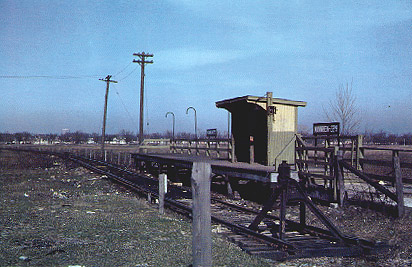
This is a very well known shot of Chicago Aurora and Elgin wood cars 309 and 310 on a May 19, 1957 fantrip at the Glen Oak Country Club stop in Glen Ellyn. As this was a photo stop, there are lots of duplicate slides of this, although not necessarily by the same photographer. Robert D. Heinlein captured this classic picture about six weeks before the end of passenger service, and this was scanned from the original red border Kodachrome slide. We are looking mainly to the east.

This is a very well known shot of Chicago Aurora and Elgin wood cars 309 and 310 on a May 19, 1957 fantrip at the Glen Oak Country Club stop in Glen Ellyn. As this was a photo stop, there are lots of duplicate slides of this, although not necessarily by the same photographer. Robert D. Heinlein captured this classic picture about six weeks before the end of passenger service, and this was scanned from the original red border Kodachrome slide. We are looking mainly to the east.

The holiday season is once again upon us, and our thoughts naturally turn to gift giving. Then, it struck me. Here at the Trolley Dodger, we are engaged in historic preservation. History has a lot to teach us about our present and future. The past can shine light on many things, if we can only choose to look.

There is a lot of history in the images we present here. I have learned so much since starting this blog, nearly nine years ago. I hope my readers have too. Let’s all learn together.

It is truly a gift that keeps on giving.

Happy Holidays!

Our Annual Fundraiser

Since we started this blog in 2015, we have posted nearly 16,000 images. This is our 310th post.

In a few week’s time, we will need to renew our WordPress subscription, our domain registration, and pay other bills associated with maintaining this site, so it is time for our Annual Fundraiser.

The Trolley Dodger blog can only be kept going with the help of our devoted readers. Perhaps you count yourself among them.

If you have already contributed in the past, we thank you very much for your help. Meanwhile, our goal for this fundraiser is just $700, which is only a fraction of what it costs us each year. The rest is made up from either the profits from the items we sell, which are not large, or out of our own pocket, which is not very large either.

There are links at the top and bottom of this page, where you can click and make a donation that will help us meet our goal again for this coming year, so we can continue to offer you more classic images in the future, and keep this good thing we have going.

We thank you in advance for your time and consideration.

-David Sadowski

PS- You might also like our Trolley Dodger Facebook auxiliary, a private group that now has 1,478 members.

Our friend Kenneth Gear has a Facebook group for the Railroad Record Club. If you enjoy listening to audio recordings of classic railroad trains, whether steam, electric, or diesel, you might consider joining.

FYI, the Hoosier Traction Facebook Group celebrates electric transit in Indiana and the Midwest. It also supports the activities of the annual Hoosier Traction Meet (although not affiliated with the North American Transit Historical Society, which organizes that event).

Our Next Book Project

FYI, we are hard at work researching our next book about the Chicago Aurora and Elgin interurban. Although we already have thousands of images, we start out on these book projects with some of what we need, and then have to find the rest. Some have generously shared their images with us, and some we have to pay real money for. In case you would like to help contribute to this effort, either by sharing images or making a donation, we would like to hear from you. All contributors will be mentioned in the book, which will be dedicated to the memory of the late Robert D. Heinlein. The most difficult images to find are always the earliest ones. You can contact me via messenger, at thetrolleydodger@gmail.com or via my blog. I thank you for your time and consideration.

A real photo postcard (postmarked 1930) view of Front Street in Wheaton, looking east from Main Street, including the Chicago and North Western commuter station. It has since been replaced by a newer one nearby, served by Metra's UP-West Line. The Chicago Aurora and Elgin station was just south of here, out of view.

A real photo postcard (postmarked 1930) view of Front Street in Wheaton, looking east from Main Street, including the Chicago and North Western commuter station. It has since been replaced by a newer one nearby, served by Metra’s UP-West Line. The Chicago Aurora and Elgin station was just south of here, out of view.

Here's how it looks today.

Here’s how it looks today.

Chicago Aurora and Elgin car 418 is at the rear of a three-car train, heading east at Canal Street on the Metropolitan "L" main line. The building to the right is now known as the Old Post Office. The middle car is formerly from the Washington, Baltimore and Annapolis that CA&E bought in the late 1930s. They tapered the ends to fir the tight clearances on the "L" and made them into control trailers. This "L" stop had a walkway leading into Union Station. It was torn down after the Garfield Park line was replaced by the new Congress expressway median line in 1958-- but by that time, the CA&E had stopped running passenger service. this picture probably dates to between the mid-1940s and 1953, when the interurban cut back service to Forest Park.

Chicago Aurora and Elgin car 418 is at the rear of a three-car train, heading east at Canal Street on the Metropolitan “L” main line. The building to the right is now known as the Old Post Office. The middle car is formerly from the Washington, Baltimore and Annapolis that CA&E bought in the late 1930s. They tapered the ends to fir the tight clearances on the “L” and made them into control trailers. This “L” stop had a walkway leading into Union Station. It was torn down after the Garfield Park line was replaced by the new Congress expressway median line in 1958– but by that time, the CA&E had stopped running passenger service. this picture probably dates to between the mid-1940s and 1953, when the interurban cut back service to Forest Park.

Here's San Francisco cable car #507 in the early 1950s at the outer end of the Powell-Mason line (note the turntable). Here's what streetcar.org has to say about this car: "This cable car was built in 1893 in the East Bay town of Newark by Carter Brothers. It was numbered 507 until Muni dropped the first number on Powell cable cars in the 1970s. Car 507 served the Sacramento-Clay line until the 1906 earthquake and fire, and then was moved over to Powell Street, where it has run ever since, almost exclusively on the Powell-Mason line until 1956; on both the Mason and Hyde lines since 1957." It was overhauled in 1957 and is still in use today. This image was taken from an original red border Kodachrome.

Here’s San Francisco cable car #507 in the early 1950s at the outer end of the Powell-Mason line (note the turntable). Here’s what streetcar.org has to say about this car: “This cable car was built in 1893 in the East Bay town of Newark by Carter Brothers. It was numbered 507 until Muni dropped the first number on Powell cable cars in the 1970s. Car 507 served the Sacramento-Clay line until the 1906 earthquake and fire, and then was moved over to Powell Street, where it has run ever since, almost exclusively on the Powell-Mason line until 1956; on both the Mason and Hyde lines since 1957.” It was overhauled in 1957 and is still in use today. This image was taken from an original red border Kodachrome.

Chicago Aurora and Elgin wood car 300 at Wheaton on April 23, 1962, shortly before it was scrapped. (K. C. Henkels Photo)

Chicago Aurora and Elgin wood car 300 at Wheaton on April 23, 1962, shortly before it was scrapped. (K. C. Henkels Photo)

Chicago Aurora and Elgin car 457 at Wheaton on March 14, 1957. (M. Powell Photo)

Chicago Aurora and Elgin car 457 at Wheaton on March 14, 1957. (M. Powell Photo)

North Shore Line car 300 in 1940. The interurban had stopped using its older wood cars a few years before, and had generously allowed the Central Electric Railfans' Association to use it as their club car, for meetings and excursions. Color pictures from 1940 are rare indeed, and this red border Kodachrome has held up well. Unfortunately, none of the NSL woods have survived. This one was used as a locker room in Waukegan for the female employees the railroad hired during WWII. It was vandalized by some sailors at war's end, and then stripped for parts when the remaining wood cars were sold to the Chicago Aurora and Elgin in 1946. The body of car 300 was used as a diner for a few years.

North Shore Line car 300 in 1940. The interurban had stopped using its older wood cars a few years before, and had generously allowed the Central Electric Railfans’ Association to use it as their club car, for meetings and excursions. Color pictures from 1940 are rare indeed, and this red border Kodachrome has held up well. Unfortunately, none of the NSL woods have survived. This one was used as a locker room in Waukegan for the female employees the railroad hired during WWII. It was vandalized by some sailors at war’s end, and then stripped for parts when the remaining wood cars were sold to the Chicago Aurora and Elgin in 1946. The body of car 300 was used as a diner for a few years.

North Shore Line wood car 300 is on a fantrip, while it was used as the rolling clubhouse of the Central Electric Railfans' Association circa 1940. The presence of a city streetcar (I think it is 509) would suggest this picture was taken in Waukegan.

North Shore Line wood car 300 is on a fantrip, while it was used as the rolling clubhouse of the Central Electric Railfans’ Association circa 1940. The presence of a city streetcar (I think it is 509) would suggest this picture was taken in Waukegan.

A Chicago and Milwaukee Electric (later the North Shore Line) 300-series car at the Racine station in 1909.

A Chicago and Milwaukee Electric (later the North Shore Line) 300-series car at the Racine station in 1909.

Single-deck streetcar #105 is in Hobart, Tasmania, in Australia. This system had previously used doble-deck cars, but there were problems with them toppling over. As ridership on the system decreased over time, they were replaced with these home-built substitutes. The style of red border Kodachrome slide mount dates this picture to sometime between 1939 and 1949. The last Hobart tram ran in 1960.

Single-deck streetcar #105 is in Hobart, Tasmania, in Australia. This system had previously used doble-deck cars, but there were problems with them toppling over. As ridership on the system decreased over time, they were replaced with these home-built substitutes. The style of red border Kodachrome slide mount dates this picture to sometime between 1939 and 1949. The last Hobart tram ran in 1960.

The North Shore Line Freight Terminal in Milwaukee in 1925. This was just east of the passenger terminal. We are looking to the north-northwest. Car 401 is in the foreground. Don's Rail Photos (via Archive.org): "401 was built by Jewett Car in 1909 as parlor-buffet car. In 1917 it was converted to straight coach and retired in 1935. It was leased to Chicago Aurora & Elgin and renumbered 142 in 1936. It came back for a short time with the CA&E number in 1945 and sold to CA&E in 1946. It was retired in 1953." One of the cars at right is 122, a wooden coach. Again, from Don Ross: "122 was built by Jewett Car in 1906 and retired in 1937."

The North Shore Line Freight Terminal in Milwaukee in 1925. This was just east of the passenger terminal. We are looking to the north-northwest. Car 401 is in the foreground. Don’s Rail Photos (via Archive.org): “401 was built by Jewett Car in 1909 as parlor-buffet car. In 1917 it was converted to straight coach and retired in 1935. It was leased to Chicago Aurora & Elgin and renumbered 142 in 1936. It came back for a short time with the CA&E number in 1945 and sold to CA&E in 1946. It was retired in 1953.” One of the cars at right is 122, a wooden coach. Again, from Don Ross: “122 was built by Jewett Car in 1906 and retired in 1937.”

A North Shore Line lunch counter menu from March 1961. There are some pictures of the lunch counter at the Milwaukee Terminal in my book The North Shore Line.

A North Shore Line lunch counter menu from March 1961. There are some pictures of the lunch counter at the Milwaukee Terminal in my book The North Shore Line.

This rare photo was taken at Church Street in Evanston, where the North Shore Line had a station along the Evanston branch of the "L" (today's CTA Purple Line). The presence of observation car 411 would date this to between 1923 (when the car was delivered) and 1926 (when the Skokie Valley Route opened).

This rare photo was taken at Church Street in Evanston, where the North Shore Line had a station along the Evanston branch of the “L” (today’s CTA Purple Line). The presence of observation car 411 would date this to between 1923 (when the car was delivered) and 1926 (when the Skokie Valley Route opened).

This 1910 image is from a copy negative and shows a Chicago and Milwaukee Electric car that had derailed at Genesee and Washington Streets in downtown Waukegan. I believe this is car 121 and not 721 as the negative envelope had it. At this date, 721 had not yet been built. The C&ME was the predecessor of the North Shore Line (the name was changed in 1916).

This 1910 image is from a copy negative and shows a Chicago and Milwaukee Electric car that had derailed at Genesee and Washington Streets in downtown Waukegan. I believe this is car 121 and not 721 as the negative envelope had it. At this date, 721 had not yet been built. The C&ME was the predecessor of the North Shore Line (the name was changed in 1916).

A Brill builder's photo (1902) of Chicago and Milwaukee Electric car 11. This is called a combine car, as it could handle both passengers and some freight. It was rebuilt into an express trailer in 1917.

A Brill builder’s photo (1902) of Chicago and Milwaukee Electric car 11. This is called a combine car, as it could handle both passengers and some freight. It was rebuilt into an express trailer in 1917.

Chicago and Milwaukee Electric express car #1 was built by Brill in 1902, as the interurban started to get into the freight business. It was retired prior to 1910.

Chicago and Milwaukee Electric express car #1 was built by Brill in 1902, as the interurban started to get into the freight business. It was retired prior to 1910.

Chicago Aurora and Elgin car 454 was built in 1945 by the St. Louis Car Company and ran in service until the 1957 abandonment.

Chicago Aurora and Elgin car 454 was built in 1945 by the St. Louis Car Company and ran in service until the 1957 abandonment.

Chicago Aurora and Elgin line car #11 is shown at the Fox River Trolley Museum in South Elgin, Illinois on January 17, 1976. (William C. Hoffman Photo)

Chicago Aurora and Elgin line car #11 is shown at the Fox River Trolley Museum in South Elgin, Illinois on January 17, 1976. (William C. Hoffman Photo)

Now here's something else that's rare-- C&NW bilevels pulled by steam. Here, we see Chicago and North Western loco #566, a 4-6-2, with an outbound commuter "scoot" at Mayfair on August 12, 1955. Bilevels were just starting to be phased in and would eventually be used exclusively, while the last C&NW steam ran in 1956. The Burlington introduced bilevels in 1950, so they ran more under steam than the C&NW did. The Mayfair station is at 4737 W. Montrose in Chicago, and the tower visible here controlled the crossing of C&NW and Milwaukee Road trains. There is a Metra stop here for the Milwaukee District North Line. The former C&NW service here is now Metra's Union Pacific Northwest line. (James J. Buckley Photo)

Now here’s something else that’s rare– C&NW bilevels pulled by steam. Here, we see Chicago and North Western loco #566, a 4-6-2, with an outbound commuter “scoot” at Mayfair on August 12, 1955. Bilevels were just starting to be phased in and would eventually be used exclusively, while the last C&NW steam ran in 1956. The Burlington introduced bilevels in 1950, so they ran more under steam than the C&NW did. The Mayfair station is at 4737 W. Montrose in Chicago, and the tower visible here controlled the crossing of C&NW and Milwaukee Road trains. There is a Metra stop here for the Milwaukee District North Line. The former C&NW service here is now Metra’s Union Pacific Northwest line. (James J. Buckley Photo)

South Shore Line loco #704 is at the helm of a freight train in New Carlisle, Indiana on October 9, 1960. Don's Rail Photos (via Archive.org): "704 was built by Alco-General Electric in June 1931, #68271, 11194, as NYC 1243, Class R-2. It was renumbered 343 in August 1936 and sold to CSS&SB in 1955. It was rebuilt as 704 in 1956 and scrapped in April 1976."

South Shore Line loco #704 is at the helm of a freight train in New Carlisle, Indiana on October 9, 1960. Don’s Rail Photos (via Archive.org): “704 was built by Alco-General Electric in June 1931, #68271, 11194, as NYC 1243, Class R-2. It was renumbered 343 in August 1936 and sold to CSS&SB in 1955. It was rebuilt as 704 in 1956 and scrapped in April 1976.”

South Shore Line car 28 is at Wagner Siding on the "Ideal Section" east of Gary in June 1975. Mitch Markovitz adds, "At the east end crossing County Line (Fulton) Road."

South Shore Line car 28 is at Wagner Siding on the “Ideal Section” east of Gary in June 1975. Mitch Markovitz adds, “At the east end crossing County Line (Fulton) Road.”

The entrance to the South Shore Line train platforms at the Randolph Street Station on August 4, 1974. This station has since been completely redone, and the neon sign is at the Illinois Railway Museum. (Douglas N. Grotjahn Photo)

The entrance to the South Shore Line train platforms at the Randolph Street Station on August 4, 1974. This station has since been completely redone, and the neon sign is at the Illinois Railway Museum. (Douglas N. Grotjahn Photo)

On October 24, 1954 South Shore Line car #1 is at the Smith stop in Indiana on a fantrip. This car was built by Pullman in 1926. (William C. Hoffman Photo)

On October 24, 1954 South Shore Line car #1 is at the Smith stop in Indiana on a fantrip. This car was built by Pullman in 1926. (William C. Hoffman Photo)

South Shore Line car #111 is heading westbound in LaSalle Avenue in South Bend on October 13, 1957. Service was cut back to the outskirts of town in 1970, after there were a couple accidents where the brakes failed and there were runaway trains on South Bend streets. (William C. Hoffman Photo)

South Shore Line car #111 is heading westbound in LaSalle Avenue in South Bend on October 13, 1957. Service was cut back to the outskirts of town in 1970, after there were a couple accidents where the brakes failed and there were runaway trains on South Bend streets. (William C. Hoffman Photo)

Robert D. Heinlein captured this view of a westbound Lake Street "L" B train on October 27, 1962, the last full day of ground level service here. The following day, the "L" west of Laramie Avenue was relocated onto the adjacent Chicago and North Western embankment. The two car CTA 4000-series train is passing the gateman's shanty (these were all manually operated gates, 24/7), which shows why the newer 6000-series cars, with their curved sides, could not make these tight clearances. Not sure which cross street this is. Mike Franklin: "Smokestack above car is between Cuyler & Harvey, thus this is west of Ridgeland. West of Oak Park Ave, the concrete does not match, making this crossing between Oak Park Ave & Ridgeland. Euclid and East have brackets at the top level of the overhead girder, while Scoville does not; therefore, this is the only possible crossing. (Next gateman's shanty is at Elmwood, which controlled a pedestrian tunnel leading to Scoville Park.)"

Robert D. Heinlein captured this view of a westbound Lake Street “L” B train on October 27, 1962, the last full day of ground level service here. The following day, the “L” west of Laramie Avenue was relocated onto the adjacent Chicago and North Western embankment. The two car CTA 4000-series train is passing the gateman’s shanty (these were all manually operated gates, 24/7), which shows why the newer 6000-series cars, with their curved sides, could not make these tight clearances. Not sure which cross street this is. Mike Franklin: “Smokestack above car is between Cuyler & Harvey, thus this is west of Ridgeland. West of Oak Park Ave, the concrete does not match, making this crossing between Oak Park Ave & Ridgeland. Euclid and East have brackets at the top level of the overhead girder, while Scoville does not; therefore, this is the only possible crossing. (Next gateman’s shanty is at Elmwood, which controlled a pedestrian tunnel leading to Scoville Park.)”

Bantam (Size 828) Slides

All the images in this section are scanned from 1950s red border Kodachromes on 828 size film, with an image area slightly larger than 35mm. All the Chicago ones are marked 1955, but the actual dates are not known, as Kodak did not begin date-stamping slides until 1958.

Now here's something I don't see very often... a red border Kodachrome slide shot on size 828 film. This has an image area of 28x40mm, as opposed to size 135 that is 24x36mm. Kodak came up with this format in the late 1930s, as their answer to 35mm, which was just starting to become popular due to Leica and Contax. Kodak thought 36 pictures on a roll was just too many for most people, so they took 35mm film stock, eliminated the sprockets, and made paper backed roll film, in similar fashion to the popular film sizes of the time (127, 620, 120, 616, 116, etc.). Their innovation was to put a small notch in the film that would actuate an automatic frame counter in some models of the new cameras, which were branded as the Bantam line. There were still numbers on the back of the paper roll for use in cheaper cameras with the familiar little red window. It was a good idea, but ultimately didn't catch on. Kodak went on to use some of this technology in size 126, the Instamatic series, starting in 1963. 126 was nothing more than the same 828 type film stock, preloaded into a plastic cartridge. Proper loading and unloading of paper backed roll film was always a bit problematic and had resulted in lots of light leaks and fogged film up until then, and this solved the problem. Kodak went with a 26x26mm square format but unfortunately the film did not lie perfectly flat in this cartridge, and therefore overall sharpness suffered. For a time, though, 126 was all the rage, and was pretty much the death knell for amateur photographers using paper backed roll film. Toronto PCC 4441, pictured here, had a body shell built by the St. Louis Car Company, and the rest of the car was finished by the Canadian Car & Foundry Company in 1949. This picture was taken some time between then and 1955. Bill Robb adds, "Probably taken pre-1954 when the TTC was still the Toronto Transportation Commission. It has the old monogram logo and grey roof shrouds dating from the time of delivery. The TTC changed to Toronto Transit Commission on July 1, 1954 and adopted the keystone logo."

Now here’s something I don’t see very often… a red border Kodachrome slide shot on size 828 film. This has an image area of 28x40mm, as opposed to size 135 that is 24x36mm. Kodak came up with this format in the late 1930s, as their answer to 35mm, which was just starting to become popular due to Leica and Contax. Kodak thought 36 pictures on a roll was just too many for most people, so they took 35mm film stock, eliminated the sprockets, and made paper backed roll film, in similar fashion to the popular film sizes of the time (127, 620, 120, 616, 116, etc.). Their innovation was to put a small notch in the film that would actuate an automatic frame counter in some models of the new cameras, which were branded as the Bantam line. There were still numbers on the back of the paper roll for use in cheaper cameras with the familiar little red window. It was a good idea, but ultimately didn’t catch on. Kodak went on to use some of this technology in size 126, the Instamatic series, starting in 1963. 126 was nothing more than the same 828 type film stock, preloaded into a plastic cartridge. Proper loading and unloading of paper backed roll film was always a bit problematic and had resulted in lots of light leaks and fogged film up until then, and this solved the problem. Kodak went with a 26x26mm square format but unfortunately the film did not lie perfectly flat in this cartridge, and therefore overall sharpness suffered. For a time, though, 126 was all the rage, and was pretty much the death knell for amateur photographers using paper backed roll film. Toronto PCC 4441, pictured here, had a body shell built by the St. Louis Car Company, and the rest of the car was finished by the Canadian Car & Foundry Company in 1949. This picture was taken some time between then and 1955. Bill Robb adds, “Probably taken pre-1954 when the TTC was still the Toronto Transportation Commission. It has the old monogram logo and grey roof shrouds dating from the time of delivery. The TTC changed to Toronto Transit Commission on July 1, 1954 and adopted the keystone logo.”

CTA postwar PCC 4052, a product of St. Louis Car Company, is turning from St. Lawrence Avenue onto 111th Street in the Pullman neighborhood, near the Hotel Florence. The streetcar was heading northbound and was just a few blocks from the south end of Route 4 - Cottage Grove, located at 115th Street. Buses replaced streetcars on this line on June 19, 1955, and this picture was taken that year.

CTA postwar PCC 4052, a product of St. Louis Car Company, is turning from St. Lawrence Avenue onto 111th Street in the Pullman neighborhood, near the Hotel Florence. The streetcar was heading northbound and was just a few blocks from the south end of Route 4 – Cottage Grove, located at 115th Street. Buses replaced streetcars on this line on June 19, 1955, and this picture was taken that year.

CTA prewar PCC streetcar 7027 is on private right-of-way at the south end of the Cottage Grove route. This ran parallel to the Illinois Central Suburban Electric.

CTA prewar PCC streetcar 7027 is on private right-of-way at the south end of the Cottage Grove route. This ran parallel to the Illinois Central Suburban Electric.

This shows where the Cottage Grove line entered private right-of-way with open track around 96th Street. The sign warned motorists to steer clear of the open tracks.

This shows where the Cottage Grove line entered private right-of-way with open track around 96th Street. The sign warned motorists to steer clear of the open tracks.

A string of CTA red Pullmans are in the scrap line at South Shops in 1955.

A string of CTA red Pullmans are in the scrap line at South Shops in 1955.

A four-car South Shore Line train at 130th Street in 1955.

A four-car South Shore Line train at 130th Street in 1955.

The interior of a CTA red Pullman in the scrap line at South Shops in 1955.

The interior of a CTA red Pullman in the scrap line at South Shops in 1955.

CTA postwar PCC 7238 is a southbound Route 36 - Broadway-State car, signed for 119th and Morgan, in 1955. Not sure of the exact location, but if I had to guess, I would say we are on the south side. Mike Franklin: "Photo aaf569a, car 7238 has just crossed 95th St, heading south on Michigan Ave. While the 3-story building in the middle of the photo is gone, the neighboring bungalow to the east is still there at 124 E Michigan Ave."

CTA postwar PCC 7238 is a southbound Route 36 – Broadway-State car, signed for 119th and Morgan, in 1955. Not sure of the exact location, but if I had to guess, I would say we are on the south side. Mike Franklin: “Photo aaf569a, car 7238 has just crossed 95th St, heading south on Michigan Ave. While the 3-story building in the middle of the photo is gone, the neighboring bungalow to the east is still there at 124 E Michigan Ave.”

CTA red Pullman streetcars 510 and 288 are on the scrap line at South Shops in 1955.

CTA red Pullman streetcars 510 and 288 are on the scrap line at South Shops in 1955.

The motorman's section of a CTA red Pullman in the scrap line at South Shops in 1955. Scott Greig writes: "That view of the motorman’s controls inside a Pullman in the South Shops scrap line was taken inside an “air door” Pullman, cars 501-600. Where the air gauge would normally be, between the controller and brake valve, there is instead a National Pneumatic door light housing. This was interlocked with the rear doors, similar to a modern “L” car, and allowed the motorman to proceed without waiting for a bell signal from the conductor. At least two air-door cars (507 and 542) lasted long enough to be among the last six red streetcars that the CTA torched for a press event in February of 1956."

The motorman’s section of a CTA red Pullman in the scrap line at South Shops in 1955. Scott Greig writes: “That view of the motorman’s controls inside a Pullman in the South Shops scrap line was taken inside an “air door” Pullman, cars 501-600. Where the air gauge would normally be, between the controller and brake valve, there is instead a National Pneumatic door light housing. This was interlocked with the rear doors, similar to a modern “L” car, and allowed the motorman to proceed without waiting for a bell signal from the conductor. At least two air-door cars (507 and 542) lasted long enough to be among the last six red streetcars that the CTA torched for a press event in February of 1956.”

CTA D206 and D204 were sprinklers, shown here at South Shops in 1955. D206 is still sporting a Chicago Surface Lines logo. It was built by McGuire-Cummings and retired as of December 14, 1956. D204, behind it, made it to May 17, 1958.

CTA D206 and D204 were sprinklers, shown here at South Shops in 1955. D206 is still sporting a Chicago Surface Lines logo. It was built by McGuire-Cummings and retired as of December 14, 1956. D204, behind it, made it to May 17, 1958.

The front of an unidentified CTA streetcar on the scrap line at South Shops in 1955. Dan Cluley writes, "I think the unidentified car in pic aaf574a is the AA92 shown in the next photo. The remnants of the roll sign, the half open window & various scuffs in the paint all seem to match."

The front of an unidentified CTA streetcar on the scrap line at South Shops in 1955. Dan Cluley writes, “I think the unidentified car in pic aaf574a is the AA92 shown in the next photo. The remnants of the roll sign, the half open window & various scuffs in the paint all seem to match.”

CTA salt spreader AA92, shown here on the scrap line at South Shops in 1955, was originally car 2826. It was scrapped on December 27, 1955.

CTA salt spreader AA92, shown here on the scrap line at South Shops in 1955, was originally car 2826. It was scrapped on December 27, 1955.

CTA salt spreader AA86 was originally car 1498. It was scrapped on December 14, 1956.

CTA salt spreader AA86 was originally car 1498. It was scrapped on December 14, 1956.

A worker sweeps the sidewalk along 79th Street, by CTA's South Shops. A number of old red streetcars are seen in the scrap line in 1955, along with some retired trolley buses at left.

A worker sweeps the sidewalk along 79th Street, by CTA’s South Shops. A number of old red streetcars are seen in the scrap line in 1955, along with some retired trolley buses at left.

CTA salt spreader AA50 was originally car 1260. It was scrapped on December 27, 1955.

CTA salt spreader AA50 was originally car 1260. It was scrapped on December 27, 1955.

Experimental pre-PCC cars 7001 (left) and 4001 (right) at the CTA South Shops in 1955, where they were being used as storage sheds. 7001 was scrapped in 1959, but the body of 4001 is now at the Illinois Railway Museum.

Experimental pre-PCC cars 7001 (left) and 4001 (right) at the CTA South Shops in 1955, where they were being used as storage sheds. 7001 was scrapped in 1959, but the body of 4001 is now at the Illinois Railway Museum.

The view through the fence at CTA South Shops in 1955 shows red Pullman 518 at right, waiting to be scrapped, with salt spreader AA92 behind it.

The view through the fence at CTA South Shops in 1955 shows red Pullman 518 at right, waiting to be scrapped, with salt spreader AA92 behind it.

Chicago Trolley Buses

CTA trolley bus #9742 is westbound on Montrose at Western on Sunday, October 8, 1972. (Steve Zabel Photo) Zabel (1949-1989) lived in NYC and worked as a motorman on the subway system there for 20 years. He was an excellent photographer, and some of his pictures have ended up in books. Unfortunately, he was brutally murdered during a robbery. His killer was convicted and sent to prison.

CTA trolley bus #9742 is westbound on Montrose at Western on Sunday, October 8, 1972. (Steve Zabel Photo) Zabel (1949-1989) lived in NYC and worked as a motorman on the subway system there for 20 years. He was an excellent photographer, and some of his pictures have ended up in books. Unfortunately, he was brutally murdered during a robbery. His killer was convicted and sent to prison.

CTA trolley bus 9577 has the poles down in this June 1970 photo. Although signed for Route 72 - North Avenue, I have to wonder if the actual location is a wye located at Central Avenue and West End Avenue. This was an unusual arrangement where a bus would go head in, then back out to change direction. (Charles L. Tauscher Photo)

CTA trolley bus 9577 has the poles down in this June 1970 photo. Although signed for Route 72 – North Avenue, I have to wonder if the actual location is a wye located at Central Avenue and West End Avenue. This was an unusual arrangement where a bus would go head in, then back out to change direction. (Charles L. Tauscher Photo)

CTA trolley bus 9209 is eastbound on route 65 - Grand Avenue in October 1967, at Grand and Halsted and Milwaukee. The Como Inn, a well known restaurant, is partially visible at right. It was open from 1924 to 2001. (Charles L. Tauscher Photo)

CTA trolley bus 9209 is eastbound on route 65 – Grand Avenue in October 1967, at Grand and Halsted and Milwaukee. The Como Inn, a well known restaurant, is partially visible at right. It was open from 1924 to 2001. (Charles L. Tauscher Photo)

CTA trolley bus 9747 is westbound on Route 81 - Lawrence in May 1963. The Peter Pan restaurant, at right, was part of a chain that featured fountain creations and catered to families with children. They had several locations, including this one on the northeast corner of Lawrence and Broadway. (Charles L. Tauscher Photo)

CTA trolley bus 9747 is westbound on Route 81 – Lawrence in May 1963. The Peter Pan restaurant, at right, was part of a chain that featured fountain creations and catered to families with children. They had several locations, including this one on the northeast corner of Lawrence and Broadway. (Charles L. Tauscher Photo)

CTA trolley bus 9327 is heading northbound on Central Avenue at Montrose in May 1963. (Charles L. Tauscher Photo)

CTA trolley bus 9327 is heading northbound on Central Avenue at Montrose in May 1963. (Charles L. Tauscher Photo)

CTA trolley bus 9325 is at Irving Park and Neenah, the west end of Route 80, in October 1967. This turnaround loop was been eliminated after diesel buses replaced electric, and service west of here (previously Route 80A) was combined with the regular route. The buildings at rear were part of the Dunning mental health complex and have since been replaced by condos. The bus loop is now incorporated into a driveway. (Charles L. Tauscher Photo)

CTA trolley bus 9325 is at Irving Park and Neenah, the west end of Route 80, in October 1967. This turnaround loop was been eliminated after diesel buses replaced electric, and service west of here (previously Route 80A) was combined with the regular route. The buildings at rear were part of the Dunning mental health complex and have since been replaced by condos. The bus loop is now incorporated into a driveway. (Charles L. Tauscher Photo)

CTA trolley bus 9412 in July 1963. Andre Kristopans: "Lawrence and Lawler - the "incomplete wye" - wires didn't quite come together as they didn't go past the sidewalk. (Charles L. Tauscher Photo)

CTA trolley bus 9412 in July 1963. Andre Kristopans: “Lawrence and Lawler – the “incomplete wye” – wires didn’t quite come together as they didn’t go past the sidewalk. (Charles L. Tauscher Photo)

It's July 1963 (at least, that's the processing date), and CTA trolley bus 9412 appears to be on a fantrip. Despite being signed for Route 85, the bus stop indicates Route 52 - Kedzie-California. The Pilsen Drug Store at left would suggest which neighborhood we are in, which would make the street Kedzie at 26th Street. (Charles L. Tauscher Photo)

It’s July 1963 (at least, that’s the processing date), and CTA trolley bus 9412 appears to be on a fantrip. Despite being signed for Route 85, the bus stop indicates Route 52 – Kedzie-California. The Pilsen Drug Store at left would suggest which neighborhood we are in, which would make the street Kedzie at 26th Street. (Charles L. Tauscher Photo)

CTA trolley bus 9412 is signed for a short-turn on Route 85 - Central in August 1963. I am not sure if this is actually Central and Wabansia, however. (Charles L. Tauscher Photo) Mike Franklin: "In reply to: Photo aaf504a, car 9412 is facing east on Wabansia Ave immediately west of Central Ave. Building to the left is still there."

CTA trolley bus 9412 is signed for a short-turn on Route 85 – Central in August 1963. I am not sure if this is actually Central and Wabansia, however. (Charles L. Tauscher Photo) Mike Franklin: “In reply to: Photo aaf504a, car 9412 is facing east on Wabansia Ave immediately west of Central Ave. Building to the left is still there.”

CTA trolley bus 9745 is at the east end of Route 81 - Lawrence Avenue in January 1963. The hotel in the background is located at 1201 W. Leland Avenue. Instead of having an off-street loop, trolley buses turned around via local streets in the Uptown neighborhood. (Charles L. Tauscher Photo)

CTA trolley bus 9745 is at the east end of Route 81 – Lawrence Avenue in January 1963. The hotel in the background is located at 1201 W. Leland Avenue. Instead of having an off-street loop, trolley buses turned around via local streets in the Uptown neighborhood. (Charles L. Tauscher Photo)

It's July 1959, and CTA trolley bus 9597 is at the Navy Pier turnaround loop for Route 65 - Grand Avenue. The building has been wrapped for some festive occasion. (Charles L. Tauscher Photo) Kevin Doerksen adds, "Regarding the picture of CTA trolley bus 9597 at Navy Pier, in 1959, the event was the Chicago International Fair and Exposition. It was an international trade fair held in conjunction with the opening of the St Lawrence Seaway."

It’s July 1959, and CTA trolley bus 9597 is at the Navy Pier turnaround loop for Route 65 – Grand Avenue. The building has been wrapped for some festive occasion. (Charles L. Tauscher Photo) Kevin Doerksen adds, “Regarding the picture of CTA trolley bus 9597 at Navy Pier, in 1959, the event was the Chicago International Fair and Exposition. It was an international trade fair held in conjunction with the opening of the St Lawrence Seaway.”

On December 19, 1965, Cleveland Transit trolley bus 874 ran on a fantrip in Chicago, prior to going to the Illinois Railway Museum. It also ran on two fantrips in Johnstown, Pennsylvania. Here, it is at the back end of the Kedzie bus garage. (Charles L. Tauscher Photo)

On December 19, 1965, Cleveland Transit trolley bus 874 ran on a fantrip in Chicago, prior to going to the Illinois Railway Museum. It also ran on two fantrips in Johnstown, Pennsylvania. Here, it is at the back end of the Kedzie bus garage. (Charles L. Tauscher Photo)

East Troy in Early Days

The excellent trolley museum in East Troy, Wisconsin is the sole remaining remnant of the Milwaukee Electric interurban network. Although passenger service to East Troy ended in 1939, the electric line between that town and Mukwonago was retained for freight service and purchased by the Village of East Troy. As those operations began to wind down, it gradually morphed into a museum operation, starting in 1972. The original group that ran the museum was at loggerheads with the village, however, and left in the early 1980s, at which time the current group took over. They do a splendid job.

Here are some early shots of East Troy, taken by the late Robert D. Heinlein.

M15 in East Troy on May 18, 1958. (Robert D. Heinlein Photo)

M15 in East Troy on May 18, 1958. (Robert D. Heinlein Photo)

D13, circa 1956-58. (Robert D. Heinlein Photo)

D13, circa 1956-58. (Robert D. Heinlein Photo)

M15 in June 1959. (Robert D. Heinlein Photo)

M15 in June 1959. (Robert D. Heinlein Photo)

M15 on January 5, 1957. (Robert D. Heinlein Photo)

M15 on January 5, 1957. (Robert D. Heinlein Photo)

M15 on May 18, 1958. (Robert D. Heinlein Photo)

M15 on May 18, 1958. (Robert D. Heinlein Photo)

D13 on January 5, 1957. (Robert D. Heinlein Photo)

D13 on January 5, 1957. (Robert D. Heinlein Photo)

M15 on January 5, 1957. (Robert D. Heinlein Photo)

M15 on January 5, 1957. (Robert D. Heinlein Photo)

M15 on May 18, 1958. (Robert D. Heinlein Photo)

M15 on May 18, 1958. (Robert D. Heinlein Photo)

M15 on May 18, 1958. (Robert D. Heinlein Photo)

M15 on May 18, 1958. (Robert D. Heinlein Photo)

M15 on May 18, 1958. (Robert D. Heinlein Photo)

M15 on May 18, 1958. (Robert D. Heinlein Photo)

M15 on September 30, 1956. (Robert D. Heinlein Photo)

M15 on September 30, 1956. (Robert D. Heinlein Photo)

The right-of-way and substation in East Troy on May 18, 1958. (Robert D. Heinlein Photo)

The right-of-way and substation in East Troy on May 18, 1958. (Robert D. Heinlein Photo)

D13, circa 1956-58. (Robert D. Heinlein Photo)

D13, circa 1956-58. (Robert D. Heinlein Photo)

Phantom Siding on January 5, 1957. (Robert D. Heinlein Photo)

Phantom Siding on January 5, 1957. (Robert D. Heinlein Photo)

The Soo Line interchange in Mukwonago on January 5, 1957. (Robert D. Heinlein Photo)

The Soo Line interchange in Mukwonago on January 5, 1957. (Robert D. Heinlein Photo)

M15 in East Troy on January 5, 1957. (Robert D. Heinlein Photo)

M15 in East Troy on January 5, 1957. (Robert D. Heinlein Photo)

M15 in East Troy on May 17, 1962. (Robert D. Heinlein Photo)

M15 in East Troy on May 17, 1962. (Robert D. Heinlein Photo)

D13 in East Troy on May 18, 1958. (Robert D. Heinlein Photo)

D13 in East Troy on May 18, 1958. (Robert D. Heinlein Photo)

L9 in East Troy on October 14, 1991. (Robert D. Heinlein Photo)

L9 in East Troy on October 14, 1991. (Robert D. Heinlein Photo)

Keep those cards and letters coming in, folks.

Our Latest Book, Now Available:

The North Shore Line

FYI, my new Arcadia Publishing book The North Shore Line is now available for immediate shipment. My publisher decided to expand it to 160 pages, instead of the usual 128. That’s a 25% increase, without any change to the $23.99 price. I am quite pleased with how this turned out.

From the back cover:

As late as 1963, it was possible to board high-speed electric trains on Chicago’s famous Loop “L” that ran 90 miles north to Milwaukee. This was the Chicago North Shore & Milwaukee Railroad, commonly known as the North Shore Line. It rose from humble origins in the 1890s as a local streetcar line in Waukegan to eventually become America’s fastest interurban under the visionary management of Midwest utilities tycoon Samuel Insull. The North Shore Line, under Insull, became a worthy competitor to the established steam railroads. Hobbled by the Great Depression, the road fought back in 1941 with two streamlined, air-conditioned, articulated trains called Electroliners, which included dining service. It regained its popularity during World War II, when gasoline and tires were rationed, but eventually, it fell victim to highways and the automobile. The North Shore Line had intercity rail, commuter rail, electric freight, city streetcars, and even buses. It has been gone for nearly 60 years, but it will always remain the Road of Service.

Each copy purchased here will be signed by the author, and you will also receive a bonus North Shore Line map.  Books will ship by USPS Media Mail.

Chapters:
01. Beginnings
02. The Milwaukee Division
03. The Shore Line Route
04. The Skokie Valley Route
05. The Mundelein Branch
06. On the “L”
07. City Streetcars
08. Trolley Freight
09. The Long Goodbye
10. The Legacy

Title The North Shore Line
Images of America
Author David Sadowski
Edition illustrated
Publisher Arcadia Publishing (SC), 2023
ISBN 1467108960, 978-1467108966
Length 160 pages

The price of $23.99 includes shipping within the United States.

For Shipping to US Addresses:

New Compact Disc Titles, Now Available:

HFIH
Hi-Fi Iron Horse
Price: $15.99

Hi-Fi Iron Horse is a unique collection of early steam recordings, made between 1949 and 1954. Portable tape recorders were not yet available when the earliest of these was made, but there was still another source for making high-quality audio– the optical sound track of motion picture film.

Featuring in-service steam of the Baltimore & Ohio, Bessemer & Lake Erie, Burlington, Canadian National, Delaware & Hudson, East Broad Top, Erie, Grand Trunk Western, Huntingdon & Broad Top Mountain, Western Maryland, and Rutland Railway.

Total time – 50:49

TSOS
The Sound of Steam
Reading 2124

Price: $19.99

Three very rare, out of print North Jersey Recordings LPs, now digitally remastered on two CDs at a special price.

The Sound of Steam offers a comprehensive overview of the twilight days of steam railroading in North America, with sounds recorded between 1957 and 1964. Railroads featured include the Denver & Rio Grande Western, Union Pacific, Canadian Pacific, Duluth, Missabe & Iron Range Railway, Gainesville Midland Railroad, Pennsylvania Railroad, Reading Railroad, Canadian National, Twin Seams Mining Company, Nickel Plate, Colorado & Southern, Norfolk & Western, Buffalo Creek & Gauley, Monadnock, Steamtown & Northern, Rockton & Rion Railway, and the National Railways of Mexico.

Reading 2124 features recordings made in 1959 and 1960 on a series of “Iron Horse Rambles,” excursion trips through eastern Pennsylvania.  The Reading Company had retained this class T-1 4-8-4 for emergency use after steam was retired on the railroad.  Seven years after the last Reading steam loco had hauled a passenger train, a series of 51 special excursion trips were held, ending in 1964.  These have since been revived, and the Rambles continue.

Total time – 69:54 (Disc 1) and 61:20 (Disc 2)

RWW-V103
Rods, Wheels, and Whistles
Voice of the 103

Price: $19.99

Two very rare, out of print North Jersey Recordings LPs, now digitally remastered on two CDs at a special price.

Rods, Wheels, and Whistles features the sounds of the Pennsylvania Railroad and the Norfolk and Western Railway, recorded in the twilight years of steam. This LP was originally issued in 1958, but our version is taken from the revised and expanded edition, which includes additional recordings from 1959.

Voice of the 103 documents the former Sumter and Choctaw Railroad #103, a 2-6-2 locomotive built in 1925 by the Baldwin Locomotive Works, after it was refurbished in 1962 to operate on the Middletown and New Jersey. This was an excursion service of the Empire State Railway Museum, which has since moved to a new location and no longer operates trains.  The 103 is now on static display.

Our collection is rounded out with three bonus tracks from the Strasbourg Railroad, when old number 31 ran excursion trains on the oldest short line railroad in the United States (chartered in June 1832), joining the Pennsylvania Dutch towns of Strasbourg and Paradise in the early 1960s.

Total time – 46:15 (RWW) and 49:26 (V103)

Help Support The Trolley Dodger

This is our 310th post, and we are gradually creating a body of work and an online resource for the benefit of all railfans, everywhere. To date, we have received over 1,035,000 page views, for which we are very grateful.

You can help us continue our original transit research by checking out the fine products in our Online Store.
As we have said before, “If you buy here, we will be here.”

We thank you for your support.

DONATIONS

In order to continue giving you the kinds of historic railroad images that you have come to expect from The Trolley Dodger, we need your help and support. It costs money to maintain this website, and to do the sort of historic research that is our specialty.

Your financial contributions help make this web site better, and are greatly appreciated.


Gary Railways, Part One

An early railfan photographer (probably armed with a folding or box camera) captures Gary Railways cars 9 and 17 passing each other, probably circa 1938-39. According to Mitch Markovitz, this is "45th on the Crown Point Line."

An early railfan photographer (probably armed with a folding or box camera) captures Gary Railways cars 9 and 17 passing each other, probably circa 1938-39. According to Mitch Markovitz, this is “45th on the Crown Point Line.”

This post features many classic railfan pictures of Gary Railways in the Hoosier State, generously shared from the collections of William Shapotkin.

While it only existed as electric transit from 1906 to 1948, what eventually got reorganized under the name Gary Railways had some interesting characteristics that were of great interest to some of the earliest railfans. The area around Gary developed rapidly into an industrial powerhouse as soon as U.S. Steel built the Gary Works steel mill there. A vibrant and growing city rapidly emerged, but there were many surrounding areas that were kept vacant for future industrial development.

Therefore, Gary Railways had both urban and interurban characteristics. It also had quite a variety of equipment. The system was part of the Samuel Insull empire during the 1920s, and various generations of lightweight, modern cars were purchased.

As with many other electric railways, the system went into a decline during the Great Depression. There was a gradual abandonment and bus substitution, starting with the interurban portions. This, in turn, attracted the attention of many Chicago area railfans who wanted to ride and photograph these lines before they faded into oblivion.

Gary was easily reachable by car and via the South Shore Line. Fans chartered a trip on Gary Railways on May 1, 1938, which was later regarded as the beginning date of the Central Electric Railfans’ Association (CERA). The group wasn’t organized much until later, but that came to be regarded as the start of it all.

The Gary system also had an interesting connection to what was envisioned as the Chicago–New York Electric Air Line Railroad. This “air line” did not involve airplanes, but was meant to be high-speed rail that would travel in a straight line between Chicago and New York City.

Ultimately, only about twenty miles of this Air Line were ever built, before the entire scheme collapsed due to the tremendous cost of actually building it. Portions of what did get built were used by Gary Railways up until 1942.

John F. Humiston (1913-2003) was one of the early railfans photographers whose excellent work is featured here, along with other luminaries as Malcolm D. McCarter, Robert V. Mehlenbeck, Gordon E. Lloyd, Donald Idarius, William C. Janssen, and Edward Frank, Jr.

We will feature more photos from Gary Railways in a future post. In addition, as usual, we have some interesting recent photo finds for your enjoyment.

-David Sadowski

PS- You might also like our Trolley Dodger Facebook auxiliary, a private group that now has 658 members.

Our friend Kenneth Gear now has a Facebook group for the Railroad Record Club. If you enjoy listening to audio recordings of classic railroad trains, whether steam, electric, or diesel, you might consider joining.

Our Annual Fundraiser

Since we started this blog in 2015, we have posted over 13,500 images. This is our 283rd post.

In just about three week’s time, we will need to renew our WordPress subscription, our domain registration, and pay other bills associated with maintaining this site, so it is time for our Annual Fundraiser.

The Trolley Dodger blog can only be kept going with the help of our devoted readers. Perhaps you count yourself among them.

If you have already contributed in the past, we thank you very much for your help. Meanwhile, our goal for this fundraiser is just $700, which is only a fraction of what it costs us each year. The rest is made up from either the profits from the items we sell, which are not large, or out of our own pocket, which is not very large either.

There are links at the top and bottom of this page, where you can click and make a donation that will help us meet our goal again for this coming year, so we can continue to offer you more classic images in the future, and keep this good thing we have going.

We thank you in advance for your time and consideration.

-David Sadowski

Gary Railways

Gary Railways snow sweeper 4 on November 21, 1927. (William Shapotkin Collection)

Gary Railways snow sweeper 4 on November 21, 1927. (William Shapotkin Collection)

Gary Railways Valparaiso Division train 12, car #1, at the Pine Street Siding alongside Central Avenue in East Gary, Indiana on July 24, 1938. Don's Rail Photos: "1 was built by Kuhlman Car Co in May 1924, (order) #825, as Gary & Valparaiso Ry 1. It became GRy 1 in 1925 and retired in 1947." (John F. Humiston Photo, William Shapotkin Collection)

Gary Railways Valparaiso Division train 12, car #1, at the Pine Street Siding alongside Central Avenue in East Gary, Indiana on July 24, 1938. Don’s Rail Photos: “1 was built by Kuhlman Car Co in May 1924, (order) #825, as Gary & Valparaiso Ry 1. It became GRy 1 in 1925 and retired in 1947.” (John F. Humiston Photo, William Shapotkin Collection)

Gary Railways car 11, going eastward, meets car 14 heading in the opposite direction, on the Hammond Division at Kennedy Siding along 165th Street in Hammond. This picture was taken at 11:40 am on Friday, May 6, 1938. Don's Rail Photos: "14 was built by Cummings Car Co in 1926. It was scrapped in 1946." (John F. Humiston Photo, William Shapotkin Collection)

Gary Railways car 11, going eastward, meets car 14 heading in the opposite direction, on the Hammond Division at Kennedy Siding along 165th Street in Hammond. This picture was taken at 11:40 am on Friday, May 6, 1938. Don’s Rail Photos: “14 was built by Cummings Car Co in 1926. It was scrapped in 1946.” (John F. Humiston Photo, William Shapotkin Collection)

Gary Railways car 11 at Sibley and Oakley at the Hammond city street terminal in 1942. The view looks west from Oakley. (William Shapotkin Collection)

Gary Railways car 11 at Sibley and Oakley at the Hammond city street terminal in 1942. The view looks west from Oakley. (William Shapotkin Collection)

Gary Railways car 9 is on 11th Avenue, just west of Rutledge Street on the Hammond line on July 7, 1946. Don's Rail Photos: "1st 9 was built by Cummings Car Co in 1926. It was wrecked on 5th Avenue on April 28, 1927, colliding with 201. It was scrapped. 2nd 9 was built by Cummings Car Co in 1927. It replaced 1st 9 and retired in 1946." (Donald Idarius Photo, William Shapotkin Collection)

Gary Railways car 9 is on 11th Avenue, just west of Rutledge Street on the Hammond line on July 7, 1946. Don’s Rail Photos: “1st 9 was built by Cummings Car Co in 1926. It was wrecked on 5th Avenue on April 28, 1927, colliding with 201. It was scrapped. 2nd 9 was built by Cummings Car Co in 1927. It replaced 1st 9 and retired in 1946.” (Donald Idarius Photo, William Shapotkin Collection)

Gary Railways car 19 on an early CERA fantrip. This date might be March 19, 1939. The well-known CERA drumhead is not yet in evidence. According to the late John Marton, it was first used on a June 25, 1939 sojourn. Don's Rail Photos: "19 was built by Cummings Car Co in 1927. It was retired in 1946 and the body was acquired by Illinois Railway Museum in 1989." (William Shapotkin Collection)

Gary Railways car 19 on an early CERA fantrip. This date might be March 19, 1939. The well-known CERA drumhead is not yet in evidence. According to the late John Marton, it was first used on a June 25, 1939 sojourn. Don’s Rail Photos: “19 was built by Cummings Car Co in 1927. It was retired in 1946 and the body was acquired by Illinois Railway Museum in 1989.” (William Shapotkin Collection)

Gary Railways car 8 in storage in the yard east of the Gary car barn, on January 18, 1941. Don's Rail Photos: "8 was built by by Cummings Car Co in 1926. It was retired in 1946." (William Shapotkin Collection)

Gary Railways car 8 in storage in the yard east of the Gary car barn, on January 18, 1941. Don’s Rail Photos: “8 was built by by Cummings Car Co in 1926. It was retired in 1946.” (William Shapotkin Collection)

Gary Railways car 6 is heading west on 5th Avenue at Clarke Siding in Gary, IN on March 18, 1939. This was the last day of service on the Indiana Harbor Division. Don's Rail Photos: "6 was built by by Cummings Car Co in 1926. It was retired in 1946." (John F. Humiston Photo, William Shapotkin Collection)

Gary Railways car 6 is heading west on 5th Avenue at Clarke Siding in Gary, IN on March 18, 1939. This was the last day of service on the Indiana Harbor Division. Don’s Rail Photos: “6 was built by by Cummings Car Co in 1926. It was retired in 1946.” (John F. Humiston Photo, William Shapotkin Collection)

It's a bit blurred, but this looks like Gary Railways 12. Don's Rail Photos: "12 was built by Cummings Car Co in 1926. It was scrapped in 1946." (Edward Frank, Jr. Photo, William Shapotkin Collection)

It’s a bit blurred, but this looks like Gary Railways 12. Don’s Rail Photos: “12 was built by Cummings Car Co in 1926. It was scrapped in 1946.” (Edward Frank, Jr. Photo, William Shapotkin Collection)

(Edward Frank, Jr. Photo, William Shapotkin Collection) Mike Franklin: "This is looking west on Sibley St. across Oakley Ave. Oakley Hotel is on the corner to the right."

(Edward Frank, Jr. Photo, William Shapotkin Collection) Mike Franklin: “This is looking west on Sibley St. across Oakley Ave. Oakley Hotel is on the corner to the right.”

The interior of Gary Railways car 18. Don's Rail Photos: "18 was built by Cummings Car Co in 1927. It was scrapped in 1946." (Gordon E. Lloyd Photo, William Shapotkin Collection)

The interior of Gary Railways car 18. Don’s Rail Photos: “18 was built by Cummings Car Co in 1927. It was scrapped in 1946.” (Gordon E. Lloyd Photo, William Shapotkin Collection)

Gary Railways car 19 at 145th and Main in Indiana Harbor on Sunday, March 19, 1939 (the day after this line was abandoned). The view looks northwest, with St. Catherine's Hospital in the distance. (Donald Idarius Photo, William Shapotkin Collection)

Gary Railways car 19 at 145th and Main in Indiana Harbor on Sunday, March 19, 1939 (the day after this line was abandoned). The view looks northwest, with St. Catherine’s Hospital in the distance. (Donald Idarius Photo, William Shapotkin Collection)

Broadway looking north from 9th Avenue in Gary on July 8, 1909. This was the "state of the art" in streetcar and roadway construction at that time. (William Shapotkin Collection)

Broadway looking north from 9th Avenue in Gary on July 8, 1909. This was the “state of the art” in streetcar and roadway construction at that time. (William Shapotkin Collection)

Gary Railways car 18 is on Bridge Street in Gary, IN, crossing the South Shore Line, on Sunday, June 5, 1938. (John F. Humiston Photo, William Shapotkin Collection)

Gary Railways car 18 is on Bridge Street in Gary, IN, crossing the South Shore Line, on Sunday, June 5, 1938. (John F. Humiston Photo, William Shapotkin Collection)

Gary Railways 207 exiting the gate at the Tube Works onto 2nd Avenue in Gary on Saturday, June 18, 1938. Don's Rail Photos: "207 was built by Kuhlman Car Co in 1918, #681, as GSRy 207. It was rebuilt by Cummings Car Co in 1927 and scrapped in 1946." (John F. Humiston Photo, William Shapotkin Collection)

Gary Railways 207 exiting the gate at the Tube Works onto 2nd Avenue in Gary on Saturday, June 18, 1938. Don’s Rail Photos: “207 was built by Kuhlman Car Co in 1918, #681, as GSRy 207. It was rebuilt by Cummings Car Co in 1927 and scrapped in 1946.” (John F. Humiston Photo, William Shapotkin Collection)

Gary Railways 19, as a Glen Park local. (William Shapotkin Collection)

Gary Railways 19, as a Glen Park local. (William Shapotkin Collection)

Gary Railways car 120 at the Gary carbarn on May 1, 1938. I assume it was built by the McGuire-Cummins Manufacturing Company in 1911. (Donald Idarius Photo, William Shapotkin Collection)

Gary Railways car 120 at the Gary carbarn on May 1, 1938. I assume it was built by the McGuire-Cummins Manufacturing Company in 1911. (Donald Idarius Photo, William Shapotkin Collection)

Gary Railways car 8 at 5th Avenue and Broadway on May 8, 1932. (Robert V. Mehlenbeck Photo, William Shapotkin Collection)

Gary Railways car 8 at 5th Avenue and Broadway on May 8, 1932. (Robert V. Mehlenbeck Photo, William Shapotkin Collection)

Gary Railways car 14 at the Mill Gate in Gary, working the Hammond route, on August 18, 1946. (Donald Idarius Photo, William Shapotkin Collection)

Gary Railways car 14 at the Mill Gate in Gary, working the Hammond route, on August 18, 1946. (Donald Idarius Photo, William Shapotkin Collection)

Gary Railways car 16 in Hammond on August 18, 1946. Don's Rail Photos: "16 was built by Cummings Car Co in 1926. It was scrapped in 1946." (William C. Janssen Photo, William Shapotkin Collection) Mike Franklin adds: "This is looking east on Sibley St toward Oakley Ave. Oakley Hotel on the corner, the Labor Temple next to the east, and the First Baptist Church (larger dome) further down. All is gone except for the white building, once the Federal Building of Hammond, in front of the car located on NE corner of State St & Oakley Ave."

Gary Railways car 16 in Hammond on August 18, 1946. Don’s Rail Photos: “16 was built by Cummings Car Co in 1926. It was scrapped in 1946.” (William C. Janssen Photo, William Shapotkin Collection) Mike Franklin adds: “This is looking east on Sibley St toward Oakley Ave. Oakley Hotel on the corner, the Labor Temple next to the east, and the First Baptist Church (larger dome) further down. All is gone except for the white building, once the Federal Building of Hammond, in front of the car located on NE corner of State St & Oakley Ave.”

Gary Railways 17 at Mill Gate on March 19, 1939. (Donald Idarius Photo, William Shapotkin Collection)

Gary Railways 17 at Mill Gate on March 19, 1939. (Donald Idarius Photo, William Shapotkin Collection)

Gary Railways car 121. Don's Rail Photos: "121 was built by McGuire-Cummings Mfg Co in 1911 as G&IRy 121. It got a new roof in 1922 and retired in 1940." (William Shapotkin Collection)

Gary Railways car 121. Don’s Rail Photos: “121 was built by McGuire-Cummings Mfg Co in 1911 as G&IRy 121. It got a new roof in 1922 and retired in 1940.” (William Shapotkin Collection)

West 5th Avenue in Gary in 1924. That looks like Gary Railways car 206. If so, it was was built by Kuhlman Car Company in 1918. (William Shapotkin Collection)

West 5th Avenue in Gary in 1924. That looks like Gary Railways car 206. If so, it was was built by Kuhlman Car Company in 1918. (William Shapotkin Collection)

Gary Railways car 203. Don's Rail Photos: "203 was built by Kuhlman Car Co in 1918, #681, as Gary Street Ry 203. It was rebuilt by Cummings Car Co in 1927 and scrapped in 1946." (William Shapotkin Collection)

Gary Railways car 203. Don’s Rail Photos: “203 was built by Kuhlman Car Co in 1918, #681, as Gary Street Ry 203. It was rebuilt by Cummings Car Co in 1927 and scrapped in 1946.” (William Shapotkin Collection)

Gary Railways car 1 is turning into the carbarn off of 22nd Avenue on October 24, 1940. The view looks north from the apron of the car barn. (Donald Idarius Photo, William Shapotkin Collection)

Gary Railways car 1 is turning into the carbarn off of 22nd Avenue on October 24, 1940. The view looks north from the apron of the car barn. (Donald Idarius Photo, William Shapotkin Collection)

Gary Railways car 19, likely on one of those early late 1930s fantrips. (William Shapotkin Collection)

Gary Railways car 19, likely on one of those early late 1930s fantrips. (William Shapotkin Collection)

Gary Railways car 15 in storage at the Gary car barn on January 18, 1941. This car was likely built by Cummings Car Company in 1926. (Malcolm D. McCarter Photo, William Shapotkin Collection)

Gary Railways car 15 in storage at the Gary car barn on January 18, 1941. This car was likely built by Cummings Car Company in 1926. (Malcolm D. McCarter Photo, William Shapotkin Collection)

The former Gary Railways car 50 in service as a diner at 63rd Street and Central Avenue in Chicago on March 8, 1947. Don's Rail Photos: "50 was built by Cummings Car Co in 1929. It was scrapped in 1946." (Donald Idarius Photo, William Shapotkin Collection)

The former Gary Railways car 50 in service as a diner at 63rd Street and Central Avenue in Chicago on March 8, 1947. Don’s Rail Photos: “50 was built by Cummings Car Co in 1929. It was scrapped in 1946.” (Donald Idarius Photo, William Shapotkin Collection)

Gary, IN. The Central Electric Railfans' Association day-after abandonment fantrip on March 19, 1939. The view looks west on 37th Street at Michigan Central Crossing (Mississippi Street). (Gordon E. Lloyd Photo, William Shapotkin Collection)

Gary, IN. The Central Electric Railfans’ Association day-after abandonment fantrip on March 19, 1939. The view looks west on 37th Street at Michigan Central Crossing (Mississippi Street). (Gordon E. Lloyd Photo, William Shapotkin Collection)

Gary Railways car 3 at Mill Gate on May 1, 1938. Don's Rail Photos: "3 was built by Kuhlman Car Co in February 1925, #851 as Gary & Hobart Traction Co 3. It became GRy 3 in 1925 and scrapped in 1947." (Donald Idarius Photo, William Shapotkin Collection)

Gary Railways car 3 at Mill Gate on May 1, 1938. Don’s Rail Photos: “3 was built by Kuhlman Car Co in February 1925, #851 as Gary & Hobart Traction Co 3. It became GRy 3 in 1925 and scrapped in 1947.” (Donald Idarius Photo, William Shapotkin Collection)

Gary Railways car 5 is on a CERA fantrip, in front of the Hobart car barn on March 19, 1939, the day after regular service here ended. The Nickel Plate's tracks are visible at rear. Don's Rail Photos: "5 was built by Kuhlman Car Co in February 1925, #851, as G&HT 5. It became GRy 5 in 1925 and scrapped in 1947." (Donald Idarius Photo, William Shapotkin Collection)

Gary Railways car 5 is on a CERA fantrip, in front of the Hobart car barn on March 19, 1939, the day after regular service here ended. The Nickel Plate’s tracks are visible at rear. Don’s Rail Photos: “5 was built by Kuhlman Car Co in February 1925, #851, as G&HT 5. It became GRy 5 in 1925 and scrapped in 1947.” (Donald Idarius Photo, William Shapotkin Collection)

Gary Railways car 12 at Mill Gate (Gary) on May 1, 1938. The EJ&E embankment is visible at rear. (Donald Idarius Photo, William Shapotkin Collection)

Gary Railways car 12 at Mill Gate (Gary) on May 1, 1938. The EJ&E embankment is visible at rear. (Donald Idarius Photo, William Shapotkin Collection)

Gary Railways car 9 at Mill Gate terminal in 1942, about to pull a trip to Tolleston. (Malcolm D. McCarter Photo, William Shapotkin Collection)

Gary Railways car 9 at Mill Gate terminal in 1942, about to pull a trip to Tolleston. (Malcolm D. McCarter Photo, William Shapotkin Collection)

Gary Railways 213 at 45th and Grand on July 21, 1946. Don's Rail Photos: "213 was built by Kuhlman Car Co in 1919, #658, as Buffalo & Lake Erie Traction Co 231. It was sold as G&I 213 in 1923 and rebuilt by Cummings Car Co in 1927. It was scrapped in 1947." (Gordon E. Lloyd Photo, William Shapotkin Collection)

Gary Railways 213 at 45th and Grand on July 21, 1946. Don’s Rail Photos: “213 was built by Kuhlman Car Co in 1919, #658, as Buffalo & Lake Erie Traction Co 231. It was sold as G&I 213 in 1923 and rebuilt by Cummings Car Co in 1927. It was scrapped in 1947.” (Gordon E. Lloyd Photo, William Shapotkin Collection)

Gary Railways car 19. According to Bob Lalich, the location is Cline Avenue at the Grand Calumet River. He adds, "Photo 889 is looking south. The railroad crossing in the distance is the South Shore." I assume this photo was taken on the same day as Shapotkin875, also in this post, on March 19, 1939. (Edward Frank, Jr. Photo, William Shapotkin Collection)

Gary Railways car 19. According to Bob Lalich, the location is Cline Avenue at the Grand Calumet River. He adds, “Photo 889 is looking south. The railroad crossing in the distance is the South Shore.” I assume this photo was taken on the same day as Shapotkin875, also in this post, on March 19, 1939. (Edward Frank, Jr. Photo, William Shapotkin Collection)

The idea behind the "New York Air Line" was simple-- build a track in a straight path between Chicago and New York, reducing the distance traveled by a considerable amount, and use electric vehicles to compete with the steam railroads. It would have been an early form of high-speed rail. But engineering and fundraising challenges proved insurmountable, and the venture collapsed after only about 20 miles of track were built in the vicinity of Gary. Parts were incorporated into the Gary streetcar system. (William Shapotkin Collection)

The idea behind the “New York Air Line” was simple– build a track in a straight path between Chicago and New York, reducing the distance traveled by a considerable amount, and use electric vehicles to compete with the steam railroads. It would have been an early form of high-speed rail. But engineering and fundraising challenges proved insurmountable, and the venture collapsed after only about 20 miles of track were built in the vicinity of Gary. Parts were incorporated into the Gary streetcar system. (William Shapotkin Collection)

Gary in the early 1900s. I believe this is a part of the New York Air Line. (William Shapotkin Collection)

Gary in the early 1900s. I believe this is a part of the New York Air Line. (William Shapotkin Collection)

Gary was a boom town that sprung up practically overnight in the early 1900s. New roads and streetcar lines sprung up along with it. (William Shapotkin Collection)

Gary was a boom town that sprung up practically overnight in the early 1900s. New roads and streetcar lines sprung up along with it. (William Shapotkin Collection)

A streetcar line under construction in Gary in the early 1900s. (William Shapotkin Collection)

A streetcar line under construction in Gary in the early 1900s. (William Shapotkin Collection)

Gary Railways car 6 on the Indiana Harbor Division, west on Fifth Avenue at Colfax Siding in Gary, IN on Saturday, March 18, 1939. (John F. Humiston Photo, William Shapotkin Collection)

Gary Railways car 6 on the Indiana Harbor Division, west on Fifth Avenue at Colfax Siding in Gary, IN on Saturday, March 18, 1939. (John F. Humiston Photo, William Shapotkin Collection)

Breaking ground for grading at East Gary, five miles from Gary, on June 16, 1909. From the Air Line News, July 1909. (William Shapotkin Collection)

Breaking ground for grading at East Gary, five miles from Gary, on June 16, 1909. From the Air Line News, July 1909. (William Shapotkin Collection)

Gary Union Atation. Chris Cole says this "the former NYC/AMTRAK station in Gary. It still stands although in a derelict condition between the railroad tracks and the Indiana Toll Road."(William Shapotkin Collection)

Gary Union Atation. Chris Cole says this “the former NYC/AMTRAK station in Gary. It still stands although in a derelict condition between the railroad tracks and the Indiana Toll Road.”(William Shapotkin Collection)

(William Shapotkin Collection)

(William Shapotkin Collection)

Railroad dignitaries at Air Line Park. From the Air Line News, July 1909. (William Shapotkin Collection)

Railroad dignitaries at Air Line Park. From the Air Line News, July 1909. (William Shapotkin Collection)

(William Shapotkin Collection)

(William Shapotkin Collection)

The Lake Shore Depot in Gary in the early 1900s. (William Shapotkin Collection)

The Lake Shore Depot in Gary in the early 1900s. (William Shapotkin Collection)

(William Shapotkin Collection)

(William Shapotkin Collection)

Gary Railways 109 in storage at the Gary car barn in September 1938. Don's Rail Photos: "109 was built by McGuire-Cummins Mfg Co in 1910 as G&I Ry 109. It was made one man in 1927 and scrapped in 1939." (Donald Idarius Photo, William Shapotkin Collection)

Gary Railways 109 in storage at the Gary car barn in September 1938. Don’s Rail Photos: “109 was built by McGuire-Cummins Mfg Co in 1910 as G&I Ry 109. It was made one man in 1927 and scrapped in 1939.” (Donald Idarius Photo, William Shapotkin Collection)

Gary Railways car 102. According to the caption, street railway service in Gary was inaugurated with this car. (William Shapotkin Collection)

Gary Railways car 102. According to the caption, street railway service in Gary was inaugurated with this car. (William Shapotkin Collection)

Gary Railways car 17 at the Pennsylvania Railroad crossing in Tolleston on July 21, 1946. Don's Rail Photos: "17 was built by Cummings Car Co in 1926. It was scrapped in 1946." (Gordon E. Lloyd Photo, William Shapotkin Collection)

Gary Railways car 17 at the Pennsylvania Railroad crossing in Tolleston on July 21, 1946. Don’s Rail Photos: “17 was built by Cummings Car Co in 1926. It was scrapped in 1946.” (Gordon E. Lloyd Photo, William Shapotkin Collection)

Gary Railways car 19 on a trestle along a highway. This was a CERA Railfan Special on March 13, 1939 (IMHO, this date may actually have been the 19th, in which case the late Mr. McCarter had a typo in his photo database). According to Bob Lalich, the location is Cline Avenue at the Grand Calumet River. He continues, "Photo 875 is looking north. The factory on the left was a Cudahy soap plant that made Old Dutch Cleanser. I believe there was a car shop located there as well to service Cudahy’s refrigerator fleet. The first railroad crossing near the factory is the EJ&E line between Shearson and Cavanaugh. The distant crossing is the B&OCT/SLIC joint line." (M. D. McCarter Photo, William Shapotkin Collection)

Gary Railways car 19 on a trestle along a highway. This was a CERA Railfan Special on March 13, 1939 (IMHO, this date may actually have been the 19th, in which case the late Mr. McCarter had a typo in his photo database). According to Bob Lalich, the location is Cline Avenue at the Grand Calumet River. He continues, “Photo 875 is looking north. The factory on the left was a Cudahy soap plant that made Old Dutch Cleanser. I believe there was a car shop located there as well to service Cudahy’s refrigerator fleet. The first railroad crossing near the factory is the EJ&E line between Shearson and Cavanaugh. The distant crossing is the B&OCT/SLIC joint line.” (M. D. McCarter Photo, William Shapotkin Collection)

Air Line car 102. (William Shapotkin Collection)

Air Line car 102. (William Shapotkin Collection)

Looking west along the Air Line toward Monon Crossing on October 17, 1908. From the Air Line News, November 1908. (William Shapotkin Collection)

Looking west along the Air Line toward Monon Crossing on October 17, 1908. From the Air Line News, November 1908. (William Shapotkin Collection)

Laying track west of the Monon Railroad crossing on July 22, 1908. From the Air Line News, August 1908. (William Shapotkin Collection)

Laying track west of the Monon Railroad crossing on July 22, 1908. From the Air Line News, August 1908. (William Shapotkin Collection)

Gary Railways car 19 in downtown Gary, on one of those early fantrips, circa 1939. (William Shapotkin Collection)

Gary Railways car 19 in downtown Gary, on one of those early fantrips, circa 1939. (William Shapotkin Collection)

Gary Railways car 128 at the Gary car barn on May 1, 1938. (Donald Idarius Photo, William Shapotkin Collection)

Gary Railways car 128 at the Gary car barn on May 1, 1938. (Donald Idarius Photo, William Shapotkin Collection)

Gary Railways car 22 at the Mill Gate terminal in Gary on May 1, 1938. (Malcolm D. McCarter Photo, William Shapotkin Collection)

Gary Railways car 22 at the Mill Gate terminal in Gary on May 1, 1938. (Malcolm D. McCarter Photo, William Shapotkin Collection)

Gary Railways car 19 on a fantrip, circa 1939. (William Shapotkin Collection)

Gary Railways car 19 on a fantrip, circa 1939. (William Shapotkin Collection)

Gary Railways car 19, likely also on a 1939 CERA fantrip. (William Shapotkin Collection)

Gary Railways car 19, likely also on a 1939 CERA fantrip. (William Shapotkin Collection)

Recent Finds

South Side Elevated locomotive #22 on April 17, 1898, just as this "L" was converting from steam to electricity (note the third rail). This was scanned from a second-generation negative. The original was a 5x7 glass plate neg, and I believe this one was contact printed from that. Now, I took out some of the most obvious imperfections with Photoshop, and the result is probably the best you could hope for, from an image that is 123 years old. (Ralph D. Cleveland Photo)

South Side Elevated locomotive #22 on April 17, 1898, just as this “L” was converting from steam to electricity (note the third rail). This was scanned from a second-generation negative. The original was a 5×7 glass plate neg, and I believe this one was contact printed from that. Now, I took out some of the most obvious imperfections with Photoshop, and the result is probably the best you could hope for, from an image that is 123 years old. (Ralph D. Cleveland Photo)

The North Shore Line's massive Zion station, as it looked in the early 1960s.  The elders in what started out as a religious community insisted that the railroad build a station this size, anticipating rapid growth in their community that did not materialize.  The station was torn down within a few years of the interurban's 1963 abandonment.  The current population is about 23,500.

The North Shore Line’s massive Zion station, as it looked in the early 1960s. The elders in what started out as a religious community insisted that the railroad build a station this size, anticipating rapid growth in their community that did not materialize. The station was torn down within a few years of the interurban’s 1963 abandonment. The current population is about 23,500.

An early postcard view of the Chicago Stock Yards and the "L" branch by the same name.

An early postcard view of the Chicago Stock Yards and the “L” branch by the same name.

Did Not Win

Our resources are always limited, and therefore we do not win the auctions for everything we think will interest our readers. Still, these items we did not win are definitely worth a second look:

This early image of Chicago Aurora and Elgin cars 24, 10, and 20 recently sold for $100.99. It was described as being the original 4x5" negative, not a copy.

This early image of Chicago Aurora and Elgin cars 24, 10, and 20 recently sold for $100.99. It was described as being the original 4×5″ negative, not a copy.

A North Shore Line blueprint recently sold for $122.50 on eBay. Don's Rail Photos: "410 was built as a trailer observation car by Cincinnati Car in June 1923, #2640. It was out of service in 1932. It was rebuilt on December 31, 1942, as a two motor coach by closing in the open platform and changing the seating."

A North Shore Line blueprint recently sold for $122.50 on eBay. Don’s Rail Photos: “410 was built as a trailer observation car by Cincinnati Car in June 1923, #2640. It was out of service in 1932. It was rebuilt on December 31, 1942, as a two motor coach by closing in the open platform and changing the seating.”

Here is a really nice slide that I unfortunately did not win. Lehigh Valley Transit's Liberty Bell Limited, picking up passengers in Allentown, PA. This interurban quit in 1951.

Here is a really nice slide that I unfortunately did not win. Lehigh Valley Transit’s Liberty Bell Limited, picking up passengers in Allentown, PA. This interurban quit in 1951.

A Guide to the Railroad Record Club E-Book

William A. Steventon recording the sounds of the North Shore Line in April 1956. (Kenneth Gear Collection)

William A. Steventon recording the sounds of the North Shore Line in April 1956. (Kenneth Gear Collection)

Our good friend Ken Gear has been hard at work on collecting all things related to the late William Steventon’s railroad audio recordings and releases. The result is a new book on disc, A Guide To the Railroad Record Club. This was quite a project and labor of love on Ken’s part!

Kenneth Gear has written and compiled a complete history of William Steventon‘s Railroad Record Club, which issued 42 different LPs of steam, electric, and diesel railroad audio, beginning with its origins in 1953.

This “book on disc” format allows us to present not only a detailed history of the club and an updated account of Kenneth Gear’s purchase of the William Steventon estate, but it also includes audio files, photo scans and movie files. Virtually all the Railroad Record Club archive is gathered in one place!

Price: $19.99

$10 from the sale of each RRC E-Book will go to Kenneth Gear to repay him for some of his costs in saving this important history.

Now Available on Compact Disc:

RRC08D
Railroad Record Club #08 Deluxe Edition: Canadian National: Canadian Railroading in the Days of Steam, Recorded by Elwin Purington
The Complete Recording From the Original Master Tapes
Price: $15.99

Kenneth Gear‘s doggedness and determination resulted in his tracking down and purchasing the surviving RRC master tapes a few years back, and he has been hard at work having them digitized, at considerable personal expense, so that you and many others can enjoy them with today’s technology. We have already released a few RRC Rarities CDs from Ken’s collection.

When Ken heard the digitized version of RRC LP #08, Canadian National: Canadian Railroading in the Days of Steam, recorded by the late Elwin Purington, he was surprised to find the original tapes were more than twice the length of the 10″ LP. The resulting LP had been considerably edited down to the limited space available, 15 minutes per side.

The scenes were the same, but each was greatly shortened. Now, on compact disc, it is possible to present the full length recordings of this classic LP, which was one of Steventon’s best sellers and an all-around favorite, for the very first time.

Canadian National. Steaming giants pound high iron on mountain trails, rumble over trestles, hit torpedos and whistle for many road crossings. Mountain railroading with heavy power and lingering whistles! Includes locomotives 3566, 4301, 6013, 3560.

Total time – 72:57

$5 from the sale of RRC08D CD will go to Kenneth Gear to repay him for some of his costs in saving this important history.

Chicago’s Lost “L”s Online Presentation

We recently gave an online presentation about our book Chicago’s Lost “L”s for the Chicago Public Library, as part of their One Book, One Chicago series. You can watch it online by following this link.

The Trolley Dodger On the Air

We appeared on the Dave Plier Show on WGN radio on July 16, 2021, to discuss Chicago’s Lost “L”s. You can hear that discussion here.

Our Latest Book, Now Available:

Chicago’s Lost “L”s

From the back cover:

Chicago’s system of elevated railways, known locally as the “L,” has run continuously since 1892 and, like the city, has never stood still. It helped neighborhoods grow, brought their increasingly diverse populations together, and gave the famous Loop its name. But today’s system has changed radically over the years. Chicago’s Lost “L”s tells the story of former lines such as Garfield Park, Humboldt Park, Kenwood, Stockyards, Normal Park, Westchester, and Niles Center. It was once possible to take high-speed trains on the L directly to Aurora, Elgin, and Milwaukee, Wisconsin. The L started out as four different companies, two starting out using steam engines instead of electricity. Eventually, all four came together via the Union Loop. The L is more than a way of getting around. Its trains are a place where people meet and interact. Some say the best way to experience the city is via the L, with its second-story view. Chicago’s Lost “L”s is virtually a “secret history” of Chicago, and this is your ticket. David Sadowski grew up riding the L all over the city. He is the author of Chicago Trolleys and Building Chicago’s Subways and runs the online Trolley Dodger blog.

The Images of America series celebrates the history of neighborhoods, towns, and cities across the country. Using archival photographs, each title presents the distinctive stories from the past that shape the character of the community today. Arcadia is proud to play a part in the preservation of local heritage, making history available to all.

Title Chicago’s Lost “L”s
Images of America
Author David Sadowski
Edition illustrated
Publisher Arcadia Publishing (SC), 2021
ISBN 1467100007, 9781467100007
Length 128 pages

Chapters:
01. The South Side “L”
02. The Lake Street “L”
03. The Metropolitan “L”
04. The Northwestern “L”
05. The Union Loop
06. Lost Equipment
07. Lost Interurbans
08. Lost Terminals
09. Lost… and Found

Each copy purchased here will be signed by the author, and you will also receive a bonus facsimile of a 1926 Chicago Rapid Transit Company map, with interesting facts about the “L” on the reverse side.

The price of $23.99 includes shipping within the United States.

For Shipping to US Addresses:

For Shipping to Canada:

For Shipping Elsewhere:

NEW DVD:

A Tribute to the North Shore Line

To commemorate the 50th anniversary of the demise of the fabled North Shore Line interurban in January 2013, Jeffrey L. Wien and Bradley Criss made a very thorough and professional video presentation, covering the entire route between Chicago and Milwaukee and then some. Sadly, both men are gone now, but their work remains, making this video a tribute to them, as much as it is a tribute to the Chicago North Shore & Milwaukee.

Jeff drew on his own vast collections of movie films, both his own and others such as the late William C. Hoffman, wrote and gave the narration. Bradley acted as video editor, and added authentic sound effects from archival recordings of the North Shore Line.

It was always Jeff’s intention to make this video available to the public, but unfortunately, this did not happen in his lifetime. Now, as the caretakers of Jeff’s railfan legacy, we are proud to offer this excellent two-hour program to you for the first time. The result is a fitting tribute to what Jeff called his “Perpetual Adoration,” which was the name of a stop on the interurban.

Jeff was a wholehearted supporter of our activities, and the proceeds from the sale of this disc will help defray some of the expenses of keeping the Trolley Dodger web site going.

Total time – 121:22

# of Discs – 1
Price: $19.99 (Includes shipping within the United States)

Help Support The Trolley Dodger

This is our 283rd post, and we are gradually creating a body of work and an online resource for the benefit of all railfans, everywhere. To date, we have received over 833,000 page views, for which we are very grateful.

You can help us continue our original transit research by checking out the fine products in our Online Store.
As we have said before, “If you buy here, we will be here.”

We thank you for your support.

DONATIONS

In order to continue giving you the kinds of historic railroad images that you have come to expect from The Trolley Dodger, we need your help and support. It costs money to maintain this website, and to do the sort of historic research that is our specialty.

Your financial contributions help make this web site better, and are greatly appreciated.


The Old School

CSL 5249 appears to be heading southbound on Larrabee, just north of Chicago Avenue. To the left, you see the Montgomery Ward complex, which has since been turned into residential. 5249 is signed to go to Vincennes and 88th, which probably makes this a Halsted car. (Joe L. Diaz Photo) M. E. writes: "The barn at 88th and Vincennes was originally the barn for the Kanakakee cars that ran from the Englewood L station at 63rd Place and Halsted, south on Halsted, southwest on Summit (a short street connecting Halsted with Vincennes), and Vincennes. When that service folded, the Chicago Surface Lines took over the barn. That barn closed early in my lifetime."

CSL 5249 appears to be heading southbound on Larrabee, just north of Chicago Avenue. To the left, you see the Montgomery Ward complex, which has since been turned into residential. 5249 is signed to go to Vincennes and 88th, which probably makes this a Halsted car. (Joe L. Diaz Photo) M. E. writes: “The barn at 88th and Vincennes was originally the barn for the Kanakakee cars that ran from the Englewood L station at 63rd Place and Halsted, south on Halsted, southwest on Summit (a short street connecting Halsted with Vincennes), and Vincennes. When that service folded, the Chicago Surface Lines took over the barn. That barn closed early in my lifetime.”

Today’s post features many “old school” railfan photos, all from the collections of William Shapotkin. In the 1930s and 40s, photographers such as Joe L. Diaz and Edward Frank, Jr. wandered all over Chicagoland, taking black and white photos of streetcars, “L” cars, and interurbans, which they printed up and sold at railfan meetings.

They were still selling these photos into the 1980s and 90s. Years ago, I met both of these gentlemen, who are sadly no longer with us. Perhaps the late Malcolm D. McCarter was the last of this breed. He started selling photos around 1942, and continued to do so for the next 75 years or so. He was also the last living original member of the Illinois Railway Museum.

Unfortunately, these photos often did not come with any documentation as to when, or where, these pictures were taken. We have written captions that include whatever we could determine. But I know that our highly informed, eagle-eyed readers will help us fill in some of the missing details.

When referring to individual photos, please use the file name (i.e. shapotkin262), which you can get by hovering your mouse over the image, instead of saying “the sixth photo down” or some such. We thank you in advance for helping us with these, and let’s thank Bill Shapotkin again for graciously sharing them with us.

You also might want to consider a trip to Indianapolis to attend this year’s Hoosier Traction Meet, which Mr. Shapotkin runs. You can view a flyer (in PDF form) with all the relevant information here.

-David Sadowski

PS- At the end of this post, you will also find a blurb for our upcoming book Chicago’s Lost “L”s, to be released on July 12 from Arcadia Publishing. So far, we have received orders for more than 70 copies, for which we are very grateful.

FYI, we also have a Facebook auxiliary for the Trolley Dodger, which currently has 368 members.

From the Collections of William Shapotkin

CSL Pullman 172. Daniel Joseph has identified this as the intersection of Ogden, Cermak, and Springfield.

CSL Pullman 172. Daniel Joseph has identified this as the intersection of Ogden, Cermak, and Springfield.

north destination Navy Pier. I'd like to add that I see so many trolley poles on the cars, going in both directions, that I think this place was the south terminal which was just north of 93rd St. South of 93rd St., the tracks were used for only a short distance by 93rd/95th St. cars."

CSL 5638, signed for Navy Pier, may be running on the Stony Island route. M. E. writes, “The caption is undoubtedly correct that these are Stony Island cars that had the
north destination Navy Pier. I’d like to add that I see so many trolley poles on the cars, going in both directions, that I think this place was the south terminal which was just north of 93rd St. South of 93rd St., the tracks were used for only a short distance by 93rd/95th St. cars.”

CSL 2803 is southbound on Ashland. (Joe L. Diaz Photo)

CSL 2803 is southbound on Ashland. (Joe L. Diaz Photo)

This picture, taken on April 12, 1915, shows some window damage to CSL car 6063.

This picture, taken on April 12, 1915, shows some window damage to CSL car 6063.

CSL 6101, signed for 35th Street. Chris Cole says this "appears to be taken at the Cottage Grove car barn at 38th Street. The Ida B Welles public housing project 2 story buildings are in the background. The Wells Homes ran from Cottage Grove to King Drive and 35th to Pershing Rd (39th). I also note that there are a number of overhead lines that would be present on the driveway to the barn. I believe that the 35th streetcar used the Cottage Grove barn from 1946 to 1951."

CSL 6101, signed for 35th Street. Chris Cole says this “appears to be taken at the Cottage Grove car barn at 38th Street. The Ida B Welles public housing project 2 story buildings are in the background. The Wells Homes ran from Cottage Grove to King Drive and 35th to Pershing Rd (39th). I also note that there are a number of overhead lines that would be present on the driveway to the barn. I believe that the 35th streetcar used the Cottage Grove barn from 1946 to 1951.”

CSL 2601 on the 111th Street line. (Joe L. Diaz Photo)

CSL 2601 on the 111th Street line. (Joe L. Diaz Photo)

CSL 1455. (Joe L. Diaz Photo)

CSL 1455. (Joe L. Diaz Photo)

CSL 2745. (Joe L. Diaz Photo) Andre Kristopans says this is "looking W down Wrightwood from Lincoln on Lincoln Carhouse leads - car is pulling out to do a Riverview-Larrabee run." Daniel Joseph adds, "Possibly at Wrightwood, Lincoln & Sheffield at car barn."

CSL 2745. (Joe L. Diaz Photo) Andre Kristopans says this is “looking W down Wrightwood from Lincoln on Lincoln Carhouse leads – car is pulling out to do a Riverview-Larrabee run.” Daniel Joseph adds, “Possibly at Wrightwood, Lincoln & Sheffield at car barn.”

CSL 2599 on the Brandon-Brainard line. (Joe L. Diaz Photo)

CSL 2599 on the Brandon-Brainard line. (Joe L. Diaz Photo)

CSL 419 at the east end of the Chicago Avenue line on December 27, 1946.

CSL 419 at the east end of the Chicago Avenue line on December 27, 1946.

CSL 5653, signed for Ashland. (Joe L. Diaz Photo)

CSL 5653, signed for Ashland. (Joe L. Diaz Photo)

CSL 2730 and 2728. (Joe L. Diaz Photo) Andre Kristopans: "Open yard on west side of Lincoln carhouse looking south."

CSL 2730 and 2728. (Joe L. Diaz Photo) Andre Kristopans: “Open yard on west side of Lincoln carhouse looking south.”

CSL 2731 and 1346. (Joe L. Diaz Photo) Andre Kristopans: "Open yard on west side of Lincoln carhouse looking south."

CSL 2731 and 1346. (Joe L. Diaz Photo) Andre Kristopans: “Open yard on west side of Lincoln carhouse looking south.”

CSL 3315 on the 67-69-71 route.

CSL 3315 on the 67-69-71 route.

CSL 5154.

CSL 5154.

CSL 5702, signed for 93rd and Stony Island. Our resident south side expert M. E. writes: "I'm going to hazard a guess as to where this picture was taken. But first, I present my case. The destination sign on the first car says "Stony Island-93rd"; the sign on the second car says (I think) "Stony Island-Downtown" -- yet both cars are on the same track, heading in the same direction. Why would that happen? It might happen if these were special fan trips, one car following the other, oblivious to their destination signs. Or it might simply be two Stony Island cars heading to 93rd St., but the sign on the second car is wrong. Another factor to consider is that the tracks on Stony Island ran in the street south to 69th St., but south of 69th, they had their own right-of-way between the north- and south-bound auto traffic lanes. In this picture, I believe I see a separation between the tracks and the car lane. Therefore this picture was taken south of 69th St. But the best clue, by far, is the round sign in the distance: "Ruby OK used cars." The dealership was Ruby Chevrolet. I went to Google and looked up "ruby chevrolet used car location south side chicago". Up came a link to a Tribune obituary about Richard Ruby, car dealer and attorney, dated 8 December 2014. In that obituary, it says Ruby's lot was at 72nd and Stony Island. Next, consider the railroad crossing sign. It is a dinky sign with no flashing lights. That would indicate a crossing that was lightly used by trains. I submit that this is the trackage used by the Baltimore and Ohio railroad that started at about 71st and Dorchester (as an offshoot from the Illinois Central main line), then ran southeast, along the ground, through South Shore and to the South Chicago neighborhood. In Google maps, if you enter "73rd and Stony Island Chicago", you will see the path used by that trackage. It crossed Stony Island just south of 73rd. (This railroad trackage lasted a long time, because the B&O did not want to give it up. So, every day at 3 p.m., they ran a diesel engine and caboose -- maybe a few freight cars too -- down that track. Motorists mostly ignored the rail crossing signs, so the train had to proceed very slowly and blow its horn constantly.) So, I think this photo's location is the southeast corner of 73rd and Stony Island, looking north. North of 73rd, Stony Island tracks also carried South Deering cars, which ran from the Jackson Park L at 63rd and Dorchester, south to 64th, east to Stony Island, south to 73rd, then east on 73rd. In the photo, South Deering cars made the turn to the right, whereas Stony Island cars continued straight ahead. Gee, that was much fun to deduce!" Andre Kristopans concurs: "Looking north on Stony at 73rd. RR crossing just out of picture to left was the old B&O Brookdale line, once the main line into Chicago." Mitch Markovitz adds: "That's my old neighborhood. Both cars southbound at 73rd and Stony with the tracks for South Deering branching off. It doesn't really matter what the destination sign reads on the second car. Changing the sign won't make the car stray off to distant lines. Either a pull out, a pull in, or someone futzing and changing the sign."

CSL 5702, signed for 93rd and Stony Island. Our resident south side expert M. E. writes: “I’m going to hazard a guess as to where this picture was taken. But first, I present my case. The destination sign on the first car says “Stony Island-93rd”; the sign on the second car says (I think) “Stony Island-Downtown” — yet both cars are on the same track, heading in the same direction. Why would that happen? It might happen if these were special fan trips, one car following the other, oblivious to their destination signs. Or it might simply be two Stony Island cars heading to 93rd St., but the sign on the second car is wrong. Another factor to consider is that the tracks on Stony Island ran in the street
south to 69th St., but south of 69th, they had their own right-of-way between the north- and south-bound auto traffic lanes. In this picture, I believe I see a separation between the tracks and the car lane. Therefore this picture was taken south of 69th St. But the best clue, by far, is the round sign in the distance: “Ruby OK used cars.” The dealership was Ruby Chevrolet. I went to Google and looked up “ruby chevrolet used car location south side chicago”. Up came a link to a Tribune obituary about Richard Ruby, car dealer and attorney, dated 8 December 2014. In that obituary, it says Ruby’s lot was at 72nd and Stony Island. Next, consider the railroad crossing sign. It is a dinky sign with no flashing lights. That would indicate a crossing that was lightly used by trains. I submit that this is the trackage used by the Baltimore and Ohio railroad that started at about 71st and Dorchester (as an offshoot from the Illinois Central main line), then ran southeast, along the ground, through South Shore and to the South Chicago neighborhood. In Google maps, if you enter “73rd and Stony Island Chicago”, you will see the path used by that trackage. It crossed Stony Island just south of 73rd. (This railroad trackage lasted a long time, because the B&O did not want to give it up. So, every day at 3 p.m., they ran a diesel engine and caboose — maybe a few freight cars too — down that track. Motorists mostly ignored the rail crossing signs, so the train had to proceed very slowly and blow its horn constantly.) So, I think this photo’s location is the southeast corner of 73rd and Stony Island, looking north. North of 73rd, Stony Island tracks also carried South Deering cars, which ran from the Jackson Park L at 63rd and Dorchester, south to 64th, east to Stony Island, south to 73rd, then east on 73rd. In the photo, South Deering cars made the turn to the right, whereas Stony Island cars continued straight ahead. Gee, that was much fun to deduce!”
Andre Kristopans concurs: “Looking north on Stony at 73rd. RR crossing just out of picture to left was the old B&O Brookdale line, once the main line into Chicago.” Mitch Markovitz adds: “That’s my old neighborhood. Both cars southbound at 73rd and Stony with the tracks for South Deering branching off. It doesn’t really matter what the destination sign reads on the second car. Changing the sign won’t make the car stray off to distant lines. Either a pull out, a pull in, or someone futzing and changing the sign.”

CSL 5171.

CSL 5171.

CSL 5909 on Route 47.

CSL 5909 on Route 47.

CSL 1868. I can't make out the destination sign. (Joe L. Diaz Photo) Michael Franklin: "This is the 5200 block of Harrison St, Chicago. Buildings are still there."

CSL 1868. I can’t make out the destination sign. (Joe L. Diaz Photo) Michael Franklin: “This is the 5200 block of Harrison St, Chicago. Buildings are still there.”

CSL 419, at the east end of the Chicago Avenue line on December 27, 1946.

CSL 419, at the east end of the Chicago Avenue line on December 27, 1946.

CSL snow sweeper E1. Don's Rail Photos: "E1, sweeper, was built by Lewis and Fowler in 1895 as Chicago Rys 2. It was renumbered E1 in 1913 and became CSL E1 in 1914. It was retired on November 24, 1950." (Joe L. Diaz Photo)

CSL snow sweeper E1. Don’s Rail Photos: “E1, sweeper, was built by Lewis and Fowler in 1895 as Chicago Rys 2. It was renumbered E1 in 1913 and became CSL E1 in 1914. It was retired on November 24, 1950.” (Joe L. Diaz Photo)

Not sure which CTA snow plow this is. (Joe L. Diaz Photo) Bill Wasik says this "shows an eastbound snowplow on 92nd St. as it approaches Baltimore Avenue. Can't identify the plow, but two buildings of note in this photo are still standing. These include the glass-bricked neo-Romanesque banquet hall at the far right. This is an 1891 corner block at the northwest corner of Baltimore Ave. Also visible one block to the west is a bank building that once was the headquarters of the Steel City National Bank, a facility mired in scandal during the early 1970s."

Not sure which CTA snow plow this is. (Joe L. Diaz Photo) Bill Wasik says this “shows an eastbound snowplow on 92nd St. as it approaches Baltimore Avenue. Can’t identify the plow, but two buildings of note in this photo are still standing. These include the glass-bricked neo-Romanesque banquet hall at the far right. This is an 1891 corner block at the northwest corner of Baltimore Ave. Also visible one block to the west is a bank building that once was the headquarters of the Steel City National Bank, a facility mired in scandal during the early 1970s.”

CSL/CTA salt car AA10. Don's Rail Photos: "AA10, salt car, was built by CUT in 1899 as CUT 4492. It was rebuilt as 1445 in 1911 and became CSL 1445 in 1914. It was rebuilt as (a) salt car in 1930 and renumbered AA10 on October 1, 1941. It was retired on February 18, 1955."

CSL/CTA salt car AA10. Don’s Rail Photos: “AA10, salt car, was built by CUT in 1899 as CUT 4492. It was rebuilt as 1445 in 1911 and became CSL 1445 in 1914. It was rebuilt as (a) salt car in 1930 and renumbered AA10 on October 1, 1941. It was retired on February 18, 1955.”

CSL 3307 is westbound on Montrose, about to cross under the Chicago & North Western railroad at about 1800 West.

CSL 3307 is westbound on Montrose, about to cross under the Chicago & North Western railroad at about 1800 West.

The Chicago Surface Lines tracks were extended to the site of A Century of Progress in 1933. This could be from that year, as a shelter is under construction. We are looking south.

The Chicago Surface Lines tracks were extended to the site of A Century of Progress in 1933. This could be from that year, as a shelter is under construction. We are looking south.

CSL 840 under the "L". (Joe L. Diaz Photo)

CSL 840 under the “L”. (Joe L. Diaz Photo)

CSL 5621, signed to go to Belmont and Clybourn. This picture seems to date to the mid-1930s.

CSL 5621, signed to go to Belmont and Clybourn. This picture seems to date to the mid-1930s.

CSL 204. (Joe L. Diaz Photo)

CSL 204. (Joe L. Diaz Photo)

A Chicago Surface Lines trolley bus on Route 86 - Narragansett. This route used trolley buses from 1930 to 1953.

A Chicago Surface Lines trolley bus on Route 86 – Narragansett. This route used trolley buses from 1930 to 1953.

Chicago Motor Coach Company double-decker bus 500, built in 1923.

Chicago Motor Coach Company double-decker bus 500, built in 1923.

Andre Kritsopans: "Looking west towards east end of "east house" at 77th, basically where Wentworth south of 77th would be. 77th until 1970s had two separate buildings, with an open area between them, until the open area was roofed over. The pile of junk in front is 77th scrap pile, looks like mostly boilers and other building parts."

Andre Kritsopans: “Looking west towards east end of “east house” at 77th, basically where Wentworth south of 77th would be. 77th until 1970s had two separate buildings, with an open area between them, until the open area was roofed over. The pile of junk in front is 77th scrap pile, looks like mostly boilers and other building parts.”

CSL 3286. Might this be Kedzie Station (car house)? (Joe L. Diaz Photo)

CSL 3286. Might this be Kedzie Station (car house)? (Joe L. Diaz Photo)

On April 16, 1946, Mrs. Edith Sands and her family were living in the body of former CSL streetcar 1384. There was a housing shortage once WWII ended. There is a different picture of the interior of this makeshift home in our book Chicago Trolleys.

On April 16, 1946, Mrs. Edith Sands and her family were living in the body of former CSL streetcar 1384. There was a housing shortage once WWII ended. There is a different picture of the interior of this makeshift home in our book Chicago Trolleys.

CSL 3296 is on Montrose. Could this be westbound at Welles Park? Note the Packard at left.

CSL 3296 is on Montrose. Could this be westbound at Welles Park? Note the Packard at left.

CSL 1415 is on Racine at Belden on July 9, 1946.

CSL 1415 is on Racine at Belden on July 9, 1946.

While researching the above photo, I ran across another one, taken at the same location but from the opposite direction:

CSL 1415, built originally in 1906, is at work on Racine at Belden on the WEBSTER RACINE route. The photographer is unknown. An original Kodachrome from February 1942. (John F. Bromley Collection)

CSL 1415, built originally in 1906, is at work on Racine at Belden on the WEBSTER RACINE route. The photographer is unknown. An original Kodachrome from February 1942. (John F. Bromley Collection)

CSL 5241 is southbound on Through Route 8, Halsted. Bill Shapotkin adds, "The car (signed for destination of 111/Sacramento and probably a school tripper for Morgan Park High School) is standing W/B in 111th St JUST EAST of Vincennes Ave. That house with the distinctive roof (left) still-stands today. View looks east."

CSL 5241 is southbound on Through Route 8, Halsted. Bill Shapotkin adds, “The car (signed for destination of 111/Sacramento and probably a school tripper for Morgan Park High School) is standing W/B in 111th St JUST EAST of Vincennes Ave. That house with the distinctive roof (left) still-stands today. View looks east.”

CSL 5436 is westbound on 79th Street at Ashland on June 11, 1948.

CSL 5436 is westbound on 79th Street at Ashland on June 11, 1948.

CSL 5635 at Navy Pier.

CSL 5635 at Navy Pier.

CTA 310.

CTA 310.

I assume that CTA PCC 4300 is turning from Archer onto Clark, running a northbound trip on Route 42 - Halsted-Downtown, and that we are looking to the southwest. Note the Rock Island train in the background. Metra Rock Island District trains still use these tracks.

I assume that CTA PCC 4300 is turning from Archer onto Clark, running a northbound trip on Route 42 – Halsted-Downtown, and that we are looking to the southwest. Note the Rock Island train in the background. Metra Rock Island District trains still use these tracks.

The same location today.

The same location today.

Postwar PCC 4233 being delivered from Pullman.

Postwar PCC 4233 being delivered from Pullman.

Miles Beitler writes: "I searched the listings for the auto service garage on the right side of the photo. I found a listing for "Ragalie Bros. Auto Service" with a location of 3939 West 5th Avenue, a diagonal street. 3939 is at the intersection of 5th Avenue and Harrison Street. When I checked the 1932 telephone book I found (a) listing for Micheli Restaurant. That location -- 3953 West Harrison -- is also near the intersection of Harrison and 5th Avenue and it does seem to fit the photo. Moreover, I believe there was a streetcar line on 5th Avenue which ended at Harrison. Of course, the expressway was not there in 1932. Also note the horse drawn Bowman Dairy wagon on the right. I believe that Bowman Dairy used horse drawn delivery wagons well into the 1920s."

Miles Beitler writes: “I searched the listings for the auto service garage on the right side of the photo. I found a listing for “Ragalie Bros. Auto Service” with a location of 3939 West 5th Avenue, a diagonal street. 3939 is at the intersection of 5th Avenue and Harrison Street. When I checked the 1932 telephone book I found (a) listing for Micheli Restaurant. That location — 3953 West Harrison — is also near the intersection of Harrison and 5th Avenue and it does seem to fit the photo. Moreover, I believe there was a streetcar line on 5th Avenue which ended at Harrison. Of course, the expressway was not there in 1932. Also note the horse drawn Bowman Dairy wagon on the right. I believe that Bowman Dairy used horse drawn delivery wagons well into the 1920s.”

A note re: the picture above. The addresses of the businesses and locations of buildings would seem to confirm that this is Fifth Avenue, just east of Pulaski Road, with Harrison Street as the cross-street in the background. The tracks that end in the middle of the street were for the Madison-Fifth line. When CSL introduced the new single-ended Peter Witts in 1929, they were used on Madison, and a loop was apparently devised for Madison-Fifth by extending these tracks around the block, via Pulaski and Harrison, to form a triangular-shaped loop. The new northbound track on Pulaski was separate from the existing streetcar tracks, so as not to interfere with Pulaski service. In late 1936, CSL put PCC cars on Madison, and these were also used on Madison-Fifth.

This branch line was discontinued on February 22, 1954, when construction of the nearby Congress Expressway reached this area, just to the north. Fifth Avenue was not a major street and would have required a complicated bridge over the highway, crossing at an angle. So it was decided to truncate Fifth instead.

The Garfield Park “L” ran east and west at this point, just south of the alley mid-block between Harrison and Flournoy Streets. The “L” would have been just out of view to the right of this picture. It intersected with Fifth Avenue at Pulaski Road, just behind the photographer.

In this zoomed-in view of the previous picture, the building in the distance matches the building in the next picture, taken in 1953.

CTA 1725 is operating as a one-man shuttle car on the Madison-Fifth branch line on Route 20 on February 15, 1953. The car is heading southwest on Fifth Avenue approaching Harrison Street and Pulaski Avenue, which was the end of the line near the adjacent Garfield Park "L" station. I thought at first that the date might actually have been 1954, but subsequent research shows the 1953 date to be correct. (Robert Selle Photo)

CTA 1725 is operating as a one-man shuttle car on the Madison-Fifth branch line on Route 20 on February 15, 1953. The car is heading southwest on Fifth Avenue approaching Harrison Street and Pulaski Avenue, which was the end of the line near the adjacent Garfield Park “L” station. I thought at first that the date might actually have been 1954, but subsequent research shows the 1953 date to be correct. (Robert Selle Photo)

In addition, this photo, taken from the Pulaski Road station on the Garfield Park “L” station, shows buildings on the north side of Fifth Avenue that match up with those in the shapotkin308 image above. Note it’s the same exact fire escape:

On Sunday, September 13, 1953, CTA one-man shuttle car 3175 is on Fifth Avenue at Pulaski (Crawford), the west end of the Fifth Avenue line. This had been a branch line from route 20 - Madison. From this point, the cars looped via Pulaski and Harrison before going back NE on Fifth. The photographer was on the Garfield Park "L" at Pulaski. The "L" was heading east and west at this point, just south of where the Eisenhower expressway is today. This "L" station remained in use until June 1958. Streetcar service on Fifth Avenue continued into early 1954. The Fifth Avenue line used gauntlet track on Pulaski, so as not to interfere with Pulaski streetcars. This is confirmed by studying the 1948 supervisor's track map. Danny Joseph adds, "As a child I lived near this triangle when both Pulaski and Fifth still operated street cars and Harrison did not. I was very fascinated by the gauntlet on Pulaski which was the first time I saw such construction." (Bob Selle Photo)

On Sunday, September 13, 1953, CTA one-man shuttle car 3175 is on Fifth Avenue at Pulaski (Crawford), the west end of the Fifth Avenue line. This had been a branch line from route 20 – Madison. From this point, the cars looped via Pulaski and Harrison before going back NE on Fifth. The photographer was on the Garfield Park “L” at Pulaski. The “L” was heading east and west at this point, just south of where the Eisenhower expressway is today. This “L” station remained in use until June 1958. Streetcar service on Fifth Avenue continued into early 1954. The Fifth Avenue line used gauntlet track on Pulaski, so as not to interfere with Pulaski streetcars. This is confirmed by studying the 1948 supervisor’s track map. Danny Joseph adds, “As a child I lived near this triangle when both Pulaski and Fifth still operated street cars and Harrison did not. I was very fascinated by the gauntlet on Pulaski which was the first time I saw such construction.” (Bob Selle Photo)

The gas stations on the triangular-shaped corner of Harrison and Fifth also match, between the late 1920s photo and this one from 1950:

This birds-eye view of CTA 1744 was taken from the Pulaski Road "L" station on the Garfield Park branch in April 1950. However, what we are looking at may actually be a Madison-Fifth car at the west end of its route, ready to loop back via Pulaski and Harrison. Bill Shapotkin adds, "This image is looking E-N/E on Fifth Ave from the Garfield Pk 'L'...no question about it. The intersection behind the streetcar is Harrison."

This birds-eye view of CTA 1744 was taken from the Pulaski Road “L” station on the Garfield Park branch in April 1950. However, what we are looking at may actually be a Madison-Fifth car at the west end of its route, ready to loop back via Pulaski and Harrison. Bill Shapotkin adds, “This image is looking E-N/E on Fifth Ave from the Garfield Pk ‘L’…no question about it. The intersection behind the streetcar is Harrison.”

Now that we have determined where shapotkin308 was taken, it’s the presence of a late 1920s Franklin automobile that pins the date down to circa 1926-28. In 1929, the streetcar tracks on Fifth Avenue were extended around the block. Interestingly, the Franklin used an air-cooled engine, and the radiator grill on the car was simply for show. After the Franklin firm failed in 1934, it was succeeded by Aircooled Motors, which was later purchased by Preston Tucker, and provided the engines (water-cooled) for the short-lived 1948 Tucker Torpedo. Aircooled Motors survived Tucker and continued in operation until 1975, providing engines for many small airplanes and helicoptors.

CTA 6002 is southbound on Kedzie on June 22, 1950, having just passed the Garfield Park "L". Service at this station continued until June, 1958, since it was not in the path of the Congress Expressway.

CTA 6002 is southbound on Kedzie on June 22, 1950, having just passed the Garfield Park “L”. Service at this station continued until June, 1958, since it was not in the path of the Congress Expressway.

The same location today.

The same location today.

CSL 5656.

CSL 5656.

This could be the west end of the 75th Street route. CSL Pullmans 122, 126, and 392 are visible. (Joe L. Diaz Photo)

This could be the west end of the 75th Street route. CSL Pullmans 122, 126, and 392 are visible. (Joe L. Diaz Photo)

This photo has a lot of scratches, but it does show CSL 2510 at 75th and the lakefront. Presumably the negative was scratched from being printed many times. (M. D. McCarter Photo)

This photo has a lot of scratches, but it does show CSL 2510 at 75th and the lakefront. Presumably the negative was scratched from being printed many times. (M. D. McCarter Photo)

CSL 5993, on the 31st Street route, is running direct to the World's Fair (A Century of Progress), so this must be 1933-34. (Edward Frank, Jr. Photo)

CSL 5993, on the 31st Street route, is running direct to the World’s Fair (A Century of Progress), so this must be 1933-34. (Edward Frank, Jr. Photo)

CSL 6103 is running on Through Route 17 - Kedzie. (Edward Frank, Jr. Photo) Daniel Joseph: "Probably Kedzie & 30th St looking north at grade crossing."

CSL 6103 is running on Through Route 17 – Kedzie. (Edward Frank, Jr. Photo) Daniel Joseph: “Probably Kedzie & 30th St looking north at grade crossing.”

CSL 1942 is signed for Chicago Avenue. (Joe L. Diaz Photo)

CSL 1942 is signed for Chicago Avenue. (Joe L. Diaz Photo)

CSL 1466. This may be one of the cars that was usually used to train crews in the Van Buren Street tunnel under the Chicago River. (Joe L. Diaz Photo) Daniel Joseph says, "I believe this is at 18th St, Canalport & Normal."

CSL 1466. This may be one of the cars that was usually used to train crews in the Van Buren Street tunnel under the Chicago River. (Joe L. Diaz Photo) Daniel Joseph says, “I believe this is at 18th St, Canalport & Normal.”

CSL 3216 is signed for 51st and Central Park. M. E. writes: "Given that the destination sign reads "51 - Central Park", then this picture was taken from the northwest corner of 51st and Cottage Grove Ave., looking south. The 51st St. line's eastern terminal was actually at 55th St. and the Illinois Central railroad at Lake Park Ave. From there, the route headed west on 55th to Cottage Grove Ave., north to 51st St., and west on 51st St. So the car in this picture is making the turn from northbound Cottage Grove to westbound 51st." On the other hand, Graham Garfield writes, "Note the sign on the light pole that says “4A”. Illinois route 4A was a state highway from Joliet to downtown Chicago via Archer Ave. until 1967. Based on buildings in the background that are still extant, the angled street here is Archer and the car is deadheading from Archer carbarn (where the #51 was out of) to 51st St to start its run. We are looking northeast at Archer/Kedzie."

CSL 3216 is signed for 51st and Central Park. M. E. writes: “Given that the destination sign reads “51 – Central Park”, then this picture was taken from the northwest corner of 51st and Cottage Grove Ave., looking south. The 51st St. line’s eastern terminal was actually at 55th St. and the Illinois Central railroad at Lake Park Ave. From there, the route headed west on 55th to Cottage Grove Ave., north to 51st St., and west on 51st St. So the car in this picture is making the turn from northbound Cottage Grove to westbound 51st.” On the other hand, Graham Garfield writes, “Note the sign on the light pole that says “4A”. Illinois route 4A was a state highway from Joliet to downtown Chicago via Archer Ave. until 1967. Based on buildings in the background that are still extant, the angled street here is Archer and the car is deadheading from Archer carbarn (where the #51 was out of) to 51st St to start its run. We are looking northeast at Archer/Kedzie.”

CTA 5444 is one of two cars at Racine and 87th Street. (Joe L. Diaz Photo)

CTA 5444 is one of two cars at Racine and 87th Street. (Joe L. Diaz Photo)

CSL 3091 is signed for Elston and Lawrence. (Edward Frank, Jr. Photo)

CSL 3091 is signed for Elston and Lawrence. (Edward Frank, Jr. Photo)

CSL 3319, southbound on Damen. (Joe L. Diaz Photo) Daniel Joseph writes, "Probably Damen & 59th looking north at viaduct on the 5800 block."

CSL 3319, southbound on Damen. (Joe L. Diaz Photo) Daniel Joseph writes, “Probably Damen & 59th looking north at viaduct on the 5800 block.”

CSL 133 is signed for 75th and Lake Park. (Joe L. Diaz Photo) Daniel Joseph adds, "Probably 75th & Constance at the now abandoned B & O crossing."

CSL 133 is signed for 75th and Lake Park. (Joe L. Diaz Photo) Daniel Joseph adds, “Probably 75th & Constance at the now abandoned B & O crossing.”

CSL 3010 is signed for Elston-Downtown. Bill Wasik adds, "Shapotkin 294 shows the 4700 block of Elston Ave. looking north toward Lawrence Ave. The photo likely was taken in 1946-47. The large three-story commercial building seen in the distance behind the Drewrys billboard was part of the Bankers Life complex. Demolished in the 1990s, it was replaced by an apartment complex for seniors. Most of the other buildings in this scene are still standing."

CSL 3010 is signed for Elston-Downtown. Bill Wasik adds, “Shapotkin 294 shows the 4700 block of Elston Ave. looking north toward Lawrence Ave. The photo likely was taken in 1946-47. The large three-story commercial building seen in the distance behind the Drewrys billboard was part of the Bankers Life complex. Demolished in the 1990s, it was replaced by an apartment complex for seniors. Most of the other buildings in this scene are still standing.”

CSL 2619 is on the Brandon-Brainard line on the far reaches of Chicago's south side. (Joe L. Diaz Photo)

CSL 2619 is on the Brandon-Brainard line on the far reaches of Chicago’s south side. (Joe L. Diaz Photo)

CSL 3303 is eastbound on Montrose, having just crossed under the Chicago & North Western and the Ravenswood "L".

CSL 3303 is eastbound on Montrose, having just crossed under the Chicago & North Western and the Ravenswood “L”.

CSL 498 and 3085. I am unable to see the route signs, but at least we can tell this picture was taken in the 34th Ward. 498 is signed to go to North Western Station, which was a sign used on Milwaukee Avenue cars. Michael Franklin says we are "looking at the NW corner of Armitage & California."

CSL 498 and 3085. I am unable to see the route signs, but at least we can tell this picture was taken in the 34th Ward. 498 is signed to go to North Western Station, which was a sign used on Milwaukee Avenue cars. Michael Franklin says we are “looking at the NW corner of Armitage & California.”

CSL 5505 is on Through Route 8, (Halsted) signed to run to Vincennes and 88th. (Joe L. Diaz Photo) Bill Shapotkin adds: "Car #5505, working a S/B trip on Chicago Surface Lines (CSL -- a CTA predecessor) Rt #8 -- HALSTED is seen turning from E/B Division into S/B Crosby St on Chicago's North Side in this undated photo. View looks N/W. Normally cars would operate in Halsted all the way from Waveland Ave (3700 North) south to 86th St (as the south end-of-line was until December 4, 1949, 111th/Sacramento). Over the years, the moveable bridge over the North Branch of the Chicago River was out-of-service for repairs. Any time that happened, HALSTED cars (and later buses) detoured around the out-of-service bridge by operating E/B Division-S/B Crosby-Larrabee-W/B Chicago (or the reverse for N/B cars or buses). This car is taking that long-standing detour. The matter of the cantankerous bridge was finally resolved when it was replaced by a fixed (i.e.: non-moveable) bridge -- believe in the 1990s. My sincerest thanks to Andre Kristopans, who assisted in identifying the photo location."

CSL 5505 is on Through Route 8, (Halsted) signed to run to Vincennes and 88th. (Joe L. Diaz Photo) Bill Shapotkin adds: “Car #5505, working a S/B trip on Chicago Surface Lines (CSL — a CTA predecessor) Rt #8 — HALSTED is seen turning from E/B Division into S/B Crosby St on Chicago’s North Side in this undated photo. View looks N/W. Normally cars would operate in Halsted all the way from Waveland Ave (3700 North) south to 86th St (as the south end-of-line was until December 4, 1949, 111th/Sacramento). Over the years, the moveable bridge over the North Branch of the Chicago River was out-of-service for repairs. Any time that happened, HALSTED cars (and later buses) detoured around the out-of-service bridge by operating E/B Division-S/B Crosby-Larrabee-W/B Chicago (or the reverse for N/B cars or buses). This car is taking that long-standing detour. The matter of the cantankerous bridge was finally resolved when it was replaced by a fixed (i.e.: non-moveable) bridge — believe in the 1990s. My sincerest thanks to Andre Kristopans, who assisted in identifying the photo location.”

CSL 2595 is on the 87th Street route, possibly prior to the extension of this line in 1937, which was the final streetcar extension in Chicago.

CSL 2595 is on the 87th Street route, possibly prior to the extension of this line in 1937, which was the final streetcar extension in Chicago.

CSL 5083 is signed for Pitney and Archer. (Joe L. Diaz Photo)

CSL 5083 is signed for Pitney and Archer. (Joe L. Diaz Photo)

CSL 5130, signed for 31st and Lake Park, appears to be eastbound on 31st, having just passed the South Side "L". (Joe L. Diaz Photo)

CSL 5130, signed for 31st and Lake Park, appears to be eastbound on 31st, having just passed the South Side “L”. (Joe L. Diaz Photo)

CSL 927.

CSL 927.

CSL 1145. (Robert W. Gibson Photo)

CSL 1145. (Robert W. Gibson Photo)

CTA snow plow E-207. (Joe L. Diaz Photo)

CTA snow plow E-207. (Joe L. Diaz Photo)

This is actually a picture of CTA 225 at Dearborn and Kinzie, on a December 18, 1955 fantrip, where it was disguised as 144 with a piece of oilcloth. The story goes that Maury Klebolt, who organized this trip, had advertised that car 144 would be used, and for some reason, it was not available that day. 225 was later sold to the Seashore Trolley Museum, where it remains today, while 144 is at the Illinois Railway Museum.

This is actually a picture of CTA 225 at Dearborn and Kinzie, on a December 18, 1955 fantrip, where it was disguised as 144 with a piece of oilcloth. The story goes that Maury Klebolt, who organized this trip, had advertised that car 144 would be used, and for some reason, it was not available that day. 225 was later sold to the Seashore Trolley Museum, where it remains today, while 144 is at the Illinois Railway Museum.

CTA 225 at Clark and Cermak on a February 16, 1957 Central Electric Railfans' Association fantrip.

CTA 225 at Clark and Cermak on a February 16, 1957 Central Electric Railfans’ Association fantrip.

CTA 144 at 81st and Emerald on the final Chicago streetcar fantrip on June 15, 1958.

CTA 144 at 81st and Emerald on the final Chicago streetcar fantrip on June 15, 1958.

Chicao Aurora &Elgin wood car 318. Don's Rail Photos: "318 was built by Jewett Car Co in 1914. It had steel sheating and was modernized in 1944. It was sold to Wisconsin Electric Railway Historical Society in 1962. It was wrecked in transit and the parts were sold to IRM to restore 321." (Joe L. Diaz Photo)

Chicago Aurora & Elgin wood car 318. Don’s Rail Photos: “318 was built by Jewett Car Co in 1914. It had steel sheating and was modernized in 1944. It was sold to Wisconsin Electric Railway Historical Society in 1962. It was wrecked in transit and the parts were sold to IRM to restore 321.” (Joe L. Diaz Photo)

CA&E 10. Don's Rail Photos: "10 was built by Niles Car in 1902. It was rebuilt with a baggage compartment in 1910. It was later removed, but then reinstalled in April 1933 for funeral service. It was wrecked September 10, 1948, and scrapped." (Joe L. Diaz Photo)

CA&E 10. Don’s Rail Photos: “10 was built by Niles Car in 1902. It was rebuilt with a baggage compartment in 1910. It was later removed, but then reinstalled in April 1933 for funeral service. It was wrecked September 10, 1948, and scrapped.” (Joe L. Diaz Photo)

CA&E 455 at the front of a Chicago Limited. Not sure what the workers at left are doing.

CA&E 455 at the front of a Chicago Limited. Not sure what the workers at left are doing.

CA&E electric loco 2002 is at left. I can't make out the numbers on the steel cars at left.

CA&E electric loco 2002 is at left. I can’t make out the numbers on the steel cars at left.

CA&E 48 at left, with 315 at right. Can this be Wheaton? Don's Rail Photos: "315 was built by Kuhlman Car Co in 1909, #404. It was modernized at an unknown date and sold to Rockhill Trolley Museum in 1962." (Joe L. Diaz Photo)

CA&E 48 at left, with 315 at right. Can this be Wheaton? Don’s Rail Photos: “315 was built by Kuhlman Car Co in 1909, #404. It was modernized at an unknown date and sold to Rockhill Trolley Museum in 1962.” (Joe L. Diaz Photo)

CA&E 320 at an unknown location. (Joe L. Diaz Photo)

CA&E 320 at an unknown location. (Joe L. Diaz Photo)

CA&E 410 heads up a two-car train in Wheaton.

CA&E 410 heads up a two-car train in Wheaton.

CA&E 409 at the Wheaton Shops.

CA&E 409 at the Wheaton Shops.

CA&E 452 leads an Aurora-Batavia Limited.

CA&E 452 leads an Aurora-Batavia Limited.

Not sure where this is. Could it be Wheaton? Dann Chamberlin: "Yes, it is. The Wheaton yard and shops are to the rear of the photographer. The photo looks east towards downtown Wheaton. Note the tower of the DuPage County courthouse in the right-rear of the photo."

Not sure where this is. Could it be Wheaton? Dann Chamberlin: “Yes, it is. The Wheaton yard and shops are to the rear of the photographer. The photo looks east towards downtown Wheaton. Note the tower of the DuPage County courthouse in the right-rear of the photo.”

CA&E 458 heads up a Wheaton local. Not sure where this is. Dann Chamberlin: "The train has just left the Main Street Glen Ellyn stop headed west towards Wheaton. The Main Street gate tower can be seen in the left-rear of the photo. To the right of 458 one can make out the tower of today's Glen Ellyn Civic Center. I attended junior high school in that building!"

CA&E 458 heads up a Wheaton local. Not sure where this is. Dann Chamberlin: “The train has just left the Main Street Glen Ellyn stop headed west towards Wheaton. The Main Street gate tower can be seen in the left-rear of the photo. To the right of 458 one can make out the tower of today’s Glen Ellyn Civic Center. I attended junior high school in that building!”

CA&E 459 at the front of a two-car train. Could this be Wheaton? Dann Chamberlin: "Again, yes it is. The photo looks like it could have been taken from the dispatcher's tower. That's the ever-present DuPage County courthouse tower in the background."

CA&E 459 at the front of a two-car train. Could this be Wheaton? Dann Chamberlin: “Again, yes it is. The photo looks like it could have been taken from the dispatcher’s tower. That’s the ever-present DuPage County courthouse tower in the background.”

A CA&E train of woods, headed up by car 26, at an undetermined location.

A CA&E train of woods, headed up by car 26, at an undetermined location.

A CA&E freight train is on a siding while a regular train passes.

A CA&E freight train is on a siding while a regular train passes.

CA&E 460 heads up a two-car train in (I think) Maywood.

CA&E 460 heads up a two-car train in (I think) Maywood.

CA&E 427 is westbound at the ground-level "L" station at Oak Park Avenue. The view looks northeast.

CA&E 427 is westbound at the ground-level “L” station at Oak Park Avenue. The view looks northeast.

CA&E 452 and 454 at the DesPlaines Avenue terminal in Forest Park, between 1953 and 1957.

CA&E 452 and 454 at the DesPlaines Avenue terminal in Forest Park, between 1953 and 1957.

CA&E 411 heads up a westbound train on the Garfield Park "L".

CA&E 411 heads up a westbound train on the Garfield Park “L”.

We previously ran a different version of this photo of CA&E 315 in a different post, where it was credited to Joe L. Diaz. The location appears to be somewhere between Western and Paulina on the Garfield Park "L".

We previously ran a different version of this photo of CA&E 315 in a different post, where it was credited to Joe L. Diaz. The location appears to be somewhere between Western and Paulina on the Garfield Park “L”.

CA&E 317. (Heier Industrial Photo)

CA&E 317. (Heier Industrial Photo)

Our Latest Book, Now Available for Pre-Order:

Chicago’s Lost “L”s

Arcadia Publishing will release our new book Chicago’s Lost “L”s on July 12, 2021. Reserve your copy today!

From the back cover:

Chicago’s system of elevated railways, known locally as the “L,” has run continuously since 1892 and, like the city, has never stood still. It helped neighborhoods grow, brought their increasingly diverse populations together, and gave the famous Loop its name. But today’s system has changed radically over the years. Chicago’s Lost “L”s tells the story of former lines such as Garfield Park, Humboldt Park, Kenwood, Stockyards, Normal Park, Westchester, and Niles Center. It was once possible to take high-speed trains on the L directly to Aurora, Elgin, and Milwaukee, Wisconsin. The L started out as four different companies, two starting out using steam engines instead of electricity. Eventually, all four came together via the Union Loop. The L is more than a way of getting around. Its trains are a place where people meet and interact. Some say the best way to experience the city is via the L, with its second-story view. Chicago’s Lost “L”s is virtually a “secret history” of Chicago, and this is your ticket. David Sadowski grew up riding the L all over the city. He is the author of Chicago Trolleys and Building Chicago’s Subways and runs the online Trolley Dodger blog.

The Images of America series celebrates the history of neighborhoods, towns, and cities across the country. Using archival photographs, each title presents the distinctive stories from the past that shape the character of the community today. Arcadia is proud to play a part in the preservation of local heritage, making history available to all.

Title Chicago’s Lost “L”s
Images of America
Author David Sadowski
Edition illustrated
Publisher Arcadia Publishing (SC), 2021
ISBN 1467100007, 9781467100007
Length 128 pages

Chapters:
01. The South Side “L”
02. The Lake Street “L”
03. The Metropolitan “L”
04. The Northwestern “L”
05. The Union Loop
06. Lost Equipment
07. Lost Interurbans
08. Lost Terminals
09. Lost… and Found

Each copy purchased here will be signed by the author, and you will also receive a bonus facsimile of a 1926 Chicago Rapid Transit Company map, with interesting facts about the “L” on the reverse side.

The price of $23.99 includes shipping within the United States.

For Shipping to US Addresses:

For Shipping to Canada:

For Shipping Elsewhere:

NEW DVD:

A Tribute to the North Shore Line

To commemorate the 50th anniversary of the demise of the fabled North Shore Line interurban in January 2013, Jeffrey L. Wien and Bradley Criss made a very thorough and professional video presentation, covering the entire route between Chicago and Milwaukee and then some. Sadly, both men are gone now, but their work remains, making this video a tribute to them, as much as it is a tribute to the Chicago North Shore & Milwaukee.

Jeff drew on his own vast collections of movie films, both his own and others such as the late William C. Hoffman, wrote and gave the narration. Bradley acted as video editor, and added authentic sound effects from archival recordings of the North Shore Line.

It was always Jeff’s intention to make this video available to the public, but unfortunately, this did not happen in his lifetime. Now, as the caretakers of Jeff’s railfan legacy, we are proud to offer this excellent two-hour program to you for the first time.  The result is a fitting tribute to what Jeff called his “Perpetual Adoration,” which was the name of a stop on the interurban.

Jeff was a wholehearted supporter of our activities, and the proceeds from the sale of this disc will help defray some of the expenses of keeping the Trolley Dodger web site going.

Total time – 121:22

# of Discs – 1
Price: $19.99 (Includes shipping within the United States)

Keep those cards and letters coming in, folks!

-David Sadowski

Help Support The Trolley Dodger

This is our 268th post, and we are gradually creating a body of work and an online resource for the benefit of all railfans, everywhere. To date, we have received over 770,000 page views, for which we are very grateful.
You can help us continue our original transit research by checking out the fine products in our Online Store.
As we have said before, “If you buy here, we will be here.”
We thank you for your support.
DONATIONS
In order to continue giving you the kinds of historic railroad images that you have come to expect from The Trolley Dodger, we need your help and support. It costs money to maintain this website, and to do the sort of historic research that is our specialty.
Your financial contributions help make this web site better, and are greatly appreciated.

A Tribute to Jeffrey L. Wien

In 2016, Jeff Wien hired Rick Foss to add realistic color to what had been a black-and-white image, a rare shot of a PCC streetcar passing the entrance of Riverview Amusement Park on Western just north of Belmont in 1956. The results were spectacular. (Wien-Criss Archive)

In 2016, Jeff Wien hired Rick Foss to add realistic color to what had been a black-and-white image, a rare shot of a PCC streetcar passing the entrance of Riverview Amusement Park on Western just north of Belmont in 1956. The results were spectacular. (Wien-Criss Archive)

Our Annual Fundraiser

We thank our readers for making 2020 our most successful yet, with 133,246 page views, surpassing our previous record of 2016, and a 30% increase over the previous year. Each January, we ask our readers to help defray the expenses involved with file storage, web hosting, domain registration and other overhead, the “nuts and bolts” things that make this blog possible. As of this writing, we have only raised $55 of this year’s $500 goal. If you enjoy what you see here, and would like it to continue, please consider making a donation by clicking on this link, or the one at the top or bottom of this post.

We thank you in advance for your time, consideration, and your generous support.

A Tribute to Jeffrey L. Wien

Like many, I was recently shocked and saddened to hear that longtime Chicago railfan Jeffrey L. Wien had died at the age of 79. I had known Jeff for more than 40 years. While I mourn his passing, this post celebrates his lifelong interest in electric railways, which was so important to him.

Some time ago, he had asked me to compose his obituary, and this is what I came up with:

Jeffrey Lawrence Wien of Chicago died from a heart attack at Rush University Medical Center on January 6, 2021 at the age of 79. He had been hospitalized for about ten days suffering from pneumonia. Jeff was born in Chicago on April 3, 1941, the son of Jerome Lester Wien and Helen Louise Kraus. He grew up on the south side of Chicago near 47th Street until 1950, when the family moved to Evanston. He was a graduate of Evanston Township High School (class of 1959) and Northwestern University (class of 1963). He served his country as a Lieutenant in Naval Intelligence from 1963 to 1967. By profession, he was an accountant, and worked for Blue Cross-Blue Shield and at Provident Hospital. He was smart, funny (with an acerbic wit), opinionated, and loyal to his friends. Although he was talented in many areas, he was very modest and never boastful. He did not suffer fools gladly, but if you knew him, he was your friend for life. He loved to travel and was an avid and accomplished photographer and filmmaker, whose work appeared in many publications. His interest in historic preservation, architecture, and nostalgia drew him to street railways, interurbans and railroads. He was a passenger on the last Chicago streetcar in 1958 and was one of the last living employees of the Chicago, North Shore and Milwaukee interurban. He was the author of Chicago Streetcar Memories, a DVD produced by Chicago Transport Memories LLC in 2009. Jeff was a co-author of the very comprehensive book Chicago Streetcar Pictorial: The PCC Car Era, 1936-1958, issued as Bulletin 146 of the Central Electric Railfans’ Association in 2015. Jeff was a voting member of the Illinois Railway Museum and a generous contributor to its activities. He was also a director and officer of Central Electric Railfans’ Association for 37 years. CERA is a not-for-profit technical and educational association founded in 1938. Along with Bradley Criss, he established the Wien-Criss Archive, an important photographic collection and resource that will continue to aid historical research in the future. Jeff will be very much missed and long remembered by everyone who knew him. He believed that life is the single most important thing, so you must protect it. He was predeceased by his spouse Bradley Scott Criss, and is survived by his sister Helen Jo Wien (Lotsoff), a niece and nephew. Interment is at the Abraham Lincoln National Cemetery in Elwood, Illinois. Donations can be made in Jeff’s memory to the Illinois Railway Museum CTA 4391 Restricted Fund.

Jeff became interested in streetcars at an early age. Ray DeGroote recalls answering a letter requesting more information from Jeff in 1955 while volunteering at CERA (Central Electric Railfans’ Association). They became lifelong friends, and brought Jeff in touch with what Ray has called the “intelligence network” of railfans, in those pre-Internet days. Jeff participated in his first fantrip in December 1956, one of several that were held in the declining years of Chicago streetcars, as the last lines were replaced by buses one by one.

His family lived at 48th and Woodlawn on Chicago’s south side until 1950, when they moved to the north end of Evanston. The closest “L” station was Isabella, a lightly patronized ground-level station that closed in 1973. It was made somewhat famous by being featured in the opening credits of the original Bob Newhart Show in the early 1970s.

Jeff’s initial interest was in taking 8mm color motion pictures. One roll would yield about three minutes of silent movie film. He taught himself photography by trial and error. Sometimes, people watching him would ask, incredulously, why he would want to take pictures of a streetcar?

Once Jeff discovered that the Western Avenue line would soon be replaced by buses, he did everything possible to document it, and the other remaining Chicago streetcar lines. Late in life, he could still recall how disappointed he was to discover that Western Avenue streetcars had been replaced by buses in June 1956.

This was followed by the loss of the final two north side lines in 1957 (Broadway and Clark), and finally Wentworth on the south side in 1958. In each case, Jeff rode the last car. By then, he had met other friends his own age who shared the same interest. Together, they decorated the last Chicago streetcar with crepe paper and a sign bidding farewell to Windy City trolleys. (This was no doubt inspired by “last cars” from other cities, some of which commemorated those events by decorating the cars, which the Chicago Transit Authority did not do.)

Until Jeff was 14, interurban trains of the Chicago, North Shore and Milwaukee (aka the North Shore Line) passed near to his house in Evanston on the Shore Line Route. The North Shore Line became another of Jeff’s great interests, and he rode the last southbound car on a very cold January 21, 1963 along with his sister, although not to the end of the line at Roosevelt Road. (As the hour was so late, Jeff and Helen Jo got off at Howard Street to take the Evanston shuttle back to Isabella.)

During the summer of 1961, Jeff had a summer job as a ticket-taker for the North Shore Line at the Adams and Wabash station downtown, making him one of the interurban’s last living employees. Several years ago, he purchased a rare North Shore Line ticket cabinet from the Dempster Street station on that line. It was one of his prized possessions, and I persuaded him to write an article about it, which you can read here.)

Jeff started shooting color 35mm slides in 1958. His favorite film was Kodachrome, which then had a film speed of 10, meaning it was largely restricted to sunny days. Jeff would say, “I worship the sun,” and his favorite type of photo was the “three quarter” view, taken on a sunny day. He became a master at this type of photo. He favored all-mechanical Pentax cameras, as he did not trust batteries. He learned how to expose film by using the tried and true “Sunny f/16” rule.

Many other “last rides” in different cities followed. From 1963 to 1967, Jeff served in the Navy, and was stationed in Washington, DC. He was in Baltimore when their last streetcars ran in 1963, and Los Angeles when they ended both streetcar and trolley bus service the same year. Pittsburgh and Philadelphia were also among Jeff’s favorite cities, as they both had extensive streetcar systems that were gradually reduced in size and scope over the years.

It was, for many years, a hobby with many “lasts,” but after reaching a low point in the mid-1970s, things began to turn around, with the start of the new San Diego Trolley in 1981. Soon this was joined by a host of other new “firsts,” light rail and streetcar lines across the country, and Jeff traveled to many of these places, to ride, photograph, and film them.

Jeff was an avid collector of other people’s photos in addition to his own. Ray DeGroote gave him the William C. Hoffman collection, after the latter’s death in 1988. Hoffman had extensively documented Chicago’s streetcar, interurban, and “L” lines in photographs and in movies during the 1950s, which are now invaluable historical artifacts. These, he freely shared with others.

Jeff was very active in the Central Electric Railfans’ Association, a not-for-profit technical and educational group, and served as a director for 37 years. This culminated in the 2015 publication of CERA Bulletin 146, Chicago Streetcar Pictorial: The PCC Car Era, 1936-1958, which I co-authored. For Jeff, this was the fulfillment of a lifelong dream, and the book was well received.

In the book, I wrote a tribute to Jeff, since I really thought of it as being his life’s work. I compared him to the late Richard Nickel, one of the pioneers of architectural preservation here in Chicago. Jeff was a pioneer as a transit preservationist. His influence was profound and extensive in his field. It’s fine that people will pay tribute to him now that he is gone, but I felt it was just as important to do this while he was still alive and able to read it himself.

Fantrips were one of Jeff’s major interests, and the last one he was involved with was on February 19, 2017, when CERA sponsored a trip on the CTA “L” system with four cars wrapped temporarily to celebrate the Cubs winning the 2016 World Series. This was made possible in large part by Jeff’s $2000 contribution.

He was also quite active at the Illinois Railway Museum, as one of only 100 voting members, and through his preservation activities. He helped bring Chicago Surface Lines motor coach 3407 to the museum, and in 2019, made a substantial contribution to bring Chicago Aurora & Elgin car 453 to IRM.

Along with his late partner Bradley Criss, Jeff produced two feature-length videos, Chicago Streetcar Memories, and A Tribute to the North Shore Line.

Jeff’s final activities were to add slides and negatives to his collection that either interested him, or filled gaps in his collection. Some of these were pictures that he was unable to take himself, and gave him immense pleasure. This included his purchase of a large portion of the late Bob Selle’s black-and-white negatives in 2018 and numerous rare Kodachrome slides taken by others, including the late Charles L. Tauscher.

Jeff’s was a life well lived, and a blessing to those who knew him. What follows are some highlights from Jeff’s life in our hobby. He will be sorely missed.

-David Sadowski

Here is Jeff at 15, taking part in a fantrip on a red Chicago streetcar on February 10, 1957.

Here is Jeff at 15, taking part in a fantrip on a red Chicago streetcar on February 10, 1957.

On February 16, 1957, CTA 7201 was the last streetcar to run on Route 36. Here it is seen at Clark and Devon. (Charles H. Thorpe Photo, Wien-Criss Archive)

On February 16, 1957, CTA 7201 was the last streetcar to run on Route 36. Here it is seen at Clark and Devon. (Charles H. Thorpe Photo, Wien-Criss Archive)

On February 16, 1957, CTA 7201 was the last streetcar to run on Route 36. Here it is seen at State and Madison. (Charles H. Thorpe Photo, Wien-Criss Archive)

On February 16, 1957, CTA 7201 was the last streetcar to run on Route 36. Here it is seen at State and Madison. (Charles H. Thorpe Photo, Wien-Criss Archive)

CTA PCC 7201 is heading northbound at Clark and Wells on February 16, 1957, in this photo by Charles H. Thorpe, from the Wien-Criss Archive. It was the last streetcar to operate on the State-Broadway portion of Route 36.

CTA PCC 7201 is heading northbound at Clark and Wells on February 16, 1957, in this photo by Charles H. Thorpe, from the Wien-Criss Archive. It was the last streetcar to operate on the State-Broadway portion of Route 36.

I believe this iconic picture of CTA 7213, leaving Clark and Kinzie on the last Chicago streetcar run in the early morning hours of June 21, 1958, is a CTA photo.

I believe this iconic picture of CTA 7213, leaving Clark and Kinzie on the last Chicago streetcar run in the early morning hours of June 21, 1958, is a CTA photo.

Jeff was amazed a few years ago, when he found out that the late Charles Keevil had shot 16mm film of the last Chicago streetcar in 1958. This was transferred to digital and released by the CTA:

Jeff and his young friends decorated car 7213, no doubt inspired by what other cities had previously done for their last runs:

LVT 912, dressed in bunting at Fairview car barn for the last run of an Allentown streetcar, on June 7 1953.

LVT 912, dressed in bunting at Fairview car barn for the last run of an Allentown streetcar, on June 7 1953.

A mother and her two kids have just gotten off a northbound Evanston train of 4000s at Isabella in January 1972. This station closed on July 16, 1973 and within a short period of time, all traces of it were removed, as it was a short distance from the Linden terminal and had low ridership. That same year, the Evanston branch was converted to third rail operation, and overhead wire was removed.

A mother and her two kids have just gotten off a northbound Evanston train of 4000s at Isabella in January 1972. This station closed on July 16, 1973 and within a short period of time, all traces of it were removed, as it was a short distance from the Linden terminal and had low ridership. That same year, the Evanston branch was converted to third rail operation, and overhead wire was removed.

CTA 9361 is westbound on Irving Park Road, passing under the north-south "L". The tracks it is about to cross belonged to the Milwaukee Road, and were used to interchange freight with the "L" until 1973. (Jeff Wien Photo, Wien-Criss Archive)

CTA 9361 is westbound on Irving Park Road, passing under the north-south “L”. The tracks it is about to cross belonged to the Milwaukee Road, and were used to interchange freight with the “L” until 1973. (Jeff Wien Photo, Wien-Criss Archive)

CTA 9378 is heading south on Broadway, about to turn west on Montrose (Route 78). (Jeff Wien Photo, Wien-Criss Archive)

CTA 9378 is heading south on Broadway, about to turn west on Montrose (Route 78). (Jeff Wien Photo, Wien-Criss Archive)

CTA 9375 at the east end of the Montrose trolley bus line, near the Wilson Avenue "L" station... about to turn south on Broadway. (Jeff Wien Photo, Wien-Criss Archive)

CTA 9375 at the east end of the Montrose trolley bus line, near the Wilson Avenue “L” station… about to turn south on Broadway. (Jeff Wien Photo, Wien-Criss Archive)

I believe we may have run a similar picture before. This shows the North Shore Line station adjacent to the CTA "L" station at Adams and Wabash. (William Shapotkin Collection)

I believe we may have run a similar picture before. This shows the North Shore Line station adjacent to the CTA “L” station at Adams and Wabash. (William Shapotkin Collection)

Jeff and his sister Helen rode the last southbound North Shore Line train as far as Howard Street. His friend Charles Tauscher continued with it to the end of the line, and snapped this historic picture:

A truly historic photo that probably hasn't seen the light in 57 years. The late Charles L. Tauscher rode the last North Shore Line train ever, which ended its run at Roosevelt Road in the early morning hours of a very cold January 21, 1963. Motorman Bill Livings has just taken off the headlight and poses for a few pictures. This must be a long exposure (this was Ektachrome, and the film speed was 32) and you can see some motion blur on other parts of the platform. Truly the end of an era. (Wien-Criss Archive)

A truly historic photo that probably hasn’t seen the light in 57 years. The late Charles L. Tauscher rode the last North Shore Line train ever, which ended its run at Roosevelt Road in the early morning hours of a very cold January 21, 1963. Motorman Bill Livings has just taken off the headlight and poses for a few pictures. This must be a long exposure (this was Ektachrome, and the film speed was 32) and you can see some motion blur on other parts of the platform. Truly the end of an era. (Wien-Criss Archive)

The North Shore Line's Milwaukee Terminal on a wintry night in January 1963. This is a remarkable photo for the time, as it surely involved a long exposure time of at least a few seconds, with the camera held perfectly still on a tripod. Film speeds for color slide film were very slow and those films were designed for use in bright sunlight. (Wien-Criss Archive)

The North Shore Line’s Milwaukee Terminal on a wintry night in January 1963. This is a remarkable photo for the time, as it surely involved a long exposure time of at least a few seconds, with the camera held perfectly still on a tripod. Film speeds for color slide film were very slow and those films were designed for use in bright sunlight. (Wien-Criss Archive)

A northbound North Shore Line train stops at Dempster in January 1963, the final month. Just over a year later, after the abandonment, the CTA resumed service between here and Howard as the Skokie Swift. Note the sign at left for a yarn store in the terminal building. (Wien-Criss Archive)

A northbound North Shore Line train stops at Dempster in January 1963, the final month. Just over a year later, after the abandonment, the CTA resumed service between here and Howard as the Skokie Swift. Note the sign at left for a yarn store in the terminal building. (Wien-Criss Archive)

This, and the next three images are from "superslides," meaning film larger than 35mm, but still able to fit in a regular 2x2 slide mount. This was possible with both 127 and 828 film, but it's the latter here, in this shot by W. H. Higginbotham showing an Electroliner at Grange Avenue in Milwaukee County. (Wien-Criss Archive)

This, and the next three images are from “superslides,” meaning film larger than 35mm, but still able to fit in a regular 2×2 slide mount. This was possible with both 127 and 828 film, but it’s the latter here, in this shot by W. H. Higginbotham showing an Electroliner at Grange Avenue in Milwaukee County. (Wien-Criss Archive)

NSL 741 creeps south along the old 6th Street viaduct in Milwaukee, next to a 1958 Chevy. (Wien-Criss Archive)

NSL 741 creeps south along the old 6th Street viaduct in Milwaukee, next to a 1958 Chevy. (Wien-Criss Archive)

An Electroliner at 6th and Oklahoma in Milwaukee in 1962. (W. N. Higginbotham Photo, Wien-Criss Archive)

An Electroliner at 6th and Oklahoma in Milwaukee in 1962. (W. N. Higginbotham Photo, Wien-Criss Archive)

An Electroliner at Edison Court in Waukegan on May 26, 1959. (Wien-Criss Archive)

An Electroliner at Edison Court in Waukegan on May 26, 1959. (Wien-Criss Archive)

This picture of the CTA Stockyards line was taken in September 1957, shortly before the line was abandoned. There is little in this picture that still exists today, except for the shuttered Stock Yards National Bank Building, at 4146 S. Halsted Street. (Wien-Criss Archive)

This picture of the CTA Stockyards line was taken in September 1957, shortly before the line was abandoned. There is little in this picture that still exists today, except for the shuttered Stock Yards National Bank Building, at 4146 S. Halsted Street. (Wien-Criss Archive)

A gate car (345) and a Met car are in the process of being scrapped at Skokie Shops in September 1957. (Wien-Criss Archive)

A gate car (345) and a Met car are in the process of being scrapped at Skokie Shops in September 1957. (Wien-Criss Archive)

Riverview Park at Western and Roscoe on June 10, 1956. (Wien-Criss Archive)

Riverview Park at Western and Roscoe on June 10, 1956. (Wien-Criss Archive)

PCC meets PCC in this famous Bill Hoffman photo, showing CTA PCC streetcar 4373 on Western Avenue, while a Garfield Park "L" train crosses on Van Buren temporary trackage. The date is June 16, 1954. (Wien-Criss Archive)

PCC meets PCC in this famous Bill Hoffman photo, showing CTA PCC streetcar 4373 on Western Avenue, while a Garfield Park “L” train crosses on Van Buren temporary trackage. The date is June 16, 1954. (Wien-Criss Archive)

The "Streetcar Waiting Room" at Archer and Western on November 15, 1954. (Wien-Criss Archive)

The “Streetcar Waiting Room” at Archer and Western on November 15, 1954. (Wien-Criss Archive)

CTA 153 is northbound at Halsted and Congress on October 5, 1953. (Wien-Criss Archive)

CTA 153 is northbound at Halsted and Congress on October 5, 1953. (Wien-Criss Archive)

CTA 4227 is on the turnback loop at Clark and Howard, the north end of Route 22. This is now the outdoor seating area for a restaurant. Buses terminate at the nearby Howard "L" station. (Wien-Criss Archive)

CTA 4227 is on the turnback loop at Clark and Howard, the north end of Route 22. This is now the outdoor seating area for a restaurant. Buses terminate at the nearby Howard “L” station. (Wien-Criss Archive)

Bill Hoffman and his sister Dorothy at their home at 6622 S. Maplewood Avenue in Chicago on December 26, 1981. Two nicer people, you will never meet. Both are sadly long gone. (Wien-Criss Archive)

Bill Hoffman and his sister Dorothy at their home at 6622 S. Maplewood Avenue in Chicago on December 26, 1981. Two nicer people, you will never meet. Both are sadly long gone. (Wien-Criss Archive)

On May 24, 1958 the Central Electric Railfans' Association operated a fantrip on the South Shore Line, using Illinois Central equipment. Normally, South Shore cars ran on the IC, but not the other way around. Here, they are having a photo stop at the "new" East Chicago station, parallel to the Indiana Toll Road, which opened in 1956. It replaced street running in East Chicago. The view looks east. (Robert Selle Photo, Wien-Criss Archive)

On May 24, 1958 the Central Electric Railfans’ Association operated a fantrip on the South Shore Line, using Illinois Central equipment. Normally, South Shore cars ran on the IC, but not the other way around. Here, they are having a photo stop at the “new” East Chicago station, parallel to the Indiana Toll Road, which opened in 1956. It replaced street running in East Chicago. The view looks east. (Robert Selle Photo, Wien-Criss Archive)

On November 9, 1952, a two-car CTA "L" train, headed by car 1019, is on the trestle at Central on the Evanston branch. (Robert Selle Photo, Wien-Criss Archive)

On November 9, 1952, a two-car CTA “L” train, headed by car 1019, is on the trestle at Central on the Evanston branch. (Robert Selle Photo, Wien-Criss Archive)

Chicago & North Western steam loco 555, a 4-6-2, heads up a northwest line commuter train at Kinzie and 400 West on August 20, 1953. (Robert Selle Photo, Wien-Criss Archive)

Chicago & North Western steam loco 555, a 4-6-2, heads up a northwest line commuter train at Kinzie and 400 West on August 20, 1953. (Robert Selle Photo, Wien-Criss Archive)

This and the following picture show DC Transit pre-PCC 1053 in June 1961. n This historic car survived for many years before being destroyed in a museum fire. (Charles L. Tauscher Photo)

This and the following picture show DC Transit pre-PCC 1053 in June 1961. n This historic car survived for many years before being destroyed in a museum fire. (Charles L. Tauscher Photo)

On June 26, 1960 a pair of CTA single-car units went out on a portion of the Lake Street "L", but apparently did not go on the ground-level portion of the route. Here, we see the train heading westbound at Clinton and Lake. (Charles L. Tauscher Photo)

On June 26, 1960 a pair of CTA single-car units went out on a portion of the Lake Street “L”, but apparently did not go on the ground-level portion of the route. Here, we see the train heading westbound at Clinton and Lake. (Charles L. Tauscher Photo)

This photo of CTA 4391 in Chinatown appears on CERA’s 2014 membership card. The only surviving Chicago postwar PCC car is now at the Illinois Railway Museum. (Photo by Charles L. Tauscher, Wien-Criss Archive)

This photo of CTA 4391 in Chinatown appears on CERA’s 2014 membership card. The only surviving Chicago postwar PCC car is now at the Illinois Railway Museum. (Photo by Charles L. Tauscher, Wien-Criss Archive)

Jeff purchased this slide in 2018. It was processed in September 1965, and shows Pittsburgh streetcars near the Edgar Thomson Steel Works in Braddock, east of Pittsburgh, along the Monongahela River. The location was a mystery until it was identified by some of our readers.

Jeff purchased this slide in 2018. It was processed in September 1965, and shows Pittsburgh streetcars near the Edgar Thomson Steel Works in Braddock, east of Pittsburgh, along the Monongahela River. The location was a mystery until it was identified by some of our readers.

Jeff bought his first Pentax MX camera at Helix in 1979, and continued using this model for the rest of his career.

Jeff bought his first Pentax MX camera at Helix in 1979, and continued using this model for the rest of his career.

Bradley Criss on March 3, 2012 at the end of the St. Charles Car Line at Carrollton and Claiborne Avenues in New Orleans. (Jeff Wien Photo, Wien-Criss Archive)

Bradley Criss on March 3, 2012 at the end of the St. Charles Car Line at Carrollton and Claiborne Avenues in New Orleans. (Jeff Wien Photo, Wien-Criss Archive)

Jeff Wien was, in large part, responsible for a fantrip on February 19, 2017, where four CTA rapid transit cars were posed at various places on the system for photo stops, wrapped to celebrate the first Cubs World Series championship since 1908. I purchased this original slide on the very day he died, with the intention of giving it to him on his upcoming 80th birthday. It is also an excellent example of the type of shot he excelled at himself-- a 3/4 view in sunlight. (Bruce C. Nelson Photo)

Jeff Wien was, in large part, responsible for a fantrip on February 19, 2017, where four CTA rapid transit cars were posed at various places on the system for photo stops, wrapped to celebrate the first Cubs World Series championship since 1908. I purchased this original slide on the very day he died, with the intention of giving it to him on his upcoming 80th birthday. It is also an excellent example of the type of shot he excelled at himself– a 3/4 view in sunlight. (Bruce C. Nelson Photo)

On September 5, 2020, Jeff made his last trip to the Illinois Railway Museum to participate in their annual meeting. Here he is with his beloved CTA 4391, the only surviving postwar Chicago streetcar. (Jose Martinez Photo)

On September 5, 2020, Jeff made his last trip to the Illinois Railway Museum to participate in their annual meeting. Here he is with his beloved CTA 4391, the only surviving postwar Chicago streetcar. (Jose Martinez Photo)

Recent Finds

Here are some of our own recent photo finds:

We are looking west along South Boulevard in Oak park on June 8, 1962, just west of Ridgeland Avenue. The CTA Lake Street "L" ran at ground level here, using overhead wire, until October of that year, when it was relocated to the nearby Chicago & North Western embankment. I assume the commuter station you see here closed in 1958 along with several other close-in stations, in part to make way for this relocation project.

We are looking west along South Boulevard in Oak park on June 8, 1962, just west of Ridgeland Avenue. The CTA Lake Street “L” ran at ground level here, using overhead wire, until October of that year, when it was relocated to the nearby Chicago & North Western embankment. I assume the commuter station you see here closed in 1958 along with several other close-in stations, in part to make way for this relocation project.

The same location today.

The same location today.

I thought this was interesting as it is an unusual view, one that you could only get by taking a picture on a moving train. This is near the Cermak station on the CTA Dan Ryan Line on May 14, 1979. A northbound train of 2000s approaches, and old Comiskey Park is visible to the south.

I thought this was interesting as it is an unusual view, one that you could only get by taking a picture on a moving train. This is near the Cermak station on the CTA Dan Ryan Line on May 14, 1979. A northbound train of 2000s approaches, and old Comiskey Park is visible to the south.

Mitch Markovitz: "Westbound (South Shore Line) train at Hammond. Has to be about 1949 as 108 has only been lengthened but not streamlined and air conditioned, and the gates are white and black but not yellow and black. The car behind it has been lengthened and streamlined."

Mitch Markovitz: “Westbound (South Shore Line) train at Hammond. Has to be about 1949 as 108 has only been lengthened but not streamlined and air conditioned, and the gates are white and black but not yellow and black. The car behind it has been lengthened and streamlined.”

CA&E 2001 and 2002 at Wayne on June 29, 1957.

CA&E 2001 and 2002 at Wayne on June 29, 1957.

CA&E 2001 and 2002 in Lombard in October 1955.

CA&E 2001 and 2002 in Lombard in October 1955.

CA&E freight locos 2001 and 2002 in Glen Ellyn in March 1959.

CA&E freight locos 2001 and 2002 in Glen Ellyn in March 1959.

A CA&E freight train in Maywood. If that is correct, I would guess this is westbound crossing First Avenue, where the Illinois Prairie Path starts today. The tracks at left belong to the Chicago Great Western. The date is April 8, 1951.

A CA&E freight train in Maywood. If that is correct, I would guess this is westbound crossing First Avenue, where the Illinois Prairie Path starts today. The tracks at left belong to the Chicago Great Western. The date is April 8, 1951.

CA&E freight locos 2001 and 2002 at an unknown location in the summer of 1957.

CA&E freight locos 2001 and 2002 at an unknown location in the summer of 1957.

CA&E freight locos 2001, 2002, and a caboose in Elgin on March 30, 1957. A passenger car is also visible.

CA&E freight locos 2001, 2002, and a caboose in Elgin on March 30, 1957. A passenger car is also visible.

CA&E freight in Oak Park on November 18, 1951, with locos 2001 and 2002. In the background, you can see apartment buildings at around 600 Harrison Street. The Eisenhower Expressway runs here now, but the buildings seen still remain.

CA&E freight in Oak Park on November 18, 1951, with locos 2001 and 2002. In the background, you can see apartment buildings at around 600 Harrison Street. The Eisenhower Expressway runs here now, but the buildings seen still remain.

The same buildings today.

The same buildings today.

CA&E freight in Lombard on November 23, 1957. John Nicholson points out that with a passenger train in the distance, most likely the date is wrong. Perhaps it was really 1956.

CA&E freight in Lombard on November 23, 1957. John Nicholson points out that with a passenger train in the distance, most likely the date is wrong. Perhaps it was really 1956.

CA&E freight in Maywood, with locos 2001 and 2002, on November 18, 1951.

CA&E freight in Maywood, with locos 2001 and 2002, on November 18, 1951.

The back end of the same train.

The back end of the same train.

A CTA train from the 5001-5004 series (not to be confused with the current 5000s) heads southbound approaching Central Street in Evanston on January 7, 1951, having just crossed the North Shore Channel, not far from where the Wien family was living.

A CTA train from the 5001-5004 series (not to be confused with the current 5000s) heads southbound approaching Central Street in Evanston on January 7, 1951, having just crossed the North Shore Channel, not far from where the Wien family was living.

I recently purchased this original medium format negative of the Travel and Transport Building, one of the most distinctive structures at A Century of Progress, the 1933-34 Chicago World's Fair.

I recently purchased this original medium format negative of the Travel and Transport Building, one of the most distinctive structures at A Century of Progress, the 1933-34 Chicago World’s Fair.

This brochure was issued by the Chicago Surface Lines a short time before the October 1, 1947 Takeover by the Chicago Transit Authority, and spells out the locations where “walking transfers” were available between various CSL routes that were not directly adjacent to each other, and included some Chicago Rapid Transit Company stations on the “L”/Subway. But notice they did not include any such transfers to the Chicago Motor Coach lines, which continued to be privately owned for another five years after this.

The former Asbury station on the Niles Center "L" branch (unused by transit since 1948), as it looked in July 1970. The picture was taken along the right of way of the CTA Skokie Swift (today's Yellow Line). The building has long since been demolished. A train in the 5001-5004 series is visible in the distance.

The former Asbury station on the Niles Center “L” branch (unused by transit since 1948), as it looked in July 1970. The picture was taken along the right of way of the CTA Skokie Swift (today’s Yellow Line). The building has long since been demolished. A train in the 5001-5004 series is visible in the distance.

This picture was taken around the time the CTA Dearborn-Milwaukee-Congress Subway opened in 1951, and shows where trains crossed over and turned back near LaSalle Street, which was the end of the line until 1958, when the Congress median line opened.

This picture was taken around the time the CTA Dearborn-Milwaukee-Congress Subway opened in 1951, and shows where trains crossed over and turned back near LaSalle Street, which was the end of the line until 1958, when the Congress median line opened.

We previously ran another version of this same image on a post in 2016, but I thought it was worth getting a second copy. This one has somewhat less contrast, so you get a better view of the platform. The original caption was: The CRT Westchester branch at Roosevelt Road, circa 1929-1930. Service along this line opened in 1926, and when the line was extended, local officials insisted that tracks not cross Roosevelt at grade, thereby necessitating this grade separation project. The platform at left was later moved into the open cut, although the original station house was retained. Service to Mannheim began in 1930. The line was abandoned in 1951. We are looking north.

We previously ran another version of this same image on a post in 2016, but I thought it was worth getting a second copy. This one has somewhat less contrast, so you get a better view of the platform. The original caption was: The CRT Westchester branch at Roosevelt Road, circa 1929-1930. Service along this line opened in 1926, and when the line was extended, local officials insisted that tracks not cross Roosevelt at grade, thereby necessitating this grade separation project. The platform at left was later moved into the open cut, although the original station house was retained. Service to Mannheim began in 1930. The line was abandoned in 1951. We are looking north.

I find this photo by Edward Frank, Jr. interesting for a number of reasons. It most likely is from before 1943, as a CRT steel car (4312) is coupled to a wood car (2157). This is along the Garfield Park line and the notation "XO" on the side probably means this train is turning back just west of the DesPlaines Avenue station in Forest Park (which would also explain why there is a cemetery visible behind the train). The platform that's visible may have been only for the use of train crews. The Eisenhower Expressway is located here now. It is unusual that Ed Frank put his name directly on the negative-- he generally rubber stamped it on the back. He was taking pictures as early as 1934.

I find this photo by Edward Frank, Jr. interesting for a number of reasons. It most likely is from before 1943, as a CRT steel car (4312) is coupled to a wood car (2157). This is along the Garfield Park line and the notation “XO” on the side probably means this train is turning back just west of the DesPlaines Avenue station in Forest Park (which would also explain why there is a cemetery visible behind the train). The platform that’s visible may have been only for the use of train crews. The Eisenhower Expressway is located here now. It is unusual that Ed Frank put his name directly on the negative– he generally rubber stamped it on the back. He was taking pictures as early as 1934.

The North Shore Line began running into Chicago via the "L" in 1919, and had phased out use of wood cars by 1936. This shows car 130 at Roosevelt Road in that time frame, signed for the Shore Line Route. During WWII, NSL leased this and some other wood cars to the Chicago Aurora & Elgin. A train of woods ran a fantrip on the North Shore Line in 1946, and then these cars were sold to the CA&E, which continued to operate them until service was cut back to Forest Park in 1954. The glare may indicate this picture was taken looking through the window of another train.

The North Shore Line began running into Chicago via the “L” in 1919, and had phased out use of wood cars by 1936. This shows car 130 at Roosevelt Road in that time frame, signed for the Shore Line Route. During WWII, NSL leased this and some other wood cars to the Chicago Aurora & Elgin. A train of woods ran a fantrip on the North Shore Line in 1946, and then these cars were sold to the CA&E, which continued to operate them until service was cut back to Forest Park in 1954. The glare may indicate this picture was taken looking through the window of another train.

A two-car CA&E train at the Wells Street Terminal. This might be car 412, built in 1923 by Pullman.

A two-car CA&E train at the Wells Street Terminal. This might be car 412, built in 1923 by Pullman.

New Steam Audio CD:

FYI, we have digitally remastered another classic steam railroad audio LP to Compact Disc. Many additional titles, including the complete output of the Railroad Record Club, in our Online Store.

misc676-001

STEAM CDs:

RGTS
Rio Grande to Silverton:
A Sound Portrait of Mountain Railroading
Price: $14.99

These are vintage 1960 narrow gauge steam train recordings, in true stereo, and originally released on LP in 1961.  It is long out of print.
Includes:
01. Riding The Train To Silverton
02. Photo Run At Elk Park
03. Arriving At Silverton
04. Train Time At La Jara
05. Illini Special At Cumbres Pass
06. Doubleheader Starting At Monero
07. Eastbound Freight
08. Arriving At Chama
09. Whistles At Coxo
10. Freight With Pusher At Coxo

Gone are the nostalgic sounds of steam echoes and thundering exhausts, but the memory is immortal. May they live on in the locomotive lexicon, as a monument to the era when trains were pulled by STEAM POWER.

As with all of our recordings, this CD comes with the complete, original liner notes.

Total time – 45:49

The Trolley Dodger On the Air
We appeared on WGN radio in Chicago in November 2018, discussing our book Building Chicago’s Subways on the Dave Plier Show. You can hear our 19-minute conversation here.

Chicago, Illinois, December 17, 1938-- Secretary Harold Ickes, left, and Mayor Edward J. Kelly turn the first spadeful of earth to start the new $40,000,000 subway project. Many thousands gathered to celebrate the starting of work on the subway.

Chicago, Illinois, December 17, 1938– Secretary Harold Ickes, left, and Mayor Edward J. Kelly turn the first spadeful of earth to start the new $40,000,000 subway project. Many thousands gathered to celebrate the starting of work on the subway.
Order Our New Book Building Chicago’s Subways

There were three subway anniversaries in 2018 in Chicago:
60 years since the West Side Subway opened (June 22, 1958)
75 years since the State Street Subway opened (October 17, 1943)
80 years since subway construction started (December 17, 1938)
To commemorate these anniversaries, we have written a new book, Building Chicago’s Subways. While the elevated Chicago Loop is justly famous as a symbol of the city, the fascinating history of its subways is less well known. The City of Chicago broke ground on what would become the “Initial System of Subways” during the Great Depression and finished 20 years later. This gigantic construction project, a part of the New Deal, would overcome many obstacles while tunneling through Chicago’s soft blue clay, under congested downtown streets, and even beneath the mighty Chicago River. Chicago’s first rapid transit subway opened in 1943 after decades of wrangling over routes, financing, and logistics. It grew to encompass the State Street, Dearborn-Milwaukee, and West Side Subways, with the latter modernizing the old Garfield Park “L” into the median of Chicago’s first expressway. Take a trip underground and see how Chicago’s “I Will” spirit overcame challenges and persevered to help with the successful building of the subways that move millions. Building Chicago’s subways was national news and a matter of considerable civic pride–making it a “Second City” no more!

Bibliographic information:
Title Building Chicago’s Subways
Images of America
Author David Sadowski
Edition illustrated
Publisher Arcadia Publishing (SC), 2018
ISBN 1467129380, 9781467129381
Length 128 pages
Chapter Titles:
01. The River Tunnels
02. The Freight Tunnels
03. Make No Little Plans
04. The State Street Subway
05. The Dearborn-Milwaukee Subway
06. Displaced
07. Death of an Interurban
08. The Last Street Railway
09. Subways and Superhighways
10. Subways Since 1960
Building Chicago’s Subways is in stock and now available for immediate shipment. Order your copy today! All copies purchased through The Trolley Dodger will be signed by the author.
The price of $23.99 includes shipping within the United States.
For Shipping to US Addresses:

For Shipping to Canada:

For Shipping Elsewhere:

Redone tile at the Monroe and Dearborn CTA Blue Line subway station, showing how an original sign was incorporated into a newer design, May 25, 2018. (David Sadowski Photo) Redone tile at the Monroe and Dearborn CTA Blue Line subway station, showing how an original sign was incorporated into a newer design, May 25, 2018. (David Sadowski Photo)
Help Support The Trolley Dodger
gh1
This is our 261st post, and we are gradually creating a body of work and an online resource for the benefit of all railfans, everywhere. To date, we have received over 714,000 page views, for which we are very grateful.
You can help us continue our original transit research by checking out the fine products in our Online Store.
As we have said before, “If you buy here, we will be here.”
We thank you for your support.
DONATIONS
In order to continue giving you the kinds of historic railroad images that you have come to expect from The Trolley Dodger, we need your help and support. It costs money to maintain this website, and to do the sort of historic research that is our specialty.
Your financial contributions help make this web site better, and are greatly appreciated.

October Surprises

Chicago Railways Pullman 513. This picture dates to between 1909 and 1920. I was fortunate to purchase this photo postcard recently, and cleaned up many of the imperfections in Photoshop. The caption on back reads, "Uncle Herbert Phipps, Chicago. This was taken during the summer. Your humble is stood with his hand(s) crossed. I look older in the picture than what I do in person. This picture reminds me of my grandfather. He looked a good deal like I do here." This may be the same person: "Born in New Whittington, Derbyshire, England on 7 May 1876 to George Phipps. Herbert Phipps married Frances Jane Fox and had 5 children. He passed away on 18 Oct 1928 in Chicago, Cook, Illinois, USA." See the Recent Correspondence section for more discussion about this picture.

Chicago Railways Pullman 513. This picture dates to between 1909 and 1920. I was fortunate to purchase this photo postcard recently, and cleaned up many of the imperfections in Photoshop. The caption on back reads, “Uncle Herbert Phipps, Chicago. This was taken during the summer. Your humble is stood with his hand(s) crossed. I look older in the picture than what I do in person. This picture reminds me of my grandfather. He looked a good deal like I do here.” This may be the same person: “Born in New Whittington, Derbyshire, England on 7 May 1876 to George Phipps. Herbert Phipps married Frances Jane Fox and had 5 children. He passed away on 18 Oct 1928 in Chicago, Cook, Illinois, USA.” See the Recent Correspondence section for more discussion about this picture.

October is often full of surprises, especially during an election year. Here are some surprisingly good traction photos for your enjoyment. Some, we were fortunate enough to purchase. We missed out on others, but they are still worth including. We also have some excellent Chicago streetcar pictures from the collections of William Shapotkin, plus some interesting correspondence from our readers. We thank all our contributors.

As always, if you have questions or comments about anything you see here, we are glad to hear from you. It helps to refer to individual photos by their file name, which you can find by hovering your mouse over the image.

-David Sadowski

PS- We have received more than 100,000 page views this year. This is the sixth straight year we have done this. We are very grateful for our readers. Thank you for stopping by.

Facebook Auxiliary Group

It seems we always have things left over after each new post. So, we thought it would be a good idea to create a Facebook auxiliary group for The Trolley Dodger. You can find it here. People can post pictures, links, have discussions, etc. etc., thanks.

Recent Finds

The Merchandise Mart station, looking south, on September 26, 1944. Those tracks at left went to the old North Water Terminal. This version of the image is a composite made up by combining the scans from two different prints, and shows slightly more of the overall scene than either would individually.

The Merchandise Mart station, looking south, on September 26, 1944. Those tracks at left went to the old North Water Terminal. This version of the image is a composite made up by combining the scans from two different prints, and shows slightly more of the overall scene than either would individually.

Chicago Aurora & Elgin 317 at Wheaton Yards on June 28, 1957. Passenger service ended on July 3rd. (Paul Stringham Photo)

Chicago Aurora & Elgin 317 at Wheaton Yards on June 28, 1957. Passenger service ended on July 3rd. (Paul Stringham Photo)

CA&E 430 and 315 at Wheaton Yards on August 7, 1954.

CA&E 430 and 315 at Wheaton Yards on August 7, 1954.

North Shore Line four-truck loco 459 at Pettibone Yards in North Chicago, IL on October 23, 1954. (Robert Selle Photo) Sderailway notes, "North Shore Line freight motor 459, one of two large four truck motors purchased from Oregon Electric, 459 was built in 1941 and sold to the North Shore Line in 1946. The large motors supplemented NSL’s smaller, slower, lower horse powered fleet of steeple cabs. With 459 being only 5 years old when purchased from OE it seems with only 17 years more years in NSL service, it still had a lot of “life” left in it."

North Shore Line four-truck loco 459 at Pettibone Yards in North Chicago, IL on October 23, 1954. (Robert Selle Photo) Sderailway notes, “North Shore Line freight motor 459, one of two large four truck motors purchased from Oregon Electric, 459 was built in 1941 and sold to the North Shore Line in 1946. The large motors supplemented NSL’s smaller, slower, lower horse powered fleet of steeple cabs. With 459 being only 5 years old when purchased from OE it seems with only 17 years more years in NSL service, it still had a lot of “life” left in it.”

CTA subway wash car S-108 is in front of trailer 1199 at the "L" supply yards at 63rd and South Park on January 9, 1954. (Robert Selle Photo)

CTA subway wash car S-108 is in front of trailer 1199 at the “L” supply yards at 63rd and South Park on January 9, 1954. (Robert Selle Photo)

Robert Selle captured this picture of Milwaukee Road steam locomotive 163 (4-6-2) pulling a commuter train just north of Lake Street in downtown Chicago on August 18, 1953. My family moved to the Mont Clare neighborhood in 1954, and we lived a block from the Milwaukee Road. My mother would hang her wash out to dry behind where we lived, and she told me her clothes were dirtied by the smoke from the steam engines (which were fast disappearing from the scene).

Robert Selle captured this picture of Milwaukee Road steam locomotive 163 (4-6-2) pulling a commuter train just north of Lake Street in downtown Chicago on August 18, 1953. My family moved to the Mont Clare neighborhood in 1954, and we lived a block from the Milwaukee Road. My mother would hang her wash out to dry behind where we lived, and she told me her clothes were dirtied by the smoke from the steam engines (which were fast disappearing from the scene).

Erie Lackawanna 3357 on the Gladstone branch in New Jersey on October 4, 1970. These cars somewhat resembled the Illinois Central Electric commuter trains built in 1936. The 3357 was built by Pullman in 1920 as a trailer and was retired in 1984. The inly information I could find is that it may be stored inoperable at Steamtown in Scranton, PA. The Gladstone Branch, currently operated by NJ Transit, had many of the attributes of an old-fashioned interurban, and our good friend Kenneth Gear has written about it on this site. (James C. Herold Photo)

Erie Lackawanna 3357 on the Gladstone branch in New Jersey on October 4, 1970. These cars somewhat resembled the Illinois Central Electric commuter trains built in 1936. The 3357 was built by Pullman in 1920 as a trailer and was retired in 1984. The inly information I could find is that it may be stored inoperable at Steamtown in Scranton, PA. The Gladstone Branch, currently operated by NJ Transit, had many of the attributes of an old-fashioned interurban, and our good friend Kenneth Gear has written about it on this site. (James C. Herold Photo)

The North Shore Line interurban operated city streetcars in Milwaukee and Waukegan. Here's what Don's Rail Photos tells us about this car: "313 and 315 were built by St. Louis Car in 1915 as 313 and 315 of the Empire State Ry for service in Oswego, NY. After only two years, they were sold to the North Shore in June 1918. 313 was rebuilt to one man service on March 12, 1919, and retired in 1941. 315 was rebuilt on February 24, 1919, and retired in 1940. Both were scrapped in 1945." Don Ross adds, "North Shore 313 was taken at Waukegan. I don’t think it never ran in Milwaukee. We had the 2 door Birneys and 2 350s in Milwaukee until Waukegan quit. We got the 250s and the Birneys were dumped. The 500s were for Milwaukee but switched to Waukegan when the Birneys came."

The North Shore Line interurban operated city streetcars in Milwaukee and Waukegan. Here’s what Don’s Rail Photos tells us about this car: “313 and 315 were built by St. Louis Car in 1915 as 313 and 315 of the Empire State Ry for service in Oswego, NY. After only two years, they were sold to the North Shore in June 1918. 313 was rebuilt to one man service on March 12, 1919, and retired in 1941. 315 was rebuilt on February 24, 1919, and retired in 1940. Both were scrapped in 1945.” Don Ross adds, “North Shore 313 was taken at Waukegan. I don’t think it never ran in Milwaukee. We had the 2 door Birneys and 2 350s in Milwaukee until Waukegan quit. We got the 250s and the Birneys were dumped. The 500s were for Milwaukee but switched to Waukegan when the Birneys came.”

Chicago Rapid Transit 3048 at Marion Street in Oak Park, part of a Lake Street "L" train in the 1940s. Don's Rail Photos: "3001 thru 3100 were built by Gilbert in 1893 as Lake Street Elevated RR 1 thru 100. In 1913 they were renumbered 3001 thru 3100 and became Chicago Rapid Transit 3001 thru 3100 in 1923."

Chicago Rapid Transit 3048 at Marion Street in Oak Park, part of a Lake Street “L” train in the 1940s. Don’s Rail Photos: “3001 thru 3100 were built by Gilbert in 1893 as Lake Street Elevated RR 1 thru 100. In 1913 they were renumbered 3001 thru 3100 and became Chicago Rapid Transit 3001 thru 3100 in 1923.”

Brill built experimental pre-PCC 7001 in 1934, signed for Broadway-State. The picture can be dated because it ran direct service to A Century of Progress during the second season of this Chicago World's Fair.

Brill built experimental pre-PCC 7001 in 1934, signed for Broadway-State. The picture can be dated because it ran direct service to A Century of Progress during the second season of this Chicago World’s Fair.

Likewise, this picture of CSL 7001 can be dated to 1936, since it is signed as part of the opening ceremonies for the new Ashland Avenue bridge, which connected both parts of the Ashland car line. As the new PCCs weren't delivered until later in the year, 7001 was CSL's newest car and thus was featured along with a parade of historical equipment. As we have shown in other posts, the interior was similar to the pre-PCC cars built in 1935 for Washington, DC. It was retired in 1944 and unfortunately, scrapped in 1959.

Likewise, this picture of CSL 7001 can be dated to 1936, since it is signed as part of the opening ceremonies for the new Ashland Avenue bridge, which connected both parts of the Ashland car line. As the new PCCs weren’t delivered until later in the year, 7001 was CSL’s newest car and thus was featured along with a parade of historical equipment. As we have shown in other posts, the interior was similar to the pre-PCC cars built in 1935 for Washington, DC. It was retired in 1944 and unfortunately, scrapped in 1959.

More That Got Away

The Trolley Dodger competes with many other people to buy images for this site. Here are some that we noticed recently that slipped through our fingers. As they say, you can’t win ’em all.

North Shore Line observation parlor car 420.

North Shore Line observation parlor car 420.

The CRT Laramie Shops, adjacent to the ground-level "L" station. We are looking east.

The CRT Laramie Shops, adjacent to the ground-level “L” station. We are looking east.

CRT 4322, signed for Garfield Park and Maywood, is at Mannheim and 22nd Street in Westchester, according to the eagle-eyed Mitch Markovitz.

CRT 4322, signed for Garfield Park and Maywood, is at Mannheim and 22nd Street in Westchester, according to the eagle-eyed Mitch Markovitz.

A Chicago Rapid Transit Company one-car train on the Niles Center (Skokie) line.

A Chicago Rapid Transit Company one-car train on the Niles Center (Skokie) line.

The north portal of the State Street Subway, probably in the 1940s.

The north portal of the State Street Subway, probably in the 1940s.

A train of wooden "L" cars rounds the curve at Sedgwick.

A train of wooden “L” cars rounds the curve at Sedgwick.

An eastbound two-car train of CTA 4000s on the Lake Street "L" in 1964.

An eastbound two-car train of CTA 4000s on the Lake Street “L” in 1964.

Chicago Surface Lines 563 on Madison Street in 1928, in front of the old Northwestern Station.

Chicago Surface Lines 563 on Madison Street in 1928, in front of the old Northwestern Station.

Old and new control towers at Logan Square in 1966.

Old and new control towers at Logan Square in 1966.

The CTA Canal Street station on the Met main line, probably in the early 1950s. "L" cars and CA&E interurbans are present.

The CTA Canal Street station on the Met main line, probably in the early 1950s. “L” cars and CA&E interurbans are present.

A CA&E maintenance of way vehicle at the Wheaton Shops.

A CA&E maintenance of way vehicle at the Wheaton Shops.

MTA 3323 is a double-ended PCC built by Pullman for the Dallas system in 1945. It was sold to Boston in 1959, as more cars were needed once the new Riverside line opened.

MTA 3323 is a double-ended PCC built by Pullman for the Dallas system in 1945. It was sold to Boston in 1959, as more cars were needed once the new Riverside line opened.

Chicago Surface Lines 5377 was built by Brill-Kuhlman in 1907. This photo postcard was purchased by Jeff Marinoff.

Chicago Surface Lines 5377 was built by Brill-Kuhlman in 1907. This photo postcard was purchased by Jeff Marinoff.

Red Arrow car 19 has just departed the end of the line of the Ardmore line on June 11, 1966, about six months before buses replaced rail here.

Red Arrow car 19 has just departed the end of the line of the Ardmore line on June 11, 1966, about six months before buses replaced rail here.

This is where the trolley line ended in Ardmore. It has been turned into a pocket park and parking lot.

This is where the trolley line ended in Ardmore. It has been turned into a pocket park and parking lot.

MBTA 3271 running as part of a multiple unit train on Tremont Street in Newton, MA on May 30, 1982. This may be a fantrip, as regular streetcar service on these tracks ended in 1969. Seeing a car signed for Route A - Watertown is quite rare, as the lettered routes were just being introduced around the time Watertown was bussed. The tracks and overhead remained in place for many years, for access to the Watertown car house, but have since been removed. The Watertown line fell victim to a car shortage in the late 1960s. It also had to cross an expressway and run against one-way traffic, another factor.

MBTA 3271 running as part of a multiple unit train on Tremont Street in Newton, MA on May 30, 1982. This may be a fantrip, as regular streetcar service on these tracks ended in 1969. Seeing a car signed for Route A – Watertown is quite rare, as the lettered routes were just being introduced around the time Watertown was bussed. The tracks and overhead remained in place for many years, for access to the Watertown car house, but have since been removed. The Watertown line fell victim to a car shortage in the late 1960s. It also had to cross an expressway and run against one-way traffic, another factor.

The same location today.

The same location today.

Red Arrow car 24 is at Darby and Brookline Roads in Havertown, PA on May 29, 1958, on the Ardmore line.

Red Arrow car 24 is at Darby and Brookline Roads in Havertown, PA on May 29, 1958, on the Ardmore line.

The same location today.

The same location today.

The interior of New Orleans Public Service 924 on April 19, 1958, as photographed by Bob Selle. Note the ugly signs, evidence of the racial segregation of the time.

The interior of New Orleans Public Service 924 on April 19, 1958, as photographed by Bob Selle. Note the ugly signs, evidence of the racial segregation of the time.

On July 15, 1955 C&NW 4-6-2 #511 pulls a commuter train in Chicago. Bi-levels were pulled by steam, but here we see steam right next to some bi-levels.

On July 15, 1955 C&NW 4-6-2 #511 pulls a commuter train in Chicago. Bi-levels were pulled by steam, but here we see steam right next to some bi-levels.

CTA 45 and 46 are part of a work train in Evanston on May 30, 1994.

CTA 45 and 46 are part of a work train in Evanston on May 30, 1994.

CTA 22 and 32 are part of a work train in Evanston on May 30, 1994.

CTA 22 and 32 are part of a work train in Evanston on May 30, 1994.

CA&E 34 and many others at the Wheaton yard in 1962, after abandonment of the railroad, but before the equipment was disposed of.

CA&E 34 and many others at the Wheaton yard in 1962, after abandonment of the railroad, but before the equipment was disposed of.

Logan Square yard in 1966.

Logan Square yard in 1966.

A North Shore Line train stops at Zion, illinois for a photo stop in June 1961. The religious community here made the interurban put in a much larger station than ridership required, because they believed their community would grow rapidly.

A North Shore Line train stops at Zion, illinois for a photo stop in June 1961. The religious community here made the interurban put in a much larger station than ridership required, because they believed their community would grow rapidly.

Two "L" trains pass at the Merchandise Mart station circa 1955.

Two “L” trains pass at the Merchandise Mart station circa 1955.

Kodak did not stamp the processing date on slides until around 1958, but this appears to be around 1955 from the autos. The Garfield Park "L" crossing over the Chicago River near Union Station. We are looking to the northwest.

Kodak did not stamp the processing date on slides until around 1958, but this appears to be around 1955 from the autos. The Garfield Park “L” crossing over the Chicago River near Union Station. We are looking to the northwest.

Chicago Aurora & Elgin 309 appears to be on a fantrip. Not sure of the location.

Chicago Aurora & Elgin 309 appears to be on a fantrip. Not sure of the location.

Red Arrow car 22 is at Sheldon and Spring Avenue in September 1965 on the Ardmore line. At the end of 1966, it was converted to buses.

Red Arrow car 22 is at Sheldon and Spring Avenue in September 1965 on the Ardmore line. At the end of 1966, it was converted to buses.

The same location today.

A CTA Garfield Park train heads west on Van Buren at Western. Streetcars crossed here until June 1956. Tracks are still evident, but I don't see any wire, so this could be after that.

A CTA Garfield Park train heads west on Van Buren at Western. Streetcars crossed here until June 1956. Tracks are still evident, but I don’t see any wire, so this could be after that.

Don's Rail Photos" "S-347 was built by Cincinnati Car in 1922, #2660, as 4323. It was rebuilt on February 26, 1965, as S-347 and sold to Indiana Transportation in June 1979." Perhaps this picture was taken in Indiana. The museum has since lost this location.

Don’s Rail Photos” “S-347 was built by Cincinnati Car in 1922, #2660, as 4323. It was rebuilt on February 26, 1965, as S-347 and sold to Indiana Transportation in June 1979.” Perhaps this picture was taken in Indiana. The museum has since lost this location.

CTA 7180 is about to depart the terminal loop just south of Howard Street on Clark. Where the PCCs are is now a restaurant patio area.

CTA 7180 is about to depart the terminal loop just south of Howard Street on Clark. Where the PCCs are is now a restaurant patio area.

A westbound Garfield Park train at Sacramento. You can see the beginnings of the temporary ramp at this location, which connected to the ground-level right-of-way used in Van Buren Street from 1953 to 1958. That was north of the old right-of-way. Sacramento was one of two points where the old "L" crossed the right-of-way of the Congress Expressway, then under construction.

A westbound Garfield Park train at Sacramento. You can see the beginnings of the temporary ramp at this location, which connected to the ground-level right-of-way used in Van Buren Street from 1953 to 1958. That was north of the old right-of-way. Sacramento was one of two points where the old “L” crossed the right-of-way of the Congress Expressway, then under construction.

CTA 7169 is southbound on Route 22 Clark-Wentworth. Perhaps this is somewhere on the south side, as I don't recall such a hill on the north side. Andre Kristopans: "PCC on hill is a pullout heading east on 69th at Parnell." On the other hand, our resident south side expert M.E. writes, "No scenes along Wentworth or Vincennes looked like this. So right away I thought this photo had to be along 81st St. Sure enough -- read the street sign at the left: 81st and Parnell." Robert Lalich: "M.E. is correct on the location of CTA 7169. The street sign plainly shows 81st and Parnell. The WB car is about to duck under the C&WI tracks. Two of the three buildings on the left are still there."

CTA 7169 is southbound on Route 22 Clark-Wentworth. Perhaps this is somewhere on the south side, as I don’t recall such a hill on the north side. Andre Kristopans: “PCC on hill is a pullout heading east on 69th at Parnell.” On the other hand, our resident south side expert M.E. writes, “No scenes along Wentworth or Vincennes looked like this. So right away I thought this photo had to be along 81st St. Sure enough — read the street sign at the left: 81st and Parnell.” Robert Lalich: “M.E. is correct on the location of CTA 7169. The street sign plainly shows 81st and Parnell. The WB car is about to duck under the C&WI tracks. Two of the three buildings on the left are still there.”

This is the Isabella station on the Evanston branch (today's CTA Purple Line) in 1970. That's a two-car train of 4000s. Note the lack of third rail.

This is the Isabella station on the Evanston branch (today’s CTA Purple Line) in 1970. That’s a two-car train of 4000s. Note the lack of third rail.

Some fans are shooting a South Shore Line freight in Gary, Indiana. The car looks like about a 1936 Lincoln Zephyr.

Some fans are shooting a South Shore Line freight in Gary, Indiana. The car looks like about a 1936 Lincoln Zephyr.

Don's Rail Photos: "South Shore Line 1126 was a work motor built by Niles in 1908 as CLS&SB 73. In 1927 it was rebuilt into work motor 1126. In 1941 it was sold and converted to a house. In 1994 it was purchased for restoration from a buyer who had picked it up the month before for back taxes. He really did not want the car, just the land. Bob Harris began restoration in 2005." The sign says South Bend Limited.

Don’s Rail Photos: “South Shore Line 1126 was a work motor built by Niles in 1908 as CLS&SB 73. In 1927 it was rebuilt into work motor 1126. In 1941 it was sold and converted to a house. In 1994 it was purchased for restoration from a buyer who had picked it up the month before for back taxes. He really did not want the car, just the land. Bob Harris began restoration in 2005.” The sign says South Bend Limited.

Fort Dodge, Des Moines & Southern (Iowa) car 82 in 1947. That car at left is probably from the late 1920s, though.

Fort Dodge, Des Moines & Southern (Iowa) car 82 in 1947. That car at left is probably from the late 1920s, though.

This Kodachrome slide is from 1943 and shows the Five Mile Beach Electric Railway in Wildwood, NJ, which converted to buses the following year. This is a resort town and business was hurt during the war, as there were nighttime blackouts.

This Kodachrome slide is from 1943 and shows the Five Mile Beach Electric Railway in Wildwood, NJ, which converted to buses the following year. This is a resort town and business was hurt during the war, as there were nighttime blackouts.

North Shore Line 178 at Harrison Street in Milwaukee in 1955. Don's Rail Photos: "178 was built by Cincinnati Car in September 1920, #2455."

North Shore Line 178 at Harrison Street in Milwaukee in 1955. Don’s Rail Photos: “178 was built by Cincinnati Car in September 1920, #2455.”

A Des Moines, Iowa streetcar in the 1940s.

A Des Moines, Iowa streetcar in the 1940s.

A westbound Lake Street "A" train, when the outer portion of that line ran at ground level west of Laramie. This is somewhere in Oak Park, perhaps between Home Avenue and Kenilworth.

A westbound Lake Street “A” train, when the outer portion of that line ran at ground level west of Laramie. This is somewhere in Oak Park, perhaps between Home Avenue and Kenilworth.

From the Collections of William Shapotkin:

All the pictures in this section have been graciously shared by our good friend Bill Shapotkin.

CSL 106 in May 1947.

CSL 106 in May 1947.

CTA 123 at Kedzie and Van Buren in December 1948.

CTA 123 at Kedzie and Van Buren in December 1948.

CSL 135.

CSL 135.

CSL 204 in December 1946.

CSL 204 in December 1946.

CTA 5512 at 79th and Wentworth in January 1948. Correction- Robert Lalich writes, "Photo rbk612 shows car 5512 crossing the B&O Brookdale Branch at 79th and Oglesby."

CTA 5512 at 79th and Wentworth in January 1948. Correction- Robert Lalich writes, “Photo rbk612 shows car 5512 crossing the B&O Brookdale Branch at 79th and Oglesby.”

CSL 6013 at Kedzie and Bryn Mawr in 1946.

CSL 6013 at Kedzie and Bryn Mawr in 1946.

CSL 5087 at State and 13th in June 1939, during construction of the State Street Subway.

CSL 5087 at State and 13th in June 1939, during construction of the State Street Subway.

CSL 1994 at Division and Lavergne in May 1943.

CSL 1994 at Division and Lavergne in May 1943.

CTA 6148.

CTA 6148.

CSL 1825 at West Shops.

CSL 1825 at West Shops.

CTA 3315.

CTA 3315.

CSL 1398 at 21st and Marshall Boulevard on July 6, 1946.

CSL 1398 at 21st and Marshall Boulevard on July 6, 1946.

CTA 225 on Route 9 - Ashland. This car went to the Seashore Trolley Museum in 1957, where it remains today.

CTA 225 on Route 9 – Ashland. This car went to the Seashore Trolley Museum in 1957, where it remains today.

CSL 401 at Cicero and Belden in May 1946.

CSL 401 at Cicero and Belden in May 1946.

CTA 117 on North Avenue by the Chicago River in April 1949.

CTA 117 on North Avenue by the Chicago River in April 1949.

CTA 6209 on Route 93 by the Belt Railway, between Kenwood and Harper on August 13, 1948. M.E. notes, "The destination sign begins with "89 Avenue", so this car is running east. Lind's book confirms the eastern terminus was at 89th and Avenue O."

CTA 6209 on Route 93 by the Belt Railway, between Kenwood and Harper on August 13, 1948. M.E. notes, “The destination sign begins with “89 Avenue”, so this car is running east. Lind’s book confirms the eastern terminus was at 89th and Avenue O.”

CTA 6050 on Route 55 just south of Lake Street.

CTA 6050 on Route 55 just south of Lake Street.

CTA 7217 on Route 36 - Broadway-State. (Robert W. Gibson Photo)

CTA 7217 on Route 36 – Broadway-State. (Robert W. Gibson Photo)

CTA 4401 at Skokie Shops in 1972, after retirement.

CTA 4401 at Skokie Shops in 1972, after retirement.

CSL 2919 at 26th and Halsted in 1946.

CSL 2919 at 26th and Halsted in 1946.

CSL 1423 on 26th Street on September 27, 1946. (Gordon E. Lloyd Photo)

CSL 1423 on 26th Street on September 27, 1946. (Gordon E. Lloyd Photo)

CTA 214 on Belmont at Western Avenue, with Riverview amusement park in the background. The tall structure is the parachute jump. I rode that once (the park closed after the 1967 season). This picture was taken on December 31, 1948.

CTA 214 on Belmont at Western Avenue, with Riverview amusement park in the background. The tall structure is the parachute jump. I rode that once (the park closed after the 1967 season). This picture was taken on December 31, 1948.

CSL 1007 at Wabash and 8th Street. The 8th Street Theater at right is where the WLS National Barn Dance did their weekly broadcast for several years. (Heier Industrial Photo)

CSL 1007 at Wabash and 8th Street. The 8th Street Theater at right is where the WLS National Barn Dance did their weekly broadcast for several years. (Heier Industrial Photo)

CTA 177 on Halsted on February 22, 1954, running northbound at the intersection of Halsted, Grand, and Milwaukee.

CTA 177 on Halsted on February 22, 1954, running northbound at the intersection of Halsted, Grand, and Milwaukee.

CTA 4405 on Clark Street at Chicago Avenue. Bill Barber writes, "I believe this photo in your Oct 12th email is misdated. The blue station wagon in front of the PCC is a 1956 Plymouth and the yellow and white car immediately behind the PCC is a 1955 Chevy. Considering that new automobile models were introduced, at that time, in September of the year before the actual model year, the earliest that this photo could be is late 1955."

CTA 4405 on Clark Street at Chicago Avenue. Bill Barber writes, “I believe this photo in your Oct 12th email is misdated. The blue station wagon in front of the PCC is a 1956 Plymouth and the yellow and white car immediately behind the PCC is a 1955 Chevy. Considering that new automobile models were introduced, at that time, in September of the year before the actual model year, the earliest that this photo could be is late 1955.”

CTA 1752 at Cottage Grove and Cermak on September 8, 1951.

CTA 1752 at Cottage Grove and Cermak on September 8, 1951.

The South Shore Line in East Chicago, Indiana, when it ran on the street. In 1956, this trackage was relocated to run parallel to the new Indiana Toll Road. Robert Lalich: "Photo 683 was taken at White Oak and Chicago Ave in East Chicago. The train is WB and is about to curve to the north onto private right of way before crossing the B&OCT near Columbia Ave. Notice the unusual placement of flashers on the left to warn westbound motorists."

The South Shore Line in East Chicago, Indiana, when it ran on the street. In 1956, this trackage was relocated to run parallel to the new Indiana Toll Road. Robert Lalich: “Photo 683 was taken at White Oak and Chicago Ave in East Chicago. The train is WB and is about to curve to the north onto private right of way before crossing the B&OCT near Columbia Ave. Notice the unusual placement of flashers on the left to warn westbound motorists.”

Since we posted this picture, two people have identified it as Kedzie and Van Buren.

Since we posted this picture, two people have identified it as Kedzie and Van Buren.

CTA sprinkler D-203.

CTA sprinkler D-203.

CTA Peter Witt 3375 at Wabash and 18th, running on Route 4 in 1948.

CTA Peter Witt 3375 at Wabash and 18th, running on Route 4 in 1948.

Recent Correspondence

The unrestored version of the postcard shown at the top of this post.

The unrestored version of the postcard shown at the top of this post.

This postcard of Pullman streetcar 513 generated some discussion with our friend Jeff Marinoff, and additional comments from some others.

Jeff Marinoff writes:

Here is the info I received from Walter Keevil on Chicago Railway Company car # 513:

It is car 513 at a very early date. The number is readable on the side of the car as well as the front, though the middle digit is washed out on the front. There were three digit car numbers from 101 to 999. 513 was a Large or Old Pullman delivered in 1908-09 to Chicago Railway Co. before CSL took over management. The cars were originally painted a ‘medium’ green with red sash and doors so the photo shows everything black. The numbers were gold which also appears very dark. The well known red and cream didn’t come until 1920. I don’t know when the car numbers on the sides were moved to the center instead of the ends. The car in the photo looks a bit beat up, not the way CSL kept its cars until WW II.

Andre Kristopans adds:

Noticed that too, rather shabby condition. Maybe during WW1? Suppose maintenance went down on account of war and Spanish Flu at the same time.

Sandy Terman adds:

Regarding photo 513. Appears the big Pullmans were manufactured w/o the eight roof ventilators (4 on each side of the top hat) and w/o boarding air doors which were installed on the 500 series in later years. Question is why were the vents not manufactured on the baby Pullmans that were very similar?

We recently received an interesting comment on our previous post The Green Hornet Streetcar Disaster (May 19, 2015). It was directed at Craig Allen Cleve, who authored a book by that title, so we forwarded it to him and he in turn replied.

Bren Sheriff writes:

Mr. Cleve,
The NAACP has owned 11 contiguous lots on the east side of State Street between 62nd and 63rd for over 30 years; the lot addresses are 6209-6251 S State. I bet there is a story behind how the donor acquired the lots and why they made the decision to donate them to the NAACP. Unfortunately, no one in the unit knows. In your research did you come across any land ownership info. The public records online only go back to 1988. Perhaps I’ll get down to look at the original entry books.

We are contemplating developing the lots and putting up a memorial plaque. Not that it matters, but how many victims, both the 34 dead and 50 injured, were Black?

I am one of the few folks that I know that can remember this tragic accident. The reason I remember it so well is because my family went through several hours of anguish waiting to hear from my mother; she often rode the State Street Green Hornet home from work.

My mom worked at Spiegel’s on 35th near Morgan, we lived on 69th and Michigan; she often rode home on the State Street line. On the day of the accident she decided to go shopping for a graduation gift for my cousin, she had not told my aunt. When she was not home by 6pm, as usual, it concerned my aunt. However, all of us were put into a panic when the thick dark plumes of smoke rose from the enflamed accident site and filled the sky. One of our neighbors told us that there had been an accident on State between a street car and gasoline truck.

My cousin and a friend got on their bikes and rode over to State Street to try to see the site, unsuccessfully – it had been cordoned off. On their way home they saw my mom walking from Wentworth to Michigan on 69th Street. Seeing her enter the back gate was one of the most beautiful sights I’ve ever seen, even to this day.

She is now 95 and aphasic. Over the years, we never discussed that day nor the horrific accident.

Craig Allen Cleve replies:

Hello, Ben. Thanks for your question. I’ll do my best to answer your questions.

1. Regarding the properties along the east side of the 6200 block of S. State St., I never looked into records regarding ownership. In hindsight, it might have been worthwhile, considering reports that about 120 people were left homeless after the fire. There were only five structures that were completely destroyed, including the large tenement adjacent to the entrance to the turnaround loop. I’m guessing absentee landlords and severe overcrowding. I never researched ownership of the land post fire;

2. Thirty-three people died in the blaze, although several papers reported thirty-four. This was most likely due to the frightful condition of the bodies, particularly those who died at the rear of the trolley. Subsequent examinations put the number at thirty-three;

3. Of the 33, to my best recollection, the following victims were African-American:
Marietta Catlin
Minnnie Banks Dade
Clara Dobson
Bertha Dowdell
George Dowdell
Alean Fisher
Floreine Foster
Marie A. Franklin
Tishie Mae Johnson
Daisy Palmer
Luella Phillips
Julia Piercefield
Annie Richardson
Mamie Robinson
Rosa Saunders
Earl Sue Sharp
Ollie Smith
Dorothy Townsend
Douglas Turner

That’s about 60%. A good portion of those folks were on their way to Princeton Park, located at about 91st. St. and Wentworth Ave. Princeton Park was a housing development which targeted middle-class blacks in its ad campaigns.

4. I happy to hear that if the land is developed, that the idea of a memorial of some kind is at least being considered. Please let me know if I can help in any way. I hope this info was helpful.

Cordially,

Craig Cleve

Jon Roma writes:

David, in a recent post to The Trolley Dodger (The End of Summer – September 1, 2020), you have two news photographs of a derailment on the Rapid Transit at Wabash and Van Buren in May 1942. Attached is the article and pictures from the Chicago Daily Tribune from the following day’s newspaper (May 14, 1942).

I’m not certain how a fire a block away from Tower 12 caused this derailment, but my educated guess is that the disruption threw the towerman off his game, leading him to inadvertently throw a switch under a train, jackknifing it into the tower. One CRT employee was killed in this.

Thanks for sharing! The caption on one of the two press photos we posted also mentions that some trains were being rerouted because of the fire. That could also have been a factor in the interlocking switches not getting set correctly.

Wally Weart writes:

As I grew up in Chicago post WW II, many of these pictures bring back lots of memories, I grew up on the North Side but had family on the South Side so I was able to see a lot of Chicago streetcars and “L”s. I rode all the interurbans in the Midwest that were still operating. Please keep up your work, I really enjoy it.

We will do our best, thanks.  Keep those cards and letters coming in, folks!

-David Sadowski

New Steam Audio CD:

FYI, we have digitally remastered another classic steam railroad audio LP to Compact Disc. Many additional titles, including the complete output of the Railroad Record Club, in our Online Store.

misc676-001

STEAM CDs:

RGTS
Rio Grande to Silverton:
A Sound Portrait of Mountain Railroading
Price: $14.99

These are vintage 1960 narrow gauge steam train recordings, in true stereo, and originally released on LP in 1961.  It is long out of print.
Includes:
01. Riding The Train To Silverton
02. Photo Run At Elk Park
03. Arriving At Silverton
04. Train Time At La Jara
05. Illini Special At Cumbres Pass
06. Doubleheader Starting At Monero
07. Eastbound Freight
08. Arriving At Chama
09. Whistles At Coxo
10. Freight With Pusher At Coxo

Gone are the nostalgic sounds of steam echoes and thundering exhausts, but the memory is immortal. May they live on in the locomotive lexicon, as a monument to the era when trains were pulled by STEAM POWER.

As with all of our recordings, this CD comes with the complete, original liner notes.

Total time – 45:49

The Trolley Dodger On the Air
We appeared on WGN radio in Chicago in November 2018, discussing our book Building Chicago’s Subways on the Dave Plier Show. You can hear our 19-minute conversation here.
Chicago, Illinois, December 17, 1938-- Secretary Harold Ickes, left, and Mayor Edward J. Kelly turn the first spadeful of earth to start the new $40,000,000 subway project. Many thousands gathered to celebrate the starting of work on the subway. Chicago, Illinois, December 17, 1938– Secretary Harold Ickes, left, and Mayor Edward J. Kelly turn the first spadeful of earth to start the new $40,000,000 subway project. Many thousands gathered to celebrate the starting of work on the subway.
Order Our New Book Building Chicago’s Subways

There were three subway anniversaries in 2018 in Chicago:
60 years since the West Side Subway opened (June 22, 1958)
75 years since the State Street Subway opened (October 17, 1943)
80 years since subway construction started (December 17, 1938)
To commemorate these anniversaries, we have written a new book, Building Chicago’s Subways.

While the elevated Chicago Loop is justly famous as a symbol of the city, the fascinating history of its subways is less well known. The City of Chicago broke ground on what would become the “Initial System of Subways” during the Great Depression and finished 20 years later. This gigantic construction project, a part of the New Deal, would overcome many obstacles while tunneling through Chicago’s soft blue clay, under congested downtown streets, and even beneath the mighty Chicago River. Chicago’s first rapid transit subway opened in 1943 after decades of wrangling over routes, financing, and logistics. It grew to encompass the State Street, Dearborn-Milwaukee, and West Side Subways, with the latter modernizing the old Garfield Park “L” into the median of Chicago’s first expressway. Take a trip underground and see how Chicago’s “I Will” spirit overcame challenges and persevered to help with the successful building of the subways that move millions. Building Chicago’s subways was national news and a matter of considerable civic pride–making it a “Second City” no more!

Bibliographic information:
Title Building Chicago’s Subways
Images of America
Author David Sadowski
Edition illustrated
Publisher Arcadia Publishing (SC), 2018
ISBN 1467129380, 9781467129381
Length 128 pages
Chapter Titles:
01. The River Tunnels
02. The Freight Tunnels
03. Make No Little Plans
04. The State Street Subway
05. The Dearborn-Milwaukee Subway
06. Displaced
07. Death of an Interurban
08. The Last Street Railway
09. Subways and Superhighways
10. Subways Since 1960
Building Chicago’s Subways is in stock and now available for immediate shipment. Order your copy today! All copies purchased through The Trolley Dodger will be signed by the author.
The price of $23.99 includes shipping within the United States.
For Shipping to US Addresses:

For Shipping to Canada:

For Shipping Elsewhere:

Redone tile at the Monroe and Dearborn CTA Blue Line subway station, showing how an original sign was incorporated into a newer design, May 25, 2018. (David Sadowski Photo) Redone tile at the Monroe and Dearborn CTA Blue Line subway station, showing how an original sign was incorporated into a newer design, May 25, 2018. (David Sadowski Photo)

Help Support The Trolley Dodger

gh1

This is our 257th post, and we are gradually creating a body of work and an online resource for the benefit of all railfans, everywhere. To date, we have received over 679,000 page views, for which we are very grateful.

You can help us continue our original transit research by checking out the fine products in our Online Store.

As we have said before, “If you buy here, we will be here.”

We thank you for your support.

DONATIONS

In order to continue giving you the kinds of historic railroad images that you have come to expect from The Trolley Dodger, we need your help and support. It costs money to maintain this website, and to do the sort of historic research that is our specialty.

Your financial contributions help make this web site better, and are greatly appreciated.

Posters Plus

Today, we are featuring lots of poster images from the Samuel Insull era in Chicago transit, the early 1900s, thanks to the generosity of Jim Huffman. For some years, the Insull interests owned the Chicago Rapid Transit Company, as well as all three major Chicago-area interurban railroads, the North Shore Line, South Shore Line, and Chicago Aurora & Elgin. Therefore, it should not be too surprising that there was a lot of similarity in their advertising posters.

There is a current special exhibit at the Art Institute of Chicago called Everyone’s Art Gallery: Posters of the London Underground, and these posters appear to have influenced Chicago’s.

You may also want to check out Keeping Everyone in the Loop: 50 Years of Chicago “L” Graphics, by our friend J. J. Sedelmaier.

Finally, we have Bill Shapotkin‘s reminiscences of two recently departed railfans, Roy Benedict and Myron Lane.

Enjoy!

-David Sadowski

PS- There are multiple versions of some posters… and, there are also a few “ringers,” modern posters inspired by the originals, pamphlets, etc. etc.

From the Collections of Jim Huffman


“Ringers” by Mitch Markovitz

Mitch Markovitz is a well-known and very talented artist, who is also a student of history. You would be forgiven if you mistook some of his modern-day works for classic transit posters.

Poster painting image used with permission, Copyright Mitch Markovitz.

Poster painting image used with permission, Copyright Mitch Markovitz.

Poster painting image used with permission, Copyright Mitch Markovitz.

Poster painting image used with permission, Copyright Mitch Markovitz.

Poster painting image used with permission, Copyright Mitch Markovitz.

Recent Correspondence

William Shapotkin writes:

Two long-time friends and members or the rail/transit enthusiast community passed away within the last week or so. Myron Lane (Friday, July 5th), was born June 15, 1951. Myron was one of, if not the best known Chicago-area bus photographers around. Myron took tons and tons and tons of slides over the years. His widow (Brenda, who I have not spoken with) is aware that his material does NOT belong in the dumpster and that disposition of same is pending.

Myron had been in poor health for a number of years. It had been at least two months since I last spoke with him, as he was often too ill to talk. We did do some photo work together — traveling to Kenosha, WI (at least twice), following a chartered Amtrak train to Illinois Railway Museum and, of course, a number of Omnibus Society of America fantrips. We even worked together for a number of years at the RTA Travel Information Center. “Mr Lane” was a WONDERFUL photographer. He would often stand at a given location for as along as an hour to get the “right” pix (i.e.: no autos or pedestrian traffic in sight, correct destination sign display, lighting, etc.). Have a number of fine examples of his work in my collection. Will miss him greatly.

While on vacation in the wilds of Wisconsin, I was saddened by the death of long-time friend and fellow rail/transit enthusiast Roy G Benedict. Roy, a bachelor and life-long Chicagoan passed away suddenly on/about June 29th. A retired high school teacher, Roy had worked tirelessly in the study and preparation of electric traction history — more especially in the Chicagoland area.

He worked as a cartographer on a large number of Bulletins for the Central Electric Railfans’ Association for over 55 years. An accomplished author, he wrote numerous articles and was editor of FIRST AND FASTEST, quarterly publication of the Shoreline Interurban Historical Society — the staff of which my late wife, Rosemarie and myself served with him for some two years in the early 2000s.

I met Roy shortly after joining CERA in 1973. He was very knowledgeable on the history and operations of streetcar, interurban and rapid transit operations in the Chicago area and was almost always the “go to” guy when questions arose regarding those subjects. Aside from a great personal knowledge, he had a library of research work, including books, journals (compiled by himself and others), maps and notes from the collection of James J. Buckley. Aside from his work on CERA Bulletins, he spent many hours with me pouring over my own work, FASTER THAN THE LIMITEDS, the story of the Chicago-New York Electric Air Line and successor Gary Railways. He was by far the most major contributor of material for that book and assisted me in proofreading and preparation… without his invaluable assistance the finished work would have been far less satisfying.

Roy and I made numerous “field trips,” more especially with the late John Van Kuiken, searching for and documenting the routes of the Chicago Interurban Traction, Illinois Valley Lines, Sterling Dixon and Eastern, Winona Railroad (the one in Indiana — NOT the one in Minnesota) and the streetcar lines of Dixon, Joliet, La Salle, Ottawa, Streator and other towns and cities in the Chicago area. He kept maticulas notes and had data bases covering existing electric railway facilities (carbarns, substations, etc.) of the area — which have proved invaluable to me in doing my own research.

Roy also introduced me to the Hoosier Traction Meet — held annually in Indianapolis, IN the weekend after Labor Day. Well, he did not introduce me to the meet, what he really did was recruit me (as program (auditorium) manager) — a duty which I have undertaken for some 15 years now. We communicated regularly (sometimes as often as four times a week) by phone, often spending hours discussing a given subject and often pouring over maps while doing so.

Roy was 78 years old. The first realization that something was not right was when he did not show up at the designated time/place to be picked up for a trip to the Illinois Railway Museum on Sunday, June 30th. A check of his home found him dead on Monday, July 1st. As I was out-of-town at the time and unable to advise anyone (other than by phone) of his passing. He had made all of his final arrangements thru Craig Moffat (brother of long-time friend Bruce Moffat). His remains will be cremated and there is to be no memorial service. Understand (thru my numerous conversations with Roy) that his collection of books, papers, etc. is to be turned over to the Illinois Railway Museum’s Strahorn Library — where it will be preserved for future generations of historians to use in their research.

The attached photo of Roy was taken October 2016 by Eric Bronsky while at Bob Olson’s South Bend Electric Railway.

The loss of a friend is always difficult. Roy’s passing is more especially so. We spent so much time together in compiling, proofreading and writing material and well as traveling along and being involved with CERA, Hoosier Traction Meet and Shoreline Interurban Historical Society. His passing leaves a major hole in my soul… it was a great honor and a privilege to have known him. I and the rail/transit enthusiast community were blessed for having him. Roy, you are already greatly missed.

Bill Shapotkin

Now Available On Compact Disc
CDLayout33p85
RRCNSLR
Railroad Record Club – North Shore Line Rarities 1955-1963
# of Discs – 1
Price: $15.99

Railroad Record Club – North Shore Line Rarities 1955-1963
Newly rediscovered and digitized after 60 years, most of these audio recordings of Chicago, North Shore and Milwaukee interurban trains are previously unheard, and include on-train recordings, run-bys, and switching. Includes both Electroliners, standard cars, and locomotives. Recorded between 1955 and 1963 on the Skokie Valley Route and Mundelein branch. We are donating $5 from the sale of each disc to Kenneth Gear, who saved these and many other original Railroad Record Club master tapes from oblivion.
Total time – 73:14
[/caption]


Tape 4 switching at Roudout + Mundeline pic 3Tape 4 switching at Roudout + Mundeline pic 2Tape 4 switching at Roudout + Mundeline pic 1Tape 3 Mundeline Run pic 2Tape 3 Mundeline Run pic 1Tape 2 Mundeline pic 3Tape 2 Mundeline pic 2Tape 2 Mundeline pic 1Tape 1 ElectrolinerTape 1 Electroliner pic 3Tape 1 Electroliner pic 2Notes from tape 4Note from tape 2

RRC-OMTT
Railroad Record Club Traction Rarities – 1951-58
From the Original Master Tapes
# of Discs- 3
Price: $24.99


Railroad Record Club Traction Rarities – 1951-58
From the Original Master Tapes

Our friend Kenneth Gear recently acquired the original Railroad Record Club master tapes. These have been digitized, and we are now offering over three hours of 1950s traction audio recordings that have not been heard in 60 years.
Properties covered include:

Potomac Edison (Hagerstown & Frederick), Capital Transit, Altoona & Logan Valley, Shaker Heights Rapid Transit, Pennsylvania Railroad, Illinois Terminal, Baltimore Transit, Niagara St. Catharines & Toronto, St. Louis Public Transit, Queensboro Bridge, Third Avenue El, Southern Iowa Railway, IND Subway (NYC), Johnstown Traction, Cincinnati Street Railway, and the Toledo & Eastern
$5 from the sale of each set will go to Kenneth Gear, who has invested thousands of dollars to purchase all the remaining artifacts relating to William A. Steventon’s Railroad Record Club of Hawkins, WI. It is very unlikely that he will ever be able to recoup his investment, but we support his efforts at preserving this important history, and sharing it with railfans everywhere.
Disc One
Potomac Edison (Hagerstown & Frederick):
01. 3:45 Box motor #5
02. 3:32 Box motor #5, May 24, 1953
03. 4:53 Engine whistle signals, loco #12, January 17, 1954
04. 4:13 Loco #12
Capital Transit:
05. 0:56 PCC car 1557, Route 20 – Cabin John line, July 19, 1953
06. 1:43
Altoona & Logan Valley:
07. 4:00 Master Unit car #74, August 8, 1953
Shaker Heights Rapid Transit:
08. 4:17 Car 306 (ex-AE&FRE), September 27, 1953
09. 4:04
10. 1:39
Pennsylvania Railroad GG-1s:
11. 4:35 August 27, 1954
12. 4:51
Illinois Terminal:
13. 5:02 Streamliner #300, northward from Edwardsville, February 14, 1955
14. 12:40 Car #202 (ex-1202), between Springfield and Decatur, February 1955
Baltimore Transit:
15. 4:56 Car 5706, January 16, 1954
16. 4:45 Car 5727, January 16, 1954
Niagara, St. Catharines & Toronto:
17. 4:19 Interurbans #83 and #80, October 1954
18. 5:20 #80, October 1954
Total time: 79:30
Disc Two
St. Louis Public Service:
01. 4:34 PCCs #1708, 1752, 1727, 1739, December 6, 1953
Queensboro Bridge Company (New York City):
02. 5:37 Cars #606, 605, and 601, December 31, 1954
03. 5:17
Third Avenue El (New York City):
04. 5:07 December 31. 1954
05. 4:47 Cars #1797, 1759, and 1784 at 59th Street, December 31, 1954
Southern Iowa Railway:
06. 4:46 Loco #400, August 17, 1955
07. 5:09 Passenger interurban #9
IND Subway (New York City):
08. 8:40 Queens Plaza station, December 31, 1954
Last Run of the Hagerstown & Frederick:
09. 17:34 Car #172, February 20, 1954 – as broadcast on WJEJ, February 21, 1954, with host Carroll James, Sr.
Total time: 61:31
Disc Three
Altoona & Logan Valley/Johnstown Traction:
01. 29:34 (Johnstown Traction recordings were made August 9, 1953)
Cincinnati Street Railway:
02. 17:25 (Car 187, Brighton Car House, December 13, 1951– regular service abandoned April 29, 1951)
Toledo & Eastern:
03. 10:36 (recorded May 3-7, 1958– line abandoned July 1958)
Capital Transit:
04. 16:26 sounds recorded on board a PCC (early 1950s)
Total time: 74:02
Total time (3 discs) – 215:03


The Trolley Dodger On the Air
We appeared on WGN radio in Chicago last November, discussing our book Building Chicago’s Subways on the Dave Plier Show. You can hear our 19-minute conversation here.

Chicago, Illinois, December 17, 1938-- Secretary Harold Ickes, left, and Mayor Edward J. Kelly turn the first spadeful of earth to start the new $40,000,000 subway project. Many thousands gathered to celebrate the starting of work on the subway.

Chicago, Illinois, December 17, 1938– Secretary Harold Ickes, left, and Mayor Edward J. Kelly turn the first spadeful of earth to start the new $40,000,000 subway project. Many thousands gathered to celebrate the starting of work on the subway.
Order Our New Book Building Chicago’s Subways

There were three subway anniversaries in 2018 in Chicago:
60 years since the West Side Subway opened (June 22, 1958)
75 years since the State Street Subway opened (October 17, 1943)
80 years since subway construction started (December 17, 1938)
To commemorate these anniversaries, we have written a new book, Building Chicago’s Subways.

While the elevated Chicago Loop is justly famous as a symbol of the city, the fascinating history of its subways is less well known. The City of Chicago broke ground on what would become the “Initial System of Subways” during the Great Depression and finished 20 years later. This gigantic construction project, a part of the New Deal, would overcome many obstacles while tunneling through Chicago’s soft blue clay, under congested downtown streets, and even beneath the mighty Chicago River. Chicago’s first rapid transit subway opened in 1943 after decades of wrangling over routes, financing, and logistics. It grew to encompass the State Street, Dearborn-Milwaukee, and West Side Subways, with the latter modernizing the old Garfield Park “L” into the median of Chicago’s first expressway. Take a trip underground and see how Chicago’s “I Will” spirit overcame challenges and persevered to help with the successful building of the subways that move millions. Building Chicago’s subways was national news and a matter of considerable civic pride–making it a “Second City” no more!

Bibliographic information:
Title Building Chicago’s Subways
Images of America
Author David Sadowski
Edition illustrated
Publisher Arcadia Publishing (SC), 2018
ISBN 1467129380, 9781467129381
Length 128 pages
Chapter Titles:
01. The River Tunnels
02. The Freight Tunnels
03. Make No Little Plans
04. The State Street Subway
05. The Dearborn-Milwaukee Subway
06. Displaced
07. Death of an Interurban
08. The Last Street Railway
09. Subways and Superhighways
10. Subways Since 1960
Building Chicago’s Subways is in stock and now available for immediate shipment. Order your copy today! All copies purchased through The Trolley Dodger will be signed by the author.
The price of $23.99 includes shipping within the United States.
For Shipping to US Addresses:

For Shipping to Canada:

For Shipping Elsewhere:

Redone tile at the Monroe and Dearborn CTA Blue Line subway station, showing how an original sign was incorporated into a newer design, May 25, 2018. (David Sadowski Photo) Redone tile at the Monroe and Dearborn CTA Blue Line subway station, showing how an original sign was incorporated into a newer design, May 25, 2018. (David Sadowski Photo)

Help Support The Trolley Dodger

gh1

This is our 235th post, and we are gradually creating a body of work and an online resource for the benefit of all railfans, everywhere. To date, we have received over 535,000 page views, for which we are very grateful.

You can help us continue our original transit research by checking out the fine products in our Online Store.

As we have said before, “If you buy here, we will be here.”

We thank you for your support.

DONATIONS

In order to continue giving you the kinds of historic railroad images that you have come to expect from The Trolley Dodger, we need your help and support. It costs money to maintain this website, and to do the sort of historic research that is our specialty.

Your financial contributions help make this web site better, and are greatly appreciated.

Reader Showcase, 9-9-2018

This photo purports to show the actual last run on Milwaukee's ill-fated Speedrail interurban on June 30, 1951. However, according to Larry Sakar, author of Speedrail: Milwaukee's Last Rapid Transit?, "The last run to Waukesha which left Milwaukee at a little after 8:00 pm and returned to Milwaukee at 10:08 pm, 2 minutes ahead of schedule, was handled by duplex 37-38. The final round trip to Hales Corners was handled by curved side car 63, not 66. 66 did run on the last day, but it was by no means the final run." Chances are this photo was at least taken on the last day. The line could not survive the repercussions of a terrible head-on collision in 1950, and Milwaukee area officials wanted to use the interurban's right-of-way, which it did not own, for a new highway. Don's Rail Photos: "66 was built by Cincinnati Car in August 1929, #3025, as Dayton & Troy Ry 203. It was returned to Cincinnati Car in 1932, and in 1938 it was sold to Lehigh Valley Transit as 1102. In 1949 it was sold to Speedrail, but was not rehabilitated until March 1951. But it only ran for 3 months before the line was abandoned and then scrapped in 1952." (Photo by George Harris)

This photo purports to show the actual last run on Milwaukee’s ill-fated Speedrail interurban on June 30, 1951. However, according to Larry Sakar, author of Speedrail: Milwaukee’s Last Rapid Transit?, “The last run to Waukesha which left Milwaukee at a little after 8:00 pm and returned to Milwaukee at 10:08 pm, 2 minutes ahead of schedule, was handled by duplex 37-38. The final round trip to Hales Corners was handled by curved side car 63, not 66. 66 did run on the last day, but it was by no means the final run.” Chances are this photo was at least taken on the last day. The line could not survive the repercussions of a terrible head-on collision in 1950, and Milwaukee area officials wanted to use the interurban’s right-of-way, which it did not own, for a new highway. Don’s Rail Photos: “66 was built by Cincinnati Car in August 1929, #3025, as Dayton & Troy Ry 203. It was returned to Cincinnati Car in 1932, and in 1938 it was sold to Lehigh Valley Transit as 1102. In 1949 it was sold to Speedrail, but was not rehabilitated until March 1951. But it only ran for 3 months before the line was abandoned and then scrapped in 1952.” (Photo by George Harris)

This post features many great contributions from our readers that we hope you will enjoy. Our sincere thanks go out to Larry Sakar, Miles Beitler, Jack Bejna, Jeffrey Haertlein, Kathryn Boyer, and Mitch Markovitz.

-David Sadowski

PS- Happy 88th birthday to two of my uncles, Raymond and Robert Wakefield, fraternal twins born September 10, 1930. They are my late mother’s younger brothers.

I hope they each have a wonderful day.

According to my mother’s memoirs, they were both first day riders on the new Chicago subway, which opened on October 17, 1943, nearly 75 years ago. My new book Building Chicago’s Subways, which will be released on October 1st, tells the story of how this came to be.

Larry Sakar writes:

Hi Dave,

Recently you asked if car 66 was the used for the last run to Hales Corners and back on MRT’s (Speedrail) last day, 6-30-51. As I said, the 66 did make at least one round trip to Hales Corners that day. The first photo I am attaching shows it westbound at 85th St. The water tower in the background is at N. 84th St. The 84th St. stop on the Rapid Transit Line was adjacent to it. The tower is still there today. No trace of the station or the right of way exists. Car 66 would be adjacent to the present day Honey Creek business park which would be at right.

As I also mentioned car 63 made the last round trip to Hales Corners and back shortly before midnight. Here we see it earlier in the evening of 6-30-51. In the second photo the motorman has just called for orders at the call in booth you see at right It was adjacent to the West Jct. stop just beyond the platform on the single track .

In the last photo car 63 has turned on Hillcrest loop and is laying over before returning to Milwaukee. Note some of photographer Robert Townley’s equipment sitting on the platform. The poor motorman looks rather forlorn. As of tomorrow 7-1-51 he will be unemployed.

The Hales Corners station was located on the southeast corner of Highway 100 (S.108th St.) and W. Janesville Rd. (Hwy. 24). The northbound curb lane of Highway 100 now occupies the former r.o.w. Except for the power lines, no traces of the line can be found today. The Hales Corners loop which was located about a half mile or so southwest of the station is now the site of a Menards store. For anyone unfamiliar with Menards, it’s a home improvement chain like Home Depot.

These photos and others including the last round trip to Waukesha were taken by Robert Townley. His capture of Speedrail’s last day were somewhat of an unplanned event. Remember this was during the height of the Korean War and guys were being drafted or were enlisting. Bob had enlisted in the Navy in order to avoid being drafted into the Army. His enlistment point was somewhere south of Chicago but definitely not Great Lakes Naval Training Station. I have forgotten where he said it was located.

Anyway, Bob was in Council Bluffs, Iowa taking pictures of whatever traction system they had in that city. He happened to overhear a couple of railfans mention that the next day 6-30-51 was Speedrail’s last. He had planned to visit Milwaukee later on, but now that Speedrail was about to shut down it became a priority. The next day he boarded a bus for Peoria, Illinois where he caught the Rock Island’s Peoria Rocket for Chicago. Upon arriving in Chicago in the afternoon he made his way to the Adams & Wabash “L” station where he took the next North Shore train to Milwaukee. He arrived in the late afternoon and headed from the NSL station at 6th & Michigan to the Public Service Building. He rode the trip to Hales Corners you see photographed. I’m sure he took either a Hales Corners local or a West Jct. train and got off at 84th St. which is how he was able to capture car 66 bound for Hales Corners.

One other interesting coincidence. Bob, who is from Columbia, CA. (that’s in Gold Rush country east of Sacramento) met up with another Milwaukee traction fan/photographer – Don Ross! It was while both men were serving in Korea. Small world!

I mentioned the Hales Corners station site at Highway 100 & Janesville Rd. I took the attached photo around 1995 but it really doesn’t look much different today. You are looking north along Highway 100. The curb lane is where the TM r.o.w. would have been.

The station stood right in front of the traffic light you see center right. Janesville Rd. was only a two lane highway in the days of TM and Speedrail. Where you see the car on the right edge of the photo there was only grass. Where you see the two cars across from it was the extent of Janesville Rd. back then. None of the buildings behind those two cars were there then either. The grassy median you see dividing the north and south lanes of Highway 100 was also not there back then. The highway consisted of the lane where you see the dark colored car passing the second light pole on the left, and the lanes on the other side of that median.

Today there is no transit service to this area. At one time MCTS Rt 28-Highway 100 did go all the way to Hales Corners. Subsequent budget cuts saw it cut back to the MCTS Hales Corners Park ‘n’ Ride lot which ironically is not in Hales Corners!

For anyone confused, highway 100 goes by three different names, depending what part of it you’re traveling on. It is S. 108th St. to the point that south streets end and north streets begin. Then, it’s technically N. 108th St. It is Highway 100 from Franklin which is south of Hales Corners to Wauwatosa and Brown Deer. At that point, Highway 100 becomes an east-west and it is also known as Brown Deer Rd. On the far south side, it also turns to running east-west and it is Ryan Rd., the same Ryan Rd. crossed by the North Shore Line (but way, way east in the suburb of Oak Creek). The idea was to make it a sort of belt line highway around Milwaukee. Want more confusion? Through parts of Wauwatosa, it is also known as Lovers Lane Rd.

Larry

PS- Here are three additional pictures of the TM Watertown line abandoned r.o.w. from the point where street running in Oconomowoc ended and the p.r.o.w. heading for Watertown began. The one looking east to where eastbound trains entered the street on Oconomowoc’s west side was taken to try and match the picture of the same spot on p.261 of the TM book. I took these in the summer of 1976.

Abandoned TM r.o.w. heading toward Watertown from Oconomowoc in 1976.

Abandoned TM r.o.w. heading toward Watertown from Oconomowoc in 1976.

Abandoned TM r.o.w. heading west from end of street running in Oconomowoc in 1976.

Abandoned TM r.o.w. heading west from end of street running in Oconomowoc in 1976.

TM r.o.w. entering street on west side of Oconomoc, looking east in 1976.

TM r.o.w. entering street on west side of Oconomoc, looking east in 1976.

Miles Beitler writes:

Here are a couple of Chicago and North Western photos that I took in the late 1970s or early 1980s at the old Dee Road station in Park Ridge. The old station was torn down and moved one block west some time in the 1990s. (Editor’s note: Bill Wulfert says the new station was dedicated in 2006- see his Comment below.)

I located a few more photos but unfortunately only one has a locomotive in view. The rest only show tracks or stations. I’ll keep looking — maybe I can find more.

The two Metra photos show the Amtrak/Milwaukee District tracks approaching Union Station. The photo of the Lake Street L was taken near Lake and Des Plaines on the near west side. All of these photos were taken circa March 2001.

The shots of the downtown Des Plaines C&NW station are late 1970s (pre-Metra) and although no trains are shown, the photos show the tracks running through the station as well as two buses (one Nortran and the second RTA) across the street. Both bus operators later were merged into the PACE suburban bus system.

Jack Bejna writes:

In my continuing search for CA&E photos and information I came across this interesting item from the John Stephenson Company describing quite a ride with brand new CA&E Car 32.

Here is another batch of Michigan photos. I believe these photos were taken circa 1921 as they were in the notebooks containing DUR photographs used for an audit for an upcoming fare increase request.

These photos don’t include the location where they were taken, and again, since I’m not familiar with Michigan towns and cities, I don’t have any idea where the pictures were taken, with some exceptions. It is interesting that many non-DUR photos were in the notebooks; perhaps the photographer was a railfan!

As far as I know the DUR triple car 5000 was unique, and it was used to accommodate large numbers of Ford employees at shift change.

The Benton Harbor & St Joseph photos are not the best but I’ve included several shots taken in winter. As you can see, the BH&StJ served the Graham & Morton Steamship Lines, but the steamship business was not enough to maintain the line and it quit in the mid-thirties.

I hope that readers of your fine blog may help to identify locations of some of the photographs.

Detroit United Railway

Benton Harbor & St Joseph Railway

Jeffrey Haertlein writes:

The Wisconsin Dells MINIRAMA was an O scale layout in operation as a tourist attraction from 1960 thru 1969. It was a great train layout, one in which I marveled at for decades, even after it closed.

Long story short, after many years I was able to purchase quite a bit of it starting in 2005. It was sold to a guy in Milwaukee (130 mi.), and now a good amount of it is only 15 miles away from where it started.

I’ll attach a few pictures of the attraction. Sure wish I could find more of it.

OLYMPUS DIGITAL CAMERA

OLYMPUS DIGITAL CAMERA

Kathryn Boyer writes:

I am an art historian, and I am trying to find someone who knows enough about trains of the 1930s to help with some specific information related to the Edward Hopper painting Compartment C, Car 193, painted in 1938. (See above.)

After looking at some websites and a YouTube clip with John Smatlak, it seems as though the painting rather accurately presents many of the features of a McKeever Pullman Sleeper. The lamp in the corner does not seem to correspond to any of the images I’ve seen, but the other elements are fairly similar.

I was wondering if someone is able to pinpoint more specifically
– the train(s)/cars that this image most closely represents
– when it was first made
– how long it was out in circulation
-and what do you notice in the painting that deviates from actuality?
That is, basic information about the train/car.

But I’m also wondering if you know if there is a place to seek out information about facts such as
– how much would a ticket on this train/in this car cost (including the sleeping berth)?

Also, are you aware of any information put together or research done on the profiles of passengers of this era, for example, the number of men and women and their socio-economic status.

I appreciate any leads or directions as well as photos and documents that you can provide.

I am no expert on Pullman sleepers, but let’s hope some of our readers can help you out, thanks.

I posted this picture to Facebook, and this led to some discussion with Mitch Markovitz. He is an accomplished artist who has been researching both Edward Hopper and the Pullman Company for the last 60 years.  Here is what Mitch has to say:

As a railroad historian, and with Edward Hopper’s work having a great influence on my own i can say this. Hopper would never fly anywhere. His wife, Josephine, complained that on trips he spent much time in railroad yards painting engines. He has several great works that include Pullman equipment including “Pennsylvania Morning.” In most of his works his model was his wife. This is just your standard Pullman section sleeper of the time. Once during one of his only TV interviews he was on a Sunday morning program on Boston Public Television being interviewed by Brian O’Dougherity. Brian asked Hopper, “We noticed you came up to Boston by train today (instead of flying.) Isn’t that a bit old fashioned?” Hopper looked down for a moment, thought, and then replied, “No. It isn’t. I just didn’t feel like dying this morning.”

The art historian wants to know what the factual basis is for the painting, whether the artist made any changes… how much a train ticket would have cost, and the socio-economic status of train travelers in the 1930s.

The factual basis would be one of Hopper’s many trips by rail in a standard sleeping car. This accommodation, the section, was the least expensive one available. Used by people of middle income. This type of car would have had one or two “drawing rooms” at one end. More expensive priced accommodations for people that expected more privacy. A traveler in a section sleeper would have to use a general washroom at each end of the car for both shaving and brushing of teeth in the morning, and for the other prerequisites. Traveling salesmen used sections a lot. A traveler would pay the first class railroad fare, and then the appropriate Pullman accommodation fare in a separate ticket between the two stations. If one were to travel on a premiere train and desired a shower and the services of a barber they were available in the club car, front of the train. Please keep asking questions, I’m happy to answer.

Is this something that the average person could afford back then?

In general yes. But during the depression it would depend on the definition of “average.” In this era we saw the rise of the “All coach train.” The section sleeper was the bottom of services. If one were to travel on say the “Twentieth Century Limited,” with a premium schedule, a premium dining car, and a barber shop with a shower one would pay the rail fare, the Pullman accommodation fare, and then, on top an “extra fare,” which in today’s dollars would be an additional $100 or so. A successful artist who lived in a 4th floor walk-up apartment, and had a small cottage on Martha’s Vineyard could afford this accommodation. (Hopper was cheap by the way.)

“Pennsylvania Hotel,” 20″x30″ Pastel on sand paper, 1989. One of my works that people compare to those of Hopper.

The car depicted would be of heavyweight construction before streamliners. Into the late 1930s all private rooms began to rise in popularity aboard streamlined (modern) trains. Pictured below is a standard Pullman sleeper. There were the Pullman Manufacturing Company, who built many types of railroad cars, and “The PULLMAN Company,” who owned, operated, and maintained sleeping, parlor, lounge, and restaurant cars. Both companies were part of Pullman Inc.

Thanks… did Hopper, in this painting, change anything in the interior of the sleeping car for artistic license?

Everything seen is correct. Including the interior color. The only thing I could mention is the lamp. The shade would have had a golden yellow-orange color to it on a brass or bronze colored fixture.

From www.edwardhopper.net:

Hopper also took an interest in cars and trains. It is a pity he didn’t live long into the jet age, though we sense his shadow in many contemporary works. The artist was drawn to the introspective mood that travelling seems to put us into. He captured the atmosphere in half-empty carriages making their way across a landscape: the silence that reigns inside while the wheels beat in rhythm against the rails outside, the dreaminess fostered by the noise and the view from the windows – a dreaminess in which we seem to stand outside our normal selves and have access to thoughts and memories that may not emerge in more settled circumstances. The woman in Hopper’s Compartment C Car 1938 seems in such a frame of mind, reading her book and shifting her gaze between the carriage and the view.

Hopper’s people give the impression of being people attempting to escape something. They are involved in themselves and cannot seem to get their lives straight. They escape the society of others, and would like to escape themselves. They are not really at home anywhere, neither in a room nor outside, neither at work nor at play, neither alone nor with others. That is why they are on the move. Their home is a train station, a highway restaurant, a gas station, a hotel or motel, a train compartment, a snack bar, a theater foyer, a movie house.

They are going somewhere without being able to arrive. They have personality traits that seem mutually exclusive. They are mobile and restless, yet statically tied to some location from which they will probably never escape.

Our thanks to everyone else who contributed to this post. Keep those cards and letters coming in, folks!

-David Sadowski
Recent Finds

Here are a few pictures we have recently acquired.

Chicago Aurora & Elgin 419 is eastbound in June 1952, just east of First Avenue in Maywood.

Chicago Aurora & Elgin 419 is eastbound in June 1952, just east of First Avenue in Maywood.

In this original red border Kodachrome slide, we see a two-car train of CTA wooden "L" cars, possibly on a fantrip, on the ground-level section of the Garfield Park "L" (possibly Central or Austin?). The date is April 14, 1957. In the foreground, we see a new temporary track alignment under construction.

In this original red border Kodachrome slide, we see a two-car train of CTA wooden “L” cars, possibly on a fantrip, on the ground-level section of the Garfield Park “L” (possibly Central or Austin?). The date is April 14, 1957. In the foreground, we see a new temporary track alignment under construction.

CTA PCC 4168, a Pullman, heads west on diversion trackage along Chicago Avenue. This is a southbound Halsted car, probably circa 1952. This routing was used when the Halsted Street bridge over the Chicago River was out of service. The building in the background is the historic Montgomery Wards headquarters, a local landmark, at 618 W. Chicago Avenue.

CTA PCC 4168, a Pullman, heads west on diversion trackage along Chicago Avenue. This is a southbound Halsted car, probably circa 1952. This routing was used when the Halsted Street bridge over the Chicago River was out of service. The building in the background is the historic Montgomery Wards headquarters, a local landmark, at 618 W. Chicago Avenue.

On January 1, 1947, Chicago Surface Lines 789 heads south on Damen Avenue at the intersection of Lincoln and Irving Park Road. I lived about a block away from here in the 1980s and this neighborhood is known as North Center.

On January 1, 1947, Chicago Surface Lines 789 heads south on Damen Avenue at the intersection of Lincoln and Irving Park Road. I lived about a block away from here in the 1980s and this neighborhood is known as North Center.

This photo, taken at the CTA's South Shops in the second half of 1956, shows various prewar PCCs (including 4006) that were out of service following the bustitution of Route 49 - Western. Trolley poles have already been removed, and it appears that seat frames are stacked nearby. From an original medium format transparency.

This photo, taken at the CTA’s South Shops in the second half of 1956, shows various prewar PCCs (including 4006) that were out of service following the bustitution of Route 49 – Western. Trolley poles have already been removed, and it appears that seat frames are stacked nearby. From an original medium format transparency.

CTA 6573 is shown in Pekin, Illinois, on its way from the St. Louis Car Company to Chicago in the mid-1950s. Once on CTA property, it will be coupled with 6574 as a permanently married pair.

CTA 6573 is shown in Pekin, Illinois, on its way from the St. Louis Car Company to Chicago in the mid-1950s. Once on CTA property, it will be coupled with 6574 as a permanently married pair.

Queensboro Bridge trolleys 601 and 611 at Queens Plaza on April 19, 1949. This bridge line was abandoned in 1957 and was the last trolley operation in the state of New York. These cars were called "Electromobiles," and were built by Osgood Bradley in the late 1920s.

Queensboro Bridge trolleys 601 and 611 at Queens Plaza on April 19, 1949. This bridge line was abandoned in 1957 and was the last trolley operation in the state of New York. These cars were called “Electromobiles,” and were built by Osgood Bradley in the late 1920s.

CTA PCC 4396, a product of the St. Louis Car Company, is southbound on Clark Street, having just crossed the Chicago River, on July 9, 1957. This is from an original 35mm Kodachrome slide, processed by Technicolor.

CTA PCC 4396, a product of the St. Louis Car Company, is southbound on Clark Street, having just crossed the Chicago River, on July 9, 1957. This is from an original 35mm Kodachrome slide, processed by Technicolor.

The Chicago Aurora & Elgin's Wheaton Yards on April 13, 1957. From an original red border Kodachrome.

The Chicago Aurora & Elgin’s Wheaton Yards on April 13, 1957. From an original red border Kodachrome.

Various North Shore Line cars are seen in Waukegan in June 1961, including 159. (F. R. Burke Photo)

Various North Shore Line cars are seen in Waukegan in June 1961, including 159. (F. R. Burke Photo)

New Steam Audio CD:

FTS
Farewell To Steam
Mister D’s Machine
# of Discs – 1
Price: $14.99

Farewell To Steam
On February 6, 1955 the Santa Fe Railway ran a railfan train from Los Angeles to Barstow and back for the Railway Club of Southern California. This was Santa Fe’s last run powered by a steam locomotive over this route. The engine was a 4-8-4, #3759. We have used the original, rare 1955 mono version of this recording, and not the later 1958 reissue that had a bunch of echo added to create a fake stereo effect.

Mister D’s Machine
When diesel locomotives replaced steam in the 1950s, they offered a multitude of different sounds. This original 1963 stereo recording showcases the many sounds of diesels on the San Joaquin and Los Angeles Divisions of the Southern Pacific, including the Tahachappi Loop, an engineering feat that made modern railroading famous.

As with all of our recordings, this CD comes with the complete, original liner notes.

Total time – 72:56

Pre-Order Our New Book Building Chicago’s Subways

There are three subway anniversaries this year in Chicago:
60 years since the West Side Subway opened (June 22, 1958)
75 years since the State Street Subway opened (October 17, 1943)
80 years since subway construction started (December 17, 1938)

To commemorate these anniversaries, we have written a new book, Building Chicago’s Subways.

While the elevated Chicago Loop is justly famous as a symbol of the city, the fascinating history of its subways is less well known. The City of Chicago broke ground on what would become the “Initial System of Subways” during the Great Depression and finished 20 years later. This gigantic construction project, a part of the New Deal, would overcome many obstacles while tunneling through Chicago’s soft blue clay, under congested downtown streets, and even beneath the mighty Chicago River. Chicago’s first rapid transit subway opened in 1943 after decades of wrangling over routes, financing, and logistics. It grew to encompass the State Street, Dearborn-Milwaukee, and West Side Subways, with the latter modernizing the old Garfield Park “L” into the median of Chicago’s first expressway. Take a trip underground and see how Chicago’s “I Will” spirit overcame challenges and persevered to help with the successful building of the subways that move millions. Building Chicago’s subways was national news and a matter of considerable civic pride–making it a “Second City” no more!

Bibliographic information:

Title Building Chicago’s Subways
Images of America
Author David Sadowski
Edition illustrated
Publisher Arcadia Publishing (SC), 2018
ISBN 1467129380, 9781467129381
Length 128 pages

Chapter Titles:
01. The River Tunnels
02. The Freight Tunnels
03. Make No Little Plans
04. The State Street Subway
05. The Dearborn-Milwaukee Subway
06. Displaced
07. Death of an Interurban
08. The Last Street Railway
09. Subways and Superhighways
10. Subways Since 1960

Building Chicago’s Subways will be published on October 1, 2018. Order your copy today, and it will be shipped on or about that date. All copies purchased through The Trolley Dodger will be signed by the author.

The price of $23.99 includes shipping within the United States.

For Shipping to US Addresses:

For Shipping to Canada:

For Shipping Elsewhere:

Redone tile at the Monroe and Dearborn CTA Blue Line subway station, showing how an original sign was incorporated into a newer design, May 25, 2018. (David Sadowski Photo)

Redone tile at the Monroe and Dearborn CTA Blue Line subway station, showing how an original sign was incorporated into a newer design, May 25, 2018. (David Sadowski Photo)

Help Support The Trolley Dodger

gh1

This is our 219th post, and we are gradually creating a body of work and an online resource for the benefit of all railfans, everywhere. To date, we have received over 440,000 page views, for which we are very grateful.

You can help us continue our original transit research by checking out the fine products in our Online Store.

As we have said before, “If you buy here, we will be here.”

We thank you for your support.

DONATIONS

In order to continue giving you the kinds of historic railroad images that you have come to expect from The Trolley Dodger, we need your help and support. It costs money to maintain this website, and to do the sort of historic research that is our specialty.

Your financial contributions help make this web site better, and are greatly appreciated.

The Magic of Jack Bejna

CA&E Car 52 (Stephenson, 1902).

CA&E Car 52 (Stephenson, 1902).

Some of you have a device called a Magic Jack to make telephone calls using your home computer. But as many of our readers know, this blog also has a “Magic Jack” all of its own.

Today’s post features the work of Jack Bejna, whose pictures have been featured here many times previously. He loves finding old photographs and works his own brand of magic on them, making them look better using Photoshop.

We thank him for sharing these great images with our readers. The comments that follow, in this section, are Jack’s. Just to keep a hand in, we also have a few additional photos of our own that follow.

Enjoy!

-David Sadowski

Chicago Aurora & Elgin at Laramie Avenue

Here are a few shots of the yard at Laramie Avenue. The first shows the yard looking east with the freight shed at the right, and at the left a CTA train heads west. The second shot features a CA&E train heading west (not sure but looks like a motorman in the front window). The third shot is at the freight house looking west. The tracks in the foreground were used to store CA&E trains when not needed, and many photographs of CA&E cars were taken at this location through the years. The fourth shot shows a CA&E freight at Flournoy Street heading west. In the background can be seen the mid-day storage tracks for CA&E cars.

CA&E Lockwood Yard at Laramie.

CA&E Lockwood Yard at Laramie.

CA&E Laramie Yard overview.

CA&E Laramie Yard overview.

CA&E Laramie Ave freight house.

CA&E Laramie Ave freight house.

CA&E 7 at Flournoy Street, Laramie Yard.

CA&E 7 at Flournoy Street, Laramie Yard.

Chicago Aurora & Elgin Wheaton Yards

CA&E car 18 (Niles 1902), plus cars 44 and 423.

CA&E car 18 (Niles 1902), plus cars 44 and 423.

CA&E car 24 (Niles 1902).

CA&E car 24 (Niles 1902).

CA&E car 26 (Niles 1902).

CA&E car 26 (Niles 1902).

CA&E car 28 (Niles 1902).

CA&E car 28 (Niles 1902).

CA&E Car 34 end view (Stephenson, 1902).

CA&E Car 34 end view (Stephenson, 1902).

CA&E Car 34 (Stephenson, 1902).

CA&E Car 34 (Stephenson, 1902).

CA&E Car 36 (Stephenson, 1902).

CA&E Car 36 (Stephenson, 1902).

CA&E Car 48 (Stephenson, 1902).

CA&E Car 48 (Stephenson, 1902).

CA&E Car 52 (Stephenson, 1902).

CA&E Car 52 (Stephenson, 1902).

Detroit Jackson & Chicago

I believe that all of these pictures were taken in or near Jackson, Michigan. The Jackson depot is lettered Michigan United Railways in one picture, Michigan United Traction Comapny in another, and the cars are lettered Michigan Railway Lines, all as a result of several changes of ownership of the Detroit Jackson and Chicago lines. Also included is a map of downtown Jackson.

Jackson Interurban Station postcard.

Jackson Interurban Station postcard.

Jackson Interurban Station.

Jackson Interurban Station.

Jackson, Michigan Traction Map.

Jackson, Michigan Traction Map.

Michigan Railway Lines - Car 1.

Michigan Railway Lines – Car 1.

Michigan Railway Lines - Car 2.

Michigan Railway Lines – Car 2.

Michigan Railway Lines - Car 3.

Michigan Railway Lines – Car 3.

Michigan Railway Lines - Car 16.

Michigan Railway Lines – Car 16.

Michigan Railway Lines - Cars 27 and 64.

Michigan Railway Lines – Cars 27 and 64.

Michigan Railway Lines - Car 65.

Michigan Railway Lines – Car 65.

Michigan Railway Lines - Car 85.

Michigan Railway Lines – Car 85.

Michigan Railway Lines - Car 647.

Michigan Railway Lines – Car 647.

Detroit United Railway

Some years ago a friend of mine told me that her uncle had died and left a lot of railroadiana behind, and I could have a look and take anything I wanted. Most of the stuff was not worth anything but I did come across two small (4”x 6”) two ring binders that were full of Detroit United Railways and Michigan Interurban equipment photos. The DUR photos had in-depth tech specs on the photo back for the particular car pictured. The pre-printed tech spec info form was dated: Rep cost 10-1-1921. I believe these photos were part of an audit for an upcoming fare increase request. I therefore believe that the photos were taken circa 1921.

I kept the binders and several years ago I started scanning them and Photoshopping them when I had time to spare. The quality of the pictures (i.e., exposure, lighting, etc.) varies but there are a number that are fine following a lot of Photoshop work.

Most of the photos don’t include the location where the photo were taken, and, since I’m not familiar with Michigan towns and cities, I don’t have any idea where the pictures were taken, with some exceptions.

I hope that readers of your fine blog may help to identify locations of some of the photographs.

DUR Car 1026

DUR Car 1026

DUR Car 1857

DUR Car 1857

DUR Car 1939

DUR Car 1939

DUR Car 2004

DUR Car 2004

DUR Car 2046

DUR Car 2046

DUR Car 2105

DUR Car 2105

DUR Car 5200

DUR Car 5200

DUR Car 5623

DUR Car 5623

DUR Car 7001

DUR Car 7001

DUR Car 7051

DUR Car 7051

DUR Car 13

DUR Car 13

DUR Car 1861

DUR Car 1861

DUR Car 7053.

DUR Car 7053.

DUR Car 7067.

DUR Car 7067.

DUR Car 7081.

DUR Car 7081.

DUR Car 7103.

DUR Car 7103.

DUR Car 7105.

DUR Car 7105.

DUR Car 7256.

DUR Car 7256.

DUR Car 7263.

DUR Car 7263.

DUR Car 7272.

DUR Car 7272.

DUR Car 7288.

DUR Car 7288.

DUR Car 7292.

DUR Car 7292.

DUR Car 7312.

DUR Car 7312.

Recent Finds

CTA wooden "L" car 1024 at the Illinois Electric Railway Museum in North Chicago, February 1960. The original museum location was at the Chicago Hardware Foundry Company, adjacent to the North Shore Line tracks. Some of the wooden "L" cars were operated under their own power to North Chicago. This car, originally built by Pullman in 1898 as Northwestern Elevated Railroad 24, has since been restored to its original condition at IRM in Union.

CTA wooden “L” car 1024 at the Illinois Electric Railway Museum in North Chicago, February 1960. The original museum location was at the Chicago Hardware Foundry Company, adjacent to the North Shore Line tracks. Some of the wooden “L” cars were operated under their own power to North Chicago. This car, originally built by Pullman in 1898 as Northwestern Elevated Railroad 24, has since been restored to its original condition at IRM in Union.

Illinois Terminal Railroad line car 1702, built by that operator in 1922, at North Chicago in February 1960.

Illinois Terminal Railroad line car 1702, built by that operator in 1922, at North Chicago in February 1960.

Illinois Terminal car 101 at IERM in North Chicago in February 1960. Don's Rail Photos: "101 was built by American Car in 1917 as AG&StL 61. In 1926 the car became StL&ARy 61 and in 1930 it became IT 101. On March 9, 1956, it was sold to the Illinois Electric Railway Museum and is now at Union, IL." This car ran between St. Louis and Alton.

Illinois Terminal car 101 at IERM in North Chicago in February 1960. Don’s Rail Photos: “101 was built by American Car in 1917 as AG&StL 61. In 1926 the car became StL&ARy 61 and in 1930 it became IT 101. On March 9, 1956, it was sold to the Illinois Electric Railway Museum and is now at Union, IL.” This car ran between St. Louis and Alton.

Don's Rail Photos says, (North Shore Line) "213 was built by Cincinnati in March 1920, #2445, as a merchandise despatch car. In 1940 it was rebuilt as a disc harrow ice cutter. It was retired in 1955 and sold to CHF as their 242. It was donated to Illinois Railway Museum in 1964." Here, we see the car at the Chicago Hardware Foundry Company in February 1960. This was also then the location of the Illinois Electric Railway Museum.

Don’s Rail Photos says, (North Shore Line) “213 was built by Cincinnati in March 1920, #2445, as a merchandise despatch car. In 1940 it was rebuilt as a disc harrow ice cutter. It was retired in 1955 and sold to CHF as their 242. It was donated to Illinois Railway Museum in 1964.” Here, we see the car at the Chicago Hardware Foundry Company in February 1960. This was also then the location of the Illinois Electric Railway Museum.

Chicago Aurora & Elgin car 419 is eastbound west of DesPlaines Avenue in Forest Park in November 1951. The gas holder, at right, was a local landmark for many years.

Chicago Aurora & Elgin car 419 is eastbound west of DesPlaines Avenue in Forest Park in November 1951. The gas holder, at right, was a local landmark for many years.

This photo appears to have been taken on Clark Street across from Lincoln Park during one of those late 1950s Chicago streetcar fantrips (possibly October 21, 1956). I thought this one was intersesting, since the man at left may very well be noted railfan William Hoffman, whose films and slides are now part of the Wien-Criss Archive.

This photo appears to have been taken on Clark Street across from Lincoln Park during one of those late 1950s Chicago streetcar fantrips (possibly October 21, 1956). I thought this one was interesting, since the man at left may very well be noted railfan William C. Hoffman, whose films and slides are now part of the Wien-Criss Archive.

I realize this is not the greatest quality picture, but it does appear to show the late Bill Hoffman shooting film using a tripod to steady his camera.

I realize this is not the greatest quality picture, but it does appear to show the late Bill Hoffman shooting film using a tripod to steady his camera.

Bill Hoffman and his sister Dorothy at their home at 6622 S. Maplewood Avenue in Chicago on December 26, 1981. Two nicer people, you will never meet. Both are sadly long gone. (Wien-Criss Archive)

Bill Hoffman and his sister Dorothy at their home at 6622 S. Maplewood Avenue in Chicago on December 26, 1981. Two nicer people, you will never meet. Both are sadly long gone. (Wien-Criss Archive)

More about the Hoffmans from Jeff Wien:

Dorothy and Bill were twins. They were born on May 15, 1910. Bill was 78 when he died (July 5, 1988) and Dorothy was 88 when she died. Dorothy died on May 10, 1999, five days short of her 89th birthday.

Dorothy was a wonderful person. Very generous in her donations to the Illinois Railway Museum in Bill’s memory. She funded the Hoffman Garage and other motor bus related projects. Dorothy donated over $800,000 to IRM, mostly motor bus related.

The Chicago Transit Authority, whose operating area covers most of Cook County, added the words "Metropolitan Transit" to its logo around 1958. This image was made from an original Kodalith originally in the collections of the late Robert Selle. My guess is he obtained it from the CTA back in the late 1950s. A Kodalith uses graphic arts film, and was likely made from the original logo artwork. Graphic arts film renders things in either black or white, and does not include gray tones as would conventional film. This image was not made by taking a picture of a logo on the side of a bus or "L" car. (Wien-Criss Archive)

The Chicago Transit Authority, whose operating area covers most of Cook County, added the words “Metropolitan Transit” to its logo around 1958. This image was made from an original Kodalith originally in the collections of the late Robert Selle. My guess is he obtained it from the CTA back in the late 1950s. A Kodalith uses graphic arts film, and was likely made from the original logo artwork. Graphic arts film renders things in either black or white, and does not include gray tones as would conventional film. This image was not made by taking a picture of a logo on the side of a bus or “L” car. (Wien-Criss Archive)

Don's Rail Photos says that North Shore Line car 231 "was built by Cincinnati in May 1924, #2720, as a merchandise despatch car. It was rebuilt as a plow in 1949." That's the configuration we see it in here. It does not appear to have been saved.

Don’s Rail Photos says that North Shore Line car 231 “was built by Cincinnati in May 1924, #2720, as a merchandise despatch car. It was rebuilt as a plow in 1949.” That’s the configuration we see it in here. It does not appear to have been saved.

This interesting scene shows North Shore Line car 413 (and train) turning off street running on Greenleaf Avenue in Wilmette on the Shore Line Route, which uit in 1955. The building at right is still standing.

This interesting scene shows North Shore Line car 413 (and train) turning off street running on Greenleaf Avenue in Wilmette on the Shore Line Route, which uit in 1955. The building at right is still standing.

The same location today. We are looking east. North Shore Line cars turned into what is now the parking lot at left, before running north parallel to the Chicago & North Western tracks.

The same location today. We are looking east. North Shore Line cars turned into what is now the parking lot at left, before running north parallel to the Chicago & North Western tracks.

Lehigh Valley Transit 812 is shown running a special at Souderton PA on May 14, 1951. Service on the Liberty Bell interurban ended in September 1951, and unfortunately, this car was not saved.

Lehigh Valley Transit 812 is shown running a special at Souderton PA on May 14, 1951. Service on the Liberty Bell interurban ended in September 1951, and unfortunately, this car was not saved.

Baltimore Transit Company "Peter Witt" car 6076 is on Route 8 on Fayette. Don's Rail Photos adds, "6051 thru 6100 were built by Cincinnati in 1930 and retired in 1955." I thought of this since the body of a similar 1930s Peter Witt car from Indianapolis was being stored at the ill-fated Indiana Transportation Museum in Noblesville. Hopefully, it can be saved. (Walter Broschart Photo)

Baltimore Transit Company “Peter Witt” car 6076 is on Route 8 on Fayette. Don’s Rail Photos adds, “6051 thru 6100 were built by Cincinnati in 1930 and retired in 1955.” I thought of this since the body of a similar 1930s Peter Witt car from Indianapolis was being stored at the ill-fated Indiana Transportation Museum in Noblesville. Hopefully, it can be saved. (Walter Broschart Photo)

Chicago Aurora & Elgin wood car 301 at the Wheaton Yards on July 8, 1955. Don's Rail Photos: "301 was built by Niles Car & Mfg Co in 1906. It was modernized in December 1940." As part of this modernization, the car's stained glass windows were covered up. Unfortunately, this car was not saved.

Chicago Aurora & Elgin wood car 301 at the Wheaton Yards on July 8, 1955. Don’s Rail Photos: “301 was built by Niles Car & Mfg Co in 1906. It was modernized in December 1940.” As part of this modernization, the car’s stained glass windows were covered up. Unfortunately, this car was not saved.

Chicago Aurora & Elgin 138 at Laramie Yards on May 17, 1948. Don's Rail Photos: "138 was built by American Car Co in March 1910, #844, as C&ME 138. It was rebuilt in 1914 and no retired date." Starting in 1936, the CA&E leased several wood cars from the North Shore Line, including this one. They were returned to the NSL in 1945 and operated there briefly before being purchased by CA&E the following year. These cars were no longer needed after the September 1953 cutback in service to Forest Park and were scrapped. I believe we are looking to the west. (Richard J. Anderson Photo)

Chicago Aurora & Elgin 138 at Laramie Yards on May 17, 1948. Don’s Rail Photos: “138 was built by American Car Co in March 1910, #844, as C&ME 138. It was rebuilt in 1914 and no retired date.” Starting in 1936, the CA&E leased several wood cars from the North Shore Line, including this one. They were returned to the NSL in 1945 and operated there briefly before being purchased by CA&E the following year. These cars were no longer needed after the September 1953 cutback in service to Forest Park and were scrapped. I believe we are looking to the west. (Richard J. Anderson Photo)

This three-car train of Chicago Transit Authority 4000-series "L" cars is signed as a Howard Street Express in June 1949. (L. L. Bonney Photo) Our resident south side expert M. E. adds, "Methinks this photo was taken looking west at the Indiana Av. (at 40th St.) station. Because the train destination sign says Howard Express, the location has to be on the main north/south line. (Plus, this train had to originate on the Jackson Park branch, because Englewood trains at that time ran to Ravenswood.) Also, I don't recall any other three-track main anywhere else on the north/south line. Also, Indiana Ave. had the overhead walkway to get to and from the Stock Yards L, which terminated to the left of the left-hand platform in the photo. When this photo was taken, the Kenwood L ran as through service from 42nd Place, through Indiana Ave., up to Wilson Ave. Later in 1949, the Kenwood service was cut back to a shuttle ending at Indiana Ave. The inbound station platform was extended over the northernmost track, then mainline north/south service used the middle track heading downtown. A fuller explanation is at https://www.chicago-l.org/operations/lines/kenwood.html . Also of interest is that this photo shows a three-car train. Before the advent of new equipment in 1950 there were no "married pairs" of cars. Trains could be as small as a single car, which I recall seeing on the Englewood branch on Sunday mornings. Plus, the three-car train shown in the photo would have had two conductors whose job was to open the passenger entry doors (which were on the sides, at the ends of the cars) using controls situated between the cars. So conductor #1 operated the doors at the rear of car 1 and the front of car 2. Conductor #2 operated the doors at the rear of car 2 and the front of car 3. Side doors at the front of car 1 and the rear of car 3 were not used by passengers. To operate his side doors, a conductor had to stand between the cars. (Yes, in any weather.) And the conductors had to notify the motorman when to proceed. To do this, the conductors had to observe when there was no more boarding or alighting at their doors. They used a bell system to notify the motorman. Two dings meant "proceed". One ding meant "hold". The rearmost conductor started with his bell, then the next rearmost, etc., until two dings rang in the motorman's compartment, his signal to go. The longer the train, the longer it took to leave the station."

This three-car train of Chicago Transit Authority 4000-series “L” cars is signed as a Howard Street Express in June 1949. (L. L. Bonney Photo) Our resident south side expert M. E. adds, “Methinks this photo was taken looking west at the Indiana Av. (at 40th St.) station.
Because the train destination sign says Howard Express, the location has to be on the main north/south line. (Plus, this train had to originate on the Jackson Park branch, because Englewood trains at that time ran to Ravenswood.) Also, I don’t recall any other three-track main anywhere else on the north/south line. Also, Indiana Ave. had the overhead walkway to get to and from the Stock Yards L, which terminated to the left of the left-hand platform in the photo.
When this photo was taken, the Kenwood L ran as through service from 42nd Place, through Indiana Ave., up to Wilson Ave. Later in 1949, the Kenwood service was cut back to a shuttle ending at Indiana Ave. The inbound station platform was extended over the northernmost track, then mainline north/south service used the middle track heading downtown. A fuller explanation is at
https://www.chicago-l.org/operations/lines/kenwood.html .
Also of interest is that this photo shows a three-car train. Before the advent of new equipment in 1950 there were no “married pairs” of cars. Trains could be as small as a single car, which I recall seeing on the Englewood branch on Sunday mornings.
Plus, the three-car train shown in the photo would have had two conductors whose job was to open the passenger entry doors (which were on the sides, at the ends of the cars) using controls situated between the cars. So conductor #1 operated the doors at the rear of car 1 and the front of car 2. Conductor #2 operated the doors at the rear of car 2 and the front of car 3. Side doors at the front of car 1 and the rear of car 3 were not used by passengers. To operate his side doors, a conductor had to stand between the cars. (Yes, in any weather.)
And the conductors had to notify the motorman when to proceed. To do this, the conductors had to observe when there was no more boarding or alighting at their doors. They used a bell system to notify the motorman. Two dings meant “proceed”. One ding meant “hold”. The rearmost conductor started with his bell, then the next rearmost, etc., until two dings rang in the motorman’s compartment, his signal to go. The longer the train, the longer it took to leave the station.”

The late photographer Robert Selle writes, "CTA one-man car 6180 turning north onto State Street from 43rd Street (43rd Street line), August 1, 1953."

The late photographer Robert Selle writes, “CTA one-man car 6180 turning north onto State Street from 43rd Street (43rd Street line), August 1, 1953.”

The Chicago Surface Lines decorated several of its streetcars for patriotic purposes during World War II, but here we see 1741 postwar on March 19, 1946, promoting the American Red Cross. I believe this southbound Broadway-State car is operating on Wabash just north of the Chicago River, as the new State Street bridge did not open until 1949.

The Chicago Surface Lines decorated several of its streetcars for patriotic purposes during World War II, but here we see 1741 postwar on March 19, 1946, promoting the American Red Cross. I believe this southbound Broadway-State car is operating on Wabash just north of the Chicago River, as the new State Street bridge did not open until 1949.

Bob Selle: "CTA car 115 northbound on Kedzie Street line at 35th and Kedzie, July 23, 1953." Daniel Joseph adds, "I do not believe this photo is at Kedzie & 35th Street. 35th Street never went to Kedzie and 36th Street had street car tracks."

Bob Selle: “CTA car 115 northbound on Kedzie Street line at 35th and Kedzie, July 23, 1953.” Daniel Joseph adds, “I do not believe this photo is at Kedzie & 35th Street. 35th Street never went to Kedzie and 36th Street had street car tracks.”

Philadelphia Transportation Company 2023 was one of only three "Brilliners" in its fleet. Don's Rail Photos: '2023 was built by Brill Car Co in April 1939, #23763-006. It was scrapped in August 1956." Presumably PTC did not purchase any additional Brilliners, as it considered them inferior in some ways to PCC cars. Here we see 2023 at an unknown location on July 23, 1950. Jeff Wien adds, "The Philadelphia Rapid Transit Company, predecessor to PTC, purchased three Brilliners (2021-2023) in 1939. Thus, PRT/PTC owned more than one Brilliner. Brilliner 2021-2023 3 Brill *1939 **1956 GE 1198G1 * Date Acquired **Date Retired They were unpopular with operators because they were not PCC cars and there were only 3 of them in the fleet. They looked like PCC cars to the naked eye, which the riding public probably assumed they were."

Philadelphia Transportation Company 2023 was one of only three “Brilliners” in its fleet. Don’s Rail Photos: ‘2023 was built by Brill Car Co in April 1939, #23763-006. It was scrapped in August 1956.” Presumably PTC did not purchase any additional Brilliners, as it considered them inferior in some ways to PCC cars. Here we see 2023 at an unknown location on July 23, 1950. Jeff Wien adds, “The Philadelphia Rapid Transit Company, predecessor to PTC, purchased three Brilliners (2021-2023) in 1939. Thus, PRT/PTC owned more than one Brilliner.
Brilliner 2021-2023 3 Brill *1939 **1956 GE 1198G1
* Date Acquired **Date Retired
They were unpopular with operators because they were not PCC cars and there were only 3 of them in the fleet. They looked like PCC cars to the naked eye, which the riding public probably assumed they were.”

California Street Cable RR car 41 is on Hyde Street at Union Street in San Francisco in 1947. (W. Sievert Photo)

California Street Cable RR car 41 is on Hyde Street at Union Street in San Francisco in 1947. (W. Sievert Photo)

Recent Correspondence


Miles Beitler writes:

I have seen the attached photo in various sites on the internet. The photo shows a Lake Street train which apparently failed to stop at the Market Street terminal at Madison Street and ran through the bumper at the end of the line, derailing the first car which hangs over the edge of the structure. I thought the purpose of the bumper was to prevent a train from running beyond the end of the line, but it apparently didn’t work too well in this case.

The date would appear to be the late 1930s or 1940s (pre-CTA), but I have not found any information or newspaper articles describing what happened. I assume that means there were no deaths or injuries. It could even have been an empty train. Do you have any information about this?

I continue to enjoy your blog — keep it up!

I reached out to Andre Kristopans, who replied:

Not seeing the photo in question makes it harder, but this is what I can say. In wood car days, a wood car could take a pretty bad hit and survive to see service again. CRT was so broke that they were forced to fix anything that wasn’t totally destroyed as they could not afford to replace anything. That said, this is a possible list of candidates it the car in question was totaled:

3055 (trailer) 1929
1732 1944

Other early retirements are all shown as “fire”, so not likely. However, there were about a dozen cars that CTA retired in 1948 which were apparently in wrecked or burned condition before 10/1/47 but still on the books that were simply written off without any actual scrapping dates recorded. Lake St cars on this list were trailers trailers, so not likely.

As far as Market St service, it was thought that three AM trains circled the loop and then backed into Market St. This is not correct. Three trains left Austin at 656, 709, 727AM making all stops to Hamlin, then Oakley and all stops to Madison/Market and laid up. There might have been additional layups coming off the loop, however. Then they left between 507 and 613PM (6.5 to 12 min headway, so more than three trains) making all stops to Oakley, then Hamlin and all stops to Forest Park.

Sorry, I thought the photo would come across. At any rate, it does look like a trailer, and the number is 3053, although it desn’t appear to be wrecked, really.

The picture certainly does look like the 1940s, though.

Thanks.

Andre replied:

Well, this explains a lot. 3053 lasted until 4/51, so it certainly survived. Also, it was not a control trailer, so the motorman was at the other end of the train, backing in, and overshot his stopping point.

Pittsburgh Mystery Photo

Jeff Wien recently obtained this photo processed in September 1965, but without any other information, noting, “The photo was taken after route 55 was converted to motor bus, so it is not route 55 streetcars that we see in the photo.”

Jeff contacted James B. Holland, who writes:

It is at the Flood Control Barrier (one can see track goes single immediately right of PCCs) on the 55 line and within ‘eye+sight’ of E. Pittsburgh, except for the curve in the road!!! It is worked by an extended 65-line: Lincoln Place (loop on 56) to Homestead Loop on 8th. The 65-line loop in Homestead (also shared by former 60-line shuttle to East Liberty) was just west of Rankin Bridge. The 55-line shared track with 65 thru Homestead on 8th between Amity and 60/65 Loop and beyond to Rankin Bridge which 55 crossed to East Pittsburgh. Thus, with demise of 55, the 65 was extended from Homestead to E. Pittsburgh for ‘some time.’ The 60/65 line loop in Homestead was used by the 55A, a rush Hour tripper To/From downtown Pittsburgh.

The Carlson PCC book Coast To Coast lists both 65 and 55 as ending on the same date, 5 September 1965. A note in the table (Pgs168-169) indicates: “[55] Hays to Pittsburgh (including 57) abandoned 04 Jul 1964 balance [worked by extended 65 abandoned] by PAT modernization on [09 Sep] 1965.” Thus It Seems the 65 line was extended for 1 year plus two months. Many are not aware of this. I have pictures distinctly signed 65 also distinctly working the 55.

With Glenwood Car House closed in 1961 and routes operated from South Hills, several years before PAT, and with Glenwood Bridge banned to trolleys, 65 line left South Hills and probably used Forbes and Braddock to Rankin Jct and ‘to extended route’ from there. (Interesting to note: 55 Owl terminal was Rankin Bridge, at least post-rebuild.)

I do not know if the extended 65 used the old dedicated loop in East Pittsburgh which was not quite in “downtown E. Pittsburgh”. The 65 line may have looped in E. Pittsburgh proper on Braddock to Electric, Linden, Beech and Braddock.

In case any of our readers have additional information, Jeff is still trying to find out the name of the steel mill shown in the photo. (Editor’s note: John Suhayda adds, “The Pittsburgh Mystery Photo shows the Edgar Thomson Steel Works in Braddock, east of Pittsburgh, along the Monongahela River.”)

Richard Wilke
writes:

What a wonderful website! Thank you for all the information I was able locate about the CA&E! I am looking for any photo of the last stop at Mannheim & 22nd Street on the Westchester branch. My uncle lived in Wheaton on Electric Avenue. He somehow acquired the station signage from that last stop, and I have yet to confirm that the sign that I now have, as being from that end of line stop! Is there someone in your organization that might be able to confirm its existence with a picture of said sign? It’s a 14″ x 7′, deep blue with white block lettering, reading, MANNHEIM-22nd. Would appreciate any information to find its true history!

I found a picture of that station on Graham Garfield’s excellent web site. It is dated 1951, which was when service ended, and although it is not very sharp, you can see two signs.  The photo is credited to Bernard L. Stone:

https://www.chicago-l.org/stations/images/Westchester/mannheim-22nd01.jpg

On the other hand, Mitch Markovitz writes:

I saw the photo of the sign that reads “MANNHEIM 22nd STREET” in the latest Dodger. I don’t think it’s authentic at all. The type is way too contemporary, and doesn’t match anything else the “L” did as far as signs. Including the photos with the two signs at the platform. The blue is way too light as well.

Keep those cards and letters coming in, folks.

-David Sadowski

Finally, Jack Bejna writes:

Thanks for the kind comments and the forum to share my photographic efforts with the interurban/streetcar community. It’s nice to know that someday when I’m gone my collection will have been shared with the electric railroad enthusiasts that remain.

There are more Detroit United Railway photos to be posted as well as photographs from the Michigan interurbans that vanished long ago so stay tuned to this great blog!

Pre-Order Our New Book Building Chicago’s Subways

There are three subway anniversaries this year in Chicago:
60 years since the West Side Subway opened (June 22, 1958)
75 years since the State Street Subway opened (October 17, 1943)
80 years since subway construction started (December 17, 1938)

To commemorate these anniversaries, we have written a new book, Building Chicago’s Subways.

While the elevated Chicago Loop is justly famous as a symbol of the city, the fascinating history of its subways is less well known. The City of Chicago broke ground on what would become the “Initial System of Subways” during the Great Depression and finished 20 years later. This gigantic construction project, a part of the New Deal, would overcome many obstacles while tunneling through Chicago’s soft blue clay, under congested downtown streets, and even beneath the mighty Chicago River. Chicago’s first rapid transit subway opened in 1943 after decades of wrangling over routes, financing, and logistics. It grew to encompass the State Street, Dearborn-Milwaukee, and West Side Subways, with the latter modernizing the old Garfield Park “L” into the median of Chicago’s first expressway. Take a trip underground and see how Chicago’s “I Will” spirit overcame challenges and persevered to help with the successful building of the subways that move millions. Building Chicago’s subways was national news and a matter of considerable civic pride–making it a “Second City” no more!

Bibliographic information:

Title Building Chicago’s Subways
Images of America
Author David Sadowski
Edition illustrated
Publisher Arcadia Publishing (SC), 2018
ISBN 1467129380, 9781467129381
Length 128 pages

Chapter Titles:
01. The River Tunnels
02. The Freight Tunnels
03. Make No Little Plans
04. The State Street Subway
05. The Dearborn-Milwaukee Subway
06. Displaced
07. Death of an Interurban
08. The Last Street Railway
09. Subways and Superhighways
10. Subways Since 1960

Building Chicago’s Subways will be published on October 1, 2018. Order your copy today, and it will be shipped on or about that date. All copies purchased through The Trolley Dodger will be signed by the author.

The price of $23.99 includes shipping within the United States.

For Shipping to US Addresses:

For Shipping to Canada:

For Shipping Elsewhere:

Redone tile at the Monroe and Dearborn CTA Blue Line subway station, showing how an original sign was incorporated into a newer design, May 25, 2018. (David Sadowski Photo)

Redone tile at the Monroe and Dearborn CTA Blue Line subway station, showing how an original sign was incorporated into a newer design, May 25, 2018. (David Sadowski Photo)

Help Support The Trolley Dodger

gh1

This is our 217th post, and we are gradually creating a body of work and an online resource for the benefit of all railfans, everywhere. To date, we have received over 428,000 page views, for which we are very grateful.

You can help us continue our original transit research by checking out the fine products in our Online Store.

As we have said before, “If you buy here, we will be here.”

We thank you for your support.

DONATIONS

In order to continue giving you the kinds of historic railroad images that you have come to expect from The Trolley Dodger, we need your help and support. It costs money to maintain this website, and to do the sort of historic research that is our specialty.

Your financial contributions help make this web site better, and are greatly appreciated.