Wooden Chicago “L” car 1754, as part of a four-car train at the Illinois Railway Museum on July 1, 2023.
Our previous post 70 for 70 at IRM (Part One) featured still pictures we took of the July 1, 2023 Trolley Pageant. This was also a rich opportunity to shoot videos, so this post features no less that 45 different ones, most lasting one minute or less. We hope that you will enjoy them.
Part One included historical information on many of these cars. Information on nearly all the cars from the Illinois Railway Museum‘s extensive collection can be found here or here.
Before the end of this month, the Trolley Dodger blog will reach one million page views. We thank all our readers for their support.
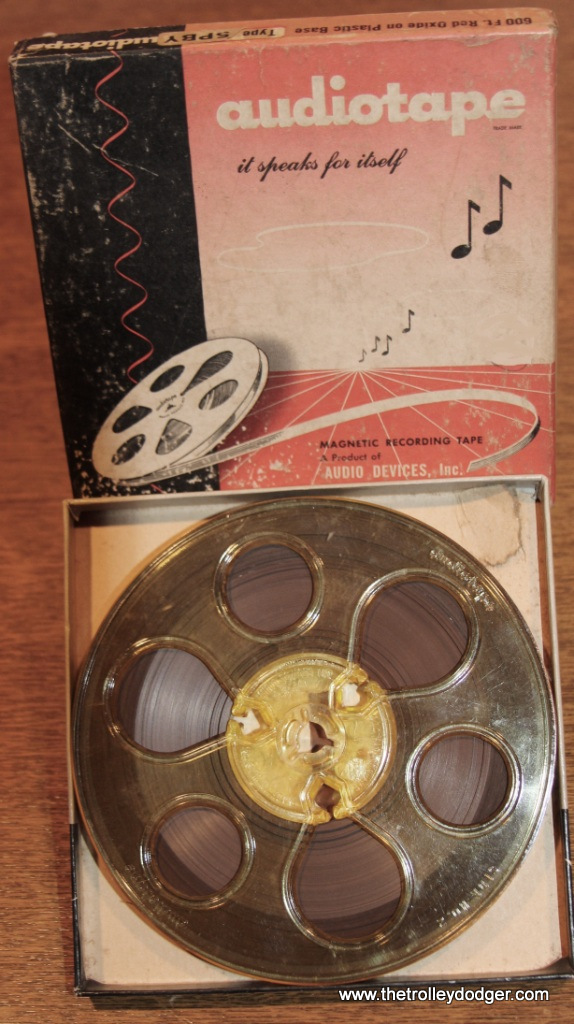
Our friend Kenneth Gear has a Facebook group for the Railroad Record Club. If you enjoy listening to audio recordings of classic railroad trains, whether steam, electric, or diesel, you might consider joining.
FYI, the Hoosier Traction Facebook Group celebrates electric transit in Indiana and the Midwest. It also supports the activities of the annual Hoosier Traction Meet (although not affiliated with the North American Transit Historical Society, which organizes that event).
The 2023 IRM Trolley Pageant Videos
North Shore Line Electroliner 801-802:
Placing the trolley pole of 251 back on the wire, as part of the North Shore Line 5-car train:
The North Shore Line 5-car train:
North Shore Line line car 604 and Merchandise Despatch car 229:
North Shore Line city streetcar 354 and Illinois Terminal 101:
Chicago Surface Lines 1374 and 3142:
Chicago Surface Lines 144:
Chicago Transit Authority 4391 backs up:
An Illinois Terminal 3-car train, with 277, 518, and 234:
Indiana Railroad car 65 making a backup move:
Chicago Transit Authority 4391:
Chicago Surface Lines 144:
Chicago Surface Lines 3142:
Chicago Surface Lines “Matchbox” 1374:
The Illinois Terminal 3-car train:
Illinois Terminal 101:
North Shore Line city streetcar 354:
North Shore Line box motor 229 and line car 604:
Electroliner 801-802:
The five-car North Shore Line train, with 749, 757, 714, 160, and 251:
Shaker Heights Rapid Transit car 18:
Cooperativa de Transportes Urbanos y Sub-Urbanos (Veracruz, Mexico) open car 19:
Chicago and West Towns 141:
Sand Springs Railway car 68:
The four-car train of Chicago Aurora & Elgin woods included 319, 36, 309, and 308:
The four-car train of Chicago Aurora & Elgin steels included 431, 409, 460, and 451:
A four-car train of wooden Chicago “L” cars included cars 24 (aka 1024), 1797, 1268, and 1754:
A four-car train of CTA 4000s, including cars 4290, 4412, 4410, and 4146:
SEPTA Broad Street Subway car 55, operating for the first time since 2011:
A 7-car CTA “L” train, made up of cars 41, 22, 6655-6, 30, and 6125-26:
The 7-car “L” train finally gets cleared to pass:
A six car train of 1960s/70s CTA rapid transit cars, made up of 2153-4, 2243-44, and 2433-4:
Municipality of East Troy box motor/line car M15 (formerly Milwaukee Electric):
Milwaukee Electric work car D13:
The trolley freight train, led by Commonwealth Edison loco 4:
Three South Shore Line cars (34, 40, and 504), hauled by a diesel locomotive:
South Shore Line line car 1100:
Illinois Central cars 1380 and 1198:
The 7-car train of CTA 6000s and single car units:
The train of CTA 6000s and single car units moves out of the way, allowing Illinois Central Highliners 1630 and 1637 to be seen as they pass the Depot:
Electric locos South Shore Line 803, Pennsylvania Railroad GG-1 4927, and Amtrak 945 finish up the Trolley Pageant:
Our Latest Book, Now Available:
The North Shore Line
FYI, my new Arcadia Publishing book The North Shore Line is now available for immediate shipment. My publisher decided to expand it to 160 pages, instead of the usual 128. That’s a 25% increase, without any change to the $23.99 price. I am quite pleased with how this turned out.
From the back cover:
As late as 1963, it was possible to board high-speed electric trains on Chicago’s famous Loop “L” that ran 90 miles north to Milwaukee. This was the Chicago North Shore & Milwaukee Railroad, commonly known as the North Shore Line. It rose from humble origins in the 1890s as a local streetcar line in Waukegan to eventually become America’s fastest interurban under the visionary management of Midwest utilities tycoon Samuel Insull. The North Shore Line, under Insull, became a worthy competitor to the established steam railroads. Hobbled by the Great Depression, the road fought back in 1941 with two streamlined, air-conditioned, articulated trains called Electroliners, which included dining service. It regained its popularity during World War II, when gasoline and tires were rationed, but eventually, it fell victim to highways and the automobile. The North Shore Line had intercity rail, commuter rail, electric freight, city streetcars, and even buses. It has been gone for nearly 60 years, but it will always remain the Road of Service.
Each copy purchased here will be signed by the author, and you will also receive a bonus North Shore Line map. Books will ship by USPS Media Mail.
Chapters: 01. Beginnings 02. The Milwaukee Division 03. The Shore Line Route 04. The Skokie Valley Route 05. The Mundelein Branch 06. On the “L” 07. City Streetcars 08. Trolley Freight 09. The Long Goodbye 10. The Legacy
Title The North Shore Line
Images of America
Author David Sadowski
Edition illustrated
Publisher Arcadia Publishing (SC), 2023
ISBN 1467108960, 978-1467108966
Length 160 pages
The price of $23.99 includes shipping within the United States.
For Shipping to US Addresses:
New Compact Disc, Now Available:
CTA-1
The Last Chicago Streetcars 1958
# of Discs – 1
Price: $15.99
Until now, it seemed as though audio recordings of Chicago streetcars were practically non-existent. For whatever reason, the late William A. Steventon does not appear to have made any for his Railroad Record Club, even though he did make other recordings in the Chicago area in 1956.
Now, audio recordings of the last runs of Chicago streetcars have been found, in the collections of the late Jeffrey L. Wien (who was one of the riders on that last car). We do not know who made these recordings, but this must have been done using a portable reel-to-reel machine.
These important recordings will finally fill a gap in transit history. The last Chicago Transit Authority streetcar finished its run in the early hours of June 21, 1958. Now you can experience these events just as Chicagoans did.
As a bonus, we have included Keeping Pace, a 1939 Chicago Surface Lines employee training program. This was digitally transferred from an original 16” transcription disc. These recordings were unheard for 80 years.
Total time – 74:38
Help Support The Trolley Dodger
This is our 303rd post, and we are gradually creating a body of work and an online resource for the benefit of all railfans, everywhere. To date, we have received over 995,000 page views, for which we are very grateful.
You can help us continue our original transit research by checking out the fine products in our Online Store.
As we have said before, “If you buy here, we will be here.”
We thank you for your support.
DONATIONS
In order to continue giving you the kinds of historic railroad images that you have come to expect from The Trolley Dodger, we need your help and support. It costs money to maintain this website, and to do the sort of historic research that is our specialty.
Your financial contributions help make this web site better, and are greatly appreciated.
The North Shore Line Electroliner has come a long way since it came to IRM in 1982. After the interurban abandoned service in 1963, it went to the Red Arrow Lines (aka the Philadelphia Suburban Transportation Company), where it continued to operate for another dozen years as a “Liberty Liner.” It has certainly come a long way since its return. Here, we see it near IRM’s 50th Avenue “L” station, which came from the Douglas Park line.
This is the Illinois Railway Museum‘s 70th anniversary, and in that span, it has certainly become the largest such operation in the United States, and possibly the world. So it should be no surprise that IRM pulled out all the stops for this year’s Trolley Pageant, which featured at least 70 pieces of electric railway equipment in more than 30 consists.
There was a delay in getting started, as there had been a bit of rain in the morning, and in spite of a few hiccups (at one point the power went out, possibly because there were so many things using it), it was a remarkable and unique event that couldn’t have happened anywhere else but Union, Illinois.
We were there to document the event for all those who couldn’t be there in person. This is part one, because we took so many pictures and videos that it would simply be too much to put it all into a single post. This post will feature our still pictures, and part two will include the numerous videos we took.
Many thanks go out to all the hard working volunteers that have made the museum what it is today– a first class operation that is unrivaled, and just keeps getting better and better.
Our friend Kenneth Gear has a Facebook group for the Railroad Record Club. If you enjoy listening to audio recordings of classic railroad trains, whether steam, electric, or diesel, you might consider joining.
FYI, the Hoosier Traction Facebook Group celebrates electric transit in Indiana and the Midwest. It also supports the activities of the annual Hoosier Traction Meet (although not affiliated with the North American Transit Historical Society, which organizes that event).
The 2023 IRM Trolley Pageant
Chicago Aurora and Elgin wood car 308, at the head of a four-car train. Don’s Rail Photos (via archive.org): “308 was built by Niles Car & Mfg Co in 1906. It was modernized by unknown date and sold to Indiana Transportation Museum in 1962 and resold to Illinois Railway Museum in 1996.”
CA&E 309. Don’s Rail Photos (via archive.org): “309 was built by Hicks Locomotive Works in 1907. It was modernized in October 1941 and acquired by Illinois Railway Museum in 1962.”
CA&E 36. Don’s Rail Photos (via archive.org): 36 was built by Stephenson in 1903. It was acquired by Trolleyville in 1961 and was painted as Columbia & Southwestern 36. It was sold to Illinois Railway Museum in December 2009.”
CA&E 319. Don’s Rail Photos (via archive.org): “319 was built by Jewett Car Co in 1914. It was modernized at an unknown date and sold to Columbia Park & Southwestern in 1962. It was resold to IRM in December 2009.”
Sand Springs (Oklahoma) Railway car 68 was built by the Cincinnati Car Company in 1918. It was originally delivered to the Cincinnati Lawrenceburg & Aurora in Ohio, and came to IRM in 1967.
Chicago and West Towns Railways 141 was built by McGuire-Cummings in 1924. After streetcar service ended in 1948, the body was stored on a farm. The Electric Railway Historical Society (ERHS) rescued it in 1959, and donated it to IRM in 1973. After a lengthy restoration, it was returned to operating condition in 2014.
Open car 19 was built by the J. G. Brill company in 1914, and operated in Veracruz, Mexico until 1961. It then went to Trolleyville USA in Ohio. IRM acquired it in 2009.
Cleveland center-entrance car 18 was built by the G.C. Kuhlman Car Company in 1914, and ran on the Shaker Heights Rapid Transit line until 1961. It then went to Trolleyville USA, and IRM purchased it in 2013. Frank Hicks has worked to get this car back to operating condition, and this was the first time it ran at IRM.
Center-entrance streetcars had a brief vogue and the most successful of these were called Peter Witts. They were two-man cars, as there was a conductor who collected fares inside. Some systems used a “pay as you enter” system, and some preferred “pay as you pass.” In order to exit through the front door, you had to walk by the conductor and would then pay your fare. The idea was to speed up loading, as fares could be collected while the car was in motion.
SHRT car 18 backs up to get into position for the Trolley Pageant. The conductor is making sure the pole stays on the wire while it is reversed, while the motorman is at the controls over in the other end of the car. Although this may originally have been a double-ended car, it seems to have been converted to single-end at some point in Cleveland.
North Shore Line combine 251, at the head of a five-car train. Don’s Rail Photos (via archive.org): “251 was built by Jewett in 1917, It had its seating reduced from 40 to 24 on October 3, 1925, and it was converted to a Silverliner on June 19, 1953. It was acquired by Illinois Railway Museum in 1963.”
North Shore Line car 160 is now that interurban’s second oldest surviving car, following 162, which was delivered earlier. Don’s Rail Photos (via archive.org): “160 was built by Brill in 1915, (job) #19605. It was acquired by Illinois Railway Museum in 1963.”
North Shore Line coach 714. Don’s Rail Photos (via archive.org): “714 was built by Cincinnati Car Co in 1926, (job) #2890. It is modernized in 1939 and preserved in 1963 by the Illinois Railway Museum.”
North Shore Line car 757. Don’s Rail Photos (via archive.org): “757 was built by Standard Steel Car Co in 1930. It was modernized in 1949 and rebuilt as Silverline on March 16, 1956. It was sold to Wisconsin Electric Railway Historical Society in 1963 and resold to Illinois Railway Museum in 1988.”
North Shore Line coach 749. Don’s Rail Photos (via archive.org): “749 was built by Pullman in 1928. It was modernized in 1940 and acquired by Illinois Railway Museum in 1963.”
North Shore Line city streetcar 354. The late Don Ross, from Don’s Rail Photos (via archive.org): “354 was built by St Louis Car Co in January 1928, #1453. It became the last car on August 12, 1951. It was purchased by the president of the Chicago Hardware Foundry. It was painted into the green and red of CHF, but the motors were removed. The car was acquired by the Illinois Electric Railway Museum (now IRM). Restoration began in 1958 (I put many hours on the car), and it is now in operation in Union. When I visited the car in 1989, it brought back many happy memories.”
Illinois Terminal interurban car 101. It ran between St. Louis and Alton. Don’s Rail Photos (via archive.org): “101 was built by American Car in 1917 as AG&StL 61. In 1926 the car became StL&ARy 61 and in 1930 it became IT 101. On March 9, 1956, it was sold to the Illinois Electric Railway Museum and is now at Union, IL.”
Two Chicago streetcars for the price of one, here. “Matchbox” 1374 was built by St. Louis Car Company (order #715) in 1905. The Chicago Transit Authority turned it into a salt spreader in 1947. It was purchased by the ERHS in 1958 and donated to IRM in 1973. The 3142 was built by J.G. Brill Company (order #21686) in 1923. It too was purchased by ERHS in 1958 and came to IRM in 1973. The white stripe indicates it was used as a one-man car, letting riders know they should board at the front instead of the back.
Chicago Pullman 144 was built in 1908 and ran in regular service until 1954. Until the end of streetcar service four years later, it was only used on fantrips. IRM purchased it in 1959.
CTA PCC streetcar 4391 is using the back-up controller to make its way to the parade staging area, as it is a single-ended car. Since the pole is reversed, the operator is trying to keep it from coming off the wire.
CTA PCC 4391 was built by the St. Louis Car Company in 1948 and ran in Chicago until 1958. ERHS purchased it the following year and it came to IRM in 1973. It is the only surviving car of its type. This is a two-man streetcar– you enter at the rear, pay the conductor, then exit via the middle or front.
Indiana Railroad high-speed lightweight car 65 was built in 1931 by Pullman and ran for a decade in Indiana before making its way to the CRANDIC (Cedar Rapids and Iowa City) in Iowa. It was purchased in 1953 as the first acquisition of the Illinois Electric Railway Museum, then located in North Chicago. The original ten founders each contributed $100 towards the cost. The last survivor of the ten was Malcolm D. McCarter, who died in 2016.
Indiana Railroad car 65 is similar to cars that were built around the same time for the Cincinnati and Lake Erie. After that line quit around 1938, several of those cars went to Lehigh Valley Transit in Pennsylvania, where they ran until 1951. Others made it to Iowa and ran on CRANDIC. The only other surviving Indiana Railroad high-speed car is 55, which was built by a different manufacturer. It survives at the Seashore Trolley Museum in Maine as LVT car 1030.
Two North Shore Line work cars (line car 604 and box motor 229) head west through the depot.
It was nice to see so many families with young children out at the museum for this event.
IRM’s North Shore Line Electroliner, built in 1941 by the St. Louis Car Company, is still undergoing interior restoration, but can operate. It was certainly a welcome addition to the Trolley Pageant.
One of the trolley poles on the Electroliner got snagged and had to be repositioned. Fortunately, no damage was done to the wire.
Where else but IRM could you see not one, but TWO four-car trains, made up of Chicago Aurora and Elgin interurban coaches, side by side? Over the years, the museum has put together a unique and unrivaled collection.
Although not yet numbered, this is either Chicago Aurora and Elgin car 451 or 453, built in 1945 by the St. Louis Car Company. Don’s Rail Photos (via archive.org): “451 was built by St Louis Car Co in September 1945, #1717. It was sold to Trolleyville in 1962 and lettered as Columbia Park & Southwestern. It was transferred as Lake Shore Electric Ry in 2006. It was sold to Illinois Railway Museum in December 2009.” 453 was purchased in 1962 by Trolleyville USA in Ohio, and went to the Electric City Trolley Museum in Scranton, PA in 2009. They considered turning it into an ersatz Laurel Line car, as none of those were saved. Having decided against that, it was acquired by IRM in 2019 and is undergoing restoration. Thus, all four surviving cars of this type are back in Illinois– three at IRM (451, 453, and 460) and 460 at the Fox River Trolley Museum. We recently posted pictures of that restoration. Spence Ziegler adds: “Dave, the unnumbered CA&E car is the 451, from what I understand it’s going to get the original “Futura” font lettering, which will look nice. That’s why the grey is darker also.”
A four-car train of Chicago wooden “L” cars, with 1754 at the rear. It was built by the Jewett Car Company in 1906 for the Northwestern Elevated. After the CTA stopped using wood cars in regular service in 1957, it was converted to a work car. IRM acquired it in 1971.
Broad Street Subway (Philadelphia) car 55 was built by the J.G. Brill Company (order #22488) in 1927. IRM purchased it in 1985, and this was the first time it operated at the museum in 20 years. Notice how it is both wider and longer than a Chicago “L” car, and has three sets of doors for faster service.
I don’t think any other museum besides IRM could field a seven-car Chicago “L” car train. This one consisted of two sets of married pairs and three single car units.
The “L” train makes its run-by, with car 41 in the lead. It was built in 1959 by the St. Louis Car Company and was designed to be operated as a single car for the Evanston line, where the CTA wanted to reduce operating expenses. For several years, riders would pay on the train at off-peak hours, and the train operator had a fare collection box. There was no conductor. Unfortunately, this really slowed down service, as the train could no proceed until everyone boarding had paid. Eventually, 41 was paired with car 28 but that car was eventually damaged and was not saved. 41 came to IRM in 1998.
A Commonwealth Edison diesel switcher came out at one point, probably to help move a disable railcar.
This rare Lake Shore Electric freight trailer was part of a train which included three electric locos, led by Commonwealth Edison 4, built in 1912 by Alco/General Electric (order #3514), which came to IRM in 1962.
North Shore Line box motor 213 (aka a “Merchandise Despatch” car) was built in 1920 by the Cincinnati Car Company (order #2445), and was sold to the Chicago Hardware Foundry in 1955. That was also the original location of the Illinois Electric Railway Museum. When IRM moved to its current location in 1964, 213 went with it.
A Milwaukee Electric logo on a piece of freight equipment in the parade.
For a rather nondescript car, South Shore Line 504 has had an interesting life. It started out in 1925 on the Indiana Public Service as a baggage/coach car. This turned into the Indiana Railroad in 1931, and it became coach/RPO (railway post office) 377 for another decade before that interurban was abandoned. The South Shore Line purchased it, and used it until 1975 to haul newspapers and small packages. (It still has a sign on it advertising their “emergency package service.” IRM bought it in 1975.
South Shore Line line car 1100 was built in 1925 by the St. Louis Car Company for the Indiana Service Corporation, which became the Indiana Railroad in 1931. It began as baggage/coach car 376, and became a coach/RPO in 1935. After the Indiana Railroad abandonment in 1941, the South Shore Line purchased it, and it was converted to a line car in 1947. I actually rode on this car in 1988 on a fantrip for the George Krambles scholorship fund. GK had begun his storied career working for the Indiana Railroad in 1936. IRM acquired it in 2010.
Illinois Central cars 1198 (powered) and 1380 (unpowered) were built by Pullman in 1926 and were used in service until 1972 on the electric suburban service, which later became the Metra Electric. After their retirement, the pair came to IRM. These cars are somewhat similar to the Erie Lackawanna cars that were used in New Jersey.
The seven-car CTA “L” train stops briefly at the depot, before heading west to get into position for its run-by.
CTA “L” cars 30 (left) and 6655 (right). With the two paired, you can see how the position of the doors differed.
And there are still plenty of other cars that hopefully will run in future Trolley Pageants at IRM.
Our Latest Book, Now Available:
The North Shore Line
FYI, my new Arcadia Publishing book The North Shore Line is now available for immediate shipment. My publisher decided to expand it to 160 pages, instead of the usual 128. That’s a 25% increase, without any change to the $23.99 price. I am quite pleased with how this turned out.
From the back cover:
As late as 1963, it was possible to board high-speed electric trains on Chicago’s famous Loop “L” that ran 90 miles north to Milwaukee. This was the Chicago North Shore & Milwaukee Railroad, commonly known as the North Shore Line. It rose from humble origins in the 1890s as a local streetcar line in Waukegan to eventually become America’s fastest interurban under the visionary management of Midwest utilities tycoon Samuel Insull. The North Shore Line, under Insull, became a worthy competitor to the established steam railroads. Hobbled by the Great Depression, the road fought back in 1941 with two streamlined, air-conditioned, articulated trains called Electroliners, which included dining service. It regained its popularity during World War II, when gasoline and tires were rationed, but eventually, it fell victim to highways and the automobile. The North Shore Line had intercity rail, commuter rail, electric freight, city streetcars, and even buses. It has been gone for nearly 60 years, but it will always remain the Road of Service.
Each copy purchased here will be signed by the author, and you will also receive a bonus North Shore Line map. Books will ship by USPS Media Mail.
Chapters: 01. Beginnings 02. The Milwaukee Division 03. The Shore Line Route 04. The Skokie Valley Route 05. The Mundelein Branch 06. On the “L” 07. City Streetcars 08. Trolley Freight 09. The Long Goodbye 10. The Legacy
Title The North Shore Line
Images of America
Author David Sadowski
Edition illustrated
Publisher Arcadia Publishing (SC), 2023
ISBN 1467108960, 978-1467108966
Length 160 pages
The price of $23.99 includes shipping within the United States.
For Shipping to US Addresses:
New Compact Disc, Now Available:
CTA-1
The Last Chicago Streetcars 1958
# of Discs – 1
Price: $15.99
Until now, it seemed as though audio recordings of Chicago streetcars were practically non-existent. For whatever reason, the late William A. Steventon does not appear to have made any for his Railroad Record Club, even though he did make other recordings in the Chicago area in 1956.
Now, audio recordings of the last runs of Chicago streetcars have been found, in the collections of the late Jeffrey L. Wien (who was one of the riders on that last car). We do not know who made these recordings, but this must have been done using a portable reel-to-reel machine.
These important recordings will finally fill a gap in transit history. The last Chicago Transit Authority streetcar finished its run in the early hours of June 21, 1958. Now you can experience these events just as Chicagoans did.
As a bonus, we have included Keeping Pace, a 1939 Chicago Surface Lines employee training program. This was digitally transferred from an original 16” transcription disc. These recordings were unheard for 80 years.
Total time – 74:38
Help Support The Trolley Dodger
This is our 302nd post, and we are gradually creating a body of work and an online resource for the benefit of all railfans, everywhere. To date, we have received over 993,000 page views, for which we are very grateful.
You can help us continue our original transit research by checking out the fine products in our Online Store.
As we have said before, “If you buy here, we will be here.”
We thank you for your support.
DONATIONS
In order to continue giving you the kinds of historic railroad images that you have come to expect from The Trolley Dodger, we need your help and support. It costs money to maintain this website, and to do the sort of historic research that is our specialty.
Your financial contributions help make this web site better, and are greatly appreciated.
Waterloo Cedar Falls and Northern car 100. This car is featured on Railroad Record Club LP #2. Don’s Rail Photos: “100 was built by McGuire-Cummings in 1914. It was built as a second motor to operate behind the 140s as a two car train. The baggage compartment was a kitchen, and the rear end was an open platform observation. The buffet section was replaced with coach seats in 1918. The car was then rebuilt with a control station and baggage compartment in 1928 and the rear platform was enclosed at that time. It was the last interurban left on the WCF&N when it became diesel freight, and it was donated to the Iowa Chapter of the NRHS in 1956. It was moved to Centerville and operated on the Southern Iowa Ry. When the SI cut back its operation and dieselized, the Iowa Chapter transferred the car to the Iowa Terminal RR in 1966. Shortly after it was repainted and put into charter service, it was destroyed in the carbarn fire early November 24, 1967. It had been the only car saved from the WCF&N roundhouse fire on October 31, 1954, when the other two cars of its class burned.”
No one person has been more responsible for preserving the historic artifacts connected with William A. Steventon‘s Railroad Record Club than our good friend Kenneth Gear. A while back, Ken acquired many of the original RRC tape recordings, some of which were never issued.
I have referred before to the RRC output being the “tip of the iceberg,” so to speak, and thanks to Ken, we are beginning to see what the rest of the RRC archive consisted of. While we had already issued some “new” RRC recordings, taken from discs found in the Steventon archive, we have something even more exciting to announce today– newly uncovered audio recordings of the Chicago, North Shore and Milwaukee interurban, the fabled North Shore Line, unheard for perhaps as much as 60 years.
These recordings have been digitized from original RRC tapes that Ken purchased, and are now available for the first time on compact disc. More details about that will be found at the end of this post.
Because we feel it is important for Ken to get back at least some of the substantial investment he has made, in order to preserve these and other historic materials, we are paying Ken a royalty of $5 for each disc sold. Our humble offerings are already reasonably priced, and we don’t make much money from them. On top of that, the Trolley Dodger has, to date, operated at a loss for every year. Our original losses were in excess of $10k per year. This was reduced to $6k in 2017, and we recently did our taxes and are pleased to report that we cut the loss to just $1400 in 2018.
Our goal with this enterprise is historic preservation and education, to provide an archive where people can get, and exchange information about electric railways. In some ways it is the modern equivalent of what my friend Ray DeGroote calls the “intelligence network” of railfans, which has been around since the 1930s or even earlier, just updated for the Internet age.
It used to be that you had to know somebody to be part of this intelligence network, and information was passed from one person to another. Now, it is accessible to anyone and everyone who wants it, via the world wide web.
With that in mind, our goal has always been to break even, in order to make the Trolley Dodger a self-sustaining enterprise.
But we have to give credit where credit is due. Without Kenneth Gear’s personal sacrifices, it’s possible that these materials would have been lost forever, and would have ended up in a dumpster somewhere. You never would even have known they existed.
That’s why I hope you will help support Ken’s gallant efforts by purchasing a copy of this new CD offering.
Because we are not entirely mercenary, Ken is also sharing dozens of classic railfan photos which he purchased as part of the Railroad Record Club archive. Presumably, all or nearly all of these were taken by the late William A. Steventon (1921-1993) himself, as many reflect the areas he lived, worked, and traveled to in his career.
A few of these we already published, but most of these appear here for the first time.
As always, if you can help provide any additional information about these photos, we would love to hear from you.
Enjoy!
-David Sadowski
Altoona and Logan Valley car 74. Don’s Rail Photos: “74 was built by Osgood-Bradley Car Co in 1930.”
This photo was originally misidentified, but actually shows Indianapolis Railways Peter Witt car #132, apparently on a fantrip, probably circa 1950. The streetcar was a Master Unit (that was a Brill trade name), built circa 1932-33, making it one of the last such orders before the PCC era. Master Units were supposed to be a standardized car, but in actuality I believe no two orders were exactly the same.
A Chicago, Aurora & Elgin train street running in Aurora in 1931. The CA&E was relocated off-street here in 1939.
A Capital Transit PCC and bus at Catholic University in the Washington, DC area.
Denver and Rio Grande Western 476, which was featured on Railroad Record Club LP SP-1.
Denver and Rio Grande Western 481.
Des Moines and Central Iowa cars #1701 and 1704 in the scrap line, November 19, 1939.
Des Moines and Central Iowa #1705 in October 1938.
Des Moines and Central Iowa car 1710.
East Broad Top #15 on a rainy day, very likely while Railroad Record Club LP #3 was being recorded.
Evansville and Ohio Valley car #134.
Hagerstown and Frederick #19 in Frederick, MD on May 30, 1939.
The same picture cropped.
A Hagerstown and Frederick work car in Fredercik, MD on May 30, 1939.
Hagerstown and Frederick 164.
Illinois Terminal car 285. Don’s rail Photos: “285 was built by St Louis Car in 1914. It was rebuilt as a parlor car in 1024 and as a coach in December 1928. It was air conditioned in August 1938 and got new seating in December 1952. It was sold for scrap to Hyman Michaels Co. on May 16, 1956.”
An Illinois Terminal local on Caldwell Hill in East Peoria about 1936.
A fuzzy picture of Illinois Power Company loco #1551.
A builder’s photo of Illinois Terminal #207.
Illinois Terminal 1201 at Peoria. Don’s Rail Photos: “1201 was built by McGuire-Cummings in 1910 as an express motor with 20 seats at the rear. In 1919 it was rebuilt with a small baggage section at the front and the trucks were changed from Curtis to Baldwin.”
Indiana Railroad box car #550.
Indiana Railroad loco #752 waiting for loads at a mine scale.
Indiana Railroad lightweight high-speed car #64. Howard Pletcher adds, “Indiana Railroad lightweight high-speed car #64 is at the Fort Wayne passenger terminal.”
The Indiana Railroad passenger terminal in Fort Wayne. (Howard Pletcher Collection)
Indiana Railroad #93 at Anderson, IN on September 4, 1938.
Indiana Railroad box motor #722.
Indiana Railroad lightweight high-speed car #80 on an Indianapolis local. It was built by Pullman in 1931 and scrapped in 1941.
Indiana Railroad box motor #115.
Indiana Railroad car #375. Don’s Rail Photos: “375 was built by St Louis Car Co in 1926 as Indiana Service Corp 375. It was ass1gned to IRR as 375 in 1932 and rebuilt as a RPO-combine in 1935. It was sold to Chicago South Shore & South Bend in 1941 as 503 and used as a straight baggage car. It was rebuilt in 1952 with windows removed and doors changed.”
Indiana Railroad car #446.
Indiana Railroad car #730.
Indiana Railroad loco #792.
The same picture, restored.
Indiana Railroad Vigo with rails ripped out.
Indiana Service Corp., looking forward from car at speed on Spy Run Avenue showing car on #6 line, May 22, 1939.
Indiana Service Corporation #820 at Wabash station on August 3, 1936.
Indiana Service Corp View across the Broadway bridge, showing double truck car in distance, August 18, 1940. (But what city is this?) Mike Peters writes: “he ISC city car is in Fort Wayne, a block away from the south end of the Broadway line. The bridge carries Bluffton Road and the ISC interurban to Bluffton over the Saint Marys River. A good map of the Ft. Wayne system can be found in “Fort Wayne’s Trolleys” (George Bradley). ISC did provide service in several smaller cities, but these lines did not survive the 1930’s.”
Interstate car #711, ex-Indiana Public Service Corporation 427, on September 3, 1939.
Interstate car 711 on shop siding west of Greencastle on June 3 1939.
Indiana Railroad lightweight car #94. Don’s Rail Photos: “90 thru 99 were built by Cummings in 1930 as Northern Indiana Ry 350 thru 359. In 1935, they were returned to Cummings, who rebuilt them and sold them to the IRR. They were retired in 1940.”
Indiana Railroad line car 763 at the Muncie station on May 19, 1940.
Indiana Railroad lightweight car 96.
Indiana Railroad lightweight car #90 at New Castle, IN on July 4, 1936. Note the Woolworth’s at right.
Indiana Railroad lightweight car #95 at the Indianapolis terminal.
Indiana Railroad lightweight car #99.
Indiana Railroad #787.
Lake Erie and Northern car #795.
Lake Erie and Northern car #797.
Lake Erie and Northern car #939.
A Lehigh Valley Transit Allentown Limited on the Liberty Bell Route, descending the ramp at Norristown (where LVT shared tracks with the Philadelphia & Western for access to Philadelphia, at least until 1949).
Lehigh Valley Transit lightweight high-speed car 1002, presumably in Allentown PA.
Mason City and Clear Lake car #34 (photo restored).
Mason City and Clear Lake car #34 (unrestored photo).
Mason City and Clear Lake car #106.
Mason City and Clear Lake car #14.
Mason City and Clear Lake steeple cab #52.
Niagara St. Catharines and Toronto Railway yard.
A Niagara St. Catharines and Toronto Railway snow plow.
A Niagara St. Catharines and Toronto Railway trolley.
A nice right-of-way photo with no information, other than the date– March 31, 1936.
Jeff Wien: “TMER&T, route 13: Clybourn Downtown Milwaukee.”
.
No information.
This is a three-car train of Indiana Railroad lightweight high-speeds in multiple-unit service on a fantrip, circa 1938-40.
No information (photo restored).
No information (unrestored photo).
Does ST F Co RR stand for Santa Fe? At any rate, this is car #54 at Farmington, MO.
Salt Lake and Utah loco #101.
Sand Springs Railway (Oklahoma) loco #1001.
Unidentified car and person. Mike Peters: “The photo of 817 and employee would also be Fort Wayne. After passenger operations ceased, this motor was retained for switching the Spy Run power plant and several nearby industries. The roster in “Fort Wayne and Wabash Valley Trolleys” (CERA #122) shows the 817 as being retired in 1952.”
Unidentified steeple cab locomotive.
Unidentified steeple cab locomotive.
Union Electric Railway loco #80.
Utah Idaho Central #905 in June 1945.
Utah Idaho Central #905 in June 1945.
Washington and Old Dominion car #44 and a Railway Express Agency truck in Rosslyn VA.
A Washington and Old Dominion locomotive.
A Washington and Old Dominion RPO (Railway Post Office) on a mail run outside Rosslyn VA.
The Washington and Old Dominion shops.
Recent Finds
The CTA DesPlaines Avenue terminal in Forest Park in July 1955. This is an unusal view, looking west from Desplaines Avenue. At left, you can just barely see some streetcar tracks, which were used by West Towns Railways trolleys no later than 1948. That could be a CTA Route 17 bus, and you can also see some Chicago, Aurora & Elgin interurban cars in the station. The CA&E cut back service to here in 1953.
CTA 1775 at Cermak and Kostner on March 21, 1954, about two months before streetcar service ended on Route 21.
CTA 7213 on Route 49 – Western on August 2, 1949. This car would later become the last Chicago streetcar to operate.
North Shore Line 254 “at freight station on “L”structure near Loop – January 27, 1962.”
The North Shore Line shops interior in Milwaukee, September 24, 1961.
Chicago Surface Lines 5258 at Lowe Avenue in the 1940s (not sure of main street, perhaps 79th?).
CTA 6180, a one-man car, picks up passengers at an “L” station in the early 1950s.
CTA 7216, a St. Louis Car Company PCC, is northbound on Route 36 – Broadway in the 1950s. Jeff Wien: “Cars laying over on 119th at Morgan.”
CTA 4362, a Pullman PCC, on Route 8 – Halsted, most likely in the late 1940s. Jeff Wien adds, “Rt. 8 car has just pulled off of Broadway onto Waveland to head south on Halsted to 79th Street loop. Photo ca 1951 when Halsted was operated with PCCs, most Pullmans.”
TRACTION AUDIO, NOW AVAILABLE ON COMPACT DISC:
RRCNSLR
Railroad Record Club – North Shore Line Rarities 1955-1963
# of Discs – 1
Price: $15.99
Railroad Record Club – North Shore Line Rarities 1955-1963
Newly rediscovered and digitized after 60 years, most of these audio recordings of Chicago, North Shore and Milwaukee interurban trains are previously unheard, and include on-train recordings, run-bys, and switching. Includes both Electroliners, standard cars, and locomotives. Recorded between 1955 and 1963 on the Skokie Valley Route and Mundelein branch. We are donating $5 from the sale of each disc to Kenneth Gear, who saved these and many other original Railroad Record Club master tapes from oblivion.
Total time – 73:14
The Trolley Dodger On the Air
We appeared on WGN radio in Chicago last November, discussing our book Building Chicago’s Subways on the Dave Plier Show. You can hear our 19-minute conversation here.
Order Our New Book Building Chicago’s Subways
There were three subway anniversaries in 2018 in Chicago: 60 years since the West Side Subway opened (June 22, 1958) 75 years since the State Street Subway opened (October 17, 1943) 80 years since subway construction started (December 17, 1938)
To commemorate these anniversaries, we have written a new book, Building Chicago’s Subways.
While the elevated Chicago Loop is justly famous as a symbol of the city, the fascinating history of its subways is less well known. The City of Chicago broke ground on what would become the “Initial System of Subways” during the Great Depression and finished 20 years later. This gigantic construction project, a part of the New Deal, would overcome many obstacles while tunneling through Chicago’s soft blue clay, under congested downtown streets, and even beneath the mighty Chicago River. Chicago’s first rapid transit subway opened in 1943 after decades of wrangling over routes, financing, and logistics. It grew to encompass the State Street, Dearborn-Milwaukee, and West Side Subways, with the latter modernizing the old Garfield Park “L” into the median of Chicago’s first expressway. Take a trip underground and see how Chicago’s “I Will” spirit overcame challenges and persevered to help with the successful building of the subways that move millions. Building Chicago’s subways was national news and a matter of considerable civic pride–making it a “Second City” no more!
Bibliographic information:
Title Building Chicago’s Subways Images of America
Author David Sadowski
Edition illustrated
Publisher Arcadia Publishing (SC), 2018
ISBN 1467129380, 9781467129381
Length 128 pages
Chapter Titles: 01. The River Tunnels 02. The Freight Tunnels 03. Make No Little Plans 04. The State Street Subway 05. The Dearborn-Milwaukee Subway 06. Displaced 07. Death of an Interurban 08. The Last Street Railway 09. Subways and Superhighways 10. Subways Since 1960
Building Chicago’s Subways is in stock and now available for immediate shipment. Order your copy today! All copies purchased through The Trolley Dodger will be signed by the author.
The price of $23.99 includes shipping within the United States.
For Shipping to US Addresses:
For Shipping to Canada:
For Shipping Elsewhere:
Redone tile at the Monroe and Dearborn CTA Blue Line subway station, showing how an original sign was incorporated into a newer design, May 25, 2018. (David Sadowski Photo)
Help Support The Trolley Dodger
This is our 229th post, and we are gradually creating a body of work and an online resource for the benefit of all railfans, everywhere. To date, we have received over 507,000 page views, for which we are very grateful.
You can help us continue our original transit research by checking out the fine products in our Online Store.
As we have said before, “If you buy here, we will be here.”
We thank you for your support.
DONATIONS
In order to continue giving you the kinds of historic railroad images that you have come to expect from The Trolley Dodger, we need your help and support. It costs money to maintain this website, and to do the sort of historic research that is our specialty.
Your financial contributions help make this web site better, and are greatly appreciated.
Tony Manthos: “Birney 93 (very elaborate 3), destination boards read “Willard via Third.” Looks like end of line loop in pretty remote spot.” Frank Hicks: “This is the Jamestown Street Railway in Jamestown, NY. This exact car (this isn’t actually a Birney, it’s a 1926 St. Louis Car Company product*) is currently being restored by a group there.” http://jamestowntrolley.org/trolrest/index.html
Recent Correspondence
Dear Sir:
I have been struggling to identify some trolley-related photos which came in mixed auction lots.
One significant score this morning was interurban 302, which I found to be Jamestown Westfield & NW. Others remain a mystery. Do you think you would have time to take a look at them?
Thanks and regards.
Tony Manthos London UK
Thanks for sharing. We’ll see what our readers think. Likewise, I am sure they would also like to see the pictures that you have identified, including interurban 302.
If you can shed any light on these photos, you can either leave a Comment on this post, or write us directly at:
thetrolleydodger@gmail.com
Thanks!
-David Sadowski
Tony Manthos: “Here is the photo of no. 128. I am hoping that this is San Diego Elec. Ry. 128 (St. Louis Car Co. 1912). I understand the series had centre doors but they were removed in 1924. I can’t read the signs on the side and front. The car on the right seems to have the same sign, but only the H of the first word is visible. The box-like appendage on the roof seems to be a feature of SD cars. The flame shaped streetlight globes are distinctive. Are they a SD feature? There are 5 trolley cars in the picture, which seems a lot for a relatively quiet street. My big question is this – No. 128 and some others were apparently sold to make private residences around1937, but the California license plate on the auto has a 1948 tag in the corner. I hope you can make sense of this. Many thanks.” Don Ross: “The 128 was Municipal Ry of San Francisco.” Tunnelstation writes: “The cars you think are SD cars are indeed San Francisco Municipal Railway streetcars. The location is on Duboce Street passing the “New” Mint just off of Market street. In the background is where the Sunset Tunnel (built in 1928) is located, which took the Muni cars through the hills to the Inner Sunset District on their way to the Beach and the Pacific Ocean where the “N” Judah Street line ended in a loop.”
James B. Holland writes:
The above is clearly San Francisco on Duboce with Market Street behind the photographer and Church Street the first intersection in the distance. Part way up the hill in the distance the tracks cross the right-sidewalk to enter the Sunset Tunnel (the picture is not clear but it does appear to show the tunnel portal outline itself!). The photographer is facing West which is Outbound. The strong cliff on the right supports the San Francisco Mint.
The Trolleys are on top of the current entrance for the “N” and “J” lines into the Market Street Subway. Indeed, the car coming toward us has “N” in the cube on the roof immediately behind the doors.
The “trestle” photo hints at West Penn but could be most any ‘smaller’ interurban line up and over a mainline RR!
Thank You! Thank You! Thank You … for these excellent emails on trolleys. A native of Pittsburgh, I lived a decade in Zion, IL, following my stint in Uncle Sam’s Canoe Club! This is the latter 1960s and early 1970s! After this I did 3.5+decades in San Francisco but am now in upstate NY!
Duboce and Market today.
Tony Manthos: “There is a vertical diamond lozenge logo on the cab side which looks like it might be a Ft. Dodge, Des Moines & Southern. Looks like edges to it so it could be a plate. Mighty steep grade it’s on. I can’t see any headlights and what’s even stranger, no pole and no wire. If there was a wire would that guy be on the boxcar roof? Has it been converted to battery power or internal combustion?” Don Ross: “The loco seems to be FtDDM&S but it is a little shaky.”
Tony Manthos writes: “Apart from being No.70 with zebra stripes I have nothing else to observe. I’ll rely on your expertise.” Don Ross: “70 was Sand Springs.” http://donsdepot.donrossgroup.net/dr2452.htm
Tony Manthos: “All I can see on the sweeper is No.6 under the front middle window.” Don Ross: “I think the other sweeper was Third Avenue Ry.” http://donsdepot.donrossgroup.net/dr180.htm Frank Hicks: “Sweeper 6 – this is the Chicago & West Towns.”
Tony Manthos: “As for the trestle, it’s a long shot, just in case you have encountered it before or know the site. The main line underneath is very well maintained. They obviously didn’t want an interurban diamond getting in their way.” Don Ross: “The trestle was Milwaukee at Grafton.” http://donsdepot.donrossgroup.net/dr2672.htm On the other hand, Scott Greig says, “The Milwaukee Electric viaduct identified as Grafton is actually the viaduct near Mequon quarry. The view is looking north, from the side of Highway 57.”
Tony Manthos: “Interurban 818. The snow tempted me to Denver & Intermountain 818 but I believe it had a center door.” Don Ross: “818 is Denver. The center door was only on one side.” http://donsdepot.donrossgroup.net/dr2234.htm
Tony Manthos writes:
I am blown away by the response from your readers. Very many thanks to you and all of them.
I know where to go if I get more of the same.
I had actually already identified the little Jamestown car and have been in correspondence with the guys who are doing the restoration. They kindly sent me a photo similar to mine taken at the same spot and one of the scene today, taken from the same place on the sidewalk. It hasn’t changed much. The loop is paved and the local bus turns on it. They also sent me photos of when they rescued it – it was a fishing shack on a nearby lake and they had to haul it out of thick trees. They found a good space to work on it, in the old depot, and they are doing a first rate job.
Unfortunately a big wrench has been thrown into the works, in the shape of a theatrical company which is going to convert the depot into a theatre venue in honor of Lucille Ball, who was born in Jamestown, and they don’t feel a trolley is compatible. The restoration group is in despair because they have no place to move to and continue the work. I did suggest they spread a rumor that Lucy used to go to school in that trolley but my contact had already tried that and the committee shot it down. I wish I could do something to help them out.
Thanks again and best regards.
Another Mystery Photo
MBTA (Boston) PCC 3147 at an unidentified location in October 1966. Could this be the old Braves Field loop? Tunnelstation writes:”The Boston PCC picture is located at the end of the “C” line near the Chestnut Hill Reservoir off Beacon Street. The scene is the exit from the Reservoir Car yard out to the street which also serves as the end of the line return loop going to Downtown Boston. That is one of the oldest continuous running trolley lines in America and is still in service today using cars built in Japan.” Beacon Street is the MBTA Green Line “C” branch.
The general area of the 1966 photo. That may be the same building at left, with the fire escape.
A contemporary aerial view.
Phil Bergen writes:
The second color Boston photo is indeed the same large building that trolleys loop around at the corner of Beacon Street and Chestnut Hill Avenue.
The only remaining portion of Braves Field that shows on the Sanborn map is the section marked Pavilion A. The stadium has gradually been reduced in size from its baseball configuration. It was the original home field of the AFL Boston (New England) Patriots and later became the property and home field of Boston University. After BU dropped football, it has evolved into a soccer/field hockey/intramural multipurpose field.
A map showing the Braves Field loop in 1916. A portion of this old ballpark still exists.
Steamed Up
We recently came across some interesting photos showing the last days of steam operation on the Brooklyn East District Terminal Railroad, which was a rail-marine terminal that operated until 1983. Small steam engines were used until October 25, 1963. These had been converted from coal to oil in the 1930s. A number of these locos have been preserved.
The Brooklyn Eastern District Terminal Railroad was a “pocket” railroad, one with no connection to other railroads by land. It had a main pocket yard on the Brooklyn waterfront at Kent Avenue from North 4th Street (the PRR N. 4th St. yard, immediately north of the Domino Sugar plant and the Williamsburgh Bridge, in an area formerly known as Palmer’s Docks), extending north to North 10th Street and east inland only a few blocks, and a small yard directly across Newtown Creek in Queens, Pidgeon Street Terminal, and a third yard, Navy Terminal, down at the Brooklyn Navy Yard (New York Naval Shipyard), but this latter was strictly for in-yard transfer. It now (Jan 01) appears that there was a second Queens yard. All commerce by rail was via carfloats, barges with rails on them, which were moved by tugboats across or along the East, North (Hudson), and Harlem Rivers to railheads at St. George on Staten Island (B&O) or in the Bronx (EL, NYC, NH) or New Jersey (PRR, CNJ, LV) where connections to the mainland railroads were available. It is also possible that connections with the LIRR via its marine terminals in Bay Ridge or LIC might have given mainland access via the New Haven over the Hell Gate Bridge but I have never seen any indication this was so, nor is the LIRR listed on the BEDT’s Feb 1964 connections list. Historian Tom Flagg advised 19 Jan 01 that there was even a Warren St. Terminal in Jersey City which only lasted from about 1910-1915 until shortly after 1920; its track plan looked much more like a Christmas Tree layout, with a loop, than it did a real railroad. Tom suggests that perhaps that’s why it didn’t last long! Further, he advised that the BEDT became a common carrier in 1940, which certainly changes its status (source: Plowden, April 1961, article on BEDT in Railroad Magazine). Aha, interstate commerce for sure!
Several of these color images were Ektachrome slides that have faded to red over the past 50 or 60 years. Usually, red Ektachromes date to around 1956 or so– the stability of the dyes was eventually improved. The problem is not the red dye layer itself, but the greens and blues that receded, leaving practically nothing but red.
People used to think these were unsalvageable, other than to convert them to black and white. But with today’s digital technology, it is possible to restore many of these classic images to something like their original appearance. To show you what is possible, we are including the “before” versions in addition to the “after.”
-David Sadowski
PS- If you are interested in knowing what became of the BEDT property after it was abandoned in 1983, go here. There is also a very comprehensive site devoted to the BEDT here.
BEDT 0-6-0 #16 in Brooklyn, NY on October 9, 1982.
The BEDT tug “Invincible” nudges a car float on the Brooklyn side of the East River in June 1956.
You can hear the sounds of steam on the Brooklyn East District Terminal in our CD collection Twilight of Steam, available through our Online Store.
From The New York Times – Oct. 26, 1963:
DIESEL REPLACES LAST IRON HORSE
Buffs Sad, Engineer Happy at Brooklyn Ceremony
By John F. Callahan
The last regularly operating steam locomotive in the East died yesterday.
With a hiss of steam that roared and then faded to a gasping whisper, No. 10 ended a 44-year run in the shuttling yard of the Brooklyn East District Terminal.
Begrimed, and clouded in her own steam from the last of her banked-down boiler fires, the old black, 28-foot six-wheeler looked tired– especially alongside the bright blue, 44-foot diesel electric locomotive that has taken its place.
A few sad facial expressions were noticeable among steam locomotive buffs who were snapping pictures from all angles. But there was an absence of sadness on the part of Joseph Keane, engineer on No. 10.
Too Hot For Comfort
“There’s no use feeling badly,” he remarked. “The diesel is better in every way, and I can’t forget how hot that cab was in the winter, as well as in the sweltering summer. Just step up in there and see for yourself, and mind, the fire is about out.”
Then he was joined in the ventilated cab of the diesel locomotive, where there was an air-cooled supply of drinking water and but three main switch- and engine-throttles, compared with more than 20 knobs, handles, bars and cords, and no drinking water, in old No. 10’s cab.
The terminal is one of three in Brooklyn that transport freight cars on floats between the New Jersey side of the Hudson River and piers along the Brooklyn side of the East River, Brooklyn’s Eastern District’s No. 10 is one of four sister steam locomotives that were replaced yesterday by four diesel electric engines.
Nicholas G. Cutler, a railroad man since 1926 and vice president of operations for the terminal, said he would miss the sound of locomotive steam.
“It was an old-world sound, and it was good to hear on a bitter winter day; it seemed to warm one a bit,” he remarked, looking down into the yard from his second-floor office window at 86 Kent Avenue in the Williamsburgh section of Brooklyn.
“Actually, I think we might have kept at least one of the steam engines if we could replace parts, but no iron works make them anymore,” he said. “That factor, plus the economies of operation offered by the diesel, decided us in burying the steam engine.”
It was the same decision that influenced the major railroads to abandon the old Iron Horse beginning in 1925, when the diesel first edged its way onto the nation’s railroad tracks.
In the mid-20s there were about 65,000 steam locomotives, some with as many as 12 wheels, and many of them making, if not beating, the diesel’s speed. As long ago as 1893, old 999 ran at a top speed of 112.5 miles an hour up near Buffalo. A diesel’s maximum today is about 100 miles an hour.
The last steam engine operated by the New York Central was No. 1977. She finished her run in May, 1957, and since then her counterparts have been nostalgic conversation pieces.
Except for a few steam locomotives working in marble quarries in Vermont and on narrow-gauge tracks in outdoor railroad museums and along spurs in some southern states, the Iron Horse is dead in the eastern half of the country, and her plaintive whoooo, hoooo, whoooo has been replaced by the shrilly efficient blast of the staid diesel.
Kenneth Gear adds:
Hi David, I enjoyed the BEDT story in the latest Trolley Dodger and thought I’d share a little info about, and an few photos of 0-6-0T # 16.
Back in the early 1990’s I paid a few visits to the ex-PRR Greenville car float in Jersey City, NJ to photograph the New York Cross Harbor RR’s Alco switchers in action. The NYCH had taken over the operations of the BEDT and a few other remaining waterfront rail lines in New York, as well as the New Jersey side car float.
In 1992 and 1993 the New York Cross Harbor held “Railfan Days”. The railroad welcomed railfans onto the property for tours of the yard and photo ops of the car floats being loaded/unloaded.
I knew the NYCH used ex-BEDT Alco switcher locomotives but I was very surprised to find that 0-6-0T # 16 was still here on the property at Bush Terminal in Brooklyn. The railroad pulled the steamer out of the engine house and spotted it next to Alco S-1 switchers 22 & 25 for both day and night photos! I’ve attached a few photos of #16 that I took that day.
The way #16 was painted in the early 1990s is different than how it looked when it last ran in 1963. That would suggest it was repainted at some later date, but by who?
Did the #16 get abandoned later on, and was it vandalized (stripped for brass) before it was saved? Or was it sent to a museum while still in good shape?
He replied:
As I remember it, BEDT sold the # 16 shortly after it was replaced with diesels in 1963 but it never left Brooklyn.
Who repainted it and why I’m not sure but there was some talk of restoration on a tourist Railroad. The New York Cross Harbor RR ceased operations very quickly and management was under suspicion of some legal wrong doing and the whole railroad was abandoned and eventually taken over by the Port Authority of New York & New Jersey. 16 was still on the property at this time and the Port Authority disposed of the locomotive and it ended up on Long Island.
BEDT documents dated June 24, 1963 request $7,000 asking price of #16.
Non-BEDT documents (5/90 issue of Semaphore) show #16 was sold to a G. Foster, then resold, then (erroneously) state it was scrapped!
In actuality, #16 had been sold to George Foster, for use in conjunction with BEDT #12 & Ron Ziel’s Sag Harbor & Scuttle Hole operation; but was never removed from the Kent Ave. property and was abandoned in place when BEDT ceased operations in 1983.
It remained there until late 1993, at which time #16 was brought to NY Cross Harbor RR for cosmetic restoration.
From the time of move from Kent Avenue and during restoration in NY Cross Harbor shops, Robert Diamond (of BHRA) claims ownership. Mr. Diamond was kind enough to send a copy of receipt from owner of Kent Avenue property authorizing #16 to be moved by Mr. Diamond and transfers ownership of #16 to Mr. Diamond. According to Mr. Diamond, sometime after restoration and “unveiling” in 1993, NYCH donated #16 without his consent.
According to sources at the Trolley Museum of New York in Kingston, they were supposed to acquire it. Unfortunately, the TMNY could not fund the rigging and move from Brooklyn to Kingston, so #16 was offered by NYCH to Friends of Locomotive 35 in Oyster Bay, which accepted it. However, it was allegedly brought to the RR Museum of Long Island in Riverhead in error, but has remained at that location as their project.
New information states #16 was NOT brought to Riverhead in error, but was sent there intentionally with the knowledge of Friends of Loco #35, as a RR Museum of LI banner was hung on 16 during its move.
A Redder Red Arrow
Here is another example of photo restoration. Fittingly, this is from the Red Arrow Lines (Philadelphia Suburban Transportation Company) in 1960 at an unidentified location. Even the Red Arrow wasn’t this red!
Bob adds:
The photo on Red Arrow is at Drexel Hill jct the car is headed towards 69th st coming from Sharon Hill. The tracks in the foreground are the pocket tracks at the jct where they short turn cars behind the photographer are the tracks to Media. All still remains today although the 80 class car is long gone.
Fired Up
On July 24, a lightning bolt hit the long ramp leading to the Chicago Transit Authority’s Medical Center station on the Blue Line, completely destroying a long section of the original late 1950s canopy. It made for some very compelling video:
Fortunately, no one was hurt. CTA service was fully restored by the next morning, after all the debris was removed from the tracks. This station was originally called Damen-Ogden-Paulina, and it’s the Paulina entrance that remains closed.
On the Philly_Traction Yahoo discussion group, Andre Kristopans remarked:
Basically, if you see the video somebody captured from a car on the expressway, the lightning went up the ramp over about 20 seconds, totally destroying, mostly melting, all the aluminum parts of the walkway, walls, railings, with part of the roof falling onto the tracks and causing a massive arc. I have never seen anything even similar to this!
Recent Additions
These three pictures have been added to our previous post Night Beat (June 21, 2016):
The North Shore Line terminal in Milwaukee in January 1963.
A North Shore Line train stops at Edison Court in January 1963.
A Toronto subway train in August 1963.
This picture has been added to our post Love For Selle (June 8, 2016):
CTA 3025 is running inbound on Elston on June 30, 1949. (Bob Selle Photo) Neil Arsenty adds, “Although this is the Elston Avenue line, this is actually taken at Milwaukee and Kinzie going southeast. The building behind the streetcar still stands at the Northwest corner.”
Milwaukee and Kinzie today.
NOW AVAILABLE, DIGITALLY REMASTERED ON COMPACT DISC:
Steam Echoes:
First published in 1959, and long out of print, Steam Echoes captures the unforgettable sound drama of steam engines in action. Like Whistles West, it features the recordings of E. P. Ripley, made in the waning days of steam during the 1950s.
The scenes were selected for listening pleasure as well as to create an historical document. They represent the everyday workings of our old steam friends, selected for the most interest, or the most beauty. The series are purposely kept short to preserve their brilliance. They show the steam engine in all four of the ways it may be heard at work– riding in it, on the train behind it, traveling along beside it, and standing at trackside while it goes by, or stops and takes off again.
Railroads featured include Southern Pacific, Union Pacific, and Canadian National.
Ghost Train: Ghost Train, first issued in 1962 and also long unavailable, is a Hi-Fi stereo sound panorama of haunting memories, highlighting the final days of steam railroading. Railroads featured include the Grand Trunk Western, Norfolk & Western, Nickel Plate Road, Union Pacific, and the Reading Company. A particular highlight is a special whistle recording, demonstrating the famous “Doppler Effect” in true stereophonic sound.
Total time – 79:45
Help Support The Trolley Dodger
This is our 149th post, and we are gradually creating a body of work and an online resource for the benefit of all railfans, everywhere. To date, we have received over 182,000 page views, for which we are very grateful.
You can help us continue our original transit research by checking out the fine products in our Online Store. You can make a contribution there as well.
As we have said before, “If you buy here, we will be here.”