Work, Work, Work

This remarkable photo, taken circa 1955-57, shows a wooden CTA "L" car on the Stock Yards branch with cattle, and in color to boot. We are looking east from the Exchange station.

This remarkable photo, taken circa 1955-57, shows a wooden CTA “L” car on the Stock Yards branch with cattle, and in color to boot. We are looking east from the Exchange station.

It’s been a month since our last post, but it hasn’t been for lack of effort. Lately, it’s been work, work, work around here. We have been hard at work on our next book, which will be about the North Shore Line, doing research, scanning, and collecting images.

We also have many new photo finds of our own, including 24 snapshots that we purchased as a batch. The photographer is not known, but must have been someone who traveled a lot, as there are pictures from Chicago, the Pittsburgh area, Milwaukee, and one other unidentified city.

The Pittsburgh photos are intriguing, as some of them appear to show the Pittsburgh Railways  interurban to Washington, PA, which ran PCC cars. There are some mysteries about the Milwaukee pictures as well.

Perhaps some of our readers can help identify the locations.

We received another batch of negatives from John V. Engleman, many of which are 60 years old, and have scanned a few dozen of these, mostly from the North Shore Line. Mr. Engleman is an excellent photographer and like the other photos of his we have shared in previous posts, there are many great shots, both black-and-white and color.

According to Mr. Engleman, he rode the North Shore Line twice– first in the summer of 1961, and then on the last full day of service, January 20, 1963. The extreme difference in weather should make it easy to tell which photos are which.

60-year-old color negatives present many challenges when scanning. The film has a base coat which has itself faded, just as the other colors in the image have, and it took a bit longer than usual to color correct these.

Then, there were the inevitable plethora of scratches and spots that had to be painstakingly removed using Photoshop. Working over each one of those images took me at least an hour, and sometimes longer. I could only do a few of these each day.

The color negs were 127 size, which is about four times as large as 35mm. So while early 1960s color negative film was grainy, the larger film size makes up for this to some extent, and the results are quite acceptable.

Mr. Engleman’s black-and-whites were shot on 120 film, which is even larger than 127, and presented no difficulties. We thank him profusely for generously sharing these previously unseen photos with our readers.

If a picture is worth 1000 words, then I say let these pictures speak for themselves. To me, they speak volumes.

Keep those cards and letters coming in, folks.

-David Sadowski

PS- You might also like our Trolley Dodger Facebook auxiliary, a private group that now has 713 members.

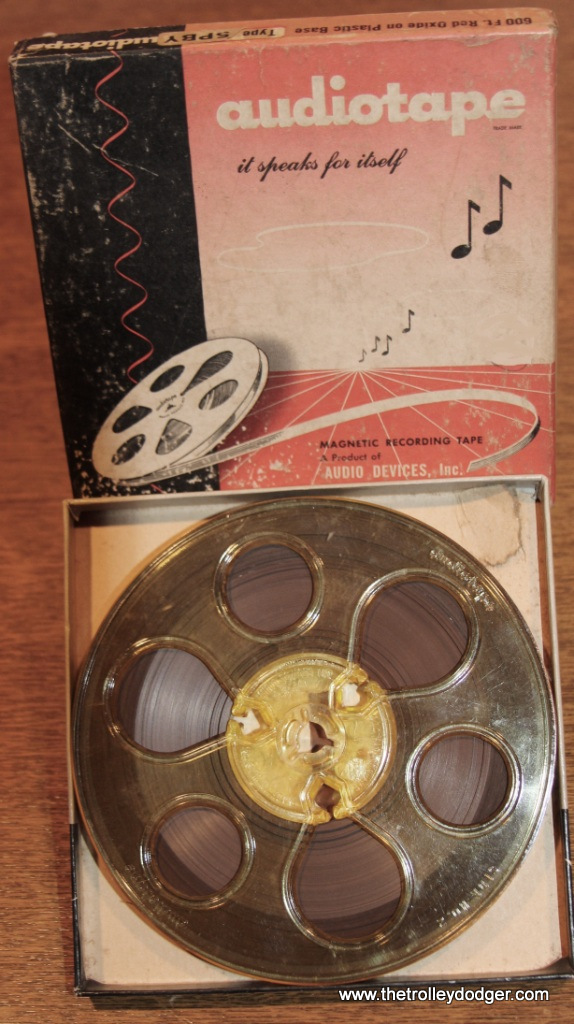
Our friend Kenneth Gear now has a Facebook group for the Railroad Record Club. If you enjoy listening to audio recordings of classic railroad trains, whether steam, electric, or diesel, you might consider joining.

Remembering Don Ross

It’s come to my attention that R. Donald Ross passed away on January 18th, aged 90. His career as a railfan photographer and historian began in 1946, and stretched out for more than 75 years. He cast a long shadow.

He started out as an avid photographer, and occasionally I will run across one with his name stamped on the back. But he was also an early, and active volunteer at railway museums, and scouted out possible locations for the Illinois Railway Museum when they had to vacate from the Chicago Hardware Foundry site in North Chicago.

He helped identify the former Elgin and Belvedere interurban right-of-way in Union as a potential site for the museum, where it is today. Other potential sites included the Chicago Aurora & Elgin‘s former Batavia branch, and the current sites of both the Fox River Trolley Museum and East Troy Railroad Museum.

In recent years, he worked hard at developing Don’s Rail Photos, a vast resource for information about hundreds of different railroads. This was not his only web site, as his interests ranged far afield.

I have not found an obituary for Mr. Ross. Nowadays, it doesn’t seem like everyone gets one. I don’t know what sort of provisions he made to continue his web site in the future, but it would be a shame if everything he worked so hard to create eventually disappears.

He will definitely be missed.

-David Sadowski

Our Annual Fundraiser

We are pleased to report we have exceeded our annual fundraising goal, with a total of $1055 received to date. These funds have already been put to good use, paying for our annual hosting fees, WordPress subscriptions, material for our next book, and for this blog.

We are very grateful to everyone who contributed. We could not continue this site without your kind assistance.

We accept donations 365 days a year. If you wish to help, there are links at the top and bottom of this page.

We thank you in advance for your time and consideration.

Photos by John V. Engleman

Silverliners at the Milwaukee terminal. (John V. Engleman Photo)

Silverliners at the Milwaukee terminal. (John V. Engleman Photo)

Silverliners at the Milwaukee terminal. (John V. Engleman Photo)

Silverliners at the Milwaukee terminal. (John V. Engleman Photo)

A great night shot of an Electroliner at Roosevelt Road in Chicago. This was the southern terminus for the North Shore Line for many years, and from 1949 to 1963 the interurban had this CTA station all to themselves. (John V. Engleman Photo)

A great night shot of an Electroliner at Roosevelt Road in Chicago. This was the southern terminus for the North Shore Line for many years, and from 1949 to 1963 the interurban had this CTA station all to themselves. (John V. Engleman Photo)

A rather blurry shot of an Electroliner at Roosevelt Road. (John V. Engleman Photo)

A rather blurry shot of an Electroliner at Roosevelt Road. (John V. Engleman Photo)

This is North Chicago. (John V. Engleman Photo)

This is North Chicago. (John V. Engleman Photo)

This is North Chicago. (John V. Engleman Photo)

This is North Chicago. (John V. Engleman Photo)

This has been identified as North Chicago. (John V. Engleman Photo)

This has been identified as North Chicago. (John V. Engleman Photo)

A stately Electroliner on a snowy day in Milwaukee. (John V. Engleman Photo)

A stately Electroliner on a snowy day in Milwaukee. (John V. Engleman Photo)

Roosevelt Road with car 255 in the pocket. (John V. Engleman Photo)

Roosevelt Road with car 255 in the pocket. (John V. Engleman Photo)

CTA trolley bus 9648 heads west, as seen from the Belmont "L" station. (John V. Engleman Photo)

CTA trolley bus 9648 heads west, as seen from the Belmont “L” station. (John V. Engleman Photo)

A great shot of an Electroliner at Roosevelt Road on a winter's day. (John V. Engleman Photo)

A great shot of an Electroliner at Roosevelt Road on a winter’s day. (John V. Engleman Photo)

Roosevelt Road. (John V. Engleman Photo)

Roosevelt Road. (John V. Engleman Photo)

The Milwaukee Terminal. (John V. Engleman Photo)

The Milwaukee Terminal. (John V. Engleman Photo)

The Milwaukee Terminal. (John V. Engleman Photo)

The Milwaukee Terminal. (John V. Engleman Photo)

Although this image was spoiled by a double exposure, it is still a nice view of the Milwaukee Terminal in winter. (John V. Engleman Photo)

Although this image was spoiled by a double exposure, it is still a nice view of the Milwaukee Terminal in winter. (John V. Engleman Photo)

An Electroliner at the Milwaukee Terminal. (John V. Engleman Photo)

An Electroliner at the Milwaukee Terminal. (John V. Engleman Photo)

Here. we are looking north from the Belmont "L" station, and the platform at left was used only by southbound North Shore trains. As Graham Garfield's www.chicago-l.org website notes, "Beginning in 1919, North Shore Line interurban trains reached downtown Chicago over the North Side "L". Although the "L" and interurban services were separate and had different fares without free transfers, they shared a number of stops -- Belmont being one common stop -- with little effort to separate passengers. This was in large part because the North Shore Line and the "L" were both owned by common interests, led by Samuel Insull. This ended in 1947 when the CTA assumed ownership and operation of the "L", and thereafter the Authority was disinclined to allow free transfer of North Shore Line riders to the "L". Thus, from 1953 until the end of North Shore Line service in 1963, Belmont actually had three platforms: there was an additional very narrow North Shore Line exit-only platform built along the west side of the "L" structure, extending from the south side of Belmont Avenue to a point somewhat north of the ends of the center platforms. (Traffic-separation arrangements were also adopted at Howard and Wilson, but never at the other stations used by inbound North Shore trains.) Passengers could disembark on this platform only, and were deposited onto the sidewalk on Belmont. If they wanted to transfer to the "L", they had to reenter the station and pay another fare. Northbound North Shore Line trains continued to share the island platform used by "L" customers, although there was probably more boarding of the interurban northbound than alighting, and the North Shore Line had personnel aboard their trains to collect fares at all times." (John V. Engleman Photo)

Here. we are looking north from the Belmont “L” station, and the platform at left was used only by southbound North Shore trains.
As Graham Garfield’s http://www.chicago-l.org website notes, “Beginning in 1919, North Shore Line interurban trains reached downtown Chicago over the North Side “L”. Although the “L” and interurban services were separate and had different fares without free transfers, they shared a number of stops — Belmont being one common stop — with little effort to separate passengers. This was in large part because the North Shore Line and the “L” were both owned by common interests, led by Samuel Insull. This ended in 1947 when the CTA assumed ownership and operation of the “L”, and thereafter the Authority was disinclined to allow free transfer of North Shore Line riders to the “L”. Thus, from 1953 until the end of North Shore Line service in 1963, Belmont actually had three platforms: there was an additional very narrow North Shore Line exit-only platform built along the west side of the “L” structure, extending from the south side of Belmont Avenue to a point somewhat north of the ends of the center platforms. (Traffic-separation arrangements were also adopted at Howard and Wilson, but never at the other stations used by inbound North Shore trains.) Passengers could disembark on this platform only, and were deposited onto the sidewalk on Belmont. If they wanted to transfer to the “L”, they had to reenter the station and pay another fare. Northbound North Shore Line trains continued to share the island platform used by “L” customers, although there was probably more boarding of the interurban northbound than alighting, and the North Shore Line had personnel aboard their trains to collect fares at all times.” (John V. Engleman Photo)

NSL 771 and train are heading east at LaSalle and Van Buren on the Loop "L", making this a southbound train in the morning. (John V. Engleman Photo)

NSL 771 and train are heading east at LaSalle and Van Buren on the Loop “L”, making this a southbound train in the morning. (John V. Engleman Photo)

A Silverliner at the head of a train. Not sure of the location. (John V. Engleman Photo) Zach E. says this is 769 at Lake Bluff.

A Silverliner at the head of a train. Not sure of the location. (John V. Engleman Photo) Zach E. says this is 769 at Lake Bluff.

The Mundelein Terminal. (John V. Engleman Photo)

The Mundelein Terminal. (John V. Engleman Photo)

NSL 743 is northbound on the 6th Street Viaduct. (John V. Engleman Photo)

NSL 743 is northbound on the 6th Street Viaduct. (John V. Engleman Photo)

North Shore Line Silverliners at the Milwaukee Terminal. (John V. Engleman Photo)

North Shore Line Silverliners at the Milwaukee Terminal. (John V. Engleman Photo)

A southbound Silverliner at Belmont. (John V. Engleman Photo)

A southbound Silverliner at Belmont. (John V. Engleman Photo)

An Electroliner has arrived and its trolley pole hasn't yet been turned around. (John V. Engleman Photo)

An Electroliner has arrived and its trolley pole hasn’t yet been turned around. (John V. Engleman Photo)

Such a classic view of the Milwaukee Terminal. (John V. Engleman Photo)

Such a classic view of the Milwaukee Terminal.
(John V. Engleman Photo)

An Electroliner at the Milwaukee Terminal. (John V. Engleman Photo)

An Electroliner at the Milwaukee Terminal. (John V. Engleman Photo)

The Milwaukee Terminal. This picture, at least, could have been taken in 1962, judging by the nearby billboard. (John V. Engleman Photo)

The Milwaukee Terminal. This picture, at least, could have been taken in 1962, judging by the nearby billboard. (John V. Engleman Photo)

Red Pullman 460 at South Shops, as part of the CTA historical collection, possibly after the end of streetcar service, which ended in 1958. (John V. Engleman Photo)

Red Pullman 460 at South Shops, as part of the CTA historical collection, possibly after the end of streetcar service, which ended in 1958. (John V. Engleman Photo)

Prewar PCC 4021 and red Pullman 460 were part of the CTA's historical collection when this picture was taken at South Shops, possibly around 1959. Both cars are now at the Illinois Railway Museum. (John V. Engleman Photo)

Prewar PCC 4021 and red Pullman 460 were part of the CTA’s historical collection when this picture was taken at South Shops, possibly around 1959. Both cars are now at the Illinois Railway Museum. (John V. Engleman Photo)

This was scanned from a copy negative of an Electroliner in action. (John V. Engleman Collection)

This was scanned from a copy negative of an Electroliner in action. (John V. Engleman Collection)

The CTA Skokie Swift opened in April 1964, and it's possible this picture was taken not long after that at Dempster Street in Skokie. (John V. Engleman Photo) Spence Ziegler adds, "The Skokie Swift Car at Dempster St was taken after June, 1965 as the former North Shore Line catenary towers north of Dempster St. are gone."

The CTA Skokie Swift opened in April 1964, and it’s possible this picture was taken not long after that at Dempster Street in Skokie. (John V. Engleman Photo) Spence Ziegler adds, “The Skokie Swift Car at Dempster St was taken after June, 1965 as the former North Shore Line catenary towers north of Dempster St. are gone.”

It's not entirely clear just when this picture was taken at DesPlaines Avenue on the Congress line, but my guess is 1960-61. There are some CTA single-car units visible, and the first of these were delivered in 1960. But in this and the other shot, I don't see the shops building, which was completed in 1962. We are looking west, with the old Forest Park gas holder in the distance. (John V. Engleman Photo)

It’s not entirely clear just when this picture was taken at DesPlaines Avenue on the Congress line, but my guess is 1960-61. There are some CTA single-car units visible, and the first of these were delivered in 1960. But in this and the other shot, I don’t see the shops building, which was completed in 1962. We are looking west, with the old Forest Park gas holder in the distance. (John V. Engleman Photo)

The yard at the DesPlaines Avenue terminal, circa 1960-61. (John V. Engleman Photo)

The yard at the DesPlaines Avenue terminal, circa 1960-61. (John V. Engleman Photo)

CTA 5002 at Kimball in Lawrence, most likely in June 1962 (based on the platform signage). (John V. Engleman Photo)

CTA 5002 at Kimball in Lawrence, most likely in June 1962 (based on the platform signage). (John V. Engleman Photo)

CSL PCC 4050 is at Madison and Austin, and appears to have some front-end damage. The motorman does not look too happy about having his picture taken. (John V. Engleman Collection)

CSL PCC 4050 is at Madison and Austin, and appears to have some front-end damage. The motorman does not look too happy about having his picture taken. (John V. Engleman Collection)

CTA PCC 4110 exits the Washington streetcar tunnel in the early 1950s, with a Chicago Motor Coach bus at left. We are looking west. (John V. Engleman Collection)

CTA PCC 4110 exits the Washington streetcar tunnel in the early 1950s, with a Chicago Motor Coach bus at left. We are looking west. (John V. Engleman Collection)

The same location today. Note the building on the left matches.

The same location today. Note the building on the left matches.

Recent Finds

This is a North Shore Line city streetcar in Milwaukee. The caption that came with this one said, "Last day run past North Shore depot." If so, this would be 1951.

This is a North Shore Line city streetcar in Milwaukee. The caption that came with this one said, “Last day run past North Shore depot.” If so, this would be 1951.

CTA wooden "L" cars 390 and 280 make a fantrip photo stop at Austin Boulevard on the Garfield Park line on April 14, 1957. This was a temporary station due to ongoing construction of the Congress Expressway in this area.

CTA wooden “L” cars 390 and 280 make a fantrip photo stop at Austin Boulevard on the Garfield Park line on April 14, 1957. This was a temporary station due to ongoing construction of the Congress Expressway in this area.

North Shore Line car 154 survived the abandonment, only to succumb to the ravages of neglect many years later. Here, we see it in Anderson, IN on July 16, 1965, where it was pulled around by a locomotive. It eventually went to a museum in Worthington, OH where it was allowed to deteriorate. Considered in too bad shape to restore, it was purchased by another museum in Michigan, stripped of usable parts for the restoration of a different (non-NSL) car in their collection, and its carcass was unceremoniously dumped in a field, where it is now offered to anyone in need of a spare room or chicken coop.

North Shore Line car 154 survived the abandonment, only to succumb to the ravages of neglect many years later. Here, we see it in Anderson, IN on July 16, 1965, where it was pulled around by a locomotive. It eventually went to a museum in Worthington, OH where it was allowed to deteriorate. Considered in too bad shape to restore, it was purchased by another museum in Michigan, stripped of usable parts for the restoration of a different (non-NSL) car in their collection, and its carcass was unceremoniously dumped in a field, where it is now offered to anyone in need of a spare room or chicken coop.

From 1922 to 1938, North Shore Line cars ran to the south side. Here, we see a fantrip train, headed up by Silverliner 409, at 61st Street on one of those latter-day fantrips prior to the 1963 abandonment.

From 1922 to 1938, North Shore Line cars ran to the south side. Here, we see a fantrip train, headed up by Silverliner 409, at 61st Street on one of those latter-day fantrips prior to the 1963 abandonment.

CTA red Pullman streetcar 208 appears to be signed for Route 9 - Ashland, which would make this a car headed east between Paulina and Ashland, where it will turn north. Streetcars were not permitted on boulevards, which meant they could not travel on Ashland between Lake Street and Roosevelt Road. Buses replaced streetcars on the Ashland and Lake routes in 1954. (William C. Hoffman Photo)

CTA red Pullman streetcar 208 appears to be signed for Route 9 – Ashland, which would make this a car headed east between Paulina and Ashland, where it will turn north. Streetcars were not permitted on boulevards, which meant they could not travel on Ashland between Lake Street and Roosevelt Road. Buses replaced streetcars on the Ashland and Lake routes in 1954. (William C. Hoffman Photo)

CTA PCC 7240, signed for 77th and Vincennes (South Shops). (William C. Hoffman Photo) Mike Franklin: "Car 7240 is e/b on 69th St at Morgan St." Our resident South Side expert M.E. adds: "This photo needs further explanation. For many years, the 69th and Ashland barn housed Western Avenue PCC cars. After that barn closed in the early 1950s, the only remaining carbarn for PCC cars on the south side was at 77th and Vincennes. The CTA left the trackage alive on 69th St. between Western and Wentworth for the sole purpose of moving Western Avenue PCCs back and forth. (Trackage along Wentworth and Vincennes was still in use by route 22.) The car in this photo is heading home to the 77th and Vincennes barn."

CTA PCC 7240, signed for 77th and Vincennes (South Shops). (William C. Hoffman Photo) Mike Franklin: “Car 7240 is e/b on 69th St at Morgan St.” Our resident South Side expert M.E. adds: “This photo needs further explanation. For many years, the 69th and Ashland barn housed Western Avenue PCC cars. After that barn closed in the early 1950s, the only remaining carbarn for PCC cars on the south side was at 77th and Vincennes. The CTA left the trackage alive on 69th St. between Western and Wentworth for the sole purpose of moving Western Avenue PCCs back and forth. (Trackage along Wentworth and Vincennes was still in use by route 22.) The car in this photo is heading home to the 77th and Vincennes barn.”

CTA PCC 7180 is northbound on Dearborn at Congress in the mid-1950s.

CTA PCC 7180 is northbound on Dearborn at Congress in the mid-1950s.

The Garfield Park "L" temporary trackage at street level in Van Bure Street at Damen Avenue, some time around 1954 as the Congress Expressway is still under construction nearby (but the old "L" structure has already been removed).

The Garfield Park “L” temporary trackage at street level in Van Bure Street at Damen Avenue, some time around 1954 as the Congress Expressway is still under construction nearby (but the old “L” structure has already been removed).

The same location. A Buick heads south on Damen while an eastbound Garfield Park train waits for the lights to change before crossing.

The same location. A Buick heads south on Damen while an eastbound Garfield Park train waits for the lights to change before crossing.

North Shore Line 742 and a Silverliner at the Milwaukee Terminal in the early-to-mid 1950s.

North Shore Line 742 and a Silverliner at the Milwaukee Terminal in the early-to-mid 1950s.

This CTA preliminary study, circa 1954-55, shows plans for the Congress-Douglas-Milwaukee route that went into service in 1958. Planning for the section west of Cicero was somewhat tentative and differed from what was eventually built. At this stage, Laramie Yard was to be retained, and connected to the Congress line via a flyover. Eventually, it was decided to move the yard to DesPlaines Avenue, but at the time the land was not owned by the CTA. A platform area on the map at Laramie was not a station, but intended for use adding and cutting cars. The Austin-Menard station would have been located east of Austin Boulevard. Instead, it was built west of there, with a secondary entrance at Lombard. Once it was decided to add a secondary entrance to the Oak Park Avenue station at East Avenue, it was no longer necessary to have a new station at Ridgeland (as a replacement for Gunderson, which was located on a side street). During construction of the Congress Expressway in Oak Park and Forest Park, there were eventually three different temporary track configurations used.

This CTA preliminary study, circa 1954-55, shows plans for the Congress-Douglas-Milwaukee route that went into service in 1958. Planning for the section west of Cicero was somewhat tentative and differed from what was eventually built. At this stage, Laramie Yard was to be retained, and connected to the Congress line via a flyover. Eventually, it was decided to move the yard to DesPlaines Avenue, but at the time the land was not owned by the CTA. A platform area on the map at Laramie was not a station, but intended for use adding and cutting cars. The Austin-Menard station would have been located east of Austin Boulevard. Instead, it was built west of there, with a secondary entrance at Lombard. Once it was decided to add a secondary entrance to the Oak Park Avenue station at East Avenue, it was no longer necessary to have a new station at Ridgeland (as a replacement for Gunderson, which was located on a side street). During construction of the Congress Expressway in Oak Park and Forest Park, there were eventually three different temporary track configurations used.

A northbound NSL two-car train stops at Dempster Street in Skokie on March 26, 1960.

A northbound NSL two-car train stops at Dempster Street in Skokie on March 26, 1960.

North Shore Line conventional cars and an Electroliner meet at Edison Court in Waukegan on August 31, 1957. (Stephen D. Maguire Photo)

North Shore Line conventional cars and an Electroliner meet at Edison Court in Waukegan on August 31, 1957. (Stephen D. Maguire Photo)

On June 19, 1953, a three-car Chicago Auror and Elgin train approaches the Halsted "L" station in the four-track Met main line. We are looking to the northeast. The cars are 52, 317, and 304. (Robert Selle Photo)

On June 19, 1953, a three-car Chicago Auror and Elgin train approaches the Halsted “L” station in the four-track Met main line. We are looking to the northeast. The cars are 52, 317, and 304. (Robert Selle Photo)

Chicago Aurora and Elgin wood car 139 at Wheaton Yards on May 30, 1952. Don's Rail Photos: "138 thru 141 were built by American Car in 1910. They were rebuilt for Elevated compatibility in 1919. They were also leased to the CA&E in 1936, returned to the CNS&M in 1945, and sold to the CA&E in 1946." Once the CA&E stopped running downtown via CTA tracks in September 1953, the former North Shore cars were no longer needed and were scrapped the following year. (Robert Selle Photo)

Chicago Aurora and Elgin wood car 139 at Wheaton Yards on May 30, 1952. Don’s Rail Photos: “138 thru 141 were built by American Car in 1910. They were rebuilt for Elevated compatibility in 1919. They were also leased to the CA&E in 1936, returned to the CNS&M in 1945, and sold to the CA&E in 1946.” Once the CA&E stopped running downtown via CTA tracks in September 1953, the former North Shore cars were no longer needed and were scrapped the following year. (Robert Selle Photo)

CA&E car 129 at the Wheaton Yards on May 30, 1952. Don's Rail Photos: "129 was built by Jewett Car in 1907. It was rebuilt in 1914 and leased to Chicago Aurora & Elgin and modified in 1936. It was returned to CNS&M in 1945 and sold to CA&E in 1946. It was scrapped in 1951." (Note- the scrapping date is in error.) (Robert Selle Photo)

CA&E car 129 at the Wheaton Yards on May 30, 1952. Don’s Rail Photos: “129 was built by Jewett Car in 1907. It was rebuilt in 1914 and leased to Chicago Aurora & Elgin and modified in 1936. It was returned to CNS&M in 1945 and sold to CA&E in 1946. It was scrapped in 1951.” (Note- the scrapping date is in error.) (Robert Selle Photo)

CA&E wood car 318 is outbound on the Batavia branch on July 14, 1954, about one block from the Batavia station, on its way to Batavia Junction. Parts of the Batavia branch were somewhat similar to the main line at the Illinois Railway Museum, which you can see in this photo by Robert Selle. As with the rest of the CA&E, passenger service continued until the abrupt mid-day abandonment on July 3, 1957.

CA&E wood car 318 is outbound on the Batavia branch on July 14, 1954, about one block from the Batavia station, on its way to Batavia Junction. Parts of the Batavia branch were somewhat similar to the main line at the Illinois Railway Museum, which you can see in this photo by Robert Selle. As with the rest of the CA&E, passenger service continued until the abrupt mid-day abandonment on July 3, 1957.

CA&E cars 406 and 456 meet to pick up and discharge passengers at the Cicero Avenue station on the Garfield Park "L" on August 22, 1953, just less than a month before the interurban cut back service to Forest Park. (Robert Selle Photo)

CA&E cars 406 and 456 meet to pick up and discharge passengers at the Cicero Avenue station on the Garfield Park “L” on August 22, 1953, just less than a month before the interurban cut back service to Forest Park. (Robert Selle Photo)

CA&E car 418 is east of Laramie Avenue on the Garfield Park "L" on February 15, 1953, giving an unusual view of the ramp leading from ground level to the Cicero Avenue station. The middle part of the negative was partially light struck, which could happen with paper-backed roll film. Photographer Robert Selle shot size 616 Kodak Verichrome Pan film. 616 used the same film as 116, resulting in a large negative, but used slightly different spools. Both types were discontinued in 1984, as no cameras had been manufactured using these sizes in decades. Verichrome was designed to give maximum exposure latitude, as it was often used in box cameras that had only one shutter speed. It was discontinued in 2002.

CA&E car 418 is east of Laramie Avenue on the Garfield Park “L” on February 15, 1953, giving an unusual view of the ramp leading from ground level to the Cicero Avenue station. The middle part of the negative was partially light struck, which could happen with paper-backed roll film. Photographer Robert Selle shot size 616 Kodak Verichrome Pan film. 616 used the same film as 116, resulting in a large negative, but used slightly different spools. Both types were discontinued in 1984, as no cameras had been manufactured using these sizes in decades. Verichrome was designed to give maximum exposure latitude, as it was often used in box cameras that had only one shutter speed. It was discontinued in 2002.

Chicago Surface Lines one-man car 3100. Mike Franklin: "This would be looking north on Leavitt St from just south of Coulter St. Small building above Car 3100 is Chicago Railways Blue Island Ave Sub Station and the larger building further north is their 24th St Car Station."

Chicago Surface Lines one-man car 3100. Mike Franklin: “This would be looking north on Leavitt St from just south of Coulter St. Small building above Car 3100 is Chicago Railways Blue Island Ave Sub Station and the larger building further north is their 24th St Car Station.”

A Silverliner departs from the North Shore Line's Milwaukee Terminal, probably in the late 1950s. I can't quite make out the number, but it is in the 770s.

A Silverliner departs from the North Shore Line’s Milwaukee Terminal, probably in the late 1950s. I can’t quite make out the number, but it is in the 770s.

The North Shore Line shops at Highwood. Loco 456 pulls a freight train, while one of the line cars is at right.

The North Shore Line shops at Highwood. Loco 456 pulls a freight train, while one of the line cars is at right.

NSL 157 on a June 17, 1962 fantrip.

NSL 157 on a June 17, 1962 fantrip.

I recently purchased these three Ektachrome slides, all taken by the same photographer on June 17, 1962. Ektachrome film from the 1950s through the early 1960s has faded to red over the years. The red dye layer remained stable, while the other colors faded badly. Within a year or two of when these pictures were taken, Kodak had fixed the problem. With modern technology, it is often possible to bring the color back in these red Ektachromes, and restore them to look more like normal. The color-corrected versions follow.

I recently purchased these three Ektachrome slides, all taken by the same photographer on June 17, 1962. Ektachrome film from the 1950s through the early 1960s has faded to red over the years. The red dye layer remained stable, while the other colors faded badly. Within a year or two of when these pictures were taken, Kodak had fixed the problem. With modern technology, it is often possible to bring the color back in these red Ektachromes, and restore them to look more like normal. The color-corrected versions follow.

Two trains meet near South Upton Junction.

Two trains meet near South Upton Junction.

An Electroliner on June 17, 1962.

An Electroliner on June 17, 1962.

A northbound train at North Chicago Junction on June 17, 1962.

A northbound train at North Chicago Junction on June 17, 1962.

CTA prewar PCC 4005 at 63rd Place and Narragansett on July 30, 1948.

CTA prewar PCC 4005 at 63rd Place and Narragansett on July 30, 1948.

CSL 4018 kicking up a cloud of dust on 63rd Place west of Central Avenue, some time between 1948 and 1952. (Richard W. Tesch Photo)

CSL 4018 kicking up a cloud of dust on 63rd Place west of Central Avenue, some time between 1948 and 1952. (Richard W. Tesch Photo)

CSL red Pullman 93- is running on Route 35, so this appears to be the 35th Street "L" station on the south side, making the cross street State.

CSL red Pullman 93- is running on Route 35, so this appears to be the 35th Street “L” station on the south side, making the cross street State.

The same location today. The Illinois Institute of Technology campus is at left.

The same location today. The Illinois Institute of Technology campus is at left.

Philadelphia Transportation Company Peter Witt 8500 on September 12, 1955. It was built by Brill around 1926. Kenneth Achtert adds, "I am fairly certain that the photo of PTC #8500 (aab516) is SB on 17th St. just south of Market St., having just turned from westbound on Market St." Mike Franklin concurs: "Car 8500 is s/b on S 17th St, having just crossed Market St, Philadelphia, Pa." So, the testimony of two is true.

Philadelphia Transportation Company Peter Witt 8500 on September 12, 1955. It was built by Brill around 1926. Kenneth Achtert adds, “I am fairly certain that the photo of PTC #8500 (aab516) is SB on 17th St. just south of Market St., having just turned from westbound on Market St.” Mike Franklin concurs: “Car 8500 is s/b on S 17th St, having just crossed Market St, Philadelphia, Pa.” So, the testimony of two is true.

A train of CTA 4000s at Chicago Avenue on a fantrip around April 1974. By then, these cars had been retired from regular service. When Ravenswood service terminated at Belmont Avenue on Sundays, fans had the stations south of there all to themselves for leisurely photo stops, without worrying about getting in the way of regular service trains.

A train of CTA 4000s at Chicago Avenue on a fantrip around April 1974. By then, these cars had been retired from regular service. When Ravenswood service terminated at Belmont Avenue on Sundays, fans had the stations south of there all to themselves for leisurely photo stops, without worrying about getting in the way of regular service trains.

NSL 767 at the Milwaukee Terminal on May 7, 1942.

NSL 767 at the Milwaukee Terminal on May 7, 1942.

A North Shore Line ticket envelope.

A North Shore Line ticket envelope.

This is the Pittsburgh area in the summer of 1952, and quite possibly Washington, PA. Interurban service to here ended the following year. Larry Lovejoy: "All of the Pittsburgh photos are taken within a four block area in downtown Washington, Pennsylvania, aka: “Little Washington”, lest anybody be confused with Washington, DC. The local routes quit in May of 1953. The interurban lasted until August. Photo ab534: Southbound on Main Street at Beau Street. This is a Jefferson & Maiden car headed toward the route’s eastern terminal out East Maiden Street."

This is the Pittsburgh area in the summer of 1952, and quite possibly Washington, PA. Interurban service to here ended the following year. Larry Lovejoy: “All of the Pittsburgh photos are taken within a four block area in downtown Washington, Pennsylvania, aka: “Little Washington”, lest anybody be confused with Washington, DC. The local routes quit in May of 1953. The interurban lasted until August. Photo ab534: Southbound on Main Street at Beau Street. This is a Jefferson & Maiden car headed toward the route’s eastern terminal out East Maiden Street.”

Again, Washington, PA. Note there is a sign that says Washington. Larry Lovejoy: "Photo aab535: Northbound on Main at Chestnut. Not clear whether this a Jefferson & Maiden car or an East & West route car. In the far distance, a North Washington car is turning left from Main onto East Beau Street crossing the path of what appears to be an unknown bus. "

Again, Washington, PA. Note there is a sign that says Washington. Larry Lovejoy: “Photo aab535: Northbound on Main at Chestnut. Not clear whether this a Jefferson & Maiden car or an East & West route car. In the far distance, a North Washington car is turning left from Main onto East Beau Street crossing the path of what appears to be an unknown bus. “

The release date of Abbott and Costello's Lost in Alaska helps date this picture to summer 1952. Larry Lovejoy: "Photo aab536: North Washington car westbound on Chestnut about to turn south onto Main Street." (In Washington, PA.) The movie theater on the corner was called the Basle (later the Uptown). It is now used by a church.

The release date of Abbott and Costello’s Lost in Alaska helps date this picture to summer 1952. Larry Lovejoy: “Photo aab536: North Washington car westbound on Chestnut about to turn south onto Main Street.” (In Washington, PA.) The movie theater on the corner was called the Basle (later the Uptown). It is now used by a church.

The same location today.

The same location today.

Washington, PA. Larry Lovejoy: "Photo aab537: Jefferson & Maiden car northbound on Main Street at Wheeling Street."

Washington, PA. Larry Lovejoy: “Photo aab537: Jefferson & Maiden car northbound on Main Street at Wheeling Street.”

Pittsburgh PCCs, mounted with an extra headlight, operated on two interurbans, including to Washington, PA. Larry Lovejoy: "Photo aab538: Looking south on Main, with Chestnut Street behind the photographer. The interurban PCC facing us is heading northbound to Pittsburgh."

Pittsburgh PCCs, mounted with an extra headlight, operated on two interurbans, including to Washington, PA. Larry Lovejoy: “Photo aab538: Looking south on Main, with Chestnut Street behind the photographer. The interurban PCC facing us is heading northbound to Pittsburgh.”

(Map courtesy of Larry Lovejoy)

(Map courtesy of Larry Lovejoy)

Our readers have identified PCC 1760 as St. Louis, and not Pittsburgh as I originally thought. (See the Comments section.) Mike Franklin: "Car 1760 is w/b on Olive St in front of the Old Post Office between 8th & 9th Sts, St Louis, Mo."

Our readers have identified PCC 1760 as St. Louis, and not Pittsburgh as I originally thought. (See the Comments section.) Mike Franklin: “Car 1760 is w/b on Olive St in front of the Old Post Office between 8th & 9th Sts, St Louis, Mo.”

This, and the picture that follows, appear to be from the same city. The car at right in this picture has a 1951 Colorado license plate, but I don't believe there were any cities in Colorado that used PCC cars, and such a car is visible in the next picture. So that would indicate the vehicle was visiting from another state. Dan Cluley writes: "aab539 is definitely Detroit as suggested. Hudson’s department store is straight ahead with the sign & the flagpole and the skyscraper in the middle left is the Book Tower. Looking at a Detroit streetcar map and lining up those buildings suggests that this is Abbott Street looking NE probably around 2nd or 3rd st. Cars on the Baker line used Abbott one way headed downtown for about ¾ of mile. The newest car I can spot is the 1950 Chevy parked at left, the Baker line was converted to bus in 1952 and the Colorado license plate is either 1951 or 1954, so 1951 seems a good date for the photo."

This, and the picture that follows, appear to be from the same city. The car at right in this picture has a 1951 Colorado license plate, but I don’t believe there were any cities in Colorado that used PCC cars, and such a car is visible in the next picture. So that would indicate the vehicle was visiting from another state. Dan Cluley writes: “aab539 is definitely Detroit as suggested. Hudson’s department store is straight ahead with the sign & the flagpole and the skyscraper in the middle left is the Book Tower. Looking at a Detroit streetcar map and lining up those buildings suggests that this is Abbott Street looking NE probably around 2nd or 3rd st. Cars on the Baker line used Abbott one way headed downtown for about ¾ of mile. The newest car I can spot is the 1950 Chevy parked at left, the Baker line was converted to bus in 1952 and the Colorado license plate is either 1951 or 1954, so 1951 seems a good date for the photo.”

Dan Cluley: "aab540 is Highland Park MI, which is a separate community surrounded by the city of Detroit. It is the Woodward Ave carhouse looking east. The 5 stacks in the background are the power house for Ford’s Highland Park plant."

Dan Cluley: “aab540 is Highland Park MI, which is a separate community surrounded by the city of Detroit. It is the Woodward Ave carhouse looking east. The 5 stacks in the background are the power house for Ford’s Highland Park plant.”

This looks like the end of the line for a local streetcar. The unknown photographer may have taken this picture looking out the front window of a car that has changed ends.

This looks like the end of the line for a local streetcar. The unknown photographer may have taken this picture looking out the front window of a car that has changed ends.

I am not sure of this location, but that doesn't look like a Pittsburgh car. Based on the comment on the following picture, this is probably Altoona, PA.

I am not sure of this location, but that doesn’t look like a Pittsburgh car. Based on the comment on the following picture, this is probably Altoona, PA.

Mike Franklin: "Looking SW on 12th Ave between 13th & 14th Sts, Altoona, Pa."

Mike Franklin: “Looking SW on 12th Ave between 13th & 14th Sts, Altoona, Pa.”

The Chicago pictures appear to date to the period around March 1953. This is a southbound Clark-Wentworth PCC at the intersection of Clark and Lake.

The Chicago pictures appear to date to the period around March 1953. This is a southbound Clark-Wentworth PCC at the intersection of Clark and Lake.

In 1953, it was still possible for PCCs to meet at an intersection. One of these is a Madison Street car, and the other a Clark-Wentworth car.

In 1953, it was still possible for PCCs to meet at an intersection. One of these is a Madison Street car, and the other a Clark-Wentworth car.

Red Pullman 605 is signed to go to Ashland and 71st. It is turning from Dearborn onto Lake Street. I'm not sure what route it is operating on. Myron Cohen appeared at the Selwyn Theater in Farfel Follies in March 1953, which helps date the photo. Our resident South Side expert M.E. adds: "Because the destination sign reads Ashland - 71st, this streetcar is on route 45, Ashland - Downtown. But I'm not certain the destination sign reads 71st St. It may read 70th St., which was at the south end of the carbarn at 69th and Ashland -- the end where the cars entered the barn. Also, I believe route 45 actually ran to the south end of Ashland track at 95th St. There were two rush-hour routes from the south side into the Loop: 45, on Ashland, and 42, on Halsted. Both routes used Archer Ave. and State St. to reach the Loop. I believe the northbound cars turned west on Polk St. to Dearborn, then north to Lake St., then east to State St. and south to Archer."

Red Pullman 605 is signed to go to Ashland and 71st. It is turning from Dearborn onto Lake Street. I’m not sure what route it is operating on. Myron Cohen appeared at the Selwyn Theater in Farfel Follies in March 1953, which helps date the photo. Our resident South Side expert M.E. adds: “Because the destination sign reads Ashland – 71st, this streetcar is on route 45, Ashland – Downtown. But I’m not certain the destination sign reads 71st St. It may read 70th St., which was at the south end of the carbarn at 69th and Ashland — the end where the cars entered the barn. Also, I believe route 45 actually ran to the south end of Ashland track at 95th St. There were two rush-hour routes from the south side into the Loop: 45, on Ashland, and 42, on Halsted. Both routes used Archer Ave. and State St. to reach the Loop. I believe the northbound cars turned west on Polk St. to Dearborn, then north to Lake St., then east to State St. and south to Archer.”

Clark and Dearborn did not become one-way streets until November 16, 1953, so this picture was taken before then, looking south along Dearborn north of Lake Street.

Clark and Dearborn did not become one-way streets until November 16, 1953, so this picture was taken before then, looking south along Dearborn north of Lake Street.

The corner of State and Lake.

The corner of State and Lake.

State and Lake, would be my guess.

State and Lake, would be my guess.

Southbound PCCs on Clark Street at Lake.

Southbound PCCs on Clark Street at Lake.

CTA one-man car 1732 has just turned south onto Dearborn, so it can loop around the block before heading back out west on Route 16 - Lake. Again, most likely in March 1953.

CTA one-man car 1732 has just turned south onto Dearborn, so it can loop around the block before heading back out west on Route 16 – Lake. Again, most likely in March 1953.

CTA PCC 7059 heads south on Clark Street at Lake. Note a "woody" station wagon at right, with a 1953 Illinois license plate.

CTA PCC 7059 heads south on Clark Street at Lake. Note a “woody” station wagon at right, with a 1953 Illinois license plate.

A remake of the 1927 film the Jazz Singer, starring Danny Thomas, was playing at the Chicago Theater in March 1953. The Chicago Tribune reviewed it on the 9th, and it was still playing there on the 18th. They called it "lugubrious."

A remake of the 1927 film the Jazz Singer, starring Danny Thomas, was playing at the Chicago Theater in March 1953. The Chicago Tribune reviewed it on the 9th, and it was still playing there on the 18th. They called it “lugubrious.”

Here's what Don's Rail Photos has to say about Milwaukee Electric car 44, although I am not sure this is the same car: "41 thru 44 were built at Cold Spring in 1912 and 45 thru 51 were built in 1913. They were built primarily for Racine and Kenosha. In 1921 they were rebuilt for one-man service. They were retired in 1931 except for 44, which was retired in 1930 to become a safety discussion room at National Station, and 47, which became the training car at Fond du Lac Station in 1930 and was retired in 1932. They were scrapped in 1931 and 1932. 51 was scrapped on October 4, 1932." Perhaps the car in this picture is up on blocks because it was used as a safety discussion room? I'm not sure where this picture was taken. Also, this picture was taken more like 1951 than 1931. Michael Peters writes, "You're correct in your guess that #44 isn't the same car as the one built at TM's Cold Spring shops in 1912. The confusion comes from this car technically not being a TM car at this point in its life. Per CERA Bulletin 112, the car in the photo was built for TM in 1930 by St. Louis Car Company as part of an order for twenty articulated streetcars (1031 to 1050). Milwaukee practice was to give the lead unit the odd number, trailing unit the even. So in TM service, the car in question was the trailing unit for 1043-1044 and served until after World War II when all cars in the series were withdrawn and stored. In 1949 they were sold to Speedrail and renumbered by the simple expedient of eliminating the first two digits. This is how TM 1043-1044 wound up becoming Speedrail 43-44. It lasted in Speedrail service for about fourteen months until 43-44 was involved in a collision with curved-sider 65 in February 1950. As a result of the collision 43-44 was retired. Judging by the steel columns and "junk" visible in the TM photos, it seems like these were taken at the Milwaukee freight terminal (W. St. Paul Street between 8th and 10th) after Speedrail quit on June 30, 1951. The freight terminal was one of the locations cars were stored before going to Waukesha Gavel Pit for scrapping." On the other hand, Willie (no last name) writes: "Re: ab555, ab556 and ab557, the stranded Milwaukee Electric cars, I believe these were shot at the Cold Spring shops, at North 38th street and McKinley. The substantial industrial buildings in the background are Harley-Davidson’s main plant, still in use." Charles Kronenwetter: "Speedrail cars in storage in the 12th St yard prior to scrapping. Nice picture of the 44 up on blocks awaiting repairs that never came. The structure shown at the right is the western end of the Hibernia street elevated track. Notice the pile of what appear to be paving blocks often used between streetcar tracks."

Here’s what Don’s Rail Photos has to say about Milwaukee Electric car 44, although I am not sure this is the same car: “41 thru 44 were built at Cold Spring in 1912 and 45 thru 51 were built in 1913. They were built primarily for Racine and Kenosha. In 1921 they were rebuilt for one-man service. They were retired in 1931 except for 44, which was retired in 1930 to become a safety discussion room at National Station, and 47, which became the training car at Fond du Lac Station in 1930 and was retired in 1932. They were scrapped in 1931 and 1932. 51 was scrapped on October 4, 1932.” Perhaps the car in this picture is up on blocks because it was used as a safety discussion room? I’m not sure where this picture was taken. Also, this picture was taken more like 1951 than 1931.
Michael Peters writes, “You’re correct in your guess that #44 isn’t the same car as the one built at TM’s Cold Spring shops in 1912. The confusion comes from this car technically not being a TM car at this point in its life.
Per CERA Bulletin 112, the car in the photo was built for TM in 1930 by St. Louis Car Company as part of an order for twenty articulated streetcars (1031 to 1050). Milwaukee practice was to give the lead unit the odd number, trailing unit the even. So in TM service, the car in question was the trailing unit for 1043-1044 and served until after World War II when all cars in the series were withdrawn and stored.
In 1949 they were sold to Speedrail and renumbered by the simple expedient of eliminating the first two digits. This is how TM 1043-1044 wound up becoming Speedrail 43-44. It lasted in Speedrail service for about fourteen months until 43-44 was involved in a collision with curved-sider 65 in February 1950. As a result of the collision 43-44 was retired.
Judging by the steel columns and “junk” visible in the TM photos, it seems like these were taken at the Milwaukee freight terminal (W. St. Paul Street between 8th and 10th) after Speedrail quit on June 30, 1951. The freight terminal was one of the locations cars were stored before going to Waukesha Gavel Pit for scrapping.”
On the other hand, Willie (no last name) writes: “Re: ab555, ab556 and ab557, the stranded Milwaukee Electric cars, I believe these were shot at the Cold Spring shops, at North 38th street and McKinley. The substantial industrial buildings in the background are Harley-Davidson’s main plant, still in use.”
Charles Kronenwetter: “Speedrail cars in storage in the 12th St yard prior to scrapping. Nice picture of the 44 up on blocks awaiting repairs that never came. The structure shown at the right is the western end of the Hibernia street elevated track. Notice the pile of what appear to be paving blocks often used between streetcar tracks.”

Milwaukee Electric 1195, part of an articulated "duplex," possibly after the end of TM interurban service.

Milwaukee Electric 1195, part of an articulated “duplex,” possibly after the end of TM interurban service. Don’s Rail Photos: “
In 1923 Cincinnati Car built 12 steel interurban combines for the Indianapolis & Cincinnati Traction Co. In 1928 they were replaced by Cincinnati curved side lightweight cars and became surplus. 4 were sold to the nearby Union Traction of Indiana and the remaining 8 were purchased by the TM in 1929. At Cold Spring Shops they were cut in two just in front of the rear trucks. A new section was built which included an articulated joint which lengthened the cars to 90 feet, seating a total of 84 passengers. The trains were given two numbers per unit. They remained virtually unchanged until they were replaced by lightweight cars in 1950 under Speedrail ownership. 1194-1195 was rebuilt from I&C 612 in 1929 and scrapped in 1952.”

Milwaukee Electric 1195, possibly after the end of TM interurban service.

Milwaukee Electric 1195, possibly after the end of TM interurban service.

CRT 1128 heads up a 61st Street Express, heading southbound at Congress and Wabash. As this was just south of the Loop, the train at right is heading northbound. This station closed in 1949, when the CTA revamped north-south service, and was soon removed. This picture dates to before the State Street Subway opened in October 1943, since both wood and steel cars are operating in the same train.

CRT 1128 heads up a 61st Street Express, heading southbound at Congress and Wabash. As this was just south of the Loop, the train at right is heading northbound. This station closed in 1949, when the CTA revamped north-south service, and was soon removed. This picture dates to before the State Street Subway opened in October 1943, since both wood and steel cars are operating in the same train.

Did Not Win

Much as we try, we just don’t have the resources to purchase all the excellent images that come up for auction. Here are three that we could not get, that are still worth another look:

I did not bid on this negative, as I already had won one one similar to it. This one sold for $141.25, so I am not the only person who sees great value in these old negatives. In this one, you can see Tower 12 in the background, meaning we are south of there, and this station is Congress and Wabash, which closed in 1949. The two buildings at left are still there and the location matches. Photos of this station are quite rare, and like the other image, this one predates the opening of the State Street Subway in October 1943.

I did not bid on this negative, as I already had won one one similar to it. This one sold for $141.25, so I am not the only person who sees great value in these old negatives. In this one, you can see Tower 12 in the background, meaning we are south of there, and this station is Congress and Wabash, which closed in 1949. The two buildings at left are still there and the location matches. Photos of this station are quite rare, and like the other image, this one predates the opening of the State Street Subway in October 1943.

This is one I wished I had bid on. Again, it shows the old "L" station at Congress and Wabash. This was the second "L" station on Congress. The first one (later dubbed "Old Congress" was a stub-end terminal just west of here, left on this picture, just out of view. That predated construction of the Loop "L". This second station was sometimes referred to as "New Congress."

This is one I wished I had bid on. Again, it shows the old “L” station at Congress and Wabash. This was the second “L” station on Congress. The first one (later dubbed “Old Congress” was a stub-end terminal just west of here, left on this picture, just out of view. That predated construction of the Loop “L”. This second station was sometimes referred to as “New Congress.”

CSL PCC 4162 running by the Newberry Library and Washington Square Park, aka "Bughouse Square," where crackpots would jump up on soap boxes and harangue passers by. This car was built by Pullman-Standard. This wasn't the first postwar PCC, as that was 4062. But it is quite a nice picture.

CSL PCC 4162 running by the Newberry Library and Washington Square Park, aka “Bughouse Square,” where crackpots would jump up on soap boxes and harangue passers by. This car was built by Pullman-Standard. This wasn’t the first postwar PCC, as that was 4062. But it is quite a nice picture.

Recent Correspondence

Jim Schantz writes:

Wonderful selection of photos and congratulations on the Photoshop work! I respect that work as I have done much of it myself.

A couple of guesses: The rear ¾ view of PCC 1760 looks like St. Louis based on the unique-to-St. Louis window layout and the fact that all Pittsburgh 1700’s had roof fans like a Boston car. The shot two photos further down of the carbarn yard with conventional and PCC cars looks to be Detroit based on the livery. It couldn’t be Kansas City as their PCCs didn’t have standee windows, and it appears that these do. The following shot with the single to double track layout could be a Pittsburgh passing siding, such as on route 65, or any other city with passing sidings. It doesn’t look like a terminal to me.

Again thanks for posting these wonderful photos!

You are quite welcome. I hope this will help solve some of the mysteries.

A Guide to the Railroad Record Club E-Book

William A. Steventon recording the sounds of the North Shore Line in April 1956. (Kenneth Gear Collection)

William A. Steventon recording the sounds of the North Shore Line in April 1956. (Kenneth Gear Collection)

Our good friend Ken Gear has been hard at work on collecting all things related to the late William Steventon’s railroad audio recordings and releases. The result is a new book on disc, A Guide To the Railroad Record Club. This was quite a project and labor of love on Ken’s part!

Kenneth Gear has written and compiled a complete history of William Steventon‘s Railroad Record Club, which issued 42 different LPs of steam, electric, and diesel railroad audio, beginning with its origins in 1953.

This “book on disc” format allows us to present not only a detailed history of the club and an updated account of Kenneth Gear’s purchase of the William Steventon estate, but it also includes audio files, photo scans and movie files. Virtually all the Railroad Record Club archive is gathered in one place!

Price: $19.99

$10 from the sale of each RRC E-Book will go to Kenneth Gear to repay him for some of his costs in saving this important history.

Now Available on Compact Disc:

RRC08D
Railroad Record Club #08 Deluxe Edition: Canadian National: Canadian Railroading in the Days of Steam, Recorded by Elwin Purington
The Complete Recording From the Original Master Tapes
Price: $15.99

Kenneth Gear‘s doggedness and determination resulted in his tracking down and purchasing the surviving RRC master tapes a few years back, and he has been hard at work having them digitized, at considerable personal expense, so that you and many others can enjoy them with today’s technology. We have already released a few RRC Rarities CDs from Ken’s collection.

When Ken heard the digitized version of RRC LP #08, Canadian National: Canadian Railroading in the Days of Steam, recorded by the late Elwin Purington, he was surprised to find the original tapes were more than twice the length of the 10″ LP. The resulting LP had been considerably edited down to the limited space available, 15 minutes per side.

The scenes were the same, but each was greatly shortened. Now, on compact disc, it is possible to present the full length recordings of this classic LP, which was one of Steventon’s best sellers and an all-around favorite, for the very first time.

Canadian National. Steaming giants pound high iron on mountain trails, rumble over trestles, hit torpedos and whistle for many road crossings. Mountain railroading with heavy power and lingering whistles! Includes locomotives 3566, 4301, 6013, 3560.

Total time – 72:57

$5 from the sale of RRC08D CD will go to Kenneth Gear to repay him for some of his costs in saving this important history.

Chicago’s Lost “L”s Online Presentation

We recently gave an online presentation about our book Chicago’s Lost “L”s for the Chicago Public Library, as part of their One Book, One Chicago series. You can watch it online by following this link.

The Trolley Dodger On the Air

We appeared on the Dave Plier Show on WGN radio on July 16, 2021, to discuss Chicago’s Lost “L”s. You can hear that discussion here.

Our Latest Book, Now Available:

Chicago’s Lost “L”s

From the back cover:

Chicago’s system of elevated railways, known locally as the “L,” has run continuously since 1892 and, like the city, has never stood still. It helped neighborhoods grow, brought their increasingly diverse populations together, and gave the famous Loop its name. But today’s system has changed radically over the years. Chicago’s Lost “L”s tells the story of former lines such as Garfield Park, Humboldt Park, Kenwood, Stockyards, Normal Park, Westchester, and Niles Center. It was once possible to take high-speed trains on the L directly to Aurora, Elgin, and Milwaukee, Wisconsin. The L started out as four different companies, two starting out using steam engines instead of electricity. Eventually, all four came together via the Union Loop. The L is more than a way of getting around. Its trains are a place where people meet and interact. Some say the best way to experience the city is via the L, with its second-story view. Chicago’s Lost “L”s is virtually a “secret history” of Chicago, and this is your ticket. David Sadowski grew up riding the L all over the city. He is the author of Chicago Trolleys and Building Chicago’s Subways and runs the online Trolley Dodger blog.

The Images of America series celebrates the history of neighborhoods, towns, and cities across the country. Using archival photographs, each title presents the distinctive stories from the past that shape the character of the community today. Arcadia is proud to play a part in the preservation of local heritage, making history available to all.

Title Chicago’s Lost “L”s
Images of America
Author David Sadowski
Edition illustrated
Publisher Arcadia Publishing (SC), 2021
ISBN 1467100007, 9781467100007
Length 128 pages

Chapters:
01. The South Side “L”
02. The Lake Street “L”
03. The Metropolitan “L”
04. The Northwestern “L”
05. The Union Loop
06. Lost Equipment
07. Lost Interurbans
08. Lost Terminals
09. Lost… and Found

Each copy purchased here will be signed by the author, and you will also receive a bonus facsimile of a 1926 Chicago Rapid Transit Company map, with interesting facts about the “L” on the reverse side.

The price of $23.99 includes shipping within the United States.

For Shipping to US Addresses:

For Shipping to Canada:

For Shipping Elsewhere:

NEW DVD:

A Tribute to the North Shore Line

To commemorate the 50th anniversary of the demise of the fabled North Shore Line interurban in January 2013, Jeffrey L. Wien and Bradley Criss made a very thorough and professional video presentation, covering the entire route between Chicago and Milwaukee and then some. Sadly, both men are gone now, but their work remains, making this video a tribute to them, as much as it is a tribute to the Chicago North Shore & Milwaukee.

Jeff drew on his own vast collections of movie films, both his own and others such as the late William C. Hoffman, wrote and gave the narration. Bradley acted as video editor, and added authentic sound effects from archival recordings of the North Shore Line.

It was always Jeff’s intention to make this video available to the public, but unfortunately, this did not happen in his lifetime. Now, as the caretakers of Jeff’s railfan legacy, we are proud to offer this excellent two-hour program to you for the first time. The result is a fitting tribute to what Jeff called his “Perpetual Adoration,” which was the name of a stop on the interurban.

Jeff was a wholehearted supporter of our activities, and the proceeds from the sale of this disc will help defray some of the expenses of keeping the Trolley Dodger web site going.

Total time – 121:22

# of Discs – 1
Price: $19.99 (Includes shipping within the United States)

Help Support The Trolley Dodger

This is our 285th post, and we are gradually creating a body of work and an online resource for the benefit of all railfans, everywhere. To date, we have received over 851,000 page views, for which we are very grateful.

You can help us continue our original transit research by checking out the fine products in our Online Store.
As we have said before, “If you buy here, we will be here.”

We thank you for your support.

DONATIONS

In order to continue giving you the kinds of historic railroad images that you have come to expect from The Trolley Dodger, we need your help and support. It costs money to maintain this website, and to do the sort of historic research that is our specialty.

Your financial contributions help make this web site better, and are greatly appreciated.


Independence

North Shore Line car 749 at the 50th Avenue station, Illinois Railway Museum, July 3, 2021.

North Shore Line car 749 at the 50th Avenue station, Illinois Railway Museum, July 3, 2021.

I could not think of a better place to be on July 3rd than at the Illinois Railway Museum, which I had not visited in nearly two years. Here are some pictures from that day.

Unfortunately I did not arrive in time for the annual reenactment of the sudden mid-day July 3, 1957 abandonment of passenger service by the Chicago Aurora & Elgin interurban, which stranded perhaps 3,500 riders. At the museum, museum visitors are taken to the end of the main line via a CA&E train, which then leaves them high and dry (only to be picked up by another train shortly thereafter).

I did not arrive until later in the afternoon. No CA&E cars were running, but I did capture lots of other action.

Every time I visit the museum, things are a little bit nicer, a little bit better, thanks to the dedication of their many volunteers. May it always be so.

Enjoy!

-David Sadowski

PS- We have already sent out over 100 copies of our new book Chicago’s Lost “L”s, which is available for immediate shipment. Ordering information can be found at the end of this post, and in our Online Store.

Although the 50th Avenue station was closed for renovations, North Shore Line car 749 was there for a fundraising event, where people could actually pilot the car for a brief period out on the line.

Although the 50th Avenue station was closed for renovations, North Shore Line car 749 was there for a fundraising event, where people could actually pilot the car for a brief period out on the line.

Dayton trolley bus 9809 joined the IRM fleet in 2020.

Dayton trolley bus 9809 joined the IRM fleet in 2020.

A Budd RDC (rail diesel car).

A Budd RDC (rail diesel car).

Metropolitan "L" car 2872 is under restoration. There is a picture of it in service on the Kenwood shuttle in my new book Chicago's Lost "L"s.

Metropolitan “L” car 2872 is under restoration. There is a picture of it in service on the Kenwood shuttle in my new book Chicago’s Lost “L”s.

Chicago Rapid Transit car 4146, a "Baldy," was built by Cincinnati Car Company in 1915 as one of our first all-steel "L" cars. The four separate "L" companies had come under joint operation a few years earlier, and previously just had wood-steel cars that were ordered for an individual line. The center doors on these cars were never used.

Chicago Rapid Transit car 4146, a “Baldy,” was built by Cincinnati Car Company in 1915 as one of our first all-steel “L” cars. The four separate “L” companies had come under joint operation a few years earlier, and previously just had wood-steel cars that were ordered for an individual line. The center doors on these cars were never used.

CTA PCC 4391 was operating on the streetcar loop that day.

CTA PCC 4391 was operating on the streetcar loop that day.

Neils No. 5 was one of two steam engines being used that day.

Neils No. 5 was one of two steam engines being used that day.

CTA single car units 41 and 30 were operating as a pair. The former with trolley poles, and the latter with a Skokie Swift pantograph.

CTA single car units 41 and 30 were operating as a pair. The former with trolley poles, and the latter with a Skokie Swift pantograph.

Car 30 looked resplendent in a new coat of paint.

Car 30 looked resplendent in a new coat of paint.

The singles were set up for one-person operation, where it was possible to have the operator collect fares on the train. They were used at night on the Evanston shuttle in this manner for some years, but it really slowed things down.

The singles were set up for one-person operation, where it was possible to have the operator collect fares on the train. They were used at night on the Evanston shuttle in this manner for some years, but it really slowed things down.

Frisco 1630, a 2-10-0, on the IRM main line.

Frisco 1630, a 2-10-0, on the IRM main line.

The 1630 at the passing siding near the end of the main line.

The 1630 at the passing siding near the end of the main line.

A close-up of CTA 41's third rail shoe.

A close-up of CTA 41’s third rail shoe.

CTA 6655-6656 were also running.

CTA 6655-6656 were also running.

An attractive "retro" sign has already gone up for what will eventually be a model train display (but not a hobby shop, apparently).

An attractive “retro” sign has already gone up for what will eventually be a model train display (but not a hobby shop, apparently).

Recent Finds

I recently acquired this 1893 map, showing the route of the Columbian Intramural Railway at the World's Fair here in Chicago. The Jackson Park "L" connected with the CIR at Chicago Junction (65th Street on this map), a few blocks south of where the "L" ran on 63rd Street.

I recently acquired this 1893 map, showing the route of the Columbian Intramural Railway at the World’s Fair here in Chicago. The Jackson Park “L” connected with the CIR at Chicago Junction (65th Street on this map), a few blocks south of where the “L” ran on 63rd Street.

A CTA Skokie Swift train crosses McCormick Boulevard on September 20, 1966. The tracks going under the Swift are from the Chicago & North Western's Weber Subdivision, which was abandoned in 1982. (James P. Marcus Photo)

A CTA Skokie Swift train crosses McCormick Boulevard on September 20, 1966. The tracks going under the Swift are from the Chicago & North Western’s Weber Subdivision, which was abandoned in 1982. (James P. Marcus Photo)

Philadelphia Suburban Transportation Company (aka Red Arrow) car 16 at the end of the Ardmore line on June 11, 1966, six months before trolleys were replaced by buses. (Allan H. Roberts Photo)

Philadelphia Suburban Transportation Company (aka Red Arrow) car 16 at the end of the Ardmore line on June 11, 1966, six months before trolleys were replaced by buses. (Allan H. Roberts Photo)

This picture of Chicago Surface Lines pre-PCC 7001 was taken in 1935, a year after it was built. Auto parts dealer Warshawsky & Co. was located at around 1900 S. State Street, which may be this location. The streetcar is heading north.

This picture of Chicago Surface Lines pre-PCC 7001 was taken in 1935, a year after it was built. Auto parts dealer Warshawsky & Co. was located at around 1900 S. State Street, which may be this location. The streetcar is heading north.

A three-car train of cable cars on Madison Street in the 1890s. This is a colorized photo.

A three-car train of cable cars on Madison Street in the 1890s. This is a colorized photo.

Cable car 1836 is part of a two-car train on Dearborn Street, circa the 1890s. This is a colorized photo.

Cable car 1836 is part of a two-car train on Dearborn Street, circa the 1890s. This is a colorized photo.

A Pittsburgh Railways employee works on a PCC wheel in August 1957.

A Pittsburgh Railways employee works on a PCC wheel in August 1957.

A 6-car Evanston Express train, made up of wood-steel cars, heads northbound approaching the Wilson Avenue station in August 1957. The Wilson Shops is in the background behind the train. At right, you can see the ramp that went down to Buena Yard.

A 6-car Evanston Express train, made up of wood-steel cars, heads northbound approaching the Wilson Avenue station in August 1957. The Wilson Shops is in the background behind the train. At right, you can see the ramp that went down to Buena Yard.

A westbound Garfield Park "L" train crosses Austin Boulevard in August 1957. That's Columbus Park in the background. This is now the site of I-290.

A westbound Garfield Park “L” train crosses Austin Boulevard in August 1957. That’s Columbus Park in the background. This is now the site of I-290.

In August 1957, an eastbound two-car train of 4000s is on the ground-level portion of the Lake Street "L", running parallel to South Boulevard in Oak Park. We are looking north. I am not sure of the exact side street here. Dan Cluley writes: "I think the picture of the Lake St L in Oak Park (pic 397) is S Kenilworth Ave. The house at right has been replaced with a parking lot, but the tops of the Post Office & First United Church seen through the trees seem to match up."

In August 1957, an eastbound two-car train of 4000s is on the ground-level portion of the Lake Street “L”, running parallel to South Boulevard in Oak Park. We are looking north. I am not sure of the exact side street here. Dan Cluley writes: “I think the picture of the Lake St. L in Oak Park (pic 397) is S Kenilworth Ave. The house at right has been replaced with a parking lot, but the tops of the Post Office & First United Church seen through the trees seem to match up.”

The same location today.

The same location today.

Michael Franklin writes: "This (aaa397) is looking north on Kenilworth. The twin spires in the background are the church on the NE corner of Kenilworth and Lake. The long gone Oak Leaves Offices are on the right. Building demolished in 1971." Here we see the same building from a different angle, looking to the southeast across the "L" right-of-way.

Michael Franklin writes: “This (aaa397) is looking north on Kenilworth. The twin spires in the background are the church on the NE corner of Kenilworth and Lake. The long gone Oak Leaves Offices are on the right. Building demolished in 1971.” Here we see the same building from a different angle, looking to the southeast across the “L” right-of-way.

A CTA fantrip was held on August 6, 1972, which took a four-car train down into the Lake Street "L"'s Hamlin Yard. Two single-car units flanked a pair of flat-door 6000s, all equipped with trolley poles. Shortly after this picture was taken, car 44, in the foreground, was detached from the rest of the train, and operated across Lake Street to West Shops. We have run other photos from this trip in previous posts. The ramp connecting Hamlin Yard to the Lake Street "L" was removed many years ago.

A CTA fantrip was held on August 6, 1972, which took a four-car train down into the Lake Street “L”‘s Hamlin Yard. Two single-car units flanked a pair of flat-door 6000s, all equipped with trolley poles. Shortly after this picture was taken, car 44, in the foreground, was detached from the rest of the train, and operated across Lake Street to West Shops. We have run other photos from this trip in previous posts. The ramp connecting Hamlin Yard to the Lake Street “L” was removed many years ago.

The same location today.

The same location today.

J. W. Vigrass took this picture in East Chicago, Indiana, on September 15, 1956, shortly before the South Shore Line in this area was relocated to run alongside the Indiana Toll Road. That's car 22 coming at us.

J. W. Vigrass took this picture in East Chicago, Indiana, on September 15, 1956, shortly before the South Shore Line in this area was relocated to run alongside the Indiana Toll Road. That’s car 22 coming at us.

The Last CA&E Train?

There is some question whether this photo does or does not actually show the last CA&E passenger train leaving DesPlaines Avenue without passengers on July 3, 1957, shortly after the interurban was given permission to abandon service by the courts. Some people think the photo was actually taken earlier.

There is some question whether this photo does or does not actually show the last CA&E passenger train leaving DesPlaines Avenue without passengers on July 3, 1957, shortly after the interurban was given permission to abandon service by the courts. Some people think the photo was actually taken earlier.

This is how the photo appeared in the July 4, 1957 issue of the Chicago Tribune.

This is how the photo appeared in the July 4, 1957 issue of the Chicago Tribune.

Recent Correspondence

This photo appeared in our recent post Reflections in a Golden Wye (June 24, 2021):

This photo, showing a mirror at the North Shore Line's Milwaukee terminal, was taken on January 21, 1963 (after abandonment) by Allan Y. Scott for the Milwaukee Journal. You can see the photographer in the picture, apparently using a Leica M2 or M3. This picture came from the collection of the late John Horachek. Rather than being a double exposure, it seems like the ghostly image of an Electroliner was applied to the mirror using a stencil and a product known as Glass Wax.

This photo, showing a mirror at the North Shore Line’s Milwaukee terminal, was taken on January 21, 1963 (after abandonment) by Allan Y. Scott for the Milwaukee Journal. You can see the photographer in the picture, apparently using a Leica M2 or M3. This picture came from the collection of the late John Horachek. Rather than being a double exposure, it seems like the ghostly image of an Electroliner was applied to the mirror using a stencil and a product known as Glass Wax.

John Nicholson writes:

Attached is a photo of the mirror in question at the Milwaukee terminal lunch counter on the last day of operation. I ate lunch there on the last day, wondering all the while who was going to grab that mirror once the line closed. Nobody seems to know what happened to it.

So, as you can see, all the photographer had to do was take a photo of the mirror with the waiting room reflected in the background.

(Ernie Maragos Photo, John Nicholson Collection)

(Ernie Maragos Photo, John Nicholson Collection)

Thanks for sharing those. At first, some people who saw that other picture thought it was a double exposure, but it was apparent to me that it wasn’t. I figure it was applied using Glass Wax and a stencil. My mother put some Christmas decorations on our window that way when I was a small child.

John replies:

I remember the Glass Wax stencils from Christmas 1957. Once they were removed after the holiday, at least your windows got a cleaning in the process.

Miles Beitler writes:

Your latest post included discussion of why the Congress line was constructed with room for a third track between the Lotus tunnel and the Forest Park terminal. I have attached a Tribune article from 1954 which gives the “official” reason (which essentially agrees with your post).

Thanks. You can read the article by clicking on the link given above.

The question came up recently, about whether the Congress rapid transit line was planned to have three tracks between Laramie and Forest Park, and what the third track was intended for. This Chicago Tribune article from January 6, 1954 provides the answer.

The third track was added to the plans at the insistence of Governor William Stratton, who wanted to make sure that the Chicago Aurora & Elgin could resume going downtown eventually. This is described as the final issue that needed to be settled in the overall deal whereby the CTA purchased CA&E’s fixed assets in this section for $1m. This process began when the CA&E announced that they could not afford to pay for new tracks in this stretch a few years earlier. State and county officials did not want the highway extension to be the cause of the interurban’s demise. Eventually the CTA came up with the proposal that they would purchase the CA&E’s fixed assets there, which naturally all would need to be replaced anyway. This gave the CTA “skin in the game” to continue offering rail service west of Laramie. CA&E made money from both the sale of the land for the highway and the sale of the tracks and signals to the CTA.

Suburban transit riders were unhappy with the need to transfer to the CTA at Forest Park for a slow ride downtown, starting in September 1953, and Gov. Stratton’s move was partly a response to that. The article says that the third track could be used by the CA&E or express trains (CTA’s), but the CTA did not have any interest in a third track, since they considered the new line an express service in itself. And the area that would have been occupied by this third CA&E track was left vacant. It runs north of the existing two tracks. That’s why there is a third portal in the Lotus Tunnel. The only place where this got fudged was the bridge over DesPlaines Avenue, where a tight curve got eased by using part of the area set aside for this third track.

Peter Korling writes:

I was looking for the layout of street cars and elevated trains in O scale on your website. Can you help? Or if you have other layouts help me use your search machine to find them- let me know.

Another question- do you have a picture of a streetcar in the layover at Oakenwald and 35th st? I’m not sure of the street the CTA used but the cross street was Oakenwald. Near the IC tracks. Circa 1940. the date doesn’t have to be exact. I searched CTA’s website with no success. This is for my interest only I am NOT a policeman solving a case.

I drove the L line for Muni in mid 60s. I have pics. PCC cars.

My father took this B&W photo in the early 40s.

I have original print w/his signature should you know somebody who would want to buy it.

The paintings are mine. peterkorling.com

SONY DSC

(FYI, Peter’s father was Torkel Korling, a famous photographer and inventor.)

Thanks for the photos. I actually met your father a couple of times in the 1980s. We had the chance to chat over a cup of coffee and he told me many interesting things.

I am not a model railroader myself, but perhaps some of my readers can help you with that.

As for a streetcar photo at the east end of the 35th Street line, I don’t recall seeing such a picture, but naturally I will check.

Jeremy Barnard writes:

I noticed you have a page dedicated to Capital Transit trolleys. I’m trying to find someone who may have some fleet roster information for capital-transit-company that might included buses from the early 1940s.

I have a couple photos from that era of White buses and have been trying to figure out exactly which model they were.

I saw David Sadowski’s name mentioned a few times. Do you think there would be a way to ask him as well?

I’d really appreciate any help in pointing me in the right direction.

Unfortunately I don’t have a Capital Transit bus roster, although there have been some books published about this operator. You might check those, in case you have not already done so.

As for David Sadowski, that’s me, so I guess you have killed two birds with one stone there.

Maybe some of our readers can assist you further.

Thanks.

Keep those cards and letters coming in, folks!

-David Sadowski

Our Latest Book, Now Available:

Chicago’s Lost “L”s

From the back cover:

Chicago’s system of elevated railways, known locally as the “L,” has run continuously since 1892 and, like the city, has never stood still. It helped neighborhoods grow, brought their increasingly diverse populations together, and gave the famous Loop its name. But today’s system has changed radically over the years. Chicago’s Lost “L”s tells the story of former lines such as Garfield Park, Humboldt Park, Kenwood, Stockyards, Normal Park, Westchester, and Niles Center. It was once possible to take high-speed trains on the L directly to Aurora, Elgin, and Milwaukee, Wisconsin. The L started out as four different companies, two starting out using steam engines instead of electricity. Eventually, all four came together via the Union Loop. The L is more than a way of getting around. Its trains are a place where people meet and interact. Some say the best way to experience the city is via the L, with its second-story view. Chicago’s Lost “L”s is virtually a “secret history” of Chicago, and this is your ticket. David Sadowski grew up riding the L all over the city. He is the author of Chicago Trolleys and Building Chicago’s Subways and runs the online Trolley Dodger blog.

The Images of America series celebrates the history of neighborhoods, towns, and cities across the country. Using archival photographs, each title presents the distinctive stories from the past that shape the character of the community today. Arcadia is proud to play a part in the preservation of local heritage, making history available to all.

Title Chicago’s Lost “L”s
Images of America
Author David Sadowski
Edition illustrated
Publisher Arcadia Publishing (SC), 2021
ISBN 1467100007, 9781467100007
Length 128 pages

Chapters:
01. The South Side “L”
02. The Lake Street “L”
03. The Metropolitan “L”
04. The Northwestern “L”
05. The Union Loop
06. Lost Equipment
07. Lost Interurbans
08. Lost Terminals
09. Lost… and Found

Each copy purchased here will be signed by the author, and you will also receive a bonus facsimile of a 1926 Chicago Rapid Transit Company map, with interesting facts about the “L” on the reverse side.

The price of $23.99 includes shipping within the United States.

For Shipping to US Addresses:

For Shipping to Canada:

For Shipping Elsewhere:

NEW DVD:

A Tribute to the North Shore Line

To commemorate the 50th anniversary of the demise of the fabled North Shore Line interurban in January 2013, Jeffrey L. Wien and Bradley Criss made a very thorough and professional video presentation, covering the entire route between Chicago and Milwaukee and then some. Sadly, both men are gone now, but their work remains, making this video a tribute to them, as much as it is a tribute to the Chicago North Shore & Milwaukee.

Jeff drew on his own vast collections of movie films, both his own and others such as the late William C. Hoffman, wrote and gave the narration. Bradley acted as video editor, and added authentic sound effects from archival recordings of the North Shore Line.

It was always Jeff’s intention to make this video available to the public, but unfortunately, this did not happen in his lifetime. Now, as the caretakers of Jeff’s railfan legacy, we are proud to offer this excellent two-hour program to you for the first time.  The result is a fitting tribute to what Jeff called his “Perpetual Adoration,” which was the name of a stop on the interurban.

Jeff was a wholehearted supporter of our activities, and the proceeds from the sale of this disc will help defray some of the expenses of keeping the Trolley Dodger web site going.

Total time – 121:22

# of Discs – 1
Price: $19.99 (Includes shipping within the United States)

Help Support The Trolley Dodger

This is our 271st post, and we are gradually creating a body of work and an online resource for the benefit of all railfans, everywhere. To date, we have received over 781,000 page views, for which we are very grateful.
You can help us continue our original transit research by checking out the fine products in our Online Store.
As we have said before, “If you buy here, we will be here.”
We thank you for your support.
DONATIONS
In order to continue giving you the kinds of historic railroad images that you have come to expect from The Trolley Dodger, we need your help and support. It costs money to maintain this website, and to do the sort of historic research that is our specialty.
Your financial contributions help make this web site better, and are greatly appreciated.

The Photography of Roger Puta

A Christmas Present While I was scanning some slides of Roger Puta's the other evening, I came upon this one. I fell in love with it immediately. It sure isn't one of your run-of-the-mill train pictures. Roger took it in November 1978 at the Lackawanna RR station in Newark, NJ. In thinking about it, I feel my high school buddy and railfan friend has sent me a Christmas present across the miles and the 25 years he has been gone. So I'm sharing his present with you. Enjoy, Marty Bernard (2015)

A Christmas Present
While I was scanning some slides of Roger Puta’s the other evening, I came upon this one. I fell in love with it immediately. It sure isn’t one of your run-of-the-mill train pictures. Roger took it in November 1978 at the Lackawanna RR station in Newark, NJ.
In thinking about it, I feel my high school buddy and railfan friend has sent me a Christmas present across the miles and the 25 years he has been gone. So I’m sharing his present with you.
Enjoy,
Marty Bernard (2015)

We have lots of gifts for you under the Trolley Dodger tree this season. Most feature the exceptional photography of the late, but very prolific Roger Puta (1944-1990). His friend Marty Bernard has scanned many of these and has generously uploaded them to a Flickr album that has, at last count, 929 public domain images.

Here is what Marty Bernard has written about Roger Puta:

Who Was Roger Puta? (2016)

I am asked that question often. Here is a short bio.

Roger and I went to High School together. He was a good friend and railfan buddy. We grew up in nearby towns along the CB&Q in the Chicago western suburbs. We railfanned together through college, often with our railfan friends from the Chicago area. He worked for the Santa Fe and Western Pacific and lived in the Washington DC area and San Francisco in the 1970s and 80s. He was a rare mileage freak, a prolific and darn good train photographer, and focused considerable attention on passenger trains. He traveled widely in the U.S., Canada, and Mexico to meet those interests. If it ran on rails, or was related to something that ran on rails, he photographed it. Thus his collection of thousands of slides includes many of streetcars, depots, and railroad graphics. He was known for his slides shows, some of which were at Winter Rail. In 1990 he caught a train to the Pearly Gates.

I am now scanning and posting his slides. I continue to be surprised how many railfans knew him and respond to my posts of his slides. He did many railfan trips of multiple days with one or more of his fellow foamers.

We have selected over 100 of these images for today’s post, following our usual Recent Finds. I believe it is important to pay tribute to those fans who have gone before us, for we are truly “standing on the shoulders of giants.”

Happy Holidays!

-David Sadowski

PS- The Trolley Dodger is now on Facebook too.

Recent Finds

July 30, 1953: "North Shore Line northbound train leaving Randolph St. station on Wabash, from Marshall Field's window." (Glenn S. Moe Photo)

July 30, 1953: “North Shore Line northbound train leaving Randolph St. station on Wabash, from Marshall Field’s window.” (Glenn S. Moe Photo)

A close-up view of the previous picture.

A close-up view of the previous picture.

CTA 1024 and work car S-340 were used on a fantrip for the Illinois Electric Railway Museum on April 20, 1958. The location is the old Church Street freight yard near Northwestern University. After the fantrip, car 1024 went to the museum's location in North Chicago under its own power. It has since been restored to its as-delivered appearance as car 24. Don's Rail Photos: "1024 was built by Pullman in 1899 as NWERy 24. It was renumbered 1024 in 1913 and became CRT 1024 in 1923. It was rebuilt as 1st S-111 on March 19, 1955, and sold to Illinois Railway Museum as 1024 in 1958. S-340 was rebuilt from a 1700 series car." In this case, the "rebuilding" appears limited to a new coat of yellow paint. Information from Andre Kristopans shows that S-340 was originally car 1815, retired on January 9, 1958. It lasted into the mid-1960s.

CTA 1024 and work car S-340 were used on a fantrip for the Illinois Electric Railway Museum on April 20, 1958. The location is the old Church Street freight yard near Northwestern University. After the fantrip, car 1024 went to the museum’s location in North Chicago under its own power. It has since been restored to its as-delivered appearance as car 24. Don’s Rail Photos: “1024 was built by Pullman in 1899 as NWERy 24. It was renumbered 1024 in 1913 and became CRT 1024 in 1923. It was rebuilt as 1st S-111 on March 19, 1955, and sold to Illinois Railway Museum as 1024 in 1958. S-340 was rebuilt from a 1700 series car.” In this case, the “rebuilding” appears limited to a new coat of yellow paint. Information from Andre Kristopans shows that S-340 was originally car 1815, retired on January 9, 1958. It lasted into the mid-1960s.

CTA work car S-340, taken at the same location, and on the same IERM fantrip, as the previous picture. The date is April 20, 1958.

CTA work car S-340, taken at the same location, and on the same IERM fantrip, as the previous picture. The date is April 20, 1958.

CTA gate car 390 is part of a two-car Central Electric Railfans' Association fantrip train at the Ravenswood terminal at Kimball and Lawrence in April 1957. Note the original station entrance, then nearly 50 years old, which had a green roof at this time. Sean Hunnicutt: "That is 6062 on the left."

CTA gate car 390 is part of a two-car Central Electric Railfans’ Association fantrip train at the Ravenswood terminal at Kimball and Lawrence in April 1957. Note the original station entrance, then nearly 50 years old, which had a green roof at this time. Sean Hunnicutt: “That is 6062 on the left.”

This is the same fantrip train as in the picture taken at Kimball and Lawrence. Two wooden "L" CTA cars, including 390, are posed for a photo stop at Sedgwick in April 1957. The occasion was a Central Electric Railfans' Association fantrip. Many of these trips took place on Sundays, when Ravenswood trains did not run on this part of the "L", so there could be leisurely photo stops. At night and on Sundays, the Rave operated as a shuttle, starting in 1949, going only as far as Armitage. In 1963, after the North Shore Line quit, the Ravenswood shuttle ended at Belmont. The shuttle operation ended in 2000, as ridership on the renamed Brown Line had greatly increased. Now all Brown Line trains go to the Loop.

This is the same fantrip train as in the picture taken at Kimball and Lawrence. Two wooden “L” CTA cars, including 390, are posed for a photo stop at Sedgwick in April 1957. The occasion was a Central Electric Railfans’ Association fantrip. Many of these trips took place on Sundays, when Ravenswood trains did not run on this part of the “L”, so there could be leisurely photo stops. At night and on Sundays, the Rave operated as a shuttle, starting in 1949, going only as far as Armitage. In 1963, after the North Shore Line quit, the Ravenswood shuttle ended at Belmont. The shuttle operation ended in 2000, as ridership on the renamed Brown Line had greatly increased. Now all Brown Line trains go to the Loop.

A six-car North Shore Line special train. This picture may date to the 1930s. I am not sure of the location, but this may also be where many of the cars were lined up for scrapping after the interurban was abandoned in 1963.

A six-car North Shore Line special train. This picture may date to the 1930s. I am not sure of the location, but this may also be where many of the cars were lined up for scrapping after the interurban was abandoned in 1963.

Chicago Aurora & Elgin 459 is westbound at Lakewood station on August 8, 1954, during a fantrip for the Central Electric Railfans' Association. (Bob Selle Photo)

Chicago Aurora & Elgin 459 is westbound at Lakewood station on August 8, 1954, during a fantrip for the Central Electric Railfans’ Association. (Bob Selle Photo)

This photo was taken by Steve Carter sometime during the last year of operation of the CA&E (1957), at the intersection of York Road and Vallette Street (Elmhurst), looking north.

This photo was taken by Steve Carter sometime during the last year of operation of the CA&E (1957), at the intersection of York Road and Vallette Street (Elmhurst), looking north.

CTA PCC 4113, a product of the Pullman company, heads west on a shoo-fly at Madison and Wacker Drive on March 30, 1950. This was during construction of Lower Wacker Drive, which began in 1949 and moved south at the rate of about one block per year.

CTA PCC 4113, a product of the Pullman company, heads west on a shoo-fly at Madison and Wacker Drive on March 30, 1950. This was during construction of Lower Wacker Drive, which began in 1949 and moved south at the rate of about one block per year.

CTA PCC 4169 (a Pullman) is eastbound at 119th Street, near the south end of Route 36 - Broadway-State, as it crosses over the Pennsylvania Railroad's "Panhandle" route.

CTA PCC 4169 (a Pullman) is eastbound at 119th Street, near the south end of Route 36 – Broadway-State, as it crosses over the Pennsylvania Railroad’s “Panhandle” route.

Chicago Rapid Transit car 4293 at University on the Jackson Park "L". If not for the sign on the platform, I would've hard a difficult time identifying this location. The car is flying American flags, which may mean this picture was taken on July 4th or some other holiday.

Chicago Rapid Transit car 4293 at University on the Jackson Park “L”. If not for the sign on the platform, I would’ve hard a difficult time identifying this location. The car is flying American flags, which may mean this picture was taken on July 4th or some other holiday.

The City of Chicago hired professional photographers to shoot various scenes of the new State Street Subway around the time it opened in 1943. Some of these were issued in a series of postcards. Here, we see the new north portal, just south of Armitage.

The City of Chicago hired professional photographers to shoot various scenes of the new State Street Subway around the time it opened in 1943. Some of these were issued in a series of postcards. Here, we see the new north portal, just south of Armitage.

A close-up view of the previous picture.

A close-up view of the previous picture.

There must be a story behind this picture, showing an observation car on a mainline railroad. There were a number of lines that had a Chicago Limited.

There must be a story behind this picture, showing an observation car on a mainline railroad. There were a number of lines that had a Chicago Limited.

The observation car pictured above does bear some resemblance to ones used on the North Shore Line:

North Shore Line observation parlor car 420.

North Shore Line observation parlor car 420.

CTA PCC 7180 is at South Shops on February 12, 1956, near work cars E-208 and F-29. Don's Rail Photos: "E208, sweeper, was built by McGuire in 1895 as CCRys E8. It was renumbered E208 in 1913 and became CSL E208 in 1914. It was retired on September 27, 1956. F29, plow, was built by McGuire-Cummings in 1924. It was retired on December 14, 1956."

CTA PCC 7180 is at South Shops on February 12, 1956, near work cars E-208 and F-29. Don’s Rail Photos: “E208, sweeper, was built by McGuire in 1895 as CCRys E8. It was renumbered E208 in 1913 and became CSL E208 in 1914. It was retired on September 27, 1956. F29, plow, was built by McGuire-Cummings in 1924. It was retired on December 14, 1956.”

A four-car Evanston Shopper's Special. The front car is 1269. Don's Rail Photos: "1269 was a trailer built by American Car & Foundry in 1907, #5098, as NWERy 269. It was renumbered 269 in 1913 and became CRT 1269 in 1923." This picture was taken on August 6, 1937 by Otto C. Perry. A version with less cropping is on Don's Rail Photos.

A four-car Evanston Shopper’s Special. The front car is 1269. Don’s Rail Photos: “1269 was a trailer built by American Car & Foundry in 1907, #5098, as NWERy 269. It was renumbered 269 in 1913 and became CRT 1269 in 1923.” This picture was taken on August 6, 1937 by Otto C. Perry. A version with less cropping is on Don’s Rail Photos.

Aurora, Elgin & Fox River Electric car 49 in South Elgin, IL on August 6, 1944.

Aurora, Elgin & Fox River Electric car 49 in South Elgin, IL on August 6, 1944.

The Photography of Roger Puta

The earliest photos here date to about 1962, when Roger Puta was 18 years old. By then, the CA&E had stopped running, but the rolling stock was still awaiting final disposition in Wheaton. That was also the last full year of service for the North Shore Line.

There are many pictures of the Chicago Transit Authority, including the western end of the Lake Street “L”, still running at ground level until the end of October 1962. The Evanston branch still used overhead wire until 1973, operating 4000-series “L” cars as well as 6000s and the 1-50 single car units. The new high-speed Skokie Swift began running in April 1964, just over a year after the demise of the North Shore Line.

The South Shore Line continued operating 1920s-era cars until the early 1980s, as the last surviving Chicago interurban. Those venerable orange interurban cars ran on South Bend streets until 1970. We have also included some pictures from the Erie Lackawanna’s Gladstone branch, which also used equipment of the same vintage, and seems very interurban-ish even though for some reason, it is not usually classified as one.

Midwest traction is well represented by photos from the Southern Iowa Railway and Iowa Terminal, including former Waterloo, Cedar Falls & Northern car 100, newly repainted just prior to being tragically destroyed in a 1967 fire.

To round out our feature of classic railcars, there are some pictures of Bullet cars on the former Red Arrow line between Philadelphia and Norristown, aka the Philadelphia & Western, now operated by SEPTA.

The captions are by Marty Bernard. I corrected a few minor typos.

1 of 2 Photos. On the slide mount Roger wrote, "CTA Lake St. B-train racing C&NW freight near Laramie Ave., Chicago, IL in May 1967." Before October 28, 1962 the Lake St. "L" ran at street level next to the C&NW's elevated embankment through far western Chicago and Oak Park after it dismounted its "L" structure above Lake Street. It was slow running with lots of grade crossings. On that date the trains shifted to new tracks up on the embankment. Roger's photo shows the results. At the right you can see the structure over Lake Street and see the tracks shift to the left (north) on to the C&NW embankment. And I really like this photo. Why? It's the pigeons. Four of them.

1 of 2 Photos. On the slide mount Roger wrote, “CTA Lake St. B-train racing C&NW freight near Laramie Ave., Chicago, IL in May 1967.”
Before October 28, 1962 the Lake St. “L” ran at street level next to the C&NW’s elevated embankment through far western Chicago and Oak Park after it dismounted its “L” structure above Lake Street. It was slow running with lots of grade crossings. On that date the trains shifted to new tracks up on the embankment. Roger’s photo shows the results. At the right you can see the structure over Lake Street and see the tracks shift to the left (north) on to the C&NW embankment. And I really like this photo. Why? It’s the pigeons. Four of them.

2 of 2 Photos. Roger wrote on the slide mount, "CTA eastbound Lake St. "L" taking down trolley pole at the station near N. Parkside Ave. and W. Lake St. in Chicago on August 14, 1962." At street level the trains drew their power from the trolley wire overhead -- on the "L" structure from a third rail. This is the last station before this eastbound train mounts the "L" structure. Above the old station, up on the embankment, is the nearly completed new station. The elimination of trolley pole running on the western end of the Lake Street "L" allowed the CTA to modernize its fleet without the cost of trolley poles.

2 of 2 Photos. Roger wrote on the slide mount, “CTA eastbound Lake St. “L” taking down trolley pole at the station near N. Parkside Ave. and W. Lake St. in Chicago on August 14, 1962.”
At street level the trains drew their power from the trolley wire overhead — on the “L” structure from a third rail. This is the last station before this eastbound train mounts the “L” structure. Above the old station, up on the embankment, is the nearly completed new station.
The elimination of trolley pole running on the western end of the Lake Street “L” allowed the CTA to modernize its fleet without the cost of trolley poles.

CTA Eastbound Lake St. "L" going past the pedestrian-only grade crossing at Elmwood Ave in Oak Park, IL on August 14, 1962

CTA Eastbound Lake St. “L” going past the pedestrian-only grade crossing at Elmwood Ave in Oak Park, IL on August 14, 1962

CTA Lake Street "L" trains meeting near N. Long Ave and W. Lake Street in Chicago, Il. on August 14, 1962

CTA Lake Street “L” trains meeting near N. Long Ave and W. Lake Street in Chicago, Il. on August 14, 1962

CTA Westbound Lake Street L approaching the Oak Park Ave. station while crossing the Euclid Ave. grade crossing in Oak Park, IL on August 14, 1962

CTA Westbound Lake Street L approaching the Oak Park Ave. station while crossing the Euclid Ave. grade crossing in Oak Park, IL on August 14, 1962

CTA Westbound Lake Street L in Oak Park, IL on August 14, 1962

CTA Westbound Lake Street L in Oak Park, IL on August 14, 1962

CTA Lake Street L coming down to street level off elevated track at N. Long Ave and W. Lake St. in Chicago, IL on August 14, 1962

CTA Lake Street L coming down to street level off elevated track at N. Long Ave and W. Lake St. in Chicago, IL on August 14, 1962

CTA Ravenswood B train on outer loop at Randolph and Wells station, Chicago, IL on June 13, 1968

CTA Ravenswood B train on outer loop at Randolph and Wells station, Chicago, IL on June 13, 1968

CTA L cars in storage at Logan Square terminal, Chicago, IL on April 5, 1969. Sean Hunnicutt adds, "6629-30 on the outside corner. Funny note about this: my ex-girlfriend was born in Manila on this day."

CTA L cars in storage at Logan Square terminal, Chicago, IL on April 5, 1969. Sean Hunnicutt adds, “6629-30 on the outside corner. Funny note about this: my ex-girlfriend was born in Manila on this day.”

CTA interlocking tower at Logan Square Terminal, Chicago, IL on April 9, 1966 Roger Puta photograph Roger wrote, "The last mechanical interlocking on the CTA and will be replaced with a new tower."

CTA interlocking tower at Logan Square Terminal, Chicago, IL on April 9, 1966
Roger Puta photograph
Roger wrote, “The last mechanical interlocking on the CTA and will be replaced with a new tower.”

CTA Logan Square Terminal and Yards Before the Kennedy Extension, 5 Photos The Logan Square station served the CTA as the terminal of the Milwaukee (Ave.) "L" until February 1, 1970 when the Kennedy Extension to Jefferson Park (and later to O'Hare) opened. But on May 30, 1966, a new all-electric interlocking was placed in service at Logan Square tower. Roger Puta and Rick Burn had just visited Logan Square the month before and took these photos. These are Roger Puta's photos except for Photo 2. 5. Yard at Logan Square from the unfinished tower. Sean Hunnicutt notes, "2153-54 (resting up for a long career) and 6615."

CTA Logan Square Terminal and Yards Before the Kennedy Extension, 5 Photos
The Logan Square station served the CTA as the terminal of the Milwaukee (Ave.) “L” until February 1, 1970 when the Kennedy Extension to Jefferson Park (and later to O’Hare) opened. But on May 30, 1966, a new all-electric interlocking was placed in service at Logan Square tower. Roger Puta and Rick Burn had just visited Logan Square the month before and took these photos. These are Roger Puta’s photos except for Photo 2.
5. Yard at Logan Square from the unfinished tower. Sean Hunnicutt notes, “2153-54 (resting up for a long career) and 6615.”

CTA Logan Square Terminal and Yards Before the Kennedy Extension, 5 Photos The Logan Square station served the CTA as the terminal of the Milwaukee (Ave.) "L" until February 1, 1970 when the Kennedy Extension to Jefferson Park (and later to O'Hare) opened. But on May 30, 1966, a new all-electric interlocking was placed in service at Logan Square tower. Roger Puta and Rick Burn had just visited Logan Square the month before and took these photos. These are Roger Puta's photos except for Photo 2. 3. A Congress-Milwaukee A Train going through Logan Square Yard taken from Douglas-Milwaukee B train.

CTA Logan Square Terminal and Yards Before the Kennedy Extension, 5 Photos
The Logan Square station served the CTA as the terminal of the Milwaukee (Ave.) “L” until February 1, 1970 when the Kennedy Extension to Jefferson Park (and later to O’Hare) opened. But on May 30, 1966, a new all-electric interlocking was placed in service at Logan Square tower. Roger Puta and Rick Burn had just visited Logan Square the month before and took these photos. These are Roger Puta’s photos except for Photo 2.
3. A Congress-Milwaukee A Train going through Logan Square Yard taken from Douglas-Milwaukee B train.

CTA Logan Square Terminal and Yards Before the Kennedy Extension, 5 Photos The Logan Square station served the CTA as the terminal of the Milwaukee (Ave.) "L" until February 1, 1970 when the Kennedy Extension to Jefferson Park (and later to O'Hare) opened. But on May 30, 1966, a new all-electric interlocking was placed in service at Logan Square tower. Roger Puta and Rick Burn had just visited Logan Square the month before and took these photos. These are Roger Puta's photos except for Photo 2. 1. Control panel in the unfinished tower at Logan Square on April 9. 1966.

CTA Logan Square Terminal and Yards Before the Kennedy Extension, 5 Photos
The Logan Square station served the CTA as the terminal of the Milwaukee (Ave.) “L” until February 1, 1970 when the Kennedy Extension to Jefferson Park (and later to O’Hare) opened. But on May 30, 1966, a new all-electric interlocking was placed in service at Logan Square tower. Roger Puta and Rick Burn had just visited Logan Square the month before and took these photos. These are Roger Puta’s photos except for Photo 2.
1. Control panel in the unfinished tower at Logan Square on April 9. 1966.

CTA Logan Square Terminal and Yards Before the Kennedy Extension, 5 Photos The Logan Square station served the CTA as the terminal of the Milwaukee (Ave.) "L" until February 1, 1970 when the Kennedy Extension to Jefferson Park (and later to O'Hare) opened. But on May 30, 1966, a new all-electric interlocking was placed in service at Logan Square tower. Roger Puta and Rick Burn had just visited Logan Square the month before and took these photos. These are Roger Puta's photos except for Photo 2. 4. A Douglas Park bound B train crossing over just outside Logan Square terminal while Congress-Milwaukee A train waits. Taken from unfinished tower. Sean Hunnicutt adds, "2153-54 still on break at the right."

CTA Logan Square Terminal and Yards Before the Kennedy Extension, 5 Photos
The Logan Square station served the CTA as the terminal of the Milwaukee (Ave.) “L” until February 1, 1970 when the Kennedy Extension to Jefferson Park (and later to O’Hare) opened. But on May 30, 1966, a new all-electric interlocking was placed in service at Logan Square tower. Roger Puta and Rick Burn had just visited Logan Square the month before and took these photos. These are Roger Puta’s photos except for Photo 2.
4. A Douglas Park bound B train crossing over just outside Logan Square terminal while Congress-Milwaukee A train waits. Taken from unfinished tower. Sean Hunnicutt adds, “2153-54 still on break at the right.”

CTA Logan Square Terminal and Yards Before the Kennedy Extension, 5 Photos The Logan Square station served the CTA as the terminal of the Milwaukee (Ave.) "L" until February 1, 1970 when the Kennedy Extension to Jefferson Park (and later to O'Hare) opened. But on May 30, 1966, a new all-electric interlocking was placed in service at Logan Square tower. Roger Puta and Rick Burn had just visited Logan Square the month before and took these photos. These are Roger Puta's photos except for Photo 2. 2. The old and new tower (correct me if I'm wrong). Rick's photo. Sean Hunnicutt: "6587-88."

CTA Logan Square Terminal and Yards Before the Kennedy Extension, 5 Photos
The Logan Square station served the CTA as the terminal of the Milwaukee (Ave.) “L” until February 1, 1970 when the Kennedy Extension to Jefferson Park (and later to O’Hare) opened. But on May 30, 1966, a new all-electric interlocking was placed in service at Logan Square tower. Roger Puta and Rick Burn had just visited Logan Square the month before and took these photos. These are Roger Puta’s photos except for Photo 2.
2. The old and new tower (correct me if I’m wrong). Rick’s photo. Sean Hunnicutt: “6587-88.”

CTA 6000s, Ravenswood Train, July 1965 These were early 6000 series cars with double headlights and a top center rollsign. The 6000s were rebuilt PCC streetcars. Roger's photo show them holding down a Ravenswood run in July, 1965. For more on these cars see: www.chicago-l.org/trains/roster/6000.html

CTA 6000s, Ravenswood Train, July 1965
These were early 6000 series cars with double headlights and a top center rollsign. The 6000s were rebuilt PCC streetcars. Roger’s photo show them holding down a Ravenswood run in July, 1965. For more on these cars see: http://www.chicago-l.org/trains/roster/6000.html

Chicago Transit Authority's Evanston Shuttle at Isabella station in Evanston, IL on May 26, 1962

Chicago Transit Authority’s Evanston Shuttle at Isabella station in Evanston, IL on May 26, 1962

CTA Skokie Swift, Skokie, IL May 1964

CTA Skokie Swift, Skokie, IL May 1964

Chicago Transit Authority "jitterbug" Skokie Swift car northbound on curve south of Oakton St., Skokie, IL on April 12, 1966

Chicago Transit Authority “jitterbug” Skokie Swift car northbound on curve south of Oakton St., Skokie, IL on April 12, 1966

Chicago Transit Authority 4000s as an Evanston Express (signed Evanston-Wilmette) leaving Isabella Station in Evanston, IL, April 12, 1966. Sean Hunnicutt adds, "4447."

Chicago Transit Authority 4000s as an Evanston Express (signed Evanston-Wilmette) leaving Isabella Station in Evanston, IL, April 12, 1966. Sean Hunnicutt adds, “4447.”

Chicago Transit Authority southbound Skokie Swift car south of Oakton St. in Skokie, IL on ex-CNS&M track on April 12, 1966

Chicago Transit Authority southbound Skokie Swift car south of Oakton St. in Skokie, IL on ex-CNS&M track on April 12, 1966

CTA 2240 at Laramie on the Douglas Line in April 1985

CTA 2240 at Laramie on the Douglas Line in April 1985

CTA O'Hare Station, April 1985

CTA O’Hare Station, April 1985

CTA Laramie stop on the Douglas (Pink) Line in April 1985

CTA Laramie stop on the Douglas (Pink) Line in April 1985

CTA 2292 at Laramie on the Douglas (Pink) Line in April 1985

CTA 2292 at Laramie on the Douglas (Pink) Line in April 1985

CTA 6-car 4000 series Ravenswood A train near Grand Ave. Station, Chicago, IL om February 2, 1968

CTA 6-car 4000 series Ravenswood A train near Grand Ave. Station, Chicago, IL om February 2, 1968

CTA 2-car train approaching Belmont Ave. Station on April 9, 1966 Roger Puta photograph Roger wrote, "Note doors and windows signify early L car." Sean Hunnicutt: "6057-58."

CTA 2-car train approaching Belmont Ave. Station on April 9, 1966
Roger Puta photograph
Roger wrote, “Note doors and windows signify early L car.” Sean Hunnicutt: “6057-58.”

Chicago Transit Authority Evanston Express with 4000 series cars at Clark Junction near the Belmont Station, Chicago, IL on February 2, 1968.

Chicago Transit Authority Evanston Express with 4000 series cars at Clark Junction near the Belmont Station, Chicago, IL on February 2, 1968.

CTA Evanston Express near Wellington station, Chicago, IL in February, 1968

CTA Evanston Express near Wellington station, Chicago, IL in February, 1968

CTA B Douglas-Milwaukee and A Congress-Milwaukee trains at end of track, Logan Square Terminal on April 9, 1966

CTA B Douglas-Milwaukee and A Congress-Milwaukee trains at end of track, Logan Square Terminal on April 9, 1966

These articulated cars were called "jitterbugs". There were only 4. Roger's photo is of CTA 54 as southbound Skokie Swift train south of Oakton St. in Skokie, IL on ex-CNS&M trackage on April 12, 1966. For more on these cars see: www.chicago-l.org/trains/roster/5000.html

These articulated cars were called “jitterbugs”.
There were only 4. Roger’s photo is of CTA 54 as southbound Skokie Swift train south of Oakton St. in Skokie, IL on ex-CNS&M trackage on April 12, 1966. For more on these cars see: http://www.chicago-l.org/trains/roster/5000.html

CTA (left to right) at Belmont Ave. Station, Ravenswood 2-car SB, B Jackson Park - Howard 6 car NB, A Englewood - Howard 6 car NB, in distance 2-car NB Ravenswood on April 9, 1966

CTA (left to right) at Belmont Ave. Station, Ravenswood 2-car SB, B Jackson Park – Howard 6 car NB, A Englewood – Howard 6 car NB, in distance 2-car NB Ravenswood on April 9, 1966

CTA 4-car Evanston Express approaching Isabella Ave. station with 4 trolley poles up, Evanston, IL, North Shore Channel bridge in background on April 12, 1966 These are single man cars used individually as shuttles on the Evanston Line during off hours.

CTA 4-car Evanston Express approaching Isabella Ave. station with 4 trolley poles up, Evanston, IL, North Shore Channel bridge in background on April 12, 1966
These are single man cars used individually as shuttles on the Evanston Line during off hours.

CTA Howard - Englewood A Train southbound at Addison, Chicago, IL on August 25, 1962

CTA Howard – Englewood A Train southbound at Addison, Chicago, IL on August 25, 1962

CTA A train Englewood - Howard L approaching Belmont Ave. station on Saturday evening rush hour, Chicago, IL on April 9, 1966. Sean Hunnicutt: "6286."

CTA A train Englewood – Howard L approaching Belmont Ave. station on Saturday evening rush hour, Chicago, IL on April 9, 1966. Sean Hunnicutt: “6286.”

CTA 4-car Evanston Express approaching Isabella Ave. station, Evanston, IL, April 12, 1966

CTA 4-car Evanston Express approaching Isabella Ave. station, Evanston, IL, April 12, 1966

CTA Skokie Swift, Skokie, IL in May 1964 Crawford looking east

CTA Skokie Swift, Skokie, IL in May 1964 Crawford looking east

CTA 8127 Evanston Express on Outer Loop at Randolph and Wells Note only one pair of poles -- permanently coupled cars. June 13, 1968

CTA 8127 Evanston Express on Outer Loop at Randolph and Wells
Note only one pair of poles — permanently coupled cars. June 13, 1968

CTA 4-car Evanston Express leaving Isabella Ave. station, Wilmette, IL on April 12, 1966

CTA 4-car Evanston Express leaving Isabella Ave. station, Wilmette, IL on April 12, 1966

CTA Evanston Express train approaching the Merchandise Mart station, Chicago, IL on June 13, 1968

CTA Evanston Express train approaching the Merchandise Mart station, Chicago, IL on June 13, 1968

The Skokie Swift Over the North Shore Cannel Roger Puta took this photo in May of 1964 in Skokie. (This appears to be the uncropped version of this photo.)

The Skokie Swift Over the North Shore Cannel
Roger Puta took this photo in May of 1964 in Skokie. (This appears to be the uncropped version of this photo.)

The Skokie Swift Over the North Shore Cannel Roger Puta took this photo in May of 1964 in Skokie. He didn't have a telephoto lens at that time. So I cropped the photo much tighter just to see what it would look like. This allowed me to eliminate much of the uninteresting sky and get the photo closer to obeying the Rule of Thirds. It also shows that the car is slightly burred which does not show in the original size photo.

The Skokie Swift Over the North Shore Cannel
Roger Puta took this photo in May of 1964 in Skokie. He didn’t have a telephoto lens at that time. So I cropped the photo much tighter just to see what it would look like. This allowed me to eliminate much of the uninteresting sky and get the photo closer to obeying the Rule of Thirds. It also shows that the car is slightly burred which does not show in the original size photo.

CA&E 427 stored at Wheaton, IL Shops, April 25, 1962

CA&E 427 stored at Wheaton, IL Shops, April 25, 1962

CA&E 429 stored at Wheaton, IL shops, April 25, 1962

CA&E 429 stored at Wheaton, IL shops, April 25, 1962

3 More About Electroliners from Roger Puta's Camera CNS&M herald on the Electroliner at station in Milwaukee, WI on October 21, 1962.

3 More About Electroliners from Roger Puta’s Camera
CNS&M herald on the Electroliner at station in Milwaukee, WI on October 21, 1962.

North Shore Facilities in Milwaukee -- 4 Photos These are scans of Roger Puta's slides taken October 12, 1962 in Milwaukee, WI. CNS&M Passenger Terminal at 6th St. and W. Clybourn Ave.

North Shore Facilities in Milwaukee — 4 Photos
These are scans of Roger Puta’s slides taken October 12, 1962 in Milwaukee, WI.
CNS&M Passenger Terminal at 6th St. and W. Clybourn Ave.

North Shore Facilities in Milwaukee -- 4 Photos These are scans of Roger Puta's slides taken October 12, 1962 in Milwaukee, WI. Lower yard east of the Terminal on W. Clybourn St. down toward the Milwaukee Road Passenger Station. (I once knew what that second car in was. Please remind me.) Sean Hunnicutt: "The first car is 170."

North Shore Facilities in Milwaukee — 4 Photos
These are scans of Roger Puta’s slides taken October 12, 1962 in Milwaukee, WI.
Lower yard east of the Terminal on W. Clybourn St. down toward the Milwaukee Road Passenger Station. (I once knew what that second car in was. Please remind me.) Sean Hunnicutt: “The first car is 170.”

An Electroliner on the Milwaukee Streets -- 4 Photos I don't know how Roger Puta did it, but he photographed the same northbound Electroliner both on 5th and 6th Streets on October 21, 1962 only a couple blocks apart. Here are his captions. 1. CNS&M Train 805, The Electroliner on S. 5th St. approaching W. Orchard St. 2. CNS&M Train 805, The Electroliner on S. 5th St. near W. Orchard St. 3. CNS&M Train 805, The Electroliner coming out of private right-of-way onto S. 6th St. at W. Scott Ave. [Look who has the railfan seats. I don't remember. Are they looking at a blank wall?]

An Electroliner on the Milwaukee Streets — 4 Photos
I don’t know how Roger Puta did it, but he photographed the same northbound Electroliner both on 5th and 6th Streets on October 21, 1962 only a couple blocks apart. Here are his captions.
1. CNS&M Train 805, The Electroliner on S. 5th St. approaching W. Orchard St.
2. CNS&M Train 805, The Electroliner on S. 5th St. near W. Orchard St.
3. CNS&M Train 805, The Electroliner coming out of private right-of-way onto S. 6th St. at W. Scott Ave. [Look who has the railfan seats. I don’t remember. Are they looking at a blank wall?]

An Electroliner on the Milwaukee Streets -- 4 Photos I don't know how Roger Puta did it, but he photographed the same northbound Electroliner both on 5th and 6th Streets on October 21, 1962 only a couple blocks apart. Here are his captions. CNS&M Train 805, The Electroliner coming out of private right-of-way onto S. 6th St. at W. Scott Ave. [Look who has the railfan seats. I don't remember. Are they looking at a blank wall?]

An Electroliner on the Milwaukee Streets — 4 Photos
I don’t know how Roger Puta did it, but he photographed the same northbound Electroliner both on 5th and 6th Streets on October 21, 1962 only a couple blocks apart. Here are his captions.
CNS&M Train 805, The Electroliner coming out of private right-of-way onto S. 6th St. at W. Scott Ave. [Look who has the railfan seats. I don’t remember. Are they looking at a blank wall?]

3 More About Electroliners from Roger Puta's Camera The last CNS&M Tavern - Lounge car on the substitute Electroliner that day. See previous photo.

3 More About Electroliners from Roger Puta’s Camera
The last CNS&M Tavern – Lounge car on the substitute Electroliner that day. See previous photo.

North Shore Facilities in Milwaukee -- 4 Photos These are scans of Roger Puta's slides taken October 12, 1962 in Milwaukee, WI. CNS&M Yards and Shops at Harrison Street.

North Shore Facilities in Milwaukee — 4 Photos
These are scans of Roger Puta’s slides taken October 12, 1962 in Milwaukee, WI.
CNS&M Yards and Shops at Harrison Street.

An Electroliner on the Milwaukee Streets -- 4 Photos I don't know how Roger Puta did it, but he photographed the same northbound Electroliner both on 5th and 6th Streets on October 21, 1962 only a couple blocks apart. Here are his captions. CNS&M Train 805, The Electroliner on S. 5th St. near W. Orchard St.

An Electroliner on the Milwaukee Streets — 4 Photos
I don’t know how Roger Puta did it, but he photographed the same northbound Electroliner both on 5th and 6th Streets on October 21, 1962 only a couple blocks apart. Here are his captions.
CNS&M Train 805, The Electroliner on S. 5th St. near W. Orchard St.

An Electroliner on the Milwaukee Streets -- 4 Photos I don't know how Roger Puta did it, but he photographed the same northbound Electroliner both on 5th and 6th Streets on October 21, 1962 only a couple blocks apart. Here are his captions. CNS&M Train 805, The Electroliner on S. 6th St. between W. Washington Ave. and Scott Ave. [Love the marked lights!]

An Electroliner on the Milwaukee Streets — 4 Photos
I don’t know how Roger Puta did it, but he photographed the same northbound Electroliner both on 5th and 6th Streets on October 21, 1962 only a couple blocks apart. Here are his captions.
CNS&M Train 805, The Electroliner on S. 6th St. between W. Washington Ave. and Scott Ave. [Love the marked lights!]

CNS&M Train 415 starting to move on W. National Ave. on S. 6th St. in Milwaukee, WI on October 12, 1962

CNS&M Train 415 starting to move on W. National Ave. on S. 6th St. in Milwaukee, WI on October 12, 1962

CNS&M Train 422 on S. 5th St. at W. Rogers Ave. in Milwaukee, WI on October 21, 1962

CNS&M Train 422 on S. 5th St. at W. Rogers Ave. in Milwaukee, WI on October 21, 1962

3 More About Electroliners from Roger Puta's Camera Each of the two Electroliner had a day off each week for maintenance and repair. So on every Tuesday and Thursday the substitute Electroliner would run. Roger caught the substitute in this photo. Here is his caption: CNS&M NB Train 803, The Electriliner, consisting of Silverliner 769, Tavern - Lounge 415 (upper window sash and trailer trucks), and Silverliner 76? stopped at the Racine, WI depot on October 21, 1962.

3 More About Electroliners from Roger Puta’s Camera
Each of the two Electroliner had a day off each week for maintenance and repair. So on every Tuesday and Thursday the substitute Electroliner would run. Roger caught the substitute in this photo. Here is his caption: CNS&M NB Train 803, The Electriliner, consisting of Silverliner 769, Tavern – Lounge 415 (upper window sash and trailer trucks), and Silverliner 76? stopped at the Racine, WI depot on October 21, 1962.

North Shore Facilities in Milwaukee -- 4 Photos These are scans of Roger Puta's slides taken October 12, 1962 in Milwaukee, WI. I blew up the sign on the roof of the canopy.

North Shore Facilities in Milwaukee — 4 Photos
These are scans of Roger Puta’s slides taken October 12, 1962 in Milwaukee, WI.
I blew up the sign on the roof of the canopy.

A Surprise South Shore Shot Roger Puta and I railfanned the South Shore a lot during College (Christmas, semester, and Easter break). As I was scanning his South Shore slides yesterday I was surprised by this one. I have near duplicates of most of his South Shore slides because I was standing next to him. Not this one. It looks like it may have been a grab shot. Here is his caption: CSS&SB going down grade from Pennsylvania - Wabash Bridge in Gary, Indiana on February 10, 1963.

A Surprise South Shore Shot
Roger Puta and I railfanned the South Shore a lot during College (Christmas, semester, and Easter break). As I was scanning his South Shore slides yesterday I was surprised by this one. I have near duplicates of most of his South Shore slides because I was standing next to him. Not this one. It looks like it may have been a grab shot.
Here is his caption: CSS&SB going down grade from Pennsylvania – Wabash Bridge in Gary, Indiana on February 10, 1963.

CNS&M Glenayre passenger station in Glenview, Illinois. This slide was taken on January 24, 1963 three days after the North Shore abandoned service. It is one of nine Mediterranean Revival Style built by Samuel Insull. Only two still exist: Beverly Shores on the South Shore Line and Briergate on the North Shore Line.

CNS&M Glenayre passenger station in Glenview, Illinois. This slide was taken on January 24, 1963 three days after the North Shore abandoned service. It is one of nine Mediterranean Revival Style built by Samuel Insull. Only two still exist: Beverly Shores on the South Shore Line and Briergate on the North Shore Line.

CNS&M Train 409 northbound south of the Northbrook, Illinois station on the Skokie Valley Route on May 26, 1962.

CNS&M Train 409 northbound south of the Northbrook, Illinois station on the Skokie Valley Route on May 26, 1962.

CNS&M southbound Train 216 from Waukeegan, IL approaching the former Asbury Ave. station in Skokie, Ill. CERA Railfan Special in Car 720 was first train to stop at Asbury Ave since 1941, August 25, 1962.

CNS&M southbound Train 216 from Waukeegan, IL approaching the former Asbury Ave. station in Skokie, Ill. CERA Railfan Special in Car 720 was first train to stop at Asbury Ave since 1941, August 25, 1962.

CNS&M way freight on the team track between Northfield and Northbrook, Illinois on May 26, 1962.

CNS&M way freight on the team track between Northfield and Northbrook, Illinois on May 26, 1962.

Just an Electroliner I don't remember ever seeing a photo of an Electroliner from the Ridge Ave. (called Ridge Blvd. in Chicago) Bridge in Evanston, IL. But my friend Roger Puta took one on November 3, 1962, a little over 2 1/2 months before they ceased to run because the North Shore ended operations. Here is his caption on the slide mount, "CNS&M Train 802, the Electroliner taken from Ridge Blvd. bridge in Evanston, IL. Ridge Blvd. had been a stop on the old Skokie "L" and the station is still standing." The 3rd rails are have a slight layer of rust. Both Electroliners were saved. The one at the Illinois Ry Museum at Union, IL is being fully renovated. The one at Rockhill Trolley Museum, Rockhill Furnace, PA is in SEPTA (Red Arrow) colors.

Just an Electroliner
I don’t remember ever seeing a photo of an Electroliner from the Ridge Ave. (called Ridge Blvd. in Chicago) Bridge in Evanston, IL. But my friend Roger Puta took one on November 3, 1962, a little over 2 1/2 months before they ceased to run because the North Shore ended operations. Here is his caption on the slide mount, “CNS&M Train 802, the Electroliner taken from Ridge Blvd. bridge in Evanston, IL. Ridge Blvd. had been a stop on the old Skokie “L” and the station is still standing.”
The 3rd rails are have a slight layer of rust.
Both Electroliners were saved. The one at the Illinois Ry Museum at Union, IL is being fully renovated. The one at Rockhill Trolley Museum, Rockhill Furnace, PA is in SEPTA (Red Arrow) colors.

CSS&SD 105 at Gary, IN on January 27, 1964 Chicago South Shore and South Bend

CSS&SD 105 at Gary, IN on January 27, 1964
Chicago South Shore and South Bend

CSS&SB 801 in Hegewisch (Burnham Yard) in Chicago on January 27, 1964.

CSS&SB 801 in Hegewisch (Burnham Yard) in Chicago on January 27, 1964.

CSS&SB 106 at the Kensington stop in Chicago, IL in September 1963. This is where the South Shore diverts on to its own track and heads east.

CSS&SB 106 at the Kensington stop in Chicago, IL in September 1963. This is where the South Shore diverts on to its own track and heads east.

I posted the second photo a while back. Thought it was neat. Today I found the one Roger Puta took a few seconds earlier while the train was on the bridge. And he managed to avoid getting the headight hidden behind a structure member! This is a CSS&SB eastbound (to Chicago) going over Pennsylvania - Wabash RR bridge in Gary, Ind. on February 10, 1963.

I posted the second photo a while back. Thought it was neat. Today I found the one Roger Puta took a few seconds earlier while the train was on the bridge. And he managed to avoid getting the headight hidden behind a structure member! This is a CSS&SB eastbound (to Chicago) going over Pennsylvania – Wabash RR bridge in Gary, Ind. on February 10, 1963.

CSS&SB 11 at Gary, Ind. in July, 1979. That hand railing at the left is 802's.

CSS&SB 11 at Gary, Ind. in July, 1979. That hand railing at the left is 802’s.

CSS&SB 802 in the double track pocket at Gary, Ind. in July, 1979.

CSS&SB 802 in the double track pocket at Gary, Ind. in July, 1979.

CSS&SB 109 going up grade to Pennsylvania - Wabash bridge in Gary, Ind. on February 10, 1963.

CSS&SB 109 going up grade to Pennsylvania – Wabash bridge in Gary, Ind. on February 10, 1963.

CSS&SB 107 eastbound at the Hegewisch stop in Chicago, IL on December 31, 1965. (That's my wonderful Plymouth. Roger and I were in our senior year of college.)

CSS&SB 107 eastbound at the Hegewisch stop in Chicago, IL on December 31, 1965. (That’s my wonderful Plymouth. Roger and I were in our senior year of college.)

CSS&SB 801 in January 1964, location not recorded.

CSS&SB 801 in January 1964, location not recorded.

Two CSS&SB 700s (ex-NYC) on a caboose hop approaching the Gary, Ind. depot in January 1964.

Two CSS&SB 700s (ex-NYC) on a caboose hop approaching the Gary, Ind. depot in January 1964.

Chicago South Shore & South Bend 707 in Burnham Yard, January 1972

Chicago South Shore & South Bend 707 in Burnham Yard, January 1972

Chicago South Shore & South Bend 705 coming westbound into Hammond. The Indiana Toll Road is in the background in February 1972.

Chicago South Shore & South Bend 705 coming westbound into Hammond. The Indiana Toll Road is in the background in February 1972.

Chicago South Shore & south Bend 702 Burnham Yard, January 1972

Chicago South Shore & south Bend 702 Burnham Yard, January 1972

CSS&SB 32 in Hammond, IN on January 27, 1964

CSS&SB 32 in Hammond, IN on January 27, 1964

CSS&SB 106 in South Bend, Ind. on January 27, 1964 02

CSS&SB 106 in South Bend, Ind. on January 27, 1964 02

CSS&SB Train 320 boarding passengers in street at South Bend, Indiana station on April 9, 1966. Rick Burn and Steve Sumner at right

CSS&SB Train 320 boarding passengers in street at South Bend, Indiana station on April 9, 1966. Rick Burn and Steve Sumner at right

CSS&SB 104 in Michigan City, IN on January 27, 1964

CSS&SB 104 in Michigan City, IN on January 27, 1964

Roger Puta found CSS&SB 106 being loaded in South Bend, Ind. on January 27, 1964

Roger Puta found CSS&SB 106 being loaded in South Bend, Ind. on January 27, 1964

Erie-Lackawanna EMUs in Orange, NJ on November 1978

Erie-Lackawanna EMUs in Orange, NJ on November 1978

Erie-Lackawanna EMUs at Hoboken Terminal, December 1978

Erie-Lackawanna EMUs at Hoboken Terminal, December 1978

Erie-Lackawanna EMUs at Hoboken Terminal, December 1978

Erie-Lackawanna EMUs at Hoboken Terminal, December 1978

EL EMU Train on the Gladstone Branch from Pill Hill Road in November 1978

EL EMU Train on the Gladstone Branch from Pill Hill Road in November 1978

EL Montclair Station Depot in November 1978 R24 Building exists. Tracks gone.

EL Montclair Station Depot in November 1978 R24
Building exists. Tracks gone.

From the end of a platform in the Erie-Lackwanna Terminal at Hoboken, NJ in November 1978

From the end of a platform in the Erie-Lackwanna Terminal at Hoboken, NJ in November 1978

Erie Lackwanna Montclair Depot in November 1978 -- 3 Photos Building exists. Tracks gone.

Erie Lackwanna Montclair Depot in November 1978 — 3 Photos
Building exists. Tracks gone.

Lackawanna Railroad Freight House at Morristown NJ on Morristown Line former M&E Division of Lackawanna RR in November 1978 R26

Lackawanna Railroad Freight House at Morristown NJ on Morristown Line former M&E Division of Lackawanna RR in November 1978 R26

ex-DL&W Tower located eastbound side at Orange NJ station on Morristown Line in November 1978

ex-DL&W Tower located eastbound side at Orange NJ station on Morristown Line in November 1978

EL Signal P389 on Gladstone Branch. P is for Passaic & Delaware, former name of Gladstone Branch. Signal is west of Far Hills, NJ in November 1978

EL Signal P389 on Gladstone Branch. P is for Passaic & Delaware, former name of Gladstone Branch. Signal is west of Far Hills, NJ in November 1978

EL Chatham NJ station on former DL&W Morris & Essex, later EL Morristown Line in November 1978 B22

EL Chatham NJ station on former DL&W Morris & Essex, later EL Morristown Line in November 1978 B22

EL EMU Train on the Gladstone Branch from Pill Hill Road in November 1978

EL EMU Train on the Gladstone Branch from Pill Hill Road in November 1978

EL EMU interior in November 1978

EL EMU interior in November 1978

EL EMUs at Hoboken in November 1978

EL EMUs at Hoboken in November 1978

EL EMU westbound to Gladstone, NJ MU train on Gladstone branch... note parlor car in consist. Eastbound train # was 412 Gladstone to Hoboken weekdays only in November 1978

EL EMU westbound to Gladstone, NJ MU train on Gladstone branch… note parlor car in consist. Eastbound train # was 412 Gladstone to Hoboken weekdays only in November 1978

Iowa Terminal Railroad Car 101 at Charles City Photograph taken by Roger Puta the weekend of August 12th and 13th, 1967 in Iowa.

Iowa Terminal Railroad Car 101 at Charles City
Photograph taken by Roger Puta the weekend of August 12th and 13th, 1967 in Iowa.

Iowa Terminal Railroad Car 100 on MILW interchange tracks Mason City Photograph taken by Roger Puta the weekend of August 12th and 13th, 1967 in Iowa.

Iowa Terminal Railroad Car 100 on MILW interchange tracks Mason City
Photograph taken by Roger Puta the weekend of August 12th and 13th, 1967 in Iowa.

Iowa Terminal Railroad Car 100 at Emery Shops Photograph taken by Roger Puta the weekend of August 12th and 13th, 1967 in Iowa.

Iowa Terminal Railroad Car 100 at Emery Shops
Photograph taken by Roger Puta the weekend of August 12th and 13th, 1967 in Iowa.

Iowa Terminal Railroad Car 100 at West Mason City Photograph taken by Roger Puta the weekend of August 12th and 13th, 1967 in Iowa.

Iowa Terminal Railroad Car 100 at West Mason City
Photograph taken by Roger Puta the weekend of August 12th and 13th, 1967 in Iowa.

Roger Puta took these August 12 and 13 of 1967. Freight Motors 80 and 81 at the shops, Emery, IA

Roger Puta took these August 12 and 13 of 1967.
Freight Motors 80 and 81 at the shops, Emery, IA

Iowa Terminal Railroad Car 101 near Oakwood Photograph taken by Roger Puta the weekend of August 12th and 13th, 1967 in Iowa.

Iowa Terminal Railroad Car 101 near Oakwood
Photograph taken by Roger Puta the weekend of August 12th and 13th, 1967 in Iowa.

Iowa Terminal Railroad shops and substation at Emery Photograph taken by Roger Puta the weekend of August 12th and 13th, 1967 in Iowa.

Iowa Terminal Railroad shops and substation at Emery
Photograph taken by Roger Puta the weekend of August 12th and 13th, 1967 in Iowa.

Iowa Terminal Railroad Car 100 at shops at Emery Photograph taken by Roger Puta the weekend of August 12th and 13th, 1967 in Iowa.

Iowa Terminal Railroad Car 100 at shops at Emery
Photograph taken by Roger Puta the weekend of August 12th and 13th, 1967 in Iowa.

Southern Iowa Railway Freight Motor 101 -- 3 Photos Roger Puta took these during a railfan weekend in June 1963. Near Maine, IA

Southern Iowa Railway Freight Motor 101 — 3 Photos
Roger Puta took these during a railfan weekend in June 1963.
Near Maine, IA

Roger Puta took these August 12 and 13 of 1967. Box Motor 31 (ex-Chicago, North Shore & Milwaukee) and Passenger Car 100 (ex-Waterloo, Cedar Falls and Northern Railway) near Mason City.

Roger Puta took these August 12 and 13 of 1967.
Box Motor 31 (ex-Chicago, North Shore & Milwaukee) and Passenger Car 100 (ex-Waterloo, Cedar Falls and Northern Railway) near Mason City.

Southern Iowa Railway Freight Motor 101 -- 3 Photos Roger Puta took these during a railfan weekend in June 1963. At the Moravia, IA depot.

Southern Iowa Railway Freight Motor 101 — 3 Photos
Roger Puta took these during a railfan weekend in June 1963.
At the Moravia, IA depot.

Iowa Terminal Railroad Car 101 near Roseville Siding Photograph taken by Roger Puta the weekend of August 12th and 13th, 1967 in Iowa.

Iowa Terminal Railroad Car 101 near Roseville Siding
Photograph taken by Roger Puta the weekend of August 12th and 13th, 1967 in Iowa.

Iowa Terminal Railroad right of way just east of Emery taken from Box Motor with Passenger Car 100 ahead Photograph taken by Roger Puta the weekend of August 12th and 13th, 1967 in Iowa.

Iowa Terminal Railroad right of way just east of Emery taken from Box Motor with Passenger Car 100 ahead
Photograph taken by Roger Puta the weekend of August 12th and 13th, 1967 in Iowa.

Iowa Terminal Railroad Car 100 near Clear Lake Photograph taken by Roger Puta the weekend of August 12th and 13th, 1967 in Iowa.

Iowa Terminal Railroad Car 100 near Clear Lake
Photograph taken by Roger Puta the weekend of August 12th and 13th, 1967 in Iowa.

Iowa Terminal Railroad Car 100 near Clear Lake Photograph taken by Roger Puta the weekend of August 12th and 13th, 1967 in Iowa.

Iowa Terminal Railroad Car 100 near Clear Lake
Photograph taken by Roger Puta the weekend of August 12th and 13th, 1967 in Iowa.

Southern Iowa Railway Freight Motor 101 -- 3 Photos Roger Puta took these during a railfan weekend in June 1963. South of the Moravia Iowa depot. Iowa Southern Utilities (former owner of the railroad) substation at left.

Southern Iowa Railway Freight Motor 101 — 3 Photos
Roger Puta took these during a railfan weekend in June 1963.
South of the Moravia Iowa depot. Iowa Southern Utilities (former owner of the railroad) substation at left.

Some Iowa Terminal Railroad Freight Motors -- 4 Photos Roger Puta took these August 12 and 13 of 1967. Steeple Cab 30 in yards at Charles City, IA

Some Iowa Terminal Railroad Freight Motors — 4 Photos
Roger Puta took these August 12 and 13 of 1967.
Steeple Cab 30 in yards at Charles City, IA

Some Iowa Terminal Railroad Freight Motors -- 4 Photos Roger Puta took these August 12 and 13 of 1967. Freight Motor 61 at the shops, Emery, IA

Some Iowa Terminal Railroad Freight Motors — 4 Photos
Roger Puta took these August 12 and 13 of 1967.
Freight Motor 61 at the shops, Emery, IA

6 Brill Bullet Photos Roger Puta took these six photos of SEPTA Brill Bullet 200 at 69th Street Terminal in Upper Darby, PA in May 1983. I rode these cars and stupidly never took interior shots. Thanks Roger for helping me remember. Note: Brill made transit cars.

6 Brill Bullet Photos
Roger Puta took these six photos of SEPTA Brill Bullet 200 at 69th Street Terminal in Upper Darby, PA in May 1983. I rode these cars and stupidly never took interior shots. Thanks Roger for helping me remember.
Note: Brill made transit cars.

6 Brill Bullet Photos Roger Puta took these six photos of SEPTA Brill Bullet 200 at 69th Street Terminal in Upper Darby, PA in May 1983. I rode these cars and stupidly never took interior shots. Thanks Roger for helping me remember. Note: Brill made transit cars.

6 Brill Bullet Photos
Roger Puta took these six photos of SEPTA Brill Bullet 200 at 69th Street Terminal in Upper Darby, PA in May 1983. I rode these cars and stupidly never took interior shots. Thanks Roger for helping me remember.
Note: Brill made transit cars.

6 Brill Bullet Photos Roger Puta took these six photos of SEPTA Brill Bullet 200 at 69th Street Terminal in Upper Darby, PA in May 1983. I rode these cars and stupidly never took interior shots. Thanks Roger for helping me remember. Note: Brill made transit cars.

6 Brill Bullet Photos
Roger Puta took these six photos of SEPTA Brill Bullet 200 at 69th Street Terminal in Upper Darby, PA in May 1983. I rode these cars and stupidly never took interior shots. Thanks Roger for helping me remember.
Note: Brill made transit cars.

6 Brill Bullet Photos Roger Puta took these six photos of SEPTA Brill Bullet 200 at 69th Street Terminal in Upper Darby, PA in May 1983. I rode these cars and stupidly never took interior shots. Thanks Roger for helping me remember. Note: Brill made transit cars.

6 Brill Bullet Photos
Roger Puta took these six photos of SEPTA Brill Bullet 200 at 69th Street Terminal in Upper Darby, PA in May 1983. I rode these cars and stupidly never took interior shots. Thanks Roger for helping me remember.
Note: Brill made transit cars.

6 Brill Bullet Photos Roger Puta took these six photos of SEPTA Brill Bullet 200 at 69th Street Terminal in Upper Darby, PA in May 1983. I rode these cars and stupidly never took interior shots. Thanks Roger for helping me remember. Note: Brill made transit cars.

6 Brill Bullet Photos
Roger Puta took these six photos of SEPTA Brill Bullet 200 at 69th Street Terminal in Upper Darby, PA in May 1983. I rode these cars and stupidly never took interior shots. Thanks Roger for helping me remember.
Note: Brill made transit cars.

Roger Puta took these six photos of SEPTA Brill Bullet 200 at 69th Street Terminal in Upper Darby, PA in May 1983. I rode these cars and stupidly never took interior shots. Thanks Roger for helping me remember. Note: Brill made transit cars. And yes, that's Roger Puta.

Roger Puta took these six photos of SEPTA Brill Bullet 200 at 69th Street Terminal in Upper Darby, PA in May 1983. I rode these cars and stupidly never took interior shots. Thanks Roger for helping me remember.
Note: Brill made transit cars.
And yes, that’s Roger Puta.

FYI, a Google search brought up additional info on the life of Roger Puta here.

Keep those cards and letters coming in, folks!

-David Sadowski

New Steam Audio CD:

FYI, we have digitally remastered another classic steam railroad audio LP to Compact Disc. Many additional titles, including the complete output of the Railroad Record Club, in our Online Store.

misc676-001

STEAM CDs:

RGTS
Rio Grande to Silverton:
A Sound Portrait of Mountain Railroading
Price: $14.99

These are vintage 1960 narrow gauge steam train recordings, in true stereo, and originally released on LP in 1961.  It is long out of print.
Includes:
01. Riding The Train To Silverton
02. Photo Run At Elk Park
03. Arriving At Silverton
04. Train Time At La Jara
05. Illini Special At Cumbres Pass
06. Doubleheader Starting At Monero
07. Eastbound Freight
08. Arriving At Chama
09. Whistles At Coxo
10. Freight With Pusher At Coxo

Gone are the nostalgic sounds of steam echoes and thundering exhausts, but the memory is immortal. May they live on in the locomotive lexicon, as a monument to the era when trains were pulled by STEAM POWER.

As with all of our recordings, this CD comes with the complete, original liner notes.

Total time – 45:49

The Trolley Dodger On the Air
We appeared on WGN radio in Chicago in November 2018, discussing our book Building Chicago’s Subways on the Dave Plier Show. You can hear our 19-minute conversation here.

Chicago, Illinois, December 17, 1938-- Secretary Harold Ickes, left, and Mayor Edward J. Kelly turn the first spadeful of earth to start the new $40,000,000 subway project. Many thousands gathered to celebrate the starting of work on the subway.

Chicago, Illinois, December 17, 1938– Secretary Harold Ickes, left, and Mayor Edward J. Kelly turn the first spadeful of earth to start the new $40,000,000 subway project. Many thousands gathered to celebrate the starting of work on the subway.
Order Our New Book Building Chicago’s Subways

There were three subway anniversaries in 2018 in Chicago:
60 years since the West Side Subway opened (June 22, 1958)
75 years since the State Street Subway opened (October 17, 1943)
80 years since subway construction started (December 17, 1938)
To commemorate these anniversaries, we have written a new book, Building Chicago’s Subways. While the elevated Chicago Loop is justly famous as a symbol of the city, the fascinating history of its subways is less well known. The City of Chicago broke ground on what would become the “Initial System of Subways” during the Great Depression and finished 20 years later. This gigantic construction project, a part of the New Deal, would overcome many obstacles while tunneling through Chicago’s soft blue clay, under congested downtown streets, and even beneath the mighty Chicago River. Chicago’s first rapid transit subway opened in 1943 after decades of wrangling over routes, financing, and logistics. It grew to encompass the State Street, Dearborn-Milwaukee, and West Side Subways, with the latter modernizing the old Garfield Park “L” into the median of Chicago’s first expressway. Take a trip underground and see how Chicago’s “I Will” spirit overcame challenges and persevered to help with the successful building of the subways that move millions. Building Chicago’s subways was national news and a matter of considerable civic pride–making it a “Second City” no more!

Bibliographic information:
Title Building Chicago’s Subways
Images of America
Author David Sadowski
Edition illustrated
Publisher Arcadia Publishing (SC), 2018
ISBN 1467129380, 9781467129381
Length 128 pages
Chapter Titles:
01. The River Tunnels
02. The Freight Tunnels
03. Make No Little Plans
04. The State Street Subway
05. The Dearborn-Milwaukee Subway
06. Displaced
07. Death of an Interurban
08. The Last Street Railway
09. Subways and Superhighways
10. Subways Since 1960
Building Chicago’s Subways is in stock and now available for immediate shipment. Order your copy today! All copies purchased through The Trolley Dodger will be signed by the author.
The price of $23.99 includes shipping within the United States.
For Shipping to US Addresses:

For Shipping to Canada:

For Shipping Elsewhere:

Redone tile at the Monroe and Dearborn CTA Blue Line subway station, showing how an original sign was incorporated into a newer design, May 25, 2018. (David Sadowski Photo) Redone tile at the Monroe and Dearborn CTA Blue Line subway station, showing how an original sign was incorporated into a newer design, May 25, 2018. (David Sadowski Photo)
Help Support The Trolley Dodger
gh1
This is our 260th post, and we are gradually creating a body of work and an online resource for the benefit of all railfans, everywhere. To date, we have received over 704,000 page views, for which we are very grateful.
You can help us continue our original transit research by checking out the fine products in our Online Store.
As we have said before, “If you buy here, we will be here.”
We thank you for your support.
DONATIONS
In order to continue giving you the kinds of historic railroad images that you have come to expect from The Trolley Dodger, we need your help and support. It costs money to maintain this website, and to do the sort of historic research that is our specialty.
Your financial contributions help make this web site better, and are greatly appreciated.

Hard Work

This is the back end of a southbound CTA Jackson Park "B" train at Sheridan Road on July 7, 1966.

This is the back end of a southbound CTA Jackson Park “B” train at Sheridan Road on July 7, 1966.

It’s been more than a month since our last post, but that’s not for lack of effort. We have been hard at work on the images in this post. I have put it many, many hours with these pictures in Photoshop to make them look their best, or least, better than how I found them.

Sometimes, it seems that if something can go wrong, it will go wrong. I was up late last night writing more than 50 captions, and somehow they all vanished, and I had to rewrite them. But that’s okay, since the new versions you see here are better.

It’s been our experience that hard work often pays off. You be the judge.

We have also been hard at work on a new book– Chicago’s Lost “L”s, which will focus on those aspects of the system that either no longer exist, or have been completely changed. Work on this book is pretty far along. All the photo selections have been made, and the cover is finished.

We are excited about this new project, and hope you will be too. More information will be forthcoming as things progress.

Enjoy!

-David Sadowski

PS- Our thanks go out to Jeff Wien for sharing some fantastic images from the Wien-Criss Archive.

Recent Finds

The North Shore Line's Milwaukee Terminal on a wintry night in January 1963. This is a remarkable photo for the time, as it surely involved a long exposure time of at least a few seconds, with the camera held perfectly still on a tripod. Film speeds for color slide film were very slow and those films were designed for use in bright sunlight. (Wien-Criss Archive)

The North Shore Line’s Milwaukee Terminal on a wintry night in January 1963. This is a remarkable photo for the time, as it surely involved a long exposure time of at least a few seconds, with the camera held perfectly still on a tripod. Film speeds for color slide film were very slow and those films were designed for use in bright sunlight. (Wien-Criss Archive)

A northbound North Shore Line train stops at Dempster in January 1963, the final month. Just over a year later, after the abandonment, the CTA resumed service between here and Howard as the Skokie Swift. Note the sign at left for a yarn store in the terminal building. (Wien-Criss Archive)

A northbound North Shore Line train stops at Dempster in January 1963, the final month. Just over a year later, after the abandonment, the CTA resumed service between here and Howard as the Skokie Swift. Note the sign at left for a yarn store in the terminal building. (Wien-Criss Archive)

This and the following picture: A Kenosha Motor Coach bus is posed next to the former North Shore Line station circa 1967. The building remains, but has been altered over the years for use, first by a restaurant, then as a day care center. (Charles L. Tauscher Photo, Wien-Criss Archive)

This and the following picture: A Kenosha Motor Coach bus is posed next to the former North Shore Line station circa 1967. The building remains, but has been altered over the years for use, first by a restaurant, then as a day care center. (Charles L. Tauscher Photo, Wien-Criss Archive)

This, and the next three images are from "superslides," meaning film larger than 35mm, but still able to fit in a regular 2x2 slide mount. This was possible with both 127 and 828 film, but it's the latter here, in this shot by W. H. Higginbotham showing an Electroliner at Grange Avenue in Milwaukee County. (Wien-Criss Archive)

This, and the next three images are from “superslides,” meaning film larger than 35mm, but still able to fit in a regular 2×2 slide mount. This was possible with both 127 and 828 film, but it’s the latter here, in this shot by W. H. Higginbotham showing an Electroliner at Grange Avenue in Milwaukee County. (Wien-Criss Archive)

NSL 741 creeps south along the old 6th Street viaduct in Milwaukee, next to a 1958 Chevy. (Wien-Criss Archive)

NSL 741 creeps south along the old 6th Street viaduct in Milwaukee, next to a 1958 Chevy. (Wien-Criss Archive)

An Electroliner at 6th and Oklahoma in Milwaukee in 1962. (W. H. Higginbotham Photo, Wien-Criss Archive)

An Electroliner at 6th and Oklahoma in Milwaukee in 1962. (W. H. Higginbotham Photo, Wien-Criss Archive)

An Electroliner at Edison Court in Waukegan on May 26, 1959. (Wien-Criss Archive)

An Electroliner at Edison Court in Waukegan on May 26, 1959. (Wien-Criss Archive)

A truly historic photo that probably hasn't seen the light in 57 years. The late Charles L. Tauscher rode the last North Shore Line train ever, which ended its run at Roosevelt Road in the early morning hours of a very cold January 21, 1963. Motorman Bill Livings has just taken off the headlight and poses for a few pictures. This must be a long exposure (this was Ektachrome, and the film speed was 32) and you can see some motion blur on other parts of the platform. Truly the end of an era. (Wien-Criss Archive)

A truly historic photo that probably hasn’t seen the light in 57 years. The late Charles L. Tauscher rode the last North Shore Line train ever, which ended its run at Roosevelt Road in the early morning hours of a very cold January 21, 1963. Motorman Bill Livings has just taken off the headlight and poses for a few pictures. This must be a long exposure (this was Ektachrome, and the film speed was 32) and you can see some motion blur on other parts of the platform. Truly the end of an era. (Wien-Criss Archive)

The El Paso trolley, in its original incarnation, was an international affair, with service to Juarez, Mexico. This picture was taken in 1962. (Wien-Criss Archive)

The El Paso trolley, in its original incarnation, was an international affair, with service to Juarez, Mexico. This picture was taken in 1962. (Wien-Criss Archive)

This picture of the CTA Stockyards line was taken in September 1957, shortly before the line was abandoned. There is little in this picture that still exists today, except for the shuttered Stock Yards National Bank Building, at 4146 S. Halsted Street. (Wien-Criss Archive)

This picture of the CTA Stockyards line was taken in September 1957, shortly before the line was abandoned. There is little in this picture that still exists today, except for the shuttered Stock Yards National Bank Building, at 4146 S. Halsted Street. (Wien-Criss Archive)

A gate car (345) and a Met car are in the process of being scrapped at Skokie Shops in September 1957. (Wien-Criss Archive)

A gate car (345) and a Met car are in the process of being scrapped at Skokie Shops in September 1957. (Wien-Criss Archive)

As much as we would like Chicago "L" cars to remain on the structure, there have been a few times when they did not. This April 12, 1974 photo shows one that came pretty close to falling down, but fortunately did not. This looks like downtown, but I am not sure of the exact location. Andre Kristopans adds, "Wreck was at Lake/Wells with 6047-48. Took W to N curve way too fast. This was probably last wreck cleaned up with only Rail derricks, S363 and S367. No rubber tired cranes used."

As much as we would like Chicago “L” cars to remain on the structure, there have been a few times when they did not. This April 12, 1974 photo shows one that came pretty close to falling down, but fortunately did not. This looks like downtown, but I am not sure of the exact location. Andre Kristopans adds, “Wreck was at Lake/Wells with 6047-48. Took W to N curve way too fast. This was probably last wreck cleaned up with only Rail derricks, S363 and S367. No rubber tired cranes used.”

We ran a lo-fi version of this picture in a previous post. The location at first was a real mystery, but turned out to be 42nd Place, the terminal of the CTA Kenwood branch, looking west. The next photo was taken further down the platform. (We ran originally ran this with other pictures that we saw on eBay, but hadn't been able to purchase. It was relisted and we decided to buy it after all.) Ross Harano adds, "The view is looking north rather than west. The building with the chimney is Oakenwald Grammar School at 4071 S. Lake Park that I attended. The tower on the right is the "Kiosk Sphinx" that was on an estate just north of the grammar school. Geoffrey Baer had a segment on his WTTW's "Ask Geoffrey" about the wealthy family that built a Mediterranean style home with a pool and "Eiffel" tower. The property to the west of the station was owned by Nelson Coal. You can see the coal moving equipment in the photo. Nelson Coal stored mountains of coal east of the terminal tracks next to the Illinois Central Tracks. We used to play soldiers on the coal until we would be chased away by Nelson Coal workers."

We ran a lo-fi version of this picture in a previous post. The location at first was a real mystery, but turned out to be 42nd Place, the terminal of the CTA Kenwood branch, looking west. The next photo was taken further down the platform. (We ran originally ran this with other pictures that we saw on eBay, but hadn’t been able to purchase. It was relisted and we decided to buy it after all.) Ross Harano adds, “The view is looking north rather than west. The building with the chimney is Oakenwald Grammar School at 4071 S. Lake Park that I attended. The tower on the right is the “Kiosk Sphinx” that was on an estate just north of the grammar school. Geoffrey Baer had a segment on his WTTW’s “Ask Geoffrey” about the wealthy family that built a Mediterranean style home with a pool and “Eiffel” tower. The property to the west of the station was owned by Nelson Coal. You can see the coal moving equipment in the photo. Nelson Coal stored mountains of coal east of the terminal tracks next to the Illinois Central Tracks. We used to play soldiers on the coal until we would be chased away by Nelson Coal workers.”

This is the view looking west from the east terminal of the Kenwood branch at 42nd Place. There was a short stretch of steel structure, before the line ran on an embankment owned by the Chicago Junction Railway. Ross Harano: "This view is also looking north. The photo was taken from the north end of the platform next to the control tower building. The tall building in the background is one of the first CHA buildings on the lakefront at Lake Park and Oakwood Boulevard. The railroad tracks that ran with the "L" tracks went east over the Illinois Central tracks and ran south."

This is the view looking west from the east terminal of the Kenwood branch at 42nd Place. There was a short stretch of steel structure, before the line ran on an embankment owned by the Chicago Junction Railway. Ross Harano: “This view is also looking north. The photo was taken from the north end of the platform next to the control tower building. The tall building in the background is one of the first CHA buildings on the lakefront at Lake Park and Oakwood Boulevard. The railroad tracks that ran with the “L” tracks went east over the Illinois Central tracks and ran south.”

A wooden Chicago "L" car at the Illinois Railway Museum in Union, May 1968. The museum had moved here in 1964 from its original location in North Chicago. I believe that is a Milwaukee streetcar at left.

A wooden Chicago “L” car at the Illinois Railway Museum in Union, May 1968. The museum had moved here in 1964 from its original location in North Chicago. I believe that is a Milwaukee streetcar at left.

This postcard, circa 1910, shows one of the single track "L" stations that were a unique feature of the old Stockyards branch.

This postcard, circa 1910, shows one of the single track “L” stations that were a unique feature of the old Stockyards branch.

On February 24, 1957 we see a Douglas Park "L" train crossing over a Garfield Park one, running on temporary tracks in Van Buren Street, while the Congress median line (foreground) is under construction.

On February 24, 1957 we see a Douglas Park “L” train crossing over a Garfield Park one, running on temporary tracks in Van Buren Street, while the Congress median line (foreground) is under construction.

On February 24, 1957 a two-car train of CTA 4000s heads east on Van Buren at Ashland. This was the temporary route for part of the Garfield Park “L” from 1953 to 1958.

This is the view looking south from the Lake Street "L" at Paulina on March 17, 1954. The tracks at right were where the Met "L" went over the Lake line. At left is a new connection, just about to be put into service, that allowed Douglas Park trains to go to the Loop via Lake Street. This connection was used from 1954 to 1958, and is now used again by Pink Line trains (the successor to Douglas).

This is the view looking south from the Lake Street “L” at Paulina on March 17, 1954. The tracks at right were where the Met “L” went over the Lake line. At left is a new connection, just about to be put into service, that allowed Douglas Park trains to go to the Loop via Lake Street. This connection was used from 1954 to 1958, and is now used again by Pink Line trains (the successor to Douglas).

A two-car Kenwood "L" train, including 2910, is in the stub at Indiana Avenue station on February 25, 1955.

A two-car Kenwood “L” train, including 2910, is in the stub at Indiana Avenue station on February 25, 1955.

A Garfield Park "L" train of 4000s heads west at Kedzie on November 6, 1955. Unlike some other stations on the line, this one remained in service until 1958 as it was not directly in the expressway footprint. The first car is a "Baldie," built circa 1915, and the second is a "Plushie," from around 1924. These were state of the art cars when new, and were in service for nearly 50 years.

A Garfield Park “L” train of 4000s heads west at Kedzie on November 6, 1955. Unlike some other stations on the line, this one remained in service until 1958 as it was not directly in the expressway footprint. The first car is a “Baldie,” built circa 1915, and the second is a “Plushie,” from around 1924. These were state of the art cars when new, and were in service for nearly 50 years.

Here, a former Lake Street "L" car heads up a Stockyards shuttle train at Indiana Avenue on April 11, 1954.

Here, a former Lake Street “L” car heads up a Stockyards shuttle train at Indiana Avenue on April 11, 1954.

Car 1715 is a Lake Street Local at Marion Street in Oak Park. In 1948, locals and expresses were replaced by the CTA's A/B "skip stop" service.

Car 1715 is a Lake Street Local at Marion Street in Oak Park. In 1948, locals and expresses were replaced by the CTA’s A/B “skip stop” service.

CTA 3147 is at the front of a Lake Street "B" train at Marion. Despite the age of the car at left (circa 1939) this picture cannot have been taken prior to 1948.

CTA 3147 is at the front of a Lake Street “B” train at Marion. Despite the age of the car at left (circa 1939) this picture cannot have been taken prior to 1948.

CTA 1780 heads up a Lake Street "A" train at Marion Street. This was not quite the end of the line, as there was a station just west of Harlem Avenue in Forest Park. But this station was far more popular and Harlem and Marion serves today as the end of the line, since the Lake Street "L" was relocated to the adjacent North Western embankment in 1962.

CTA 1780 heads up a Lake Street “A” train at Marion Street. This was not quite the end of the line, as there was a station just west of Harlem Avenue in Forest Park. But this station was far more popular and Harlem and Marion serves today as the end of the line, since the Lake Street “L” was relocated to the adjacent North Western embankment in 1962.

This two-car train (including #299) is at Indiana Avenue station. The photo says this is a Kenwood train, but I am wondering if this is Stock Yards instead.

This two-car train (including #299) is at Indiana Avenue station. The photo says this is a Kenwood train, but I am wondering if this is Stock Yards instead.

When the CTA realigned the north and south side routes, Kenwood became a shuttle. These wooden gate cars (200-series) are being stored on an otherwise unused track on the South Side main. The Kenwood branch itself is at left.

When the CTA realigned the north and south side routes, Kenwood became a shuttle. These wooden gate cars (200-series) are being stored on an otherwise unused track on the South Side main. The Kenwood branch itself is at left.

Riders are coming and going from Kenwood car 273 at Indiana Avenue.

Riders are coming and going from Kenwood car 273 at Indiana Avenue.

CTA gate car #268 (or at least that is what is written on the picture) at Indiana Avenue, operating as a Kenwood shuttle. By the mid-1950s these cars were replaced by former Met "L" cars as they were taken off other lines.

CTA gate car #268 (or at least that is what is written on the picture) at Indiana Avenue, operating as a Kenwood shuttle. By the mid-1950s these cars were replaced by former Met “L” cars as they were taken off other lines.

Gate car #204 at Halsted on the Stock Yards branch.

Gate car #204 at Halsted on the Stock Yards branch.

I find this picture of car 1109 and train interesting for a number of reasons. It took a while to figure out where this is, but I believe it is on the Wabash leg of the Loop "L" heading north at Jackson. This area was, for many years, Chicago's "music row," and Kimball Pianos is at right. Since we are south of Adams, the station in the rear is Congress and Wabash, which was closed in 1949 and removed soon after, as Congress was widened for the expressway project. The train is an Evanston Express, going to Wilmette, but also mentions Skokie as a destination. Niles Center changed its name to Skokie in 1941, so this picture dates to the 1940s. Then, as now, it is not advisable to put your head or arms outside the car window.

I find this picture of car 1109 and train interesting for a number of reasons. It took a while to figure out where this is, but I believe it is on the Wabash leg of the Loop “L” heading north at Jackson. This area was, for many years, Chicago’s “music row,” and Kimball Pianos is at right. Since we are south of Adams, the station in the rear is Congress and Wabash, which was closed in 1949 and removed soon after, as Congress was widened for the expressway project. The train is an Evanston Express, going to Wilmette, but also mentions Skokie as a destination. Niles Center changed its name to Skokie in 1941, so this picture dates to the 1940s. Then, as now, it is not advisable to put your head or arms outside the car window.

Car 1048 is in the pocket track at Dempster, end of the line for Niles Center. The CTA replaced this with buses in 1948, but the line was revived as the Skokie Swift in 1964, following the North Shore Line's abandonment the previous year. The historic station building has since been moved slightly to the north and east to provide a bus lane.

Car 1048 is in the pocket track at Dempster, end of the line for Niles Center. The CTA replaced this with buses in 1948, but the line was revived as the Skokie Swift in 1964, following the North Shore Line’s abandonment the previous year. The historic station building has since been moved slightly to the north and east to provide a bus lane.

Gate car 2324 at Skokie Shops.

Gate car 2324 at Skokie Shops.

4000s going over the North Shore Channel bridge in Evanston, when it appears to be brand new. Not sure of the date. Miles Beitler adds, "It may have been taken during the elevation of the north end of the Evanston line from University Place to just north of Central Street. That project was completed in 1931. There would have been a bridge over the North Shore Channel long before then, as the channel was completed in 1910 and was crossed by a steam railroad at that point, but perhaps the elevation of the line required replacement or reconstruction of the existing bridge."

4000s going over the North Shore Channel bridge in Evanston, when it appears to be brand new. Not sure of the date. Miles Beitler adds, “It may have been taken during the elevation of the north end of the Evanston line from University Place to just north of Central Street. That project was completed in 1931. There would have been a bridge over the North Shore Channel long before then, as the channel was completed in 1910 and was crossed by a steam railroad at that point, but perhaps the elevation of the line required replacement or reconstruction of the existing bridge.”

2756 was a Met, car built in 1895, that at some point was converted for use as a medical car, and traveled over the Insull properties whenever it was necessary to give physical exams. Here, we see it on the Cross Street team track in Wheaton. Since the car did not have trolley poles, when it went on the North Shore Line, it had to be towed by something else, like a box motor car.

2756 was a Met, car built in 1895, that at some point was converted for use as a medical car, and traveled over the Insull properties whenever it was necessary to give physical exams. Here, we see it on the Cross Street team track in Wheaton. Since the car did not have trolley poles, when it went on the North Shore Line, it had to be towed by something else, like a box motor car.

Pullman PCC 4062 being delivered in 1946. This was the first of 600 new postwar streetcars for Chicago.

Pullman PCC 4062 being delivered in 1946. This was the first of 600 new postwar streetcars for Chicago.

The view looking north from Howard Street in 1930. The North Shore Line's Skokie Valeey Route is at left. Straight ahead leads to Evanston and Wilmette.

The view looking north from Howard Street in 1930. The North Shore Line’s Skokie Valeey Route is at left. Straight ahead leads to Evanston and Wilmette.

In the mid-1950s, some new 6000s are being delivered to 63rd Street Lower Yard.

In the mid-1950s, some new 6000s are being delivered to 63rd Street Lower Yard.

The Kenwood branch was mainly on an embankment owned by the Chicago Junction Railway.

The Kenwood branch was mainly on an embankment owned by the Chicago Junction Railway.

The Kenwood branch, near the east end of the line. The Nelson Coal Company was located at 1119 East 42nd Street. This must be near the end of service, as that looks like a 1957 Dodge at left.

The Kenwood branch, near the east end of the line. The Nelson Coal Company was located at 1119 East 42nd Street. This must be near the end of service, as that looks like a 1957 Dodge at left.

Met cars passing each other at DesPlaines Avenue in Forest Park, possibly circa 1952. There is a bus visible, which could be the CTA #17, which replaced the Westchester branch in December 1951. But it looks like this predates the rearrangement of this area which took place in 1953, when the Chicago Aurora and Elgin cut back service to Forest Park.

Met cars passing each other at DesPlaines Avenue in Forest Park, possibly circa 1952. There is a bus visible, which could be the CTA #17, which replaced the Westchester branch in December 1951. But it looks like this predates the rearrangement of this area which took place in 1953, when the Chicago Aurora and Elgin cut back service to Forest Park.

Although this circa 1905 postcard view is not very clear, this appears to be the Central Avenue station on the ground level portion of the Lake Street "L", at a time before the nearby Chicago & North Western elevated its tracks onto an embankment. According to Bill Shapotkin, the C&NW called this station either Austin or "Boulevard." Clarification from Bill: "This image is indeed of the Central St station of the Lake St 'L'. That said, the C&NW station was known as "Austin," NOT "Boulevard." As confusing as it is, The "Austin" C&NW station was at Central Ave and the "Boulevard" station was at Austin Blvd. This threw me for a while as well -- and had to have a old-timer explain it to me."

Although this circa 1905 postcard view is not very clear, this appears to be the Central Avenue station on the ground level portion of the Lake Street “L”, at a time before the nearby Chicago & North Western elevated its tracks onto an embankment. According to Bill Shapotkin, the C&NW called this station either Austin or “Boulevard.” Clarification from Bill: “This image is indeed of the Central St station of the Lake St ‘L’. That said, the C&NW station was known as “Austin,” NOT “Boulevard.” As confusing as it is, The “Austin” C&NW station was at Central Ave and the “Boulevard” station was at Austin Blvd. This threw me for a while as well — and had to have a old-timer explain it to me.”

In March 1958, the Illinois Electric Railway Museum ran a fantrip on parts of the CTA "L" system, using car 1024 and a work car. This was some months after the last wood car was used in regular service. Here, we see train on a siding in Evanston. We previously ran a photo of the same train on the Garfield Park "L" temporary trackage. 1024 went to IERM and has since been restored as car 24.

In March 1958, the Illinois Electric Railway Museum ran a fantrip on parts of the CTA “L” system, using car 1024 and a work car. This was some months after the last wood car was used in regular service. Here, we see train on a siding in Evanston. We previously ran a photo of the same train on the Garfield Park “L” temporary trackage. 1024 went to IERM and has since been restored as car 24.

There was only a short time frame when this picture could have been taken at Halsted and Congress. In the late 1940s, PCCs were used on Halsted, but they were removed starting in 1953, and service ended the following year with older red cars such as this. Under the new bridge, part of the Congress Expressway project, are the subway portals which now serve the rapid transit line that replaced the Garfield Park "L" seen at left.

There was only a short time frame when this picture could have been taken at Halsted and Congress. In the late 1940s, PCCs were used on Halsted, but they were removed starting in 1953, and service ended the following year with older red cars such as this. Under the new bridge, part of the Congress Expressway project, are the subway portals which now serve the rapid transit line that replaced the Garfield Park “L” seen at left.

New 6000s being delivered to Skokie Shops via the North Shore Line. Unfortunately, this picture is too fuzzy to make out the car numbers.

New 6000s being delivered to Skokie Shops via the North Shore Line. Unfortunately, this picture is too fuzzy to make out the car numbers.

This and the following picture show DC Transit pre-PCC 1053 in June 1961. n This historic car survived for many years before being destroyed in a museum fire. (Charles L. Tauscher Photos)

This and the following picture show DC Transit pre-PCC 1053 in June 1961. n This historic car survived for many years before being destroyed in a museum fire. (Charles L. Tauscher Photos)

The Homan station on the Lake Street "L" in August 1965. This station was closed as part of the 1990s semi-rebuild of the lake line, and was then moved a few blocks to become the Garfield Park Conservatory station.

The Homan station on the Lake Street “L” in August 1965. This station was closed as part of the 1990s semi-rebuild of the lake line, and was then moved a few blocks to become the Garfield Park Conservatory station.

A family portrait by CTA articulated compartment car 51 at Dempster in Skokie in October 1968. This car was originally 5001 as delivered in 1947.

A family portrait by CTA articulated compartment car 51 at Dempster in Skokie in October 1968. This car was originally 5001 as delivered in 1947.

In June 1978, work is already underway on the new Forest Park CTA terminal. This was made much easier after the nearby Chicago Great Western train line was abandoned around 1972. The temporary station here occupies the oldd CGW right-of-way and used their bridge over DesPlaines Avenue. Once teh new station was built, the temporary one was torn down (along with the bridge) and the north side of the station now has pickup/dropoff lanes for buses.

In June 1978, work is already underway on the new Forest Park CTA terminal. This was made much easier after the nearby Chicago Great Western train line was abandoned around 1972. The temporary station here occupies the oldd CGW right-of-way and used their bridge over DesPlaines Avenue. Once teh new station was built, the temporary one was torn down (along with the bridge) and the north side of the station now has pickup/dropoff lanes for buses.

The late Gordon E. Lloyd took this picture at North Chicago Junction on April 23, 1961. Chuck W. notes, "The fan trip train on the left, is coming off the Shore Line Route. The train on the right, is the mainline to Chicago, which will split at Upton Junction, with the main line continuing on the Skokie Valley Route and the other branch heading to Libertyville and Mundelein."

The late Gordon E. Lloyd took this picture at North Chicago Junction on April 23, 1961. Chuck W. notes, “The fan trip train on the left, is coming off the Shore Line Route. The train on the right, is the mainline to Chicago, which will split at Upton Junction, with the main line continuing on the Skokie Valley Route and the other branch heading to Libertyville and Mundelein.”

The CTA station at Linden Avenue in Wilmette in January 1970. The building has been preserved, but is no longer used as the station entrance.

The CTA station at Linden Avenue in Wilmette in January 1970. The building has been preserved, but is no longer used as the station entrance.

The Chicago Surface Lines kept some historic streetcars for use in parades and special events. Since the experimental pre-PCC 7001 is present here, I would say this picture most likely predates the arrival of PCCs in late 1936. It could be from a couple of events in 1936, when Ashland was extended across a new bridge, or when two segments of 87th Street were joined by a new connection.

The Chicago Surface Lines kept some historic streetcars for use in parades and special events. Since the experimental pre-PCC 7001 is present here, I would say this picture most likely predates the arrival of PCCs in late 1936. It could be from a couple of events in 1936, when Ashland was extended across a new bridge, or when two segments of 87th Street were joined by a new connection.

This picture was found together with the previous one, and as they are sequentially numbered, it may or may not be from the same event. The occasion is a parade, and here we see an authentic 1859 horse car, probably in 1936. This is now at the Illinois Railway Museum. CSL made some recreations of things in 1934, including a faux cable car, but this is the real thing.

This picture was found together with the previous one, and as they are sequentially numbered, it may or may not be from the same event. The occasion is a parade, and here we see an authentic 1859 horse car, probably in 1936. This is now at the Illinois Railway Museum. CSL made some recreations of things in 1934, including a faux cable car, but this is the real thing.

A northbound Ravenswood "A" train at Chicago Avenue in the late 1950s.

A northbound Ravenswood “A” train at Chicago Avenue in the late 1950s.

There were several Red Arrow cars used in afantrip on the West Chester line in Philadelphia's suburbs on June 6, 1954, and car 68 appears to be one of them. There was a photo stop here at Patrick Avenue, and the bridge is highway 202. This 19-mile interurban line had good ridership, but fell victim to a project that widened West Chester Pike. It was replaced by buses.

There were several Red Arrow cars used in afantrip on the West Chester line in Philadelphia’s suburbs on June 6, 1954, and car 68 appears to be one of them. There was a photo stop here at Patrick Avenue, and the bridge is highway 202. This 19-mile interurban line had good ridership, but fell victim to a project that widened West Chester Pike. It was replaced by buses.

Recent Correspondence

Wooje Song writes:

I’m looking for the copyright holder who took attached photos. Attached are the photos I’m looking for.

I’m working in Chopin Theatre as an intern and my boss wants to use those pictures.

The surrounding streets in the first photo are Division and Milwaukee Avenue. The two cars pictured are No. 3208 and No. 3256.

The second one was taken at Ashland (left-right) and Milwaukee (up-down) at the Polish Triangle.

I googled to find out and finally reached you. I hope you have any ideas about this.

Chances are these pictures, circa 1930, are in the public domain. Back then, you had to individually copyright photos. There wasn’t the sort of automatic protection we have today.

Also, any new claim of copyright would depend, today, on their having been unpublished until now. Obviously, that is not the case. These pictures have likely been circulating for a long time.

They don’t look familiar, but I can also ask my readers if they might know who took these.

Hope this helps.

From Our Resident South Side Expert M.E.:

Let me start off by saying your hard work is much appreciated. The CNS&M pictures in particular are dazzling.

Now, on to my commentary for today.

https://thetrolleydodger.com/wp-content/uploads/2020/06/rbk335.jpg
I have a lot to say about this photo.

First: Your caption says “The photo says this is a Kenwood train, but I am
wondering if this is Stock Yards instead.” The answer is: neither. These cars are just sitting idle in storage. But they are probably assigned to the Stock Yards line.

Second: Judging by the water tower in front of the stored cars, and seeing the barrier along the rear of the platform at the right, I conclude this view looks west. The barrier convinced me there is no Stock Yards stub track on the other side of that platform. Ergo, the Stock Yards stub track is off the left side of the picture. And the Stock Yards train went west from Indiana. So the view is west.

Third: The 4000-series steel train is a through train from the north side to either Englewood or Jackson Park. That train, heading east through the station but on its way south, was on either the Howard-Jackson Park line or the Ravenwood-Englewood line. The corresponding westbound/northbound track used the track farthest from the camera.

I tried reading the destination sign on the 4000-series front car, but it is too faint. As I recall, it would have said either
Howard St.- or Ravenswood-
Jackson Park Englewood
via subway via subway
and the signs in the opposite direction would have said either
Jackson Park- or Englewood-
Howard St. Ravenswood
via subway via subway

The three-track setup through the station means the picture was taken before several major system revisions were made on 1 August 1949:
— the northern terminus of the Englewood line became Howard St.
— Ravenwood got its own separate line into downtown.
— Englewood/Howard A and Jackson Park/Howard B skip-stop service started.
— the Kenwood-to-Wilson line was cut back to a shuttle from Indiana Ave. to 42nd Place.

At that time, the trackage and platforms at Indiana Ave. also changed:
— the track at the right was almost totally covered over by extending the west/northbound platform out over the track.
— the remaining (uncovered) portion of that track became the stub terminal for the Kenwood shuttle.
— what was the middle track became the west/northbound track.

Third: The three tracks continued in both directions out of the station. From the east end of the station, the north/south service turned south, and all three tracks continued to just north of the 43rd St. station. From the west end of the station, the north/south service turned north, and all three tracks continued all the way past 18th St. to where the subway began.

This meant the middle track was available for car storage, even through the station. And that is what you see in the picture.

Fourth: Were these stored cars used on the Kenwood or Stock Yards line? I’m going with the Stock Yards line, for four reasons:
— The Kenwood line, at its eastern end at 42nd Place, had storage tracks. The Stock Yards line never had a place on its own trackage to store cars.
— As your photo in
https://thetrolleydodger.com/wp-content/uploads/2020/06/rbk334.jpg
illustrates, Kenwood cars could also be stored around the curve east/south of Indiana.
— West of the Indiana station, there were five tracks — two for the Stock Yards line and three for the north/south lines. And there were lots and lots of switches between the five tracks. In order to keep the switches clear, Stock Yards cars had to be stored someplace else, such as right there in the station.
— I tried reading the sign on the closest stored car (next to the car’s number), and I think the first word says “Stock”.

Your next three photos,
https://thetrolleydodger.com/wp-content/uploads/2020/06/rbk332.jpg
and
https://thetrolleydodger.com/wp-content/uploads/2020/06/rbk333.jpg
and
https://thetrolleydodger.com/wp-content/uploads/2020/06/rbk334.jpg
further illustrate the setup at Indiana Ave. post-1949 change.

https://thetrolleydodger.com/wp-content/uploads/2020/06/rbk327.jpg Your caption says “…the station in the rear is Congress and Wabash, which was closed in 1949 and removed soon after, as Congress was widened for the expressway project.” I contend it was closed on 1 August 1949 when the Kenwood line no longer ran downtown and then up to Wilson. Furthermore, this station could not have been closed due to Congress Xwy construction because, given the timeline in https://thetrolleydodger.com/wp-content/uploads/2020/06/rbk315.jpg ,
construction didn’t begin until 1952 or 1953.

Several other stations south of downtown were also closed on 1 August 1949: 18th, 26th, 29th, 33rd, and Pershing (leaving Cermak and 35th). Those stations also served the north/south line, but with the new skip/stop service, the stations were closed, and customers had to use surface routes. Here is a list of all closed L stations:
https://en.wikipedia.org/wiki/List_of_former_Chicago_%22L%22_stations

Thanks very much as always for your insightful comments.

The idea of a Congress Parkway highway goes back to the Burnham Plan at least, but was kicked around locally through the 20s and 30s before being pushed by Harold Ickes, FDR’s Secretary of the Interior, who came from the northern suburbs. This was his favored alternative to the plan Mayor Kelly was pushing, starting in 1937, which would have converted several of the “L” lines into elevated highways. (A plan which, if realized, would have been a disaster IMHO.)

Congress was not a wide street downtown. It had to be widened for the highway project, and from Dearborn to the west, there was also additional subway construction. The first phase of subway work only brought the Dearborn line as far as Congress, where it stopped.

This work was quite complicated near LaSalle Street Station, as the subway was built, and the street widened, at the same time that trains had to be kept running there.

Work on widening Congress as far east as Michigan Avenue was already happening in 1949, and it was around this time that buildings on the north and south sides of Congress were altered, and new sidewalks were carved out of those structures (including the Auditorium Theater building) so the street could be made wider. In other areas further west, some buildings were actually demolished.

Likewise, work on creating the lower level of Wacker Drive, the section running north and south along what had been Market Street, also began in 1949. The old Market Street Stub was in the way and was torn down. Work proceeded at the rate of about one block per year on that major project, which I think had reached Madison Street by about 1953. A bit further south, this also resulted in the old Met “L” connection to the Loop being rerouted through the former Wells Street Terminal. This took place in 1955 and then a section of “L”, including the station at Franklin and Van Buren, was removed.

All this was taking place, even though many parts of the expressway itself did not open until later– 1955, I believe.  Once it was decided to build a highway that would end downtown, the question of how traffic would be distributed there was a major concern, and one which had to be addressed fully even before the highway itself was opened.

-David Sadowski

Product News

We recently acquired some documents that have been scanned, and added to our E-Book The “New Look” in Chicago Transit: 1938-1973, available as a DVD data disc in our Online Store. The first is a brochure detailing (as of 1953) the reasons for the creation of the Chicago Transit Authority, and their accomplishments up to that time.

The second is the Report of the Committee on Signals and Interlocking for the Chicago Subway, dated June 1941. This committee was made up of representatives from the Department of Subways and Superhighways (City of Chicago), the Committee on Local Transporation (City of Chicago), the Illinois Commerce Commission, Chicago Surface Lines, and Chicago Rapid Transit Company.

Faced with answering the question of what type of signals and interlocking equipment should be used in the subway, which opened in October 1943, the committee did research and made recommendations, as well as presenting their rationale for their particular choices and the reasoning behind certain policies and practices.

Keep those cards and letters coming in, folks!

-David Sadowski

Now Available On Compact Disc
CDLayout33p85
RRCNSLR
Railroad Record Club – North Shore Line Rarities 1955-1963
# of Discs – 1
Price: $15.99

Railroad Record Club – North Shore Line Rarities 1955-1963
Newly rediscovered and digitized after 60 years, most of these audio recordings of Chicago, North Shore and Milwaukee interurban trains are previously unheard, and include on-train recordings, run-bys, and switching. Includes both Electroliners, standard cars, and locomotives. Recorded between 1955 and 1963 on the Skokie Valley Route and Mundelein branch. We are donating $5 from the sale of each disc to Kenneth Gear, who saved these and many other original Railroad Record Club master tapes from oblivion.
Total time – 73:14
[/caption]


Tape 4 switching at Roudout + Mundeline pic 3Tape 4 switching at Roudout + Mundeline pic 2Tape 4 switching at Roudout + Mundeline pic 1Tape 3 Mundeline Run pic 2Tape 3 Mundeline Run pic 1Tape 2 Mundeline pic 3Tape 2 Mundeline pic 2Tape 2 Mundeline pic 1Tape 1 ElectrolinerTape 1 Electroliner pic 3Tape 1 Electroliner pic 2Notes from tape 4Note from tape 2

RRC-OMTT
Railroad Record Club Traction Rarities – 1951-58
From the Original Master Tapes
# of Discs- 3
Price: $24.99


Railroad Record Club Traction Rarities – 1951-58
From the Original Master Tapes

Our friend Kenneth Gear recently acquired the original Railroad Record Club master tapes. These have been digitized, and we are now offering over three hours of 1950s traction audio recordings that have not been heard in 60 years.
Properties covered include:

Potomac Edison (Hagerstown & Frederick), Capital Transit, Altoona & Logan Valley, Shaker Heights Rapid Transit, Pennsylvania Railroad, Illinois Terminal, Baltimore Transit, Niagara St. Catharines & Toronto, St. Louis Public Transit, Queensboro Bridge, Third Avenue El, Southern Iowa Railway, IND Subway (NYC), Johnstown Traction, Cincinnati Street Railway, and the Toledo & Eastern
$5 from the sale of each set will go to Kenneth Gear, who has invested thousands of dollars to purchase all the remaining artifacts relating to William A. Steventon’s Railroad Record Club of Hawkins, WI. It is very unlikely that he will ever be able to recoup his investment, but we support his efforts at preserving this important history, and sharing it with railfans everywhere.
Disc One
Potomac Edison (Hagerstown & Frederick):
01. 3:45 Box motor #5
02. 3:32 Box motor #5, May 24, 1953
03. 4:53 Engine whistle signals, loco #12, January 17, 1954
04. 4:13 Loco #12
Capital Transit:
05. 0:56 PCC car 1557, Route 20 – Cabin John line, July 19, 1953
06. 1:43
Altoona & Logan Valley:
07. 4:00 Master Unit car #74, August 8, 1953
Shaker Heights Rapid Transit:
08. 4:17 Car 306 (ex-AE&FRE), September 27, 1953
09. 4:04
10. 1:39
Pennsylvania Railroad GG-1s:
11. 4:35 August 27, 1954
12. 4:51
Illinois Terminal:
13. 5:02 Streamliner #300, northward from Edwardsville, February 14, 1955
14. 12:40 Car #202 (ex-1202), between Springfield and Decatur, February 1955
Baltimore Transit:
15. 4:56 Car 5706, January 16, 1954
16. 4:45 Car 5727, January 16, 1954
Niagara, St. Catharines & Toronto:
17. 4:19 Interurbans #83 and #80, October 1954
18. 5:20 #80, October 1954
Total time: 79:30
Disc Two
St. Louis Public Service:
01. 4:34 PCCs #1708, 1752, 1727, 1739, December 6, 1953
Queensboro Bridge Company (New York City):
02. 5:37 Cars #606, 605, and 601, December 31, 1954
03. 5:17
Third Avenue El (New York City):
04. 5:07 December 31. 1954
05. 4:47 Cars #1797, 1759, and 1784 at 59th Street, December 31, 1954
Southern Iowa Railway:
06. 4:46 Loco #400, August 17, 1955
07. 5:09 Passenger interurban #9
IND Subway (New York City):
08. 8:40 Queens Plaza station, December 31, 1954
Last Run of the Hagerstown & Frederick:
09. 17:34 Car #172, February 20, 1954 – as broadcast on WJEJ, February 21, 1954, with host Carroll James, Sr.
Total time: 61:31
Disc Three
Altoona & Logan Valley/Johnstown Traction:
01. 29:34 (Johnstown Traction recordings were made August 9, 1953)
Cincinnati Street Railway:
02. 17:25 (Car 187, Brighton Car House, December 13, 1951– regular service abandoned April 29, 1951)
Toledo & Eastern:
03. 10:36 (recorded May 3-7, 1958– line abandoned July 1958)
Capital Transit:
04. 16:26 sounds recorded on board a PCC (early 1950s)
Total time: 74:02
Total time (3 discs) – 215:03


The Trolley Dodger On the Air
We appeared on WGN radio in Chicago in November 2018, discussing our book Building Chicago’s Subways on the Dave Plier Show. You can hear our 19-minute conversation here.
Chicago, Illinois, December 17, 1938-- Secretary Harold Ickes, left, and Mayor Edward J. Kelly turn the first spadeful of earth to start the new $40,000,000 subway project. Many thousands gathered to celebrate the starting of work on the subway. Chicago, Illinois, December 17, 1938– Secretary Harold Ickes, left, and Mayor Edward J. Kelly turn the first spadeful of earth to start the new $40,000,000 subway project. Many thousands gathered to celebrate the starting of work on the subway.
Order Our New Book Building Chicago’s Subways

There were three subway anniversaries in 2018 in Chicago:
60 years since the West Side Subway opened (June 22, 1958)
75 years since the State Street Subway opened (October 17, 1943)
80 years since subway construction started (December 17, 1938)
To commemorate these anniversaries, we have written a new book, Building Chicago’s Subways.

While the elevated Chicago Loop is justly famous as a symbol of the city, the fascinating history of its subways is less well known. The City of Chicago broke ground on what would become the “Initial System of Subways” during the Great Depression and finished 20 years later. This gigantic construction project, a part of the New Deal, would overcome many obstacles while tunneling through Chicago’s soft blue clay, under congested downtown streets, and even beneath the mighty Chicago River. Chicago’s first rapid transit subway opened in 1943 after decades of wrangling over routes, financing, and logistics. It grew to encompass the State Street, Dearborn-Milwaukee, and West Side Subways, with the latter modernizing the old Garfield Park “L” into the median of Chicago’s first expressway. Take a trip underground and see how Chicago’s “I Will” spirit overcame challenges and persevered to help with the successful building of the subways that move millions. Building Chicago’s subways was national news and a matter of considerable civic pride–making it a “Second City” no more!

Bibliographic information:
Title Building Chicago’s Subways
Images of America
Author David Sadowski
Edition illustrated
Publisher Arcadia Publishing (SC), 2018
ISBN 1467129380, 9781467129381
Length 128 pages
Chapter Titles:
01. The River Tunnels
02. The Freight Tunnels
03. Make No Little Plans
04. The State Street Subway
05. The Dearborn-Milwaukee Subway
06. Displaced
07. Death of an Interurban
08. The Last Street Railway
09. Subways and Superhighways
10. Subways Since 1960
Building Chicago’s Subways is in stock and now available for immediate shipment. Order your copy today! All copies purchased through The Trolley Dodger will be signed by the author.
The price of $23.99 includes shipping within the United States.
For Shipping to US Addresses:

For Shipping to Canada:

For Shipping Elsewhere:

Redone tile at the Monroe and Dearborn CTA Blue Line subway station, showing how an original sign was incorporated into a newer design, May 25, 2018. (David Sadowski Photo) Redone tile at the Monroe and Dearborn CTA Blue Line subway station, showing how an original sign was incorporated into a newer design, May 25, 2018. (David Sadowski Photo)

Help Support The Trolley Dodger

gh1

This is our 251st post, and we are gradually creating a body of work and an online resource for the benefit of all railfans, everywhere. To date, we have received over 637,000 page views, for which we are very grateful.

You can help us continue our original transit research by checking out the fine products in our Online Store.

As we have said before, “If you buy here, we will be here.”

We thank you for your support.

DONATIONS

In order to continue giving you the kinds of historic railroad images that you have come to expect from The Trolley Dodger, we need your help and support. It costs money to maintain this website, and to do the sort of historic research that is our specialty.

Your financial contributions help make this web site better, and are greatly appreciated.

Sweet Home Chicago

In 1938, a visitor to Chicago from the Soviet Union snapped this picture of Chicago PCC 4032 running on route 20 - Madison downtown, and brought it home. Now, more than 80 years later, it has returned to Chicago.

In 1938, a visitor to Chicago from the Soviet Union snapped this picture of Chicago PCC 4032 running on route 20 – Madison downtown, and brought it home. Now, more than 80 years later, it has returned to Chicago.

They say you can never go home again. But no matter how far we may wander from home, there is something, almost like an unseen force, that calls us back to the places we lived in, grew up in, or love the most. And while we often feature transit photos from other cities, Chicago remains our home and will always be our favorite. So today, we are featuring Chicago-area streetcars, rapid transit, interurbans, and buses.

We do have a couple examples of things that, improbably, did find their way home. First, a picture of a Chicago PCC streetcar that has come back “from Russia with love.” Second, prints and negatives of Chicago transit, taken in 1952, that have been reunited after who knows how many years.

We also have some recent photo finds of our own, including a news report from Miles Beitler on the new Pulse bus rapid transit operation in Chicago’s northwest suburbs, and more classic photos shared by Bill Shapotkin and Jeff Wien of the Wien-Criss Archive.  Finally, there is some correspondence with Andre Kristopans.

We thank all our contributors.

Enjoy!

-David Sadowski

PS- If you have comments on individual photos, and I am sure you will, please refer to them by their image number, which you can find by hovering your mouse over the photo (for example, the picture at the top of this post is img882). That is more helpful to me than just saying something was the seventh photo down, etc. We always appreciate hearing from you if you have useful information to contribute regarding locations and other details. Thanks in advance.

We also should not let the opportunity pass to wish Raymond DeGroote, Jr. a happy belated 89th birthday. Ray is a world traveler, a raconteur, and the Dean of Chicago railfans.

Recent Finds

CSL "Matchbox" 1412 is on the Morgan-Racine-Sangamon route in this photo by Edward Frank, Jr. Don's Rail Photos adds, "1412 was built by St Louis Car Co in 1906 as CUT 4641. It was renumbered 1412 in 1913 and became CSL 1412 in 1914. It was retired on March 30, 1948... These cars were built by St. Louis Car in 1903 and 1906 for Chicago Union Traction Co. They are similar to the Robertson design without the small windows. Cars of this series were converted to one man operation in later years and have a wide horizontal stripe on the front to denote this. Two were used for an experimental articulated train. A number of these cars were converted to sand and salt service and as flangers." Car 1374 in this series has been lovingly restored to operating condition, at the Illinois Railway Museum.

CSL “Matchbox” 1412 is on the Morgan-Racine-Sangamon route in this photo by Edward Frank, Jr. Don’s Rail Photos adds, “1412 was built by St Louis Car Co in 1906 as CUT 4641. It was renumbered 1412 in 1913 and became CSL 1412 in 1914. It was retired on March 30, 1948… These cars were built by St. Louis Car in 1903 and 1906 for Chicago Union Traction Co. They are similar to the Robertson design without the small windows. Cars of this series were converted to one man operation in later years and have a wide horizontal stripe on the front to denote this. Two were used for an experimental articulated train. A number of these cars were converted to sand and salt service and as flangers.” Car 1374 in this series has been lovingly restored to operating condition, at the Illinois Railway Museum.

A two-car Chicago Aurora & Elgin train, headed up by 433, is just west of the Canal Street station on the Metropolitan four-track main line in August 1953, a month before CA&E service was cut back to Forest Park. (John Szwajkart Photo)

A two-car Chicago Aurora & Elgin train, headed up by 433, is just west of the Canal Street station on the Metropolitan four-track main line in August 1953, a month before CA&E service was cut back to Forest Park. (John Szwajkart Photo)

CTA 4060 is at the front of a two-car Ravenswood "L" train approaching Kimball and Lawrence in this undated photo (1950s-60s).

CTA 4060 is at the front of a two-car Ravenswood “L” train approaching Kimball and Lawrence in this undated photo (1950s-60s).

CTA Pullman 460 is on either Route 8 - Halsted or 9 - Ashland in the early 1950s, you can't quite make it out on the roll sign. However, I am leaning towards Halsted, as Ashland got bussed in 1951, and the auto at left looks more like 1953 vintage. This streetcar was saved by the CTA, and is now at the Illinois Railway Museum. It is one of only three red Pullmans saved, the others being 144 (also at IRM) and 225 (at the Seashore Trolley Museum in Maine). Charles F. Amstein adds that 460 is "on Ashland, just north of 95th Street, looking north-northwet. I grew up in this area and spent much of my time at Beverly Bowling Lanes, seen in the distance at right."

CTA Pullman 460 is on either Route 8 – Halsted or 9 – Ashland in the early 1950s, you can’t quite make it out on the roll sign. However, I am leaning towards Halsted, as Ashland got bussed in 1951, and the auto at left looks more like 1953 vintage. This streetcar was saved by the CTA, and is now at the Illinois Railway Museum. It is one of only three red Pullmans saved, the others being 144 (also at IRM) and 225 (at the Seashore Trolley Museum in Maine). Charles F. Amstein adds that 460 is “on Ashland, just north of 95th Street, looking north-northwet. I grew up in this area and spent much of my time at Beverly Bowling Lanes, seen in the distance at right.”

CTA 4374 is southbound on Clark Street, just south of Diversey, on September 6, 1957, the last day for the north half of Route 22 - Clark-Wentworth. Ricketts (no relation to the current Cubs ownership) was a popular restaurant. At left, down the street, you can just make out the marquee of the Parkway Theater. Autos visible include several Chevys, a Studebaker, and (at left) a 1957 Ford. (Charles H. Thorpe Photo) The tracks curving off to the left went into the CTA's Limits car barn (station), which was located at 2684 N. Clark. It got its name because, a long time earlier, this had been the city limits. There were facilities for cable cars at this location dating back to 1888. Limits car house opened in 1909, and was last used by streetcars in 1954 (the end of the Red Car era). It was used by buses until 1994, and the building was torn down in 1998.

CTA 4374 is southbound on Clark Street, just south of Diversey, on September 6, 1957, the last day for the north half of Route 22 – Clark-Wentworth. Ricketts (no relation to the current Cubs ownership) was a popular restaurant. At left, down the street, you can just make out the marquee of the Parkway Theater. Autos visible include several Chevys, a Studebaker, and (at left) a 1957 Ford. (Charles H. Thorpe Photo) The tracks curving off to the left went into the CTA’s Limits car barn (station), which was located at 2684 N. Clark. It got its name because, a long time earlier, this had been the city limits. There were facilities for cable cars at this location dating back to 1888. Limits car house opened in 1909, and was last used by streetcars in 1954 (the end of the Red Car era). It was used by buses until 1994, and the building was torn down in 1998.

CTA Met car 2907 is at Indiana Avenue, running the Kenwood shuttle on the last day of service, November 30, 1957 (also the last day for regular passenger service for wooden "L" cars).

CTA Met car 2907 is at Indiana Avenue, running the Kenwood shuttle on the last day of service, November 30, 1957 (also the last day for regular passenger service for wooden “L” cars).

CTA one-man car 1769 (here painted green, not red) is at Lake and Austin, west end of Route 16. The date of this Bob Selle photo is December 19, 1953, one year to the day before I was born. The Park Theater at right appears to already be closed.

CTA one-man car 1769 (here painted green, not red) is at Lake and Austin, west end of Route 16. The date of this Bob Selle photo is December 19, 1953, one year to the day before I was born. The Park Theater at right appears to already be closed.

CTA one-man car 1732, in red, heads southwest on Fifth Avenue at Harrison on July 5, 1953. Madison-Fifth was part of Route 20, but as of May 11, 1952, buses were substituted for streetcars on weekends– except for the Fifth Avenue branch, which used streetcars. That must be a Harrison bus in the background. (Robert Selle Photo)

On June 19, 1953 CTA PCC 7070 heads south on Roue 8 - Halsted, passing by the Congress Expressway construction site. PCCs were soon taken off Halsted, which ended streetcar service the following year using older equipment. This photo was taken from the nearby Halsted "L" station, which was not in the expressway footprint. (Robert Selle Photo)

On June 19, 1953 CTA PCC 7070 heads south on Roue 8 – Halsted, passing by the Congress Expressway construction site. PCCs were soon taken off Halsted, which ended streetcar service the following year using older equipment. This photo was taken from the nearby Halsted “L” station, which was not in the expressway footprint. (Robert Selle Photo)

On May 12, 1954, Bob Selle took this picture of CTA Pullman 600, southbound on Route 8 - Halsted. This was less than three weeks before the end of streetcar service on this line. We are just south of the Metropolitan "L" station at Halsted, and crossing over the Congress Expressway construction. That looks like a Studebaker at left.

On May 12, 1954, Bob Selle took this picture of CTA Pullman 600, southbound on Route 8 – Halsted. This was less than three weeks before the end of streetcar service on this line. We are just south of the Metropolitan “L” station at Halsted, and crossing over the Congress Expressway construction. That looks like a Studebaker at left.

In this undated (probably late 1960s) photo taken on the Red Arrow Lines in suburban Philadelphia, Brilliner 10 appears to be changing ends. It is signed for the Media route, although this is not the end of that line. Perhaps there was track work going on. Matthew Nawn adds, "The photo of Red Arrow Lines #10 was taken at the Penn Street stop in Clifton Heights, PA. This is a stop on the Sharon Hill Line."

In this undated (probably late 1960s) photo taken on the Red Arrow Lines in suburban Philadelphia, Brilliner 10 appears to be changing ends. It is signed for the Media route, although this is not the end of that line. Perhaps there was track work going on. Matthew Nawn adds, “The photo of Red Arrow Lines #10 was taken at the Penn Street stop in Clifton Heights, PA. This is a stop on the Sharon Hill Line.”

This is how the interior of Chicago Aurora & Elgin car 301 looked on August 8, 1954, the date of a fantrip for the Central Electric Railfans' Association. Don's Rail Photos: "301 was built by Niles Car & Mfg Co in 1906. It was modernized in December 1940." (Robert Selle Photo)

This is how the interior of Chicago Aurora & Elgin car 301 looked on August 8, 1954, the date of a fantrip for the Central Electric Railfans’ Association. Don’s Rail Photos: “301 was built by Niles Car & Mfg Co in 1906. It was modernized in December 1940.” (Robert Selle Photo)

CA&E car 434 at an unidentified terminal. possibly Elgin.

CA&E car 434 at an unidentified terminal. possibly Elgin.

Once CA&E service stopped running to downtown Chicago, less equipment was needed. Here, wooden cars 137 and 141 are on the scrap track at the Wheaton Shops. Bob Selle took this picture on August 8, 1954. These cars were purchased from the North Shore Line in 1946.

Once CA&E service stopped running to downtown Chicago, less equipment was needed. Here, wooden cars 137 and 141 are on the scrap track at the Wheaton Shops. Bob Selle took this picture on August 8, 1954. These cars were purchased from the North Shore Line in 1946.

CA&E car 701, ex-Washington, Baltimore & Annapolis. Don's Rail Photos: "701 was built by Cincinnati Car Co in 1913 as WB&A 81. It was sold as CA&E 701 in 1938." Don also notes, "In 1937, the CA&E needed additional equipment. Much was available, but most of the cars suffered from extended lack of maintenance. Finally, 5 coaches were found on the Washington Baltimore & Annapolis which were just the ticket. 35 thru 39, built by Cincinnati Car in 1913, were purchased and remodeled for service as 600 thru 604. The ends were narrowed for service on the El. They had been motors, but came out as control trailers. Other modifications included drawbars, control, etc. A new paint scheme was devised. Blue and grey with red trim and tan roof was adopted from several selections. They entered service between July and October in 1937."

CA&E car 701, ex-Washington, Baltimore & Annapolis. Don’s Rail Photos: “701 was built by Cincinnati Car Co in 1913 as WB&A 81. It was sold as CA&E 701 in 1938.”
Don also notes, “In 1937, the CA&E needed additional equipment. Much was available, but most of the cars suffered from extended lack of maintenance. Finally, 5 coaches were found on the Washington Baltimore & Annapolis which were just the ticket. 35 thru 39, built by Cincinnati Car in 1913, were purchased and remodeled for service as 600 thru 604. The ends were narrowed for service on the El. They had been motors, but came out as control trailers. Other modifications included drawbars, control, etc. A new paint scheme was devised. Blue and grey with red trim and tan roof was adopted from several selections. They entered service between July and October in 1937.”

CA&E 401 at the end of the line in Elgin.

CA&E 401 at the end of the line in Elgin.

CA&E 452 at either Elgin or Aurora.

CA&E 452 at either Elgin or Aurora.

CA&E 457 at the front of a two-car train near the end of either the Aurora or Elgin terminals, as it is operating with overhead wire instead of third rail.

CA&E 457 at the front of a two-car train near the end of either the Aurora or Elgin terminals, as it is operating with overhead wire instead of third rail.

CA&E 429 at the head of a two-car train.

CA&E 429 at the head of a two-car train.

CA&E 451 heads up a two-car limited heading towards Chicago.

CA&E 451 heads up a two-car limited heading towards Chicago.

Speedrail (Milwaukee) car 63, a curved-sided product of Cincinnati Car Company, is operating as a local on the turnback track in Waukesha, on June 28 1951, two days before abandonment. (Photo by R. H. Adams, Jr.)

Speedrail (Milwaukee) car 63, a curved-sided product of Cincinnati Car Company, is operating as a local on the turnback track in Waukesha, on June 28 1951, two days before abandonment. (Photo by R. H. Adams, Jr.)

Six years ago, I purchased a couple strips of 35mm Super-XX black-and-white negatives and ran the photos on the blog I had at that time. There was no way to tell the exact date the pictures were taken, but they did contain various clues that helped narrow down the date. I posted the images, and several people guessed as to when they were shot. The consensus that eventually emerged was they were taken between Fall 1952 and Spring 1953. Well, in an act of serendipity, Jeff Wien (by way of Mr. Edward Springer) donated a set of snapshots to me that were made from these same negatives. They are dated December 1952, which is a better answer than we had before. You can see the rest of the photos here.

Six years ago, I purchased a couple strips of 35mm Super-XX black-and-white negatives and ran the photos on the blog I had at that time. There was no way to tell the exact date the pictures were taken, but they did contain various clues that helped narrow down the date. I posted the images, and several people guessed as to when they were shot. The consensus that eventually emerged was they were taken between Fall 1952 and Spring 1953. Well, in an act of serendipity, Jeff Wien (by way of Mr. Edward Springer) donated a set of snapshots to me that were made from these same negatives. They are dated December 1952, which is a better answer than we had before. You can see the rest of the photos here.

Pulse Bus Rapid Transit Celebration

Pace launched its Pulse bus rapid transit this week with the Pulse Milwaukee line which runs between Golf Mill in Niles and the Jefferson Park transit center in Chicago. Pace held a celebration event earlier today (August 15th) at Milwaukee and Touhy in Niles featuring speeches by various politicians, agency bureaucrats, and public transit advocates. A new Pulse bus was parked at the event and was available for public inspection, as well as a Pulse bus station with its passenger amenities.
Since you include bus photos on your blog, I have attached several photos of the event. Feel free to post any or all of them. The Pace website has detailed information about the Pulse service.
Ironically, Richmond (VA) has operated a bus rapid transit line for over a year which is very similar, and it’s also called “Pulse”. I don’t know if this is just a coincidence or if there is some connection between them. However, the Richmond line has dedicated bus-only lanes for part of its length, while our line runs in mixed traffic along Milwaukee Avenue.
-Miles Beitler

From the Collections of William Shapotkin:

On June 21, 1958 an eastbound CTA train is in the station at Pulaski Road on the new Congress rapid transit line, then also known as the West Side Subway. Notice how little fencing there was separating the right-of-way from the highway. Eventually, this was replaced by concrete Jersey barriers after numerous vehicle crashes that impacted the "L". That way, when something hits the fence, it can take a "Jersey bounce."

On June 21, 1958 an eastbound CTA train is in the station at Pulaski Road on the new Congress rapid transit line, then also known as the West Side Subway. Notice how little fencing there was separating the right-of-way from the highway. Eventually, this was replaced by concrete Jersey barriers after numerous vehicle crashes that impacted the “L”. That way, when something hits the fence, it can take a “Jersey bounce.”

On June 21, 1958 a woman enters the new CTA rapid transit station at Pulaski Road on the Congress line, which replaced the Garfield Park "L" the following day. On this day, free rides were given out between Halsted and Cicero Avenues. The fiberglass panels on the sides of the entrance ramp were eventually cut down to allow for better visibility from outside.

On June 21, 1958 a woman enters the new CTA rapid transit station at Pulaski Road on the Congress line, which replaced the Garfield Park “L” the following day. On this day, free rides were given out between Halsted and Cicero Avenues. The fiberglass panels on the sides of the entrance ramp were eventually cut down to allow for better visibility from outside.

A North Shore Line Electroliner on December 28, 1962, less than a month before the end of the line for this interurban.

A North Shore Line Electroliner on December 28, 1962, less than a month before the end of the line for this interurban.

A new 2000-series CTA train at (I am guessing) the Douglas Park yards at 54th Avenue in Cicero on October 25, 1964.

A new 2000-series CTA train at (I am guessing) the Douglas Park yards at 54th Avenue in Cicero on October 25, 1964.

What I presume is the Douglas Park yard on October 25, 1964.

What I presume is the Douglas Park yard on October 25, 1964.

CTA articulated car set 51 (formerly 5001) found new life on the Skokie Swift after being oddball equipment on other lines, along with its three mates. Here, they are seen on the Swift on October 25, 1964, where they helped provide much-needed capacity in the face of unexpectedly large ridership several months after the new branch line began service.

CTA articulated car set 51 (formerly 5001) found new life on the Skokie Swift after being oddball equipment on other lines, along with its three mates. Here, they are seen on the Swift on October 25, 1964, where they helped provide much-needed capacity in the face of unexpectedly large ridership several months after the new branch line began service.

The date stamped on this slide is April 18, 1964, when demonstration rides were given out on the new CTA Skokie Swift branch line. However, that date may be incorrect, as my understanding is on that day, single car units 1-4 were coupled together and operated as a unit to provide demonstration rides, Regular service began on April 20, 1964. So either the units were uncoupled, or the date is wrong. Here, one of the high-speed cars is lowering its pan trolley, at the point where the line changed from overhead wire to third rail "on the fly."

The date stamped on this slide is April 18, 1964, when demonstration rides were given out on the new CTA Skokie Swift branch line. However, that date may be incorrect, as my understanding is on that day, single car units 1-4 were coupled together and operated as a unit to provide demonstration rides, Regular service began on April 20, 1964. So either the units were uncoupled, or the date is wrong. Here, one of the high-speed cars is lowering its pan trolley, at the point where the line changed from overhead wire to third rail “on the fly.”

On October 25, 1964 a pair of 4000-series "L" cars are seen at the Dempster terminal on the Skokie Swift, presumably on a fantrip.

On October 25, 1964 a pair of 4000-series “L” cars are seen at the Dempster terminal on the Skokie Swift, presumably on a fantrip.

This picture of the Dempster terminal is dated April 18, 1964, which would have been the very first day people could ride the Skokie Swift.

This picture of the Dempster terminal is dated April 18, 1964, which would have been the very first day people could ride the Skokie Swift.

Line car S-606 at the Dempster terminal on October 25, 1964. Don's Rail Photos adds, "S-606 was built by Cincinnati in January 1923, #2620, as Chicago North Shore & Milwaukee 606. In 1963 it became CTA S-606 and burned in 1978. The remains were sold to the Indiana Transportation Museum." Since the museum was evicted from its home, whatever portion of the car that survives has been taken on by another preservation group, in hopes that it can eventually be rebuilt or restored.

Line car S-606 at the Dempster terminal on October 25, 1964. Don’s Rail Photos adds, “S-606 was built by Cincinnati in January 1923, #2620, as Chicago North Shore & Milwaukee 606. In 1963 it became CTA S-606 and burned in 1978. The remains were sold to the Indiana Transportation Museum.” Since the museum was evicted from its home, whatever portion of the car that survives has been taken on by another preservation group, in hopes that it can eventually be rebuilt or restored.

The following South Shore Line photos, again courtesy of William Shapotkin, are all dated October 1965 and are from a fantrip.

Here are some classic postcard views, again from the collections of William Shapotkin:

From Jeff Wien and the Wien-Criss Archive:

These pictures of the Illinois Terminal Railroad were taken on July 4, 1950:

Don's Rail Photos: "1565, Class B, was built at Decatur in 1910. It was sold to Illinois Power & Light Co at Campaign on April 10, 1955. It was acquired by Illinois Railway Museum in 1960."

Don’s Rail Photos: “1565, Class B, was built at Decatur in 1910. It was sold to Illinois Power & Light Co at Campaign on April 10, 1955. It was acquired by Illinois Railway Museum in 1960.”

IT 270.

IT 270.

IT 273.

IT 273.

Don's Rail Photos: "276 was built by St Louis Car in 1913. It was air conditioned and the arch windows were covered. It was sold for scrap to Compressed Steel Co on March 13, 1956."

Don’s Rail Photos: “276 was built by St Louis Car in 1913. It was air conditioned and the arch windows were covered. It was sold for scrap to Compressed Steel Co on March 13, 1956.”

IT 281.

IT 281.

IT 284.

IT 284.

Don's Rail Photos: "1201 was built by McGuire-Cummings in 1910 as an express motor with 20 seats at the rear. In 1919 it was rebuilt with a small baggage section at the front and the trucks were changed from Curtis to Baldwin."

Don’s Rail Photos: “1201 was built by McGuire-Cummings in 1910 as an express motor with 20 seats at the rear. In 1919 it was rebuilt with a small baggage section at the front and the trucks were changed from Curtis to Baldwin.”

IT 052. This looks like a sleeping car or bunk car and is unpowered.

IT 052. This looks like a sleeping car or bunk car and is unpowered.

Again from the Wien-Criss Archive, here are a series of photos taken at the Chicago Aurora & Elgin’s Wheaton Yards, in August 1959 after the line had stopped running even freight service. Several cars were sold to museum interests and moved off the property in early 1962. Everything else was scrapped. It’s possible that these pictures may have been taken by the late Joseph Saitta of New York.

Looking somewhat worse for wear, here is CA&E car 321 as it looked at the Illinois Electric Railway Museum in North Chicago on June 9, 1962. This and the other cars that were saved from the line had been stored outdoors for a few years, and exposure to the elements took their toll. The museum, now just IRM, moved to Union in 1964. (Wien-Criss Archive Photo)

Looking somewhat worse for wear, here is CA&E car 321 as it looked at the Illinois Electric Railway Museum in North Chicago on June 9, 1962. This and the other cars that were saved from the line had been stored outdoors for a few years, and exposure to the elements took their toll. The museum, now just IRM, moved to Union in 1964. (Wien-Criss Archive Photo)

The following pictures, also from the Wien-Criss Archive, are not very sharp, but do show Chicago transit vehicles in September 1953 and May 1954. There are several shots of the temporary ground-level trackage used from 1953 to 1958 by the Garfield Park “L”, during construction of the Congress Expressway. Those pictures were taken at Van Buren and Western. Some of the PCC photos were snapped in the vicinity of Roosevelt Road, which is also where the Greyhound bus picture was probably taken.

Recent Correspondence

We recently asked Andre Kristopans about which Chicago streetcars, including PCCs, were converted to one-man operation in the CTA era.  Here’s what he reports:

In 1951, all 83 prewar PCCs to OMC on AFE S14000. At same time, 21 Sedans to OMC (3325,3347-3349,3351-3352,3354-3355,3357,3360-3363,3368,3372,3378-3379,6303,6305,6310,6319) on AFE S14001

However almost immediately 20 postwars 4052-4061,7035-7044 to OMC on S14011

155 older cars 1721-1785,3119-3178,6155-6198 to convertible OMC 1948 on S11381

Some additional info. Of the 169 cars in the three groups listed for one-manning, the following were already gone when the plan was announced:

6 under CSL 1945-47 1738,1754,1770,3133,3170,3176
8 under CTA 1948 1727,1763,3130,3150,3152,3155,3159,6197

169 minus above 14 leaves 155 for conversion in 1949

Me: Thanks… and none of the Peter Witts were used in one-man service, right?

Andre: Redone then scrapped replaced by postwars?

Me: Didn’t this have to do with the decision not to one-man 63rd Street? Or was it simply that mixing the Sedans with PCCs would have slowed things down?

Andre: Supposedly one of the aldermen along 63rd pitched a bitch about the sedans after he saw one. Thought they would be “unsafe”. Not sure on what grounds, suspect had to do with center door arrangement. But plan was dropped and sedans scrapped.

Me: Thanks!

Now Available On Compact Disc
CDLayout33p85
RRCNSLR
Railroad Record Club – North Shore Line Rarities 1955-1963
# of Discs – 1
Price: $15.99

Railroad Record Club – North Shore Line Rarities 1955-1963
Newly rediscovered and digitized after 60 years, most of these audio recordings of Chicago, North Shore and Milwaukee interurban trains are previously unheard, and include on-train recordings, run-bys, and switching. Includes both Electroliners, standard cars, and locomotives. Recorded between 1955 and 1963 on the Skokie Valley Route and Mundelein branch. We are donating $5 from the sale of each disc to Kenneth Gear, who saved these and many other original Railroad Record Club master tapes from oblivion.
Total time – 73:14
[/caption]


Tape 4 switching at Roudout + Mundeline pic 3Tape 4 switching at Roudout + Mundeline pic 2Tape 4 switching at Roudout + Mundeline pic 1Tape 3 Mundeline Run pic 2Tape 3 Mundeline Run pic 1Tape 2 Mundeline pic 3Tape 2 Mundeline pic 2Tape 2 Mundeline pic 1Tape 1 ElectrolinerTape 1 Electroliner pic 3Tape 1 Electroliner pic 2Notes from tape 4Note from tape 2

RRC-OMTT
Railroad Record Club Traction Rarities – 1951-58
From the Original Master Tapes
# of Discs- 3
Price: $24.99


Railroad Record Club Traction Rarities – 1951-58
From the Original Master Tapes

Our friend Kenneth Gear recently acquired the original Railroad Record Club master tapes. These have been digitized, and we are now offering over three hours of 1950s traction audio recordings that have not been heard in 60 years.
Properties covered include:

Potomac Edison (Hagerstown & Frederick), Capital Transit, Altoona & Logan Valley, Shaker Heights Rapid Transit, Pennsylvania Railroad, Illinois Terminal, Baltimore Transit, Niagara St. Catharines & Toronto, St. Louis Public Transit, Queensboro Bridge, Third Avenue El, Southern Iowa Railway, IND Subway (NYC), Johnstown Traction, Cincinnati Street Railway, and the Toledo & Eastern
$5 from the sale of each set will go to Kenneth Gear, who has invested thousands of dollars to purchase all the remaining artifacts relating to William A. Steventon’s Railroad Record Club of Hawkins, WI. It is very unlikely that he will ever be able to recoup his investment, but we support his efforts at preserving this important history, and sharing it with railfans everywhere.
Disc One
Potomac Edison (Hagerstown & Frederick):
01. 3:45 Box motor #5
02. 3:32 Box motor #5, May 24, 1953
03. 4:53 Engine whistle signals, loco #12, January 17, 1954
04. 4:13 Loco #12
Capital Transit:
05. 0:56 PCC car 1557, Route 20 – Cabin John line, July 19, 1953
06. 1:43
Altoona & Logan Valley:
07. 4:00 Master Unit car #74, August 8, 1953
Shaker Heights Rapid Transit:
08. 4:17 Car 306 (ex-AE&FRE), September 27, 1953
09. 4:04
10. 1:39
Pennsylvania Railroad GG-1s:
11. 4:35 August 27, 1954
12. 4:51
Illinois Terminal:
13. 5:02 Streamliner #300, northward from Edwardsville, February 14, 1955
14. 12:40 Car #202 (ex-1202), between Springfield and Decatur, February 1955
Baltimore Transit:
15. 4:56 Car 5706, January 16, 1954
16. 4:45 Car 5727, January 16, 1954
Niagara, St. Catharines & Toronto:
17. 4:19 Interurbans #83 and #80, October 1954
18. 5:20 #80, October 1954
Total time: 79:30
Disc Two
St. Louis Public Service:
01. 4:34 PCCs #1708, 1752, 1727, 1739, December 6, 1953
Queensboro Bridge Company (New York City):
02. 5:37 Cars #606, 605, and 601, December 31, 1954
03. 5:17
Third Avenue El (New York City):
04. 5:07 December 31. 1954
05. 4:47 Cars #1797, 1759, and 1784 at 59th Street, December 31, 1954
Southern Iowa Railway:
06. 4:46 Loco #400, August 17, 1955
07. 5:09 Passenger interurban #9
IND Subway (New York City):
08. 8:40 Queens Plaza station, December 31, 1954
Last Run of the Hagerstown & Frederick:
09. 17:34 Car #172, February 20, 1954 – as broadcast on WJEJ, February 21, 1954, with host Carroll James, Sr.
Total time: 61:31
Disc Three
Altoona & Logan Valley/Johnstown Traction:
01. 29:34 (Johnstown Traction recordings were made August 9, 1953)
Cincinnati Street Railway:
02. 17:25 (Car 187, Brighton Car House, December 13, 1951– regular service abandoned April 29, 1951)
Toledo & Eastern:
03. 10:36 (recorded May 3-7, 1958– line abandoned July 1958)
Capital Transit:
04. 16:26 sounds recorded on board a PCC (early 1950s)
Total time: 74:02
Total time (3 discs) – 215:03


The Trolley Dodger On the Air
We appeared on WGN radio in Chicago last November, discussing our book Building Chicago’s Subways on the Dave Plier Show. You can hear our 19-minute conversation here.
Chicago, Illinois, December 17, 1938-- Secretary Harold Ickes, left, and Mayor Edward J. Kelly turn the first spadeful of earth to start the new $40,000,000 subway project. Many thousands gathered to celebrate the starting of work on the subway. Chicago, Illinois, December 17, 1938– Secretary Harold Ickes, left, and Mayor Edward J. Kelly turn the first spadeful of earth to start the new $40,000,000 subway project. Many thousands gathered to celebrate the starting of work on the subway.
Order Our New Book Building Chicago’s Subways

There were three subway anniversaries in 2018 in Chicago:
60 years since the West Side Subway opened (June 22, 1958)
75 years since the State Street Subway opened (October 17, 1943)
80 years since subway construction started (December 17, 1938)
To commemorate these anniversaries, we have written a new book, Building Chicago’s Subways.

While the elevated Chicago Loop is justly famous as a symbol of the city, the fascinating history of its subways is less well known. The City of Chicago broke ground on what would become the “Initial System of Subways” during the Great Depression and finished 20 years later. This gigantic construction project, a part of the New Deal, would overcome many obstacles while tunneling through Chicago’s soft blue clay, under congested downtown streets, and even beneath the mighty Chicago River. Chicago’s first rapid transit subway opened in 1943 after decades of wrangling over routes, financing, and logistics. It grew to encompass the State Street, Dearborn-Milwaukee, and West Side Subways, with the latter modernizing the old Garfield Park “L” into the median of Chicago’s first expressway. Take a trip underground and see how Chicago’s “I Will” spirit overcame challenges and persevered to help with the successful building of the subways that move millions. Building Chicago’s subways was national news and a matter of considerable civic pride–making it a “Second City” no more!

Bibliographic information:
Title Building Chicago’s Subways
Images of America
Author David Sadowski
Edition illustrated
Publisher Arcadia Publishing (SC), 2018
ISBN 1467129380, 9781467129381
Length 128 pages
Chapter Titles:
01. The River Tunnels
02. The Freight Tunnels
03. Make No Little Plans
04. The State Street Subway
05. The Dearborn-Milwaukee Subway
06. Displaced
07. Death of an Interurban
08. The Last Street Railway
09. Subways and Superhighways
10. Subways Since 1960
Building Chicago’s Subways is in stock and now available for immediate shipment. Order your copy today! All copies purchased through The Trolley Dodger will be signed by the author.
The price of $23.99 includes shipping within the United States.
For Shipping to US Addresses:

For Shipping to Canada:

For Shipping Elsewhere:

Redone tile at the Monroe and Dearborn CTA Blue Line subway station, showing how an original sign was incorporated into a newer design, May 25, 2018. (David Sadowski Photo) Redone tile at the Monroe and Dearborn CTA Blue Line subway station, showing how an original sign was incorporated into a newer design, May 25, 2018. (David Sadowski Photo)

Help Support The Trolley Dodger

gh1

This is our 236th post, and we are gradually creating a body of work and an online resource for the benefit of all railfans, everywhere. To date, we have received over 539,000 page views, for which we are very grateful.

You can help us continue our original transit research by checking out the fine products in our Online Store.

As we have said before, “If you buy here, we will be here.”

We thank you for your support.

DONATIONS

In order to continue giving you the kinds of historic railroad images that you have come to expect from The Trolley Dodger, we need your help and support. It costs money to maintain this website, and to do the sort of historic research that is our specialty.

Your financial contributions help make this web site better, and are greatly appreciated.

Richard Hofer’s Chicago “L” Pictures

It’s July 1969, and the original Tower 18 at Lake and Wells is being demolished to permit a new track connection to be put in on the Loop “L”. This was necessary so the CTA Lake Street “L” could be through-routed with the new Dan Ryan line that opened on September 28 of that year. The new tower is at left and has itself since been replaced. Prior to this, trains ran counter-clockwise in the same direction on both sets of Loop tracks. Henceforth, they became bi-directional. This is a Richard Hofer photo, from the David Stanley collection. The view looks north, and that is a southbound Ravenswood (today’s Brown Line) train at left.

I recently traveled to Milwaukee and visited David Stanley, and while I was there, he generously allowed me to scan some of his extensive collection of traction slides. Today we are featuring a small part of that collection, some classic photos of the Chicago “L” system, taken by the late Richard R. Hofer (1941-2010). Many of you may recall him from railfan meetings in years past. These pictures show he was an excellent photographer.

You can read Mr. Hofer’s obituary here, and you will note he was a proud Navy veteran. There are also some pictures of him on his Find-A-Grave page.

Scanning a photo, negative, or slide is just the starting point in obtaining the best possible version of that image. Each of these images represents my interpretation of the original source material, which often exhibits a lot of fading or color shift. For many of these images, we are also posting the uncorrected versions, just to show the substantial amount of work that goes into “making things look right.”

In addition, we have some recent photo finds of our own, as well as picture from our Milwaukee sojourn. As always, of you can provide any additional information on what you see in these pictures, do not hesitate to drop us a line.

We also have a new CD collection of rare traction audio from a variety of cities. These were recently digitized from original master tapes from the collections of William A. Steventon, of the Railroad Record Club of Hawkins, WI. You will find more information about that towards the end of our post.

Enjoy!

-David Sadowski

Richard R. Hofer Photos From the David Stanley Collection:

On April 20, 1964, CTA and local officials cut the ribbon at Dempster, commencing service on the new five-mile-long Skokie Swift line. This represented but a small portion of the Chicago North Shore and Milwaukee interurban that abandoned service on January 21, 1963. The Chicago Transit Authority had to purchase about half of the Swift route anyway, as their connection to Skokie Shops went over NSL tracks. The CTA decided to offer an express service between Dempster and Howard stations, and put in a large parking lot. Service was put into place using existing equipment at the lowest possible cost. The late George Krambles was put in charge of this project, which received some federal funding as a “demonstration” service, at a time when that was still somewhat unusual. But CTA officials at the time indicated that they would still have started the Swift, even without federal funds. I was nine years old at the time, and rode these trains on the very first day. I can assure you they went 65 miles per hour, as I was watching the speedometer. Needless to say, the experiment was quite successful, and service continues on what is now the Yellow Line today, with the addition of one more stop at Oakton.

The Skokie Swift on April 20, 1964.

The Skokie Swift on April 20, 1964.

The Skokie Swift on April 20, 1964. Note the old tower at right near Dempster, which had been used when “L” service ran on the Niles Center branch here from 1925-48. This tower remained standing for many years.

The Swift on opening day, April 20, 1964.

The Swift on opening day, April 20, 1964.

The Swift strikes a dramatic post on May 10, 1965. The slide identifies this as Main Street.

The Swift strikes a dramatic post on May 10, 1965. The slide identifies this as Main Street.

This car sports an experimental pantograph in October 1966.

This car sports an experimental pantograph in October 1966.

A 5000-series articulated train, renumbered into the 51-54 series, at Dempster in October 1966.

A 5000-series articulated train, renumbered into the 51-54 series, at Dempster in October 1966.

In October 1966, we see one of the four articulated 5000s (this was the original 5000-series, circa 1947-48) at Dempster, after having been retrofitted for Swift service, where they continued to run for another 20 years or so.

In October 1966, we see one of the four articulated 5000s (this was the original 5000-series, circa 1947-48) at Dempster, after having been retrofitted for Swift service, where they continued to run for another 20 years or so.

The Skokie Swift in September 1964.

The Skokie Swift in September 1964.

From 1925 until 1948, the Niles Center line provided local "L" service between Howard and Dempster on tracks owned by the North Shore Line. There were several stations along the way, and here we see one of them, as it appeared in September 1964 before it was removed to improve visibility at this grade crossing. I would have to check to see just which station this was, and whether the third track at left was simply a siding, or went to Skokie Shops. Miles Beitler says this is the "Kostner station looking east. The third track on the left was simply a siding, a remnant of North Shore Line freight service."

From 1925 until 1948, the Niles Center line provided local “L” service between Howard and Dempster on tracks owned by the North Shore Line. There were several stations along the way, and here we see one of them, as it appeared in September 1964 before it was removed to improve visibility at this grade crossing. I would have to check to see just which station this was, and whether the third track at left was simply a siding, or went to Skokie Shops. Miles Beitler says this is the “Kostner station looking east. The third track on the left was simply a siding, a remnant of North Shore Line freight service.”

Here is a nice view of the relatively spartan facilities at Dempster terminal on the Skokie Swift in September 1964. Service had been running for five months. This has since been improved and upgraded.

Here is a nice view of the relatively spartan facilities at Dempster terminal on the Skokie Swift in September 1964. Service had been running for five months. This has since been improved and upgraded.

In October 1966, a southbound Howard train has just left Howard terminal, and a single-car Evanston shuttle train has taken its place. After its riders depart, it will change ends on a siding just south of the station, and then head north after picking up passengers at the opposite platform.

In October 1966, a southbound Howard train has just left Howard terminal, and a single-car Evanston shuttle train has taken its place. After its riders depart, it will change ends on a siding just south of the station, and then head north after picking up passengers at the opposite platform.

A Skokie Swift single-car unit at Howard in December 1968.

A Skokie Swift single-car unit at Howard in December 1968.

An Evanston train of 4000s at Howard in December 1968.

An Evanston train of 4000s at Howard in December 1968.

Two Swift trains at Howard, December 1968.

Two Swift trains at Howard, December 1968.

At left, a northbound Skokie Swift car, and at right, a southbound Howard “A” train at the Howard terminal in October 1966.

Two single car units in October 1966, both equipped for overhead wire, but for different purposes. In the foreground, an Evanston shuttle car has trolley poles, while the Skokie Swift car at rear uses pantographs. Evanston was converted to third rail in 1973, and the Swift about 30 years after that.

Two single car units in October 1966, both equipped for overhead wire, but for different purposes. In the foreground, an Evanston shuttle car has trolley poles, while the Skokie Swift car at rear uses pantographs. Evanston was converted to third rail in 1973, and the Swift about 30 years after that.

Same as the previous picture, this overhead shot from the transfer bridge, taken in October 1966, shows the difference in current collection on two of the CTA's 50 single car units.

Same as the previous picture, this overhead shot from the transfer bridge, taken in October 1966, shows the difference in current collection on two of the CTA’s 50 single car units.

A southbound Evanston shuttle train approaches the Howard terminal. Third rail was banned in Evanston by local ordinance until 1973.

A southbound Evanston shuttle train approaches the Howard terminal. Third rail was banned in Evanston by local ordinance until 1973.

In September 1964, a four-car Evanston Express train approaches (I think) the old station at State and Van Buren. All four cars are single car units equipped with trolley poles, for use in Evanston where local laws did not permit use of third rail for current collection. In the early 1970s, this station was closed and removed, but was eventually put back, to serve the Harold Washington Library. This leg of the Loop "L" had a continuous platform for some time, which is visible here. George Trapp: "The September 1964 photo of four single unit cars 25-28, 39-50 on the Evanston Express are at Madison & Wells not State & Van Buren. Note crossover at Washington where non rush Ravenswood and late AM Evanston Expresses crossed over to the Inner Loop after stopping at Randolph & Wells on the Outer Loop. There was also a long continuous platform from Randolph to Madison."

In September 1964, a four-car Evanston Express train approaches (I think) the old station at State and Van Buren. All four cars are single car units equipped with trolley poles, for use in Evanston where local laws did not permit use of third rail for current collection. In the early 1970s, this station was closed and removed, but was eventually put back, to serve the Harold Washington Library. This leg of the Loop “L” had a continuous platform for some time, which is visible here. George Trapp: “The September 1964 photo of four single unit cars 25-28, 39-50 on the Evanston Express are at Madison & Wells not State & Van Buren. Note crossover at Washington where non rush Ravenswood and late AM Evanston Expresses crossed over to the Inner Loop after stopping at Randolph & Wells on the Outer Loop. There was also a long continuous platform from Randolph to Madison.”

In September 1964, at a time when the Loop "L" had uni-directional service (counter-clockwise), a Ravenswood "A" train approaches Clark and Lake. On the other hand, George Trapp says we are "at Madison & Wells, notice the clocktower for Grand Central Station with B&O in distance. At that time many more cars is series 6001-6130 still had their original headlight arrangement."

In September 1964, at a time when the Loop “L” had uni-directional service (counter-clockwise), a Ravenswood “A” train approaches Clark and Lake. On the other hand, George Trapp says we are “at Madison & Wells, notice the clocktower for Grand Central Station with B&O in distance. At that time many more cars is series 6001-6130 still had their original headlight arrangement.”

Logan Square yard in December 1966.

Logan Square yard in December 1966.

The tail end of a Congress-Milwaukee "A" train at the Logan Square terminal in September 1964. As you can see, space here was at a premium. George Trapp adds, "Tail end of freshly painted 6592-6591 at Logan Square in Sept. 1964. This set was in builder’s photos by St. Louis Car around June 1957. When new were originally assigned to North-South route as were all high 6000’s until mid 1960, although some 6600’s were on Ravenswood in 1959-60. I always though the old Logan Square terminal was neat, certainly had more character than present one."

The tail end of a Congress-Milwaukee “A” train at the Logan Square terminal in September 1964. As you can see, space here was at a premium. George Trapp adds, “Tail end of freshly painted 6592-6591 at Logan Square in Sept. 1964. This set was in builder’s photos by St. Louis Car around June 1957. When new were originally assigned to North-South route as were all high 6000’s until mid 1960, although some 6600’s were on Ravenswood in 1959-60. I always though the old Logan Square terminal was neat, certainly had more character than present one.”

A southbound Howard "A" train is on the center track. and served stations that either had a center platform or (like Wilson) had two sets of platforms. "B" trains (and the Evanston Express) used the outer tracks and served stations with side platforms. This picture was taken in May 1968. Note the southbound outer track has overhead wire in addition to third rail, for use by freight trains that ran at night until 1973. George Trapp: "Southbound Howard to Englewood “A” train has two cars of 6511-6550 series on head end. This series was split between the North-South and West-Northwest in the 1960’s with cars up to 6550 and 6551-6558 from next series being on North-South in winter months. Note that track 4 was being redone at that time and is missing."

A southbound Howard “A” train is on the center track. and served stations that either had a center platform or (like Wilson) had two sets of platforms. “B” trains (and the Evanston Express) used the outer tracks and served stations with side platforms. This picture was taken in May 1968. Note the southbound outer track has overhead wire in addition to third rail, for use by freight trains that ran at night until 1973. George Trapp: “Southbound Howard to Englewood “A” train has two cars of 6511-6550 series on head end. This series was split between the North-South and West-Northwest in the 1960’s with cars up to 6550 and 6551-6558 from next series being on North-South in winter months. Note that track 4 was being redone at that time and is missing.”

In August 1963, a four-car Douglas-Milwaukee “B” train prepares to leave Logan Square terminal. Until 1970, this was as far into the northwest side of the city that “L” service went. By 1984, the “L” had been extended all the way to O’Hare airport. This train sports a fire extinguisher on its front, a practice that did not last, apparently because some of them were stolen. While this elevated station was replaced by a nearby subway, the building underneath the “L” actually still exists, although it has been so heavily modified that you would never know it is the same structure. The Logan Square terminal was always my favorite “L” station when I was a kid.

Workers are removing the old Tower 18 structure in this July 1969 view. When service on the Loop “L” was made bi-directional, due to the through-routing of the Lake Street “L” and the new Dan Ryan line, the old tower was in the way of new tracks that needed to be installed.

The same basic scene as the last photo, from July 1969. We can tell that this picture was taken prior to the opening of the Dan Ryan line (September 28, 1969) because the train making the turn here is simply signed for Lake. Prior to the through-routing, Lake Street trains went around the Loop, and all traffic went counter-clockwise. The new track connection that allowed bi-directional operation had not yet been installed here.

The same basic scene as the last photo, from July 1969. We can tell that this picture was taken prior to the opening of the Dan Ryan line (September 28, 1969) because the train making the turn here is simply signed for Lake. Prior to the through-routing, Lake Street trains went around the Loop, and all traffic went counter-clockwise. The new track connection that allowed bi-directional operation had not yet been installed here.

A Lake-Dan Ryan train in October 1969, and what appears to be left-hand running.

A Lake-Dan Ryan train in October 1969, and what appears to be left-hand running.

It’s October 1969, and this westbound Lake-Dan Ryan train appears to be running on the “wrong” track, perhaps due to weekend track work on the Loop. This train has just left State and Lake and is heading towards Clark and Lake. Through-routing Lake and the new Dan Ryan line, which happened in September 1969, meant the end of unidirectional operations on the Loop.

Track work near Tower 18, July 1969. A work train of 4000-series “L” cars is most likely parked here.

This picture was taken in April 1973 at one of the Howard line stations near the north end of the line. The two outer tracks are used for express trains, and the inner tracks for locals.

This picture was taken in April 1973 at one of the Howard line stations near the north end of the line. The two outer tracks are used for express trains, and the inner tracks for locals.

The southbound express track on the northern portion of the Howard line had overhead wire equipped, for use by freight trains that the CTA was obliged to operate for customers along this line north of Irving Park Road. This was a holdover of service that originally had been offered by the Milwaukee Road, which leased this line to the Chicago Rapid Transit Company. The Chicago Transit Authority purchased it in the early 1950s, and freight service ended right around the time this picture was taken.

The southbound express track on the northern portion of the Howard line had overhead wire equipped, for use by freight trains that the CTA was obliged to operate for customers along this line north of Irving Park Road. This was a holdover of service that originally had been offered by the Milwaukee Road, which leased this line to the Chicago Rapid Transit Company. The Chicago Transit Authority purchased it in the early 1950s, and freight service ended right around the time this picture was taken.

Wilson Avenue, April 1973.

Wilson Avenue, April 1973.

An Englewood-Howard train at Wilson Avenue in April 1973. This station has since been completely redone.

An Englewood-Howard train at Wilson Avenue in April 1973. This station has since been completely redone.

In the late 1950s, a fourth track was added to a small portion of the Howard line that previously only had three tracks. This platform was added at that time, and was used by southbound North Shore Line trains. I was actually on a southbound Howard train one day when it unexpectedly stopped here, so I got off and took a look around, just to see what it was like. This has all been removed now, of course. The overhead wire was used by freight trains that ran at night. This picture was taken in April 1973.

In the late 1950s, a fourth track was added to a small portion of the Howard line that previously only had three tracks. This platform was added at that time, and was used by southbound North Shore Line trains. I was actually on a southbound Howard train one day when it unexpectedly stopped here, so I got off and took a look around, just to see what it was like. This has all been removed now, of course. The overhead wire was used by freight trains that ran at night. This picture was taken in April 1973.

The view looking the other way from the platform at Wilson that opened around 1960 (this picture taken in April 1973).

The view looking the other way from the platform at Wilson that opened around 1960 (this picture taken in April 1973).

CTA's Tower 18 at Lake and Wells in July 1971, looking north.

CTA’s Tower 18 at Lake and Wells in July 1971, looking north.

A work train of 4000s is southbound just north of the Loop in July 1971.

A work train of 4000s is southbound just north of the Loop in July 1971.

Here, we are looking north from the old Randolph and Wells station in May 1971, looking to the junction of Wells and Lake. This station has since been replaced by Washington and Wells.

Here, we are looking north from the old Randolph and Wells station in May 1971, looking to the junction of Wells and Lake. This station has since been replaced by Washington and Wells.

In May 1971, we see the rear of a northbound Evanston Express train of 4000s, just leaving the old Randolph and Wells station.

In May 1971, we see the rear of a northbound Evanston Express train of 4000s, just leaving the old Randolph and Wells station.

If I had to guess the location of this July 1971 picture, taken on Chicago's north side, it would be between Wilson and Sheridan.

If I had to guess the location of this July 1971 picture, taken on Chicago’s north side, it would be between Wilson and Sheridan.

This Howard "A" train is heading southbound in July 1971, under a section that still had overhead wire for use by freight trains that ran at night. The Howard train, of course, used third rail for current collection exclusively. Walton Snowden writes, "I have identified the location of the attached photo from you 5/19 page as Granville. I did so by using Google Maps aerial view. The tall building on the left really stands out in the area."

This Howard “A” train is heading southbound in July 1971, under a section that still had overhead wire for use by freight trains that ran at night. The Howard train, of course, used third rail for current collection exclusively. Walton Snowden writes, “I have identified the location of the attached photo from you 5/19 page as Granville. I did so by using Google Maps aerial view. The tall building on the left really stands out in the area.”

This picture was taken at Granville on the Howard line in May 1971.

This picture was taken at Granville on the Howard line in May 1971.

Again, Granville on the Howard line in May 1971.

Again, Granville on the Howard line in May 1971.

The rest of the work train, in July 1971.

The rest of the work train, in July 1971.

This July 1971 photo shows either the Halsted or Racine station on the Congress line. The train is heading west, away from the photographer. In those days, many stations had these “pay on train” signs, and when illuminated, that meant there was no ticket agent on duty, and the conductor would collect your fare on the train. There are no more conductors now, so this practice ended a long time ago. There were large grassy areas on each side of the tracks along portions of the right-of-way, because plans originally called for four tracks here. There had been four tracks when this was part of the Metrolpolitan “L” main line. In the new arrangement, two tracks would have been used by Lake Street “L” trains, which were at one time intended to be re-routed onto the Congress line.

If this is the same location as the last picture, this is the Racine station, this time looking to the east. Again, this is July 1971. This is a westbound Congress-Milwaukee “A” train.

Finally, here is the uncorrected version of the picture at the top of this post.

Finally, here is the uncorrected version of the picture at the top of this post.

Milwaukee Trip

Here are some photos I took in Milwaukee on May 3rd. They show the new Milwaukee streetcar circulator line, which began service last November, and memorabilia from the Dave Stanley collection. On the way up, I stopped in Kenosha and snapped a few pictures of the tourist PCC line there.

Recent Finds

Two CTA “L” trains pass each other at Wabash and Lake in April 1975. At left, we see a Loop Shuttle made up of 6000s; at right, a Lake-Dan Ryan set of 2000s. The Loop Shuttle was intended to make it easier to get from one downtown station to another, but was not really necessary and was eventually discontinued. It originally came about in the wake of the 1969 changes, whereby the Loop was made bi-directional. At rear we see the old Sun-Times/Daily News building, which stood at 401 N. Wabash from 1958 until 2005. It is now the site of the Trump International Hotel and Tower. Just over two years after this picture was taken, part of an “L” train fell off the structure at this curve.

On March 2, 1980, photographer Arthur H. Peterson snapped this picture of CTA Historic Cars 4271-4272 at the Dempster terminal in Skokie. The occasion was a fantrip.

On March 2, 1980, photographer Arthur H. Peterson snapped this picture of CTA Historic Cars 4271-4272 at the Dempster terminal in Skokie. The occasion was a fantrip.

In February 1977, a two-car CTA Ravenswood train of “flat door” 6000s is about to stop at the old Clark and Lake station in the Loop, on its way towards Kimball and Lawrence on Chicago’s northwest side. This station has since been replaced by a more modern one, with entrances connected to nearby buildings.

Chicago & North Western steam locomotive 511, a 4-6-2, is northbound at the EJ&E (Elgin Joliet & Eastern Railway) overpass in North Chicago, IL on the afternoon of July 13, 1955. In the foreground, we see the tracks of the Chicago North Shore & Milwaukee, the North Shore Line. North Chicago was also the original home of the Illinois Electric Railway Museum, which relocated to Union in the early 1960s. (Robert Selle Photo)

Chicago & North Western steam locomotive 511, a 4-6-2, is northbound at the EJ&E (Elgin Joliet & Eastern Railway) overpass in North Chicago, IL on the afternoon of July 13, 1955. In the foreground, we see the tracks of the Chicago North Shore & Milwaukee, the North Shore Line. North Chicago was also the original home of the Illinois Electric Railway Museum, which relocated to Union in the early 1960s. (Robert Selle Photo)

Recent Correspondence:

Miles Beitler writes:

This may be of interest to the history buffs — just before the opening day of Skokie Swift revenue service in 1964, the CTA ran free demonstration rides between Dempster and Howard. I was with a group of people on the Chicago Avenue bridge watching the trains coming in and out of Howard. I overheard a conversation among several of them, possibly CTA officials or workers, to the effect that the CRT/North Shore had originally planned for the tracks to run under Chicago Avenue and the C&NW but then to immediately rise and pass through the rest of Evanston on an embankment. However, this would have required the closing of Custer Avenue, which the City of Evanston refused to do. So the open cut was continued past Asbury, and the embankment did not begin until just east of Dodge.

Dave, you know much more about the Lake Street line than I do. How was the transition from 3rd rail to trolley poles done on Lake? Did they raise or lower the poles at Laramie, or was it done on the fly between Laramie and Central?

On Lake, the transition point was originally at Laramie, but some time prior to the 1962 changeover to the embankment, this was moved further west, to a point closer to Central, most likely to facilitate construction. This may have been done in 1961. I believe we have posted pictures in the past showing both changeover points.

Miles Beitler, again (in reference to some of the comments at the end of this post):

I want to clarify an earlier comment regarding when the Evanston Express began using track 1 between Howard and Granville. Andre Kristopans claimed that it wasn’t until the late ’60s, but I’m sure it was before that based on my personal knowledge and information from Graham Garfield. I mentioned that in my earlier comment — see the paragraph below — but let me expand on that.

Graham Garfield states on his website “No gauntlet track was needed for third rail clearance on Track 1 between Howard and Granville because there was no third rail there until November 1964, this section instead being solely powered by overhead wire.” Garfield also states that this is when SB afternoon Evanston Express trains began using track 1 out of Howard, but this may only be an assumption.

Why do I say that this may only be an assumption? Because elsewhere on his website, Garfield says:

“The year 1955 brought a new express service. On November 28th, the Shoppers Special service was reinstated on an experimental basis. The service ran Monday through Friday midday to the Loop using 6000-series cars 6123-6130 (specially equipped with trolley poles) and 5000-series cars 5001-5004. The Shoppers Special made all stops between Linden and South Boulevard, then Fullerton, the Merchandise Mart, and the Loop.”

So according to Garfield, these trains came from Evanston with their poles raised, and they breezed right through Howard without stopping. Were the poles quickly lowered while the train was passing Howard on track 2? It would seem more logical for the train to pass Howard on track 1, keeping its poles raised, and lower the poles at Granville instead. But then Garfield mentions that Howard was added as a stop the following year, and he displays a photo of a Shoppers Special stopped at Howard with its poles down. So I just don’t know which track these trains used, and perhaps Garfield isn’t sure either.

One point I’m absolutely clear on: I vividly recall watching from the Chicago Avenue (Evanston) bridge as North Shore trains approached Howard while the conductors or trainmen stood outside the cars and raised the trolley poles. Andre Kristopans confirmed this as well.

Prewar Chicago PCC 7010 is at the western terminal of Route 63 - 63rd Street, located at 63rd Place and Narragansett Avenue. After streetcars were cut back to this loop in 1948 (double-ended cars had previously gone a half mile west to Oak Park Avenue) this became a transfer point for buses heading west. This bus is heading to Argo, which is not the name of a suburb, but the name of a factory in suburban Summit that produced Argo corn starch. If you could see the front of the PCC, there were "tiger stripes," intended to make the cars more visible to motorists and pedestrians. PCCs ran on 63rd Street from 1948-52. (William Hoffman Photo, Wien-Criss Archive)

Prewar Chicago PCC 7010 is at the western terminal of Route 63 – 63rd Street, located at 63rd Place and Narragansett Avenue. After streetcars were cut back to this loop in 1948 (double-ended cars had previously gone a half mile west to Oak Park Avenue) this became a transfer point for buses heading west. This bus is heading to Argo, which is not the name of a suburb, but the name of a factory in suburban Summit that produced Argo corn starch. If you could see the front of the PCC, there were “tiger stripes,” intended to make the cars more visible to motorists and pedestrians. PCCs ran on 63rd Street from 1948-52. (William Hoffman Photo, Wien-Criss Archive)

Our resident South side expert M. E. writes:

Regarding
https://thetrolleydodger.com/wp-content/uploads/2019/04/img066-1.jpg
I want to discuss the name of the town. Is it Summit or Argo?

I remember using the names interchangeably. There was, and still is, Argo Community High School. But Amtrak and Metra call their station Summit.If you Google “Summit Illinois”, up comes another possibility: Summit-Argo.  If you go to http://www.usps.com/zip4 and enter the address 6400 Archer Av, which is where Corn Products (maker of Argo Starch) is located, up comes “6400 S Archer Rd, Summit Argo IL 60501-1935”. Finally, if you google “Corn Products Illinois”, up comes that same street address, but in Bedford Park.

All of which means the area southwest of 63rd and Archer is sort of in no-man’s-land.

OK, here’s a nit comment about the picture itself. The bus headed for Argo may have said Argo rather than Summit because there is no place to turn around at 63rd and Archer. So the bus probably had to turn left onto Archer and proceed to Corn Products’ parking lot in order to turn around.

There is no town called Argo… the entire area is Summit. The Argo name comes from the factory, which has led locals to nickname it “Summit-Argo.” Here is a map, which shows the area in question is Summit, even though there is an Argo High School:

M. E. replies:

If there is no town called Argo, wherefore cometh the name Summit Argo? Why not just Summit?

The only current pure use of the name Argo is for the high school. But why did that name originate? Might the town have been named Argo when the school began?

Here’s something interesting I just discovered at http://www.usps.com/zip4 . There, you can look up a ZIP code and see which cities have that ZIP code.
For 60501, I see:

Recommended city name
SUMMIT ARGO

Other city names recognized for addresses in this ZIP code
ARGO
BEDFORD PARK
SUMMIT

This tells me some people still use Argo as the town name.

Back to the CTA bus sign 63A ARGO. Why would the CTA do that? They could just as easily have accommodated 63A SUMMIT. I contend they used ARGO because the locals in that area called the town Argo. And I contend the town was called Argo because its largest employer, Corn Products, manufactured Argo Starch.

I have yet another source: A book titled “Train Watcher’s Guide to Chicago”, authored by John Szwajkart, dated 1976. It is accompanied by a map of railroad tracks in the entire Chicago area. The map shows two separate stations: Argo and Summit. The Argo station is south of Summit, around where Corn Products is located.

Finally, I fall back on what I remember calling that area when I was a kid. I called it Argo. Anecdotal, of course.

So it boils down to this: We can agree to disagree.

But isn’t this fun?

M E

The town of Summit was founded in 1890, and the Argo factory was started in 1907 in an unincorporated area to the south of Summit. Summit annexed it in 1911.

The USPS will accept names for areas that are not, strictly speaking, the actual municipal names. I can think of numerous instances of this happening. Sometimes, these are neighborhood nicknames. Such is the case with “Summit Argo.”

Interestingly, there is a film called Argo, which has nothing to do with Summit or Argo in Illinois.

Arrrgh!!!

-David Sadowski

Now Available On Compact Disc

RRC-OMTT
Railroad Record Club Traction Rarities – 1951-58
From the Original Master Tapes
# of Discs- 3
Price: $24.99


Railroad Record Club Traction Rarities – 1951-58
From the Original Master Tapes

Our friend Kenneth Gear recently acquired the original Railroad Record Club master tapes. These have been digitized, and we are now offering over three hours of 1950s traction audio recordings that have not been heard in 60 years.
Properties covered include:

Potomac Edison (Hagerstown & Frederick), Capital Transit, Altoona & Logan Valley, Shaker Heights Rapid Transit, Pennsylvania Railroad, Illinois Terminal, Baltimore Transit, Niagara St. Catharines & Toronto, St. Louis Public Transit, Queensboro Bridge, Third Avenue El, Southern Iowa Railway, IND Subway (NYC), Johnstown Traction, Cincinnati Street Railway, and the Toledo & Eastern

$5 from the sale of each set will go to Kenneth Gear, who has invested thousands of dollars to purchase all the remaining artifacts relating to William A. Steventon’s Railroad Record Club of Hawkins, WI. It is very unlikely that he will ever be able to recoup his investment, but we support his efforts at preserving this important history, and sharing it with railfans everywhere.

Disc One
Potomac Edison (Hagerstown & Frederick):
01. 3:45 Box motor #5
02. 3:32 Box motor #5, May 24, 1953
03. 4:53 Engine whistle signals, loco #12, January 17, 1954
04. 4:13 Loco #12
Capital Transit:
05. 0:56 PCC car 1557, Route 20 – Cabin John line, July 19, 1953
06. 1:43
Altoona & Logan Valley:
07. 4:00 Master Unit car #74, August 8, 1953
Shaker Heights Rapid Transit:
08. 4:17 Car 306 (ex-AE&FRE), September 27, 1953
09. 4:04
10. 1:39
Pennsylvania Railroad GG-1s:
11. 4:35 August 27, 1954
12. 4:51
Illinois Terminal:
13. 5:02 Streamliner #300, northward from Edwardsville, February 14, 1955
14. 12:40 Car #202 (ex-1202), between Springfield and Decatur, February 1955
Baltimore Transit:
15. 4:56 Car 5706, January 16, 1954
16. 4:45 Car 5727, January 16, 1954
Niagara, St. Catharines & Toronto:
17. 4:19 Interurbans #83 and #80, October 1954
18. 5:20 #80, October 1954
Total time: 79:30

Disc Two
St. Louis Public Service:
01. 4:34 PCCs #1708, 1752, 1727, 1739, December 6, 1953
Queensboro Bridge Company (New York City):
02. 5:37 Cars #606, 605, and 601, December 31, 1954
03. 5:17
Third Avenue El (New York City):
04. 5:07 December 31. 1954
05. 4:47 Cars #1797, 1759, and 1784 at 59th Street, December 31, 1954
Southern Iowa Railway:
06. 4:46 Loco #400, August 17, 1955
07. 5:09 Passenger interurban #9
IND Subway (New York City):
08. 8:40 Queens Plaza station, December 31, 1954
Last Run of the Hagerstown & Frederick:
09. 17:34 Car #172, February 20, 1954 – as broadcast on WJEJ, February 21, 1954, with host Carroll James, Sr.
Total time: 61:31

Disc Three
Altoona & Logan Valley/Johnstown Traction:
01. 29:34 (Johnstown Traction recordings were made August 9, 1953)
Cincinnati Street Railway:
02. 17:25 (Car 187, Brighton Car House, December 13, 1951– regular service abandoned April 29, 1951)
Toledo & Eastern:
03. 10:36 (recorded May 3-7, 1958– line abandoned July 1958)
Capital Transit:
04. 16:26 sounds recorded on board a PCC (early 1950s)
Total time: 74:02

Total time (3 discs) – 215:03


The Trolley Dodger On the Air

We appeared on WGN radio in Chicago last November, discussing our book Building Chicago’s Subways on the Dave Plier Show. You can hear our 19-minute conversation here.

Chicago, Illinois, December 17, 1938-- Secretary Harold Ickes, left, and Mayor Edward J. Kelly turn the first spadeful of earth to start the new $40,000,000 subway project. Many thousands gathered to celebrate the starting of work on the subway.

Chicago, Illinois, December 17, 1938– Secretary Harold Ickes, left, and Mayor Edward J. Kelly turn the first spadeful of earth to start the new $40,000,000 subway project. Many thousands gathered to celebrate the starting of work on the subway.

Order Our New Book Building Chicago’s Subways

There were three subway anniversaries in 2018 in Chicago:
60 years since the West Side Subway opened (June 22, 1958)
75 years since the State Street Subway opened (October 17, 1943)
80 years since subway construction started (December 17, 1938)

To commemorate these anniversaries, we have written a new book, Building Chicago’s Subways.

While the elevated Chicago Loop is justly famous as a symbol of the city, the fascinating history of its subways is less well known. The City of Chicago broke ground on what would become the “Initial System of Subways” during the Great Depression and finished 20 years later. This gigantic construction project, a part of the New Deal, would overcome many obstacles while tunneling through Chicago’s soft blue clay, under congested downtown streets, and even beneath the mighty Chicago River. Chicago’s first rapid transit subway opened in 1943 after decades of wrangling over routes, financing, and logistics. It grew to encompass the State Street, Dearborn-Milwaukee, and West Side Subways, with the latter modernizing the old Garfield Park “L” into the median of Chicago’s first expressway. Take a trip underground and see how Chicago’s “I Will” spirit overcame challenges and persevered to help with the successful building of the subways that move millions. Building Chicago’s subways was national news and a matter of considerable civic pride–making it a “Second City” no more!

Bibliographic information:

Title Building Chicago’s Subways
Images of America
Author David Sadowski
Edition illustrated
Publisher Arcadia Publishing (SC), 2018
ISBN 1467129380, 9781467129381
Length 128 pages

Chapter Titles:
01. The River Tunnels
02. The Freight Tunnels
03. Make No Little Plans
04. The State Street Subway
05. The Dearborn-Milwaukee Subway
06. Displaced
07. Death of an Interurban
08. The Last Street Railway
09. Subways and Superhighways
10. Subways Since 1960

Building Chicago’s Subways is in stock and now available for immediate shipment. Order your copy today! All copies purchased through The Trolley Dodger will be signed by the author.

The price of $23.99 includes shipping within the United States.

For Shipping to US Addresses:

For Shipping to Canada:

For Shipping Elsewhere:

Redone tile at the Monroe and Dearborn CTA Blue Line subway station, showing how an original sign was incorporated into a newer design, May 25, 2018. (David Sadowski Photo)

Redone tile at the Monroe and Dearborn CTA Blue Line subway station, showing how an original sign was incorporated into a newer design, May 25, 2018. (David Sadowski Photo)

Help Support The Trolley Dodger

gh1

This is our 231st post, and we are gradually creating a body of work and an online resource for the benefit of all railfans, everywhere. To date, we have received over 517,000 page views, for which we are very grateful.

You can help us continue our original transit research by checking out the fine products in our Online Store.

As we have said before, “If you buy here, we will be here.”

We thank you for your support.

DONATIONS

In order to continue giving you the kinds of historic railroad images that you have come to expect from The Trolley Dodger, we need your help and support. It costs money to maintain this website, and to do the sort of historic research that is our specialty.

Your financial contributions help make this web site better, and are greatly appreciated.

Recent Finds, 8-16-2017

Chicago Aurora & Elgin wood car 301 sports a new paint job at Wheaton Yard in August 1959, two years after the end of passenger service. It sits forlornly while waiting for a buyer that never came. Fortunately, some other cars were saved.

Chicago Aurora & Elgin wood car 301 sports a new paint job at Wheaton Yard in August 1959, two years after the end of passenger service. It sits forlornly while waiting for a buyer that never came. Fortunately, some other cars were saved.

We have been hard at work since our last post. Here are lots of great, classic pictures for your consideration.

In addition, we have new CD titles, which include about six hours of classic train audio. This means we have now digitized the complete Railroad Record Club collection and have made these long out-of-print recordings available to a new generation of fans. For each hour of CD audio, there is at least 10 hours of work involved. I hope that you will enjoy the results.

Our new book Chicago Trolleys is now 100% finished and has gone to press. There is also a set of 15 postcards available for a very reasonable price, using selected images from the book. The details are at the end of this post.

Enjoy!

-David Sadowski

CTA one-man streetcar 3144 heads east on Route 16 - Lake Street somewhere between Laramie and Pine Street, while a two-car train of 400-series "L" cars runs at ground level parallel to the streetcar. The time must be near the end of red car service here, which was May 30, 1954, as that is a 1953 or 1954 Cadillac at left. The C&NW signal tower on the embankment is still there today, at about Pine Street, which is where streetcars crossed the "L" to run north of the embankment for a few blocks before terminating at Austin Boulevard, the city limits.

CTA one-man streetcar 3144 heads east on Route 16 – Lake Street somewhere between Laramie and Pine Street, while a two-car train of 400-series “L” cars runs at ground level parallel to the streetcar. The time must be near the end of red car service here, which was May 30, 1954, as that is a 1953 or 1954 Cadillac at left. The C&NW signal tower on the embankment is still there today, at about Pine Street, which is where streetcars crossed the “L” to run north of the embankment for a few blocks before terminating at Austin Boulevard, the city limits.

CTA 1777 is on Lake Street heading east near Laramie, next to the ramp that once took the Lake Street "L" up to steel structure. A few of the older red trolleys were repainted in this color scheme by CTA, but I don't know anyone who found this very attractive when compared to what it replaced. The total distance where streetcars and "L" cars ran side-by-side was only a few blocks.

CTA 1777 is on Lake Street heading east near Laramie, next to the ramp that once took the Lake Street “L” up to steel structure. A few of the older red trolleys were repainted in this color scheme by CTA, but I don’t know anyone who found this very attractive when compared to what it replaced. The total distance where streetcars and “L” cars ran side-by-side was only a few blocks.

The same location today, at about 5450 West Lake Street.

The same location today, at about 5450 West Lake Street.

A two-car train of CTA 4000s at the west end of the Lake Street "L" in Forest Park. This picture was probably taken circa 1961-62, since you can see that at right, work is already underway on expanding the embankment to create space for a rail yard. On October 28, 1962, the out end of Lake was relocated to the C&NW embankment at left.

A two-car train of CTA 4000s at the west end of the Lake Street “L” in Forest Park. This picture was probably taken circa 1961-62, since you can see that at right, work is already underway on expanding the embankment to create space for a rail yard. On October 28, 1962, the out end of Lake was relocated to the C&NW embankment at left.

Here, we see the Garfield Park "L" temporary tracks on Van Buren at Loomis, looking east on July 1, 1956. Construction on the adjacent Congress Expressway (now Eisenhower) is pretty far along. This operation would continue until the opening of the Congress median line on June 22, 1958.

Here, we see the Garfield Park “L” temporary tracks on Van Buren at Loomis, looking east on July 1, 1956. Construction on the adjacent Congress Expressway (now Eisenhower) is pretty far along. This operation would continue until the opening of the Congress median line on June 22, 1958.

At left, we can see Chicago Pullman 225 under a makeshift shelter at the Seashore Trolley Museum. 225 went there in 1957, but offhand, I'm not sure when the UK double-decker tram made the trip across the Atlantic.

At left, we can see Chicago Pullman 225 under a makeshift shelter at the Seashore Trolley Museum. 225 went there in 1957, but offhand, I’m not sure when the UK double-decker tram made the trip across the Atlantic.

A night shot from the National Tramway Museum in Crich (UK), which is home to more than 60 trams built between 1900 and 1950.

A night shot from the National Tramway Museum in Crich (UK), which is home to more than 60 trams built between 1900 and 1950.

CTA's line car S-606 at the Dempster terminal of the Skokie Swift (today's Yellow Line). According to Don's Rail Photos, "S-606 was built by Cincinnati in January 1923, #2620, as Chicago North Shore & Milwaukee 606. In 1963 it became CTA S-606 and burned in 1978. The remains were sold to the Indiana Transportation Museum." (Photo by Bob Harris) Bob Harris adds, "By the way, the body of 606 is back in Illinois. When CLS&SB #73 comes out of the restoration shop, 606 goes in. We have the Cincinnati Car Company drawings. But since 606 was virtually destroyed in the November 26, 1977 fire, this will be more of a re-creation rather than a restoration."

CTA’s line car S-606 at the Dempster terminal of the Skokie Swift (today’s Yellow Line). According to Don’s Rail Photos, “S-606 was built by Cincinnati in January 1923, #2620, as Chicago North Shore & Milwaukee 606. In 1963 it became CTA S-606 and burned in 1978. The remains were sold to the Indiana Transportation Museum.” (Photo by Bob Harris) Bob Harris adds, “By the way, the body of 606 is back in Illinois. When CLS&SB #73 comes out of the restoration shop, 606 goes in. We have the Cincinnati Car Company drawings. But since 606 was virtually destroyed in the November 26, 1977 fire, this will be more of a re-creation rather than a restoration.”

Here, we are looking south on State Street from Monroe in 1942. Construction of the State Street Subway is being finished up, with the construction of stairway entrances. New streetcar tracks have been set in concrete, while it looks like some street paving work is still going on. The famous Palmer House is at left. There are a few references to WWII visible, meaning this picture was taken after Pearl Harbor. The subway was put into regular service on October 17, 1943.

Here, we are looking south on State Street from Monroe in 1942. Construction of the State Street Subway is being finished up, with the construction of stairway entrances. New streetcar tracks have been set in concrete, while it looks like some street paving work is still going on. The famous Palmer House is at left. There are a few references to WWII visible, meaning this picture was taken after Pearl Harbor. The subway was put into regular service on October 17, 1943.

A close-up of the previous picture.

A close-up of the previous picture.

This aerial view shows the old Main Chicago Post Office and the near west side in 1946, before work started on building the Congress Expressway (now Eisenhower), which now runs right through the center of the building. That will give you an idea of just what a massive project this was. The old Metropolitan "L", parts of which were displaced by the highway, has already curved off to the left, where it can be seen crossing the Union Station train sheds. Two side-by-side bridges carried the four tracks over the Chicago River. Then, tracks split, one part going to the Wells Street Terminal, the other continuing to a connection with the Loop structure at Wells and Van Buren. Now, the CTA Blue Line subway goes underneath the post office and river.

This aerial view shows the old Main Chicago Post Office and the near west side in 1946, before work started on building the Congress Expressway (now Eisenhower), which now runs right through the center of the building. That will give you an idea of just what a massive project this was. The old Metropolitan “L”, parts of which were displaced by the highway, has already curved off to the left, where it can be seen crossing the Union Station train sheds. Two side-by-side bridges carried the four tracks over the Chicago River. Then, tracks split, one part going to the Wells Street Terminal, the other continuing to a connection with the Loop structure at Wells and Van Buren. Now, the CTA Blue Line subway goes underneath the post office and river.

A close-up of the previous picture shows the Met "L" in greater detail. An eastbound two-car "L" train and a red CSL streetcar are visible.

A close-up of the previous picture shows the Met “L” in greater detail. An eastbound two-car “L” train and a red CSL streetcar are visible.

In this picture, it looks like the Congress Expressway (now Eisenhower) has just opened, which would date the picture to November 1960. We are looking east near Oak Park Avenue. Many things are unfinished, and traffic is limited to two lanes in each direction (and already very crowded). According to Graham Garfield's excellent web site, the new Oak Park station opened on March 19, 1960, and the station house was finished on March 27, 1961.

In this picture, it looks like the Congress Expressway (now Eisenhower) has just opened, which would date the picture to November 1960. We are looking east near Oak Park Avenue. Many things are unfinished, and traffic is limited to two lanes in each direction (and already very crowded). According to Graham Garfield’s excellent web site, the new Oak Park station opened on March 19, 1960, and the station house was finished on March 27, 1961.

Chicago, North Shore & Milwaukee car 772 in 1959 at the barn lead to the Harrison Street Shops in Milwaukee..

Chicago, North Shore & Milwaukee car 772 in 1959 at the barn lead to the Harrison Street Shops in Milwaukee..

North Shore Line car 158 is a northbound Waukegan Express on the Shore Line Route at North Chicago, July 4, 1949. This was the also date of an Electric Railroaders Association (ERA) fantrip. 158 was built by Brill in 1915.

North Shore Line car 158 is a northbound Waukegan Express on the Shore Line Route at North Chicago, July 4, 1949. This was the also date of an Electric Railroaders Association (ERA) fantrip. 158 was built by Brill in 1915.

North Shore Line city streetcar 356 in the 1940s. The consensus is this shows Waukegan, as there was no curve in Milwaukee that matches the buildings in this picture. Jerry Wiatrowski adds, "This is in Waukegan! The photographer is standing on the South side of Belvidere Street looking East/Northeast. The Westbound streetcar is turning off of Marion Street (now South Genesee Street) and will shortly turn right onto South Genesee Street as it travels North thru the center of downtown Waukegan. If I recall correctly, the “s-curve” this streetcar is on was known as “Merchants curve”. The sailors that can be seen in the windows of the car are going to downtown Waukegan from the Great Lakes Naval Base, the South end of the streetcar line."

North Shore Line city streetcar 356 in the 1940s. The consensus is this shows Waukegan, as there was no curve in Milwaukee that matches the buildings in this picture. Jerry Wiatrowski adds, “This is in Waukegan! The photographer is standing on the South side of Belvidere Street looking East/Northeast. The Westbound streetcar is turning off of Marion Street (now South Genesee Street) and will shortly turn right onto South Genesee Street as it travels North thru the center of downtown Waukegan. If I recall correctly, the “s-curve” this streetcar is on was known as “Merchants curve”. The sailors that can be seen in the windows of the car are going to downtown Waukegan from the Great Lakes Naval Base, the South end of the streetcar line.”

Randolph Street looking east in the late 1940s. The RKO Palace Theatre, located at 151 West Randolph, is now the Cadillac Palace.

Randolph Street looking east in the late 1940s. The RKO Palace Theatre, located at 151 West Randolph, is now the Cadillac Palace.

CTA Pullman 106 at South Shops on September 10, 1952.

CTA Pullman 106 at South Shops on September 10, 1952.

A view of the north side of CTA's South Shops on September 10, 1952. In a previous post, we ran a picture of car 4001 taken on this trackage. That picture was taken in the 1930s, and by 1952 it appears one track had been taken out of service.

A view of the north side of CTA’s South Shops on September 10, 1952. In a previous post, we ran a picture of car 4001 taken on this trackage. That picture was taken in the 1930s, and by 1952 it appears one track had been taken out of service.

PS- Here is that photo of 4001, which we previously ran in our post More Chicago PCC Photos – Part Four (10-12-2015):

CSL 4001 may be on non-revenue trackage at the north end of South Shops. (Edward Frank, Jr. Photo)

CSL 4001 may be on non-revenue trackage at the north end of South Shops. (Edward Frank, Jr. Photo)

This picture was taken on September 9, 1952, looking north from the Main Street station on CTA's Evanston branch.

This picture was taken on September 9, 1952, looking north from the Main Street station on CTA’s Evanston branch.

On September 9, 1952, a southbound North Shore Line train, running via the Shore Line Route, stops at Foster Street in Evanston. Here, NSL had its own platform to keep passengers from transferring to the "L" without paying another fare. The stairs descended to a free area. It was not necessary to have a similar platform for northbound riders, as North Shore Line conductors would check tickets on the train.

On September 9, 1952, a southbound North Shore Line train, running via the Shore Line Route, stops at Foster Street in Evanston. Here, NSL had its own platform to keep passengers from transferring to the “L” without paying another fare. The stairs descended to a free area. It was not necessary to have a similar platform for northbound riders, as North Shore Line conductors would check tickets on the train.

A view from the 15th floor of the YMCA Hotel on Wabash Avenue on September 9, 1952.

A view from the 15th floor of the YMCA Hotel on Wabash Avenue on September 9, 1952.

Another view from the same location.

Another view from the same location.

From the door configuration, you can tell that this prewar Chicago PCC has been converted to one-man operation. It is running on Route 4 - Cottage Grove in this blow-up of the previous image.

From the door configuration, you can tell that this prewar Chicago PCC has been converted to one-man operation. It is running on Route 4 – Cottage Grove in this blow-up of the previous image.

CTA work car L-203 and various PCCs parked behind South Shops on September 10, 1952.

CTA work car L-203 and various PCCs parked behind South Shops on September 10, 1952.

A CSL trailer being used as an office at South Shops on September 10, 1952.

A CSL trailer being used as an office at South Shops on September 10, 1952.

Here, one-man car 3266 is on the south side (Route 67). The car is at Harvard, heading westbound, and I believe the destination sign reads 79th and California. On the other hand, our resident south side expert M. E. writes: "In pict662.jpg , your caption says "I believe the destination sign reads 79th and California." No, it is 71st and California. Route 67 was known as 67th-69th-71st; abbreviated, just 69th, because that was the longest stretch. In fact, you might want to revise the caption to note that the photo is at 69th and Harvard."

Here, one-man car 3266 is on the south side (Route 67). The car is at Harvard, heading westbound, and I believe the destination sign reads 79th and California. On the other hand, our resident south side expert M. E. writes: “In pict662.jpg , your caption says “I believe the destination sign reads 79th and California.” No, it is 71st and California. Route 67 was known as 67th-69th-71st; abbreviated, just 69th, because that was the longest stretch. In fact, you might want to revise the caption to note that the photo is at 69th and Harvard.”

69th and Harvard today, looking east.

69th and Harvard today, looking east.

CTA 6193, a "169" or Broadway-State car, was built by Cummings in 1923. It was converted to one-man operation in 1949 and has suffered some damage in this September 10, 1952 view at South Shops.

CTA 6193, a “169” or Broadway-State car, was built by Cummings in 1923. It was converted to one-man operation in 1949 and has suffered some damage in this September 10, 1952 view at South Shops.

CTA 4314 and 4304 on the west side of South Shops, September 10, 1952. On the other hand, M. E. writes: "In pict664.jpg, you say "on the west side of South Shops." No, this has to be the east side of South Shops. That's because South Shops was on the east side of Vincennes, so its west side faced Vincennes. There is no Vincennes in this photo." We were just going by the information written in the negative envelope that came with this image, which turns out to be incorrect. Gosh darn those out-of-town photographers!!

CTA 4314 and 4304 on the west side of South Shops, September 10, 1952. On the other hand, M. E. writes: “In pict664.jpg, you say “on the west side of South Shops.” No, this has to be the east side of South Shops. That’s because South Shops was on the east side of Vincennes, so its west side faced Vincennes. There is no Vincennes in this photo.” We were just going by the information written in the negative envelope that came with this image, which turns out to be incorrect. Gosh darn those out-of-town photographers!!

CTA 4314 and 4304 on the east side of South Shops, September 10, 1952.

CTA 4314 and 4304 on the east side of South Shops, September 10, 1952.

CTA prewar PCC 4047 and postwar car 7038 at South Shops on September 10, 1952.

CTA prewar PCC 4047 and postwar car 7038 at South Shops on September 10, 1952.

Two CTA freight locos at South Shops, September 10, 1952.

Two CTA freight locos at South Shops, September 10, 1952.

A CTA freight loco, possibly L-201, at South Shops on September 10, 1952.

A CTA freight loco, possibly L-201, at South Shops on September 10, 1952.

A CTA wood car at 42nd Place, end of the Kenwood branch, during the 1950s. (Walter Broschart Photo)

A CTA wood car at 42nd Place, end of the Kenwood branch, during the 1950s. (Walter Broschart Photo)

A two car train of singles just north of Main Street in Evanston. #27 is the lead car.

A two car train of singles just north of Main Street in Evanston. #27 is the lead car.

A CTA single-car unit under wire on the Evanston branch, just north of Main Street. This might be car 47.

A CTA single-car unit under wire on the Evanston branch, just north of Main Street. This might be car 47.

A CTA single-car unit heads south from Isabella on the Evanston branch, sometime between 1961 and 1973.

A CTA single-car unit heads south from Isabella on the Evanston branch, sometime between 1961 and 1973.

A train of 4000s, signed for Jackson Park via the Subway, in 1947. If I am reading the sign correctly, this is 31st Street, a station the CTA closed in 1949. There was also apparently a Chicago White Sox home game when this picture was taken. M. E. writes: "pict673.jpg features a Jackson Park train at 31st St. Notice three tracks. The middle track was used, although I am unsure under what circumstances. One possibility that comes to mind is that the Kenwood line (until it became a shuttle out of Indiana Ave.) ran on this trackage into the Loop and up to Wilson. The Kenwood was a local. The Englewood and Jackson Park trains sometimes bypassed the Kenwood locals using the middle track. There were switches up and down the line to enable moving to and from the middle track. Another possibility is that at one point the North Shore ran trains south as far as 63rd and Dorchester (1400 East) on the Jackson Park line. Perhaps some CNS&M trains used the middle track. One impossibility is that the Englewood and Jackson Park trains used the middle track the whole way from south of Indiana Ave. to the Loop. I say this was not possible because all the stations on this line were on the outer sides of the outside tracks. I don't recall any Englewood or Jackson Park trains running express on the middle track along this stretch. By the way, prior to the 1949 changes, only the Jackson Park line ran north to Howard. The Englewood ran to Ravenswood (to Lawrence and Kimball)."

A train of 4000s, signed for Jackson Park via the Subway, in 1947. If I am reading the sign correctly, this is 31st Street, a station the CTA closed in 1949. There was also apparently a Chicago White Sox home game when this picture was taken. M. E. writes: “pict673.jpg features a Jackson Park train at 31st St. Notice three tracks. The middle track was used, although I am unsure under what circumstances. One possibility that comes to mind is that the Kenwood line (until it became a shuttle out of Indiana Ave.) ran on this trackage into the Loop and up to Wilson. The Kenwood was a local. The Englewood and Jackson Park trains sometimes bypassed the Kenwood locals using the middle track. There were switches up and down the line to enable moving to and from the middle track.
Another possibility is that at one point the North Shore ran trains south as far as 63rd and Dorchester (1400 East) on the Jackson Park line. Perhaps some CNS&M trains used the middle track.
One impossibility is that the Englewood and Jackson Park trains used the middle track the whole way from south of Indiana Ave. to the Loop. I say this was not possible because all the stations on this line were on the outer sides of the outside tracks. I don’t recall any Englewood or Jackson Park trains running express on the middle track along this stretch.
By the way, prior to the 1949 changes, only the Jackson Park line ran north to Howard. The Englewood ran to Ravenswood (to Lawrence and Kimball).”

A close-up of the previous picture.

A close-up of the previous picture.

North Shore Line city streetcar 509 in August 1941. Don's Rail Photos says, "509 was built by St Louis Car in 1909. It was rebuilt to one man and transferred to Waukegan on November 3, 1922. It was used as a waiting room at 10th Street, North Chicago, for a short time in 1947, until a new station could be built at the truncated north end of the Shore Line Route. It was sold for scrap in 1949."

North Shore Line city streetcar 509 in August 1941. Don’s Rail Photos says, “509 was built by St Louis Car in 1909. It was rebuilt to one man and transferred to Waukegan on November 3, 1922. It was used as a waiting room at 10th Street, North Chicago, for a short time in 1947, until a new station could be built at the truncated north end of the Shore Line Route. It was sold for scrap in 1949.”

North Shore Line wood car 304, built by American Car in 1910, as it looked in June 1938. It became a sleet cutter in 1939 and was scrapped the following year.

North Shore Line wood car 304, built by American Car in 1910, as it looked in June 1938. It became a sleet cutter in 1939 and was scrapped the following year.

Gary Railways 19 at Indiana Harbor on May 1, 1938 during the very first fantrip of Central Electric Railfans' Association. This car was built by Cummings in 1927. (LaMar M. Kelley Photo)

Gary Railways 19 at Indiana Harbor on May 1, 1938 during the very first fantrip of Central Electric Railfans’ Association. This car was built by Cummings in 1927. (LaMar M. Kelley Photo)

Gary Railways 22 on May 10, 1940.

Gary Railways 22 on May 10, 1940.

Gary Railways 21 in 1938, signed for 22nd Avenue. It was built by Cummings in 1927.

Gary Railways 21 in 1938, signed for 22nd Avenue. It was built by Cummings in 1927.

Northern Indiana Railways 216 in South Bend, Indiana on June 25, 1939. The occasion was Central Electric Railfans' Association fantrip #9, which brought people here via the South Shore Line. This deck roof car was built by Kuhlman in 1923.

Northern Indiana Railways 216 in South Bend, Indiana on June 25, 1939. The occasion was Central Electric Railfans’ Association fantrip #9, which brought people here via the South Shore Line. This deck roof car was built by Kuhlman in 1923.

Gary Railways 5, a 1925 Kuhlman product, is shown at Indiana Harbor on May 1, 1938, date of the very first Central Electric Railfans' Association fantrip. (LaMar M. Kelley Photo)

Gary Railways 5, a 1925 Kuhlman product, is shown at Indiana Harbor on May 1, 1938, date of the very first Central Electric Railfans’ Association fantrip. (LaMar M. Kelley Photo)

Here, we see New Castle Electric Street Railway 352 in Grant Street at the Erie/B&O/P&LE station in New Castle, PA on August 24, 1941. This was a Birney car, a 1919 National product that, to these eyes, reminds me of the Osgood-Bradley Electromobiles of ten years later. All streetcar service in this area was discontinued on December 11, 1941. (W. Lupher Hay Photo)

Here, we see New Castle Electric Street Railway 352 in Grant Street at the Erie/B&O/P&LE station in New Castle, PA on August 24, 1941. This was a Birney car, a 1919 National product that, to these eyes, reminds me of the Osgood-Bradley Electromobiles of ten years later. All streetcar service in this area was discontinued on December 11, 1941. (W. Lupher Hay Photo)

The Queensboro Bridge trolley, which last ran on April 7, 1957, making it New York City's final (to date) streetcar. Our new audio collection has a "mystery track" on it that may or may not be the Queensboro Bridge trolley. You be the judge. It takes a serious railfan to distinguish an Osgood Bradley Electromobile, as we see here, from the very similar Brill Master Unit. Parts from sister car 601 are now being used to help the Electric City Trolley Museum Association restore Scranton Transit car 505.

The Queensboro Bridge trolley, which last ran on April 7, 1957, making it New York City’s final (to date) streetcar. Our new audio collection has a “mystery track” on it that may or may not be the Queensboro Bridge trolley. You be the judge.
It takes a serious railfan to distinguish an Osgood Bradley Electromobile, as we see here, from the very similar Brill Master Unit. Parts from sister car 601 are now being used to help the Electric City Trolley Museum Association restore Scranton Transit car 505.

Indianapolis Railways 175 was a Brill "Master Unit" built in 1934. These were among the last cars built by Brill prior to the pre-PCCs. Brill's idea behind the "Master Unit" was to create a standardized car, but as it turned out, no two orders placed were exactly alike.

Indianapolis Railways 175 was a Brill “Master Unit” built in 1934. These were among the last cars built by Brill prior to the pre-PCCs. Brill’s idea behind the “Master Unit” was to create a standardized car, but as it turned out, no two orders placed were exactly alike.

North Shore Line city streetcar 352 at Harrison Street Shops in Milwaukee, June 1941.

North Shore Line city streetcar 352 at Harrison Street Shops in Milwaukee, June 1941.

Philadelphia Suburban Transportation Co. (aka Red Arrow) 13, a 1949 product of St. Louis Car Co., in side-of-the-road operation on West Chester Pike, June 2, 1954. Buses replaced trolleys a few days later to allow for the widening of this important thoroughfare.

Philadelphia Suburban Transportation Co. (aka Red Arrow) 13, a 1949 product of St. Louis Car Co., in side-of-the-road operation on West Chester Pike, June 2, 1954. Buses replaced trolleys a few days later to allow for the widening of this important thoroughfare.

Here, Red Arrow 61 approaches the 69th Street Terminal in Upper Darby, sometime in the 1930s. Car 61 was a Brill product from about 1927. Note the man wearing a straw hat, which is something people used to do on hot days.

Here, Red Arrow 61 approaches the 69th Street Terminal in Upper Darby, sometime in the 1930s. Car 61 was a Brill product from about 1927. Note the man wearing a straw hat, which is something people used to do on hot days.

North Shore Line car 760 in Milwaukee. Don's Rail Photos says: "760 was built by Standard Steel Car Co in 1930. It was modernized in 1945 and rebuilt as (a) Silverliner on September 23, 1952." Since photographer LaMar M. Kelley died on January 5, 1948 (see below), this picture cannot be later than that date.

North Shore Line car 760 in Milwaukee. Don’s Rail Photos says: “760 was built by Standard Steel Car Co in 1930. It was modernized in 1945 and rebuilt as (a) Silverliner on September 23, 1952.” Since photographer LaMar M. Kelley died on January 5, 1948 (see below), this picture cannot be later than that date.

We don't often know much about the people who took some of these historic photographs. But here is an obituary of LaMar M. Kelley appeared in the February 1948 issue of Central Headlight, an employee publication of the New York Central railroad. I also found this online (even though it gets the date wrong): "Lamar M. Kelly (d. 1947) of Elkhart IN worked as a helper at the sand house and coal pockets at Elkhart . He was crippled by polio and devoted most his time to rail photography. He traded negatives with Jerry Best who considered Kelley's work to be of varied quality. Kelley died suddenly in a workplace accident in 1947. His negative collection was sold piecemeal." I object to the author's use of the word "crippled," which implies limitations in someone's life that are more than just physical disabilities. Personally, I think LaMar M. Kelley's photography was quite good, and that he led a life of great accomplishment in his 50 short years.

We don’t often know much about the people who took some of these historic photographs. But here is an obituary of LaMar M. Kelley appeared in the February 1948 issue of Central Headlight, an employee publication of the New York Central railroad. I also found this online (even though it gets the date wrong): “Lamar M. Kelly (d. 1947) of Elkhart IN worked as a helper at the sand house and coal pockets at Elkhart . He was crippled by polio and devoted most his time to rail photography. He traded negatives with Jerry Best who considered Kelley’s work to be of varied quality. Kelley died suddenly in a workplace accident in 1947. His negative collection was sold piecemeal.” I object to the author’s use of the word “crippled,” which implies limitations in someone’s life that are more than just physical disabilities. Personally, I think LaMar M. Kelley’s photography was quite good, and that he led a life of great accomplishment in his 50 short years.

"View of two passenger interurban cars on side track for local southbound loading at Edison Court, Waukegan, Ill. Note sign on post, "Save Your North Shore Line." Photo taken circa 1960 by Richard H. Young. Ultimately, these efforts failed, but the demise of the North Shore Line (and the Chicago Aurora & Elgin) helped spur the Federal Government into action to begin subsidizing transit across the country.

“View of two passenger interurban cars on side track for local southbound loading at Edison Court, Waukegan, Ill. Note sign on post, “Save Your North Shore Line.” Photo taken circa 1960 by Richard H. Young. Ultimately, these efforts failed, but the demise of the North Shore Line (and the Chicago Aurora & Elgin) helped spur the Federal Government into action to begin subsidizing transit across the country.

As new streetcar tracks are being laid in Milwaukee, it is important to know what we once had that was lost. Here, the North Shore Line terminal in downtown Milwaukee is being reduced to rubble in 1964, a year after passenger service ended. If only we could have found some way to keep what we had, we wouldn't now need to build so much. An important lesson in life-- it is better to create than it is to destroy.

As new streetcar tracks are being laid in Milwaukee, it is important to know what we once had that was lost. Here, the North Shore Line terminal in downtown Milwaukee is being reduced to rubble in 1964, a year after passenger service ended. If only we could have found some way to keep what we had, we wouldn’t now need to build so much. An important lesson in life– it is better to create than it is to destroy.

Recent Correspondence

Jack Bejna writes:

Here’s the latest. The Chicago Aurora & Elgin Railway ordered 5 cars to be built by the G C Kuhlman Car Company in 1909, numbered 311-315. The wood siding extended down to cover the previously exposed side sill channel, enhancing the look of these classic beauties.

The final wooden car order was placed with the Jewett Car Company in 1914 for six cars numbered 316-321. Car 318 was unique, with the sides being steel up to the belt line, the only wood car built this way. In the 1920s cars 319-321 were upgraded with more powerful motors and thereafter they were used together and/or with trailers.

I don’t know how you manage to put out an interesting, informative post every month, so thanks again for your website and all of the interesting stories within.

And we, in turn, really enjoy seeing these wonderful pictures that you have managed to make look better than ever, using all your skills and hard work.

Larry Sakar writes:

Hi Dave,

I just returned from my 6500 mile Amtrak trip to San Francisco, LA & Portland. I took the Hiawatha from Milwaukee to Chicago and connected to #5 the California Zephyr. Spent 2 days in SFO then took train 710 the San Joaquin to Bakersfield where they bus you to LA. The bus takes I-5 for most of the 100 mile trip to LA. As we got close to LA we were coming into Glendale and looking to my right I saw the abandoned PE r.o.w. where it crossed Fletcher Dr. There’s a picture that has been reproduced numerous times of a 3 car train of PCC’s crossing the bridge over Fletcher Dr. I thought the abandoned North Shore Line r.o.w. here in Milwaukee was high up but the PE r.o.w. is twice as high. The LA Downtown Hotel where I stayed was a block away from what used to be the Subway Terminal Bldg. at 4th & Hill.

When I was leaving the next day I rode the Red Cap’s motorized vehicle to the platform from the Metropolitan lounge. the lounge which is exclusively for 1st Class (sleeping car) passengers is on the second floor of LAUPT (Los Angeles Union Passenger Terminal). They travel down a ramp and in the process cross the light rail tracks. We had to stop at the crossing for the passage of a Gold Line train headed to Pasadena and Cucamonga. Bit by bit LA is rebuilding the PE at a cost of billions! So far lines to Long Beach, Pasadena and Santa Monica have been rebuilt. Light rail has become very big in LA.

Two days later on my way back to Portland Union Station my taxi was traveling eight alongside a Portland MAX light rail train. In SFO the F-Line streetcars to Fisherman’s Wharf were packed to the rafters. Articulated buses were operating in place of the JKLM & N light rail lines that run in the Market St. subway. The new cars that are replacing the present BREDA cars were being tested. Saw BART when the Zephyr stopped in Richmond, CA. I know they have new cars coming but they don’t appear to be there as yet. BART is experiencing a significant increase in crime on its lines. Same holds true for Portland. In fact the Portland city council voted to ban anyone convicted of a serious crime on any of its light rail lines, buses or the Portland streetcar for life.

Coming home from Portland on the Portland section of the Empire Builder we heard that the previous day’s train was hit at a crossing (don’t know where) by a water truck. The 24 year old driver smashed thru the crossing gates and slammed into the second Genesis engine destroying it, the baggage car and part of the Superliner crew car behind it. No one was injured, luckily. The cause of the accident was the truck driver texting on his cell phone and not paying attention to driving. He’ll have lots of time to text now as I’m sure he’ll be fired. He’ll lose his CDL (Commercial Drivers License) and I’m sure the trucking company’s insurance carrier will be suing him for the damages they have to pay to Amtrak.

The day I was heading up the California coast from LA to Portland our train was held for almost an hour at LA for late connecting San Diego to LA (Pacific Surfliner) train 763 which is a guaranteed connection to #14. The train hit and killed some guy who was walking on the tracks north of San Diego and south of San Juan Capistrano.

It was a great trip and I’d do it again in a heartbeat.

Thanks for sharing!

FYI, Larry Sakar comments:

Hi Dave,

Fantastic posts! Those poor CA&E cars died a slow death rotting away in Wheaton yards until everything was finally scrapped in 1961.

I enjoyed the aerial shots of Canal St. station on the Metropolitan “L” (CTA). It’s not a station that seems to have been photographed a lot but there is a giant wall-sized shot of it on display in the Clinton St. CTA blue line subway station which replaced it. In the days of the “Met” there was a passageway from the south end of Union Station to the “L”. It’s still there and I understand it leads to the present day parking garage south of the station.

In the caption for that shot of the 2 car train of 4000’s on the Lake St. “L”, I don’t think the Lake St. “L” goes to Forest Park. The Green Line as it’s known today ends in Oak Park unless it’s been extended.

Looking at that North Shore Line city car photo I’d guess that is somewhere in Waukegan – Merchant’s curve perhaps? The only place in Milwaukee that had that kind of a curve was where the NSL went between 5th & 6th Sts. None of the buildings in this photo seem to match the ones that were along that curve. The curve was reconstructed after the NSL quit and is now the way you get on to southbound I-94 at Greenfield Ave. The factory building seen in so many of the photos of NSL trains on that curve still stands. Some sort of auto repair facility has been built in front of it. I just rode over that curve last Saturday in the taxi that was taking me home from the Milwaukee Intermodal station downtown. Here’s a Bob Genack photo I have showing that curve. Larry Sakar

Thanks… actually, the Lake Street “L” ground-level operation did cross Harlem Avenue into Forest Park, and there was actually a station there a short distance west which was technically the end of the line.  But few people got on there, the great majority using Marion Street instead.  The Harlem station on the embankment has entrances at Marion and on the west side of Harlem, and thus serves both Oak Park and Forest Park.

An Early History of the Railroad Record Club

Kenneth Gear and I have some new theories about the early history of the Railroad Record Club. This is based on careful study of the new material featured in our recent post Railroad Record Club Treasure Hunt (July 30, 2017).

One of the homemade 78 rpm records Ken recently bought was marked as having William A. Steventon‘s first recordings. These were dated March 24, 1953.

In a 1958 newspaper interview, Steventon said his wife had given him a tape recorder for Christmas in 1953. He probably meant to say 1952, and it took him a few months to get used to operating it.

Steventon always said that the club started in 1953. However, this seemed odd since he did not issue his first 10″ 33 1/3 rpm records until some years later. The 36 numbered discs came out at the rate of four per year from 1958 through 1966.

There was an Introductory Record, which was probably issued in 1957, and a few “special” releases, the most notable of which (SP-4) documents an entire 1962 trip of the South South Shore Line in real time on three 12″ discs as a box set. That was Steventon’s masterpiece.

In 1967, RCA Custom Records closed up shop, and it was not until some years later that Steventon began reissuing some of his recordings on 12″, using a different pressing plant in Nashville. But what was the Railroad Record Club doing from 1953 through 56?

Apparently, during those years, Steventon was distributing 78 rpm records made using a portable disc cutter. These had been available for home use starting in about 1929, and were often used to record things off the radio.

A few enterprising individuals like the late Jerry Newman took such machines to jazz clubs. This is how he made several recordings of Charlie Christian jamming at Minton’s Playhouse in Harlem in 1941.

In similar fashion, a portable disc cutter was used to record Duke Ellington and his Orchestra in Fargo, North Dakota in 1940. You can read about that here.

While Steventon was using a tape recorder, made portable by being hooked up to an auto battery, tape was not yet an effective way to distribute recordings in 1953. Very few people had such machines.

But most people did have record players, and the standard format of the time was 78 rpm, which yielded at most five minutes per side on 10″ aluminum discs covered with acetate. “Long Playing” 33 1/3 rpm records were a new format, just beginning to gain popularity.

No doubt Steventon dated the RRC’s beginnings to 1953, since that is when he began making recordings, but it is alsolikely that is when he started distributing them. Using a homemade disc cutter meant the records were made in real time. As things gained in popularity, this would have taken up more and more of his time.

To distill much longer recordings to fit the five minute limit, Steventon spliced together all sorts of bits and pieces, and recorded brief introductions later, to tell listeners what they were about to hear.

Some of the homemade discs that Ken purchased have numbers on them. Others have stamped titles, which would indicate to me that Steventon was making them in quantity, and had rubber stamps made for the most popular titles.

These early records were distributed using a number sequence that is totally different than the later one adopted for the 10″ records issued in 1958 or later. Here is a partial list of these early releases:

01. Potomac Edison (aka Hagerstown & Frederick)
02. Shenandoah Central
03. Capital Transit
04. Johnstown Traction
05. Altoona & Logan Valley
06. Baltimore & Ohio
07. Shaker Heights Rapid Transit
08. Claude Mahoney Radio Program about NRHS fantrip (1953)
09. Pennsylvania Railroad
10. Nickel Plate Road
11. St. Louis Public Service
15. Baltimore Transit
16. Norfolk & Western
17. Western Maryland Railway
22. East Broad Top
24. Chicago & Illinois Midland

In this period (1953-55), Steventon was living in Washington, D.C., so many of his recordings were made in that area. He was originally from Mount Carmel, Illinois, which is near the Indiana border. That explains his Hoosier accent as heard on his introductions.

Over time, Steventon branched out, making recordings in other cities when he was on vacation. Regarding his traction recordings, he generally preferred to tape the older equipment, since these made all the right noises. It was more difficult to make successful recordings of PCC cars, since they were much quieter by design, but he did do some.

The success of these records surely inspired Steventon to have records made in quantity by a pressing plant, the RCA Custom Records Division. By 1957, the 33 1/3 rpm format had become the norm, and this permitted about 15 minutes per side on a 10″ record. The resulting disc could hold as much sound as three of the 78s, and weighed a lot less, saving on postage.

Eventually, Steventon began including detailed liner notes with his records, and largely abandoned the spoken introductions.

The 1958 newspaper article mentioned above said that Steventon had sold 1000 records in the previous year. Without his previous experience with homemade records, it is unlikely that Steventon would have records pressed commercially.

We have now cleaned up and digitized many of these early recordings, which are now available under the title Railroad Record Club Rarities. The Traction recordings fill two discs, and the Steam and Diesel tracks are on a single disc. More details are below.

Sometimes, in the absence of written records, or spoken introductions, it is only possible to identify certain recordings through a bit of detective work. As an example, on one recording, the only clues we have are Steventon’s brief mention of riding cars 80 and 83.

This narrows down considerably the list of possible locations. The most likely is the Philadelphia Suburban Transporation Company, also known as the Red Arrow Lines. Cars 80 and 83, which fortunately have survived, were 1932 Brill-built “Master Units.”

We know that Steventon made recordings of similar cars. On one of the Altoona discs, he even refers to an Osgood Bradley Electromobile at one point as a “Master Unit.”

Car 80 still runs to this day at the Electric City Trolley Museum in Scranton, PA., so there are YouTube recordings that I compared with this one. They sound very much the same.

Finally, the Steventon recording shows cars 80 and 83 running at speed, frequently blowing the horn, very much in interurban mode. The longest Red Arrow route, and the most interurban in character, was the West Chester line, which was largely side-of-the-road operation along West Chester Pike.

The final trolley trips on West Chester took place on June 6, 1954. We have written about this before– see Red Arrow in West Chester, September 13, 2016. Buses replaced trolleys so that West chester Pike could be widened.

The National Railway Historical Society held a fantrip after the last revenue runs were made. We know that Steventon participated in NRHS events, since one of the 78 rpm records he distributed features a radio program that discusses a 1953 NRHS excursion.

So, the most logical conclusion is that this rare recording was made by Steventon in 1953 or 1954, and documents the Red Arrow line to West Chester. This recording is included on Railroad Record Club Rarities – Traction.

While we are happy to report that we have finally achieved our long-sought goal of digitizing the Railroad Record Club’s later output, it seems very likely there are still more of these early recordings waiting to be discovered.

-David Sadowski

Now Available on Compact Disc

RRC-RT
Railroad Record Club Rarities – Traction!
# of Discs – 2
Price: $19.95

Railroad Record Club Rarities – Traction!
These are rare recordings, which date to 1953-55 and predate the 10″ LPs later issued by the Railroad Record Club. Many are previously unissued, and some are available here in a different (and longer) format than later releases, often including William A. Steventon’s spoken introductions. We have used the best available sources, and while some recordings sound excellent, others have some imperfections. But all are rare, rare, rare!

Includes Altoona & Logan Valley, Baltimore Transit, Capital Transit (Washington D.C.), Johnstown Traction, Pennsylvania GG-1s, Potomac Edison (Hagerstown & Frederick), Red Arrow, St. Louis Public Service, Shaker Heights Rapid Transit, and South Shore Line Electric Freight.

Total time – 149:52


RRC-RSD
Railroad Record Club Rarities – Steam and Diesel!
# of Discs – 1
Price: $14.95

Railroad Record Club Rarities – Steam and Diesel
These are rare recordings, made by William A. Steventon between 1953 and 1955, and include his earliest recordings. These predate the regular output of the Railroad Record Club. Many are previously unissued, and some are available here in a different (and longer) format than later releases, often including William A. Steventon’s spoken introductions. In general, audio quality is good, but some recordings have imperfections. However, the best available sources have been used, and you won’t find them anywhere else. Much of this material has not been heard in over 60 years.

Includes: Baltimore & Ohio, Chicago & Illinois Midland, East Broad Top, Illinois Central, Nickel Plate road, Pennsylvania Railroad, Shenadoah Central, and even a 1953 radio broadcast by Claude Mahoney that discusses an NRHS fantrip.

Total time – 69:36


RRC #22 and 31
Buffalo Creek & Gauley
Sound Scrapbook – Steam!
# of Discs – 1
Price: $14.95

Railroad Record Club #22 and 31:

The Buffalo Creek and Gauley Railroad (BC&G) was a railroad chartered on April 1, 1904 and ran along Buffalo Creek in Clay County, West Virginia. The original Buffalo Creek and Gauley ended service in 1965.

The BC&G was one of the last all-steam railroads, never operating a diesel locomotive to the day it shut down in 1965. Its primary purpose was to bring coal out of the mountains above Widen to an interchange with the Baltimore and Ohio Railroad at Dundon. These recordings were made in 1960.

Sound Scrapbook – Steam! covers several different steam railroads, including Canadian National, National Railways of Mexico, McCloud River Railway, Union Pacific, Southern Pacific, Westside Lumber Company, Duluth Missabe & Iron Range, and Pickering Lumber Corp.

Total time – 62:43


RRC #32, Sampler for Years 3 & 4, and Steam Whistles and Bells
# of Discs – 1
Price: $14.95

RRC #32, Sampler for Years 3 & 4, and Steam Whistles and Bells
This disc features the New York Central, recorded in 1954-55. It’s mainly steam, but with some diesel. In addition, the Railroad Record Club Sampler for years 3 and 4 includes selections from discs 9 through 16. Finally, we have included a very rare circa 1955 recording, Steam Whistles and Bells, which covers several properties across the country.

Total time – 72:07


Pre-Order Our New Book Chicago Trolleys

On the Cover: Car 1747 was built between 1885 and 1893 by the Chicago City Railway, which operated lines on the South Side starting in April 1859. This is a single-truck (one set of wheels) open electric car; most likely a cable car, retrofitted with a trolley and traction motor. The man at right is conductor William Stevely Atchison (1861-1921), and this image came from his granddaughter. (Courtesy of Debbie Becker.)

On the Cover: Car 1747 was built between 1885 and 1893 by the Chicago City Railway, which operated lines on the South Side starting in April 1859. This is a single-truck (one set of wheels) open electric car; most likely a cable car, retrofitted with a trolley and traction motor. The man at right is conductor William Stevely Atchison (1861-1921), and this image came from his granddaughter. (Courtesy of Debbie Becker.)

We are pleased to report that our new book Chicago Trolleys will be released on September 25th by Arcadia Publishing. You can pre-order an autographed copy through us today (see below). Chicago Trolleys will also be available wherever Arcadia books are sold.

Overview

Chicago’s extensive transit system first started in 1859, when horsecars ran on rails in city streets. Cable cars and electric streetcars came next. Where new trolley car lines were built, people, businesses, and neighborhoods followed. Chicago quickly became a world-class city. At its peak, Chicago had over 3,000 streetcars and 1,000 miles of track—the largest such system in the world. By the 1930s, there were also streamlined trolleys and trolley buses on rubber tires. Some parts of Chicago’s famous “L” system also used trolley wire instead of a third rail. Trolley cars once took people from the Loop to such faraway places as Aurora, Elgin, Milwaukee, and South Bend. A few still run today.

The book features 226 classic black-and-white images, each with detailed captions, in 10 chapters:

1. Early Traction
2. Consolidation and Growth
3. Trolleys to the Suburbs
4. Trolleys on the “L”
5. Interurbans Under Wire
6. The Streamlined Era
7. The War Years
8. Unification and Change
9. Trolley Buses
10. Preserving History

Product Details

ISBN-13: 9781467126816
Publisher: Arcadia Publishing SC
Publication date: 09/25/2017
Series: Images of Rail
Pages: 128

Meet the Author

David Sadowski has been interested in streetcars ever since his father took him for a ride on one of the last remaining lines in 1958. He grew up riding trolley buses and “L” trains all over Chicago. He coauthored Chicago Streetcar Pictorial: The PCC Car Era, 1936–1958, and runs the online Trolley Dodger blog. Come along for the ride as we travel from one side of the city to the other and see how trolley cars and buses moved Chicago’s millions of hardworking, diverse people.

Images of Rail

The Images of Rail series celebrates the history of rail, trolley, streetcar, and subway transportation across the country. Using archival photographs, each title presents the people, places, and events that helped revolutionize transportation and commerce in 19th- and 20th-century America. Arcadia is proud to play a part in the preservation of local heritage, making history available to all.

The book costs just $21.99 plus shipping. Shipping within the US is included in the price. Shipping to Canada is just $5 additional, or $10 elsewhere.

Please note that Illinois residents must pay 10.00% sales tax on their purchases.

We appreciate your business!

For Shipping to US Addresses:

For Shipping to Canada:

For Shipping Elsewhere:

NEW – Chicago Trolleys Postcard Collection

We are pleased to report that selected images from our upcoming book Chicago Trolleys will be available on September 25th in a pack of 15 postcards, all for just $7.99. This is part of a series put out by Arcadia Publishing. Dimensions: 6″ wide x 4.25″ tall

The Postcards of America Series

Here in the 21st century, when everyone who’s anyone seems to do most of their communicating via Facebook and Twitter, it’s only natural to wax a little nostalgic when it comes to days gone by. What happened to more personal means of communication like hand-written letters on nice stationery? Why don’t people still send postcards when they move someplace new or go away on vacation?

If that line of thinking sounds familiar, then Arcadia Publishing’s Postcards of America was launched with you in mind. Each beautiful volume features a different collection of real vintage postcards that you can mail to your friends and family.

Pre-Order your Chicago Trolleys Postcard Pack today!

For Shipping to US Addresses:

For Shipping to Canada:

For Shipping Elsewhere:

street-railwayreview1895-002

Help Support The Trolley Dodger

gh1

This is our 191st post, and we are gradually creating a body of work and an online resource for the benefit of all railfans, everywhere. To date, we have received over 311,000 page views, for which we are very grateful.

You can help us continue our original transit research by checking out the fine products in our Online Store.

As we have said before, “If you buy here, we will be here.”

We thank you for your support.

DONATIONS

In order to continue giving you the kinds of historic railroad images that you have come to expect from The Trolley Dodger, we need your help and support. It costs money to maintain this website, and to do the sort of historic research that is our specialty.

Your financial contributions help make this web site better, and are greatly appreciated.

A Tale of Two Cities

This remarkable picture was taken at the North Shore Line's Milwaukee terminal in January 1963. for all we know, this may be the last night of operation. If so, the temperature was below zero.

This remarkable picture was taken at the North Shore Line’s Milwaukee terminal in January 1963. for all we know, this may be the last night of operation. If so, the temperature was below zero.

Today, we feature color slides taken in Chicago and Philadelphia. Those are the “two cities” in our title, but we also make brief side trips to Los Angeles and Mexico City. Somehow, though A Tale of Four Cities just doesn’t have the same ring.

Come to think of it, some of these pictures were taken in Milwaukee and South Bend, so that’s even more cities.

Chicago’s transit system and Philadelphia’s have shared a few things in common over the years. After the North Shore Line quit in 1963, the two articulated Electroliners (see one in our lead picture) were bought by the Philadelphia Suburban Transportation Company, better known as the Red Arrow Lines. Rechristened Liberty Liners, they continued in service from 1964 until about 1976.

Dr. Thomas Conway, Jr., who helped modernize the Chicago, Aurora & Elgin interurban in the 1920s, did the same with the Philadelphia & Western, which later became part of Red Arrow.

In the late 1980s, Red Arrow’s successor SEPTA purchased several pairs of used Chicago Transit Authority rapid transit cars (from the 6001-6200 series) to help keep service going, as their existing equipment (Bullets and Strafford cars) was really showing its age.

While the CA&E’s 1953 cutback in service to Forest Park helped speed its demise but a few years later, the P&W Norristown line, which survives today, has never had direct service to downtown Philly.

The CA&E’s 10 curved-sided cars, built in 1945, are often cited as the last “standard” interurbans built in this country. Depending on how you define the word standard, some double-ended cars built for Red Arrow by St. Louis Car Company (they also built the CA&E cars) in 1949 might take the prize instead. These closely resemble PCC cars but don’t qualify as “true” PCCs because they used standard trucks and motors.

The other contenders for last standard interurban are two series built for the Illinois Terminal in the late 1940s. Double-end PCCs were purchased for the St. Louis to Granite City line, and streamliners for longer inter-city use.

For that matter, Pittsburgh Railways used PCC cars (built in the late 1940s) on their interurban lines to Washington and Charleroi. These cars continued in service in Pittsburgh for many years after the last interurban ran in 1953.

Scanning these images was just a starting point. I put in many hours of work in Photoshop to remove imperfections and improve the color. As always, if you have location information you can give us, don’t hesitate to drop us a line.

We salute the many fine photographers, whose names are unfortunately not known to us, who took these exceptional pictures. It is important to give credit where credit is due, but in too many cases, when we receive a slide, negative, or print, there isn’t a name associated with it. We wish it were otherwise, but we are grateful that so many fine images have survived the decades in order to be shared with you. Our intentions are always to give these images, and the people who took them, the respect they deserve. When we have such information, we always give proper credit.

Enjoy!

-David Sadowski

PS- You can see more great night shots in our previous post Night Beat (June 21, 2016).

Chicago Area

South Shore Line car 110 laying over at South Bend, Indiana in July 1963. This was the east end of the line until 1970, when service was cut back to the outskirts of town, and South Bend street running was eliminated. In 1992, service was extended to the South Bend International Airport, 3 miles northwest of downtown South Bend.

South Shore Line car 110 laying over at South Bend, Indiana in July 1963. This was the east end of the line until 1970, when service was cut back to the outskirts of town, and South Bend street running was eliminated. In 1992, service was extended to the South Bend International Airport, 3 miles northwest of downtown South Bend.

Sailors board a North Shore Line train at Great Lakes on June 1, 1962. Car 751 is at rear.

Sailors board a North Shore Line train at Great Lakes on June 1, 1962. Car 751 is at rear.

North Shore Line 731 is at Libertyville on the Mundelein branch. We featured another picture at this location, taken in warmer weather, in Our 150th Post (August 6, 2016).

North Shore Line 731 is at Libertyville on the Mundelein branch. We featured another picture at this location, taken in warmer weather, in Our 150th Post (August 6, 2016).

North Shore Line 723 at the front of a three-car train at an unidentified location. Andre Kristopans: "NSL 723 is on the Evanston L, I would say between Central and Noyes." George Trapp: " I believe the train is Northbound on the Evanston "L" somewhere between the Foster Street and Central Street stations, probably closer to the latter on the last section of the line to be elevated starting in 1928."

North Shore Line 723 at the front of a three-car train at an unidentified location. Andre Kristopans: “NSL 723 is on the Evanston L, I would say between Central and Noyes.” George Trapp: ” I believe the train is Northbound on the Evanston “L” somewhere between the Foster Street and Central Street stations, probably closer to the latter on the last section of the line to be elevated starting in 1928.”

North Shore Line car 773 and train on the Loop "L". The car is signed as a Chicago Express on the Shore Line Route, which was abandoned in July 1955.

North Shore Line car 773 and train on the Loop “L”. The car is signed as a Chicago Express on the Shore Line Route, which was abandoned in July 1955.

We ran another version of this image in a previous post, but this one is better because there is less cropping. A northbound CNS&M Shore Line Route train, headed up by 413, at the downtown Wilmette station in June 1954. The Shore Line was abandoned not much more than one year later. We are looking to the southeast.

We ran another version of this image in a previous post, but this one is better because there is less cropping. A northbound CNS&M Shore Line Route train, headed up by 413, at the downtown Wilmette station in June 1954. The Shore Line was abandoned not much more than one year later. We are looking to the southeast.

An Illinois Central Electric suburban commuter train in 1963. (Fred Byerly Collection)

An Illinois Central Electric suburban commuter train in 1963. (Fred Byerly Collection)

This picture, taken in September 1958, appears to show the back end of a CTA Congress branch train heading east over temporary trackage just east of DesPlaines Avenue, where there was a crossing at grade. Construction work was underway for I290, and the previous June, the new rapid transit line in the Congress expressway median had opened as far west as Cicero Avenue.

This picture, taken in September 1958, appears to show the back end of a CTA Congress branch train heading east over temporary trackage just east of DesPlaines Avenue, where there was a crossing at grade. Construction work was underway for I290, and the previous June, the new rapid transit line in the Congress expressway median had opened as far west as Cicero Avenue.

CTA Pullman-built PCC 4223 on a shoo-fly at Halsted and Congress circa 1952. The Congress expressway was under construction, and the first thing built were the bridges. That is the Garfield Park "L" in the background, which continued to operate until June 1958. The temporary trackage in Van Buren Street was a short distance west of here. We are facing north. Those lines on the car are shadows from nearby telephone wires.

CTA Pullman-built PCC 4223 on a shoo-fly at Halsted and Congress circa 1952. The Congress expressway was under construction, and the first thing built were the bridges. That is the Garfield Park “L” in the background, which continued to operate until June 1958. The temporary trackage in Van Buren Street was a short distance west of here. We are facing north. Those lines on the car are shadows from nearby telephone wires.

A two-car train of CTA 4000s goes up the ramp toward the Laramie station on the Lake Street "L" on July 5, 1960. The portion of the line west of here was relocated onto the nearby Chicao & North Western embankment on October 28, 1962. Earlier that year, power on the ramp was changed from overhead wire to third rail, to facilitate the transition.

A two-car train of CTA 4000s goes up the ramp toward the Laramie station on the Lake Street “L” on July 5, 1960. The portion of the line west of here was relocated onto the nearby Chicao & North Western embankment on October 28, 1962. Earlier that year, power on the ramp was changed from overhead wire to third rail, to facilitate the transition.

CTA Red Pullmans 532 and 153 pass each other on Route 8 - Halsted at Chicago. We are looking north.

CTA Red Pullmans 532 and 153 pass each other on Route 8 – Halsted at Chicago. We are looking north.

A train of CTA 4000s on a fantrip on the Skokie Swift (today's Yellow Line). These were last used in regular service in 1973, but this slide is dated March 1975. (Rex K. Nelson Photo)

A train of CTA 4000s on a fantrip on the Skokie Swift (today’s Yellow Line). These were last used in regular service in 1973, but this slide is dated March 1975. (Rex K. Nelson Photo)

CTA prewar PCC 4018 on Cottage Grove at 13th in February 1955. (William C. Janssen Photo)

CTA prewar PCC 4018 on Cottage Grove at 113th in February 1955. (William C. Janssen Photo)

CTA Red Pullman 109 is heading westbound on Blue Island at Western.

CTA Red Pullman 109 is heading westbound on Blue Island at Western.

CA&E 422 at the head of a four-car train.

CA&E 422 at the head of a four-car train.

CA&E 317 and 316 on an Illini Railroad Club fantrip in the 1950s.

CA&E 317 and 316 on an Illini Railroad Club fantrip in the 1950s.

CA&E 432 in winter.

CA&E 432 in winter.

CA&E 317.

CA&E 317.

CA&E 406 at State Road on the Batavia branch.

CA&E 406 at State Road on the Batavia branch.

To me, this looks like CA&E 419 is approaching the Forest Park terminal at DesPlaines Avenue. CTA Garfield Park "L" trains would loop via the wooden flyover at rear. Construction is underway at the station, which make me wonder if this picture was taken around the time of the September 1953 cutback.

To me, this looks like CA&E 419 is approaching the Forest Park terminal at DesPlaines Avenue. CTA Garfield Park “L” trains would loop via the wooden flyover at rear. Construction is underway at the station, which make me wonder if this picture was taken around the time of the September 1953 cutback.

CA&E 454. Methinks this is Bellwood, near 25th Avenue, where the nearby Chicago Great Western had a freight yard.

CA&E 454. Methinks this is Bellwood, near 25th Avenue, where the nearby Chicago Great Western had a freight yard.

CA&E 430 at Batavia Junction in 1957. (Fred Byerly Collection)

CA&E 430 at Batavia Junction in 1957. (Fred Byerly Collection)

CA&E 319 heads up a train of woods.

CA&E 319 heads up a train of woods.

CA&E 316 and 317 have just departed Forest Park and are heading west in the 1950s. CTA Garfield Park "L" cars would loop using the wooden trestle at rear. This is the approximate location of I290 today.

CA&E 316 and 317 have just departed Forest Park and are heading west in the 1950s. CTA Garfield Park “L” cars would loop using the wooden trestle at rear. This is the approximate location of I290 today.

CA&E 406 on a 1950s fantrip, most likely on the Batavia branch.

CA&E 406 on a 1950s fantrip, most likely on the Batavia branch.

CA&E 314 is at the rear of a two-car train that has just crossed the B&OCT tracks just east of DesPlaines Avenue. The station at left would be DesPlaines Avenue, so we are looking to the west. Note the large gas holder that was a local landmark for years.

CA&E 314 is at the rear of a two-car train that has just crossed the B&OCT tracks just east of DesPlaines Avenue. The station at left would be DesPlaines Avenue, so we are looking to the west. Note the large gas holder that was a local landmark for years.

CA&E 402 and train.

CA&E 402 and train.

CA&E 307 at the Wheaton Shops.

CA&E 307 at the Wheaton Shops.

If I had to guess, I would say this picture of a CTA wooden "L" car and CA&E 422 was taken at DesPlaines Avenue, shortly before the September 1953 cutback in service. The old station was on the east side of DesPlaines Avenue.

If I had to guess, I would say this picture of a CTA wooden “L” car and CA&E 422 was taken at DesPlaines Avenue, shortly before the September 1953 cutback in service. The old station was on the east side of DesPlaines Avenue.

A short CA&E freight train, complete with caboose. Some other interurbans did not use cabooses.

A short CA&E freight train, complete with caboose. Some other interurbans did not use cabooses.

CA&E 408 heads up a train that appears to be heading eastbound, possibly just west of DesPlaines Avenue.

CA&E 408 heads up a train that appears to be heading eastbound, possibly just west of DesPlaines Avenue.

CA&E 316 and 317, possibly on the same Illini Railroad Club fantrip shown in a few other pictures in this post. The location may perhaps be the Mt. Carmel branch, which operated on overhead wire instead of third rail.

CA&E 316 and 317, possibly on the same Illini Railroad Club fantrip shown in a few other pictures in this post. The location may perhaps be the Mt. Carmel branch, which operated on overhead wire instead of third rail.

CA&E 460 is at Fifth Avenue in Maywood on March 6, 1958. This was one of a handful of fantrips that were run after passenger service was abandoned on July 3, 1957. The second car may be 417. This was about as far east as trains could go at this point, as the CA&E's suspension of service had facilitated construction of what we now know as I290 near the DesPlaines River. The CA&E tracks were relocated slightly north of where they had crossed the river, and were ready for service again in 1959, but by then the railroad had abandoned all service and no trains were run on the new alignment.

CA&E 460 is at Fifth Avenue in Maywood on March 6, 1958. This was one of a handful of fantrips that were run after passenger service was abandoned on July 3, 1957. The second car may be 417. This was about as far east as trains could go at this point, as the CA&E’s suspension of service had facilitated construction of what we now know as I290 near the DesPlaines River. The CA&E tracks were relocated slightly north of where they had crossed the river, and were ready for service again in 1959, but by then the railroad had abandoned all service and no trains were run on the new alignment.

A CA&E freight train. Tom writes: "The Unknown CAE with the two freight motors is an Eastbound Freight at Berkeley under the I 294 / Eisenhower Expressway . I grew up a block away from there in Elmhurst."

A CA&E freight train. Tom writes: “The Unknown CAE with the two freight motors is an Eastbound Freight at Berkeley under the I 294 / Eisenhower Expressway . I grew up a block away from there in Elmhurst.”

A pair of curved-sided CA&E cars, headed up by 452.

A pair of curved-sided CA&E cars, headed up by 452.

CA&E 452 at the DesPlaines Avenue Terminal in Forest Park, where passengers could transfer to eastbound CTA trains from 1953 to 1957.

CA&E 452 at the DesPlaines Avenue Terminal in Forest Park, where passengers could transfer to eastbound CTA trains from 1953 to 1957.

CA&E 432 and 459 on the Met "L" just west of the Loop, prior to the September 20, 1953 cutback in service to Forest Park.

CA&E 432 and 459 on the Met “L” just west of the Loop, prior to the September 20, 1953 cutback in service to Forest Park.

This picture may show CA&E 319 and 320 on a December 7, 1958 fantrip. This was the last passenger operation on the railroad. Freight service continued for a few more months before it too was abandoned.

This picture may show CA&E 319 and 320 on a December 7, 1958 fantrip. This was the last passenger operation on the railroad. Freight service continued for a few more months before it too was abandoned.

CA&E electric locos 2001 and 2002 and train.

CA&E electric locos 2001 and 2002 and train.

Looks like CA&E 458 and (I think) 434.

Looks like CA&E 458 and (I think) 434.

A CA&E freight train on the Mt. Carmel branch. I can't quite make out the loco's number (400x).

A CA&E freight train on the Mt. Carmel branch. I can’t quite make out the loco’s number (400x).

Philadelphia Area

SEPTA car 15 picks up a passenger across from the Media Theater (which is showing the film Taxi Driver) in May 1976.

SEPTA car 15 picks up a passenger across from the Media Theater (which is showing the film Taxi Driver) in May 1976.

A close-up of the previous picture. We are facing east.

A close-up of the previous picture. We are facing east.

SEPTA 19 on the Sharon Hill line in May 1976. Kenneth Achtert adds, "SEPTA 19 on the Sharon Hill line is outbound at Drexel Hill Junction."

SEPTA 19 on the Sharon Hill line in May 1976. Kenneth Achtert adds, “SEPTA 19 on the Sharon Hill line is outbound at Drexel Hill Junction.”

SEPTA double-ended car 15, built in 1949, in May 1976. Not sure whether this is the Media or the Sharon Hill line. Kenneth Achtert: "Car 15 is on the Media line at the east end of the Media street-running, crossing Providence Road about to reach Bowling Green station."

SEPTA double-ended car 15, built in 1949, in May 1976. Not sure whether this is the Media or the Sharon Hill line. Kenneth Achtert: “Car 15 is on the Media line at the east end of the Media street-running, crossing Providence Road about to reach Bowling Green station.”

SEPTA 22 near the 69th Street Terminal in May 1976.

SEPTA 22 near the 69th Street Terminal in May 1976.

SEPTA Brilliner 4, signed as an instruction vehicle, in downtown Media in May 1976. These cars continued in service into the early 1980s, when they were replaced by the current fleet of double-ended Kawasaki LRVs.

SEPTA Brilliner 4, signed as an instruction vehicle, in downtown Media in May 1976. These cars continued in service into the early 1980s, when they were replaced by the current fleet of double-ended Kawasaki LRVs.

A SEPTA Bullet car crosses the Schuylkill River in May 1976.

A SEPTA Bullet car crosses the Schuylkill River in May 1976.

SEPTA "Master Unit" 83 (left) and Brilliner 8 meet at Drexel Hill Junction on August 16, 1981. Kenneth Achtert: "The shot of 83 and 8 at Drexel Hill Junction is on a fantrip, with 83 inbound from Media and 8 on the pocket track."

SEPTA “Master Unit” 83 (left) and Brilliner 8 meet at Drexel Hill Junction on August 16, 1981. Kenneth Achtert: “The shot of 83 and 8 at Drexel Hill Junction is on a fantrip, with 83 inbound from Media and 8 on the pocket track.”

SEPTA Strafford car 160 in May 1976. This looks like the Norrsitown Terminal.

SEPTA Strafford car 160 in May 1976. This looks like the Norrsitown Terminal.

One of the Liberty Liners on the Schuylkill River bridge in May 1976.

One of the Liberty Liners on the Schuylkill River bridge in May 1976.

A berthed Liberty Liner in May 1976.

A berthed Liberty Liner in May 1976.

SEPTA Bullet car 7 (207?) in May 1976. Kenneth Achtert adds, "Bullet car 7 in May 1976 is, in fact, #207. The ten bullets were always numbered 200-209, but carried the single last digit on the roof over the ventilation scoop as an aid for the dispatcher located at Bryn Mawr above the track area. (The tracks were in a cut at that location.) The older cars also carried numbers on the roof, but this practice was discontinued on all but the bullets, no doubt since the bullets had no other number visible from the front."

SEPTA Bullet car 7 (207?) in May 1976. Kenneth Achtert adds, “Bullet car 7 in May 1976 is, in fact, #207. The ten bullets were always numbered 200-209, but carried the single last digit on the roof over the ventilation scoop as an aid for the dispatcher located at Bryn Mawr above the track area. (The tracks were in a cut at that location.) The older cars also carried numbers on the roof, but this practice was discontinued on all but the bullets, no doubt since the bullets had no other number visible from the front.”

SEPTA Brill Master Units 82 and 86 in May 1976. This may be the storage tracks near 69th Street Terminal, which are a short vestige of the old West Chester line. Kenneth Achtert: "82 and 86 are indeed on the storage tracks on West Chester Pike west of 69th St. Terminal."

SEPTA Brill Master Units 82 and 86 in May 1976. This may be the storage tracks near 69th Street Terminal, which are a short vestige of the old West Chester line. Kenneth Achtert: “82 and 86 are indeed on the storage tracks on West Chester Pike west of 69th St. Terminal.”

A "railfan seat" view out the front or back window of a Norristown train on the Schuylkill River bridge in May 1976.

A “railfan seat” view out the front or back window of a Norristown train on the Schuylkill River bridge in May 1976.

A Liberty Liner crosses the Schuylkill River on February 16, 1964, about a month after they were put in service on the Norristown line.

A Liberty Liner crosses the Schuylkill River on February 16, 1964, about a month after they were put in service on the Norristown line.

One of the SEPTA Liberty Liners in February 1972. Kenneth Achtert: "The Liberty Liner in February 1972 appears to be southbound leaving Wynnewood Road."

One of the SEPTA Liberty Liners in February 1972. Kenneth Achtert: “The Liberty Liner in February 1972 appears to be southbound leaving Wynnewood Road.”

Red Arrow car 24 at the 69th Street Terminal in August 1960.

Red Arrow car 24 at the 69th Street Terminal in August 1960.

Red Arrow Bullet car 8 on the Norristown High Speed Line. I'm not sure at what point this car was renumbered to 208. This picture may have been taken shortly after the SEPTA takeover in 1970. Kenneth Achtert: "Bullet car 8 was always 208 (see previous), and the picture was definitely after the SEPTA takeover as evidenced by the blue-backed patches for the logos."

Red Arrow Bullet car 8 on the Norristown High Speed Line. I’m not sure at what point this car was renumbered to 208. This picture may have been taken shortly after the SEPTA takeover in 1970. Kenneth Achtert: “Bullet car 8 was always 208 (see previous), and the picture was definitely after the SEPTA takeover as evidenced by the blue-backed patches for the logos.”

The control cab of one of the two Liberty Liners, as it looked in May 1976, near the end of service.

The control cab of one of the two Liberty Liners, as it looked in May 1976, near the end of service.

The interior of a Liberty Liner in May 1976.

The interior of a Liberty Liner in May 1976.

Bullet car 208 (left) and Strafford car 160 (right) in May 1976. I was fortunate to ride both such cars on this line in 1985.

Bullet car 208 (left) and Strafford car 160 (right) in May 1976. I was fortunate to ride both such cars on this line in 1985.

Red Arrow car 13 in downtown Media in May 1976.

Red Arrow car 13 in downtown Media in May 1976.

A SEPTA Bullet car crosses the Schuylkill River in May 1976.

A SEPTA Bullet car crosses the Schuylkill River in May 1976.

Besides the Brilliners and postwar St. Louis cars, older equipment continued in use on Red Arrow into the early 1980s. Here, we see Brill "Master Unit" 80, built in 1932, in SEPTA colors in May 1976 near the 69th Street Terminal.

Besides the Brilliners and postwar St. Louis cars, older equipment continued in use on Red Arrow into the early 1980s. Here, we see Brill “Master Unit” 80, built in 1932, in SEPTA colors in May 1976 near the 69th Street Terminal.

The next two scenes are from medium format transparancies, which were mounted in oversized mounts as seen here. Standard 35mm slide mounts are 2" x 2", and these are 2.75" x 2.75". I don't know if slide projectors were made that could handle these giants. You wouldn't exactly call these "super slides," since that term refers to size 127 or 828 film (which is larger than 35mm) mounted in 2x2 mounts.

The next two scenes are from medium format transparancies, which were mounted in oversized mounts as seen here. Standard 35mm slide mounts are 2″ x 2″, and these are 2.75″ x 2.75″. I don’t know if slide projectors were made that could handle these giants. You wouldn’t exactly call these “super slides,” since that term refers to size 127 or 828 film (which is larger than 35mm) mounted in 2×2 mounts.

SEPTA Brilliner 5 in February 1971. Kenneth Achtert: "Brilliner #5 in the medium format transparency is just past the Naylor’s Run trestle approaching the Congress Ave. stop."

SEPTA Brilliner 5 in February 1971. Kenneth Achtert: “Brilliner #5 in the medium format transparency is just past the Naylor’s Run trestle approaching the Congress Ave. stop.”

SEPTA Brilliners 9 and 3 meet in February 1971. Kenneth Achtert: "Brilliners 9 and 3 are at Lansdowne Ave. (#9 outbound). The teenagers are students from Monsignor Bonner HS (boys) and Archbishop Prendergast HS (girls), out of view to the left. The schools have since been combined."

SEPTA Brilliners 9 and 3 meet in February 1971. Kenneth Achtert: “Brilliners 9 and 3 are at Lansdowne Ave. (#9 outbound). The teenagers are students from Monsignor Bonner HS (boys) and Archbishop Prendergast HS (girls), out of view to the left. The schools have since been combined.”

A close-up of the previous scene.

A close-up of the previous scene.

Angel’s Flight (Los Angeles)

We have posted several pictures of Angel’s Flight before. To find those, type Angel’s Flight in the search window at the top of this page.

The view looking down the Angel's Flight Railway in August 1966. Nearby buildings had already been torn down as part of the redevelopment of this area, which included leveling part of Bunker Hill.

The view looking down the Angel’s Flight Railway in August 1966. Nearby buildings had already been torn down as part of the redevelopment of this area, which included leveling part of Bunker Hill.

A family rides the Angel's Flight funicular in Los Angeles' Bunker Hill neighborhood in May 1969. Service ended later that year, and Angel's Flight was dismantled and put into storage for many years before being reopened a short distance from here.

A family rides the Angel’s Flight funicular in Los Angeles’ Bunker Hill neighborhood in May 1969. Service ended later that year, and Angel’s Flight was dismantled and put into storage for many years before being reopened a short distance from here.

Angel's Flight, May 1969.

Angel’s Flight, May 1969.

Angel's Flight, May 1969.

Angel’s Flight, May 1969.

Angel's Flight, May 1969.

Angel’s Flight, May 1969.

Mexico City

This, and the three pictures that follow, were taken in Mexico City in May 1957, apparently by a pretty good photographer. Mexico's last remaining streetcar line (Tasqueña–Xochimilco) was converted to light rail in 1986. The PCCs were purchased second-hand from North American properties, including Detroit.

This, and the three pictures that follow, were taken in Mexico City in May 1957, apparently by a pretty good photographer. Mexico’s last remaining streetcar line (Tasqueña–Xochimilco) was converted to light rail in 1986. The PCCs were purchased second-hand from North American properties, including Detroit.

2017 Hoosier Traction Meet

Bill Shapotkin writes:

On September 8th-9th, a group of men and women will converge upon Indianapolis, IN for the annual gathering of the Hoosier Traction Meet. Considered by many to be the premier event of its kind, this conference of interested enthusiasts, historians, published authors and rail and transit professions consists of two complete days of audio/visual presentations on the history, operation and technology of electric railway and transit operations throughout the Midwest. In addition to the numerous auditorium events, there is an exhibition of electric rail and transit, where items of interest from transfers and photographs to fare boxes and operating models are for sale.

This year marks the 34th annual Hoosier Traction Meet. Founded by Dr. Howard Blackburn, the Hoosier Traction Meet features, in addition to its auditorium events and exhibition hall, a opportunity for those interested in electric railway and transit to exchange ideas and swap stories with old acquaintances and meet new friends.

Allow me to take this opportunity to cordially invite each and every one of you to this special event — an event which has been the rail and transit highlight of my year for nearly twenty years.

Click here for a Prospectus.

Note that by mailing in your reservation in advance, the admission price is half that paid at the door — now that’s a bargain in anybody’s book! In addition, there are numerous restaurants and shops nearby, allowing plenty of opportunities to and have lunch or supper with your fellow enthusiasts.

Please consider joining us for this year’s event.

Wm Shapotkin
Auditorium Manager
Hoosier Traction Meet

Chicago Trolleys

Work continues on our upcoming book Chicago Trolleys, which is now in the layout and proofreading stage. Lots of work has been done on the text, and the final selection of photos has been made. We will keep you advised as things progress.

street-railwayreview1895-002

Help Support The Trolley Dodger

gh1

This is our 179th post, and we are gradually creating a body of work and an online resource for the benefit of all railfans, everywhere. To date, we have received over 267,000 page views, for which we are very grateful.

You can help us continue our original transit research by checking out the fine products in our Online Store.

As we have said before, “If you buy here, we will be here.”

We thank you for your support.

DONATIONS

In order to continue giving you the kinds of historic railroad images that you have come to expect from The Trolley Dodger, we need your help and support. It costs money to maintain this website, and to do the sort of historic research that is our specialty.

Your financial contributions will help make this web site better, and are greatly appreciated.

Under Our Tree

Here are some Christmas colors for you. On January 23, 1954, CTA 1782 passes 1774 at the west end of the Lake Street line near Austin Boulevard. Since 1782 has already been repainted green, it most likely could not have been the car in the 1780 series that was oddly renumbered as "78" on the Madison-Fifth shuttle a short time later (see a picture on our previous post Chicago Streetcars in Black-and-White (January 23, 2015). The Park Theater, by then already shuttered, was behind the two streetcars.

Here are some Christmas colors for you. On January 23, 1954, CTA 1782 passes 1774 at the west end of the Lake Street line near Austin Boulevard. Since 1782 has already been repainted green, it most likely could not have been the car in the 1780 series that was oddly renumbered as “78” on the Madison-Fifth shuttle a short time later (see a picture on our previous post Chicago Streetcars in Black-and-White (January 23, 2015). The Park Theater, by then already shuttered, was behind the two streetcars.

I'm having difficulty identifying this car. But note it has a "continental" spare tire, implying it is not one of the cheaper models. The newest it could be is a 1954. The 1955 models wouldn't have been on the market until some months after streetcars quit on Lake Street. So far, my best guess is this may be a 1953 Dodge Coronet. Gary Kleinedler: I believe that the CTA 1782 & 1774 photo shows a 1953 Dodge Coronet Diplomat 2-door hardtop. All 1952 Dodge models had separate, bolted-on rear fenders; the photo shows a straight fender sideline. The 1953 Coronet series was the top trim line (Meadowbrook--Coronet; Wayfarer models were discontinued after 1952), and a Coronet 2-door hardtop would have a three-piece wraparound rear window and V-8 Hemi engine. The 1954 Dodge Coronet (and new top-line Royal) models had the model name in script on the rear fenders, which doesn't seem to be present in the photo. A Continental spare wheel kit and wire wheels (which appear to be present) were both offered as factory options in 1953. I took the above info from the Standard Catalog of American Cars, 1946-1974, John Gunnel, ed.

I’m having difficulty identifying this car. But note it has a “continental” spare tire, implying it is not one of the cheaper models. The newest it could be is a 1954. The 1955 models wouldn’t have been on the market until some months after streetcars quit on Lake Street. So far, my best guess is this may be a 1953 Dodge Coronet.
Gary Kleinedler:

I believe that the CTA 1782 & 1774 photo shows a 1953 Dodge Coronet Diplomat 2-door hardtop. All 1952 Dodge models had separate, bolted-on rear fenders; the photo shows a straight fender sideline. The 1953 Coronet series was the top trim line (Meadowbrook–Coronet; Wayfarer models were discontinued after 1952), and a Coronet 2-door hardtop would have a three-piece wraparound rear window and V-8 Hemi engine. The 1954 Dodge Coronet (and new top-line Royal) models had the model name in script on the rear fenders, which doesn’t seem to be present in the photo. A Continental spare wheel kit and wire wheels (which appear to be present) were both offered as factory options in 1953. I took the above info from the Standard Catalog of American Cars, 1946-1974, John Gunnel, ed.

A 1953 Dodge Coronet.

A 1953 Dodge Coronet.

dodge-coronet-1953-7


There are lots of great photos under the Trolley Dodger tree this year. Besides the color shots, we have many rare, classic black-and-whites, which came out of one railfan’s scrapbook and were taken in the early-to-mid 1930s. Many of these were taken by one Earl W. McLaughlin of Chicago. There was a man by the same name who worked for the CTA in 1958 (and did some reporting for the Transit News, their employee publication), but I am not yet sure if they are one and the same.

Some railfans like to ride, and others prefer to take pictures. Edward Frank, Jr., whose work we have featured on many occasions, was in the latter category– he rode his bicycle everywhere instead of taking the streetcar, in order to save up money for film. Given the number of shots Mr. McLaughlin took at ends of various lines, I’d say he liked to ride as well as photograph.

As always, if you have any interesting tidbits of information to add to the discussion, after seeing these pictures, don’t hesitate to drop us a line at:

thetrolleydodger@gmail.com

Happy Holidays!

-David Sadowski

PS- So far, I have determined that Earl W. McLaughlin was born in 1915 and died in 1969. For much of his life, he lived on the north side of Chicago, and died in Des Plaines. In 1940, his profession was grading furs.

Illinois Central Electric car 1210 heads up a Randolph St. Express on September 9, 1959. Don's Rail Photos adds, "1100 thru 1239 were built by Pullman in 1929. 1198 went to Illinois Railway Museum in 1972." (Clark Frazier Photo) Andre Kristopans: "IC 1210 – arriving at 91st/South Chicago. Tracks on right were B&O. Note trailers were always at the NORTH end of an IC Electric train, as only a trailer would fit under the old South Water St entrance to Randolph St Station, so in order to use the full track length, trailers always had to lead north." Daniel Gornstein adds, "I'm not sure if anyone else has replied on the IC 91st St. photo yet, but the unquestionable answer is on the catenary pole. If you look closely on the macro view you will see, arranged vertically, this: "SC4-33," meaning South Chicago Subdistrict, located at MP 4.33. The 2 branches used to have independent MP's, but are now shown on Engineering Dept. files as the same distance to South Water St., as the Univ. Pk. mainline does. To the photographer's rear is 91st St. and in the distance, just north of 90th St., is NB signal 420, or approx. MP 4.2. IRM's operable "Suburban Unit" is motor 1198, as noted, and trailer 1380."

Illinois Central Electric car 1210 heads up a Randolph St. Express on September 9, 1959. Don’s Rail Photos adds, “1100 thru 1239 were built by Pullman in 1929. 1198 went to Illinois Railway Museum in 1972.” (Clark Frazier Photo) Andre Kristopans: “IC 1210 – arriving at 91st/South Chicago. Tracks on right were B&O. Note trailers were always at the NORTH end of an IC Electric train, as only a trailer would fit under the old South Water St entrance to Randolph St Station, so in order to use the full track length, trailers always had to lead north.” Daniel Gornstein adds, “I’m not sure if anyone else has replied on the IC 91st St. photo yet, but the unquestionable answer is on the catenary pole. If you look closely on the macro view you will see, arranged vertically, this: “SC4-33,” meaning South Chicago Subdistrict, located at MP 4.33. The 2 branches used to have independent MP’s, but are now shown on Engineering Dept. files as the same distance to South Water St., as the Univ. Pk. mainline does. To the photographer’s rear is 91st St. and in the distance, just north of 90th St., is NB signal 420, or approx. MP 4.2. IRM’s operable “Suburban Unit” is motor 1198, as noted, and trailer 1380.”

This picture, showing a Skokie Swift single car unit at the Dempster terminal, was taken on August 11, 1964. We see an interesting variety of 1960s cars in the parking lot, including a first-generation Corvair. The slide says this is car #30, but under magnification, the number looks more like 39. However, as far as I know, car 39 was then being used in Evanston service with trolley poles. So perhaps 30 is correct. That car is preserved at the Illinois Railway Museum. (Douglas N. Brotjahn Photo)

This picture, showing a Skokie Swift single car unit at the Dempster terminal, was taken on August 11, 1964. We see an interesting variety of 1960s cars in the parking lot, including a first-generation Corvair. The slide says this is car #30, but under magnification, the number looks more like 39. However, as far as I know, car 39 was then being used in Evanston service with trolley poles. So perhaps 30 is correct. That car is preserved at the Illinois Railway Museum. (Douglas N. Brotjahn Photo)

Here, we see MBTA (Boston) double-end PCC 3346 at the Ashmont end of the Ashmont-Mattapan line in November 1977. This picture has special significance to me, as I rode these cars for the first and only time just three months earlier. They were nearing the end of their service lives, however, and by the time I revisited, had been replaced by single-ended PCCs. Over time, the terminals at both ends of this feeder line have been changed, and I don't believe the cars run here any longer. I recall there was a sign somewhere in the vicinity, probably from the 1920s, calling this the "High Speed Trolley." I hope someone managed to save that sign.

Here, we see MBTA (Boston) double-end PCC 3346 at the Ashmont end of the Ashmont-Mattapan line in November 1977. This picture has special significance to me, as I rode these cars for the first and only time just three months earlier. They were nearing the end of their service lives, however, and by the time I revisited, had been replaced by single-ended PCCs. Over time, the terminals at both ends of this feeder line have been changed, and I don’t believe the cars run here any longer. I recall there was a sign somewhere in the vicinity, probably from the 1920s, calling this the “High Speed Trolley.” I hope someone managed to save that sign.

I have wondered for some time where this picture of CTA 4389 was taken. I had a gut feeling it was somewhere on the south side. Turns out, this is Wentworth and 59th. There is a picture taken at this location on page 217 of CERA B-146. All the buildings on the left are gone now, as this is where the Dan Ryan expressway now runs. As for the date, that truck appears to have a 1955 Illinois license plate. M. E. writes: "When compared with the photo on p. 217 of B-146, this is indeed 59th and Wentworth. What confuses me is the trackage turning from westbound 59th onto southbound Wentworth. Lind says the 59th St. streetcar line converted to bus in 1948. So my guess is that the CTA wanted to keep trackage open on 59th between Wentworth and State St., and the CTA built the turning trackage at Wentworth after 59th went to bus."

I have wondered for some time where this picture of CTA 4389 was taken. I had a gut feeling it was somewhere on the south side. Turns out, this is Wentworth and 59th. There is a picture taken at this location on page 217 of CERA B-146. All the buildings on the left are gone now, as this is where the Dan Ryan expressway now runs. As for the date, that truck appears to have a 1955 Illinois license plate. M. E. writes: “When compared with the photo on p. 217 of B-146, this is indeed 59th and Wentworth. What confuses me is the trackage turning from westbound 59th onto southbound Wentworth. Lind says the 59th St. streetcar line converted to bus in 1948. So my guess is that the CTA wanted to keep trackage open on 59th between Wentworth and State St., and the CTA built the turning trackage at Wentworth after 59th went to bus.”

Here is an enlargement of part of the 1952 CTA Surface System track map. It does show a track connection between Wentworth and State. Possibly some of these connections were kept for bypass use in case of flooded viaducts, such as the one that resulted in the infamous 1950 crash between a PCC car and a gasoline truck. M. E. writes: "The enlarged map you added of the 59th-Wentworth trackage made me think about how the 4 Cottage Grove cars got to the 69th and Ashland barn. Try this: Cottage Grove to 61st, west to State, north to 59th, west to Wentworth, south to 63rd, west to Ashland, south to 69th. You suggested that all this trackage was kept open (at least as late as 1952) to bypass flooded viaducts such as the one on State south of 63rd. This theory would also apply to the viaducts on the 63rd St. line. Much of that line between Wentworth and State consisted of viaducts for four passenger railroads (New York Central + Nickel Plate; Pennsylvania; and Rock Island), as well as Englewood Union Station. In fact, between the station and State St. there was a big yard for New York Central freight, which accounted for the majority of the viaduct over 63rd St. So, if the 63rd St. viaducts were to flood, the 63rd St. cars (let's say heading east) would turn north on Wentworth to 59th, east to State, south to 63rd, then east on 63rd.

Here is an enlargement of part of the 1952 CTA Surface System track map. It does show a track connection between Wentworth and State. Possibly some of these connections were kept for bypass use in case of flooded viaducts, such as the one that resulted in the infamous 1950 crash between a PCC car and a gasoline truck. M. E. writes: “The enlarged map you added of the 59th-Wentworth trackage made me think about how the 4 Cottage Grove cars got to the 69th and Ashland barn. Try this: Cottage Grove to 61st, west to State, north to 59th, west to Wentworth, south to 63rd, west to Ashland, south to 69th. You suggested that all this trackage was kept open (at least as late as 1952) to bypass flooded viaducts such as the one on State south of 63rd. This theory would also apply to the viaducts on the 63rd St. line. Much of that line between Wentworth and State consisted of viaducts for four passenger railroads (New York Central + Nickel Plate; Pennsylvania; and Rock Island), as well as Englewood Union Station. In fact, between the station and State St. there was a big yard for New York Central freight, which accounted for the majority of the viaduct over 63rd St. So, if the 63rd St. viaducts were to flood, the 63rd St. cars (let’s say heading east) would turn north on Wentworth to 59th, east to State, south to 63rd, then east on 63rd.

The same location today.

The same location today.

You might think, at first glance, that this picture of CSL 453 was taken downtown, but you would be wrong. This is the east end of the Lawrence line at Broadway in Chicago's Uptown neighborhood. The motorman and conductor are talking before making the trip west to Austin on August 4, 1934. (Earl W. McLaughlin Photo)

You might think, at first glance, that this picture of CSL 453 was taken downtown, but you would be wrong. This is the east end of the Lawrence line at Broadway in Chicago’s Uptown neighborhood. The motorman and conductor are talking before making the trip west to Austin on August 4, 1934. (Earl W. McLaughlin Photo)

The same location today.

The same location today.

On a foggy day in December 1932, we see CSL "maximum traction" car 6109 southbound at State and Wacker.

On a foggy day in December 1932, we see CSL “maximum traction” car 6109 southbound at State and Wacker.

This photo of CSL 6170 heading northbound, was taken at State and Wacker, probably also in December 1932.

This photo of CSL 6170 heading northbound, was taken at State and Wacker, probably also in December 1932.

This damaged photo of CSL 581 was taken at the Imlay Loop at the outer end of route 56 - Milwaukee, on August 4, 1935. (Earl W. McLaughlin Photo)

This damaged photo of CSL 581 was taken at the Imlay Loop at the outer end of route 56 – Milwaukee, on August 4, 1935. (Earl W. McLaughlin Photo)

Here, we see CSL 6176 on Broadway at Berwyn (5300 N.). This Broadway-Wabash car is going direct to the World's Fair gates at 18th and 23rd Streets on August 4, 1934. (Earl W. McLaughlin Photo)

Here, we see CSL 6176 on Broadway at Berwyn (5300 N.). This Broadway-Wabash car is going direct to the World’s Fair gates at 18th and 23rd Streets on August 4, 1934. (Earl W. McLaughlin Photo)

The same location today.

The same location today.

This picture of CSL 335 may have been taken on route 65 - Grand. If so, it is heading east.

This picture of CSL 335 may have been taken on route 65 – Grand. If so, it is heading east.

CSL 1333, built in 1908.

CSL 1333, built in 1908.

CSL 5383 is laying over at the north end of the Ashland line, at Southport and Clark, on August 4, 1934. Since the Ashland bridge over the Chicago River was not opened until 1936, this car would have crossed the river via Southport. (Earl W. McLaughlin Photo)

CSL 5383 is laying over at the north end of the Ashland line, at Southport and Clark, on August 4, 1934. Since the Ashland bridge over the Chicago River was not opened until 1936, this car would have crossed the river via Southport. (Earl W. McLaughlin Photo)

CSL 381. Andre Kristopans: "Probably somewhere in Devon Carbarn yard. Lawrence and Broadway/Wabash both ran out of there." George Trapp adds, "I am pretty sure the location is at the Devon Depot, the east end of the South open yard, the ladder track curves out into Schreiber Avenue behind the photographer. Car 381 is signed for Cottage Grove-Broadway TR#1. Car 3201 to it's left is signed for Lawrence which operated out of Devon in the 1930's, it is one of the two original MU cars, 3200-3201 with 4 motors. These cars operated on Broadway during the daytime as two man cars and as night cars on Lawrence as one man. The car barn structure also looks like Devon Depot."

CSL 381. Andre Kristopans: “Probably somewhere in Devon Carbarn yard. Lawrence and Broadway/Wabash both ran out of there.” George Trapp adds, “I am pretty sure the location is at the Devon Depot, the east end of the South open yard, the ladder track curves out into Schreiber Avenue behind the photographer. Car 381 is signed for Cottage Grove-Broadway TR#1. Car 3201 to it’s left is signed for Lawrence which operated out of Devon in the 1930’s, it is one of the two original MU cars, 3200-3201 with 4 motors. These cars operated on Broadway during the daytime as two man cars and as night cars on Lawrence as one man. The car barn structure also looks like Devon Depot.”

Caption: "Chicago Surface Lines #3284. i man car built by Lightweight Noiseless Car Co. in 1925. Taken: Chicago, Ill., 8-4-34. Former two-man (car) also in MU (multiple unit) service. Now equipped with stop light and foot brakes." The car is shown at the east end of the Montrose line, just west of Broadway. (Earl W. McLaughlin Photo)

Caption: “Chicago Surface Lines #3284. i man car built by Lightweight Noiseless Car Co. in 1925. Taken: Chicago, Ill., 8-4-34. Former two-man (car) also in MU (multiple unit) service. Now equipped with stop light and foot brakes.” The car is shown at the east end of the Montrose line, just west of Broadway. (Earl W. McLaughlin Photo)

This photo of CSL Sedan (Peter Witt) 3325, taken August 4, 1935, was a challenge to identify. These cars were being used exclusively on the Clark-Wentworth line then. The sign for the Heinsen Photo Studio (located at 6221 N. Clark) provided the necessary clue to ID this as Clark and Granville. The car is heading south. (Earl W. McLaughlin Photo)

This photo of CSL Sedan (Peter Witt) 3325, taken August 4, 1935, was a challenge to identify. These cars were being used exclusively on the Clark-Wentworth line then. The sign for the Heinsen Photo Studio (located at 6221 N. Clark) provided the necessary clue to ID this as Clark and Granville. The car is heading south. (Earl W. McLaughlin Photo)

Clark and Granville today. The building that once had a photo studio is still there.

Clark and Granville today. The building that once had a photo studio is still there.

CSL 1984, built by the Chicago Railways Company in 1913-1914, is shown at the east end of the North Avenue line on November 24, 1934. That's Clark Street in the rear. When route 72 was changed to trolley bus in 1949, buses continued to a new turnaround loop east of Clark. The building at rear is the old Plaza Hotel. To see it from another angle, check out our post Trolley Dodger Mailbag, 2-28-2016. (Earl W. McLaughlin Photo)

CSL 1984, built by the Chicago Railways Company in 1913-1914, is shown at the east end of the North Avenue line on November 24, 1934. That’s Clark Street in the rear. When route 72 was changed to trolley bus in 1949, buses continued to a new turnaround loop east of Clark. The building at rear is the old Plaza Hotel. To see it from another angle, check out our post Trolley Dodger Mailbag, 2-28-2016. (Earl W. McLaughlin Photo)

North and Clark today.

North and Clark today.

Here is an interesting photo of CSL one-man car 3110, taken on August 4, 1934. The location is Ashland and Irving Park Road, and the large building at rear is Lake View High School, where my mother graduated in 1946. Since this was two years before the north and south portions of Ashland were connected by a new bridge over the Chicago River, this is a North Ashland Shuttle car, running the two miles between Irving Park (4000 N.) and Fullerton (2400 N.). (Actually, the sign says the car is going to Clybourn, which is just south of Fullerton.) We ran another North Ashland Shuttle photo in our post Chicago Surface Lines Photos, Part Eleven (September 2, 2016). (Earl W. McLaughlin Photo)

Here is an interesting photo of CSL one-man car 3110, taken on August 4, 1934. The location is Ashland and Irving Park Road, and the large building at rear is Lake View High School, where my mother graduated in 1946. Since this was two years before the north and south portions of Ashland were connected by a new bridge over the Chicago River, this is a North Ashland Shuttle car, running the two miles between Irving Park (4000 N.) and Fullerton (2400 N.). (Actually, the sign says the car is going to Clybourn, which is just south of Fullerton.) We ran another North Ashland Shuttle photo in our post Chicago Surface Lines Photos, Part Eleven (September 2, 2016). (Earl W. McLaughlin Photo)

Ashland and Irving Park today.

Ashland and Irving Park today.

It's not easy to determine just where this picture of CSL 1589 was taken on August 4, 1934. The car is signed for Irving Park and Neenah, and with the track configuration, you would expect we are at the east end of the Irving Park line. However, according to my CSL track maps, the crossover was just west of Broadway. If so, that doesn't explain the traffic signal in the picture. Perhaps Irving Park cars turned back just east of Broadway? (Earl W. McLaughlin Photo) Andre Kristopans: "More likely Irving and Clark. Note cemetery behind car."

It’s not easy to determine just where this picture of CSL 1589 was taken on August 4, 1934. The car is signed for Irving Park and Neenah, and with the track configuration, you would expect we are at the east end of the Irving Park line. However, according to my CSL track maps, the crossover was just west of Broadway. If so, that doesn’t explain the traffic signal in the picture. Perhaps Irving Park cars turned back just east of Broadway? (Earl W. McLaughlin Photo) Andre Kristopans: “More likely Irving and Clark. Note cemetery behind car.”

Irving Park and Broadway today.

Irving Park and Broadway today.

CSL 6042 on the State route on November 24, 1934. The Broadway-State through-route did not start until August 19, 1937, so this is likely to be somewhere on the south side. (Earl W. McLaughlin Photo) Andre Kristopans: "I’d bet at the north end of the line, on Division east of Wells. Note car is switching back."

CSL 6042 on the State route on November 24, 1934. The Broadway-State through-route did not start until August 19, 1937, so this is likely to be somewhere on the south side. (Earl W. McLaughlin Photo) Andre Kristopans: “I’d bet at the north end of the line, on Division east of Wells. Note car is switching back.”

Chicago and West Towns car 156 on 22nd Street (or was it already called Cermak road) in Cicero, 1936. The car is heading west and we can just see a glimpse of the Douglas Park "L", which runs just north of Cermak. The car is signed to go to Riverside. Don's Rail Photos: "156 was built by Cummings Car Co in 1927. It was rebuilt in 1942 and scrapped in 1948."

Chicago and West Towns car 156 on 22nd Street (or was it already called Cermak road) in Cicero, 1936. The car is heading west and we can just see a glimpse of the Douglas Park “L”, which runs just north of Cermak. The car is signed to go to Riverside. Don’s Rail Photos: “156 was built by Cummings Car Co in 1927. It was rebuilt in 1942 and scrapped in 1948.”

Don's Rail Photos says Chicago & West Towns car 106 "was built by McGuire-Cummings in 1915. It was dismantled in 1943." Here, we see it heading north on Harlem and Stanley in 1936, having just crossed the Burlington RR.

Don’s Rail Photos says Chicago & West Towns car 106 “was built by McGuire-Cummings in 1915. It was dismantled in 1943.” Here, we see it heading north on Harlem and Stanley in 1936, having just crossed the Burlington RR.

C&WT 101 at the same location in 1936. Note the Harlem stop on the Burlington commuter line at right. Don's Rail Photos adds, "101 was built by McGuire-Cummings in 1917. It was scrapped in 1948."

C&WT 101 at the same location in 1936. Note the Harlem stop on the Burlington commuter line at right. Don’s Rail Photos adds, “101 was built by McGuire-Cummings in 1917. It was scrapped in 1948.”

Harlem and Stanley in Berwyn today. The Harlem stop on the Burlington has been updated, but is still in the same location as the 1936 picture.

Harlem and Stanley in Berwyn today. The Harlem stop on the Burlington has been updated, but is still in the same location as the 1936 picture.

This is not a very good picture, technically (it appears to be a double exposure) but it does show the North Shore Line in Milwaukee in 1934.

This is not a very good picture, technically (it appears to be a double exposure) but it does show the North Shore Line in Milwaukee in 1934.

South Shore Line cars 33, 24 and ? near Chicago's Art Institute on August 17, 1931.

South Shore Line cars 33, 24 and ? near Chicago’s Art Institute on August 17, 1931.

Caption: "Chicago, South Shore and South Bend trailer 207. Although this car has no motors, it has controls, and can be used as (the) head car in (a) train. These trains make the 90 miles to South Bend in 2 hours and go over 100 to keep up schedule, and they go through city streets in several cities, among them Gary. They use tracks of the Illinois Central out and in Chicago. Builder- Pullman."

Caption: “Chicago, South Shore and South Bend trailer 207. Although this car has no motors, it has controls, and can be used as (the) head car in (a) train. These trains make the 90 miles to South Bend in 2 hours and go over 100 to keep up schedule, and they go through city streets in several cities, among them Gary. They use tracks of the Illinois Central out and in Chicago. Builder- Pullman.”

Chicago, North Shore & Milwaukee dining car 417 at Highwood. Don's Rail Photos: "417 were built by Cincinnati Car in June 1924, #2905 as dining car trailer. It was rebuilt as a tavern-lounge on November 8, 1940. It was out service by 1951, retired on December 31, 1955, and scrapped in 1959."

Chicago, North Shore & Milwaukee dining car 417 at Highwood. Don’s Rail Photos: “417 were built by Cincinnati Car in June 1924, #2905 as dining car trailer. It was rebuilt as a tavern-lounge on November 8, 1940. It was out service by 1951, retired on December 31, 1955, and scrapped in 1959.”

This picture of CSS&SB 109 has been restored. The original was not properly fixed in development, and the print has continued to develop over the last 80 years. Eventually, it will fade out completely. Don's Rail Photos adds, "109 was built by Pullman in 1926. It was lengthened in 1944. Air conditioning and picture windows came in 1949." (James B. M. Johnson Photo)

This picture of CSS&SB 109 has been restored. The original was not properly fixed in development, and the print has continued to develop over the last 80 years. Eventually, it will fade out completely. Don’s Rail Photos adds, “109 was built by Pullman in 1926. It was lengthened in 1944. Air conditioning and picture windows came in 1949.” (James B. M. Johnson Photo)

This is another photo that was not properly fixed in development. Don's Rail Photos: "1126 was a work motor built by Niles in 1908 as CLS&SB 73. In 1927 it was rebuilt into work motor 1126. In 1941 it was sold and converted to a house. In 1994 it was purchased for restoration from a buyer who had picked it up the month before for back taxes. He really did not want the car, just the land. Bob Harris began restoration in 2005 and plans to complete it in 2009." (James B. M. Johnson Photo)

This is another photo that was not properly fixed in development. Don’s Rail Photos: “1126 was a work motor built by Niles in 1908 as CLS&SB 73. In 1927 it was rebuilt into work motor 1126. In 1941 it was sold and converted to a house. In 1994 it was purchased for restoration from a buyer who had picked it up the month before for back taxes. He really did not want the car, just the land. Bob Harris began restoration in 2005 and plans to complete it in 2009.” (James B. M. Johnson Photo)

South Shore Line car 37. Don's Rail Photos: "37 was built by Standard Car in 1929,, #P-3380. It was air conditioned and sold to IRM in 1983."

South Shore Line car 37. Don’s Rail Photos: “37 was built by Standard Car in 1929,, #P-3380. It was air conditioned and sold to IRM in 1983.”

Here is a rare picture. Don's Rail Photos notes, "222 was built by Kuhlman in 1908 for the CLS&SB and was numbered between 101 and 110. It was rebuilt in 1927 to a deluxe coach and numbered 222. Shortly afterwards, when the 200s arrived, it was used by the Way & Structures Dept. Later it was used as a newspaper car, and it was scrapped in 1941." It is identified in this picture as a maintenance of way car.

Here is a rare picture. Don’s Rail Photos notes, “222 was built by Kuhlman in 1908 for the CLS&SB and was numbered between 101 and 110. It was rebuilt in 1927 to a deluxe coach and numbered 222. Shortly afterwards, when the 200s arrived, it was used by the Way & Structures Dept. Later it was used as a newspaper car, and it was scrapped in 1941.” It is identified in this picture as a maintenance of way car.

Here is another rare photo of CSS&SB wooden combine car 1126.

Here is another rare photo of CSS&SB wooden combine car 1126.

Illinois Terminal car 121, as it appeared at Granite City on June 7, 1936. It was then being used in local service on the route between St. Louis and Alton. Don's Rail Photos adds, "121 was built by East St Louis & Suburban in 1924 as 5. It became StL&ARy 5 in 1930 and IT 121 in January 1931. It was sold for scrap to Hyman Michaels Co on July 23, 1953." (Glenn Niceley Photo)

Illinois Terminal car 121, as it appeared at Granite City on June 7, 1936. It was then being used in local service on the route between St. Louis and Alton. Don’s Rail Photos adds, “121 was built by East St Louis & Suburban in 1924 as 5. It became StL&ARy 5 in 1930 and IT 121 in January 1931. It was sold for scrap to Hyman Michaels Co on July 23, 1953.” (Glenn Niceley Photo)

Illinois Terminal car 273 in Bloomington in March 1936. (Robert M. Hanft Photo)

Illinois Terminal car 273 in Bloomington in March 1936. (Robert M. Hanft Photo)

Another rare photo. This is Aurora, Elgin & Fox River Electric "Birney" city car #72 in May 1934. Caption: "Color: Orange. 2 Motors. This system, which operated local cars in Aurora and Elgin, as well as an interurban line between those two cities, abandoned April 1, 1935." Actually, a small portion of the AE&FRE did survive in South Elgin as a freight line, which has now morphed into the Fox River trolley Museum. (Earl W. McLaughlin Photo)

Another rare photo. This is Aurora, Elgin & Fox River Electric “Birney” city car #72 in May 1934. Caption: “Color: Orange. 2 Motors. This system, which operated local cars in Aurora and Elgin, as well as an interurban line between those two cities, abandoned April 1, 1935.” Actually, a small portion of the AE&FRE did survive in South Elgin as a freight line, which has now morphed into the Fox River trolley Museum. (Earl W. McLaughlin Photo)

Again, a rare picture. This is AE&FRE car #206 in Aurora in May 1934. Color: Brown. (Earl W. McLaughlin Photo)

Again, a rare picture. This is AE&FRE car #206 in Aurora in May 1934. Color: Brown. (Earl W. McLaughlin Photo)

Chicago, Aurora & Elgin car 107 under trolley wire in downtown Aurora in 1936. Within a short period of time, the street running in Aurora was eliminated and replaced by a new terminal with private right-of-way. Don's Rail Photos: "107 was built by Stephenson in 1903. It was wrecked in 1914 and rebuilt as an express trailer. It was retired in 1937." I'm not sure if this is really car 107 (as the photo says it is), since this car looks like it can run under its own power, which an express trailer could not do. Andre Kristopans: "CAE car in Aurora – probably 407. 107 was a woodie to begin with!" Don's Rail Photos says, "407 was built by Pullman in 1923." Bill Shapotkin adds, "This pic is indeed in Broadway at the CB&Q overcrossing (just south of Benson). When the streetcars quit in Aurora, the car tracks (which had at one time gone under the CB&Q) were cut-back to this point. The view looks N/E."

Chicago, Aurora & Elgin car 107 under trolley wire in downtown Aurora in 1936. Within a short period of time, the street running in Aurora was eliminated and replaced by a new terminal with private right-of-way. Don’s Rail Photos: “107 was built by Stephenson in 1903. It was wrecked in 1914 and rebuilt as an express trailer. It was retired in 1937.” I’m not sure if this is really car 107 (as the photo says it is), since this car looks like it can run under its own power, which an express trailer could not do. Andre Kristopans: “CAE car in Aurora – probably 407. 107 was a woodie to begin with!” Don’s Rail Photos says, “407 was built by Pullman in 1923.” Bill Shapotkin adds, “This pic is indeed in Broadway at the CB&Q overcrossing (just south of Benson). When the streetcars quit in Aurora, the car tracks (which had at one time gone under the CB&Q) were cut-back to this point. The view looks N/E.”

Caption: "Chicago, Aurora & Elgin trailer 209. This car has controls (like CSS&SB 207) but no motors. Built by Niles." Don's Rail Photos: ""Carolyn" was built by Niles Car in 1904. It was rebuilt as 209, a trailer coach, in 1924 and rebuilt in May 1939. It was retired in 1959."

Caption: “Chicago, Aurora & Elgin trailer 209. This car has controls (like CSS&SB 207) but no motors. Built by Niles.” Don’s Rail Photos: “”Carolyn” was built by Niles Car in 1904. It was rebuilt as 209, a trailer coach, in 1924 and rebuilt in May 1939. It was retired in 1959.”

Caption: "Chicago, Aurora & Elgin 433, geared for 95 miles an hour." 433 was built by Cincinnati Car Co. in 1927. There is some debate as to just how fast CA&E cars ran. The general consensus is they could do at least 60 mph but that close proximity to nearby buildings might have inflated the "illusion of speed" relative to, say, the North Shore Line, which was in more open areas.

Caption: “Chicago, Aurora & Elgin 433, geared for 95 miles an hour.” 433 was built by Cincinnati Car Co. in 1927. There is some debate as to just how fast CA&E cars ran. The general consensus is they could do at least 60 mph but that close proximity to nearby buildings might have inflated the “illusion of speed” relative to, say, the North Shore Line, which was in more open areas.

Don's Rail Photos says CA&E car 20 "was built by Niles Car in 1902. It was preserved by Railway Electric Leasing & Investing Corp in 1962. It was then transferred to Fox River Trolley Museum in 1984. It is the oldest operating interurban in the United States."

Don’s Rail Photos says CA&E car 20 “was built by Niles Car in 1902. It was preserved by Railway Electric Leasing & Investing Corp in 1962. It was then transferred to Fox River Trolley Museum in 1984. It is the oldest operating interurban in the United States.”


Recent Correspondence

csl-5990-at-carbarn

John Smatlak writes:

I picked up this interesting shot of CSL 5990 at a swap meet. I was intrigued by the transfer table pit and the apartment buildings alongside; it’s obviously at one of the carbarns / shops, any idea of which one?

Before I could post this, John solved his own riddle:

Mystery solved, the photo was taken at West Shops.

That’s incredible detective work… how did you figure it out?

Just looking at the B&W photo one day and got the idea that I’d seen the location in another one of my photos, and upon checking, sure enough that was it.

Always enjoy the Trolley Dodger site, keep up the good work!

Thanks!

cta-west-shops-yesterday-and-7-88


Book Review

The book's cover shows the Hagerstown & Frederick, a Maryland interurban. Ironically, considering the title, it had very few riders.

The book’s cover shows the Hagerstown & Frederick, a Maryland interurban. Ironically, considering the title, it had very few riders.

Electric Interurbans and the American People
By H. Roger Grant, with an introduction by Norman Carlson
Published by Indiana University Press

Here his how the publisher describes this book:

One of the most intriguing yet neglected pieces of American transportation history, electric interurban railroads were designed to assist shoppers, salesmen, farmers, commuters, and pleasure-seekers alike with short distance travel. At a time when most roads were unpaved and horse and buggy travel were costly and difficult, these streetcar-like electric cars were essential to economic growth. But why did interurban fever strike so suddenly and extensively in the Midwest and other areas? Why did thousands of people withdraw their savings to get onto what they believed to be a “gravy train?” How did officials of competing steam railroads respond to these challenges to their operations? H. Roger Grant explores the rise and fall of this fleeting form of transportation that started in the early 1900s and was defunct just 30 years later. Perfect for railfans, Electric Interurbans and the American People is a comprehensive contribution for those who love the flanged wheel.

At its core, the word “interurban” means between cities. The definition of an interurban railway has always been a bit difficult to pin down. Some say it should not include suburbs, or lines that were shorter than 15 miles, or that originated with steam railroads.

No matter what definition you might accept, however, you are likely to find exceptions to all of these rules that still seem “interurban-ish” in character. The Philadelphia & Western is not quite 15 miles long, and yet it was always considered an interurban. The Erie Lackawanna’s Gladstone Branch began life as a steam railroad, yet has always seemed like an interurban at heart.

George Hilton and John Due, in their book The Electric Interurban Railways in America, first published in 1964, declared the interurban era at an end with the demise of the Pacific Electric and North Shore Line. Yet while there are remnants of that era all over this country, they are no longer considered “interurbans.”

Everyone agrees that the Chicago, South Shore & South Bend (now operated by NICTD) is the last surviving major interurban in America. But I would bet that 90% or more of its riders think of it as a commuter rail line today.

Likewise, there is the Blue Line, which runs 22 miles between Los Angeles and Long Beach, much of it in the exact same right-of-way that a Pacific Electric interurban line used until 1961. But the Blue Line is not considered an interurban– it is “light rail.”

There are other latter-day interurbans, such as BART, which runs between San Francisco, Oakland, and other places. In any other era, the PATCO Speedline, which runs between Philadelphia and New Jersey, would likewise be called an interurban and not “rapid transit.”

With all this in mind, I welcome the publication of Electric Interurbans and the American People by H. Roger Grant, simply because its focus is largely on people, and people have often been left out of many such previous books on this subject.* Investing in an interurban railway was always a very risky and speculative venture. But for a time in the early 1900s, thousands of miles of such lines were built.

While Hilton and Due considered the interurban era to have been practically an accident of history, noting that had autos and paved roads been available just a few short years earlier, it might not have happened at all, its effects on America were beneficial and long-lasting. While interurban stockholders may have been caught short in the long run, the connections that these railroads made between cities and communities have been permanent and long-lasting.

With the development of new rail lines, whether called rapid transit, light rail, or high-speed rail, interurbans have made a bit of a comeback in the US, and this seems likely to continue into the future.

The best parts of this book are the ones that deal with various interurban abandonments. I am particularly fond of how the late Maurice Klebolt organized the last passenger trip on the Illinois Terminal interurbans in 1956. Entire towns along the way turned out to pay tribute, many dressed in period costume. We ran a picture of Mr. Klebolt in a recent post.

At just 192 pages, this book, while a welcome addition, just scratches the surface in examining the sociological dimensions of the interurban era. I highly recommend this book to anyone with such an interest. We can only hope that this rich historical vein will continue to be mined by other authors in the future.

-David Sadowski

*I can think of many books where the author seemed to think that people just get in the way of a good photo of an empty railcar.


Marx Trains

Louis Marx and Company was a major toymaker when I was growing up, but they went out of business in 1980. They made a number of metal train sets, and during the 1990s, another firm (Marx Trains) made some interesting O-scale tribute vehicles that I’ve just recently learned about.

These trains aren’t easy to find now, and they don’t come cheap– expect to pay somewhere in the range of $500-750 a set.

This is one car from a three-car CTA "4500s" powered train set that will actually operate on a layout and has sound effects and lights. This was obviously patterned after the 6000s but with only one set of "blinker" doors.

This is one car from a three-car CTA “4500s” powered train set that will actually operate on a layout and has sound effects and lights. This was obviously patterned after the 6000s but with only one set of “blinker” doors.

https://youtu.be/2omqNgVAX90

marxtrainirt4

marxtrainirt6

marxtrainirt9

marxtrainirt2


New Book Project

We are now working on a new paperback book Chicago Trolleys, that we expect will be published in 2017. Original research does cost money, so please consider making a donation to cover our costs. We will keep you updated as we progress, and thank you in advance for your help.


Help Support The Trolley Dodger

gh1

This is our 171st post, and we are gradually creating a body of work and an online resource for the benefit of all railfans, everywhere. To date, we have received over 232,000 page views, for which we are very grateful.

You can help us continue our original transit research by checking out the fine products in our Online Store. You can make a contribution there as well.

As we have said before, “If you buy here, we will be here.”

We thank you for your support.

Chicago Rapid Transit Photos, Part Seven

CTA 6000s and gate cars in the early 1950s at Lawrence and Kimball, the terminus for Ravenswood trains. (Allen T. Zagel Photo, George Trapp Collection)

CTA 6000s and gate cars in the early 1950s at Lawrence and Kimball, the terminus for Ravenswood trains. (Allen T. Zagel Photo, George Trapp Collection)

Our latest post features another generous selection of Chicago rapid transit photos from the collections of George Trapp. We thank him again for sharing these with our readers.

There will be additional installments in this series. Today, we are featuring the North Side “L”, used by today’s CTA Red, Brown, and Purple lines.

As always, if you have anything interesting to add to the discussion, you can either leave a comment here on this post, or contact us directly at:

thetrolleydodger@gmail.com

Thanks.

-David Sadowski

PS- To find earlier posts in our series, just type “Chicago rapid transit” in the search window at the top of the page.


CTA single-car unit car 7 at Lawrence and Kimball. (Terrell Colson Photo, George Trapp Collection)

CTA single-car unit car 7 at Lawrence and Kimball. (Terrell Colson Photo, George Trapp Collection)

Using information on the back of the North Side "L" photo, we originally identified the train on the left as North Shore Line. But as Allen Breyer points out, " I think there may be an error on the caption of the 3rd photo in installment number 7. I think the train on the left is CRT 4000s, not a North Shore train. It would be unusual for a North Shore train to be using one of the inside tracks and there seem to be route sign(s) on the LH side of the front of the car, whereas North Shore steel cars have built-in signs on the right front." The train at right is a CRT wood car. (Allen T. Zagel Photo, George Trapp Collection)

Using information on the back of the North Side “L” photo, we originally identified the train on the left as North Shore Line. But as Allen Breyer points out, ” I think there may be an error on the caption of the 3rd photo in installment number 7. I think the train on the left is CRT 4000s, not a North Shore train. It would be unusual for a North Shore train to be using one of the inside tracks and there seem to be route sign(s) on the LH side of the front of the car, whereas North Shore steel cars have built-in signs on the right front.” The train at right is a CRT wood car. (Allen T. Zagel Photo, George Trapp Collection)

A close-up of the previous picture.

A close-up of the previous picture.

Ex-North Shore Line line car, here renumbered as S-606, on the CTA in early 1966. Don's Rail Photos: "S-606 was built by Cincinnati in January 1923, #2620, as Chicago North Shore & Milwaukee 606. In 1963 it became CTA S-606 and burned in 1978. The remains were sold to the Indiana Transportation Museum." (George Trapp Photo)

Ex-North Shore Line line car, here renumbered as S-606, on the CTA in early 1966. Don’s Rail Photos: “S-606 was built by Cincinnati in January 1923, #2620, as Chicago North Shore & Milwaukee 606. In 1963 it became CTA S-606 and burned in 1978. The remains were sold to the Indiana Transportation Museum.” (George Trapp Photo)

This photo shows the Wilson Avenue yard circa 1900, when it was the original northern terminal for the Northwestern Elevated Railway. Wilson Shops, shown here under construction, opened in 1901 and burned down on October 26, 1996. (George Trapp Collection)

This photo shows the Wilson Avenue yard circa 1900, when it was the original northern terminal for the Northwestern Elevated Railway. Wilson Shops, shown here under construction, opened in 1901 and burned down on October 26, 1996. (George Trapp Collection)

CTA single car unit 4 changing directions near Howard, in Skokie Swift service circa 1964. (George Trapp Photo)

CTA single car unit 4 changing directions near Howard, in Skokie Swift service circa 1964. (George Trapp Photo)

CTA S-354 and other work equipment at Howard in early 1966. It was rebuilt from a 1922-vintage 4000-series "L" car in 1965. (George Trapp Photo)

CTA S-354 and other work equipment at Howard in early 1966. It was rebuilt from a 1922-vintage 4000-series “L” car in 1965. (George Trapp Photo)

CTA 6554 at Loyola in its original paint, in December 1962. (George Trapp Photo)

CTA 6554 at Loyola in its original paint, in December 1962. (George Trapp Photo)

This photo of a CRT train was taken at the Willow station on the north side main line. This small station opened in 1905 and was one of the only stations that CRT ever closed. It was located just south of where the State Street Subway connection to the "L" was built, which necessitated Willow's closure on May 17, 1942 and subsequent demolition. (Allen T. Zagel Photo, George Trapp Collection)

This photo of a CRT train was taken at the Willow station on the north side main line. This small station opened in 1905 and was one of the only stations that CRT ever closed. It was located just south of where the State Street Subway connection to the “L” was built, which necessitated Willow’s closure on May 17, 1942 and subsequent demolition. (Allen T. Zagel Photo, George Trapp Collection)

A CTA Evanston Express train, made up from cars in the 25-28/39-50 series, at Loyola in December 1962. That's the Granada Theatre at rear. (George Trapp Photo)

A CTA Evanston Express train, made up from cars in the 25-28/39-50 series, at Loyola in December 1962. That’s the Granada Theatre at rear. (George Trapp Photo)

This photo, taken circa 1942-43, shows the "L" connection to the State Street Subway under construction. (George Trapp Collection)

This photo, taken circa 1942-43, shows the “L” connection to the State Street Subway under construction. (George Trapp Collection)

The subway ramp, just south of Armitage. (George Trapp Collection)

The subway ramp, just south of Armitage. (George Trapp Collection)

The North Side "L". Not sure of the exact location. (George Trapp Collection)

The North Side “L”. Not sure of the exact location. (George Trapp Collection)

Here, we are looking south from Wilson in early days. There is a ramp going down to ground level at right. Those tracks were part of the freight operations that CRT took over from the Milwaukee Road. Fantrip trains sometimes made it down to street level there. (George Trapp Collection)

Here, we are looking south from Wilson in early days. There is a ramp going down to ground level at right. Those tracks were part of the freight operations that CRT took over from the Milwaukee Road. Fantrip trains sometimes made it down to street level there. (George Trapp Collection)

Crane S-201 at Wilson. (George Trapp Collection)

Crane S-201 at Wilson. (George Trapp Collection)

Wilson Shops, showing the Lower Yard tracks. (George Trapp Collection)

Wilson Shops, showing the Lower Yard tracks. (George Trapp Collection)

Wilson Avenue looking west from Broadway on January 21, 1929. The track in the background was used for freight. (George Trapp Collection)

Wilson Avenue looking west from Broadway on January 21, 1929. The track in the background was used for freight. (George Trapp Collection)

The North Side "L", north of Lawrence Avenue. (George Trapp Collection)

The North Side “L”, north of Lawrence Avenue. (George Trapp Collection)

Eight cars of 4000s at Wilson. The head car (4439) is signed as an Evanston Express, but in actual practice, platform length limited those trains to six cars. (Allen T. Zagel Photo)

Eight cars of 4000s at Wilson. The head car (4439) is signed as an Evanston Express, but in actual practice, platform length limited those trains to six cars. (Allen T. Zagel Photo)

CTA S-104 and S-105 on the ground level Buena trackage south of Wilson. (Joe L. Diaz Photo, George Trapp Collection)

CTA S-104 and S-105 on the ground level Buena trackage south of Wilson. (Joe L. Diaz Photo, George Trapp Collection)

Wilson Avenue in early days. We are looking north. (Allen T. Zagel Photo, George Trapp Collection)

Wilson Avenue in early days. We are looking north. (Allen T. Zagel Photo, George Trapp Collection)

CRT 1149 is in the lead on a Howard-bound train that was also destined for the Niles Center (Skokie) branch. That probably dates this photo to the 1940s, prior to 1948 when the CTA abandoned the Niles Center branch. (Joe L. Diaz Photo)

CRT 1149 is in the lead on a Howard-bound train that was also destined for the Niles Center (Skokie) branch. That probably dates this photo to the 1940s, prior to 1948 when the CTA abandoned the Niles Center branch. (Joe L. Diaz Photo)

CRT 1813 is part of a two-car train at Sedgwick. The flags may indicate this was a fantrip. (George Trapp Collection)

CRT 1813 is part of a two-car train at Sedgwick. The flags may indicate this was a fantrip. (George Trapp Collection)

The Merchandise Mart station, looking south, on September 26, 1944. Those tracks at left went to the old North Water Terminal. (Allen T. Zagel Photo, George Trapp Collection)

The Merchandise Mart station, looking south, on September 26, 1944. Those tracks at left went to the old North Water Terminal. (Allen T. Zagel Photo, George Trapp Collection)

The Merchandise Mart station under construction on October 22, 1930. It opened on December 5th the same year. We are looking north. (George Trapp Collection)

The Merchandise Mart station under construction on October 22, 1930. It opened on December 5th the same year. We are looking north. (George Trapp Collection)

A northbound Ravenswood train comes out of the subway near Armitage in the 1940s. This picture had to have been taken between 1943 and 1949. (Joe L. Diaz Photo, George Trapp Collection)

A northbound Ravenswood train comes out of the subway near Armitage in the 1940s. This picture had to have been taken between 1943 and 1949. (Joe L. Diaz Photo, George Trapp Collection)

The old "L" station at Larrabee, Ogden and North Avenue, which closed in 1949 as part of the CTA's revision of North-South service. This was a "local" station, and did not fit in with the changeover to A/B "skip stop" service. (Allen T. Zagel Photo, George Trapp Collection)

The old “L” station at Larrabee, Ogden and North Avenue, which closed in 1949 as part of the CTA’s revision of North-South service. This was a “local” station, and did not fit in with the changeover to A/B “skip stop” service. (Allen T. Zagel Photo, George Trapp Collection)

A three-car "L" train at Sedgwick. (George Trapp Collection)

A three-car “L” train at Sedgwick. (George Trapp Collection)

Here, CRT 1790 is part of a Jackson Park Express at Addison. (George Trapp Collection)

Here, CRT 1790 is part of a Jackson Park Express at Addison. (George Trapp Collection)

Northwestern elevated Railroad car 755. Don's Rail Photos: "1755 was built by Jewett Car in 1903 as NWERy 755. It was renumbered 1755 in 1913 and became CRT 1755 in 1923. It was rebuilt as S-330 in June 1956." (George Trapp Collection)

Northwestern elevated Railroad car 755. Don’s Rail Photos: “1755 was built by Jewett Car in 1903 as NWERy 755. It was renumbered 1755 in 1913 and became CRT 1755 in 1923. It was rebuilt as S-330 in June 1956.” (George Trapp Collection)

CRT 4082 was part of the earlier batch of 4000s, built in 1913 by Cincinnati Car Company. They were originally intended to have a center door, but this was apparently considered unnecessary by the time they were put into service. The center doors on these cars were covered up and seating was increased instead. Fans called them the "baldys." (George Trapp Collection)

CRT 4082 was part of the earlier batch of 4000s, built in 1913 by Cincinnati Car Company. They were originally intended to have a center door, but this was apparently considered unnecessary by the time they were put into service. The center doors on these cars were covered up and seating was increased instead. Fans called them the “baldys.” (George Trapp Collection)

CRT 4138 is part of a Ravenswood Local train at Western. (George Trapp Collection)

CRT 4138 is part of a Ravenswood Local train at Western. (George Trapp Collection)

S-105 in CTA days. (Allen T. Zagel Photo, George Trapp Collection)

S-105 in CTA days. (Allen T. Zagel Photo, George Trapp Collection)

Here, a CRT 4000-series car is being used to haul a flatcar of some sort in work train service on the North Side, probably in the 1940s. (George Trapp Collection)

Here, a CRT 4000-series car is being used to haul a flatcar of some sort in work train service on the North Side, probably in the 1940s. (George Trapp Collection)

A close-up of the last picture.

A close-up of the last picture.

A nice side view of CRT 4406. Most of the signs identify it as a Howard Street Express, although one has it as a 61st Street Local. (Allen T. Zagel Photo, George Trapp Collection)

A nice side view of CRT 4406. Most of the signs identify it as a Howard Street Express, although one has it as a 61st Street Local. (Allen T. Zagel Photo, George Trapp Collection)

This picture is a bit washed out, but shows a two-car train of CTA "flat door" 6000s in Ravenswood service. (Allen T. Zagel Photo, George Trapp Collection)

This picture is a bit washed out, but shows a two-car train of CTA “flat door” 6000s in Ravenswood service. (Allen T. Zagel Photo, George Trapp Collection)

CTA articulated 5004 at Lawrence and Kimball. This predates when the four cars in this series were retrofitted with pan trolleys and assigned to the Skokie Swift. (Edward Frank, Jr. Photo, George Trapp Collection)

CTA articulated 5004 at Lawrence and Kimball. This predates when the four cars in this series were retrofitted with pan trolleys and assigned to the Skokie Swift. (Edward Frank, Jr. Photo, George Trapp Collection)

CTA 5004 being rebuilt at Skokie Shops for Swift service in February 1966. (George Trapp Photo)

CTA 5004 being rebuilt at Skokie Shops for Swift service in February 1966. (George Trapp Photo)

Experimental running gear under CTA single car unit 27, shown here at Wilson on March 27, 1961. Some improvements tried out on on some of the 6000s were later used on the 2000-series in 1964. (George Trapp Photo)

Experimental running gear under CTA single car unit 27, shown here at Wilson on March 27, 1961. Some improvements tried out on on some of the 6000s were later used on the 2000-series in 1964. (George Trapp Photo)

By the time this picture was taken (February 1966), the original "baldy" 4000s had been taken out of service and replaced by 2000s. (George Trapp Photo)

By the time this picture was taken (February 1966), the original “baldy” 4000s had been taken out of service and replaced by 2000s. (George Trapp Photo)

Here. we see CTA 5001, renumbered as 51, in Skokie Swift service in 1966. (George Trapp Photo)

Here. we see CTA 5001, renumbered as 51, in Skokie Swift service in 1966. (George Trapp Photo)

The remaining pair of 4000s kept by CTA after the rest were taken out of service in 1973, shown here at Wilson on a fantrip (probably in the late 1970s or early 1980s). We are looking south. (George Trapp Photo)

The remaining pair of 4000s kept by CTA after the rest were taken out of service in 1973, shown here at Wilson on a fantrip (probably in the late 1970s or early 1980s). We are looking south. (George Trapp Photo)

Another shot from the same trip. (George Trapp Photo)

Another shot from the same trip. (George Trapp Photo)

CTA 6279 and 6280 as delivered. These curved-door 6000s included some parts from scrapped Chicago PCC streetcars. (George Trapp Collection)

CTA 6279 and 6280 as delivered. These curved-door 6000s included some parts from scrapped Chicago PCC streetcars. (George Trapp Collection)

Don's Rail Photos: "S-105 was built by Baldwin-Westinghouse in August 1920, #53556, as NWER S-105. In 1923 it became CRT S-105 and CTA S-105 in 1948. In 1982 it was sold to TECo for parts and was sold to East Troy Electric RR in 1997. It was sold to Illinois Railway Museum in 2007." It is shown at the Wilson Avenue Yards on the north side. (George Trapp Collection)

Don’s Rail Photos: “S-105 was built by Baldwin-Westinghouse in August 1920, #53556, as NWER S-105. In 1923 it became CRT S-105 and CTA S-105 in 1948. In 1982 it was sold to TECo for parts and was sold to East Troy Electric RR in 1997. It was sold to Illinois Railway Museum in 2007.” It is shown at the Wilson Avenue Yards on the north side. (George Trapp Collection)

S-104 in CTA days. (George Trapp Collection)

S-104 in CTA days. (George Trapp Collection)

Another photo of S-104. (George Trapp Collection)

Another photo of S-104. (George Trapp Collection)

Don's Rail Photos says, "S-104 was built by Baldwin-Westinghouse in August 1920, #53555, as Northwestern Elevated RR S-104. In 1923 it became CRT S-104 and CTA S-104 in 1948. In 1978 it was sold to Toledo Edison Co as 4. It was sold to Rail Foundation in 1996." (Allen T. Zagel Photo, George Trapp Collection)

Don’s Rail Photos says, “S-104 was built by Baldwin-Westinghouse in August 1920, #53555, as Northwestern Elevated RR S-104. In 1923 it became CRT S-104 and CTA S-104 in 1948. In 1978 it was sold to Toledo Edison Co as 4. It was sold to Rail Foundation in 1996.” (Allen T. Zagel Photo, George Trapp Collection)

A CRT station on the North Side. Not sure of the exact location. I'm wondering of it could be Lawrence? (Allen T. Zagel Photo, George Trapp Collection) Miles Beitler writes, "this photo does appear to be Lawrence Ave station looking south. The ramp down to Buena yard appears on the far right, as well as the merging of four tracks into two on the approach to Wilson station."

A CRT station on the North Side. Not sure of the exact location. I’m wondering of it could be Lawrence? (Allen T. Zagel Photo, George Trapp Collection) Miles Beitler writes, “this photo does appear to be Lawrence Ave station looking south. The ramp down to Buena yard appears on the far right, as well as the merging of four tracks into two on the approach to Wilson station.”

An enlargement of the previous picture, showing a penny scale similar to one that was at the Laramie station on the Garfield Park "L".

An enlargement of the previous picture, showing a penny scale similar to one that was at the Laramie station on the Garfield Park “L”.


Recent Additions:

This picture has been added to our previous post Chicago Rapid Transit Photos, Part Four (September 20, 2016):

A two-car Met "L" train crosses the Chicago River just west of the Loop in July 1951.

A two-car Met “L” train crosses the Chicago River just west of the Loop in July 1951.

Here, we added this one to Chicago Rapid Transit Photos, Part Five (September 26, 2016):

On May 26, 1963, a Central Electric Railfans' Association fantrip train makes a photo stop on the CTA team track at South Boulevard in Evanston. This train consisted of 4259-4260 and 4287-4288. By this time, the 4000-series cars, which were originally designed to operate individually as well as in multiple units, were being used as semi-married pairs.

On May 26, 1963, a Central Electric Railfans’ Association fantrip train makes a photo stop on the CTA team track at South Boulevard in Evanston. This train consisted of 4259-4260 and 4287-4288. By this time, the 4000-series cars, which were originally designed to operate individually as well as in multiple units, were being used as semi-married pairs.

Finally, this one’s been added to More CA&E Jewels (February 9, 2016):

The CA&E station at Spring Road in Elmhurst in the 1950s.

The CA&E station at Spring Road in Elmhurst in the 1950s.


New From Trolley Dodger Press

VIDEOS ON DVD:

DVD05CoverA.pmd

The Guy Wicksall Traction Collection (1963-1975)

Our latest release, by special arrangement with Guy Wicksall, features video transfers of rare, high quality 16mm color films of electric railroads taken across the country between 1963 and 1975. These are much better quality than the more typical 8mm films railfans used back then. If you like classic railfan videos, you are sure to enjoy this collection, which features narration by the photographer. Mr. Wicksall receives a royalty on each disc sold.

Disc 1: 38 Chicago and New York Commuter Trains, 1963-1964 (18:24)
Includes Illinois Central Electric, South Shore Line, Chicago Transit Authority “L” trains in the Loop, on Lake Street, Howard, and Evanston lines, Chicago & North Western and Milwaukee Road commuters, Pennsylvania Railroad, New York Central, Long Island Rail Road, New Haven, and New York elevated trains.

Disc 2: 48 Commuter Trains, 1968-1975 (57:22)
Includes San Francisco Municipal Railway (Muni) PCCs (some double-ended), trolley buses, and cable cars, Philadelphia Suburban (Red Arrow Lines), including Straffords and Bullets), Penn Central, New Haven, Erie Lackawanna, South Shore Line, Illinois Central Electric, and more.

Total time – 75:46

# of Discs – 2
Price: $24.95


Help Support The Trolley Dodger

gh1

This is our 162nd post, and we are gradually creating a body of work and an online resource for the benefit of all railfans, everywhere. To date, we have received over 209,000 page views, for which we are very grateful.

You can help us continue our original transit research by checking out the fine products in our Online Store. You can make a contribution there as well.

As we have said before, “If you buy here, we will be here.”

We thank you for your support.