The Spice of Life

The date of this picture is not known, but it must have been in the early 1950s. We see a Chicago & North Western commuter train (aka a "Scoot") at left on an embankment, while an eastbound CTA train is on the ground level portion of the Lake Street "L". Perhaps a more exact location can be determined by the signal tower shown in the photo. I think the woods were off of Lake by the end of 1954, and steam only lasted a couple more years on the C&NW. Now both Metra commuter trains and CTA's Green Line trains share this embankment. (William Shapotkin Collection)

The date of this picture is not known, but it must have been in the early 1950s. We see a Chicago & North Western commuter train (aka a “Scoot”) at left on an embankment, while an eastbound CTA train is on the ground level portion of the Lake Street “L”. Perhaps a more exact location can be determined by the signal tower shown in the photo. I think the woods were off of Lake by the end of 1954, and steam only lasted a couple more years on the C&NW. Now both Metra commuter trains and CTA’s Green Line trains share this embankment. (William Shapotkin Collection)

Variety, they say, is the spice of life, and we certainly have a spicy batch of photos for you today. Most are from the collections of William Shapotkin, whose interests range far afield. Looking through all these photos was, for me at least, like Christmas in July.

We hope that you will enjoy them as much as we do. We thank Mr. Shapotkin for generously sharing these images with our readers.

-David Sadowski

PS- If you enjoy reading these posts, you might consider joining our Trolley Dodger Facebook Group as well. We currently have 391 members.

Meet the Author

We will be appearing at City Lit Books (2523 N. Kedzie Avenue in Chicago) at 1:00 pm this Saturday, July 24, to discuss our new book Chicago’s Lost “L”s.

Our program will start with a 20 minute audiovisual presentation, followed by questions and answers from the audience, and a book signing. We hope to see you there.

Interestingly, City Lit Books occupies the same building that once housed the Logan Square “L” Terminal, although you would hardly know it by looking at the exterior. Our presentation will give an overview of the book, and then delve further into the historic “L”s of the northwest side (Logan Square, Humboldt Park, and Ravenswood), with plenty of pictures of the Logan Square Terminal.

The Trolley Dodger On the Air

On July 16th, I was invited to appear on the Dave Plier Show on WGN radio, to discuss Chicago’s Lost “L”s. You can hear that discussion here.

Recent Finds

CA&E 318 is on a mid-1950s fantrip sponsored by the Illini Railroad Club. The car is out on the Mount Carmel branch. You can see Maury Klebolt (1930-1988), the trip organizer, in the window. Mike Franklin: "This photo is looking west on the north side of Roosevelt Rd in Hillside taken from Oak Ridge Ave. That is not a cemetery on the right but rather the outdoor show room for Peter Troost Monument Co, same as today. Queen of Heaven Mausoleum at Wolf & Roosevelt can be seen in the distant left."

CA&E 318 is on a mid-1950s fantrip sponsored by the Illini Railroad Club. The car is out on the Mount Carmel branch. You can see Maury Klebolt (1930-1988), the trip organizer, in the window. Mike Franklin: “This photo is looking west on the north side of Roosevelt Rd in Hillside taken from Oak Ridge Ave. That is not a cemetery on the right but rather the outdoor show room for Peter Troost Monument Co, same as today. Queen of Heaven Mausoleum at Wolf & Roosevelt can be seen in the distant left.”

The same location today.

The same location today.

We are looking east along Lake Street, just west of Laramie, in the early 1950s. The Lake Street "L" descended to ground level here, running parallel to the CTA Route 16 streetcar for a few blocks. Streetcar service was replaced by buses on May 30, 1954.

We are looking east along Lake Street, just west of Laramie, in the early 1950s. The Lake Street “L” descended to ground level here, running parallel to the CTA Route 16 streetcar for a few blocks. Streetcar service was replaced by buses on May 30, 1954.

The CTA State and Lake station on April 21, 1980, looking north. This is why I am not sorry to see the old station replaced by a new one-- the old one was messed with a lot over the years. It was also damaged by fire, with the result that very little that is original remains. (Clark Frazier Photo)

The CTA State and Lake station on April 21, 1980, looking north. This is why I am not sorry to see the old station replaced by a new one– the old one was messed with a lot over the years. It was also damaged by fire, with the result that very little that is original remains. (Clark Frazier Photo)

On February 19, 2017, thanks to a substantial donation from the late Jeffrey L. Wien, the Central Electric Railfans' Association held a fantrip on the CTA using a four-car train wrapped to celebrate the Chicago Cubs' World Series victory the previous fall. The lead car was 5695. (Bruce C. Nelson Photo)

On February 19, 2017, thanks to a substantial donation from the late Jeffrey L. Wien, the Central Electric Railfans’ Association held a fantrip on the CTA using a four-car train wrapped to celebrate the Chicago Cubs’ World Series victory the previous fall. The lead car was 5695. (Bruce C. Nelson Photo)

On June 1, 1950 CTA PCC 7217 was used as part of an inquest into the fatal collision between car 7078 and a gasoline truck that killed 33 people (and injured many others) on May 25th of that year. The location is 6242 S. State Street. The resulting fire destroyed several nearby buildings. This accident is the subject of a book (The Green Hornet Streetcar Disaster).

On June 1, 1950 CTA PCC 7217 was used as part of an inquest into the fatal collision between car 7078 and a gasoline truck that killed 33 people (and injured many others) on May 25th of that year. The location is 6242 S. State Street. The resulting fire destroyed several nearby buildings. This accident is the subject of a book (The Green Hornet Streetcar Disaster).

Chicago Aurora & Elgin car 205 heads up a westbound four-car train at Cicero Avenue on the Garfield Park "L".

Chicago Aurora & Elgin car 205 heads up a westbound four-car train at Cicero Avenue on the Garfield Park “L”.

The beginnings of demolition of the Stohr Arcade building at Broadway and Wilson in December 1922. This Frank Lloyd Wright-designed triangular structure, partially hidden underneath the Northwestern "L". barely lasted a decade and was replaced by Arthur U. Gerber's Uptown Union Station the following year. (Chicago Daily News Collection, DN-0075219, Chicago History Museum)

The beginnings of demolition of the Stohr Arcade building at Broadway and Wilson in December 1922. This Frank Lloyd Wright-designed triangular structure, partially hidden underneath the Northwestern “L”. barely lasted a decade and was replaced by Arthur U. Gerber’s Uptown Union Station the following year. (Chicago Daily News Collection, DN-0075219, Chicago History Museum)

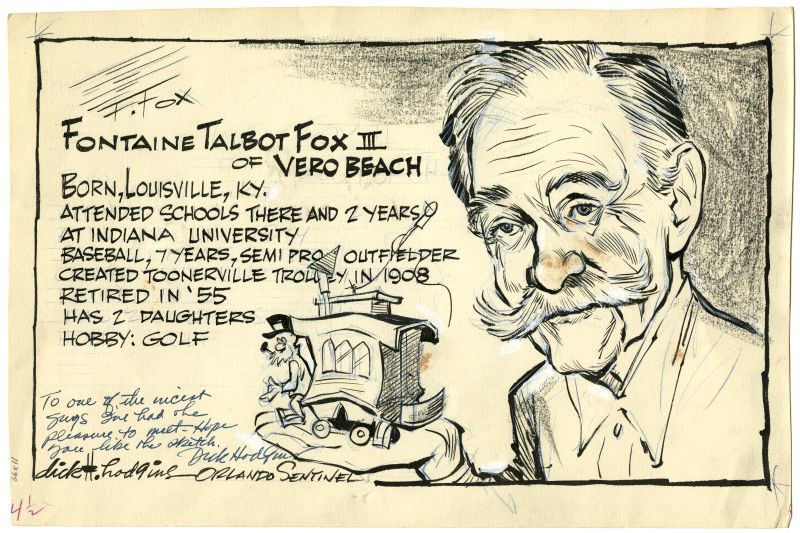
There was once a veritable railfan comic strip that appeared in hundreds of daily newspapers– Fontaine Fox‘s Toonerville Trolley. Here are eight daily panels from December 1939. You will note that most do not feature the trolley or its Skipper.

December 2, 1939.

December 2, 1939.

December 4, 1939. The reference to Holland relates to the "phony war" period of World War II. War had broken out in Europe, but Germany did not invade Holland until the Spring of 1940.

December 4, 1939. The reference to Holland relates to the “phony war” period of World War II. War had broken out in Europe, but Germany did not invade Holland until the Spring of 1940.

December 6, 1939.

December 6, 1939.

December 7, 1939.

December 7, 1939.

December 9, 1939.

December 9, 1939.

December 11, 1939.

December 11, 1939.

December 13, 1939.

December 13, 1939.

December 14, 1939.

December 14, 1939.

From the Collections of William Shapotkin:

Bill had three different duplicate slides, all of this same image. I tried to stitch them all together to see if the result would be sharper than the three rather fuzzy slides. It didn't seem to help much. All I know about this North Shore Line scene is that it was taken in 1957. One of the dupes was from Ashland Car Works.

Bill had three different duplicate slides, all of this same image. I tried to stitch them all together to see if the result would be sharper than the three rather fuzzy slides. It didn’t seem to help much. All I know about this North Shore Line scene is that it was taken in 1957. One of the dupes was from Ashland Car Works.

CTA 6238 at 71st and Western on February 3, 1953.

CTA 6238 at 71st and Western on February 3, 1953.

February 22, 1956 at the Chicago & North Western's Lake Bluff station. At right, an eastbound passenger train arrives, while a westbound freight (coming off the "New Line") passes. The view looks north.

February 22, 1956 at the Chicago & North Western’s Lake Bluff station. At right, an eastbound passenger train arrives, while a westbound freight (coming off the “New Line”) passes. The view looks north.

CTA single-car unit 41 in July 1992. This car is now at the Illinois Railway Museum. During the 1980s it was usually paired with car 28, which unfortunately was not saved.

CTA single-car unit 41 in July 1992. This car is now at the Illinois Railway Museum. During the 1980s it was usually paired with car 28, which unfortunately was not saved.

North Shore Line 758 heads up a four-car train, while a nearby Milwaukee Electric interurban is visiting on a 1949 fantrip.

North Shore Line 758 heads up a four-car train, while a nearby Milwaukee Electric interurban is visiting on a 1949 fantrip.

CTA 6151, a Stony Island car, at Navy Pier on July 4, 1951.

CTA 6151, a Stony Island car, at Navy Pier on July 4, 1951.

CA&E bus 101.

CA&E bus 101.

CA&E 409 at Trolleyville, USA in Olmstead Falls, OH in July 1966. Since 2009, this car has been at the Illinois Railway Museum.

CA&E 409 at Trolleyville, USA in Olmstead Falls, OH in July 1966. Since 2009, this car has been at the Illinois Railway Museum.

CTA 2923 at the Addison station on the (now) Red Line in June 1993. It was suggested that this might be Addison on the Ravenswood (today's Brown Line) because there are only two tracks visible. However, Graham Garfield says, "No no! This is actually a very special photo! This is a temporary platform at Addison Red Line (only recently having become the “Red Line”, née North-South Route) built as part of the staging for reconstructing the station, which was rather involved because the structure had to be widened to change from dual side platforms to a single island platform. I was interested to see this photo, as I have only seen a handful of photos of the staging and temp facilities from this project. To accommodate the island platform, the space between the center tracks had to the widened, so the two northbound tracks (3 & 4) stayed on the original steel structure and the southbound tracks (1 & 2) were placed on a new concrete deck with direct track fixation instead of the standard cut spikes and tie plates on the steel-deck elevated. While this concrete structure was being built, southbound Evanston and Howard trains ran on track 3 until August 19, 1994, when both where shifted onto track 1 on the new decking. On August 21, southbound Howard trains moved onto their permanent home on track 2. The new island platform had opened earlier in the summer. The layout of the switches in Addison Interlocking north of the station were arranged specifically to make that reroute scheme possible. So this view looks north on the temporary SB platform along track 3, with a SB Red Line A train stopping."

CTA 2923 at the Addison station on the (now) Red Line in June 1993. It was suggested that this might be Addison on the Ravenswood (today’s Brown Line) because there are only two tracks visible. However, Graham Garfield says, “No no! This is actually a very special photo! This is a temporary platform at Addison Red Line (only recently having become the “Red Line”, née North-South Route) built as part of the staging for reconstructing the station, which was rather involved because the structure had to be widened to change from dual side platforms to a single island platform. I was interested to see this photo, as I have only seen a handful of photos of the staging and temp facilities from this project.
To accommodate the island platform, the space between the center tracks had to the widened, so the two northbound tracks (3 & 4) stayed on the original steel structure and the southbound tracks (1 & 2) were placed on a new concrete deck with direct track fixation instead of the standard cut spikes and tie plates on the steel-deck elevated. While this concrete structure was being built, southbound Evanston and Howard trains ran on track 3 until August 19, 1994, when both where shifted onto track 1 on the new decking. On August 21, southbound Howard trains moved onto their permanent home on track 2. The new island platform had opened earlier in the summer.
The layout of the switches in Addison Interlocking north of the station were arranged specifically to make that reroute scheme possible.
So this view looks north on the temporary SB platform along track 3, with a SB Red Line A train stopping.”

A three-car CA&E train at the Aurora terminal.

A three-car CA&E train at the Aurora terminal.

A five-car North Shore Line train on July 5, 1957. (Joseph Canfield Photo)

A five-car North Shore Line train on July 5, 1957. (Joseph Canfield Photo)

CTA Pullman 550 at Madison and Canal in November 1951, presumably running on Route 56 - Milwaukee Avenue. That's the Chicago Daily News building at rear.

CTA Pullman 550 at Madison and Canal in November 1951, presumably running on Route 56 – Milwaukee Avenue. That’s the Chicago Daily News building at rear.

CTA trolley bus 9761 is running on Route 85 - Central near the end of electric bus service. This slide was processed in April 1973. The Manor Theater was located at 5609 W. North Avenue, and was eventually converted into a banquet hall (Ferrara Manor) after it was purchased by the same family that owned the Ferrara Pan Candy Company. So, the location of this slide is at Central and North Avenues, looking to the southwest as the bus is heading north to Bryn Mawr.

CTA trolley bus 9761 is running on Route 85 – Central near the end of electric bus service. This slide was processed in April 1973. The Manor Theater was located at 5609 W. North Avenue, and was eventually converted into a banquet hall (Ferrara Manor) after it was purchased by the same family that owned the Ferrara Pan Candy Company. So, the location of this slide is at Central and North Avenues, looking to the southwest as the bus is heading north to Bryn Mawr.

CTA 550 entering the Imlay loop at Milwaukee and Devon in September 1951.

CTA 550 entering the Imlay loop at Milwaukee and Devon in September 1951.

This is a former Toronto PCC streetcar, but I have no other information about the picture.

This is a former Toronto PCC streetcar, but I have no other information about the picture.

CSL 6022 at Kedzie and 47th Place in June 1943 (?) Not sure if this date is correct, considering the slab-sided postwar auto on the next block. Dan Cluley writes, "Regarding the date of bills188 the sign on the streetcar advertises “Park and Recreation week – May 21-30” That seems to have been a national promotion in 1948. My guess on the car would be postwar Hudson." So let's call it June 1948 then.

CSL 6022 at Kedzie and 47th Place in June 1943 (?) Not sure if this date is correct, considering the slab-sided postwar auto on the next block. Dan Cluley writes, “Regarding the date of bills188 the sign on the streetcar advertises “Park and Recreation week – May 21-30” That seems to have been a national promotion in 1948. My guess on the car would be postwar Hudson.” So let’s call it June 1948 then.

CTA Pullman 900 at 93rd and Stony Island on November 16, 1951.

CTA Pullman 900 at 93rd and Stony Island on November 16, 1951.

CTA 3191 at Stony Island and 93rd on July 11, 1951.

CTA 3191 at Stony Island and 93rd on July 11, 1951.

The Pioneer Limited (live steam) at Kiddieland amusement park in August 1992. After Kiddieland closed, the steam engines were purchased by the Hesston Steam Museum.

The Pioneer Limited (live steam) at Kiddieland amusement park in August 1992. After Kiddieland closed, the steam engines were purchased by the Hesston Steam Museum.

The observation car on the Kiddieland Express at Kiddieland amusement park in Melrose Park, IL in August 1992. (William Shapotkin Photo)

The observation car on the Kiddieland Express at Kiddieland amusement park in Melrose Park, IL in August 1992. (William Shapotkin Photo)

Milwaukee Road "bipolar" electric loco E-2 on display at the National Museum of Transportation in Kirkwood, MO on August 2, 1995. (William Shapotkin Photo)

Milwaukee Road “bipolar” electric loco E-2 on display at the National Museum of Transportation in Kirkwood, MO on August 2, 1995. (William Shapotkin Photo)

CTA gate car 322 is signed as a Kenwood Local on Chicago's Loop "L" in July 1`1948. Kenwood became a shuttle, running only as far as the Indiana Avenue station, in August 1949 as part of CTA's major revision of north-south service.

CTA gate car 322 is signed as a Kenwood Local on Chicago’s Loop “L” in July 1`1948. Kenwood became a shuttle, running only as far as the Indiana Avenue station, in August 1949 as part of CTA’s major revision of north-south service.

Chicago, IL. CTA car 5010 leads the inaugural revenue run of 5000-series cars on CTA's Howard-Dan Ryan Line at Howard terminal. The view looks W-NW on April 19, 2010. (William Shapotkin Photo)

Chicago, IL. CTA car 5010 leads the inaugural revenue run of 5000-series cars on CTA’s Howard-Dan Ryan Line at Howard terminal. The view looks W-NW on April 19, 2010. (William Shapotkin Photo)

Chicago, IL. Rear-end interior view of CTA "L" car 5010. Photo taken during inaugural revenue run of 5000-series cars on the Howard-Dan Ryan line (April 19, 2010). (William Shapotkin Photo)

Chicago, IL. Rear-end interior view of CTA “L” car 5010. Photo taken during inaugural revenue run of 5000-series cars on the Howard-Dan Ryan line (April 19, 2010). (William Shapotkin Photo)

CA&E 604 and 427 in Wheaton.

CA&E 604 and 427 in Wheaton.

CA&E 405.

CA&E 405.

CA&E 56.

CA&E 56.

CA&E car 20 at the Fox River Trolley Museum in July 1987, with CTA 5001 and a 4000 in the background.

CA&E car 20 at the Fox River Trolley Museum in July 1987, with CTA 5001 and a 4000 in the background.

A CTA freight train is on the north side "L" in this undated photo, looking south. Electric freight service was the "L"s responsibility from 1920 to 1973, a holdover from the days when this was a Milwaukee Road line operating at ground level.

A CTA freight train is on the north side “L” in this undated photo, looking south. Electric freight service was the “L”s responsibility from 1920 to 1973, a holdover from the days when this was a Milwaukee Road line operating at ground level.

CA&E 422.

CA&E 422.

The CA&E Wheaton Yard and Shops.

The CA&E Wheaton Yard and Shops.

"In the last days of the last streetcar line in Milwaukee, a Wells Street car trundels through downtown." This would have to be no later than 1958. A new modern streetcar line began operations in Milwaukee a few years ago. (A. C. Kalmbach Photo)

“In the last days of the last streetcar line in Milwaukee, a Wells Street car trundels through downtown.” This would have to be no later than 1958. A new modern streetcar line began operations in Milwaukee a few years ago. (A. C. Kalmbach Photo)

CA&E 430.

CA&E 430.

I did the best I could with this image, which was completely faded to red. It shows Illinois Terminal 451 being used in regular service on the Shaker Heights Rapid Transit line in October 1976, due to a car shortage. (Jim Walker Photo)

I did the best I could with this image, which was completely faded to red. It shows Illinois Terminal 451 being used in regular service on the Shaker Heights Rapid Transit line in October 1976, due to a car shortage. (Jim Walker Photo)

Cleveland RTA PCC 75 is at East 83rd Street on the Shaker Heights Rapid Transit line on May 30, 1976.

Cleveland RTA PCC 75 is at East 83rd Street on the Shaker Heights Rapid Transit line on May 30, 1976.

SEPTA 6139-6140 (ex-CTA) at the Norristown terminal on March 10, 1987. Until 1951, there was a ramp continuing north from here, leading to street trackage used by the Lehigh Valley Transit's Liberty Bell interurban, which continued to Allentown. This terminal has since been replaced.

SEPTA 6139-6140 (ex-CTA) at the Norristown terminal on March 10, 1987. Until 1951, there was a ramp continuing north from here, leading to street trackage used by the Lehigh Valley Transit’s Liberty Bell interurban, which continued to Allentown. This terminal has since been replaced.

This is one of the North Shore Line stations designed by Arthur U. Gerber. But which one? My guess is Kenosha. The original slide, from November 1987, was so underexposed that it almost looked opaque, but I did what I could with it.

This is one of the North Shore Line stations designed by Arthur U. Gerber. But which one? My guess is Kenosha. The original slide, from November 1987, was so underexposed that it almost looked opaque, but I did what I could with it.

This picture shows the Lake Street "L" at Laramie Avenue (5200 W.) in a state of transition on October 22, 1962-- just six days before service west of here was moved to the nearby Chicago & North Western embankment. This two-car train of 4000s (4383-4384) is descending the ramp to ground level, but as you can see, the connection to the embankment is already in place to the left (north). It appears that a section of the ramp was modified when the new track connection was made, as you can see the tracks leading down to ground level bump out a bit to the south. Once the new arrangement was placed in service, the ramp leading to ground level was removed, and the trolley poles were taken off the 4000s used on Lake. They were replaced by new 2000-series cars in 1964.

This picture shows the Lake Street “L” at Laramie Avenue (5200 W.) in a state of transition on October 22, 1962– just six days before service west of here was moved to the nearby Chicago & North Western embankment. This two-car train of 4000s (4383-4384) is descending the ramp to ground level, but as you can see, the connection to the embankment is already in place to the left (north). It appears that a section of the ramp was modified when the new track connection was made, as you can see the tracks leading down to ground level bump out a bit to the south. Once the new arrangement was placed in service, the ramp leading to ground level was removed, and the trolley poles were taken off the 4000s used on Lake. They were replaced by new 2000-series cars in 1964.

CSL trolley bus 87 is on Central Avenue near Lake Street on June 7, 1930. These are probably CSL officials, since trolley bus service on Route 85 - Central began the next day, replacing a Chicago Motor Coach route. CSL had begun trolley bus service on Diversey Avenue on April 17, 1930, which explains why this chartered bus was signed for Route 76. Diversey lost its trolley buses in 1955. CSL chose trolley buses for some northwest side routes as they were in competition with the Chicago Motor Coach company to extend service there. It was quicker (and cheaper) for CSL to institute service with electric buses, with the intention (never realized) to convert them to streetcar lines once ridership justified it. This was part of what CSL called "balanced" transit.

CSL trolley bus 87 is on Central Avenue near Lake Street on June 7, 1930. These are probably CSL officials, since trolley bus service on Route 85 – Central began the next day, replacing a Chicago Motor Coach route. CSL had begun trolley bus service on Diversey Avenue on April 17, 1930, which explains why this chartered bus was signed for Route 76. Diversey lost its trolley buses in 1955. CSL chose trolley buses for some northwest side routes as they were in competition with the Chicago Motor Coach company to extend service there. It was quicker (and cheaper) for CSL to institute service with electric buses, with the intention (never realized) to convert them to streetcar lines once ridership justified it. This was part of what CSL called “balanced” transit.

Milwaukee streetcar 998 in the 1950s.

Milwaukee streetcar 998 in the 1950s.

CTA buses 5076 and 5300 at the Imlay loop, at Milwaukee and Devon.

CTA buses 5076 and 5300 at the Imlay loop, at Milwaukee and Devon.

CTA buses 5253 and 5218 at the Imlay loop.

CTA buses 5253 and 5218 at the Imlay loop.

CTA buses 5143 and 5300 at the Imlay loop, which is still in use today.

CTA buses 5143 and 5300 at the Imlay loop, which is still in use today.

CA&E cars 600 and 702.

CA&E cars 600 and 702.

We are looking to the west/northwest along the Kennedy expressway at Canfield. An inbound CTA Blue Line train approaches the Harlem Avenue station (located behind the photographer). This picture was taken around October 2019.

We are looking to the west/northwest along the Kennedy expressway at Canfield. An inbound CTA Blue Line train approaches the Harlem Avenue station (located behind the photographer). This picture was taken around October 2019.

CTA trolley bus 9657 on Route 53 - Pulaski. Daniel Joseph: "Location is Pulaski/Peterson Terminal."

CTA trolley bus 9657 on Route 53 – Pulaski. Daniel Joseph: “Location is Pulaski/Peterson Terminal.”

Illinois Terminal sleeping car 504, the "Peoria," at the Illinois Railway Museum in May 1977. It was built by American Car and Foundry in 1910.

Illinois Terminal sleeping car 504, the “Peoria,” at the Illinois Railway Museum in May 1977. It was built by American Car and Foundry in 1910.

CA&E car 303.

CA&E car 303.

I am not sure just which CA&E wood car this is, at the Wheaton yards. I stitched together two versions of this slide, both badly faded to red, and attempted to restore the colors.

I am not sure just which CA&E wood car this is, at the Wheaton yards. I stitched together two versions of this slide, both badly faded to red, and attempted to restore the colors.

CA&E 406 at Elgin.

CA&E 406 at Elgin.

CTA 3163 on the ground level portion of the Lake Street "L" in Oak Park on April 27, 1952.

CTA 3163 on the ground level portion of the Lake Street “L” in Oak Park on April 27, 1952.

CA&E 424 and train at the Elgin terminal in August 1953.

CA&E 424 and train at the Elgin terminal in August 1953.

CA&E 428 at the terminal in Elgin on August 10, 1956.

CA&E 428 at the terminal in Elgin on August 10, 1956.

CTA 5436 at 79th and Perry in March 1950.

CTA 5436 at 79th and Perry in March 1950.

CTA 3232 on Route 67. M.E. adds, "This photo was likely taken at 69th and Western. This is an eastbound car making the turn from going north on Western to going east on 69th. After the 69th St. line was converted to buses, the CTA kept the tracks in operation so that PCC cars running along Western could access the barn at Vincennes and 77th."

CTA 3232 on Route 67. M.E. adds, “This photo was likely taken at 69th and Western. This is an eastbound car making the turn from going north on Western to going east on 69th. After the 69th St. line was converted to buses, the CTA kept the tracks in operation so that PCC cars running along Western could access the barn at Vincennes and 77th.”

CTA 3254 at 71st and California on February 3, 1953.

CTA 3254 at 71st and California on February 3, 1953.

CTA 3318 at 71st and California on May 28, 1950.

CTA 3318 at 71st and California on May 28, 1950.

CTA 422 on Kedzie at 47th on May 13, 1954. It would appear this one of one a few locations where there was wire shared by streetcars and trolley buses. M.E. adds, "There was no trolley bus service along Kedzie, so the only explanation for the trolley bus here is that it was going either to or from the trolley bus barn. I don't know precisely where that barn was, but judging by the picture, it had to be somewhere along Kedzie between 47th and 51st Sts., which had the only two trolley bus lines on the south side." John V.: "CTA 422 on Kedzie: Trolley buses for routes 47 & 51 utilized Archer Car Station for storage, accessed via Kedzie north of 47th Street. Kedzie itself changed over to trolley buses in 1955."

CTA 422 on Kedzie at 47th on May 13, 1954. It would appear this one of one a few locations where there was wire shared by streetcars and trolley buses. M.E. adds, “There was no trolley bus service along Kedzie, so the only explanation for the trolley bus here is that it was going either to or from the trolley bus barn. I don’t know precisely where that barn was, but judging by the picture, it had to be somewhere along Kedzie between 47th and 51st Sts., which had the only two trolley bus lines on the south side.” John V.: “CTA 422 on Kedzie: Trolley buses for routes 47 & 51 utilized Archer Car Station for storage, accessed via Kedzie north of 47th Street. Kedzie itself changed over to trolley buses in 1955.”

CTA trolley bus 9289 at the turnaround loop at Belmont and Cumberland.

CTA trolley bus 9289 at the turnaround loop at Belmont and Cumberland.

The same location today.

The same location today.

CTA trolley bus 9504 on Route 53 - Pulaski in 1970. Mike Charnota Photo)

CTA trolley bus 9504 on Route 53 – Pulaski in 1970. Mike Charnota Photo)

We are looking east along Randolph Street on October 16, 1958. We see the old Trailways bus depot, and what was then the newly remodeled CTA "L" station, which was replaced a few years ago by a new station a block south and Washington and Wabash. I am not sure whether the giant CTA logo was saved off the old station.

We are looking east along Randolph Street on October 16, 1958. We see the old Trailways bus depot, and what was then the newly remodeled CTA “L” station, which was replaced a few years ago by a new station a block south and Washington and Wabash. I am not sure whether the giant CTA logo was saved off the old station.

This is an Ashland Car Works duplicate slide, sold by the late Jack Bailey. This is a North Shore Line train in one of the northern suburbs, running on the Shore Line Route, parallel to the Chicago & North Western (which would be just to the right of the frame). Which means we are looking to the south. KV writes that this "appears to be St. Johns Avenue in Highland Park."

This is an Ashland Car Works duplicate slide, sold by the late Jack Bailey. This is a North Shore Line train in one of the northern suburbs, running on the Shore Line Route, parallel to the Chicago & North Western (which would be just to the right of the frame). Which means we are looking to the south. KV writes that this “appears to be St. Johns Avenue in Highland Park.”

Blue Island, IL on September 6, 2001. This two-car section of the Blue Island (Vermont Street) Metra (IC) Electric station platform is all that's left of the original 1926 station. The head house and remainder of the platform have been demolished and a new facility is under construction. The view looks N-NE across the west pocket track.

Blue Island, IL on September 6, 2001. This two-car section of the Blue Island (Vermont Street) Metra (IC) Electric station platform is all that’s left of the original 1926 station. The head house and remainder of the platform have been demolished and a new facility is under construction. The view looks N-NE across the west pocket track.

Near the Armitage CTA "L" station in April 1968.

Near the Armitage CTA “L” station in April 1968.

A Chicago Great Western "piggyback" freight train on Baltimore & Ohio Chicago Terminal tracks on September 13, 1965. The CGW was abandoned in the 1970s. We are looking west from Harlem Avenue in Forest Park, IL, with the CTA Congress rapid transit station at right (part of today's Blue Line). Note how the fiberglass panels on the ramp are arranged in a colorful pattern. Some years later, many of these were removed after some riders were robbed in these secluded walkways. (Dick Talbott Photo)

A Chicago Great Western “piggyback” freight train on Baltimore & Ohio Chicago Terminal tracks on September 13, 1965. The CGW was abandoned in the 1970s. We are looking west from Harlem Avenue in Forest Park, IL, with the CTA Congress rapid transit station at right (part of today’s Blue Line). Note how the fiberglass panels on the ramp are arranged in a colorful pattern. Some years later, many of these were removed after some riders were robbed in these secluded walkways. (Dick Talbott Photo)

South Shore Line car 16 in July 1977.

South Shore Line car 16 in July 1977.

A southbound North Shore Line Electroliner at Lake Bluff. (A. C. Kalmbach Photo)

A southbound North Shore Line Electroliner at Lake Bluff. (A. C. Kalmbach Photo)

This was taken on a Central Electric Railfans' Association fantrip on the Metra Electric around May 1990. The South Shore Line also runs on these tracks somewhere on Chicago's south side.

This was taken on a Central Electric Railfans’ Association fantrip on the Metra Electric around May 1990. The South Shore Line also runs on these tracks somewhere on Chicago’s south side.

South Shore Line 10 in December 1983. (Gregory Markey Photo)

South Shore Line 10 in December 1983. (Gregory Markey Photo)

CA&E 309 at the Wheaton Shops.

CA&E 309 at the Wheaton Shops.

CTA PCC 7171 heads south on State Street at Wacker Drive, most likely on Route 36. The CTA "L" station at State and Lake Streets is a block away, with Fritzel's restaurant and the Chicago Theater visible. This picture dates to the mid-1950s.

CTA PCC 7171 heads south on State Street at Wacker Drive, most likely on Route 36. The CTA “L” station at State and Lake Streets is a block away, with Fritzel’s restaurant and the Chicago Theater visible. This picture dates to the mid-1950s.

A train of Met cars on the Garfield Park "L". (John J. Kelly, Jr. Photo)

A train of Met cars on the Garfield Park “L”. (John J. Kelly, Jr. Photo)

CTA 4053-4336 on the Lake Street "L" in Oak Park on October 19, 1952.

CTA 4053-4336 on the Lake Street “L” in Oak Park on October 19, 1952.

CSL 5222 on Halsted at 79th Street, apparently in the late 1920s. The Capitol Theater was located at 7941 S. Halsted and opened in 1925. The view looks south. M.E. notes: "In this photo you see tracks switching between Halsted and 79th St. These switches took Halsted cars east on 79th St. to Vincennes, then north to 77th St. to the big CSL barn. Those tracks could also have led to Emerald Ave. (a half block east of Halsted), where the Halsted cars turned south, then west into the terminal at roughly 79th Place between Emerald and Halsted. From the picture, I can't determine whether that terminal existed in the 1920s. Halsted cars could have also used the barn farther south at 88th and Vincennes, which had been the barn for the interurban line that ran from Kankakee to the L at 63rd Place and Halsted." "I don't know when the barn at 103rd and Vincennes (also on the Halsted route) opened, but even had it existed in the 1920s, there would not have been a track connection between the Halsted cars running on a private right-of-way east of Vincennes, and the barn on the southwest corner of 103rd and Vincennes. I say this with certainty because, at the intersection of 103rd St., Vincennes Ave. and Beverly Blvd. (which came in from the northwest), there was also the freight line of the Pennsylvania Railroad that ran alongside Beverly Blvd. and crossed both the CSL Vincennes line and the Rock Island main line. So there would not have been any room to run streetcar trackage to the barn! Plus, I believe the 103rd St. barn was strictly a bus barn. But the junction of 103rd and Vincennes, the center of the neighborhood called Washington Heights, would have been a great railfanning location, with Rock Island mainline and commuter trains, CSL Vincennes streetcars, and the Pennsy freights."

CSL 5222 on Halsted at 79th Street, apparently in the late 1920s. The Capitol Theater was located at 7941 S. Halsted and opened in 1925. The view looks south. M.E. notes: “In this photo you see tracks switching between Halsted and 79th St. These switches took Halsted cars east on 79th St. to Vincennes, then north to 77th St. to the big CSL barn. Those tracks could also have led to Emerald Ave. (a half block east of Halsted), where the Halsted cars turned south, then west into the terminal at roughly 79th Place between Emerald and Halsted. From the picture, I can’t determine whether that terminal existed in the 1920s. Halsted cars could have also used the barn farther south at 88th and Vincennes, which had been the barn for the interurban line that ran from Kankakee to the L at 63rd Place and Halsted.”
“I don’t know when the barn at 103rd and Vincennes (also on the Halsted route) opened, but even had it existed in the 1920s, there would not have been a track connection between the Halsted cars running on a private right-of-way east of Vincennes, and the barn on the southwest corner of 103rd and Vincennes. I say this with certainty because, at the intersection of 103rd St., Vincennes Ave. and Beverly Blvd. (which came in from the northwest), there was also the freight line of the Pennsylvania Railroad that ran alongside Beverly Blvd. and crossed both the CSL Vincennes line and the Rock Island main line. So there would not have been any room to run streetcar trackage to the barn! Plus, I believe the 103rd St. barn was strictly a bus barn. But the junction of 103rd and Vincennes, the center of the neighborhood called Washington Heights, would have been a great railfanning location, with Rock Island mainline and commuter trains, CSL Vincennes streetcars, and the Pennsy freights.”

Our Latest Book, Now Available:

Chicago’s Lost “L”s

From the back cover:

Chicago’s system of elevated railways, known locally as the “L,” has run continuously since 1892 and, like the city, has never stood still. It helped neighborhoods grow, brought their increasingly diverse populations together, and gave the famous Loop its name. But today’s system has changed radically over the years. Chicago’s Lost “L”s tells the story of former lines such as Garfield Park, Humboldt Park, Kenwood, Stockyards, Normal Park, Westchester, and Niles Center. It was once possible to take high-speed trains on the L directly to Aurora, Elgin, and Milwaukee, Wisconsin. The L started out as four different companies, two starting out using steam engines instead of electricity. Eventually, all four came together via the Union Loop. The L is more than a way of getting around. Its trains are a place where people meet and interact. Some say the best way to experience the city is via the L, with its second-story view. Chicago’s Lost “L”s is virtually a “secret history” of Chicago, and this is your ticket. David Sadowski grew up riding the L all over the city. He is the author of Chicago Trolleys and Building Chicago’s Subways and runs the online Trolley Dodger blog.

The Images of America series celebrates the history of neighborhoods, towns, and cities across the country. Using archival photographs, each title presents the distinctive stories from the past that shape the character of the community today. Arcadia is proud to play a part in the preservation of local heritage, making history available to all.

Title Chicago’s Lost “L”s
Images of America
Author David Sadowski
Edition illustrated
Publisher Arcadia Publishing (SC), 2021
ISBN 1467100007, 9781467100007
Length 128 pages

Chapters:
01. The South Side “L”
02. The Lake Street “L”
03. The Metropolitan “L”
04. The Northwestern “L”
05. The Union Loop
06. Lost Equipment
07. Lost Interurbans
08. Lost Terminals
09. Lost… and Found

Each copy purchased here will be signed by the author, and you will also receive a bonus facsimile of a 1926 Chicago Rapid Transit Company map, with interesting facts about the “L” on the reverse side.

The price of $23.99 includes shipping within the United States.

For Shipping to US Addresses:

For Shipping to Canada:

For Shipping Elsewhere:

NEW DVD:

A Tribute to the North Shore Line

To commemorate the 50th anniversary of the demise of the fabled North Shore Line interurban in January 2013, Jeffrey L. Wien and Bradley Criss made a very thorough and professional video presentation, covering the entire route between Chicago and Milwaukee and then some. Sadly, both men are gone now, but their work remains, making this video a tribute to them, as much as it is a tribute to the Chicago North Shore & Milwaukee.

Jeff drew on his own vast collections of movie films, both his own and others such as the late William C. Hoffman, wrote and gave the narration. Bradley acted as video editor, and added authentic sound effects from archival recordings of the North Shore Line.

It was always Jeff’s intention to make this video available to the public, but unfortunately, this did not happen in his lifetime. Now, as the caretakers of Jeff’s railfan legacy, we are proud to offer this excellent two-hour program to you for the first time.  The result is a fitting tribute to what Jeff called his “Perpetual Adoration,” which was the name of a stop on the interurban.

Jeff was a wholehearted supporter of our activities, and the proceeds from the sale of this disc will help defray some of the expenses of keeping the Trolley Dodger web site going.

Total time – 121:22

# of Discs – 1
Price: $19.99 (Includes shipping within the United States)

Help Support The Trolley Dodger

This is our 272nd post, and we are gradually creating a body of work and an online resource for the benefit of all railfans, everywhere. To date, we have received over 784,000 page views, for which we are very grateful.
You can help us continue our original transit research by checking out the fine products in our Online Store.
As we have said before, “If you buy here, we will be here.”
We thank you for your support.
DONATIONS
In order to continue giving you the kinds of historic railroad images that you have come to expect from The Trolley Dodger, we need your help and support. It costs money to maintain this website, and to do the sort of historic research that is our specialty.
Your financial contributions help make this web site better, and are greatly appreciated.

May Showers

On October 10, 1952, an eastbound five-car Garfield Park "L" train approaches Western Avenue, where photographer William C. Hoffman was standing. The temporary trackage on Van Buren Street, visible at right, was then under construction.

On October 10, 1952, an eastbound five-car Garfield Park “L” train approaches Western Avenue, where photographer William C. Hoffman was standing. The temporary trackage on Van Buren Street, visible at right, was then under construction.

April showers, as they say, bring May flowers. That kind of fits today’s post, since there is always a lot of preliminary work involved in what we do. In fact, you could say we have been working on this one for a month.

It’s finally taken root, and now you can stop and smell the roses! We have about 100 classic traction photos for you to enjoy.  Most are our own, and some are from the collections of our friend William Shapotkin.

We also have two new products available. You can pre-order our new book Chicago’s Lost “L”s, and also purchase A Tribute to the North Shore Line, a two-hour DVD presentation put together in 2013 by the late Jeffrey L. Wien and Bradley Criss.

-David Sadowski

PS- FYI, we have a Facebook auxiliary for the Trolley Dodger here, which currently has 320 members.

Our Latest Book, Now Available for Pre-Order:

Chicago’s Lost “L”s

Arcadia Publishing will release our new book Chicago’s Lost “L”s on July 12, 2021. Reserve your copy today!

From the back cover:

Chicago’s system of elevated railways, known locally as the “L,” has run continuously since 1892 and, like the city, has never stood still. It helped neighborhoods grow, brought their increasingly diverse populations together, and gave the famous Loop its name. But today’s system has changed radically over the years. Chicago’s Lost “L”s tells the story of former lines such as Garfield Park, Humboldt Park, Kenwood, Stockyards, Normal Park, Westchester, and Niles Center. It was once possible to take high-speed trains on the L directly to Aurora, Elgin, and Milwaukee, Wisconsin. The L started out as four different companies, two starting out using steam engines instead of electricity. Eventually, all four came together via the Union Loop. The L is more than a way of getting around. Its trains are a place where people meet and interact. Some say the best way to experience the city is via the L, with its second-story view. Chicago’s Lost “L”s is virtually a “secret history” of Chicago, and this is your ticket. David Sadowski grew up riding the L all over the city. He is the author of Chicago Trolleys and Building Chicago’s Subways and runs the online Trolley Dodger blog.

The Images of America series celebrates the history of neighborhoods, towns, and cities across the country. Using archival photographs, each title presents the distinctive stories from the past that shape the character of the community today. Arcadia is proud to play a part in the preservation of local heritage, making history available to all.

Title Chicago’s Lost “L”s
Images of America
Author David Sadowski
Edition illustrated
Publisher Arcadia Publishing (SC), 2021
ISBN 1467100007, 9781467100007
Length 128 pages

Chapters:
01. The South Side “L”
02. The Lake Street “L”
03. The Metropolitan “L”
04. The Northwestern “L”
05. The Union Loop
06. Lost Equipment
07. Lost Interurbans
08. Lost Terminals
09. Lost… and Found

Each copy purchased here will be signed by the author, and you will also receive a bonus facsimile of a 1926 Chicago Rapid Transit Company map, with interesting facts about the “L” on the reverse side.

The price of $23.99 includes shipping within the United States.

For Shipping to US Addresses:

For Shipping to Canada:

For Shipping Elsewhere:

NEW DVD:

A Tribute to the North Shore Line

To commemorate the 50th anniversary of the demise of the fabled North Shore Line interurban in January 2013, Jeffrey L. Wien and Bradley Criss made a very thorough and professional video presentation, covering the entire route between Chicago and Milwaukee and then some. Sadly, both men are gone now, but their work remains, making this video a tribute to them, as much as it is a tribute to the Chicago North Shore & Milwaukee.

Jeff drew on his own vast collections of movie films, both his own and others such as the late William C. Hoffman, wrote and gave the narration. Bradley acted as video editor, and added authentic sound effects from archival recordings of the North Shore Line.

It was always Jeff’s intention to make this video available to the public, but unfortunately, this did not happen in his lifetime. Now, as the caretakers of Jeff’s railfan legacy, we are proud to offer this excellent two-hour program to you for the first time.  The result is a fitting tribute to what Jeff called his “Perpetual Adoration,” which was the name of a stop on the interurban.

Jeff was a wholehearted supporter of our activities, and the proceeds from the sale of this disc will help defray some of the expenses of keeping the Trolley Dodger web site going.

Total time – 121:22

# of Discs – 1
Price: $19.99 (Includes shipping within the United States)

Recent Finds

The LaSalle Street tunnel under the Chicago River, shown prior to when it was rebuilt for use by cable cars in the 1880s. It had opened on July 4, 1871. This is one-half of a stereo photo.

The LaSalle Street tunnel under the Chicago River, shown prior to when it was rebuilt for use by cable cars in the 1880s. It had opened on July 4, 1871. This is one-half of a stereo photo.

A northbound Jackson Park-Howard "B: train descends into the State Street Subway sometime in the 1970s. A Lake-Dan Ryan train, made up of 2000s and 2200s, is on the nearby "L" structure.

A northbound Jackson Park-Howard “B: train descends into the State Street Subway sometime in the 1970s. A Lake-Dan Ryan train, made up of 2000s and 2200s, is on the nearby “L” structure.

An Englewood-Howard "A" train of 6000s in the State Street Subway in the 1970s.

An Englewood-Howard “A” train of 6000s in the State Street Subway in the 1970s.

This photo, showing a South Shore Line train running in the street in East Chicago, Indiana, must have been taken just prior to the relocation of these tracks in 1956. Since then, they have run next to the Indiana Toll Road. The location is on Chicago Street at Magoun Avenue, less than a mile east of the Indiana Toll Road. The train appears to be heading east. That's a 1955 or '56 Buick at left across the street.

This photo, showing a South Shore Line train running in the street in East Chicago, Indiana, must have been taken just prior to the relocation of these tracks in 1956. Since then, they have run next to the Indiana Toll Road. The location is on Chicago Street at Magoun Avenue, less than a mile east of the Indiana Toll Road. The train appears to be heading east. That’s a 1955 or ’56 Buick at left across the street.

The same location today.

The same location today.

J. W. Vigrass took this photo along the Red Arrow's West Chester line on May 29, 1954, just about a week before buses replaced trolleys. This long side-of-the-road interurban fell victim to a project that widened West Chester Pike.

J. W. Vigrass took this photo along the Red Arrow’s West Chester line on May 29, 1954, just about a week before buses replaced trolleys. This long side-of-the-road interurban fell victim to a project that widened West Chester Pike.

This may not be the sharpest picture, but it is an original Ektachrome slide shot by the late George Krambles. It shows North Shore Line 181 approaching Libertyville along the Mundelein branch on February 11, 1962.

This may not be the sharpest picture, but it is an original Ektachrome slide shot by the late George Krambles. It shows North Shore Line 181 approaching Libertyville along the Mundelein branch on February 11, 1962.

A North Shore Line train in North Chicago, sometime in the 1950s. This was an Ektachrome slide that had shifted to red, and I was fortunate to be able to color correct it in Photoshop. (J. W. Vigrass Photo)

A North Shore Line train in North Chicago, sometime in the 1950s. This was an Ektachrome slide that had shifted to red, and I was fortunate to be able to color correct it in Photoshop. (J. W. Vigrass Photo)

This photo did not come with any information, but it is a fantrip held on the Red Arrow's West Chester trolley line on June 6, 1954, when the line was replaced by buses. We previously posted a color image taken at this photo stop, where the location was given as either Milltown or Mill Farm, the handwriting was difficult to make out. Apparently one of the three cars shown here broke down and had to be towed by one of the others.

This photo did not come with any information, but it is a fantrip held on the Red Arrow’s West Chester trolley line on June 6, 1954, when the line was replaced by buses. We previously posted a color image taken at this photo stop, where the location was given as either Milltown or Mill Farm, the handwriting was difficult to make out. Apparently one of the three cars shown here broke down and had to be towed by one of the others.

Another photo of the South Shore Line in East Chicago in 1956. My guess is, this is the same location as the other photo, just looking the other way.

Another photo of the South Shore Line in East Chicago in 1956. My guess is, this is the same location as the other photo, just looking the other way.

We recently posted a color image, similar to this and taken at the same location, shot in 1955 by William C. Hoffman. This is most likely from the same general time period, as prewar PCC 7003 is running on Western Avenue. The prewar cars ran here from 1955-56 after they had been on the Cottage Grove line, converted to one-man operation. The "L" train is running on the Garfield Park temporary trackage in Van Buren Street, which was used from 1953-58.

We recently posted a color image, similar to this and taken at the same location, shot in 1955 by William C. Hoffman. This is most likely from the same general time period, as prewar PCC 7003 is running on Western Avenue. The prewar cars ran here from 1955-56 after they had been on the Cottage Grove line, converted to one-man operation. The “L” train is running on the Garfield Park temporary trackage in Van Buren Street, which was used from 1953-58.

A view looking west along the Lake Street "L" sometime during the 1950s. The "L" ran in one direction then (counter-clockwise), so both the "L" train and North Shore Line train are heading west, away from the photographer. That's Tower 18 behind the train of 4000s, before it was replaced in 1969.

A view looking west along the Lake Street “L” sometime during the 1950s. The “L” ran in one direction then (counter-clockwise), so both the “L” train and North Shore Line train are heading west, away from the photographer. That’s Tower 18 behind the train of 4000s, before it was replaced in 1969.

Another photo taken at the same location in East Chicago in 1956. Here, we see a westbound train on Chicago Street at Magoun Avenue.

Another photo taken at the same location in East Chicago in 1956. Here, we see a westbound train on Chicago Street at Magoun Avenue.

The view looking west along Lake Street from the front window of a North Shore Line train in July 1960. This was during the period when the Loop "L" ran in one direction, so the train we see near Tower 18 was also heading west. Soon, this North Shore Line train would turn north. (J. W. Vigrass Photo)

The view looking west along Lake Street from the front window of a North Shore Line train in July 1960. This was during the period when the Loop “L” ran in one direction, so the train we see near Tower 18 was also heading west. Soon, this North Shore Line train would turn north. (J. W. Vigrass Photo)

J. W. Vigrass took this picture looking out the front window of a northbound North Shore Line train approaching Armitage in July 1960, near the north portal to the State Street Subway.

J. W. Vigrass took this picture looking out the front window of a northbound North Shore Line train approaching Armitage in July 1960, near the north portal to the State Street Subway.

J. W. Vigrass shot this photo of the Red Arrow operating along West Chester Pike on May 29, 1954. Much of the line was single track, and here we are at a passing siding.

J. W. Vigrass shot this photo of the Red Arrow operating along West Chester Pike on May 29, 1954. Much of the line was single track, and here we are at a passing siding.

On August 4, 1955, a westbound Garfield Park "L" train of 4000s ascends the ramp up to the "L" near Van Buren and Mozart (just west of California Avenue). East of here, the Garfield Park temporary trackage ran in the south half of Van Buren. Here, you can see the streetcar tracks in Van Buren, last used in 1951. (William C. Hoffman Photo)

On August 4, 1955, a westbound Garfield Park “L” train of 4000s ascends the ramp up to the “L” near Van Buren and Mozart (just west of California Avenue). East of here, the Garfield Park temporary trackage ran in the south half of Van Buren. Here, you can see the streetcar tracks in Van Buren, last used in 1951. (William C. Hoffman Photo)

The same location today.

The same location today.

This started out as an Anscocolor slide, but there was so little color left in it that I had no choice but to convert it to black-and-white. This is the view looking west from the Racine "L" station, on the Met main line, on February 26, 1954, showing a three-point switch leading to the Throop Street Shops, which would be demolished within a few months. While Garfield Park trains no longer took this path, Douglas Park trains still did, until April 1954, when that line was re-routed downtown via the Lake Street "L". (William C. Hoffman Photo)

This started out as an Anscocolor slide, but there was so little color left in it that I had no choice but to convert it to black-and-white. This is the view looking west from the Racine “L” station, on the Met main line, on February 26, 1954, showing a three-point switch leading to the Throop Street Shops, which would be demolished within a few months. While Garfield Park trains no longer took this path, Douglas Park trains still did, until April 1954, when that line was re-routed downtown via the Lake Street “L”. (William C. Hoffman Photo)

William C. Hoffman took this photo of what was then a new illuminated sign in the State Street Subway on March 6, 1955.

William C. Hoffman took this photo of what was then a new illuminated sign in the State Street Subway on March 6, 1955.

This Clark Frazier photo of San Francisco Muni "Iron Monster" 207 was processed in March 1958, which is about when Kodak started date-stamping slide mounts. This is surely among the last photos of this car in service. 207 has just changed ends in a then-new wye at the end of the M line.

This Clark Frazier photo of San Francisco Muni “Iron Monster” 207 was processed in March 1958, which is about when Kodak started date-stamping slide mounts. This is surely among the last photos of this car in service. 207 has just changed ends in a then-new wye at the end of the M line.

A two-car CTA Garfield Park "L" train stops at Tripp Avenue on March 11, 1956. This was one of the stations that was not in the way of expressway construction, and continued in service until June 21, 1958, when the new Congress rapid transit line opened. These cars were part of the first group of 4000s built by the Cincinnati Car Company circa 1915. The center doors were never used in service and were blocked off. The head car is 4238. (William C. Hoffman Photo)

A two-car CTA Garfield Park “L” train stops at Tripp Avenue on March 11, 1956. This was one of the stations that was not in the way of expressway construction, and continued in service until June 21, 1958, when the new Congress rapid transit line opened. These cars were part of the first group of 4000s built by the Cincinnati Car Company circa 1915. The center doors were never used in service and were blocked off. The head car is 4238. (William C. Hoffman Photo)

A Chicago Surface Lines bus stop sign in Chicago's Loop on July 18, 1951. Interestingly, the late Jeff Wien had just such a sign in his collection. Not sure if it is an original or a copy, though.

A Chicago Surface Lines bus stop sign in Chicago’s Loop on July 18, 1951. Interestingly, the late Jeff Wien had just such a sign in his collection. Not sure if it is an original or a copy, though.

I assume this is Altoona & Logan Valley car 62 in the early 1950s. Not sure what the two former railroad coaches are at left, repurposed after their retirement.

I assume this is Altoona & Logan Valley car 62 in the early 1950s. Not sure what the two former railroad coaches are at left, repurposed after their retirement.

Again, I assume this is Altoona & Logan Valley. Cars 70 and 72 meet, and both are Osgood Bradley "Electromobiles" from 1930. Hardly any of these types of cars have survived.

Again, I assume this is Altoona & Logan Valley. Cars 70 and 72 meet, and both are Osgood Bradley “Electromobiles” from 1930. Hardly any of these types of cars have survived.

Altoona & Logan Valley 72 at an unknown location.

Altoona & Logan Valley 72 at an unknown location.

Here, CTA 4000s are heading west on Van Buren Street temporary trackage on April 14, 1957. We are looking to the northwest, and the photographer was riding in a Douglas Park "L" train along Paulina. Douglas trains ran here from 1954-58, and do so now, as part of the rechristened CTA Pink Line.

Here, CTA 4000s are heading west on Van Buren Street temporary trackage on April 14, 1957. We are looking to the northwest, and the photographer was riding in a Douglas Park “L” train along Paulina. Douglas trains ran here from 1954-58, and do so now, as part of the rechristened CTA Pink Line.

While not the sharpest picture, this does show one of the two Liberty Liners (former North Shore Line Electroliners) on the Norristown line on January 26, 1964, their debut just one year after the demise of the Chicago North Shore & Milwaukee. The bridge crosses the Schuylkill River.

While not the sharpest picture, this does show one of the two Liberty Liners (former North Shore Line Electroliners) on the Norristown line on January 26, 1964, their debut just one year after the demise of the Chicago North Shore & Milwaukee. The bridge crosses the Schuylkill River.

Another Red Arrow photo along West Chester Pike, taken on May 29, 1954 by J. W. Vigrass.

Another Red Arrow photo along West Chester Pike, taken on May 29, 1954 by J. W. Vigrass.

A southbound Bullet car at Bryn Mawr station in August 1961, on the Norristown line. (G. H. Landau Photo)

A southbound Bullet car at Bryn Mawr station in August 1961, on the Norristown line. (G. H. Landau Photo)

The entrance to the high point of the Angel's Flight Railway, a funicular on the side of a hill in Los Angeles, prior to when this operation was closed in 1969, dismantled, and put into storage for many years. It has since been relocated and reopened. This hill was a victim of a redevelopment project.

The entrance to the high point of the Angel’s Flight Railway, a funicular on the side of a hill in Los Angeles, prior to when this operation was closed in 1969, dismantled, and put into storage for many years. It has since been relocated and reopened. This hill was a victim of a redevelopment project.

This undated photo of North Shore Line train 172 in Waukegan must have been taken prior to this line's abandonment in July 1955.

This undated photo of North Shore Line train 172 in Waukegan must have been taken prior to this line’s abandonment in July 1955.

The view looking west from the Western Avenue "L" station on the Garfield Park "L" on August 19, 1953. (William C. Hoffman Photo)

The view looking west from the Western Avenue “L” station on the Garfield Park “L” on August 19, 1953. (William C. Hoffman Photo)

On August 19, 1953, an eastbound five-car Garfield Park "L" train approaches the Western Avenue station, just out of view to the right. The area had been cleared for construction of the Congress Expressway. The excavated area has filled up with rain. (William C. Hoffman Photo)

On August 19, 1953, an eastbound five-car Garfield Park “L” train approaches the Western Avenue station, just out of view to the right. The area had been cleared for construction of the Congress Expressway. The excavated area has filled up with rain. (William C. Hoffman Photo)

On July 2, 1950, a westbound single-car Garfield Park "L" train is near California Avenue. Soon this entire area would be cleared out to make way for the Congress Expressway. (William C. Hoffman Photo)

On July 2, 1950, a westbound single-car Garfield Park “L” train is near California Avenue. Soon this entire area would be cleared out to make way for the Congress Expressway. (William C. Hoffman Photo)

It's October 20, 1953, and we are looking west from the Marshfield station on the Metropolitan main line. The Garfield Park "L" tracks west of here are out of service and the tracks have already been removed. The platform at right had been used by the Chicago Aurora & Elgin interurban, and the sign advertising that has been covered up. (William C. Hoffman Photo)

It’s October 20, 1953, and we are looking west from the Marshfield station on the Metropolitan main line. The Garfield Park “L” tracks west of here are out of service and the tracks have already been removed. The platform at right had been used by the Chicago Aurora & Elgin interurban, and the sign advertising that has been covered up. (William C. Hoffman Photo)

On November 10, 1953, this is the view looking west from Marshfield. The Garfield Park "L" structure has already been removed to some extent west of here, due to construction of the Congress Expressway. The Douglas Park "L" was still using the old structure east of here, and would continue to do so until April 1954, when a new connection to the Lake Street "L" was finished. The Douglas Park "L" tracks here go off to the left. The new connection, going north-south, spans the width of the highway and connects to the "L" structure that had been used by Logan Square and Humboldt Park trains until 1951. (William C. Hoffman Photo)

On November 10, 1953, this is the view looking west from Marshfield. The Garfield Park “L” structure has already been removed to some extent west of here, due to construction of the Congress Expressway. The Douglas Park “L” was still using the old structure east of here, and would continue to do so until April 1954, when a new connection to the Lake Street “L” was finished. The Douglas Park “L” tracks here go off to the left. The new connection, going north-south, spans the width of the highway and connects to the “L” structure that had been used by Logan Square and Humboldt Park trains until 1951. (William C. Hoffman Photo)

The view looking west from the former Western Avenue station on the Garfield Park "L" on October 16, 1953. The "L" tracks have already been removed and demolition of the station would follow shortly. The last train ran on this structure (in one direction) on September 27. (William C. Hoffman Photo)

The view looking west from the former Western Avenue station on the Garfield Park “L” on October 16, 1953. The “L” tracks have already been removed and demolition of the station would follow shortly. The last train ran on this structure (in one direction) on September 27. (William C. Hoffman Photo)

A North Shore Line fantrip train on February 19, 1961. Not sure of the location, or who the conductor is at left.

A North Shore Line fantrip train on February 19, 1961. Not sure of the location, or who the conductor is at left.

This undated photo by the late Mel Bernero was taken at the old CTA Logan Square terminal, looking east.

This undated photo by the late Mel Bernero was taken at the old CTA Logan Square terminal, looking east.

This shows the Garfield Park "L" station at Oak Park Avenue, before the construction of the Congress (now Eisenhower) Expressway. The view looks to the northeast. The buildings just to the north are still there.

This shows the Garfield Park “L” station at Oak Park Avenue, before the construction of the Congress (now Eisenhower) Expressway. The view looks to the northeast. The buildings just to the north are still there.

I found a description of this photo online: "This real photograph postcard was taken on July 4, 1910, near the Methodist Church on Franklin Avenue in Valparaiso, Indiana. This public gathering commemorated the first run of the Valparaiso & Northern Railway interurban on the new line running from Valparaiso northward to Flint Lake. The first interurban left Valparaiso at 9:00 am in charge of Conductor C. C. Metsker. Valparaiso Mayor William F. Spooner, Valparaiso City Clerk Clem Helm, and other local notables were passengers on the inaugural sixteen minute, three mile trip to Flint Lake. An engine operated by Frank Chowdrey, hooked to two flat cars with seats and decked out in flags and bunting, followed the interurban to Flint Lake. A total of 3,500 passengers were transported to Flint Lake that inaugural day for the festivities. Incorporated in August 1908, the Valparaiso & Northern Railway construction was financed by citizens of Valparaiso and outside investors; the railway was to become one of the feeder lines the the Chicago-New York Electric Air Line Railroad. A section between Chesterton and Goodrum, located just north of Woodville, was completed and put into service on February 18, 1911. The section between Flint Lake and Woodville was completed on October 7, 1911; between February and October of 1911, a bus was used to transport passengers between Goodrum and Flint Lake. Complete interurban through service between Chesterton, Valparaiso, and LaPorte was possible after a bridge was constructed over the Baltimore & Ohio Railroad on February 17, 1912. Interurban service to Valparaiso ceased on October 23, 1938, largely due to the increasing use of automobiles, an improved highway system, and the financial depression."

I found a description of this photo online: “This real photograph postcard was taken on July 4, 1910, near the Methodist Church on Franklin Avenue in Valparaiso, Indiana. This public gathering commemorated the first run of the Valparaiso & Northern Railway interurban on the new line running from Valparaiso northward to Flint Lake. The first interurban left Valparaiso at 9:00 am in charge of Conductor C. C. Metsker. Valparaiso Mayor William F. Spooner, Valparaiso City Clerk Clem Helm, and other local notables were passengers on the inaugural sixteen minute, three mile trip to Flint Lake. An engine operated by Frank Chowdrey, hooked to two flat cars with seats and decked out in flags and bunting, followed the interurban to Flint Lake. A total of 3,500 passengers were transported to Flint Lake that inaugural day for the festivities. Incorporated in August 1908, the Valparaiso & Northern Railway construction was financed by citizens of Valparaiso and outside investors; the railway was to become one of the feeder lines the the Chicago-New York Electric Air Line Railroad. A section between Chesterton and Goodrum, located just north of Woodville, was completed and put into service on February 18, 1911. The section between Flint Lake and Woodville was completed on October 7, 1911; between February and October of 1911, a bus was used to transport passengers between Goodrum and Flint Lake. Complete interurban through service between Chesterton, Valparaiso, and LaPorte was possible after a bridge was constructed over the Baltimore & Ohio Railroad on February 17, 1912. Interurban service to Valparaiso ceased on October 23, 1938, largely due to the increasing use of automobiles, an improved highway system, and the financial depression.”

This is a nice picture of the South Shore illustration that became a rallying cry in the mid-to-late 1970s, when the interurban was threatened with extinction.

This is a nice picture of the South Shore illustration that became a rallying cry in the mid-to-late 1970s, when the interurban was threatened with extinction.

I think this slide, taken in October 1953, is misidentified. It shows car 2851 at the head of a Garfield Park “L” train, but identifies the location as Laramie. There was no such wooden or steel “L” structure there. What seems more likely is, this is an eastbound train going down the ramp just west of California Avenue, approaching the temporary ground-level trackage that Garfield used from 1953-58. There is no expressway at left because it hadn’t been built yet.

CTA 6574-6573 at the DesPlaines Avenue terminal in Forest Park on August 14, 1964. The tracks are in the same location today, but the terminal was replaced in the 1980s and the area around it was dug out. We are looking to the northwest. Those silos at rear are long gone.

CTA 6574-6573 at the DesPlaines Avenue terminal in Forest Park on August 14, 1964. The tracks are in the same location today, but the terminal was replaced in the 1980s and the area around it was dug out. We are looking to the northwest. Those silos at rear are long gone.

SEPTA car 18, signed for Media, is at the 69th Street Terminal on a snowy night in February 1973.

SEPTA car 18, signed for Media, is at the 69th Street Terminal on a snowy night in February 1973.

North Shore Line 712 and train on the Mundelein branch on July 29, 1962, signed for Chicago. That must be 775 behind 712.

North Shore Line 712 and train on the Mundelein branch on July 29, 1962, signed for Chicago. That must be 775 behind 712.

This photo came without any identification, but it shows the CTA off-street loop at Halsted near 79th Street, some time after buses replaced streetcars on Route 8 in 1954. Andre Kristopans: "Bus at 79th Halsted terminal is a 42B South Halsted, arriving from 127th Street. The bus facing other direction is an 8 or a 42 northbound." Route 42 was discontinued in 1993, upon the opening of the new Orange Line rapid transit route.

This photo came without any identification, but it shows the CTA off-street loop at Halsted near 79th Street, some time after buses replaced streetcars on Route 8 in 1954. Andre Kristopans: “Bus at 79th Halsted terminal is a 42B South Halsted, arriving from 127th Street. The bus facing other direction is an 8 or a 42 northbound.” Route 42 was discontinued in 1993, upon the opening of the new Orange Line rapid transit route.

North Shore Line car 732 at the Mundelein terminal at an apparently early date, considering how few buildings are present. Don's Rail Photos: "732 was built by Cincinnati Car Co in 1926, #2890. It was modernized in 1939."

North Shore Line car 732 at the Mundelein terminal at an apparently early date, considering how few buildings are present. Don’s Rail Photos: “732 was built by Cincinnati Car Co in 1926, #2890. It was modernized in 1939.”

Toonerville Trolley Celebration in Pelham, NY

There was an actual railfan comic strip in the daily papers during the first half of the 20th Century– Fontaine Fox’s Toonerville Trolley.

It was inspired by an actual trolley in Pelham, NY. Author Blake A. Bell was until recently the Pelham town historian, and has written extensively about the cartoon’s connections to that area in suburban New York City.

The Toonerville Trolley met all the trains, and its inspiration ran to the New Haven Railroad station. It is said that the cartoon “Skipper” was inspired by longtime Pelham trolley operator James Bailey.

On July 31, 1937, Fox staged an event, attended by hundreds of people, to commemorate the end of trolley service in Pelham. The local streetcars did not resemble the cartoon one enough, so a small Birney car was brought over from another property to serve as the “Toonerville Trolley” for this occasion.

We recently acquired several photos from this event. The nattily dressed man in one picture is Fontaine Fox himself.

Cartoonist Fontaine Fox (1884-1964) in 1911.

Cartoonist Fontaine Fox (1884-1964) in 1911.

From the Collections of William Shapotkin

CTA 5532 is southbound on Paulina, running on Route 9 - Ashland. In the background, we see the Marshfield "L" station on the Metropolitan main line. This was where all the Met lines diverged, going to Logan Square, Humboldt Park, Garfield Park, and Douglas Park. There was also a platform for the Chicago Aurora & Elgin interurban, seen at rear. As you can see at right, some clearing has already been done for the Congress Expressway. (William Shapotkin Collection)

CTA 5532 is southbound on Paulina, running on Route 9 – Ashland. In the background, we see the Marshfield “L” station on the Metropolitan main line. This was where all the Met lines diverged, going to Logan Square, Humboldt Park, Garfield Park, and Douglas Park. There was also a platform for the Chicago Aurora & Elgin interurban, seen at rear. As you can see at right, some clearing has already been done for the Congress Expressway. (William Shapotkin Collection)

CTA work car W-205 at 77th and Vincennes in January 1951. (William Shapotkin Collection)

CTA work car W-205 at 77th and Vincennes in January 1951. (William Shapotkin Collection)

While the caption on this photo erroneously says it is Gary, Indiana, it is actually East Chicago instead. The date given is October 1953. The location is much the same as in some of the other South Shore black-and-white photos in this post (Chicago Street near Magoun Avenue). Note the same stores across the street. (William Shapotkin Collection)

While the caption on this photo erroneously says it is Gary, Indiana, it is actually East Chicago instead. The date given is October 1953. The location is much the same as in some of the other South Shore black-and-white photos in this post (Chicago Street near Magoun Avenue). Note the same stores across the street. (William Shapotkin Collection)

CTA trolley bus 9588 is southbound on Pulaski at Grand Avenue on March 12, 1973, not long before the end of electric bus service. Jimmy's Red Hots is at left. (William Shapotkin Collection)

CTA trolley bus 9588 is southbound on Pulaski at Grand Avenue on March 12, 1973, not long before the end of electric bus service. Jimmy’s Red Hots is at left. (William Shapotkin Collection)

Brand new CTA 2414 is at Rockville (MD?) on March 19, 1977. It's part of the 2400-series, built by Boeing-Vertol. (R. Anastasio Photo, William Shapotkin Collection)

Brand new CTA 2414 is at Rockville (MD?) on March 19, 1977. It’s part of the 2400-series, built by Boeing-Vertol. (R. Anastasio Photo, William Shapotkin Collection)

CTA 6027 is at Kedzie and 33rd in April 1949. (William Shapotkin Collection)

CTA 6027 is at Kedzie and 33rd in April 1949. (William Shapotkin Collection)

Chicago Surface Lines 2821 and 2818 at 111th and Halsted in 1944. (William Shapotkin Collection)

Chicago Surface Lines 2821 and 2818 at 111th and Halsted in 1944. (William Shapotkin Collection)

CTA one-man streetcar 3220 is at 67th and South Shore Drive in June 1952, running on Route 67. (William Shapotkin Collection)

CTA one-man streetcar 3220 is at 67th and South Shore Drive in June 1952, running on Route 67. (William Shapotkin Collection)

CTA 3238 at 67th and Lake Shore Drive (also known as South Shore Drive here) in May 1950. Note the same ice cream stand as in shapotkin116. (William Shapotkin Collection)

CTA 3238 at 67th and Lake Shore Drive (also known as South Shore Drive here) in May 1950. Note the same ice cream stand as in shapotkin116. (William Shapotkin Collection)

CTA 6207 is at an unknown location, while a postwar PCC turns in the background. The red car is signed for Route 93. Jon Habermaas says the "location is 95th Street west of State Street showing the west end of the 93/95 route. PCC in background is a Broadway-State car turning north on to State after a short jog on 95th from Michigan Ave route segment from 119th Street." (William Shapotkin Collection)

CTA 6207 is at an unknown location, while a postwar PCC turns in the background. The red car is signed for Route 93. Jon Habermaas says the “location is 95th Street west of State Street showing the west end of the 93/95 route. PCC in background is a Broadway-State car turning north on to State after a short jog on 95th from Michigan Ave route segment from 119th Street.” (William Shapotkin Collection)

CTA 6182 at Lawrence and Clark in March 1950. (William Shapotkin Collection)

CTA 6182 at Lawrence and Clark in March 1950. (William Shapotkin Collection)

CTA 653, signed to head south on Route 8 - Halsted. (William Shapotkin Collection)

CTA 653, signed to head south on Route 8 – Halsted. (William Shapotkin Collection)

CTA 6031, with no route sign visible. (William Shapotkin Collection)

CTA 6031, with no route sign visible. (William Shapotkin Collection)

CTA 551. Michael Franklin writes, "This is looking south on State Street from Roosevelt Road. (The) building with round arches is still standing." (William Shapotkin Collection)

CTA 551. Michael Franklin writes, “This is looking south on State Street from Roosevelt Road. (The) building with round arches is still standing.” (William Shapotkin Collection)

The info on the slide mount says this is CTA 6153 at 47th and Indiana in June 1949. However, the car is signed for Route 28. Kevin Doerksen says this is "actually 47th and Cottage Grove, NE corner. The old bank building is still there." (William Shapotkin Collection)

The info on the slide mount says this is CTA 6153 at 47th and Indiana in June 1949. However, the car is signed for Route 28. Kevin Doerksen says this is “actually 47th and Cottage Grove, NE corner. The old bank building is still there.” (William Shapotkin Collection)

It's not clear to me just where this picture was taken, but at least I can say that it is Ashland Car Works slide #820. (William Shapotkin Collection)

It’s not clear to me just where this picture was taken, but at least I can say that it is Ashland Car Works slide #820. (William Shapotkin Collection)

This is slide #814 from Ashland Car Works, and shows wooden "L" cars running along Van Buren street downtown. The photographer was most likely standing on the platform at Franklin and Van Buren. The view looks east, and that's Tower 12 at right. The tracks and structure west of Van Buren and Wells were replaced in 1955 by a new connection, running through the former Well Street Terminal, just north of here. The tower, "L" structure, and the Franklin Street station were all removed shortly thereafter. (William Shapotkin Collection)

This is slide #814 from Ashland Car Works, and shows wooden “L” cars running along Van Buren street downtown. The photographer was most likely standing on the platform at Franklin and Van Buren. The view looks east, and that’s Tower 12 at right. The tracks and structure west of Van Buren and Wells were replaced in 1955 by a new connection, running through the former Well Street Terminal, just north of here. The tower, “L” structure, and the Franklin Street station were all removed shortly thereafter. (William Shapotkin Collection)

This is an image we have most likely run before, but it never hurts to see it again. It shows one of the original 5000-series "L" trains, which were numbered 5001-5004, heading west along the Metropolitan main line just west of the Chicago River. The train is passing over the south train platforms at Union Station. This is slide #812 from Ashland Car Works (put out by the late Jack Bailey) if that helps. (William Shapotkin Collection)

This is an image we have most likely run before, but it never hurts to see it again. It shows one of the original 5000-series “L” trains, which were numbered 5001-5004, heading west along the Metropolitan main line just west of the Chicago River. The train is passing over the south train platforms at Union Station. This is slide #812 from Ashland Car Works (put out by the late Jack Bailey) if that helps. (William Shapotkin Collection)

1973 Trolley Bus Fantrip

These images, also from Bill Shapotkin‘s collection, are from a CTA trolley bus fantrip at night, that took place on March 31, 1973.

Keep those cards and letters coming in, folks!

-David Sadowski

The Trolley Dodger On the Air
We appeared on WGN radio in Chicago in November 2018, discussing our book Building Chicago’s Subways on the Dave Plier Show. You can hear our 19-minute conversation here.

Chicago, Illinois, December 17, 1938-- Secretary Harold Ickes, left, and Mayor Edward J. Kelly turn the first spadeful of earth to start the new $40,000,000 subway project. Many thousands gathered to celebrate the starting of work on the subway.

Chicago, Illinois, December 17, 1938– Secretary Harold Ickes, left, and Mayor Edward J. Kelly turn the first spadeful of earth to start the new $40,000,000 subway project. Many thousands gathered to celebrate the starting of work on the subway.
Order Our New Book Building Chicago’s Subways

There were three subway anniversaries in 2018 in Chicago:
60 years since the West Side Subway opened (June 22, 1958)
75 years since the State Street Subway opened (October 17, 1943)
80 years since subway construction started (December 17, 1938)
To commemorate these anniversaries, we have written a new book, Building Chicago’s Subways. While the elevated Chicago Loop is justly famous as a symbol of the city, the fascinating history of its subways is less well known. The City of Chicago broke ground on what would become the “Initial System of Subways” during the Great Depression and finished 20 years later. This gigantic construction project, a part of the New Deal, would overcome many obstacles while tunneling through Chicago’s soft blue clay, under congested downtown streets, and even beneath the mighty Chicago River. Chicago’s first rapid transit subway opened in 1943 after decades of wrangling over routes, financing, and logistics. It grew to encompass the State Street, Dearborn-Milwaukee, and West Side Subways, with the latter modernizing the old Garfield Park “L” into the median of Chicago’s first expressway. Take a trip underground and see how Chicago’s “I Will” spirit overcame challenges and persevered to help with the successful building of the subways that move millions. Building Chicago’s subways was national news and a matter of considerable civic pride–making it a “Second City” no more!

Bibliographic information:
Title Building Chicago’s Subways
Images of America
Author David Sadowski
Edition illustrated
Publisher Arcadia Publishing (SC), 2018
ISBN 1467129380, 9781467129381
Length 128 pages
Chapter Titles:
01. The River Tunnels
02. The Freight Tunnels
03. Make No Little Plans
04. The State Street Subway
05. The Dearborn-Milwaukee Subway
06. Displaced
07. Death of an Interurban
08. The Last Street Railway
09. Subways and Superhighways
10. Subways Since 1960
Building Chicago’s Subways is in stock and now available for immediate shipment. Order your copy today! All copies purchased through The Trolley Dodger will be signed by the author.
The price of $23.99 includes shipping within the United States.
For Shipping to US Addresses:

For Shipping to Canada:

For Shipping Elsewhere:

Redone tile at the Monroe and Dearborn CTA Blue Line subway station, showing how an original sign was incorporated into a newer design, May 25, 2018. (David Sadowski Photo) Redone tile at the Monroe and Dearborn CTA Blue Line subway station, showing how an original sign was incorporated into a newer design, May 25, 2018. (David Sadowski Photo)
Help Support The Trolley Dodger

This is our 266th post, and we are gradually creating a body of work and an online resource for the benefit of all railfans, everywhere. To date, we have received over 763,000 page views, for which we are very grateful.
You can help us continue our original transit research by checking out the fine products in our Online Store.
As we have said before, “If you buy here, we will be here.”
We thank you for your support.
DONATIONS
In order to continue giving you the kinds of historic railroad images that you have come to expect from The Trolley Dodger, we need your help and support. It costs money to maintain this website, and to do the sort of historic research that is our specialty.
Your financial contributions help make this web site better, and are greatly appreciated.

Ravenswood Rarities

CTA 4271-4272 head up a Ravenswood "A" train leaving Kimball and Lawrence on October 21, 1973. This shows how this pair of cars looked before they were renovated as part of CTA's historical fleet. (Apparently, in spite of the sign, this wasn't a regular service train, but was part of a CERA fantrip that day.)

CTA 4271-4272 head up a Ravenswood “A” train leaving Kimball and Lawrence on October 21, 1973. This shows how this pair of cars looked before they were renovated as part of CTA’s historical fleet. (Apparently, in spite of the sign, this wasn’t a regular service train, but was part of a CERA fantrip that day.)

This time around, we have lots of classic traction photos for your consideration. For whatever reason, many of them were taken in the vicinity of Lawrence and Kimball, terminus of the CTA Brown Line (formerly known as the Ravenswood “L”).

There was a recent fantrip on the CTA “L” system, using historic cars 4271-4272. This sold out quickly, and unfortunately, we were not able to participate. But it did help raise money for two very worthy causes. Besides helping to keep these early 1920s railcars running on the CTA, funds also went to assist the Fox River Trolley Museum recover from the vandalism they suffered last year. We encourage our readers to help with these efforts by contacting those organizations directly.

We do have several images of 4271-4272 from previous fantrips, however (and one, at the top of this page, from one of the last times they were used in regular service).

Many of these images come courtesy of Bill Shapotkin. We hope that you will support Mr. Shapotkin’s efforts by attending his programs, which include the upcoming Hoosier Traction Meet this September. More about that will be found further down in this post. We also have some additional recent photo finds of our own.

Just to dispel any notion that these images always looked this way, this time we have included some “before” shots that you can contrast with the “after” ones. There is a lot of work that goes into making these images look better.

As always, if you can help provide any additional information about these photos, we would love to hear from you.

Enjoy!

-David Sadowski

PS- A few of our readers have pointed out that in our last couple of posts, clicking on the various images with your mouse would not bring up a larger version of that picture, so you can study it more closely. We have fixed that issue in this new post, and promise we will go back soon and correct it on those two as well.

From the Collections of William Shapotkin:

CTA PCC 4380 on the Wentworth line on June 16, 1958, less than a week before the end of streetcar service in Chicago.

CTA PCC 4380 on the Wentworth line on June 16, 1958, less than a week before the end of streetcar service in Chicago.

This is a duplicate slide, but started out as a 1958 Ektachrome slide, where the color layers other than red were unstable and faded badly. This left very little to work with, but I did the best I could.

This is a duplicate slide, but started out as a 1958 Ektachrome slide, where the color layers other than red were unstable and faded badly. This left very little to work with, but I did the best I could.

Here it is again, tweaked by our good friend J. J. Sedelmaier.

Here it is again, tweaked by our good friend J. J. Sedelmaier.

CTA historic cars 4271-4272 on the Skokie Swift on December 11, 1976.

CTA historic cars 4271-4272 on the Skokie Swift on December 11, 1976.

This and several other similar photos were seriously underexposed.

This and several other similar photos were seriously underexposed.

CTA 2200-series "L" cars at Skokie Shops on December 11, 1976.

CTA 2200-series “L” cars at Skokie Shops on December 11, 1976.

CTA Wheel Car S-313 at Skokie Shops on December 11, 1976.

CTA Wheel Car S-313 at Skokie Shops on December 11, 1976.

CTA "Met" cars at Kimball Yard, being used either as offices or for storage, in August 1967. (Compare with the picture of these same cars a few years later, showing how they had deteriorated somewhat after being stored outdoors.)

CTA “Met” cars at Kimball Yard, being used either as offices or for storage, in August 1967. (Compare with the picture of these same cars a few years later, showing how they had deteriorated somewhat after being stored outdoors.)

CTA 5001 in the Kimball Yard on July 14, 1961.

CTA 5001 in the Kimball Yard on July 14, 1961.

Restoring this photo was particularly satisfying.

Restoring this photo was particularly satisfying.

CTA 2858 at Kimball on the Ravenswood line on April 14, 1957. I believe the occasion was a charter trip, held by the Illinois Electric Railway Museum. Don's Rail Photos: "2858 was built by Pullman in 1906 as M-WSER 858. In 1913 it was renumbered 2858 and in 1923 it became CRT 2858."

CTA 2858 at Kimball on the Ravenswood line on April 14, 1957. I believe the occasion was a charter trip, held by the Illinois Electric Railway Museum. Don’s Rail Photos: “2858 was built by Pullman in 1906 as M-WSER 858. In 1913 it was renumbered 2858 and in 1923 it became CRT 2858.”

CTA 4063 at Kimball and Lawrence on January 31, 1958.

CTA 4063 at Kimball and Lawrence on January 31, 1958.

CTA 6706 at the Kimball Yard on November 1, 1986. (Ronald J. Sullivan Photo)

CTA 6706 at the Kimball Yard on November 1, 1986. (Ronald J. Sullivan Photo)

CTA 6049-6050 at Kimball Yard on March 16, 1980.

CTA 6049-6050 at Kimball Yard on March 16, 1980.

CTA 6041-6042 at Kimball and Lawrence on March 2, 1977. (Ronald J. Sullivan Photo)

CTA 6041-6042 at Kimball and Lawrence on March 2, 1977. (Ronald J. Sullivan Photo)

CTA 4271-4272 and 3441-3442 at Lawrence and Kimball. These cars were used on a Central Electric Railfans' Association fantrip in 2000. (John Allen Photo)

CTA 4271-4272 and 3441-3442 at Lawrence and Kimball. These cars were used on a Central Electric Railfans’ Association fantrip in 2000. (John Allen Photo)

CTA 2411-2412 have derailed at Kimball Yard on August 25, 1978.

CTA 2411-2412 have derailed at Kimball Yard on August 25, 1978.

Here, a couple of old CTA "Met" cars are being used as either offices or storage at Kimball Yard in April 1974.

Here, a couple of old CTA “Met” cars are being used as either offices or storage at Kimball Yard in April 1974.

CTA 6643-6644 in the Kimball Yard on February 1, 1987.

CTA 6643-6644 in the Kimball Yard on February 1, 1987.

CTA 4387 and 4432 in the Kimball yard on July 25, 1970.

CTA 4387 and 4432 in the Kimball yard on July 25, 1970.

CTA 6165-6166 at Kimball, the outer terminal on the Ravenswood line (today's Brown Line), on May 21, 1977. (Ronald J. Sullivan Photo)

CTA 6165-6166 at Kimball, the outer terminal on the Ravenswood line (today’s Brown Line), on May 21, 1977. (Ronald J. Sullivan Photo)

CTA 6166-6165, working a westbound trip on CTA's Ravenswood Line, approaches the Kimball and Lawrence terminal on June 20, 1952.

CTA 6166-6165, working a westbound trip on CTA’s Ravenswood Line, approaches the Kimball and Lawrence terminal on June 20, 1952.

CTA 6139-6140 at Kimball and Lawrence on November 13, 1977. (Ronald J. Sullivan Photo)

CTA 6139-6140 at Kimball and Lawrence on November 13, 1977. (Ronald J. Sullivan Photo)

CTA 4271-4272 at Kimball and Lawrence., during an NRHS fantrip on December 13, 1998. During the fantrip, these cars were operated between the terminal and the storage yard, for the benefit of ticket-holders. (William Shapotkin Photo)

CTA 4271-4272 at Kimball and Lawrence., during an NRHS fantrip on December 13, 1998. During the fantrip, these cars were operated between the terminal and the storage yard, for the benefit of ticket-holders. (William Shapotkin Photo)

On December 13, 1998, CTA historic cars 4271-4272 are being operated as part of an NRHS fantrip. At left, 3455-3456 has just arrived as an in-service train, and is about to be moved to the yard. The view looks north, off the south end of track 3. (William Shapotkin Photo)

On December 13, 1998, CTA historic cars 4271-4272 are being operated as part of an NRHS fantrip. At left, 3455-3456 has just arrived as an in-service train, and is about to be moved to the yard. The view looks north, off the south end of track 3. (William Shapotkin Photo)

CTA gate car (either 280 or 390) at Kimball and Lawrence on a Central Electric Railfans' Associaiton fantrip in the 1950s. (Ken Rieger Photo)

CTA gate car (either 280 or 390) at Kimball and Lawrence on a Central Electric Railfans’ Associaiton fantrip in the 1950s. (Ken Rieger Photo)

As you can see, the original for this 1950s slide was somewhat washed out and devoid of much color.

As you can see, the original for this 1950s slide was somewhat washed out and devoid of much color.

CTA 2769-2770 at Kimball and Lawrence on a Central Electric Railfans' Association fantrip on August 29, 1994. (William Shapotkin Photo)

CTA 2769-2770 at Kimball and Lawrence on a Central Electric Railfans’ Association fantrip on August 29, 1994. (William Shapotkin Photo)

CTA 6101-6102 at Kimball and Lawrence in March 1993. (John J. Le Beau Photo)

CTA 6101-6102 at Kimball and Lawrence in March 1993. (John J. Le Beau Photo)

CTA 6139-6140 at Kimball and Lawrence on June 12, 1976. (Ronald J. Sullivan Photo)

CTA 6139-6140 at Kimball and Lawrence on June 12, 1976. (Ronald J. Sullivan Photo)

It appears CTA 6138 is at the tail end of a train that is approaching the Ravenswood terminal at Kimball and Lawrence in August 1978.

It appears CTA 6138 is at the tail end of a train that is approaching the Ravenswood terminal at Kimball and Lawrence in August 1978.

CTA articulated 5003 near Kimball and Lawrence on September 9, 1958.

CTA articulated 5003 near Kimball and Lawrence on September 9, 1958.

CTA gate car 270 at Kimball yard on September 13, 1953.

CTA gate car 270 at Kimball yard on September 13, 1953.

There is a difference between the faded-out brown here, and "Traction Orange."

There is a difference between the faded-out brown here, and “Traction Orange.”

CTA wooden "L" cars 361 and 257 in the Kimball Yard on February 4, 1951.

CTA wooden “L” cars 361 and 257 in the Kimball Yard on February 4, 1951.

CTA 6103-6104 are at the head of a 6-car Ravenswood train at Kimball and Lawrence on January 23, 1979. (Ronald J. Sullivan Photo)

CTA 6103-6104 are at the head of a 6-car Ravenswood train at Kimball and Lawrence on January 23, 1979. (Ronald J. Sullivan Photo)

A CTA single-car Skokie Swift train near Skokie Shops on December 11, 1976.

A CTA single-car Skokie Swift train near Skokie Shops on December 11, 1976.

CTA Flatcar S-300 at Skokie Shops on May 21, 1977.

CTA Flatcar S-300 at Skokie Shops on May 21, 1977.

CTA Flatcar S-324 at Skokie Shops on May 21, 1977.

CTA Flatcar S-324 at Skokie Shops on May 21, 1977.

CTA Flatcar S-329 at Skokie Shops on May 21, 1977.

CTA Flatcar S-329 at Skokie Shops on May 21, 1977.

CTA Flatcar S-1500 at Skokie Shops on May 21, 1977.

CTA Flatcar S-1500 at Skokie Shops on May 21, 1977.

A train of CTA 2000s (on the Lake-Dan Ryan line) are on the Loop "L" on September 13, 1976.

A train of CTA 2000s (on the Lake-Dan Ryan line) are on the Loop “L” on September 13, 1976.

The CTA Randolph and Wells station on September 13, 1976. This station has since been replaced by Washington and Wells.

The CTA Randolph and Wells station on September 13, 1976. This station has since been replaced by Washington and Wells.

I was particularly happy that I could improve this picture, which is practically monochrome.

I was particularly happy that I could improve this picture, which is practically monochrome.

At left, CTA's Tower 18, at the junction of Lake and Wells, on September 13, 1976. The view looks north.

At left, CTA’s Tower 18, at the junction of Lake and Wells, on September 13, 1976. The view looks north.

CTA articulated train at Skokie Shops in August 1986. Here, it has been repainted to its original Chicago Rapid Transit Company livery. Don's Rail Photos: '5001 was built by Pullman-Standard in 1947, #6747. It was renumbered 51 in 1963 and acquired by Fox River Trolley Museum in 1986. It was restored as 5001."

CTA articulated train at Skokie Shops in August 1986. Here, it has been repainted to its original Chicago Rapid Transit Company livery. Don’s Rail Photos: ‘5001 was built by Pullman-Standard in 1947, #6747. It was renumbered 51 in 1963 and acquired by Fox River Trolley Museum in 1986. It was restored as 5001.”

CTA Flatcar S-1501 at Skokie Shops on May 21, 1977.

CTA Flatcar S-1501 at Skokie Shops on May 21, 1977.

A CTA work train, powered by 6000-series "L" cars, including S-406, at Skokie Shops on May 21, 1977.

A CTA work train, powered by 6000-series “L” cars, including S-406, at Skokie Shops on May 21, 1977.

The CTA bridge over the Chicago & North Western, used by the Lake-Dan Ryan line, in September 1977.

The CTA bridge over the Chicago & North Western, used by the Lake-Dan Ryan line, in September 1977.

CTA 4271 at Skokie Shops on December 11, 1976.

CTA 4271 at Skokie Shops on December 11, 1976.

The front trucks of CTA 4271, at Skokie Shops on December 11, 1976.

The front trucks of CTA 4271, at Skokie Shops on December 11, 1976.

A CTA single-car unit, equipped with an airfoil pan trolley, on the Skokie Swift on December 11, 1976.

A CTA single-car unit, equipped with an airfoil pan trolley, on the Skokie Swift on December 11, 1976.

A CTA single-car unit, equipped with an airfoil pan trolley, on the Skokie Swift on December 11, 1976.

A CTA single-car unit, equipped with an airfoil pan trolley, on the Skokie Swift on December 11, 1976.

If you are used to seeing old slides that look this way, you may not realize that much of the original color has faded, or that it is even possible to bring it back now.

If you are used to seeing old slides that look this way, you may not realize that much of the original color has faded, or that it is even possible to bring it back now.

A train of CTA 2200-series "L" cars at Clinton on the Lake branch of the Lake-Dan Ryan line in September 1977. the view looks west.

A train of CTA 2200-series “L” cars at Clinton on the Lake branch of the Lake-Dan Ryan line in September 1977. the view looks west.

A train of CTA 2000-series "L" cars, running on the Lake-Dan Ryan line, approaches the bridge over the Chicago & North Western in September 1977, heading westbound.

A train of CTA 2000-series “L” cars, running on the Lake-Dan Ryan line, approaches the bridge over the Chicago & North Western in September 1977, heading westbound.

Bringing back the color in this shot made this photo into something special.

Bringing back the color in this shot made this photo into something special.

A train of CTA 2000-series "L" cars at Clinton on the Lake Street "L" (today's Green Line) in September 1977.

A train of CTA 2000-series “L” cars at Clinton on the Lake Street “L” (today’s Green Line) in September 1977.

A CTA single-car unit, equipped with trolley poles, is running on the Evanston branch near Howard on May 28, 1977. Although overhead wire was no longer being used on Evanston, poles were left on a few such cars to serve as backups on the Skokie Swift if needed.

A CTA single-car unit, equipped with trolley poles, is running on the Evanston branch near Howard on May 28, 1977. Although overhead wire was no longer being used on Evanston, poles were left on a few such cars to serve as backups on the Skokie Swift if needed.

CTA Line Car S-606 at Howard Yard on May 28, 1977. Don's Rail Photos: "S-606 was built by Cincinnati in January 1923, #2620, as Chicago North Shore & Milwaukee 606. In 1963 it became CTA S-606 and burned in 1978. The remains were sold to the Indiana Transportation Museum." With the demise of the ITM site in Noblesville, Indiana in 2018, the 606 was acquired by another group, with the intention of restoring it.

CTA Line Car S-606 at Howard Yard on May 28, 1977. Don’s Rail Photos: “S-606 was built by Cincinnati in January 1923, #2620, as Chicago North Shore & Milwaukee 606. In 1963 it became CTA S-606 and burned in 1978. The remains were sold to the Indiana Transportation Museum.” With the demise of the ITM site in Noblesville, Indiana in 2018, the 606 was acquired by another group, with the intention of restoring it.

CTA historic cars 4271-4272 on the Skokie Swift on December 11, 1976.

CTA historic cars 4271-4272 on the Skokie Swift on December 11, 1976.

The east side of Skokie Shops on December 11, 1976.

The east side of Skokie Shops on December 11, 1976.

The CTA junction of Lake and Wells, by Tower 18, on September 13, 1976.

The CTA junction of Lake and Wells, by Tower 18, on September 13, 1976.

CTA Wheel Car S-313 at Skokie Shops on December 11, 1976.

CTA Wheel Car S-313 at Skokie Shops on December 11, 1976.

CTA MoW car S-365 at Skokie Shops on December 11, 1976.

CTA MoW car S-365 at Skokie Shops on December 11, 1976.

CTA MoW car S-365 at Skokie Shops on December 11, 1976.

CTA MoW car S-365 at Skokie Shops on December 11, 1976.

CTA Wheel Car S-313 at Skokie Shops on December 11, 1976.

CTA Wheel Car S-313 at Skokie Shops on December 11, 1976.

The CTA Skokie Swift (today's Yellow Line) on December 11, 1976.

The CTA Skokie Swift (today’s Yellow Line) on December 11, 1976.

A CTA single car unit on the Skokie Swift (today's Yellow Line), on May 28, 1977.

A CTA single car unit on the Skokie Swift (today’s Yellow Line), on May 28, 1977.

CTA 6000s on the Evanston branch at Howard Yard on May 28, 1977.

CTA 6000s on the Evanston branch at Howard Yard on May 28, 1977.

A CTA 6000-series "L" car at Skokie Shops on December 11, 1976.

A CTA 6000-series “L” car at Skokie Shops on December 11, 1976.

Hoosier Traction 2019

This PDF file explains what’s happening in Indianapolis this September 6-7:

hoosiertractionmeet_2019_05_public

Recent Finds

Steinway Lines Birney car 1660 in September 1937, signed for the H line in Pelham Manor, NY. According to a knowledgable historian: "There's a rather long story behind this. Yes, it's a Steinway car, and yes, it's on the TARS line in Westchester County. (The specific line was the route from New Rochelle to Pelham Manor.) Fontaine Fox, a Pelham native and creator of the "Toonerville Trolley" cartoons, said that he used this line as his original inspiration for the cartoon. So when the line was discontinued in 1937, the locals put on a big celebration at which Fox held forth as honored guest. For the occasion, TARS imported the Birney from Queens as the closest thing to the Toonerville Trolley. (Normal service was TARS convertibles or 700s.) The photo shows the car some time before or after the ceremony."

Steinway Lines Birney car 1660 in September 1937, signed for the H line in Pelham Manor, NY. According to a knowledgable historian: “There’s a rather long story behind this. Yes, it’s a Steinway car, and yes, it’s on the TARS line in Westchester County. (The specific line was the route from New Rochelle to Pelham Manor.) Fontaine Fox, a Pelham native and creator of the “Toonerville Trolley” cartoons, said that he used this line as his original inspiration for the cartoon. So when the line was discontinued in 1937, the locals put on a big celebration at which Fox held forth as honored guest. For the occasion, TARS imported the Birney from Queens as the closest thing to the Toonerville Trolley. (Normal service was TARS convertibles or 700s.) The photo shows the car some time before or after the ceremony.”

Prewar Chicago PCC 7010 is at the western terminal of Route 63 - 63rd Street, located at 63rd Place and Narragansett Avenue. After streetcars were cut back to this loop in 1948 (double-ended cars had previously gone a half mile west to Oak Park Avenue) this became a transfer point for buses heading west. This bus is heading to Argo, which is not the name of a suburb, but the name of a factory in suburban Summit that produced Argo corn starch. If you could see the front of the PCC, there were "tiger stripes," intended to make the cars more visible to motorists and pedestrians. PCCs ran on 63rd Street from 1948-52. (William Hoffman Photo, Wien-Criss Archive)

Prewar Chicago PCC 7010 is at the western terminal of Route 63 – 63rd Street, located at 63rd Place and Narragansett Avenue. After streetcars were cut back to this loop in 1948 (double-ended cars had previously gone a half mile west to Oak Park Avenue) this became a transfer point for buses heading west. This bus is heading to Argo, which is not the name of a suburb, but the name of a factory in suburban Summit that produced Argo corn starch. If you could see the front of the PCC, there were “tiger stripes,” intended to make the cars more visible to motorists and pedestrians. PCCs ran on 63rd Street from 1948-52. (William Hoffman Photo, Wien-Criss Archive)

Here, we see CTA PCC 7236, a postwar product of the St. Louis Car Company. Jeff Wien: "It is on Western Avenue Avenue during the one man period 1955-56. Because of the grass in the foreground, it seems park-like, which was the case where Western Avenue was paralleled by Western Blvd., which I believe extended from Archer to Garfield. I would guess that the slide is on Western Ave south of Archer." (Wien-Criss Archive)

Here, we see CTA PCC 7236, a postwar product of the St. Louis Car Company. Jeff Wien: “It is on Western Avenue Avenue during the one man period 1955-56. Because of the grass in the foreground, it seems park-like, which was the case where Western Avenue was paralleled by Western Blvd., which I believe extended from Archer to Garfield. I would guess that the slide is on Western Ave south of Archer.” (Wien-Criss Archive)

Philadelphia Suburban Transportation Company (aka Red Arrow Lines) car 18, a double-ended product of St. Louis Car Company that closely resembled a PCC but had conventional running gear, at the end of the line in West Chester. Rail service on this long interurban line was replaced by buses in June 1954.

Philadelphia Suburban Transportation Company (aka Red Arrow Lines) car 18, a double-ended product of St. Louis Car Company that closely resembled a PCC but had conventional running gear, at the end of the line in West Chester. Rail service on this long interurban line was replaced by buses in June 1954.

CTA 4355 and it's semi-permanently attached mate (not sure of the #) at Marion Street, on the ground level portion of the Lake Street "L", on September 10, 1957.

CTA 4355 and it’s semi-permanently attached mate (not sure of the #) at Marion Street, on the ground level portion of the Lake Street “L”, on September 10, 1957.

Chicago Aurora & Elgin car 50 (with 44 at left) at the Wheaton yards on September 13, 1953. (Robert Selle Photo)

Chicago Aurora & Elgin car 50 (with 44 at left) at the Wheaton yards on September 13, 1953. (Robert Selle Photo)

Chicago Aurora & Elgin car 428 at the Forest Park loop at DesPlaines Avenue on October 10, 1953. Less than a month earlier, CA&E trains stopped running downtown, and a new terminal arrangement was hurriedly put into use, so riders could switch between CA&E and CTA trains. (Robert Selle Photo)

Chicago Aurora & Elgin car 428 at the Forest Park loop at DesPlaines Avenue on October 10, 1953. Less than a month earlier, CA&E trains stopped running downtown, and a new terminal arrangement was hurriedly put into use, so riders could switch between CA&E and CTA trains. (Robert Selle Photo)

A three-car Chicago Aurora & Elgin train, including cars 316 and 314, as seen from the Halsted Street platform of the Garfield Park "L". The view looks east on June 18, 1953, about three months before CA%E service was cut back to Forest Park. (Robert Selle Photo)

A three-car Chicago Aurora & Elgin train, including cars 316 and 314, as seen from the Halsted Street platform of the Garfield Park “L”. The view looks east on June 18, 1953, about three months before CA%E service was cut back to Forest Park. (Robert Selle Photo)

Someone gave me this slide. I am not sure of the circumstances, but it seems to show Blue Bird Coach Lines bus #1.

Someone gave me this slide. I am not sure of the circumstances, but it seems to show Blue Bird Coach Lines bus #1.

This is an interesting photo for several reasons. It shows the temporary ground-level operation on the Garfield Park "L" in the south portion of Van Buren Street, used from 1953-58 while construction of the new Congress rapid transit line was underway in the nearby expressway. But this is not a regular service train-- it's a fantrip for the Illinois Electric Railway Museum. By the time this photo was taken (1958), wooden "L" cars were no longer in use on this line. The second car has been repainted for use in work service. We are at Van Buren and Ogden. In the distance, you can see the old Paulina "L" crossing Ogden. By this time, it was being used by Douglas Park trains to reach the Lake Street "L", as the Pink Line does today.

This is an interesting photo for several reasons. It shows the temporary ground-level operation on the Garfield Park “L” in the south portion of Van Buren Street, used from 1953-58 while construction of the new Congress rapid transit line was underway in the nearby expressway. But this is not a regular service train– it’s a fantrip for the Illinois Electric Railway Museum. By the time this photo was taken (1958), wooden “L” cars were no longer in use on this line. The second car has been repainted for use in work service. We are at Van Buren and Ogden. In the distance, you can see the old Paulina “L” crossing Ogden. By this time, it was being used by Douglas Park trains to reach the Lake Street “L”, as the Pink Line does today.

Chicago Aurora & Elgin interurban box motor 5 at Wheaton in 1949.

Chicago Aurora & Elgin interurban box motor 5 at Wheaton in 1949.

A single CTA wooden "L" car heads east on the ground-level portion of the Lake Street "L" circa 1955. This was relocated onto the adjacent Chicago & North Western embankment in 1962.

A single CTA wooden “L” car heads east on the ground-level portion of the Lake Street “L” circa 1955. This was relocated onto the adjacent Chicago & North Western embankment in 1962.

A mother and her two kids have just gotten off a northbound Evanston train of 4000s at Isabella in June 1972. This station closed on July 16, 1973 and within a short period of time, all traces of it were removed, as it was a short distance from the Linden terminal and had low ridership. That same year, the Evanston branch was converted to third rail operation, and overhead wire was removed.

A mother and her two kids have just gotten off a northbound Evanston train of 4000s at Isabella in June 1972. This station closed on July 16, 1973 and within a short period of time, all traces of it were removed, as it was a short distance from the Linden terminal and had low ridership. That same year, the Evanston branch was converted to third rail operation, and overhead wire was removed.

Recent Correspondence

Andre Kristopans
writes:

In 1935 CSL and CRT began exchanging transfers. In 1936 CMC and CRT transfers followed.Some time soon, exact date unknown to me, CRT and West Towns transfers followed, but these were gone sometime after 1938. Each transfer type was its own color as follows:

CRT to CSL – yellow (actually “newsprint?”)
CRT to CMC – green
CRT to West Towns – pink
CSL to CRT – blue
CMC to CRT – unknown to me
CWT to CRT – unknown – any ideas what they looked like?

In 1943 CSL and CMC transfers began and colors were revised:

CRT – CSL – blue
CRT – CMC – green
CMC – CSL – pink

Around 1947 CMC to CSL and CRT became orange. Once CTA was formed all L transfers became blue, both to CTA durface system and to CMC, while surface to CMC remained green and CMC to CTA surface or L remained orange. In 1953 orange transfers were eliminated as former CMC routes were put on regular surface transfers. L transfers remained blue until about 1962 when they became green.

If anybody has any additional information or can offer any corrections, they would be very welcomed!

Jon Roma writes:

I can offer the attached color image of CNS&M/C&NW Ryan Tower, given your recent feature on the subject along with the statement that there are few shots of the location. This is digitized from a slide by unknown photographer that resides in my collection; it’s obviously a railfan excursion taken on or about March 1962. Please feel free to use if you’d like.

We thank all our contributors!

TRACTION AUDIO, NOW AVAILABLE ON COMPACT DISC:

CDLayout33p85

RRCNSLR
Railroad Record Club – North Shore Line Rarities 1955-1963
# of Discs – 1
Price: $15.99

Railroad Record Club – North Shore Line Rarities 1955-1963

Newly rediscovered and digitized after 60 years, most of these audio recordings of Chicago, North Shore and Milwaukee interurban trains are previously unheard, and include on-train recordings, run-bys, and switching. Includes both Electroliners, standard cars, and locomotives. Recorded between 1955 and 1963 on the Skokie Valley Route and Mundelein branch. We are donating $5 from the sale of each disc to Kenneth Gear, who saved these and many other original Railroad Record Club master tapes from oblivion.

Total time – 73:14


Tape 4 switching at Roudout + Mundeline pic 3Tape 4 switching at Roudout + Mundeline pic 2Tape 4 switching at Roudout + Mundeline pic 1Tape 3 Mundeline Run pic 2Tape 3 Mundeline Run pic 1Tape 2 Mundeline pic 3Tape 2 Mundeline pic 2Tape 2 Mundeline pic 1Tape 1 ElectrolinerTape 1 Electroliner pic 3Tape 1 Electroliner pic 2Notes from tape 4Note from tape 2

The Trolley Dodger On the Air

We appeared on WGN radio in Chicago last November, discussing our book Building Chicago’s Subways on the Dave Plier Show. You can hear our 19-minute conversation here.

Chicago, Illinois, December 17, 1938-- Secretary Harold Ickes, left, and Mayor Edward J. Kelly turn the first spadeful of earth to start the new $40,000,000 subway project. Many thousands gathered to celebrate the starting of work on the subway.

Chicago, Illinois, December 17, 1938– Secretary Harold Ickes, left, and Mayor Edward J. Kelly turn the first spadeful of earth to start the new $40,000,000 subway project. Many thousands gathered to celebrate the starting of work on the subway.

Order Our New Book Building Chicago’s Subways

There were three subway anniversaries in 2018 in Chicago:
60 years since the West Side Subway opened (June 22, 1958)
75 years since the State Street Subway opened (October 17, 1943)
80 years since subway construction started (December 17, 1938)

To commemorate these anniversaries, we have written a new book, Building Chicago’s Subways.

While the elevated Chicago Loop is justly famous as a symbol of the city, the fascinating history of its subways is less well known. The City of Chicago broke ground on what would become the “Initial System of Subways” during the Great Depression and finished 20 years later. This gigantic construction project, a part of the New Deal, would overcome many obstacles while tunneling through Chicago’s soft blue clay, under congested downtown streets, and even beneath the mighty Chicago River. Chicago’s first rapid transit subway opened in 1943 after decades of wrangling over routes, financing, and logistics. It grew to encompass the State Street, Dearborn-Milwaukee, and West Side Subways, with the latter modernizing the old Garfield Park “L” into the median of Chicago’s first expressway. Take a trip underground and see how Chicago’s “I Will” spirit overcame challenges and persevered to help with the successful building of the subways that move millions. Building Chicago’s subways was national news and a matter of considerable civic pride–making it a “Second City” no more!

Bibliographic information:

Title Building Chicago’s Subways
Images of America
Author David Sadowski
Edition illustrated
Publisher Arcadia Publishing (SC), 2018
ISBN 1467129380, 9781467129381
Length 128 pages

Chapter Titles:
01. The River Tunnels
02. The Freight Tunnels
03. Make No Little Plans
04. The State Street Subway
05. The Dearborn-Milwaukee Subway
06. Displaced
07. Death of an Interurban
08. The Last Street Railway
09. Subways and Superhighways
10. Subways Since 1960

Building Chicago’s Subways is in stock and now available for immediate shipment. Order your copy today! All copies purchased through The Trolley Dodger will be signed by the author.

The price of $23.99 includes shipping within the United States.

For Shipping to US Addresses:

For Shipping to Canada:

For Shipping Elsewhere:

Redone tile at the Monroe and Dearborn CTA Blue Line subway station, showing how an original sign was incorporated into a newer design, May 25, 2018. (David Sadowski Photo)

Redone tile at the Monroe and Dearborn CTA Blue Line subway station, showing how an original sign was incorporated into a newer design, May 25, 2018. (David Sadowski Photo)

Help Support The Trolley Dodger

gh1

This is our 230th post, and we are gradually creating a body of work and an online resource for the benefit of all railfans, everywhere. To date, we have received over 513,000 page views, for which we are very grateful.

You can help us continue our original transit research by checking out the fine products in our Online Store.

As we have said before, “If you buy here, we will be here.”

We thank you for your support.

DONATIONS

In order to continue giving you the kinds of historic railroad images that you have come to expect from The Trolley Dodger, we need your help and support. It costs money to maintain this website, and to do the sort of historic research that is our specialty.

Your financial contributions help make this web site better, and are greatly appreciated.

Never Too Late

Former Chicago Surface Lines mail car 6, built in 1891, as it looked on May 25, 1958. This car is now at the Fox River Trolley Museum, where it was recently vandalized. You can see a black-and-white photo of this car, taken at the same time as this one, in our previous post Throwback Thursday (January 7, 2016). To see a picture of West Chicago Street Railway car 4, also taken the same day, there's one in our post Chicago Streetcars In Color (February 22, 2015).

Former Chicago Surface Lines mail car 6, built in 1891, as it looked on May 25, 1958. This car is now at the Fox River Trolley Museum, where it was recently vandalized. You can see a black-and-white photo of this car, taken at the same time as this one, in our previous post Throwback Thursday (January 7, 2016). To see a picture of West Chicago Street Railway car 4, also taken the same day, there’s one in our post Chicago Streetcars In Color (February 22, 2015).

Recent news reports that eight historic railcars at the Fox River Trolley Museum were vandalized to the tune of perhaps as much as $150,000 brought back some memories.

Back in 1961, when I was six years old, my family took a Sunday drive out to the Chicago Aurora & Elgin’s Wheaton Yards to take one last look at their fleet. We had read in the news that efforts to save the CA&E had failed, and that the entire line was being abandoned forever.

I never did get to ride the CA&E, which stopped running passenger service in 1957. But I did at least get to see the railcars on their home turf in Wheaton. I distinctly recall being gratified that they did not appear to be vandalized. I did not see any broken windows.

Not all of these cars were saved, but some did make it off the property and several lived to run again in museum service in various parts of the country. (We ran some pictures of the “hospital train” in our post Trolley Dodger Mailbag, 1-29-2016.)

That anything at all got saved was, in my humble opinion, a miracle. Now it is true that in the waning days of traction, there were fans who “liberated” various bits and pieces of trolleys that were destined for the scrap heap. Their goal was to preserve history, not desecrate it. In some cases, these original parts have since been put back onto historic equipment, or are now in the collections of railroad museums. At least they were saved for future generations.

Railroad museums across the country depend on small groups of dedicated volunteers. Occasionally, entire museum operations have either failed or have been obliged to relocate. The sad situation faced by the Indiana Transportation Museum, which was recently evicted from its home in Noblesville, is but the latest example.

Let’s take a closer look at Aurora, Elgin & Fox River car 304. This fine specimen of a 1920s interurban car, which returned to run on the small surviving portion of its home rails at the Fox River Trolley Museum, was damaged by the two young vandals. It is not just a piece of equipment that was injured. This was a senseless attack on the history of an entire region.

While this blog is not affiliated with the Fox River Trolley Museum, we wholeheartedly support their efforts, and historic preservation. Insurance, unfortunately, will only cover a small portion of the cost of replacing all the broken glass and other damage. The bulk of funds will have to come from private donations.

The museum has begun a fundraising campaign, which must be successful. I realize many of us are angry about this senseless destruction, but let’s turn our anger into something constructive.

We are but the current caretakers of precious artifacts of the past. If we fail to preserve them, it will be a loss to all who come after us. We can all lament that a couple of young kids did a tremendous amount of harm here, but it’s never too late for the rest of us to do the right thing, right now.

-David Sadowski

The Toonerville Trolley That Meets All the Trains

We recently acquired the original artwork for this January 17, 1938 Toonerville Trolley comic panel by the great Fontaine Fox (1884-1964).

We recently acquired the original artwork for this January 17, 1938 Toonerville Trolley comic panel by the great Fontaine Fox (1884-1964).

In a time when trolley lines criss-crossed this country, and were a part of everyday life for Americans, there was even a railfan comic strip. Or, better put, a comic strip by a railfan, Fontaine Fox.

His “Toonerville Trolley” comic ran in newspapers from 1913 until he retired in 1955. Over time, he even grew to resemble the “Skipper,” his own creation. Fox even answered his voluminous fan mail using letterhead he had printed up for the Toonerville Electric Railway Company.

Here is what the Filson (Kentucky) Historical Society has to say about Fontaine Fox:

Fontaine Talbot Fox III, creator of the famous Toonerville Trolley, was born in Louisville, Kentucky in 1884. He started his career as a reporter for the Louisville Herald, but soon abandoned this course to pursue his true passion of drawing cartoons. During a visit to the small town of Pelham, New York, Fox received inspiration for what would become one of the nation’s most beloved comics. While in Pelham, he rode on the local trolley car, where the conductor’s unhurried manner and penchant for gossiping with his passengers gave Fox the idea for his own comic strip. By 1915, the resulting comic series, Toonerville Folks, had come to the attention of the Wheeler Syndicate and was soon published in newspapers across the nation.

The Filson’s collections contain a number of items documenting the life and career of this celebrated cartoonist, including photographs of Fox and his family, as well as some of his correspondence and several scrapbooks with clippings of his cartoons. Notable among Fox’s papers are a collection of twenty-one original pen and ink cartoons from his beloved Toonerville Folks. Set in the fictional town of Toonerville, the single-paneled cartoon featured a rickety trolley car and a glimpse into suburban life in the early twentieth century. Fox created a cast of characters that charmed a nation: the Terrible-Tempered Mr. Bang, the Powerful Katrinka, Mickey (Himself) McGuire (the town bully), Aunt Eppie Hogg (the fattest woman in three counties), and of course the Skipper, who piloted the beloved trolley car. Toonerville Folks ran in hundreds of newspapers nationwide for over forty years, until Fox’s retirement in 1955. His comics would become an inspiration for a future generation of cartoonists.

Actually, it was a single panel cartoon six days a week. On Sunday, it was in color, in multiple panels. The strip had various names, including The Toonerville Trolley That Meets All the Trains and Toonerville Folks. Eventually, the adventures of the “Skipper” and his rickety trolley car only took up a part of the action, as Fox developed a variety of memorable characters for Toonerville.

Blake A. Bell
writes an excellent blog called Historic Pelham, and has written extensively about Fox, the Toonerville Trolley, and its connection to the area.

While the phrase “Toonerville Trolley” eventually became synonymous with any rural streetcar or interurban running on poorly maintained track, Pelham, NY, its inspiration, is actually a suburb, located 14 miles from Midtown Manhattan in Westchester County. It is near the city of New Rochelle, made famous as the home of Rob and Laura Petrie on the Dick Van Dyke Show (1961-1966).

The Toonerville Trolley ran in over 200 daily newspapers in its heyday, and was popular enough to inspire numerous motion pictures. The first series, circa 1920-21, was silent and produced by the Betzwood Studios in Montgomery County, Pennsylvania (more on that in our book review section). You can watch one of those films here.

Next, a young Mickey Rooney (1920-2014) later starred in 78 short films based on the Toonerville character Mickey McGuire, made between 1927 and 1934. This was Mickey Rooney’s first big break in show business. He even attempted, unsuccessfully, to legally change his name to Mickey McGuire.

There were also some Toonerville Trolley animated shorts, made in 1936 by Van Beuren Studios, which can be seen on Youtube. Here is one example:

By the late 1930s, trolley lines were starting to disappear from the American scene. On July 31, 1937 the Pelham Manor “H” trolley line ran its last. Fontaine Fox used the popularity of his comic strip to turn this into a major event.

From Historical Treasures of Westchester County:

On July 31, 1937, the H-Line Trolley that inspired Fontaine Fox was shut down for good – replaced by a bus line. That day the Village of Pelham Manor hosted a celebration attended by about 8,000 people for the last run of the “Toonerville Trolley”.

This “pass,” signed by Fontaine Fox who attended the event, entitled the bearer to ride the trolley car during its last trip. That trip took hours to travel only a couple of miles due to the crowds and the antics of local residents dressed as various characters from the “Toonerville Folks” comic strip.

The Hagerstown & Frederick interurban, which we have featured in a variety of posts, is an example of a country interurban that was frequently called a “Toonerville Trolley.” Its last passenger interurban ran on February 20, 1954.

Perhaps inspired by this, around this time Fontaine Fox bowed to the inevitable, and “retired” the trolley from his strip, replacing it with a bus. But such was the popularity of the old contraption that I believe he brought it back, prior to the strip’s demise in 1955 with Fox’s retirement. He donated some of his original artwork to a trolley museum.

As a tribute to Fontaine Fox, here we present an entire month’s worth of daily Toonerville panels, from June 1927. You will note that only some of the dailies include the trolley and Skipper (who, apparently, was based on real-life Pelham operator James (“Old Jim”) Bailey, who lived in the Bronx). Charles A. Lindbergh (1902-1974) made his historic non-stop flight from New YHork to Paris on May 20-21, 1927 and “Lindbergh mania” is reflected in many of the strips shown here, suggesting that Fox was working on some of these panels not long before they appeared in newspapers.

Fontaine Fox in retirement:

https://filsonhistorical.org/wp-content/uploads/Sketch-of-Fontaine-Fox_A_F791_1_web.jpg

Book Reviews


Montgomery County Trolleys
by Mike Szilagyi, with a Foreword by Andrew W. Maginnis
Arcadia Publishing, 2018

We recently received a copy of Montogomery County Trolleys from the author, as we had provided a couple of images he used in the book. Otherwise, chances are we might not have seen this fine addition to Arcadia’s Images of Rail series, which we are also involved with (see below for information on Building Chicago’s Subways, and our Online Store for copies of Chicago Trolleys).

Author Mike Szilagyi was no stranger to us, as we had corresponded concerning a different book project he was involved with as mapmaker. This was eventually published as Riding the Bell: Lehigh Valley Transit’s Liberty Bell Route by Ron Ruddell, Bulletin 147 of the Central Electric Railfans’ Association (2015).

Naturally, the maps Mr. Szilagyi made for this new book are excellent. But the entire thing is well done, from the scope the author set out to cover, the organization of the chapters, picture selection, text, and captions.

Here is a capsule description:

Montgomery County, Pennsylvania, was once served by 140 miles of trolley lines. In the first half of the 20th century, a wide array of trolley cars rolled over Montgomery County’s rails, from quaint open streetcars rumbling through borough streets to sleek 80-mile-an-hour trolleys sailing across open fields in Upper Gwynedd and Hatfield Townships. The cars had zero emissions, and some lines were powered by renewable hydroelectric power. Taking the trolley was a convenient, affordable option for those travelling and commuting in Montgomery County, nearby Philadelphia, and points beyond. Freight was also carried on board trolleys, with prompt parcel delivery service. Fortunately, many years ago, dedicated trolley fans had the foresight to aim their cameras at these unique vehicles, providing rare glimpses not just of the trolleys but also of Montgomery County’s rapidly changing landscapes.

Mike Szilagyi’s interest in trolleys was sparked at a young age by the sight of big green streamliners gliding down Old York Road near his grandmother’s house in the Logan neighborhood of Philadelphia. Today, Szilagyi lives and works in Montgomery County, where he plans and designs bicycle paths and serves on the North Wales Historic Commission.

This volume’s foreword was written by noted transit historian and longtime Montgomery County resident Andrew W. Maginnis.

In addition to detailed captions for each photograph, the book offers a brief history of transportation in Montgomery County, placing the trolley era in its historical context. The timeline of travel may be very generally summed up as:

dirt roads – canals – railroads – trolleys – motor vehicles

Rather than each mode supplanting the previous, there were varying degrees of overlap between them. That said, the use of animals for motive power was there from the beginning, only fading as motor vehicles gained prominence in the 1910s and 1920s. The bicycle came on the scene in a big way in the 1890s, never really completely disappeared, and is today enjoying widespread resurgence.

By concentrating on Montgomery County, the author is able to provide tremendous variety, as he was therefore able to include the Lehigh Valley Transit’s Liberty Bell interurban, the Philadelphia & Western High-Speed Line to Norristown, numerous small-town trolleys, and even a bit of Philadelphia streetcars (Route 6 went into the county). Although very little of this remains, back in the day I did manage to ride Bullets and Strafford cars on the Norristown line (which still operates, with more modern equipment) as well as PCCs on SEPTA’s Route 6, which was replaced by buses in January 1986, subjects covered in this book.

Montgomery County Trolleys is dedicated to the memory of the late Harry Foesig (1897-2003) whose long life spanned parts of three centuries. He was co-author, along with Dr. Harold E. Cox, of Trolleys of Montgomery County, Pennsylvania (1968). This was an obvious inspiration for this new volume, which can be thought of as a kind of “spiritual descendant” of that earlier tome. That book also included some excellent maps, rendered by Foesig.

Anyone who has an interest in the subject, and the rich heritage of Keystone-state traction, would do well to pick up copies of each. While the earlier book is long out of print, you should have little difficulty in finding a used copy at a reasonable price. Mine only cost about $10, which is perhaps about half what you should expect to pay for Montgomery County Trolleys.

Interestingly, longtime railfan Andrew W. Maginnis contributed to both books, 50 years apart. Perhaps the 50-year anniversary was also a factor that motivated the author to put this new collection together, just as I was inspired by some anniversaries to do my new book (see below).

-David Sadowski

Pre-Order Our New Book Building Chicago’s Subways

There are three subway anniversaries this year in Chicago:
60 years since the West Side Subway opened (June 22, 1958)
75 years since the State Street Subway opened (October 17, 1943)
80 years since subway construction started (December 17, 1938)

To commemorate these anniversaries, we have written a new book, Building Chicago’s Subways.

While the elevated Chicago Loop is justly famous as a symbol of the city, the fascinating history of its subways is less well known. The City of Chicago broke ground on what would become the “Initial System of Subways” during the Great Depression and finished 20 years later. This gigantic construction project, a part of the New Deal, would overcome many obstacles while tunneling through Chicago’s soft blue clay, under congested downtown streets, and even beneath the mighty Chicago River. Chicago’s first rapid transit subway opened in 1943 after decades of wrangling over routes, financing, and logistics. It grew to encompass the State Street, Dearborn-Milwaukee, and West Side Subways, with the latter modernizing the old Garfield Park “L” into the median of Chicago’s first expressway. Take a trip underground and see how Chicago’s “I Will” spirit overcame challenges and persevered to help with the successful building of the subways that move millions. Building Chicago’s subways was national news and a matter of considerable civic pride–making it a “Second City” no more!

Bibliographic information:

Title Building Chicago’s Subways
Images of America
Author David Sadowski
Edition illustrated
Publisher Arcadia Publishing (SC), 2018
ISBN 1467129380, 9781467129381
Length 128 pages

Chapter Titles:
01. The River Tunnels
02. The Freight Tunnels
03. Make No Little Plans
04. The State Street Subway
05. The Dearborn-Milwaukee Subway
06. Displaced
07. Death of an Interurban
08. The Last Street Railway
09. Subways and Superhighways
10. Subways Since 1960

Building Chicago’s Subways will be published on October 1, 2018. Order your copy today, and it will be shipped on or about that date. All copies purchased through The Trolley Dodger will be signed by the author.

The price of $23.99 includes shipping within the United States.

For Shipping to US Addresses:

For Shipping to Canada:

For Shipping Elsewhere:

Help Support The Trolley Dodger

gh1

This is our 215th post, and we are gradually creating a body of work and an online resource for the benefit of all railfans, everywhere. To date, we have received over 422,000 page views, for which we are very grateful.

You can help us continue our original transit research by checking out the fine products in our Online Store.

As we have said before, “If you buy here, we will be here.”

We thank you for your support.

DONATIONS

In order to continue giving you the kinds of historic railroad images that you have come to expect from The Trolley Dodger, we need your help and support. It costs money to maintain this website, and to do the sort of historic research that is our specialty.

Your financial contributions help make this web site better, and are greatly appreciated.

More CA&E Jewels

CA&E 309 at Wheaton on a May 19, 1957 CERA fantrip. About two years later the fledgling Illinois Electric Railway Museum referred to this car as the "jewel of the fleet," when raising money for its purchase. We reproduced that flyer in our post Railfan Ephemera (August 26, 2015).

CA&E 309 at Wheaton on a May 19, 1957 CERA fantrip. About two years later the fledgling Illinois Electric Railway Museum referred to this car as the “jewel of the fleet,” when raising money for its purchase. We reproduced that flyer in our post Railfan Ephemera (August 26, 2015).

We’ve been on a bit of a Chicago, Aurora & Elgin kick lately, so here are some more great photos of that fabled interurban. Several of these were taken on Central Electric Railfans’ Association fantrips. There were many such trips in the sunset days of the “Sunset Lines.”

We also have some photos of city streetcars in Elgin in the early 20th century. As you can see from the photos, some of these were lightly built lines that I am sure did not offer up the riding quality generally associated with the CA&E.

We also tracked down a photo of a Commonwealth Edison electric loco in service, to satisfy a request made some time ago by one of our readers.

Enjoy!

-David Sadowski

PS- We have the unique and rare opportunity to buy nearly a dozen 7″ reels of 8mm railfan films shot between 1954 and 1971 at a very reasonable cost. These include Chicago rapid transit, streetcars in New Orleans, Toronto, Pittsburgh, Newark and Philadelphia, the Red Arrow lines (including the Ardmore branch), and several CERA fantrips. This opens up the possibility that at some future date, we may be able to offer DVDs of these films. But a lot of work and expense has to go into making that a reality. Your generous contributions towards that goal are greatly appreciated.


Help Support The Trolley Dodger

gh1

This is our 118th post, and we are gradually creating a body of work and an online resource for the benefit of all railfans, everywhere. To date, we have received over 122,000 page views, for which we are very grateful.

You can help us continue our original transit research by checking out the fine products in our Online Store. You can make a donation there as well.

As we have said before, “If you buy here, we will be here.”

We thank you for your support.


In our post Trolley Dodger Mailbag, 10-18-2015, Mike Murray asked for pictures of the Commonwealth Edison third rail operation on Chicago's north side (not far from the former location of Hot Doug's). Well, we finally found one. Here is electric loco S-4 at California and Addison on January 9, 1949. According to Don's Rail Photos, "4 was built in November 1911 by Alco, #50284, and General Electric, #3514. It was donated to Illinois (Electric) Railway Museum in 1962."

In our post Trolley Dodger Mailbag, 10-18-2015, Mike Murray asked for pictures of the Commonwealth Edison third rail operation on Chicago’s north side (not far from the former location of Hot Doug’s). Well, we finally found one. Here is electric loco S-4 at California and Addison on January 9, 1949. According to Don’s Rail Photos, “4 was built in November 1911 by Alco, #50284, and General Electric, #3514. It was donated to Illinois (Electric) Railway Museum in 1962.”

"CTA elevated train on loop over Aurora-Elgin track (Garfield Park line, Des Plaines Ave.), August 1955." (Roy Bruce Photo)

“CTA elevated train on loop over Aurora-Elgin track (Garfield Park line, Des Plaines Ave.), August 1955.” (Roy Bruce Photo)

CA&E 454 and 701 at Lakewood on a May 19, 1957 CERA fantrip. This is the same train shown in another picture at Elgin. (Roy Bruce Photo)

CA&E 454 and 701 at Lakewood on a May 19, 1957 CERA fantrip. This is the same train shown in another picture at Elgin. (Roy Bruce Photo)

CA&E Pullman 405. But is this Aurora or Batavia?

CA&E Pullman 405. But is this Aurora or Batavia?

This would appear to be a lineup of rapid transit cars in storage at Roosevelt Road on the Westchester branch, which was owned by CA&E. It was intended to be part of a bypass route that would have gone through what we know today as Oakbrook. Service on this branch ended in December 1951. The only car number I can make out in this photo is 2889. (Dick Rumbolz Photo)

This would appear to be a lineup of rapid transit cars in storage at Roosevelt Road on the Westchester branch, which was owned by CA&E. It was intended to be part of a bypass route that would have gone through what we know today as Oakbrook. Service on this branch ended in December 1951. The only car number I can make out in this photo is 2889. (Dick Rumbolz Photo)

CA&E 421 and 423 street running in Aurora. Since the street running was eliminated in 1939, this photo cannot be later than that date.

CA&E 421 and 423 street running in Aurora. Since the street running was eliminated in 1939, this photo cannot be later than that date.

A two-car CA&E train, headed up by 434, "at speed." Not sure of the exact location. (H. L. Younger Photo)

A two-car CA&E train, headed up by 434, “at speed.” Not sure of the exact location. (H. L. Younger Photo)

CA&E 314 and CTA 2833 at Laramie on March 12, 1953. I'm not sure whether the 314 is on a storage track. The photographer notes, "this section to be abandoned by CA&E." The interurban cut back service to Forest Park that September 20th. I believe we are looking east. (Roy Bruce Photo)

CA&E 314 and CTA 2833 at Laramie on March 12, 1953. I’m not sure whether the 314 is on a storage track. The photographer notes, “this section to be abandoned by CA&E.” The interurban cut back service to Forest Park that September 20th. I believe we are looking east. (Roy Bruce Photo)

CA&E freight locos 2001 and 2002 at Wheaton on March 14, 1957.

CA&E freight locos 2001 and 2002 at Wheaton on March 14, 1957.

CA&E 454 and 701 at Elgin, alongside the Fox River, on a May 19, 1957 CERA fantrip. 701 was a control trailer and had formerly been owned by the Washington, Baltimore & Annapolis. As Don's Rail Photos says, "701 was built by Cincinnati Car Co in 1913 as WB&A 81. It was sold as CA&E 701 in 1938." It and its brothers had their ends modified by CA&E to fit Chicago "L" clearances.

CA&E 454 and 701 at Elgin, alongside the Fox River, on a May 19, 1957 CERA fantrip. 701 was a control trailer and had formerly been owned by the Washington, Baltimore & Annapolis. As Don’s Rail Photos says, “701 was built by Cincinnati Car Co in 1913 as WB&A 81. It was sold as CA&E 701 in 1938.” It and its brothers had their ends modified by CA&E to fit Chicago “L” clearances.

CTA 6041-6042 at Western Avenue on the Van Buren temporary trackage, February 22, 1955. This rerouting, caused by Congress expressway construction, had a lot to do with the demise of the CA&E.

CTA 6041-6042 at Western Avenue on the Van Buren temporary trackage, February 22, 1955. This rerouting, caused by Congress expressway construction, had a lot to do with the demise of the CA&E.

CA&E 300 and 318 at Batavia on a July 4, 1956 CERA fantrip.

CA&E 300 and 318 at Batavia on a July 4, 1956 CERA fantrip.

CA&E Pullmans 419 and 403 are taking a photo stop at Glen Oak on a July 4, 1956 CERA fantrip.

CA&E Pullmans 419 and 403 are taking a photo stop at Glen Oak on a July 4, 1956 CERA fantrip.

A close-up view.

A close-up view.

CA&E 321 and 404 at Wheaton on July 4, 1956.

CA&E 321 and 404 at Wheaton on July 4, 1956.

An Elgin trolley.

An Elgin trolley.

Photo caption: "Elgin Illinois 1923. 10 cents from here to Elgin via the "Toonerville Trolley," trolley clog(?) 5 cents extra."

Photo caption: “Elgin Illinois 1923. 10 cents from here to Elgin via the “Toonerville Trolley,” trolley clog(?) 5 cents extra.”

Photo caption: "Next stop Trout Park."

Photo caption: “Next stop Trout Park.”

The Trout Park roller coaster. Trolley lines often built amusement parks in order to generate traffic.

The Trout Park roller coaster. Trolley lines often built amusement parks in order to generate traffic.

An Elgin trolley.

An Elgin trolley.

Elgin trolleys.

Elgin trolleys.

The Elgin Watch factory circa 1910. It closed in the 1960s.

The Elgin Watch factory circa 1910. It closed in the 1960s.

A couple of CA&E woods (including 308) head east, approaching the Des Plaines Avenue terminal in April 1957, a few months before abandonment of passenger service. Another CA&E train is in the terminal, while a train of CTA 4000s, including a "baldy" with the blocked-off center door, turns around on a wooden trestle. This arrangement began when the CA&E stopped running downtown in September 1953.

A couple of CA&E woods (including 308) head east, approaching the Des Plaines Avenue terminal in April 1957, a few months before abandonment of passenger service. Another CA&E train is in the terminal, while a train of CTA 4000s, including a “baldy” with the blocked-off center door, turns around on a wooden trestle. This arrangement began when the CA&E stopped running downtown in September 1953.

This undated 1950s photo shows a westbound Chicago, Aurora & Elgin train (cars 406 and 41x) at the Villa Park station. According to the Great Third Rail web site, "The station was rebuilt again in 1929. During this reconstruction, the eastbound platform was moved to the west side of Villa Avenue with the construction of an expansive Tudor Revival station designed by Samuel Insull’s staff architect, Arthur U. Gerber. The westbound platform remained in place and was outfitted with a flat roofed wooden passenger shelter. Villa Park was one of a few stations to survive the demise of the Chicago, Aurora and Elgin. Both it and Ardmore (the next station west) were purchased by the village of Villa Park and refurbished with an official dedication by the Villa Park Bicentennial Commission on July 5, 1976. It is now home to the Villa Park Historical Society which hosts an annual ice cream social on July 3, the anniversary of the day the CA&E ended passenger service."

This undated 1950s photo shows a westbound Chicago, Aurora & Elgin train (cars 406 and 41x) at the Villa Park station. According to the Great Third Rail web site, “The station was rebuilt again in 1929. During this reconstruction, the eastbound platform was moved to the west side of Villa Avenue with the construction of an expansive Tudor Revival station designed by Samuel Insull’s staff architect, Arthur U. Gerber. The westbound platform remained in place and was outfitted with a flat roofed wooden passenger shelter. Villa Park was one of a few stations to survive the demise of the Chicago, Aurora and Elgin. Both it and Ardmore (the next station west) were purchased by the village of Villa Park and refurbished with an official dedication by the Villa Park Bicentennial Commission on July 5, 1976. It is now home to the Villa Park Historical Society which hosts an annual ice cream social on July 3, the anniversary of the day the CA&E ended passenger service.”

I believe this photo shows CA&E freight loco 4006 on the Mt. Carmel branch.

I believe this photo shows CA&E freight loco 4006 on the Mt. Carmel branch.

The CA&E station at Spring Road in Elmhurst in the 1950s.

The CA&E station at Spring Road in Elmhurst in the 1950s.

Here is Lackawana & Wyoming Valley 31 as it appeared on August 3, 1952. Passenger service ended on this third-rail line at the end of that year. Some have wondered if the LL rolling stock could have benefited the Chicago, Aurora & Elgin, but the general consensus is these cars would have been too long to navigate the tight curves on the Loop "L", although perhaps they could have been used west of Forest Park. As it was, there were no takers and all were scrapped. Ironically, some thought was later given by a museum of adapting a CA&E curved-side car into an ersatz Laurel Line replica, but this idea was dropped.

Here is Lackawana & Wyoming Valley 31 as it appeared on August 3, 1952. Passenger service ended on this third-rail line at the end of that year. Some have wondered if the LL rolling stock could have benefited the Chicago, Aurora & Elgin, but the general consensus is these cars would have been too long to navigate the tight curves on the Loop “L”, although perhaps they could have been used west of Forest Park. As it was, there were no takers and all were scrapped. Ironically, some thought was later given by a museum of adapting a CA&E curved-side car into an ersatz Laurel Line replica, but this idea was dropped.