Recent Finds and New Releases

A colorized view of the Indianapolis Traction Terminal waiting room, circa 1909.

A colorized view of the Indianapolis Traction Terminal waiting room, circa 1909.

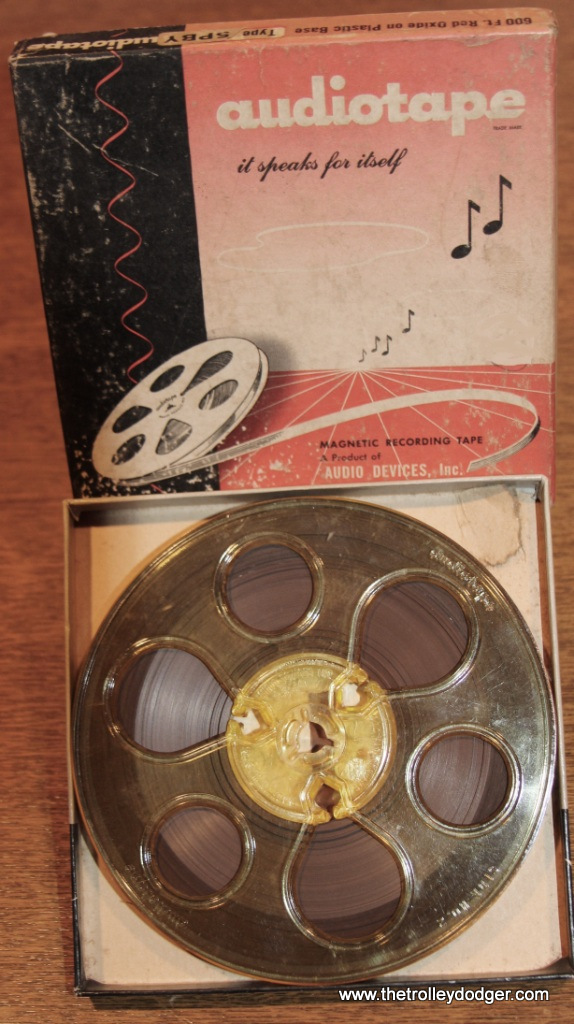
Besides our usual crop of classic traction photos, this time we also have exciting news about two new products related to the Railroad Record Club. Our good friend Ken Gear has been hard at work on collecting all things related to the late William Steventon’s railroad audio recordings and releases.

The result is a new book on disc, A Guide To the Railroad Record Club (see article below). This was quite a project and labor of love on Ken’s part!

Kenneth Gear‘s doggedness and determination resulted in his tracking down and purchasing the surviving RRC master tapes a few years back, and he has been hard at work having them digitized, at considerable personal expense, so that you and many others can enjoy them with today’s technology. We have already released a few RRC Rarities CDs from Ken’s collection.

When Ken heard the digitized version of RRC LP #08, Canadian National: Canadian Railroading in the Days of Steam, recorded by the late Elwin Purington, he was surprised to find the original tapes were more than twice the length of the 10″ LP. The resulting LP had been considerably edited down to the limited space available, 15 minutes per side.

The scenes were the same, but each was greatly shortened. Now, on compact disc, it is possible to present the full length recordings of this classic LP, which was one of Steventon’s best sellers and an all-around favorite, for the very first time.

Even better, a considerable part of the proceeds of these releases, both available through our Online Store or through the links below, will go to defray some of the thousands of dollars Ken has spent in trying to preserve this history for future generations. Chances are, without his efforts, the Steventon Railroad Record Club collection of tapes and other artifacts would have ended up in a dumpster by now, for lack of interest on anyone’s part in saving them.

For this, Ken deserves the thanks of anyone who enjoys hearing these historic recordings.

-David Sadowski

PS- You might also like our Trolley Dodger Facebook auxiliary, a private group that now has 643 members.

Kenneth Gear now has a Facebook group for all things related to the Railroad Record Club, and other railroad audio recordings. Again, it is a private group.

Auction for Jim Martin’s North Shore Line Sign

Jim Martin is a great guy, and you may have seen some of the North Shore Line videos he has posted to YouTube, taken from his original color 8mm movies. He recently contacted us, as he wants to sell an original porcelain-on-metal North Shore Line sign he purchased from legendary Chicago bookseller Owen Davies in 1962.  (You can read more about Owen Davies here.)

This must have been from a Shore Line Route station, since the North Shore Line was still in operation at that time. You can find out more about this eBay auction here. Although we are running the auction and providing our “good offices,” 100% of the proceeds will go to Jim.

It ends at 9:02 PM Central Time on Friday, December 17th. Good luck with your bids.

Now Available – A Guide to the Railroad Record Club E-Book:

Price: $19.99

$10 from the sale of each RRC E-Book will go to Kenneth Gear to repay him for some of his costs in saving this important history.

As many Trolley Dodger readers are aware David and I have been trying to preserve the legacy of William Steventon’s Railroad Record Club. To that end we have collected all the released LPs and reissued them on CDs. We have posted many RRC traction photographs in this blog, put together a history of the club and gathered biographical information about William Steventon and his recording associates.

We uncovered some interesting information about the techniques and equipment used to make field recordings in the pre-digital age and the process of producing the LPs. I acquired the William Steventon estate and discovered a veritable treasure trove of unreleased audio, master tapes, original artwork commissioned for the album jackets, test pressings, movie films and numerous artifacts from all phases of the record making procedure from field tape to released LP.

Despite all that we accomplished we still had one very important question to answer. Now that we had all this material, how do we make it available to everyone who would be interested.

Much audio has been donated to museums and historical societies and CDs are offered for sale in the online store. The history of the club and the story of my efforts to buy the estate have appeared in this blog, but still, that didn’t seem to be enough. We wanted to do more. This wonderful historical material deserves more.

David finally hit on the perfect idea, he suggested that I write an eBook. This format would allow us to present not only a more detailed history of the club and an updated account of my purchase of the estate, but it could also include audio files, photo scans and movie files. Virtually all the Railroad Record Club archive could be gathered into one place!

I began to put the eBook together over a year ago. I rewrote the RRC history that appeared in this blog adding a lot of newly discovered data. Next, I revised my account of the estate purchase and wrote and entirely new chapter detailing the preservation efforts and the cost it entailed. I made lists of every single object acquired and made notes on condition. I spent many days photographing every item including scores of record jackets, labels, pressing plates and test pressings from the many editions of each LP. Countless hours were spent scanning documents, personal letters, magazine ads and articles. Photographs from the collection needed scanning and retouching. All this had to be cataloged and organized and information from many different sources had to be interpreted and fit into the timeline of RRC milestones. A lot of time and effort went into making the Railroad Record Club archive available on a convenient and inexpensive data disc electronic book.

In addition to all of the above, I have compiled what I think is an invaluable resource for RRC enthusiasts. The eBook has a compendium section that contains details about every released record. Each LP’s entry has all the accumulated information we have so far been able to discover about a particular record. Details such as the original release date, reissue date, differences in the various edition jackets and liner notes, master tape specifics and recording dates are listed. There are photo scans of each of the LP’s jackets, labels, test pressings, print blocks, master tapes, pressing plates and artwork. An “Additional Information” section is included for each record detailing any interesting facts we uncovered about the recordist, railroad equipment or notable incidents occurring during the field recording. Best of all each record’s entry has bonus audio tracks that may include unreleased recordings, audio salvaged from ancient homemade records, radio programs and/or railroad sounds from tapes that were in Steventon’s personal collection. Here are a two sample photos of record labels and the “data sheet” entry for Record Number SP-6.

RAILROAD RECORD CLUB

COMPENDIUM

DATA SHEET

RECORD NUMBER: SP-6

TITLE: THE MILWAUKEE ROAD

Box Cab Locomotives On The Coast Division

RELEASED ON 12 INCH DISC ONLY

NRP MATRIX CODE: NR 15567

YEAR OF FIRST PRESSING: 1983

JACKET ILLUSTRATION NOTES:

1st edition jacket has a drawing of CMSt.P&P box cab locomotive No. 10500 by Marshall (Pat) McMahon.  Caption under drawing reads “No. 10500, later E-25 on Houser Way Renton, WA in the 1930’s. Drawn from a photo by James A. Turner in the warren W. Wing collection.”

Back has liner notes.

2nd edition jacket identical to 1st edition

SURVIVING MASTER TAPE(S):

None in the William Steventon estate.

DOCUMENT/PHOTO FOLDER CONTENTS:

(There may exist other editions and variations then those pictured)

1st edition jacket front and back

1st and 2nd edition labels

NRP test pressing labels side 1 and 2

Cassette card

McMahon CMSt.P&P box cab artwork

SOUND FOLDER CONTENTS:

Short excerpt from the unofficial sampler.

Elwin Purington CMSt.P&P box cab bonus track.

Sound folder notes:

Track 1:

In 1965 William Steventon ceased operating the Railroad Record Club as an actual “club.”

From then on all records were sold individually with no minimum to buy. He also stopped producing the sampler records at this time and no sampler records were made after the 8th year (1964).

To continue where Steventon left off an unofficial special pressings sampler has been made for this eBook.  Excerpts of approximately 3 minutes each have been added to the sounds folders of the special pressings records.

Track 2:

This track was recorded by and is narrated by Elwin Purington. The recordings were made at Black River Junction near Seattle, Washington in 1960. The audio was taken from a tape-recorded letter Purington made to Steventon in 1961. These are some of Purington’s earliest stereo recordings and are very realistic. The air horn on those box cab monsters might blow you right out of your chair!

The scene opens as a long train arrives at Black River Junction powered by a set of the old box cabs. Various switching maneuvers are made in the yard. Then the cars are taken north on the wye and a “flying switch” is made and the caboose is moved over to the head end of the locomotives. The caboose’s high pitched air whistle is heard as the train, caboose now leading, crosses a road. Now heading east the train does more switching work. With all local work completed the caboose is put back where it belongs and the train heads out on the south leg of the wye towards Tacoma.

Total: 15:44

ADDITIONAL INFORMATION:

On the jacket front this record is advertised as the 30th anniversary issue 1953-1983. Steventon always dated the beginning of the Railroad Record Club to 1953, the year he made his first railroad recordings.

With the exception for two tracks on side 1, this is the only RRC record recorded in true stereo.

This was the last all new Railroad Record Club release.

Steventon first heard these Milwaukee Road box cab recordings in 1961. It would be 22 years before the recordings were finally released on vinyl.

Elsewhere on the eBook are scans of traction photographs that were sold by the Railroad Record Club.

There is a movie file containing William Steventon’s railroad home movies with footage of the PRR, B&O, N&W and NY Central among others. Traction fans will certainly enjoy scenes of the Washington D. C. Capital Transit streetcars and freight operations. A few screenshots follow:

Every known Steventon recording date, location and subject railroad has been collected and organized into a list.

Record ideas that never came to be are discussed and some interesting facts about the records and the people that recorded them are revealed.

For instance:

William Steventon endured health problems from an early age and his father, an engineer on the New York Central, broke company rules by allowing young William in the cab with him for fear that the child may die without them having spent enough time together.

Record Number 9 was recorded by Thomas A. Hosick. He was co-inventor of the low-pollution, Eliptocline automotive steam vapor engine and was featured in a 1966 cover story in Popular Science magazine.

William Steventon had the assistance of an CNS&M train accident victim in securing permission to make recordings on board North Shore trains.

Record SP-6 was the last all new RRC record and the only one recorded in stereo.

Many other previously unknown facts about the 37-year history of the Railroad Record Club have been painstakingly collected and combined with rare audio and video, vintage ads, photographs, catalogs and much more. A more complete look at the Railroad Record Club would be impossible to produce.

Despite all the work and research that went into compiling this archive, profit and return on investment was not the driving force. Preservation was! It is our belief that the best way to ensure that the legacy of the RRC continues to educate and entertain for years to come is to get it into as many hands as possible. That is why we are offering this incredible amount of material for the low price of $19.99. Each part of this eBook is worth that price on its own. Hours of vintage railroad audio, two video programs and scores of traction photos are included for that one low price. The compendium will prove to be a much-used resource to anyone who is a Railroad Record Club devotee. Even if you have little interest in the RRC itself, the audio and video alone is an outstanding bargain. Please consider purchasing a copy and help David and I preserve the work that William Steventon and all his contributors worked so hard to create.

Kenneth Gear

Now Available:

RRC08D
Railroad Record Club #08 Deluxe Edition: Canadian National: Canadian Railroading in the Days of Steam, Recorded by Elwin Purington
The Complete Recording From the Original Master Tapes
Price: $15.99

Canadian National. Steaming giants pound high iron on mountain trails, rumble over trestles, hit torpedos and whistle for many road crossings. Mountain railroading with heavy power and lingering whistles! Includes locomotives 3566, 4301, 6013, 3560.

Total time – 72:57

$5 from the sale of RRC08D CD will go to Kenneth Gear to repay him for some of his costs in saving this important history.

A railfan takes his picture of Philadelphia Transportation Company 5205 on September 14, 1956.

A railfan takes his picture of Philadelphia Transportation Company 5205 on September 14, 1956.

CSL 2802 must have been a fan favorite, as it was used on fantrips both on June 12, 1940 and July 13, 1941. Chances are this trip might be the earlier one, if the Indianapolis sign was correct. Indianapolis Boulevard is in Hammond, on the Hammond, Whiting, and East Chicago line that stopped going into Indiana on June 9, 1940. Of course, fans often used to put all sorts of signs up during trips, even if they weren't going to those places.

CSL 2802 must have been a fan favorite, as it was used on fantrips both on June 12, 1940 and July 13, 1941. Chances are this trip might be the earlier one, if the Indianapolis sign was correct. Indianapolis Boulevard is in Hammond, on the Hammond, Whiting, and East Chicago line that stopped going into Indiana on June 9, 1940. Of course, fans often used to put all sorts of signs up during trips, even if they weren’t going to those places.

Brooklyn-Queens Transit 8258, a Peter Witt, was built by St. Louis Car Company in 1925. The trolley is on Stillwell Avenue at Coney Island.

Brooklyn-Queens Transit 8258, a Peter Witt, was built by St. Louis Car Company in 1925. The trolley is on Stillwell Avenue at Coney Island.

The same location today, courtesy of Mark J. Wolodarsky.

The same location today, courtesy of Mark J. Wolodarsky.

Milwaukee Electric heavyweight cars 1129 and 1135, along with CTA trolley bus 9192, at the Illinois Electric Railway Museum in North Chicago, IL in August 1959. It is now at Union as bus 192, its original number.

Milwaukee Electric heavyweight cars 1129 and 1135, along with CTA trolley bus 9192, at the Illinois Electric Railway Museum in North Chicago, IL in August 1959. It is now at Union as bus 192, its original number.

Illinois Terminal combine 277 was built by the St. Louis Car Company in 1913. Here it is at the IERM in North Chicago in August 1959.

Illinois Terminal combine 277 was built by the St. Louis Car Company in 1913. Here it is at the IERM in North Chicago in August 1959.

Indiana Railroad car 65 at the IERM site in North Chicago in August 1959. Don Ross: "65 was built by Pullman in 1931, #6399. The lounge section was replaced by a baggage section. 65 was sold to the Cedar Rapids & Iowa City as 120 in 1941. In 1954 it was purchased as the first car of the Illinois Railway Museum, which was known as the Illinois Electric Railway Museum at that time. I put in many enjoyable hours working on that car prior to 1960 when I moved to Peoria." It appears this picture was taken when the car was being repainted from CRANDIC colors to its original IR colors.

Indiana Railroad car 65 at the IERM site in North Chicago in August 1959. Don Ross: “65 was built by Pullman in 1931, #6399. The lounge section was replaced by a baggage section. 65 was sold to the Cedar Rapids & Iowa City as 120 in 1941. In 1954 it was purchased as the first car of the Illinois Railway Museum, which was known as the Illinois Electric Railway Museum at that time. I put in many enjoyable hours working on that car prior to 1960 when I moved to Peoria.” It appears this picture was taken when the car was being repainted from CRANDIC colors to its original IR colors.

This, and the next two pictures, show former Milwaukee Electric work car M-15 at East Troy in August 1959. Don's Rail Photos: "M15 was built at Cold Spring Shops in 1920 as a trailer, but it was motorized almost immediately. It was transferred to the isolated East Troy operation in 1939, and sold to the Municipality of East Troy in 1949. It is sold to WERHS in 1982 and now preserved at the IRM (since) 1989."

This, and the next two pictures, show former Milwaukee Electric work car M-15 at East Troy in August 1959. Don’s Rail Photos: “M15 was built at Cold Spring Shops in 1920 as a trailer, but it was motorized almost immediately. It was transferred to the isolated East Troy operation in 1939, and sold to the Municipality of East Troy in 1949. It is sold to WERHS in 1982 and now preserved at the IRM (since) 1989.”

North Shore Line city streetcar 354 at the IERM in North Chicago in August 1959. Don Ross: "354 was built by St Louis Car Co in January 1928, #1453. It became the last car on August 12, 1951. It was purchased by the president of the Chicago Hardware Foundry. It was painted into the green and red of CHF, but the motors were removed. The car was acquired by the Illinois Electric Railway Museum (now IRM). Restoration began in 1958 (I put many hours on the car), and it is now in operation in Union. When I visited the car in 1989, it brought back many happy memories."

North Shore Line city streetcar 354 at the IERM in North Chicago in August 1959. Don Ross: “354 was built by St Louis Car Co in January 1928, #1453. It became the last car on August 12, 1951. It was purchased by the president of the Chicago Hardware Foundry. It was painted into the green and red of CHF, but the motors were removed. The car was acquired by the Illinois Electric Railway Museum (now IRM). Restoration began in 1958 (I put many hours on the car), and it is now in operation in Union. When I visited the car in 1989, it brought back many happy memories.”

A two-car Milwaukee Electric interurban train at an unknown location, bound for Milwaukee. (Ray Muller Photo)

A two-car Milwaukee Electric interurban train at an unknown location, bound for Milwaukee.
(Ray Muller Photo)

Chicago North Shore and Milwaukee car 300. Don's Rail Photos: "300 thru 302 were built by Jewett in 1909 as mainline coaches. As the steel cars arrived, they were downgraded to local and school tripper service. In 1936 they became sleet cutters. In 1939 300 was turned over to the Central Electric Railfans Association as a private car. The ownership remained with the CNS&M, but the maintenance was taken over by CERA. During the war, with many members in service, CERA relinquished control, and the car was scrapped in 1947. 301 and 302 were retired in 1939 and scrapped in 1940."

Chicago North Shore and Milwaukee car 300. Don’s Rail Photos: “300 thru 302 were built by Jewett in 1909 as mainline coaches. As the steel cars arrived, they were downgraded to local and school tripper service. In 1936 they became sleet cutters. In 1939 300 was turned over to the Central Electric Railfans Association as a private car. The ownership remained with the CNS&M, but the maintenance was taken over by CERA. During the war, with many members in service, CERA relinquished control, and the car was scrapped in 1947. 301 and 302 were retired in 1939 and scrapped in 1940.”

CNS&M 300 in Highwood, IL, when it was the Central Electric Railfans' Association private car in 1941.

CNS&M 300 in Highwood, IL, when it was the Central Electric Railfans’ Association private car in 1941.

North Shore Line car 300 at an unknown location (somewhere along the Shore Line Route), possibly on the same 1941 fantrip as in the previous picture.

North Shore Line car 300 at an unknown location (somewhere along the Shore Line Route), possibly on the same 1941 fantrip as in the previous picture.

North Shore Line Birney car 336 in Milwaukee in 1946. The city streetcar franchise holder was the Chicago & Milwaukee Electric, predecessor of the CNS&M, so that's how the cars were lettered.

North Shore Line Birney car 336 in Milwaukee in 1946. The city streetcar franchise holder was the Chicago & Milwaukee Electric, predecessor of the CNS&M, so that’s how the cars were lettered.

North Shore Line Birney car 329, built by Cincinnati Car Company in 1922, at the Harrison Street Shops in Milwaukee on June 21, 1947. (Bob McLeod Photo)

North Shore Line Birney car 329, built by Cincinnati Car Company in 1922, at the Harrison Street Shops in Milwaukee on June 21, 1947. (Bob McLeod Photo)

North Shore Line city streetcar 360 in Waukegan, signed to go to the Naval Station.

North Shore Line city streetcar 360 in Waukegan, signed to go to the Naval Station.

North Shore Line wood car 200, probably near the end of its service life in the 1930s.

North Shore Line wood car 200, probably near the end of its service life in the 1930s.

North Shore Line combination car 81, built by American in 1910, was taken out of regular service in 1935, and retired in 1937. (James B. M. Johnson Photo)

North Shore Line combination car 81, built by American in 1910, was taken out of regular service in 1935, and retired in 1937. (James B. M. Johnson Photo)

Chicago Surface Lines 4008 is eastbound on Madison at Laramie on October 25, 1945, sporting "tiger stripes."

Chicago Surface Lines 4008 is eastbound on Madison at Laramie on October 25, 1945, sporting “tiger stripes.”

The Grand Rapids Railroad did not number their streetcars, giving them names instead. This is the "James W. Ransom," named after an early settler to this area. Buses were substituted for streetcars here in 1935. (Stephen D. Maguire Photo)

The Grand Rapids Railroad did not number their streetcars, giving them names instead. This is the “James W. Ransom,” named after an early settler to this area. Buses were substituted for streetcars here in 1935. (Stephen D. Maguire Photo)

Chicago Surface Lines car 2855, possibly circa 1942, when CSL looked into putting cars like these back into service, after they had been in storage for a decade. Ultimately, it was decided against doing this, and this class of cars ended its days in work service. Don's Rail Photos: "2855 was built by South Chicago City Ry in 1907 as SCCRy 341. It was rebuilt in 1907 and became C&SCRy 841 in 1908. It was renumbered 2855 in 1913 and became CSL 2855 in 1914. It was later converted as a salt car and renumbered AA106 in 1948. It was retired on October 11, 1951." (Charles Able Photo)

Chicago Surface Lines car 2855, possibly circa 1942, when CSL looked into putting cars like these back into service, after they had been in storage for a decade. Ultimately, it was decided against doing this, and this class of cars ended its days in work service. Don’s Rail Photos: “2855 was built by South Chicago City Ry in 1907 as SCCRy 341. It was rebuilt in 1907 and became C&SCRy 841 in 1908. It was renumbered 2855 in 1913 and became CSL 2855 in 1914. It was later converted as a salt car and renumbered AA106 in 1948. It was retired on October 11, 1951.” (Charles Able Photo)

Five Mile Beach Electric Railway car 21, circa 1940. It ran in Wildwood, New Jersey. Streetcars were replaced by buses in this seacoast town in 1945.

Five Mile Beach Electric Railway car 21, circa 1940. It ran in Wildwood, New Jersey. Streetcars were replaced by buses in this seacoast town in 1945.

Five Mile Beach Electric Railway car 21, circa 1940.

Five Mile Beach Electric Railway car 21.

Five Mile Beach Electric Railway car 21, circa 1940.

Five Mile Beach Electric Railway car 21, circa 1940.

Five Mile Beach Electric Railway car 35, circa 1940.

Five Mile Beach Electric Railway car 35, circa 1940.

The Atlantic City and Shore (aka the "Shore Fast Line") ran between Atlantic City and Ocean City until 1948. Here, car 109 is in Atlantic City. It was built by the John Stephenson Company in 1906.

The Atlantic City and Shore (aka the “Shore Fast Line”) ran between Atlantic City and Ocean City until 1948. Here, car 109 is in Atlantic City. It was built by the John Stephenson Company in 1906.

LaMar M. Kelly (1897-1947) was an early, and noted, railfan photographer. He took this picture of Chicago Aurora and Elgin electric loco 3004 at the Wheaton Yard on August 6, 1939.

LaMar M. Kelly (1897-1947) was an early, and noted, railfan photographer. He took this picture of Chicago Aurora and Elgin electric loco 3004 at the Wheaton Yard on August 6, 1939.

LaMar Kelley's large 116-sized negative came in this old Kodak envelope. He took the photo in 1939, but the envelope could be even older than that.

LaMar Kelley’s large 116-sized negative came in this old Kodak envelope. He took the photo in 1939, but the envelope could be even older than that.

SEPTA 160, a Strafford car, is on the Norristown High-Speed Line at top, with an electric commuter rail train below. The bridge crossed the Schuylkill River. This photo was taken on September 6, 1978.

SEPTA 160, a Strafford car, is on the Norristown High-Speed Line at top, with an electric commuter rail train below. The bridge crossed the Schuylkill River. This photo was taken on September 6, 1978.

CSL 6285, called either a Peter Witt or a Sedan, is on Route 22 - Clark-Wentworth, possibly in the 1930s. Car 6285 was built by CSL in 1929.

CSL 6285, called either a Peter Witt or a Sedan, is on Route 22 – Clark-Wentworth, possibly in the 1930s. Car 6285 was built by CSL in 1929.

CSL 6208 in Hammond, Indiana in 1940, shortly before service on this line was cut back to the state line. Don's Rail Photos: "6208 (a Multiple Unit car) was built by CSL in 1924. It was rebuilt as one man service in 1932."

CSL 6208 in Hammond, Indiana in 1940, shortly before service on this line was cut back to the state line. Don’s Rail Photos: “6208 (a Multiple Unit car) was built by CSL in 1924. It was rebuilt as one man service in 1932.”

CSL 2615 (known as a Robertson Rebuild) crosses a bridge on 106th Street on June 21, 1941. We are looking west. Don's Rail Photos: "2615 was built by St Louis Car Co in 1901. It was retired on December 4, 1945." (Robert W. Gibson Photo)

CSL 2615 (known as a Robertson Rebuild) crosses a bridge on 106th Street on June 21, 1941. We are looking west. Don’s Rail Photos: “2615 was built by St Louis Car Co in 1901. It was retired on December 4, 1945.” (Robert W. Gibson Photo)

MBTA (Boston) 3344, an ex-Dallas double-ended PCC is at Milton Lower Mills on the Ashmont-Mattapan line on March 24, 1968.

MBTA (Boston) 3344, an ex-Dallas double-ended PCC is at Milton Lower Mills on the Ashmont-Mattapan line on March 24, 1968.

CTA 4000s and 2200s on the Loop "L" in 1973. looking west from Clark and Lake. The train at left is an Evanston Express, with Lake-Dan Ryan on the right.

CTA 4000s and 2200s on the Loop “L” in 1973. looking west from Clark and Lake. The train at left is an Evanston Express, with Lake-Dan Ryan on the right.

CTA red Pullman 863 is running northbound on Stony Island at 72nd, headed towards Navy Pier. A Kaiser-Frazer dealership is in the distance, and a truck dealer at right.

CTA red Pullman 863 is running northbound on Stony Island at 72nd, headed towards Navy Pier. A Kaiser-Frazer dealership is in the distance, and a truck dealer at right.

On May 16, 1954, CTA red Pullman 479 is at the Western and 79th turnaround loop on a CERA fantrip. During this period, streetcars were used on Western during weekdays only, so the fantrip cars did not impede regular traffic. (William C. Hoffman Photo)

On May 16, 1954, CTA red Pullman 479 is at the Western and 79th turnaround loop on a CERA fantrip. During this period, streetcars were used on Western during weekdays only, so the fantrip cars did not impede regular traffic. (William C. Hoffman Photo)

North Shore Line car 748 at Lake Bluff, IL on October 19, 1963, several months after abandonment of the line.

North Shore Line car 748 at Lake Bluff, IL on October 19, 1963, several months after abandonment of the line.

No information came with this one, which shows North Shore Line car 732 at, I presume, Highwood in perhaps the 1930s or 40s.

No information came with this one, which shows North Shore Line car 732 at, I presume, Highwood in perhaps the 1930s or 40s.

I recently won this auction for "an unsent Real Photo Postcard. It is titled Heyworth Grading Gang #5 Aug. '06. / C.M.E.R.R. (Horlicsville) (sic) Marshall Photo. CYKO Stamp Box on the reverse. Horlicksville was a place that takes its name from the Horlick family, which had the Horlick malted milk plant in the community. This town was located about two miles north of Racine Wisconsin and this photo would have been taken about the time they were building the Chicago Milwaukee Electric Railroad Line between Racine and Milwaukee."

I recently won this auction for “an unsent Real Photo Postcard. It is titled Heyworth Grading Gang #5 Aug. ’06. / C.M.E.R.R. (Horlicsville) (sic) Marshall Photo. CYKO Stamp Box on the reverse. Horlicksville was a place that takes its name from the Horlick family, which had the Horlick malted milk plant in the community. This town was located about two miles north of Racine Wisconsin and this photo would have been taken about the time they were building the Chicago Milwaukee Electric Railroad Line between Racine and Milwaukee.”

Chicago’s Lost “L”s Online Presentation

We recently gave an online presentation about our book Chicago’s Lost “L”s for the Chicago Public Library, as part of their One Book, One Chicago series. You can watch it online by following this link.

The Trolley Dodger On the Air

We appeared on the Dave Plier Show on WGN radio on July 16, 2021, to discuss Chicago’s Lost “L”s. You can hear that discussion here.

Our Latest Book, Now Available:

Chicago’s Lost “L”s

From the back cover:

Chicago’s system of elevated railways, known locally as the “L,” has run continuously since 1892 and, like the city, has never stood still. It helped neighborhoods grow, brought their increasingly diverse populations together, and gave the famous Loop its name. But today’s system has changed radically over the years. Chicago’s Lost “L”s tells the story of former lines such as Garfield Park, Humboldt Park, Kenwood, Stockyards, Normal Park, Westchester, and Niles Center. It was once possible to take high-speed trains on the L directly to Aurora, Elgin, and Milwaukee, Wisconsin. The L started out as four different companies, two starting out using steam engines instead of electricity. Eventually, all four came together via the Union Loop. The L is more than a way of getting around. Its trains are a place where people meet and interact. Some say the best way to experience the city is via the L, with its second-story view. Chicago’s Lost “L”s is virtually a “secret history” of Chicago, and this is your ticket. David Sadowski grew up riding the L all over the city. He is the author of Chicago Trolleys and Building Chicago’s Subways and runs the online Trolley Dodger blog.

The Images of America series celebrates the history of neighborhoods, towns, and cities across the country. Using archival photographs, each title presents the distinctive stories from the past that shape the character of the community today. Arcadia is proud to play a part in the preservation of local heritage, making history available to all.

Title Chicago’s Lost “L”s
Images of America
Author David Sadowski
Edition illustrated
Publisher Arcadia Publishing (SC), 2021
ISBN 1467100007, 9781467100007
Length 128 pages

Chapters:
01. The South Side “L”
02. The Lake Street “L”
03. The Metropolitan “L”
04. The Northwestern “L”
05. The Union Loop
06. Lost Equipment
07. Lost Interurbans
08. Lost Terminals
09. Lost… and Found

Each copy purchased here will be signed by the author, and you will also receive a bonus facsimile of a 1926 Chicago Rapid Transit Company map, with interesting facts about the “L” on the reverse side.

The price of $23.99 includes shipping within the United States.

For Shipping to US Addresses:

For Shipping to Canada:

For Shipping Elsewhere:

NEW DVD:

A Tribute to the North Shore Line

To commemorate the 50th anniversary of the demise of the fabled North Shore Line interurban in January 2013, Jeffrey L. Wien and Bradley Criss made a very thorough and professional video presentation, covering the entire route between Chicago and Milwaukee and then some. Sadly, both men are gone now, but their work remains, making this video a tribute to them, as much as it is a tribute to the Chicago North Shore & Milwaukee.

Jeff drew on his own vast collections of movie films, both his own and others such as the late William C. Hoffman, wrote and gave the narration. Bradley acted as video editor, and added authentic sound effects from archival recordings of the North Shore Line.

It was always Jeff’s intention to make this video available to the public, but unfortunately, this did not happen in his lifetime. Now, as the caretakers of Jeff’s railfan legacy, we are proud to offer this excellent two-hour program to you for the first time. The result is a fitting tribute to what Jeff called his “Perpetual Adoration,” which was the name of a stop on the interurban.

Jeff was a wholehearted supporter of our activities, and the proceeds from the sale of this disc will help defray some of the expenses of keeping the Trolley Dodger web site going.

Total time – 121:22

# of Discs – 1
Price: $19.99 (Includes shipping within the United States)

Help Support The Trolley Dodger

This is our 282nd post, and we are gradually creating a body of work and an online resource for the benefit of all railfans, everywhere. To date, we have received over 830,000 page views, for which we are very grateful.

You can help us continue our original transit research by checking out the fine products in our Online Store.
As we have said before, “If you buy here, we will be here.”

We thank you for your support.

DONATIONS

In order to continue giving you the kinds of historic railroad images that you have come to expect from The Trolley Dodger, we need your help and support. It costs money to maintain this website, and to do the sort of historic research that is our specialty.

Your financial contributions help make this web site better, and are greatly appreciated.


The Old School

CSL 5249 appears to be heading southbound on Larrabee, just north of Chicago Avenue. To the left, you see the Montgomery Ward complex, which has since been turned into residential. 5249 is signed to go to Vincennes and 88th, which probably makes this a Halsted car. (Joe L. Diaz Photo) M. E. writes: "The barn at 88th and Vincennes was originally the barn for the Kanakakee cars that ran from the Englewood L station at 63rd Place and Halsted, south on Halsted, southwest on Summit (a short street connecting Halsted with Vincennes), and Vincennes. When that service folded, the Chicago Surface Lines took over the barn. That barn closed early in my lifetime."

CSL 5249 appears to be heading southbound on Larrabee, just north of Chicago Avenue. To the left, you see the Montgomery Ward complex, which has since been turned into residential. 5249 is signed to go to Vincennes and 88th, which probably makes this a Halsted car. (Joe L. Diaz Photo) M. E. writes: “The barn at 88th and Vincennes was originally the barn for the Kanakakee cars that ran from the Englewood L station at 63rd Place and Halsted, south on Halsted, southwest on Summit (a short street connecting Halsted with Vincennes), and Vincennes. When that service folded, the Chicago Surface Lines took over the barn. That barn closed early in my lifetime.”

Today’s post features many “old school” railfan photos, all from the collections of William Shapotkin. In the 1930s and 40s, photographers such as Joe L. Diaz and Edward Frank, Jr. wandered all over Chicagoland, taking black and white photos of streetcars, “L” cars, and interurbans, which they printed up and sold at railfan meetings.

They were still selling these photos into the 1980s and 90s. Years ago, I met both of these gentlemen, who are sadly no longer with us. Perhaps the late Malcolm D. McCarter was the last of this breed. He started selling photos around 1942, and continued to do so for the next 75 years or so. He was also the last living original member of the Illinois Railway Museum.

Unfortunately, these photos often did not come with any documentation as to when, or where, these pictures were taken. We have written captions that include whatever we could determine. But I know that our highly informed, eagle-eyed readers will help us fill in some of the missing details.

When referring to individual photos, please use the file name (i.e. shapotkin262), which you can get by hovering your mouse over the image, instead of saying “the sixth photo down” or some such. We thank you in advance for helping us with these, and let’s thank Bill Shapotkin again for graciously sharing them with us.

You also might want to consider a trip to Indianapolis to attend this year’s Hoosier Traction Meet, which Mr. Shapotkin runs. You can view a flyer (in PDF form) with all the relevant information here.

-David Sadowski

PS- At the end of this post, you will also find a blurb for our upcoming book Chicago’s Lost “L”s, to be released on July 12 from Arcadia Publishing. So far, we have received orders for more than 70 copies, for which we are very grateful.

FYI, we also have a Facebook auxiliary for the Trolley Dodger, which currently has 368 members.

From the Collections of William Shapotkin

CSL Pullman 172. Daniel Joseph has identified this as the intersection of Ogden, Cermak, and Springfield.

CSL Pullman 172. Daniel Joseph has identified this as the intersection of Ogden, Cermak, and Springfield.

north destination Navy Pier. I'd like to add that I see so many trolley poles on the cars, going in both directions, that I think this place was the south terminal which was just north of 93rd St. South of 93rd St., the tracks were used for only a short distance by 93rd/95th St. cars."

CSL 5638, signed for Navy Pier, may be running on the Stony Island route. M. E. writes, “The caption is undoubtedly correct that these are Stony Island cars that had the
north destination Navy Pier. I’d like to add that I see so many trolley poles on the cars, going in both directions, that I think this place was the south terminal which was just north of 93rd St. South of 93rd St., the tracks were used for only a short distance by 93rd/95th St. cars.”

CSL 2803 is southbound on Ashland. (Joe L. Diaz Photo)

CSL 2803 is southbound on Ashland. (Joe L. Diaz Photo)

This picture, taken on April 12, 1915, shows some window damage to CSL car 6063.

This picture, taken on April 12, 1915, shows some window damage to CSL car 6063.

CSL 6101, signed for 35th Street. Chris Cole says this "appears to be taken at the Cottage Grove car barn at 38th Street. The Ida B Welles public housing project 2 story buildings are in the background. The Wells Homes ran from Cottage Grove to King Drive and 35th to Pershing Rd (39th). I also note that there are a number of overhead lines that would be present on the driveway to the barn. I believe that the 35th streetcar used the Cottage Grove barn from 1946 to 1951."

CSL 6101, signed for 35th Street. Chris Cole says this “appears to be taken at the Cottage Grove car barn at 38th Street. The Ida B Welles public housing project 2 story buildings are in the background. The Wells Homes ran from Cottage Grove to King Drive and 35th to Pershing Rd (39th). I also note that there are a number of overhead lines that would be present on the driveway to the barn. I believe that the 35th streetcar used the Cottage Grove barn from 1946 to 1951.”

CSL 2601 on the 111th Street line. (Joe L. Diaz Photo)

CSL 2601 on the 111th Street line. (Joe L. Diaz Photo)

CSL 1455. (Joe L. Diaz Photo)

CSL 1455. (Joe L. Diaz Photo)

CSL 2745. (Joe L. Diaz Photo) Andre Kristopans says this is "looking W down Wrightwood from Lincoln on Lincoln Carhouse leads - car is pulling out to do a Riverview-Larrabee run." Daniel Joseph adds, "Possibly at Wrightwood, Lincoln & Sheffield at car barn."

CSL 2745. (Joe L. Diaz Photo) Andre Kristopans says this is “looking W down Wrightwood from Lincoln on Lincoln Carhouse leads – car is pulling out to do a Riverview-Larrabee run.” Daniel Joseph adds, “Possibly at Wrightwood, Lincoln & Sheffield at car barn.”

CSL 2599 on the Brandon-Brainard line. (Joe L. Diaz Photo)

CSL 2599 on the Brandon-Brainard line. (Joe L. Diaz Photo)

CSL 419 at the east end of the Chicago Avenue line on December 27, 1946.

CSL 419 at the east end of the Chicago Avenue line on December 27, 1946.

CSL 5653, signed for Ashland. (Joe L. Diaz Photo)

CSL 5653, signed for Ashland. (Joe L. Diaz Photo)

CSL 2730 and 2728. (Joe L. Diaz Photo) Andre Kristopans: "Open yard on west side of Lincoln carhouse looking south."

CSL 2730 and 2728. (Joe L. Diaz Photo) Andre Kristopans: “Open yard on west side of Lincoln carhouse looking south.”

CSL 2731 and 1346. (Joe L. Diaz Photo) Andre Kristopans: "Open yard on west side of Lincoln carhouse looking south."

CSL 2731 and 1346. (Joe L. Diaz Photo) Andre Kristopans: “Open yard on west side of Lincoln carhouse looking south.”

CSL 3315 on the 67-69-71 route.

CSL 3315 on the 67-69-71 route.

CSL 5154.

CSL 5154.

CSL 5702, signed for 93rd and Stony Island. Our resident south side expert M. E. writes: "I'm going to hazard a guess as to where this picture was taken. But first, I present my case. The destination sign on the first car says "Stony Island-93rd"; the sign on the second car says (I think) "Stony Island-Downtown" -- yet both cars are on the same track, heading in the same direction. Why would that happen? It might happen if these were special fan trips, one car following the other, oblivious to their destination signs. Or it might simply be two Stony Island cars heading to 93rd St., but the sign on the second car is wrong. Another factor to consider is that the tracks on Stony Island ran in the street south to 69th St., but south of 69th, they had their own right-of-way between the north- and south-bound auto traffic lanes. In this picture, I believe I see a separation between the tracks and the car lane. Therefore this picture was taken south of 69th St. But the best clue, by far, is the round sign in the distance: "Ruby OK used cars." The dealership was Ruby Chevrolet. I went to Google and looked up "ruby chevrolet used car location south side chicago". Up came a link to a Tribune obituary about Richard Ruby, car dealer and attorney, dated 8 December 2014. In that obituary, it says Ruby's lot was at 72nd and Stony Island. Next, consider the railroad crossing sign. It is a dinky sign with no flashing lights. That would indicate a crossing that was lightly used by trains. I submit that this is the trackage used by the Baltimore and Ohio railroad that started at about 71st and Dorchester (as an offshoot from the Illinois Central main line), then ran southeast, along the ground, through South Shore and to the South Chicago neighborhood. In Google maps, if you enter "73rd and Stony Island Chicago", you will see the path used by that trackage. It crossed Stony Island just south of 73rd. (This railroad trackage lasted a long time, because the B&O did not want to give it up. So, every day at 3 p.m., they ran a diesel engine and caboose -- maybe a few freight cars too -- down that track. Motorists mostly ignored the rail crossing signs, so the train had to proceed very slowly and blow its horn constantly.) So, I think this photo's location is the southeast corner of 73rd and Stony Island, looking north. North of 73rd, Stony Island tracks also carried South Deering cars, which ran from the Jackson Park L at 63rd and Dorchester, south to 64th, east to Stony Island, south to 73rd, then east on 73rd. In the photo, South Deering cars made the turn to the right, whereas Stony Island cars continued straight ahead. Gee, that was much fun to deduce!" Andre Kristopans concurs: "Looking north on Stony at 73rd. RR crossing just out of picture to left was the old B&O Brookdale line, once the main line into Chicago." Mitch Markovitz adds: "That's my old neighborhood. Both cars southbound at 73rd and Stony with the tracks for South Deering branching off. It doesn't really matter what the destination sign reads on the second car. Changing the sign won't make the car stray off to distant lines. Either a pull out, a pull in, or someone futzing and changing the sign."

CSL 5702, signed for 93rd and Stony Island. Our resident south side expert M. E. writes: “I’m going to hazard a guess as to where this picture was taken. But first, I present my case. The destination sign on the first car says “Stony Island-93rd”; the sign on the second car says (I think) “Stony Island-Downtown” — yet both cars are on the same track, heading in the same direction. Why would that happen? It might happen if these were special fan trips, one car following the other, oblivious to their destination signs. Or it might simply be two Stony Island cars heading to 93rd St., but the sign on the second car is wrong. Another factor to consider is that the tracks on Stony Island ran in the street
south to 69th St., but south of 69th, they had their own right-of-way between the north- and south-bound auto traffic lanes. In this picture, I believe I see a separation between the tracks and the car lane. Therefore this picture was taken south of 69th St. But the best clue, by far, is the round sign in the distance: “Ruby OK used cars.” The dealership was Ruby Chevrolet. I went to Google and looked up “ruby chevrolet used car location south side chicago”. Up came a link to a Tribune obituary about Richard Ruby, car dealer and attorney, dated 8 December 2014. In that obituary, it says Ruby’s lot was at 72nd and Stony Island. Next, consider the railroad crossing sign. It is a dinky sign with no flashing lights. That would indicate a crossing that was lightly used by trains. I submit that this is the trackage used by the Baltimore and Ohio railroad that started at about 71st and Dorchester (as an offshoot from the Illinois Central main line), then ran southeast, along the ground, through South Shore and to the South Chicago neighborhood. In Google maps, if you enter “73rd and Stony Island Chicago”, you will see the path used by that trackage. It crossed Stony Island just south of 73rd. (This railroad trackage lasted a long time, because the B&O did not want to give it up. So, every day at 3 p.m., they ran a diesel engine and caboose — maybe a few freight cars too — down that track. Motorists mostly ignored the rail crossing signs, so the train had to proceed very slowly and blow its horn constantly.) So, I think this photo’s location is the southeast corner of 73rd and Stony Island, looking north. North of 73rd, Stony Island tracks also carried South Deering cars, which ran from the Jackson Park L at 63rd and Dorchester, south to 64th, east to Stony Island, south to 73rd, then east on 73rd. In the photo, South Deering cars made the turn to the right, whereas Stony Island cars continued straight ahead. Gee, that was much fun to deduce!”
Andre Kristopans concurs: “Looking north on Stony at 73rd. RR crossing just out of picture to left was the old B&O Brookdale line, once the main line into Chicago.” Mitch Markovitz adds: “That’s my old neighborhood. Both cars southbound at 73rd and Stony with the tracks for South Deering branching off. It doesn’t really matter what the destination sign reads on the second car. Changing the sign won’t make the car stray off to distant lines. Either a pull out, a pull in, or someone futzing and changing the sign.”

CSL 5171.

CSL 5171.

CSL 5909 on Route 47.

CSL 5909 on Route 47.

CSL 1868. I can't make out the destination sign. (Joe L. Diaz Photo) Michael Franklin: "This is the 5200 block of Harrison St, Chicago. Buildings are still there."

CSL 1868. I can’t make out the destination sign. (Joe L. Diaz Photo) Michael Franklin: “This is the 5200 block of Harrison St, Chicago. Buildings are still there.”

CSL 419, at the east end of the Chicago Avenue line on December 27, 1946.

CSL 419, at the east end of the Chicago Avenue line on December 27, 1946.

CSL snow sweeper E1. Don's Rail Photos: "E1, sweeper, was built by Lewis and Fowler in 1895 as Chicago Rys 2. It was renumbered E1 in 1913 and became CSL E1 in 1914. It was retired on November 24, 1950." (Joe L. Diaz Photo)

CSL snow sweeper E1. Don’s Rail Photos: “E1, sweeper, was built by Lewis and Fowler in 1895 as Chicago Rys 2. It was renumbered E1 in 1913 and became CSL E1 in 1914. It was retired on November 24, 1950.” (Joe L. Diaz Photo)

Not sure which CTA snow plow this is. (Joe L. Diaz Photo) Bill Wasik says this "shows an eastbound snowplow on 92nd St. as it approaches Baltimore Avenue. Can't identify the plow, but two buildings of note in this photo are still standing. These include the glass-bricked neo-Romanesque banquet hall at the far right. This is an 1891 corner block at the northwest corner of Baltimore Ave. Also visible one block to the west is a bank building that once was the headquarters of the Steel City National Bank, a facility mired in scandal during the early 1970s."

Not sure which CTA snow plow this is. (Joe L. Diaz Photo) Bill Wasik says this “shows an eastbound snowplow on 92nd St. as it approaches Baltimore Avenue. Can’t identify the plow, but two buildings of note in this photo are still standing. These include the glass-bricked neo-Romanesque banquet hall at the far right. This is an 1891 corner block at the northwest corner of Baltimore Ave. Also visible one block to the west is a bank building that once was the headquarters of the Steel City National Bank, a facility mired in scandal during the early 1970s.”

CSL/CTA salt car AA10. Don's Rail Photos: "AA10, salt car, was built by CUT in 1899 as CUT 4492. It was rebuilt as 1445 in 1911 and became CSL 1445 in 1914. It was rebuilt as (a) salt car in 1930 and renumbered AA10 on October 1, 1941. It was retired on February 18, 1955."

CSL/CTA salt car AA10. Don’s Rail Photos: “AA10, salt car, was built by CUT in 1899 as CUT 4492. It was rebuilt as 1445 in 1911 and became CSL 1445 in 1914. It was rebuilt as (a) salt car in 1930 and renumbered AA10 on October 1, 1941. It was retired on February 18, 1955.”

CSL 3307 is westbound on Montrose, about to cross under the Chicago & North Western railroad at about 1800 West.

CSL 3307 is westbound on Montrose, about to cross under the Chicago & North Western railroad at about 1800 West.

The Chicago Surface Lines tracks were extended to the site of A Century of Progress in 1933. This could be from that year, as a shelter is under construction. We are looking south.

The Chicago Surface Lines tracks were extended to the site of A Century of Progress in 1933. This could be from that year, as a shelter is under construction. We are looking south.

CSL 840 under the "L". (Joe L. Diaz Photo)

CSL 840 under the “L”. (Joe L. Diaz Photo)

CSL 5621, signed to go to Belmont and Clybourn. This picture seems to date to the mid-1930s.

CSL 5621, signed to go to Belmont and Clybourn. This picture seems to date to the mid-1930s.

CSL 204. (Joe L. Diaz Photo)

CSL 204. (Joe L. Diaz Photo)

A Chicago Surface Lines trolley bus on Route 86 - Narragansett. This route used trolley buses from 1930 to 1953.

A Chicago Surface Lines trolley bus on Route 86 – Narragansett. This route used trolley buses from 1930 to 1953.

Chicago Motor Coach Company double-decker bus 500, built in 1923.

Chicago Motor Coach Company double-decker bus 500, built in 1923.

Andre Kritsopans: "Looking west towards east end of "east house" at 77th, basically where Wentworth south of 77th would be. 77th until 1970s had two separate buildings, with an open area between them, until the open area was roofed over. The pile of junk in front is 77th scrap pile, looks like mostly boilers and other building parts."

Andre Kritsopans: “Looking west towards east end of “east house” at 77th, basically where Wentworth south of 77th would be. 77th until 1970s had two separate buildings, with an open area between them, until the open area was roofed over. The pile of junk in front is 77th scrap pile, looks like mostly boilers and other building parts.”

CSL 3286. Might this be Kedzie Station (car house)? (Joe L. Diaz Photo)

CSL 3286. Might this be Kedzie Station (car house)? (Joe L. Diaz Photo)

On April 16, 1946, Mrs. Edith Sands and her family were living in the body of former CSL streetcar 1384. There was a housing shortage once WWII ended. There is a different picture of the interior of this makeshift home in our book Chicago Trolleys.

On April 16, 1946, Mrs. Edith Sands and her family were living in the body of former CSL streetcar 1384. There was a housing shortage once WWII ended. There is a different picture of the interior of this makeshift home in our book Chicago Trolleys.

CSL 3296 is on Montrose. Could this be westbound at Welles Park? Note the Packard at left.

CSL 3296 is on Montrose. Could this be westbound at Welles Park? Note the Packard at left.

CSL 1415 is on Racine at Belden on July 9, 1946.

CSL 1415 is on Racine at Belden on July 9, 1946.

While researching the above photo, I ran across another one, taken at the same location but from the opposite direction:

CSL 1415, built originally in 1906, is at work on Racine at Belden on the WEBSTER RACINE route. The photographer is unknown. An original Kodachrome from February 1942. (John F. Bromley Collection)

CSL 1415, built originally in 1906, is at work on Racine at Belden on the WEBSTER RACINE route. The photographer is unknown. An original Kodachrome from February 1942. (John F. Bromley Collection)

CSL 5241 is southbound on Through Route 8, Halsted. Bill Shapotkin adds, "The car (signed for destination of 111/Sacramento and probably a school tripper for Morgan Park High School) is standing W/B in 111th St JUST EAST of Vincennes Ave. That house with the distinctive roof (left) still-stands today. View looks east."

CSL 5241 is southbound on Through Route 8, Halsted. Bill Shapotkin adds, “The car (signed for destination of 111/Sacramento and probably a school tripper for Morgan Park High School) is standing W/B in 111th St JUST EAST of Vincennes Ave. That house with the distinctive roof (left) still-stands today. View looks east.”

CSL 5436 is westbound on 79th Street at Ashland on June 11, 1948.

CSL 5436 is westbound on 79th Street at Ashland on June 11, 1948.

CSL 5635 at Navy Pier.

CSL 5635 at Navy Pier.

CTA 310.

CTA 310.

I assume that CTA PCC 4300 is turning from Archer onto Clark, running a northbound trip on Route 42 - Halsted-Downtown, and that we are looking to the southwest. Note the Rock Island train in the background. Metra Rock Island District trains still use these tracks.

I assume that CTA PCC 4300 is turning from Archer onto Clark, running a northbound trip on Route 42 – Halsted-Downtown, and that we are looking to the southwest. Note the Rock Island train in the background. Metra Rock Island District trains still use these tracks.

The same location today.

The same location today.

Postwar PCC 4233 being delivered from Pullman.

Postwar PCC 4233 being delivered from Pullman.

Miles Beitler writes: "I searched the listings for the auto service garage on the right side of the photo. I found a listing for "Ragalie Bros. Auto Service" with a location of 3939 West 5th Avenue, a diagonal street. 3939 is at the intersection of 5th Avenue and Harrison Street. When I checked the 1932 telephone book I found (a) listing for Micheli Restaurant. That location -- 3953 West Harrison -- is also near the intersection of Harrison and 5th Avenue and it does seem to fit the photo. Moreover, I believe there was a streetcar line on 5th Avenue which ended at Harrison. Of course, the expressway was not there in 1932. Also note the horse drawn Bowman Dairy wagon on the right. I believe that Bowman Dairy used horse drawn delivery wagons well into the 1920s."

Miles Beitler writes: “I searched the listings for the auto service garage on the right side of the photo. I found a listing for “Ragalie Bros. Auto Service” with a location of 3939 West 5th Avenue, a diagonal street. 3939 is at the intersection of 5th Avenue and Harrison Street. When I checked the 1932 telephone book I found (a) listing for Micheli Restaurant. That location — 3953 West Harrison — is also near the intersection of Harrison and 5th Avenue and it does seem to fit the photo. Moreover, I believe there was a streetcar line on 5th Avenue which ended at Harrison. Of course, the expressway was not there in 1932. Also note the horse drawn Bowman Dairy wagon on the right. I believe that Bowman Dairy used horse drawn delivery wagons well into the 1920s.”

A note re: the picture above. The addresses of the businesses and locations of buildings would seem to confirm that this is Fifth Avenue, just east of Pulaski Road, with Harrison Street as the cross-street in the background. The tracks that end in the middle of the street were for the Madison-Fifth line. When CSL introduced the new single-ended Peter Witts in 1929, they were used on Madison, and a loop was apparently devised for Madison-Fifth by extending these tracks around the block, via Pulaski and Harrison, to form a triangular-shaped loop. The new northbound track on Pulaski was separate from the existing streetcar tracks, so as not to interfere with Pulaski service. In late 1936, CSL put PCC cars on Madison, and these were also used on Madison-Fifth.

This branch line was discontinued on February 22, 1954, when construction of the nearby Congress Expressway reached this area, just to the north. Fifth Avenue was not a major street and would have required a complicated bridge over the highway, crossing at an angle. So it was decided to truncate Fifth instead.

The Garfield Park “L” ran east and west at this point, just south of the alley mid-block between Harrison and Flournoy Streets. The “L” would have been just out of view to the right of this picture. It intersected with Fifth Avenue at Pulaski Road, just behind the photographer.

In this zoomed-in view of the previous picture, the building in the distance matches the building in the next picture, taken in 1953.

CTA 1725 is operating as a one-man shuttle car on the Madison-Fifth branch line on Route 20 on February 15, 1953. The car is heading southwest on Fifth Avenue approaching Harrison Street and Pulaski Avenue, which was the end of the line near the adjacent Garfield Park "L" station. I thought at first that the date might actually have been 1954, but subsequent research shows the 1953 date to be correct. (Robert Selle Photo)

CTA 1725 is operating as a one-man shuttle car on the Madison-Fifth branch line on Route 20 on February 15, 1953. The car is heading southwest on Fifth Avenue approaching Harrison Street and Pulaski Avenue, which was the end of the line near the adjacent Garfield Park “L” station. I thought at first that the date might actually have been 1954, but subsequent research shows the 1953 date to be correct. (Robert Selle Photo)

In addition, this photo, taken from the Pulaski Road station on the Garfield Park “L” station, shows buildings on the north side of Fifth Avenue that match up with those in the shapotkin308 image above. Note it’s the same exact fire escape:

On Sunday, September 13, 1953, CTA one-man shuttle car 3175 is on Fifth Avenue at Pulaski (Crawford), the west end of the Fifth Avenue line. This had been a branch line from route 20 - Madison. From this point, the cars looped via Pulaski and Harrison before going back NE on Fifth. The photographer was on the Garfield Park "L" at Pulaski. The "L" was heading east and west at this point, just south of where the Eisenhower expressway is today. This "L" station remained in use until June 1958. Streetcar service on Fifth Avenue continued into early 1954. The Fifth Avenue line used gauntlet track on Pulaski, so as not to interfere with Pulaski streetcars. This is confirmed by studying the 1948 supervisor's track map. Danny Joseph adds, "As a child I lived near this triangle when both Pulaski and Fifth still operated street cars and Harrison did not. I was very fascinated by the gauntlet on Pulaski which was the first time I saw such construction." (Bob Selle Photo)

On Sunday, September 13, 1953, CTA one-man shuttle car 3175 is on Fifth Avenue at Pulaski (Crawford), the west end of the Fifth Avenue line. This had been a branch line from route 20 – Madison. From this point, the cars looped via Pulaski and Harrison before going back NE on Fifth. The photographer was on the Garfield Park “L” at Pulaski. The “L” was heading east and west at this point, just south of where the Eisenhower expressway is today. This “L” station remained in use until June 1958. Streetcar service on Fifth Avenue continued into early 1954. The Fifth Avenue line used gauntlet track on Pulaski, so as not to interfere with Pulaski streetcars. This is confirmed by studying the 1948 supervisor’s track map. Danny Joseph adds, “As a child I lived near this triangle when both Pulaski and Fifth still operated street cars and Harrison did not. I was very fascinated by the gauntlet on Pulaski which was the first time I saw such construction.” (Bob Selle Photo)

The gas stations on the triangular-shaped corner of Harrison and Fifth also match, between the late 1920s photo and this one from 1950:

This birds-eye view of CTA 1744 was taken from the Pulaski Road "L" station on the Garfield Park branch in April 1950. However, what we are looking at may actually be a Madison-Fifth car at the west end of its route, ready to loop back via Pulaski and Harrison. Bill Shapotkin adds, "This image is looking E-N/E on Fifth Ave from the Garfield Pk 'L'...no question about it. The intersection behind the streetcar is Harrison."

This birds-eye view of CTA 1744 was taken from the Pulaski Road “L” station on the Garfield Park branch in April 1950. However, what we are looking at may actually be a Madison-Fifth car at the west end of its route, ready to loop back via Pulaski and Harrison. Bill Shapotkin adds, “This image is looking E-N/E on Fifth Ave from the Garfield Pk ‘L’…no question about it. The intersection behind the streetcar is Harrison.”

Now that we have determined where shapotkin308 was taken, it’s the presence of a late 1920s Franklin automobile that pins the date down to circa 1926-28. In 1929, the streetcar tracks on Fifth Avenue were extended around the block. Interestingly, the Franklin used an air-cooled engine, and the radiator grill on the car was simply for show. After the Franklin firm failed in 1934, it was succeeded by Aircooled Motors, which was later purchased by Preston Tucker, and provided the engines (water-cooled) for the short-lived 1948 Tucker Torpedo. Aircooled Motors survived Tucker and continued in operation until 1975, providing engines for many small airplanes and helicoptors.

CTA 6002 is southbound on Kedzie on June 22, 1950, having just passed the Garfield Park "L". Service at this station continued until June, 1958, since it was not in the path of the Congress Expressway.

CTA 6002 is southbound on Kedzie on June 22, 1950, having just passed the Garfield Park “L”. Service at this station continued until June, 1958, since it was not in the path of the Congress Expressway.

The same location today.

The same location today.

CSL 5656.

CSL 5656.

This could be the west end of the 75th Street route. CSL Pullmans 122, 126, and 392 are visible. (Joe L. Diaz Photo)

This could be the west end of the 75th Street route. CSL Pullmans 122, 126, and 392 are visible. (Joe L. Diaz Photo)

This photo has a lot of scratches, but it does show CSL 2510 at 75th and the lakefront. Presumably the negative was scratched from being printed many times. (M. D. McCarter Photo)

This photo has a lot of scratches, but it does show CSL 2510 at 75th and the lakefront. Presumably the negative was scratched from being printed many times. (M. D. McCarter Photo)

CSL 5993, on the 31st Street route, is running direct to the World's Fair (A Century of Progress), so this must be 1933-34. (Edward Frank, Jr. Photo)

CSL 5993, on the 31st Street route, is running direct to the World’s Fair (A Century of Progress), so this must be 1933-34. (Edward Frank, Jr. Photo)

CSL 6103 is running on Through Route 17 - Kedzie. (Edward Frank, Jr. Photo) Daniel Joseph: "Probably Kedzie & 30th St looking north at grade crossing."

CSL 6103 is running on Through Route 17 – Kedzie. (Edward Frank, Jr. Photo) Daniel Joseph: “Probably Kedzie & 30th St looking north at grade crossing.”

CSL 1942 is signed for Chicago Avenue. (Joe L. Diaz Photo)

CSL 1942 is signed for Chicago Avenue. (Joe L. Diaz Photo)

CSL 1466. This may be one of the cars that was usually used to train crews in the Van Buren Street tunnel under the Chicago River. (Joe L. Diaz Photo) Daniel Joseph says, "I believe this is at 18th St, Canalport & Normal."

CSL 1466. This may be one of the cars that was usually used to train crews in the Van Buren Street tunnel under the Chicago River. (Joe L. Diaz Photo) Daniel Joseph says, “I believe this is at 18th St, Canalport & Normal.”

CSL 3216 is signed for 51st and Central Park. M. E. writes: "Given that the destination sign reads "51 - Central Park", then this picture was taken from the northwest corner of 51st and Cottage Grove Ave., looking south. The 51st St. line's eastern terminal was actually at 55th St. and the Illinois Central railroad at Lake Park Ave. From there, the route headed west on 55th to Cottage Grove Ave., north to 51st St., and west on 51st St. So the car in this picture is making the turn from northbound Cottage Grove to westbound 51st." On the other hand, Graham Garfield writes, "Note the sign on the light pole that says “4A”. Illinois route 4A was a state highway from Joliet to downtown Chicago via Archer Ave. until 1967. Based on buildings in the background that are still extant, the angled street here is Archer and the car is deadheading from Archer carbarn (where the #51 was out of) to 51st St to start its run. We are looking northeast at Archer/Kedzie."

CSL 3216 is signed for 51st and Central Park. M. E. writes: “Given that the destination sign reads “51 – Central Park”, then this picture was taken from the northwest corner of 51st and Cottage Grove Ave., looking south. The 51st St. line’s eastern terminal was actually at 55th St. and the Illinois Central railroad at Lake Park Ave. From there, the route headed west on 55th to Cottage Grove Ave., north to 51st St., and west on 51st St. So the car in this picture is making the turn from northbound Cottage Grove to westbound 51st.” On the other hand, Graham Garfield writes, “Note the sign on the light pole that says “4A”. Illinois route 4A was a state highway from Joliet to downtown Chicago via Archer Ave. until 1967. Based on buildings in the background that are still extant, the angled street here is Archer and the car is deadheading from Archer carbarn (where the #51 was out of) to 51st St to start its run. We are looking northeast at Archer/Kedzie.”

CTA 5444 is one of two cars at Racine and 87th Street. (Joe L. Diaz Photo)

CTA 5444 is one of two cars at Racine and 87th Street. (Joe L. Diaz Photo)

CSL 3091 is signed for Elston and Lawrence. (Edward Frank, Jr. Photo)

CSL 3091 is signed for Elston and Lawrence. (Edward Frank, Jr. Photo)

CSL 3319, southbound on Damen. (Joe L. Diaz Photo) Daniel Joseph writes, "Probably Damen & 59th looking north at viaduct on the 5800 block."

CSL 3319, southbound on Damen. (Joe L. Diaz Photo) Daniel Joseph writes, “Probably Damen & 59th looking north at viaduct on the 5800 block.”

CSL 133 is signed for 75th and Lake Park. (Joe L. Diaz Photo) Daniel Joseph adds, "Probably 75th & Constance at the now abandoned B & O crossing."

CSL 133 is signed for 75th and Lake Park. (Joe L. Diaz Photo) Daniel Joseph adds, “Probably 75th & Constance at the now abandoned B & O crossing.”

CSL 3010 is signed for Elston-Downtown. Bill Wasik adds, "Shapotkin 294 shows the 4700 block of Elston Ave. looking north toward Lawrence Ave. The photo likely was taken in 1946-47. The large three-story commercial building seen in the distance behind the Drewrys billboard was part of the Bankers Life complex. Demolished in the 1990s, it was replaced by an apartment complex for seniors. Most of the other buildings in this scene are still standing."

CSL 3010 is signed for Elston-Downtown. Bill Wasik adds, “Shapotkin 294 shows the 4700 block of Elston Ave. looking north toward Lawrence Ave. The photo likely was taken in 1946-47. The large three-story commercial building seen in the distance behind the Drewrys billboard was part of the Bankers Life complex. Demolished in the 1990s, it was replaced by an apartment complex for seniors. Most of the other buildings in this scene are still standing.”

CSL 2619 is on the Brandon-Brainard line on the far reaches of Chicago's south side. (Joe L. Diaz Photo)

CSL 2619 is on the Brandon-Brainard line on the far reaches of Chicago’s south side. (Joe L. Diaz Photo)

CSL 3303 is eastbound on Montrose, having just crossed under the Chicago & North Western and the Ravenswood "L".

CSL 3303 is eastbound on Montrose, having just crossed under the Chicago & North Western and the Ravenswood “L”.

CSL 498 and 3085. I am unable to see the route signs, but at least we can tell this picture was taken in the 34th Ward. 498 is signed to go to North Western Station, which was a sign used on Milwaukee Avenue cars. Michael Franklin says we are "looking at the NW corner of Armitage & California."

CSL 498 and 3085. I am unable to see the route signs, but at least we can tell this picture was taken in the 34th Ward. 498 is signed to go to North Western Station, which was a sign used on Milwaukee Avenue cars. Michael Franklin says we are “looking at the NW corner of Armitage & California.”

CSL 5505 is on Through Route 8, (Halsted) signed to run to Vincennes and 88th. (Joe L. Diaz Photo) Bill Shapotkin adds: "Car #5505, working a S/B trip on Chicago Surface Lines (CSL -- a CTA predecessor) Rt #8 -- HALSTED is seen turning from E/B Division into S/B Crosby St on Chicago's North Side in this undated photo. View looks N/W. Normally cars would operate in Halsted all the way from Waveland Ave (3700 North) south to 86th St (as the south end-of-line was until December 4, 1949, 111th/Sacramento). Over the years, the moveable bridge over the North Branch of the Chicago River was out-of-service for repairs. Any time that happened, HALSTED cars (and later buses) detoured around the out-of-service bridge by operating E/B Division-S/B Crosby-Larrabee-W/B Chicago (or the reverse for N/B cars or buses). This car is taking that long-standing detour. The matter of the cantankerous bridge was finally resolved when it was replaced by a fixed (i.e.: non-moveable) bridge -- believe in the 1990s. My sincerest thanks to Andre Kristopans, who assisted in identifying the photo location."

CSL 5505 is on Through Route 8, (Halsted) signed to run to Vincennes and 88th. (Joe L. Diaz Photo) Bill Shapotkin adds: “Car #5505, working a S/B trip on Chicago Surface Lines (CSL — a CTA predecessor) Rt #8 — HALSTED is seen turning from E/B Division into S/B Crosby St on Chicago’s North Side in this undated photo. View looks N/W. Normally cars would operate in Halsted all the way from Waveland Ave (3700 North) south to 86th St (as the south end-of-line was until December 4, 1949, 111th/Sacramento). Over the years, the moveable bridge over the North Branch of the Chicago River was out-of-service for repairs. Any time that happened, HALSTED cars (and later buses) detoured around the out-of-service bridge by operating E/B Division-S/B Crosby-Larrabee-W/B Chicago (or the reverse for N/B cars or buses). This car is taking that long-standing detour. The matter of the cantankerous bridge was finally resolved when it was replaced by a fixed (i.e.: non-moveable) bridge — believe in the 1990s. My sincerest thanks to Andre Kristopans, who assisted in identifying the photo location.”

CSL 2595 is on the 87th Street route, possibly prior to the extension of this line in 1937, which was the final streetcar extension in Chicago.

CSL 2595 is on the 87th Street route, possibly prior to the extension of this line in 1937, which was the final streetcar extension in Chicago.

CSL 5083 is signed for Pitney and Archer. (Joe L. Diaz Photo)

CSL 5083 is signed for Pitney and Archer. (Joe L. Diaz Photo)

CSL 5130, signed for 31st and Lake Park, appears to be eastbound on 31st, having just passed the South Side "L". (Joe L. Diaz Photo)

CSL 5130, signed for 31st and Lake Park, appears to be eastbound on 31st, having just passed the South Side “L”. (Joe L. Diaz Photo)

CSL 927.

CSL 927.

CSL 1145. (Robert W. Gibson Photo)

CSL 1145. (Robert W. Gibson Photo)

CTA snow plow E-207. (Joe L. Diaz Photo)

CTA snow plow E-207. (Joe L. Diaz Photo)

This is actually a picture of CTA 225 at Dearborn and Kinzie, on a December 18, 1955 fantrip, where it was disguised as 144 with a piece of oilcloth. The story goes that Maury Klebolt, who organized this trip, had advertised that car 144 would be used, and for some reason, it was not available that day. 225 was later sold to the Seashore Trolley Museum, where it remains today, while 144 is at the Illinois Railway Museum.

This is actually a picture of CTA 225 at Dearborn and Kinzie, on a December 18, 1955 fantrip, where it was disguised as 144 with a piece of oilcloth. The story goes that Maury Klebolt, who organized this trip, had advertised that car 144 would be used, and for some reason, it was not available that day. 225 was later sold to the Seashore Trolley Museum, where it remains today, while 144 is at the Illinois Railway Museum.

CTA 225 at Clark and Cermak on a February 16, 1957 Central Electric Railfans' Association fantrip.

CTA 225 at Clark and Cermak on a February 16, 1957 Central Electric Railfans’ Association fantrip.

CTA 144 at 81st and Emerald on the final Chicago streetcar fantrip on June 15, 1958.

CTA 144 at 81st and Emerald on the final Chicago streetcar fantrip on June 15, 1958.

Chicao Aurora &Elgin wood car 318. Don's Rail Photos: "318 was built by Jewett Car Co in 1914. It had steel sheating and was modernized in 1944. It was sold to Wisconsin Electric Railway Historical Society in 1962. It was wrecked in transit and the parts were sold to IRM to restore 321." (Joe L. Diaz Photo)

Chicago Aurora & Elgin wood car 318. Don’s Rail Photos: “318 was built by Jewett Car Co in 1914. It had steel sheating and was modernized in 1944. It was sold to Wisconsin Electric Railway Historical Society in 1962. It was wrecked in transit and the parts were sold to IRM to restore 321.” (Joe L. Diaz Photo)

CA&E 10. Don's Rail Photos: "10 was built by Niles Car in 1902. It was rebuilt with a baggage compartment in 1910. It was later removed, but then reinstalled in April 1933 for funeral service. It was wrecked September 10, 1948, and scrapped." (Joe L. Diaz Photo)

CA&E 10. Don’s Rail Photos: “10 was built by Niles Car in 1902. It was rebuilt with a baggage compartment in 1910. It was later removed, but then reinstalled in April 1933 for funeral service. It was wrecked September 10, 1948, and scrapped.” (Joe L. Diaz Photo)

CA&E 455 at the front of a Chicago Limited. Not sure what the workers at left are doing.

CA&E 455 at the front of a Chicago Limited. Not sure what the workers at left are doing.

CA&E electric loco 2002 is at left. I can't make out the numbers on the steel cars at left.

CA&E electric loco 2002 is at left. I can’t make out the numbers on the steel cars at left.

CA&E 48 at left, with 315 at right. Can this be Wheaton? Don's Rail Photos: "315 was built by Kuhlman Car Co in 1909, #404. It was modernized at an unknown date and sold to Rockhill Trolley Museum in 1962." (Joe L. Diaz Photo)

CA&E 48 at left, with 315 at right. Can this be Wheaton? Don’s Rail Photos: “315 was built by Kuhlman Car Co in 1909, #404. It was modernized at an unknown date and sold to Rockhill Trolley Museum in 1962.” (Joe L. Diaz Photo)

CA&E 320 at an unknown location. (Joe L. Diaz Photo)

CA&E 320 at an unknown location. (Joe L. Diaz Photo)

CA&E 410 heads up a two-car train in Wheaton.

CA&E 410 heads up a two-car train in Wheaton.

CA&E 409 at the Wheaton Shops.

CA&E 409 at the Wheaton Shops.

CA&E 452 leads an Aurora-Batavia Limited.

CA&E 452 leads an Aurora-Batavia Limited.

Not sure where this is. Could it be Wheaton? Dann Chamberlin: "Yes, it is. The Wheaton yard and shops are to the rear of the photographer. The photo looks east towards downtown Wheaton. Note the tower of the DuPage County courthouse in the right-rear of the photo."

Not sure where this is. Could it be Wheaton? Dann Chamberlin: “Yes, it is. The Wheaton yard and shops are to the rear of the photographer. The photo looks east towards downtown Wheaton. Note the tower of the DuPage County courthouse in the right-rear of the photo.”

CA&E 458 heads up a Wheaton local. Not sure where this is. Dann Chamberlin: "The train has just left the Main Street Glen Ellyn stop headed west towards Wheaton. The Main Street gate tower can be seen in the left-rear of the photo. To the right of 458 one can make out the tower of today's Glen Ellyn Civic Center. I attended junior high school in that building!"

CA&E 458 heads up a Wheaton local. Not sure where this is. Dann Chamberlin: “The train has just left the Main Street Glen Ellyn stop headed west towards Wheaton. The Main Street gate tower can be seen in the left-rear of the photo. To the right of 458 one can make out the tower of today’s Glen Ellyn Civic Center. I attended junior high school in that building!”

CA&E 459 at the front of a two-car train. Could this be Wheaton? Dann Chamberlin: "Again, yes it is. The photo looks like it could have been taken from the dispatcher's tower. That's the ever-present DuPage County courthouse tower in the background."

CA&E 459 at the front of a two-car train. Could this be Wheaton? Dann Chamberlin: “Again, yes it is. The photo looks like it could have been taken from the dispatcher’s tower. That’s the ever-present DuPage County courthouse tower in the background.”

A CA&E train of woods, headed up by car 26, at an undetermined location.

A CA&E train of woods, headed up by car 26, at an undetermined location.

A CA&E freight train is on a siding while a regular train passes.

A CA&E freight train is on a siding while a regular train passes.

CA&E 460 heads up a two-car train in (I think) Maywood.

CA&E 460 heads up a two-car train in (I think) Maywood.

CA&E 427 is westbound at the ground-level "L" station at Oak Park Avenue. The view looks northeast.

CA&E 427 is westbound at the ground-level “L” station at Oak Park Avenue. The view looks northeast.

CA&E 452 and 454 at the DesPlaines Avenue terminal in Forest Park, between 1953 and 1957.

CA&E 452 and 454 at the DesPlaines Avenue terminal in Forest Park, between 1953 and 1957.

CA&E 411 heads up a westbound train on the Garfield Park "L".

CA&E 411 heads up a westbound train on the Garfield Park “L”.

We previously ran a different version of this photo of CA&E 315 in a different post, where it was credited to Joe L. Diaz. The location appears to be somewhere between Western and Paulina on the Garfield Park "L".

We previously ran a different version of this photo of CA&E 315 in a different post, where it was credited to Joe L. Diaz. The location appears to be somewhere between Western and Paulina on the Garfield Park “L”.

CA&E 317. (Heier Industrial Photo)

CA&E 317. (Heier Industrial Photo)

Our Latest Book, Now Available for Pre-Order:

Chicago’s Lost “L”s

Arcadia Publishing will release our new book Chicago’s Lost “L”s on July 12, 2021. Reserve your copy today!

From the back cover:

Chicago’s system of elevated railways, known locally as the “L,” has run continuously since 1892 and, like the city, has never stood still. It helped neighborhoods grow, brought their increasingly diverse populations together, and gave the famous Loop its name. But today’s system has changed radically over the years. Chicago’s Lost “L”s tells the story of former lines such as Garfield Park, Humboldt Park, Kenwood, Stockyards, Normal Park, Westchester, and Niles Center. It was once possible to take high-speed trains on the L directly to Aurora, Elgin, and Milwaukee, Wisconsin. The L started out as four different companies, two starting out using steam engines instead of electricity. Eventually, all four came together via the Union Loop. The L is more than a way of getting around. Its trains are a place where people meet and interact. Some say the best way to experience the city is via the L, with its second-story view. Chicago’s Lost “L”s is virtually a “secret history” of Chicago, and this is your ticket. David Sadowski grew up riding the L all over the city. He is the author of Chicago Trolleys and Building Chicago’s Subways and runs the online Trolley Dodger blog.

The Images of America series celebrates the history of neighborhoods, towns, and cities across the country. Using archival photographs, each title presents the distinctive stories from the past that shape the character of the community today. Arcadia is proud to play a part in the preservation of local heritage, making history available to all.

Title Chicago’s Lost “L”s
Images of America
Author David Sadowski
Edition illustrated
Publisher Arcadia Publishing (SC), 2021
ISBN 1467100007, 9781467100007
Length 128 pages

Chapters:
01. The South Side “L”
02. The Lake Street “L”
03. The Metropolitan “L”
04. The Northwestern “L”
05. The Union Loop
06. Lost Equipment
07. Lost Interurbans
08. Lost Terminals
09. Lost… and Found

Each copy purchased here will be signed by the author, and you will also receive a bonus facsimile of a 1926 Chicago Rapid Transit Company map, with interesting facts about the “L” on the reverse side.

The price of $23.99 includes shipping within the United States.

For Shipping to US Addresses:

For Shipping to Canada:

For Shipping Elsewhere:

NEW DVD:

A Tribute to the North Shore Line

To commemorate the 50th anniversary of the demise of the fabled North Shore Line interurban in January 2013, Jeffrey L. Wien and Bradley Criss made a very thorough and professional video presentation, covering the entire route between Chicago and Milwaukee and then some. Sadly, both men are gone now, but their work remains, making this video a tribute to them, as much as it is a tribute to the Chicago North Shore & Milwaukee.

Jeff drew on his own vast collections of movie films, both his own and others such as the late William C. Hoffman, wrote and gave the narration. Bradley acted as video editor, and added authentic sound effects from archival recordings of the North Shore Line.

It was always Jeff’s intention to make this video available to the public, but unfortunately, this did not happen in his lifetime. Now, as the caretakers of Jeff’s railfan legacy, we are proud to offer this excellent two-hour program to you for the first time.  The result is a fitting tribute to what Jeff called his “Perpetual Adoration,” which was the name of a stop on the interurban.

Jeff was a wholehearted supporter of our activities, and the proceeds from the sale of this disc will help defray some of the expenses of keeping the Trolley Dodger web site going.

Total time – 121:22

# of Discs – 1
Price: $19.99 (Includes shipping within the United States)

Keep those cards and letters coming in, folks!

-David Sadowski

Help Support The Trolley Dodger

This is our 268th post, and we are gradually creating a body of work and an online resource for the benefit of all railfans, everywhere. To date, we have received over 770,000 page views, for which we are very grateful.
You can help us continue our original transit research by checking out the fine products in our Online Store.
As we have said before, “If you buy here, we will be here.”
We thank you for your support.
DONATIONS
In order to continue giving you the kinds of historic railroad images that you have come to expect from The Trolley Dodger, we need your help and support. It costs money to maintain this website, and to do the sort of historic research that is our specialty.
Your financial contributions help make this web site better, and are greatly appreciated.

October Surprises

Chicago Railways Pullman 513. This picture dates to between 1909 and 1920. I was fortunate to purchase this photo postcard recently, and cleaned up many of the imperfections in Photoshop. The caption on back reads, "Uncle Herbert Phipps, Chicago. This was taken during the summer. Your humble is stood with his hand(s) crossed. I look older in the picture than what I do in person. This picture reminds me of my grandfather. He looked a good deal like I do here." This may be the same person: "Born in New Whittington, Derbyshire, England on 7 May 1876 to George Phipps. Herbert Phipps married Frances Jane Fox and had 5 children. He passed away on 18 Oct 1928 in Chicago, Cook, Illinois, USA." See the Recent Correspondence section for more discussion about this picture.

Chicago Railways Pullman 513. This picture dates to between 1909 and 1920. I was fortunate to purchase this photo postcard recently, and cleaned up many of the imperfections in Photoshop. The caption on back reads, “Uncle Herbert Phipps, Chicago. This was taken during the summer. Your humble is stood with his hand(s) crossed. I look older in the picture than what I do in person. This picture reminds me of my grandfather. He looked a good deal like I do here.” This may be the same person: “Born in New Whittington, Derbyshire, England on 7 May 1876 to George Phipps. Herbert Phipps married Frances Jane Fox and had 5 children. He passed away on 18 Oct 1928 in Chicago, Cook, Illinois, USA.” See the Recent Correspondence section for more discussion about this picture.

October is often full of surprises, especially during an election year. Here are some surprisingly good traction photos for your enjoyment. Some, we were fortunate enough to purchase. We missed out on others, but they are still worth including. We also have some excellent Chicago streetcar pictures from the collections of William Shapotkin, plus some interesting correspondence from our readers. We thank all our contributors.

As always, if you have questions or comments about anything you see here, we are glad to hear from you. It helps to refer to individual photos by their file name, which you can find by hovering your mouse over the image.

-David Sadowski

PS- We have received more than 100,000 page views this year. This is the sixth straight year we have done this. We are very grateful for our readers. Thank you for stopping by.

Facebook Auxiliary Group

It seems we always have things left over after each new post. So, we thought it would be a good idea to create a Facebook auxiliary group for The Trolley Dodger. You can find it here. People can post pictures, links, have discussions, etc. etc., thanks.

Recent Finds

The Merchandise Mart station, looking south, on September 26, 1944. Those tracks at left went to the old North Water Terminal. This version of the image is a composite made up by combining the scans from two different prints, and shows slightly more of the overall scene than either would individually.

The Merchandise Mart station, looking south, on September 26, 1944. Those tracks at left went to the old North Water Terminal. This version of the image is a composite made up by combining the scans from two different prints, and shows slightly more of the overall scene than either would individually.

Chicago Aurora & Elgin 317 at Wheaton Yards on June 28, 1957. Passenger service ended on July 3rd. (Paul Stringham Photo)

Chicago Aurora & Elgin 317 at Wheaton Yards on June 28, 1957. Passenger service ended on July 3rd. (Paul Stringham Photo)

CA&E 430 and 315 at Wheaton Yards on August 7, 1954.

CA&E 430 and 315 at Wheaton Yards on August 7, 1954.

North Shore Line four-truck loco 459 at Pettibone Yards in North Chicago, IL on October 23, 1954. (Robert Selle Photo) Sderailway notes, "North Shore Line freight motor 459, one of two large four truck motors purchased from Oregon Electric, 459 was built in 1941 and sold to the North Shore Line in 1946. The large motors supplemented NSL’s smaller, slower, lower horse powered fleet of steeple cabs. With 459 being only 5 years old when purchased from OE it seems with only 17 years more years in NSL service, it still had a lot of “life” left in it."

North Shore Line four-truck loco 459 at Pettibone Yards in North Chicago, IL on October 23, 1954. (Robert Selle Photo) Sderailway notes, “North Shore Line freight motor 459, one of two large four truck motors purchased from Oregon Electric, 459 was built in 1941 and sold to the North Shore Line in 1946. The large motors supplemented NSL’s smaller, slower, lower horse powered fleet of steeple cabs. With 459 being only 5 years old when purchased from OE it seems with only 17 years more years in NSL service, it still had a lot of “life” left in it.”

CTA subway wash car S-108 is in front of trailer 1199 at the "L" supply yards at 63rd and South Park on January 9, 1954. (Robert Selle Photo)

CTA subway wash car S-108 is in front of trailer 1199 at the “L” supply yards at 63rd and South Park on January 9, 1954. (Robert Selle Photo)

Robert Selle captured this picture of Milwaukee Road steam locomotive 163 (4-6-2) pulling a commuter train just north of Lake Street in downtown Chicago on August 18, 1953. My family moved to the Mont Clare neighborhood in 1954, and we lived a block from the Milwaukee Road. My mother would hang her wash out to dry behind where we lived, and she told me her clothes were dirtied by the smoke from the steam engines (which were fast disappearing from the scene).

Robert Selle captured this picture of Milwaukee Road steam locomotive 163 (4-6-2) pulling a commuter train just north of Lake Street in downtown Chicago on August 18, 1953. My family moved to the Mont Clare neighborhood in 1954, and we lived a block from the Milwaukee Road. My mother would hang her wash out to dry behind where we lived, and she told me her clothes were dirtied by the smoke from the steam engines (which were fast disappearing from the scene).

Erie Lackawanna 3357 on the Gladstone branch in New Jersey on October 4, 1970. These cars somewhat resembled the Illinois Central Electric commuter trains built in 1936. The 3357 was built by Pullman in 1920 as a trailer and was retired in 1984. The inly information I could find is that it may be stored inoperable at Steamtown in Scranton, PA. The Gladstone Branch, currently operated by NJ Transit, had many of the attributes of an old-fashioned interurban, and our good friend Kenneth Gear has written about it on this site. (James C. Herold Photo)

Erie Lackawanna 3357 on the Gladstone branch in New Jersey on October 4, 1970. These cars somewhat resembled the Illinois Central Electric commuter trains built in 1936. The 3357 was built by Pullman in 1920 as a trailer and was retired in 1984. The inly information I could find is that it may be stored inoperable at Steamtown in Scranton, PA. The Gladstone Branch, currently operated by NJ Transit, had many of the attributes of an old-fashioned interurban, and our good friend Kenneth Gear has written about it on this site. (James C. Herold Photo)

The North Shore Line interurban operated city streetcars in Milwaukee and Waukegan. Here's what Don's Rail Photos tells us about this car: "313 and 315 were built by St. Louis Car in 1915 as 313 and 315 of the Empire State Ry for service in Oswego, NY. After only two years, they were sold to the North Shore in June 1918. 313 was rebuilt to one man service on March 12, 1919, and retired in 1941. 315 was rebuilt on February 24, 1919, and retired in 1940. Both were scrapped in 1945." Don Ross adds, "North Shore 313 was taken at Waukegan. I don’t think it never ran in Milwaukee. We had the 2 door Birneys and 2 350s in Milwaukee until Waukegan quit. We got the 250s and the Birneys were dumped. The 500s were for Milwaukee but switched to Waukegan when the Birneys came."

The North Shore Line interurban operated city streetcars in Milwaukee and Waukegan. Here’s what Don’s Rail Photos tells us about this car: “313 and 315 were built by St. Louis Car in 1915 as 313 and 315 of the Empire State Ry for service in Oswego, NY. After only two years, they were sold to the North Shore in June 1918. 313 was rebuilt to one man service on March 12, 1919, and retired in 1941. 315 was rebuilt on February 24, 1919, and retired in 1940. Both were scrapped in 1945.” Don Ross adds, “North Shore 313 was taken at Waukegan. I don’t think it never ran in Milwaukee. We had the 2 door Birneys and 2 350s in Milwaukee until Waukegan quit. We got the 250s and the Birneys were dumped. The 500s were for Milwaukee but switched to Waukegan when the Birneys came.”

Chicago Rapid Transit 3048 at Marion Street in Oak Park, part of a Lake Street "L" train in the 1940s. Don's Rail Photos: "3001 thru 3100 were built by Gilbert in 1893 as Lake Street Elevated RR 1 thru 100. In 1913 they were renumbered 3001 thru 3100 and became Chicago Rapid Transit 3001 thru 3100 in 1923."

Chicago Rapid Transit 3048 at Marion Street in Oak Park, part of a Lake Street “L” train in the 1940s. Don’s Rail Photos: “3001 thru 3100 were built by Gilbert in 1893 as Lake Street Elevated RR 1 thru 100. In 1913 they were renumbered 3001 thru 3100 and became Chicago Rapid Transit 3001 thru 3100 in 1923.”

Brill built experimental pre-PCC 7001 in 1934, signed for Broadway-State. The picture can be dated because it ran direct service to A Century of Progress during the second season of this Chicago World's Fair.

Brill built experimental pre-PCC 7001 in 1934, signed for Broadway-State. The picture can be dated because it ran direct service to A Century of Progress during the second season of this Chicago World’s Fair.

Likewise, this picture of CSL 7001 can be dated to 1936, since it is signed as part of the opening ceremonies for the new Ashland Avenue bridge, which connected both parts of the Ashland car line. As the new PCCs weren't delivered until later in the year, 7001 was CSL's newest car and thus was featured along with a parade of historical equipment. As we have shown in other posts, the interior was similar to the pre-PCC cars built in 1935 for Washington, DC. It was retired in 1944 and unfortunately, scrapped in 1959.

Likewise, this picture of CSL 7001 can be dated to 1936, since it is signed as part of the opening ceremonies for the new Ashland Avenue bridge, which connected both parts of the Ashland car line. As the new PCCs weren’t delivered until later in the year, 7001 was CSL’s newest car and thus was featured along with a parade of historical equipment. As we have shown in other posts, the interior was similar to the pre-PCC cars built in 1935 for Washington, DC. It was retired in 1944 and unfortunately, scrapped in 1959.

More That Got Away

The Trolley Dodger competes with many other people to buy images for this site. Here are some that we noticed recently that slipped through our fingers. As they say, you can’t win ’em all.

North Shore Line observation parlor car 420.

North Shore Line observation parlor car 420.

The CRT Laramie Shops, adjacent to the ground-level "L" station. We are looking east.

The CRT Laramie Shops, adjacent to the ground-level “L” station. We are looking east.

CRT 4322, signed for Garfield Park and Maywood, is at Mannheim and 22nd Street in Westchester, according to the eagle-eyed Mitch Markovitz.

CRT 4322, signed for Garfield Park and Maywood, is at Mannheim and 22nd Street in Westchester, according to the eagle-eyed Mitch Markovitz.

A Chicago Rapid Transit Company one-car train on the Niles Center (Skokie) line.

A Chicago Rapid Transit Company one-car train on the Niles Center (Skokie) line.

The north portal of the State Street Subway, probably in the 1940s.

The north portal of the State Street Subway, probably in the 1940s.

A train of wooden "L" cars rounds the curve at Sedgwick.

A train of wooden “L” cars rounds the curve at Sedgwick.

An eastbound two-car train of CTA 4000s on the Lake Street "L" in 1964.

An eastbound two-car train of CTA 4000s on the Lake Street “L” in 1964.

Chicago Surface Lines 563 on Madison Street in 1928, in front of the old Northwestern Station.

Chicago Surface Lines 563 on Madison Street in 1928, in front of the old Northwestern Station.

Old and new control towers at Logan Square in 1966.

Old and new control towers at Logan Square in 1966.

The CTA Canal Street station on the Met main line, probably in the early 1950s. "L" cars and CA&E interurbans are present.

The CTA Canal Street station on the Met main line, probably in the early 1950s. “L” cars and CA&E interurbans are present.

A CA&E maintenance of way vehicle at the Wheaton Shops.

A CA&E maintenance of way vehicle at the Wheaton Shops.

MTA 3323 is a double-ended PCC built by Pullman for the Dallas system in 1945. It was sold to Boston in 1959, as more cars were needed once the new Riverside line opened.

MTA 3323 is a double-ended PCC built by Pullman for the Dallas system in 1945. It was sold to Boston in 1959, as more cars were needed once the new Riverside line opened.

Chicago Surface Lines 5377 was built by Brill-Kuhlman in 1907. This photo postcard was purchased by Jeff Marinoff.

Chicago Surface Lines 5377 was built by Brill-Kuhlman in 1907. This photo postcard was purchased by Jeff Marinoff.

Red Arrow car 19 has just departed the end of the line of the Ardmore line on June 11, 1966, about six months before buses replaced rail here.

Red Arrow car 19 has just departed the end of the line of the Ardmore line on June 11, 1966, about six months before buses replaced rail here.

This is where the trolley line ended in Ardmore. It has been turned into a pocket park and parking lot.

This is where the trolley line ended in Ardmore. It has been turned into a pocket park and parking lot.

MBTA 3271 running as part of a multiple unit train on Tremont Street in Newton, MA on May 30, 1982. This may be a fantrip, as regular streetcar service on these tracks ended in 1969. Seeing a car signed for Route A - Watertown is quite rare, as the lettered routes were just being introduced around the time Watertown was bussed. The tracks and overhead remained in place for many years, for access to the Watertown car house, but have since been removed. The Watertown line fell victim to a car shortage in the late 1960s. It also had to cross an expressway and run against one-way traffic, another factor.

MBTA 3271 running as part of a multiple unit train on Tremont Street in Newton, MA on May 30, 1982. This may be a fantrip, as regular streetcar service on these tracks ended in 1969. Seeing a car signed for Route A – Watertown is quite rare, as the lettered routes were just being introduced around the time Watertown was bussed. The tracks and overhead remained in place for many years, for access to the Watertown car house, but have since been removed. The Watertown line fell victim to a car shortage in the late 1960s. It also had to cross an expressway and run against one-way traffic, another factor.

The same location today.

The same location today.

Red Arrow car 24 is at Darby and Brookline Roads in Havertown, PA on May 29, 1958, on the Ardmore line.

Red Arrow car 24 is at Darby and Brookline Roads in Havertown, PA on May 29, 1958, on the Ardmore line.

The same location today.

The same location today.

The interior of New Orleans Public Service 924 on April 19, 1958, as photographed by Bob Selle. Note the ugly signs, evidence of the racial segregation of the time.

The interior of New Orleans Public Service 924 on April 19, 1958, as photographed by Bob Selle. Note the ugly signs, evidence of the racial segregation of the time.

On July 15, 1955 C&NW 4-6-2 #511 pulls a commuter train in Chicago. Bi-levels were pulled by steam, but here we see steam right next to some bi-levels.

On July 15, 1955 C&NW 4-6-2 #511 pulls a commuter train in Chicago. Bi-levels were pulled by steam, but here we see steam right next to some bi-levels.

CTA 45 and 46 are part of a work train in Evanston on May 30, 1994.

CTA 45 and 46 are part of a work train in Evanston on May 30, 1994.

CTA 22 and 32 are part of a work train in Evanston on May 30, 1994.

CTA 22 and 32 are part of a work train in Evanston on May 30, 1994.

CA&E 34 and many others at the Wheaton yard in 1962, after abandonment of the railroad, but before the equipment was disposed of.

CA&E 34 and many others at the Wheaton yard in 1962, after abandonment of the railroad, but before the equipment was disposed of.

Logan Square yard in 1966.

Logan Square yard in 1966.

A North Shore Line train stops at Zion, illinois for a photo stop in June 1961. The religious community here made the interurban put in a much larger station than ridership required, because they believed their community would grow rapidly.

A North Shore Line train stops at Zion, illinois for a photo stop in June 1961. The religious community here made the interurban put in a much larger station than ridership required, because they believed their community would grow rapidly.

Two "L" trains pass at the Merchandise Mart station circa 1955.

Two “L” trains pass at the Merchandise Mart station circa 1955.

Kodak did not stamp the processing date on slides until around 1958, but this appears to be around 1955 from the autos. The Garfield Park "L" crossing over the Chicago River near Union Station. We are looking to the northwest.

Kodak did not stamp the processing date on slides until around 1958, but this appears to be around 1955 from the autos. The Garfield Park “L” crossing over the Chicago River near Union Station. We are looking to the northwest.

Chicago Aurora & Elgin 309 appears to be on a fantrip. Not sure of the location.

Chicago Aurora & Elgin 309 appears to be on a fantrip. Not sure of the location.

Red Arrow car 22 is at Sheldon and Spring Avenue in September 1965 on the Ardmore line. At the end of 1966, it was converted to buses.

Red Arrow car 22 is at Sheldon and Spring Avenue in September 1965 on the Ardmore line. At the end of 1966, it was converted to buses.

The same location today.

A CTA Garfield Park train heads west on Van Buren at Western. Streetcars crossed here until June 1956. Tracks are still evident, but I don't see any wire, so this could be after that.

A CTA Garfield Park train heads west on Van Buren at Western. Streetcars crossed here until June 1956. Tracks are still evident, but I don’t see any wire, so this could be after that.

Don's Rail Photos" "S-347 was built by Cincinnati Car in 1922, #2660, as 4323. It was rebuilt on February 26, 1965, as S-347 and sold to Indiana Transportation in June 1979." Perhaps this picture was taken in Indiana. The museum has since lost this location.

Don’s Rail Photos” “S-347 was built by Cincinnati Car in 1922, #2660, as 4323. It was rebuilt on February 26, 1965, as S-347 and sold to Indiana Transportation in June 1979.” Perhaps this picture was taken in Indiana. The museum has since lost this location.

CTA 7180 is about to depart the terminal loop just south of Howard Street on Clark. Where the PCCs are is now a restaurant patio area.

CTA 7180 is about to depart the terminal loop just south of Howard Street on Clark. Where the PCCs are is now a restaurant patio area.

A westbound Garfield Park train at Sacramento. You can see the beginnings of the temporary ramp at this location, which connected to the ground-level right-of-way used in Van Buren Street from 1953 to 1958. That was north of the old right-of-way. Sacramento was one of two points where the old "L" crossed the right-of-way of the Congress Expressway, then under construction.

A westbound Garfield Park train at Sacramento. You can see the beginnings of the temporary ramp at this location, which connected to the ground-level right-of-way used in Van Buren Street from 1953 to 1958. That was north of the old right-of-way. Sacramento was one of two points where the old “L” crossed the right-of-way of the Congress Expressway, then under construction.

CTA 7169 is southbound on Route 22 Clark-Wentworth. Perhaps this is somewhere on the south side, as I don't recall such a hill on the north side. Andre Kristopans: "PCC on hill is a pullout heading east on 69th at Parnell." On the other hand, our resident south side expert M.E. writes, "No scenes along Wentworth or Vincennes looked like this. So right away I thought this photo had to be along 81st St. Sure enough -- read the street sign at the left: 81st and Parnell." Robert Lalich: "M.E. is correct on the location of CTA 7169. The street sign plainly shows 81st and Parnell. The WB car is about to duck under the C&WI tracks. Two of the three buildings on the left are still there."

CTA 7169 is southbound on Route 22 Clark-Wentworth. Perhaps this is somewhere on the south side, as I don’t recall such a hill on the north side. Andre Kristopans: “PCC on hill is a pullout heading east on 69th at Parnell.” On the other hand, our resident south side expert M.E. writes, “No scenes along Wentworth or Vincennes looked like this. So right away I thought this photo had to be along 81st St. Sure enough — read the street sign at the left: 81st and Parnell.” Robert Lalich: “M.E. is correct on the location of CTA 7169. The street sign plainly shows 81st and Parnell. The WB car is about to duck under the C&WI tracks. Two of the three buildings on the left are still there.”

This is the Isabella station on the Evanston branch (today's CTA Purple Line) in 1970. That's a two-car train of 4000s. Note the lack of third rail.

This is the Isabella station on the Evanston branch (today’s CTA Purple Line) in 1970. That’s a two-car train of 4000s. Note the lack of third rail.

Some fans are shooting a South Shore Line freight in Gary, Indiana. The car looks like about a 1936 Lincoln Zephyr.

Some fans are shooting a South Shore Line freight in Gary, Indiana. The car looks like about a 1936 Lincoln Zephyr.

Don's Rail Photos: "South Shore Line 1126 was a work motor built by Niles in 1908 as CLS&SB 73. In 1927 it was rebuilt into work motor 1126. In 1941 it was sold and converted to a house. In 1994 it was purchased for restoration from a buyer who had picked it up the month before for back taxes. He really did not want the car, just the land. Bob Harris began restoration in 2005." The sign says South Bend Limited.

Don’s Rail Photos: “South Shore Line 1126 was a work motor built by Niles in 1908 as CLS&SB 73. In 1927 it was rebuilt into work motor 1126. In 1941 it was sold and converted to a house. In 1994 it was purchased for restoration from a buyer who had picked it up the month before for back taxes. He really did not want the car, just the land. Bob Harris began restoration in 2005.” The sign says South Bend Limited.

Fort Dodge, Des Moines & Southern (Iowa) car 82 in 1947. That car at left is probably from the late 1920s, though.

Fort Dodge, Des Moines & Southern (Iowa) car 82 in 1947. That car at left is probably from the late 1920s, though.

This Kodachrome slide is from 1943 and shows the Five Mile Beach Electric Railway in Wildwood, NJ, which converted to buses the following year. This is a resort town and business was hurt during the war, as there were nighttime blackouts.

This Kodachrome slide is from 1943 and shows the Five Mile Beach Electric Railway in Wildwood, NJ, which converted to buses the following year. This is a resort town and business was hurt during the war, as there were nighttime blackouts.

North Shore Line 178 at Harrison Street in Milwaukee in 1955. Don's Rail Photos: "178 was built by Cincinnati Car in September 1920, #2455."

North Shore Line 178 at Harrison Street in Milwaukee in 1955. Don’s Rail Photos: “178 was built by Cincinnati Car in September 1920, #2455.”

A Des Moines, Iowa streetcar in the 1940s.

A Des Moines, Iowa streetcar in the 1940s.

A westbound Lake Street "A" train, when the outer portion of that line ran at ground level west of Laramie. This is somewhere in Oak Park, perhaps between Home Avenue and Kenilworth.

A westbound Lake Street “A” train, when the outer portion of that line ran at ground level west of Laramie. This is somewhere in Oak Park, perhaps between Home Avenue and Kenilworth.

From the Collections of William Shapotkin:

All the pictures in this section have been graciously shared by our good friend Bill Shapotkin.

CSL 106 in May 1947.

CSL 106 in May 1947.

CTA 123 at Kedzie and Van Buren in December 1948.

CTA 123 at Kedzie and Van Buren in December 1948.

CSL 135.

CSL 135.

CSL 204 in December 1946.

CSL 204 in December 1946.

CTA 5512 at 79th and Wentworth in January 1948. Correction- Robert Lalich writes, "Photo rbk612 shows car 5512 crossing the B&O Brookdale Branch at 79th and Oglesby."

CTA 5512 at 79th and Wentworth in January 1948. Correction- Robert Lalich writes, “Photo rbk612 shows car 5512 crossing the B&O Brookdale Branch at 79th and Oglesby.”

CSL 6013 at Kedzie and Bryn Mawr in 1946.

CSL 6013 at Kedzie and Bryn Mawr in 1946.

CSL 5087 at State and 13th in June 1939, during construction of the State Street Subway.

CSL 5087 at State and 13th in June 1939, during construction of the State Street Subway.

CSL 1994 at Division and Lavergne in May 1943.

CSL 1994 at Division and Lavergne in May 1943.

CTA 6148.

CTA 6148.

CSL 1825 at West Shops.

CSL 1825 at West Shops.

CTA 3315.

CTA 3315.

CSL 1398 at 21st and Marshall Boulevard on July 6, 1946.

CSL 1398 at 21st and Marshall Boulevard on July 6, 1946.

CTA 225 on Route 9 - Ashland. This car went to the Seashore Trolley Museum in 1957, where it remains today.

CTA 225 on Route 9 – Ashland. This car went to the Seashore Trolley Museum in 1957, where it remains today.

CSL 401 at Cicero and Belden in May 1946.

CSL 401 at Cicero and Belden in May 1946.

CTA 117 on North Avenue by the Chicago River in April 1949.

CTA 117 on North Avenue by the Chicago River in April 1949.

CTA 6209 on Route 93 by the Belt Railway, between Kenwood and Harper on August 13, 1948. M.E. notes, "The destination sign begins with "89 Avenue", so this car is running east. Lind's book confirms the eastern terminus was at 89th and Avenue O."

CTA 6209 on Route 93 by the Belt Railway, between Kenwood and Harper on August 13, 1948. M.E. notes, “The destination sign begins with “89 Avenue”, so this car is running east. Lind’s book confirms the eastern terminus was at 89th and Avenue O.”

CTA 6050 on Route 55 just south of Lake Street.

CTA 6050 on Route 55 just south of Lake Street.

CTA 7217 on Route 36 - Broadway-State. (Robert W. Gibson Photo)

CTA 7217 on Route 36 – Broadway-State. (Robert W. Gibson Photo)

CTA 4401 at Skokie Shops in 1972, after retirement.

CTA 4401 at Skokie Shops in 1972, after retirement.

CSL 2919 at 26th and Halsted in 1946.

CSL 2919 at 26th and Halsted in 1946.

CSL 1423 on 26th Street on September 27, 1946. (Gordon E. Lloyd Photo)

CSL 1423 on 26th Street on September 27, 1946. (Gordon E. Lloyd Photo)

CTA 214 on Belmont at Western Avenue, with Riverview amusement park in the background. The tall structure is the parachute jump. I rode that once (the park closed after the 1967 season). This picture was taken on December 31, 1948.

CTA 214 on Belmont at Western Avenue, with Riverview amusement park in the background. The tall structure is the parachute jump. I rode that once (the park closed after the 1967 season). This picture was taken on December 31, 1948.

CSL 1007 at Wabash and 8th Street. The 8th Street Theater at right is where the WLS National Barn Dance did their weekly broadcast for several years. (Heier Industrial Photo)

CSL 1007 at Wabash and 8th Street. The 8th Street Theater at right is where the WLS National Barn Dance did their weekly broadcast for several years. (Heier Industrial Photo)

CTA 177 on Halsted on February 22, 1954, running northbound at the intersection of Halsted, Grand, and Milwaukee.

CTA 177 on Halsted on February 22, 1954, running northbound at the intersection of Halsted, Grand, and Milwaukee.

CTA 4405 on Clark Street at Chicago Avenue. Bill Barber writes, "I believe this photo in your Oct 12th email is misdated. The blue station wagon in front of the PCC is a 1956 Plymouth and the yellow and white car immediately behind the PCC is a 1955 Chevy. Considering that new automobile models were introduced, at that time, in September of the year before the actual model year, the earliest that this photo could be is late 1955."

CTA 4405 on Clark Street at Chicago Avenue. Bill Barber writes, “I believe this photo in your Oct 12th email is misdated. The blue station wagon in front of the PCC is a 1956 Plymouth and the yellow and white car immediately behind the PCC is a 1955 Chevy. Considering that new automobile models were introduced, at that time, in September of the year before the actual model year, the earliest that this photo could be is late 1955.”

CTA 1752 at Cottage Grove and Cermak on September 8, 1951.

CTA 1752 at Cottage Grove and Cermak on September 8, 1951.

The South Shore Line in East Chicago, Indiana, when it ran on the street. In 1956, this trackage was relocated to run parallel to the new Indiana Toll Road. Robert Lalich: "Photo 683 was taken at White Oak and Chicago Ave in East Chicago. The train is WB and is about to curve to the north onto private right of way before crossing the B&OCT near Columbia Ave. Notice the unusual placement of flashers on the left to warn westbound motorists."

The South Shore Line in East Chicago, Indiana, when it ran on the street. In 1956, this trackage was relocated to run parallel to the new Indiana Toll Road. Robert Lalich: “Photo 683 was taken at White Oak and Chicago Ave in East Chicago. The train is WB and is about to curve to the north onto private right of way before crossing the B&OCT near Columbia Ave. Notice the unusual placement of flashers on the left to warn westbound motorists.”

Since we posted this picture, two people have identified it as Kedzie and Van Buren.

Since we posted this picture, two people have identified it as Kedzie and Van Buren.

CTA sprinkler D-203.

CTA sprinkler D-203.

CTA Peter Witt 3375 at Wabash and 18th, running on Route 4 in 1948.

CTA Peter Witt 3375 at Wabash and 18th, running on Route 4 in 1948.

Recent Correspondence

The unrestored version of the postcard shown at the top of this post.

The unrestored version of the postcard shown at the top of this post.

This postcard of Pullman streetcar 513 generated some discussion with our friend Jeff Marinoff, and additional comments from some others.

Jeff Marinoff writes:

Here is the info I received from Walter Keevil on Chicago Railway Company car # 513:

It is car 513 at a very early date. The number is readable on the side of the car as well as the front, though the middle digit is washed out on the front. There were three digit car numbers from 101 to 999. 513 was a Large or Old Pullman delivered in 1908-09 to Chicago Railway Co. before CSL took over management. The cars were originally painted a ‘medium’ green with red sash and doors so the photo shows everything black. The numbers were gold which also appears very dark. The well known red and cream didn’t come until 1920. I don’t know when the car numbers on the sides were moved to the center instead of the ends. The car in the photo looks a bit beat up, not the way CSL kept its cars until WW II.

Andre Kristopans adds:

Noticed that too, rather shabby condition. Maybe during WW1? Suppose maintenance went down on account of war and Spanish Flu at the same time.

Sandy Terman adds:

Regarding photo 513. Appears the big Pullmans were manufactured w/o the eight roof ventilators (4 on each side of the top hat) and w/o boarding air doors which were installed on the 500 series in later years. Question is why were the vents not manufactured on the baby Pullmans that were very similar?

We recently received an interesting comment on our previous post The Green Hornet Streetcar Disaster (May 19, 2015). It was directed at Craig Allen Cleve, who authored a book by that title, so we forwarded it to him and he in turn replied.

Bren Sheriff writes:

Mr. Cleve,
The NAACP has owned 11 contiguous lots on the east side of State Street between 62nd and 63rd for over 30 years; the lot addresses are 6209-6251 S State. I bet there is a story behind how the donor acquired the lots and why they made the decision to donate them to the NAACP. Unfortunately, no one in the unit knows. In your research did you come across any land ownership info. The public records online only go back to 1988. Perhaps I’ll get down to look at the original entry books.

We are contemplating developing the lots and putting up a memorial plaque. Not that it matters, but how many victims, both the 34 dead and 50 injured, were Black?

I am one of the few folks that I know that can remember this tragic accident. The reason I remember it so well is because my family went through several hours of anguish waiting to hear from my mother; she often rode the State Street Green Hornet home from work.

My mom worked at Spiegel’s on 35th near Morgan, we lived on 69th and Michigan; she often rode home on the State Street line. On the day of the accident she decided to go shopping for a graduation gift for my cousin, she had not told my aunt. When she was not home by 6pm, as usual, it concerned my aunt. However, all of us were put into a panic when the thick dark plumes of smoke rose from the enflamed accident site and filled the sky. One of our neighbors told us that there had been an accident on State between a street car and gasoline truck.

My cousin and a friend got on their bikes and rode over to State Street to try to see the site, unsuccessfully – it had been cordoned off. On their way home they saw my mom walking from Wentworth to Michigan on 69th Street. Seeing her enter the back gate was one of the most beautiful sights I’ve ever seen, even to this day.

She is now 95 and aphasic. Over the years, we never discussed that day nor the horrific accident.

Craig Allen Cleve replies:

Hello, Ben. Thanks for your question. I’ll do my best to answer your questions.

1. Regarding the properties along the east side of the 6200 block of S. State St., I never looked into records regarding ownership. In hindsight, it might have been worthwhile, considering reports that about 120 people were left homeless after the fire. There were only five structures that were completely destroyed, including the large tenement adjacent to the entrance to the turnaround loop. I’m guessing absentee landlords and severe overcrowding. I never researched ownership of the land post fire;

2. Thirty-three people died in the blaze, although several papers reported thirty-four. This was most likely due to the frightful condition of the bodies, particularly those who died at the rear of the trolley. Subsequent examinations put the number at thirty-three;

3. Of the 33, to my best recollection, the following victims were African-American:
Marietta Catlin
Minnnie Banks Dade
Clara Dobson
Bertha Dowdell
George Dowdell
Alean Fisher
Floreine Foster
Marie A. Franklin
Tishie Mae Johnson
Daisy Palmer
Luella Phillips
Julia Piercefield
Annie Richardson
Mamie Robinson
Rosa Saunders
Earl Sue Sharp
Ollie Smith
Dorothy Townsend
Douglas Turner

That’s about 60%. A good portion of those folks were on their way to Princeton Park, located at about 91st. St. and Wentworth Ave. Princeton Park was a housing development which targeted middle-class blacks in its ad campaigns.

4. I happy to hear that if the land is developed, that the idea of a memorial of some kind is at least being considered. Please let me know if I can help in any way. I hope this info was helpful.

Cordially,

Craig Cleve

Jon Roma writes:

David, in a recent post to The Trolley Dodger (The End of Summer – September 1, 2020), you have two news photographs of a derailment on the Rapid Transit at Wabash and Van Buren in May 1942. Attached is the article and pictures from the Chicago Daily Tribune from the following day’s newspaper (May 14, 1942).

I’m not certain how a fire a block away from Tower 12 caused this derailment, but my educated guess is that the disruption threw the towerman off his game, leading him to inadvertently throw a switch under a train, jackknifing it into the tower. One CRT employee was killed in this.

Thanks for sharing! The caption on one of the two press photos we posted also mentions that some trains were being rerouted because of the fire. That could also have been a factor in the interlocking switches not getting set correctly.

Wally Weart writes:

As I grew up in Chicago post WW II, many of these pictures bring back lots of memories, I grew up on the North Side but had family on the South Side so I was able to see a lot of Chicago streetcars and “L”s. I rode all the interurbans in the Midwest that were still operating. Please keep up your work, I really enjoy it.

We will do our best, thanks.  Keep those cards and letters coming in, folks!

-David Sadowski

New Steam Audio CD:

FYI, we have digitally remastered another classic steam railroad audio LP to Compact Disc. Many additional titles, including the complete output of the Railroad Record Club, in our Online Store.

misc676-001

STEAM CDs:

RGTS
Rio Grande to Silverton:
A Sound Portrait of Mountain Railroading
Price: $14.99

These are vintage 1960 narrow gauge steam train recordings, in true stereo, and originally released on LP in 1961.  It is long out of print.
Includes:
01. Riding The Train To Silverton
02. Photo Run At Elk Park
03. Arriving At Silverton
04. Train Time At La Jara
05. Illini Special At Cumbres Pass
06. Doubleheader Starting At Monero
07. Eastbound Freight
08. Arriving At Chama
09. Whistles At Coxo
10. Freight With Pusher At Coxo

Gone are the nostalgic sounds of steam echoes and thundering exhausts, but the memory is immortal. May they live on in the locomotive lexicon, as a monument to the era when trains were pulled by STEAM POWER.

As with all of our recordings, this CD comes with the complete, original liner notes.

Total time – 45:49

The Trolley Dodger On the Air
We appeared on WGN radio in Chicago in November 2018, discussing our book Building Chicago’s Subways on the Dave Plier Show. You can hear our 19-minute conversation here.
Chicago, Illinois, December 17, 1938-- Secretary Harold Ickes, left, and Mayor Edward J. Kelly turn the first spadeful of earth to start the new $40,000,000 subway project. Many thousands gathered to celebrate the starting of work on the subway. Chicago, Illinois, December 17, 1938– Secretary Harold Ickes, left, and Mayor Edward J. Kelly turn the first spadeful of earth to start the new $40,000,000 subway project. Many thousands gathered to celebrate the starting of work on the subway.
Order Our New Book Building Chicago’s Subways

There were three subway anniversaries in 2018 in Chicago:
60 years since the West Side Subway opened (June 22, 1958)
75 years since the State Street Subway opened (October 17, 1943)
80 years since subway construction started (December 17, 1938)
To commemorate these anniversaries, we have written a new book, Building Chicago’s Subways.

While the elevated Chicago Loop is justly famous as a symbol of the city, the fascinating history of its subways is less well known. The City of Chicago broke ground on what would become the “Initial System of Subways” during the Great Depression and finished 20 years later. This gigantic construction project, a part of the New Deal, would overcome many obstacles while tunneling through Chicago’s soft blue clay, under congested downtown streets, and even beneath the mighty Chicago River. Chicago’s first rapid transit subway opened in 1943 after decades of wrangling over routes, financing, and logistics. It grew to encompass the State Street, Dearborn-Milwaukee, and West Side Subways, with the latter modernizing the old Garfield Park “L” into the median of Chicago’s first expressway. Take a trip underground and see how Chicago’s “I Will” spirit overcame challenges and persevered to help with the successful building of the subways that move millions. Building Chicago’s subways was national news and a matter of considerable civic pride–making it a “Second City” no more!

Bibliographic information:
Title Building Chicago’s Subways
Images of America
Author David Sadowski
Edition illustrated
Publisher Arcadia Publishing (SC), 2018
ISBN 1467129380, 9781467129381
Length 128 pages
Chapter Titles:
01. The River Tunnels
02. The Freight Tunnels
03. Make No Little Plans
04. The State Street Subway
05. The Dearborn-Milwaukee Subway
06. Displaced
07. Death of an Interurban
08. The Last Street Railway
09. Subways and Superhighways
10. Subways Since 1960
Building Chicago’s Subways is in stock and now available for immediate shipment. Order your copy today! All copies purchased through The Trolley Dodger will be signed by the author.
The price of $23.99 includes shipping within the United States.
For Shipping to US Addresses:

For Shipping to Canada:

For Shipping Elsewhere:

Redone tile at the Monroe and Dearborn CTA Blue Line subway station, showing how an original sign was incorporated into a newer design, May 25, 2018. (David Sadowski Photo) Redone tile at the Monroe and Dearborn CTA Blue Line subway station, showing how an original sign was incorporated into a newer design, May 25, 2018. (David Sadowski Photo)

Help Support The Trolley Dodger

gh1

This is our 257th post, and we are gradually creating a body of work and an online resource for the benefit of all railfans, everywhere. To date, we have received over 679,000 page views, for which we are very grateful.

You can help us continue our original transit research by checking out the fine products in our Online Store.

As we have said before, “If you buy here, we will be here.”

We thank you for your support.

DONATIONS

In order to continue giving you the kinds of historic railroad images that you have come to expect from The Trolley Dodger, we need your help and support. It costs money to maintain this website, and to do the sort of historic research that is our specialty.

Your financial contributions help make this web site better, and are greatly appreciated.

The End of Summer

City Scene with Nuns (1947) by Robert W. Addison, in the collection of the Art Institute of Chicago.

City Scene with Nuns (1947) by Robert W. Addison, in the collection of the Art Institute of Chicago.

A long, hot summer is beginning to come to and end here in Chicago, and we have lots of great new images to share with you today. We thank all the original photographers, and our contributors.

We have many recent photo finds of our own, some great new ones thanks to Bill Shapotkin, and another batch that, for one reason or another, we were unable to purchase (but are still worth looking at).

We have been hard at work on our next book, Chicago’s Lost “L”s, and recently turned in all the text and images to our publisher. I am sure there will be additional changes (there always are), but I thought it would be useful to talk a bit about the process of making a book (see below).

We all have our ways of coping with situations. Working on a book has helped me keep focused during this pandemic.

Have a safe Labor Day weekend, everyone.

-David Sadowski

How a Book is Made

Technology may have changed since the 1950s, but you still have to go through your images one at a time.

Technology may have changed since the 1950s, but you still have to go through your images one at a time.

My new book Chicago’s Lost “L”s is the third part of a trilogy, along with Chicago Trolleys and Building Chicago’s Subways. I got the idea for all three books some years ago, and have been collecting images with this in mind for nearly six years.

Without an idea, there is no book. While there have been plenty of books about Chicago’s famed “L”, each one is different. The subject is so large, an author has to put their own unique “spin” on it. I decided my brief would be to showcase those aspects of the “L” that don’t exist any longer.

This, I believe, many people are interested in. Whenever the subject of various “L” lines that no longer exist comes up, I get the feeling people want to know more about this. So there is a need.

You make a proposal to your publisher, and if they like what they here, you enter into a contract that has specifics of what they need, and deadlines for when you give it to them. Books to be don’t come with instruction manuals of how to put them together, though.

There, you’re on your own, and I am sure the creative process is different for every author, and for every book.

I realized the project was doable when I had collected most of the images I would need. The first thing I did was to go through my entire image collection and look at everything. I started setting aside any images that I thought could be relevant, using an image editor. I went through 20,000 images, and I did this three times– at the beginning, middle, and near the end of the project. That was necessary, because each time I was looking for something different.

One of the most important things and author needs to determine is, how will things be organized? Chronologically, geographically, or thematically? Each approach has advantages and disadvantages, and the subject usually needs a combination of all these.

Once I decided on what the chapters in the book would be, I started a folder in my image editor for each one. Then, I started sorting the images in each folder in order, shuffling and reshuffling them until I was happy with the results.

Even after I had selected the proper number of images, I eventually ended up replacing about one-third of them. As time went on, my book’s narrative began to develop. As it did, some images fit, and others did not.

After I was satisfied with my image choices, I began writing the captions to go with them. If I couldn’t figure out a good caption for something, it had to go. Everything that stays in the book needs a good reason for being there. Writing means rewriting, over and over, as many times as necessary to say what you want to say in the most economic and efficient way possible.

Along the way, you find that no matter how much research you have done, the book needs more. You figure out what’s missing, and you do everything you can to find those things that can complete the story you are trying to tell. In general, it’s the oldest things that are hardest to find.

As you learn more while putting things together, the book tells you what it needs to be, and this is always going to be somewhat different than what you thought it was at the start. You always need to dig deeper.

The last thing I wrote was the introduction. That’s the opposite of how I approached my previous two books, but this time I wanted to see what would be included in the book first.

I also spent many, many long hours working over images in Photoshop. This includes the various maps I am using. I want everything to look its best when you open up your copy of Chicago’s Lost “L”s and start reading it.

One thing I noticed, when sorting through my images, is how sometimes, when I had duplicates of an image, they weren’t always identical. It occurs to me that when black-and-white prints were made from medium-format negatives, they were probably made in batches, and the same neg could have been printed multiple times over the years. Each time, the neg would be positioned a bit differently.

Now it is possible to combine those images using a program called Microsoft Image Composite Editor. The result is an image that is closer to the full size of the negative. I was able to do this for five or six images in the book.

More information about Chicago’s Lost “L”s will follow, as available. Once a book is published, it belongs to the readers, and you can decide whether or not it is worthwhile, but whatever the result, I have given this project 110%.

When you challenge yourself to reach a goal, it forces you to do better.  I learn so much every time I work on a new book– new skills, new methods, more efficiency, more organization, more knowledge.  And when someone reads one of my books, and appreciates it (if they do), that’s the icing on the cake.

Howard Terminal looking west in 1959. Ultimately, this picture did not make it into the book.

Howard Terminal looking west in 1959. Ultimately, this picture did not make it into the book.

The same location on June 6, 2020.

The same location on June 6, 2020.

I spent a lot of time cleaning up this image, but decided not to use it. The steam engines Chicago used on the "L" were similar to those in New York, but they weren't identical-- they were more robust. They didn't have the same specs.

I spent a lot of time cleaning up this image, but decided not to use it. The steam engines Chicago used on the “L” were similar to those in New York, but they weren’t identical– they were more robust. They didn’t have the same specs.

I took this picture of the former Linen Avenue station in Wilmette on June 6, 2020, but it didn't make the cut.

I took this picture of the former Linen Avenue station in Wilmette on June 6, 2020, but it didn’t make the cut.

I spent considerable time cleaning up this track map of the Kenwood "L" before I found something else I chose to use.

I spent considerable time cleaning up this track map of the Kenwood “L” before I found something else I chose to use.

The same goes for this map of the Stock Yards branch.

The same goes for this map of the Stock Yards branch.

In this case, after putting the two versions of this image together, only a small amount was missing at the top, not difficult to replace.

In this case, after putting the two versions of this image together, only a small amount was missing at the top, not difficult to replace.

You can see how the same negative was lined up slightly differently both times it was printed. It was not difficult to fill in the missing parts on the two corners and bottom.

You can see how the same negative was lined up slightly differently both times it was printed. It was not difficult to fill in the missing parts on the two corners and bottom.

Recent Finds

El Tracks (1949) by Robert W. Addison. The El looks like New York, but the streetcar seems more like Chicago.

El Tracks (1949) by Robert W. Addison. The El looks like New York, but the streetcar seems more like Chicago.

The Chicago Aurora & Elgin owned everything west of Laramie Avenue, and in June 1953, were storing cars mid-day at Lockwood Yard (5300 W.). Wood cars 28 and 207 are seen, among others. (Ray Mueller Photo)

The Chicago Aurora & Elgin owned everything west of Laramie Avenue, and in June 1953, were storing cars mid-day at Lockwood Yard (5300 W.). Wood cars 28 and 207 are seen, among others. (Ray Mueller Photo)

Mark Jesperson, who now lives in France, has written a Wilmette history article and is using one of our images. In turn, he sent us this nice picture, taken in the early 1950s at Linden Avenue, showing a gate car. Evanston became a shuttle to Howard starting in August 1949 (except for the Evanston Express).

Mark Jesperson, who now lives in France, has written a Wilmette history article and is using one of our images. In turn, he sent us this nice picture, taken in the early 1950s at Linden Avenue, showing a gate car. Evanston became a shuttle to Howard starting in August 1949 (except for the Evanston Express).

An early Loop photo looking north from Tower 12 at Wabash and Van Buren. I think this is pre-1913, meaning it's the left-hand-running bi-directional Loop. The Met car at left is going away from us on the Inner Loop, while that is probably a South Side car coming towards us, heading south.

An early Loop photo looking north from Tower 12 at Wabash and Van Buren. I think this is pre-1913, meaning it’s the left-hand-running bi-directional Loop. The Met car at left is going away from us on the Inner Loop, while that is probably a South Side car coming towards us, heading south.

Another early view of the Loop, again at Wabash and Van Buren, this time looking west.

Another early view of the Loop, again at Wabash and Van Buren, this time looking west.

When the Indiana Railroad interurban shut down in 1941, Lehigh Valley Transit bought high-speed car 55. Here, it's on a Pennsylvania Railroad flatcar. LVT turned it into car 1030, showcase of their fleet on the Liberty Bell Route between Allentown and Philadelphia. It is now at the Seashore Trolley Museum. (H. P. Sell Photo)

When the Indiana Railroad interurban shut down in 1941, Lehigh Valley Transit bought high-speed car 55. Here, it’s on a Pennsylvania Railroad flatcar. LVT turned it into car 1030, showcase of their fleet on the Liberty Bell Route between Allentown and Philadelphia. It is now at the Seashore Trolley Museum. (H. P. Sell Photo)

CTA PCC 7363 at Devon Station (car barn), possibly in 1957. Part of the building here was destroyed by fire years earlier.

CTA PCC 7363 at Devon Station (car barn), possibly in 1957. Part of the building here was destroyed by fire years earlier.

LVT high-speed 1022. Except for 1030, all the modern lightweight high-speed cars on the Liberty Bell Limited were ex-Cincinnati & Lake Erie.

LVT high-speed 1022. Except for 1030, all the modern lightweight high-speed cars on the Liberty Bell Limited were ex-Cincinnati & Lake Erie.

LVT 1008 in Allentown.

LVT 1008 in Allentown.

Cook County #1 was used to transport mental health patients between facilities such as Dunning on Chicago's northwest side. Don's Rail Photos: "1, hospital car, was built by CSL in 1918. It was retired on September 21, 1939."

Cook County #1 was used to transport mental health patients between facilities such as Dunning on Chicago’s northwest side. Don’s Rail Photos: “1, hospital car, was built by CSL in 1918. It was retired on September 21, 1939.”

June 21, 1958 was the day before the new Congress-Douglas-Milwaukee line went into regular service. It was also the last day the Douglas Park trains ran downtown over the Lake Street "L" . Photographer Bob Selle was riding a northbound Douglas train when he took this picture, showing the station at Madison and Paulina, which had not been used in over seven years.

June 21, 1958 was the day before the new Congress-Douglas-Milwaukee line went into regular service. It was also the last day the Douglas Park trains ran downtown over the Lake Street “L” . Photographer Bob Selle was riding a northbound Douglas train when he took this picture, showing the station at Madison and Paulina, which had not been used in over seven years.

CTA wood car 1712 is a Kenwood shuttle train at the Indiana Avenue stub terminal, probably circa 1953. It was built by St. Louis Car Company in 1903 for the Northwestern Elevated Railroad. (Robert Selle Photo)

CTA wood car 1712 is a Kenwood shuttle train at the Indiana Avenue stub terminal, probably circa 1953. It was built by St. Louis Car Company in 1903 for the Northwestern Elevated Railroad. (Robert Selle Photo)

A night shot of CTA 4219 at Laramie Avenue on the Garfield Park "L" on January 4, 1957. (Robert Selle Photo)

A night shot of CTA 4219 at Laramie Avenue on the Garfield Park “L” on January 4, 1957. (Robert Selle Photo)

A night shot of CTA 4434 at Laramie Avenue on the Garfield Park "L" on January 4,1957. (Robert Selle Photo)

A night shot of CTA 4434 at Laramie Avenue on the Garfield Park “L” on January 4,1957. (Robert Selle Photo)

CTA 2840, a Met car, at Laramie Yard on January 4, 1957. (Robert Selle Photo)

CTA 2840, a Met car, at Laramie Yard on January 4, 1957. (Robert Selle Photo)

A night shot of CTA 2810 and 2818 in the Laramie Yards on February 1, 1957. By then, the Congress Expressway was open as far as Laramie and was adjacent to the Garfield Park "L". It was still under construction west of here, and the "L" ran on temporary trackage. (Robert Selle Photo)

A night shot of CTA 2810 and 2818 in the Laramie Yards on February 1, 1957. By then, the Congress Expressway was open as far as Laramie and was adjacent to the Garfield Park “L”. It was still under construction west of here, and the “L” ran on temporary trackage. (Robert Selle Photo)

CTA 2802 at Laramie Yard (Garfield Park "L") on February 1, 1957. (Robert Selle Photo)

CTA 2802 at Laramie Yard (Garfield Park “L”) on February 1, 1957. (Robert Selle Photo)

The CTA temporarily stored many wood cars at Laramie Yard after they were retired and awaiting scrapping. Here, we see 1752, among others, on November 24, 1957. I assume these cars were last used on Evanston and Ravenswood. (Robert Selle Photo)

The CTA temporarily stored many wood cars at Laramie Yard after they were retired and awaiting scrapping. Here, we see 1752, among others, on November 24, 1957. I assume these cars were last used on Evanston and Ravenswood. (Robert Selle Photo)

CTA 1782 and 1785 at Laramie Yard on November 24, 1957. As far as I know, scrapping took place at Skokie Shops. (Robert Selle Photo)

CTA 1782 and 1785 at Laramie Yard on November 24, 1957. As far as I know, scrapping took place at Skokie Shops. (Robert Selle Photo)

CTA 3119, signed as a Lake Street local, is being stored on the third track at Hamlin in August 1948. By then, A/B "skip stop" service had been in effect for some months. It's possible this car was no longer being used on the line. Don's Rail Photos: "3119 was built by St. Louis Car in 1902 as LSERR 119. In 1913 it was renumbered 3119 and became CRT 3119 in 1923."

CTA 3119, signed as a Lake Street local, is being stored on the third track at Hamlin in August 1948. By then, A/B “skip stop” service had been in effect for some months. It’s possible this car was no longer being used on the line. Don’s Rail Photos: “3119 was built by St. Louis Car in 1902 as LSERR 119. In 1913 it was renumbered 3119 and became CRT 3119 in 1923.”

CTA Met car 2113 at Laramie Yard in August 1948. Don's Rail Photos: "2104 thru 2154 were built by Pullman in 1894 as M-WSER 104 thru 154. In 1913 they were renumbered 2104 thru 2154, and in 1923 they became CRT 2104 thru 2154." This would have been one of the original cars used on the Metropolitan West Side Elevated when it opened in 1895.

CTA Met car 2113 at Laramie Yard in August 1948. Don’s Rail Photos: “2104 thru 2154 were built by Pullman in 1894 as M-WSER 104 thru 154. In 1913 they were renumbered 2104 thru 2154, and in 1923 they became CRT 2104 thru 2154.” This would have been one of the original cars used on the Metropolitan West Side Elevated when it opened in 1895.

Chicago Rapid Transit Company medical car 2756 at Laramie Yards on September 19, 1934. It was built by Barney & Smith in 1895 and had been used as a funeral car. It could carry baggage as well as passengers.

Chicago Rapid Transit Company medical car 2756 at Laramie Yards on September 19, 1934. It was built by Barney & Smith in 1895 and had been used as a funeral car. It could carry baggage as well as passengers.

Chicago & West Towns 158 at Brookfield Zoo in the summer of 1939. This is the south entrance. The Zoo opened in 1934 and was just north of the C&WT line to LaGrange, which cut through the Forest Preserves on private right of way.

Chicago & West Towns 158 at Brookfield Zoo in the summer of 1939. This is the south entrance. The Zoo opened in 1934 and was just north of the C&WT line to LaGrange, which cut through the Forest Preserves on private right of way.

The back end of the West Towns car barn in Oak Park. The street sign identifies this as North Boulvard and Cuyler. This is undated but could be 1939. The Chicago & North Western embankment is just to the right out of view. After being used for buses into the 1980s, this building was demolished and replaced by a Dominick's Finer Foods store. After that chain went out of business, that building was remodeled into Pete's Fresh Market. We are looking to the northeast.

The back end of the West Towns car barn in Oak Park. The street sign identifies this as North Boulvard and Cuyler. This is undated but could be 1939. The Chicago & North Western embankment is just to the right out of view. After being used for buses into the 1980s, this building was demolished and replaced by a Dominick’s Finer Foods store. After that chain went out of business, that building was remodeled into Pete’s Fresh Market. We are looking to the northeast.

C&WT line car 15, probably at the car barn at Harlem and 22nd Street (Cermak), in North Riverside. On pictures, this was often mistakenly identified as Berwyn, but that's across Harlem Avenue just to the east.

C&WT line car 15, probably at the car barn at Harlem and 22nd Street (Cermak), in North Riverside. On pictures, this was often mistakenly identified as Berwyn, but that’s across Harlem Avenue just to the east.

Chicago Aurora & Elgin 406 makes a photo stop at State Road on the Batavia branch on August 8, 1954. The occasion was a Central Electric Railfans' Association fantrip. (Robert Selle Photo)

Chicago Aurora & Elgin 406 makes a photo stop at State Road on the Batavia branch on August 8, 1954. The occasion was a Central Electric Railfans’ Association fantrip. (Robert Selle Photo)

A two-car Garfield Park "L" train, just west of Laramie Avenue in August 1948.

A two-car Garfield Park “L” train, just west of Laramie Avenue in August 1948.

Caption: "Chicago El showing curve at Harrison and Wabash, taken from Congress Street station, April 2, 1939." This curve has since been straightened out. The view looks south. (Duncan L. Bryant Photo)

Caption: “Chicago El showing curve at Harrison and Wabash, taken from Congress Street station, April 2, 1939.” This curve has since been straightened out. The view looks south. (Duncan L. Bryant Photo)

A westbound Evanston Express train is on the Lake Street leg of the Loop near Clark.  The view looks east.  I assume this picture is from the 1940s, as the sign mentions Skokie instead of Niles Center.  Miles Beitler: "There appears to be a propane bus in RBK275, visible just below the motorman’s cab on the Evanston Train. If so, it dates the photo to 1950 or later."  If so, why does the sign say Skokie, as the Niles Center route was converted to bus in 1948?

A westbound Evanston Express train is on the Lake Street leg of the Loop near Clark. The view looks east. I assume this picture is from the 1940s, as the sign mentions Skokie instead of Niles Center. Miles Beitler: “There appears to be a propane bus in RBK275, visible just below the motorman’s cab on the Evanston Train. If so, it dates the photo to 1950 or later.” If so, why does the sign say Skokie, as the Niles Center route was converted to bus in 1948?

A Douglas Park "B" train heads west at (I think) Halsted on the Met main line, prior to the removal of two tracks for expressway construction.

A Douglas Park “B” train heads west at (I think) Halsted on the Met main line, prior to the removal of two tracks for expressway construction.

The two CTA freight locos, S-104 and S-105, at Howard Street.

The two CTA freight locos, S-104 and S-105, at Howard Street.

DesPlaines Avenue Yard in the 1960s, with a 2000, 6000s, and a couple of wood cars. The Met car looks like it has been converted to a snow plow, while the car on the right may have been used as an office or for storage.

DesPlaines Avenue Yard in the 1960s, with a 2000, 6000s, and a couple of wood cars. The Met car looks like it has been converted to a snow plow, while the car on the right may have been used as an office or for storage.

Chicago Aurora and Elgin 405, circa 1950, scanned from the original negative. (Railway Negative Exchange) "Railway Negative Exchange (REX), also referred to as RNE was run by Warren Miller who lived in Moraga, CA. Born in Oakland, CA--(1923) Warren was this nation's foremost authority on Western railroads and devoted virtually his entire life to assembling more than a quarter of a million negatives, most in glass plates, as well as over 200,000 photographs. Upon Warren's death (1989), his collection was left to his nephew, Bob Hall. Bob has continued his uncle's devotion to the railroad photographic hobby." (2008)

Chicago Aurora and Elgin 405, circa 1950, scanned from the original negative. (Railway Negative Exchange) “Railway Negative Exchange (REX), also referred to as RNE was run by Warren Miller who lived in Moraga, CA. Born in Oakland, CA–(1923) Warren was this nation’s foremost authority on Western railroads and devoted virtually his entire life to assembling more than a quarter of a million negatives, most in glass plates, as well as over 200,000 photographs. Upon Warren’s death (1989), his collection was left to his nephew, Bob Hall. Bob has continued his uncle’s devotion to the railroad photographic hobby.” (2008)

CA&E 411 at the Wheaton Shops. (Railway Negative Exchange)

CA&E 411 at the Wheaton Shops. (Railway Negative Exchange)

"CA&E Special #310 on the Mt. Carmel line, at the point where it switches off the main line from Chicago to Wheaton, IL (photo stop)." This was a Central Electric Railfans' Association fantrip on August 8, 1954. (Robert Selle Photo)

“CA&E Special #310 on the Mt. Carmel line, at the point where it switches off the main line from Chicago to Wheaton, IL (photo stop).” This was a Central Electric Railfans’ Association fantrip on August 8, 1954. (Robert Selle Photo)

CTA 398, D5, and 6148 at 70th and Ashland on June 28, 1952. (Robert Selle Photo)

CTA 398, D5, and 6148 at 70th and Ashland on June 28, 1952. (Robert Selle Photo)

"CTA car 649 on curve leading into south end of Limits barn (Clark and Schubert streets). 6148 at right (October 10, 1953)." (Robert Selle Photo)

“CTA car 649 on curve leading into south end of Limits barn (Clark and Schubert streets). 6148 at right (October 10, 1953).” (Robert Selle Photo)

CA&E 18 at Wheaton on August 15, 1952. Don's Rail Photos: "18 was built by Niles Car in 1902. It was modernized in March 1941 and retired in 1955."

CA&E 18 at Wheaton on August 15, 1952. Don’s Rail Photos: “18 was built by Niles Car in 1902. It was modernized in March 1941 and retired in 1955.”

"CTA "L" car lineup at DesPlaines Avenue yards, July 6, 1958." (Robert Selle Photo)

“CTA “L” car lineup at DesPlaines Avenue yards, July 6, 1958.” (Robert Selle Photo)

"CTA "L" cars view at DesPlaines Avenue yards, July 6, 1958." (Robert Selle Photo)

“CTA “L” cars view at DesPlaines Avenue yards, July 6, 1958.” (Robert Selle Photo)

"CTA-- one of the entrances to the Racine Avenue station on August 13, 1958." (Robert Selle Photo)

“CTA– one of the entrances to the Racine Avenue station on August 13, 1958.” (Robert Selle Photo)

CTA 4000s at Clark and Lake in January 1970.

CTA 4000s at Clark and Lake in January 1970.

Morning commuters on the Evanston Express in April 1970.

Morning commuters on the Evanston Express in April 1970.

Wood cars at Randolph and Wabash in July 1957. At right, the Kodak Store (133 N. Wabash Avenue) and Blackhawk Restaurant (home of the spinning salad bowl) are visible.

Wood cars at Randolph and Wabash in July 1957. At right, the Kodak Store (133 N. Wabash Avenue) and Blackhawk Restaurant (home of the spinning salad bowl) are visible.

Altman Camera, at 129 N. Wabash, was the Noah's Ark of camera stores from 1964 to 1975. Owner Ralph Altman kept two of everything in stock-- one to show, and one to go. This was literally the finest camera store in the United States. This was close to the location of the old Eastman Kodak Store, which I believe had to close in the mid-1950s due to anti-trust concerns. Here is Altman's in 1967.

Altman Camera, at 129 N. Wabash, was the Noah’s Ark of camera stores from 1964 to 1975. Owner Ralph Altman kept two of everything in stock– one to show, and one to go. This was literally the finest camera store in the United States. This was close to the location of the old Eastman Kodak Store, which I believe had to close in the mid-1950s due to anti-trust concerns. Here is Altman’s in 1967.

CTA 2519, among others, form a three-car train at Van Buren and Ogden. This must be in the early days of the temporary Garfield Park "L" operation, since the old "L" is still standing at left. The portion to Paulina (1700 W.) had to be kept until April 1954, as the Douglas Park "L" was still using it then. We are looking west at about 1800 W. Van Buren, and the "L" west of here was taken down pretty fast to facilitate expressway construction.

CTA 2519, among others, form a three-car train at Van Buren and Ogden. This must be in the early days of the temporary Garfield Park “L” operation, since the old “L” is still standing at left. The portion to Paulina (1700 W.) had to be kept until April 1954, as the Douglas Park “L” was still using it then. We are looking west at about 1800 W. Van Buren, and the “L” west of here was taken down pretty fast to facilitate expressway construction.

The same location today. The Eisenhower Expressway (formerly Congress) is behind those shrubs to the left.

The same location today. The Eisenhower Expressway (formerly Congress) is behind those shrubs to the left.

The Congress median right-of-way on November 9, 1959. I believe we are looking east.

The Congress median right-of-way on November 9, 1959. I believe we are looking east.

An Evanston Express train at Clark and Lake, possibly in the early 1970s.

An Evanston Express train at Clark and Lake, possibly in the early 1970s.

CTA 1706 is signed for Stock Yards, but is obviously a Kenwood train at Indiana Avenue. Not sure if this is before or after Kenwood became a shuttle in 1949. I assume it simply has the wrong sign on it. It's been suggested that in latter years, CTA may have through-routed Stock Yards and Kenwood trains. In actual practice, this wouldn't have been easy, as it would have involved a lot of switching across the main line here.

CTA 1706 is signed for Stock Yards, but is obviously a Kenwood train at Indiana Avenue. Not sure if this is before or after Kenwood became a shuttle in 1949. I assume it simply has the wrong sign on it. It’s been suggested that in latter years, CTA may have through-routed Stock Yards and Kenwood trains. In actual practice, this wouldn’t have been easy, as it would have involved a lot of switching across the main line here.

Miles Beitler writes:

Great photos on your newest post!

Regarding photo RBK 511, on which I left a comment, I have attached information from my 1944 Rand McNally guidebook which describes CRT operations and indicates that, during non-rush periods, Kenwood trains did run from 42nd Place all the way to the Stock Yards. Apparently the CRT had a way to run the trains straight through the Indiana station. (I long ago sent scans of my guidebook to Graham Garfield, who posted them to his website.)

Your “Lost L’s” book sounds interesting and I intend to purchase it when it’s released.

Thanks. This was in the pre-CTA era. Once the Authority took over, there was a real push to reduce the amount of such switching maneuvers, adding and cutting cars in stations, etc. as these things are quite labor intensive.

CRT 2322 on February 12, 1939. It was built for the Met in 1901 by American Car and Foundry. (La Mar M. Kelley Photo)

CRT 2322 on February 12, 1939. It was built for the Met in 1901 by American Car and Foundry. (La Mar M. Kelley Photo)

CSL "Matchbox" 1352 signed for Taylor-Sedgwick-Sheffield. I wonder where this could be? Paul Wallace identifies this as 1044 N. Orleans Street.

CSL “Matchbox” 1352 signed for Taylor-Sedgwick-Sheffield. I wonder where this could be? Paul Wallace identifies this as 1044 N. Orleans Street.

The same location today.

The same location today.

CTA 1674 on Division by the north side "L" on June 25, 1950. This station had been closed on August 1, 1949 as part of the CTA's major revision of north-south service. On the back of the print, it notes that these cars were "replaced by big Pullmans a few weeks later."

CTA 1674 on Division by the north side “L” on June 25, 1950. This station had been closed on August 1, 1949 as part of the CTA’s major revision of north-south service. On the back of the print, it notes that these cars were “replaced by big Pullmans a few weeks later.”

Elevated train tracks on Van Buren Street, looking west from Franklin Street, 1914. That's the Franklin and Van Buren station, used exclusively by the Metropolitan "L".

Elevated train tracks on Van Buren Street, looking west from Franklin Street, 1914. That’s the Franklin and Van Buren station, used exclusively by the Metropolitan “L”.

An early track arrangement, showing the four-track Metropolitan main line on the east side of the Chicago River.

An early track arrangement, showing the four-track Metropolitan main line on the east side of the Chicago River.

Figuring out which Loop tower this is took a bit of doing, but the Sterling Cycle Works was located on Wabash Avenue in 1897, making this Tower 12 at Wabash and Van Buren, looking east.

Figuring out which Loop tower this is took a bit of doing, but the Sterling Cycle Works was located on Wabash Avenue in 1897, making this Tower 12 at Wabash and Van Buren, looking east.

This circa 1897 ad shows Sterling Cycle Works on Wabash. However, this pre-dates the renumbering of Chicago streets, where the city shifted to a grid system, with numbers starting at State and Madison.

This circa 1897 ad shows Sterling Cycle Works on Wabash. However, this pre-dates the renumbering of Chicago streets, where the city shifted to a grid system, with numbers starting at State and Madison.

From the Collections of William Shapotkin

CTA 194 at Halsted and 64th in 1952.

CTA 194 at Halsted and 64th in 1952.

The Lake Street "L" in 1962, looking east at Ridgeland. This must be just before the "L" was relocated to the Chicago & North Western embankment. M&C Motors, at right, was located at 315 South Boulevard.

The Lake Street “L” in 1962, looking east at Ridgeland. This must be just before the “L” was relocated to the Chicago & North Western embankment. M&C Motors, at right, was located at 315 South Boulevard.

Ridgeland and South Boulevard today.

Ridgeland and South Boulevard today.

The Lake Street "L" ramp between Central Avenue and Laramie circa 1961-62. This was after the changeover point between third rail and overhead wire was moved west of here. I think this picture was taken looking north on Latrobe.

The Lake Street “L” ramp between Central Avenue and Laramie circa 1961-62. This was after the changeover point between third rail and overhead wire was moved west of here. I think this picture was taken looking north on Latrobe.

The same location today.

The same location today.

CTA 4227 in the shop (Skokie?) in 1956.

CTA 4227 in the shop (Skokie?) in 1956.

CTA 3073 on route 52 (Kedzie).

CTA 3073 on route 52 (Kedzie).

South Side Rapid Transit car #1 in 1962. It is now at the Chicago History Museum.

South Side Rapid Transit car #1 in 1962. It is now at the Chicago History Museum.

CTA 279.

CTA 279.

CTA 990 at 47th and Lake Park in March 1949. The Kenwood Hotel was located at 47th and Kenwood nearby.

CTA 990 at 47th and Lake Park in March 1949. The Kenwood Hotel was located at 47th and Kenwood nearby.

CTA 940.

CTA 940.

CTA 5315.

CTA 5315.

CTA 460 at 77th and Vincennes in March 1956, when it was part of the CTA Historical Collection. Looks like PCC 4021 is behind it. Both cars are now at the Illinois Railway Museum.

CTA 460 at 77th and Vincennes in March 1956, when it was part of the CTA Historical Collection. Looks like PCC 4021 is behind it. Both cars are now at the Illinois Railway Museum.

CTA 3093.

CTA 3093.

CTA 3095.

CTA 3095.

CTA 4244 on State Street in 1954.

CTA 4244 on State Street in 1954.

CTA 129. M.E.: "This scene has to be at the western end of the main 63rd St. line, at Narragansett and 63rd Place. The tight loop shown in the picture was built when one-ended PCC cars started running on 63rd. This picture had to be taken in 1952 or 1953 after the pre-war PCC cars were removed from 63rd and assigned to Cottage Grove. The last cars to run on 63rd were the old red Pullmans like this one."

CTA 129. M.E.: “This scene has to be at the western end of the main 63rd St. line, at Narragansett and 63rd Place. The tight loop shown in the picture was built when one-ended PCC cars started running on 63rd. This picture had to be taken in 1952 or 1953 after the pre-war PCC cars were removed from 63rd and assigned to Cottage Grove. The last cars to run on 63rd were the old red Pullmans like this one.”

A CTA 4000, most likely at a railway museum.

A CTA 4000, most likely at a railway museum.

CTA 7213. (Robert W. Gibson Photo) M.E.: "You might add to the caption that this car was the last one to run in Chicago. Refer to all the pictures taken at 81st and Halsted and then on the final trip to the 77th and Vincennes barn in June 1958."

CTA 7213. (Robert W. Gibson Photo) M.E.: “You might add to the caption that this car was the last one to run in Chicago. Refer to all the pictures taken at 81st and Halsted and then on the final trip to the 77th and Vincennes barn in June 1958.”

CTA 7263 at Harrison and State in 1954.

CTA 7263 at Harrison and State in 1954.

Experimental forced-air ventilation on a CTA 6000. Not sure if you could open the windows on this car or not.

Experimental forced-air ventilation on a CTA 6000. Not sure if you could open the windows on this car or not.

CTA 7023 at Clark and Van Buren on June 6, 1954.

CTA 7023 at Clark and Van Buren on June 6, 1954.

Scrapped streetcars, including work car AA57, at South Shops. Don's Rail Photos: "AA57, salt car, was built by St Louis Car Co in 1903 as CUTCo 4835. It was renumbered 1306 in 1913 and became CSL 1306 in 1914. It was rebuilt as salt car in January 1934 and renumbered AA57 on April 15, 1948. It was retired on December 14, 1956."

Scrapped streetcars, including work car AA57, at South Shops. Don’s Rail Photos: “AA57, salt car, was built by St Louis Car Co in 1903 as CUTCo 4835. It was renumbered 1306 in 1913 and became CSL 1306 in 1914. It was rebuilt as salt car in January 1934 and renumbered AA57 on April 15, 1948. It was retired on December 14, 1956.”

CTA 6669 with experimental roof-mounted air conditioning, in storage on the middle track at Western Avenue on the Ravenswood. Just about every new feature CTA introduced on the 2000s was first tried out on 6000s.

CTA 6669 with experimental roof-mounted air conditioning, in storage on the middle track at Western Avenue on the Ravenswood. Just about every new feature CTA introduced on the 2000s was first tried out on 6000s.

CTA 6151, 3196, and 554 at 69th and Ashland. M.E.: "Route 45 was the Ashland-Archer-Clark route, similar to route 42, Halsted-Archer-Clark, but different in that route 45 always used old Pullmans whereas (at this time) route 42 used postwar PCCs."

CTA 6151, 3196, and 554 at 69th and Ashland. M.E.: “Route 45 was the Ashland-Archer-Clark route, similar to route 42, Halsted-Archer-Clark, but different in that route 45 always used old Pullmans whereas (at this time) route 42 used postwar PCCs.”

CTA 3179 at Grand and Navy Pier in March 1950.

CTA 3179 at Grand and Navy Pier in March 1950.

CTA 7217 awaiting scrapping on June 30, 1959, at South Shops.

CTA 7217 awaiting scrapping on June 30, 1959, at South Shops.

CTA 3231, 369, 988, and AA103 at 69th and Ashland in May 1949. M.E.: "The Green Hornet PCC in this picture would have been assigned to Western Ave. When the 69th/Ashland barn closed, but Western still operated PCC streetcars, those cars were moved to the 77th and Vincennes barn. To get there, they traveled east on 69th St. to Wentworth, south to 73rd, then southwest on Vincennes to 77th St."

CTA 3231, 369, 988, and AA103 at 69th and Ashland in May 1949. M.E.: “The Green Hornet PCC in this picture would have been assigned to Western Ave. When the 69th/Ashland barn closed, but Western still operated PCC streetcars, those cars were moved to the 77th and Vincennes barn. To get there, they traveled east on 69th St. to Wentworth, south to 73rd, then southwest on Vincennes to 77th St.”

CTA 7113 at State and 62nd Place on November 9, 1955. This was where a PCC derailed and collided with a gasoline truck in 1950, a horrific crash that killed 34 people. M.E. "As I recall, the 1950 accident was not due to derailing, instead due to a misaligned switch on the southbound track which the motorman didn't see but put his streetcar in the path of the northbound gas truck." While that was the cause of the accident, since the PCC was going perhaps 35 mph at the time, it must have left the rails during the crash.

CTA 7113 at State and 62nd Place on November 9, 1955. This was where a PCC derailed and collided with a gasoline truck in 1950, a horrific crash that killed 34 people. M.E. “As I recall, the 1950 accident was not due to derailing, instead due to a misaligned switch on the southbound track which the motorman didn’t see but put his streetcar in the path of the northbound gas truck.” While that was the cause of the accident, since the PCC was going perhaps 35 mph at the time, it must have left the rails during the crash.

CTA 6413 at Skokie Shops on January 26, 1975. (Ronald J. Sullivan Photo)

CTA 6413 at Skokie Shops on January 26, 1975. (Ronald J. Sullivan Photo)

CSL 5177 at Archer and Cicero in March 1935. M.E.: "The building behind the streetcar has a sign for United Airlines. So this scene is at Midway Airport, most likely north of 62nd St., which is where the Cicero car line ended in front of the original Midway terminal building. The sign on the streetcar reads Archer-Cicero, which was likely its northern destination."

CSL 5177 at Archer and Cicero in March 1935. M.E.: “The building behind the streetcar has a sign for United Airlines. So this scene is at Midway Airport, most likely north of 62nd St., which is where the Cicero car line ended in front of the original Midway terminal building. The sign on the streetcar reads Archer-Cicero, which was likely its northern destination.”

CSL 5519 at Archer and Rockwell in May 1943.

CSL 5519 at Archer and Rockwell in May 1943.

CSL 5130.

CSL 5130.

CSL 5083. M.E.: "The sign on the car appears to read Pitney-Archer. I went to Google maps, entered Pitney St. Chicago, and up came a map showing that Pitney starts at Archer and heads southeast from there. (All of this is about a block east of Ashland.) So maybe there was a carbarn at Pitney and Archer, or a stub on Pitney."

CSL 5083. M.E.: “The sign on the car appears to read Pitney-Archer. I went to Google maps, entered Pitney St. Chicago, and up came a map showing that Pitney starts at Archer and heads southeast from there. (All of this is about a block east of Ashland.) So maybe there was a carbarn at Pitney and Archer, or a stub on Pitney.”

CTA 914 in March 1950. The location is given as Archer and 38th Place.

CTA 914 in March 1950. The location is given as Archer and 38th Place.

CSL 775 at 47th and Indiana in May 1945.

CSL 775 at 47th and Indiana in May 1945.

CTA 7218, 4378, and 4399 at South Shops in August 1959, more than a year after the last Chicago streetcar ran.

CTA 7218, 4378, and 4399 at South Shops in August 1959, more than a year after the last Chicago streetcar ran.

More Ones That Got Away

Both Jeff Marinoff and I regret not winning this auction, which sold for $131.32. That's a lot of money, but pictures of the Kinzie Street "L" station are rare indeed, It was located approximately where the Merchandise Mart station is now, and was open from 1900 to 1921, when it was replaced by a new station at Grand Avenue a few blocks north. Behind the "L". to the left, is the Chicago and North Western station, which closed in 1910, so the view looks west.

Both Jeff Marinoff and I regret not winning this auction, which sold for $131.32. That’s a lot of money, but pictures of the Kinzie Street “L” station are rare indeed, It was located approximately where the Merchandise Mart station is now, and was open from 1900 to 1921, when it was replaced by a new station at Grand Avenue a few blocks north. Behind the “L”. to the left, is the Chicago and North Western station, which closed in 1910, so the view looks west.

Chicago & North Western station in 1881.

Chicago & North Western station in 1881.

This, and the photos that follow, were offered as a batch of 11 original slides. I did bid on this but was not the top bidder, and they sold for about $100. That may seem like a lot, until you work out that it’s only about $9 per slide, and some of these are definitely keepers. All were taken between 1959 and 1963. Here are a pair of 6000s on the Congress line in Oak Park.

The old Lake Street Transfer station, closed since 1951. We are looking west. It was removed in 1964, along with that portion of the Paulina "L" north of here (excepting the bridge). I had originally said this was looking east. Graham Garfield: "We are looking west..." I believe we are actually looking east, from Wood St west of the station. The Met platforms began at Lake Street and projected northward (as seen in the attached Sanborn map), and in the photo they go to the left (which would be north, if we were facing east). Also, the building in the left foreground is still there today, located on the north side of Lake St near Wood St -- here is a Google Street View of it from 2009 (I chose an older one because more recently it has been repainted and had its windows changed; you can still tell it's the same building, but the older view makes it more obvious): https://goo.gl/maps/jb27nadEmRdf7BM16 "

The old Lake Street Transfer station, closed since 1951. We are looking west. It was removed in 1964, along with that portion of the Paulina “L” north of here (excepting the bridge). I had originally said this was looking east. Graham Garfield: “We are looking west…” I believe we are actually looking east, from Wood St west of the station. The Met platforms began at Lake Street and projected northward (as seen in the attached Sanborn map), and in the photo they go to the left (which would be north, if we were facing east). Also, the building in the left foreground is still there today, located on the north side of Lake St near Wood St — here is a Google Street View of it from 2009 (I chose an older one because more recently it has been repainted and had its windows changed; you can still tell it’s the same building, but the older view makes it more obvious): https://goo.gl/maps/jb27nadEmRdf7BM16

CTA single-car unit 35 at Forest Park.

CTA single-car unit 35 at Forest Park.

A two-car train of 4000s heads west on the Lake Street "L" when the outer portion still ran on the ground. I think the top of the building we see above the C&NW embankment is the Austin Town Hall, meaning we are between Laramie and Central circa 1961-62. The newspaper box at left is selling Chicago's American, an afternoon newspaper. Tracks here may be using third rail as the conversion point to overhead wire was moved to Central Avenue while work was being done to put the line onto the embankment.

A two-car train of 4000s heads west on the Lake Street “L” when the outer portion still ran on the ground. I think the top of the building we see above the C&NW embankment is the Austin Town Hall, meaning we are between Laramie and Central circa 1961-62. The newspaper box at left is selling Chicago’s American, an afternoon newspaper. Tracks here may be using third rail as the conversion point to overhead wire was moved to Central Avenue while work was being done to put the line onto the embankment.

a westbound Lake Street "L" train in Oak Park. That stairway may be where one of the other pictures in this series was taken from. I assume this was located at the east end of the C&NW's Oak Park station.

a westbound Lake Street “L” train in Oak Park. That stairway may be where one of the other pictures in this series was taken from. I assume this was located at the east end of the C&NW’s Oak Park station.

Looking east from Harlem Avenue in 1963. The Lake "L" is now on the embankment, but the old tracks and the Marion Street station are still in place. A train of CTA's high-speed cars is in the station. The fans called them "circus wagons."

Looking east from Harlem Avenue in 1963. The Lake “L” is now on the embankment, but the old tracks and the Marion Street station are still in place. A train of CTA’s high-speed cars is in the station. The fans called them “circus wagons.”

The ground-level Lake Street "L' in a somewhat underexposed shot. A "B" train heads east from the Marion Street station.

The ground-level Lake Street “L’ in a somewhat underexposed shot. A “B” train heads east from the Marion Street station.

A westbound Lake "A" train at Home Avenue in Oak Park.

A westbound Lake “A” train at Home Avenue in Oak Park.

Looking north towards the Howard "L" station.

Looking north towards the Howard “L” station.

A two-car train of CTA 6000s on the turnaround loop in Forest Park, west end of the Congress-Milwaukee line. That loop-shaped thing on the front of the train was used for route selection, since these trains shared tracks with Douglas-Milwaukee trains further east of here.

A two-car train of CTA 6000s on the turnaround loop in Forest Park, west end of the Congress-Milwaukee line. That loop-shaped thing on the front of the train was used for route selection, since these trains shared tracks with Douglas-Milwaukee trains further east of here.

An eastbound Lake Street "B" train heads east between Central and Laramie, and is about to head up the ramp to the "L" structure. This is just east of another picture in this series.

An eastbound Lake Street “B” train heads east between Central and Laramie, and is about to head up the ramp to the “L” structure. This is just east of another picture in this series.

This is Waterloo, Cedar Falls & Northern car 100, shortly before it was destroyed by fire in 1967. I was surprised when this original slide sold for very little. Don's Rail Photos: "100 was built by McGuire-Cummings in 1914. It was built as a second motor to operate behind the 140s as a two car train. The baggage compartment was a kitchen, and the rear end was an open platform observation. The buffet section was replaced with coach seats in 1918. The car was then rebuilt with a control station and baggage compartment in 1928 and the rear platform was enclosed at that time. It was the last interurban left on the WCF&N when it became diesel freight, and it was donated to the Iowa Chapter of the NRHS in 1956. It was moved to Centerville and operated on the Southern Iowa Ry. When the SI cut back its operation and dieselized, the Iowa Chapter transferred the car to the Iowa Terminal RR in 1966. Shortly after it was repainted and put into charter service, it was destroyed in the carbarn fire early November 24, 1967. It had been the only car saved from the WCF&N roundhouse fire on October 31, 1954, when the other two cars of its class burned."

This is Waterloo, Cedar Falls & Northern car 100, shortly before it was destroyed by fire in 1967. I was surprised when this original slide sold for very little. Don’s Rail Photos: “100 was built by McGuire-Cummings in 1914. It was built as a second motor to operate behind the 140s as a two car train. The baggage compartment was a kitchen, and the rear end was an open platform observation. The buffet section was replaced with coach seats in 1918. The car was then rebuilt with a control station and baggage compartment in 1928 and the rear platform was enclosed at that time. It was the last interurban left on the WCF&N when it became diesel freight, and it was donated to the Iowa Chapter of the NRHS in 1956. It was moved to Centerville and operated on the Southern Iowa Ry. When the SI cut back its operation and dieselized, the Iowa Chapter transferred the car to the Iowa Terminal RR in 1966. Shortly after it was repainted and put into charter service, it was destroyed in the carbarn fire early November 24, 1967. It had been the only car saved from the WCF&N roundhouse fire on October 31, 1954, when the other two cars of its class burned.”

The Liberty Bell Limited in 1951 at Sellersville.

The Liberty Bell Limited in 1951 at Sellersville.

4000s at Linden Avenue in 1967.

4000s at Linden Avenue in 1967.

Looks like a photo stop on the Illinois Terminal in 1956. Perhaps the final day for these lines?

Looks like a photo stop on the Illinois Terminal in 1956. Perhaps the final day for these lines?

2000s on the Lake Street "L" in 1965, looking west-southwest from the Chicago & North Western platform in Oak Park.

2000s on the Lake Street “L” in 1965, looking west-southwest from the Chicago & North Western platform in Oak Park.

6000s cross the Chicago River in 1968. We are looking east.

6000s cross the Chicago River in 1968. We are looking east.

The New York elevated, probably in the 1890s when steam was in use. Not sure which line this is.

The New York elevated, probably in the 1890s when steam was in use. Not sure which line this is.

The interior of Lehigh Valley Transit car 704 in 1951, used on the Liberty Bell interurban line in Philadelphia. The motorman would most likely punch a couple things in on that cash register and it would issue a ticket.

The interior of Lehigh Valley Transit car 704 in 1951, used on the Liberty Bell interurban line in Philadelphia. The motorman would most likely punch a couple things in on that cash register and it would issue a ticket.

Somewhere in Evanston. Graham Garfield: "This is at Madison Street, a block or so south of Main station. Here is a view of the same location today, in a video of the line posted by CTA: https://youtu.be/tag-0WOzn7o?t=6303 (pretty soon after the video starts you'll need to pause it to study the location) -- the building on the right is the back of old Evanston Fire Station #2 (now the Firehouse Grill restaurant), and although the windows have been bricked over, the brickwork along the top of the wall facing the the track and the clay tiled parapet perpendicular to the tracks are identifiable. "

Somewhere in Evanston. Graham Garfield: “This is at Madison Street, a block or so south of Main station. Here is a view of the same location today, in a video of the line posted by CTA: https://youtu.be/tag-0WOzn7o?t=6303 (pretty soon after the video starts you’ll need to pause it to study the location) — the building on the right is the back of old Evanston Fire Station #2 (now the Firehouse Grill restaurant), and although the windows have been bricked over, the brickwork along the top of the wall facing the the track and the clay tiled parapet perpendicular to the tracks are identifiable. “

This is the State Street Subway in August 1965. I would have bid on this one if it had been sharper.

This is the State Street Subway in August 1965. I would have bid on this one if it had been sharper.

The Chicago, Lake Shore and South Bend, predecessor of the South Shore Line, in East Chicago, Indiana prior to 1926.

The Chicago, Lake Shore and South Bend, predecessor of the South Shore Line, in East Chicago, Indiana prior to 1926.

The Chicago, Lake Shore and South Bend, predecessor of the South Shore Line, in East Chicago, Indiana prior to 1926.

The Chicago, Lake Shore and South Bend, predecessor of the South Shore Line, in East Chicago, Indiana prior to 1926.

North Shore Line line car 604, photo by Gordon E. Lloyd at Highwood on June 13, 1959. Another original slide.

North Shore Line line car 604, photo by Gordon E. Lloyd at Highwood on June 13, 1959. Another original slide.

I couldn't believe it when I saw that this original North Shore Line slide had sold for only $17.50. I expected it to go for a lot more and hence didn't bid on it. It was taken by Gordon E. Lloyd on October 17, 1958 at Highwood.

I couldn’t believe it when I saw that this original North Shore Line slide had sold for only $17.50. I expected it to go for a lot more and hence didn’t bid on it. It was taken by Gordon E. Lloyd on October 17, 1958 at Highwood.

A photo stop on the Hagerstown & Frederick interurban in Maryland.

A photo stop on the Hagerstown & Frederick interurban in Maryland.

Bill Shapotkin writes, "Both Andre Kristopans and I believe this is Main St. That said, he believes we are looking north (citing a curve in the distance). I am thinking we are looking south (lights to left are along Chicago Ave)." John McElroy: "I have lived in Evanston 60 years and rode the Evanston line all during this time. I believe the photo in question is taken at Davis Street, looking south, before the newer station was built here. The street visible is Benson Avenue, and the water tower is, I think, on the old building once occupied by Wieboldt’s. As you know, there is a curve south of Davis Street." Graham Garfield adds, "this isn't Main looking north, it's Davis looking south. Both stations have curves to the left right after them in the directions cited, but here are some clues as to why this is Davis: - The wooden "telephone" poles along both sides of the ROW have poles with no crossarms on the left and the ones with crossarms on the right. Photos of this part of the Evanston branch show that the crossarm poles were along the west side of the ROW, and the plain ones were along the east side of the ROW. - The water tank visible in the left background shows up in lots of shots of Davis station looking south. - They say the lights on the left under the platform are Chicago Ave, but if this was Main looking north Chicago Ave would be on the right, not the left. Also, Chicago Ave isn't that close to the ROW at Main St; it's about 60 feet from the ROW there. That's Benson Ave on the left under the platform, which does run right alongside the ROW at Davis station. - In this era, the station name signs varied in length, and were however long (or short) they needed to be to fit the station name on them. There is one visible on the left, right before the canopy, and while it is illegible we can see it is very long. While "Main" and "Davis" are short names, the ones at Main St just said the street name, but the ones at Davis were very long, reading, "Davis St - Downtown Evanston"."

Bill Shapotkin writes, “Both Andre Kristopans and I believe this is Main St. That said, he believes we are looking north (citing a curve in the distance). I am thinking we are looking south (lights to left are along Chicago Ave).” John McElroy: “I have lived in Evanston 60 years and rode the Evanston line all during this time. I believe the photo in question is taken at Davis Street, looking south, before the newer station was built here. The street visible is Benson Avenue, and the water tower is, I think, on the old building once occupied by Wieboldt’s. As you know, there is a curve south of Davis Street.” Graham Garfield adds, “this isn’t Main looking north, it’s Davis looking south. Both stations have curves to the left right after them in the directions cited, but here are some clues as to why this is Davis:
– The wooden “telephone” poles along both sides of the ROW have poles with no crossarms on the left and the ones with crossarms on the right. Photos of this part of the Evanston branch show that the crossarm poles were along the west side of the ROW, and the plain ones were along the east side of the ROW.
– The water tank visible in the left background shows up in lots of shots of Davis station looking south.
– They say the lights on the left under the platform are Chicago Ave, but if this was Main looking north Chicago Ave would be on the right, not the left. Also, Chicago Ave isn’t that close to the ROW at Main St; it’s about 60 feet from the ROW there. That’s Benson Ave on the left under the platform, which does run right alongside the ROW at Davis station.
– In this era, the station name signs varied in length, and were however long (or short) they needed to be to fit the station name on them. There is one visible on the left, right before the canopy, and while it is illegible we can see it is very long. While “Main” and “Davis” are short names, the ones at Main St just said the street name, but the ones at Davis were very long, reading, “Davis St – Downtown Evanston”.”

State and Van Buren in cable car days, between 1897 and 1906.

State and Van Buren in cable car days, between 1897 and 1906.

Congress looking west from Racine in 1967.

Congress looking west from Racine in 1967.

I think this one was undated, but I would guess maybe 1967 as 2000s are running on Douglas Park.

I think this one was undated, but I would guess maybe 1967 as 2000s are running on Douglas Park.

Looking south from Wilson Avenue in 1960.

Looking south from Wilson Avenue in 1960.

Listed as Howard, this looks like Chinatown on the Dan Ryan line, circa 1970.

Listed as Howard, this looks like Chinatown on the Dan Ryan line, circa 1970.

Could this be Isabella looking north?

Could this be Isabella looking north?

Jeff Marinoff: "It shows car #122 of the Chicago Consolidated Traction Company. The roof destination sign reads Halstead & Irving Park Blvd." CCT eventually became part of Chicago Railways Company. The photo dates to between 1900 and 1910.

Jeff Marinoff: “It shows car #122 of the Chicago Consolidated Traction Company. The roof destination sign reads Halstead & Irving Park Blvd.” CCT eventually became part of Chicago Railways Company. The photo dates to between 1900 and 1910.

This and the next picture show the aftermath of an "L" derailment at Wabash and Van Buren, which I assume took place on May 12, 1942. That's Tower 12.

This and the next picture show the aftermath of an “L” derailment at Wabash and Van Buren, which I assume took place on May 12, 1942. That’s Tower 12.

1939 Chicago Surface Lines Training Program

In 2016, we were fortunate to acquire a rare 16″ transcription disc, made in 1939 for the Chicago Surface Lines. This included an audio presentation called “Keeping Pace,” about 20 minutes long, that CSL used for employee training.

We were recently able to find someone who could play such a large disc, and now this program has been digitized and can be heard for the first time in more than 80 years. We have added it as a bonus feature to our Red Arrow Lines 1967 CD, available below and through our Online Store.

Screen Shot 03-16-16 at 06.58 PM.PNGScreen Shot 03-17-16 at 12.44 AM.PNG

RAL
Red Arrow Lines 1967: Straffords and Bullets
# of Discs – 1
Price: $14.99

This disc features rare, long out-of-print audio recordings of two 1967 round trips on the Philadelphia & Western (aka “Red Arrow Lines”) interurban between Philadelphia and Norristown, the famous third rail High-Speed Line.  One trip is by a Strafford car and the other by one of the beloved streamlined Bullets.  The line, about 13 miles long and still in operation today under SEPTA, bears many similarities to another former interurban line, the Chicago Transit Authority‘s Yellow Line (aka the “Skokie Swift”).  We have included two bonus features, audio of an entire ride along that five mile route, which was once part of the North Shore Line, and a 20-minute 1939 Chicago Surface Lines training program (“Keeping Pace”).  This was digitized from a rare original 16″ transcription disc and now can be heard again for the first time in over 80 years.

Total time – 73:32

The Trolley Dodger On the Air
We appeared on WGN radio in Chicago in November 2018, discussing our book Building Chicago’s Subways on the Dave Plier Show. You can hear our 19-minute conversation here.
Chicago, Illinois, December 17, 1938-- Secretary Harold Ickes, left, and Mayor Edward J. Kelly turn the first spadeful of earth to start the new $40,000,000 subway project. Many thousands gathered to celebrate the starting of work on the subway. Chicago, Illinois, December 17, 1938– Secretary Harold Ickes, left, and Mayor Edward J. Kelly turn the first spadeful of earth to start the new $40,000,000 subway project. Many thousands gathered to celebrate the starting of work on the subway.
Order Our New Book Building Chicago’s Subways

There were three subway anniversaries in 2018 in Chicago:
60 years since the West Side Subway opened (June 22, 1958)
75 years since the State Street Subway opened (October 17, 1943)
80 years since subway construction started (December 17, 1938)
To commemorate these anniversaries, we have written a new book, Building Chicago’s Subways.

While the elevated Chicago Loop is justly famous as a symbol of the city, the fascinating history of its subways is less well known. The City of Chicago broke ground on what would become the “Initial System of Subways” during the Great Depression and finished 20 years later. This gigantic construction project, a part of the New Deal, would overcome many obstacles while tunneling through Chicago’s soft blue clay, under congested downtown streets, and even beneath the mighty Chicago River. Chicago’s first rapid transit subway opened in 1943 after decades of wrangling over routes, financing, and logistics. It grew to encompass the State Street, Dearborn-Milwaukee, and West Side Subways, with the latter modernizing the old Garfield Park “L” into the median of Chicago’s first expressway. Take a trip underground and see how Chicago’s “I Will” spirit overcame challenges and persevered to help with the successful building of the subways that move millions. Building Chicago’s subways was national news and a matter of considerable civic pride–making it a “Second City” no more!

Bibliographic information:
Title Building Chicago’s Subways
Images of America
Author David Sadowski
Edition illustrated
Publisher Arcadia Publishing (SC), 2018
ISBN 1467129380, 9781467129381
Length 128 pages
Chapter Titles:
01. The River Tunnels
02. The Freight Tunnels
03. Make No Little Plans
04. The State Street Subway
05. The Dearborn-Milwaukee Subway
06. Displaced
07. Death of an Interurban
08. The Last Street Railway
09. Subways and Superhighways
10. Subways Since 1960
Building Chicago’s Subways is in stock and now available for immediate shipment. Order your copy today! All copies purchased through The Trolley Dodger will be signed by the author.
The price of $23.99 includes shipping within the United States.
For Shipping to US Addresses:

For Shipping to Canada:

For Shipping Elsewhere:

Redone tile at the Monroe and Dearborn CTA Blue Line subway station, showing how an original sign was incorporated into a newer design, May 25, 2018. (David Sadowski Photo) Redone tile at the Monroe and Dearborn CTA Blue Line subway station, showing how an original sign was incorporated into a newer design, May 25, 2018. (David Sadowski Photo)

Help Support The Trolley Dodger

gh1

This is our 255th post, and we are gradually creating a body of work and an online resource for the benefit of all railfans, everywhere. To date, we have received over 664,000 page views, for which we are very grateful.

You can help us continue our original transit research by checking out the fine products in our Online Store.

As we have said before, “If you buy here, we will be here.”

We thank you for your support.

DONATIONS

In order to continue giving you the kinds of historic railroad images that you have come to expect from The Trolley Dodger, we need your help and support. It costs money to maintain this website, and to do the sort of historic research that is our specialty.

Your financial contributions help make this web site better, and are greatly appreciated.

A Tribute to John F. Bromley

The Bromley holiday card from 2017.

The Bromley holiday card from 2017.

As we once again celebrate the holiday season, we all have many reasons to be thankful, including each other. I regret to inform you, if you have not already heard, of the recent passing of noted Canadian railfan historian and photographer John F. Bromley, who died on December 1st after a short illness. I believe he was about 80.

Mr. Bromley was a giant among Canadian railfans, and it is fair to say he was the preeminent historian of Toronto traction, for perhaps the last 50 years.

He authored TTC ’28: The Electric Railway Services of the Toronto Transportation Commission in 1928, published by Upper Canada Railway Society, Toronto (1979), and Fifty Years of Progressive Transit – A History of the Toronto Transit Commission, (with Jack May), published by the Electric Railroaders’ Association (1978). While these are both long out of print, you should have no difficulty in finding them on the used market.

In addition to being a friend of this blog, Mr. Bromley contributed to the various railfan books that I have worked on, including Chicago Streetcar Pictorial: The PCC Car Era, 1936-58 (CERA Bulletin 146), Chicago Trolleys, and Building Chicago’s Subways. Besides his own photographs, which are excellent, he had an extensive collection of many others, including some rare original 1942 Kodachrome slides of the Chicago Surface Lines. Those would be, as far as I know, among the very earliest color CSL images of any kind. Unfortunately, the name of the photographer is not known.

John Bromley specialized in night photography, as you will see in the tribute below, created by Bill Volkmer. This was oriiginally made as a PDF slideshow, and if you want, you can still view it that way here, but since not everyone would be able to see it, I have separated it out into images. We thank Mr. Volkmer for making this tribute, and for sharing it with our readers.

We follow after that with a selection of images from the John F. Bromley Collection that have previously appeared here.

We also have additional contributions from noted Milwaukee historian Larry Sakar, William Shapotkin, and a few recent finds of our own. We thank all our contributors.

Happy Holidays!

-David Sadowski

PS- You can see more pictures by John F. Bromley, or from his collection, here and here. If you ike his style of night shots, we have more in our previous posts Night Beat and Night Beat, Jersey Style.

CSL 4010 and 4035 in experimental paint at the Madison-Austin loop on November 24, 1945. (John F. Bromley Collection)

CSL 4010 and 4035 in experimental paint at the Madison-Austin loop on November 24, 1945. (John F. Bromley Collection)

CSL 7027 is southbound at Dearborn and Monroe, the east end of route 20 Madison, in June 1946. (Ohio Brass Photo, John F. Bromley Collection)

CSL 7027 is southbound at Dearborn and Monroe, the east end of route 20 Madison, in June 1946. (Ohio Brass Photo, John F. Bromley Collection)

CTA 4400 southbound on Clark at Arthur, August 15, 1956. (John F. Bromley Photo, M. D. McCarter Collection)

CTA 4400 southbound on Clark at Arthur, August 15, 1956. (John F. Bromley Photo, M. D. McCarter Collection)

CTA 7208 southbound on Clark at Van Buren, a view from the Loop "L", on August 15, 1956. (John F. Bromley Photo, M. D. McCarter Collection)

CTA 7208 southbound on Clark at Van Buren, a view from the Loop “L”, on August 15, 1956. (John F. Bromley Photo, M. D. McCarter Collection)

CTA 4218 at State and 95th on April 4, 1948 (route 36 - Broadway-State). (John F. Bromley Collection)

CTA 4218 at State and 95th on April 4, 1948 (route 36 – Broadway-State). (John F. Bromley Collection)

CSL 4039 at Madison and Austin on June 30, 1946. (Barney Neuburger Collection, Courtesy of John F. Bromley)

CSL 4039 at Madison and Austin on June 30, 1946. (Barney Neuburger Collection, Courtesy of John F. Bromley)

CSL 4051 at the Madison and Austin loop on February 22, 1942. This car had previously been modified with an experimental door arrangement later used on the 600 postwar Chicago PCCs. By the time this picture was taken, it had been partially returned to its original configuration. As John Bromley notes, "The car is not yet fully restored after the rear entrance experiment. It’s missing one front door and is thus in a hybrid state." (James J. Buckley Photo, Krambles-Peterson Archive)

CSL 4051 at the Madison and Austin loop on February 22, 1942. This car had previously been modified with an experimental door arrangement later used on the 600 postwar Chicago PCCs. By the time this picture was taken, it had been partially returned to its original configuration. As John Bromley notes, “The car is not yet fully restored after the rear entrance experiment. It’s missing one front door and is thus in a hybrid state.” (James J. Buckley Photo, Krambles-Peterson Archive)

CTA 818 by the Park Theatre at Lake and Austin on August 13, 1948. I don't believe the movie theatre stayed open much later than this. (John F. Bromley Collection)

CTA 818 by the Park Theatre at Lake and Austin on August 13, 1948. I don’t believe the movie theatre stayed open much later than this. (John F. Bromley Collection)

C&WT 155 on private right-of-way west of the Brookfield Zoo on April 11, 1948, on the CERA "day after abandonment" fantrip. (John F. Bromley Collection)

C&WT 155 on private right-of-way west of the Brookfield Zoo on April 11, 1948, on the CERA “day after abandonment” fantrip. (John F. Bromley Collection)

C&WT at 52nd and 36th on February 28, 1938. (John F. Bromley Collection)

C&WT at 52nd and 36th on February 28, 1938. (John F. Bromley Collection)

C&WT 119 on August 19, 1947. (John F. Bromley Collection)

C&WT 119 on August 19, 1947. (John F. Bromley Collection)

C&WT 138 at the Brookfield Zoo on July 22, 1938, on the busy LaGrange line. The zoo first opened in 1934. Within a year or two, all West Towns streetcars would be repainted blue. (John F. Bromley Collection)

C&WT 138 at the Brookfield Zoo on July 22, 1938, on the busy LaGrange line. The zoo first opened in 1934. Within a year or two, all West Towns streetcars would be repainted blue. (John F. Bromley Collection)

C&WT 15 on DesPlaines Avenue on April 11, 1948. The occasion was a Central Electric Railfans' Association fantrip, held the day after West Towns streetcar service came to an end. Note one of the distinctive C&WT shelters at rear. (John F. Bromley Collection)

C&WT 15 on DesPlaines Avenue on April 11, 1948. The occasion was a Central Electric Railfans’ Association fantrip, held the day after West Towns streetcar service came to an end. Note one of the distinctive C&WT shelters at rear. (John F. Bromley Collection)

C&WT line car 15 at Harlem and Cermak on August 19, 1947. (John F. Bromley Collection)

C&WT line car 15 at Harlem and Cermak on August 19, 1947. (John F. Bromley Collection)

CSL 1933 at Chicago Avenue and Lake Shore Drive on May 12, 1947. (John F. Bromley Collection)

CSL 1933 at Chicago Avenue and Lake Shore Drive on May 12, 1947. (John F. Bromley Collection)

CTA 6034 is at Kedzie and Bryn Mawr, the north end of route 17, on April 16, 1949. (John F. Bromley Collection)

CTA 6034 is at Kedzie and Bryn Mawr, the north end of route 17, on April 16, 1949. (John F. Bromley Collection)

CSL 3217 is on route 73 - Armitage on July 1, 1946. (John F. Bromley Collection) Andre Kristopans: "EB passing Mozart Park at Armitage and Avers."

CSL 3217 is on route 73 – Armitage on July 1, 1946. (John F. Bromley Collection) Andre Kristopans: “EB passing Mozart Park at Armitage and Avers.”

CSL 3212 heads up the line-up at Archer Station (car house) on October 16, 1946. (John F. Bromley Collection)

CSL 3212 heads up the line-up at Archer Station (car house) on October 16, 1946. (John F. Bromley Collection)

CSL 2802 is on Anthony Avenue at Commercial Avenue in this July 13, 1941 photo. Note the Pennsylvania Railroad station at rear. (John F. Bromley Collection) Bob Laich: "The building immediately behind CSL 2802 on Anthony Avenue was PRR’s South Chicago freight station, which was built at street level. The platform for the South Chicago passenger station can be seen on the elevation in the right background." Andre Kristopans adds, "something odd here – note “Special” sign in front window. Appears to be a charter waiting for its party off the PRR." This must be Central Electric Railfans' Association fantrip #35, which used this car on that date.

CSL 2802 is on Anthony Avenue at Commercial Avenue in this July 13, 1941 photo. Note the Pennsylvania Railroad station at rear. (John F. Bromley Collection) Bob Laich: “The building immediately behind CSL 2802 on Anthony Avenue was PRR’s South Chicago freight station, which was built at street level. The platform for the South Chicago passenger station can be seen on the elevation in the right background.” Andre Kristopans adds, “something odd here – note “Special” sign in front window. Appears to be a charter waiting for its party off the PRR.” This must be Central Electric Railfans’ Association fantrip #35, which used this car on that date.

CTA 3266 at 71st and California on the 67-69-71 route on May 29, 1949. (John F. Bromley Collection)

CTA 3266 at 71st and California on the 67-69-71 route on May 29, 1949. (John F. Bromley Collection)

CTA 6236 at 71st and California on the 67-69-71 route on May 29, 1949. (John F. Bromley Collection)

CTA 6236 at 71st and California on the 67-69-71 route on May 29, 1949. (John F. Bromley Collection)

CTA 5508 at 79th and Western on May 29, 1949. That looks like a 1948-50 Packard at left, which some have nicknamed the "pregnant elephant" styling. We can catch a glimpse of the nearby CTA turnback loop for route 49 - Western at right. (John F. Bromley Collection)

CTA 5508 at 79th and Western on May 29, 1949. That looks like a 1948-50 Packard at left, which some have nicknamed the “pregnant elephant” styling. We can catch a glimpse of the nearby CTA turnback loop for route 49 – Western at right. (John F. Bromley Collection)

CSL Pullman 677 on the outer end of Milwaukee Avenue on March 4, 1946. (John F. Bromley Collection) Andre Kristopans: "677 – Most likely on Milwaukee north of Central where many cars turned back. Originally turnback point was Gale St, right where Jefferson Park terminal now is, but later was moved to Central."

CSL Pullman 677 on the outer end of Milwaukee Avenue on March 4, 1946. (John F. Bromley Collection) Andre Kristopans: “677 – Most likely on Milwaukee north of Central where many cars turned back. Originally turnback point was Gale St, right where Jefferson Park terminal now is, but later was moved to Central.”

CSL Pullman 696 at the Museum Loop in Grant Park in April 1940. (John F. Bromley Collection)

CSL Pullman 696 at the Museum Loop in Grant Park in April 1940. (John F. Bromley Collection)

CSL Pullman 431 on Cicero Avenue, February 22, 1940. (John F. Bromley Collection)

CSL Pullman 431 on Cicero Avenue, February 22, 1940. (John F. Bromley Collection)

CTA Sedan 3377, showing the original door configuration, southbound on Cottage Grove at 95th Street on May 6, 1951. (John D. Koschwanez Photo, John F. Bromley Collection)

CTA Sedan 3377, showing the original door configuration, southbound on Cottage Grove at 95th Street on May 6, 1951. (John D. Koschwanez Photo, John F. Bromley Collection)

CTA Sedans (Peter Witts) 3360 and 3347 are shown here at south Shops in 1952, having been converted to one-man with the removal of some center doors. There were 25 cars so modified, but as far as I know, only one ran in service in this setup. (Robert W. Gibson Photo, John F. Bromley Collection)

CTA Sedans (Peter Witts) 3360 and 3347 are shown here at south Shops in 1952, having been converted to one-man with the removal of some center doors. There were 25 cars so modified, but as far as I know, only one ran in service in this setup. (Robert W. Gibson Photo, John F. Bromley Collection)

Prewar CTA PCC 7020, now converted to one-man operation, is southbound at Western and Maypole in May 1956, about a month before the end of streetcar service on route 49. The prewar cars were used for 364 days on this line. In the back, that is the Lake Street "L", which, oddly enough, does not have a stop on this busy street. (John F. Bromley Collection)

Prewar CTA PCC 7020, now converted to one-man operation, is southbound at Western and Maypole in May 1956, about a month before the end of streetcar service on route 49. The prewar cars were used for 364 days on this line. In the back, that is the Lake Street “L”, which, oddly enough, does not have a stop on this busy street. (John F. Bromley Collection)

CTA 4409 and 4390 at the beautifully landscaped Western-Berwyn loop on May 13, 1950. (John D. Koschwanez Photo, John F. Bromley Collection)

CTA 4409 and 4390 at the beautifully landscaped Western-Berwyn loop on May 13, 1950. (John D. Koschwanez Photo, John F. Bromley Collection)

Pullman-built CTA PCC 4148 southbound at Clark and Thome on May 13, 1950. That is a safety island at right, to protect passengers from errant vehicles. (John D. Koschwanez Photo, John F. Bromley Collection)

Pullman-built CTA PCC 4148 southbound at Clark and Thome on May 13, 1950. That is a safety island at right, to protect passengers from errant vehicles. (John D. Koschwanez Photo, John F. Bromley Collection)

Chicago Surface Lines Brill car 6072 at Kedzie Station on January 28, 1942. (John F. Bromley Collection) I believe this car was built in 1914. You can see part of a Sedan in the background. These were used for fill-in service on Madison along with the prewar PCCs.

Chicago Surface Lines Brill car 6072 at Kedzie Station on January 28, 1942. (John F. Bromley Collection) I believe this car was built in 1914. You can see part of a Sedan in the background. These were used for fill-in service on Madison along with the prewar PCCs.

Chicago Surface Lines 5241 on 111th Street near Vincennes on August 3, 1947. The sign on the front of the car indicates this was on through route 8. According to www.chicagrailfan.com, "Various Through Route combinations existed throughout the early history of this route. Original Through Route operated between Grace/Halsted and 63rd/Stony Island via Halsted and 63rd St. Beginning in 1912, some Halsted service, mainly route 42 Halsted-Downtown service, began operating south of 79th St. via Vincennes and 111th St. to Sacramento, over what now is the 112 route. While for most of through service continuing north on Halsted, the south terminal remained 79th St. Effective 5/24/31, the through Halsted service generally turned around at 111th/Sacramento, with the downtown service generally turning at 79th St. Through service south of 79th St. discontinued 12/4/49, when segment south of 79th St. was converted to buses." (John F. Bromley Collection) Our resident South Side expert M. E. adds, "The caption begins: "Chicago Surface Lines 5241 on 111th Street near Vincennes on August 3, 1947." Not quite. 111th St. approaches Vincennes Ave. only from the east. The car line on 111th St. was not route 8. Instead, route 8 was on Vincennes. Vincennes Ave. continued south of 111th one block to Monterey Ave., whereupon route 8 cars turned right onto Monterey, then about three blocks later, onto 111th St. heading west. (To see all this on a map, use maps.google.com and plug in '60643 post office'.) As for the photo, I'd say this car is on Vincennes, heading south, anywhere between 109th and Monterey. I say 109th because route 8 left its private right-of-way (which started at 89th St.) at 107th St. and ran south from 107th on the street."

Chicago Surface Lines 5241 on 111th Street near Vincennes on August 3, 1947. The sign on the front of the car indicates this was on through route 8. According to http://www.chicagrailfan.com, “Various Through Route combinations existed throughout the early history of this route. Original Through Route operated between Grace/Halsted and 63rd/Stony Island via Halsted and 63rd St. Beginning in 1912, some Halsted service, mainly route 42 Halsted-Downtown service, began operating south of 79th St. via Vincennes and 111th St. to Sacramento, over what now is the 112 route. While for most of through service continuing north on Halsted, the south terminal remained 79th St. Effective 5/24/31, the through Halsted service generally turned around at 111th/Sacramento, with the downtown service generally turning at 79th St. Through service south of 79th St. discontinued 12/4/49, when segment south of 79th St. was converted to buses.” (John F. Bromley Collection) Our resident South Side expert M. E. adds, “The caption begins: “Chicago Surface Lines 5241 on 111th Street near Vincennes on August 3, 1947.” Not quite. 111th St. approaches Vincennes Ave. only from the east. The car line on 111th St. was not route 8. Instead, route 8 was on Vincennes. Vincennes Ave. continued south of 111th one block to Monterey Ave., whereupon route 8 cars turned right onto Monterey, then about three blocks later, onto 111th St. heading west. (To see all this on a map, use maps.google.com and plug in ‘60643 post office’.) As for the photo, I’d say this car is on Vincennes, heading south, anywhere between 109th and Monterey. I say 109th because route 8 left its private right-of-way (which started at 89th St.) at 107th St. and ran south from 107th on the street.”

The picture above has sparked some controversy over where it was taken. Here is some additional correspondence from John Habermaas:

Merry Christmas… thanks for posting another treasure trove of Surface Lines photos. I am reasonably sure the photo of the Halsted car shown at 111th and Vincennes is on 111th east of Vincennes. Surface Lines parked trippers on 111th to operate to Sacramento to accommodate (the) rush of students from nearby Morgan Park High’s afternoon dismissal. Since the east 111th route was an early abandonment, I suspect the tracks east of that point were no longer used.

Often saw cars parked on this short section laying over until they were needed…often as trippers intended to run westbound to Sacramento. It was a long time ago so I could wrong about this car. The route on 111th between Cottage Grove and Vincennes was discontinued by the Surface Lines in SEP ’45 very likely because much of it was single track and though (it) had light usage, required a two man crew due the many RR grade crossings.

When I was in elementary school I often went to watch the cars climb the 111th street hill. Once in which awhile a HS prankster would reach out the rear window if was opened and pull the trolley rope to de-wire the pole stalling the car on the hill. Most of the Brills apparently could not restart the ascent up the hill, and would have to back down the hill to Longwood Drive for a fresh start, with I suspect the conductor guarding the window.

David took a closer look at picture, this car is definitely parked on the short section of active track between Vincennes and the Rock Island mainline. If you look closely you can see the gates at the crossing for the Rock Island mainline (not to be confused with the Rock Island suburban branch which the route 8 cars cross Hale… looks much different as the line made a jog from Monterey to W 111th).

Most of M. E.’s comments about the Halsted route are correct, except for his guess about the location of the streetcar. It is on 111th Street east of Vincennes. He may not be aware of the Surfaces Line’s practice using portion of the abandoned 111th Street line as layover point. I do remember seeing streetcars positioned there. The line on Vincennes was originally built by the C&IT (Chicago and Interurban Traction) which had (a) carbarn at 88th and Vincennes. That early traction ordinance made them divest their property within the city. The CSL used the 88th street carbarn for dead storage, until streetcar service on Halsted was abandoned south of 79th. The portion of the line west of Vincennes on Monterey and 111th was a branch line built to serve the cemeteries at 111th and Sacranento.

I am impressed with John Bromley’s photos. You can see, from these blow ups, the quality of his photos and how detailed it is. The one photo shows that the car is just standing with no motorman at the controls. The second shoes the stretch behind the car and you can clearly make out the Rock Island RR crossing gates. The location is definitely 111th east of Vincennes as John captioned it.

Thank you for sharing your excellent insights.

This picture of CTA one-man car 3236, taken on January 14, 1950 shows it crossing Maplewood Avenue on what is obviously an east-west trolley line. John F. Bromley, who sold me this negative, was unsure of the location. Jeff Wien writes, "I would guess that it is at 71st & Maplewood. Bill Hoffman lived all of his life at 6664 S. Maplewood which was a half mile north. Maplewood is a block or two west of Western. Route 67 covered 67th, 69th and 71st as far west as California (2800). Maplewood is around 2600 West. Check out the streets to see if I am correct. The one man cars were used on route 67." Looks like Jeff is correct, as further research shows that the house at left is still standing at 7053 S. Maplewood.

This picture of CTA one-man car 3236, taken on January 14, 1950 shows it crossing Maplewood Avenue on what is obviously an east-west trolley line. John F. Bromley, who sold me this negative, was unsure of the location. Jeff Wien writes, “I would guess that it is at 71st & Maplewood. Bill Hoffman lived all of his life at 6664 S. Maplewood which was a half mile north. Maplewood is a block or two west of Western. Route 67 covered 67th, 69th and 71st as far west as California (2800). Maplewood is around 2600 West. Check out the streets to see if I am correct. The one man cars were used on route 67.” Looks like Jeff is correct, as further research shows that the house at left is still standing at 7053 S. Maplewood.

John sent me this picture last year, but I didn’t get around to using it until now.

You might be interested in this, pulled off the Internet. Original caption noted this as ”Bronzeville”. CSL April 1941 47th ST looking west.

Cheers
John

Recent Correspondence

Larry Sakar writes:

Here’s a little bit of a mix of things for The Trolley Dodger if you’re interested. First, in keeping with the season here is a picture taken at the corner of N. 4th St. and W. Wisconsin Ave. ca. Xmas 1927. The photographer is facing northeast. The letters “RA” at the bottom of that large sign across the street (NE corner of 4th & Wisconsin) are the last two in the name “Alhambra”. The Alhambra was a movie theater that stood until about 1960 on the northeast corner of 4th & Wisconsin. Directly across the street as you can see was the Boston Store Dept. store. The building is still there but Boston Store went out of business either late last year or earlier this year. For anyone who ever shopped at Carson’s in Chicago, Boston Store was identical. At one time both were owned by P.A. Bergner Co. Note the TM 600 series car westbound on Wisconsin Ave. running on Rt. 12w – 12th St. Brouwer’s next door to the theater was a shoe company one of many shoe stores in downtown like Thom Mc Cann and Packard-Rellin. To the best of my knowledge they, like the movie theaters are now gone.

We know this has to be 1927 or later because of the movie playing at the Alhambra. “Swim Girl Swim” starring Bebe Daniels (1901-1971) was released in 1927. It was a silent movie. Ms.. Daniels was both a star of silent films and talkies. Her biography says she even made a few television appearances. The “Center” destination on the 600 is a bit curious. Rt. 12 streetcars ran all the way to N. Holton & E. Richards Sts. Perhaps it was short turning for some reason. The decorations atop the Boston Store marquee tell us this is Christmas season. Today, the Henry Reuss Federal Plaza occupies the entire north side of Wisconsin Ave. from N. 3rd to N. 4th Sts. Its blue exterior has earned it the nickname “Blue Whale.”

Now for two photographs I call “Foolers.” They’re not where their destination sign says they are. Both of these were real head-scratchers, until I finally determined where they are. The photo of car 651 with TM shorthand of WAU co BLDGS” and a route 10 in the route sign box made me think this was somewhere near the Muirdale Sanitorium (for patients with TB) which was served by Rt. 10 streetcars continuing west from the Harwood Ave. terminal in the heart of the Wauwatosa Village to the Sanitorium in Muirdale. This was out on Watertown Plank Rd. Service west of Harwood Ave. was converted to buses in 1937. WAU CO BLDGS meant Wauwatosa County Buildings. The former Sanitorium still stands today on Research Drive in the Milwaukee County Research Park adjacent to the massive Froedtert Hospital Campus. It is presently used as an office building. Dave Stanley helped me figure out where this really is. The car is laying over at S. 84th & W. Lapham Ave., the west end of RT 19. In all probability the photographer (unknown) talked the motorman into rolling up that sign which hadn’t been used in years. The last 600s ended service in early 1949 except for 607, which was saved by the Railroad Historical Foundation also known as the “607 Gang.” It is often seen in photographs amid the surplus ex TM 1100s stored on the tracks leading into the never completed Rapid Transit subway ca.1949-51 In 1952, The RHF received notice from Hyman-Michaels Scrap Co. that the car had to be removed from the Speedrail property or it would be scrapped. With all of the RHF members save one having been drafted (Korean War) there was nowhere to go with the streetcar, so it was sold to HM for scrap.

When I received the photo of car 943 I couldn’t figure out where the car was on 35th St. Rt 35 was the 35th St route. The 35th St. destination in the sign below the roof route sign made zero sense. If it was a northbound car the destination would say either Burleigh or Fond du lac as the tri-intersection of N. 35th , W. Burleigh St. and W. Fond du lac Ave. was the northern terminus (the west side of Fond du lac car station). If it was southbound the destination would be Mt. Vernon Ave. (the last street before heading across the 35th St. viaduct which streetcars never crossed). Upon closer examination I realized just where this is and what it is. It’s a TM publicity photo. Car 943 is westbound on W. Michigan St. between N. 3rd and N. 4th Sts. The “crowd” waiting to board are TM employees doubtlessly recruited from the Public Service Building out of the picture to the right of 943 . Now take a closer look between the “Front Entrance Safety Car” sign on 943’s right front dash and the “crowd”. This was obviously a time exposure. You see a “ghosted” 1100 series interurban probably headed into the PSB from Sheboygan. or perhaps headed the opposite way. It’s hard to tell.

Recently, I sent you a picture of Al Buetschle, who saved TM 978, holding up pieces from the shattered car 39 . This was at the site of the 9-2-50 fatal head-on collision post abandonment. Here are two more photos. In the first one Al holds up a roof ventilator and another piece of the shattered lightweight duplex. Car 1192 (duplex 1192-93) plowed thru 3/4ths of car 39 before stopping. Duplex 39-40 was so badly damaged that both were shoved off the r.o.w. into the drainage ditch along the east side of the r.o.w. The late Lew Martin, a member of the RHF, snapped this photo of people milling around in the wreckage of car 39. This is followed by a shot of duplex 45-46 enroute Hales Corners at the accident site some time later. I believe Lew Martin also took this photo. In addition to Al with the roof ventilator we see his friend Lee Bremer holding up one of the door panels from car 39. Neither of them owned a car in 1952 so taking the door home with them was not an option. It would have been a bit clumsy to haul on a Transport Co. bus!

I also recently sent a photo of the Port Washington station as it looked in service and in 1983. Here is a much better photo showing KMCL D3 (formerly D23) on the loop with the station at the left. The photo is from the Don Ross collection. In 1983 the QWIK Cement Co. and just about everything else that surrounded the loop was gone replaced by a Wisconsin Telephone Co. bldg. The former station did not appear to be in use.

Unfortunately, it appears that Al Buetschle passed away sometime in 2018. He was probably in his mid-80s.

Larry continues:

Here are two more photos of the 978. The first one is an Ed Wilson photo. I am guessing this is sometime in the 1940s. The location is East Wisconsin Ave near N. Van Buren St. The building with the tall columns rising above 978 is the Northwestern Mutual Life Insurance Co. headquarters. The C&NW lakefront depot would be behind the photographer photo left one block east. Unfortunately, Milwaukee could not see fit to save it, just as they couldn’t with the Milwaukee Road Everett St. station and the North Shore station. I believe it was author Jim Scribbins who said in one of his books, “Milwaukee does not practice urban renewal. In Milwaukee it’s urban removal!”

One thing seen in this photo is rather odd. Rt. 13-Clybourn-Michigan never ran 900 series cars. The ex-Racine city cars renumbered into the 750 series and the 800s were the cars that saw service on Rt. 13. Rt. 13 was an early victim of bustitution as I like to call it being converted to trolley bus on 9-14-41. The route was discontinued by MCTS several years ago due to lack of riders.

The second photo of the 978 was taken by the late Ernie Maragos of Racine, WI in the summer of 1957. Among newsworthy events that year the then Milwaukee Braves won the World Series. It would be the last summer for Milwaukee streetcars. In Ernie’s picture 978 has just crossed the Wells St. bridge over the Milwaukee River, and will soon stop for N. Water St. If Ernie had turned to his right you would be seeing the Oneida St. WEPCO power plant and the west end of the famous Pabst Theatre. Oneida St. was the original name of Wells St. and was named for the Native American tribe that lived in the area before Milwaukee became a city in 1850. The Power Plant was decommissioned some time ago and is now a theatre, like the Pabst next door presenting live stage performances. I believe they call it the “Powerhouse Theatre.”

When it comes to colossal mistakes the Milwaukee & Suburban Transport Company (which bought out TMER&T in late 1952) decided to move a group of surplus streetcars to the stadium spur in Calvary Cemetery cut in the winter of 1955-56. The cars were surplus, because by this time only two or three streetcar lines remained. Space needed to be created for new incoming GM Diesel buses. This was not a scrap line. The cars were stored here for lack of someplace better The photo of car 925 taken by TM interurban motorman Ed Wilson shows what happened. Vandals took full advantage. Note the holes in 925’s front window made by rocks probably taken from track ballast on the streetcar tracks. The spur had been laid on the abandoned Rapid Transit Line r.o.w. in 1953.

Al Buetschle, who saved car 978, recalled that one day while riding a RT. 10 Wells-West Allis streetcar through the cut he saw Transport Company employees laying ballast and rails where the Rapid Transit tracks had been just a year earlier. As he tells it, he immediately got off at the Hawley Rd. station (seen in back of the 925) and walked down the r.o.w. to where the construction crew was working. He thought that the Rapid Transit might be coming back but no such luck. The crew informed him that this was to be a new storage track for streetcars serving County Stadium about one-half mile east. When streetcar service ended on March 1, 1958 the spur was no longer needed and the tracks were taken up in May.

One other thing of note in Ed Wilson’s picture. The covered stairs leading up to the Hawley Rd. overpass were unique to this stop. The Calvary Cemetery cut was part of Phase 3 of the city of Milwaukee Rapid Transit project. This phase was known as the Fairview Ave. grade separation project, which removed streetcar and interurbans from street running on Fairview Ave. between 60th and 68th Sts. and placed them on a magnificent 4-track private right-of-way parallel to Fairview Ave. Streetcars stopped at Hawley Rd. 60th St., 62nd St., 65th St. and then descended to street level approaching 68th St. Rapid Transit trains stopped only at 68th St. Streetcars continued across 68th and turned south beneath the 68th St. station overpass, which was actually closer to 69th St. Upon going under the bridge they once again turned west for 1-1/2 blocs to S. 70th St. which they paralleled on a private right-of-way next to S. 70th St. The Wells-West Allis branch terminated at the intersection of S. 70th St. and W. Greenfield Ave. adjacent to the Allis Chalmers Co. Today both the streetcars and the Allis Chalmers Co. plant are gone.

TM 978 at N. Van Buren St. & E. Wisconsin Ave. Ed Wilson photo

TM 978 at N. Van Buren St. & E. Wisconsin Ave. Ed Wilson photo

M&STC 978 EB on Wells St. between Milw. River and N. Water St. Summer, '57 Ernie Maragos photo

M&STC 978 EB on Wells St. between Milw. River and N. Water St. Summer, ’57 Ernie Maragos photo

M&STC 933 et al stored on Stadium spur 1-56 Don Ross photo

M&STC 933 et al stored on Stadium spur 1-56 Don Ross photo

M&STC 925 stored at west of Stadium spur Winter 1955-56 Ed Wilson photo

M&STC 925 stored at west of Stadium spur Winter 1955-56 Ed Wilson photo

More from Larry:

Here are a few additional items I think Trolley Dodger readers might enjoy. In one of your recent posts you featured a photo of a TM 1100 near the 68th St. station. 68th was a major stop both westbound and eastbound. For westbound passengers this was the first point where they could transfer to continue to West Allis. In this case, you walked down the station stairs and waited for a RT 10-Wells-West Allis streetcar which stopped beneath the Rapid Transit overpass. It would take you all the way to S. 70th St. & W. Greenfield Ave., adjacent to the Allis Chalmers Co. plant. During State Fair week, streetcars turned west on Greenfield and continued to State Fair Park at S. 82nd St. The other West Allis transfer point was S. 84th St., where you boarded a Transport Co. Rt 67 bus to get to West Allis. West Allis car station was in the heart of West Allis at S. 84th & W. Lapham Ave. All trains stopped at 68th St.

The bridge over Brookdale Dr. on the Hales Corners line seemed to be a favorite spot for fans to take pictures of trains headed for Hales Corners, or in earlier years Burlington (until 1938 and West Troy (until 1939). The inaugural Speedrail fan trip of October 16, 1949 using car 60 was no exception. The car was posed on the Brookdale bridge, and it seems that almost every fan aboard it took almost the same picture. Brookdale siding, which stretched all the way from Brookdale Dr. siding to W. Layton Ave., was the point where the line built to carry workmen who were building the suburb of Greendale left the mainline and followed a single track r.o.w., built solely for that purpose. Once construction of Greendale was completed the tracks and wire came down. It was never intended to be a permanent, passenger carrying line.

In 2016, my colleague Chris Barney took these two photos showing what was left of the abandoned r.o.w. at Brookdale Dr. The r.o.w. was graded down some years ago, but the fancy stone bridge over the nearby culvert remains to this day. Look below the Rapid Transit bridge and to the left to see it in Speedrail’s day. Other bits and pieces of the Milwaukee Rapid Transit Line can still be found. West of the Red Star Yeast Plant at about N. 28th St. the r.o.w. was built to accommodate four tracks, though only two were ever built. When I-94, the East-West Expressway, was built through here in the mid-to-late 1960’s, it was built over what had been the Rapid Transit line though at a much higher elevation. That was probably done to reduce the length of the on and off ramps. The abandoned r.o.w. was bought by the city of Milwaukee (the initial phase of the East-West Freeway was a city and not Milwaukee County project). In 1953, then WEPCO sold the abandoned r.o.w. between N. 8th St and W. Hibernia St 4-1/2 miles west to Soldiers Home (52nd St.) for $1,000,800, supposedly the price they paid for it in 1925. The high tension electric transmission towers, like the one seen in the background (that’s the 35th St. viaduct in back of it) of my photo, were moved over to the never used portion of the r.o.w., costing the City of Milwaukee and additional $500,000. Consider that according to trustee Bruno V. Bitker, Speedrail needed at least $250,000 to be successfully reorganized. In the 68-1/2 years since abandonment of the Rapid Transit, time has amply demonstrated which of the two was better (hint; it’s not the East-West Freeway.) In February 1951, when Speedrail VP of Operations Ed Tennyson and Metropolitan Transit Committee Chairman Al Kalmbach met with Milwaukee city officials, they were turned down by the aldermen who claimed that the city could not show favoritism to just the two wards through which The Rapid Transit operated. Yet, they didn’t seem one bit concerned about it when the expressway was built on the Rapid Transit line r.o.w. through those same two wards!

The black and white 8×10 photo of the 68th St. station is from a book later placed on microfilm called “Subways Along Milwaukee Rapid Transit Lines.” No, not the never completed subway. In this case “subways” referred to streets over which the Rapid Transit crossed on a bridge. Its purpose was apparently to measure the clearances, so that the info could be placed on the bridge for cars and trucks passing beneath. Every bridge between Hibernia St. and 84th St. was photographed in all four directions. Also checked for clearances was the North Shore Line from Oklahoma Avenue south to Howell and Rawson Aves. in Oak Creek. Today, all traces of the Rapid Transit line west of the west end of Calvary Cemetery cut have vanished. The embankments from S. 70th St. west were all removed in the mid-1960s, and power lines similar to the ones that now occupy the former NSL Skokie Valley Route placed in the middle of the abandoned r.o.w. The recent rebuilding of the Zoo Interchange has obliterated all traces of West Jct. Widening of Highway 100 (S. 108th St. between W. Forest Home Ave. and W. Edgerton Ave. in Hales Corners has eliminated what remained of the abandoned Hales Corners line r.o.w.

Here’s a great “Then and Now” Speedrail photo for you. The small b&w shows car 60 on the Brookdale Dr. bridge. The date is 10-16-49, and this is the inaugural fan trip introducing the 60 series curved side cars. I think just about every fan on that trip snapped a picture of the car sitting on that bridge. Fast forward to 2016. My colleague, Chris Barney took these photos at Brookdale Dr.
(this is on the Hales Corners line by the way). First, look beneath the bridge on the left hand side. You’ll see a stone barrier in front of a culvert that ran alongside the r.o.w. Now look at the bottom photo. In the center of the picture you see that same stone bridge. The abandoned r.o.w. has been completely removed. The “bridge” to which Chris was referring was the one over the Root River built by the Milwaukee Light Heat & Traction Co. in 1905. WEnergies removed it in 2017 because it was deteriorated to the point where it was going to fall into the river. They could access the power lines on either side of the river so the bridge was no longer needed.

I drew an arrow to the stone bridge in the 1949 photo. It can be kind of hard to make out in the 1949 photo. This entire area is part of Root River Parkway and yes, this is the same Root River crossed by the NSL near 4 1/2 Mile Rd. just north of Racine.

Aband Rapid Transit r.o.w. @ 32nd St. lkg west in 2003 by Larry Sakar

Aband Rapid Transit r.o.w. @ 32nd St. lkg west in 2003 by Larry Sakar

SR 60 posed on Brookdale Bridge from Brookdale Dr. 10-16-49

SR 60 posed on Brookdale Bridge from Brookdale Dr. 10-16-49

SR 60 on Brookdale Dr. bridge 10-16-49 inaugural fan trip. Herb Danneman coll.

SR 60 on Brookdale Dr. bridge 10-16-49 inaugural fan trip. Herb Danneman coll.

Brookdale Dr. xing in 2016 by Chris Barney

Brookdale Dr. xing in 2016 by Chris Barney

Showing culvert bridge in 1949 photo

Showing culvert bridge in 1949 photo

Speedrail 60 WB at 68th St. ca. Summer, 1950. L. Sakar coll.

Speedrail 60 WB at 68th St. ca. Summer, 1950. L. Sakar coll.

68th St. sta. lkg NE in 1937 City of MKE. Survey

68th St. sta. lkg NE in 1937 City of MKE. Survey

Charles Kronenwetter comments:

Love the latest set of photos, especially those from Milwaukee. One comment though, I believe that the photo of the 943 shows it Southbound on 3rd St right in front of PSB. (You can see the tracks heading into the building just to the right of the 943.) The park to the left is the one that sat in front of the Milwaukee Road depot. The building to the rear of the car is, I think the Medford Hotel and the white building to the left is the Boston Store. I’ve seen this photo somewhere else and you are correct, it was a staged photo using volunteers from the PSB.

The photo showing the fan holding up the door from the wrecked 39 appears to have been taken after the tracks had been pulled up. I never did hear what became of the ties after that although I do recall seeing a bulldozer with some sort of plow on the front, maybe out around the gravel pit.

I did salvage and still have a seat cushion from one of the last 1100s being scrapped which my dad picked up for me. I don’t know what to do with it but hate to see it tossed after all those years 🙂

Thanks for the great photos, keep up the good work 🙂

From the Collections of William Shapotkin:

CTA trolley bus 9509, heading south on Route 52 - Kedzie, is at Kedzie and 51st . (Charles E. Keevil Photo, William Shapotkin Collection)

CTA trolley bus 9509, heading south on Route 52 – Kedzie, is at Kedzie and 51st . (Charles E. Keevil Photo, William Shapotkin Collection)

This early postcard shows the Chicago "L" at a time, in the 1890s, when steam provided the power. I would presume this view is of Lake Street, with Wolf Point in the distance. (William Shapotkin Collection)

This early postcard shows the Chicago “L” at a time, in the 1890s, when steam provided the power. I would presume this view is of Lake Street, with Wolf Point in the distance. (William Shapotkin Collection)

This picture was taken on November 24, 1955, at Western Avenue and 75th, with a PCC heading north, about to go under the Belt Railway of Chicago. A mid-50s Ford heads south. (William Shapotkin Collection)

This picture was taken on November 24, 1955, at Western Avenue and 75th, with a PCC heading north, about to go under the Belt Railway of Chicago. A mid-50s Ford heads south. (William Shapotkin Collection)

CTA prewar PCC cars 4041, 4028, and others are on what appears to be the brand new turnaround loop at 63rd Place and Narragansett, which became the west end of Route 63 in 1948. The bus at left offered connecting service west of here. Previously, red streetcars ran to Oak Park Avenue, where they could easily turn back using a crossover, as they were double-ended. There is still a bus loop, although smaller, on this location. The first PCC is wearing "tiger stripes," intended to improve motorist visibility, while its follower has the colors applied by CSL in 1941. (William Shapotkin Collection)

CTA prewar PCC cars 4041, 4028, and others are on what appears to be the brand new turnaround loop at 63rd Place and Narragansett, which became the west end of Route 63 in 1948. The bus at left offered connecting service west of here. Previously, red streetcars ran to Oak Park Avenue, where they could easily turn back using a crossover, as they were double-ended. There is still a bus loop, although smaller, on this location. The first PCC is wearing “tiger stripes,” intended to improve motorist visibility, while its follower has the colors applied by CSL in 1941. (William Shapotkin Collection)

Chicago Surface Lines "Matchbox" 1423 is heading towards Fulton and Western. The notation on the back of the photograph says Fulton-21st-Canal. (William Shapotkin Collection) Andre Kristopans adds, "The Fulton-21 shot looks to be 21st and Sangamon, crossing the Burlington branch that came off the main at 16th and followed Sangamon down to the Lumber District line at Cermak. Mostly ripped up maybe 10 years ago. Lumber District line itself is barely alive with only one or two customers left."

Chicago Surface Lines “Matchbox” 1423 is heading towards Fulton and Western. The notation on the back of the photograph says Fulton-21st-Canal. (William Shapotkin Collection) Andre Kristopans adds, “The Fulton-21 shot looks to be 21st and Sangamon, crossing the Burlington branch that came off the main at 16th and followed Sangamon down to the Lumber District line at Cermak. Mostly ripped up maybe 10 years ago. Lumber District line itself is barely alive with only one or two customers left.”

I believe we may have run a similar picture before. This shows the North Shore Line station adjacent to the CTA "L" station at Adams and Wabash. (William Shapotkin Collection)

I believe we may have run a similar picture before. This shows the North Shore Line station adjacent to the CTA “L” station at Adams and Wabash. (William Shapotkin Collection)

A westbound CTA Route 58 - Ogden streetcar descends into the Washington Street tunnel circa 1950, about to head under the Chicago River. (William Shapotkin Collection)

A westbound CTA Route 58 – Ogden streetcar descends into the Washington Street tunnel circa 1950, about to head under the Chicago River. (William Shapotkin Collection)

Roosevelt Road and Wabash Avenue in the late 1940s. (William Shapotkin Collection)

Roosevelt Road and Wabash Avenue in the late 1940s. (William Shapotkin Collection)

Recent Finds

This April 1975 view of Chicago's Loop "L" is notable, for three things in particular that are no longer there. The 2200-series railcars have been retired, the Sun-Times/Daily News building has been replaced by Trump Tower, and even the station where this photo was taken (Randolph and Wabash) is now gone.

This April 1975 view of Chicago’s Loop “L” is notable, for three things in particular that are no longer there. The 2200-series railcars have been retired, the Sun-Times/Daily News building has been replaced by Trump Tower, and even the station where this photo was taken (Randolph and Wabash) is now gone.

According to the notes the late Robert Selle made for this photograph, taken on October 26, 1958, this is the start of a Central Electric Railfans' Association fantrip. This was more than a year after passenger service had been abandoned on the Chicago Aurora and Elgin interurban. The location is a crossover just east of First Avenue in Maywood, and we are looking mainly to the east. Due to construction of the nearby Eisenhower Expressway, this would have been about as far east as CA&E trains could have gone at this time. Here, the line curved off to the right and headed southeast before crossing the DesPlaines River. Building the highway through that spot meant the CA&E tracks, and bridge, had to be moved slightly north of where they had been. This was all put back in place by 1959, but was never used since the interurban was abandoned. The fantrip train included cars 453 and 430. Mr. Selle did not identify the middle car in his notes, but no doubt it can be determined from other pictures taken on the same trip.

According to the notes the late Robert Selle made for this photograph, taken on October 26, 1958, this is the start of a Central Electric Railfans’ Association fantrip. This was more than a year after passenger service had been abandoned on the Chicago Aurora and Elgin interurban. The location is a crossover just east of First Avenue in Maywood, and we are looking mainly to the east. Due to construction of the nearby Eisenhower Expressway, this would have been about as far east as CA&E trains could have gone at this time. Here, the line curved off to the right and headed southeast before crossing the DesPlaines River. Building the highway through that spot meant the CA&E tracks, and bridge, had to be moved slightly north of where they had been. This was all put back in place by 1959, but was never used since the interurban was abandoned. The fantrip train included cars 453 and 430. Mr. Selle did not identify the middle car in his notes, but no doubt it can be determined from other pictures taken on the same trip.

Bob Selle took this picture on August 8, 1954, during a Central Electric Railfans' Association fantrip on the Chicago Aurora and Elgin interurban, using wood car 310. This was a photo stop on the freight-only Mt. Carmel branch, which ran alongside Mannheim Road. Mr. Selle identified this location as a quarry, but it would be interesting to know just how far south this was. It may be possible to determine this from the location of the houses at right, assuming they are still there. As far as I know, tracks at this time ended just south of Roosevelt Road and had once served the cemetery there.

Bob Selle took this picture on August 8, 1954, during a Central Electric Railfans’ Association fantrip on the Chicago Aurora and Elgin interurban, using wood car 310. This was a photo stop on the freight-only Mt. Carmel branch, which ran alongside Mannheim Road. Mr. Selle identified this location as a quarry, but it would be interesting to know just how far south this was. It may be possible to determine this from the location of the houses at right, assuming they are still there. As far as I know, tracks at this time ended just south of Roosevelt Road and had once served the cemetery there.

Recent Correspondence

Jeff Haertlein wanted to share this video with you that he found on YouTube, showing the extensive model train layout called a Minirama that was on display in the Wisconsin Dells for many years:

Graham Titley writes:

Firstly can I say how much I have enjoyed reading through many of the posts and how informative they are!

I am part of a Facebook group that have been ‘challenged’ to identify a photo of a interurban/streetcar/tram accident.

I have found several images of nearly similar trams (for simplicity I’ll only type this term), some in Chicago and Milwaukee in your posts, as well as early trams in Adelaide and Melbourne, Australia – without finding what I consider an exact match. The main issue is the low placement of the light on the front and the style of the ride board/bumper. The tram is clearly aluminium or steel as the frontage under the windows is a single curve.

There appears to be no identification numbers or names on the front.

It is possible that the image is of a crash in Northern Europe – however, I think the single arm connector makes it more likely that the location is North America.

I would be grateful for any thoughts that you may have.

In my gut I think the locale is North America, possibly Illinois, Connecticut or New England, or perhaps Canada – rather than being Europe.

I have found similarities with cars built by American Car Co, Brill Hicks, Cincinnati Car Co, Jewett and Wason – but nothing I consider an exact match to the configuration of the windows, bumper, horn/light at centre front, and the ‘railroad’ roof with clerestory windows.

I think the car may be more suburban and does not look as if there are any couplings for multi-car use. Due to the perspective it is difficult to estimate the length but the impression given is that it is a short car. I also wondered of it could be a freight trolley.

Unfortunately what I think is the destination board (which has fallen down in the left side window) cannot be enhanced sufficiently to become legible.

I have exhausted the sources, books, images and museum collection rosters that I can think of or find.

If you don’t have any thoughts this image will have to remain unidentified – for now!

Cheers

Graham (in UK).

Perhaps our readers may have some ideas, thanks.

Holiday Greetings

From Bill Volkmer:

From Eric Bronsky:

Eric writes:

This photo was taken in 1936. The USA was deep in the doldrums of the Great Depression. President Roosevelt was elected to a second term, Art Deco and Streamline Moderne were in fashion, the RMS Queen Mary made her maiden voyage, and a loaf of bread cost 8 cents.

On this snowy day, we’re shivering on a windswept ‘L’ platform, watching a Jackson Park-bound 4-car train of Chicago Rapid Transit Co. 4000-series “Baldies” grind out of the University station above 63rd Street. Completed in 1893, this station served South Siders until the mid-1990s, when the line was rebuilt and cut back to Cottage Grove. Express trains used the center track in the old days.

Photographed by Frank Butts, this image is now in the Bruce Moffat Collection. Though it’s spectacular in B&W, I thought that color would truly bring it to life. Bruce graciously provided a high-res scan of the B&W print for this purpose and I colorized it using Adobe Photoshop CS6.

But this scene still looked rather dreary for a Holiday card, so I decided to add a bit of cheer by making a few modifications. Some are fairly obvious but you might need to examine the image more closely to spot others (transit “purists” will note that the brown & orange paint scheme did not appear until 1938).

That’s all for now, folks. We will round out 2019 with one more post next week, featuring all new material.

-David Sadowski

Now Available On Compact Disc
CDLayout33p85
RRCNSLR
Railroad Record Club – North Shore Line Rarities 1955-1963
# of Discs – 1
Price: $15.99

Railroad Record Club – North Shore Line Rarities 1955-1963
Newly rediscovered and digitized after 60 years, most of these audio recordings of Chicago, North Shore and Milwaukee interurban trains are previously unheard, and include on-train recordings, run-bys, and switching. Includes both Electroliners, standard cars, and locomotives. Recorded between 1955 and 1963 on the Skokie Valley Route and Mundelein branch. We are donating $5 from the sale of each disc to Kenneth Gear, who saved these and many other original Railroad Record Club master tapes from oblivion.
Total time – 73:14
[/caption]


Tape 4 switching at Roudout + Mundeline pic 3Tape 4 switching at Roudout + Mundeline pic 2Tape 4 switching at Roudout + Mundeline pic 1Tape 3 Mundeline Run pic 2Tape 3 Mundeline Run pic 1Tape 2 Mundeline pic 3Tape 2 Mundeline pic 2Tape 2 Mundeline pic 1Tape 1 ElectrolinerTape 1 Electroliner pic 3Tape 1 Electroliner pic 2Notes from tape 4Note from tape 2

RRC-OMTT
Railroad Record Club Traction Rarities – 1951-58
From the Original Master Tapes
# of Discs- 3
Price: $24.99


Railroad Record Club Traction Rarities – 1951-58
From the Original Master Tapes

Our friend Kenneth Gear recently acquired the original Railroad Record Club master tapes. These have been digitized, and we are now offering over three hours of 1950s traction audio recordings that have not been heard in 60 years.
Properties covered include:

Potomac Edison (Hagerstown & Frederick), Capital Transit, Altoona & Logan Valley, Shaker Heights Rapid Transit, Pennsylvania Railroad, Illinois Terminal, Baltimore Transit, Niagara St. Catharines & Toronto, St. Louis Public Transit, Queensboro Bridge, Third Avenue El, Southern Iowa Railway, IND Subway (NYC), Johnstown Traction, Cincinnati Street Railway, and the Toledo & Eastern
$5 from the sale of each set will go to Kenneth Gear, who has invested thousands of dollars to purchase all the remaining artifacts relating to William A. Steventon’s Railroad Record Club of Hawkins, WI. It is very unlikely that he will ever be able to recoup his investment, but we support his efforts at preserving this important history, and sharing it with railfans everywhere.
Disc One
Potomac Edison (Hagerstown & Frederick):
01. 3:45 Box motor #5
02. 3:32 Box motor #5, May 24, 1953
03. 4:53 Engine whistle signals, loco #12, January 17, 1954
04. 4:13 Loco #12
Capital Transit:
05. 0:56 PCC car 1557, Route 20 – Cabin John line, July 19, 1953
06. 1:43
Altoona & Logan Valley:
07. 4:00 Master Unit car #74, August 8, 1953
Shaker Heights Rapid Transit:
08. 4:17 Car 306 (ex-AE&FRE), September 27, 1953
09. 4:04
10. 1:39
Pennsylvania Railroad GG-1s:
11. 4:35 August 27, 1954
12. 4:51
Illinois Terminal:
13. 5:02 Streamliner #300, northward from Edwardsville, February 14, 1955
14. 12:40 Car #202 (ex-1202), between Springfield and Decatur, February 1955
Baltimore Transit:
15. 4:56 Car 5706, January 16, 1954
16. 4:45 Car 5727, January 16, 1954
Niagara, St. Catharines & Toronto:
17. 4:19 Interurbans #83 and #80, October 1954
18. 5:20 #80, October 1954
Total time: 79:30
Disc Two
St. Louis Public Service:
01. 4:34 PCCs #1708, 1752, 1727, 1739, December 6, 1953
Queensboro Bridge Company (New York City):
02. 5:37 Cars #606, 605, and 601, December 31, 1954
03. 5:17
Third Avenue El (New York City):
04. 5:07 December 31. 1954
05. 4:47 Cars #1797, 1759, and 1784 at 59th Street, December 31, 1954
Southern Iowa Railway:
06. 4:46 Loco #400, August 17, 1955
07. 5:09 Passenger interurban #9
IND Subway (New York City):
08. 8:40 Queens Plaza station, December 31, 1954
Last Run of the Hagerstown & Frederick:
09. 17:34 Car #172, February 20, 1954 – as broadcast on WJEJ, February 21, 1954, with host Carroll James, Sr.
Total time: 61:31
Disc Three
Altoona & Logan Valley/Johnstown Traction:
01. 29:34 (Johnstown Traction recordings were made August 9, 1953)
Cincinnati Street Railway:
02. 17:25 (Car 187, Brighton Car House, December 13, 1951– regular service abandoned April 29, 1951)
Toledo & Eastern:
03. 10:36 (recorded May 3-7, 1958– line abandoned July 1958)
Capital Transit:
04. 16:26 sounds recorded on board a PCC (early 1950s)
Total time: 74:02
Total time (3 discs) – 215:03


The Trolley Dodger On the Air
We appeared on WGN radio in Chicago in November 2018, discussing our book Building Chicago’s Subways on the Dave Plier Show. You can hear our 19-minute conversation here.
Chicago, Illinois, December 17, 1938-- Secretary Harold Ickes, left, and Mayor Edward J. Kelly turn the first spadeful of earth to start the new $40,000,000 subway project. Many thousands gathered to celebrate the starting of work on the subway. Chicago, Illinois, December 17, 1938– Secretary Harold Ickes, left, and Mayor Edward J. Kelly turn the first spadeful of earth to start the new $40,000,000 subway project. Many thousands gathered to celebrate the starting of work on the subway.
Order Our New Book Building Chicago’s Subways

There were three subway anniversaries in 2018 in Chicago:
60 years since the West Side Subway opened (June 22, 1958)
75 years since the State Street Subway opened (October 17, 1943)
80 years since subway construction started (December 17, 1938)
To commemorate these anniversaries, we have written a new book, Building Chicago’s Subways.

While the elevated Chicago Loop is justly famous as a symbol of the city, the fascinating history of its subways is less well known. The City of Chicago broke ground on what would become the “Initial System of Subways” during the Great Depression and finished 20 years later. This gigantic construction project, a part of the New Deal, would overcome many obstacles while tunneling through Chicago’s soft blue clay, under congested downtown streets, and even beneath the mighty Chicago River. Chicago’s first rapid transit subway opened in 1943 after decades of wrangling over routes, financing, and logistics. It grew to encompass the State Street, Dearborn-Milwaukee, and West Side Subways, with the latter modernizing the old Garfield Park “L” into the median of Chicago’s first expressway. Take a trip underground and see how Chicago’s “I Will” spirit overcame challenges and persevered to help with the successful building of the subways that move millions. Building Chicago’s subways was national news and a matter of considerable civic pride–making it a “Second City” no more!

Bibliographic information:
Title Building Chicago’s Subways
Images of America
Author David Sadowski
Edition illustrated
Publisher Arcadia Publishing (SC), 2018
ISBN 1467129380, 9781467129381
Length 128 pages
Chapter Titles:
01. The River Tunnels
02. The Freight Tunnels
03. Make No Little Plans
04. The State Street Subway
05. The Dearborn-Milwaukee Subway
06. Displaced
07. Death of an Interurban
08. The Last Street Railway
09. Subways and Superhighways
10. Subways Since 1960
Building Chicago’s Subways is in stock and now available for immediate shipment. Order your copy today! All copies purchased through The Trolley Dodger will be signed by the author.
The price of $23.99 includes shipping within the United States.
For Shipping to US Addresses:

For Shipping to Canada:

For Shipping Elsewhere:

Redone tile at the Monroe and Dearborn CTA Blue Line subway station, showing how an original sign was incorporated into a newer design, May 25, 2018. (David Sadowski Photo) Redone tile at the Monroe and Dearborn CTA Blue Line subway station, showing how an original sign was incorporated into a newer design, May 25, 2018. (David Sadowski Photo)

Help Support The Trolley Dodger

gh1

This is our 243rd post, and we are gradually creating a body of work and an online resource for the benefit of all railfans, everywhere. To date, we have received over 574,000 page views, for which we are very grateful.

You can help us continue our original transit research by checking out the fine products in our Online Store.

As we have said before, “If you buy here, we will be here.”

We thank you for your support.

DONATIONS

In order to continue giving you the kinds of historic railroad images that you have come to expect from The Trolley Dodger, we need your help and support. It costs money to maintain this website, and to do the sort of historic research that is our specialty.

Your financial contributions help make this web site better, and are greatly appreciated.

Spring Forward

CTA 6151 is southbound at Halsted and Congress on October 5, 1953 running on Route 8. The bridge 6151 is on spanned the Congress Expressway construction site. The highway was not yet open, and service continued on the Halsted "L" station at rear (with two tracks instead of the original four) until June 1958. (William Shapotkin Collection)

CTA 6151 is southbound at Halsted and Congress on October 5, 1953 running on Route 8. The bridge 6151 is on spanned the Congress Expressway construction site. The highway was not yet open, and service continued on the Halsted “L” station at rear (with two tracks instead of the original four) until June 1958. (William Shapotkin Collection)

Spring is here again, at least sort of, since we are expecting snow today here in Chicago. It’s been some time since our last post, but we have been busy collecting more streetcar and interurban pictures for your enjoyment. Plus, there are important contributions from some of our readers, for which we are thankful.

Each year, we turn our clocks forward one hour in the spring. But many of us wish we could simply turn back the clock instead, although hindsight is always 20/20 and we should always keep our eyes on the future.

But regardless, let’s “spring forward” with some great traction images from days gone by! We also have a few bonus images for our bus and diesel fans as well.

-David Sadowski

PS- We are gratified that despite not having a new post for two months, our readers have continued to support us. In fact, we are still very much on track to show a 15% increase in page views this year.

Waterloo, Cedar Falls & Northern car 100 on the Southern Iowa Railway on October 13, 1963. Don's Rail Photos: "100 was built by McGuire-Cummings in 1914. It was built as a second motor to operate behind the 140s as a two car train. The baggage compartment was a kitchen, and the rear end was an open platform observation. The buffet section was replaced with coach seats in 1918. The car was then rebuilt with a control station and baggage compartment in 1928 and the rear platform was enclosed at that time. It was the last interurban left on the WCF&N when it became diesel freight, and it was donated to the Iowa Chapter of the NRHS in 1956. It was moved to Centerville and operated on the Southern Iowa Ry. When the SI cut back its operation and dieselized, the Iowa Chapter transferred the car to the Iowa Terminal RR in 1966. Shortly after it was repainted and put into charter service, it was destroyed in the carbarn fire early November 24, 1967. It had been the only car saved from the WCF&N roundhouse fire on October 31, 1954, when the other two cars of its class burned." This slide has "Q transfer" noted on it-- not sure what that means. (James J. Buckley Photo)

Waterloo, Cedar Falls & Northern car 100 on the Southern Iowa Railway on October 13, 1963. Don’s Rail Photos: “100 was built by McGuire-Cummings in 1914. It was built as a second motor to operate behind the 140s as a two car train. The baggage compartment was a kitchen, and the rear end was an open platform observation. The buffet section was replaced with coach seats in 1918. The car was then rebuilt with a control station and baggage compartment in 1928 and the rear platform was enclosed at that time. It was the last interurban left on the WCF&N when it became diesel freight, and it was donated to the Iowa Chapter of the NRHS in 1956. It was moved to Centerville and operated on the Southern Iowa Ry. When the SI cut back its operation and dieselized, the Iowa Chapter transferred the car to the Iowa Terminal RR in 1966. Shortly after it was repainted and put into charter service, it was destroyed in the carbarn fire early November 24, 1967. It had been the only car saved from the WCF&N roundhouse fire on October 31, 1954, when the other two cars of its class burned.” This slide has “Q transfer” noted on it– not sure what that means. (James J. Buckley Photo)

The new and the old. CTA 5007 and 2269 at Rosemont on August 26, 2010. The 2200s have since been retired. (Bruce Nelson Photo)

The new and the old. CTA 5007 and 2269 at Rosemont on August 26, 2010. The 2200s have since been retired. (Bruce Nelson Photo)

An Oshawa steeple cab with a Philadelphia & Reading coach at the Connecticut Trolley Museum in May 1967. (Gerald H. Landau Photo)

An Oshawa steeple cab with a Philadelphia & Reading coach at the Connecticut Trolley Museum in May 1967. (Gerald H. Landau Photo)

An Oshawa steeple cab at the Connecticut Trolley Museum in May 1967. (Gerald H. Landau Photo)

An Oshawa steeple cab at the Connecticut Trolley Museum in May 1967. (Gerald H. Landau Photo)

Montreal observation car #4 at the Connecticut Trolley Museum in May 1967. (Gerald H. Landau Photo)

Montreal observation car #4 at the Connecticut Trolley Museum in May 1967. (Gerald H. Landau Photo)

Connecticut Company Birney car 3001 at the Connecticut Trolley Museum in May 1967. (Gerald H. Landau Photo)

Connecticut Company Birney car 3001 at the Connecticut Trolley Museum in May 1967. (Gerald H. Landau Photo)

Illinois Terminal double-ended PCC 451 at the Connecticut Trolley Museum in May 1967. (Gerald H. Landau Photo)

Illinois Terminal double-ended PCC 451 at the Connecticut Trolley Museum in May 1967. (Gerald H. Landau Photo)

New Orleans #836 and Rio car #1850 at the Connecticut Trolley Museum in May 1967. (Gerald H. Landau Photo)

New Orleans #836 and Rio car #1850 at the Connecticut Trolley Museum in May 1967. (Gerald H. Landau Photo)

Rio car #1850 at the Connecticut Trolley Museum in May 1967. (Gerald H. Landau Photo)

Rio car #1850 at the Connecticut Trolley Museum in May 1967. (Gerald H. Landau Photo)

Connecticut Company open car 1414 was built by Osgood Bradley in 1911. Here, we see it at the Shore Line Trolley Museum located at Branford, Connecticut on June 18, 1966. (William C. Janssen Photo)

Connecticut Company open car 1414 was built by Osgood Bradley in 1911. Here, we see it at the Shore Line Trolley Museum located at Branford, Connecticut on June 18, 1966. (William C. Janssen Photo)

Connecticut Company open car 1414 at Branford on May 30, 1964. (J. W. Vigrass Photo)

Connecticut Company open car 1414 at Branford on May 30, 1964. (J. W. Vigrass Photo)

Connecticut Company open car 1414 was built by Osgood Bradley in 1911. Here, we see it at the Shore Line Trolley Museum located at Branford, Connecticut on June 18, 1966. (William C. Janssen Photo)

Connecticut Company open car 1414 was built by Osgood Bradley in 1911. Here, we see it at the Shore Line Trolley Museum located at Branford, Connecticut on June 18, 1966. (William C. Janssen Photo)

You would be forgiven for thinking this December 18, 1955 photo shows CTA Pullman 144. But this was actually the excursion where car 144 was promised, but 225 was substituted in its place-- renumbered with the help of a few pieces of oilcloth. Here, the fantrip car is seen at Broadway and Devon.

You would be forgiven for thinking this December 18, 1955 photo shows CTA Pullman 144. But this was actually the excursion where car 144 was promised, but 225 was substituted in its place– renumbered with the help of a few pieces of oilcloth. Here, the fantrip car is seen at Broadway and Devon.

CTA PCC 7138, a product of the St. Louis Car Company, at the State Street loop near 84th on February 11, 1950. This location is now occupied by the Dan Ryan expressway.

CTA PCC 7138, a product of the St. Louis Car Company, at the State Street loop near 84th on February 11, 1950. This location is now occupied by the Dan Ryan expressway.

CTA PCC 7070 at the Clark and Howard loop on July 4, 1954.

CTA PCC 7070 at the Clark and Howard loop on July 4, 1954.

Philadelphia & Western (aka Red Arrow) Bullet car 202 at Norristown in 1949. Behind 202, you can see the ramp leading down to street level, used by Lehigh Valley Transit's Liberty Bell route trains. (S. Bogen Photo)

Philadelphia & Western (aka Red Arrow) Bullet car 202 at Norristown in 1949. Behind 202, you can see the ramp leading down to street level, used by Lehigh Valley Transit’s Liberty Bell route trains. (S. Bogen Photo)

By May 1961, when this photo was taken in Norristown, Liberty Bell Limited trains had been gone for nearly a decade. As you can see at left, the ramp leading down to ground level was removed and blocked off with an advertising sign.

By May 1961, when this photo was taken in Norristown, Liberty Bell Limited trains had been gone for nearly a decade. As you can see at left, the ramp leading down to ground level was removed and blocked off with an advertising sign.

Philadelphia Suburban (aka Red Arrow) Brilliner car 3 at Gay and High Streets in West Chester on June 6, 1954, at the end of trolley service on this route. The longest Red Arrow line was mainly a single-track side-of-the-road operation, which had to give way for the widening of West Chester Pike. (Edward S. Miller Photo)

Philadelphia Suburban (aka Red Arrow) Brilliner car 3 at Gay and High Streets in West Chester on June 6, 1954, at the end of trolley service on this route. The longest Red Arrow line was mainly a single-track side-of-the-road operation, which had to give way for the widening of West Chester Pike. (Edward S. Miller Photo)

Philadelphia Suburban (aka Red Arrow) car 78 at Larchmont Station on West Chester Pike at Media Line Road, Newtown Township, PA on May 9, 1954. Photographer Edward S. Miller noted that he later operated this car at the Arden trolley museum.

Philadelphia Suburban (aka Red Arrow) car 78 at Larchmont Station on West Chester Pike at Media Line Road, Newtown Township, PA on May 9, 1954. Photographer Edward S. Miller noted that he later operated this car at the Arden trolley museum.

Philadelphia Suburban double-end car 19, which looked like a PCC but does not technically qualify as one, since it had standard interurban trucks and motors. It is captured on May 9, 1954 at Broomall Station on West Chester Pike at Sproul Road in Marple Township, PA. (Edward S. Miller Photo)

Philadelphia Suburban double-end car 19, which looked like a PCC but does not technically qualify as one, since it had standard interurban trucks and motors. It is captured on May 9, 1954 at Broomall Station on West Chester Pike at Sproul Road in Marple Township, PA. (Edward S. Miller Photo)

A pair of Bullet cars running in multiple units on the Red Arrow Norristown High Speed Line on September 9, 1958. (Clark Frazier Photo)

A pair of Bullet cars running in multiple units on the Red Arrow Norristown High Speed Line on September 9, 1958. (Clark Frazier Photo)

Philadelphia Suburban (aka red Arrow) car 11 at the end of the line on the short Ardmore branch on September 9, 1958. (Clark Frazier Photo)

Philadelphia Suburban (aka red Arrow) car 11 at the end of the line on the short Ardmore branch on September 9, 1958. (Clark Frazier Photo)

Philadelphia Suburban (aka red Arrow) car 13, a product of the St. Louis Car Company, on the Media line on September 9, 1958. Garrett Patterson says the location is "Drexelbrook, inbound." (Clark Frazier Photo)

Philadelphia Suburban (aka red Arrow) car 13, a product of the St. Louis Car Company, on the Media line on September 9, 1958. Garrett Patterson says the location is “Drexelbrook, inbound.” (Clark Frazier Photo)

Philadelphia Suburban double-ended car 15, built by St. Louis Car Company in 1949, is seen at Gay and High Streets in West Chester, at the end of the long West Chester trolley line.

Philadelphia Suburban double-ended car 15, built by St. Louis Car Company in 1949, is seen at Gay and High Streets in West Chester, at the end of the long West Chester trolley line.

To see many more Philadelphia pictures like the ones above,take a look at our previous post Red Arrow in West Chester (September 13, 2016).

Fairmount Park Transit closed car #1 on May 19, 1935.

Fairmount Park Transit closed car #1 on May 19, 1935.

Fairmount Park Transit open car 18 at the car barn.

Fairmount Park Transit open car 18 at the car barn.

For more pictures like the two above, check out our previous post The Fairmount Park Trolley (November 7, 2017).

CTA one-man car 1743 (signed for Route 21 - Cermak, but the photographer has written "Lake Street") entering Kedzie Station at 5th Avenue and Jackson Boulevard on July 21, 1952. This picture looks to have been taken at about the same time as another, which shows a PCC car, on page 102 of my book Chicago Trolleys. (Robert Selle Photo)

CTA one-man car 1743 (signed for Route 21 – Cermak, but the photographer has written “Lake Street”) entering Kedzie Station at 5th Avenue and Jackson Boulevard on July 21, 1952. This picture looks to have been taken at about the same time as another, which shows a PCC car, on page 102 of my book Chicago Trolleys. (Robert Selle Photo)

Indianapolis Railways "Peter Witt" car 173 is shown at the Broad Ripple loop on June 6, 1951. Broad Ripple Village is an Indy neighborhood that was once an independent municipality. It was annexed into Indianapolis in 1922. (Robert Selle Photo)

Indianapolis Railways “Peter Witt” car 173 is shown at the Broad Ripple loop on June 6, 1951. Broad Ripple Village is an Indy neighborhood that was once an independent municipality. It was annexed into Indianapolis in 1922. (Robert Selle Photo)

CSL "Matchbox" 1169 at Damen and Taylor on June 2, 1945. Don's Rail Photos says, "1169 was built by St Louis Car Co in 1903 as CUT 4698. It was renumbered 1169 in 1913 and became CSL 1169 in 1914. It was retired on September 16, 1944." Not sure about the discrepancy in dates, but some renumbering of these cars did take place.

CSL “Matchbox” 1169 at Damen and Taylor on June 2, 1945. Don’s Rail Photos says, “1169 was built by St Louis Car Co in 1903 as CUT 4698. It was renumbered 1169 in 1913 and became CSL 1169 in 1914. It was retired on September 16, 1944.” Not sure about the discrepancy in dates, but some renumbering of these cars did take place.

Chicago Aurora & Elgin cars 401 and 431 are crossing the DesPlaines River westbound on August 29, 1953, about a half mile west of the DesPlaines Avenue station. This is now the site of I-290. The CA&E tracks and bridge were moved north of the highway in 1959 but were never used by the interurban, which was subsequently abandoned. In this section, the CA&E ran parallel to Harrison Street, which has also been taken up by the highway. (Robert Selle Photo)

Chicago Aurora & Elgin cars 401 and 431 are crossing the DesPlaines River westbound on August 29, 1953, about a half mile west of the DesPlaines Avenue station. This is now the site of I-290. The CA&E tracks and bridge were moved north of the highway in 1959 but were never used by the interurban, which was subsequently abandoned. In this section, the CA&E ran parallel to Harrison Street, which has also been taken up by the highway. (Robert Selle Photo)

Three CTA arch-roof cars awaiting scrapping on May 16, 1954: two-man 6141, one-man cars 6167 and 3128 at South Shops. This was just two weeks before the end of all red car service in Chicago, and was also the date of a fantrip that ran on all the lines that were about to be "bustituted." (Robert Selle Photo)

Three CTA arch-roof cars awaiting scrapping on May 16, 1954: two-man 6141, one-man cars 6167 and 3128 at South Shops. This was just two weeks before the end of all red car service in Chicago, and was also the date of a fantrip that ran on all the lines that were about to be “bustituted.” (Robert Selle Photo)

Images From the Wien-Criss Archive

Our thanks to Jeffrey L. Wien for sharing these classic pictures with our readers.

A three-car train of Boston MTA PCCs, running on Commonwealth Avenue east of Summit Avenue on May 31, 1961. (Clark Frazier Photo, Wien-Criss Archive)

A three-car train of Boston MTA PCCs, running on Commonwealth Avenue east of Summit Avenue on May 31, 1961. (Clark Frazier Photo, Wien-Criss Archive)

The Chicago Great Western Railway merged with the Chicago & North Western in 1968, and most of its trackage was thereafter abandoned. But on February 21, 1965, we see CGW freight #91, running westbound on Baltimore & Ohio Chicago Terminal tracks, parallel to I-290 just west of Lombard in suburban Oak Park, Illinois. The motive power consisted of 104A, 105B, 106C, 116F, 1100, 112C, and 177. At right, you can see the secondary entrance to the CTA's Congress rapid transit line at Lombard. The main entrance at Austin Boulevard is two blocks east of there. The CGW split off from the B&OCT in Forest Park a few miles west of here, and then ran parallel to the Chicago Aurora & Elgin interurban through Bellwood. (James J. Buckley Photo, Wien-Criss Archive)

The Chicago Great Western Railway merged with the Chicago & North Western in 1968, and most of its trackage was thereafter abandoned. But on February 21, 1965, we see CGW freight #91, running westbound on Baltimore & Ohio Chicago Terminal tracks, parallel to I-290 just west of Lombard in suburban Oak Park, Illinois. The motive power consisted of 104A, 105B, 106C, 116F, 1100, 112C, and 177. At right, you can see the secondary entrance to the CTA’s Congress rapid transit line at Lombard. The main entrance at Austin Boulevard is two blocks east of there. The CGW split off from the B&OCT in Forest Park a few miles west of here, and then ran parallel to the Chicago Aurora & Elgin interurban through Bellwood. (James J. Buckley Photo, Wien-Criss Archive)

Kansas City Public Service PCCs 712 and 796 at the 48th and Harrison yard on October 16, 1956. PCCs last ran in Kansas City in 1957, but streetcars returned to Kansas City in 2016. (Robert Selle Photo, Wien-Criss Archive)

Kansas City Public Service PCCs 712 and 796 at the 48th and Harrison yard on October 16, 1956. PCCs last ran in Kansas City in 1957, but streetcars returned to Kansas City in 2016. (Robert Selle Photo, Wien-Criss Archive)

Chicago North Shore & Milwaukee city car 360 on Glen Flora Avenue in Waukegan, Illinois. This picture could not have been taken after 1947. (Robert Selle Photo, Wien-Criss Archive)

Chicago North Shore & Milwaukee city car 360 on Glen Flora Avenue in Waukegan, Illinois. This picture could not have been taken after 1947. (Robert Selle Photo, Wien-Criss Archive)

CTA Pullman 529, as seen from the Ashland station on the Lake Street "L", on May 7, 1953. (Robert Selle Photo, Wien-Criss Archive)

CTA Pullman 529, as seen from the Ashland station on the Lake Street “L”, on May 7, 1953. (Robert Selle Photo, Wien-Criss Archive)

CTA 1725 is operating as a one-man shuttle car on the Madison-Fifth branch line on Route 20 on February 15, 1953. The car is heading southwest on Fifth Avenue approaching Harrison Street and Pulaski Avenue, which was the end of the line near the adjacent Garfield Park "L" station. I thought at first that the date might actually have been 1954, but subsequent research shows the 1953 date to be correct (see correspondence with Tony Waller below). (Robert Selle Photo, Wien-Criss Archive)

CTA 1725 is operating as a one-man shuttle car on the Madison-Fifth branch line on Route 20 on February 15, 1953. The car is heading southwest on Fifth Avenue approaching Harrison Street and Pulaski Avenue, which was the end of the line near the adjacent Garfield Park “L” station. I thought at first that the date might actually have been 1954, but subsequent research shows the 1953 date to be correct (see correspondence with Tony Waller below). (Robert Selle Photo, Wien-Criss Archive)

CTA Pullman 540 at 70th and Ashland (69th Street Station) on May 23, 1953. The sign above the streetcar bays is now at the Illinois Railway Museum. (Robert Selle Photo, Wien-Criss Archive)

CTA Pullman 540 at 70th and Ashland (69th Street Station) on May 23, 1953. The sign above the streetcar bays is now at the Illinois Railway Museum. (Robert Selle Photo, Wien-Criss Archive)

Chicago Surface Lines 4118, built by Pullman, heads southbound on Clark at Wacker on June 13, 1947. We ran a version of this picture before, in our post More Chicago PCC Photos - Part Six (November 30, 2015), but this one is better, as it is a scan from the original medium format negative. (Wien-Criss Archive)

Chicago Surface Lines 4118, built by Pullman, heads southbound on Clark at Wacker on June 13, 1947. We ran a version of this picture before, in our post More Chicago PCC Photos – Part Six (November 30, 2015), but this one is better, as it is a scan from the original medium format negative. (Wien-Criss Archive)

CTA Pullman 230 is southbound on Clark Street, having just crossed the bridge over the Chicago River on May 18, 1954. This was less than two weeks before the end of red car service in Chicago. (Robert Selle Photo, Wien-Criss Archive)

CTA Pullman 230 is southbound on Clark Street, having just crossed the bridge over the Chicago River on May 18, 1954. This was less than two weeks before the end of red car service in Chicago. (Robert Selle Photo, Wien-Criss Archive)

In this November 4, 1952 view, CTA 593 is on Clark Street, heading south to the Limits car barn, while car 562 is on Southport, the north end of the Ashland route. (Robert Selle Photo, Wien-Criss Archive)

In this November 4, 1952 view, CTA 593 is on Clark Street, heading south to the Limits car barn, while car 562 is on Southport, the north end of the Ashland route. (Robert Selle Photo, Wien-Criss Archive)

On August 7, 1952, CTA 452 is at the north end of Route #9 - Ashland, on Southport just north of Irving Park Road. (Robert Selle Photo, Wien-Criss Archive)

On August 7, 1952, CTA 452 is at the north end of Route #9 – Ashland, on Southport just north of Irving Park Road. (Robert Selle Photo, Wien-Criss Archive)

On May 24, 1958 the Central Electric Railfans' Association operated a fantrip on the South Shore Line, using Illinois Central equipment. Normally, South Shore cars ran on the IC, but not the other way around. Here, they are having a photo stop at the "new" East Chicago station, parallel to the Indiana Toll Road, which opened in 1956. It replaced street running in East Chicago. The view looks east. (Robert Selle Photo, Wien-Criss Archive)

On May 24, 1958 the Central Electric Railfans’ Association operated a fantrip on the South Shore Line, using Illinois Central equipment. Normally, South Shore cars ran on the IC, but not the other way around. Here, they are having a photo stop at the “new” East Chicago station, parallel to the Indiana Toll Road, which opened in 1956. It replaced street running in East Chicago. The view looks east. (Robert Selle Photo, Wien-Criss Archive)

On July 13, 1955, a 700-series North Shore Line car is being converted into a Silverliner, while flanked by cars 419 and 746 at the Highwood Shops. (Robert Selle Photo, Wien-Criss Archive)

On July 13, 1955, a 700-series North Shore Line car is being converted into a Silverliner, while flanked by cars 419 and 746 at the Highwood Shops. (Robert Selle Photo, Wien-Criss Archive)

Clark in December 1951. Note the outdoor scale at left. (Robert Selle Photo, Wien-Criss Archive)

CTA one-man car 6171 is at Lawrence and Clark in December 1951. Note the outdoor scale at left. (Robert Selle Photo, Wien-Criss Archive)

CTA one-man car 1784 is heading southwest on Ogden (Route 58) at Van Buren and Honore. To the right, buildings are being cleared away for the Congress Expressway. To the north, you can see a Wieboldt's department store, which was located on Adams between Ogden and Ashland. The "L" to the rear is the Met branch leading to Logan Suare, already out of service for several months when this picture was taken in August 1951. The Garfield Park "L" would have been directly behind the photographer, smack dab in the middle of what became the expressway footprint. (Robert Selle Photo, Wien-Criss Archive)

CTA one-man car 1784 is heading southwest on Ogden (Route 58) at Van Buren and Honore. To the right, buildings are being cleared away for the Congress Expressway. To the north, you can see a Wieboldt’s department store, which was located on Adams between Ogden and Ashland. The “L” to the rear is the Met branch leading to Logan Suare, already out of service for several months when this picture was taken in August 1951. The Garfield Park “L” would have been directly behind the photographer, smack dab in the middle of what became the expressway footprint. (Robert Selle Photo, Wien-Criss Archive)

CTA Pullmans 546 and 553 cross near a safety island at 71st and Ashland on June 29, 1953. (Robert Selle Photo, Wien-Criss Archive)

CTA Pullmans 546 and 553 cross near a safety island at 71st and Ashland on June 29, 1953. (Robert Selle Photo, Wien-Criss Archive)

In this amazing June 22, 1953 view of the junction at Tower 18, on Chicago's Loop "L" at Lake and Wells, we see CTA Evanston Express and Garfield Park trains, with a North Shore Line train in the background. Until 1969, both Loop tracks ran in the same direction, so the two cars are heading towards the photographer, while the North Shore Line train is going away. The photographer was standing on the Randolph and Wells platform. That station has since been replaced by Washington and Wells. (Robert Selle Photo, Wien-Criss Archive)

In this amazing June 22, 1953 view of the junction at Tower 18, on Chicago’s Loop “L” at Lake and Wells, we see CTA Evanston Express and Garfield Park trains, with a North Shore Line train in the background. Until 1969, both Loop tracks ran in the same direction, so the two cars are heading towards the photographer, while the North Shore Line train is going away. The photographer was standing on the Randolph and Wells platform. That station has since been replaced by Washington and Wells. (Robert Selle Photo, Wien-Criss Archive)

On November 9, 1952, a two-car CTA "L" train, headed by car 1019, is on the trestle at Central on the Evanston branch. (Robert Selle Photo, Wien-Criss Archive)

On November 9, 1952, a two-car CTA “L” train, headed by car 1019, is on the trestle at Central on the Evanston branch. (Robert Selle Photo, Wien-Criss Archive)

CTA Pullman 643 is westbound at North and Halsted on August 14, 1948. That section of "L" at the rear, part of a section known as the "triple curve," is still there today, and is used by Brown and Purple Line trains. (Robert Selle Photo, Wien-Criss Archive)

CTA Pullman 643 is westbound at North and Halsted on August 14, 1948. That section of “L” at the rear, part of a section known as the “triple curve,” is still there today, and is used by Brown and Purple Line trains. (Robert Selle Photo, Wien-Criss Archive)

CTA Clark Street PCC 4361 and Broadway PCC 7175 meet at Clark, Broadway, and Diversey on November 8, 1953. (Robert Selle Photo, Wien-Criss Archive)

CTA Clark Street PCC 4361 and Broadway PCC 7175 meet at Clark, Broadway, and Diversey on November 8, 1953. (Robert Selle Photo, Wien-Criss Archive)

CTA Pullman 558, turning onto Ashland from Irving Park Road on May 19, 1953. (Robert Selle Photo, Wien-Criss Archive)

CTA Pullman 558, turning onto Ashland from Irving Park Road on May 19, 1953. (Robert Selle Photo, Wien-Criss Archive)

CTA one-man car 3276 on Route 50 - Damen at about 2300 North. (Robert Selle Photo, Wien-Criss Archive)

CTA one-man car 3276 on Route 50 – Damen at about 2300 North. (Robert Selle Photo, Wien-Criss Archive)

CTA 926 is a Lincoln-Peterson car at Division and Clark in June 1951. (Robert Selle Photo, Wien-Criss Archive)

CTA 926 is a Lincoln-Peterson car at Division and Clark in June 1951. (Robert Selle Photo, Wien-Criss Archive)

CTA Pullman 58 is running as a "tripper" on Broadway-State on May 18, 1954. Here, we see it southbound on State Street, crossing the Chicago River over the bridge that was put into service in 1949. (Robert Selle Photo, Wien-Criss Archive)

CTA Pullman 58 is running as a “tripper” on Broadway-State on May 18, 1954. Here, we see it southbound on State Street, crossing the Chicago River over the bridge that was put into service in 1949. (Robert Selle Photo, Wien-Criss Archive)

CTA 575 is southbound on Paulina near Washington Boulevard, running on Route 9 - Ashland on September 15, 1953. (Robert Selle Photo, Wien-Criss Archive)

CTA 575 is southbound on Paulina near Washington Boulevard, running on Route 9 – Ashland on September 15, 1953. (Robert Selle Photo, Wien-Criss Archive)

A green and cream "L" car passes a green and cream trolley. CTA 4327 is at the front of a Lake Street "L" train, running at ground level under trolley wire at Pine Street, while CTA 3141 prepares to turn and cross the tracks, heading to the other side of the Chicago & North Western embankment on September 26, 1953. (Robert Selle Photo, Wien-Criss Archive)

A green and cream “L” car passes a green and cream trolley. CTA 4327 is at the front of a Lake Street “L” train, running at ground level under trolley wire at Pine Street, while CTA 3141 prepares to turn and cross the tracks, heading to the other side of the Chicago & North Western embankment on September 26, 1953. (Robert Selle Photo, Wien-Criss Archive)

Trolley scrapping: except for a few stragglers, nearly all red cars were scrapped by the CTA after being taken out of regular service on May 30, 1954. On November 6, 1954, we see Big Pullmans 248 and 585 at right, and one of the cars at left is 604 in this scene at South Shops. (Robert Selle Photo, Wien-Criss Archive)

Trolley scrapping: except for a few stragglers, nearly all red cars were scrapped by the CTA after being taken out of regular service on May 30, 1954. On November 6, 1954, we see Big Pullmans 248 and 585 at right, and one of the cars at left is 604 in this scene at South Shops. (Robert Selle Photo, Wien-Criss Archive)

The late Robert Selle, a very gifted photographer, took his own picture inside CTA streetcar 3217 at 69th Street Station on July 12, 1952. (Wien-Criss Archive)

The late Robert Selle, a very gifted photographer, took his own picture inside CTA streetcar 3217 at 69th Street Station on July 12, 1952. (Wien-Criss Archive)

Bob Selle took a "fast shot" of CTA 681 just inside the gates at Limits Station on June 28, 1952. Limits was located at 2650 North Clark Street, which was the city limits in the late 1800s. (Wien-Criss Archive)

Bob Selle took a “fast shot” of CTA 681 just inside the gates at Limits Station on June 28, 1952. Limits was located at 2650 North Clark Street, which was the city limits in the late 1800s. (Wien-Criss Archive)

In this September 5, 1953 view, looking west from the CTA Racine Avenue station on the old Metropolitan main line, we see the Throop Street Shops at right. A CA&E train is approaching us, heading toward the Loop. (Robert Selle Photo, Wien-Criss Archive)

In this September 5, 1953 view, looking west from the CTA Racine Avenue station on the old Metropolitan main line, we see the Throop Street Shops at right. A CA&E train is approaching us, heading toward the Loop. (Robert Selle Photo, Wien-Criss Archive)

A 6-car CTA Ravenswood "A" train, made up of 200 and 300-series "L" cars, approaches Clark and Lake on September 15, 1953. (Robert Selle Photo, Wien-Criss Archive)

A 6-car CTA Ravenswood “A” train, made up of 200 and 300-series “L” cars, approaches Clark and Lake on September 15, 1953. (Robert Selle Photo, Wien-Criss Archive)

Chicago & North Western steam loco 555, a 4-6-2, heads up a northwest line commuter train at Kinzie and 400 West on August 20, 1953. (Robert Selle Photo, Wien-Criss Archive)

Chicago & North Western steam loco 555, a 4-6-2, heads up a northwest line commuter train at Kinzie and 400 West on August 20, 1953. (Robert Selle Photo, Wien-Criss Archive)

A two-car CTA train of railroad-roof cars is on the bridge over the North Shore Channel on the Evanston line on November 29, 1952. (Robert Selle Photo, Wien-Criss Archive)

A two-car CTA train of railroad-roof cars is on the bridge over the North Shore Channel on the Evanston line on November 29, 1952. (Robert Selle Photo, Wien-Criss Archive)

A view of the first 6400-series CTA "L" cars head into Chicago on a North Shore Line freight train on February 19, 1955. The location is just south of the Highmoor, Illinois station. Some of the parts used on these cars were recycled from scrapped CTA PCCs that had less than 10 years' service. (Robert Selle Photo, Wien-Criss Archive)

A view of the first 6400-series CTA “L” cars head into Chicago on a North Shore Line freight train on February 19, 1955. The location is just south of the Highmoor, Illinois station. Some of the parts used on these cars were recycled from scrapped CTA PCCs that had less than 10 years’ service. (Robert Selle Photo, Wien-Criss Archive)

CTA Pullman PCC 4063 is turning from Madison Street onto Franklin on its way into the Loop, running on Route 20 - Madison. In this September 16, 1953 view, car 4063 appears to have suffered some front-end damage that has gone unrepaired. This is probably due to the CTA's desire to scrap these cars within the next year or so. (Robert Selle Photo, Wien-Criss Archive)

CTA Pullman PCC 4063 is turning from Madison Street onto Franklin on its way into the Loop, running on Route 20 – Madison. In this September 16, 1953 view, car 4063 appears to have suffered some front-end damage that has gone unrepaired. This is probably due to the CTA’s desire to scrap these cars within the next year or so. (Robert Selle Photo, Wien-Criss Archive)

CTA PCC 4081, heading south on Route 22 - Clark-Wentworth, proceeds slowly through a work zone at Clark and Van Buren on July 17, 1954. For more pictures of this, see our previous post Track Work @Clark & Van Buren, 1954 (February 1, 2015). This negative was apparently sold by an "RJA" at one point, which may mean the photo was taken by railfan Richard J. Anderson. This track work was related to the conversion of Clark and Dearborn into one-way streets downtown. (Wien-Criss Archive)

CTA PCC 4081, heading south on Route 22 – Clark-Wentworth, proceeds slowly through a work zone at Clark and Van Buren on July 17, 1954. For more pictures of this, see our previous post Track Work @Clark & Van Buren, 1954 (February 1, 2015). This negative was apparently sold by an “RJA” at one point, which may mean the photo was taken by railfan Richard J. Anderson. This track work was related to the conversion of Clark and Dearborn into one-way streets downtown. (Wien-Criss Archive)

From the Collections of William Shapotkin

Again, our tanks to Bill for sharing these with us.

CTA PCCs 7182 and 4380 (or is it 4390?) are turning from Wentworth onto Vincennes at 73rd Street on Route 22. From the looks of the automobiles, this picture may have been taken in 1958. (William Shapotkin Collection)

CTA PCCs 7182 and 4380 (or is it 4390?) are turning from Wentworth onto Vincennes at 73rd Street on Route 22. From the looks of the automobiles, this picture may have been taken in 1958. (William Shapotkin Collection)

CSL/CTA 6213 at 93rd and Exchange Avenue. The slide said the cross street was Anthony, but as Tony Waller points out, "The photo of the red streetcar on route 95 captioned as being at 93rd and Anthony Ave. is actually at 93rd and Exchange Ave. The streetcar line westbound turned from Exchange onto 93rd. Anthony Ave. parallels the PRR/NYC viaducts (and now the Skyway bridge alignment) that is in the near distance; crossing the streetcar line at a perpendicular angle." (William Shapotkin Collection)

CSL/CTA 6213 at 93rd and Exchange Avenue. The slide said the cross street was Anthony, but as Tony Waller points out, “The photo of the red streetcar on route 95 captioned as being at 93rd and Anthony Ave. is actually at 93rd and Exchange Ave. The streetcar line westbound turned from Exchange onto 93rd. Anthony Ave. parallels the PRR/NYC viaducts (and now the Skyway bridge alignment) that is in the near distance; crossing the streetcar line at a perpendicular angle.” (William Shapotkin Collection)

CSL 5130, signed for 31st and Lake Park. Bill Shapotkin says this car "is at Archer/Pitney. The view looks N-N/W on Pitney. The car has just changed ends and will take the crossover to head east." (William Shapotkin Collection)

CSL 5130, signed for 31st and Lake Park. Bill Shapotkin says this car “is at Archer/Pitney. The view looks N-N/W on Pitney. The car has just changed ends and will take the crossover to head east.” (William Shapotkin Collection)

CSL 5083 is signed for Pitney and Archer. Bill Shapotkin say this location "is E/B in 31st, the car has just x/o South Park (now King Dr). The church on the S/E corner is still-standing and either is or has just undergone renovation." (William Shapotkin Collection)

CSL 5083 is signed for Pitney and Archer. Bill Shapotkin say this location “is E/B in 31st, the car has just x/o South Park (now King Dr). The church on the S/E corner is still-standing and either is or has just undergone renovation.” (William Shapotkin Collection)

CSL 5147, signed for Pitney and Archer. Bill Shapotkin says this location "is W/B at Wallace (note address of 556 on building at left and car tracks in Wallace). View looks E-N/E." (William Shapotkin Collection)

CSL 5147, signed for Pitney and Archer. Bill Shapotkin says this location “is W/B at Wallace (note address of 556 on building at left and car tracks in Wallace). View looks E-N/E.” (William Shapotkin Collection)

CTA 6199 is signed for Route 87A. (William Shapotkin Collection)

CTA 6199 is signed for Route 87A. (William Shapotkin Collection)

This close-up from the previous image, although not very sharp, does show that this car is a Frazer, a product of the Kaiser-Frazer company, If I had to guess, I would say it's a 1947 model, possibly a Frazer Manhattan. Most of the styling on this car is attributed to "Dutch" Darrin. Kaiser-Frazer was an independent automaker between 1946 and 1954, started by aluminum magnate Henry J. Kaiser.

This close-up from the previous image, although not very sharp, does show that this car is a Frazer, a product of the Kaiser-Frazer company, If I had to guess, I would say it’s a 1947 model, possibly a Frazer Manhattan. Most of the styling on this car is attributed to “Dutch” Darrin. Kaiser-Frazer was an independent automaker between 1946 and 1954, started by aluminum magnate Henry J. Kaiser.

CTA one-man car 3224 is at 92nd and Baltimore. That's a bus trailing behind. (William Shapotkin Collection)

CTA one-man car 3224 is at 92nd and Baltimore. That’s a bus trailing behind. (William Shapotkin Collection)

CTA Pullman 144, possibly on a late 1950s fantrip. This car is now at the Illinois Railway Museum. (William Shapotkin Collection)

CTA Pullman 144, possibly on a late 1950s fantrip. This car is now at the Illinois Railway Museum. (William Shapotkin Collection)

CTA one-man car 3219 is at 87th and Escanaba in May 1950, at the end of the line for Route 87A. The operator is changing ends. (William Shapotkin Collection)

CTA one-man car 3219 is at 87th and Escanaba in May 1950, at the end of the line for Route 87A. The operator is changing ends. (William Shapotkin Collection)

CTA one-man car 3220 is at 67th and Oglesby in June 1952, on Route 67. (William Shapotkin Collection)

CTA one-man car 3220 is at 67th and Oglesby in June 1952, on Route 67. (William Shapotkin Collection)

CTA 6153. (William Shapotkin Collection)

CTA 6153. (William Shapotkin Collection)

CTA 7191 is at 81st and Wallace on Route - Clark-Wentworth. (Robert W. Gibson Photo, William Shapotkin collection)

CTA 7191 is at 81st and Wallace on Route – Clark-Wentworth. (Robert W. Gibson Photo, William Shapotkin collection)

CTA Pullman 459 is at Ashland and 27th Street on Route 9 in February 1951. (William Shapotkin Collection)

CTA Pullman 459 is at Ashland and 27th Street on Route 9 in February 1951. (William Shapotkin Collection)

CSL 5147, signed for Pitney and Archer. Michael D. Franklin adds, "This picture shows 6181 heading south on Larrabee St between Crosby St and Kingsbury Street. Building with 'Adams Mfg. Co.' is still standing at 907 N. Larrabee Ave." (William Shapotkin Collection)

CSL 5147, signed for Pitney and Archer. Michael D. Franklin adds, “This picture shows 6181 heading south on Larrabee St between Crosby St and Kingsbury Street. Building with ‘Adams Mfg. Co.’ is still standing at 907 N. Larrabee Ave.” (William Shapotkin Collection)

CSL 5154, signed for Piney and Archer. Bill Shapotkin says, "This car is at East end-of-line in 26th east of Lake Park Ave -- note IC catenary in background. View looks N/E." (William Shapotkin Collection)

CSL 5154, signed for Piney and Archer. Bill Shapotkin says, “This car is at East end-of-line in 26th east of Lake Park Ave — note IC catenary in background. View looks N/E.” (William Shapotkin Collection)

CTA 5278 at 79th and Western in March 1948 on Route 79. (William Shapotkin Collection)

CTA 5278 at 79th and Western in March 1948 on Route 79. (William Shapotkin Collection)

CTA one-man car 6224 is at 92nd and Commercial in April 1948. (William Shapotkin Collection)

CTA one-man car 6224 is at 92nd and Commercial in April 1948. (William Shapotkin Collection)

CTA one-man car 6272 is at 89th and Buffalo on Route 93 in April 1948. (William Shapotkin Collection)

CTA one-man car 6272 is at 89th and Buffalo on Route 93 in April 1948. (William Shapotkin Collection)

CSL one-man car 6213 is at 89th and Avenue O in October 1946, on Route 93-95. (William Shapotkin Collection)

CSL one-man car 6213 is at 89th and Avenue O in October 1946, on Route 93-95. (William Shapotkin Collection)

CTA 6209 is at 94th on July 2, 1949, running on Route 93-95. (William Shapotkin Collection)

CTA 6209 is at 94th on July 2, 1949, running on Route 93-95. (William Shapotkin Collection)

CTA Pullman 677 is at Pulaski and Bryn Mawr in 1949 on Route 53. (William Shapotkin Collection)

CTA Pullman 677 is at Pulaski and Bryn Mawr in 1949 on Route 53. (William Shapotkin Collection)

Bill Shapotkin writes:

All the pix of a ‘GM&O” passenger train are of the southbound “Plug,” the Chicago-Joliet suburban train. Even after the ICG merger, the train continued to operate with GM&O equipment — and indeed, the loco (do not recall if it was 880-B or not), even got a new GM&O logo stenciled onto its nose. Bi-level equipment arrived (I believe) circa 1977-79, when a second “Plug” was added to the schedule.

A Gulf, Mobile & Ohio passenger train near Chicago's Loop. This slide was process in August 1972, right around the time that the GM&O was merged into the Illinois Central. (William Shapotkin Collection)

A Gulf, Mobile & Ohio passenger train near Chicago’s Loop. This slide was process in August 1972, right around the time that the GM&O was merged into the Illinois Central. (William Shapotkin Collection)

A GM&O diesel in August 1972, near some Penn Central motive power. (William Shapotkin Collection)

A GM&O diesel in August 1972, near some Penn Central motive power. (William Shapotkin Collection)

A diesel loco, still in GM&O colors, on August 15, 1978. (William Shapotkin Collection)

A diesel loco, still in GM&O colors, on August 15, 1978. (William Shapotkin Collection)

A GM&O loco heads up a passenger train in August 1975 and prepares to pass an Amtrak train. (William Shapotkin Collection)

A GM&O loco heads up a passenger train in August 1975 and prepares to pass an Amtrak train. (William Shapotkin Collection)

A Chicago & North Western commuter train near Chicago's Loop in August 1970. (William Shapotkin Collection)

A Chicago & North Western commuter train near Chicago’s Loop in August 1970. (William Shapotkin Collection)

A Chicago & North Western commuter train in Maywood on August 4, 1969. (William Shapotkin Collection)

A Chicago & North Western commuter train in Maywood on August 4, 1969. (William Shapotkin Collection)

CTA "Fishbowl" bus 1253 at Jefferson Park on June 25, 1978, running on Route 81. (Ronald J. Sullivan Photo, William Shapotkin Collection)

CTA “Fishbowl” bus 1253 at Jefferson Park on June 25, 1978, running on Route 81. (Ronald J. Sullivan Photo, William Shapotkin Collection)

CTA "Fishbowl" 1178 leaving Jefferson Park on Route 81 on March 10, 1980. (William Shapotkin Collection)

CTA “Fishbowl” 1178 leaving Jefferson Park on Route 81 on March 10, 1980. (William Shapotkin Collection)

CTA bus 6286 is turning from Clark onto Southport in April 2008. This is the north end for Route 9 - Ashland. (John J. Le Beau Photo, William Shapotkin Collection)

CTA bus 6286 is turning from Clark onto Southport in April 2008. This is the north end for Route 9 – Ashland. (John J. Le Beau Photo, William Shapotkin Collection)

Milwaukee County Transit System 4718 at the Mitchell International Airport cell phone parking lot on September 30, 2016. (William Shapotkin Collection)

Milwaukee County Transit System 4718 at the Mitchell International Airport cell phone parking lot on September 30, 2016. (William Shapotkin Collection)

Milwaukee County Transit System 5612 at the Mitchell International Airport cell phone parking lot on April 26, 2017. (William Shapotkin Collection)

Milwaukee County Transit System 5612 at the Mitchell International Airport cell phone parking lot on April 26, 2017. (William Shapotkin Collection)

Milwaukee County Transit System 5180 at the Bayshore loop on February 20, 2012, running the Green Line to Mitchell Airport. (William Shapotkin Collection)

Milwaukee County Transit System 5180 at the Bayshore loop on February 20, 2012, running the Green Line to Mitchell Airport. (William Shapotkin Collection)

Milwaukee County Transit System 5174 at the 60th and Vliet loop on May 27, 2012, running Route 33. (William Shapotkin Collection)

Milwaukee County Transit System 5174 at the 60th and Vliet loop on May 27, 2012, running Route 33. (William Shapotkin Collection)

Milwaukee County Transit System 5129 at 35th and Silver Spring on June 9, 2012, running Route 19. (William Shapotkin Collection)

Milwaukee County Transit System 5129 at 35th and Silver Spring on June 9, 2012, running Route 19. (William Shapotkin Collection)

Milwaukee County Transit System 5162 at the 60th and Vliet loop on February 19, 2012, running Route 33. (William Shapotkin Collection)

Milwaukee County Transit System 5162 at the 60th and Vliet loop on February 19, 2012, running Route 33. (William Shapotkin Collection)

Milwaukee County Transit System 5137 at the 60th and Vliet loop on March 5, 2012, running Route 33. (William Shapotkin Collection)

Milwaukee County Transit System 5137 at the 60th and Vliet loop on March 5, 2012, running Route 33. (William Shapotkin Collection)

Railroad Record Club News

From Kenneth Gear:

I just found an interesting RRC document on line. It is a list of all RRC records available at the time of RRC 12 the DM&IR record’s release. I found it on a British vinyl record website but the copy of RRC 12 it came with was already sold. Unfortunately the scan is low res and there wasn’t much I could do to fix it. I color corrected it and sharpened the image. It is readable and contains a little bit of info about the club membership.

Recent Correspondence

Barry Shanoff writes:

I haven’t seen any updates in a while. I hope all is well.

Thanks for writing.

I worked 15 out of 16 days in a row last month as an election judge, and that pretty much wore me out for a while. After that, it took me a couple weeks to get back up to speed.

Meanwhile, I have also been working hard on my next book, now scheduled for publication on October 1st. It’s close to being finished. I am also collecting material for what I hope will be next year’s book.

I have also been collecting lots of new images for the blog (see this post!).  There’s a major article coming soon by Larry Sakar about Milwaukee streetcars, plus lots of images that other people have shared with me, in addition to ones I have purchased.

So although there hasn’t been a post in a while, a lot of work, as always, has been going on behind the scenes.

Charlie Vlk writes:

In case you haven’t come across this site the Indiana Historical Society has photos of 4200s being built and North Shore and South Shore items.

http://images.indianahistory.org/cdm/search/collection/p16797coll21/searchterm/chicago/order/title

There is an excellent film of a North Shore Line wreck filmed on February 24, 1930 at https://mirc.sc.edu/islandora/object/usc%3A48292

PS- Still looking for photos of the Douglas Park CB&Q / El stations.

Thanks very much for sharing these links!

Thomas Kruse writes, regarding our previous post A Shoebox Full of Dreams (September 21, 2017)

A caregiver for my father sent this to me. My father is the Marvin C. Kruse you cited. A few corrections. My dad just celebrated his 96th birthday a few weeks ago, alive and well. Also he never said he was POW.

I LOVE what you have done with his photos that my brother sold. This is a real benefit for all. Very good memories; Dad enjoyed this blog, too.

Looks like some of the information I dug up applied to a different Marvin C. Kruse. We have corrected the post, thanks. Glad he likes it.

Jack Bejna writes:

Another great post! The time you spend in preparation of these posts has to be enormous and just want you to know that your efforts are appreciated!

More CA&E images to come!

Tony Waller writes:

While I commend you for keeping up the great work, I believe I detected some errors in your photos. In the photo of the Fifth Avenue shuttle’s one-man red car that you said must be 1954 and not the cited 1953. It could well have been 1953. When streetcars were replaced by weekend/holiday buses on Route 20 Madison and Madison/Fifth in March 1952, buses ran on the Fifth Avenue branch only on Saturdays (through to the Loop). One-man red cars instituted the shuttle service on Fifth Avenue on Sundays and major holidays. Following complete bus substitution on the main line of Madison in December 1953, the one-man red car shuttle provided all service (seven days per week) on Fifth Avenue until February 1954 when the branch was discontinued without replacement.

The photo of the IC electric suburban train does not appear to me to be at Halsted (West Pullman) station on the Blue Island branch. I can’t say where it is, however.

The photo of the two wooden “railroad roof” Chicago Rapid Transit cars are not on the Central St., Evanston elevation; but are on the bridge over the nearby North Shore Channel waterway.

The photo of the red streetcar on route 95 captioned as being at 93rd and Anthony Ave. is actually at 93rd and Exchange Ave. The streetcar line westbound turned from Exchange onto 93rd. Anthony Ave. parallels the PRR/NYC viaducts (and now the Skyway bridge alignment) that is in the near distance; crossing the streetcar line at a perpendicular angle.

But as I said above, keep up your great work!

Thanks for the corrections. I did already fix the caption for the IC picture, which was the result of the neg envelopes getting switched between two negs. Not sure whether Bob Selle did this, but in any event I purchased one neg and Jeff Wien the other. Once we swap neg envelopes, order will be restored in the universe.

The www.chicagorailfan.com web site gives May 11, 1952 as the date when buses were substituted for streetcars on weekends for Route 20, but did not say anything about the Madison-Fifth branch line still being operated with trolleys as a shuttle until December 13, 1953.  Admittedly, some of this minutiae does get a bit confusing.

However, this is all clarified on page 284 of Chicago Surface Lines: An Illustrated History (Third Edition), where author Alan R. Lind notes:

“CTA substituted buses for the Madison main line cars on weekends only starting May 11, 1952… (regarding the Madison-Fifth branch) On May 11, 1952 it remained a two-man car route on weekdays to downtown, but became a bus route to downtown on Saturdays only, and a one-man shuttle car route on Sundays only.”

One reason Madison-Fifth was eventually discontinued without bus replacement was the construction of the Congress (now Eisenhower) expressway. It was decided to simply truncate Fifth Avenue at the highway and no bridge was built crossing it. Other cutbacks to that street have followed, to the point where today it is perhaps a vestige of what it once was.

The other thing that cinches it is the calendar. February 15, 1953 was a Sunday, when shuttle cars would have been running, while the following year the 15th was a Monday.  Since Bob Selle marked on his neg envelope that this was a Sunday, the 1953 date must be correct after all.

Our resident South Side expert M. E. writes:

Missed you, wondered where you went. Glad you’re back.

https://thetrolleydodger.com/wp-content/uploads/2018/04/image616.jpg
Your caption says “signed for route 1 – Cermak.” Cermak was — and still is — route 21, as is displayed on the streetcar’s front sign.

https://thetrolleydodger.com/wp-content/uploads/2018/04/image742.jpg
The reason the original year given was 1953 is simple — everyone forgets to adjust for a new year until a few months into the new year. I’m sure you have written checks with the prior year’s date.

https://thetrolleydodger.com/wp-content/uploads/2018/04/image691.jpg
Behind the streetcar you see the tracks and the trolley wires curving to the left. Also, this streetcar is crossing a railroad. Also, the sign indicates the car is westbound to 95th and State. All of this tells me this is the area west of Stony Island Ave. where the 93rd/95th streetcar wiggled through several streets, heading west and south, before crossing the railroad seen in the picture. I also think the person in the front left window of the streetcar is its conductor. When the streetcar approached the railroad crossing, it stopped. The conductor had to get out of the streetcar, walk up to the railroad track, look both ways for trains, and then signal to the motorman if it was okay to cross the railroad tracks. The conductor probably re-boarded the streetcar at the front. He could stay there a while because the next streetcar stop was a fair distance west. By the way, this crossing required a two-man crew, which otherwise would have been only one man because of relatively light patronage on that line. The customers on this particular run were most likely steelworkers heading home.

https://thetrolleydodger.com/wp-content/uploads/2018/04/image688.jpg
I wondered why there was a Gulf, Mobile and Ohio passenger train in 1972, because most passenger railroads yielded to Amtrak in April 1971 (the only exceptions being the Rock Island, Southern, and Rio Grande). So I guessed this picture has to depict a commuter train. I looked up “GM&O commuter train” in Google, and sure enough, it was GM&O’s only commuter train of the day, called the Plug.

The “2” key on my computer keyboard has been malfunctioning recently, which explains why I typed 1 instead of 21.

Additional research seems to show the 1953 date is correct for image742. See my correspondence with Tony Waller, which I have posted to the main body of the post.

I will post your other corrections later today, thanks! Always great to hear from you.

George Trapp writes:

Great to see your latest post. I do have one small correction on one photo and a couple of observations on another.

The June 22, 1953 view of Tower 18 on the Loop Elevated: The train approaching on the left is an Evanston Express not a Ravenswood. The lead car is a former Northwestern Elevated 1000 series gate car, note left hand cab and trolley poles. The Ravenswood used former South Side gate cars that had been used on the Wilson-Kenwood locals at this time in addition to new 6000’s.. Also, run #509 is an Evanston run number, Ravenswood’s were in the 400’s. Train behind is a Ravenswood at Merchandise Mart with 6131-6200 series cars.

Photo of Air-Door Pullman #528 on State Street bridge running as a Broadway-State tripper on May 18, 1954. Interesting because some of these cars were retained for emergencies after Ashland was converted to bus in Feb., 1954. In your CERA bulletin 146, there’s a photo of a line of them at Devon next to PCC #7195. By May 1954 the Post War PCC fleet was down to 347 cars. One other thing is the former Chicago Motor Coach 1001-1008 series Mack C-50 on the Wabash bridge. Unusual because they were not GM’s CMC’s usual supplier. They were probably purchased at GM’s encouragement because of anti-trust pressure GM was feeling. CMC reverted back to GM for 50 more TDH5103’s delivered four months after the Macks.

It’s great to hear from you; thanks for writing.

Ravenswood was what Bob Selle, the photographer, wrote on his negative envelope, so I went with that. But as we know, no one is infallible, and sometimes what’s written on a neg, slide, or print can turn out to be wrong.

Mr. Selle was a stickler for details, often putting down the day of the week and even the time of day when his pictures were taken, so for him, it’s a rare mistake. I will correct the caption, thanks.

We have written about the last few red cars before, the ones that were kept after May 30, 1954 for emergency use. I am pretty sure we were able to determine which cars they were, and how many.

Adam Platt writes:

Thanks again for the wonderful posts. They keep me up way too late some nights.

You’re welcome!

Wally Weart writes:

A home run, really one of the best so far.

Thanks!!

Glad you like this post.  Again, special thanks to Jeff Wien and Bill Shapotkin for their contributions.

-David Sadowski

Chicago Trolleys

On the Cover: Car 1747 was built between 1885 and 1893 by the Chicago City Railway, which operated lines on the South Side starting in April 1859. This is a single-truck (one set of wheels) open electric car; most likely a cable car, retrofitted with a trolley and traction motor. The man at right is conductor William Stevely Atchison (1861-1921), and this image came from his granddaughter. (Courtesy of Debbie Becker.)

On the Cover: Car 1747 was built between 1885 and 1893 by the Chicago City Railway, which operated lines on the South Side starting in April 1859. This is a single-truck (one set of wheels) open electric car; most likely a cable car, retrofitted with a trolley and traction motor. The man at right is conductor William Stevely Atchison (1861-1921), and this image came from his granddaughter. (Courtesy of Debbie Becker.)

Check out our new book Chicago Trolleys. Signed copies are available through our Online Store.

This book makes an excellent gift and costs just $17.99 plus shipping. That’s $4.00 off the list price.

Help Support The Trolley Dodger

gh1

This is our 210th post, and we are gradually creating a body of work and an online resource for the benefit of all railfans, everywhere. To date, we have received over 395,000 page views, for which we are very grateful.

You can help us continue our original transit research by checking out the fine products in our Online Store.

As we have said before, “If you buy here, we will be here.”

We thank you for your support.

DONATIONS

In order to continue giving you the kinds of historic railroad images that you have come to expect from The Trolley Dodger, we need your help and support. It costs money to maintain this website, and to do the sort of historic research that is our specialty.

Your financial contributions help make this web site better, and are greatly appreciated.

More Chicago PCC Photos – Part Seven

Pullman-built CTA PCC 4148 southbound at Clark and Thome on May 13, 1950. That is a safety island at right, to protect passengers from errant vehicles. (John D. Koschwanez Photo, John F. Bromley Collection)

Pullman-built CTA PCC 4148 southbound at Clark and Thome on May 13, 1950. That is a safety island at right, to protect passengers from errant vehicles. (John D. Koschwanez Photo, John F. Bromley Collection)

As a way of saying thank you to our readers, we have decided to pull out all the stops for this, our 125th Trolley Dodger blog post, with a bevy of Chicago PCC photos. We have been saving some up for a while now in anticipation of this milestone, and rather than break this batch into two, we have decided to give them all to you at once. Along with the prewar and postwar Chicago streamliners, we have thrown in a few rare shots of pre-PCCs and even a couple of Sedans as well.

The Sedans are sometimes overlooked, but these 100 cars, built in 1929, were fast and modern, and could have continued to serve alongside the PCCs for some years past their 1952 retirement date. They provided Chicago with a total of 785 modern cars, including the two experimental units.

This is part of a series of Chicago PCC posts, and to see the earlier ones, please use the search window on this page.

I would also like to thank all the photographers (including some of the greats) who took these great photos so that we could enjoy them today. Thanks also to John F. Bromley for sharing some excellent color photos from his vast collection with us.

As we look ahead to what will hopefully be our next 125 posts, keep in mind that “from little trees, do big acorns grow.” Or maybe it was the other way around?

-David Sadowski

PS- These photos are being added to our E-book collection Chicago’s PCC Streetcars: The Rest of the Story, available through our Online Store. If you have already purchased a copy, we offer a low-cost updating service. Write us at thetrolleydodger@gmail.com for more details.


Help Support The Trolley Dodger

gh1

This is our 125th post, and we are gradually creating a body of work and an online resource for the benefit of all railfans, everywhere. To date, we have received over 132,000 page views, for which we are very grateful.

You can help us continue our original transit research by checking out the fine products in our Online Store. You can make a donation there as well.

As we have said before, “If you buy here, we will be here.”

We thank you for your support.


New From Trolley Dodger Press:

P1060517

American Streetcar R.P.O.s: 1893-1929

Mainline Railway Post Offices were in use in the United States from 1862 to 1978 (with the final year being operated by boat instead of on rails), but for a much briefer era, cable cars and streetcars were also used for mail handling in the following 15 cities*:

Baltimore
Boston
Brooklyn
Chicago
Cincinnati
Cleveland
New Bedford, Massachusetts
New York City
Philadelphia
Pittsburgh
Rochester, New York
St. Louis
San Francisco
Seattle
Washington, D.C.


*As noted by some of our readers, this list does not include interurban RPOs.

Our latest E-book American Streetcar R.P.O.s collects 12 books on this subject (over 1000 pages in all) onto a DVD data disc that can be read on any computer using Adobe Acrobat Reader, which is free software. All have been out of print for decades and are hard to find. In addition, there is an introductory essay by David Sadowski.

The rolling stock, routes, operations, and cancellation markings of the various American street railway post office systems are covered in detail. The era of the streetcar R.P.O. was relatively brief, covering 1893 to 1929, but it represented an improvement in mail handling over what came before, and it moved a lot of mail. In many places, it was possible to deposit a letter into a mail slot on a streetcar or cable car and have it delivered across town within a short number of hours.

These operations present a very interesting history, but are not well-known to railfans. We feel they deserve greater scrutiny, and therefore we are donating $1 from each sale of this item to the Mobile Post Office Society, in support of their efforts.

# of Discs – 1
Price: $19.95


CTA 4409 and 4390 at the beautifully landscaped Western-Berwyn loop on May 13, 1950. (John D. Koschwanez Photo, John F. Bromley Collection)

CTA 4409 and 4390 at the beautifully landscaped Western-Berwyn loop on May 13, 1950. (John D. Koschwanez Photo, John F. Bromley Collection)

Prewar CTA PCC 7020, now converted to one-man operation, is southbound at Western and Maypole in May 1956, about a month before the end of streetcar service on route 49. The prewar cars were used for 364 days on this line. In the back, that is the Lake Street "L", which, oddly enough, does not have a stop on this busy street. (John F. Bromley Collection)

Prewar CTA PCC 7020, now converted to one-man operation, is southbound at Western and Maypole in May 1956, about a month before the end of streetcar service on route 49. The prewar cars were used for 364 days on this line. In the back, that is the Lake Street “L”, which, oddly enough, does not have a stop on this busy street. (John F. Bromley Collection)

Western and Maypole today. We are looking north.

Western and Maypole today. We are looking north.

CTA Sedan 3377, showing the original door configuration, southbound on Cottage Grove at 95th Street on May 6, 1951. (John D. Koschwanez Photo, John F. Bromley Collection)

CTA Sedan 3377, showing the original door configuration, southbound on Cottage Grove at 95th Street on May 6, 1951. (John D. Koschwanez Photo, John F. Bromley Collection)

CTA Sedans (Peter Witts) 3360 and 3347 are shown here at south Shops in 1952, having been converted to one-man with the removal of some center doors. There were 25 cars so modified, but as far as I know, only one ran in service in this setup. (Robert W. Gibson Photo, John F. Bromley Collection)

CTA Sedans (Peter Witts) 3360 and 3347 are shown here at south Shops in 1952, having been converted to one-man with the removal of some center doors. There were 25 cars so modified, but as far as I know, only one ran in service in this setup. (Robert W. Gibson Photo, John F. Bromley Collection)

CTA 4317 on Route 36 Broadway-State in March 1952.

CTA 4317 on Route 36 Broadway-State in March 1952.

CTA 7080 at State and 62nd in June 1950, near the site of the tragic collision between car 7078 and a gasoline truck, which took place on May 25.

CTA 7080 at State and 62nd in June 1950, near the site of the tragic collision between car 7078 and a gasoline truck, which took place on May 25.

The same general area today.

The same general area today.

This picture is a bit blurred due to motion, but it does show prewar CTA PCC in July 1948, heading west at Englewood Union Station, at that time an important train hub. M. E. writes: "Actually, the westbound streetcar is in the process of passing the Englewood Union Station, which is the building on the right. Behind the streetcar is the platform for New York Central and Nickel Plate trains. Behind the photographer is the platform for Rock Island trains. To the right of the station is the platform for Pennsylvania Railroad trains."

This picture is a bit blurred due to motion, but it does show prewar CTA PCC in July 1948, heading west at Englewood Union Station, at that time an important train hub. M. E. writes: “Actually, the westbound streetcar is in the process of passing the Englewood Union Station, which is the building on the right. Behind the streetcar is the platform for New York Central and Nickel Plate trains. Behind the photographer is the platform for Rock Island trains. To the right of the station is the platform for Pennsylvania Railroad trains.”

PCC 4393, "Another New CTA Streetcar," at the 79th and Western loop in 1948.

PCC 4393, “Another New CTA Streetcar,” at the 79th and Western loop in 1948.

According to George Trapp, CTA 7113 "appears to be at Devon Station at the southwest end of the south yard."

According to George Trapp, CTA 7113 “appears to be at Devon Station at the southwest end of the south yard.”

CTA 4031 in the wye at 63rd and Central Park, ready to head east.

CTA 4031 in the wye at 63rd and Central Park, ready to head east.

George Trapp: "CTA 7242 is on Schreiber just west of Clark laying over at the north end of Route 36."

George Trapp: “CTA 7242 is on Schreiber just west of Clark laying over at the north end of Route 36.”

This picture, most likely taken from an "L" platform, gives an excellent view contrasting the roof treatments on these two PCCs. 7203 is at right, in regular service, while the other car is being towed.

This picture, most likely taken from an “L” platform, gives an excellent view contrasting the roof treatments on these two PCCs. 7203 is at right, in regular service, while the other car is being towed.

Pullman-built CTA 4132 at the Madison-Austin loop on July 6, 1949.

Pullman-built CTA 4132 at the Madison-Austin loop on July 6, 1949.

CTA 4358 is on route 8 - Halsted at Congress in June 1952, during construction of the bridge that will go over the Congress expressway. The car at rear is on a shoo-fly.

CTA 4358 is on route 8 – Halsted at Congress in June 1952, during construction of the bridge that will go over the Congress expressway. The car at rear is on a shoo-fly.

CTA 7148 is next to sprinkler/plow D3 at Devon Station on May 16, 1954. D3 was scrapped on December 14, 1956.

CTA 7148 is next to sprinkler/plow D3 at Devon Station on May 16, 1954. D3 was scrapped on December 14, 1956.

Here is a rare shot of CSL experimental pre-PCC 7001 at 81st and Halsted, most likely in the 1930s.

Here is a rare shot of CSL experimental pre-PCC 7001 at 81st and Halsted, most likely in the 1930s.

In this November 1945 view at Kedzie Station (car barn), six cars in experimental paint schemes are lined up. From left, we have 4050, 4020, 4022, 4035, 4010, and 4018. To see what the color schemes were, go to page 12 of CERA Bulletin 146. (CSL Photo)

In this November 1945 view at Kedzie Station (car barn), six cars in experimental paint schemes are lined up. From left, we have 4050, 4020, 4022, 4035, 4010, and 4018. To see what the color schemes were, go to page 12 of CERA Bulletin 146. (CSL Photo)

A side view of the six experimental CSL paint schemes in November 1945. (CSL Photo)

A side view of the six experimental CSL paint schemes in November 1945. (CSL Photo)

Again, the six experimental paint schemes at Kedzie and Van Buren in November 1945. The eventual choice for the new postwar PCCs was not exactly like any of these, but fairly close to one. (CSL Photo)

Again, the six experimental paint schemes at Kedzie and Van Buren in November 1945. The eventual choice for the new postwar PCCs was not exactly like any of these, but fairly close to one. (CSL Photo)

CSL 7003 in front of the old Chicago & North Western station on Madison on July 25, 1939. In an earlier post, we have another picture of the same car at nearly the same location, taken around this time, but it has a different run number. (Charles A. Brown Photo)

CSL 7003 in front of the old Chicago & North Western station on Madison on July 25, 1939. In an earlier post, we have another picture of the same car at nearly the same location, taken around this time, but it has a different run number. (Charles A. Brown Photo)

CSL 7001 on route 22 at Clark and Adams. The Banker's Building at rear, now known as the Clark-Adams building, is located at 105 W. Adams. 476 feet tall, it is the tallest building ever built in Chicago to be clad entirely in brick. It was built in 1927 and this photo was probably taken in the 1930s.

CSL 7001 on route 22 at Clark and Adams. The Banker’s Building at rear, now known as the Clark-Adams building, is located at 105 W. Adams. 476 feet tall, it is the tallest building ever built in Chicago to be clad entirely in brick. It was built in 1927 and this photo was probably taken in the 1930s.

CSL 4037 is at Madison and Laramie. (Joe L. Diaz Photo)

CSL 4037 is at Madison and Laramie. (Joe L. Diaz Photo)

Brand-new PCC 7003 at Kedzie and Van Buren on November 23, 1936. (General Electric Photo)

Brand-new PCC 7003 at Kedzie and Van Buren on November 23, 1936. (General Electric Photo)

CSL 4098 at South Shops on January 8, 1947. (General Electric Photo)

CSL 4098 at South Shops on January 8, 1947. (General Electric Photo)

CSL 7029 at Madison and Austin on July 16, 1938. (M. D. McCarter Collection)

CSL 7029 at Madison and Austin on July 16, 1938. (M. D. McCarter Collection)

CSL 4051 at Kedzie and Van Buren on May 24, 1939. This is part of a series of photos of this car taken by CSL, possibly in preparation for the experimental modification of the doors on this car in 1940-41. This car helped determine the door arrangement used on the postwar PCCs. You will find another picture from this series in one of our earlier posts.

CSL 4051 at Kedzie and Van Buren on May 24, 1939. This is part of a series of photos of this car taken by CSL, possibly in preparation for the experimental modification of the doors on this car in 1940-41. This car helped determine the door arrangement used on the postwar PCCs. You will find another picture from this series in one of our earlier posts.

CSL 4051 is shown at Kedzie and Van Buren with an experimental door arrangement, which was tested on the busy Milwaukee Avenue car line. We ran another version of this same photo in a previous post, but this one has less cropping. (CSL Photo)

CSL 4051 is shown at Kedzie and Van Buren with an experimental door arrangement, which was tested on the busy Milwaukee Avenue car line. We ran another version of this same photo in a previous post, but this one has less cropping. (CSL Photo)

CSL 4051 at Madison and Austin, always a favorite spot for photographers. This photo was probably taken circa 1945-46 and by this time, the car had been returned to its original door arrangement. (Joe L. Diaz Photo)

CSL 4051 at Madison and Austin, always a favorite spot for photographers. This photo was probably taken circa 1945-46 and by this time, the car had been returned to its original door arrangement. (Joe L. Diaz Photo)

CSL 4051 at Milwaukee and Central on August 4, 1940, during the door arrangement test. This was the only PCC to run in regular service on route 56 - Milwaukee. (Frank E. Butts Collection)

CSL 4051 at Milwaukee and Central on August 4, 1940, during the door arrangement test. This was the only PCC to run in regular service on route 56 – Milwaukee. (Frank E. Butts Collection)

CTA 4120 eastbound at Madison and Franklin circa 1952-53. The newspaper trucks are advertising Lucille Ball and Desi Arnaz, then at the height of their popularity on I Love Lucy. (Roy W. Bruce Photo)

CTA 4120 eastbound at Madison and Franklin circa 1952-53. The newspaper trucks are advertising Lucille Ball and Desi Arnaz, then at the height of their popularity on I Love Lucy. (Roy W. Bruce Photo)

CTA 4106 at the same location. (Roy W. Bruce Photo)

CTA 4106 at the same location. (Roy W. Bruce Photo)

CTA 4071 at Madison and Franklin, circa 1952-53. (Roy W. Bruce Photo)

CTA 4071 at Madison and Franklin, circa 1952-53. (Roy W. Bruce Photo)

Since CTA 4109 is westbound in this Loop photo, it is most likely on either Dearborn, Washington, Franklin, or Monroe. (Eastbound cars used Madison.)

Since CTA 4109 is westbound in this Loop photo, it is most likely on either Dearborn, Washington, Franklin, or Monroe. (Eastbound cars used Madison.)

CTA 4125 is eastbound at Harrison and Fifth Avenue. We posted a different picture taken at this location here. This car was on the Madison-Fifth branch line on route 20. Oddly enough, streetcar service on the branch line lasted longer than the main line. The building behind the streetcar is the Kux Machine Company, located at 3924-44 W. Harrison St. We are facing west, and everything on the right side of the picture was cleared away in the early 1950s to build the Congress (Eisenhower) expressway. (Roy W. Bruce Photo)

CTA 4125 is eastbound at Harrison and Fifth Avenue. We posted a different picture taken at this location here. This car was on the Madison-Fifth branch line on route 20. Oddly enough, streetcar service on the branch line lasted longer than the main line. The building behind the streetcar is the Kux Machine Company, located at 3924-44 W. Harrison St. We are facing west, and everything on the right side of the picture was cleared away in the early 1950s to build the Congress (Eisenhower) expressway. (Roy W. Bruce Photo)

The same location today. Fifth Avenue is cut off by the expressway, probably because it would have crossed at an angle and wasn't considered that major of a street. It only goes just over a mile west of here anyway. Fifth Avenue has also been truncated at Madison Street, reducing its importance even further.

The same location today. Fifth Avenue is cut off by the expressway, probably because it would have crossed at an angle and wasn’t considered that major of a street. It only goes just over a mile west of here anyway. Fifth Avenue has also been truncated at Madison Street, reducing its importance even further.

This photo was marked as being at Cottage Grove and 103rd, but it is actually at 113th. By blowing up the image, I was able to read the street signs. CTA prewar car 4050 is shown in May 1953, after having been converted to one-man.

This photo was marked as being at Cottage Grove and 103rd, but it is actually at 113th. By blowing up the image, I was able to read the street signs. CTA prewar car 4050 is shown in May 1953, after having been converted to one-man.

Cottage Grove and 113th today.

Cottage Grove and 113th today.

CTA 4101 heads east on Madison after having crossed the Chicago River during construction of Lower Wacker Drive. That's the former Chicago Daily News building at rear. The date is July 4, 1951.

CTA 4101 heads east on Madison after having crossed the Chicago River during construction of Lower Wacker Drive. That’s the former Chicago Daily News building at rear. The date is July 4, 1951.

In this July 4, 1951 photo taken on Madison near Wacker, car 4132 is described as having a new paint job, the upper portion of which was different than any other car. There is a color picture of it in one of our previous posts.

In this July 4, 1951 photo taken on Madison near Wacker, car 4132 is described as having a new paint job, the upper portion of which was different than any other car. There is a color picture of it in one of our previous posts.

This picture of 7001 at Clark and Schreiber, with Devon Station at left, was taken just a few seconds after one you will find here. The pre-PCC car is in the same position in both shots but the automobile at left has pulled up in the other photo. That version gives the photo credit to R. J. Anderson, while this one gives the date-- February 29, 1940. The car's colors are listed as their original silver and green.

This picture of 7001 at Clark and Schreiber, with Devon Station at left, was taken just a few seconds after one you will find here. The pre-PCC car is in the same position in both shots but the automobile at left has pulled up in the other photo. That version gives the photo credit to R. J. Anderson, while this one gives the date– February 29, 1940. The car’s colors are listed as their original silver and green.

CSL's other experimental pre-PCC was streamlined car 4001, shown here at South Shops in 1936. Its colors are described as silver and blue. This car's aluminum body shell is preserved at the Illinois Railway Museum in Union.

CSL’s other experimental pre-PCC was streamlined car 4001, shown here at South Shops in 1936. Its colors are described as silver and blue. This car’s aluminum body shell is preserved at the Illinois Railway Museum in Union.

This picture is a bit blurred due to motion, but it does show prewar CTA PCC in July 1948, heading west after having just passed Englewood Union Station, at that time an important train hub.

This picture is a bit blurred due to motion, but it does show prewar CTA PCC in July 1948, heading west after having just passed Englewood Union Station, at that time an important train hub.

Although CSL prewar car 7008 is signed for Madison-Fifth, this photo appears to show the Madison-Austin loop. PCCs are probably being phased in late 1936 or early 1937, as evidenced by the older cars in the photo. Once the route was equipped with 83 PCCs, they still required a number of the fast 1929 Sedans to fill out the schedules. Those buildings in back are still there today. Maybe it's just a pull-in heading back to Kedzie Station. The car still has some shine on it.

Although CSL prewar car 7008 is signed for Madison-Fifth, this photo appears to show the Madison-Austin loop. PCCs are probably being phased in late 1936 or early 1937, as evidenced by the older cars in the photo. Once the route was equipped with 83 PCCs, they still required a number of the fast 1929 Sedans to fill out the schedules. Those buildings in back are still there today. Maybe it’s just a pull-in heading back to Kedzie Station. The car still has some shine on it.

The houses behind the Madison-Austin loop as they appear today.

The houses behind the Madison-Austin loop as they appear today.

CSL 4044 at Madison and Austin. The picture is dated 1941, but the "tiger stripes" on the car at rear would indicate it may be more like 1945-46.

CSL 4044 at Madison and Austin. The picture is dated 1941, but the “tiger stripes” on the car at rear would indicate it may be more like 1945-46.

CTA 4406, a product of St. Louis Car Company, in charter service on Clark Street north of Cermak Road, October 21, 1956. This may or may not be the same photo we posted here, it's hard to tell. However, this was apparently a photo stop on a fantrip where the PCC followed red Pullman 225, and it's likely there were a bunch of people taking this same photo. (Roy W. Bruce Photo)

CTA 4406, a product of St. Louis Car Company, in charter service on Clark Street north of Cermak Road, October 21, 1956. This may or may not be the same photo we posted here, it’s hard to tell. However, this was apparently a photo stop on a fantrip where the PCC followed red Pullman 225, and it’s likely there were a bunch of people taking this same photo. (Roy W. Bruce Photo)

In this August 1955 view, CTA 7106 is apparently heading northbound on route 36 - Broadway-State. Andre Kristopans adds, "7106 is NB at State and 91st about to go under C&WI/BRC/RI bridges. Note how street slopes downward. Everything on the right is gone, replaced by Dan Ryan Expressway." (Roy W. Bruce Photo)

In this August 1955 view, CTA 7106 is apparently heading northbound on route 36 – Broadway-State. Andre Kristopans adds, “7106 is NB at State and 91st about to go under C&WI/BRC/RI bridges. Note how street slopes downward. Everything on the right is gone, replaced by Dan Ryan Expressway.” (Roy W. Bruce Photo)

State and 91st today. We are looking south.

State and 91st today. We are looking south.

CTA 4203 at the Vincennes and 80th loop on May 20, 1951.

CTA 4203 at the Vincennes and 80th loop on May 20, 1951.

CTA 4228 at the Vincennes and 80th loop on May 20, 1951.

CTA 4228 at the Vincennes and 80th loop on May 20, 1951.

The location of the 80th and Vincennes loop today.

The location of the 80th and Vincennes loop today.

PS- Here is a short video showing Chicago PCCs in action in 1955-56. While this also purports to show red Pullman #144, it’s actually a fantrip with 225. Since the trip organizers had advertised that 144 would be used, they placed a piece of oilcloth with 144 on it over the car’s actual number. Fortunately, both cars were preserved, 144 at the Illinois Railway Museum and 225 at the Seashore Trolley Museum.

The Mass Transit Special

Elmhurst. (Robert W. Gibson Photo, Mark Llanuza Collection)

Elmhurst. (Robert W. Gibson Photo, Mark Llanuza Collection)

We continue our recent series on the last days of the fabled Chicago, Aurroa & Elgin interurban with some additional pictures from Mark Llanuza, who writes:

On March 6th 1958, the CA&E saw its first passenger train over the line in eight months. It was dubbed The Mass Transit Special, and it was intended to jump-start the resumption of passenger service.

Aboard were railroad officials and politicians from various communities along the line as well as members of the Illinois Mass Transportation Commission. It was a two-car train set made up of the 417 and one of the St. Louis cars. This train stopped at suburban towns with many people coming out to stand by the CA&E and bring it back to service. Some towns (like Glen Ellyn) had marching bands. Attendance was large in many towns but it wasn’t enough to bring back service. These photos were captured by Bob Gibson.


If you would like to read more about why the effort to save the CA&E failed, check out our previous post The CTA, the CA&E, and “Political Influence” (February 18, 2015).

-David Sadowski


Help Support The Trolley Dodger

gh1

This is our 117th post, and we are gradually creating a body of work and an online resource for the benefit of all railfans, everywhere. To date, we have received over 120,000 page views, for which we are very grateful.

You can help us continue our original transit research by checking out the fine products in our Online Store. You can make a donation there as well.

As we have said before, “If you buy here, we will be here.”

We thank you for your support.


5th Avenue, Maywood, March 6, 1958. (Robert W. Gibson Photo, Mark Llanuza Collection)

5th Avenue, Maywood, March 6, 1958. (Robert W. Gibson Photo, Mark Llanuza Collection)

5th Avenue, Maywood, March 6, 1958. Notice how the platform extensions have been flipped up to accommodate freight trains. (Robert W. Gibson Photo, Mark Llanuza Collection)

5th Avenue, Maywood, March 6, 1958. Notice how the platform extensions have been flipped up to accommodate freight trains. (Robert W. Gibson Photo, Mark Llanuza Collection)

Elmhurst. (Robert W. Gibson Photo, Mark Llanuza Collection)

Elmhurst. (Robert W. Gibson Photo, Mark Llanuza Collection)

pic209

Glen Ellyn. (Robert W. Gibson, Mark Llanuza Collection)

Glen Ellyn. (Robert W. Gibson, Mark Llanuza Collection)

Glen Ellyn. (Robert W. Gibson, Mark Llanuza Collection)

Glen Ellyn. (Robert W. Gibson, Mark Llanuza Collection)

Main Street, Lombard. (Robert W. Gibson Photo, Mark Llanuza Collection)

Main Street, Lombard.  (Robert W. Gibson Photo, Mark Llanuza Collection)


CA&E Ephemera

Here is an interesting piece of CA&E ephemera– a Car Equipment Defect Report from June 1, 1914. Car number 303 has “leaks all over.”

caedefect2

caedefect1

caedefect3

caedefect4

One curious thing about this form is the reference to the Chicago Aurora & Elgin Railway. As far as I know, in 1914 it was called the AE&C, before being reorganized into the Chicago, Aurora & Elgin Railroad (not Railway) in the early 1920s.

badorder

At one time, people purchased their electric service directly from the interurban, as seen in these 1918 bills.

At one time, people purchased their electric service directly from the interurban, as seen in these 1918 bills.


New Beginnings for 320

CA&E wood car 320, the last saved car to leave the property, was also the first to operate again in a new location in 1962. According to Don’s Rail Photos, “320 was built by Jewett Car Co in 1914. It was modernized at an unknown date and sold to Iowa Chapter NRHS in 1962. It was transferred to Midwest Electric Railway Museum in 1968.”

From 1962 to 1968, the 320 ran on the Southern Iowa Railway. Again, according to Don’s Rail Photos:

The railroad became home to the Iowa Chapter, NRHS, in the 1950s. Three interurbans were acquired, plus a CGW caboose. In 1958 1.5 miles of the Mystic branch was abandoned. When the Centerville powerhouse was closed, ISU wanted to abandon or sell the line. It was purchased by a local group and became the Southern Industrial RR. In 1966 the wire was removed on the Moravia line and a CB&Q motor car was acquired. The wire remained at Moravia and box motor 101 was stationed there for switching. Also in 1966 the Chariton River trestle burned and the line was severed. The wire at Centerville was removed and service became occasional. The Moravia operation was abandoned on July 18, 1967, and was the final electric operation.


Since 1968, the 320 has been restored and now provides service during the Midwest Old Thresher’s Reunion every Labor Day weekend in Mount Pleasant, Iowa.

Here are some pictures of the 320 on the Southern Iowa Railway, taken between 1962 and 1964 by the late James D. Johnson:

Madison Street, October 20, 1962. (James D. Johnson Photo)

Madison Street, October 20, 1962. (James D. Johnson Photo)

"Milwaukee, southbound," October 12, 1963. (James D. Johnson Photo)

“Milwaukee, southbound,” October 12, 1963. (James D. Johnson Photo)

(James D. Johnson Photo)

(James D. Johnson Photo)

(James D. Johnson Photo)

(James D. Johnson Photo)

(James D. Johnson Photo)

(James D. Johnson Photo)

(James D. Johnson Photo)

(James D. Johnson Photo)

cae320g

cae320h

Here's another one from the New Dave's Rail Pix.

Here’s another one from the New Dave’s Rail Pix.

Here is another photo from the June 9, 1957 CA&E fantrip we covered in a previous post. We have added the photo there as well:

CA&E 459 at Raymond Street in Elgin, June 9, 1957. (Mark Llanuza Collection)

CA&E 459 at Raymond Street in Elgin, June 9, 1957. (Mark Llanuza Collection)


With so many CA&E cars now preserved at the Illinois Railway Museum, it’s fitting to consider IRM’s own interurban origins. The museum’s Main Line was once part of the Elgin & Belvidere Electric, which ran from 1907 to 1930.

For several years after abandonment, the railroad’s cars sat out in the open in Marengo, waiting for buyers that never came.

Again, according to Don Ross:

In 1956, I was checking on ownership of an abandoned C&NW right-of-way for the Illinois Railway Museum, and I stopped in the county clerk’s office in Woodstock. The clerk became curious and then suggested that we might be interested in a piece of property which was on the delinquent tax rolls. It was 50 feet wide and 7 miles long. After paying the taxes for two years, a quit claim was filed and this has become the home of the IRM at Union, IL.


According to Don's Rail Photos, "103 provided freight and express service."

According to Don’s Rail Photos, “103 provided freight and express service.”


Space, the Final Frontier

Thanks in part to the generous donations from our readers, we have now solved the space problem caused by the growth of this blog. During our first year, we posted 13gb of files, our entire allotment under a WordPress professional account. When space became tight, we had to figure out some workarounds, posting some of our image files elsewhere.

However, this was not entirely satisfactory, because our readers could not magnify those images for closer scrutiny, as they can with all the ones we upload via WordPress. With this additional upgrade, we now have unlimited storage space, and will not need to worry about running out of space as long as we can continue to make the yearly payments.

We have many exciting things planned for future posts. At any given time, planning for this blog includes having posts for today, tomorrow, next week and next month. We have been keeping many plates spinning in the air, and although from time to time they have threatened to come crashing down, with your help and support, our future looks bright. Watch this space.

-David Sadowski

PS- We thank our readers for giving us 11,428 page views in January 2016. That’s our third-best ever and the fifth month in a row with an increase over the previous one.

The CSL Sedans

CSL 3375 northbound on Clark just south of Wacker Drive in 1934. In fact, that's a 1934 Ford, possibly a V-8, at left. (Edward Frank, Jr. Photo)

CSL 3375 northbound on Clark just south of Wacker Drive in 1934. In fact, that’s a 1934 Ford, possibly a V-8, at left. (Edward Frank, Jr. Photo)

Thanks to the generosity of George Trapp, here is a Christmas Eve helping of classic Chicago Surface Lines streetcar photos from his wonderful collection. (To see additional photos he has already shared with us, just type “George Trapp” into the search window at the top of this page. Several other posts will come up.)

Today we feature the 100 “Sedans” (aka Peter Witts) that ran in Chicago from 1929 to 1952.

As always, if you can help identify locations, or have interesting facts or reminiscences to add, don’t hesitate to drop us a line. You can leave comments on this post, or write us directly at:

thetrolleydodger@gmail.com

FYI there will be additional posts in this series coming up in the near future, so watch this space.

The Peter Witts in Chicago

A Peter Witt streetcar (also known here as a “Sedan”), a very popular car type, was introduced in many North American cities around 1915 to 1930. Peter Witt himself (1869-1948) was a commissioner of the Cleveland Railway Company, and developed the design of these cars there.

The advantage of the Witts was to reduce dwell time at stops. Passengers boarded at the front of these two-man cars and exited at the center door after paying on their way out. Peter Witt received U. S. Patent 1,180,900 for this improvement in streetcar design.

Witt cars were popular in large cities like Cleveland and Toronto. They are still in use in Milan, Italy.

As Railroad Model Craftsman magazine noted:

The Chicago Surface Lines Peter Witt cars were known locally as “Sedans” and were 49′ long. These 100 cars were numbered 3322-3381 and 6280-6319. They had three folding doors at the front and three sliding doors, separated by a window for the conductor’s station, at the center. The front-end dash was rounded.

The Chicago order was split between Cummings, Brill, and CSL as follows:

3322-3341, 6280-6293 – CSL (34 cars)

3342-3361, 6294-6306 – Brill (33 cars)

3362-3381, 6307-6319 – Cummings Car (33 cars)

I’m not sure whether all three batches had the same trucks and motors. A list of Brill work orders indicates theirs had Brill 76E2 trucks.

It wasn’t that unusual back then for transit operators to build some of their own cars. Starting in 1929, CSL was a very active participant in the Electric Railway Presidents’ Conference Committee, whose work developed the standardized PCC car, which soon dominated the industry.

The PCC patents were assigned to the Transit Research Corporation, whose stock was owned by the various transit operators who took part in the program. CSL apparently owned the largest amount of stock, which in turn was owned by the Chicago Transit Authority starting in 1947. Eventually Walter J. McCarter, first general manager of CTA, became the head of TRC, which I think has since been disbanded.

The Witts were speedy and attractive cars with leather seats, certainly the most modern things CSL had prior to the two experimental units and the PCCs. When considered with these, Chicago had a total of 785 modern cars.

The Sedans were mainly used on the busy Clark-Wentworth line. After the 83 prewar PCCs came on the scene in 1936-37, they also helped fill out schedules on Madison. After World War II, they eventually made their way to Cottage Grove before being retired in 1952.

They certainly could have been used longer than 23 years. Toronto had 350 Witts, built between 1921 and 1923, and the last of these was retired in 1965– more than 40 years of service.

To this day, Toronto still has one Peter Witt (#2766) on the property in operable condition, and it is brought out for special occasions.

Once the Chicago Transit Authority took over the surface and rapid transit lines in 1947, the mantra became, “get rid of all the old red streetcars.” And since the Witts were not PCCs, they got lumped into that category as well. Some were slated for conversion to one-man around 1951, but I am not certain whether any were operated in this way prior to retirement. I have seen photos showing how the door configuration on at least one car was so changed.

All 100 Sedans were scrapped in 1952. None were saved for museums, which is a real shame. Unfortunately, the Sedans were scrapped just before a museum movement started here. The Illinois Electric Railway Museum was founded in 1953, and their first purchase was Indiana Railroad car 65. The first Chicago streetcar acquired by the museum was red Pullman 144.

Likewise, the preservation efforts of the Electric Railway Historical Society did not begin until a few years later. Ultimately, ERHS saved several Chicago trolleys, all of which made their way to IRM in 1973. Additional cars were saved by CTA and made their way to IRM and the Fox River Trolley Museum in the mid-1980s.

J. G. Brill was the preeminent American streetcar manufacturer before the PCC era. While they were involved in the development of the PCC, and built experimental car 7001 for Chicago in 1934, they made a fateful decision not to pay royalties on the PCC patents, and their attempts to compete with the PCC were largely a failure. Fewer than 50 “Brilliners” (their competing model) were built, the last in 1941.

Around 1930, Brill promoted another type of standardized car called a Master Unit. However, as built, I don’t believe any two orders of Master Units were exactly the same.

There is some dispute as to whether Baltimore’s Peter Witts also qualify as Master Units. However, what defines a Witt is the manner of fare collection, and not the overall style of the car or its mechanical equipment.

As the same magazine referenced above explains:

Peter Witt was the very efficient city clerk in the administration of Cleveland, OH mayor Tom Johnson in the 1900s. In 1912, subsequent mayor Newton Baker appointed him as Street Railway Commissioner. Witt became concerned with the inefficiencies of fare collection in streetcars. Many systems still relied on the old horse car era scheme of having the conductor squeeze through the crowded car to collect fares from newly boarded passengers. After 1905, many systems adopted the “pay-as-you-enter” (PAYE) car design, with the conductor stationed at a fixed location on the rear platform to collect fares as passengers boarded and moved forward to find seats in the car interior. On busy lines, this resulted in delays while enough new passengers paid their fares to allow the last waiting passenger to find room on the rear platform so the doors could be closed and the conductor could give a two-bell signal for the motorman to proceed.

Peter Witt’s innovation was the “pay-as-you-pass” fare collection system, using a front entrance and center exit streetcar configuration. The section of the car forward of the center doors had longitudinal “bowling alley” seats to allow abundant space for newly boarded standees. The conductor was stationed just ahead of the center exit doors, and collected fares while the car was in motion either as patrons prepared to exit the car, or as they moved aft to find more comfortable seating in the rear section of the car. This greatly expedited the loading process at busy stops, and improved efficiency. The first Cleveland cars modified to Witt’s design entered service in December 1914, and were an immediate success, resulting in orders for new cars built to this design in Cleveland and in many other cities. The Peter Witt type of car remained very popular until the advent of the PCC streetcar in the 1930’s. The standard PCC used the same proven front entrance-center exit configuration, and many two-man PCCs used the Peter Witt fare collection scheme.

Before the PCC, most streetcar systems ordered unique cars specified to meet local needs and traditions. While many cities used Peter Witt type streetcars, the cars were not of the same design from city to city…

In doing the research for this review, one question remains unanswered: were the Baltimore Peter Witts Master Units? The Seashore Trolley Museum website describes the Baltimore #6144 in their collection as a “Brill Master Unit Peter Witt”. In “PCC – The Car That Fought Back”, Carlson and Schneider describe the 90 Indianapolis cars as Master Units. The Brill Master Unit was intended to be a flexible design based on standardized components, including single or double-ended single or double truck cars. The Master Unit product line also included a double truck front entrance-center exit design shown in an artist’s illustration in a Brill advertisement in the February 9, 1929 Electric Railway Journal. On the other hand Debra Brill in her History of the J.G. Brill Company states that only 78 Master Units were constructed (20 for Lima Peru, 20 for Brazil, 20 for Lynchburg, 13 for Youngstown, 3 for Yakima, 1 for Louisville, and 1 single trucker for TARS in New York). Ms. Brill does not count the 32 similar cars for Wilmington ordered before the official introduction of the Master Unit, or the single car built for a cancelled Lynchburg order and used by Brill for testing. She recognizes that the TARS and Louisville cars were the only ones that fully conformed to Brill’s Master Unit design.

Likewise, the definition of what constitutes a PCC streetcar is also a bit fluid, as detailed by noted transit historian Dr. Harold E. Cox in this article.

Several models of the Chicago Peter Witts have been produced by various firms, including the excellent St. Petersburg Tram Collection.

Each year, the holiday season creates a warm and generous feeling towards other people, and this year is no exception. Now that we are truly at our “Witt’s End,” we hope that you will enjoy these photographic gifts in the spirit in which they are intended.

Happy Holidays!

-David Sadowski


gh1

    Help Support The Trolley Dodger

This is our 106th post, and we are gradually creating a body of work and an online resource for the benefit of all railfans, everywhere. To date, we have received 105,000 page views from 30,000 individuals.

You can help us continue our original transit research by checking out the fine products in our Online Store. You can make a donation there as well.

As we have said before, “If you buy here, we will be here.”

We thank you for your support.

PS- As we approach our one-year anniversary next month, the deadline for renewing our premium WordPress account comes due in less than 30 days. This includes out domain name www.thetrolleydodger.com, much of the storage space we use for the thousands of files posted here, and helps keep this an ads-free experience for our readers. Your contributions towards this goal are greatly appreciated, in any amount.


Updates

Our E-book Chicago’s PCC Streetcars: The Rest of the Story, available through our Online Store, has been updated with the addition of about 12 minutes of public domain color video showing Chicago PCCs in action. These films were mainly taken on route 36 – Broadway, with a date of October 9, 1956. However, some portions of the film may have been shot earlier, since there are a couple of prewar cars seen. These were last used on route 49 – Western on June 17, 1956.

This video portion can be viewed on any computer using media player software.

PS- Several additional photos have been added to our previous post Chicago Surface Lines Photos, Part Five (December 11th).


Fred J. Borchert

Fred J. Borchert (1889-1951), some of whose work appears on this blog, was an early railfan photographer in Chicago. His work predated other early fans such as Edward Frank, Jr. (1911-1992). There are Ed Frank pictures here from as early as 1934, but Borchert’s work goes back even further than that.

I haven’t been able to find much information on Borchert, but I do know that during WWI, he drove a taxicab, and later, worked for the US Post Office. Ed Frank must have acquired at least some of Borchert’s negatives after his death, since he made prints. If anyone can provide further information on either of these gentlemen, I would appreciate it. I did at least meet Ed Frank since he used to sell his black-and-white photos at CERA meetings many years ago.


CSL Sedan 6315 is southbound on Clark at Wells on January 21, 1945. (Thomas H. Desnoyers Photo, Krambles-Peterson Archive)

CSL Sedan 6315 is southbound on Clark at Wells on January 21, 1945. (Thomas H. Desnoyers Photo, Krambles-Peterson Archive)

CTA 6309 is southbound on Cottage Grove at Cermak on August 1, 1950. (Thomas H. Desnoyers Photo, Krambles-Peterson Archive)

CTA 6309 is southbound on Cottage Grove at Cermak on August 1, 1950. (Thomas H. Desnoyers Photo, Krambles-Peterson Archive)

CSL 6307 and crew at the Clark-Devon loop. (Krambles-Peterson Archive) One of our readers writes, "Where was this photo taken? It says Clark-Devon Loop. That was the designation for the Clark-Arthur Loop, but this photo does not appear to be taken there. The reason that I say that is because of all of the tracks in the foreground. Too many to be Clark-Arthur Loop. My guess is that it really was taken at the back of the 77th Street Station (west end of the barn) because the tracks are set in paving blocks and appear to be curved for entering the bays of the barn. The street was called "Wentworth Avenue" even though it was not a dedicated street to the public."

CSL 6307 and crew at the Clark-Devon loop. (Krambles-Peterson Archive) One of our readers writes, “Where was this photo taken? It says Clark-Devon Loop. That was the designation for the Clark-Arthur Loop, but this photo does not appear to be taken there. The reason that I say that is because of all of the tracks in the foreground. Too many to be Clark-Arthur Loop. My guess is that it really was taken at the back of the 77th Street Station (west end of the barn) because the tracks are set in paving blocks and appear to be curved for entering the bays of the barn. The street was called “Wentworth Avenue” even though it was not a dedicated street to the public.”

CSL 6308 southbound on Clark at Armitage. (Krambles-Peterson Archive)

CSL 6308 southbound on Clark at Armitage. (Krambles-Peterson Archive)

CSL 6297 at Vincennes and 78th.

CSL 6297 at Vincennes and 78th.

CSL 6296 on Vincennes at 79th. (Edward Frank, Jr. Photo)

CSL 6296 on Vincennes at 79th. (Edward Frank, Jr. Photo)

CSL 6295 at Vincennes and 80th. (Fred J. Borchert Photo, Edward Frank, Jr. Collection)

CSL 6295 at Vincennes and 80th. (Fred J. Borchert Photo, Edward Frank, Jr. Collection)

CSL 6301, southbound on Clark Street north of Randolph. (Edward Frank, Jr. Photo)

CSL 6301, southbound on Clark Street north of Randolph. (Edward Frank, Jr. Photo)

CSL 6307.

CSL 6307.

From the numbers on this photo, I'd say it shows one of the CSL Sedan frames at the J. G. Brill factory in 1929.

From the numbers on this photo, I’d say it shows one of the CSL Sedan frames at the J. G. Brill factory in 1929.

The interior of CSL 6294 as new, in a 1929 photo at the J. G. Brill plant. Brill built 33 of the 100 "Sedans," aka Peter Witts.

The interior of CSL 6294 as new, in a 1929 photo at the J. G. Brill plant. Brill built 33 of the 100 “Sedans,” aka Peter Witts.

Presumably another interior photo of 6294. These cars had leather seats. The "bucket" seats remind me a bit of those on Indiana Railroad lightweight high-speed interurban car 65, built two years after this car.

Presumably another interior photo of 6294. These cars had leather seats. The “bucket” seats remind me a bit of those on Indiana Railroad lightweight high-speed interurban car 65, built two years after this car.

CSL 6305 shiny and new at the Brill plant in Philadelphia. (J. G. Brill Photo, Historical Society of Pennsylvania Collection)

CSL 6305 shiny and new at the Brill plant in Philadelphia. (J. G. Brill Photo, Historical Society of Pennsylvania Collection)

As delivered, the 33 Sedans made for Chicago by J. G. Brill came with 76E2 trucks. However, that was job #22768, which does not match the number in this photo. The Brill list of work orders I consulted does not have a job #22770 on it.

As delivered, the 33 Sedans made for Chicago by J. G. Brill came with 76E2 trucks. However, that was job #22768, which does not match the number in this photo. The Brill list of work orders I consulted does not have a job #22770 on it.

CSL 6294, built for the Chicago City Railway, at the Brill plant in 1929. Surface Lines was an "umbrella" that presented a unified transit operator to the public, but it was actually made up of constituent companies. Of the 33 Brill Sedans, 20 were purchased by Chicago Railways and 13 by the Chicago City Railway. This balkanized arrangement continued until the Chicago Transit Authority took over in 1947.

CSL 6294, built for the Chicago City Railway, at the Brill plant in 1929. Surface Lines was an “umbrella” that presented a unified transit operator to the public, but it was actually made up of constituent companies. Of the 33 Brill Sedans, 20 were purchased by Chicago Railways and 13 by the Chicago City Railway. This balkanized arrangement continued until the Chicago Transit Authority took over in 1947.

CSL 6280 southbound at Clark and Southport. (Edward Frank, Jr. Photo)

CSL 6280 southbound at Clark and Southport. (Edward Frank, Jr. Photo)

CTA 3381 at Cottage Grove and 111th, near the south end of route 4, on February 2, 1952. The landmark Hotel Florence is in the background, in Chicago's Pullman neighborhood. (Thomas H. Desnoyers Photo, Krambles-Peterson Archive)

CTA 3381 at Cottage Grove and 111th, near the south end of route 4, on February 2, 1952. The landmark Hotel Florence is in the background, in Chicago’s Pullman neighborhood. (Thomas H. Desnoyers Photo, Krambles-Peterson Archive)

CTA 3381 at Cottage Grove and 115th, south end of route 4, on April 2, 1952. (Thomas H. Desnoyers Photo, Krambles-Peterson Archive)

CTA 3381 at Cottage Grove and 115th, south end of route 4, on April 2, 1952. (Thomas H. Desnoyers Photo, Krambles-Peterson Archive)

CSL 3377 is southbound on Clark north of Huron in the 1936 scene. (Edward Frank, Jr. Photo)

CSL 3377 is southbound on Clark north of Huron in the 1936 scene. (Edward Frank, Jr. Photo)

A southbound Sedan has just passed CSL car 5250 on Clark just south of Wacker Drive in 1935. According to Don's Rail Photos, "1st 5201 thru 5250 were built by Brill-American Car Co in 1906, #15365, for CCRy as 5201 thru 5250, but it was shipped to United Railroads of San Francisco due to the earthquake. 2nd 5201 thru 5250 were built by Brill-American Car Co in 1906, #15365, to replace the orignal order. They were rebuilt in 1909 to bring them up to the standard of the later cars."

A southbound Sedan has just passed CSL car 5250 on Clark just south of Wacker Drive in 1935. According to Don’s Rail Photos, “1st 5201 thru 5250 were built by Brill-American Car Co in 1906, #15365, for CCRy as 5201 thru 5250, but it was shipped to United Railroads of San Francisco due to the earthquake. 2nd 5201 thru 5250 were built by Brill-American Car Co in 1906, #15365, to replace the orignal order. They were rebuilt in 1909 to bring them up to the standard of the later cars.”

CSL 3375 at Kedzie Station on February 14, 1946. Besides Clark-Wentworth, the Sedans helped fill out schedules on Madison, since the 83 prewar PCCs were not enough for the route, which probably needed about 100 cars at the time. The speedy Witts were able to keep up with the PCCs. (Robert W. Gibson Photo)

CSL 3375 at Kedzie Station on February 14, 1946. Besides Clark-Wentworth, the Sedans helped fill out schedules on Madison, since the 83 prewar PCCs were not enough for the route, which probably needed about 100 cars at the time. The speedy Witts were able to keep up with the PCCs. (Robert W. Gibson Photo)

CSL 3371. (Krambles-Peterson Archive)

CSL 3371. (Krambles-Peterson Archive)

Clark Street north of LaSalle circa 1930. (Fred J. Borchert Photo, Edward J. Frank Collection)

Clark Street north of LaSalle circa 1930. (Fred J. Borchert Photo, Edward J. Frank Collection)

CSL 5209 and 3367 pass on Clark just north of Madison in 1935. That is the famous Clark Theatre in the background, later made famous in the song "Werewolves of London" by Warren Zevon. (Edward Frank, Jr. Photo)

CSL 5209 and 3367 pass on Clark just north of Madison in 1935. That is the famous Clark Theatre in the background, later made famous in the song “Werewolves of London” by Warren Zevon. (Edward Frank, Jr. Photo)

CSL 3365 in the "open air" portion of Devon car barn, which was damaged in a 1922 fire. They never did put a roof back on. (Krambles-Peterson Archive)

CSL 3365 in the “open air” portion of Devon car barn, which was damaged in a 1922 fire. They never did put a roof back on. (Krambles-Peterson Archive)

CSL 3367 on Clark at Armitage. (Krambles-Peterson Archive)

CSL 3367 on Clark at Armitage. (Krambles-Peterson Archive)

CSL 3356 at the Devon car barn (station). (Krambles-Peterson Archive)

CSL 3356 at the Devon car barn (station). (Krambles-Peterson Archive)

One of our readers writes, "The reason that this is Wentworth & 65th rather than Devon and Ravenswood is for two reasons. The first is because the railroad viaduct in the background is at an angle as it passed over the street which was the Rock Island RR, probably looks the same today although now Metra. Also, the curb on the west side of the street is raised, whereas Devon is flat at Ravenswood with no raised curbs."

Here we have a real difference of opinion. On the back of this photo, it says that CSL 3354 is at Wentworth and 65th. We have another opinion that says it’s Devon and Ravenswood. (Krambles-Peterson Archive)
One of our readers writes, “The reason that this is Wentworth & 65th rather than Devon and Ravenswood is for two reasons. The first is because the railroad viaduct in the background is at an angle as it passed over the street which was the Rock Island RR, probably looks the same today although now Metra. Also, the curb on the west side of the street is raised, whereas Devon is flat at Ravenswood with no raised curbs.”

Wentworth and 65th today. As you can see, this matches the view in the previous picture.

Wentworth and 65th today. As you can see, this matches the view in the previous picture.

A southbound Sedan at Clark and Rogers. (George Krambles Photo, Krambles-Peterson Archive)

A southbound Sedan at Clark and Rogers. (George Krambles Photo, Krambles-Peterson Archive)

CSL 3342 at the Clark-Arthur loop, looking east from the second floor of Devon Station. (Chicago Surface Lines Photo, Krambles-Peterson Archive) We posted a very similar (but not identical) photo here: http://thetrolleydodger.com/2015/11/03/chicago-surface-lines-photos-part-one/

CSL 3342 at the Clark-Arthur loop, looking east from the second floor of Devon Station. (Chicago Surface Lines Photo, Krambles-Peterson Archive) We posted a very similar (but not identical) photo here: http://thetrolleydodger.com/2015/11/03/chicago-surface-lines-photos-part-one/

CSL 3337 at Devon Station (car barn). (Krambles-Peterson Archive)

CSL 3337 at Devon Station (car barn). (Krambles-Peterson Archive)

CSL 3349 at Vincennes and 80th. (Fred J. Borchert Photo, Edward Frank, Jr. Collection)

CSL 3349 at Vincennes and 80th. (Fred J. Borchert Photo, Edward Frank, Jr. Collection)

Looking north from Clark and Van Buren circa 1930. (Fred J. Borchert Photo, Edward Frank, Jr. Collection)

Looking north from Clark and Van Buren circa 1930. (Fred J. Borchert Photo, Edward Frank, Jr. Collection)

Bill Robb writes:

Toronto had 350 Peter Witt cars and 225 similar trailers. The motor cars had even numbers and the trailers had odd numbers.

Attached is a Ray F Corley TTC document on the Peter Witt design.

But Philadelphia had a larger fleet. Philadelphia also had 535 Peter Witt cars purchased in three orders during the 1920s, which were locally known as Eighty Hundreds. The last PTC 8000s ran in December 1957. More on the Philadelphia orders:

https://archive.org/stream/electricrailwayj612mcgrrich#page/433/mode/1up

https://archive.org/stream/electricrailwayj61mcgrrich#page/1073/mode/1up

Railfans, Their Cameras, and Camera Stores

The iconic facade of Central Camera, one of the last remaining old-style camera stores in the Midwest.

The iconic facade of Central Camera, one of the last remaining old-style camera stores in the Midwest.

Today we will explore the close relationship between railfans, their cameras, and their favorite camera stores. Nowadays, photography has truly become both easy and democratic, in the sense that most people now carry around with them a cell phone that is capable of taking surprisingly good pictures. You see the results immediately, so there is a very short learning curve. If your picture doesn’t come out as intended, you simply take another.

‘Twas not always thus.

Chances are most railfans became photographers out of sheer necessity. They were fascinated by railroads and wanted to study pictures of them, yet had no idea where to find such pictures. So, they bought a camera and went out and made every mistake imaginable.

They learned by doing, and over time, many railfans became excellent photographers, whose work is on a par with, and every bit as important, as any other shutterbug’s.

Pieritz Brothers office supply store in Oak Park, in business since 1895, has a sign in the window that says, “If you buy here, we will be here.” The same is true of camera stores, which were once commonplace but have now largely disappeared from the American scene.

Perhaps in the future everyone will order their goods online and have them delivered to their door by drone aircraft, but time was, if you needed to buy film, have film developed, buy a camera, or learn how to operate it, you went to your friendly neighborhood camera shop.

There was a time when cameras were not commodities, and people depended on the experience and expertise of the over-the-counter sales person, who would spend time going over the features and even critique their pictures.

In my own Chicago neighborhood, there was the Montclare Camera Company, on the same block as the Montclare Theatre. In the early 1960s, when I was in grade school, perhaps 25% of a camera store’s business involved home movies.

It was a common thing to joke about back then how your friends or relatives would invite you over to their place for an evening of really bad home movies of their latest vacation or someone’s backyard birthday party. You could only record about three minutes of film on an entire reel. For some reason, the market for home movies had largely dried up even before portable video camcorders became available.

In the early 20th century, enlargers were not commonplace. If you took your roll of film to the photofinisher, a camera shop or drug store, they would make contact prints of your black-and-white film that were the same size as the original negative. To yield a decent sized print, the film had to be very large as a result. Sometimes these large negatives can yield extremely sharp images today.

Many people would take these prints and put them into photo albums purchased at their local dime store, often using paper corners to adhere them to the black paper. By the 1930s, railfans began trading and selling photos to each other. In some cases, they put together elaborate dossiers about certain railroads, complete with original photos and clippings from newspapers and magazines. Others tried to compile complete sets of “roster shots” showing entire fleets of streetcars and interurbans.

Among these early railfans is the venerable Malcolm McCarter, last living survivor of the original 10 founding members of the Illinois Railway Museum. He has been selling railfan photographs for 76 years now and may very well still print them himself, from his vast collection of negatives. You will find his catalog online here.

There was so much to ride at one time, and yet those years must have been, in some sense, depressing. There was one abandonment after another, a nearly endless litany of bad news. We can be thankful for those early fans who were involved, in one way or another, in historic preservation, either through the fledgling railway museums, documenting things through photographs, or both.

Fortunately some of these same fans have lived long enough to see electric railways undergo a world-wide renaissance, with new systems and extensions cropping up all over. Their hard work in preserving this history has now been more than validated.

The changeover from black-and-white to color photography meant a change in approach. When shooting black-and-white, you can expose for the shadows and often retain the highlights, while the opposite is true with color slide film. An overexposed black-and-white negative may still be printable, but with reduced contrast. An overexposed slide will have washed out highlights.

Naturally, over the years, railfan photographers had their favorite camera stores. The biggest and best in Chicago were downtown.

Altman’s was legendary and was like a “Noah’s Ark” of camera stores, with two of every camera or lens imaginable– one to show and one to go. I am sure there are still many Chicagoans “of a certain age” who have fond memories of Shutan, Helix, Standard Photo, Lion Photo, Terminal Photo, and many others that are now gone by the wayside.

And of these, Central Camera on Wabash somehow remains, after 116 years in business. It has become part of history itself.

There is a photo of a prewar Chicago PCC streetcar, taken by the late Robert W. Gibson, on page 61 of Chicago Streetcar Pictorial: The PCC Car Era, 1936-1958, with Central Camera in the background. The store is still in the same location today.

The book collects the work of many unheralded railfan photographers who all turned out to be, in their own way, both transit historians and historic preservationists.

As a co-author, I was recently pleased to discover that Central Camera is now selling copies of the Chicago Streetcar Pictorial and has one on display in their front window, alongside the old Kodak Six-Twenty folding camera, the twin-lens Rolleiflexes, Leicas and such.

Yes, I know that in the long run, it is an uphill battle to keep up with the Amazons of the world. But even in the 21st century, shouldn’t there be enough room left in this world for a few old-fashioned camera stores?

As the sign says, “If you buy here, we will be here.”

-David Sadowski

PS- You can help keep our own doors open by checking out the many fine offerings in our Online Store. You can also make a donation there. We thank you for your support.

Further Information:

Remembering Altman Camera 40 Years Later

Ralph Altman Obituary

A typical folding camera of the early 20th century, this Kodak Autographic camera too very large size 116 black-and-white roll film. The “autographic” feature allowed the photographer to write notes on the actual film negative itself through a door on the back of the camera. The roll film was protected by a paper backing.

This streamlined Bakelite Kodak Bantam camera, which used size 828 film, was the state of the art in 1938 but few railfans could afford to buy one.

This streamlined Bakelite Kodak Bantam camera, which used size 828 film, was the state of the art in 1938 but few railfans could afford to buy one.

Thousands of railfans across America got their start with an inexpensive Argus C3, commonly referred to as “the Brick.”

Truman Hefner took many great pictures with a German Karomat camera similar to this one, which has a high-quality Schneider lens.

Truman Hefner took many great pictures with a German Karomat camera similar to this one, which has a high-quality Schneider lens.

The late Bill Hoffman's last camera was a late 1950s screw-mount Leica IIIg similar to this one. After his passing in the late 1980s, I received his Leica as a gift.

The late Bill Hoffman’s last camera was a late 1950s screw-mount Leica IIIg similar to this one. After his passing in the late 1980s, I received his Leica as a gift.

My own first camera, a Kodak Brownie Holiday Flash camera, circa 1963. It took size 127 roll film, then the most popular format on the market.

My own first camera, a Kodak Brownie Holiday Flash camera, circa 1963. It took size 127 roll film, then the most popular format on the market.

A Kodak Brownie 8mm movie camera.

A Kodak Brownie 8mm movie camera.

For many years, Ray DeGroote took pictures with a German circa-1965 Kodak Retina Reflex III like this one. The gridlike patch at top left is a chemical-based light meter.

For many years, Ray DeGroote took pictures with a German circa-1965 Kodak Retina Reflex III like this one. The gridlike patch at top left is a chemical-based light meter.

Even when there is no other dating information on an original 35mm Kodachrome slide, it can be dated to some extent by the type of mount used.

Even when there is no other dating information on an original 35mm Kodachrome slide, it can be dated to some extent by the type of mount used.

Chicago Streetcar Pictorial: The PCC Car Era, 1936-1958, published by Central Electric Railfans' Association, can now be purchased at Central Camera. (Trolley Dodger Press is not affiliated with either Central Camera or Central Electric Railfans' Association.)

Chicago Streetcar Pictorial: The PCC Car Era, 1936-1958, published by Central Electric Railfans’ Association, can now be purchased at Central Camera. (Trolley Dodger Press is not affiliated with either Central Camera or Central Electric Railfans’ Association.)

One anonymous railfan's album on clippings, titled

One anonymous railfan’s album on clippings, titled “Roads which have Chicago as their first name.” This title is written out twice, followed by “except CNS&M in separate album.” Interestingly, the album has a section on the Aurora, Elgin & Fox River Electric, which does not have Chicago in its first name.

Chicago, Aurora & Elgin car 408 is in pretty sad shape in this photo taken just prior to its scrapping in 1962. It was a sister car to 409, which was sold to Trolleyville USA and came to the Illinois Railway Museum in 2009. We can be fortunate that there were enterprising railfan photographers who documented the last days of the

Chicago, Aurora & Elgin car 408 is in pretty sad shape in this photo taken just prior to its scrapping in 1962. It was a sister car to 409, which was sold to Trolleyville USA and came to the Illinois Railway Museum in 2009. We can be fortunate that there were enterprising railfan photographers who documented the last days of the “Roarin’ Elgin.”

Car 102 of the the Elgin Belvidere & Rockford sits forlornly in Marengo in this June 1937 photograph. By then, the line, which quit service on March 9, 1930, had been abandoned for more than seven years. Owner Bion J. Arnold kept these cars in storage in the futile hope that a buyer could be found. We can thank the unknown photographer who preserved this small slice of history.

Car 102 of the the Elgin Belvidere & Rockford sits forlornly in Marengo in this June 1937 photograph. By then, the line, which quit service on March 9, 1930, had been abandoned for more than seven years. Owner Bion J. Arnold kept these cars in storage in the futile hope that a buyer could be found. We can thank the unknown photographer who preserved this small slice of history.

Elgin Belvidere & Rockford car 203 was built by St. Louis Car Company in 1906. It was 31 years old when this photo was taken in 1937 in Marengo. A portion of the Elgin & Belvidere interurban right-of-way now serves as the main line for the Illinois Railway Museum in Union. An original Elgin & Belvidere motorman lived long enough to operate a car over the new right of way when the museum began operations here in the 1960s.

Elgin Belvidere & Rockford car 203 was built by St. Louis Car Company in 1906. It was 31 years old when this photo was taken in 1937 in Marengo. A portion of the Elgin & Belvidere interurban right-of-way now serves as the main line for the Illinois Railway Museum in Union. An original Elgin & Belvidere motorman lived long enough to operate a car over the new right of way when the museum began operations here in the 1960s.