A Colorful Harvest

CTA PCC 7213 is at the Clark-Arthur Loop in 1957, ready to head back south on Route 22 - Clark-Wentworth. The loop is still used by CTA buses, but the flowers have long since been replaced by asphalt. In the early morning hours of June 21, 1958, 7213 became the last Chicago streetcar to operate. (Charles L. Tauscher Photo)

CTA PCC 7213 is at the Clark-Arthur Loop in 1957, ready to head back south on Route 22 – Clark-Wentworth. The loop is still used by CTA buses, but the flowers have long since been replaced by asphalt. In the early morning hours of June 21, 1958, 7213 became the last Chicago streetcar to operate. (Charles L. Tauscher Photo)

Fall has arrived again, and with the season, the days grow shorter and the leaves turn all sorts of beautiful colors. It should only be fitting that this post should include lots of colorful shots of classic electric trains from all over the country. These are supplanted with some excellent black and white scenes.

Enjoy!

-David Sadowski

PS- You might also like our Trolley Dodger Facebook auxiliary, a private group that now has 1,465 members.

Our friend Kenneth Gear has a Facebook group for the Railroad Record Club. If you enjoy listening to audio recordings of classic railroad trains, whether steam, electric, or diesel, you might consider joining.

FYI, the Hoosier Traction Facebook Group celebrates electric transit in Indiana and the Midwest. It also supports the activities of the annual Hoosier Traction Meet (although not affiliated with the North American Transit Historical Society, which organizes that event).

Our Next Book Project

FYI, we are hard at work researching our next book about the Chicago Aurora and Elgin interurban. Although we already have thousands of images, we start out on these book projects with some of what we need, and then have to find the rest. Some have generously shared their images with us, and some we have to pay real money for. In case you would like to help contribute to this effort, either by sharing images or making a donation, we would like to hear from you. All contributors will be mentioned in the book, which will be dedicated to the memory of the late Robert D. Heinlein. The most difficult images to find are always the earliest ones. You can contact me via messenger, at thetrolleydodger@gmail.com or via my blog. I thank you for your time and consideration.

Robert D. Heinlein took this picture of CTA Met "L" car 2804 at the Laramie Avenue Yards on September 20, 1956. These wooden cars had been in use for 50 years on the various Met lines (Garfield Park, Douglas Park, Humboldt Park, and Logan Square), but were being phased out as more and more of the new 6000-series cars were delivered. The last wooden "L" car ran in regular service in November 1957 on the Kenwood line.

Robert D. Heinlein took this picture of CTA Met “L” car 2804 at the Laramie Avenue Yards on September 20, 1956. These wooden cars had been in use for 50 years on the various Met lines (Garfield Park, Douglas Park, Humboldt Park, and Logan Square), but were being phased out as more and more of the new 6000-series cars were delivered. The last wooden “L” car ran in regular service in November 1957 on the Kenwood line.

This picture was taken by Robert D. Heinlein on September 29, 1956, looking east from Asbury Avenue in Evanston. North Shore Line coach 738 is at the head of a westbound train. In the distance, you can see the former Ridge Avenue "L" station, which was used by Niles Center trains from 1925 to 1948. The station was later rented out to a business, but has long since been removed. CTA Yellow Line trains run here now. You can see why this was a favorite spot for photographers, but it was difficult to get a good shot here, due to the slow film speeds of the time (Kodachrome was ISO 10). Even with the lens wide open, shutter speeds were too slow to stop the motion of a train moving at speed. So the erstwhile shutterbug had no choice but to push the button while the train was still some distance away.

This picture was taken by Robert D. Heinlein on September 29, 1956, looking east from Asbury Avenue in Evanston. North Shore Line coach 738 is at the head of a westbound train. In the distance, you can see the former Ridge Avenue “L” station, which was used by Niles Center trains from 1925 to 1948. The station was later rented out to a business, but has long since been removed. CTA Yellow Line trains run here now. You can see why this was a favorite spot for photographers, but it was difficult to get a good shot here, due to the slow film speeds of the time (Kodachrome was ISO 10). Even with the lens wide open, shutter speeds were too slow to stop the motion of a train moving at speed. So the erstwhile shutterbug had no choice but to push the button while the train was still some distance away.

Chicago Aurora and Elgin wood car 307 at the Wheaton Yards in June 1961, after the abandonment. Don's Rail Photos (via Archive.org): "307 was built by Niles Car & Mfg Co in 1906, It was modernized in July 1939." It was not saved.

Chicago Aurora and Elgin wood car 307 at the Wheaton Yards in June 1961, after the abandonment. Don’s Rail Photos (via Archive.org): “307 was built by Niles Car & Mfg Co in 1906, It was modernized in July 1939.” It was not saved.

Pictures of South Side "L" cars on the center express track seem to be fairly rare, but here is one such train at 18th Street, looking north. The CTA stopped using the express track in 1949, when North-South service was revamped, with the closure of several stations, and A/B "skip stop" service was introduced. Not sure if this train is in service, or is just being stored here. I asked our resident south side expert M. E. about this photo, and here's what he has to say: "This photo is a mystery. You might think these L cars are being stored on the middle track. You might also think they are in service. Which is it? Notice the white flags at both ends of the front porch. I think white flags indicate an extra section of a particular run. At least that was true about steam and diesel engines. But I would have to think the L used the same white flag system. I would think there would be a destination placard hanging somewhere on the front of the first car. I see no such thing in the picture. So which route would this train be on? Maybe, just maybe, it was a Shopper's Special, which ran express between the Loop and Indiana Ave. If it is a Shopper's Special, where is the destination placard? There would be no need for that placard if the train was running northbound. Then maybe the white flags indicate the end, rather than the beginning, of a train. Or, because it has three cars, maybe it was an Englewood-bound train. I say this because a third car (either south- or northbound) would have been the Normal Park L car that was attached/detached from mainline Englewood service at 63rd and Harvard. (But, again, no destination placard!) Whichever route it was on, this train was slapped together with different kinds of cars. The second and third cars are 4000-series from the 1920s, which had no porch. So this is a mixed consist. Mainline north/south trains were the Rapid Transit Company's pride and joy. They would not have sullied those trains with mixed consists. But if this train was simply being stored there, the question is why? Perhaps it was put there to be used later in the day starting in the Loop, then heading south. Maybe, once in use, it would display a destination placard. If indeed the train was to be used later starting in the Loop, this middle track at 18th St. would likely have been the storage track closest to the Loop. Yes, there were three tracks through the Roosevelt L station, but those tracks were used to store North Shore cars between runs. There is a train in the background as well. I believe it is also sitting on the middle track, which would make it a North Shore train in storage. Another question is, when was this photo taken? As you mentioned, after September 1949, with the advent of skip-stop service, no trains used the middle track. Also, looking at the trackage north of 18th St., I don't see a ramp down into the State St. subway. The subway opened in 1943, and the ramp would have been constructed earlier than that, so this photo was probably taken no later than around 1940. In conclusion: This train is a mystery."

Pictures of South Side “L” cars on the center express track seem to be fairly rare, but here is one such train at 18th Street, looking north. The CTA stopped using the express track in 1949, when North-South service was revamped, with the closure of several stations, and A/B “skip stop” service was introduced. Not sure if this train is in service, or is just being stored here. I asked our resident south side expert M. E. about this photo, and here’s what he has to say: “This photo is a mystery.
You might think these L cars are being stored on the middle track. You might also think they are in service. Which is it?
Notice the white flags at both ends of the front porch. I think white flags indicate an extra section of a particular run. At least that was true about steam and diesel engines. But I would have to think the L used the same white flag system.
I would think there would be a destination placard hanging somewhere on the front of the first car. I see no such thing in the picture.
So which route would this train be on? Maybe, just maybe, it was a Shopper’s Special, which ran express between the Loop and Indiana Ave. If it is a Shopper’s Special, where is the destination placard? There would be no need for that placard if the train was running northbound. Then maybe the white flags indicate the end, rather than the beginning, of a train.
Or, because it has three cars, maybe it was an Englewood-bound train. I say this because a third car (either south- or northbound) would have been the Normal Park L car that was attached/detached from mainline Englewood service at 63rd and Harvard. (But, again, no destination placard!)
Whichever route it was on, this train was slapped together with different kinds of cars. The second and third cars are 4000-series from the 1920s, which had no porch. So this is a mixed consist. Mainline north/south trains were the Rapid Transit Company’s pride and joy. They would not have sullied those trains with mixed consists.
But if this train was simply being stored there, the question is why? Perhaps it was put there to be used later in the day starting in the Loop, then heading south. Maybe, once in use, it would display a destination placard.
If indeed the train was to be used later starting in the Loop, this middle track at 18th St. would likely have been the
storage track closest to the Loop. Yes, there were three tracks through the Roosevelt L station, but those tracks were used to store North Shore cars between runs.
There is a train in the background as well. I believe it is also sitting on the middle track, which would make it a North Shore train in storage.
Another question is, when was this photo taken? As you mentioned, after September 1949, with the advent of skip-stop service, no trains used the middle track. Also, looking at the trackage north of 18th St., I don’t see a ramp down into the State St. subway. The subway opened in 1943, and the ramp would have been constructed earlier than that, so this photo was probably taken no later than around 1940.
In conclusion: This train is a mystery.”

Under normal circumstances, Chicago Rapid Transit trains did not go down city streets like streetcars, but during World War II, they were sometimes used for troop movements on the Chicago North Shore and Milwaukee. Here is a four-car train of 4000-series cars on Greenleaf Avenue in Wilmette.

Under normal circumstances, Chicago Rapid Transit trains did not go down city streets like streetcars, but during World War II, they were sometimes used for troop movements on the Chicago North Shore and Milwaukee. Here is a four-car train of 4000-series cars on Greenleaf Avenue in Wilmette.

Long before the CTA Skokie Swift (today's Yellow Line), there was the Niles Center "L" branch. It ran to Dempster Street in Skokie from 1925 to 1948, but as the area was just starting to be developed, there wasn't much ridership.

Long before the CTA Skokie Swift (today’s Yellow Line), there was the Niles Center “L” branch. It ran to Dempster Street in Skokie from 1925 to 1948, but as the area was just starting to be developed, there wasn’t much ridership.

"Saturday afternoon, January 30, 1954: Stub end of Normal Park "L' (on 69th Street, east of Halsted), taken shortly after closing of branch." Until the CTA Dan Ryan line opened in 1969, this was the farthest south the "L" went. Now the Red Line will be extended to 130th Street. (Robert A. Selle Photo)

“Saturday afternoon, January 30, 1954: Stub end of Normal Park “L’ (on 69th Street, east of Halsted), taken shortly after closing of branch.” Until the CTA Dan Ryan line opened in 1969, this was the farthest south the “L” went. Now the Red Line will be extended to 130th Street. (Robert A. Selle Photo)

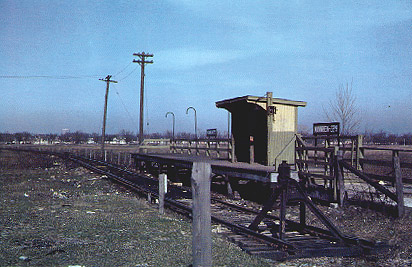
We are looking west from the North Shore Line station in Libertyville in January 1963, the month of the abandonment.

We are looking west from the North Shore Line station in Libertyville in January 1963, the month of the abandonment.

A 1926 view of the Chicago Aurora and Elgin's Wheaton Yard.

A 1926 view of the Chicago Aurora and Elgin’s Wheaton Yard.

An early postcard view of the Aurora Elgin and Chicago (predecessor of the CA&E) yard in Wheaton. This may be from the World War I era as there only seem to be wood cars present.

An early postcard view of the Aurora Elgin and Chicago (predecessor of the CA&E) yard in Wheaton. This may be from the World War I era as there only seem to be wood cars present.

Chicago Aurora and Elgin 453 in its original paint scheme, which was somewhat different than how it looked later on. In particular, lettering was done in Futura, a modern font, as the ten cars 451-460 were the most modern CA&E ever had. Delivered in late 1945, this was 18 years after their previous new car order. 453 is now at the Illinois Railway Museum, where it is being restored to this classic look. The car behind it is 451, which IRM also has.

Chicago Aurora and Elgin 453 in its original paint scheme, which was somewhat different than how it looked later on. In particular, lettering was done in Futura, a modern font, as the ten cars 451-460 were the most modern CA&E ever had. Delivered in late 1945, this was 18 years after their previous new car order. 453 is now at the Illinois Railway Museum, where it is being restored to this classic look. The car behind it is 451, which IRM also has.

Two views of Chicago Aurora and Elgin car 10, both likely from the same Central Electric Railfans' Association fantrip, circa 1939 or so. Don's Rail Photos (via Archive.org): "10 was built by Niles Car in 1902. It was rebuilt with a baggage compartment in 1910. It was later removed, but then reinstalled in April 1933 for funeral service. It was wrecked September 10, 1948, and scrapped."

Two views of Chicago Aurora and Elgin car 10, both likely from the same Central Electric Railfans’ Association fantrip, circa 1939 or so. Don’s Rail Photos (via Archive.org): “10 was built by Niles Car in 1902. It was rebuilt with a baggage compartment in 1910. It was later removed, but then reinstalled in April 1933 for funeral service. It was wrecked September 10, 1948, and scrapped.”

The late Charles L. Tauscher took this picture of CTA red Pullman 144 on one of those latter day Chicago streetcar fantrips. I am not sure of the location, but the film was processed in June 1958, which would imply this is South Shops at 77th and Vincennes (and the car on the right has a 1958 Illinois license plate). By that time, there was just one streetcar line left-- Wentworth on the south side. 144 is now at the Illinois Railway Museum.

The late Charles L. Tauscher took this picture of CTA red Pullman 144 on one of those latter day Chicago streetcar fantrips. I am not sure of the location, but the film was processed in June 1958, which would imply this is South Shops at 77th and Vincennes (and the car on the right has a 1958 Illinois license plate). By that time, there was just one streetcar line left– Wentworth on the south side. 144 is now at the Illinois Railway Museum.

Don's Rail Photos (via Archive.org): "Aurora Elgin and Fox River Electric 303 was built by St Louis Car in 1924, (order) #1306. In 1936 it was sold to CI/SHRT as 303 and in 1954 it was sold to CP&SW (Columbia Park and Southwestern, aka Trolleyville USA) as 303. It was sold to Northern Ohio Railway Museum in 2009." Here, we see it in Cleveland (Shaker Heights Rapid Transit) on October 23, 1954.

Don’s Rail Photos (via Archive.org): “Aurora Elgin and Fox River Electric 303 was built by St Louis Car in 1924, (order) #1306. In 1936 it was sold to CI/SHRT as 303 and in 1954 it was sold to CP&SW (Columbia Park and Southwestern, aka Trolleyville USA) as 303. It was sold to Northern Ohio Railway Museum in 2009.” Here, we see it in Cleveland (Shaker Heights Rapid Transit) on October 23, 1954.

This is certainly a view of the Stock Yards "L" that I have not seen before. Robert D. Heinlein took this picture on September 28, 1957, not long before the branch was abandoned. Note the unique single-track operation here, unlike anything else on the system. CTA wood car #2906 is at the Armour station, which the photographer noted was located at Racine Avenue (1200 W.) and 43rd Street. The Union Stock Yards was already in an irreversible decline by this point, and would close for good in 1971. The "L" ran in a loop through the yards and back to the main line station at 40th and Indiana Avenue. It always operated as a shuttle, except possibly when there was a major event at the International Amphitheater. Our resident south side expert M. E. writes, "Your last sentence says "It always operated as a shuttle, except possibly when there was a major event at the International Amphitheater." I respectfully disagree about the "major event" part. At 40th and Indiana, the Stock Yards L approached Indiana Ave. from the west. Mainline trains from downtown also approached Indiana Ave. from the west. The Stock Yards and mainline tracks ran parallel. Switches that connected the Stock Yards line and the mainline were also west of the Indiana Ave. station. Any mainline train from downtown, if it were to offer direct service to the International Amphitheater, would have to change direction, negotiate the switches, and head west on the Stock Yards line. I think this would have been a clumsy if not dangerous practice -- perhaps requiring a motorman at each end of the mainline train -- and it would have delayed L traffic on both the mainline and Stock Yards line. Ergo, I can't imagine a direct connection from downtown to the Stock Yards line. But if a mainline train came into Indiana from the south, such a "transfer" would have been possible. A mainline train would first stop at Indiana, then proceed to the switches and move to the Stock Yards line, probably with minimal disruption to both lines. Still, it would not have been worth doing, because of much less L patronage from the south versus from downtown. A Stock Yards shuttle train usually had only one car, but for special events at the International Amphitheater, the Rapid Transit Company ran two-car trains, sometimes using the newer 4000-series cars for more capacity."

This is certainly a view of the Stock Yards “L” that I have not seen before. Robert D. Heinlein took this picture on September 28, 1957, not long before the branch was abandoned. Note the unique single-track operation here, unlike anything else on the system. CTA wood car #2906 is at the Armour station, which the photographer noted was located at Racine Avenue (1200 W.) and 43rd Street. The Union Stock Yards was already in an irreversible decline by this point, and would close for good in 1971. The “L” ran in a loop through the yards and back to the main line station at 40th and Indiana Avenue. It always operated as a shuttle, except possibly when there was a major event at the International Amphitheater. Our resident south side expert M. E. writes, “Your last sentence says “It always operated as a shuttle, except possibly when there was a major event at the International Amphitheater.” I respectfully disagree about the “major event” part. At 40th and Indiana, the Stock Yards L approached Indiana Ave. from the west. Mainline trains from downtown also approached Indiana Ave. from the west. The Stock Yards and mainline tracks ran parallel. Switches that connected the Stock Yards line and the mainline were also west of the Indiana Ave. station. Any mainline train from downtown, if it were to offer direct service to the International Amphitheater, would have to change direction, negotiate the switches, and head west on the Stock Yards line. I think this would have been a clumsy if not dangerous practice — perhaps requiring a motorman at each end of the mainline train — and it would have delayed L traffic on both the mainline and Stock Yards line. Ergo, I can’t imagine a direct connection from downtown to the Stock Yards line. But if a mainline train came into Indiana from the south, such a “transfer” would have been possible. A mainline train would first stop at Indiana, then proceed to the switches and move to the Stock Yards line, probably with minimal disruption to both lines. Still, it would not have been worth doing, because of much less L patronage from the south versus from downtown. A Stock Yards shuttle train usually had only one car, but for special events at the International Amphitheater, the Rapid Transit Company ran two-car trains, sometimes using the newer 4000-series cars for more capacity.”

CTA PCC 4391 is northbound on Wentworth Avenue at 40th Street in June 1958, the last month of service. That's the old Stockyards "L", which had been abandoned the previous year and would soon be removed. Everything to the right here has now been replaced by the Dan Ryan expressway. Car 4391 was the only postwar PCC saved, and is now at the Illinois Railway Museum. (Charles L. Tauscher Photo)

CTA PCC 4391 is northbound on Wentworth Avenue at 40th Street in June 1958, the last month of service. That’s the old Stockyards “L”, which had been abandoned the previous year and would soon be removed. Everything to the right here has now been replaced by the Dan Ryan expressway. Car 4391 was the only postwar PCC saved, and is now at the Illinois Railway Museum. (Charles L. Tauscher Photo)

A group of sailors boards a northbound North Shore Line train at Adams and Wabash on the Loop "L" on September 4, 1961.

A group of sailors boards a northbound North Shore Line train at Adams and Wabash on the Loop “L” on September 4, 1961.

And here's the view looking the other way, as North Shore Line Silverliner 761 enters the Milwaukee Terminal at 6th and Clybourn. This negative was undated, but from the automobiles, I would say this is circa 1957.

And here’s the view looking the other way, as North Shore Line Silverliner 761 enters the Milwaukee Terminal at 6th and Clybourn. This negative was undated, but from the automobiles, I would say this is circa 1957.

"Electroliner at Milwaukee, Wisconsin, entering station from street with policeman directing traffic, June 18, 1962."

“Electroliner at Milwaukee, Wisconsin, entering station from street with policeman directing traffic, June 18, 1962.”

I realize this is not the greatest picture, but it does show the CTA Forest Park Terminal as it looked on June 27, 1958. We are looking north, as the Abell-Howe company was located at 7747 W. Van Buren Street. The yard was being rebuilt at the time, in conjunction with construction of the Congress expressway nearby (now the Eisenhower). This work carried over into the following year. Six days before this picture was taken, the new Congress rapid transit line had opened as far west as Cicero Avenue in the highway median. West of there, there were temporary tracks. The new alignment went into use in 1960. This slide was shot on Anscochrome film, which was cheaper and inferior to Kodachrome. In the close-up, you can see how grainy it is, making it look similar to an Impressionist painting. The difference is that Kodachrome was basically black-and-white film, where the colors were added in the development process, while Anscochrome, Ektachrome, and Fujichrome have the colors built into the film.

I realize this is not the greatest picture, but it does show the CTA Forest Park Terminal as it looked on June 27, 1958. We are looking north, as the Abell-Howe company was located at 7747 W. Van Buren Street. The yard was being rebuilt at the time, in conjunction with construction of the Congress expressway nearby (now the Eisenhower). This work carried over into the following year. Six days before this picture was taken, the new Congress rapid transit line had opened as far west as Cicero Avenue in the highway median. West of there, there were temporary tracks. The new alignment went into use in 1960. This slide was shot on Anscochrome film, which was cheaper and inferior to Kodachrome. In the close-up, you can see how grainy it is, making it look similar to an Impressionist painting. The difference is that Kodachrome was basically black-and-white film, where the colors were added in the development process, while Anscochrome, Ektachrome, and Fujichrome have the colors built into the film.

North Shore Line 761 is at the head of a three-car train of Silverliners in North Chicago. (G. Millen Photo) This was scanned from one of those early Ektachrome slides that has faded to red. This time, we were able to restore the colors pretty well.

North Shore Line 761 is at the head of a three-car train of Silverliners in North Chicago. (G. Millen Photo) This was scanned from one of those early Ektachrome slides that has faded to red. This time, we were able to restore the colors pretty well.

I recently received this real photo postcard and did some restoration work on it. I would say it dates to around 1907, as there are areas on both the front and back where people can write messages. 1907 was the first year when the post office allowed messages on the backs. There is a document visible in the picture from the Metropolitan West Side Elevated in Chicago. Given the presence of railroad lanterns, this is likely a behind the scenes view of one of the early "L" companies, which began service in 1895.

I recently received this real photo postcard and did some restoration work on it. I would say it dates to around 1907, as there are areas on both the front and back where people can write messages. 1907 was the first year when the post office allowed messages on the backs. There is a document visible in the picture from the Metropolitan West Side Elevated in Chicago. Given the presence of railroad lanterns, this is likely a behind the scenes view of one of the early “L” companies, which began service in 1895.

Here is a classic red border Kodachrome view of a Chicago and North Western steam-powered "scoot" circa 1955, just leaving North Western station in downtown Chicago. E class 658 was built in 1922. The 4-6-2's original number was 1658. Bill Shapotkin adds, "The photo was taken in Chicago at Clinton St Tower -- where the West Line (Galena Division) splits from the North (Milwaukee Division) and Northwest (Wisconsin Division) Lines. The train at right is an outbound Northwest Line Train. The train at left MAY be backing into Northwestern Station (hard to tell). View looks E-S/E. Photo taken pre-Oct 1956 (when steam last operated on the C&NW)."

Here is a classic red border Kodachrome view of a Chicago and North Western steam-powered “scoot” circa 1955, just leaving North Western station in downtown Chicago. E class 658 was built in 1922. The 4-6-2’s original number was 1658. Bill Shapotkin adds, “The photo was taken in Chicago at Clinton St Tower — where the West Line (Galena Division) splits from the North (Milwaukee Division) and Northwest (Wisconsin Division) Lines. The train at right is an outbound Northwest Line Train. The train at left MAY be backing into Northwestern Station (hard to tell). View looks E-S/E. Photo taken pre-Oct 1956 (when steam last operated on the C&NW).”

Here is a classic April 1968 view of PTSC Red Arrow Lines Rail Bus #409. The Rail Bus was an attempt by Merritt H. Taylor Jr., head of the privately owned Philadelphia Suburban Transportation Company (aka Red Arrow Lines) to create a vehicle that could operate via railroad tracks and ordinary streets. There were two such buses adapted in the 1967-68 experiment. 409 was standard gauge and 410 was Pennsylvania wide gauge. 409 operated on the Norristown High-Speed Line. Ultimately, the experiment was not successful, and Red Arrow was sold to a public agency (SEPTA) in 1970. (F. I. Goldsmith, Jr. Photo)

Here is a classic April 1968 view of PTSC Red Arrow Lines Rail Bus #409. The Rail Bus was an attempt by Merritt H. Taylor Jr., head of the privately owned Philadelphia Suburban Transportation Company (aka Red Arrow Lines) to create a vehicle that could operate via railroad tracks and ordinary streets. There were two such buses adapted in the 1967-68 experiment. 409 was standard gauge and 410 was Pennsylvania wide gauge. 409 operated on the Norristown High-Speed Line. Ultimately, the experiment was not successful, and Red Arrow was sold to a public agency (SEPTA) in 1970. (F. I. Goldsmith, Jr. Photo)

NYCTA Rapid Transit Lo-V #5466 Location: New York City (Near Stillwell Avenue, Coney Island Terminal) Date: November 14, 1965 Photographer: Unknown Here is a classic view of a New York City Lo-V subway train, operated by the New York City Transit Authority. The landmark Brooklyn Union gas holder is also visible in the picture. The occasion seems to be a farewell fantrip for the Lo-Vs. These cars were built by American Car & Foundry in 1924 for the IRT (Interborough Rapid Transit Company). From the Wikipedia: "Low-V" is short for "Low Voltage", which refers to the cars' form of propulsion control. Earlier Composite and "High-V" (High Voltage) equipment that ran on the IRT had utilized a 600 volt DC circuit that ran directly through the motorman's master controller to control the car's propulsion. The 600 volts was also trainlined through the whole train by the use of high voltage jumper cables, which had to be run between cars. However, the Low-V equipment used battery voltage (32 volts) in the motor control circuit to move high voltage (600 volts) contacts underneath the car, which would control the car's propulsion. Likewise, it would no longer be necessary to use 600 volt jumpers between cars. This tremendously improved the safety of the equipment for both train crews and shop personnel alike. Today's operator, the Metropolitan Transit Authority, has retained a set of Lo-Vs, which are used for special occasions, such as opening day at Yankee Stadium. Car 5466 is now at the Branford Electric Railway Association in Connecticut.

NYCTA Rapid Transit Lo-V #5466
Location: New York City (Near Stillwell Avenue, Coney Island Terminal)
Date: November 14, 1965
Photographer: Unknown
Here is a classic view of a New York City Lo-V subway train, operated by the New York City Transit Authority. The landmark Brooklyn Union gas holder is also visible in the picture. The occasion seems to be a farewell fantrip for the Lo-Vs. These cars were built by American Car & Foundry in 1924 for the IRT (Interborough Rapid Transit Company).
From the Wikipedia:
“Low-V” is short for “Low Voltage”, which refers to the cars’ form of propulsion control. Earlier Composite and “High-V” (High Voltage) equipment that ran on the IRT had utilized a 600 volt DC circuit that ran directly through the motorman’s master controller to control the car’s propulsion. The 600 volts was also trainlined through the whole train by the use of high voltage jumper cables, which had to be run between cars. However, the Low-V equipment used battery voltage (32 volts) in the motor control circuit to move high voltage (600 volts) contacts underneath the car, which would control the car’s propulsion. Likewise, it would no longer be necessary to use 600 volt jumpers between cars. This tremendously improved the safety of the equipment for both train crews and shop personnel alike.
Today’s operator, the Metropolitan Transit Authority, has retained a set of Lo-Vs, which are used for special occasions, such as opening day at Yankee Stadium. Car 5466 is now at the Branford Electric Railway Association in Connecticut.

New Orleans streetcars have a long history, going back to 1835, when horsecars were first put into service. The St. Charles line has operated continuously since then, except for a period after Hurricane Katrina. The streetcars pictured here (972 and 836) were built in the 1920s by the Perley A. Thomas company. This picture was taken on June 7, 1960 by noted railfan photographer Clark Frazier.

New Orleans streetcars have a long history, going back to 1835, when horsecars were first put into service. The St. Charles line has operated continuously since then, except for a period after Hurricane Katrina. The streetcars pictured here (972 and 836) were built in the 1920s by the Perley A. Thomas company. This picture was taken on June 7, 1960 by noted railfan photographer Clark Frazier.

Subject: Boston Massachusetts Bay Transit Authority PCC Streetcar #3173 Location: Boston, MA Date: January 22, 1978 Photographer: Clark Frazier Boston PCC 3173 was built in 1945 by Pullman-Standard. The MBTA still operates a few PCCs on the Ashmont-Mattapan line. A blizzard paralyzed Boston in January 1978, and this picture shows a trolley stranded in the snow. It looks like the operator is having lunch.

Subject: Boston Massachusetts Bay Transit Authority PCC Streetcar #3173
Location: Boston, MA
Date: January 22, 1978
Photographer: Clark Frazier
Boston PCC 3173 was built in 1945 by Pullman-Standard. The MBTA still operates a few PCCs on the Ashmont-Mattapan line.
A blizzard paralyzed Boston in January 1978, and this picture shows a trolley stranded in the snow. It looks like the operator is having lunch.

Subject: SF Muni Cable Car #521 Location: San Francisco, CA Date: 1956 Photographer: Clark Frazier This is an excellent vintage picture of San Francisco's famous cable cars.

Subject: SF Muni Cable Car #521
Location: San Francisco, CA
Date: 1956
Photographer: Clark Frazier
This is an excellent vintage picture of San Francisco’s famous cable cars.

Subject: SF Muni Magic Carpet #1003 Location: San Francisco, CA Date: June 13, 1960 Photographer: Clark Frazier San Francisco's "Magic Carpets" 1001-1005 were double-ended streetcars, similar to PCCs but with somewhat different components, built in 1939 for the Municipal Railway. They were used in service until 1959. #1003, seen here, was the only survivor and it went to the Western Railway Museum, where it is today. Here it is shown prepared for the move.

Subject: SF Muni Magic Carpet #1003
Location: San Francisco, CA
Date: June 13, 1960
Photographer: Clark Frazier
San Francisco’s “Magic Carpets” 1001-1005 were double-ended streetcars, similar to PCCs but with somewhat different components, built in 1939 for the Municipal Railway. They were used in service until 1959. #1003, seen here, was the only survivor and it went to the Western Railway Museum, where it is today. Here it is shown prepared for the move.

Subject: CTA State of the Art Car on the Skokie Swift Location: Chicago, Illinois Date: February 1, 1975 Photographer: George J. Adler From the Wikipedia: The State-of-the-Art Car (SOAC) was a heavy rail mass transit demonstrator vehicle produced for the United States Department of Transportation's Urban Mass Transportation Administration in the 1970s. It was intended to demonstrate the latest technologies to operating agencies and the riding public, and serve to promote existing and proposed transit lines. A single married pair was produced by the St. Louis Car Company in 1972. It operated in intermittent revenue service on six rapid transit systems in five United States cities between May 1974 and January 1977. Since 1989, the two cars have been on display at the Seashore Trolley Museum in Kennebunkport, Maine. This is a classic view of the SOAC on the Chicago Transit Authority's Skokie Swift (aka Yellow Line). This was the only line it could be used on due to clearance issues, as it was wider than regular "L" cars.Subject: CTA State of the Art Car on the Skokie Swift
Location: Chicago, Illinois
Date: February 1, 1975
Photographer: George J. Adler
From the Wikipedia:

The State-of-the-Art Car (SOAC) was a heavy rail mass transit demonstrator vehicle produced for the United States Department of Transportation’s Urban Mass Transportation Administration in the 1970s. It was intended to demonstrate the latest technologies to operating agencies and the riding public, and serve to promote existing and proposed transit lines. A single married pair was produced by the St. Louis Car Company in 1972. It operated in intermittent revenue service on six rapid transit systems in five United States cities between May 1974 and January 1977. Since 1989, the two cars have been on display at the Seashore Trolley Museum in Kennebunkport, Maine.

This is a classic view of the SOAC on the Chicago Transit Authority’s Skokie Swift (aka Yellow Line). This was the only line it could be used on due to clearance issues, as it was wider than regular “L” cars.

Subject: The Milwaukee Road Location: Pacific Northwest Photographer: Unknown Date: August 1971 (processing date) In the early 1900s, the Milwaukee Road electrified over 600 miles of freight trackage in the northwestern United States. Use of electric locos ended in 1974. This was a very picturesque, if not a profitable, operation. Large parts of it were eventually abandoned. M. E. adds, "Your caption mentions freight trackage. Passenger trains used this line too, particularly the flagship Olympian Hiawatha. The electric locomotives in the picture were called Little Joes (after Joseph Stalin) because they were originally intended to go to Russia, but the U.S. government negated the shipment. The Chicago, South Shore and South Bend also had some Little Joes. By the way, the Milwaukee Road used electric locos to go through tunnels safely. There was a second section of electrified trackage in Washington State as well."

Subject: The Milwaukee Road
Location: Pacific Northwest
Photographer: Unknown
Date: August 1971 (processing date)
In the early 1900s, the Milwaukee Road electrified over 600 miles of freight trackage in the northwestern United States. Use of electric locos ended in 1974. This was a very picturesque, if not a profitable, operation. Large parts of it were eventually abandoned. M. E. adds, “Your caption mentions freight trackage. Passenger trains used this line too, particularly the flagship Olympian Hiawatha. The electric locomotives in the picture were called Little Joes (after Joseph Stalin) because they were originally intended to go to Russia, but the U.S. government negated the shipment. The Chicago, South Shore and South Bend also had some Little Joes. By the way, the Milwaukee Road used electric locos to go through tunnels safely. There was a second section of electrified trackage in Washington State as well.”

Subject: The Milwaukee Road E45 B-C-A Location: Pacific Northwest Photographer: Unknown Date: October 2, 1971

Subject: The Milwaukee Road E45 B-C-A
Location: Pacific Northwest
Photographer: Unknown
Date: October 2, 1971

Subject: The Milwaukee Road E74 Location: Three Forks, Montana (West end of yard) Photographer: Bruce Black Date: September 4, 1973

Subject: The Milwaukee Road E74
Location: Three Forks, Montana (West end of yard)
Photographer: Bruce Black
Date: September 4, 1973

Subject: Milwaukee and Suburban Transport Trolley Bus 526 Location: Milwaukee, Wisconsin (Route 18 @ 92nd and Lapham) Date: 1960s Photographer: Unknown Milwaukee operated trolley buses from 1936 until 1965. These were also known locally as trackless trolleys. This picture was taken in the 1960s. #526 was built by Marmon-Herrington in 1946-47 for the Indianapolis system. It was sold to Milwaukee in 1957, which helps date the picture.

Subject: Milwaukee and Suburban Transport Trolley Bus 526
Location: Milwaukee, Wisconsin (Route 18 @ 92nd and Lapham)
Date: 1960s
Photographer: Unknown
Milwaukee operated trolley buses from 1936 until 1965. These were also known locally as trackless trolleys. This picture was taken in the 1960s. #526 was built by Marmon-Herrington in 1946-47 for the Indianapolis system. It was sold to Milwaukee in 1957, which helps date the picture.

Subject: Milwaukee and Suburban Transport Trolley Bus #351 Location: Milwaukee, Wisconsin Date: 1960s Photographer: Unknown #351 was built by Marmon-Herrington in 1947.

Subject: Milwaukee and Suburban Transport Trolley Bus #351
Location: Milwaukee, Wisconsin
Date: 1960s
Photographer: Unknown
#351 was built by Marmon-Herrington in 1947.

Subject: Milwaukee and Suburban Transport Trolley Bus 526 Location: Milwaukee, Wisconsin Date: 1960s Photographer: Unknown #526 was built by Marmon-Herrington in 1946-47 for the Indianapolis system. It was sold to Milwaukee in 1957, which helps date the picture.

Subject: Milwaukee and Suburban Transport Trolley Bus 526
Location: Milwaukee, Wisconsin
Date: 1960s
Photographer: Unknown
#526 was built by Marmon-Herrington in 1946-47 for the Indianapolis system. It was sold to Milwaukee in 1957, which helps date the picture.

Subject: Milwaukee and Suburban Transport Trolley Bus #521 Location: Milwaukee, Wisconsin Date: 1960s Photographer: Unknown #521 was built by Marmon-Herrington in 1946-47 for the Indianapolis system. It was sold to Milwaukee in 1957, which helps date the picture.

Subject: Milwaukee and Suburban Transport Trolley Bus #521
Location: Milwaukee, Wisconsin
Date: 1960s
Photographer: Unknown
#521 was built by Marmon-Herrington in 1946-47 for the Indianapolis system. It was sold to Milwaukee in 1957, which helps date the picture.

Subject: Chicago CTA Flxible Bus #3122 Location: Chicago, Illinois (Route 29 on State Street at Van Buren Street) Date: August 16, 1978 Photographer: Unknown CTA Flxible Bus 3122 was built in 1965. Here it is shown during construction of the ill-fated State Street Mall, which opened in 1979. The mall has since been removed.

Subject: Chicago CTA Flxible Bus #3122
Location: Chicago, Illinois (Route 29 on State Street at Van Buren Street)
Date: August 16, 1978
Photographer: Unknown
CTA Flxible Bus 3122 was built in 1965. Here it is shown during construction of the ill-fated State Street Mall, which opened in 1979. The mall has since been removed.

Subject: PTC Peter Witt #8490 Location: Philadelphia (Route 55 - Willow Grove) Date: September 15, 1957 Photographer: Unknown Here is a classic view of a Philadelphia Transportation Company Peter Witt car. Philadelphia had 535 Peter Witt streetcars in all, built by Brill between 1923 and 1926. They were all retired from regular service by the end of 1957.

Subject: PTC Peter Witt #8490
Location: Philadelphia (Route 55 – Willow Grove)
Date: September 15, 1957
Photographer: Unknown
Here is a classic view of a Philadelphia Transportation Company Peter Witt car. Philadelphia had 535 Peter Witt streetcars in all, built by Brill between 1923 and 1926. They were all retired from regular service by the end of 1957.

In November 1966 (processing date), CTA trolley bus 9551 is at the west end of the line for Route 73 - Armitage (at Latrobe). Glenn Anderson and Richard Kunz are among the group of people boarding the bus. Since the last Armitage trolley bus ran on October 15, 1966, that might be the occasion and would help date the slide.

In November 1966 (processing date), CTA trolley bus 9551 is at the west end of the line for Route 73 – Armitage (at Latrobe). Glenn Anderson and Richard Kunz are among the group of people boarding the bus. Since the last Armitage trolley bus ran on October 15, 1966, that might be the occasion and would help date the slide.

Subject: Shaker Heights Rapid Transit ex-Toronto PCC 4663 Location: Cleveland, Ohio Date: January 21, 1979 Photographer: Unknown Greater Cleveland RTA 4663 was built by Pullman-Standard in 1946, for the Cleveland Transit System as #4233. It was sold to Toronto in 1952. In 1978 the RTA, short on cars prior to delivery of its new LRVs, repurchased this car and several others and operated them on the Shaker Heights line for a short time. The body of 4663 has been on a farm since 1982.

Subject: Shaker Heights Rapid Transit ex-Toronto PCC 4663
Location: Cleveland, Ohio
Date: January 21, 1979
Photographer: Unknown
Greater Cleveland RTA 4663 was built by Pullman-Standard in 1946, for the Cleveland Transit System as #4233. It was sold to Toronto in 1952. In 1978 the RTA, short on cars prior to delivery of its new LRVs, repurchased this car and several others and operated them on the Shaker Heights line for a short time. The body of 4663 has been on a farm since 1982.

Subject: SF Muni XT40 Trolley Bus #5761 Location: San Francisco, California (Route 1 - California, at Sacramento and Fillmore) Date: June 7, 2019 Photographer: Peter Ehrlich SF Muni XT40 Trolley Bus 5761 was built by New Flyer circa 2017-2019.

Subject: SF Muni XT40 Trolley Bus #5761
Location: San Francisco, California (Route 1 – California, at Sacramento and Fillmore)
Date: June 7, 2019
Photographer: Peter Ehrlich
SF Muni XT40 Trolley Bus 5761 was built by New Flyer circa 2017-2019.

Subject: GM&O Diesel Loco #100 Location: St. Louis, Missouri Date: September 1970 Photographer: Kutta Here is a classic view of a Gulf Mobile and Ohio diesel train in the months prior to the Amtrak takeover. From Railroad Pictures Archives: "Built in May 1946 (c/n 3218) on EMD Order E660 as Alton 100, it became GM&O 100 in 1947 and was sold for scrap in March 1975."

Subject: GM&O Diesel Loco #100
Location: St. Louis, Missouri
Date: September 1970
Photographer: Kutta
Here is a classic view of a Gulf Mobile and Ohio diesel train in the months prior to the Amtrak takeover.
From Railroad Pictures Archives:
“Built in May 1946 (c/n 3218) on EMD Order E660 as Alton 100, it became GM&O 100 in 1947 and was sold for scrap in March 1975.”

Subject: Metra #52 Diesel Loco Location: Chicago, Illinois Date: June 1977 Photographer: Joseph R. Quinn Here is a classic view of a Metra commuter train in Chicago, having just left Union Station. You can see a Chicago "L" train in the background.

Subject: Metra #52 Diesel Loco
Location: Chicago, Illinois
Date: June 1977
Photographer: Joseph R. Quinn
Here is a classic view of a Metra commuter train in Chicago, having just left Union Station. You can see a Chicago “L” train in the background.

Subject: Boston MBTA Snowplow Streetcar #5138 Location: Boston, MA Date: January 22, 1978 Photographer: Clark Frazier Boston MBTA Snowplow streetcar 5138 started out as a Type 3 car, built in 1908 by the St. Louis Car Company. It was retired in 2009 and is now at the Seashore Trolley Museum in Maine. A blizzard paralyzed Boston in January 1978, and this picture shows a snowplow trolley. It appears only one track was in service.

Subject: Boston MBTA Snowplow Streetcar #5138
Location: Boston, MA
Date: January 22, 1978
Photographer: Clark Frazier
Boston MBTA Snowplow streetcar 5138 started out as a Type 3 car, built in 1908 by the St. Louis Car Company. It was retired in 2009 and is now at the Seashore Trolley Museum in Maine. A blizzard paralyzed Boston in January 1978, and this picture shows a snowplow trolley. It appears only one track was in service.

Here is a “before and after” view of the Twin Peaks Tunnel entrance in San Francisco, with the two views taken 25 years apart:

Subject: SF Muni Iron Monster Streetcar #184 (and PCC 1024) Location: San Francisco, CA (at the entrance to the Twin Peaks Tunnel) Date: June 22, 1954 Photographer: J. W. Vigrass Muni bought 125 of these cars from the long-vanished Jewett Car Co. in Ohio and put them to work hauling passengers to the 1915 Panama Pacific International Exposition. The cars were big - 47 feet long - and heavy - 24 tons each - and famously slow. They were painted battleship gray at first and then green and cream. San Franciscans called them "Iron Monsters." They were all retired by 1958. A few were saved by museums and by the Municipal Railway.

Subject: SF Muni Iron Monster Streetcar #184 (and PCC 1024)
Location: San Francisco, CA (at the entrance to the Twin Peaks Tunnel)
Date: June 22, 1954
Photographer: J. W. Vigrass
Muni bought 125 of these cars from the long-vanished Jewett Car Co. in Ohio and put them to work hauling passengers to the 1915 Panama Pacific International Exposition. The cars were big – 47 feet long – and heavy – 24 tons each – and famously slow. They were painted battleship gray at first and then green and cream. San Franciscans called them “Iron Monsters.” They were all retired by 1958. A few were saved by museums and by the Municipal Railway.

Subject: SF Muni PCC #1168 Location: San Francisco, CA (West Portal, Twin Peaks Tunnel) Date: December 7, 1979 Photographer: Clark Frazier Muni PCC #1168 was built by the St. Louis Car Company in 1945 for St. Louis Public Service as car 1779. It came to San Francisco in 1961.

Subject: SF Muni PCC #1168
Location: San Francisco, CA (West Portal, Twin Peaks Tunnel)
Date: December 7, 1979
Photographer: Clark Frazier
Muni PCC #1168 was built by the St. Louis Car Company in 1945 for St. Louis Public Service as car 1779. It came to San Francisco in 1961.

Subject: Southern Pacific SP #4449 Location: Port Costa, California Date: June1984 (processing date) Photographer: Greg Stadter Here is an excellent original Kodachrome slide of a classic steam engine in action. From the Wikipedia: Southern Pacific 4449, also known as the Daylight, is the only surviving example of Southern Pacific Railroad's "GS-4" class of 4-8-4 "Northern" type steam locomotives and one of only two GS-class locomotives surviving, the other being "GS-6" 4460 at the National Museum of Transportation in St. Louis, Missouri. GS is an abbreviation of "General Service" or "Golden State," a nickname for California (where the locomotive was operated in regular service). The locomotive was built by Lima Locomotive Works in Lima, Ohio for the Southern Pacific in May 1941; it received the red-and-orange "Daylight" paint scheme for the passenger trains of the same name which it hauled for most of its service career. No. 4449 was retired from revenue service in 1956 and put into storage. In 1958, the Southern Pacific donated the locomotive to the City of Portland, Oregon. The City then put the locomotive on static display near Oaks Amusement Park, where it remained until 1974. After this, No. 4449 was then restored to operation for use in the American Freedom Train, which toured the 48 contiguous United States as part of the nation's 1976 Bicentennial celebration. The locomotive has operated in excursion service since 1984. The locomotive's operations are now based at the Oregon Rail Heritage Center in Portland, Oregon where it is maintained by a non-profit group of volunteers named "The Friends of SP 4449". In 1983, a poll of Trains magazine readers selected 4449 as being the most popular locomotive in the United States... In 1984, 4449 pulled an all-Daylight-painted train from Portland via Los Angeles to New Orleans, Louisiana and back, to publicize the World's Fair, with UP 8444 there too. The 7,477-mile (12,033 km) round trip was the longest steam train excursion in the history of the United States. However, this trip was not flawless. On June 11, No. 4449 was approaching Del Rio, Texas, still on its way to New Orleans, when the retention plate that holds the draw-bar pin in place somehow disconnected and fell in between the ties, allowing the tender and the entire consist to uncouple, while the locomotive accelerated all by itself. Fortunately, Doyle noticed this after checking the rear-view mirror and quickly applied the brakes. The locomotive backed-up, the fallen parts were recovered, the connections were quickly repaired, and No. 4449 and its consist proceeded to run only slightly behind schedule.Subject: Southern Pacific SP #4449
Location: Port Costa, California
Date: June1984 (processing date)
Photographer: Greg Stadter
Here is an excellent original Kodachrome slide of a classic steam engine in action.
From the Wikipedia:

Southern Pacific 4449, also known as the Daylight, is the only surviving example of Southern Pacific Railroad’s “GS-4” class of 4-8-4 “Northern” type steam locomotives and one of only two GS-class locomotives surviving, the other being “GS-6” 4460 at the National Museum of Transportation in St. Louis, Missouri. GS is an abbreviation of “General Service” or “Golden State,” a nickname for California (where the locomotive was operated in regular service).
The locomotive was built by Lima Locomotive Works in Lima, Ohio for the Southern Pacific in May 1941; it received the red-and-orange “Daylight” paint scheme for the passenger trains of the same name which it hauled for most of its service career. No. 4449 was retired from revenue service in 1956 and put into storage. In 1958, the Southern Pacific donated the locomotive to the City of Portland, Oregon. The City then put the locomotive on static display near Oaks Amusement Park, where it remained until 1974.
After this, No. 4449 was then restored to operation for use in the American Freedom Train, which toured the 48 contiguous United States as part of the nation’s 1976 Bicentennial celebration. The locomotive has operated in excursion service since 1984.
The locomotive’s operations are now based at the Oregon Rail Heritage Center in Portland, Oregon where it is maintained by a non-profit group of volunteers named “The Friends of SP 4449”. In 1983, a poll of Trains magazine readers selected 4449 as being the most popular locomotive in the United States…
In 1984, 4449 pulled an all-Daylight-painted train from Portland via Los Angeles to New Orleans, Louisiana and back, to publicize the World’s Fair, with UP 8444 there too. The 7,477-mile (12,033 km) round trip was the longest steam train excursion in the history of the United States. However, this trip was not flawless. On June 11, No. 4449 was approaching Del Rio, Texas, still on its way to New Orleans, when the retention plate that holds the draw-bar pin in place somehow disconnected and fell in between the ties, allowing the tender and the entire consist to uncouple, while the locomotive accelerated all by itself. Fortunately, Doyle noticed this after checking the rear-view mirror and quickly applied the brakes. The locomotive backed-up, the fallen parts were recovered, the connections were quickly repaired, and No. 4449 and its consist proceeded to run only slightly behind schedule.


Subject: Southern Pacific SP #4449 Location: Portland Union Station Date: April 26, 1981 Photographer: J. David Ingles

Subject: Southern Pacific SP #4449
Location: Portland Union Station
Date: April 26, 1981
Photographer: J. David Ingles

Subject: CTA Chicago "L" #4271-4272-1 Location: Chicago, Illinois (Wellington and Sheffield) Date: January 9, 1994 Photographer: Gregory J. Sommers CTA "L" car 1 was built in 1892 for the South Side Rapid Transit Company. Since this photo was taken, it was moved to the Chicago History Museum, where it is on display. CTA cars 4271 and 4272 were built in 1923 by the Cincinnati Car Company, and were the "state of the art" rapid transit cars of their time. They are part of the CTA Historical Fleet. M. E. adds, "Maybe THIS is the configuration of cars in the "mystery" photo at https://i0.wp.com/thetrolleydodger.com/wp-content/uploads/2023/10/aaf472a.jpg . And I appreciate Andris Kristopans' thought that this train was awaiting a deadhead trip to Old Congress to start a southbound mainline trip in the afternoon rush. But that would mean, on the way south, the porch car led the train. That baffles me if the train was an Englewood train, because the detachable Normal Park-destined car (an older porch car in the 1930s and 1940s) was always at the rear. Either I am wrong, or the Rapid Transit Company occasionally put a porch car in the front -- on an Englewood or Jackson Park train -- and I never knew that. Here's another thought: Maybe this picture was taken while the Rapid Transit Company was still getting new 4000-series cars, and at that time there were not enough 4000-series cars to form complete trains, so the porch car was still necessary. But the 4000-series cars arrived in the early 1920s. Could this photo be that old?"

Subject: CTA Chicago “L” #4271-4272-1
Location: Chicago, Illinois (Wellington and Sheffield)
Date: January 9, 1994
Photographer: Gregory J. Sommers
CTA “L” car 1 was built in 1892 for the South Side Rapid Transit Company. Since this photo was taken, it was moved to the Chicago History Museum, where it is on display. CTA cars 4271 and 4272 were built in 1923 by the Cincinnati Car Company, and were the “state of the art” rapid transit cars of their time. They are part of the CTA Historical Fleet. M. E. adds, “Maybe THIS is the configuration of cars in the “mystery” photo at https://i0.wp.com/thetrolleydodger.com/wp-content/uploads/2023/10/aaf472a.jpg . And I appreciate Andris Kristopans’ thought that this train was awaiting a deadhead trip to Old Congress to start a southbound mainline trip in the afternoon rush. But that would mean, on the way south, the porch car led the train. That baffles me if the train was an Englewood train, because the detachable Normal Park-destined car (an older porch car in the 1930s and 1940s) was always at the rear. Either I am wrong, or the Rapid Transit Company occasionally put a porch car in the front — on an Englewood or Jackson Park train — and I never knew that. Here’s another thought: Maybe this picture was taken while the Rapid Transit Company was still getting new 4000-series cars, and at that time there were not enough 4000-series cars to form complete trains, so the porch car was still necessary. But the 4000-series cars arrived in the early 1920s. Could this photo be that old?”

Subject: Pittsburgh PAT PCC Streetcar #1729 Location: Pittsburgh, PA (Route 42/38 - Mt. Lebanon-Beechview) Date: June 1982 (processing date) Photographer: Joseph P. Saitta Pittsburgh PCC 1729 was built by the St. Louis Car company in 1949. It was later rebuilt and renumbered to 4007. The Port Authority of Allegheny County took over Pittsburgh Railways in 1964. The last PCC ran in Pittsburgh in 1999. Over a period of years, Pittsburgh's extensive streetcar system morphed into the light rail of today.

Subject: Pittsburgh PAT PCC Streetcar #1729
Location: Pittsburgh, PA (Route 42/38 – Mt. Lebanon-Beechview)
Date: June 1982 (processing date)
Photographer: Joseph P. Saitta
Pittsburgh PCC 1729 was built by the St. Louis Car company in 1949. It was later rebuilt and renumbered to 4007.
The Port Authority of Allegheny County took over Pittsburgh Railways in 1964. The last PCC ran in Pittsburgh in 1999. Over a period of years, Pittsburgh’s extensive streetcar system morphed into the light rail of today.

Subject: Philadelphia DRPA Bridge RT Car #1017 Location: Philadelphia (Fern Rock Yard) Date: April 1968 (processing date) Photographer: Gerald H. Landau Streamlined rapid transit cars such as this one were used in Philadelphia from 1936 until 1968, when this service was replaced by the PATCO Speedline. Car 1017 does not appear to still exist, although a small number of sister cars have been saved. From the Wikipedia: The Delaware River Bridge, now the Benjamin Franklin Bridge, was designed to accommodate both rail and road traffic. When it opened on July 1, 1926, it had two outboard structures beside the main roadway for rail and space for two streetcar tracks (never installed) on the main road deck. Construction of the rail line did not begin until 1932, and the Bridge Line opened on June 7, 1936. Relatively short, it only had four stations: 8th Street and Franklin Square in Philadelphia, and City Hall and Broadway in Camden. Connection was available to the Pennsylvania-Reading Seashore Lines at Broadway. In Philadelphia, the line joined the 1932-opened Broad-Ridge Spur just west of Franklin Square and shared its 8th Street/Market Street station. An underground tunnel continuing south following 8th Street then west following Locust Street to 18th Street, had been started in 1917 as part of plans for a Center City subway loop. The shell of this 8th–Locust Street subway was completed, but not outfitted for passenger service, in 1933. Beginning in June 1949, Bridge Line and Ridge Spur services were through-routed, providing one-seat service between Girard station and Camden. Construction on the 8th–Locust Street subway resumed in 1950. Bridge Line service was extended to 15–16th & Locust station, with intermediate stations at 12–13th & Locust station and 9–10th & Locust station, on February 14, 1953. This section is owned by the City of Philadelphia and leased by PATCO. Extension to Lindenwold Despite the extension, Bridge Line ridership was limited by high fares and not extending east of Camden. In January 1954, due to low ridership on the extension, off-peak service and Saturday again began operating between Girard and Camden, with a shuttle train operating between 8th and 16th stations. Sunday service was suspended west of 8th Street at that time due to minimal usage. By 1962, only 1,900 daily passengers boarded the line west of 8th Street. To facilitate the construction of extensions in Southern New Jersey, the states expanded the powers of the Delaware River Joint Commission (which owned the Benjamin Franklin Bridge and the New Jersey portion of the Bridge Line), rechristening it as the Delaware River Port Authority (DRPA) in 1951. The agency commissioned Parsons, Brinckerhoff, Hall & MacDonald to study possible rapid transit services for South Jersey; Parsons, Brinckerhoff's final report recommended building a new tunnel under the Delaware and three lines in New Jersey. Route A would run to Moorestown, Route B to Kirkwood (now Lindenwold), and Route C to Woodbury Heights. A later study by Louis T. Klauder & Associates recommended using the Bridge Line instead to reach Philadelphia and suggested building Route B first, as it had the highest potential ridership. Over the weekend of August 23 to 27, 1968, the Ridge Spur was connected to a new upper-level terminal platform at 8th Street station to allow conversion of the Bridge Line into the "High-Speed Line". Bridge Line service was split into 16th Street–8th Street and 8th Street–Camden segments during the conversion, with a cross-platform transfer at 8th Street. Bridge Line service was suspended on December 29, 1968, for final conversion of the line. Service from Lindenwold station to Camden along former Pennsylvania-Reading Seashore Lines trackage began on January 4, 1969; full service into Center City Philadelphia over the bridge began on February 15, 1969. The Lindenwold extension cost $92 million.

Subject: Philadelphia DRPA Bridge RT Car #1017
Location: Philadelphia (Fern Rock Yard)
Date: April 1968 (processing date)
Photographer: Gerald H. Landau
Streamlined rapid transit cars such as this one were used in Philadelphia from 1936 until 1968, when this service was replaced by the PATCO Speedline. Car 1017 does not appear to still exist, although a small number of sister cars have been saved.
From the Wikipedia:

The Delaware River Bridge, now the Benjamin Franklin Bridge, was designed to accommodate both rail and road traffic. When it opened on July 1, 1926, it had two outboard structures beside the main roadway for rail and space for two streetcar tracks (never installed) on the main road deck. Construction of the rail line did not begin until 1932, and the Bridge Line opened on June 7, 1936. Relatively short, it only had four stations: 8th Street and Franklin Square in Philadelphia, and City Hall and Broadway in Camden. Connection was available to the Pennsylvania-Reading Seashore Lines at Broadway.
In Philadelphia, the line joined the 1932-opened Broad-Ridge Spur just west of Franklin Square and shared its 8th Street/Market Street station. An underground tunnel continuing south following 8th Street then west following Locust Street to 18th Street, had been started in 1917 as part of plans for a Center City subway loop. The shell of this 8th–Locust Street subway was completed, but not outfitted for passenger service, in 1933. Beginning in June 1949, Bridge Line and Ridge Spur services were through-routed, providing one-seat service between Girard station and Camden. Construction on the 8th–Locust Street subway resumed in 1950. Bridge Line service was extended to 15–16th & Locust station, with intermediate stations at 12–13th & Locust station and 9–10th & Locust station, on February 14, 1953. This section is owned by the City of Philadelphia and leased by PATCO.
Extension to Lindenwold
Despite the extension, Bridge Line ridership was limited by high fares and not extending east of Camden. In January 1954, due to low ridership on the extension, off-peak service and Saturday again began operating between Girard and Camden, with a shuttle train operating between 8th and 16th stations. Sunday service was suspended west of 8th Street at that time due to minimal usage. By 1962, only 1,900 daily passengers boarded the line west of 8th Street.
To facilitate the construction of extensions in Southern New Jersey, the states expanded the powers of the Delaware River Joint Commission (which owned the Benjamin Franklin Bridge and the New Jersey portion of the Bridge Line), rechristening it as the Delaware River Port Authority (DRPA) in 1951. The agency commissioned Parsons, Brinckerhoff, Hall & MacDonald to study possible rapid transit services for South Jersey; Parsons, Brinckerhoff’s final report recommended building a new tunnel under the Delaware and three lines in New Jersey. Route A would run to Moorestown, Route B to Kirkwood (now Lindenwold), and Route C to Woodbury Heights. A later study by Louis T. Klauder & Associates recommended using the Bridge Line instead to reach Philadelphia and suggested building Route B first, as it had the highest potential ridership.
Over the weekend of August 23 to 27, 1968, the Ridge Spur was connected to a new upper-level terminal platform at 8th Street station to allow conversion of the Bridge Line into the “High-Speed Line”. Bridge Line service was split into 16th Street–8th Street and 8th Street–Camden segments during the conversion, with a cross-platform transfer at 8th Street. Bridge Line service was suspended on December 29, 1968, for final conversion of the line. Service from Lindenwold station to Camden along former Pennsylvania-Reading Seashore Lines trackage began on January 4, 1969; full service into Center City Philadelphia over the bridge began on February 15, 1969. The Lindenwold extension cost $92 million.

Keep those cards and letters coming in, folks.

Our Latest Book, Now Available:

The North Shore Line

FYI, my new Arcadia Publishing book The North Shore Line is now available for immediate shipment. My publisher decided to expand it to 160 pages, instead of the usual 128. That’s a 25% increase, without any change to the $23.99 price. I am quite pleased with how this turned out.

From the back cover:

As late as 1963, it was possible to board high-speed electric trains on Chicago’s famous Loop “L” that ran 90 miles north to Milwaukee. This was the Chicago North Shore & Milwaukee Railroad, commonly known as the North Shore Line. It rose from humble origins in the 1890s as a local streetcar line in Waukegan to eventually become America’s fastest interurban under the visionary management of Midwest utilities tycoon Samuel Insull. The North Shore Line, under Insull, became a worthy competitor to the established steam railroads. Hobbled by the Great Depression, the road fought back in 1941 with two streamlined, air-conditioned, articulated trains called Electroliners, which included dining service. It regained its popularity during World War II, when gasoline and tires were rationed, but eventually, it fell victim to highways and the automobile. The North Shore Line had intercity rail, commuter rail, electric freight, city streetcars, and even buses. It has been gone for nearly 60 years, but it will always remain the Road of Service.

Each copy purchased here will be signed by the author, and you will also receive a bonus North Shore Line map.  Books will ship by USPS Media Mail.

Chapters:
01. Beginnings
02. The Milwaukee Division
03. The Shore Line Route
04. The Skokie Valley Route
05. The Mundelein Branch
06. On the “L”
07. City Streetcars
08. Trolley Freight
09. The Long Goodbye
10. The Legacy

Title The North Shore Line
Images of America
Author David Sadowski
Edition illustrated
Publisher Arcadia Publishing (SC), 2023
ISBN 1467108960, 978-1467108966
Length 160 pages

The price of $23.99 includes shipping within the United States.

For Shipping to US Addresses:

New Compact Disc Titles, Now Available:

HFIH
Hi-Fi Iron Horse
Price: $15.99

Hi-Fi Iron Horse is a unique collection of early steam recordings, made between 1949 and 1954. Portable tape recorders were not yet available when the earliest of these was made, but there was still another source for making high-quality audio– the optical sound track of motion picture film.

Featuring in-service steam of the Baltimore & Ohio, Bessemer & Lake Erie, Burlington, Canadian National, Delaware & Hudson, East Broad Top, Erie, Grand Trunk Western, Huntingdon & Broad Top Mountain, Western Maryland, and Rutland Railway.

Total time – 50:49

TSOS
The Sound of Steam
Reading 2124

Price: $19.99

Three very rare, out of print North Jersey Recordings LPs, now digitally remastered on two CDs at a special price.

The Sound of Steam offers a comprehensive overview of the twilight days of steam railroading in North America, with sounds recorded between 1957 and 1964. Railroads featured include the Denver & Rio Grande Western, Union Pacific, Canadian Pacific, Duluth, Missabe & Iron Range Railway, Gainesville Midland Railroad, Pennsylvania Railroad, Reading Railroad, Canadian National, Twin Seams Mining Company, Nickel Plate, Colorado & Southern, Norfolk & Western, Buffalo Creek & Gauley, Monadnock, Steamtown & Northern, Rockton & Rion Railway, and the National Railways of Mexico.

Reading 2124 features recordings made in 1959 and 1960 on a series of “Iron Horse Rambles,” excursion trips through eastern Pennsylvania.  The Reading Company had retained this class T-1 4-8-4 for emergency use after steam was retired on the railroad.  Seven years after the last Reading steam loco had hauled a passenger train, a series of 51 special excursion trips were held, ending in 1964.  These have since been revived, and the Rambles continue.

Total time – 69:54 (Disc 1) and 61:20 (Disc 2)

RWW-V103
Rods, Wheels, and Whistles
Voice of the 103

Price: $19.99

Two very rare, out of print North Jersey Recordings LPs, now digitally remastered on two CDs at a special price.

Rods, Wheels, and Whistles features the sounds of the Pennsylvania Railroad and the Norfolk and Western Railway, recorded in the twilight years of steam. This LP was originally issued in 1958, but our version is taken from the revised and expanded edition, which includes additional recordings from 1959.

Voice of the 103 documents the former Sumter and Choctaw Railroad #103, a 2-6-2 locomotive built in 1925 by the Baldwin Locomotive Works, after it was refurbished in 1962 to operate on the Middletown and New Jersey. This was an excursion service of the Empire State Railway Museum, which has since moved to a new location and no longer operates trains.  The 103 is now on static display.

Our collection is rounded out with three bonus tracks from the Strasbourg Railroad, when old number 31 ran excursion trains on the oldest short line railroad in the United States (chartered in June 1832), joining the Pennsylvania Dutch towns of Strasbourg and Paradise in the early 1960s.

Total time – 46:15 (RWW) and 49:26 (V103)

Help Support The Trolley Dodger

This is our 309th post, and we are gradually creating a body of work and an online resource for the benefit of all railfans, everywhere. To date, we have received over 1,024,000 page views, for which we are very grateful.

You can help us continue our original transit research by checking out the fine products in our Online Store.
As we have said before, “If you buy here, we will be here.”

We thank you for your support.

DONATIONS

In order to continue giving you the kinds of historic railroad images that you have come to expect from The Trolley Dodger, we need your help and support. It costs money to maintain this website, and to do the sort of historic research that is our specialty.

Your financial contributions help make this web site better, and are greatly appreciated.


North Shore Line Rarities, Part One

North Shore Line 721 sports an interesting destination sign. The interurban ran several such "named" trains in the 1920s, in an attempt to compete with the steam railroads. The Interstate Eastern ran to Chicago's south side, where travelers could change for eastbound trains. From 1922 to 1938, a small number of NSL trains ran south of Roosevelt Road, the usual terminus, but did not ultimately attract much ridership. I don't think the named trains lasted beyond 1932. Where is that sign today? (Robert Heinlein Photo) Correction: J. J. Sedelmaier notes that these were two different trains, the Interstate and the Eastern. Zachary Ehlers: "The Eastern Limiteds left Chicago and Milwaukee at 10am, carrying a Parlor car. The Interstate Limited left Milwaukee at 7:15am and Chicago at 5:05pm, carrying a dining car. (Source: the 1929 PTT)."

North Shore Line 721 sports an interesting destination sign. The interurban ran several such “named” trains in the 1920s, in an attempt to compete with the steam railroads. The Interstate Eastern ran to Chicago’s south side, where travelers could change for eastbound trains. From 1922 to 1938, a small number of NSL trains ran south of Roosevelt Road, the usual terminus, but did not ultimately attract much ridership. I don’t think the named trains lasted beyond 1932. Where is that sign today? (Robert Heinlein Photo) Correction: J. J. Sedelmaier notes that these were two different trains, the Interstate and the Eastern. Zachary Ehlers: “The Eastern Limiteds left Chicago and Milwaukee at 10am, carrying a Parlor car. The Interstate Limited left Milwaukee at 7:15am and Chicago at 5:05pm, carrying a dining car. (Source: the 1929 PTT).”

Today we are featuring a bevy of rare black-and-white North Shore Line photos taken in the mid-1950s by the late Robert D. Heinlein. Many of these might be considered “roster shots,” attempts to document the entire fleet of cars on a railroad.

There are numerous pictures of the “Farewell to the Shore Line Route” fantrip held by the Central Electric Railfans’ Association on July 24, 1955, the day before the abandonment of service on that branch of the interurban. To some extent, all three cars operated on that trip (154, 190, and 155) were ill-fated. 155 and 190 were damaged in a fire at Highwood on August 11, 1955, along with several other cars, and were scrapped. 154 survived the 1963 abandonment of the railroad, but ultimately succumbed to years of neglect. The body of that car was dumped in a field, after being stripped for parts, and its owners touted its potential as a chicken coop for prospective buyers.

These images were shot on medium format paper-backed roll film, either 120 or 620 size. There were apparently some handling issues, as some of the negatives were light-struck. However, we have included many of these, due to their historic significance.

We could not include all of Mr. Heinlein’s black-and-white images in this post, so there are more to come in future posts. We thank Kevin Heinlein for sharing these excellent images with our readers. We are presenting them in much the same order his father had them sorted in, mainly in car number order rather than by location.

They are especially noteworthy, as they are mainly pictures taken on the Shore Line Route, which was not as well documented as the Skokie Valley Route, as it was abandoned nearly eight years earlier.

Enjoy!

-David Sadowski

PS- You might also like our Trolley Dodger Facebook auxiliary, a private group that now has 1,414 members.

Our friend Kenneth Gear has a Facebook group for the Railroad Record Club. If you enjoy listening to audio recordings of classic railroad trains, whether steam, electric, or diesel, you might consider joining.

FYI, the Hoosier Traction Facebook Group celebrates electric transit in Indiana and the Midwest. It also supports the activities of the annual Hoosier Traction Meet (although not affiliated with the North American Transit Historical Society, which organizes that event).

Effective immediately, due to the increased cost of international shipping, we will need to quote shipping prices before sending Trolley Dodger orders outside the United States. Until now, we had a fixed price surcharge on most international orders, but we actually lost money shipping out recent orders. It is not our intention to make a profit on international shipping, and we will quote based on actual cost. Thanks.

Robert Heinlein’s North Shore Line Rarities

North Shore Line (originally Chicago & Milwaukee Electric) sweeper 3 was built in 1904 using parts from an earlier sweeper from 1899. It was retired in 1951, and the body was sold to the Illinois Electric Railway Museum in North Chicago. Presumably the sign that says "Garfield" is from the "L". (Robert Heinlein Photo)

North Shore Line (originally Chicago & Milwaukee Electric) sweeper 3 was built in 1904 using parts from an earlier sweeper from 1899. It was retired in 1951, and the body was sold to the Illinois Electric Railway Museum in North Chicago. Presumably the sign that says “Garfield” is from the “L”. (Robert Heinlein Photo)

Don's Rail Photos (via Archive.org): "21 was built by McGuire-Cummings in 1908. The brooms could be removed for work service. It was retired in 1950 and sold to Chicago Hardware Foundry Co. as 238 in 1953." (Robert Heinlein Photo)

Don’s Rail Photos (via Archive.org): “21 was built by McGuire-Cummings in 1908. The brooms could be removed for work service. It was retired in 1950 and sold to Chicago Hardware Foundry Co. as 238 in 1953.” (Robert Heinlein Photo)

North Shore Line cars 154, 190, and 155 are at the Linden Avenue station in Wilmette on July 24, 1955. This was a Central Electric Railfans' Association fantrip just prior to the abandonment of the Shore Line Route. (Robert Heinlein Photo)

North Shore Line cars 154, 190, and 155 are at the Linden Avenue station in Wilmette on July 24, 1955. This was a Central Electric Railfans’ Association fantrip just prior to the abandonment of the Shore Line Route. (Robert Heinlein Photo)

This and the next picture: The fantrip train makes a photo stop in Lake Bluff, where the branch line to Libertyville and Mundelein started. (Robert Heinlein Photos)

This and the next picture: The fantrip train makes a photo stop in Lake Bluff, where the branch line to Libertyville and Mundelein started. (Robert Heinlein Photos)

North Shore Line cars 154, 190, and 155 are stopped by the Lake Forest station on July 24, 1955. This was a Central Electric Railfans' Association fantrip just prior to the abandonment of the Shore Line Route. (Robert Heinlein Photo)

North Shore Line cars 154, 190, and 155 are stopped by the Lake Forest station on July 24, 1955. This was a Central Electric Railfans’ Association fantrip just prior to the abandonment of the Shore Line Route. (Robert Heinlein Photo)

The fantrip train at Linden Avenue in Wilmette. (Robert Heinlein Photo)

The fantrip train at Linden Avenue in Wilmette.
(Robert Heinlein Photo)

The fantrip train at the Wilmette station near the Chicago and North Western. (Robert Heinlein Photo)

The fantrip train at the Wilmette station near the Chicago and North Western. (Robert Heinlein Photo)

The fantrip train at the Glencoe gauntlet. (Robert Heinlein Photo)

The fantrip train at the Glencoe gauntlet.
(Robert Heinlein Photo)

154 in Kenilworth, by the historic fountain designed by George Maher. (Robert Heinlein Photo)

154 in Kenilworth, by the historic fountain designed by George Maher. (Robert Heinlein Photo)

Car 154. (Robert Heinlein Photo)

Car 154. (Robert Heinlein Photo)

Car 154. (Robert Heinlein Photo)

Car 154. (Robert Heinlein Photo)

Lake Bluff. (Robert Heinlein Photo)

Lake Bluff. (Robert Heinlein Photo)

This and the next picture: At the Glencoe gauntlet. (Robert Heinlein Photos)

This and the next picture: At the Glencoe gauntlet. (Robert Heinlein Photos)

155, at the tail end of the famtrip train, turns onto Greenleaf Avenue in Wilmette. (Robert Heinlein Photo)

155, at the tail end of the famtrip train, turns onto Greenleaf Avenue in Wilmette. (Robert Heinlein Photo)

In the Winnetka grade separation area. (Robert Heinlein Photo)

In the Winnetka grade separation area. (Robert Heinlein Photo)

I'm wondering if this is the 10th Street station, which in 1955 was the end of the line on the Shore Line Route. It was located on the border between North Chicago and Waukegan. (Robert Heinlein Photo)

I’m wondering if this is the 10th Street station, which in 1955 was the end of the line on the Shore Line Route. It was located on the border between North Chicago and Waukegan. (Robert Heinlein Photo)

Turning onto Greenleaf Avenue in Wilmette. (Robert Heinlein Photo)

Turning onto Greenleaf Avenue in Wilmette.
(Robert Heinlein Photo)

The fantrip train makes a photo stop in the short area of street running in Highland Park. (Robert Heinlein Photo)

The fantrip train makes a photo stop in the short area of street running in Highland Park. (Robert Heinlein Photo)

Don's Rail Photos (via Archive.org): "155 was built by Brill in 1915, #19605. It was damaged by fire at Highwood on August 11, 1955, and scrapped. One end from it was used to repair 735." (Robert Heinlein Photo)

Don’s Rail Photos (via Archive.org): “155 was built by Brill in 1915, #19605. It was damaged by fire at Highwood on August 11, 1955, and scrapped. One end from it was used to repair 735.” (Robert Heinlein Photo)

At the east end of the Libertyville/Mundelein branch in Lake Bluff. (Robert Heinlein Photo)

At the east end of the Libertyville/Mundelein branch in Lake Bluff. (Robert Heinlein Photo)

In the general area of Winnetka. (Robert Heinlein Photo)

In the general area of Winnetka. (Robert Heinlein Photo)

I'm not sure where this might be... Highland Park or Kenilworth. (Robert Heinlein Photo)

I’m not sure where this might be… Highland Park or Kenilworth. (Robert Heinlein Photo)

Lake Bluff, going under the Chicago and North Western tracks, where the Mundelein branch began. (Robert Heinlein Photo)

Lake Bluff, going under the Chicago and North Western tracks, where the Mundelein branch began. (Robert Heinlein Photo)

157 was built by Brill in 1915. (Robert Heinlein Photo)

157 was built by Brill in 1915. (Robert Heinlein Photo)

156 was built by Brill in 1915. (Robert Heinlein Photo)

156 was built by Brill in 1915. (Robert Heinlein Photo)

Car 162 at the Wilmette Village Hall. Car 162 is now at East Troy, and is the oldest survivor of the fleet, having been delivered prior to IRM's 160. It is undergoing restoration. I originally had the wrong location for this one. Thanks to Nick Jenkins for the correction. (Robert Heinlein Photo)

Car 162 at the Wilmette Village Hall. Car 162 is now at East Troy, and is the oldest survivor of the fleet, having been delivered prior to IRM’s 160. It is undergoing restoration. I originally had the wrong location for this one. Thanks to Nick Jenkins for the correction. (Robert Heinlein Photo)

Car 163 in Winnetka. (Robert Heinlein Photo)

Car 163 in Winnetka. (Robert Heinlein Photo)

Car 157 on Greenleaf Avenue in Wilmette. (Robert Heinlein Photo)

Car 157 on Greenleaf Avenue in Wilmette.
(Robert Heinlein Photo)

This and the next photo show 165 in Winnetka. It was built by Jewett in 1917. (Robert Heinlein Photos)

This and the next photo show 165 in Winnetka. It was built by Jewett in 1917. (Robert Heinlein Photos)

This and the next photo show 169 in Wilmette. (Robert Heinlein Photos)

This and the next photo show 169 in Wilmette.
(Robert Heinlein Photos)

169 at Highwood. (Robert Heinlein Photo)

169 at Highwood. (Robert Heinlein Photo)

169 in Wilmette. (Robert Heinlein Photo)

169 in Wilmette. (Robert Heinlein Photo)

Car 175. (Robert Heinlein Photo)

Car 175. (Robert Heinlein Photo)

Car 170 was built by the Cincinnati Car Company in 1920. (Robert Heinlein Photo)

Car 170 was built by the Cincinnati Car Company in 1920. (Robert Heinlein Photo)

Car 176 on Greenleaf Avenue in Wilmette. (Robert Heinlein Photo)

Car 176 on Greenleaf Avenue in Wilmette.
(Robert Heinlein Photo)

175 in Winnetka. (Robert Heinlein Photo)

175 in Winnetka. (Robert Heinlein Photo)

Car 178 is stored on the middle track at Roosevelt Road on the "L". (Robert Heinlein Photo)

Car 178 is stored on the middle track at Roosevelt Road on the “L”. (Robert Heinlein Photo)

178 on Greenleaf Avenue in Wilmette. (Robert Heinlein Photo)

178 on Greenleaf Avenue in Wilmette. (Robert Heinlein Photo)

North Shore Line coach 178 at the Highwood Shops in the mid-1950s. (Robert Heinlein Photo)

North Shore Line coach 178 at the Highwood Shops in the mid-1950s. (Robert Heinlein Photo)

Car 186, presumably at Highwood. Don's Rail Photos (via Archive.org): "186 was built by Cincinnati Car in August 1920, #2450. It was scrapped at Rondout on January 29, 1964." (Robert Heinlein Photo)

Car 186, presumably at Highwood. Don’s Rail Photos (via Archive.org): “186 was built by Cincinnati Car in August 1920, #2450. It was scrapped at Rondout on January 29, 1964.” (Robert Heinlein Photo)

Car 180 at the Milwaukee Terminal. (Robert Heinlein Photo)

Car 180 at the Milwaukee Terminal. (Robert Heinlein Photo)

Don's Rail Photos (via Archive.org): "188 was built by Cincinnati Car in August 1920, #2450. It was damaged by fire at Highwood on August 11, 1955, and scrapped." (Robert Heinlein Photo)

Don’s Rail Photos (via Archive.org): “188 was built by Cincinnati Car in August 1920, #2450. It was damaged by fire at Highwood on August 11, 1955, and scrapped.” (Robert Heinlein Photo)

Don's Rail Photos (via Archive.org): "189 was built by Cincinnati Car in August 1920, #2450. It was damaged by fire at Highwood on August 11, 1955, and scrapped." (Robert Heinlein Photo)

Don’s Rail Photos (via Archive.org): “189 was built by Cincinnati Car in August 1920, #2450. It was damaged by fire at Highwood on August 11, 1955, and scrapped.” (Robert Heinlein Photo)

Don's Rail Photos (via Archive.org): "190 was built by Cincinnati Car in August 1920, #2450. It was damaged by fire at Highwood on August 11, 1955, and scrapped." (Robert Heinlein Photo)

Don’s Rail Photos (via Archive.org): “190 was built by Cincinnati Car in August 1920, #2450. It was damaged by fire at Highwood on August 11, 1955, and scrapped.” (Robert Heinlein Photo)

The "Greenliner" style logo was painted on, while the Silverliners had logos made of aluminum and bolted on. This is car 190. (Robert Heinlein Photo)

The “Greenliner” style logo was painted on, while the Silverliners had logos made of aluminum and bolted on. This is car 190.
(Robert Heinlein Photo)

Car 190, presumably on the 1955 farewell to the Shore Line Route fantrip on July 24, 1955. (Robert Heinlein Photo)

Car 190, presumably on the 1955 farewell to the Shore Line Route fantrip on July 24, 1955.
(Robert Heinlein Photo)

190 at Highwood. (Robert Heinlein Photo)

190 at Highwood. (Robert Heinlein Photo)

190 at the Glencoe gauntlet. (Robert Heinlein Photo)

190 at the Glencoe gauntlet. (Robert Heinlein Photo)

Don's Rail Photos (via Archive.org): "192 was built by Cincinnati Car in August 1920, #2450. It was retired on December 31, 1955. It was scrapped at Rondout on January 29, 1964." (Robert Heinlein Photo)

Don’s Rail Photos (via Archive.org): “192 was built by Cincinnati Car in August 1920, #2450. It was retired on December 31, 1955. It was scrapped at Rondout on January 29, 1964.” (Robert Heinlein Photo)

193 was built by Cincinnati Car in August 1920, #2450. It was scrapped at Rondout on January 29, 1964. (Robert Heinlein Photo)

193 was built by Cincinnati Car in August 1920, #2450. It was scrapped at Rondout on January 29, 1964. (Robert Heinlein Photo)

Don's Rail Photos (via Archive.org): "195 was built by Cincinnati Car in August 1920, #2450. It was retired on December 31, 1955. It was scrapped at Rondout on January 29, 1964." (Robert Heinlein Photo)

Don’s Rail Photos (via Archive.org): “195 was built by Cincinnati Car in August 1920, #2450. It was retired on December 31, 1955. It was scrapped at Rondout on January 29, 1964.” (Robert Heinlein Photo)

Don's Rail Photos (via Archive.org): "196 was built by Cincinnati Car in August 1920, #2450. It was damaged by fire at Highwood on August 11, 1955, and scrapped." (Robert Heinlein Photo)

Don’s Rail Photos (via Archive.org): “196 was built by Cincinnati Car in August 1920, #2450. It was damaged by fire at Highwood on August 11, 1955, and scrapped.” (Robert Heinlein Photo)

This and the next picture: Don's Rail Photos (via Archive.org): "202 was built by Jewett in 1909 as a combine. In January 1917 it was converted to a merchandise dispatch cars by removing the seating and adding doors at the former passenger end of the cars. In 1936 it was converted to use as a supply car. In August 1946 it was sold to Chicago Hardware Foundry where the body was used as a storage shed for several years." (Robert Heinlein Photos)

This and the next picture: Don’s Rail Photos (via Archive.org): “202 was built by Jewett in 1909 as a combine. In January 1917 it was converted to a merchandise dispatch cars by removing the seating and adding doors at the former passenger end of the cars. In 1936 it was converted to use as a supply car. In August 1946 it was sold to Chicago Hardware Foundry where the body was used as a storage shed for several years.” (Robert Heinlein Photos)

North Shore Line 458 started life as Oregon Electric loco 50. Here it is in Portland on February 2, 1946. (Gordon Spafford Photo)

North Shore Line 458 started life as Oregon Electric loco 50. Here it is in Portland on February 2, 1946. (Gordon Spafford Photo)

North Shore Line loco 459 was originally Oregon Electric 51. Here it is in Portland on December 1, 1946. (George Butte Photo)

North Shore Line loco 459 was originally Oregon Electric 51. Here it is in Portland on December 1, 1946. (George Butte Photo)

In the 1960s, you could buy sets of duplicate slides, often taken by the late A. C. Kalmbach, of Kalmbach Publications fame. These have tended to fade badly over the years, probably due to the cheap film stock that was used for duplicating. I purchased this one recently, and took a crack at restoring it. We see a view of the North Shore Line Milwaukee Terminal, probably around 1960, looking east along Michigan Street at Sixth Street.

In the 1960s, you could buy sets of duplicate slides, often taken by the late A. C. Kalmbach, of Kalmbach Publications fame. These have tended to fade badly over the years, probably due to the cheap film stock that was used for duplicating. I purchased this one recently, and took a crack at restoring it. We see a view of the North Shore Line Milwaukee Terminal, probably around 1960, looking east along Michigan Street at Sixth Street.

Our Latest Book, Now Available:

The North Shore Line

FYI, my new Arcadia Publishing book The North Shore Line is now available for immediate shipment. My publisher decided to expand it to 160 pages, instead of the usual 128. That’s a 25% increase, without any change to the $23.99 price. I am quite pleased with how this turned out.

From the back cover:

As late as 1963, it was possible to board high-speed electric trains on Chicago’s famous Loop “L” that ran 90 miles north to Milwaukee. This was the Chicago North Shore & Milwaukee Railroad, commonly known as the North Shore Line. It rose from humble origins in the 1890s as a local streetcar line in Waukegan to eventually become America’s fastest interurban under the visionary management of Midwest utilities tycoon Samuel Insull. The North Shore Line, under Insull, became a worthy competitor to the established steam railroads. Hobbled by the Great Depression, the road fought back in 1941 with two streamlined, air-conditioned, articulated trains called Electroliners, which included dining service. It regained its popularity during World War II, when gasoline and tires were rationed, but eventually, it fell victim to highways and the automobile. The North Shore Line had intercity rail, commuter rail, electric freight, city streetcars, and even buses. It has been gone for nearly 60 years, but it will always remain the Road of Service.

Each copy purchased here will be signed by the author, and you will also receive a bonus North Shore Line map.  Books will ship by USPS Media Mail.

Chapters:
01. Beginnings
02. The Milwaukee Division
03. The Shore Line Route
04. The Skokie Valley Route
05. The Mundelein Branch
06. On the “L”
07. City Streetcars
08. Trolley Freight
09. The Long Goodbye
10. The Legacy

Title The North Shore Line
Images of America
Author David Sadowski
Edition illustrated
Publisher Arcadia Publishing (SC), 2023
ISBN 1467108960, 978-1467108966
Length 160 pages

The price of $23.99 includes shipping within the United States.

For Shipping to US Addresses:

New Compact Disc, Now Available:

CTA-1
The Last Chicago Streetcars 1958
# of Discs – 1
Price: $15.99

Until now, it seemed as though audio recordings of Chicago streetcars were practically non-existent. For whatever reason, the late William A. Steventon does not appear to have made any for his Railroad Record Club, even though he did make other recordings in the Chicago area in 1956.

Now, audio recordings of the last runs of Chicago streetcars have been found, in the collections of the late Jeffrey L. Wien (who was one of the riders on that last car). We do not know who made these recordings, but this must have been done using a portable reel-to-reel machine.

These important recordings will finally fill a gap in transit history. The last Chicago Transit Authority streetcar finished its run in the early hours of June 21, 1958. Now you can experience these events just as Chicagoans did.

As a bonus, we have included Keeping Pace, a 1939 Chicago Surface Lines employee training program. This was digitally transferred from an original 16” transcription disc. These recordings were unheard for 80 years.

Total time – 74:38

Help Support The Trolley Dodger

This is our 305th post, and we are gradually creating a body of work and an online resource for the benefit of all railfans, everywhere. To date, we have received over 1,009,000 page views, for which we are very grateful.

You can help us continue our original transit research by checking out the fine products in our Online Store.
As we have said before, “If you buy here, we will be here.”

We thank you for your support.

DONATIONS

In order to continue giving you the kinds of historic railroad images that you have come to expect from The Trolley Dodger, we need your help and support. It costs money to maintain this website, and to do the sort of historic research that is our specialty.

Your financial contributions help make this web site better, and are greatly appreciated.


Postcards From the Bridge

This real photo postcard image shows the four-track Metropolitan "L" bridge (actually two separate bridges, side by side), but it also shows a small experimental lifeboat moored at left. One author's research into the history of this boat is featured in this post, and also sheds some further light on when this photo was taken.

This real photo postcard image shows the four-track Metropolitan “L” bridge (actually two separate bridges, side by side), but it also shows a small experimental lifeboat moored at left. One author’s research into the history of this boat is featured in this post, and also sheds some further light on when this photo was taken.

From the start of the Trolley Dodger in 2015, I hoped this blog would become a resource for others, and I am pleased that this has happened. Sometimes these inquiries take strange and unexpected turns, and that is certainly the case regarding the early real photo postcard shown above. This interesting tangent of Chicago history is covered in detail further down in this post. Research can raise just as many questions as it answers, and that is definitely what happened here regarding the small experimental boat visible in the lower left-hand corner of this and other postcards of the Met bridge.

We also have a goodly number of excellent images for your perusal, from some of the great traction photographers.

We regret the passing on April 30th of Robert Heinlein, aged 84. He was one of the giants in his field, and our next post will be a tribute to him. Some of Mr. Heinlein’s photos are in my recent book The North Shore Line, and I am glad he was able to see the finished product. He spent his entire career sharing his knowledge and helping others, and he will be sorely missed. You can read his obituary here.

Keep those cards and letters coming in, folks.

-David Sadowski

PS- You might also like our Trolley Dodger Facebook auxiliary, a private group that now has 1,162 members.

Our friend Kenneth Gear has a Facebook group for the Railroad Record Club. If you enjoy listening to audio recordings of classic railroad trains, whether steam, electric, or diesel, you might consider joining.

FYI, the Hoosier Traction Facebook Group celebrates electric transit in Indiana and the Midwest. It also supports the activities of the annual Hoosier Traction Meet (although not affiliated with the North American Transit Historical Society, which organizes that event).

I will be giving a program on my new North Shore Line book on 7:30 pm on Friday evening, May 19th, at Chicago Union Station for the Railroad & Shortlines Club of Chicago. There is no charge. Please do not arrive before 7:15 pm.

Chicago Union Station
Room 107A
500 W. Jackson Blvd.
Chicago, Illinois

Please enter at 500 W. Jackson Boulevard, between Clinton and Canal. Call 312 725-0432 during the meeting for assistance.

We gave two presentations in April that were well attended and received. First, we spoke at the Libertyville Historical Society on the 17th. You can view that presentation here. To date, there have been about 3500 views.

On the 20th, we were at the History Center of lake Bluff and Lake Forest. You can view that presentation here.

Postcards From the Bridge

Sandy Cleary writes:

Good morning! I hope this finds you well 🙂

I’ve been lost on the site for a few weeks since finding it—it scratches an itch I also have—and I’m really grateful for the work that you’ve done in documenting a lot of pretty niche historical artifacts. I’m very curious about one in particular. It’s mentioned in this post here, above the text “I recently bought this real photo postcard, circa 1910.”

I’m pretty certain it comes from the summer of 1907. The boat docked in the lower left of that photo is an obscure lifeboat designed by Robert Brown, of Chicago; it was tied up to the Chicago Sanitary District dock in 1907 but Brown stopped paying docking fees in March, 1908 and it’s absent in another 1908 photo of the bridge. Debris on the loading dock to the northeast of the bridge matches debris visible in Detroit Publishing Co. photo 070152 (here at the LOC), which was taken at the same time as 070153 (LOC link); based on the SS Pueblo’s transit records that photo must’ve been taken on July 30th, 1907.

I’ve been working on writing up the history of Robert Brown’s boat, which features in some other Chicago lore a few years later, and for which the photographic so far consists of only three photos: the two Detroit Publishing Co. ones, and whoever took the picture used in the postcard you found. It was reused in numerous postcards (colorized with the title “Elevated R. R. Jackknife Bridge over Chicago River, Chicago”—you can find examples on eBay).

The one you posted, though, is by far the clearest. I was wondering if you could tell me anything about the postcard’s copyright or who might have printed it? I’ve never been able to find what the photographic source might’ve been. A clearer example, one which might make the text on the white sign north of the boat legible and make it easier to fix the exact date the photo was taken, would be invaluable but I’m not sure where to start looking.

(Also, the version you’ve found is evidently a different crop—the colorized version shows more of the western bank and the dock itself).

I appreciate your time—any pointers on anything more about that postcard or the photo that was responsible for it would be incredibly helpful. The work you did on restoring the one you found was already enough for me to conclude when the boat was actually tied up at Van Buren St., which I’d been despairing of finding possible.

Kind regards
Sandy

Thanks for writing. It’s remarkable how small details in such photographs can be of so much use to researchers today.

In the meantime, what a remarkable piece of scholarship you have achieved!

As you can see, the reverse side of the postcard doesn’t identify the maker. But perhaps it can still be identified by comparison with other postcards with the same printing, whose manufacturers are known to experts.

Would it be alright for me to share your original note with the readers of my blog (and accompanying Facebook group)? You never know what useful information others might have to share.

Sandy Cleary:

Absolutely, you can share with whomever! The information I have is unfortunately pretty limited. From my boat-focused point of view, what’s known is:

1. Chicagoan carpenter Robert Brown designed and built an odd-shaped lifeboat in 1905, which was photographed for a magazine in ~1905/1906
2. His company, the International Automatic Lifeboat Company, paid the Chicago Sanitary District a $5/mo docking fee for the Van Buren St. dock between October, 1906 and March, 1908
3. Hans Behm took three photos of the Metropolitan West Side railroad bridge on July 30th, two of which depict the boat.
4. It’s gone by a September, 1908 photo of the bridge taken, I think, by the Chicago Sanitary District (because the MWRD has posted this picture a few times)
5. The only other photo is the one from the postcard, which must’ve been taken between October, 1906 and March, 1908. The overall bridge configuration seems to be the same between the postcard and the 1907 photos, as does the debris seen on the loading dock on the northeast side of the bridge:

After that the boat disappears for a few years, until it was found sunk in the north draw of the Wells Street Bridge (just south of the Chicago & North Western depot there. Then it was shown for a few months as “The Foolkiller,” putatively the world’s first submarine, after which it disappears again and is now only really relevant for weird Chicago lore.

Fortunately a lot of the Chicago Sanitary District records are online, and I was able to get in touch with someone from Commonwealth Edison who also had some useful information, but I have to imagine a lot of the information from the L companies pre-merger is gone. It seems to me that there might have been some reason why people were taking pictures of the Met’s bridge around the same time, but I’m not sure what that might have been.

I know that there was pressure to have it removed because of how significantly it impacted the channel by ~1911 or so—tracing over old Sanborn maps from 1906 really drives home how dramatic that constriction was:

At the time the western span of the Jackson Blvd. bridge and the Metropolitan West Side crossed what Sanborn identifies as property belonging to the Pacific, Fort Wayne & Chicago, during its period when it was not part of the Penn, I think—I am not a train girl. The Met’s viaduct would’ve crossed over the PFW&C freight house, before that whole west bank became Chicago & North Western property again. In any case the bridge wasn’t actually torn down until 1961 (by that point, as I understand it, the CTA hadn’t been using it to carry rail traffic since 1958).

Thank you so much again for your time and for your help with this. How these photo postcards worked has been something of a mystery to me. Numerous different versions seem to have been made, and I just don’t know whether these were the same company, or different companies skirting copyright because Google Images wasn’t a thing at the time, or what. But the fact that there is such a high-quality photo, anywhere, is extremely heartening.

I suspect the postcard that I have was very short-lived in the marketplace, as this was a transition period between real photo postcards and printed ones. Even if some of the colorized versions may have used the same original negative as a starting point, the eventual results look more and more like drawings rather than photographs.

As to the sudden popularity of pictures of the Met “L” bridge, starting in 1907, this coincided with a major change in how people could write messages on postcards:

DIVIDED BACK PERIOD: 1907-1915

“In 1907, a major change on the address side of postcards occurred. This change was prompted by the Universal Postal Congress, the legislative body of the Universal Postal Union. The convention decreed that postal cards produced by governments of member nations could have messages on the left half of the address side, effective October 1, 1907. The Universal Postal Congress also decreed that after March 1, 1907, government-produced cards in the United States could bear messages on the address side.2 Congress passed an act on March 1, 1907, in compliance with the Union’s decree, allowing privately produced postcards to bear messages on the left half of the card’s back. The next day, the Postmaster-General issued Order No. 146, granting privileges to privately produced postcards that were already granted in international mail, including the allowance of message space. On June 13, 1907, the Postmaster-General issued Order No. 539, which allowed government-produced postcards to bear messages on the left half of the address side.3 These changes to the backs of postcards ushered in the Divided Back Period, which spans from 1907 until 1915. The Divided Back Period is also known as the “Golden Age of Postcards,” due to the vast popularity of postcards during this time period.”

“Another type of postcard that began to be produced and popularly used during the Divided Back period and through the White Border period is the “real photo” postcard. “Real photo” postcards were first produced using the Kodak “postcard camera.” The postcard camera could take a picture and then print a postcard-size negative of the picture, complete with a divided back and place for postage.”

Source: https://siarchives.si.edu/history/featured-topics/postcard/postcard-history

Sandy Cleary:

I’ll be honest, I hadn’t heard “real photo post card” as a term before I read your blog, and then noticed “RPPC” everywhere on eBay.

There are, as far as I can tell, three versions of this postcard. The first two are the colorized ones, which are labeled on the back as no. 171 of the Franklin Post Card Co.—of Germany, although ironically the earliest example I can find, postmarked August 17th, 1909, says “Made in Germany.” There were two distinct crops of that. The first (type A) is the widest crop, and it’s the one where the “E” in “Elevated” is written more like a backwards 3.

The second (type B) is one that the UIC Library gives copyright to Copelin Commercial Photographers in a black-and-white photographic form. This seems to be more common; the earliest postmark so far I’ve found is from September 13, 1910. Both of these two show up with postmarks as late as 1915. They went through different print runs, though; the back variously says:

* Aug. 17 1909: “No. 171. Made in Germany” (Type A)
* Sep. 13 1910: “No. 171.” (Type B)
* Aug 16, 1911: “No. 171” (Type B)
* Nov. 3 1911: “171” (Type B) (it’s possible the “No.” has been scratched off)
* Oct. 14 1912: “No. 171. Publ. by Franklin Post Card Co., Chicago, Ill. Made in Germany” (Type A)
* Aug. 13 1915: “No. 171. Publ. by Franklin Post Card Co., Chicago, Ill.” (Type B)

…As I write this up I realize this means that the widest version is rarer because it’s the German version. The design on the back, with the more ornate “Post Card” lettering, is identical to other postcards published by (for example) M. Weixelbaum, of Lima, and Provincetown Advocate and the Cardinell-Vincent Co. in addition to Franklin. I don’t understand why some postcards were made in Germany and some were not. Apparently the early 1900s was “postcard mania” in Germany, according to Deutsche Welle. I’d never heard of that before.

Anyway, the third one is the one you’ve found, which has different writing, and is also a much closer crop. Here are all three, superimposed:

What is a little puzzling to me is that the postcard you found is of such high quality that implies (to me) that a medium-format negative was accessible to whomever wound up creating all of the derivatives, which I wouldn’t have expected if it was being held in, say, the Franklin vault. But if it was a Franklin photo, the reverse doesn’t look like the reverse of any Franklin postcards. I tried image-searching for postcard backs looking for something similar, and turned up these from Vermont, which use the same language but a different font in “Post Card.”

Given your link, that creates the unfortunate possibility that what you have is, in fact, the only copy of that postcard, because it was created by someone who was interested in the bridge (or liked the composition), had access to the original, and printed it as a one-off postcard, which is why so far as I can tell it’s never appeared elsewhere. The title is odd—as you note, this isn’t the Northwestern, and the bridge seems to have been well-known as a Metropolitan West Side bridge to locals. Or perhaps it dates from the 20s or 30s, and whoever was writing it just guessed. I don’t know.

I’m also not sure if it’s significant (beyond “postcard mania”) that the early examples are German. There was a big German population in Chicago at the time, and the Germans apparently did like postcards. Germans also liked bridges; Scherzer was born in Illinois, but his parents were German immigrants. One of the earlier photos of the Met bridge (I think it might be the oldest) is from a German postcard:

Text says: “‘Folding’ Bridge over the Chicago River (bridge closed)”; handwriting says (I think): “Dear Dad: Sent you today (payday) $1.00 worth of 1 and 2-cent post stamps. Let me know if these arrived safely.”

It has occurred to me that I could poke around here in Berlin to see if there’s anything promising, but if memory serves most Chicagoan immigrants came from further north (Pomerania and such). Here in Berlin our train esoterica is only the “ghost stations” from the Cold War and that some of our subway stops are mildly radioactive because they used uranium oxide glazing in the tile.

Anyway! Thank you again for your time, and for the link to that Smithsonian article!

This is all very interesting to me, and should also interest my readers. Thanks very much for sharing these wonderful images.

In the early years of photography, negatives were usually large enough to be contact printed onto photo paper, without using an enlarger. The “chicken scratch” writing on my postcard could have been inked onto a glass plate, on top of the negative, or it may have been applied to the negative itself. The proportions of postcards are more rectangular than many of the standard film formats of the time, which may help explain the cropping.

While doing further research into this story, I came across a series of blog posts.

Is this something you wrote?

Sandy Cleary:

Yeah, that’s me 🙂

The “Foolkiller” was originally covered by Cecil Adams in the “Straight Dope” column of the Chicago alternative weekly Chicago Reader, and then later by podcaster Mark Chrisler of The Constant. It’s been stuck in my head for about fifteen years, so I’ve been trying to pull together as much as I can rather than leaving things on various email threads or chat discussions, in case any one else ever goes searching. It’s also been a good way to start organizing my thoughts on the matter (I don’t think many people read that blog).

That’s an interesting steer, re: the negatives. The UIC holding is described as a “photographic print” although I understand the MWRD (the Chicago water authority) apparently found a number of glass plates in their archives. The Library of Congress also (I think) has the original Hans Behm photos, which are described as glass 8×10 negatives (here’s one of them below). I need to read up on that era of photography, apparently.

(The Detroit Publishing Co. photos taken by Behm were also turned into colorized photo postcards, although they don’t seem to have been as popular, or at least most of the Met depictions are not those. There’s an early one that the Central Electric Railfans’ Association wrote up about ten years ago; that’s given a copyright date of 1907 but it must be earlier because the bridge doesn’t have the circular pilings that it would retain for most of its life and were in place by 1907; on the other hand, the Palmer Building is visible (leftmost skyscraper) and that was built sometime between 1903 and 1906).

FYI, I wrote that CERA blog post you refer to.

Sandy Cleary:

I’ve also seen your name on the Industrial History page about the bridge, come to think of it.

And this brings the story up to date. Ms. Cleary’s blog posts, linked above, shed additional light on the story of this experimental boat, which I can summarize as follows. This was one of several attempts at creating a safer lifeboat, to be carried on ships, and for rescues. A number of such ideas were patented in the late 1800s and early 1900s, all very speculative, of course.

The International Automatic Lifeboat Company prototype, designed by Robert Brown, was moored in the Chicago River for some period of time, and not always near the Metropolitan West Side “L” bridge. The US Navy studied the concept and decided it was not practical, as it would have been too difficult to get people into this boat during rescues. This most likely doomed its prospects.

At some point, the boat sank, and was later pulled out of the river, whereupon some enterprising persons displayed it as a supposed submarine, which it was not.

The postcard we have mistakenly identifies this as the Northwestern “L”. In actuality, it was the Metropolitan West side Elevated, but some of its trains did go to Chicago’s northwest side. The Northwestern “L” actually ran to the north side, despite the name.

I hope that further information may shed more light on this story in the future. In the meantime, here are some additional examples of postcards showing the Met “L” bridge.

-David Sadowski

Trackwork near the Met bridge was somewhat complex. Tracks to the right fanned out, leading to the Wells Street Terminal. The tracks at left connected to the Loop "L" via Van Buren Street. (Robert Heinlein Collection)

Trackwork near the Met bridge was somewhat complex. Tracks to the right fanned out, leading to the Wells Street Terminal. The tracks at left connected to the Loop “L” via Van Buren Street. (Robert Heinlein Collection)

We are looking west from the Wells Street Terminal towards the dual bridges over the Chicago River. (Robert Heinlein Collection)

We are looking west from the Wells Street Terminal towards the dual bridges over the Chicago River. (Robert Heinlein Collection)

This is the only photo I have seen that shows the interior of the Met bridge interlocking tower. (Robert Heinlein Collection)

This is the only photo I have seen that shows the interior of the Met bridge interlocking tower. (Robert Heinlein Collection)

A 1906 postcard, made at a time when messages could only go on the front of the card.

A 1906 postcard, made at a time when messages could only go on the front of the card.

The back of the 1906 card. Only the address was permitted here.

The back of the 1906 card. Only the address was permitted here.

A 1908 postcard.

A 1908 postcard.

By 1908, messages were allowed on the left side of the card back.

By 1908, messages were allowed on the left side of the card back.

A 1909 postcard, based on the 1907 photo.

A 1909 postcard, based on the 1907 photo.

The rear of the 1909 postcard.

The rear of the 1909 postcard.

A 1911 postcard, based on the 1907 photo.

A 1911 postcard, based on the 1907 photo.

The back of a 1911 postcard.

The back of a 1911 postcard.

A 1912 postcard.

A 1912 postcard.

The back side of a 1912 postcard.

The back side of a 1912 postcard.

A 1915 postcard, clearly based on the 1907 photo.

A 1915 postcard, clearly based on the 1907 photo.

The back side of a 1915 postcard.

The back side of a 1915 postcard.

A 1919 postcard.

A 1919 postcard.

The back side of a 1919 postcard.

The back side of a 1919 postcard.

A 1920 postcard.

A 1920 postcard.

And here are some later views of the bridge, from various angles:

A view of the Metropolitan "L" crossing the Chicago River on July 10, 1949. We are looking to the northwest.

A view of the Metropolitan “L” crossing the Chicago River on July 10, 1949. We are looking to the northwest.

Over the years, I have seen many poor quality duplicate slides with this view, looking to the northwest, with a Garfield Park "L" train crossing the Met bridge over the Chicago River, with Union Station in the background. However, this was scanned from an original red border Kodachrome slide, circa 1955-58. The name of the photographer is not known. This must be a Garfield train, and the results are stunning. Douglas cars were re-routed over the Lake Street "L" in 1954. Logan Square trains began running via the Milwaukee-Dearborn Subway in 1951.

Over the years, I have seen many poor quality duplicate slides with this view, looking to the northwest, with a Garfield Park “L” train crossing the Met bridge over the Chicago River, with Union Station in the background. However, this was scanned from an original red border Kodachrome slide, circa 1955-58. The name of the photographer is not known. This must be a Garfield train, and the results are stunning. Douglas cars were re-routed over the Lake Street “L” in 1954. Logan Square trains began running via the Milwaukee-Dearborn Subway in 1951.

CTA 2256 is part of a four-car Met train, turning from Market Street onto the double bridge over the Chicago River in March 1951. (Truman Hefner Photo)

CTA 2256 is part of a four-car Met train, turning from Market Street onto the double bridge over the Chicago River in March 1951.
(Truman Hefner Photo)

This picture of the old Met bridge over the Chicago River is undated, but probably dates to circa 1952-55 based on the type of red border Kodachrome mount it is in. But it is certainly after the the other picture in this post, taken at much the same location, since the building at rear, or part of it, was in the process of being torn down. This was not related to expressway construction, since the "L" at this point was north of there. Once the Congress rapid transit line opened in 1958, this section of "L" was taken out of service and by the early 1960s it had been torn down.

This picture of the old Met bridge over the Chicago River is undated, but probably dates to circa 1952-55 based on the type of red border Kodachrome mount it is in. But it is certainly after the the other picture in this post, taken at much the same location, since the building at rear, or part of it, was in the process of being torn down. This was not related to expressway construction, since the “L” at this point was north of there. Once the Congress rapid transit line opened in 1958, this section of “L” was taken out of service and by the early 1960s it had been torn down.

Stylish Coit Tower sits atop Telegraph Hill in San Francisco, and has afforded an unparalleled view since its completion in 1933. In April 1987, when this picture was taken, the view included Muni streetcar 578, built in 1896. Although it resembles a cable car, it uses overhead wire. It is occasionally operated for special events and is the oldest streetcar in use in the country. In recent years wheelchair access was added.

Stylish Coit Tower sits atop Telegraph Hill in San Francisco, and has afforded an unparalleled view since its completion in 1933. In April 1987, when this picture was taken, the view included Muni streetcar 578, built in 1896. Although it resembles a cable car, it uses overhead wire. It is occasionally operated for special events and is the oldest streetcar in use in the country. In recent years wheelchair access was added.

A Milwaukee Road push-pull commuter train is at Rondout (an unincorporated area in Lake County, IL) on September 2, 1963. Bi-levels were introduced to the Milwaukee Road around 1961 and ridership was much lower than it is today, so often one car sufficed instead of seven or eight as you see today on Metra. The station here was removed around 1965 on what is now the Metra Milwaukee District North Line. I believe we are looking to the northwest, and that the overpass may be the former North Shore Line Mundelein branch, which had been abandoned on January 21, 1963. There was a tower located kitty-corner to the station, to the right and behind the photographer, which was last used in 2015. (William D. Volkmer Photo)

A Milwaukee Road push-pull commuter train is at Rondout (an unincorporated area in Lake County, IL) on September 2, 1963. Bi-levels were introduced to the Milwaukee Road around 1961 and ridership was much lower than it is today, so often one car sufficed instead of seven or eight as you see today on Metra. The station here was removed around 1965 on what is now the Metra Milwaukee District North Line. I believe we are looking to the northwest, and that the overpass may be the former North Shore Line Mundelein branch, which had been abandoned on January 21, 1963. There was a tower located kitty-corner to the station, to the right and behind the photographer, which was last used in 2015. (William D. Volkmer Photo)

Don's Rail Photos (via Archive.org): "410 was built as a trailer observation car by Cincinnati Car in June 1923, #2640. It was out of service in 1932. It was rebuilt on December 31, 1942, as a two motor coach by closing in the open platform and changing the seating." Here is how it looked in December 1958 at the Mundelein Terminal. (Russell D. Porter Photo)

Don’s Rail Photos (via Archive.org): “410 was built as a trailer observation car by Cincinnati Car in June 1923, #2640. It was out of service in 1932. It was rebuilt on December 31, 1942, as a two motor coach by closing in the open platform and changing the seating.” Here is how it looked in December 1958 at the Mundelein Terminal. (Russell D. Porter Photo)

North Shore Line Electroliner 801-802 is on the CTA "L" in August 1962.

North Shore Line Electroliner 801-802 is on the CTA “L” in August 1962.

This is a nice overhead view of a four-car train of North Shore Line Silverliners on Chicago's "L" in August 1962.

This is a nice overhead view of a four-car train of North Shore Line Silverliners on Chicago’s “L” in August 1962.

North Shore Line cars 157, 169, and 175 are heading southbound on the Sixth Street Viaduct in Milwaukee on April 19, 1959.

North Shore Line cars 157, 169, and 175 are heading southbound on the Sixth Street Viaduct in Milwaukee on April 19, 1959.

There are not many color photos showing this prewar paint scheme, seen here on North Shore Line coach 739 at the Milwaukee Terminal on June 25, 1942.

There are not many color photos showing this prewar paint scheme, seen here on North Shore Line coach 739 at the Milwaukee Terminal on June 25, 1942.

North Shore Line coach 173 is at the Mundelein Terminal in November 1962, just two months before the end of service. Car 160, now at the Illinois Railway Museum, is at right on a storage track. (Walter Schopp Photo)

North Shore Line coach 173 is at the Mundelein Terminal in November 1962, just two months before the end of service. Car 160, now at the Illinois Railway Museum, is at right on a storage track. (Walter Schopp Photo)

After the North Shore Line abandonment, car 727 went to the Southern Iowa Railway. Here it is shown on June 14, 1964, next to Waterloo, Cedar Falls, and Northern car 100. Within a few years, both cars ended up on the Iowa Terminal Railroad (now the Iowa Traction Railway), but unfortunately, car 100 was destroyed in a 1967 fire. 727 is still operable.

After the North Shore Line abandonment, car 727 went to the Southern Iowa Railway. Here it is shown on June 14, 1964, next to Waterloo, Cedar Falls, and Northern car 100. Within a few years, both cars ended up on the Iowa Terminal Railroad (now the Iowa Traction Railway), but unfortunately, car 100 was destroyed in a 1967 fire. 727 is still operable.

Chicago North Shore and Milwaukee #607 is at North Chicago Junction on November 16, 1941. "The 'Big Hook' operating as a loco, hauling a 12 car drag and caboose." The color is described as orange and black. (Vic Wagner Photo)

Chicago North Shore and Milwaukee #607 is at North Chicago Junction on November 16, 1941. “The ‘Big Hook’ operating as a loco, hauling a 12 car drag and caboose.” The color is described as orange and black. (Vic Wagner Photo)

North Shore Line city streetcar 359, a 1920s product of the St. Louis Car Company, is shown at North Chicago Junction on March 2, 1941. This was the south end of the line for Waukegan streetcars. (Vic Wagner Photo)

North Shore Line city streetcar 359, a 1920s product of the St. Louis Car Company, is shown at North Chicago Junction on March 2, 1941. This was the south end of the line for Waukegan streetcars. (Vic Wagner Photo)

North Shore Line Silverliner 771 at the Milwaukee Terinal.

North Shore Line Silverliner 771 at the Milwaukee Terinal.

A three car Chicago and Milwaukee Electric (predecessor of the North shore Line) express train, made up of woods including car 401, from an early colorized postcard. The location here may be Lake Forest. Don\s Rail Photos (via Archive.org): "401 was built by Jewett Car in 1909 as parlor-buffet car. In 1917 it was converted to straight coach and retired in 1935. It was leased to Chicago Aurora & Elgin and renumbered 142 in 1936. It came back for a short time with the CA&E number in 1945 and sold to CA&E in 1946. It was retired in 1953."

A three car Chicago and Milwaukee Electric (predecessor of the North shore Line) express train, made up of woods including car 401, from an early colorized postcard. The location here may be Lake Forest. Dons Rail Photos (via Archive.org): “401 was built by Jewett Car in 1909 as parlor-buffet car. In 1917 it was converted to straight coach and retired in 1935. It was leased to Chicago Aurora & Elgin and renumbered 142 in 1936. It came back for a short time with the CA&E number in 1945 and sold to CA&E in 1946. It was retired in 1953.”

As the song goes, they paved paradise and put up a parking lot at the former site of the North shore Line's Milwaukee Terminal, seen here on August 24, 1966. The former switchman's shanty was the only thing carried over. (Richard H. Young Photo)

As the song goes, they paved paradise and put up a parking lot at the former site of the North shore Line’s Milwaukee Terminal, seen here on August 24, 1966. The former switchman’s shanty was the only thing carried over. (Richard H. Young Photo)

On June 6, 1954, the National Railway Historical Society held a farewell fantrip on the Red Arrow interurban line to West Chester, PA. Here, the fantrip cars are stopped at the West Chester Water Works. Car 66 was built by Brill in 1926 and was declared surplus in 1970, after Red Arrow was taken over by SEPTA. It is now at the Pennsylvania Trolley Museum in Washington, PA.

On June 6, 1954, the National Railway Historical Society held a farewell fantrip on the Red Arrow interurban line to West Chester, PA. Here, the fantrip cars are stopped at the West Chester Water Works. Car 66 was built by Brill in 1926 and was declared surplus in 1970, after Red Arrow was taken over by SEPTA. It is now at the Pennsylvania Trolley Museum in Washington, PA.

Fairmount Park Transit car 10, built by Brill in 1896, as it appeared on April 6, 1946, not long before the line was abandoned. There are not many color photos of this operation. (David H. Cope Photo)

Fairmount Park Transit car 10, built by Brill in 1896, as it appeared on April 6, 1946, not long before the line was abandoned. There are not many color photos of this operation. (David H. Cope Photo)

Fairmount Park Transit was an interesting streetcar operation that ran from 1896 to 1946, all on the grounds of a public park in Philadelphia, completely separate from the rest of the local streetcar system. Here we see car #1.

Fairmount Park Transit was an interesting streetcar operation that ran from 1896 to 1946, all on the grounds of a public park in Philadelphia, completely separate from the rest of the local streetcar system. Here we see car #1.

This picture was taken on July 26, 1961 at the Red Arrow Lines (Philadelphia Suburban Transportation Company) 69th Street Terminal. Amazingly, the sign still mentions the Lehigh Valley Transit interurban, which stopped operating in 1951, and which hadn't operated to this station since 1949.

This picture was taken on July 26, 1961 at the Red Arrow Lines (Philadelphia Suburban Transportation Company) 69th Street Terminal. Amazingly, the sign still mentions the Lehigh Valley Transit interurban, which stopped operating in 1951, and which hadn’t operated to this station since 1949.

A Lehigh Valley Transit Liberty Bell Limited interurban car is heading northbound at West Point in Pennsylvania on September 18, 1948. Rail service ended three years later. (James P. Shuman Photo)

A Lehigh Valley Transit Liberty Bell Limited interurban car is heading northbound at West Point in Pennsylvania on September 18, 1948. Rail service ended three years later. (James P. Shuman Photo)

CTA PCC 4382 appears to be turning east from Clark Street onto Division Street. Close examination of the slide shows the streetcar is signed for Route 36 - Broadway-Downtown. As Steve De Rose notes, the south portion of Broadway-State was "bustituted " on December 5, 1955, and the Blatz ad campaign on the side of the car dates this picture to 1956.

CTA PCC 4382 appears to be turning east from Clark Street onto Division Street. Close examination of the slide shows the streetcar is signed for Route 36 – Broadway-Downtown. As Steve De Rose notes, the south portion of Broadway-State was “bustituted ” on December 5, 1955, and the Blatz ad campaign on the side of the car dates this picture to 1956.

Chicago Surface Lines PCC 4125 and red car 1403 are at 73rd Street and Vincennes Avenue in March 1947, as the newest and oldest streetcars in the CSL fleet. (Vic Wagner Photo)

Chicago Surface Lines PCC 4125 and red car 1403 are at 73rd Street and Vincennes Avenue in March 1947, as the newest and oldest streetcars in the CSL fleet. (Vic Wagner Photo)

The Union Stock Yards, as seen from the "L", probably circa 1908 when this branch line opened. From a real photo postcard.

The Union Stock Yards, as seen from the “L”, probably circa 1908 when this branch line opened. From a real photo postcard.

CTA 4409 is at the head of a two-car fantrip train at Francisco on the Ravenswood "L" on November 25, 1973. This was at the end of regular service for the 4000-series cars, built in the early 1920s. (Arthur H. Peterson Photo)

CTA 4409 is at the head of a two-car fantrip train at Francisco on the Ravenswood “L” on November 25, 1973. This was at the end of regular service for the 4000-series cars, built in the early 1920s. (Arthur H. Peterson Photo)

A view looking north at the CTA Linden Avenue "L" yard in Wilmette in June 1966 shows where the North Shore Line's Shore Line Route tracks branched off at right and continued north. After service ended in 1955, the CTA incorporated some of this trackage into its storage yard, which has since been reconfigured.

A view looking north at the CTA Linden Avenue “L” yard in Wilmette in June 1966 shows where the North Shore Line’s Shore Line Route tracks branched off at right and continued north. After service ended in 1955, the CTA incorporated some of this trackage into its storage yard, which has since been reconfigured.

This duplicate slide was described as showing the CTA Douglas Park "L" at Kenton Avenue in May 1952. That may be the correct date, but I believe it actually shows an eastbound Garfield Park train between Laramie and Central Avenue. West of here, the "L" turned to run parallel to the B&OCT. The area at left is where the Eisenhower expressway runs today, and this is approximately the location of the Lotus tunnel.

This duplicate slide was described as showing the CTA Douglas Park “L” at Kenton Avenue in May 1952. That may be the correct date, but I believe it actually shows an eastbound Garfield Park train between Laramie and Central Avenue. West of here, the “L” turned to run parallel to the B&OCT. The area at left is where the Eisenhower expressway runs today, and this is approximately the location of the Lotus tunnel.

CTA 2102 is at the tail end of a Lake-Dan Ryan train in April 1975, turning the sharp corner from Wabash to Lake. After the horrific crash here two years later, where some "L" cars fell off the structure, additional steel was added to help prevent a future reoccurrence.

CTA 2102 is at the tail end of a Lake-Dan Ryan train in April 1975, turning the sharp corner from Wabash to Lake. After the horrific crash here two years later, where some “L” cars fell off the structure, additional steel was added to help prevent a future reoccurrence.

Passengers are boarding an eastbound South Shore Line train, headed by car 107, at Michigan City, IN in May 1959. Now, the line is being double-tracked at this location, and the street turned into a private right-of-way. The facade of the old station is going to become part of a new redevelopment here. From left to right, the several cars visible include an early 50s Chevy, a '59 Chevy, a '55 Oldsmobile, a late '50s Cadillac, a 1956 Buick, and a 1959 Ford.

Passengers are boarding an eastbound South Shore Line train, headed by car 107, at Michigan City, IN in May 1959. Now, the line is being double-tracked at this location, and the street turned into a private right-of-way. The facade of the old station is going to become part of a new redevelopment here. From left to right, the several cars visible include an early 50s Chevy, a ’59 Chevy, a ’55 Oldsmobile, a late ’50s Cadillac, a 1956 Buick, and a 1959 Ford.

A South Shore Line train, with car 101 at the helm, is at the East Chicago station on February 8, 1953. In 1956 the street trackage here was replaced by a new bypass route, running parallel to the Indiana Toll Road. (James P. Shuman Photo)

A South Shore Line train, with car 101 at the helm, is at the East Chicago station on February 8, 1953. In 1956 the street trackage here was replaced by a new bypass route, running parallel to the Indiana Toll Road. (James P. Shuman Photo)

Chicago Aurora and Elgin 404 at Forest Park, circa 1955-57. We are looking north. After interurban service was cut back to here in 1953, the CA&E had a track for midday car storage, seen at left.

Chicago Aurora and Elgin 404 at Forest Park, circa 1955-57. We are looking north. After interurban service was cut back to here in 1953, the CA&E had a track for midday car storage, seen at left.

The final fantrip on the Chicago Aurora and Elgin took place on a wintry December 7, 1958, about six months prior to the complete abandonment of the interurban, which had stopped operating passenger service on July 3, 1957. I am not sure of this location in Chicago's western suburbs, although the sign at right would suggest it is at one of several Main Streets in the area. Wood cars 319 and 320 were used. By this time, automatic gates had been removed, and the train had to be flagged at each such crossing. Jason Learakos: "Glen Ellyn, Illinois. The photo is facing east across Main Street from the station there." Mike Franklin says we are "looking SE at Main St., Glen Ellyn."

The final fantrip on the Chicago Aurora and Elgin took place on a wintry December 7, 1958, about six months prior to the complete abandonment of the interurban, which had stopped operating passenger service on July 3, 1957. I am not sure of this location in Chicago’s western suburbs, although the sign at right would suggest it is at one of several Main Streets in the area. Wood cars 319 and 320 were used. By this time, automatic gates had been removed, and the train had to be flagged at each such crossing. Jason Learakos: “Glen Ellyn, Illinois. The photo is facing east across Main Street from the station there.” Mike Franklin says we are “looking SE at Main St., Glen Ellyn.”

Chicago Aurora and Elgin wood car #20, built in 1902, ran for 55 years on that interurban before heading to the Fox River Trolley Museum, where it remains. Here it is in October 1970, when this operation was still known as "RELIC." These are former tracks of the Aurora, Elgin, and Fox River Electric, which was affiliated with the CA&E.

Chicago Aurora and Elgin wood car #20, built in 1902, ran for 55 years on that interurban before heading to the Fox River Trolley Museum, where it remains. Here it is in October 1970, when this operation was still known as “RELIC.” These are former tracks of the Aurora, Elgin, and Fox River Electric, which was affiliated with the CA&E.

Chicago Aurora and Elgin car 409, the only Pullman saved from the fleet, is shown operating at "Trolleyville USA" in Olmstead Falls, OH on August 28, 1965. It is now at the Illinois Railway Museum.

Chicago Aurora and Elgin car 409, the only Pullman saved from the fleet, is shown operating at “Trolleyville USA” in Olmstead Falls, OH on August 28, 1965. It is now at the Illinois Railway Museum.

Chicago Aurora and Elgin car 20 at "RELIC" in South Elgin in August 1968.

Chicago Aurora and Elgin car 20 at “RELIC” in South Elgin in August 1968.

Chicago's Central Station opened in 1893 to serve trains to the World's Columbian Exposition site. Trains of the Illinois Central and the "Big Four" (the Cleveland, Cincinnati, Chicago and St. Louis Railway, which after 1906 was affiliated with the New York Central) used this station, which was adjacent to the tracks (electrified in 1926) now used by the Metra Electric and South Shore Line. After Amtrak took over intercity passenger train operations in 1971, they consolidated service to Union Station the following year, and Central Station closed. Demolition began on June 3, 1974, which is right around when this photo was taken.

Chicago’s Central Station opened in 1893 to serve trains to the World’s Columbian Exposition site. Trains of the Illinois Central and the “Big Four” (the Cleveland, Cincinnati, Chicago and St. Louis Railway, which after 1906 was affiliated with the New York Central) used this station, which was adjacent to the tracks (electrified in 1926) now used by the Metra Electric and South Shore Line. After Amtrak took over intercity passenger train operations in 1971, they consolidated service to Union Station the following year, and Central Station closed. Demolition began on June 3, 1974, which is right around when this photo was taken.

Another photo of the soon to be demolished Central Station in June 1974.

Another photo of the soon to be demolished Central Station in June 1974.

Don's Rail Photos (via Archive.org): "65 was built by Cincinnati Car in August 1928, #2985, as I&SE 230. In 1933 it was sold to ICRT as 230 and in 1941 it was sold to SHRT as 65. In 1949 it was sold to Ed Tennyson and leased as Speedrail 65 where it originally operated with a modified Shaker Heights paint scheme. When repainted, the Speedrail logo was omitted. It was scrapped in 1952." Based on that, my best guess is this picture may date to near the end of service in 1951. The location is at Sixth and Michigan in Milwaukee, by the North Shore Line Terminal. Transport Company bus 930 is also visible.

Don’s Rail Photos (via Archive.org): “65 was built by Cincinnati Car in August 1928, #2985, as I&SE 230. In 1933 it was sold to ICRT as 230 and in 1941 it was sold to SHRT as 65. In 1949 it was sold to Ed Tennyson and leased as Speedrail 65 where it originally operated with a modified Shaker Heights paint scheme. When repainted, the Speedrail logo was omitted. It was scrapped in 1952.” Based on that, my best guess is this picture may date to near the end of service in 1951. The location is at Sixth and Michigan in Milwaukee, by the North Shore Line Terminal. Transport Company bus 930 is also visible.

Don's Rail Photos (via Archive.org): "66 was built by Cincinnati Car in August 1929, #3025, as Dayton & Troy Ry 203. It was returned to Cincinnati Car in 1932, and in 1938 it was sold to Lehigh Valley Transit as 1102. In 1949 it was sold to Speedrail, but was not rehabilitated until March 1951. But it only ran for 3 months before the line was abandoned and then scrapped in 1952." Here it is seen during that brief period of operation in Waukesha. Larry Sakar: "aae249 is a photo I also have. The 66 is indeed laying over at the Waukesha loop/ Two questions remain to this day. 1. Was there any specific spot where the cars were supposed to stop? Seems to me I see photos of TM cars laying over parked in a variety of places on the loop. For instance that great single leading duplex shot which was the common lash-up during the WWII era is parked in a different spot than the 66. 2. I have never seen a photo of cars laying over on the Waukesha loop with passengers either boarding or waiting to board. I am inclined to think that passengers could not be carried the two blocks between the Waukesha station at Clinton Street & Broadway and the loop because when the line was cut back to Waukesha loop on 12-30-45 passenger service had been abandoned beyond downtown Waukesha. This is speculative on my part. I don't really know. Jay Maeder and the city of Waukesha tangled over the sale of the Waukesha loop. The city wanted to buy it from Speedrail to accommodate more cars. Maeder was willing to sell. Initially he asked something like $1100 until he saw the appraisal and quickly raised the asking price to $2500. The city accused him of trying to gouge him and refused to budge beyond $1500. Maeder said they were trying to cheat him and they were. When Hyman-Michaels had the property appraised the appraisal came in at $2200! Just where he planned to turn the cars around if he sold the loop I don't know. He publicly said there were "lots of places where Speedrail could turn the cars but I can't think of any!" In the end the city got it anyway and it became a parking lot until the 1980s. It is now the site of a very big Walgreens Drug Store. The Motor Transport Co. freight building was torn down shortly after Speedrail came to an end."

Don’s Rail Photos (via Archive.org): “66 was built by Cincinnati Car in August 1929, #3025, as Dayton & Troy Ry 203. It was returned to Cincinnati Car in 1932, and in 1938 it was sold to Lehigh Valley Transit as 1102. In 1949 it was sold to Speedrail, but was not rehabilitated until March 1951. But it only ran for 3 months before the line was abandoned and then scrapped in 1952.” Here it is seen during that brief period of operation in Waukesha. Larry Sakar: “aae249 is a photo I also have. The 66 is indeed laying over at the Waukesha loop/ Two questions remain to this day. 1. Was there any specific spot where the cars were supposed to stop? Seems to me I see photos of TM cars laying over parked in a variety of places on the loop. For instance that great single leading duplex shot which was the common lash-up during the WWII era is parked in a different spot than the 66. 2. I have never seen a photo of cars laying over on the Waukesha loop with passengers either boarding or waiting to board. I am inclined to think that passengers could not be carried the two blocks between the Waukesha station at Clinton Street & Broadway and the loop because when the line was cut back to Waukesha loop on 12-30-45 passenger service had been abandoned beyond downtown Waukesha. This is speculative on my part. I don’t really know. Jay Maeder and the city of Waukesha tangled over the sale of the Waukesha loop. The city wanted to buy it from Speedrail to accommodate more cars. Maeder was willing to sell. Initially he asked something like $1100 until he saw the appraisal and quickly raised the asking price to $2500. The city accused him of trying to gouge him and refused to budge beyond $1500. Maeder said they were trying to cheat him and they were. When Hyman-Michaels had the property appraised the appraisal came in at $2200! Just where he planned to turn the cars around if he sold the loop I don’t know. He publicly said there were “lots of places where Speedrail could turn the cars but I can’t think of any!” In the end the city got it anyway and it became a parking lot until the 1980s. It is now the site of a very big Walgreens Drug Store. The Motor Transport Co. freight building was torn down shortly after Speedrail came to an end.”

Don's Rail Photos (via Archive.org): "62 was built by Cincinnati Car in August 1928, #2985, as I&SE 245. In 1933 it was sold to ICRT as 245 and in 1941 it was sold to SHRT as 62. In 1949 it was sold to Ed Tennyson and leased as Speedrail 62 and was scrapped in 1952." This photo may have been taken in Waukesha and could date to just prior to the 1951 abandonment. Larry Sakar: "This is NOT toward the end of Speedrail. The lack of front stripes on the curved sider indicates that this is pre Summer 1950 when the two black stripes began to appear on the curved side cars. O'Brien photos took some great photos of the Waukesha loop including an aerial shot of it before it became the loop. They were located about a block or so east of the Waukesha station." Mike Franklin says we are "looking SE on Broadway from Clinton St, Waukesha, WI."

Don’s Rail Photos (via Archive.org): “62 was built by Cincinnati Car in August 1928, #2985, as I&SE 245. In 1933 it was sold to ICRT as 245 and in 1941 it was sold to SHRT as 62. In 1949 it was sold to Ed Tennyson and leased as Speedrail 62 and was scrapped in 1952.” This photo may have been taken in Waukesha and could date to just prior to the 1951 abandonment. Larry Sakar: “This is NOT toward the end of Speedrail. The lack of front stripes on the curved sider indicates that this is pre Summer 1950 when the two black stripes began to appear on the curved side cars. O’Brien photos took some great photos of the Waukesha loop including an aerial shot of it before it became the loop. They were located about a block or so east of the Waukesha station.” Mike Franklin says we are “looking SE on Broadway from Clinton St, Waukesha, WI.”

Milwaukee Electric M15 at an undetermined location. Stephen Karlson writes, "M15 is under the train shed at East Troy that was later removed. That stretch of the right of way remains off limits to boarding passengers at the preservation railway as the ground is on the same plot of land as the house that was once the station. Thus the loading platform for the electric cars is by the substation."

Milwaukee Electric M15 at an undetermined location. Stephen Karlson writes, “M15 is under the train shed at East Troy that was later removed. That stretch of the right of way remains off limits to boarding passengers at the preservation railway as the ground is on the same plot of land as the house that was once the station. Thus the loading platform for the electric cars is by the substation.”

Milwaukee Electric 1112 at Waukesha, WI on March 15, 1947. (Vic Wagner Photo) Don's Rail Photos (via Archive.org): "1112 was built by Kuhlman Car in February 1909, #405. It was rebuilt in 1926. It was one of three sold for scrap in January 1952, before the rest of the cars." Larry Sakar: "Fantastic shot of the typical Waukesha train during WWII. When first tried TM discovered that placing the single 1100 series car behind the duplex did not work. Because the door on a single 1100 was at the rear of the car and in the center of a duplex they quickly found that the door on the single 1100 did not reach the station platforms or designated loading zone. Thus, two stops had to be made. The solution was to place the single 1100 series car first. Trial and error I guess you'd say."

Milwaukee Electric 1112 at Waukesha, WI on March 15, 1947. (Vic Wagner Photo) Don’s Rail Photos (via Archive.org): “1112 was built by Kuhlman Car in February 1909, #405. It was rebuilt in 1926. It was one of three sold for scrap in January 1952, before the rest of the cars.” Larry Sakar: “Fantastic shot of the typical Waukesha train during WWII. When first tried TM discovered that placing the single 1100 series car behind the duplex did not work. Because the door on a single 1100 was at the rear of the car and in the center of a duplex they quickly found that the door on the single 1100 did not reach the station platforms or designated loading zone. Thus, two stops had to be made. The solution was to place the single 1100 series car first. Trial and error I guess you’d say.”

Milwaukee Electric interurban car 1106 is at Mukwonago, Wisconsin, on the line going out to East Troy. Passenger service was abandoned here in 1939, although freight service continued for decades. This is currently where the East Troy Railroad Museum operates. I've been told that this station was located near an interchange north of where the Elegant Farmer is now, and that the station itself was moved and turned into a residence, which still exists, although additions have been made to it.

Milwaukee Electric interurban car 1106 is at Mukwonago, Wisconsin, on the line going out to East Troy. Passenger service was abandoned here in 1939, although freight service continued for decades. This is currently where the East Troy Railroad Museum operates. I’ve been told that this station was located near an interchange north of where the Elegant Farmer is now, and that the station itself was moved and turned into a residence, which still exists, although additions have been made to it.

Milwaukee Electric 1105. Don's Rail Photos (via Archive.org): "The Milwaukee Northern Ry came under TM control in 1923 and was officially merged on April 30, 1928. Under TM management 4 of their cars were rebuilt in a fashion similar to the other TM rebuilt interurbans. After 1928, most of the cars were further rebuilt and renumbered to replace the original 1100s which had been renumbered when they were rebuilt. 1101 was to have been rebuilt from MN 20, but it became 1105 instead. Thus there was no 1101." It may originally have been built in 1907.

Milwaukee Electric 1105. Don’s Rail Photos (via Archive.org): “The Milwaukee Northern Ry came under TM control in 1923 and was officially merged on April 30, 1928. Under TM management 4 of their cars were rebuilt in a fashion similar to the other TM rebuilt interurbans. After 1928, most of the cars were further rebuilt and renumbered to replace the original 1100s which had been renumbered when they were rebuilt. 1101 was to have been rebuilt from MN 20, but it became 1105 instead. Thus there was no 1101.” It may originally have been built in 1907.

Milwaukee Electric streetcar 641 on route 19. Don's Rail Photos (via Archive.org): "641 was built at Cold Springs in 1913. It was reconditioned as a two man car in 1928."

Milwaukee Electric streetcar 641 on route 19. Don’s Rail Photos (via Archive.org): “641 was built at Cold Springs in 1913. It was reconditioned as a two man car in 1928.”

Milwaukee Rapid Transit and Speedrail car 61 is at an undetermined location (Waukesha?) and looks rather worse for the wear, with unrepaired collision damage, probably just prior to the 1951 abandonment. Larry Sakar adds: "This is at the Waukesha station. Wilbur Lumber was directly across the street from the station. Note the cement safety island to the left of the car. It was there to facilitate loading so that passengers didn't have to stand in the street. All traffic passed to the photo left of that island. Today a bank occupies the site of Wilbur Lumber Co. I guess the Wilburs were a prominent Waukesha family from what my friend John Schoenknecht who is the editor of Landmark, the official publication of the Waukesha County Historical Society, told me. Oh, by the way what you see in the background of that shot of the car at Wilbur Lumber is the Madison Street hill which is still there. There was a Milwaukee Road crossing that isn't visible in the photo and once across it Broadway becomes Madison." Mike Franklin says this "is indeed Waukesha. Looking NW across Madison St from Clinton St."

Milwaukee Rapid Transit and Speedrail car 61 is at an undetermined location (Waukesha?) and looks rather worse for the wear, with unrepaired collision damage, probably just prior to the 1951 abandonment. Larry Sakar adds: “This is at the Waukesha station. Wilbur Lumber was directly across the street from the station. Note the cement safety island to the left of the car. It was there to facilitate loading so that passengers didn’t have to stand in the street. All traffic passed to the photo left of that island. Today a bank occupies the site of Wilbur Lumber Co. I guess the Wilburs were a prominent Waukesha family from what my friend John Schoenknecht who is the editor of Landmark, the official publication of the Waukesha County Historical Society, told me. Oh, by the way what you see in the background of that shot of the car at Wilbur Lumber is the Madison Street hill which is still there. There was a Milwaukee Road crossing that isn’t visible in the photo and once across it Broadway becomes Madison.” Mike Franklin says this “is indeed Waukesha. Looking NW across Madison St from Clinton St.”

Milwaukee Rapid Transit and Speedrail car 60. Don's Rail Photos (via Archive.org): "60 was built by Cincinnati Car in August 1929, #3030, as Indianapolis & Southeastern Traction 260. It replaced the heavy-weight cars which became TMER&L 1180 series. In 1933 it was sold to Inter-City Rapid Transit as 260 and in 1941 it was sold to Shaker Heights Rapid Transit as 60. In 1949 it was sold to Ed Tennyson and leased as Speedrail 60 and was scrapped in 1952." Larry Sakar: "Car 60 is on the bridge over Brookdale Drive on the Hales Corners line on 10-16-49. This is the inaugural fan trip using car 60 that traveled over both lines. Both the bridge and embankment are gone. This is the location where the construction train used to take workers building the suburb of Greendale to and from cut off and went in a southeasterly direction thru what is now Root River Parkway. One of the dumbest things Jay Maeder ever said was that he "intended to restore passenger service to Greendale." There never was passenger service to Greendale. I'm about a mile or so north of Greendale. MCTS has a bus line (Rt. 76-76th St.) that serves Greendale. I've yet to see a single passenger on that part of the line. Greendale is wealth personified! By the way car 65 was supposed to have been used on the inaugural fan trip but it was on the "sick list". Another thing of interest regarding the 10-16-49 fan trip. Car 60 developed mechanical problems as soon as the car descended the "slide" onto the Rapid Transit line at 8th Street. At the Gravel Pit they put in to the siding. A fan with a vast knowledge of interurban cars opened the hatches in the floor and disconnected the motor leads on motors 3 and 4. Car 60 ran on two motors for the rest of that fan trip. The name of the knowledgeable railfan was George Krambles!! The late Lew Martin recalled that while stopped there a fan remarked, "The line has been in business for a little over a month and they have a car in the scrap line already!" Two other well known railfans were on that car. Barney Neuberger wearing his classic pork pie hat and one Mr. Albert C. Kalmbach, head of the publishing company that bore his name. Kalmbach was seated in the 4th row on the right side of car 60."

Milwaukee Rapid Transit and Speedrail car 60. Don’s Rail Photos (via Archive.org): “60 was built by Cincinnati Car in August 1929, #3030, as Indianapolis & Southeastern Traction 260. It replaced the heavy-weight cars which became TMER&L 1180 series. In 1933 it was sold to Inter-City Rapid Transit as 260 and in 1941 it was sold to Shaker Heights Rapid Transit as 60. In 1949 it was sold to Ed Tennyson and leased as Speedrail 60 and was scrapped in 1952.” Larry Sakar: “Car 60 is on the bridge over Brookdale Drive on the Hales Corners line on 10-16-49. This is the inaugural fan trip using car 60 that traveled over both lines. Both the bridge and embankment are gone. This is the location where the construction train used to take workers building the suburb of Greendale to and from cut off and went in a southeasterly direction thru what is now Root River Parkway. One of the dumbest things Jay Maeder ever said was that he “intended to restore passenger service to Greendale.” There never was passenger service to Greendale. I’m about a mile or so north of Greendale. MCTS has a bus line (Rt. 76-76th St.) that serves Greendale. I’ve yet to see a single passenger on that part of the line. Greendale is wealth personified! By the way car 65 was supposed to have been used on the inaugural fan trip but it was on the “sick list”. Another thing of interest regarding the 10-16-49 fan trip. Car 60 developed mechanical problems as soon as the car descended the “slide” onto the Rapid Transit line at 8th Street. At the Gravel Pit they put in to the siding. A fan with a vast knowledge of interurban cars opened the hatches in the floor and disconnected the motor leads on motors 3 and 4. Car 60 ran on two motors for the rest of that fan trip. The name of the knowledgeable railfan was George Krambles!! The late Lew Martin recalled that while stopped there a fan remarked, “The line has been in business for a little over a month and they have a car in the scrap line already!” Two other well known railfans were on that car. Barney Neuberger wearing his classic pork pie hat and one Mr. Albert C. Kalmbach, head of the publishing company that bore his name. Kalmbach was seated in the 4th row on the right side of car 60.”

Milwaukee Electric freight motor and utility car M15. Don's Rail Photos (via Archive.org): "M15 was built at Cold Spring Shops in 1920 as a trailer, but it was motorized almost immediately. It was transferred to the isolated East Troy operation in 1939, and sold to the Municipality of East Troy in 1949. It is sold to WERHS in 1982 and (is) now preserved at the IRM (since) 1989."

Milwaukee Electric freight motor and utility car M15. Don’s Rail Photos (via Archive.org): “M15 was built at Cold Spring Shops in 1920 as a trailer, but it was motorized almost immediately. It was transferred to the isolated East Troy operation in 1939, and sold to the Municipality of East Troy in 1949. It is sold to WERHS in 1982 and (is) now preserved at the IRM (since) 1989.”

Don's Rail Photos (via Archive.org): "61 was built by Cincinnati Car in August 1928, #2985, as I&SE 235. In 1933 it was sold to ICRT as 235 and in 1941 it was sold to SHRT as 61. In 1949 it was sold to Ed Tennyson and leased as Speedrail 61 and was scrapped in 1952." Here 61 is at an undetermined location. Since it is still signed for Milwaukee Rapid Transit and Speedrail, this may be circa 1949-50. Larry Sakar: "The car is westbound on West Michigan Street at North 5th Street. The building in the background (whitish and prominent) was the Boston Store, a department store that at one time was owned by the same company that owned Carson's in Chicago- P.A. Bergner. The building is still there but the Boston Store is not. I believe it is now housing for seniors. Note the traffic policeman standing in the middle of the intersection. Believe it or not there were no stop and go lights on Michigan Street until Speedrail was gone. Every intersection had a traffic policeman. The late Doug Traxler said the one place you did not want to get stopped was at the top of the hill at 6th and Michigan because half of your car was hanging downhill and making that turn by the NSL station was no picnic. Motorman Don Leistikow concurred and offered this tale: "Yes, I remember that traffic officer. I was one of several motormen who discovered that he had a good day when he had cigars so I, like some of the other motormen, always made sure he had a box of cigars. Things always seemed to go better for him when he had a box of cigars!" Traxler remembered him shouting at him, "Pull it Up. Pull it way up," when he got stopped there one time." Mike Franklin says we are "looking east on Michigan St. from 5th St. in Milwaukee."

Don’s Rail Photos (via Archive.org): “61 was built by Cincinnati Car in August 1928, #2985, as I&SE 235. In 1933 it was sold to ICRT as 235 and in 1941 it was sold to SHRT as 61. In 1949 it was sold to Ed Tennyson and leased as Speedrail 61 and was scrapped in 1952.” Here 61 is at an undetermined location. Since it is still signed for Milwaukee Rapid Transit and Speedrail, this may be circa 1949-50. Larry Sakar: “The car is westbound on West Michigan Street at North 5th Street. The building in the background (whitish and prominent) was the Boston Store, a department store that at one time was owned by the same company that owned Carson’s in Chicago- P.A. Bergner. The building is still there but the Boston Store is not. I believe it is now housing for seniors. Note the traffic policeman standing in the middle of the intersection. Believe it or not there were no stop and go lights on Michigan Street until Speedrail was gone. Every intersection had a traffic policeman. The late Doug Traxler said the one place you did not want to get stopped was at the top of the hill at 6th and Michigan because half of your car was hanging downhill and making that turn by the NSL station was no picnic. Motorman Don Leistikow concurred and offered this tale: “Yes, I remember that traffic officer. I was one of several motormen who discovered that he had a good day when he had cigars so I, like some of the other motormen, always made sure he had a box of cigars. Things always seemed to go better for him when he had a box of cigars!” Traxler remembered him shouting at him, “Pull it Up. Pull it way up,” when he got stopped there one time.” Mike Franklin says we are “looking east on Michigan St. from 5th St. in Milwaukee.”

Gary Railways car #1 at an undetermined location. William Shapotkin: "We are in downtown Valparaiso, IN. The car is laying over in Franklin St north of Main (now Lincolnway) taking its layover at the east end-of-line. View looks south. Building at right (N/W corner of intersection) is still standing today."

Gary Railways car #1 at an undetermined location. William Shapotkin: “We are in downtown Valparaiso, IN. The car is laying over in Franklin St north of Main (now Lincolnway) taking its layover at the east end-of-line. View looks south. Building at right (N/W corner of intersection) is still standing today.”

Gary Railways cars 16 and 19 on the May 1, 1938 fantrip which is considered the beginnings of the Central Electric Railfans' Association.

Gary Railways cars 16 and 19 on the May 1, 1938 fantrip which is considered the beginnings of the Central Electric Railfans’ Association.

Gary Railways line car #11 at the Garyton Loop. (Edward Frank, Jr. Photo)

Gary Railways line car #11 at the Garyton Loop. (Edward Frank, Jr. Photo)

A view of the right of way along the Gary Railways Indiana Harbor Division near Gary, IN by Edward Frank, Jr.

A view of the right of way along the Gary Railways Indiana Harbor Division near Gary, IN by Edward Frank, Jr.

A view of the right-of-way along the Gary Railways Hammond Division, near Hammond IN, by Edward Frank, Jr.

A view of the right-of-way along the Gary Railways Hammond Division, near Hammond IN, by Edward Frank, Jr.

A view of the Gary Railways right-of-way on the Indiana Harbor Division near Gary, IN by Edward Frank, Jr. Presumably that is his bicycle by the telephone pole. Rail service on the Indiana Harbor Division was abandoned in March 1939.

A view of the Gary Railways right-of-way on the Indiana Harbor Division near Gary, IN by Edward Frank, Jr. Presumably that is his bicycle by the telephone pole. Rail service on the Indiana Harbor Division was abandoned in March 1939.

Our Latest Book, Now Available:

The North Shore Line

FYI, my new Arcadia Publishing book The North Shore Line is now available for immediate shipment. My publisher decided to expand it to 160 pages, instead of the usual 128. That’s a 25% increase, without any change to the $23.99 price. I am quite pleased with how this turned out.

From the back cover:

As late as 1963, it was possible to board high-speed electric trains on Chicago’s famous Loop “L” that ran 90 miles north to Milwaukee. This was the Chicago North Shore & Milwaukee Railroad, commonly known as the North Shore Line. It rose from humble origins in the 1890s as a local streetcar line in Waukegan to eventually become America’s fastest interurban under the visionary management of Midwest utilities tycoon Samuel Insull. The North Shore Line, under Insull, became a worthy competitor to the established steam railroads. Hobbled by the Great Depression, the road fought back in 1941 with two streamlined, air-conditioned, articulated trains called Electroliners, which included dining service. It regained its popularity during World War II, when gasoline and tires were rationed, but eventually, it fell victim to highways and the automobile. The North Shore Line had intercity rail, commuter rail, electric freight, city streetcars, and even buses. It has been gone for nearly 60 years, but it will always remain the Road of Service.

Each copy purchased here will be signed by the author, and you will also receive a bonus North Shore Line map.  Books will ship by USPS Media Mail.

Chapters:
01. Beginnings
02. The Milwaukee Division
03. The Shore Line Route
04. The Skokie Valley Route
05. The Mundelein Branch
06. On the “L”
07. City Streetcars
08. Trolley Freight
09. The Long Goodbye
10. The Legacy

Title The North Shore Line
Images of America
Author David Sadowski
Edition illustrated
Publisher Arcadia Publishing (SC), 2023
ISBN 1467108960, 978-1467108966
Length 160 pages

The price of $23.99 includes shipping within the United States.

For Shipping to US Addresses:

New Compact Disc, Now Available:

CTA-1
The Last Chicago Streetcars 1958
# of Discs – 1
Price: $15.99

Until now, it seemed as though audio recordings of Chicago streetcars were practically non-existent. For whatever reason, the late William A. Steventon does not appear to have made any for his Railroad Record Club, even though he did make other recordings in the Chicago area in 1956.

Now, audio recordings of the last runs of Chicago streetcars have been found, in the collections of the late Jeffrey L. Wien (who was one of the riders on that last car). We do not know who made these recordings, but this must have been done using a portable reel-to-reel machine.

These important recordings will finally fill a gap in transit history. The last Chicago Transit Authority streetcar finished its run in the early hours of June 21, 1958. Now you can experience these events just as Chicagoans did.

As a bonus, we have included Keeping Pace, a 1939 Chicago Surface Lines employee training program. This was digitally transferred from an original 16” transcription disc. These recordings were unheard for 80 years.

Total time – 74:38

Help Support The Trolley Dodger

This is our 298th post, and we are gradually creating a body of work and an online resource for the benefit of all railfans, everywhere. To date, we have received over 980,000 page views, for which we are very grateful.

You can help us continue our original transit research by checking out the fine products in our Online Store.
As we have said before, “If you buy here, we will be here.”

We thank you for your support.

DONATIONS

In order to continue giving you the kinds of historic railroad images that you have come to expect from The Trolley Dodger, we need your help and support. It costs money to maintain this website, and to do the sort of historic research that is our specialty.

Your financial contributions help make this web site better, and are greatly appreciated.


The Magic of Jack Bejna

CA&E Car 52 (Stephenson, 1902).

CA&E Car 52 (Stephenson, 1902).

Some of you have a device called a Magic Jack to make telephone calls using your home computer. But as many of our readers know, this blog also has a “Magic Jack” all of its own.

Today’s post features the work of Jack Bejna, whose pictures have been featured here many times previously. He loves finding old photographs and works his own brand of magic on them, making them look better using Photoshop.

We thank him for sharing these great images with our readers. The comments that follow, in this section, are Jack’s. Just to keep a hand in, we also have a few additional photos of our own that follow.

Enjoy!

-David Sadowski

Chicago Aurora & Elgin at Laramie Avenue

Here are a few shots of the yard at Laramie Avenue. The first shows the yard looking east with the freight shed at the right, and at the left a CTA train heads west. The second shot features a CA&E train heading west (not sure but looks like a motorman in the front window). The third shot is at the freight house looking west. The tracks in the foreground were used to store CA&E trains when not needed, and many photographs of CA&E cars were taken at this location through the years. The fourth shot shows a CA&E freight at Flournoy Street heading west. In the background can be seen the mid-day storage tracks for CA&E cars.

CA&E Lockwood Yard at Laramie.

CA&E Lockwood Yard at Laramie.

CA&E Laramie Yard overview.

CA&E Laramie Yard overview.

CA&E Laramie Ave freight house.

CA&E Laramie Ave freight house.

CA&E 7 at Flournoy Street, Laramie Yard.

CA&E 7 at Flournoy Street, Laramie Yard.

Chicago Aurora & Elgin Wheaton Yards

CA&E car 18 (Niles 1902), plus cars 44 and 423.

CA&E car 18 (Niles 1902), plus cars 44 and 423.

CA&E car 24 (Niles 1902).

CA&E car 24 (Niles 1902).

CA&E car 26 (Niles 1902).

CA&E car 26 (Niles 1902).

CA&E car 28 (Niles 1902).

CA&E car 28 (Niles 1902).

CA&E Car 34 end view (Stephenson, 1902).

CA&E Car 34 end view (Stephenson, 1902).

CA&E Car 34 (Stephenson, 1902).

CA&E Car 34 (Stephenson, 1902).

CA&E Car 36 (Stephenson, 1902).

CA&E Car 36 (Stephenson, 1902).

CA&E Car 48 (Stephenson, 1902).

CA&E Car 48 (Stephenson, 1902).

CA&E Car 52 (Stephenson, 1902).

CA&E Car 52 (Stephenson, 1902).

Detroit Jackson & Chicago

I believe that all of these pictures were taken in or near Jackson, Michigan. The Jackson depot is lettered Michigan United Railways in one picture, Michigan United Traction Comapny in another, and the cars are lettered Michigan Railway Lines, all as a result of several changes of ownership of the Detroit Jackson and Chicago lines. Also included is a map of downtown Jackson.

Jackson Interurban Station postcard.

Jackson Interurban Station postcard.

Jackson Interurban Station.

Jackson Interurban Station.

Jackson, Michigan Traction Map.

Jackson, Michigan Traction Map.

Michigan Railway Lines - Car 1.

Michigan Railway Lines – Car 1.

Michigan Railway Lines - Car 2.

Michigan Railway Lines – Car 2.

Michigan Railway Lines - Car 3.

Michigan Railway Lines – Car 3.

Michigan Railway Lines - Car 16.

Michigan Railway Lines – Car 16.

Michigan Railway Lines - Cars 27 and 64.

Michigan Railway Lines – Cars 27 and 64.

Michigan Railway Lines - Car 65.

Michigan Railway Lines – Car 65.

Michigan Railway Lines - Car 85.

Michigan Railway Lines – Car 85.

Michigan Railway Lines - Car 647.

Michigan Railway Lines – Car 647.

Detroit United Railway

Some years ago a friend of mine told me that her uncle had died and left a lot of railroadiana behind, and I could have a look and take anything I wanted. Most of the stuff was not worth anything but I did come across two small (4”x 6”) two ring binders that were full of Detroit United Railways and Michigan Interurban equipment photos. The DUR photos had in-depth tech specs on the photo back for the particular car pictured. The pre-printed tech spec info form was dated: Rep cost 10-1-1921. I believe these photos were part of an audit for an upcoming fare increase request. I therefore believe that the photos were taken circa 1921.

I kept the binders and several years ago I started scanning them and Photoshopping them when I had time to spare. The quality of the pictures (i.e., exposure, lighting, etc.) varies but there are a number that are fine following a lot of Photoshop work.

Most of the photos don’t include the location where the photo were taken, and, since I’m not familiar with Michigan towns and cities, I don’t have any idea where the pictures were taken, with some exceptions.

I hope that readers of your fine blog may help to identify locations of some of the photographs.

DUR Car 1026

DUR Car 1026

DUR Car 1857

DUR Car 1857

DUR Car 1939

DUR Car 1939

DUR Car 2004

DUR Car 2004

DUR Car 2046

DUR Car 2046

DUR Car 2105

DUR Car 2105

DUR Car 5200

DUR Car 5200

DUR Car 5623

DUR Car 5623

DUR Car 7001

DUR Car 7001

DUR Car 7051

DUR Car 7051

DUR Car 13

DUR Car 13

DUR Car 1861

DUR Car 1861

DUR Car 7053.

DUR Car 7053.

DUR Car 7067.

DUR Car 7067.

DUR Car 7081.

DUR Car 7081.

DUR Car 7103.

DUR Car 7103.

DUR Car 7105.

DUR Car 7105.

DUR Car 7256.

DUR Car 7256.

DUR Car 7263.

DUR Car 7263.

DUR Car 7272.

DUR Car 7272.

DUR Car 7288.

DUR Car 7288.

DUR Car 7292.

DUR Car 7292.

DUR Car 7312.

DUR Car 7312.

Recent Finds

CTA wooden "L" car 1024 at the Illinois Electric Railway Museum in North Chicago, February 1960. The original museum location was at the Chicago Hardware Foundry Company, adjacent to the North Shore Line tracks. Some of the wooden "L" cars were operated under their own power to North Chicago. This car, originally built by Pullman in 1898 as Northwestern Elevated Railroad 24, has since been restored to its original condition at IRM in Union.

CTA wooden “L” car 1024 at the Illinois Electric Railway Museum in North Chicago, February 1960. The original museum location was at the Chicago Hardware Foundry Company, adjacent to the North Shore Line tracks. Some of the wooden “L” cars were operated under their own power to North Chicago. This car, originally built by Pullman in 1898 as Northwestern Elevated Railroad 24, has since been restored to its original condition at IRM in Union.

Illinois Terminal Railroad line car 1702, built by that operator in 1922, at North Chicago in February 1960.

Illinois Terminal Railroad line car 1702, built by that operator in 1922, at North Chicago in February 1960.

Illinois Terminal car 101 at IERM in North Chicago in February 1960. Don's Rail Photos: "101 was built by American Car in 1917 as AG&StL 61. In 1926 the car became StL&ARy 61 and in 1930 it became IT 101. On March 9, 1956, it was sold to the Illinois Electric Railway Museum and is now at Union, IL." This car ran between St. Louis and Alton.

Illinois Terminal car 101 at IERM in North Chicago in February 1960. Don’s Rail Photos: “101 was built by American Car in 1917 as AG&StL 61. In 1926 the car became StL&ARy 61 and in 1930 it became IT 101. On March 9, 1956, it was sold to the Illinois Electric Railway Museum and is now at Union, IL.” This car ran between St. Louis and Alton.

Don's Rail Photos says, (North Shore Line) "213 was built by Cincinnati in March 1920, #2445, as a merchandise despatch car. In 1940 it was rebuilt as a disc harrow ice cutter. It was retired in 1955 and sold to CHF as their 242. It was donated to Illinois Railway Museum in 1964." Here, we see the car at the Chicago Hardware Foundry Company in February 1960. This was also then the location of the Illinois Electric Railway Museum.

Don’s Rail Photos says, (North Shore Line) “213 was built by Cincinnati in March 1920, #2445, as a merchandise despatch car. In 1940 it was rebuilt as a disc harrow ice cutter. It was retired in 1955 and sold to CHF as their 242. It was donated to Illinois Railway Museum in 1964.” Here, we see the car at the Chicago Hardware Foundry Company in February 1960. This was also then the location of the Illinois Electric Railway Museum.

Chicago Aurora & Elgin car 419 is eastbound west of DesPlaines Avenue in Forest Park in November 1951. The gas holder, at right, was a local landmark for many years.

Chicago Aurora & Elgin car 419 is eastbound west of DesPlaines Avenue in Forest Park in November 1951. The gas holder, at right, was a local landmark for many years.

This photo appears to have been taken on Clark Street across from Lincoln Park during one of those late 1950s Chicago streetcar fantrips (possibly October 21, 1956). I thought this one was intersesting, since the man at left may very well be noted railfan William Hoffman, whose films and slides are now part of the Wien-Criss Archive.

This photo appears to have been taken on Clark Street across from Lincoln Park during one of those late 1950s Chicago streetcar fantrips (possibly October 21, 1956). I thought this one was interesting, since the man at left may very well be noted railfan William C. Hoffman, whose films and slides are now part of the Wien-Criss Archive.

I realize this is not the greatest quality picture, but it does appear to show the late Bill Hoffman shooting film using a tripod to steady his camera.

I realize this is not the greatest quality picture, but it does appear to show the late Bill Hoffman shooting film using a tripod to steady his camera.

Bill Hoffman and his sister Dorothy at their home at 6622 S. Maplewood Avenue in Chicago on December 26, 1981. Two nicer people, you will never meet. Both are sadly long gone. (Wien-Criss Archive)

Bill Hoffman and his sister Dorothy at their home at 6622 S. Maplewood Avenue in Chicago on December 26, 1981. Two nicer people, you will never meet. Both are sadly long gone. (Wien-Criss Archive)

More about the Hoffmans from Jeff Wien:

Dorothy and Bill were twins. They were born on May 15, 1910. Bill was 78 when he died (July 5, 1988) and Dorothy was 88 when she died. Dorothy died on May 10, 1999, five days short of her 89th birthday.

Dorothy was a wonderful person. Very generous in her donations to the Illinois Railway Museum in Bill’s memory. She funded the Hoffman Garage and other motor bus related projects. Dorothy donated over $800,000 to IRM, mostly motor bus related.

The Chicago Transit Authority, whose operating area covers most of Cook County, added the words "Metropolitan Transit" to its logo around 1958. This image was made from an original Kodalith originally in the collections of the late Robert Selle. My guess is he obtained it from the CTA back in the late 1950s. A Kodalith uses graphic arts film, and was likely made from the original logo artwork. Graphic arts film renders things in either black or white, and does not include gray tones as would conventional film. This image was not made by taking a picture of a logo on the side of a bus or "L" car. (Wien-Criss Archive)

The Chicago Transit Authority, whose operating area covers most of Cook County, added the words “Metropolitan Transit” to its logo around 1958. This image was made from an original Kodalith originally in the collections of the late Robert Selle. My guess is he obtained it from the CTA back in the late 1950s. A Kodalith uses graphic arts film, and was likely made from the original logo artwork. Graphic arts film renders things in either black or white, and does not include gray tones as would conventional film. This image was not made by taking a picture of a logo on the side of a bus or “L” car. (Wien-Criss Archive)

Don's Rail Photos says that North Shore Line car 231 "was built by Cincinnati in May 1924, #2720, as a merchandise despatch car. It was rebuilt as a plow in 1949." That's the configuration we see it in here. It does not appear to have been saved.

Don’s Rail Photos says that North Shore Line car 231 “was built by Cincinnati in May 1924, #2720, as a merchandise despatch car. It was rebuilt as a plow in 1949.” That’s the configuration we see it in here. It does not appear to have been saved.

This interesting scene shows North Shore Line car 413 (and train) turning off street running on Greenleaf Avenue in Wilmette on the Shore Line Route, which uit in 1955. The building at right is still standing.

This interesting scene shows North Shore Line car 413 (and train) turning off street running on Greenleaf Avenue in Wilmette on the Shore Line Route, which uit in 1955. The building at right is still standing.

The same location today. We are looking east. North Shore Line cars turned into what is now the parking lot at left, before running north parallel to the Chicago & North Western tracks.

The same location today. We are looking east. North Shore Line cars turned into what is now the parking lot at left, before running north parallel to the Chicago & North Western tracks.

Lehigh Valley Transit 812 is shown running a special at Souderton PA on May 14, 1951. Service on the Liberty Bell interurban ended in September 1951, and unfortunately, this car was not saved.

Lehigh Valley Transit 812 is shown running a special at Souderton PA on May 14, 1951. Service on the Liberty Bell interurban ended in September 1951, and unfortunately, this car was not saved.

Baltimore Transit Company "Peter Witt" car 6076 is on Route 8 on Fayette. Don's Rail Photos adds, "6051 thru 6100 were built by Cincinnati in 1930 and retired in 1955." I thought of this since the body of a similar 1930s Peter Witt car from Indianapolis was being stored at the ill-fated Indiana Transportation Museum in Noblesville. Hopefully, it can be saved. (Walter Broschart Photo)

Baltimore Transit Company “Peter Witt” car 6076 is on Route 8 on Fayette. Don’s Rail Photos adds, “6051 thru 6100 were built by Cincinnati in 1930 and retired in 1955.” I thought of this since the body of a similar 1930s Peter Witt car from Indianapolis was being stored at the ill-fated Indiana Transportation Museum in Noblesville. Hopefully, it can be saved. (Walter Broschart Photo)

Chicago Aurora & Elgin wood car 301 at the Wheaton Yards on July 8, 1955. Don's Rail Photos: "301 was built by Niles Car & Mfg Co in 1906. It was modernized in December 1940." As part of this modernization, the car's stained glass windows were covered up. Unfortunately, this car was not saved.

Chicago Aurora & Elgin wood car 301 at the Wheaton Yards on July 8, 1955. Don’s Rail Photos: “301 was built by Niles Car & Mfg Co in 1906. It was modernized in December 1940.” As part of this modernization, the car’s stained glass windows were covered up. Unfortunately, this car was not saved.

Chicago Aurora & Elgin 138 at Laramie Yards on May 17, 1948. Don's Rail Photos: "138 was built by American Car Co in March 1910, #844, as C&ME 138. It was rebuilt in 1914 and no retired date." Starting in 1936, the CA&E leased several wood cars from the North Shore Line, including this one. They were returned to the NSL in 1945 and operated there briefly before being purchased by CA&E the following year. These cars were no longer needed after the September 1953 cutback in service to Forest Park and were scrapped. I believe we are looking to the west. (Richard J. Anderson Photo)

Chicago Aurora & Elgin 138 at Laramie Yards on May 17, 1948. Don’s Rail Photos: “138 was built by American Car Co in March 1910, #844, as C&ME 138. It was rebuilt in 1914 and no retired date.” Starting in 1936, the CA&E leased several wood cars from the North Shore Line, including this one. They were returned to the NSL in 1945 and operated there briefly before being purchased by CA&E the following year. These cars were no longer needed after the September 1953 cutback in service to Forest Park and were scrapped. I believe we are looking to the west. (Richard J. Anderson Photo)

This three-car train of Chicago Transit Authority 4000-series "L" cars is signed as a Howard Street Express in June 1949. (L. L. Bonney Photo) Our resident south side expert M. E. adds, "Methinks this photo was taken looking west at the Indiana Av. (at 40th St.) station. Because the train destination sign says Howard Express, the location has to be on the main north/south line. (Plus, this train had to originate on the Jackson Park branch, because Englewood trains at that time ran to Ravenswood.) Also, I don't recall any other three-track main anywhere else on the north/south line. Also, Indiana Ave. had the overhead walkway to get to and from the Stock Yards L, which terminated to the left of the left-hand platform in the photo. When this photo was taken, the Kenwood L ran as through service from 42nd Place, through Indiana Ave., up to Wilson Ave. Later in 1949, the Kenwood service was cut back to a shuttle ending at Indiana Ave. The inbound station platform was extended over the northernmost track, then mainline north/south service used the middle track heading downtown. A fuller explanation is at https://www.chicago-l.org/operations/lines/kenwood.html . Also of interest is that this photo shows a three-car train. Before the advent of new equipment in 1950 there were no "married pairs" of cars. Trains could be as small as a single car, which I recall seeing on the Englewood branch on Sunday mornings. Plus, the three-car train shown in the photo would have had two conductors whose job was to open the passenger entry doors (which were on the sides, at the ends of the cars) using controls situated between the cars. So conductor #1 operated the doors at the rear of car 1 and the front of car 2. Conductor #2 operated the doors at the rear of car 2 and the front of car 3. Side doors at the front of car 1 and the rear of car 3 were not used by passengers. To operate his side doors, a conductor had to stand between the cars. (Yes, in any weather.) And the conductors had to notify the motorman when to proceed. To do this, the conductors had to observe when there was no more boarding or alighting at their doors. They used a bell system to notify the motorman. Two dings meant "proceed". One ding meant "hold". The rearmost conductor started with his bell, then the next rearmost, etc., until two dings rang in the motorman's compartment, his signal to go. The longer the train, the longer it took to leave the station."

This three-car train of Chicago Transit Authority 4000-series “L” cars is signed as a Howard Street Express in June 1949. (L. L. Bonney Photo) Our resident south side expert M. E. adds, “Methinks this photo was taken looking west at the Indiana Av. (at 40th St.) station.
Because the train destination sign says Howard Express, the location has to be on the main north/south line. (Plus, this train had to originate on the Jackson Park branch, because Englewood trains at that time ran to Ravenswood.) Also, I don’t recall any other three-track main anywhere else on the north/south line. Also, Indiana Ave. had the overhead walkway to get to and from the Stock Yards L, which terminated to the left of the left-hand platform in the photo.
When this photo was taken, the Kenwood L ran as through service from 42nd Place, through Indiana Ave., up to Wilson Ave. Later in 1949, the Kenwood service was cut back to a shuttle ending at Indiana Ave. The inbound station platform was extended over the northernmost track, then mainline north/south service used the middle track heading downtown. A fuller explanation is at
https://www.chicago-l.org/operations/lines/kenwood.html .
Also of interest is that this photo shows a three-car train. Before the advent of new equipment in 1950 there were no “married pairs” of cars. Trains could be as small as a single car, which I recall seeing on the Englewood branch on Sunday mornings.
Plus, the three-car train shown in the photo would have had two conductors whose job was to open the passenger entry doors (which were on the sides, at the ends of the cars) using controls situated between the cars. So conductor #1 operated the doors at the rear of car 1 and the front of car 2. Conductor #2 operated the doors at the rear of car 2 and the front of car 3. Side doors at the front of car 1 and the rear of car 3 were not used by passengers. To operate his side doors, a conductor had to stand between the cars. (Yes, in any weather.)
And the conductors had to notify the motorman when to proceed. To do this, the conductors had to observe when there was no more boarding or alighting at their doors. They used a bell system to notify the motorman. Two dings meant “proceed”. One ding meant “hold”. The rearmost conductor started with his bell, then the next rearmost, etc., until two dings rang in the motorman’s compartment, his signal to go. The longer the train, the longer it took to leave the station.”

The late photographer Robert Selle writes, "CTA one-man car 6180 turning north onto State Street from 43rd Street (43rd Street line), August 1, 1953."

The late photographer Robert Selle writes, “CTA one-man car 6180 turning north onto State Street from 43rd Street (43rd Street line), August 1, 1953.”

The Chicago Surface Lines decorated several of its streetcars for patriotic purposes during World War II, but here we see 1741 postwar on March 19, 1946, promoting the American Red Cross. I believe this southbound Broadway-State car is operating on Wabash just north of the Chicago River, as the new State Street bridge did not open until 1949.

The Chicago Surface Lines decorated several of its streetcars for patriotic purposes during World War II, but here we see 1741 postwar on March 19, 1946, promoting the American Red Cross. I believe this southbound Broadway-State car is operating on Wabash just north of the Chicago River, as the new State Street bridge did not open until 1949.

Bob Selle: "CTA car 115 northbound on Kedzie Street line at 35th and Kedzie, July 23, 1953." Daniel Joseph adds, "I do not believe this photo is at Kedzie & 35th Street. 35th Street never went to Kedzie and 36th Street had street car tracks."

Bob Selle: “CTA car 115 northbound on Kedzie Street line at 35th and Kedzie, July 23, 1953.” Daniel Joseph adds, “I do not believe this photo is at Kedzie & 35th Street. 35th Street never went to Kedzie and 36th Street had street car tracks.”

Philadelphia Transportation Company 2023 was one of only three "Brilliners" in its fleet. Don's Rail Photos: '2023 was built by Brill Car Co in April 1939, #23763-006. It was scrapped in August 1956." Presumably PTC did not purchase any additional Brilliners, as it considered them inferior in some ways to PCC cars. Here we see 2023 at an unknown location on July 23, 1950. Jeff Wien adds, "The Philadelphia Rapid Transit Company, predecessor to PTC, purchased three Brilliners (2021-2023) in 1939. Thus, PRT/PTC owned more than one Brilliner. Brilliner 2021-2023 3 Brill *1939 **1956 GE 1198G1 * Date Acquired **Date Retired They were unpopular with operators because they were not PCC cars and there were only 3 of them in the fleet. They looked like PCC cars to the naked eye, which the riding public probably assumed they were."

Philadelphia Transportation Company 2023 was one of only three “Brilliners” in its fleet. Don’s Rail Photos: ‘2023 was built by Brill Car Co in April 1939, #23763-006. It was scrapped in August 1956.” Presumably PTC did not purchase any additional Brilliners, as it considered them inferior in some ways to PCC cars. Here we see 2023 at an unknown location on July 23, 1950. Jeff Wien adds, “The Philadelphia Rapid Transit Company, predecessor to PTC, purchased three Brilliners (2021-2023) in 1939. Thus, PRT/PTC owned more than one Brilliner.
Brilliner 2021-2023 3 Brill *1939 **1956 GE 1198G1
* Date Acquired **Date Retired
They were unpopular with operators because they were not PCC cars and there were only 3 of them in the fleet. They looked like PCC cars to the naked eye, which the riding public probably assumed they were.”

California Street Cable RR car 41 is on Hyde Street at Union Street in San Francisco in 1947. (W. Sievert Photo)

California Street Cable RR car 41 is on Hyde Street at Union Street in San Francisco in 1947. (W. Sievert Photo)

Recent Correspondence


Miles Beitler writes:

I have seen the attached photo in various sites on the internet. The photo shows a Lake Street train which apparently failed to stop at the Market Street terminal at Madison Street and ran through the bumper at the end of the line, derailing the first car which hangs over the edge of the structure. I thought the purpose of the bumper was to prevent a train from running beyond the end of the line, but it apparently didn’t work too well in this case.

The date would appear to be the late 1930s or 1940s (pre-CTA), but I have not found any information or newspaper articles describing what happened. I assume that means there were no deaths or injuries. It could even have been an empty train. Do you have any information about this?

I continue to enjoy your blog — keep it up!

I reached out to Andre Kristopans, who replied:

Not seeing the photo in question makes it harder, but this is what I can say. In wood car days, a wood car could take a pretty bad hit and survive to see service again. CRT was so broke that they were forced to fix anything that wasn’t totally destroyed as they could not afford to replace anything. That said, this is a possible list of candidates it the car in question was totaled:

3055 (trailer) 1929
1732 1944

Other early retirements are all shown as “fire”, so not likely. However, there were about a dozen cars that CTA retired in 1948 which were apparently in wrecked or burned condition before 10/1/47 but still on the books that were simply written off without any actual scrapping dates recorded. Lake St cars on this list were trailers trailers, so not likely.

As far as Market St service, it was thought that three AM trains circled the loop and then backed into Market St. This is not correct. Three trains left Austin at 656, 709, 727AM making all stops to Hamlin, then Oakley and all stops to Madison/Market and laid up. There might have been additional layups coming off the loop, however. Then they left between 507 and 613PM (6.5 to 12 min headway, so more than three trains) making all stops to Oakley, then Hamlin and all stops to Forest Park.

Sorry, I thought the photo would come across. At any rate, it does look like a trailer, and the number is 3053, although it desn’t appear to be wrecked, really.

The picture certainly does look like the 1940s, though.

Thanks.

Andre replied:

Well, this explains a lot. 3053 lasted until 4/51, so it certainly survived. Also, it was not a control trailer, so the motorman was at the other end of the train, backing in, and overshot his stopping point.

Pittsburgh Mystery Photo

Jeff Wien recently obtained this photo processed in September 1965, but without any other information, noting, “The photo was taken after route 55 was converted to motor bus, so it is not route 55 streetcars that we see in the photo.”

Jeff contacted James B. Holland, who writes:

It is at the Flood Control Barrier (one can see track goes single immediately right of PCCs) on the 55 line and within ‘eye+sight’ of E. Pittsburgh, except for the curve in the road!!! It is worked by an extended 65-line: Lincoln Place (loop on 56) to Homestead Loop on 8th. The 65-line loop in Homestead (also shared by former 60-line shuttle to East Liberty) was just west of Rankin Bridge. The 55-line shared track with 65 thru Homestead on 8th between Amity and 60/65 Loop and beyond to Rankin Bridge which 55 crossed to East Pittsburgh. Thus, with demise of 55, the 65 was extended from Homestead to E. Pittsburgh for ‘some time.’ The 60/65 line loop in Homestead was used by the 55A, a rush Hour tripper To/From downtown Pittsburgh.

The Carlson PCC book Coast To Coast lists both 65 and 55 as ending on the same date, 5 September 1965. A note in the table (Pgs168-169) indicates: “[55] Hays to Pittsburgh (including 57) abandoned 04 Jul 1964 balance [worked by extended 65 abandoned] by PAT modernization on [09 Sep] 1965.” Thus It Seems the 65 line was extended for 1 year plus two months. Many are not aware of this. I have pictures distinctly signed 65 also distinctly working the 55.

With Glenwood Car House closed in 1961 and routes operated from South Hills, several years before PAT, and with Glenwood Bridge banned to trolleys, 65 line left South Hills and probably used Forbes and Braddock to Rankin Jct and ‘to extended route’ from there. (Interesting to note: 55 Owl terminal was Rankin Bridge, at least post-rebuild.)

I do not know if the extended 65 used the old dedicated loop in East Pittsburgh which was not quite in “downtown E. Pittsburgh”. The 65 line may have looped in E. Pittsburgh proper on Braddock to Electric, Linden, Beech and Braddock.

In case any of our readers have additional information, Jeff is still trying to find out the name of the steel mill shown in the photo. (Editor’s note: John Suhayda adds, “The Pittsburgh Mystery Photo shows the Edgar Thomson Steel Works in Braddock, east of Pittsburgh, along the Monongahela River.”)

Richard Wilke
writes:

What a wonderful website! Thank you for all the information I was able locate about the CA&E! I am looking for any photo of the last stop at Mannheim & 22nd Street on the Westchester branch. My uncle lived in Wheaton on Electric Avenue. He somehow acquired the station signage from that last stop, and I have yet to confirm that the sign that I now have, as being from that end of line stop! Is there someone in your organization that might be able to confirm its existence with a picture of said sign? It’s a 14″ x 7′, deep blue with white block lettering, reading, MANNHEIM-22nd. Would appreciate any information to find its true history!

I found a picture of that station on Graham Garfield’s excellent web site. It is dated 1951, which was when service ended, and although it is not very sharp, you can see two signs.  The photo is credited to Bernard L. Stone:

https://www.chicago-l.org/stations/images/Westchester/mannheim-22nd01.jpg

On the other hand, Mitch Markovitz writes:

I saw the photo of the sign that reads “MANNHEIM 22nd STREET” in the latest Dodger. I don’t think it’s authentic at all. The type is way too contemporary, and doesn’t match anything else the “L” did as far as signs. Including the photos with the two signs at the platform. The blue is way too light as well.

Keep those cards and letters coming in, folks.

-David Sadowski

Finally, Jack Bejna writes:

Thanks for the kind comments and the forum to share my photographic efforts with the interurban/streetcar community. It’s nice to know that someday when I’m gone my collection will have been shared with the electric railroad enthusiasts that remain.

There are more Detroit United Railway photos to be posted as well as photographs from the Michigan interurbans that vanished long ago so stay tuned to this great blog!

Pre-Order Our New Book Building Chicago’s Subways

There are three subway anniversaries this year in Chicago:
60 years since the West Side Subway opened (June 22, 1958)
75 years since the State Street Subway opened (October 17, 1943)
80 years since subway construction started (December 17, 1938)

To commemorate these anniversaries, we have written a new book, Building Chicago’s Subways.

While the elevated Chicago Loop is justly famous as a symbol of the city, the fascinating history of its subways is less well known. The City of Chicago broke ground on what would become the “Initial System of Subways” during the Great Depression and finished 20 years later. This gigantic construction project, a part of the New Deal, would overcome many obstacles while tunneling through Chicago’s soft blue clay, under congested downtown streets, and even beneath the mighty Chicago River. Chicago’s first rapid transit subway opened in 1943 after decades of wrangling over routes, financing, and logistics. It grew to encompass the State Street, Dearborn-Milwaukee, and West Side Subways, with the latter modernizing the old Garfield Park “L” into the median of Chicago’s first expressway. Take a trip underground and see how Chicago’s “I Will” spirit overcame challenges and persevered to help with the successful building of the subways that move millions. Building Chicago’s subways was national news and a matter of considerable civic pride–making it a “Second City” no more!

Bibliographic information:

Title Building Chicago’s Subways
Images of America
Author David Sadowski
Edition illustrated
Publisher Arcadia Publishing (SC), 2018
ISBN 1467129380, 9781467129381
Length 128 pages

Chapter Titles:
01. The River Tunnels
02. The Freight Tunnels
03. Make No Little Plans
04. The State Street Subway
05. The Dearborn-Milwaukee Subway
06. Displaced
07. Death of an Interurban
08. The Last Street Railway
09. Subways and Superhighways
10. Subways Since 1960

Building Chicago’s Subways will be published on October 1, 2018. Order your copy today, and it will be shipped on or about that date. All copies purchased through The Trolley Dodger will be signed by the author.

The price of $23.99 includes shipping within the United States.

For Shipping to US Addresses:

For Shipping to Canada:

For Shipping Elsewhere:

Redone tile at the Monroe and Dearborn CTA Blue Line subway station, showing how an original sign was incorporated into a newer design, May 25, 2018. (David Sadowski Photo)

Redone tile at the Monroe and Dearborn CTA Blue Line subway station, showing how an original sign was incorporated into a newer design, May 25, 2018. (David Sadowski Photo)

Help Support The Trolley Dodger

gh1

This is our 217th post, and we are gradually creating a body of work and an online resource for the benefit of all railfans, everywhere. To date, we have received over 428,000 page views, for which we are very grateful.

You can help us continue our original transit research by checking out the fine products in our Online Store.

As we have said before, “If you buy here, we will be here.”

We thank you for your support.

DONATIONS

In order to continue giving you the kinds of historic railroad images that you have come to expect from The Trolley Dodger, we need your help and support. It costs money to maintain this website, and to do the sort of historic research that is our specialty.

Your financial contributions help make this web site better, and are greatly appreciated.

Our 200th Post

CTA Pullman-built PCC 4281 on Route 36 - Broadway-State. Andre Kristopans: "4281 is on 119th east of Morgan."

CTA Pullman-built PCC 4281 on Route 36 – Broadway-State. Andre Kristopans: “4281 is on 119th east of Morgan.”

It is fitting that our 200th Trolley Dodger blog post should appear on Thanksgiving weekend. There is always so much in life to be thankful for.

We are thankful for our relative good health (knock on wood), and thankful for friends and family. Since we began this venture in January 2015, we have made many new friends among our readers.

I am thankful to be able to share these classic images with you.

After wandering far afield recently to such exotic places as Milwaukee and Fairmount Park in Philadelphia, we are home for the holidays with an all-new post chock full of Chicago transit pictures.

We wanted to make this one something special. But that is our goal with every post… we want #199 to be as good as #200, and #201 to be as good as this one. We may not always succeed, but it is not for lack of trying.

Enjoy!

-David Sadowski

PS- We threw in a few shots from outside the Chicago area, just because we liked them.

Meet the Author

Incredibly, this building, which served as the terminal for the Logan Square branch of Chicago's "L" until 1970, is still there, although heavily modified, and now serves as the home of City Lit Books at 2523 N. Kedzie. (Chicago Transit Authority Photo)

Incredibly, this building, which served as the terminal for the Logan Square branch of Chicago’s “L” until 1970, is still there, although heavily modified, and now serves as the home of City Lit Books at 2523 N. Kedzie. (Chicago Transit Authority Photo)

FYI, this Saturday at 5 pm (11-25) I will be at City Lit Books (2523 N. Kedzie Blvd., Chicago) to discuss my new book Chicago Trolleys. Additional authors will be there as well. Their books are Cycling in Chicago and The Great Chicago Fire. I hope to see you there.

More information here.

Recent Correspondence

Wally Weart writes:

David, I want to let you know how much I enjoy your postings. I grew up in Chicago during and after World War II and was able to ride a lot of the streetcar and “L” lines as well as those interurbans still in operation through the 50s and 60s.

Your pictures bring back a lot of memories and show me things that I missed during that period of time as well. Please do know how much your work is appreciated and keep it going.

I appreciate that, thanks! I will do my best.

Another of our regular readers writes:

Creative writing has always been your skill, whether it was the CERA blog, the Trolley Dodger blog, as well as several CERA publications. Some of your postings on the Trolley Dodger blog are mini stories in themselves. Writing seems to come easily to you and you do it well. Such has never been the case for me. Although I have done some writing, maintaining a blog like you do would be boring to me.

I was extremely impressed with your postings on the Fairmount Trolley, the CA&E 400 series Pullmans, and Andre Kristopan’s analysis of the end of the Red streetcars (see our post The Fairmount Park Trolley, November 7, 2017).

Thanks… I think that everyone has a unique contribution to make in life, and we all need to find that “niche” for ourselves. I seem to have found mine with this type of work. No doubt there are other things you excel at that would leave me clueless.

While some might think working on a blog such as this would be a burden, I consider it a privilege and a responsibility. Like many other things in life, you get back out of it what you put in. I hear from so many people who are grateful to see our posts. Like The Beatles famously sang, “And in the end, the love you take is equal to the love you make.”

It’s anything but boring to me, because in the process of researching these articles, I always learn so much. And when I do get things wrong, which does happen, our readers are quick to point that out, and I learn from that too. So, we all learn together and I feel that our readers are an integral part of what goes on here. So again, I am thankful to you.

If you challenge yourself to “think outside the box,” you can achieve more in life than you ever dreamed possible. There is so much to learn in life that I don’t see how it would ever be possible to be bored. There simply aren’t enough hours in the day to take it all in.

Recent Finds

A westbound Garfield Park "Met" car crosses the B&OCT tracks in Forest Park.

A westbound Garfield Park “Met” car crosses the B&OCT tracks in Forest Park.

In July 1965, a two-car train of flat-door CTA 6000s is on the ground-level portion of the Ravenswood route, todays' Brown Line. (Roger Puta Photo)

In July 1965, a two-car train of flat-door CTA 6000s is on the ground-level portion of the Ravenswood route, todays’ Brown Line. (Roger Puta Photo)

CSL Small Pullman 891 is on north Lincoln Avenue, running on Through route 3 (Lincoln-Indiana). Cliff Burnstein adds, "The CSL small Pullman 891 is on the northbound track at the end of the line on Lincoln at Peterson near Kedzie. . The poles have been reversed and 891 will shortly cross over to the southbound track. The north suburban gas tower is seen in the distance to the right."

CSL Small Pullman 891 is on north Lincoln Avenue, running on Through route 3 (Lincoln-Indiana). Cliff Burnstein adds, “The CSL small Pullman 891 is on the northbound track at the end of the line on Lincoln at Peterson near Kedzie. . The poles have been reversed and 891 will shortly cross over to the southbound track. The north suburban gas tower is seen in the distance to the right.”

CTA "Turtleback" 1702 is at Division and California.

CTA “Turtleback” 1702 is at Division and California.

CSL 584, a Milwaukee Avenue car, is at Madison and Canal, in front of the Chicago Daily News building.

CSL 584, a Milwaukee Avenue car, is at Madison and Canal, in front of the Chicago Daily News building.

CTA 6152 at Waveland and Halsted, north end of the Halsted car line in April 1952.

CTA 6152 at Waveland and Halsted, north end of the Halsted car line in April 1952.

CTA 1801 at Kedzie and 67th Streets on March 28, 1948.

CTA 1801 at Kedzie and 67th Streets on March 28, 1948.

CTA 407, signed for the Museum Loop, is on Roosevelt Road in August 1949.

CTA 407, signed for the Museum Loop, is on Roosevelt Road in August 1949.

CTA535 on Milwaukee at Paulina in April 1951 (this is the date that I received with this negative, however it must be wrong). Milwaukee was converted to buses on May 11, 1952. George Trapp: "The photo at Milwaukee and Paulina looks to me to be earlier than 1951, auto at far right looks like it dates to late 1920’s early 1930’s and no post war autos are in sight so I guess the photo is from the late 1930’s early 1940’s."

CTA535 on Milwaukee at Paulina in April 1951 (this is the date that I received with this negative, however it must be wrong). Milwaukee was converted to buses on May 11, 1952. George Trapp: “The photo at Milwaukee and Paulina looks to me to be earlier than 1951, auto at far right looks like it dates to late 1920’s early 1930’s and no post war autos are in sight so I guess the photo is from the late 1930’s early 1940’s.”

CTA 363 at the Pennsylvania Railroad viaduct at Ashland and Arbor in March 1951. Andre Kristopans notes, "363 Ashland north of Fulton – bridge has three railroads over it, closer behind car is PRR with Milwaukee Road also using the same tracks, beyond is C&NW. Note that street under bridge is much narrower than rest of street. Ashland was widened relatively late, and the bridges were never widened out to this day."

CTA 363 at the Pennsylvania Railroad viaduct at Ashland and Arbor in March 1951. Andre Kristopans notes, “363 Ashland north of Fulton – bridge has three railroads over it, closer behind car is PRR with Milwaukee Road also using the same tracks, beyond is C&NW. Note that street under bridge is much narrower than rest of street. Ashland was widened relatively late, and the bridges were never widened out to this day.”

CTA 415 at Cermak and Kenton. The date given is August 2, 1949, but that must be wrong, since there is a Chicago & West Towns streetcar at left and the 415 still has a CSL logo. So perhaps 1947 would be more like it as the West Towns streetcars quit in April 1948.

CTA 415 at Cermak and Kenton. The date given is August 2, 1949, but that must be wrong, since there is a Chicago & West Towns streetcar at left and the 415 still has a CSL logo. So perhaps 1947 would be more like it as the West Towns streetcars quit in April 1948.

CTA Sedan 3358, still sporting a CSL logo, is at Cottage Grove and 115th, south end of the Cottage Grove line, in May 1948.

CTA Sedan 3358, still sporting a CSL logo, is at Cottage Grove and 115th, south end of the Cottage Grove line, in May 1948.

CTA 6168, signed for Route 38, is on the Wabash Avenue bridge in October 1951.

CTA 6168, signed for Route 38, is on the Wabash Avenue bridge in October 1951.

CSL Sedan 6316 is on Wentworth and 73rd Street, running on Route 22, Clark-Wentworth.

CSL Sedan 6316 is on Wentworth and 73rd Street, running on Route 22, Clark-Wentworth.

CSL 3318 is at Damen and 74th on November 28, 1946.

CSL 3318 is at Damen and 74th on November 28, 1946.

CTA Pullman 585 is signed for Halsted and Waveland in February 1954, which suggests it is running on Route 8 - Halsted, which was bussed three months later. Andre Kristopans: "585 is on Emerald south of 79th."

CTA Pullman 585 is signed for Halsted and Waveland in February 1954, which suggests it is running on Route 8 – Halsted, which was bussed three months later. Andre Kristopans: “585 is on Emerald south of 79th.”

CTA 6172 is at Lawrence and Austin on February 26, 1950, running on Route 81.

CTA 6172 is at Lawrence and Austin on February 26, 1950, running on Route 81.

Some passengers are getting off CSL 3312, which is running on the Damen Avenue extension. This gives you an idea of how some men dressed back in the 1940s when it was cold out.

Some passengers are getting off CSL 3312, which is running on the Damen Avenue extension. This gives you an idea of how some men dressed back in the 1940s when it was cold out.

CSL work car S-53. Not sure of the location.

CSL work car S-53. Not sure of the location.

CTA 4380, signed for Clark-Wentworth, on June 30, 1955. This may be South Shops.

CTA 4380, signed for Clark-Wentworth, on June 30, 1955. This may be South Shops.

CTA Postwar PCC 7053 is signed for Route 38 in this November 1952 view. This designation was used for Route 4 - Cottage Grove cars to indicate they were terminating at Grand and Wabash. As you can see, some postwar cars were used on Cottage, and this one appears to have been converted to one-man operation.

CTA Postwar PCC 7053 is signed for Route 38 in this November 1952 view. This designation was used for Route 4 – Cottage Grove cars to indicate they were terminating at Grand and Wabash. As you can see, some postwar cars were used on Cottage, and this one appears to have been converted to one-man operation.

CSL 7054 in the late 1940s, running on Route 22, probably near the south end of the line. Andre Kristopans: "7054 is AT the south end of 22 – 81st and Halsted about to turn north into Halsted."

CSL 7054 in the late 1940s, running on Route 22, probably near the south end of the line. Andre Kristopans: “7054 is AT the south end of 22 – 81st and Halsted about to turn north into Halsted.”

CTA 4008, in "tiger stripes," is on Route 20 - Madison in March 1948. Notice the sign advertising the Chicago Herald-American, which at this time was owned by the Hearst Corporation. It was sold to the Chicago Tribune in 1956.

CTA 4008, in “tiger stripes,” is on Route 20 – Madison in March 1948. Notice the sign advertising the Chicago Herald-American, which at this time was owned by the Hearst Corporation. It was sold to the Chicago Tribune in 1956.

North Shore Line wood car 300,in the days circa 1939-42 when it was used as the "club car" for the fledgling Central Electric Railfans' Association.

North Shore Line wood car 300,in the days circa 1939-42 when it was used as the “club car” for the fledgling Central Electric Railfans’ Association.

North Shore Line "Birney" car 333 circa 1947. (Donald Ross Photo) Larry Sakar says this is "southbound at 5th & Chase."

North Shore Line “Birney” car 333 circa 1947. (Donald Ross Photo) Larry Sakar says this is “southbound at 5th & Chase.”

North Shore Line wood car 201, which looks like it is headed for the scrapper (probably in the late 1940s). (Donald Ross Photo)

North Shore Line wood car 201, which looks like it is headed for the scrapper (probably in the late 1940s). (Donald Ross Photo)

South Shore Line car 107 at the South Bend terminal near the LaSalle Hotel in 1954. (Walter Hulseweder Photo)

South Shore Line car 107 at the South Bend terminal near the LaSalle Hotel in 1954. (Walter Hulseweder Photo)

Chicago Rapid Transit Company "L" car 328 at Indiana Avenue in September 1936. It is signed as a Stock Yards local.

Chicago Rapid Transit Company “L” car 328 at Indiana Avenue in September 1936. It is signed as a Stock Yards local.

CRT "Met" car 2847 at Canal in August 1938. Riders could change here for Union Station. This station remained in service until June 1958, when the Congress rapid transit line opened.

CRT “Met” car 2847 at Canal in August 1938. Riders could change here for Union Station. This station remained in service until June 1958, when the Congress rapid transit line opened.

CTA Pullman 908 is at Navy Pier, east end of Route 65 - Grand.

CTA Pullman 908 is at Navy Pier, east end of Route 65 – Grand.

South Shore Line car 110 is in South Bend, not far from the LaSalle Hotel which was its east terminus until 1970. I presume it is heading into a storage yard.

South Shore Line car 110 is in South Bend, not far from the LaSalle Hotel which was its east terminus until 1970. I presume it is heading into a storage yard.

CSL experimental pre-PCC 4001 at South Shops in 1934. Like its counterpart 7001, it was used in service that year to bring people to A Century of Progress, the Chicago World's Fair.

CSL experimental pre-PCC 4001 at South Shops in 1934. Like its counterpart 7001, it was used in service that year to bring people to A Century of Progress, the Chicago World’s Fair.

CTA PCC 4168 is seen in 1949, signed for Route 42 - Halsted-Downtown (note the side sign says Halsted-Archer-Clark). There is a Route 8 - Halsted car behind it. The location is on Emerald south of 79th.

CTA PCC 4168 is seen in 1949, signed for Route 42 – Halsted-Downtown (note the side sign says Halsted-Archer-Clark). There is a Route 8 – Halsted car behind it. The location is on Emerald south of 79th.

CTA 7052 appears to be in dead storage at South Shops on June 30, 1955. Note the lack of overhead wire.

CTA 7052 appears to be in dead storage at South Shops on June 30, 1955. Note the lack of overhead wire.

CTA 4025 at South Shops on June 30, 1955.

CTA 4025 at South Shops on June 30, 1955.

A train of CRT steel 4000s emerges from the brand-new State Street subway in late 1943.

A train of CRT steel 4000s emerges from the brand-new State Street subway in late 1943.

Cable cars are shown here using the LaSalle Street tunnel under the Chicago River some time before they were replaced by streetcars in 1906.

Cable cars are shown here using the LaSalle Street tunnel under the Chicago River some time before they were replaced by streetcars in 1906.

CTA 4035 on Cottage Grove in 1953. Not sure of the exact location. (Walter Hulseweder Photo)

CTA 4035 on Cottage Grove in 1953. Not sure of the exact location. (Walter Hulseweder Photo)

CTA 4004 running on State Street, signed for Route 4 - Cottage Grove, in the early 1950s. (Walter Broschart Photo)

CTA 4004 running on State Street, signed for Route 4 – Cottage Grove, in the early 1950s. (Walter Broschart Photo)

CSL 4039 at the Madison and Austin Loop in August 1941.

CSL 4039 at the Madison and Austin Loop in August 1941.

CSL 7018, a Madison-Fifth car, heads west near Union Station in August 1941.

CSL 7018, a Madison-Fifth car, heads west near Union Station in August 1941.

CTA 7067 at South Shops on June 30, 1955. The "Enter at Rear" sign indicates this was a two-man car and was thus not one that had recently been assigned to Western Avenue. However, chances are the date I received is wrong, since George Trapp notes: " The photo of PCC #7067 at South Shops shows the car brand new, note CSL logo, so should be dated around May 18, 1947 when that car was delivered, for some reason St. Louis Car cranked the side signs to HALSTED on there first order of Post War cars when shipping. I have a photo of car #7089 just delivered with same side sign."

CTA 7067 at South Shops on June 30, 1955. The “Enter at Rear” sign indicates this was a two-man car and was thus not one that had recently been assigned to Western Avenue. However, chances are the date I received is wrong, since George Trapp notes: ” The photo of PCC #7067 at South Shops shows the car brand new, note CSL logo, so should be dated around May 18, 1947 when that car was delivered, for some reason St. Louis Car cranked the side signs to HALSTED on there first order of Post War cars when shipping. I have a photo of car #7089 just delivered with same side sign.”

CTA 7225 at South Shops in 1956.

CTA 7225 at South Shops in 1956.

Don's Rail Photos says that North shore Line wood car 131 "was built by Jewett Car in 1907. It was rebuilt in 1914 and rebuilt as a plow in 1930. It was retired in 1935 and scrapped in 1942."

Don’s Rail Photos says that North shore Line wood car 131 “was built by Jewett Car in 1907. It was rebuilt in 1914 and rebuilt as a plow in 1930. It was retired in 1935 and scrapped in 1942.”

CTA 7060 on June 30, 1955, possibly in dead storage.

CTA 7060 on June 30, 1955, possibly in dead storage.

CTA 7041, possibly in dead storage at South Shops on June 30, 1955.

CTA 7041, possibly in dead storage at South Shops on June 30, 1955.

CSL 7025 is downtown and signed for Madison-Fifth, which was a branch line of Route 20.

CSL 7025 is downtown and signed for Madison-Fifth, which was a branch line of Route 20.

CSL 7090 is at 81st and Halsted, south end of Route 22, in the late 1940s.

CSL 7090 is at 81st and Halsted, south end of Route 22, in the late 1940s.

CTA 7156 is signed as a one-man car (but appears to be convertible to two-man) at South Shops in October 1956. (Walter Hulseweder Photo)

CTA 7156 is signed as a one-man car (but appears to be convertible to two-man) at South Shops in October 1956. (Walter Hulseweder Photo)

CTA 4022 heading east on 63rd Street in the early 1950s.

CTA 4022 heading east on 63rd Street in the early 1950s.

CTA 4094 in dead storage at South Shops on June 30, 1955. Postwar Pullmans were an endangered species by then, practically all having been scrapped as part of the CTA's "PCC Conversion Program." I believe the date is correct; however George Trapp says, "Last Pullman PCC’s to be sent off to St. Louis were the oldest while the newest were sent first, 150 cars in series 4172-4371 went in 1953 with the rest in early 1954."

CTA 4094 in dead storage at South Shops on June 30, 1955. Postwar Pullmans were an endangered species by then, practically all having been scrapped as part of the CTA’s “PCC Conversion Program.” I believe the date is correct; however George Trapp says, “Last Pullman PCC’s to be sent off to St. Louis were the oldest while the newest were sent first, 150 cars in series 4172-4371 went in 1953 with the rest in early 1954.”

CTA 4401 on October 21, 1950.

CTA 4401 on October 21, 1950.

CTA 4401, with 4376 trailing, is heading north on Dearborn via Route 22 in 1955.

CTA 4401, with 4376 trailing, is heading north on Dearborn via Route 22 in 1955.

CTA 7268 is signed for Route 36 - Broadway-State and appears to be near Devon Station (car barn) in 1955. (Walter Hulseweder Photo)

CTA 7268 is signed for Route 36 – Broadway-State and appears to be near Devon Station (car barn) in 1955. (Walter Hulseweder Photo)

CTA side dump car N-1 at South Shops on May 16, 1954. A CERA fantrip was held on that day, over the last remaining streetcar lines that used the old red cars, which were retired from service two weeks later. (James C. Barrick Photo)

CTA side dump car N-1 at South Shops on May 16, 1954. A CERA fantrip was held on that day, over the last remaining streetcar lines that used the old red cars, which were retired from service two weeks later. (James C. Barrick Photo)

CTA side dump car N-1 at South Shops in October 1956. (Walter Hulseweder Photo)

CTA side dump car N-1 at South Shops in October 1956. (Walter Hulseweder Photo)

Capital Transit Company pre-PCC 1053 is on line 42 - Mt. Pleasant in Washington, D. C. on September 26, 1948. This was probably on a fantrip.

Capital Transit Company pre-PCC 1053 is on line 42 – Mt. Pleasant in Washington, D. C. on September 26, 1948. This was probably on a fantrip.

CTA 6163 is at Lake and Austin in the early 1950s. The Park Theater has already been closed, which would probably date this to circa 1952-54. (Walter Hulseweder Photo)

CTA 6163 is at Lake and Austin in the early 1950s. The Park Theater has already been closed, which would probably date this to circa 1952-54. (Walter Hulseweder Photo)

Lehigh Valley Transit car 702 is part of a three-car fantrip circa 1950 or 51 at stop #96 in Quakertown, Pennsylvania. This was in the waning days of the Liberty Bell Limited interurban between Allentown and Norristown. The "Bell" stopped running on the Philadelphia & Western's Norristown High-Speed Line in 1949.

Lehigh Valley Transit car 702 is part of a three-car fantrip circa 1950 or 51 at stop #96 in Quakertown, Pennsylvania. This was in the waning days of the Liberty Bell Limited interurban between Allentown and Norristown. The “Bell” stopped running on the Philadelphia & Western’s Norristown High-Speed Line in 1949.

CTA salt spreader AA-105 (ex-2854) at the North Avenue car barn in February 1952. Don's Rail Photos: "2854 was built by South Chicago City Ry in 1907 as SCCRy 340. It was rebuilt in 1907 and became C&SCRy 839 in 1908. It was renumbered 2854 in 1913 and became CSL 2854 in 1914. It was later converted as a salt car and renumbered AA105 in 1948. It was retired on February 17, 1954."

CTA salt spreader AA-105 (ex-2854) at the North Avenue car barn in February 1952. Don’s Rail Photos: “2854 was built by South Chicago City Ry in 1907 as SCCRy 340. It was rebuilt in 1907 and became C&SCRy 839 in 1908. It was renumbered 2854 in 1913 and became CSL 2854 in 1914. It was later converted as a salt car and renumbered AA105 in 1948. It was retired on February 17, 1954.”

CTA Pullmans 482, 584, and 518 on the scrap line at South Shops in March 1955. (Walter Hulseweder Photo)

CTA Pullmans 482, 584, and 518 on the scrap line at South Shops in March 1955. (Walter Hulseweder Photo)

CSL R-202 was a single-truck sand car. It is seen here on February 20, 1943.

CSL R-202 was a single-truck sand car. It is seen here on February 20, 1943.

CSL 4000 was a 1920s experiment in articulation that did not work out. It is seen here on the scrap track in the early 1940s.

CSL 4000 was a 1920s experiment in articulation that did not work out. It is seen here on the scrap track in the early 1940s.

With gas and tire rationing during World War II, CSL 2840, which had been in storage for ten years, was put back into service. Here, we see it on September 13, 1942.

With gas and tire rationing during World War II, CSL 2840, which had been in storage for ten years, was put back into service. Here, we see it on September 13, 1942.

CSL 2779 at South Shops on October 23, 1938. On this day, the Surface Lines held a fantrip that helped garner new members to the Central Electric Railfans' Association, which was just getting started. (LaMar M. Kelley Photo)

CSL 2779 at South Shops on October 23, 1938. On this day, the Surface Lines held a fantrip that helped garner new members to the Central Electric Railfans’ Association, which was just getting started. (LaMar M. Kelley Photo)

Chicago Aurora & Elgin 407 and 432 in Forest Park in April 1955.

Chicago Aurora & Elgin 407 and 432 in Forest Park in April 1955.

CA&E 413 at Wheaton on July 26, 1942.

CA&E 413 at Wheaton on July 26, 1942.

South Shore Line cars 109, 39, 353, and 103 are on west Chicago Avenue at Northcote Avenue in East Chicago, Indiana on July 16, 1956. Not long after this, street running in East Chicago came to an end, as the South Shore began using a new bypass route parallel to the Indiana Toll Road. (James C. Barrick Photo)

South Shore Line cars 109, 39, 353, and 103 are on west Chicago Avenue at Northcote Avenue in East Chicago, Indiana on July 16, 1956. Not long after this, street running in East Chicago came to an end, as the South Shore began using a new bypass route parallel to the Indiana Toll Road. (James C. Barrick Photo)

South Shore Line "Little Joe" freight loco 803, with a train of 25 cars, is in the 1100 block of west Chicago in East Chicago on July 9, 1956. (James C. Barrick Photo)

South Shore Line “Little Joe” freight loco 803, with a train of 25 cars, is in the 1100 block of west Chicago in East Chicago on July 9, 1956. (James C. Barrick Photo)

South Shore Line cars 107, 37, 27, and 5 are on east Chicago Avenue at Whiteoak Avenue in East Chicago on July 16, 1956. (James C. Barrick Photo)

South Shore Line cars 107, 37, 27, and 5 are on east Chicago Avenue at Whiteoak Avenue in East Chicago on July 16, 1956. (James C. Barrick Photo)

CRT 294 is signed as a Kenwood Local on July 21, 1934.

CRT 294 is signed as a Kenwood Local on July 21, 1934.

CTA 4109 at Madison and Austin in August 1948.

CTA 4109 at Madison and Austin in August 1948.

CTA 4383, I would assume, is turning from Clark onto westbound Devon as it is to run on Route 49 - Western.

CTA 4383, I would assume, is turning from Clark onto westbound Devon as it is to run on Route 49 – Western.

CTA Sedan 6317 is running on Route 4 - Cottage Grove in the south Loop.

CTA Sedan 6317 is running on Route 4 – Cottage Grove in the south Loop.

CSL Birney car 2000 in 1927.

CSL Birney car 2000 in 1927.

CRT 1048 is a Jackson Park Local on July 21, 1934.

CRT 1048 is a Jackson Park Local on July 21, 1934.

CRT 1763 is at Cermak Road on September 19, 1934.

CRT 1763 is at Cermak Road on September 19, 1934.

CRT 337 at Indiana Avenue in September 1936.

CRT 337 at Indiana Avenue in September 1936.

Queensboro Bridge car 534 on January 16, 1949.

Queensboro Bridge car 534 on January 16, 1949.

Queensboro Bridge car 534 on January 16, 1949.

Queensboro Bridge car 534 on January 16, 1949.

North Shore Line 719 is northbound on the Loop "L" at Adams and Wabash in June 1940.

North Shore Line 719 is northbound on the Loop “L” at Adams and Wabash in June 1940.

North Shore Line car 181 in Winnetka.

North Shore Line car 181 in Winnetka.

North Shore Line car 409 at the Milwaukee terminal yard in February 1952. (Donald Ross Photo) Don Ross adds, "North Shore 409 at the Milwaukee station yard is interesting. That car had no smoking area and it was completely open. We used that car for our ERA meetings and the North Shore people helped to make sure it was set up."

North Shore Line car 409 at the Milwaukee terminal yard in February 1952. (Donald Ross Photo) Don Ross adds, “North Shore 409 at the Milwaukee station yard is interesting. That car had no smoking area and it was completely open. We used that car for our ERA meetings and the North Shore people helped to make sure it was set up.”

North Shore Line cars 720 and 747 in Milwaukee on October 12, 1941.

North Shore Line cars 720 and 747 in Milwaukee on October 12, 1941.

North Shore Line car 725 in Milwaukee in June 1940.

North Shore Line car 725 in Milwaukee in June 1940.

North Shore Line 170 at the Highwood Shops on July 5, 1949.

North Shore Line 170 at the Highwood Shops on July 5, 1949.

North Shore Line 250 in Wilmette on July 11, 1939.

North Shore Line 250 in Wilmette on July 11, 1939.

CSL 3210 on the 51st-55th route, probably in the late 1930s.

CSL 3210 on the 51st-55th route, probably in the late 1930s.

North Shore Line Electroliner 803-804, which was new at the time, on a February 8, 1941 fantrip, making a photo stop at South Upton Junction.

North Shore Line Electroliner 803-804, which was new at the time, on a February 8, 1941 fantrip, making a photo stop at South Upton Junction.

Updated Posts

FYI, new material has been added to our post The Other Penn Central (May 9, 2016). Several additional pictures have also been added to The Fairmount Park Trolley (November 7, 2017).

Chicago Trolleys

On the Cover: Car 1747 was built between 1885 and 1893 by the Chicago City Railway, which operated lines on the South Side starting in April 1859. This is a single-truck (one set of wheels) open electric car; most likely a cable car, retrofitted with a trolley and traction motor. The man at right is conductor William Stevely Atchison (1861-1921), and this image came from his granddaughter. (Courtesy of Debbie Becker.)

On the Cover: Car 1747 was built between 1885 and 1893 by the Chicago City Railway, which operated lines on the South Side starting in April 1859. This is a single-truck (one set of wheels) open electric car; most likely a cable car, retrofitted with a trolley and traction motor. The man at right is conductor William Stevely Atchison (1861-1921), and this image came from his granddaughter. (Courtesy of Debbie Becker.)

Check out our new book Chicago Trolleys. Signed copies are available through our Online Store.

-David Sadowski

Help Support The Trolley Dodger

gh1

This is our 200th post, and we are gradually creating a body of work and an online resource for the benefit of all railfans, everywhere. To date, we have received over 341,000 page views, for which we are very grateful.

You can help us continue our original transit research by checking out the fine products in our Online Store.

As we have said before, “If you buy here, we will be here.”

We thank you for your support.

DONATIONS

In order to continue giving you the kinds of historic railroad images that you have come to expect from The Trolley Dodger, we need your help and support. It costs money to maintain this website, and to do the sort of historic research that is our specialty.

Your financial contributions help make this web site better, and are greatly appreciated.

Chicago Rapid Transit Photos, Part Five

A grade separation project in Evanston. Brian M. Hicks: "This is Foster Station in Evanston, looking north in Fall 1929." (Allen T. Zagel Photo, George Trapp Collection)

A grade separation project in Evanston. Brian M. Hicks: “This is Foster Station in Evanston, looking north in Fall 1929.” (Allen T. Zagel Photo, George Trapp Collection)

Our latest post features another generous selection of Chicago rapid transit photos from the collections of George Trapp. We thank him again for sharing these with our readers.

There will be additional installments in this series. Today, we have concentrated on the Evanston branch, today’s CTA Purple Line.

As always, if you have anything interesting to add to the discussion, you can either leave a comment here on this post, or contact us directly at:

thetrolleydodger@gmail.com

Thanks.

-David Sadowski

PS- To find earlier posts in our series, just type “Chicago rapid transit” in the search window at the top of the page. To find more Evanston pictures, type “Evanston” in the search window.

A map of the CTA Purple Line (Evanston) branch.

A map of the CTA Purple Line (Evanston) branch.


Wood cars under wire in Evanston in the 1950s. Howard yard is at left. George Trapp: "Note the variety of car types in the yard: 1000 series NW gate car at far left next to a St. Louis built Articulated with a Pullman unit coupled to it, Baldy 4000 in CTA Green, 6001-6130 series and two rows of Plushie 4000's one in CTA Green the other in CRT Brown. You can also make out 1st and 2nd series of flat door 6000's in station. Photo probably dates to 1952-53." (Allen T. Zagel Photo, George Trapp Collection)

Wood cars under wire in Evanston in the 1950s. Howard yard is at left. George Trapp: “Note the variety of car types in the yard: 1000 series NW gate car at far left next to a St. Louis built Articulated with a Pullman unit coupled to it, Baldy 4000 in CTA Green, 6001-6130 series and two rows of Plushie 4000’s one in CTA Green the other in CRT Brown. You can also make out 1st and 2nd series of flat door 6000’s in station. Photo probably dates to 1952-53.” (Allen T. Zagel Photo, George Trapp Collection)

The North Shore Channel bridge in 1961. (George Trapp Photo)

The North Shore Channel bridge in 1961. (George Trapp Photo)

During World War II, CRT 4427 was done up in patriotic garb to support the WAVES (Women Accepted for Volunteer Emergency Service). It is signed as a Jackson Park Express via the subway, so this probably dates the picture to 1943-44. (Joe L. Diaz Photo, George Trapp Collection)

During World War II, CRT 4427 was done up in patriotic garb to support the WAVES (Women Accepted for Volunteer Emergency Service). It is signed as a Jackson Park Express via the subway, so this probably dates the picture to 1943-44. (Joe L. Diaz Photo, George Trapp Collection)

Here, we have a difference of opinion. George Trapp: "2 car train on single track is probably circa 1938-1943 as the 4000 series is in Brown/Orange. Believe location is Emerson St. and bridge is being installed where none existed before." On the other hand, Brian M. Hicks says that this view "is from Central St. looking North. The 2700 Hampton Pkwy apartments can be seen in the background (1930-31)." (Allen T. Zagel Photo, George Trapp Collection)

Here, we have a difference of opinion. George Trapp: “2 car train on single track is probably circa 1938-1943 as the 4000 series is in Brown/Orange. Believe location is Emerson St. and bridge is being installed where none existed before.” On the other hand, Brian M. Hicks says that this view “is from Central St. looking North. The 2700 Hampton Pkwy apartments can be seen in the background (1930-31).” (Allen T. Zagel Photo, George Trapp Collection)

A close-up of the previous picture, showing the apartments in question.

A close-up of the previous picture, showing the apartments in question.

The viaduct at Emerson, which is between the Foster and Davis stations.

The viaduct at Emerson, which is between the Foster and Davis stations.

A one-man CTA car crosses the North Shore Channel in 1961. This view is from Central Street. (George Trapp Photo)

A one-man CTA car crosses the North Shore Channel in 1961. This view is from Central Street. (George Trapp Photo)

This appears to show a grade separation project in Evanston. Brian M. Hicks: "Noyes street looking south in the Fall of 1929." (Allen T. Zagel Photo, George Trapp Collection)

This appears to show a grade separation project in Evanston. Brian M. Hicks: “Noyes street looking south in the Fall of 1929.” (Allen T. Zagel Photo, George Trapp Collection)

Northwestern car 5 (later CRT 1005) at the Central Street yard, sometime between 1908 and 1912. (George Trapp Collection)

Northwestern car 5 (later CRT 1005) at the Central Street yard, sometime between 1908 and 1912. (George Trapp Collection)

The old Central Street yard in Evanston. According to www.chicago-l.org: "The Central Street terminal consisted of a simple high-level wooden island platform and small headhouse at the north end of the platform near the street. The tracks and station were at ground-level, as was the entire Evanston extension of the Northwestern, as the "L" simply electrified the existing ground-level steam railroad's tracks. A small yard was built at Central Street, south of the station, for car storage, although its capacity was modest. Central Street also served as the main transfer point between the "L" and the Chicago & Milwaukee Electric interurban (ancestor of the North Shore Line). The C&ME had already been leasing the St. Paul's tracks for a few years from Linden Avenue in Wilmette to Church Street in downtown Evanston, where their terminal was located just a block from the "L"'s Davis Street station. Transfer was also available to the Evanston Electric Railway Company's streetcar line, which ran along Central and then south on Sherman to downtown Evanston. (Later converted to motor buses, the line essentially became the Evanston Bus Company's Route #1, then the CTA's #201 Central-Sherman bus, now the #201 Central-Ridge.) By 1912, the Northwestern had outgrown its terminal at Central Street. There were also new riders to be had in the nearby suburb to the north, Wilmette. In February 1912, Northwestern President Britton I. Budd notified Wilmette officials of his extension intentions and, despite opposition that quickly developed, the line was extended on April 1, 1912. The Central Avenue yard was soon closed and the station's island platform was eventually replaced with a set of side platforms. A station house was located at the north end of the inbound platform." (George Trapp Collection)

The old Central Street yard in Evanston. According to http://www.chicago-l.org: “The Central Street terminal consisted of a simple high-level wooden island platform and small headhouse at the north end of the platform near the street. The tracks and station were at ground-level, as was the entire Evanston extension of the Northwestern, as the “L” simply electrified the existing ground-level steam railroad’s tracks. A small yard was built at Central Street, south of the station, for car storage, although its capacity was modest. Central Street also served as the main transfer point between the “L” and the Chicago & Milwaukee Electric interurban (ancestor of the North Shore Line). The C&ME had already been leasing the St. Paul’s tracks for a few years from Linden Avenue in Wilmette to Church Street in downtown Evanston, where their terminal was located just a block from the “L”‘s Davis Street station. Transfer was also available to the Evanston Electric Railway Company’s streetcar line, which ran along Central and then south on Sherman to downtown Evanston. (Later converted to motor buses, the line essentially became the Evanston Bus Company’s Route #1, then the CTA’s #201 Central-Sherman bus, now the #201 Central-Ridge.)
By 1912, the Northwestern had outgrown its terminal at Central Street. There were also new riders to be had in the nearby suburb to the north, Wilmette. In February 1912, Northwestern President Britton I. Budd notified Wilmette officials of his extension intentions and, despite opposition that quickly developed, the line was extended on April 1, 1912. The Central Avenue yard was soon closed and the station’s island platform was eventually replaced with a set of side platforms. A station house was located at the north end of the inbound platform.” (George Trapp Collection)

The Evanston embankment under construction. Brian M. Hicks says this is "the intersection of Lincoln and Ridge looking North in 1930." According to www.chicago-l.org: "The Purple Line shuttle is the suburban portion of the Northwestern Elevated Railroad, which opened an extension from Wilson Avenue in Chicago to Central Street, Evanston in 1908. In 1912, the line was extended to its current terminus at Linden Avenue, Wilmette. The extension opened as a ground-level line, but was elevated in sections over several decades. Of the portion of the extension now on the Purple Line, the section from Howard to University Place was elevated in 1908-10 and the remaining portion to Isabella Avenue on the Evanston-Wilmette city limits was raised in 1928-31. Unlike most parts of the "L", the Purple Line is elevated on a solid-fill embankment with concrete retaining walls." (George Trapp Collection)

The Evanston embankment under construction. Brian M. Hicks says this is “the intersection of Lincoln and Ridge looking North in 1930.” According to http://www.chicago-l.org: “The Purple Line shuttle is the suburban portion of the Northwestern Elevated Railroad, which opened an extension from Wilson Avenue in Chicago to Central Street, Evanston in 1908. In 1912, the line was extended to its current terminus at Linden Avenue, Wilmette. The extension opened as a ground-level line, but was elevated in sections over several decades. Of the portion of the extension now on the Purple Line, the section from Howard to University Place was elevated in 1908-10 and the remaining portion to Isabella Avenue on the Evanston-Wilmette city limits was raised in 1928-31. Unlike most parts of the “L”, the Purple Line is elevated on a solid-fill embankment with concrete retaining walls.” (George Trapp Collection)

One of the 5001-5004 "Doodlebugs" in Evanston. George Trapp says this is "car 5003, one of the St. Louis built pair. Compare with photo of car 5001 and notice different trolley shrouds, roof air intakes, end windows, end door windows and destination sign windows. St. Louis cars also had stainless steel grab irons as did 6001-6200." (Allen T. Zagel Photo, George Trap Collection)

One of the 5001-5004 “Doodlebugs” in Evanston. George Trapp says this is “car 5003, one of the St. Louis built pair. Compare with photo of car 5001 and notice different trolley shrouds, roof air intakes, end windows, end door windows and destination sign windows. St. Louis cars also had stainless steel grab irons as did 6001-6200.” (Allen T. Zagel Photo, George Trap Collection)

Two 4000s in Evanston, one repainted in CTA colors, and the other still in CRT brown. George Trapp says the repaintings began around 1952. (Allen T. Zagel Photo, George Trapp Collection)

Two 4000s in Evanston, one repainted in CTA colors, and the other still in CRT brown. George Trapp says the repaintings began around 1952. (Allen T. Zagel Photo, George Trapp Collection)

4000s near Howard. (Edward Frank, Jr. Photo, George Trapp Collection)

4000s near Howard. (Edward Frank, Jr. Photo, George Trapp Collection)

CTA 4447 plus one at Main Street in Evanston. (Edward Frank, Jr. Photo, George Trapp Collection)

CTA 4447 plus one at Main Street in Evanston. (Edward Frank, Jr. Photo, George Trapp Collection)

4000s on the Evanston Express. This looks like State and Lake to me. (Edward Frank, Jr. Photo, George Trapp Collection)

4000s on the Evanston Express. This looks like State and Lake to me. (Edward Frank, Jr. Photo, George Trapp Collection)

4000s in work car service on the old siding near South Boulevard. (Edward Frank, Jr. Photo, George Trapp Collection)

4000s in work car service on the old siding near South Boulevard. (Edward Frank, Jr. Photo, George Trapp Collection)

4000s downtown. (Edward Frank, Jr. Photo, George Trapp Collection)

4000s downtown. (Edward Frank, Jr. Photo, George Trapp Collection)

Miles Beitler writes: “Although these three photos are undated in your blog, I believe that the presence of trolley wire over the streetcar tracks dates the photos to 1935 or earlier. As far as I know, the Evanston streetcar line was abandoned in 1935, and while the tracks remained for some time, the trolley wire was likely removed soon after service ended.”

Dempster station in Evanston. (Edward Frank, Jr. Photo, George Trapp Collection)

Dempster station in Evanston. (Edward Frank, Jr. Photo, George Trapp Collection)

Chicago Avenue in Evanston. Bill Shapotkin adds, "Nice view of the Calvary C&NW passenger station in these two pix (this one and the next). Note that there was an elevator (not for ADA, but for funeral caskets)." (Edward Frank, Jr. Photo, George Trapp Collection) Miles Beitler adds,"This photo shows a four car CRT train."

Chicago Avenue in Evanston. Bill Shapotkin adds, “Nice view of the Calvary C&NW passenger station in these two pix (this one and the next). Note that there was an elevator (not for ADA, but for funeral caskets).” (Edward Frank, Jr. Photo, George Trapp Collection) Miles Beitler adds,”This photo shows a four car CRT train.”

Chicago Avenue in Evanston. (Edward Frank, Jr. Photo, George Trapp Collection) Miles Beitler adds, "This photo shows a two car North Shore Line train on the Shore Line route."

Chicago Avenue in Evanston. (Edward Frank, Jr. Photo, George Trapp Collection) Miles Beitler adds, “This photo shows a two car North Shore Line train on the Shore Line route.”

Dempster Street in Evanston in the 1930s. (Edward Frank, Jr. Photo, George Trapp Collection)

Dempster Street in Evanston in the 1930s. (Edward Frank, Jr. Photo, George Trapp Collection)

CTA 4441 at the front of a train of 4000s in Evanston Express service. Can this be Howard? (Edward Frank, Jr. Photo, George Trapp Collection)

CTA 4441 at the front of a train of 4000s in Evanston Express service. Can this be Howard? (Edward Frank, Jr. Photo, George Trapp Collection)

CTA 4296 heads up an Evanston Express train at Randolph and Wabash. (Edward Frank, Jr. Photo, George Trapp Collection)

CTA 4296 heads up an Evanston Express train at Randolph and Wabash. (Edward Frank, Jr. Photo, George Trapp Collection)

CTA single car unit #2 near Howard in 1964. George Trapp (this and next picture): "Cars 2 and 3 are Skokie Swift cars on Howard turn back loop going into service." (George Trapp Photo)

CTA single car unit #2 near Howard in 1964. George Trapp (this and next picture): “Cars 2 and 3 are Skokie Swift cars on Howard turn back loop going into service.” (George Trapp Photo)

CTA single car unit #2 on the turnback loop in Skokie service near Howard in 1964. (George Trapp Photo)

CTA single car unit #2 on the turnback loop in Skokie service near Howard in 1964. (George Trapp Photo)

CRT/CTA 5001 in Evanston shuttle service. Brian M. Hicks says that this is a southbound train at Dempster. He adds, "The dip in the platform canopy still exists!" (George Trapp Collection)

CRT/CTA 5001 in Evanston shuttle service. Brian M. Hicks says that this is a southbound train at Dempster. He adds, “The dip in the platform canopy still exists!” (George Trapp Collection)

A 1961 view of the North Shore Channel bridge from Isabella Street. (George Trapp Photo)

A 1961 view of the North Shore Channel bridge from Isabella Street. (George Trapp Photo)

CTA car 50 at South Boulevard in 1962. (George Trapp Photo)

CTA car 50 at South Boulevard in 1962. (George Trapp Photo)

An Evanston Express train at Loyola in December 1962. (George Trapp Photo)

An Evanston Express train at Loyola in December 1962. (George Trapp Photo)

The bridge over the North Shore Channel in July 1961. (George Trapp Photo)

The bridge over the North Shore Channel in July 1961. (George Trapp Photo)

CTA 5004 is shown northbound on the Evanston shuttle at Howard Street, in its original aluminum and red paint scheme. It was built by St. Louis Car company in 1948. George Trapp adds, "note row of 6000's is led by 6001-6004 with unique end paint jobs from later cars in series. Photo probably dates to late 1952 - 1953." (George Trapp Collection)

CTA 5004 is shown northbound on the Evanston shuttle at Howard Street, in its original aluminum and red paint scheme. It was built by St. Louis Car company in 1948. George Trapp adds, “note row of 6000’s is led by 6001-6004 with unique end paint jobs from later cars in series. Photo probably dates to late 1952 – 1953.” (George Trapp Collection)

This picture shows the old Central St. Evanston terminal. Note the large number of trailers. At the station, you can see a Chicago & Milwaukee Electric wood interurban. This was the predecessor of the North Shore Line. (George Trapp Collection)

This picture shows the old Central St. Evanston terminal. Note the large number of trailers. At the station, you can see a Chicago & Milwaukee Electric wood interurban. This was the predecessor of the North Shore Line. (George Trapp Collection)

CRT 1029, originally numbered 29, was built by Pullman in 1899 for the Northwestern Electric Railway. It is seen here on the Evanston branch. Brian M. Hicks says this is a southbound train at Dempster. (George Trapp Collection)

CRT 1029, originally numbered 29, was built by Pullman in 1899 for the Northwestern Electric Railway. It is seen here on the Evanston branch. Brian M. Hicks says this is a southbound train at Dempster. (George Trapp Collection)

CRT/CTA 1757, signed as an Evanston local. Don's Rail Photos: "1756 thru 1768 were built by Jewett Car in 1903 as NWERy 756 thru 768. They were renumbered 1756 thru 1768 in 1913 and became CRT 1756 thru 1768 in 1923." (Allen T. Zagel Photo, George Trapp Collection)

CRT/CTA 1757, signed as an Evanston local. Don’s Rail Photos: “1756 thru 1768 were built by Jewett Car in 1903 as NWERy 756 thru 768. They were renumbered 1756 thru 1768 in 1913 and became CRT 1756 thru 1768 in 1923.” (Allen T. Zagel Photo, George Trapp Collection)

Finally, here are some photos George Trapp took at the Linden terminal in Wilmette, on a 4000s fantrip. It looks like a trip I remember being on. This would have been after 1975 or so, since the two historic cars here have already been renovated:

dave240

dave241

dave242

dave243

dave244

FYI, that's the late Bill Hoffman at left. In his photographs and films, he preserved a great deal of transit history. There are many Hoffman photographs in CERA Bulletin 146.

FYI, that’s the late Bill Hoffman at left. In his photographs and films, he preserved a great deal of transit history. There are many Hoffman photographs in CERA Bulletin 146.

dave246

dave247

dave248

dave249


Bonus Photo:

Here is one from our own collections:

On May 26, 1963, a Central Electric Railfans' Association fantrip train makes a photo stop on the CTA team track at South Boulevard in Evanston. This train consisted of 4259-4260 and 4287-4288. By this time, the 4000-series cars, which were originally designed to operate individually as well as in multiple units, were being used as semi-married pairs.

On May 26, 1963, a Central Electric Railfans’ Association fantrip train makes a photo stop on the CTA team track at South Boulevard in Evanston. This train consisted of 4259-4260 and 4287-4288. By this time, the 4000-series cars, which were originally designed to operate individually as well as in multiple units, were being used as semi-married pairs.


Extracurricular Activity

FYI, we have started a new blog devoted to the old Clark Theater, which ran two different movies every day of the year from more than 20 years. To film buffs, it was sort of like the Ebbets Field of revival movie houses, something long gone but fondly remembered, an important part of the old Chicago Loop:

https://theclarktheater.wordpress.com/

Thanks.

-David Sadowski


Help Support The Trolley Dodger

gh1

This is our 159th post, and we are gradually creating a body of work and an online resource for the benefit of all railfans, everywhere. To date, we have received over 201,000 page views, for which we are very grateful.

You can help us continue our original transit research by checking out the fine products in our Online Store. You can make a contribution there as well.

As we have said before, “If you buy here, we will be here.”

We thank you for your support.

Spring Cleaning

A couple of CA&E woods (including 308) head east, approaching the Des Plaines Avenue terminal in April 1957, a few months before abandonment of passenger service. Another CA&E train is in the terminal, while a train of CTA 4000s, including a "baldy" with the blocked-off center door, turns around on a wooden trestle. This arrangement began when the CA&E stopped running downtown in September 1953.

A couple of CA&E woods (including 308) head east, approaching the Des Plaines Avenue terminal in April 1957, a few months before abandonment of passenger service. Another CA&E train is in the terminal, while a train of CTA 4000s, including a “baldy” with the blocked-off center door, turns around on a wooden trestle. This arrangement began when the CA&E stopped running downtown in September 1953.

April showers have given way to May flowers, and it is high time here at Trolley Dodger HQ for a little spring cleaning.

A long time ago, railfans would put together dossiers on various subjects. Our own method, we confess, is to do something similar. We collect photographs and artifacts on various subjects, and after we have collected a sufficiency, that provides enough material for a blog post.

Inevitably, however, there are some odds and ends left over. So, this weekend we have cleaned out our closets, so to speak, and have rounded up some interesting classic images that we are adding to previous posts. People do look at our older posts, and when we can improve them, we do so. After all, we want this site to be an online resource for information that people will use as much in the future as they do today.

To this, we have added some recent correspondence and even a few interesting eBay items for your enjoyment. Add a few “mystery photos” to the mix, and you’ll have a complete feast for the eyes to rival anything put on a plate by the old Holloway House cafeteria.

Enjoy!

-David Sadowski

hollowayhouse


Help Support The Trolley Dodger

gh1

This is our 137th post, and we are gradually creating a body of work and an online resource for the benefit of all railfans, everywhere. To date, we have received over 157,000 page views, for which we are very grateful.

You can help us continue our original transit research by checking out the fine products in our Online Store.

As we have said before, “If you buy here, we will be here.”

We thank you for your support.


The eBay Beat

berwynexpress1

berwynexpress2

This old metal sign dates to the 1940s or early 50s and was used on Douglas Park “L” trains prior to the introduction of A/B “skip stop” service, which started in December 1951. It’s remarkable that this sign, obsolete for more than 64 years, still exists. It was recently offered for sale on eBay, but the seller was asking about $500 for it and it did not sell.

You can see pictures of similar signs in use in our earlier post Chicago Rapid Transit Photos, Part Three (March 23, 2016). In practice, a train that was not an express would simply flip the sign over and become a local, unless it was a “short turn” going to Lawndale only, to be put into storage, which involved a different sign.

The seller says:

The sign is made by the Chicago Veribrite sign company that was very well know in sign making and went out of business in 1965. Sign measures about 19.5 x 11 in size.

I found a list of sign manufacturers online that says the Veribrite Sign Company was in business from 1915 to 1965.

There were other signs used that were not metal. Some paper signs were used to identify Garfield Park trains in the 1950s, and a few of these have also survived.

Mystery Photos

The three photos below are listed for sale on eBay as being from Chicago, but this is obviously in error. Perhaps some of our keen-eyed readers can tell us where they actually do come from. If we can determine the real locations, we will contact the seller so they can update their listings accordingly. (See the Comments section for the answers.)

mystery1

mystery2

mystery3

Englewood “L” Extension

Prior to the construction of the CTA Orange Line, which opened in 1993, the City of Chicago and CTA seemed more interested in tearing down elevated lines than in building them. However, the 1969 two-block extension of the Englewood branch of the South Side “L” (part of today’s Green Line) was an exception to this. It was even thought there might be further extensions of this branch all the way to Midway airport, but that is now served by the Orange Line. There was only a brief period of time when these construction pictures could have been taken. According to Graham Garfield’s excellent web site, the extension opened on May 6, 1969. At this time the new Ashland station, with more convenient interchange with buses, replaced the old Loomis terminal.

FYI, we posted another photo of the Englewood extension construction in our previous post Chicago Rapid Transit Photos, Part Three (March 23, 2016).

pic171

pic172

pic173

pic174

pic175


Farewell to Red Cars Fantrip

This picture has been added to our post Chicago Surface Lines Photos, Part Five (December 11, 2015), which featured another photo taken at the same location, on the same fantrip:

CTA regular service car 3167, painted green, is at Cermak and Kenton, west end of route 21. Red cars 479 and 473, at the rear, are on the famous CERA "farewell to red cars" fantrip. The date is May 16, 1954, two weeks before the end of red car service in Chicago.

CTA regular service car 3167, painted green, is at Cermak and Kenton, west end of route 21. Red cars 479 and 473, at the rear, are on the famous CERA “farewell to red cars” fantrip. The date is May 16, 1954, two weeks before the end of red car service in Chicago.


LVT on the P&W

We’ve added another photo showing Lehigh Valley Transit freight operations on the Philadelphia and Western after (passenger service there was abandoned) to our post Alphabet Soup (March 15, 2016), which already had a similar picture:

LVT freight motor C-17 approaches Norristown terminal ion the Philadelphia and Western in January 1951. Although the Liberty Bell Limited cars stopped running on the P&W in 1949, freight operations continued right up to the time of the September 1951 abandonment.

LVT freight motor C-17 approaches Norristown terminal ion the Philadelphia and Western in January 1951. Although the Liberty Bell Limited cars stopped running on the P&W in 1949, freight operations continued right up to the time of the September 1951 abandonment.


More CA&E Action

The Chicago, Aurora & Elgin picture at the top of this page, plus these two others, have been added to our previous post More CA&E Jewels (February 9, 2016).

This undated 1950s photo shows a westbound Chicago, Aurora & Elgin train (cars 406 and 41x) at the Villa Park station. According to the Great Third Rail web site, "The station was rebuilt again in 1929. During this reconstruction, the eastbound platform was moved to the west side of Villa Avenue with the construction of an expansive Tudor Revival station designed by Samuel Insull’s staff architect, Arthur U. Gerber. The westbound platform remained in place and was outfitted with a flat roofed wooden passenger shelter. Villa Park was one of a few stations to survive the demise of the Chicago, Aurora and Elgin. Both it and Ardmore (the next station west) were purchased by the village of Villa Park and refurbished with an official dedication by the Villa Park Bicentennial Commission on July 5, 1976. It is now home to the Villa Park Historical Society which hosts an annual ice cream social on July 3, the anniversary of the day the CA&E ended passenger service."

This undated 1950s photo shows a westbound Chicago, Aurora & Elgin train (cars 406 and 41x) at the Villa Park station. According to the Great Third Rail web site, “The station was rebuilt again in 1929. During this reconstruction, the eastbound platform was moved to the west side of Villa Avenue with the construction of an expansive Tudor Revival station designed by Samuel Insull’s staff architect, Arthur U. Gerber. The westbound platform remained in place and was outfitted with a flat roofed wooden passenger shelter. Villa Park was one of a few stations to survive the demise of the Chicago, Aurora and Elgin. Both it and Ardmore (the next station west) were purchased by the village of Villa Park and refurbished with an official dedication by the Villa Park Bicentennial Commission on July 5, 1976. It is now home to the Villa Park Historical Society which hosts an annual ice cream social on July 3, the anniversary of the day the CA&E ended passenger service.”

I believe this photo shows CA&E freight loco 4006 on the Mt. Carmel branch.

I believe this photo shows CA&E freight loco 4006 on the Mt. Carmel branch.

Here is Lackawana & Wyoming Valley 31 as it appeared on August 3, 1952. Passenger service ended on this third-rail line at the end of that year. Some have wondered if the LL rolling stock could have benefited the Chicago, Aurora & Elgin, but the general consensus is these cars would have been too long to navigate the tight curves on the Loop "L", although perhaps they could have been used west of Forest Park. As it was, there were no takers and all were scrapped. Ironically, some thought was later given by a museum of adapting a CA&E curved-side car into an ersatz Laurel Line replica, but this idea was dropped.

Here is Lackawana & Wyoming Valley 31 as it appeared on August 3, 1952. Passenger service ended on this third-rail line at the end of that year. Some have wondered if the LL rolling stock could have benefited the Chicago, Aurora & Elgin, but the general consensus is these cars would have been too long to navigate the tight curves on the Loop “L”, although perhaps they could have been used west of Forest Park. As it was, there were no takers and all were scrapped. Ironically, some thought was later given by a museum of adapting a CA&E curved-side car into an ersatz Laurel Line replica, but this idea was dropped.

The next photo has been added to our post The Mass Transit Special (February 4, 2016):

pic209


North Shore Line Action

These Chicago, North Shore & Milwaukee photos have been added to our post A North Shore Line Potpourri, Part Two (August 22, 2015):

A northbound CNS&M Shore Line Route train, headed up by 413, at the downtown Wilmette station in June 1954. The Shore Line was abandoned not much more than one year later. We are looking to the southeast.

A northbound CNS&M Shore Line Route train, headed up by 413, at the downtown Wilmette station in June 1954. The Shore Line was abandoned not much more than one year later. We are looking to the southeast.

A current view of where the North Shore Line station in downtown Wilmette was once located. We are at the corner of Wilmette Avenue and Poplar Drive, looking to the southeast. The station was located in what is now the parking lot of a strip mall. The storefronts at rear are on Greenleaf Avenue, where the CNS&M Shore Line Route turned east for some slow street running before connecting up with the CRT/CTA at Linden Avenue.

A current view of where the North Shore Line station in downtown Wilmette was once located. We are at the corner of Wilmette Avenue and Poplar Drive, looking to the southeast. The station was located in what is now the parking lot of a strip mall. The storefronts at rear are on Greenleaf Avenue, where the CNS&M Shore Line Route turned east for some slow street running before connecting up with the CRT/CTA at Linden Avenue.

CNS&M line car 606 on October 12, 1961. Don's Rail Photos says, "606 was built by Cincinnati in January 1923, #2620. In 1963 it became Chicago Transit Authority S-606 and burned in 1978. The remains were sold to the Indiana Transportation Museum." Joseph Hazinski writes, "The picture of North Shore Line car 606 is Northbound at Harrison Avenue on the mainline just before entering S. 5th Street. After adjustments are made to the overhead 606 will continue its patrol to the downtown Milwaukee terminal and lunch before returning south to Highwood."

CNS&M line car 606 on October 12, 1961. Don’s Rail Photos says, “606 was built by Cincinnati in January 1923, #2620. In 1963 it became Chicago Transit Authority S-606 and burned in 1978. The remains were sold to the Indiana Transportation Museum.” Joseph Hazinski writes, “The picture of North Shore Line car 606 is Northbound at Harrison Avenue on the mainline just before entering S. 5th Street. After adjustments are made to the overhead 606 will continue its patrol to the downtown Milwaukee terminal and lunch before returning south to Highwood.”

The North Shore Line's Silverliners, when freshly painted and seen in bright sunlight, positively gleamed.

The North Shore Line’s Silverliners, when freshly painted and seen in bright sunlight, positively gleamed.


More South Shore Line Action

These Chicago, South Shore and South Bend interurban photos have been added to our post Tokens of Our Esteem (January 20, 2016):

CSS&SB 106 heads up a two-car train going east from the South Shore's old South Bend terminal. This street running was eliminated in 1970 when the line was cut back to Bendix at the outskirts of town. Since then, it has been extended to the local airport.

CSS&SB 106 heads up a two-car train going east from the South Shore’s old South Bend terminal. This street running was eliminated in 1970 when the line was cut back to Bendix at the outskirts of town. Since then, it has been extended to the local airport.

George Foelschow: "The latest Trolley Dodger installment, which included a photo of a South Shore Line train on East LaSalle Avenue in South Bend, reminded me of a watercolor painting I acquired before moving from Chicago in 1978. The artist is David Tutwiler and the painting is dated (19)77. It depicts a similar scene. I thought you may want to share it with Trolley Dodger readers." Thanks, George!

George Foelschow: “The latest Trolley Dodger installment, which included a photo of a South Shore Line train on East LaSalle Avenue in South Bend, reminded me of a watercolor painting I acquired before moving from Chicago in 1978. The artist is David Tutwiler and the painting is dated (19)77. It depicts a similar scene. I thought you may want to share it with Trolley Dodger readers.” Thanks, George!

The same location today.

The same location today.

South Shore Line cars 28 and 19 at the Randolph Street station in downtown Chicago in March 1978. By then, these cars were more than 50 years old and had but a few more years to run. That's the Prudential Building in the background. Since then, this station has been rebuilt and is now underneath Millennium Park.

South Shore Line cars 28 and 19 at the Randolph Street station in downtown Chicago in March 1978. By then, these cars were more than 50 years old and had but a few more years to run. That’s the Prudential Building in the background. Since then, this station has been rebuilt and is now underneath Millennium Park.


Whither Watertown

On my first trip to Boston in 1967 I rode all the lines, including the Watertown trolley which briefly was designated as the A line (although I don’t recall ever seeing any photos of that designation on roll signs. I’ve read that officially, Watertown was “temporarily” bussed in 1969 due to a shortage of PCCs for the other lines. The tracks and wire were retained until about 1994 for access to Watertown Yard, where some maintenance work was done.

Recently, I found a blog post that offers perhaps the best explanation of why the Watertown trolley was replaced by buses. Starting in 1964, a choke point got added to the Watertown trackage in the form of an on ramp for the Mass Pike highway, which was one way. So, streetcars had not only to fight massive traffic congestion at this one point, but going against the regular traffic flow as well. Therefore, the MBTA decided to replace the Watertown trolley with buses (the 57) that were re-routed around this choke point.

Here are some pictures showing a 1988 fantrip on the Watertown line, which had by then not seen regular revenue service with streetcars in nearly 20 years. How I wish I was on that trip.

Three generations of Boston streetcars on a June 12, 1988 Watertown fantrip. That's a Type 5 car (5734) behind PCC 3295, with Boeing-Vertol LRV 3404 behind it. (Clark Frazier Photo)

Three generations of Boston streetcars on a June 12, 1988 Watertown fantrip. That’s a Type 5 car (5734) behind PCC 3295, with Boeing-Vertol LRV 3404 behind it. (Clark Frazier Photo)

MBTA LRV 3404, signed as an instruction car (probably so regular passengers would not try to board it) on a June 12, 1988 fantrip on Boston's former Watertown line. (Clark Frazier Photo)

MBTA LRV 3404, signed as an instruction car (probably so regular passengers would not try to board it) on a June 12, 1988 fantrip on Boston’s former Watertown line. (Clark Frazier Photo)


Recent Correspondence

Railroad Record Club Audition Records

rrcauditionlabel

Kenneth Gear writes:

Hi David. Recently there was an auction on eBay for 4 RRC LPs. Interestingly each of the album jackets have a rubber stamping on them. It reads: THIS IS AN AUDITION SET RECORD AND IS THE PROPERTY OF THE RAILROAD RECORD CLUB HAWKINS, WI 54530.

The person selling these LPs offered no explanation but I can only conclude that these records were (or were planned to be) played on the radio or sent to a railroad or audiophile magazine for review. If they were played on air, wouldn’t it be great to know where and when. Perhaps the broadcast included an interview with Mr. Steventon. Have you ever seen a review of a RRC record in any magazine or newspaper archive?

I saw that too, thanks. One possibility is that these were demonstration records to be played in booths at record stores. Or perhaps they were used to try and drum up orders from people who had no idea what a railroad record was like?

Maybe the radio station idea is best… in any event, these must have been at least at one time owned by Steventon. Perhaps one of our readers might have a better idea what such audition records were used for.

We have written about the Railroad Record Club several times before. Don’t forget that we offer more than 80% of their entire output on CDs, attractively priced and digitally remastered, in our Online Store.


Farnham Third Rail System

Charlie Vlk writes:

Does anyone know the origin/disposition of the experimental interurban car used by Farnham in his demonstration of the Farnham Third Rail System? A section of side track at Hawthorne on the CB&Q was modified with Farnham’s third rail which was an under-running system that was only energized when the car was collecting power in a segment. Variations of this system were used by the NYC and other railroads. The trial took place in 1897 and he car looks similar to, but not identical, to Suburban Railroad (West Towns) equipment but had different trucks and slightly different window spacing.

Let’s hope there is someone out there who will have an answer for you, thanks.


St. Louis PCC Will Run Again

Steve Binning writes:

Hi, just thought that you might like to know about the PCC restoration at Museum of Transportation in St. Louis.

On May 21, 50 years to the day from the last streetcar operation in St. Louis, the Museum will present to the public a restored and operational PCC. We will be giving rides all day long. This car will be added to the other 3 cars operating at the Museum.

StL PS 1743


Green Hornet Streetcar Disaster

greenhornetcrash1950

greenhornetcrash1950a

Finally, there was some interesting correspondence regarding the Green Hornet Streetcar Disaster, which we wrote about on May 19, 2015.

Jeff Wilson writes:

The driver of the gasoline truck, Melvin (Mel) Wilson was my paternal grandfather who left behind a wife and four young boys.

It was a horrible tragedy that should never be forgotten.

Craig Cleve, author of The Green Hornet Streetcar Disaster added:

Jeff,

I regret not being able to find more information about your grandfather when I wrote my book about the accident. Obviously, you didn’t know him. But what can you tell us about him?

Jeff Wilson replied:

Like you said, I never met him. My father told me stories and I’ve seen many pictures of Mel. After Pearl Harbor Mel enlisted in the Navy and served during WWII. He died on my father’s 8th grade graduation night. My Dad had asked Mel to stay at home that evening to attend his graduation ceremony. Mel knowing he had 4 boys to support decided that he would drive that evening and earn some extra money to buy his boy’s new shoes. They never saw him alive again.

I am gratified that we are helping to make these personal connections. It is important that the personal stories behind this tragedy be told.

Keep those cards and letters coming in, folks.

Lost and Found

A close-up of Columbia Park & Southwestern 306 on the "Mobile Home Route."

A close-up of Columbia Park & Southwestern 306 on the “Mobile Home Route.”

Today’s post ties a number of photos together under the heading “Lost and Found.” There are images from the Chicago, Aurora & Elgin, the North Shore Line, and various early preservation efforts. Two of the three great Chicago-area interurbans are lost to history.

Interestingly, among the “saved” equipment shown in these early photos, none of these cars is still at the same location where the pictures were taken. In the case of Milwaukee Electric car 882, it was still in use at a Wisconsin electric power plant as late as 1961, three years after the last Milwaukee streetcar ran on the streets. Yet, oddly enough, it does not appear to have been preserved.

While many of these early museum-type operations such as Trolleyville USA* are no longer with us, they should not be regarded as failures. They played a crucial role in saving many electric railcars from the dustbin of history, and provided a “bridge” to a welcome home in some of today’s more durable institutions.

So, while much of our transit history has been lost, thanks to a few dedicated individuals, not all of it was lost. And despite all the travails and convoluted ways that various cars were saved, there is still a rich history that survives to be found by future generations.

-David Sadowski

PS- Trolleyville USA in Olmstead Township, Ohio, which I visited in 1984, was part trolley museum, and part common carrier. It provided much-needed transportation between a trailer park and general store, both of which were owned by the late Gerald E. Brookins. It is thanks to him that many unique pieces of equipment were saved.

Let me take this opportunity to clear up a Trolleyville “factoid” that has circulated.

Cleveland was where Peter Witt developed his namesake streetcar design, but it is one of the ironies of history that none were saved. A solitary Cleveland Peter Witt car lasted until 1962 before it too was unfortunately scrapped.

Don’s Rail Photos reports, “4144 was built by Kuhlman Car Co in August 1929, (order) #951. It was retired in 1954 and sold to an individual in Lorain. It was lettered as Arlington Traction Co 4144.” Owner Norman Muller had the car in his yard with an organ installed inside.

Some have pondered why Gerald E. Brookins did not save the car. Some have speculated that he was tapped out after purchasing four of the curved-side CA&E cars or that Mrs. Brookins would not let him buy another car.

In 2014, author Blaine Hays told me the real story. He says Brookins had plenty of money and could easily have afforded to purchase the 4144. However, in general his interest in trolley cars was limited to purchasing ones that could be readily run on his short railroad. By 1962, the 4144 did not fit into this category and after having been changed around and stored outside for years, would have required a substantial amount of restoration work, in any case a lot more than Brookins wanted to do.

Thanks to Brookins, four of the ten Ca&E St. Louis-built cars from 1945 were saved. But of fate had turned a different way, all ten cars might have ended up in service on the Cleveland rapid on the airport extension. In the early 1960s, Cleveland transit officials were planning to build this extension “on the cheap,” using local funds. If they had, the CA&E cars would likely have provided the original rolling stock. As things turned out, the project got put off for a few years until Federal funds were available. It opened in 1968 with new equipment.

Ironically, at least one CA&E car (303) did eventually run on the Cleveland system. The Lake Shore Electric Railway was a short-lived successor to Trolleyville that planned to operate in Cleveland. Ultimately, the effort failed due to lack of funding, and the cars in the Brookins collection were sold at auction. Some ended up at the Illinois Railway Museum and the Fox River Trolley Museum, but I have seen pictures of the 303 running in Cleveland in the early 21st century with a pantograph installed.

Who’da thunk it?


Help Support The Trolley Dodger

gh1

This is our 119th post, and we are gradually creating a body of work and an online resource for the benefit of all railfans, everywhere. To date, we have received over 123,000 page views, for which we are very grateful.

You can help us continue our original transit research by checking out the fine products in our Online Store. You can make a donation there as well.

As we have said before, “If you buy here, we will be here.”

We thank you for your support.


img994srpo1

American Streetcar R.P.O.s

Mainline Railway Post Offices were in use in the United States from 1862 to 1978 (with the final year being operated by boat instead of on rails), but for a much briefer era, cable cars and streetcars were also used for mail handling in the following 15 cities*:

Baltimore
Boston
Brooklyn
Chicago
Cincinnati
Cleveland
New Bedford, Massachusetts
New York City
Philadelphia
Pittsburgh
Rochester, New York
St. Louis
San Francisco
Seattle
Washington, D.C.


*As noted by some of our readers, this list does not include interurban RPOs.

Our latest E-book American Streetcar R.P.O.s collects 12 books on this subject (nearly 1000 pages in all) onto a DVD data disc that can be read on any computer using Adobe Acrobat Reader, which is free software. All have been out of print for decades and are hard to find. In addition, there is an introductory essay by David Sadowski.

The rolling stock, routes, operations, and cancellation markings of the various American street railway post office systems are covered in detail. The era of the streetcar R.P.O. was relatively brief, covering 1893 to 1929, but it represented an improvement in mail handling over what came before, and it moved a lot of mail. In many places, it was possible to deposit a letter into a mail slot on a streetcar or cable car and have it delivered across town within a short number of hours.

These operations present a very interesting history, but are not well-known to railfans. We feel they deserve greater scrutiny, and therefore we are donating $1 from each sale of this item to the Mobile Post Office Society, in support of their efforts.

# of Discs – 1
Price: $19.95


CA&E 423 and 433 have just passed each other just west of the Forest Park terminal at DesPlaines Avenue in October 1953. Concordia cemetery is to the left. This is now the site of I-290.

CA&E 423 and 433 have just passed each other just west of the Forest Park terminal at DesPlaines Avenue in October 1953. Concordia cemetery is to the left. This is now the site of I-290.

Don's Rail Photos says CA&E 18 was "built by Niles Car in 1902. It was modernized in March 1941 and retired in 1955." Here it is at Wheaton on March 15, 1952.

Don’s Rail Photos says CA&E 18 was “built by Niles Car in 1902. It was modernized in March 1941 and retired in 1955.” Here it is at Wheaton on March 15, 1952.

Curved-sided CA&E car 455, built by St. Louis Car Company in 1945, at Wheaton on July 7, 1954.

Curved-sided CA&E car 455, built by St. Louis Car Company in 1945, at Wheaton on July 7, 1954.

Don's Rail Photos says CA&E merchandise express car 9 was "built by Niles Car in 1907. It was scrapped in 1959." It is shown here at Wheaton in August 1948.

Don’s Rail Photos says CA&E merchandise express car 9 was “built by Niles Car in 1907. It was scrapped in 1959.” It is shown here at Wheaton in August 1948.

CA&E 427 parked at Laramie Avenue in August 1948. It was built by the Cincinnati Car Company in 1927.

CA&E 427 parked at Laramie Avenue in August 1948. It was built by the Cincinnati Car Company in 1927.

The view looking south towards the Wilmette station on the CNS&M Shore Line Route, which was abandoned in 1955. For a view from the other end of the same station, look here. Northbound trains began street running on Greenleaf Avenue here.

The view looking south towards the Wilmette station on the CNS&M Shore Line Route, which was abandoned in 1955. For a view from the other end of the same station, look here. Northbound trains began street running on Greenleaf Avenue here.

The same location today, where the North Shore Line curved to the right to head west on Greenleaf.

The same location today, where the North Shore Line curved to the right to head west on Greenleaf.

Once the North shore Line entered Greenleaf, the street widened. We are looking west.

Once the North shore Line entered Greenleaf, the street widened. We are looking west.

Perhaps one of our keen-eyed readers can tell us if this photo of car 158 was also taken along Greenleaf Avenue in Wilmette.

Perhaps one of our keen-eyed readers can tell us if this photo of car 158 was also taken along Greenleaf Avenue in Wilmette.

Don's Rail Photos says that North Shore Line caboose 1003 "was built by American Car & Foundry Co in 1926. It was rebuilt without a cupola but restored when it was acquired by IRM." There was some discussion recently on a Yahoo group concerning CNS&M cabooses. Someone was interested in making a model, and this nice side view should help determine the dimensions.

Don’s Rail Photos says that North Shore Line caboose 1003 “was built by American Car & Foundry Co in 1926. It was rebuilt without a cupola but restored when it was acquired by IRM.” There was some discussion recently on a Yahoo group concerning CNS&M cabooses. Someone was interested in making a model, and this nice side view should help determine the dimensions.

An Electroliner at speed near Crawford looking west. This picture was taken from a passing train in 1960, three years before the North Shore Line quit. CTA's Skokie Swift began running in 1964. (Richard H. Young Photo)

An Electroliner at speed near Crawford looking west. This picture was taken from a passing train in 1960, three years before the North Shore Line quit. CTA’s Skokie Swift began running in 1964. (Richard H. Young Photo)

Today's CTA Yellow Line looking west from Crawford.

Today’s CTA Yellow Line looking west from Crawford.

CNS&M Silverliner 738 heads up a four-car special train making a station stop at Northbrook during a snowstorm in February 1960. (Richard H. Young Photo)

CNS&M Silverliner 738 heads up a four-car special train making a station stop at Northbrook during a snowstorm in February 1960. (Richard H. Young Photo)

CNS&M 150 in a night scene at Waukegan on January 26, 1962.

CNS&M 150 in a night scene at Waukegan on January 26, 1962.

Electroliner 804-803 at the CTA Roosevelt Road "L" station in Chicago on February 17, 1957.

Electroliner 804-803 at the CTA Roosevelt Road “L” station in Chicago on February 17, 1957.

CNS&M Electroliner 803-804 at Deerpath, Illinois, February 17, 1957. Could be the photographer boarded the train in the previous picture at Roosevelt road and got off here.

CNS&M Electroliner 803-804 at Deerpath, Illinois, February 17, 1957. Could be the photographer boarded the train in the previous picture at Roosevelt road and got off here.

Columbia Park and Southwestern 306, ex-Aurora, Elgin & Fox River Electric, ex-Shaker Heights Rapid Transit, at Gerald E. Brookins' Trolleyville USA in 1962. Electric operations appear to be underway already, or nearly so.

Columbia Park and Southwestern 306, ex-Aurora, Elgin & Fox River Electric, ex-Shaker Heights Rapid Transit, at Gerald E. Brookins’ Trolleyville USA in 1962. Electric operations appear to be underway already, or nearly so.

Don's Rail Photos says, "306 was built by St Louis Car in 1924, #1306. In 1936 it was sold to CI/SHRT as 306 and in 1954 it was sold to CP&SW as 306. It was transferred to the Illinois Railway Museum in 1984 where it is being restored as AE&FRECo 306."

Don’s Rail Photos says, “306 was built by St Louis Car in 1924, #1306. In 1936 it was sold to CI/SHRT as 306 and in 1954 it was sold to CP&SW as 306. It was transferred to the Illinois Railway Museum in 1984 where it is being restored as AE&FRECo 306.”

photo089

CTA Red Pullman 144 and Milwaukee streetcar 972 at the Illinois Electric Railway Museum in North Chicago, February 1960.

CTA Red Pullman 144 and Milwaukee streetcar 972 at the Illinois Electric Railway Museum in North Chicago, February 1960.

A snowy view of the 144 in February 1960, less than two years after this car last ran on the streets of Chicago (in a May 1958 fantrip).

A snowy view of the 144 in February 1960, less than two years after this car last ran on the streets of Chicago (in a May 1958 fantrip).

Indiana Railroad lightweight high-speed interurban car 65 at IERM in February 1960.

Indiana Railroad lightweight high-speed interurban car 65 at IERM in February 1960.

Don's Rail Photos says Milwaukee electric car 882 "was built by St Louis Car Co in 1920, (order) #1239. It was one manned in 1926 and rebuilt in 1954 with a plow on one end and a pilot on the other for use at the Lakeside Power Plant of WEPCo. It also had interurban headlights added. It ran until May 8, 1961." Unfortunately, it does not appear this car was saved.

Don’s Rail Photos says Milwaukee electric car 882 “was built by St Louis Car Co in 1920, (order) #1239. It was one manned in 1926 and rebuilt in 1954 with a plow on one end and a pilot on the other for use at the Lakeside Power Plant of WEPCo. It also had interurban headlights added. It ran until May 8, 1961.” Unfortunately, it does not appear this car was saved.

The two North Shore Line Electroliner sets had a second life for a while as Liberty Liners on the Red Arrow line between Philadelphia and Norristown. Red Arrow President Merritt H. Taylor Jr. (1922-2010) was a closet railfan, and the pride he took in saving these fine streamlined cars is clearly evident in the picture on this 1964 timetable, when they were put into service. This was a morale booster for both the railroad and its riders after enduring a 34-day strike in 1963, the only one in its history.

The two North Shore Line Electroliner sets had a second life for a while as Liberty Liners on the Red Arrow line between Philadelphia and Norristown. Red Arrow President Merritt H. Taylor Jr. (1922-2010) was a closet railfan, and the pride he took in saving these fine streamlined cars is clearly evident in the picture on this 1964 timetable, when they were put into service. This was a morale booster for both the railroad and its riders after enduring a 34-day strike in 1963, the only one in its history.

CNS&M 162 at the American Museum of Electricity in Schenectady, New York in 1968. Don's Rail Photos says, "162 was built by Brill in 1915, #19605. It was acquired by American Museum of Electricity in 1963 and resold to Connecticut Trolley Museum."

CNS&M 162 at the American Museum of Electricity in Schenectady, New York in 1968. Don’s Rail Photos says, “162 was built by Brill in 1915, #19605. It was acquired by American Museum of Electricity in 1963 and resold to Connecticut Trolley Museum.”

This 1968 photo presents a bit of a mystery. The only other North Shore car owned by the American Museum of Electricity was 710, sold along with the 162 to the Connecticut Trolley Museum in 1971. But there are other cars shown in this line-up, and the partial number for this one looks like it's in the 750-series. Stephen B. Rudolph adds, "I just dug up an identical print of the photo of the boarded-up CNS&M 755. The back of my print is machine-dated by the photofinisher "JUNE 64." This wasn't somebody's rubber date stamper, so I think it's correct. Consequently, I believe the 1968 date stated above is incorrect."

This 1968 photo presents a bit of a mystery. The only other North Shore car owned by the American Museum of Electricity was 710, sold along with the 162 to the Connecticut Trolley Museum in 1971. But there are other cars shown in this line-up, and the partial number for this one looks like it’s in the 750-series. Stephen B. Rudolph adds, “I just dug up an identical print of the photo of the boarded-up CNS&M 755. The back of my print is machine-dated by the photofinisher “JUNE 64.” This wasn’t somebody’s rubber date stamper, so I think it’s correct. Consequently, I believe the 1968 date stated above is incorrect.”

A North Shore Line Potpourri, Part Two

CNS&M 163 at the head of a two-car train at Ravinia on the Shore Line Route, July 24, 1955, the last day of service. (C. Edward Hedstrom, Jr. Photo)

CNS&M 163 at the head of a two-car train at Ravinia on the Shore Line Route, July 24, 1955, the last day of service. (C. Edward Hedstrom, Jr. Photo)

This is the second of a two-part series on the Chicago, North Shore and Milwaukee interurban that ran between Chicago and Milwaukee until January 21, 1963. (You will find the first installment here.)

Here are nearly two dozen classic North Shore Line images in glorious black-and-white, from some legendary railfan shutterbugs. We were lucky enough to track down the original negatives for all of today’s pictures, which even include a couple that measure 4×5 inches.

The late C. Edward Hedstrom, Jr. (1918-2009) took the Shore Line photo (reproduced above) at Ravinia on the final day of service, July 24, 1955. He was employed by the South Shore Line, mainly as a motorman, from 1939 until he retired in 1983, following in his father’s footsteps. C. Edward Hedstrom Sr. worked there from 1921 to 1960, so their combined South Shore service covers 63 years. Chances are Mr. Hedstrom also took the other 1955 Shore Line photo we are featuring today, but it is not so marked.

Today’s photos show how much variety there once was in North Shore Line operations, including the Shore Line as well as the Skokie Valley Route, the branch line between Mundelein and Lake Bluff, city streetcars (including Birneys), freight locos as well as merchandise dispatch. It was quite an operation.

There is a trail now along much of the Shore Line Route, which has now been gone for 60 years. But the memories of this fine interurban railroad live on.

-David Sadowski

PS- If you enjoy seeing these great images, check out the fine offerings in our Online Store. The proceeds help support the original research that our readers like. We need your help and support to continue this work in the future, for the benefit of all railfans, everywhere.

A two-car (170-709) Chicago Express “at speed” (although most likely moving very slowly) at Greenleaf and Fifth Avenues in Wilmette on the Shore Line Route, October 24, 1948. (Richard H. Young Photo)

Car 775 heads up a northbound Milwaukee Limited on South 5th Street at West Greenfield Avenue on October 31, 1948. (Richard H. Young Photo, Super XX Film)
Joseph Hazinski adds, “One could board or exit a train at this intersection. I grew up near 6th and Greenfield and observed many a train pass this way. This was the location where I saw the last Southbound train depart Milwaukee on that cold night in January 1963. Someone was tolling the rear gong in the last car as it went by. It was too cold to cry.”

Coach 746 on 6th Street at Clybourn near the North Shore Line terminal in Milwaukee on May 12, 1945. This car was equipped with small diaphragms for use next to diners. (Richard H. Young Photo, Verichrome Film)

Coach 746 on 6th Street at Clybourn near the North Shore Line terminal in Milwaukee on May 12, 1945. This car was equipped with small diaphragms for use next to diners. (Richard H. Young Photo, Verichrome Film)

Silverliner 758 at the CNS&M terminal at 6th and Michigan in Milwaukee, circa 1960. (Richard H. Young Photo)

Silverliner 758 at the CNS&M terminal at 6th and Michigan in Milwaukee, circa 1960. (Richard H. Young Photo)

Steeple cab loco 452 at Pettibone Yard, North Chicago Junction, during a snowstorm on February 13, 1960.

Steeple cab loco 452 at Pettibone Yard, North Chicago Junction, during a snowstorm on February 13, 1960. (Richard H. Young Photo)

One of the two Electroliners at North Chicago Junction nortbound approaching Junction station. This picture was taken no later than 1955, as the Shore Line route via Sheridan Road to Waukegan is still present.

One of the two Electroliners at North Chicago Junction nortbound approaching Junction station. This picture was taken no later than 1955, as the Shore Line route via Sheridan Road to Waukegan is still present.

Car 163 heads up a southbound two-car train at the North Shore Line's Wilmette station at East Railroad and Greenleaf Avenues on the Shore Line Route on October 24, 1948. (Richard H. Young Photo, Super XX Film)

Car 163 heads up a southbound two-car train at the North Shore Line’s Wilmette station at East Railroad and Greenleaf Avenues on the Shore Line Route on October 24, 1948. (Richard H. Young Photo, Super XX Film)

A northbound CNS&M Shore Line Route train, headed up by 413, at the downtown Wilmette station in June 1954. The Shore Line was abandoned not much more than one year later. We are looking to the southeast.

A northbound CNS&M Shore Line Route train, headed up by 413, at the downtown Wilmette station in June 1954. The Shore Line was abandoned not much more than one year later. We are looking to the southeast.

A current view of where the North Shore Line station in downtown Wilmette was once located. We are at the corner of Wilmette Avenue and Poplar Drive, looking to the southeast. The station was located in what is now the parking lot of a strip mall. The storefronts at rear are on Greenleaf Avenue, where the CNS&M Shore Line Route turned east for some slow street running before connecting up with the CRT/CTA at Linden Avenue.

A current view of where the North Shore Line station in downtown Wilmette was once located. We are at the corner of Wilmette Avenue and Poplar Drive, looking to the southeast. The station was located in what is now the parking lot of a strip mall. The storefronts at rear are on Greenleaf Avenue, where the CNS&M Shore Line Route turned east for some slow street running before connecting up with the CRT/CTA at Linden Avenue.

The North Shore Line's Silverliners, when freshly painted and seen in bright sunlight, positively gleamed.

The North Shore Line’s Silverliners, when freshly painted and seen in bright sunlight, positively gleamed.

CNS&M line car 606 at Harrison Yard on October 12, 1961. Don's Rail Photos says, "606 was built by Cincinnati in January 1923, #2620. In 1963 it became Chicago Transit Authority S-606 and burned in 1978. The remains were sold to the Indiana Transportation Museum."

CNS&M line car 606 at Harrison Yard on October 12, 1961. Don’s Rail Photos says, “606 was built by Cincinnati in January 1923, #2620. In 1963 it became Chicago Transit Authority S-606 and burned in 1978. The remains were sold to the Indiana Transportation Museum.”

Electric locos 454, 452, and 453 head up a southbound freight train that will soon switch off from the Skokie Valley to the Mundelein branch at Lake Bluff in this June 3, 1960 scene. (Richard H. Young Photo)

Electric locos 454, 452, and 453 head up a southbound freight train that will soon switch off from the Skokie Valley to the Mundelein branch at Lake Bluff in this June 3, 1960 scene. (Richard H. Young Photo)

CNS&M 767 at Highwood on the Shore Line Route on April 29, 1940.

CNS&M 767 at Highwood on the Shore Line Route on April 29, 1940.

A southbound Chicago Limited, headed for the Skokie Valley Route, crosses the 6th Street bridge in Milwaukee. (Charles K. Willhoft Photo)

A southbound Chicago Limited, headed for the Skokie Valley Route, crosses the 6th Street bridge in Milwaukee. (Charles K. Willhoft Photo)

Car 775 at the Milwaukee terminal on May 1, 1952. Note the sign at right, advertising “Blatz, Milwaukee’s Finest Beer.” (Charles K. Willhoft Photo)

Car 714 at the Harrison shops in Milwaukee in January 1950. This car, built by Cincinnati Car Company in 1926, operates now at the Illinois Railway Museum. (Charles K. Willhoft Photo)

Car 714 at the Harrison shops in Milwaukee in January 1950. This car, built by Cincinnati Car Company in 1926, operates now at the Illinois Railway Museum. (Charles K. Willhoft Photo)

Cars 751 and 775 at Harrison shops on May 21, 1952. (Charles K. Willhoft Photo)

Cars 751 and 775 at Harrison shops on May 21, 1952. (Charles K. Willhoft Photo)

North Shore Birney cars 332 and 334 at Harrison shops in 1948. (Charles K. Willhoft Photo)

North Shore Birney cars 332 and 334 at Harrison shops in 1948. (Charles K. Willhoft Photo)

A Birney “at speed” near the Harrison shops, probably in the late 1940s.

CNS&M 760 and a Birney streetcar at Harrison shops in Milwaukee. Looks like the 760 is being cleaned.

CNS&M 760 and a Birney streetcar at Harrison shops in Milwaukee. Looks like the 760 is being cleaned.

An Electroliner heads north on the 6th Street bridge on December 28, 1953. (Charles K. Willhoft Photo)

An Electroliner heads north on the 6th Street bridge on December 28, 1953. (Charles K. Willhoft Photo)

Car 168 at Fort Sheridan on the Shore Line Route on July 24, 1955, the last day of service.

Car 168 at Fort Sheridan on the Shore Line Route on July 24, 1955, the last day of service.

North Shore city streetcar 360 at 5th and Harrison in Milwaukee on May 12, 1949.

North Shore city streetcar 360 at 5th and Harrison in Milwaukee on May 12, 1949.

Cars 757 and 168 at 5th and Harrison in Milwaukee on May 12, 1949. Car 757, built by Standard Steel Car Company in 1930, is preserved at the Illinois Railway Museum.

Cars 757 and 168 at 5th and Harrison in Milwaukee on May 12, 1949. Car 757, built by Standard Steel Car Company in 1930, is preserved at the Illinois Railway Museum.

Merchandise dispatch car 228 at Harrison Street, Milwaukee, on July 17, 1947. This car is now preserved at the East Troy Electric Railroad in Wisconsin.

Merchandise dispatch car 228 at Harrison Street, Milwaukee, on July 17, 1947. This car is now preserved at the East Troy Electric Railroad in Wisconsin.

Westbound car 179 at South Upton tower, approaching the crossing with the Chicago and North Western, on June 3, 1960. (Richard H. Young Photo)

Westbound car 179 at South Upton tower, approaching the crossing with the Chicago and North Western, on June 3, 1960. (Richard H. Young Photo)

CNS&M 168 heads up a three-car Chicago Local on the Shore Line Route, stopping at Linden Avenue in Wilmette. The date is February 11, 1939 and we are looking north.

CNS&M 168 heads up a three-car Chicago Local on the Shore Line Route, stopping at Linden Avenue in Wilmette. The date is February 11, 1939 and we are looking north.

The same location today. Not sure if the building at left incorporates any of the old building seen in the 1939 picture.

The same location today. Not sure if the building at left incorporates any of the old building seen in the 1939 picture.