A Colorful Harvest

CTA PCC 7213 is at the Clark-Arthur Loop in 1957, ready to head back south on Route 22 - Clark-Wentworth. The loop is still used by CTA buses, but the flowers have long since been replaced by asphalt. In the early morning hours of June 21, 1958, 7213 became the last Chicago streetcar to operate. (Charles L. Tauscher Photo)

CTA PCC 7213 is at the Clark-Arthur Loop in 1957, ready to head back south on Route 22 – Clark-Wentworth. The loop is still used by CTA buses, but the flowers have long since been replaced by asphalt. In the early morning hours of June 21, 1958, 7213 became the last Chicago streetcar to operate. (Charles L. Tauscher Photo)

Fall has arrived again, and with the season, the days grow shorter and the leaves turn all sorts of beautiful colors. It should only be fitting that this post should include lots of colorful shots of classic electric trains from all over the country. These are supplanted with some excellent black and white scenes.

Enjoy!

-David Sadowski

PS- You might also like our Trolley Dodger Facebook auxiliary, a private group that now has 1,465 members.

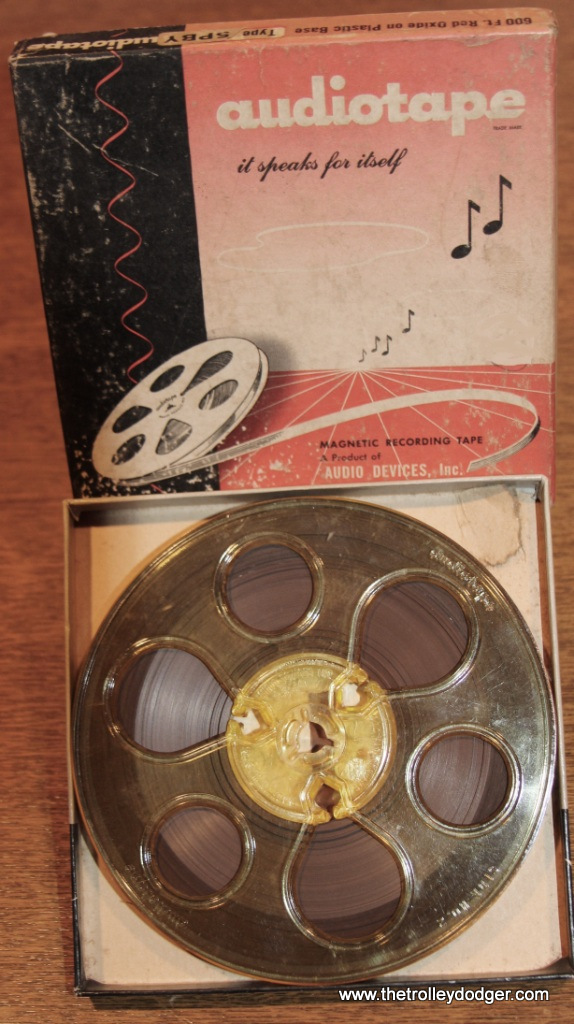
Our friend Kenneth Gear has a Facebook group for the Railroad Record Club. If you enjoy listening to audio recordings of classic railroad trains, whether steam, electric, or diesel, you might consider joining.

FYI, the Hoosier Traction Facebook Group celebrates electric transit in Indiana and the Midwest. It also supports the activities of the annual Hoosier Traction Meet (although not affiliated with the North American Transit Historical Society, which organizes that event).

Our Next Book Project

FYI, we are hard at work researching our next book about the Chicago Aurora and Elgin interurban. Although we already have thousands of images, we start out on these book projects with some of what we need, and then have to find the rest. Some have generously shared their images with us, and some we have to pay real money for. In case you would like to help contribute to this effort, either by sharing images or making a donation, we would like to hear from you. All contributors will be mentioned in the book, which will be dedicated to the memory of the late Robert D. Heinlein. The most difficult images to find are always the earliest ones. You can contact me via messenger, at thetrolleydodger@gmail.com or via my blog. I thank you for your time and consideration.

Robert D. Heinlein took this picture of CTA Met "L" car 2804 at the Laramie Avenue Yards on September 20, 1956. These wooden cars had been in use for 50 years on the various Met lines (Garfield Park, Douglas Park, Humboldt Park, and Logan Square), but were being phased out as more and more of the new 6000-series cars were delivered. The last wooden "L" car ran in regular service in November 1957 on the Kenwood line.

Robert D. Heinlein took this picture of CTA Met “L” car 2804 at the Laramie Avenue Yards on September 20, 1956. These wooden cars had been in use for 50 years on the various Met lines (Garfield Park, Douglas Park, Humboldt Park, and Logan Square), but were being phased out as more and more of the new 6000-series cars were delivered. The last wooden “L” car ran in regular service in November 1957 on the Kenwood line.

This picture was taken by Robert D. Heinlein on September 29, 1956, looking east from Asbury Avenue in Evanston. North Shore Line coach 738 is at the head of a westbound train. In the distance, you can see the former Ridge Avenue "L" station, which was used by Niles Center trains from 1925 to 1948. The station was later rented out to a business, but has long since been removed. CTA Yellow Line trains run here now. You can see why this was a favorite spot for photographers, but it was difficult to get a good shot here, due to the slow film speeds of the time (Kodachrome was ISO 10). Even with the lens wide open, shutter speeds were too slow to stop the motion of a train moving at speed. So the erstwhile shutterbug had no choice but to push the button while the train was still some distance away.

This picture was taken by Robert D. Heinlein on September 29, 1956, looking east from Asbury Avenue in Evanston. North Shore Line coach 738 is at the head of a westbound train. In the distance, you can see the former Ridge Avenue “L” station, which was used by Niles Center trains from 1925 to 1948. The station was later rented out to a business, but has long since been removed. CTA Yellow Line trains run here now. You can see why this was a favorite spot for photographers, but it was difficult to get a good shot here, due to the slow film speeds of the time (Kodachrome was ISO 10). Even with the lens wide open, shutter speeds were too slow to stop the motion of a train moving at speed. So the erstwhile shutterbug had no choice but to push the button while the train was still some distance away.

Chicago Aurora and Elgin wood car 307 at the Wheaton Yards in June 1961, after the abandonment. Don's Rail Photos (via Archive.org): "307 was built by Niles Car & Mfg Co in 1906, It was modernized in July 1939." It was not saved.

Chicago Aurora and Elgin wood car 307 at the Wheaton Yards in June 1961, after the abandonment. Don’s Rail Photos (via Archive.org): “307 was built by Niles Car & Mfg Co in 1906, It was modernized in July 1939.” It was not saved.

Pictures of South Side "L" cars on the center express track seem to be fairly rare, but here is one such train at 18th Street, looking north. The CTA stopped using the express track in 1949, when North-South service was revamped, with the closure of several stations, and A/B "skip stop" service was introduced. Not sure if this train is in service, or is just being stored here. I asked our resident south side expert M. E. about this photo, and here's what he has to say: "This photo is a mystery. You might think these L cars are being stored on the middle track. You might also think they are in service. Which is it? Notice the white flags at both ends of the front porch. I think white flags indicate an extra section of a particular run. At least that was true about steam and diesel engines. But I would have to think the L used the same white flag system. I would think there would be a destination placard hanging somewhere on the front of the first car. I see no such thing in the picture. So which route would this train be on? Maybe, just maybe, it was a Shopper's Special, which ran express between the Loop and Indiana Ave. If it is a Shopper's Special, where is the destination placard? There would be no need for that placard if the train was running northbound. Then maybe the white flags indicate the end, rather than the beginning, of a train. Or, because it has three cars, maybe it was an Englewood-bound train. I say this because a third car (either south- or northbound) would have been the Normal Park L car that was attached/detached from mainline Englewood service at 63rd and Harvard. (But, again, no destination placard!) Whichever route it was on, this train was slapped together with different kinds of cars. The second and third cars are 4000-series from the 1920s, which had no porch. So this is a mixed consist. Mainline north/south trains were the Rapid Transit Company's pride and joy. They would not have sullied those trains with mixed consists. But if this train was simply being stored there, the question is why? Perhaps it was put there to be used later in the day starting in the Loop, then heading south. Maybe, once in use, it would display a destination placard. If indeed the train was to be used later starting in the Loop, this middle track at 18th St. would likely have been the storage track closest to the Loop. Yes, there were three tracks through the Roosevelt L station, but those tracks were used to store North Shore cars between runs. There is a train in the background as well. I believe it is also sitting on the middle track, which would make it a North Shore train in storage. Another question is, when was this photo taken? As you mentioned, after September 1949, with the advent of skip-stop service, no trains used the middle track. Also, looking at the trackage north of 18th St., I don't see a ramp down into the State St. subway. The subway opened in 1943, and the ramp would have been constructed earlier than that, so this photo was probably taken no later than around 1940. In conclusion: This train is a mystery."

Pictures of South Side “L” cars on the center express track seem to be fairly rare, but here is one such train at 18th Street, looking north. The CTA stopped using the express track in 1949, when North-South service was revamped, with the closure of several stations, and A/B “skip stop” service was introduced. Not sure if this train is in service, or is just being stored here. I asked our resident south side expert M. E. about this photo, and here’s what he has to say: “This photo is a mystery.
You might think these L cars are being stored on the middle track. You might also think they are in service. Which is it?
Notice the white flags at both ends of the front porch. I think white flags indicate an extra section of a particular run. At least that was true about steam and diesel engines. But I would have to think the L used the same white flag system.
I would think there would be a destination placard hanging somewhere on the front of the first car. I see no such thing in the picture.
So which route would this train be on? Maybe, just maybe, it was a Shopper’s Special, which ran express between the Loop and Indiana Ave. If it is a Shopper’s Special, where is the destination placard? There would be no need for that placard if the train was running northbound. Then maybe the white flags indicate the end, rather than the beginning, of a train.
Or, because it has three cars, maybe it was an Englewood-bound train. I say this because a third car (either south- or northbound) would have been the Normal Park L car that was attached/detached from mainline Englewood service at 63rd and Harvard. (But, again, no destination placard!)
Whichever route it was on, this train was slapped together with different kinds of cars. The second and third cars are 4000-series from the 1920s, which had no porch. So this is a mixed consist. Mainline north/south trains were the Rapid Transit Company’s pride and joy. They would not have sullied those trains with mixed consists.
But if this train was simply being stored there, the question is why? Perhaps it was put there to be used later in the day starting in the Loop, then heading south. Maybe, once in use, it would display a destination placard.
If indeed the train was to be used later starting in the Loop, this middle track at 18th St. would likely have been the
storage track closest to the Loop. Yes, there were three tracks through the Roosevelt L station, but those tracks were used to store North Shore cars between runs.
There is a train in the background as well. I believe it is also sitting on the middle track, which would make it a North Shore train in storage.
Another question is, when was this photo taken? As you mentioned, after September 1949, with the advent of skip-stop service, no trains used the middle track. Also, looking at the trackage north of 18th St., I don’t see a ramp down into the State St. subway. The subway opened in 1943, and the ramp would have been constructed earlier than that, so this photo was probably taken no later than around 1940.
In conclusion: This train is a mystery.”

Under normal circumstances, Chicago Rapid Transit trains did not go down city streets like streetcars, but during World War II, they were sometimes used for troop movements on the Chicago North Shore and Milwaukee. Here is a four-car train of 4000-series cars on Greenleaf Avenue in Wilmette.

Under normal circumstances, Chicago Rapid Transit trains did not go down city streets like streetcars, but during World War II, they were sometimes used for troop movements on the Chicago North Shore and Milwaukee. Here is a four-car train of 4000-series cars on Greenleaf Avenue in Wilmette.

Long before the CTA Skokie Swift (today's Yellow Line), there was the Niles Center "L" branch. It ran to Dempster Street in Skokie from 1925 to 1948, but as the area was just starting to be developed, there wasn't much ridership.

Long before the CTA Skokie Swift (today’s Yellow Line), there was the Niles Center “L” branch. It ran to Dempster Street in Skokie from 1925 to 1948, but as the area was just starting to be developed, there wasn’t much ridership.

"Saturday afternoon, January 30, 1954: Stub end of Normal Park "L' (on 69th Street, east of Halsted), taken shortly after closing of branch." Until the CTA Dan Ryan line opened in 1969, this was the farthest south the "L" went. Now the Red Line will be extended to 130th Street. (Robert A. Selle Photo)

“Saturday afternoon, January 30, 1954: Stub end of Normal Park “L’ (on 69th Street, east of Halsted), taken shortly after closing of branch.” Until the CTA Dan Ryan line opened in 1969, this was the farthest south the “L” went. Now the Red Line will be extended to 130th Street. (Robert A. Selle Photo)

We are looking west from the North Shore Line station in Libertyville in January 1963, the month of the abandonment.

We are looking west from the North Shore Line station in Libertyville in January 1963, the month of the abandonment.

A 1926 view of the Chicago Aurora and Elgin's Wheaton Yard.

A 1926 view of the Chicago Aurora and Elgin’s Wheaton Yard.

An early postcard view of the Aurora Elgin and Chicago (predecessor of the CA&E) yard in Wheaton. This may be from the World War I era as there only seem to be wood cars present.

An early postcard view of the Aurora Elgin and Chicago (predecessor of the CA&E) yard in Wheaton. This may be from the World War I era as there only seem to be wood cars present.

Chicago Aurora and Elgin 453 in its original paint scheme, which was somewhat different than how it looked later on. In particular, lettering was done in Futura, a modern font, as the ten cars 451-460 were the most modern CA&E ever had. Delivered in late 1945, this was 18 years after their previous new car order. 453 is now at the Illinois Railway Museum, where it is being restored to this classic look. The car behind it is 451, which IRM also has.

Chicago Aurora and Elgin 453 in its original paint scheme, which was somewhat different than how it looked later on. In particular, lettering was done in Futura, a modern font, as the ten cars 451-460 were the most modern CA&E ever had. Delivered in late 1945, this was 18 years after their previous new car order. 453 is now at the Illinois Railway Museum, where it is being restored to this classic look. The car behind it is 451, which IRM also has.

Two views of Chicago Aurora and Elgin car 10, both likely from the same Central Electric Railfans' Association fantrip, circa 1939 or so. Don's Rail Photos (via Archive.org): "10 was built by Niles Car in 1902. It was rebuilt with a baggage compartment in 1910. It was later removed, but then reinstalled in April 1933 for funeral service. It was wrecked September 10, 1948, and scrapped."

Two views of Chicago Aurora and Elgin car 10, both likely from the same Central Electric Railfans’ Association fantrip, circa 1939 or so. Don’s Rail Photos (via Archive.org): “10 was built by Niles Car in 1902. It was rebuilt with a baggage compartment in 1910. It was later removed, but then reinstalled in April 1933 for funeral service. It was wrecked September 10, 1948, and scrapped.”

The late Charles L. Tauscher took this picture of CTA red Pullman 144 on one of those latter day Chicago streetcar fantrips. I am not sure of the location, but the film was processed in June 1958, which would imply this is South Shops at 77th and Vincennes (and the car on the right has a 1958 Illinois license plate). By that time, there was just one streetcar line left-- Wentworth on the south side. 144 is now at the Illinois Railway Museum.

The late Charles L. Tauscher took this picture of CTA red Pullman 144 on one of those latter day Chicago streetcar fantrips. I am not sure of the location, but the film was processed in June 1958, which would imply this is South Shops at 77th and Vincennes (and the car on the right has a 1958 Illinois license plate). By that time, there was just one streetcar line left– Wentworth on the south side. 144 is now at the Illinois Railway Museum.

Don's Rail Photos (via Archive.org): "Aurora Elgin and Fox River Electric 303 was built by St Louis Car in 1924, (order) #1306. In 1936 it was sold to CI/SHRT as 303 and in 1954 it was sold to CP&SW (Columbia Park and Southwestern, aka Trolleyville USA) as 303. It was sold to Northern Ohio Railway Museum in 2009." Here, we see it in Cleveland (Shaker Heights Rapid Transit) on October 23, 1954.

Don’s Rail Photos (via Archive.org): “Aurora Elgin and Fox River Electric 303 was built by St Louis Car in 1924, (order) #1306. In 1936 it was sold to CI/SHRT as 303 and in 1954 it was sold to CP&SW (Columbia Park and Southwestern, aka Trolleyville USA) as 303. It was sold to Northern Ohio Railway Museum in 2009.” Here, we see it in Cleveland (Shaker Heights Rapid Transit) on October 23, 1954.

This is certainly a view of the Stock Yards "L" that I have not seen before. Robert D. Heinlein took this picture on September 28, 1957, not long before the branch was abandoned. Note the unique single-track operation here, unlike anything else on the system. CTA wood car #2906 is at the Armour station, which the photographer noted was located at Racine Avenue (1200 W.) and 43rd Street. The Union Stock Yards was already in an irreversible decline by this point, and would close for good in 1971. The "L" ran in a loop through the yards and back to the main line station at 40th and Indiana Avenue. It always operated as a shuttle, except possibly when there was a major event at the International Amphitheater. Our resident south side expert M. E. writes, "Your last sentence says "It always operated as a shuttle, except possibly when there was a major event at the International Amphitheater." I respectfully disagree about the "major event" part. At 40th and Indiana, the Stock Yards L approached Indiana Ave. from the west. Mainline trains from downtown also approached Indiana Ave. from the west. The Stock Yards and mainline tracks ran parallel. Switches that connected the Stock Yards line and the mainline were also west of the Indiana Ave. station. Any mainline train from downtown, if it were to offer direct service to the International Amphitheater, would have to change direction, negotiate the switches, and head west on the Stock Yards line. I think this would have been a clumsy if not dangerous practice -- perhaps requiring a motorman at each end of the mainline train -- and it would have delayed L traffic on both the mainline and Stock Yards line. Ergo, I can't imagine a direct connection from downtown to the Stock Yards line. But if a mainline train came into Indiana from the south, such a "transfer" would have been possible. A mainline train would first stop at Indiana, then proceed to the switches and move to the Stock Yards line, probably with minimal disruption to both lines. Still, it would not have been worth doing, because of much less L patronage from the south versus from downtown. A Stock Yards shuttle train usually had only one car, but for special events at the International Amphitheater, the Rapid Transit Company ran two-car trains, sometimes using the newer 4000-series cars for more capacity."

This is certainly a view of the Stock Yards “L” that I have not seen before. Robert D. Heinlein took this picture on September 28, 1957, not long before the branch was abandoned. Note the unique single-track operation here, unlike anything else on the system. CTA wood car #2906 is at the Armour station, which the photographer noted was located at Racine Avenue (1200 W.) and 43rd Street. The Union Stock Yards was already in an irreversible decline by this point, and would close for good in 1971. The “L” ran in a loop through the yards and back to the main line station at 40th and Indiana Avenue. It always operated as a shuttle, except possibly when there was a major event at the International Amphitheater. Our resident south side expert M. E. writes, “Your last sentence says “It always operated as a shuttle, except possibly when there was a major event at the International Amphitheater.” I respectfully disagree about the “major event” part. At 40th and Indiana, the Stock Yards L approached Indiana Ave. from the west. Mainline trains from downtown also approached Indiana Ave. from the west. The Stock Yards and mainline tracks ran parallel. Switches that connected the Stock Yards line and the mainline were also west of the Indiana Ave. station. Any mainline train from downtown, if it were to offer direct service to the International Amphitheater, would have to change direction, negotiate the switches, and head west on the Stock Yards line. I think this would have been a clumsy if not dangerous practice — perhaps requiring a motorman at each end of the mainline train — and it would have delayed L traffic on both the mainline and Stock Yards line. Ergo, I can’t imagine a direct connection from downtown to the Stock Yards line. But if a mainline train came into Indiana from the south, such a “transfer” would have been possible. A mainline train would first stop at Indiana, then proceed to the switches and move to the Stock Yards line, probably with minimal disruption to both lines. Still, it would not have been worth doing, because of much less L patronage from the south versus from downtown. A Stock Yards shuttle train usually had only one car, but for special events at the International Amphitheater, the Rapid Transit Company ran two-car trains, sometimes using the newer 4000-series cars for more capacity.”

CTA PCC 4391 is northbound on Wentworth Avenue at 40th Street in June 1958, the last month of service. That's the old Stockyards "L", which had been abandoned the previous year and would soon be removed. Everything to the right here has now been replaced by the Dan Ryan expressway. Car 4391 was the only postwar PCC saved, and is now at the Illinois Railway Museum. (Charles L. Tauscher Photo)

CTA PCC 4391 is northbound on Wentworth Avenue at 40th Street in June 1958, the last month of service. That’s the old Stockyards “L”, which had been abandoned the previous year and would soon be removed. Everything to the right here has now been replaced by the Dan Ryan expressway. Car 4391 was the only postwar PCC saved, and is now at the Illinois Railway Museum. (Charles L. Tauscher Photo)

A group of sailors boards a northbound North Shore Line train at Adams and Wabash on the Loop "L" on September 4, 1961.

A group of sailors boards a northbound North Shore Line train at Adams and Wabash on the Loop “L” on September 4, 1961.

And here's the view looking the other way, as North Shore Line Silverliner 761 enters the Milwaukee Terminal at 6th and Clybourn. This negative was undated, but from the automobiles, I would say this is circa 1957.

And here’s the view looking the other way, as North Shore Line Silverliner 761 enters the Milwaukee Terminal at 6th and Clybourn. This negative was undated, but from the automobiles, I would say this is circa 1957.

"Electroliner at Milwaukee, Wisconsin, entering station from street with policeman directing traffic, June 18, 1962."

“Electroliner at Milwaukee, Wisconsin, entering station from street with policeman directing traffic, June 18, 1962.”

I realize this is not the greatest picture, but it does show the CTA Forest Park Terminal as it looked on June 27, 1958. We are looking north, as the Abell-Howe company was located at 7747 W. Van Buren Street. The yard was being rebuilt at the time, in conjunction with construction of the Congress expressway nearby (now the Eisenhower). This work carried over into the following year. Six days before this picture was taken, the new Congress rapid transit line had opened as far west as Cicero Avenue in the highway median. West of there, there were temporary tracks. The new alignment went into use in 1960. This slide was shot on Anscochrome film, which was cheaper and inferior to Kodachrome. In the close-up, you can see how grainy it is, making it look similar to an Impressionist painting. The difference is that Kodachrome was basically black-and-white film, where the colors were added in the development process, while Anscochrome, Ektachrome, and Fujichrome have the colors built into the film.

I realize this is not the greatest picture, but it does show the CTA Forest Park Terminal as it looked on June 27, 1958. We are looking north, as the Abell-Howe company was located at 7747 W. Van Buren Street. The yard was being rebuilt at the time, in conjunction with construction of the Congress expressway nearby (now the Eisenhower). This work carried over into the following year. Six days before this picture was taken, the new Congress rapid transit line had opened as far west as Cicero Avenue in the highway median. West of there, there were temporary tracks. The new alignment went into use in 1960. This slide was shot on Anscochrome film, which was cheaper and inferior to Kodachrome. In the close-up, you can see how grainy it is, making it look similar to an Impressionist painting. The difference is that Kodachrome was basically black-and-white film, where the colors were added in the development process, while Anscochrome, Ektachrome, and Fujichrome have the colors built into the film.

North Shore Line 761 is at the head of a three-car train of Silverliners in North Chicago. (G. Millen Photo) This was scanned from one of those early Ektachrome slides that has faded to red. This time, we were able to restore the colors pretty well.

North Shore Line 761 is at the head of a three-car train of Silverliners in North Chicago. (G. Millen Photo) This was scanned from one of those early Ektachrome slides that has faded to red. This time, we were able to restore the colors pretty well.

I recently received this real photo postcard and did some restoration work on it. I would say it dates to around 1907, as there are areas on both the front and back where people can write messages. 1907 was the first year when the post office allowed messages on the backs. There is a document visible in the picture from the Metropolitan West Side Elevated in Chicago. Given the presence of railroad lanterns, this is likely a behind the scenes view of one of the early "L" companies, which began service in 1895.

I recently received this real photo postcard and did some restoration work on it. I would say it dates to around 1907, as there are areas on both the front and back where people can write messages. 1907 was the first year when the post office allowed messages on the backs. There is a document visible in the picture from the Metropolitan West Side Elevated in Chicago. Given the presence of railroad lanterns, this is likely a behind the scenes view of one of the early “L” companies, which began service in 1895.

Here is a classic red border Kodachrome view of a Chicago and North Western steam-powered "scoot" circa 1955, just leaving North Western station in downtown Chicago. E class 658 was built in 1922. The 4-6-2's original number was 1658. Bill Shapotkin adds, "The photo was taken in Chicago at Clinton St Tower -- where the West Line (Galena Division) splits from the North (Milwaukee Division) and Northwest (Wisconsin Division) Lines. The train at right is an outbound Northwest Line Train. The train at left MAY be backing into Northwestern Station (hard to tell). View looks E-S/E. Photo taken pre-Oct 1956 (when steam last operated on the C&NW)."

Here is a classic red border Kodachrome view of a Chicago and North Western steam-powered “scoot” circa 1955, just leaving North Western station in downtown Chicago. E class 658 was built in 1922. The 4-6-2’s original number was 1658. Bill Shapotkin adds, “The photo was taken in Chicago at Clinton St Tower — where the West Line (Galena Division) splits from the North (Milwaukee Division) and Northwest (Wisconsin Division) Lines. The train at right is an outbound Northwest Line Train. The train at left MAY be backing into Northwestern Station (hard to tell). View looks E-S/E. Photo taken pre-Oct 1956 (when steam last operated on the C&NW).”

Here is a classic April 1968 view of PTSC Red Arrow Lines Rail Bus #409. The Rail Bus was an attempt by Merritt H. Taylor Jr., head of the privately owned Philadelphia Suburban Transportation Company (aka Red Arrow Lines) to create a vehicle that could operate via railroad tracks and ordinary streets. There were two such buses adapted in the 1967-68 experiment. 409 was standard gauge and 410 was Pennsylvania wide gauge. 409 operated on the Norristown High-Speed Line. Ultimately, the experiment was not successful, and Red Arrow was sold to a public agency (SEPTA) in 1970. (F. I. Goldsmith, Jr. Photo)

Here is a classic April 1968 view of PTSC Red Arrow Lines Rail Bus #409. The Rail Bus was an attempt by Merritt H. Taylor Jr., head of the privately owned Philadelphia Suburban Transportation Company (aka Red Arrow Lines) to create a vehicle that could operate via railroad tracks and ordinary streets. There were two such buses adapted in the 1967-68 experiment. 409 was standard gauge and 410 was Pennsylvania wide gauge. 409 operated on the Norristown High-Speed Line. Ultimately, the experiment was not successful, and Red Arrow was sold to a public agency (SEPTA) in 1970. (F. I. Goldsmith, Jr. Photo)

NYCTA Rapid Transit Lo-V #5466 Location: New York City (Near Stillwell Avenue, Coney Island Terminal) Date: November 14, 1965 Photographer: Unknown Here is a classic view of a New York City Lo-V subway train, operated by the New York City Transit Authority. The landmark Brooklyn Union gas holder is also visible in the picture. The occasion seems to be a farewell fantrip for the Lo-Vs. These cars were built by American Car & Foundry in 1924 for the IRT (Interborough Rapid Transit Company). From the Wikipedia: "Low-V" is short for "Low Voltage", which refers to the cars' form of propulsion control. Earlier Composite and "High-V" (High Voltage) equipment that ran on the IRT had utilized a 600 volt DC circuit that ran directly through the motorman's master controller to control the car's propulsion. The 600 volts was also trainlined through the whole train by the use of high voltage jumper cables, which had to be run between cars. However, the Low-V equipment used battery voltage (32 volts) in the motor control circuit to move high voltage (600 volts) contacts underneath the car, which would control the car's propulsion. Likewise, it would no longer be necessary to use 600 volt jumpers between cars. This tremendously improved the safety of the equipment for both train crews and shop personnel alike. Today's operator, the Metropolitan Transit Authority, has retained a set of Lo-Vs, which are used for special occasions, such as opening day at Yankee Stadium. Car 5466 is now at the Branford Electric Railway Association in Connecticut.

NYCTA Rapid Transit Lo-V #5466
Location: New York City (Near Stillwell Avenue, Coney Island Terminal)
Date: November 14, 1965
Photographer: Unknown
Here is a classic view of a New York City Lo-V subway train, operated by the New York City Transit Authority. The landmark Brooklyn Union gas holder is also visible in the picture. The occasion seems to be a farewell fantrip for the Lo-Vs. These cars were built by American Car & Foundry in 1924 for the IRT (Interborough Rapid Transit Company).
From the Wikipedia:
“Low-V” is short for “Low Voltage”, which refers to the cars’ form of propulsion control. Earlier Composite and “High-V” (High Voltage) equipment that ran on the IRT had utilized a 600 volt DC circuit that ran directly through the motorman’s master controller to control the car’s propulsion. The 600 volts was also trainlined through the whole train by the use of high voltage jumper cables, which had to be run between cars. However, the Low-V equipment used battery voltage (32 volts) in the motor control circuit to move high voltage (600 volts) contacts underneath the car, which would control the car’s propulsion. Likewise, it would no longer be necessary to use 600 volt jumpers between cars. This tremendously improved the safety of the equipment for both train crews and shop personnel alike.
Today’s operator, the Metropolitan Transit Authority, has retained a set of Lo-Vs, which are used for special occasions, such as opening day at Yankee Stadium. Car 5466 is now at the Branford Electric Railway Association in Connecticut.

New Orleans streetcars have a long history, going back to 1835, when horsecars were first put into service. The St. Charles line has operated continuously since then, except for a period after Hurricane Katrina. The streetcars pictured here (972 and 836) were built in the 1920s by the Perley A. Thomas company. This picture was taken on June 7, 1960 by noted railfan photographer Clark Frazier.

New Orleans streetcars have a long history, going back to 1835, when horsecars were first put into service. The St. Charles line has operated continuously since then, except for a period after Hurricane Katrina. The streetcars pictured here (972 and 836) were built in the 1920s by the Perley A. Thomas company. This picture was taken on June 7, 1960 by noted railfan photographer Clark Frazier.

Subject: Boston Massachusetts Bay Transit Authority PCC Streetcar #3173 Location: Boston, MA Date: January 22, 1978 Photographer: Clark Frazier Boston PCC 3173 was built in 1945 by Pullman-Standard. The MBTA still operates a few PCCs on the Ashmont-Mattapan line. A blizzard paralyzed Boston in January 1978, and this picture shows a trolley stranded in the snow. It looks like the operator is having lunch.

Subject: Boston Massachusetts Bay Transit Authority PCC Streetcar #3173
Location: Boston, MA
Date: January 22, 1978
Photographer: Clark Frazier
Boston PCC 3173 was built in 1945 by Pullman-Standard. The MBTA still operates a few PCCs on the Ashmont-Mattapan line.
A blizzard paralyzed Boston in January 1978, and this picture shows a trolley stranded in the snow. It looks like the operator is having lunch.

Subject: SF Muni Cable Car #521 Location: San Francisco, CA Date: 1956 Photographer: Clark Frazier This is an excellent vintage picture of San Francisco's famous cable cars.

Subject: SF Muni Cable Car #521
Location: San Francisco, CA
Date: 1956
Photographer: Clark Frazier
This is an excellent vintage picture of San Francisco’s famous cable cars.

Subject: SF Muni Magic Carpet #1003 Location: San Francisco, CA Date: June 13, 1960 Photographer: Clark Frazier San Francisco's "Magic Carpets" 1001-1005 were double-ended streetcars, similar to PCCs but with somewhat different components, built in 1939 for the Municipal Railway. They were used in service until 1959. #1003, seen here, was the only survivor and it went to the Western Railway Museum, where it is today. Here it is shown prepared for the move.

Subject: SF Muni Magic Carpet #1003
Location: San Francisco, CA
Date: June 13, 1960
Photographer: Clark Frazier
San Francisco’s “Magic Carpets” 1001-1005 were double-ended streetcars, similar to PCCs but with somewhat different components, built in 1939 for the Municipal Railway. They were used in service until 1959. #1003, seen here, was the only survivor and it went to the Western Railway Museum, where it is today. Here it is shown prepared for the move.

Subject: CTA State of the Art Car on the Skokie Swift Location: Chicago, Illinois Date: February 1, 1975 Photographer: George J. Adler From the Wikipedia: The State-of-the-Art Car (SOAC) was a heavy rail mass transit demonstrator vehicle produced for the United States Department of Transportation's Urban Mass Transportation Administration in the 1970s. It was intended to demonstrate the latest technologies to operating agencies and the riding public, and serve to promote existing and proposed transit lines. A single married pair was produced by the St. Louis Car Company in 1972. It operated in intermittent revenue service on six rapid transit systems in five United States cities between May 1974 and January 1977. Since 1989, the two cars have been on display at the Seashore Trolley Museum in Kennebunkport, Maine. This is a classic view of the SOAC on the Chicago Transit Authority's Skokie Swift (aka Yellow Line). This was the only line it could be used on due to clearance issues, as it was wider than regular "L" cars.Subject: CTA State of the Art Car on the Skokie Swift
Location: Chicago, Illinois
Date: February 1, 1975
Photographer: George J. Adler
From the Wikipedia:

The State-of-the-Art Car (SOAC) was a heavy rail mass transit demonstrator vehicle produced for the United States Department of Transportation’s Urban Mass Transportation Administration in the 1970s. It was intended to demonstrate the latest technologies to operating agencies and the riding public, and serve to promote existing and proposed transit lines. A single married pair was produced by the St. Louis Car Company in 1972. It operated in intermittent revenue service on six rapid transit systems in five United States cities between May 1974 and January 1977. Since 1989, the two cars have been on display at the Seashore Trolley Museum in Kennebunkport, Maine.

This is a classic view of the SOAC on the Chicago Transit Authority’s Skokie Swift (aka Yellow Line). This was the only line it could be used on due to clearance issues, as it was wider than regular “L” cars.

Subject: The Milwaukee Road Location: Pacific Northwest Photographer: Unknown Date: August 1971 (processing date) In the early 1900s, the Milwaukee Road electrified over 600 miles of freight trackage in the northwestern United States. Use of electric locos ended in 1974. This was a very picturesque, if not a profitable, operation. Large parts of it were eventually abandoned. M. E. adds, "Your caption mentions freight trackage. Passenger trains used this line too, particularly the flagship Olympian Hiawatha. The electric locomotives in the picture were called Little Joes (after Joseph Stalin) because they were originally intended to go to Russia, but the U.S. government negated the shipment. The Chicago, South Shore and South Bend also had some Little Joes. By the way, the Milwaukee Road used electric locos to go through tunnels safely. There was a second section of electrified trackage in Washington State as well."

Subject: The Milwaukee Road
Location: Pacific Northwest
Photographer: Unknown
Date: August 1971 (processing date)
In the early 1900s, the Milwaukee Road electrified over 600 miles of freight trackage in the northwestern United States. Use of electric locos ended in 1974. This was a very picturesque, if not a profitable, operation. Large parts of it were eventually abandoned. M. E. adds, “Your caption mentions freight trackage. Passenger trains used this line too, particularly the flagship Olympian Hiawatha. The electric locomotives in the picture were called Little Joes (after Joseph Stalin) because they were originally intended to go to Russia, but the U.S. government negated the shipment. The Chicago, South Shore and South Bend also had some Little Joes. By the way, the Milwaukee Road used electric locos to go through tunnels safely. There was a second section of electrified trackage in Washington State as well.”

Subject: The Milwaukee Road E45 B-C-A Location: Pacific Northwest Photographer: Unknown Date: October 2, 1971

Subject: The Milwaukee Road E45 B-C-A
Location: Pacific Northwest
Photographer: Unknown
Date: October 2, 1971

Subject: The Milwaukee Road E74 Location: Three Forks, Montana (West end of yard) Photographer: Bruce Black Date: September 4, 1973

Subject: The Milwaukee Road E74
Location: Three Forks, Montana (West end of yard)
Photographer: Bruce Black
Date: September 4, 1973

Subject: Milwaukee and Suburban Transport Trolley Bus 526 Location: Milwaukee, Wisconsin (Route 18 @ 92nd and Lapham) Date: 1960s Photographer: Unknown Milwaukee operated trolley buses from 1936 until 1965. These were also known locally as trackless trolleys. This picture was taken in the 1960s. #526 was built by Marmon-Herrington in 1946-47 for the Indianapolis system. It was sold to Milwaukee in 1957, which helps date the picture.

Subject: Milwaukee and Suburban Transport Trolley Bus 526
Location: Milwaukee, Wisconsin (Route 18 @ 92nd and Lapham)
Date: 1960s
Photographer: Unknown
Milwaukee operated trolley buses from 1936 until 1965. These were also known locally as trackless trolleys. This picture was taken in the 1960s. #526 was built by Marmon-Herrington in 1946-47 for the Indianapolis system. It was sold to Milwaukee in 1957, which helps date the picture.

Subject: Milwaukee and Suburban Transport Trolley Bus #351 Location: Milwaukee, Wisconsin Date: 1960s Photographer: Unknown #351 was built by Marmon-Herrington in 1947.

Subject: Milwaukee and Suburban Transport Trolley Bus #351
Location: Milwaukee, Wisconsin
Date: 1960s
Photographer: Unknown
#351 was built by Marmon-Herrington in 1947.

Subject: Milwaukee and Suburban Transport Trolley Bus 526 Location: Milwaukee, Wisconsin Date: 1960s Photographer: Unknown #526 was built by Marmon-Herrington in 1946-47 for the Indianapolis system. It was sold to Milwaukee in 1957, which helps date the picture.

Subject: Milwaukee and Suburban Transport Trolley Bus 526
Location: Milwaukee, Wisconsin
Date: 1960s
Photographer: Unknown
#526 was built by Marmon-Herrington in 1946-47 for the Indianapolis system. It was sold to Milwaukee in 1957, which helps date the picture.

Subject: Milwaukee and Suburban Transport Trolley Bus #521 Location: Milwaukee, Wisconsin Date: 1960s Photographer: Unknown #521 was built by Marmon-Herrington in 1946-47 for the Indianapolis system. It was sold to Milwaukee in 1957, which helps date the picture.

Subject: Milwaukee and Suburban Transport Trolley Bus #521
Location: Milwaukee, Wisconsin
Date: 1960s
Photographer: Unknown
#521 was built by Marmon-Herrington in 1946-47 for the Indianapolis system. It was sold to Milwaukee in 1957, which helps date the picture.

Subject: Chicago CTA Flxible Bus #3122 Location: Chicago, Illinois (Route 29 on State Street at Van Buren Street) Date: August 16, 1978 Photographer: Unknown CTA Flxible Bus 3122 was built in 1965. Here it is shown during construction of the ill-fated State Street Mall, which opened in 1979. The mall has since been removed.

Subject: Chicago CTA Flxible Bus #3122
Location: Chicago, Illinois (Route 29 on State Street at Van Buren Street)
Date: August 16, 1978
Photographer: Unknown
CTA Flxible Bus 3122 was built in 1965. Here it is shown during construction of the ill-fated State Street Mall, which opened in 1979. The mall has since been removed.

Subject: PTC Peter Witt #8490 Location: Philadelphia (Route 55 - Willow Grove) Date: September 15, 1957 Photographer: Unknown Here is a classic view of a Philadelphia Transportation Company Peter Witt car. Philadelphia had 535 Peter Witt streetcars in all, built by Brill between 1923 and 1926. They were all retired from regular service by the end of 1957.

Subject: PTC Peter Witt #8490
Location: Philadelphia (Route 55 – Willow Grove)
Date: September 15, 1957
Photographer: Unknown
Here is a classic view of a Philadelphia Transportation Company Peter Witt car. Philadelphia had 535 Peter Witt streetcars in all, built by Brill between 1923 and 1926. They were all retired from regular service by the end of 1957.

In November 1966 (processing date), CTA trolley bus 9551 is at the west end of the line for Route 73 - Armitage (at Latrobe). Glenn Anderson and Richard Kunz are among the group of people boarding the bus. Since the last Armitage trolley bus ran on October 15, 1966, that might be the occasion and would help date the slide.

In November 1966 (processing date), CTA trolley bus 9551 is at the west end of the line for Route 73 – Armitage (at Latrobe). Glenn Anderson and Richard Kunz are among the group of people boarding the bus. Since the last Armitage trolley bus ran on October 15, 1966, that might be the occasion and would help date the slide.

Subject: Shaker Heights Rapid Transit ex-Toronto PCC 4663 Location: Cleveland, Ohio Date: January 21, 1979 Photographer: Unknown Greater Cleveland RTA 4663 was built by Pullman-Standard in 1946, for the Cleveland Transit System as #4233. It was sold to Toronto in 1952. In 1978 the RTA, short on cars prior to delivery of its new LRVs, repurchased this car and several others and operated them on the Shaker Heights line for a short time. The body of 4663 has been on a farm since 1982.

Subject: Shaker Heights Rapid Transit ex-Toronto PCC 4663
Location: Cleveland, Ohio
Date: January 21, 1979
Photographer: Unknown
Greater Cleveland RTA 4663 was built by Pullman-Standard in 1946, for the Cleveland Transit System as #4233. It was sold to Toronto in 1952. In 1978 the RTA, short on cars prior to delivery of its new LRVs, repurchased this car and several others and operated them on the Shaker Heights line for a short time. The body of 4663 has been on a farm since 1982.

Subject: SF Muni XT40 Trolley Bus #5761 Location: San Francisco, California (Route 1 - California, at Sacramento and Fillmore) Date: June 7, 2019 Photographer: Peter Ehrlich SF Muni XT40 Trolley Bus 5761 was built by New Flyer circa 2017-2019.

Subject: SF Muni XT40 Trolley Bus #5761
Location: San Francisco, California (Route 1 – California, at Sacramento and Fillmore)
Date: June 7, 2019
Photographer: Peter Ehrlich
SF Muni XT40 Trolley Bus 5761 was built by New Flyer circa 2017-2019.

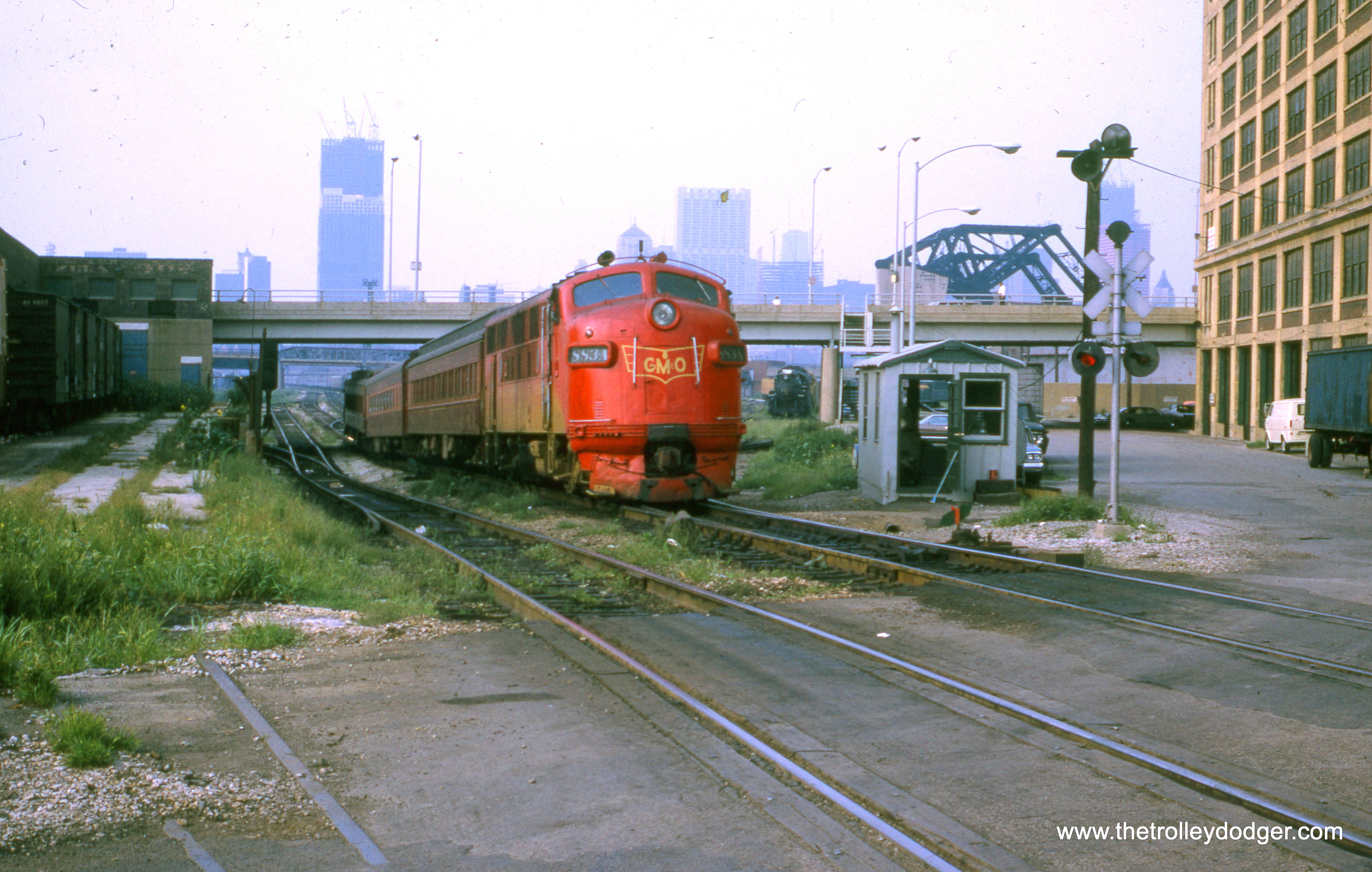
Subject: GM&O Diesel Loco #100 Location: St. Louis, Missouri Date: September 1970 Photographer: Kutta Here is a classic view of a Gulf Mobile and Ohio diesel train in the months prior to the Amtrak takeover. From Railroad Pictures Archives: "Built in May 1946 (c/n 3218) on EMD Order E660 as Alton 100, it became GM&O 100 in 1947 and was sold for scrap in March 1975."

Subject: GM&O Diesel Loco #100
Location: St. Louis, Missouri
Date: September 1970
Photographer: Kutta
Here is a classic view of a Gulf Mobile and Ohio diesel train in the months prior to the Amtrak takeover.
From Railroad Pictures Archives:
“Built in May 1946 (c/n 3218) on EMD Order E660 as Alton 100, it became GM&O 100 in 1947 and was sold for scrap in March 1975.”

Subject: Metra #52 Diesel Loco Location: Chicago, Illinois Date: June 1977 Photographer: Joseph R. Quinn Here is a classic view of a Metra commuter train in Chicago, having just left Union Station. You can see a Chicago "L" train in the background.

Subject: Metra #52 Diesel Loco
Location: Chicago, Illinois
Date: June 1977
Photographer: Joseph R. Quinn
Here is a classic view of a Metra commuter train in Chicago, having just left Union Station. You can see a Chicago “L” train in the background.

Subject: Boston MBTA Snowplow Streetcar #5138 Location: Boston, MA Date: January 22, 1978 Photographer: Clark Frazier Boston MBTA Snowplow streetcar 5138 started out as a Type 3 car, built in 1908 by the St. Louis Car Company. It was retired in 2009 and is now at the Seashore Trolley Museum in Maine. A blizzard paralyzed Boston in January 1978, and this picture shows a snowplow trolley. It appears only one track was in service.

Subject: Boston MBTA Snowplow Streetcar #5138
Location: Boston, MA
Date: January 22, 1978
Photographer: Clark Frazier
Boston MBTA Snowplow streetcar 5138 started out as a Type 3 car, built in 1908 by the St. Louis Car Company. It was retired in 2009 and is now at the Seashore Trolley Museum in Maine. A blizzard paralyzed Boston in January 1978, and this picture shows a snowplow trolley. It appears only one track was in service.

Here is a “before and after” view of the Twin Peaks Tunnel entrance in San Francisco, with the two views taken 25 years apart:

Subject: SF Muni Iron Monster Streetcar #184 (and PCC 1024) Location: San Francisco, CA (at the entrance to the Twin Peaks Tunnel) Date: June 22, 1954 Photographer: J. W. Vigrass Muni bought 125 of these cars from the long-vanished Jewett Car Co. in Ohio and put them to work hauling passengers to the 1915 Panama Pacific International Exposition. The cars were big - 47 feet long - and heavy - 24 tons each - and famously slow. They were painted battleship gray at first and then green and cream. San Franciscans called them "Iron Monsters." They were all retired by 1958. A few were saved by museums and by the Municipal Railway.

Subject: SF Muni Iron Monster Streetcar #184 (and PCC 1024)
Location: San Francisco, CA (at the entrance to the Twin Peaks Tunnel)
Date: June 22, 1954
Photographer: J. W. Vigrass
Muni bought 125 of these cars from the long-vanished Jewett Car Co. in Ohio and put them to work hauling passengers to the 1915 Panama Pacific International Exposition. The cars were big – 47 feet long – and heavy – 24 tons each – and famously slow. They were painted battleship gray at first and then green and cream. San Franciscans called them “Iron Monsters.” They were all retired by 1958. A few were saved by museums and by the Municipal Railway.

Subject: SF Muni PCC #1168 Location: San Francisco, CA (West Portal, Twin Peaks Tunnel) Date: December 7, 1979 Photographer: Clark Frazier Muni PCC #1168 was built by the St. Louis Car Company in 1945 for St. Louis Public Service as car 1779. It came to San Francisco in 1961.

Subject: SF Muni PCC #1168
Location: San Francisco, CA (West Portal, Twin Peaks Tunnel)
Date: December 7, 1979
Photographer: Clark Frazier
Muni PCC #1168 was built by the St. Louis Car Company in 1945 for St. Louis Public Service as car 1779. It came to San Francisco in 1961.

Subject: Southern Pacific SP #4449 Location: Port Costa, California Date: June1984 (processing date) Photographer: Greg Stadter Here is an excellent original Kodachrome slide of a classic steam engine in action. From the Wikipedia: Southern Pacific 4449, also known as the Daylight, is the only surviving example of Southern Pacific Railroad's "GS-4" class of 4-8-4 "Northern" type steam locomotives and one of only two GS-class locomotives surviving, the other being "GS-6" 4460 at the National Museum of Transportation in St. Louis, Missouri. GS is an abbreviation of "General Service" or "Golden State," a nickname for California (where the locomotive was operated in regular service). The locomotive was built by Lima Locomotive Works in Lima, Ohio for the Southern Pacific in May 1941; it received the red-and-orange "Daylight" paint scheme for the passenger trains of the same name which it hauled for most of its service career. No. 4449 was retired from revenue service in 1956 and put into storage. In 1958, the Southern Pacific donated the locomotive to the City of Portland, Oregon. The City then put the locomotive on static display near Oaks Amusement Park, where it remained until 1974. After this, No. 4449 was then restored to operation for use in the American Freedom Train, which toured the 48 contiguous United States as part of the nation's 1976 Bicentennial celebration. The locomotive has operated in excursion service since 1984. The locomotive's operations are now based at the Oregon Rail Heritage Center in Portland, Oregon where it is maintained by a non-profit group of volunteers named "The Friends of SP 4449". In 1983, a poll of Trains magazine readers selected 4449 as being the most popular locomotive in the United States... In 1984, 4449 pulled an all-Daylight-painted train from Portland via Los Angeles to New Orleans, Louisiana and back, to publicize the World's Fair, with UP 8444 there too. The 7,477-mile (12,033 km) round trip was the longest steam train excursion in the history of the United States. However, this trip was not flawless. On June 11, No. 4449 was approaching Del Rio, Texas, still on its way to New Orleans, when the retention plate that holds the draw-bar pin in place somehow disconnected and fell in between the ties, allowing the tender and the entire consist to uncouple, while the locomotive accelerated all by itself. Fortunately, Doyle noticed this after checking the rear-view mirror and quickly applied the brakes. The locomotive backed-up, the fallen parts were recovered, the connections were quickly repaired, and No. 4449 and its consist proceeded to run only slightly behind schedule.Subject: Southern Pacific SP #4449
Location: Port Costa, California
Date: June1984 (processing date)
Photographer: Greg Stadter
Here is an excellent original Kodachrome slide of a classic steam engine in action.
From the Wikipedia:

Southern Pacific 4449, also known as the Daylight, is the only surviving example of Southern Pacific Railroad’s “GS-4” class of 4-8-4 “Northern” type steam locomotives and one of only two GS-class locomotives surviving, the other being “GS-6” 4460 at the National Museum of Transportation in St. Louis, Missouri. GS is an abbreviation of “General Service” or “Golden State,” a nickname for California (where the locomotive was operated in regular service).
The locomotive was built by Lima Locomotive Works in Lima, Ohio for the Southern Pacific in May 1941; it received the red-and-orange “Daylight” paint scheme for the passenger trains of the same name which it hauled for most of its service career. No. 4449 was retired from revenue service in 1956 and put into storage. In 1958, the Southern Pacific donated the locomotive to the City of Portland, Oregon. The City then put the locomotive on static display near Oaks Amusement Park, where it remained until 1974.
After this, No. 4449 was then restored to operation for use in the American Freedom Train, which toured the 48 contiguous United States as part of the nation’s 1976 Bicentennial celebration. The locomotive has operated in excursion service since 1984.
The locomotive’s operations are now based at the Oregon Rail Heritage Center in Portland, Oregon where it is maintained by a non-profit group of volunteers named “The Friends of SP 4449”. In 1983, a poll of Trains magazine readers selected 4449 as being the most popular locomotive in the United States…
In 1984, 4449 pulled an all-Daylight-painted train from Portland via Los Angeles to New Orleans, Louisiana and back, to publicize the World’s Fair, with UP 8444 there too. The 7,477-mile (12,033 km) round trip was the longest steam train excursion in the history of the United States. However, this trip was not flawless. On June 11, No. 4449 was approaching Del Rio, Texas, still on its way to New Orleans, when the retention plate that holds the draw-bar pin in place somehow disconnected and fell in between the ties, allowing the tender and the entire consist to uncouple, while the locomotive accelerated all by itself. Fortunately, Doyle noticed this after checking the rear-view mirror and quickly applied the brakes. The locomotive backed-up, the fallen parts were recovered, the connections were quickly repaired, and No. 4449 and its consist proceeded to run only slightly behind schedule.


Subject: Southern Pacific SP #4449 Location: Portland Union Station Date: April 26, 1981 Photographer: J. David Ingles

Subject: Southern Pacific SP #4449
Location: Portland Union Station
Date: April 26, 1981
Photographer: J. David Ingles

Subject: CTA Chicago "L" #4271-4272-1 Location: Chicago, Illinois (Wellington and Sheffield) Date: January 9, 1994 Photographer: Gregory J. Sommers CTA "L" car 1 was built in 1892 for the South Side Rapid Transit Company. Since this photo was taken, it was moved to the Chicago History Museum, where it is on display. CTA cars 4271 and 4272 were built in 1923 by the Cincinnati Car Company, and were the "state of the art" rapid transit cars of their time. They are part of the CTA Historical Fleet. M. E. adds, "Maybe THIS is the configuration of cars in the "mystery" photo at https://i0.wp.com/thetrolleydodger.com/wp-content/uploads/2023/10/aaf472a.jpg . And I appreciate Andris Kristopans' thought that this train was awaiting a deadhead trip to Old Congress to start a southbound mainline trip in the afternoon rush. But that would mean, on the way south, the porch car led the train. That baffles me if the train was an Englewood train, because the detachable Normal Park-destined car (an older porch car in the 1930s and 1940s) was always at the rear. Either I am wrong, or the Rapid Transit Company occasionally put a porch car in the front -- on an Englewood or Jackson Park train -- and I never knew that. Here's another thought: Maybe this picture was taken while the Rapid Transit Company was still getting new 4000-series cars, and at that time there were not enough 4000-series cars to form complete trains, so the porch car was still necessary. But the 4000-series cars arrived in the early 1920s. Could this photo be that old?"

Subject: CTA Chicago “L” #4271-4272-1
Location: Chicago, Illinois (Wellington and Sheffield)
Date: January 9, 1994
Photographer: Gregory J. Sommers
CTA “L” car 1 was built in 1892 for the South Side Rapid Transit Company. Since this photo was taken, it was moved to the Chicago History Museum, where it is on display. CTA cars 4271 and 4272 were built in 1923 by the Cincinnati Car Company, and were the “state of the art” rapid transit cars of their time. They are part of the CTA Historical Fleet. M. E. adds, “Maybe THIS is the configuration of cars in the “mystery” photo at https://i0.wp.com/thetrolleydodger.com/wp-content/uploads/2023/10/aaf472a.jpg . And I appreciate Andris Kristopans’ thought that this train was awaiting a deadhead trip to Old Congress to start a southbound mainline trip in the afternoon rush. But that would mean, on the way south, the porch car led the train. That baffles me if the train was an Englewood train, because the detachable Normal Park-destined car (an older porch car in the 1930s and 1940s) was always at the rear. Either I am wrong, or the Rapid Transit Company occasionally put a porch car in the front — on an Englewood or Jackson Park train — and I never knew that. Here’s another thought: Maybe this picture was taken while the Rapid Transit Company was still getting new 4000-series cars, and at that time there were not enough 4000-series cars to form complete trains, so the porch car was still necessary. But the 4000-series cars arrived in the early 1920s. Could this photo be that old?”

Subject: Pittsburgh PAT PCC Streetcar #1729 Location: Pittsburgh, PA (Route 42/38 - Mt. Lebanon-Beechview) Date: June 1982 (processing date) Photographer: Joseph P. Saitta Pittsburgh PCC 1729 was built by the St. Louis Car company in 1949. It was later rebuilt and renumbered to 4007. The Port Authority of Allegheny County took over Pittsburgh Railways in 1964. The last PCC ran in Pittsburgh in 1999. Over a period of years, Pittsburgh's extensive streetcar system morphed into the light rail of today.

Subject: Pittsburgh PAT PCC Streetcar #1729
Location: Pittsburgh, PA (Route 42/38 – Mt. Lebanon-Beechview)
Date: June 1982 (processing date)
Photographer: Joseph P. Saitta
Pittsburgh PCC 1729 was built by the St. Louis Car company in 1949. It was later rebuilt and renumbered to 4007.
The Port Authority of Allegheny County took over Pittsburgh Railways in 1964. The last PCC ran in Pittsburgh in 1999. Over a period of years, Pittsburgh’s extensive streetcar system morphed into the light rail of today.

Subject: Philadelphia DRPA Bridge RT Car #1017 Location: Philadelphia (Fern Rock Yard) Date: April 1968 (processing date) Photographer: Gerald H. Landau Streamlined rapid transit cars such as this one were used in Philadelphia from 1936 until 1968, when this service was replaced by the PATCO Speedline. Car 1017 does not appear to still exist, although a small number of sister cars have been saved. From the Wikipedia: The Delaware River Bridge, now the Benjamin Franklin Bridge, was designed to accommodate both rail and road traffic. When it opened on July 1, 1926, it had two outboard structures beside the main roadway for rail and space for two streetcar tracks (never installed) on the main road deck. Construction of the rail line did not begin until 1932, and the Bridge Line opened on June 7, 1936. Relatively short, it only had four stations: 8th Street and Franklin Square in Philadelphia, and City Hall and Broadway in Camden. Connection was available to the Pennsylvania-Reading Seashore Lines at Broadway. In Philadelphia, the line joined the 1932-opened Broad-Ridge Spur just west of Franklin Square and shared its 8th Street/Market Street station. An underground tunnel continuing south following 8th Street then west following Locust Street to 18th Street, had been started in 1917 as part of plans for a Center City subway loop. The shell of this 8th–Locust Street subway was completed, but not outfitted for passenger service, in 1933. Beginning in June 1949, Bridge Line and Ridge Spur services were through-routed, providing one-seat service between Girard station and Camden. Construction on the 8th–Locust Street subway resumed in 1950. Bridge Line service was extended to 15–16th & Locust station, with intermediate stations at 12–13th & Locust station and 9–10th & Locust station, on February 14, 1953. This section is owned by the City of Philadelphia and leased by PATCO. Extension to Lindenwold Despite the extension, Bridge Line ridership was limited by high fares and not extending east of Camden. In January 1954, due to low ridership on the extension, off-peak service and Saturday again began operating between Girard and Camden, with a shuttle train operating between 8th and 16th stations. Sunday service was suspended west of 8th Street at that time due to minimal usage. By 1962, only 1,900 daily passengers boarded the line west of 8th Street. To facilitate the construction of extensions in Southern New Jersey, the states expanded the powers of the Delaware River Joint Commission (which owned the Benjamin Franklin Bridge and the New Jersey portion of the Bridge Line), rechristening it as the Delaware River Port Authority (DRPA) in 1951. The agency commissioned Parsons, Brinckerhoff, Hall & MacDonald to study possible rapid transit services for South Jersey; Parsons, Brinckerhoff's final report recommended building a new tunnel under the Delaware and three lines in New Jersey. Route A would run to Moorestown, Route B to Kirkwood (now Lindenwold), and Route C to Woodbury Heights. A later study by Louis T. Klauder & Associates recommended using the Bridge Line instead to reach Philadelphia and suggested building Route B first, as it had the highest potential ridership. Over the weekend of August 23 to 27, 1968, the Ridge Spur was connected to a new upper-level terminal platform at 8th Street station to allow conversion of the Bridge Line into the "High-Speed Line". Bridge Line service was split into 16th Street–8th Street and 8th Street–Camden segments during the conversion, with a cross-platform transfer at 8th Street. Bridge Line service was suspended on December 29, 1968, for final conversion of the line. Service from Lindenwold station to Camden along former Pennsylvania-Reading Seashore Lines trackage began on January 4, 1969; full service into Center City Philadelphia over the bridge began on February 15, 1969. The Lindenwold extension cost $92 million.

Subject: Philadelphia DRPA Bridge RT Car #1017
Location: Philadelphia (Fern Rock Yard)
Date: April 1968 (processing date)
Photographer: Gerald H. Landau
Streamlined rapid transit cars such as this one were used in Philadelphia from 1936 until 1968, when this service was replaced by the PATCO Speedline. Car 1017 does not appear to still exist, although a small number of sister cars have been saved.
From the Wikipedia:

The Delaware River Bridge, now the Benjamin Franklin Bridge, was designed to accommodate both rail and road traffic. When it opened on July 1, 1926, it had two outboard structures beside the main roadway for rail and space for two streetcar tracks (never installed) on the main road deck. Construction of the rail line did not begin until 1932, and the Bridge Line opened on June 7, 1936. Relatively short, it only had four stations: 8th Street and Franklin Square in Philadelphia, and City Hall and Broadway in Camden. Connection was available to the Pennsylvania-Reading Seashore Lines at Broadway.
In Philadelphia, the line joined the 1932-opened Broad-Ridge Spur just west of Franklin Square and shared its 8th Street/Market Street station. An underground tunnel continuing south following 8th Street then west following Locust Street to 18th Street, had been started in 1917 as part of plans for a Center City subway loop. The shell of this 8th–Locust Street subway was completed, but not outfitted for passenger service, in 1933. Beginning in June 1949, Bridge Line and Ridge Spur services were through-routed, providing one-seat service between Girard station and Camden. Construction on the 8th–Locust Street subway resumed in 1950. Bridge Line service was extended to 15–16th & Locust station, with intermediate stations at 12–13th & Locust station and 9–10th & Locust station, on February 14, 1953. This section is owned by the City of Philadelphia and leased by PATCO.
Extension to Lindenwold
Despite the extension, Bridge Line ridership was limited by high fares and not extending east of Camden. In January 1954, due to low ridership on the extension, off-peak service and Saturday again began operating between Girard and Camden, with a shuttle train operating between 8th and 16th stations. Sunday service was suspended west of 8th Street at that time due to minimal usage. By 1962, only 1,900 daily passengers boarded the line west of 8th Street.
To facilitate the construction of extensions in Southern New Jersey, the states expanded the powers of the Delaware River Joint Commission (which owned the Benjamin Franklin Bridge and the New Jersey portion of the Bridge Line), rechristening it as the Delaware River Port Authority (DRPA) in 1951. The agency commissioned Parsons, Brinckerhoff, Hall & MacDonald to study possible rapid transit services for South Jersey; Parsons, Brinckerhoff’s final report recommended building a new tunnel under the Delaware and three lines in New Jersey. Route A would run to Moorestown, Route B to Kirkwood (now Lindenwold), and Route C to Woodbury Heights. A later study by Louis T. Klauder & Associates recommended using the Bridge Line instead to reach Philadelphia and suggested building Route B first, as it had the highest potential ridership.
Over the weekend of August 23 to 27, 1968, the Ridge Spur was connected to a new upper-level terminal platform at 8th Street station to allow conversion of the Bridge Line into the “High-Speed Line”. Bridge Line service was split into 16th Street–8th Street and 8th Street–Camden segments during the conversion, with a cross-platform transfer at 8th Street. Bridge Line service was suspended on December 29, 1968, for final conversion of the line. Service from Lindenwold station to Camden along former Pennsylvania-Reading Seashore Lines trackage began on January 4, 1969; full service into Center City Philadelphia over the bridge began on February 15, 1969. The Lindenwold extension cost $92 million.

Keep those cards and letters coming in, folks.

Our Latest Book, Now Available:

The North Shore Line

FYI, my new Arcadia Publishing book The North Shore Line is now available for immediate shipment. My publisher decided to expand it to 160 pages, instead of the usual 128. That’s a 25% increase, without any change to the $23.99 price. I am quite pleased with how this turned out.

From the back cover:

As late as 1963, it was possible to board high-speed electric trains on Chicago’s famous Loop “L” that ran 90 miles north to Milwaukee. This was the Chicago North Shore & Milwaukee Railroad, commonly known as the North Shore Line. It rose from humble origins in the 1890s as a local streetcar line in Waukegan to eventually become America’s fastest interurban under the visionary management of Midwest utilities tycoon Samuel Insull. The North Shore Line, under Insull, became a worthy competitor to the established steam railroads. Hobbled by the Great Depression, the road fought back in 1941 with two streamlined, air-conditioned, articulated trains called Electroliners, which included dining service. It regained its popularity during World War II, when gasoline and tires were rationed, but eventually, it fell victim to highways and the automobile. The North Shore Line had intercity rail, commuter rail, electric freight, city streetcars, and even buses. It has been gone for nearly 60 years, but it will always remain the Road of Service.

Each copy purchased here will be signed by the author, and you will also receive a bonus North Shore Line map.  Books will ship by USPS Media Mail.

Chapters:
01. Beginnings
02. The Milwaukee Division
03. The Shore Line Route
04. The Skokie Valley Route
05. The Mundelein Branch
06. On the “L”
07. City Streetcars
08. Trolley Freight
09. The Long Goodbye
10. The Legacy

Title The North Shore Line
Images of America
Author David Sadowski
Edition illustrated
Publisher Arcadia Publishing (SC), 2023
ISBN 1467108960, 978-1467108966
Length 160 pages

The price of $23.99 includes shipping within the United States.

For Shipping to US Addresses:

New Compact Disc Titles, Now Available:

HFIH
Hi-Fi Iron Horse
Price: $15.99

Hi-Fi Iron Horse is a unique collection of early steam recordings, made between 1949 and 1954. Portable tape recorders were not yet available when the earliest of these was made, but there was still another source for making high-quality audio– the optical sound track of motion picture film.

Featuring in-service steam of the Baltimore & Ohio, Bessemer & Lake Erie, Burlington, Canadian National, Delaware & Hudson, East Broad Top, Erie, Grand Trunk Western, Huntingdon & Broad Top Mountain, Western Maryland, and Rutland Railway.

Total time – 50:49

TSOS
The Sound of Steam
Reading 2124

Price: $19.99

Three very rare, out of print North Jersey Recordings LPs, now digitally remastered on two CDs at a special price.

The Sound of Steam offers a comprehensive overview of the twilight days of steam railroading in North America, with sounds recorded between 1957 and 1964. Railroads featured include the Denver & Rio Grande Western, Union Pacific, Canadian Pacific, Duluth, Missabe & Iron Range Railway, Gainesville Midland Railroad, Pennsylvania Railroad, Reading Railroad, Canadian National, Twin Seams Mining Company, Nickel Plate, Colorado & Southern, Norfolk & Western, Buffalo Creek & Gauley, Monadnock, Steamtown & Northern, Rockton & Rion Railway, and the National Railways of Mexico.

Reading 2124 features recordings made in 1959 and 1960 on a series of “Iron Horse Rambles,” excursion trips through eastern Pennsylvania.  The Reading Company had retained this class T-1 4-8-4 for emergency use after steam was retired on the railroad.  Seven years after the last Reading steam loco had hauled a passenger train, a series of 51 special excursion trips were held, ending in 1964.  These have since been revived, and the Rambles continue.

Total time – 69:54 (Disc 1) and 61:20 (Disc 2)

RWW-V103
Rods, Wheels, and Whistles
Voice of the 103

Price: $19.99

Two very rare, out of print North Jersey Recordings LPs, now digitally remastered on two CDs at a special price.

Rods, Wheels, and Whistles features the sounds of the Pennsylvania Railroad and the Norfolk and Western Railway, recorded in the twilight years of steam. This LP was originally issued in 1958, but our version is taken from the revised and expanded edition, which includes additional recordings from 1959.

Voice of the 103 documents the former Sumter and Choctaw Railroad #103, a 2-6-2 locomotive built in 1925 by the Baldwin Locomotive Works, after it was refurbished in 1962 to operate on the Middletown and New Jersey. This was an excursion service of the Empire State Railway Museum, which has since moved to a new location and no longer operates trains.  The 103 is now on static display.

Our collection is rounded out with three bonus tracks from the Strasbourg Railroad, when old number 31 ran excursion trains on the oldest short line railroad in the United States (chartered in June 1832), joining the Pennsylvania Dutch towns of Strasbourg and Paradise in the early 1960s.

Total time – 46:15 (RWW) and 49:26 (V103)

Help Support The Trolley Dodger

This is our 309th post, and we are gradually creating a body of work and an online resource for the benefit of all railfans, everywhere. To date, we have received over 1,024,000 page views, for which we are very grateful.

You can help us continue our original transit research by checking out the fine products in our Online Store.
As we have said before, “If you buy here, we will be here.”

We thank you for your support.

DONATIONS

In order to continue giving you the kinds of historic railroad images that you have come to expect from The Trolley Dodger, we need your help and support. It costs money to maintain this website, and to do the sort of historic research that is our specialty.

Your financial contributions help make this web site better, and are greatly appreciated.


A Fall Harvest

This picture of the old Met bridge over the Chicago River is undated, but probably dates to circa 1952-55 based on the type of red border Kodachrome mount it is in. But it is certainly after the the other picture in this post, taken at much the same location, since the building at rear, or part of it, was in the process of being torn down. This was not related to expressway construction, since the "L" at this point was north of there. Once the Congress rapid transit line opened in 1958, this section of "L" was taken out of service and by the early 1960s it had been torn down.

This picture of the old Met bridge over the Chicago River is undated, but probably dates to circa 1952-55 based on the type of red border Kodachrome mount it is in. But it is certainly after the the other picture in this post, taken at much the same location, since the building at rear, or part of it, was in the process of being torn down. This was not related to expressway construction, since the “L” at this point was north of there. Once the Congress rapid transit line opened in 1958, this section of “L” was taken out of service and by the early 1960s it had been torn down.

Cooler weather has moved into the Chicago area, and along with it, we have a Fall Harvest of classic rail images for you today, including many by three of the greatest railfan photographers of the 1950s– Clark Frazier, Truman Hefner, and William C. Hoffman.

Enjoy!
-David Sadowski

This video features streetcars and elevated trains in Chicago, Milwaukee, and New York City, mostly from the early 1950s– and originally shot on high quality 16mm film:

PS- You might also like our Trolley Dodger Facebook auxiliary, a private group that now has 482 members.

Recent Finds

CSL 4001 at South Shops, with 7001 in front of it, probably during the 1950s, when these two experimental cars were being used for storage.

CSL 4001 at South Shops, with 7001 in front of it, probably during the 1950s, when these two experimental cars were being used for storage.

CTA PCC 4371, built by Pullman, is on State Street heading south from Randolph, with the old State-Lake Theater in the background. The film "Lovely To Look At" was released on July 4, 1952, which is probably around when this picture was taken.

CTA PCC 4371, built by Pullman, is on State Street heading south from Randolph, with the old State-Lake Theater in the background. The film “Lovely To Look At” was released on July 4, 1952, which is probably around when this picture was taken.

North Shore Line 759 heads up a two-car train heading southbound at Harrison Street, leaving street running in favor of private right-of-way in Milwaukee on June 16, 1962. (Richard H. Young Photo)

North Shore Line 759 heads up a two-car train heading southbound at Harrison Street, leaving street running in favor of private right-of-way in Milwaukee on June 16, 1962. (Richard H. Young Photo)

A two-car CTA Kenwood shuttle train at Indiana Avenue, probably some time around 1949. I assume there must have been stairs leading up to the tower.

A two-car CTA Kenwood shuttle train at Indiana Avenue, probably some time around 1949. I assume there must have been stairs leading up to the tower.

A close-up of the previous image.

A close-up of the previous image.

CTA 6130-6129 are "at speed" near Jarvis "L" station on the north side, operating under wire on the southbound express track as a mid-day Evanston "Shopper's Special" on December 11, 1955. The picture is slightly blurred because Kodachrome back then was ASA 10 (until the introduction of Kodachrome II in 1961). The unique signage on the train indicates which stations this express train stopped at.

CTA 6130-6129 are “at speed” near Jarvis “L” station on the north side, operating under wire on the southbound express track as a mid-day Evanston “Shopper’s Special” on December 11, 1955. The picture is slightly blurred because Kodachrome back then was ASA 10 (until the introduction of Kodachrome II in 1961). The unique signage on the train indicates which stations this express train stopped at.

Chicago, Aurora & Elgin wood car 28 is at the head of a train in this picture I assume was taken in Wheaton, between 1952-55 (based on the slide mount).

Chicago, Aurora & Elgin wood car 28 is at the head of a train in this picture I assume was taken in Wheaton, between 1952-55 (based on the slide mount).

Red Arrow Strafford car 164 is on the high-speed line to Norristown in the early 1950s, perhaps near 69th Street Terminal. Kenneth Achtert adds: "Your picture of Strafford car #164, if the early 1950s date is accurate, was most likely not on a Norristown line trip, but is arriving at 69th St. Terminal likely coming from Strafford. Strafford service was not abandoned until 1956 and was what gave the 160-series cars their common name. The bullet cars could have been called Norristown cars, but they already had an even better name."

Red Arrow Strafford car 164 is on the high-speed line to Norristown in the early 1950s, perhaps near 69th Street Terminal. Kenneth Achtert adds: “Your picture of Strafford car #164, if the early 1950s date is accurate, was most likely not on a Norristown line trip, but is arriving at 69th St. Terminal likely coming from Strafford. Strafford service was not abandoned until 1956 and was what gave the 160-series cars their common name. The bullet cars could have been called Norristown cars, but they already had an even better name.”

Red Arrow double-ended car 20, which looks like a PCC but technically isn't, is running outbound on the Ardmore branch in 1953. Not sure what all the track work is about, although the West Chester branch itself was abandoned in favor of buses in 1954, so that West Chester Pike could be widened. I assume this is the intersection of West Chester Pike and Darby Road in Havertown, PA. The Ardmore trolley was replaced by buses at the end of 1966. Both trolley lines here are now SEPTA bus routes. Mark A. Jones adds: "Regarding the Red Arrow trackage on West Chester Pike west of the Ardmore turn-off, it continued in use after the West Chester line became a bus as the Llanerch car barn (which housed the Red Arrow trolleys at the time) was located Darby Rd. and West Chester Pike west of the Ardmore cut-off. That’s my memory of that."

Red Arrow double-ended car 20, which looks like a PCC but technically isn’t, is running outbound on the Ardmore branch in 1953. Not sure what all the track work is about, although the West Chester branch itself was abandoned in favor of buses in 1954, so that West Chester Pike could be widened. I assume this is the intersection of West Chester Pike and Darby Road in Havertown, PA. The Ardmore trolley was replaced by buses at the end of 1966. Both trolley lines here are now SEPTA bus routes. Mark A. Jones adds: “Regarding the Red Arrow trackage on West Chester Pike west of the Ardmore turn-off, it continued in use after the West Chester line became a bus as the Llanerch car barn (which housed the Red Arrow trolleys at the time) was located Darby Rd. and West Chester Pike west of the Ardmore cut-off. That’s my memory of that.”

Red Arrow double-ended St. Louis car 15, built circa 1949, is coming off the Ardmore line towards the 69th Street Terminal in 1953. The West Chester branch might still have been in operation then, as there is a car in the distance on West Chester Pike.

Red Arrow double-ended St. Louis car 15, built circa 1949, is coming off the Ardmore line towards the 69th Street Terminal in 1953. The West Chester branch might still have been in operation then, as there is a car in the distance on West Chester Pike.

Red Arrow Brilliner 9 is signed for the Media route in the early 1950s.

Red Arrow Brilliner 9 is signed for the Media route in the early 1950s.

Red Arrow Brilliner 6 is signed for the Media route in the early 1950s.

Red Arrow Brilliner 6 is signed for the Media route in the early 1950s.

On August 3, 1950, an eastbound Garfield Park "L" train approaches Western Avenue station. (William C. Hoffman Photo)

On August 3, 1950, an eastbound Garfield Park “L” train approaches Western Avenue station.
(William C. Hoffman Photo)

Deck roofed "L" cars, including 2908, are in Laramie Yard on July 2, 1950. (William C. Hoffman Photo)

Deck roofed “L” cars, including 2908, are in Laramie Yard on July 2, 1950. (William C. Hoffman Photo)

An eastbound train of wooden "L" cars (including 3210), with trolley poles up, heads east on the ground-level portion of the Lake Street "L" in Oak Park on October 12, 1953. I believe the location is a few blocks east of Marion Street, where the street (South Boulevard) narrows.

An eastbound train of wooden “L” cars (including 3210), with trolley poles up, heads east on the ground-level portion of the Lake Street “L” in Oak Park on October 12, 1953. I believe the location is a few blocks east of Marion Street, where the street (South Boulevard) narrows.

The subway entrance on State Street between Madison and Monroe, as it looked on December 5, 1954. PCCs were still operating on State at that time. (William C. Hoffman Photo)

The subway entrance on State Street between Madison and Monroe, as it looked on December 5, 1954. PCCs were still operating on State at that time. (William C. Hoffman Photo)

The view looking south from the 35th Street "L" station on August 23, 1963. A new center island station had opened here in 1961, taking up space formerly occupied by the center express track, which had been unused after 1949. A fire destroyed the new station in October 1962, and temporary facilities were used until the station was rebuilt in 1965. (William C. Hoffman Photo)

The view looking south from the 35th Street “L” station on August 23, 1963. A new center island station had opened here in 1961, taking up space formerly occupied by the center express track, which had been unused after 1949. A fire destroyed the new station in October 1962, and temporary facilities were used until the station was rebuilt in 1965. (William C. Hoffman Photo)

An 8-car train of CTA 4000s, still in the old tan color, approaches 35th Street on November 6, 1950. In this somewhat underxposed slide, you can still make out the long walkway at right, which connected to a stairway at the former 33rd Street "L" station, only used as an auxiliary entrance and exit for 35th after 1949. This walkway was closed on September 25, 1961 and removed thereafter. (William C. Hoffman Photo)

An 8-car train of CTA 4000s, still in the old tan color, approaches 35th Street on November 6, 1950. In this somewhat underxposed slide, you can still make out the long walkway at right, which connected to a stairway at the former 33rd Street “L” station, only used as an auxiliary entrance and exit for 35th after 1949. This walkway was closed on September 25, 1961 and removed thereafter. (William C. Hoffman Photo)

The view looking west from the transfer bridge at the CTA station at 40th and Indiana Avenue on July 7, 1953. A southbound train of 6000s heads into the station. (William C. Hoffman Photo)

The view looking west from the transfer bridge at the CTA station at 40th and Indiana Avenue on July 7, 1953. A southbound train of 6000s heads into the station. (William C. Hoffman Photo)

This slide, taken on Sunday, March 6, 1955, gives a good view of the direction sign on the transfer bridge at 40th and Indiana station. Our resident South Side expert M. E. adds, "Two-car trains were rare on the north/south main line. The destination sign explains why just two cars: It is an "all-stop" sign reading "Howard Street". Most days of the week, main line service was either "A" or "B". The only time the CTA ran just two cars on the main line as all-stop trains was on Sunday mornings." (William C. Hoffman Photo)

This slide, taken on Sunday, March 6, 1955, gives a good view of the direction sign on the transfer bridge at 40th and Indiana station. Our resident South Side expert M. E. adds, “Two-car trains were rare on the north/south main line. The destination sign explains why just two cars: It is an “all-stop” sign reading “Howard Street”. Most days of the week, main line service was either “A” or “B”. The only time the CTA ran just two cars on the main line as all-stop trains was on Sunday mornings.” (William C. Hoffman Photo)

The westbound view from the transfer bridge at 40th and Indiana on July 2, 1963 shows CTA 6047 at the rear of a northbound train, fitted with an experimental ventilation system. This was not shot on Kodachrome, which explains the somewhat funky color shift on this slide. (William C. Hoffman Photo)

The westbound view from the transfer bridge at 40th and Indiana on July 2, 1963 shows CTA 6047 at the rear of a northbound train, fitted with an experimental ventilation system. This was not shot on Kodachrome, which explains the somewhat funky color shift on this slide. (William C. Hoffman Photo)

The view west from the overhead transfer bridge at 40th and Indiana on July 7, 1953, looking west. We see a northbound train of 4000s, an approaching southbound train of 6000s, a Stock Yards shuttle train, and some additional Stock Yards cars being stored on the former express track, unused since 1949. (William C. Hoffman Photo)

The view west from the overhead transfer bridge at 40th and Indiana on July 7, 1953, looking west. We see a northbound train of 4000s, an approaching southbound train of 6000s, a Stock Yards shuttle train, and some additional Stock Yards cars being stored on the former express track, unused since 1949.
(William C. Hoffman Photo)

Looking west from the passenger overpass at Indiana Avenue on July 3, 1950, we see an 8-car train of steel cars, and a Stock Yards shuttle train. In the distance, that may be some additional Stock Yards cars being stored on the otherwise unused center track. (William C. Hoffman Photo) Our resident South Side expert M. E. writes: "Your caption needs correction. What you claim to be a Stock Yards shuttle is not on the Stock Yards tracks, which ran directly west from the switch building at the end of the platform. Instead, your "Stock Yards" train is on the main line heading east/south. Apparently the CTA still ran old cars on the main line at that time, although I don't remember that. Another, more remote, possibility is that this short train is dead-heading east (without passengers) toward the Kenwood line. But in the next photo, you see no track connection from the main line to the Kenwood line. The only way dead-headed cars destined for Kenwood could end up on the Kenwood line would have been to turn south on the main line to 43rd St. and use switches to go from the southbound main line to the northbound main line to the former northbound main line track, which joined the Kenwood shuttle track back at Indiana Ave. -- and which (in reverse) provided the only way to move Kenwood cars off the Kenwood tracks." We were only repeating the information that Mr. Hoffman wrote on the original slide mount, which, of course, could be wrong.

Looking west from the passenger overpass at Indiana Avenue on July 3, 1950, we see an 8-car train of steel cars, and a Stock Yards shuttle train. In the distance, that may be some additional Stock Yards cars being stored on the otherwise unused center track. (William C. Hoffman Photo) Our resident South Side expert M. E. writes: “Your caption needs correction. What you claim to be a Stock Yards shuttle is not on the Stock Yards tracks, which ran directly west from the switch building at the end of the platform. Instead, your “Stock Yards” train is on the main line heading east/south. Apparently the CTA still ran old cars on the main line at that time, although I don’t remember that. Another, more remote, possibility is that this short train is dead-heading east (without passengers) toward the Kenwood line. But in the next photo, you see no track connection from the main line to the Kenwood line. The only way dead-headed cars destined for Kenwood could end up on the Kenwood line would have been to turn south on the main line to 43rd St. and use switches to go from the southbound main line to the northbound main line to the former northbound main line track, which joined the Kenwood shuttle track back at Indiana Ave. — and which (in reverse) provided the only way to move Kenwood cars off the Kenwood tracks.” We were only repeating the information that Mr. Hoffman wrote on the original slide mount, which, of course, could be wrong.

Two "new" and two "old" 6000s enter the CTA station at 40th and Indiana on June 6, 1954. The Kenwood shuttle continued to operate for another three years after this. We are facing east. (William C. Hoffman Photo)

Two “new” and two “old” 6000s enter the CTA station at 40th and Indiana on June 6, 1954. The Kenwood shuttle continued to operate for another three years after this. We are facing east. (William C. Hoffman Photo)

SF Muni 170 on the N Line, entering the Sunset Tunnel in 1957. (Clark Frazier Photo)

SF Muni 170 on the N Line, entering the Sunset Tunnel in 1957. (Clark Frazier Photo)

SF Muni 130 on Ocean Avenue by Elkton Shops on September 16, 1957. According to the Market Street Railway web site: "Car No. 130 was among the the last ‘Iron Monsters’ to leave passenger service, in 1958. Muni shop foreman Charlie Smallwood saved it from the scrap heap by hiding it in the back of Geneva carhouse while its mates met their fates. He then talked his bosses into making it a ‘wrecker’. Stripped bare and painted yellow, it spent the next 25 years towing its replacements–PCC streetcars–back to the barn when they broke down. It was fully restored by Muni craft workers in 1983 for the Historic Trolley Festival, including original seats, which Charlie had kept all those years in his basement…just in case!" (Clark Frazier Photo)

SF Muni 130 on Ocean Avenue by Elkton Shops on September 16, 1957. According to the Market Street Railway web site: “Car No. 130 was among the the last ‘Iron Monsters’ to leave passenger service, in 1958. Muni shop foreman Charlie Smallwood saved it from the scrap heap by hiding it in the back of Geneva carhouse while its mates met their fates. He then talked his bosses into making it a ‘wrecker’. Stripped bare and painted yellow, it spent the next 25 years towing its replacements–PCC streetcars–back to the barn when they broke down. It was fully restored by Muni craft workers in 1983 for the Historic Trolley Festival, including original seats, which Charlie had kept all those years in his basement…just in case!” (Clark Frazier Photo)

Key System A Train 130 near Yerba Buena Island on the Bay Bridge on April 18, 1958. (Clark Frazier Photo)

Key System A Train 130 near Yerba Buena Island on the Bay Bridge on April 18, 1958. (Clark Frazier Photo)

Pittsburgh 1499 on Route 34/21 on Ladoga Street near Ingram in 1959. (Clark Frazier Photo)

Pittsburgh 1499 on Route 34/21 on Ladoga Street near Ingram in 1959. (Clark Frazier Photo)

Pittsburgh 1486 and 1485 rest at Ingram carhouse in 1959. (Clark Frazier Photo)

Pittsburgh 1486 and 1485 rest at Ingram carhouse in 1959. (Clark Frazier Photo)

SF Muni "Iron Monster" 162 at La Playa (48th), approaching the N Line terminus on December 16, 1956. (Clark Frazier Photo)

SF Muni “Iron Monster” 162 at La Playa (48th), approaching the N Line terminus on December 16, 1956. (Clark Frazier Photo)

The SF Muni Geary car house in 1956. (Clark Frazier Photo)

The SF Muni Geary car house in 1956. (Clark Frazier Photo)

Dresden 264 007 on Line 4 at Dresdner Schloss on June 3, 1978. At the time, Dresden was located in East Germany. (Clark Frazier Photo)

Dresden 264 007 on Line 4 at Dresdner Schloss on June 3, 1978. At the time, Dresden was located in East Germany. (Clark Frazier Photo)

Key System 167 is an A Train east of Yerba Buena Island on the Bay Bridge on April 18, 1958. (Clark Frazier Photo)

Key System 167 is an A Train east of Yerba Buena Island on the Bay Bridge on April 18, 1958. (Clark Frazier Photo)

SF Muni "Iron Monster" 178 on a fantrip on the J Line by SF Muni

SF Muni “Iron Monster” 178 on a fantrip on the J Line by SF Muni “Iron Monster” 178 on a fantrip on the J Line by Dolores Park in 1958. (Clark Frazier Photo)Park in 1958. (Clark Frazier Photo)

SF Muni "Iron Monster" 114 stops for passengers on the B Line in 1956. (Clark Frazier Photo)

SF Muni “Iron Monster” 114 stops for passengers on the B Line in 1956. (Clark Frazier Photo)

DC Transit 1553 at the Route 20 Plow Pit on February 7, 1959. This was a spot where overhead wire ended (by law) and streetcars changed over to collecting electricity through an underground conduit. (Clark Frazier Photo)

DC Transit 1553 at the Route 20 Plow Pit on February 7, 1959. This was a spot where overhead wire ended (by law) and streetcars changed over to collecting electricity through an underground conduit. (Clark Frazier Photo)

Boston MTA 3276 entering Reservoir Yard on June 5, 1959. (Clark Frazier Photo)

Boston MTA 3276 entering Reservoir Yard on June 5, 1959. (Clark Frazier Photo)

Boston MTA 3216 on Mass Avenue in North Cambridge on August 29, 1958. (Clark Frazier Photo)

Boston MTA 3216 on Mass Avenue in North Cambridge on August 29, 1958. (Clark Frazier Photo)

Boston MTA 3337 (ex-Dallas) near the Cedar Grove station on the Ashmont-Mattapan line on May 31, 1961. (Clark Frazier Photo)

Boston MTA 3337 (ex-Dallas) near the Cedar Grove station on the Ashmont-Mattapan line on May 31, 1961. (Clark Frazier Photo)

DC Transit 1543 on Route 20 in Georgetown on June 7, 1959. The Georgetown Theatre was located at 1351 Wisconsin Avenue NW, Washington, DC and opened in 1913. It closed in 1986 and was converted to retail. (Clark Frazier Photo)

DC Transit 1543 on Route 20 in Georgetown on June 7, 1959. The Georgetown Theatre was located at 1351 Wisconsin Avenue NW, Washington, DC and opened in 1913. It closed in 1986 and was converted to retail. (Clark Frazier Photo)

DC Transit 1159 at the Calvert Bridge on Route 92 on February 6, 1959. (Clark Frazier Photo)

DC Transit 1159 at the Calvert Bridge on Route 92 on February 6, 1959. (Clark Frazier Photo)

SF Muni "Iron Monster" 213 on the N Line, west of the Sunset Tunnel, in 1957. (Clark Frazier Photo)

SF Muni “Iron Monster” 213 on the N Line, west of the Sunset Tunnel, in 1957. (Clark Frazier Photo)

Key System (Oakland) E train 184 to Berkeley leaving 55th Street in 1958. This slide has a processing date of March 1958 stamped on it, one of the earliest I have seen. (Clark Frazier Photo)

Key System (Oakland) E train 184 to Berkeley leaving 55th Street in 1958. This slide has a processing date of March 1958 stamped on it, one of the earliest I have seen. (Clark Frazier Photo)

SF Muni "Iron Monster" 130 on the M Line by Parkmerced on September 16, 1957. (Clark Frazier Photo)

SF Muni “Iron Monster” 130 on the M Line by Parkmerced on September 16, 1957. (Clark Frazier Photo)

A Key System E train to San Francisco near Tower 3 in 1958. (Clark Frazier Photo)

A Key System E train to San Francisco near Tower 3 in 1958. (Clark Frazier Photo)

DC Transit 1136 on Route 54 at the Navy Yard car barn on September 1, 1958. (Clark Frazier Photo)

DC Transit 1136 on Route 54 at the Navy Yard car barn on September 1, 1958. (Clark Frazier Photo)

In May 1952, a CTA train of flat-door 6000s heads down an incline west of Pulaski Road on the Douglas Park "L". (Truman Hefner Photo)

In May 1952, a CTA train of flat-door 6000s heads down an incline west of Pulaski Road on the Douglas Park “L”. (Truman Hefner Photo)

A train of CTA 6000s on the Metropolitan main line, looking east from Marshfield Avenue. This probably dates to late 1950, since no work has yet been done building the temporary right-of-way in Van Buren Street to the left, later used by Garfield Park trains. The tag on the train indicates whether it stopped at some part-time stations on Douglas. (Truman Hefner Photo)

A train of CTA 6000s on the Metropolitan main line, looking east from Marshfield Avenue. This probably dates to late 1950, since no work has yet been done building the temporary right-of-way in Van Buren Street to the left, later used by Garfield Park trains. The tag on the train indicates whether it stopped at some part-time stations on Douglas. (Truman Hefner Photo)

A CTA two-car train of 6000s, running on the Douglas Park line, heads east onto the Metropolitan main line at Marshfield Junction. Since a train is visible on the Garfield Park portion, the date cannot be later than September 1953, and is likely a couple years before that. (Truman Hefner Photo)

A CTA two-car train of 6000s, running on the Douglas Park line, heads east onto the Metropolitan main line at Marshfield Junction. Since a train is visible on the Garfield Park portion, the date cannot be later than September 1953, and is likely a couple years before that. (Truman Hefner Photo)

CTA 6056-6057 crossing East Avenue in Berwyn, where a sign indicates that the crossing guard is off duty. This portion of "L" was abandoned in February 1952. (Truman Hefner Photo)

CTA 6056-6057 crossing East Avenue in Berwyn, where a sign indicates that the crossing guard is off duty. This portion of “L” was abandoned in February 1952. (Truman Hefner Photo)

6053-6054 near Oak Park Avenue on the Douglas Park "L". The date given here (December 1953) must be wrong, as the line had already been cut back to 54th Avenue by then. It may be December 1950, as Douglas was the first line to use the new 6000s. (Truman Hefner Photo)

6053-6054 near Oak Park Avenue on the Douglas Park “L”. The date given here (December 1953) must be wrong, as the line had already been cut back to 54th Avenue by then. It may be December 1950, as Douglas was the first line to use the new 6000s. (Truman Hefner Photo)

CTA 2725 at the Oak Park Avenue terminal of the Douglas Park "L" in December 1950. The line was cut back to 54th Avenue, nearly two miles east of here, in 1952. This area is now used as a parking lot in Berwyn, often referred to as the "L" strip. (Truman Hefner Photo)

CTA 2725 at the Oak Park Avenue terminal of the Douglas Park “L” in December 1950.
The line was cut back to 54th Avenue, nearly two miles east of here, in 1952. This area is now used as a parking lot in Berwyn, often referred to as the “L” strip. (Truman Hefner Photo)

CTA 6087 and train are running on the ground-level portion of the Douglas Park "L" at Kenton Avenue in May 1952. (Truman Hefner Photo)

CTA 6087 and train are running on the ground-level portion of the Douglas Park “L” at Kenton Avenue in May 1952. (Truman Hefner Photo)

CTA deck-roofed car 2891 is just south of Roosevelt Road on the Westchester "L" in April 1951. (Truman Hefner Photo)

CTA deck-roofed car 2891 is just south of Roosevelt Road on the Westchester “L” in April 1951. (Truman Hefner Photo)

A train of CTA 6000s (probably 6055-6056) crosses Austin Boulevard in Cicero on the Douglas Park "L" in February 1952, shortly before service was abandoned west of 54th Avenue. (Truman Hefner Photo)

A train of CTA 6000s (probably 6055-6056) crosses Austin Boulevard in Cicero on the Douglas Park “L” in February 1952, shortly before service was abandoned west of 54th Avenue. (Truman Hefner Photo)

A CTA train of 6000s is turning onto the Metropolitan main line from the Douglas Park "L" on April 3, 1954, while a CTA test train (with car 2276) is on the new, as yet unused connecting track between the Douglas "L" and the old Logan Square branch. Once Douglas trains began using this new "L" connection, they began running downtown via the Lake Street "L", and portions of the old "L" east of here were torn down for expressway construction. By 1958, there was a new ramp in place, approximately in the same place the 6000s are here, leading down to the Congress rapid transit line in the expressway median. (Truman Hefner Photo)

A CTA train of 6000s is turning onto the Metropolitan main line from the Douglas Park “L” on April 3, 1954, while a CTA test train (with car 2276) is on the new, as yet unused connecting track between the Douglas “L” and the old Logan Square branch. Once Douglas trains began using this new “L” connection, they began running downtown via the Lake Street “L”, and portions of the old “L” east of here were torn down for expressway construction. By 1958, there was a new ramp in place, approximately in the same place the 6000s are here, leading down to the Congress rapid transit line in the expressway median. (Truman Hefner Photo)

A CTA train of 6000s is turning from the Metropolitan main line onto the Douglas Park "L" on April 3, 1954, while a CTA test train (with car 2276) is on the new, as yet unused connecting track between the Douglas "L" and the old Logan Square branch. Once Douglas trains began using this new "L" connection, they began running downtown via the Lake Street "L", and portions of the old "L" east of here were torn down for expressway construction. By 1958, there was a new ramp in place, approximately in the same place the 6000s are here, leading down to the Congress rapid transit line in the expressway median. (Truman Hefner Photo)

A CTA train of 6000s is turning from the Metropolitan main line onto the Douglas Park “L” on April 3, 1954, while a CTA test train (with car 2276) is on the new, as yet unused connecting track between the Douglas “L” and the old Logan Square branch. Once Douglas trains began using this new “L” connection, they began running downtown via the Lake Street “L”, and portions of the old “L” east of here were torn down for expressway construction. By 1958, there was a new ramp in place, approximately in the same place the 6000s are here, leading down to the Congress rapid transit line in the expressway median. (Truman Hefner Photo)

In December 1950, CTA open platform, railroad-roofed car 2327 is westbound at Austin Boulevard on the Douglas Park "L". Here, the barrier is down. (Truman Hefner Photo)

In December 1950, CTA open platform, railroad-roofed car 2327 is westbound at Austin Boulevard on the Douglas Park “L”.
Here, the barrier is down. (Truman Hefner Photo)

CTA wooden open platform, railroad-roofed car 2330 is northbound on the Northwestern "L" near Berwyn Avenue, running on the Evanston line in July 1951. (Truman Hefner Photo)

CTA wooden open platform, railroad-roofed car 2330 is northbound on the Northwestern “L” near Berwyn Avenue, running on the Evanston line in July 1951. (Truman Hefner Photo)

CTA 2256 is part of a four-car Met train, turning from Market Street onto the double bridge over the Chicago River in March 1951. (Truman Hefner Photo)

CTA 2256 is part of a four-car Met train, turning from Market Street onto the double bridge over the Chicago River in March 1951.
(Truman Hefner Photo)

CTA railroad roofed, open platform car 2707 under the Belt Railway at Kenton Avenue on the Douglas Park "L". (Truman Hefner Photo)

CTA railroad roofed, open platform car 2707 under the Belt Railway at Kenton Avenue on the Douglas Park “L”. (Truman Hefner Photo)

CTA arched roof, open-platform car 2281 at 54th Avenue on the Douglas Park "L" in March 1951. (Truman Hefner Photo)

CTA arched roof, open-platform car 2281 at 54th Avenue on the Douglas Park “L” in March 1951. (Truman Hefner Photo)

Open platform, railroad roof car 2715 at 54th Avenue in Cicero, on the Douglas Park "L", in January 1951. (Truman Hefner Photo)

Open platform, railroad roof car 2715 at 54th Avenue in Cicero, on the Douglas Park “L”, in January 1951. (Truman Hefner Photo)

The CTA ground-level station at Austin Boulevard in Cicero, on the Douglas Park "L" in December 1950. Note the unusual raised barrier at the crossing. (Truman Hefner Photo)

The CTA ground-level station at Austin Boulevard in Cicero, on the Douglas Park “L” in December 1950. Note the unusual raised barrier at the crossing. (Truman Hefner Photo)

CTA open-platform, railroad roof car 2338 at Kenton on the Douglas Park line, where there was a connection to the Belt Railway of Chicago, in December 1950. (Truman Hefner Photo)

CTA open-platform, railroad roof car 2338 at Kenton on the Douglas Park line, where there was a connection to the Belt Railway of Chicago, in December 1950. (Truman Hefner Photo)

CTA open-platform, railroad roof car 2318 at Kenton on the Douglas Park line, where there was a connection to the Belt Railway of Chicago, in December 1950. (Truman Hefner Photo)

CTA open-platform, railroad roof car 2318 at Kenton on the Douglas Park line, where there was a connection to the Belt Railway of Chicago, in December 1950. (Truman Hefner Photo)

CTA PCC 7215, a product of the St. Louis Car Company, is signed to go to 80th and Vincennes, operating on Route 22 - Wentworth in 1958. But was this picture taken at 80th and Vincennes? M. E. writes: "Reason to think this photo was taken at 80th and Vincennes: There was a single loop track at 80th and Vincennes, and the terminal area was on the east side of a miniature "park" situated east of Vincennes between the terminal trackage and Vincennes Ave. proper. Reasons to think this photo was not taken at 80th and Vincennes: (1) The exit trackage in the photo makes no sense if it were indeed 80th and Vincennes. The exit trackage ran straight out of the loop and onto northbound Vincennes trackage. (2) As I recall, 80th and Vincennes was a residential area with no large buildings. If I had to hazard a guess, I'd say this photo was taken on the property of the 77th/Vincennes carbarn, and the streetcar in the photo had either just returned from 80th and Vincennes or was headed there. This scenario is also likely because there was never a "terminal" on line 22 at 77th St.; the closest was at 80th St. Consequently, streetcars in service coming from the north had to go to at least 80th St. before heading back to the barn at 77th St."

CTA PCC 7215, a product of the St. Louis Car Company, is signed to go to 80th and Vincennes, operating on Route 22 – Wentworth in 1958. But was this picture taken at 80th and Vincennes? M. E. writes: “Reason to think this photo was taken at 80th and Vincennes: There was a
single loop track at 80th and Vincennes, and the terminal area was on the east side of a miniature “park” situated east of Vincennes between the terminal trackage and Vincennes Ave. proper. Reasons to think this photo was not taken at 80th and Vincennes: (1) The exit trackage in the photo makes no sense if it were indeed 80th and Vincennes. The exit trackage ran straight out of the loop and onto northbound Vincennes trackage. (2) As I recall, 80th and Vincennes was a residential area with no large buildings. If I had to hazard a guess, I’d say this photo was taken on the property of the 77th/Vincennes carbarn, and the streetcar in the photo had either just returned from 80th and Vincennes or was headed there. This scenario is also likely because there was never a “terminal” on line 22 at 77th St.; the closest was at 80th St. Consequently, streetcars in service coming from the north had to go to at least 80th St. before heading back to the barn at 77th St.”

The Prince Crossing station on the Chicago, Aurora & Elgin, as it appeared on June 14, 1960, after abandonment.

The Prince Crossing station on the Chicago, Aurora & Elgin, as it appeared on June 14, 1960, after abandonment.

Did Not Win

Try as we might, our resources are always limited and there are photos that our beyond our means to afford. Yet many of them are worth another look anyway:

Chicago, South Shore and South Bend Railroad modernized interurban coach 28 and modernized steel interurban combine 107 at the end of the line station shared with Amtrak. The line was cut back from downtown South Bend in 1970. In 1992 the line would be diverted to the South Bend Airport. April 26, 1980, W Washington St & W Meade St, South Bend, Indiana. (Clark Frazier Photo)

Chicago, South Shore and South Bend Railroad modernized interurban coach 28 and modernized steel interurban combine 107 at the end of the line station shared with Amtrak. The line was cut back from downtown South Bend in 1970. In 1992 the line would be diverted to the South Bend Airport.
April 26, 1980, W Washington St & W Meade St, South Bend, Indiana. (Clark Frazier Photo)

This original glass plate negative, showing the last New York City horse car line circa 1907, recently sold on eBay for $539. The location is Broadway looking north just past Broome Street. The horse car line was abandoned in 1917, by which time it had few passengers as was a "franchise run."

This original glass plate negative, showing the last New York City horse car line circa 1907, recently sold on eBay for $539(!). The location is Broadway looking north just past Broome Street. The horse car line was abandoned in 1917, by which time it had few passengers as was a “franchise run.”

Angel's Flight in its original LA Bunker Hill location, probably circa 1969. The funicular opened in 1901, but was dismantled and put into storage for several years not long after this picture was taken, as the hill it climbed was razed. It has since reopened in a different location.

Angel’s Flight in its original LA Bunker Hill location, probably circa 1969. The funicular opened in 1901, but was dismantled and put into storage for several years not long after this picture was taken, as the hill it climbed was razed. It has since reopened in a different location.

A Hidden Freight Spur

Looking northwest.

Looking northwest.

I was somewhat surprised a few months ago when it appeared some freight car switching was taking place on the Union Pacific West Line (formerly Chicago & North Western) embankment in Forest Park, just east of Lathrop Avenue. The tracks here were raised around 1910 and not far east of here, the embankment is shared with the Chicago Transit Authority’s Green Line (aka the Lake Street “L”).

There isn’t much light industry left near the railroad in Forest Park, but apparently there is still at least one active customer, and behind a row of town houses, there is an active freight spur, with a ramp leading up to the embankment. I found a lone freight car on the spur. Presumably it will be hauled away prior to the next delivery, whenever that might be.

The freight spur is visible on this map. You can also see how the curved streets in this part of Forest Park got their shape. They once formed a "wye" used to turn trains around. Much of the CTA rail yard west of Harlem Avenue was built onto new embankment in the early 1960s.

The freight spur is visible on this map. You can also see how the curved streets in this part of Forest Park got their shape. They once formed a “wye” used to turn trains around. Much of the CTA rail yard west of Harlem Avenue was built onto new embankment in the early 1960s.

I drive by this area nearly every day, but all this is so completely hidden from view that I had no idea any of this still existed. It also sheds some light on the changes made to the “L” and the adjacent commuter rail line in the late 1950s.

When the CTA and C&NW were negotiating the relocation of the Lake Street “L” onto the embankment, at first it was thought that the “L” would run as far west as the DesPlaines River in River Forest. In 1958, the C&NW sought permission to close several commuter rail stations, ceding their close-in ridership to the CTA (and at the same time speeding up service to suburbs that were further out).

Originally, the River Forest station was one of the C&NW petitioned the Illinois Commerce Commission to close, but at some point, plans were changed, and the station is still there, serving riders on what is now the Metra Union Pacific West Line.

If the “L” had been extended through this area, it would have made it difficult for the C&NW to continue serving their freight customers in Forest Park with the spur line that is, apparently, still in use.

Looking west.

Looking west.

Looking west.

Looking west.

Looking southeast. Town houses have replaced light industry south of the railroad spur.

Looking southeast. Town houses have replaced light industry south of the railroad spur.

Looking northwest.

Looking northwest.

Recent Correspondence

Larry Sakar writes:

A three-car train in Lake Bluff by William D. Volkmer, 10/8/60.

A three-car train in Lake Bluff by William D. Volkmer, 10/8/60.

I was browsing through some of your newest pics on The Trolley Dodger. You have a great picture of a North Shore train NB at Lake Bluff taken by Bill Volkmer on 10/08/60 (5 days after my 10th birthday). They aren’t what I’m concerned with.

In the spring of 1992 I accompanied another NSL fan on a tour of the abandoned NSL from Lake Bluff to Mundelein, probably other spots on the NSL as well but I no longer remember. It may have been this trip, or another time but he was after a whistling post that was still embedded near one of the crossings on the Skokie Valley route. He brought along a sack of tools with which to extricate it. He discovered that it was anchored very deeply by a steel cord of some sort and did not get it.

I took the attached photo at Lake Bluff that day. What I would like to know is where the Lake Bluff station would have been in the 1992 photo and what direction I am facing. As you can obviously tell, it was a damp and foggy day. The second picture was taken at Mundelein. He told me that the NSL station was in the parking lot seen in my photo, which I seem to recall was for an apartment complex.

The individual in the photo was an avid NSL fan, having ridden the last northbound train from Chicago to Racine. He was a high school student at the time. The Racine station agent was a friend of the family. He was in the right place at the right time. The place was the Racine station on the day it was torn down. It was gone by the time he got there but he noticed a pile of items being burned. Among those items was the ticket agent’s rack and rubber stamps which he rescued from the pile.

No rush. I’ve just been wondering. He may have told me that where he was standing was where the trains stopped, but I honestly don’t remember. I ceased all contact with this individual in 2003 when I quit TMER&THS (The Milwaukee Electric Railway & Transit Historical Society).

Thanks.

The site of the former North Shore Line station in Lake Bluff in 1992.

The site of the former North Shore Line station in Lake Bluff in 1992.

The site of the former North Shore Line station in Mundelein in 1992.

The site of the former North Shore Line station in Mundelein in 1992.

The site (at right) of the former North Shore Line station in Waukegan in 1992.

The site (at right) of the former North Shore Line station in Waukegan in 1992.

Perhaps some of our readers can help Larry figure this out, thanks.

Keep those cards and letters coming in, folks.

-David Sadowski

The Trolley Dodger On the Air

I recently appeared on the Dave Plier Show on WGN radio, to discuss Chicago’s Lost “L”s. You can hear that discussion here.

Our Latest Book, Now Available:

Chicago’s Lost “L”s

From the back cover:

Chicago’s system of elevated railways, known locally as the “L,” has run continuously since 1892 and, like the city, has never stood still. It helped neighborhoods grow, brought their increasingly diverse populations together, and gave the famous Loop its name. But today’s system has changed radically over the years. Chicago’s Lost “L”s tells the story of former lines such as Garfield Park, Humboldt Park, Kenwood, Stockyards, Normal Park, Westchester, and Niles Center. It was once possible to take high-speed trains on the L directly to Aurora, Elgin, and Milwaukee, Wisconsin. The L started out as four different companies, two starting out using steam engines instead of electricity. Eventually, all four came together via the Union Loop. The L is more than a way of getting around. Its trains are a place where people meet and interact. Some say the best way to experience the city is via the L, with its second-story view. Chicago’s Lost “L”s is virtually a “secret history” of Chicago, and this is your ticket. David Sadowski grew up riding the L all over the city. He is the author of Chicago Trolleys and Building Chicago’s Subways and runs the online Trolley Dodger blog.

The Images of America series celebrates the history of neighborhoods, towns, and cities across the country. Using archival photographs, each title presents the distinctive stories from the past that shape the character of the community today. Arcadia is proud to play a part in the preservation of local heritage, making history available to all.

Title Chicago’s Lost “L”s
Images of America
Author David Sadowski
Edition illustrated
Publisher Arcadia Publishing (SC), 2021
ISBN 1467100007, 9781467100007
Length 128 pages

Chapters:
01. The South Side “L”
02. The Lake Street “L”
03. The Metropolitan “L”
04. The Northwestern “L”
05. The Union Loop
06. Lost Equipment
07. Lost Interurbans
08. Lost Terminals
09. Lost… and Found

Each copy purchased here will be signed by the author, and you will also receive a bonus facsimile of a 1926 Chicago Rapid Transit Company map, with interesting facts about the “L” on the reverse side.

The price of $23.99 includes shipping within the United States.

For Shipping to US Addresses:

For Shipping to Canada:

For Shipping Elsewhere:

NEW DVD:

A Tribute to the North Shore Line

To commemorate the 50th anniversary of the demise of the fabled North Shore Line interurban in January 2013, Jeffrey L. Wien and Bradley Criss made a very thorough and professional video presentation, covering the entire route between Chicago and Milwaukee and then some. Sadly, both men are gone now, but their work remains, making this video a tribute to them, as much as it is a tribute to the Chicago North Shore & Milwaukee.

Jeff drew on his own vast collections of movie films, both his own and others such as the late William C. Hoffman, wrote and gave the narration. Bradley acted as video editor, and added authentic sound effects from archival recordings of the North Shore Line.

It was always Jeff’s intention to make this video available to the public, but unfortunately, this did not happen in his lifetime. Now, as the caretakers of Jeff’s railfan legacy, we are proud to offer this excellent two-hour program to you for the first time. The result is a fitting tribute to what Jeff called his “Perpetual Adoration,” which was the name of a stop on the interurban.

Jeff was a wholehearted supporter of our activities, and the proceeds from the sale of this disc will help defray some of the expenses of keeping the Trolley Dodger web site going.

Total time – 121:22

# of Discs – 1
Price: $19.99 (Includes shipping within the United States)

Help Support The Trolley Dodger

This is our 278th post, and we are gradually creating a body of work and an online resource for the benefit of all railfans, everywhere. To date, we have received over 811,000 page views, for which we are very grateful.

You can help us continue our original transit research by checking out the fine products in our Online Store.
As we have said before, “If you buy here, we will be here.”

We thank you for your support.

DONATIONS

In order to continue giving you the kinds of historic railroad images that you have come to expect from The Trolley Dodger, we need your help and support. It costs money to maintain this website, and to do the sort of historic research that is our specialty.

Your financial contributions help make this web site better, and are greatly appreciated.


CTA’s New 7000s

CTA 7009-7010 at Dempster.

CTA 7009-7010 at Dempster.

Cooler weather returned to the Chicago area last Friday, after a string of hot and muggy days. We took this opportunity to take pictures on the Chicago Transit Authority.

We rode the new 7000-series cars for the first time on the Yellow Line (formerly the Skokie Swift), where they were being tested last week. Our luck was good, as our ride from Dempster to Howard turned out to be the last trip of the day for these new cars, which are being tested extensively on the CTA system.

My impression of these new “L” cars was very favorable. While in many respects they are similar to the existing fleet, the 7000s are instantly recognizable, due to their blue end caps. They are smooth and quiet in operation, and offer improved seating, with fewer sideways seats, which did not prove to be very popular on the 5000s. The 7000s will replace the 2600-series cars, some of which are now 40 years old.

We also took some pictures of the Belmont Flyover construction progress, which is part of the RPM (Red and Purple Modernization) project. The flyover will keep Red, Purple, and Brown Line trains from having to cross in front of each other, and will therefore add capacity to these routes once it opens this November.

In addition, we have more classic traction pictures to share, both our own, and from our contributors Larry Sakar, Bob Bresse-Rodenkirk, and Jack Bejna.

-David Sadowski

PS- If you enjoy reading these posts, you might consider joining our Trolley Dodger Facebook Group as well. We currently have 419 members.

CTA Yellow Line

CTA 7009-7010 has arrived at Dempster in Skokie.

CTA 7009-7010 has arrived at Dempster in Skokie.

Our 7000s train pulls up to the platform at Dempster.

Our 7000s train pulls up to the platform at Dempster.

The 7000s interior. There is less sideways seating than on the 5000s, which should prove popular with riders.

The 7000s interior. There is less sideways seating than on the 5000s, which should prove popular with riders.

Skokie Shops.

Skokie Shops.

Skokie Shops. You can see 6711-6712 and 6101-6102, part of CTA's Historic Fleet.

Skokie Shops. You can see 6711-6712 and 6101-6102, part of CTA’s Historic Fleet.

There are some 2400s at Howard Yard, for use in work service.

There are some 2400s at Howard Yard, for use in work service.

7009-7010 after arriving at Howard. Unfortunately, there was no return trip on these cars.

7009-7010 after arriving at Howard. Unfortunately, there was no return trip on these cars.

From the side, you can hardly tell the 7000s from other "L" cars.

From the side, you can hardly tell the 7000s from other “L” cars.

The new 7000s have distinctive blue caps on the ends.

The new 7000s have distinctive blue caps on the ends.

A northbound Red Line train at Howard.

A northbound Red Line train at Howard.

CTA 7009-7010 at Howard.

CTA 7009-7010 at Howard.

The 7000s were done for the day and about to be put back in the yard.

The 7000s were done for the day and about to be put back in the yard.

5519-5520 at Howard.

5519-5520 at Howard.

5519-5520 at Howard.

5519-5520 at Howard.

5519-5520 at Howard.

Howard Yard.

Howard Yard.

Flatcars at Skokie Shops.

Flatcars at Skokie Shops.

The CTA's historic 6000s at Skokie Shops.

The CTA’s historic 6000s at Skokie Shops.

Skokie Shops. Note the 7000-series car present.

Skokie Shops. Note the 7000-series car present.

East Prairie Road.

East Prairie Road.

This portion of platform is a remnant of the old Crawford-East Prairie station on the Niles Center route.

This portion of platform is a remnant of the old Crawford-East Prairie station on the Niles Center route.

Kostner.

Kostner.

Oakton curve.

Oakton curve.

Although the Skokie Swift has been renamed the Yellow Line, the CTA still uses this distinctive logo. I believe it was designed by the late George Krambles.

Although the Skokie Swift has been renamed the Yellow Line, the CTA still uses this distinctive logo. I believe it was designed by the late George Krambles.

CTA 5519-5520 at the Dempster terminal.

CTA 5519-5520 at the Dempster terminal.

The bus turnaround area has a shelter that is stylistically in keeping with the Dempster Street Terminal.

The bus turnaround area has a shelter that is stylistically in keeping with the Dempster Street Terminal.

This is the back end of the historic Dempster Street Terminal, originally built for the North Shore Line and designed by Arthur U. Gerber. The station was moved a bit from its original location to create a bus turnaround area.

This is the back end of the historic Dempster Street Terminal, originally built for the North Shore Line and designed by Arthur U. Gerber. The station was moved a bit from its original location to create a bus turnaround area.

From 1925 to 1948, Dempster was the terminal of the CRT's Niles Center branch.

From 1925 to 1948, Dempster was the terminal of the CRT’s Niles Center branch.

Belmont Flyover

The Belmont Flyover is massive and work is proceeding rapidly. It may be put into service as soon as this November.

The Belmont Flyover is massive and work is proceeding rapidly. It may be put into service as soon as this November.

This welder wanted me to take his picture with his mask on and the flame lit.

This welder wanted me to take his picture with his mask on and the flame lit.

Thumbs up.

Thumbs up.

The three-story Vautravers Building at 947 West Newport Avenue was recently moved 30 feet to the west by the CTA as part of the flyover project, so a curve could be straightened out.

The three-story Vautravers Building at 947 West Newport Avenue was recently moved 30 feet to the west by the CTA as part of the flyover project, so a curve could be straightened out.

There is more to the RPM project than just the Belmont Flyover. Parts of the century-old "L" embankment north of Wilson Avenue are being replaced. The Lawrence Avenue station is currently closed, and there is a temporary station at Argyle (shown here).

There is more to the RPM project than just the Belmont Flyover. Parts of the century-old “L” embankment north of Wilson Avenue are being replaced. The Lawrence Avenue station is currently closed, and there is a temporary station at Argyle (shown here).

Recent Finds

Red Arrow car 27, from a late 1950s red border Kodachrome slide. It was built by Brill in 1918. Sister car 25 was retired in 1964.

Red Arrow car 27, from a late 1950s red border Kodachrome slide. It was built by Brill in 1918. Sister car 25 was retired in 1964.

Red Arrow car 68 in the late 1950s, from a red border Kodachrome. We ran a different picture taken at this location in a previous post, so I can tell the location is Sheldon and Spring Avenues on the Ardmore line, which was converted to buses at the end of 1966.

Red Arrow car 68 in the late 1950s, from a red border Kodachrome. We ran a different picture taken at this location in a previous post, so I can tell the location is Sheldon and Spring Avenues on the Ardmore line, which was converted to buses at the end of 1966.

On June 6, 1954, William C. Hoffman took this picture looking to the northwest at Congress and Bishop Streets (1432 W.), showing the demolition of main line of the Metropolitan "L".

On June 6, 1954, William C. Hoffman took this picture looking to the northwest at Congress and Bishop Streets (1432 W.), showing the demolition of main line of the Metropolitan “L”.

The view looking west from Congress and Racine Avenue (1200 W.), showing the old Metropolitan "L"'s Throop Street Shops and power plant in the process of being torn down to make way for the Congress Expressway on June 6, 1954. (William C. Hoffman Photo)

The view looking west from Congress and Racine Avenue (1200 W.), showing the old Metropolitan “L”‘s Throop Street Shops and power plant in the process of being torn down to make way for the Congress Expressway on June 6, 1954. (William C. Hoffman Photo)

Again, looking northwest from Congress and Racine, but this time on July 25, 1954. (William C. Hoffman Photo)

Again, looking northwest from Congress and Racine, but this time on July 25, 1954. (William C. Hoffman Photo)

Photographer Bruce C. Nelson took this picture of CTA 5695-5696 on February 19, 2017, when these cars (and two others), decorated to celebrate the Chicago Cubs winning their first World Series since 1908, were used on a fantrip sponsored by the Central Electric Railfans' Association (and made possible by a substantial donation by the late Jeffrey L. Wien).

Photographer Bruce C. Nelson took this picture of CTA 5695-5696 on February 19, 2017, when these cars (and two others), decorated to celebrate the Chicago Cubs winning their first World Series since 1908, were used on a fantrip sponsored by the Central Electric Railfans’ Association (and made possible by a substantial donation by the late Jeffrey L. Wien).

This shows why I am fully in favor of the recent plan to replace the State and Lake station on the Loop "L" with something new and modern. There was little left of the original station anyway, due to previous renovations and a fire. Clark Frazier took this picture looking north from State Street on April 21, 1980.

This shows why I am fully in favor of the recent plan to replace the State and Lake station on the Loop “L” with something new and modern. There was little left of the original station anyway, due to previous renovations and a fire. Clark Frazier took this picture looking north from State Street on April 21, 1980.

This picture of North Shore Line car 254 on the "L" in August 1962 generated a lot of discussion on the Facebook Trolley Dodger group. First of all, where is it? Jon Habermaas has identified it as the Harrison Curve at Harrison and Wabash. He also says that the train is northbound, turning onto Wabash, as the location of the combine as the lead car shows.

This picture of North Shore Line car 254 on the “L” in August 1962 generated a lot of discussion on the Facebook Trolley Dodger group. First of all, where is it? Jon Habermaas has identified it as the Harrison Curve at Harrison and Wabash. He also says that the train is northbound, turning onto Wabash, as the location of the combine as the lead car shows.

Jon Habermaas also posted this picture, taken at the same location.

Jon Habermaas also posted this picture, taken at the same location.

William C. Hoffman took this picture of a four-car train of 4000s at 43rd Street on October 13, 1952... with three cars in the old paint scheme and one in the new.

William C. Hoffman took this picture of a four-car train of 4000s at 43rd Street on October 13, 1952… with three cars in the old paint scheme and one in the new.

The view looking north at the 43rd Street station on October 13, 1952 found a train of flat-door 6000s. (William C. Hoffman Photo)

The view looking north at the 43rd Street station on October 13, 1952 found a train of flat-door 6000s. (William C. Hoffman Photo)

William C. Hoffman took this picture of a southbound train of CTA 6000s at 43rd Street on March 13, 1955.

William C. Hoffman took this picture of a southbound train of CTA 6000s at 43rd Street on March 13, 1955.

The view looking northwest from Congress and Ashland (1600 W.) on October 29, 1950. The one car train is a Douglas Park, and the two-car train of brand new 6000s is from Logan Square. This was a few months before the new Milwaukee-Dearborn Subway opened. (William C. Hoffman Photo)

The view looking northwest from Congress and Ashland (1600 W.) on October 29, 1950. The one car train is a Douglas Park, and the two-car train of brand new 6000s is from Logan Square. This was a few months before the new Milwaukee-Dearborn Subway opened. (William C. Hoffman Photo)

A Lake Street "L" A train prepares to head east from the Harlem terminal in September 1966. These cars were two years old then, and the line had only been elevated here four years earlier.

A Lake Street “L” A train prepares to head east from the Harlem terminal in September 1966. These cars were two years old then, and the line had only been elevated here four years earlier.

The location of this 1950s Loop photo was a mystery. But Graham Garfield writes, "It’s Wells Street looking north at Monroe St. The 200 on the building in the background isn’t 200N, it’s 200W. Everything in this view is gone now, except the “L” and the building on the near left (the SW corner of Wells/Monroe)."

The location of this 1950s Loop photo was a mystery. But Graham Garfield writes, “It’s Wells Street looking north at Monroe St. The 200 on the building in the background isn’t 200N, it’s 200W. Everything in this view is gone now, except the “L” and the building on the near left (the SW corner of Wells/Monroe).”

Halsted looking south from 63rd Street. This picture was taken some time between 1907 and 1910. This station on the Englewood "L" has been rebuilt twice since then and is still in use today as part of the CTA Green Line.

Halsted looking south from 63rd Street. This picture was taken some time between 1907 and 1910. This station on the Englewood “L” has been rebuilt twice since then and is still in use today as part of the CTA Green Line.

A close-up of the previous picture.

A close-up of the previous picture.

This was a slide that was recently sold on eBay that I did not win. North Shore Line car 157 is apparently on a fantrip at the Milwaukee Terminal in the early 1960s, with the Milwaukee Road's train shed in the background.

This was a slide that was recently sold on eBay that I did not win. North Shore Line car 157 is apparently on a fantrip at the Milwaukee Terminal in the early 1960s, with the Milwaukee Road’s train shed in the background.

There were six original slides on auction recently, all taken in Chicago on January 10, 1956. I assume the photographer, who is as of yet unknown, may have simply been in town for a short time. I did win three of these, and will post improved scans once I receive them, but I thought they were interesting as an entire set:

A nice view of a gateman's shanty on the ground level portion of the Lake Street "L" in Oak Park. All 22 grade crossings here were manually operated.

A nice view of a gateman’s shanty on the ground level portion of the Lake Street “L” in Oak Park. All 22 grade crossings here were manually operated.

This is either the Kedzie or Homan station on the Lake Street "L" (today's Green Line). There was a third track on a portion of the line, originally used for express trains. In the CTA era, it was used for midday car storage.

This is either the Kedzie or Homan station on the Lake Street “L” (today’s Green Line). There was a third track on a portion of the line, originally used for express trains. In the CTA era, it was used for midday car storage.

Graham Garfield thinks this is the "L" station at Quincy and Wells, looking north.

Graham Garfield thinks this is the “L” station at Quincy and Wells, looking north.

Wentworth on the Englewood branch. Much of what you see here was cleared away within a few years to build the Dan Ryan Expressway.

Wentworth on the Englewood branch. Much of what you see here was cleared away within a few years to build the Dan Ryan Expressway.

Racine on the Englewood branch.

Racine on the Englewood branch.

Racine on the Englewood branch.

Racine on the Englewood branch.

Here's a 1950s view of the shuttle train that went to the Polo Grounds, where the New York Giants played, before decamping to San Francisco after the 1957 season. It was located in Manhattan, within view of Yankee Stadium (which was across the river in the Bronx). This was apparently the last vestige of the 6th and 9th Avenue Els in Manhattan. The expansion New York Mets played their 1962 and 1963 seasons at the Polo Grounds, while Shea Stadium was being built, after which it was torn down.

Here’s a 1950s view of the shuttle train that went to the Polo Grounds, where the New York Giants played, before decamping to San Francisco after the 1957 season. It was located in Manhattan, within view of Yankee Stadium (which was across the river in the Bronx). This was apparently the last vestige of the 6th and 9th Avenue Els in Manhattan. The expansion New York Mets played their 1962 and 1963 seasons at the Polo Grounds, while Shea Stadium was being built, after which it was torn down.

Ebbets Field

I recently bought seven original red border Kodachrome slides, taken at Ebbets Field in Brooklyn during a World Series game between the New York Yankees and the Brooklyn Dodgers. (They cost me just $7.50 apiece.)

The Dodgers were originally called the Trolley Dodgers in the early part of the 20th century, so I hope you won’t mind seeing these pictures here, even though they do not have a transit connection per se.

It is not often that old photos can be dated, but there are enough clues here that the actual date of this one can be figured out. The advertising signs match other pictures from the 1949 WS, where the Yankees beat the Dodgers, 4 games to 1. Games 3, 4, and 5 were played in Brooklyn, and the first two of those had a 1 pm start. Game 5 started at 2 pm since it was a Sunday.

Since the clock here says it is just after 2, and the game hasn’t started yet, this is Sunday, October 9, 1949. By studying one slide, you can see it was taken during the National Anthem. At the base of the scoreboard, there’s the iconic sign for Abe Stark’s clothing store (“Hit sign, win suit”).

Two blimps were flying overhead, one advertising R&H Beer, the other Tydol Gasoline.

The Yankees defeated the Dodgers that day 10-6 in the deciding game of the Series. Ebbets Field was not a large ballpark, and this game was attended by a crowd of 33,711 (several thousand less than the modern capacity of Fenway Park or Wrigley Field).

Ebbets Field had lights installed in 1938. This game was also historic, since the lights were turned on during the 9th inning, the first time this had been done in a WS game. (All WS games were played in the daytime until 1971.)

When games were over, fans were able to walk on part of the left field grass to exit by the center field gate.

The Brooklyn Dodgers moved to Los Angeles after the 1957 season (and their rivals, the New York Giants, went to San Francisco), leaving the Yankees as the sole New York team until the expansion team Mets joined them in 1962. Ebbets Field, which opened in 1913, was torn down in 1960 and replaced by apartments.

"Hit sign, win suit."

“Hit sign, win suit.”

Recent Correspondence

This is one of the North Shore Line stations designed by Arthur U. Gerber. But which one? My guess is Kenosha. The original slide, from November 1987, was so underexposed that it almost looked opaque, but I did what I could with it.

This is one of the North Shore Line stations designed by Arthur U. Gerber. But which one? My guess is Kenosha. The original slide, from November 1987, was so underexposed that it almost looked opaque, but I did what I could with it.  (William Shapotkin Collection)

Larry Sakar writes:

As regards photo 2021/07/bills228 your guess that this is the Kenosha, WI. NSL station is 100% correct.

The giveaway is the entrance. This is the north end of the station. Sometime in the ’80’a or ’90’s when It was Spaghetti Station and then just “The Station,” the owners decided to add a banquet room to the north end of the building. It completely ruined its historical appearance. No attempt was made to make it look anything like the existing building and that big, square addition looked totally out of place with Arthur Gerber’s original design. They also ended up building across from one platform to the other forever ruining that part as well.

I went there in April or May of 1972. There was no bus service in Kenosha at the time, so I had to walk from the location of the TM station (8th Avenue & 55th St.) to the NSL station at 27th Avenue and 63rd St. When I got there I found the building completely enclosed by a picket fence. Luckily, the gate or whatever was open and I walked in and began snapping photos. In those days I was using an Ansco box camera and 620 b&w film with 8 shots to the roll. Talk about primitive!

Just then a gentleman came out of the station which was open on the south end. I explained that I was a traction fan and the North Shore line which had built this station is one of my areas of study. I thought I was going to get kicked off the property, but the man was quite flattered that I was interested in the building.

Did he know about the NSL and the history of the building? He never said. He said I was welcome to take as many pictures as I wished, and said he’d invite me inside but he had just finished washing the floor and it was slippery.

It was just as well because I’d lost the flash attachment to that camera years earlier. Remember the days of flash attachments and flashbulbs? I was also limited in how much time I could spend there. I’d come down from Milwaukee on the Wisconsin Coach Lines bus, which let you off in the downtown Kenosha area. I was really going to have to hustle if I was going to make the next bus back to Milwaukee. Luckily, I did.

I still have the prints that I shot that day and will send them to you should you wish to use them.

NSL Kenosha Station, north end of the southbound platform, April 5, 1972. (Larry Sakar Photo)

NSL Kenosha Station, north end of the southbound platform, April 5, 1972. (Larry Sakar Photo)

NSL Kenosha Station, looking south from the former track area, April 5, 1972. (Larry Sakar Photo)

NSL Kenosha Station, looking south from the former track area, April 5, 1972. (Larry Sakar Photo)

NSL Kenosha Station, southbound platform from the northbound platform, April 5, 1972. (Larry Sakar Photo)

NSL Kenosha Station, southbound platform from the northbound platform, April 5, 1972. (Larry Sakar Photo)

NSL Kenosha Station, waiting room on the southbound platform, April 5, 1972. (Larry Sakar Photo)

NSL Kenosha Station, waiting room on the southbound platform, April 5, 1972. (Larry Sakar Photo)

Bob Bresse-Rodenkirk sent in three recent photos, taken at the Shore Line Trolley Museum, in East Haven, CT:

“The Chicago Boys in proper North Shore uniform. Stephen B. Rudolph and Bob Bresse-Rodenkirk. Photos by Alan Zelazo.”

Bob adds, “I am the motorman there and Steve Rudolph is conductor.” Chicagoans may remember Bob from WBBM radio, under his professional name, Bob Roberts.

Finally, Jack Bejna sent us this photo of Chicago Surface Lines 4001:

An "as built" photo of experimental Chicago Surface Lines car 4001 in 1934. It was built by Pullman-Standard, and its body shell is now at the Illinois Railway Museum. (Jack Bejna Collection)

An “as built” photo of experimental Chicago Surface Lines car 4001 in 1934. It was built by Pullman-Standard, and its body shell is now at the Illinois Railway Museum. (Jack Bejna Collection)

Keep those cards and letters coming in, folks!

-David Sadowski

The Trolley Dodger On the Air

I recently appeared on the Dave Plier Show on WGN radio, to discuss Chicago’s Lost “L”s. You can hear that discussion here.

Our Latest Book, Now Available:

Chicago’s Lost “L”s

From the back cover:

Chicago’s system of elevated railways, known locally as the “L,” has run continuously since 1892 and, like the city, has never stood still. It helped neighborhoods grow, brought their increasingly diverse populations together, and gave the famous Loop its name. But today’s system has changed radically over the years. Chicago’s Lost “L”s tells the story of former lines such as Garfield Park, Humboldt Park, Kenwood, Stockyards, Normal Park, Westchester, and Niles Center. It was once possible to take high-speed trains on the L directly to Aurora, Elgin, and Milwaukee, Wisconsin. The L started out as four different companies, two starting out using steam engines instead of electricity. Eventually, all four came together via the Union Loop. The L is more than a way of getting around. Its trains are a place where people meet and interact. Some say the best way to experience the city is via the L, with its second-story view. Chicago’s Lost “L”s is virtually a “secret history” of Chicago, and this is your ticket. David Sadowski grew up riding the L all over the city. He is the author of Chicago Trolleys and Building Chicago’s Subways and runs the online Trolley Dodger blog.

The Images of America series celebrates the history of neighborhoods, towns, and cities across the country. Using archival photographs, each title presents the distinctive stories from the past that shape the character of the community today. Arcadia is proud to play a part in the preservation of local heritage, making history available to all.

Title Chicago’s Lost “L”s
Images of America
Author David Sadowski
Edition illustrated
Publisher Arcadia Publishing (SC), 2021
ISBN 1467100007, 9781467100007
Length 128 pages

Chapters:
01. The South Side “L”
02. The Lake Street “L”
03. The Metropolitan “L”
04. The Northwestern “L”
05. The Union Loop
06. Lost Equipment
07. Lost Interurbans
08. Lost Terminals
09. Lost… and Found

Each copy purchased here will be signed by the author, and you will also receive a bonus facsimile of a 1926 Chicago Rapid Transit Company map, with interesting facts about the “L” on the reverse side.

The price of $23.99 includes shipping within the United States.

For Shipping to US Addresses:

For Shipping to Canada:

For Shipping Elsewhere:

NEW DVD:

A Tribute to the North Shore Line

To commemorate the 50th anniversary of the demise of the fabled North Shore Line interurban in January 2013, Jeffrey L. Wien and Bradley Criss made a very thorough and professional video presentation, covering the entire route between Chicago and Milwaukee and then some. Sadly, both men are gone now, but their work remains, making this video a tribute to them, as much as it is a tribute to the Chicago North Shore & Milwaukee.

Jeff drew on his own vast collections of movie films, both his own and others such as the late William C. Hoffman, wrote and gave the narration. Bradley acted as video editor, and added authentic sound effects from archival recordings of the North Shore Line.

It was always Jeff’s intention to make this video available to the public, but unfortunately, this did not happen in his lifetime. Now, as the caretakers of Jeff’s railfan legacy, we are proud to offer this excellent two-hour program to you for the first time.  The result is a fitting tribute to what Jeff called his “Perpetual Adoration,” which was the name of a stop on the interurban.

Jeff was a wholehearted supporter of our activities, and the proceeds from the sale of this disc will help defray some of the expenses of keeping the Trolley Dodger web site going.

Total time – 121:22

# of Discs – 1
Price: $19.99 (Includes shipping within the United States)

Help Support The Trolley Dodger

This is our 274th post, and we are gradually creating a body of work and an online resource for the benefit of all railfans, everywhere. To date, we have received over 792,000 page views, for which we are very grateful.

You can help us continue our original transit research by checking out the fine products in our Online Store.
As we have said before, “If you buy here, we will be here.”

We thank you for your support.

DONATIONS

In order to continue giving you the kinds of historic railroad images that you have come to expect from The Trolley Dodger, we need your help and support. It costs money to maintain this website, and to do the sort of historic research that is our specialty.

Your financial contributions help make this web site better, and are greatly appreciated.


The Spice of Life

The date of this picture is not known, but it must have been in the early 1950s. We see a Chicago & North Western commuter train (aka a "Scoot") at left on an embankment, while an eastbound CTA train is on the ground level portion of the Lake Street "L". Perhaps a more exact location can be determined by the signal tower shown in the photo. I think the woods were off of Lake by the end of 1954, and steam only lasted a couple more years on the C&NW. Now both Metra commuter trains and CTA's Green Line trains share this embankment. (William Shapotkin Collection)

The date of this picture is not known, but it must have been in the early 1950s. We see a Chicago & North Western commuter train (aka a “Scoot”) at left on an embankment, while an eastbound CTA train is on the ground level portion of the Lake Street “L”. Perhaps a more exact location can be determined by the signal tower shown in the photo. I think the woods were off of Lake by the end of 1954, and steam only lasted a couple more years on the C&NW. Now both Metra commuter trains and CTA’s Green Line trains share this embankment. (William Shapotkin Collection)

Variety, they say, is the spice of life, and we certainly have a spicy batch of photos for you today. Most are from the collections of William Shapotkin, whose interests range far afield. Looking through all these photos was, for me at least, like Christmas in July.

We hope that you will enjoy them as much as we do. We thank Mr. Shapotkin for generously sharing these images with our readers.

-David Sadowski

PS- If you enjoy reading these posts, you might consider joining our Trolley Dodger Facebook Group as well. We currently have 391 members.

Meet the Author

We will be appearing at City Lit Books (2523 N. Kedzie Avenue in Chicago) at 1:00 pm this Saturday, July 24, to discuss our new book Chicago’s Lost “L”s.

Our program will start with a 20 minute audiovisual presentation, followed by questions and answers from the audience, and a book signing. We hope to see you there.

Interestingly, City Lit Books occupies the same building that once housed the Logan Square “L” Terminal, although you would hardly know it by looking at the exterior. Our presentation will give an overview of the book, and then delve further into the historic “L”s of the northwest side (Logan Square, Humboldt Park, and Ravenswood), with plenty of pictures of the Logan Square Terminal.

The Trolley Dodger On the Air

On July 16th, I was invited to appear on the Dave Plier Show on WGN radio, to discuss Chicago’s Lost “L”s. You can hear that discussion here.

Recent Finds

CA&E 318 is on a mid-1950s fantrip sponsored by the Illini Railroad Club. The car is out on the Mount Carmel branch. You can see Maury Klebolt (1930-1988), the trip organizer, in the window. Mike Franklin: "This photo is looking west on the north side of Roosevelt Rd in Hillside taken from Oak Ridge Ave. That is not a cemetery on the right but rather the outdoor show room for Peter Troost Monument Co, same as today. Queen of Heaven Mausoleum at Wolf & Roosevelt can be seen in the distant left."

CA&E 318 is on a mid-1950s fantrip sponsored by the Illini Railroad Club. The car is out on the Mount Carmel branch. You can see Maury Klebolt (1930-1988), the trip organizer, in the window. Mike Franklin: “This photo is looking west on the north side of Roosevelt Rd in Hillside taken from Oak Ridge Ave. That is not a cemetery on the right but rather the outdoor show room for Peter Troost Monument Co, same as today. Queen of Heaven Mausoleum at Wolf & Roosevelt can be seen in the distant left.”

The same location today.

The same location today.

We are looking east along Lake Street, just west of Laramie, in the early 1950s. The Lake Street "L" descended to ground level here, running parallel to the CTA Route 16 streetcar for a few blocks. Streetcar service was replaced by buses on May 30, 1954.

We are looking east along Lake Street, just west of Laramie, in the early 1950s. The Lake Street “L” descended to ground level here, running parallel to the CTA Route 16 streetcar for a few blocks. Streetcar service was replaced by buses on May 30, 1954.

The CTA State and Lake station on April 21, 1980, looking north. This is why I am not sorry to see the old station replaced by a new one-- the old one was messed with a lot over the years. It was also damaged by fire, with the result that very little that is original remains. (Clark Frazier Photo)

The CTA State and Lake station on April 21, 1980, looking north. This is why I am not sorry to see the old station replaced by a new one– the old one was messed with a lot over the years. It was also damaged by fire, with the result that very little that is original remains. (Clark Frazier Photo)

On February 19, 2017, thanks to a substantial donation from the late Jeffrey L. Wien, the Central Electric Railfans' Association held a fantrip on the CTA using a four-car train wrapped to celebrate the Chicago Cubs' World Series victory the previous fall. The lead car was 5695. (Bruce C. Nelson Photo)

On February 19, 2017, thanks to a substantial donation from the late Jeffrey L. Wien, the Central Electric Railfans’ Association held a fantrip on the CTA using a four-car train wrapped to celebrate the Chicago Cubs’ World Series victory the previous fall. The lead car was 5695. (Bruce C. Nelson Photo)

On June 1, 1950 CTA PCC 7217 was used as part of an inquest into the fatal collision between car 7078 and a gasoline truck that killed 33 people (and injured many others) on May 25th of that year. The location is 6242 S. State Street. The resulting fire destroyed several nearby buildings. This accident is the subject of a book (The Green Hornet Streetcar Disaster).

On June 1, 1950 CTA PCC 7217 was used as part of an inquest into the fatal collision between car 7078 and a gasoline truck that killed 33 people (and injured many others) on May 25th of that year. The location is 6242 S. State Street. The resulting fire destroyed several nearby buildings. This accident is the subject of a book (The Green Hornet Streetcar Disaster).

Chicago Aurora & Elgin car 205 heads up a westbound four-car train at Cicero Avenue on the Garfield Park "L".

Chicago Aurora & Elgin car 205 heads up a westbound four-car train at Cicero Avenue on the Garfield Park “L”.

The beginnings of demolition of the Stohr Arcade building at Broadway and Wilson in December 1922. This Frank Lloyd Wright-designed triangular structure, partially hidden underneath the Northwestern "L". barely lasted a decade and was replaced by Arthur U. Gerber's Uptown Union Station the following year. (Chicago Daily News Collection, DN-0075219, Chicago History Museum)

The beginnings of demolition of the Stohr Arcade building at Broadway and Wilson in December 1922. This Frank Lloyd Wright-designed triangular structure, partially hidden underneath the Northwestern “L”. barely lasted a decade and was replaced by Arthur U. Gerber’s Uptown Union Station the following year. (Chicago Daily News Collection, DN-0075219, Chicago History Museum)

There was once a veritable railfan comic strip that appeared in hundreds of daily newspapers– Fontaine Fox‘s Toonerville Trolley. Here are eight daily panels from December 1939. You will note that most do not feature the trolley or its Skipper.

December 2, 1939.

December 2, 1939.

December 4, 1939. The reference to Holland relates to the "phony war" period of World War II. War had broken out in Europe, but Germany did not invade Holland until the Spring of 1940.

December 4, 1939. The reference to Holland relates to the “phony war” period of World War II. War had broken out in Europe, but Germany did not invade Holland until the Spring of 1940.

December 6, 1939.

December 6, 1939.

December 7, 1939.

December 7, 1939.

December 9, 1939.

December 9, 1939.

December 11, 1939.

December 11, 1939.

December 13, 1939.

December 13, 1939.

December 14, 1939.

December 14, 1939.

From the Collections of William Shapotkin:

Bill had three different duplicate slides, all of this same image. I tried to stitch them all together to see if the result would be sharper than the three rather fuzzy slides. It didn't seem to help much. All I know about this North Shore Line scene is that it was taken in 1957. One of the dupes was from Ashland Car Works.

Bill had three different duplicate slides, all of this same image. I tried to stitch them all together to see if the result would be sharper than the three rather fuzzy slides. It didn’t seem to help much. All I know about this North Shore Line scene is that it was taken in 1957. One of the dupes was from Ashland Car Works.

CTA 6238 at 71st and Western on February 3, 1953.

CTA 6238 at 71st and Western on February 3, 1953.

February 22, 1956 at the Chicago & North Western's Lake Bluff station. At right, an eastbound passenger train arrives, while a westbound freight (coming off the "New Line") passes. The view looks north.

February 22, 1956 at the Chicago & North Western’s Lake Bluff station. At right, an eastbound passenger train arrives, while a westbound freight (coming off the “New Line”) passes. The view looks north.

CTA single-car unit 41 in July 1992. This car is now at the Illinois Railway Museum. During the 1980s it was usually paired with car 28, which unfortunately was not saved.

CTA single-car unit 41 in July 1992. This car is now at the Illinois Railway Museum. During the 1980s it was usually paired with car 28, which unfortunately was not saved.

North Shore Line 758 heads up a four-car train, while a nearby Milwaukee Electric interurban is visiting on a 1949 fantrip.

North Shore Line 758 heads up a four-car train, while a nearby Milwaukee Electric interurban is visiting on a 1949 fantrip.

CTA 6151, a Stony Island car, at Navy Pier on July 4, 1951.

CTA 6151, a Stony Island car, at Navy Pier on July 4, 1951.

CA&E bus 101.

CA&E bus 101.

CA&E 409 at Trolleyville, USA in Olmstead Falls, OH in July 1966. Since 2009, this car has been at the Illinois Railway Museum.

CA&E 409 at Trolleyville, USA in Olmstead Falls, OH in July 1966. Since 2009, this car has been at the Illinois Railway Museum.

CTA 2923 at the Addison station on the (now) Red Line in June 1993. It was suggested that this might be Addison on the Ravenswood (today's Brown Line) because there are only two tracks visible. However, Graham Garfield says, "No no! This is actually a very special photo! This is a temporary platform at Addison Red Line (only recently having become the “Red Line”, née North-South Route) built as part of the staging for reconstructing the station, which was rather involved because the structure had to be widened to change from dual side platforms to a single island platform. I was interested to see this photo, as I have only seen a handful of photos of the staging and temp facilities from this project. To accommodate the island platform, the space between the center tracks had to the widened, so the two northbound tracks (3 & 4) stayed on the original steel structure and the southbound tracks (1 & 2) were placed on a new concrete deck with direct track fixation instead of the standard cut spikes and tie plates on the steel-deck elevated. While this concrete structure was being built, southbound Evanston and Howard trains ran on track 3 until August 19, 1994, when both where shifted onto track 1 on the new decking. On August 21, southbound Howard trains moved onto their permanent home on track 2. The new island platform had opened earlier in the summer. The layout of the switches in Addison Interlocking north of the station were arranged specifically to make that reroute scheme possible. So this view looks north on the temporary SB platform along track 3, with a SB Red Line A train stopping."

CTA 2923 at the Addison station on the (now) Red Line in June 1993. It was suggested that this might be Addison on the Ravenswood (today’s Brown Line) because there are only two tracks visible. However, Graham Garfield says, “No no! This is actually a very special photo! This is a temporary platform at Addison Red Line (only recently having become the “Red Line”, née North-South Route) built as part of the staging for reconstructing the station, which was rather involved because the structure had to be widened to change from dual side platforms to a single island platform. I was interested to see this photo, as I have only seen a handful of photos of the staging and temp facilities from this project.
To accommodate the island platform, the space between the center tracks had to the widened, so the two northbound tracks (3 & 4) stayed on the original steel structure and the southbound tracks (1 & 2) were placed on a new concrete deck with direct track fixation instead of the standard cut spikes and tie plates on the steel-deck elevated. While this concrete structure was being built, southbound Evanston and Howard trains ran on track 3 until August 19, 1994, when both where shifted onto track 1 on the new decking. On August 21, southbound Howard trains moved onto their permanent home on track 2. The new island platform had opened earlier in the summer.
The layout of the switches in Addison Interlocking north of the station were arranged specifically to make that reroute scheme possible.
So this view looks north on the temporary SB platform along track 3, with a SB Red Line A train stopping.”

A three-car CA&E train at the Aurora terminal.

A three-car CA&E train at the Aurora terminal.

A five-car North Shore Line train on July 5, 1957. (Joseph Canfield Photo)

A five-car North Shore Line train on July 5, 1957. (Joseph Canfield Photo)

CTA Pullman 550 at Madison and Canal in November 1951, presumably running on Route 56 - Milwaukee Avenue. That's the Chicago Daily News building at rear.

CTA Pullman 550 at Madison and Canal in November 1951, presumably running on Route 56 – Milwaukee Avenue. That’s the Chicago Daily News building at rear.

CTA trolley bus 9761 is running on Route 85 - Central near the end of electric bus service. This slide was processed in April 1973. The Manor Theater was located at 5609 W. North Avenue, and was eventually converted into a banquet hall (Ferrara Manor) after it was purchased by the same family that owned the Ferrara Pan Candy Company. So, the location of this slide is at Central and North Avenues, looking to the southwest as the bus is heading north to Bryn Mawr.

CTA trolley bus 9761 is running on Route 85 – Central near the end of electric bus service. This slide was processed in April 1973. The Manor Theater was located at 5609 W. North Avenue, and was eventually converted into a banquet hall (Ferrara Manor) after it was purchased by the same family that owned the Ferrara Pan Candy Company. So, the location of this slide is at Central and North Avenues, looking to the southwest as the bus is heading north to Bryn Mawr.

CTA 550 entering the Imlay loop at Milwaukee and Devon in September 1951.

CTA 550 entering the Imlay loop at Milwaukee and Devon in September 1951.

This is a former Toronto PCC streetcar, but I have no other information about the picture.

This is a former Toronto PCC streetcar, but I have no other information about the picture.

CSL 6022 at Kedzie and 47th Place in June 1943 (?) Not sure if this date is correct, considering the slab-sided postwar auto on the next block. Dan Cluley writes, "Regarding the date of bills188 the sign on the streetcar advertises “Park and Recreation week – May 21-30” That seems to have been a national promotion in 1948. My guess on the car would be postwar Hudson." So let's call it June 1948 then.

CSL 6022 at Kedzie and 47th Place in June 1943 (?) Not sure if this date is correct, considering the slab-sided postwar auto on the next block. Dan Cluley writes, “Regarding the date of bills188 the sign on the streetcar advertises “Park and Recreation week – May 21-30” That seems to have been a national promotion in 1948. My guess on the car would be postwar Hudson.” So let’s call it June 1948 then.

CTA Pullman 900 at 93rd and Stony Island on November 16, 1951.

CTA Pullman 900 at 93rd and Stony Island on November 16, 1951.

CTA 3191 at Stony Island and 93rd on July 11, 1951.

CTA 3191 at Stony Island and 93rd on July 11, 1951.

The Pioneer Limited (live steam) at Kiddieland amusement park in August 1992. After Kiddieland closed, the steam engines were purchased by the Hesston Steam Museum.

The Pioneer Limited (live steam) at Kiddieland amusement park in August 1992. After Kiddieland closed, the steam engines were purchased by the Hesston Steam Museum.

The observation car on the Kiddieland Express at Kiddieland amusement park in Melrose Park, IL in August 1992. (William Shapotkin Photo)

The observation car on the Kiddieland Express at Kiddieland amusement park in Melrose Park, IL in August 1992. (William Shapotkin Photo)

Milwaukee Road "bipolar" electric loco E-2 on display at the National Museum of Transportation in Kirkwood, MO on August 2, 1995. (William Shapotkin Photo)

Milwaukee Road “bipolar” electric loco E-2 on display at the National Museum of Transportation in Kirkwood, MO on August 2, 1995. (William Shapotkin Photo)

CTA gate car 322 is signed as a Kenwood Local on Chicago's Loop "L" in July 1`1948. Kenwood became a shuttle, running only as far as the Indiana Avenue station, in August 1949 as part of CTA's major revision of north-south service.

CTA gate car 322 is signed as a Kenwood Local on Chicago’s Loop “L” in July 1`1948. Kenwood became a shuttle, running only as far as the Indiana Avenue station, in August 1949 as part of CTA’s major revision of north-south service.

Chicago, IL. CTA car 5010 leads the inaugural revenue run of 5000-series cars on CTA's Howard-Dan Ryan Line at Howard terminal. The view looks W-NW on April 19, 2010. (William Shapotkin Photo)

Chicago, IL. CTA car 5010 leads the inaugural revenue run of 5000-series cars on CTA’s Howard-Dan Ryan Line at Howard terminal. The view looks W-NW on April 19, 2010. (William Shapotkin Photo)

Chicago, IL. Rear-end interior view of CTA "L" car 5010. Photo taken during inaugural revenue run of 5000-series cars on the Howard-Dan Ryan line (April 19, 2010). (William Shapotkin Photo)

Chicago, IL. Rear-end interior view of CTA “L” car 5010. Photo taken during inaugural revenue run of 5000-series cars on the Howard-Dan Ryan line (April 19, 2010). (William Shapotkin Photo)

CA&E 604 and 427 in Wheaton.

CA&E 604 and 427 in Wheaton.

CA&E 405.

CA&E 405.

CA&E 56.

CA&E 56.

CA&E car 20 at the Fox River Trolley Museum in July 1987, with CTA 5001 and a 4000 in the background.

CA&E car 20 at the Fox River Trolley Museum in July 1987, with CTA 5001 and a 4000 in the background.

A CTA freight train is on the north side "L" in this undated photo, looking south. Electric freight service was the "L"s responsibility from 1920 to 1973, a holdover from the days when this was a Milwaukee Road line operating at ground level.

A CTA freight train is on the north side “L” in this undated photo, looking south. Electric freight service was the “L”s responsibility from 1920 to 1973, a holdover from the days when this was a Milwaukee Road line operating at ground level.

CA&E 422.

CA&E 422.

The CA&E Wheaton Yard and Shops.

The CA&E Wheaton Yard and Shops.

"In the last days of the last streetcar line in Milwaukee, a Wells Street car trundels through downtown." This would have to be no later than 1958. A new modern streetcar line began operations in Milwaukee a few years ago. (A. C. Kalmbach Photo)

“In the last days of the last streetcar line in Milwaukee, a Wells Street car trundels through downtown.” This would have to be no later than 1958. A new modern streetcar line began operations in Milwaukee a few years ago. (A. C. Kalmbach Photo)

CA&E 430.

CA&E 430.

I did the best I could with this image, which was completely faded to red. It shows Illinois Terminal 451 being used in regular service on the Shaker Heights Rapid Transit line in October 1976, due to a car shortage. (Jim Walker Photo)

I did the best I could with this image, which was completely faded to red. It shows Illinois Terminal 451 being used in regular service on the Shaker Heights Rapid Transit line in October 1976, due to a car shortage. (Jim Walker Photo)

Cleveland RTA PCC 75 is at East 83rd Street on the Shaker Heights Rapid Transit line on May 30, 1976.

Cleveland RTA PCC 75 is at East 83rd Street on the Shaker Heights Rapid Transit line on May 30, 1976.

SEPTA 6139-6140 (ex-CTA) at the Norristown terminal on March 10, 1987. Until 1951, there was a ramp continuing north from here, leading to street trackage used by the Lehigh Valley Transit's Liberty Bell interurban, which continued to Allentown. This terminal has since been replaced.

SEPTA 6139-6140 (ex-CTA) at the Norristown terminal on March 10, 1987. Until 1951, there was a ramp continuing north from here, leading to street trackage used by the Lehigh Valley Transit’s Liberty Bell interurban, which continued to Allentown. This terminal has since been replaced.

This is one of the North Shore Line stations designed by Arthur U. Gerber. But which one? My guess is Kenosha. The original slide, from November 1987, was so underexposed that it almost looked opaque, but I did what I could with it.

This is one of the North Shore Line stations designed by Arthur U. Gerber. But which one? My guess is Kenosha. The original slide, from November 1987, was so underexposed that it almost looked opaque, but I did what I could with it.

This picture shows the Lake Street "L" at Laramie Avenue (5200 W.) in a state of transition on October 22, 1962-- just six days before service west of here was moved to the nearby Chicago & North Western embankment. This two-car train of 4000s (4383-4384) is descending the ramp to ground level, but as you can see, the connection to the embankment is already in place to the left (north). It appears that a section of the ramp was modified when the new track connection was made, as you can see the tracks leading down to ground level bump out a bit to the south. Once the new arrangement was placed in service, the ramp leading to ground level was removed, and the trolley poles were taken off the 4000s used on Lake. They were replaced by new 2000-series cars in 1964.

This picture shows the Lake Street “L” at Laramie Avenue (5200 W.) in a state of transition on October 22, 1962– just six days before service west of here was moved to the nearby Chicago & North Western embankment. This two-car train of 4000s (4383-4384) is descending the ramp to ground level, but as you can see, the connection to the embankment is already in place to the left (north). It appears that a section of the ramp was modified when the new track connection was made, as you can see the tracks leading down to ground level bump out a bit to the south. Once the new arrangement was placed in service, the ramp leading to ground level was removed, and the trolley poles were taken off the 4000s used on Lake. They were replaced by new 2000-series cars in 1964.

CSL trolley bus 87 is on Central Avenue near Lake Street on June 7, 1930. These are probably CSL officials, since trolley bus service on Route 85 - Central began the next day, replacing a Chicago Motor Coach route. CSL had begun trolley bus service on Diversey Avenue on April 17, 1930, which explains why this chartered bus was signed for Route 76. Diversey lost its trolley buses in 1955. CSL chose trolley buses for some northwest side routes as they were in competition with the Chicago Motor Coach company to extend service there. It was quicker (and cheaper) for CSL to institute service with electric buses, with the intention (never realized) to convert them to streetcar lines once ridership justified it. This was part of what CSL called "balanced" transit.

CSL trolley bus 87 is on Central Avenue near Lake Street on June 7, 1930. These are probably CSL officials, since trolley bus service on Route 85 – Central began the next day, replacing a Chicago Motor Coach route. CSL had begun trolley bus service on Diversey Avenue on April 17, 1930, which explains why this chartered bus was signed for Route 76. Diversey lost its trolley buses in 1955. CSL chose trolley buses for some northwest side routes as they were in competition with the Chicago Motor Coach company to extend service there. It was quicker (and cheaper) for CSL to institute service with electric buses, with the intention (never realized) to convert them to streetcar lines once ridership justified it. This was part of what CSL called “balanced” transit.

Milwaukee streetcar 998 in the 1950s.

Milwaukee streetcar 998 in the 1950s.

CTA buses 5076 and 5300 at the Imlay loop, at Milwaukee and Devon.

CTA buses 5076 and 5300 at the Imlay loop, at Milwaukee and Devon.

CTA buses 5253 and 5218 at the Imlay loop.

CTA buses 5253 and 5218 at the Imlay loop.

CTA buses 5143 and 5300 at the Imlay loop, which is still in use today.

CTA buses 5143 and 5300 at the Imlay loop, which is still in use today.

CA&E cars 600 and 702.

CA&E cars 600 and 702.

We are looking to the west/northwest along the Kennedy expressway at Canfield. An inbound CTA Blue Line train approaches the Harlem Avenue station (located behind the photographer). This picture was taken around October 2019.

We are looking to the west/northwest along the Kennedy expressway at Canfield. An inbound CTA Blue Line train approaches the Harlem Avenue station (located behind the photographer). This picture was taken around October 2019.

CTA trolley bus 9657 on Route 53 - Pulaski. Daniel Joseph: "Location is Pulaski/Peterson Terminal."

CTA trolley bus 9657 on Route 53 – Pulaski. Daniel Joseph: “Location is Pulaski/Peterson Terminal.”

Illinois Terminal sleeping car 504, the "Peoria," at the Illinois Railway Museum in May 1977. It was built by American Car and Foundry in 1910.

Illinois Terminal sleeping car 504, the “Peoria,” at the Illinois Railway Museum in May 1977. It was built by American Car and Foundry in 1910.

CA&E car 303.

CA&E car 303.

I am not sure just which CA&E wood car this is, at the Wheaton yards. I stitched together two versions of this slide, both badly faded to red, and attempted to restore the colors.

I am not sure just which CA&E wood car this is, at the Wheaton yards. I stitched together two versions of this slide, both badly faded to red, and attempted to restore the colors.

CA&E 406 at Elgin.

CA&E 406 at Elgin.

CTA 3163 on the ground level portion of the Lake Street "L" in Oak Park on April 27, 1952.

CTA 3163 on the ground level portion of the Lake Street “L” in Oak Park on April 27, 1952.

CA&E 424 and train at the Elgin terminal in August 1953.

CA&E 424 and train at the Elgin terminal in August 1953.

CA&E 428 at the terminal in Elgin on August 10, 1956.

CA&E 428 at the terminal in Elgin on August 10, 1956.

CTA 5436 at 79th and Perry in March 1950.

CTA 5436 at 79th and Perry in March 1950.

CTA 3232 on Route 67. M.E. adds, "This photo was likely taken at 69th and Western. This is an eastbound car making the turn from going north on Western to going east on 69th. After the 69th St. line was converted to buses, the CTA kept the tracks in operation so that PCC cars running along Western could access the barn at Vincennes and 77th."

CTA 3232 on Route 67. M.E. adds, “This photo was likely taken at 69th and Western. This is an eastbound car making the turn from going north on Western to going east on 69th. After the 69th St. line was converted to buses, the CTA kept the tracks in operation so that PCC cars running along Western could access the barn at Vincennes and 77th.”

CTA 3254 at 71st and California on February 3, 1953.

CTA 3254 at 71st and California on February 3, 1953.

CTA 3318 at 71st and California on May 28, 1950.

CTA 3318 at 71st and California on May 28, 1950.

CTA 422 on Kedzie at 47th on May 13, 1954. It would appear this one of one a few locations where there was wire shared by streetcars and trolley buses. M.E. adds, "There was no trolley bus service along Kedzie, so the only explanation for the trolley bus here is that it was going either to or from the trolley bus barn. I don't know precisely where that barn was, but judging by the picture, it had to be somewhere along Kedzie between 47th and 51st Sts., which had the only two trolley bus lines on the south side." John V.: "CTA 422 on Kedzie: Trolley buses for routes 47 & 51 utilized Archer Car Station for storage, accessed via Kedzie north of 47th Street. Kedzie itself changed over to trolley buses in 1955."

CTA 422 on Kedzie at 47th on May 13, 1954. It would appear this one of one a few locations where there was wire shared by streetcars and trolley buses. M.E. adds, “There was no trolley bus service along Kedzie, so the only explanation for the trolley bus here is that it was going either to or from the trolley bus barn. I don’t know precisely where that barn was, but judging by the picture, it had to be somewhere along Kedzie between 47th and 51st Sts., which had the only two trolley bus lines on the south side.” John V.: “CTA 422 on Kedzie: Trolley buses for routes 47 & 51 utilized Archer Car Station for storage, accessed via Kedzie north of 47th Street. Kedzie itself changed over to trolley buses in 1955.”

CTA trolley bus 9289 at the turnaround loop at Belmont and Cumberland.

CTA trolley bus 9289 at the turnaround loop at Belmont and Cumberland.

The same location today.

The same location today.

CTA trolley bus 9504 on Route 53 - Pulaski in 1970. Mike Charnota Photo)

CTA trolley bus 9504 on Route 53 – Pulaski in 1970. Mike Charnota Photo)

We are looking east along Randolph Street on October 16, 1958. We see the old Trailways bus depot, and what was then the newly remodeled CTA "L" station, which was replaced a few years ago by a new station a block south and Washington and Wabash. I am not sure whether the giant CTA logo was saved off the old station.

We are looking east along Randolph Street on October 16, 1958. We see the old Trailways bus depot, and what was then the newly remodeled CTA “L” station, which was replaced a few years ago by a new station a block south and Washington and Wabash. I am not sure whether the giant CTA logo was saved off the old station.

This is an Ashland Car Works duplicate slide, sold by the late Jack Bailey. This is a North Shore Line train in one of the northern suburbs, running on the Shore Line Route, parallel to the Chicago & North Western (which would be just to the right of the frame). Which means we are looking to the south. KV writes that this "appears to be St. Johns Avenue in Highland Park."

This is an Ashland Car Works duplicate slide, sold by the late Jack Bailey. This is a North Shore Line train in one of the northern suburbs, running on the Shore Line Route, parallel to the Chicago & North Western (which would be just to the right of the frame). Which means we are looking to the south. KV writes that this “appears to be St. Johns Avenue in Highland Park.”

Blue Island, IL on September 6, 2001. This two-car section of the Blue Island (Vermont Street) Metra (IC) Electric station platform is all that's left of the original 1926 station. The head house and remainder of the platform have been demolished and a new facility is under construction. The view looks N-NE across the west pocket track.

Blue Island, IL on September 6, 2001. This two-car section of the Blue Island (Vermont Street) Metra (IC) Electric station platform is all that’s left of the original 1926 station. The head house and remainder of the platform have been demolished and a new facility is under construction. The view looks N-NE across the west pocket track.

Near the Armitage CTA "L" station in April 1968.

Near the Armitage CTA “L” station in April 1968.

A Chicago Great Western "piggyback" freight train on Baltimore & Ohio Chicago Terminal tracks on September 13, 1965. The CGW was abandoned in the 1970s. We are looking west from Harlem Avenue in Forest Park, IL, with the CTA Congress rapid transit station at right (part of today's Blue Line). Note how the fiberglass panels on the ramp are arranged in a colorful pattern. Some years later, many of these were removed after some riders were robbed in these secluded walkways. (Dick Talbott Photo)

A Chicago Great Western “piggyback” freight train on Baltimore & Ohio Chicago Terminal tracks on September 13, 1965. The CGW was abandoned in the 1970s. We are looking west from Harlem Avenue in Forest Park, IL, with the CTA Congress rapid transit station at right (part of today’s Blue Line). Note how the fiberglass panels on the ramp are arranged in a colorful pattern. Some years later, many of these were removed after some riders were robbed in these secluded walkways. (Dick Talbott Photo)

South Shore Line car 16 in July 1977.

South Shore Line car 16 in July 1977.

A southbound North Shore Line Electroliner at Lake Bluff. (A. C. Kalmbach Photo)

A southbound North Shore Line Electroliner at Lake Bluff. (A. C. Kalmbach Photo)

This was taken on a Central Electric Railfans' Association fantrip on the Metra Electric around May 1990. The South Shore Line also runs on these tracks somewhere on Chicago's south side.

This was taken on a Central Electric Railfans’ Association fantrip on the Metra Electric around May 1990. The South Shore Line also runs on these tracks somewhere on Chicago’s south side.

South Shore Line 10 in December 1983. (Gregory Markey Photo)

South Shore Line 10 in December 1983. (Gregory Markey Photo)

CA&E 309 at the Wheaton Shops.

CA&E 309 at the Wheaton Shops.

CTA PCC 7171 heads south on State Street at Wacker Drive, most likely on Route 36. The CTA "L" station at State and Lake Streets is a block away, with Fritzel's restaurant and the Chicago Theater visible. This picture dates to the mid-1950s.

CTA PCC 7171 heads south on State Street at Wacker Drive, most likely on Route 36. The CTA “L” station at State and Lake Streets is a block away, with Fritzel’s restaurant and the Chicago Theater visible. This picture dates to the mid-1950s.

A train of Met cars on the Garfield Park "L". (John J. Kelly, Jr. Photo)

A train of Met cars on the Garfield Park “L”. (John J. Kelly, Jr. Photo)

CTA 4053-4336 on the Lake Street "L" in Oak Park on October 19, 1952.

CTA 4053-4336 on the Lake Street “L” in Oak Park on October 19, 1952.

CSL 5222 on Halsted at 79th Street, apparently in the late 1920s. The Capitol Theater was located at 7941 S. Halsted and opened in 1925. The view looks south. M.E. notes: "In this photo you see tracks switching between Halsted and 79th St. These switches took Halsted cars east on 79th St. to Vincennes, then north to 77th St. to the big CSL barn. Those tracks could also have led to Emerald Ave. (a half block east of Halsted), where the Halsted cars turned south, then west into the terminal at roughly 79th Place between Emerald and Halsted. From the picture, I can't determine whether that terminal existed in the 1920s. Halsted cars could have also used the barn farther south at 88th and Vincennes, which had been the barn for the interurban line that ran from Kankakee to the L at 63rd Place and Halsted." "I don't know when the barn at 103rd and Vincennes (also on the Halsted route) opened, but even had it existed in the 1920s, there would not have been a track connection between the Halsted cars running on a private right-of-way east of Vincennes, and the barn on the southwest corner of 103rd and Vincennes. I say this with certainty because, at the intersection of 103rd St., Vincennes Ave. and Beverly Blvd. (which came in from the northwest), there was also the freight line of the Pennsylvania Railroad that ran alongside Beverly Blvd. and crossed both the CSL Vincennes line and the Rock Island main line. So there would not have been any room to run streetcar trackage to the barn! Plus, I believe the 103rd St. barn was strictly a bus barn. But the junction of 103rd and Vincennes, the center of the neighborhood called Washington Heights, would have been a great railfanning location, with Rock Island mainline and commuter trains, CSL Vincennes streetcars, and the Pennsy freights."

CSL 5222 on Halsted at 79th Street, apparently in the late 1920s. The Capitol Theater was located at 7941 S. Halsted and opened in 1925. The view looks south. M.E. notes: “In this photo you see tracks switching between Halsted and 79th St. These switches took Halsted cars east on 79th St. to Vincennes, then north to 77th St. to the big CSL barn. Those tracks could also have led to Emerald Ave. (a half block east of Halsted), where the Halsted cars turned south, then west into the terminal at roughly 79th Place between Emerald and Halsted. From the picture, I can’t determine whether that terminal existed in the 1920s. Halsted cars could have also used the barn farther south at 88th and Vincennes, which had been the barn for the interurban line that ran from Kankakee to the L at 63rd Place and Halsted.”
“I don’t know when the barn at 103rd and Vincennes (also on the Halsted route) opened, but even had it existed in the 1920s, there would not have been a track connection between the Halsted cars running on a private right-of-way east of Vincennes, and the barn on the southwest corner of 103rd and Vincennes. I say this with certainty because, at the intersection of 103rd St., Vincennes Ave. and Beverly Blvd. (which came in from the northwest), there was also the freight line of the Pennsylvania Railroad that ran alongside Beverly Blvd. and crossed both the CSL Vincennes line and the Rock Island main line. So there would not have been any room to run streetcar trackage to the barn! Plus, I believe the 103rd St. barn was strictly a bus barn. But the junction of 103rd and Vincennes, the center of the neighborhood called Washington Heights, would have been a great railfanning location, with Rock Island mainline and commuter trains, CSL Vincennes streetcars, and the Pennsy freights.”

Our Latest Book, Now Available:

Chicago’s Lost “L”s

From the back cover:

Chicago’s system of elevated railways, known locally as the “L,” has run continuously since 1892 and, like the city, has never stood still. It helped neighborhoods grow, brought their increasingly diverse populations together, and gave the famous Loop its name. But today’s system has changed radically over the years. Chicago’s Lost “L”s tells the story of former lines such as Garfield Park, Humboldt Park, Kenwood, Stockyards, Normal Park, Westchester, and Niles Center. It was once possible to take high-speed trains on the L directly to Aurora, Elgin, and Milwaukee, Wisconsin. The L started out as four different companies, two starting out using steam engines instead of electricity. Eventually, all four came together via the Union Loop. The L is more than a way of getting around. Its trains are a place where people meet and interact. Some say the best way to experience the city is via the L, with its second-story view. Chicago’s Lost “L”s is virtually a “secret history” of Chicago, and this is your ticket. David Sadowski grew up riding the L all over the city. He is the author of Chicago Trolleys and Building Chicago’s Subways and runs the online Trolley Dodger blog.

The Images of America series celebrates the history of neighborhoods, towns, and cities across the country. Using archival photographs, each title presents the distinctive stories from the past that shape the character of the community today. Arcadia is proud to play a part in the preservation of local heritage, making history available to all.

Title Chicago’s Lost “L”s
Images of America
Author David Sadowski
Edition illustrated
Publisher Arcadia Publishing (SC), 2021
ISBN 1467100007, 9781467100007
Length 128 pages

Chapters:
01. The South Side “L”
02. The Lake Street “L”
03. The Metropolitan “L”
04. The Northwestern “L”
05. The Union Loop
06. Lost Equipment
07. Lost Interurbans
08. Lost Terminals
09. Lost… and Found

Each copy purchased here will be signed by the author, and you will also receive a bonus facsimile of a 1926 Chicago Rapid Transit Company map, with interesting facts about the “L” on the reverse side.

The price of $23.99 includes shipping within the United States.

For Shipping to US Addresses:

For Shipping to Canada:

For Shipping Elsewhere:

NEW DVD:

A Tribute to the North Shore Line

To commemorate the 50th anniversary of the demise of the fabled North Shore Line interurban in January 2013, Jeffrey L. Wien and Bradley Criss made a very thorough and professional video presentation, covering the entire route between Chicago and Milwaukee and then some. Sadly, both men are gone now, but their work remains, making this video a tribute to them, as much as it is a tribute to the Chicago North Shore & Milwaukee.

Jeff drew on his own vast collections of movie films, both his own and others such as the late William C. Hoffman, wrote and gave the narration. Bradley acted as video editor, and added authentic sound effects from archival recordings of the North Shore Line.

It was always Jeff’s intention to make this video available to the public, but unfortunately, this did not happen in his lifetime. Now, as the caretakers of Jeff’s railfan legacy, we are proud to offer this excellent two-hour program to you for the first time.  The result is a fitting tribute to what Jeff called his “Perpetual Adoration,” which was the name of a stop on the interurban.

Jeff was a wholehearted supporter of our activities, and the proceeds from the sale of this disc will help defray some of the expenses of keeping the Trolley Dodger web site going.

Total time – 121:22

# of Discs – 1
Price: $19.99 (Includes shipping within the United States)

Help Support The Trolley Dodger

This is our 272nd post, and we are gradually creating a body of work and an online resource for the benefit of all railfans, everywhere. To date, we have received over 784,000 page views, for which we are very grateful.
You can help us continue our original transit research by checking out the fine products in our Online Store.
As we have said before, “If you buy here, we will be here.”
We thank you for your support.
DONATIONS
In order to continue giving you the kinds of historic railroad images that you have come to expect from The Trolley Dodger, we need your help and support. It costs money to maintain this website, and to do the sort of historic research that is our specialty.
Your financial contributions help make this web site better, and are greatly appreciated.

May Showers

On October 10, 1952, an eastbound five-car Garfield Park "L" train approaches Western Avenue, where photographer William C. Hoffman was standing. The temporary trackage on Van Buren Street, visible at right, was then under construction.

On October 10, 1952, an eastbound five-car Garfield Park “L” train approaches Western Avenue, where photographer William C. Hoffman was standing. The temporary trackage on Van Buren Street, visible at right, was then under construction.

April showers, as they say, bring May flowers. That kind of fits today’s post, since there is always a lot of preliminary work involved in what we do. In fact, you could say we have been working on this one for a month.

It’s finally taken root, and now you can stop and smell the roses! We have about 100 classic traction photos for you to enjoy.  Most are our own, and some are from the collections of our friend William Shapotkin.

We also have two new products available. You can pre-order our new book Chicago’s Lost “L”s, and also purchase A Tribute to the North Shore Line, a two-hour DVD presentation put together in 2013 by the late Jeffrey L. Wien and Bradley Criss.

-David Sadowski

PS- FYI, we have a Facebook auxiliary for the Trolley Dodger here, which currently has 320 members.

Our Latest Book, Now Available for Pre-Order:

Chicago’s Lost “L”s

Arcadia Publishing will release our new book Chicago’s Lost “L”s on July 12, 2021. Reserve your copy today!

From the back cover:

Chicago’s system of elevated railways, known locally as the “L,” has run continuously since 1892 and, like the city, has never stood still. It helped neighborhoods grow, brought their increasingly diverse populations together, and gave the famous Loop its name. But today’s system has changed radically over the years. Chicago’s Lost “L”s tells the story of former lines such as Garfield Park, Humboldt Park, Kenwood, Stockyards, Normal Park, Westchester, and Niles Center. It was once possible to take high-speed trains on the L directly to Aurora, Elgin, and Milwaukee, Wisconsin. The L started out as four different companies, two starting out using steam engines instead of electricity. Eventually, all four came together via the Union Loop. The L is more than a way of getting around. Its trains are a place where people meet and interact. Some say the best way to experience the city is via the L, with its second-story view. Chicago’s Lost “L”s is virtually a “secret history” of Chicago, and this is your ticket. David Sadowski grew up riding the L all over the city. He is the author of Chicago Trolleys and Building Chicago’s Subways and runs the online Trolley Dodger blog.

The Images of America series celebrates the history of neighborhoods, towns, and cities across the country. Using archival photographs, each title presents the distinctive stories from the past that shape the character of the community today. Arcadia is proud to play a part in the preservation of local heritage, making history available to all.

Title Chicago’s Lost “L”s
Images of America
Author David Sadowski
Edition illustrated
Publisher Arcadia Publishing (SC), 2021
ISBN 1467100007, 9781467100007
Length 128 pages

Chapters:
01. The South Side “L”
02. The Lake Street “L”
03. The Metropolitan “L”
04. The Northwestern “L”
05. The Union Loop
06. Lost Equipment
07. Lost Interurbans
08. Lost Terminals
09. Lost… and Found

Each copy purchased here will be signed by the author, and you will also receive a bonus facsimile of a 1926 Chicago Rapid Transit Company map, with interesting facts about the “L” on the reverse side.

The price of $23.99 includes shipping within the United States.

For Shipping to US Addresses:

For Shipping to Canada:

For Shipping Elsewhere:

NEW DVD:

A Tribute to the North Shore Line

To commemorate the 50th anniversary of the demise of the fabled North Shore Line interurban in January 2013, Jeffrey L. Wien and Bradley Criss made a very thorough and professional video presentation, covering the entire route between Chicago and Milwaukee and then some. Sadly, both men are gone now, but their work remains, making this video a tribute to them, as much as it is a tribute to the Chicago North Shore & Milwaukee.

Jeff drew on his own vast collections of movie films, both his own and others such as the late William C. Hoffman, wrote and gave the narration. Bradley acted as video editor, and added authentic sound effects from archival recordings of the North Shore Line.

It was always Jeff’s intention to make this video available to the public, but unfortunately, this did not happen in his lifetime. Now, as the caretakers of Jeff’s railfan legacy, we are proud to offer this excellent two-hour program to you for the first time.  The result is a fitting tribute to what Jeff called his “Perpetual Adoration,” which was the name of a stop on the interurban.

Jeff was a wholehearted supporter of our activities, and the proceeds from the sale of this disc will help defray some of the expenses of keeping the Trolley Dodger web site going.

Total time – 121:22

# of Discs – 1
Price: $19.99 (Includes shipping within the United States)

Recent Finds

The LaSalle Street tunnel under the Chicago River, shown prior to when it was rebuilt for use by cable cars in the 1880s. It had opened on July 4, 1871. This is one-half of a stereo photo.

The LaSalle Street tunnel under the Chicago River, shown prior to when it was rebuilt for use by cable cars in the 1880s. It had opened on July 4, 1871. This is one-half of a stereo photo.

A northbound Jackson Park-Howard "B: train descends into the State Street Subway sometime in the 1970s. A Lake-Dan Ryan train, made up of 2000s and 2200s, is on the nearby "L" structure.

A northbound Jackson Park-Howard “B: train descends into the State Street Subway sometime in the 1970s. A Lake-Dan Ryan train, made up of 2000s and 2200s, is on the nearby “L” structure.

An Englewood-Howard "A" train of 6000s in the State Street Subway in the 1970s.

An Englewood-Howard “A” train of 6000s in the State Street Subway in the 1970s.

This photo, showing a South Shore Line train running in the street in East Chicago, Indiana, must have been taken just prior to the relocation of these tracks in 1956. Since then, they have run next to the Indiana Toll Road. The location is on Chicago Street at Magoun Avenue, less than a mile east of the Indiana Toll Road. The train appears to be heading east. That's a 1955 or '56 Buick at left across the street.

This photo, showing a South Shore Line train running in the street in East Chicago, Indiana, must have been taken just prior to the relocation of these tracks in 1956. Since then, they have run next to the Indiana Toll Road. The location is on Chicago Street at Magoun Avenue, less than a mile east of the Indiana Toll Road. The train appears to be heading east. That’s a 1955 or ’56 Buick at left across the street.

The same location today.

The same location today.

J. W. Vigrass took this photo along the Red Arrow's West Chester line on May 29, 1954, just about a week before buses replaced trolleys. This long side-of-the-road interurban fell victim to a project that widened West Chester Pike.

J. W. Vigrass took this photo along the Red Arrow’s West Chester line on May 29, 1954, just about a week before buses replaced trolleys. This long side-of-the-road interurban fell victim to a project that widened West Chester Pike.

This may not be the sharpest picture, but it is an original Ektachrome slide shot by the late George Krambles. It shows North Shore Line 181 approaching Libertyville along the Mundelein branch on February 11, 1962.

This may not be the sharpest picture, but it is an original Ektachrome slide shot by the late George Krambles. It shows North Shore Line 181 approaching Libertyville along the Mundelein branch on February 11, 1962.

A North Shore Line train in North Chicago, sometime in the 1950s. This was an Ektachrome slide that had shifted to red, and I was fortunate to be able to color correct it in Photoshop. (J. W. Vigrass Photo)

A North Shore Line train in North Chicago, sometime in the 1950s. This was an Ektachrome slide that had shifted to red, and I was fortunate to be able to color correct it in Photoshop. (J. W. Vigrass Photo)

This photo did not come with any information, but it is a fantrip held on the Red Arrow's West Chester trolley line on June 6, 1954, when the line was replaced by buses. We previously posted a color image taken at this photo stop, where the location was given as either Milltown or Mill Farm, the handwriting was difficult to make out. Apparently one of the three cars shown here broke down and had to be towed by one of the others.

This photo did not come with any information, but it is a fantrip held on the Red Arrow’s West Chester trolley line on June 6, 1954, when the line was replaced by buses. We previously posted a color image taken at this photo stop, where the location was given as either Milltown or Mill Farm, the handwriting was difficult to make out. Apparently one of the three cars shown here broke down and had to be towed by one of the others.

Another photo of the South Shore Line in East Chicago in 1956. My guess is, this is the same location as the other photo, just looking the other way.

Another photo of the South Shore Line in East Chicago in 1956. My guess is, this is the same location as the other photo, just looking the other way.

We recently posted a color image, similar to this and taken at the same location, shot in 1955 by William C. Hoffman. This is most likely from the same general time period, as prewar PCC 7003 is running on Western Avenue. The prewar cars ran here from 1955-56 after they had been on the Cottage Grove line, converted to one-man operation. The "L" train is running on the Garfield Park temporary trackage in Van Buren Street, which was used from 1953-58.

We recently posted a color image, similar to this and taken at the same location, shot in 1955 by William C. Hoffman. This is most likely from the same general time period, as prewar PCC 7003 is running on Western Avenue. The prewar cars ran here from 1955-56 after they had been on the Cottage Grove line, converted to one-man operation. The “L” train is running on the Garfield Park temporary trackage in Van Buren Street, which was used from 1953-58.

A view looking west along the Lake Street "L" sometime during the 1950s. The "L" ran in one direction then (counter-clockwise), so both the "L" train and North Shore Line train are heading west, away from the photographer. That's Tower 18 behind the train of 4000s, before it was replaced in 1969.

A view looking west along the Lake Street “L” sometime during the 1950s. The “L” ran in one direction then (counter-clockwise), so both the “L” train and North Shore Line train are heading west, away from the photographer. That’s Tower 18 behind the train of 4000s, before it was replaced in 1969.

Another photo taken at the same location in East Chicago in 1956. Here, we see a westbound train on Chicago Street at Magoun Avenue.

Another photo taken at the same location in East Chicago in 1956. Here, we see a westbound train on Chicago Street at Magoun Avenue.

The view looking west along Lake Street from the front window of a North Shore Line train in July 1960. This was during the period when the Loop "L" ran in one direction, so the train we see near Tower 18 was also heading west. Soon, this North Shore Line train would turn north. (J. W. Vigrass Photo)

The view looking west along Lake Street from the front window of a North Shore Line train in July 1960. This was during the period when the Loop “L” ran in one direction, so the train we see near Tower 18 was also heading west. Soon, this North Shore Line train would turn north. (J. W. Vigrass Photo)

J. W. Vigrass took this picture looking out the front window of a northbound North Shore Line train approaching Armitage in July 1960, near the north portal to the State Street Subway.

J. W. Vigrass took this picture looking out the front window of a northbound North Shore Line train approaching Armitage in July 1960, near the north portal to the State Street Subway.

J. W. Vigrass shot this photo of the Red Arrow operating along West Chester Pike on May 29, 1954. Much of the line was single track, and here we are at a passing siding.

J. W. Vigrass shot this photo of the Red Arrow operating along West Chester Pike on May 29, 1954. Much of the line was single track, and here we are at a passing siding.

On August 4, 1955, a westbound Garfield Park "L" train of 4000s ascends the ramp up to the "L" near Van Buren and Mozart (just west of California Avenue). East of here, the Garfield Park temporary trackage ran in the south half of Van Buren. Here, you can see the streetcar tracks in Van Buren, last used in 1951. (William C. Hoffman Photo)

On August 4, 1955, a westbound Garfield Park “L” train of 4000s ascends the ramp up to the “L” near Van Buren and Mozart (just west of California Avenue). East of here, the Garfield Park temporary trackage ran in the south half of Van Buren. Here, you can see the streetcar tracks in Van Buren, last used in 1951. (William C. Hoffman Photo)

The same location today.

The same location today.

This started out as an Anscocolor slide, but there was so little color left in it that I had no choice but to convert it to black-and-white. This is the view looking west from the Racine "L" station, on the Met main line, on February 26, 1954, showing a three-point switch leading to the Throop Street Shops, which would be demolished within a few months. While Garfield Park trains no longer took this path, Douglas Park trains still did, until April 1954, when that line was re-routed downtown via the Lake Street "L". (William C. Hoffman Photo)

This started out as an Anscocolor slide, but there was so little color left in it that I had no choice but to convert it to black-and-white. This is the view looking west from the Racine “L” station, on the Met main line, on February 26, 1954, showing a three-point switch leading to the Throop Street Shops, which would be demolished within a few months. While Garfield Park trains no longer took this path, Douglas Park trains still did, until April 1954, when that line was re-routed downtown via the Lake Street “L”. (William C. Hoffman Photo)

William C. Hoffman took this photo of what was then a new illuminated sign in the State Street Subway on March 6, 1955.

William C. Hoffman took this photo of what was then a new illuminated sign in the State Street Subway on March 6, 1955.

This Clark Frazier photo of San Francisco Muni "Iron Monster" 207 was processed in March 1958, which is about when Kodak started date-stamping slide mounts. This is surely among the last photos of this car in service. 207 has just changed ends in a then-new wye at the end of the M line.

This Clark Frazier photo of San Francisco Muni “Iron Monster” 207 was processed in March 1958, which is about when Kodak started date-stamping slide mounts. This is surely among the last photos of this car in service. 207 has just changed ends in a then-new wye at the end of the M line.

A two-car CTA Garfield Park "L" train stops at Tripp Avenue on March 11, 1956. This was one of the stations that was not in the way of expressway construction, and continued in service until June 21, 1958, when the new Congress rapid transit line opened. These cars were part of the first group of 4000s built by the Cincinnati Car Company circa 1915. The center doors were never used in service and were blocked off. The head car is 4238. (William C. Hoffman Photo)

A two-car CTA Garfield Park “L” train stops at Tripp Avenue on March 11, 1956. This was one of the stations that was not in the way of expressway construction, and continued in service until June 21, 1958, when the new Congress rapid transit line opened. These cars were part of the first group of 4000s built by the Cincinnati Car Company circa 1915. The center doors were never used in service and were blocked off. The head car is 4238. (William C. Hoffman Photo)

A Chicago Surface Lines bus stop sign in Chicago's Loop on July 18, 1951. Interestingly, the late Jeff Wien had just such a sign in his collection. Not sure if it is an original or a copy, though.

A Chicago Surface Lines bus stop sign in Chicago’s Loop on July 18, 1951. Interestingly, the late Jeff Wien had just such a sign in his collection. Not sure if it is an original or a copy, though.

I assume this is Altoona & Logan Valley car 62 in the early 1950s. Not sure what the two former railroad coaches are at left, repurposed after their retirement.

I assume this is Altoona & Logan Valley car 62 in the early 1950s. Not sure what the two former railroad coaches are at left, repurposed after their retirement.

Again, I assume this is Altoona & Logan Valley. Cars 70 and 72 meet, and both are Osgood Bradley "Electromobiles" from 1930. Hardly any of these types of cars have survived.

Again, I assume this is Altoona & Logan Valley. Cars 70 and 72 meet, and both are Osgood Bradley “Electromobiles” from 1930. Hardly any of these types of cars have survived.

Altoona & Logan Valley 72 at an unknown location.

Altoona & Logan Valley 72 at an unknown location.

Here, CTA 4000s are heading west on Van Buren Street temporary trackage on April 14, 1957. We are looking to the northwest, and the photographer was riding in a Douglas Park "L" train along Paulina. Douglas trains ran here from 1954-58, and do so now, as part of the rechristened CTA Pink Line.

Here, CTA 4000s are heading west on Van Buren Street temporary trackage on April 14, 1957. We are looking to the northwest, and the photographer was riding in a Douglas Park “L” train along Paulina. Douglas trains ran here from 1954-58, and do so now, as part of the rechristened CTA Pink Line.

While not the sharpest picture, this does show one of the two Liberty Liners (former North Shore Line Electroliners) on the Norristown line on January 26, 1964, their debut just one year after the demise of the Chicago North Shore & Milwaukee. The bridge crosses the Schuylkill River.

While not the sharpest picture, this does show one of the two Liberty Liners (former North Shore Line Electroliners) on the Norristown line on January 26, 1964, their debut just one year after the demise of the Chicago North Shore & Milwaukee. The bridge crosses the Schuylkill River.

Another Red Arrow photo along West Chester Pike, taken on May 29, 1954 by J. W. Vigrass.

Another Red Arrow photo along West Chester Pike, taken on May 29, 1954 by J. W. Vigrass.

A southbound Bullet car at Bryn Mawr station in August 1961, on the Norristown line. (G. H. Landau Photo)

A southbound Bullet car at Bryn Mawr station in August 1961, on the Norristown line. (G. H. Landau Photo)

The entrance to the high point of the Angel's Flight Railway, a funicular on the side of a hill in Los Angeles, prior to when this operation was closed in 1969, dismantled, and put into storage for many years. It has since been relocated and reopened. This hill was a victim of a redevelopment project.

The entrance to the high point of the Angel’s Flight Railway, a funicular on the side of a hill in Los Angeles, prior to when this operation was closed in 1969, dismantled, and put into storage for many years. It has since been relocated and reopened. This hill was a victim of a redevelopment project.

This undated photo of North Shore Line train 172 in Waukegan must have been taken prior to this line's abandonment in July 1955.

This undated photo of North Shore Line train 172 in Waukegan must have been taken prior to this line’s abandonment in July 1955.

The view looking west from the Western Avenue "L" station on the Garfield Park "L" on August 19, 1953. (William C. Hoffman Photo)

The view looking west from the Western Avenue “L” station on the Garfield Park “L” on August 19, 1953. (William C. Hoffman Photo)

On August 19, 1953, an eastbound five-car Garfield Park "L" train approaches the Western Avenue station, just out of view to the right. The area had been cleared for construction of the Congress Expressway. The excavated area has filled up with rain. (William C. Hoffman Photo)

On August 19, 1953, an eastbound five-car Garfield Park “L” train approaches the Western Avenue station, just out of view to the right. The area had been cleared for construction of the Congress Expressway. The excavated area has filled up with rain. (William C. Hoffman Photo)

On July 2, 1950, a westbound single-car Garfield Park "L" train is near California Avenue. Soon this entire area would be cleared out to make way for the Congress Expressway. (William C. Hoffman Photo)

On July 2, 1950, a westbound single-car Garfield Park “L” train is near California Avenue. Soon this entire area would be cleared out to make way for the Congress Expressway. (William C. Hoffman Photo)

It's October 20, 1953, and we are looking west from the Marshfield station on the Metropolitan main line. The Garfield Park "L" tracks west of here are out of service and the tracks have already been removed. The platform at right had been used by the Chicago Aurora & Elgin interurban, and the sign advertising that has been covered up. (William C. Hoffman Photo)

It’s October 20, 1953, and we are looking west from the Marshfield station on the Metropolitan main line. The Garfield Park “L” tracks west of here are out of service and the tracks have already been removed. The platform at right had been used by the Chicago Aurora & Elgin interurban, and the sign advertising that has been covered up. (William C. Hoffman Photo)

On November 10, 1953, this is the view looking west from Marshfield. The Garfield Park "L" structure has already been removed to some extent west of here, due to construction of the Congress Expressway. The Douglas Park "L" was still using the old structure east of here, and would continue to do so until April 1954, when a new connection to the Lake Street "L" was finished. The Douglas Park "L" tracks here go off to the left. The new connection, going north-south, spans the width of the highway and connects to the "L" structure that had been used by Logan Square and Humboldt Park trains until 1951. (William C. Hoffman Photo)

On November 10, 1953, this is the view looking west from Marshfield. The Garfield Park “L” structure has already been removed to some extent west of here, due to construction of the Congress Expressway. The Douglas Park “L” was still using the old structure east of here, and would continue to do so until April 1954, when a new connection to the Lake Street “L” was finished. The Douglas Park “L” tracks here go off to the left. The new connection, going north-south, spans the width of the highway and connects to the “L” structure that had been used by Logan Square and Humboldt Park trains until 1951. (William C. Hoffman Photo)

The view looking west from the former Western Avenue station on the Garfield Park "L" on October 16, 1953. The "L" tracks have already been removed and demolition of the station would follow shortly. The last train ran on this structure (in one direction) on September 27. (William C. Hoffman Photo)

The view looking west from the former Western Avenue station on the Garfield Park “L” on October 16, 1953. The “L” tracks have already been removed and demolition of the station would follow shortly. The last train ran on this structure (in one direction) on September 27. (William C. Hoffman Photo)

A North Shore Line fantrip train on February 19, 1961. Not sure of the location, or who the conductor is at left.

A North Shore Line fantrip train on February 19, 1961. Not sure of the location, or who the conductor is at left.

This undated photo by the late Mel Bernero was taken at the old CTA Logan Square terminal, looking east.

This undated photo by the late Mel Bernero was taken at the old CTA Logan Square terminal, looking east.

This shows the Garfield Park "L" station at Oak Park Avenue, before the construction of the Congress (now Eisenhower) Expressway. The view looks to the northeast. The buildings just to the north are still there.

This shows the Garfield Park “L” station at Oak Park Avenue, before the construction of the Congress (now Eisenhower) Expressway. The view looks to the northeast. The buildings just to the north are still there.

I found a description of this photo online: "This real photograph postcard was taken on July 4, 1910, near the Methodist Church on Franklin Avenue in Valparaiso, Indiana. This public gathering commemorated the first run of the Valparaiso & Northern Railway interurban on the new line running from Valparaiso northward to Flint Lake. The first interurban left Valparaiso at 9:00 am in charge of Conductor C. C. Metsker. Valparaiso Mayor William F. Spooner, Valparaiso City Clerk Clem Helm, and other local notables were passengers on the inaugural sixteen minute, three mile trip to Flint Lake. An engine operated by Frank Chowdrey, hooked to two flat cars with seats and decked out in flags and bunting, followed the interurban to Flint Lake. A total of 3,500 passengers were transported to Flint Lake that inaugural day for the festivities. Incorporated in August 1908, the Valparaiso & Northern Railway construction was financed by citizens of Valparaiso and outside investors; the railway was to become one of the feeder lines the the Chicago-New York Electric Air Line Railroad. A section between Chesterton and Goodrum, located just north of Woodville, was completed and put into service on February 18, 1911. The section between Flint Lake and Woodville was completed on October 7, 1911; between February and October of 1911, a bus was used to transport passengers between Goodrum and Flint Lake. Complete interurban through service between Chesterton, Valparaiso, and LaPorte was possible after a bridge was constructed over the Baltimore & Ohio Railroad on February 17, 1912. Interurban service to Valparaiso ceased on October 23, 1938, largely due to the increasing use of automobiles, an improved highway system, and the financial depression."

I found a description of this photo online: “This real photograph postcard was taken on July 4, 1910, near the Methodist Church on Franklin Avenue in Valparaiso, Indiana. This public gathering commemorated the first run of the Valparaiso & Northern Railway interurban on the new line running from Valparaiso northward to Flint Lake. The first interurban left Valparaiso at 9:00 am in charge of Conductor C. C. Metsker. Valparaiso Mayor William F. Spooner, Valparaiso City Clerk Clem Helm, and other local notables were passengers on the inaugural sixteen minute, three mile trip to Flint Lake. An engine operated by Frank Chowdrey, hooked to two flat cars with seats and decked out in flags and bunting, followed the interurban to Flint Lake. A total of 3,500 passengers were transported to Flint Lake that inaugural day for the festivities. Incorporated in August 1908, the Valparaiso & Northern Railway construction was financed by citizens of Valparaiso and outside investors; the railway was to become one of the feeder lines the the Chicago-New York Electric Air Line Railroad. A section between Chesterton and Goodrum, located just north of Woodville, was completed and put into service on February 18, 1911. The section between Flint Lake and Woodville was completed on October 7, 1911; between February and October of 1911, a bus was used to transport passengers between Goodrum and Flint Lake. Complete interurban through service between Chesterton, Valparaiso, and LaPorte was possible after a bridge was constructed over the Baltimore & Ohio Railroad on February 17, 1912. Interurban service to Valparaiso ceased on October 23, 1938, largely due to the increasing use of automobiles, an improved highway system, and the financial depression.”

This is a nice picture of the South Shore illustration that became a rallying cry in the mid-to-late 1970s, when the interurban was threatened with extinction.

This is a nice picture of the South Shore illustration that became a rallying cry in the mid-to-late 1970s, when the interurban was threatened with extinction.

I think this slide, taken in October 1953, is misidentified. It shows car 2851 at the head of a Garfield Park “L” train, but identifies the location as Laramie. There was no such wooden or steel “L” structure there. What seems more likely is, this is an eastbound train going down the ramp just west of California Avenue, approaching the temporary ground-level trackage that Garfield used from 1953-58. There is no expressway at left because it hadn’t been built yet.

CTA 6574-6573 at the DesPlaines Avenue terminal in Forest Park on August 14, 1964. The tracks are in the same location today, but the terminal was replaced in the 1980s and the area around it was dug out. We are looking to the northwest. Those silos at rear are long gone.

CTA 6574-6573 at the DesPlaines Avenue terminal in Forest Park on August 14, 1964. The tracks are in the same location today, but the terminal was replaced in the 1980s and the area around it was dug out. We are looking to the northwest. Those silos at rear are long gone.

SEPTA car 18, signed for Media, is at the 69th Street Terminal on a snowy night in February 1973.

SEPTA car 18, signed for Media, is at the 69th Street Terminal on a snowy night in February 1973.

North Shore Line 712 and train on the Mundelein branch on July 29, 1962, signed for Chicago. That must be 775 behind 712.

North Shore Line 712 and train on the Mundelein branch on July 29, 1962, signed for Chicago. That must be 775 behind 712.

This photo came without any identification, but it shows the CTA off-street loop at Halsted near 79th Street, some time after buses replaced streetcars on Route 8 in 1954. Andre Kristopans: "Bus at 79th Halsted terminal is a 42B South Halsted, arriving from 127th Street. The bus facing other direction is an 8 or a 42 northbound." Route 42 was discontinued in 1993, upon the opening of the new Orange Line rapid transit route.

This photo came without any identification, but it shows the CTA off-street loop at Halsted near 79th Street, some time after buses replaced streetcars on Route 8 in 1954. Andre Kristopans: “Bus at 79th Halsted terminal is a 42B South Halsted, arriving from 127th Street. The bus facing other direction is an 8 or a 42 northbound.” Route 42 was discontinued in 1993, upon the opening of the new Orange Line rapid transit route.

North Shore Line car 732 at the Mundelein terminal at an apparently early date, considering how few buildings are present. Don's Rail Photos: "732 was built by Cincinnati Car Co in 1926, #2890. It was modernized in 1939."

North Shore Line car 732 at the Mundelein terminal at an apparently early date, considering how few buildings are present. Don’s Rail Photos: “732 was built by Cincinnati Car Co in 1926, #2890. It was modernized in 1939.”

Toonerville Trolley Celebration in Pelham, NY

There was an actual railfan comic strip in the daily papers during the first half of the 20th Century– Fontaine Fox’s Toonerville Trolley.

It was inspired by an actual trolley in Pelham, NY. Author Blake A. Bell was until recently the Pelham town historian, and has written extensively about the cartoon’s connections to that area in suburban New York City.

The Toonerville Trolley met all the trains, and its inspiration ran to the New Haven Railroad station. It is said that the cartoon “Skipper” was inspired by longtime Pelham trolley operator James Bailey.

On July 31, 1937, Fox staged an event, attended by hundreds of people, to commemorate the end of trolley service in Pelham. The local streetcars did not resemble the cartoon one enough, so a small Birney car was brought over from another property to serve as the “Toonerville Trolley” for this occasion.

We recently acquired several photos from this event. The nattily dressed man in one picture is Fontaine Fox himself.

Cartoonist Fontaine Fox (1884-1964) in 1911.

Cartoonist Fontaine Fox (1884-1964) in 1911.

From the Collections of William Shapotkin

CTA 5532 is southbound on Paulina, running on Route 9 - Ashland. In the background, we see the Marshfield "L" station on the Metropolitan main line. This was where all the Met lines diverged, going to Logan Square, Humboldt Park, Garfield Park, and Douglas Park. There was also a platform for the Chicago Aurora & Elgin interurban, seen at rear. As you can see at right, some clearing has already been done for the Congress Expressway. (William Shapotkin Collection)

CTA 5532 is southbound on Paulina, running on Route 9 – Ashland. In the background, we see the Marshfield “L” station on the Metropolitan main line. This was where all the Met lines diverged, going to Logan Square, Humboldt Park, Garfield Park, and Douglas Park. There was also a platform for the Chicago Aurora & Elgin interurban, seen at rear. As you can see at right, some clearing has already been done for the Congress Expressway. (William Shapotkin Collection)

CTA work car W-205 at 77th and Vincennes in January 1951. (William Shapotkin Collection)

CTA work car W-205 at 77th and Vincennes in January 1951. (William Shapotkin Collection)

While the caption on this photo erroneously says it is Gary, Indiana, it is actually East Chicago instead. The date given is October 1953. The location is much the same as in some of the other South Shore black-and-white photos in this post (Chicago Street near Magoun Avenue). Note the same stores across the street. (William Shapotkin Collection)

While the caption on this photo erroneously says it is Gary, Indiana, it is actually East Chicago instead. The date given is October 1953. The location is much the same as in some of the other South Shore black-and-white photos in this post (Chicago Street near Magoun Avenue). Note the same stores across the street. (William Shapotkin Collection)

CTA trolley bus 9588 is southbound on Pulaski at Grand Avenue on March 12, 1973, not long before the end of electric bus service. Jimmy's Red Hots is at left. (William Shapotkin Collection)

CTA trolley bus 9588 is southbound on Pulaski at Grand Avenue on March 12, 1973, not long before the end of electric bus service. Jimmy’s Red Hots is at left. (William Shapotkin Collection)

Brand new CTA 2414 is at Rockville (MD?) on March 19, 1977. It's part of the 2400-series, built by Boeing-Vertol. (R. Anastasio Photo, William Shapotkin Collection)

Brand new CTA 2414 is at Rockville (MD?) on March 19, 1977. It’s part of the 2400-series, built by Boeing-Vertol. (R. Anastasio Photo, William Shapotkin Collection)

CTA 6027 is at Kedzie and 33rd in April 1949. (William Shapotkin Collection)

CTA 6027 is at Kedzie and 33rd in April 1949. (William Shapotkin Collection)

Chicago Surface Lines 2821 and 2818 at 111th and Halsted in 1944. (William Shapotkin Collection)

Chicago Surface Lines 2821 and 2818 at 111th and Halsted in 1944. (William Shapotkin Collection)

CTA one-man streetcar 3220 is at 67th and South Shore Drive in June 1952, running on Route 67. (William Shapotkin Collection)

CTA one-man streetcar 3220 is at 67th and South Shore Drive in June 1952, running on Route 67. (William Shapotkin Collection)

CTA 3238 at 67th and Lake Shore Drive (also known as South Shore Drive here) in May 1950. Note the same ice cream stand as in shapotkin116. (William Shapotkin Collection)

CTA 3238 at 67th and Lake Shore Drive (also known as South Shore Drive here) in May 1950. Note the same ice cream stand as in shapotkin116. (William Shapotkin Collection)

CTA 6207 is at an unknown location, while a postwar PCC turns in the background. The red car is signed for Route 93. Jon Habermaas says the "location is 95th Street west of State Street showing the west end of the 93/95 route. PCC in background is a Broadway-State car turning north on to State after a short jog on 95th from Michigan Ave route segment from 119th Street." (William Shapotkin Collection)

CTA 6207 is at an unknown location, while a postwar PCC turns in the background. The red car is signed for Route 93. Jon Habermaas says the “location is 95th Street west of State Street showing the west end of the 93/95 route. PCC in background is a Broadway-State car turning north on to State after a short jog on 95th from Michigan Ave route segment from 119th Street.” (William Shapotkin Collection)

CTA 6182 at Lawrence and Clark in March 1950. (William Shapotkin Collection)

CTA 6182 at Lawrence and Clark in March 1950. (William Shapotkin Collection)

CTA 653, signed to head south on Route 8 - Halsted. (William Shapotkin Collection)

CTA 653, signed to head south on Route 8 – Halsted. (William Shapotkin Collection)

CTA 6031, with no route sign visible. (William Shapotkin Collection)

CTA 6031, with no route sign visible. (William Shapotkin Collection)

CTA 551. Michael Franklin writes, "This is looking south on State Street from Roosevelt Road. (The) building with round arches is still standing." (William Shapotkin Collection)

CTA 551. Michael Franklin writes, “This is looking south on State Street from Roosevelt Road. (The) building with round arches is still standing.” (William Shapotkin Collection)

The info on the slide mount says this is CTA 6153 at 47th and Indiana in June 1949. However, the car is signed for Route 28. Kevin Doerksen says this is "actually 47th and Cottage Grove, NE corner. The old bank building is still there." (William Shapotkin Collection)

The info on the slide mount says this is CTA 6153 at 47th and Indiana in June 1949. However, the car is signed for Route 28. Kevin Doerksen says this is “actually 47th and Cottage Grove, NE corner. The old bank building is still there.” (William Shapotkin Collection)

It's not clear to me just where this picture was taken, but at least I can say that it is Ashland Car Works slide #820. (William Shapotkin Collection)

It’s not clear to me just where this picture was taken, but at least I can say that it is Ashland Car Works slide #820. (William Shapotkin Collection)

This is slide #814 from Ashland Car Works, and shows wooden "L" cars running along Van Buren street downtown. The photographer was most likely standing on the platform at Franklin and Van Buren. The view looks east, and that's Tower 12 at right. The tracks and structure west of Van Buren and Wells were replaced in 1955 by a new connection, running through the former Well Street Terminal, just north of here. The tower, "L" structure, and the Franklin Street station were all removed shortly thereafter. (William Shapotkin Collection)

This is slide #814 from Ashland Car Works, and shows wooden “L” cars running along Van Buren street downtown. The photographer was most likely standing on the platform at Franklin and Van Buren. The view looks east, and that’s Tower 12 at right. The tracks and structure west of Van Buren and Wells were replaced in 1955 by a new connection, running through the former Well Street Terminal, just north of here. The tower, “L” structure, and the Franklin Street station were all removed shortly thereafter. (William Shapotkin Collection)

This is an image we have most likely run before, but it never hurts to see it again. It shows one of the original 5000-series "L" trains, which were numbered 5001-5004, heading west along the Metropolitan main line just west of the Chicago River. The train is passing over the south train platforms at Union Station. This is slide #812 from Ashland Car Works (put out by the late Jack Bailey) if that helps. (William Shapotkin Collection)

This is an image we have most likely run before, but it never hurts to see it again. It shows one of the original 5000-series “L” trains, which were numbered 5001-5004, heading west along the Metropolitan main line just west of the Chicago River. The train is passing over the south train platforms at Union Station. This is slide #812 from Ashland Car Works (put out by the late Jack Bailey) if that helps. (William Shapotkin Collection)

1973 Trolley Bus Fantrip

These images, also from Bill Shapotkin‘s collection, are from a CTA trolley bus fantrip at night, that took place on March 31, 1973.

Keep those cards and letters coming in, folks!

-David Sadowski

The Trolley Dodger On the Air
We appeared on WGN radio in Chicago in November 2018, discussing our book Building Chicago’s Subways on the Dave Plier Show. You can hear our 19-minute conversation here.

Chicago, Illinois, December 17, 1938-- Secretary Harold Ickes, left, and Mayor Edward J. Kelly turn the first spadeful of earth to start the new $40,000,000 subway project. Many thousands gathered to celebrate the starting of work on the subway.

Chicago, Illinois, December 17, 1938– Secretary Harold Ickes, left, and Mayor Edward J. Kelly turn the first spadeful of earth to start the new $40,000,000 subway project. Many thousands gathered to celebrate the starting of work on the subway.
Order Our New Book Building Chicago’s Subways

There were three subway anniversaries in 2018 in Chicago:
60 years since the West Side Subway opened (June 22, 1958)
75 years since the State Street Subway opened (October 17, 1943)
80 years since subway construction started (December 17, 1938)
To commemorate these anniversaries, we have written a new book, Building Chicago’s Subways. While the elevated Chicago Loop is justly famous as a symbol of the city, the fascinating history of its subways is less well known. The City of Chicago broke ground on what would become the “Initial System of Subways” during the Great Depression and finished 20 years later. This gigantic construction project, a part of the New Deal, would overcome many obstacles while tunneling through Chicago’s soft blue clay, under congested downtown streets, and even beneath the mighty Chicago River. Chicago’s first rapid transit subway opened in 1943 after decades of wrangling over routes, financing, and logistics. It grew to encompass the State Street, Dearborn-Milwaukee, and West Side Subways, with the latter modernizing the old Garfield Park “L” into the median of Chicago’s first expressway. Take a trip underground and see how Chicago’s “I Will” spirit overcame challenges and persevered to help with the successful building of the subways that move millions. Building Chicago’s subways was national news and a matter of considerable civic pride–making it a “Second City” no more!

Bibliographic information:
Title Building Chicago’s Subways
Images of America
Author David Sadowski
Edition illustrated
Publisher Arcadia Publishing (SC), 2018
ISBN 1467129380, 9781467129381
Length 128 pages
Chapter Titles:
01. The River Tunnels
02. The Freight Tunnels
03. Make No Little Plans
04. The State Street Subway
05. The Dearborn-Milwaukee Subway
06. Displaced
07. Death of an Interurban
08. The Last Street Railway
09. Subways and Superhighways
10. Subways Since 1960
Building Chicago’s Subways is in stock and now available for immediate shipment. Order your copy today! All copies purchased through The Trolley Dodger will be signed by the author.
The price of $23.99 includes shipping within the United States.
For Shipping to US Addresses:

For Shipping to Canada:

For Shipping Elsewhere:

Redone tile at the Monroe and Dearborn CTA Blue Line subway station, showing how an original sign was incorporated into a newer design, May 25, 2018. (David Sadowski Photo) Redone tile at the Monroe and Dearborn CTA Blue Line subway station, showing how an original sign was incorporated into a newer design, May 25, 2018. (David Sadowski Photo)
Help Support The Trolley Dodger

This is our 266th post, and we are gradually creating a body of work and an online resource for the benefit of all railfans, everywhere. To date, we have received over 763,000 page views, for which we are very grateful.
You can help us continue our original transit research by checking out the fine products in our Online Store.
As we have said before, “If you buy here, we will be here.”
We thank you for your support.
DONATIONS
In order to continue giving you the kinds of historic railroad images that you have come to expect from The Trolley Dodger, we need your help and support. It costs money to maintain this website, and to do the sort of historic research that is our specialty.
Your financial contributions help make this web site better, and are greatly appreciated.

Getting Warmer

The conductor on this gate car, on a westbound Douglas Park train at Western Avenue, is waiting to receive the bell signal from the next car, so he can pass it along. Before "L" trains had door control wired up between cars, this is how the system worked. There were many more conductors-- a three car train of wooden "L" cars had two conductors, plus the motorman. The date was February 9, 1954. (William C. Hoffman Photo) Andre Kristopans: "One detail - each train had one motorman and one conductor. Conductor worked between first two cars (or in only car if there was only one). The rest of the men were classified as "guards" and had a slightly lower pay rate. Motorman and conductor stayed together all day, guards worked dependent on train length that trip. They were apparently mostly part timers that only worked the longer rush trains, though for instance on North-South where trains were four cars midday at least one guard worked all day."

The conductor on this gate car, on a westbound Douglas Park train at Western Avenue, is waiting to receive the bell signal from the next car, so he can pass it along. Before “L” trains had door control wired up between cars, this is how the system worked. There were many more conductors– a three car train of wooden “L” cars had two conductors, plus the motorman. The date was February 9, 1954. (William C. Hoffman Photo) Andre Kristopans: “One detail – each train had one motorman and one conductor. Conductor worked between first two cars (or in only car if there was only one). The rest of the men were classified as “guards” and had a slightly lower pay rate. Motorman and conductor stayed together all day, guards worked dependent on train length that trip. They were apparently mostly part timers that only worked the longer rush trains, though for instance on North-South where trains were four cars midday at least one guard worked all day.”

Spring is finally here, and the temps are gradually getting warmer. But here at the Trolley Dodger, we feel we’re getting warmer in other ways as well– in the sense that we’re on to something.

After more than six years, we’re getting closer to what I hoped this site could be when it started. Maybe we’re finally realizing some of our true potential, I don’t know. I will leave such determinations to our readers.

But when I started my first transit blog (this is actually the second), someone opined it was long on potential, and short on execution. And I had to agree that this was so. Hey, nobody knows everything about a subject, and we learn as we go along.

And in six plus years, I feel we have improved both the content of this site (our image library) and the information that we provide. And it does seem to fill a need that was out there. I base that on how often our own articles and pictures come up when I do Internet searches on subjects, and the number of times we see our own pictures re-shared on Facebook.

When folks do share our images on Facebook, though, there are a few things that I would ask. First, do not crop out the watermark on our images that identifies them as having come from here. Second, please provide the correct caption information. Too many times, I have seen either partial, or sometimes even incorrect captions placed on our photos when shared.

Finally, please credit the original photographer, when the name of that person is known.

Today, we have a large number of outstanding classic photos for your consideration. Even better, all of them are from our own collections. Some we purchased, and others are scans of original 35mm slides taken by the late William C. Hoffman.

We recently received the Hoffman collection as part of an overall gift of photographs collected and shot by the late Jeffrey L. Wein, a friend for over 40 years. We thank him for his generosity.

You may have seen duplicate slides over the years from some of these Hoffman shots. Bill Hoffman was an avid photographer, and while not always the best from a technical standpoint, he got many shots that are unique and were either missed, or overlooked, by others.

Bill Hoffman’s strong suit was in documenting things that were fast disappearing, those scenes of everyday life that others took for granted. While many of his pictures are not tack-sharp, at least here, we are working with the “best evidence,” the original slides themselves, and not duplicates.

I don’t know what kind of camera equipment he used back in the day, but after he passed away in the late 1980s, a friend gave me Bill Hoffman’s last camera, which was a screw-mount Leica IIIg, a model from 1957.

Meanwhile, after taking a pause due to the pandemic, work will soon resume on our next book Chicago’s Lost “L”s, scheduled to appear on July 12. It has now reached the proofing stage, and there are still a few changes that need to be made.

Arcadia Publishing has priced this at $23.99, and we are doing our best to make sure that you, the reader, will get an excellent value for your money. We will begin our pre-sale at the beginning of June, and each copy purchased from our Online Store will also include a bonus item, as well as being autographed.

Enjoy!

-David Sadowski

PS- If you want to see even more transit-related content than we can share here, check out our Trolley Dodger Facebook group, which currently has 242 members.

Recent Finds

CTA 3156, seen here on the Stock Yards branch in the early 1950s, was built by Brill in 1909 for the Lake Street "L". After it was no longer needed there, it was used on this shuttle operation in the early-to-mid 1950s, still sporting at least one trolley pole. I am not sure of the exact location here, but it is nearby Agar's Meats and on a section of "L" that was double-tracked. The men in the foreground were either on the roof of a nearby building, or perhaps on the Chicago Junction Railway embankment, if that was close by. (Wendell E. Grove Photo)

CTA 3156, seen here on the Stock Yards branch in the early 1950s, was built by Brill in 1909 for the Lake Street “L”. After it was no longer needed there, it was used on this shuttle operation in the early-to-mid 1950s, still sporting at least one trolley pole. I am not sure of the exact location here, but it is nearby Agar’s Meats and on a section of “L” that was double-tracked. The men in the foreground were either on the roof of a nearby building, or perhaps on the Chicago Junction Railway embankment, if that was close by. (Wendell E. Grove Photo)

On June 6, 1954, the National Railway Historical Society held a fantrip to say goodbye to trolley service on the Red Arrow interurban to West Chester, PA. Cars 14, 20, and 68 were used, and after 20 broke down, it was towed by 68. This was a photo stop, and the slide identifies the location as either "Milltown" or "Mill farm," the handwriting is hard to make out.

On June 6, 1954, the National Railway Historical Society held a fantrip to say goodbye to trolley service on the Red Arrow interurban to West Chester, PA. Cars 14, 20, and 68 were used, and after 20 broke down, it was towed by 68. This was a photo stop, and the slide identifies the location as either “Milltown” or “Mill farm,” the handwriting is hard to make out.

We actually ran another picture from the same photo stop in a previous post:

Cars 14, 20 and 68 at a photo stop along the West Chester line on the June 6, 1954 NRHS fantrip.

Cars 14, 20 and 68 at a photo stop along the West Chester line on the June 6, 1954 NRHS fantrip.

Red Arrow Brill-built "Master Unit" 77, signed for the Sharon Hill line, in the early 1950s. This car, built in 1932, has been preserved, but the last report I have is that it is stored inoperable by the Middletown and Hummelstown Railroad.

Red Arrow Brill-built “Master Unit” 77, signed for the Sharon Hill line, in the early 1950s. This car, built in 1932, has been preserved, but the last report I have is that it is stored inoperable by the Middletown and Hummelstown Railroad.

Ardmore junction was a favorite spot for photographers on the Red Arrow Lines, as the Norristown High-Speed Line crossed over the trolley line to Ardmore. Many photos such as this were posed on fantrips, up until the end of 1966, when buses replaced rail on the Ardmore branch. The date and circumstances of this photo are not known, other than that it was taken in 1961. Car 66 was built by Brill in 1927, and has been preserved at the Pennsylvania Trolley Museum since 1970.

Ardmore junction was a favorite spot for photographers on the Red Arrow Lines, as the Norristown High-Speed Line crossed over the trolley line to Ardmore. Many photos such as this were posed on fantrips, up until the end of 1966, when buses replaced rail on the Ardmore branch. The date and circumstances of this photo are not known, other than that it was taken in 1961. Car 66 was built by Brill in 1927, and has been preserved at the Pennsylvania Trolley Museum since 1970.

Over the years, Boston has phased out nearly all the street running on its Green Line trolley system, except for a bit of the E line, which now terminates at Heath. Here, on October 30, 1982, Clark Frazier captured this view of MBTA "picture window" PCC 3314, built by Pullman-Standard in 1951, on Huntington Avenue, going by Mission Park on its way to Arborway as part of a two-car train. Although service on the E line was truncated to Heath, trolleys still run at this location today.

Over the years, Boston has phased out nearly all the street running on its Green Line trolley system, except for a bit of the E line, which now terminates at Heath. Here, on October 30, 1982, Clark Frazier captured this view of MBTA “picture window” PCC 3314, built by Pullman-Standard in 1951, on Huntington Avenue, going by Mission Park on its way to Arborway as part of a two-car train. Although service on the E line was truncated to Heath, trolleys still run at this location today.

Here is a view of the Lake Street "L" looking north from Garfield Park in September 1963. This was a time between the elevation of the west portion of the line in 1962, and the arrival of the new 2000-series "L" cars in 1964. The line was operated using 4000s, which by then had their trolley poles removed, as Lake was now operated with third rail only. These cars are in mid-day storage on a third track. The following year, a new yard opened in Forest Park, making this kind of storage unnecessary.

Here is a view of the Lake Street “L” looking north from Garfield Park in September 1963. This was a time between the elevation of the west portion of the line in 1962, and the arrival of the new 2000-series “L” cars in 1964. The line was operated using 4000s, which by then had their trolley poles removed, as Lake was now operated with third rail only. These cars are in mid-day storage on a third track. The following year, a new yard opened in Forest Park, making this kind of storage unnecessary.

Johnstown, PA was the smallest city to operate PCC cars, and was a favorite of photographers, but I don't recall seeing a lot of winter pictures. Here, Johnstown Traction 412, with its distinctive Pepsi bottlecap advertising on the front, is at the Roxbury Loop on March 14, 1959. Streetcar service ended the following year. (Bill Volkmer Photo)

Johnstown, PA was the smallest city to operate PCC cars, and was a favorite of photographers, but I don’t recall seeing a lot of winter pictures. Here, Johnstown Traction 412, with its distinctive Pepsi bottlecap advertising on the front, is at the Roxbury Loop on March 14, 1959. Streetcar service ended the following year. (Bill Volkmer Photo)

Officials from Skokie and the CTA cut the ribbon at Dempster Street on April 20, 1964, inaugurating Skokie Swift service on file miles of trackage formerly owned by the North Shore Line interurban, which had quit service just over a year before. This is today's Yellow Line and is now operated using third rail power rather than overhead wire.

Officials from Skokie and the CTA cut the ribbon at Dempster Street on April 20, 1964, inaugurating Skokie Swift service on file miles of trackage formerly owned by the North Shore Line interurban, which had quit service just over a year before. This is today’s Yellow Line and is now operated using third rail power rather than overhead wire.

We ran a different picture from this event in a previous post:

On April 20, 1964, CTA and local officials cut the ribbon at Dempster, commencing service on the new five-mile-long Skokie Swift line. This represented but a small portion of the Chicago North Shore and Milwaukee interurban that abandoned service on January 21, 1963. The Chicago Transit Authority had to purchase about half of the Swift route anyway, as their connection to Skokie Shops went over NSL tracks. The CTA decided to offer an express service between Dempster and Howard stations, and put in a large parking lot. Service was put into place using existing equipment at the lowest possible cost. The late George Krambles was put in charge of this project, which received some federal funding as a "demonstration" service, at a time when that was still somewhat unusual. But CTA officials at the time indicated that they would still have started the Swift, even without federal funds. I was nine years old at the time, and rode these trains on the very first day. I can assure you they went 65 miles per hour, as I was watching the speedometer. Needless to say, the experiment was quite successful, and service continues on what is now the Yellow Line today, with the addition of one more stop at Oakton. (Richard Hofer Photo, David Stanley Collection)

On April 20, 1964, CTA and local officials cut the ribbon at Dempster, commencing service on the new five-mile-long Skokie Swift line. This represented but a small portion of the Chicago North Shore and Milwaukee interurban that abandoned service on January 21, 1963. The Chicago Transit Authority had to purchase about half of the Swift route anyway, as their connection to Skokie Shops went over NSL tracks. The CTA decided to offer an express service between Dempster and Howard stations, and put in a large parking lot. Service was put into place using existing equipment at the lowest possible cost. The late George Krambles was put in charge of this project, which received some federal funding as a “demonstration” service, at a time when that was still somewhat unusual. But CTA officials at the time indicated that they would still have started the Swift, even without federal funds. I was nine years old at the time, and rode these trains on the very first day. I can assure you they went 65 miles per hour, as I was watching the speedometer. Needless to say, the experiment was quite successful, and service continues on what is now the Yellow Line today, with the addition of one more stop at Oakton. (Richard Hofer Photo, David Stanley Collection)

A two-car South Shore Line train, made up of cars 103 and 24, has made it to downtown Chicago during a blizzard in January 1979.

A two-car South Shore Line train, made up of cars 103 and 24, has made it to downtown Chicago during a blizzard in January 1979.

This is the back end of a westbound two-car train of 2000s on the Douglas Park "L" in July 1966, approaching the Laramie Avenue station in Cicero. Laramie was closed in 1992, but was reopened in 2002-2003, while the nearby 54th Avenue station was being redone. The station house at Laramie has been declared historic and is the last remaining one of its type, and has been preserved, although no longer used.

This is the back end of a westbound two-car train of 2000s on the Douglas Park “L” in July 1966, approaching the Laramie Avenue station in Cicero. Laramie was closed in 1992, but was reopened in 2002-2003, while the nearby 54th Avenue station was being redone. The station house at Laramie has been declared historic and is the last remaining one of its type, and has been preserved, although no longer used.

A close-up of the previous picture, giving a better view of the Laramie Avenue station, with 54th Avenue off in the distance.

A close-up of the previous picture, giving a better view of the Laramie Avenue station, with 54th Avenue off in the distance.

A remnant of the Laramie station, as it looks today.

A remnant of the Laramie station, as it looks today.

Pittsburgh PCC 1646 on Arlington Avenue in Pittsburgh on April 25, 1974. This trackage serves as a bypass route for a nearby transit tunnel, and I actually have rode on it twice-- the first time was in 1985, when for a short time, it became an actual route, and then again in 2014, on a fantrip. (Joseph Saitta Photo)

Pittsburgh PCC 1646 on Arlington Avenue in Pittsburgh on April 25, 1974. This trackage serves as a bypass route for a nearby transit tunnel, and I actually have rode on it twice– the first time was in 1985, when for a short time, it became an actual route, and then again in 2014, on a fantrip. (Joseph Saitta Photo)

North Shore Line combine car 255 on June 1, 1962. Note the variations in paint color on this car, ranging from a dark green to a bluish green. That should be enough to drive would-be modelers crazy in their quest for authenticity. Don's Rail Photos: "255 was built by Jewett in 1917. It had all of the seats removed in the 1920s to provide a full length baggage car which ran in passenger trains. It was used for the Chicago Symphony Orchestra to move equipment to Ravinia. On July 2, 1942, the 40 seats were replaced. Then on December 1, 1946, the seats were again removed. In addition to the Symphony, the car was used for sailors' baggage from Great Lakes."

North Shore Line combine car 255 on June 1, 1962. Note the variations in paint color on this car, ranging from a dark green to a bluish green. That should be enough to drive would-be modelers crazy in their quest for authenticity. Don’s Rail Photos: “255 was built by Jewett in 1917. It had all of the seats removed in the 1920s to provide a full length baggage car which ran in passenger trains. It was used for the Chicago Symphony Orchestra to move equipment to Ravinia. On July 2, 1942, the 40 seats were replaced. Then on December 1, 1946, the seats were again removed. In addition to the Symphony, the car was used for sailors’ baggage from Great Lakes.”

A train of CTA 2000s on the then-new Dan Ryan line in November 1969 at 79th Street. (Rick Burn Photo)

A train of CTA 2000s on the then-new Dan Ryan line in November 1969 at 79th Street. (Rick Burn Photo)

A South Shore Line train at 130th and the under construction Calumet Superhighway in April 1952. (James P. Shuman Photo)

A South Shore Line train at 130th and the under construction Calumet Superhighway in April 1952. (James P. Shuman Photo)

Since this shows a Logan Square "L" train on the Met main line, just west of the Loop, it must have been taken between August 1950 (when the 6000s were introduced) and February 1951 (when the Dearborn-Milwaukee Subway opened).

Since this shows a Logan Square “L” train on the Met main line, just west of the Loop, it must have been taken between August 1950 (when the 6000s were introduced) and February 1951 (when the Dearborn-Milwaukee Subway opened).

This June 1975 photo of a pair of derelict CTA 4000s was, and remains, somewhat of a mystery. The location is marked as "Forest Glen Yard," which is actually the name of a bus yard on Chicago's northwest side. I posted this to our Facebook group, in hopes someone might help identify the location. Three possibilities were suggested: CTA Skokie Shops, Michigan City on the South Shore Line, and Joliet. The nearby freight yard and the orange caboose are clues. According to Andre Kristopans, that's Chuck Tauscher at right. In his prime, he was an excellent photographer. (S. Downey Photo)

This June 1975 photo of a pair of derelict CTA 4000s was, and remains, somewhat of a mystery. The location is marked as “Forest Glen Yard,” which is actually the name of a bus yard on Chicago’s northwest side. I posted this to our Facebook group, in hopes someone might help identify the location. Three possibilities were suggested: CTA Skokie Shops, Michigan City on the South Shore Line, and Joliet. The nearby freight yard and the orange caboose are clues. According to Andre Kristopans, that’s Chuck Tauscher at right. In his prime, he was an excellent photographer. (S. Downey Photo)

A close-up of the late Charles Tauscher, from the previous photo.

A close-up of the late Charles Tauscher, from the previous photo.

I really have no information about this photo, other than that it might be Mexico City. If I had to guess a date, I would say the early 1960s. What attracted me to it is that you don't see a lot of photos showing a streetcar and a trolley bus together.

I really have no information about this photo, other than that it might be Mexico City. If I had to guess a date, I would say the early 1960s. What attracted me to it is that you don’t see a lot of photos showing a streetcar and a trolley bus together.

In a previous post, we ran a photo of the Logan Square interlocking tower, taken by the late Roger Puta on April 9, 1966, shortly before this tower was replaced by a new one that continued in use until the line was extended in 1970. Another, similar photo turned up recently, and I bought it. Imagine my surprise when it turns out to have been taken mere minutes after the first one! Although I cannot say for certain, this one may also have been taken by Roger Puta. I believe the man at left is his friend Rick Burn, whose name is written on the back of the slide. However, if that is him, he could hardly have taken the picture, and due to the great similarity with the other shot, it's entirely possible that Roger Puta took this one as well.

In a previous post, we ran a photo of the Logan Square interlocking tower, taken by the late Roger Puta on April 9, 1966, shortly before this tower was replaced by a new one that continued in use until the line was extended in 1970. Another, similar photo turned up recently, and I bought it. Imagine my surprise when it turns out to have been taken mere minutes after the first one! Although I cannot say for certain, this one may also have been taken by Roger Puta. I believe the man at left is his friend Rick Burn, whose name is written on the back of the slide. However, if that is him, he could hardly have taken the picture, and due to the great similarity with the other shot, it’s entirely possible that Roger Puta took this one as well.

Here is the other photo by Roger Puta:

CTA interlocking tower at Logan Square Terminal, Chicago, IL on April 9, 1966 Roger Puta photograph Roger wrote, "The last mechanical interlocking on the CTA and will be replaced with a new tower."

CTA interlocking tower at Logan Square Terminal, Chicago, IL on April 9, 1966
Roger Puta photograph
Roger wrote, “The last mechanical interlocking on the CTA and will be replaced with a new tower.”

South Shore Line trains at the Randolph Street Terminal in August 1965. This terminal has since been completely redone and is now underground, beneath Millennium Park.

South Shore Line trains at the Randolph Street Terminal in August 1965. This terminal has since been completely redone and is now underground, beneath Millennium Park.

On May 25, 1958 there was a fantrip on Chicago’s last remaining streetcar line (Wentworth), less than a month before the final run. This included a tour of South Shops at 77th and Vincennes, and the CTA Historical Collection was trotted out one last time for photos, of which there are many circulating. This batch was taken by J. W. Vigrass. The collection was eventually moved to the Lawndale car barn, where it languished until the 1980s, when it was parsed out to various museums.

CTA PCC 7207 is on Ravenswood near Devon Station (car barn) in the 1950s.

CTA PCC 7207 is on Ravenswood near Devon Station (car barn) in the 1950s.

This is the third "L" photo I have, taken at this location, which at first was a mystery, but eventually turned out to be an annex (since demolished) just north of the Merchandise Mart. All three photos may have been taken at the same time, and by the same photographer, in the 1930s. This one shows North Shore Line cars 768 and 769.

This is the third “L” photo I have, taken at this location, which at first was a mystery, but eventually turned out to be an annex (since demolished) just north of the Merchandise Mart. All three photos may have been taken at the same time, and by the same photographer, in the 1930s. This one shows North Shore Line cars 768 and 769.

This is a Brooklyn PCC car, one of a hundred in use from 1936 to 1956. It is signed for Route 68 and could be heading to the Brooklyn Bridge. Other than that, I have no information.

This is a Brooklyn PCC car, one of a hundred in use from 1936 to 1956. It is signed for Route 68 and could be heading to the Brooklyn Bridge. Other than that, I have no information.

Stereo images were popular around 1900, and when placed in the proper viewer (sometimes called a "stereopticon") provided a 3-D effect. This is the left picture from a stereo pair, showing cable cars on Madison Street in downtown Chicago. Some say that the Loop got its name from the paths taken by downtown cable cars, but research has shown the term came into popular use because of the "L' and the Union Loop, completed in 1897. There are no overhead wires in view here, and none were permitted downtown until 1906. The tracks at left may have been used by horse car lines, since there is no trough for a cable.

Stereo images were popular around 1900, and when placed in the proper viewer (sometimes called a “stereopticon”) provided a 3-D effect. This is the left picture from a stereo pair, showing cable cars on Madison Street in downtown Chicago. Some say that the Loop got its name from the paths taken by downtown cable cars, but research has shown the term came into popular use because of the “L’ and the Union Loop, completed in 1897. There are no overhead wires in view here, and none were permitted downtown until 1906. The tracks at left may have been used by horse car lines, since there is no trough for a cable.

The right image of the stereo pair.

The right image of the stereo pair.

This picture shows a Chicago PCC at the Pullman plant in Massachusetts. Chances are excellent that this is car 4062, the first of 310 that Pullman would build for Chicago, starting in 1946.

This picture shows a Chicago PCC at the Pullman plant in Massachusetts. Chances are excellent that this is car 4062, the first of 310 that Pullman would build for Chicago, starting in 1946.

This is a rare agent's stub for what is known as an "Interline ticket," used for one trip involving two different railroads. In this case, it seems the trip involved the Monon Railroad and the Chicago North Shore and Milwaukee, aka the North Shore Line. The passenger may have been a new recruit during World War II, as this ticket was apparently requested by the US government.

This is a rare agent’s stub for what is known as an “Interline ticket,” used for one trip involving two different railroads. In this case, it seems the trip involved the Monon Railroad and the Chicago North Shore and Milwaukee, aka the North Shore Line. The passenger may have been a new recruit during World War II, as this ticket was apparently requested by the US government.

CRT 4096 is part of a Normal Park Express. This picture may have been taken on the south side. This car was part of the original order of 4000s, which came with a center door that was never actually used in service. It was closed off to provide more seating. These cars were known as "Baldies," as opposed to the second 4000s order, the "Plushies." Our resident south side expert M.E. writes: "This picture must have been taken underneath the pedestrian bridge at the Indiana Ave. station when the shoppers' specials were running express from 43rd St. into the Loop. The shoppers' specials ran only northbound. Returning southbound, they were local trains using the local southbound track, which is the track next to the platform at Indiana Ave.. This is the only circumstance I can think of in which a sign would say "Express Normal Pk". Notice that the Normal Park car is the last car in the train. West of the Harvard station on the Englewood line, Normal Park cars were always attached as the last car of northbound mainline Englewood trains and detached from being the last car on southbound mainline Englewood trains. That arrangement lasted until 1949."

CRT 4096 is part of a Normal Park Express. This picture may have been taken on the south side. This car was part of the original order of 4000s, which came with a center door that was never actually used in service. It was closed off to provide more seating. These cars were known as “Baldies,” as opposed to the second 4000s order, the “Plushies.”
Our resident south side expert M.E. writes: “This picture must have been taken underneath the pedestrian bridge at the Indiana Ave. station when the shoppers’ specials were running express from 43rd St. into the Loop. The shoppers’ specials ran only northbound. Returning southbound, they were local trains using the local southbound track, which is the track next to the platform at Indiana Ave.. This is the only circumstance I can think of in which a sign would say “Express Normal Pk”. Notice that the Normal Park car is the last car in the train. West of the Harvard station on the Englewood line, Normal Park cars were always attached as the last car of northbound mainline Englewood trains and detached from being the last car on southbound mainline Englewood trains. That arrangement lasted until 1949.”

CRT wood car 1136 is part of a Howard Street Express. The location might be the same as the previous picture.

CRT wood car 1136 is part of a Howard Street Express. The location might be the same as the previous picture.

CRT 4415, a "Plushie," is part of a Howard Street Express. The nickname came from the plush seats used on these cars. "L" cars wore flags on certain holidays such as the 4th of July.

CRT 4415, a “Plushie,” is part of a Howard Street Express. The nickname came from the plush seats used on these cars. “L” cars wore flags on certain holidays such as the 4th of July.

North Shore Line Electroliner set 801-802 is heading northbound at Loyola on Chicago's north side "L". If the train had been southbound, there would be overhead wire, then in use by freight locomotives. This Electroliner set is currently undergoing restoration at the Illinois Railway Museum.

North Shore Line Electroliner set 801-802 is heading northbound at Loyola on Chicago’s north side “L”. If the train had been southbound, there would be overhead wire, then in use by freight locomotives. This Electroliner set is currently undergoing restoration at the Illinois Railway Museum.

North Shore Line 743 in a pocket track at Edison Court.

North Shore Line 743 in a pocket track at Edison Court.

Photos showing North Shore Line trains being scrapped after the 1963 abandonment are rare-- and this is not one of them. This is car 416, built in 1916 by Cincinnati Car Company, and rebuilt in 1942. It was scrapped shortly after this picture was taken at North Chicago on January 21, 1956, after the car had been damaged in a fire.

Photos showing North Shore Line trains being scrapped after the 1963 abandonment are rare– and this is not one of them. This is car 416, built in 1916 by Cincinnati Car Company, and rebuilt in 1942. It was scrapped shortly after this picture was taken at North Chicago on January 21, 1956, after the car had been damaged in a fire.

Atlantic City once had an interurban known as the Shore Fast Line. Interestingly, it inspired one of the four railroad names in the game Monopoly, the "Short Line." In the early 1930s, Charles Todd, an early Monopoly player, got tired of trying to fit Shore Fast Line on his handmade Monopoly board, and "shortened" it as a joke. Charles Darrow copied it verbatim, and began to market this version of Atlantic City Monopoly commercially, and the rest is history.

Atlantic City once had an interurban known as the Shore Fast Line. Interestingly, it inspired one of the four railroad names in the game Monopoly, the “Short Line.” In the early 1930s, Charles Todd, an early Monopoly player, got tired of trying to fit Shore Fast Line on his handmade Monopoly board, and “shortened” it as a joke. Charles Darrow copied it verbatim, and began to market this version of Atlantic City Monopoly commercially, and the rest is history.

South Shore Line car 100 wore patriotic colors during World War II, and helped promote the sale of War Bonds. A different picture of this car appeared in my 2017 book Chicago Trolleys.

South Shore Line car 100 wore patriotic colors during World War II, and helped promote the sale of War Bonds. A different picture of this car appeared in my 2017 book Chicago Trolleys.

CRT Shopper’s Specials Timetables, 1923-24

Chicago’s “L” system started out as four separate companies, that gradually came together as a single system. This evolution reached its fruition in 1924, when all four entities were combined into the Chicago Rapid Transit Company as part of the Samuel Insull empire.

From about 1913 on, the “L” had been operated more or less as a single unit, but the four underlying companies were still there. As part of this unification process, new all-steel state of the art rapid transit cars were ordered, the 4000-series, in two distinct batches. These were the first “L” cars intended for use on all lines– previously, all cars had been at least partially made from wood, and were ordered for use on one of the four independent “L” lines.

The first 4000s were built circa 1913-15, and the second group from 1923-24. When the later 4000s were put into service, the Insull interests instituted a mid-day “Shopper’s Special” express service on five lines in time for the 1923 Christmas season.

We were fortunate recently to be able to purchase three rare 1923-24 timetables for this service. This type of service was most successful on the Evanston line over the years. The Chicago Transit Authority re-introduced a “Shopper’s Special” as a mid-day Evanston Express in the late 1950s, and this lasted into the early 1990s.

Photos by William C. Hoffman

Bill Hoffman used a Leica iiig camera similar to this for many years.

Bill Hoffman used a Leica iiig camera similar to this for many years.

On October 22, 1953, work was far along on dismantling the former CTA Garfield Park "L" station at Western and Congress. Remarkably, trains ran on this line less than a month before this picture was taken. The tracks at ground level were a bypass route for Western Avenue streetcars, to facilitate construction of a new bridge over the eventual Congress (now Eisenhower) expressway. The view looks to the north. (William C. Hoffman Photo)

On October 22, 1953, work was far along on dismantling the former CTA Garfield Park “L” station at Western and Congress. Remarkably, trains ran on this line less than a month before this picture was taken. The tracks at ground level were a bypass route for Western Avenue streetcars, to facilitate construction of a new bridge over the eventual Congress (now Eisenhower) expressway. The view looks to the north. (William C. Hoffman Photo)

An interior view of CTA wood car 1813, built by ACF in 1907. This picture was taken on a May 1, 1955 fantrip, while the train was on the Van Buren Street temporary ground level trackage, where the Garfield Park "L" ran from 1953 to 1958 during construction of the nearby Congress rapid transit line. (William C. Hoffman Photo)

An interior view of CTA wood car 1813, built by ACF in 1907. This picture was taken on a May 1, 1955 fantrip, while the train was on the Van Buren Street temporary ground level trackage, where the Garfield Park “L” ran from 1953 to 1958 during construction of the nearby Congress rapid transit line. (William C. Hoffman Photo)

In a previous post, we ran a picture of car 1813 (not by Bill Hoffman), probably taken on the same May 1, 1955 fantrip:

CRT 1813 is part of a two-car train at Sedgwick. The flags may indicate this was a fantrip. (George Trapp Collection)

CRT 1813 is part of a two-car train at Sedgwick. The flags may indicate this was a fantrip. (George Trapp Collection)

Bill Hoffman took this picture on July 8, 1954, to compare "old" (left) and "new" types of third rail collection shoes on CTA 6000-series "L" cars. This photo was taken at 43rd Street.

Bill Hoffman took this picture on July 8, 1954, to compare “old” (left) and “new” types of third rail collection shoes on CTA 6000-series “L” cars. This photo was taken at 43rd Street.

Steel wheels, trolley poles, and coupling detail of CTA high performance cars 6129-6130 at Sedgwick on December 11, 1955. (William C. Hoffman Photo)

Steel wheels, trolley poles, and coupling detail of CTA high performance cars 6129-6130 at Sedgwick on December 11, 1955. (William C. Hoffman Photo)

On July 21, 1950, a CTA Grafield Park "L" train approaches Marshfield from the west, while a westbound Chicago Aurora & Elgin train is at the station. The tracks curving off to the left are for the Douglas Park branch (today's Pink Line), (William C. Hoffman Photo)

On July 21, 1950, a CTA Grafield Park “L” train approaches Marshfield from the west, while a westbound Chicago Aurora & Elgin train is at the station. The tracks curving off to the left are for the Douglas Park branch (today’s Pink Line), (William C. Hoffman Photo)

Chicago Rapid Transit 3023 is southbound at Chicago Avenue on April 6, 1946. Note the tower behind the train, which controlled switching. North of here there were four tracks instead of two. (William C. Hoffman Photo)

Chicago Rapid Transit 3023 is southbound at Chicago Avenue on April 6, 1946. Note the tower behind the train, which controlled switching. North of here there were four tracks instead of two. (William C. Hoffman Photo)

On December 2, 1946, Chicago Rapid Transit car 3024 heads up a southbound two-car train at Chicago Avenue. (William C. Hoffman Photo)

On December 2, 1946, Chicago Rapid Transit car 3024 heads up a southbound two-car train at Chicago Avenue. (William C. Hoffman Photo)

This is the view looking east at the CTA 40th and Indiana Avenue station on November 10, 1957. There is a single car Kenwood shuttle train in the pocket track, and Kenwood had less than three weeks to go before abandonment. The sign shows the routing of lines at this station, and there is a sticker over where the Stock Yards line had been, as that branch had already been abandoned not long before (October 6, 1957). (William C. Hoffman Photo)

This is the view looking east at the CTA 40th and Indiana Avenue station on November 10, 1957. There is a single car Kenwood shuttle train in the pocket track, and Kenwood had less than three weeks to go before abandonment. The sign shows the routing of lines at this station, and there is a sticker over where the Stock Yards line had been, as that branch had already been abandoned not long before (October 6, 1957). (William C. Hoffman Photo)

A close-up of the sign, and an early example of "cancel culture." The replacement bus was a new #43 Stock Yards Limited, which continued in service until March 26, 1962. Both "L" and bus did not last due to the Stock Yards being in an irreversible decline, and this Chicago landmark closed for good in 1971. (William C. Hoffman Photo)

A close-up of the sign, and an early example of “cancel culture.” The replacement bus was a new #43 Stock Yards Limited, which continued in service until March 26, 1962. Both “L” and bus did not last due to the Stock Yards being in an irreversible decline, and this Chicago landmark closed for good in 1971. (William C. Hoffman Photo)

This is the view looking west along the Congress expressway construction site on December 30, 1954, showing an eastbound four-car Garfield Park "L" train on temporary trackage in Van Buren Street. The highway opened in this area the following year. (William C. Hoffman Photo)

This is the view looking west along the Congress expressway construction site on December 30, 1954, showing an eastbound four-car Garfield Park “L” train on temporary trackage in Van Buren Street. The highway opened in this area the following year. (William C. Hoffman Photo)

A southbound 6-car train of CTA woods is at 18th Street on the Douglas Park "L" on March 7, 1955. (William C. Hoffman Photo)

A southbound 6-car train of CTA woods is at 18th Street on the Douglas Park “L” on March 7, 1955. (William C. Hoffman Photo)

The Chicago Transit Authority logo on a new substation under the Harvard "L" station on April 23, 1962. This Englewood branch station closed, in 1992 and was demolished during the 1994-96 Green Line reconstruction. (William C. Hoffman Photo)

The Chicago Transit Authority logo on a new substation under the Harvard “L” station on April 23, 1962. This Englewood branch station closed in 1992, and was demolished during the 1994-96 Green Line reconstruction. (William C. Hoffman Photo)

On August 15, 1954, a four-car CTA train of 6000s heads northbound into the State Street Subway at the south portal at 13th and State. The section of "L" to the left was then not being used by CTA trains on a regular basis. Now the situation is reversed-- the "L" is used by regular trains, but the subway portal is not, since Howard trains are connected to the Dan Ryan line via a different tunnel. (William C. Hoffman Photo)

On August 15, 1954, a four-car CTA train of 6000s heads northbound into the State Street Subway at the south portal at 13th and State. The section of “L” to the left was then not being used by CTA trains on a regular basis. Now the situation is reversed– the “L” is used by regular trains, but the subway portal is not, since Howard trains are connected to the Dan Ryan line via a different tunnel. (William C. Hoffman Photo)

A two car CTA train of 6000s descends into the south portal of the State Street Subway on April 1, 1956. (William C. Hoffman Photo)

A two car CTA train of 6000s descends into the south portal of the State Street Subway on April 1, 1956. (William C. Hoffman Photo)

Here. we see the tail end of a northbound four-car train of CTA 6000s on the Douglas Park "L" at 18th Street. The date was March 7, 1955. (William C. Hoffman Photo)

Here. we see the tail end of a northbound four-car train of CTA 6000s on the Douglas Park “L” at 18th Street. The date was March 7, 1955. (William C. Hoffman Photo)

On September 15, 1957, a southbound CTA train on the north-south "L" passes by a North Shore Line train (lead car 420) on a fantrip. The lower level tracks were an interchange connection between the "L" and the Milwaukee Road, and were used for freight until 1973. They had once been part of a commuter rail line that the "L" took over north of Wilson Avenue that originally ran at ground level to Evanston. The lower level area is now occupied by Challenger Park. (William C. Hoffman Photo)

On September 15, 1957, a southbound CTA train on the north-south “L” passes by a North Shore Line train (lead car 420) on a fantrip. The lower level tracks were an interchange connection between the “L” and the Milwaukee Road, and were used for freight until 1973. They had once been part of a commuter rail line that the “L” took over north of Wilson Avenue that originally ran at ground level to Evanston. The lower level area is now occupied by Challenger Park. (William C. Hoffman Photo)

When the Lake Street "L" ran at ground level west of Laramie, it ran parallel with the Lake Street streetcar line for a few blocks, before the latter crossed over to the north side of the railroad embankment at Pine Avenue. On May 8, 1954, about three weeks before buses replaced streetcars on CTA Route 16, westbound car 3163 passes an eastbound "L" train made up of 4000s. Note the trolley wires for both used a common support. The "L" was relocated onto the embankment on October 28, 1962. (William C. Hoffman Photo)

When the Lake Street “L” ran at ground level west of Laramie, it ran parallel with the Lake Street streetcar line for a few blocks, before the latter crossed over to the north side of the railroad embankment at Pine Avenue. On May 8, 1954, about three weeks before buses replaced streetcars on CTA Route 16, westbound car 3163 passes an eastbound “L” train made up of 4000s. Note the trolley wires for both used a common support. The “L” was relocated onto the embankment on October 28, 1962. (William C. Hoffman Photo)

An eastbound CTA three-car train of woods passes a westbound CA&E train near Western Avenue on August 9, 1950. This is approximately the same view as a different photo in this post, taken on October 19, 1953, by which time the "L" structure here was being demolished to make way for the Congress expressway. (William C. Hoffman Photo)

An eastbound CTA three-car train of woods passes a westbound CA&E train near Western Avenue on August 9, 1950. This is approximately the same view as a different photo in this post, taken on October 19, 1953, by which time the “L” structure here was being demolished to make way for the Congress expressway. (William C. Hoffman Photo)

On October 19, 1953, we are looking west along the old Garfield Park "L" at Western Avenue, as it was being demolished as part of the Congress expressway construction project. Behind the photographer, the Western Avenue "L" station was already being dismantled, which you can see in a different photo in this post. Remarkably, trains ran on these tracks as late as September 27 in one direction, only about three weeks before this picture was taken by William C. Hoffman. Soon, the Western Avenue streetcar tracks were re-routed in this area, so it could be excavated and the bridge that now goes over the expressway could be built.

On October 19, 1953, we are looking west along the old Garfield Park “L” at Western Avenue, as it was being demolished as part of the Congress expressway construction project. Behind the photographer, the Western Avenue “L” station was already being dismantled, which you can see in a different photo in this post. Remarkably, trains ran on these tracks as late as September 27 in one direction, only about three weeks before this picture was taken by William C. Hoffman. Soon, the Western Avenue streetcar tracks were re-routed in this area, so it could be excavated and the bridge that now goes over the expressway could be built.

When Bill Hoffman tool this picture on August 7, 1954, looking east along Randolph Street at the "L" station on Wabash, it was about to be renovated with, among other things, a large metal CTA logo and a new waiting room. The new station opened in 1957 and included a direct entrance to the second floor of Marshall Field's. Randolph and Wabash was replaced by a new station at Washington and Wabash (which also replaced Madison) in 2017. This picture is a bit blurry, probably because Hoffman had only a few seconds to take it before getting out of the way from oncoming traffic. I guess you could call it a "grabshot."

When Bill Hoffman tool this picture on August 7, 1954, looking east along Randolph Street at the “L” station on Wabash, it was about to be renovated with, among other things, a large metal CTA logo and a new waiting room. The new station opened in 1957 and included a direct entrance to the second floor of Marshall Field’s. Randolph and Wabash was replaced by a new station at Washington and Wabash (which also replaced Madison) in 2017. This picture is a bit blurry, probably because Hoffman had only a few seconds to take it before getting out of the way from oncoming traffic. I guess you could call it a “grabshot.”

I used a black-and-white version of this image, made from a duplicate slide, in my 2018 book Building Chicago's Subways. I had tried to borrow the original from Jeff, but he said he had no idea where to find it. So I had to guess at the date, and assumed it was from 1954. But actually, the date was October 19, 1953. Apparently, they were in a rush to get the old Garfield Park "L" structure out of the way here at Western Avenue, so expressway work could proceed. The view looks to the northeast on Western at Congress. Since this was scanned from the original slide, now I can make out that the PCC streetcar at left is 4390, which was still in service in June 1958, when the last Chicago streetcar ran on Wentworth. (William C. Hoffman Photo)

I used a black-and-white version of this image, made from a duplicate slide, in my 2018 book Building Chicago’s Subways. I had tried to borrow the original from Jeff, but he said he had no idea where to find it. So I had to guess at the date, and assumed it was from 1954. But actually, the date was October 19, 1953. Apparently, they were in a rush to get the old Garfield Park “L” structure out of the way here at Western Avenue, so expressway work could proceed. The view looks to the northeast on Western at Congress. Since this was scanned from the original slide, now I can make out that the PCC streetcar at left is 4390, which was still in service in June 1958, when the last Chicago streetcar ran on Wentworth. (William C. Hoffman Photo)

Now here is an amazing photograph. To catch both an eastbound CTA Jackson Park "L" train on the bridge, and a southbound Illinois Central Electric commuter train, is nothing short of fortuitous. But that's exactly what Bill Hoffman did on August 3, 1958. The bridge is now gone, as CTA "L" service has been cut back to Cottage Grove, and the IC is now Metra Electric.

Now here is an amazing photograph. To catch both an eastbound CTA Jackson Park “L” train on the bridge, and a southbound Illinois Central Electric commuter train, is nothing short of fortuitous. But that’s exactly what Bill Hoffman did on August 3, 1958. The bridge is now gone, as CTA “L” service has been cut back to Cottage Grove, and the IC is now Metra Electric.

Bill Hoffman's notes: "October 25, 1954. View northwest - Halsted Street station - Englewood "L" line - (63rd Place). Old Chicago & Interurban Traction terminal in foreground." Our resident south side expert M.E. adds: "Lots of things to say about this picture. (1) The first car has the old Rapid Transit System paint job. It seems to me that, when the CTA formed married pairs of L cars, they would have repainted the CRT car in current CTA livery. So I think the cars on this train were not married pairs. (2) Notice the eastbound train, which is stopped, extends past the platform. I think the rear of the train also extends past the rear of the platform. Why? Until 1949, Normal Park L cars were attached or detached from mainline Englewood trains at Harvard. Therefore, Englewood trains west of Harvard had one less car than trains had east of Harvard. But after 1949, when Normal Park service became a shuttle to and from Harvard, all Englewood trains had the same number of cars both west and east of Harvard. I think the train shown has 7 cars. One reason, of course, is the CRT paint on only one car. A second reason is that, as I recall, platform lengths back then accommodated 6 cars. Therefore the first and seventh cars would extend past the platform. A third factor would be if there were still multiple conductors who stood between cars to open and close entry and exit doors. There would be no conductor at the rear of the train, and no conductor at the front. So the train could extend past the platform at both ends. But if, by then, there were indeed married pairs and only one conductor who controlled all the doors, then why is only the first car still painted in CRT colors? Too bad we can't count the cars. (3) The bus shown belonged to the South Suburban Safeway Lines, which essentially replaced the Chicago & Interurban Traction Co. and kept the same route along Halsted St. into Chicago, ending on the south side of the 63rd and Halsted L station. But in the meantime, the bus company started a second route north of Harvey that used Dixie Highway, Western Ave., and 63rd St., and ended at the 63rd/Halsted L. So the SSL bus shown could be on either the Halsted line or the Western line. The other bus line that served 63rd/Halsted was the Suburban Transit System, based in Oak Lawn. All this bus service came to Englewood because the shopping district centered around 63rd and Halsted was the largest outside the Loop. (4) Landmark buildings in the picture: (a) The Sears store was on the northeast corner of 63rd and Halsted. (b) The tower at the far left was atop the Wieboldt store on the southwest corner of 63rd and Green (a half-block west of Halsted). (5) West of the interurban building, and just past the tree, is the Rapid Transit station entrance from 63rd Place. There was also an entrance on Halsted St. (6) The red neon sign at the left seems to say "Ambulances". I don't know what that was about. (7) This picture was made possible because the buildings on the south side of 63rd Place had been razed, leaving a mound of dirt and rocks." Andre Kristopans adds: "You are correct the shot at 63/Halsted has odd number of cars, and therefore can't be consecutive numbers. As I understand, the plushies were paired up starting in 1950s, but baldies never really were. There was an effort made circa 1949, but until the end there were mismates. It was only after the plushies came off Lake and went to Ravenswood 1964 was there really an effort to keep pairs together. Remember there were trailers around until about 1960, so you had to pair a trailer with a motor both on Lake and Evanston. Also, "CTA"ing 4000s was a multi-part process. Install MUDC, convert from line to battery control, add permanent markers, add headlights, repaint. Not all at same time. Have seen photos of cars in brown with marker boxes and headlights and cars in green without. Another item - how were train splits handled? There were at least three locations where in-service trains were split. Harvard on Englewood, Laramie on Garfield, Damen on Logan Square. I assume a fresh crew of two handled the cut section, shuttling Harvard to 69, Laramie to 22/Mannheim (or Roosevelt) and Damen to Lawndale, with one guard going off duty at the cut location and going back on aboard the next inbound train. Also there were cuts and adds at midroute yards, but that was simply the guards on the cut or add ending there. Finally, there were thru Jackson Park trains to Linden rush hours until the reorganization. Probably only part of train went thru, with rest being added to a southbound at Howard? Howard was not a major yard until 1950s apparently, Wilson was."

Bill Hoffman’s notes: “October 25, 1954. View northwest – Halsted Street station – Englewood “L” line – (63rd Place). Old Chicago & Interurban Traction terminal in foreground.”
Our resident south side expert M.E. adds: “Lots of things to say about this picture.
(1) The first car has the old Rapid Transit System paint job. It seems to me that, when the CTA formed married pairs of L cars, they would have repainted the CRT car in current CTA livery. So I think the cars on this train were not married pairs.
(2) Notice the eastbound train, which is stopped, extends past the platform. I think the rear of the train also extends past the rear of the platform. Why? Until 1949, Normal Park L cars were attached or detached from mainline Englewood trains at Harvard. Therefore, Englewood trains west of Harvard had one less car than trains had east of Harvard. But after 1949, when Normal Park service became a shuttle to and from Harvard, all Englewood trains had the same number of cars both west and east of Harvard.
I think the train shown has 7 cars. One reason, of course, is the CRT paint on only one car. A second reason is that, as I recall, platform lengths back then accommodated 6 cars. Therefore the first and seventh cars would extend past the platform. A third factor would be if there were still multiple conductors who stood between cars to open and close entry and exit doors. There would be no conductor at the rear of the train, and no conductor at the front. So the train could extend past the platform at both ends. But if, by then, there were indeed married pairs and only one conductor who controlled all the doors, then why is only the first car still painted in CRT colors? Too bad we can’t count the cars.
(3) The bus shown belonged to the South Suburban Safeway Lines, which
essentially replaced the Chicago & Interurban Traction Co. and kept the same route along Halsted St. into Chicago, ending on the south side of the 63rd and
Halsted L station. But in the meantime, the bus company started a second route north of Harvey that used Dixie Highway, Western Ave., and 63rd St., and ended at the 63rd/Halsted L. So the SSL bus shown could be on either the Halsted line or the Western line. The other bus line that served 63rd/Halsted was the Suburban Transit System, based in Oak Lawn. All this bus service came to Englewood because the shopping district centered around 63rd and Halsted was the largest outside the Loop.
(4) Landmark buildings in the picture: (a) The Sears store was on the northeast corner of 63rd and Halsted. (b) The tower at the far left was atop the Wieboldt store on the southwest corner of 63rd and Green (a half-block west of Halsted).
(5) West of the interurban building, and just past the tree, is the Rapid Transit station entrance from 63rd Place. There was also an entrance on Halsted St.
(6) The red neon sign at the left seems to say “Ambulances”. I don’t know what that was about.
(7) This picture was made possible because the buildings on the south side of 63rd Place had been razed, leaving a mound of dirt and rocks.”
Andre Kristopans adds: “You are correct the shot at 63/Halsted has odd number of cars, and therefore can’t be consecutive numbers. As I understand, the plushies were paired up starting in 1950s, but baldies never really were. There was an effort made circa 1949, but until the end there were mismates. It was only after the plushies came off Lake and went to Ravenswood 1964 was there really an effort to keep pairs together. Remember there were trailers around until about 1960, so you had to pair a trailer with a motor both on Lake and Evanston.
Also, “CTA”ing 4000s was a multi-part process. Install MUDC, convert from line to battery control, add permanent markers, add headlights, repaint. Not all at same time. Have seen photos of cars in brown with marker boxes and headlights and cars in green without. Another item – how were train splits handled? There were at least three locations where in-service trains were split. Harvard on Englewood, Laramie on Garfield, Damen on Logan Square. I assume a fresh crew of two handled the cut section, shuttling Harvard to 69, Laramie to 22/Mannheim (or Roosevelt) and Damen to Lawndale, with one guard going off duty at the cut location and going back on aboard the next inbound train. Also there were cuts and adds at midroute yards, but that was simply the guards on the cut or add ending there. Finally, there were thru Jackson Park trains to Linden rush hours until the reorganization. Probably only part of train went thru, with rest being added to a southbound at Howard? Howard was not a major yard until 1950s apparently, Wilson was.”

From September 20, 1953, until July 3, 1957, Chicago Aurora & Elgin interurban train service terminated in Forest Park, and commuters had to change trains to ride the CTA Garfield Park "L" if they wanted to continue downtown. They had to pay a regular CTA fare (packs of tokens were available at a discount) and portions of the ride were slow, at least on the 2.3 miles where Garfield was temporarily running on surface trackage in Van Buren street. The CTA and CA&E did their best to coordinate service, however, as evidenced by these signs lined up at Laramie Avenue on August 7, 1955. (William C. Hoffman Photo)

From September 20, 1953, until July 3, 1957, Chicago Aurora & Elgin interurban train service terminated in Forest Park, and commuters had to change trains to ride the CTA Garfield Park “L” if they wanted to continue downtown. They had to pay a regular CTA fare (packs of tokens were available at a discount) and portions of the ride were slow, at least on the 2.3 miles where Garfield was temporarily running on surface trackage in Van Buren street. The CTA and CA&E did their best to coordinate service, however, as evidenced by these signs lined up at Laramie Avenue on August 7, 1955. (William C. Hoffman Photo)

While this is not the greatest picture, from a technical standpoint (it is blurred), it does show CTA streetcar 1749, one of a few that had been painted green, running under the Lake Street "L". The view looks east at Central Park Boulevard, by Garfield Park. I am not sure why the streetcar is signed for Route 21, which was Cermak Road. The "L" cars up top are midday storage on a third track. The Lake "L" did not have a proper storage yard until 1964, when a new one opened west of Harlem Avenue in Forest Park. (William C. Hoffman Photo)

While this is not the greatest picture, from a technical standpoint (it is blurred), it does show CTA streetcar 1749, one of a few that had been painted green, running under the Lake Street “L”. The view looks east at Central Park Boulevard, by Garfield Park. I am not sure why the streetcar is signed for Route 21, which was Cermak Road. The “L” cars up top are midday storage on a third track. The Lake “L” did not have a proper storage yard until 1964, when a new one opened west of Harlem Avenue in Forest Park. (William C. Hoffman Photo)

In the Red

Bill Hoffman didn’t just shoot Kodachrome slide film. Sometimes he used Ektachrome, and occasionally, Agfachrome. Ektachrome had a higher film speed than Kodachrome (32 vs. 10) in the 1950s. Unfortunately, time has proven that the dyes used in early Ektachrome film were unstable and subject to fading.

I scanned some of these faded slides, and took a stab at color correcting them. They appear almost entirely red, due to the extreme fading of the other color layers. Years ago, it was felt there was little that could be done with these images, except convert them to black-and-white.

With computers, it is now possible to do a better job at repairing some of these images.

So, first here are the red versions, and then the versions that are not so red. Unfortunately, only one of them really looks “right.” Sometimes, there is only so much you can do.

The view looking west at 41st Street on the "L" as of June 28, 1962. The freight cars are on Chicago Junction Railway tracks. The old Stock Yards "L" branch would have run to the west just south of the CTA main line. East of here, the former Kenwood branch ran on CJR's embankment. The "L" turned north here via "Powerhouse Curve." (William C. Hoffman Photo)

The view looking west at 41st Street on the “L” as of June 28, 1962. The freight cars are on Chicago Junction Railway tracks. The old Stock Yards “L” branch would have run to the west just south of the CTA main line. East of here, the former Kenwood branch ran on CJR’s embankment. The “L” turned north here via “Powerhouse Curve.” (William C. Hoffman Photo)

CTA riders enter the "L" station at 63rd and Loomis after a snow storm on April 17, 1961. This station was built in 1907, and was the terminal for the Englewood branch until it was extended about two blocks west to Ashland Avenue in 1969. (William C. Hoffman Photo)

CTA riders enter the “L” station at 63rd and Loomis after a snow storm on April 17, 1961. This station was built in 1907, and was the terminal for the Englewood branch until it was extended about two blocks west to Ashland Avenue in 1969. (William C. Hoffman Photo)

On September 13, 1959, the Chicago White Sox were in first place in the American League, but had not yet clinched the pennant. That happened on September 22 in Cleveland, after which Fire Commissioner Robert Quinn ordered the air raid sirens to blow here for five minutes. But the CTA was already encouraging baseball fans to take the "L" to Comiskey Park for the upcoming World Series, which the pale hose lost in six games to the Los Angeles Dodgers. This is the north face of the CTA "L" station at State and Van Buren, which appears largely unchanged since it was built in 1897. This station closed in 1973 and was removed two years later. It was replaced by a new station serving the Harold Washington Library in 1997. (William C. Hoffman Photo) Our resident south side expert M.E. adds: "My eagle eye says the destination sign on the bus reads "42 Halsted- Downtown", which ran along State St. north of Archer Ave. Also: The US flag in the picture is a brand-new, 50-state flag that took effect on 20 August 1959 when Hawaii became the 50th state. The tall building at the left would be the Sears store on the southeast corner of State and Van Buren."

On September 13, 1959, the Chicago White Sox were in first place in the American League, but had not yet clinched the pennant. That happened on September 22 in Cleveland, after which Fire Commissioner Robert Quinn ordered the air raid sirens to blow here for five minutes. But the CTA was already encouraging baseball fans to take the “L” to Comiskey Park for the upcoming World Series, which the pale hose lost in six games to the Los Angeles Dodgers. This is the north face of the CTA “L” station at State and Van Buren, which appears largely unchanged since it was built in 1897. This station closed in 1973 and was removed two years later. It was replaced by a new station serving the Harold Washington Library in 1997. (William C. Hoffman Photo)
Our resident south side expert M.E. adds: “My eagle eye says the destination sign on the bus reads “42 Halsted- Downtown”, which ran along State St. north of Archer Ave. Also: The US flag in the picture is a brand-new, 50-state flag that took effect on 20 August 1959 when Hawaii became the 50th state. The tall building at the left would be the Sears store on the southeast corner of State and Van Buren.”

On August 24, 1958, we are looking to the southeast at the State Street Subway's south portal at 13th and State. A northbound CTA train heads into the tunnel, while North Shore Line cars are sitting up on the nearby "L". Between 1949 and the 1963 abandonment, NSL trains had exclusive use of the Roosevelt Road "L" station, just north of here, and used the nearby tracks for storage. Now, those tracks are used by the CTA Green Line, while this subway portal only sees use when Red Line trains are diverted to the "L". (William C. Hoffman Photo)

On August 24, 1958, we are looking to the southeast at the State Street Subway’s south portal at 13th and State. A northbound CTA train heads into the tunnel, while North Shore Line cars are sitting up on the nearby “L”. Between 1949 and the 1963 abandonment, NSL trains had exclusive use of the Roosevelt Road “L” station, just north of here, and used the nearby tracks for storage. Now, those tracks are used by the CTA Green Line, while this subway portal only sees use when Red Line trains are diverted to the “L”. (William C. Hoffman Photo)

On June 15, 1956, just two days before streetcars were replaced by buses on Western Avenue, two CTA PCCs meet a Garfield Park "L" train running on temporary trackage on Van Buren Street. (William C. Hoffman Photo)

On June 15, 1956, just two days before streetcars were replaced by buses on Western Avenue, two CTA PCCs meet a Garfield Park “L” train running on temporary trackage on Van Buren Street. (William C. Hoffman Photo)

On March 25, 1962, a Central Electric Railfans' Association fantrip used North Shore Line cars 771-415-753-251 on the Evanston branch, where NSL cars had last run in 1955 (when the Shore Line Route was abandoned). Here, the train is at Isabella. This lightly used station closed in 1973 and was removed soon after. (William C. Hoffman Photo)

On March 25, 1962, a Central Electric Railfans’ Association fantrip used North Shore Line cars 771-415-753-251 on the Evanston branch, where NSL cars had last run in 1955 (when the Shore Line Route was abandoned). Here, the train is at Isabella. This lightly used station closed in 1973 and was removed soon after. (William C. Hoffman Photo)

A CTA rapid transit sign at Randolph and Wells on May 12, 1961. This was a difficult one to correct, as I really have no idea what color this sign was. (William C. Hoffman Photo)

A CTA rapid transit sign at Randolph and Wells on May 12, 1961. This was a difficult one to correct, as I really have no idea what color this sign was. (William C. Hoffman Photo)

Mom wrote: "May 1944. My new outfit-- navy overalls and red jacket and beret. Mama likes to dress me in red-- the better to keep her eyes on me."

The late Jeffrey L. Wien would have celebrated his 80th birthday on April 3rd. We were all young once. Somehow I ended up with photos of him as a child. I will try to get them to his sister.
Mom wrote: “May 1944. My new outfit– navy overalls and red jacket and beret. Mama likes to dress me in red– the better to keep her eyes on me.”

Keep those cards and letters coming in, folks!

-David Sadowski

New Steam Audio CD:

FYI, we have digitally remastered another classic steam railroad audio LP to Compact Disc. Many additional titles, including the complete output of the Railroad Record Club, in our Online Store.

misc676-001

STEAM CDs:

RGTS
Rio Grande to Silverton:
A Sound Portrait of Mountain Railroading
Price: $14.99

These are vintage 1960 narrow gauge steam train recordings, in true stereo, and originally released on LP in 1961.  It is long out of print.
Includes:
01. Riding The Train To Silverton
02. Photo Run At Elk Park
03. Arriving At Silverton
04. Train Time At La Jara
05. Illini Special At Cumbres Pass
06. Doubleheader Starting At Monero
07. Eastbound Freight
08. Arriving At Chama
09. Whistles At Coxo
10. Freight With Pusher At Coxo

Gone are the nostalgic sounds of steam echoes and thundering exhausts, but the memory is immortal. May they live on in the locomotive lexicon, as a monument to the era when trains were pulled by STEAM POWER.

As with all of our recordings, this CD comes with the complete, original liner notes.

Total time – 45:49

The Trolley Dodger On the Air
We appeared on WGN radio in Chicago in November 2018, discussing our book Building Chicago’s Subways on the Dave Plier Show. You can hear our 19-minute conversation here.

Chicago, Illinois, December 17, 1938-- Secretary Harold Ickes, left, and Mayor Edward J. Kelly turn the first spadeful of earth to start the new $40,000,000 subway project. Many thousands gathered to celebrate the starting of work on the subway.

Chicago, Illinois, December 17, 1938– Secretary Harold Ickes, left, and Mayor Edward J. Kelly turn the first spadeful of earth to start the new $40,000,000 subway project. Many thousands gathered to celebrate the starting of work on the subway.
Order Our New Book Building Chicago’s Subways

There were three subway anniversaries in 2018 in Chicago:
60 years since the West Side Subway opened (June 22, 1958)
75 years since the State Street Subway opened (October 17, 1943)
80 years since subway construction started (December 17, 1938)
To commemorate these anniversaries, we have written a new book, Building Chicago’s Subways. While the elevated Chicago Loop is justly famous as a symbol of the city, the fascinating history of its subways is less well known. The City of Chicago broke ground on what would become the “Initial System of Subways” during the Great Depression and finished 20 years later. This gigantic construction project, a part of the New Deal, would overcome many obstacles while tunneling through Chicago’s soft blue clay, under congested downtown streets, and even beneath the mighty Chicago River. Chicago’s first rapid transit subway opened in 1943 after decades of wrangling over routes, financing, and logistics. It grew to encompass the State Street, Dearborn-Milwaukee, and West Side Subways, with the latter modernizing the old Garfield Park “L” into the median of Chicago’s first expressway. Take a trip underground and see how Chicago’s “I Will” spirit overcame challenges and persevered to help with the successful building of the subways that move millions. Building Chicago’s subways was national news and a matter of considerable civic pride–making it a “Second City” no more!

Bibliographic information:
Title Building Chicago’s Subways
Images of America
Author David Sadowski
Edition illustrated
Publisher Arcadia Publishing (SC), 2018
ISBN 1467129380, 9781467129381
Length 128 pages
Chapter Titles:
01. The River Tunnels
02. The Freight Tunnels
03. Make No Little Plans
04. The State Street Subway
05. The Dearborn-Milwaukee Subway
06. Displaced
07. Death of an Interurban
08. The Last Street Railway
09. Subways and Superhighways
10. Subways Since 1960
Building Chicago’s Subways is in stock and now available for immediate shipment. Order your copy today! All copies purchased through The Trolley Dodger will be signed by the author.
The price of $23.99 includes shipping within the United States.
For Shipping to US Addresses:

For Shipping to Canada:

For Shipping Elsewhere:

Redone tile at the Monroe and Dearborn CTA Blue Line subway station, showing how an original sign was incorporated into a newer design, May 25, 2018. (David Sadowski Photo) Redone tile at the Monroe and Dearborn CTA Blue Line subway station, showing how an original sign was incorporated into a newer design, May 25, 2018. (David Sadowski Photo)
Help Support The Trolley Dodger

This is our 265th post, and we are gradually creating a body of work and an online resource for the benefit of all railfans, everywhere. To date, we have received over 752,000 page views, for which we are very grateful.
You can help us continue our original transit research by checking out the fine products in our Online Store.
As we have said before, “If you buy here, we will be here.”
We thank you for your support.
DONATIONS
In order to continue giving you the kinds of historic railroad images that you have come to expect from The Trolley Dodger, we need your help and support. It costs money to maintain this website, and to do the sort of historic research that is our specialty.
Your financial contributions help make this web site better, and are greatly appreciated.

Legends and Legacies

All in all, I would have to say this is an amazing photograph. It shows Five Mile Beach Electric Railway car 22 on June 30, 1943, in the middle of World War II, and just two years before streetcars were abandoned in this coastal town (Wildwood) in New Jersey. From what I have read, the war and the resulting nightly blackouts negatively affected tourism and contributed to the demise of the streetcars here. With such an early abandonment, color photos of this operation are very rare, indeed, and the colors on this Red Border Kodachrome have held up quite well. A sign on the car advertises Marty Bohn and His Floor Show at the "Nut Club." The blackouts were not without reason, as German submarines were just offshore, and sometimes crew members would sneak ashore.

All in all, I would have to say this is an amazing photograph. It shows Five Mile Beach Electric Railway car 22 on June 30, 1943, in the middle of World War II, and just two years before streetcars were abandoned in this coastal town (Wildwood) in New Jersey. From what I have read, the war and the resulting nightly blackouts negatively affected tourism and contributed to the demise of the streetcars here. With such an early abandonment, color photos of this operation are very rare, indeed, and the colors on this Red Border Kodachrome have held up quite well. A sign on the car advertises Marty Bohn and His Floor Show at the “Nut Club.” The blackouts were not without reason, as German submarines were just offshore, and sometimes crew members would sneak ashore.

I am both humbled and grateful beyond measure that my late friend Jeffrey Wien made me the beneficiary of his extensive photographic collection (except for his motion picture films, which he donated to the Chicago Film Archives).

Naturally, I would rather that he still be around to enjoy his collection, comment on my posts, and point out where I got something wrong, or help identify some locations. But unfortunately, we don’t get to choose in these matters.

I think the best way I can honor his memory is to keep up the work of historic preservation and education that meant so much to him.

While this post may not have an overall theme, it is full of legends and legacies. It is thanks to the hard work and sacrifice of many people, Jeff included, that anything at all has been saved from the electric railways of the past. Some of the photos here were taken after the North Shore Line quit, and show various railcars sitting around, waiting to be saved or scrapped. There are also pictures of the fledgling and somewhat ramshackle early days of the Illinois Electric Railway Museum, at its original and temporary home in North Chicago.

You if had told one of the founders of what is now IRM back then all the progress that has been made since at Union, they hardly could have believed it possible. Institutions like IRM are saving this history and preserving it for future generations, while also making it possible to have some of the same experiences riding the equipment in the collection, that people enjoyed in the past.

If we can maintain the same spirit, all this important history will be our legacy to those who come after us. I am intent on doing my part.

-David Sadowski

PS- We thank Jack Bejna, Andre Kristopans, William Shapotkin, and Colin Wisner for contributing to this post.

We also have a Facebook auxiliary for The Trolley Dodger where you can participate further. It is a private group, so unfortunately you won’t be able to see the content unless you join. It is free. As of this writing, we have 183 members.

From Jeff Wien’s Collection

The North Shore Line ticket cabinet from the Dempster Street station in Skokie. It still has the tickets in it.

The North Shore Line ticket cabinet from the Dempster Street station in Skokie. It still has the tickets in it.

I will have to straighten this out, as the tickets were jostled when the cabinet was moved. The balls were apparently placed behind the tickets.

I will have to straighten this out, as the tickets were jostled when the cabinet was moved. The balls were apparently placed behind the tickets.

This metal route sign hung on the side of a wooden Metropolitan "L" car, and was of a type in use for a half-century prior to the opening of the Dearborn-Milwaukee Subway in 1951. Remarkably, it has survived for 70 years since it last could have been used in service. The sign was reversible, and the other side says Humboldt Park.

This metal route sign hung on the side of a wooden Metropolitan “L” car, and was of a type in use for a half-century prior to the opening of the Dearborn-Milwaukee Subway in 1951. Remarkably, it has survived for 70 years since it last could have been used in service. The sign was reversible, and the other side says Humboldt Park.

A fare counter from a Chicago streetcar. There was a Chicago streetcar 3351, a Peter Witt that was scrapped around 1952, but I am not certain that these didn't have their own numbers.

A fare counter from a Chicago streetcar. There was a Chicago streetcar 3351, a Peter Witt that was scrapped around 1952, but I am not certain that these didn’t have their own numbers.

This metal sign appears to show the original version of the CTA's "Metropolitan Transit" logo, first introduced in 1958. By then, the agency wanted the public to know that it served more than just Chicago.

This metal sign appears to show the original version of the CTA’s “Metropolitan Transit” logo, first introduced in 1958. By then, the agency wanted the public to know that it served more than just Chicago.

The North Shore Line eventually joined the Insull Empire that, by the mid-1920s, included all three major Chicago interurbans and the "L". So it should not be too much of a surprise that the North Shore had its own rider publication for a few years, with leaflet holders presumably made by the same firm as the "L"s. The North Shore Line version is said to be rare, as many were melted down for scrap during WWII.

The North Shore Line eventually joined the Insull Empire that, by the mid-1920s, included all three major Chicago interurbans and the “L”. So it should not be too much of a surprise that the North Shore had its own rider publication for a few years, with leaflet holders presumably made by the same firm as the “L”s. The North Shore Line version is said to be rare, as many were melted down for scrap during WWII.

Leaflet holders from 4000-series "L" cars. The Elevated News was published by the Chicago Elevated Railways Collateral Trust, formed in 1913 as a voluntary association by the four independent (or at least they started that way) "L" firms. The 4000-series, which eventually ran to 455 cars, was the first designed for use on all the various "L" lines. The title of their rider publication was changed to Rapid Transit News in 1924, coincident with the formation of the Chicago Rapid Transit Company. The Chicago Transit Authority had its own publication, the Rider's Reader, for a few years starting in 1948.

Leaflet holders from 4000-series “L” cars. The Elevated News was published by the Chicago Elevated Railways Collateral Trust, formed in 1913 as a voluntary association by the four independent (or at least they started that way) “L” firms. The 4000-series, which eventually ran to 455 cars, was the first designed for use on all the various “L” lines. The title of their rider publication was changed to Rapid Transit News in 1924, coincident with the formation of the Chicago Rapid Transit Company. The Chicago Transit Authority had its own publication, the Rider’s Reader, for a few years starting in 1948.

This leaflet holder is marked as having come from CTA PCC 7213, the last Chicago streetcar that ran on June 21, 1958.

This leaflet holder is marked as having come from CTA PCC 7213, the last Chicago streetcar that ran on June 21, 1958.

Although Chicago had a total of 600 postwar PCC streetcars, this was too much for a single manufacturer to produce in the immediate postwar era, so the order was divided between Pullman (310) and St. Louis Car Company (290). The "Read As You Ride" leaflet holder at left came from a St. Louis PCC (7213), while the one at right may have come from a Pullman. Their interiors were painted different colors.

Although Chicago had a total of 600 postwar PCC streetcars, this was too much for a single manufacturer to produce in the immediate postwar era, so the order was divided between Pullman (310) and St. Louis Car Company (290). The “Read As You Ride” leaflet holder at left came from a St. Louis PCC (7213), while the one at right may have come from a Pullman. Their interiors were painted different colors.

Jeff's collection included a leaflet holder from another city. Several cities had "Public Service" in their streetcar operator's names, so offhand, I am not sure which city this came from. (Frank J. Flörianz Jr. says it is from New Jersey.)

Jeff’s collection included a leaflet holder from another city. Several cities had “Public Service” in their streetcar operator’s names, so offhand, I am not sure which city this came from. (Frank J. Flörianz Jr. says it is from New Jersey.)

I found this clipping that Jeff cut out of the Chicago Tribune in 1978 inside the "Read As You Ride" leaflet holder from PCC 7213, the last Chicago streetcar.

I found this clipping that Jeff cut out of the Chicago Tribune in 1978 inside the “Read As You Ride” leaflet holder from PCC 7213, the last Chicago streetcar.

Recent Finds

There were a few cities besides New York, Chicago, Boston, and Philadelphia to have some sort of elevated electric railways, and Kansas City was among them. Here, Kansas City Public Service car 785 is descending from the 8th Street "L" at Baltimore Avenue on September 3, 1952. I was fortunate to win this original Red Border Kodachrome slide, because I had lost an auction for it once before when someone sold it. Kansas City abandoned streetcars in 1957, but has since reopened a modern streetcar line. (Edward S. Miller Photo)

There were a few cities besides New York, Chicago, Boston, and Philadelphia to have some sort of elevated electric railways, and Kansas City was among them. Here, Kansas City Public Service car 785 is descending from the 8th Street “L” at Baltimore Avenue on September 3, 1952. I was fortunate to win this original Red Border Kodachrome slide, because I had lost an auction for it once before when someone sold it. Kansas City abandoned streetcars in 1957, but has since reopened a modern streetcar line. (Edward S. Miller Photo)

A single CRT wooden "L" car is at the Dempster Street terminal in Skokie, probably in the 1940s. This "L" branch was replaced by buses in 1948, but returned in 1964 in the form of the Skokie Swift (today's Yellow Line), a year after the North Shore Line (who owned these tracks) ended all service.

A single CRT wooden “L” car is at the Dempster Street terminal in Skokie, probably in the 1940s. This “L” branch was replaced by buses in 1948, but returned in 1964 in the form of the Skokie Swift (today’s Yellow Line), a year after the North Shore Line (who owned these tracks) ended all service.

This is one of the experimental "Bluebird" articulated compartment car trains (probably the prototype) being tested on the Brooklyn-Manhattan Transit system circa 1939. BMT ordered 50 of these units from the Clark Equipment Company, intended to be "fast locals" to mix with slower express trains on El lines. But when the City of New York purchased BMT in 1940, they cancelled the order, except for five units that had already been built. They lived out the rest of their days as oddball equipment before being scrapped in 1956. But the Bluebirds were the first rapid transit cars to use PCC technology, and were a major influence on the four articulated 5000s that CRT ordered at the end of World War II.

This is one of the experimental “Bluebird” articulated compartment car trains (probably the prototype) being tested on the Brooklyn-Manhattan Transit system circa 1939. BMT ordered 50 of these units from the Clark Equipment Company, intended to be “fast locals” to mix with slower express trains on El lines. But when the City of New York purchased BMT in 1940, they cancelled the order, except for five units that had already been built. They lived out the rest of their days as oddball equipment before being scrapped in 1956. But the Bluebirds were the first rapid transit cars to use PCC technology, and were a major influence on the four articulated 5000s that CRT ordered at the end of World War II.

The former Chicago Aurora & Elgin station in Villa Park still exists and is a local landmark. But here we see it under construction in 1929. The Ovaltine plant at left has since been converted to residential.

The former Chicago Aurora & Elgin station in Villa Park still exists and is a local landmark. But here we see it under construction in 1929. The Ovaltine plant at left has since been converted to residential.

I spent some time cleaning up this image, which was part of a stereo pair meant to be viewed in 3-D using a handheld device called a "stereopticon." It shows Chicago's Loop "L" circa 1905, and this is the original left-hand running, bi-directional configuration, before it was changed in 1913. So the train at right is moving towards us, while the train at left is moving away from us. The view looks west along Van Buren Street, and that is the old Tower 12 at left. A Metropolitan "L" train is on the inner Loop, while a Lake Street train trails a Northwestern "L" train on the outer Loop. At this stage, only the Lake trains would have needed trolley poles. The station at Van Buren and State is visible in the distance.

I spent some time cleaning up this image, which was part of a stereo pair meant to be viewed in 3-D using a handheld device called a “stereopticon.” It shows Chicago’s Loop “L” circa 1905, and this is the original left-hand running, bi-directional configuration, before it was changed in 1913. So the train at right is moving towards us, while the train at left is moving away from us. The view looks west along Van Buren Street, and that is the old Tower 12 at left. A Metropolitan “L” train is on the inner Loop, while a Lake Street train trails a Northwestern “L” train on the outer Loop. At this stage, only the Lake trains would have needed trolley poles. The station at Van Buren and State is visible in the distance.

A Stereopticon viewer.

A Stereopticon viewer.

Chicago Surface Lines car 2802 is on a charter trip on June 12, 1940. This was apparently a fan favorite, as we have previously published a photo of the same car on a 1941 fantrip.

Chicago Surface Lines car 2802 is on a charter trip on June 12, 1940. This was apparently a fan favorite, as we have previously published a photo of the same car on a 1941 fantrip.

North Shore Line car 709 at the Branford Trolley Museum in Connecticut in October 30, 1966, just three and a half years after the interurban quit. The location given is Farm River Road. Don's Rail Photos: "709 was built by Cincinnati Car Co in 1924, #2725. It was sold to Branford Trolley Museum in 1963."

North Shore Line car 709 at the Branford Trolley Museum in Connecticut in October 30, 1966, just three and a half years after the interurban quit. The location given is Farm River Road. Don’s Rail Photos: “709 was built by Cincinnati Car Co in 1924, #2725. It was sold to Branford Trolley Museum in 1963.”

This is another remarkable photograph, showing Monongahela West Penn car 320 at night in June 1946. Such night shots were very difficult to achieve back then, due to the slow film speed of the time (this is Kodachrome 10, as in ASA/ISO 10). About the only way to take such a picture would have been with a very long exposure, with the camera resting on a tripod. (Dr. H. Blackbunn Photo)

This is another remarkable photograph, showing Monongahela West Penn car 320 at night in June 1946. Such night shots were very difficult to achieve back then, due to the slow film speed of the time (this is Kodachrome 10, as in ASA/ISO 10). About the only way to take such a picture would have been with a very long exposure, with the camera resting on a tripod. (Dr. H. Blackbunn Photo)

South Shore Line cars 105 and 1 in April 1963.

South Shore Line cars 105 and 1 in April 1963.

Another great night shot, this time it's Illinois Terminal 473 on the line that ran from St. Louis to Granite City in the 1950s. This was IT's final passenger line and was abandoned in June 1958, on the same weekend that the last Chicago streetcar ran.

Another great night shot, this time it’s Illinois Terminal 473 on the line that ran from St. Louis to Granite City in the 1950s. This was IT’s final passenger line and was abandoned in June 1958, on the same weekend that the last Chicago streetcar ran.

CTA PCC 4406, a product of the St. Louis Car Company, at Clark and Archer in April 1954. (William Shapotkin Collection)

CTA PCC 4406, a product of the St. Louis Car Company, at Clark and Archer in April 1954. (William Shapotkin Collection)

This is DesPlaines Avenue in Forest Park, the end of the CTA Congress rapid transit line. The license plates would indicate a date of 1961, perhaps in the Fall since that is a 1962 Chevy in the parking lot. The various signs on the Leyden Motor Coach bus might confuse you, but on the side, it is marked "OSA" meaning this is a fantrip. (William Shapotkin Collection) Bill Shapotkin writes: "Unable to read the bus number, bus OSA operated trips on 06/17/61 (trip #2) using Leyden bus #95 and on 03/18/62 (trip #10) using Leyden buses #90, 157 and 164. If you can identify the fleet number, that would cement down the details." This is bus #90, so that makes the date March 18, 1962.

This is DesPlaines Avenue in Forest Park, the end of the CTA Congress rapid transit line. The license plates would indicate a date of 1961, perhaps in the Fall since that is a 1962 Chevy in the parking lot. The various signs on the Leyden Motor Coach bus might confuse you, but on the side, it is marked “OSA” meaning this is a fantrip. (William Shapotkin Collection) Bill Shapotkin writes: “Unable to read the bus number, bus OSA operated trips on 06/17/61 (trip #2) using Leyden bus #95 and on 03/18/62 (trip #10) using Leyden buses #90, 157 and 164. If you can identify the fleet number, that would cement down the details.” This is bus #90, so that makes the date March 18, 1962.

CTA 6053 is at the rear of a northbound Ravenswood All-Stop train approaching Armitage in August 1986. The two center tracks lead down to the State Street Subway. (William Shapotkin Collection)

CTA 6053 is at the rear of a northbound Ravenswood All-Stop train approaching Armitage in August 1986. The two center tracks lead down to the State Street Subway. (William Shapotkin Collection)

A southbound CTA Englewood train (lead car: 2033) has met a northbound Howard train at Armitage station in April 1985, and is descending into the State Street Subway. (William Shapotkin Collection)

A southbound CTA Englewood train (lead car: 2033) has met a northbound Howard train at Armitage station in April 1985, and is descending into the State Street Subway. (William Shapotkin Collection)

North Shore Line former merchandise dispatch car 215 at the Harrison Shops in Milwaukee on July 7, 1953. Don's Rail Photos: "215 was built by Cincinnati Car in October 1922, #2605. The loading doors (were moved) from the ends to the center. It was demotorized and used as a tool car."

North Shore Line former merchandise dispatch car 215 at the Harrison Shops in Milwaukee on July 7, 1953. Don’s Rail Photos: “215 was built by Cincinnati Car in October 1922, #2605. The loading doors (were moved) from the ends to the center. It was demotorized and used as a tool car.”

On May 22, 1944, Illinois Governor Dwight H. Green (1897-1958) poses with officials from the Illinois State Militia, next to a 1700-series Chicago Surface Lines car promoting that branch of the military during World War II. Green served two terms as governor from 1941-49 before his defeat by Democrat Adlai Stevenson.

On May 22, 1944, Illinois Governor Dwight H. Green (1897-1958) poses with officials from the Illinois State Militia, next to a 1700-series Chicago Surface Lines car promoting that branch of the military during World War II. Green served two terms as governor from 1941-49 before his defeat by Democrat Adlai Stevenson.

While I don't have the negative that goes with this Chicago Sun photo file slip, it does at least identify some of the notables in the negative I do have. The Chicago Sun was a morning newspaper, started in 1941 by the Field family. It bought the Chicago Times in 1948 and the paper has been the Chicago Sun-Times ever since (although no longer owned by Field Enterprises).

While I don’t have the negative that goes with this Chicago Sun photo file slip, it does at least identify some of the notables in the negative I do have. The Chicago Sun was a morning newspaper, started in 1941 by the Field family. It bought the Chicago Times in 1948 and the paper has been the Chicago Sun-Times ever since (although no longer owned by Field Enterprises).

North Shore Line cars 192 and 187 at Highwood in September 1963, looking much worse the wear, nine months after abandonment. But in actuality, these cars had been retired some years earlier. Don's Rail Photos: "187 was built by Cincinnati Car in August 1920, (order) #2450. It was retired on December 31, 1955. It was scrapped at Rondout on January 29, 1964. 192 was built by Cincinnati Car in August 1920, #2450. It was retired on December 31, 1955. It was scrapped at Rondout on January 29, 1964." Apparently these cars were considered surplus after the abandonment of the Shore Line Route in 1955.

North Shore Line cars 192 and 187 at Highwood in September 1963, looking much worse the wear, nine months after abandonment. But in actuality, these cars had been retired some years earlier. Don’s Rail Photos: “187 was built by Cincinnati Car in August 1920, (order) #2450. It was retired on December 31, 1955. It was scrapped at Rondout on January 29, 1964. 192 was built by Cincinnati Car in August 1920, #2450. It was retired on December 31, 1955. It was scrapped at Rondout on January 29, 1964.” Apparently these cars were considered surplus after the abandonment of the Shore Line Route in 1955.

This photo is a bit of a mystery. It is dated September 1963, which means these are probably North Shore Line cars in dead storage at Highwood, awaiting disposition. However, that doesn't explain the Shore Line Route sign, as that portion of the Interurban had been abandoned in 1955. And after the 1963 abandonment, a lot of these signs were scarfed up by fans and were missing from the trains that were scrapped. Don's Rail Photos: "(Combine) 256 was built by Jewett in 1917. It seems to be the only one which retained its original configuration." It did not survive. The fate of the Silverliner at right is not known.

This photo is a bit of a mystery. It is dated September 1963, which means these are probably North Shore Line cars in dead storage at Highwood, awaiting disposition. However, that doesn’t explain the Shore Line Route sign, as that portion of the Interurban had been abandoned in 1955. And after the 1963 abandonment, a lot of these signs were scarfed up by fans and were missing from the trains that were scrapped. Don’s Rail Photos: “(Combine) 256 was built by Jewett in 1917. It seems to be the only one which retained its original configuration.” It did not survive. The fate of the Silverliner at right is not known.

On June 16, 1962, the late Maury Klebolt talks to the North Shore Line train crew during a fantrip at Harrison Street in Milwaukee. This must have been an Illini Railroad Club excursion. There were many such trips during the last year of the interurban's existence. (Richard H. Young Photo)

On June 16, 1962, the late Maury Klebolt talks to the North Shore Line train crew during a fantrip at Harrison Street in Milwaukee. This must have been an Illini Railroad Club excursion. There were many such trips during the last year of the interurban’s existence. (Richard H. Young Photo)

A close-up of Maury Klebolt (1930-1988). Not sure who is at left.

A close-up of Maury Klebolt (1930-1988). Not sure who is at left.

CTA Pullman PCC 4077 heads southbound at 2600 N. Clark Street in the early 1950s. It may be running on either Route 22 or 36. The Pullmans had almost entirely disappeared from service by the end of 1954, for the so-called "PCC Conversion Program."

CTA Pullman PCC 4077 heads southbound at 2600 N. Clark Street in the early 1950s. It may be running on either Route 22 or 36. The Pullmans had almost entirely disappeared from service by the end of 1954, for the so-called “PCC Conversion Program.”

The same location today.

The same location today.

The Illinois Electric Railway Museum in North Chicago in September 1963, shortly before the collection was moved to its permanent location in Union. From left to right, we see Milwaukee streetcar 966, a Milwaukee Electric interurban car (either 1129 or 1135), and Indiana Railroad car 65.

The Illinois Electric Railway Museum in North Chicago in September 1963, shortly before the collection was moved to its permanent location in Union. From left to right, we see Milwaukee streetcar 966, a Milwaukee Electric interurban car (either 1129 or 1135), and Indiana Railroad car 65.

This September 1963 (or at least, that's when the film was processed) view of the Illinois Electric Railway Museum is not the sharpest, but it does show, from left to right, CTA snow sweeper E223, Illinois Terminal 101, one of the Chicago Aurora & Elgin interurbans, and a Milwaukee Electric car.

This September 1963 (or at least, that’s when the film was processed) view of the Illinois Electric Railway Museum is not the sharpest, but it does show, from left to right, CTA snow sweeper E223, Illinois Terminal 101, one of the Chicago Aurora & Elgin interurbans, and a Milwaukee Electric car.

North Shore Line Silverliner 409 at Roosevelt Road on august 4, 1956. Don's Rail Photos: "409 was built by Cincinnati Car in May 1923, #2465, as a dining car motor. In 1942 it was rebuilt as a coach and rebuilt as a Silverliner on March 30, 1955. Since it had no bulkhead between smoking and non-smoking sections, it was our favorite car to be used for meetings of the Milwaukee Division of the Electric Railroaders Association in Milwaukee. The North Shore was very cooperative in making sure that the car was in the location shown on meeting nights." The 409 is now at the Illinois Railway Museum. (C. G. Parsons Photo)

North Shore Line Silverliner 409 at Roosevelt Road on august 4, 1956. Don’s Rail Photos: “409 was built by Cincinnati Car in May 1923, #2465, as a dining car motor. In 1942 it was rebuilt as a coach and rebuilt as a Silverliner on March 30, 1955. Since it had no bulkhead between smoking and non-smoking sections, it was our favorite car to be used for meetings of the Milwaukee Division of the Electric Railroaders Association in Milwaukee. The North Shore was very cooperative in making sure that the car was in the location shown on meeting nights.” The 409 is now at the Illinois Railway Museum. (C. G. Parsons Photo)

This amazing real photo postcard sold on eBay for $77.89. I unfortunately was not aware of the auction. It shows the Ridgeland "L" station on South Boulevard in Oak Park. The postcard was mailed in 1909 and hence can't be any later than that. Work is already underway to elevate the Chicago & North Western tracks at left. The Lake Street "L" itself would join it on the embankment in 1962.

This amazing real photo postcard sold on eBay for $77.89. I unfortunately was not aware of the auction. It shows the Ridgeland “L” station on South Boulevard in Oak Park. The postcard was mailed in 1909 and hence can’t be any later than that. Work is already underway to elevate the Chicago & North Western tracks at left. The Lake Street “L” itself would join it on the embankment in 1962.

NYCTA Brooklyn PCC 1049 is running on the 72 Smith Line to the Brooklyn Bridge in this undated photo, taken between 1946 and 1956. According to the information on the half frame slide mount, this is on 10th Avenue at 17th Street, at the 9th Avenue Depot. Half frame had a brief vogue in the early 1950s, as a way to double the number of pictures on a 35mm roll, while still maintaining some level of quality. But most photographers back then didn't need twice as many pictures on a roll. In the long run, it Kodak downsized their film over time, from sizes 126 to 110 and Disc, in order to make bigger profits. But sharpness was reduced in turn, and full-frame 25mm is still with us today. These 1950s Brooklyn PCCs appear to have had about as many dents as their Chicago cousins. (R. Fillman Photo)

NYCTA Brooklyn PCC 1049 is running on the 72 Smith Line to the Brooklyn Bridge in this undated photo, taken between 1946 and 1956. According to the information on the half frame slide mount, this is on 10th Avenue at 17th Street, at the 9th Avenue Depot. Half frame had a brief vogue in the early 1950s, as a way to double the number of pictures on a 35mm roll, while still maintaining some level of quality. But most photographers back then didn’t need twice as many pictures on a roll. In the long run, it Kodak downsized their film over time, from sizes 126 to 110 and Disc, in order to make bigger profits. But sharpness was reduced in turn, and full-frame 25mm is still with us today. These 1950s Brooklyn PCCs appear to have had about as many dents as their Chicago cousins. (R. Fillman Photo)

The Magic of Clark Frazier

Clark Frazier is an excellent photographer who has been active since around 1956. Among the first 35mm slides that I took home from Jeff’s collection were over 100 that he had purchased from Mr. Frazier over the last few years. Even better, Mr. Frazier did a lot of traveling, so his work covers many different cities. In his retired years, Jeff loved purchasing excellent slides that not only reflected his own type of shooting, but filled in gaps in his collection– views that he was unable to capture himself, or places he couldn’t get to before something ceased operating. For example, in this representative sampling, I am not certain that Jeff was able to visit Washington D.C. prior to the abandonment of streetcars there in 1962, and I don’t think he could get to San Francisco in time to ride the “Iron Monsters” before they were all taken out of service around 1957. So here they are.

All the photos in this section are © by Clark Frazier.

DC Transit 1572 on Route 70 at Georgia and Alaska on February 7, 1959. (Clark Frazier Photo)

DC Transit 1572 on Route 70 at Georgia and Alaska on February 7, 1959. (Clark Frazier Photo)

DC Transit 1566 inbound on Route 82 at Riverdale on September 1, 1958. (Clark Frazier Photo)

DC Transit 1566 inbound on Route 82 at Riverdale on September 1, 1958. (Clark Frazier Photo)

SF Muni 77 turn back meets 130 on Geary Boulevard in 1956. Hope that dog made it across the street safely. (Clark Frazier Photo)

SF Muni 77 turn back meets 130 on Geary Boulevard in 1956. Hope that dog made it across the street safely. (Clark Frazier Photo)

DC Transit 1322 at the Department of the Interior on Route 82, on September 2, 1958. (Clark Frazier Photo)

DC Transit 1322 at the Department of the Interior on Route 82, on September 2, 1958. (Clark Frazier Photo)

DC Transit 1567 on Route 82 on Rhode Island Avenue, September 1, 1958. (Clark Frazier Photo)

DC Transit 1567 on Route 82 on Rhode Island Avenue, September 1, 1958. (Clark Frazier Photo)

Boston MTA 3311 and 3305 are stuck in the snow at Riverside after a "Noreaster" on March 4, 1960. (Clark Frazier Photo)

Boston MTA 3311 and 3305 are stuck in the snow at Riverside after a “Noreaster” on March 4, 1960. (Clark Frazier Photo)

SF Muni 139 turns left from Geary onto 33rd Avenue in 1956. (Clark Frazier Photo)

SF Muni 139 turns left from Geary onto 33rd Avenue in 1956. (Clark Frazier Photo)

St. Louis Public Service PCC 1628 arrives at South Broadway carhouse on August 23, 1958. (Clark Frazier Photo)

St. Louis Public Service PCC 1628 arrives at South Broadway carhouse on August 23, 1958. (Clark Frazier Photo)

DC Transit 1555 from Cabin John in Brookmont on June 7, 1959. (Clark Frazier Photo)

DC Transit 1555 from Cabin John in Brookmont on June 7, 1959. (Clark Frazier Photo)

SF Muni 195 on the C Line at Geary and Van Ness in January 1957. (Clark Frazier Photo)

SF Muni 195 on the C Line at Geary and Van Ness in January 1957. (Clark Frazier Photo)

SF Muni 205 and 1014 at the end of the N Line in 1957. (Clark Frazier Photo)

SF Muni 205 and 1014 at the end of the N Line in 1957. (Clark Frazier Photo)

SF Muni 176 outbound on the N Line to the beach in 1957. (Clark Frazier Photo)

SF Muni 176 outbound on the N Line to the beach in 1957. (Clark Frazier Photo)

DC Transit 1469 is on Rhode Island Avenue (Route 82) in Maryland, August 11, 1958. (Clark Frazier Photo)

DC Transit 1469 is on Rhode Island Avenue (Route 82) in Maryland, August 11, 1958. (Clark Frazier Photo)

SF Muni 199 at 46th and Vicente on the L line on September 9, 1957. (Clark Frazier Photo)

SF Muni 199 at 46th and Vicente on the L line on September 9, 1957. (Clark Frazier Photo)

El Paso 1500 backs up at the Cotton Street Carbarn on June 12, 1959. (Clark Frazier Photo)

El Paso 1500 backs up at the Cotton Street Carbarn on June 12, 1959. (Clark Frazier Photo)

DC Transit 1321 at the Soldier's Home end of Route 74 on February 7, 1959. (Clark Frazier Photo)

DC Transit 1321 at the Soldier’s Home end of Route 74 on February 7, 1959. (Clark Frazier Photo)

SF Muni 156 is an inbound J Line car at Market and Duboce in 1957. (Clark Frazier Photo)

SF Muni 156 is an inbound J Line car at Market and Duboce in 1957. (Clark Frazier Photo)

SF Muni 178 is heading to the beach on Carl Street (N Line) in 1957. Don's Rail Photos: "178, K Type, was built by Bethlehem Shipbuilding Co in 1923." From wrm.org: "The Bay Area Electric Railway Association purchased the 178 from the Muni in February of 1959, and moved it to Marysville, California, for storage on a Sacramento Northern spur for occasional operation on the electrified trackage in the Marysville-Yuba City area. It was moved to Rio Vista Junction in August, 1964 to join the rest of the BAERA collection. 178 returned to San Francisco in 1982 to be part of the Trolley Festival on Market Street while the City rebuilt it’s cable cars lines. In 1983 the 178 returned to the Western Railway Museum and still operates today." (Clark Frazier Photo)

SF Muni 178 is heading to the beach on Carl Street (N Line) in 1957. Don’s Rail Photos: “178, K Type, was built by Bethlehem Shipbuilding Co in 1923.” From wrm.org: “The Bay Area Electric Railway Association purchased the 178 from the Muni in February of 1959, and moved it to Marysville, California, for storage on a Sacramento Northern spur for occasional operation on the electrified trackage in the Marysville-Yuba City area. It was moved to Rio Vista Junction in August, 1964 to join the rest of the BAERA collection. 178 returned to San Francisco in 1982 to be part of the Trolley Festival on Market Street while the City rebuilt it’s cable cars lines. In 1983 the 178 returned to the Western Railway Museum and still operates today.” (Clark Frazier Photo)

SF Muni 105 on the B (Geary) Line at Leavenworth Street in 1956. (Clark Frazier Photo)

SF Muni 105 on the B (Geary) Line at Leavenworth Street in 1956. (Clark Frazier Photo)

DC Transit (ex-Capital Traction) 303 at the Mt. Rainier Loop on September 1, 1958. Don's Rail Photos: "303 was built by American Car Co in 1898 as Capital Traction Co 303. It is now at the Smithsonian (National Museum of American History)." The 303 was retired from regular service in 1913 but was kept for charter use until the end of DC streetcar service in 1962. (Clark Frazier Photo)

DC Transit (ex-Capital Traction) 303 at the Mt. Rainier Loop on September 1, 1958. Don’s Rail Photos: “303 was built by American Car Co in 1898 as Capital Traction Co 303. It is now at the Smithsonian (National Museum of American History).” The 303 was retired from regular service in 1913 but was kept for charter use until the end of DC streetcar service in 1962. (Clark Frazier Photo)

SF Muni 206 is on the C Line at 2nd Avenue and Cornwall in 1956. (Clark Frazier Photo)

SF Muni 206 is on the C Line at 2nd Avenue and Cornwall in 1956. (Clark Frazier Photo)

SF Muni 188 is running on the K Line on Market Street between 5th and 6th in 1957. (Clark Frazier Photo)

SF Muni 188 is running on the K Line on Market Street between 5th and 6th in 1957. (Clark Frazier Photo)

DC Transit 1399 on Route 90, at Pennsylvania Avenue SE, on June 7, 1959. (Clark Frazier Photo)

DC Transit 1399 on Route 90, at Pennsylvania Avenue SE, on June 7, 1959. (Clark Frazier Photo)

DC Transit 1288 at Friendship Heights, running on Route 30, on June 7, 1959. (Clark Frazier Photo)

DC Transit 1288 at Friendship Heights, running on Route 30, on June 7, 1959. (Clark Frazier Photo)

Chicago Rapid Transit Route Descriptions

“L” operations were rather complex prior to the October 1, 1947 takeover by the Chicago Transit Authority, so much so that Chicago Rapid Transit Company maps typically made no attempt to explain them. There were pocket guides published over the years by third parties that included explanations, but often these were considerably out of date by the time of publication.

Here, courtesy of Andre Kristopans, are the various CRT route descriptions that describe the service in place at the time when CTA assumed control. The dates vary from 1940 to 1946 because service hadn’t been altered on those lines by October 1, 1947.

“L” service “grew like Topsy” in the early years, as the saying goes, reflecting its origins as four separate companies, operating independently. There were expresses and locals, and by 1913, some trains through-routed from the north and south sides, some trains ending or originating at the four downtown stub-end terminals, and the several branch lines. Trains were split at some locations, with one part going one way, the other part a different way.

Powering the Metropolitan West Side Elevated

We recently acquired the August, 1895 edition of Power magazine, which featured a three-page article describing the then-new Metropolitan West Side Elevated‘s Loomis Street power plant. The Met was the first of Chicago’s four “L”s to operate exclusively with electricity. The South Side and Lake Street “L”s began life with steam locomotives. The Met was greatly influenced by the success of the experimental Columbian Intramural Railway at the World’s Columbian Exposition in 1893.

In 1895, there was no such thing as commercially available electricity on this kind of scale. You had to make your own.

You can read the entire article here.

Recent Correspondence

Colin Wisner writes:

I spent the morning talking to a friend over zoom and doodling this, Indiana Railroad Car 65. I showed the drawing to him and he was kind of impressed.

Thanks! In case you don’t know him, Colin is a very talented young man who enjoys searching the former Chicago, Aurora & Elgin right-of-way in search of artifacts that have until now been overlooked. He has found, among many other things, a small section of third rail.

Jack Bejna writes:

I enjoyed the latest post as I always do. I really like the shot of the Highwood Shops and since I have some time this morning I decided to help out the image by getting rid of the bad portion. Hope you like it!

ps: I never took the time to get over to the shops and get some pictures, so I rely on you for keeping the memories of the North Shore alive! Thanks for your great work.

Thanks! Our regular readers are probably familiar with Jack’s great work, which has graced these pages many times in the past, and will hopefully do so in the future.

From our resident South Side expert M.E.:

First, Happy New Year, a bit late because your last few postings were so heavily weighted toward the north side, I had nothing to comment on. But I have a few things today.

https://thetrolleydodger.com/wp-content/uploads/2021/03/cci10302016_0011.jpg

This is the schedule sheet for south side service. At the bottom of the page is “Stock Yard Services”. Notice the heading “Jackson Pk.” and its associated train times. According to the route description, two morning trains ran from Jackson Park to Indiana Av., then onto the Stock Yards tracks. And two evening trains ran from the Stock Yards to Indiana Ave., then to Jackson Park. This is the first time I have heard of any trains doing that.

I had always thought the switches west of Indiana made it difficult to get between the main line and the Stock Yards line. But this schedule sheet piqued my curiosity, so I dug out my CERA Bulletin 115, which has great trackage maps toward the back. Plate 8, Detail 15, page 235, illustrating the trackage at Indiana Ave. in 1914, shows there were usable switches between the Stock Yards and main lines. Those switches could have still existed in April 1946 — the date of this schedule — because Plate 8 also shows the switch arrangement starting in 1949 (the one I remember), which would not have worked well to switch between the two lines.

The date April 1946 is after World War II, so even if this route was put in place during the war, it continued after the war. Interesting.

Thanks very much!

https://thetrolleydodger.com/wp-content/uploads/2021/03/cci10302016_0017.jpg

This sheet verifies that Englewood trains ran to Ravenswood. That is the route I first rode on the Rapid Transit Lines.

For Further Reading

Several issues of The Elevated News and Rapid Transit News from the 1920s can be read here via Google Books. You can even download the entire book.

These publications include important historical information that might not be available otherwise. To cite a couple of examples, here are excerpts from the May 1, 1926 issue of Rapid Transit News.

First, we had a recent discussion here (see Our Sixth Anniversary, January 21, 2021) that mentioned an underground passageway that connected Union Station to the Canal Street “L” station on the Met main line. Well, this is not only mentioned in Rapid Transit News, but there is both a map and a photo. We also learn that it was used by 8,000 people per day.

Second, there is a progress report on the new “L” service to Bellwood and Westchester, then set to open, including a picture of the tower that controlled movements on this branch off the Chicago, Aurora & Elgin main line.

Keep those cards and letters coming in, folks.

-David Sadowski

PS- We have added the two nocturnal shots to our previous post Night Beat (June 21, 2016). If you like this style of photography, you might want to check it out.

New Steam Audio CD:

FYI, we have digitally remastered another classic steam railroad audio LP to Compact Disc. Many additional titles, including the complete output of the Railroad Record Club, in our Online Store.

misc676-001

STEAM CDs:

RGTS
Rio Grande to Silverton:
A Sound Portrait of Mountain Railroading
Price: $14.99

These are vintage 1960 narrow gauge steam train recordings, in true stereo, and originally released on LP in 1961.  It is long out of print.
Includes:
01. Riding The Train To Silverton
02. Photo Run At Elk Park
03. Arriving At Silverton
04. Train Time At La Jara
05. Illini Special At Cumbres Pass
06. Doubleheader Starting At Monero
07. Eastbound Freight
08. Arriving At Chama
09. Whistles At Coxo
10. Freight With Pusher At Coxo

Gone are the nostalgic sounds of steam echoes and thundering exhausts, but the memory is immortal. May they live on in the locomotive lexicon, as a monument to the era when trains were pulled by STEAM POWER.

As with all of our recordings, this CD comes with the complete, original liner notes.

Total time – 45:49

The Trolley Dodger On the Air
We appeared on WGN radio in Chicago in November 2018, discussing our book Building Chicago’s Subways on the Dave Plier Show. You can hear our 19-minute conversation here.

Chicago, Illinois, December 17, 1938-- Secretary Harold Ickes, left, and Mayor Edward J. Kelly turn the first spadeful of earth to start the new $40,000,000 subway project. Many thousands gathered to celebrate the starting of work on the subway.

Chicago, Illinois, December 17, 1938– Secretary Harold Ickes, left, and Mayor Edward J. Kelly turn the first spadeful of earth to start the new $40,000,000 subway project. Many thousands gathered to celebrate the starting of work on the subway.
Order Our New Book Building Chicago’s Subways

There were three subway anniversaries in 2018 in Chicago:
60 years since the West Side Subway opened (June 22, 1958)
75 years since the State Street Subway opened (October 17, 1943)
80 years since subway construction started (December 17, 1938)
To commemorate these anniversaries, we have written a new book, Building Chicago’s Subways. While the elevated Chicago Loop is justly famous as a symbol of the city, the fascinating history of its subways is less well known. The City of Chicago broke ground on what would become the “Initial System of Subways” during the Great Depression and finished 20 years later. This gigantic construction project, a part of the New Deal, would overcome many obstacles while tunneling through Chicago’s soft blue clay, under congested downtown streets, and even beneath the mighty Chicago River. Chicago’s first rapid transit subway opened in 1943 after decades of wrangling over routes, financing, and logistics. It grew to encompass the State Street, Dearborn-Milwaukee, and West Side Subways, with the latter modernizing the old Garfield Park “L” into the median of Chicago’s first expressway. Take a trip underground and see how Chicago’s “I Will” spirit overcame challenges and persevered to help with the successful building of the subways that move millions. Building Chicago’s subways was national news and a matter of considerable civic pride–making it a “Second City” no more!

Bibliographic information:
Title Building Chicago’s Subways
Images of America
Author David Sadowski
Edition illustrated
Publisher Arcadia Publishing (SC), 2018
ISBN 1467129380, 9781467129381
Length 128 pages
Chapter Titles:
01. The River Tunnels
02. The Freight Tunnels
03. Make No Little Plans
04. The State Street Subway
05. The Dearborn-Milwaukee Subway
06. Displaced
07. Death of an Interurban
08. The Last Street Railway
09. Subways and Superhighways
10. Subways Since 1960
Building Chicago’s Subways is in stock and now available for immediate shipment. Order your copy today! All copies purchased through The Trolley Dodger will be signed by the author.
The price of $23.99 includes shipping within the United States.
For Shipping to US Addresses:

For Shipping to Canada:

For Shipping Elsewhere:

Redone tile at the Monroe and Dearborn CTA Blue Line subway station, showing how an original sign was incorporated into a newer design, May 25, 2018. (David Sadowski Photo) Redone tile at the Monroe and Dearborn CTA Blue Line subway station, showing how an original sign was incorporated into a newer design, May 25, 2018. (David Sadowski Photo)
Help Support The Trolley Dodger

This is our 264th post, and we are gradually creating a body of work and an online resource for the benefit of all railfans, everywhere. To date, we have received over 740,000 page views, for which we are very grateful.
You can help us continue our original transit research by checking out the fine products in our Online Store.
As we have said before, “If you buy here, we will be here.”
We thank you for your support.
DONATIONS
In order to continue giving you the kinds of historic railroad images that you have come to expect from The Trolley Dodger, we need your help and support. It costs money to maintain this website, and to do the sort of historic research that is our specialty.
Your financial contributions help make this web site better, and are greatly appreciated.

Our 250th Post

In the early morning hours of a very cold January 21, 1963, motorman Bill Livings removes the headlight from the final North Shore Line interurban train, after it reached the end of the line at Roosevelt Road in Chicago. This was the end of the line for the fabled interurban in a very literal sense.

In the early morning hours of a very cold January 21, 1963, motorman Bill Livings removes the headlight from the final North Shore Line interurban train, after it reached the end of the line at Roosevelt Road in Chicago. This was the end of the line for the fabled interurban in a very literal sense.

This is our 250th Trolley Dodger post, and we figured on making it something special. This time, we have a bevy of historical traction photos for your enjoyment.

If you have been along for the ride with us since this blog started, we salute you, but if you have just recently discovered us, we hope you will find much here to appreciate.

When we first started, one of our critics said this was a “good idea, but lacking in execution.” We hope to have gotten better at this, but freely admit to not knowing everything about anything. We have learned as much from our readers as they have probably learned from us, and the more we have shared with you, the more you have shared with us in turn. It’s very much a two-way street.

If we get something wrong, we can count on our readers to help set us right, so the Trolley Dodger becomes a “self-correcting mechanism” by which we all learn things together, creating an archive of information, and a resource for the future.

It seems that a lot of photos that interest me do not fit into the classic railfan photo mode. By which I mean a 3/4 Kodachrome view of the front of a railcar, taken only in bright sunlight, without a person anywhere in sight. I know photographers who won’t take anything other than this sort of picture.

I mean, I am interested in those types of photos too, and I certainly have taken some myself. But there are other things that interest me, and these include scenes of everyday life, pictures that have historical details, black-and-white photos, photos that are not technically perfect but still grab me somehow. Pictures that have people in them, that show how we lived at a moment in time.

Today’s post has all those kinds of photos. Some of the 35mm black-and-white images were obviously taken by a press photographer. I acquired the original negatives, but have no clue who took them. But there are unique photos of a former Chicago mayor, and various derailments. It might even be possible to determine the date when some of these pictures were taken, based on what you see in the picture.

It might surprise you to know that ‘L’ trains have actually fallen off the structure from time to time. Yes, there was the fateful 1977 accident at Wabash and Lake. But there were other such incidents, one of which is covered here.

There are also several color images taken around 1970, showing people riding an ‘L’ train, standing on subway platforms, and such. These offer a ‘slice of life,’ and if you want to know what the experience was of riding the trains half a century ago, this is a pretty good place to start. The great majority of fans did not take such pictures, but we can be glad that someone did.

We are currently working on a new book that we hope to complete in the near future. As you might expect, some of our research materials cost money. a lot has already been spent on this effort.

More details about that will be forthcoming, but if you would like to contribute financially, there is a link at the end of this post so that you may do so. If your contributions, in any amount, are intended to help with this book project, we will thank you by name in the book.

This is an offer we made for our last book Building Chicago’s Subways, and a number of our readers did help out, and were so thanked.

Enjoy!

-David Sadowski

Recent Finds

I recently purchased this unusual single-sided token. I had to look up what a "lamp check" is. It seems that before heading out on a run, a motorman would exchange one of these tokens for a portable headlamp. At the end of the day, it would be exchanged for the token. (For a picture of just such a headlamp, see the North Shore Line photo at the beginning of this post.)

I recently purchased this unusual single-sided token. I had to look up what a “lamp check” is. It seems that before heading out on a run, a motorman would exchange one of these tokens for a portable headlamp. At the end of the day, it would be exchanged for the token. (For a picture of just such a headlamp, see the North Shore Line photo at the beginning of this post.)

The Jackson station on the Dearborn Street Subway on August 8, 1974.

The Jackson station on the Dearborn Street Subway on August 8, 1974.

A six-car train of CTA 6000s, including two different color schemes, nears Armitage in May 1981. To the right is the ramp leading to the State Street Subway. (Mark Llanuza Photo)

A six-car train of CTA 6000s, including two different color schemes, nears Armitage in May 1981. To the right is the ramp leading to the State Street Subway. (Mark Llanuza Photo)

A train of CTA 6000s is at Jefferson Park on April 21, 1980. This was, at that time, the end of the line. A few years later, service was extended to O'Hare Airport. (Clark Frazier Photo)

A train of CTA 6000s is at Jefferson Park on April 21, 1980. This was, at that time, the end of the line. A few years later, service was extended to O’Hare Airport. (Clark Frazier Photo)

Those CTA 4000s sure did get around! Here we see a pair at the South Shore Line's yard in Michigan City, Indiana in September 1976, surely on their way to a railway museum. (Mark Llanuza Photo)

Those CTA 4000s sure did get around! Here we see a pair at the South Shore Line’s yard in Michigan City, Indiana in September 1976, surely on their way to a railway museum. (Mark Llanuza Photo)

An eastbound Chicago & North Western commuter train is seen from the Harlem Avenue Station on the Lake Street 'L' on January 12, 1963, a few months after the CTA line was relocated onto the embankment. (J. W. Vigrass Photo)

An eastbound Chicago & North Western commuter train is seen from the Harlem Avenue Station on the Lake Street ‘L’ on January 12, 1963, a few months after the CTA line was relocated onto the embankment. (J. W. Vigrass Photo)

A close-up of the previous photo. This shows part of the former Wieboldt's department store in River Forest, which opened in the 1930s. There was a double-decker parking garage, complete with control tower (which I assume was hardly ever used) and if you parked on the upper level, there was a second floor entrance that let you in near the Boy Scouts department. In the back, you can see the type of warehouse building that was prevalent in this area. Both buildings have been torn down and replaced with a more contemporary shopping center. Emerson Wakefield Sr., my grandfather, worked as an electrician for Wieboldt's during the 1930s.

A close-up of the previous photo. This shows part of the former Wieboldt’s department store in River Forest, which opened in the 1930s. There was a double-decker parking garage, complete with control tower (which I assume was hardly ever used) and if you parked on the upper level, there was a second floor entrance that let you in near the Boy Scouts department. In the back, you can see the type of warehouse building that was prevalent in this area. Both buildings have been torn down and replaced with a more contemporary shopping center. Emerson Wakefield Sr., my grandfather, worked as an electrician for Wieboldt’s during the 1930s.

CA&E 434 heads up an eastbound Chicago Express at Western Avenue in September 1948.

CA&E 434 heads up an eastbound Chicago Express at Western Avenue in September 1948.

Chicago Aurora & Elgin trains at the Wells Street Terminal in July 1953, just a few months before the interurban cut back service to Forest Park. I believe that is car 46 at the front of a train of woods. Don's Rail Photos adds, "46 was built by Stephenson in 1903. It was modernized in December 1940 and retired in 1959." The terminal did not connect directly with the Loop. Met 'L' cars turned off to the right and went to the Loop via structure on Van Buren Street. In 1955, due to construction of Lower Wacker Drive, that segment of 'L' was torn down, and CTA trains connected to the Loop via new trackage through the former Wells Street Terminal, which was no longer in use.

Chicago Aurora & Elgin trains at the Wells Street Terminal in July 1953, just a few months before the interurban cut back service to Forest Park. I believe that is car 46 at the front of a train of woods. Don’s Rail Photos adds, “46 was built by Stephenson in 1903. It was modernized in December 1940 and retired in 1959.” The terminal did not connect directly with the Loop. Met ‘L’ cars turned off to the right and went to the Loop via structure on Van Buren Street. In 1955, due to construction of Lower Wacker Drive, that segment of ‘L’ was torn down, and CTA trains connected to the Loop via new trackage through the former Wells Street Terminal, which was no longer in use.

A close-up of the last picture, showing Wells Street Terminal.

A close-up of the last picture, showing Wells Street Terminal.

A southbound Jackson Park "B" train approaches the Belmont station on July 3, 1961. At left is the Vic Theater. Notice a Ravenswood train is also entering the station on the outer track.

A southbound Jackson Park “B” train approaches the Belmont station on July 3, 1961. At left is the Vic Theater. Notice a Ravenswood train is also entering the station on the outer track.

One of the two North Shore Line Electroliners heads south from the CTA's Belmont station on the North-South main line on July 3, 1961. The station has been rebuilt, and instead of an overhead transfer bridge, you cross at mezzanine level now.

One of the two North Shore Line Electroliners heads south from the CTA’s Belmont station on the North-South main line on July 3, 1961. The station has been rebuilt, and instead of an overhead transfer bridge, you cross at mezzanine level now.

A South Shore Line train, including car 102, is at the Randolph Street Terminal on July 2, 1961. This area has been completely transformed. The station is now underground, underneath Millennium Park.

A South Shore Line train, including car 102, is at the Randolph Street Terminal on July 2, 1961. This area has been completely transformed. The station is now underground, underneath Millennium Park.

A South Shore Line train, including car 8, is at Central Station on July 2, 1961.

A South Shore Line train, including car 8, is at Central Station on July 2, 1961.

We are looking west along Washington Street at about 77 East on July 2, 1961. That is the Wabash leg of the Loop 'L'. Just out of view to the right would be the old main Chicago Public Library building, now the Cultural Center.

We are looking west along Washington Street at about 77 East on July 2, 1961. That is the Wabash leg of the Loop ‘L’. Just out of view to the right would be the old main Chicago Public Library building, now the Cultural Center.

The same location today.

The same location today.

A CTA two-car RAvenswood "A" train at Madison and Wells on July 3, 1961. Note the fire extinguisher at the front of the train.

A CTA two-car RAvenswood “A” train at Madison and Wells on July 3, 1961. Note the fire extinguisher at the front of the train.

A Chicago & North Western commuter train at Oak Park, Illinois on July 2, 1961. The train is moving away from us, as these trains use left-hand running. Also to the left you can see the ground-level tracks of the CTA Lake Street 'L'. Just over a year later, those trains were relocated to the C&NW embankment. I assume the location is Marion Street here.

A Chicago & North Western commuter train at Oak Park, Illinois on July 2, 1961. The train is moving away from us, as these trains use left-hand running. Also to the left you can see the ground-level tracks of the CTA Lake Street ‘L’. Just over a year later, those trains were relocated to the C&NW embankment. I assume the location is Marion Street here.

A North Shore Line train on the bridge over the Chicago River on Wells Street on July 2, 1961.

A North Shore Line train on the bridge over the Chicago River on Wells Street on July 2, 1961.

A South Shore Line train near the Art Institute of Chicago on July 3, 1961.

A South Shore Line train near the Art Institute of Chicago on July 3, 1961.

South Shore Line car 7 at the Fox River Trolley Museum on June 20, 1992.

South Shore Line car 7 at the Fox River Trolley Museum on June 20, 1992.

CTA 4451 at the Fox River Trolley Museum on June 20, 1992.

CTA 4451 at the Fox River Trolley Museum on June 20, 1992.

North Shore Line car 756 at the Fox River Trolley Museum on June 20, 1992.

North Shore Line car 756 at the Fox River Trolley Museum on June 20, 1992.

SF Muni PCC 1030 at the Fox River Trolley Museum on June 20, 1992.

SF Muni PCC 1030 at the Fox River Trolley Museum on June 20, 1992.

CTA 2600s at O'Hare Airport on June 25, 1992.

CTA 2600s at O’Hare Airport on June 25, 1992.

A South Shore Line train at the old Randolph Street Terminal in Chicago on May 26, 1993.

A South Shore Line train at the old Randolph Street Terminal in Chicago on May 26, 1993.

South Shore Line cars near the Art Institute on June 24, 1992.

South Shore Line cars near the Art Institute on June 24, 1992.

A South Shore Line train at Randolph on May 26, 1993.

A South Shore Line train at Randolph on May 26, 1993.

A South Shore Line train at Randolph on May 26, 1993.

A South Shore Line train at Randolph on May 26, 1993.

CTA trains are run by one person nowadays, but when this picture was taken (circa 1970) the doors were operated by conductors, and each train had a two-person crew.

CTA trains are run by one person nowadays, but when this picture was taken (circa 1970) the doors were operated by conductors, and each train had a two-person crew.

This shows the conductor's station in car 2057. Once a key was inserted, the conductor would look out the window and used buttons to control the doors to either their left or right. There was also a button to signal the motorman.

This shows the conductor’s station in car 2057. Once a key was inserted, the conductor would look out the window and used buttons to control the doors to either their left or right. There was also a button to signal the motorman.

The State Street Subway.

The State Street Subway.

6003 was one of the very first 6000s and would have been delivered in 1950.

6003 was one of the very first 6000s and would have been delivered in 1950.

The woman with the sunglasses has an interesting hairdo.

The woman with the sunglasses has an interesting hairdo.

This, and the next few pictures that follow, show Chicago Mayor Richard J. Daley (1902-1976) taking part in the ceremonial introduction of the then-new CTA 2400-series rapid transit cars. The man behind the door is George Krambles, who eventually became general manager of the CTA. I am wondering if the man with the folder is Milton Pikarsky, then head of the RTA. Daley was then 74 years old and had been mayor for 21 years. He doesn't look particularly well, and in fact died from a massive heart attack later in the year, while he was at his doctor's office for a check-up. This series of cars was retired a few years ago, although some have been retained for work service, and for the CTA's historic collection. They are available for charters.

This, and the next few pictures that follow, show Chicago Mayor Richard J. Daley (1902-1976) taking part in the ceremonial introduction of the then-new CTA 2400-series rapid transit cars. The man behind the door is George Krambles, who eventually became general manager of the CTA. I am wondering if the man with the folder is Milton Pikarsky, then head of the RTA. Daley was then 74 years old and had been mayor for 21 years. He doesn’t look particularly well, and in fact died from a massive heart attack later in the year, while he was at his doctor’s office for a check-up. This series of cars was retired a few years ago, although some have been retained for work service, and for the CTA’s historic collection. They are available for charters.

In this, and in the pictures that follow, it looks like demolition work is taking place at State and Lake, in conjunction with renovations at this station. Not sure of the date, but with 2400s in the picture, it can't be earlier than 1976.

In this, and in the pictures that follow, it looks like demolition work is taking place at State and Lake, in conjunction with renovations at this station. Not sure of the date, but with 2400s in the picture, it can’t be earlier than 1976.

CA&E 436. I am wondering if this might be at Laramie Yards in Chicago. Don's Rail Photos adds, "305 was built by Niles Car & Mfg Co in 1906. It was wrecked and rebuilt in 1923 as 600, a buffet-parlor car. It was again rebuilt in 1929 as a coach to match the other 400s and numbered 436. It was scrapped in 1954."

CA&E 436. I am wondering if this might be at Laramie Yards in Chicago. Don’s Rail Photos adds, “305 was built by Niles Car & Mfg Co in 1906. It was wrecked and rebuilt in 1923 as 600, a buffet-parlor car. It was again rebuilt in 1929 as a coach to match the other 400s and numbered 436. It was scrapped in 1954.”

CA&E 423, signed as an Elgin Local. Don's Rail Photos: "423 was built by Cincinnati Car Co in 1927, (order) #2055."

CA&E 423, signed as an Elgin Local. Don’s Rail Photos: “423 was built by Cincinnati Car Co in 1927, (order) #2055.”

I am not sure of the location of this CA&E car. Could this possibly be on the Batavia branch?

I am not sure of the location of this CA&E car. Could this possibly be on the Batavia branch?

This picture needed a lot of work... this is the "before."

This picture needed a lot of work… this is the “before.”

This is the "after," although I am still not done with it yet. CA&E 433 and 404 are westbound at Oak Park Avenue in suburban Oak Park. The building at left is still there today, but I-290 goes through here now, below grade.

This is the “after,” although I am still not done with it yet. CA&E 433 and 404 are westbound at Oak Park Avenue in suburban Oak Park. The building at left is still there today, but I-290 goes through here now, below grade.

Recent Correspondence

Jon Roma writes:

David, here are photos about the two towers associated with the CRT State Street subway. The negatives 95-C-223 and 95-C-224 are of the south tower, which appears to have been on the west side of the track according to the model board in the picture. Negatives 95-C-243 and 95-C-244 are of the north tower (Armitage).

The images were taken by the equipment manufacturer and are in a private collection. I have the collection owner’s permission to share, provided that there’s a credit such as “Union Switch & Signal (Zachary C. Gillihan collection)”.

These are fascinating, rare glimpses into Chicago history, and I am sure our readers are just as appreciative of you sharing them as I am.

Keep those cards and letters coming in, folks.

-David Sadowski

The interior of the State Street Subway tower at the south portal, taken on October 12, 1943. (Union Switch & Signal Photo, Zachary C. Gillihan Collection)

The interior of the State Street Subway tower at the south portal, taken on October 12, 1943. (Union Switch & Signal Photo, Zachary C. Gillihan Collection)

The interior of the State Street Subway tower at the south portal, taken on October 12, 1943. (Union Switch & Signal Photo, Zachary C. Gillihan Collection)

The interior of the State Street Subway tower at the south portal, taken on October 12, 1943. (Union Switch & Signal Photo, Zachary C. Gillihan Collection)

The interior of the State Street Subway tower at the north portal, taken on October 13, 1943. (Union Switch & Signal Photo, Zachary C. Gillihan Collection)

The interior of the State Street Subway tower at the north portal, taken on October 13, 1943. (Union Switch & Signal Photo, Zachary C. Gillihan Collection)

The interior of the State Street Subway tower at the north portal, taken on October 13, 1943. (Union Switch & Signal Photo, Zachary C. Gillihan Collection)

The interior of the State Street Subway tower at the north portal, taken on October 13, 1943. (Union Switch & Signal Photo, Zachary C. Gillihan Collection)

Now Available On Compact Disc
CDLayout33p85
RRCNSLR
Railroad Record Club – North Shore Line Rarities 1955-1963
# of Discs – 1
Price: $15.99

Railroad Record Club – North Shore Line Rarities 1955-1963
Newly rediscovered and digitized after 60 years, most of these audio recordings of Chicago, North Shore and Milwaukee interurban trains are previously unheard, and include on-train recordings, run-bys, and switching. Includes both Electroliners, standard cars, and locomotives. Recorded between 1955 and 1963 on the Skokie Valley Route and Mundelein branch. We are donating $5 from the sale of each disc to Kenneth Gear, who saved these and many other original Railroad Record Club master tapes from oblivion.
Total time – 73:14
[/caption]


Tape 4 switching at Roudout + Mundeline pic 3Tape 4 switching at Roudout + Mundeline pic 2Tape 4 switching at Roudout + Mundeline pic 1Tape 3 Mundeline Run pic 2Tape 3 Mundeline Run pic 1Tape 2 Mundeline pic 3Tape 2 Mundeline pic 2Tape 2 Mundeline pic 1Tape 1 ElectrolinerTape 1 Electroliner pic 3Tape 1 Electroliner pic 2Notes from tape 4Note from tape 2

RRC-OMTT
Railroad Record Club Traction Rarities – 1951-58
From the Original Master Tapes
# of Discs- 3
Price: $24.99


Railroad Record Club Traction Rarities – 1951-58
From the Original Master Tapes

Our friend Kenneth Gear recently acquired the original Railroad Record Club master tapes. These have been digitized, and we are now offering over three hours of 1950s traction audio recordings that have not been heard in 60 years.
Properties covered include:

Potomac Edison (Hagerstown & Frederick), Capital Transit, Altoona & Logan Valley, Shaker Heights Rapid Transit, Pennsylvania Railroad, Illinois Terminal, Baltimore Transit, Niagara St. Catharines & Toronto, St. Louis Public Transit, Queensboro Bridge, Third Avenue El, Southern Iowa Railway, IND Subway (NYC), Johnstown Traction, Cincinnati Street Railway, and the Toledo & Eastern
$5 from the sale of each set will go to Kenneth Gear, who has invested thousands of dollars to purchase all the remaining artifacts relating to William A. Steventon’s Railroad Record Club of Hawkins, WI. It is very unlikely that he will ever be able to recoup his investment, but we support his efforts at preserving this important history, and sharing it with railfans everywhere.
Disc One
Potomac Edison (Hagerstown & Frederick):
01. 3:45 Box motor #5
02. 3:32 Box motor #5, May 24, 1953
03. 4:53 Engine whistle signals, loco #12, January 17, 1954
04. 4:13 Loco #12
Capital Transit:
05. 0:56 PCC car 1557, Route 20 – Cabin John line, July 19, 1953
06. 1:43
Altoona & Logan Valley:
07. 4:00 Master Unit car #74, August 8, 1953
Shaker Heights Rapid Transit:
08. 4:17 Car 306 (ex-AE&FRE), September 27, 1953
09. 4:04
10. 1:39
Pennsylvania Railroad GG-1s:
11. 4:35 August 27, 1954
12. 4:51
Illinois Terminal:
13. 5:02 Streamliner #300, northward from Edwardsville, February 14, 1955
14. 12:40 Car #202 (ex-1202), between Springfield and Decatur, February 1955
Baltimore Transit:
15. 4:56 Car 5706, January 16, 1954
16. 4:45 Car 5727, January 16, 1954
Niagara, St. Catharines & Toronto:
17. 4:19 Interurbans #83 and #80, October 1954
18. 5:20 #80, October 1954
Total time: 79:30
Disc Two
St. Louis Public Service:
01. 4:34 PCCs #1708, 1752, 1727, 1739, December 6, 1953
Queensboro Bridge Company (New York City):
02. 5:37 Cars #606, 605, and 601, December 31, 1954
03. 5:17
Third Avenue El (New York City):
04. 5:07 December 31. 1954
05. 4:47 Cars #1797, 1759, and 1784 at 59th Street, December 31, 1954
Southern Iowa Railway:
06. 4:46 Loco #400, August 17, 1955
07. 5:09 Passenger interurban #9
IND Subway (New York City):
08. 8:40 Queens Plaza station, December 31, 1954
Last Run of the Hagerstown & Frederick:
09. 17:34 Car #172, February 20, 1954 – as broadcast on WJEJ, February 21, 1954, with host Carroll James, Sr.
Total time: 61:31
Disc Three
Altoona & Logan Valley/Johnstown Traction:
01. 29:34 (Johnstown Traction recordings were made August 9, 1953)
Cincinnati Street Railway:
02. 17:25 (Car 187, Brighton Car House, December 13, 1951– regular service abandoned April 29, 1951)
Toledo & Eastern:
03. 10:36 (recorded May 3-7, 1958– line abandoned July 1958)
Capital Transit:
04. 16:26 sounds recorded on board a PCC (early 1950s)
Total time: 74:02
Total time (3 discs) – 215:03


The Trolley Dodger On the Air
We appeared on WGN radio in Chicago in November 2018, discussing our book Building Chicago’s Subways on the Dave Plier Show. You can hear our 19-minute conversation here.
Chicago, Illinois, December 17, 1938-- Secretary Harold Ickes, left, and Mayor Edward J. Kelly turn the first spadeful of earth to start the new $40,000,000 subway project. Many thousands gathered to celebrate the starting of work on the subway. Chicago, Illinois, December 17, 1938– Secretary Harold Ickes, left, and Mayor Edward J. Kelly turn the first spadeful of earth to start the new $40,000,000 subway project. Many thousands gathered to celebrate the starting of work on the subway.
Order Our New Book Building Chicago’s Subways

There were three subway anniversaries in 2018 in Chicago:
60 years since the West Side Subway opened (June 22, 1958)
75 years since the State Street Subway opened (October 17, 1943)
80 years since subway construction started (December 17, 1938)
To commemorate these anniversaries, we have written a new book, Building Chicago’s Subways.

While the elevated Chicago Loop is justly famous as a symbol of the city, the fascinating history of its subways is less well known. The City of Chicago broke ground on what would become the “Initial System of Subways” during the Great Depression and finished 20 years later. This gigantic construction project, a part of the New Deal, would overcome many obstacles while tunneling through Chicago’s soft blue clay, under congested downtown streets, and even beneath the mighty Chicago River. Chicago’s first rapid transit subway opened in 1943 after decades of wrangling over routes, financing, and logistics. It grew to encompass the State Street, Dearborn-Milwaukee, and West Side Subways, with the latter modernizing the old Garfield Park “L” into the median of Chicago’s first expressway. Take a trip underground and see how Chicago’s “I Will” spirit overcame challenges and persevered to help with the successful building of the subways that move millions. Building Chicago’s subways was national news and a matter of considerable civic pride–making it a “Second City” no more!

Bibliographic information:
Title Building Chicago’s Subways
Images of America
Author David Sadowski
Edition illustrated
Publisher Arcadia Publishing (SC), 2018
ISBN 1467129380, 9781467129381
Length 128 pages
Chapter Titles:
01. The River Tunnels
02. The Freight Tunnels
03. Make No Little Plans
04. The State Street Subway
05. The Dearborn-Milwaukee Subway
06. Displaced
07. Death of an Interurban
08. The Last Street Railway
09. Subways and Superhighways
10. Subways Since 1960
Building Chicago’s Subways is in stock and now available for immediate shipment. Order your copy today! All copies purchased through The Trolley Dodger will be signed by the author.
The price of $23.99 includes shipping within the United States.
For Shipping to US Addresses:

For Shipping to Canada:

For Shipping Elsewhere:

Redone tile at the Monroe and Dearborn CTA Blue Line subway station, showing how an original sign was incorporated into a newer design, May 25, 2018. (David Sadowski Photo) Redone tile at the Monroe and Dearborn CTA Blue Line subway station, showing how an original sign was incorporated into a newer design, May 25, 2018. (David Sadowski Photo)

Help Support The Trolley Dodger

gh1

This is our 250th post, and we are gradually creating a body of work and an online resource for the benefit of all railfans, everywhere. To date, we have received over 624,000 page views, for which we are very grateful.

You can help us continue our original transit research by checking out the fine products in our Online Store.

As we have said before, “If you buy here, we will be here.”

We thank you for your support.

DONATIONS

In order to continue giving you the kinds of historic railroad images that you have come to expect from The Trolley Dodger, we need your help and support. It costs money to maintain this website, and to do the sort of historic research that is our specialty.

Your financial contributions help make this web site better, and are greatly appreciated.

Five Years (Part One)

You've probably seen "first day of issue" stamp covers before, but this is kind of the opposite. Some railfans mailed these commemorative envelopes to themselves on January 21, 1963, the day the North Shore Line finally passed into history.

You’ve probably seen “first day of issue” stamp covers before, but this is kind of the opposite. Some railfans mailed these commemorative envelopes to themselves on January 21, 1963, the day the North Shore Line finally passed into history.

January 21 has long been a sad day for railfans, as this was when the fabled North Shore Line ran its last interurban train between Chicago and Milwaukee in 1963, truly the end of an era in American transportation history.  To make things worse, that was a bitterly cold day.

But it is also the date when, five years ago, we started this blog.

As we celebrate that event, I thought it would be a good idea to offer a retrospective of some of our favorite images from our first 245 posts. That’s a lot to choose from, so we’re doing this in two installments. If you are a regular reader, no doubt you have your own favorites.  Today’s post covers 2015 and 2016.

We are currently in the middle of our annual fundraiser. Right now, we are only part way to our goal of raising $400 to cover our fees for the coming year. We have already received several contributions, and we thank everyone who has helped to date.

If you would like to see the Trolley Dodger continue for another year, I hope you will consider making a contribution (if you have not yet already done so). There are links at the bottom of this post you can follow, in addition to our usual Online Store.

Any additional funds received, beyond those needed for our goal, will be used to purchase more images for future blog posts.

It’s been a great five years. Thanks for being a part of it. We will be back in a few days with an all-new post.  Part Two of our “Best of” will appear early next month.

-David Sadowski

From 52 Years Ago Today… (January 21, 2015):

Electroliner 801-802 passes Tower 18 on Chicago's Loop.

Electroliner 801-802 passes Tower 18 on Chicago’s Loop.

Line car 606 at the Milwaukee terminal. According to Don's Rail Photos, "606 was built by Cincinnati in January 1923, (order) #2620. In 1963 it became Chicago Transit Authority S-606 and burned in 1978. The remains were sold to the Indiana Transportation Museum."

Line car 606 at the Milwaukee terminal. According to Don’s Rail Photos, “606 was built by Cincinnati in January 1923, (order) #2620. In 1963 it became Chicago Transit Authority S-606 and burned in 1978. The remains were sold to the Indiana Transportation Museum.”

From Chicago Streetcars in Black-and-White (January 23, 2015):

CSL 7001 northbound at State and Washington, 1934. This experimental pre-PCC car transported visitors back and forth to A Century of Progress. Note that there are only three stars on the Chicago flag. The fourth star, symbolizing Fort Dearborn, was added in 1939. (CSL Photo)

CSL 7001 northbound at State and Washington, 1934. This experimental pre-PCC car transported visitors back and forth to A Century of Progress. Note that there are only three stars on the Chicago flag. The fourth star, symbolizing Fort Dearborn, was added in 1939. (CSL Photo)

From CTA’s Westchester Branch – What Might Have Been (January 26, 2015):

I believe we are looking east near Central Avenue, where the Garfield Park line curved around the south end of Columbus Park. This is approximately where the CTA Blue Line goes through the Lotus Tunnel. A small portion of Columbus Park soon gave way to the Congress (now Eisenhower) expressway.

I believe we are looking east near Central Avenue, where the Garfield Park line curved around the south end of Columbus Park. This is approximately where the CTA Blue Line goes through the Lotus Tunnel. A small portion of Columbus Park soon gave way to the Congress (now Eisenhower) expressway.

From The CTA, the CA&E, and “Political Influence” (February 18, 2015):

Brand-new “flat door” cars 6003-6004 are shown to good advantage at the North Water Terminal in 1950. (Clark Equipment Co. Photo)

From Chicago Streetcars In Color (February 22, 2015):

Postwar PCC 7142 pulls into the Clark-Howard loop in the mid-1950s. The white line indicates the swing of the car.

Postwar PCC 7142 pulls into the Clark-Howard loop in the mid-1950s. The white line indicates the swing of the car.

West Chicago Street Railway #4 was pulled out for pictures on May 25, 1958, the occasion of the final fantrip on Chicago's streetcar system.

West Chicago Street Railway #4 was pulled out for pictures on May 25, 1958, the occasion of the final fantrip on Chicago’s streetcar system.

From Chicago Streetcars in Black-and-White, Part 2 (February 28, 2015):

Car 1821 passing under the Sacramento station on the old Garfield Park "L". The curve in the tracks is quite apparent here. (Joe L. Diaz Photo)

Car 1821 passing under the Sacramento station on the old Garfield Park “L”. The curve in the tracks is quite apparent here. (Joe L. Diaz Photo)

From Chicago Streetcars in Color, Part 2 (March 9, 2015):

CTA 4168, on diversion trackage, heads west on Chicago Avenue, near the landmark Montgomery Wards Company Complex.

CTA 4168, on diversion trackage, heads west on Chicago Avenue, near the landmark Montgomery Wards Company Complex.

From Chicago Streetcars in Black-and-White, Part 4 (April 1, 2015):

George Foelschow writes, CSL 2811 "is on page 29 of the Lind book, identified as 134th Street (where it ducks under the Illinois Central tracks)." (Joe L. Diaz Photo)

George Foelschow writes, CSL 2811 “is on page 29 of the Lind book, identified as 134th Street (where it ducks under the Illinois Central tracks).” (Joe L. Diaz Photo)

From Chicago Rapid Transit Mystery Photos – Solved (April 28, 2015):

Image #811, according to Andre Kristopans, shows a "Normal Park shuttle between Harvard Englewood and Stewart Jct – appears inbound." Edward Maurath notes that car "223 was made by Jewett in 1902 for the South Side Line, then known as the ”alley L’."

Image #811, according to Andre Kristopans, shows a “Normal Park shuttle between Harvard Englewood and Stewart Jct – appears inbound.” Edward Maurath notes that car “223 was made by Jewett in 1902 for the South Side Line, then known as the ”alley L’.”

Image #818 shows CTA 6066-6067 at Logan Square terminal, most likely in the early 1950s. (Charles K. Willhoft Photo)

Image #818 shows CTA 6066-6067 at Logan Square terminal, most likely in the early 1950s. (Charles K. Willhoft Photo)

From Electroliner Restoration Update (May 31, 2015):

An Electroliner at the Milwaukee terminal in 1949. (Trolley Dodger Collection - Photographer Unknown)

An Electroliner at the Milwaukee terminal in 1949. (Trolley Dodger Collection – Photographer Unknown)

From Chicago PCC Mystery Photos – Part 1 (June 20, 2015):

M. E. writes, "I am quite surprised that no one identified the location of photo #44. The photographer was on the westbound Englewood L platform at 63rd Place and Halsted, looking north to the heart of Englewood, 63rd and Halsted. The old red car on 63rd St. indicates that this photo was taken before the pre-war PCCs were transferred from Madison to 63rd. When this photo was taken, Englewood was almost certainly the largest commercial district outside the Loop. 63rd and Halsted was the center, but the Halsted business district ran from about 59th to 69th, and the 63rd business district ran from Wentworth west to Ashland. Things that are in this photo: -- The big building on the northeast corner is Sears Roebuck. In the basement was a Hillman's Pure Food grocery store. -- The three-story building on the northwest corner is the Ace department store. As I recall, it was rather dumpy. I distinctly remember all the ceiling fans that provided the only summertime ventilation -- NOT! -- On the southwest corner is S S Kresge, the forerunner of K Mart. Kresge and Woolworth's were 5-and-10-cent (a.k.a. dime) stores. The Kresge store had a doughnut manufacturing line in the windows along 63rd St. They made fresh doughnuts and sold them for 3 cents each. I also remember seeing a lot of store employees, unlike the ensuing K Mart and its ilk. -- See the small newsstand on the southeast corner? I helped an older man sell newspapers there. We sold the morning Tribune and Sun-Times for 4 cents, and the evening Daily News and Herald American for 5 cents. I think the Sunday Sun-Times and Herald American cost 15 cents, and the Trib was 20 cents. The Trib was so much fatter than the other two, it was worth the difference. (The Daily News published its weekend edition on Saturday.) We also sold the Southtown Economist, which today is the Southtown Star. Their printing plant was on Union Ave. (700 West) south of 65th St., not far from 63rd and Halsted. -- North of 63rd along Halsted are two movie theaters. On the east side of Halsted around Englewood Ave. (a.k.a. 62nd Place) is the Ace theater, a small old place. Across the street from the Ace is the Empress, a nicer newer place. Heading east on 63rd from Halsted, there were four more movie theaters. The easternmost was the Southtown Theater, which had a tall spire and an ornate lobby with a pond inhabited by swans. Its parking lot was surrounded by a cement Art Deco-style fence that was about a foot wide and easy to walk atop." Bill Wasik adds, "This appears to be the Christmas shopping season on S. Halsted, going by the display in the Sears/Hillman’s window at the right. If this was taken in 1952, the photo sadly was made only days or weeks before six persons were killed in a fire that destroyed the General Furniture store at 6155 S. Halsted. The huge General Furniture sign can be seen in the distance at the right of this photo." Jeff Wien adds, "Circa 1953, after pre-War PCCs were sent to Cottage Grove and post War PCCs were being sent to SLCC. Red Cars ran the last runs on 63rd Street."

M. E. writes, “I am quite surprised that no one identified the location of photo #44. The photographer was on the westbound Englewood L platform at 63rd Place and Halsted, looking north to the heart of Englewood, 63rd and Halsted. The old red car on 63rd St. indicates that this photo was taken before the pre-war PCCs were transferred from Madison to 63rd.
When this photo was taken, Englewood was almost certainly the largest commercial district outside the Loop. 63rd and Halsted was the center, but the Halsted business district ran from about 59th to 69th, and the 63rd business district ran from Wentworth west to Ashland.
Things that are in this photo:
— The big building on the northeast corner is Sears Roebuck. In the basement was a Hillman’s Pure Food grocery store.
— The three-story building on the northwest corner is the Ace department store. As I recall, it was rather dumpy. I distinctly remember all the ceiling fans that provided the only summertime ventilation — NOT!
— On the southwest corner is S S Kresge, the forerunner of K Mart. Kresge and Woolworth’s were 5-and-10-cent (a.k.a. dime) stores. The Kresge store had a doughnut manufacturing line in the windows along 63rd St. They made fresh doughnuts and sold them for 3 cents each. I also remember seeing a lot of
store employees, unlike the ensuing K Mart and its ilk.
— See the small newsstand on the southeast corner? I helped an older man sell newspapers there. We sold the morning Tribune and Sun-Times for 4 cents, and the evening Daily News and Herald American for 5 cents. I think the Sunday Sun-Times and Herald American cost 15 cents, and the Trib was 20 cents. The Trib was so much fatter than the other two, it was worth the difference. (The Daily News published its weekend edition on Saturday.) We also sold the Southtown
Economist, which today is the Southtown Star. Their printing plant was on Union
Ave. (700 West) south of 65th St., not far from 63rd and Halsted.
— North of 63rd along Halsted are two movie theaters. On the east side of Halsted around Englewood Ave. (a.k.a. 62nd Place) is the Ace theater, a small old place. Across the street from the Ace is the Empress, a nicer newer place. Heading east on 63rd from Halsted, there were four more movie theaters. The easternmost
was the Southtown Theater, which had a tall spire and an ornate lobby with a pond inhabited by swans. Its parking lot was surrounded by a cement Art Deco-style fence that was about a foot wide and easy to walk atop.” Bill Wasik adds, “This appears to be the Christmas shopping season on S. Halsted, going by the display in the Sears/Hillman’s window at the right. If this was taken in 1952, the photo sadly was made only days or weeks before six persons were killed in a fire that destroyed the General Furniture store at 6155 S. Halsted. The huge General Furniture sign can be seen in the distance at the right of this photo.”
Jeff Wien adds, “Circa 1953, after pre-War PCCs were sent to Cottage Grove and post War PCCs were being sent to SLCC. Red Cars ran the last runs on 63rd Street.”

#43 - Len Marcus says, "Westbound on Chicago Avenue turning south onto Halsted Street during Halsted Street reroute for bridge reconstruction on Halsted, north of Chicago Avenue." Bill Wasik adds, "This was a favorite spot for the tin sign brigade, with some rarities on display, especially the one for Nectar Beer." Bill Shapotkin: "A S/B Halsted car turning from W/B Chicago into S/B Halsted. Cars are being detoured due to bridgework on Halsted St. (Approx 40 years later, the Halsted busses would do the same detour for the same work on the same bridge -- damn, some things never change.)"

#43 – Len Marcus says, “Westbound on Chicago Avenue turning south onto Halsted Street during Halsted Street reroute for bridge reconstruction on Halsted, north of Chicago Avenue.” Bill Wasik adds, “This was a favorite spot for the tin sign brigade, with some rarities on display, especially the one for Nectar Beer.” Bill Shapotkin: “A S/B Halsted car turning from W/B Chicago into S/B Halsted. Cars are being detoured due to bridgework on Halsted St. (Approx 40 years later, the Halsted busses would do the same detour for the same work on the same bridge — damn, some things never change.)”

From CA&E Mystery Photos – Part 1 (July 14, 2015):

This picture was taken prior to September 20, 1953, looking east from the old DesPlaines Avenue station. The eastbound CA&E train is about to cross the B&O, a source of many delays. Due to expressway construction in the city, the CA&E stopped running east of here, and a new terminal facility was constructed to the west of this one, where riders could switch to CTA trains for the trip downtown. (Truman Hefner Photo)

This picture was taken prior to September 20, 1953, looking east from the old DesPlaines Avenue station. The eastbound CA&E train is about to cross the B&O, a source of many delays. Due to expressway construction in the city, the CA&E stopped running east of here, and a new terminal facility was constructed to the west of this one, where riders could switch to CTA trains for the trip downtown. (Truman Hefner Photo)

From The CA&E in Black-and-White (July 31, 2015):

#16 - CA&E 453 at Des Plaines Avenue terminal in August 1955. Cars 451-460 were ordered in 1941 but delayed by war. They were built by St. Louis Car Co. in 1945-46 and are considered the last "standard" interurban cars built in the US, although this is a somewhat debatable point.

#16 – CA&E 453 at Des Plaines Avenue terminal in August 1955. Cars 451-460 were ordered in 1941 More LVT Photos & Trolley Dodger Mailbag, 12-14-2015but delayed by war. They were built by St. Louis Car Co. in 1945-46 and are considered the last “standard” interurban cars built in the US, although this is a somewhat debatable point.

From Chicago PCC Updates (August 30, 2015):

A two-car train of "flat door" 6000-series cars at the ground-level Oak Park Avenue station on the Garfield Park "L" in the 1950s. These used PCC technology and were built with all new parts, unlike the later curved door cars that were partly built with parts salvaged from PCC streetcars. The building at rear, located at approximately 814 Harrison Street, is still standing in Oak Park. Sean Hunnicutt adds, "That's 6053-54."

A two-car train of “flat door” 6000-series cars at the ground-level Oak Park Avenue station on the Garfield Park “L” in the 1950s. These used PCC technology and were built with all new parts, unlike the later curved door cars that were partly built with parts salvaged from PCC streetcars. The building at rear, located at approximately 814 Harrison Street, is still standing in Oak Park. Sean Hunnicutt adds, “That’s 6053-54.”

From A North Shore Line Potpourri, Part Two (August 22, 2015):

A two-car (170-709) North Shore Line Chicago Express "at speed" (although most likely moving very slowly) at Fifth and Greenleaf Avenue in Wilmette on the Shore Line Route, October 24, 1948. (Richard H. Young Photo)

A two-car (170-709) North Shore Line Chicago Express “at speed” (although most likely moving very slowly) at Fifth and Greenleaf Avenue in Wilmette on the Shore Line Route, October 24, 1948. (Richard H. Young Photo)

From More Hoosier Traction (September 2, 2015):

Indiana Railroad lightweight high-speed interurban car 63 at Bluffton in 1936. (C. Edward Hedstrom, Sr. Photo) Car 65, a sister to this one, is preserved in operable condition at the Illinois Railway Museum.

Indiana Railroad lightweight high-speed interurban car 63 at Bluffton in 1936. (C. Edward Hedstrom, Sr. Photo) Car 65, a sister to this one, is preserved in operable condition at the Illinois Railway Museum.

From Traction in Milwaukee (September 16, 2015):

Milwaukee Electric car 1121 and an Electroliner near Racine on the 1949 North Shore Line fantrip. Don's Rail Photos adds, "1121 was built by Kuhlman Car in February 1909, #405. It was rebuilt in 1927. It was equipped with GE-207B motors to allow it to pull trailers. In 1949 it was found to have the best wheels, and thus it was selected for the fantrip on the North Shore Line to Green Bay Junction near Rondout. It was also used as a freight motor after the last regular freight motor was wrecked in 1950."

Milwaukee Electric car 1121 and an Electroliner near Racine on the 1949 North Shore Line fantrip. Don’s Rail Photos adds, “1121 was built by Kuhlman Car in February 1909, #405. It was rebuilt in 1927. It was equipped with GE-207B motors to allow it to pull trailers. In 1949 it was found to have the best wheels, and thus it was selected for the fantrip on the North Shore Line to Green Bay Junction near Rondout. It was also used as a freight motor after the last regular freight motor was wrecked in 1950.”

From More Chicago PCC Photos – Part Four (October 12, 2015):

CSL 7001 at the Brill plant in Philadelphia. (Historical Society of Pennsylvania Photo)

CSL 7001 at the Brill plant in Philadelphia. (Historical Society of Pennsylvania Photo)

From More Chicago PCC Photos – Part Six (November 30, 2015):

CSL 7034 eastbound at Madison and Hamlin in July 1937. The tall building at rear is still there. (CSL Photo) Marty Robinson adds, "The tall building is the Midwest Hotel, which housed the studio of WNIB in the attic. I was a program host there in 1957."

CSL 7034 eastbound at Madison and Hamlin in July 1937. The tall building at rear is still there. (CSL Photo) Marty Robinson adds, “The tall building is the Midwest Hotel, which housed the studio of WNIB in the attic. I was a program host there in 1957.”

From More LVT Photos & Trolley Dodger Mailbag, 12-14-2015 (December 14, 2015):

The final meet between two Liberty Bell Limited cars (1006 and 702), late in the night on September 6, 1951. The operators are F. Enters and C. Kistler. This was a press photo and appeared in newspapers. (Gerhard Solomon Photo)

The final meet between two Liberty Bell Limited cars (1006 and 702), late in the night on September 6, 1951. The operators are F. Enters and C. Kistler. This was a press photo and appeared in newspapers. (Gerhard Solomon Photo)

From Attention, Juice Fans! (January 22, 2016):

CA&E Car no. 20 meets a 450 series car at Geneva Junction on June 9, 1957. (William Barber Collection)

CA&E Car no. 20 meets a 450 series car at Geneva Junction on June 9, 1957. (William Barber Collection)

Another picture from the December 7, 1958 CA&E fantrip. Here, the snow has started falling and we are at the Elgin end of the line. (Mark LLanuza Collection)

Another picture from the December 7, 1958 CA&E fantrip. Here, the snow has started falling and we are at the Elgin end of the line. (Mark LLanuza Collection)

From Lost and Found (February 12, 2016):

CNS&M 150 in a night scene at Waukegan on January 26, 1962.

CNS&M 150 in a night scene at Waukegan on January 26, 1962.

A snowy view of the 144 in February 1960, less than two years after this car last ran on the streets of Chicago (in a May 1958 fantrip).

A snowy view of the 144 in February 1960, less than two years after this car last ran on the streets of Chicago (in a May 1958 fantrip).

The view looking south towards the Wilmette station on the CNS&M Shore Line Route, which was abandoned in 1955. For a view from the other end of the same station, look here. Northbound trains began street running on Greenleaf Avenue here.

The view looking south towards the Wilmette station on the CNS&M Shore Line Route, which was abandoned in 1955. For a view from the other end of the same station, look here. Northbound trains began street running on Greenleaf Avenue here.

From Chicago Rapid Transit Photos, Part Three (March 23, 2016):

The first train of new 6000s on display at the North Water Street terminal on August 17, 1950. This terminal provided a convenient place to display a train without interfering with regular service.

The first train of new 6000s on display at the North Water Street terminal on August 17, 1950. This terminal provided a convenient place to display a train without interfering with regular service.

CTA 5003 on the Met "L" near Throop Street Shops in 1948. (St. Louis Car Company Photo)

CTA 5003 on the Met “L” near Throop Street Shops in 1948. (St. Louis Car Company Photo)

From More Chicago PCC Photos – Part Eight (April 28, 2016):

Andre Kristopans comments on this 1930s photo: "Look carefully at the shot of 7003 – it is a posed picture. Probably everybody is a CSL engineering department employee. Several things of note: 1) That is not trolley bus overhead. It is two positive wires side by side. Look at the street carefully. That is gauntlet track. Most carbarns had a gauntlet track so there would be fewer switches in the normal running rail. Besides, the TB wire on Pulaski existed as far as Maypole, then turned east into the shops in 1936. 2) Behind is a southbound Kedzie car. 3) Street is way too narrow to be anywhere on Madison. Conclusion – this is on Kedzie in front of Kedzie carhouse, and indeed 7003 is on the yard lead, loading up “dignitaries” for an inspection trip."

Andre Kristopans comments on this 1930s photo: “Look carefully at the shot of 7003 – it is a posed picture. Probably everybody is a CSL engineering department employee. Several things of note:
1) That is not trolley bus overhead. It is two positive wires side by side. Look at the street carefully. That is gauntlet track. Most carbarns had a gauntlet track so there would be fewer switches in the normal running rail. Besides, the TB wire on Pulaski existed as far as Maypole, then turned east into the shops in 1936.
2) Behind is a southbound Kedzie car.
3) Street is way too narrow to be anywhere on Madison.
Conclusion – this is on Kedzie in front of Kedzie carhouse, and indeed 7003 is on the yard lead, loading up “dignitaries” for an inspection trip.”

From Spring Cleaning (May 16, 2016):

A couple of CA&E woods (including 308) head east, approaching the Des Plaines Avenue terminal in April 1957, a few months before abandonment of passenger service. Another CA&E train is in the terminal, while a train of CTA 4000s, including a "baldy" with the blocked-off center door, turns around on a wooden trestle. This arrangement began when the CA&E stopped running downtown in September 1953.

A couple of CA&E woods (including 308) head east, approaching the Des Plaines Avenue terminal in April 1957, a few months before abandonment of passenger service. Another CA&E train is in the terminal, while a train of CTA 4000s, including a “baldy” with the blocked-off center door, turns around on a wooden trestle. This arrangement began when the CA&E stopped running downtown in September 1953.

From Night Beat (June 21, 2016):

Feel the Birn(ey)! After service in Fort Collins ended in 1951, car 26 was sold to the Henry Ford Museum in Dearborn, Michigan. But prior to being put on static display, it operated in a Detroit parade of street railway equipment in August 1953. Don's Rail Photos: "26 was built by American Car Co. in November 1922, #1324 as CERy 7. It was sold as FCM 26 it in 1924. It was sold to Henry Ford Museum and moved to Michigan in 1953 where it is on static display. It was operated several times on the trackage of the Department of Street Railways." (C. Edward Hedstrom Photo) To read more about 26's Michigan sojourn, click here.

Feel the Birn(ey)! After service in Fort Collins ended in 1951, car 26 was sold to the Henry Ford Museum in Dearborn, Michigan. But prior to being put on static display, it operated in a Detroit parade of street railway equipment in August 1953. Don’s Rail Photos: “26 was built by American Car Co. in November 1922, #1324 as CERy 7. It was sold as FCM 26 it in 1924. It was sold to Henry Ford Museum and moved to Michigan in 1953 where it is on static display. It was operated several times on the trackage of the Department of Street Railways.” (C. Edward Hedstrom Photo) To read more about 26’s Michigan sojourn, click here.

In this classic July 1963 shot, South Shore Line car 25 is parked at the east end of the line in downtown South Bend, across from the Hotel LaSalle. Service was cut back to Bendix at the outskirts of town in 1970, and later extended to the local airport. Don's Rail Photos adds, "25 was built by Pullman in 1927. It was lengthened and air conditioned, and got picture windows in 1947."

In this classic July 1963 shot, South Shore Line car 25 is parked at the east end of the line in downtown South Bend, across from the Hotel LaSalle. Service was cut back to Bendix at the outskirts of town in 1970, and later extended to the local airport. Don’s Rail Photos adds, “25 was built by Pullman in 1927. It was lengthened and air conditioned, and got picture windows in 1947.”

From More Mystery Photos (July 29, 2016):

MBTA (Boston) PCC 3147 at an unidentified location in October 1966. Could this be the old Braves Field loop? Tunnelstation writes:"The Boston PCC picture is located at the end of the “C” line near the Chestnut Hill Reservoir off Beacon Street. The scene is the exit from the Reservoir Car yard out to the street which also serves as the end of the line return loop going to Downtown Boston. That is one of the oldest continuous running trolley lines in America and is still in service today using cars built in Japan." Beacon Street is the MBTA Green Line "C" branch.

MBTA (Boston) PCC 3147 at an unidentified location in October 1966. Could this be the old Braves Field loop? Tunnelstation writes:”The Boston PCC picture is located at the end of the “C” line near the Chestnut Hill Reservoir off Beacon Street. The scene is the exit from the Reservoir Car yard out to the street which also serves as the end of the line return loop going to Downtown Boston. That is one of the oldest continuous running trolley lines in America and is still in service today using cars built in Japan.” Beacon Street is the MBTA Green Line “C” branch.

From Some Thoughts on “Displaced” (August 30, 2016):

Originally, I thought this early 1960s night shot showed a CTA single-car unit in the 1-50 series, and those cars were used on the Congress-Douglas-Milwaukee line. But as Andre Kristopans has pointed out, the doors on those cars were closer to the ends than this one, which he identifies as being part of the 6511-6720 series. It just looks like there's one car, since the other "married pair" behind it is not illuminated. This picture was most likely taken at the end of the line at DesPlaines Avenue.

Originally, I thought this early 1960s night shot showed a CTA single-car unit in the 1-50 series, and those cars were used on the Congress-Douglas-Milwaukee line. But as Andre Kristopans has pointed out, the doors on those cars were closer to the ends than this one, which he identifies as being part of the 6511-6720 series. It just looks like there’s one car, since the other “married pair” behind it is not illuminated. This picture was most likely taken at the end of the line at DesPlaines Avenue.

From Red Arrow in West Chester (September 13, 2016):

Red Arrow Cars 14 and 15 at the West Chester end of the line on June 6, 1954.

Red Arrow Cars 14 and 15 at the West Chester end of the line on June 6, 1954.

From Chicago Rapid Transit Photos, Part Four (September 20, 2016):

Here is an example where even the CTA got it wrong with this caption, taken from a 1950s employee publication. This is not the center median strip for the Congress Expressway. It actually shows the CTA temporary right-of-way on Van Buren under construction circa 1952. The grade level had to be lowered at this point in order to clear the C&NW/PRR tracks, and this was done in the middle of the street, leaving only a small lane for other traffic to the north. There was also a small lane to the south, presumably to provide easy access to the construction site on both sides of the tracks. The railroad bridge was retained and is still in use today, but new supports were built under the south portion, as you will see in contemporary pictures. The actual expressway median at this point is located right where the Garfield Park "L" structure is at left. That is why it was necessary to build a temporary alignment for about 2.5 miles of the route. We are looking west.

Here is an example where even the CTA got it wrong with this caption, taken from a 1950s employee publication. This is not the center median strip for the Congress Expressway. It actually shows the CTA temporary right-of-way on Van Buren under construction circa 1952. The grade level had to be lowered at this point in order to clear the C&NW/PRR tracks, and this was done in the middle of the street, leaving only a small lane for other traffic to the north. There was also a small lane to the south, presumably to provide easy access to the construction site on both sides of the tracks. The railroad bridge was retained and is still in use today, but new supports were built under the south portion, as you will see in contemporary pictures. The actual expressway median at this point is located right where the Garfield Park “L” structure is at left. That is why it was necessary to build a temporary alignment for about 2.5 miles of the route. We are looking west.

From Chicago Rapid Transit Photos, Part Five (September 26, 2016):

Here, we have a difference of opinion. George Trapp: "2 car train on single track is probably circa 1938-1943 as the 4000 series is in Brown/Orange. Believe location is Emerson St. and bridge is being installed where none existed before." On the other hand, Brian M. Hicks says that this view "is from Central St. looking North. The 2700 Hampton Pkwy apartments can be seen in the background (1930-31)." (Allen T. Zagel Photo, George Trapp Collection) Andre Kristopans: "The shot at Central Street shows construction of the North Shore Channel underway. The embankment is being dug away and the big bridge will soon be going in."

Here, we have a difference of opinion. George Trapp: “2 car train on single track is probably circa 1938-1943 as the 4000 series is in Brown/Orange. Believe location is Emerson St. and bridge is being installed where none existed before.” On the other hand, Brian M. Hicks says that this view “is from Central St. looking North. The 2700 Hampton Pkwy apartments can be seen in the background (1930-31).” (Allen T. Zagel Photo, George Trapp Collection) Andre Kristopans: “The shot at Central Street shows construction of the North Shore Channel underway. The embankment is being dug away and the big bridge will soon be going in.”

From Chicago Rapid Transit Photos, Part Six (October 3, 2016):

This picture was taken at Wells and Van Buren, and shows the old connection between the Met lines and the Loop. The Insurance Exchange building is at right. In 1955, this connection was replaced by one that went right through the old Wells Street Terminal, last used by CA&E trains in 1953 (and CTA in 1951). The terminal can be seen in this picture on the left hand side, where there is a walkway connecting it to the Quincy and Wells station. Once the Congress median line opened in 1958, no such connections were needed, and they were removed by 1964. (Joe L. Diaz Photo, George Trapp Collection)

This picture was taken at Wells and Van Buren, and shows the old connection between the Met lines and the Loop. The Insurance Exchange building is at right. In 1955, this connection was replaced by one that went right through the old Wells Street Terminal, last used by CA&E trains in 1953 (and CTA in 1951). The terminal can be seen in this picture on the left hand side, where there is a walkway connecting it to the Quincy and Wells station. Once the Congress median line opened in 1958, no such connections were needed, and they were removed by 1964. (Joe L. Diaz Photo, George Trapp Collection)

From Chicago Streetcars in Color, Part Four (October 26, 2016):

CSL 1786 under the Lake Street "L" on November 23, 1952. Note the Chicago Motor Coach yard at right. CMC's assets had been purchased by CTA a few months earlier, and were gradually being integrated into regular CTA operations. Bill Shapotkin adds, "This pic is actually at Lake/Kenton (not Cicero). The car is E/B. This is the only such photo I have ever seen at this location."

CSL 1786 under the Lake Street “L” on November 23, 1952. Note the Chicago Motor Coach yard at right. CMC’s assets had been purchased by CTA a few months earlier, and were gradually being integrated into regular CTA operations. Bill Shapotkin adds, “This pic is actually at Lake/Kenton (not Cicero). The car is E/B. This is the only such photo I have ever seen at this location.”

From Chicago Rapid Transit Photos, Part Eight (November 16, 2016):

CTA high-speeds 3 and 4 at Kimball on the Ravenswood in 1961. (Pete Busack Photo, George Trapp Collection)

CTA high-speeds 3 and 4 at Kimball on the Ravenswood in 1961. (Pete Busack Photo, George Trapp Collection)

From Recent Finds (December 2, 2016):

The experimental CSL Brill-built pre-PCC 7001 as it appeared at 77th and Vincennes on September 10, 1959, shortly before it was scrapped. (Clark Frazier Photo)

The experimental CSL Brill-built pre-PCC 7001 as it appeared at 77th and Vincennes on September 10, 1959, shortly before it was scrapped. (Clark Frazier Photo)

From Under Our Tree (December 27, 2016):

I have wondered for some time where this picture of CTA 4389 was taken. I had a gut feeling it was somewhere on the south side. Turns out, this is Wentworth and 59th. There is a picture taken at this location on page 217 of CERA B-146. All the buildings on the left are gone now, as this is where the Dan Ryan expressway now runs. As for the date, that truck appears to have a 1955 Illinois license plate. M. E. writes: "When compared with the photo on p. 217 of B-146, this is indeed 59th and Wentworth. What confuses me is the trackage turning from westbound 59th onto southbound Wentworth. Lind says the 59th St. streetcar line converted to bus in 1948. So my guess is that the CTA wanted to keep trackage open on 59th between Wentworth and State St., and the CTA built the turning trackage at Wentworth after 59th went to bus."

I have wondered for some time where this picture of CTA 4389 was taken. I had a gut feeling it was somewhere on the south side. Turns out, this is Wentworth and 59th. There is a picture taken at this location on page 217 of CERA B-146. All the buildings on the left are gone now, as this is where the Dan Ryan expressway now runs. As for the date, that truck appears to have a 1955 Illinois license plate. M. E. writes: “When compared with the photo on p. 217 of B-146, this is indeed 59th and Wentworth. What confuses me is the trackage turning from westbound 59th onto southbound Wentworth. Lind says the 59th St. streetcar line converted to bus in 1948. So my guess is that the CTA wanted to keep trackage open on 59th between Wentworth and State St., and the CTA built the turning trackage at Wentworth after 59th went to bus.”

Now Available On Compact Disc
CDLayout33p85
RRCNSLR
Railroad Record Club – North Shore Line Rarities 1955-1963
# of Discs – 1
Price: $15.99

Railroad Record Club – North Shore Line Rarities 1955-1963
Newly rediscovered and digitized after 60 years, most of these audio recordings of Chicago, North Shore and Milwaukee interurban trains are previously unheard, and include on-train recordings, run-bys, and switching. Includes both Electroliners, standard cars, and locomotives. Recorded between 1955 and 1963 on the Skokie Valley Route and Mundelein branch. We are donating $5 from the sale of each disc to Kenneth Gear, who saved these and many other original Railroad Record Club master tapes from oblivion.
Total time – 73:14
[/caption]


Tape 4 switching at Roudout + Mundeline pic 3Tape 4 switching at Roudout + Mundeline pic 2Tape 4 switching at Roudout + Mundeline pic 1Tape 3 Mundeline Run pic 2Tape 3 Mundeline Run pic 1Tape 2 Mundeline pic 3Tape 2 Mundeline pic 2Tape 2 Mundeline pic 1Tape 1 ElectrolinerTape 1 Electroliner pic 3Tape 1 Electroliner pic 2Notes from tape 4Note from tape 2

RRC-OMTT
Railroad Record Club Traction Rarities – 1951-58
From the Original Master Tapes
# of Discs- 3
Price: $24.99


Railroad Record Club Traction Rarities – 1951-58
From the Original Master Tapes

Our friend Kenneth Gear recently acquired the original Railroad Record Club master tapes. These have been digitized, and we are now offering over three hours of 1950s traction audio recordings that have not been heard in 60 years.
Properties covered include:

Potomac Edison (Hagerstown & Frederick), Capital Transit, Altoona & Logan Valley, Shaker Heights Rapid Transit, Pennsylvania Railroad, Illinois Terminal, Baltimore Transit, Niagara St. Catharines & Toronto, St. Louis Public Transit, Queensboro Bridge, Third Avenue El, Southern Iowa Railway, IND Subway (NYC), Johnstown Traction, Cincinnati Street Railway, and the Toledo & Eastern
$5 from the sale of each set will go to Kenneth Gear, who has invested thousands of dollars to purchase all the remaining artifacts relating to William A. Steventon’s Railroad Record Club of Hawkins, WI. It is very unlikely that he will ever be able to recoup his investment, but we support his efforts at preserving this important history, and sharing it with railfans everywhere.
Disc One
Potomac Edison (Hagerstown & Frederick):
01. 3:45 Box motor #5
02. 3:32 Box motor #5, May 24, 1953
03. 4:53 Engine whistle signals, loco #12, January 17, 1954
04. 4:13 Loco #12
Capital Transit:
05. 0:56 PCC car 1557, Route 20 – Cabin John line, July 19, 1953
06. 1:43
Altoona & Logan Valley:
07. 4:00 Master Unit car #74, August 8, 1953
Shaker Heights Rapid Transit:
08. 4:17 Car 306 (ex-AE&FRE), September 27, 1953
09. 4:04
10. 1:39
Pennsylvania Railroad GG-1s:
11. 4:35 August 27, 1954
12. 4:51
Illinois Terminal:
13. 5:02 Streamliner #300, northward from Edwardsville, February 14, 1955
14. 12:40 Car #202 (ex-1202), between Springfield and Decatur, February 1955
Baltimore Transit:
15. 4:56 Car 5706, January 16, 1954
16. 4:45 Car 5727, January 16, 1954
Niagara, St. Catharines & Toronto:
17. 4:19 Interurbans #83 and #80, October 1954
18. 5:20 #80, October 1954
Total time: 79:30
Disc Two
St. Louis Public Service:
01. 4:34 PCCs #1708, 1752, 1727, 1739, December 6, 1953
Queensboro Bridge Company (New York City):
02. 5:37 Cars #606, 605, and 601, December 31, 1954
03. 5:17
Third Avenue El (New York City):
04. 5:07 December 31. 1954
05. 4:47 Cars #1797, 1759, and 1784 at 59th Street, December 31, 1954
Southern Iowa Railway:
06. 4:46 Loco #400, August 17, 1955
07. 5:09 Passenger interurban #9
IND Subway (New York City):
08. 8:40 Queens Plaza station, December 31, 1954
Last Run of the Hagerstown & Frederick:
09. 17:34 Car #172, February 20, 1954 – as broadcast on WJEJ, February 21, 1954, with host Carroll James, Sr.
Total time: 61:31
Disc Three
Altoona & Logan Valley/Johnstown Traction:
01. 29:34 (Johnstown Traction recordings were made August 9, 1953)
Cincinnati Street Railway:
02. 17:25 (Car 187, Brighton Car House, December 13, 1951– regular service abandoned April 29, 1951)
Toledo & Eastern:
03. 10:36 (recorded May 3-7, 1958– line abandoned July 1958)
Capital Transit:
04. 16:26 sounds recorded on board a PCC (early 1950s)
Total time: 74:02
Total time (3 discs) – 215:03


The Trolley Dodger On the Air
We appeared on WGN radio in Chicago in November 2018, discussing our book Building Chicago’s Subways on the Dave Plier Show. You can hear our 19-minute conversation here.
Chicago, Illinois, December 17, 1938-- Secretary Harold Ickes, left, and Mayor Edward J. Kelly turn the first spadeful of earth to start the new $40,000,000 subway project. Many thousands gathered to celebrate the starting of work on the subway. Chicago, Illinois, December 17, 1938– Secretary Harold Ickes, left, and Mayor Edward J. Kelly turn the first spadeful of earth to start the new $40,000,000 subway project. Many thousands gathered to celebrate the starting of work on the subway.
Order Our New Book Building Chicago’s Subways

There were three subway anniversaries in 2018 in Chicago:
60 years since the West Side Subway opened (June 22, 1958)
75 years since the State Street Subway opened (October 17, 1943)
80 years since subway construction started (December 17, 1938)
To commemorate these anniversaries, we have written a new book, Building Chicago’s Subways.

While the elevated Chicago Loop is justly famous as a symbol of the city, the fascinating history of its subways is less well known. The City of Chicago broke ground on what would become the “Initial System of Subways” during the Great Depression and finished 20 years later. This gigantic construction project, a part of the New Deal, would overcome many obstacles while tunneling through Chicago’s soft blue clay, under congested downtown streets, and even beneath the mighty Chicago River. Chicago’s first rapid transit subway opened in 1943 after decades of wrangling over routes, financing, and logistics. It grew to encompass the State Street, Dearborn-Milwaukee, and West Side Subways, with the latter modernizing the old Garfield Park “L” into the median of Chicago’s first expressway. Take a trip underground and see how Chicago’s “I Will” spirit overcame challenges and persevered to help with the successful building of the subways that move millions. Building Chicago’s subways was national news and a matter of considerable civic pride–making it a “Second City” no more!

Bibliographic information:
Title Building Chicago’s Subways
Images of America
Author David Sadowski
Edition illustrated
Publisher Arcadia Publishing (SC), 2018
ISBN 1467129380, 9781467129381
Length 128 pages
Chapter Titles:
01. The River Tunnels
02. The Freight Tunnels
03. Make No Little Plans
04. The State Street Subway
05. The Dearborn-Milwaukee Subway
06. Displaced
07. Death of an Interurban
08. The Last Street Railway
09. Subways and Superhighways
10. Subways Since 1960
Building Chicago’s Subways is in stock and now available for immediate shipment. Order your copy today! All copies purchased through The Trolley Dodger will be signed by the author.
The price of $23.99 includes shipping within the United States.
For Shipping to US Addresses:

For Shipping to Canada:

For Shipping Elsewhere:

Redone tile at the Monroe and Dearborn CTA Blue Line subway station, showing how an original sign was incorporated into a newer design, May 25, 2018. (David Sadowski Photo) Redone tile at the Monroe and Dearborn CTA Blue Line subway station, showing how an original sign was incorporated into a newer design, May 25, 2018. (David Sadowski Photo)

Help Support The Trolley Dodger

gh1

This is our 246th post, and we are gradually creating a body of work and an online resource for the benefit of all railfans, everywhere. To date, we have received over 584,000 page views, for which we are very grateful.

You can help us continue our original transit research by checking out the fine products in our Online Store.

As we have said before, “If you buy here, we will be here.”

We thank you for your support.

DONATIONS

In order to continue giving you the kinds of historic railroad images that you have come to expect from The Trolley Dodger, we need your help and support. It costs money to maintain this website, and to do the sort of historic research that is our specialty.

Your financial contributions help make this web site better, and are greatly appreciated.

Spring Forward

CTA 6151 is southbound at Halsted and Congress on October 5, 1953 running on Route 8. The bridge 6151 is on spanned the Congress Expressway construction site. The highway was not yet open, and service continued on the Halsted "L" station at rear (with two tracks instead of the original four) until June 1958. (William Shapotkin Collection)

CTA 6151 is southbound at Halsted and Congress on October 5, 1953 running on Route 8. The bridge 6151 is on spanned the Congress Expressway construction site. The highway was not yet open, and service continued on the Halsted “L” station at rear (with two tracks instead of the original four) until June 1958. (William Shapotkin Collection)

Spring is here again, at least sort of, since we are expecting snow today here in Chicago. It’s been some time since our last post, but we have been busy collecting more streetcar and interurban pictures for your enjoyment. Plus, there are important contributions from some of our readers, for which we are thankful.

Each year, we turn our clocks forward one hour in the spring. But many of us wish we could simply turn back the clock instead, although hindsight is always 20/20 and we should always keep our eyes on the future.

But regardless, let’s “spring forward” with some great traction images from days gone by! We also have a few bonus images for our bus and diesel fans as well.

-David Sadowski

PS- We are gratified that despite not having a new post for two months, our readers have continued to support us. In fact, we are still very much on track to show a 15% increase in page views this year.

Waterloo, Cedar Falls & Northern car 100 on the Southern Iowa Railway on October 13, 1963. Don's Rail Photos: "100 was built by McGuire-Cummings in 1914. It was built as a second motor to operate behind the 140s as a two car train. The baggage compartment was a kitchen, and the rear end was an open platform observation. The buffet section was replaced with coach seats in 1918. The car was then rebuilt with a control station and baggage compartment in 1928 and the rear platform was enclosed at that time. It was the last interurban left on the WCF&N when it became diesel freight, and it was donated to the Iowa Chapter of the NRHS in 1956. It was moved to Centerville and operated on the Southern Iowa Ry. When the SI cut back its operation and dieselized, the Iowa Chapter transferred the car to the Iowa Terminal RR in 1966. Shortly after it was repainted and put into charter service, it was destroyed in the carbarn fire early November 24, 1967. It had been the only car saved from the WCF&N roundhouse fire on October 31, 1954, when the other two cars of its class burned." This slide has "Q transfer" noted on it-- not sure what that means. (James J. Buckley Photo)

Waterloo, Cedar Falls & Northern car 100 on the Southern Iowa Railway on October 13, 1963. Don’s Rail Photos: “100 was built by McGuire-Cummings in 1914. It was built as a second motor to operate behind the 140s as a two car train. The baggage compartment was a kitchen, and the rear end was an open platform observation. The buffet section was replaced with coach seats in 1918. The car was then rebuilt with a control station and baggage compartment in 1928 and the rear platform was enclosed at that time. It was the last interurban left on the WCF&N when it became diesel freight, and it was donated to the Iowa Chapter of the NRHS in 1956. It was moved to Centerville and operated on the Southern Iowa Ry. When the SI cut back its operation and dieselized, the Iowa Chapter transferred the car to the Iowa Terminal RR in 1966. Shortly after it was repainted and put into charter service, it was destroyed in the carbarn fire early November 24, 1967. It had been the only car saved from the WCF&N roundhouse fire on October 31, 1954, when the other two cars of its class burned.” This slide has “Q transfer” noted on it– not sure what that means. (James J. Buckley Photo)

The new and the old. CTA 5007 and 2269 at Rosemont on August 26, 2010. The 2200s have since been retired. (Bruce Nelson Photo)

The new and the old. CTA 5007 and 2269 at Rosemont on August 26, 2010. The 2200s have since been retired. (Bruce Nelson Photo)

An Oshawa steeple cab with a Philadelphia & Reading coach at the Connecticut Trolley Museum in May 1967. (Gerald H. Landau Photo)

An Oshawa steeple cab with a Philadelphia & Reading coach at the Connecticut Trolley Museum in May 1967. (Gerald H. Landau Photo)

An Oshawa steeple cab at the Connecticut Trolley Museum in May 1967. (Gerald H. Landau Photo)

An Oshawa steeple cab at the Connecticut Trolley Museum in May 1967. (Gerald H. Landau Photo)

Montreal observation car #4 at the Connecticut Trolley Museum in May 1967. (Gerald H. Landau Photo)

Montreal observation car #4 at the Connecticut Trolley Museum in May 1967. (Gerald H. Landau Photo)

Connecticut Company Birney car 3001 at the Connecticut Trolley Museum in May 1967. (Gerald H. Landau Photo)

Connecticut Company Birney car 3001 at the Connecticut Trolley Museum in May 1967. (Gerald H. Landau Photo)

Illinois Terminal double-ended PCC 451 at the Connecticut Trolley Museum in May 1967. (Gerald H. Landau Photo)

Illinois Terminal double-ended PCC 451 at the Connecticut Trolley Museum in May 1967. (Gerald H. Landau Photo)

New Orleans #836 and Rio car #1850 at the Connecticut Trolley Museum in May 1967. (Gerald H. Landau Photo)

New Orleans #836 and Rio car #1850 at the Connecticut Trolley Museum in May 1967. (Gerald H. Landau Photo)

Rio car #1850 at the Connecticut Trolley Museum in May 1967. (Gerald H. Landau Photo)

Rio car #1850 at the Connecticut Trolley Museum in May 1967. (Gerald H. Landau Photo)

Connecticut Company open car 1414 was built by Osgood Bradley in 1911. Here, we see it at the Shore Line Trolley Museum located at Branford, Connecticut on June 18, 1966. (William C. Janssen Photo)

Connecticut Company open car 1414 was built by Osgood Bradley in 1911. Here, we see it at the Shore Line Trolley Museum located at Branford, Connecticut on June 18, 1966. (William C. Janssen Photo)

Connecticut Company open car 1414 at Branford on May 30, 1964. (J. W. Vigrass Photo)

Connecticut Company open car 1414 at Branford on May 30, 1964. (J. W. Vigrass Photo)

Connecticut Company open car 1414 was built by Osgood Bradley in 1911. Here, we see it at the Shore Line Trolley Museum located at Branford, Connecticut on June 18, 1966. (William C. Janssen Photo)

Connecticut Company open car 1414 was built by Osgood Bradley in 1911. Here, we see it at the Shore Line Trolley Museum located at Branford, Connecticut on June 18, 1966. (William C. Janssen Photo)

You would be forgiven for thinking this December 18, 1955 photo shows CTA Pullman 144. But this was actually the excursion where car 144 was promised, but 225 was substituted in its place-- renumbered with the help of a few pieces of oilcloth. Here, the fantrip car is seen at Broadway and Devon.

You would be forgiven for thinking this December 18, 1955 photo shows CTA Pullman 144. But this was actually the excursion where car 144 was promised, but 225 was substituted in its place– renumbered with the help of a few pieces of oilcloth. Here, the fantrip car is seen at Broadway and Devon.

CTA PCC 7138, a product of the St. Louis Car Company, at the State Street loop near 84th on February 11, 1950. This location is now occupied by the Dan Ryan expressway.

CTA PCC 7138, a product of the St. Louis Car Company, at the State Street loop near 84th on February 11, 1950. This location is now occupied by the Dan Ryan expressway.

CTA PCC 7070 at the Clark and Howard loop on July 4, 1954.

CTA PCC 7070 at the Clark and Howard loop on July 4, 1954.

Philadelphia & Western (aka Red Arrow) Bullet car 202 at Norristown in 1949. Behind 202, you can see the ramp leading down to street level, used by Lehigh Valley Transit's Liberty Bell route trains. (S. Bogen Photo)

Philadelphia & Western (aka Red Arrow) Bullet car 202 at Norristown in 1949. Behind 202, you can see the ramp leading down to street level, used by Lehigh Valley Transit’s Liberty Bell route trains. (S. Bogen Photo)

By May 1961, when this photo was taken in Norristown, Liberty Bell Limited trains had been gone for nearly a decade. As you can see at left, the ramp leading down to ground level was removed and blocked off with an advertising sign.

By May 1961, when this photo was taken in Norristown, Liberty Bell Limited trains had been gone for nearly a decade. As you can see at left, the ramp leading down to ground level was removed and blocked off with an advertising sign.

Philadelphia Suburban (aka Red Arrow) Brilliner car 3 at Gay and High Streets in West Chester on June 6, 1954, at the end of trolley service on this route. The longest Red Arrow line was mainly a single-track side-of-the-road operation, which had to give way for the widening of West Chester Pike. (Edward S. Miller Photo)

Philadelphia Suburban (aka Red Arrow) Brilliner car 3 at Gay and High Streets in West Chester on June 6, 1954, at the end of trolley service on this route. The longest Red Arrow line was mainly a single-track side-of-the-road operation, which had to give way for the widening of West Chester Pike. (Edward S. Miller Photo)

Philadelphia Suburban (aka Red Arrow) car 78 at Larchmont Station on West Chester Pike at Media Line Road, Newtown Township, PA on May 9, 1954. Photographer Edward S. Miller noted that he later operated this car at the Arden trolley museum.

Philadelphia Suburban (aka Red Arrow) car 78 at Larchmont Station on West Chester Pike at Media Line Road, Newtown Township, PA on May 9, 1954. Photographer Edward S. Miller noted that he later operated this car at the Arden trolley museum.

Philadelphia Suburban double-end car 19, which looked like a PCC but does not technically qualify as one, since it had standard interurban trucks and motors. It is captured on May 9, 1954 at Broomall Station on West Chester Pike at Sproul Road in Marple Township, PA. (Edward S. Miller Photo)

Philadelphia Suburban double-end car 19, which looked like a PCC but does not technically qualify as one, since it had standard interurban trucks and motors. It is captured on May 9, 1954 at Broomall Station on West Chester Pike at Sproul Road in Marple Township, PA. (Edward S. Miller Photo)

A pair of Bullet cars running in multiple units on the Red Arrow Norristown High Speed Line on September 9, 1958. (Clark Frazier Photo)

A pair of Bullet cars running in multiple units on the Red Arrow Norristown High Speed Line on September 9, 1958. (Clark Frazier Photo)

Philadelphia Suburban (aka red Arrow) car 11 at the end of the line on the short Ardmore branch on September 9, 1958. (Clark Frazier Photo)

Philadelphia Suburban (aka red Arrow) car 11 at the end of the line on the short Ardmore branch on September 9, 1958. (Clark Frazier Photo)

Philadelphia Suburban (aka red Arrow) car 13, a product of the St. Louis Car Company, on the Media line on September 9, 1958. Garrett Patterson says the location is "Drexelbrook, inbound." (Clark Frazier Photo)

Philadelphia Suburban (aka red Arrow) car 13, a product of the St. Louis Car Company, on the Media line on September 9, 1958. Garrett Patterson says the location is “Drexelbrook, inbound.” (Clark Frazier Photo)

Philadelphia Suburban double-ended car 15, built by St. Louis Car Company in 1949, is seen at Gay and High Streets in West Chester, at the end of the long West Chester trolley line.

Philadelphia Suburban double-ended car 15, built by St. Louis Car Company in 1949, is seen at Gay and High Streets in West Chester, at the end of the long West Chester trolley line.

To see many more Philadelphia pictures like the ones above,take a look at our previous post Red Arrow in West Chester (September 13, 2016).

Fairmount Park Transit closed car #1 on May 19, 1935.

Fairmount Park Transit closed car #1 on May 19, 1935.

Fairmount Park Transit open car 18 at the car barn.

Fairmount Park Transit open car 18 at the car barn.

For more pictures like the two above, check out our previous post The Fairmount Park Trolley (November 7, 2017).

CTA one-man car 1743 (signed for Route 21 - Cermak, but the photographer has written "Lake Street") entering Kedzie Station at 5th Avenue and Jackson Boulevard on July 21, 1952. This picture looks to have been taken at about the same time as another, which shows a PCC car, on page 102 of my book Chicago Trolleys. (Robert Selle Photo)

CTA one-man car 1743 (signed for Route 21 – Cermak, but the photographer has written “Lake Street”) entering Kedzie Station at 5th Avenue and Jackson Boulevard on July 21, 1952. This picture looks to have been taken at about the same time as another, which shows a PCC car, on page 102 of my book Chicago Trolleys. (Robert Selle Photo)

Indianapolis Railways "Peter Witt" car 173 is shown at the Broad Ripple loop on June 6, 1951. Broad Ripple Village is an Indy neighborhood that was once an independent municipality. It was annexed into Indianapolis in 1922. (Robert Selle Photo)

Indianapolis Railways “Peter Witt” car 173 is shown at the Broad Ripple loop on June 6, 1951. Broad Ripple Village is an Indy neighborhood that was once an independent municipality. It was annexed into Indianapolis in 1922. (Robert Selle Photo)

CSL "Matchbox" 1169 at Damen and Taylor on June 2, 1945. Don's Rail Photos says, "1169 was built by St Louis Car Co in 1903 as CUT 4698. It was renumbered 1169 in 1913 and became CSL 1169 in 1914. It was retired on September 16, 1944." Not sure about the discrepancy in dates, but some renumbering of these cars did take place.

CSL “Matchbox” 1169 at Damen and Taylor on June 2, 1945. Don’s Rail Photos says, “1169 was built by St Louis Car Co in 1903 as CUT 4698. It was renumbered 1169 in 1913 and became CSL 1169 in 1914. It was retired on September 16, 1944.” Not sure about the discrepancy in dates, but some renumbering of these cars did take place.

Chicago Aurora & Elgin cars 401 and 431 are crossing the DesPlaines River westbound on August 29, 1953, about a half mile west of the DesPlaines Avenue station. This is now the site of I-290. The CA&E tracks and bridge were moved north of the highway in 1959 but were never used by the interurban, which was subsequently abandoned. In this section, the CA&E ran parallel to Harrison Street, which has also been taken up by the highway. (Robert Selle Photo)

Chicago Aurora & Elgin cars 401 and 431 are crossing the DesPlaines River westbound on August 29, 1953, about a half mile west of the DesPlaines Avenue station. This is now the site of I-290. The CA&E tracks and bridge were moved north of the highway in 1959 but were never used by the interurban, which was subsequently abandoned. In this section, the CA&E ran parallel to Harrison Street, which has also been taken up by the highway. (Robert Selle Photo)

Three CTA arch-roof cars awaiting scrapping on May 16, 1954: two-man 6141, one-man cars 6167 and 3128 at South Shops. This was just two weeks before the end of all red car service in Chicago, and was also the date of a fantrip that ran on all the lines that were about to be "bustituted." (Robert Selle Photo)

Three CTA arch-roof cars awaiting scrapping on May 16, 1954: two-man 6141, one-man cars 6167 and 3128 at South Shops. This was just two weeks before the end of all red car service in Chicago, and was also the date of a fantrip that ran on all the lines that were about to be “bustituted.” (Robert Selle Photo)

Images From the Wien-Criss Archive

Our thanks to Jeffrey L. Wien for sharing these classic pictures with our readers.

A three-car train of Boston MTA PCCs, running on Commonwealth Avenue east of Summit Avenue on May 31, 1961. (Clark Frazier Photo, Wien-Criss Archive)

A three-car train of Boston MTA PCCs, running on Commonwealth Avenue east of Summit Avenue on May 31, 1961. (Clark Frazier Photo, Wien-Criss Archive)

The Chicago Great Western Railway merged with the Chicago & North Western in 1968, and most of its trackage was thereafter abandoned. But on February 21, 1965, we see CGW freight #91, running westbound on Baltimore & Ohio Chicago Terminal tracks, parallel to I-290 just west of Lombard in suburban Oak Park, Illinois. The motive power consisted of 104A, 105B, 106C, 116F, 1100, 112C, and 177. At right, you can see the secondary entrance to the CTA's Congress rapid transit line at Lombard. The main entrance at Austin Boulevard is two blocks east of there. The CGW split off from the B&OCT in Forest Park a few miles west of here, and then ran parallel to the Chicago Aurora & Elgin interurban through Bellwood. (James J. Buckley Photo, Wien-Criss Archive)

The Chicago Great Western Railway merged with the Chicago & North Western in 1968, and most of its trackage was thereafter abandoned. But on February 21, 1965, we see CGW freight #91, running westbound on Baltimore & Ohio Chicago Terminal tracks, parallel to I-290 just west of Lombard in suburban Oak Park, Illinois. The motive power consisted of 104A, 105B, 106C, 116F, 1100, 112C, and 177. At right, you can see the secondary entrance to the CTA’s Congress rapid transit line at Lombard. The main entrance at Austin Boulevard is two blocks east of there. The CGW split off from the B&OCT in Forest Park a few miles west of here, and then ran parallel to the Chicago Aurora & Elgin interurban through Bellwood. (James J. Buckley Photo, Wien-Criss Archive)

Kansas City Public Service PCCs 712 and 796 at the 48th and Harrison yard on October 16, 1956. PCCs last ran in Kansas City in 1957, but streetcars returned to Kansas City in 2016. (Robert Selle Photo, Wien-Criss Archive)

Kansas City Public Service PCCs 712 and 796 at the 48th and Harrison yard on October 16, 1956. PCCs last ran in Kansas City in 1957, but streetcars returned to Kansas City in 2016. (Robert Selle Photo, Wien-Criss Archive)

Chicago North Shore & Milwaukee city car 360 on Glen Flora Avenue in Waukegan, Illinois. This picture could not have been taken after 1947. (Robert Selle Photo, Wien-Criss Archive)

Chicago North Shore & Milwaukee city car 360 on Glen Flora Avenue in Waukegan, Illinois. This picture could not have been taken after 1947. (Robert Selle Photo, Wien-Criss Archive)

CTA Pullman 529, as seen from the Ashland station on the Lake Street "L", on May 7, 1953. (Robert Selle Photo, Wien-Criss Archive)

CTA Pullman 529, as seen from the Ashland station on the Lake Street “L”, on May 7, 1953. (Robert Selle Photo, Wien-Criss Archive)

CTA 1725 is operating as a one-man shuttle car on the Madison-Fifth branch line on Route 20 on February 15, 1953. The car is heading southwest on Fifth Avenue approaching Harrison Street and Pulaski Avenue, which was the end of the line near the adjacent Garfield Park "L" station. I thought at first that the date might actually have been 1954, but subsequent research shows the 1953 date to be correct (see correspondence with Tony Waller below). (Robert Selle Photo, Wien-Criss Archive)

CTA 1725 is operating as a one-man shuttle car on the Madison-Fifth branch line on Route 20 on February 15, 1953. The car is heading southwest on Fifth Avenue approaching Harrison Street and Pulaski Avenue, which was the end of the line near the adjacent Garfield Park “L” station. I thought at first that the date might actually have been 1954, but subsequent research shows the 1953 date to be correct (see correspondence with Tony Waller below). (Robert Selle Photo, Wien-Criss Archive)

CTA Pullman 540 at 70th and Ashland (69th Street Station) on May 23, 1953. The sign above the streetcar bays is now at the Illinois Railway Museum. (Robert Selle Photo, Wien-Criss Archive)

CTA Pullman 540 at 70th and Ashland (69th Street Station) on May 23, 1953. The sign above the streetcar bays is now at the Illinois Railway Museum. (Robert Selle Photo, Wien-Criss Archive)

Chicago Surface Lines 4118, built by Pullman, heads southbound on Clark at Wacker on June 13, 1947. We ran a version of this picture before, in our post More Chicago PCC Photos - Part Six (November 30, 2015), but this one is better, as it is a scan from the original medium format negative. (Wien-Criss Archive)

Chicago Surface Lines 4118, built by Pullman, heads southbound on Clark at Wacker on June 13, 1947. We ran a version of this picture before, in our post More Chicago PCC Photos – Part Six (November 30, 2015), but this one is better, as it is a scan from the original medium format negative. (Wien-Criss Archive)

CTA Pullman 230 is southbound on Clark Street, having just crossed the bridge over the Chicago River on May 18, 1954. This was less than two weeks before the end of red car service in Chicago. (Robert Selle Photo, Wien-Criss Archive)

CTA Pullman 230 is southbound on Clark Street, having just crossed the bridge over the Chicago River on May 18, 1954. This was less than two weeks before the end of red car service in Chicago. (Robert Selle Photo, Wien-Criss Archive)

In this November 4, 1952 view, CTA 593 is on Clark Street, heading south to the Limits car barn, while car 562 is on Southport, the north end of the Ashland route. (Robert Selle Photo, Wien-Criss Archive)

In this November 4, 1952 view, CTA 593 is on Clark Street, heading south to the Limits car barn, while car 562 is on Southport, the north end of the Ashland route. (Robert Selle Photo, Wien-Criss Archive)

On August 7, 1952, CTA 452 is at the north end of Route #9 - Ashland, on Southport just north of Irving Park Road. (Robert Selle Photo, Wien-Criss Archive)

On August 7, 1952, CTA 452 is at the north end of Route #9 – Ashland, on Southport just north of Irving Park Road. (Robert Selle Photo, Wien-Criss Archive)

On May 24, 1958 the Central Electric Railfans' Association operated a fantrip on the South Shore Line, using Illinois Central equipment. Normally, South Shore cars ran on the IC, but not the other way around. Here, they are having a photo stop at the "new" East Chicago station, parallel to the Indiana Toll Road, which opened in 1956. It replaced street running in East Chicago. The view looks east. (Robert Selle Photo, Wien-Criss Archive)

On May 24, 1958 the Central Electric Railfans’ Association operated a fantrip on the South Shore Line, using Illinois Central equipment. Normally, South Shore cars ran on the IC, but not the other way around. Here, they are having a photo stop at the “new” East Chicago station, parallel to the Indiana Toll Road, which opened in 1956. It replaced street running in East Chicago. The view looks east. (Robert Selle Photo, Wien-Criss Archive)

On July 13, 1955, a 700-series North Shore Line car is being converted into a Silverliner, while flanked by cars 419 and 746 at the Highwood Shops. (Robert Selle Photo, Wien-Criss Archive)

On July 13, 1955, a 700-series North Shore Line car is being converted into a Silverliner, while flanked by cars 419 and 746 at the Highwood Shops. (Robert Selle Photo, Wien-Criss Archive)

Clark in December 1951. Note the outdoor scale at left. (Robert Selle Photo, Wien-Criss Archive)

CTA one-man car 6171 is at Lawrence and Clark in December 1951. Note the outdoor scale at left. (Robert Selle Photo, Wien-Criss Archive)

CTA one-man car 1784 is heading southwest on Ogden (Route 58) at Van Buren and Honore. To the right, buildings are being cleared away for the Congress Expressway. To the north, you can see a Wieboldt's department store, which was located on Adams between Ogden and Ashland. The "L" to the rear is the Met branch leading to Logan Suare, already out of service for several months when this picture was taken in August 1951. The Garfield Park "L" would have been directly behind the photographer, smack dab in the middle of what became the expressway footprint. (Robert Selle Photo, Wien-Criss Archive)

CTA one-man car 1784 is heading southwest on Ogden (Route 58) at Van Buren and Honore. To the right, buildings are being cleared away for the Congress Expressway. To the north, you can see a Wieboldt’s department store, which was located on Adams between Ogden and Ashland. The “L” to the rear is the Met branch leading to Logan Suare, already out of service for several months when this picture was taken in August 1951. The Garfield Park “L” would have been directly behind the photographer, smack dab in the middle of what became the expressway footprint. (Robert Selle Photo, Wien-Criss Archive)

CTA Pullmans 546 and 553 cross near a safety island at 71st and Ashland on June 29, 1953. (Robert Selle Photo, Wien-Criss Archive)

CTA Pullmans 546 and 553 cross near a safety island at 71st and Ashland on June 29, 1953. (Robert Selle Photo, Wien-Criss Archive)

In this amazing June 22, 1953 view of the junction at Tower 18, on Chicago's Loop "L" at Lake and Wells, we see CTA Evanston Express and Garfield Park trains, with a North Shore Line train in the background. Until 1969, both Loop tracks ran in the same direction, so the two cars are heading towards the photographer, while the North Shore Line train is going away. The photographer was standing on the Randolph and Wells platform. That station has since been replaced by Washington and Wells. (Robert Selle Photo, Wien-Criss Archive)

In this amazing June 22, 1953 view of the junction at Tower 18, on Chicago’s Loop “L” at Lake and Wells, we see CTA Evanston Express and Garfield Park trains, with a North Shore Line train in the background. Until 1969, both Loop tracks ran in the same direction, so the two cars are heading towards the photographer, while the North Shore Line train is going away. The photographer was standing on the Randolph and Wells platform. That station has since been replaced by Washington and Wells. (Robert Selle Photo, Wien-Criss Archive)

On November 9, 1952, a two-car CTA "L" train, headed by car 1019, is on the trestle at Central on the Evanston branch. (Robert Selle Photo, Wien-Criss Archive)

On November 9, 1952, a two-car CTA “L” train, headed by car 1019, is on the trestle at Central on the Evanston branch. (Robert Selle Photo, Wien-Criss Archive)

CTA Pullman 643 is westbound at North and Halsted on August 14, 1948. That section of "L" at the rear, part of a section known as the "triple curve," is still there today, and is used by Brown and Purple Line trains. (Robert Selle Photo, Wien-Criss Archive)

CTA Pullman 643 is westbound at North and Halsted on August 14, 1948. That section of “L” at the rear, part of a section known as the “triple curve,” is still there today, and is used by Brown and Purple Line trains. (Robert Selle Photo, Wien-Criss Archive)

CTA Clark Street PCC 4361 and Broadway PCC 7175 meet at Clark, Broadway, and Diversey on November 8, 1953. (Robert Selle Photo, Wien-Criss Archive)

CTA Clark Street PCC 4361 and Broadway PCC 7175 meet at Clark, Broadway, and Diversey on November 8, 1953. (Robert Selle Photo, Wien-Criss Archive)

CTA Pullman 558, turning onto Ashland from Irving Park Road on May 19, 1953. (Robert Selle Photo, Wien-Criss Archive)

CTA Pullman 558, turning onto Ashland from Irving Park Road on May 19, 1953. (Robert Selle Photo, Wien-Criss Archive)

CTA one-man car 3276 on Route 50 - Damen at about 2300 North. (Robert Selle Photo, Wien-Criss Archive)

CTA one-man car 3276 on Route 50 – Damen at about 2300 North. (Robert Selle Photo, Wien-Criss Archive)

CTA 926 is a Lincoln-Peterson car at Division and Clark in June 1951. (Robert Selle Photo, Wien-Criss Archive)

CTA 926 is a Lincoln-Peterson car at Division and Clark in June 1951. (Robert Selle Photo, Wien-Criss Archive)

CTA Pullman 58 is running as a "tripper" on Broadway-State on May 18, 1954. Here, we see it southbound on State Street, crossing the Chicago River over the bridge that was put into service in 1949. (Robert Selle Photo, Wien-Criss Archive)

CTA Pullman 58 is running as a “tripper” on Broadway-State on May 18, 1954. Here, we see it southbound on State Street, crossing the Chicago River over the bridge that was put into service in 1949. (Robert Selle Photo, Wien-Criss Archive)

CTA 575 is southbound on Paulina near Washington Boulevard, running on Route 9 - Ashland on September 15, 1953. (Robert Selle Photo, Wien-Criss Archive)

CTA 575 is southbound on Paulina near Washington Boulevard, running on Route 9 – Ashland on September 15, 1953. (Robert Selle Photo, Wien-Criss Archive)

A green and cream "L" car passes a green and cream trolley. CTA 4327 is at the front of a Lake Street "L" train, running at ground level under trolley wire at Pine Street, while CTA 3141 prepares to turn and cross the tracks, heading to the other side of the Chicago & North Western embankment on September 26, 1953. (Robert Selle Photo, Wien-Criss Archive)

A green and cream “L” car passes a green and cream trolley. CTA 4327 is at the front of a Lake Street “L” train, running at ground level under trolley wire at Pine Street, while CTA 3141 prepares to turn and cross the tracks, heading to the other side of the Chicago & North Western embankment on September 26, 1953. (Robert Selle Photo, Wien-Criss Archive)

Trolley scrapping: except for a few stragglers, nearly all red cars were scrapped by the CTA after being taken out of regular service on May 30, 1954. On November 6, 1954, we see Big Pullmans 248 and 585 at right, and one of the cars at left is 604 in this scene at South Shops. (Robert Selle Photo, Wien-Criss Archive)

Trolley scrapping: except for a few stragglers, nearly all red cars were scrapped by the CTA after being taken out of regular service on May 30, 1954. On November 6, 1954, we see Big Pullmans 248 and 585 at right, and one of the cars at left is 604 in this scene at South Shops. (Robert Selle Photo, Wien-Criss Archive)

The late Robert Selle, a very gifted photographer, took his own picture inside CTA streetcar 3217 at 69th Street Station on July 12, 1952. (Wien-Criss Archive)

The late Robert Selle, a very gifted photographer, took his own picture inside CTA streetcar 3217 at 69th Street Station on July 12, 1952. (Wien-Criss Archive)

Bob Selle took a "fast shot" of CTA 681 just inside the gates at Limits Station on June 28, 1952. Limits was located at 2650 North Clark Street, which was the city limits in the late 1800s. (Wien-Criss Archive)

Bob Selle took a “fast shot” of CTA 681 just inside the gates at Limits Station on June 28, 1952. Limits was located at 2650 North Clark Street, which was the city limits in the late 1800s. (Wien-Criss Archive)

In this September 5, 1953 view, looking west from the CTA Racine Avenue station on the old Metropolitan main line, we see the Throop Street Shops at right. A CA&E train is approaching us, heading toward the Loop. (Robert Selle Photo, Wien-Criss Archive)

In this September 5, 1953 view, looking west from the CTA Racine Avenue station on the old Metropolitan main line, we see the Throop Street Shops at right. A CA&E train is approaching us, heading toward the Loop. (Robert Selle Photo, Wien-Criss Archive)

A 6-car CTA Ravenswood "A" train, made up of 200 and 300-series "L" cars, approaches Clark and Lake on September 15, 1953. (Robert Selle Photo, Wien-Criss Archive)

A 6-car CTA Ravenswood “A” train, made up of 200 and 300-series “L” cars, approaches Clark and Lake on September 15, 1953. (Robert Selle Photo, Wien-Criss Archive)

Chicago & North Western steam loco 555, a 4-6-2, heads up a northwest line commuter train at Kinzie and 400 West on August 20, 1953. (Robert Selle Photo, Wien-Criss Archive)

Chicago & North Western steam loco 555, a 4-6-2, heads up a northwest line commuter train at Kinzie and 400 West on August 20, 1953. (Robert Selle Photo, Wien-Criss Archive)

A two-car CTA train of railroad-roof cars is on the bridge over the North Shore Channel on the Evanston line on November 29, 1952. (Robert Selle Photo, Wien-Criss Archive)

A two-car CTA train of railroad-roof cars is on the bridge over the North Shore Channel on the Evanston line on November 29, 1952. (Robert Selle Photo, Wien-Criss Archive)

A view of the first 6400-series CTA "L" cars head into Chicago on a North Shore Line freight train on February 19, 1955. The location is just south of the Highmoor, Illinois station. Some of the parts used on these cars were recycled from scrapped CTA PCCs that had less than 10 years' service. (Robert Selle Photo, Wien-Criss Archive)

A view of the first 6400-series CTA “L” cars head into Chicago on a North Shore Line freight train on February 19, 1955. The location is just south of the Highmoor, Illinois station. Some of the parts used on these cars were recycled from scrapped CTA PCCs that had less than 10 years’ service. (Robert Selle Photo, Wien-Criss Archive)

CTA Pullman PCC 4063 is turning from Madison Street onto Franklin on its way into the Loop, running on Route 20 - Madison. In this September 16, 1953 view, car 4063 appears to have suffered some front-end damage that has gone unrepaired. This is probably due to the CTA's desire to scrap these cars within the next year or so. (Robert Selle Photo, Wien-Criss Archive)

CTA Pullman PCC 4063 is turning from Madison Street onto Franklin on its way into the Loop, running on Route 20 – Madison. In this September 16, 1953 view, car 4063 appears to have suffered some front-end damage that has gone unrepaired. This is probably due to the CTA’s desire to scrap these cars within the next year or so. (Robert Selle Photo, Wien-Criss Archive)

CTA PCC 4081, heading south on Route 22 - Clark-Wentworth, proceeds slowly through a work zone at Clark and Van Buren on July 17, 1954. For more pictures of this, see our previous post Track Work @Clark & Van Buren, 1954 (February 1, 2015). This negative was apparently sold by an "RJA" at one point, which may mean the photo was taken by railfan Richard J. Anderson. This track work was related to the conversion of Clark and Dearborn into one-way streets downtown. (Wien-Criss Archive)

CTA PCC 4081, heading south on Route 22 – Clark-Wentworth, proceeds slowly through a work zone at Clark and Van Buren on July 17, 1954. For more pictures of this, see our previous post Track Work @Clark & Van Buren, 1954 (February 1, 2015). This negative was apparently sold by an “RJA” at one point, which may mean the photo was taken by railfan Richard J. Anderson. This track work was related to the conversion of Clark and Dearborn into one-way streets downtown. (Wien-Criss Archive)

From the Collections of William Shapotkin

Again, our tanks to Bill for sharing these with us.

CTA PCCs 7182 and 4380 (or is it 4390?) are turning from Wentworth onto Vincennes at 73rd Street on Route 22. From the looks of the automobiles, this picture may have been taken in 1958. (William Shapotkin Collection)

CTA PCCs 7182 and 4380 (or is it 4390?) are turning from Wentworth onto Vincennes at 73rd Street on Route 22. From the looks of the automobiles, this picture may have been taken in 1958. (William Shapotkin Collection)

CSL/CTA 6213 at 93rd and Exchange Avenue. The slide said the cross street was Anthony, but as Tony Waller points out, "The photo of the red streetcar on route 95 captioned as being at 93rd and Anthony Ave. is actually at 93rd and Exchange Ave. The streetcar line westbound turned from Exchange onto 93rd. Anthony Ave. parallels the PRR/NYC viaducts (and now the Skyway bridge alignment) that is in the near distance; crossing the streetcar line at a perpendicular angle." (William Shapotkin Collection)

CSL/CTA 6213 at 93rd and Exchange Avenue. The slide said the cross street was Anthony, but as Tony Waller points out, “The photo of the red streetcar on route 95 captioned as being at 93rd and Anthony Ave. is actually at 93rd and Exchange Ave. The streetcar line westbound turned from Exchange onto 93rd. Anthony Ave. parallels the PRR/NYC viaducts (and now the Skyway bridge alignment) that is in the near distance; crossing the streetcar line at a perpendicular angle.” (William Shapotkin Collection)

CSL 5130, signed for 31st and Lake Park. Bill Shapotkin says this car "is at Archer/Pitney. The view looks N-N/W on Pitney. The car has just changed ends and will take the crossover to head east." (William Shapotkin Collection)

CSL 5130, signed for 31st and Lake Park. Bill Shapotkin says this car “is at Archer/Pitney. The view looks N-N/W on Pitney. The car has just changed ends and will take the crossover to head east.” (William Shapotkin Collection)

CSL 5083 is signed for Pitney and Archer. Bill Shapotkin say this location "is E/B in 31st, the car has just x/o South Park (now King Dr). The church on the S/E corner is still-standing and either is or has just undergone renovation." (William Shapotkin Collection)

CSL 5083 is signed for Pitney and Archer. Bill Shapotkin say this location “is E/B in 31st, the car has just x/o South Park (now King Dr). The church on the S/E corner is still-standing and either is or has just undergone renovation.” (William Shapotkin Collection)

CSL 5147, signed for Pitney and Archer. Bill Shapotkin says this location "is W/B at Wallace (note address of 556 on building at left and car tracks in Wallace). View looks E-N/E." (William Shapotkin Collection)

CSL 5147, signed for Pitney and Archer. Bill Shapotkin says this location “is W/B at Wallace (note address of 556 on building at left and car tracks in Wallace). View looks E-N/E.” (William Shapotkin Collection)

CTA 6199 is signed for Route 87A. (William Shapotkin Collection)

CTA 6199 is signed for Route 87A. (William Shapotkin Collection)

This close-up from the previous image, although not very sharp, does show that this car is a Frazer, a product of the Kaiser-Frazer company, If I had to guess, I would say it's a 1947 model, possibly a Frazer Manhattan. Most of the styling on this car is attributed to "Dutch" Darrin. Kaiser-Frazer was an independent automaker between 1946 and 1954, started by aluminum magnate Henry J. Kaiser.

This close-up from the previous image, although not very sharp, does show that this car is a Frazer, a product of the Kaiser-Frazer company, If I had to guess, I would say it’s a 1947 model, possibly a Frazer Manhattan. Most of the styling on this car is attributed to “Dutch” Darrin. Kaiser-Frazer was an independent automaker between 1946 and 1954, started by aluminum magnate Henry J. Kaiser.

CTA one-man car 3224 is at 92nd and Baltimore. That's a bus trailing behind. (William Shapotkin Collection)

CTA one-man car 3224 is at 92nd and Baltimore. That’s a bus trailing behind. (William Shapotkin Collection)

CTA Pullman 144, possibly on a late 1950s fantrip. This car is now at the Illinois Railway Museum. (William Shapotkin Collection)

CTA Pullman 144, possibly on a late 1950s fantrip. This car is now at the Illinois Railway Museum. (William Shapotkin Collection)

CTA one-man car 3219 is at 87th and Escanaba in May 1950, at the end of the line for Route 87A. The operator is changing ends. (William Shapotkin Collection)

CTA one-man car 3219 is at 87th and Escanaba in May 1950, at the end of the line for Route 87A. The operator is changing ends. (William Shapotkin Collection)

CTA one-man car 3220 is at 67th and Oglesby in June 1952, on Route 67. (William Shapotkin Collection)

CTA one-man car 3220 is at 67th and Oglesby in June 1952, on Route 67. (William Shapotkin Collection)

CTA 6153. (William Shapotkin Collection)

CTA 6153. (William Shapotkin Collection)

CTA 7191 is at 81st and Wallace on Route - Clark-Wentworth. (Robert W. Gibson Photo, William Shapotkin collection)

CTA 7191 is at 81st and Wallace on Route – Clark-Wentworth. (Robert W. Gibson Photo, William Shapotkin collection)

CTA Pullman 459 is at Ashland and 27th Street on Route 9 in February 1951. (William Shapotkin Collection)

CTA Pullman 459 is at Ashland and 27th Street on Route 9 in February 1951. (William Shapotkin Collection)

CSL 5147, signed for Pitney and Archer. Michael D. Franklin adds, "This picture shows 6181 heading south on Larrabee St between Crosby St and Kingsbury Street. Building with 'Adams Mfg. Co.' is still standing at 907 N. Larrabee Ave." (William Shapotkin Collection)

CSL 5147, signed for Pitney and Archer. Michael D. Franklin adds, “This picture shows 6181 heading south on Larrabee St between Crosby St and Kingsbury Street. Building with ‘Adams Mfg. Co.’ is still standing at 907 N. Larrabee Ave.” (William Shapotkin Collection)

CSL 5154, signed for Piney and Archer. Bill Shapotkin says, "This car is at East end-of-line in 26th east of Lake Park Ave -- note IC catenary in background. View looks N/E." (William Shapotkin Collection)

CSL 5154, signed for Piney and Archer. Bill Shapotkin says, “This car is at East end-of-line in 26th east of Lake Park Ave — note IC catenary in background. View looks N/E.” (William Shapotkin Collection)

CTA 5278 at 79th and Western in March 1948 on Route 79. (William Shapotkin Collection)

CTA 5278 at 79th and Western in March 1948 on Route 79. (William Shapotkin Collection)

CTA one-man car 6224 is at 92nd and Commercial in April 1948. (William Shapotkin Collection)

CTA one-man car 6224 is at 92nd and Commercial in April 1948. (William Shapotkin Collection)

CTA one-man car 6272 is at 89th and Buffalo on Route 93 in April 1948. (William Shapotkin Collection)

CTA one-man car 6272 is at 89th and Buffalo on Route 93 in April 1948. (William Shapotkin Collection)

CSL one-man car 6213 is at 89th and Avenue O in October 1946, on Route 93-95. (William Shapotkin Collection)

CSL one-man car 6213 is at 89th and Avenue O in October 1946, on Route 93-95. (William Shapotkin Collection)

CTA 6209 is at 94th on July 2, 1949, running on Route 93-95. (William Shapotkin Collection)

CTA 6209 is at 94th on July 2, 1949, running on Route 93-95. (William Shapotkin Collection)

CTA Pullman 677 is at Pulaski and Bryn Mawr in 1949 on Route 53. (William Shapotkin Collection)

CTA Pullman 677 is at Pulaski and Bryn Mawr in 1949 on Route 53. (William Shapotkin Collection)

Bill Shapotkin writes:

All the pix of a ‘GM&O” passenger train are of the southbound “Plug,” the Chicago-Joliet suburban train. Even after the ICG merger, the train continued to operate with GM&O equipment — and indeed, the loco (do not recall if it was 880-B or not), even got a new GM&O logo stenciled onto its nose. Bi-level equipment arrived (I believe) circa 1977-79, when a second “Plug” was added to the schedule.

A Gulf, Mobile & Ohio passenger train near Chicago's Loop. This slide was process in August 1972, right around the time that the GM&O was merged into the Illinois Central. (William Shapotkin Collection)

A Gulf, Mobile & Ohio passenger train near Chicago’s Loop. This slide was process in August 1972, right around the time that the GM&O was merged into the Illinois Central. (William Shapotkin Collection)

A GM&O diesel in August 1972, near some Penn Central motive power. (William Shapotkin Collection)

A GM&O diesel in August 1972, near some Penn Central motive power. (William Shapotkin Collection)

A diesel loco, still in GM&O colors, on August 15, 1978. (William Shapotkin Collection)

A diesel loco, still in GM&O colors, on August 15, 1978. (William Shapotkin Collection)

A GM&O loco heads up a passenger train in August 1975 and prepares to pass an Amtrak train. (William Shapotkin Collection)

A GM&O loco heads up a passenger train in August 1975 and prepares to pass an Amtrak train. (William Shapotkin Collection)

A Chicago & North Western commuter train near Chicago's Loop in August 1970. (William Shapotkin Collection)

A Chicago & North Western commuter train near Chicago’s Loop in August 1970. (William Shapotkin Collection)

A Chicago & North Western commuter train in Maywood on August 4, 1969. (William Shapotkin Collection)

A Chicago & North Western commuter train in Maywood on August 4, 1969. (William Shapotkin Collection)

CTA "Fishbowl" bus 1253 at Jefferson Park on June 25, 1978, running on Route 81. (Ronald J. Sullivan Photo, William Shapotkin Collection)

CTA “Fishbowl” bus 1253 at Jefferson Park on June 25, 1978, running on Route 81. (Ronald J. Sullivan Photo, William Shapotkin Collection)

CTA "Fishbowl" 1178 leaving Jefferson Park on Route 81 on March 10, 1980. (William Shapotkin Collection)

CTA “Fishbowl” 1178 leaving Jefferson Park on Route 81 on March 10, 1980. (William Shapotkin Collection)

CTA bus 6286 is turning from Clark onto Southport in April 2008. This is the north end for Route 9 - Ashland. (John J. Le Beau Photo, William Shapotkin Collection)

CTA bus 6286 is turning from Clark onto Southport in April 2008. This is the north end for Route 9 – Ashland. (John J. Le Beau Photo, William Shapotkin Collection)

Milwaukee County Transit System 4718 at the Mitchell International Airport cell phone parking lot on September 30, 2016. (William Shapotkin Collection)

Milwaukee County Transit System 4718 at the Mitchell International Airport cell phone parking lot on September 30, 2016. (William Shapotkin Collection)

Milwaukee County Transit System 5612 at the Mitchell International Airport cell phone parking lot on April 26, 2017. (William Shapotkin Collection)

Milwaukee County Transit System 5612 at the Mitchell International Airport cell phone parking lot on April 26, 2017. (William Shapotkin Collection)

Milwaukee County Transit System 5180 at the Bayshore loop on February 20, 2012, running the Green Line to Mitchell Airport. (William Shapotkin Collection)

Milwaukee County Transit System 5180 at the Bayshore loop on February 20, 2012, running the Green Line to Mitchell Airport. (William Shapotkin Collection)

Milwaukee County Transit System 5174 at the 60th and Vliet loop on May 27, 2012, running Route 33. (William Shapotkin Collection)

Milwaukee County Transit System 5174 at the 60th and Vliet loop on May 27, 2012, running Route 33. (William Shapotkin Collection)

Milwaukee County Transit System 5129 at 35th and Silver Spring on June 9, 2012, running Route 19. (William Shapotkin Collection)

Milwaukee County Transit System 5129 at 35th and Silver Spring on June 9, 2012, running Route 19. (William Shapotkin Collection)

Milwaukee County Transit System 5162 at the 60th and Vliet loop on February 19, 2012, running Route 33. (William Shapotkin Collection)

Milwaukee County Transit System 5162 at the 60th and Vliet loop on February 19, 2012, running Route 33. (William Shapotkin Collection)

Milwaukee County Transit System 5137 at the 60th and Vliet loop on March 5, 2012, running Route 33. (William Shapotkin Collection)

Milwaukee County Transit System 5137 at the 60th and Vliet loop on March 5, 2012, running Route 33. (William Shapotkin Collection)

Railroad Record Club News

From Kenneth Gear:

I just found an interesting RRC document on line. It is a list of all RRC records available at the time of RRC 12 the DM&IR record’s release. I found it on a British vinyl record website but the copy of RRC 12 it came with was already sold. Unfortunately the scan is low res and there wasn’t much I could do to fix it. I color corrected it and sharpened the image. It is readable and contains a little bit of info about the club membership.

Recent Correspondence

Barry Shanoff writes:

I haven’t seen any updates in a while. I hope all is well.

Thanks for writing.

I worked 15 out of 16 days in a row last month as an election judge, and that pretty much wore me out for a while. After that, it took me a couple weeks to get back up to speed.

Meanwhile, I have also been working hard on my next book, now scheduled for publication on October 1st. It’s close to being finished. I am also collecting material for what I hope will be next year’s book.

I have also been collecting lots of new images for the blog (see this post!).  There’s a major article coming soon by Larry Sakar about Milwaukee streetcars, plus lots of images that other people have shared with me, in addition to ones I have purchased.

So although there hasn’t been a post in a while, a lot of work, as always, has been going on behind the scenes.

Charlie Vlk writes:

In case you haven’t come across this site the Indiana Historical Society has photos of 4200s being built and North Shore and South Shore items.

http://images.indianahistory.org/cdm/search/collection/p16797coll21/searchterm/chicago/order/title

There is an excellent film of a North Shore Line wreck filmed on February 24, 1930 at https://mirc.sc.edu/islandora/object/usc%3A48292

PS- Still looking for photos of the Douglas Park CB&Q / El stations.

Thanks very much for sharing these links!

Thomas Kruse writes, regarding our previous post A Shoebox Full of Dreams (September 21, 2017)

A caregiver for my father sent this to me. My father is the Marvin C. Kruse you cited. A few corrections. My dad just celebrated his 96th birthday a few weeks ago, alive and well. Also he never said he was POW.

I LOVE what you have done with his photos that my brother sold. This is a real benefit for all. Very good memories; Dad enjoyed this blog, too.

Looks like some of the information I dug up applied to a different Marvin C. Kruse. We have corrected the post, thanks. Glad he likes it.

Jack Bejna writes:

Another great post! The time you spend in preparation of these posts has to be enormous and just want you to know that your efforts are appreciated!

More CA&E images to come!

Tony Waller writes:

While I commend you for keeping up the great work, I believe I detected some errors in your photos. In the photo of the Fifth Avenue shuttle’s one-man red car that you said must be 1954 and not the cited 1953. It could well have been 1953. When streetcars were replaced by weekend/holiday buses on Route 20 Madison and Madison/Fifth in March 1952, buses ran on the Fifth Avenue branch only on Saturdays (through to the Loop). One-man red cars instituted the shuttle service on Fifth Avenue on Sundays and major holidays. Following complete bus substitution on the main line of Madison in December 1953, the one-man red car shuttle provided all service (seven days per week) on Fifth Avenue until February 1954 when the branch was discontinued without replacement.

The photo of the IC electric suburban train does not appear to me to be at Halsted (West Pullman) station on the Blue Island branch. I can’t say where it is, however.

The photo of the two wooden “railroad roof” Chicago Rapid Transit cars are not on the Central St., Evanston elevation; but are on the bridge over the nearby North Shore Channel waterway.

The photo of the red streetcar on route 95 captioned as being at 93rd and Anthony Ave. is actually at 93rd and Exchange Ave. The streetcar line westbound turned from Exchange onto 93rd. Anthony Ave. parallels the PRR/NYC viaducts (and now the Skyway bridge alignment) that is in the near distance; crossing the streetcar line at a perpendicular angle.

But as I said above, keep up your great work!

Thanks for the corrections. I did already fix the caption for the IC picture, which was the result of the neg envelopes getting switched between two negs. Not sure whether Bob Selle did this, but in any event I purchased one neg and Jeff Wien the other. Once we swap neg envelopes, order will be restored in the universe.

The www.chicagorailfan.com web site gives May 11, 1952 as the date when buses were substituted for streetcars on weekends for Route 20, but did not say anything about the Madison-Fifth branch line still being operated with trolleys as a shuttle until December 13, 1953.  Admittedly, some of this minutiae does get a bit confusing.

However, this is all clarified on page 284 of Chicago Surface Lines: An Illustrated History (Third Edition), where author Alan R. Lind notes:

“CTA substituted buses for the Madison main line cars on weekends only starting May 11, 1952… (regarding the Madison-Fifth branch) On May 11, 1952 it remained a two-man car route on weekdays to downtown, but became a bus route to downtown on Saturdays only, and a one-man shuttle car route on Sundays only.”

One reason Madison-Fifth was eventually discontinued without bus replacement was the construction of the Congress (now Eisenhower) expressway. It was decided to simply truncate Fifth Avenue at the highway and no bridge was built crossing it. Other cutbacks to that street have followed, to the point where today it is perhaps a vestige of what it once was.

The other thing that cinches it is the calendar. February 15, 1953 was a Sunday, when shuttle cars would have been running, while the following year the 15th was a Monday.  Since Bob Selle marked on his neg envelope that this was a Sunday, the 1953 date must be correct after all.

Our resident South Side expert M. E. writes:

Missed you, wondered where you went. Glad you’re back.

https://thetrolleydodger.com/wp-content/uploads/2018/04/image616.jpg
Your caption says “signed for route 1 – Cermak.” Cermak was — and still is — route 21, as is displayed on the streetcar’s front sign.

https://thetrolleydodger.com/wp-content/uploads/2018/04/image742.jpg
The reason the original year given was 1953 is simple — everyone forgets to adjust for a new year until a few months into the new year. I’m sure you have written checks with the prior year’s date.

https://thetrolleydodger.com/wp-content/uploads/2018/04/image691.jpg
Behind the streetcar you see the tracks and the trolley wires curving to the left. Also, this streetcar is crossing a railroad. Also, the sign indicates the car is westbound to 95th and State. All of this tells me this is the area west of Stony Island Ave. where the 93rd/95th streetcar wiggled through several streets, heading west and south, before crossing the railroad seen in the picture. I also think the person in the front left window of the streetcar is its conductor. When the streetcar approached the railroad crossing, it stopped. The conductor had to get out of the streetcar, walk up to the railroad track, look both ways for trains, and then signal to the motorman if it was okay to cross the railroad tracks. The conductor probably re-boarded the streetcar at the front. He could stay there a while because the next streetcar stop was a fair distance west. By the way, this crossing required a two-man crew, which otherwise would have been only one man because of relatively light patronage on that line. The customers on this particular run were most likely steelworkers heading home.

https://thetrolleydodger.com/wp-content/uploads/2018/04/image688.jpg
I wondered why there was a Gulf, Mobile and Ohio passenger train in 1972, because most passenger railroads yielded to Amtrak in April 1971 (the only exceptions being the Rock Island, Southern, and Rio Grande). So I guessed this picture has to depict a commuter train. I looked up “GM&O commuter train” in Google, and sure enough, it was GM&O’s only commuter train of the day, called the Plug.

The “2” key on my computer keyboard has been malfunctioning recently, which explains why I typed 1 instead of 21.

Additional research seems to show the 1953 date is correct for image742. See my correspondence with Tony Waller, which I have posted to the main body of the post.

I will post your other corrections later today, thanks! Always great to hear from you.

George Trapp writes:

Great to see your latest post. I do have one small correction on one photo and a couple of observations on another.

The June 22, 1953 view of Tower 18 on the Loop Elevated: The train approaching on the left is an Evanston Express not a Ravenswood. The lead car is a former Northwestern Elevated 1000 series gate car, note left hand cab and trolley poles. The Ravenswood used former South Side gate cars that had been used on the Wilson-Kenwood locals at this time in addition to new 6000’s.. Also, run #509 is an Evanston run number, Ravenswood’s were in the 400’s. Train behind is a Ravenswood at Merchandise Mart with 6131-6200 series cars.

Photo of Air-Door Pullman #528 on State Street bridge running as a Broadway-State tripper on May 18, 1954. Interesting because some of these cars were retained for emergencies after Ashland was converted to bus in Feb., 1954. In your CERA bulletin 146, there’s a photo of a line of them at Devon next to PCC #7195. By May 1954 the Post War PCC fleet was down to 347 cars. One other thing is the former Chicago Motor Coach 1001-1008 series Mack C-50 on the Wabash bridge. Unusual because they were not GM’s CMC’s usual supplier. They were probably purchased at GM’s encouragement because of anti-trust pressure GM was feeling. CMC reverted back to GM for 50 more TDH5103’s delivered four months after the Macks.

It’s great to hear from you; thanks for writing.

Ravenswood was what Bob Selle, the photographer, wrote on his negative envelope, so I went with that. But as we know, no one is infallible, and sometimes what’s written on a neg, slide, or print can turn out to be wrong.

Mr. Selle was a stickler for details, often putting down the day of the week and even the time of day when his pictures were taken, so for him, it’s a rare mistake. I will correct the caption, thanks.

We have written about the last few red cars before, the ones that were kept after May 30, 1954 for emergency use. I am pretty sure we were able to determine which cars they were, and how many.

Adam Platt writes:

Thanks again for the wonderful posts. They keep me up way too late some nights.

You’re welcome!

Wally Weart writes:

A home run, really one of the best so far.

Thanks!!

Glad you like this post.  Again, special thanks to Jeff Wien and Bill Shapotkin for their contributions.

-David Sadowski

Chicago Trolleys

On the Cover: Car 1747 was built between 1885 and 1893 by the Chicago City Railway, which operated lines on the South Side starting in April 1859. This is a single-truck (one set of wheels) open electric car; most likely a cable car, retrofitted with a trolley and traction motor. The man at right is conductor William Stevely Atchison (1861-1921), and this image came from his granddaughter. (Courtesy of Debbie Becker.)

On the Cover: Car 1747 was built between 1885 and 1893 by the Chicago City Railway, which operated lines on the South Side starting in April 1859. This is a single-truck (one set of wheels) open electric car; most likely a cable car, retrofitted with a trolley and traction motor. The man at right is conductor William Stevely Atchison (1861-1921), and this image came from his granddaughter. (Courtesy of Debbie Becker.)

Check out our new book Chicago Trolleys. Signed copies are available through our Online Store.

This book makes an excellent gift and costs just $17.99 plus shipping. That’s $4.00 off the list price.

Help Support The Trolley Dodger

gh1

This is our 210th post, and we are gradually creating a body of work and an online resource for the benefit of all railfans, everywhere. To date, we have received over 395,000 page views, for which we are very grateful.

You can help us continue our original transit research by checking out the fine products in our Online Store.

As we have said before, “If you buy here, we will be here.”

We thank you for your support.

DONATIONS

In order to continue giving you the kinds of historic railroad images that you have come to expect from The Trolley Dodger, we need your help and support. It costs money to maintain this website, and to do the sort of historic research that is our specialty.

Your financial contributions help make this web site better, and are greatly appreciated.