Our 150th Post

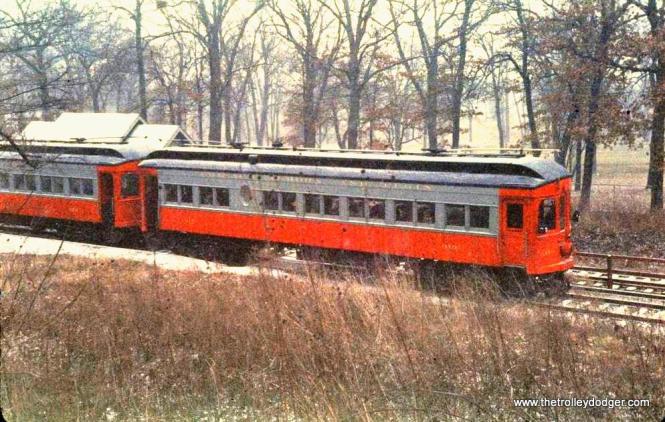
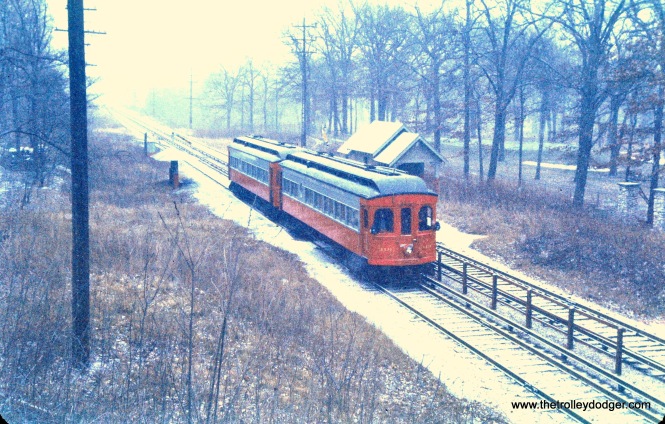
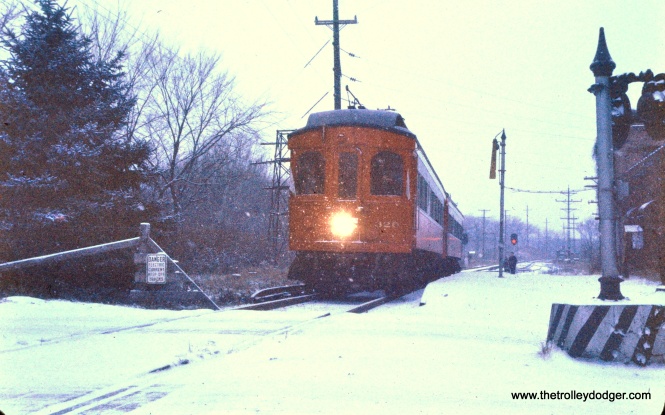
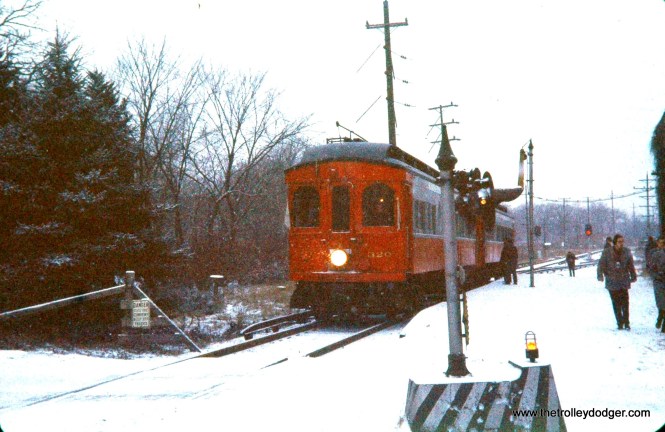
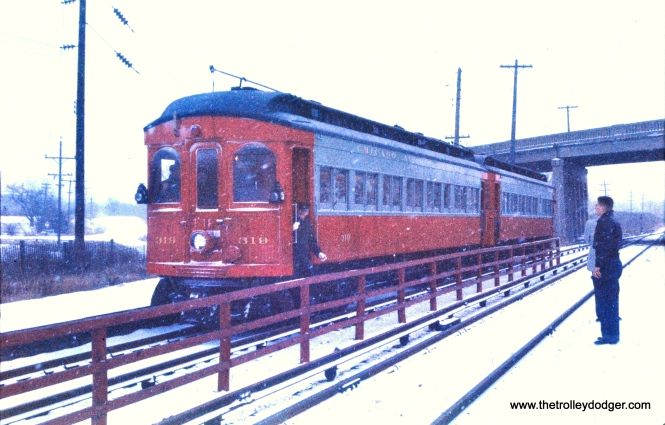
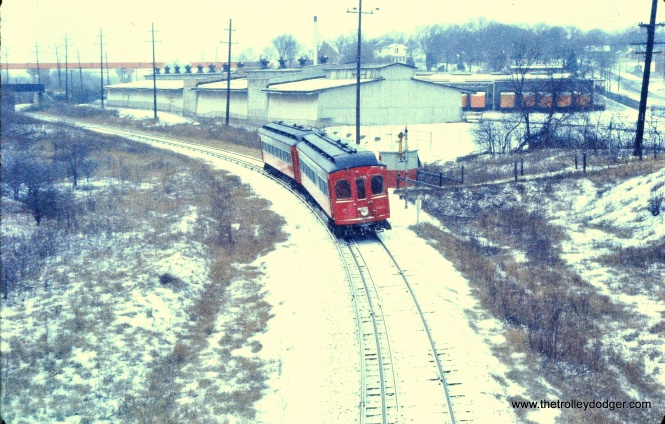
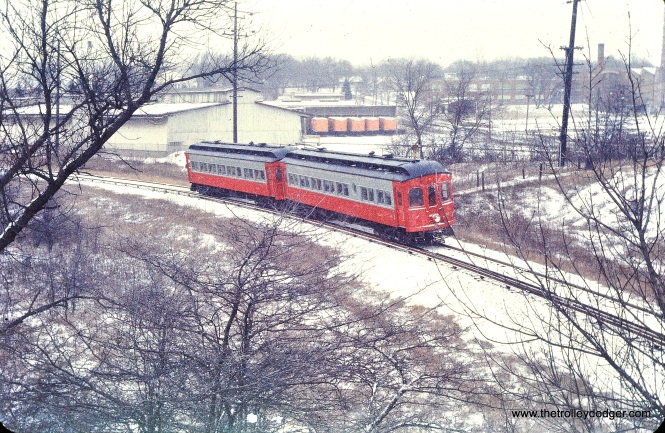
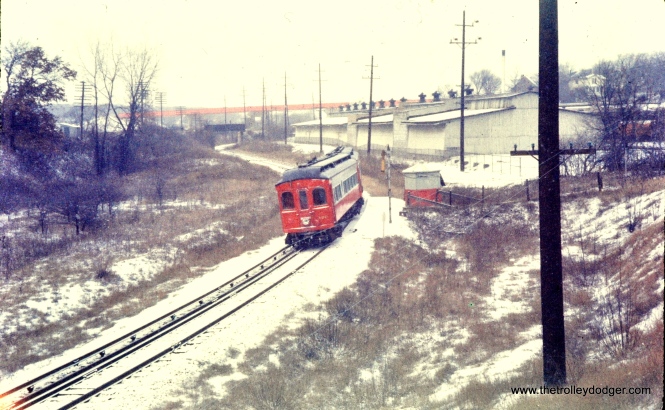
NSL 420 heading south at Dempster, current end of the line for the CTA Yellow Line (aka the "Skokie Swift"), which revived a small portion of the old interurban a year after service ended in January 1963.

NSL 420 heading south at Dempster, current end of the line for the CTA Yellow Line (aka the “Skokie Swift”), which revived a small portion of the old interurban a year after service ended in January 1963.

The Trolley Dodger blog has reached another milestone with this, our 150th post since we started on January 21, 2015. As time goes on, it becomes both easier and harder to come up with new ideas. On the one hand, we have to work harder to avoid repeating ourselves, since we have already posted thousands of images to date.

On the other hand, there always seems to be more material out there to be had. So in that sense, it seems unlikely that we will ever run out of new material. However, it’s always good to remind our faithful readers that all this historical research costs real money. It costs nothing to read our blog, of course, but the quality and frequency of future posts is entirely dependent on the financial support we get from you.

We are committed to maintaining a very high quality standard in what we put out, and our goal is not only to share information, but to create something of lasting value. We will let others be the judge of whether or not we have succeeded to date, but it’s interesting to note that I often find my own posts coming up to the top of Google searches, when I am researching things.

What makes a good blog post? Well, as I have said before, in general my idea is to use pictures to tell a story. But beyond that, it becomes more difficult to put your finger on what works and what doesn’t.

I would liken it to being a chef in a restaurant who takes whatever fresh ingredients are on hand, and tries to whip them up into a tasty dish. Since our first post featured the North Shore Line, we have a generous helping of classic CNS&M images on today’s menu.

In addition, we have a sprinkling of Chicago, Aurora & Elgin photos, plus some other Chicago/Illinois material, since that is where we are from. Hopefully, all this adds up to a complete “meal,” a feast for the eyes that is also designed to make you think.

But we have not forgotten “dessert.” Our last post (More Mystery Photos, July 29, 2016) included a picture of what appeared to be a Birney car that was not, according to Frank Hicks, an actual Birney. (If anyone is interested in learning what attributes of a streetcar make it into a “true” Birney, look no further than Dr. Harold E. Cox’s book on just that subject. What constitutes a PCC car is also somewhat debatable, another area where the esteemed Dr. Cox has weighed in with an expert opinion.)

While Birney cars, due to their small size, were unsuccessful in larger cities like Chicago, there can be no doubt they were a great success in Fort Collins, Colorado, the “Birney-est” place of all. The Fort Collins Municipal Railway purchased nine such cars for use between 1919 and 1951, a couple for parts. Of these, there’s been a pretty good survival rate, with fully five cars (#s 20, 21, 22, second 25, and 26) still extant.

These cars were so beloved in the area that they never completely left, and efforts to restore a car and revive at least a small portion of service began as early as the 1970s. Service on a mile-and-a-half line began in 1984 and continue to this day, meaning that the resurrected Birney car service in Fort Collins has lasted 32 years now, the same length of time that the original service ran.

Don Ross (in Don’s Rail Photos) writes:

The last regular operation of Birney cars in the U. S. was in Fort Collins, CO. The line was originally built by the Denver & Interurban Ry in 1907. In July 1918, the D&I stopped operating the local lines. A bus system was tried, but was very unpopular. In January 1919, the voters, by an 8 to 1 majority, decided to take over the system. Four Birneys were purchased from American Car of St. Louis and began operation in May. Over the years additional cars were added and replaced. Finally, in 1951, the system was abandoned on June 30th. The city had grown beyond the car lines, and riders had gone to the automobile. Car 21 was preserved locally. Other cars were saved at other locations. A local group began to restore 21 in 1977, and operation began on Mountain Avenue on December 29, 1984. Over the next two years, 1.5 miles of track was restored for operation. For a complete story about this system, check out their web site.

But wait, there’s more! There was also a double-truck version of the Birney, so we have posted a couple pictures of Johnstown 311, a much-loved car by the fans who took it on many trips back in the day. It ran in service in Pennsylvania until 1960 and has been preserved at the Rockhill Trolley Museum.

We are featuring color photos today, and will have several new black-and-white images to share in the near future. Thanks for coming along for the ride.

Bon Appétit!

-David Sadowski

PS- If you can help identify any of missing locations, or have other interesting thoughts on these pictures, don’t hesitate to drop us a line, either as a Comment here, or via:

thetrolleydodger@gmail.com


Chicago, North Shore & Milwaukee (aka North Shore Line)

NSL 706 heads south from Dempster in this June 9, 1961 photo by Clark Frazier. This is the current terminal of the CTA Yellow Line. The area under the electrical tower at left is where the "pocket" track went, when this was the end-of-the-line for the CRT's Niles Center Branch. This local service ended in 1948. CTA "L" service resumed here in 1964.

NSL 706 heads south from Dempster in this June 9, 1961 photo by Clark Frazier. This is the current terminal of the CTA Yellow Line. The area under the electrical tower at left is where the “pocket” track went, when this was the end-of-the-line for the CRT’s Niles Center Branch. This local service ended in 1948. CTA “L” service resumed here in 1964.

A solitary North Shore Line car crosses the Chicago River at Wacker Drive on the "L".

A solitary North Shore Line car crosses the Chicago River at Wacker Drive on the “L”.

NSL 739 and train at Lake Bluff.

NSL 739 and train at Lake Bluff.

NSL 737 at the Loyola curve on the CTA.

NSL 737 at the Loyola curve on the CTA.

NSL 713 heads up a five-car train at Sedgwick in October 1958.

NSL 713 heads up a five-car train at Sedgwick in October 1958.

NSL 737 and head "at speed" near Sheridan Elms in Lake Forest.

NSL 737 and head “at speed” near Sheridan Elms in Lake Forest.

NSL 735 et al at North Chicago.

NSL 735 et al at North Chicago.

"Silverliner" 756 and train in Skokie.

“Silverliner” 756 and train in Skokie.

A southbound Electroliner at Edison Court.

A southbound Electroliner at Edison Court.

NSL 182 and train at St. Mary's Road (Thornbury Village) on the Mundelein branch on May 31, 1962. Notice the difference in right-of-way construction here, versus the main line.

NSL 182 and train at St. Mary’s Road (Thornbury Village) on the Mundelein branch on May 31, 1962. Notice the difference in right-of-way construction here, versus the main line.

NSL 743 and train at Green Bay Junction. Jerry Wiatrowski: "NSL 743 and train are on the Skokie Valley route westbound crossing the Mundelein branch at Lake Bluff. The Green Bay Road overpass can be seen in the background." Joey Morrow: "NSL 743 is at Green Bay junction, the catenary poles are still there today. It parallels IL-176 (Rockland Ave)."

NSL 743 and train at Green Bay Junction. Jerry Wiatrowski: “NSL 743 and train are on the Skokie Valley route westbound crossing the Mundelein branch at Lake Bluff. The Green Bay Road overpass can be seen in the background.” Joey Morrow: “NSL 743 is at Green Bay junction, the catenary poles are still there today. It parallels IL-176 (Rockland Ave).”

NSL "Greenliner" 751 and a Silverliner at Lake Bluff in June 1962.

NSL “Greenliner” 751 and a Silverliner at Lake Bluff in June 1962.

A photo run-by on a February 21, 1960 North Shore Line fantrip.

A photo run-by on a February 21, 1960 North Shore Line fantrip.

I don't know just when this picture of a North Shore Line "special" train was taken, but Gustafson Motors was located in Libertyville, along the Mundelein branch. FYI, we have several North Shore Line audio recordings available on compact disc in our Online Store, including some from the Mundelein branch. Garrett Patterson: "nsl003 would have been taken just weeks before the end of service system-wide. The 1962 Bel Air in the lot dates the photo." One of our regular readers adds: "This was the CERA fantrip that was operated in April 1962. George Krambles operated the train in Evanston, and there are movies and slides of the train going south from Isabella going up the hill to the North Shore Channel bridge. The scene is seen in The Tribute to the North Shore Line video, which has been presented at January CERA meetings (although it is not commercially available). Of course the above photo is at Libertyville (which was a beautiful place in the country at one time)."

I don’t know just when this picture of a North Shore Line “special” train was taken, but Gustafson Motors was located in Libertyville, along the Mundelein branch. FYI, we have several North Shore Line audio recordings available on compact disc in our Online Store, including some from the Mundelein branch. Garrett Patterson: “nsl003 would have been taken just weeks before the end of service system-wide. The 1962 Bel Air in the lot dates the photo.” One of our regular readers adds: “This was the CERA fantrip that was operated in April 1962. George Krambles operated the train in Evanston, and there are movies and slides of the train going south from Isabella going up the hill to the North Shore Channel bridge. The scene is seen in The Tribute to the North Shore Line video, which has been presented at January CERA meetings (although it is not commercially available). Of course the above photo is at Libertyville (which was a beautiful place in the country at one time).”

NSL 705 and 709 are near the Mundelein terminal on March 25, 1962.

NSL 705 and 709 are near the Mundelein terminal on March 25, 1962.


Chicago, Aurora & Elgin

CA&E 460 and an older car are in fantrip service during the late 1950s. Nancy Grove Mollenkamp writes: "This is at West Street looking west in Wheaton. The bridge over Liberty Drive at the start of the Elgin branch is seen in the background."

CA&E 460 and an older car are in fantrip service during the late 1950s. Nancy Grove Mollenkamp writes: “This is at West Street looking west in Wheaton. The bridge over Liberty Drive at the start of the Elgin branch is seen in the background.”

CA&E 452 at Geneva Road on March 9, 1957. Nancy Grove Mollenkamp: "This is in Winfield. I believe looking north."

CA&E 452 at Geneva Road on March 9, 1957. Nancy Grove Mollenkamp: “This is in Winfield. I believe looking north.”

CA&E 404 is part of a two-car train at the Halsted curve on the old Garfield Park "L", probably not long before the end of downtown service in September 1953.

CA&E 404 is part of a two-car train at the Halsted curve on the old Garfield Park “L”, probably not long before the end of downtown service in September 1953.

CA&E 423 is part of a two-car train at Collingbourne. Nancy Grove Mollenkamp: "Collingbourne is along the Elgin branch near Raymond St. and Elgin Ave."

CA&E 423 is part of a two-car train at Collingbourne. Nancy Grove Mollenkamp: “Collingbourne is along the Elgin branch near Raymond St. and Elgin Ave.”

One can only wish that the photographer had aimed the camera a bit lower, but nonetheless, CA&E 428 is part of a four-car train in July 1953 on the Halsted curve.

One can only wish that the photographer had aimed the camera a bit lower, but nonetheless, CA&E 428 is part of a four-car train in July 1953 on the Halsted curve.

CA&E 454 at an unidentified location. Nancy Grove Mollenkamp: "This slide was identified by someone in a Wheaton FB group as being taken in 1952 at Jewell Road in Wheaton. Another person in the group said he believed it was looking south. He thinks that is Electric Avenue on the right or west."

CA&E 454 at an unidentified location. Nancy Grove Mollenkamp: “This slide was identified by someone in a Wheaton FB group as being taken in 1952 at Jewell Road in Wheaton. Another person in the group said he believed it was looking south. He thinks that is Electric Avenue on the right or west.”

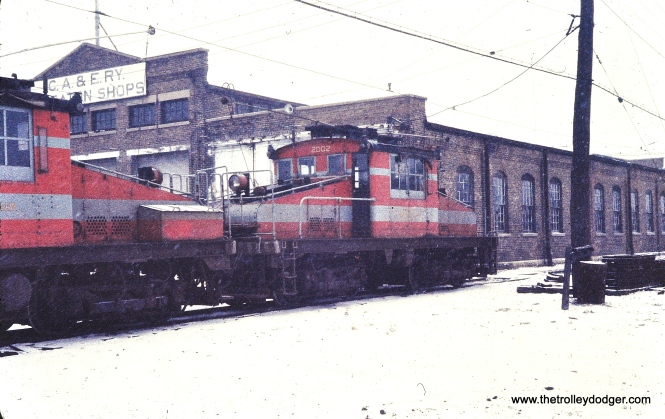
CA&E work motors 2001 and 2002 in service in March 1959. By this time, it had been nearly two years since the end of passenger service. Freight only continued for a few more months after this. (B. J. Misek Photo)

CA&E work motors 2001 and 2002 in service in March 1959. By this time, it had been nearly two years since the end of passenger service. Freight only continued for a few more months after this. (B. J. Misek Photo)

We are not sure of the location where this picture of CA&E 403 was taken. Presumably, the box the conductor is carrying holds work-related materials. George Foelschow: "I believe CA&E Pullman 403 and unattached car 410 or 419 are on the eastbound track at Wheaton station. Presumably the two cars, one each from Aurora and Elgin, will be joined for the trip east, and the conductor of 403 would be redundant and no doubt be on the next Fox Valley train due in a few minutes to be split. One could travel between Elgin and Aurora in the same time as a City Lines bus taking a more direct route along the Fox River." Nancy Grove Mollenkamp: "I agree. Definitely at Wheaton station."

We are not sure of the location where this picture of CA&E 403 was taken. Presumably, the box the conductor is carrying holds work-related materials. George Foelschow: “I believe CA&E Pullman 403 and unattached car 410 or 419 are on the eastbound track at Wheaton station. Presumably the two cars, one each from Aurora and Elgin, will be joined for the trip east, and the conductor of 403 would be redundant and no doubt be on the next Fox Valley train due in a few minutes to be split. One could travel between Elgin and Aurora in the same time as a City Lines bus taking a more direct route along the Fox River.” Nancy Grove Mollenkamp: “I agree. Definitely at Wheaton station.”

CA&E 420 at Church Road (Aurora).

CA&E 420 at Church Road (Aurora).

CA&E 424 near the end of the line, along the Fox River in Elgin. Meister Brau was a well-known Chicago beer for many years. Each spring, they would sell "Bock" beer, a stronger concoction made (I think) by scraping the bottom of the barrel. They introduced Meister Brau Lite in 1967. After Meister Brau got into financial difficulty in 1972, their brands were bought by Miller, who used Meister Brau Lite as the basis for developing Miller Lite.

CA&E 424 near the end of the line, along the Fox River in Elgin. Meister Brau was a well-known Chicago beer for many years. Each spring, they would sell “Bock” beer, a stronger concoction made (I think) by scraping the bottom of the barrel. They introduced Meister Brau Lite in 1967. After Meister Brau got into financial difficulty in 1972, their brands were bought by Miller, who used Meister Brau Lite as the basis for developing Miller Lite.

CA&E 405 is part of a two-car train. Nancy Grove Mollenkamp: "This is identified by Mark Llanuza as being taken in 1956 between the College Ave station in Wheaton and Glen Ellyn. Photographer unknown."

CA&E 405 is part of a two-car train. Nancy Grove Mollenkamp: “This is identified by Mark Llanuza as being taken in 1956 between the College Ave station in Wheaton and Glen Ellyn. Photographer unknown.”

CA&E 317 is part of a four-car train of woods.

CA&E 317 is part of a four-car train of woods.


Chicago and Illinois

Indiana Railroad hi-speed lightweight interurban car 65 at the Illinois Electric Railway Museum in North Chicago in October 1956. It had last run in 1953 on the CRANDIC (Cedar Rapids and Iowa City) before being purchased by the museum as their first acquisition. That's Chicago & Milwaukee Electric 354, another early purchase, behind it.

Indiana Railroad hi-speed lightweight interurban car 65 at the Illinois Electric Railway Museum in North Chicago in October 1956. It had last run in 1953 on the CRANDIC (Cedar Rapids and Iowa City) before being purchased by the museum as their first acquisition. That’s Chicago & Milwaukee Electric 354, another early purchase, behind it.

Illinois Terminal double-end PCC 457 is part of a two-car train, northbound at 19th and State in the mid-1950s. Don's Rail Photos says, "457 was built by St Louis Car Co in 1949, #1672. It was sold for scrap to Biermann Iron & Metal Co on July 24, 1959, and was scrapped in 1964."

Illinois Terminal double-end PCC 457 is part of a two-car train, northbound at 19th and State in the mid-1950s. Don’s Rail Photos says, “457 was built by St Louis Car Co in 1949, #1672. It was sold for scrap to Biermann Iron & Metal Co on July 24, 1959, and was scrapped in 1964.”

The same location today.

The same location today.

In this undated photo, probably taken circa 1952, tracks are being laid in the southern half of Van Buren Street to create a temporary right-of-way for the Garfield Park "L", to allow the demolition of 2 1/2 miles of the old structure that were in the way of Congress (now Eisenhower) expressway construction. At right, you can see the old Throop Street Shops. This temporary alignment was used from September 1953 to June 1958.

In this undated photo, probably taken circa 1952, tracks are being laid in the southern half of Van Buren Street to create a temporary right-of-way for the Garfield Park “L”, to allow the demolition of 2 1/2 miles of the old structure that were in the way of Congress (now Eisenhower) expressway construction. At right, you can see the old Throop Street Shops. This temporary alignment was used from September 1953 to June 1958.

A two-car train of CTA 4000s heads west on temporary trackage at Van Buren and Western on July 1, 1956. This was just two weeks after streetcar service ended on Western Avenue. This picture was taken around the time that the sounds of 4000-series "L" cars were recorded on the Garfield Park "L" for Railroad Record Club LP #36, which has been digitally remastered and is now available on compact disc in our Online Store.

A two-car train of CTA 4000s heads west on temporary trackage at Van Buren and Western on July 1, 1956. This was just two weeks after streetcar service ended on Western Avenue. This picture was taken around the time that the sounds of 4000-series “L” cars were recorded on the Garfield Park “L” for Railroad Record Club LP #36, which has been digitally remastered and is now available on compact disc in our Online Store.

Western and Van Buren today, looking to the northeast.

Western and Van Buren today, looking to the northeast.

Since CTA PCC 4406 is signed for charter service, this picture was probably taken on October 21, 1956, when this car ran on a fantrip with red Pullman 225. We have run photos from that fantrip before. You can see one in our post Chicago Surface Lines Photos, Part Six (February 22, 2016). Perhaps someone more knowledgeable than me can tell which station (car barn) this is, whether Devon or 77th. Car 4406 lasted until the end of Chicago streetcar service and had a scrap date of June 23, 1959.

Since CTA PCC 4406 is signed for charter service, this picture was probably taken on October 21, 1956, when this car ran on a fantrip with red Pullman 225. We have run photos from that fantrip before. You can see one in our post Chicago Surface Lines Photos, Part Six (February 22, 2016). Perhaps someone more knowledgeable than me can tell which station (car barn) this is, whether Devon or 77th. Car 4406 lasted until the end of Chicago streetcar service and had a scrap date of June 23, 1959.

A two car train of Lake Street "L" cars crosses the Chicago River with the Merchandise Mart in the background, probably in the early 1950s.

A two car train of Lake Street “L” cars crosses the Chicago River with the Merchandise Mart in the background, probably in the early 1950s.

We ran a black-and-white picture of CSL/CTA sweeper E57 in our post Chicago Surface Lines Work Cars – Part 2 (September 7, 2015).

We ran a black-and-white picture of CSL/CTA sweeper E57 in our post Chicago Surface Lines Work Cars – Part 2 (September 7, 2015).

CSL/CTA Y303 is listed as a "baggage car," although some have called it a MoW or maintenance of way car. It was retired on September 27, 1956. Don's Rail Photos says, "Y303. baggage car, was built by C&ST in 1911 as 59. It was renumbered Y303 in 1913 and became CSL Y303 in 1914."

CSL/CTA Y303 is listed as a “baggage car,” although some have called it a MoW or maintenance of way car. It was retired on September 27, 1956. Don’s Rail Photos says, “Y303. baggage car, was built by C&ST in 1911 as 59. It was renumbered Y303 in 1913 and became CSL Y303 in 1914.”

This 1920s-era Chicago Surface Lines trailer was looking pretty shopworn by the 1950s, when this picture was taken at South Shops.

This 1920s-era Chicago Surface Lines trailer was looking pretty shopworn by the 1950s, when this picture was taken at South Shops.

CSL/CTA streetcar 1497 was renumbered as AA85 for work service as a salt spreader, the configuration we see it in here in this 1950s photo. It was scrapped on September 27, 1956. This was known as a "Bowling Alley" car. Don's Rail Photos: "1497 was built by CUTCo in 1900 as CUT 4546. It was rebuilt as 1497 in 1911 and became CSL 1497 in 1914. It was rebuilt as salt car and renumbered AA85 on April 15, 1948."

CSL/CTA streetcar 1497 was renumbered as AA85 for work service as a salt spreader, the configuration we see it in here in this 1950s photo. It was scrapped on September 27, 1956. This was known as a “Bowling Alley” car. Don’s Rail Photos: “1497 was built by CUTCo in 1900 as CUT 4546. It was rebuilt as 1497 in 1911 and became CSL 1497 in 1914. It was rebuilt as salt car and renumbered AA85 on April 15, 1948.”

According to Graham Garfield's excellent web site www.chicago-l.org, "CTA work car S-328 -- built by American Car & Foundry in 1907 as Northwestern Elevated trailer 1283, motorized and renumbered to 1792 in 1914 by the CER -- was converted for work service and renumbered in 1958." It was retired in August 1970 and scrapped. Wooden "L" cars were last used in regular service by the CTA in 1957. After spending their final days in work service, cars like these were replaced by retired 4000-series "L" cars. Here we see S-328 at DesPlaines Avenue terminal in June 1962. (George Niles Photo)

According to Graham Garfield’s excellent web site www.chicago-l.org, “CTA work car S-328 — built by American Car & Foundry in 1907 as Northwestern Elevated trailer 1283, motorized and renumbered to 1792 in 1914 by the CER — was converted for work service and renumbered in 1958.” It was retired in August 1970 and scrapped. Wooden “L” cars were last used in regular service by the CTA in 1957. After spending their final days in work service, cars like these were replaced by retired 4000-series “L” cars. Here we see S-328 at DesPlaines Avenue terminal in June 1962. (George Niles Photo)

In this June 1962 view. we see the CTA's DesPlaines Avenue terminal as it had been reconfigured in 1959. these very basic amenities continued n use until the station was rebuilt in the 1980s. I would assume that the pile of rubble in the foreground was related to the recent construction of a new maintenance facility here. The nearby expressway had been in operation since 1960. Presumably, the CTA bus is running route 17, which replaced the Westchester "L" branch in 1951. (George Niles Photo)

In this June 1962 view. we see the CTA’s DesPlaines Avenue terminal as it had been reconfigured in 1959. these very basic amenities continued n use until the station was rebuilt in the 1980s. I would assume that the pile of rubble in the foreground was related to the recent construction of a new maintenance facility here. The nearby expressway had been in operation since 1960. Presumably, the CTA bus is running route 17, which replaced the Westchester “L” branch in 1951. (George Niles Photo)

A pair of old Metropolitan "L" cars, now in work service, share space with CTA curved-door 6000s in this June 1962 view at DesPlaines Avenue. The new shops facility is at left. The large gas holder at right was a Forest Park landmark for many years. (George Niles Photo)

A pair of old Metropolitan “L” cars, now in work service, share space with CTA curved-door 6000s in this June 1962 view at DesPlaines Avenue. The new shops facility is at left. The large gas holder at right was a Forest Park landmark for many years. (George Niles Photo)


Authentic Birney Cars

This circa 1940 postcard shows the Ft. Collins Birneys in a different paint scheme, which is actually the one currently being used for the one operating car. Caption: "The intersection of College and Mountain Avenues is the 42nd and Broadway of Ft. Collins. It is the heart of the business district, the crossroads of the town. Where all street cars meet and all highways converge."

This circa 1940 postcard shows the Ft. Collins Birneys in a different paint scheme, which is actually the one currently being used for the one operating car. Caption: “The intersection of College and Mountain Avenues is the 42nd and Broadway of Ft. Collins. It is the heart of the business district, the crossroads of the town. Where all street cars meet and all highways converge.”

Car 26 in the Fort Collins car barn in June 1948.

Car 26 in the Fort Collins car barn in June 1948.

Fort Collins Municipal Railway Birney car 22 in the city park on April 30, 1947.

Fort Collins Municipal Railway Birney car 22 in the city park on April 30, 1947.

25 in reverse rush hour loop service downtown in October 1950.

25 in reverse rush hour loop service downtown in October 1950.

21 near Colorado State University in late June 1951.

21 near Colorado State University in late June 1951.

25 in southeast Fort Collins in October 1950.

25 in southeast Fort Collins in October 1950.

21 downtown in June 1948.

21 downtown in June 1948.

25 in reverse rush hour loop service downtown in October 1950.

25 in reverse rush hour loop service downtown in October 1950.

22 in downtown Fort Collins in October 1950.

22 in downtown Fort Collins in October 1950.

25 in southeast Fort Collins in October 1950. Here's what the Wikipedia has to say about the film advertised on the side of the car: "Ecstasy (Czech: Extase, German: Ekstase) is a 1933 Czech-Austrian romantic drama film directed by Gustav Machatý and starring Hedy Lamarr (then Hedy Kiesler), Aribert Mog, and Zvonimir Rogoz." Containing some nudity, although tame by today's standards, the film was banned in the United States until 1940, and played to adult audiences at independent theaters and art houses, without the approval of the Hays Office.

25 in southeast Fort Collins in October 1950. Here’s what the Wikipedia has to say about the film advertised on the side of the car: “Ecstasy (Czech: Extase, German: Ekstase) is a 1933 Czech-Austrian romantic drama film directed by Gustav Machatý and starring Hedy Lamarr (then Hedy Kiesler), Aribert Mog, and Zvonimir Rogoz.” Containing some nudity, although tame by today’s standards, the film was banned in the United States until 1940, and played to adult audiences at independent theaters and art houses, without the approval of the Hays Office.

22 near Colorado State University in October 1950.

22 near Colorado State University in October 1950.

21 at the south end of town in June 1948.

21 at the south end of town in June 1948.

21 near Colorado State University in late June 1951.

21 near Colorado State University in late June 1951.

22 in northwest Fort Collins in October 1950.

22 in northwest Fort Collins in October 1950.

24 in front of the car barn in October 1950. According to Don's Rail Photos, "2nd 24 was built by Brill Car Co in December 1922, #21530, as Virginia Railway & Power Co 1530 It was sold as FCM 24 in 1946 but seldom operated. Parts kept second Car 25 operating."

24 in front of the car barn in October 1950. According to Don’s Rail Photos, “2nd 24 was built by Brill Car Co in December 1922, #21530, as Virginia Railway & Power Co 1530 It was sold as FCM 24 in 1946 but seldom operated. Parts kept second Car 25 operating.”

21 at a passing siding in northwest Fort Collins in October 1950.

21 at a passing siding in northwest Fort Collins in October 1950.

Fort Collins Municipal Railway "Birney" car 21, at the intersection of Johnson and Mountain Avenues. (Ward Photo)

Fort Collins Municipal Railway “Birney” car 21, at the intersection of Johnson and Mountain Avenues. (Ward Photo)

FCMR 22 on October 26, 1949. Its paint scheme is described as green, red, and aluminum.

FCMR 22 on October 26, 1949. Its paint scheme is described as green, red, and aluminum.

FCMR 25 at the car barn. (Ward Photo)

FCMR 25 at the car barn. (Ward Photo)

Feel the Birn(ey)! After service in Fort Collins ended in 1951, car 26 was sold to the Henry Ford Museum in Dearborn, Michigan. But prior to being put on static display, it operated in a Detroit parade of street railway equipment in August 1953. Don's Rail Photos: "26 was built by American Car Co. in November 1922, #1324 as CERy 7. It was sold as FCM 26 it in 1924. It was sold to Henry Ford Museum and moved to Michigan in 1953 where it is on static display. It was operated several times on the trackage of the Department of Street Railways." (C. Edward Hedstrom Photo) To read more about 26's Michigan sojourn, click here.

Feel the Birn(ey)! After service in Fort Collins ended in 1951, car 26 was sold to the Henry Ford Museum in Dearborn, Michigan. But prior to being put on static display, it operated in a Detroit parade of street railway equipment in August 1953. Don’s Rail Photos: “26 was built by American Car Co. in November 1922, #1324 as CERy 7. It was sold as FCM 26 it in 1924. It was sold to Henry Ford Museum and moved to Michigan in 1953 where it is on static display. It was operated several times on the trackage of the Department of Street Railways.” (C. Edward Hedstrom Photo) To read more about 26’s Michigan sojourn, click here.

25 stored at Woodland Park, Colorado on September 4, 1953.

25 stored at Woodland Park, Colorado on September 4, 1953.

25 stored at Woodland Park, Colorado on September 4, 1953. This was the second car 25, the first having been scrapped. Don's Rail Photos adds, "2nd 25 was built by Brill Car Co in December 1922, #21530, as VR&P 1520. It was sold as FCM 25 in 1946. It was sold to James Stitzel in 1953 and resided next to the former Midland Terminal depot in Victor, CO, until it was sold to a South Carolina party about 1980. It was cosmetically restored. In 1998 it was sold to the Charlotte Trolley painted as South Carolina Public Service Co 407. It was sold to Fort Colins Municipal in 2008 and is being restored as 25."

25 stored at Woodland Park, Colorado on September 4, 1953. This was the second car 25, the first having been scrapped. Don’s Rail Photos adds, “2nd 25 was built by Brill Car Co in December 1922, #21530, as VR&P 1520. It was sold as FCM 25 in 1946. It was sold to James Stitzel in 1953 and resided next to the former Midland Terminal depot in Victor, CO, until it was sold to a South Carolina party about 1980. It was cosmetically restored. In 1998 it was sold to the Charlotte Trolley painted as South Carolina Public Service Co 407. It was sold to Fort Colins Municipal in 2008 and is being restored as 25.”

22 on static display at Golden, Colorado in July 1963.

22 on static display at Golden, Colorado in July 1963.

According to Don's Rail Photos, "22 was built by American Car Co in April 1919, #1184. It was retired in 1951 and sold to the Rocky Mountain Railroad Club in 1952. It was on static display at the Colorado Railroad Museum though 1997. It was leased to the Colorado Springs Transportation Society and presently being restored in the former Rock Island engine house. as Colorado Springs & Interurban Ry. 135." It is shown here in September 1972.

According to Don’s Rail Photos, “22 was built by American Car Co in April 1919, #1184. It was retired in 1951 and sold to the Rocky Mountain Railroad Club in 1952. It was on static display at the Colorado Railroad Museum though 1997. It was leased to the Colorado Springs Transportation Society and presently being restored in the former Rock Island engine house. as Colorado Springs & Interurban Ry. 135.” It is shown here in September 1972.

Restored FCMR 21 as it appeared on May 14, 1995. (Mark D. Meyer Photo)

Restored FCMR 21 as it appeared on May 14, 1995. (Mark D. Meyer Photo)

Before the Birneys, the Ft. Collins system used conventional streetcars, as seen in this postcard from circa 1910.

Before the Birneys, the Ft. Collins system used conventional streetcars, as seen in this postcard from circa 1910.

ftcollins05

Many other cities had Birneys, of course. Here, we see Brantford (Ontario) Municipal Railway car 137 on July 1, 1935. This was ex-Lock Haven, Pa. Electric Railway car #2. (George Slyford Photo)

Many other cities had Birneys, of course. Here, we see Brantford (Ontario) Municipal Railway car 137 on July 1, 1935. This was ex-Lock Haven, Pa. Electric Railway car #2. (George Slyford Photo)

Johnstown Traction double-truck Birney 311 on September 3, 1958. (Clark Frazier Photo) Rockhill Trolley Museum: "The first car acquired by Rockhill Trolley Museum was car #311. This car is a double truck "Birney Safety Car" built by Wason Manufacturing Co. of Springfield, MA. It was part of an order of cars for the city of Bangor, Maine, where it operated at number 14. It was sold to the Johnstown Traction Co. and went there in 1941. It served that city well, running until the end of service in 1960. Car #311 was the last Birney type car to be operated in any United States city on a regular schedule. Car 311 was chartered repeatedly by trolley fans in the 1950's, as it was a favorite car of many." (Clark Frazier Photo)

Johnstown Traction double-truck Birney 311 on September 3, 1958. (Clark Frazier Photo) Rockhill Trolley Museum: “The first car acquired by Rockhill Trolley Museum was car #311. This car is a double truck “Birney Safety Car” built by Wason Manufacturing Co. of Springfield, MA. It was part of an order of cars for the city of Bangor, Maine, where it operated at number 14. It was sold to the Johnstown Traction Co. and went there in 1941. It served that city well, running until the end of service in 1960. Car #311 was the last Birney type car to be operated in any United States city on a regular schedule. Car 311 was chartered repeatedly by trolley fans in the 1950’s, as it was a favorite car of many.” (Clark Frazier Photo)

Johnstown Traction double-truck Birney 311 at Coopersdale on September 3, 1958. (Clark Frazier Photo) The sounds of car 311, in service during the 1950s, can be heard of Railroad Record Club LP #23, which has been digitally remastered and is now available on compact disc via our Online Store.

Johnstown Traction double-truck Birney 311 at Coopersdale on September 3, 1958. (Clark Frazier Photo) The sounds of car 311, in service during the 1950s, can be heard of Railroad Record Club LP #23, which has been digitally remastered and is now available on compact disc via our Online Store.

Here is Johnstown 311 on June 30, 1957.

Here is Johnstown 311 on June 30, 1957.


NOW AVAILABLE, DIGITALLY REMASTERED ON COMPACT DISC:

cover025gtcover

SEGT
Steam Echoes
Ghost Train
# of Discs – 1
Price: $14.95

Steam Echoes:
First published in 1959, and long out of print, Steam Echoes captures the unforgettable sound drama of steam engines in action. Like Whistles West, it features the recordings of E. P. Ripley, made in the waning days of steam during the 1950s.

The scenes were selected for listening pleasure as well as to create an historical document. They represent the everyday workings of our old steam friends, selected for the most interest, or the most beauty. The series are purposely kept short to preserve their brilliance. They show the steam engine in all four of the ways it may be heard at work– riding in it, on the train behind it, traveling along beside it, and standing at trackside while it goes by, or stops and takes off again.

Railroads featured include Southern Pacific, Union Pacific, and Canadian National.

Ghost Train:
Ghost Train, first issued in 1962 and also long unavailable, is a Hi-Fi stereo sound panorama of haunting memories, highlighting the final days of steam railroading. Railroads featured include the Grand Trunk Western, Norfolk & Western, Nickel Plate Road, Union Pacific, and the Reading Company. A particular highlight is a special whistle recording, demonstrating the famous “Doppler Effect” in true stereophonic sound.

Total time – 79:45


Help Support The Trolley Dodger

gh1

This is our 150th post, and we are gradually creating a body of work and an online resource for the benefit of all railfans, everywhere. To date, we have received over 184,000 page views, for which we are very grateful.

You can help us continue our original transit research by checking out the fine products in our Online Store. You can make a contribution there as well.

As we have said before, “If you buy here, we will be here.”

We thank you for your support.

Night Beat

In this classic July 1963 shot, South Shore Line car 25 is parked at the east end of the line in downtown South Bend, across from the Hotel LaSalle. Service was cut back to Bendix at the outskirts of town in 1970, and later extended to the local airport. Don's Rail Photos adds, "25 was built by Pullman in 1927. It was lengthened and air conditioned, and got picture windows in 1947."

In this classic July 1963 shot, South Shore Line car 25 is parked at the east end of the line in downtown South Bend, across from the Hotel LaSalle. Service was cut back to Bendix at the outskirts of town in 1970, and later extended to the local airport. Don’s Rail Photos adds, “25 was built by Pullman in 1927. It was lengthened and air conditioned, and got picture windows in 1947.”

nightbeat

Chicagoans of a certain age might recall Night Beat, a WGN-TV late night news show that aired after the Late Movie between 1958 and 1983. For much of that time, baritone Carl Greyson was the announcer.*

We begin today’s post with our very own Night Beat of sorts, an exhibit of some fine night photography from the early 1960s. We rightly celebrate 3/4 views of streetcars taken on days with bright sunshine and cloudless skies, but there is also something to be said for those few railfan shutterbugs who experimented and documented what some cities call “Owl Service.”

Back in the days of film and manually set cameras, many photographers operated using the “sunny f/16” rule, or some variation thereof, where your shutter speed corresponds to the film speed, and your lens opening is f/16 on a bright sunny day. So, with ISO 64 film, this gives a setting of 1/60th of a second at f/16, and you can extrapolate from there (i.e., this is equivalent to 1/125th at f/11, 1/250th at f/8, etc.).

But this relationship begins to fail when you are talking about longer exposures. It is an effect called “reciprocity failure.” Now, your general idea of reciprocity might be that if I scratch your back, you’ll scratch mine. But for our purposes, this means that photographic materials may not behave in a predictable manner when used outside of the norm.

So, long exposure times of several seconds may not give predictable results. There are other problems with night shots, including the different colors of mixed light sources (incandescent plus fluorescent), and problems with determining the proper exposure when light sources have such a wide range of brightness.

This means you really can’t follow any special rule for available light photography at night; it’s really a matter of trial and error. The best method is to steady your camera on a tripod and experiment with different exposures, in hopes that perhaps one image out of the lot might turn out really well.

What we have here are some excellent shots, taken by an unknown photographer who was good at this sort of thing and was willing to travel the country. Chances are, for every acceptable photo, there were several that ended up in the circular file.

Here’s to those unnamed Night Owls who prowled around in the 1960s and covered the traction Night Beat.

-David Sadowski

*You can hear the classic 1970s Night Beat theme here. A fuller version of the theme, which many associate with Chicago night life, can be heard in a 1977 special that featured actor Bill Bixby. Supposedly, the music was composed by Dave Grusin, although nobody seems to know for sure what the piece was called, or where it originated.**

**It’s been identified!  The piece is called “Gadabout,” composed by William Loose and Emil Cadkin.  It was part of the CPM (Carlin Production Music) Library of music licensed to television broadcasters and producers who needed themes and incidental music.  In turn, it may previously have been part of the Capitol Hi-“Q” Library that preceded it.  The details, and some alternate versions, are in this Facebook video.

A two-car train of 6000s prepares to head east from the DesPlaines Avenue terminal on the CTA Congress branch in April 1964. This was the station arrangement from 1959 until the early 1980s. As I recall, the entrance at right in front of the train led to a narrow sidewalk where you had to cross the tracks in order to access the platform, hardly an ideal setup. At right there was a parking lot, and a few streaks of light show you where I-290 is located. The tracks today are in pretty much the same exact location, however.

A two-car train of 6000s prepares to head east from the DesPlaines Avenue terminal on the CTA Congress branch in April 1964. This was the station arrangement from 1959 until the early 1980s. As I recall, the entrance at right in front of the train led to a narrow sidewalk where you had to cross the tracks in order to access the platform, hardly an ideal setup. At right there was a parking lot, and a few streaks of light show you where I-290 is located. The tracks today are in pretty much the same exact location, however.

I believe this July 1963 picture shows the South Shore Line station at Roosevelt Road. Frank Hicks writes, "Chicago South Shore & South Bend 504. This interurban freight trailer has a more unusual history than most. It was built for ISC as an interurban combine, and ran on that system's lines in Indiana for five years until ISC became part of the great Indiana Railroad system. IR rebuilt the three cars of the 375-377 series into railway post office cars and put them to use in this unusual capacity. The three RPO's survived on IR until the end of interurban service in 1941, at which time all three were sold to the only other interurban line then operating in Indiana: the South Shore. The South Shore converted 376 into a line car while 375 and 377 became express package trailers. These cars were designed to run in passenger trains and had control lines so that they could be run mid-train; they were often used to transport newspapers. Car 504 was retired in 1975 and acquired by IRM, which has repainted it and put it on display." (Editor's Note: car 377 became 504.)

I believe this July 1963 picture shows the South Shore Line station at Roosevelt Road. Frank Hicks writes, “Chicago South Shore & South Bend 504. This interurban freight trailer has a more unusual history than most. It was built for ISC as an interurban combine, and ran on that system’s lines in Indiana for five years until ISC became part of the great Indiana Railroad system. IR rebuilt the three cars of the 375-377 series into railway post office cars and put them to use in this unusual capacity. The three RPO’s survived on IR until the end of interurban service in 1941, at which time all three were sold to the only other interurban line then operating in Indiana: the South Shore. The South Shore converted 376 into a line car while 375 and 377 became express package trailers. These cars were designed to run in passenger trains and had control lines so that they could be run mid-train; they were often used to transport newspapers. Car 504 was retired in 1975 and acquired by IRM, which has repainted it and put it on display.” (Editor’s Note: car 377 became 504.)

This slide showing one of the North Shore Line Electroliners is dated January 1963, and who knows, it may have been taken on that last frigid night. Jerry Wiatrowski writes, "The unidentified picture of the Electroliner was taken at North Chicago Junction. The train is Southbound coming off of the Waukegan bypass to Edison Court and Milwaukee."

This slide showing one of the North Shore Line Electroliners is dated January 1963, and who knows, it may have been taken on that last frigid night. Jerry Wiatrowski writes, “The unidentified picture of the Electroliner was taken at North Chicago Junction. The train is Southbound coming off of the Waukegan bypass to Edison Court and Milwaukee.”

When this April 1964 picture was taken at the 69th Street Terminal in Upper Darby, Pennsylvania, the Red Arrow Lines were still privately held, and the Ardmore trolley was still running. Two and a half years later, it would be replaced by bus service. 1941-era Brilliner #1, a Sharon Hill car, is in the station.

When this April 1964 picture was taken at the 69th Street Terminal in Upper Darby, Pennsylvania, the Red Arrow Lines were still privately held, and the Ardmore trolley was still running. Two and a half years later, it would be replaced by bus service. 1941-era Brilliner #1, a Sharon Hill car, is in the station.

It's August 1963 in Boston, and MTA PCC 3243 stands ready for another trip on the Green Line. Phil Bergen writes, "The night view of the Boston PCC that appears in today’s posting was taken at Riverside terminal. Although picture window PCCs were originally used on this line, other PCCs were added to meet the demand. The side roll sign, once enlarged, indicates this is a Riverside car, and the terminal itself is the only place where there were multiple tracks." The Riverside line started running on July 4, 1959 and occupies a right-of-way once used by a steam commuter railroad. It is considered a pioneer in what we today call "light rail."

It’s August 1963 in Boston, and MTA PCC 3243 stands ready for another trip on the Green Line. Phil Bergen writes, “The night view of the Boston PCC that appears in today’s posting was taken at Riverside terminal. Although picture window PCCs were originally used on this line, other PCCs were added to meet the demand. The side roll sign, once enlarged, indicates this is a Riverside car, and the terminal itself is the only place where there were multiple tracks.” The Riverside line started running on July 4, 1959 and occupies a right-of-way once used by a steam commuter railroad. It is considered a pioneer in what we today call “light rail.”

From 1949 until 1963, the North Shore Line had the CTA's Roosevelt Road station all to itself, as this July 1962 picture of car 752 shows. Don's Rail Photos: "752 was built by Standard Steel Car in 1930. It was modernized in 1940."

From 1949 until 1963, the North Shore Line had the CTA’s Roosevelt Road station all to itself, as this July 1962 picture of car 752 shows. Don’s Rail Photos: “752 was built by Standard Steel Car in 1930. It was modernized in 1940.”

The North Shore Line terminal in Milwaukee in January 1963.

The North Shore Line terminal in Milwaukee in January 1963.

A North Shore Line train stops at Edison Court in January 1963.

A North Shore Line train stops at Edison Court in January 1963.

A Toronto subway train in August 1963.

A Toronto subway train in August 1963.

Toronto Peter Witt 2766 at Vincent Loop in November 1964. (R. McMann Photo)

Toronto Peter Witt 2766 at Vincent Loop in November 1964. (R. McMann Photo)

TTC crane C-2 at work at Queen Street and Eastern Avenue in October 1966. (R. McMann Photo)

TTC crane C-2 at work at Queen Street and Eastern Avenue in October 1966. (R. McMann Photo)

A postcard view of C-2 at work in 1967.

A postcard view of C-2 at work in 1967.

Originally, I thought this was early 1960s night shot showed a CTA single-car unit in the 1-50 series, and those cars were used on the Congress-Douglas-Milwaukee line. But as Andre Kristopans has pointed out, the doors on those cars were closer to the ends than this one, which he identifies as being part of the 6511-6720 series. It just looks like there's one car, since the other "married pair" behind it is not illuminated. This picture was most likely taken at the end of the line at DesPlaines Avenue.

Originally, I thought this was early 1960s night shot showed a CTA single-car unit in the 1-50 series, and those cars were used on the Congress-Douglas-Milwaukee line. But as Andre Kristopans has pointed out, the doors on those cars were closer to the ends than this one, which he identifies as being part of the 6511-6720 series. It just looks like there’s one car, since the other “married pair” behind it is not illuminated. This picture was most likely taken at the end of the line at DesPlaines Avenue.

From left to right, we see New Orleans Public Service cars 930, 934, and 900 in the barn. All were built by Perley-Thomas Car Co in 1924, and are signed for the St. Charles line. New Orleans is practically unique in North America, in that it never modernized its fleet with PCCs, yet has maintained uninterrupted service with vintage equipment. (Even the newer cars New Orleans has now are "retro" styled.) The date of this photo is not known.

From left to right, we see New Orleans Public Service cars 930, 934, and 900 in the barn. All were built by Perley-Thomas Car Co in 1924, and are signed for the St. Charles line. New Orleans is practically unique in North America, in that it never modernized its fleet with PCCs, yet has maintained uninterrupted service with vintage equipment. (Even the newer cars New Orleans has now are “retro” styled.) The date of this photo is not known.

A South Shore Line train at the old Gary station in August 1970.

A South Shore Line train at the old Gary station in August 1970.

South Shore Line car 110 laying over at South Bend, Indiana in July 1963. This was the east end of the line until 1970, when service was cut back to the outskirts of town, and South Bend street running was eliminated. In 1992, service was extended to the South Bend International Airport, 3 miles northwest of downtown South Bend.

South Shore Line car 110 laying over at South Bend, Indiana in July 1963. This was the east end of the line until 1970, when service was cut back to the outskirts of town, and South Bend street running was eliminated. In 1992, service was extended to the South Bend International Airport, 3 miles northwest of downtown South Bend.

This remarkable picture was taken at the North Shore Line's Milwaukee terminal in January 1963. For all we know, this may be the last night of operation. If so, the temperature was below zero.

This remarkable picture was taken at the North Shore Line’s Milwaukee terminal in January 1963. For all we know, this may be the last night of operation. If so, the temperature was below zero.

A Dayton (Ohio) trolley bus at night in September 1972.

A Dayton (Ohio) trolley bus at night in September 1972.

This is another remarkable photograph, showing Monongahela West Penn car 320 at night in June 1946. Such night shots were very difficult to achieve back then, due to the slow film speed of the time (this is Kodachrome 10, as in ASA/ISO 10). About the only way to take such a picture would have been with a very long exposure, with the camera resting on a tripod. (Dr. H. Blackbunn Photo)

This is another remarkable photograph, showing Monongahela West Penn car 320 at night in June 1946. Such night shots were very difficult to achieve back then, due to the slow film speed of the time (this is Kodachrome 10, as in ASA/ISO 10). About the only way to take such a picture would have been with a very long exposure, with the camera resting on a tripod. (Dr. H. Blackbunn Photo)

Another great night shot, this time it's Illinois Terminal 473 on the line that ran from St. Louis to Granite City in the 1950s. This was IT's final passenger line and was abandoned in June 1958, on the same weekend that the last Chicago streetcar ran.

Another great night shot, this time it’s Illinois Terminal 473 on the line that ran from St. Louis to Granite City in the 1950s. This was IT’s final passenger line and was abandoned in June 1958, on the same weekend that the last Chicago streetcar ran.

BTC Baltimore Streetcar Trolley #3738 Location: Baltimore, Maryland (Route 8 - Gilmore Street) Date: May 19, 1961 Photographer: Jeffrey L. Wien Here, we see a classic night shot of an ancient Baltimore streetcar, most likely built around 1900. It does not appear to have survived to the present day.

BTC Baltimore Streetcar Trolley #3738
Location: Baltimore, Maryland (Route 8 – Gilmore Street)
Date: May 19, 1961
Photographer: Jeffrey L. Wien
Here, we see a classic night shot of an ancient Baltimore streetcar, most likely built around 1900. It does not appear to have survived to the present day.


pic304.png

The next three photos have been added to our previous post Love For Selle (June 8, 2016):

Caption: "3 cars on North Shore Line northbound at Kenilworth (714 on rear of train), July 13, 1955. This was shortly before the end of service on the Shore Line Route. (Bob Selle Photo) Don's Rail Photos: "714 was built by Cincinnati Car Co in 1926, #2890. It is modernized in 1939 and preserved in 1963 by the Illinois Railway Museum."

Caption: “3 cars on North Shore Line northbound at Kenilworth (714 on rear of train), July 13, 1955. This was shortly before the end of service on the Shore Line Route. (Bob Selle Photo) Don’s Rail Photos: “714 was built by Cincinnati Car Co in 1926, #2890. It is modernized in 1939 and preserved in 1963 by the Illinois Railway Museum.”

This looks like a 1952 Chevrolet 4-door Fleetline fastback to me, which would be a somewhat rare model with only a few thousand produced. The fastback, which had enjoyed a brief vogue starting around 1941, was dropped for the 1953 model year.

This looks like a 1952 Chevrolet 4-door Fleetline fastback to me, which would be a somewhat rare model with only a few thousand produced. The fastback, which had enjoyed a brief vogue starting around 1941, was dropped for the 1953 model year.

It's May 30, 1958 and Chicago Surface Lines car 1467 (former CTA salt car AA72) is at the Electric Railway Historical Society site on Plainfield Road in Downer's Grove. Don's Rail Photos says this "Bowling Alley" car "was built by CUTCo in 1900 as CUT 4516. It was rebuilt as 1467 in 1911 and became CSL 1467 in 1914. It was rebuilt as salt car and renumbered AA72 on April 15, 1948. It was retired on February 28, 1958. It was sold to Electric Railway Historical Society in 1959 and went to Illinois Railway Museum in 1973." Actually it must have been sold earlier, as the negative envelope has written on it "owned now by ERHS!" (Bob Selle Photo)

It’s May 30, 1958 and Chicago Surface Lines car 1467 (former CTA salt car AA72) is at the Electric Railway Historical Society site on Plainfield Road in Downer’s Grove. Don’s Rail Photos says this “Bowling Alley” car “was built by CUTCo in 1900 as CUT 4516. It was rebuilt as 1467 in 1911 and became CSL 1467 in 1914. It was rebuilt as salt car and renumbered AA72 on April 15, 1948. It was retired on February 28, 1958. It was sold to Electric Railway Historical Society in 1959 and went to Illinois Railway Museum in 1973.” Actually it must have been sold earlier, as the negative envelope has written on it “owned now by ERHS!” (Bob Selle Photo)

North Shore Line cars 411 and 715 at an unidentified location. Don's Rail Photos says, "411 was built as a trailer observation car by Cincinnati Car in June 1923 #2640. It was out of service in 1932. 411 got the same treatment on February 25, 1943, and sold to Trolley Museum of New York in 1963. It was sold to Wisconsin Electric Railway & Historical Society in 1973 and sold to Escanaba & Lake Superior in 1989." As for the other car, Don says, "715 was built by Cincinnati Car Co in 1926, #2890. It is modernized in 1939 and purchased by Mid-Continent Railroad Museum in 1963. It was sold to Wisconsin Electric Railway Museum in 1967 and then sold to Fox River Trolley in 1988."

North Shore Line cars 411 and 715 at an unidentified location. Don’s Rail Photos says, “411 was built as a trailer observation car by Cincinnati Car in June 1923 #2640. It was out of service in 1932. 411 got the same treatment on February 25, 1943, and sold to Trolley Museum of New York in 1963. It was sold to Wisconsin Electric Railway & Historical Society in 1973 and sold to Escanaba & Lake Superior in 1989.” As for the other car, Don says, “715 was built by Cincinnati Car Co in 1926, #2890. It is modernized in 1939 and purchased by Mid-Continent Railroad Museum in 1963. It was sold to Wisconsin Electric Railway Museum in 1967 and then sold to Fox River Trolley in 1988.”

North Shore Line car 255 is laying over on middle storage track at the Roosevelt Road station on the Chicago "L". Don's Rail Photos": "255 was built by Jewett in 1917. It had all of the seats removed in the 1920s to provide a full length baggage car which ran in passenger trains. It was used for the Chicago Symphony Orchestra to move equipment to Ravinia. On July 2, 1942, the 40 seats were replaced. Then on December 1, 1946, the seats were again removed. In addition to the Symphony, the car was used for sailors' baggage from Great Lakes." (C. Edward Hedstrom, Jr. Photo)

North Shore Line car 255 is laying over on middle storage track at the Roosevelt Road station on the Chicago “L”. Don’s Rail Photos”: “255 was built by Jewett in 1917. It had all of the seats removed in the 1920s to provide a full length baggage car which ran in passenger trains. It was used for the Chicago Symphony Orchestra to move equipment to Ravinia. On July 2, 1942, the 40 seats were replaced. Then on December 1, 1946, the seats were again removed. In addition to the Symphony, the car was used for sailors’ baggage from Great Lakes.” (C. Edward Hedstrom, Jr. Photo)

CSL "Little" Pullman 985 at Wabash and Roosevelt in September 1936. It was built in 1910. It appears to be on through route 3 - Lincoln-Indiana, which operated from 1912 to 1951.

CSL “Little” Pullman 985 at Wabash and Roosevelt in September 1936. It was built in 1910. It appears to be on through route 3 – Lincoln-Indiana, which operated from 1912 to 1951.

CSL "Big" Pullman 144 on Cermak Road, September 19, 1934. Don's Rail Photos: "144 was built by Pullman in 1908. It was acquired by Illinois Railway Museum in 1959." It is rare to find pictures of the 144 in actual service as opposed to some 1950s fantrip.

CSL “Big” Pullman 144 on Cermak Road, September 19, 1934. Don’s Rail Photos: “144 was built by Pullman in 1908. It was acquired by Illinois Railway Museum in 1959.” It is rare to find pictures of the 144 in actual service as opposed to some 1950s fantrip.

A close-up of the car in the last photo. It closely resembles two very similar, low-production front wheel drive cars on the market circa 1930, the Cord L-29 and the even rarer Ruxton. However, Dan Cluley seems to have correctly identified this as a 1930 Checker Model M. The auto on the other side of the streetcar looks like an early 1930s Auburn, which was also built by Auburn-Cord-Duesenberg, headquartered in Auburn, Indiana.

A close-up of the car in the last photo. It closely resembles two very similar, low-production front wheel drive cars on the market circa 1930, the Cord L-29 and the even rarer Ruxton. However, Dan Cluley seems to have correctly identified this as a 1930 Checker Model M. The auto on the other side of the streetcar looks like an early 1930s Auburn, which was also built by Auburn-Cord-Duesenberg, headquartered in Auburn, Indiana.

The 1930 Checker Model M.

The 1930 Checker Model M.

This is a 1929 Ruxton Model A Baker-Raulang Roadster.

This is a 1929 Ruxton Model A Baker-Raulang Roadster.

And this is a 1930 Cord L-29 Convertible.

And this is a 1930 Cord L-29 Convertible.

An early 1930s Auburn with fancy hood ornament.

An early 1930s Auburn with fancy hood ornament.

Chicago Surface Lines 5241 on 111th Street near Vincennes on August 3, 1947. The sign on the front of the car indicates this was on through route 8. According to www.chicagrailfan.com, "Various Through Route combinations existed throughout the early history of this route. Original Through Route operated between Grace/Halsted and 63rd/Stony Island via Halsted and 63rd St. Beginning in 1912, some Halsted service, mainly route 42 Halsted-Downtown service, began operating south of 79th St. via Vincennes and 111th St. to Sacramento, over what now is the 112 route. While for most of through service continuing north on Halsted, the south terminal remained 79th St. Effective 5/24/31, the through Halsted service generally turned around at 111th/Sacramento, with the downtown service generally turning at 79th St. Through service south of 79th St. discontinued 12/4/49, when segment south of 79th St. was converted to buses." (John F. Bromley Collection) Our resident South Side expert M. E. adds, "The caption begins: "Chicago Surface Lines 5241 on 111th Street near Vincennes on August 3, 1947." Not quite. 111th St. approaches Vincennes Ave. only from the east. The car line on 111th St. was not route 8. Instead, route 8 was on Vincennes. Vincennes Ave. continued south of 111th one block to Monterey Ave., whereupon route 8 cars turned right onto Monterey, then about three blocks later, onto 111th St. heading west. (To see all this on a map, use maps.google.com and plug in '60643 post office'.) As for the photo, I'd say this car is on Vincennes, heading south, anywhere between 109th and Monterey. I say 109th because route 8 left its private right-of-way (which started at 89th St.) at 107th St. and ran south from 107th on the street."

Chicago Surface Lines 5241 on 111th Street near Vincennes on August 3, 1947. The sign on the front of the car indicates this was on through route 8. According to http://www.chicagrailfan.com, “Various Through Route combinations existed throughout the early history of this route. Original Through Route operated between Grace/Halsted and 63rd/Stony Island via Halsted and 63rd St. Beginning in 1912, some Halsted service, mainly route 42 Halsted-Downtown service, began operating south of 79th St. via Vincennes and 111th St. to Sacramento, over what now is the 112 route. While for most of through service continuing north on Halsted, the south terminal remained 79th St. Effective 5/24/31, the through Halsted service generally turned around at 111th/Sacramento, with the downtown service generally turning at 79th St. Through service south of 79th St. discontinued 12/4/49, when segment south of 79th St. was converted to buses.” (John F. Bromley Collection) Our resident South Side expert M. E. adds, “The caption begins: “Chicago Surface Lines 5241 on 111th Street near Vincennes on August 3, 1947.” Not quite. 111th St. approaches Vincennes Ave. only from the east. The car line on 111th St. was not route 8. Instead, route 8 was on Vincennes. Vincennes Ave. continued south of 111th one block to Monterey Ave., whereupon route 8 cars turned right onto Monterey, then about three blocks later, onto 111th St. heading west. (To see all this on a map, use maps.google.com and plug in ‘60643 post office’.) As for the photo, I’d say this car is on Vincennes, heading south, anywhere between 109th and Monterey. I say 109th because route 8 left its private right-of-way (which started at 89th St.) at 107th St. and ran south from 107th on the street.”

This July 1963 view shows the Wabash leg of Chicago's Loop "L" between Van Buren and Jackson. We are looking north, so the buildings behind the train of CTA 4000s are on the west side of the street. As you can see by the sign advertising Baldwin pianos and organs, this was once Chicago's "Music Row." The flagship Rose Records location was near here, as were Carl Fischer, the Guitar Gallery, American Music World and many others. The Chicago Symphony is still nearby, but nearly all the other music-related retailers are now gone from this area. You can just catch a glimpse of the iconic Kodak sign that still graces Central Camera under the "L". The old North Shore Line station, which closed about six months before this picture was taken, would have been up the street on the right just out of view. Until 1969 trains operated counterclockwise around the Loop on both tracks, so we are looking at the back end of this Lake Street "B" train. Adams and Wabash station is at the far right of the picture.

This July 1963 view shows the Wabash leg of Chicago’s Loop “L” between Van Buren and Jackson. We are looking north, so the buildings behind the train of CTA 4000s are on the west side of the street. As you can see by the sign advertising Baldwin pianos and organs, this was once Chicago’s “Music Row.” The flagship Rose Records location was near here, as were Carl Fischer, the Guitar Gallery, American Music World and many others. The Chicago Symphony is still nearby, but nearly all the other music-related retailers are now gone from this area. You can just catch a glimpse of the iconic Kodak sign that still graces Central Camera under the “L”. The old North Shore Line station, which closed about six months before this picture was taken, would have been up the street on the right just out of view. Until 1969 trains operated counterclockwise around the Loop on both tracks, so we are looking at the back end of this Lake Street “B” train. Adams and Wabash station is at the far right of the picture.

Enlarging a small section of the slide shows the Kodak sign in front of Central Camera at 230 S. Wabash.

Enlarging a small section of the slide shows the Kodak sign in front of Central Camera at 230 S. Wabash.

Central Camera today. The Kodak sign is still there.

Central Camera today. The Kodak sign is still there.

The corner of Wabash and Jackson today.

The corner of Wabash and Jackson today.

Two of the buildings in the 1963 photograph were torn down to make a parking lot, while the building to their right is still there.

Two of the buildings in the 1963 photograph were torn down to make a parking lot, while the building to their right is still there.

If you are curious about just what a Birney car is, you can read the definitive account by Dr. Harold E. Cox here.

Fort Collins Municipal Railway Birney car 20 in Colorado. There were three lines, and all three cars met in the town center once an hour so riders could transfer. Service ended in 1951, but a portion of one line was restored to service in the 1980s. Don's Rail Photos says, "20 was built by American Car Co. in April 1919, #1184. It was sold in 1951 and moved to the Stuhr Museum of the Prairie Pioneer in Minden, NE. and has been on static display there ever since." (Joseph P. Saitta Photo)

Fort Collins Municipal Railway Birney car 20 in Colorado. There were three lines, and all three cars met in the town center once an hour so riders could transfer. Service ended in 1951, but a portion of one line was restored to service in the 1980s. Don’s Rail Photos says, “20 was built by American Car Co. in April 1919, #1184. It was sold in 1951 and moved to the Stuhr Museum of the Prairie Pioneer in Minden, NE. and has been on static display there ever since.” (Joseph P. Saitta Photo)

Feel the Birn(ey)! After service in Fort Collins ended in 1951, car 26 was sold to the Henry Ford Museum in Dearborn, Michigan. But prior to being put on static display, it operated in a Detroit parade of street railway equipment in August 1953. Don's Rail Photos: "26 was built by American Car Co. in November 1922, #1324 as CERy 7. It was sold as FCM 26 it in 1924. It was sold to Henry Ford Museum and moved to Michigan in 1953 where it is on static display. It was operated several times on the trackage of the Department of Street Railways." (C. Edward Hedstrom Photo) To read more about 26's Michigan sojourn, click here.

Feel the Birn(ey)! After service in Fort Collins ended in 1951, car 26 was sold to the Henry Ford Museum in Dearborn, Michigan. But prior to being put on static display, it operated in a Detroit parade of street railway equipment in August 1953. Don’s Rail Photos: “26 was built by American Car Co. in November 1922, #1324 as CERy 7. It was sold as FCM 26 it in 1924. It was sold to Henry Ford Museum and moved to Michigan in 1953 where it is on static display. It was operated several times on the trackage of the Department of Street Railways.” (C. Edward Hedstrom Photo) To read more about 26’s Michigan sojourn, click here.

Laurel Line (Lackawanna and Wyoming Valley Railroad) car 37 at the G.E. plant on the Minooka branch on May 9, 1948. The occasion was an ERA (Electric Railroader's Association) fantrip. Nearly all this Scranton, Pennsylvania interurban was third-rail operated on private right-of-way, something it had in common with the Chicago, Aurora & Elgin. Some have wondered if the Laurel Line's fleet of steel cars, which ended service at the end of 1952, could have been used on the CA&E. They appear to have been too long to operate on the Chicago "L" system, but I do not know if such clearance issues would have kept them from running west of Forest Park. As it was, all these cars were scrapped, and ironically, some thought was given later to restoring a CA&E curved-side car as an ersatz Laurel Line replica. Wisely, it was decided against this.

Laurel Line (Lackawanna and Wyoming Valley Railroad) car 37 at the G.E. plant on the Minooka branch on May 9, 1948. The occasion was an ERA (Electric Railroader’s Association) fantrip. Nearly all this Scranton, Pennsylvania interurban was third-rail operated on private right-of-way, something it had in common with the Chicago, Aurora & Elgin. Some have wondered if the Laurel Line’s fleet of steel cars, which ended service at the end of 1952, could have been used on the CA&E. They appear to have been too long to operate on the Chicago “L” system, but I do not know if such clearance issues would have kept them from running west of Forest Park. As it was, all these cars were scrapped, and ironically, some thought was given later to restoring a CA&E curved-side car as an ersatz Laurel Line replica. Wisely, it was decided against this.

The next three photos have been added to our earlier post Chicago’s Pre-PCCs (May 5, 2015):

Scranton Transit 508, an "Electromobile," was built by Osgood-Bradley Co in 1929. It was another attempt at a modern standardized streetcar in the pre-PCC era.

Scranton Transit 508, an “Electromobile,” was built by Osgood-Bradley Co in 1929. It was another attempt at a modern standardized streetcar in the pre-PCC era.

Baltimore Peter Witt 6146. Don's Rail Photos says it was "built by Brill in 1930 and retired in 1955." Sister car 6119 is at the Baltimore Streetcar Museum, while 6144 is at Seashore. These were some of the most modern cars around, prior to the PCCs.

Baltimore Peter Witt 6146. Don’s Rail Photos says it was “built by Brill in 1930 and retired in 1955.” Sister car 6119 is at the Baltimore Streetcar Museum, while 6144 is at Seashore. These were some of the most modern cars around, prior to the PCCs.

Indianapolis Railways 146, shown here on a special run in 1949, was a Brill "Master Unit" but appears very similar to the Baltimore Peter Witts. This car was built in 1933, one of the last streetcars built before the PCC era. Brill tried to sell street railways on standardized cars (hence the name "Master Units") but as you might expect, no two orders were identical.

Indianapolis Railways 146, shown here on a special run in 1949, was a Brill “Master Unit” but appears very similar to the Baltimore Peter Witts. This car was built in 1933, one of the last streetcars built before the PCC era. Brill tried to sell street railways on standardized cars (hence the name “Master Units”) but as you might expect, no two orders were identical.

We’ve added this next picture to our post Ringing the Bell (December 7, 2015):

Lehigh Valley Transit's Liberty Bell Limited lightweight high-speed car 1001 (ex-Cincinnati & Lake Erie 128) at the 69th Street Terminal on the Philadelphia & Western, September 21, 1949. Soon after this picture was taken, LVT passenger service was cut back to Norristown.

Lehigh Valley Transit’s Liberty Bell Limited lightweight high-speed car 1001 (ex-Cincinnati & Lake Erie 128) at the 69th Street Terminal on the Philadelphia & Western, September 21, 1949. Soon after this picture was taken, LVT passenger service was cut back to Norristown.

PE double-end PCCs 5006 and 5012 at West Hollywood car house on September 8, 1946. These were used on the Glendale-Burbank line, which was "light rail" before the term ever existed. Service was abandoned in 1955 and I'll bet Angelinos wish they had it back today. (Norman Rolfe Photo)

PE double-end PCCs 5006 and 5012 at West Hollywood car house on September 8, 1946. These were used on the Glendale-Burbank line, which was “light rail” before the term ever existed. Service was abandoned in 1955 and I’ll bet Angelinos wish they had it back today. (Norman Rolfe Photo)

Pacific Electric double-end PCC 502x is boarded up for a trip to Buenos Aires, Argentina. Don's Rail Photos says this car was "built by Pullman-Standard in October 1940, #W6642. It was retired in 1956 and was sold as FGU M.1523 and made modifications in 1959. It was retired in short time." You can see some additional pictures of these cars as they appeared in 1959 after being damaged by dripping lime deposits in the damp PE Subway here.

Pacific Electric double-end PCC 502x is boarded up for a trip to Buenos Aires, Argentina. Don’s Rail Photos says this car was “built by Pullman-Standard in October 1940, #W6642. It was retired in 1956 and was sold as FGU M.1523 and made modifications in 1959. It was retired in short time.” You can see some additional pictures of these cars as they appeared in 1959 after being damaged by dripping lime deposits in the damp PE Subway here.

Brilliner 9 on the Red Arrow's Ardmore line in May 1965. About 18 months later, this line was converted to bus.

Brilliner 9 on the Red Arrow’s Ardmore line in May 1965. About 18 months later, this line was converted to bus.

A Septa Bullet car at the Norristown (Pennsylvania) terminal in August 1986.

A Septa Bullet car at the Norristown (Pennsylvania) terminal in August 1986.

Not all Bullets were double-ended, or built for the Philadelphia & Western. Here we see Bamberger Railroad car 125 in Salt Lake City on September 4, 1950. A single-end Bullet car, it originally came from the Fonda Johnstown & Gloversville. Don's Rail Photos says, "125 was built by Brill in 1932, #22961. It was sold as Bamberger RR 125 in 1939 and retired in 1952. The body was sold to Utah Pickle Co." We ran a picture of sister car 129 in our previous post Trolley Dodgers (January 15, 2016).

Not all Bullets were double-ended, or built for the Philadelphia & Western. Here we see Bamberger Railroad car 125 in Salt Lake City on September 4, 1950. A single-end Bullet car, it originally came from the Fonda Johnstown & Gloversville. Don’s Rail Photos says, “125 was built by Brill in 1932, #22961. It was sold as Bamberger RR 125 in 1939 and retired in 1952. The body was sold to Utah Pickle Co.” We ran a picture of sister car 129 in our previous post Trolley Dodgers (January 15, 2016).

Here is another photo of Chicago, Aurora & Elgin wood car 315. Don's Rail Photos says, "315 was built by Kuhlman Car Co in 1909, #404. It was modernized at an unknown date and sold to Rockhill Trolley Museum in 1962."

Here is another photo of Chicago, Aurora & Elgin wood car 315. Don’s Rail Photos says, “315 was built by Kuhlman Car Co in 1909, #404. It was modernized at an unknown date and sold to Rockhill Trolley Museum in 1962.”

D. C. Transit 1484 on route 30. Streetcar service in Washington ended in 1962, but recently started up again.

D. C. Transit 1484 on route 30. Streetcar service in Washington ended in 1962, but recently started up again.

Capital Transit Company PCC 1101 in Washington, D. C., with the U. S. Capitol in the background. From the looks of the car in the background, this picture was probably taken in the mid1950s. Don't ask me why there are two different spellings of capitol/capital.

Capital Transit Company PCC 1101 in Washington, D. C., with the U. S. Capitol in the background. From the looks of the car in the background, this picture was probably taken in the mid1950s. Don’t ask me why there are two different spellings of capitol/capital.


WGN's Late Movie "open," seen above, used a simple title image and not the sophisticated graphics of today. If you heard Dave Brubeck's "Take Five" coming out of your TV set in the 1960s or 70s, that most likely meant you were about to watch the Late Movie. (The afternoon "Early Show" movie on our local CBS station WBBM-TV used Leroy Anderson's "The Syncopated Clock" as their theme.) To see a clip of what the Late Movie open looked and sounded like, click here. Take Five was written by Paul Desmond, alto sax player in Brubeck's combo. If you are wondering who the man in the kaleidoscope image is, that's British actor/comedian Terry-Thomas.

WGN’s Late Movie “open,” seen above, used a simple title image and not the sophisticated graphics of today. If you heard Dave Brubeck‘s “Take Five” coming out of your TV set in the 1960s or 70s, that most likely meant you were about to watch the Late Movie. (The afternoon “Early Show” movie on our local CBS station WBBM-TV used Leroy Anderson‘s “The Syncopated Clock” as their theme.) To see a clip of what the Late Movie open looked and sounded like, click here. Take Five was written by Paul Desmond, alto sax player in Brubeck’s combo. If you are wondering who the man in the kaleidoscope image is, that’s British actor/comedian Terry-Thomas.

In the days before 24 hour a day television, most stations went off the air late at night. Some went completely off the air, leaving nothing but static and white noise, while others broadcast test patterns. This was perhaps the most popular type used and should be familiar to anyone of a certain age.

In the days before 24 hour a day television, most stations went off the air late at night. Some went completely off the air, leaving nothing but static and white noise, while others broadcast test patterns. This was perhaps the most popular type used and should be familiar to anyone of a certain age.


Recent Correspondence

IMG_0108

IMG_0107

Barry Shanoff writes:

I was born and raised in Chicago, and left in 1975, at age 32, for the Washington, DC area where I have lived ever since. I recently discovered your website, and I enjoy what you have posted.

I have an extensive collection of Chicago transit memorabilia, including vintage CSL, CA&E and CNS&M items, that I am interested in selling. In particular, I have a CTA Rapid Transit sign roll as pictured and described in the attachments to this message.

Rather than posting the items on eBay or consigning them to an auction firm, I’d like to first offer them to Chicago area enthusiasts.

The price sign roll is $325 plus shipping. My guess is that it weighs about four pounds with the mailing tube. Shipping costs will depend on the destination. Best if a would-be buyer contacts me and we complete the arrangements via e-mail or phone.

As for my CTA and interurban material, I don’t have photos of the timetables and brochures, but I can put together a list with prices. Discounts for multi-item purchases. Anyone interested in this or that item can contact me and I will provide a cover photo.

You can contact Barry at: barry_5678@yahoo.com

Screen Shot 06-20-16 at 12.49 AM.PNG

Phil Bergen writes:

Big fan of your site, though I’ve only been to Chicago once (1973) and am fascinated by the multiplicity of transit historically and today in Chicago.

Long-time subscriber to First & Fastest. several years ago I wrote to then-editor Roy Benedict suggesting an article for a fictional one-day fan trip around Chicago in a past year of his choice, for an out-of-towner, one that would show a variety of neighborhoods, equipment, and could be done in a day. I created one myself for Boston that ran in Roll Sign.

Mr. Benedict replied with interest in my proposal, but I never heard more about it. With your knowledge and wealth of photos, it might be something to try.

Thanks for your work. I belong to CERA and have enjoyed your PCC book very much. So full of material that it is sometime hard to hold such a tome!!

Glad you like the site and the PCC book. I’ll give your article proposal some thought.

Sometimes these things come together in unusual ways. There are times when I don’t really know what a post is about until it’s finished. Take this one, for example. On the one hand, it’s mainly about night photography, but the additional pictures, oddly enough seem to include quite a lot of preserved equipment, more so than you would expect. You could make quite a list of them. Then again, there are many things in this post that are “paired.” There is a picture of a North Shore car at Roosevelt Road at night, but also one in the day, and so on.

My general idea is to use pictures to tell a story. Often times, the individual pictures are like pieces of a mosaic or jigsaw puzzle. I fiddle around with them and rearrange them until they seem to fit together, and hopefully have some deeper meaning.

My understanding is that Roy Benedict does not have any current involvement with First & Fastest and has not for some years, although naturally I don’t speak for him. The current person to talk to regarding article ideas for that magazine would be Norm Carlson, who does excellent work. It’s a fine publication and sets a high standard for others to follow.

The Chicago PCC book was a labor of love for everyone who collaborated on it. At first, the idea was just for a standard-length picture book, but after we had collected a lot of material, we realized that quite a lot would have to be left out. So, the book grew in length, and at the same time we gradually decided there were other things that needed to go into the book, in order to tell the whole story.

So, the final product is twice standard length, and includes a lot of the history and background material that helps the reader put Chicago’s PCC era into context. It’s somewhere in between a picture book and a more scholarly text, and it seems a very worthwhile addition to the slim shelf of Chicago streetcar books. In the year since its release, it appears to have found an audience.

-David Sadowski

PS- Keep those cards and letters coming in, folks. You can either leave a Comment directly on this post, or contact us at:

thetrolleydodger@gmail.com


Help Support The Trolley Dodger

gh1

This is our 142nd post, and we are gradually creating a body of work and an online resource for the benefit of all railfans, everywhere. To date, we have received over 171,000 page views, for which we are very grateful.

You can help us continue our original transit research by checking out the fine products in our Online Store.

As we have said before, “If you buy here, we will be here.”

We thank you for your support.

Spring Cleaning

A couple of CA&E woods (including 308) head east, approaching the Des Plaines Avenue terminal in April 1957, a few months before abandonment of passenger service. Another CA&E train is in the terminal, while a train of CTA 4000s, including a "baldy" with the blocked-off center door, turns around on a wooden trestle. This arrangement began when the CA&E stopped running downtown in September 1953.

A couple of CA&E woods (including 308) head east, approaching the Des Plaines Avenue terminal in April 1957, a few months before abandonment of passenger service. Another CA&E train is in the terminal, while a train of CTA 4000s, including a “baldy” with the blocked-off center door, turns around on a wooden trestle. This arrangement began when the CA&E stopped running downtown in September 1953.

April showers have given way to May flowers, and it is high time here at Trolley Dodger HQ for a little spring cleaning.

A long time ago, railfans would put together dossiers on various subjects. Our own method, we confess, is to do something similar. We collect photographs and artifacts on various subjects, and after we have collected a sufficiency, that provides enough material for a blog post.

Inevitably, however, there are some odds and ends left over. So, this weekend we have cleaned out our closets, so to speak, and have rounded up some interesting classic images that we are adding to previous posts. People do look at our older posts, and when we can improve them, we do so. After all, we want this site to be an online resource for information that people will use as much in the future as they do today.

To this, we have added some recent correspondence and even a few interesting eBay items for your enjoyment. Add a few “mystery photos” to the mix, and you’ll have a complete feast for the eyes to rival anything put on a plate by the old Holloway House cafeteria.

Enjoy!

-David Sadowski

hollowayhouse


Help Support The Trolley Dodger

gh1

This is our 137th post, and we are gradually creating a body of work and an online resource for the benefit of all railfans, everywhere. To date, we have received over 157,000 page views, for which we are very grateful.

You can help us continue our original transit research by checking out the fine products in our Online Store.

As we have said before, “If you buy here, we will be here.”

We thank you for your support.


The eBay Beat

berwynexpress1

berwynexpress2

This old metal sign dates to the 1940s or early 50s and was used on Douglas Park “L” trains prior to the introduction of A/B “skip stop” service, which started in December 1951. It’s remarkable that this sign, obsolete for more than 64 years, still exists. It was recently offered for sale on eBay, but the seller was asking about $500 for it and it did not sell.

You can see pictures of similar signs in use in our earlier post Chicago Rapid Transit Photos, Part Three (March 23, 2016). In practice, a train that was not an express would simply flip the sign over and become a local, unless it was a “short turn” going to Lawndale only, to be put into storage, which involved a different sign.

The seller says:

The sign is made by the Chicago Veribrite sign company that was very well know in sign making and went out of business in 1965. Sign measures about 19.5 x 11 in size.

I found a list of sign manufacturers online that says the Veribrite Sign Company was in business from 1915 to 1965.

There were other signs used that were not metal. Some paper signs were used to identify Garfield Park trains in the 1950s, and a few of these have also survived.

Mystery Photos

The three photos below are listed for sale on eBay as being from Chicago, but this is obviously in error. Perhaps some of our keen-eyed readers can tell us where they actually do come from. If we can determine the real locations, we will contact the seller so they can update their listings accordingly. (See the Comments section for the answers.)

mystery1

mystery2

mystery3

Englewood “L” Extension

Prior to the construction of the CTA Orange Line, which opened in 1993, the City of Chicago and CTA seemed more interested in tearing down elevated lines than in building them. However, the 1969 two-block extension of the Englewood branch of the South Side “L” (part of today’s Green Line) was an exception to this. It was even thought there might be further extensions of this branch all the way to Midway airport, but that is now served by the Orange Line. There was only a brief period of time when these construction pictures could have been taken. According to Graham Garfield’s excellent web site, the extension opened on May 6, 1969. At this time the new Ashland station, with more convenient interchange with buses, replaced the old Loomis terminal.

FYI, we posted another photo of the Englewood extension construction in our previous post Chicago Rapid Transit Photos, Part Three (March 23, 2016).

pic171

pic172

pic173

pic174

pic175


Farewell to Red Cars Fantrip

This picture has been added to our post Chicago Surface Lines Photos, Part Five (December 11, 2015), which featured another photo taken at the same location, on the same fantrip:

CTA regular service car 3167, painted green, is at Cermak and Kenton, west end of route 21. Red cars 479 and 473, at the rear, are on the famous CERA "farewell to red cars" fantrip. The date is May 16, 1954, two weeks before the end of red car service in Chicago.

CTA regular service car 3167, painted green, is at Cermak and Kenton, west end of route 21. Red cars 479 and 473, at the rear, are on the famous CERA “farewell to red cars” fantrip. The date is May 16, 1954, two weeks before the end of red car service in Chicago.


LVT on the P&W

We’ve added another photo showing Lehigh Valley Transit freight operations on the Philadelphia and Western after (passenger service there was abandoned) to our post Alphabet Soup (March 15, 2016), which already had a similar picture:

LVT freight motor C-17 approaches Norristown terminal ion the Philadelphia and Western in January 1951. Although the Liberty Bell Limited cars stopped running on the P&W in 1949, freight operations continued right up to the time of the September 1951 abandonment.

LVT freight motor C-17 approaches Norristown terminal ion the Philadelphia and Western in January 1951. Although the Liberty Bell Limited cars stopped running on the P&W in 1949, freight operations continued right up to the time of the September 1951 abandonment.


More CA&E Action

The Chicago, Aurora & Elgin picture at the top of this page, plus these two others, have been added to our previous post More CA&E Jewels (February 9, 2016).

This undated 1950s photo shows a westbound Chicago, Aurora & Elgin train (cars 406 and 41x) at the Villa Park station. According to the Great Third Rail web site, "The station was rebuilt again in 1929. During this reconstruction, the eastbound platform was moved to the west side of Villa Avenue with the construction of an expansive Tudor Revival station designed by Samuel Insull’s staff architect, Arthur U. Gerber. The westbound platform remained in place and was outfitted with a flat roofed wooden passenger shelter. Villa Park was one of a few stations to survive the demise of the Chicago, Aurora and Elgin. Both it and Ardmore (the next station west) were purchased by the village of Villa Park and refurbished with an official dedication by the Villa Park Bicentennial Commission on July 5, 1976. It is now home to the Villa Park Historical Society which hosts an annual ice cream social on July 3, the anniversary of the day the CA&E ended passenger service."

This undated 1950s photo shows a westbound Chicago, Aurora & Elgin train (cars 406 and 41x) at the Villa Park station. According to the Great Third Rail web site, “The station was rebuilt again in 1929. During this reconstruction, the eastbound platform was moved to the west side of Villa Avenue with the construction of an expansive Tudor Revival station designed by Samuel Insull’s staff architect, Arthur U. Gerber. The westbound platform remained in place and was outfitted with a flat roofed wooden passenger shelter. Villa Park was one of a few stations to survive the demise of the Chicago, Aurora and Elgin. Both it and Ardmore (the next station west) were purchased by the village of Villa Park and refurbished with an official dedication by the Villa Park Bicentennial Commission on July 5, 1976. It is now home to the Villa Park Historical Society which hosts an annual ice cream social on July 3, the anniversary of the day the CA&E ended passenger service.”

I believe this photo shows CA&E freight loco 4006 on the Mt. Carmel branch.

I believe this photo shows CA&E freight loco 4006 on the Mt. Carmel branch.

Here is Lackawana & Wyoming Valley 31 as it appeared on August 3, 1952. Passenger service ended on this third-rail line at the end of that year. Some have wondered if the LL rolling stock could have benefited the Chicago, Aurora & Elgin, but the general consensus is these cars would have been too long to navigate the tight curves on the Loop "L", although perhaps they could have been used west of Forest Park. As it was, there were no takers and all were scrapped. Ironically, some thought was later given by a museum of adapting a CA&E curved-side car into an ersatz Laurel Line replica, but this idea was dropped.

Here is Lackawana & Wyoming Valley 31 as it appeared on August 3, 1952. Passenger service ended on this third-rail line at the end of that year. Some have wondered if the LL rolling stock could have benefited the Chicago, Aurora & Elgin, but the general consensus is these cars would have been too long to navigate the tight curves on the Loop “L”, although perhaps they could have been used west of Forest Park. As it was, there were no takers and all were scrapped. Ironically, some thought was later given by a museum of adapting a CA&E curved-side car into an ersatz Laurel Line replica, but this idea was dropped.

The next photo has been added to our post The Mass Transit Special (February 4, 2016):

pic209


North Shore Line Action

These Chicago, North Shore & Milwaukee photos have been added to our post A North Shore Line Potpourri, Part Two (August 22, 2015):

A northbound CNS&M Shore Line Route train, headed up by 413, at the downtown Wilmette station in June 1954. The Shore Line was abandoned not much more than one year later. We are looking to the southeast.

A northbound CNS&M Shore Line Route train, headed up by 413, at the downtown Wilmette station in June 1954. The Shore Line was abandoned not much more than one year later. We are looking to the southeast.

A current view of where the North Shore Line station in downtown Wilmette was once located. We are at the corner of Wilmette Avenue and Poplar Drive, looking to the southeast. The station was located in what is now the parking lot of a strip mall. The storefronts at rear are on Greenleaf Avenue, where the CNS&M Shore Line Route turned east for some slow street running before connecting up with the CRT/CTA at Linden Avenue.

A current view of where the North Shore Line station in downtown Wilmette was once located. We are at the corner of Wilmette Avenue and Poplar Drive, looking to the southeast. The station was located in what is now the parking lot of a strip mall. The storefronts at rear are on Greenleaf Avenue, where the CNS&M Shore Line Route turned east for some slow street running before connecting up with the CRT/CTA at Linden Avenue.

CNS&M line car 606 on October 12, 1961. Don's Rail Photos says, "606 was built by Cincinnati in January 1923, #2620. In 1963 it became Chicago Transit Authority S-606 and burned in 1978. The remains were sold to the Indiana Transportation Museum." Joseph Hazinski writes, "The picture of North Shore Line car 606 is Northbound at Harrison Avenue on the mainline just before entering S. 5th Street. After adjustments are made to the overhead 606 will continue its patrol to the downtown Milwaukee terminal and lunch before returning south to Highwood."

CNS&M line car 606 on October 12, 1961. Don’s Rail Photos says, “606 was built by Cincinnati in January 1923, #2620. In 1963 it became Chicago Transit Authority S-606 and burned in 1978. The remains were sold to the Indiana Transportation Museum.” Joseph Hazinski writes, “The picture of North Shore Line car 606 is Northbound at Harrison Avenue on the mainline just before entering S. 5th Street. After adjustments are made to the overhead 606 will continue its patrol to the downtown Milwaukee terminal and lunch before returning south to Highwood.”

The North Shore Line's Silverliners, when freshly painted and seen in bright sunlight, positively gleamed.

The North Shore Line’s Silverliners, when freshly painted and seen in bright sunlight, positively gleamed.


More South Shore Line Action

These Chicago, South Shore and South Bend interurban photos have been added to our post Tokens of Our Esteem (January 20, 2016):

CSS&SB 106 heads up a two-car train going east from the South Shore's old South Bend terminal. This street running was eliminated in 1970 when the line was cut back to Bendix at the outskirts of town. Since then, it has been extended to the local airport.

CSS&SB 106 heads up a two-car train going east from the South Shore’s old South Bend terminal. This street running was eliminated in 1970 when the line was cut back to Bendix at the outskirts of town. Since then, it has been extended to the local airport.

George Foelschow: "The latest Trolley Dodger installment, which included a photo of a South Shore Line train on East LaSalle Avenue in South Bend, reminded me of a watercolor painting I acquired before moving from Chicago in 1978. The artist is David Tutwiler and the painting is dated (19)77. It depicts a similar scene. I thought you may want to share it with Trolley Dodger readers." Thanks, George!

George Foelschow: “The latest Trolley Dodger installment, which included a photo of a South Shore Line train on East LaSalle Avenue in South Bend, reminded me of a watercolor painting I acquired before moving from Chicago in 1978. The artist is David Tutwiler and the painting is dated (19)77. It depicts a similar scene. I thought you may want to share it with Trolley Dodger readers.” Thanks, George!

The same location today.

The same location today.

South Shore Line cars 28 and 19 at the Randolph Street station in downtown Chicago in March 1978. By then, these cars were more than 50 years old and had but a few more years to run. That's the Prudential Building in the background. Since then, this station has been rebuilt and is now underneath Millennium Park.

South Shore Line cars 28 and 19 at the Randolph Street station in downtown Chicago in March 1978. By then, these cars were more than 50 years old and had but a few more years to run. That’s the Prudential Building in the background. Since then, this station has been rebuilt and is now underneath Millennium Park.


Whither Watertown

On my first trip to Boston in 1967 I rode all the lines, including the Watertown trolley which briefly was designated as the A line (although I don’t recall ever seeing any photos of that designation on roll signs. I’ve read that officially, Watertown was “temporarily” bussed in 1969 due to a shortage of PCCs for the other lines. The tracks and wire were retained until about 1994 for access to Watertown Yard, where some maintenance work was done.

Recently, I found a blog post that offers perhaps the best explanation of why the Watertown trolley was replaced by buses. Starting in 1964, a choke point got added to the Watertown trackage in the form of an on ramp for the Mass Pike highway, which was one way. So, streetcars had not only to fight massive traffic congestion at this one point, but going against the regular traffic flow as well. Therefore, the MBTA decided to replace the Watertown trolley with buses (the 57) that were re-routed around this choke point.

Here are some pictures showing a 1988 fantrip on the Watertown line, which had by then not seen regular revenue service with streetcars in nearly 20 years. How I wish I was on that trip.

Three generations of Boston streetcars on a June 12, 1988 Watertown fantrip. That's a Type 5 car (5734) behind PCC 3295, with Boeing-Vertol LRV 3404 behind it. (Clark Frazier Photo)

Three generations of Boston streetcars on a June 12, 1988 Watertown fantrip. That’s a Type 5 car (5734) behind PCC 3295, with Boeing-Vertol LRV 3404 behind it. (Clark Frazier Photo)

MBTA LRV 3404, signed as an instruction car (probably so regular passengers would not try to board it) on a June 12, 1988 fantrip on Boston's former Watertown line. (Clark Frazier Photo)

MBTA LRV 3404, signed as an instruction car (probably so regular passengers would not try to board it) on a June 12, 1988 fantrip on Boston’s former Watertown line. (Clark Frazier Photo)


Recent Correspondence

Railroad Record Club Audition Records

rrcauditionlabel

Kenneth Gear writes:

Hi David. Recently there was an auction on eBay for 4 RRC LPs. Interestingly each of the album jackets have a rubber stamping on them. It reads: THIS IS AN AUDITION SET RECORD AND IS THE PROPERTY OF THE RAILROAD RECORD CLUB HAWKINS, WI 54530.

The person selling these LPs offered no explanation but I can only conclude that these records were (or were planned to be) played on the radio or sent to a railroad or audiophile magazine for review. If they were played on air, wouldn’t it be great to know where and when. Perhaps the broadcast included an interview with Mr. Steventon. Have you ever seen a review of a RRC record in any magazine or newspaper archive?

I saw that too, thanks. One possibility is that these were demonstration records to be played in booths at record stores. Or perhaps they were used to try and drum up orders from people who had no idea what a railroad record was like?

Maybe the radio station idea is best… in any event, these must have been at least at one time owned by Steventon. Perhaps one of our readers might have a better idea what such audition records were used for.

We have written about the Railroad Record Club several times before. Don’t forget that we offer more than 80% of their entire output on CDs, attractively priced and digitally remastered, in our Online Store.


Farnham Third Rail System

Charlie Vlk writes:

Does anyone know the origin/disposition of the experimental interurban car used by Farnham in his demonstration of the Farnham Third Rail System? A section of side track at Hawthorne on the CB&Q was modified with Farnham’s third rail which was an under-running system that was only energized when the car was collecting power in a segment. Variations of this system were used by the NYC and other railroads. The trial took place in 1897 and he car looks similar to, but not identical, to Suburban Railroad (West Towns) equipment but had different trucks and slightly different window spacing.

Let’s hope there is someone out there who will have an answer for you, thanks.


St. Louis PCC Will Run Again

Steve Binning writes:

Hi, just thought that you might like to know about the PCC restoration at Museum of Transportation in St. Louis.

On May 21, 50 years to the day from the last streetcar operation in St. Louis, the Museum will present to the public a restored and operational PCC. We will be giving rides all day long. This car will be added to the other 3 cars operating at the Museum.

StL PS 1743


Green Hornet Streetcar Disaster

greenhornetcrash1950

greenhornetcrash1950a

Finally, there was some interesting correspondence regarding the Green Hornet Streetcar Disaster, which we wrote about on May 19, 2015.

Jeff Wilson writes:

The driver of the gasoline truck, Melvin (Mel) Wilson was my paternal grandfather who left behind a wife and four young boys.

It was a horrible tragedy that should never be forgotten.

Craig Cleve, author of The Green Hornet Streetcar Disaster added:

Jeff,

I regret not being able to find more information about your grandfather when I wrote my book about the accident. Obviously, you didn’t know him. But what can you tell us about him?

Jeff Wilson replied:

Like you said, I never met him. My father told me stories and I’ve seen many pictures of Mel. After Pearl Harbor Mel enlisted in the Navy and served during WWII. He died on my father’s 8th grade graduation night. My Dad had asked Mel to stay at home that evening to attend his graduation ceremony. Mel knowing he had 4 boys to support decided that he would drive that evening and earn some extra money to buy his boy’s new shoes. They never saw him alive again.

I am gratified that we are helping to make these personal connections. It is important that the personal stories behind this tragedy be told.

Keep those cards and letters coming in, folks.

More CA&E Jewels

CA&E 309 at Wheaton on a May 19, 1957 CERA fantrip. About two years later the fledgling Illinois Electric Railway Museum referred to this car as the "jewel of the fleet," when raising money for its purchase. We reproduced that flyer in our post Railfan Ephemera (August 26, 2015).

CA&E 309 at Wheaton on a May 19, 1957 CERA fantrip. About two years later the fledgling Illinois Electric Railway Museum referred to this car as the “jewel of the fleet,” when raising money for its purchase. We reproduced that flyer in our post Railfan Ephemera (August 26, 2015).

We’ve been on a bit of a Chicago, Aurora & Elgin kick lately, so here are some more great photos of that fabled interurban. Several of these were taken on Central Electric Railfans’ Association fantrips. There were many such trips in the sunset days of the “Sunset Lines.”

We also have some photos of city streetcars in Elgin in the early 20th century. As you can see from the photos, some of these were lightly built lines that I am sure did not offer up the riding quality generally associated with the CA&E.

We also tracked down a photo of a Commonwealth Edison electric loco in service, to satisfy a request made some time ago by one of our readers.

Enjoy!

-David Sadowski

PS- We have the unique and rare opportunity to buy nearly a dozen 7″ reels of 8mm railfan films shot between 1954 and 1971 at a very reasonable cost. These include Chicago rapid transit, streetcars in New Orleans, Toronto, Pittsburgh, Newark and Philadelphia, the Red Arrow lines (including the Ardmore branch), and several CERA fantrips. This opens up the possibility that at some future date, we may be able to offer DVDs of these films. But a lot of work and expense has to go into making that a reality. Your generous contributions towards that goal are greatly appreciated.


Help Support The Trolley Dodger

gh1

This is our 118th post, and we are gradually creating a body of work and an online resource for the benefit of all railfans, everywhere. To date, we have received over 122,000 page views, for which we are very grateful.

You can help us continue our original transit research by checking out the fine products in our Online Store. You can make a donation there as well.

As we have said before, “If you buy here, we will be here.”

We thank you for your support.


In our post Trolley Dodger Mailbag, 10-18-2015, Mike Murray asked for pictures of the Commonwealth Edison third rail operation on Chicago's north side (not far from the former location of Hot Doug's). Well, we finally found one. Here is electric loco S-4 at California and Addison on January 9, 1949. According to Don's Rail Photos, "4 was built in November 1911 by Alco, #50284, and General Electric, #3514. It was donated to Illinois (Electric) Railway Museum in 1962."

In our post Trolley Dodger Mailbag, 10-18-2015, Mike Murray asked for pictures of the Commonwealth Edison third rail operation on Chicago’s north side (not far from the former location of Hot Doug’s). Well, we finally found one. Here is electric loco S-4 at California and Addison on January 9, 1949. According to Don’s Rail Photos, “4 was built in November 1911 by Alco, #50284, and General Electric, #3514. It was donated to Illinois (Electric) Railway Museum in 1962.”

"CTA elevated train on loop over Aurora-Elgin track (Garfield Park line, Des Plaines Ave.), August 1955." (Roy Bruce Photo)

“CTA elevated train on loop over Aurora-Elgin track (Garfield Park line, Des Plaines Ave.), August 1955.” (Roy Bruce Photo)

CA&E 454 and 701 at Lakewood on a May 19, 1957 CERA fantrip. This is the same train shown in another picture at Elgin. (Roy Bruce Photo)

CA&E 454 and 701 at Lakewood on a May 19, 1957 CERA fantrip. This is the same train shown in another picture at Elgin. (Roy Bruce Photo)

CA&E Pullman 405. But is this Aurora or Batavia?

CA&E Pullman 405. But is this Aurora or Batavia?

This would appear to be a lineup of rapid transit cars in storage at Roosevelt Road on the Westchester branch, which was owned by CA&E. It was intended to be part of a bypass route that would have gone through what we know today as Oakbrook. Service on this branch ended in December 1951. The only car number I can make out in this photo is 2889. (Dick Rumbolz Photo)

This would appear to be a lineup of rapid transit cars in storage at Roosevelt Road on the Westchester branch, which was owned by CA&E. It was intended to be part of a bypass route that would have gone through what we know today as Oakbrook. Service on this branch ended in December 1951. The only car number I can make out in this photo is 2889. (Dick Rumbolz Photo)

CA&E 421 and 423 street running in Aurora. Since the street running was eliminated in 1939, this photo cannot be later than that date.

CA&E 421 and 423 street running in Aurora. Since the street running was eliminated in 1939, this photo cannot be later than that date.

A two-car CA&E train, headed up by 434, "at speed." Not sure of the exact location. (H. L. Younger Photo)

A two-car CA&E train, headed up by 434, “at speed.” Not sure of the exact location. (H. L. Younger Photo)

CA&E 314 and CTA 2833 at Laramie on March 12, 1953. I'm not sure whether the 314 is on a storage track. The photographer notes, "this section to be abandoned by CA&E." The interurban cut back service to Forest Park that September 20th. I believe we are looking east. (Roy Bruce Photo)

CA&E 314 and CTA 2833 at Laramie on March 12, 1953. I’m not sure whether the 314 is on a storage track. The photographer notes, “this section to be abandoned by CA&E.” The interurban cut back service to Forest Park that September 20th. I believe we are looking east. (Roy Bruce Photo)

CA&E freight locos 2001 and 2002 at Wheaton on March 14, 1957.

CA&E freight locos 2001 and 2002 at Wheaton on March 14, 1957.

CA&E 454 and 701 at Elgin, alongside the Fox River, on a May 19, 1957 CERA fantrip. 701 was a control trailer and had formerly been owned by the Washington, Baltimore & Annapolis. As Don's Rail Photos says, "701 was built by Cincinnati Car Co in 1913 as WB&A 81. It was sold as CA&E 701 in 1938." It and its brothers had their ends modified by CA&E to fit Chicago "L" clearances.

CA&E 454 and 701 at Elgin, alongside the Fox River, on a May 19, 1957 CERA fantrip. 701 was a control trailer and had formerly been owned by the Washington, Baltimore & Annapolis. As Don’s Rail Photos says, “701 was built by Cincinnati Car Co in 1913 as WB&A 81. It was sold as CA&E 701 in 1938.” It and its brothers had their ends modified by CA&E to fit Chicago “L” clearances.

CTA 6041-6042 at Western Avenue on the Van Buren temporary trackage, February 22, 1955. This rerouting, caused by Congress expressway construction, had a lot to do with the demise of the CA&E.

CTA 6041-6042 at Western Avenue on the Van Buren temporary trackage, February 22, 1955. This rerouting, caused by Congress expressway construction, had a lot to do with the demise of the CA&E.

CA&E 300 and 318 at Batavia on a July 4, 1956 CERA fantrip.

CA&E 300 and 318 at Batavia on a July 4, 1956 CERA fantrip.

CA&E Pullmans 419 and 403 are taking a photo stop at Glen Oak on a July 4, 1956 CERA fantrip.

CA&E Pullmans 419 and 403 are taking a photo stop at Glen Oak on a July 4, 1956 CERA fantrip.

A close-up view.

A close-up view.

CA&E 321 and 404 at Wheaton on July 4, 1956.

CA&E 321 and 404 at Wheaton on July 4, 1956.

An Elgin trolley.

An Elgin trolley.

Photo caption: "Elgin Illinois 1923. 10 cents from here to Elgin via the "Toonerville Trolley," trolley clog(?) 5 cents extra."

Photo caption: “Elgin Illinois 1923. 10 cents from here to Elgin via the “Toonerville Trolley,” trolley clog(?) 5 cents extra.”

Photo caption: "Next stop Trout Park."

Photo caption: “Next stop Trout Park.”

The Trout Park roller coaster. Trolley lines often built amusement parks in order to generate traffic.

The Trout Park roller coaster. Trolley lines often built amusement parks in order to generate traffic.

An Elgin trolley.

An Elgin trolley.

Elgin trolleys.

Elgin trolleys.

The Elgin Watch factory circa 1910. It closed in the 1960s.

The Elgin Watch factory circa 1910. It closed in the 1960s.

A couple of CA&E woods (including 308) head east, approaching the Des Plaines Avenue terminal in April 1957, a few months before abandonment of passenger service. Another CA&E train is in the terminal, while a train of CTA 4000s, including a "baldy" with the blocked-off center door, turns around on a wooden trestle. This arrangement began when the CA&E stopped running downtown in September 1953.

A couple of CA&E woods (including 308) head east, approaching the Des Plaines Avenue terminal in April 1957, a few months before abandonment of passenger service. Another CA&E train is in the terminal, while a train of CTA 4000s, including a “baldy” with the blocked-off center door, turns around on a wooden trestle. This arrangement began when the CA&E stopped running downtown in September 1953.

This undated 1950s photo shows a westbound Chicago, Aurora & Elgin train (cars 406 and 41x) at the Villa Park station. According to the Great Third Rail web site, "The station was rebuilt again in 1929. During this reconstruction, the eastbound platform was moved to the west side of Villa Avenue with the construction of an expansive Tudor Revival station designed by Samuel Insull’s staff architect, Arthur U. Gerber. The westbound platform remained in place and was outfitted with a flat roofed wooden passenger shelter. Villa Park was one of a few stations to survive the demise of the Chicago, Aurora and Elgin. Both it and Ardmore (the next station west) were purchased by the village of Villa Park and refurbished with an official dedication by the Villa Park Bicentennial Commission on July 5, 1976. It is now home to the Villa Park Historical Society which hosts an annual ice cream social on July 3, the anniversary of the day the CA&E ended passenger service."

This undated 1950s photo shows a westbound Chicago, Aurora & Elgin train (cars 406 and 41x) at the Villa Park station. According to the Great Third Rail web site, “The station was rebuilt again in 1929. During this reconstruction, the eastbound platform was moved to the west side of Villa Avenue with the construction of an expansive Tudor Revival station designed by Samuel Insull’s staff architect, Arthur U. Gerber. The westbound platform remained in place and was outfitted with a flat roofed wooden passenger shelter. Villa Park was one of a few stations to survive the demise of the Chicago, Aurora and Elgin. Both it and Ardmore (the next station west) were purchased by the village of Villa Park and refurbished with an official dedication by the Villa Park Bicentennial Commission on July 5, 1976. It is now home to the Villa Park Historical Society which hosts an annual ice cream social on July 3, the anniversary of the day the CA&E ended passenger service.”

I believe this photo shows CA&E freight loco 4006 on the Mt. Carmel branch.

I believe this photo shows CA&E freight loco 4006 on the Mt. Carmel branch.

The CA&E station at Spring Road in Elmhurst in the 1950s.

The CA&E station at Spring Road in Elmhurst in the 1950s.

Here is Lackawana & Wyoming Valley 31 as it appeared on August 3, 1952. Passenger service ended on this third-rail line at the end of that year. Some have wondered if the LL rolling stock could have benefited the Chicago, Aurora & Elgin, but the general consensus is these cars would have been too long to navigate the tight curves on the Loop "L", although perhaps they could have been used west of Forest Park. As it was, there were no takers and all were scrapped. Ironically, some thought was later given by a museum of adapting a CA&E curved-side car into an ersatz Laurel Line replica, but this idea was dropped.

Here is Lackawana & Wyoming Valley 31 as it appeared on August 3, 1952. Passenger service ended on this third-rail line at the end of that year. Some have wondered if the LL rolling stock could have benefited the Chicago, Aurora & Elgin, but the general consensus is these cars would have been too long to navigate the tight curves on the Loop “L”, although perhaps they could have been used west of Forest Park. As it was, there were no takers and all were scrapped. Ironically, some thought was later given by a museum of adapting a CA&E curved-side car into an ersatz Laurel Line replica, but this idea was dropped.

A Cold Last Ride

319-320 in Wheaton. (Mark Llanuza Collection)

319-320 in Wheaton. (Mark Llanuza Collection)

Thanks to the generosity of Mark Llanuza, we are today featuring photos from his collection that were taken on December 7, 1958, on the final passenger movement on the Chicago, Aurora & Elgin interurban. This was a fantrip sponsored by the Illini Railroad Club.

As you can see in the flyer reproduced below, the trip started and ended at 5th Avenue in Maywood. This was as far east as CA&E could go in 1958. To get there from the DesPlaines Avenue CTA terminal, fans would have taken the CTA #17 bus (which replaced the Westchester “L” in 1951), got off at Madison and First, and walked about three blocks south.

In a previous post (“The CTA, the CA&E, and “Political Influence,” Feb. 18, 2015) we delved into some of the issues surrounding efforts to save the CA&E, and why they ultimately failed.

In short, CA&E was allowed to “temporarily” abandon passenger service as of July 3, 1957 because, at that moment, it was in the best interests of all the various power brokers who were involved.

The State of Illinois wanted very much to begin expressway construction near the DesPlaines River, so that two segments of highway could be connected. CA&E owned a crucial piece of property where the highway was to be built, and if they had not agreed to sell it, this could have held up construction for two years.

CA&E, in turn, had been operating at a loss since they voluntarily stopped running their trains over CTA trackage in September 1953. They had received a lot of income, on the other hand, through the sale of various parts of their right-of-way. For example, the CTA bought CA&E’s infrastructure between Laramie and DesPlaines Avenue (but not, apparently, the terminal itself) for $1m. Instead of using this money to purchase new equipment, the railroad distributed the proceeds from this partial liquidation to their shareholders.

These kinds of actions invited speculators to purchase CA&E stock and helped hasten the eventual liquidation of the entire railroad. It was worth more dead than alive. Operating, it lost money, but liquidated, it meant a handsome profit to the shareholders.

A CA&E stock certificate issued in 1956 to Curtis M. Wylie (1890-1958), a Michigan businessman. The stock was redeemed in 1959 after his death. Wylie left a bequest of $6.2m to the Grand Rapids Foundation, which continues to benefit the community today.

A CA&E stock certificate issued in 1956 to Curtis M. Wylie (1890-1958), a Michigan businessman. The stock was redeemed in 1959 after his death. Wylie left a bequest of $6.2m to the Grand Rapids Foundation, which continues to benefit the community today.

caestock2

If CA&E had wanted to continue operating passenger service, it would have been possible to build a temporary track connection with the CTA Forest Park terminal via the Chicago Great Western starting at First Avenue using overhead wire. But CA&E was only interested in either selling the entire railroad (to the State or the CTA) or liquidating it. The highway project became an expedient excuse for abandonment. Meanwhile, CA&E insisted on being reimbursed for the operating losses they had incurred since 1953, and this appears to have been folded into the amount they were paid for their right-of-way between First Avenue and DesPlaines.

There were, in fact, additional portions of CA&E right-of-way that were needed for highway construction elsewhere. In retrospect, it would have saved the state money if they had simply purchased the entire railroad for $6m, as they nearly did in 1956. But this would have made the state responsible for maintaining service.

Likewise, it did not benefit the CTA to keep the CA&E running. Better to let them abandon service, in case it would have been possible for the CTA to resume service over a portion of the interurban (to Wheaton) later on. In any event, CTA did not want to operate any service over former CA&E trackage until and unless their additional operating expenses would be paid for. And nobody stepped forward to make that happen.

So, once CA&E had distributed the proceeds from various land sales to their shareholders, there was little or nothing left in the till to pay for a resumption of passenger service in 1959. And although there was a modest increase in freight traffic after the 1957 abandonment of passenger service, the railroad was still losing money. Without a firm sale or an additional funding source, the railroad’s choices were to either dissipate all their remaining assets, or simply go out of business.

It was hoped that the December 1958 fantrip would help generate interest in a resumption of passenger service on the CA&E. Unfortunately, this did not happen.

If service had been resumed, there likely would have been continued short-term losses in passengers due to completion of the Congress (now Eisenhower) expressway in the suburbs. But over time, this trend surely would have reversed itself and passenger counts would have once again increased as the western suburbs became more and more built up.

As it turned out, the state and CTA wanted to be the “good cops,” who would resume some partial level of service on the interurban if DuPage County would cover the costs, and were perfectly happy to let CA&E act as the “bad cop” who discontinued service. And in this, they rose to the occasion, with an abrupt midday shutdown that stranded thousands of riders on July 3, 1957. They were content to “take the money and run,” so to speak.

The great majority of images in this post were shot by one unknown photographer who went on the 1959 fantrip. Mark Llanuza purchased them from the man’s daughter after he died.

Film speeds were much slower in 1958 than they are today. Kodachrome was ISO 10, meaning it was mainly usable only on sunny days. However, Kodak had also introduced Ektachrome, another slide film with an initial speed of 32. I believe this is the film used on that day.

These images have a larger grain structure than is typical for Kodachrome, and are, in general, underexposed. This was a day when ISO 400 would have been a better choice, if such a thing had existed. Even the most popular black-and-white film of the time, Super-XX, only had a speed of 200 ISO.

Many railfan photographers were turned off to Ektachrome because the version available around 1956 faded badly to red in a short period of time. (Technically speaking, the red layer stayed the same, while the green and blue layers faded.) This problem appears to have been solved by 1958, when these pictures were taken.

Under the circumstances, we can be glad that the pictures turned out as well as they did. Since the film was somewhat underexposed, there are reciprocity shifts in color, which generally gave these images an overall blue cast which is unnatural. We have attempted to correct for these color shifts as best we could, but it was not always possible to eliminate all of them without increasing the contrast in each image to an excessive degree. In other words, if there is snow in the picture, you want the snow to look white and not blue, yellow, or gray.

Looking at these pictures, it’s possible to figure out somewhat the itinerary for the trip, including the photo stops and where there were staged run-bys for the benefit of motion picture cameras. Presumably, if there weren’t any freight movements on that Sunday, the fantrip had the entire railroad to itself and didn’t have to worry about any meets.

The flyer mentions a “speed run” back from Elgin but I do not know offhand to what extent CA&E’s automatic gates were still in use at this point. Freight service continued for but a few more months after this before it, too, was abandoned forever.

Thanks again to Mark for sharing these rare images with us, the last gasp of the legendary “Roarin’ Elgin.”

-David Sadowski

PS- You can hear rare audio recordings of the Chicago, Aurora & Elgin on Railroad Record Club LP #36. This recording has been digitally remastered onto compact disc, along with RRC 35, and is available in our Online Store. Along with the CA&E, this disc also features recordings of the CTA Garfield Park “L”, the North Shore Line, and Milwaukee city streetcars.

Mark Llanuza writes:

You did a really great job putting this together for your fans and members. I talked to Norm Carlson who rode this trip on a very cold December 7th 1958 trip. He said it was cold and damp, then started to rain and got colder and snow came. They ran five photo run bys– one at Elgin station, Lakewood, Wheaton Golf club, Price Crossing rd., Glen Oak, and a grand tour of the Wheaton shops in the snow storm.


Help Support The Trolley Dodger

gh1

This is our 114th post, and we are gradually creating a body of work and an online resource for the benefit of all railfans, everywhere. To date, we have received over 116,000 page views, for which we are very grateful.

You can help us continue our original transit research by checking out the fine products in our Online Store. You can make a donation there as well.

As we have said before, “If you buy here, we will be here.”

We thank you for your support.


http://www.greatthirdrail.org/images/ROW_despl_br.jpg
When the fantrip took place, the CA&E’s former right-of-way near the DesPlaines River was torn up for expressway construction. As you can see in this photo, the bridge was in the process of being shifted to the north, with a new track alignment. This process was not completed until the second half of 1959, by which time the railroad was unable to resume service even on a trial basis. The new track connection to the CTA Forest Park terminal was never used.

The Chicago Tribune weather forecast for December 7, 1958 called for cloudy and cold conditions, with a temperature between 12 and 20 degrees.

The Chicago Tribune weather forecast for December 7, 1958 called for cloudy and cold conditions, with a temperature between 12 and 20 degrees.

The flyer for what became the final passenger movement on the CA&E. Freight service lasted a few months into 1959 before it too was abandoned. Various efforts to revive the interurban failed, and it received government permission for complete abandonment in 1961. (William Barber Collection)

The flyer for what became the final passenger movement on the CA&E. Freight service lasted a few months into 1959 before it too was abandoned. Various efforts to revive the interurban failed, and it received government permission for complete abandonment in 1961. (William Barber Collection)

A CA&E pocket map made by Roy G. Benedict in 1958, when the "Roarin' Elgin" had already abandoned passenger service (except for charters) but was still running freight. Roy mimeographed these and sold them to aspiring railfans. He has made many additional maps since, and has had a successful career in the publishing industry.

A CA&E pocket map made by Roy G. Benedict in 1958, when the “Roarin’ Elgin” had already abandoned passenger service (except for charters) but was still running freight. Roy mimeographed these and sold them to aspiring railfans. He has made many additional maps since, and has had a successful career in the publishing industry.

photo016

When the fantrip began at 10:00 am, it had not started snowing yet. By the time it ended, at 5:00 pm, a substantial amount of snow was on the ground.

On December 7, 1958, CA&E wood cars 319 and 320 operated the last passenger train on that venerable railroad as a charter. Here, we are at Fifth Avenue station looking east. After the CTA abandoned the Westchester branch, this station was repainted in CA&E colors, and the interurban took over all service here from 1951-57.

On December 7, 1958, CA&E wood cars 319 and 320 operated the last passenger train on that venerable railroad as a charter. Here, we are at Fifth Avenue station looking east. After the CTA abandoned the Westchester branch, this station was repainted in CA&E colors, and the interurban took over all service here from 1951-57.

319-320 at the Aurora terminal. (Mark Llanuza Collection)

319-320 at the Aurora terminal. (Mark Llanuza Collection)

Aurora terminal. (Mark Llanuza Collection)

Aurora terminal. (Mark Llanuza Collection)

319-320 at Glen Oak. (Mark Llanuza Collection)

319-320 at Glen Oak. (Mark Llanuza Collection)

319-320 at Glen Oak. (Mark Llanuza Collection)

319-320 at Glen Oak. (Mark Llanuza Collection)

320-319 at Prince Crossing on the Elgin branch. (Mark Llanuza Collection)

320-319 at Prince Crossing on the Elgin branch. (Mark Llanuza Collection)

320-319 at Prince Crossing Road. (Mark Llanuza Collection)

320-319 at Prince Crossing Road. (Mark Llanuza Collection)

Chicago Golf Club at Wheaton. (Mark Llanuza Collection)

Chicago Golf Club at Wheaton. (Mark Llanuza Collection)

319-320 at the Chicago Golf Club in Wheaton. (Mark Llanuza Collection)

319-320 at the Chicago Golf Club in Wheaton. (Mark Llanuza Collection)

319 at Wheaton Shops. (Mark Llanuza Collection)

319 at Wheaton Shops. (Mark Llanuza Collection)

Freight motors at Wheaton Shops. (Mark Llanuza Collection)

Freight motors at Wheaton Shops. (Mark Llanuza Collection)

Wheaton Shops. (Mark Llanuza Collection)

Wheaton Shops. (Mark Llanuza Collection)

Wheaton Shops. (Mark Llanuza Collection)

Wheaton Shops. (Mark Llanuza Collection)

Wheaton Shops. (Mark Llanuza Collection)[/caption]

Wheaton Shops. (Mark Llanuza Collection)

[/caption]

Wheaton Shops. (Mark Llanuza Collection)[/caption]

Wheaton Shops. (Mark Llanuza Collection)

[/caption]

Wheaton Shops. (Mark Llanuza Collection)

Wheaton Shops. (Mark Llanuza Collection)

319-320 at Lakewood Station in West Chicago. (Mark Llanuza Collection)

319-320 at Lakewood Station in West Chicago. (Mark Llanuza Collection)

The former Lakewood station as it looked last summer. It is now part of the Illinois Prairie Path. (Mark Llanuza Photo)

The former Lakewood station as it looked last summer. It is now part of the Illinois Prairie Path. (Mark Llanuza Photo)

At speed near Lakewood Station, West Chicago. (Mark Llanuza Collection)

At speed near Lakewood Station, West Chicago. (Mark Llanuza Collection)

319-320 near the Clintonville Station on the Elgin branch, December 7, 1958. (Mark Llanuza Collection)

319-320 near the Clintonville Station on the Elgin branch, December 7, 1958. (Mark Llanuza Collection)

319-320 in Elgin. (Mark Llanuza Collection)

319-320 in Elgin. (Mark Llanuza Collection)

At the Corrugated Box Co., Elgin. (Mark Llanuza Collection)

At the Corrugated Box Co., Elgin. (Mark Llanuza Collection)

At the Corrugated Box Co., Elgin. (Mark Llanuza Collection)

At the Corrugated Box Co., Elgin. (Mark Llanuza Collection)

At the Corrugated Box Co., Elgin. (Mark Llanuza Collection)

At the Corrugated Box Co., Elgin. (Mark Llanuza Collection)

320-319 near the Corrugated Box Company on the Elgin branch, December 7, 1958. (Mark Llanuza Collection)

320-319 near the Corrugated Box Company on the Elgin branch, December 7, 1958. (Mark Llanuza Collection)

320-319 at the Elgin terminal. (Mark Llanuza Collection)

320-319 at the Elgin terminal. (Mark Llanuza Collection)

320 at the Elgin terminal. (Mark Llanuza Collection)

320 at the Elgin terminal. (Mark Llanuza Collection)

319-320 arcing in Maywood. (Mark Llanuza Collection)

319-320 arcing in Maywood. (Mark Llanuza Collection)

320-319 at 5th Avenue, Maywood. (Mark Llanuza Collection)

320-319 at 5th Avenue, Maywood. (Mark Llanuza Collection)


After Abandonment:

Dunham Road, Wayne IL, January 1960. (Mark Llanuza Collection)

Dunham Road, Wayne IL, January 1960. (Mark Llanuza Collection)

Dunham Road, Wayne IL, January 1960. (Mark Llanuza Collection)

Dunham Road, Wayne IL, January 1960. (Mark Llanuza Collection)

The former CA&E station at Wayne (Army Trail Road) as it looked in November 1961. (Mark Llanuza Collection)

The former CA&E station at Wayne (Army Trail Road) as it looked in November 1961. (Mark Llanuza Collection)

Glen Ellyn Station in 1961. (Mark Llanuza Collection)

Glen Ellyn Station in 1961. (Mark Llanuza Collection)

The Elgin Watch Factory in January 1963. It closed the following year. (Mark Llanuza Collection)

The Elgin Watch Factory in January 1963. It closed the following year. (Mark Llanuza Collection)

Tokens of Our Esteem

The North Shore Line Milwaukee terminal in January 1963.

The North Shore Line Milwaukee terminal in January 1963.

We’ve reached our one-year anniversary, and have successfully renewed our Internet domain for another year, thanks to your generous contributions. Over the past year, many people have made contributions here, and not always financial.

I like to think of The Trolley Dodger as a place where we can all share information, discuss various topics and learn things together. As I’ve said before, I learn a lot from our readers and the things they choose to share with us. Coming here is like taking a stroll through a curiosity shop, and today we have lots of curios to share with you.

With the 53rd anniversary of the abandonment of the North Shore Line coming up on Thursday (the 21st), we have included a few pictures from the final days of that great electric interurban railway that once ran between Chicago and Milwaukee.

If you can shed any light on some of today’s mysteries, we would love to hear from you. You can make a comment on this page or drop us a line directly at:

thetrolleydodger@gmail.com

Thanks.

-David Sadowski

PS- We will continue our birthday celebration with another collection of great images in our next post, so watch this space.

Thanks to the generous donations from our readers, we have renewed our domain for another year. The various photos in today's post are but tokens of our esteem.

Thanks to the generous donations from our readers, we have renewed our domain for another year. The various photos in today’s post are but tokens of our esteem.


Help Support The Trolley Dodger

gh1

This is our 112th post, and we are gradually creating a body of work and an online resource for the benefit of all railfans, everywhere. To date we have received 114,000 page views from over 32,000 visitors.

You can help us continue our original transit research by checking out the fine products in our Online Store. You can make a donation there as well.

As we have said before, “If you buy here, we will be here.”

We thank you for your support.


More Off-Street Loops

Andre Kristopans has a few additions to the very comprehensive list of Chicago’s off-street streetcar and bus turnaround loops he shared with us recently:

A few additions:

Roosevelt/Monitor – abandoned 09/28/08 when lease expired and renewal could not be negotiated

Madison/Springfield – 07/16/1890 out 12/13/53 originally for cable cars

118th/Burley – 4/8/45 to 7/1/47 – this was an odd situation. Both 118th and Burley were “dedicated streets”, but only Burley was paved. the “terminal” which had been a passing siding, was thus on open track. In addition, after 10/21/46, when Ewing-Brandon was bussed, only the South Chicago cars ended there, basically in the middle of nowhere, next to a tavern.

Canal between Harrison and Polk – 2/7/72 to 10/1/81 – an exclusive counterflow lane for Taylor/Sedgwick buses after the Polk St bridge was closed.

Cortland/Paulina – 9/1/47 to 4/17/59 – apron of old Noble Carhouse used by Southport buses until it was about to be torn down

Pulaski/21st – 4/26/04 to 6/16/08 – part of rebuilt Pulaski L station, not used after Ogden bus cut back to California

Blue Island/Leavitt 7/27/1893 to 7/20/06 – terminal for Blue Island cable cars adjacent to Blue Island carhouse

Corcoran/Menard – 10/26/27 to 5/19/47 – CMC is said to have had an off-street terminal here for Washington buses, but no good description has survived. 1938 aerial photo shows nothing obvious, so it might have involved wyeing by backing into a driveway.

Another subcategory– Counterflow lanes:

Madison between Desplaines and Michigan, Washington between Michigan and Jefferson 9/13/81 to 9/8/85

Adams between Jefferson and Michigan, Jackson between Michigan and Jefferson 8/31/80 to 4/20/86 (note – one block on Adams between Jefferson and Clinton not put into use until 2/1/81 account construction at the corner of Jefferson and Adams)

Canal between Randolph and Washington (NW Station) 6/22/64, extended to Lake St 7/20/81 to 8/5/87

Canal between Adams and Jackson (Union Station) 5/14/69, moved to NB exclusive lane on east side of Canal 8/31/80, returned to SB on west side of Canal 4/20/86. (note – replaced use of River Drive between Adams and Jackson which had been used since 6/22/64, however River Drive was actually a cab drive and therefore not an “off street terminal” in the strict sense, even though cars were not supposed to use it.


About that previous list, Daniel Joseph writes:

The only addition I can add to this complete list is the terminal on Sherman between Church and Davis inherited from Evanston Bus Company.


Andre replies:

Don’t know much about it. Basically, EBC loaded along regular curb until city of Evanston “streetscaped” the street in late 60’s or so, leaving a short piece of original curb for buses to load while rest of street in the two blocks between Clark and Davis was substantially narrowed and sidewalks widened. Orrington was done at the same time, as were parts of Church and Davis. Last buses that could have used the cut-out would have been the N201. Sort of what was done much later to Benson between Church and Davis. The “bus lane” is the original right lane.


The North Shore Line in January 1963, shortly before the end.

The North Shore Line in January 1963, shortly before the end.

North Shore Line freight loco 459 heads up a train in January 1963.

North Shore Line freight loco 459 heads up a train in January 1963.

A Silverliner and an Electroliner at the North Shore Line's Milwaukee terminal in January 1963.

A Silverliner and an Electroliner at the North Shore Line’s Milwaukee terminal in January 1963.

An Electroliner on the Chicago "L" in July 1962. Not sure of the exact location, but I assume this is Roosevelt Road where the NSL had free reign between 1949 and 1963 (CTA trains ran through the nearby subway then).

An Electroliner on the Chicago “L” in July 1962. Not sure of the exact location, but I assume this is Roosevelt Road where the NSL had free reign between 1949 and 1963 (CTA trains ran through the nearby subway then).

CNS&M electric locos 458 and 455 in July 1962.

CNS&M electric locos 458 and 455 in July 1962.

North Shore Line 712 at Roosevelt Road in July 1962.

North Shore Line 712 at Roosevelt Road in July 1962.

Ad touting 349 new trolley coaches ordered for the Chicago Transit Authority, 1951.

Ad touting 349 new trolley coaches ordered for the Chicago Transit Authority, 1951.

An unusual Chicago Surface Lines supervisor's badge just sold for $80 on eBay. I was not the buyer.

An unusual Chicago Surface Lines supervisor’s badge just sold for $80 on eBay. I was not the buyer.

cslbadge2

cslbadge3

cslbadge4

This 1886 trade magazine includes an article detailing how the LaSalle Street cable car tunnel under the Chicago River was being expanded and upgraded.

This 1886 trade magazine includes an article detailing how the LaSalle Street cable car tunnel under the Chicago River was being expanded and upgraded.

lasalletunnel2

lasalletunnel3

San Francisco cable car 524 at the Chicago Railroad Fair on June 21, 1949. (Jeff Marinoff Collection) One of our readers notes, "Most of the gentlemen shown in transit uniforms appear to be wearing caps that have the Chicago Surface Lines cap badge on them in spite of the fact that according to the date on the photo the CTA had been in existence for almost two years. The guy with the coin changer might be wearing a CTA cap badge of the period." Interesting. Guess things didn't get replaced immediately. "They were also slow to slap the CTA decals on some of the streetcars too."

San Francisco cable car 524 at the Chicago Railroad Fair on June 21, 1949. (Jeff Marinoff Collection) One of our readers notes, “Most of the gentlemen shown in transit uniforms appear to be wearing caps that have the Chicago Surface Lines cap badge on them in spite of the fact that according to the date on the photo the CTA had been in existence for almost two years. The guy with the coin changer might be wearing a CTA cap badge of the period.” Interesting. Guess things didn’t get replaced immediately. “They were also slow to slap the CTA decals on some of the streetcars too.”

A Marion (Indiana) Birney car circa 1940.

A Marion (Indiana) Birney car circa 1940.

South Shore Line #15 in an unusual paint scheme on a 1954 fantrip.

South Shore Line #15 in an unusual paint scheme on a 1954 fantrip.

CSS&SB 106 heads up a two-car train going east from the South Shore's old South Bend terminal. This street running was eliminated in 1970 when the line was cut back to Bendix at the outskirts of town. Since then, it has been extended to the local airport.

CSS&SB 106 heads up a two-car train going east from the South Shore’s old South Bend terminal. This street running was eliminated in 1970 when the line was cut back to Bendix at the outskirts of town. Since then, it has been extended to the local airport.

George Foelschow: "The latest Trolley Dodger installment, which included a photo of a South Shore Line train on East LaSalle Avenue in South Bend, reminded me of a watercolor painting I acquired before moving from Chicago in 1978. The artist is David Tutwiler and the painting is dated (19)77. It depicts a similar scene. I thought you may want to share it with Trolley Dodger readers." Thanks, George!

George Foelschow: “The latest Trolley Dodger installment, which included a photo of a South Shore Line train on East LaSalle Avenue in South Bend, reminded me of a watercolor painting I acquired before moving from Chicago in 1978. The artist is David Tutwiler and the painting is dated (19)77. It depicts a similar scene. I thought you may want to share it with Trolley Dodger readers.” Thanks, George!

The same location today.

The same location today.

South Shore Line cars 28 and 19 at the Randolph Street station in downtown Chicago in March 1978. By then, these cars were more than 50 years old and had but a few more years to run. That's the Prudential Building in the background. Since then, this station has been rebuilt and is now underneath Millennium Park.

South Shore Line cars 28 and 19 at the Randolph Street station in downtown Chicago in March 1978. By then, these cars were more than 50 years old and had but a few more years to run. That’s the Prudential Building in the background. Since then, this station has been rebuilt and is now underneath Millennium Park.

This is where the Lehigh Valley Transit’s Liberty Bell Limited interurban cars went up a ramp to an elevated connection with the Philadelphia & Western in Norristown. This photo of car 710 is from 1944. The ramp, a few blocks long, was torn down in 1954. The interurban quit in 1951, which made it superfluous.

This is where the Lehigh Valley Transit’s Liberty Bell Limited interurban cars went up a ramp to an elevated connection with the Philadelphia & Western in Norristown. This photo of car 710 is from 1944. The ramp, a few blocks long, was torn down in 1954. The interurban quit in 1951, which made it superfluous.

As you can see from this current photo of Swede Street in Norristown, the elevated section in the previous picture continued a few blocks from the present terminus of the former P&W, running all the way to the domed building at rear. Once the LVT interurban quit in 1951, it was no longer needed and was torn down a few years later.

As you can see from this current photo of Swede Street in Norristown, the elevated section in the previous picture continued a few blocks from the present terminus of the former P&W, running all the way to the domed building at rear. Once the LVT interurban quit in 1951, it was no longer needed and was torn down a few years later.

An interesting and unusual fate for a Philadelphia PCC-- being turned into an ice cream stand. This picture was taken in 2002. Jeff Marinoff adds, "The Philadelphia PCC car is still at the Trolley Car Diner on Germantown Avenue in Mt. Airy. The car is not a diner, however. The car is an ice cream stand. You don't sit on the car, you walk up to a window and get your order."

An interesting and unusual fate for a Philadelphia PCC– being turned into an ice cream stand. This picture was taken in 2002. Jeff Marinoff adds, “The Philadelphia PCC car is still at the Trolley Car Diner on Germantown Avenue in Mt. Airy. The car is not a diner, however. The car is an ice cream stand. You don’t sit on the car, you walk up to a window and get your order.”

Gwen Deanne writes: "My mother wearing the most fabulous shoes ever, and my brother exercising his "open carry" rights as a youngster bringing a BB gun on the train. This is 100% Chicago, but which station, I don't now. Perhaps you can figure it out. They lived on North Talman at the time, but Nana lived in Wicker Park. They could have been going anywhere. Taken by my Dad. The next brother was born, and not pictured. He may be with Nana, or Auntie Olga." Mike Murray: " That's the Ardmore station of the Chicago, Aurora, & Elgin Railroad, facing east in Villa Park. The station is still there, but the railroad quit passenger service on July 3, 1957. Much of the route is now the Prairie Path. The silver water tower in the distance is the Ovaltine Factory." Here is another picture of the same station: http://www.greatthirdrail.org/stations/main/ardmore.html (Photo from the Gwen Deanne Collection, used by permission)

Gwen Deanne writes: “My mother wearing the most fabulous shoes ever, and my brother exercising his “open carry” rights as a youngster bringing a BB gun on the train. This is 100% Chicago, but which station, I don’t now. Perhaps you can figure it out. They lived on North Talman at the time, but Nana lived in Wicker Park. They could have been going anywhere. Taken by my Dad. The next brother was born, and not pictured. He may be with Nana, or Auntie Olga.” Mike Murray: ” That’s the Ardmore station of the Chicago, Aurora, & Elgin Railroad, facing east in Villa Park. The station is still there, but the railroad quit passenger service on July 3, 1957. Much of the route is now the Prairie Path. The silver water tower in the distance is the Ovaltine Factory.” Here is another picture of the same station:
http://www.greatthirdrail.org/stations/main/ardmore.html (Photo from the Gwen Deanne Collection, used by permission)

This 1955 photo's a bit of a mystery. Could this be Wheaton? William Barber: "Yes, this is Wheaton at the grade crossing immediately east of the depot." Bill Shapotkin: "This pic is Cross St, Wheaton. View looks east."

This 1955 photo’s a bit of a mystery. Could this be Wheaton? William Barber: “Yes, this is Wheaton at the grade crossing immediately east of the depot.” Bill Shapotkin: “This pic is Cross St, Wheaton. View looks east.”

CA&E freight and passenger trains in Elmhurst in this November 5, 1949 view. (Gordon E. Lloyd Photo) Bill Shapotkin: "This pic is just east of Mannhiem Rd. The frt locos are on the CA&E/IHB interchange. While technically near Butterfield Rd, it is nowhere near Roosevelt Rd." (Roosevelt and Butterfield was written on the back of the photo, apparently in error. This was not uncommon when the photographer was from out of town.)

CA&E freight and passenger trains in Elmhurst in this November 5, 1949 view. (Gordon E. Lloyd Photo) Bill Shapotkin: “This pic is just east of Mannhiem Rd. The frt locos are on the CA&E/IHB interchange. While technically near Butterfield Rd, it is nowhere near Roosevelt Rd.” (Roosevelt and Butterfield was written on the back of the photo, apparently in error. This was not uncommon when the photographer was from out of town.)

The CA&E Wheaton Yard. This photo was dated as the 1950s but looks to be earlier.

The CA&E Wheaton Yard. This photo was dated as the 1950s but looks to be earlier.

The CA&E Elgin terminal.

The CA&E Elgin terminal.

The same location as the previous photo, early 1950s.

The same location as the previous photo, early 1950s.

CA&E 405 at Spring Road in Elmhurst. Dig that phone booth.

CA&E 405 at Spring Road in Elmhurst. Dig that phone booth.

CA&E 406, in this 1957 picture, is identified as being at Fifth Avenue in Maywood. Perhaps one of our keen-eyed readers can confirm this. Bill Shapotkin: "This pic NOT anywhere near Maywood. It is WEST of Hill Ave (aka Glen Oak Rd) in Glen Ellyn. Beyond the bridge is the Glen Oak station. View looks east."

CA&E 406, in this 1957 picture, is identified as being at Fifth Avenue in Maywood. Perhaps one of our keen-eyed readers can confirm this. Bill Shapotkin: “This pic NOT anywhere near Maywood. It is WEST of Hill Ave (aka Glen Oak Rd) in Glen Ellyn. Beyond the bridge is the Glen Oak station. View looks east.”

A CA&E pocket map made by Roy G. Benedict in 1958, when the "Roarin' Elgin" had already abandoned passenger service (except for charters) but was still running freight. Roy mimeographed these and sold them to aspiring railfans. He has made many additional maps since, and has had a successful career in the publishing industry. The Forest Park loop shown at the bottom of this page is where the next picture in this post was taken.

A CA&E pocket map made by Roy G. Benedict in 1958, when the “Roarin’ Elgin” had already abandoned passenger service (except for charters) but was still running freight. Roy mimeographed these and sold them to aspiring railfans. He has made many additional maps since, and has had a successful career in the publishing industry. The Forest Park loop shown at the bottom of this page is where the next picture in this post was taken.

photo016

CA&E 409 and 414 on the turnback loop in Forest Park in 1957.

CA&E 409 and 414 on the turnback loop in Forest Park in 1957.

Chicago PCC Q&A with Andre Kristopans

The cover of the 1957 version of Chicago's Mass Transportation System, which is included as a Bonus Feature of our E-book.

The cover of the 1957 version of Chicago’s Mass Transportation System, which is included as a Bonus Feature of our E-book.

Andre Kristopans is well-known in railfan circles as one of the most knowledgeable transit historians in the United States, certainly the foremost concerning buses used here in Chicago. He recently shared a complete list of Chicago PCC delivery dates and scrapping dates with The Trolley Dodger, which we added to our e-book Chicago’s PCC Streetcars: The Rest of the Story, available through our Online Store.

E-book Update Service

One advantage an electronic book has over a printed one is that it can be improved upon.  We have always intended that to be the case with Chicago’s PCC Streetcars: The Rest of the Story.

If you have already purchased a copy of this e-book, and wish to get the most updated version, we can send you a link so that you can download it at no additional charge via Dropbox.  Dropbox is a free service that allows people to transfer large files via the Internet.  The book is about an 850mb download.  Even better, as further improvements are made the updated files can be automatically downloaded onto your computer via Dropbox if you wish.

Besides the list of delivery and scrapping dates, we have also added about 25 more photos to the book since it was first published, plus a system map for the Chicago Motor Coach Company.  We have additional updates planned for the future, and want to make sure that whenever you purchase your copy, you will be assured of having access to these updates as they become available.

If you would prefer not to download 850mb and would prefer a new disc with the most current version, simply keep what you already have, and we can send you an updated DVD data disc for just $5.  If you are interested in these offers, drop us a line at:

thetrolleydodger@gmail.com

Sales of this and our other fine products help support the original research we feature here on The Trolley Dodger blog.  You can also make a donation via our Online Store.

All the images used in this post are recent additions to our E-book.

Thanks.

-David Sadowski

The cover illustration from a Surface Lines brochure printed in August 1947.

The cover illustration from a Surface Lines brochure printed in August 1947.

Chicago PCC Q&A with Andre Kristopans

Studying Andre’s list brought up a number of different issues, which we discussed with him in the following exchange:

DS: Were the cars that had fareboxes installed the same ones that were converted to one man, or did some two-man cars also get some?

AK: All cars that were going to be around for a while got at least the pedestals for fareboxes installed. One thing I am not certain of is when CTA decided to get rid of the fare registers and replace them with (used) J-boxes. I know the buses all got fareboxes around this time, but I don’t know if, or when, the 2-man PCC’s did. Would have been by conductor’s station.

DS: What is a J-box?

AK: J-boxes were the 1940’s fareboxes that were only able to take quarters and tokens. Made by Johnson Farebox as model J, they actually showed up at CTA in around 1950 as they were bought second-hand from somewhere unknown (and later sold off after CTA went to exact fare in 1969!). The more modern ones from the 1960’s that were bigger and took all types of coins were Johnson type K’s. Johnson later became Keene Farebox.

DS: Also, how would this list be affected by the postwar PCCs that were renumbered?  (The list is in my e-book—there were 13 such cars.)

I believe the renumberings were caused by CTA having entered into contracts with St. Louis Car Company that specified certain car numbers for shipment as part of the so-called “conversion program.”  Then, for whatever reasons, CTA wanted to send a different car instead of one that was specified, so they took another one and renumbered it to fit the sequence of cars being shipped.

AK: Exactly. CTA had no official record of any renumberings. What it was loaded on the flatcar with was how it was entered on the property card.

DS: Later on, I think the contract wording was changed in later orders so that CTA was allowed to substitute.

AK: The numbers are very specific in the AFR’s – these cars under this AFR*.

DS: We already know what the renumberings were.  Roy Benedict had the information, which had been compiled by the late James J. Buckley.

Most of the cars were renumbered in 1956-57, but there were also a couple in 1954.

So there would be a “first” 7210 and a “second” 7210, etc. etc., and I would expect that the information on your list of scrappings would somehow correlate with the renumbering list.

AK: Remember though as far as property accounting department was concerned, this NEVER HAPPENED! This was done by S&E** at South Shops on an ad-hoc basis, with downtown never being the wiser! Some railroads were notorious for this, Milwaukee Road being probably the worst offender, as when HQ sent a work order to shops to “scrap 800 and 801”, shops would find two dead ones, renumber them 800 and 801, renumber the “real” 800 and 801 to the numbers they picked out, and sent a notice back to HQ “800, 801 scrapped”. Now where it got really funny was when they picked two replacements that were of a different though similar model, and the “rescued” ones stuck around for years to railfans’ delight!

DS: If as I recall the later contracts with St. Louis Car Co. were revised to allow for substitutions of different cars, this would mean somebody was aware of the renumberings.  I think I read this when I studied the Chicago Transit Board minutes from the 1950s.

AK: Maybe, but nothing was ever recorded on the property cards, which I copied.

DS: Interesting that car 7213, the last car to run, actually was shipped off to St. Louis as part of the contract that built the 1-50 cars, while the other 25 cars that were still on the property simply were sold for scrap.

It is also interesting that the 4391, the one postwar car that was saved, was designated for scrapping along with one other car, while an additional 20 were scrapped as part of a later order.

AK: Bus scrapping is an even more convoluted matter – why a vehicle goes on a specific AFR is sometimes hard to understand. I suspect 4391 was retired “early” because it had some sort of failure. Not necessarily anything major at that point, but something happened to it. When IRM restored it to operation, they probably had to fix more than a few problems, and one of them was likely the reason car was retired.

DS: Is it possible that CTA held off on selling the final 20 until they were certain that there was no chance that CTA would get control of part of the CA&E?  I know there was a 1956 plan where service would have been temporarily operated between Forest Park and Wheaton using some prewar PCCs, with construction of a turning loop in Wheaton.

AK: That was one really sad episode. CTA was willing, CA&E was willing, but not without subsidy, and the towns along the line could not agree on who would pay how much. The off-line town like Addison refused to pay anything, but online towns said residents of off-line towns used the line too, so those towns should pay too. So in the end nothing happened.

DS: CTA’s efforts to operate a portion of CA&E continued through 1959.  The idea was to use PCCs for about 18 months, which would have bought the CTA time to order new rapid transit cars that presumably would have been able to operate downtown over the new Congress rapid transit line.

I assume these cars would have been versions of the 1-50 single car units, with possibly more plush seats and high-speed motors.

AK: Most likely not “high speed” as CTA would have most likely run all-stops, with a stop every mile or so. Basically would have been just another “L” route.

DS: CTA spent several years working with various manufacturers to test and develop high-speed trucks.  It seems that construction of the Congress rapid transit line led to a lot of interest, among the public and various officials, in having rapid transit cars that could go as fast as the autos on an expressway.

CTA held a public hearing in the early part of 1958 in conjunction with the purchase of the final 100 cars in the PCC conversion program, and the only negative comments were that these were not going to be high-speed cars.  CTA officials pointed out that high-speed cars would only provide a small amount of time savings over regular cars, and that they did not want to waste the perfectly good motors being salvaged from 100 PCC streetcars.

CTA’s experiments with high-speed motors continued after this and eventually resulted in the 2000-series cars delivered in 1964.

If CTA had been able to extend service over a larger portion of the abandoned North Shore Line, they would have ordered more cars, high-speed versions of the single car units, pretty much the same as the 1-4 cars used to provide initial service on the Skokie Swift.

I guess the high-speed motors weren’t really perfected yet when CTA might have taken over portions of the CA&E.  Simply extending service west of Forest Park using existing equipment would have been the simplest and made the most sense.  Not sure why CTA felt it necessary to propose operating it as a feeder operation using PCCs.

AK: Here is another tidbit:

The Pullmans came with B-3 trucks and GE motors and St Louises with B-2’s and WH motors. Before they were shipped to SLCC the Pullmans and St Louis swapped trucks and motors as the B-3’s were considered less suitable for high speed operation. However, only 288 B-2’s were actually used, as 6489-6490 which should have had B-2’s came with B-3’s.

Later, of course, B-3’s were indeed used under 6491-6720 and 5-50, though it is true that these cars did indeed vibrate more at higher speeds, such as on the O’Hare Extension.

As far as I can figure the following groups were swapped out:

4102-4371 (270) swapped with 7115-7274 (160), 4372-4411 (38), 7045-7114 (69), plus trucks/motors from the three retired cars 7078, 4381, 4394

4062-4101 (40) swapped with 4052-4061, 7035-7044 (20), with last 20 going with original trucks/motors as trades on 6491-6510. Now where the two extra sets of GE motors for 6489-6490 came from is a good question, possibly spares.

Later “L” cars, 6511-6720 and 1-50 came with B-3’s and GE’s, except of course 1-4, of which 1-2 were GE, 3-4 were WH. Also, for a while 6483-6488 had GE motors, too, swapped with 23-26, 29-30 when they went into Skokie Swift service.

DS: If you read the narrative about how PCC 4391 was saved (which is also reproduced in CERA Bulletin 146):

http://hickscarworks.blogspot.com/2009/01/erhs.html

It says that there were 18 cars that were in operable condition at the end of service, which CTA put out for bid, and two cars that were not in operating condition, which were a separate bid.  You could bid on them as a whole lot or otherwise.

That would seem to imply that 4391 was one of the two cars that were inoperable. Maybe the narrative about the 18 cars really should read 20 cars, to match your list.

AK: I do believe so!

DS: However, according to CERA B-146, car 4391 was operated on the last day, as the third-to last car in service.

AK: Just because a car ran on the last day does not mean the motorman didn’t put in a defect ticket after pulling in.

DS: According to the narrative, the ERHS crowd wanted to buy 4391 from the scrap dealer, who had failed in his attempt to sell the cars to Mexico City.  His next idea was to scrap the cars and sell components to Belgium.

CTA still had some damaged cars that it needed to sell, and so the ERHS people bought 7218 and swapped it for the 4391.

The 7218 appears on your list but with a somewhat higher work order than the final batch of PCCs operated on Wentworth.  Did the CTA change their numbering sequence for these work orders at some point?

AK: Yes – after the AFR’s in the 19000’s, they went back to 10000’s.

DS: You had also at one point mentioned that you heard that part of the 7078 body (damaged in a May 25, 1950 crash with a gasoline truck, the so-called “Green Hornet Streetcar Disaster” of the book by the same name) was actually used to put another car together that was seriously damaged.  Any idea which car this might have been?

AK: The one that wrapped itself around the safety island at State/Root (the number escapes me at the moment).

DS:

Found this online in a forum:

“Parts from 7078 were used to rebuild car 7205, which wrapped itself around a pole at State and Root the previous summer (1949) after splitting a switch.”

“I often wonder which of its parts were used to rebuild 7205. That car suffered a gash right in the middle by the center exit doors resulting in a badly bent frame. Maybe they cut the frame off 7078 as well as some body panels and grafted them onto 7205.”

AK:

Probably correct, in that 7078 basically burned above the floor line and the frame appears to have survived relatively intact. Also, in that era (and really much later, into the 1980’s) repairs were done locally and if things didn’t come out exactly “as new”, that was not a problem. For instance, there was a Gary Transit fishbowl that got into a major wreck of some sort in the late 70’s and when they fixed it (themselves), they couldn’t quite get the left side of the body straight, so it had a definite “dip” in the sliversiding near the back door. But nobody seemed to mind.

On July 18, 1949, the Chicago Tribune reported on the accident where CTA PCC 7205 was damaged. It was later apparently repaired using part of the body from car 7078, from a disastrous crash the following year, where 33 people were killed.

On July 18, 1949, the Chicago Tribune reported on the accident where CTA PCC 7205 was damaged. It was later apparently repaired using part of the body from car 7078, from a disastrous crash the following year, where 33 people were killed.

DS:

Another thing that I discovered, while perusing the Chicago Transit Board minutes, is how much information they contained early in the CTA era, and how little was included later on.

Early in the CTA’s history, it seems as though the Chicago City Council was voting to approve each and every bus substitution on a streetcar line, but later on, the CTA was acting pretty much on its own regarding a lot of these decisions.

In 1952, as I recall, there was a local judge who said that CTA, having been created by act of legislature and a referendum of voters, was pretty much a law unto itself as regards what type of service to offer the public, and how much.  So, if they wanted people to ride the North Avenue trolley bus, instead of the Humboldt Park “L”, the public had no recourse through the courts.

So when CTA decided in 1955 to end the Broadway-State through-route and substitute buses on southern half, the City seemed to be caught somewhat by surprise.  Newspapers reported that the City had not been given time to study the matter.  CTA said they were going ahead with it anyway because the new employee “pick” had already been made.

When they did the same thing to Clark-Wentworth in 1957, apparently there was no public outcry.  Despite the fear in 1955 that this might inconvenience 5000 riders, who in theory took advantage of the through-route, the 1957 change was done with very little fanfare.

And when CTA approved the conversion of Wentworth to bus, this was done about two weeks before it took effect.

AK: This was one of the big deals that was highly touted when CTA was formed – that it was not beholden to the state or the city but could do pretty much as it pleased. In the early days, CTA went to the trouble of asking the city’s “acquiescence” on conversions, as it did after involve streets and who was obligated to maintain and plow them. However, at some point around 1950 or 1951 amid the mass abandonments, CTA got the city to agree to a mass takeover of responsibility for maintenance, so CTA no longer felt obligated to ask for city “approvals”. By 1955, the system was pretty well stabilized, and there was little talk of protesting changes, because there weren’t many.

DS: One of the cost savings claimed from substituting buses for streetcars came about by convincing the State legislature to exempt CTA from having to pay fuel taxes. They were unsuccessful in obtaining a subsidy, but they were able to do this much.

*Authorization For Retirement. (AFE is Authorization For Expenditure.)

**Shops & Equipment – the official name of the Shops Department.

CSL 7027 is southbound at Dearborn and Monroe, the east end of route 20 Madison, in June 1946. (Ohio Brass Photo, John F. Bromley Collection)

CSL 7027 is southbound at Dearborn and Monroe, the east end of route 20 Madison, in June 1946. (Ohio Brass Photo, John F. Bromley Collection)

CSL 4010 and 4035 in experimental paint at the Madison-Austin loop on November 24, 1945. (John F. Bromley Collection)

CSL 4010 and 4035 in experimental paint at the Madison-Austin loop on November 24, 1945. (John F. Bromley Collection)

CTA 4399 heads south at Clark and Roosevelt on July 16, 1957.

CTA 4399 heads south at Clark and Roosevelt on July 16, 1957.

CSL 4062, the first postwar Chicago PCC, shown at South Shops shortly after delivery from Pullman, probably in September 1946. It is signed for Clark-Wentworth, the first route where the new cars were assigned.

CSL 4062, the first postwar Chicago PCC, shown at South Shops shortly after delivery from Pullman, probably in September 1946. It is signed for Clark-Wentworth, the first route where the new cars were assigned.

CSL 4040 at the Madison-Austin Loop on December 15, 1942.

CSL 4040 at the Madison-Austin Loop on December 15, 1942.

CSL 4004 at the west end of route 20 on May 15, 1940.

CSL 4004 at the west end of route 20 on May 15, 1940.

CSL 7062 at St. Louis Car Company in a builder’s photo prior to shipment to Chicago, most likely in April 1947. Andre’s list gives a scrap date of December 16, 1955, when this car was sent back to SLCC as part of the “PCC conversion program” for “L” cars 6471-6550.

Postwar Chicago PCC 4065 being delivered to South Shops by CSL locomotive S-202 in late 1946.

Postwar Chicago PCC 4065 being delivered to South Shops by CSL locomotive S-202 in late 1946.

CSL 4010 in experimental colors in April 1946. This car is turning out of the loop at Madison and Austin to head east.

CSL 4010 in experimental colors in April 1946. This car is turning out of the loop at Madison and Austin to head east.

CSL 4052 at 81st and Halsted, the south end of route 22 Clark-Wentworth, most likely in 1947.

CSL 4052 at 81st and Halsted, the south end of route 22 Clark-Wentworth, most likely in 1947.

81st and Halsted today. We are looking to the southeast.

81st and Halsted today. We are looking to the southeast.

Here are some examples of Johnson fareboxes:

johnson3

johnson2

The CA&E in Black-and-White

#1 - CA&E 460 in Elgin on May 14, 1953. Nowadays, 460 can be found operating at the Illinois Railway Museum.

#1 – CA&E 460 in Elgin on May 14, 1953. Nowadays, 460 can be found operating at the Illinois Railway Museum.

Following up on our two recent posts that featured nearly 100 color photos of the Chicago, Aurora & Elgin, we end July with 25 classic black-and-white views of that fabled interurban railroad.

We have also included a few related pictures, a couple from the Aurora, Elgin & Fox River Electric, and a Metropolitan West Side “L” car on the CA&E Batavia branch.

A portion of the AE&FRE right-of-way is now occupied by the Fox River Trolley Museum in South Elgin. Former AE&FRE car 304, sister to the 301 shown here, has found its way back to its original rails, and you can ride it at the museum. Meanwhile, the Illinois Railway Museum in Union has the largest collection of CA&E cars anywhere.

Historical color pictures are naturally more popular than black-and-white, but are naturally limited to the era when Kodachrome and other slide films were available. Personally, I find there is much to appreciate in these black-and-white photos, which often date to an older era that predates the availability of color. The original negatives were usually larger than 35mm, which means the picture has the potential of being a lot sharper than a slide.

We hope that you will enjoy this trip down memory lane. If these images inspire you to add your own insights or comments, do not hesitate to write to us, either using the “comments” function here, or to:

thetrolleydodger@gmail.com

Thanks.

-David Sadowski

PS- We thank Don Ross and Don’s Rail Photos for providing much of the information on the history of individual cars via his very comprehensive web site.

#2 - A three-car CA&E train heads west over Union Station, having just left Wells Street Terminal. (B. H. Nichols Photo)

#2 – A three-car CA&E train heads west over Union Station, having just left Wells Street Terminal. (B. H. Nichols Photo)

#3 - CA&E freight motor 15 at Wheaton on February 1, 1954. (Arthur B. Johnson Photo)

#3 – CA&E freight motor 15 at Wheaton on February 1, 1954. (Arthur B. Johnson Photo)

#4 - Aurora, Elgin & Fox River #49 at Coleman on September 1, 1940, with the Illinois Central overhead. This was one of the earlier CERA fantrips. By then, the line was freight-only, although still operating under wire. (Roy Bruce Photo)

#4 – Aurora, Elgin & Fox River #49 at Coleman on September 1, 1940, with the Illinois Central overhead. This was one of the earlier CERA fantrips. By then, the line was freight-only, although still operating under wire. (Roy Bruce Photo)

#5 - Aurora, Elgin & Fox River Electric 301 in 1929. According to Don's Rail Photos, "301 was built by St Louis Car in 1924, (order) #1308. In 1936 it was sold to CI/SHRT as 301 and to Speedrail in May 1950. It was scrapped in 1952."

#5 – Aurora, Elgin & Fox River Electric 301 in 1929. According to Don’s Rail Photos, “301 was built by St Louis Car in 1924, (order) #1308. In 1936 it was sold to CI/SHRT as 301 and to Speedrail in May 1950. It was scrapped in 1952.”

#6 - CA&E snow plow 3 at Wheaton Shops. According to Don's Rail Photos, "3 was built in the company shops in 1909 as a plow."

#6 – CA&E snow plow 3 at Wheaton Shops. According to Don’s Rail Photos, “3 was built in the company shops in 1909 as a plow.”

#7 - CA&E 10. According to Don's Rail Photos, "10 was built by Niles Car in 1902. It was rebuilt with a baggage compartment in 1910. It was later removed, but then reinstalled in April 1933 for funeral service. It was wrecked September 10, 1948, and scrapped." (James B. M. Johnson Photo)

#7 – CA&E 10. According to Don’s Rail Photos, “10 was built by Niles Car in 1902. It was rebuilt with a baggage compartment in 1910. It was later removed, but then reinstalled in April 1933 for funeral service. It was wrecked September 10, 1948, and scrapped.” (James B. M. Johnson Photo)

#8 - Metropolitan West Side Elevated car 800 and train at Glenwood Park on the CA&E Batavia branch on a charter. This car was built by Barney & Smith in 1901 and was renumbered to 2800 in 1913. This photo must predate that renumbering.

#8 – Metropolitan West Side Elevated car 800 and train at Glenwood Park on the CA&E Batavia branch on a charter. This car was built by Barney & Smith in 1901 and was renumbered to 2800 in 1913. This photo must predate that renumbering.

#9 -CA&E line car 11. According to Don's Rail Photos, "11 was built by Brill in 1910, (order) #16483. It was rebuilt to a line car in 1947 and replaced 45. It was acquired by Railway Equipment Leasing & Invenstment Co in 1962 and came to Fox River Trolley Museum in 1984. It was lettered as Fox River & Eastern.

#9 -CA&E line car 11. According to Don’s Rail Photos, “11 was built by Brill in 1910, (order) #16483. It was rebuilt to a line car in 1947 and replaced 45. It was acquired by Railway Equipment Leasing & Invenstment Co in 1962 and came to Fox River Trolley Museum in 1984. It was lettered as Fox River & Eastern.

#10 - CA&E 603 at Wheaton on April 2, 1957. Don's Rail Photos says, "In 1937, the CA&E needed additional equipment. Much was available, but most of the cars suffered from extended lack of maintenance. Finally, 5 coaches were found on the Washington Baltimore & Annapolis which were just the ticket. 35 thru 39, built by Cincinnati Car in 1913, were purchased and remodeled for service as 600 thru 604. The ends were narrowed for service on the El. They had been motors, but came out as control trailers. Other modifications included drawbars, control, etc. A new paint scheme was devised. Blue and grey with red trim and tan roof was adopted from several selections. They entered service between July and October in 1937. "

#10 – CA&E 603 at Wheaton on April 2, 1957. Don’s Rail Photos says, “In 1937, the CA&E needed additional equipment. Much was available, but most of the cars suffered from extended lack of maintenance. Finally, 5 coaches were found on the Washington Baltimore & Annapolis which were just the ticket. 35 thru 39, built by Washington Baltimore & Annapolis in 1913, were purchased and remodeled for service as 600 thru 604. The ends were narrowed for service on the El. They had been motors, but came out as control trailers. Other modifications included drawbars, control, etc. A new paint scheme was devised. Blue and grey with red trim and tan roof was adopted from several selections. They entered service between July and October in 1937. “

#11 - Although this is a double exposure, it does show an unnumbered wooden interurban, ex-Chicago, North Shore & Milwaukee in Wheaton in 1946. It was part of the 129-144 series, the last passenger cars purchased by CA&E. Don's Rail Photos says, "In 1936, the CA&E leased 11 surplus cars from the CNS&M. These cars were modified for service by raising the coupler height, installing electric heat instead of the coal-fired hot water heaters, modifying the control, and adding jumper receptacles and other minor fittings to allow them to train with the other CA&E cars. Since these were 50 mile per hour cars, and the CA&E cars wer 60 MPH cars, they were soon operated only in trains of their own kind rather than mixed in with other cars. In 1945 they were returned to the North Shore where they operated briefly. They were purchased in 1946 and last ran in regular service in September, 1953."

#11 – Although this is a double exposure, it does show an unnumbered wooden interurban, ex-Chicago, North Shore & Milwaukee in Wheaton in 1946. It was part of the 129-144 series, the last passenger cars purchased by CA&E. Don’s Rail Photos says, “In 1936, the CA&E leased 11 surplus cars from the CNS&M. These cars were modified for service by raising the coupler height, installing electric heat instead of the coal-fired hot water heaters, modifying the control, and adding jumper receptacles and other minor fittings to allow them to train with the other CA&E cars. Since these were 50 mile per hour cars, and the CA&E cars wer 60 MPH cars, they were soon operated only in trains of their own kind rather than mixed in with other cars. In 1945 they were returned to the North Shore where they operated briefly. They were purchased in 1946 and last ran in regular service in September, 1953.”

#12 - CA&E 402 at Laramie in March 1946, with CRT 2893 at left. 402 was built by Pullman in 1923 as one of the first steel cars on the CA&E.

#12 – CA&E 402 at Laramie in March 1946, with CRT 2893 at left. 402 was built by Pullman in 1923 as one of the first steel cars on the CA&E.

#13 - The Chicago & North Western station at Wheaton. CA&E paralleled C&NW in this area and its tracks are off to the left.

#13 – The Chicago & North Western station at Wheaton. CA&E paralleled C&NW in this area and its tracks are off to the left.

#14 - CA&E wood cars 310 and 309 at Batavia station on a May 19, 1957 fantrip. According to Don's Rail Photos, 309 and 310 were built by Hicks Car Works in 1907 and modernized in October 1941. Car 309 was acquired by the Illinois Railway Museum in 1962.

#14 – CA&E wood cars 310 and 309 at Batavia station on a May 19, 1957 fantrip. According to Don’s Rail Photos, 309 and 310 were built by Hicks Car Works in 1907 and modernized in October 1941. Car 309 was acquired by the Illinois Railway Museum in 1962.

#15 - Car 134 under a 90 foot stretch of trolley wire at State Road on the Batavia branch on August 31, 1941. According to Don's Rail Photos, "134 was built by Jewett Car Co in 1907 as Chicago & Milwaukee Electric 134. It was rebuilt in 1914 retired in 1948." When this picture was taken, this car was being leased by CA&E from the North Shore Line.

#15 – Car 134 under a 90 foot stretch of trolley wire at State Road on the Batavia branch on August 31, 1941. According to Don’s Rail Photos, “134 was built by Jewett Car Co in 1907 as Chicago & Milwaukee Electric 134. It was rebuilt in 1914 retired in 1948.” When this picture was taken, this car was being leased by CA&E from the North Shore Line.

#16 - CA&E 453 at Des Plaines Avenue terminal in August 1955. Cars 451-460 were ordered in 1941 but delayed by war. They were built by St. Louis Car Co. in 1945-46 and are considered the last "standard" interurban cars built in the US, although this is a somewhat debatable point.

#16 – CA&E 453 at Des Plaines Avenue terminal in August 1955. Cars 451-460 were ordered in 1941 but delayed by war. They were built by St. Louis Car Co. in 1945-46 and are considered the last “standard” interurban cars built in the US, although this is a somewhat debatable point.

#17 - CA&E 312 (described as "part steel") just west of Wheaton in August 1952 on the way to Aurora. This appears to be the same location (Childs Street) as Photo #88 in Part 2 of our recent CA&E Mystery Photos Contest. Randy Hicks: "the lead car is the 309; the train is eastbound."

#17 – CA&E 312 (described as “part steel”) just west of Wheaton in August 1952 on the way to Aurora. This appears to be the same location (Childs Street) as Photo #88 in Part 2 of our recent CA&E Mystery Photos Contest.
Randy Hicks: “the lead car is the 309; the train is eastbound.”

#18 - CA&E 318 in Warrenville on a July 4, 1956 fantrip. Don's Rail Photos says, "318 was built by Jewett Car Co in 1914. It had steel sheating and was modernized in 1944. It was sold to Wisconsin Electric Raiway Historical Society in 1962. It was wrecked in transit and the parts were sold to IRM to restore 321." Randy Hicks: "the second car on this fantrip was the 300. This car was not preserved, but its seats were acquired by North Freedom and are now at IRM."

#18 – CA&E 318 in Warrenville on a July 4, 1956 fantrip. Don’s Rail Photos says, “318 was built by Jewett Car Co in 1914. It had steel sheating and was modernized in 1944. It was sold to Wisconsin Electric Raiway Historical Society in 1962. It was wrecked in transit and the parts were sold to IRM to restore 321.”
Randy Hicks: “the second car on this fantrip was the 300. This car was not preserved, but its seats were acquired by North Freedom and are now at IRM.”

#19 - CA&E 422 at Wheaton in February 1952.

#19 – CA&E 422 at Wheaton in February 1952.

#20 - CA&E 406 at State Road on the Batavia branch in 1954.

#20 – CA&E 406 at State Road on the Batavia branch in 1954.

#21 - CA&E 404 and 453 at Forest Park sometime between 1953 and 1957.

#21 – CA&E 404 and 453 at Forest Park sometime between 1953 and 1957.

#22 - CA&E 460 at Lakewood in 1954.

#22 – CA&E 460 at Lakewood in 1954.

#23 - CA&E 10. This car was wrecked on September 10, 1948 so this photo must predate that. Randy Hicks: "the 10 is at the end of the train; the next car is the 320. I doubt this was a fantrip, as I’ve never seen five (or more) cars used for this purpose."

#23 – CA&E 10. This car was wrecked on September 10, 1948 so this photo must predate that.
Randy Hicks: “the 10 is at the end of the train; the next car is the 320. I doubt this was a fantrip, as I’ve never seen five (or more) cars used for this purpose.”

#24 -CA&E 417 at Batavia Junction.

#24 -CA&E 417 at Batavia Junction.

#25 - CA&E 406 in Aurora. (R. J. Anderson Photo)

#25 – CA&E 406 in Aurora. (R. J. Anderson Photo)

CA&E #20 in May 1957

CAE20

Today’s post is from guest contributor William Barber:

As a 14 year old, I had the pleasure of riding the CA&E with my late father in May, 1957 on a Illini Railroad Club fan trip. At that time, the CA&E terminated at the Forest Park loop where our fan trip started. We covered the entire railroad from there to Wheaton, Elgin, Batavia and Aurora. We started with car #459 and would have used it for the entire trip except for a mishap that occurred while we were traveling up the Mt. Carmel Branch along Mannheim. One of the third rail shoes struck a pile of gravel in the stone quarry and was damaged. We were able to operate to Wheaton with one shoe, but the Railroad decided that we should change cars there. This was a fine turn of events and significantly improved the trip for most of the passengers. The replacement car was no. 20. My dad took a number of slide photos during that trip. Unfortunately, I have only scanned one so far. I believe it was taken at Prince Crossing on the Elgin branch.

Hopefully, someone else will respond who was on the same trip. I would like to hear from them. I am guessing that there were probably 40 people on that trip.

Car 20 is preserved today at the Fox River Trolley Museum in South Elgin, Illinois, and is still in operable condition, even though it is now 113 years old.

CA&E Mystery Photos Answers – Part 2

#49 - JN: Westbound near Hannah Ave. east of the B&OCT crossing. EM: CAE 20 (Niles, 1902) which is the oldest CAE car still in existence (preserved at the FRTM), leads a consist on the west side of Laramie Av. The following car is CAE 304 (Niles, 1906). (Here we have a real difference of opinion. However, it's difficult to determine who is correct, since both areas were obliterated by expressway construction.  Laramie seems more likely due to the presence of large apartment buildings.)

#49 – JN: Westbound near Hannah Ave. east of the B&OCT crossing.
EM: CAE 20 (Niles, 1902) which is the oldest CAE car still in existence (preserved at the FRTM), leads a consist on the west side of Laramie Av. The following car is CAE 304 (Niles, 1906).
(Here we have a real difference of opinion. However, it’s difficult to determine who is correct, since both areas were obliterated by expressway construction. Laramie seems more likely due to the presence of large apartment buildings.)

Today we have the answers to Part 2 of our recent Chicago, Aurora & Elgin interurban Mystery Photos Contest.

We are grateful for all your excellent submissions. I always find it remarkable just how much detail our eagle-eyed readers can find in some of these vintage images. Thanks to everyone who took the time to send in an entry or post a comment.

While there were only two complete entries, by John Nicholson and Edward Maurath, they were both excellent and comprehensive.  And while there are a few photos where they have a real difference of opinion, what’s surprising to me is how much they were able to agree upon, given the obvious difficulty of identifying some of these locations 60 years on.

Based on the criteria of best overall submission, John Nicholson is the winner of Part 2. Congratulations!

He will receive a copy of our Railroad Record Club #35 and 36 compact disc, which includes vintage audio from both the Chicago, Aurora & Elgin and the CTA Garfield Park “L”. You will find this and much more in our Online Store.

Mr. Maurath was the winner of Part 1, and you can find those answers here.

Both of their submissions are in the captions, with a few minor edits.  To simplify matters a bit, we will refer to them by their initials (JN and EM).  We have also added a few additional comments.

I feel confidant that the great majority of answers are correct, but inevitably some of them are going to be educated guesses and if additional information comes up that can clarify matters, we will update the captions accordingly.

Thanks.

-The Editor

PS- Since there are several photos here showing the Batavia branch, it’s worth pointing out that this was once considered as a location for the Illinois Electric Railway Museum, as it was then called. You can read about that on the excellent Hicks Car Works blog.

Don Ross, who runs the Don’s Rail Photos website, was very much involved in IERM’s search for a new home.

Here is an article about the museum’s early days from the December 27, 1957 Chicago Tribune:

Railway Fans Ride Hobby in Old Electric Trains

Just as model electric trains occupy the time of many families at Christmas time, old electric trains take up many hours of the members of the Illinois Electric Railway museum.

The museum’s latest endeavor is one dear to the hearts of many Chicago commuters– it is to save for posterity one of Chicago’s open platform elevated cars.

Want $750 for Them

The last of the open platform cars was decommissioned recently by the Chicago transit authority. The CTA is asking $750 each for them. The museum has raised more than $460 toward buying one.

The museum was founded in 1953. It is temporarily located in the south yard of the Chicago Hardware Foundry company in North Chicago. About a dozen pieces of equipment have been collected so far.

Every Saturday museum members are on the job rehabilitating the equipment in which they have approximately $10,000 invested. Next year, the museum hopes to obtain a railway line on which to operate its cars. Among the equipment is a 60 ton air conditioned interurban car of 1913 vintage which used to run between St. Louis, Mo., and Peoria. There is a small, four wheel street car built in 1921 and a pump type hand car with both a flat and a hopper trailer.

Other Things Collected

Other pieces include a 35 ton center door interurban car built about 1917 which ran between St. Louis and Alton, an aluminum interurban car built in 1931, and two cars from the old Milwaukee Electric line.

The museum also has an old Chicago red street car it keeps in the CTA car barn at 79th st. and Vincennes av. Rail fans use it occasionally for excursions.

Approximately 50 regular members take part in museum activities, said R. Don Ross of West Allis, Wis., its publicity director. Some are railroad men, some craftsmen, and some are interested in the history of rail equipment.

#50 - JN: Westbound between Racine Ave. and Aberdeen St. Pilings for future ramp to ground level operations appear in background. EM: CAE 205 (Niles, 1904) is westbound between Racine and Halsted on tracks that will soon be torn down for construction of the Congress Expressway. I believe the wooden posts show the beginning of construction of the ramp at the east end of the infamous “stop light express” where the Garfield PK trains (and no others) will run in a fenced off portion of Van Buren street for the next five years or so, causing what was a dream of a ride to become a nightmare. This is the same location as #41 in part one, only slightly earlier.

#50 – JN: Westbound between Racine Ave. and Aberdeen St. Pilings for future ramp to ground level operations appear in background.
EM: CAE 205 (Niles, 1904) is westbound between Racine and Halsted on tracks that will soon be torn down for construction of the Congress Expressway. I believe the wooden posts show the beginning of construction of the ramp at the east end of the infamous “stop light express” where the Garfield PK trains (and no others) will run in a fenced off portion of Van Buren street for the next five years or so, causing what was a dream of a ride to become a nightmare. This is the same location as #41 in part one, only slightly earlier.

#51 - JN: Wells St. terminal. EM: CAE 456 (St. Louis, 1945).

#51 – JN: Wells St. terminal.
EM: CAE 456 (St. Louis, 1945).

#52 - JN: Bridge over the PRR/C&NW on Garfield “L”. EM: CAE 452 (St. Louis, 1945). (This is the same location as photo #3 in Part 1 of this series, from a different angle.)

#52 – JN: Bridge over the PRR/C&NW on Garfield “L”.
EM: CAE 452 (St. Louis, 1945).
(This is the same location as photo #3 in Part 1 of this series, from a different angle.)

#53 - JN: Throat of Wells St. terminal—portion over Franklin St. EM: CAE 423 (Cincinnati, 1927) is crossing Franklin St on its way to Wells St. station. Looking north.

#53 – JN: Throat of Wells St. terminal—portion over Franklin St.
EM: CAE 423 (Cincinnati, 1927) is crossing Franklin St on its way to Wells St. station. Looking north.

#54 - JN: Sacramento curve on the Garfield “L” EM: CAE 460 (St. Louis, 1945) leads an outbound train followed by 423, 422, and 418, all 1927 Cincinnati cars. Looking NE. At left can be seen construction of the east end ramp for the infamous “stop light express” to get CTA Garfield Pk traffic out of the way of the construction of the Congress Expressway (now know as the Eisenhower Expressway). Soon the CAE will terminate at Des Plaines Av, Forest Pk, confining it to ground level traffic only.

#54 – JN: Sacramento curve on the Garfield “L”
EM: CAE 460 (St. Louis, 1945) leads an outbound train followed by 423, 422, and 418, all 1927 Cincinnati cars. Looking NE. At left can be seen construction of the east end ramp for the infamous “stop light express” to get CTA Garfield Pk traffic out of the way of the construction of the Congress Expressway (now know as the Eisenhower Expressway). Soon the CAE will terminate at Des Plaines Av, Forest Pk, confining it to ground level traffic only.

#55 - JN: CA&E trains passing at Western Ave. on Garfield “L” EM: CAE 408 (Pullman, 1923) approaches Western Av station. Looking East.

#55 – JN: CA&E trains passing at Western Ave. on Garfield “L”
EM: CAE 408 (Pullman, 1923) approaches Western Av station. Looking East.

#56 - JN: Westbound train at Kilbourn Ave. curve. EM: CAE 457 (St. Louis, 1945) leads a three-car consist somewhere between Laramie and Marshfield.

#56 – JN: Westbound train at Kilbourn Ave. curve.
EM: CAE 457 (St. Louis, 1945) leads a three-car consist somewhere between Laramie and Marshfield.

#57 - JN: Batavia terminal EM: CAE 431 (Cincinnati, 1927) sits at the Batavia Terminal.

#57 – JN: Batavia terminal
EM: CAE 431 (Cincinnati, 1927) sits at the Batavia Terminal.

#58 - JN: Westbound train leaving Batavia Jct. EM: At Batavia Jct, formerly know as Eola Jct, a red and grey car heads for Aurora while the blue car at the station is ready to depart for Batavia. Looking SE.

#58 – JN: Westbound train leaving Batavia Jct.
EM: At Batavia Jct, formerly know as Eola Jct, a red and grey car heads for Aurora while the blue car at the station is ready to depart for Batavia. Looking SE.

#59 - JN: Crossing under CB&Q on Batavia branch. EM: CAE 460 (St. Louis, 1945) on the Batavia branch somewhere in the middle of nowhere.

#59 – JN: Crossing under CB&Q on Batavia branch.
EM: CAE 460 (St. Louis, 1945) on the Batavia branch somewhere in the middle of nowhere.

#60 - JN: Eastbound under short stretch of trolley wire on Batavia branch. EM: A single car travels along the Fox River in the snow.

#60 – JN: Eastbound under short stretch of trolley wire on Batavia branch.
EM: A single car travels along the Fox River in the snow.

#61 - JN: Glenwood Park on Batavia branch (by old powerhouse). EM: CAE 406, probably on a fan trip, stops at Glenwood Park. Notice the nice new red paint job, meaning this picture is later than the picture in part 1 of 406 still painted blue.

#61 – JN: Glenwood Park on Batavia branch (by old powerhouse).
EM: CAE 406, probably on a fan trip, stops at Glenwood Park. Notice the nice new red paint job, meaning this picture is later than the picture in part 1 of 406 still painted blue.

#62 - JN: Batavia bound car having departed from Batavia Jct. (in distance). EM: CAE 141, a car obtained second hand from the North Shore Line travels through the middle of nowhere, I would guess on the Batavia branch. Bob Campbell says, "141 is on the Aurora branch; not Batavia branch. West of Batavia Jct. was tangent on the Aurora branch. Batavia line just west of BJ was on a curve (see photo #66)." Bill Shapotkin writes, "While not disputing that this photo is taken on the Batavia Branch, the remark: "car having departed from Batavia Jct. (in distance)" I believe is incorrect. The reason I say that is that upon departing Batavia Jct (enroute to Batavia), the line IMMEDIATELY goes through a long sweeping curve to the N/W (as can be see in Photo 58). While I do not know exactly where this photo was taken, be assured that the distant station in photo is NOT Batavia Jct. By the way, this is NOT "pull-in" trip of the Batavia car (enroute to Wheaton after the PM rush). If it were, the platform of Batavia Jct would be to the right (not to the left). I believe the photo is at either one of two locations: 1. A point JUST north of Bilter Rd (as the State Rd station would be on west side of R-O-W), or 2. A point JUST N/W of the sweeping curve out of Batavia Jct -- approx where East-West Tollway intersects the line today (thus station in distance is Bilter Rd (which, like State Rd was located on west side of R-O-W). In either case, believe this is a morning photo (of an E/B car) and that we are facing geographically N/W."

#62 – JN: Batavia bound car having departed from Batavia Jct. (in distance).
EM: CAE 141, a car obtained second hand from the North Shore Line travels through the middle of nowhere, I would guess on the Batavia branch.
Bob Campbell says, “141 is on the Aurora branch; not Batavia branch. West of Batavia Jct. was tangent on the Aurora branch. Batavia line just west of BJ was on a curve (see photo #66).”
Bill Shapotkin writes, “While not disputing that this photo is taken on the Batavia Branch, the remark: “car having departed from Batavia Jct. (in distance)” I believe is incorrect. The reason I say that is that upon departing Batavia Jct (enroute to Batavia), the line IMMEDIATELY goes through a long sweeping curve to the N/W (as can be see in Photo 58). While I do not know exactly where this photo was taken, be assured that the distant station in photo is NOT Batavia Jct.
By the way, this is NOT “pull-in” trip of the Batavia car (enroute to Wheaton after the PM rush). If it were, the platform of Batavia Jct would be to the right (not to the left).
I believe the photo is at either one of two locations:
1. A point JUST north of Bilter Rd (as the State Rd station would be on west side of R-O-W),
or
2. A point JUST N/W of the sweeping curve out of Batavia Jct — approx where East-West Tollway intersects the line today (thus station in distance is Bilter Rd (which, like State Rd was located on west side of R-O-W).
In either case, believe this is a morning photo (of an E/B car) and that we are facing geographically N/W.”

#63 - JN: Batavia terminal EM: This is a companion picture to picture 57. Same CAE 431 (Cincinnati 1927, now preserved at the IRM) and same automobile. The bridge over the Fox River is clearly visible.

#63 – JN: Batavia terminal
EM: This is a companion picture to picture 57. Same CAE 431 (Cincinnati 1927, now preserved at the IRM) and same automobile. The bridge over the Fox River is clearly visible.

#64 - JN: Glenwood Park stop on Batavia branch EM: CAE 406 (Pullman, 1923), again painted red and grey, at Glenwood Park flag stop on its way to Batavia.

#64 – JN: Glenwood Park stop on Batavia branch
EM: CAE 406 (Pullman, 1923), again painted red and grey, at Glenwood Park flag stop on its way to Batavia.

#65 - JN: Crossing under CB&Q on Batavia branch EM: CAE 428 (Cincinnati, 1927) on the Batavia branch. Notice how the grass is grown up in the track bed. This must be near the end when Batavia service was minimal and sometimes served by bus.

#65 – JN: Crossing under CB&Q on Batavia branch
EM: CAE 428 (Cincinnati, 1927) on the Batavia branch. Notice how the grass is grown up in the track bed. This must be near the end when Batavia service was minimal and sometimes served by bus.

#66 - JN: Westbound car is just departing Batavia Jct. EM: CAE 141, an ex-North Shore Line car most likely in Kane county on the Batavia branch.

#66 – JN: Westbound car is just departing Batavia Jct.
EM: CAE 141, an ex-North Shore Line car most likely in Kane county on the Batavia branch.

#67 - JN: 427 eastbound at Gary Siding on Aurora branch EM: CAE 427 (Cincinnati, 1927) pretty much in the middle of nowhere. Probably on the Batavia branch. (Here we have a difference of opinion.) Bob Campbell writes, "Photographer on the north side of Butterfield Road overpass. Not all of 427 was scrapped – I have one of the end numbers (on the right, retriever side) in my “Oklahoma Basement” (out building)."

#67 – JN: 427 eastbound at Gary Siding on Aurora branch
EM: CAE 427 (Cincinnati, 1927) pretty much in the middle of nowhere. Probably on the Batavia branch.
(Here we have a difference of opinion.)
Bob Campbell writes, “Photographer on the north side of Butterfield Road overpass. Not all of 427 was scrapped – I have one of the end numbers (on the right, retriever side) in my “Oklahoma Basement” (out building).”

#68 - JN: 2001-2002 working CB&Q interchange at Aurora EM: CAE 2001 and CAE 2002 (General Electric, 1920 and 1922) in the north yard at Wheaton. (Again, here we have a difference of opinion.) Bob Campbell writes, "Definitely the CB&Q interchange at Aurora; Aurora Avenue/Route 25 in foreground." Chuck Amstein adds, "I think JN is correct here. This is looking WNW from the side of Route 25, just south of the CB&Q-CA&E (double-tracked, trolley wires visible in background) crossing. The positions of the electrical tower (still there), smokestack, and water tower, plus several visible buildings in the background, match those on current or historical aerial images. Probably photographed along with #70."

#68 – JN: 2001-2002 working CB&Q interchange at Aurora
EM: CAE 2001 and CAE 2002 (General Electric, 1920 and 1922) in the north yard at Wheaton.
(Again, here we have a difference of opinion.)
Bob Campbell writes, “Definitely the CB&Q interchange at Aurora; Aurora Avenue/Route 25 in foreground.”
Chuck Amstein adds, “I think JN is correct here. This is looking WNW from the side of Route 25, just south of the CB&Q-CA&E (double-tracked, trolley wires visible in background) crossing. The positions of the electrical tower (still there), smokestack, and water tower, plus several visible buildings in the background, match those on current or historical aerial images. Probably photographed along with #70.”

#69 - JN: Car under very short stretch of wire at State Rd. This was to help a car over the gap after it stopped at station westbound. EM: CAE 406 (Pullman, 1923) painted red and grey, at the State Road flag stop.

#69 – JN: Car under very short stretch of wire at State Rd. This was to help a car over the gap after it stopped at station westbound.
EM: CAE 406 (Pullman, 1923) painted red and grey, at the State Road flag stop.

#70 - JN: Eastbound crossing Aurora Ave. near CB&Q interchange at Aurora EM: CAE 2001 and 2002 (General Electric, 1920 and 1922) pulling freight.

#70 – JN: Eastbound crossing Aurora Ave. near CB&Q interchange at Aurora
EM: CAE 2001 and 2002 (General Electric, 1920 and 1922) pulling freight.

#71 - JN: Eastbound Aurora branch car at Batavia Jct. Note one of the clearance boards on platform has been flipped over. EM: CAE 453 (St. Louis, 1945) at Batavia Jct, formerly known as Eola Jct. That was tough!

#71 – JN: Eastbound Aurora branch car at Batavia Jct. Note one of the clearance boards on platform has been flipped over.
EM: CAE 453 (St. Louis, 1945) at Batavia Jct, formerly known as Eola Jct. That was tough!

#72 - JN: Westbound at bridge over Winfield Creek on Elgin branch (near Lincoln Ave.) EM: CAE 454 (St. Louis, 1945) in the middle of nowhere.

#72 – JN: Westbound at bridge over Winfield Creek on Elgin branch (near Lincoln Ave.)
EM: CAE 454 (St. Louis, 1945) in the middle of nowhere.

#73 - JN: Eastbound train at Warrenville. Station later served as Warrenville city hall. EM: CAE 458 (St. Louis, 1945) at Warrenville.

#73 – JN: Eastbound train at Warrenville. Station later served as Warrenville city hall.
EM: CAE 458 (St. Louis, 1945) at Warrenville.

#74 - JN: Aurora terminal EM: CAE 414 (Pullman, 1923) and two Cincinnati cars along the Fox River at the Aurora station. Observe the raised trolley poles.

#74 – JN: Aurora terminal
EM: CAE 414 (Pullman, 1923) and two Cincinnati cars along the Fox River at the Aurora station. Observe the raised trolley poles.

#75 - JN: On Cook County branch along Mannheim Rd. EM: CAE 310 (Hicks, 1907) on the west side of Mannheim Road by a stone quarry. Most likely the same fan trip as several pictures in part one of this contest. Passenger cars did not normally use this track after 1926. Notice the raised trolley pole. the Cook county branch, a.k.a. the Mount Carmel branch had no third rails.

#75 – JN: On Cook County branch along Mannheim Rd.
EM: CAE 310 (Hicks, 1907) on the west side of Mannheim Road by a stone quarry. Most likely the same fan trip as several pictures in part one of this contest. Passenger cars did not normally use this track after 1926. Notice the raised trolley pole. the Cook county branch, a.k.a. the Mount Carmel branch had no third rails.

#76 - JN: Westbound at State Rd on Batavia branch under short section of wire to clear the gap in third rail while crossing the road. EM: CAE 406 (Pullman, 1923) again painted red at the State Road flag stop.

#76 – JN: Westbound at State Rd on Batavia branch under short section of wire to clear the gap in third rail while crossing the road.
EM: CAE 406 (Pullman, 1923) again painted red at the State Road flag stop.

#77 - JN: Westbound train crossing B&OCT east of Desplaines Ave. station. EM: CAE 428 (Cincinnati, 1927) crosses the B&OCTRR just east of Des Plaines Av. The branch going west along side the CAE tracks in the distance were for the Chicago and Great Western. Notice the old style crossing gate at left in the foreground. View is looking mostly west and slightly NW.

#77 – JN: Westbound train crossing B&OCT east of Desplaines Ave. station.
EM: CAE 428 (Cincinnati, 1927) crosses the B&OCTRR just east of Des Plaines Av. The branch going west along side the CAE tracks in the distance were for the Chicago and Great Western. Notice the old style crossing gate at left in the foreground. View is looking mostly west and slightly NW.

#78 - JN: Westbound car has just departed from Desplaines Ave. terminal. This section of track was moved north and rebuilt due to expressway construction. CA&E trains never operated on rebuilt track. EM: CAE 419 (Pullman, 1923) heads west towards 1st Av. Maywood having come from Des Plaines station. Looking NW.

#78 – JN: Westbound car has just departed from Desplaines Ave. terminal. This section of track was moved north and rebuilt due to expressway construction. CA&E trains never operated on rebuilt track.
EM: CAE 419 (Pullman, 1923) heads west towards 1st Av. Maywood having come from Des Plaines station. Looking NW.

#79 - JN: Eastbound train has left Desplaines Ave. station and crossing B&OCT EM: CAE 428 (Pullman, 1923) at the same B&OCTRR crossing as in picture #77, but this time it is headed east. View is looking west.

#79 – JN: Eastbound train has left Desplaines Ave. station and crossing B&OCT
EM: CAE 428 (Pullman, 1923) at the same B&OCTRR crossing as in picture #77, but this time it is headed east. View is looking west.

#80 – JN: Westbound nearing 1st Ave, in Maywood. Note Montana Charlie’s gas station in background.
EM: CAE 454 (St. Louis, 1945) has just crossed 1st Av, Maywood heading east. View is looking NW.
Dan Hagstrom adds, “#80 is on the main line approaching First Avenue from the east, from behind Commonwealth Edison. Again, the Refiner’s Pride gas station is visible. I was 10 1/2 years old when the Aurora stopped passenger services, so I have some pretty good memories of where the Aurora passed through Maywood. I lived about 4 blocks south on 4th Avenue.”

#81 - JN: Westbound Wheaton local at Pulaski Rd. on Garfield “L” EM: CAE 428 (Cincinnati, 1927) is at the Pulaski Road station on its way to Chicago. View is looking NE.

#81 – JN: Westbound Wheaton local at Pulaski Rd. on Garfield “L”
EM: CAE 428 (Cincinnati, 1927) is at the Pulaski Road station on its way to Chicago. View is looking NE.

#82 - JN: Westbound near Racine Ave. (same location as photo #50). Note ramp to surface trackage now in place. EM: CAE 52 (Stephenson, 1903) is leading a three-car consist westward at the same location between Racine and Halsted as in picture #50. The track in the foreground is about to be torn down because of Congress Expressway construction. Notice the other trains in the picture. Soon only the Garfield Pk trains will be using the tracks in the distance.

#82 – JN: Westbound near Racine Ave. (same location as photo #50). Note ramp to surface trackage now in place.
EM: CAE 52 (Stephenson, 1903) is leading a three-car consist westward at the same location between Racine and Halsted as in picture #50. The track in the foreground is about to be torn down because of Congress Expressway construction. Notice the other trains in the picture. Soon only the Garfield Pk trains will be using the tracks in the distance.

#83 – JN: Westbound train at Austin Ave. near B&OCT interchange.
EM: CAE train of two St. Louis cars with CAE 451 (still in existence at IRM) at the rear approaching Hannah station. View is looking NW. Hannah station was somewhat unusual for the CAE in that both platforms were on the same side of the cross street.
(Editor’s note: I believe this is Austin and not Hannah. Hannah was a “B” station near the end, while this station, and Austin, were “A.” And while the cityscape has changed a lot due to expressway construction, there would be single family homes near Hannah and not the large apartment buildings we see here. The Austin station did have both platforms on the same side of the street.)

#84 - JN: Aurora terminal EM: CAE 460 (St. Louis, 1945) is at the end of a four-car consist sitting at the Elgin Terminal by the Fox River. View is looking SW. V. Hallas writes, "Picture # 84 is definitely Aurora. I Googled American Well Works, they started there in 1869. I also say this as the train is facing north on the east side of the river. if this was Elgin, it would be facing south." Bob Campbell adds, "Definitely Aurora terminal."

#84 – JN: Aurora terminal
EM: CAE 460 (St. Louis, 1945) is at the end of a four-car consist sitting at the Elgin Terminal by the Fox River. View is looking SW.
V. Hallas writes, “Picture # 84 is definitely Aurora. I Googled American Well Works, they started there in 1869. I also say this as the train is facing north on the east side of the river. if this was Elgin, it would be facing south.”
Bob Campbell adds, “Definitely Aurora terminal.”

#85 - JN: Wells St. terminal facing east EM: In the caverns between the tall buildings of downtown Chicago looking east at the Wells Street Terminal. At the time this picture was taken, and for quite a few years earlier, this terminal was used only by the CAE. CTA trains turned south after crossing the river to Van Buren street to enter the loop at this time.

#85 – JN: Wells St. terminal facing east
EM: In the caverns between the tall buildings of downtown Chicago looking east at the Wells Street Terminal. At the time this picture was taken, and for quite a few years earlier, this terminal was used only by the CAE. CTA trains turned south after crossing the river to Van Buren street to enter the loop at this time.

#86 - JN: View west of 11th Ave. in Maywood EM: Station at 11th Av. in Maywood. The red railings show that this is a late picture, since they were painted green when the CTA trains of the Westchester branch stopped here for the last time December 8, 1951. Notice the newer automobiles crossing 11th Av. Dan Cluley adds, "the cream colored convertible is a 1957 Olds. So given the bare trees this must have been taken in the Winter or early Spring of ’57."

#86 – JN: View west of 11th Ave. in Maywood
EM: Station at 11th Av. in Maywood. The red railings show that this is a late picture, since they were painted green when the CTA trains of the Westchester branch stopped here for the last time December 8, 1951. Notice the newer automobiles crossing 11th Av.
Dan Cluley adds, “the cream colored convertible is a 1957 Olds. So given the bare trees this must have been taken in the Winter or early Spring of ’57.”

#87 - JN: Freight at Wheaton yard by new dispatcher’s tower EM: East end of the Wheaton yard. Notice the “new” dispatch tower.

#87 – JN: Freight at Wheaton yard by new dispatcher’s tower
EM: East end of the Wheaton yard. Notice the “new” dispatch tower.

#88 - JN: Westbound train on Aurora branch at Childs St., Wheaton EM: Now this is truly a “mystery” photo! The street crossing looks like something out of the 1920’s, but the Pullman car is painted in the last livery! Someone else will have to explain this one! Bob Campbell writes, "Agree Childs Street, Wheaton looking east."

#88 – JN: Westbound train on Aurora branch at Childs St., Wheaton
EM: Now this is truly a “mystery” photo! The street crossing looks like something out of the 1920’s, but the Pullman car is painted in the last livery! Someone else will have to explain this one!
Bob Campbell writes, “Agree Childs Street, Wheaton looking east.”

#89 - JN: Eastbound train at Bellwood. EM: CAE 433 (Cincinnati, 1927) is headed for Chicago having passed under the Indiana Harbor Belt RR. View is looking NW. Bill Shapotkin adds, "While the captions "Eastbound train at Bellwood" and that: " CAE 433 (Cincinnati, 1927) is headed for Chicago having passed under the Indiana Harbor Belt RR. View is looking NW." are both correct -- the location should be specified as being at 25th Ave (which IS in Bellwood), which is the first grade xing east of the IHB/B&OCT overcrossing."

#89 – JN: Eastbound train at Bellwood.
EM: CAE 433 (Cincinnati, 1927) is headed for Chicago having passed under the Indiana Harbor Belt RR. View is looking NW.
Bill Shapotkin adds, “While the captions “Eastbound train at Bellwood” and that: ” CAE 433 (Cincinnati, 1927) is headed for Chicago having passed under the Indiana Harbor Belt RR. View is looking NW.” are both correct — the location should be specified as being at 25th Ave (which IS in Bellwood), which is the first grade xing east of the IHB/B&OCT overcrossing.”

#90 - JN: Eastbound train departing Glenwood Park and heading towards CB&Q underpass. EM: CAE 460 (St. Louis, 1945) travels along the Fox River near Batavia, headed for Chicago. Notice that it is running with third rail power.

#90 – JN: Eastbound train departing Glenwood Park and heading towards CB&Q underpass.
EM: CAE 460 (St. Louis, 1945) travels along the Fox River near Batavia, headed for Chicago. Notice that it is running with third rail power.

#91 - JN: Eastbound train departing Batavia terminal at Wilson St. EM: CAE 460 (St. Louis, 1945) still is running under wire along the Fox River. It has just left the Batavia station, headed for Chicago. View is looking NW.

#91 – JN: Eastbound train departing Batavia terminal at Wilson St.
EM: CAE 460 (St. Louis, 1945) still is running under wire along the Fox River. It has just left the Batavia station, headed for Chicago. View is looking NW.

#92 - JN: Eastbound car crossing under CB&Q on Batavia branch. Old powerhouse can be seen on right through trees. EM: CAE 460 (St Louis, 1945) is on track curving away from the Fox River on the Batavia branch.

#92 – JN: Eastbound car crossing under CB&Q on Batavia branch. Old powerhouse can be seen on right through trees.
EM: CAE 460 (St Louis, 1945) is on track curving away from the Fox River on the Batavia branch.

#93 - JN: Westbound on Batavia branch under short section of overhead wire. EM: CAE 457 (St. Louis, 1945) is traveling under wire along the Fox River.

#93 – JN: Westbound on Batavia branch under short section of overhead wire.
EM: CAE 457 (St. Louis, 1945) is traveling under wire along the Fox River.

#94 - JN: Train on outbound platform at Desplaines Ave. Note “baldy” heading to Chicago in background. EM: CAE 401 (Pullman, 1923) leads a two car consist at the new (1953–1957) station on the west side of Des Plaines Av. At this time the CAE trains turned around without crossing Des Plaines Av. The CTA trains discharged all passengers at this station. Those who want to go further west boarded a CAE train here and paid another fare. The green and cream train in the background has just come from their station (color-coded green) on the other side of the loop where the CAE trains discharged all their passengers. Those wishing to continue east had to pay another fare to the CTA. the loops did not cross at grade, there was a wooden structure to carry the CTA trains above the tracks of the CAE. All the tracks east of Des Plaines Av, formerly owned by the CAE as far as Laramie Av, were sold to the CTA.

#94 – JN: Train on outbound platform at Desplaines Ave. Note “baldy” heading to Chicago in background.
EM: CAE 401 (Pullman, 1923) leads a two car consist at the new (1953–1957) station on the west side of Des Plaines Av. At this time the CAE trains turned around without crossing Des Plaines Av. The CTA trains discharged all passengers at this station. Those who want to go further west boarded a CAE train here and paid another fare. The green and cream train in the background has just come from their station (color-coded green) on the other side of the loop where the CAE trains discharged all their passengers. Those wishing to continue east had to pay another fare to the CTA. the loops did not cross at grade, there was a wooden structure to carry the CTA trains above the tracks of the CAE. All the tracks east of Des Plaines Av, formerly owned by the CAE as far as Laramie Av, were sold to the CTA.